Welcome to the third part of Gotham Calling’s best graphic novels of 2025!
Not a lot of Batman in the countdown this year (although he does show up today). This may speak less for the dropping quality of the Caped Crusader’s books – or even for the inconsistency of my reading habits – than for the fact that there is so much exciting work being done in other areas of the field, especially (although not exclusively) among indie publishers like Dark Horse, Image, and Boom!, as attested by this week’s selection. It is also a matter of timing: Dark Patterns is one of the best Batman comics in years (perhaps a decade), recalling the spirit of the earlier Legends of the Dark Knight, but the collected edition is only scheduled for March 2026.
In the meantime, those of you who’d rather get their comics in book form could do worse than to check these out:
15. GILT FRAME
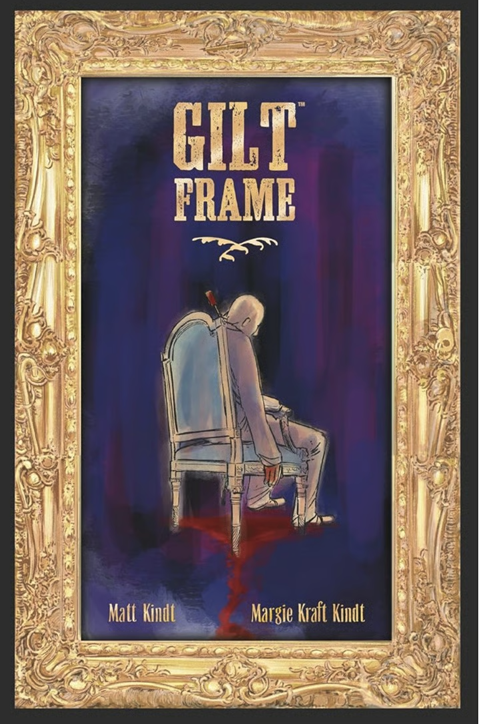
I’m always up for a good mystery comic, which is why I had a great time last year with the slasher-at-a-theme-park romp Murder Kingdom, the ultra-whimsical investigation at a magical hotel from Welcome to the Maynard, and the paranoid thriller Blow Away (an update of the premise of the films Blow Up and Blow Out, themselves riffs on Hitchcock’s Rear Window). In Gilt Frame, however, Margie Kraft Kindt and Matt Kindt have put together a special spin on the whole cozy murder mystery genre.
More than the whodunit itself, what makes this such a nice read is the way the two creators pile up and entangle a bundle of ideas with effortless charm and style… For one thing, we get both a recognizable couple of amateur sleuths (great-aunt and great-nephew, with a fun rapport) and a pompous French inspector (who even has a specific dress code suited to each stage of the investigation). We also get plenty of suspects, story threads, flashbacks, clues, red herrings, and plot twists coming together with an overall lightness (except for a page or two), quite a fair bit of humor, and a certain quirky vibe that often reminded me of Wes Anderson.
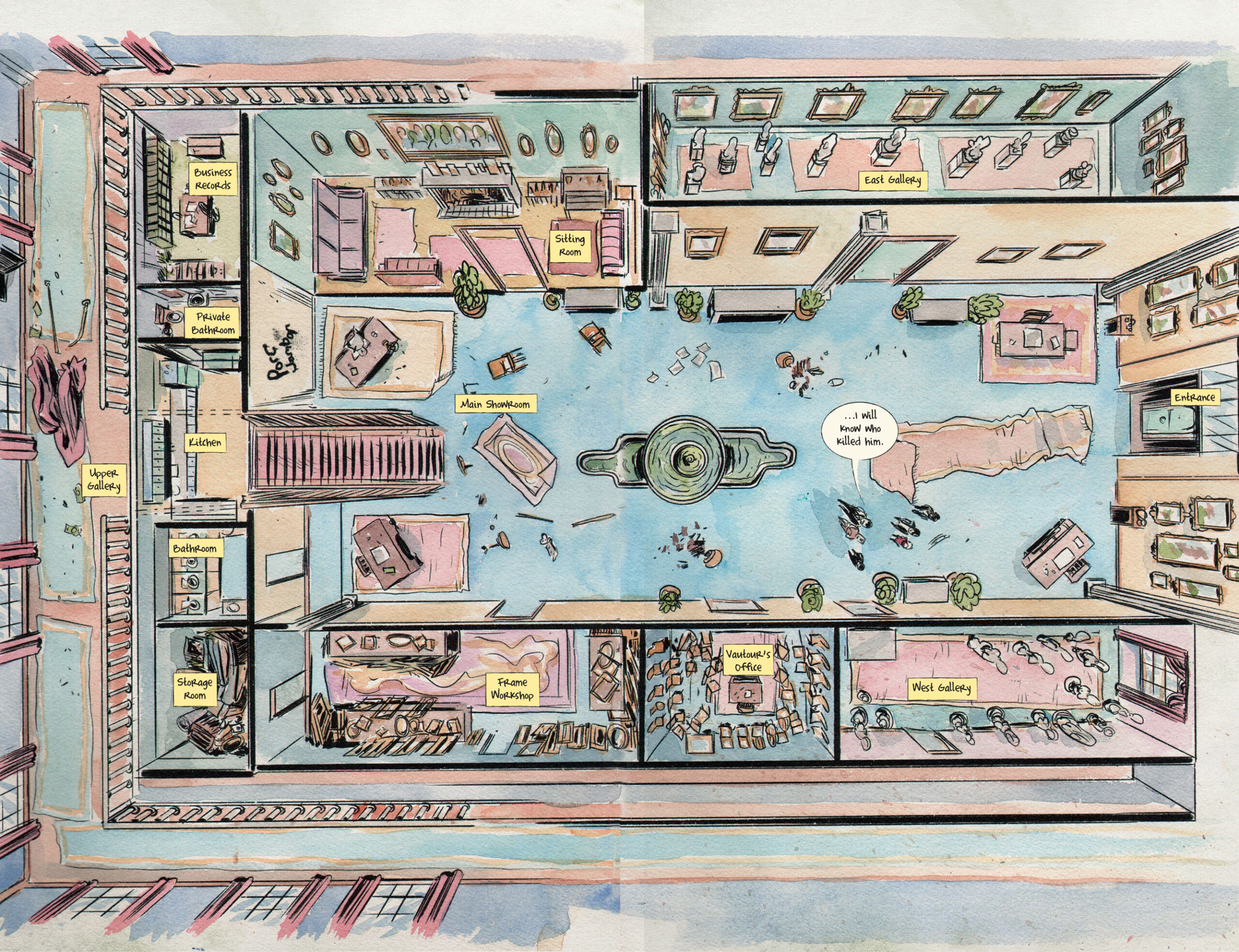
The same goes for Matt Kindt’s art, with letters by Sophia Hilmes. Besides the breezy tone of his typical watercolor-painted cartooning, Kindt keeps coming up with clever layouts (like the Cluedo-ish splash page above) that guide – and misdirect – you through this maze of a comic. Similarly, the back matter in the chapter breaks includes photographs, newspaper clippings, and other puzzle pieces for sporting readers to plough through and take a shot at sorting out the mystery before the final revelations.
I suspect Gilt Frame, which collects a mini-series, was even more engaging in separate installments, where one was forced to wait and ponder about the answers rather than rush to them in one sitting.
14. SPECTATORS
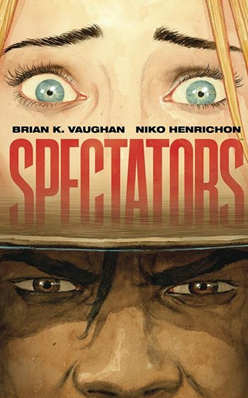
A couple of ghosts hang out in the afterlife and search for entertainment by watching the living engage in extreme forms of sex and violence. A cross between Richard Linklater’s romantic film series Before Sunrise and Alan Moore’s and Melinda Gebbie’s metafictional sex comic Lost Girls, this OGN amusingly explores the condition of spectators (hence the title), whether of cinema (cue in a reinterpretation of The Terminator), of pornography (in various formats), of online content (rather than in-the-flesh experiences), or of life in general (with its implications about passivity, privacy, voyeurism…).
If this sounds too heady, it’s not. More magical realism than sci-fi, Spectators is a generally light read despite its big themes… unless you are particularly weary about gore and nudity, which fill most pages. When Niko Henrichon isn’t drawing massacres and sodomy, his ethereal artwork gives us a tour of a futuristic Manhattan that is a treat for anyone fond of New York City.
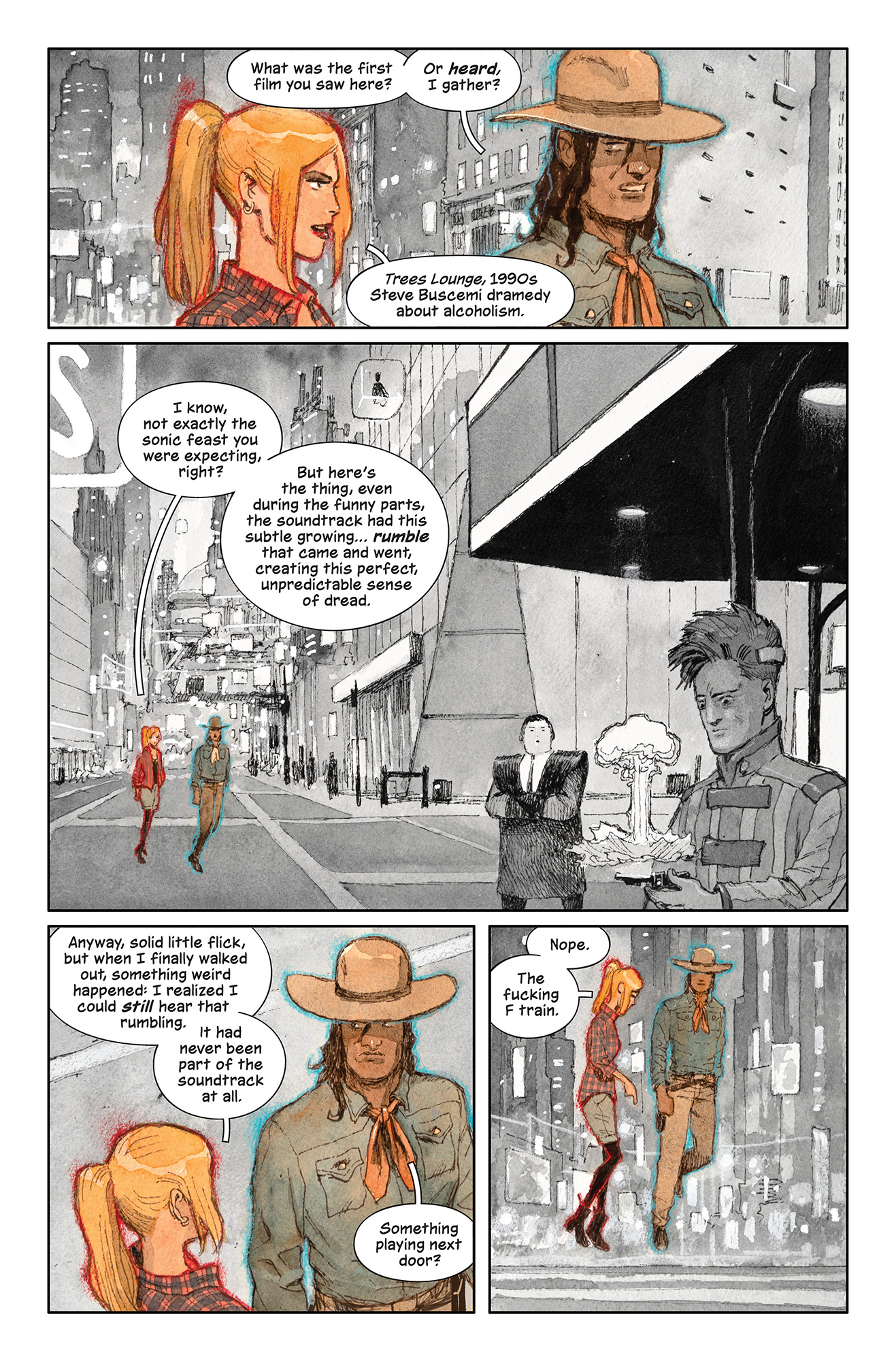
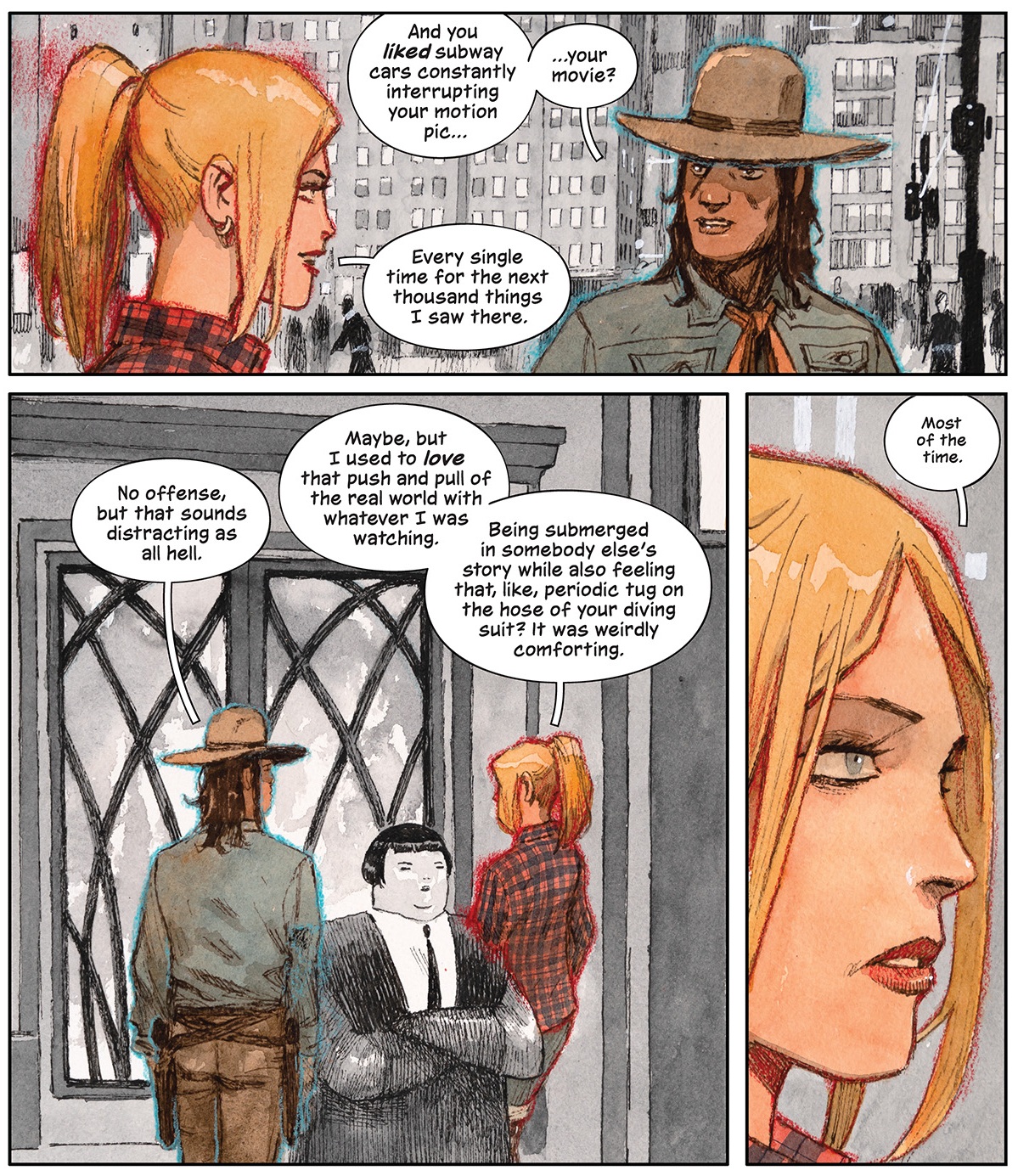
Although a fairly original and ambitious project for Brian K. Vaughan, Spectators is very recognizable in terms of the writer’s style (self-reflexive dialogue) and themes (pop culture, sexuality). Like Alan Moore, Vaughan has tackled sex in various ways throughout his career, with an overall view of eroticism that is neither naively celebratory nor conservatively repressive. Rather, their works generally acknowledge that sex can be complicated by power dynamics and contradictory feelings and impulses (as also explored in the TV show The Deuce or the film Diva Futura).
Plus, while many creators in the medium only seem interested in writing men (or hypermasculine women), Vaughan has always felt comfortable with all sorts of characters, including a number of interesting female leads, going back as far as his short-lived Swamp Thing run. And unlike Greg Rucka, whose feminism tends to translate mostly into writing hardened, badass women, Vaughan often goes for diverse casts where various female characters interact with each other (most notably in Y – The Last Man and Paper Girls). For all his knack at twist-driven plotting, some of his best moments have always involved communication, finding an understanding between clashing personalities, regardless of gender, so it’s nice to see him use the graphic novel format (and previously a webcomic, as far as I can gather) to expand this skill without the rush of the 20-page issue format.
13. BRIAR: QUEST OF THE CURSED
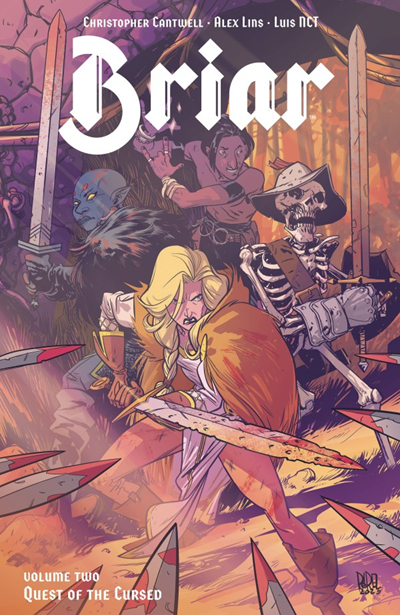
The high concept of a sword & sorcery take on Sleeping Beauty didn’t exactly strike me as inspired when I first heard of Briar, but as soon as I picked it up I knew this was a winner. The combination of Germán García’s cool, bodacious designs, of Matheus Lopes’ ultra-moody palette, and of Christopher Cantwell’s witty dialogue made every page a delight.
For all the tropes, the series somehow pulls off quite a distinctive literary style: just as the cast speaks in a mix of archaic and modern slang, the story itself borrows elements from various fantasy traditions in constantly surprising ways, so it actually feels quite fresh. Hell, in its oddness and unpredictability, Briar actually manages to feel like a Grimm fairy tale… but one of those weird, dark ones you don’t read in school.
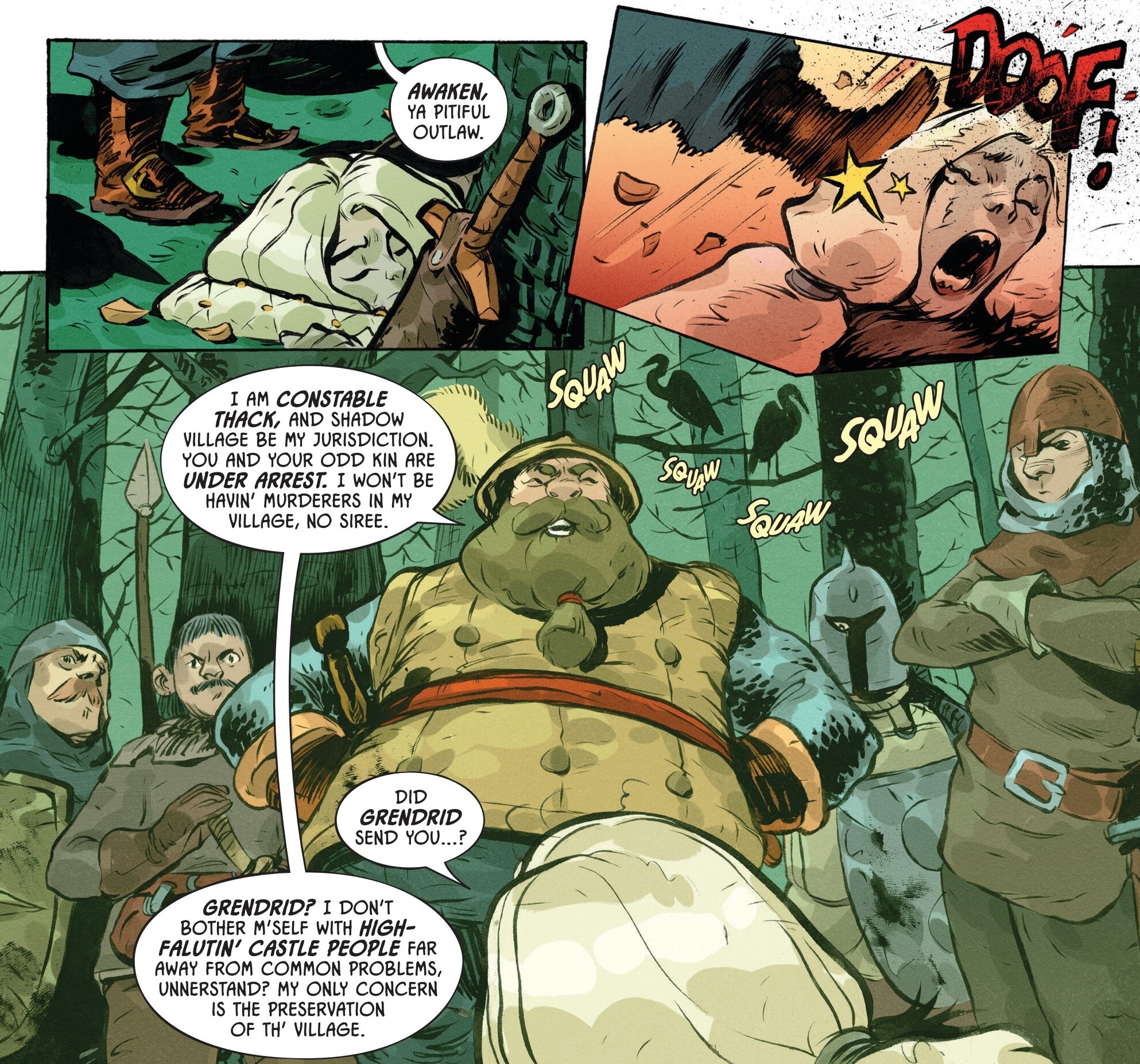
The second collection of Briar came out in January 2025 and, even with a change in the art team, the series remains a hoot. Alex Lins has a cartoonier drawing style (sometimes reminiscent of old-school Eurocomics) and, in turn, Luis NCT uses more washed-out colors, but their work still fits in beautifully with the overall tone. It helps that the script for these issues – suitably collected as Quest of the Cursed – is funnier, too!
I dig how Cantwell frantically throws in new ideas and wild settings (including the depressingly resonant Crane Island Prison). Above all, though, I like how Briar Rose keeps dealing with the burden of guilt and responsibility, fearing her powers – or fate – may cause her to destroy everyone around her, especially as she gets closer to her travelling companions. She is quickly becoming one of the most engaging protagonists in comics and I’m eager to see how her saga will continue to evolve.
12. HAVANA SPLIT: WELCOME TO CUBA
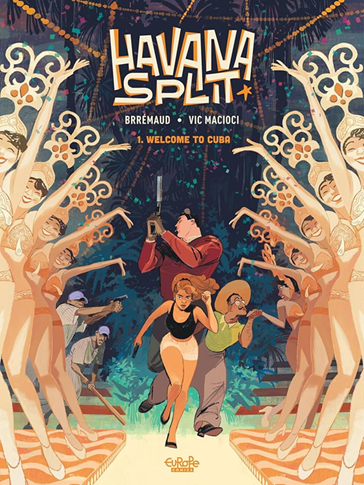
One of the few Franco-Belgian books I read last year was a translation of this riotous period piece, courtesy of the digital platform Europe Comics (although apparently there is a paper edition on the way, by Mad Cave Studios, which I’m totally getting when it comes out, because this is definitely a book that’ll benefit from a generous page size). Havana Split is a comedic thriller set in 1950s’ Cuba, back when gangsters and the CIA were in cahoots with dictator Fulgencio Batista, shortly before the revolution.
This first volume follows two employees of a local detective agency and their boss’ daughter as they get embroiled in a messy web of crime and terrorism. Part of a long tradition of European comics caricaturing Americans (going at least as far back as Tintin in America), the result is a mix of action, espionage, and politics in a fascinating – if sadly topical once again – setting… What’s not to like?
The artwork, likewise, is a blast. Vic Macioci’s cartooning style is very typical of Eurocomics, but he also works in a number of experimental touches (maps, press clippings, brochures…) to convey the information-heavy scene-setting of Brrémaud’s script, establishing both the larger historical background and the sprawling cast.
Not that Welcome to Cuba is a particularly demanding read. In fact, it’s dynamic as hell:
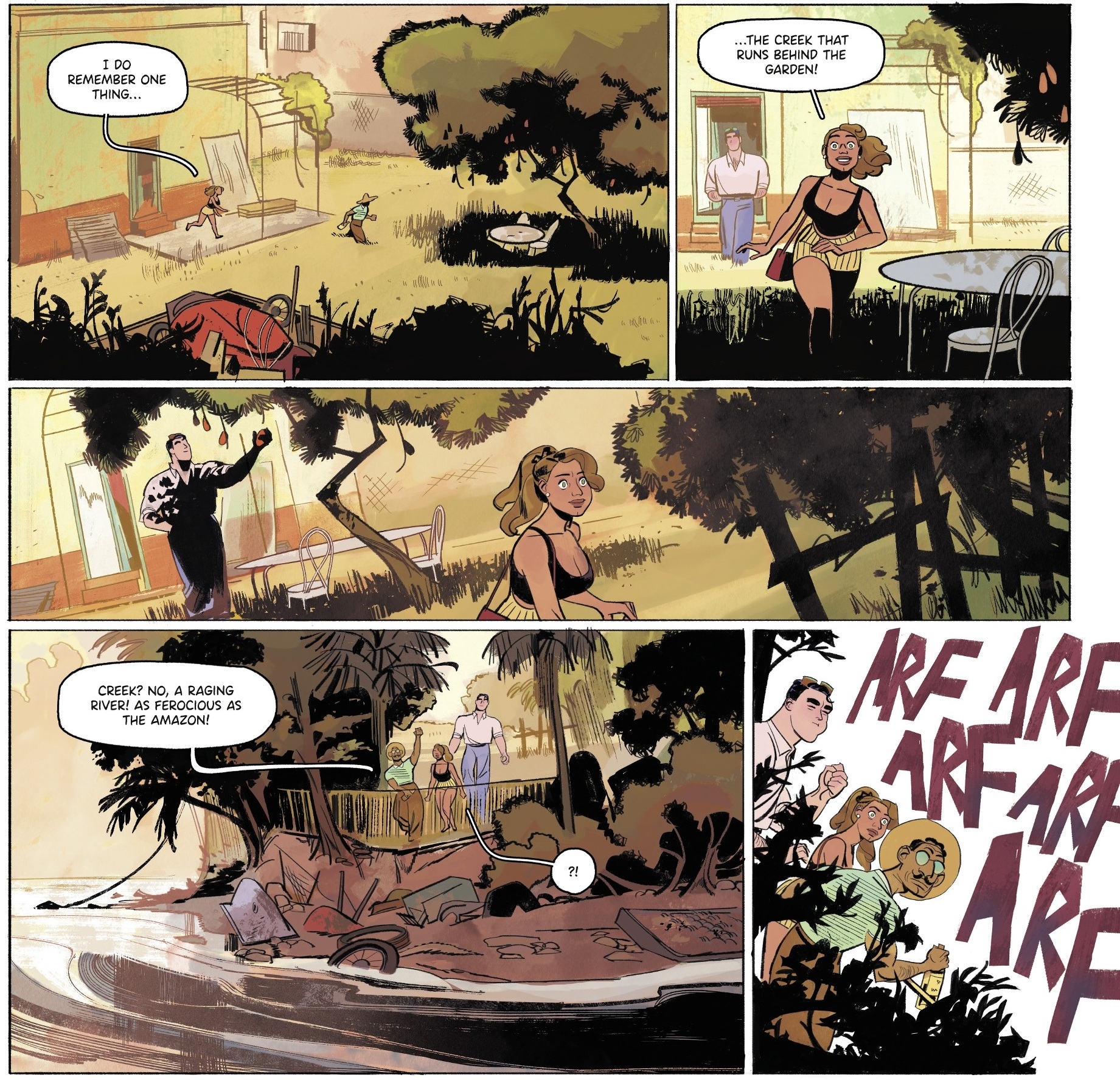
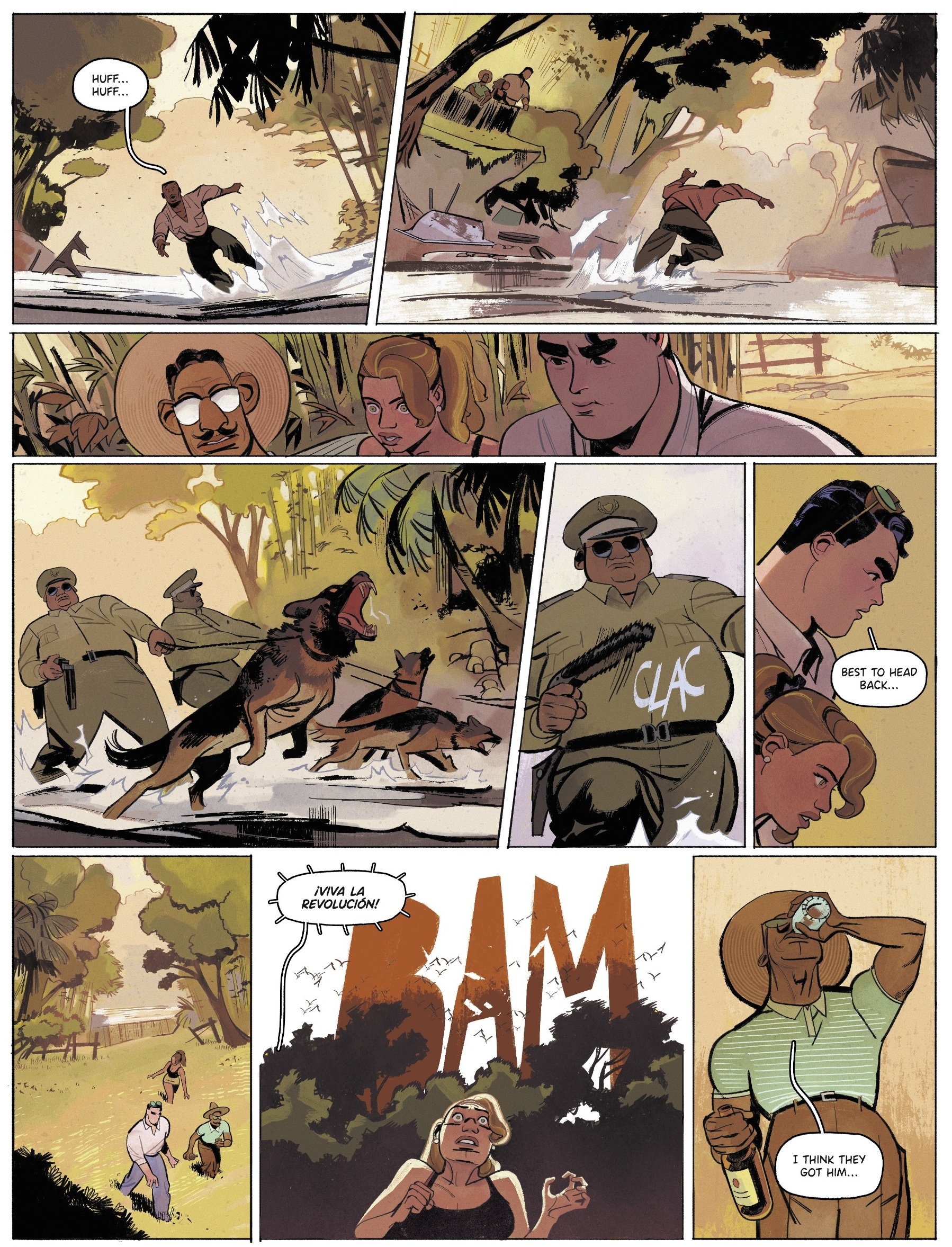
Brrémaud and Macioci have such a great rapport that they manage to keep switching rhythms, drawing on the diverse possibilities of comics. Perhaps it helps that I kept hearing the Ramones in my head.
I suppose I *could* imagine some readers complaining that not enough happens in Welcome to Cuba, despite the generous page count, but I think it would be an unfair line of criticism. Here is a book that really earns its slow buildup, providing something lovely on every single page while taking time and space to properly develop each scene (the kidnapping sequence alone is a masterclass of comic-book pacing). I can hardly wait for the next volume of Havana Split!
11. BATMAN/SUPERMAN – WORLD’S FINEST: IMPOSSIBLE
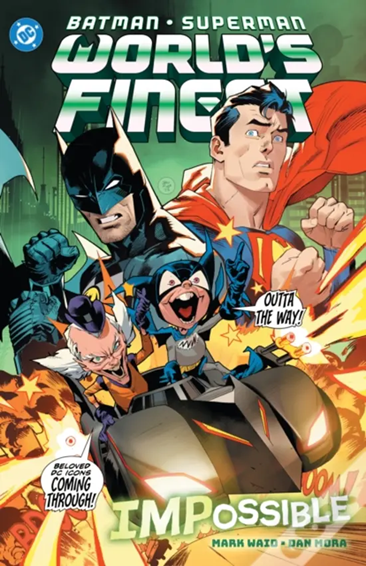
The premise behind World’s Finest is usually a team-up between Batman and Superman, but Mark Waid has pretty much given the title a broader meaning by writing massive team-ups almost every month, drawing on concepts and characters from across the rich history of the DC Universe. This sixth collection is the most bonkers so far, using the mischievous 5th-dimensional imps Bat-Mite and Mister Mxyzptlk to tell a zany epic with a vast cast, a frantic pace, and a cartoony tone that nevertheless manages to achieve a fair amount of pathos.
Technically, IMPossible follows directly from the cliffhanger at the end of the previous volume, but you don’t really have to have read that one to get a full story… Then again, an argument can be made that you’ll only actually get a full story if you’ve consumed *hundreds* of DC comics (and television) over decades, as the book is absolutely crammed with homages in the art, plot, and dialogue, from Silver Age Jimmy Olsen adventures to Batman: The Animated Series. Not for the first time, the subtext is the contrast between a more naïve (and joyful) era and the genre’s modern turn to grimness.
Regardless, Waid delivers enough fun moments and ideas to entertain even less knowledgeable readers. In fact, I would argue the book’s strongest point isn’t the way it plays with the DCU as much as the way it plays with the medium of comics. The abundant magic is vividly illustrated by Dan Mora and colored by Tamra Bonvillain, who come up with several inventive visual tricks without sacrificing clarity. Images collapse onto each other, heroes and villains pop into, out of, and through panel borders, exhibiting varying physical depth as they hop across dimensions.
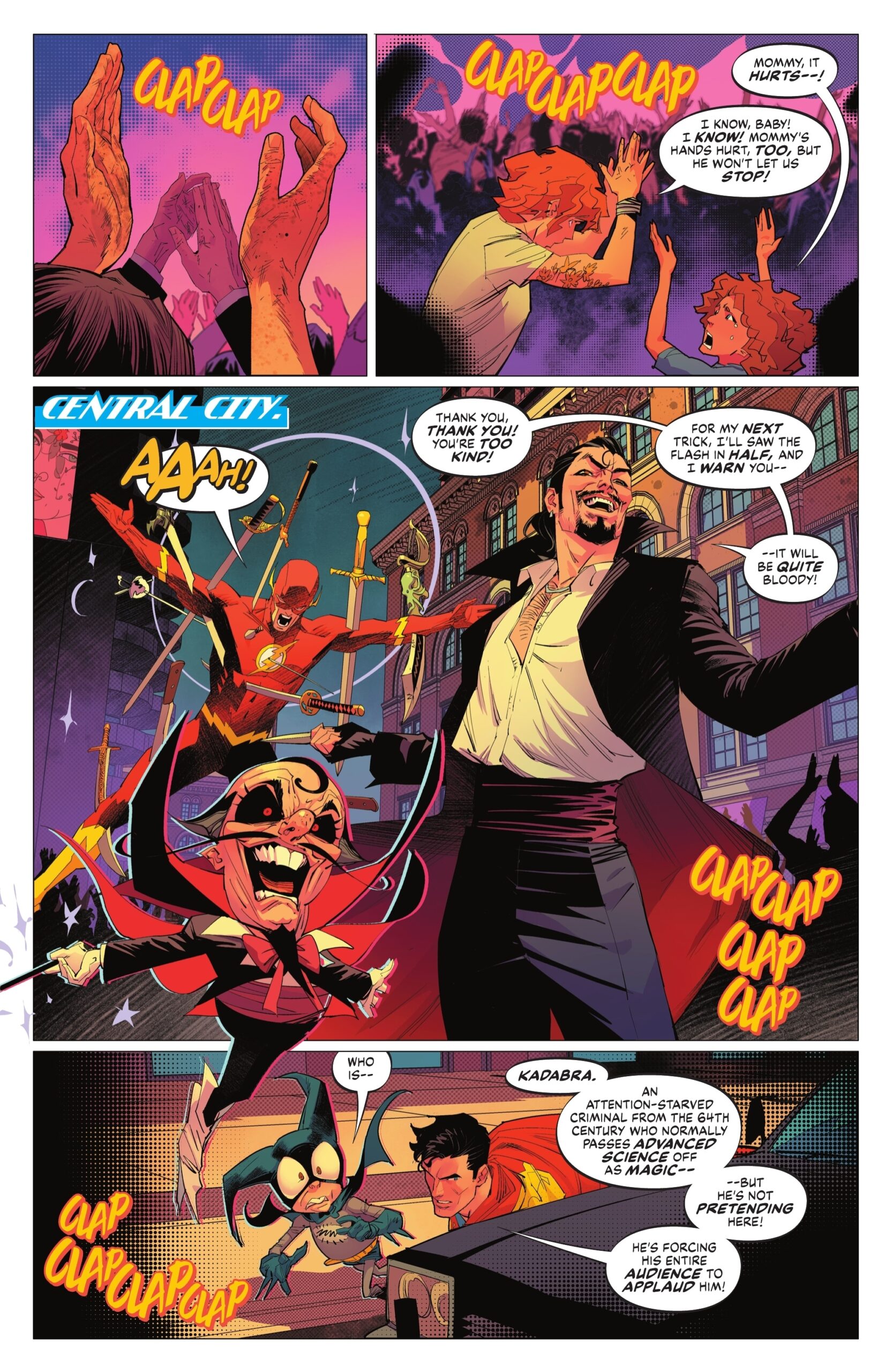
It’s unsurprising that Waid’s script is pure superhero gold, since he’s such a master of the genre (no wonder he was one of the few writers to do a spin-off of the metafictional series The Wrong Earth that lived up to the standards of Tom Peyer’s original). Yet Mora’s work elevates the fantasy to something even more pop and memorable, which makes it a shame that he left the series after this arc. Still, although IMPossible’s second story, ‘Death in Paradise,’ is drawn by Gleb Melnikov in a less flashy style, Bonvillain’s lavish colors secure smooth visual continuity.
Although very different in scale, that last story is also a treat. Every once in a while, I dig seeing Batman in outer space or in some fantastic realm, testing his preparedness, adaptability, and resolve in adverse circumstances (although, visually and narratively, last year’s Batman: Off-World mini was annoyingly uninspired). In particular, I love it when he plays the World’s Greatest Detective out of his element, in outlandish places with their own peculiar rules (like the Bottle City of Kandor in All-New Batman: Brave and the Bold #1), so it’s very neat to see him deal with a locked-room mystery in Themyscira, home of Wonder Woman and the Amazons.
You’d think Waid would have run out of stories to tell at DC after so many years mining the same ground, but he continues to reshuffle the lore in enjoyable ways. In fact, he’s been on a roll of late, once again. Last year’s Justice League Unlimited (likewise drawn by Mora) and Batman & Robin: Year One (with even more awesome artwork, by Chris Samnee) were both pretty sweet as well.