When considering candidates for Gotham Calling’s book of the year, I tend to gravitate towards graphic novels that more or less stand on their own, providing such a satisfying read that I can recommend them as isolated objects. For instance, even though I think Love Everlasting is one of the most original and intriguing series in the last few years, offering an idiosyncratic dialogue with weird subgenres of the type of romance comics so in vogue in the 1950s and ‘60s, I’m not including its third collection, which came out in 2025. It’s not a bad book at all, but it basically continues to follow Joan Peterson from one romance to the next as she inevitably gets transported to another time/place/identity whenever she finds love (or when she gets shot by a mysterious cowboy), giving us a better peek into the background of Peterson’s odd situation yet ultimately opening way more questions than it answers. This remains a charming and engrossing series (thanks to Tom King’s way with words, Elsa Charretier’s very stylish artwork, Matt Hollingsworth’s atmospheric colors, and Clayton Cowles’ chameleonic letters) and I can’t wait to read more, but as a single book it didn’t match the amazing emotional punch of the family drama in the previous installment.
Still, I ended up being more flexible this time around, picking plenty of collections from ongoing series that neither kick off nor wrap up the full narrative, as long as they provided a relative sense of closure. So, while the third volume of Love Everlasting didn’t make the cut, others actually earned a spot in the top 10:
10. FANTASTIC FOUR: ALIENS, GHOSTS AND ALTERNATE EARTHS
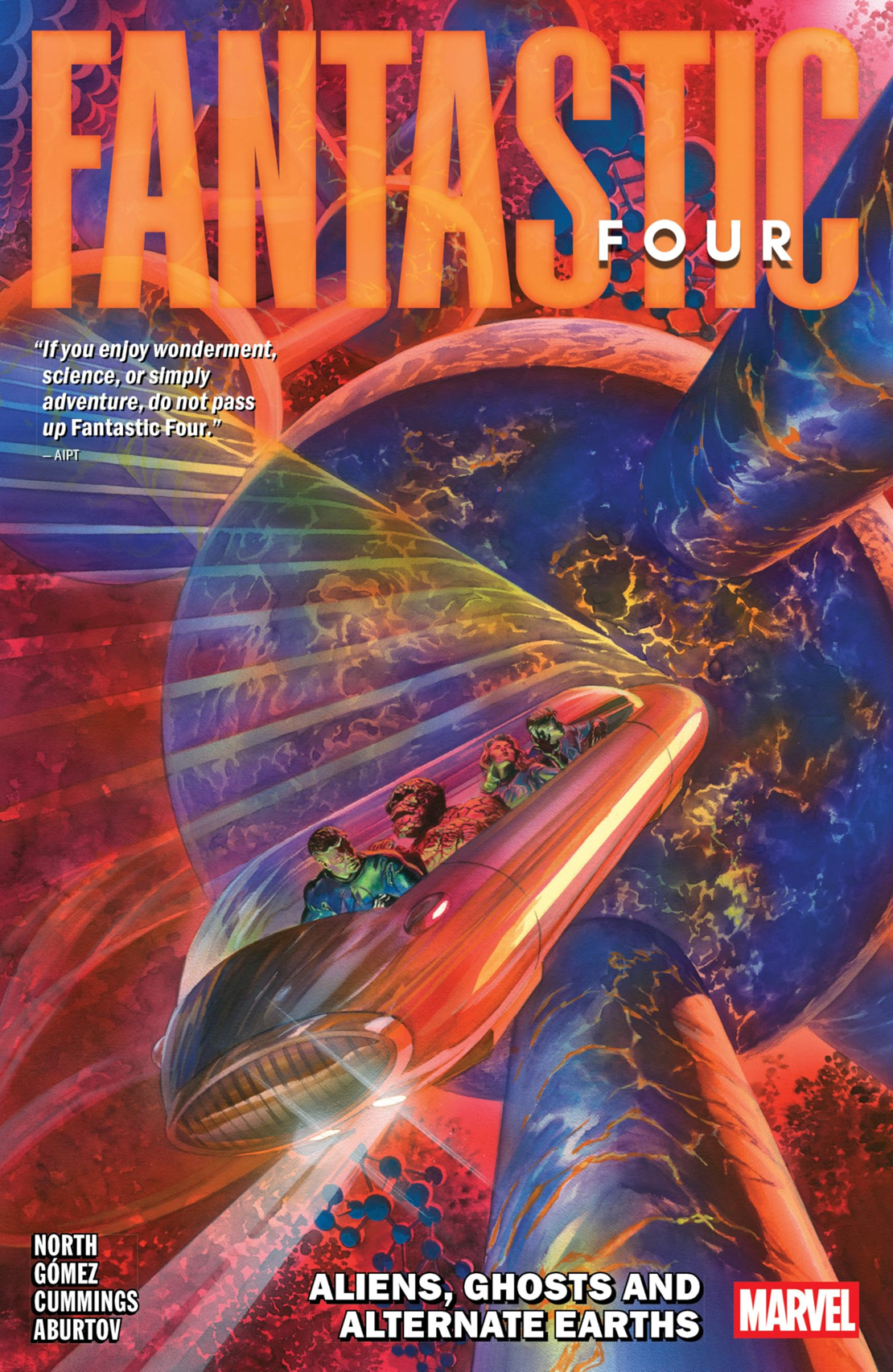
Since 2022, Ryan North has been writing a run on Fantastic Four that deserves a place in the franchise’s pantheon, alongside the Jack Kirby-Stan Lee and the Mark Waid-Mike Wieringo stints. Not only does North draw on various sciences in highly imaginative and whimsical ways, but he also has a perfect handle in terms of characterization, nailing the cast’s voices, heroism, and wholesome, positive attitude. He also tends to make sure everyone contributes to the stories in significant ways, with their unique powers or insights that stem from their specific personalities, including the quartet’s extended family, like the Thing’s blind wife, Alicia Masters, and their adopted extraterrestrial children. What’s more, this run follows my favorite format: each arc takes up only one or two issues, providing a string of gratifying quasi-self-contained adventures that nevertheless build into a larger whole incrementally, through organic-seeming subplots and easy-to-grasp connections with the FF’s history and with other aspects of the Marvel Universe.
This fifth collection isn’t as perfect as the previous one (which delivered a bunch of instant classics), but it comes pretty close, with smart, occasionally moving tales featuring subatomic aliens, animal ghosts, divine intervention, and romance on an alternate dimension, often with the highest of stakes. Once again, the artists (Carlos Gómez, Ivan Fiorelli, Steven Cummings, Wayne Faucher) don’t have to reinvent the language of comics here, just to find a pleasing way to communicate North’s tight storytelling and awesome sci-fi concepts.
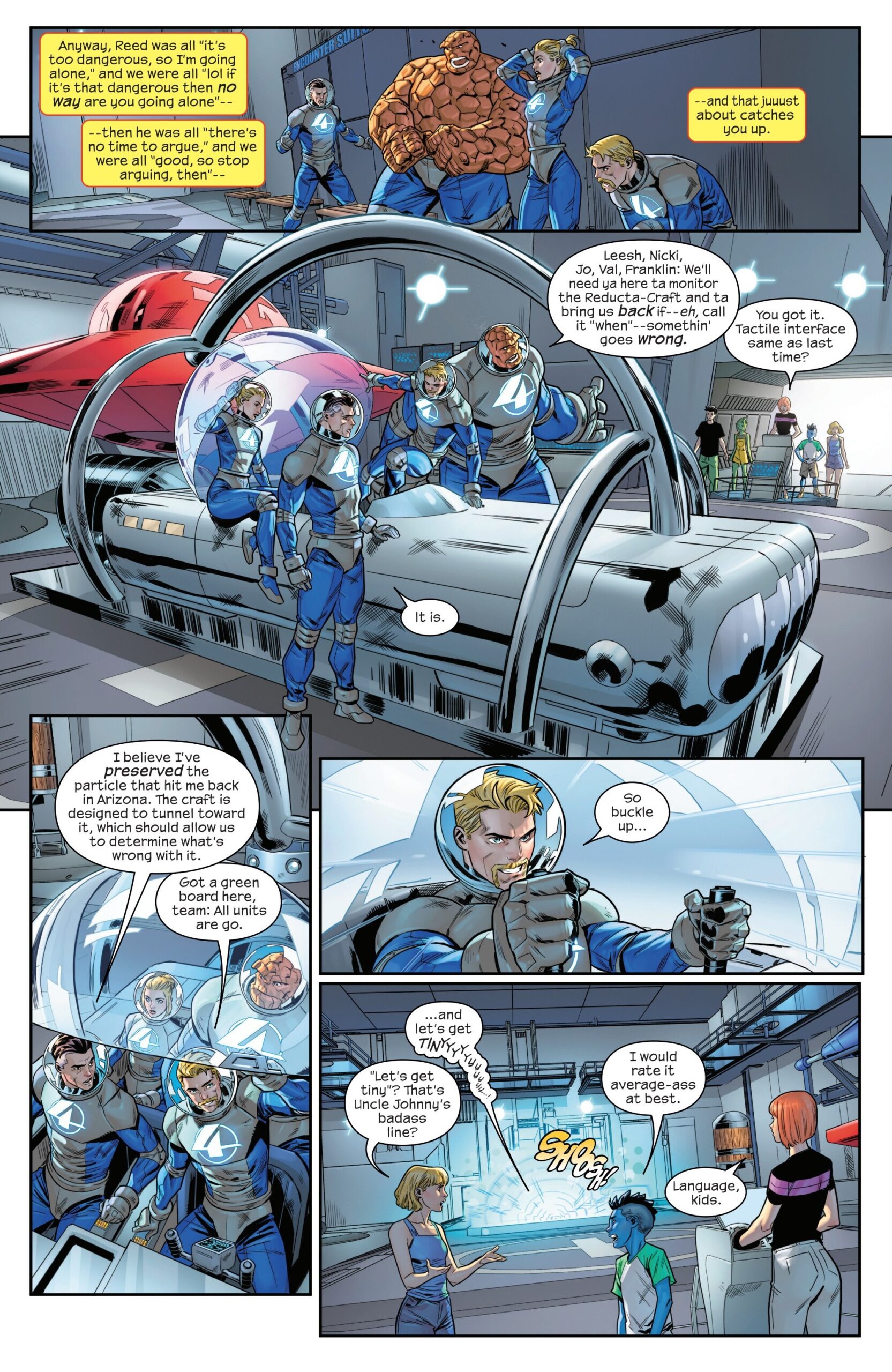
Still, Gómez, in conjunction with colorist Jesus Aburtov, creates some of the purest superhero visuals, in a classical yet splendidly slick style:
Besides Aliens, Ghosts and Alternate Earths, there was a sixth volume released in 2025, Our World Under Doom, more closely tied to the line-wide same-titled Marvel crossover about Doctor Doom taking over the world, also written by Ryan North. That one was more obviously topical, with the cast processing the new status quo in a variation of many people’s reaction to living under Donald Trump’s America and world order.
And yet, at a time when tech bros appear to be destroying the world (as poignantly mocked in the films Ex Machina and Mountainhead), I’d say this had already become one of the most political superhero series in our current moment, given Fantastic Four’s hopeful optimism about humanity and science, not to mention North’s vigorous emphasis on empathy, affection, and mutual reliance.
9. HELLBLAZER: DEAD IN AMERICA
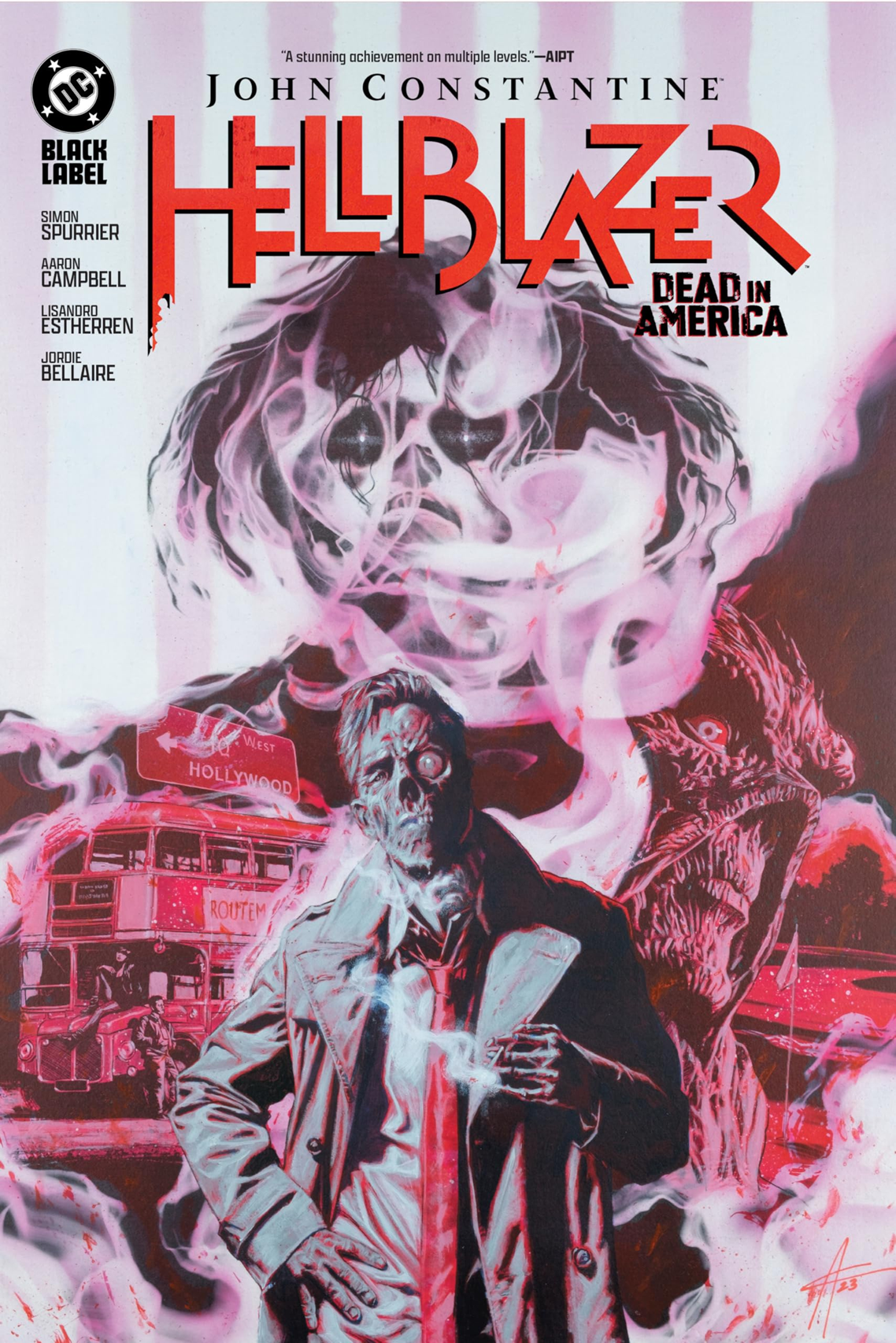
John Constantine’s third appearance in this year’s list, after showing up in Zatanna: Bring Down the House and having a cameo in World’s Finest: IMPossible.
This one was a safe bet: Hellblazer has been one of my favorite series for decades and Si Spurrier has become one of my main go-to writers for quite a while, bringing an edgy smartness to everything he touches (even to a reboot of Hook Jaw!). Plus, his previous run on the series – with the same dream team of artist Aaron Campbell, colorist Jordie Bellaire, and letterer Aditya Bidikar – was nothing short of phenomenal. When that run (collected in Marks of Woe and The Best Version of You) got cancelled, Spurrier filed off the serial numbers and came up with his own ersatz-Hellblazer book, Damn Them All, and either that, fan outcry, or paperback sales must’ve shook DC’s editors into reason, as they let the original team reunite for another stab at the mischievous English working-class wizard.
Picking up shortly after the previous volume, Dead in America finds Constantine, his mute son Noah, and his Glaswegian buddy Natalie escaping to the United States to hide from the mess they made in the UK. The result is basically a riff on Swamp Thing’s groundbreaking arc ‘American Gothic’ (which introduced Constantine, back in the day), with a road trip through the US serving as a springboard for a British writer to examine key social issues across the Atlantic, turning migration hysteria, incells, and other hot topics into fodder for supernatural horror. The critical point of view isn’t necessarily original per se, or always subtle (one issue revolves around a very literal comparison between Hell and the USA), but it’s often worked into clever storytelling, powerful imagery, and quite a bit of dark humor.
Except for a couple of issues (including one that feels almost like an old-school anthology, with short stories by different artists), the visuals are provided by Campbell and Bellaire, who once again make this a comic of breathtaking beauty despite its eerie grotesqueries (and despite Bellaire – or Bidikar – pushing symbolism a bit too far through some red-white-and-blue word ballons). The layouts are ingeniously unsettling as well, like in this sequence which merges panels with a phone screen:
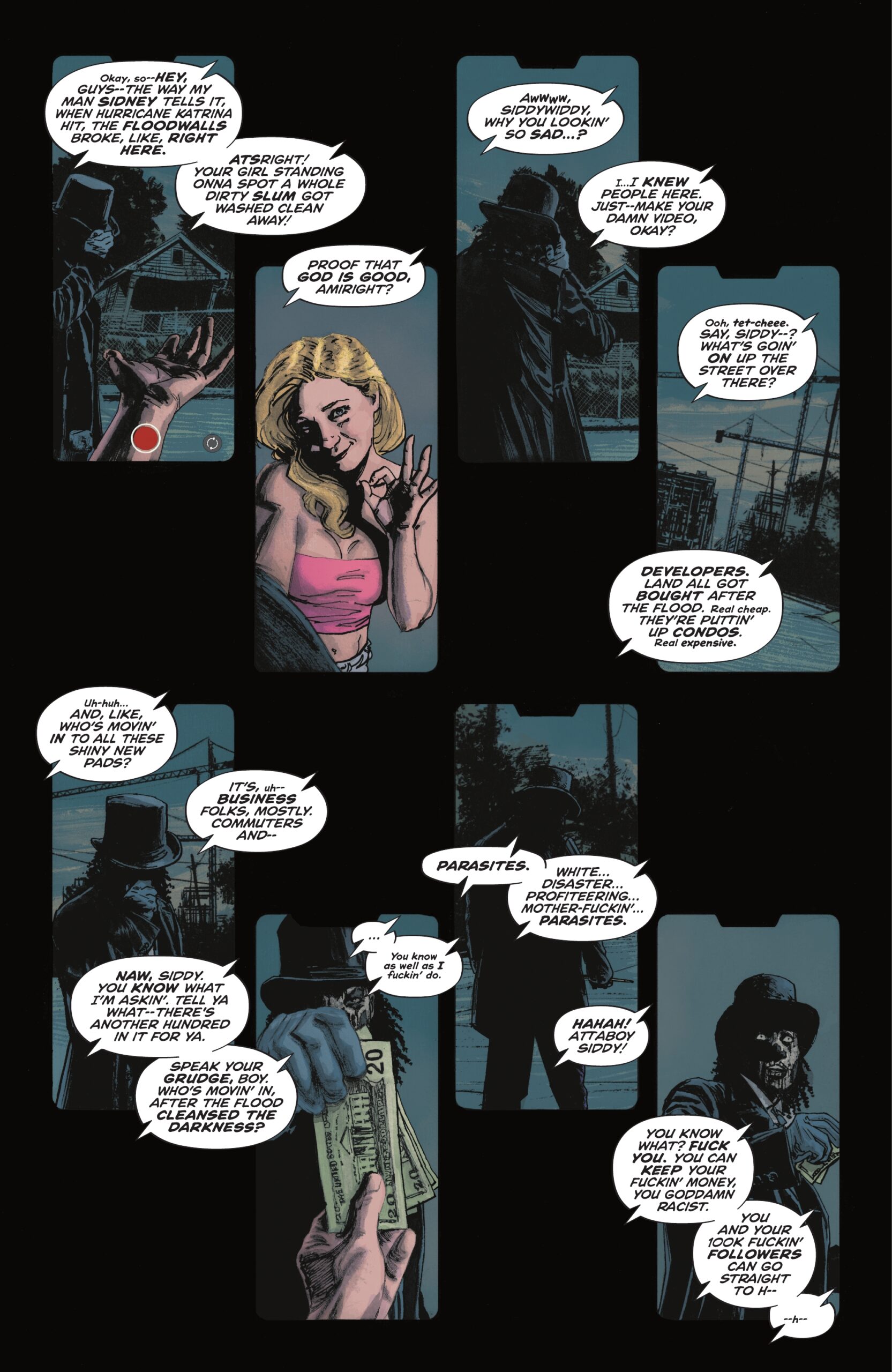

The reason Dead in America doesn’t rank even higher on the list has to do with how closely linked it is with The Sandman and with Alan Moore’s and Rick Veitch’s runs on Swamp Thing. I’m not talking about mere allusions here – the overarching plot is a direct sequel to the events of the classic first issues of The Sandman (not least #3, ‘Dream a Little Dream of Me,’ where Morpheus recovered a pouch of magical dream sand from John Constantine) and the payoff ties back to that series’ ending. Morpheus’ successor as Lord of Dreams repeatedly shows up and characters keep referencing events from 1980s’ comics, providing enough information for new readers to follow the story while pushing older fans’ nostalgia buttons. Even though Constantine at one point explicitly opposes becoming part of a metafictional tale (which is itself amusingly metafictional), he soon finds himself in Cambridge Mansion, from ‘Ghost Dance’ (Swamp Thing #45), suitably accompanied by riffs on the art and narration from that 40-year-old issue.
I don’t necessarily mind connections and callbacks to older works. Extended, intricate continuity can supply its own kind of pleasure and I understand the temptation to go back to those particular books, which were foundational both for Constantine’s corner of the DC/Vertigo Universe and for the entire genre of sophisticated horror comics that Spurrier is building on. Hell, for my money, those Swamp Thing issues, combined with Hellblazer and The Sandman, form a mega-epic with a strong claim to be considered the peak of the entire medium (even if The Sandman #17,‘Calliope,’ has turned out to be depressingly autobiographical). Still, the gesture feels a bit obtrusive here, shifting too much of the focus away from the topical themes that are ostensibly at the core of Dead in America while needlessly reminding us of how fresh these characters and stories felt when we read them the first time around.
The back matter indicates this project was a tribute to the whole Vertigo epic. As a wrap-up, it doesn’t have the grace and depth of Mike Carey’s Lucifer, but what Spurrier flawlessly pulls off is a succession of cunning schemes and manipulative twists worthy of the best Hellblazer narratives. I suppose that is the greatest tribute of all.
8. CRIMINAL: THE KNIVES
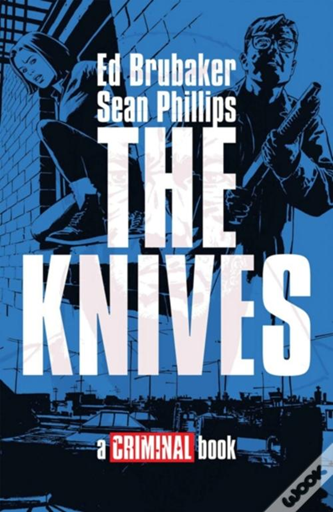
Ed Brubaker, Sean, and Jacob Phillips continue to build their case for Criminal as one of the all-time greatest crime comics (hell, one of the greatest comic book series, period). Like previous installments, the graphic novel The Knives can be easily enjoyed by newcomers looking for a standalone neo-noir yarn, as each volume is meant to work independently or out-of-order. Yet fans will get the special treat of revisiting familiar characters later in life, with the timeline reaching the 2020s. In particular, we get to see cartoonist Jacob Kurtz trying to make it in Hollywood and the young Angie Watson continue to make poor life decisions (she has now become a cat burglar), their storylines eventually intersecting with typically brutal consequences.
If you’re into Criminal already (or into Brubaker in general), you can guess that the Kurtz subplot ties into the broader thematic gesture of both delivering cool crime fiction (complete with kidnapping, capers, gangsters) and incorporating a reflection about how crime fiction is produced (in this case, zooming in on peak TV). The beginning is a little bit rough, with some lecturing about Hollywood coming across as forced and condescending (it’s hard to swallow that a 21st-century writer needs to be told what ‘intellectual property’ means), but the book soon moves into more comfortable territory, offering amusing insights about work in the entertainment industry…
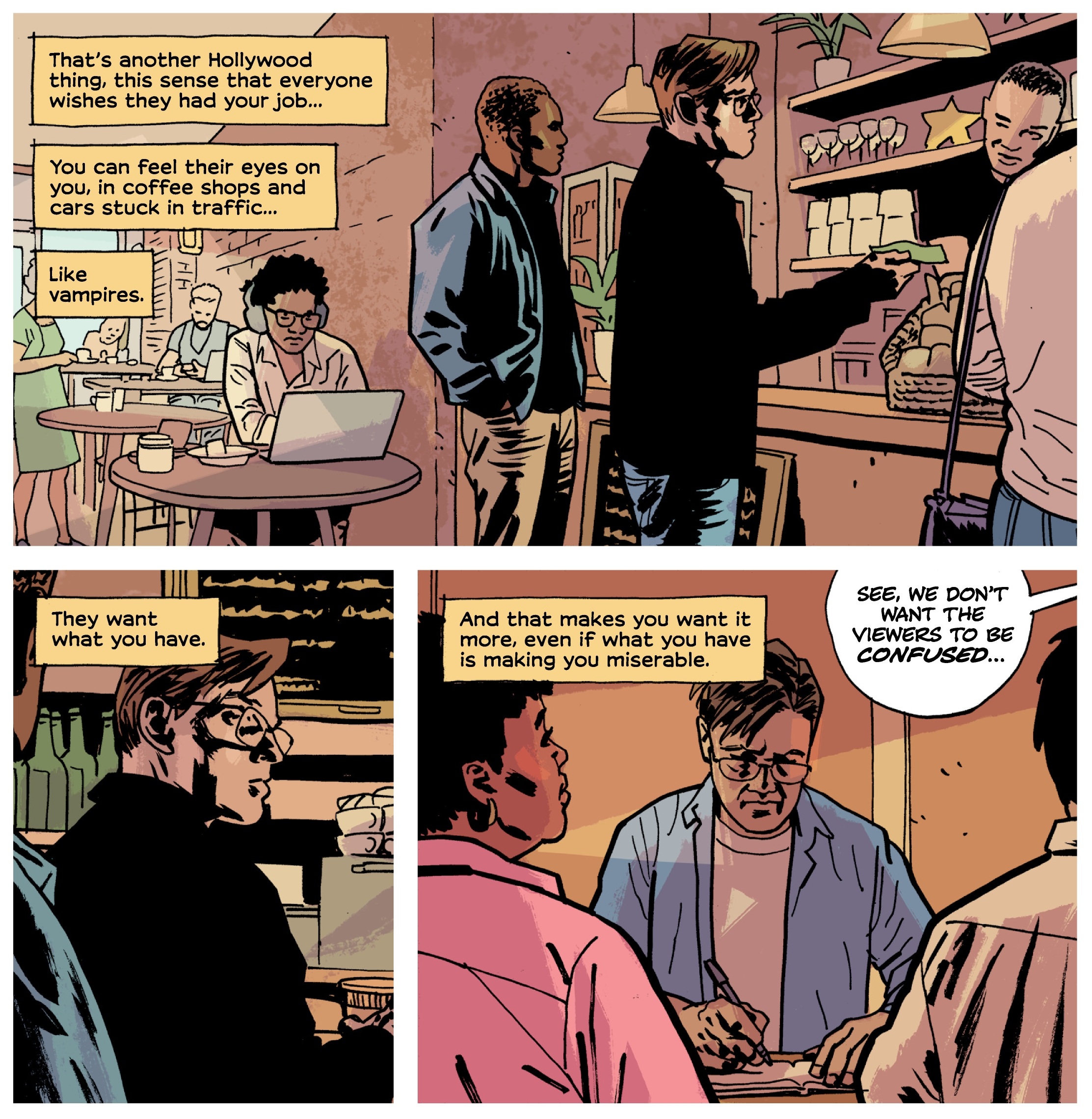
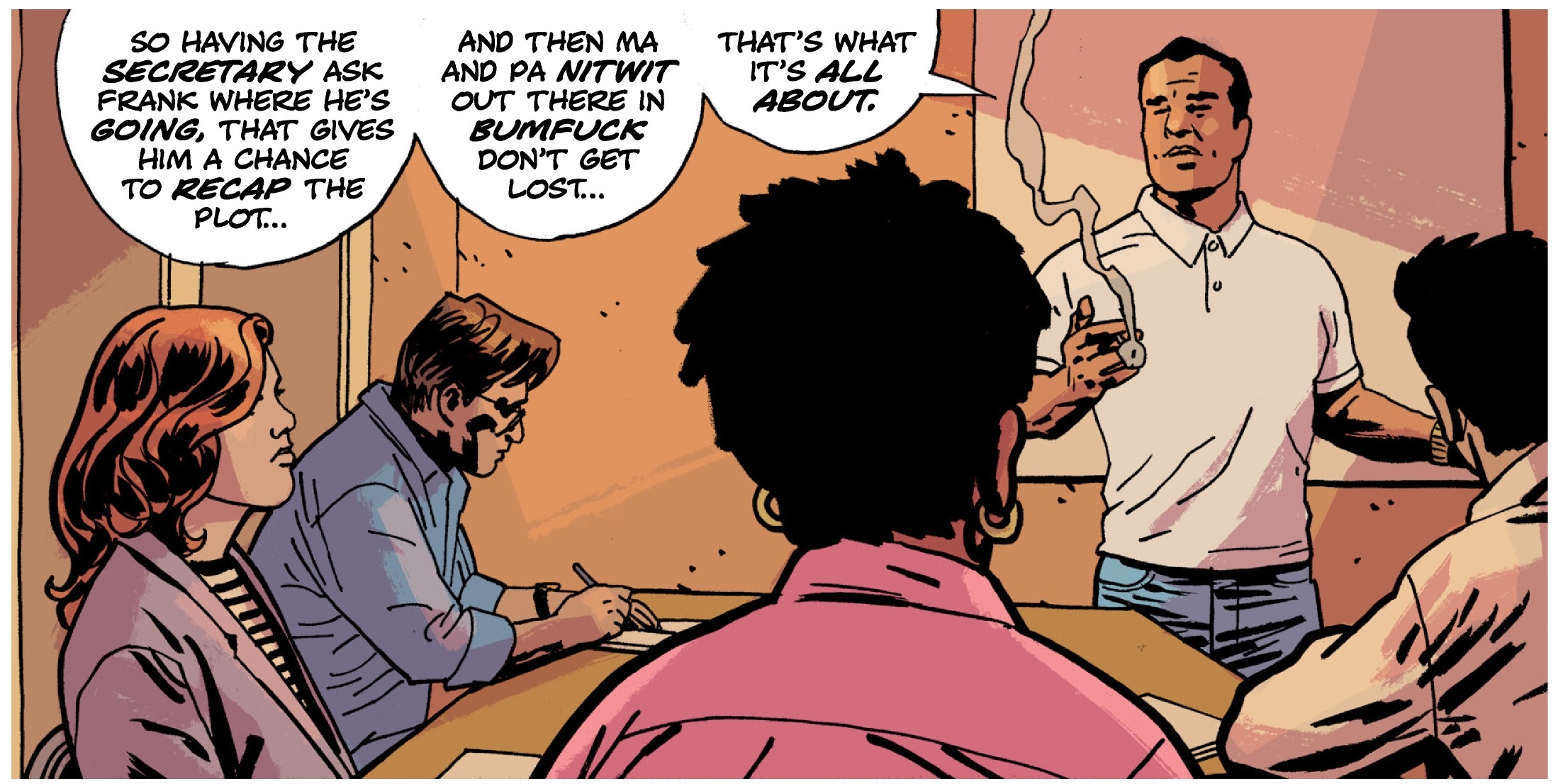
Along with the intricate plotting and moody artwork, Criminal’s major strength has always been its sensitive, heartfelt characterization. Somehow, Ed Brubaker has made this a very personal vehicle for his anxieties and obsessions, as he once again spells out in the afterword and mirrors in the text itself, via Kurtz (including the memorable line: ‘He was constantly amazed at how much of himself he could put into a comic about a private detective (who was also a beaver).’). Even if you don’t care about Brubaker himself, it’s to his credit that this approach truly pays off in terms of creating a fleshed-out cast and dramatic beats a reader can seriously care about, so the result tends to hit harder and resonate longer than the usual genre thrills.
7. THE SPAWN OF VENUS AND OTHER STORIES ILLUSTRATED BY WALLACE WOOD
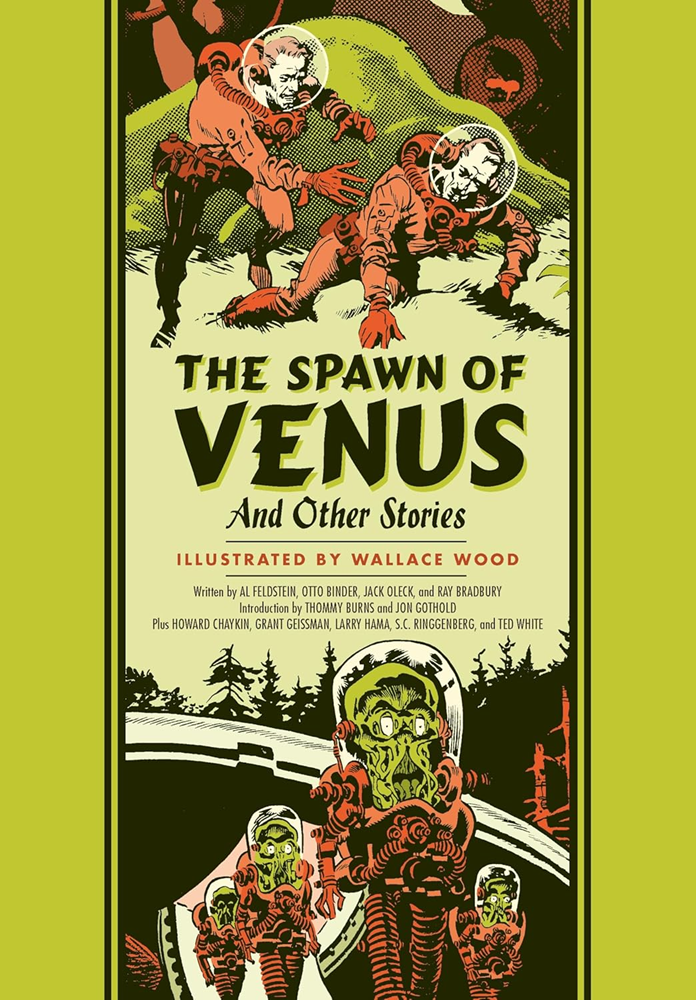
Along with the Lost Marvels line, Fantagraphics continues to put out terrific collections of 1950s’ EC comics and I continue to buy them. Reprinted in black & white to better showcase the impressive catalogue of talented artists, accompanied by insightful essays, these books are a real treat for any fan of the medium – not only for those interested in learning about seminal works that influence the evolution of various comic-book genres, but also for those who just want to read a bunch nice-looking and highly entertaining short stories.
The Spawn of Venus, the second volume devoted to sci-fi tales illustrated by Wally Wood, is somehow even better than the first one (Spawn of Mars). As usual, most stories were plotted by Bill Gaines and Al Feldstein – often by reworking ideas they stole from pulp magazines – and engage with core motifs of this era of science fiction, like discrimination, space exploration, radioactive mutation, and the looming threat of nuclear war. ‘Home to Stay’ famously blended two (very good) Ray Bradbury stories… and Bradbury, bless him, rather than merely ask them to pay copyright, actually acknowledged their amazing craft and endorsed the official adaptation of many of his other writings.
Sex and gender are also running themes, most notably in one of my all-time favorites, ‘The End,’ which starts off with a comet heading towards Earth and it becomes increasingly bonkers, wonderfully verging back and forth between speculative fiction, moving pathos, and cheeky comedy (sometimes all in the same page). This thematic recurrence means that the book not only effectively mobilizes Wood’s ability to draw futuristic technology, but it also makes the most out of his knack for expertly rendering gorgeous women.
Wally Wood was such an appealing draftsman that Al Feldstein even wrote an entire piece just around specific images Wood wanted to draw (‘My World’), although, to Feldstein’s credit, his purple prose can be as enjoyable as the art itself (‘It is the moment when the rocket ship breaks free of Earth’s gravity and streaks through the void in free fall… when its crewmen are suddenly weightless and float like children’s balloons at the circus…’). The book finishes with a tribute to that story in the form of photos of a diorama based on its final panel, meticulously crafted by Norm Watson.
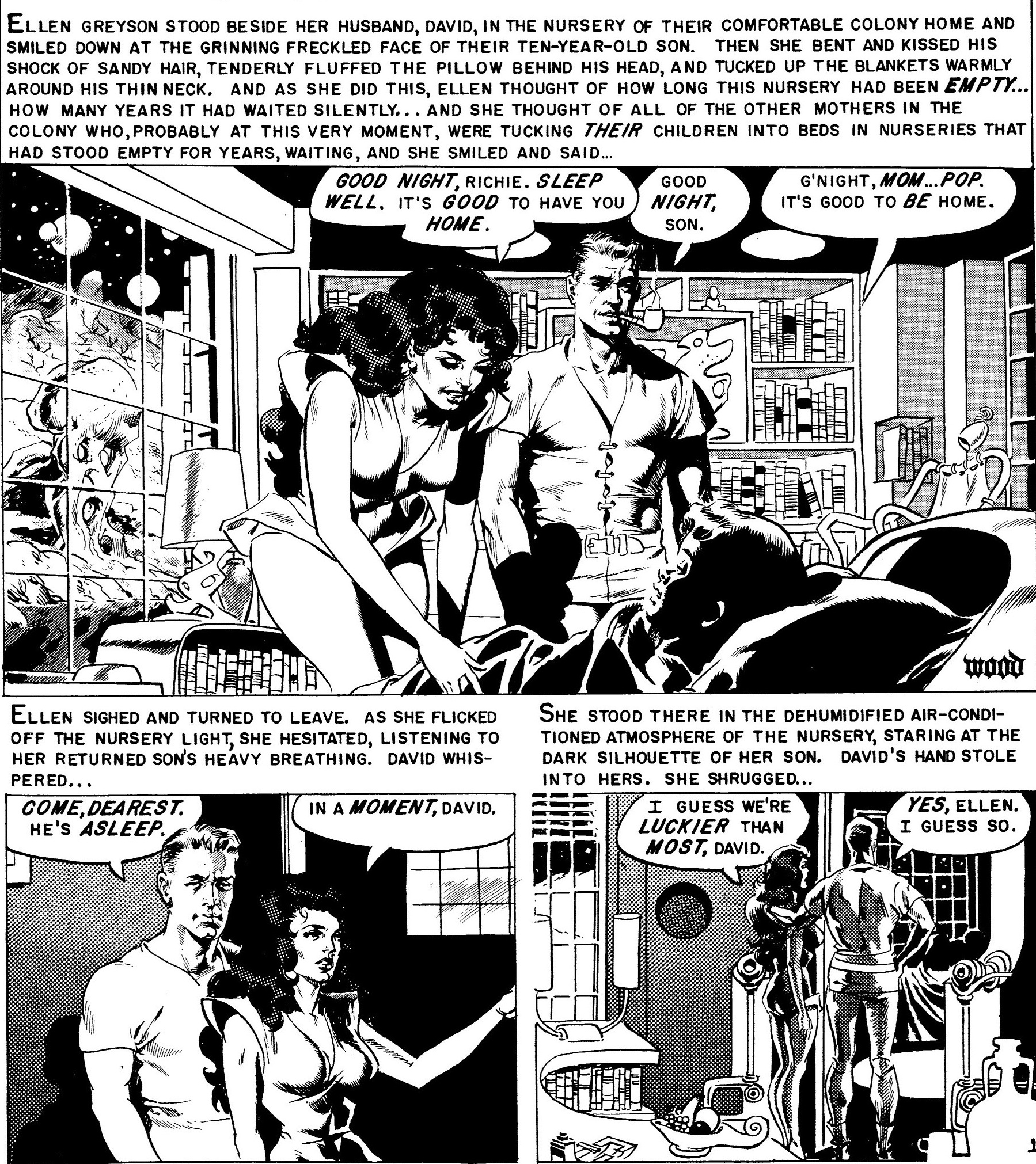
It was interesting to read this in the same year as the Towers of Shadows collection, where Wood’s tales (drawn almost twenty years later) look comparably minimalistic. At this stage, however, he seemed to try to fill each image with as many details as possible within his tight schedules. As Thommy Burns and Jon Gothold put it in their opening essay, the ‘jewel-like artwork feels less like a typical comic book story and more like a beautiful Fabergé egg.’ In lesser hands, such an aesthetic choice could’ve harmed the storytelling by cluttering panels that are often already packed with text, but here it works magnificently, bringing fantastic worlds to life. Just look at how the detailed backgrounds help set up the intriguing beginning of ‘The Children:’
I’ll just highlight a few standout tales. ‘EC Confidential’ is a classic of metafiction, with a publisher confronting Gaines and Feldstein with the fact that their comics seemed to have predicted real-world events (cue in a bunch of cameos by the EC staff). ‘The Spawn of Venus,’ never actually published by EC (it was part of an aborted 3D series), is a remake of a story previously collected in the (also very nifty) volume Child of Tomorrow and other stories, giving us an opportunity to compare how Wood and Feldstein approach the same material in quite distinctive ways.
‘You, Rocket’ is a superbly written (by Jack Oleck) and stunningly drawn take on posthumanism, which was truncated by the censors of the Comics Code Authority at the time and is now restored to its original vision for the first time in 70 years (as recounted in a fascinating piece by Grant Geissman). In fact, one of the missing panels was filled in by Al Feldstein in 2013, a year before he died, so, as the introduction aptly puts it, the man ‘who wrote so many stories about justice served beyond the grave, did exactly that from beyond his own grave, striking a final, defiant blow against censorship.’
Old-school comic fans should also appreciate the essays by Howard Chaykin and Larry Hama recalling Wood’s impact on their work.
6.THE NICE HOUSE BY THE SEA: VOL.1
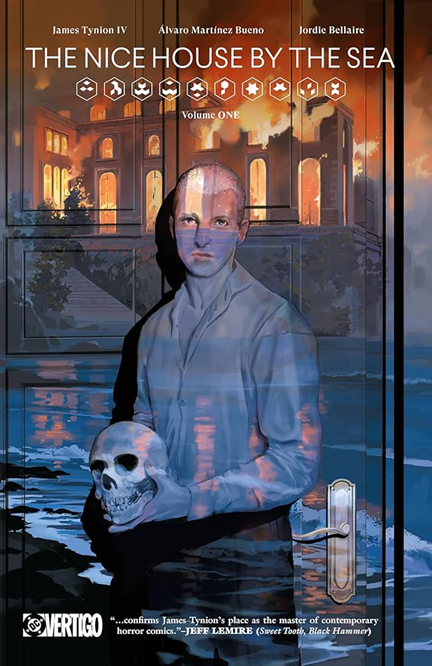
Despite being labelled as ‘volume one,’ The Nice House by the Sea is a very direct continuation of The Nice House on the Lake, one of the coolest horror series of the last few years, about a group of millennials stuck in a weird idyllic mansion while the world ends. Following the cliffhanger from the last book, this one builds up to a clash with another mansion of survivors and, while it lacks the eerie impact of the previous comics now that we have a better clue of what the hell is going on, there are plenty of intriguing ideas to explore.
The characters from the new house aren’t as likable and well-developed as the ones we met before – and, honestly, I can’t tell if that’s because James Tynion IV’s script is a bit more rushed or if it’s actually a clever intentional move, stacking up the deck and getting us to root for the ones we care about the most. I give Tynion enough credit, especially as he continues to flesh out the previous group (even though they seem obsessed with their personal relationships growing up, as if there isn’t much else in life that defines them, despite their professional codenames).
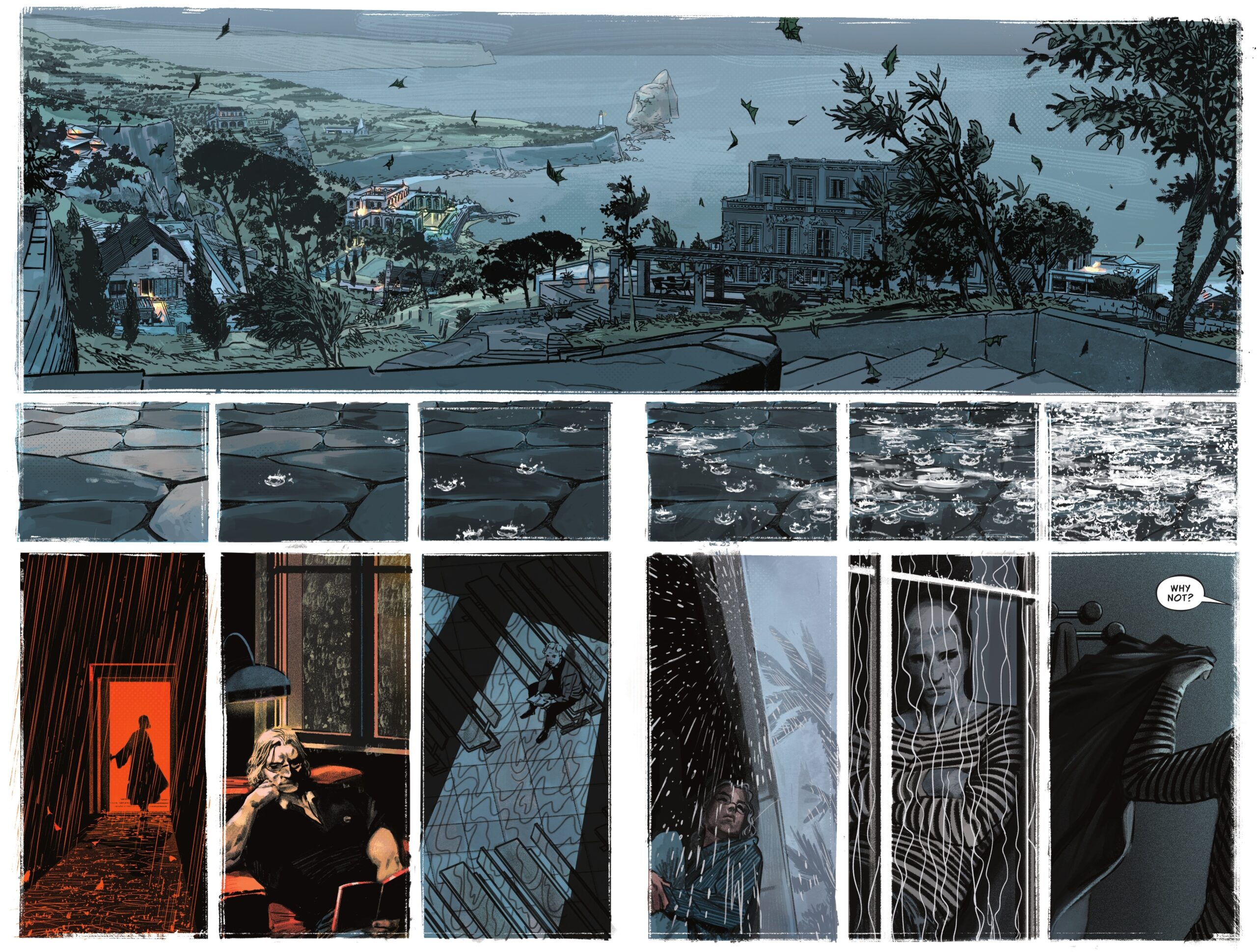
Anyway, The Nice House continues to be a damn great series. A big reason for its haunting power is Álvaro Martínez Bueno’s artwork and Jordie Bellaire’s colors, in addition to the lettering and design work by Andworld Design. It’s one of those comics where every single page – hell, every single panel – seems to have been meticulously conceived and thought through to create just the perfect atmosphere for that specific scene… and yet, the book looks so gorgeous that I find myself flipping through it over and over again and just falling in love with a different visual choice every time.