The times are dark, so I suppose it makes sense to go back to my favorite type of cinema: film noir.
Cinema Purgatorio #18
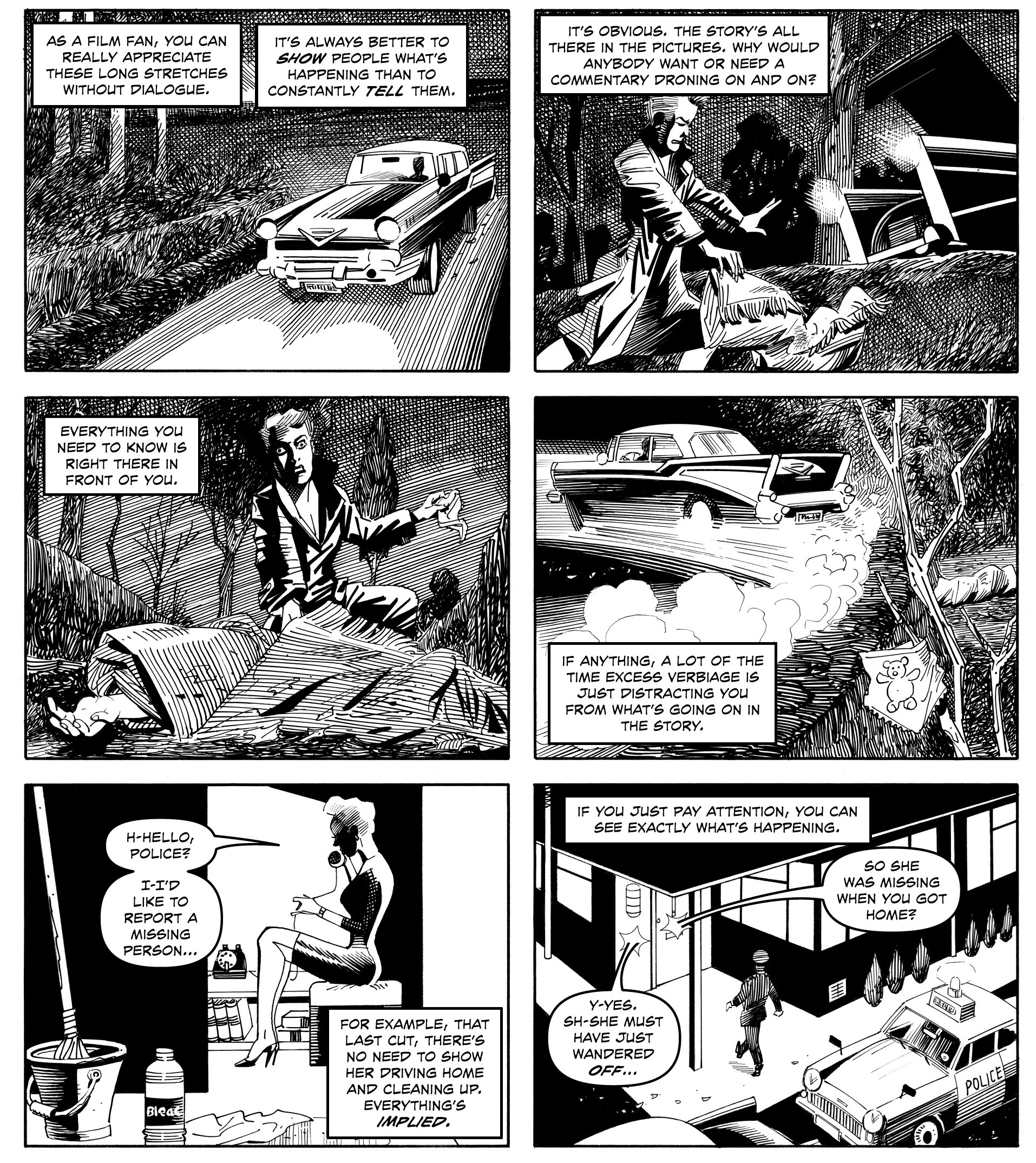
Aesthetically and ideologically, those stark, moody postwar thrillers about chain-smoking anti-heroes, doomed lovers, dirty cops, femmes fatales, and tangled crime plots inspired many of the comic books discussed in Gotham Calling (not least those starring Batman). Hell, they had a major impact across the medium from the start – in superhero comics as well as in other genres – and you can still see many acclaimed creators going back to that source time and time again… Just last year, Peter Milligan had a blast dissecting the tropes of this sort of hardboiled novels and films in the metafictional murder mystery Profane.
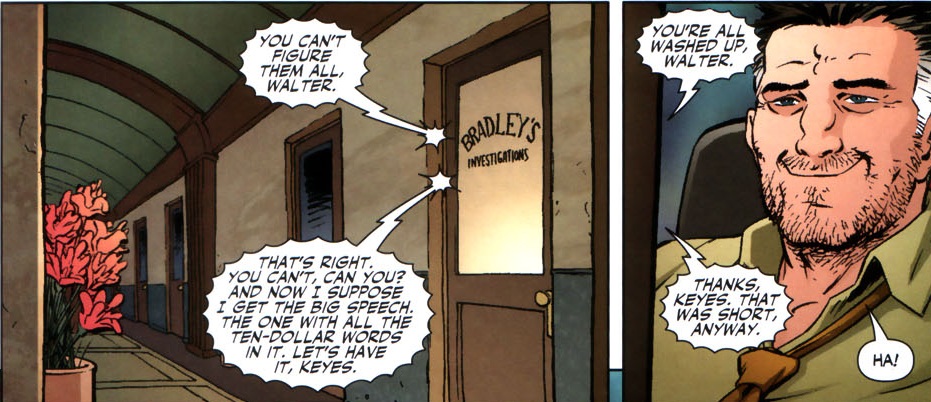
This is such an acknowledged and cherished influence that sometimes you even find the characters themselves rewatching Double Indemnity:
Catwoman (v2) #56
Back in the blog’s seventh anniversary, in 2021, I did a list of my top 50 films in the noir canon, but those are just the tip of the iceberg. I may as well highlight another bunch of gems that didn’t make it to the other post but which are nevertheless strongly recommended for those who’ve already checked out the classics and are still hungry for more…
Like last time, I’m sticking to black & white pictures released from 1944 to 1959 and spoken in English (if you’re in the mood for foreign-sounding noir, track down these beauties instead). However, while all of the following movies sport a cool noir vibe and have at least one stand-out interesting feature, each one succeeds (or partially fails) on so many different levels that it seems pointless to directly compare them, so this list is chronological rather than hierarchical.
To get things started, this week I’m picking 10 movies that *almost* made it to the other list. Even if they ultimately didn’t quite reach the top, they certainly have a special spot in my preferences. In one way or another – and even when they’re not necessarily brilliant movies by conventional critical standards (e.g., watertight plots) – the listed works are at the very least damn fine film noirs that excel when it comes to some of the elements of this captivating corner of pulp fiction.
Fortune and Glory: The Musical
And yes, I know the internet is full of lists of the greatest/essential/iconic/etc noirs and that I’m just adding one more to the pile. But hey, at least the sample below will give Gotham Calling readers an even better sense of what I have in mind when I describe works as noirish – which I often do in this blog!
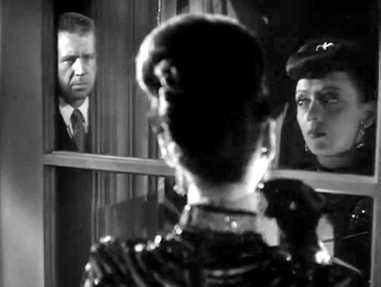
Cornered (1945)
‘As far back as I can remember the men in my family have gotten mad when their wives were murdered.’
In the immediate aftermath of World War II, a former POW searches for the man responsible for his wife’s death (she was a member of the French Resistance sold out by a Vichy collaborator). This extremely convoluted tale starts out as a globetrotting quest, but Cornered eventually settles in Buenos Aires, where almost everyone turns out to be a deceitful schemer and/or a fascist. Having nailed Philip Marlowe in Murder, My Sweet, here Dick Powell embodies an even purer distillation of the angry, tired, confused, desolate film noir protagonist, crushed by a bleak, devious world gone to hell.
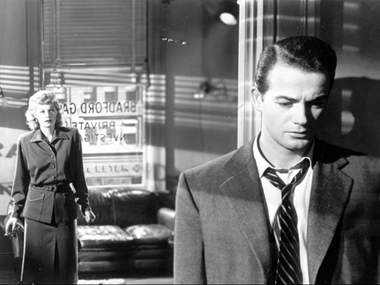
The Dark Corner (1946)
‘One thing led to another, and he led with his right.’
I’ve written about this one before: ‘The Dark Corner doesn’t provide much of a mystery, but it’s still a taut detective story, as private eye Bradford Galt (Mark Stevens) finds himself stalked, threatened, knocked out, and framed for murder. […] Clifton Webb gets the quirkiest lines (‘How I detest the dawn. The grass always looks like it’s been left out all night.’), but Stevens is the one who utters the gritty monologue that justifies the film’s title: ‘I feel all dead inside. I’m backed up in a dark corner and I don’t know who’s hitting me.’’
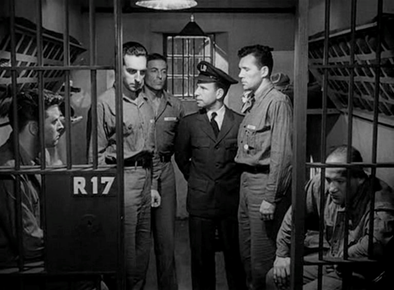
Brute Force (1947)
‘Those gates only open three times. When you come in, when you’ve served your time, or when you’re dead!’
Another movie that’s still fighting the war, somehow, bringing antifascism home to Westgate Prison, where inmates plot and resist against darkly suited guards headed by a power-hungry proto-Nazi. Nasty, very violent, and bluntly political, Brute Force doesn’t lack a sense of humor, but it’s arguably the epitome of the strand of enraged leftist criticism of society found in this type of cinema (also labelled as film gris), which soon got many of its makers blacklisted by Cold War Hollywood.
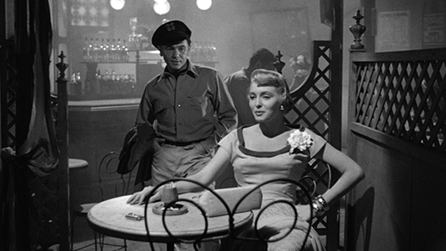
The Breaking Point (1950)
‘No sooner do I get my head above water than somebody pushes me down again!’
Almost every film on this list is about people frustrated with the failed, empty promises of the American Dream, most notably flawed men struggling to find their place after coming back home from the war. Boat captain Harry Morgan, who can barely sustain his family with his floundering sports-fishing business, is yet another addition to noir’s pantheon of hotheaded screw-ups, making one poor decision after another until he ends up in a dangerous smuggling operation that inevitably goes very, very wrong… Adapting (quite differently) the same Hemingway novel as Howard Hawk’s To Have and Have Not, The Breaking Point stands out, among other things, due to a final shot that is a cruel punch in the gut, reminding viewers that, as bad as things look, there is always someone further down the food chain!
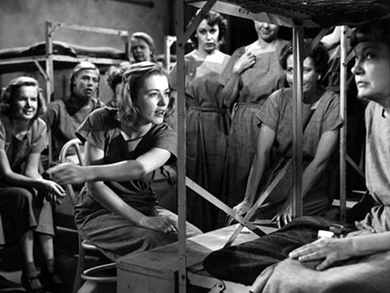
Caged (1950)
‘For that forty bucks I heisted, I sure got myself an education.’
The mother of the women-in-prison subgenre may have set the template for the sleazy exploitation flicks of the ‘70s and beyond (culminating in the awesome comic Bitch Planet), but it’s actually aligned with Warner Brothers’ tradition of social conscious cinema, albeit with all the grittiness and vicious anger of film gris. It’s a feminist take on Brute Force (here it was men, not femme fatales, who led the inmates to perdition), but whereas that former movie dealt with discipline-driven authoritarianism, this one shows how even a liberal reformer can be blocked by corruption, neglect, and a callously unfair system, not to mention an outside world where women’s best hope appears to be putting up with a husband that doesn’t fuck them up too badly. I’ve seen Caged spoofed and referred to as ‘camp,’ but this doesn’t do justice to its disarming frankness, cackling dialogue, and a level of ruthless psychological brutality that probably inspired the prison sequence in V for Vendetta.
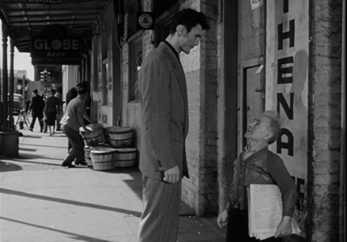
Panic in the Streets (1950)
‘You know, my mother always told me if you looked deep enough in anybody, you’d always find some good… but I don’t know.’ (The reply is even better: ‘With apologies to your mother, that’s the second mistake she made.’)
Once again, it’s not the first time this one shows up in Gotham Calling: ‘although the Red Scare context is […] pretty inescapable when considering Elia Kazan’s Panic in the Streets (where, living up to the title, everyone is on edge as the authorities’ race to stop a (blatantly allegorical) plague coming from abroad and spreading through the working class and criminal underworld), the main allure is the realistic tour through New Orleans’ lowest milieus, stunningly photographed and culminating in one of noir’s most memorable chases, at a coffee warehouse…’
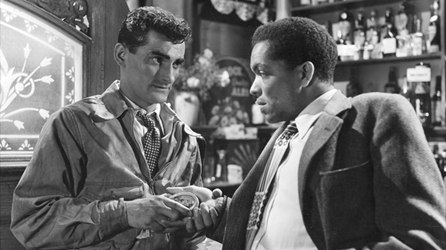
Pool of London (1951)
‘Behold, from afar it gleams like a jewel, but walk within the shadow of its walls and what do you find? Filth, squalor and misery.’
The only reason Pool of London didn’t make it to Gotham Calling’s Top 50 Noirs is because I hadn’t watched this powerhouse of a movie at the time. It follows merchant seamen over a weekend in London as they get entangled both with the opposite sex and with a dodgy smuggling operation. The result is a fascinating hybrid: it comes and goes between a quasi-documentary depiction of the Docklands, a surprising social drama about race, a touching romantic comedy, and a heist thriller with knock-out action. A truly original and special film.

Deadline U.S.A. (1952)
‘It’s not enough any more to give ’em just news. They want comics, contests, puzzles. They want to know how to bake a cake, win friends, and influence the future. Ergo, horoscopes, tips on the horses, interpretation of dreams so they can win on the numbers lottery. And, if they accidentally stumble on the first page… news!’
The first time I watched Deadline – U.S.A., I was blown away by the charismatic acting and witty dialogue, even if I sort of lamented that all this was mostly put in the service of a sentimental eulogy of the press (I had similar feelings about the fifth season of The Wire). Rewatching the film, though, it’s even better than I remembered… It’s not just that I’ve grown to romanticize ethically committed newspapers and to fetishize the background sound of non-stop typewriters; it’s the whole vibrant atmosphere of seasoned pros fighting for and against the world.
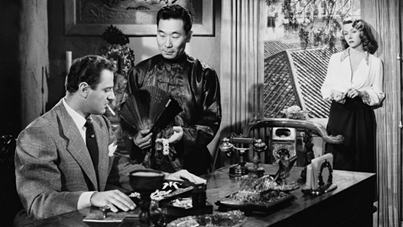
Macao (1952)
‘Besides her obvious talents, she also sings.’
Set in Hollywood’s version of the titular city back when it was a Portuguese colony, bursting with corruption, vice, smuggling, gambling, racketeering, and horny drifters desperate for a buck while putting up with the infernal heat (‘unhealthy for humans’, as a barometer bluntly indicates), Macao is a great example of a flower blooming in the most adverse circumstances. By all accounts the shoot was a mess, with director Josef von Sternberg eventually replaced by Nicholas Ray and the screenplay getting constantly rewritten, in addition to censorship challenges and problematic politics… And yet, the setting oozes with atmosphere and personality, the dialogue sparkles, and the cast sell exactly the sort of world-weary characterization that adorns all the best noirs – not only the leads Jane Russell and Robert Mitchum (talk about chemistry!), but also Gloria Grahame in an underwritten part that she supposedly didn’t want but which she totally knocks out of the ballpark.
Scandal Sheet (1952)
‘You can find a needle in a haystack if you look long enough.’
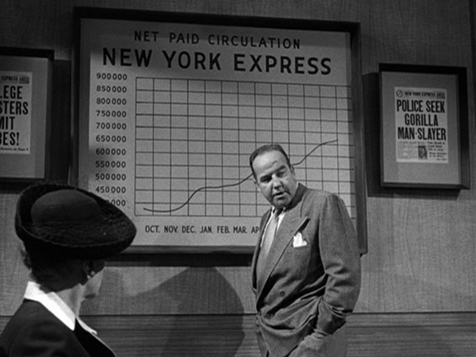
A pungently cynical counterpart to Deadline – U.S.A., this diabolical contraption follows a murder investigation through the sensationalist eyes of a rising tabloid newspaper. The world of Scandal Sheet is so damn venal that even the killer is willing to risk freedom in order to sell more copies!