If you thought things got dark in part 1, you haven’t seen anything yet…
Jinx
This week, I’m spotlighting 10 noirs that probably aren’t on anyone’s list of favorites, but which nevertheless kick ass. If anything, I reckon the fact they’re underdogs should have extra appeal for the most hardcore genre aficionados, who can appreciate that occasional flaws, missteps, and even some crummy execution can actually add to these works’ crooked charm and shady atmosphere. After all, they’re films about imperfections and, to some degree, their power and raw energy derive from the rushed way they were made.
Parker: La proie
Indeed, if ever there was a set of movies that perfectly channeled the context around them… As Toby Miller put it in Spyscreen: ‘Noir is based on a structural homology between its visual style, its narrative, and its conditions of production. Projected shadows, sharply angled lines of light, and an overall chiaroscuro effect match the narrative drive, which concerns a movement between light and shadow, and the B-movie twenty-four-hour shooting schedules of post-WWII Hollywood studios.’
In other words, for all you true fans out there, this is the real stuff!
The Chase (1946)
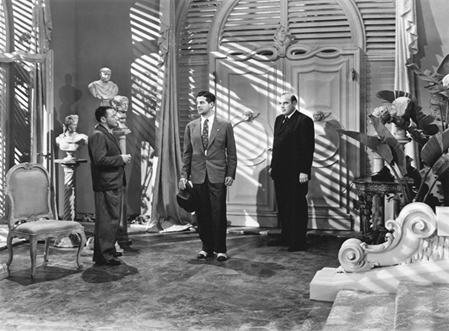
‘Cheap hotels, cheap restaurants, cheap friends… All places are alike when you’re broke.’
I’ll try not to overuse the term dreamlike – or even nightmarish – but it’s such a perfect way to describe this tale of a Navy veteran who finds a wallet full of cash, leading him into the dangerous, decadent world of a rich Miami psychopath with a gimmicky automobile, Peter Lorre for a henchman, and an abused wife obsessed with Cuba. It’s hard to explain what makes The Chase so special without giving away the major twist, but suffice to say that just when things seem to be wrapping up, it’s actually when the movie starts to get really interesting. The ending may have been a shoddy way of getting around censorship, disrupting the source material (a Cornell Woolrich novel), but instead of feeling forced I think the solution aligns beautifully with the overall tone of hazy unreality.
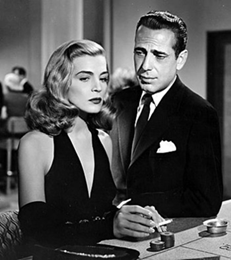
Dead Reckoning (1947)
‘Maybe she was alright. And maybe Christmas comes in July. But I didn’t believe it.’
I’ve written about this one before: ‘When Captain Warren ‘Rip’ Murdock (Humphrey Bogart) investigates the mysterious disappearance of a close friend who served with him in World War II, he finds himself caught in an intricate web of crime, romance, and double-crosses, all covered in shadows and overwrought dialogue. I’m not gonna lie, Dead Reckoning isn’t A-list material. Even at the time, this must have felt like Frank Miller’s Sin City: derivative, contrived, artificial, and trying so hard to be hardboiled that it borders self-parody. But what can I say – I’m such a fan of the genre that if you mix the usual ingredients just right, that’s enough for me.’
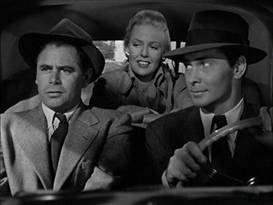
Framed (1947)
‘I couldn’t insult you. That wouldn’t be possible.’
Here is a movie that opens with a guy driving a truck with no brakes downhill into the main road of a California town, effectively setting you up for an exciting ride where the rough-edged protagonist will have to struggle like hell against forces over which he has little control. And, sure enough, that down-on-his-luck drifter (a bitter-looking Glenn Ford) will keep getting messed up by life while trying to get by… It doesn’t help that he has a self-destructive tendency to drink so much he blanks out, especially once he stumbles into a classic set-up involving a couple planning both larceny and murder. Along with a new twist every few minutes, Framed will grab you with the kind of tension (sexual and otherwise) you can cut with a knife.
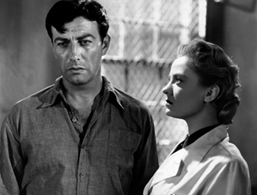
High Wall (1947)
‘I don’t care about neurosis, psychosis, or arterial thrombosis.’
This underappreciated, shadow-drenched psychological piece about a man torn between suicidal tendencies and proving his innocence of a murder charge manages to put a distinct spin on classic genre tropes like amnesia, PTSD, and post-WWII gender relations. As a bonus, we also get plenty of memorable bit players, including the most hilarious attorney in all of noir.
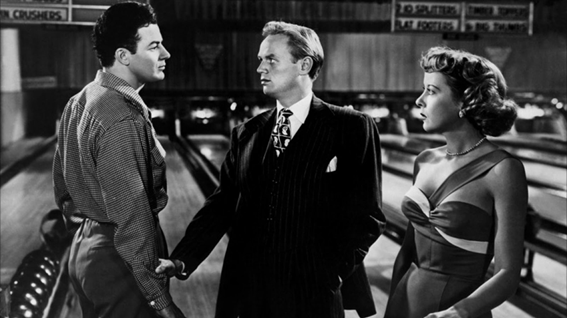
Road House (1948)
‘That’s a nice outfit but you’d better add to it before you go to church.’
Another sadly underrated treasure… Ida Lupino plays a sultry singer who drastically disrupts the relationship between two friends. This may sound like the stuff of romantic melodrama, but the beauty of Road House is that it keeps smoothly transitioning from one type of mood to another, so that by the creepy climax you may hardly recognize your surroundings. And damn it if doesn’t hauntingly pull it off! (Not to be confused with 1989’s Road House, the glorious cult schlockfest where Patrick Swayze plays a super-bouncer.)
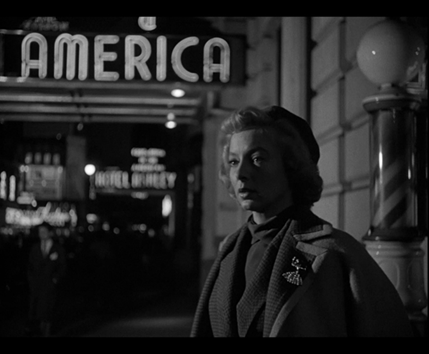
The Killer That Stalked New York (1950)
‘The city’s finest engraved the image of the Blonde Death in their brains and carried a spare just to make sure, then set out to search for the sick animal that might destroy them all.’
The less you know about The Killer That Stalked New York going in, the better, because this awesome film keeps relentlessly moving into surprising directions. So, yeah, you really have to take my word for it on this one…
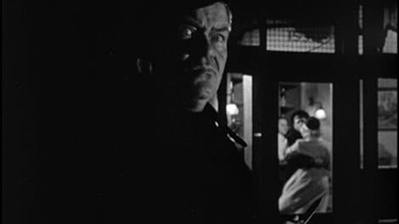
The People Against O’Hara (1951)
‘All right, drink that drink. Drink the whole bottle. And go out and get another bottle and drink that, too. Drink forty bottles. And I won’t bother you. I’ll leave you alone. You can fall up the stairs all by yourself.’
Between the stunning opening and closing night sequences, The People Against O’Hara is a twisty courtroom drama set against the backdrop of the New York docks. Although not as cynical about the authorities as other noirs, the whole thing is solidly written, directed, and acted, with Spencer Tracy as an alcoholic criminal lawyer willing to go to increasing lengths to save his client’s life… The main star, though, is definitely John Alton’s chiaroscuro cinematography.
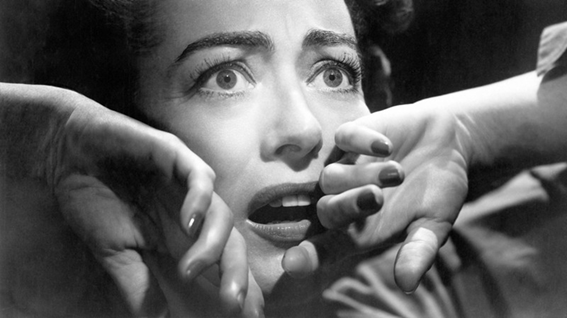
Sudden Fear (1952)
‘Remember what Nietzsche says: “Live dangerously!”’
One good reason to check out this melodrama/psychological thriller is to watch Joan Crawford shamelessly throw herself into the role of a Broadway playwright whose life slowly but surely spins out of control. An even better reason is to just let Sudden Fear carry you as it gets progressively darker, culminating in one of the most noirish sequences of all cinema.
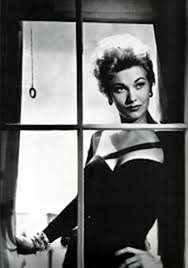
Pushover (1954)
‘Money isn’t dirty, just people.’
After opening with a wordless sequence that quickly establishes the film’s impeccable visual storytelling credentials, Pushover moves on to a nightly tale of lust, voyeurism, and financial anxiety that merges Double Indemnity with Rear Window as an elaborate police stakeout goes off the rails because a detective (understandably) falls head over heels for Kim Novak’s smoldering hot moll.
Crime of Passion (1957)
‘Right now, I’m not thinking about the… neighborhood.’ (Yep, it’s an innuendo, but I admit it works better in context.)
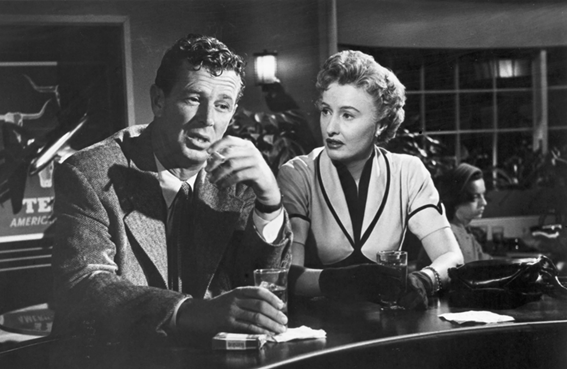
I thought I was on solid ground with a film noir where the reliable Sterling Hayden plays a rugged cop and the awesome Barbara Stanwyck plays a witty newspaperwoman, but Crime of Passion still managed to put an unexpected spin on the material. Basically, it turns out the true crime here is marriage, which can drive a woman insane.
I love noir.