With 2025 already well on the way to becoming a terrifying year, even by recent standards, here is January’s final reminder that comic book splash pages can be awesome:

Casanova: Acedia #4

Assassin Nation #4

Dead Drop #3
With 2025 already well on the way to becoming a terrifying year, even by recent standards, here is January’s final reminder that comic book splash pages can be awesome:
Casanova: Acedia #4
Assassin Nation #4
Dead Drop #3
A gizmo-centric reminder that comic books can look awesome…

Strange Tales #143

Batman/Superman: World’s Finest #15

Superman: Space Age #2
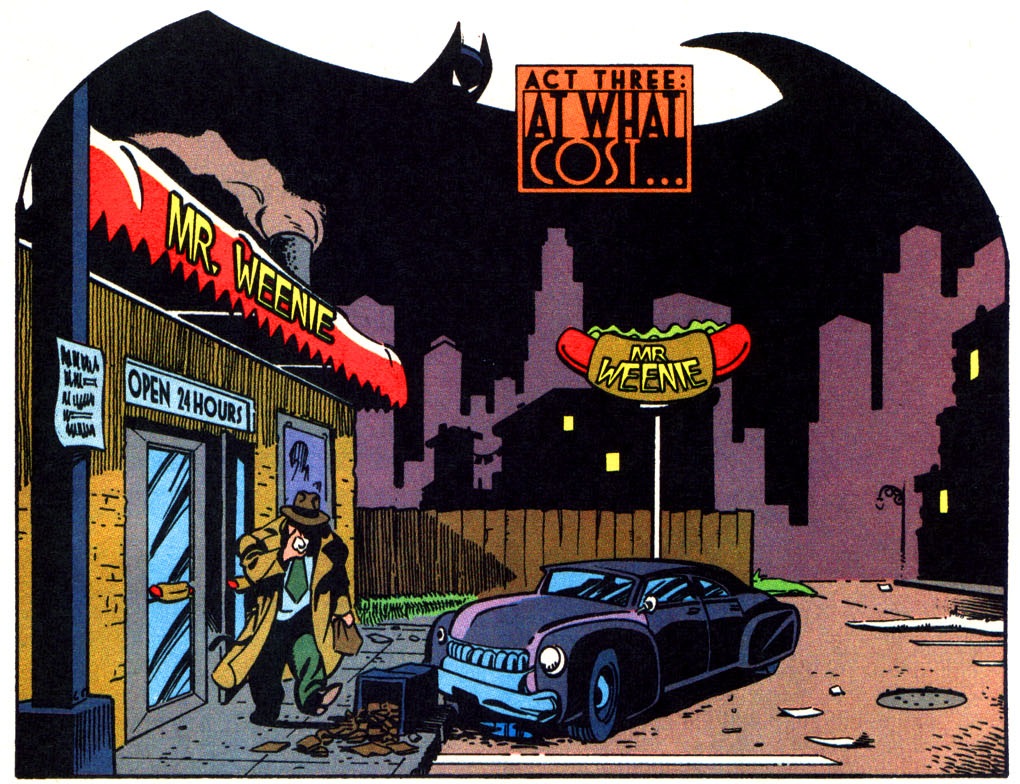
The Batman Adventures #33
Picking up from where I left off last month, let’s have a further look at the evolution of Gotham City’s gruffiest, scruffiest police detective, Harvey Bullock.
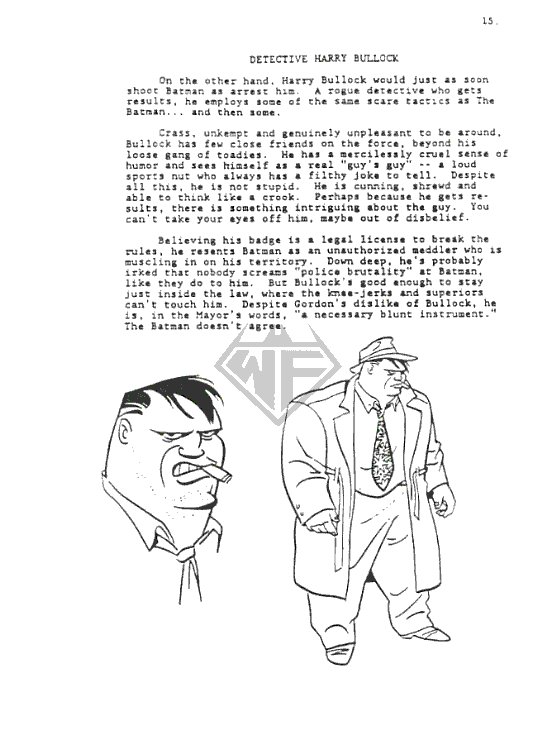
In the 1990s, Bullock gained prominence as a memorable supporting player in the very cool Batman: The Animated Series. Developed by Bruce Timm, Paul Dini, and Mitch Brian, that show streamlined the best elements accumulated over decades of Batman stories into their neatest form – and Harvey Bullock was no exception. The show’s bible nailed him in a nutshell: ‘Believing his badge is a legal license to break the rules, he resents Batman as an unauthorized meddler who is muscling in on his territory. Down deep, he’s probably irked that nobody screams “police brutality” at Batman, like they do to him.’

Niftily redesigned through Bruce Timm’s smooth style and voiced by the great character actor Robert Costanzo, the animated Harvey Bullock was damn funny. In fact, he made such a strong impression that the spin-off comic series The Batman Adventures could afford to get away with jokes based on readers’ mere awareness of Bullock’s abrasive personality:

The Batman Adventures #26
Initially, this take on the character was not too far from the one Chuck Dixon began developing in Detective Comics at the same time (in what was perhaps an editorially coordinated move). Basically, Harvey Bullock came from a grown-up film noir world and sounded hilariously resentful over the fact that he had to put up with all the childish, goofy elements of the Caped Crusader’s universe (not least the colorful themed villains). Another way to look at it is that his demeanor was everything that’s unappealing about cops in real life and so perversely appealing in fiction.
You could still see traces of it by the end of the decade, during the ‘No Man’s Land’ crossover, when Bullock was one of the citizens who stayed behind in Gotham even after the city was abandoned by the US government and became a lawless danger zone:

Batman: No Man’s Land #1
In 2001, however, the official DCU version of Harvey Bullock finally went one step too far beyond the law, courtesy of writer Greg Rucka. After Commissioner James Gordon was shot by Jordan Rich, a disgruntled former officer hiding under a new identity via the witness protection programme, a loyal Bullock retaliated by tipping the Mob about Rich’s location, thus facilitating the shooter’s murder by vengeful criminals. When confronted about this, a few months later, Bullock resigned in disgrace.
The easy political reading here is that the liberal Rucka provided actual consequences to the sort of bad cop attitude the conservative Dixon cynically accepted (or at least played for laughs). Yet I think this development was not only consistent with Bullock’s characterization, but it even made him more interesting at various levels.
For one thing, Rucka wrote it in a way that gave Bullock a peculiar kind of dignity, namely by leaning into his respect and affection both for Gordon and for his partner, Renee Montoya. Before learning what he was up to, we saw Bullock prevent Montoya from pursing her own deadly revenge quest against Jordan Rich, thus protecting her without admitting as much:

Gotham Knights #13
Issues later, when the payoff finally came, Greg Rucka let Harvey Bullock walk out, of his own volition, rather than send him to prison. What’s more, Bullock’s goodbye gesture to Renee Montoya was not only a nice callback to the scene above, but also a begrudging admission that he realized he had crossed the ultimate line and was unworthy of the trust Commissioner Gordon had placed in him…
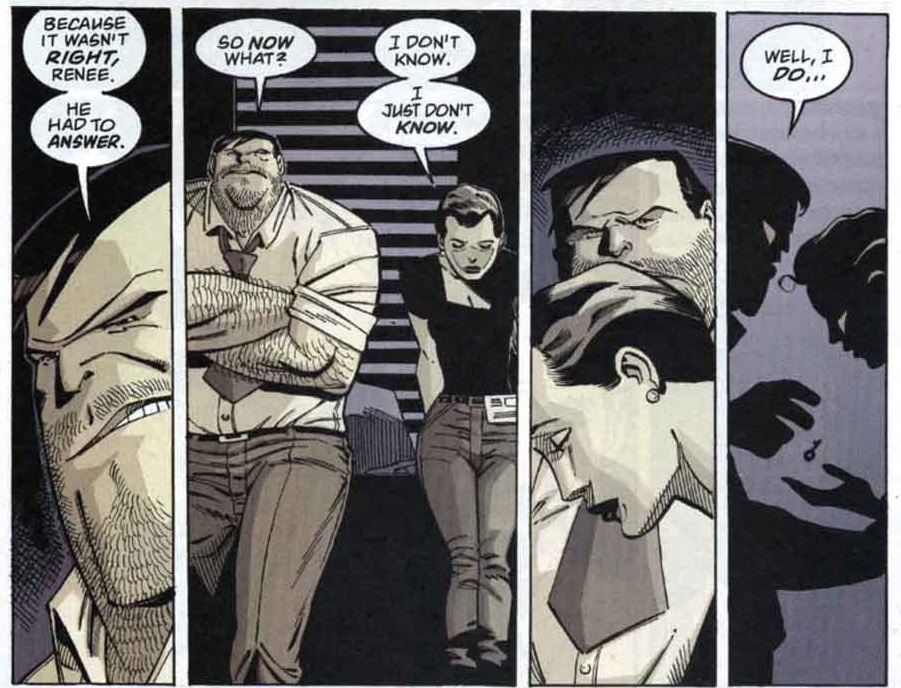
Detective Comics #762
Although we now saw much, much less of Harvey Bullock on the page, which was a shame, I love the fact that his legacy continued to loom over Batman comics. Even in his absence, Bullock continued to be a cast member in spirit.
When Greg Rucka and Ed Brubaker launched the awesome police procedural Gotham Central, in 2003, they reminded readers that the rest of the Major Crimes Unit was still marked by the memory of what had happened to Bullock.
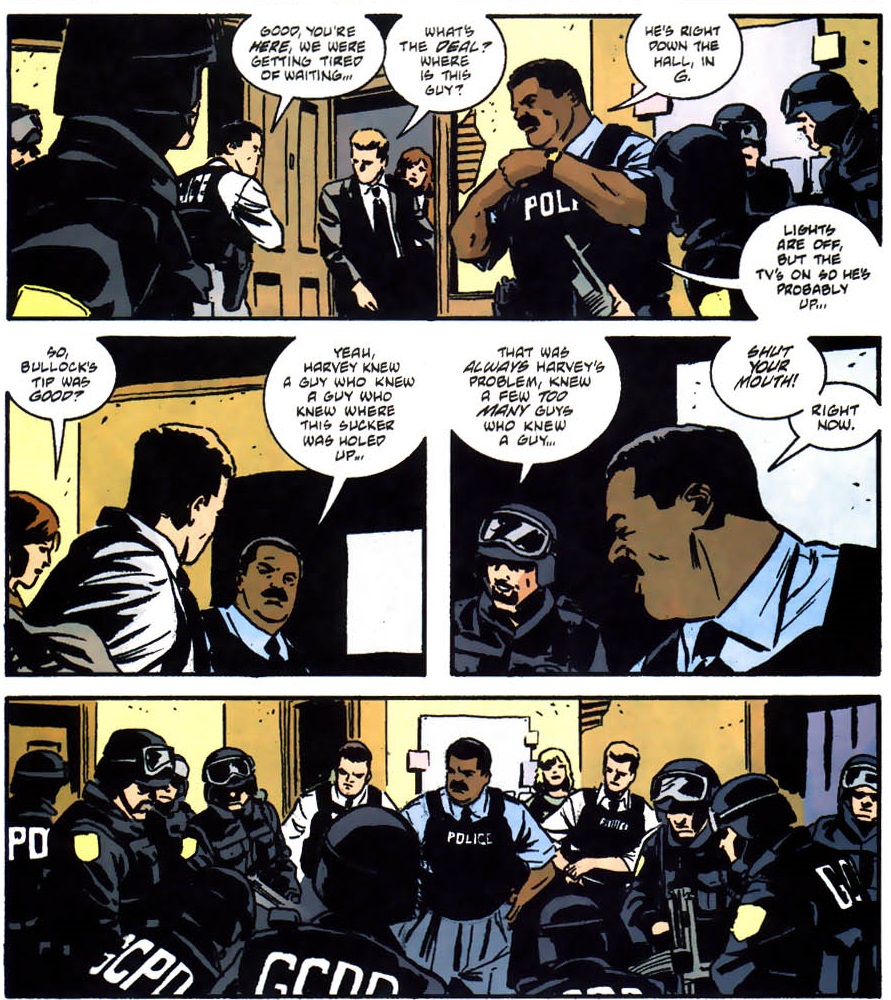
Gotham Central #4
The last ‘silent’ panel speaks volumes, right?
This issue was actually written by Ed Brubaker, who did the best callbacks to Harvey Bullock in his scripts for the series. Perhaps Greg Rucka felt he had already completed Bullock’s arc and didn’t have much to add. Or maybe it was just Brubaker’s own passion for fucked up characters fallen from grace, coupled with his knack for casual banter among pros…

Gotham Central #20
In any case, in 2004, Ed Brubaker finally brought Harvey Bullock back, in body as well as in spirit, for ‘Unresolved,’ an amazing Gotham Central arc in which a couple of cops pick up an old Bullock case and go to him for help.
I’m on the record as considering Brubaker’s work on Batman comics (hell, his comics work in general) as hit-and-miss, but this story is definitely a hit. Everything about ‘Unresolved’ is prime Brubaker doing what he does best, with smart, affecting plot, dialogue, and characterization all around. And when Bullock showed up again after all the buildup, it certainly made the wait worthwhile.
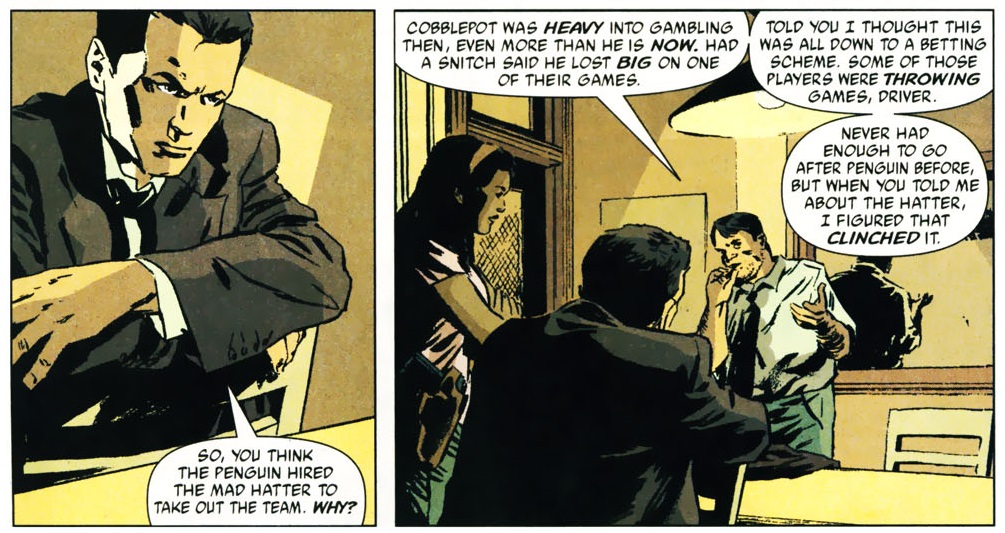
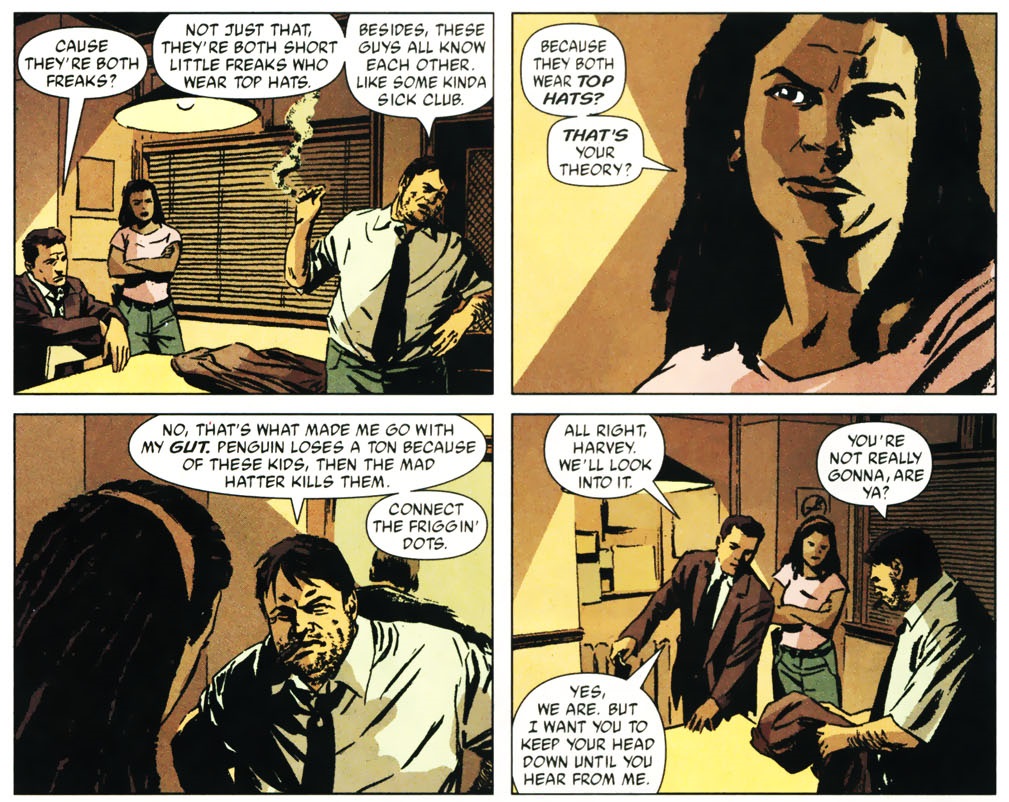
Gotham Central #21
Honestly, I would’ve been fine with the odd Harvey Bullock cameo like this, helping out in an investigation every once in a while, popping up as a cop in flashbacks and as an ex-cop in the present, perhaps even teaming up with private eyes like Slam Bradley or Joe Potato.
Yet Ed Brubaker provided something even better: a perfectly devastating ending to Bullock’s character arc. Decades of fiction have programmed us to trust a cop’s gut instinct, but – true to Gotham Central’s gritty revisionist tone – ‘Unresolved’ proves Bullock wrong… It turns out he really is just a flawed, decrepit, old-school crooked cop whose judgment isn’t always on the money.
Rather than glorifying the trope of the tough policeman who places personal prejudices above the rule of law, the comic has Bullock pull off vigilante justice against the wrong guy (the Penguin) and in the end things get pretty dark:

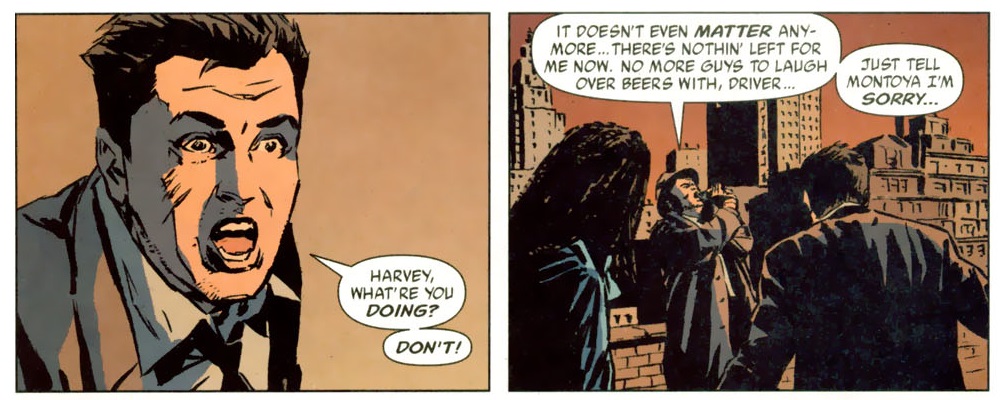
Gotham Central #22
‘Unresolved’ should’ve been one hell of a send-off for Harvey Bullock. But, you know, comics…
Sure enough, it took only a couple of years for the franchise to revert into a mostly familiar status quo. In 2006’s ‘One Year Later’ soft reboot, we find out that – unsatisfyingly off-page – sometime in the previous months ‘Gordon sensed corruption in Gotham at the highest level’ and sent Bullock to investigate, uncovering and exposing so much dirt that, as a repayment, he was allowed back in the force, on the condition that he wouldn’t make a single mistake. I suppose that could be a cool story to tell, but DC never got around to it, so all we were left with was a sense of regression.
The new Bullock wasn’t uninteresting: he was a weary, tragic figure making up for his mistakes and trying to keep straight, despite his cynicism. Nevertheless, his characterization was fairly inconsistent because the thing that had defined Bullock for so long and gotten him thrown out of the police force was that he cut corners because he wanted justice (he was the dark version of Batman and envied him), whereas now he was treated as simply having been bent himself:
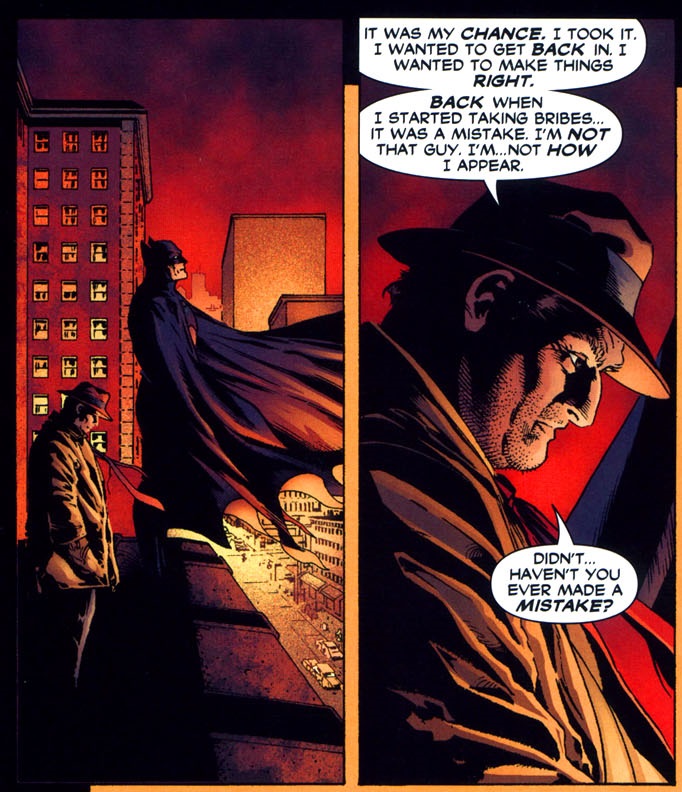
Batman #652
The whole thing felt off for me, so in my headcanon Harvey Bullock became a different version of the character, perhaps having migrated from some alternate timeline (like the Batman: Earth One series) in one of the DCU’s many multiversal events. For me, post-Crisis Bullock was last seen in Gotham Central #22, pissed that he never got as much respect as that guy in a costume with pointy ears.
2025’s second weekly reminder that comic book page layouts can be awesome:

Dogs of War

Ian Fleming’s James Bond #6

Que presente impresentable
As usual, a new year means shifting to a different type of weekly reminders that comic books can be awesome… Having spotlighted covers throughout 2024, let’s kick off 2025 by once again celebrating the art of the glorious splash page!

Shubeik Lubeik

Sweet Downfall #1

The Ludocrats #3
The fact that the second volume of My Favorite Thing Is Monsters finally came out should’ve made the pick for Gotham Calling’s 2024 Book of the Year a clincher. Emil Ferris’ long-and-eagerly-awaited continuation of her dense, brilliant debut opus keeps up the impressive standard of dazzling visuals, sprawling narrative, and thematic breadth set by the first installment.
Once again, Emil Ferris resorts to the device of stream-of-consciousness ballpen drawings on a notebook paper of a grade-school fan of old horror movies and comics to compellingly engage – in quirky, brutal, and haunting ways – with topics ranging from classic art to gender norms, from the Nazi Holocaust to life among the underclasses of 1968 Chicago. There is an oddly timeless feel to the book, although I suppose it also taps into the current cultural moment, as some the most enthralling works of last year likewise used nostalgia-tinted horror imagery to translate existential anxieties with touching creativity (from David Small’s Eisneresque anthology The Werewolf at Dusk and other stories to Jane Schoenbrun’s beautifully eerie film I Saw the TV Glow). And while the shock of the previous volume’s inventiveness and originality isn’t there anymore, Ferris’ assured experimental storytelling and commitment to turn *every* *single* *page* into a mini-masterpiece make this a highly rewarding and affective read, as we get to delve deeper into the protagonist’s fucked up family life and into the investigation of her neighbor’s mysterious death. The two books of My Favorite Thing Is Monsters are instantly recognizable as fundamental contributions to the medium that I will no doubt revisit over time.
Still, if I’m to be honest, the most fascinating read of 2024 was actually a reprint…

Back in 1948, (pre-Marvel) Timely Comics were throwing all kinds of shit at the wall to see what stuck, so somebody came up with the idea of doing a romcom series about Venus, the Goddess of Love, coming to Earth (initially from the planet Venus?!) and working for a beauty magazine, where she fell in love with her boss, Whitney Hammond. Things only got more bonkers from there, as, for the next few years, a host of writers and artists shifted the comic from genre to genre, turning it into an incredible time capsule of evolving trends during that wild postwar interlude when superheroes’ popularity had lost the initial momentum and publishers were eagerly searching for the medium’s next big thing.
The series’ first nine issues had been collected in a volume over a decade ago, as part of Marvel’s Timely and Atlas Masterworks line, but for some reason those folks never got around to republishing the rest of the run, which was a shame because that’s where things got really strange and experimental. Fortunately, in the meantime, Fantagraphics has struck some kind of deal with Marvel, so I finally got to feast my eyes on this Golden Age gem in the form of a stunning-looking hardcover, edited by Michael J. Vassallo.

I never knew quite what to expect next while going through this book. Every time I thought I got it pegged, to some degree, it threw me off with an oddball story decision or a shockingly vicious line… If one tale is about a jealous secretary trying to trick Venus in order to try to get her job and marry Hammond, in the next one Venus is interviewing a scientist and so she gets on a rocket and flies to the moon (in 1950), where there is a volcano eruption and she has to bargain with Jupiter for help.
The stakes keep varying wildly, occasionally reaching the levels of a Superman comic, even if Venus’ solutions don’t usually rely on superhuman strength, but rather on her ability to manipulate people into falling in love. There isn’t exactly a formula, although the early stories do feature recurrent elements: Della the secretary scheming to discredit Venus in Hammond’s eyes, men doing stupid things (including destroying the world) because they get horny for our drop-dead gorgeous heroine, and Venus using her connections to the Roman pantheon (and sometimes the Norse pantheon, because why not) to get out of trouble.
And as if this wasn’t enough to make for a fun reading experience, the volume features lovely art by Werner Roth and, among others, a young Gene Colan. In fact, there’s an amazing roster of talented artists whose craft and professionalism elevate the material above mere campy shenanigans and into something that feels like an engagingly unique combination of enmeshed creative and commercial forces.

(Sounds like a kooky sitcom, right? Well, there’s mass murder in the next few pages…)
Atlas Comics Library no.2: Strange Stories of the Supernatural – Venus, vol.2 is clearly a labor of love and a treat for comic book fans, with thick paper, carefully restored colors, and wide enough margins for each page to be easily and fully visible in all its glory (as opposed to the annoying tendency in comics collections to fill the whole surface, thus obscuring some of the art or dialogue near the binding, where pages converge). If you’re reading this blog, you probably know I love old-timey covers, so it will come as no surprise how much of a kick I got from staring at these massive pages, with their neat mise-en-scène and taglines like ‘There was only one way to learn the horrible secret of the TOWER OF DEATH! You had to die, first!’
Plus, not only do we get a typically informative introduction by Vassallo, but also a reproduction of the original issues in their entirety, complete with the adverts. I’m sucker for this sort of stuff – the ads seem even more time-bound, telegraphing the era’s understanding of what was considered appealing for teenage girls, although not always in a linear way… Some of their values and assumptions aren’t so different from the ones in today’s publicity, but the thing is that they’re way more shameless and irony-free.

(And just wait until you see the ad for bras, a few issues later…)
Venus also contained unrelated filler material in the middle of each issue. Some of this were prose pieces of various genres, ranging from down-to-earth love stories (in ‘A Chance For Happiness,’ what I assume is a male writer has written a tale from the perspective of a woman in love with a male writer) all the way to supernatural thrillers (‘The Isle of No Return’ has got to be a Lovecraftian tribute/pastiche, hence its closing line), including a couple of paranoid tales typical of the zeitgeist (‘The Madmen of Mogan’ and the H.G. Wells’ rip-off ‘Death to the Hairy Monsters!’).
Other short stories are comics that share nothing with the Venus strip other than some superficial aesthetics, contributing to the general sense that editors were willing to keep trying out different stuff all the time. For instance, ‘The Madman’s Music’ is a chilling, quasi-poetic gothic yarn by Pete Morisi and ‘The Last Rocket!’ is a space opera that crams a mix of Star Wars and The Hitchhiker’s Guide to the Galaxy into just three pages… The latter is as frantic as it sounds, although Joe Maneely hilariously draws it in the most deadpan style:


To be fair, at least ‘The Last Rocket!’ has a weirdness-meets-romance-with-a-straight-face vibe that doesn’t feel entirely out of place. In fact, the series did take a hard turn to science fiction in the next issue. Tapping right into my passion for 1950s’ sci-fi, we get a tight little spy yarn within a robot rebellion, followed by a trippy adventure in which Venus is reduced to the size of an atom and becomes a prisoner in a scientist’ brain.
Hell, even before that, the issue opens with the end of the freaking world, showing us that the Earth has veered off its axis and is heading towards the sun, thus anticipating both The Twilight Zone’s ‘The Midnight Sun’ and The Day the Earth Caught Fire, including this terrifying atomic echo:

Now, the artwork notwithstanding, I’m not saying these comics hold up to being judged by conventional standards. Their plots are nonsensical (with incoherent behaviors, unclear motivations, baffling developments, loose ends) and, obviously, there is often an undercurrent of sexism at play in the way women are treated and depicted (as well as occasional racism, like in the ecumenical orientalist fantasy ‘Trapped in the Land of Terror’). However, if you’re willing to appreciate the comics as pop art surrealism, with a freewheeling, dreamlike flow of wacky ideas and memorable imagery, then Venus is an absolute hoot.
That said, it’s with issue #15 that the book takes a leap from cool to awesome. Bill Everett, who by then had assumed the writing, drawing, and lettering of all the Venus main features, turned the series into a pre-Lynchian horror book. If, at the time, EC was putting out tautly constructed short horror stories (which Fantagraphics has also been collecting in great books like Fall Guy for Murder and The High Cost of Dying), Everett delved into the sheer disturbing eeriness of unexplained setups, uncertain payoffs, and open-ended mysteries… The average tale would finish with Venus as befuddled and as creeped out as the readers, still unsure why dolls were bleeding in the previous panel and honestly concluding that ‘we’ll never know.’
Also, the lettering was much more creative:

Marvel fans will probably know Bill Everett as the creator of Namor the Sub-Mariner (to which he returned decades later, even penning a crossover that brought back Venus from obscurity, in 1973) or, more likely, as the co-creator of Daredevil. His stint on Venus, though, is the kind of run you get in comics every so often when someone comes along and memorably redefines a property through their bold personal vision.
Everett was not afraid to mess with whatever loose formula had been in place. In fact, through his inconsistent characterization, I’d argue he made the series much more progressive in terms of gender politics. Della stopped being defined as a jealous secretary and Venus herself, instead of asking gods for help all the time, became more active and even got some zingers (‘Death is cold, sir… but I assure you I’m very warm now!’).
Rather than fawning over Whitney Hammond, Venus assumed the primary role of paranormal investigator, halfway between John Constantine and Hildy Johnson, from His Girl Friday. She was now a committed reporter who defiantly chased after each hard-hitting story (for a beauty magazine) and no longer took shit from the condescending men around her.

Horror and romance can actually work quite well together. In comics alone, there are plenty of magnificent examples, whether it’s obscure short stories like The Vault of Horror’s ‘Reunion’ or avowed classics like Swamp Thing’s ‘Rite of Spring.’
However, Bill Everett soon straight-up dropped Venus’ romance angle, except for a jarring bit in the Cold War monster epic ‘The Stone Man!’ (and, I suppose, the unforgettable final panels of the mind-boggling ‘The Kiss of Death!’). For the most part, Everett just dived into full-fledged horror, filling the issues with atmospheric artwork, macabre grotesqueries, and an increasingly dark tone. Perhaps he needed to get it out of his system, as expressed in the metafictional – and possibly autobiographical – tale ‘Cartoonist’s Calamity!,’ about a comic book author who is literally haunted by the freaky creatures he draws:

(I would be amiss if I didn’t point out Venus is wearing a pretty sweet outfit.)
Venus would go on to be retconned into the main Marvel Universe, most notably through Jeff Parker’s and Leonard Kirk’s enjoyable Agents of Atlas, in 2006, but these pages suggest a whole different type of alternate history. If pre-Code Hollywood was batshit insane, the same can be said for many of the books made right before the comics industry accepted the CCA’s censorship, in 1954. For a few years, publishers were no longer targeting just kids, yet they weren’t sure what exactly they were doing instead, so they let creators experiment with all kinds of crazy shit. And this volume is a wonderfully entertaining reminder of how comics could’ve soon evolved in offbeat and much more imaginative ways if only they had been let loose for longer…
Hell, these read like just the sort of comics that would appeal to Karen Reyes, the protagonist of My Favorite Thing is Monsters!

This year’s final – and crowded – reminder that comic book covers can be awesome…
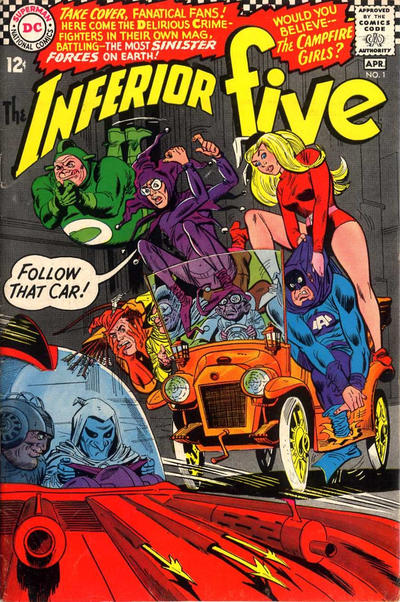
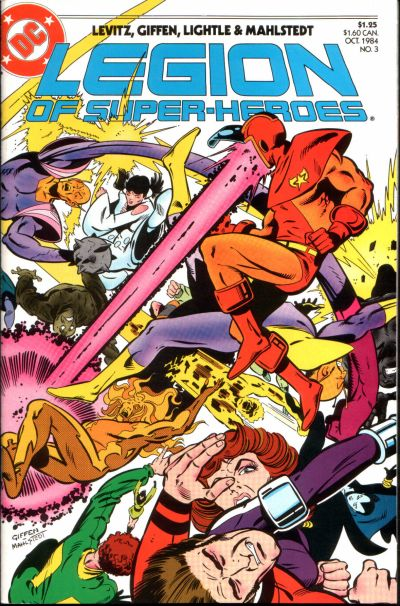
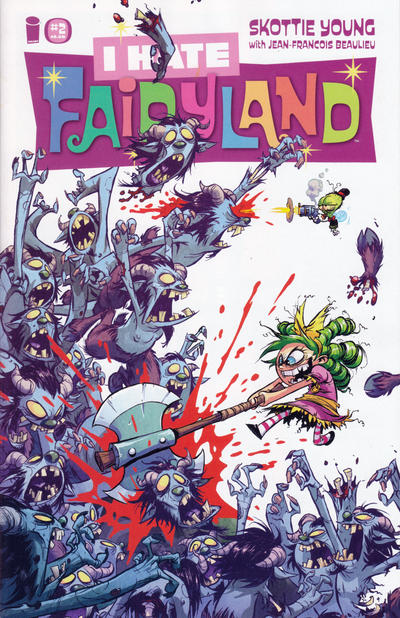
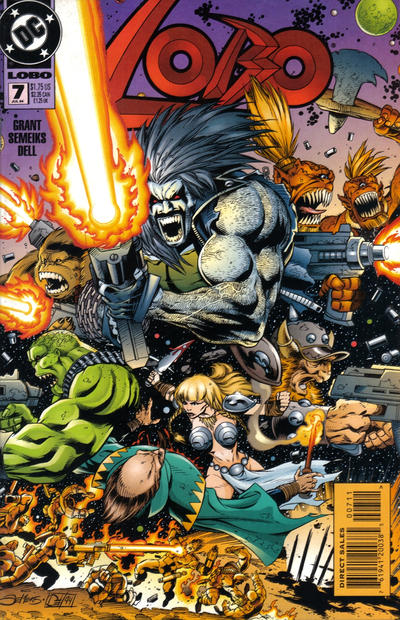
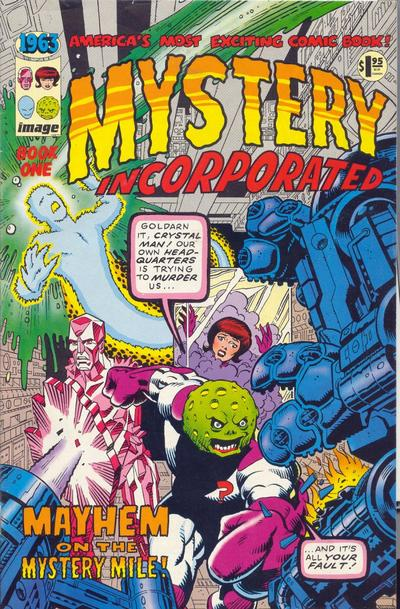
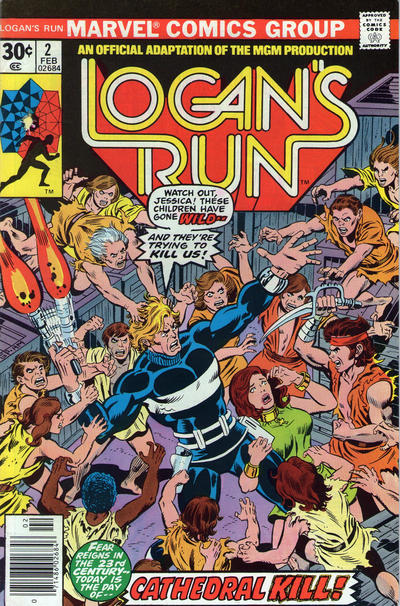
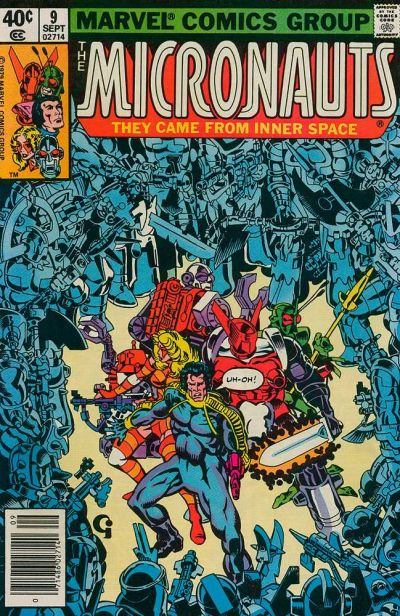
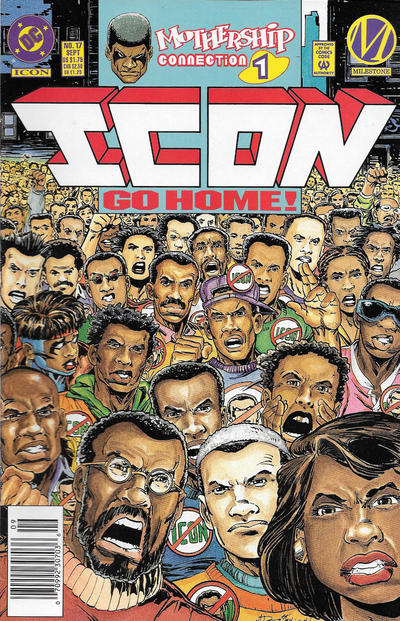
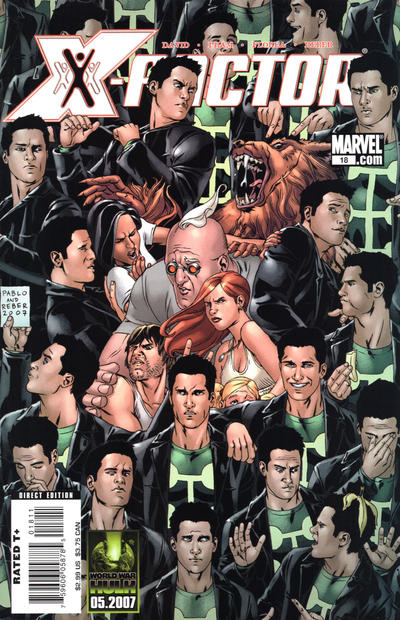
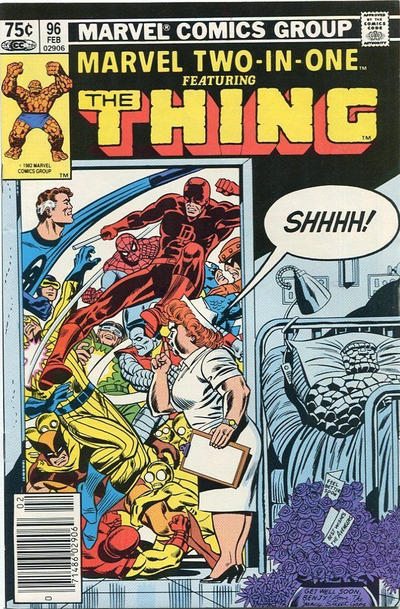
Just in time for christmas, here is one more tribute to the beauty of covers with facial close-ups:


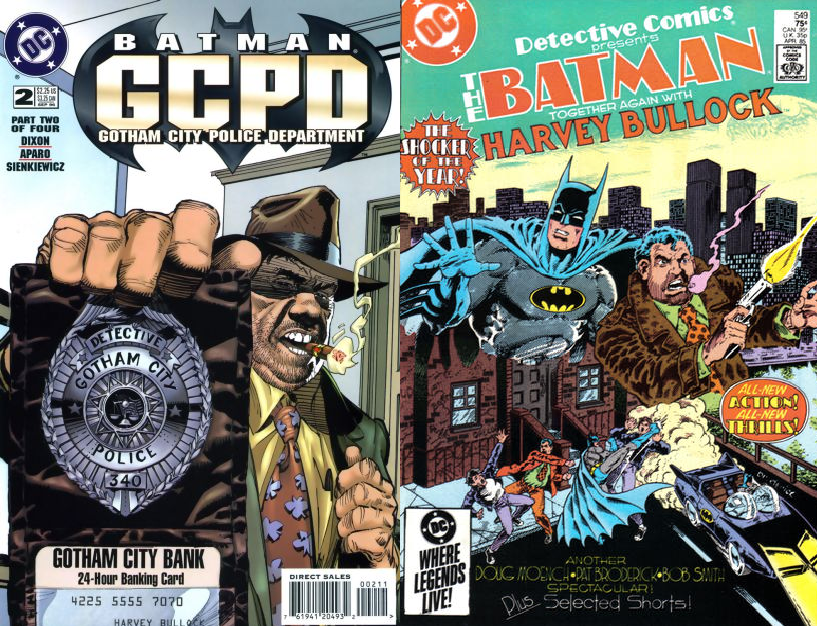
Harvey Bullock is one of the most beloved supporting characters in Batman’s cast, probably because he is such a fun counterpoint to the Caped Crusader: a cigar-chomping, donut-munchin’, overweight, unkempt police detective with a penchant for flashy ties and massive sandwiches who often finds himself dealing with the same psychopathic criminals as Batman, but with a whole other approach. I also think Bullock benefitted from a set of interesting character developments in his first few decades, which are the subject of this post.
Bullock became a cast member in Batman comics in 1983, courtesy of writer Doug Moench and artist Don Newton, although every true geek knows his first appearance actually took place almost ten years earlier, in ‘Judgment Day!’ (Detective Comics #441). Sure, GCPD Lieutenant Bullock made only a minor appearance in that previous story, but it’s hard to assume Moench and Newton didn’t have him in mind, given the blatant similarities in looks and attitude:
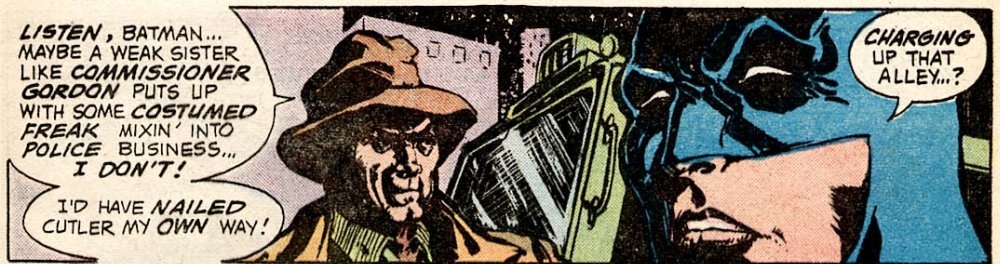
Detective Comics #441
Still, 1983 is the obvious foundational moment, namely the epilogue of ‘The Most Successful Species!’ (Batman #361), when Harvey Bulock first belches and storms his way into Commissioner Gordon’s office.
The premise of this storyline is that Mayor Hamilton Hill, who can’t stand James Gordon, promotes Bullock to assistant of the commissioner just to screw with poor Gordon…
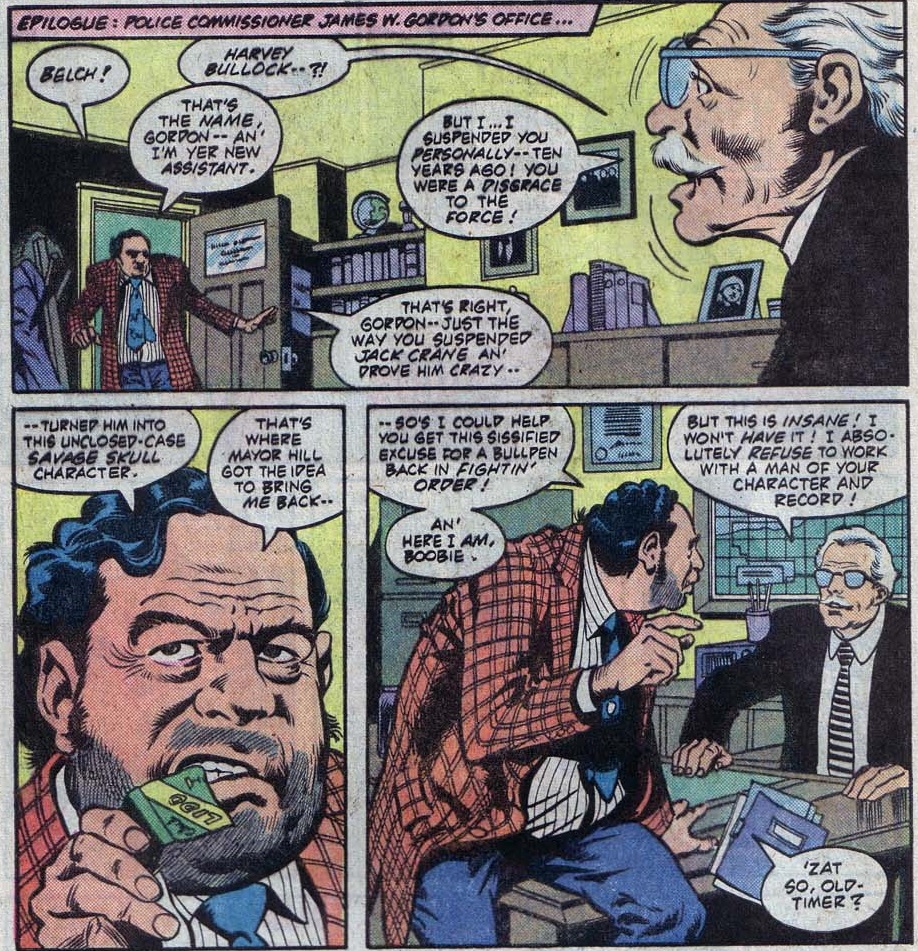
Batman #361
It was just a one-page appearance in this issue and, yet, look at the way Harvey Bullock imposes himself. It’s not just that he takes over space with the close-up and then the foreground positioning… His large body, rugged looks, and abrasive attitude immediately present him as a force of nature to be reckoned with.
What is fascinating about Moench’s version of Harvey Bullock is that what could’ve been a one-note opponent actually keeps evolving, either changing himself or challenging our perceptions. The ongoing ambiguity about this guy (how dirty is he? how scrupulous is he? and how much of a beast is he? is he for real?) makes Bullock one of the most engaging characters to read about in a cult-worthy run that has a pretty good supporting cast all around.
At first, Bullock is so suited to the role of being a pain in James Gordon’ ass that he almost kills the commissioner with his doucheness:
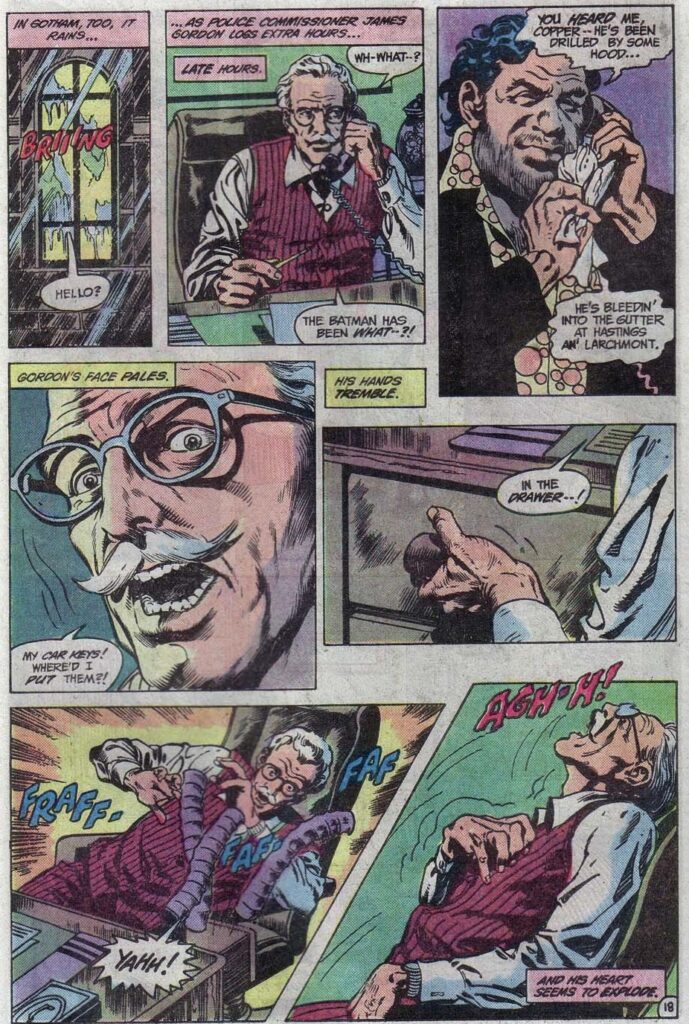
Batman #364
This prank sends Gordon into a coma (to be fair, by then the commissioner’s poor health had been foreshadowed in the pages of Batman and Detective Comics for quite a while). It’s at this point that Harvey Bullock, feeling guilty, has a change of heart and switches allegiances from Mayor Hill to Commissioner Gordon. As he later explains to the mayor (in a badass confrontation scene, in Detective Comics #546), Bullock only played along with Hill’s schemes for his own reasons all along: he thought the commissioner had gotten ‘too soft,’ but in the meantime he realized that ‘in his sleep, Gordon’s a better cop than I’ll ever be.’
Bullock eventually also strikes a nice rapport with the Dark Knight and, particularly, with the second Robin, Jason Todd, starting with their bonding in the excellent ‘Port Passed’ (Detective Comics #554).
But the twists don’t stop there…
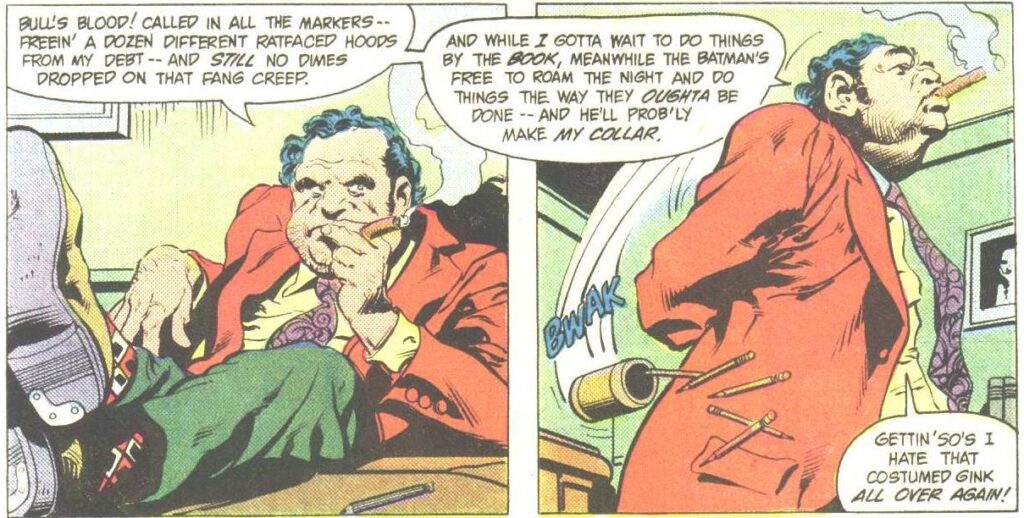
Detective Comics #539
(He knocks out the pencils even when he’s alone, so it can’t be all an act… or can it?)
When Commissioner Gordon doesn’t support an investigation into the city’s new gang boss, Dr. Fang, Harvey Bullock seems to go on the take, out of sheer resentment, only to then reveal this was all part of a sting operation.
And later still, Hamilton Hill decides to get revenge on Bullock because of his betrayal, cutting a deal with Dr. Fang’s old crew whereby Fang will get released if they kill Bullock, leading to this nifty sequence:
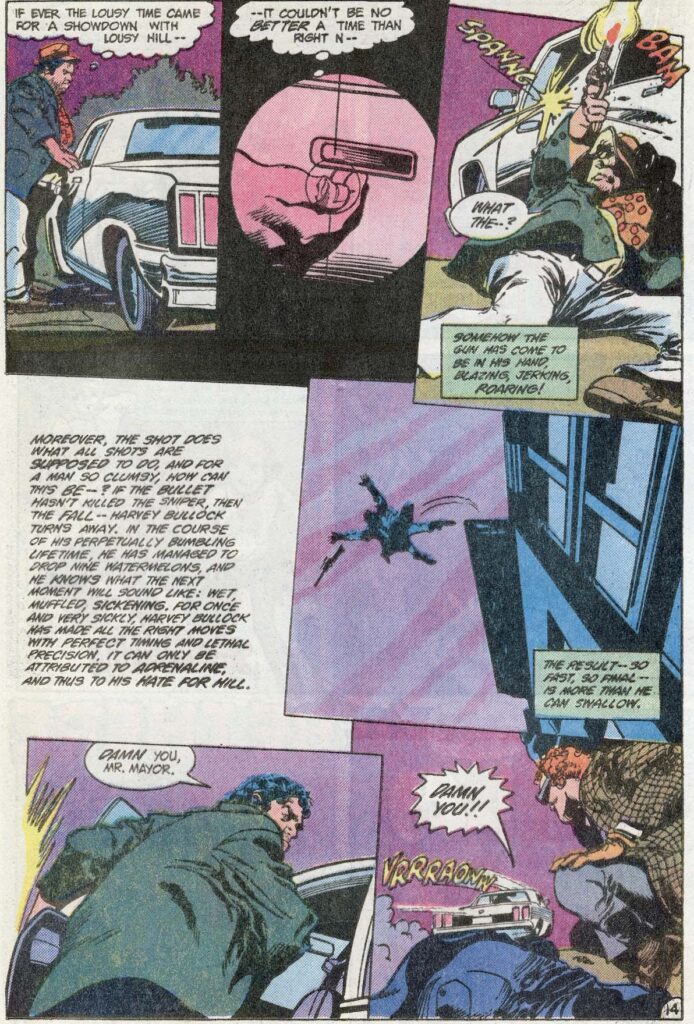
Detective Comics #546
Look at the smooth way in which artist Gene Colan, while going nuts with the tilted angles (as usual), has Bullock shift – Jackson Lamb-style – from a bulky figure with bad posture into a surprisingly agile man of action (Colan isn’t just a master of horror comics!).
Likewise, Doug Moench’s florid narration in the page above highlights a key component of the mystique of Harvey Bullock during this initial period. On the one hand, Bullock is frequently defined as klutzy and even buffoonish to the point of slapstick…

Vigilante #44
On the other hand, however, Harvey Bulock also comes across as a macho, old-school cop who belongs in Gotham City’s scuzzy streets, just as he would feel at home in a 1950s’ film noir thriller, with all the darkness that comes with it, including a fancy for violent interrogation methods:
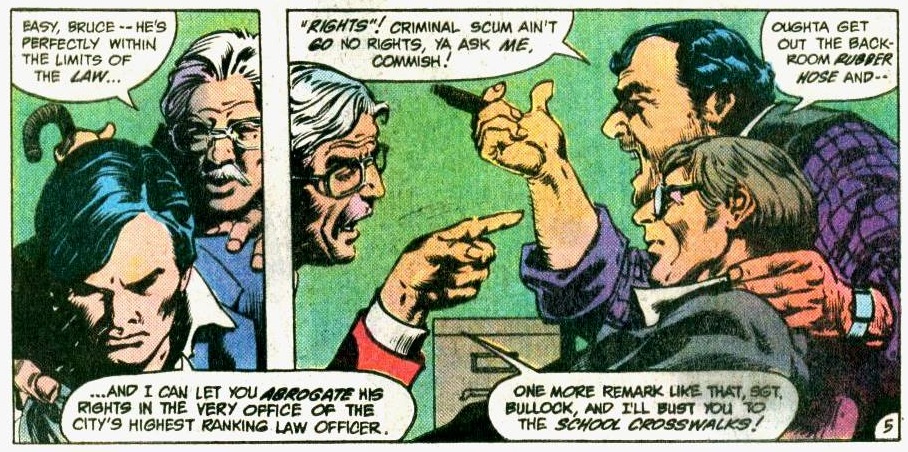
Detective Comics #534
It wasn’t just Doug Moench that exploited the sleazy, revolting potential of this figure. During their legendary runs on Swamp Thing, Alan Moore and Rick Veitch did a stellar job of unifying various of corners and concepts of the DC Universe under a relatively coherent, grim horror tone. And so, sure enough, they memorably brought Harvey Bullock into their nightmarish vision:

Swamp Thing (v2) #51
Moench addressed the character’s apparent contradictions in the great ‘Dr. Harvey and Mr. Bullock’ (Detective Comics #549), where we learn that Harvey Bullock’s bull-in-the-china-shop posture is, at least in part, an act. For all his clumsiness and tough guy bravado, Bullock has a delicate and contemplative side as well, represented by a tidy apartment decorated with classic movie posters:

Detective Comics #549
Needless to say, what I love about this reveal is the notion that the reason Harvey Bullock looks and acts like a cop in old crime movies is because he deliberately models himself after classic Hollywood characters!
Sadly, nobody else picked up on the suggestive distinction between ‘Harvey the man’ and ‘Bullock the cop,’ but at least his passion for classic cinema has remained a character trait over the years. He often references Hollywood movies and stars, his apartment is typically shown to be full of posters, and in Checkmate! #15 we learn he has decorated his office in a similar manner (namely with posters of The Big Sleep, Double Indemnity, and The Ox-Bow Incident).
In the late ‘80s, writer Paul Kupperberg brought Harvey Bullock into his own corner of the DCU. In the last issues of Vigilante, Commissioner Gordon, still uncomfortable with Bullock’s style, had him transferred to a secret federal agency. This security agency later became Checkmate and had a whole series devoted to it, with Bullock as one of its chiefs (codenamed ‘bishops’).
Kupperberg ran with the version of Bullock as a clumsy slob and a compulsive eater. He was also racist:

Action Comics #598
You’d think Bullock would be out of his league in this whole cloak-and-dagger setup, if nothing else because, as you can see in the picture, he was now expected to shave and to dress more formally. Nevertheless, I think he fit in quite well in Checkmate! – we see him bending the rules (leading to a nice payoff in #8) and there is even a romantic subplot (#19-22), so he continued to grow as a character inasmuch as we kept seeing slightly new sides of him.
Not long after Checkmate! came to an end, Doug Moench brought Bullock back to Batman comics in 1992, now partnered up with Renée Montoya in the Major Crimes Unit attached to Commissioner Gordon’s office. At first, he was still the same bumbling wiseass…
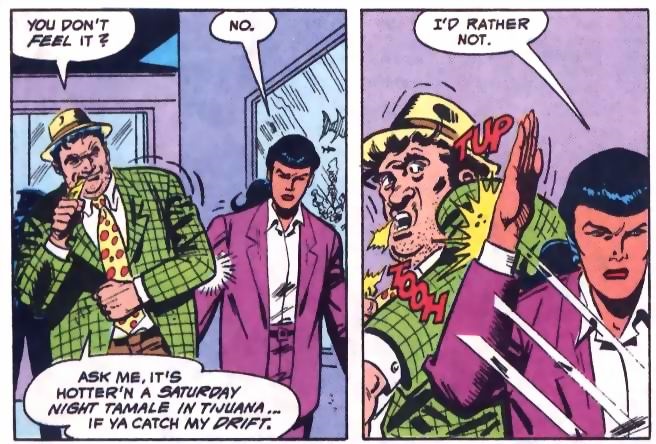
Batman #482
In fact, over the years Doug Moench largely stuck to his original conception of the character. The whole bull-in-a-china-shop angle was literalized in ‘The Bomb, the Bull, the Butler & the Bat’ (Batman Chronicles #23), in which Harvey Bullock literally went into a china shop.
Moench wrote one of Bullock’s most devastating issues, back in 1995. After being put in a coma by the KGBeast in the post-Soviet crossover ‘Troika,’ Bullock had a very ill-fated romance with the nurse who had taken care of him, in the heartbreaking ‘Fades to Black’ (Batman #520). Perhaps to compensate, three years later Moench offered the character a second chance at love in the awesome ‘Dead City’ (Batman #559), set in the aftermath of Gotham’s earthquake and thus signaling a glimmer of hope among the encroaching chaos.
Before that, there was also the period when Batman found himself out of the loop – having had a fallout with both Commissioner Gordon and his replacement, Commissioner Essen – so the Dark Knight started working more closely with Harvey Bullock, who agreed to carry a bug for him, letting him in on his investigations. Even as Bullock changed allegiances over the years, though, there remained a certain coherence in Moench’s scripts. This Bullock was a cop, through and through, and there was nothing he respected more than copness:
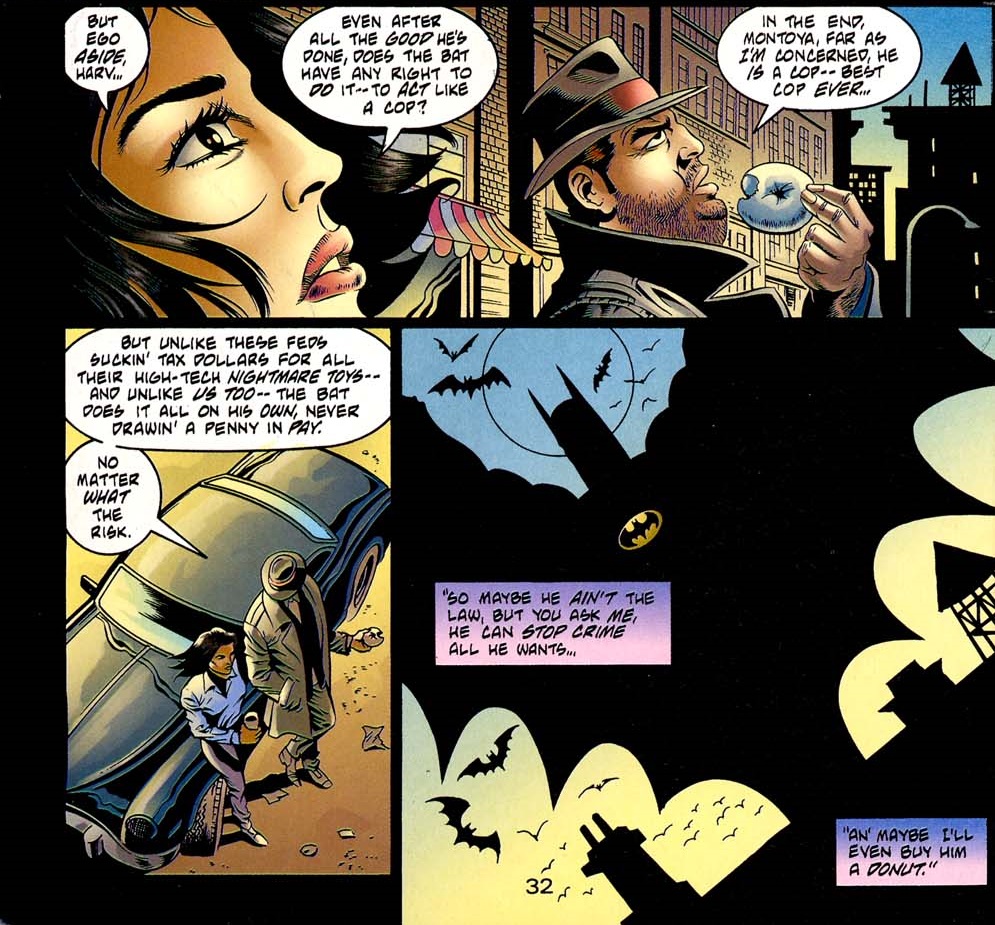
Outlaws #2
Yet Moench wasn’t the only one writing Harvey Bullock. In fact, when it comes to ‘90s comics, I’d argue he wasn’t even the character’s most defining writer anymore.
That would be Chuck Dixon, who did some of his career-best work at the time and who really fleshed out Bullock’s persona as soon as he started writing Detective Comics, early in the decade, dropping the original ambiguity in the name of a clearer, harder-edged psychology. In particular, the super-cool whodunit ‘A Bullet for Bullock’ (Detective Comics #651) pretty much defined Dixon’s take on the character and on his relationship with Batman, in two pages:


Detective Comics #651
The hardboiled angle had been there from the start, to some degree, but now it was cranked up to eleven. Chuck Dixon’s version of Harvey Bullock was a smart, gruffy, streetwise police detective willing to cut a few corners, richly well-defined even in his contradictions (not least due to Dixon’s knack for penning crackling dialogue).
Despite being vocally dismissive of Batman, Bullock understood him and, out of a sense of loyalty, actually covered up for the Caped Crusader when push came to shove:

Vengeance of Bane
(That visual reveal in the bottom corner is exactly the sort of detail Dixon and Graham Nolan excelled at…)
This Harvey Bullock wasn’t necessarily incompatible with what we’d seen before. The fact that he was damn loyal to Gordon – and even to Batman – didn’t mean it had always been this way. The fact that he didn’t act as clownish could just mean he dropped part of his act as he got older. Even his past as a federal agent in Checkmate! wasn’t completely ignored:

Detective Comics #658
Besides the regular Batman comics, in the mid-to-late 1990s Chuck Dixon explored Bullock’s rough cop persona through a number spin-off specials and mini-series. In G.C.P.D., Sergeant Bullock is charged with police brutally (after beating up the Polka Dot Man!) and temporarily gets a new partner, an Asian-American officer who challenges Bullock’s racist impulses. Now, I’m not saying this is a particularly insightful or challenging comic about the Asian-American experience (for that, you have to go to Adrian Tomine’s Shortcomings), but it’s nice to see the book confront head-on an uncomfortable aspect that feels very much in-character for this certain type of figure (and which had been established at least as far back as Checkmate!).
In Gordon’s Law, we get a beauty of a scene in which Commissioner Gordon asks Harvey Bullock to investigate fellow officers on the word of a criminal, which Bullock angrily refuses to do, showcasing his ‘blue wall’ corporatist mentality. Again, it’s a problematic side of the character (for me, although probably not for the conservative Dixon), but one that rings entirely true (remember that sense of loyalty I told you about?), so it makes him come alive.
Finally, Bullock is front and center in Bullock’s Law, a fun tale where he makes a deal with the mobster Black Mask and then finds himself trying to play at least three different sides at the same time. Also, hilariously, he has to diet:

Bullock’s Law
Next month, I’ll write about what other writers did with Harvey Bullock, especially in the early 2000s. Spoilers: not all of it was pretty, but most of it was quite interesting.
In the meantime, enjoy the holidays!

The Batman Adventures Holiday Special
An armed reminder that comic book covers can be freaking awesome: