2025’s books of the year – part 3

Welcome to the third part of Gotham Calling’s best graphic novels of 2025!

Not a lot of Batman in the countdown this year (although he does show up today). This may speak less for the dropping quality of the Caped Crusader’s books – or even for the inconsistency of my reading habits – than for the fact that there is so much exciting work being done in other areas of the field, especially (although not exclusively) among indie publishers like Dark Horse, Image, and Boom!, as attested by this week’s selection. It is also a matter of timing: Dark Patterns is one of the best Batman comics in years (perhaps a decade), recalling the spirit of the earlier Legends of the Dark Knight, but the collected edition is only scheduled for March 2026.

In the meantime, those of you who’d rather get their comics in book form could do worse than to check these out:

15. GILT FRAME
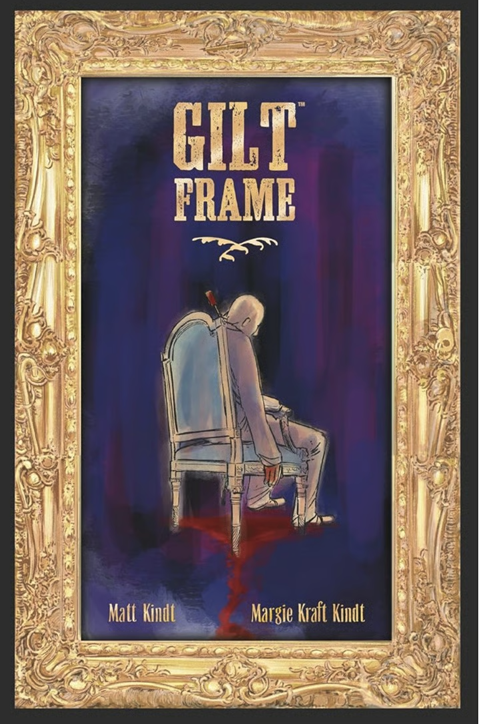
I’m always up for a good mystery comic, which is why I had a great time last year with the slasher-at-a-theme-park romp Murder Kingdom, the ultra-whimsical investigation at a magical hotel from Welcome to the Maynard, and the paranoid thriller Blow Away (an update of the premise of the films Blow Up and Blow Out, themselves riffs on Hitchcock’s Rear Window). In Gilt Frame, however, Margie Kraft Kindt and Matt Kindt have put together a special spin on the whole cozy murder mystery genre.

More than the whodunit itself, what makes this such a nice read is the way the two creators pile up and entangle a bundle of ideas with effortless charm and style… For one thing, we get both a recognizable couple of amateur sleuths (great-aunt and great-nephew, with a fun rapport) and a pompous French inspector (who even has a specific dress code suited to each stage of the investigation). We also get plenty of suspects, story threads, flashbacks, clues, red herrings, and plot twists coming together with an overall lightness (except for a page or two), quite a fair bit of humor, and a certain quirky vibe that often reminded me of Wes Anderson.
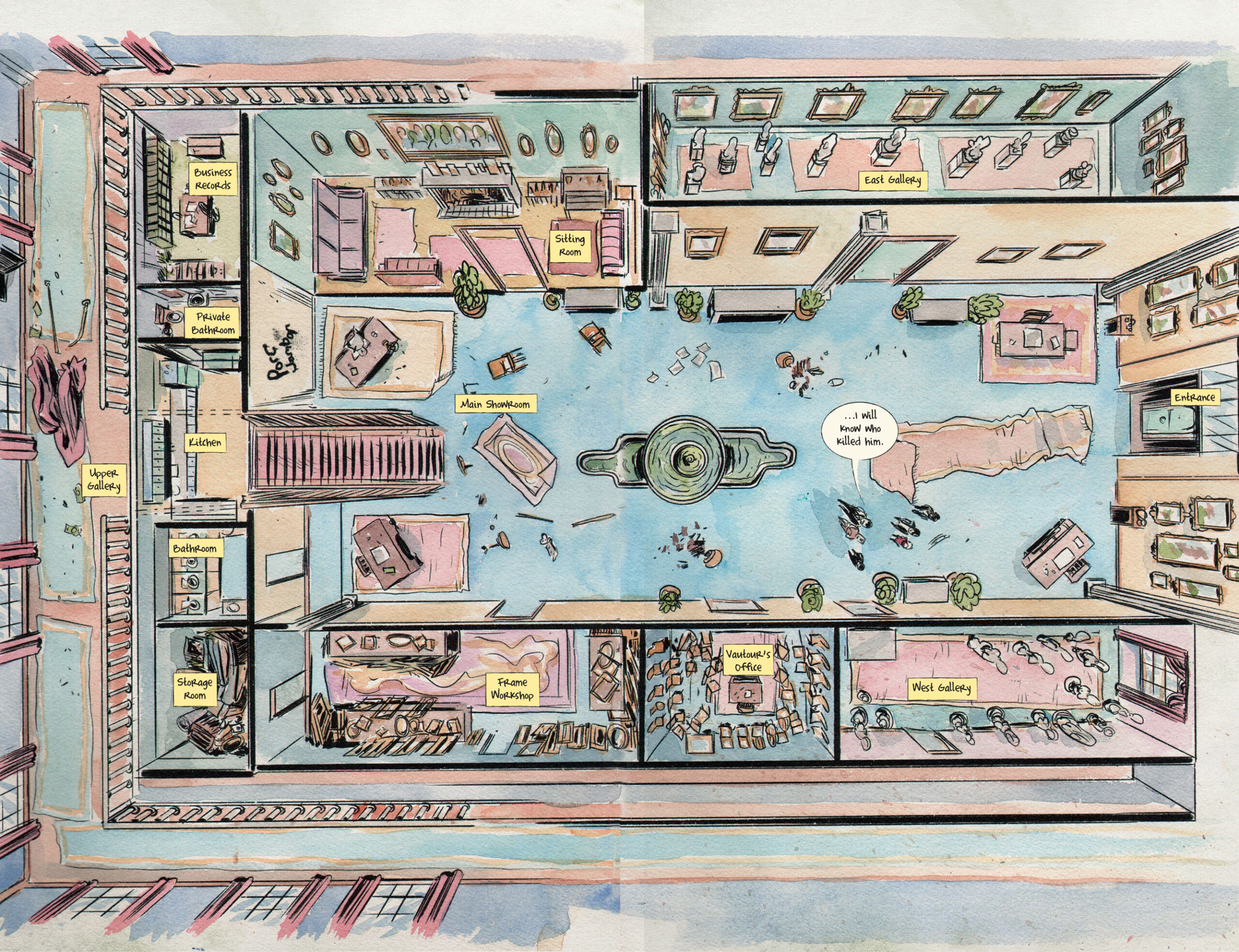
The same goes for Matt Kindt’s art, with letters by Sophia Hilmes. Besides the breezy tone of his typical watercolor-painted cartooning, Kindt keeps coming up with clever layouts (like the Cluedo-ish splash page above) that guide – and misdirect – you through this maze of a comic. Similarly, the back matter in the chapter breaks includes photographs, newspaper clippings, and other puzzle pieces for sporting readers to plough through and take a shot at sorting out the mystery before the final revelations.

I suspect Gilt Frame, which collects a mini-series, was even more engaging in separate installments, where one was forced to wait and ponder about the answers rather than rush to them in one sitting.

14. SPECTATORS
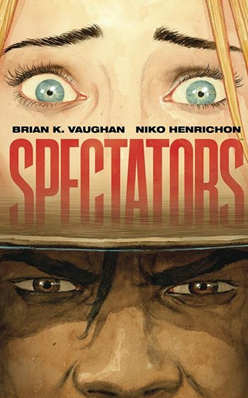
A couple of ghosts hang out in the afterlife and search for entertainment by watching the living engage in extreme forms of sex and violence. A cross between Richard Linklater’s romantic film series Before Sunrise and Alan Moore’s and Melinda Gebbie’s metafictional sex comic Lost Girls, this OGN amusingly explores the condition of spectators (hence the title), whether of cinema (cue in a reinterpretation of The Terminator), of pornography (in various formats), of online content (rather than in-the-flesh experiences), or of life in general (with its implications about passivity, privacy, voyeurism…).

If this sounds too heady, it’s not. More magical realism than sci-fi, Spectators is a generally light read despite its big themes… unless you are particularly weary about gore and nudity, which fill most pages. When Niko Henrichon isn’t drawing massacres and sodomy, his ethereal artwork gives us a tour of a futuristic Manhattan that is a treat for anyone fond of New York City.
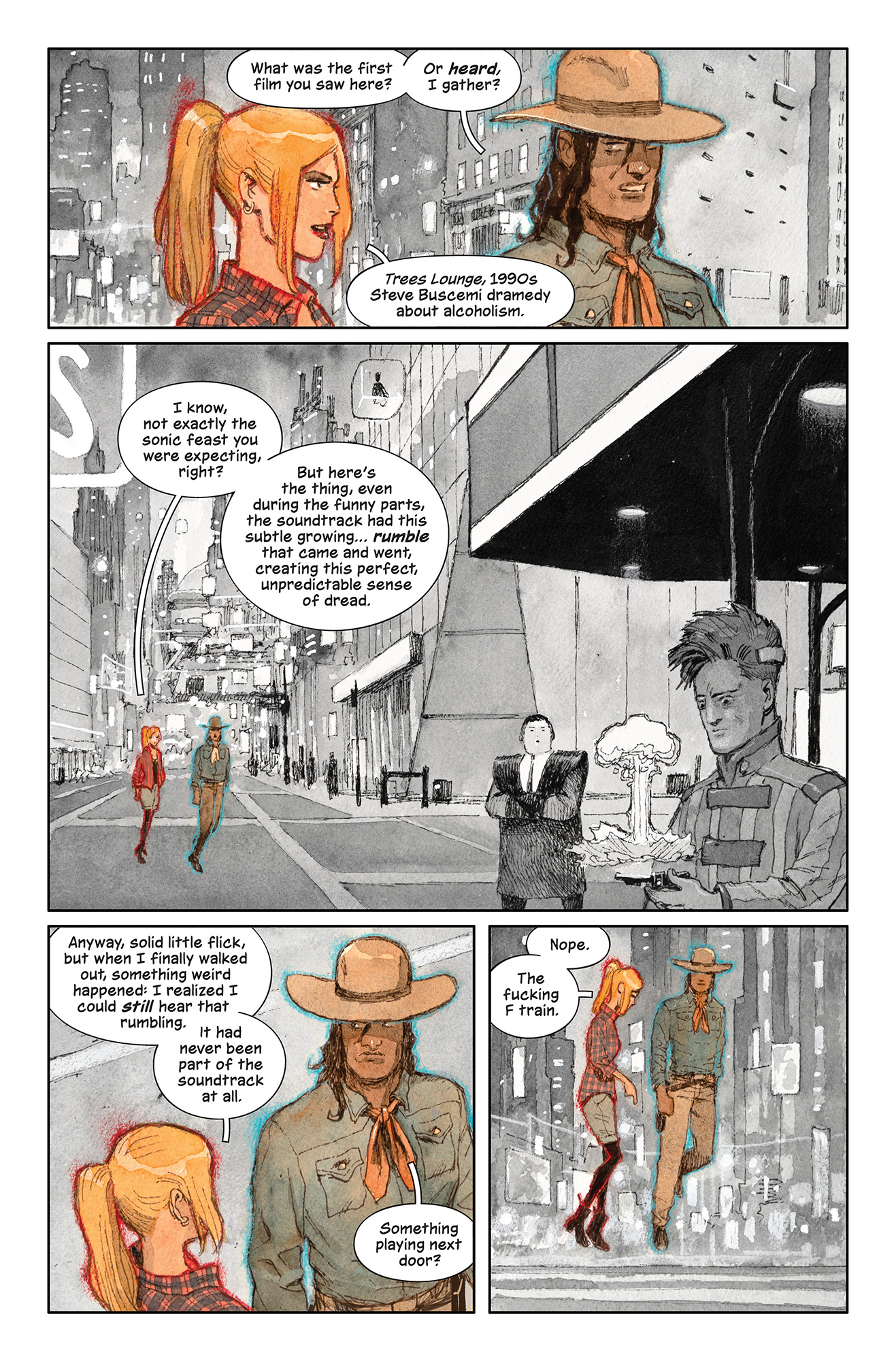
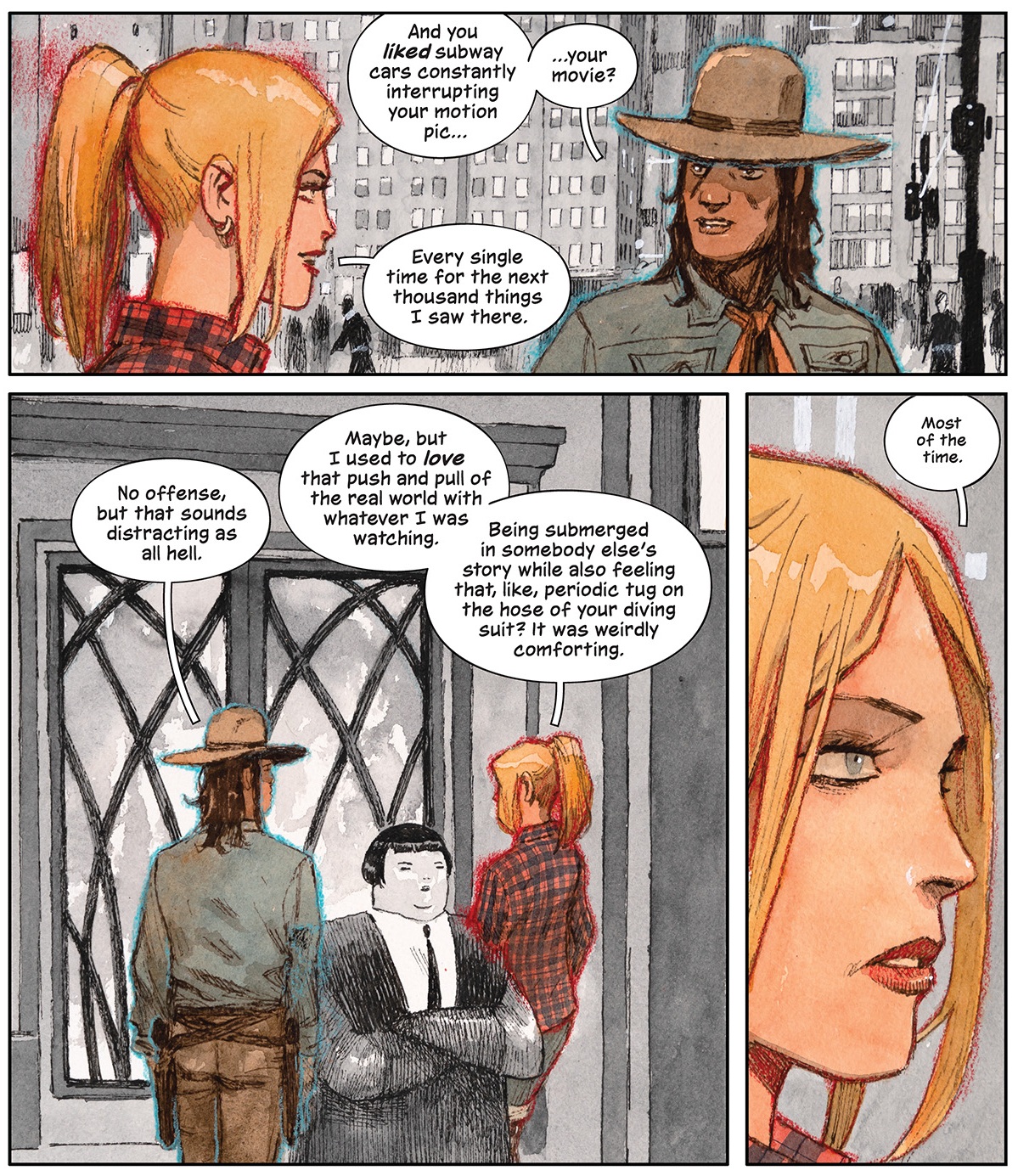
Although a fairly original and ambitious project for Brian K. Vaughan, Spectators is very recognizable in terms of the writer’s style (self-reflexive dialogue) and themes (pop culture, sexuality). Like Alan Moore, Vaughan has tackled sex in various ways throughout his career, with an overall view of eroticism that is neither naively celebratory nor conservatively repressive. Rather, their works generally acknowledge that sex can be complicated by power dynamics and contradictory feelings and impulses (as also explored in the TV show The Deuce or the film Diva Futura).

Plus, while many creators in the medium only seem interested in writing men (or hypermasculine women), Vaughan has always felt comfortable with all sorts of characters, including a number of interesting female leads, going back as far as his short-lived Swamp Thing run. And unlike Greg Rucka, whose feminism tends to translate mostly into writing hardened, badass women, Vaughan often goes for diverse casts where various female characters interact with each other (most notably in Y – The Last Man and Paper Girls). For all his knack at twist-driven plotting, some of his best moments have always involved communication, finding an understanding between clashing personalities, regardless of gender, so it’s nice to see him use the graphic novel format (and previously a webcomic, as far as I can gather) to expand this skill without the rush of the 20-page issue format.

13. BRIAR: QUEST OF THE CURSED
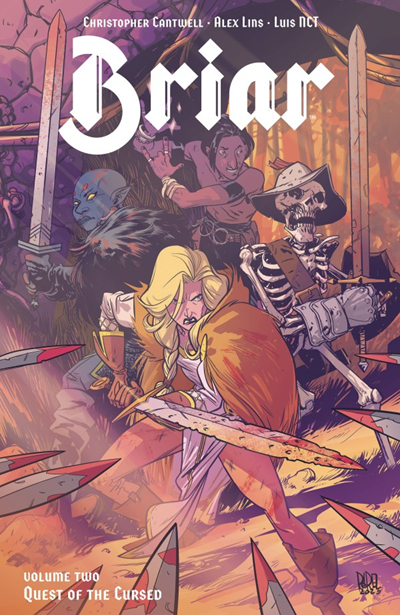
The high concept of a sword & sorcery take on Sleeping Beauty didn’t exactly strike me as inspired when I first heard of Briar, but as soon as I picked it up I knew this was a winner. The combination of Germán García’s cool, bodacious designs, of Matheus Lopes’ ultra-moody palette, and of Christopher Cantwell’s witty dialogue made every page a delight.

For all the tropes, the series somehow pulls off quite a distinctive literary style: just as the cast speaks in a mix of archaic and modern slang, the story itself borrows elements from various fantasy traditions in constantly surprising ways, so it actually feels quite fresh. Hell, in its oddness and unpredictability, Briar actually manages to feel like a Grimm fairy tale… but one of those weird, dark ones you don’t read in school.
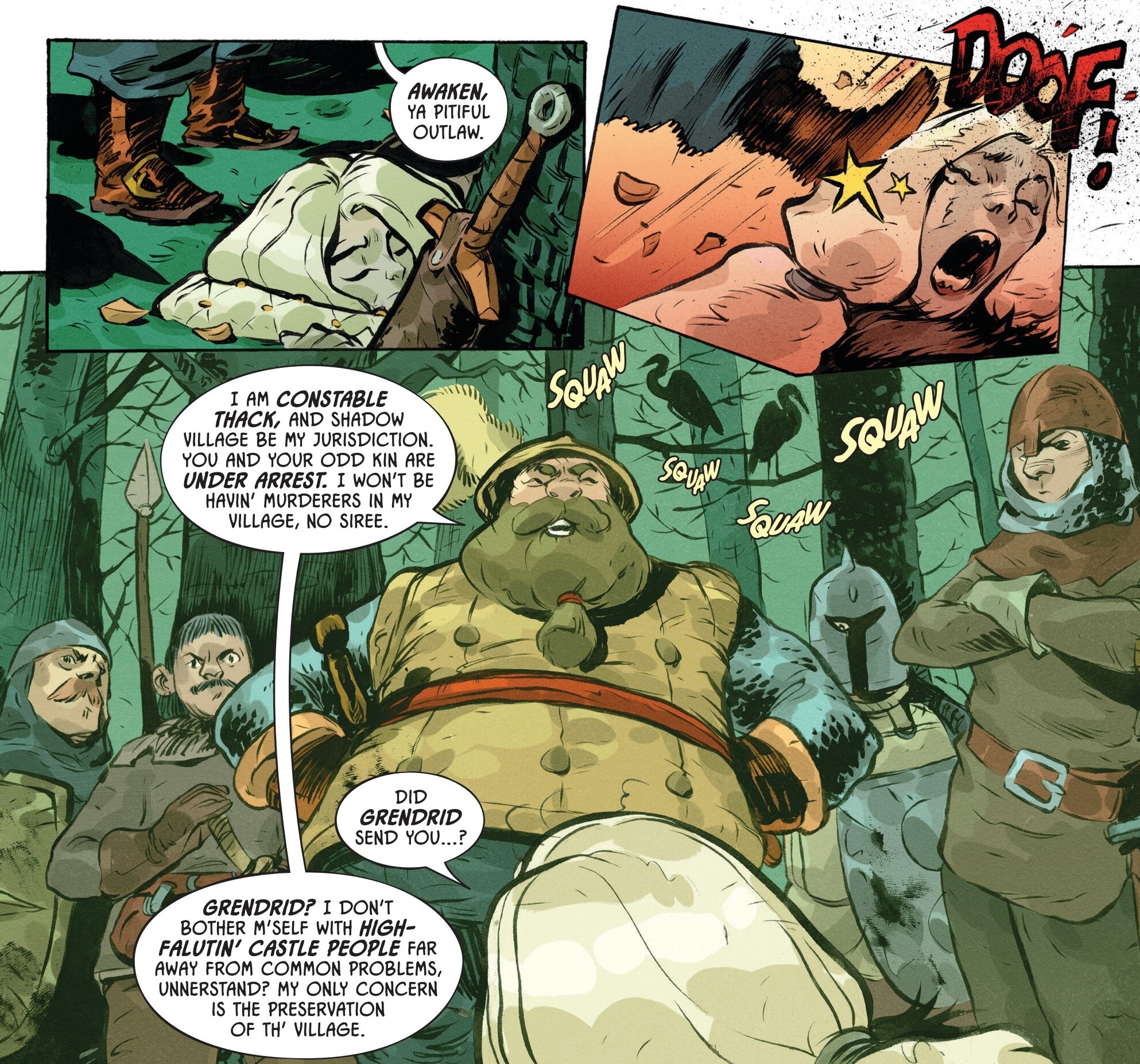
The second collection of Briar came out in January 2025 and, even with a change in the art team, the series remains a hoot. Alex Lins has a cartoonier drawing style (sometimes reminiscent of old-school Eurocomics) and, in turn, Luis NCT uses more washed-out colors, but their work still fits in beautifully with the overall tone. It helps that the script for these issues – suitably collected as Quest of the Cursed – is funnier, too!

I dig how Cantwell frantically throws in new ideas and wild settings (including the depressingly resonant Crane Island Prison). Above all, though, I like how Briar Rose keeps dealing with the burden of guilt and responsibility, fearing her powers – or fate – may cause her to destroy everyone around her, especially as she gets closer to her travelling companions. She is quickly becoming one of the most engaging protagonists in comics and I’m eager to see how her saga will continue to evolve.

12. HAVANA SPLIT: WELCOME TO CUBA
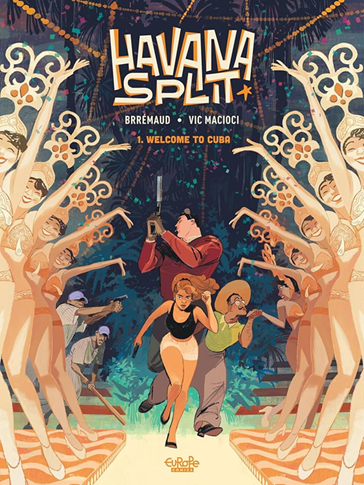
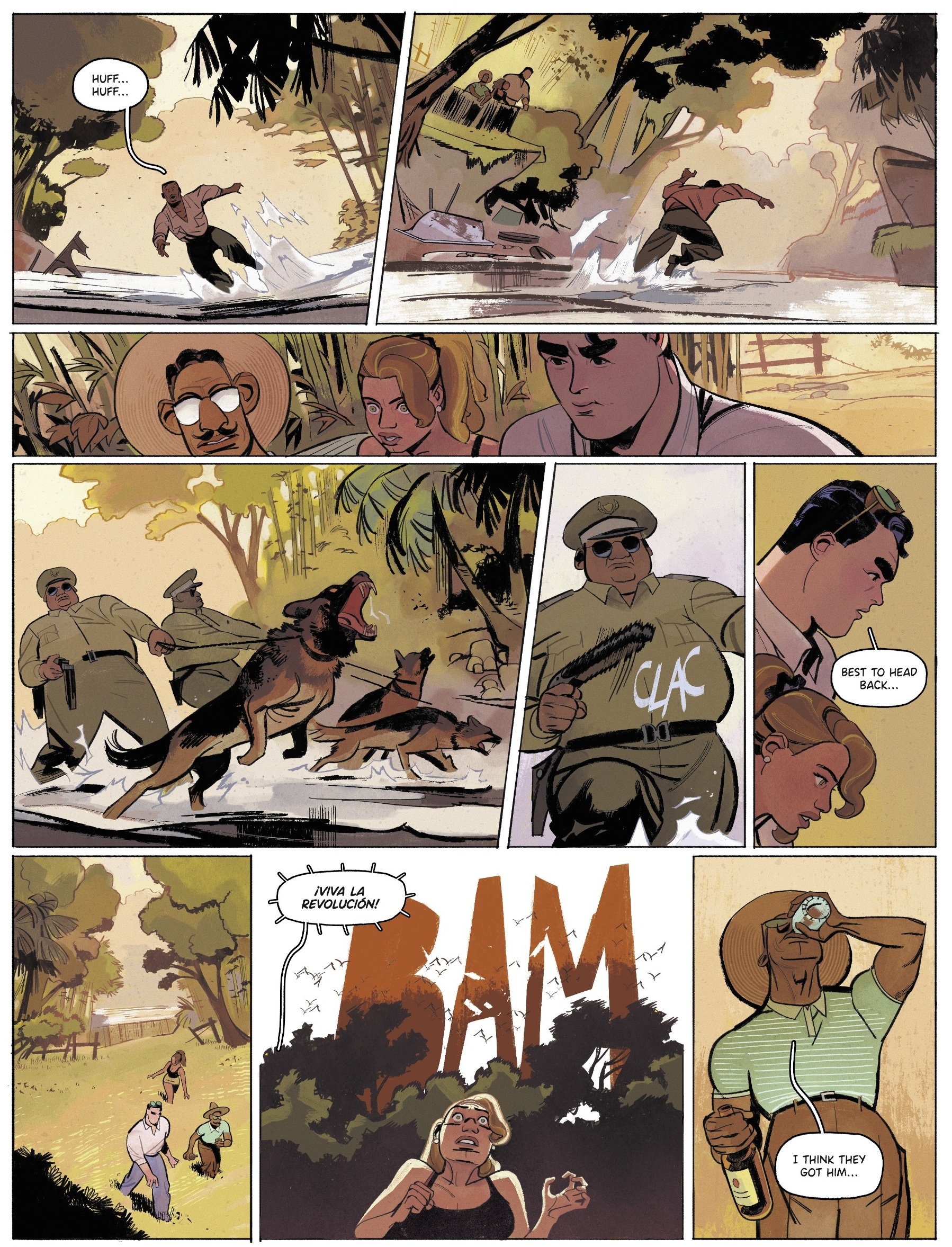
One of the few Franco-Belgian books I read last year was a translation of this riotous period piece, courtesy of the digital platform Europe Comics (although apparently there is a paper edition on the way, by Mad Cave Studios, which I’m totally getting when it comes out, because this is definitely a book that’ll benefit from a generous page size). Havana Split is a comedic thriller set in 1950s’ Cuba, back when gangsters and the CIA were in cahoots with dictator Fulgencio Batista, shortly before the revolution.

This first volume follows two employees of a local detective agency and their boss’ daughter as they get embroiled in a messy web of crime and terrorism. Part of a long tradition of European comics caricaturing Americans (going at least as far back as Tintin in America), the result is a mix of action, espionage, and politics in a fascinating – if sadly topical once again – setting… What’s not to like?

The artwork, likewise, is a blast. Vic Macioci’s cartooning style is very typical of Eurocomics, but he also works in a number of experimental touches (maps, press clippings, brochures…) to convey the information-heavy scene-setting of Brrémaud’s script, establishing both the larger historical background and the sprawling cast.

Not that Welcome to Cuba is a particularly demanding read. In fact, it’s dynamic as hell:
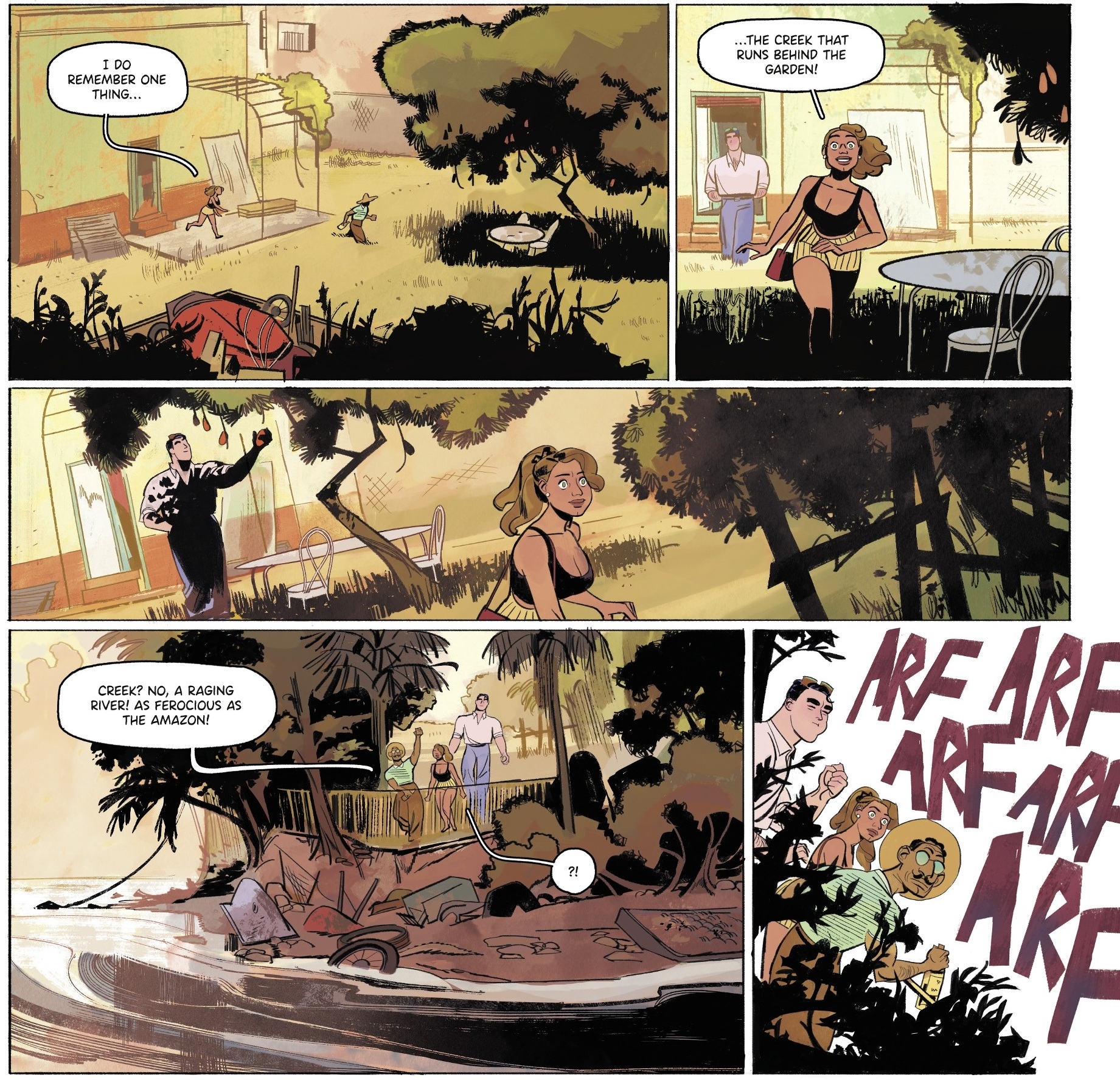
Brrémaud and Macioci have such a great rapport that they manage to keep switching rhythms, drawing on the diverse possibilities of comics. Perhaps it helps that I kept hearing the Ramones in my head.

I suppose I *could* imagine some readers complaining that not enough happens in Welcome to Cuba, despite the generous page count, but I think it would be an unfair line of criticism. Here is a book that really earns its slow buildup, providing something lovely on every single page while taking time and space to properly develop each scene (the kidnapping sequence alone is a masterclass of comic-book pacing). I can hardly wait for the next volume of Havana Split!

11. BATMAN/SUPERMAN – WORLD’S FINEST: IMPOSSIBLE
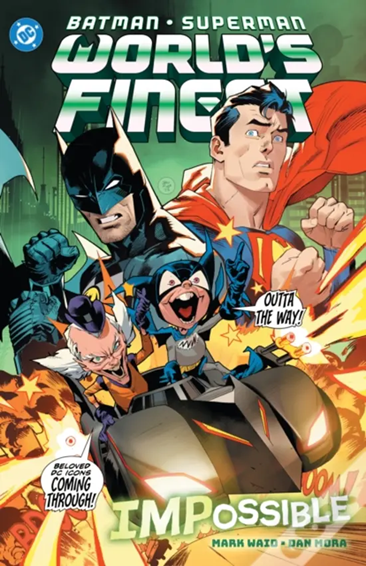
The premise behind World’s Finest is usually a team-up between Batman and Superman, but Mark Waid has pretty much given the title a broader meaning by writing massive team-ups almost every month, drawing on concepts and characters from across the rich history of the DC Universe. This sixth collection is the most bonkers so far, using the mischievous 5th-dimensional imps Bat-Mite and Mister Mxyzptlk to tell a zany epic with a vast cast, a frantic pace, and a cartoony tone that nevertheless manages to achieve a fair amount of pathos.

Technically, IMPossible follows directly from the cliffhanger at the end of the previous volume, but you don’t really have to have read that one to get a full story… Then again, an argument can be made that you’ll only actually get a full story if you’ve consumed *hundreds* of DC comics (and television) over decades, as the book is absolutely crammed with homages in the art, plot, and dialogue, from Silver Age Jimmy Olsen adventures to Batman: The Animated Series. Not for the first time, the subtext is the contrast between a more naïve (and joyful) era and the genre’s modern turn to grimness.

Regardless, Waid delivers enough fun moments and ideas to entertain even less knowledgeable readers. In fact, I would argue the book’s strongest point isn’t the way it plays with the DCU as much as the way it plays with the medium of comics. The abundant magic is vividly illustrated by Dan Mora and colored by Tamra Bonvillain, who come up with several inventive visual tricks without sacrificing clarity. Images collapse onto each other, heroes and villains pop into, out of, and through panel borders, exhibiting varying physical depth as they hop across dimensions.
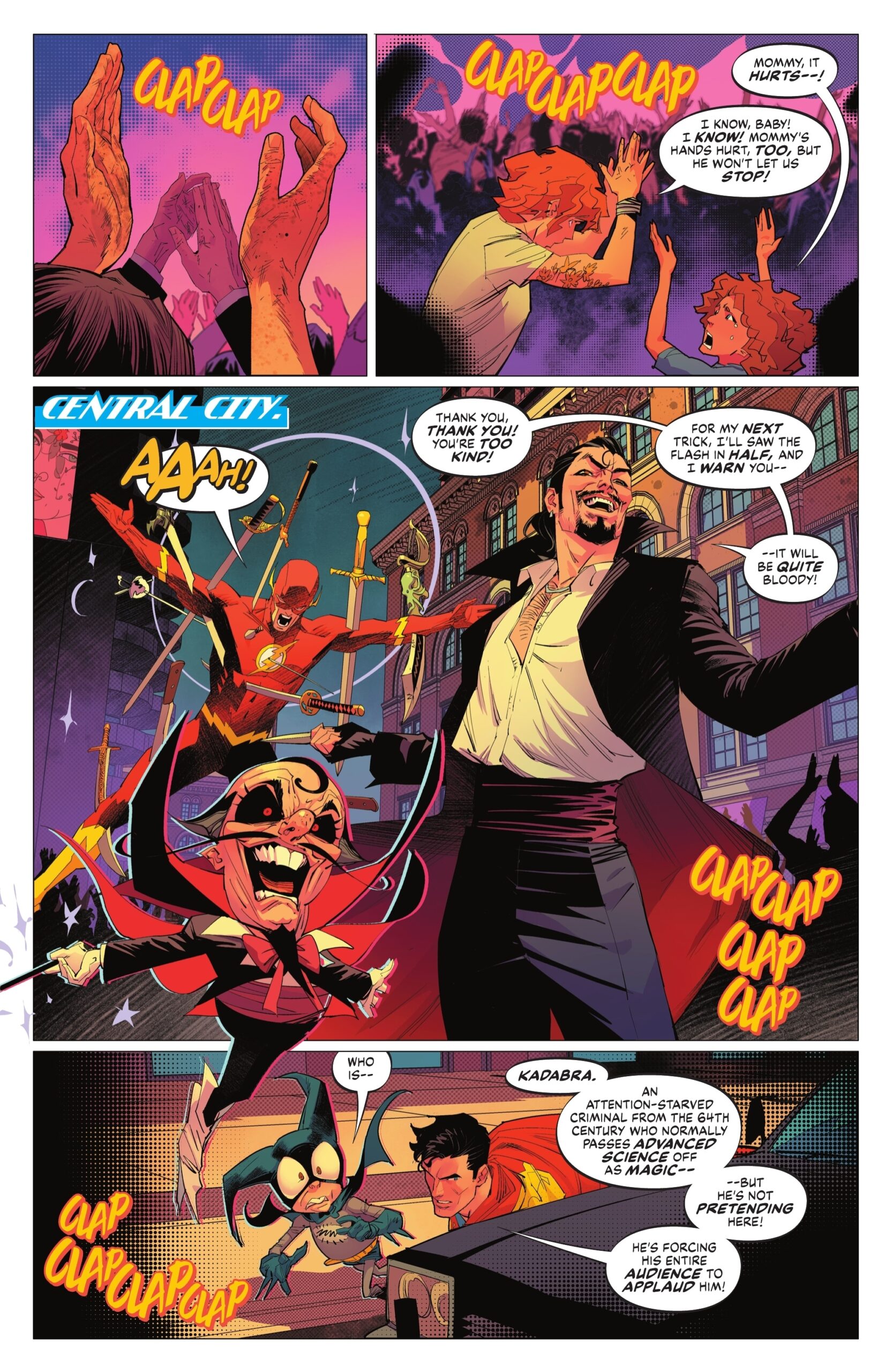
It’s unsurprising that Waid’s script is pure superhero gold, since he’s such a master of the genre (no wonder he was one of the few writers to do a spin-off of the metafictional series The Wrong Earth that lived up to the standards of Tom Peyer’s original). Yet Mora’s work elevates the fantasy to something even more pop and memorable, which makes it a shame that he left the series after this arc. Still, although IMPossible’s second story, ‘Death in Paradise,’ is drawn by Gleb Melnikov in a less flashy style, Bonvillain’s lavish colors secure smooth visual continuity.

Although very different in scale, that last story is also a treat. Every once in a while, I dig seeing Batman in outer space or in some fantastic realm, testing his preparedness, adaptability, and resolve in adverse circumstances (although, visually and narratively, last year’s Batman: Off-World mini was annoyingly uninspired). In particular,  I love it when he plays the World’s Greatest Detective out of his element, in outlandish places with their own peculiar rules (like the Bottle City of Kandor in All-New Batman: Brave and the Bold #1), so it’s very neat to see him deal with a locked-room mystery in Themyscira, home of Wonder Woman and the Amazons.

You’d think Waid would have run out of stories to tell at DC after so many years mining the same ground, but he continues to reshuffle the lore in enjoyable ways. In fact, he’s been on a roll of late, once again. Last year’s Justice League Unlimited (likewise drawn by Mora) and Batman & Robin: Year One (with even more awesome artwork, by Chris Samnee) were both pretty sweet as well.
Posted in BOOKS OF THE YEAR | Tagged , , , , , , , , , , , , , , , , , , , , , | Leave a comment

COMICS CAN BE AWESOME (19 January 2026)

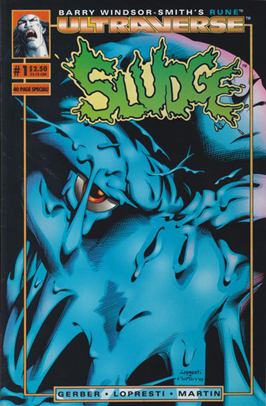
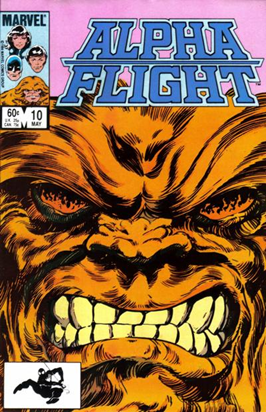
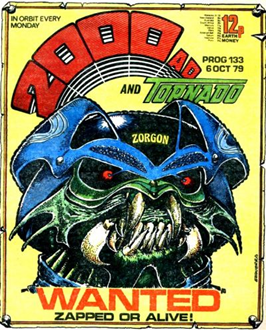
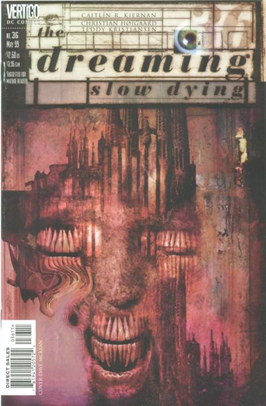
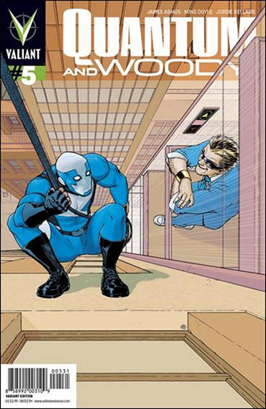
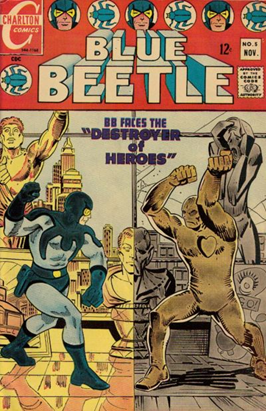
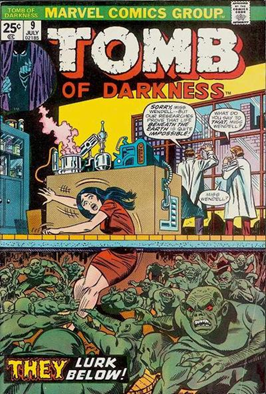
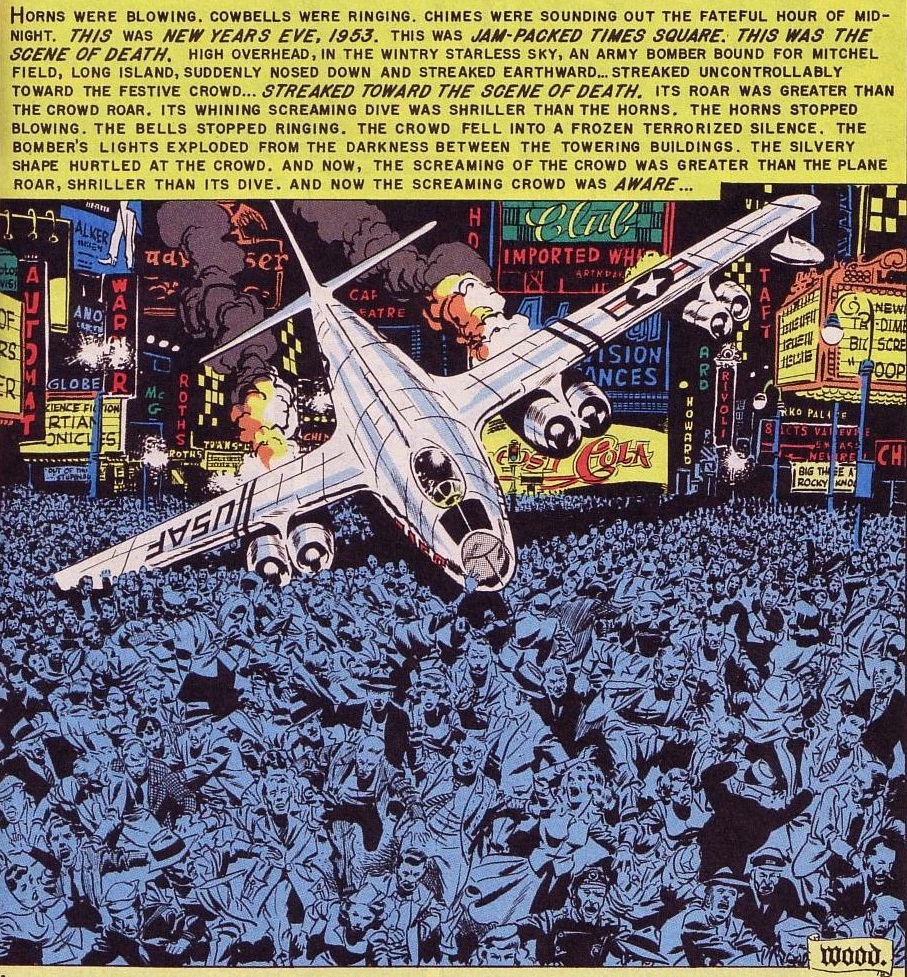
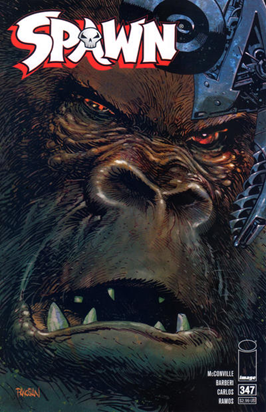
Five headshots to remind you that comic book covers can be monstrously awesome…

Posted in HEADSHOTS | Tagged , , , , , , , , , , | Leave a comment

2025’s books of the year – part 2

If you’ve read last week’s post, you know this month I’m doing Gotham Calling’s top 25 graphic novels of 2025.

Like in my previous lists, I’m sticking to English-language editions, although I have to point out that by far one of my favorite reads of last year was the (so far, sadly untranslated) French BD album Parker: La proie. This adaptation of Richard Stark’s novel The Sour Lemon Score, where the tough-as-nails robber Parker methodically chases a guy through the criminal underworld (in the pre-internet 1960s, where it was much easier to fall off the grid), clearly aims for a spot on the shelves next to Darwyn Cooke’s phenomenal series of adaptations of other Parker books (even the title, which means ‘The Prey,’ feels like a riff on the first adaptation, The Hunter). While the visual storytelling isn’t quite as creative as Cooke’s, Kieran’s monochrome artwork is also moody as hell, with a great film noir look, and Doug Headline’s script brilliantly nails the typically labyrinthic plot and sardonic tone.

If you prefer your comics in English, though, there was still plenty of good stuff on the shelves throughout 2025:

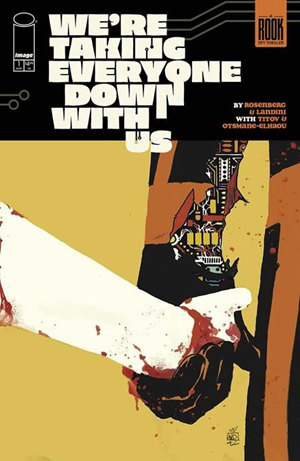
20. WE’RE TAKING EVERYONE DOWN WITH US

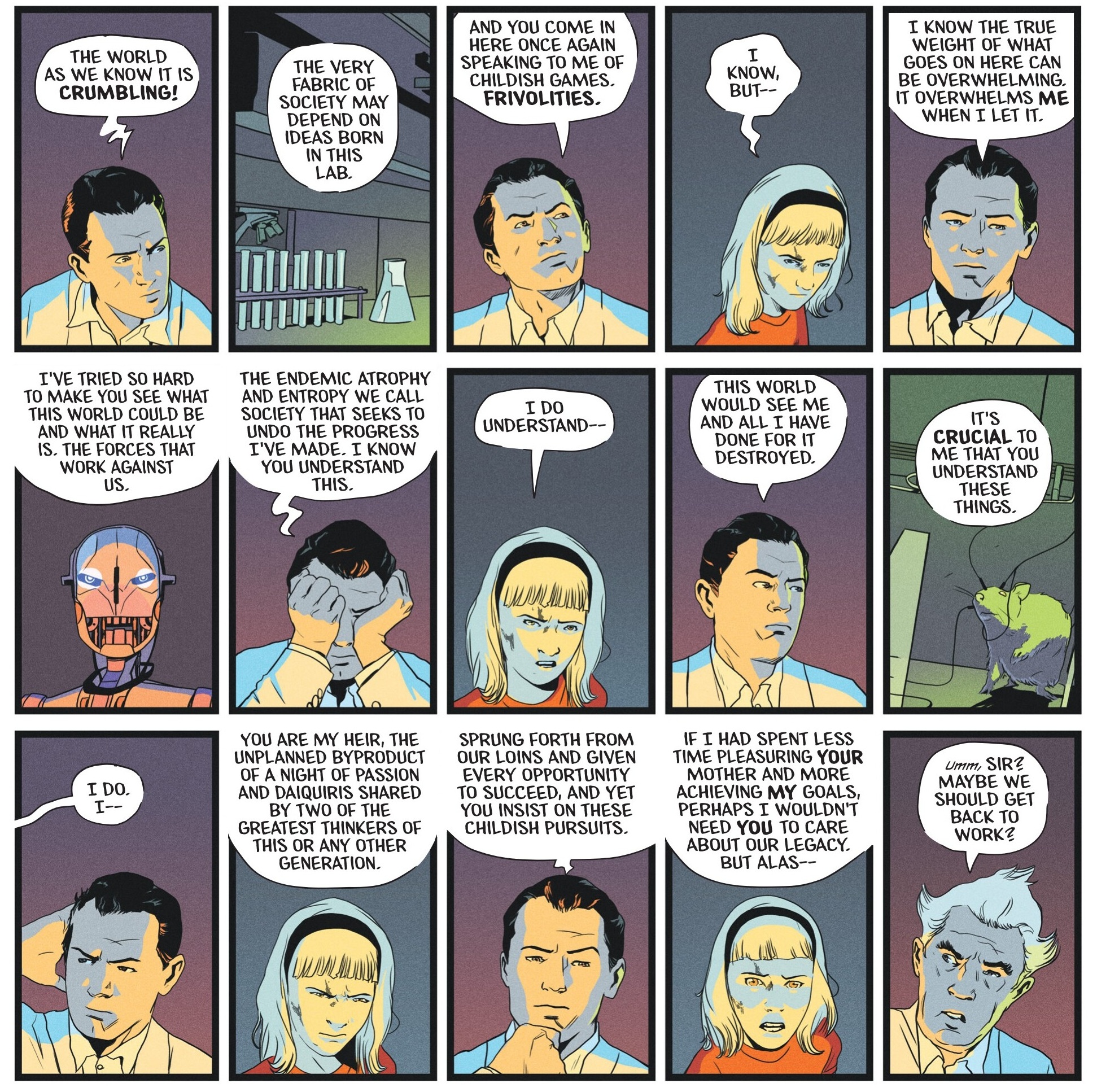
If you step back, you can see We’re Taking Everyone Down With Us contains many of the recognizable trappings of a gonzo super-spy adventure, complete with a horny British secret agent, a villainous transnational cabal, and a genius scientist trying to take over the world, along with some robots, several explosions, and assorted mayhem. Yet co-creators Stefano Landini and Matthew Rosenberg provocatively twist the material in two fundamental ways.

One of them is by skewing the narrative perspective, shifting the main focus to a 13-year-old girl, Annalise, who apparently starts out in the periphery of a wider saga already taking place. The way Annalise sees and (mis)understands the various players, uncontaminated by our expectations of these tropes, is enough to mix up the usual sympathies and loyalties, turning archetypical heroes into villains and vice-versa (and, sometimes, back again).

The other form of subversion has to do with the overall tone of the book, where dark comedy is often combined with absurdist dialogue delivered with a straight face (and with a healthy dose of foul language).

Although visually uneven and occasionally confusing, We’re Taking Everyone Down With Us is nevertheless consistently pleasing thanks to the coloring duo of Jason Wordie and Roman Titov, along with the inventive work of Hassan Otsmane-Elhaou, who once again proves he’s arguably the best letterer in the business today.

The book is labelled as a ‘Rook Spy Thriller,’ which is itself a fun gag, since the 007-ish Rook isn’t the story’s central character (although he clearly believes he is). Landini and Rosenberg promise a sequel at end, titled ‘In Good Hands With Bad Company,’ which will hopefully continue to treat Rook as a deluded opponent rather than a conventional lead.

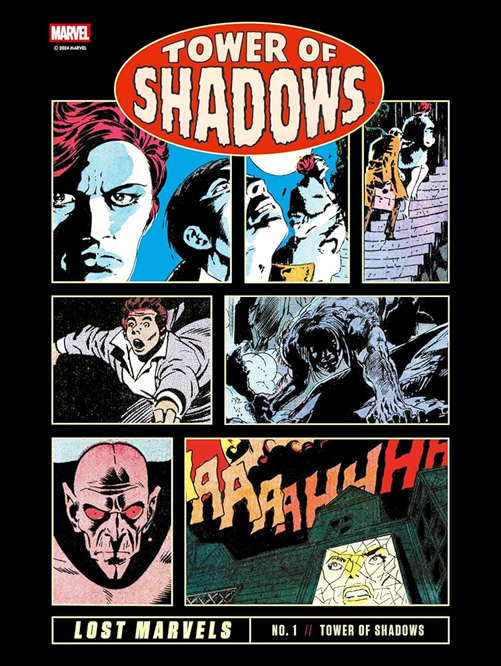
19. LOST MARVELS: TOWER OF SHADOWS

EC’s daring horror comics were one of the main targets of the introduction of strict censorship in the medium, back in the 1950s, which greatly benefitted more innocuous mainstream publishers, like DC and Atlas (which eventually became Marvel). By the late 1960s, however, the standards of the Comics Code Authority had loosened enough that DC turned its long-running titles House of Mystery and House of Secrets into EC-style anthologies – and Marvel soon tried to jump on the game, with the short-lived Tower of Shadows and Chamber of Darkness. Given that Fantagraphics has been doing such a stellar job of reprinting EC’s catalog over the past years, it’s very cool they have now partnered with Marvel to collect those largely forgotten series, restoring their place in the lineage of comic-book horror.

Granted, despite a solid line-up of writers, most stories in Tower of Shadows don’t quite reach EC’s manic heights and pitch-black sense of humor. Nevertheless, it’s fascinating to see them update the same type of misanthropic comedy/horror mix to then-modern phenomena, like the growing fear of automation or the hippie counterculture (the latter given a particularly trippy treatment by Don Heck in ‘Evil is a Baaaad Scene!’). And yes, this means stomaching non-PC stereotypes, but surprisingly few given the medium’s complex history of racism.

What Marvel does bring to the table is a powerhouse of artists, from then-up-and-coming talent like Jim Steranko, Neal Adams, John Romita, and Barry Windsor-Smith to veterans who had worked at EC back in the day, including Johnny Craig, Wally Wood, and Marie Severin (not to mention master of horror Gene Colan, who didn’t work at EC but had also been around the block for decades). The resulting combination is a visual feast for fans of this era of comics.

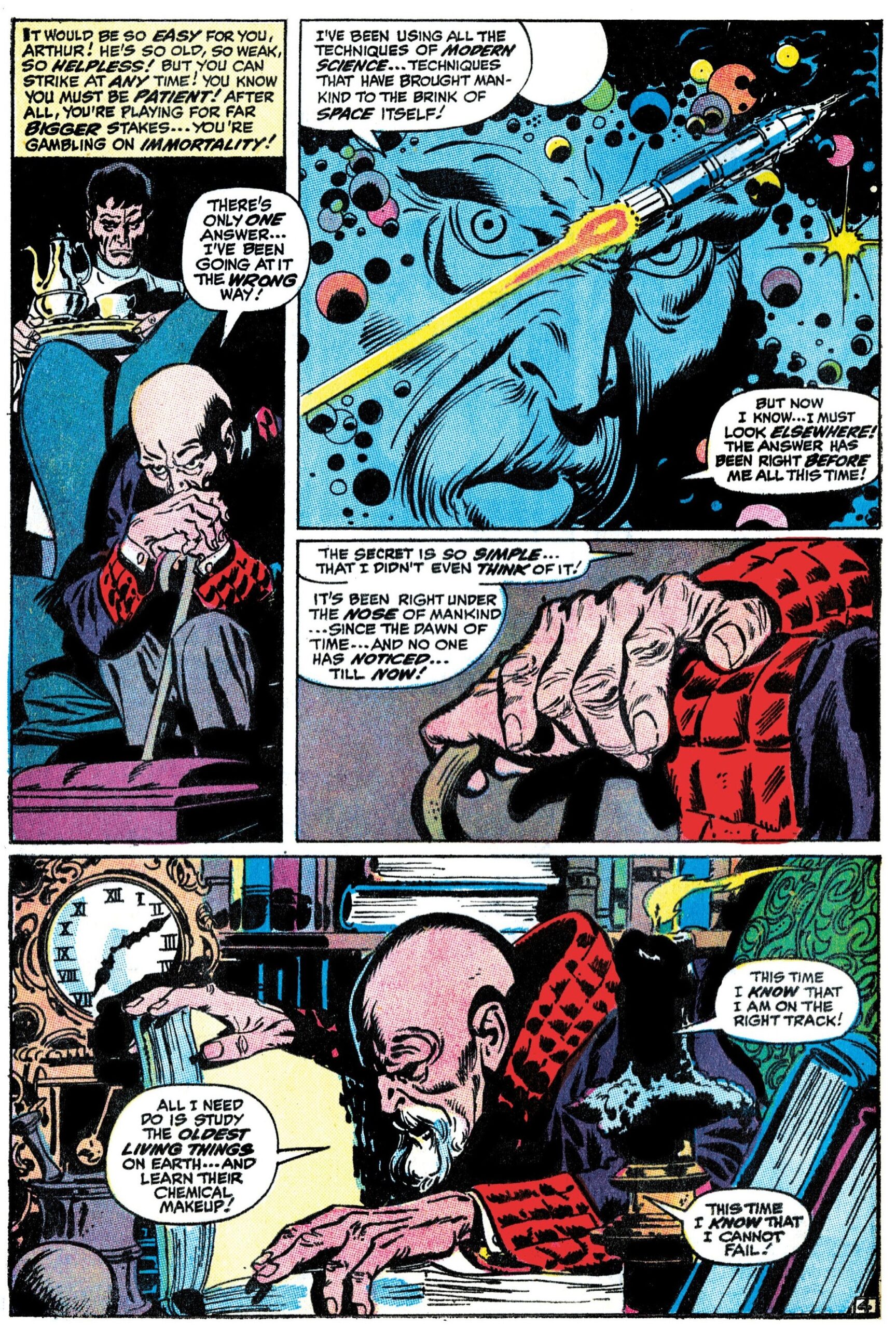
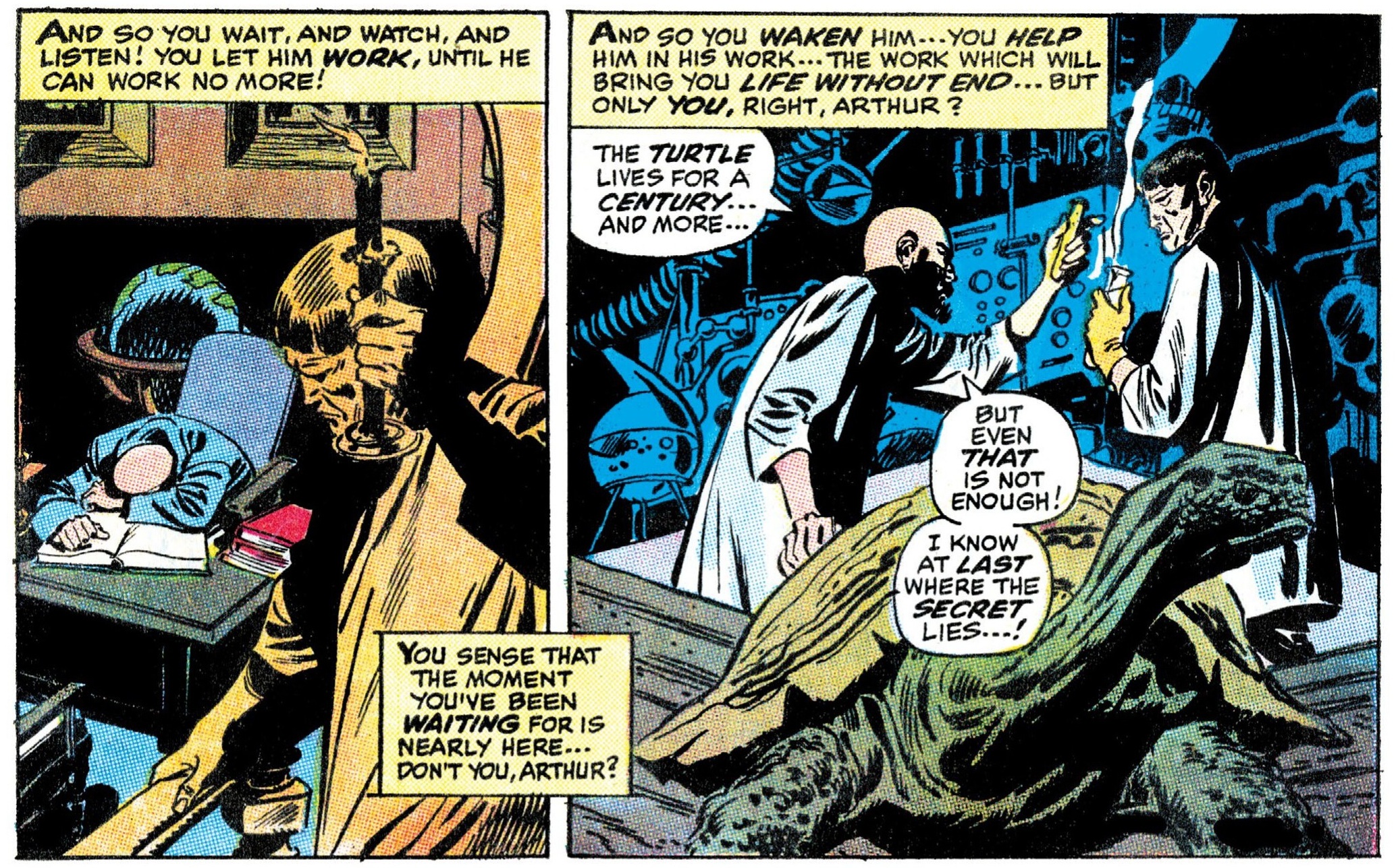
I’m particularly fond of John Buscema’s mise-en-scene in ‘A Time to Die!,’ where a scheming scientist and his assistant search for a formula for immortality while plotting to kill each other:

Besides the stories themselves, Lost Marvels: Tower of Shadows has much to offer to aficionados. It includes some of the issues’ backmatter, such as the very Stan Lee-ish column ‘Batty Bulletins to Bewilder, Bewitch, and Bedazzle You!’ and readers’ letters. There is also an amazing introduction and creator biographies by Michael Dean, who provides historical background, formal analysis, and general insights into the material, for example pointing out the suggestive contrast between the EC-like ‘arrogant, unlikeable characters who deserve everything they bring upon themselves’ and ‘Marvel’s otherwise heroic universe.’

18. METAMORPHO: THE ELEMENT MAN

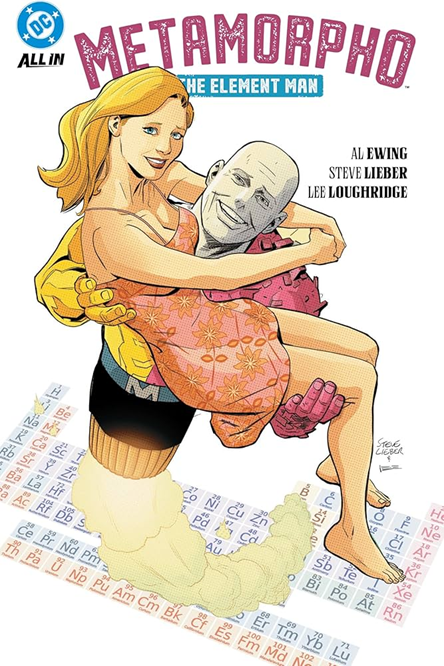
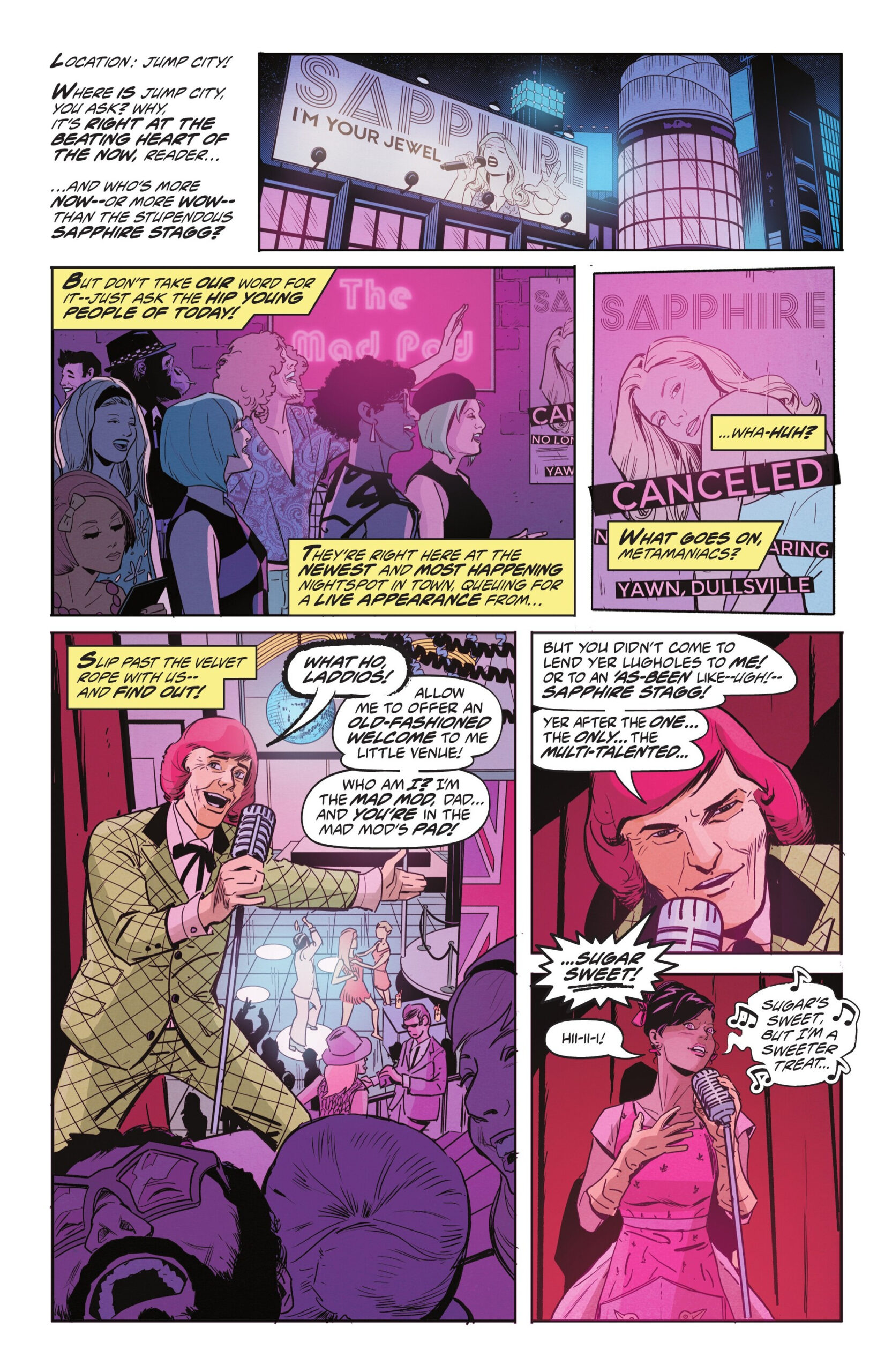
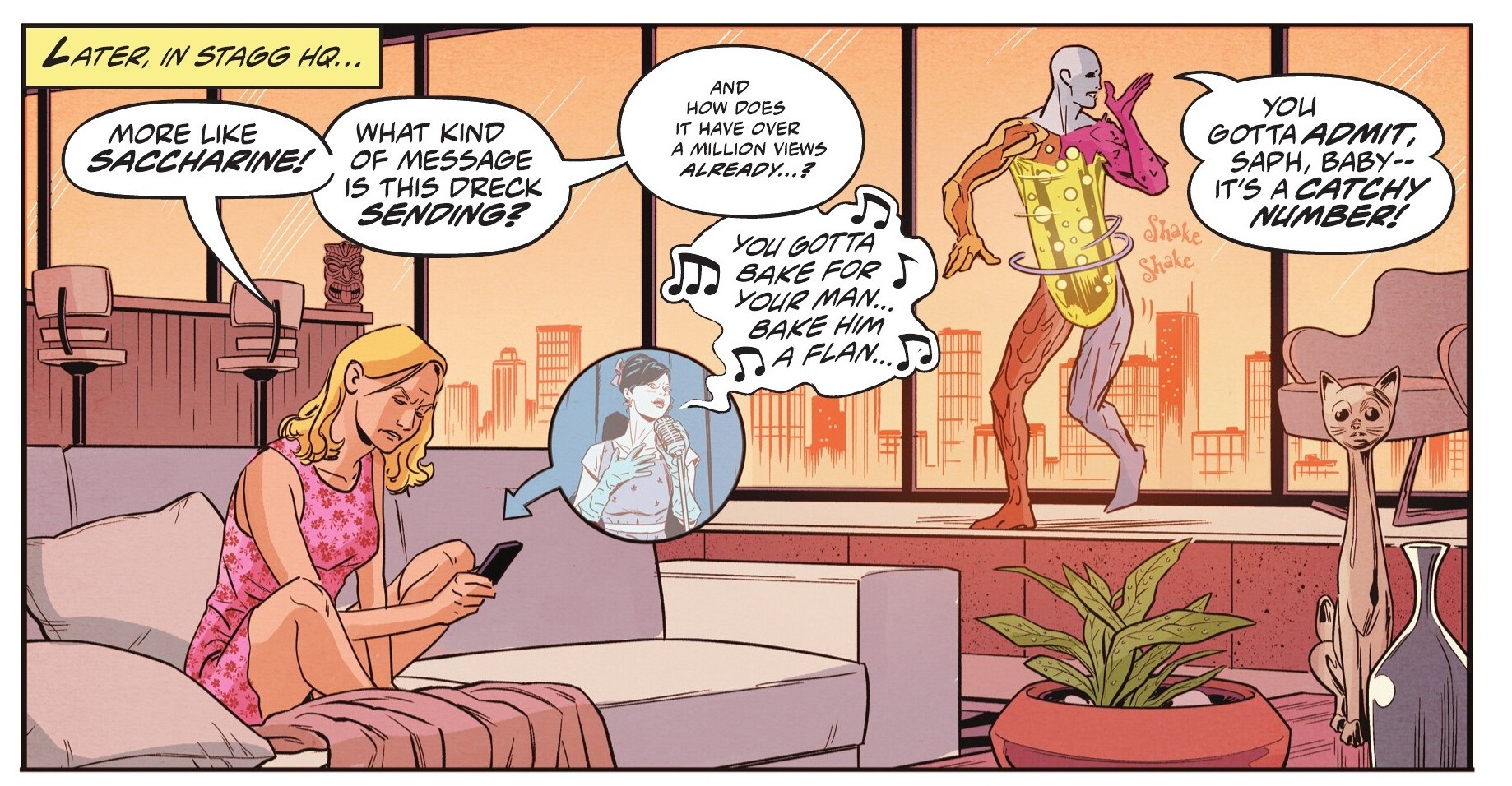
Speaking of 1960s’ comics – Al Ewing wrote the latest reboot of Metamorpho, the Element Man, and Steve Lieber drew it in a style similar to that of Bob Haney and Ramona Fradon back when they created the character, in the Silver Age. Part of the joke is that this series is nevertheless very much set in the present, updating the old cast to our current era of online influencers and AI hysteria, including not only Rex ‘Metamorpho’ Mason, a superhero with the goofy ability to transform himself into any element of the periodic table, but also his girlfriend Sapphire Stagg, her tech millionaire father Simon Stagg, and their servant Java, a defrosted Neanderthal who is also in love with Sapphire (one of DC’s weirdest love triangles).

Although the result isn’t as looney-tunes-y as Elliott Kalan’s and Mindy Lee’s current run on Harley Quinn, it’s just as hilarious, nailing Haney’s voice, complete with an alliterative, hucksterish narrator, amusingly slangy dialogue, and conceptual games (like an issue packed with allusions to sixties’ spy fiction, albeit less caustic than We’re Taking Everyone Down With Us). Yet Lee Loughridge uses slick modern colors, making this a Tom Strong-like hybrid rather than a mere pastiche. It’s that balance and dissonance between the sensibilities of different eras that makes Metamorpho: The Element Man such an enjoyable read…

Metafiction aside, the comic works because Al Ewing isn’t just a clever creator, but also a pro who knows how to simultaneously craft a nifty superhero yarn, making great use of Metamorpho’s chemistry-based powers. Plus, he weaves in a bunch of relatively obscure DCU characters, offering another treat to fans while taking advantage of the jokey narration to fill in newcomers on the necessary background (in some cases, it’s even more entertaining if you haven’t come across all these wild concepts before…).

Steve Lieber is a perfect choice for this material, as he remains one of the funniest artists in the field. Rather than going overboard with the cartoonishness, he mostly lets the humorous conversations and situations work for themselves. Then again, you can count on Lieber to play along in different ways whenever needed, like when he designs a splash page that looks like a maze or renders a sequence as a spot-on replica of a Golden Age comic.

 
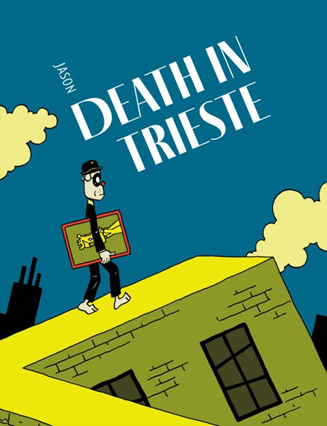
17. DEATH IN TRIESTE

Last year, I read less European comics than usual and the best ones I’ve read haven’t been translated yet (like the abovementioned Parker: La proie), so this list is particularly US-centric, even for Gotham Calling’s standards (manga remains my perennial blind spot, with a few exceptions). Still, there was a new book by Jason, the Norwegian genius behind masterpieces such as Sshhhh!, You Can’t Get Here from There, Low Moon, and, of course, I Killed Adolf Hitler. If you’ve read those or any of the other dozens of books Jason has put out, you know what to expect: clean lines, simple layouts, minimalist art, anthropomorphic dogs and birds standing in for humans, and surreal stories told with a deadpan style. The man is nothing if not consistent.

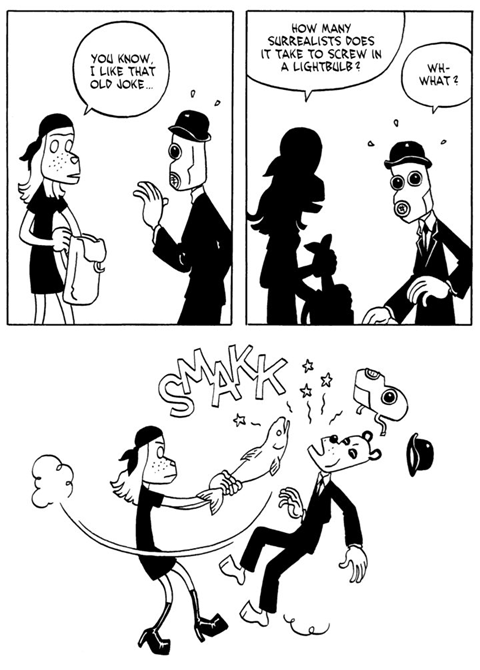
I guess what Death in Trieste adds to the mix is that surrealism is actually a theme here, not just a form, as the first of its three stories concerns a bonkers criminal plot built around Magritte paintings and the second tale is set among the interwar Dadaist art scene. Plus, there is this beautiful moment:

While that first story is a relatively linear thriller (albeit told in Jason’s signature clipped rhythm), the second one is much more fragmented and experimental, confusingly jumping back and forth between several different plotlines. What makes it an even more challenging read is that it’s packed with unexplained references to real-life historical events and people (like Rasputin’s death and Marlene Dietrich’s cabaret acts) as well as to high, middle, and lowbrow culture (from Nosferatu to Jason’s own Athos in America). Hell, David Bowie/Ziggy Stardust is a key character in both the second and the third tales. The latter is appropriately titled ‘Sweet Dreams’ because it also features the Eurythmics, who, like other 1980s’ New Wave bands, turn out to be superheroes and fight mummies.

The result is more esoteric than usual – or maybe Jason is playing with more references that escape me, so I can’t say I enjoyed Death in Trieste on the same level as his other work (which is not to say I didn’t get a jolly good kick out of it!). My assessment may change when I revisit the book in the future, though, as it will definitely benefit from re-reading.

 
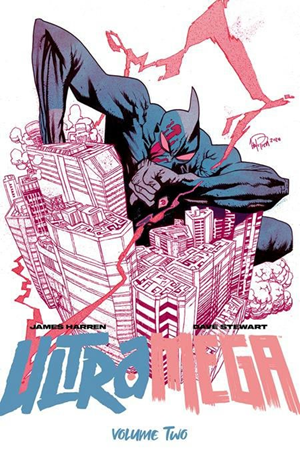
16. ULTRAMEGA: VOL. 2

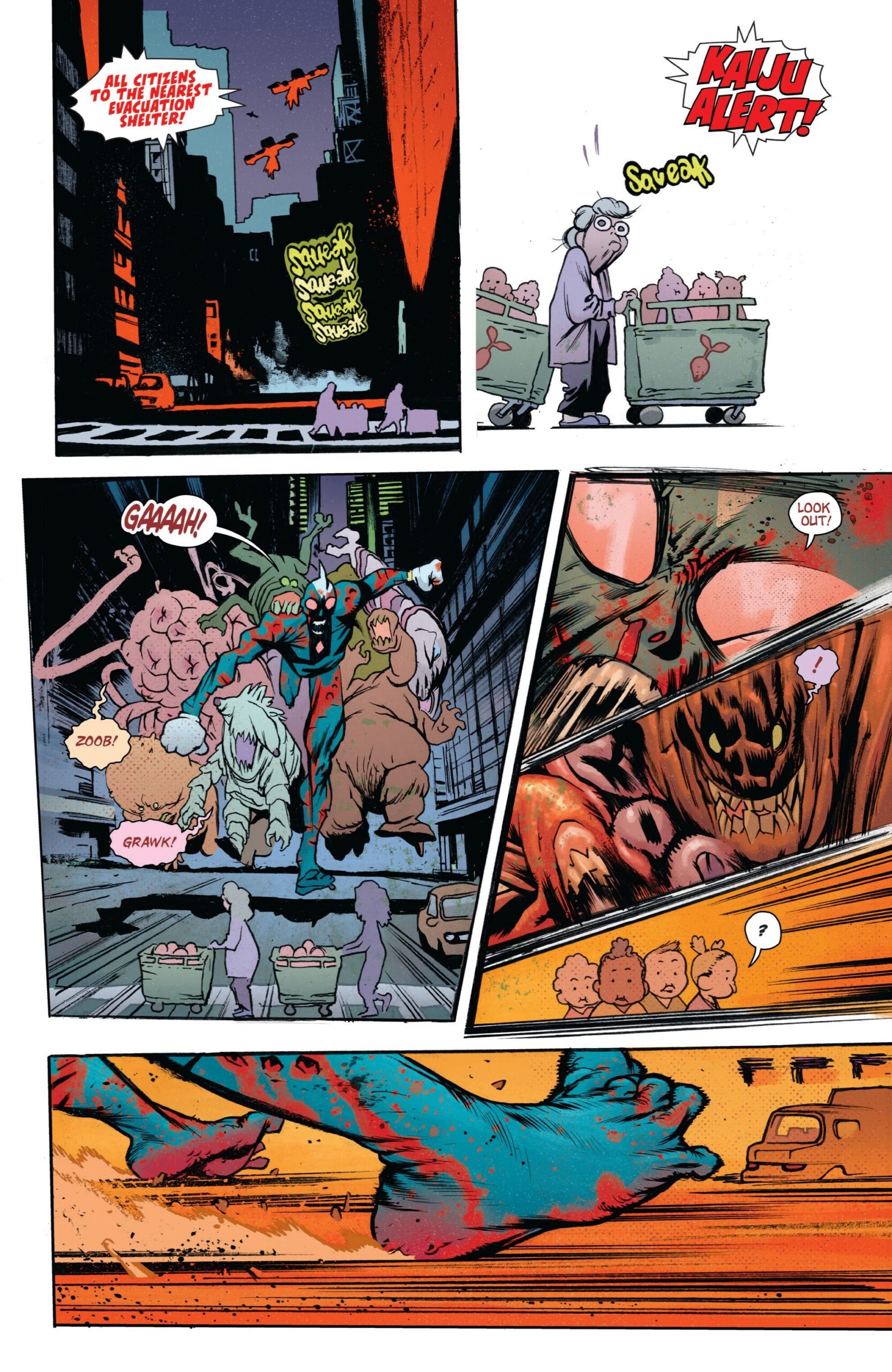
The second – and final – volume of Ultramega continues to fully justify the series’ title, as this comic is all about the wonder of exaggeration. It’s a kaiju saga, so we have humongous monsters, the grossest creatures, and kyodai heroes that can grow to a gigantic size and whose large-scale battles burst with over-the-top destruction, super-gory violence, and the genocidal deaths of both anonymous masses and key characters (although nothing beats the sequence in the first volume where a city was flooded with the blood of a decapitated protagonist). The storytelling itself strives for epic proportions, with its expansive cast reaching out far into the cosmos while constantly raising the stakes as the saga unfolds.

It’s as if James Harren can barely contain his creative passion. The individual issues far surpassed the usual page count and he ended up adding a final chapter just to make sure there was enough room for his uncompromising vision. Harren’s artwork – with appropriately eye-popping colors and hyperbolic letters by Dave Stewart and Rus Wooton – is awesomely exaggerated in a liberating way, full of energy and an almost childlike eagerness to see how far he can push the action… I can totally hear death metal guitar riffs in my head as I read along.

There is also a slapstick vibe to Harren’s cartooning that, suitably, helps prevent Ultramega from taking itself too seriously. This sometimes takes the form of openly comedic passages, from the protective suits that automatically envelop bystanders (suddenly turning them into bubble-like figures) to the fight scenes’ timing and choreography.

It’s a shame that the larger narrative becomes much more jumbled (and the cast less relatable) in this second volume, compared to the first, but that’s a price I’m willing to pay for James Harren’s unrestrained ambition.

I’m not an expert in this genre, even if I love the original Godzilla film and I’m an even bigger fan of Shin Godzilla (which cleverly – and satirically – reimagined the story with a new bureaucratic, environmental, and geopolitical sensibility). Yet it doesn’t matter… perhaps it even helps. Although owing an obvious debt to tokusatsu cinema and television, manga, and anime, Ultramega also works as a loving ode of just the kind of balls-to-the-wall imagery American comics excel at, overthrowing Gødland as the greatest successor of the spirit of Jack Kirby (there is even what I assume is a deliberate nod to Kirby’s closing triptych).

Posted in BOOKS OF THE YEAR | Tagged , , , , , , , , , , , , , , , , , , , , , , , , , , , , , , , , , , , , | Leave a comment

COMICS CAN BE AWESOME (12 January 2026)

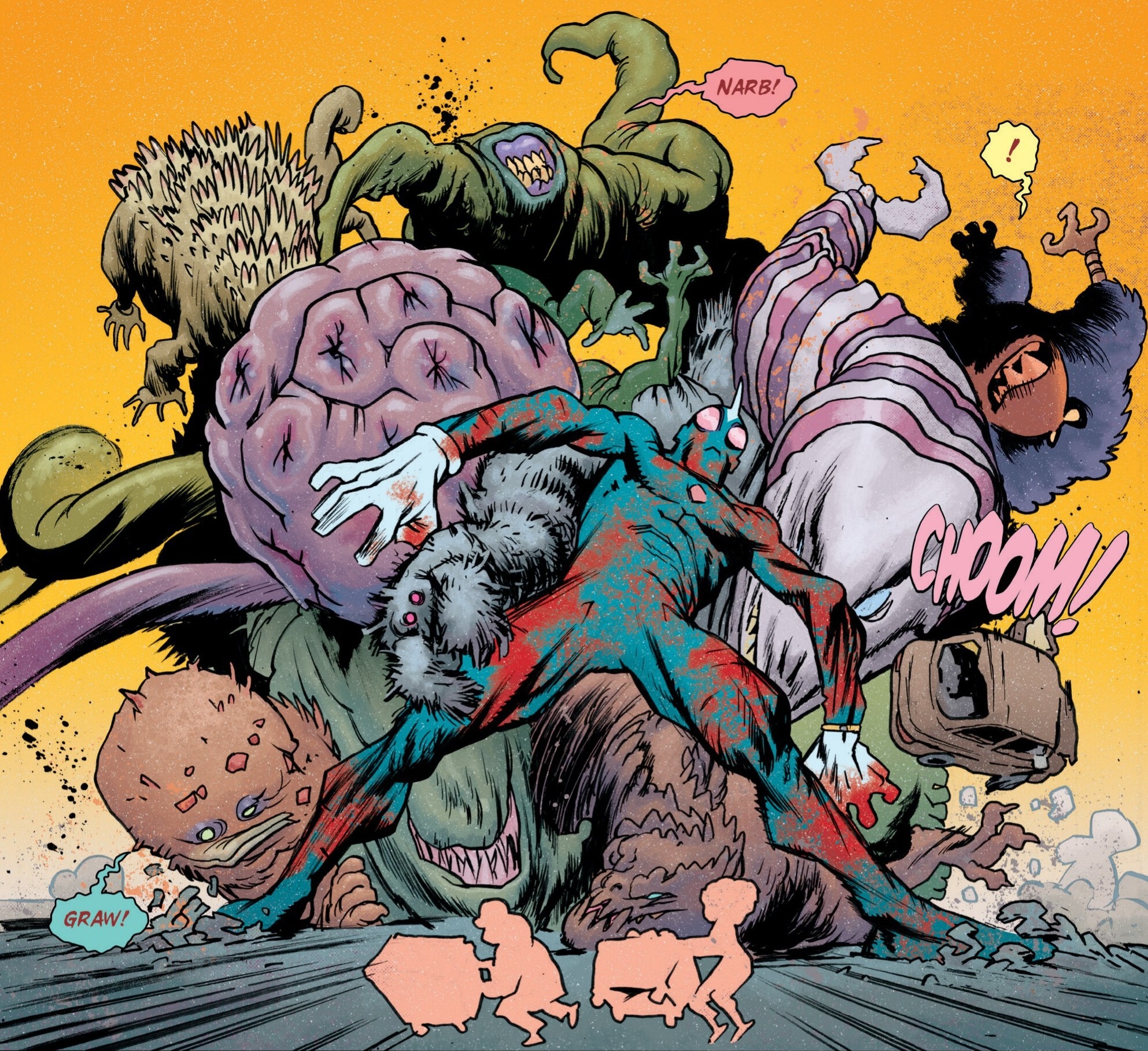
A freaky reminder that comic book covers can be awesome.

Posted in AWESOME COVERS | Tagged , , , , , , , , , | Leave a comment

2025’s books of the year – part 1

It’s been so long since I’ve properly written about comics at Gotham Calling that I’d figure I do something special to kick off this year… So I’m devoting the next five weeks to my top 25 comics of 2025!

As usual with these yearly lists, I’m focusing on bounded or online books (collections, OGNs…), which means some of the items on the list can be 2025 hardcovers and paperbacks collecting or translating comics that first came out in other formats, for example, in 2024. In other words, the list reflects new stuff you could find on stores’ and libraries’ bookshelves last year, but some of it may not feel all that new for those of you who get their comics in single issues… I myself read comics in various ways, but narrowing things down to a classical book format helps bring a minimum of coherence to these rankings.

Also, once again, I’m sticking to genre fiction, but I like to begin with an honorable mention, in this case spotlighting the non-fiction book Fortune and Glory – The Musical. Brian Michael Bendis was one of my favorite writers in the field back in the late ‘90s/early 2000s. I just couldn’t get enough of his mix of pop culture-savvy hip dialogue, black comedy, and indie storytelling sensibility (which I also associated with Quentin Tarantino, Kevin Smith, and Brian K. Vaughan, all of whom I was really into at the time), not to mention the fact he came across like a fan nicely paying it forward to other fans, packing his books’ backmatter with pro tips and all sorts of extras (short stories, scripts, pitches, designs, interviews) that were utterly cool for nerds like me. I dug Bendis’ early Marvel stuff, but I guess either mine or his or both our tastes just evolved differently… Since then, much of his writing began to annoy me and, in the past decade or so, he has mostly fallen outside my radar. I fondly recall those old comics, though, including 2000’s Fortune and Glory, a hilarious mini-series about his first attempts to make it in Hollywood, so when I saw this sequel on the shelf, I thought I’d give it a go.

As the title suggests, Fortune and Glory – The Musical is about Bendis’ foray into Broadway (specifically his work on an early stab at a Spider-Man musical). Rather than focusing on the theatre equivalent of the previous volume’s film industry jokes, however, Bendis uses the premise of starting from scratch on a new medium to flashback to the lifelong learning curve until breaking into comics in the first place. So, despite the misleading title, we don’t just get a tell-all about the roots of a notorious project, but also – and above all – a warm autobiographical piece that is much more of a love letter to comic books. In fact, between the easter egg-heavy backgrounds (this volume has cartoony artwork and colors by Bill Walko and Wes Dzioba, whose sketches of iconic covers and unnamed cameos are like a tantalizing game for aficionados) and the amusing peeks behind the curtain concerning the making (and negotiating) of those early Bendis books I actually cared about, I ultimately got way more geeky pleasure out of this than I was expecting!

And now on to books that used the medium for other types of thrills:

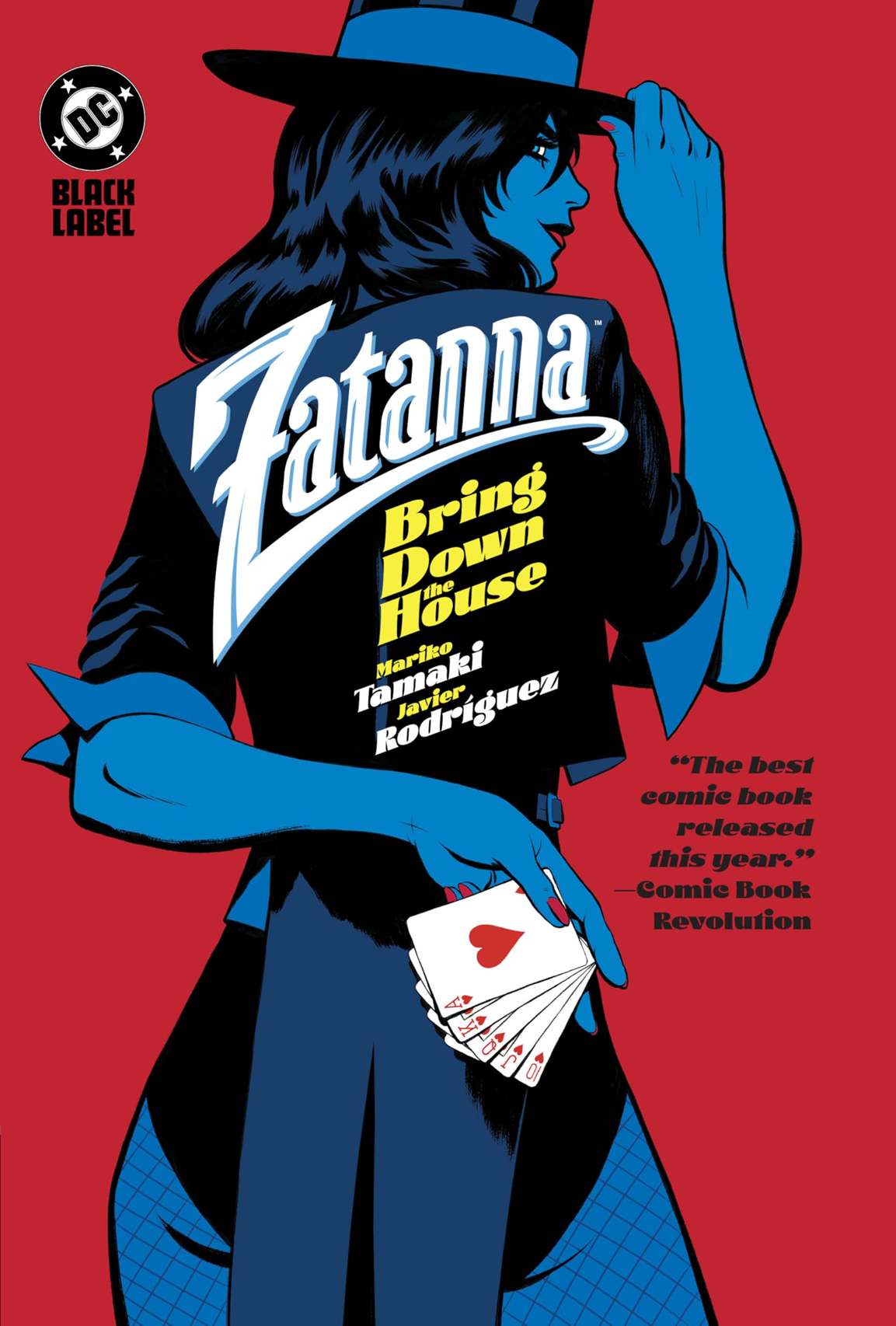
25. ZATANNA: BRING DOWN THE HOUSE

DC had a stupendous year, putting out not only plenty of kickass superhero comics, but also ambitious works (The New Gods) and some downright odd ones (Plastic Man No More!). Among other bangers, this collection (of a 2024 mini-series) is one of those comics that takes the medium’s potential to go wild with reality-bending depictions of magic and just runs with it. It stars Zatanna and features a few cameos, but writer Mariko Tamaki isn’t concerned with continuity and doesn’t demand that readers bring much baggage at all into the story (including about the protagonist herself). If anything, this works as a sort of origin tale, since Zatanna apparently hasn’t practiced magic ever since a couple of horrible episodes in her childhood – and you can pretty much guess that this adventure will lead her into uncovering her powers. Again, the point here isn’t the plot per se, which is nothing earth-shattering, despite delivering the obligatory twists and emotional payoffs.

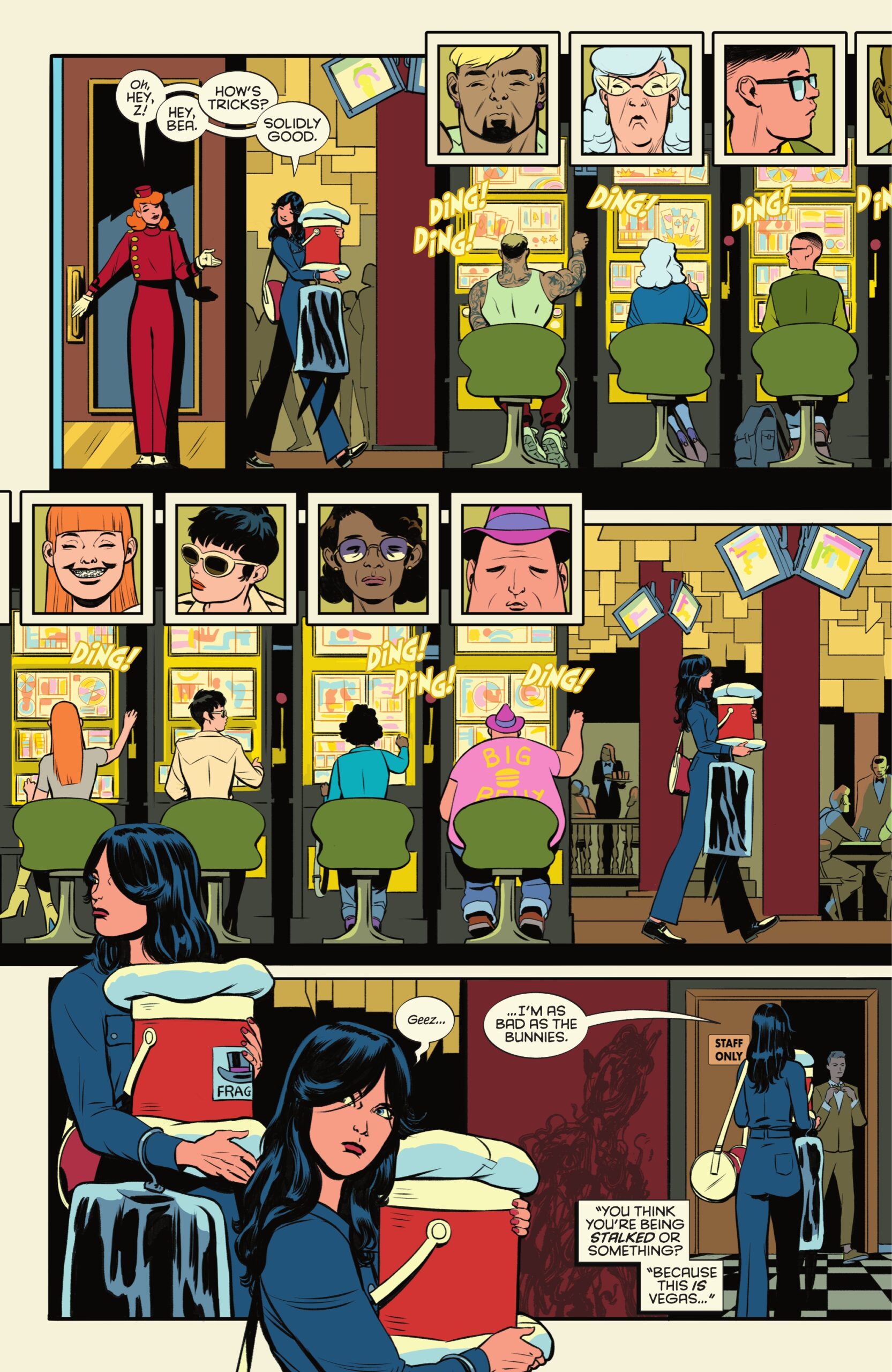
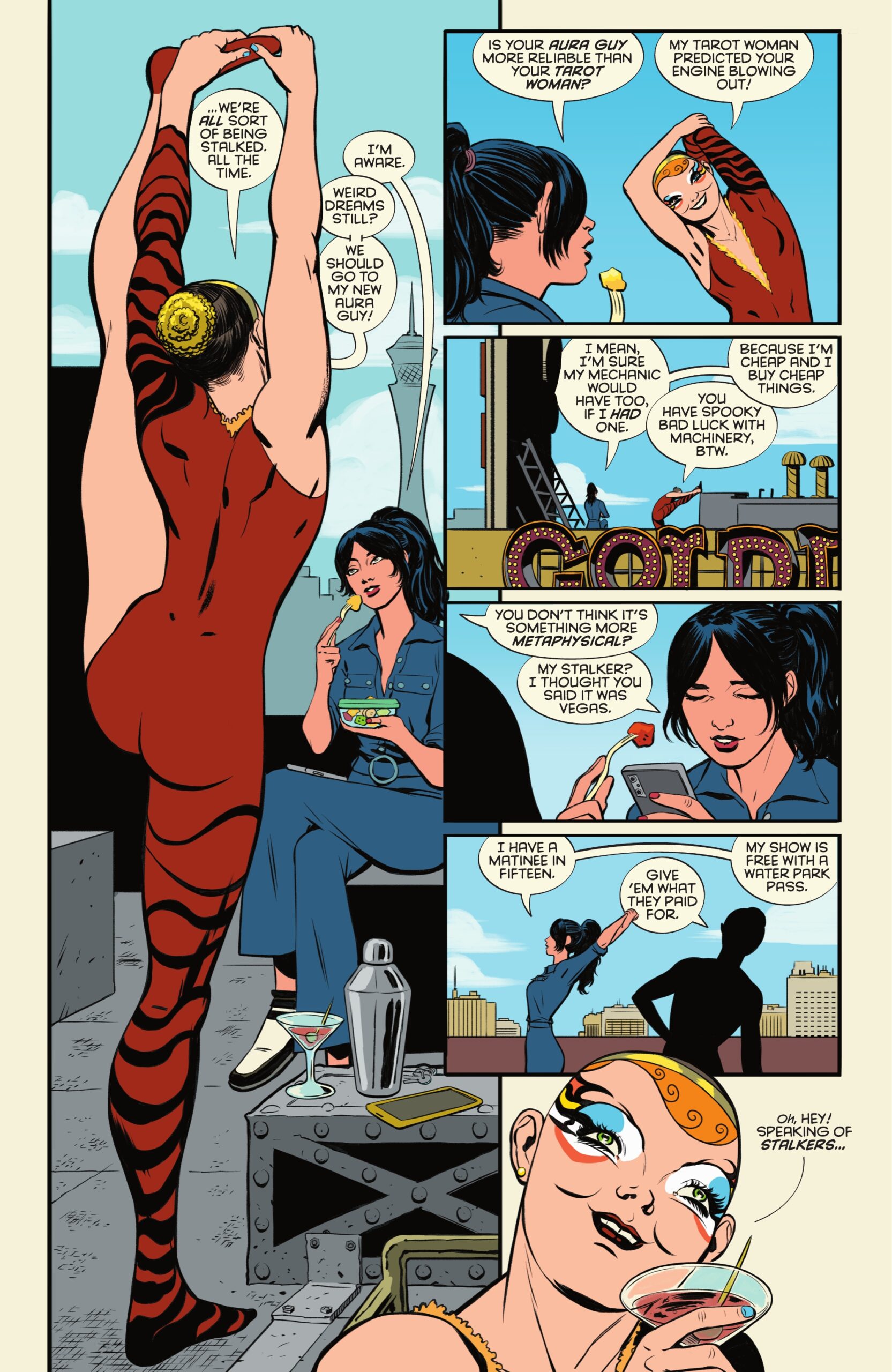
The beauty of Zatanna: Bring Down the House lies in the way it pushes comic book magic. Tamaki wisely realizes the impact will be greater the more you anchor this world on a grounded reality that contrasts with the fantastical, so there are these neat opening stretches about Zatanna working in Las Vegas that create the perfect buildup before the main action kicks in. That said, the early sequences are a joy to read in and of themselves, because of the snappy dialogue and the attention to detail in the artwork…

As you can see, Javier Rodriguez’s art nails this approach wonderfully, from various recognizable body postures to mundane gestures (like the way different people eat, drink or hold their phones), rendering the backgrounds with just enough detail to feel quasi-documentary. (You may think the pop colors are a bit too much but, hey, this is still *Vegas* after all…)

Once the magic takes over, then, Rodriguez and letterer Hassan Otsmane-Elhaou get to blast things into stretched-out, Kirbyesque weirdness and, sure enough, the ensuing explosion of inventive layouts (without being confusing) and surrealist character designs is nothing short of absolutely bananas. The result is a glitzy treat that’s worth getting for the sheer pleasure of flipping through it every time you feel like it.

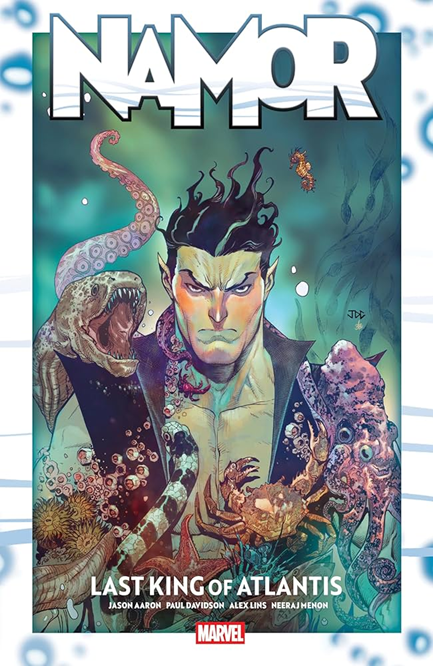
24. NAMOR: LAST KING OF ATLANTIS

On the surface (pun intended), Last King of Atlantis tells a fairly straightforward story about Namor (aka the Sub-Mariner) trying to stop a major conflict between seven subaquatic communities (aka World War Sea) before the land-based humans take advantage of all the chaos and invade the weakened war-torn sea realms. So, basically, we follow Namor as he faces the various leaders and navigates the geopolitics of these fantastic kingdoms. There are plenty of action-packed flashbacks to his teen years, as well.
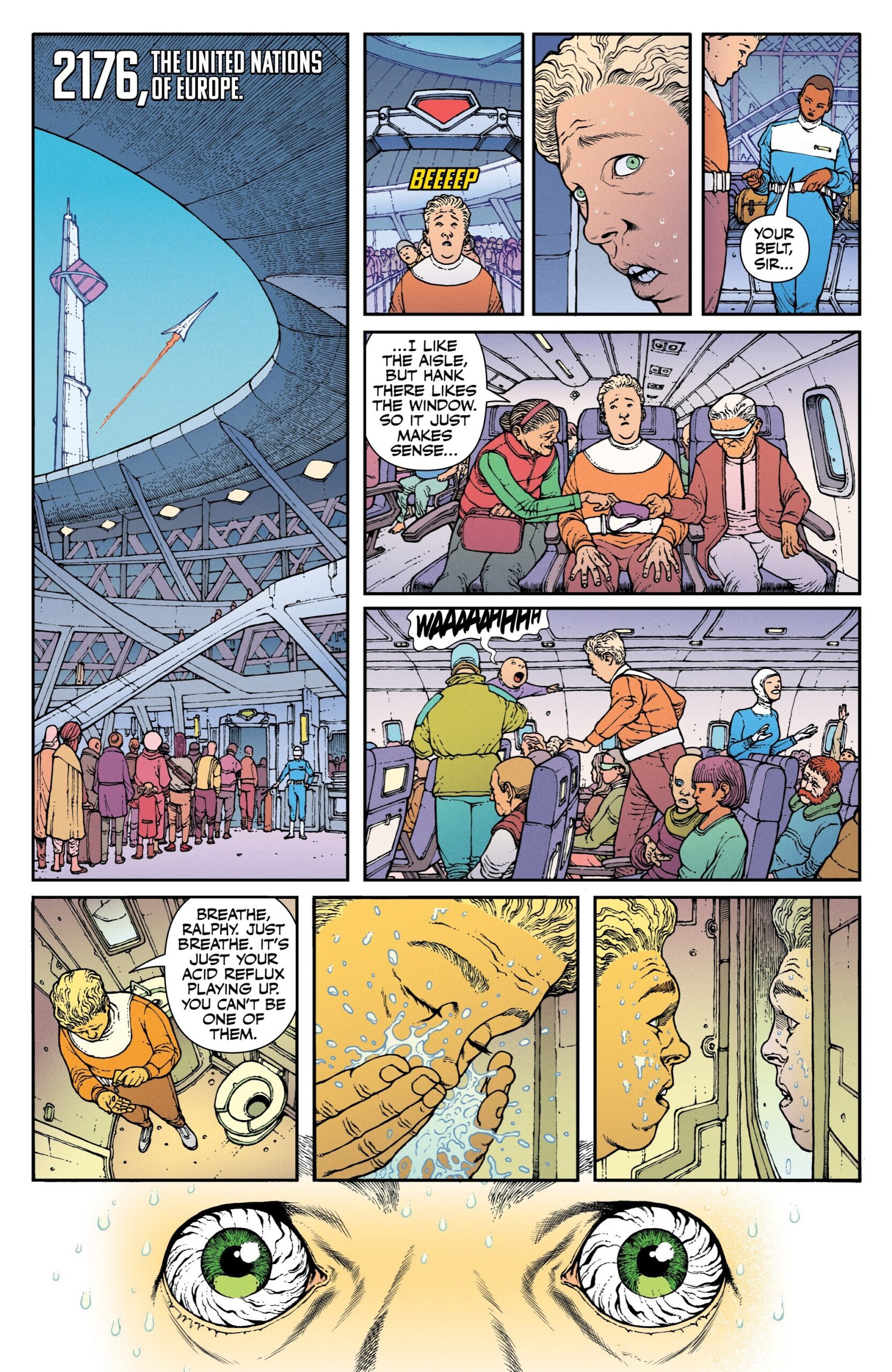
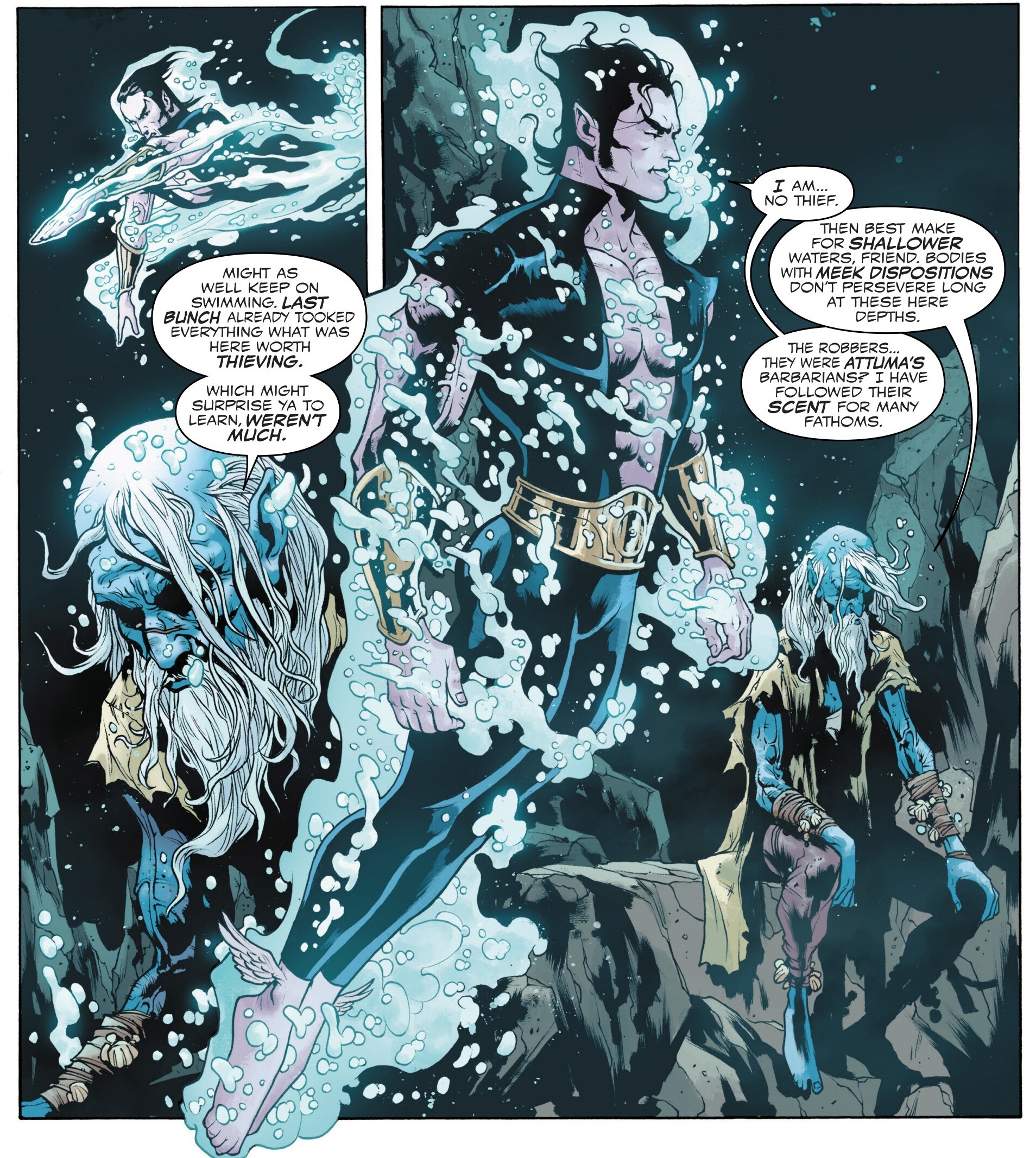
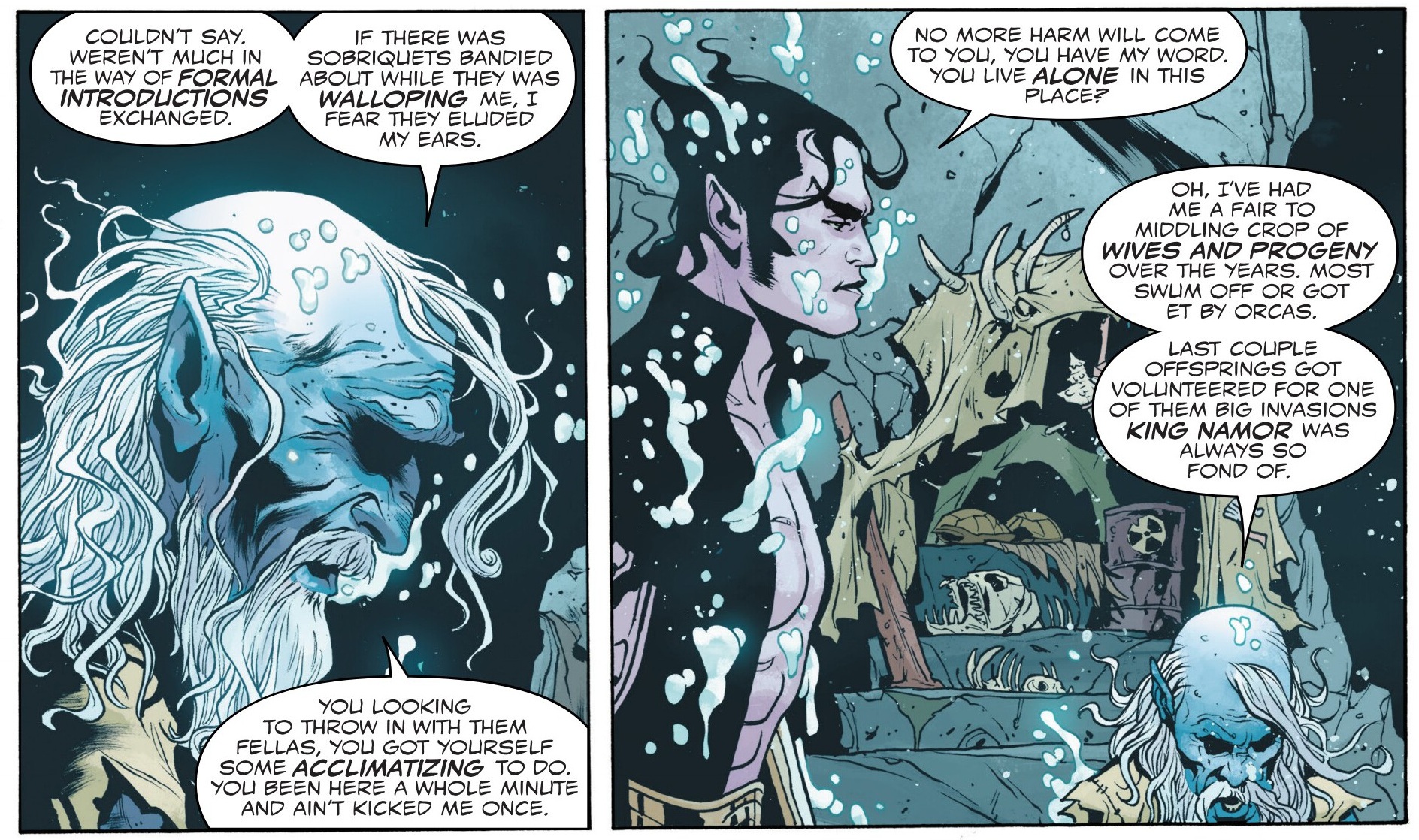
In practice, the main appeal of this book is that Jason Aaron pretty much writes the whole thing as an underwater sword & sorcery epic, crammed wall-to-wall with prose and dialogue that would make Robert E. Howard proud:

Jason Aaron, who penned a bunch of awesome Conan comics a few years ago, can do this stuff in his sleep by now (he even started another epic last year: Bug Wars). There are quaint rituals (one fight involves dueling while getting drunk on wine at the same time), odd sects (man-eating Lemurians, the tentacled monks…), and plenty of witty lines (‘I was swimming the crimson in these waters while your rawboned haunches were being perfumed and powdered by your grandfather’s nursemaids!’). Aaron even works in the sort of populism that suits this type of adventure, so that even an arrogant aristocrat like Namor ends up fighting for the little fish and the working classes of the sea.

There are also, of course, several grotesque-looking creatures, courtesy of artists Paul Davidson and Alex Lins, who provide different looks to the present-day and flashback sequences, softening the latter as if to signal a more naïve era (a vibe reinforced by Neeraj Menon’s colors).

I’ve been struggling to keep up with the intricacies of the Big Two’s output for a while, so this is just the kind of punchy, continuity-light comics I wish Marvel would put out more regularly.

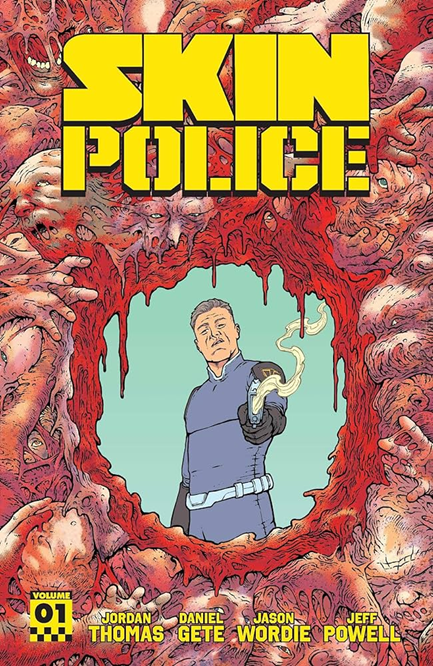
23. SKIN POLICE: CRIMES AGAINST NATURE

Talk about a high concept: in the next century, a fertility pandemic gives rise to a black market of clone babies, who, it turns out, can turn into homicidal monsters at any moment, so they get hunted down by a special force, informally called Skin Police.

The worst thing you can say about this comic is how derivative it’s bound to feel for anyone who has read or watched some the thousands of futuristic conspiracy thrillers already out there, as if you had put the likes of Blade Runner, The 6th Day, The Fifth Element, and Judge Dredd in a blender. At the same time, perhaps the best compliment is to note how Skin Police excels at digesting its influences, compellingly nailing the vibe of its coolest predecessors (especially the badass science fiction of the 1980s), and reworking familiar beats into a damn exhilarating ride.

That said, we get plenty of clever touches along the way. The trope about publicly exposing the truth behind a cover-up might seem naïve in an increasingly post-truth, AI-flooded era, but a few well-placed lines soften that possible line of criticism. The allegorical dimension about persecuted minorities and mental illness is so embedded into the story that the script wisely lets it play out without pontificating. And there is a nice suspense engine built around the notion that we don’t know for sure who is a clone (some of them don’t know themselves) and their maniacal outbursts are apparently linked to stress, so it can happen at any moment. Having set up the premise in a couple of paragraphs, the very first page exploits this exquisitely, as we see an accumulation of recognizable anxieties and immediately start fearing they may build up to tragedy:

For all its big ideas, this genre does tend to thrive on captivating sci-fi imagery and gory action, so, even without shortchanging Jordan Thomas’ writing, much of the series’ power rests on the shoulders of Daniel Gete’s artwork. Neatly colored by Jason Wordie with garish choices (appropriately) reminiscent of Moebius, every single page is a visual feast.

While Skin Police’s inaugural volume certainly hit the ground running, it was also about setting up this world for the inevitable next installment. The book finishes on a cliffhanger, which can be frustrating, although a second series has just wrapped things up and it should be collected soon. I could hardly wait and actually read that one in monthly issues, so I can already confirm the overall result is just as good, except for the very end (which comes off as clumsily rushed). In particular, the second issue opens with a gut-wrenching wordless sequence and later has a tremendous bit where it feels like a whole action movie has been effectively condensed into a couple of pages, making a masterful use of ellipses.

Now that this creative team has shown they can seamlessly pull off this sort of stuff, hopefully they will push the narrative in their next projects into bolder, less predictable directions!

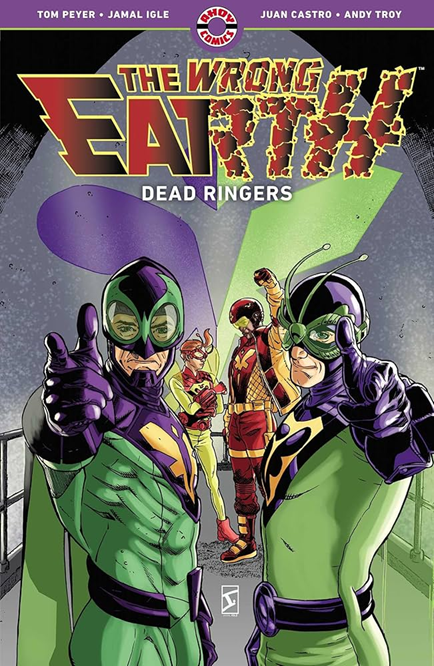
22. THE WRONG EARTH: DEAD RINGERS

As previously explained here, the simple yet effective premise of The Wrong Earth is that a version of Adam West’s Caped Crusader switches universes with a version of Frank Miller’s Dark Knight, each one becoming a fish out of water in a world built on a very different moral structure than their own. For the past eight years, Tom Peyer has been exploiting all sorts of entertaining metafictional possibilities of this idea through a string of one-shots and mini-series, the fourth collection of which came out in early 2025.

The Adam West version of Batman was the campiest comedy of the 1960s (with the arguable exception of Dr. Goldfoot and the Bikini Machine), but its particular brand of humor has already been milked by DC itself. Likewise, The Wrong Earth is hardly the first to mock the modern turn towards grim and gritty (hell, Miller’s own work has become a parody). Fortunately, Peyer knows a thing or two about the superhero genre (as anyone who has read his brilliant Hourman run can attest), so things never run out of steam… By now, the story has taken many twists and turns, with the two heroes – Dragonfly and Dragonflyman – having eventually teamed up and met yet another version of their supporting cast in a third Earth, only for Peyer’s scripts to reshuffle the deck and send a bunch of them to different places once again, constantly changing character dynamics along the way.

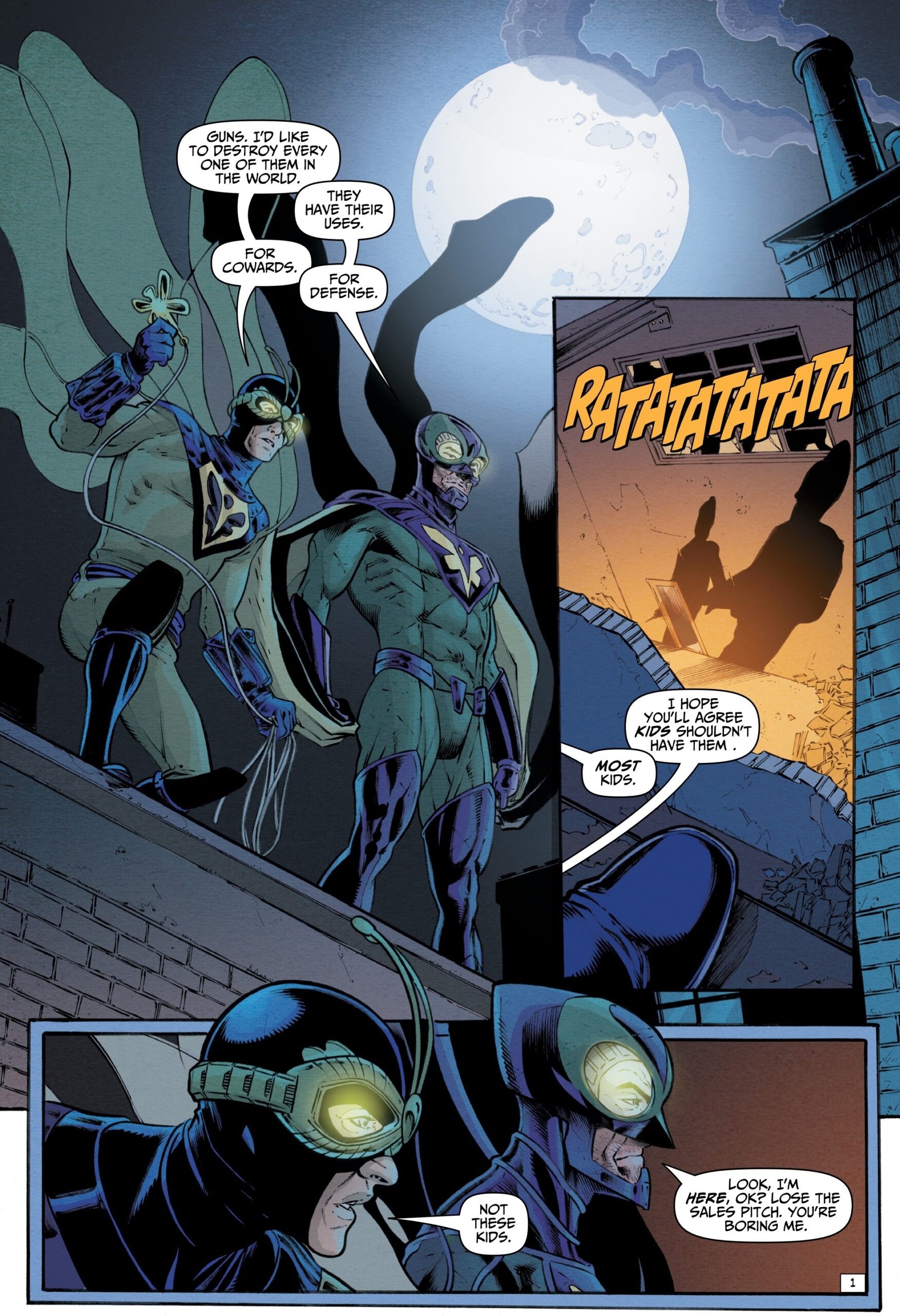
It’s worth tracking down the whole saga, but the status quo at the beginning of Dead Ringers is particularly fun, with the two heroes grudgingly working together…

The geekiest among you no doubt recognized Jamal Igle’s visual riff on one of the most iconic pin-ups of the Dynamic Duo. The Wrong Earth is full of nods like that, even as the series smoothly works on a superficial level as well, keeping its narrative self-sufficient and independent from these intertextual easter eggs. That said, for such an inward-looking escapist fantasy comic, it surprisingly resonates with the political moment, as both humor and dramatic arcs hinge on a constant tension between innocence and cynicism, nostalgia and critical self-awareness, moral intolerance and relativism.

The standout issue is the middle one, where the two protagonists have a frank confrontation. That issue is made entirely out of splash pages, even though the only fighting in it is verbal, which equates their philosophical dispute with a classic superhero showdown while also conveying the symmetry between them. Besides the striking device, the issue is memorable for the way it tackles a core theme: the heroes seem to practically realize that the constant reboots of superheroes with a new morality are part of a strategy of brand extension which can ultimately dilute whatever significance was there to begin with, as it becomes harder for readers to invest in a story (in its tragedy or sense of heroism) when there are so many alternative versions out there. Take that, Absolute and Ultimate universes!

(Completists may also wish to check out Dragonflyman’s appearance in Toxie Team-Up #4, where he joins forces with the Toxic Avenger against the Bohemian Devil.)

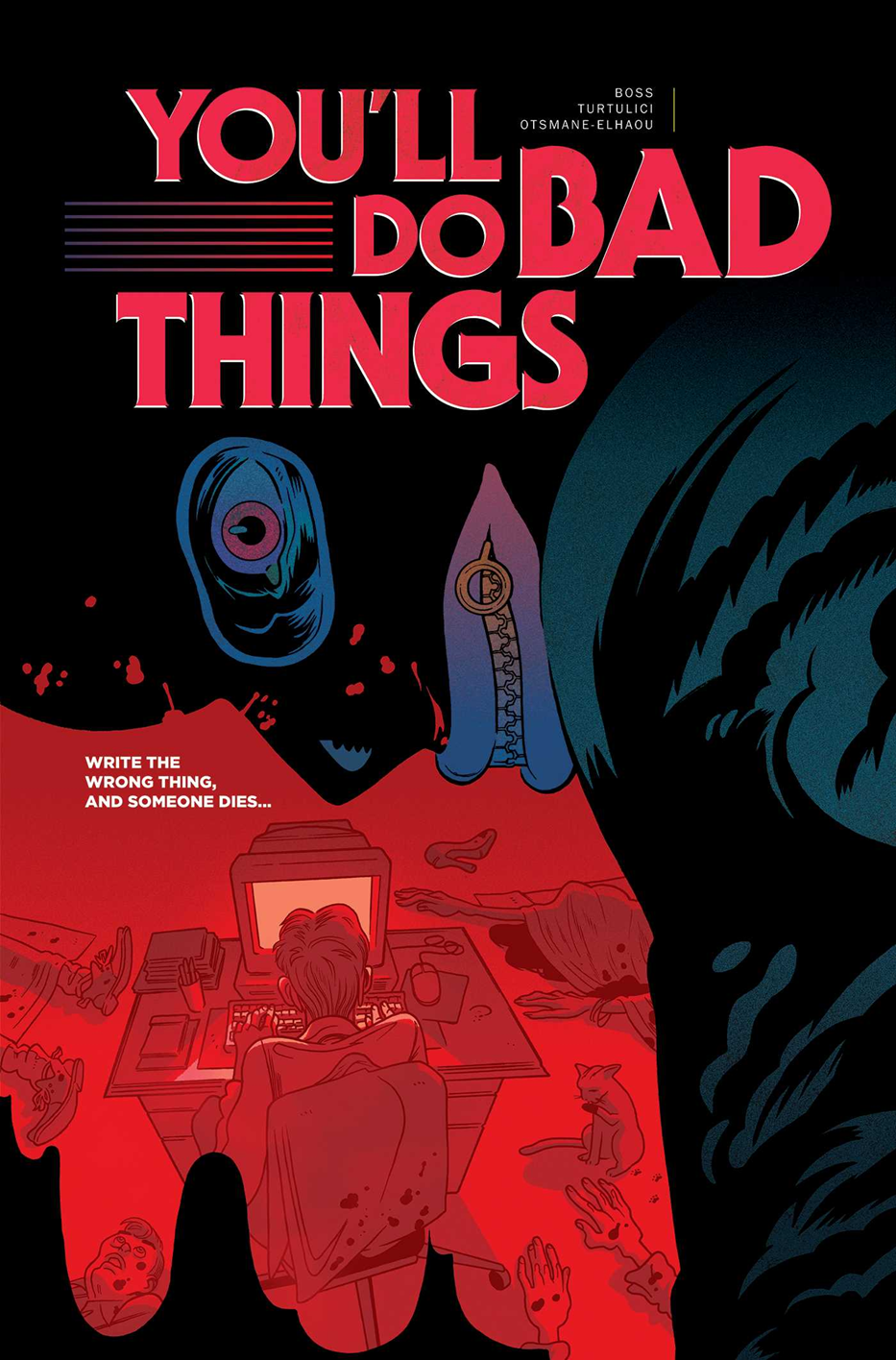
21. YOU’LL DO BAD THINGS

Ten years after authoring a True Crime bestseller about a serial killer, Seth Holms struggles with writer’s block as he tries to move into light fiction… and as if that wasn’t challenging enough, Holms also starts to suspect his darker drafts may be materializing into actual murders. Steering us between psychological thriller, neo-noir, murder mystery, slasher, and possibly supernatural horror (as well as a bit of editorial satire), You’ll Do Bad Things can be best described as a giallo, that old branch of Italian cinema which often blended the aforementioned genres into nightmarish concoctions where style and atmosphere typically trumped strict logic.

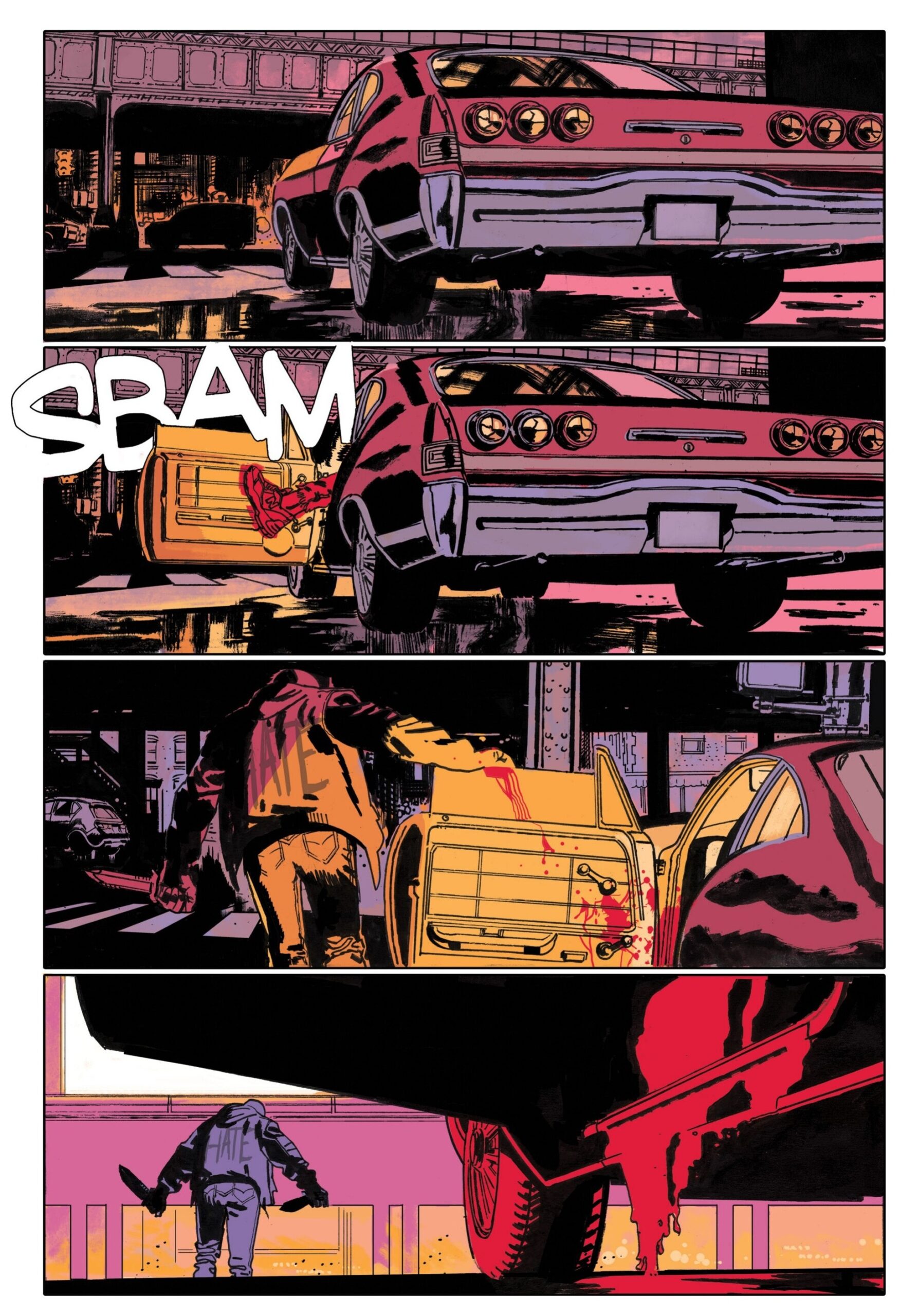
Suitably, then, Tyler Boss’ script is illustrated by Adriano Turulici, an Italian artist whose scratchy lines fall into a certain tradition of adult European comics specialized in lurid sex and gritty violence (particularly the Italian strain, known as fumetti neri). Like in giallo films, the colors do a lot of heavy lifting, with unnaturalistic and sometimes deliberately nauseating hues enhancing the overall eerie vibe.

I still haven’t decided if I find the ending half-assed or brilliant. It asks a lot of the reader, but in the right mood I can appreciate its ballsy cheekiness. Even if the book doesn’t necessarily stick the landing, though, You’ll Do Bad Things is filled with hypnotic passages piercing the borders between dream, reality, and fiction. Much like the films and pulp novels that seem to have inspired this comic, it is a ride worth taking just to bask in the incredible view along the way, regardless of the final destination where you get out.

Posted in BOOKS OF THE YEAR | Tagged , , , , , , , , , , , , , , , , , , , , , , , , , | Leave a comment

COMICS CAN BE AWESOME (5 January 2026)

Another year. Another war. Another attempt to take the mind off of doomsday every once in a while by briefly escaping into fantasy…

In 2026, Gotham Calling is going back to spotlighting covers in these Monday reminders that comics can be awesome. While the quality of books’ interior artwork and storytelling may vary, cover design is a craft in itself and one of the many ways in which this medium provides unparalleled excitement and entertainment.

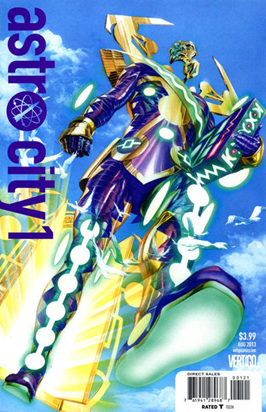
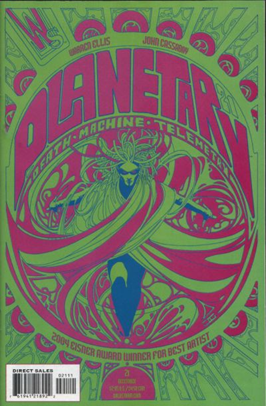
Just check out these amusing compositions, playing with perspective and symmetry:

Posted in AWESOME COVERS | Tagged , , , , , , , , , , , , | Leave a comment

Have a Gotham 2026!

Because things can always get worse…

Weird Science #21

Posted in GLIMPSES INTO THE PAST | Tagged , , , , , | Leave a comment

COMICS CAN BE AWESOME (29 December 2025)

A morbid a reminder that comics can be awesome…

Paranoid Gardens #4

Posted in GLIMPSES INTO AWESOMENESS | Tagged , , , , , | Leave a comment

COMICS CAN BE AWESOME (22 December 2025)

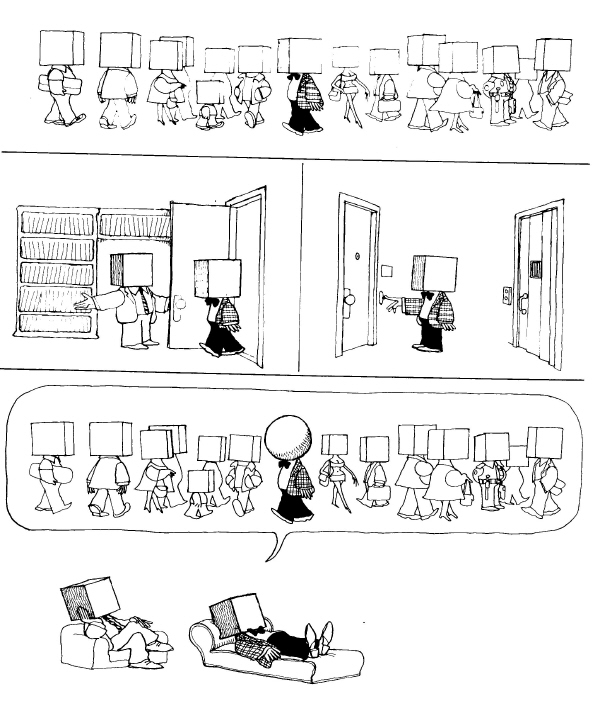
Forget X-mas – let’s celebrate Quino!

Humano Se Nace

Posted in GLIMPSES INTO AWESOMENESS | Tagged | Leave a comment

A dozen swinging sixties’ super-spies – part 2

If you’ve read last week’s post, you know what’s going on. Basically, these were the cinematic cousins of Nick Fury, Agent of S.H.I.E.L.D., back in the 1960s:

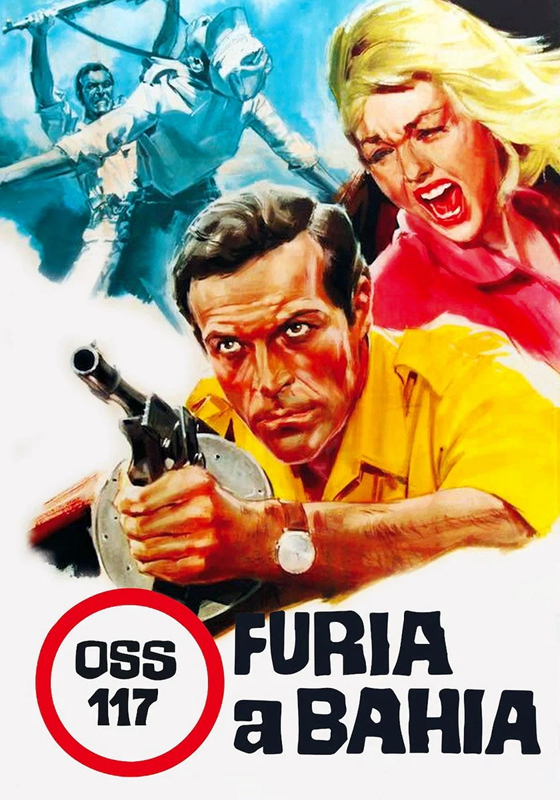
OSS 117: Mission for a Killer (1965)

We’ll start with yet another bonkers adventure about a ridiculously smarmy CIA agent, this one (played by Frederick Stafford) gallivanting around Brazil in between some very cool – and truly vicious – action beats, enjoying the sun, ignoring the recent onset of authoritarian rule, and eventually battling a sinister organization and blowing shit up in their secret lair… Because this is part of the peak era of the OSS 117 series, the production values are way higher and the cinematography much more luscious than in the pictures that make up most of this list. Less ludicrous than the previous film in the series (Panic in Bangkok) and way more dynamic that the next one (Terror in Tokyo), Mission for a Killer is probably the closest the French ever came to delivering something that truly *looked* and *felt* like a vintage James Bond picture (albeit more Moore than Connery).

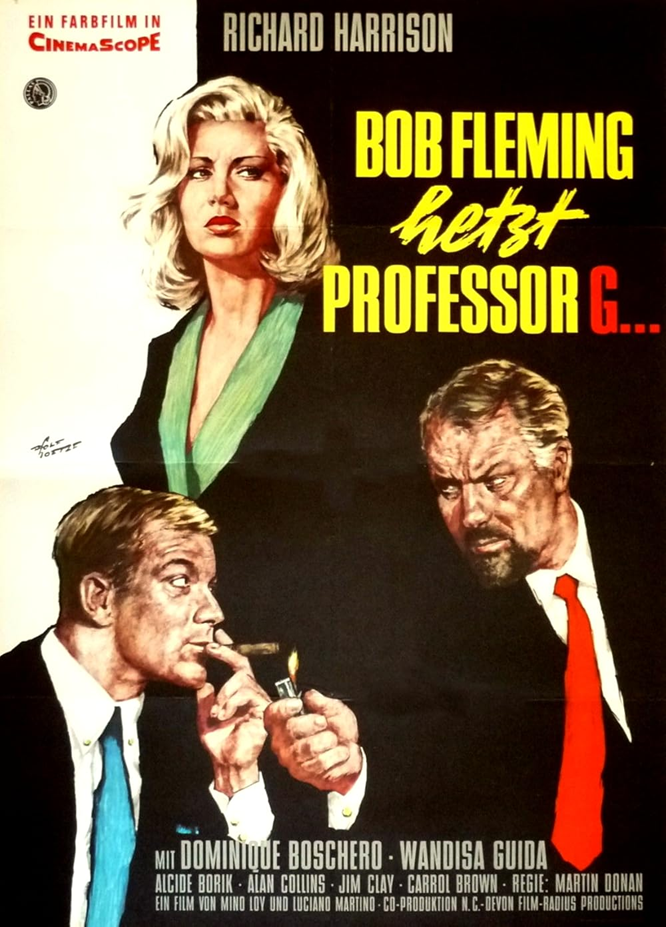
Secret Agent Fireball (1965)

aka The Spy Killers

One of the very first ersatz-Bond – who in some versions is actually called Fleming! – tries to beat the Soviets in the search for a nuclear scientist who has defected from both sides, which leads our protagonist (Richard Harrison) from Paris to Hamburg to Beirut and beyond. Secret Agent Fireball is pretty much the quintessential Eurospy, nailing all the staples of the subgenre at its most enjoyable/cringy (depending on your sensibility), like the fact that the ‘hero’ is an unbelievably smug jerk who spends much of the film engaged in either martial arts or sexual harassment. That said, fans of this type of movie should appreciate not only the committed take on the regular tropes, but also a handful of neat surprises and just enough oddball touches to raise it above the crowd (for example, instead of the typical singing act in a nightclub, we get a female wrestling show!)

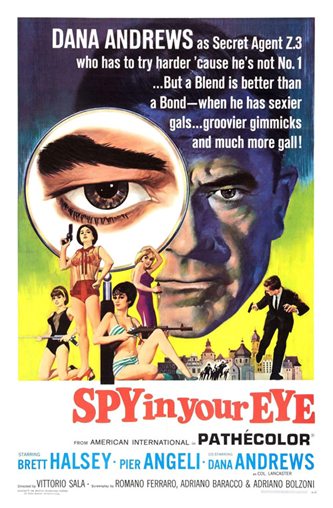
Spy in Your Eye (1965)

aka Bang You’re Dead

Obsessed with lasers and miniature cameras, swinging sixties thrillers often veered towards spy-fi, but this one pushes it to a whole other level. Among all the gizmos and hidden passages, the Russians manage to hack the artificial eye of the chief of the American secret services in Europe (a stone-faced Dana Andrews), which conveniently allows them to see and listen in on his plans. And this isn’t even the central plot of Spy in Your Eye, whose visually imaginative Cold War games stretch from East Germany to Syria (or, at least, this heightened reality’s version of those places).
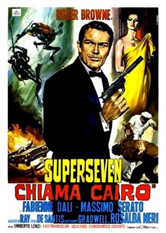
SuperSeven Calling Cairo (1965)

Here the McGuffin is a sample of baltonium (a new element 100 times more radioactive than uranium!) which has been stolen, hidden in a camera, and then sold to the wrong person by mistake… so it’s up to the pipe-smoking Martin Stevens, aka agent SuperSeven (who, as the codename suggests, is more badass than 007), to globetrot and fistfight in order to track down the camera before the Soviets get their hands on it. Like many other Eurospies, SuperSeven Calling Cairo provides two kinds of entertainment. One, I suspect, is largely on the level the filmmakers intended, appreciating the touristic footage, femmes fatales, twisty intrigue, and the whole super-spy world where a pen is a gun, a razor is a transmitter, and the Waterloo National Museum secretly houses the MI6 headquarters, complete with a room for machine-gun training (talk about soundproof walls!). The other layer has to do with all the odd choices, whether it’s the characters’ sudden plan to disguise a corpse as the mannequin of a Napoleonic soldier or the fact that, once again, the protagonist can be quite an outrageous dick… While his behavior may be morally repulsive and sometimes quite bewildering, there is something infectious about the movie’s anything-goes attitude, approaching SuperSeven and his mission just as it approaches the uneven acting and preposterous plot: writer-director Uberto Lenzi doesn’t try to justify any of it, he just expects viewers to take it all in stride, swept by the propulsive momentum of unashamedly unpretentious two-fisted thrills.

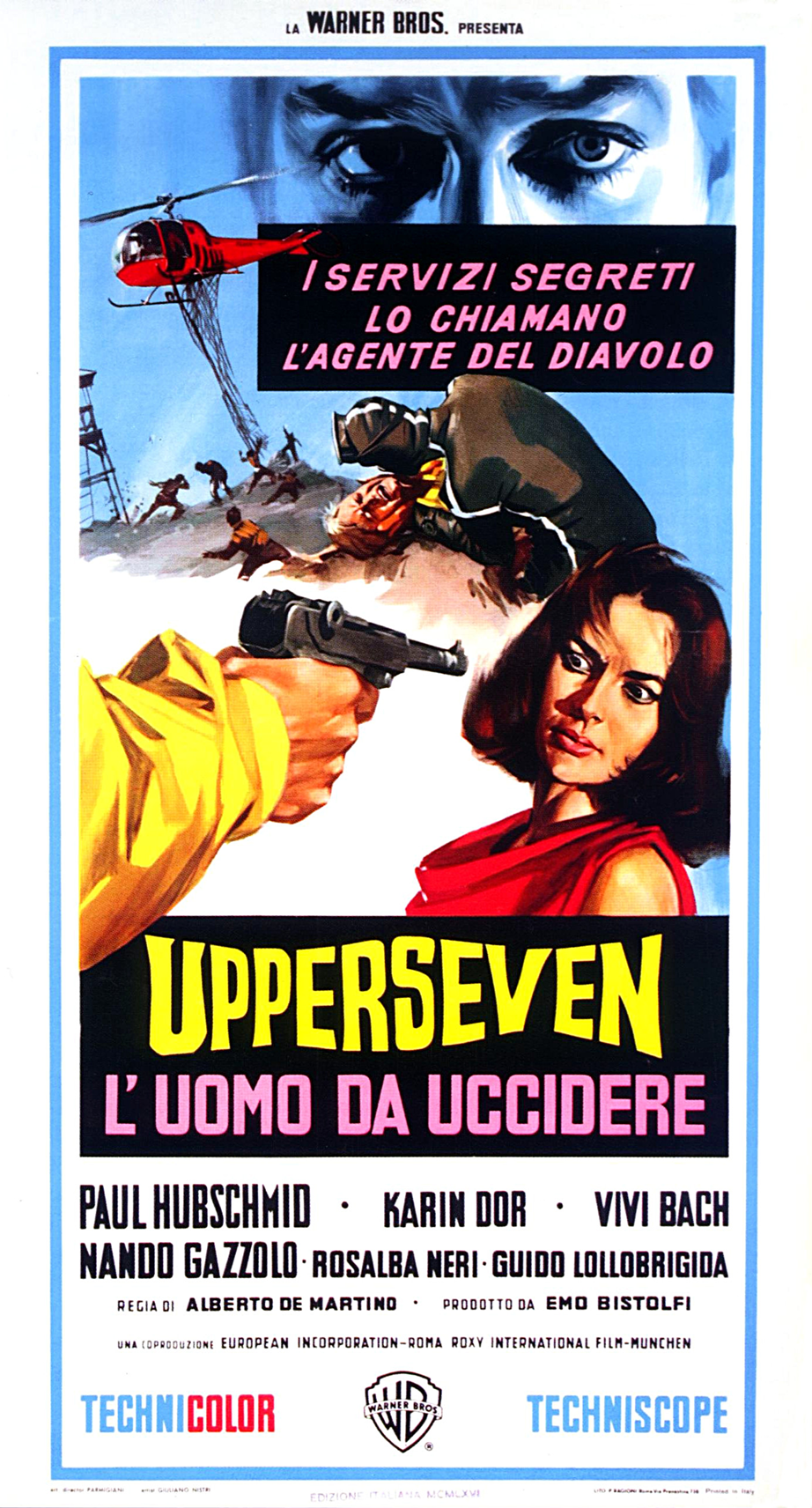
Upperseven, the Man to Kill (1966)

aka The Spy With Ten Faces

aka The Man of a Thousand Masks

This time around, MI6’s top spy (Paul Hubschmid) has a gimmick: he’s a master of disguise who uses Mission: Impossible-style rubber masks in the fight against his archnemesis, Kobras, with whom he clearly has a backstory (boy, I wish this had turned into a series…). Fortunately, this isn’t the only thing Upperseven, the Man to Kill has going for it, as the film ticks all of the genre’s boxes with panache, including plenty of location-hopping/sightseeing, here put in the service of a mission to protect a money transfer from the USA to South Africa in order to fund an anti-Chinese pan-African alliance… Now, as you can guess from the previous sentence, the silliest thing about Upperseven is its politics, as the heroes are in cahoots with the apartheid regime while the villains operate out of Ghana, the pioneer of African anticolonial emancipation! As usual, it’s best to watch these movies as comically grotesque live-action cartoons, practically caricaturing their era’s international relations while merrily filling the screen with explosions and karate.

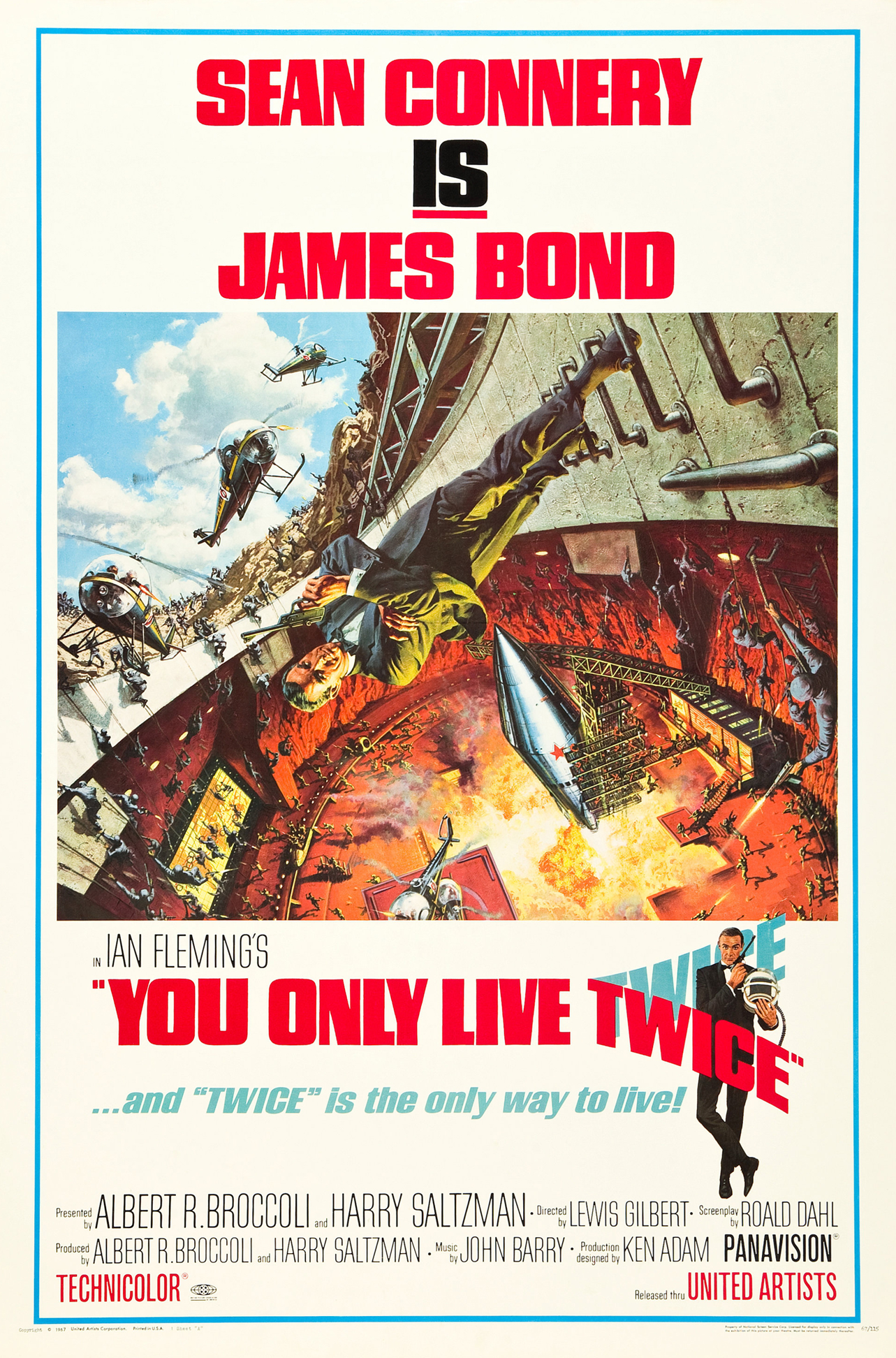
You Only Live Twice (1967)

Let’s finish things off with the real deal, i.e. with a classic installment of the series that loomed over everything else, starring Sean Connery. Arguably the most swinging sixties super-spy film of all the swinging sixties super-spy films, this Japan-set adventure shows the James Bond franchise at its best and worse: there are a bunch of truly fun sequences and *absolutely jaw-dropping* set design, but You Only Live Twice is also somehow even more sexist and racist than usual… Still, we do get to meet 007’s Japanese counterpart, who – hilariously – is way more of a super-spy than Bond is!

Posted in SPYCRAFT & WARFARE | Tagged , , , , | Leave a comment