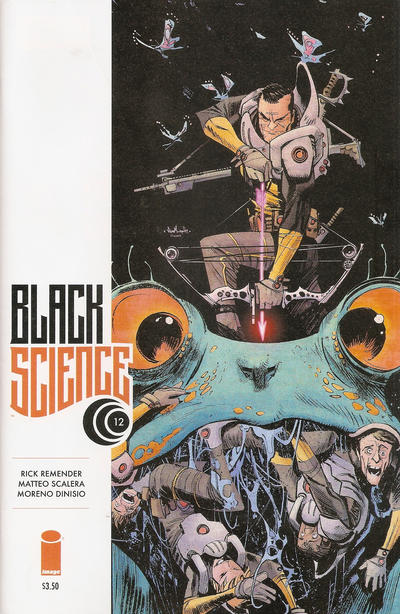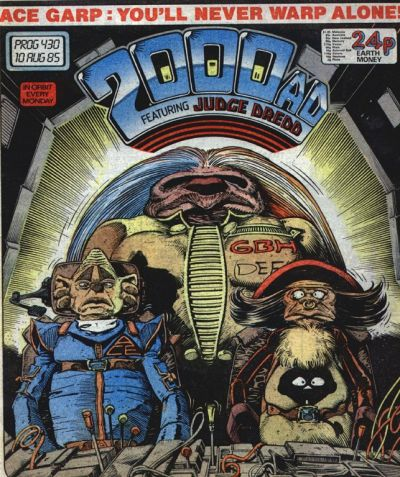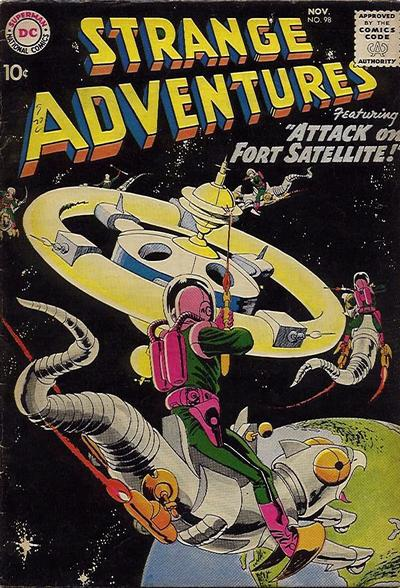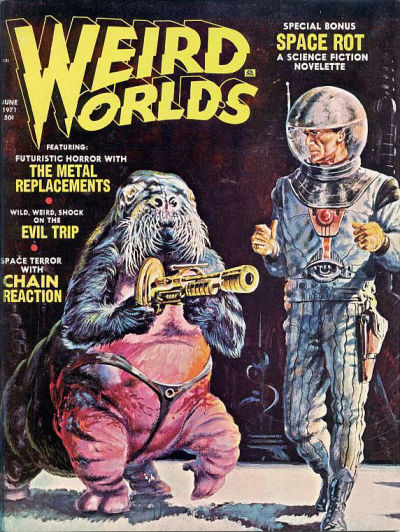
A couple of vintage spy novels

I’ve written extensively about John le Carré in this blog, but today I want to go further back into the roots of spy literature. Here are a couple of very different novels by a couple of very different writers who only ventured into this genre occasionally, so they brought with them other literary sensibilities…

THE SECRET AGENT

(Joseph Conrad, 1907)
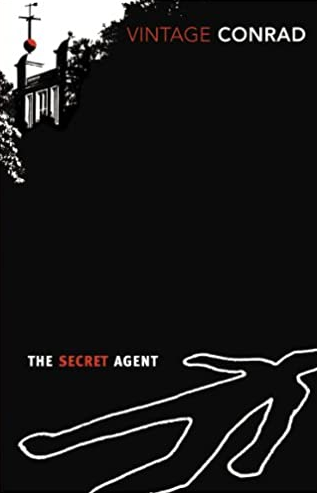
joseph conrad

Mr Verloc, going out in the morning, left his shop nominally in charge of his brother-in-law. It could be done, because there was very little business at any time, and practically none at all before the evening. Mr Verloc cared but little about his ostensible business. And, moreover, his wife was in charge of his brother-in-law.”

Revolving around a terror attack in 1886 London, set up by an agent provocateur working for a foreign (presumably Russian) embassy, The Secret Agent is not only an awesome read, but it’s usually considered one of the very first spy novels. You can easily find traces of its influence in many of the genre’s subsequent masterworks, from Alfred Hitchcock’s Sabotage (a very loose film adaptation of this book) to the intricate, introspective writings of le Carré.

It’s curious to see how many of the genre’s elements are already here: the tradecraft, the double (triple?) agent, the clash between mission and personal life, the ambiguous politics (including fascinating meditations on terrorism and anarchism), the twisty plot, the premise of using a ‘false flag’ bombing to promote securitarian measures, and the inner rivalries among the counterintelligence authorities.

And not only does Joseph Conrad bring this now-familiar underworld to life, but he already injects it with a sort of dark satire, from the ultra-seedy atmosphere where most of the action takes place (in case you’re wondering why Verloc’s shop has practically no business before the evening, it’s because he sells pornography) to the magnificently grotesque characters, such as Michaelis, a verbose anarchist out on parole after years in prison:

“He talked to himself, indifferent to the sympathy or hostility of his hearers, indifferent indeed to their presence, from the habit he had acquired of thinking aloud hopefully in the solitude of the four whitewashed walls of his cell, in the sepulchral silence of the great blind pile of bricks near a river, sinister and ugly like a colossal mortuary for the socially drowned.

He was no good in discussion, not because any amount of argument could shake his faith, but because the mere fact of hearing another voice disconcerted him painfully, confusing his thoughts at once – these thoughts that for so many years, in a mental solitude more barren than a waterless desert, no living voice had ever combatted, commented, or approved.”

The fun of reading The Secret Agent doesn’t rely merely on spotting how it anticipates later works and tropes. Rather, this is a genuinely great spy thriller. Besides an engaging depiction of the intelligence milieu, the book has an elaborate structure that plays around with a non-linear chronology and with multiple viewpoints. The shifting perspectives – sometimes within a single paragraph – are particularly satisfying, removing a clear moral ground and asking readers to identify with different figures of the eccentric cast. Even the tone isn’t set in stone, ranging from lengthy quasi-philosophical conversations to intimate character pieces… In the incredible final stretch, the mood suddenly turns from a suspenseful narrative about a woman on the run from the police into a macabre comedy of errors involving a corpse (no wonder Hitchcock got interested in this material!).

Joseph Conrad’s witty prose is a delight from start to finish, constantly coming up with colorful, Alan Moore-ish turns-of-phrase to depict each physical and mental process, including plenty of hilariously sarcastic descriptions and some downright weird expressions (‘Comrade Ossipon might have been said to be terrified scientifically in addition to all other kinds of fear.’). For instance, I love this moment when Conrad captures the psychology of a nihilistic terrorist coming face to face with a policeman:

“The unwholesome-looking little moral agent of destruction exulted silently in the possession of personal prestige, keeping in check this man armed with the defensive mandate of a menaced society. More fortunate than Caligula, who wished that the Roman Senate had only one head for the better satisfaction of his cruel lust, he beheld in that one man all the forces he had set at defiance: the force of law, property, oppression, and injustice. He beheld all his enemies, and fearlessly confronted them all in a supreme satisfaction of his vanity. They stood perplexed before him as if before a dreadful portent. He gloated inwardly over the chance of this meeting affirming his superiority over all the multitude of mankind.”


THEY CAME TO BAGHDAD

(Agatha Christie, 1951)
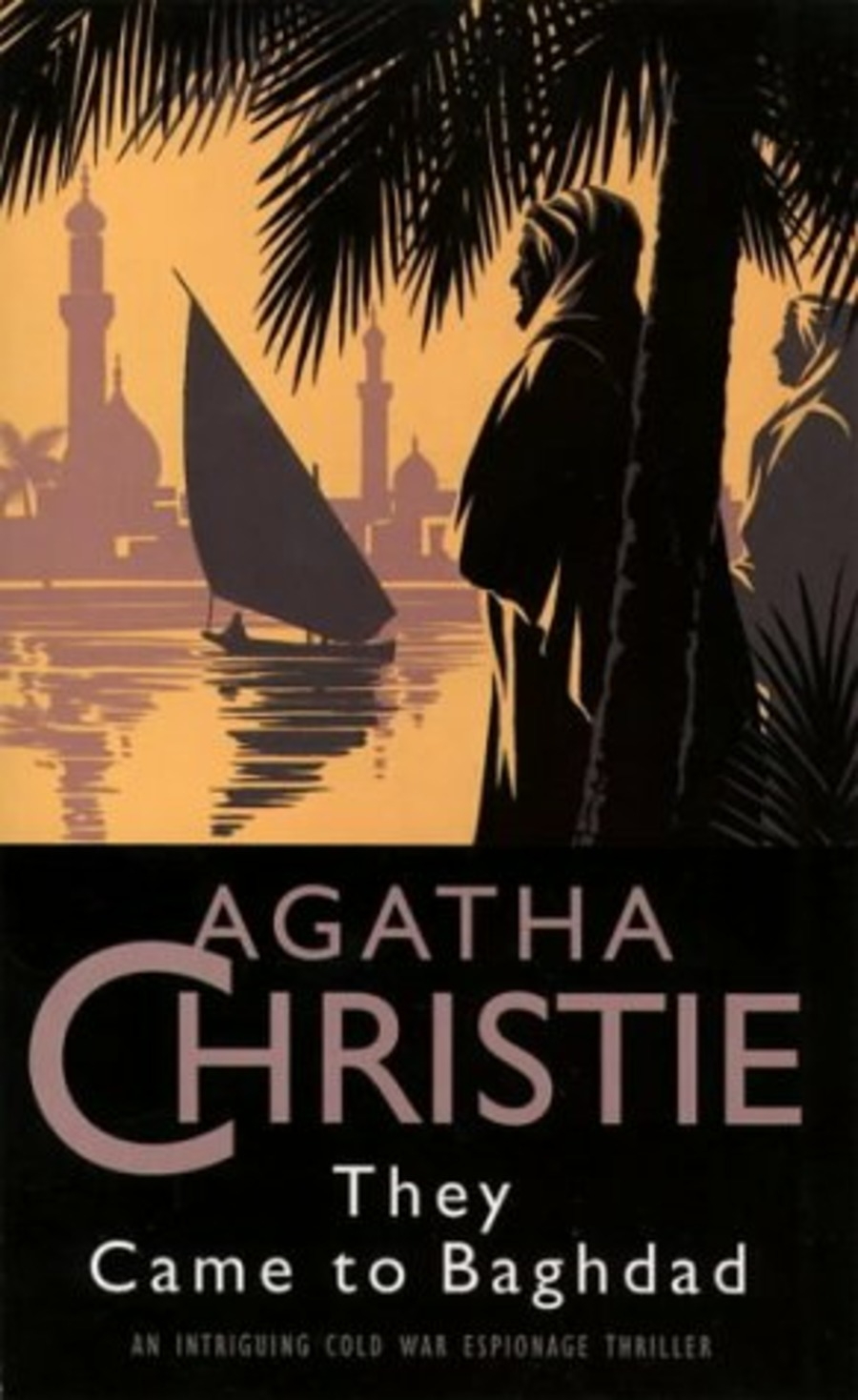
agatha christie

“Captain Crosbie came out of the Bank with the pleased air of one who has cashed a cheque and has discovered that there is just a little more in his account than he thought there was.

Captain Crosbie often looked pleased with himself. He was that kind of man. In figure he was short and stocky, with rather a red face and a bristling military moustache. He strutted a little when he walked. His clothes were, perhaps, just a trifle loud, and he was fond of a good story. He was popular among other men. A cheerful man, commonplace but kindly, unmarried. Nothing remarkable about him. There are heaps of Crosbies in the East.”

Like many people, I went through an Agatha Christie phase back in my teens, binge-reading dozens of her entertaining mystery novels. Curiously, though, one of the few that stuck with me was The Man in the Brown Suit, which didn’t star any of Christie’s popular recurring protagonists (like Hercules Poirot or Miss Marple) and, in fact, was more of a globetrotting adventure yarn than her typically quaint tales of detection (although it did feature a pretty clever whodunit among all the cloak and dagger). Recalling how much fun I had with that story back in the day, I figured it was time to chase down Christie’s other spy thrillers.

They Came to Baghdad starts by piling up so many plot threads that at first you may be forgiven for wanting to take down notes and perhaps draw some kind of visual scheme linking all the cast. Christie, after all, was used to writing for puzzle-solvers… Soon, though, the story settles on Victoria Jones, a peppy young compulsive liar who travels to Baghdad on a romantic whim, only to find herself embroiled in a global conspiracy. Cue in a convoluted string of mistaken identities, daring escapes, fatal coincidences, and coded messages whispered by dying breaths.

Unlike Conrad’s, Agatha Christie’s prose is quite unadorned – though not devoid of wit – with short, simple sentences giving you the necessary information to move the plot along. The lighthearted tone suggests complicity with the readers, as if a good friend is telling us the story (I mostly associated Christie with first-person narrations, so it was nice to rediscovered her ‘objective’ voice). She also pulls off a nice balance between internal action and more visual set pieces, described in an almost cinematic style, like in this Hitchcockian scene:

“On the shelf in front of Carmichael was a big copper coffee pot and that coffee pot had been recently polished to the order of an American tourist who was coming to collect it. The gleam of the knife was reflected in that shining rounded surface – a whole picture, distorted but apparent was reflected there. The man slipping through the hangings behind Carmichael, the long curved knife he had just pulled from beneath his garments. In another moment that knife would have been buried in Carmichael’s back.

Like a flash Carmiachael wheeled round. With a low flying tackle he brought the other to the ground. The knife flew across the room.”

There is a whole body of literary theory distinguishing between thrillers and mysteries, going at least as far back as a 1934 article by the critic Dorothy L. Sayers, who framed these genres as prompting different questions from the readers: in thrillers, we ask mostly ‘What comes next?’ and in mysteries ‘What came first?’, so that the former are more about anticipating the future and the latter about curiosity over the past. Naturally, thrillers can contain mysteries and mysteries can contain thrills, but it’s a matter of emphasis. And with They Came to Baghdad, Agatha Christie, who throughout her highly prolific career specialized in detective stories, proved she too could build an exciting narrative rooted in suspense – and suspense not just about what’s going to happen to Victoria, but about what’s going to happen to the whole damn world!

In fact, since the book was written at the outset of the Cold War, I find its worldview particularly interesting, including the impression that Christie doesn’t take the conflict’s future for granted. The premise rests on the notion that, yes, there is growing tension between Russians and Americans, communists and capitalists, but it doesn’t have to be this way (‘everything depends on those who hold those two divergent viewpoints, either agreeing to differ and each contenting themselves with their respective spheres of activity, or else finding a mutual basis for agreement, or at least toleration’). Applying – already at the time – a formula that would fuel plenty of Cold War fiction (from the James Bond yarns to the flood of Eurospy films in the 1960s), the real enemy is a third party, with secret headquarters, that’s been stirring up the rivalry between the superpowers in order to facilitate its owns designs for world domination.

So, yeah, I’m not going to lie: while this is a breezy read with an amusingly ultra-intricate plot, what most appealed to me were its historical traces. We get travelogues of early 1950s Iraq, including a nice sequence at an archaeological dig. There are also all these charming passages suggesting that, in a time before mass tourism, Christie knew she was writing for people who had never travelled abroad or been in an airplane, hence this vivid – and informative – description:

“During what seemed an age the plane taxied along the aerodrome, then it turned slowly around and stopped. The engines rose to a ferocious roar. Chewing-gum, barley sugar and cotton wool were handed round.

Louder and louder, fiercer and fiercer. Then, once more, the aeroplane moved forward. Mincingly at first, then faster – faster still – they were rushing along the ground.

‘It will never go up,’ thought Victoria, ‘we’ll be killed.’

Faster – more smoothly – no jars – no bumps – they were off the ground skimming along up, round, back over the car park and the main road, up, higher – a silly little train puffing below – doll’s houses – toy cars on roads… Higher still – and suddenly the earth below lost interest, was no longer human or alive – just a large flat map with lines and circles and dots.

Inside the plane people undid their safety-belts, lit cigarettes, opened magazines. Victoria was in a new world – a world so many feet long, and a very few feet wide, inhabited by twenty to thirty people. Nothing else existed.”
Posted in SPYCRAFT & WARFARE | Tagged , , , , | Leave a comment

COMICS CAN BE AWESOME (9 May 2022)

Comics and cinema seem more intertwined than ever. Even setting aside the countless film adaptations of superhero franchises, the coolest movies in recent times have evoked many of the magical features of comic books.

Thematically, last year’s The Worst Person in the World framed its bittersweet tale about aging by addressing the creative process of Crumb-ish indie comix that look increasingly out of place in a post-millennial era. Visually, while there is a long history of attempts to simulate the look of pages on the screen (Ang Lee’s Hulk went particularly far in its use of split screens and even swipes from Barry Windsor-Smith’s Weapon X… even though the cartooniest thing in that picture was Nick Nolte’s scenery-chewing performance!), the closest a film has come to delivering that kind of sensorial experience was the recent The French Dispatch of the Liberty, Kansas Evening Sun, which invites you to keep hitting the pause button and bask in each shot as you would do in a double spread splash. Tone-wise, Everything Everywhere All At Once went further than most in terms of capturing the gonzo slapstick we’ve come to associate with comics (while also, shockingly, managing to use this brand of absurdity to strike a chord about the debilitating anxieties that come with trying to cope with a modern world saturated with stimuli and overlapping priorities).

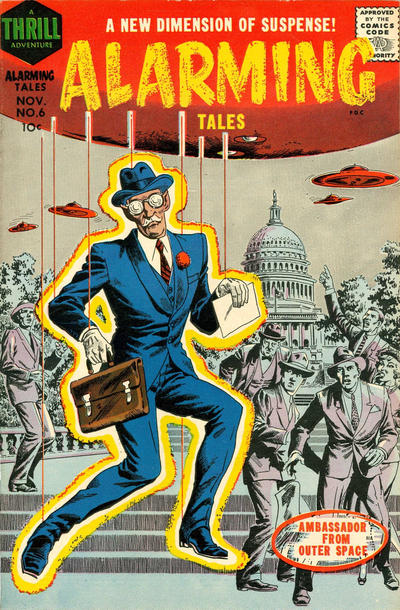
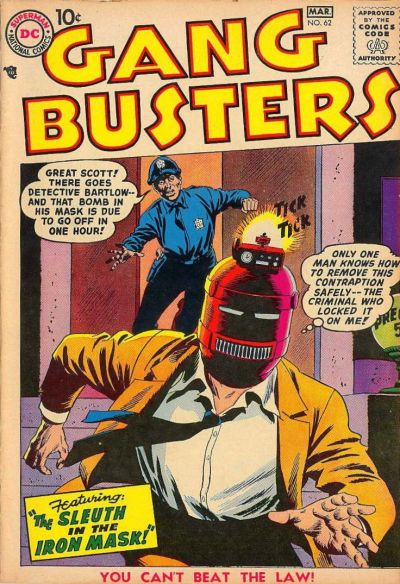
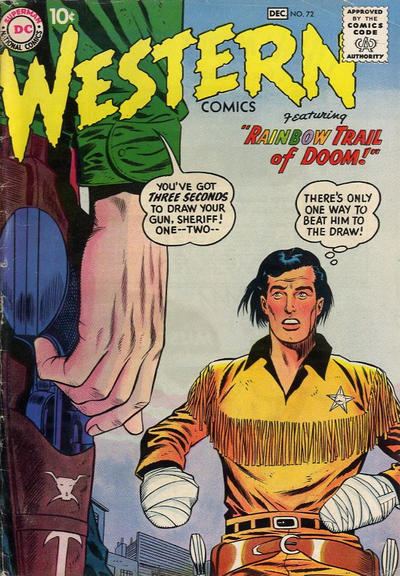
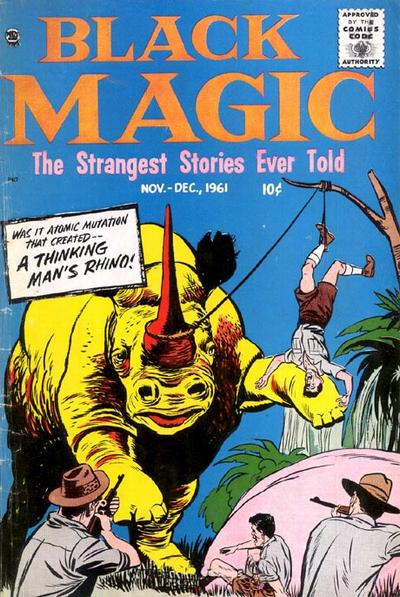
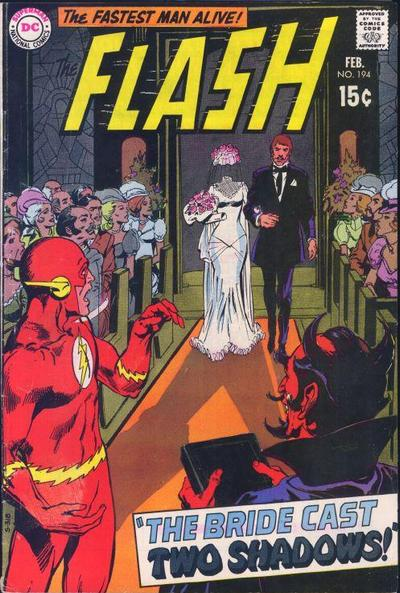
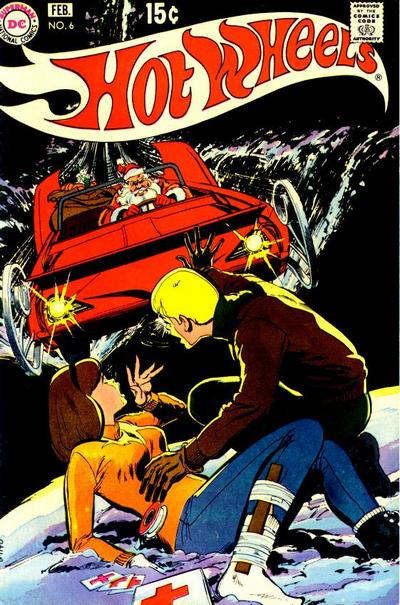
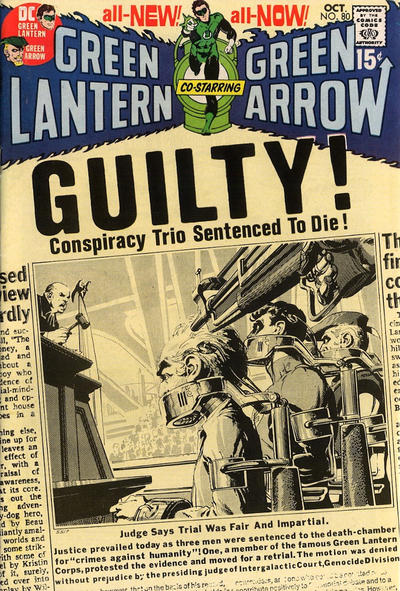
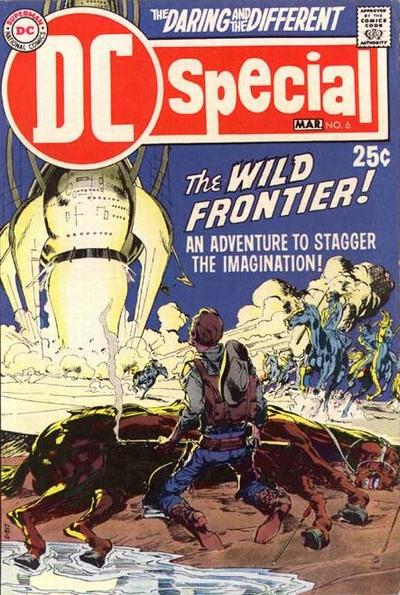
With filmmakers looking beyond specific characters or stories and actually channeling the *feel* of comics, I figure it makes sense to celebrate the oddball, everything-goes vibe that has been a big part of the medium since its early stages, so here is this week’s reminder that comic book covers can be awesome:

 Charles VoightJohnny CraigJohn SeverinBob BrownGil KaneJoe Simon Al Feldsteinbob powell Frank Brunner gil kane

Posted in WEBS OF FICTION | Tagged , , , , , , , , , , , , , , , , , , , , , , , , , , , , , | Leave a comment

Neal Adams’ realistic surrealism

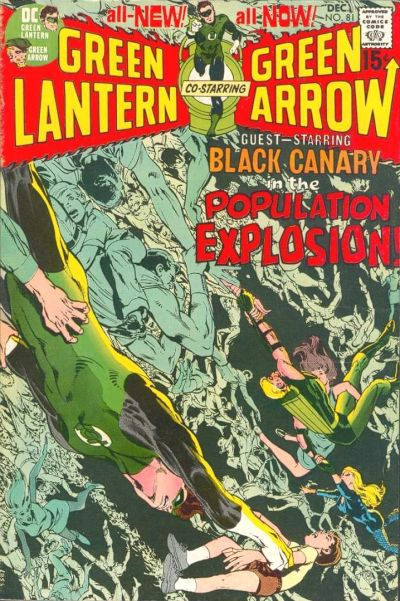
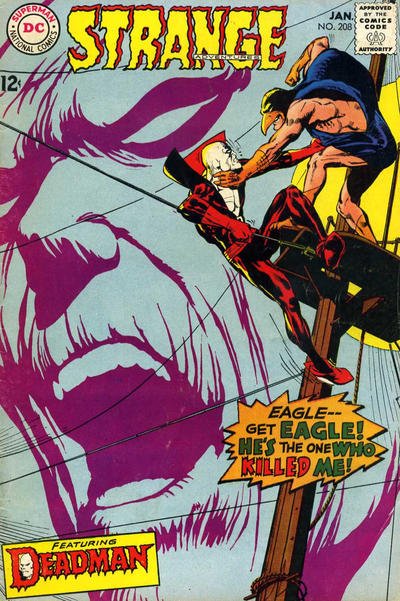
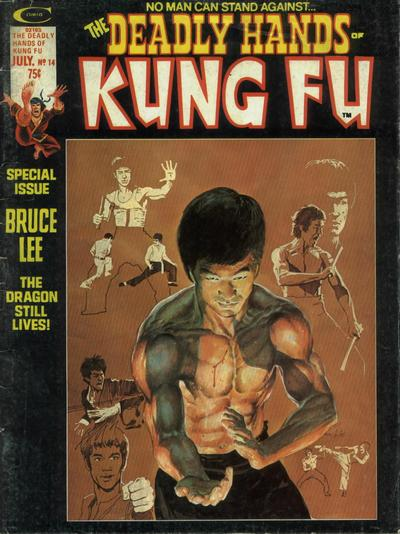
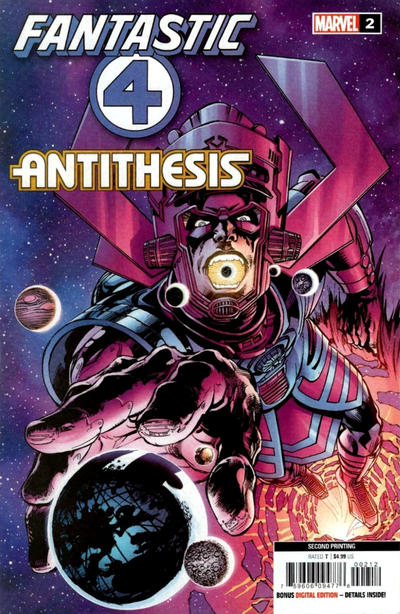
In the third installment of this week’s tribute to Neal Adams’ comic book covers, let’s look at instances where the late artist combined his signature realistic style with a more conceptual approach, including occasional ventures into surrealism. You can see this in some of Adams’ iconic covers from the classic Green Lantern / Green Arrow run in the 1970s as well as in more recent work, like the wonderful Fantastic Four: Antithesis mini-series he drew just a couple of years ago.

The ten covers below show us not just an artist in full command of his craft, but also one willing to continuously experiment, unafraid of creating bizarre effects by juxtaposing remarkably different layers onto each image.

neal adamsdeadman coverbruce leehorror comicneal adams coverneal adamsneal adamsantithesisneal adamsgreen arrow

Posted in AWESOME COVERS | Tagged , , , , , , , , , , , , , , , | Leave a comment

Neal Adams’ atmospheric horror covers

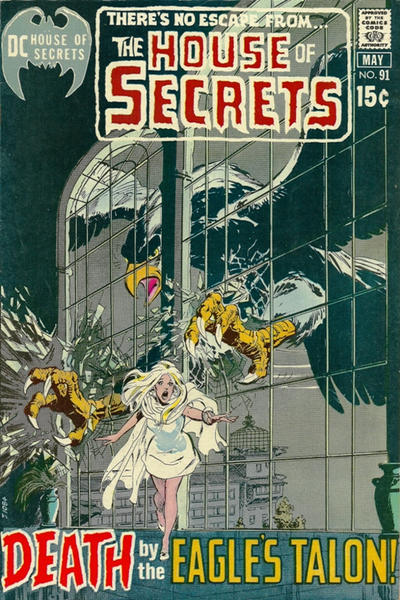
Like I mentioned in the last post, this week is devoted to the late Neal Adams’ uncanny skills as a cover artist. Today I want to highlight his knack for moody horror.

As you can see below, Neal Adams liked to complement scary figures with panicked, endangered witnesses (alternating between which ones went into the background and which ones went into foreground), although he sometimes settled for illustrating what was at stake and left the shocked reaction to the readers (like in The House of Mystery #189). Adams could get away with this because his mastery of skewed angles, dusky colors, and elegant depictions of malleable fabric or smoke managed to turn the mundane into spooky and make even silliness exciting… Notice, also, the occasional use of strikingly different palettes – and even different coloring styles – to create an eerie sense of depth as well as an unsettling contrast between threats and their impending victims.

neal adamsneal adamshorror comicshorror comic coverneal adams coverneal adams coverhorror comichippie horrorneal adamsneal adams cover

Posted in ART OF HORROR COMICS | Tagged , , , , , , , , , , | Leave a comment

Neal Adams (1941-2022)

Neal Adams died last week. Years ago, I wrote briefly about his gothic artwork and his sensationalist Batman covers, but I can’t really overestimate Adams’ importance: he was arguably the greatest and the most influential artist in the history of Dark Knight comics (yep, up there with Bob Kane, who crafted Batman’s original design together with Bill Finger). The naturalistic way Adams drew the Caped Crusader – especially compared to the cartoonier aesthetics of previous incarnations – projected Batman’s humanity as well as a renewed sense of menace, imbuing the stories with a melodramatic level of emotional strength, which no doubt pushed the writers and editors themselves in that direction… Hell, the same goes for all kinds of heroes he reimagined, from Green Arrow to the X-Men!

With that in mind, the passing of Neal Adams deserves some sort of special tribute in Gotham Calling. And since 2022’s weekly reminders that comics can be awesome are all about covers, this week I’m devoting a trio of posts to Adam’s talent for forceful cover images. His impeccable sense of design tends to draw your gaze across each layout in such a smooth way that the result is nothing short of dynamic, with triangular compositions making your eyes circle around while absorbing suggestive details (a hand gesture, a peripheral shadow, a reflection on a puddle) along the way… The result excels at thrills, pathos, and comedy, enhanced by the vivid facial acting, which ranges from subtle expressions to unabashed histrionics.

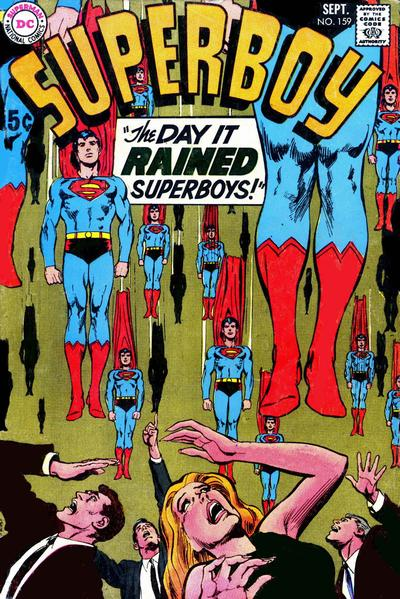
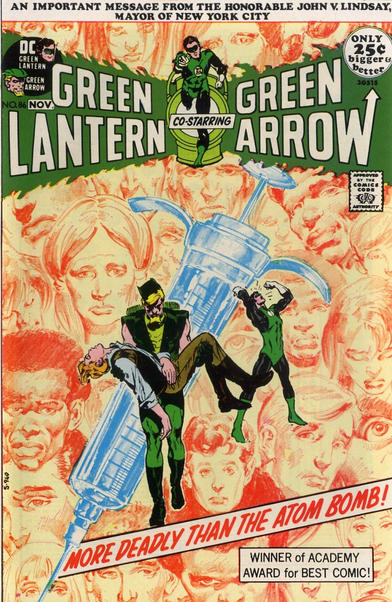
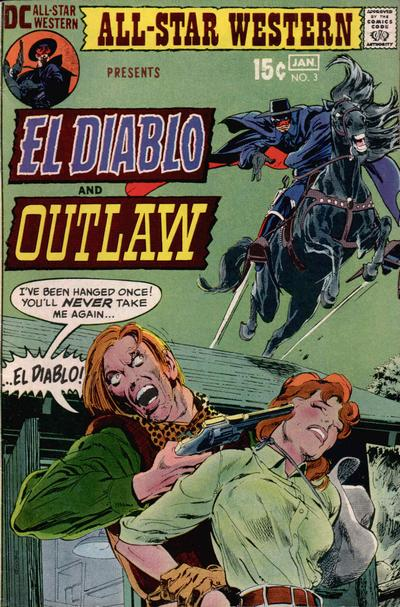
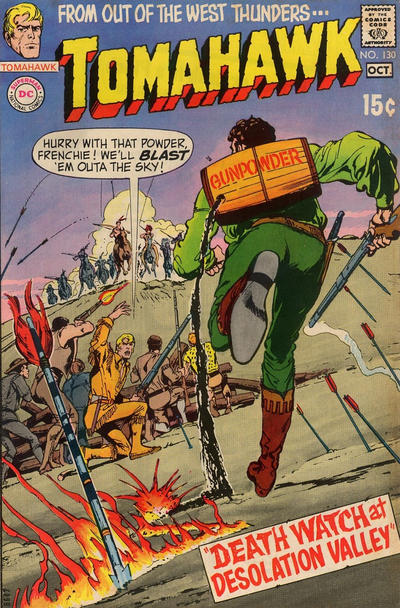
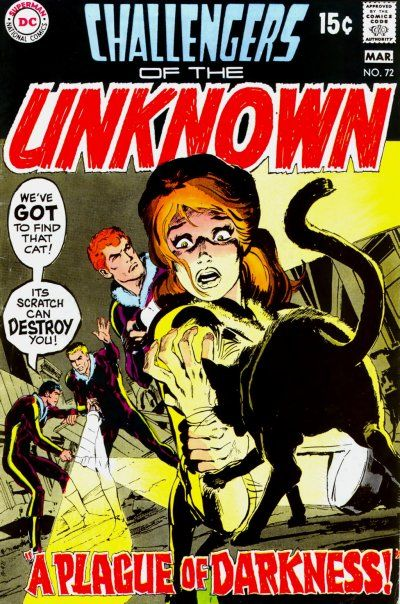
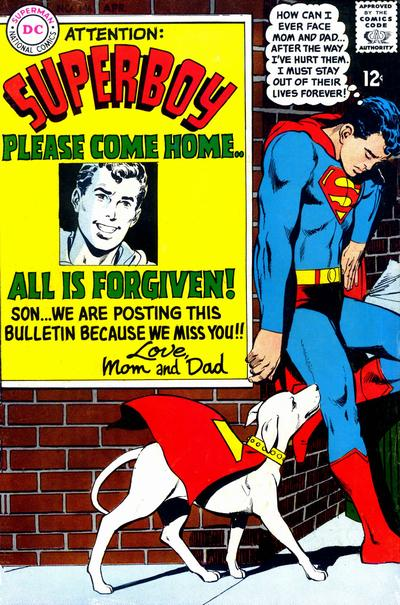
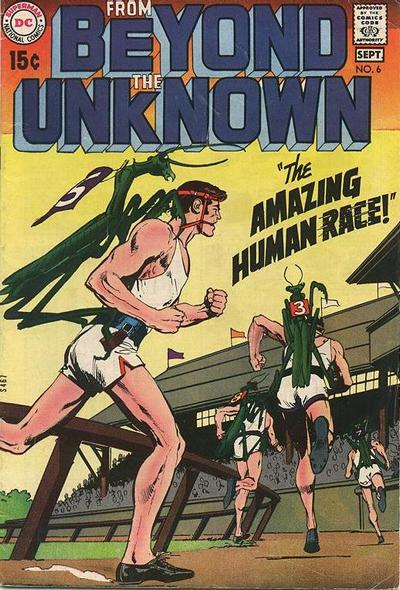
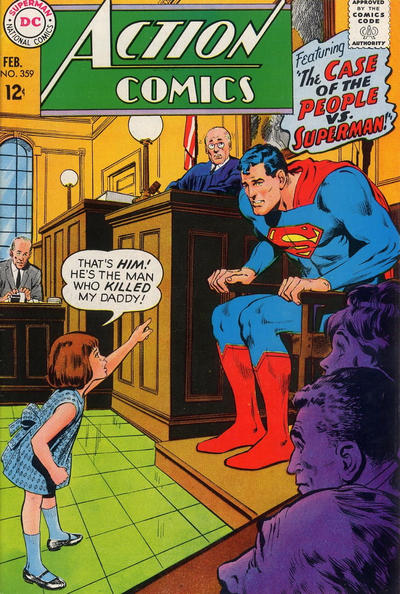
For today, I selected ten DC covers that showcase Neal Adams’ ability to condense a story’s entire premise in a single, evocative image. In the examples below, he does so through various techniques (even the recurring device of a court trial is framed through entirely distinct approaches), but I’d like to call your attention to two of them. One is the momentum contained not just in the way a cover can make you anticipate the future (like the Tomahawk one) or grasp the past (Challengers of the Unknown), but also sense movement contained in a specific moment (although they’re different men, the placement of the runners in From Beyond the Unknown allows us to visualize different stages of their race in one go). The other effective strategy concerns postures: the particular depictions of Superman bending forwards, the Flash turning around, or an armed cowboy looking up imply discomfort and vulnerability even among powerful figures, thus strongly conveying the promise of danger to be found inside the comics.

el diabloNeal Adamsneal adamsneal adamsneal adams comic coversuperman trialneal adams coversantagreen arrowwestern sci-fi

Posted in GLIMPSES INTO THE PAST | Tagged , , , , , , , , , , , , , , , | Leave a comment

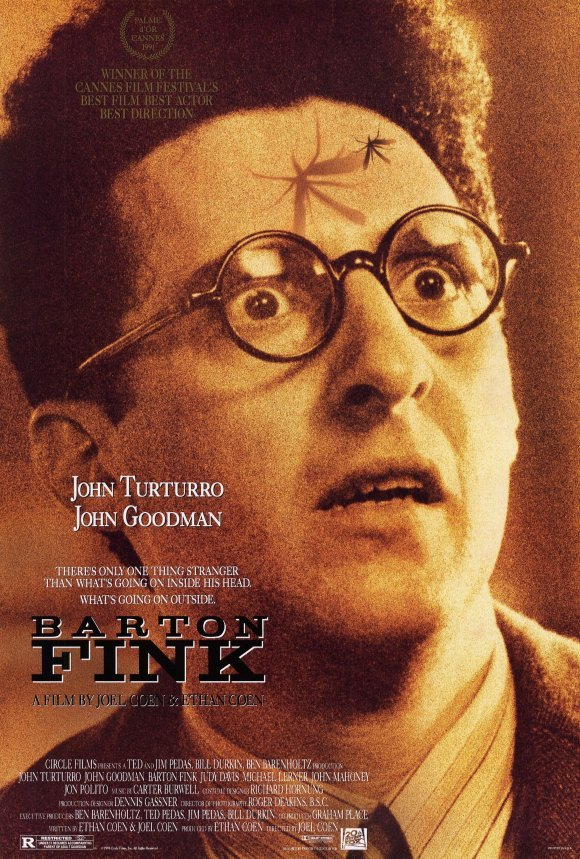
If you like Barton Fink…

By 1991, Joel and Ethan Coen had done three very different pictures, but they all shared some connection to crime fiction, not to mention a fondness for labyrinthic plotting. With their next project, though, the Coen brothers truly defied everybody’s expectations…

coen brothers

Barton Fink is a period piece, set in 1941, about a leftist New York playwright who goes to Hollywood to work on a wrestling picture and ends up going insane (depending on how literally you read the film). The titular lead, so keen to speak for the people yet so blind to the rise of fascism and to the march to war, is masterfully played by John Turturro, who manages to combine innocence with arrogance, idealism with self-absorption. The other powerhouse performance is by John Goodman, who takes over the screen as Fink’s ‘average working man’ next-door neighbor in the hotel where much of the action takes place (one of the most haunting settings I can recall, from the peeling wallpaper to the sounds travelling through the pipes…). This duo helps ground the human drama among the increasingly intense, doom-laden atmosphere adorned with fanciful symbolism, whether religious (everything about the hotel is hellish), political (the situation in Europe is amusingly personified by a couple of LA cops), or psychological (constant references to missing heads and to the ’life of the mind’). Between the horrific hotel and the theme of writer’s block, there are evident parallels to The Shinning, especially in the surreal climax. Yet the Coens’ weirdest masterpiece – written when they were dealing with their own creative block, during Miller’s Crossing – carves out a very distinct mix of psychological horror and existentialist allegory about alienated artists, injecting it with a full-blown parody of the film industry.

charlie kaufmanorson wellesalan moore

Written by Charlie Kaufman and directed by Spike Jonze, 2002’s Adaptation shares more than a few features with Barton Fink. For one thing, this too was an out-of-the-left-field follow-up to the creators’ previous collaboration, Being John Malkovich. As Kaufmann fictionalizes his own struggle to adapt a non-fictional book about flowers, we get yet another disjointed tale, unabashedly satirical and metafictional (including a couple of neat post-credits jokes), about a narcissistic screenwriter with an identity crisis who gets constantly interrupted by someone with whom he has an awkward relationship (in this case, both characters are played with impressive nuance by Nicholas Cage). The two films are pretty masturbatory, figuratively speaking, even if Adaptation is much more concerned with actual masturbation… The main similarity, however, is how original and ultimately unclassifiable each one is, breaking rules left and right and making one surprising choice after another, leaving it up to the viewers to decide what is real, what is not, and whether or not they should care.

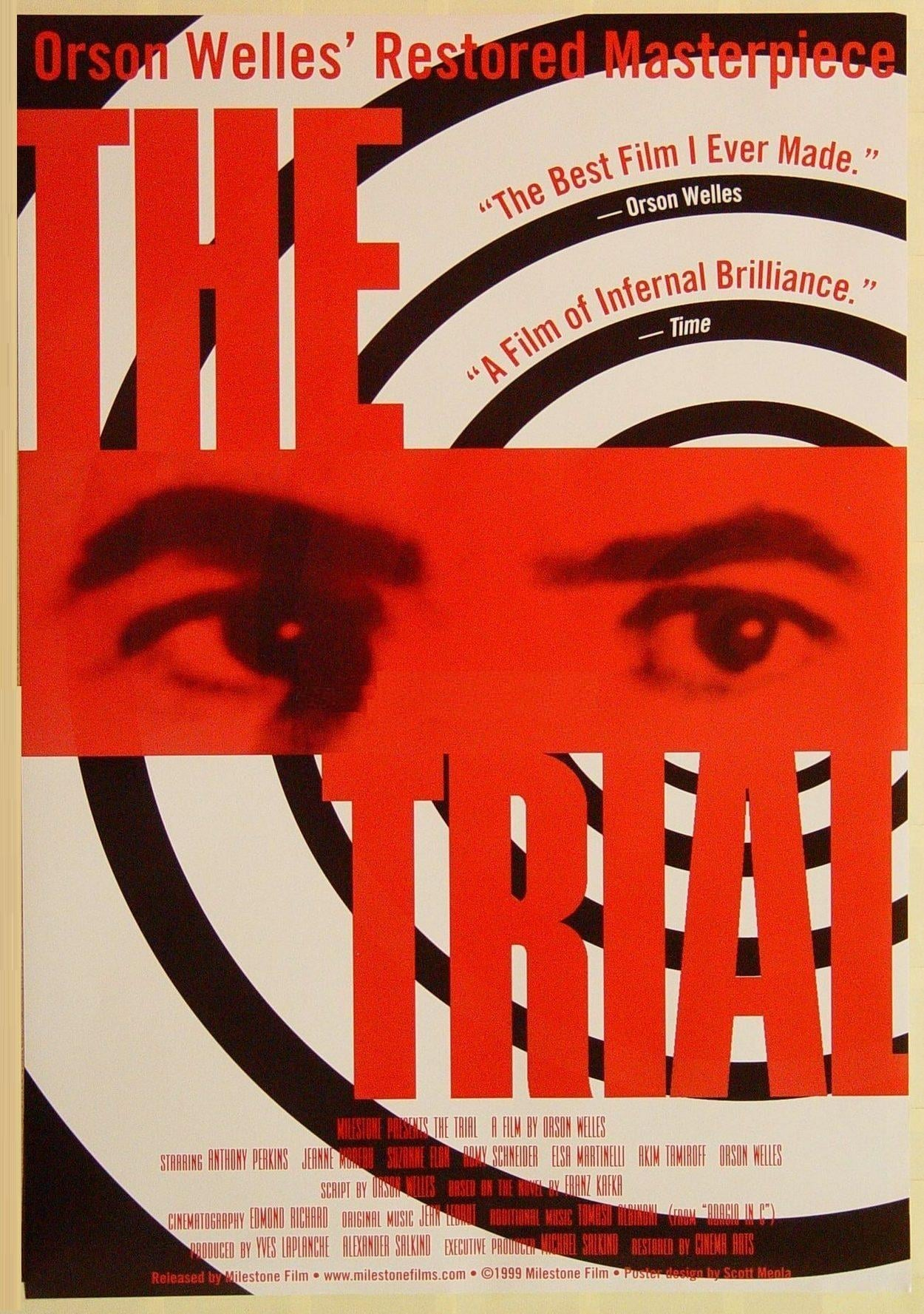
As far as recommendations go, the other obvious route would be to look back in time, rather than forwards, and point fans to the preceding lineage of brilliant self-reflexive comedies in which filmmakers dramatized their doubts about their work (Preston Sturges’ Sullivan’s Travels, Federico Fellini’s 8 ½, Woody Allen’s Stardust Memories). However, I’d rather highlight a movie that, while less thematically linked, is tonally much more similar to Barton Fink. Orson Welles’ The Trial adapts Franz Kafka’s classic novel about a bureaucrat who is told he’s under arrest and desperately tries to prove his innocence without even knowing what he’s being charged with. Nightmarish and absurdist, the film is pitched at the level of all those sequences in which Barton Fink appears lost in a world beyond his grasp – and not only does Anthony Perkin’s performance match Turturro’s hysteria, but most characters speak in the same kind of quick-paced, non-sequitur-heavy dialogue as the Coens’ various Hollywood types (the encounters with the cops, in particular, are remarkably close). Add to this The Trial’s pyrotechnic cinematography, extravagant set design, and the mood of encroaching totalitarianism and you can see why these two would make one hell of a double-feature!

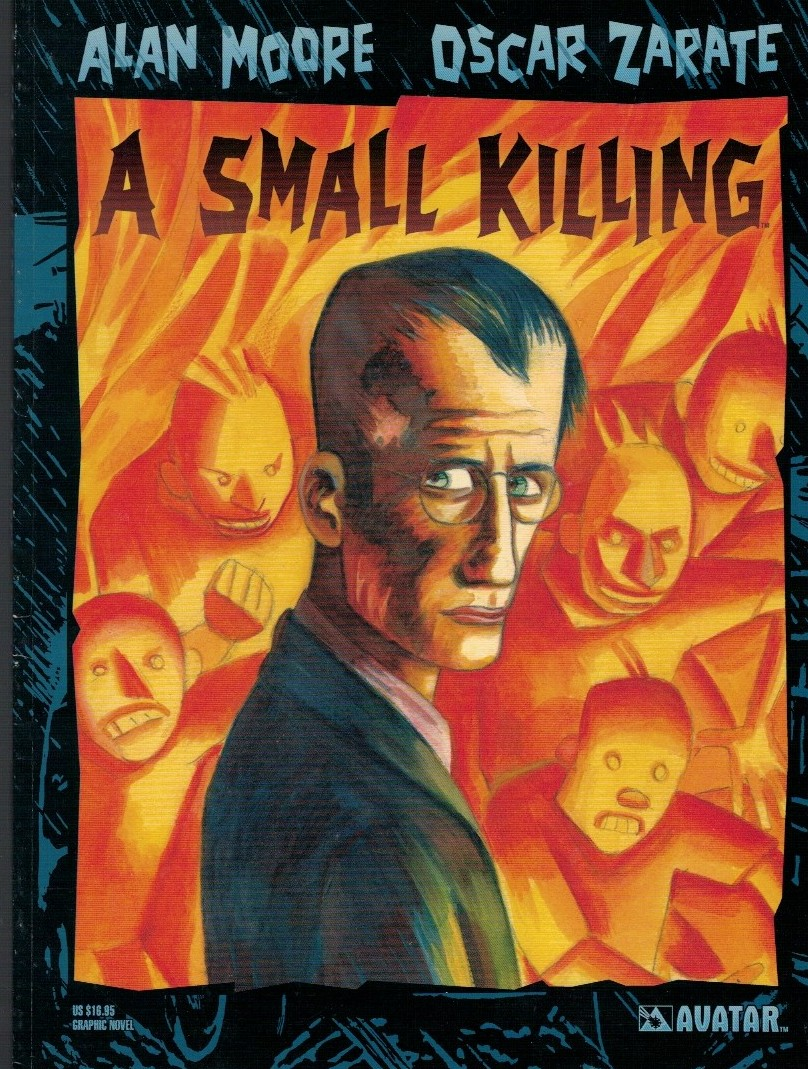
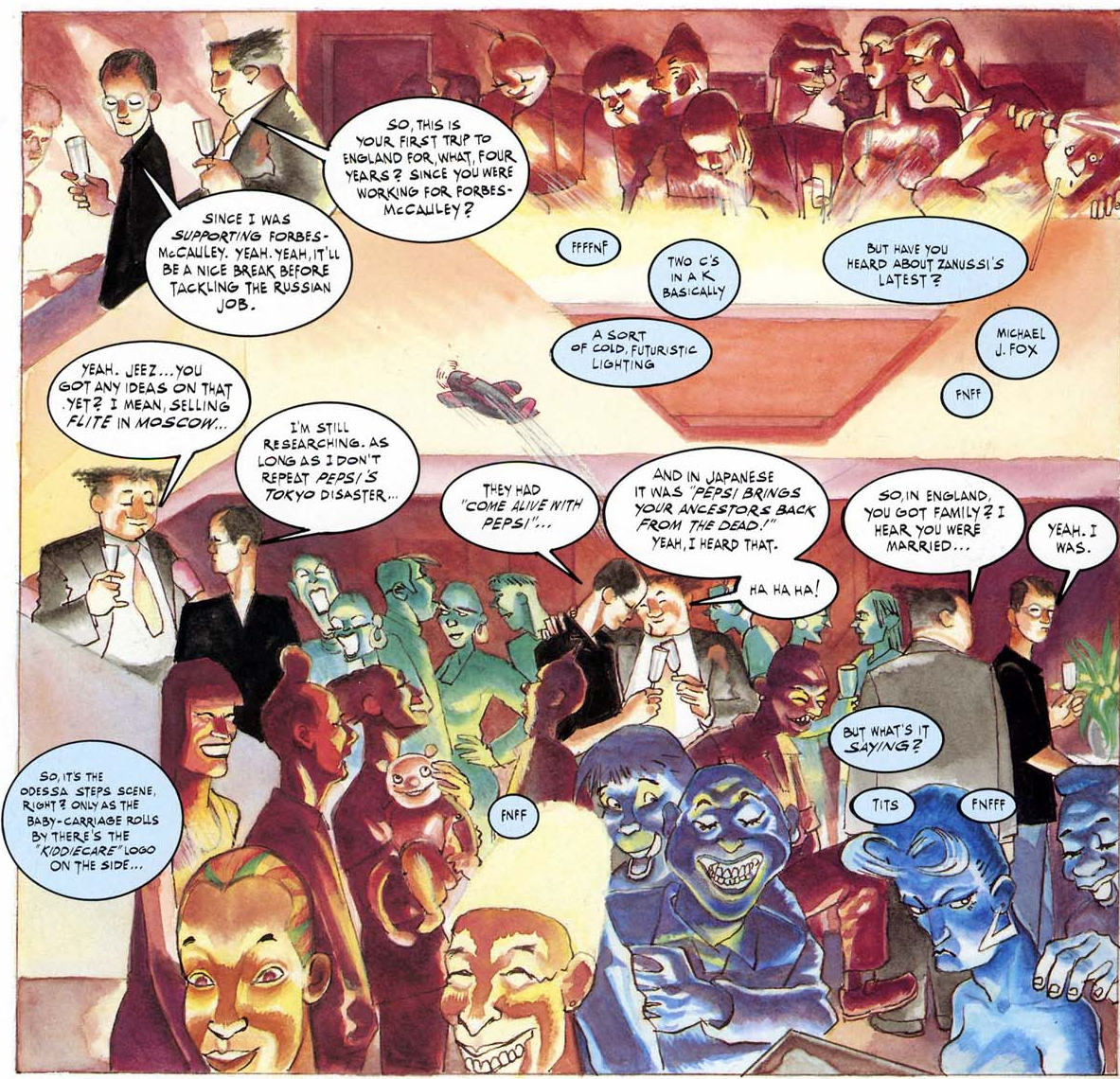
In comics, the closest equivalent I can think of is the 1991 graphic novel A Small Killing, written by Alan Moore and illustrated by Oscar Zárate – who also did the idiosyncratic colors – about a British ad executive tasked with creating, not a wrestling picture, but a campaign for an American drink in a Russia increasingly open to western capitalism (in the twilight of the USSR).

oscar zarateA Small Killing

As the protagonist, Timothy Hole, travels back to the country where he grew up, we follow his memories of past relationships and fading leftist idealism. Possibly my favorite Alan Moore comic – which I reread at least once every five years or so – this is an introspective character piece about growing old, but one intricately woven into larger politics, as Timothy embodies the yuppie culture of Thatcher’s Britain and, ultimately, the triumph of western imperialism in the Cold War… whose arrogance has gained a whole new light from today’s vantage point. (For the creators’ revealing take on the book’s underlying themes and background, I recommend reading the afterword ‘Anatomy of a Killing’ first published in Avatar’s 2003 edition.)

Technically, A Small Killing is as ingeniously formalist as any of Moore’s other masterworks from the late 1980s, with a tight structure (the chapters and flashbacks are organized through a specific progression, framed by the speed of different means of transportation) and plenty of symbolism, especially of compromised innocence/childhood (broken eggs, abortions, Lolita, etc). Yet the writing is witty enough to bury the techniques beneath the surface and Oscar Zárate’s art style is much looser than, say, that of Dave Gibbons or Brian Bolland, so the result feels more intimate, oneiric, and organic than Watchmen or The Killing Joke.

Besides the content, I’d argue the very significance of A Small Killing in the world of comics is comparable to Barton Fink. The book marks a moment in which several creators who had revolutionized genre narratives temporarily ventured – much like the Coens at the time – into a set of experimental, existentialist masterpieces about creativity and identity crisis, such as Neil Gaiman’s and Dave McKean’s Signal to Noise, Kyle Baker’s Why I Hate Saturn, or, a bit later, Grant Morrison’s and Jon J. Muth’s The Mystery Play, not to mention Peter Milligan’s and Duncan Fegredo’s Girl.

Posted in IF YOU LIKE THE COEN BROTHERS... | Tagged , , , , , , , , , , , , , , , | Leave a comment

COMICS CAN BE AWESOME (25 April 2022)

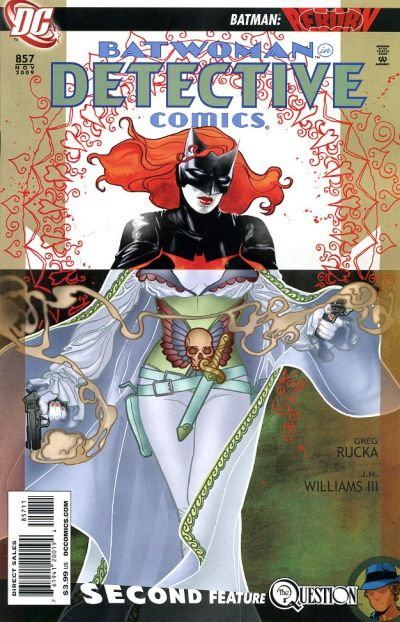
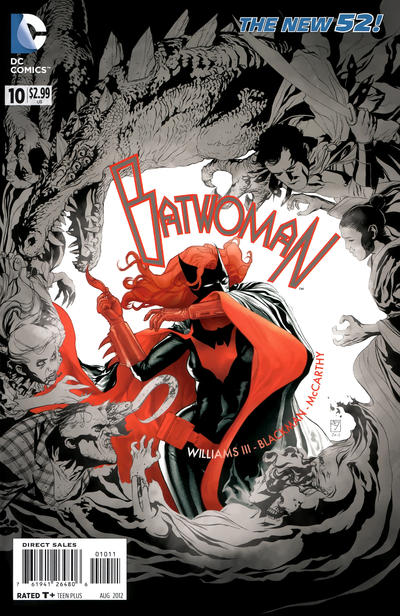
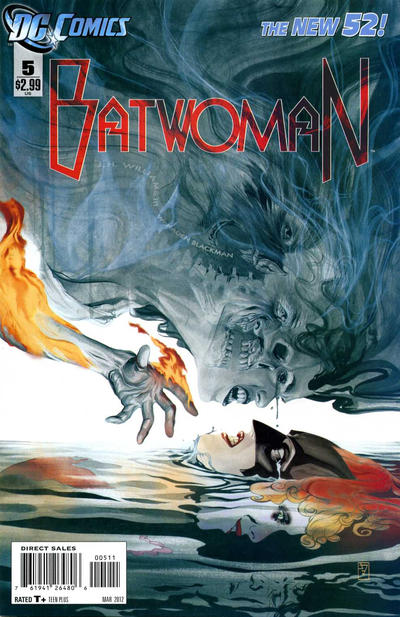
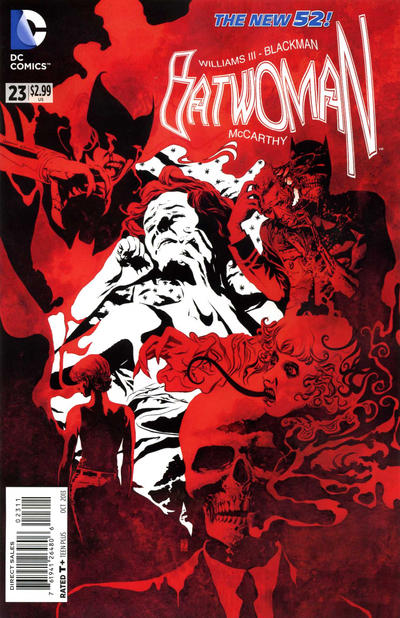
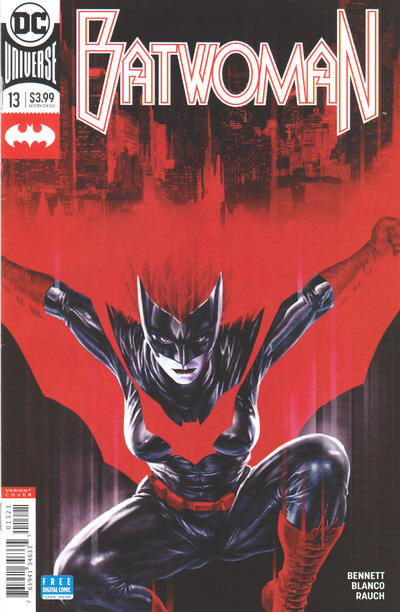
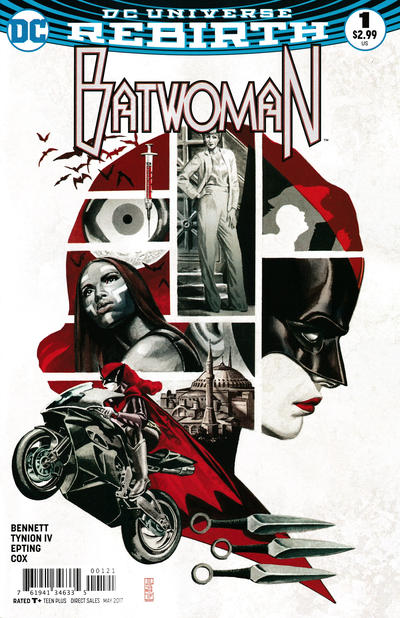
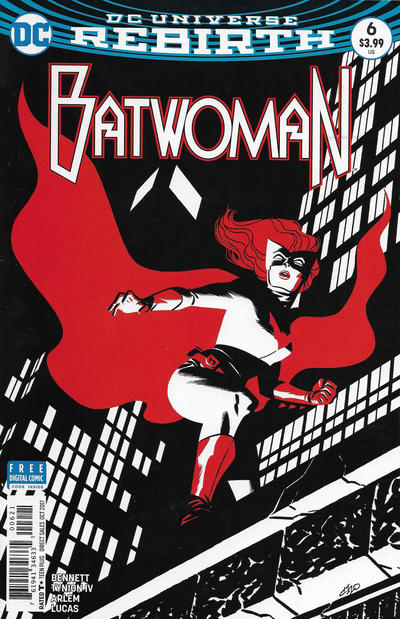
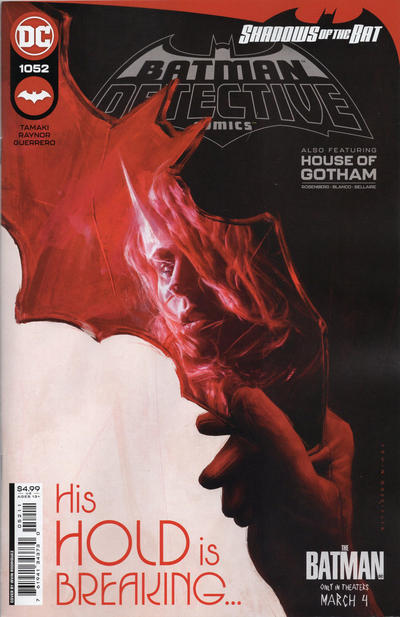
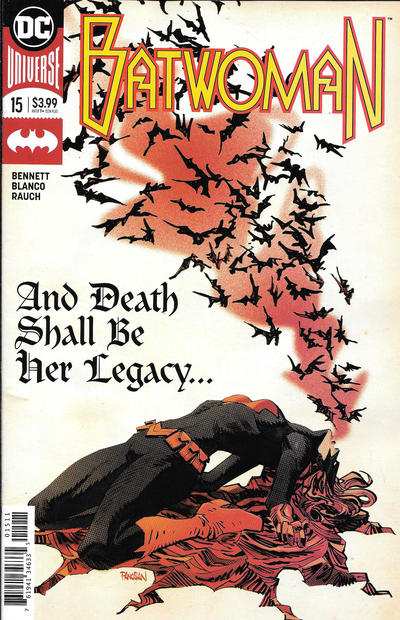
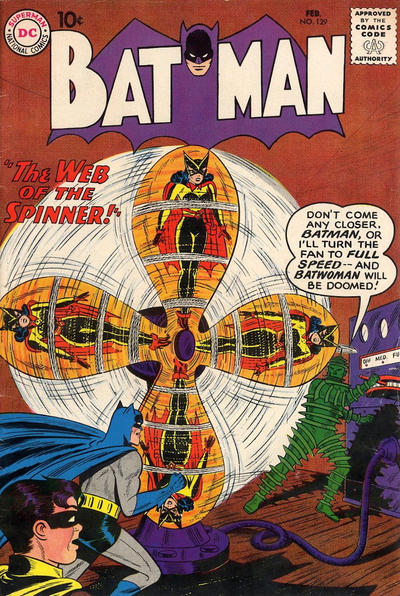
Your reminder that comic book covers can be awesome, Batwoman edition:

batwoman J. H. Williams III batwoman coverJ.H. Williams IIILee BermejoJ. G. JonesMichael ChoIrvin RodriguezDan Panosianbatwoman

Posted in COVERS OF BATMAN COMICS | Tagged , , , , , , , , | Leave a comment

Catching up with crime comics – part 2

Welcome to another round of quick impressions about recent crime comics!

If your definition of crime fiction accommodates horror-like gore and sadism, then these are exciting times, as serial killers remain a very popular trope (although by now everyone uses them with at least the tip of their tongue lodged in their cheek).

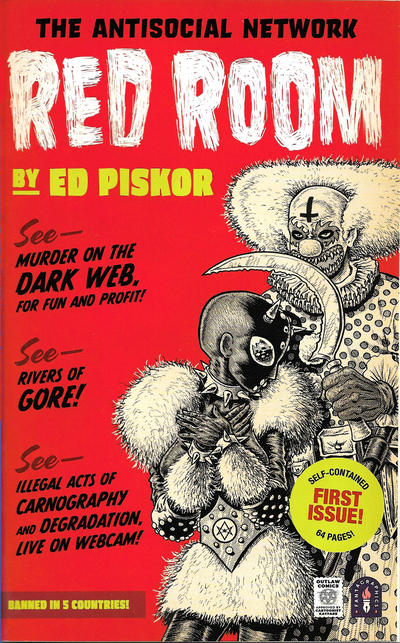
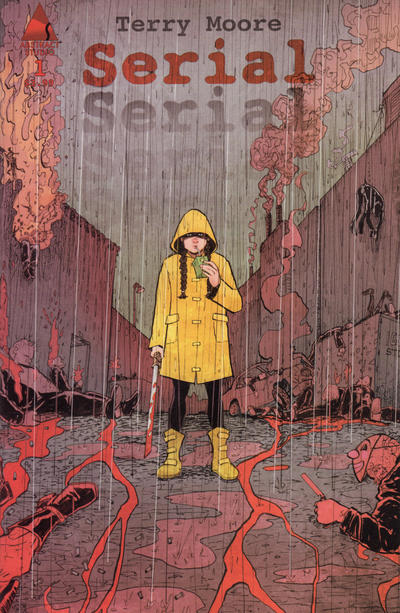
red room cover     serial 1     maniac of new york cover

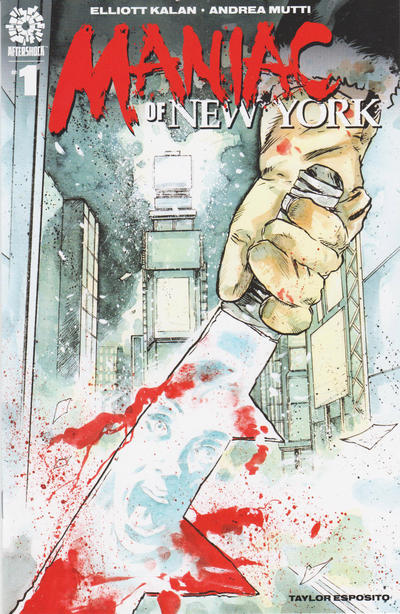
For my money, the biggest shocker has been Maniac of New York, which has already given us two cool mini-series (the first one was collected as The Death Train, the second one wrapped up last month). I only knew Elliott Kalan from my favorite podcast, The Flop House, and as the head writer for The Daily Show with Jon Stewart back in the day, so I was pleasantly surprised to see him comfortably shift gears from comedy to a badass thriller that merges slasher horror with police procedural (and, yes, with a fair bit of humor as well).

The series’ high concept is that, for years, New York has been the stage of so many killing sprees by a masked maniac (a la Jason Voorhees) that this has come to be accepted as just another violent feature of city life, to the point where the task force assigned to these cases is now minimal and underbudgeted. It’s like you’re jumping straight into a later sequel from a derivative franchise, so you can piece the backstory together in your mind based on any Halloween or Friday the 13th movie – or any of their countless rip-offs – you may have come across in the past.

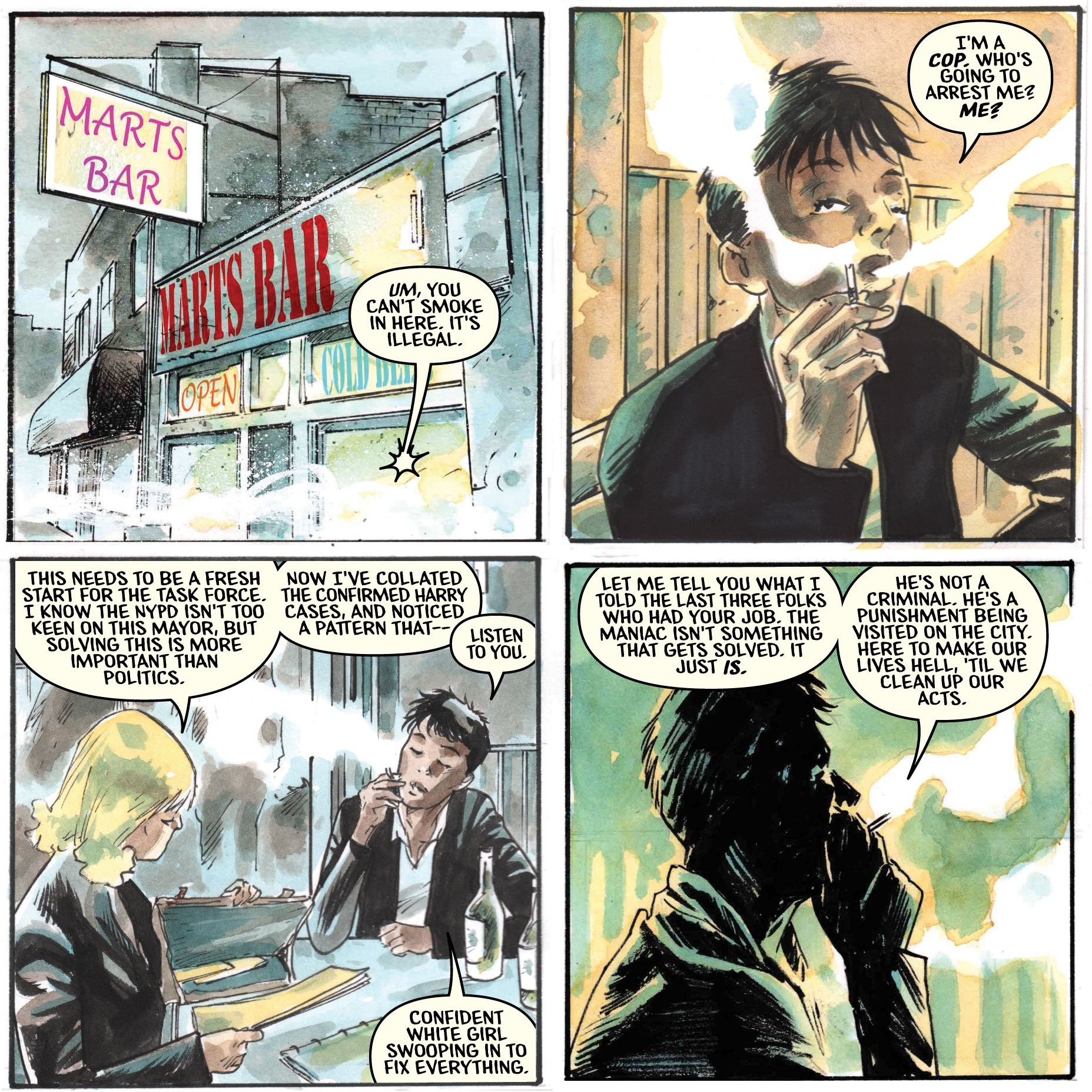
More than the likable-if-clichéd characters, what pushes Maniac of New York beyond a solid genre entry is the way the comic cleverly engages with the geography, sociology, and politics of the NYC location, boasting a clear influence from the original The Taking of Pelham One Two Three (which Kalan has often claimed to be his favorite film). Gentrification, systemic racism, and the priorities of the police union aren’t merely acknowledged – they’re worked into the core of the story. You can see this from the outset (including in a key plot point that macabrely anticipated last week’s massacre), but the second mini, The Bronx Is Burning, took things to new satirical levels as it moved the blade-wielding action to a corporate private school (the Maniac Safety Guidelines leaflet in the backmatter of the first issue is absolutely priceless).

As if this wasn’t enough, Andrea Mutti’s watercolors give the whole thing a super-moody look that’s very hard to resist:

elliot kalanManiac of New York #1

With a more hardcore approach to psychological horror, last year cult creator Ed Piskor put out the first four issues of Red Room (meanwhile collected as The Antisocial Network), a twisted anthology about snuff channels in the dark web.

Each issue features a standalone tale set in the same universe (and presumably building into some sort of wider meta-narrative) focused on different people involved in the red room websites: from the killers to the victims and their relatives, from the viewers to the software developers, from the mobsters running the business to the cops trying to close it down. The most fascinating aspect of this series, for me at least, is its concern with the logistics of the whole thing, trying to imagine how such an underworld could actually operate and stay clear of law enforcement, including by carefully navigating the darkest corners of the internet (something that also plays a role in A Righteous Thirst for Vengeance, as mentioned in my other post).

ed piskor

Red Room #1

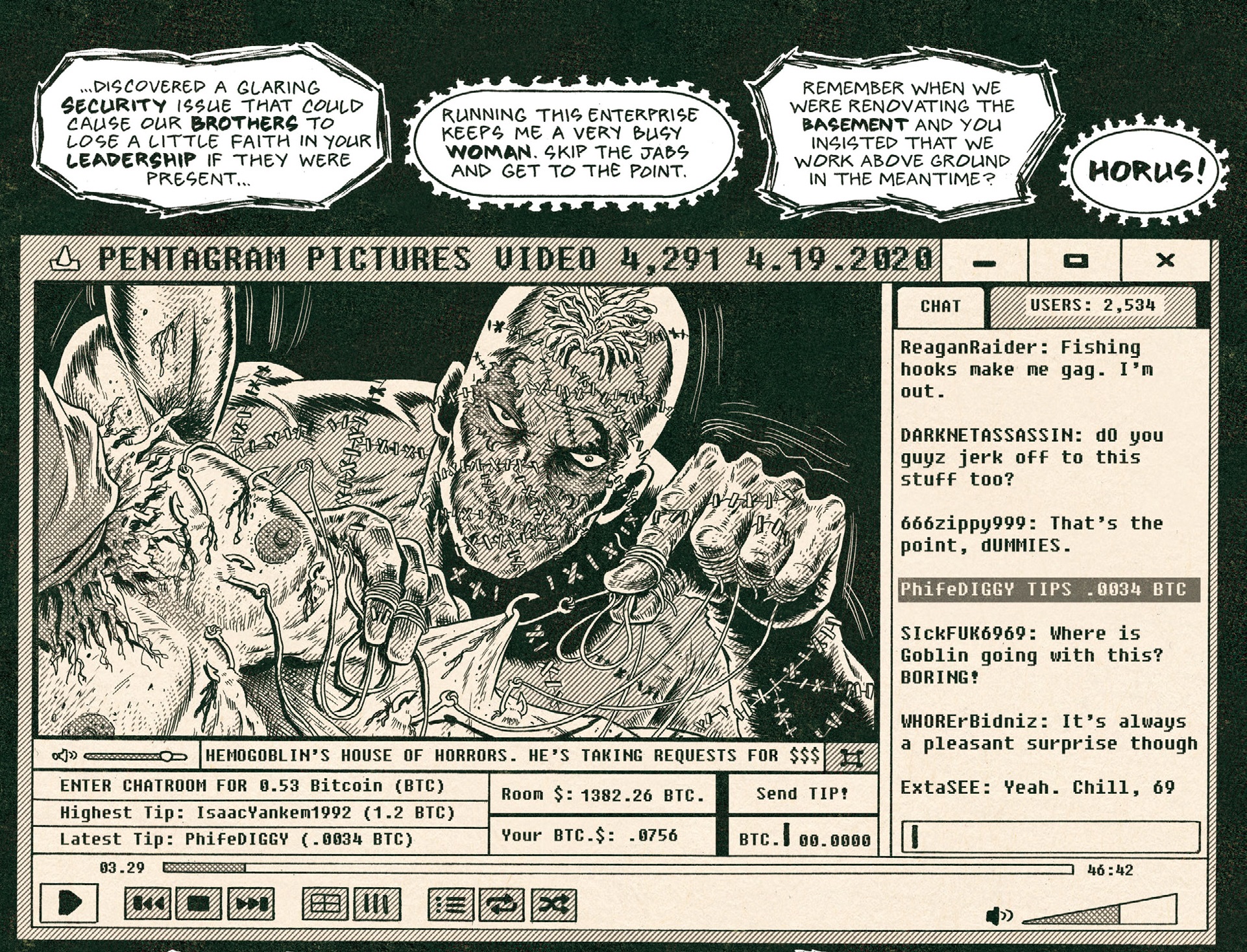
The artwork is a tour-de-force. As you can see in the scan above, part of the comic simulates computer screens that include not only snapshots from the videos, but also the fan community’s sick comments (which are even more unsettling). The imagery – on and off the diegetic screens – is horrifically grotesque and disturbing, although the cartooniness and lack of color help tone down the intensity. In fact, even if you’re not into torture porn, you may find yourself appreciating Ed Piskor’s impressively detailed rendering and forceful expressionism. (And sure, it may sound somewhat perverse to enjoy the aesthetics of hyper-violence in a comic about the moral implications of sadistic voyeurism, but the appeal here is precisely how over-the-top everything looks, as opposed to capturing realistic pain…)

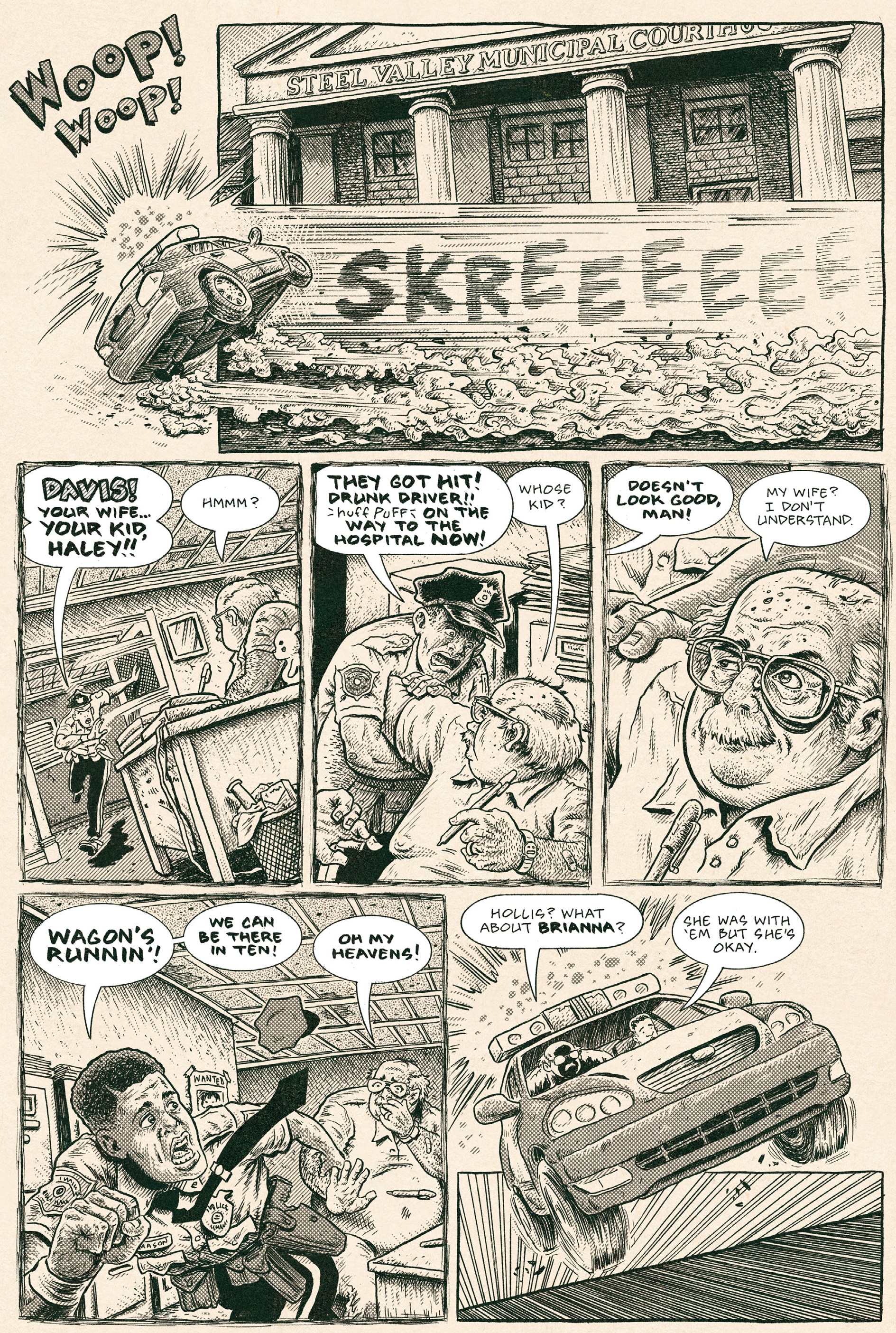
Although Red Room wears the influence of 1950s’ EC titles on its sleeve (particularly in issue #4), there is a more recent lineage at play:  Piskor’s drawing style – along with the sensationalist content and the filthy humor – make this a worthy successor to a specific tradition of taboo-breaking underground comix. Many of the pages could’ve been swiped from a Robert Crumb sketchbook…

crime comics

Red Room #1

The other recent black & white indie series about serial killers was Terry Moore’s Serial, which unleashed a bunch of psychopathic murderers and sexual predators on each other. While the approach is way less lurid and nightmarish than the one in Red Room (and less likely to make readers feel dirty inside just by looking at the pages), the 10-issue Serial goes into its own dark territory: at first, most of the people dying seemed utterly despicable, so their killings encouraged our affective complicity and sense of catharsis in a more conventional way, but in the final issues the balance began to shift (and the ending leaves the door open for a possible sequel, so who knows how much bloodshed lies still ahead…).

The intriguing protagonists and the cat-and-mouse shenanigans are enough to make Serial a gripping read, even if I wish it would’ve gone further in its exploration of post-#metoo vengeance, a la Promising Young Woman. Still, although the final product probably won’t leave as lasting an impression as Red Room, Moore’s pace and mise en scène are, as always, a delight.

terry moore

Serial #4

For an even more balls-to-the-wall take on the concept of pitting multiple psychos against each other, we also got Vinyl, Doug Wagner’s and Daniel Hillyard’s thematic follow-up to 2017’s Plastic. Like their previous collaboration (which gets a brief mention near the end of this mini-series), this is another Ennis-ian black comedy in which a deranged killer turns out to be the most sympathetic figure – except that this time around he joins forces with a couple of FBI agents against a creepy female death cult. That is the general thrust of the story, but there are also a dozen overcrowded subplots, all leading up to mayhem, as the book operates on the odd principle that lunatics all know each other and admire each other’s work. There’s basically a whole underground community of mass murderers, like in that brilliant issue of The Sandman (‘Collectors’) where the characters found themselves in a serial killer convention.

The result is a confusing yet lively mess, less scary than goofy… and very, very bloody. Wagner and Hillyard form quite a team (they were also behind The Ride: Burning Desire, one of my favorite comics of 2020), with the latter’s slick designs and precise angles restraining the former’s caustic ideas. And if Plastic had a relatively grim palette by Laura Martin, Vinyl is well served by vibrant, sexy colors, courtesy of Dave Stewart.

doug wagner

Vinyl #1

(With a very similar tone – and also asking us to root for a psycho killer – last year we also got a reboot of Jennifer Blood that is still going strong, as I discussed a couple of months ago…)

Perhaps as a result of the post-George Floyd backlash against copaganda, Vinyl and Maniac of New York were among the few crime comics in the past year to actually feature heroic protagonists working for law enforcement (although MoNY makes a point to show that its lead isn’t necessarily representative of the rest of the police force).

In turn, the infatuation with private detectives operating by their own personal codes and with their own allegiances and priorities is as alive as ever (as seen in Newburn and Aloma, for example). Another alternative that’s still kicking is the trope of amateur detectives, which brings me to one of 2021’s oddest books:

tyler bossDead Dog’s Bite

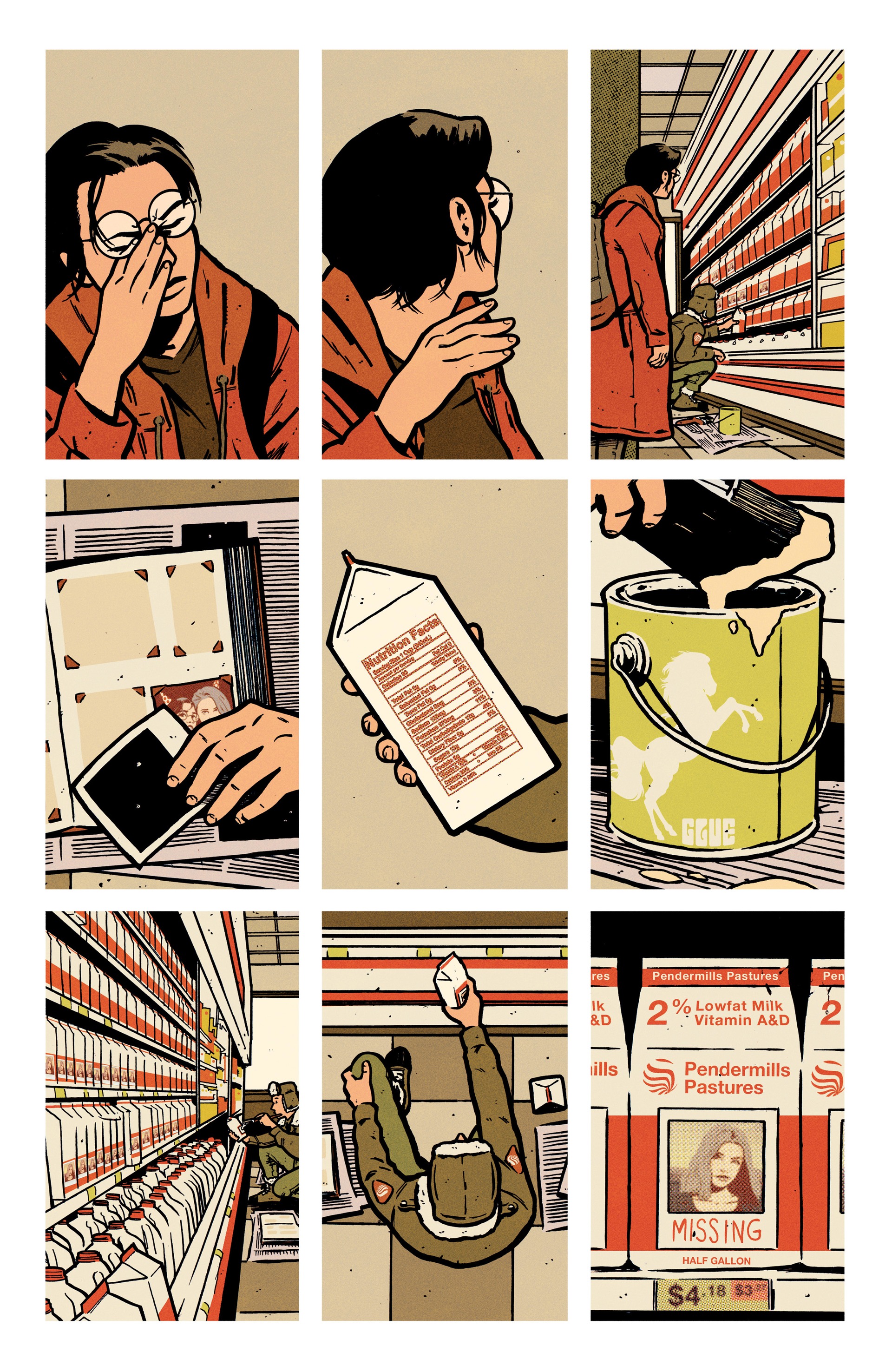
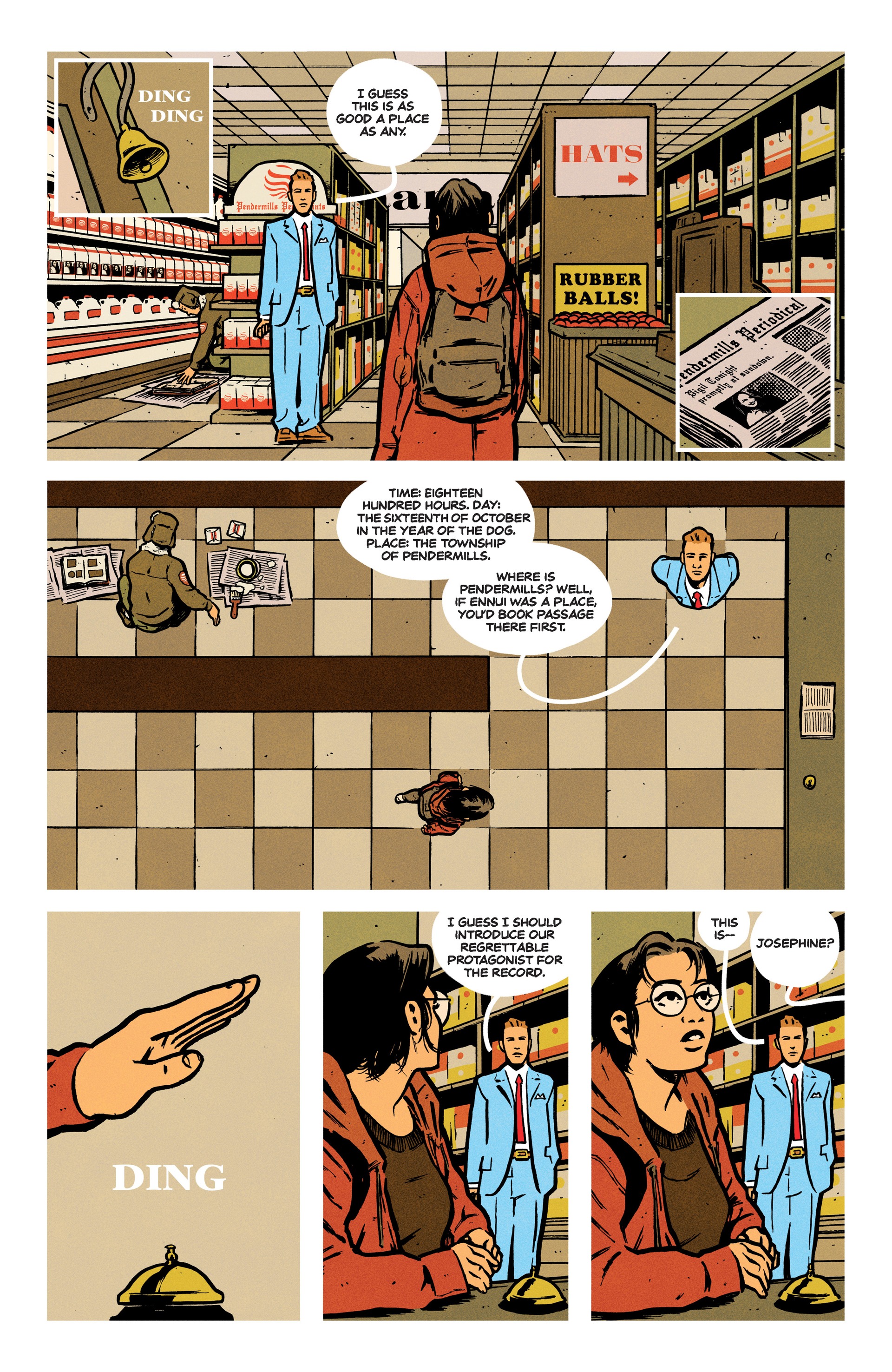
Dead Dog’s Bite revolves around a teen investigating her best friend’s disappearance, somewhere in Middle America, and gradually unearthing a mind-boggling conspiracy. Writer-artist Tyler Boss nails the quirky indie feeling of youthful alienation and witty sarcasm, complemented by an amusing take on small-town dynamics, reminding readers that crime can also be a feature of life outside the big cities. That said, there is a Rod Serling-esque, fourth-wall-breaking narrator whose occasional appearances imbue the comic with a creepy, surrealist dimension that brings it closer to Twin Peaks than to Mare of Easttown.

I’m probably making it sound more derivative than it is… We’ve seen many of these elements before, but Dead Dog’s Bite is put together with a distinctive voice and, while it doesn’t quite stick the landing, it is well worth the ride. Honestly, with a stronger ending, this could’ve been a major contender for Gotham Calling’s book of the year, not least because of Boss’ flair for offbeat layouts and angles:

crime comicDead Dog’s Bite

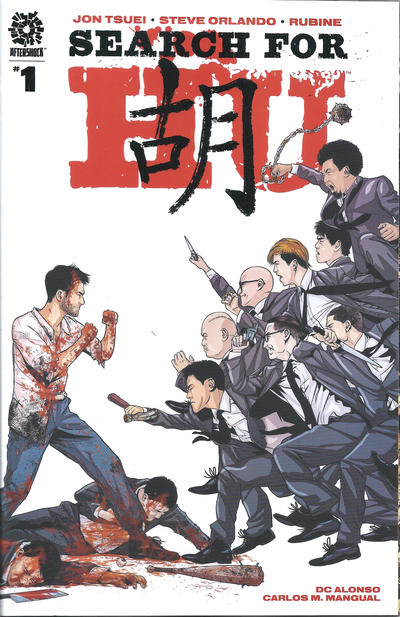
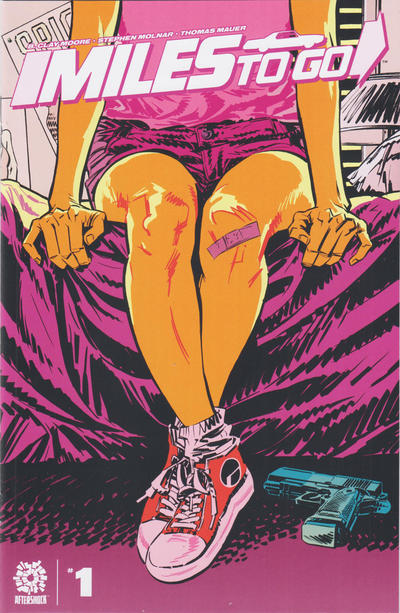
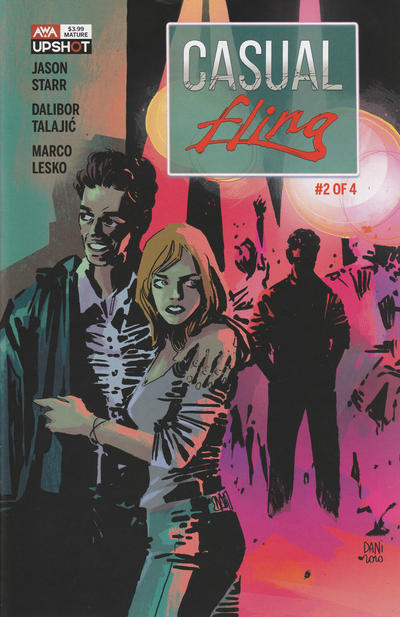
Sadly, not every crime comic has been as smart or as imaginative as these. Still, while they’re not as impressive, devoted genre fans may also wish to check out Miles to Go (B. Clay Moore’s and Stephen Molnar’s rushed soap opera about super-assassins), Search for Hu (a tribute to John Woo with kinetic artwork by Rubine), or Casual Fling (a thriller about extramarital sex gone wrong that also features the dark web as a key plot piece).

john woo     assassin comics     erotic thriller comic

Next time around, we’re going to Texas!

Posted in HARDBOILED CRIME | Tagged , , , , , , , , , , , , | Leave a comment

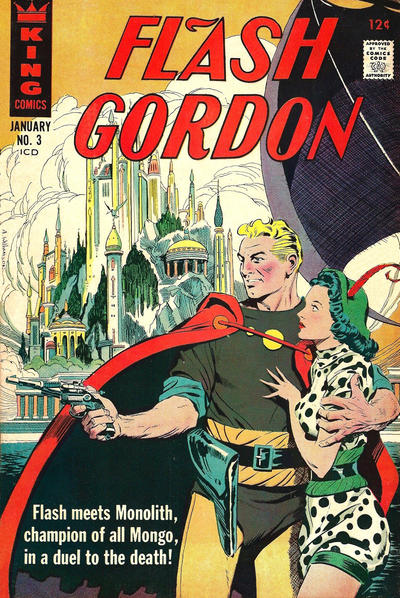
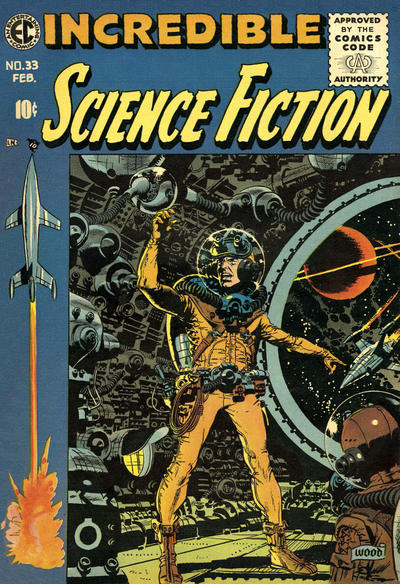
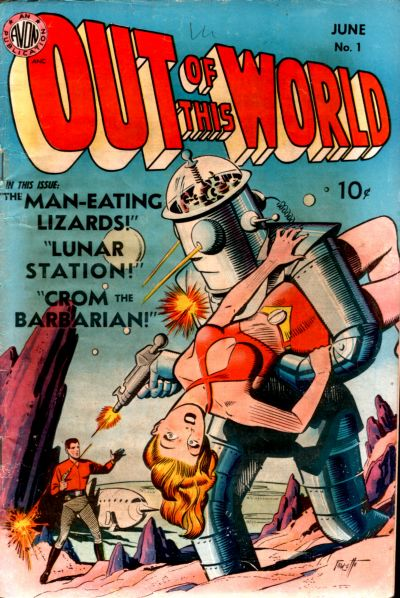
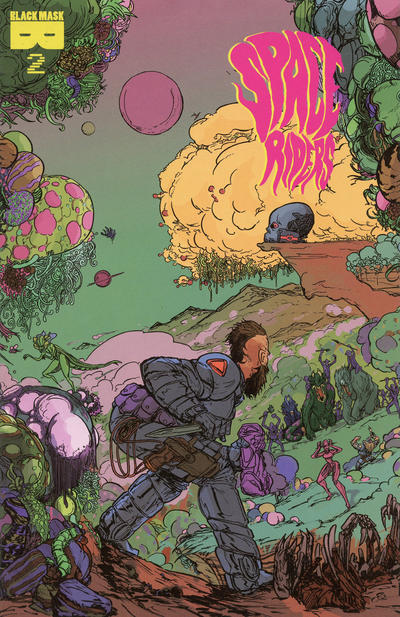
COMICS CAN BE AWESOME (18 April 2022)

A sci-fi reminder that comic book covers can be awesome:

Bill MolnoAl WilliamsonWallace WoodGene FawcetteMike McGheeSean MurphyDustin NguyenMassimo BelardinelliGil KaneJohnny Bruck

Posted in GLIMPSES INTO THE FUTURE | Tagged , , , , , , , , , , , , , , , , , , , , , , , , | Leave a comment

On Blackgate Penitentiary

Prison stories are basically their own genre, what with the dangerous, claustrophobic environment, the parallel rules of life in a world of outlaws, full of both comradery and suspicion, and the occasional trope of elaborate escape plots (which are kind of reverse-heist tales). For many, I suspect, there is a thrill that comes from accessing a place that’s designed to be invisible to most of society, but these stories can also be a way to reflect and comment on the most unfair and dehumanizing features of the whole justice system.

BatmanDetective Comics #644

This genre is able to accommodate much crosspollination. In cinema, masterpieces include overlaps with film noir (Jules Dassin’s Brute Force, Joseph Losey’s The Criminal), social realism (Héctor Babenco’s Carandiru, Steve McQueen’s Hunger, Jacques Audiard’s A Prophet), and WWII-themed black comedies (Billy Wilder’s Stalag 17, Peter Lord’s and Nick Park’s Chicken Run).

In comics, prison yarns range from the gritty Tyler Cross: Angola to the hilarious Kaijumax series (which, as the title suggests, is about a maximum-security prison for kaiju monsters!), not to mention the countless times we got to follow the Punisher behind bars. Brian Azzarello wrote strong prison arcs in both Hellblazer and 100 Bullets. Steve Gerber turned incarceration into a brilliant metaphor for high school life in Hard Time. Kelly Sue DeConnick did an awesome sci-fi riff on women-in-prison exploitation, with Bitch Planet. John Ostrander came up with a typically surreal take in Grimjack #73-74, where inmates served multiple life sentences as they reincarnated and were incarcerated for crimes committed in past lives.

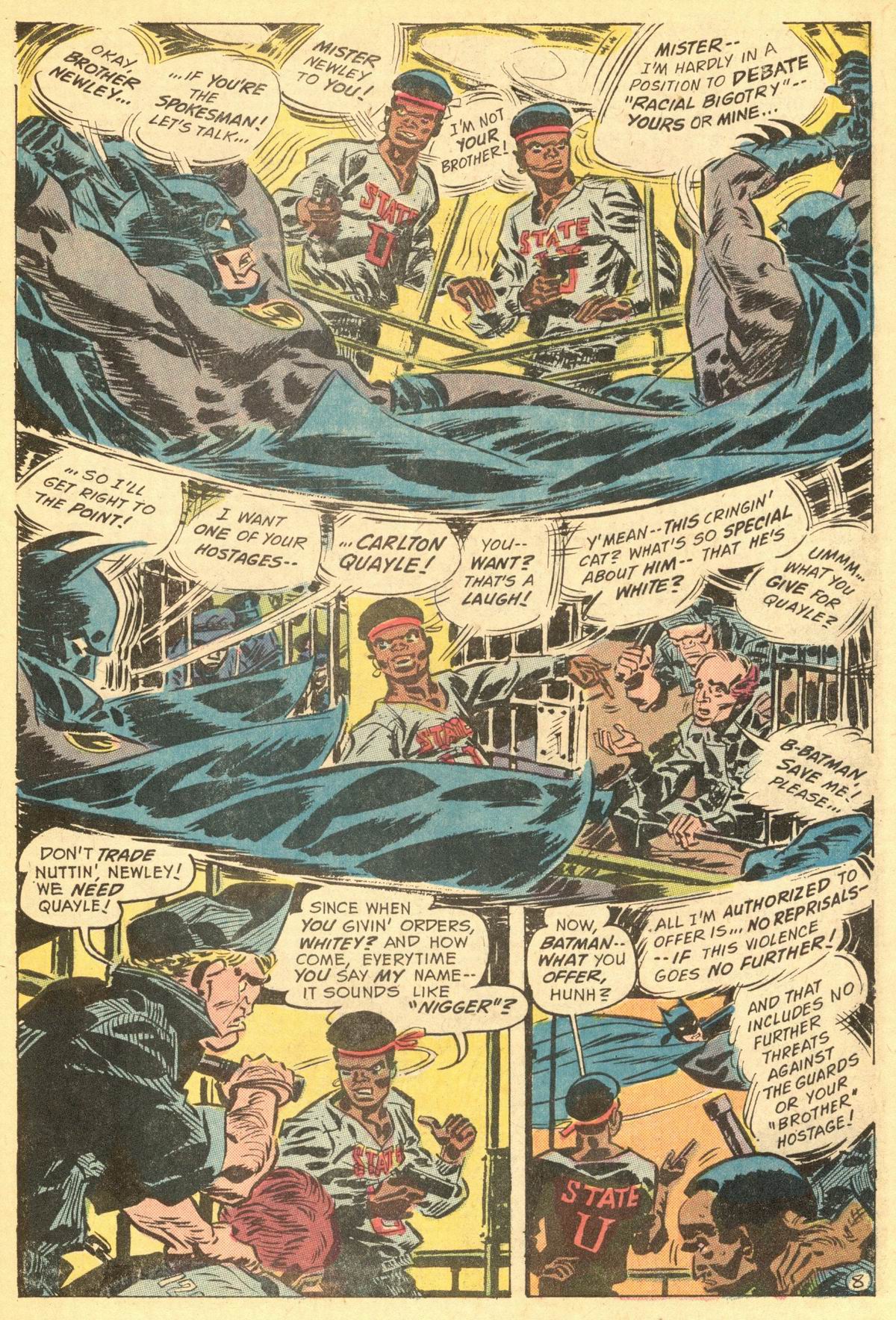
Gotham City has its own prison, the Alcatraz-inspired Blackgate Penitentiary, which is predictably violent and overcrowded. Even before it was properly identified as Blackgate, there were a couple of remarkable tales set there. One of them was ‘When the Inmates Run the Madhouse!’ (Detective Comics #489, cover-dated April 1980), in which Commissioner Gordon single-handedly squashed a riot. The other, ‘Blind Justice… Blind Fear!’ (Detective Comics #421, March 1972), is somehow even more hardboiled… Written and illustrated by the underrated Frank Robbins, it deals with a failed prison break that results in a hostage situation involving five guards and two inmates. Batman breaks into prison to rescue one of the hostages, Carlton Quayle, a former assistant D.A. who can help expose the city’s corruption at the highest level. Inside, however, the Dark Knight finds himself wrapped in racial tension:

Batmanbatman prisonDetective Comics #421

It was only in the 1990s that Blackgate became more than just a generic prison. ‘The Hungry Grass!’ (Detective Comics #629) gave it a name and a backstory: built in the late nineteen hundreds, condemned by Amnesty International, ‘its history reads like an Edgar Allan Poe novel.’ The Ventriloquist often ended up there, despite receiving instructions from a wooden puppet, which you’d think would make him more fit for Arkham Asylum (don’t get me wrong, I love this choice: it conveys the notion that *everyone* in Gotham is at least a bit off anyway, so apparently having a killer dummy as an alter ego isn’t enough for the courts to consider you criminally insane). The hardass warden, Victor Zerhard, became a recurring character.

This is a corner of Gotham City I’m quite fond of. It gives us a continuation of previous stories, after Batman and/or Robin caught the crooks, thus creating a more fully fleshed-out world where the villains exist beyond their encounters with the Dynamic Duo – and where minor foes (and henchmen) even get to interact with each other, thus further interlinking different stories. Moreover, there is something comically sadistic about taking colorful criminals and shoving them in a drab prison environment, where their idiosyncrasies suddenly look especially pathetic.

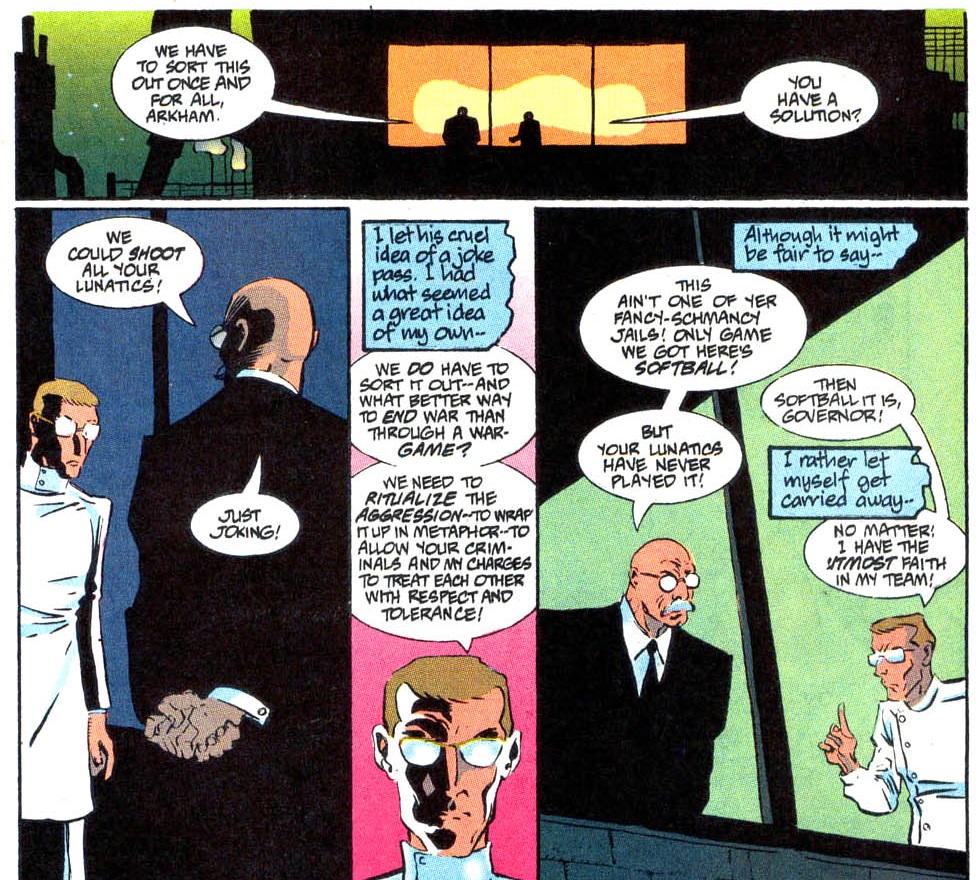
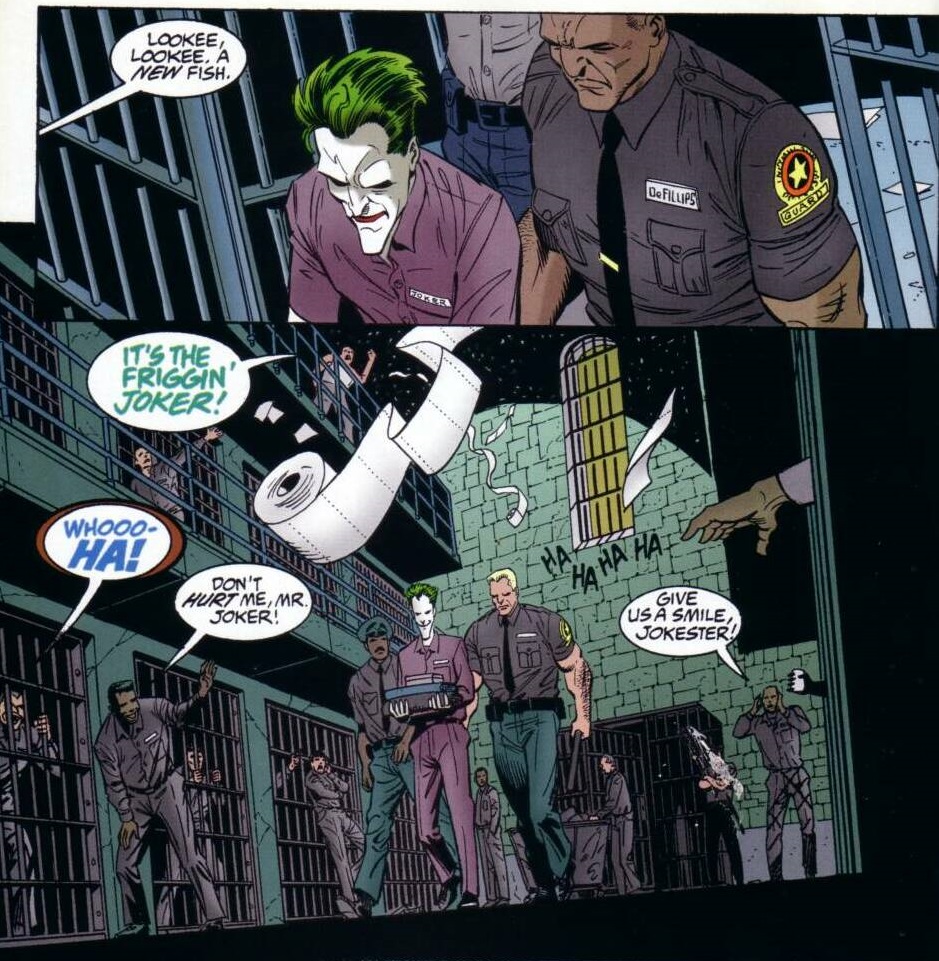
The first story to make full use of this setting’s black comedy potential was ‘Madmen Across the Water’ (which first came out in the anthology series Showcase ’94 #3-4 and it has been collected in the book Tales of the Batman: Tim Sale). In this sidestory to the Knightfall saga going on in the main titles, a handful of rogues from Arkham are temporarily transferred to Blackgate island after the asylum’s destruction, including Poison Ivy, Two-Face, the Scarecrow, the Riddler, Amygdala, and the serial killer Cornelius Stirk, as well as a couple of kooky new additions: the suicidal Jim Paul Sarter and the delusional Doctor Faustus (‘He claims to be immortal, though our records show him to be 43’). Needless to say, the rogues’ caustic behavior doesn’t sit well with Warden Zerhardt, nor do they get along with the regular Blackgate inmates.

ArkhamShowcase ’94 #3

‘Madmen across the Water’ is such a nice example of how amusingly twisted things can get in the world of Batman comics. The wonderful team of writer Alan Grant and artist Tim Sale keep the gags coming, culminating in a bizarre game of softball. At one point, someone compliments Cornelius Stirk on his pitching skills, to which he replies: ‘They’re well-exercised, those muscles. That’s my stabbing arm, you know!’ (Soon afterwards, Grant wrote a more straightforward action thriller set in Blackgate, in Shadow of the Bat #33.)

One character whose history is intrinsically tied with prison fiction is Bane. Indeed, after having crafted one hell of a prison yarn in the original Vengeance of Bane one-shot – about Bane’s childhood in Santa Prisca’s prison of Peña Duro – Chuck Dixon and Graham Nolan did a cool sequel about the character’s life in Blackgate (following his defeat at the hands of Batman in the Knightfall story arc).

blackgatekgbeastVengeance of Bane II: The Redemption

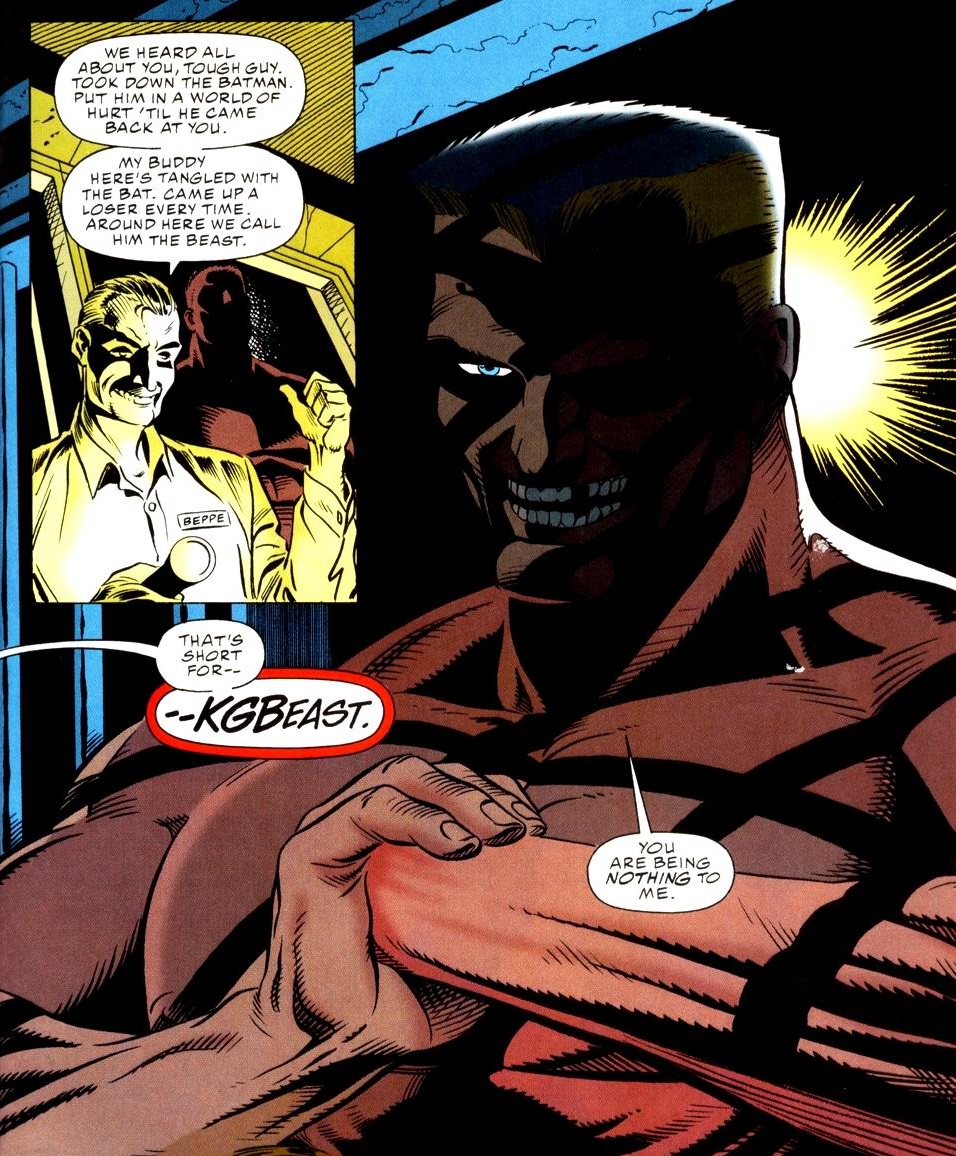
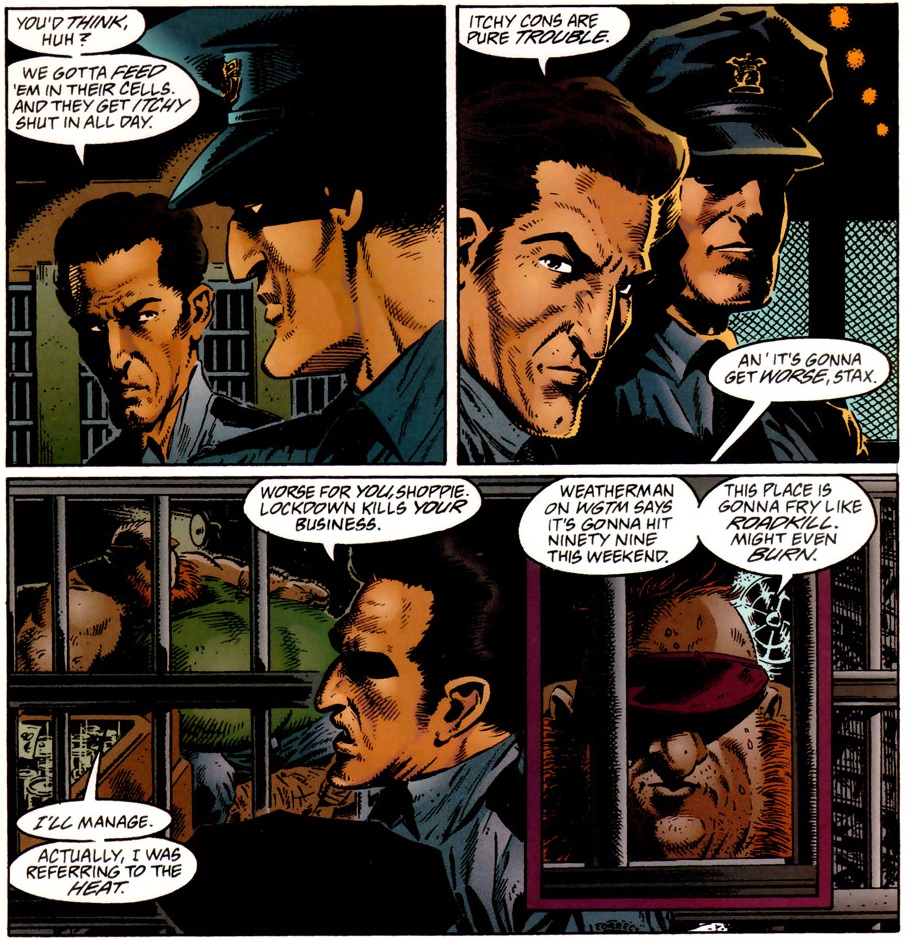
In 1995’s Vengeance of Bane II: The Redemption, this villain – who is much more interesting in Dixon’s books than in the movies (he’s a polyglot chess master genius with eidetic memory as well as a physical powerhouse) – has to negotiate his place among inmates such as the Ratcatcher and the KGBeast while still struggling with a cold turkey detox from his addiction to the drug known as ‘venom.’

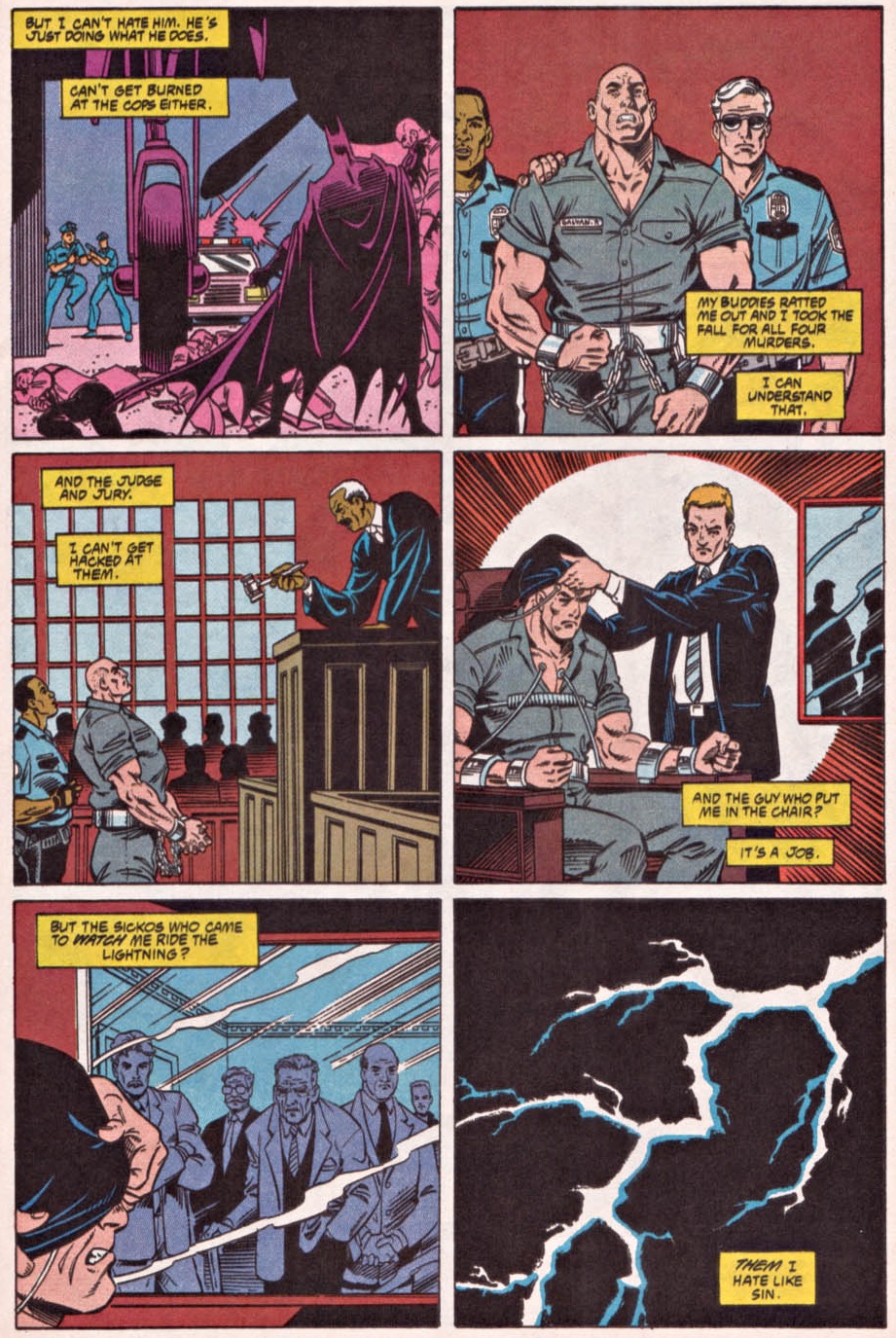
In a neat bit of fan-pleasing continuity, Dixon brings in some of the eccentric characters he had previously introduced in Batman comics, including the inept psychiatrist Simpson Flanders and the electricity-powered criminal Elmo Galvan (whose origin you can see in the first scan of this post). Yet the script – and Nolan’s art, inked by Eduardo Barreto and colored by Adrienne Roy – treats the story like a straight-up crime drama, even if discretely winking at the audience, thus living up to that longstanding comics tradition of turning harsh sociopolitical issues into tasteless entertainment (which is, after all, the whole formula behind the Caped Crusader’s war on crime). The result at times feels like a quirkier version of Don Siegel’s Escape from Alcatraz – there is even a similar instance of mouse-based communication!

Dixon then took the genre mash-up even further in the one-shot Blackgate: Hatred’s Home.

batman prisonbatmanBlackgate: Hatred’s Home

This one is hands-down my favorite Blackgate tale. Batman sets the grisly tone early on by claiming that in a lot of ways the inmates on Blackgate Island are as dangerous as the ones in Arkham Asylum: ‘There’re more of them and they’re not crippled by dementia.’ The high concept here is that Arthur ‘Cluemaster’ Brown and Garfield ‘Firefly’ Lynns are preparing a major breakout, so the Caped Crusader infiltrates the prison in order to foil their plans. The thing is that we don’t know who Batman is posing as, so the story is essentially structured like a mystery full of red herrings.

That said, most of the fun comes from watching a bunch of Z-list villains dealing with prison life and backstabbing each other at every turn. The issue is populated not only by the usual inmates (Ratcatcher and the KGBeast show up again), but also by every lame villain who ever showed up in a Dixon comic, from Liam ‘Gunhawk’ Hawkleigh (of Detective Comics #674-675) to Phillip ‘Dragoncat’ Parsons (of Robin #21-22), from Actuary (of Detective Comics #683-684) to Steeljacket (of Robin #13), from the Trigger Twins (of Detective Comics #667-669) to Cap’n Fear (of Detective Comics #687-688). The great penciller Joe Staton, inked by James A. Hodgkins, is then tasked with helping readers identify these rogues while out of their distinctive costumes – a task made even more challenging by the fact that colorist John Kalisz drenches the pages in oppressive shadows.

Indeed, although Blackgate: Hatred’s Home is technically a standalone story (with a few references to Vengeance of Bane II), you’ll get more out of it the more familiar you are with Batman comics from the early-to-mid-nineties. Dixon sure liked his cross-continuity – and, to be fair, he was damn good at it! In fact, he continued to use Blackgate in several of his other projects…

blackgateJoker: The Devil’s Advocate

When it came to the Cataclysm crossover, however, it was Doug Moench who got to pen the Blackgate tie-in, for some reason. In this downbeat event, Gotham City was devastated by an earthquake and the special Blackgate: Isle of Men showed the impact on the prison. The result is as chaotic as you’d expect – besides the quake, the staff end up facing a tsunami, a mutiny, and a prison break! (The prisoners who manage to escape go on to feature in the action-packed one-shot Huntress/Spoiler: Blunt Trauma.)

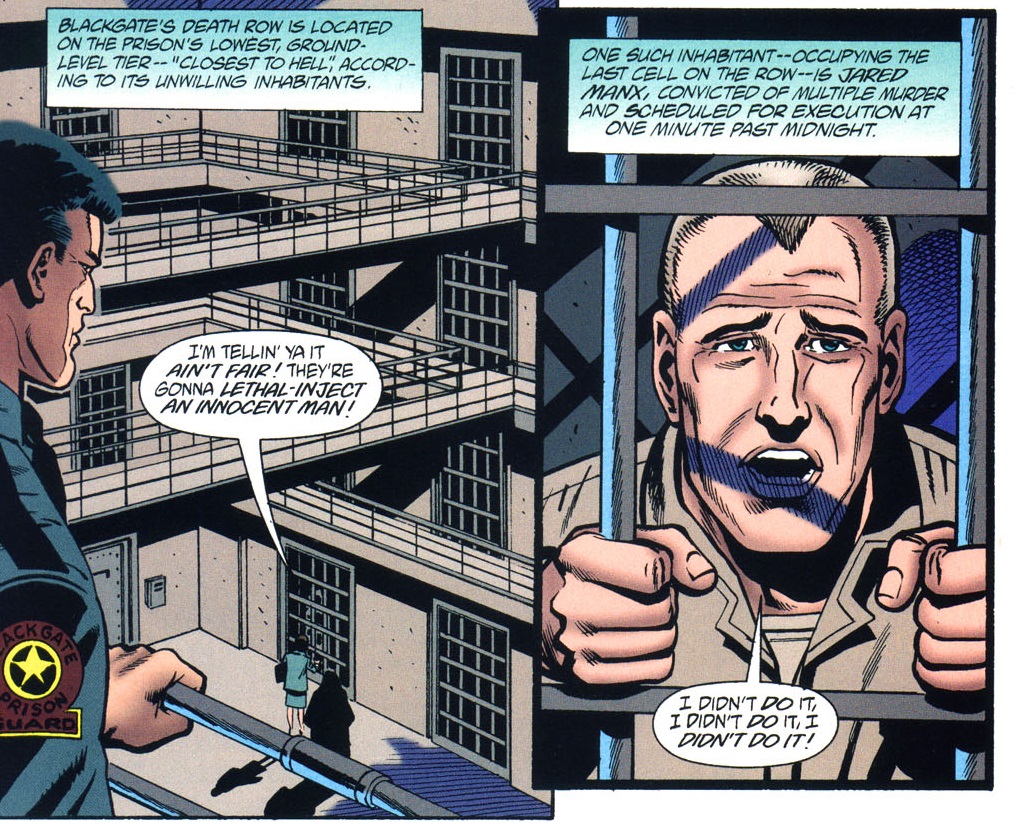
Written by Moench and drawn by Jim Aparo – with tight inks by David Roach and colors by Pat Garrahy – Isle of Men may not be the greatest exploration of the Blackgate corner of Batman comics, but it is worth a read due to a nice hook: at the heart of the story is Jared Manx, a prisoner who was waiting to be executed when the earthquake struck and who now takes the opportunity to try to prove once and for all that he is an upstanding citizen.

batman comics prisonBlackgate: Isle of Men

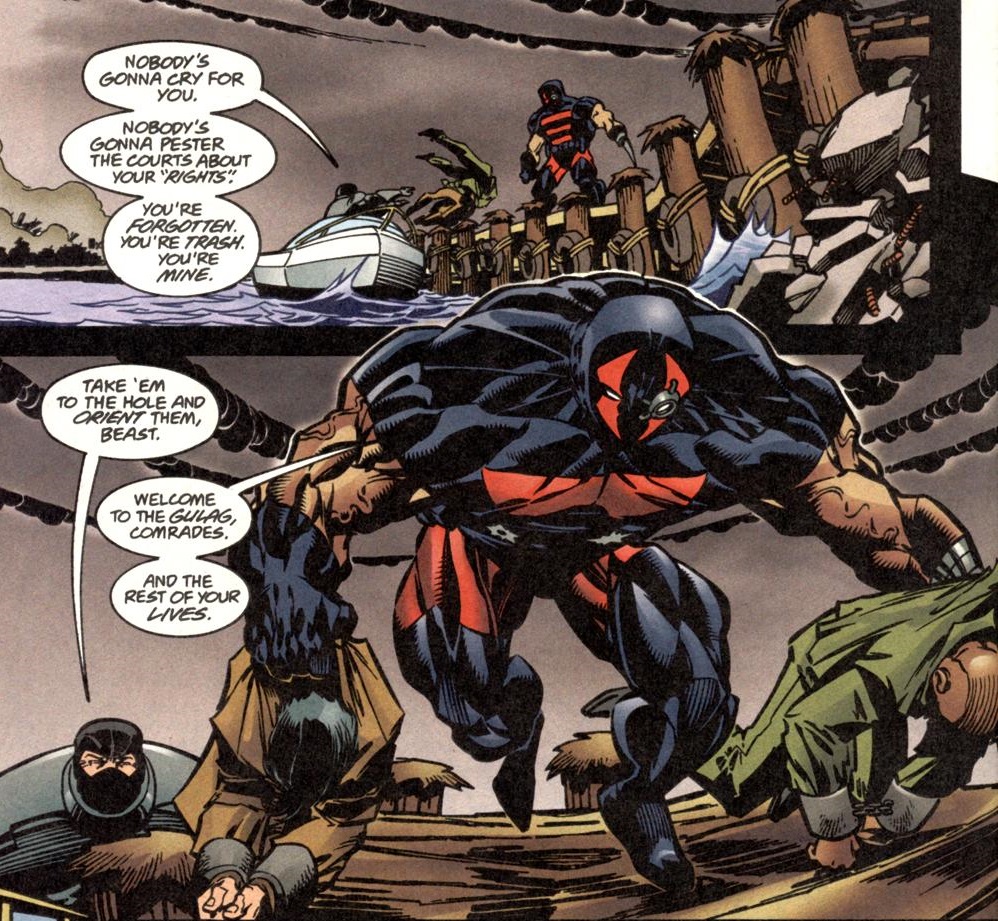
Chuck Dixon didn’t stay away for long. Cataclysm was followed by another major crossover: the extended No Man’s Land storyline, in which post-quake Gotham City is cut off from the rest of the country. A desperate Dark Knight then lets the authoritarian vigilante Lock-Up temporarily run the prison with an iron fist…

lock-upKGBeastNightwing #35

Of course, it’s only a matter of time until all this power rises to Lock-Up’s head and he goes too far, so in the kickass Nightwing three-parter ‘The Belly of the Beast/Nothing But Time/Escape from Blackgate’ (#35-37) it’s up to Batman’s former sidekick to take the power back.

The result is wall-to-wall action – via the ultra-dynamic pencils of Scott McDaniel, with thick inks by Karl Story – as Nightwing has to fight all the usual cast of oddball inmates, plus a handful of interchangeable Z-listers Dixon had introduced in the meantime, with names like Monsoon, Tumult, and Dynamiteer. There is even a classic Dixon sequence in which a bunch of characters find themselves in a rigidly confined space (the prison’s cellar) desperately struggling against time to get out.

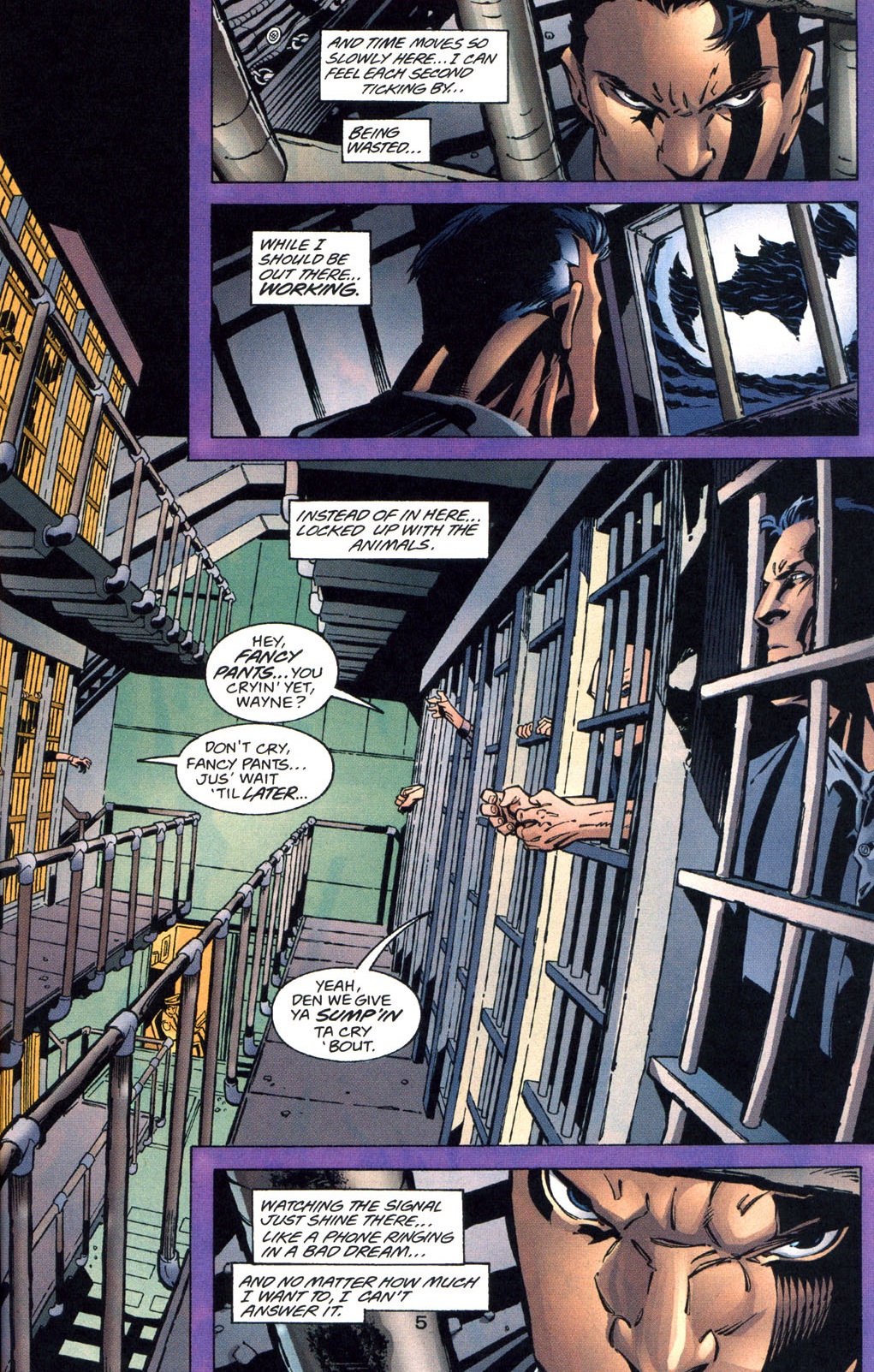
In turn, the next big crossover, Bruce Wayne: Murderer?, was a wasted opportunity. In this 2002 event – Batman comics’ answer to the O.J. Simpson trial – Bruce is accused of murdering his ex-girlfriend and is sent to Blackgate Penitentiary to await trial.

bruce wayne prisonBatman #599

(You know it’s an Ed Brubaker comic because the protagonist explicitly tells you what he is feeling.)

Sure, the issue mines the drama you can get from having Bruce Wayne in prison without wanting to reveal himself as Batman… But the story never goes beyond the obvious hooks. Instead of having Bruce tip his hand by beating up other prisoners, it would’ve been nicer to see him take control, somehow, cleverly manipulating his surroundings while drawing on the knowledge he already has about the prison and its inmates. Hell, there isn’t even anything to distinguish Blackgate from any other prison, since the inmates are just a collection of stereotypes (skinheads, street gangs…) instead of stripped-down versions of Gotham’s eccentric criminal underworld, like in Dixon’s comics. The result is one of those Batman tales that takes itself so seriously that it forgets to be fun.

Linked to this crossover, Greg Rucka did write a couple of strong issues (Detective Comics #767 and #772) about Bruce’s bodyguard – Sasha Bordeaux – in Blackgate, but, likewise, there was nothing special about this version of the setting. It was just another generic prison. The problem, of course, is that prisons are horrible, depressing places, so approaching Blackgate realistically – rather than like an offshoot of Gotham’s distorted reality – creates a much more downbeat experience, one that inevitably casts Batman (who spends his life sending people to prison) in a much more negative, unheroic light.

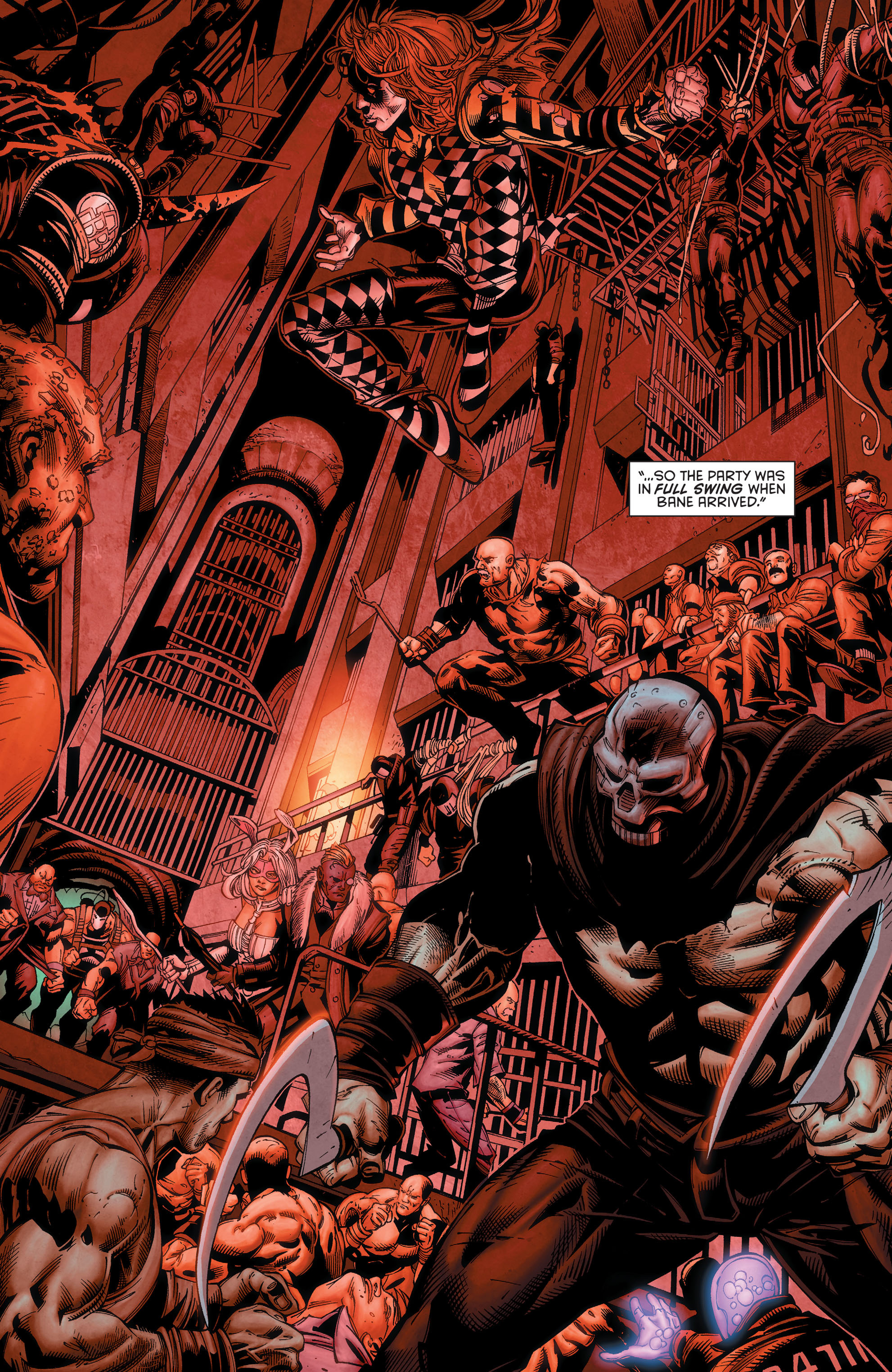
Then again, you can go too far in the opposite direction. Blackgate was a key setting in 2013’s Arkham War, where Bane made the penitentiary his headquarters and its inmates his army in an attempt to conquer Gotham, which had recently been taken over by Arkham’s rogues. Despite introducing a promising new warden, Agatha Zorbato, this comic is utter dreck. Among its many flaws is the approach to Blackgate, which doesn’t come across as a prison at all, but more like an island where a bunch of assorted villains happen to hang out (in full costume!) and whose main contribution to the story is that it harbors a secret basement with cryogenically frozen assassins.

Thus, after a prelude drawn by Graham Nolan (shamelessly evoking much better Bane comics), writer Peter Tomasi and artist Scot Eaton manage to both miss the point of prison’s levelling effect (these criminals basically look and act the same as they did outside) and impose a whole new dehumanizing layer through their own storytelling (by treating all these different people as a single evil mindless horde).

blackgate prisonForever Evil: Arkham War #1

I still think Blackgate Penitentiary has great potential, both as an interesting setting in its own right and as a provocative vehicle to occasionally recontextualize the Dark Knight’s mission. It makes sense to treat it as a prison bursting through the seams with weird criminals, since the fact that Gotham City is full of weird crime lies at the basis of Batman comics in the first place (just like the fact that Mega-City One is full of dumb assholes lies at the basis of Judge Dredd comics), presenting its heroes as an extreme/goofy response to an extreme/goofy problem.

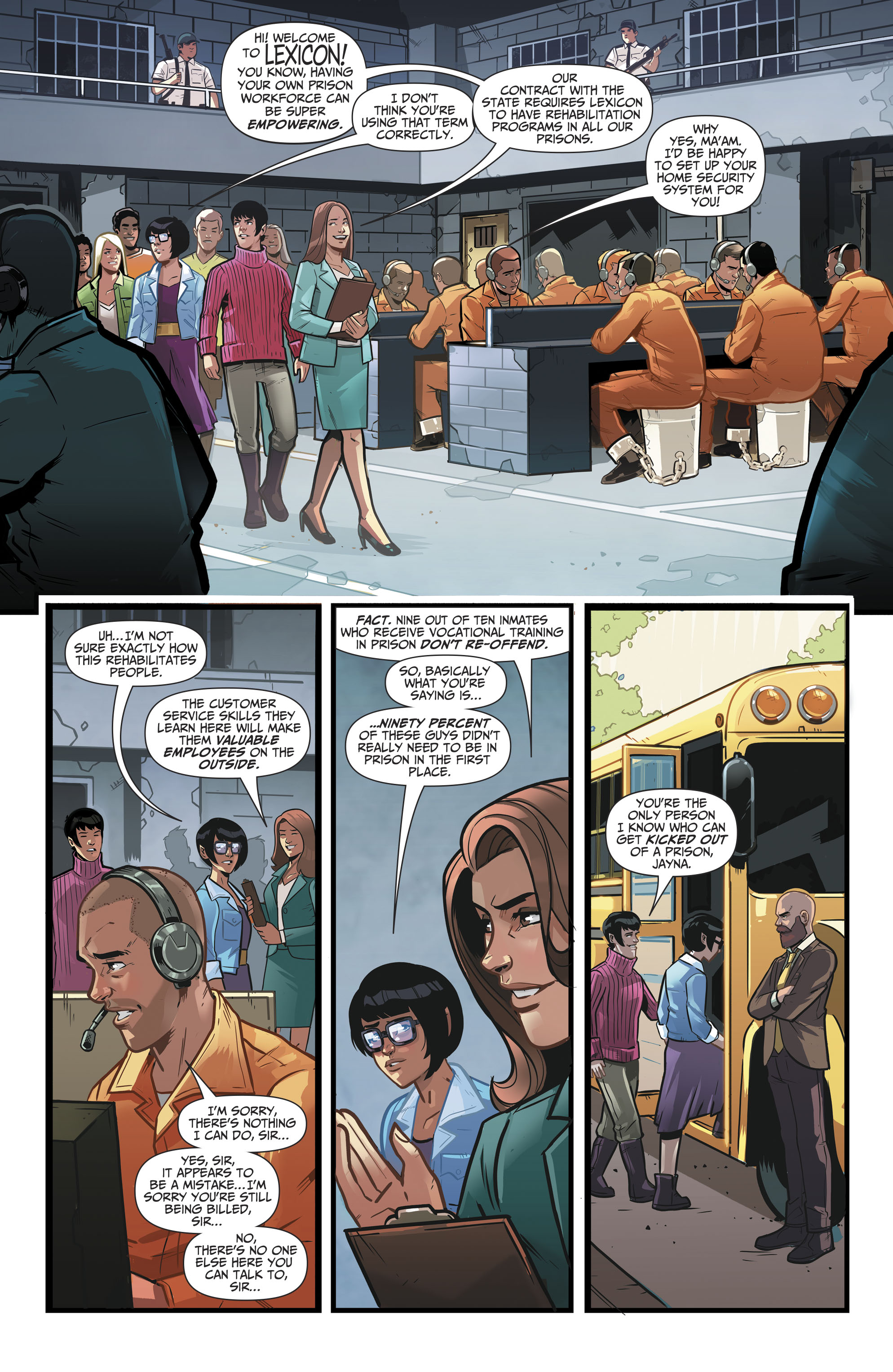
I wish creators would continue to use Blackgate in clever, amusing ways, like they did in the 1990s. Hey, since it is set in the DCU anyway, why not have it become part of Lex Luthor’s prison-industrial complex, bringing in Batman’s rogues gallery to further develop the satirical premise recently introduced in Wonder Twins?

prison comicWonder Twins #2
Posted in GOTHAM CITIZENS | Tagged , , , , , , , , , , , , , , , , , , , , , , , , , | 3 Comments