We lost another one of the all-time greatest…
We lost another one of the all-time greatest…
Since the current POTUS is so fond of the word, here is your reminder that comics can be awesome, The Losers edition:
Earlier this year, I discussed John le Carré’s Circus novels as the perfect counterpoint to the James Bond branch of spy fiction. Yet there is much more to le Carré’s writing, which has taken this genre into all sorts of interesting directions.

It’s certainly not enough to say John le Carré has a strikingly divergent approach to spy fiction than the one in the 007 franchise. After all, there are many cool alternative paths in terms of writing about espionage, from the intimate metafiction of Ian McEwan’s Sweet Tooth to the quasi-satirical hijinks of Len Deighton’s The Ipcress File. The thing about le Carré is that he has managed to reinvent himself time and time again. As a huge fan of the genre, I don’t find it demeaning per se that he is treated as essentially a ‘spy fiction writer’ – my problem is that this description tends to betray quite a reductive view of what this genre can do and of what le Carré has been able to do with it for a total of 25 books (so far) written across six decades.
Yes, virtually all of John le Carré’s novels involve spies, but should the mere inclusion of spies overshadow everything else? Although there are plenty of recurring situations and character types in his books, they are handled in various different ways and, in any case, as le Carré put it in an interview, the figure of the spy seems ‘almost infinitely capable of exploitation for purposes of articulating all sorts of submerged things in our society.’ Thus, while some of his novels are plot-driven thrillers fueled by espionage and others are personal tales about the psychological toll of being a spy, there are also those in which the spying actually feels mostly allegorical.
Many of them fit easily into classic literary formulas like social drama, political satire, romance, mystery, and character pieces (usually revolving around male midlife crisis), even if the protagonists happen to cross paths, to a smaller or greater degree, with the underworld of foreign intrigue. For example, one of my favorites, 1968’s A Small Town in Germany, reads like a detective tale, as it follows an investigation at the British Embassy in Bonn (and, along the way, captures West Germany’s 1960s identity crisis, with the country’s unmastered Nazi past and emasculated national pride). 1986’s A Perfect Spy is practically a modernist masterpiece and certainly way more psychological than political when compared to his other stuff at the time. Then, of course, you have 1999’s Single & Single, which feels like a proper hardboiled crime yarn, opening with an intense stream-of-consciousness tour-de-force from the perspective of a man who realizes he is about to be killed.
I admit that if you read many of the books in a row it can get somewhat repetitive… Lengthy interrogation scenes come and go, each line and gesture riddled with innuendo. Informants and deserters abound, from Soviet apparatchiks to Russian oligarchs, with several British agents in-between, most of them trying to negotiate a deal that safeguards their family… The endings become a bit predictable once you realize that, more often than not, they’re going to be cynical, downbeat, and deliberately anti-climactic. But even all this adds up to overarching themes developed throughout le Carré’s body of work, which point towards a more general philosophy. For instance, while loose ends are common, they tend to feel less like plot holes than like ingenious ambiguities – the blind spots reflect a world of uncertainties, frustrations, and unconfirmed suspicions.


A key distinction concerns John le Carré’s Cold War and post-Cold War works. I’ve already written about the series of loosely connected (some more than others) novels about the counter-intelligence Circus department. Many of those earlier books were about the moral ambiguity of the Cold War, where both sides did horrible things to each other (and to themselves), their ideals lost somewhere among the political machinations. In a way, the same goes for 1983’s The Little Drummer Girl, which applied a similarly murky approach to the Arab-Israeli conflict.
The post-1991 stuff (which consists mostly of standalone books without recurring characters) is relatively less ambiguous, shedding a stark light on the victims of Western imperialism – for example, 1996’s The Tailor of Panama deals with the US invasion of Panama, 2001’s The Constant Gardener with the pharmaceutical industry’s exploitation of Africa, and 2013’s A Delicate Truth with the ruthlessness of the War on Terror. You may prefer one phase or the other (I tend to fall for the Cold War material), but taken as whole this move from cynicism to idealism is a fascinating shift, especially as one of the leitmotifs in le Carré’s fictions is precisely the tension between pragmatic and romantic politics.
The formal style has also changed. Compared to his mammoths from the seventies and eighties, the post-Cold War books feel somewhat lighter – not that they aren’t dark or dense, but they tend to be tighter page-turners… For instance, 1995’s Our Game is an intelligent, focused thriller about a man who is both on the run and on the hunt – a man who loses everything he holds dear and believes in, like many of le Carré’s protagonists, and who hopes to reinvent himself. (The notion of personal reinvention is a recurring theme, since espionage often involves forging an alternate identity.) Likewise, although Single & Single engages with the final stages and follow-up to the Soviet Union, its main appeal is the way the story is told – it’s a masterfully plotted contraption in which le Carré keeps jumping around, making you work in each new chapter to figure out what the hell is going on by registering clues about each character and situation or anticipating possible connections with other subplots (in short, he makes you feel like an operative yourself as you try to find meaning among the apparent chaos). In turn, his latest, and probably last, novel, Agent Running in the Field, about the Brexit/Trump-era resurrection of Russia as an intelligence threat, seems designed to have a broader mainstream appeal – it’s a nice, breezy read with a couple of great twists near the end, but a far cry from his earlier literary challenges.


Moving beyond the realism of his initial novels, John le Carré’s way with words has allowed him to pull off some more experimental narratives – his immersive, captivating prose can buy a fair amount of suspension of disbelief from readers. Much of The Little Drummer Girl seems like an exercise in adding depth and believability to a Mission: Impossible-style plot (minus the face masks) and testing how far he can get away with it. We’ve seen in countless episodes of that show people coached into to posing as someone else in order to infiltrate the enemy camp, but we never got anything as touching as this passage, about a recently recruited agent, Charlie, and her runner, set just before such an operation:
“One arm went round her shoulder and she shivered violently against it. Leaning her body along his, she turned in to him and reached her arms round him, and hugged him to her, and to her joy she felt him soften, and return her clasp. Her mind was working everywhere at once, like an eye turned upon a vast and unexpected panorama. But clearest of all, beyond the immediate danger of the drive, she began to see at last the larger journey that was stretching ahead of her and, along the route, the faceless comrades of the other army she was about to join. Is he sending me or holding me back? she wondered. He doesn’t know. He’s waking up and putting himself to sleep at the same time.”
John le Carré’s entrancing voice (or voices, since a handful of his stories are told in the first person) and loose pace (with lengthy diversions sacrificing speed in the name of atmosphere) are a big part of the allure, which is why screen versions tend to miss out on much of what makes the books so special. From what I’ve seen, most adaptations are pretty drab and shallow in comparison, even Park Chan-wook’s Little Drummer Girl, despite filling the screen with a series of live pop art paintings.
(I’m usually quite the fan of Park Chan-wook’s visual style – not just in his cult psychological horror thriller Oldboy, but also, notably, in the labyrinthic sexual drama The Handmaiden and in the touching war mystery JSA (which is about the Joint Security Area between North and South Korea, not about the Justice Society of America). Yet I had a hard time accepting the choice to drain le Carré’s novel of all that hard-fought authenticity and turn it into a weird homage to avant-garde theatre (including some godawful acting). The sequences at the terrorist training camp verge so close to caricature that they bring to mind (much funnier) bits from Chris Morris’ Four Lions and Uli Edel’s Baader Meinhof Complex.)
Besides the larger narrative detours, I love it when le Carré gets carried away with small moments, turning the mundane into bizarre (like in his detailed description of a clown act, in Single & Single). There are also the witty turns of phrase, the extended shifts in perspective, the careful fleshing out of the world where each story takes place, the nonchalant way he works in jargon, codenames, and recurring metaphors into the text, letting you gradually pick them up as you go along. The dialogue can be gripping and eloquent, oozing with subtext and snobbish passive-aggressive jabs.
The one trope of spy fiction that le Carré definitely respects is the close relationship with travel literature. His prose often makes you feel like you are visiting foreign lands, like when Charlie arrives in Beirut:
“The street was part battlefield, part building site; the passing street lamps, those that worked, revealed it in hasty patches. Stubs of charred tree recalled a gracious avenue; new bougainvillea had begun to cover the ruins. Burnt-out cars, peppered with bullet-holes, lay around the pavements. They passed lighted shanties, with garish shops inside, and high silhouettes of bombed buildings broken into morning crags. They passed a house so pierced with shellholes that it resembled a gigantic cheese-grater balanced against the pale sky. A bit of moon, slipping from one hole to the next, kept pace with them. Occasionally, a brand-new building would appear, half built, half lit, half lived in, a speculator’s gamble of red girders and black glass.”
Along with the thematic, ideological, and stylistic evolution of John le Carré’s writing, you can also find changes with regard to his depictions of female characters. Sure, with the notable exception of Charlie in The Little Drummer Girl, women do still inevitably end up in supporting roles, mostly providing motivation for the male leads, but there’s no denying that characters like Gail Perkins in 2010’s Our Kind of Traitor or Florence in 2019’s Agent Running in the Field have come to play a much more nuanced and central part.
Speaking of diversity: of course the quality varies as well. For instance, I didn’t particularly care for 2008’s A Most Wanted Man – it has its moments, for sure, but for once the whole thing felt too contrived for my taste. Similarly, 2006’s The Mission Song never fulfilled its initial promise, even though the topic (the plotting of a coup in East Congo) is fascinating and, arguably, there are enough charming passages to compensate.


(Yes, Matt Taylor’s covers for the Penguin editions are pretty awesome…)
On the other end of the scale, if you want proof of John le Carré’s literary genius, perhaps the best place to look for it is in A Perfect Spy, his most ambitious and personal work. This super-dense tale about an operative torn between loyalties is the ultimate rendition of the author’s core themes. It also brings to mind other personal favorites of mine, echoing A Small Town in Germany’s similar investigation into a possible desertion and anticipating 2003’s Absolute Friends, with its saga about a friendship between agents from opposite sides.
As for the post-Cold War stuff, Our Game is perhaps the perfect transitional novel in his oeuvre, providing a powerful glimpse into the generational changing of the guard within the UK secret services and into the boiling ethnic conflicts in the Russian Caucasus (it came out around the time of the First Chechen War). If you want to check out le Carré’s more anti-imperialist works, you could do worse than The Constant Gardener (a murder mystery that spirals into a conspiracy thriller about Big Pharma) or the abovementioned Absolute Friends (which weaves the old revolutionary ideals of 1970s’ Germany into the War on Terror atmosphere).


All in all, the main thing that brings John le Carré’s books together is a generally ambitious understanding of spy fiction’s potential. That said, it can be argued that there is also a kind of ‘adult’ sensibility that unites them and which practically qualifies as a subgenre in itself – and one that has been massively influential. You don’t usually find it in mainstream comic books, but it crops up in indie comics every once in a while (I recently came across Mark Askwith’s and R.G. Taylor’s very neat Silencers, for example). Even the recent wave of addictive War on Terror pop thrillers on the small screen (like Homeland, the British Bodyguard, the French The Bureau) are shaped to a large degree by the workings of bureaucracy, moral ambiguity, and complex characterization. And then there is Starz’s Counterpart, which brilliantly applied le Carré’s touch to a sci-fi setting.
The only writer I know who is comparable to John le Carré is Graham Greene – both in the Britishness of the prose and in the ability to mix politics with human drama… I don’t mean Greene’s earlier thrillers, but the more romantic and existentialist stuff like The Quiet American, The Honorary Consul, The Comedians, and – the best of the lot – The Human Factor (which is a kind of inversion of Tinker Tailor Soldier Spy, following the point of view of the mole). Indeed, le Carré himself has been quite explicit about how much of an inspiration Greene was (hell, The Tailor of Panama is a blatant homage to Our Man in Havana). While the debate on Graham Greene seems to have reached a consensus, though, critics are still discussing whether John le Carré is an espionage author who happens to write well or a great novelist who happens to write spy fiction. Me, I’d say he’s one of the greatest living writers today. Period.
Your panic-stricken reminder that comics can be awesome…
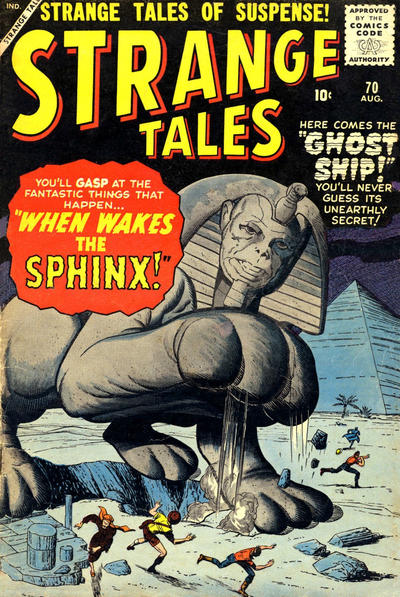
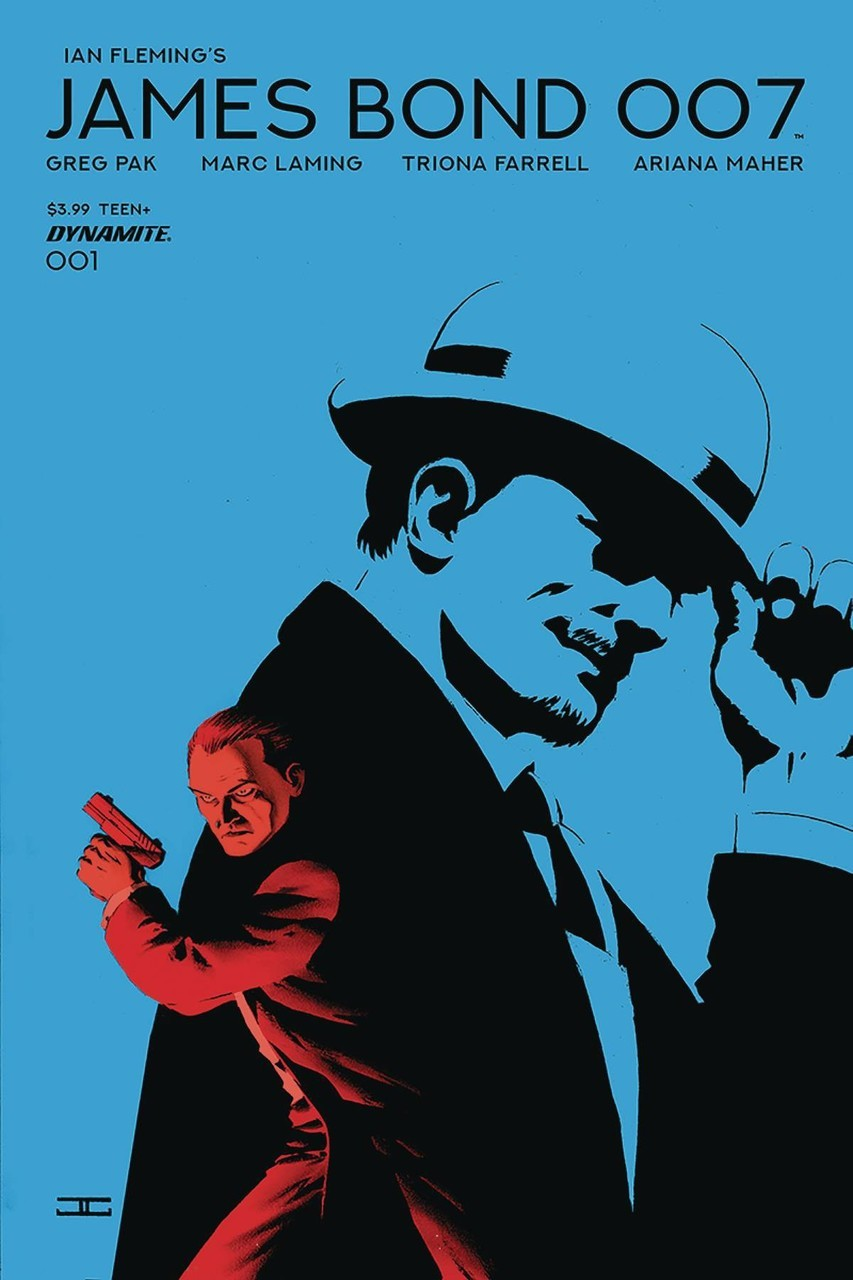
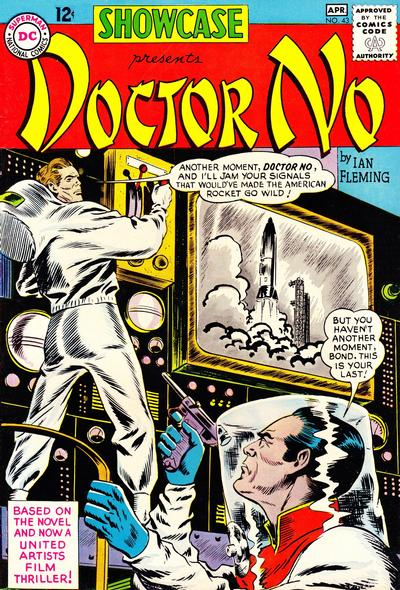
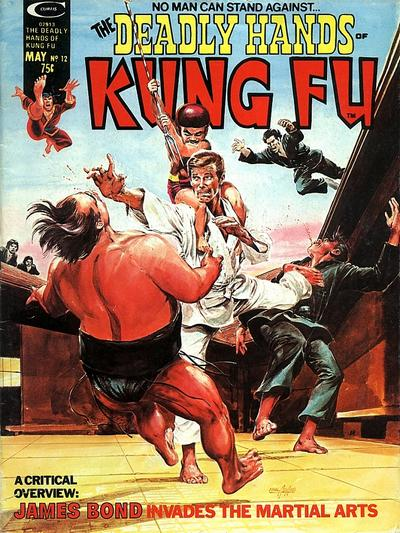
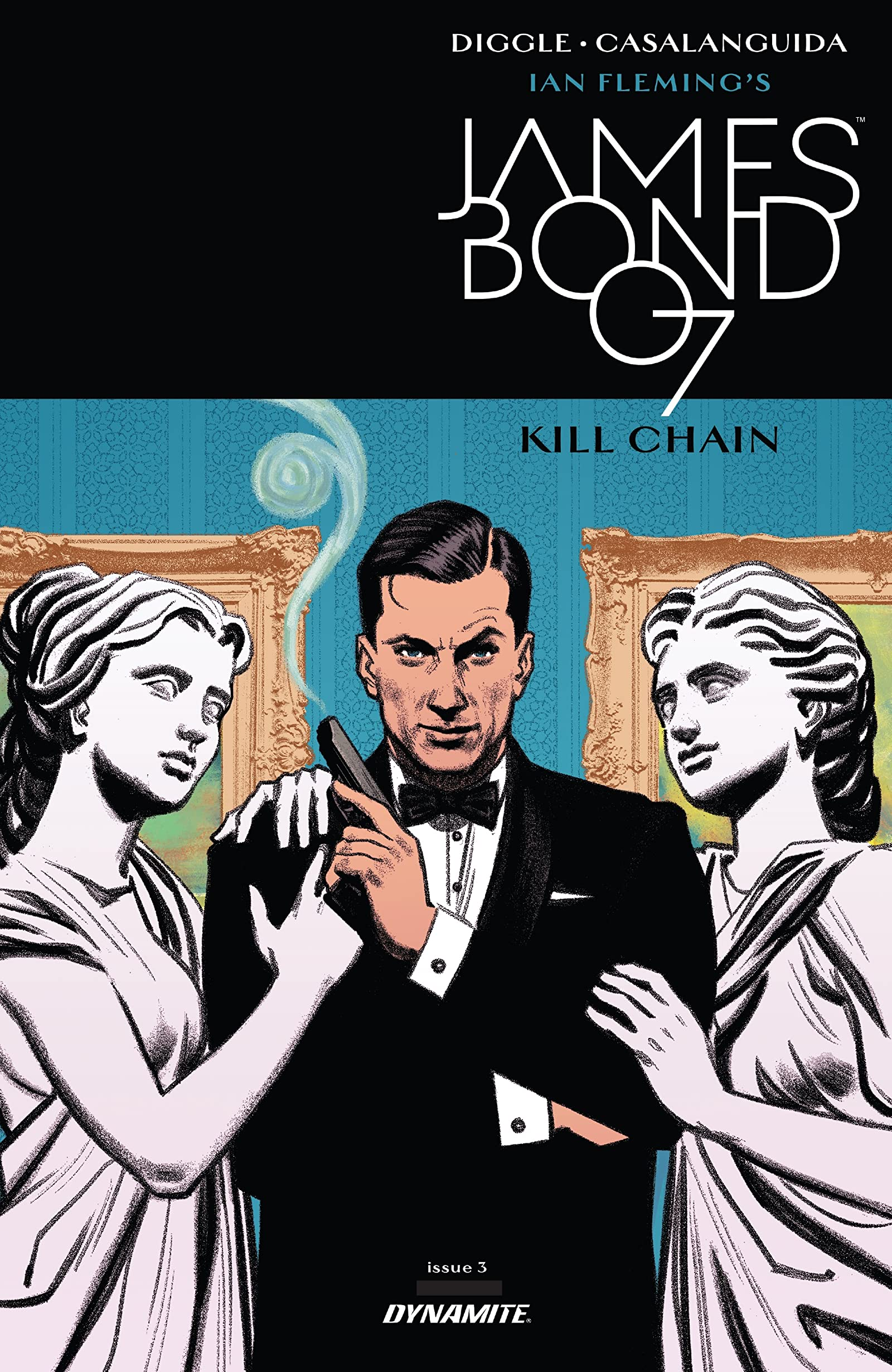
After all the covid-related postponements, it appears we finally have a date for the latest James Bond picture, (now tastelessly) titled No Time to Die. Honestly, I’m in no hurry to see it, since the last couple of movies didn’t really do it for me (despite Spectre’s awesome pre-credits sequence). Still, I admit I have a – not at all uncommon – fascination with this weird franchise, which has gone in almost as many wildly different tonal directions as Batman comics. It certainly has come a long way since Ian Fleming’s original novels and the relatively restrained first film adaptation, 1962’s Dr. No (which was fine, but it wasn’t even the most fun adventure movie to come out that year… that would be either Kazuo Mori’s The Tale of Zatoichi Continues (whose blind masseur/gambler/swordsman starred in even more films than Bond!) or, even better, Akira Kurosawa’s Sanjuro). 007 has also found its home in comics, which have managed to blow up his cartoon world even further (though not always with the most agreeable results).
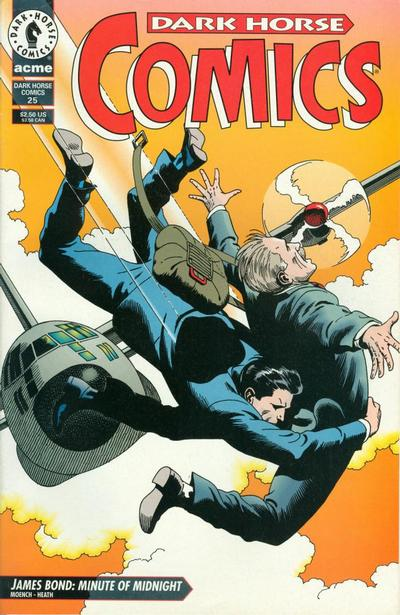
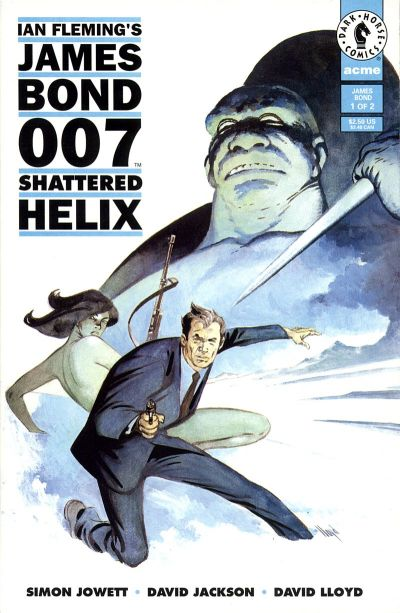
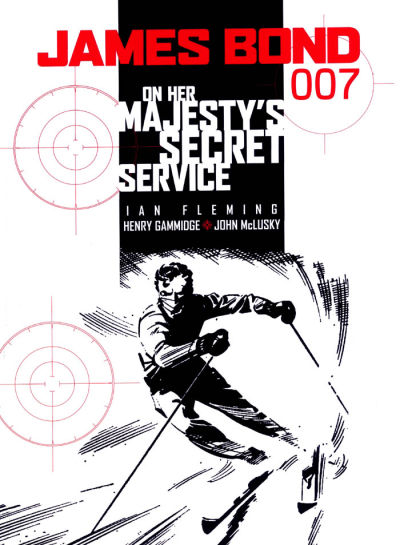
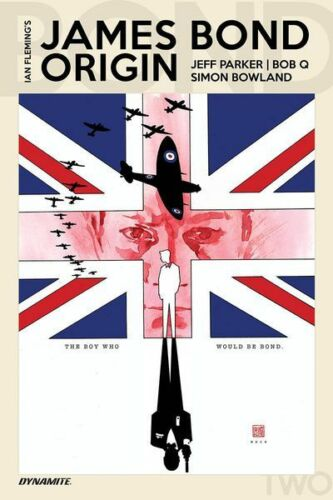
In any case, every chance is worth it to spotlight a dozen stylish comic book covers starring James Bond. Since the character has gone through so many iterations, it’s always neat to see each artist’s take on the material, with some privileging pulpy action and others capturing the sense of sexy suaveness that is also a big part of the series… That said, I especially like the ones who play with the iconic status of Bond’s familiar poses and motifs – not to mention the fact that he has become a symbol for British might – by reducing them to an almost minimalistic abstraction.
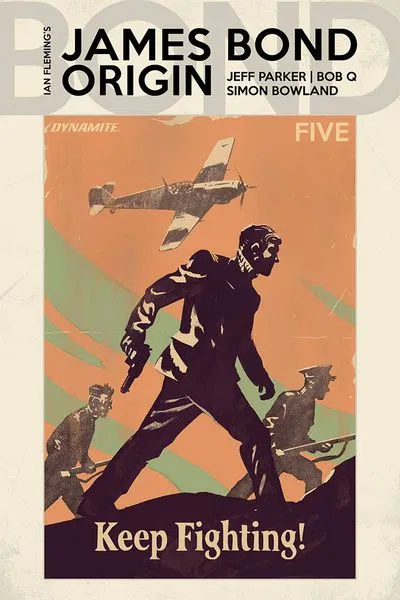
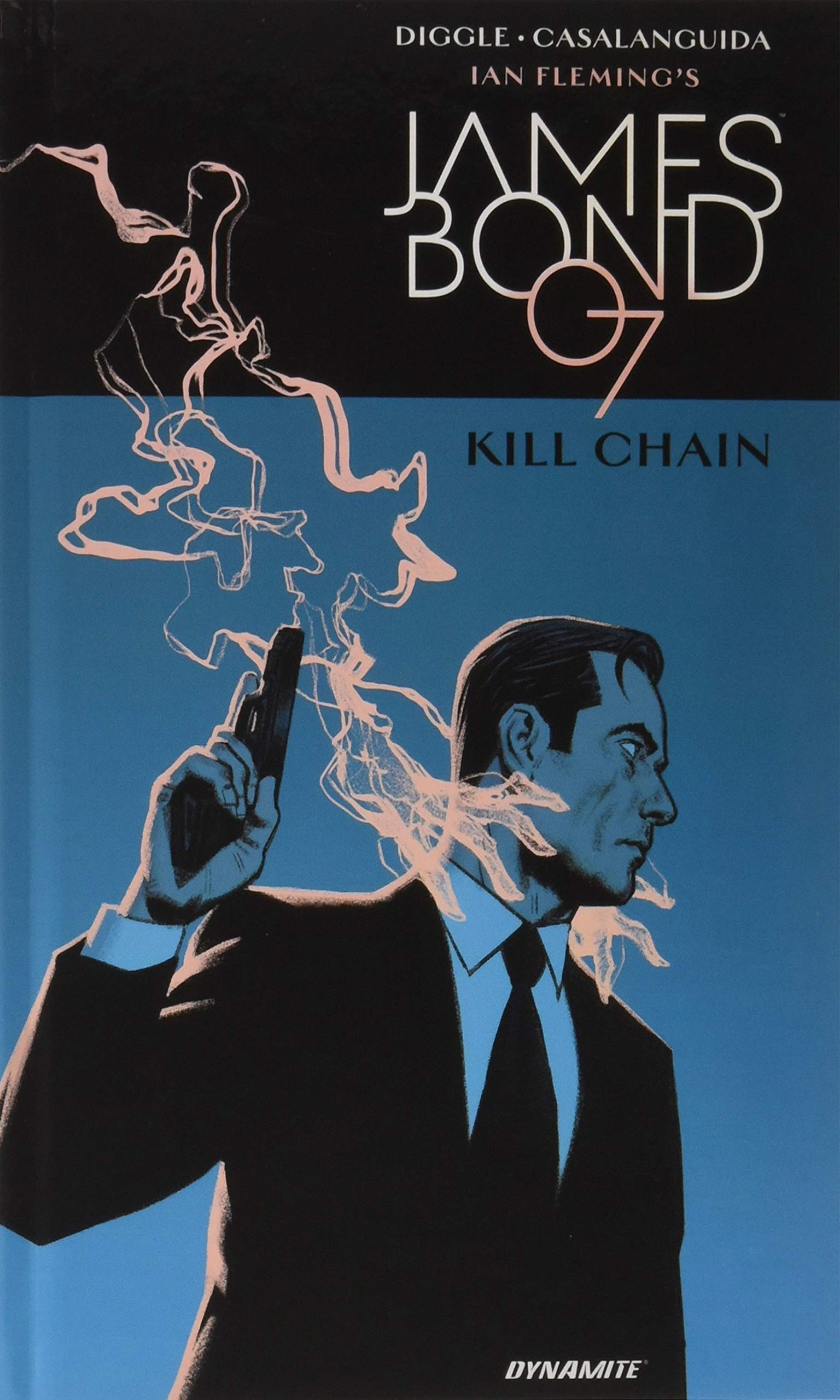
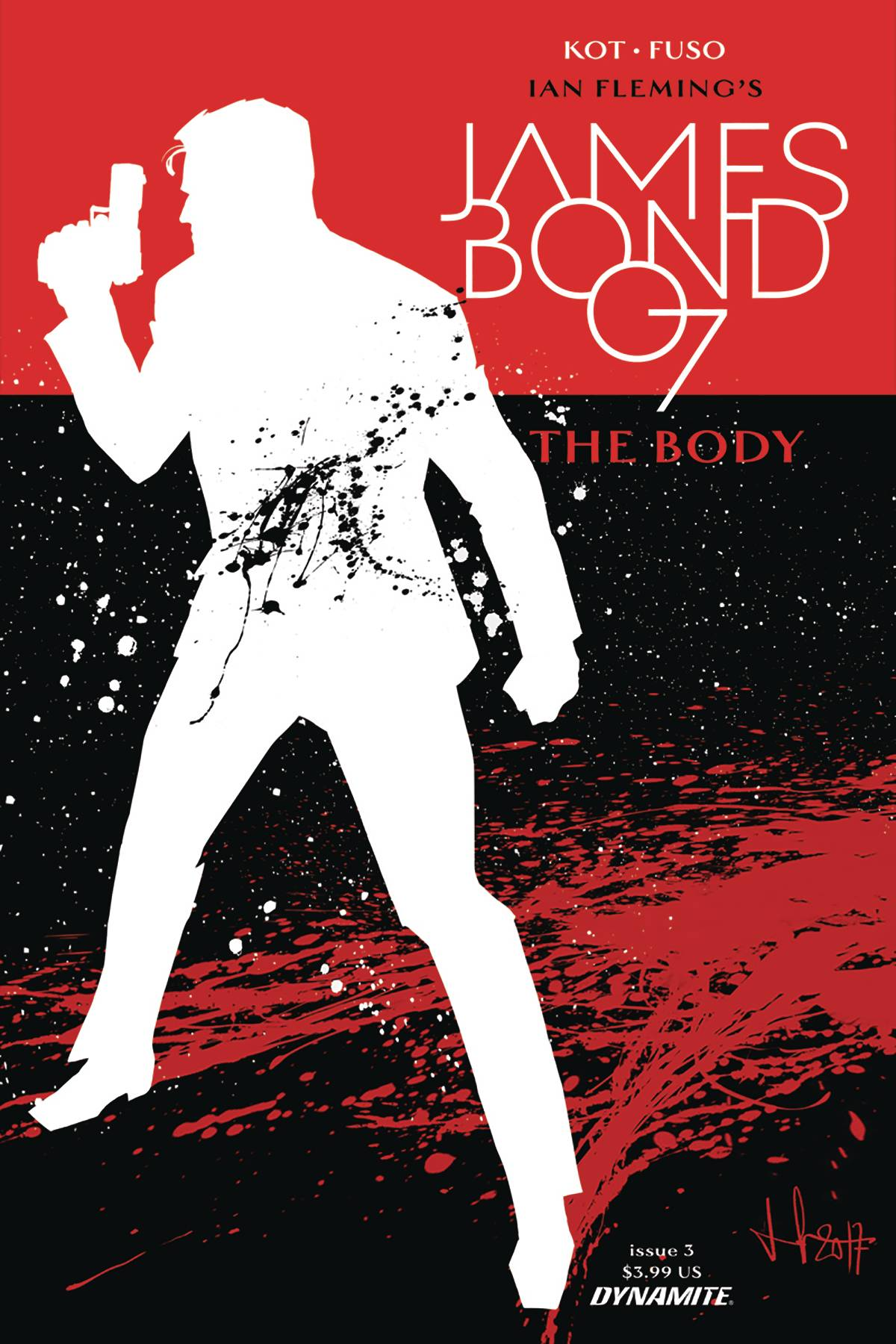
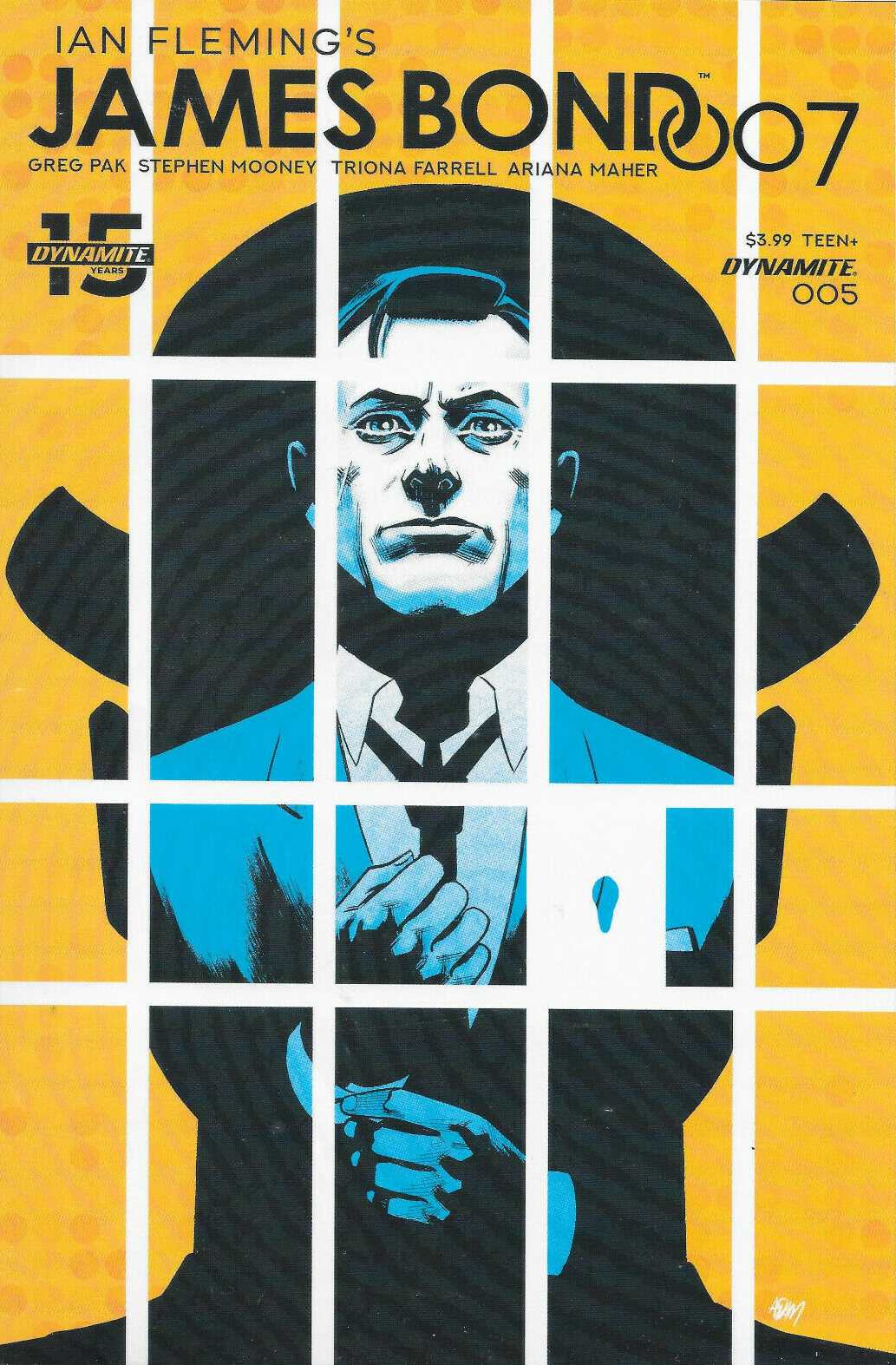
Tomorrow is Gotham Calling’s sixth anniversary! It’s also been almost a year since I broadened the blog’s focus beyond Batman comics, so it makes sense to look back at how things have evolved since then…
It turned out to be a strange year, especially this final stretch. Because of the pandemic, I decided to start posting twice a week, but I’m not sure how long this is going to last. I also wrote more about non-comic book novels (in addition to a couple of posts about cinema), which is something I quite enjoy doing every once in a while, even if this will always remain a blog primarily about appreciation and recommendation of genre comics.
As promised, there are a bunch of new sections. WRITERS OF SUPERMAN COMICS covered the work of Steve Gerber and Scott McCloud with the Man of Steel (posts on Mark Millar and Rick Veitch are on the way!). FANTASTIC ADVENTURES delved into horror short stories, trashy sci-fi war comics, two-fisted fantasy, science fiction prose, and Alan Moore’s takes on other people’s franchises. For HARDBOILED CRIME, I wrote about The Spirit and The Shadow as well as about a few detective novels and noirish comic book anthologies. SPYCRAFT & WARFARE also grew quite a bit, with posts not only on comics (starring Nick Fury and the Unknown Soldier) but also on spy literature and WWII films. In SUPER POWERS, besides mapping the subgenre of superhero horror movies, I spotlighted a couple of my favorite series from recent years: Astro City and Imperium. I’m into all of this different stuff, but I assume most readers have more specific preferences, so feel free to navigate the list of categories on the right bar as you please. I tend to alternate reading and writing habits quite a lot, so I’m sure your favorite sections will keep getting updated on a more or less regular basis.
When I feel more interested in form than content, I often find myself wondering about the specific potential of the comic book medium and how it has beeen articulated with other media. Lately, I’ve been particularly fascinated with covers’ powerful ability to trigger our imagination, so GLIMPSES INTO AWESOMENESS has largely given way to AWESOME COVERS, which specifically highlights cover artwork. Likewise, ART OF HORROR COMICS has mostly focused on covers so far, but there will be more variety next year (probably something on Jack Kirby’s The Demon). As for WEBS OF FICTION, since this section ceased to be exclusively about Batman-themed intertextuality, I did a bunch of posts on The League of Extraordinary Gentlemen and The War of the Worlds (having recently binged the Zatoichi film series, I might focus on those movies soon).
Meanwhile, I continued to expand the initial Batman-related sections. I wrote about Chuck Dixon for WRITERS OF BATMAN COMICS’ (either Ty Templeton or Ed Brubaker are bound to be next), recommended a few trades and a 1990s’ reading order in BATMAN COMICS FOR BEGINNERS, discussed the franchise’s plural approach to gun control in POLITICS OF BATMAN COMICS, and spotlighted a handful of minor villains in GOTHAM CITIZENS (still no Spoiler or Condiment King write-ups, though…). ART OF BATMAN COMICS got some pieces on Graham Nolan and on logo pages, yet I’ve also branched out this section into COVERS OF BATMAN COMICS and GOTHAM INTERLUDES.
Speaking of Batman art, I tend to use these anniversaries to celebrate visual tropes of Batman comics, like the Dark Knight’s propensity for loud kicks in the head and for crashing through glass in order to surprise his opponents. Here are another fifty glorious examples of the latter:
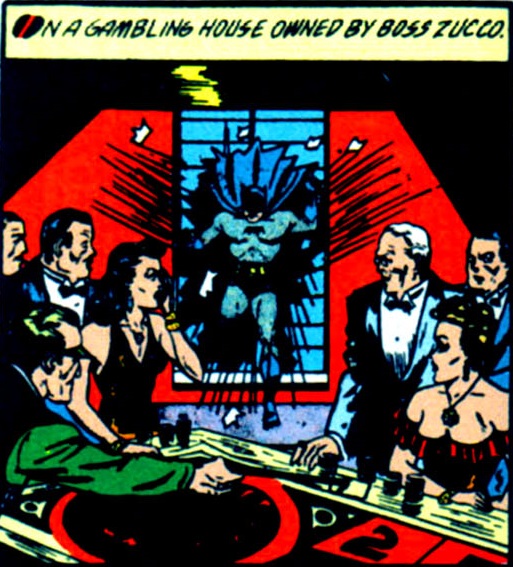 Detective Comics #38
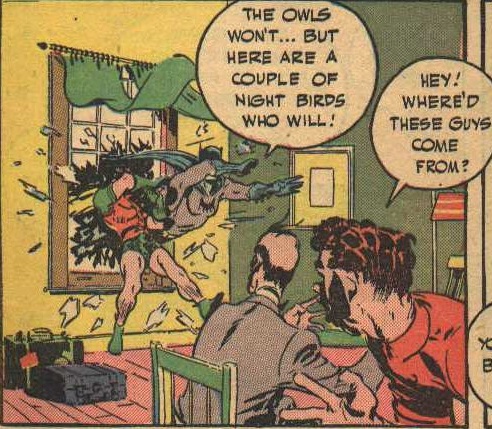 Batman #18
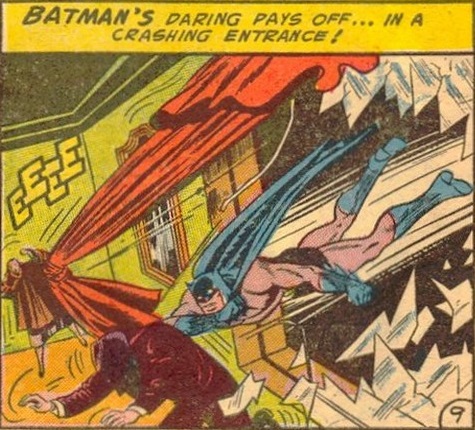 Batman #81
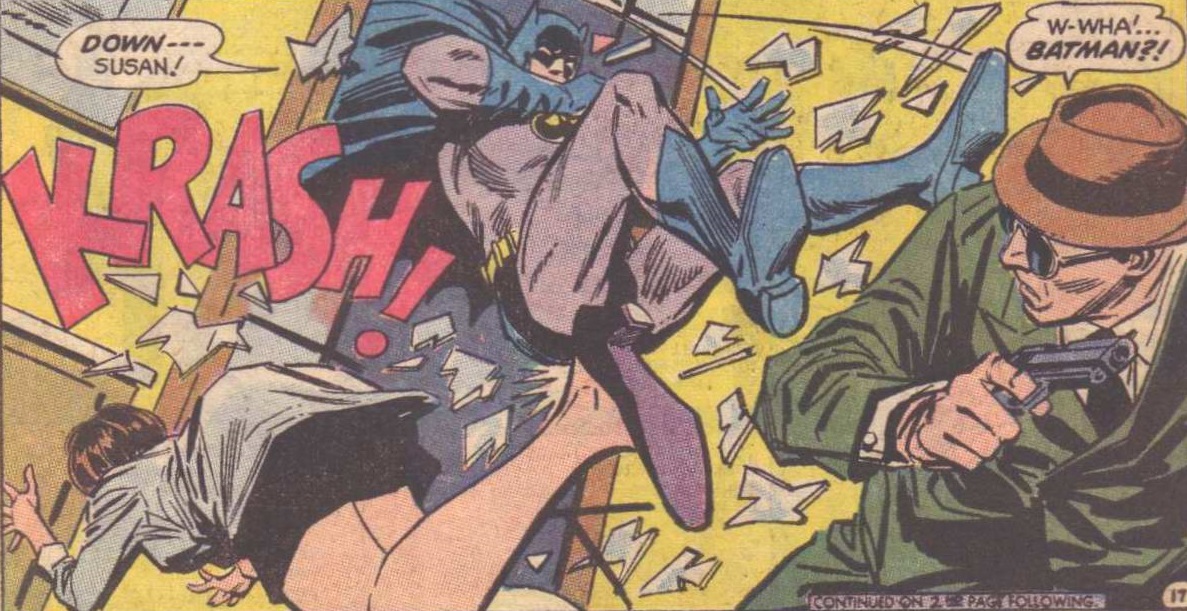 Batman #217
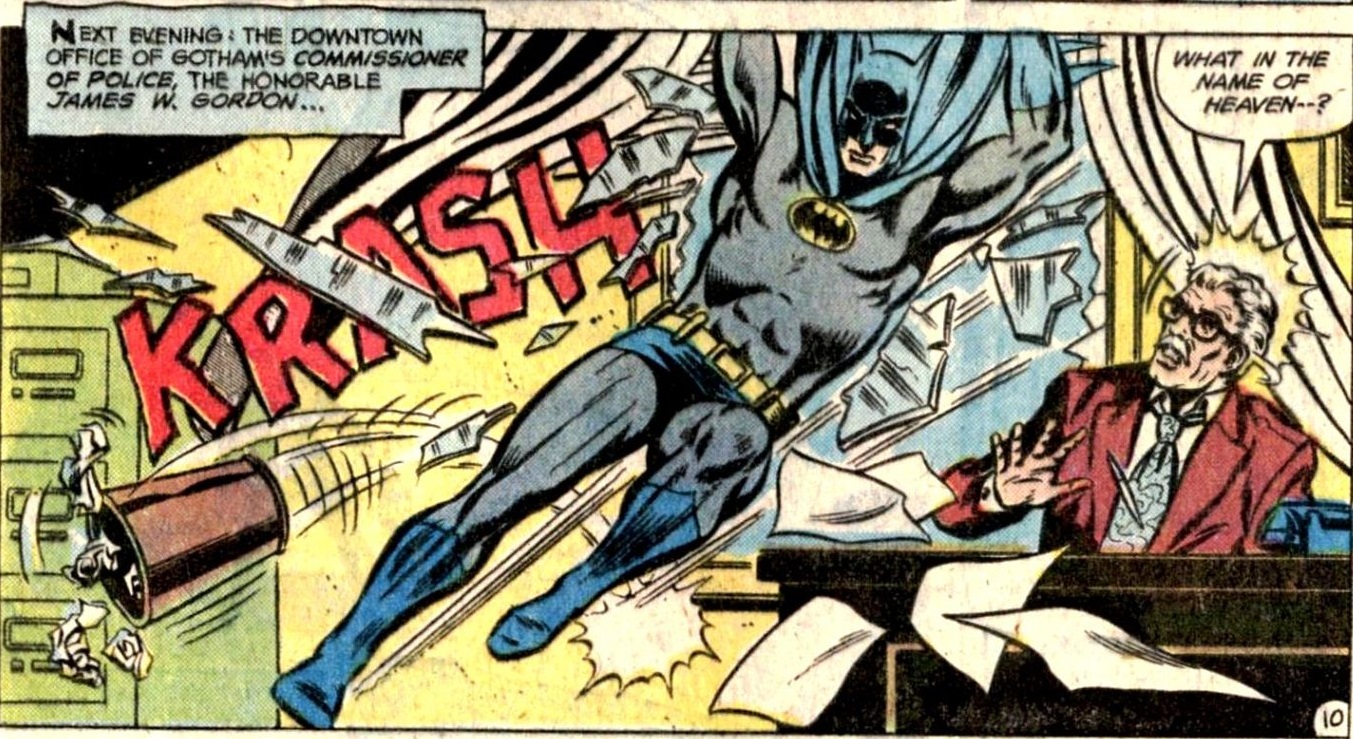 Batman #305
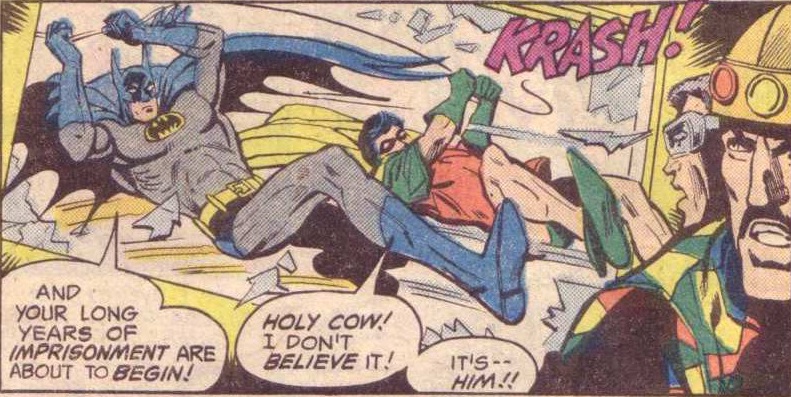 Batman #316
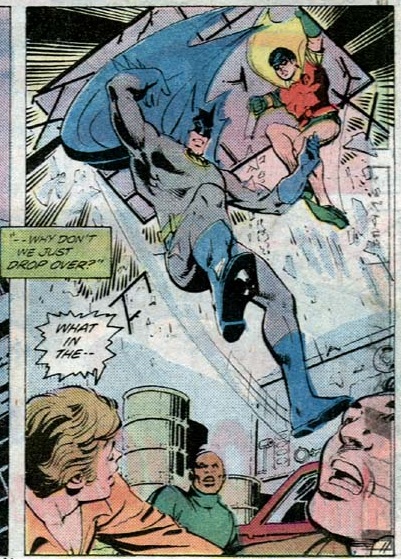 Detective Comics #500
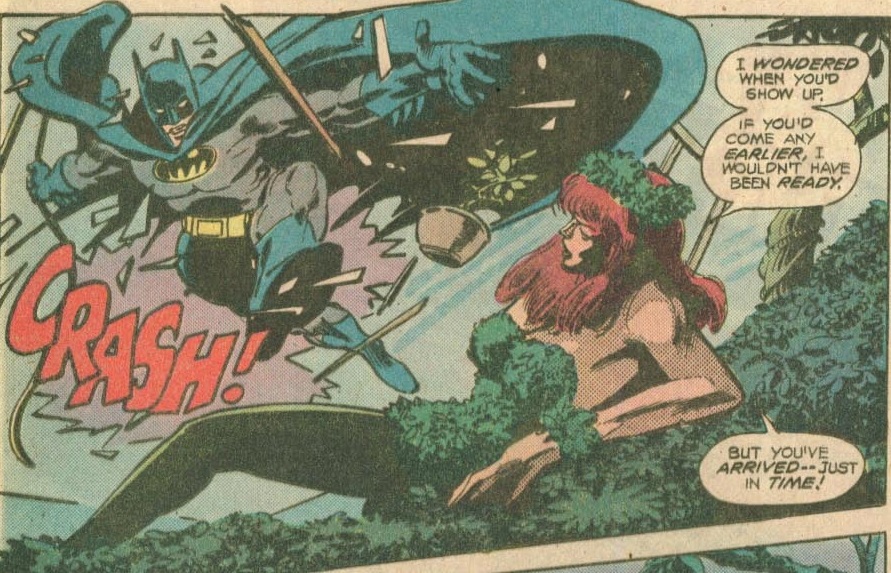 Batman #344
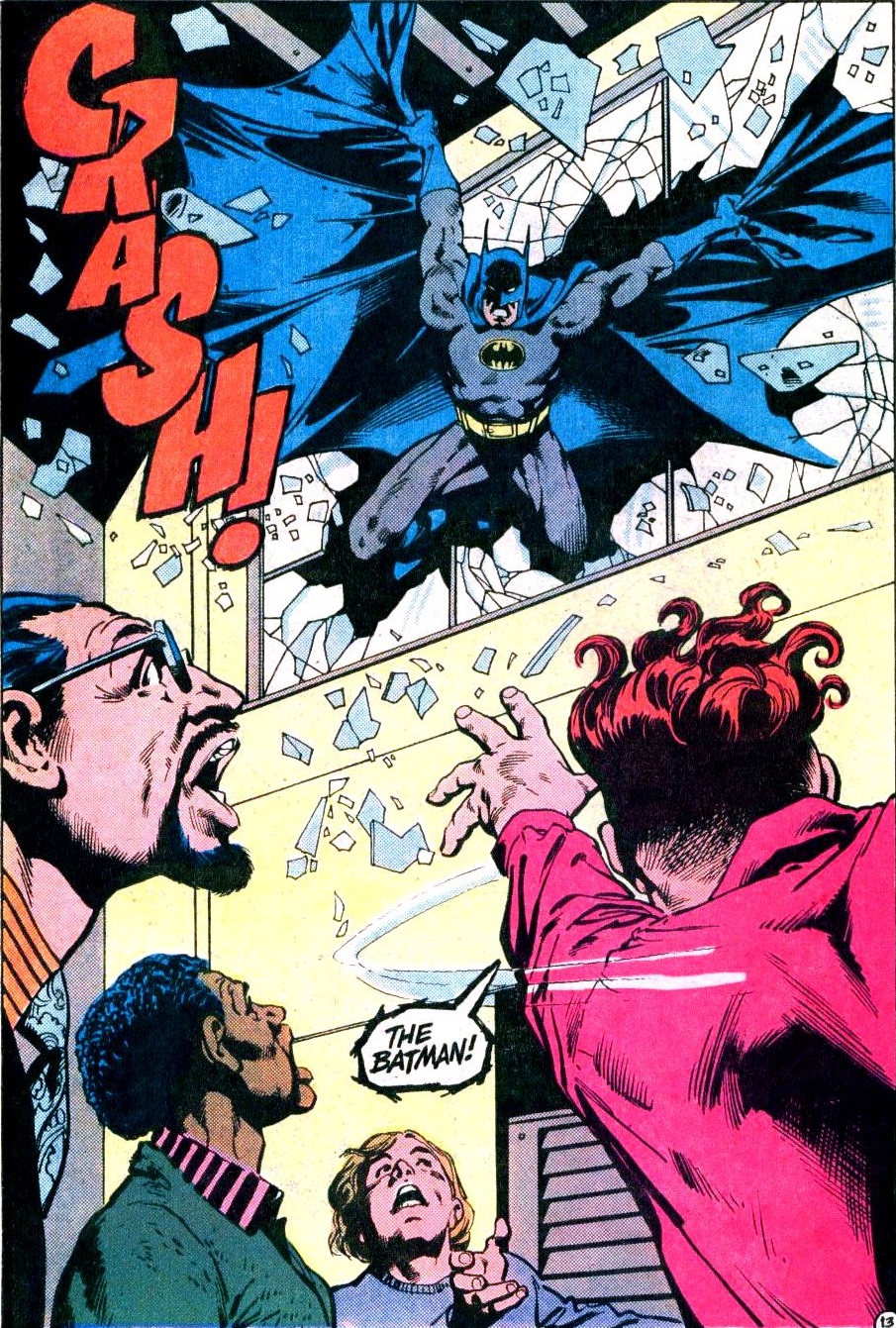 Detective Comics #524
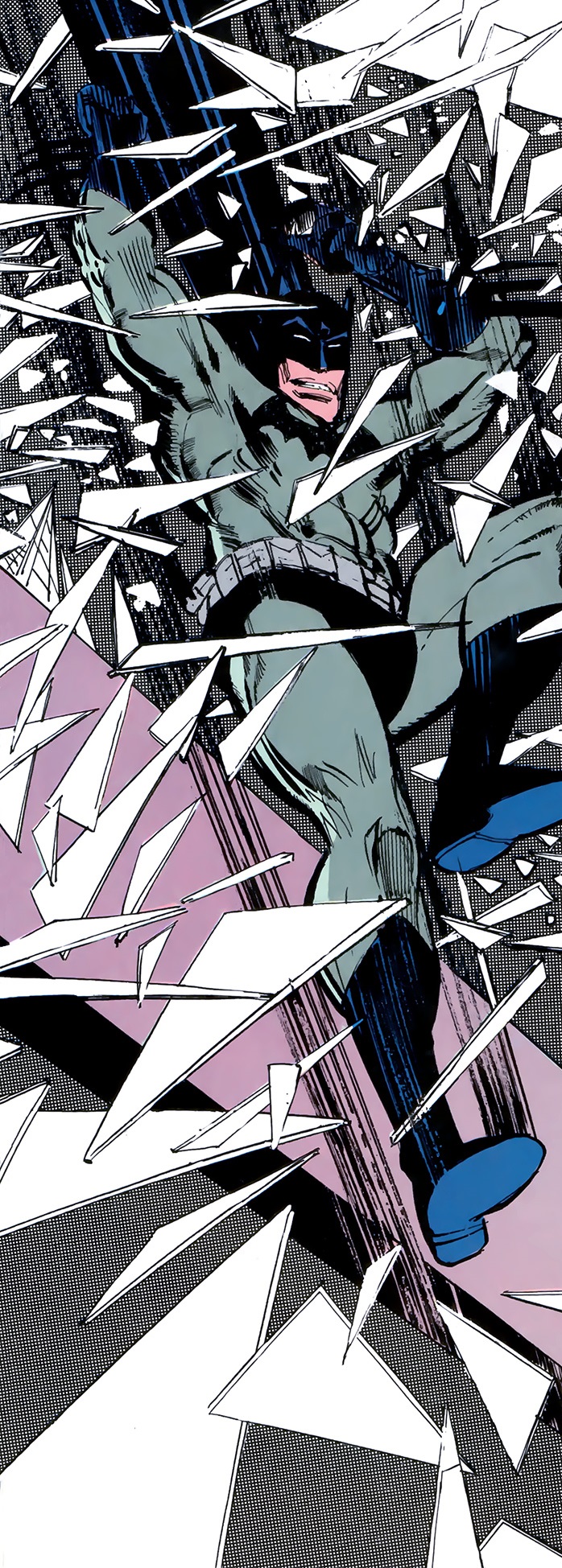 Legends of the Dark Knight #7
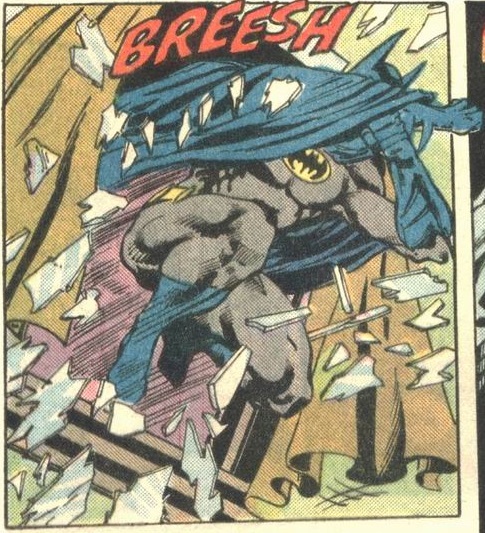 Detective Comics #548
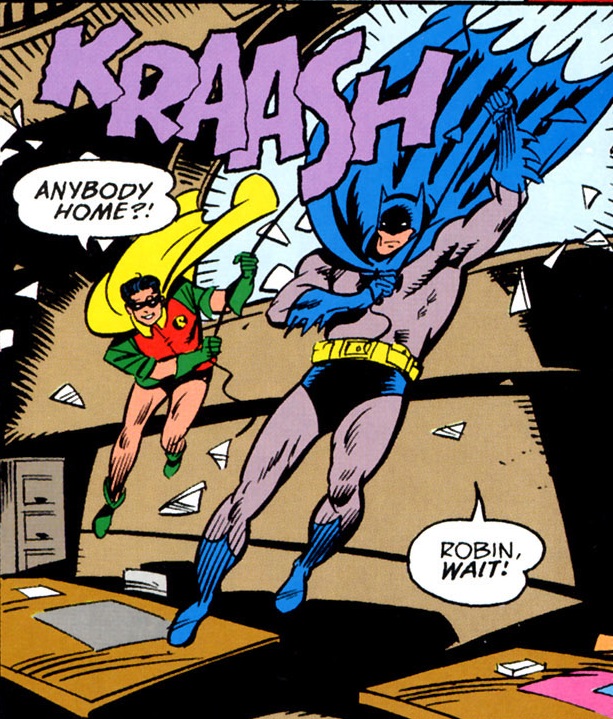 Two-Face Strikes Twice! #1
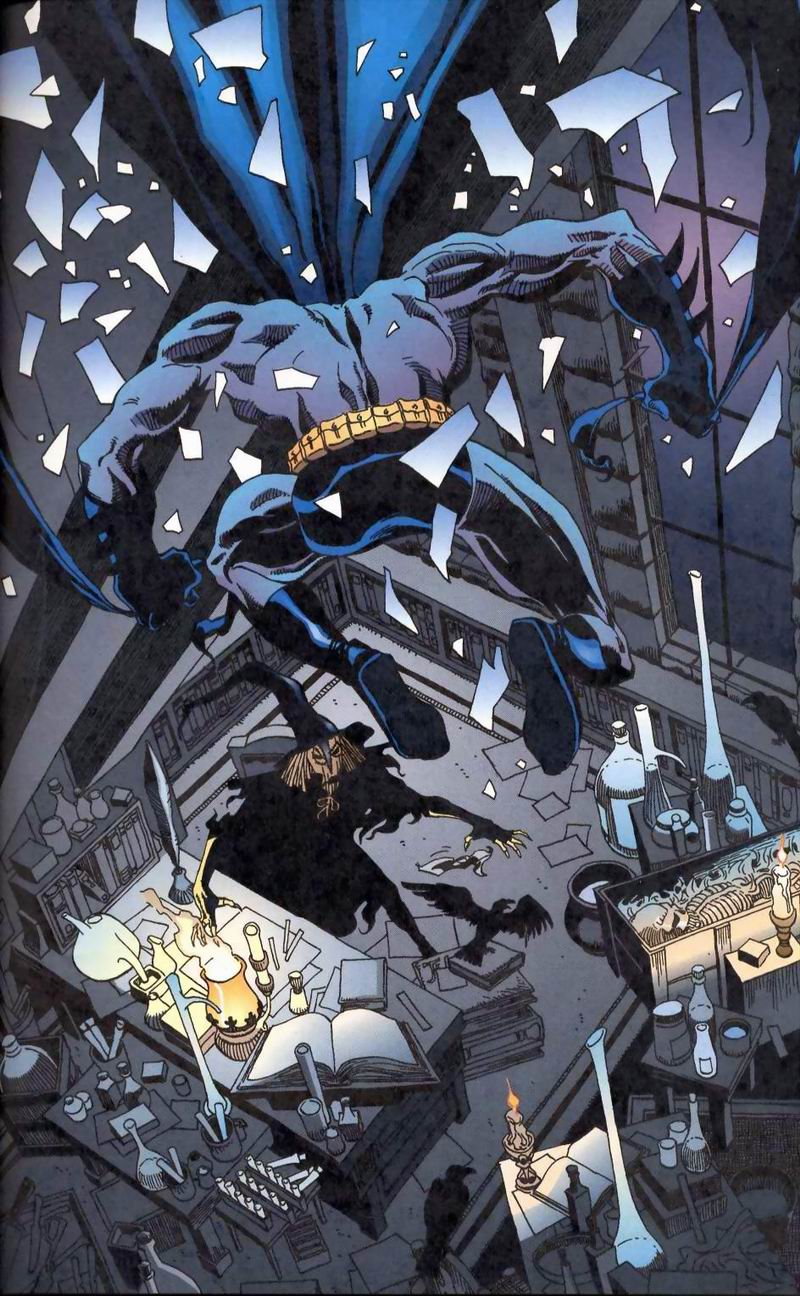 Legends of the Dark Knight Halloween Special: Choices
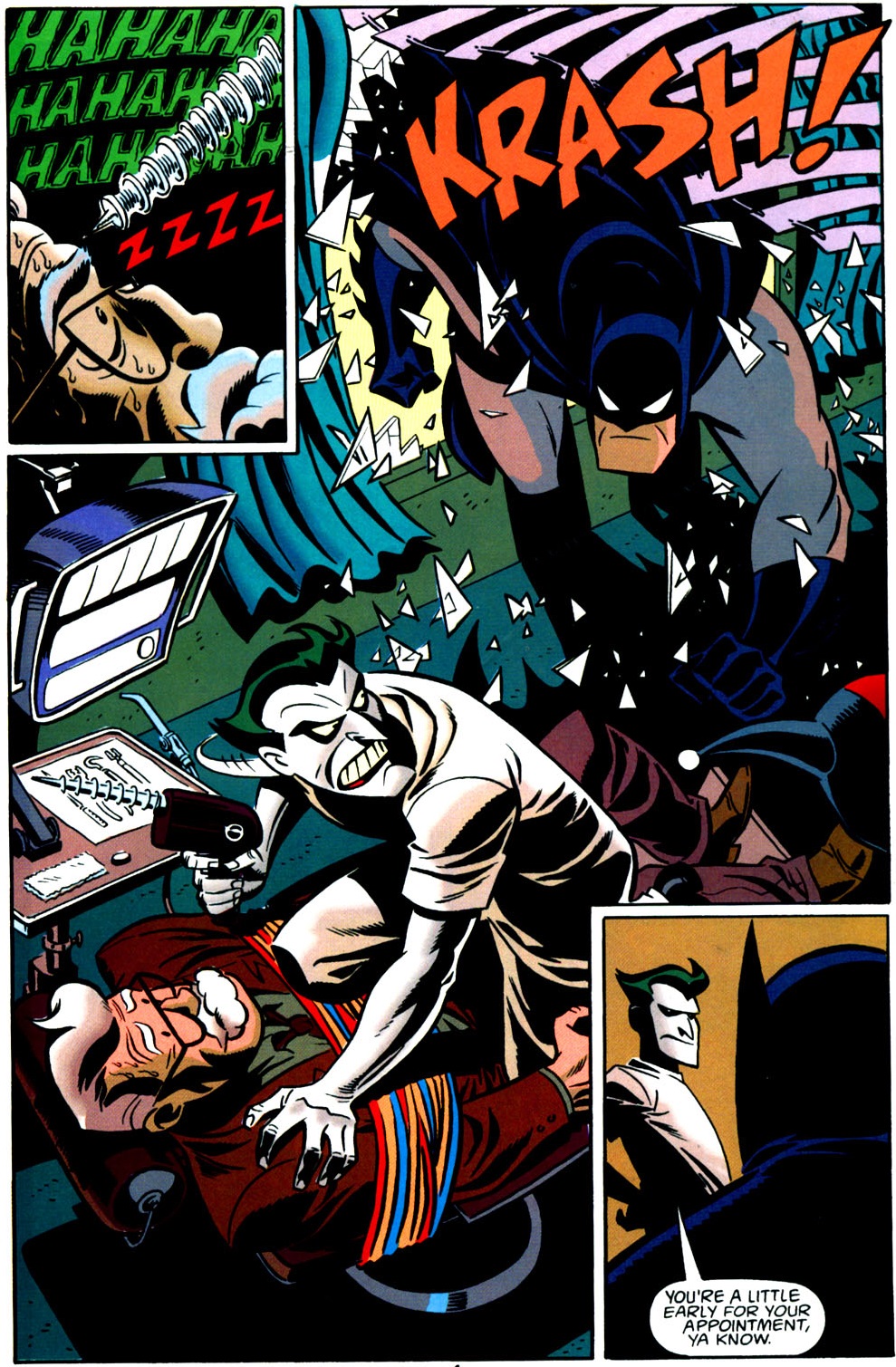 Mad Love
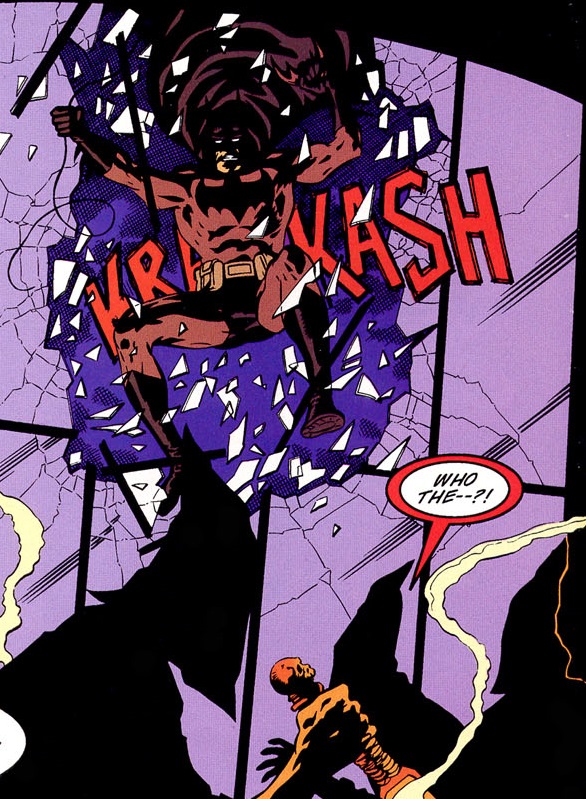 Legends of the Dark Knight #87
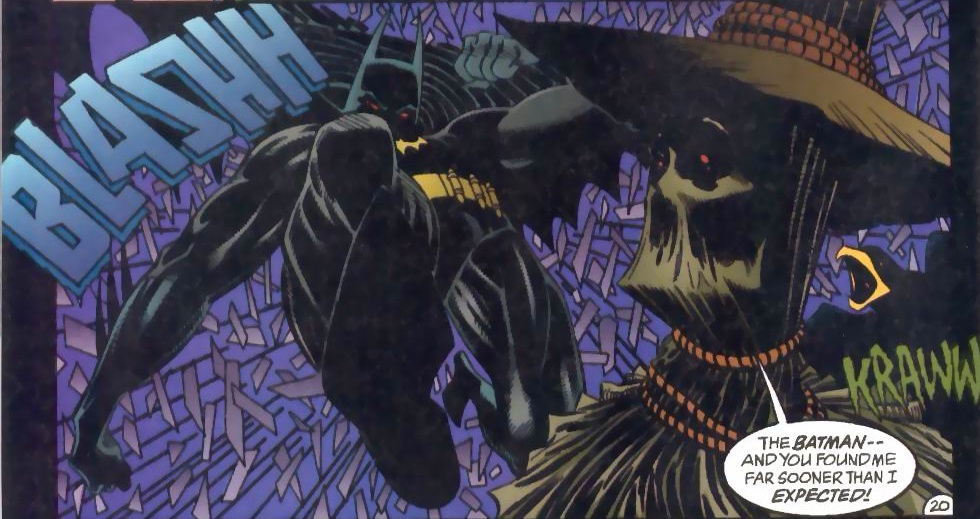 Batman #523
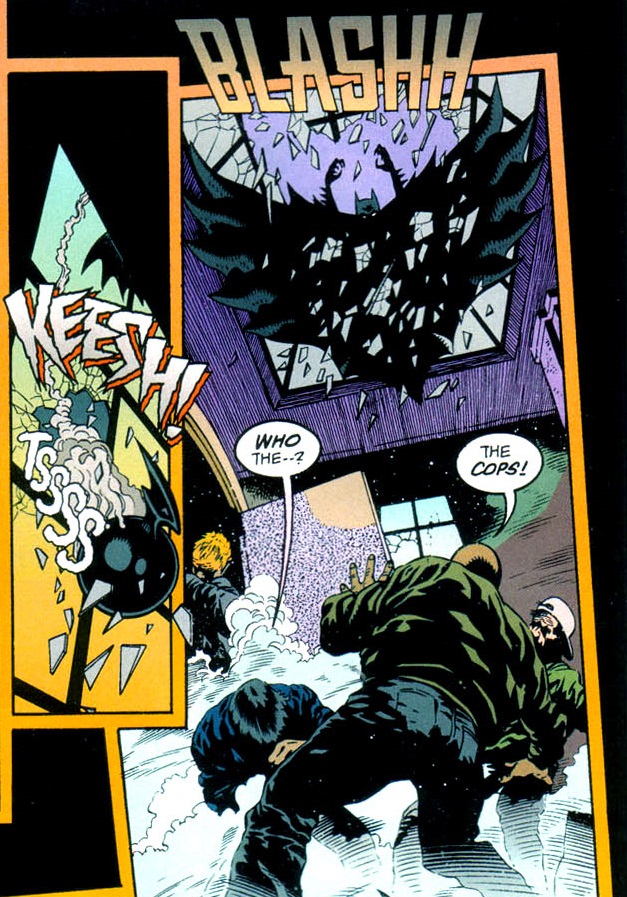 Batman #526
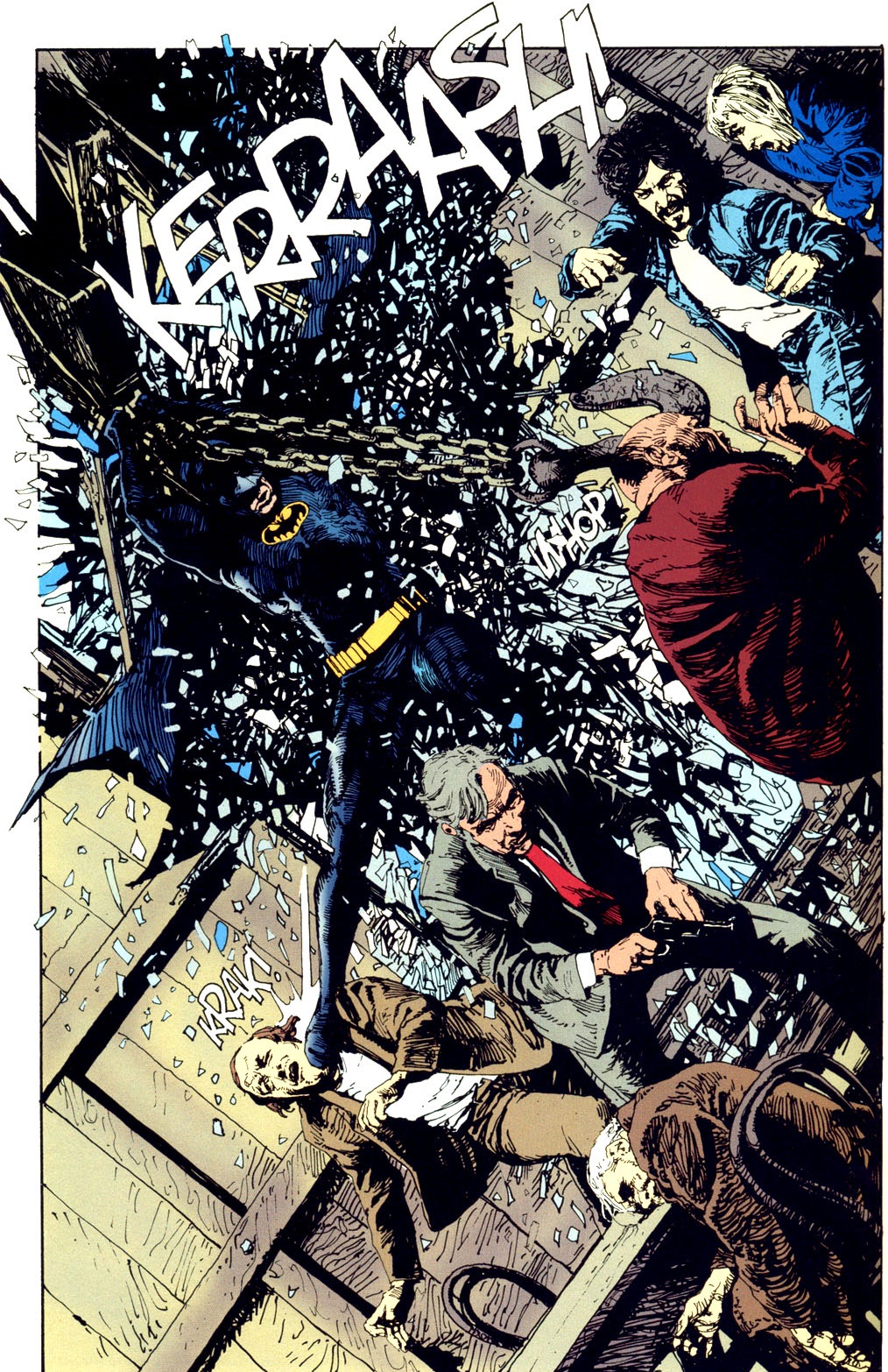 Batman / Phantom Stranger
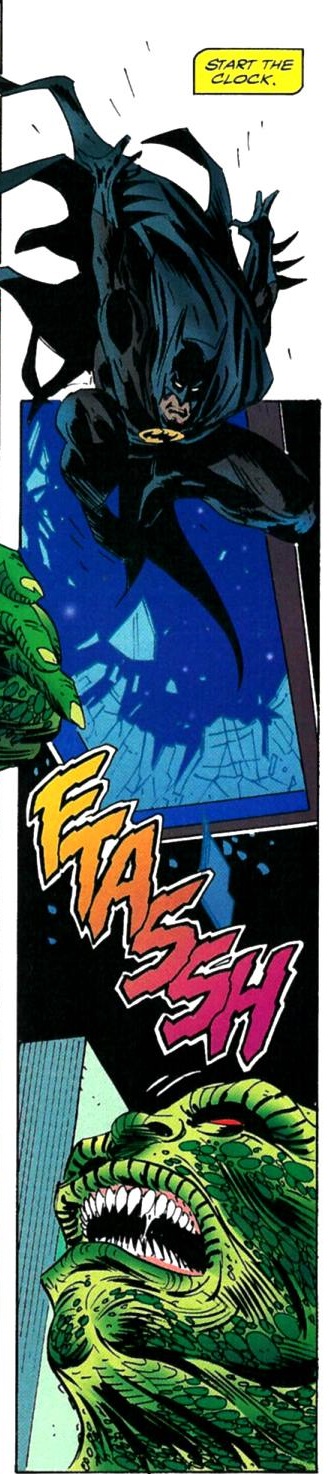 Resurrection Man #7
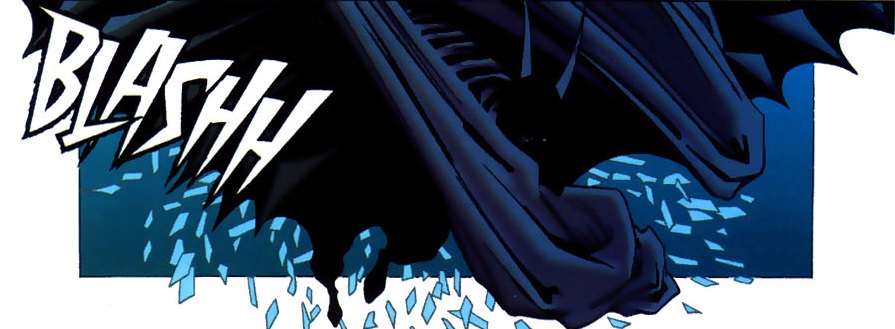 Batman #543
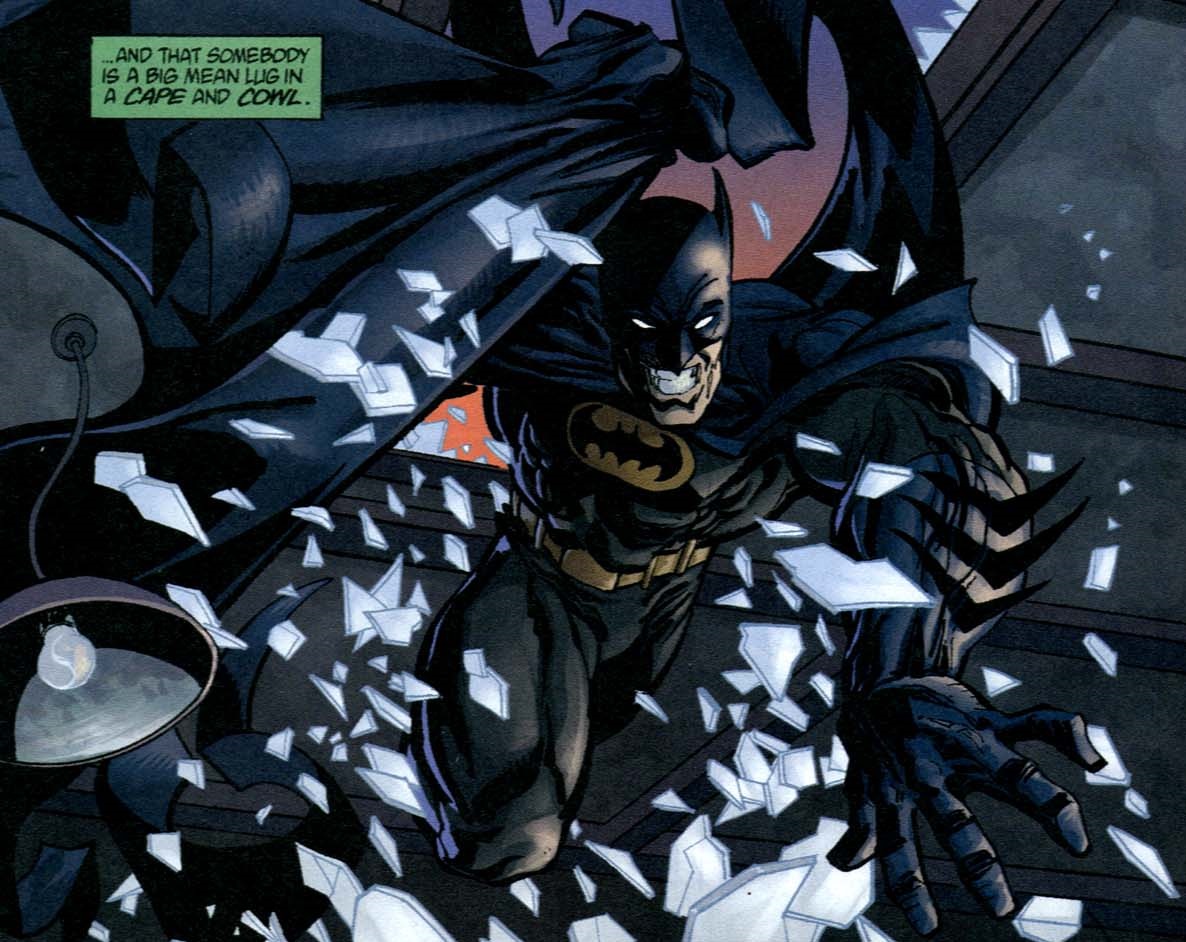 Batman / Toyman #1
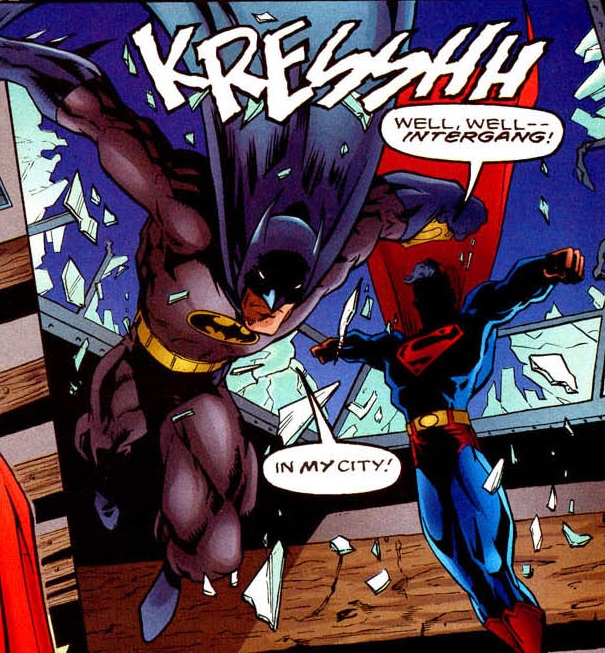 JLA 80-Page Giant #1
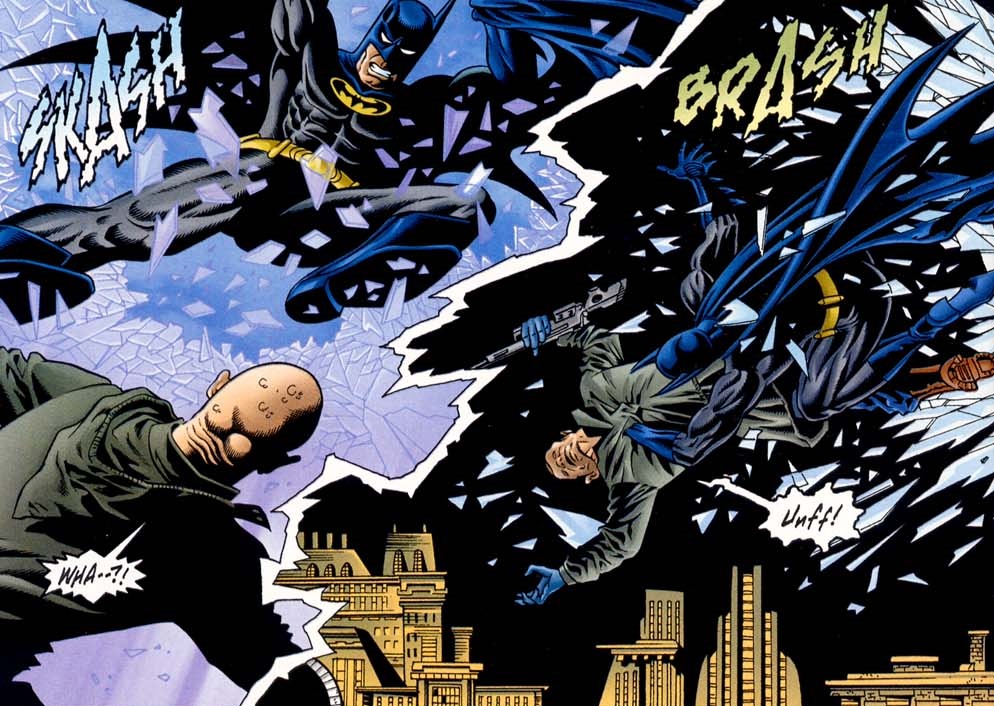 Outlaws #1
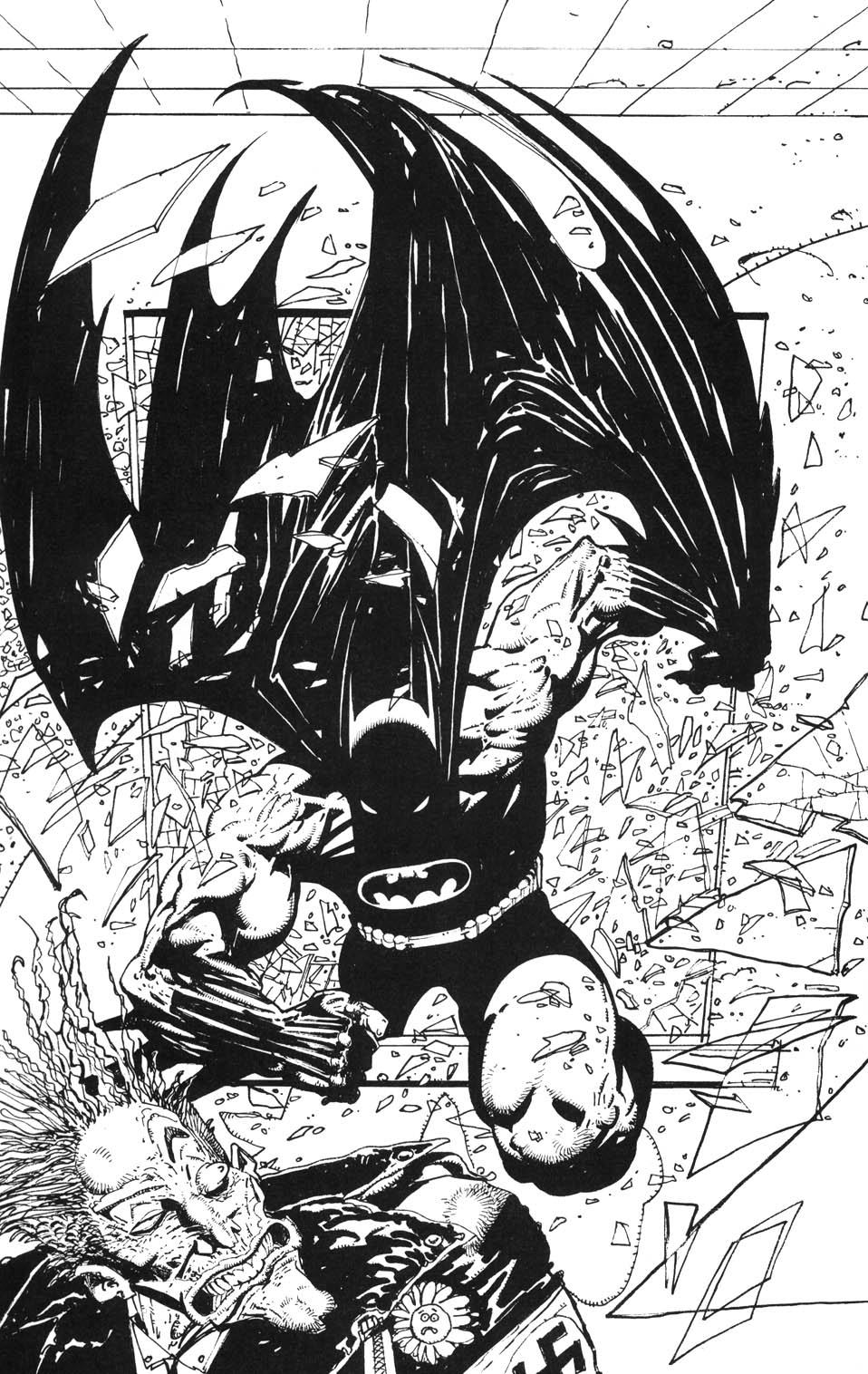 Batman: Black and White #2
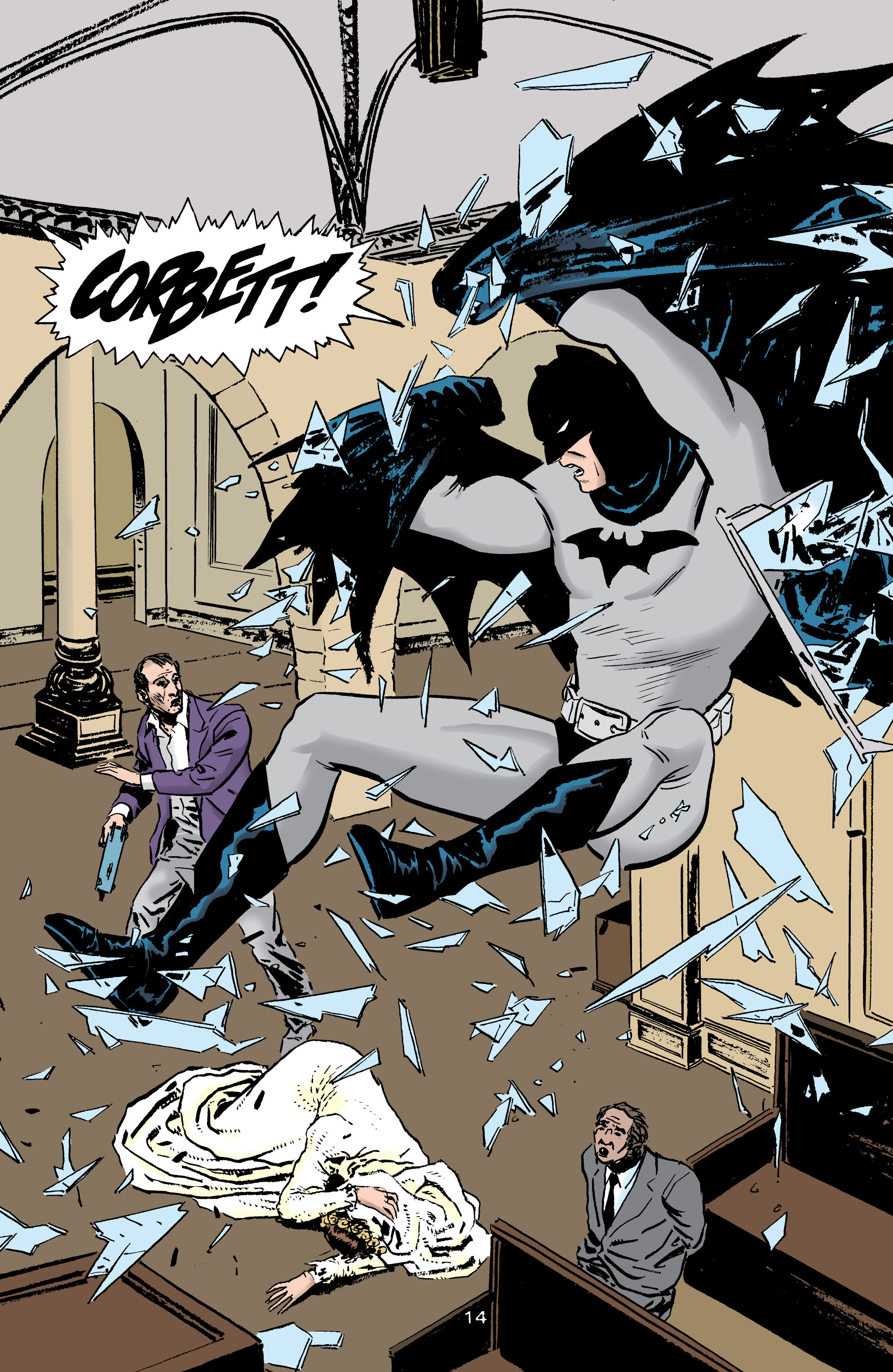 Turning Points #1
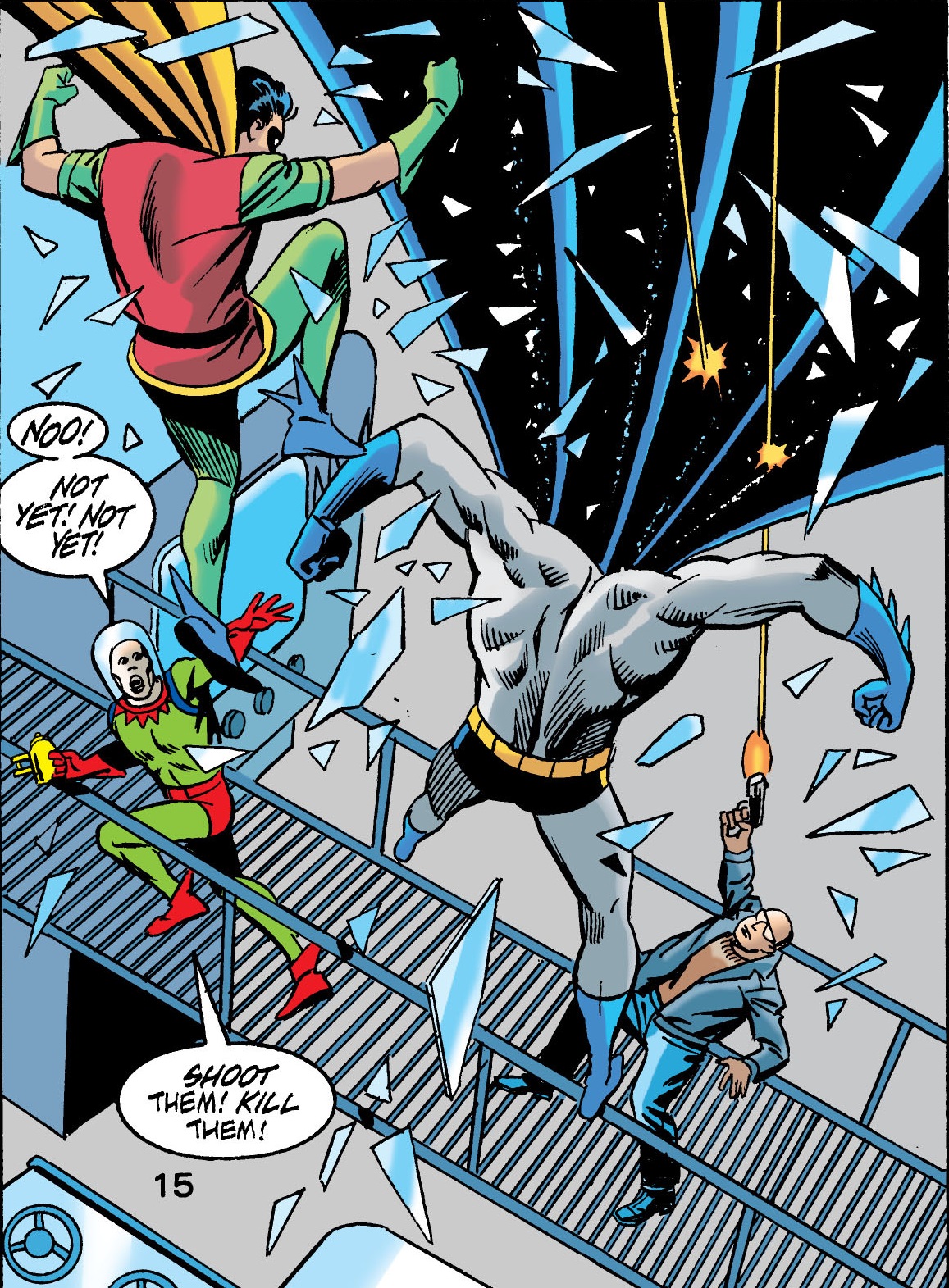 Turning Points #2
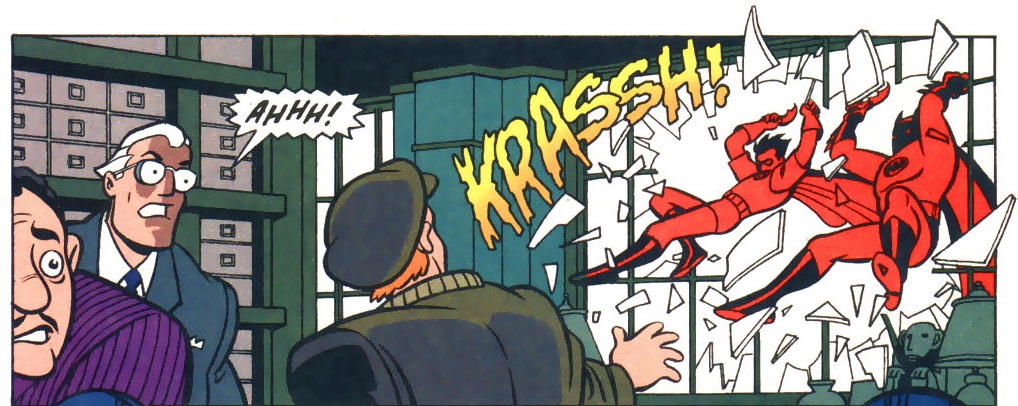 Batman & Robin Adventures #20
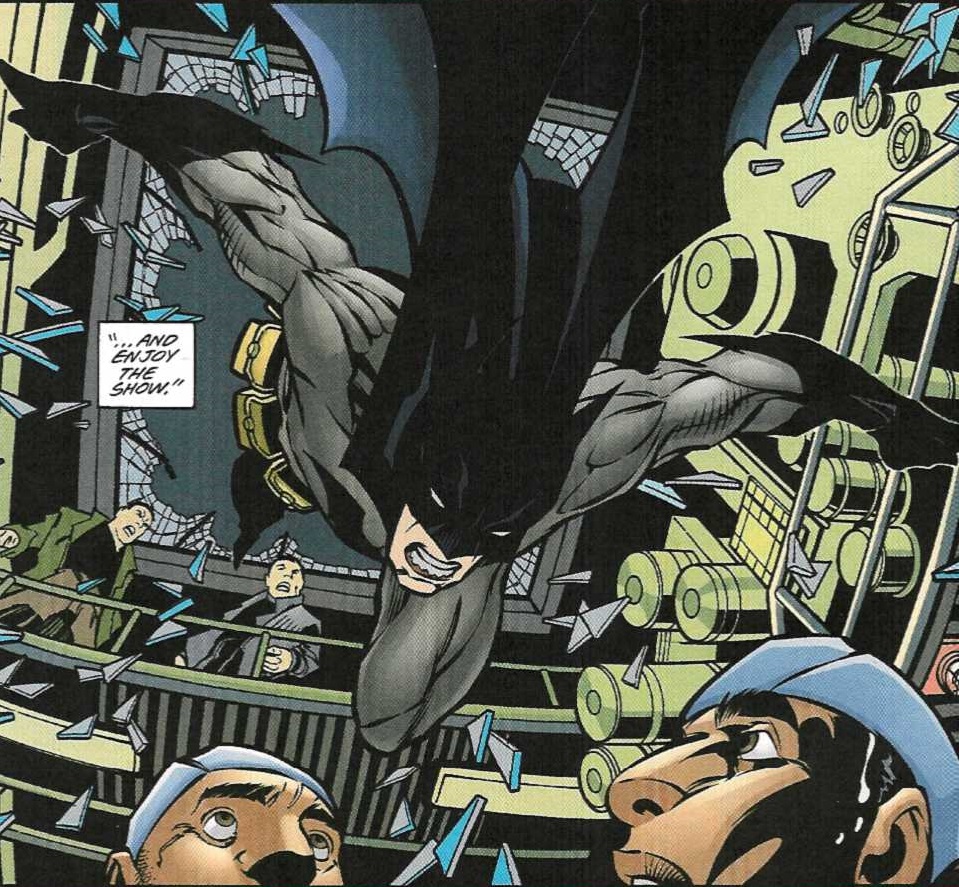 Batman #590
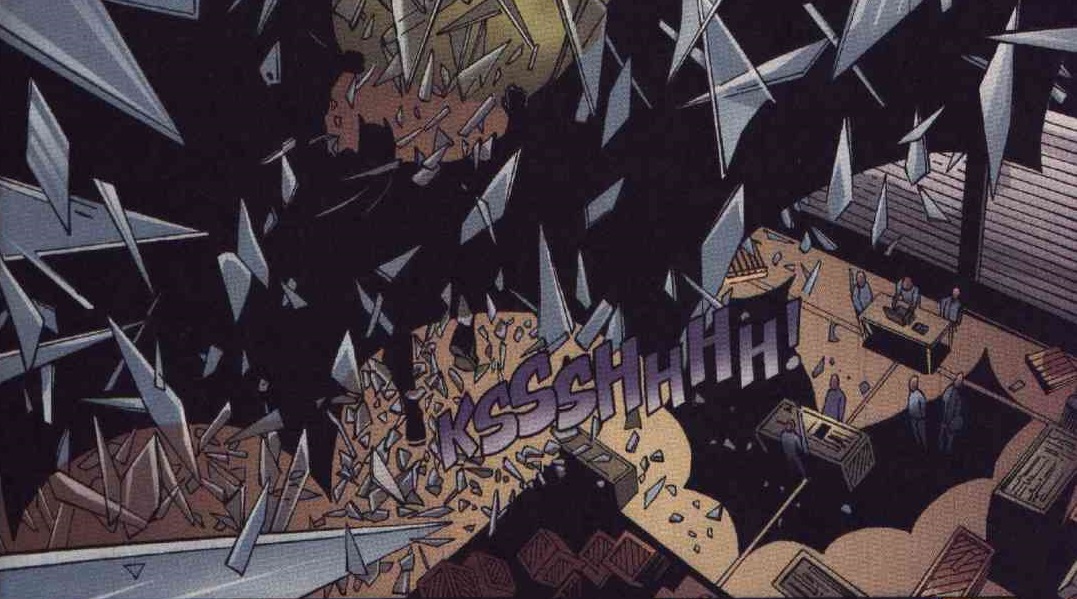 Gotham Knights #27
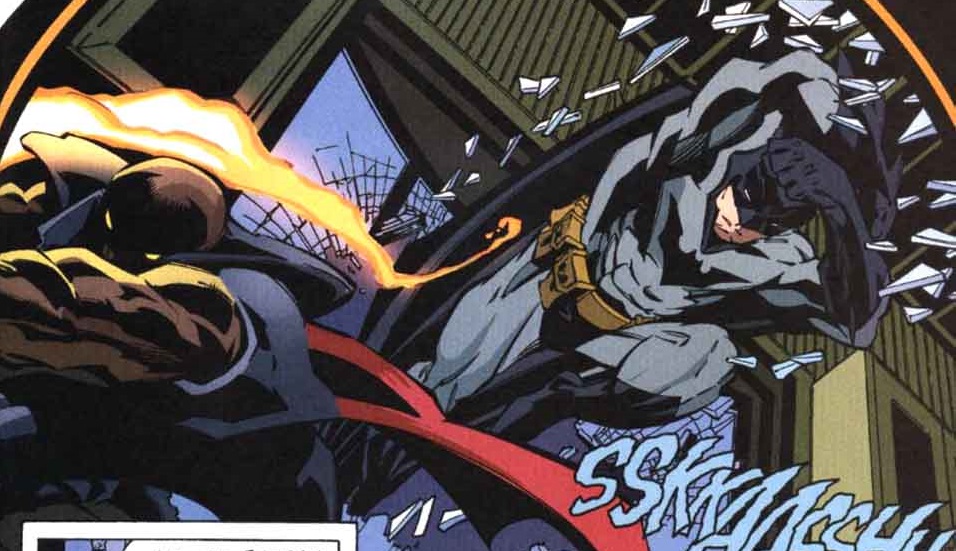 Batman #601
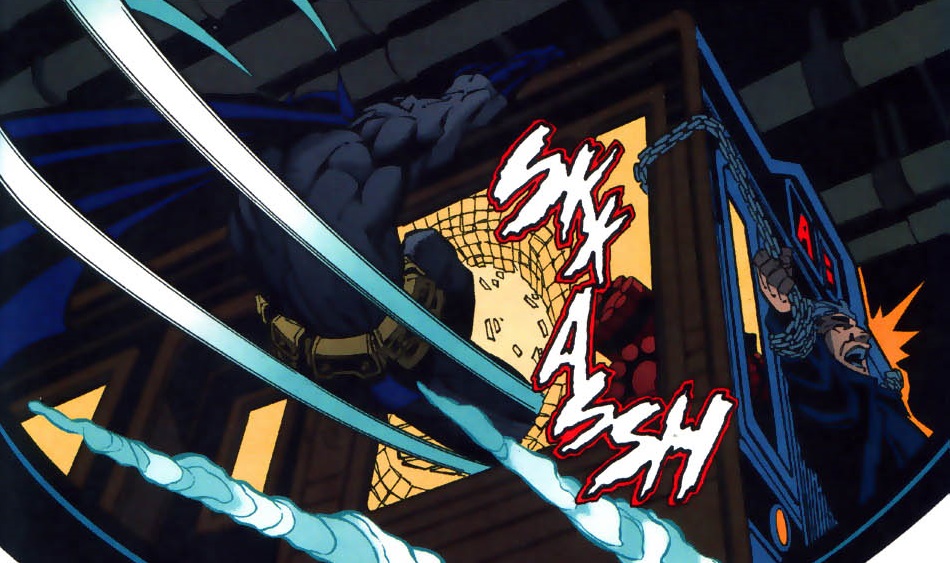 Batman #602
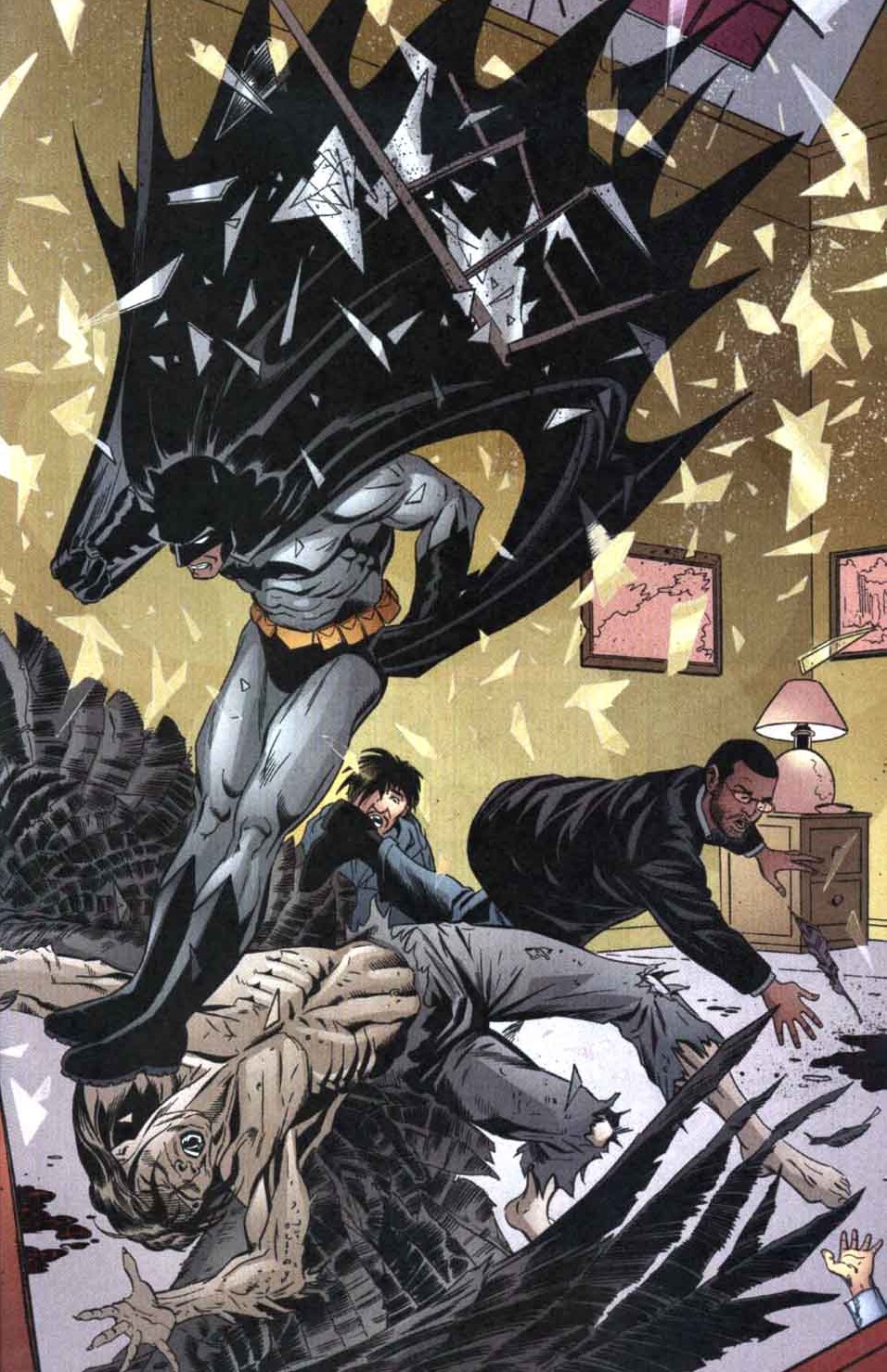 Detective Comics #769
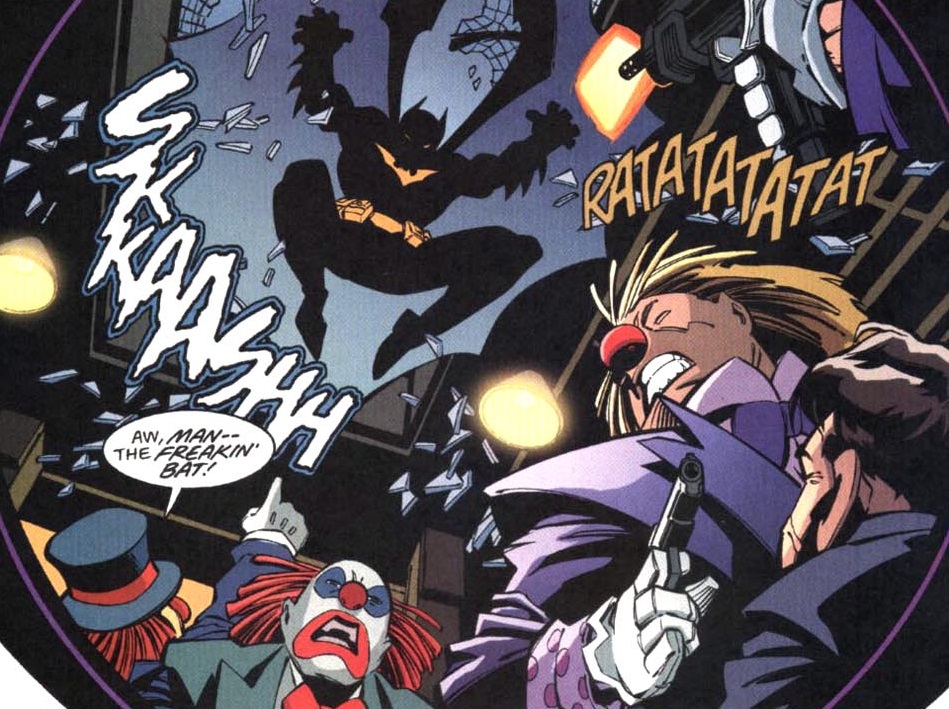 Batman #604
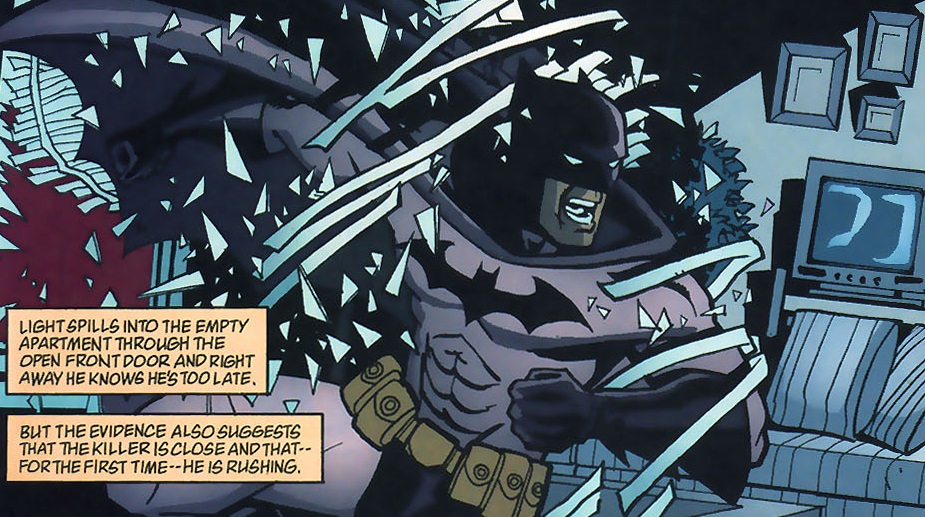 Detective Comics #783
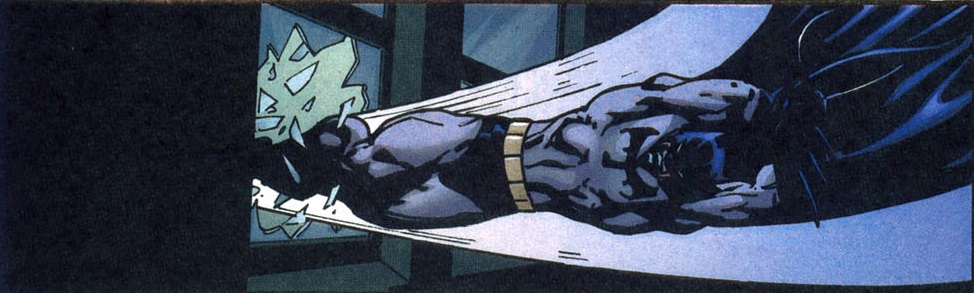 Legends of the Dark Knight #200
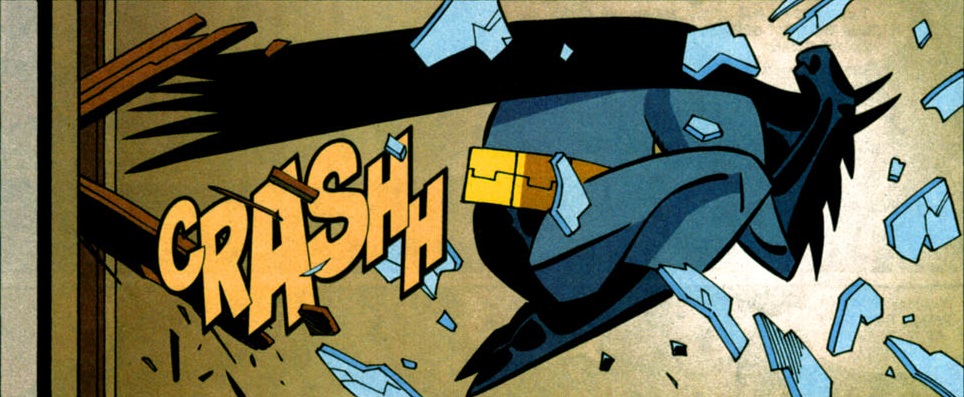 Batman Adventures (v2) #11
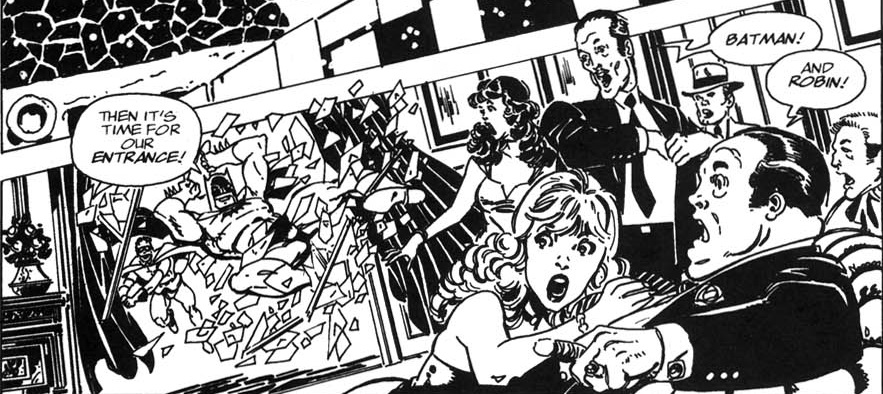 Gotham Knights #2
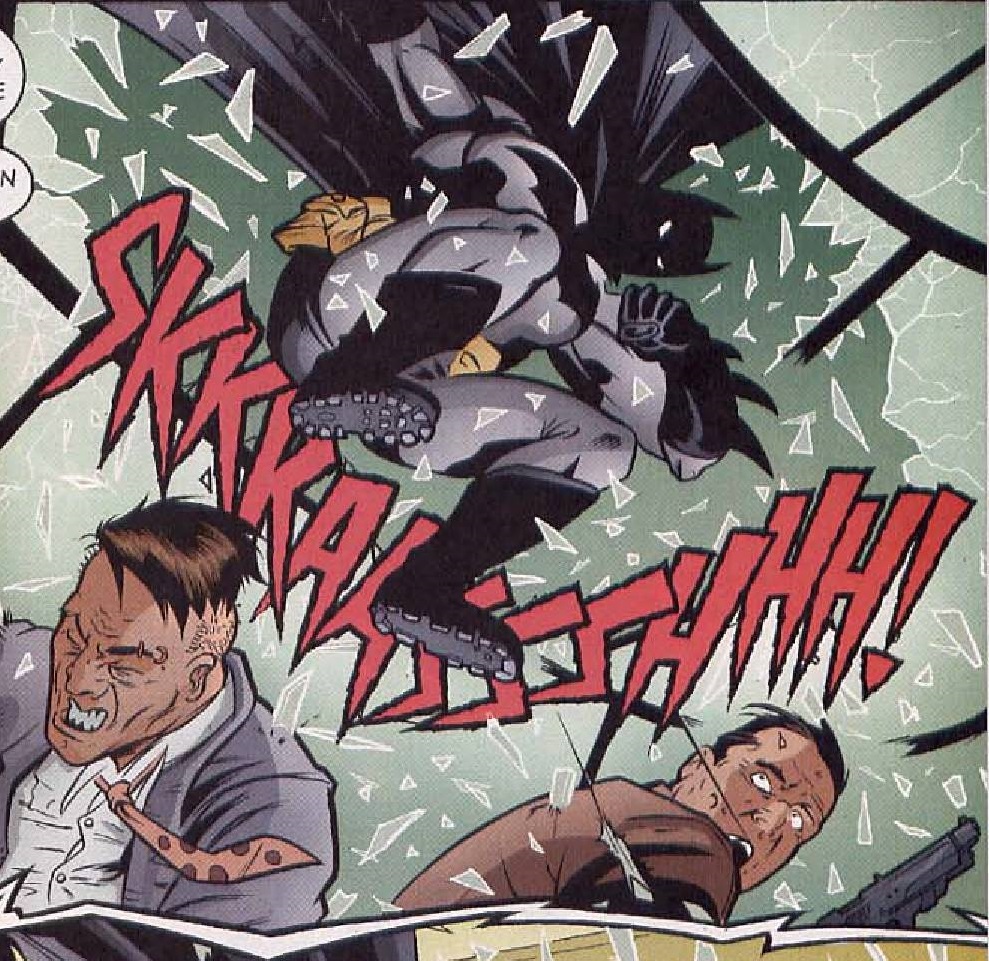 Detective Comics #778
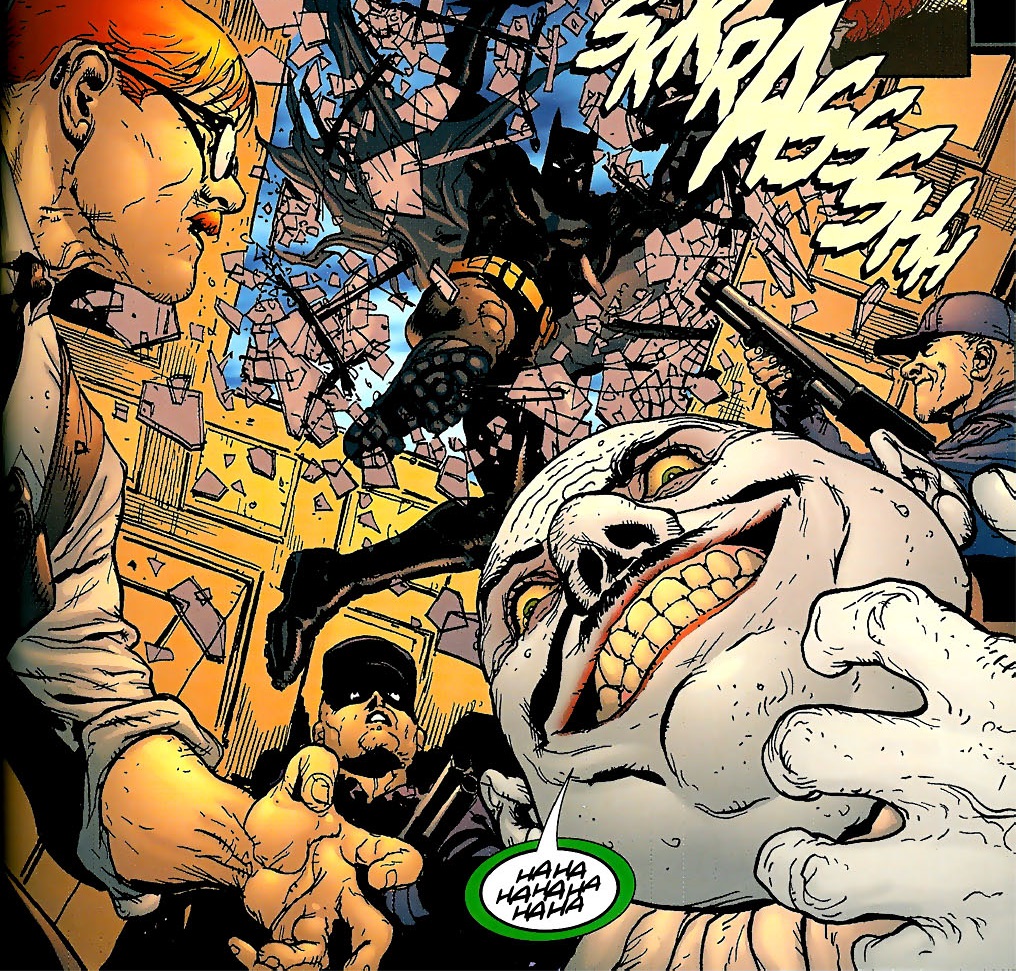 The Man Who Laughs
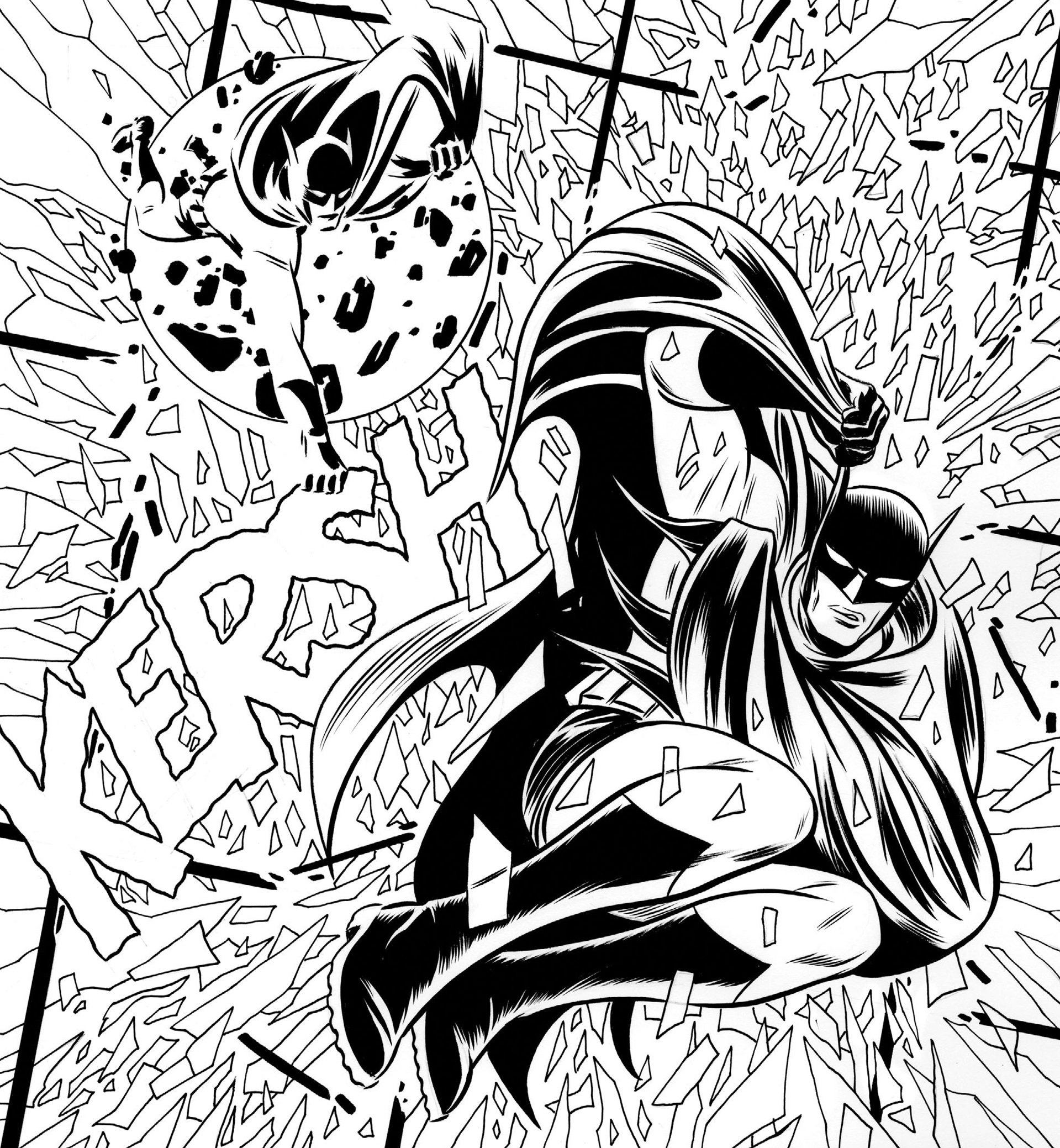 Batman: Black & White (v2) #4
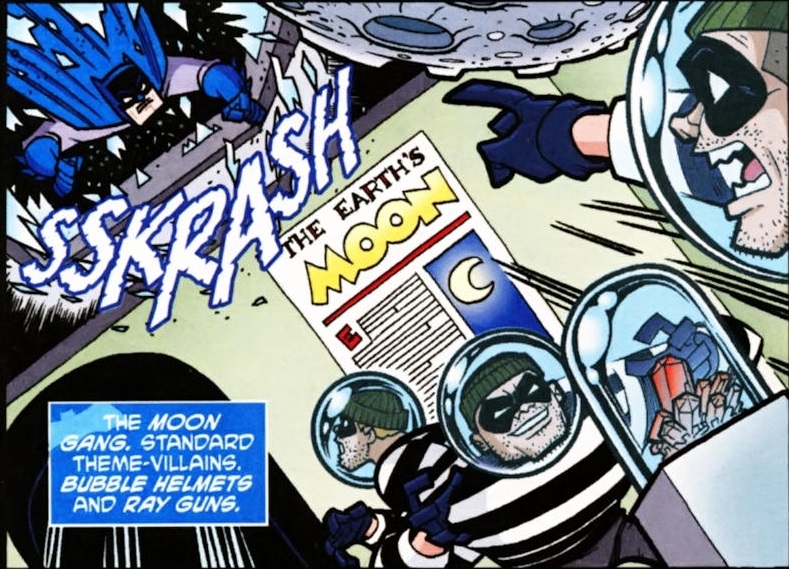 Batman: The Brave and the Bold #10
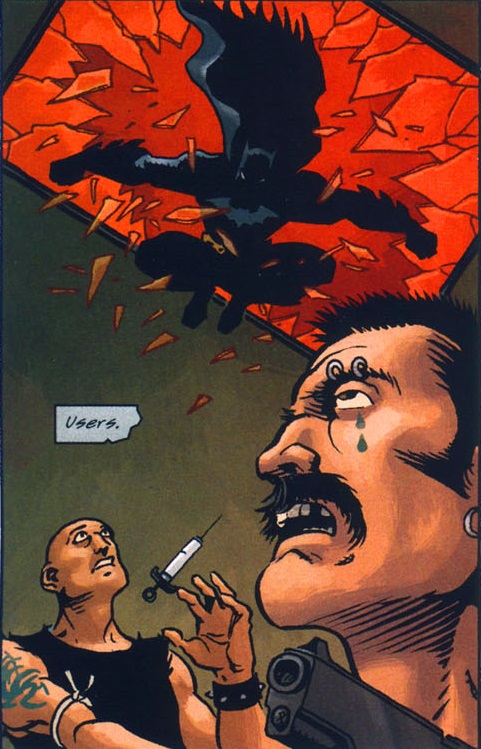 Batman and the Mad Monk #3
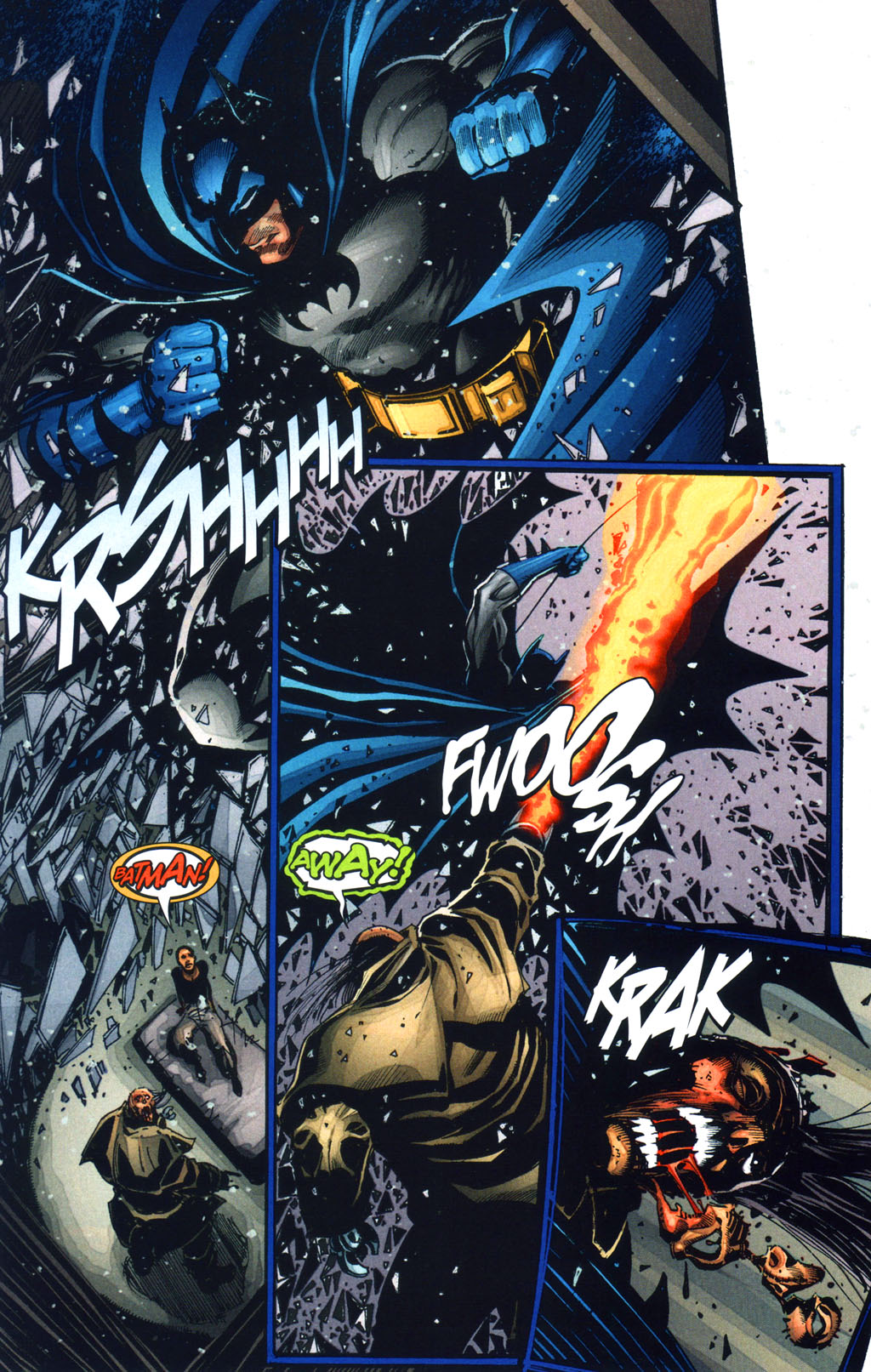 Batman #662
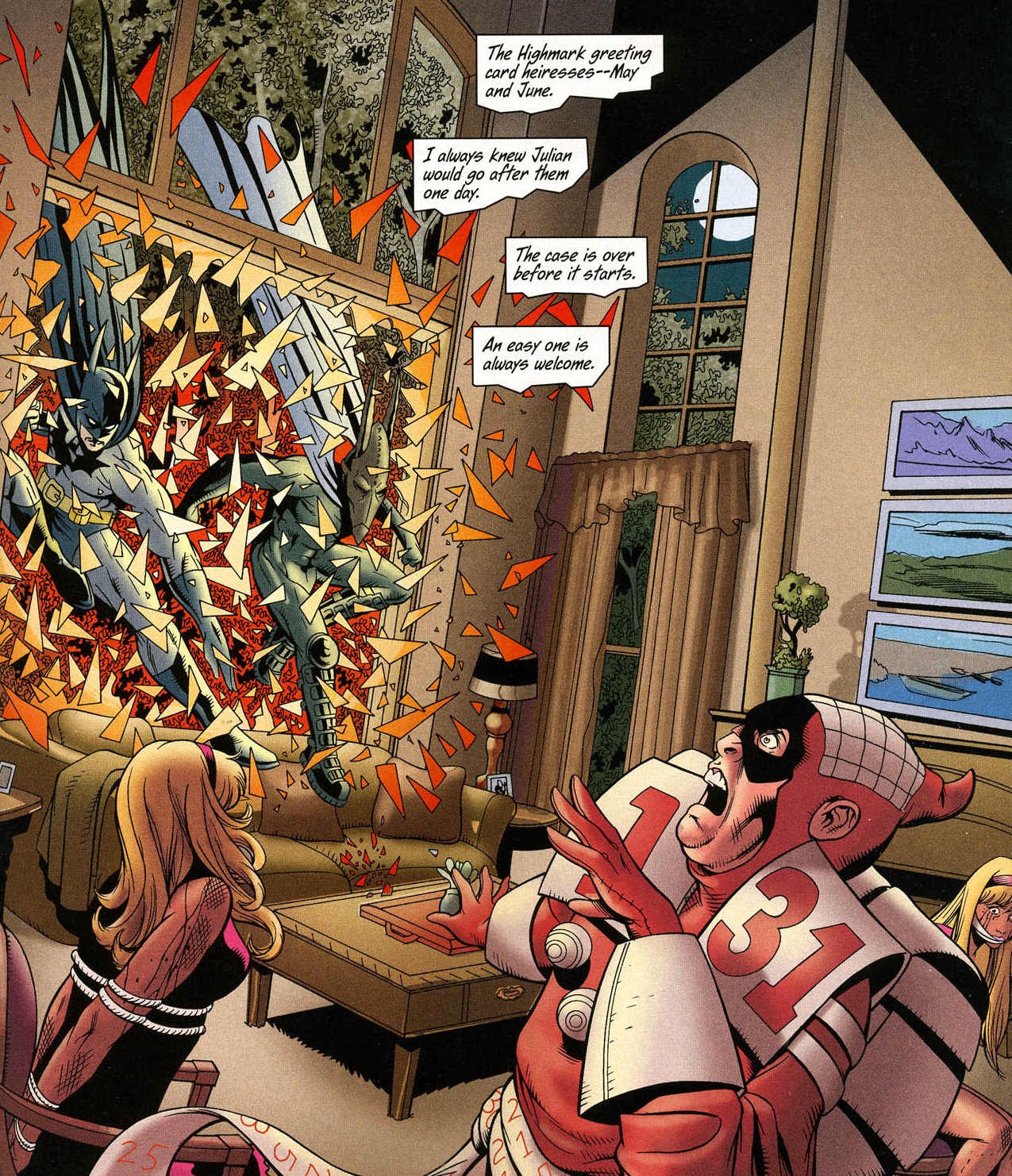 The Widening Gyre #6
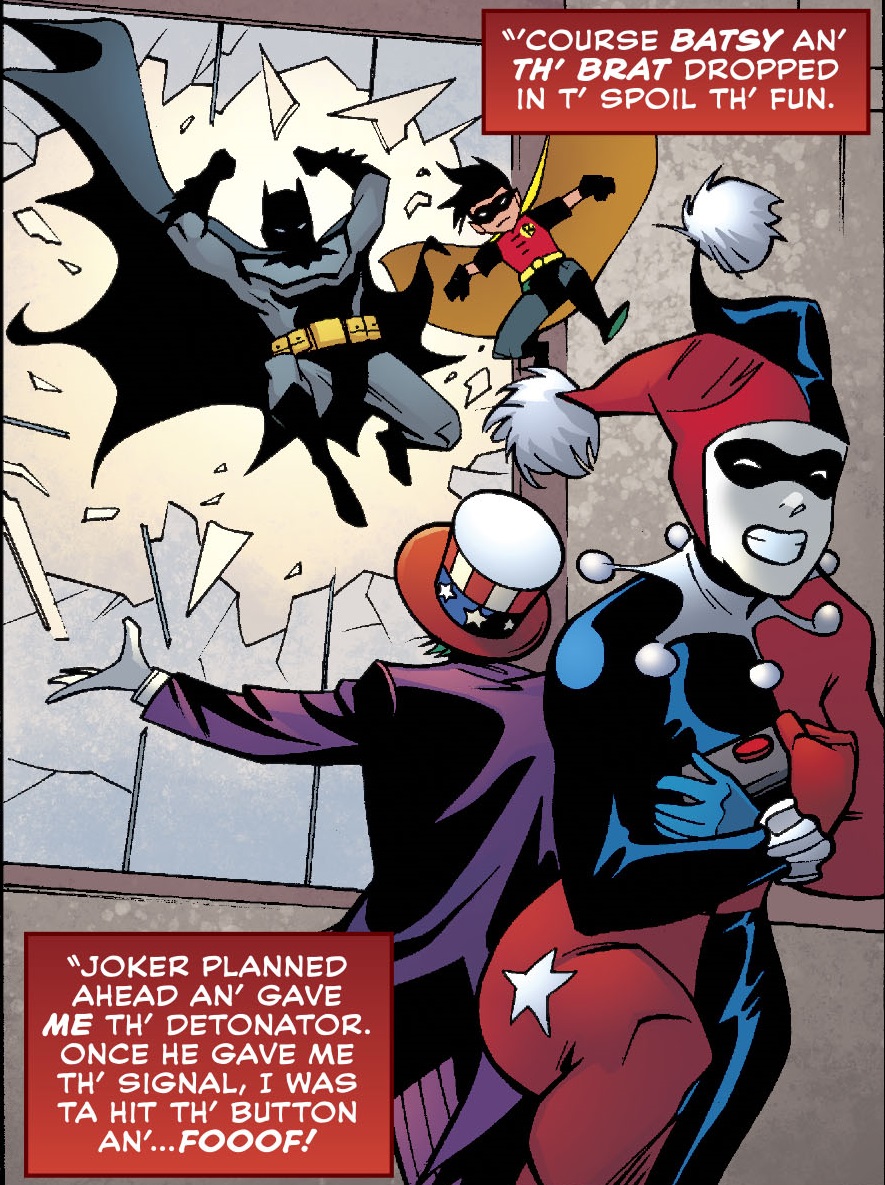 Detective Comics #1000
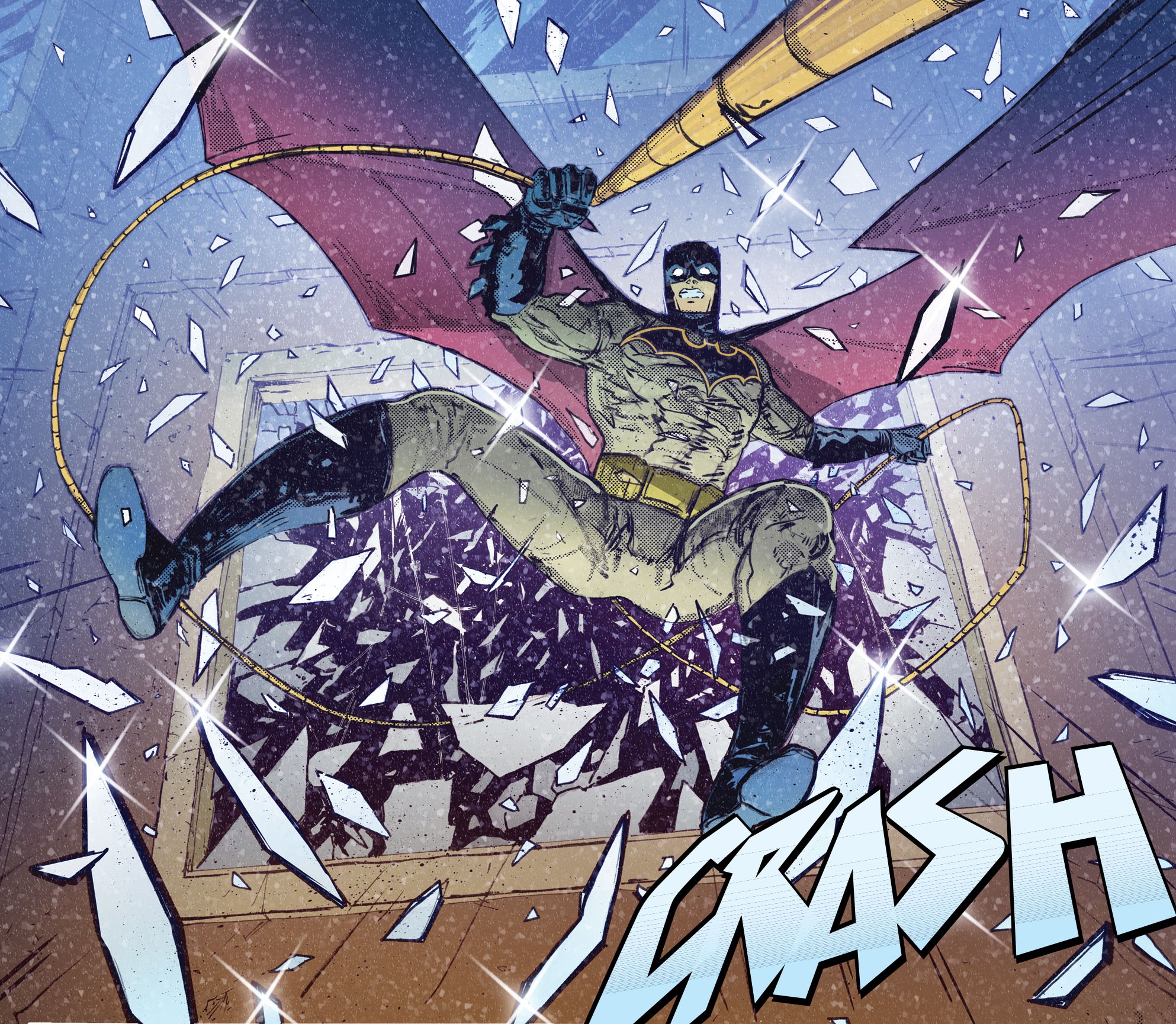 Batman/The Shadow: The Murder Geniuses #1
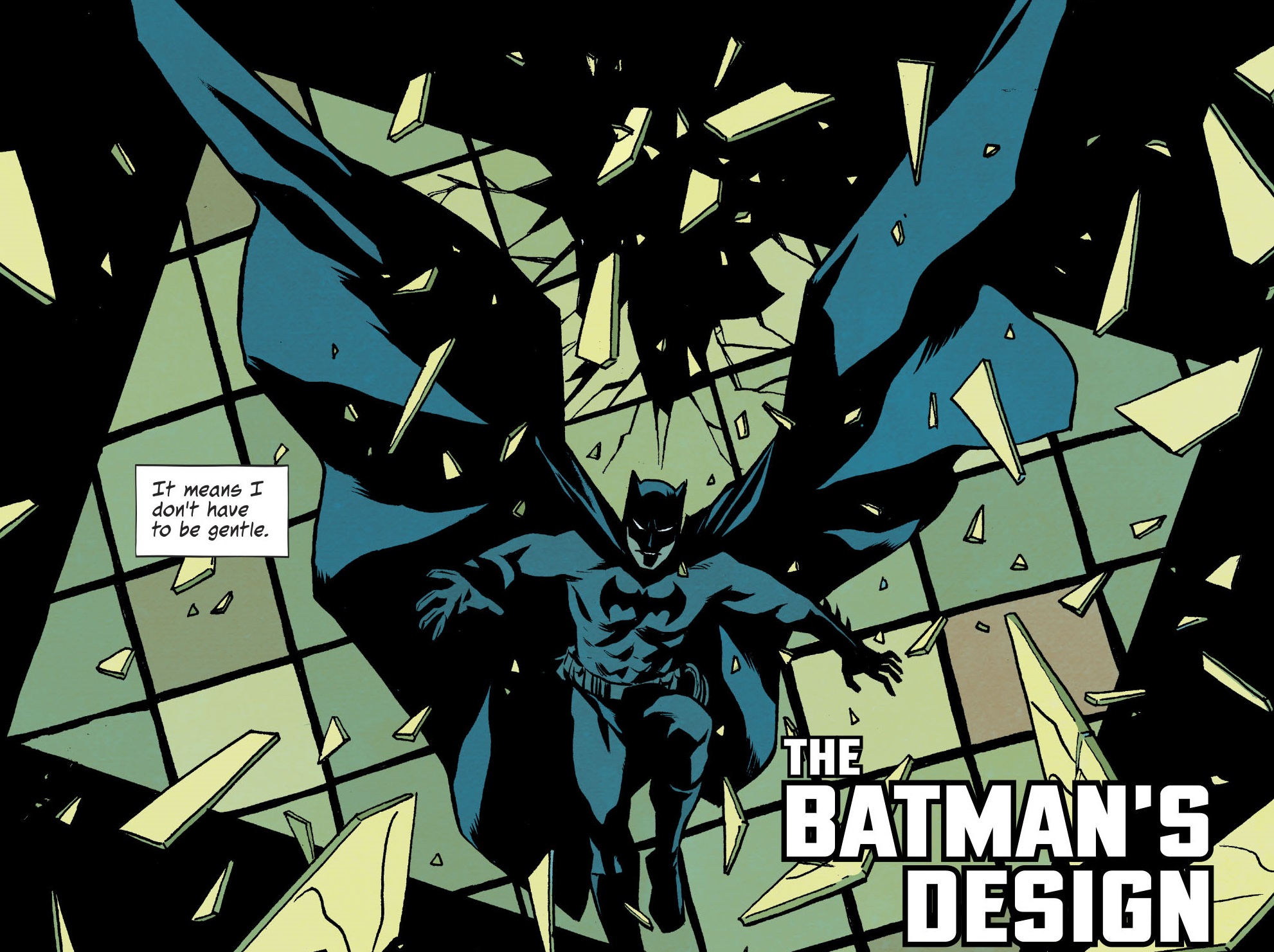 Detective Comics #1000
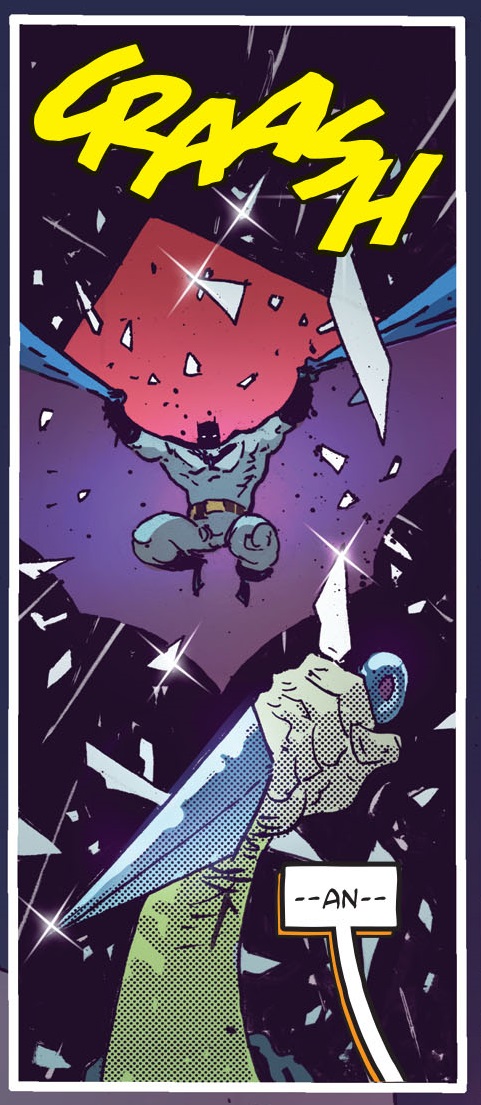 Batman/The Shadow: The Murder Geniuses #2
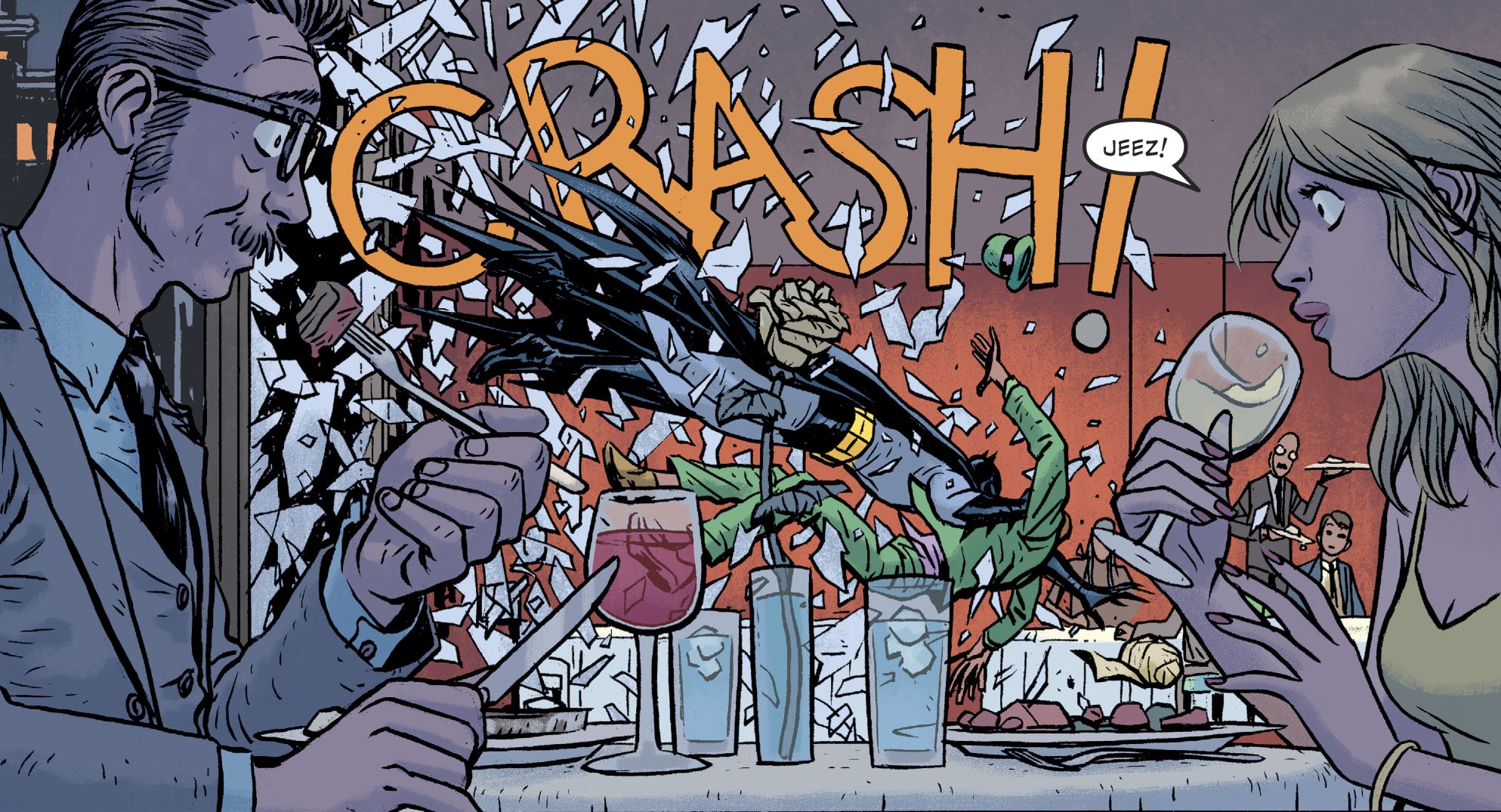 Batman: Universe #1
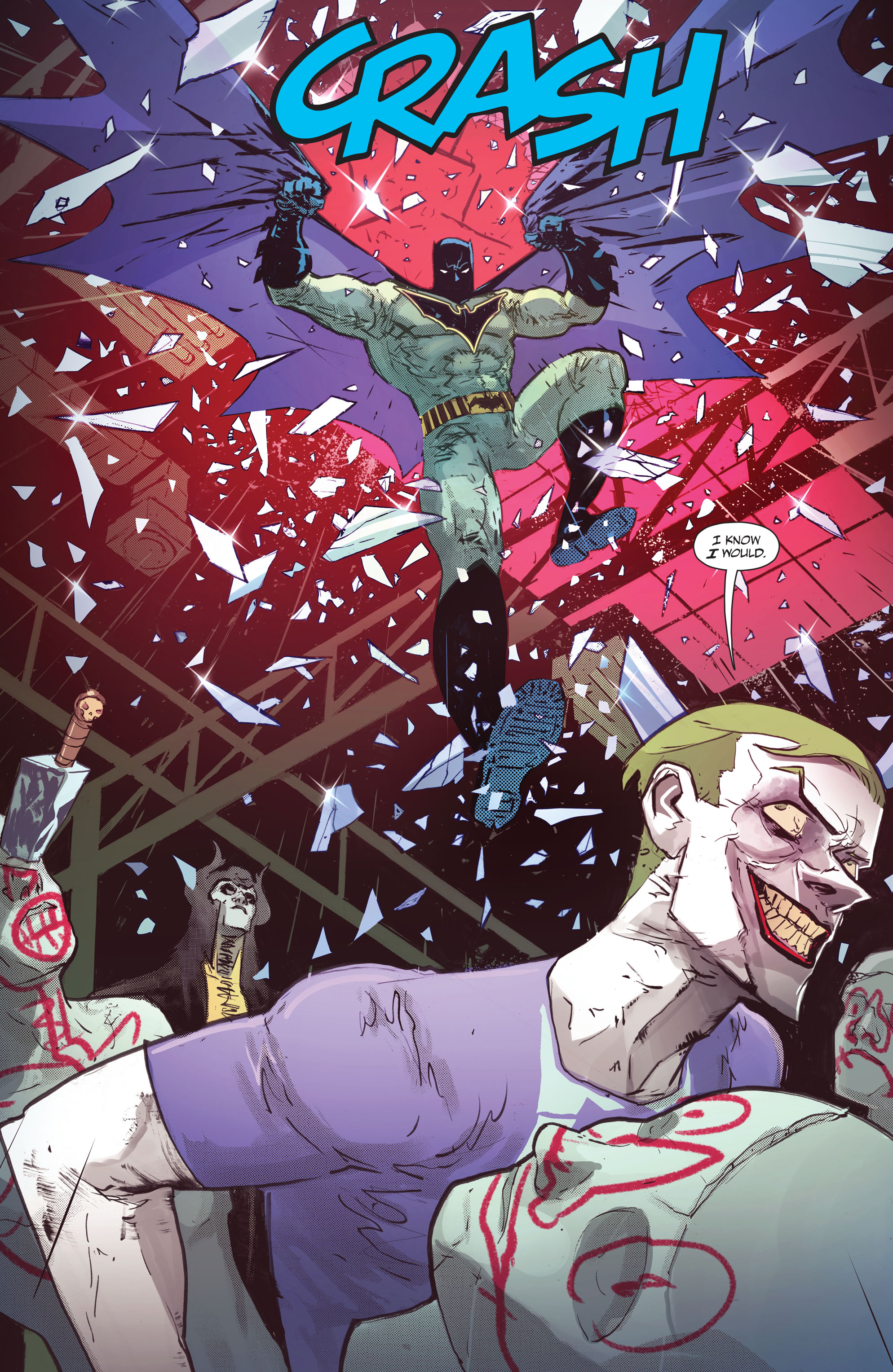 Batman/The Shadow: The Murder Geniuses #3
And yes, I know, it’s not just a Batman thing…
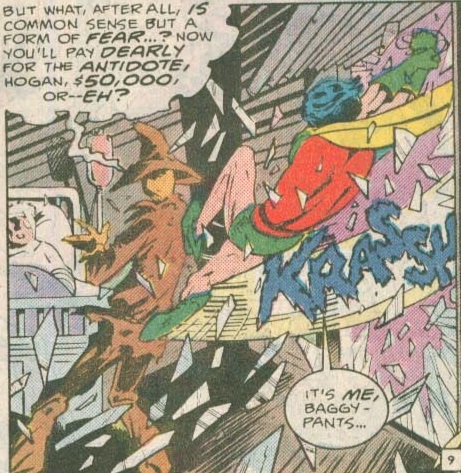 Detective Comics #571
Given the ongoing heated discussion over police reform and how to rethink public safety, I guess this is an appropriate occasion to highlight one of my favorite genres: crime fiction. As far as comic books go, although there were precedents, this genre truly boomed in the late 1940s/early 1950s, coinciding with the first waves of film noir and probably appealing to much of the same audiences: men who had come back from WWII and were more interested in violent tales about fucked up lives than in the superhero fantasy that had dominated comics’ war years.
One of the alluring things about noir is the way it delves into shades of grey. Even when featuring vicious, irredeemable characters, its stories tend to humanize at least some of those who find themselves tempted or cornered into acting outside the law. That said, like the movies, comics sought to skew the conservative charge that they were making criminal behavior appealing – and they did so by tacking on ironic and/or downbeat endings where morality often took the form of ‘poetic justice.’ In fact, many of them went one step further by displaying titles that explicitly promised an anti-crime stand, despite the seductively lurid images inside…

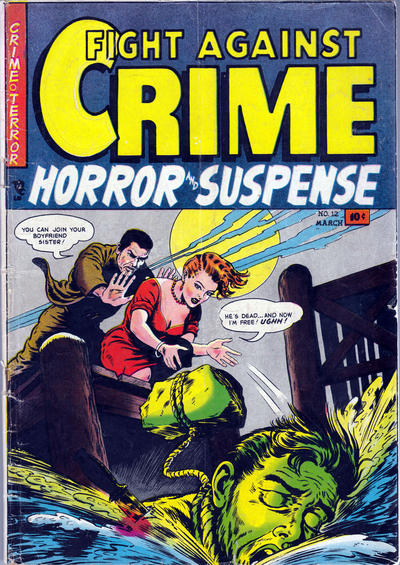

The connection to film noir runs deeper than that, though. There is little doubt that comic book creators were avid consumers of crime flicks, which clearly inspired many of their aesthetic choices, from sweaty close-ups to shadowy silhouettes, not to mention the specific look and postures of the various femmes fatales.
The influence was also in terms of the cynical, angst-filled view of postwar society, often blending leftist and reactionary sensibilities. Disturbed veterans, backlash against women’s work-related ascension during the war, and the little guy’s helplessness against corporate capitalism’s moral corruption were recurring themes in film noir. For example, the darkness-drenched psychological thriller High Wall finds a peculiar approach to each of these topics by merging them with the (also very noirish) trope of the amnesiac murderer. That movie also benefits from some great supporting characters, although without reaching the hights of the cast of Pickup on South Street, the phenomenal cult classic about a pickpocket artist who gets more than he bargained for when he accidentally steals a secret microfilm. This latter one is sometimes discarded as tainted by Cold War propaganda because of its communist villains, but the picture is playing on a whole other field, focusing on a trio of lowlifes who are desperately trying to get by while the higher-ups play their geopolitical games (all told through Sam Fuller’s sensationalistic style). Similarly, although the Red Scare context is also pretty inescapable when considering Elia Kazan’s Panic in the Streets (where, living up to the title, everyone is on edge as the authorities’ race to stop a (blatantly allegorical) plague coming from abroad and spreading through the working class and criminal underworld), the main allure is the realistic tour through New Orleans’ lowest milieus, stunningly photographed and culminating in one of noir’s most memorable chases, at a coffee warehouse…
It wasn’t just in American cinema, either. The Italian Bitter Rice, the Japanese Stray Dog, and the French Elevator to the Gallows did similar gestures, tapping into their own society’s tensions and traumas at the time. In the United Kingdom, there was a string of taut, gritty noirs in the turn towards the 1960s, including titles such as Pickup Alley, Hell is a City, and Never Let Go. The latter one, in particular, presents a bleak depiction of a middle class obsessed with consumer goods while getting a lot of mileage out of bourgeois fears, from youth delinquency to the loss of property and even the merciless march of work-related technological dependency.
At their best, comics didn’t merely copy the movies’ narratives and visuals. In anthologies like EC’s Crime SuspenStories and Shock SuspenStories, you could see writers and artists ingeniously translating and reinventing the language of film noir into a new medium. Here are ten short stories that did this wonderfully:
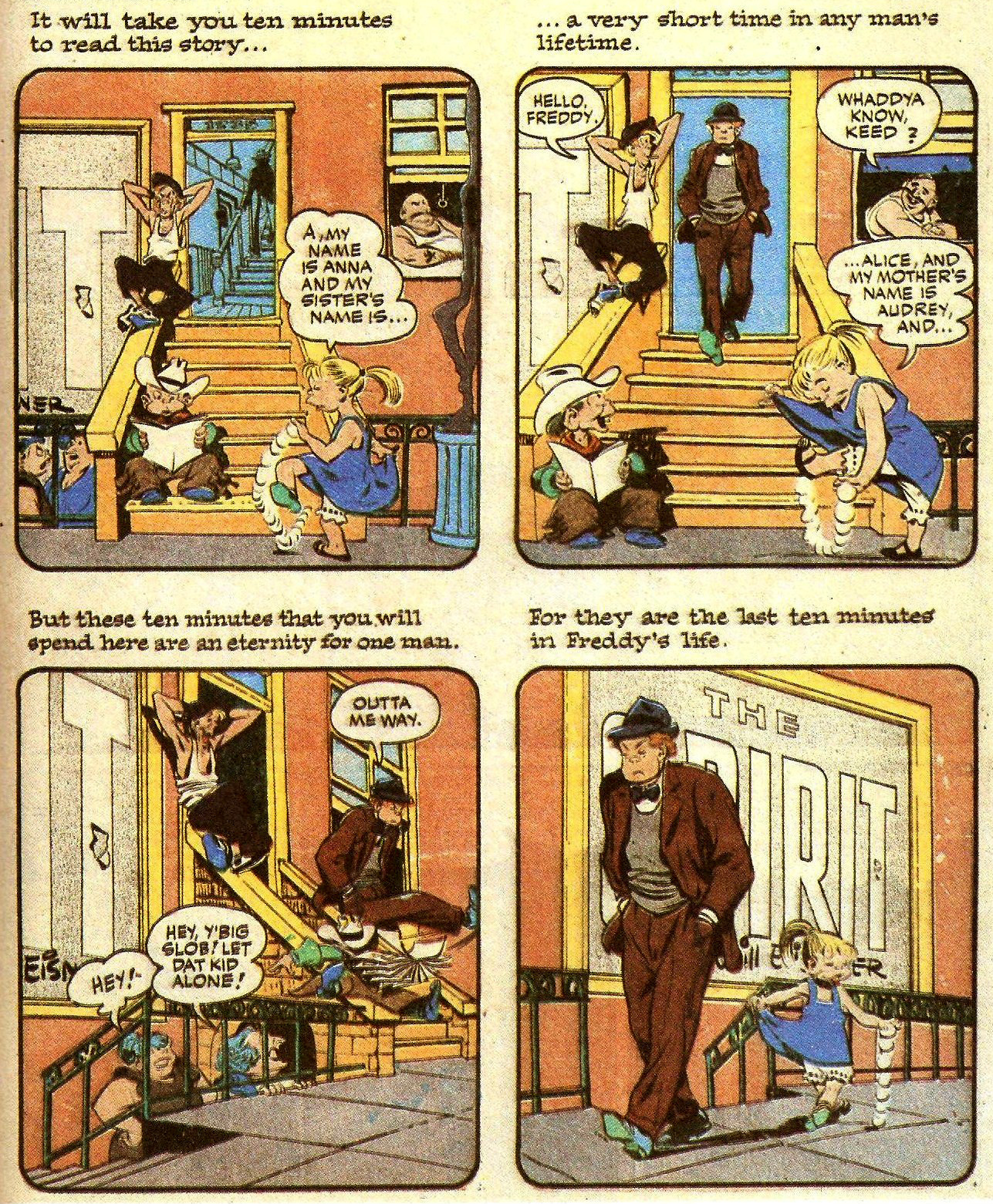
‘Ten Minutes’ (originally published in The Spirit newspaper strip, September 1949), by Jules Feiffer (script), Will Eisner (script and art), Jamison (colors), and Abe Kanegson (letters)
Will Eisner’s strip about the street-level adventures of a domino mask-wearing vigilante is one of the most influential crime comics in the history of the medium, inspiring countless other works throughout the decades, from further takes on The Spirit to Alex Segura’s, Monica Gallagher’s, and George Kambadai’s quirky new spin on the subgenre, The Black Ghost. The noir influence was obvious, but perhaps never more so than in ‘Ten Minutes,’ where we witness the final moments in the life of Freddy, a frustrated young man from a downtrodden neighborhood who makes a decision that changes the course of his life. It’s one of those stories where the Spirit remains in the periphery of the action, with the comic preferring to delve into Freddy’s perspective and doomed fate. I also love the way Eisner plays with pacing, filling the pages with parallel interactions that serve both to lengthen the reading time (thus ramping up the tension) and to convey Freddy’s sense of alienation.
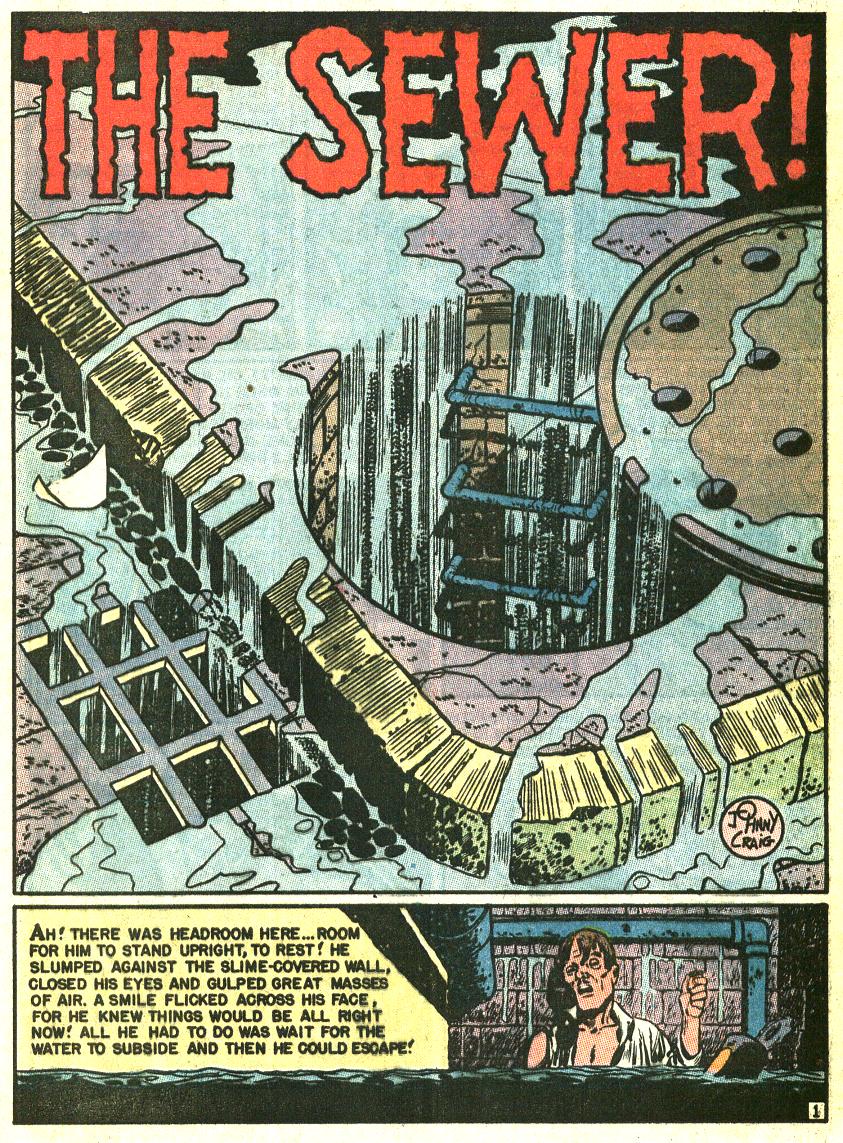
‘The Sewer’ (originally published in Crime SuspenStories #5, cover-dated June-July 1951), by Johnny Craig (script and art), Marie Severin (colors), and Jim Wroten (letters)
Flashback structure? Check. Murder driven by lust? Check. Overwhelming rain? Check. Macabre irony? Check. Desperate guy caught in a nightmarish spiral? Hell yeah. The only noir ingredient missing from ‘The Sewer’ is the black & white chiaroscuro (unless you read the uncolored version in Fantagraphics’ Voodoo Vengeance and Other Stories collection), but that’s ok, because Marie Severin’s color choices contribute to the chilling atmosphere, especially her poetic, green-heavy panels at the end of each death sequence…
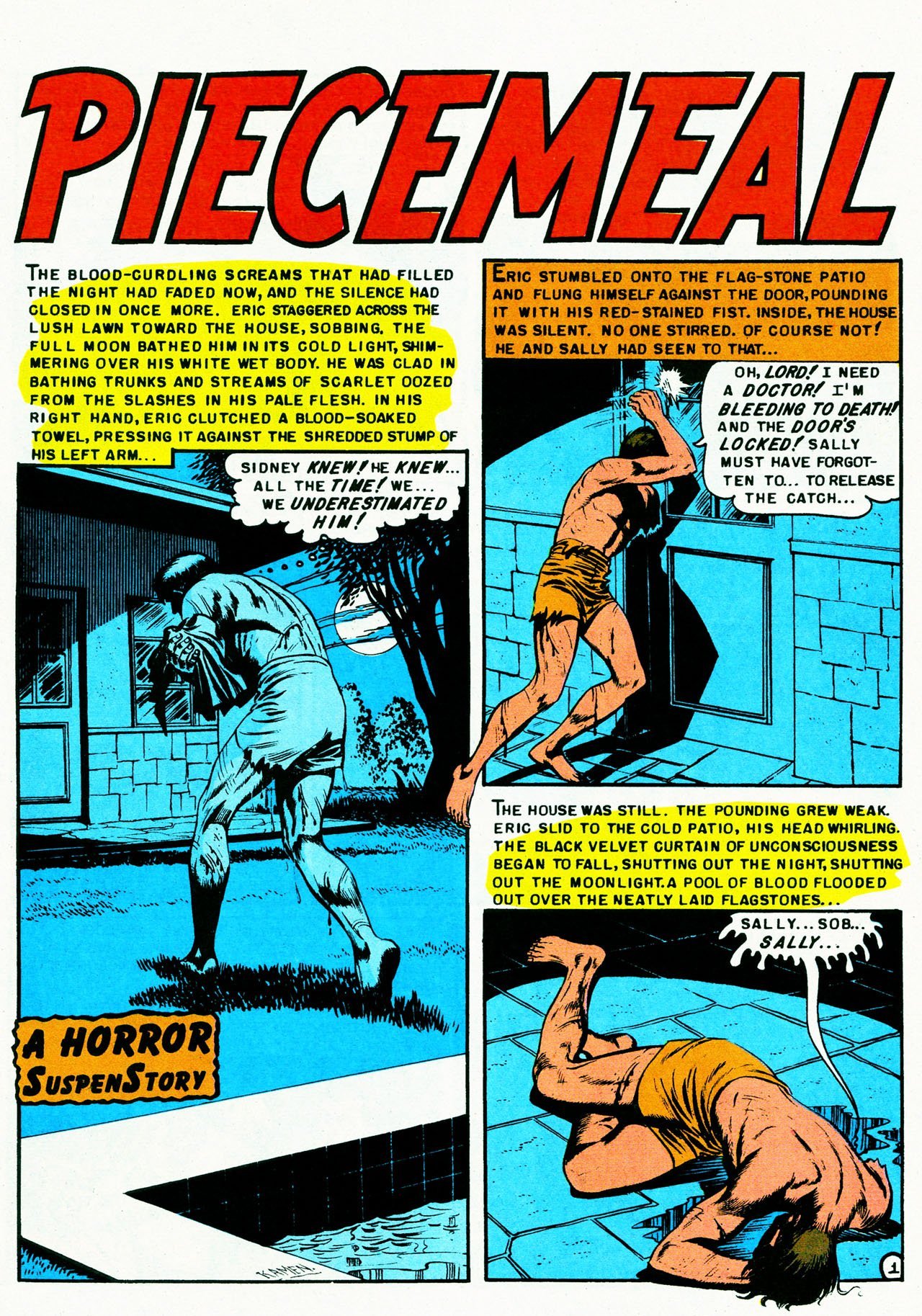
‘Piecemeal’ (originally published in Shock SuspenStories #8, cover-dated April-May 1953), by Bill Gaines (script), Al Feldstein (script), Jack Kamen (art), Marie Severin (colors), and Jim Wroten (letters)
Deadly love triangles are a staple of film noir, from The Postman Always Rings Twice to Sudden Fear, and while the mechanics of ‘Piecemeal’ are pretty straightforward, two elements raise it above the crowd. One of them is Sally’s voluptuous femme fatale, who is a cross between Lana Turner and Gloria Grahame in the aforementioned pictures – her interactions with our protagonist are rendered by Jack Kamen in such a way that you can really feel the tingling sexual tension in the air. The other one is the shocking clincher – even those who see it coming are bound to be struck by how horrific things get!
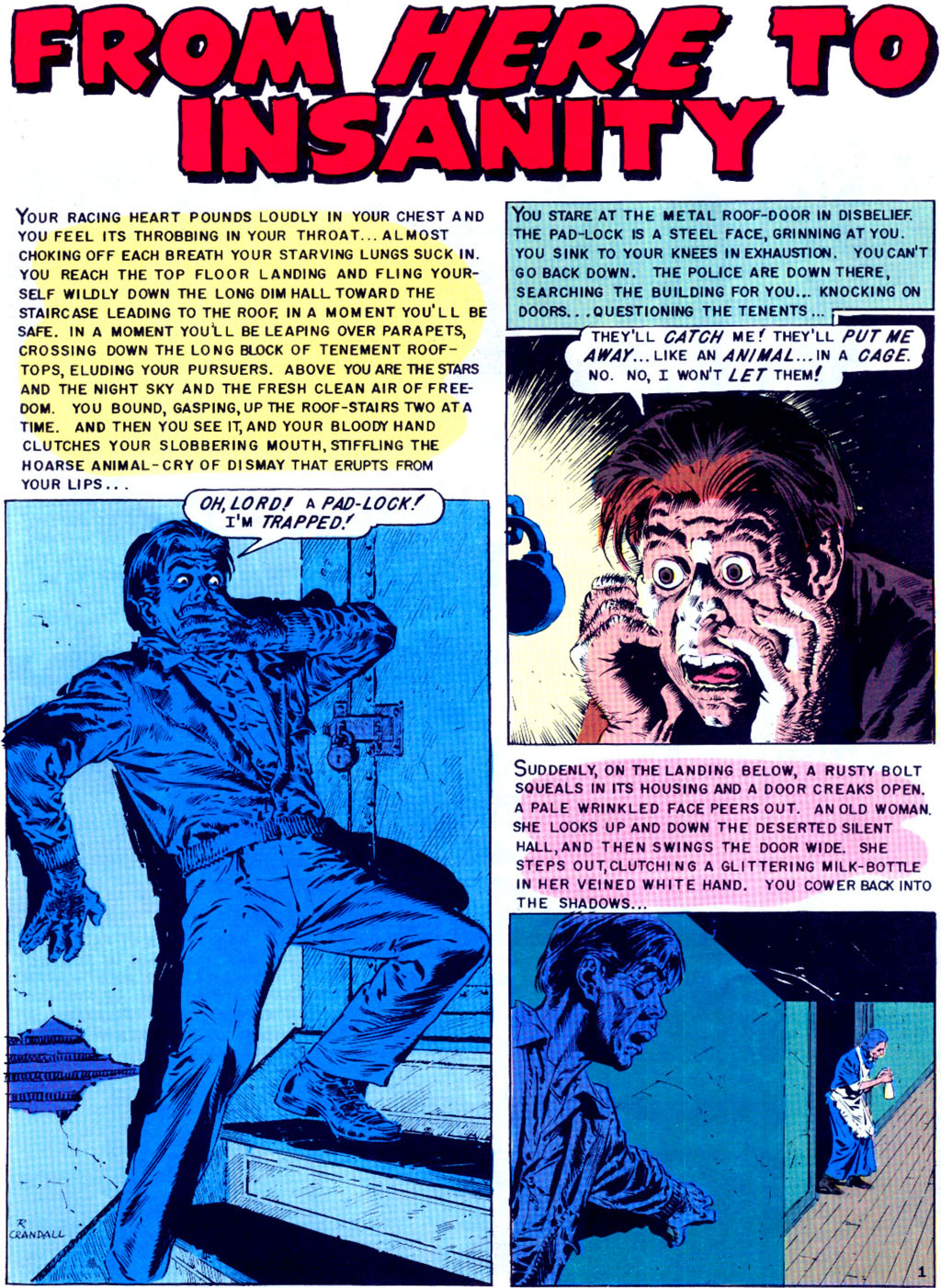
‘From Here to Insanity’ (originally published in Crime SuspenStories #18, cover-dated August-September 1953), by Bill Gaines (plot), Al Feldstein (plot, script), Reed Crandall (art), Marie Severin (colors), and Jim Wroten (letters)
Masterfully plotted, with Al Feldstein’s wordy narration stretching out the suspense, ‘From Here to Insanity’ offers readers a spirited clash between the unstoppable force of an edgy fugitive (drawn by Reed Crandall like a bug-eyed psychopath) and the immovable object that can be a gentle old lady. You cannot look away, as the tense clash is unsettlingly captured by both story and artwork. There is also something to be said about the tale’s gender politics, given the peculiar way in which it delivers a punishment for misogyny (as underlined by the final punchline).
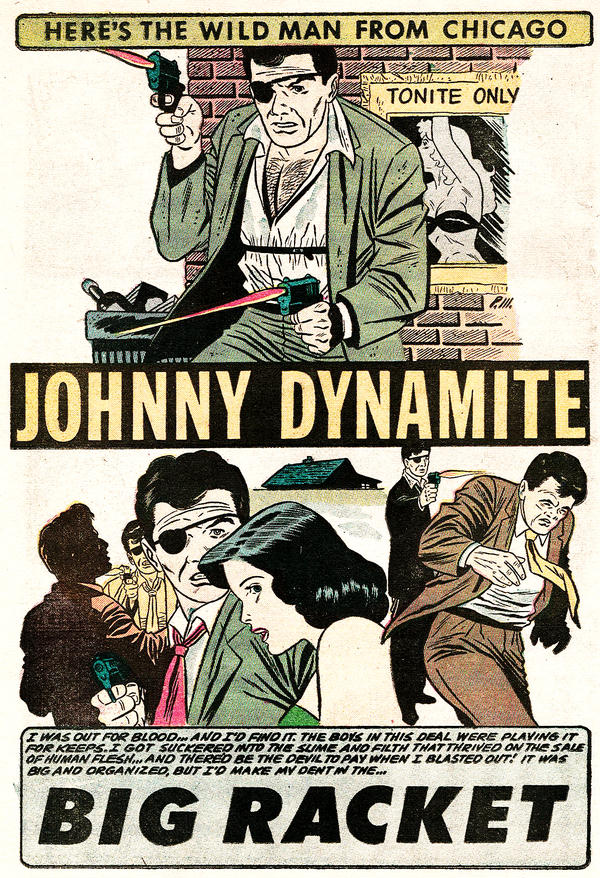
‘Big Racket’ (originally published in Dynamite #4, cover-dated November 1953), by Pete Morisi (art)
I had to include at least one private eye!
My favorite summer read this year was Ernest Mandel’s Delightful Murder: A Social History of the Crime Story, a fascinating analysis of the evolution of literary crime fiction and how it parallels the evolution of crime itself (as well as of organized capitalism). The only time the book – which first came out in 1984 – mentions comics, though, is when denouncing the genre’s post-Mickey Spillane degradation into simplistic, sadistic thrillers which found a semi-fascist low in comic books (in a rare hysterical passage, Mandel blames the medium itself, because of its reliance on visuals over words, concluding apocalyptically that ‘increasing illiteracy undoubtedly constitutes a formal expression of cultural decline, corresponding in its own way to the decline of bourgeois society and the threat of a decline of civilization itself.’)
Prejudices aside, I swear he could be writing about Johnny Dynamite, a nasty detective comic that pushed the boundaries of what this medium could get away with before the institutionalized censorship of the Comics Code Authority. ‘Big Racket’ is a perfect example: it opens with a deadly shoot-out in the dark, followed by a flashback in which Dynamite recalls facing a gangster who used to run a prostitution ring, having sex with a bombshell (who is later tortured), and going on a killing spree. I don’t know who wrote it (perhaps artist Pete Morisi himself), but whoever it was sure captured the tough-guy voice of the era’s pulp prose and movie voice-overs. The closing line, in particular, is as noir as it gets!
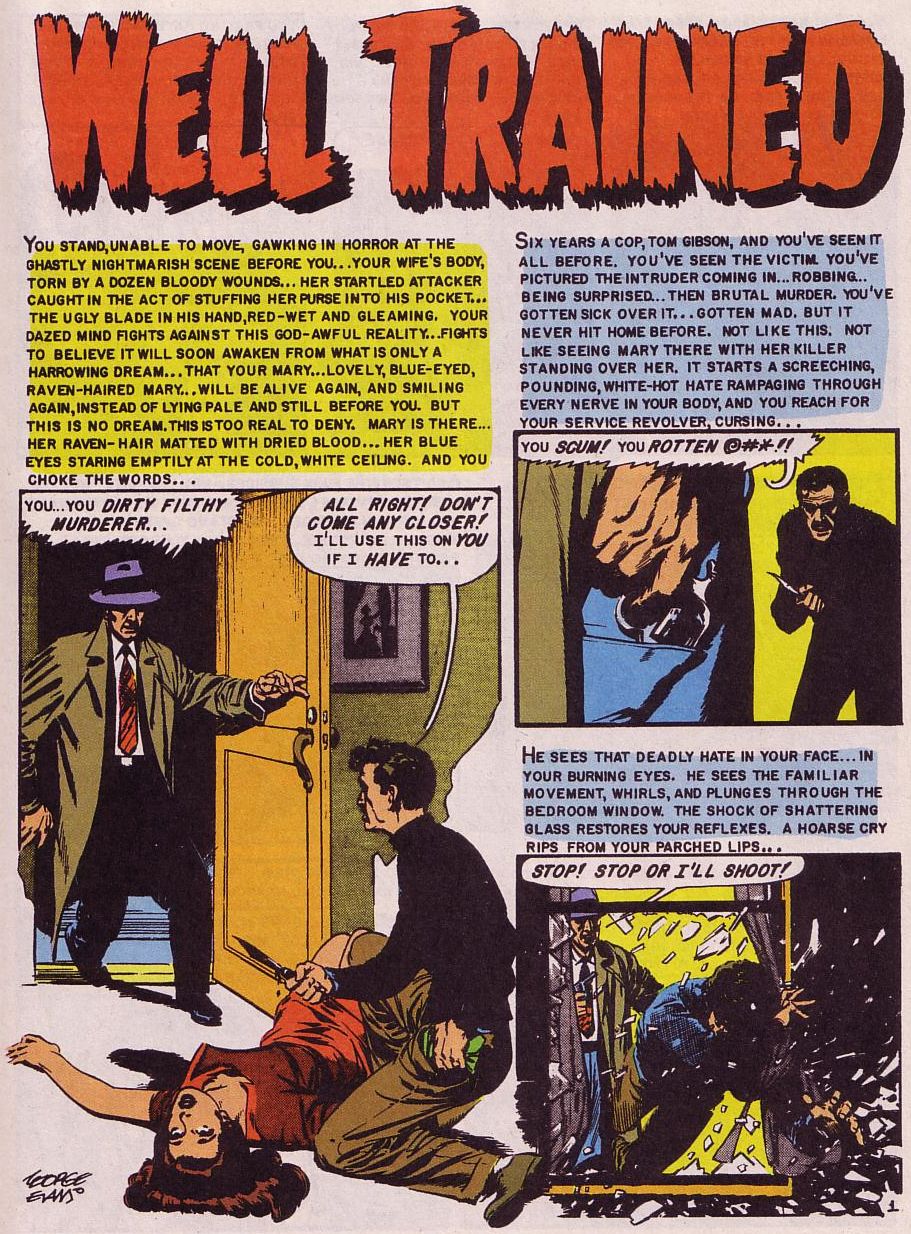
‘Well Trained’ (originally published in Shock SuspenStories #15, cover-dated June-July 1954), by Carl Wessler (script), George Evans (art), Marie Severin (colors), and Jim Wroten (letters)
Carl Wessler and George Evans formed one of the greatest partnerships in the history of noir comics, with a solid string of hard-hitting collaborations in the mid-1950s. ‘Well Trained’ is arguably their most visceral: in this hardboiled revenge tale, a cop becomes obsessed with punishing his wife’s killer through the death penalty, effectively using the state as a weapon (thus implicitly recognizing the profoundly tormenting dimension of the countdown towards capital punishment). Readers may find their sympathies shifting as the protagonist’s legalist attitude soon rises up to a sadistic fever pitch.
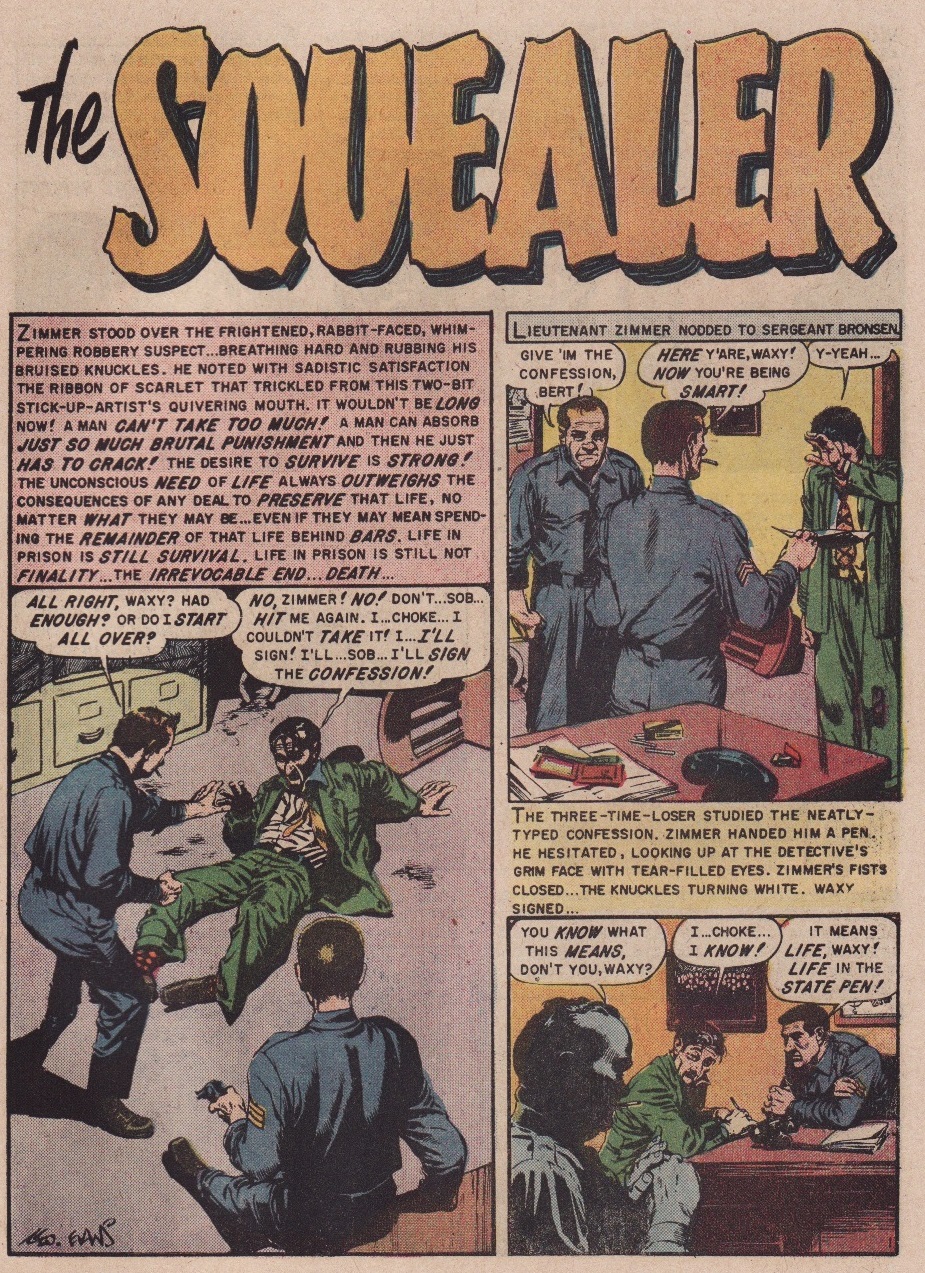
‘The Squealer’ (originally published in Crime SuspenStories #25, cover-dated October-November 1954), by Jack Oleck (script), George Evans (art), Marie Severin (colors), and Jim Wroten (letters)
Another sordid comic about violent cops, ‘The Squealer’ is more of a character study, delving into the life and mindset of Lieutenant Ed Zimmer. Dirty and brutal, yet also committed to his son and with a trace of self-pity (‘You’re not gonna end up like me, Jerry! You’re gonna be somebody.’), Zimmer is not only the kind of well-rounded, conflicted figure noir is made of, but also the embodiment of the grim postwar era of corrupt institutions and frustrated American dreams which spawned the genre in the first place.

‘In the Bag’ (originally published in Shock SuspenStories #18, cover-dated December 1954 – January 1955), by Carl Wessler (script), Bernie Krigstein (art), Marie Severin (colors), and Jim Wroten (letters)
Wessler also scripted this gripping tale from the point of view of an officer chasing a potential murderer with a suspicious bag. Like ‘Well Trained,’ ‘In the Bag’ is a story of obsession, once again exploring the line between cops’ sense of righteousness and the scarier side of an emboldened police. The great Bernie Krigstein then furthered the psychological intensity through murky, saturated tones and his typical technique of breaking down the action into rows of small moments (one page has 17 panels!), individualizing each step leading up towards the soul-crushing finale.
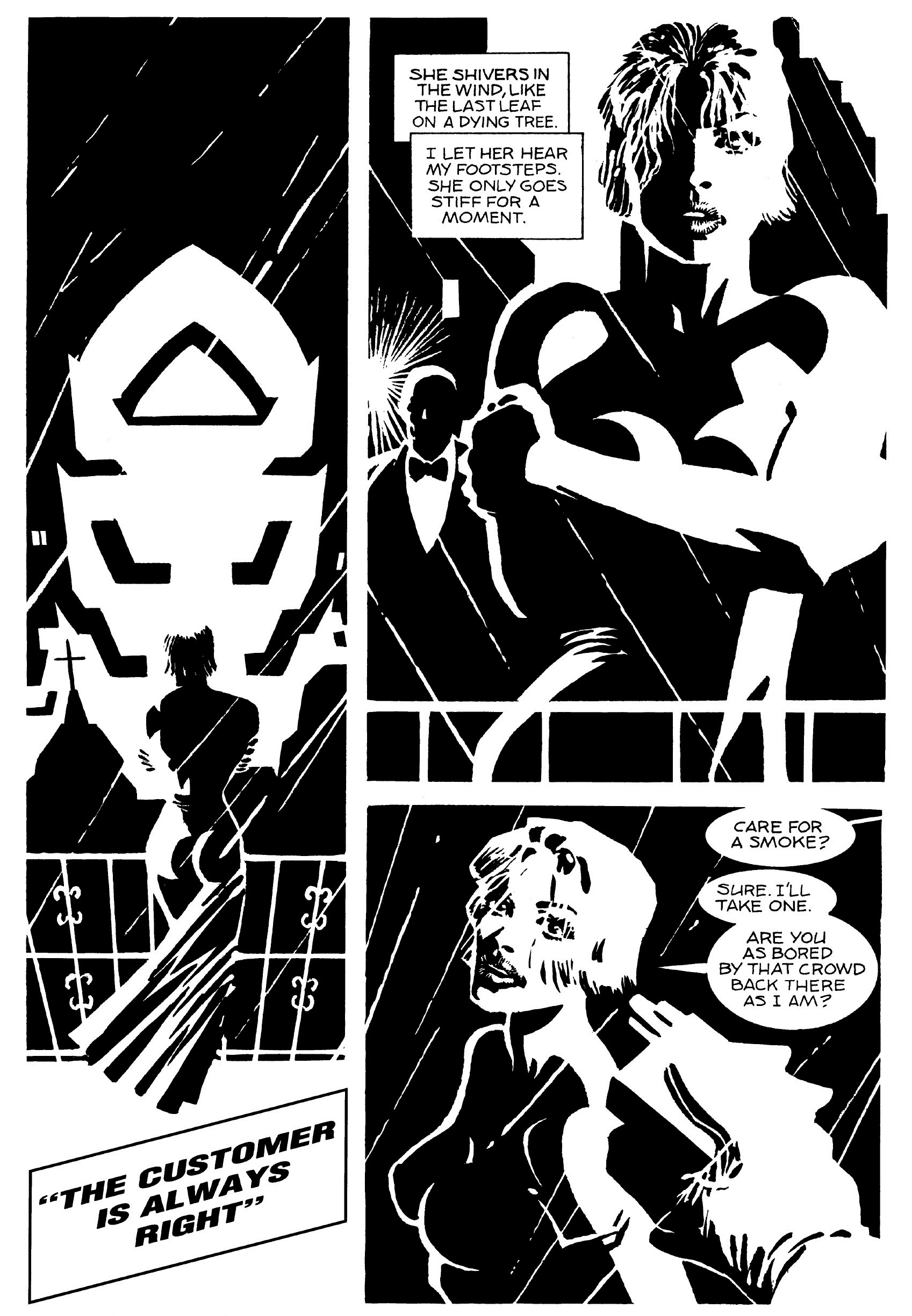
‘The Customer Is Always Right’ (originally published in San Diego Comic Con Comics #2, cover-dated August 1993), by Frank Miller (script, art)
Jumping forward decades in time, we get this amazing slice of retro-fetishistic neo-noir. Frank Miller’s work is so damn evocative that, even though ‘The Customer Is Always Right’ is just three-pages long, its conversation between two apparent strangers on a rainy balcony manages to pull off a memorably spellbinding mood, not to mention an elegant twist ending that still packs a punch. And yes, reduced to a stark black & white silhouette, the woman above looks practically naked… Sin City plays according to its own rules: everything about it is deliberately exaggerated, from the characters to the contrived, derivative plots and hyper-stylized visuals. (That said, if you look at the original noir period, you’ll find plenty of films where these elements were just as mesmerizingly overblown, both in famous productions like Gilda and, particularly, in second-tier works like The Unsuspected.) This story, in particular, deserves to be considered a modern classic, especially as it is fairly easy to track down, having been republished in multiple Sin City collections, such as the one-shot The Babe Wore Red and other stories and the trade paperback Booze, Broads & Bullets.
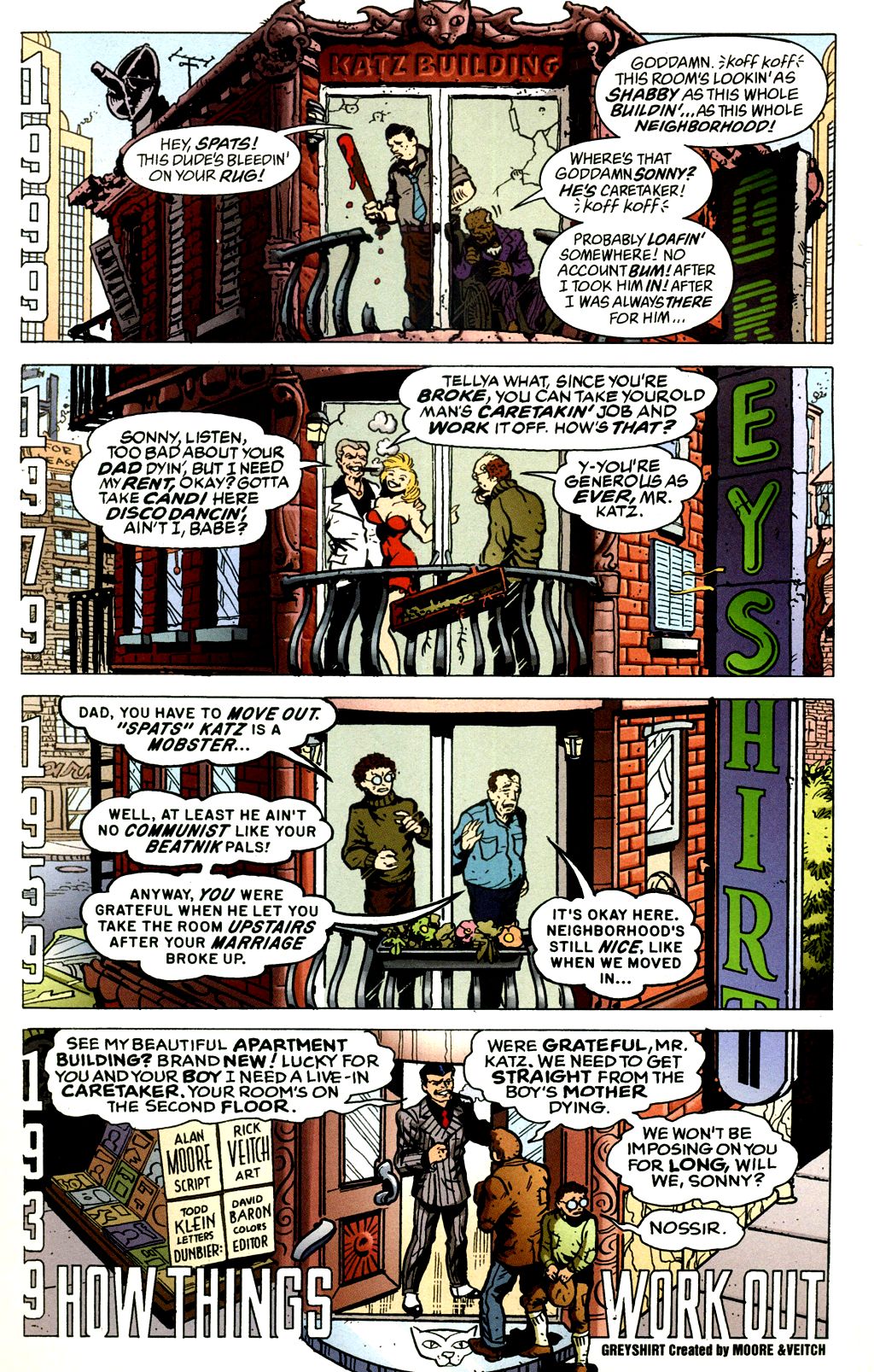
‘How Things Work Out’ (originally published in Tomorrow Stories #2, cover-dated November 1999), by Alan Moore (script), Rick Veitch (art), David Baron (colors), and Todd Klein (letters)
As you can tell from the title page above, the densely packed ‘How Things Work Out’ follows the abusive relationship between a gangster and his live-in caretaker’s son, with each panel row focusing on a different decade and a different floor of the same building (with a rotating perspective from page to page). The high concept may sound too gimmicky (in addition to the pastiche elements of Rick Veitch’s artwork and Todd Klein’s lettering), but leave it to Alan Moore to actually imbue the tale with quasi-poetic emotional beats. Indeed, the second published story of the Spirit-inspired Greyshirt comic lives up to its roots. It’s nothing short of brilliant.
Your pop art reminder that comics can be awesome:


 Night Cries
Back in part 3 of this reading guide, I mentioned how 1994’s crossover event Zero Hour: Crisis in Time! retroactively altered the DCU’s past and, thus, served to selectively revise (or fix) certain aspects of Batman’s canon. Rather than stick to the official changes, though, I suggest using the fact that we are now dealing with a new timeline to introduce an alternative version of the Dark Knight’s early years, which can be read as a flashback (in theory, these works can be read at any place after Zero Hour, but I recommend reading them after No Man’s Land, so as not to dramatically break the flow of present-day continuity).
And yes, the main point of this exercise is to rescue a bunch of great comics from the 1990s and early 2000s that didn’t quite fit in with the continuity from the first post in this guide!
CAPTAIN GORDON ERA [Many of these comics built on Frank Miller’s and David Mazzucchelli’s ‘Batman: Year One,’ expanding its subplots and further developing the characterization of Captain James Gordon. In other words, the events of that 1986 story-arc remain canon (except for its very last scene, which should be disregarded). Curiously, even though these books were published without a rigid unifying vision for over a decade and done by very different creative teams, not only does their own cross-continuity actually work out fairly well, but so does the general tone, with most tales heavily influenced by film noir and gothic horror.]
Legends of the Dark Knight #89-90: ‘Clay’ (collected in Batman: Monsters) [The revised debut of Clayface (Mathhew Hagen) and Matches Malone. Starts three weeks after Batman’s debut.]
Batman & the Monster Men #1-6 (collected as Batman & the Monster Men) [Matt Wagner reimagines a classic Golden Age yarn and, in the process, provides a new version of Batman’s first encounter with Professor Hugo Strange and of the Batmobile’s debut. (It basically replaces ‘Prey’ (Legends of the Dark Knight #11-15) but, with a bit of goodwill, the two stories can sort of coexist, since this one finishes with Strange adopting the public persona he has at the beginning of ‘Prey.’)]
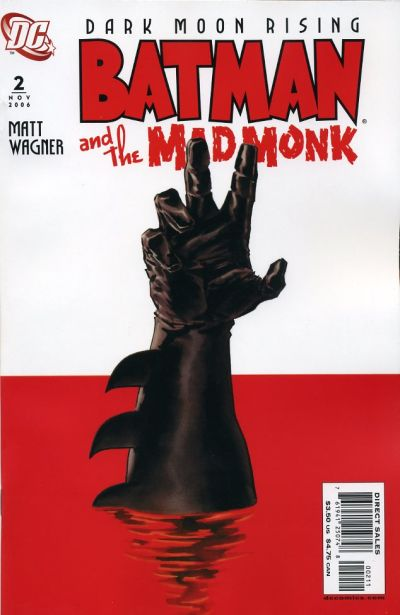
Batman and the Mad Monk #1-6 (collected as Batman and the Mad Monk) [Wagner’s sequel once again updates a Golden Age classic. It also depicts Batman’s second encounter with Catwoman. The ending leads straight into The Man Who Laughs.]
The Man Who Laughs [This one-shot by Ed Brubaker and Doug Mahnke is a modern retelling of Batman’s first encounter with the Joker (replacing Legends of the Dark Knight #50) that doubles as a new origin for the Bat-Signal (also replacing ‘Prey’).]
Legends of the Dark Knight Halloween Special: Choices (collected in Haunted Knight) [An early confrontation between Batman and the Scarecrow that can serve as a nice introduction to that rogue]
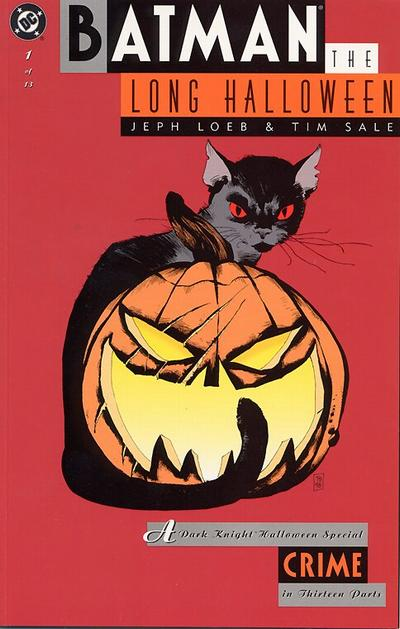
The Long Halloween #1-13 (collected as The Long Halloween) [Jeph Loeb and Tim Sale followed their set of Legends of the Dark Knight Halloween specials with this riveting limited series that takes place over a year and chronicles the debut of Two-Face (replacing Batman Annual #14). Since it features the Scarecrow (among many other rogues), the series also cancels out Batman Annual #19, which placed this villain’s debut after Two-Face’s. Loeb later included a reference to issue #3 in Batman #615 (part of his blockbuster ‘Hush’ story arc).]
Legends of the Dark Knight Halloween Special: Madness (collected in Haunted Knight) [Loeb’s and Sale’s second Halloween special must somehow be set after The Long Halloween (because Batman mentions Two-Face) despite the fact that Jim Gordon’s son is still a baby. To make it even more far-fetched, Gordon has recently adopted a teen Barbara, who is nevertheless absent from the next couple of books (we must assume she went to some kind of boarding school). Still, this is a damn neat comic on its own!]
COMMISSIONER GORDON ERA [A bunch of scattered comics with solid character work that, when read in this order, chronicle an alternate version of the expansion of the Bat Family….]
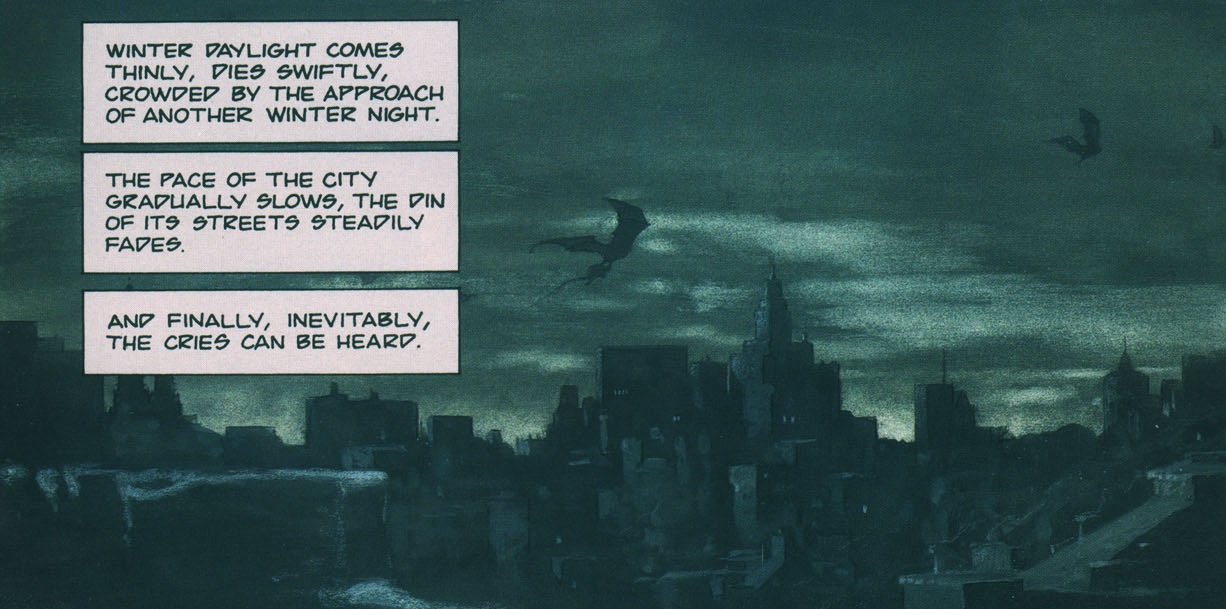
Night Cries [In this graphic novel (by Archie Goodwin and Scott Hampton), James Gordon recently became Police Commissioner. The ending actually leads quite smoothly into Dark Victory.]
Dark Victory #0-13 (collected as Dark Victory) [This sequel to The Long Halloween features Dick Grayson’s debut as Robin, revising Robin Annual #4. (An early development also seriously contradicts Legends of the Dark Knight Annual #2.)]
Batman/Superman/Wonder Woman: Trinity (collected as Trinity) [Matt Wagner’s mini-series about a team-up between DC’s three main superheroes is set not too long after Robin’s debut and it works as a new introduction to Ra’s al Ghul (whom Batman has already fought in this past).]
Batman: Ego (collected in Ego and Other Tails) [Darwyn Cooke’s masterful one-shot feels like it takes place relatively early in the Dark Knight’s career, when Batman was still a bit unsure about his mission but Robin had already made his debut. One of the flashback panels matches Wagner’s version of Hugo Strange better than the one in ‘Prey’ (although the references to Two-Face are more aligned with the version in Batman: The Animated Series).]
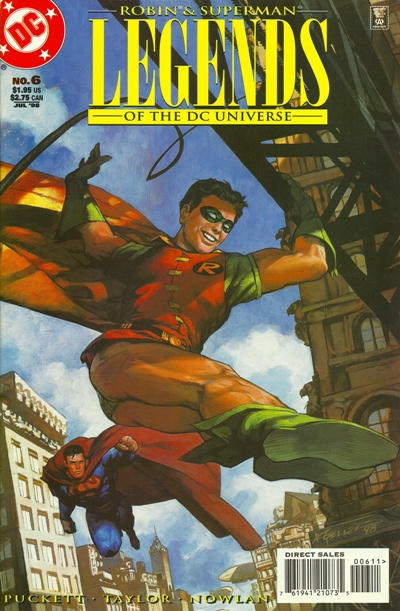
Legends of the DC Universe #6: ‘Fear of God’ [One of a string of neat comics written by Kelley Puckett in the late ‘90s about the early days of Batman’s sidekicks. This one involves a team-up between Robin and Superman.]
Batman: Batgirl [Also by Puckett, this fun 1997 one-shot depicts an early confrontation between Barbara Gordon (who recently became Batgirl) and the Joker.]
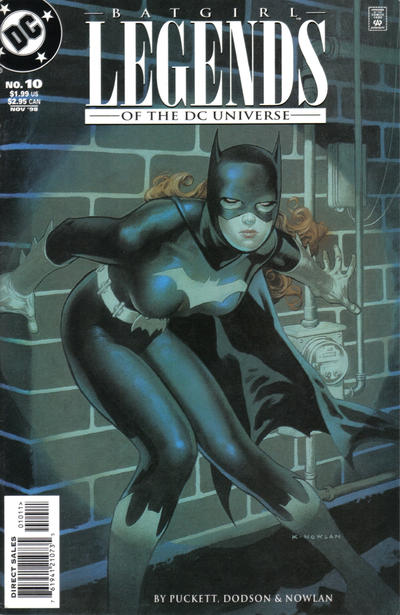
Legends of the DC Universe #10-11: ‘Folie a Deux’ [Another kickass yarn by Puckett about the first Batgirl, this one alternating between flashbacks of her origin and a team-up with Commissioner Gordon]
Huntress: Year One #1-6 (collected as Huntress: Year One) [I’m a fan of this 2008 mini-series (by Ivory Madison and Cliff Richards) retconning the Huntress’ origin, set while Barbara Gordon was still Batgirl. Most changes to the 1989 Huntress comic actually align with Greg Rucka’s and Rick Burchett’s Cry for Blood mini.]
Birth of the Demon (collected in Batman: Birth of the Demon) [This beautiful one-shot revealing Ra’s al Ghul’s origin (set after Batman has fought him quite a few times) contains a couple of lines about Talia’s mother that directly contradict Son of the Demon, so I’m placing it in this alternate continuity.]
The Batman Chronicles #5: ‘Oracle: Year One – Born of Hope/Decoys/Of Mice and Men’ [All of these stories are set in the past and, while they don’t necessarily contradict earlier comics, I think they work nicely here, as flashbacks in the style of vignettes. The most recent one concerns Barbara Gordon’s evolution between The Killing Joke and Sword of Azrael (or, better yet, before her debut as Oracle in Suicide Squad #23, which – like this tale – was also written by John Ostrander and Kim Yale).]
The Batman Chronicles #19: ‘Got a Date with an Angel/Rapscallions/The Penny Plunderers’ [Another issue with stories from the past (although the one with the Huntress could also be set in the present)]
Your action-packed reminder that comics can be awesome: