Your scary reminder that comics can be awesome:
Your scary reminder that comics can be awesome:
Goofing around with Batman, Robin, and Superman…
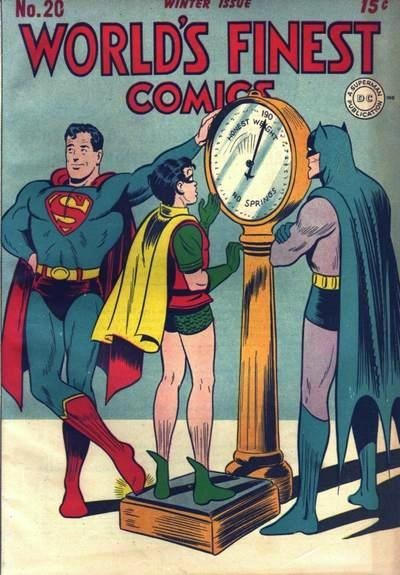
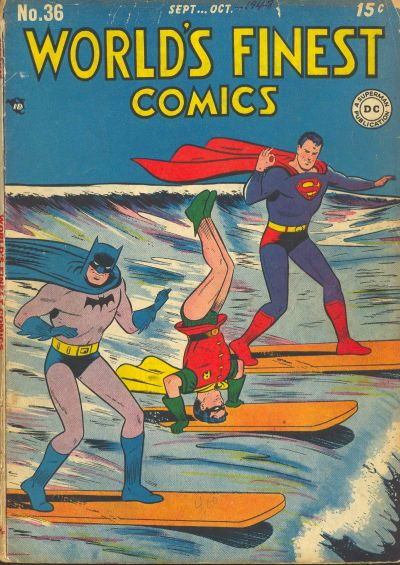
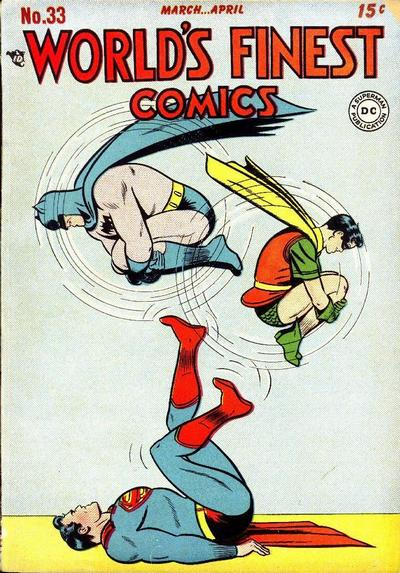
Just another reminder that comics can be awesome, science adventure edition…
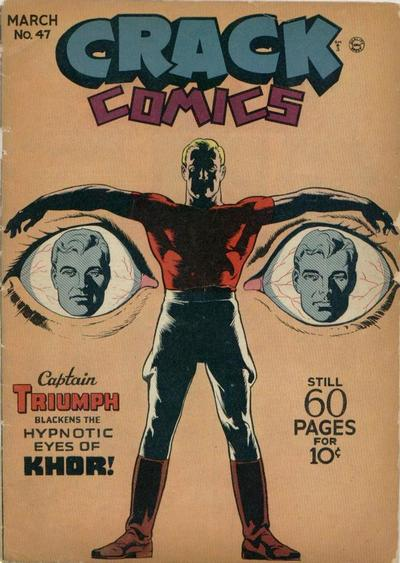
The usual summer break… Regular posts will only return in September, but, since we are still living in unusual times, I’ll try to keep the weekly COMICS CAN BE AWESOME section going throughout August. After all, pulp fiction – from Jack Kirby’s surreal sci-fi to Frank Miller’s The Dark Knight Returns – remains both a source of temporary distraction and a way to visualize a critique of the very system that spawn it. As Jason Read wrote, pop culture ‘might be baby food after all, but even baby food can be flung against the wall in rage.’
Stay safe!
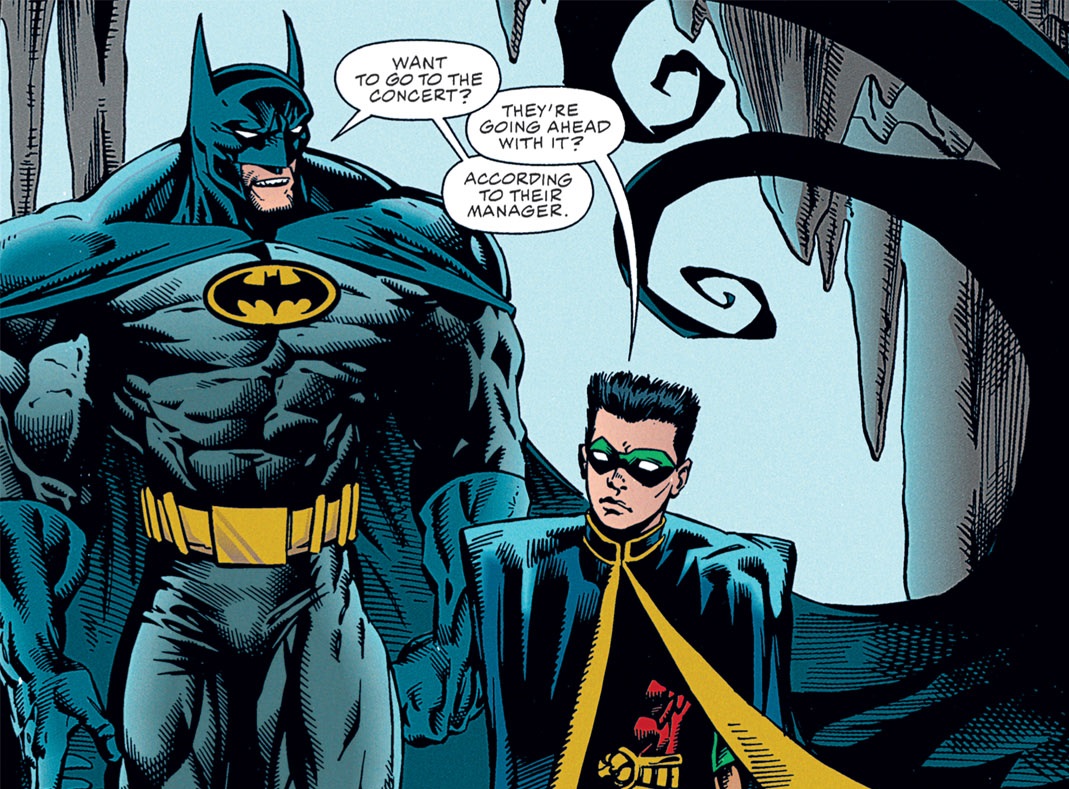 Shadow of the Bat #42
Your suspenseful reminder that comics can be awesome…
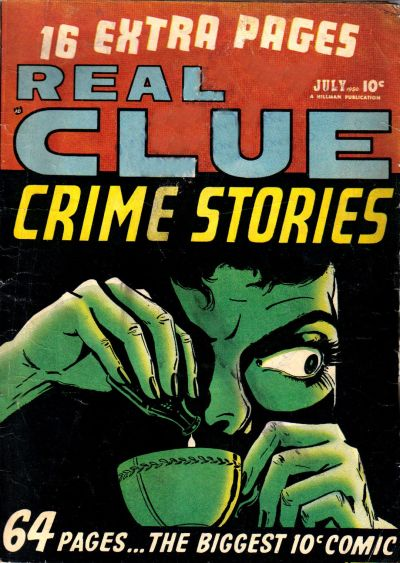
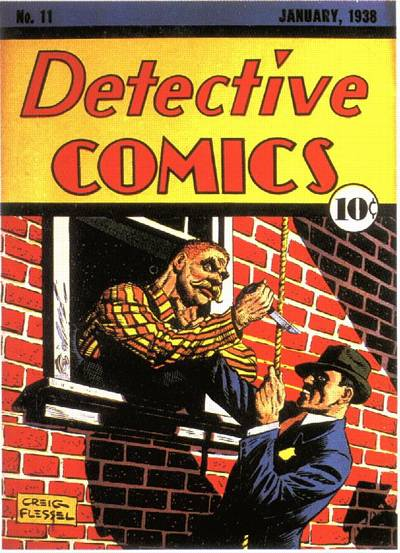
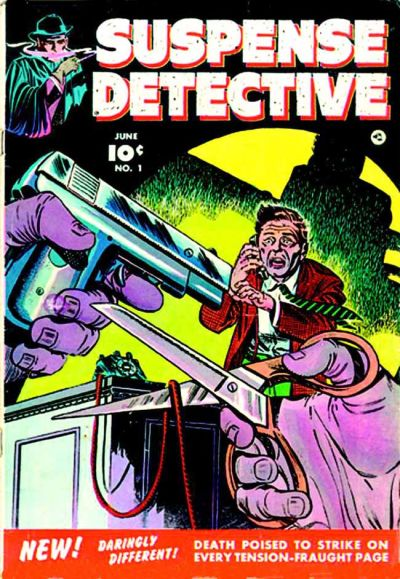
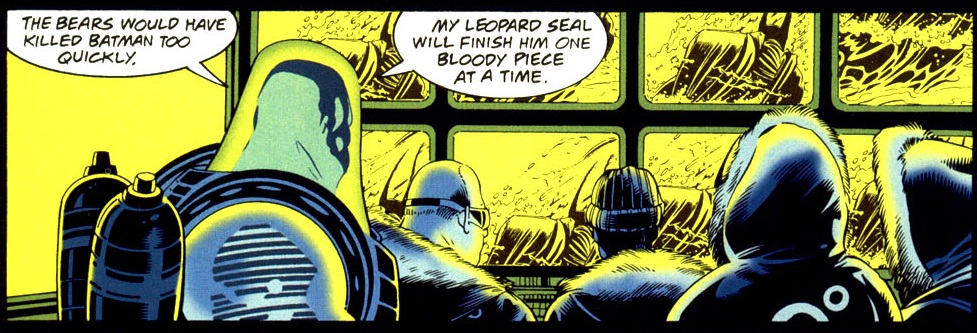 Batman: Mr. Freeze
By the late ‘90s, not only had the Batman family of books become a well-oiled machine, but three new awesome spin-offs joined the line: Nightwing, about Dick Grayson reinventing himself as a solo vigilante in the neighboring city of Blüdhaven, with action-packed scripts by Chuck Dixon and ultra-stylized visuals by Scott McDaniel; Birds of Prey (initially a set of specials, later turned into a regular series, also penned by Dixon) about the partnership between the wheelchair-bound hacker Oracle and the globetrotting Black Canary; and the funniest of the lot, Hitman, about the telepathic contract killer Tommy Monaghan (this was technically a spin-off of Garth Ennis’ and John McCrea’s run on Demon, but set in the Cauldron, Gotham’s lower-class Irish district). Moreover, there was a proliferation of specials and mini-series, most of them quite good.
Meanwhile, Staz Johnson became the regular penciller on Robin, bringing in a relatively more realistic – yet dynamic – style to the series. Azrael’s look also improved drastically once artist Roger Robinson came on board. In turn, Chuck Dixon’s replacement by Doug Moench as the main writer of Catwoman resulted in much less inspired scripts (can’t win them all, I suppose). Moreover, Devin K. Grayson became one of the franchise’s go-to writers, penning scattered tales (usually featuring Nightwing or Catwoman). In terms of the larger narrative, Batman returned to the Justice League of America (followed by Oracle and the Huntress) – and while I’ve mostly stayed clear of the superhero team books so far, I’ve decided to include some JLA-related material in this final stretch because much of it was written by Grant Morrison, so you can see him establish the approach to the Caped Crusader he would later develop in his Batman run in the 2000s.
That said, after 1996’s Legacy crossover the regular series once again went their different ways for a while, now with less subplots tying them together. Even the tie-ins to the larger DC events worked relatively well on their own, with no need to read other comics to get what was going on. This means that, for the most part, you can follow each series independently up until 1998’s Cataclysm crossover. With that in mind, instead of jumping around between individual issues, this time I’ll just list blocks of issues for each series (in alphabetical order) to be read between larger events.
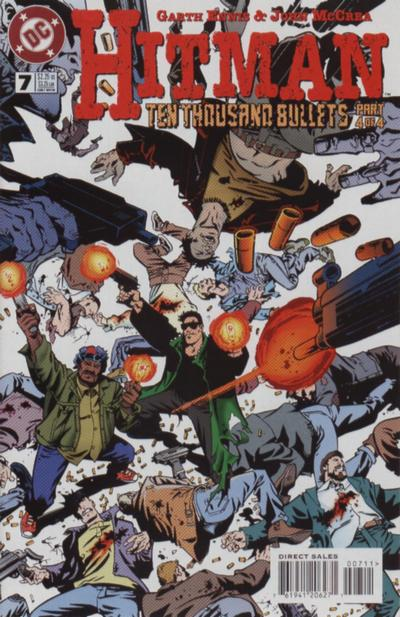
Batman #535 (collected in Batman by Doug Moench & Kelley Jones, v1)
Birds of Prey: Manhunt #1-4 (collected in Birds of Prey, v1)
Detention Comics: ‘Momma’s Boy’ [This special anthology includes a Robin story.]
Hitman #1-7 (collected in Hitman, v1 & 2)
Justice League: A Midsummer’s Nightmare #1-3 (collected as Justice League: A Midsummer’s Nightmare ) [The mini-series by Mark Waid, Fabien Nicieza, Jeff Johnson, and Darick Robertson that brought together the main heroes in the DC Universe (including Batman), ushering in the revamped JLA.]
Robin (v4) #34
THE FINAL NIGHT [All you need to know about this DC crossover is that an alien entity has consumed the sun.]
Batman #536: ‘Darkest Night of the Man-Bat: Predation’ (collected in Batman by Doug Moench & Kelley Jones, v2) [Moench’s approach to Kirk and Francine Langstrom in this arc feels much closer to the pre-Crisis version of the characters than to Dixon’s recent reboot.]
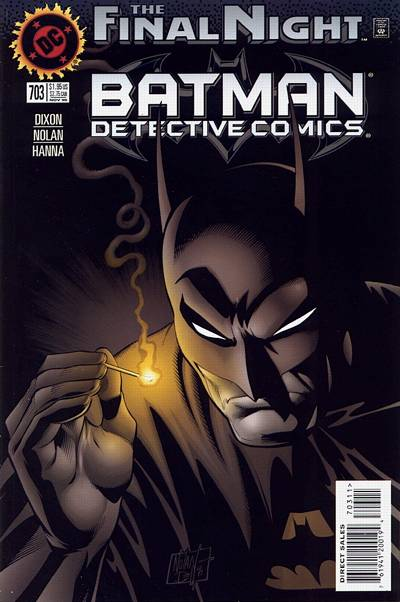
Detective Comics #703: ‘Howling in the Dark’
Hitman #8: ‘The Night the Lights Went Out’ (collected in Hitman, v2: Ten Thousand Bullets)
Robin (v4) #35: ‘Iced!’
Batman #537-358: ‘Darkest Night of the Man-Bat: Pursuit/Predemtion’ (collected in Batman by Doug Moench & Kelley Jones, v2) [Wraps up the storyline from Batman #536, but it takes place after The Final Night.]
POST-FINAL NIGHT
Azrael #21-26
Azrael + The Question [This team-up special, set after Azrael #26, features not only the Question (next seen in The Question Returns one-shot), but also Junior Musto, from Denny O’Neil’s cult run on The Question.]
Aztek, the Ultimate Man #1-10 (collected as JLA Presents: Aztek, The Ultimate Man) [Since I’ve decided to include JLA material, I might as well add this nifty spin-off (co-written by Morrison) as well. Plus, issues #6-7 do guest-star Batman and the Joker. The final issue (#10) takes place at the same time as JLA #5, so it works better if read immediately afterwards.]
Batman #539-541 (collected in Batman by Doug Moench & Kelley Jones, v2)
The Batman Chronicles #6-7
Blackgate: ‘Hatred’s Home’
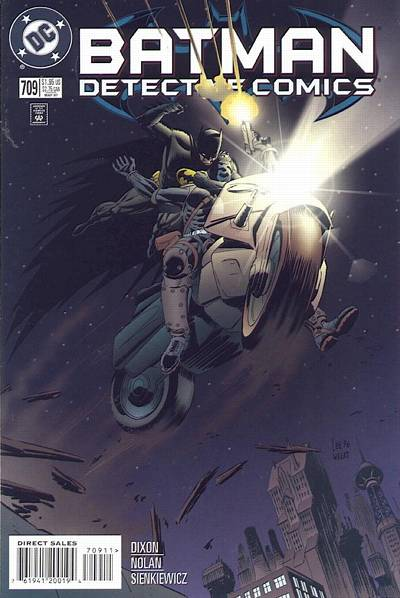
Detective Comics #704-711 [The issue ‘Knight Out’ (#711), about Bruce Wayne’s love life, works better if read before Bruce meets Vesper Fairchild, in Batman #540.]
Flash + Nightwing [A team-up special by Brian Augustyn, Mark Waid, and Eduardo Barreto]
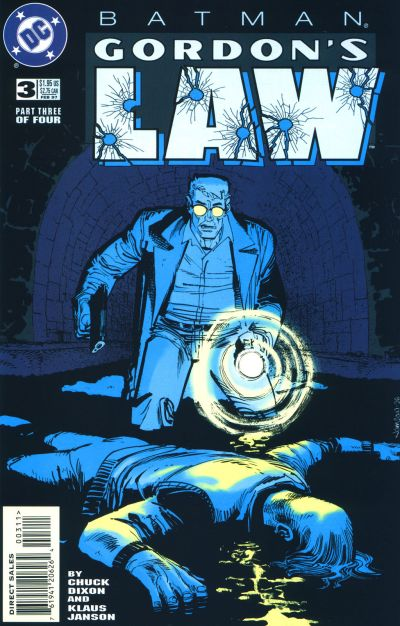
Gordon’s Law #1-4 (collected in Gordon of Gotham) [An awesome crime yarn starring Commissioner James Gordon, by Dixon and Klaus Janson.]
Hitman #9-12 (collected in Hitman, v3: Local Heroes) [Set before JLA #5, since it still references Superman’s long-haired look.]
JLA #1-5 (collected in JLA Deluxe Edition, v1 and JLA by Grant Morrison Omnibus; the first four issues also collected as JLA, v1: New World Order) [‘Woman of Tomorrow’ (#5) features Superman’s radical new look and cameos by Aztek and Tommy Monaghan. It runs parallel to Aztek #10 and to the neat JLA: Tomorrow Woman one-shot (by Tom Peyer and Yannick Paquette), which should be read afterwards.]
Legends of the Dark Knight #94: ‘Stories’ [A wonderful issue (by Michael T. Gilbert) in which characters stuck in an elevator compare their memories of meeting Batman, done in the style of various different eras.]
Batman: Poison Ivy (collected in Arkham: Poison Ivy) [One-shot by John Francis Moore and Brian Apthorp]
Robin + Impulse [A team-up special by Brian Augustyn, Mark Waid, and John Royle]
Shadow of the Bat #56-58 [‘Leaves of Grass,’ featuring Floronic Man with a new body after having been recently decapitated in Swamp Thing #170.]
PULP HEROES [Not exactly a crossover: DC’s 1997 annual issues were all pastiches of pulp magazines – thus, while they don’t have to be read together, it’s fun do so!]
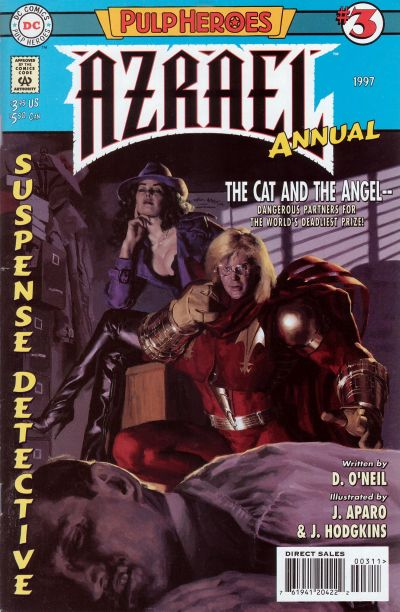
Azrael Annual #3: ‘The Vampire Bat’ [Done in the style of a noirish detective yarn (specifically, The Maltese Falcon)]
Batman Annual #21: ‘The Scream of the Green Dragon’ (collected in Tales of the Batman: J.H. Williams III) [Done in the style of The Shadow]
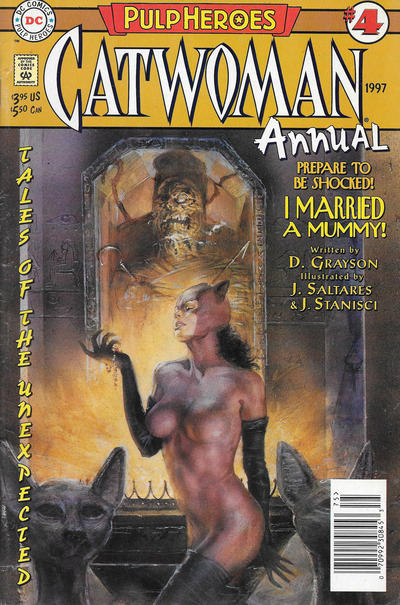
Catwoman Annual #4: ‘I Married a Mummy’ [Done in the style of a horror/fantasy adventure]
Detective Comics Annual #10: ‘Warrior Breed’ [Done in the style of two-fisted war action]
Hitman Annual #1: ‘Coffin Full of Dollars’ (collected in Hitman, v2: Ten Thousand Bullets) [Done in the style of a western]
JLA Annual #1: ‘Hardboiled Hangover/Lockdown’ [Done in the style of hardboiled mystery and two-fisted action]
Nightwing Annual #1: ‘Forever Hold Your Peace’ (collected in Nightwing, v2: Rough Justice (2015 edition)) [Done in the style of a romance potboiler]
Robin Annual #6: ‘The Law West of Gotham’ [Another western]
Shadow of the Bat Annual #5: “I was the love-slave of a plant-based killer!” [Another noirish detective yarn]
POST-PULP HEROES
Anarky #1-4 (collected in Batman: Anarky) [This mini-series must be set after Hitman #20.]
Azrael #27-33
Batman: Bane (collected in Legacy, v2 (2018 edition)) [Bear in mind that this one-shot (by Chuck Dixon and Rick Burchett) takes place after Nightwing has started operating in Blüdhaven, at the beginning of the Nightwing ongoing series.]
Batman #542-546 (collected in Batman by Doug Moench & Kelley Jones, v2)
Batman + Arsenal [Like Bane, this team-up special (by Devin K. Grayson and Rodolfo Damaggio) takes place after Nightwing has moved to Blüdhaven.]
The Batman Chronicles #8-10
Batman / Wildcat #1-3 (collected in Batman/Wildcat)
Catwoman (v2) #41-53 [I skipped #38-40, because it consists of a goofy ‘Year Two’ story]
Detective Comics #712-713
Hitman #13-20 (collected in Hitman, v3 & 4) [The arc ‘Ace of Killers’ (#15-20) features Jason Blood and Etrigan, revisiting the storyline from Demon (v3) #52-54.]
JLA #6-9 (collected in JLA, v2: American Dreams, JLA Deluxe Edition, v1, and JLA by Grant Morrison Omnibus)
Batman: Mr. Freeze (collected in Arkham: Mister Freeze) [One-shot by Paul Dini and Mark Buckingham]
Nightwing (v2) #1-12 (collected in Nightwing, v1: A Knight in Blüdhaven (or just Blüdhaven in the 2014 edition) & v2: Rough Justice)
Robin (v4) #36-45
Shadow of the Bat #59-67
The Spectre (v3) #51 [Guest-appearance by the Dark Knight, who recently encountered the Spectre in Batman #540-541.]
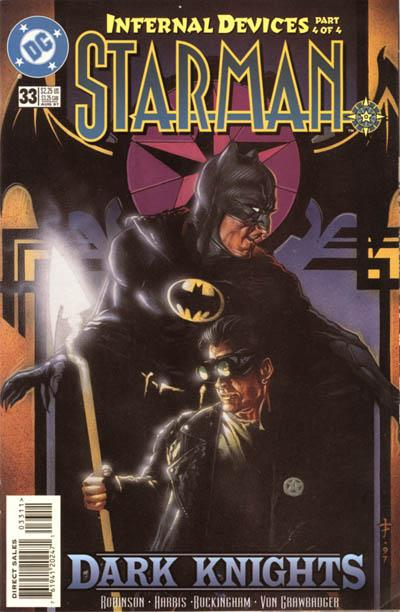
Starman (v2) #33-34 (collected in Starman Omnibus, v3) [Guest-appearance by the Dark Knight in one of the greatest superhero series of the ‘90s.]
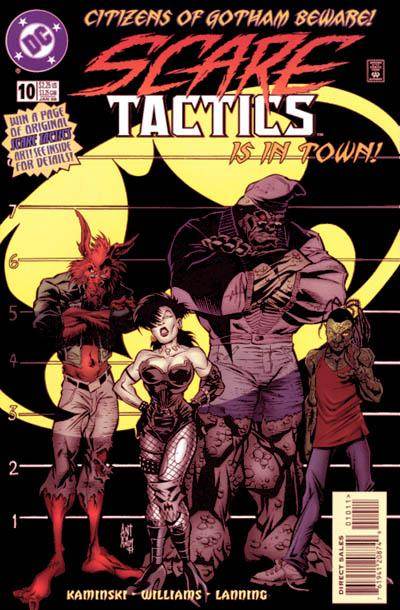
SCARE TACTICS [On the surface, Len Kaminski’s and Anthony Williams’ quirky series Scare Tactics (about a rock band made up of teenage monsters) may have little to do with Batman, but there are enough connections to justify its inclusion here.]
Showcase ’96 #11
Scare Tactics #1-9
Catwoman + Screamqueen [The main story works by itself. The back-up continues from Impulse + Gross-Out and Superboy + Slither… and leads into the backup of Robin + Fang.]
Robin + Fang
Scare Tactics #10-12 [Issues #10-11 are set in Gotham City.]
GENESIS [The main thing you need to know about this DC crossover is that an interstellar phenomenon is making humans feel like something is missing, ushering in existential crises.]
Azrael #34: ‘Genesis’
Batman #547: ‘Dark Genesis’ (collected in Batman by Doug Moench & Kelley Jones, v2)
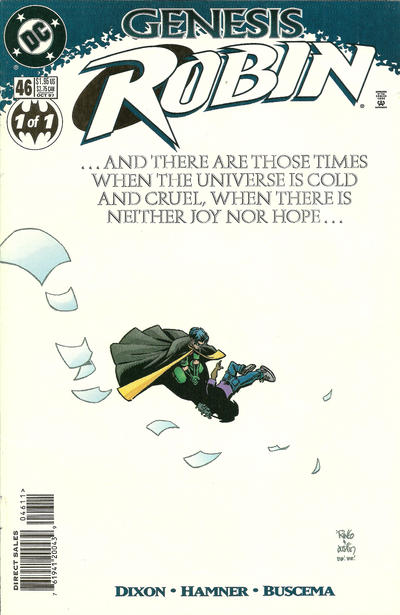
Robin (v4) #46: ‘Dark at Dawn’
POST-GENESIS
Azrael #35-39 [‘The Angel and the Hitman’ (#35) guest-stars Tommy Monaghan, so it should come before Hitman #23, where Tommy’s life begins to spiral out of control.]
Azrael / Ash [This intercompany crossover has the particularity of reuniting the creative team behind the original Sword of Azrael mini-series (Denny O’Neil and Joe Quesada). I would read it either right before or right after Azrael #35, because the hero’s flirty banter with Oracle matches their dynamic at the time.]
Batman #548-552 (collected in Batman by Doug Moench & Kelley Jones, v2) [‘Chasing Clay’ (#550, collected in Tales of the Batman: J.H. Williams III) introduces Cameron Chase, the agent of the DEO (Department of Extranormal Operations) who will go on to star in her own awesome series.]
Batman 80-Page Giant #1-2
Batman Annual #22 [Part of the larger DC crossover Ghosts]
The Batman Chronicles #13 [Published later, but probably set before Cataclysm.]
Batman / Phantom Stranger [One-shot by Alan Grant and Arthur Ranson that is actually a sequel to Detective Comics #614, published seven years before!]
Batman: Scottish Connection (collected in Batman: International)
Batman Secret Files & Origins #1
Batman / Toyman #1-4
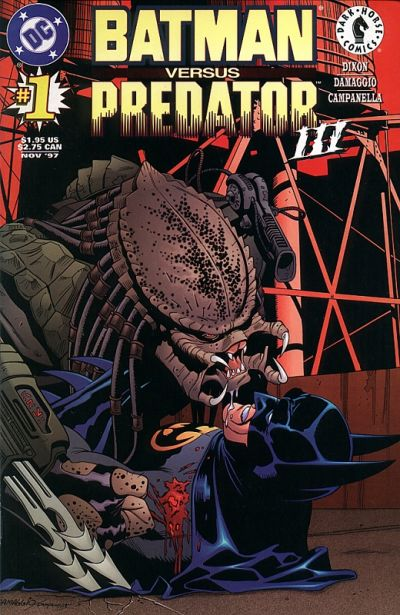
Batman versus Predator III #1-4 (collected as Batman Versus Predator III: Blood Ties)
Birds of Prey: Black Canary / Batgirl (collected in Birds of Prey, v1 (2015 edition))
Birds of Prey: The Ravens (collected in Birds of Prey, v2) [Sets up one of the arcs of the upcoming Birds of Prey ongoing series.]
Catwoman (v2) #54-55 [Devin Grayson replaces Moench as the regular writer, kicking things off with a couple of fun standalone tales.]
Catwoman / Wildcat #1-4 (collected in Batman/Wildcat)
Detective Comics #714-718 [You may as well add #726, which seems set before Cataclysm.]
Gordon of Gotham #1-4 (collected in Gordon of Gotham)
Hitman #21-28 (collected in Hitman, v4 & 5)
JLA #10-17 (collected in JLA Deluxe Edition, v2 and JLA by Grant Morrison Omnibus; issues #10-15 also in JLA, v3: Rock of Ages and #16-17 in JLA, v4: Strength in Numbers) [Between #15 and #16, read the one-shot New Year’s Evil: Prometheus.]
New Year’s Evil: Scarecrow [One-shot by Peter Milligan and Duncan Fegredo]
Nightwing (v2) #13-18 (collected in Nightwing, v2: Rough Justice) [Read the short story ‘The Breaks’ (Nightwing #½, collected in the third volume) between #15 and #16.]
Nightwing / Huntress #1-4 (collected in Nightwing, v3: False Starts) [To be read after Nightwing (v2) #18]
Resurrection Man #7, 9-10 [Issue #7, in which Resurrection Man comes to Gotham, works pretty well on its own. Issues #9-10, where he meets Tommy Monaghan – and which therefore take place before Hitman #23 – build on storylines from earlier Resurrection Man issues, but they’re not hard to follow. (Issue #8 has no direct Batman connection, but it’s a nice Halloween tale.)]
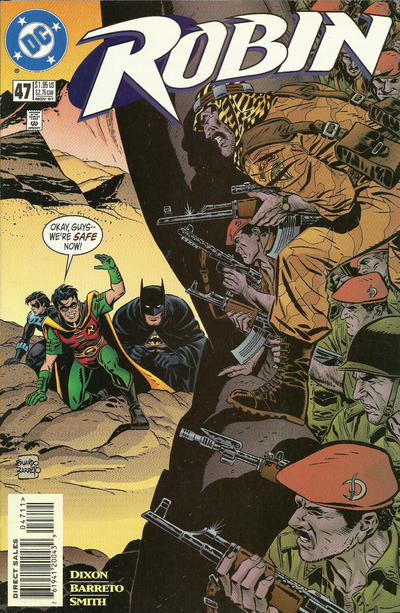
Robin (v4) #47-52 [The very final pages of #52 take place during Cataclysm. You can either read the issue here (and take those pages as foreshadowing) or right after Cataclysm (if you don’t mind waiting out the cliffhanger).]
Shadow of the Bat #68-72
FLASHBACKS [These comics came out in the 2000s, but they must be set sometime around here, before Cataclysm.]
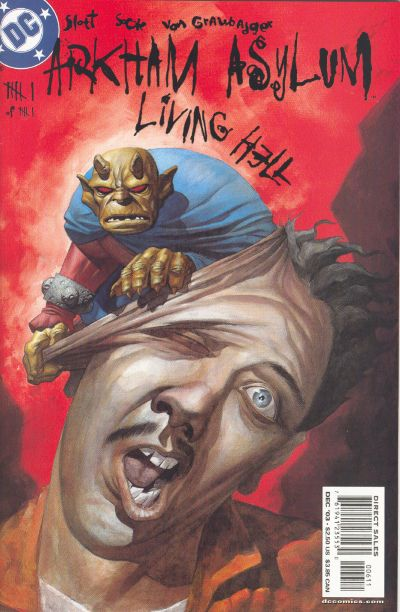
Arkham Asylum: Living Hell #1-6 (collected as Arkham Asylum: Living Hell)
Batman: The Hill
Batman / Starman /Hellboy (collected in Starman Omnibus, v4 and Hellboy: Masks and Monsters) [This intercompany crossover, cover-dated 1999, also belongs here.]
Batman: Unseen #1-5 (collected as Batman: Unseen)
Legends of the Dark Knight #142-145 (collected as DC Comics Presents: Batman – The Demon Laughs)
World’s Finest (v2) #1-10 (collected as Batman & Superman: World’s Finest) [This very cool limited series (written by Karl Kesel) consists of retroactive flashbacks to Batman/Superman team-ups throughout the ages, but it’s best read as a whole in order to capture the overall arc.]
CATACLYSM ADDENDA [Cataclysm inaugurated the final phase of this overall era of Batman comics, with the editorial and creative team that had been around for most of the ‘90s providing a last batch of stories with the same tone and cast, paying off many of the lingering subplots. I’ve written a reading order for Cataclysm and its aftermath (including the massive No Man’s Land crossover) here and here. At the time, I left out the comics below because they largely ignore the events of Cataclysm, yet they must take place between that crossover and No Man’s Land:
Anarky (v2) #1-8 [Last time, I only included the first issues, but the whole series fits here. The main story must take place after JLA #20-21, since Superman is back to his old look.]
Birds of Prey #1-7 (collected in Birds of Prey, v2)
Chase #1-9, followed by Chase #1,000,000 (collected as Chase) [In ‘Shadowing the Bat’ (#7-8, collected in Tales of the Batman: J.H. Williams III), Cameron Chase returns to Gotham.]
Hitman #29-36 (collected in Hitman, v5: Tommy’s Heroes) [Hitman #1,000,000, part of the DC One Million crossover, takes place between #33 and #34.]
JLA #18-31 (collected in JLA Deluxe Edition, v3) [DC One Million takes place between #23 and #24]
Robin 80th Anniversary 100-Page Super Spectacular: ‘Aftershocks’ [This special – which came out earlier this year! – includes a short story by Nightwing’s original creative team (Chuck Dixon and Scott McDaniel) set during Cataclysm, right after Nightwing #19.]
Superman: The Odyssey [It’s a Superman one-shot, but it features a very cool Batman cameo in flashback and it’s done by the Detective Comics team of Chuck Dixon and Graham Nolan.]
I wasn’t a fan of last year’s reboot of The Twilight Zone, but somebody convinced me to check out some of the second season’s episodes. Although they’re a mixed bag and still highly derivative, there is definitely some improvement.
The boarding school-set ‘Among the Downtrodden’ threatened to be a rip-off of Brian De Palma’s Carrie but it soon found its own twisted path, one quite cleverly plotted by Heather Anne Campbell (yet saddled with a typically heavy-handed direction). Following a group of scientists dealing with a monstrous creature in Antarctica, ‘8’ benefits from the work of two genuinely great sci-fi/horror directors (Justin Benson and Aaron Moorhead), who pull off an entertainingly schlocky chiller that rises above its origins as a riff on Christian Nyby’s and John Carpenter’s versions of The Thing. Even the intertextual winks (it’s set at NyBy Science Station; characters watch a TV show narrated by Rod Serling…) and the odd casting choice of having Tim Armstrong play a scientist (who is obviously into ska) somehow work as more than mere distractions. (The fact that this one has a shorter running time helps as well!) In turn, ‘You Might Also Like’ was a letdown. I guess it could’ve worked as a passable satire of consumerism – even if not a particularly deep or original one – but the result is too confusing and poorly paced (probably a failed attempt at sophistication…). It doesn’t do itself any favors by referencing one of the original show’s most beloved episodes, ‘To Serve Man,’ which was everything this one is not: charmingly goofy, exciting, memorable, funny, and surprising.
And then there is Jennifer McGowan’s ‘Try, Try,’ about an increasingly weird meet cute at a museum. Like Leigh Whannell’s The Invisible Man, it revisits a classic story from the perspective of the female character, thus shedding light on how predatory and manipulative the behavior of the former male lead would feel if faced from a different vantage point. To be fair, works about gaslighting are not a new thing – hell, the term comes from the title of a couple of gothic movies from the early 1940s! There is a whole subgenre of psychological thrillers about women being mind-fucked, usually culminating in them trying to denounce a truth nobody believes (just off the top of my head, The Lady Vanishes, Coma, Rosemary’s Baby, My Name Is Julia Ross, and Bunny Lake Is Missing come to mind). This trope can be read as feminist: not only are the female protagonists actually revealed as sane in the end (contrary to what those around them think), but society’s predisposition to wrongly see women as hysterical is both acknowledged and presented as an obstacle for the forces of good (i.e. as something the villains take advantage of). What ‘Try, Try’ brings to the table, though, is a metafictional reversal: a device that was commonly accepted as amusing in Groundhog Day is now presented as disturbing. The episode makes its point effectively, even for people who haven’t seen the original, but you might as well watch the actual movie – after all, anyone watching 2020’s Twilight Zone will probably be woke enough to recognize that comedy’s creepy gender dynamics (which the film doesn’t fully condone, even if it makes light of them) without having Jordan Peele spell things out in the end.
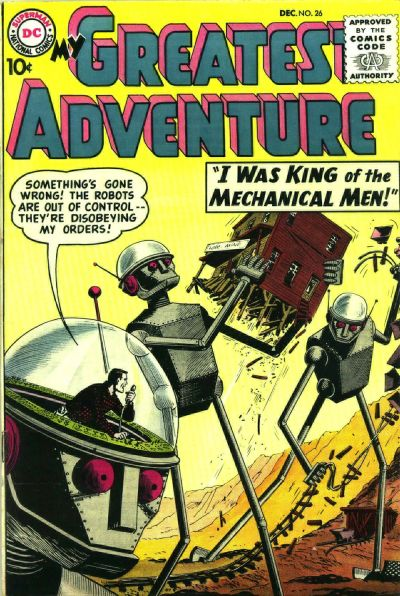
Anyway, speaking of surreal science fiction anthologies, here is your reminder that comics can be awesome, My Greatest Adventure edition:
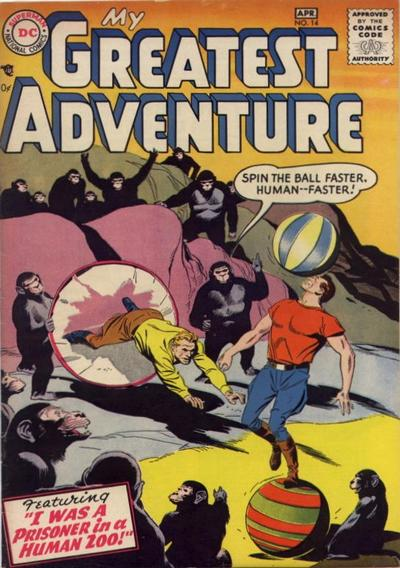
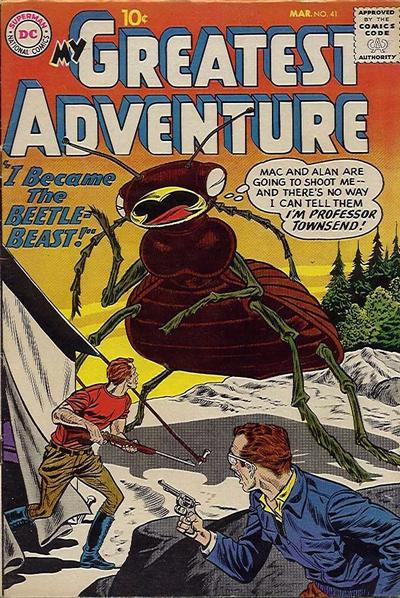
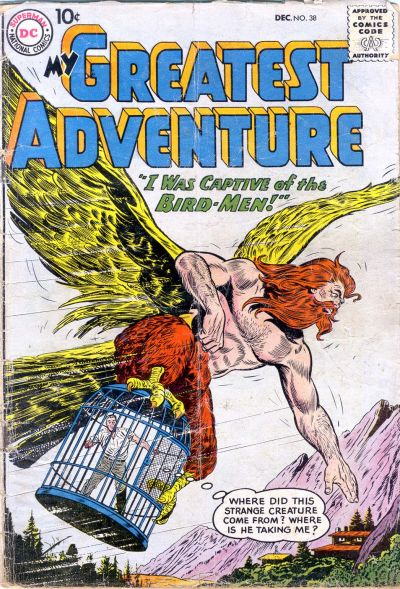
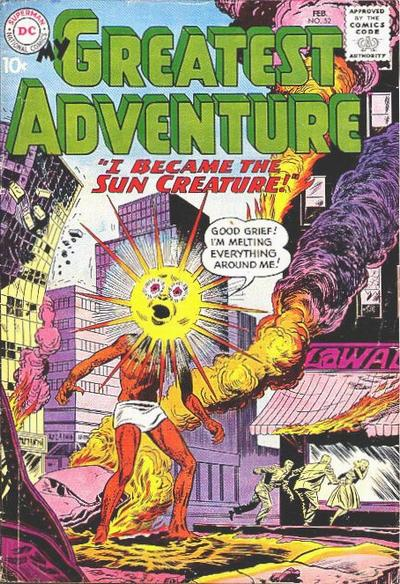
If you read last week’s post, you know I’ve been discussing comics that expanded H.G. Wells’ classic novel The War of the Worlds.
Today I want to start with The League of Extraordinary Gentlemen, Alan Moore’s and Kevin O’Neill’s fun series about a Victorian team of anti-heroes made up of old public domain characters. Much of LOEG’s second volume (originally a six-issue mini-series published in 2002-2003) revolved around Wells’ Martian invasion, which suited both the comic’s initial conception (digging up the origins of pulp fiction by reveling in turn-of-the-twentieth-century fantastic literature) and its political motifs (satirizing the monstrous side of the British Empire).
 The League of Extraordinary Gentlemen (v2) #1
In line with the series’ notion of connecting disparate works into a single, intricate continuity, Moore and O’Neill integrated The War of the Worlds on a vast tapestry, kicking things off with a prelude on Mars that tied Wells’ novel to Edwin L. Arnold’s Lieutenant Gullivar Jones: His Vacation and to Edgar Rice Burrough’s Barsoom stories featuring John Carter. The whole thing may sound too esoteric, but O’Neill successfully brought it to life as an eerily dreamlike grand adventure through glorious splash pages like the one above.
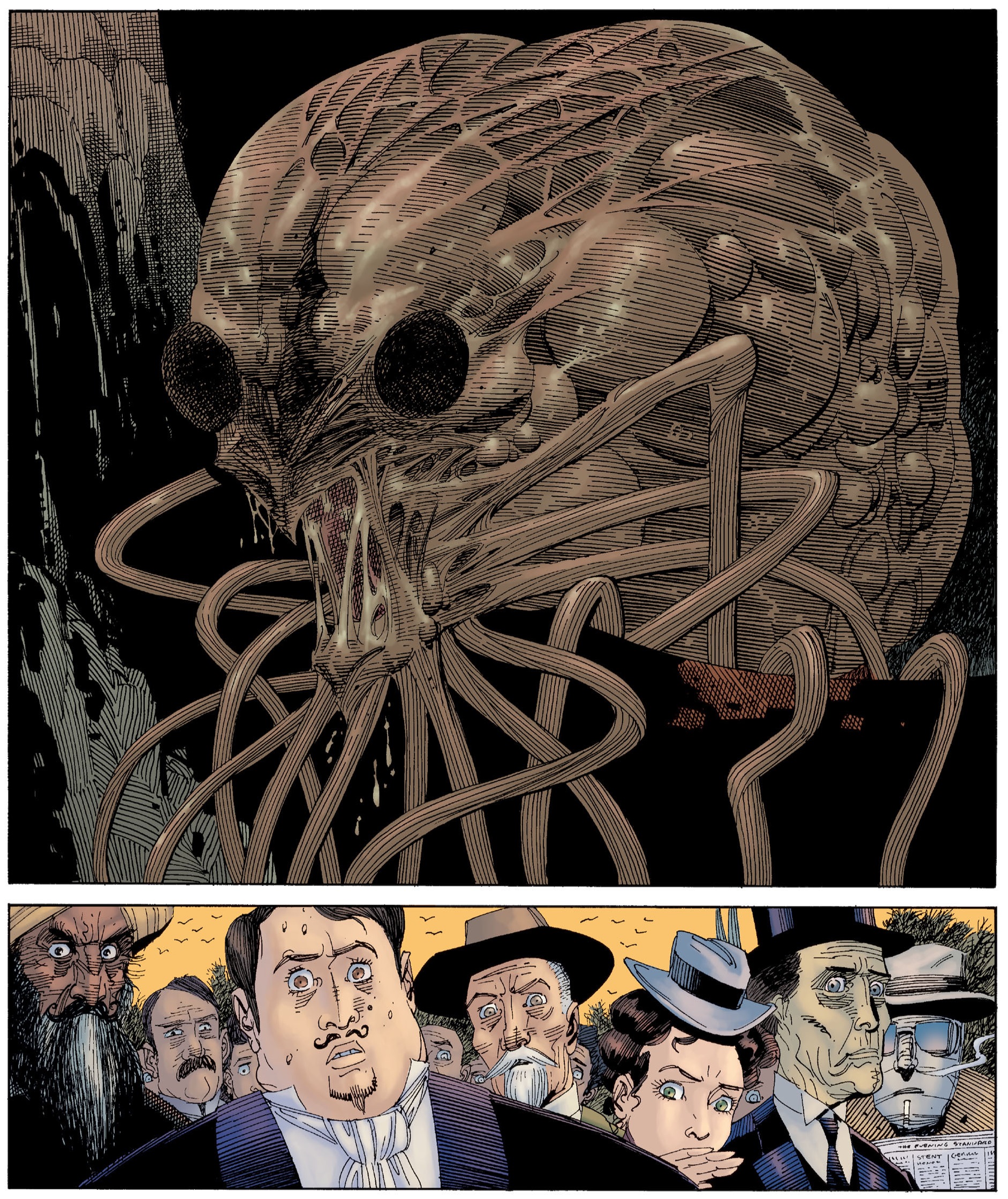
By the time we got to the second issue, the main action became deeply entangled with H.G. Wells’ narrative, albeit seen from the point of view of the protagonists of The League of Extraordinary Gentlemen. This applied both to peripheral details (even the newspapers headlines were taken from the book) and to key scenes like the expedition into the initial crater by Stent, the Astronomer Royal, closely depicting the lead-up to the first massacre. Some of the dialogue is reproduced verbatim – for example, we catch a glimpse of the original (unnamed) narrator’s conversation with his neighbor in one of the backgrounds (‘What ugly brutes!’).
And, needless to say, Kevin O’Neill hauntingly visualizes the Martians’ horrific looks…
 The League of Extraordinary Gentlemen (v2) #2
That said, as usual with The League of Extraordinary Gentlemen (and contrary to what some critics say), we get much more than the mere pleasure of recognition across media.
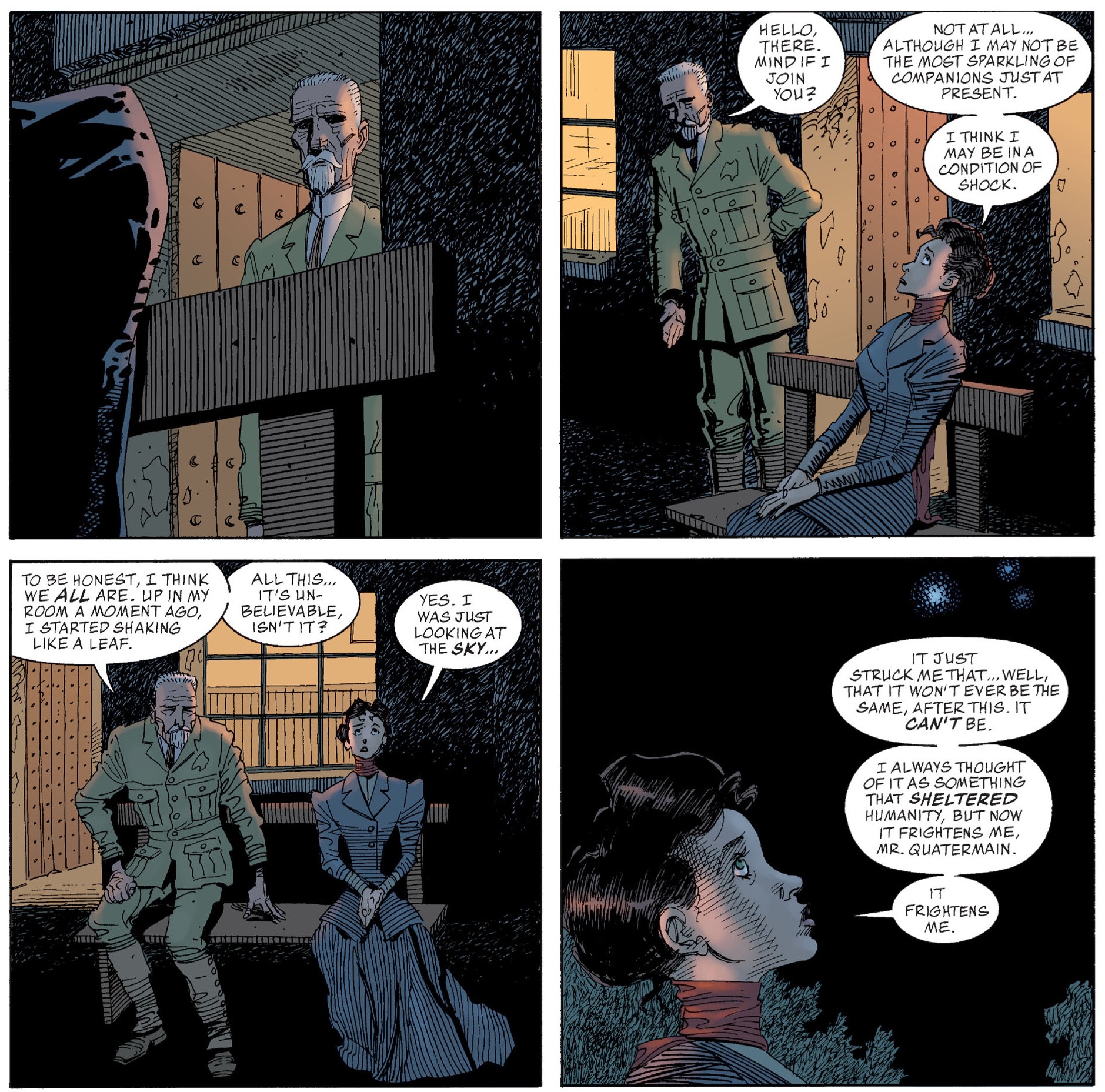
For one thing, Alan Moore is a master of characterization, so he skilfully milks the invasion’s dramatic potential by showing us how each of the protagonists would react to such a world-shattering turn of events. Besides fleshing out the series’ leads, Moore slows down the action just enough to convey the overall weight of the situation, thus recapturing the ‘lost innocence’ atmosphere that permeates H.G. Wells’ novel…
 The League of Extraordinary Gentlemen (v2) #2
While shifting perspectives, The League of Extraordinary Gentlemen reveals supposedly hidden aspects of the story. It turns out the shot that destroyed one of the tripods on the novel’s twelfth chapter was fired by Captain Nemo. The Martian red weed is then revealed to be an anti-submarine weapon (suggested by the Invisible Man) deployed specifically against the Nautilus.
Most notably, what ultimately kills the aliens is not a natural strain of bacteria, but a genetically engineered hybrid of anthrax and streptococcus designed by another H.G. Wells creation, Doctor Moreau, and deliberately fired against the Martians by the British forces. Bear in mind that this retcon doesn’t necessarily contradict the original text, whose subjective narrator presented the natural infection explanation as a mere hypothesis. Thus, Alan Moore applies to The War of the Worlds the kind of radical-yet-faithful revisionism he had previously applied to comics like Marvelman, Swamp Thing, and The Spirit (and even to the Joker’s Red Hood origin in The Killing Joke).
Thematically, though, this new version seems to go against the underlying spirit of Wells’ book, which rested on two humbling gestures. On the one hand, the text followed the perspective of marginal players on the sidelines, helplessly witnessing the main action without controlling it (this is where much of the horror stemmed from), unlike LOEG’s leads, whose choices shape the invasion’s final outcome. On the other hand, the point of Wells’ ending was precisely that the humans weren’t able to defeat the Martians – the subtle double meaning in the title was that the worlds at war weren’t just those of humans and aliens, thus subverting humanity’s sense of self-importance.
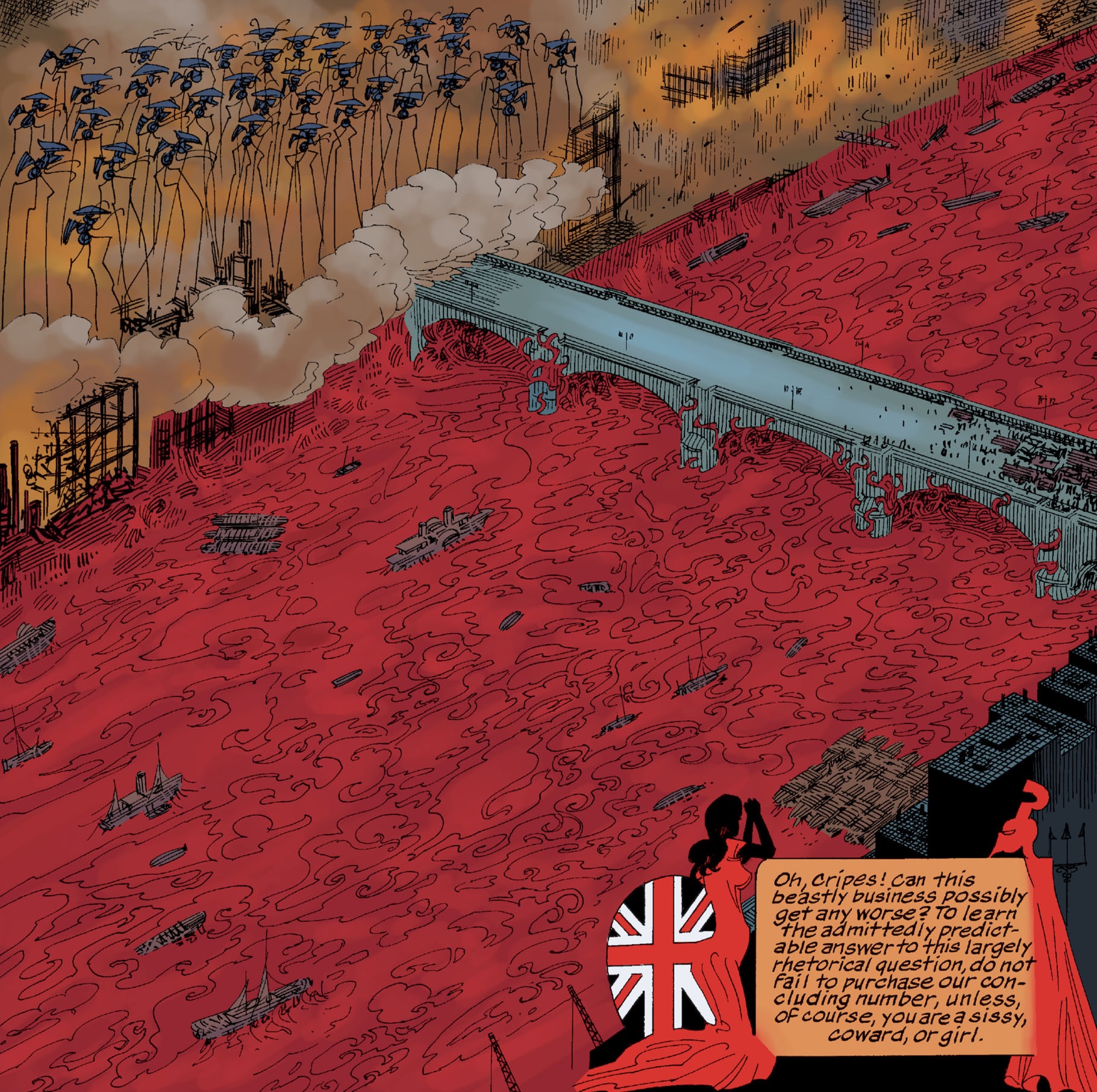
Regardless, I suppose you could argue that The League of Extraordinary Gentlemen’s reinterpretation does preserve some of the slant of the original work, since the revised story is itself an allegory about imperial ruthlessness. After all, not only do we see British authorities gleefully developing – and ultimately resorting to – biological warfare, but we get a taste of their cynical relation with public truth: ‘Officially, the Martians died of the common cold. Any humans died of Martians.’ Plus, as was typical of LOEG’s earliest volumes, every aspect of the comic seems designed to mock Victorian values, right up to each chapter’s closing blurbs…
 The League of Extraordinary Gentlemen (v2) #5
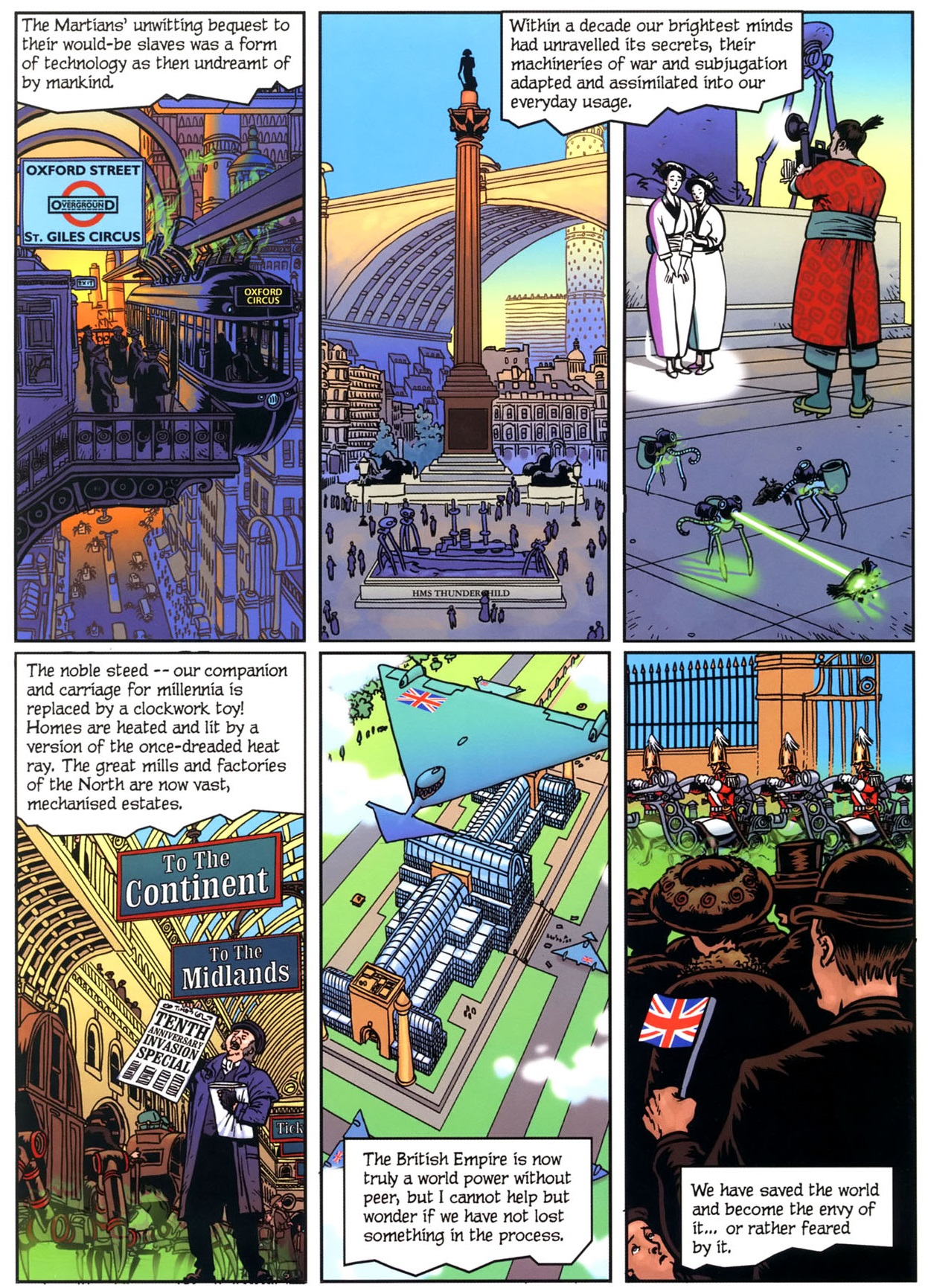
Around the time that this comic first came out, we got a different project expanding H.G. Wells’ seminal work – not sideways, like LOEG, but by moving forward chronologically in the form of a direct sequel, like Marvel had done in the seventies. Ian Edginton’s and D’Israeli’s Scarlet Traces was originally published online before being serialized, in 2002, in Judge Dredd Megazine #16-18 and later collected in a Dark Horse hardcover (more recently, the series and its sequels have also been collected by Rebellion). Set in 1908, this comic imagined the aftermath of The War of the Worlds in a way that departed from Wells’ hopeful ending – instead of humanity coming together and, humbled by its recent experience, tempering its arrogance with a more peaceful, progressive outlook, the Martians’ defeat renewed the survivors’ old sense of purpose… because it was just as easy to believe the aliens had been killed by microscopic bacteria than to see it as divine intervention, i.e. as proof that God was on our side.
Notably, unlike Amazing Adventures, which suggested that twentieth-century history had carried on in much the same way as in our timeline after the Martians’ failed invasion, Scarlet Traces assumes the world in general – and Britain in particular – has been profoundly shaped by those events, especially due to the encounter with alien technology. This is the starting point for a clever bit of speculative fiction, taking into account the turn of the century’s New Imperialism while also serving as a springboard for a bunch of nifty steampunk landscapes:
 Scarlet Traces
As you can see, like Kevin O’Neill, D’Israeli evokes a certain type of Victorian aesthetics while providing a distinctive visual style that is clear yet unrealistic (which is not to say that the depicted creatures and machinery aren’t carefully conceived, as demonstrated by the fascinating sketches at the end of the hardcover edition).
His interpretation of the Martians is strikingly different from O’Neill’s – as well as from Howard Chaykin’s and Manuel Garcia’s – while nevertheless managing to remain faithful to H.G. Wells’ description:
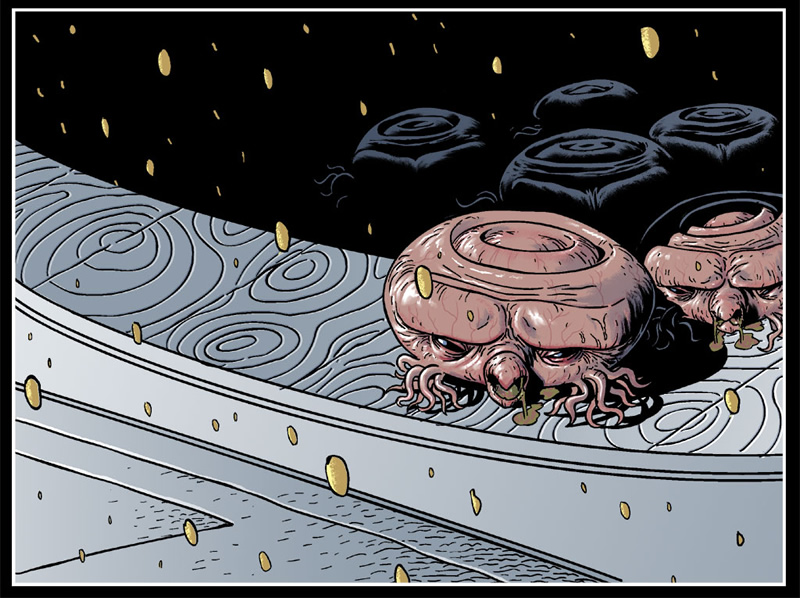 War of the Worlds (2006)
Likewise, Ian Edginton gets Wells’ voice but he doesn’t stick to mere pastiche. For one thing, the quaint prose is often interspersed with folksier dialogue. Moreover, rather than replicating the original’s formula by telling another war story, Edginton chose to open this new saga with a classic conspiracy thriller (a proven narrative device for exploring alternate realities). He also added multiple interesting layers of world-building, for example speculating that the sudden jump in terms of mechanization would take a particular toll on industrial Scotland, where the ensuing mass unemployment was bound to generate resentment.
In a move comparable to LOEG’s, despite subverting the spirit of The War of the World’s epilogue, Scarlet Traces stays true to H.G. Wells’ critique of the British Empire’s aggressive power and self-entitlement. The notion of a postwar nation deploying the technology of its former adversary also brings to mind the role of Nazi scientists in the United States after World War II – or, more generally, the public’s willingness (still today) to indulge in comfort and consumer goods with little regard for how they were produced…
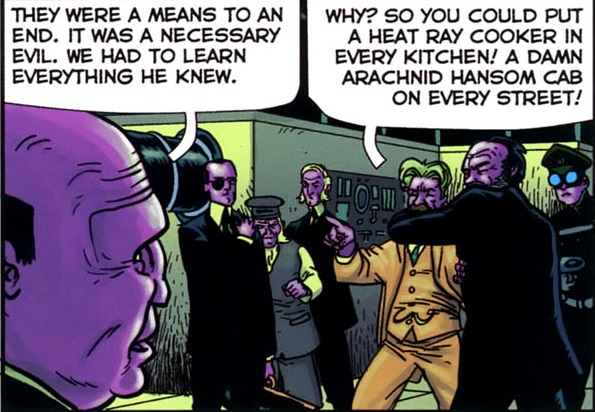 Scarlet Traces
Edginton and D’Israeli seem to have struck creative gold with this series, bringing to life a truly captivating timeline, visually as well as thematically. They followed it up with a straight-up adaptation of War of the Worlds and, in 2006, with a four-issue sequel, Scarlet Traces: The Great Game.
Building on the conclusion of the previous volume, this sequel jumped to the 1940s, when the British Empire was still at war with the Martians. By then, global technological superiority and the protracted armed conflict had unleashed the UK’s authoritarian impulses, to the point where Oswald Mosley was now Home Secretary and George Orwell was in an internment camp (a throwaway line that pays off with a neat visual cameo near the end). This time around, we followed intrepid photojournalist Charlotte Hemming as she investigated yet another sinister conspiracy. She was quite a charismatic character, even though, once again, the main attraction was the sheer process of gradually uncovering this world’s politics, society, historical deviations, and retro-sci-fi imagery…
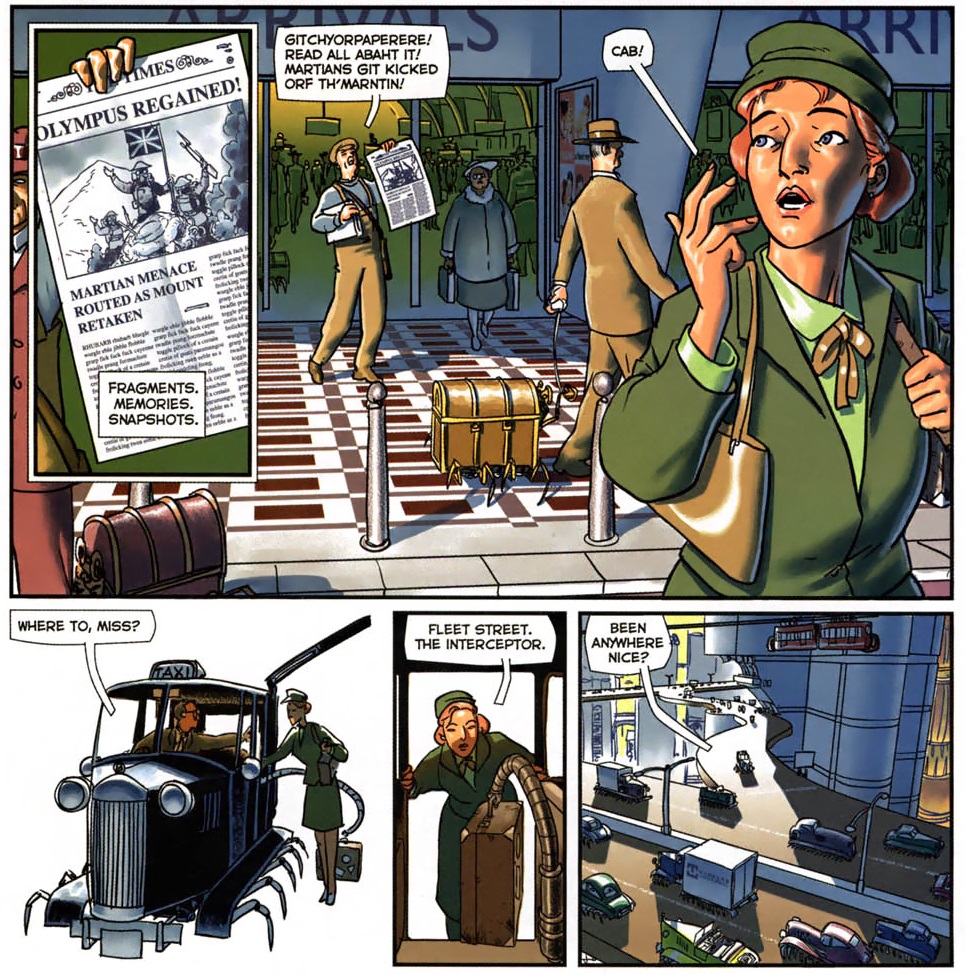 Scarlet Traces: The Great Game #1
Honestly, I’d say The Great Game makes for an even more satisfying read than the first Scarlet Traces. The political intrigue is sharper (even if you ignore the obvious nudges to the Bush/Blair era’s War on Terror) and D’Israeli delivers some stunning battle scenes on Mars and outer space. Plus, while not going as far as The League of Extraordinary Gentlemen’s nerdy obsessiveness, the book pays tribute to classic science fiction by sneaking in all sorts of subtle references to stuff like Dan Dare, Pilot of the Future and The Adventures of Tintin, not to mention H.G. Wells’ own The First Men in the Moon.
Hell, the covers smack of Dan Dare’s pulpy military space adventure vibe, combined with WWII posters:
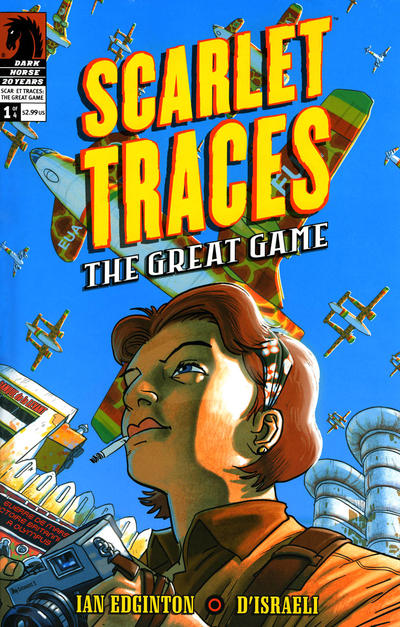
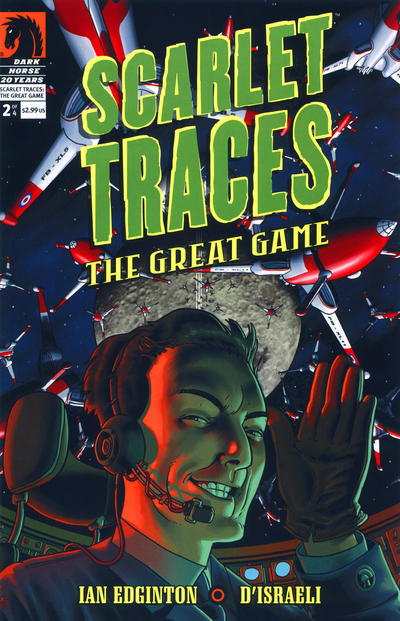
After a lengthy hiatus, we finally got new Scarlet Traces comics in 2016, when they became a recurrent strip on the pages of 2000 AD. The first arc, ‘Cold War,’ which moved the action to 1968, revolved around a spy mission to Venus, still under Martian occupation (since the end of War of the Worlds). For all its populist, in-your-face allusions to topics like racism and the refugee crisis, though, the new iteration of Scarlet Traces essentially boiled down to a much more traditional fantasy adventure series (albeit with epic stakes), its plot a string of genre clichés ultimately elevated by D’Israeli’s eccentric, rubbery artwork and increasingly experimental colors.
That said, at least the ‘Home Front’ arc brought back Charlotte Hemming, which remained a joy to read about. Moreover, Ian Edginton and D’Israeli sure know to pander to their fanbase with a steady supply of (unobtrusive) geeky Easter Eggs…
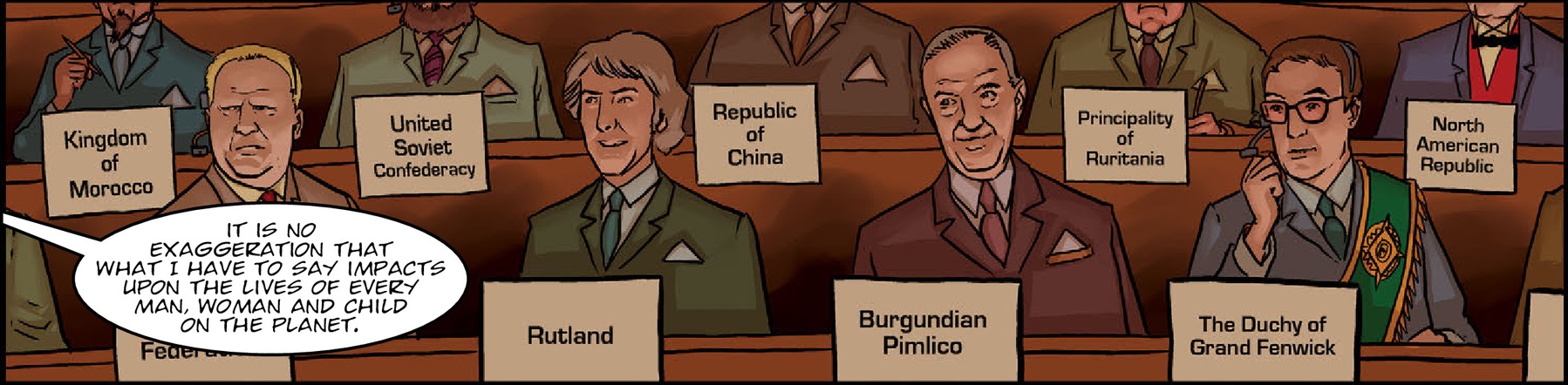 2000 AD #2023
As if all this wasn’t enough, Edgniton invited other people to play in this sandbox, editing a prose anthology last year with short stories by – among several others – fellow 2000 AD alumni Emma Beeby and I.N.J. Culbard. And we’ve been promised more Scarlet Traces comics soon!
At the end of the day, while I didn’t care for every single beat in the series, I can’t help but appreciate the overall Scarlet Traces saga, which has truly developed The War of the Worlds into a sprawling mythology populated with a richly diverse cast. In particular, the fact that – like The League of Extraordinary Gentlemen and even, in its own peculiar way, Don McGregor’s run in Amazing Adventures – the result has echoed and commented on the various conflicts humanity has gone through since 1898 seems like a logical extension of H.G. Wells’ own pacifist concerns.
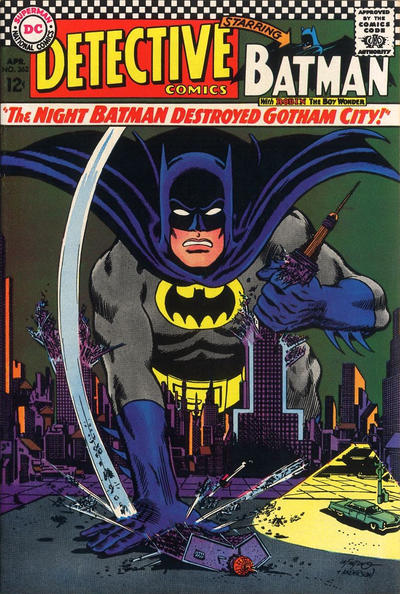
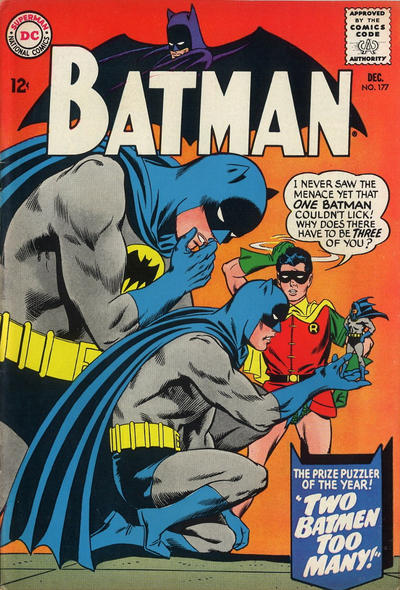
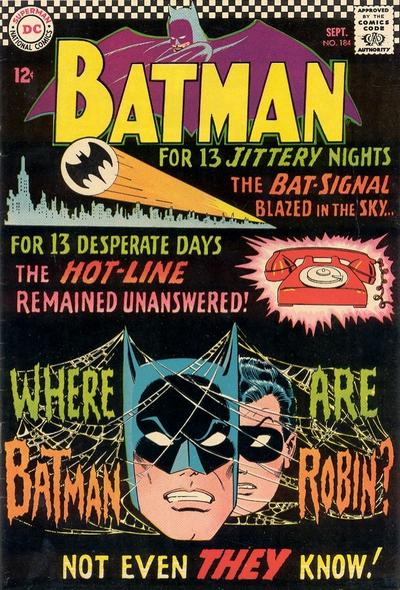
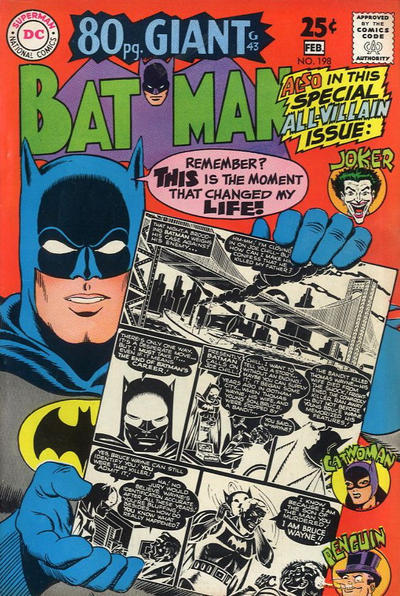
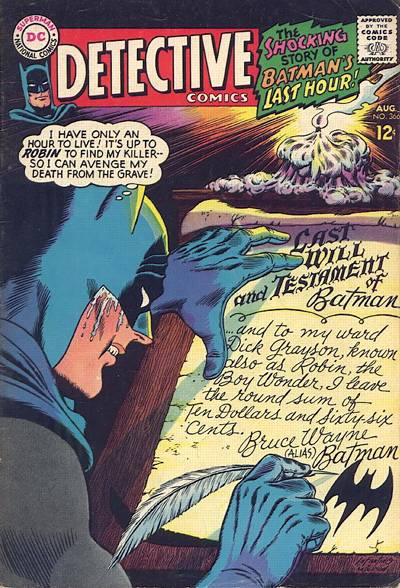
Your reminder that comics can be awesome, this week dedicated to the spectacular Batman covers of the artistic duo of Carmine Infantino and Murphy Anderson:
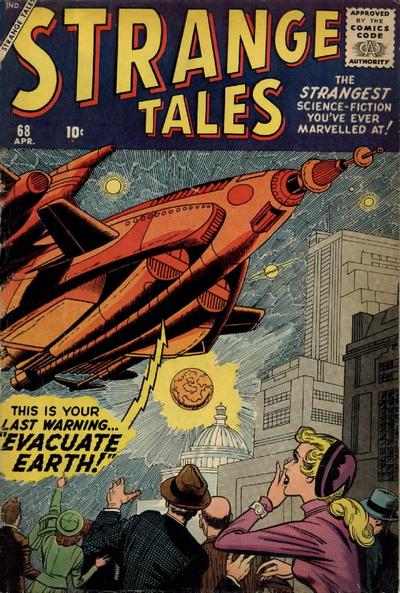
A couple of months ago, I recommended (re)visiting H.G. Well’s The War of the Worlds. This classic sci-fi horror novel became a massive influence on pop culture as the urtext for books, films, television shows, theatre plays, and video games about alien invasions, Martian and otherwise – whether it was William Cameron Menzies’ campy Invaders from Mars or Tim Burton’s nihilistic Mars Attacks! (although not Harry Horner’s hysterically propagandistic Red Planet Mars, which took the idea of alien contact into a whole other direction…). Naturally, the story had quite an impact on comics as well, where this subgenre found a fertile breeding ground, especially during the paranoid 1950s (presumably because it channeled Cold War anxieties):
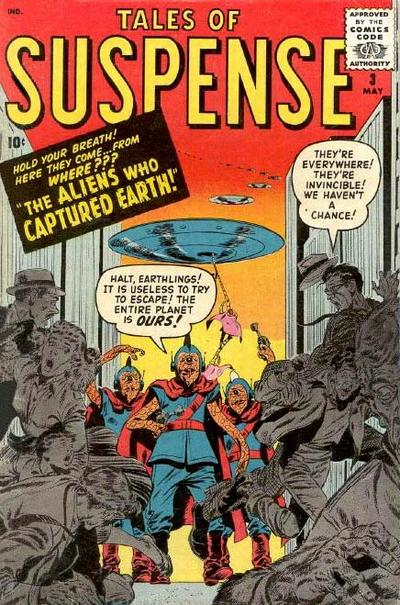
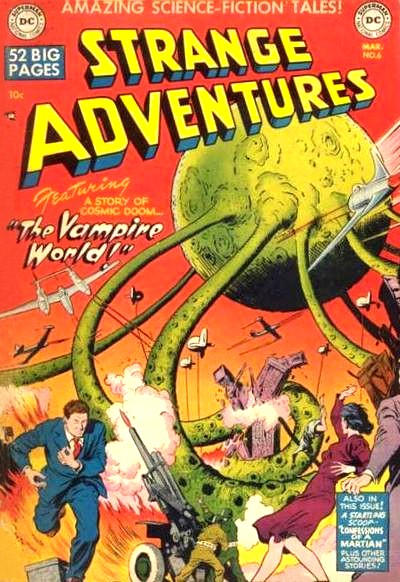
Besides spawning countless imitations and variations, The War of the Wolds has been the object of explicit – if more or less loose – adaptations as well, from Orson Welles’ notorious 1938 radio play to last year’s Fox TV series (which I haven’t seen). On the big screen, there was the cornball 1953 version produced by George Pal (set in California, with an unmistakable Red Scare subtext and a religious slant to the final twist) and Steven Spielberg’s War on Terror-era disaster movie (which moved the action to New York and, in the process, shifted the parable’s target from British to American hubris).
As for comic books, besides having a field day playing with the fiction-taken-for-reality panic surrounding Welles’ radio broadcast (which inspired Weird Science’s ‘Panic,’ Secret Origins’ ‘The Crimson Avenger,’ and The Spirit’s ‘U.F.O.’), the medium has also delivered its fair share of takes on H.G. Wells’ work…
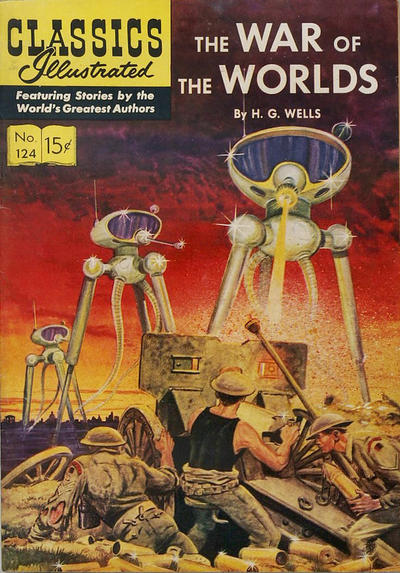
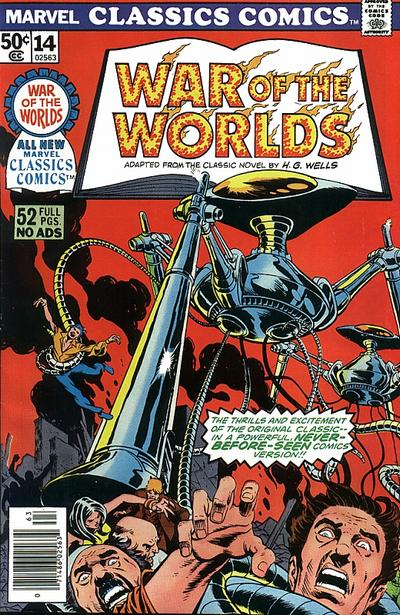
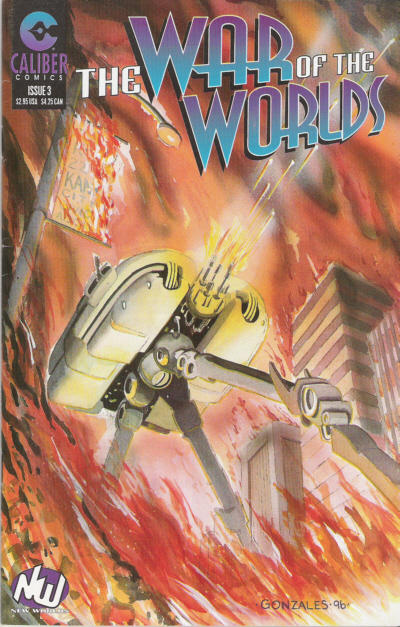
With this in mind, I want to discuss a bunch of cool comic book projects that took things one step further by actually building expansive universes on The War of the Worlds’ scaffolds.
Let’s start with the saga that ran in Amazing Adventures #18-39 (1973-1976), set in a dystopic 2018 and following the exploits of the Spartacus-like Killraven, who leads a resistance movement in the aftermath of a second, more successful Martian invasion… Created by Roy Thomas and Neal Adams – and initially scripted by Gerry Conway – the series was a full-on action-packed Marvel adventure comic, one that often felt like some sort of LSD trip (like much of the company’s output at the time) yet it was also an explicit sequel to an 1898 novel.
This counter-intuitive hybrid took no prisoners: the first issue, illustrated by Adams and Howard Chaykin (two artists with a quasi-naturalistic style reminiscent of old pulps), opened in media res with Killraven mercilessly slaughtering hordes of henchmen and mutants before the comic eventually took a break to sum up H.G. Wells’ book in an effective two-page flashback…
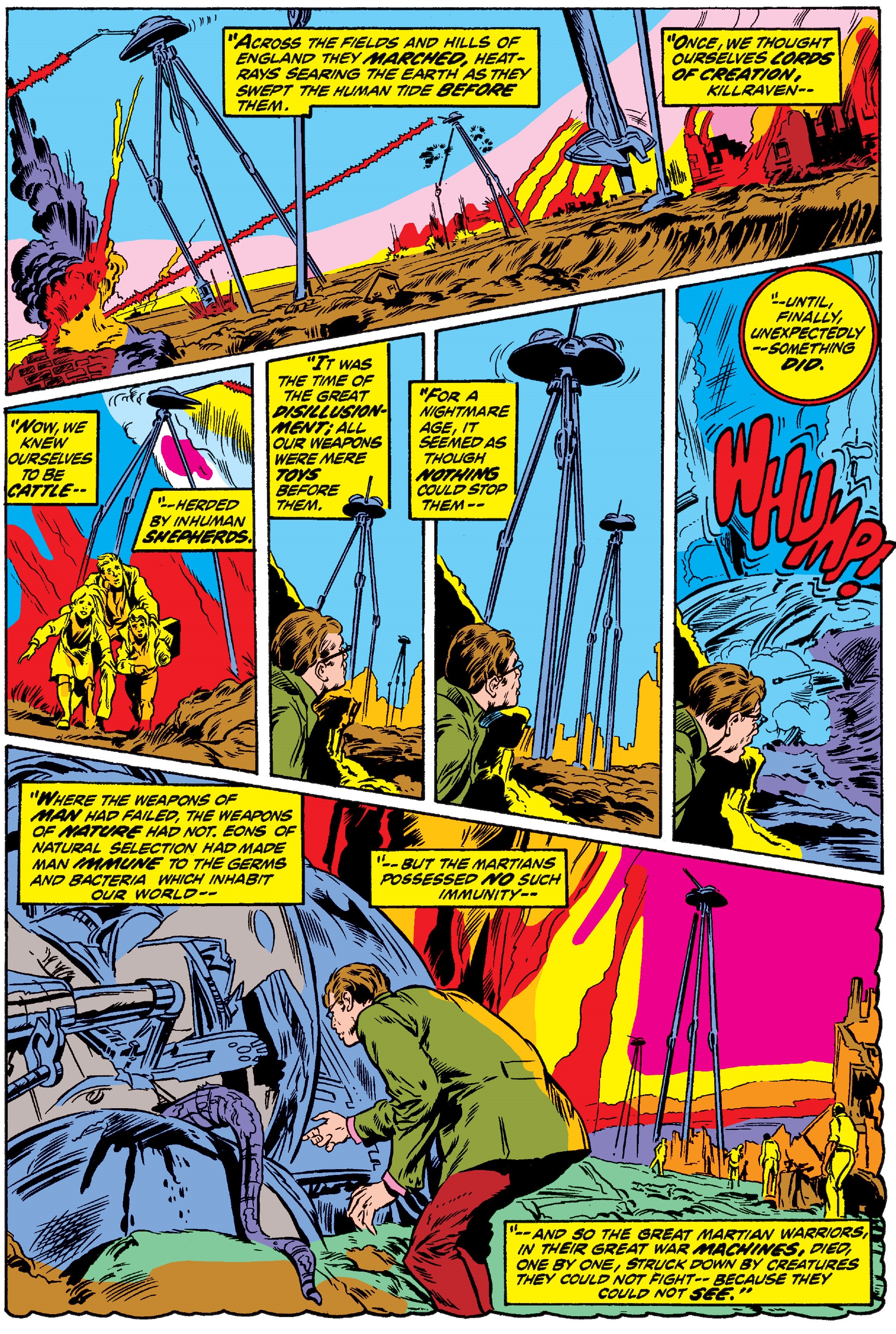 Amazing Adventures (v2) #18
We soon learned that, one hundred years after the failed invasion of 1901 (unlike the comics discussed next week, which place the invasion in the year of the novel’s publication, this one respects the fact that Wells’ narrative was set ‘early in the twentieth century’), the Martians, now prepared with bacteriological immunity, finally managed to conquer Earth and subjugate the human race. Raised to be a gladiator by human collaborationists – the so-called ‘keepers’ – working for the Martian overlords, the brash, revenge-thirsty Killraven then rebelled and went on a revolutionary quest throughout occupied America that mostly took the form of psychotronic science fiction worthy of the proud tradition of imaginative futuristic war comics.
With its blatant counterculture influence and wild horror/fantasy imagery, this strange series is like a spiritual relative of Steve Gerber’s run on The Man-Thing at the time, as Killraven – who is plagued by telepathic daydreams – finds himself riding a purple serpent-horse and battling giant, disgusting monsters, cartoonish tyrants, and a trio of semi-naked women designed to attract men to their doom:
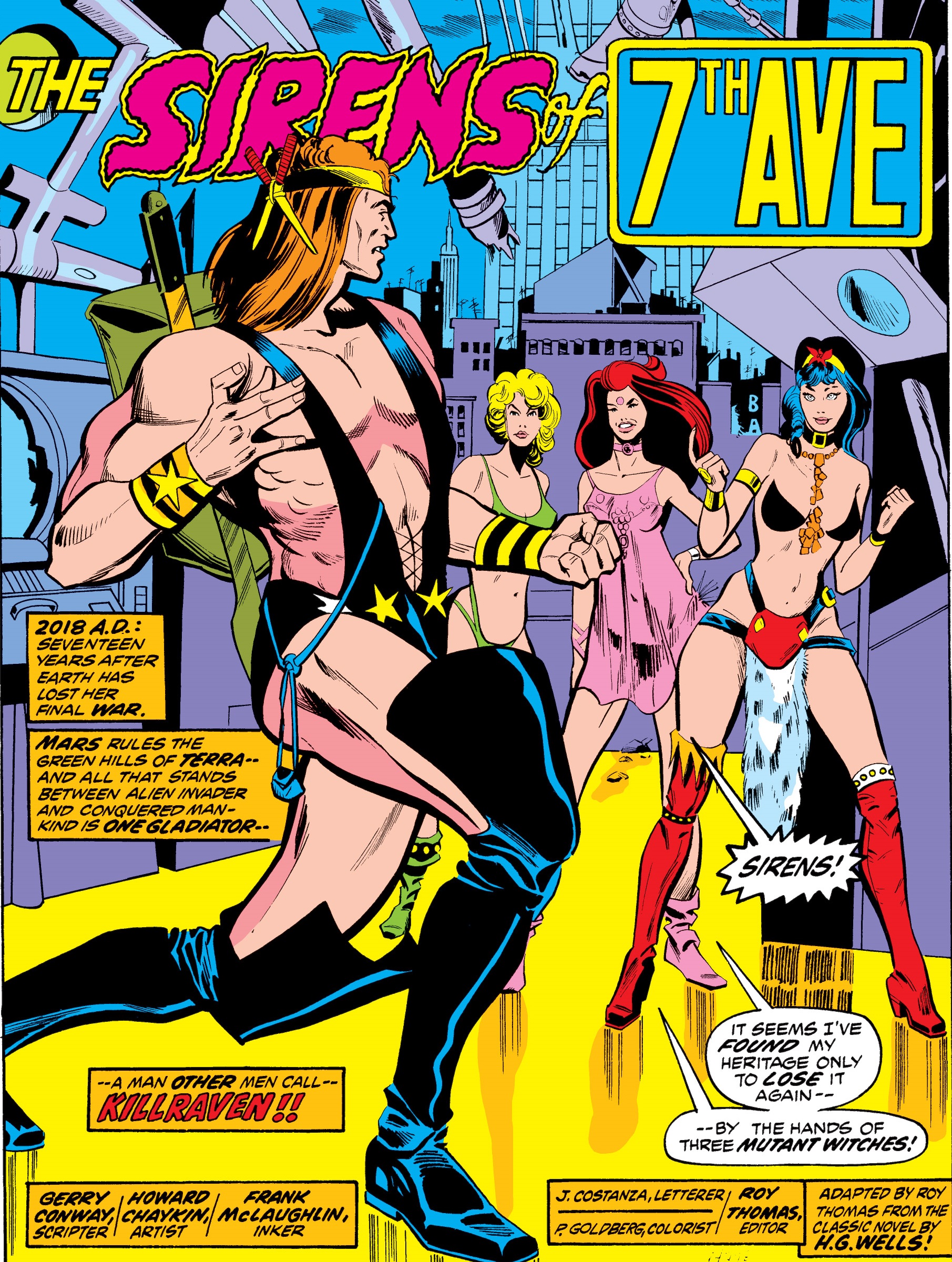 Amazing Adventures (v2) #19
(Not to deny the obvious sexism behind this trope, but, to be fair, the sirens’ looks are no more preposterous than Killraven’s own attire… In fact, the overall kinky fashion sense seems to anticipate George Miller’s own post-apocalyptic vision in the Mad Max movies, years later.)
And in case you’re wondering if Howard Chaykin’s design of the Martians lives up to H.G. Wells’ description, I’ll let you to compare the two:
“They were, I now saw, the most unearthly creatures it is possible to conceive. They were huge round bodies—or, rather, heads—about four feet in diameter, each body having in front of it a face. This face had no nostrils—indeed, the Martians do not seem to have had any sense of smell, but it had a pair of very large dark-coloured eyes, and just beneath this a kind of fleshy beak. In the back of this head or body—I scarcely know how to speak of it—was the single tight tympanic surface, since known to be anatomically an ear, though it must have been almost useless in our dense air. In a group round the mouth were sixteen slender, almost whiplike tentacles, arranged in two bunches of eight each.”
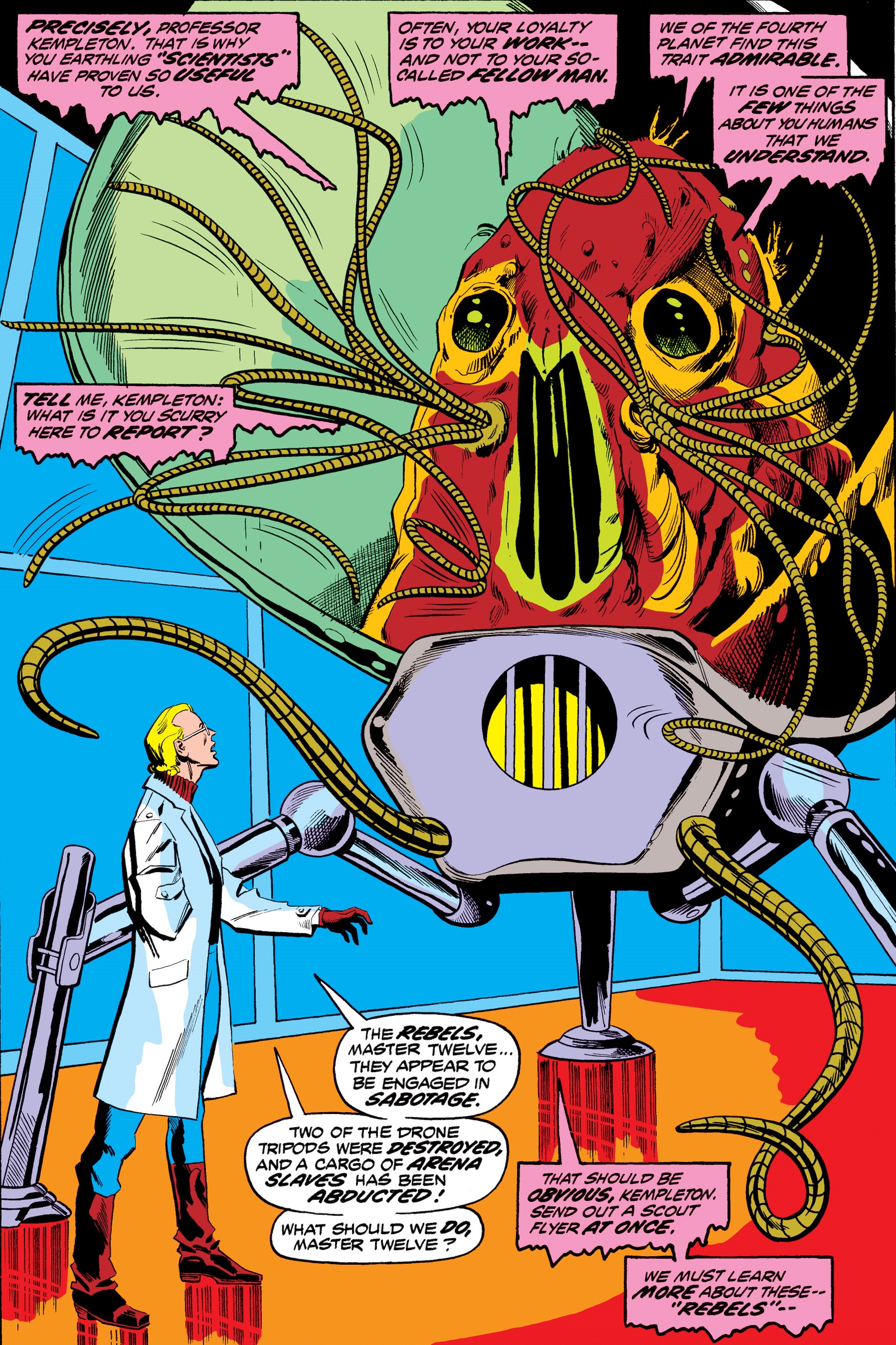 Amazing Adventures (v2) #19
Outside of the initial premise and the occasional sighting of Tripods, this comic may appear to have little to do with H.G. Wells’ book (starting with the fact that we are expected to root for humanity’s violent triumph over the aliens, as if having learned nothing from Wells’ deconstruction of anthropocentrism). Yet, like the original, this too is an allegorical and critical take on the values of its time. Between the Cold War, Civil Rights struggles, and rising environmentalist concerns, the early 1970s led to some of the weirdest visions of the future… In film, we got A Clockwork Orange, Soylent Green, Westworld, The Omega Man, Silent Running, and Sleeper. In comics, we got DC’s Kamandi, The Last Boy on Earth and, yes, Marvel’s War of the Worlds, which channeled the era’s misanthropy by viciously denouncing humans’ callous willingness to turn on each other in the name of selfish interests (as you can see in the dialogue above).
Between the campy visuals and the clunky writing, I admit the series did start off as pretty much an awful mess, even if I retain a soft spot for its devil-may-care energy. Things became gradually more interesting once Don McGregor became the main writer (with #21), not least because of his flair for political irony. In the issue ‘Washington Nightmare’ (which opens with this cheeky description of Killraven: ‘…a man who has sworn to win back humanity’s right… to destroy itself!’), a band of futuristic pirates host a slave auction at the Lincoln Memorial. In the next issue, Killraven’s torture in the White House has echoes of George Orwell’s 1984. And in the *next one* the rebels come across the Watergate tapes while putting together a New Year’s Eve party:
 Amazing Adventures (v2) #24
Moments like this one, in addition to the narration’s tendency to comment on the action by directly referencing contrasts with the present (of the ‘70s), meant that the comic often relativized our worldview, framing readers’ consumerist urges and current concerns as ultimately transient and petty from an outsider’s vantage point – an act of estrangement comparable to H.G. Wells’ own gesture of defiance against humanity’s self-importance in The War of the Worlds. Other slices of satire took place in ‘Something Worth Dying For!,’ where a proto-knight protected his ancestor’s legacy (which turned out to be a set of cereal boxes), and ‘Only the Computer Shows Me Any Respect!,’ where a computerized simulation of The Hound of the Baskersvilles became simultaneously an indictment of alienation and a metaphor for the plight of Native Americans. (A fill-in issue by Bill Mantlo then tackled the Black Power movement.) More generally, the psychedelic aesthetics (including experimental layouts and lettering) combined with the fact that the series revolved around a gang of rebellious misfits – the self-labeled Freemen – with different genders, colors, and (dis)abilities fighting against tyranny in an American wasteland lent the comic a markedly iconoclastic vibe.
Indeed, besides keeping – and sometimes amping up – the offbeat humor, the sexual tension, and the surreal tone, Don McGregor also introduced remarkable supporting players, including Carmilla Frost (a molecular biologist who gave mainstream comics’ first interracial kiss), Sabre (a disgruntled African-American slaver), and Volcana Ash (a flirty bombshell with pyrokinetic powers). Meanwhile, his Killraven was a cross between an idealist hero and the kind of cunning barbarian that could’ve starred in Savage Tales.
McGregor’s run was further elevated when P. Craig Russell came aboard as regular artist, starting with #27. Russell’s more lyrical style merged particularly well with McGregor’s portentous – if verbose – voice… Firing on all cylinders, not only did they have the characters encounter misunderstood remnants of the 1970s (perhaps never more impressively than in ‘The Day the Monuments Shattered,’ a high point of the series), but they also had them come across technology supposedly developed in the 1990s (i.e. in the diegetic past, yet in the creators’ imaginary future). For instance, in what is arguably the series’ most bizarre tale (with the possible exception of the baffling ‘The 24-Hour Man’), Killraven and the Freemen visit a futuristic Nashville musical arena:

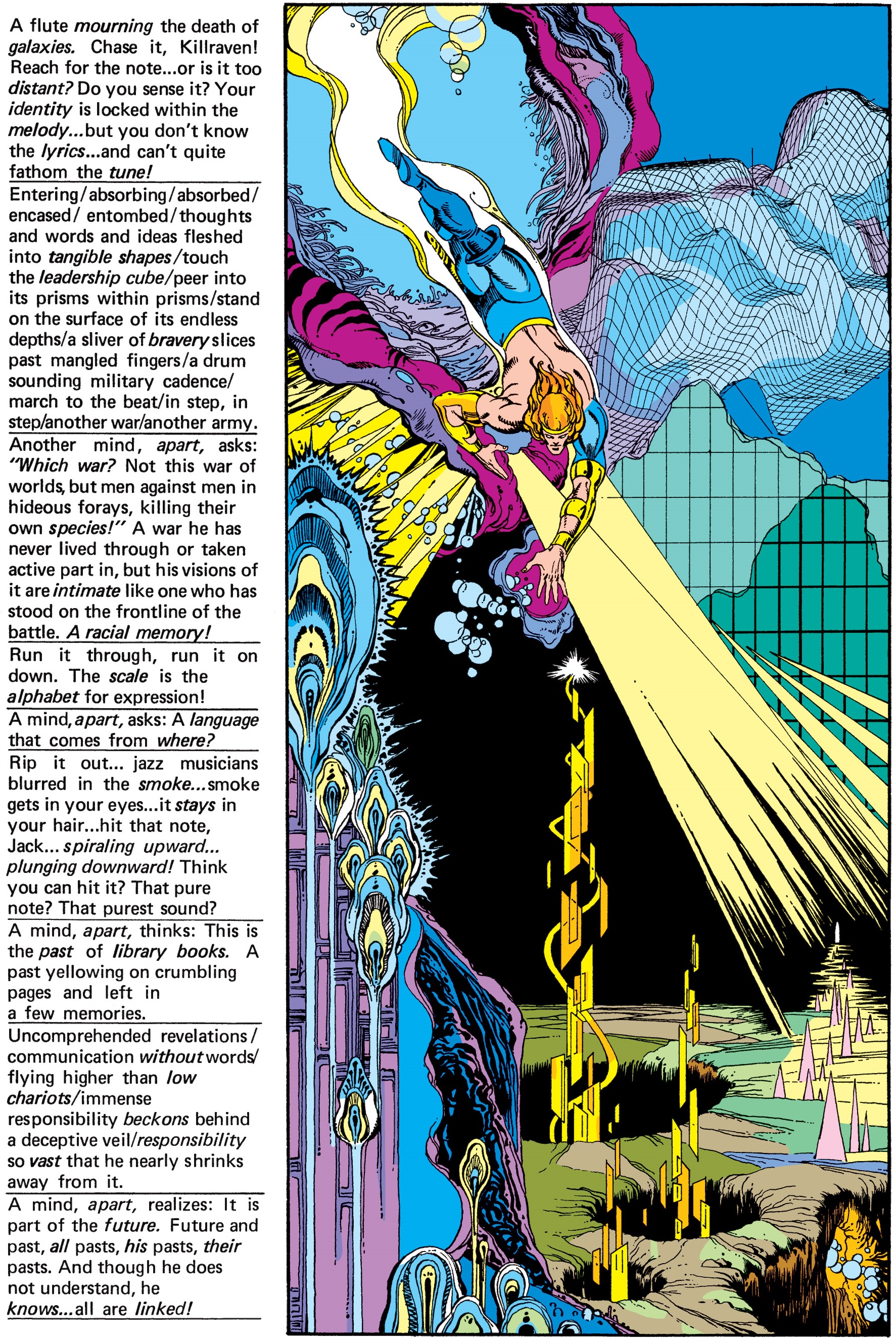 Amazing Adventures (v2) #32
(Curiously, although the comic has fun speculating about the intervening decades between its period and the 2001 invasion, the various creators seem comfortable with the implication that everything until the ‘70s was pretty much familiar, as if the first Martian attack had had little historical impact…)
I’m also a fan of ‘Red Dust Legacy,’ in which we learn about Martian reproduction. Basically, Martians are genderless and not only do they reproduce asexually (‘…they always did strike me as being kinda dull!’), but they do so without great emotion – their infants grow like fruits on a branch and the severing of parent and child is nothing more than that to them (‘The tree does not celebrate! The tree does not mourn!’). What I like about this issue is that, after treating the aliens as feared others and inscrutable outsiders for so long, we finally get a closer perspective on their mindset and even a degree of empathy, especially as we learn that the younger, Earth-born generations may be less willing to annihilate humans (a nod to the Vietnam-era generation gap?). In turn, Killraven, with his determination to massacre a bunch of younglings, comes across as particularly vicious. The ending then piles up one ironic twist on top of another. (Between this story and ‘Mourning Prey,’ you could really see the series evolving into more ethically ambitious territory in the final issues before its cancellation…)
It’s a cult-worthy run. By issue #29, the comic had come such a long way and gained such a distinct identity that the covers of Amazing Adventures even dropped the ‘War of the Worlds’ logo, temporarily rebranding the main feature as ‘Killraven, Warrior of the Worlds’ (even though the series had actually become more of an ensemble piece, with numerous subplots and an increasingly diverse cast). Seven years after Amazing Adventures’ cancellation, Don McGregor and P. Craig Russell tied up some loose ends in the 1983 graphic novel Killraven: Warrior of the Worlds, although the actual war would only wrap up in 2010’s Marvel Zombies 5 – of all places! – where Killraven teamed up with Machine Man and Howard the Duck. (Like most Fred Van Lente comics, Marvel Zombies 5 is both hilarious and quite clever at reworking disparate cultural references, paying tribute to the original novel as well as to the pulpy 1970s’ saga while having a blast with the notion that Killraven is a violent fanatic…)
In the meantime, we also got a reboot in the form of a 2003 Killraven mini-series by Alan Davis – a streamlined retelling of the Freemen’s early adventures, with plenty of tweaks. More reader-friendly yet less fascinatingly idiosyncratic, this lively, two-fisted yarn is not only miles apart from the novel (even if it recovers Wells’ red weed and poisonous smoke), but it also loses some of the earlier comic’s most interesting choices, especially when it comes to the female characters (for instance, the green-skinned Mint Julep used to be much more unabashedly feminist). The main attraction here is the art, with Alan Davis once again proving he can turn the most outrageous designs into stylish eye candy. Indeed, the whole thing feels like a vehicle for Davis – with smooth inks and colors by Mark Farmer and Greg Wright – to pit gorgeous, athletic bodies against elaborate mutations:
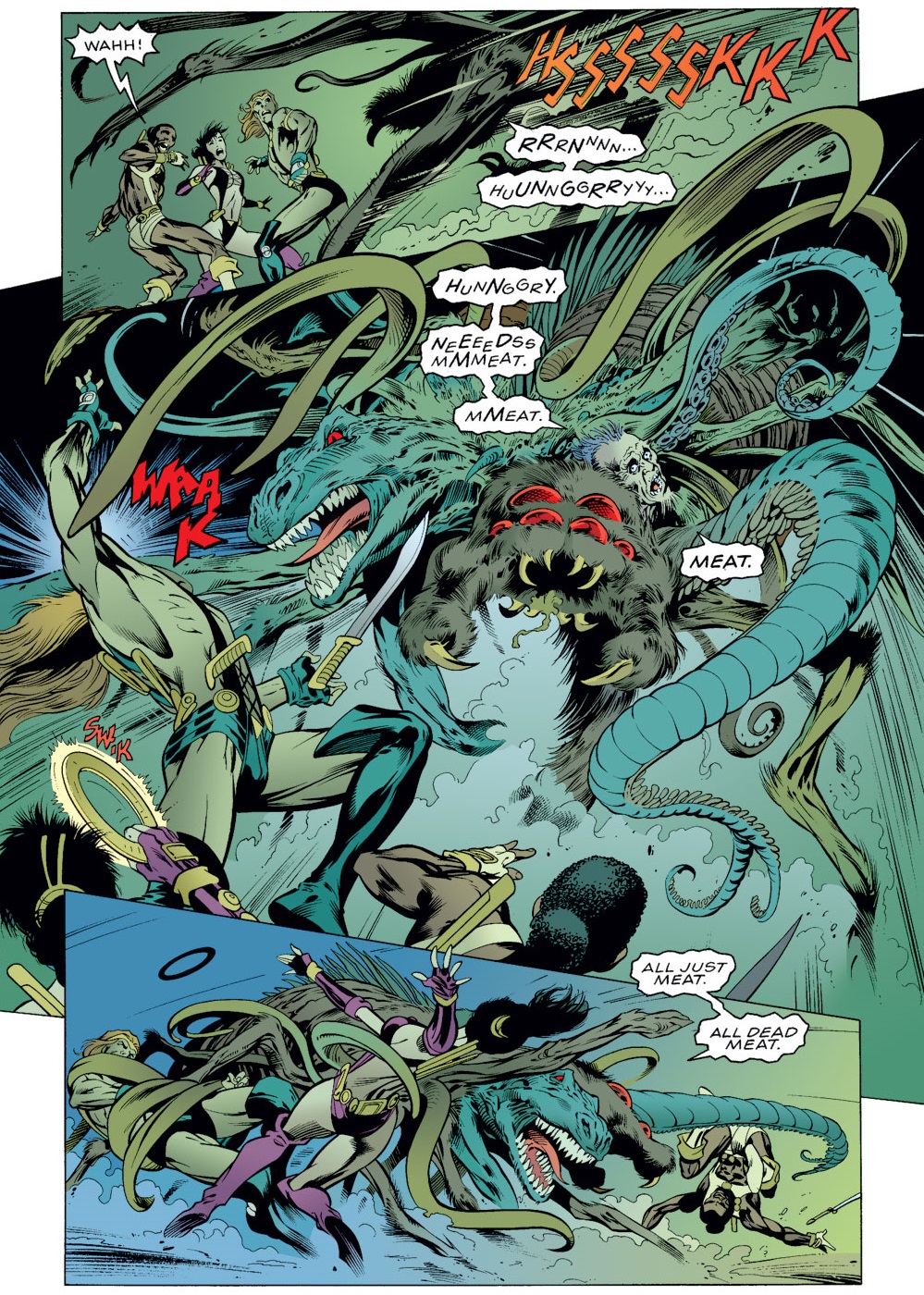 Killraven #3
These various odd takes on The War of the Worlds came to occupy a recognizable place in Marvel lore. Notably, Bill Mantlo strengthened the connection to the Marvel Universe already back in 1976, having written Marvel Team-Up #45 (set before Amazing Adventures #37), in which Spider-Man met the Freemen after time-travelling to their 2019, and Amazing Adventures #38, in which Killraven visited the remnants of the Miami Museum of Cultural Development, coming across holographic projections of Iron Man and Doctor Strange, among others.
More recently, Wolverine and Black Cat visited a version of this future in 2011’s raunchy screwball mini-series Claws II, written by Jimmy Palmiotti and Justin Gray, who managed to push the material’s sexual undertones even further…
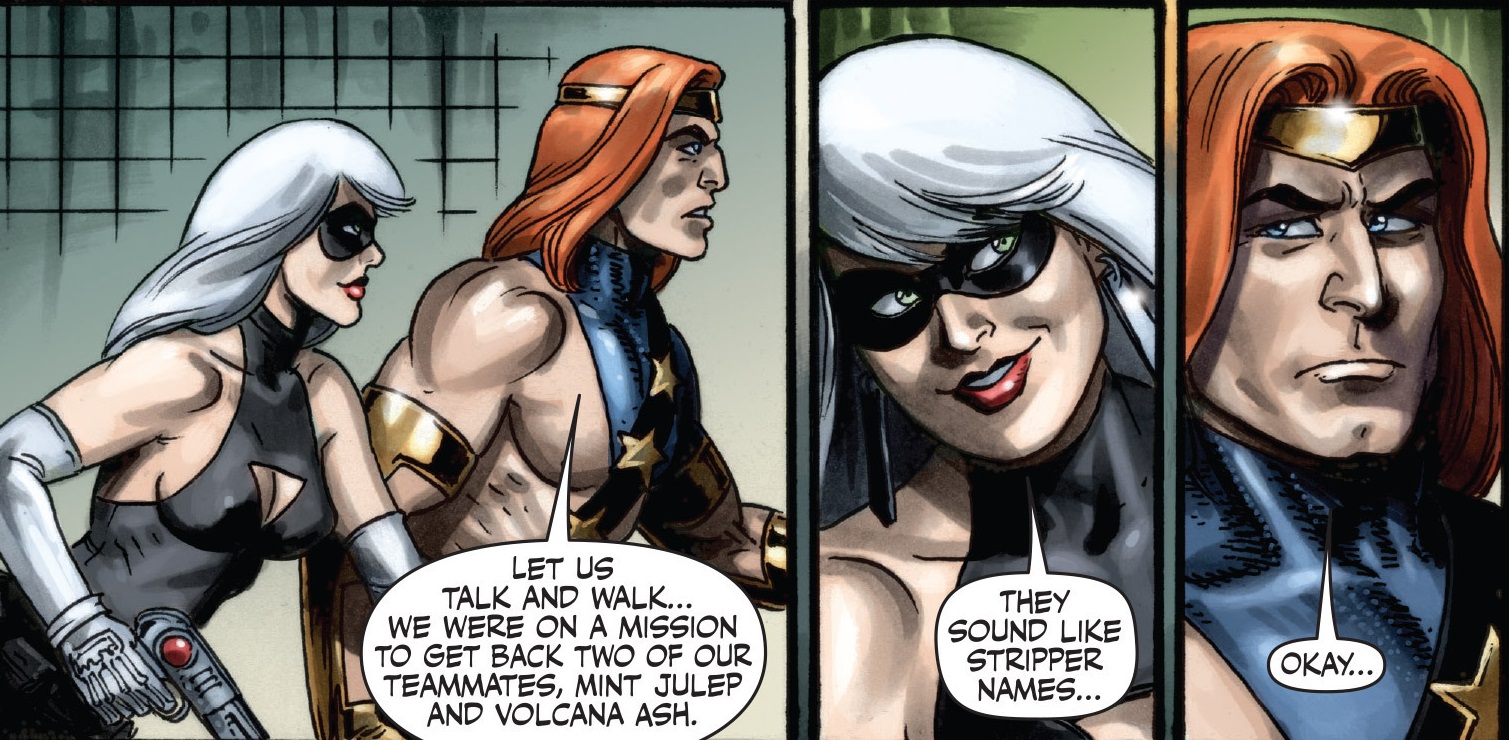 Wolverine & The Black Cat: Claws II #2
The Marvel franchise – a major vortex of today’s pop culture – is thus tied to a work of Victorian literature! I get quite a kick out of this sort of mix of high and lowbrow (like when Young Indiana Jones Chronicles had an episode built around both Franz Kafka’s writings and the Pink Panther movies).
Sure, purists will point out that Killraven’s saga isn’t set in the core continuity of Earth-616, but rather on Earth-691 (the same from the Guardians of the Galaxy comics). Still, H.G. Wells’ Martians have also occasionally appeared in Marvel’s main universe. For instance, Paul Cornell wrote them into his awesome 2007 mini-series Wisdom, where these aliens (gloriously redesigned by Manuel Garcia) attempted an interdimensional invasion of the United Kingdom. The Martians’ appearance fit particularly well into that comic’s exploration of British mythology, a point driven home by Pete Wisdom’s internal monologue: ‘They’re the British past. Here to do to us what we did to the world.’ (James Robinson later followed this up with the amusing All-New Invaders #12.)
And just to stress the return of Wells’ concepts to British soil, I’ll wrap things up for today with this Monty Python reference:
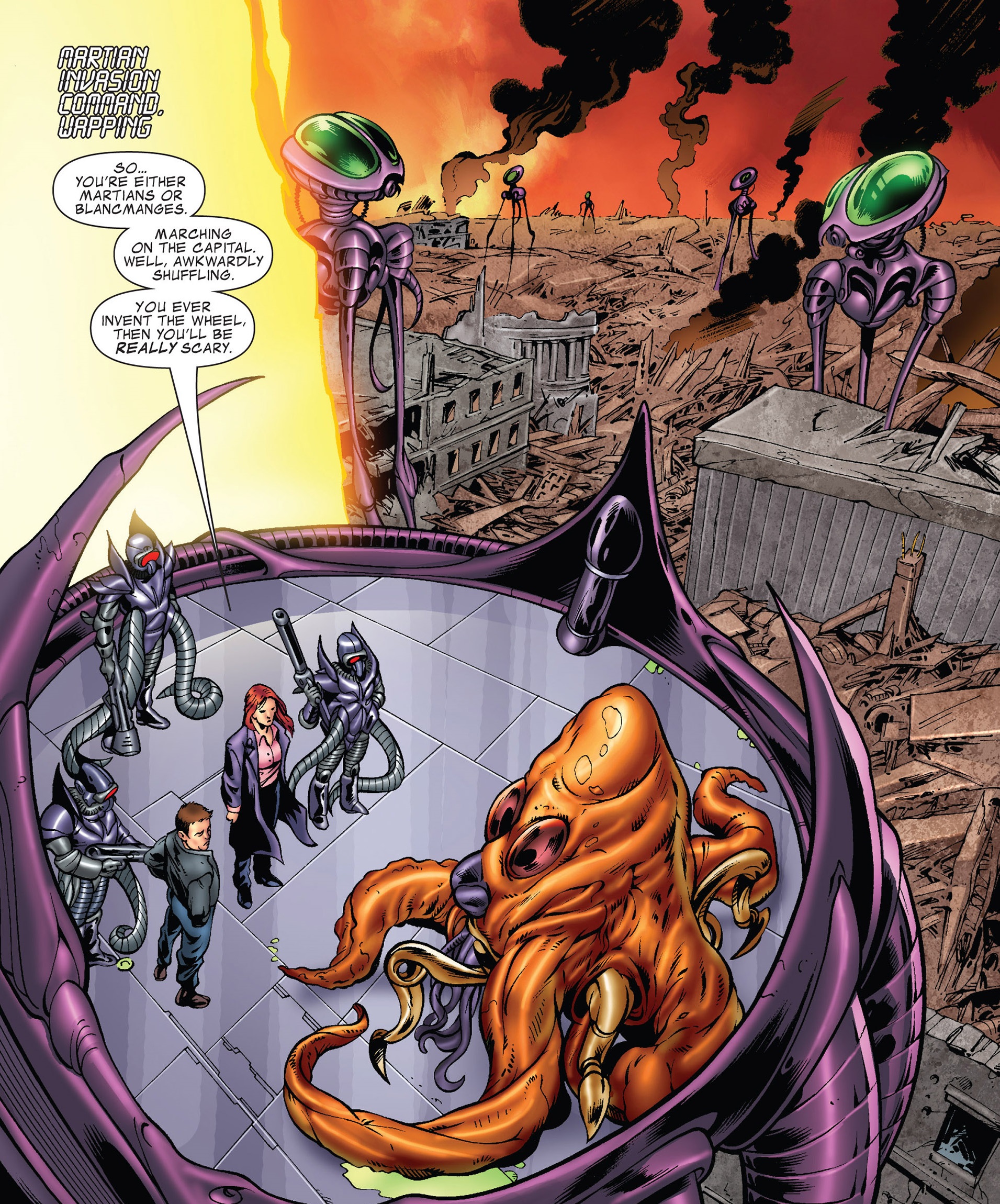 Wisdom #6