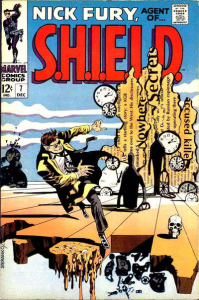
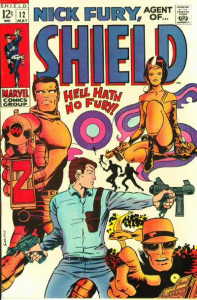
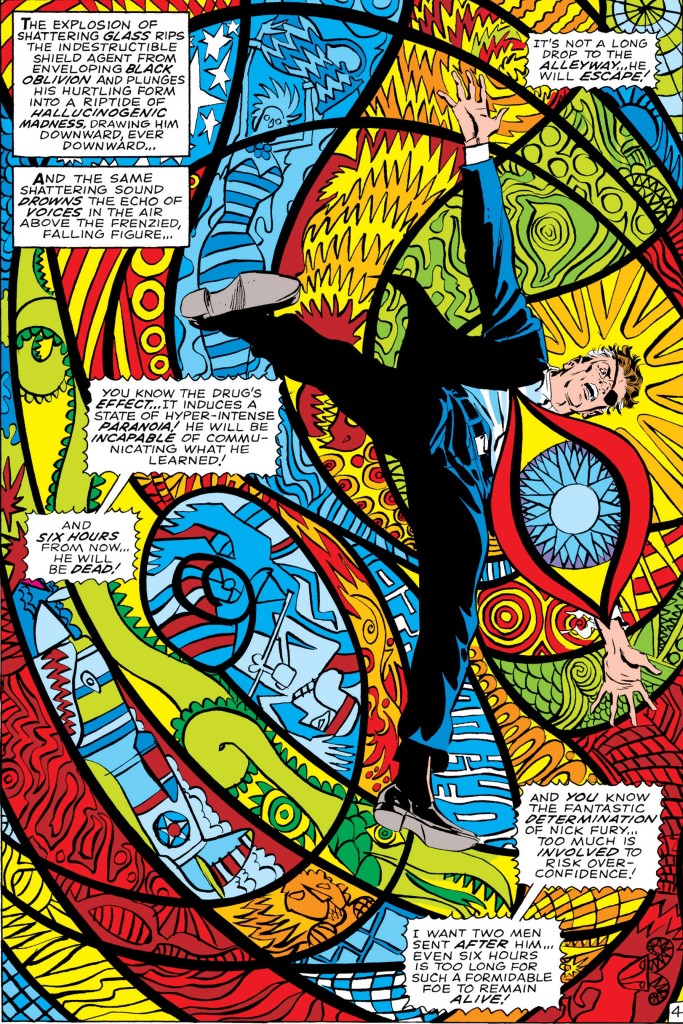
Spotlight on Jack Kirby’s and Stan Lee’s Nick Fury, Agent of S.H.I.E.L.D.

Last week, I wrote about a 21st century comic that followed the footsteps of novelists like John le Carré and Len Deighton, depicting the world of espionage with downbeat realism and literary sophistication. This week, we’ll look at a very different comic series – one that embodied the spirit of the super-spy boom of the 1960s, when quasi-apocalyptic international tension was converted into colorful adventures and lighthearted intrigue through the kind of films and TV shows later spoofed in Austin Powers (and wonderfully evoked by Guy Ritchie’s The Man from U.N.C.L.E.).

I am talking about the original run of Nick Fury, Agent of S.H.I.E.L.D., published by Marvel in the mid-sixties:

strange tales 135

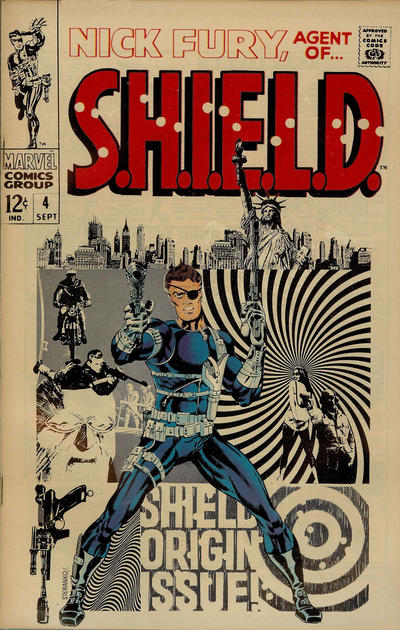
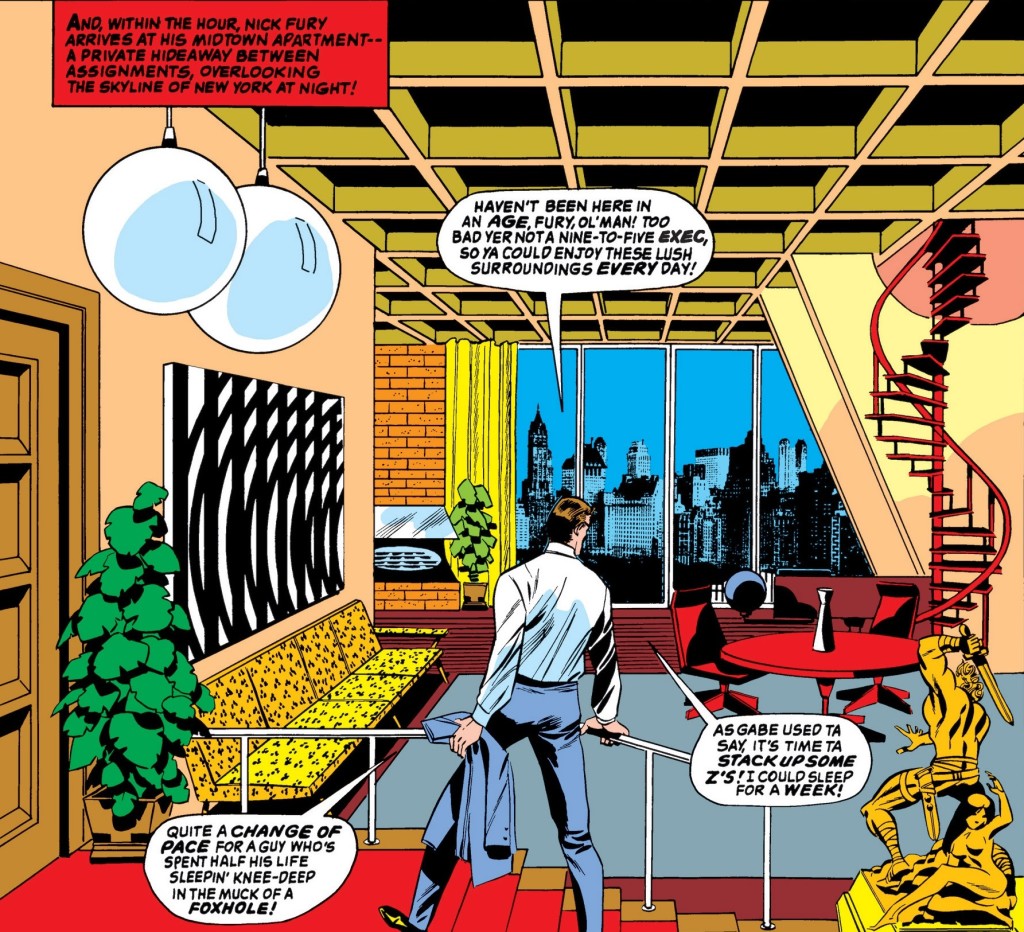
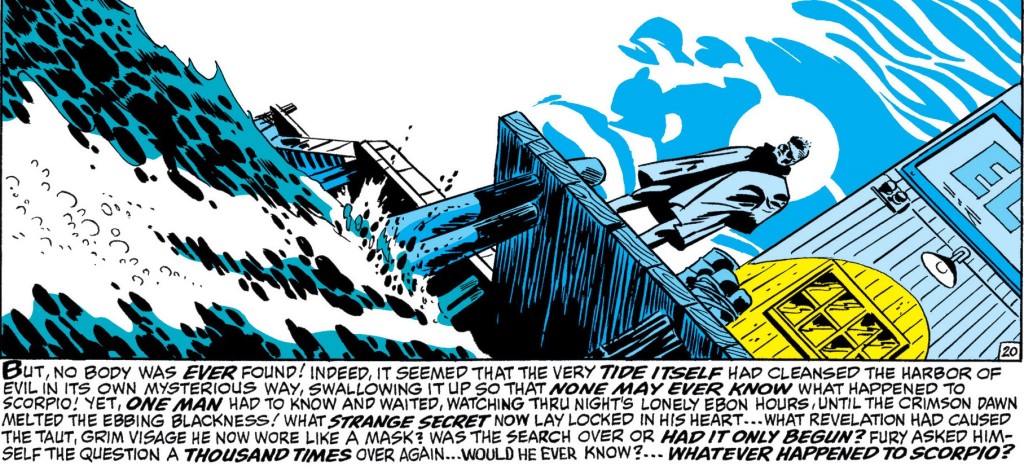
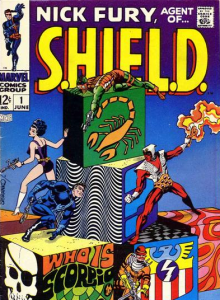
Created by the power duo of Jack Kirby and Stan Lee, the cigar-chewing Nick Fury made his debut in 1963 as the star of the war comic Sgt. Fury and His Howling Commandos. While that series followed Fury’s adventures in WWII, Kirby and Lee simultaneously showed fans what this manly hero – meanwhile promoted to colonel – was up to in the present day. They first reinvented him as a CIA agent in Fantastic Four #21 (a tale oozing with Lee’s hysterical anticommunism, in which Fury sends Mister Fantastic to crush a revolution in South America… and somehow ends up fighting Hitler!) and, in 1965, gave him an ongoing series on the pages of Strange Tales (starting in issue #135), where he became the eyepatch-wearing director of the secret organization S.H.I.E.L.D. (Supreme Headquarters International Espionage Law-Enforcement Division).
strange tales 138    strange tales 140    strange tales 149

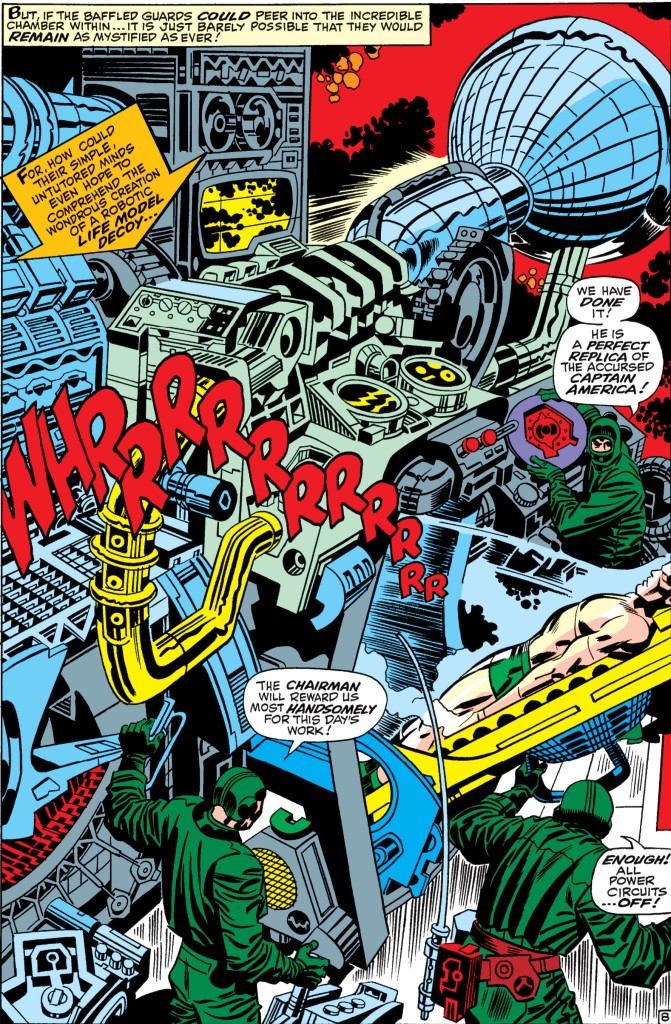
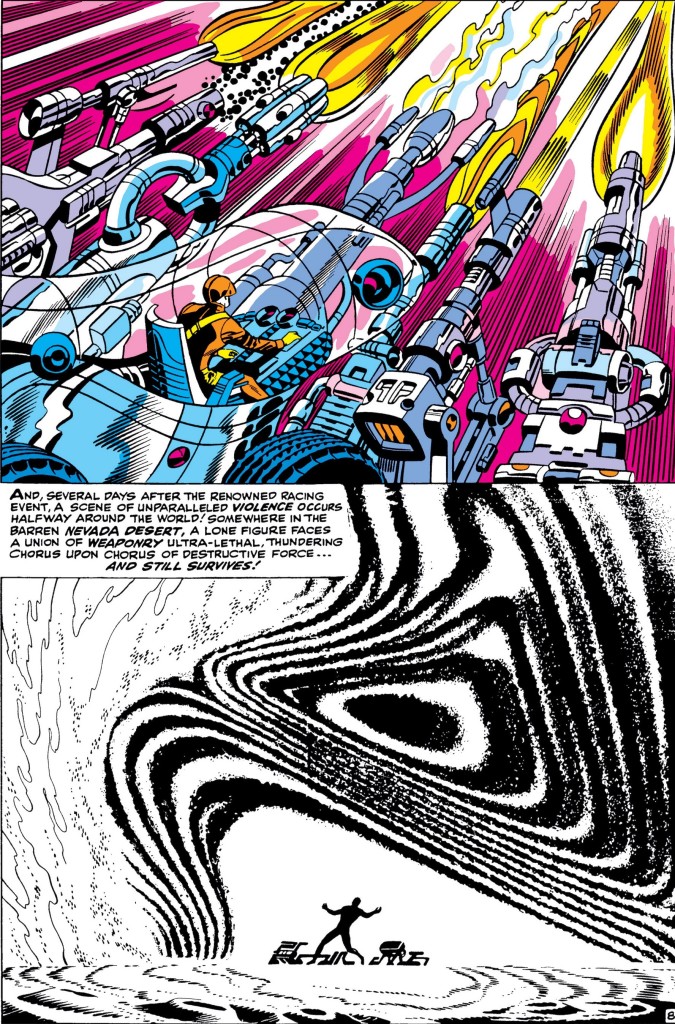
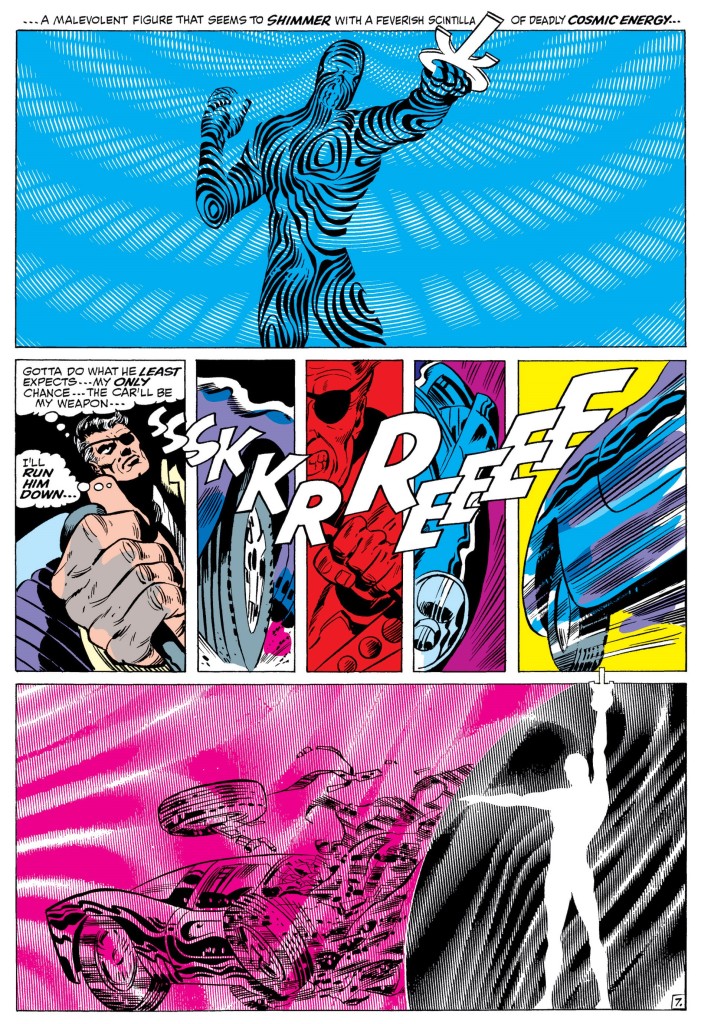
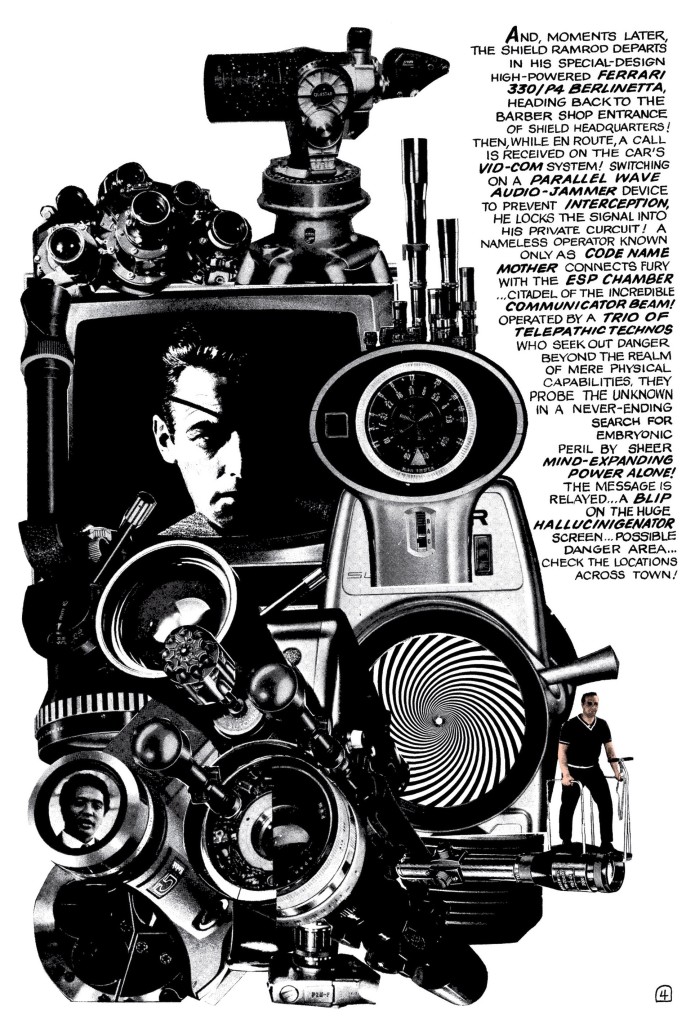
A charmingly crude and goofy barrage of gun battles, explosions, and fistfights, the frantically paced Nick Fury, Agent of S.H.I.E.L.D. made little attempt to hide that what its creators found most appealing in the spy genre was the over-the-top action and the elaborate gadgetry. The first story (‘The Man for the Job!’) was essentially a tour of fun sci-fi contraptions – a Kirby specialty – which became the series’ hallmark, from Fury’s clones (Life Model Decoys, or LMDs) to his flying car, not to mention the Helicarrier (an impressive flying aircraft carrier that housed S.H.I.E.L.D.’s mobile headquarters). That said, you had to wait four more issues before getting a look at the Brainosaur, a special rocket built by Tony Stark (who was a recurring character).

Similarly, the series barely disguised its influences. In issue #137 alone, Colonel Nick Fury visited an in-house inventor who introduced him to clothing items that had been converted into ingenious weapons, an assassin disguised himself as a blind beggar, and there was a kickass set piece on a train followed by one underwater – basically, in a just a few pages, the comic combined variations of scenes from each of the first four James Bond movies!

A few issues later, the credits were especially cheeky about this:

Strange Tales #142Strange Tales #142

Even though the rumpled, often unshaven, stogie-chomping Nick Fury was notably less suave (and less horny) than Bond, the link to Ian Fleming’s creation was always there, bringing to mind the campiest bits of that franchise – it’s a short leap from Strange Tales #150 to Die Another Day (Fury even faces a villain who hosts a party in a specially-built igloo, on a gigantic floating iceberg). For one thing, like the cinematic 007 – and like The Man from U.N.C.L.E., the other big influence – Agent of S.H.I.E.L.D. celebrated détente by electing as the main villain fictitious organizations bent on world domination without an explicit ideology, namely Hydra, Them, Secret Empire, and A.I.M. (Advanced Idea Mechanics). These works thus chose to go for all-out escapism, sidestepping the biggest international rivalry at the time.

Not that the Cold War zeitgeist was absent from the comic: after all, the paramilitary Hydra, with its totalitarian, depersonalized uniforms and its cry of ‘Cut off a limb, and two more shall take its place!’ can be seen as a Soviet caricature (albeit one Fury could temporarily destroy), despite the fact that the initial leader of this evil organization was secretly in the board of a large western corporation. (The ironic and somewhat touching demise of Hydra’s first leader is a high point in the series.) He was later replaced by someone with an even shiftier identity, hinting that the enemy could be anybody and anywhere:

Strange Tales #152Strange Tales #152

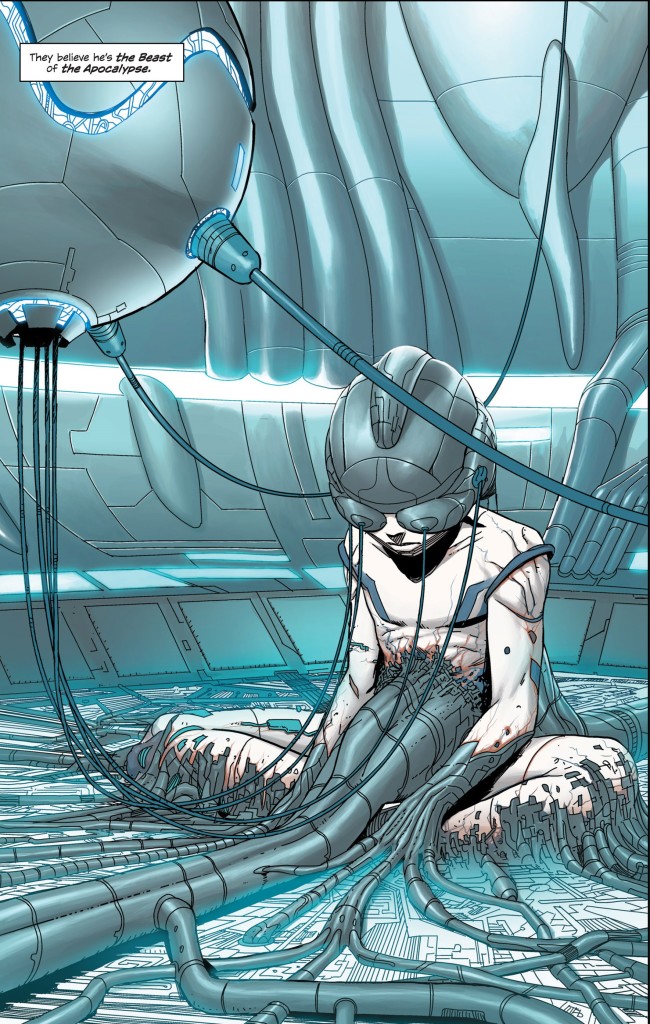
Likewise, Them’s project to grow artificial people (as depicted in a crossover with Tales of Suspense, starring Captain America) feels like nightmarish propaganda about godless commies:

Tales of Suspense #78Tales of Suspense #78

A.I.M.’s masterplan was as Cold War-ish as it gets – this group tried to influence world leaders by promising a way to bombproof their cities, making them safe from a nuclear attack. Yet, above all, by supplying futuristic technology to terrorists like the Fixer (a genius at building intricate weapons) and the Druid (who combined mystic rites with ‘modern, sinister science’), A.I.M. directly served one of the series’ main purposes, which was to reward fans with one ludicrous mechanical gizmo after another.

Indeed, it makes sense that the villains were mostly concerned with technology since, at the end of the day, technology was pretty much the real star of Nick Fury, a comic where every character was paper-thin and every plot was unabashedly cartoony, so readers’ main draw was to check out what surreal piece of machinery would show up next. This wasn’t even proper science fiction – it was more of a showcase for Kirby’s insane designs (and there sure is nothing wrong with that!) – even though some inventions, like the miniaturized cameras and communication devices, turned out to be quite prescient.

You can tell where Jack Kirby’s heart was, as he mostly drew the tech bits, leaving the rest for other artists: while Nick Fury’s Strange Tales run consistently credited the layouts to Kirby, a host of talented pencillers came in to finish the job. In fact, this combination sometimes worked quite well, like when John Severin juxtaposed his classic, noirish style over Kirby’s outlandish machinery:

Strange Tales #136Strange Tales #136Strange Tales #136

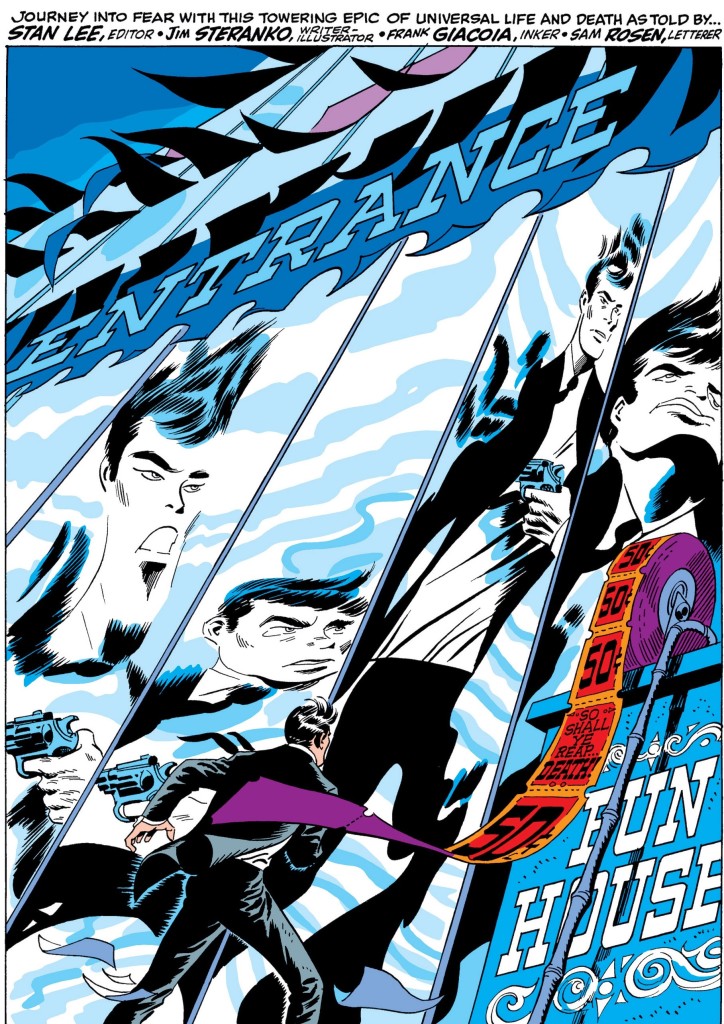
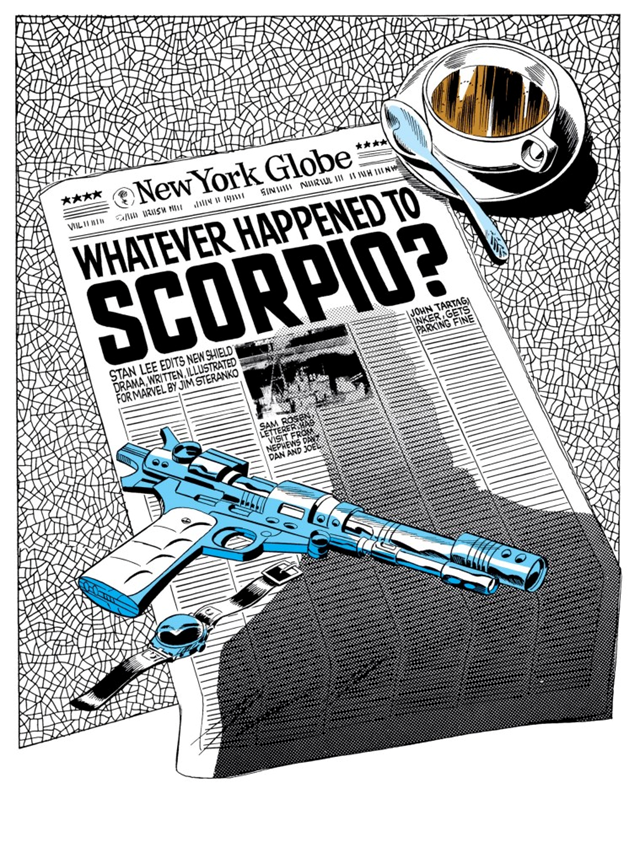
One of the pencillers brought in to build on Jack Kirby’s layouts was Jim Steranko, as a trial-run before taking over all of the art duties. This proved to be an inspired move: as discussed next week, Steranko soon elevated this entertaining-yet-clunky Nick Fury comic into the status of masterpiece.

Posted in SPYCRAFT & WARFARE | Tagged , , , , , , , | Leave a comment

Spotlight on Queen & Country

July is the month of spy comics here at Gotham Calling.

Let’s kick things off with what is unquestionably one of the all-time greatest spy series in the medium: Queen & Country.

queen & country 30

Originally published between 2001 and 2007 by Oni Press, Queen & Country was an ongoing series revolving around the Special Section of the United Kingdom’s Secret Intelligence Service (aka MI6), used for special missions abroad. The ensemble cast was headed by Tara Chase, one of the Section’s three operatives (sometimes referred to as ‘minders’). Because the comic was written by Greg Rucka, Tara was a fleshed out, capable-yet-brooding woman constantly struggling with her inner demons.

The series is set in a gloomy world of anti-climaxes and morally compromised missions undertaken by lonely, frustrated spies. It follows the pulled-back, ‘adult’ tradition of British TV dramas such as The Sandbaggers and Tinker Tailor Soldier Spy, depicting espionage through restrained action, nuanced character development, and, above all, an emphasis on the bureaucratic side of the job, albeit without sacrificing the thrills of the genre in the form of risky assignments and plot twists galore.

A big part of the appeal is the abundant trade jargon that we have to figure out ourselves. Greg Rucka mostly dispenses with the trope of the newbie who serves as our point-of-view character guiding us into this world (I say ‘mostly’ because agents keep dying or being replaced, so newbies do show up every once in a while) – instead, he tends to write in a way that allows readers to gradually decipher the team’s codenames, rules, and institutional framework. The fact that nobody seems like they are acting for our benefit actually makes us feel a little bit like spies ourselves, peeking into this secret circle while piecing together the way everything works.

Whole pages are filled with people striking shadowy deals and talking cryptically in boring offices or exclusive members’ clubs (the latter scenes, I assume, are a kind of homage to Humphrey’s talks with Sir Arnold Robinson in Yes, Minister). Fortunately, though, the various artists excel at building tension by shifting angles and panel designs in order to create the illusion of movement. Plus, Rucka has clearly worked out each beat of the comic’s rhythm – he is a master of the well-placed ‘silent’ panel, giving each scene enough room to breathe.

His scripts (published in the bonus section of the collection Queen & Country: Definite Edition, volume 3) are also packed with subtle moments of characterization, where one line or gesture speaks volumes. For example, in the very first issue, the Director of Operations Paul Crocker gets a lot of shit from his immediate superior, the Deputy Chief of Service Donald Weldon, for having mounted an unauthorized assassination at the request of the CIA…

Queen & Country #1Queen & Country #1

As you can tell from Weldon’s reaction, the fact that Crocker said ‘Now they owe me.’ instead of ‘Now they owe us.’ is quite revealing about his priorities!

Indeed, the series starts off with a bang, as this whole first arc (‘Operation: Broken Ground’) is a pitch-perfect lesson in storytelling. It takes place mostly after Tara has carried out the abovementioned assassination, in Kosovo, and the Russian mob strikes back against the MI6 headquarters, in London. The story neatly establishes the strong-headed Paul Crocker, who desperately wants the MI6 to mount a response, even though technically this should be a job for the domestic security services (MI5), since the attackers are on British soil… In fact, MI6 agents aren’t even supposed to carry guns inside the UK, which forces Crocker to come up with a creative solution.

The thing is that Crocker doesn’t even doubt the MI5 can get to the attackers and arrest them, it’s just that he wants to make sure they die! He comes up with all sorts of pragmatic justifications for it – like the argument that a reputation for vengeance discourages traitors (‘it prevents another Philby or Maclean or Burgess’) – but you can tell he mostly resents the fact that someone messed with his crew. On top of this personal layer and the typical jurisdiction disputes between different branches of the secret services, there is also a political subtext to the story in the sense that most characters seem to agree that British agents can get away with all sorts of behavior abroad that’s considered unacceptable at home.

queen & country 15     queen & country 2     queen & country 21

Queen & Country lasted for 32 issues, encompassing eight story arcs, each named after a specific mission. Because Greg Rucka tried to keep things grounded in the real world, the Special Section dealt with topical threats, which makes it a treat to revisit the series all these years later. The second arc (‘Operation: Morningstar’) came out after 9/11 but was written before… and it shows. It follows a dangerous assignment in Kabul while Tara deals with the frustration of having to stay behind. You can tell the story assumes (and responds to the assumption) that, at the time, more official attention was given to the Taliban’s role in drug trafficking than to their treatment of women, which was certainly not the case after the NYC attacks (as the Bush administration opportunistically co-opted feminist concerns to justify the invasion of Afghanistan). The third arc (‘Operation: Crystal Ball’) was already firmly set in the early War on Terror (pre-Iraq), with the Special Section investigating a possible chemical attack against British nationals. In 2004, we got ‘Operation: Dandelion,’ in which the Section explored the possibility of staging an anti-Mugabe coup in Zimbabwe (thirteen years before the fact).

It’d be nice to see what challenges Tara Chase would face today, although I suspect they’d be a variation of the kind of Russia-centered plots we got in the latest season of Homeland (a pretty cool season, which continued the show’s counterfactual take on an imaginary Hillary presidency). If this is your cup of tea, you’ll probably enjoy the incredible story-arc ‘Operation: Saddlebag,’ in which Tara goes to St. Petersburg to investigate a junior minister who may be selling information to the Russians and things just go from bad to worse.

queen & country 27Queen & Country #27

The artists kept changing throughout the series, each with their own distinctive style. Steve Rolston set the bar high in the first arc, especially with regard to the suspenseful field operations. Rolston’s linework was key to establishing the comic’s emphasis on verisimilitude and understated drama (despite some slightly cartoony facial ‘acting’). His sequences in Kosovo have a gritty, realistic feel reminiscent of Joe Sacco’s acclaimed trilogy about the war in the Balkans (Safe Area Gorazde, The Fixer, and War’s End).

queen & country #1Queen & Country #1

While Brian Hurtt and Carla Speed McNeil mostly stuck to Rolston’s naturalistic-yet-vaguely-cartoony approach, Leandro Fernandez brought in a more stylized design (which I don’t think suited the series quite as well). Mike Hawthorne sort of merged the two approaches and the amazing Chris Samnee pushed the realism to a new degree.

These shifts meant that it wasn’t always easy to recognize every character at the beginning of each story, even if Queen & Country did secure a relatively coherent visual identity overall due to the use of high-contrast inks (if somewhat scratchier in Jason Shawn Alexander’s issues), with plenty of negative space. The chiaroscuro not only gave the comic a quasi-noirish look at times, but it also stressed the point that these people operated in a world of shadows.

Like I mentioned before, the artists were expected to handle quite a bit of wordless narrative – not just the quiet character moments at the office, but also the shootouts and chases in the field. Using very few sound effects, the latter relied heavily on clear drawings with an almost tactile depth and montages worthy of Eisenstein:

queen & country declassified 1queen & country declassifiedQueen & Country: Declassified #1

Besides the main series, there were a few spin-offs, including three Queen & Country: Declassified mini-series fleshing out the background of supporting characters…

The first one – which is best read before the story-arc ‘Operation: Storm Front’ (Queen & Country #16-20) – is a riveting Cold War yarn set in the late 1980s. It follows a young Paul Crocker trying to get a possible defector out of Prague and it includes Crocker’s first run-ins with Don Weldon and Francis Barclay (who replaced the Chief of Service – aka C – in later issues of the main series). Even though the tale is exceptionally action-packed, it ruthlessly rejects all the glitz and glamour of the James Bond narratives.

The second mini follows another minder, Tom Wallace, investigating a murder in Hong Kong shortly before the 1997 handover. It was illustrated by Rick Burchett, whose retro style gave the comic a moody look reminiscent of the 1960s’ Hong Kong TV series (which started out as a spy show before gradually moving into more crime noir territory).

Finally, a third Declassified mini focused on Nick Poole (a minder who joined the team in ‘Operation: Dandelion’) during his time as an SAS corporal in Northern Ireland. It was illustrated by Christopher Mitten and written by Antony Johnston, who did a good job of capturing Rucka’s mature tone.

queen & country declassified 2     queen & country declassified 3     queen & country declassified

In addition, Rucka wrote three prose novels starring Tara Chace. I’ve read the first two.

2004’s A Gentleman’s Game, which takes place between the arcs ‘Operation: Saddlebag’ and ‘Operation: Red Panda,’ kicks off with a sequence that disturbingly anticipates the London bombings of the following year. It goes on to alternate between the strained response of the intelligence services and the gut-wrenching story of a recruited jihadist, inexorably building up to their confrontation in the Middle East… which is when the narrative takes an engrossing turn, forcing the various characters to deal with the surprising fallout of the operation. The plot really shifts into high gear in the final stretch, as the different agencies all try to play each other. (The title is doubly ironic: not only does the novel star a female agent, but there is barely any sportsmanship in the callous spy world depicted inside.)

On the one hand, the book feels less sophisticated than the comic, with the narration feeding readers information in a relatively direct way instead of challenging them to keep up and work out what’s going on. On the other hand, some fans may find it neat to get a bit more background, including the expansion of Tom Wallace’s role or this insight into Paul Crocker’s reasoning for always meeting his CIA contact in Hyde Park:

“It was one of the oldest espionage clichés in the Firm, certainly outdated, and in the current day and age of parabolic microphones and laser-beam listening devices quite possibly tragically insecure. But walking in Hyde Park was still Paul Crocker’s favorite method of information exchange with the CIA, and he balanced the potential of compromise with the benefit of being able to talk out of the office, away from the alarmist eye of the Deputy Chief and the distrust of C.”

Or the reasons behind the mission codenames, only hinted at in the comics:

“Contrary to popular belief, mission names were chosen entirely at random, from a computer-generated list of suggestions. It was a mystery to her exactly for what criteria the computer searched, and she suspected – as did most of the Ops Room staff – that the nameless technician who had written the program in the first place had done so with a Pythonesque relish of the absurd.”

2005’s Private Wars, which takes place immediately after ‘Operation: Red Panda’ and basically wraps up what was meant to be the ‘first season’ of Queen & Country, is another solid entry into the series. Much of it revolves around an intense mission in Uzbekistan but, once again, every time you think you have things figured out, the book throws a new curveball at you. Greg Rucka seems more confident in his readers, filling the prose with acronyms (you’ll want to keep a finger on the helpful glossary at the beginning) and fearlessly taking his time with the departmental machinations.

Ultimately, Rucka plays to the medium’s strengths and the result is a couple of smart, middlebrow page-turners about post-9/11 espionage, albeit not as witty as Robert Harris’ The Ghost or John le Carré’s A Delicate Truth (or, better yet, le Carré’s Absolute Friends). With its multifaceted look at the ambiguous politics of the secret services and with a complicated female protagonist whom Rucka refuses to objectify, A Gentleman’s Game certainly doesn’t deserve the misleading tagline ‘She’s a spy who plays by only one rule: her own.’ nor the sexist Entertainment Weekly pull-quote the editors at Bantam chose for the back-cover: ‘Chace is the most tough-as-nails-but-still-shag-worthy secret agent since Mata Hari.’

Also of interest, back in 1998 and 2000 Oni Press had already published a couple of Rucka-written black & white comics about international intrigue (with crisp art by Steve Lieber). The Antarctica-set mini-series Whiteout and its sequel Whiteout: Melt are still quite rough compared to the heights of Queen & Country, yet they make the most out of their fascinating location. Besides, not only do we get another compelling lead in US Marshal Carrie Stetko (yep, a fleshed out, capable-yet-brooding woman constantly struggling with her inner demons), but one of the supporting characters reads like an early draft of Tara Chase. (In the first issue of Q&C, Tara actually mentions: ‘The last time I was this cold I was at the South Pole.’ – so Whiteout can be taken as a prelude to the subsequent series.)

Finally, fans of Queen & Country may want to check out Greg Rucka’s excellent run on the comic book series Checkmate, which reimagined the complex world of espionage in the DC Universe, combining intelligent spy fiction with fantastic superheroes.

Posted in SPYCRAFT & WARFARE | Tagged , , , , , , , , , , , , , , , , | Leave a comment

COMICS CAN BE AWESOME (July)

Your monthly reminder…

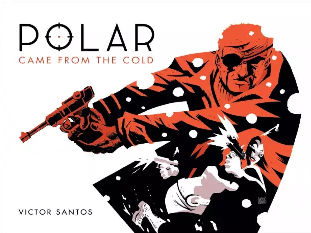
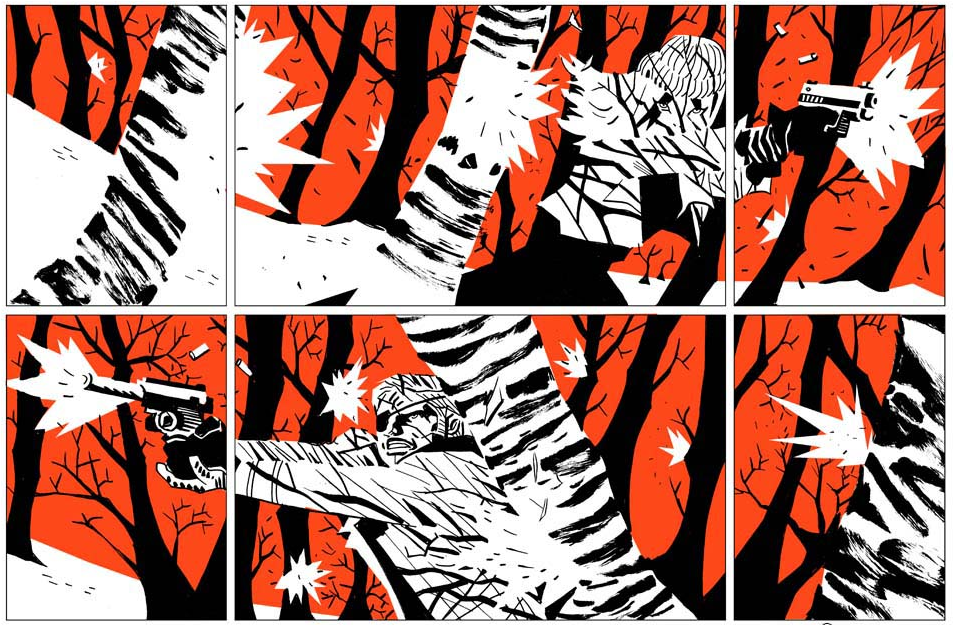
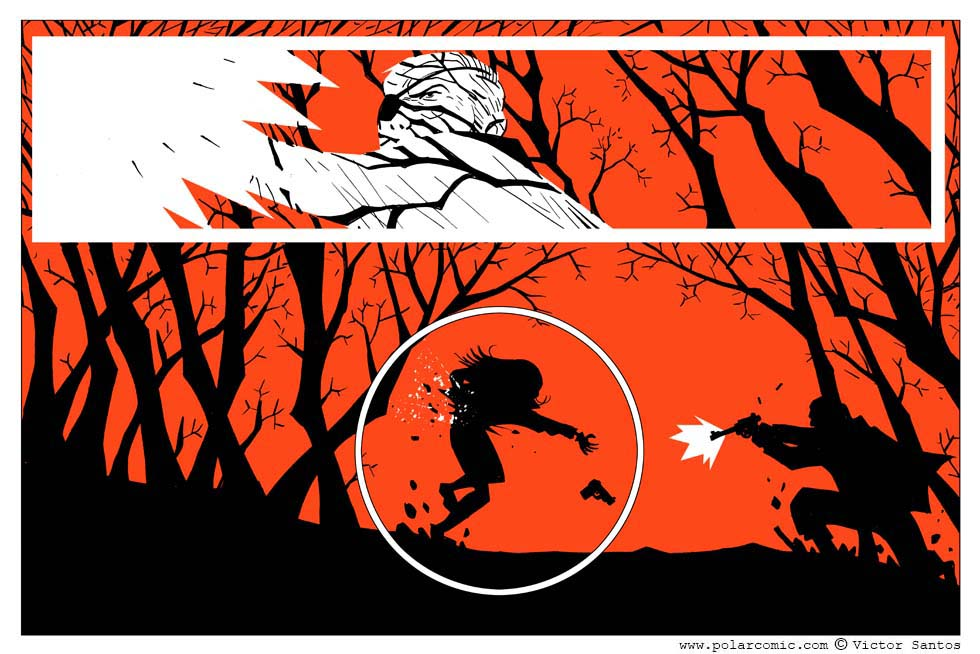
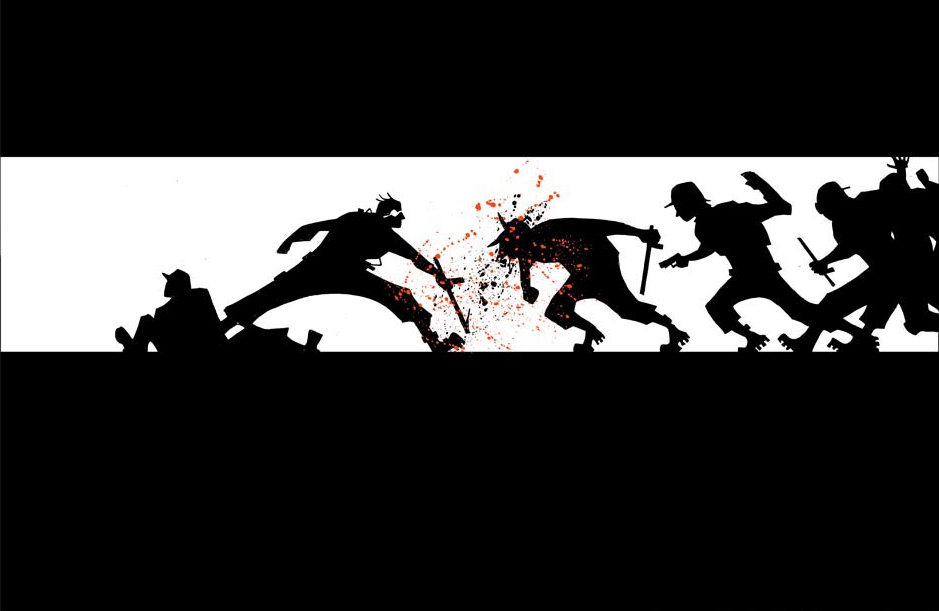
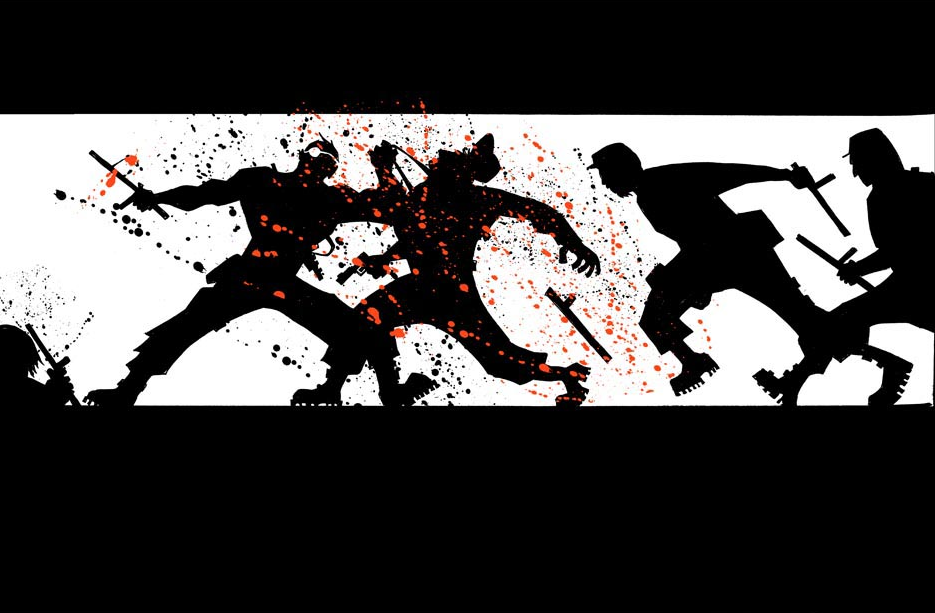
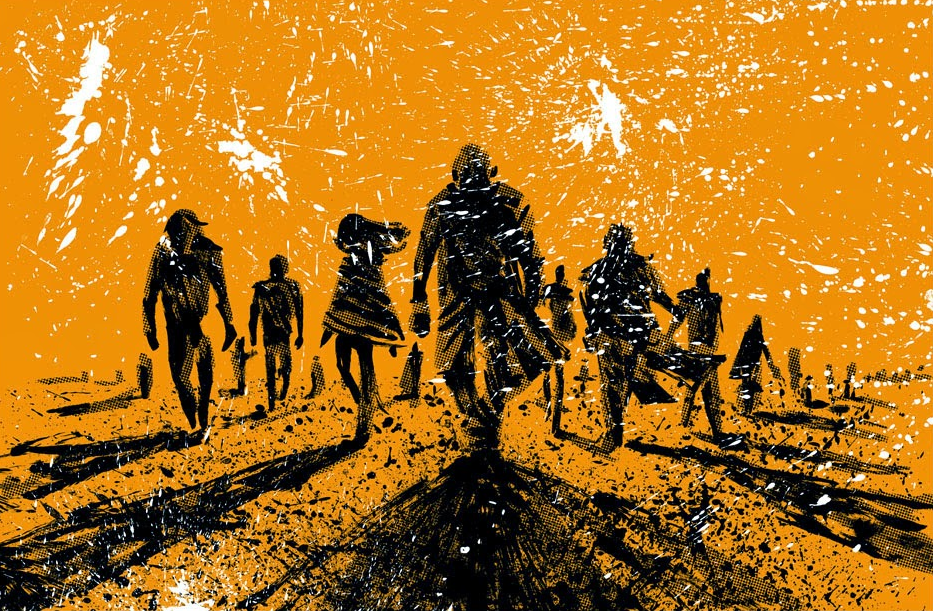
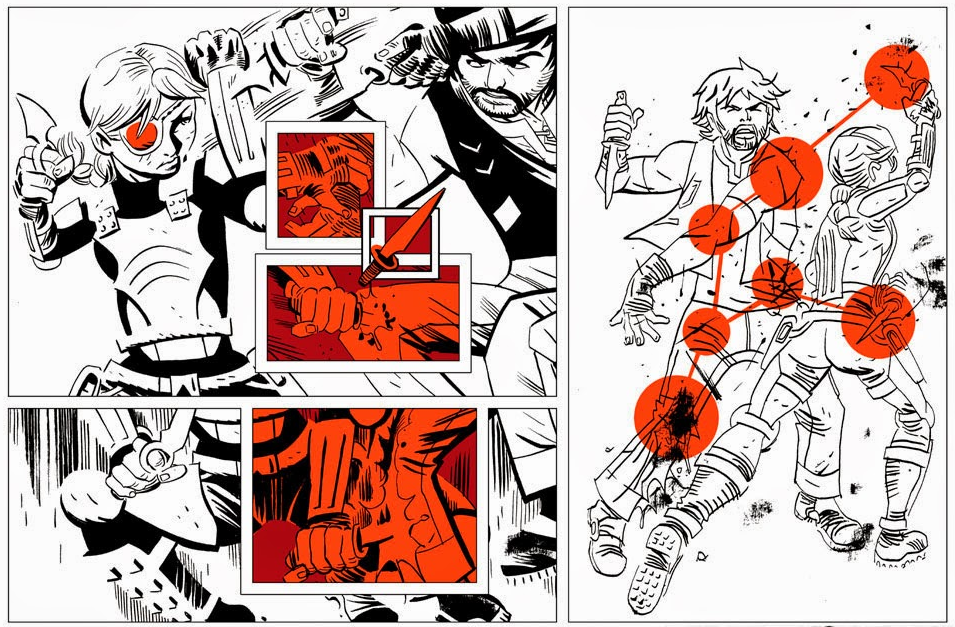
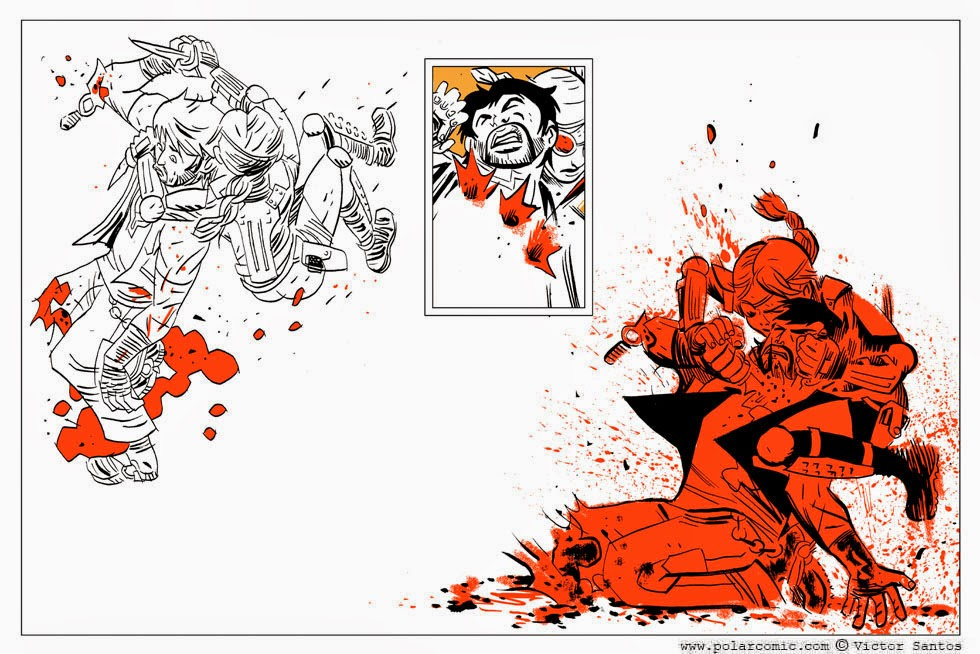
Polar: Eye for an EyePolar: Eye for an Eye
Atomic Robo and the Savage Sword of Dr. DinosaurAtomic Robo and the Savage Sword of Dr. Dinosaur
Saga #7Saga #7
Posted in GLIMPSES INTO AWESOMENESS | Tagged , , , , , , | Leave a comment

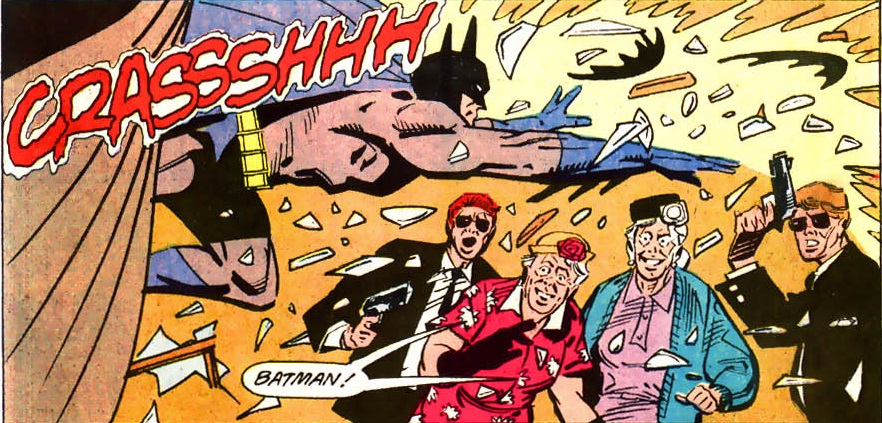
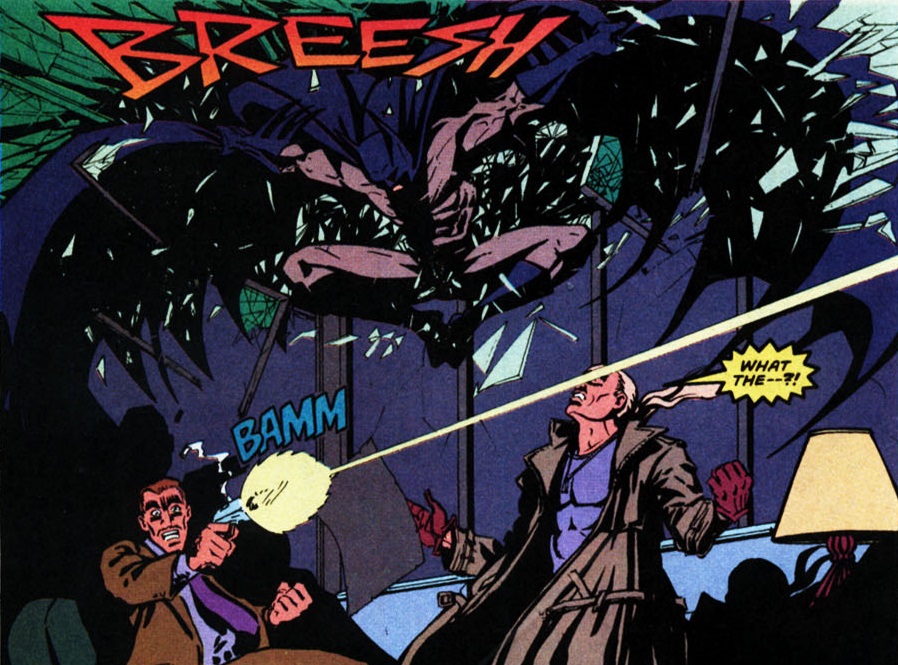
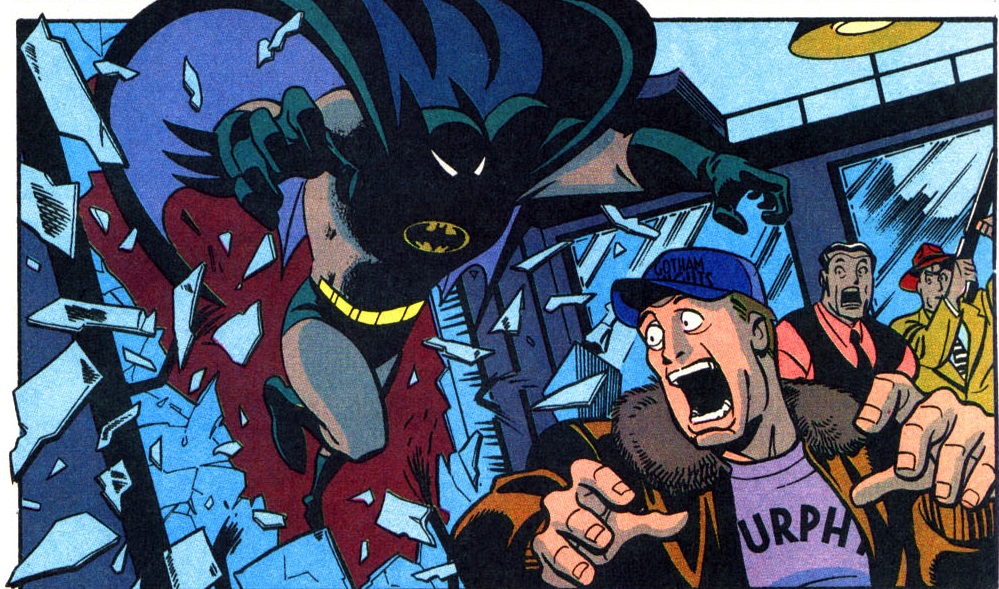
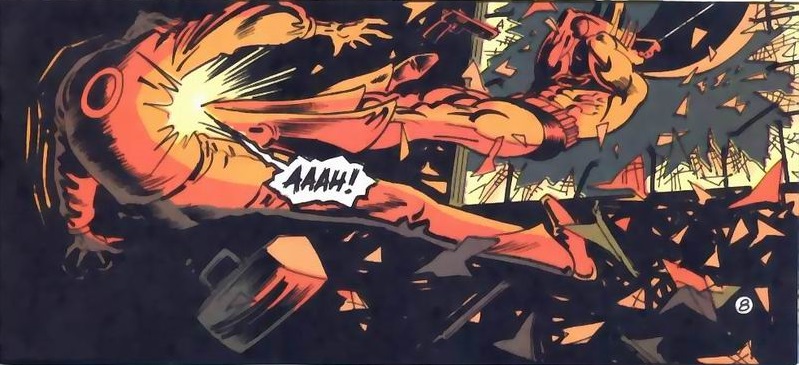
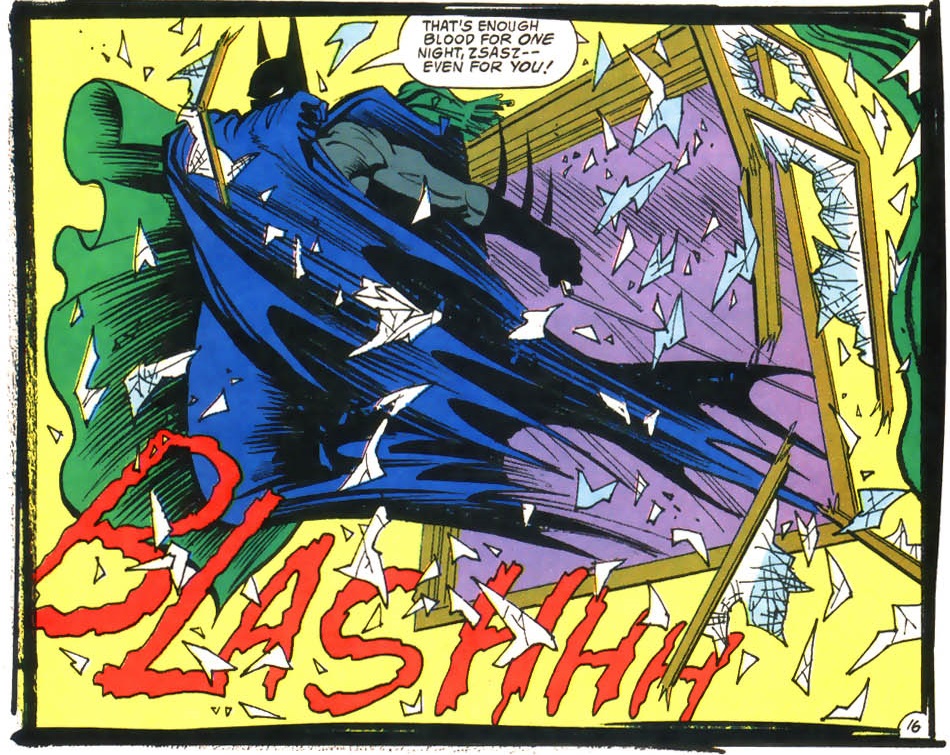
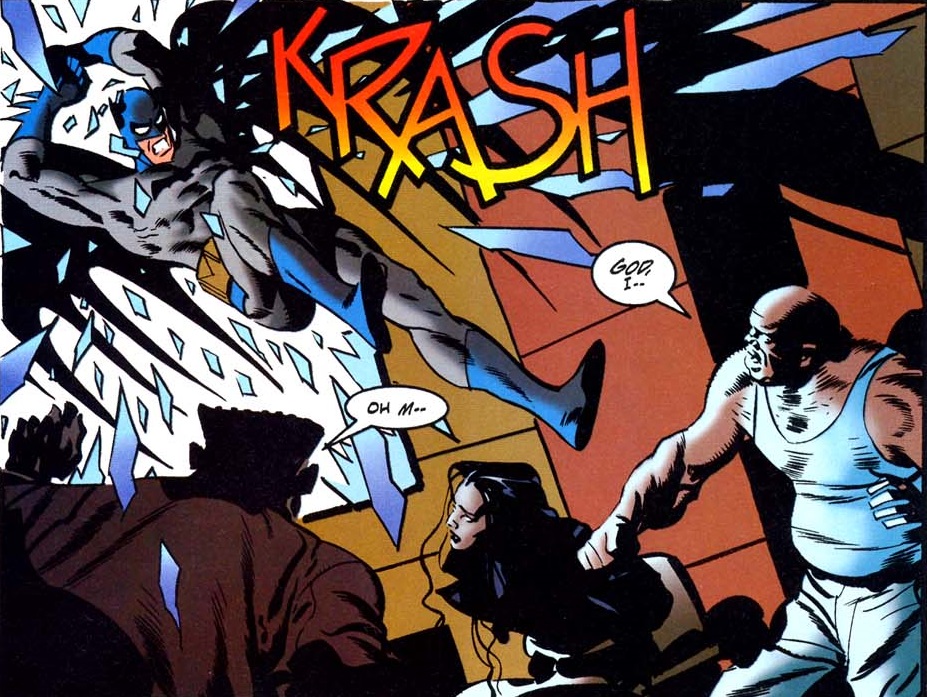
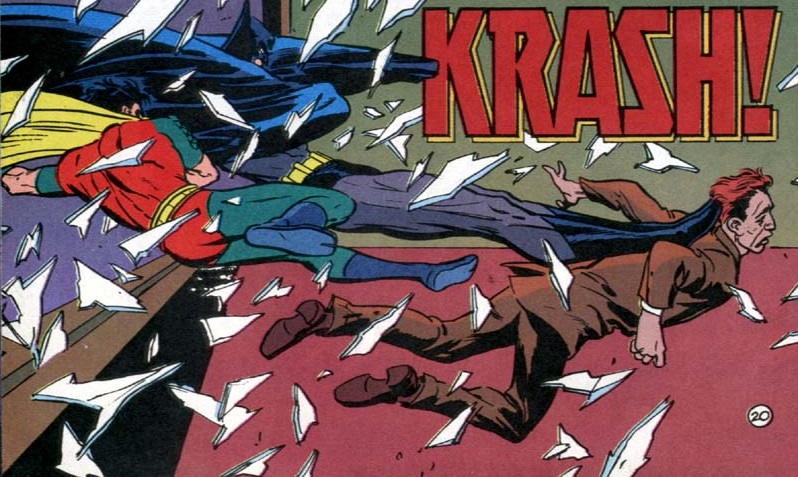
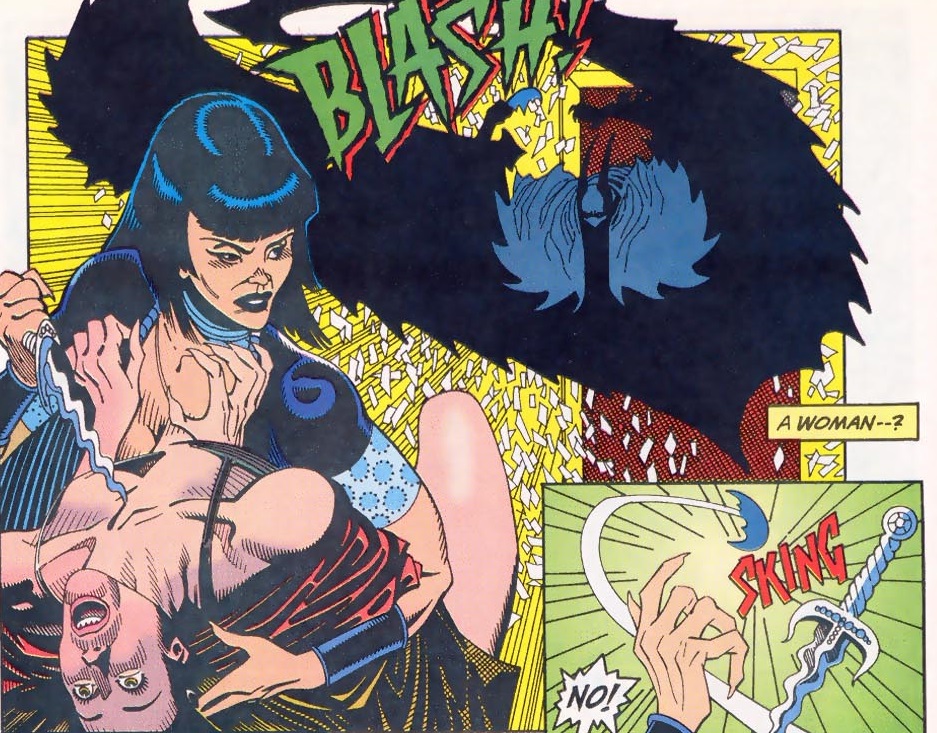
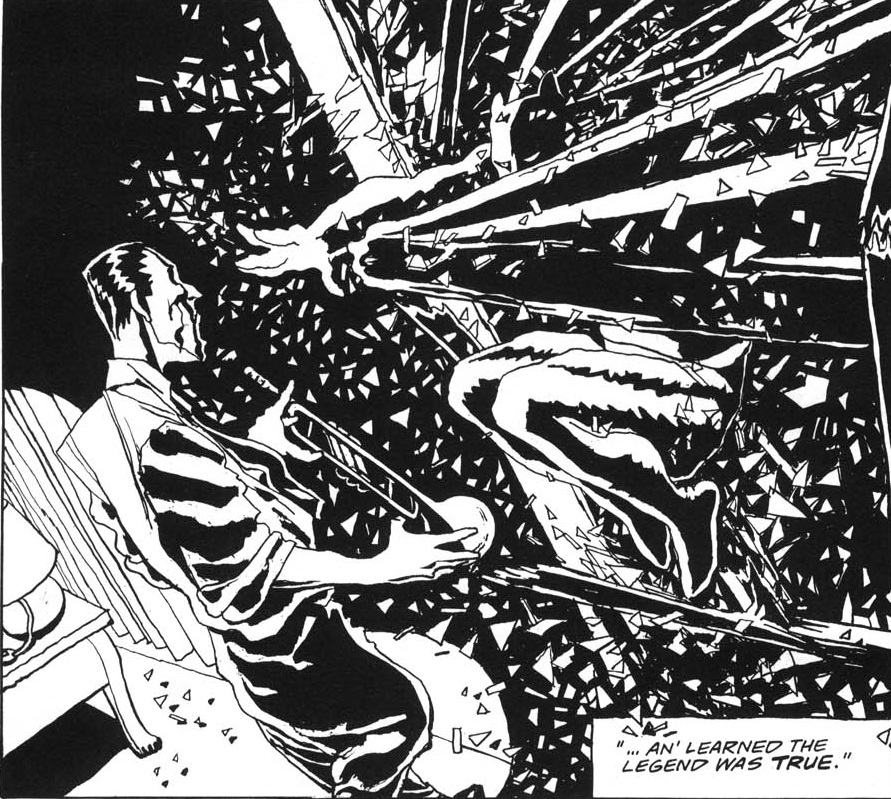
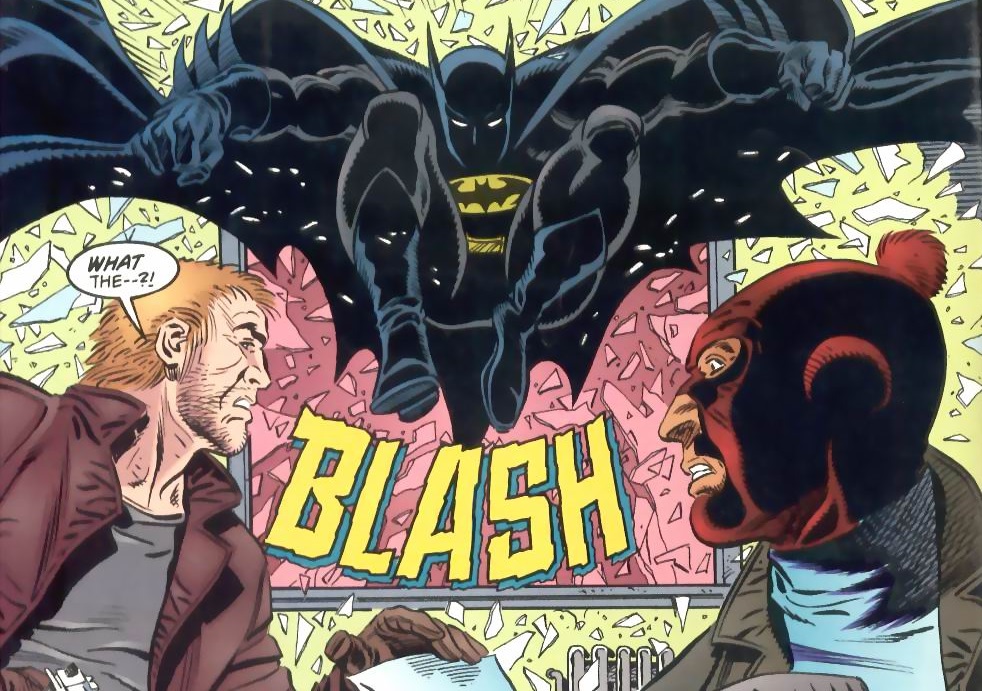
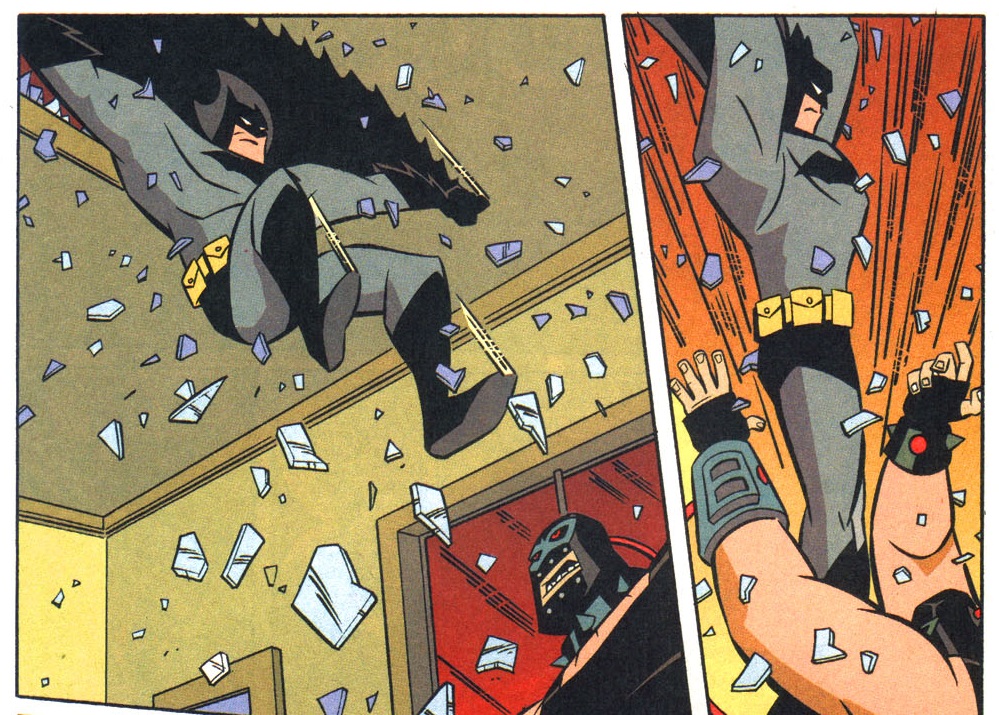
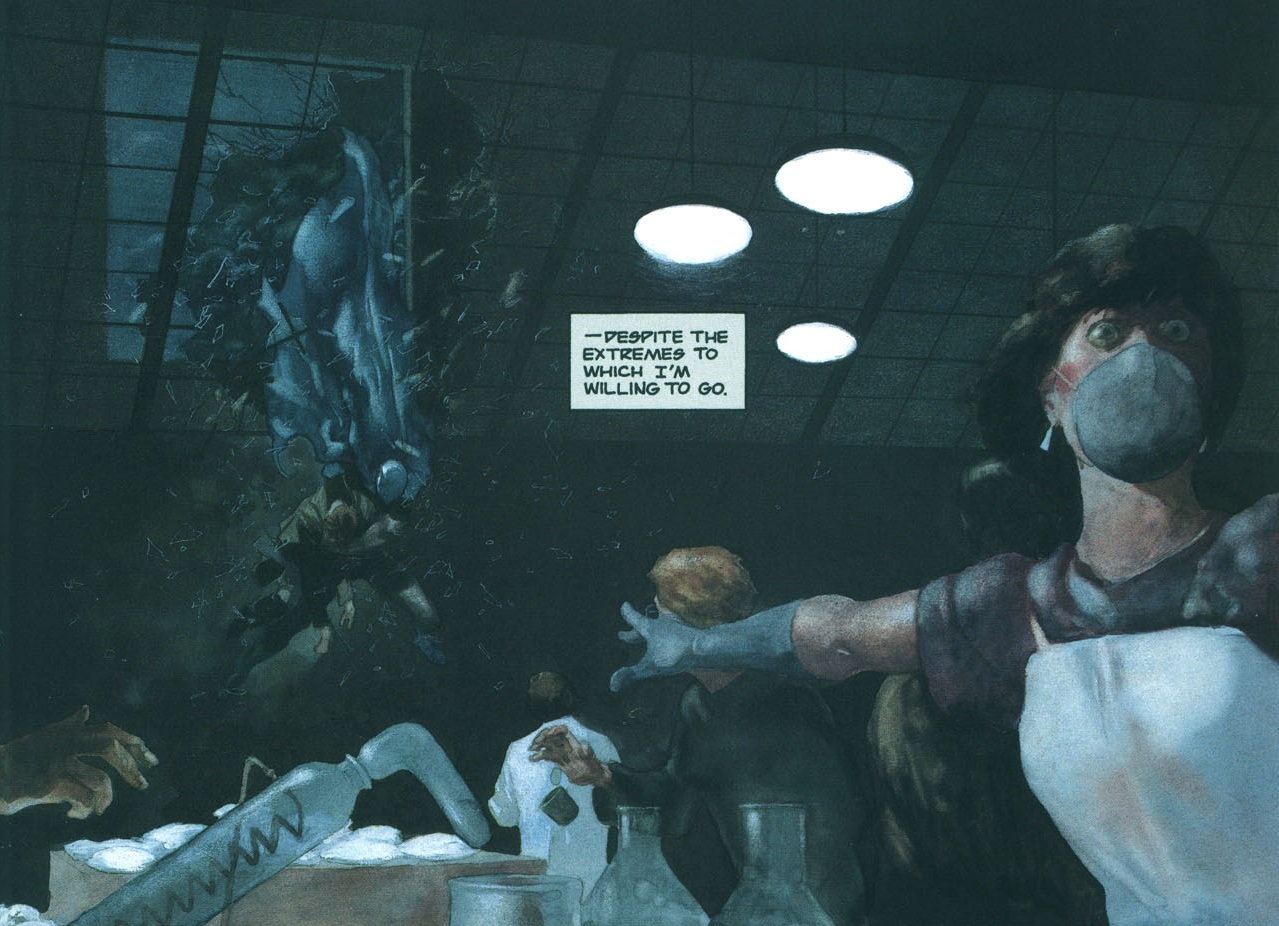
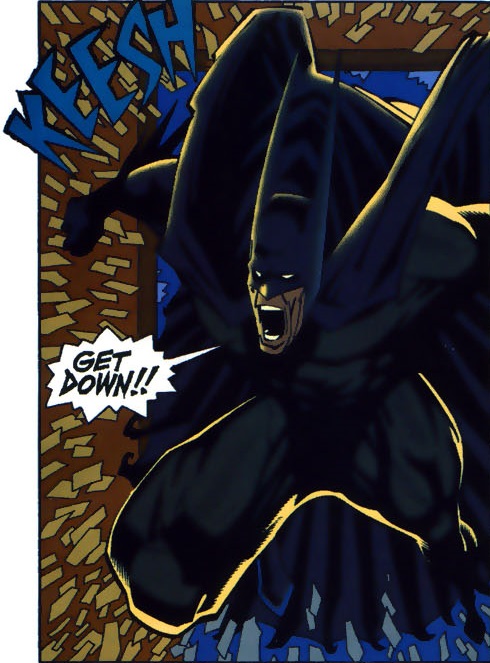
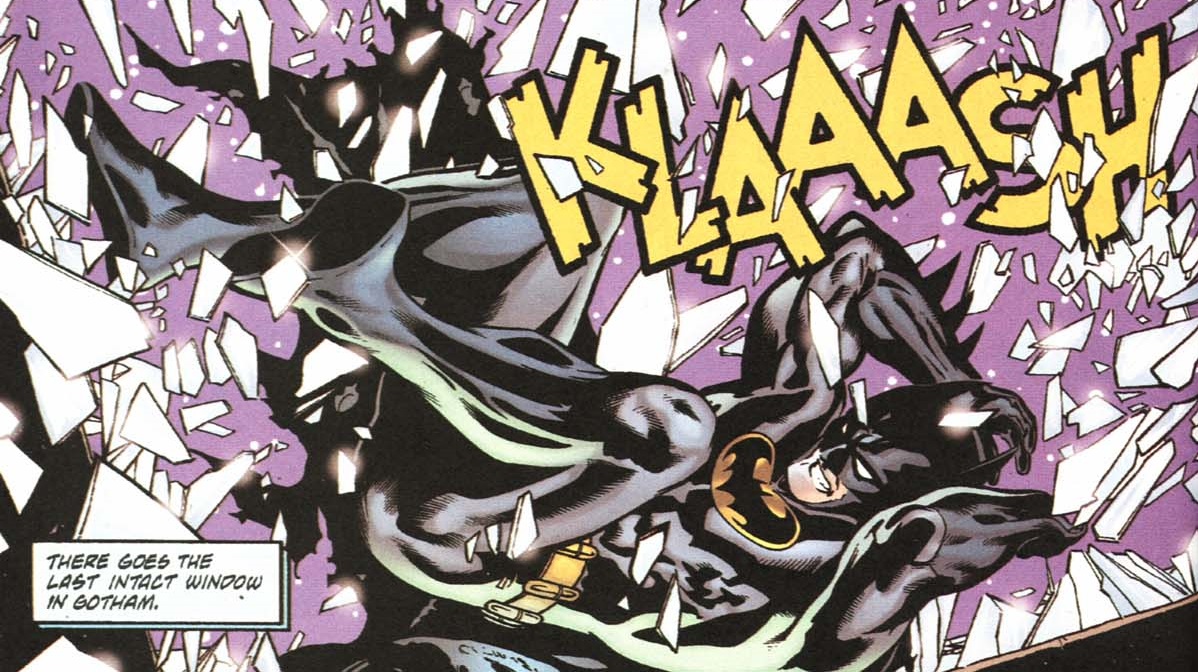
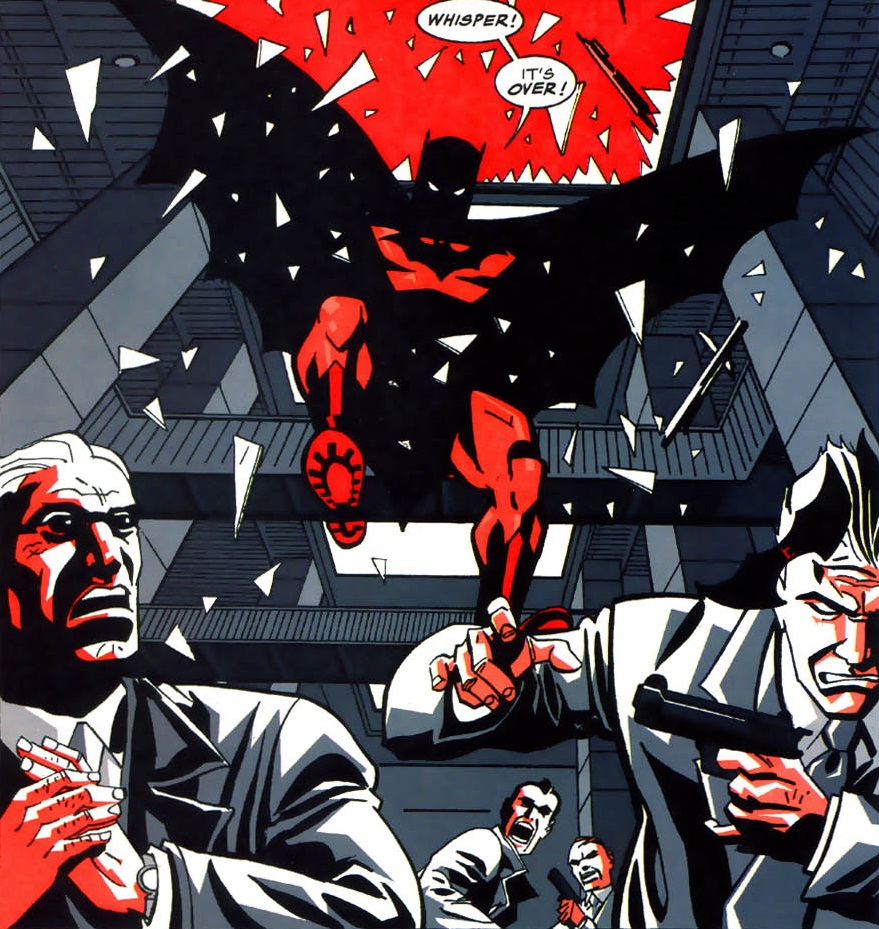
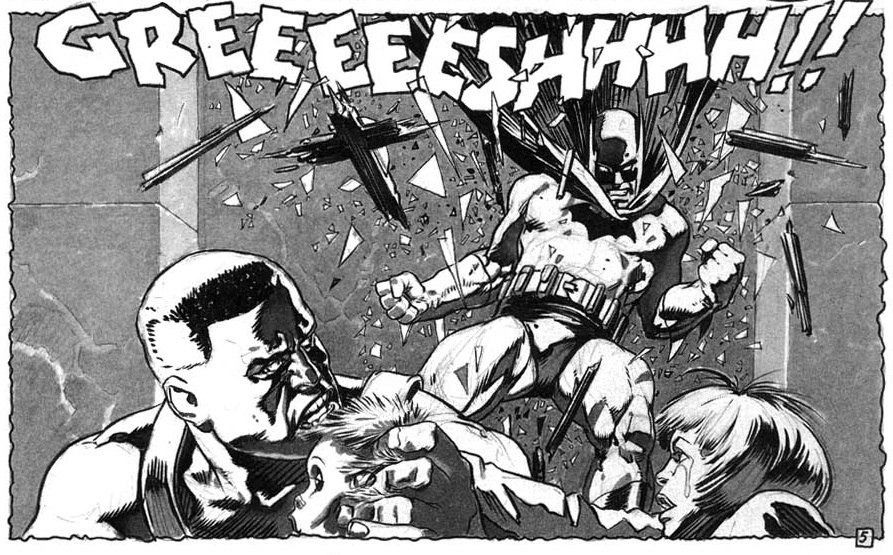
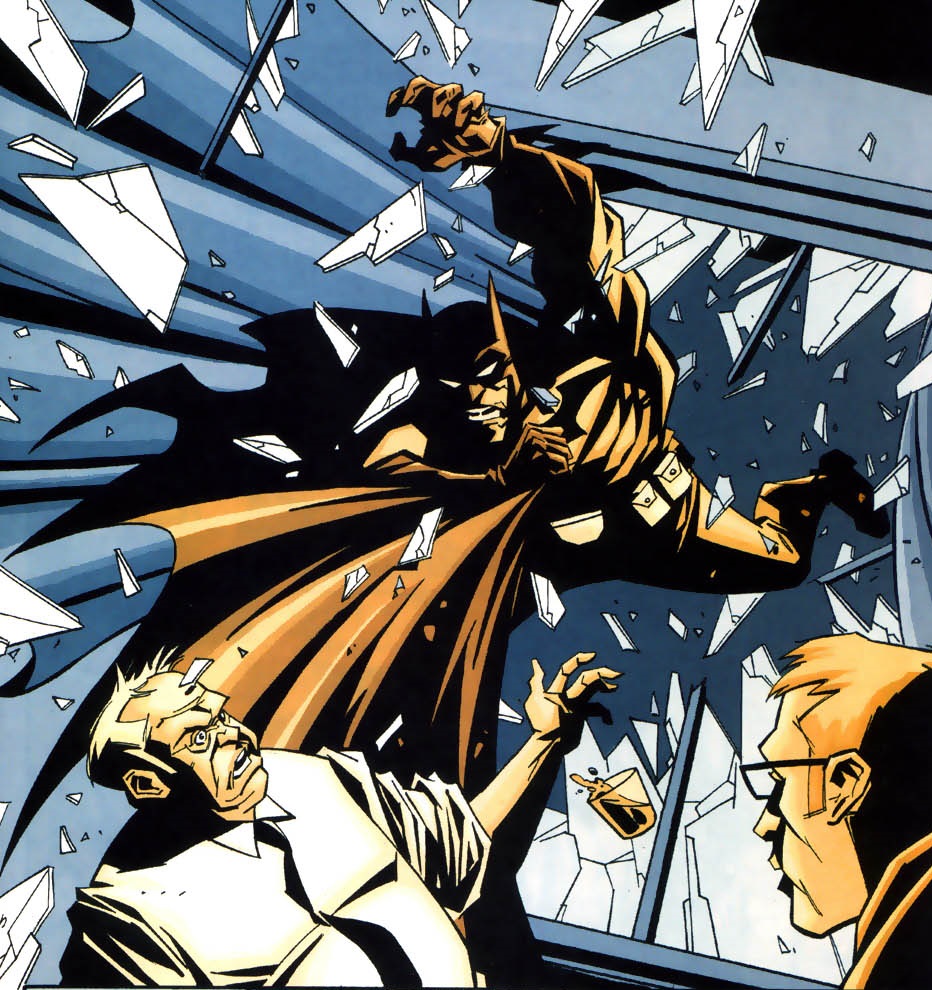
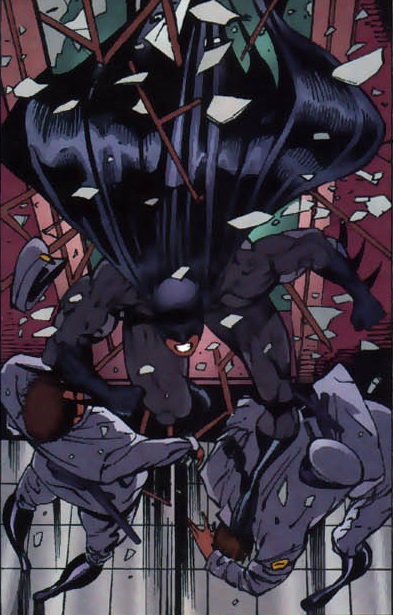
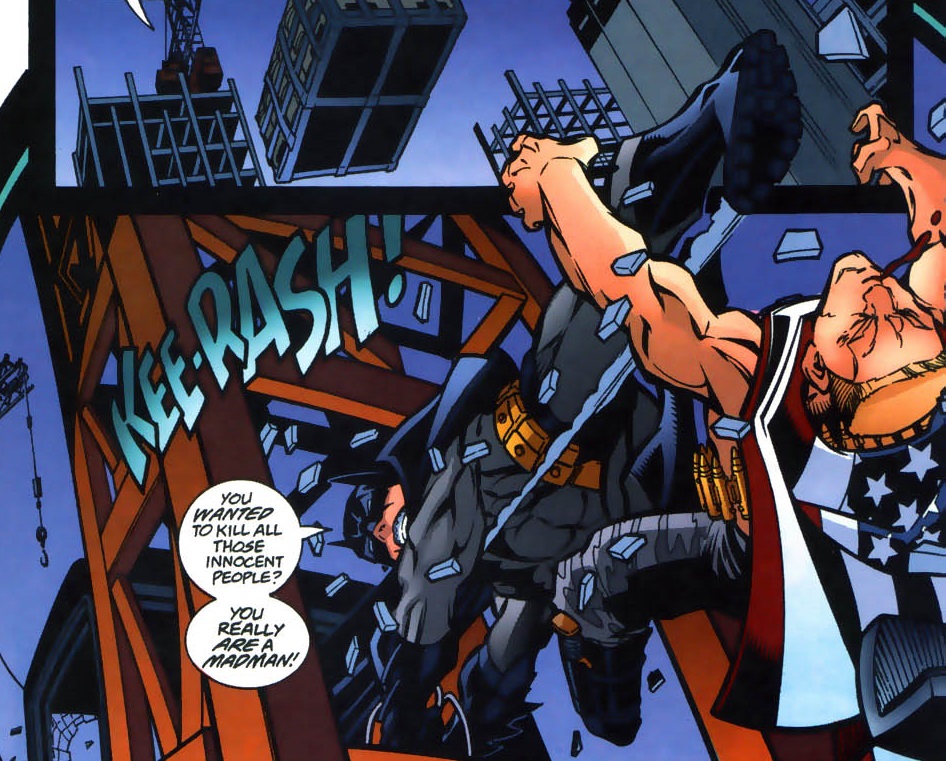
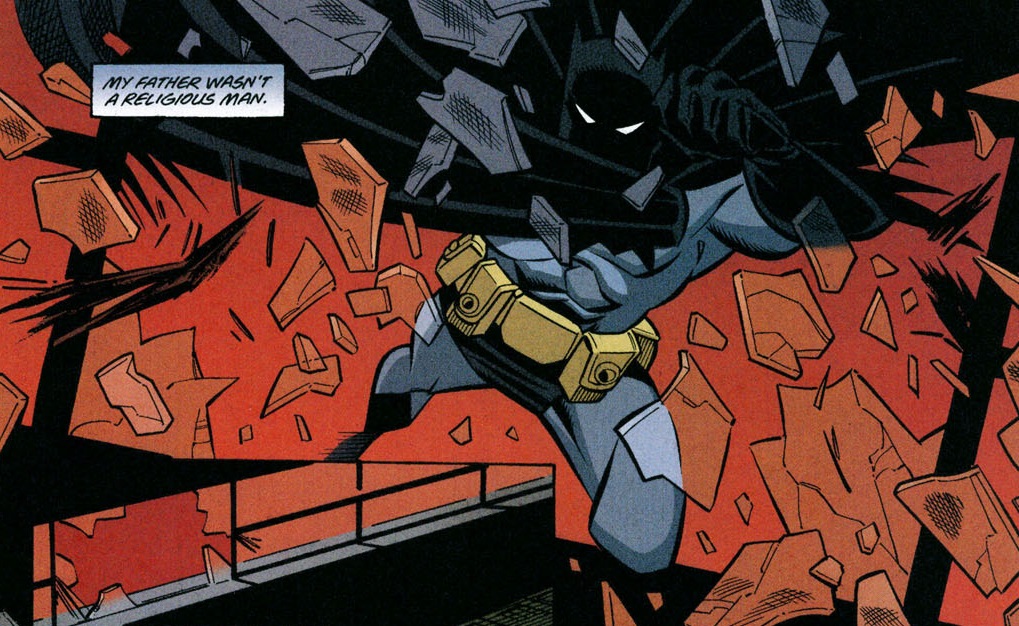
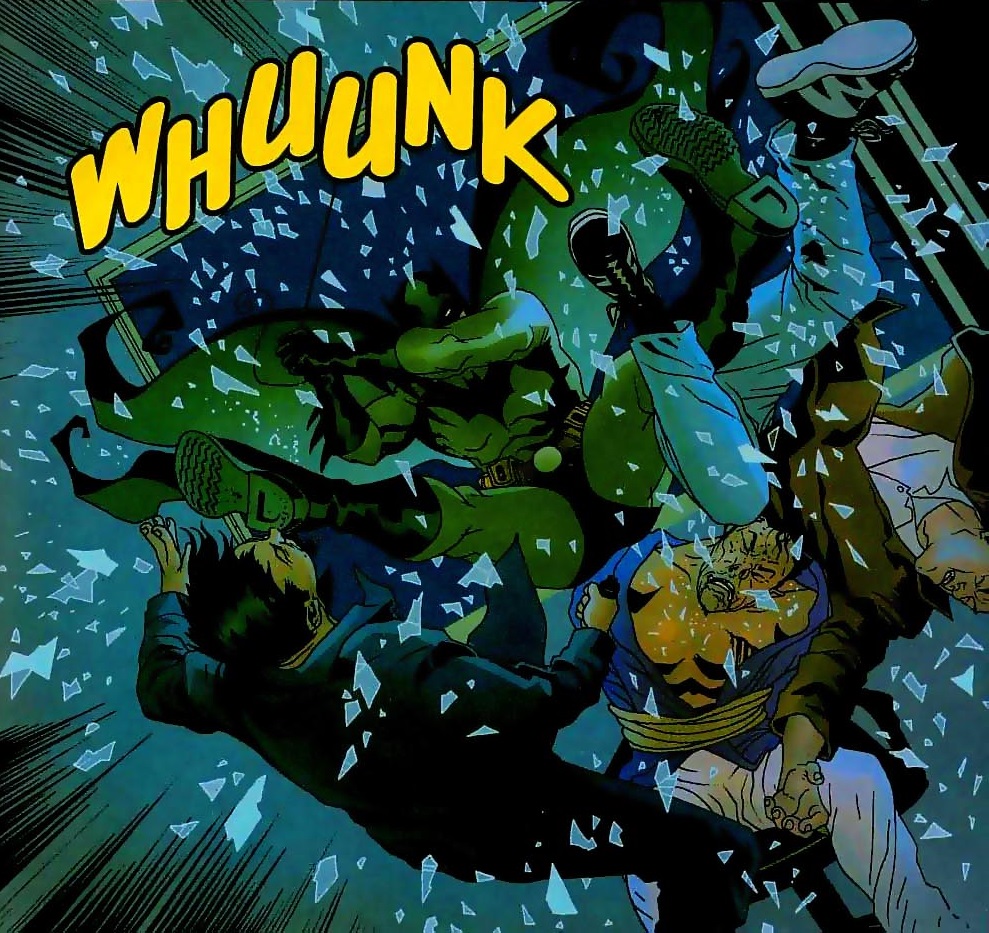
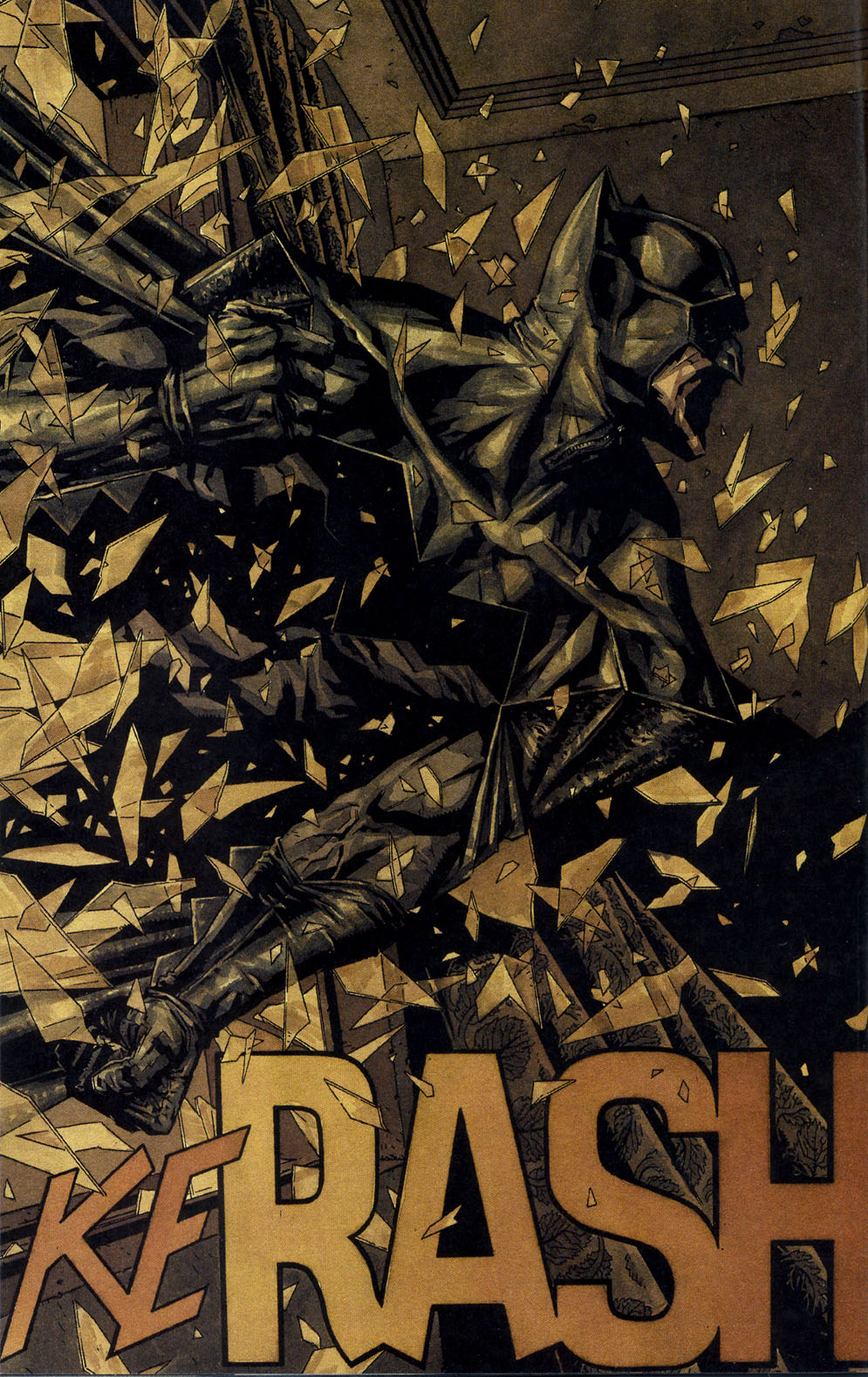
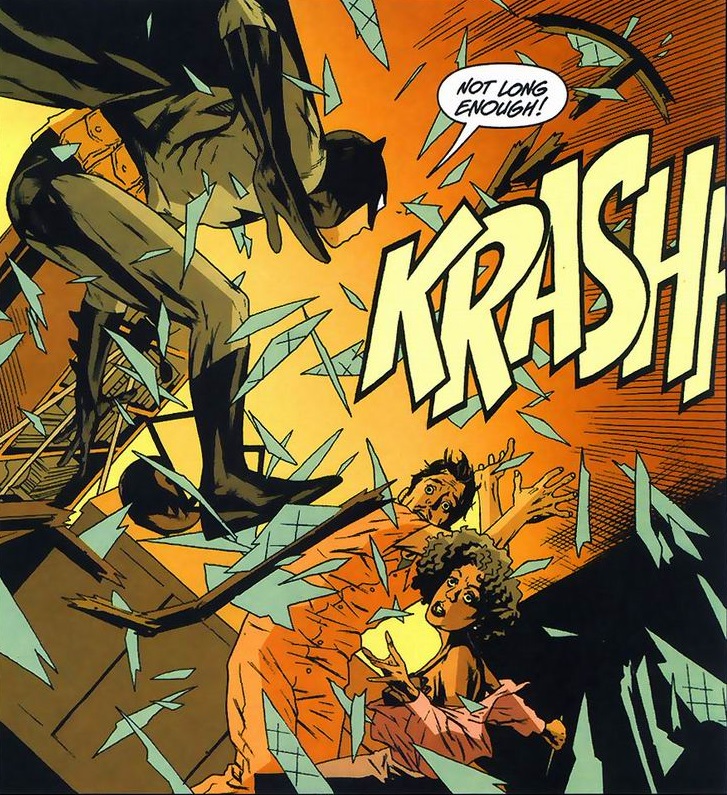
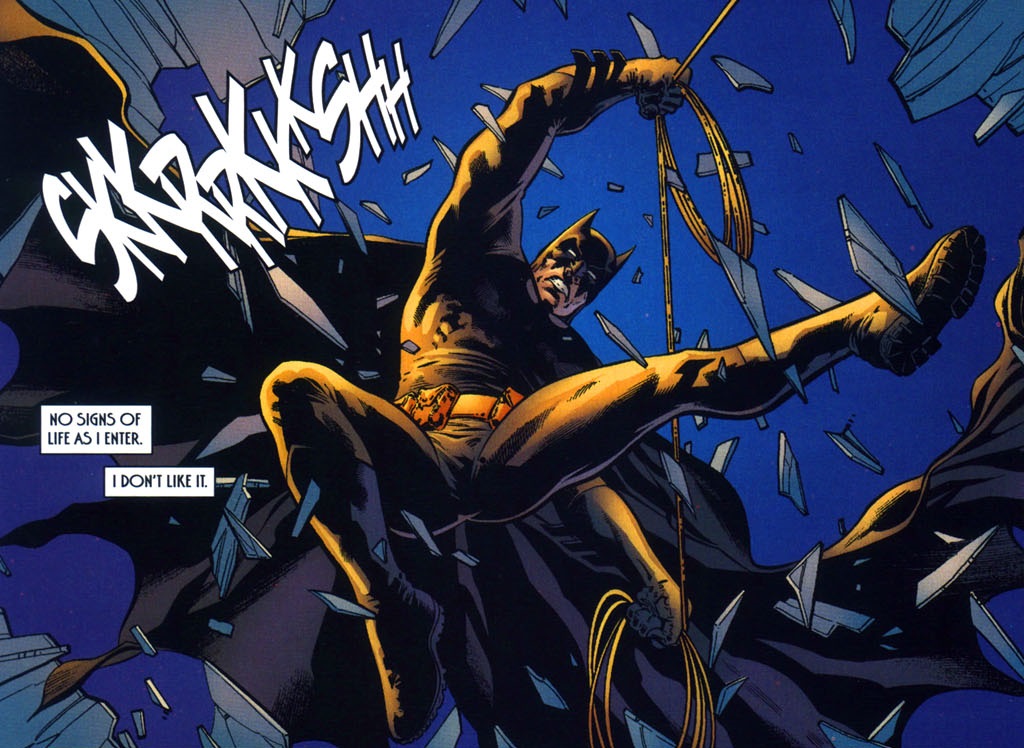
Why Commissioner Gordon hates Tuesdays

Vengeance of BaneVengeance of Bane
Shadow of the Bat #33Shadow of the Bat #33
Shadow of the Bat #60Shadow of the Bat #60
Robin (v2) #3Robin (v2) #3
Legends of the Dark Knight #133Legends of the Dark Knight #133
Batman #495Batman #495
Batman / Teenage Mutant Ninja Turtles #5Batman / Teenage Mutant Ninja Turtles #5
Posted in GOTHAM INTERLUDES | Tagged , | Leave a comment

Anatomy of Batman #372 and Detective Comics #539

Back when I discussed Doug Moench’s 1980s Batman run, I singled out as its most striking features Moench’s literary emphasis on symbolism, characterization, politics, and intertextuality. This week, I’ll zoom in on one story in particular which powerfully combines all these elements. The two-parter published in Batman #372 and Detective Comics #359 (both cover-dated June 1984) is a noir-tinged yarn oozing with bold social commentary, set in the world of professional boxing.

Batman #372

The first thing to note is that the covers of both issues are quite misleading, even if taken as allegories. Returning readers might recognize the villain, Dr. Fang (a theatrical gangster who is both an ex-boxer and an ex-thespian), but they would be wrong to assume that these comics concern a direct confrontation between him and the Dark Knight. Instead, we get one of those Eisner-esque tales where Batman is practically a supporting character in somebody else’s drama.

In Batman #372, Dr. Fang sets up a big match between the heavyweight champion Michael Greene and the underdog Tommy Dunfey, with old-school idol Jake DeMansky as referee. He then fixes the fight by blackmailing the champ (off-page), hoping to earn a fortune by betting on Dunfey. That’s the premise anyway, although Fang and his plan soon move to the background as the comic digs into the motivations of the boxers and the implications of the match for those around them. As for Batman, we actually see very little of him – he only shows up in a couple of brief scenes before partly saving the day by preventing a murder attempt on DeMansky, albeit not without getting shot in the arm himself… Notably, he isn’t able to save Greene, who gets killed by Fang’s henchman for refusing to throw the fight at the last minute.

Detective Comics #359 delivers a more straightforward thriller, as Dunfey – out to avenge his former rival now that he realizes the extent of the fix – teams up with the Caped Crusader to find and take down Dr. Fang. As is often the case in Moench’s two-parters from this era, the whole thing is neatly symmetric: again, the climax involves someone getting shot in the arm and, again, it takes place in a ring, now with Dunfey going up against Fang while Batman, once more, keeps busy outside:

detective comics 539

Let’s get the intertextual stuff out of the way. As far as I can tell, these comics aren’t riffing on any one work in particular, although their setting and atmosphere do evoke classic boxing pictures. This is a subgenre that goes all the way back to the silent era (even Alfred Hitchcock did one, The Ring). From Raging Bull to Million Dollar Baby, the most acclaimed pictures tend to be dramas that aren’t really about the sport itself but more about fighting as a metaphor for the characters’ aspirations, often telling sagas of anti-heroes who rise and fall… and, sometimes, rise up again. The most well-executed example of this formula is probably Robert Rossen’s Body and Soul (which the Rocky franchise has been ripping off for decades…). Revolving as they do around a deadbeat lumpen, I suppose these two comics sort of end up channeling Robert Wise’s The Set-Up and John Huston’s Fat City.

At their core, Batman #372 and Detective Comics #359 are character pieces. They’re quite original ones, though, since the characters they focus on aren’t just new, but oddly grounded and mundane for a superhero comic. I can see how unsettling this may feel for some fans, as Batman gets so little space in the first part of the story and he’s not even the one who takes down the main villain in the end. That said, Doug Moench’s rich characterization – nailed by the gritty art of Don Newton (who co-plotted the first issue) – pays off beautifully, both by bringing tension to the climactic fights and by contextualizing the weight of the Dark Knight’s actions.

In typical fashion, a big chunk of Moench’s script is built around wordplay. The title of the first issue – ‘What Price, the Prize?’ – works on multiple levels, since there are very different stakes (or ‘prices’) for each character in the climactic boxing match for the championship belt (the ‘prize’). Moreover, the phonetic similarity between the two words keeps coming up throughout the comic (along with the similarities between ‘champ’ and ‘chump’), highlighting the connection between the two things. The title of the second issue – ‘Boxing’ – also has various meanings, referring to the sport itself as well as to the ways in which characters are trapped (or ‘boxed’) by their identities. The latter point is made right in the opening page, set at Michael Greene’s funeral, while adding yet another, more literal, meaning: namely the fact that Greene will now spend the rest of his days in a box (his coffin).

Ironically, despite this leitmotif, the second issue appears less tight, because a few scenes are devoted to unrelated subplots, including one about Jason Todd and Alfred’s daughter, Julia Pennyworth. Nevertheless, the dialogue does try to relate those detours to the ‘boxed’ theme, namely by having Julia muse about how ‘we’re all contained by what we are.’

At the risk of pushing this reading too far, the fact that Don Newton’s pencils – inked by Alfredo Alcala and Bob Smith, with colors by Adrienne Roy – tend to go for rigid rectangular panels (with a few exceptions, like the cool bat-shaped splash on page 9) reinforces the notion that everyone is constantly trapped by their surroundings, unable to break away from their identity.

These threads brilliantly come together in the final panel:

detective comics 539

(Notice how Thomas Dunfey – the most fleshed out character and, therefore, the story’s true protagonist – is at the center of the image, while Batman – who played more of a supporting role – is a shadow silhouetted on the sidewalk. This is another rhyme with the previous issue, whose final panel was framed from a similar perspective… and where a shadow was all we saw of Batman as well.)

The ‘boxed’ motif is more than a narrative game – it also ties into the comics’ politics. The whole boxing system is set up like a tight contraption, as shown in this scene where Tommy Dunfey and his coach, Rudy Quinn, try to negotiate their way into fighting the champ:

Batman #372Batman 372

I love the colorful turns of phrase. Moench uses the sport’s slang in a way that really gives us a sense that these characters have been around it for long. (This is reminiscent of Mark Robson’s underrated film noir The Harder They Fall.)

The dialogue sounds a bit more ham-fisted later on, during a conversation between Bruce, Alfred, and Julia about the pros and cons of boxing. Regardless, it’s still interesting to see a vigilante-themed comic book engaging so openly with the masculinist appeal of violence:

Batman 372(Such a smooth mise-en-scène in that last panel, where it seems like the Bat-Signal is springing from Bruce’s mind…)

That said, the story’s most prominent political theme has to do with race in the boxing world, as Michael Greene finds himself ‘boxed’ in his black skin, just as Tommy Dunfey and Jake DeMansky are ‘boxed’ by their whiteness.

Notably, the racial theme is not explicit from the start, but it gradually creeps into the forefront. The first time it becomes clear is when Dunfey pays a visit to Greene and tries to convince the champion to fight him, even though he is ranked #10:

Batman 372

Even as the issue becomes more central to the story, Moench manages the rarity of writing a comic book about racial tensions where the topic is dealt with in a refreshingly mature way, with each character relating to it differently. The African-American Rudy Quinn shamelessly convinces the commissioner of the World Prizefighting Council to allow the match by asking him if he wouldn’t like a chance to see Dunfey destroy ‘the black champion of the world.’ (The silent panel with Quinn and the commissioner starring at each other after this exchange is stirring.) The media rides the wave by labeling Dunfey the ‘underdog white hope.’ Most people we see seem to assume Greene is obviously stronger than any white boy. The most extreme case is George Straite, a white supremacist willing to kill DeMansky just to prevent his idol from enabling Dunfey’s humiliation by a black man – the scenes in Straite’s apartment (a ‘haven of white flesh and dark thoughts’) would sound almost caricatural if not for the recent reminders that people like this are still around.

My favorite bits are between Tommy Dunfey and Rudy Quinn, who frankly recognize the racial undertones of the upcoming match. Once again, Quinn is not above drawing on racist imagery to get his way, delivering reverse psychology in the form of a harsh motivational speech about the superiority of the champ’s genes, at least as far as boxing is concerned:

Batman #372Batman #372(That final panel gets to me every time, as you can see Quinn has serious doubts about Dunfey’s chances in the ring…)

I suppose you could consider racism to be the real villain here. That would recast Batman as a more conventional hero, since he is the one who stops the violent racist George Straite (in a fight that, in typical Moench style, mirrors the events in the ring). At the same time, this story appears to be less about defeating racism than about pointing out its prevalence in society, in multiple and insidious ways, making it damn hard to escape.

After all, it’s not just Dr. Fang, Rudy Quinn, the boxing commissioner, and the media who exploit racist feelings. The Dark Knight himself benefits from a racially motivated – and horribly worded – tip while looking for Fang and his henchman, Woad…  leading to the most cathartic punch of a comic packed with punches:

detective comics #539

Posted in POLITICS OF BATMAN COMICS | Tagged , , , , , , , | Leave a comment

When Batman comics meet the boxing world

While I don’t particularly care for boxing in real life, I’m a huge sucker for boxing in fiction. I’m a fan of Brian De Palma’s Snake Eyes and Raoul Walsh’s Gentleman Jim. Hell, Robert Wise’s The Set-Up is up there as one of my all-time favorite movies. I’m also fascinated by the fact that this is probably the most prominent sport in Batman comics…

detective comics 260          detective comics 174

Boxing has served as the basis for interrogation scenes (like in the classic Joker tale from Batman #251), for action set pieces (Batman #466 features a chase at a Hall of Boxing Heroes), and for small character moments such as this one:

detective comics 38Detective Comics #38

Or this one:

detective comics 596Detective Comics #596

In part, I guess the comics’ infatuation with pugilism has to do with the fact that this is not just a popular sport, but a common motif in crime fiction. Besides the melodramatic raw matter of sweaty people punching other people for a living and the simple visuals of the square ring, there is something easily metaphorical about the whole thing. It’s no wonder some of the greatest crime films of all time feature boxers among the main characters, including the original The Killers, 99 River Street, On the Waterfront, and Pulp Fiction. Even the classic Body and Soul is more of a crime flick than a sports movie, with very little boxing until the climax (ultimately, the film is best seen as one of a string of super-gritty, leftist social dramas of the late 1940s, along with Thieves’ Highway and Brute Force).

As far as Batman tales go, my favorite take on the symbolic potential of boxing is the white-knuckle thriller ‘Count Ten… and Die!’ (The Brave and the Bold #88, cover-dated February-March 1970). This is the one that opens with Bruce Wayne in a dusty slum, about to enter a dingy place whose sign offers rooms for 50¢ a night while the narration informs readers that it’s ‘night in Gotham City, and the neon glows feverishly, like the hopes of defeated men…’ Bruce is looking for retired heavyweight champion Ted Grant (aka Wildcat), whom he eventually convinces to coach the US boxing team at the World Youth Games, in Vienna. Once they get to Austria, Grant is challenged for a match with Russian boxer Koslov (aka the Hammer) and is forced to face his insecurities.

Bob Haney’s script is full of hardboiled lines and his usual anything-goes attitude, adding a whole espionage subplot just for the hell of it. Moreover, having set the main story in Vienna, Haney can’t resist throwing a couple of winks to the brilliant film noir The Third Man, including a key exchange at Prater’s Ferris wheel. In contrast to Orson Welles and his witty cuckoo clock speech, though, the Dark Knight has a blunter approach when he wants to be persuasive:

Brave and the Bold 88Brave and the Bold 88The Brave and the Bold #88

Regardless, the most obvious parallel that comes to mind when reading this story today is with Rocky IV (made fifteen years later). Like the brutal Rocky Balboa vs Ivan Drago match, the fight between Grant and Koslov is a blatant Cold War allegory, athletically illustrated by Irv Novick’s pencils and Mike Esposito’s inks:

The Brave and the Bold 88The Brave and the Bold #88

Batman and Wildcat teamed up again a bunch of times after this story and, of course, Bob Haney always made a point of including at least one slugfest to show off Ted Grant’s boxing skills. The most memorable one took place in ‘May the Best Man Die!’ (The Brave and the Bold #118), a tale packed with hard-hitting fights, brought to life by Jim Aparo’s muscular art. At one point, the Joker – aka the ‘Grinning Jackal of Crime’ – forced Grant and the Caped Crusader to box with deadly metal gloves by threatening to kill a puppy that had the cure for a rare tropical disease affecting 600 prison inmates. (Don’t ask.) This was such a great visual that it was revisited in Batman/Wildcat – an uninspired mini-series written by Chuck Dixon and Beau Smith.

Wildcat has actually popped up in quite a few other Batman comics over the years. For instance, he has teamed up with Tim Drake (Robin #31) and it has been retroactively established that Ted Grant was the one who taught Selina Kyle how to fight (in Catwoman: Her Sister’s Keeper). And not just her:

Catwoman v2 #20Catwoman (v2) #20

Moreover, while 1997’s Batman/Wildcat isn’t worth your time, the Catwoman/Wildcat mini Dixon and Smith did the following year does hit all the right notes. With lively art by Sergio Cariello and Tom Palmer, this blood-splattered comic has the Dixon-Smith duo channeling their inner Garth Ennis as they throw the titular characters into a slapstick romp about a failed heist targeting the payouts of a major fight in Las Vegas. The script gives Wildcat a suitably rugged voice (‘The man upstairs must still like me. He keeps makin’ my knuckles just a little harder than the punks’ jaws.’), which plays very nicely against Selina’s smart-ass style.

Catwoman/Wildcat #1Catwoman/Wildcat #1Catwoman/Wildcat #1

But what about boxing in Gotham City itself? Well, the city is bound to have an eccentric relationship with sports – after all, this is a city where watching a hockey game at the stadium means you may end up gassed and robbed by a gang patterning its crimes after the Seven Wonders of the Ancient World (as shown in Detective Comics #368). Needless to say, boxing is no exception when it comes to Gotham’s vices… As early as 1941, ‘Suicide Beat!’ (Batman #6) gave us a glimpse of an underworld with seedy gangsters fixing fights. We saw a little more of it in ‘The Park Avenue Kid’ (Detective Comics #174), an odd little tale in which Bruce Wayne temporarily became a prizefighter (admittedly, this was a bit goofy, but still not as goofy as the boxing scene in Charlie Chaplin’s City Lights!).

Curiously, another comic where we get a close look at Gotham’s typically corrupt boxing milieu is the surprisingly good Batman versus Predator (well, perhaps not that surprising considering that it was written by Dave Gibbons, who has penned his share of cool Batman yarns, namely a World’s Finest mini-series and the amusing short story ‘The Black and White Bandit’). One of the most accomplished entries in the whole Predator franchise, this 1991 crossover sees the titular monster applying strange alien logic in order to hunt down Gotham’s strongest contenders. He starts out with the city’s boxers, attacking the home of the most recent heavyweight champion, which leads to a callback to the franchise’s most famous R-rated line:

Batman versus Predator #1Batman versus Predator #1

That said, if you really want a proper boxing saga set in Gotham City, then you’ll have to pick up the two awesome issues I’ll be discussing next week…

Posted in WEBS OF FICTION | Tagged , , , , , , , , , , , , | Leave a comment

COMICS CAN BE AWESOME (June)

As you can probably guess by the title and content of this blog, I’m a big fan of DC characters and comic books – and not just the ones set in the DC Universe, but also the stuff published through Vertigo, WildStorm, and America’s Best Comics. Sure, as a company, DC has done plenty of things that are tough to stomach, from the terrible way they treated Jerry Siegel and Joe Shuster to the not-terrible-enough way they treated Eddie Berganza… Still, I try to keep a (generally) positive attitude at Gotham Calling and to focus more on the works themselves than on the industry behind them (as much as that distinction makes any sense when talking about a creative field).

That said, DC sometimes makes it damn hard to endorse their output, even if you try to disconnect it from the real world. As if things weren’t bad enough in the cinematic branch, the comic book editors have proven to be increasingly willing to dilute the silver in the catalog at the expense of ruining their greatest assets. In particular, the whole Geoff-Johns-takes-a-shot-at-everything-Alan-Moore-has-created-for-DC motif keeps reaching new extremes! They also recently brought ABC’s Tom Strong and Promethea into the DCU… To be fair, this could be handled in a way that, if not necessarily respectful, is at least interesting and entertaining – however, against the toxic background of the current Watchmen sequel, those moves cannot avoid a distinctive whiff of desperation, if not outright spite.

It’s a shame, really, because spin-offs, crossovers, and cameos *can* be fun. We certainly didn’t need a second John Wick or a sequel to Blade Runner or a Han Solo origin tale, but – for all their flaws – those turned out to be pretty rewarding movies. Going back to comics, I used to love it when The Sandman’s cast occasionally popped up in The Spectre or in JLA or even in Johns’ JSA! And Tom Strong, at least, has starred in a handful of good stories without the direct involvement of the original creative team. Alas, I just don’t trust DC anymore.

Anyway, it’s not the end of the world. Fortunately, there are several other works to enjoy out there. In fact, here is your monthly reminder that comics can be awesome:

mondo 2Mondo #2
EscapoEscapo
Captain Swing and the Electrical Pirates of Cindery Island #2Captain Swing and the Electrical Pirates of Cindery Island #2
Posted in GLIMPSES INTO AWESOMENESS | Tagged , , , , , , , | Leave a comment

On Return of the Caped Crusaders

I tend to give DC a lot of flak for their frustrating live-action movies in recent years. The best one, by far, was Patty Jenkins’ Wonder Woman, which had a handful of cool scenes and broke some new ground by focusing on a female superhero – but even there the plot was quite pedestrian and, as a feminist text, the film remained pretty superficial (for a much more thought-provoking meditation on the character, watch Angela Robinson’s Professor Marston and the Wonder Women). Meanwhile, Marvel Studios continues to score one hit after another: this year alone, we got Black Panther (which blew everyone away with its political take on the notion of, not just a black superhero, but an African super-country) and Avengers: Infinity War (which amazingly pulled off a Star Wars-level epic space opera / crossover event, complete with geeky nods, over-the-top slugfests, and personal sacrifices galore, not to mention a killer ending).

That said, not everything is wrong in the world of DC-related filmmaking. Notably, it’s worth keeping an eye on the company’s animated line. For instance, while Sam Liu’s Batman and Harley Quinn was far from perfect, that movie occasionally brought back some of the old BTAS magic (albeit with tons of sex jokes). The best of the lot, though, is Return of the Caped Crusaders, based on ABC’s Batman television show from the 1960s.

return of the caped crusaders

The original show was all sorts of fun – part cliffhanger-based adventure serial, part live-action cartoon for kids, part self-reflexive slapstick comedy (not too distant from Get Smart, from around the same time), with a touch of Andy Warhol. It was also insanely successful for a while, inspiring a nationwide wave of Batmania. Moreover, since the opening of its first episode – in which the Riddler attacked the Prime Minister of Moldavia with an exploding cake – the series was steeped in Cold War imagery (the Batcave even had a nuclear reactor). In fact, despite the parodic wholesomeness of the heroes, there was a super spy flair to the proceedings, as each episode would feature at least one gorgeous lady and one groovy deathtrap or a bizarre murder attempt, not to mention some outrageous set designs, a psychedelic soundtrack, and plenty of colorful smoke.

In one way or another, subsequent Batman comics have lived in the shadow of this show’s resonance in popular culture, sometimes riffing on it head-on.

world's finest #06World’s Finest (v2) #6

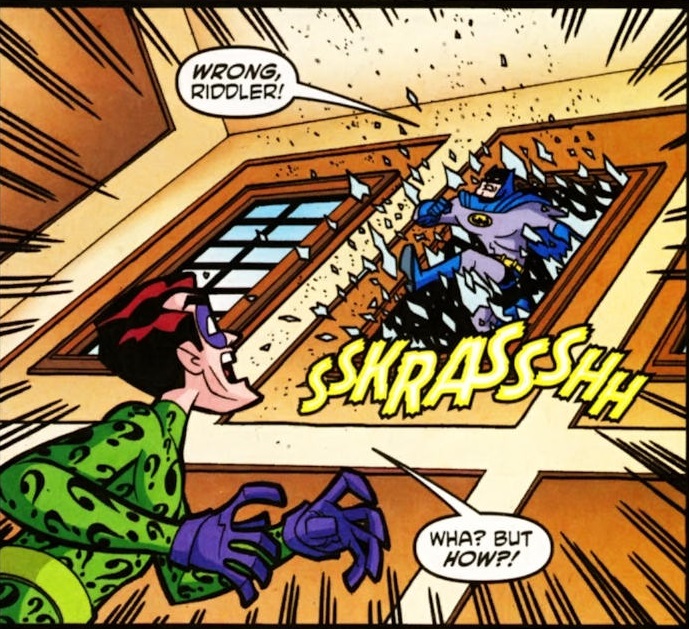
For the past five years, DC has been churning out all-ages books that follow the TV series’ tone and characters, cheerfully embracing its strangest features. For the most part, these comics have been delightful, even paying homage to one of my favorite recurring bits –  the window cameos:

Batman ’66 #1Batman ’66 #1

The recent crossovers Batman ’66 meets Steed and Mrs. Peel (by Ian Edginton and Matthew Dow Smith) and Batman ’66 meets the Legion of Super-Heroes (by Lee and Michael Allred) are especially entertaining, capturing the show’s lighthearted vibe while telling stories in a much bigger scale.

In the same vein, 2016 saw the release of an animated sequel: Return of the Caped Crusaders, directed by Rick Morales from a screenplay by Michael Jelenic and James Tucker. Naturally, a big selling point is how close the film feels to the TV series. Some of the old stars reprise their roles, including Adam West (the sexiest Batman), Burt Ward (the Boy Wonder), and Julie Newmar (Catwoman). You get the same kind of visual style heavily informed by Dutch angles, plus the obligatory onomatopoeic fight scenes (one of them in space!). In typical fashion, the villains’ plan makes little sense and the Dynamic Duo’s outlandish leaps of logic are a joy to hear, thanks to Adam West’s offbeat, deadpan delivery.

Embedded in the usual strain of tongue-in-cheek humor, there are metafictional winks for the fans, like when Batman gets hit on the head and momentarily visualizes the different actresses who played Catwoman in the series. As the title suggests, the film has its share of fun at the expense of Frank Miller’s The Dark Knight Returns and Tim Burton’s Batman Returns – a key plot point involves West’s upbeat adventurer gradually turning into a brooding, sadistic anti-hero, highlighting how preposterously this attitude would work out in such a wacky reality.

Even viewers unfamiliar with the old show – or who don’t hold it in high regard – can still have a good time watching Return of the Caped Crusaders. For one thing, the animation is pure eye candy, including a kickass car chase and a wonderful credits sequence built around classic comic book covers. Moreover, many of the scenes are just plain funny – for instance, the opening with Robin learning to ballet dance as part of his crimefighting training is the sort of thing that both sounds goofy and it actually makes sense in an oddball kind of way, once you’ve accepted everything else around it (which is the essence of Batman’s world, at the end of the day).

Last year, the team reunited for another madcap sequel, Batman vs. Two-Face, which introduced the titular villain (voiced by William Shatner) by giving him a silly origin worthy of the show’s campy spirit. All in all, both these films are a hoot, despite the absence of further window cameos

Posted in WEBS OF FICTION | Tagged , , , , , | Leave a comment

10 WTF Batman covers, by Neal Adams

Neal Adams’ work in Batman comics is often associated with gothic art. The tales he drew in the early 1970s (collected in stark black & white in Showcase Presents: Batman, volumes 5 and 6) are mandatory reading for any fans of moody, horror-influenced pencils. They deserve a place on your shelf right next to anthologies like Creepy Presents Bernie Wrightson and Gary Gianni’s MonsterMen and Other Scary Stories.

However, there is another, more playful side to Neal Adams’ craft which I think is worth highlighting. For a while, he specialized in covers with bombastic and intriguing premises – the kind of shamelessly shocking stuff that made readers curious and puzzled and damn giddy to check out the main story inside that issue, even when they suspected the image was probably a cheat…

Such over-the-top sensationalism creates quite a cool contrast with Adam’s naturalistic style, as you can almost believe that basic laws of physics apply in his version of the DC Universe (except, sometimes, to Batman’s cape). This makes the stakes seem so much higher, especially as the covers tend to go for literal depictions of upcoming scenes, with only the occasional venture into pure symbolism (as in Detective Comics #398). The result was a string of truly exciting and dramatic images!

Here are ten beautiful examples:

batman 217batman 219detective comics 398batman 246world's finest 180brave and the bold 95detective comics 415batman 240batman 245batman odyssey 6

Posted in COVERS OF BATMAN COMICS | Tagged , | Leave a comment

Al & Bruce – the sunday strip

Gotham After Midnight #1Gotham After Midnight #1
Posted in GOTHAM INTERLUDES | Tagged | Leave a comment