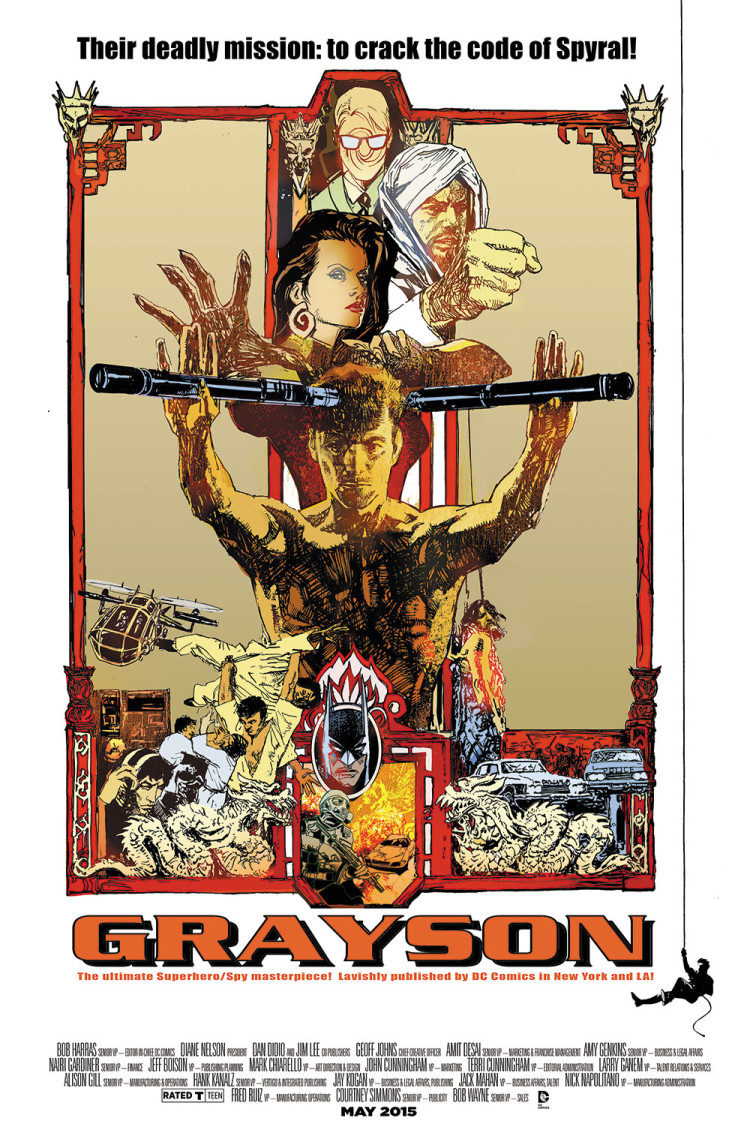
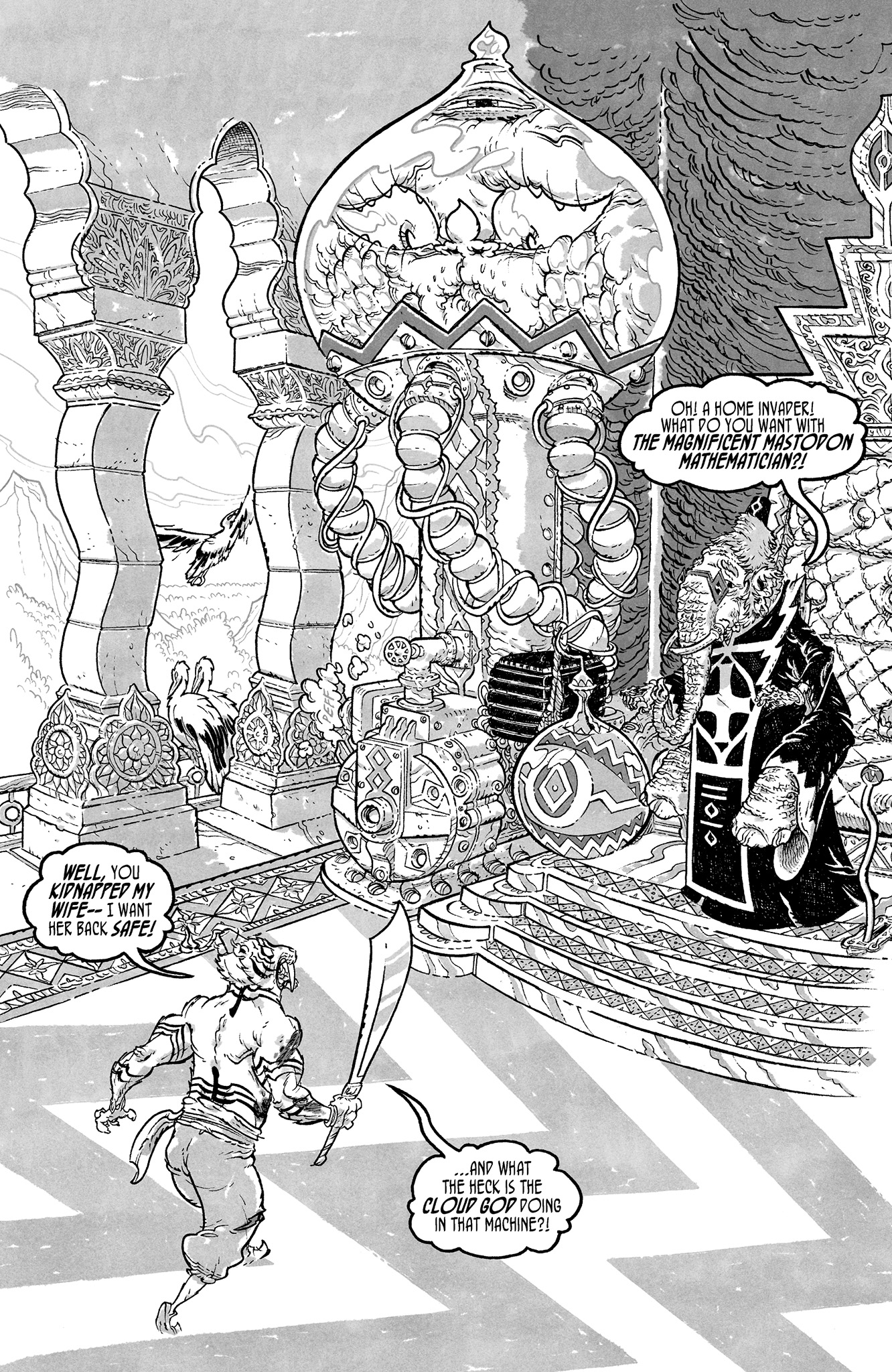
More sci-fi war comics

Another December, another Star Wars movie, another Gotham Calling post spotlighting sci-fi war comics…

Halo Jones     East of West     ignition city

To be honest, as far as the main Star Wars series is concerned, The Last Jedi may be the one that finally lost me. I rolled with the fact that The Force Awakens was more of a remake than a sequel because a) I could see the need to safely recapture the feel of the original movie in order to seek distance from George Lucas’ maligned prequel trilogy and b) at least the result was well-paced and fun. Yet I’m not willing to take such lack of creativity from Episode VIII, which mostly reshuffles the same limited stock of situations, settings, and character types, with little interest in exploring the untapped potential of its vast galaxy far far away.

Although I won’t join the small chorus chanting for the rehabilitation of the prequels, I’ll gladly concede that the eagerness to try out new landscapes and story ideas was one of their few redeeming features. For all the lame acting and plot holes, we still got the eerie rain-drenched planet of Kamino, the eye-popping city planet of Coruscant, the showdown at the Petranaki gladiator arena, the brutal climax by the lava river, and that crazy fight among the hovering seats of the Galactic Senate (a blatant metaphor for the destruction of democracy at a time when Bush seemed like the scariest conceivable president!). If only The Last Jedi had shared this desire to wow audiences with novelty instead of settling for the introduction of a handful of cute animals and a (poorly developed) rich version of Chalmun’s Cantina…

Sure, I liked the red visual motifs and some of the military strategy stuff and I’m certainly not adverse to a derivative component in genre fiction, but I expected Rian Johnson to bring much more style and wit to the table – if nothing else, I assumed the film might be an interesting failure rather than something this tiresome and uninspired. We are left with the same basic conflict around the same generic brand of proto-Nazi villains (though sidestepping the issue of antisemitism). Even the narrative twists and thematic shifts that have upset so many fans feel like little more than superficial variations on what came before. Hell, your average episode of Rick and Morty has more memorable sci-fi/fantasy set pieces than The Last Jedi’s 152 minutes!

In 2017 alone, Disney has proven twice that it can deliver enticing space operas full of weird worlds and aliens (namely Guardians of the Galaxy vol.2 and Thor: Ragnarok). Regardless of Episode VIII‘s awkward jokes, I suppose the idea here was to ground this franchise as a dark, self-important counterpoint to the colorful Marvel Cinematic Universe yet that’s no excuse to be so bland… Or maybe the studio actually did give Johnson more creative control than usual – in that case, it’s even more of a shame that he chose to let Star Wars remain stuck in the recycle bin.

Whether or not you share my disappointment, if you’re a fan of war-related science fiction, I’m sure you’ll have a more rewarding experience reading the following comic books:

THE BALLAD OF HALO JONES

2000AD 3792000AD 379

I grew up with the resourceful female leads of eighties’ sci-fi and horror – not just Princess Leia, Ellen Ripley, and Sarah Connor, but also Nancy Thompson (from A Nightmare on Elm Street) and Sarah Bowman (from Day of the Dead), among others. In comics, to a large degree this role was filled by Halo Jones, created by Alan Moore and Ian Gibson on the pages of the anthology 2000 AD, where her adventures ran from 1984 until 1986. Moore and Gibson only did three story-arcs – as opposed to the nine they had originally planned – yet there’s still a lot to enjoy here!

One of the cool things about Halo Jones is that she didn’t start off as a kickass hero – the initial point of the series was that she was an ordinary woman in an extraordinary world (i.e. in the 50th century). To quote one of the collection’s introductions, Halo Jones wasn’t meant to be either ‘a pretty scatterbrain who fainted a lot and had trouble keeping her clothes on’ or another ‘Tough Bitch With A Disintegrator And An Extra ‘Y’ Chromosome.’ In fact, she was a relatively passive protagonist most of the time, which made it even more striking when she finally took action.

You can see this ‘everywoman’ angle not only in Halo’s characterization, but also in the kind of challenges she had to face. Early tales revolved around walking in the street at night or undertaking a shopping expedition to the mall during a riot, as well as – more generally – around Halo’s dreams of leaving her miserable, claustrophobic borough, the Hoop (technically a huge floating hoop tethered off the point of Manhattan where the Allied Municipalities of America dumped their unemployed population). Believe it or not, all this makes for a stimulating read… Having conceived Halo Jones’ world in great detail, Moore and Gibson drop us in the middle of it without much explanation, so it takes readers time to fully work out her society’s slang and inner workings. The result is sort of a futuristic take on indie comix such as the Hernandez brothers’ Love and Rockets.

Not that there isn’t plenty of 2000 AD’s signature over-the-top social commentary. The first book – set when Halo Jones is eighteen – takes place in the Hoop, against the crime-infested background of teen gangs like the Different Drummers (a cult whose brain implants give them a persistent hypnotic drum-beat inside their heads) and racial tension between humans and the extraterrestrial migrant community. Halo’s best friend walks around armed with ‘zenades,’ which is a type of grenade that plunges its targets into a forced state of Zen meditation. In the second book, Halo becomes a hostess at a luxury liner spaceship, where she serves the privileged elites. There is a touching subplot about a transgender stowaway who has slipped beneath the threshold of human awareness and a longer storyline about a deranged robot dog. By the third book, Halo – now twenty-nine years old – finds herself in the middle of an intergalactic war in the resource-rich Tarantulan colonies:

2000AD 454

Alan Moore has always been a master of sneaking in hidden depths and planting seeds underneath a deceptively simple surface. For example, while the square-jawed lead of Moore’s retro series Tom Strong may read like a fairly one-dimensional upbeat science hero, that comic kept hinting at the profound emotional scars from his rigid upbringing (this paid off brilliantly in the story-arc ‘How Tom Stone Got Started’). More recently, in the novel Jerusalem, a lengthy series of vignettes about working class Northampton turned out to be an intricately woven set-up for the darkly whimsical escapades of a gang of ghost kids, which in turn led to an experimental, ultra-dense exploration of large metaphysical questions.

Similarly, having established its mundane protagonist over a couple of relatively lighthearted arcs, The Ballad of Halo Jones goes on to convey the psychological damage warfare can have on a regular person. The comic uses science fiction devices to powerfully conjure up the horror and inhumanity of imperialist conflicts – most notably through the planet Moab, whose enormous gravity and time dilation effect makes it hard to distinguish between five minutes and two months. My favorite tale, though, is the one that opens with Halo stating that she just saw someone continue to age after they were dead (2000 AD #455) yet instead of providing a sci-fi explanation for this phenomenon, the story ends up delivering a devastatingly realistic payoff.

EAST OF WEST

East Of West 01East Of West 01

East of West begins in the year 2064 of a counterfactual history where Native Americans joined forces to attack the Union during the Civil War, splitting the United States into seven nations. As if this wasn’t enough of a high concept, a top-secret cabal has made a pact with three of the Four Horsemen of the Apocalypse to manufacture the end of the world. What we end up with is a manga-style fantasy saga that doubles down as a surreal political allegory.

This is another one of those series where part of the thrill is figuring out what the hell is going on. At first, the closest thing to a hero is none other than Death himself, a literal pale rider who has fallen in love with a descendant of Mao Zedong. Yet the main cast becomes increasingly diverse as the narrative reaches for epic proportions. Each of the seven nations extrapolates elements of US history and society, from the slave-founded Kingdom of New Orleans to the shaman-ruled machine state known as the Endless Nation. What’s more, the geopolitical balance keeps shifting, as they conspire and wage war on each other, engaging in a form of supernatural game theory. We see this mostly at the elite level – even the occasional glimpses from below, like in the breakneck heist tale ‘Watch Us As We Rob Them Blind’ (issue #31), ultimately reflect the rulers’ amoral grand design, which I assume is one of the comic’s larger points.

Jonathan Hickman tends to really cut loose in his creator-owned projects, writing stylish comic books that are choked with ambition, violence, and satire. This ongoing series is no exception, as he populates East of West with his bitter views on the machinations of power (‘Justice is what the strong do to the weak.’) as well as several moments of mind-bending science fiction, usually related to the subplot about a precocious little boy who may prove to be the Beast of the Apocalypse and who is being raised by a creepy AI:

East of West 05

It’s as if Sergio Leone was directing an anime version of Game of Thrones. Indeed, the title works both as a reference to a line in the story’s prophecy (‘Born of the East, child of the West, the one true son of America.’) and as an allusion to the series’ multiple genre influences. There are gunslingers riding fire-spewing horses under the sunset. There is a magical desert between the waking world and other realms. There is body horror and bloody action (including a silent tour-de-force in issue #22). There are dystopic cities, massive battles, and telepathic mutants. And even if you find yourself struggling to pierce through Hickman’s cryptic, hyperbolic, cool-as-fuck dialogue, the superb art should push you along, what with Nick Dragotta’s expressive, cartoony line work and Frank Martin’s vivid color choices, not to mention Rus Wooton’s stellar lettering.

IGNITION CITY

Ignition City

Warren Ellis can crank these babies up in his sleep. He has written plenty of smart takes on sci-fi warfare, from telling a caustic reverse-Star Trek tale of space guerrilla in Switchblade Honey to playing with manga and kaiju tropes in Tokyo Storm Warning. Hell, he even did a solid job with the Starship Troopers prequel comics! For the mini-series Ignition City, he went in a different direction, imagining a dieselpunk timeline in which pulp heroes like Flash Gordon and Dan Dare spend their lives in the titular settlement, marked by the memory of a WWII-like war in the faraway planet of Khargu.

The whole thing is a masterclass of shorthand characterization and economic storytelling. Just look at the image above and see how much information the first couple of pages convey… We immediately learn that this tale is set in an odd version of 1956 in which Berlin is not a divided city, but rather a sprawling metropolis with rusty-looking flying machines. Plus, the dialogue indicates that a number of nations have already engaged in space travel, although Europe has now mostly abandoned it, except for Britain, where it is government-controlled (suggesting that in other places it was not). Moreover, we meet the series’ protagonist, Mary Raven, an emancipated woman who sounds upset at the prospect of humanity giving up on space exploration. We are thus thrown into a world that is both recognizable and markedly different from our own, a world full of questions and possibilities.

When Mary learns of the death of her father – a former intergalactic hero – she goes looking for answers in Ignition City, Earth’s last remaining spaceport (‘an artificial island on the equator, ringed by launch gantries and landing pads’). Although initially set up like a mystery, what we get is closer to a western with laser pistols, as Mary finds herself in a fucked up quasi-lawless town populated by drunken spacemen, including the Russian cosmonaut Yuri (probably a version of Yuri Gagarin) and the depressed time-traveler Bronco (a Buck Rogers stand-in). The filthy language could even be seen as a nod to Deadwood!

That said, Mary soon proves to be your typical Ellis lead, i.e. a fierce yet frustrated romantic who wants to be an explorer – not necessarily because of faith in progress per se, but because of a desire to discover new things, to see new sights, to be awed by what is out there:

Ignition CityIgnition City

To be sure, mixing westerns and space adventure is not unique. In film, the most obvious examples are the charming Battle Beyond the Stars (which reworks The Magnificent Seven in another galaxy) and the gritty Outland (whose second half features a futuristic take on High Noon). In comics, Chuck Dixon and Judith Hunt did it in Evangeline. More recently, Jay Faerber, Scott Godlewski, and Drew Moss have pulled it off beautifully in Copperhead.

What makes Ignition City so special – besides its twisted humor – is Warren Ellis’ knack for worldbuilding. Together with artist Gianluca Pagliarani, he crafted a fascinating microcosm with a lively cast, history, practical rules, architecture, and geography. Moreover, the story’s resolution compellingly resonates with real-world politics. The result may feel a bit rushed, but overall this comic is damn funny, intelligent, moving, gorgeous, and thought-provoking.

I wish I could say the same for The Last Jedi…

Posted in FANTASTIC ADVENTURES | Tagged , , , , , , , , , , , , , , , , , , , | Leave a comment

Anatomy of Batman #285

When it comes to twisted-yet-amusing Christmas tales, forget Gremlins and Rare Exports or even Krampus. I cannot think of many examples that are as fascinating as ‘The Mystery of Christmas Lost!’ (Batman #285, cover-dated March 1977, but, according to Mike’s Amazing World of Comics, appropriately released on December 1976).

BATMAN 285

As you can tell from the splash page above, the most disturbing thing about this issue is that it stars Dr. Tzin-Tzin, a super-villain who comes across as a horrible orientalist stereotype (down to the onomatopoeic name, which sounds like a parody of oriental music).

Introduced ten years earlier, in Detective Comics #354, Dr. Tzin-Tzin looks like an obvious take on Dr. Fu Manchu, the criminal genius created by British writer Sax Rohmer in the early part of the twentieth century. In previous appearances, we were told that Tzin-Tzin was an American raised by Chinese bandits who ‘adopted their ways,’ ‘spent years in Tibet steeping himself in their mystical teachings,’ and ‘then entered the western world to rob and pillage in a grand style!’ In other words, Tzin-Tzin fit into a long tradition of depictions of Asian culture as something utterly strange, irrational, and threatening. He essentially embodied enduring fears of the penetration and assimilation of said culture in the West.

Yellow Peril tropes weren’t just rooted in a prejudiced understanding of foreign customs as scary and exotic, but also in social phenomena within the United States, such as eugenic concerns about the purity of the white race, local workers’ competition with migrant labor, and the connotation of Asian communities with opium consumption and prostitution rings. Since the late 1940s, there was also a clear link to the widespread anti-communist paranoia, which looked at places like China, North Korea, and North Vietnam through a Cold War mindset. Along this line, Tzin-Tzin’s ability to absorb energy from those around him works as a metaphor for the rise of eastern power, while his mastery of hypnosis follows the obsession with brainwashing that had been all the rage at least since the release of The Manchurian Candidate.

Needless to say, this type of racist imagery has been used to justify the discrimination and oppression of Asians – and Asian Americans – for generations, which makes it pretty hard to accept a villain like Dr. Tzin-Tzin, even when enveloped by the fanciful art of Romeo Tanghal and Frank Springer…

Batman #285

It’s a shame, because as a character Dr. Tzin-Tzin is not completely hopeless. He is ultimately an evil version of Dr. Strange, a sorcerer with mysterious and outlandish powers so far beyond the reach of the Caped Crusader that Batman has no option but to somehow try to outsmart him. Conversely, the ‘diabolical wizard’ is not interested in tearing his opponent to bits (which he could easily do), but in having a victory of the ‘mind’ – breaking Batman’s heart and humbling him until he recognizes Dr. Tzin-Tzin as his master.

Tzin-Tzin’s heightened psychic force – which enables him to control almost anything, alive or inanimate – can be used in fun ways. Batman #285 opens with the ‘master of malice and mayhem’ in prison, where he ended up in the previous issue, after he had tried to literally steal the New Gotham Stadium (he had also replaced the Sphynx with an exact replica, for reasons that were never explained). In a quasi-meta touch, we first approach Tzin-Tzin’s cell via Batman’s private archives (anticipating the black casebook of Grant Morrison’s run, three decades later), which establishes straight away that, even for the Dark Knight, this is no ordinary foe:

Batman 285

Dr. Tzin-Tzin has been locked in a special prison cell, without TV surveillance (to keep him from manipulating the guards through the camera lenses) and with a random series of flashing lights and sounds (‘stimuli just sufficient to prevent the complete concentration of mind from which he gathers the Tsal or energy for his magical prowess’). Tzin-Tzin manages to escape by hypnotizing an ant (yes, a yellow-golden ant), eventually taking control of a whole horde of omnivore ants, enough to eat the mortar between the stones of the wall and to dislodge a stone block, which allows him to levitate the hell out of there.

When the guards try to stop him, the escaped prisoner shows them – and the readers – the extent of his power through this cheeky gag:

Batman 285

This is merely one of several quirky moments throughout the issue, a product of the fertile – if often intriguing – mind of David Vern (writing as David V. Reed). Vern keeps coming up with cool little scenes… The mind-controlled ants form a mocking message for Batman in the abandoned prison cell, which turns into a threat through the sudden addition of a question mark. Later, the Dark Knight fights a bear hidden in a Christmas tree, whose branches seemingly come alive and start to choke him before Tzin-Tzin speaks to him through a bauble. In a neat instance of detective work, Batman deduces the villain’s hideout based on the amount of snow on top of a steam conduit.

The art is somewhat uneven, but it too is peppered with occasional gems, like this bit from the aforementioned bear-fighting sequence:

Batman #285

Between the close-up with the circular red border that looks like a tree ornament and the swinging thrust of the larger panel – which leads our eyes down and then up again towards the bear’s moving head – the image creates a disorienting vibe, perfectly suited for a scene in which Batman himself is confused as to where reality ends and illusion begins.

It’s not just the small moments. There is actually a good story here. Because Dr. Tzin-Tzin wants his triumph to take place in what he considers to be his realm (‘the world of the substantial… the intangible!’), he explains to Batman that he plans to rob Gotham City of ‘something infinitely precious… irreplaceable… something you can never recover – because it exists only in the mind!’

Specifically, Dr. Tzin-Tzin uses the forgetfulness elixir of Nepenthe to rob Gotham of the notion of Christmas, taking away the awareness of that holiday from everyone except the Caped Crusader, who is condemned to live with the knowledge of a joyful celebration everyone else has forgotten (i.e. how Fox News pundits imagine they live every year, around December).

Batman 285

Following Tzin-Tzin’s spell, on Christmas Eve everyone becomes borderline incoherent (Dick Grayson, for example, doesn’t realize why he’s in town and keeps losing his train of thought when talking about it). The citizens’ inability to concentrate – psychataxia – mirrors the punishment Batman and the Gotham authorities had sought to impose on Dr. Tzin-Tzin, making this an inspired revenge plot. Then again, Tzin-Tzin doesn’t seem to care about anyone other than Batman, which suggests that he messed up the minds of millions of people just to get to one guy, which is even more vicious.

Moreover, even though the comic doesn’t mention it, presumably things would remain significantly bewildering for Gotham citizens in the future, since their brain had basically become unable to process an omnipresent reference in their country’s pop culture. Plus, you know, the economy would possibly take a plunge in the absence of the season’s consumerist binge!

None of this happens, though, because Batman defeats Dr. Tzin-Tzin by taking advantage of the villain’s obsession with him. Since Tzin-Tzin can only feel victorious if his opponent is aware of what happened, Batman pretends to have forgotten about Christmas as well. When Tzin-Tzin tries to double the dose of the spell’s antidote, he lets the Caped Crusader come within striking distance and destroy Nepenthe’s elixir, thus reinstating the memory of Christmas throughout the city. Cue The Vandals’ ‘Nothing’s Going to Ruin My Holiday.’

Although Batman’s main worry seemed to be the onset of mass confusion, he is clearly happy about having saved everyone’s holiday spirit. He even suggests to Dick and Alfred that they go outside and listen to the carillon concert from the cathedral. The final pages reinforce the feeling that the most important aspect of the story’s resolution is Gotham’s continuing ability to celebrate Christmas and its rituals, including the exchange of gifts between loved ones (such as Dick’s girlfriend, Lori, the only woman mentioned in the entire issue).

BATMAN 285

Like I said, the comic can leave a sour taste in your mouth, especially if you’re uncomfortable with narratives about Christianity being under attack by offensive orientalist caricatures. Unlike John Carpenter’s Big Trouble in Little China, ‘The Mystery of Christmas Lost!’ doesn’t even counterbalance its stereotypical villain by subverting the role of the Caucasian hero (in Carpenter’s tongue-in-cheek adventure, Jack Burton isn’t just a bumbling fool, he is effectively Wang Chi’s sidekick without realizing it – but in Batman #285 there is no question about who the main hero is).

That said, there’s a different way to read this issue. After all, Dr. Tzin-Tzin is not supposed to be a purely sinister Asian madman – he is an American emulating the trope of the sinister Asian madman. We can choose to see him less as a racist caricature than as a caricature of racism: he’s not Fu Manchu so much as a guy who wishes to be Fu Manchu and deliberately tries to look and act like him. Tzin-Tzin therefore does not represent Asian culture, but the way the West has imagined that culture (which explains his silly choice of name). In fact, he acknowledges his hybrid influences in the comic itself, telling Batman how he implemented his evil scheme by ‘joining ancient Tibetan lore and western technology’ (i.e. a steam plant).

If we look at Tzin-Tzin as an ugly case of cultural appropriation, it makes sense that he would seek to erase Christmas, since that’s what he envisions an eastern super-villain would do, perhaps as payback for all the forced Christian conversions imposed by western colonialism. That being the case, Batman’s actions can be seen as punishing not only an attack against his own cultural background, but also the defamation of another culture.

In all probability, this is not what David Vern or editor Julius Schwartz had in mind, but I like to think that, when the Dark Knight burns the skin of Dr. Tzin-Tzin, it’s his way of fighting the very notion of such a racial travesty. It also helps justify Batman’s particularly harsh words afterwards…

Batman #285


Posted in POLITICS OF BATMAN COMICS | Tagged , , , , , , , | Leave a comment

A year of sci-fi movies and shows

The Last Jedi hits the screens this week and we’ll see what comes out of it. So far, Rian Johnson is OK in my book. He did Brick, so I know he’s into film noir. He did The Brothers Bloom, so he’s into zany comedy. And he did Looper, so he’s into schlocky sci-fi action. When you bring all these together, what do you get? Well, technically, you get Trancersbut hopefully you can also get a kick-ass Star Wars movie!

I am cautious, though. In 2017, most major sci-fi adventure franchises got new installments and, while all of them were visually stunning, story-wise we got some very mixed results.

ghost in the shell          blade runner 2049

Carrying on a tradition that stretches at least as far back as Isaac Asimov’s I, Robot collection, androids continued to be efficient metaphors for class, race, slavery, the automation of labor, and the free will vs predetermination debate. Case in point: Michael Fassbender’s characterization was pretty much the only engaging thing about the otherwise forgettable Alien: Covenant, a picture that mostly – and clumsily – rehashed old tricks, crushed by the law of diminishing returns…

In turn, Denis Villeneuve’s Blade Runner 2049 surprisingly proved to be quite a worthy sequel to Ridley Scott’s heady, beautifully noirish original, despite a few plot contrivances and a glacial pace (if anything, that only helps bring the two films closer together!). Sure, Blade Runner seemed like a self-contained work with little to gain from a follow-up. Then again, fans have always had a blast comparing various versions of the story – from Philip K. Dick’s mind-bending novel Do Androids Dream of Electric Sheep? to the uneven comic book adaptation by Archie Goodwin, Al Williamson, and Carlos Garzon, not to mention the multiple cuts of the movie – so now we have one more toy to play with! Between a programmer literally designing recollections, a post-apocalyptic Vegas with fuzzy hologram projections of old stars, and the film’s own echoes of its predecessor, 2049 expanded questions surrounding memory and identity: Can fake memories produce a real identity? Can real memories produce a fake identity? What is memory? What is identity? What is real? And do our memories of the first picture provide or deprive the sequel of its own identity?

Covering much of the same ground, Rupert Sander’s live-action remake of Ghost in the Shell dumbed down the plot of Mamoru Oshii’s cyberpunk anime classic, disregarding that film’s most intriguing ideas (can an artificial intelligence request political asylum?) while making its themes of technology redefining the concept of ‘human’ even more explicit. The casting of Scarlett Johansson was charged with whitewashing, although the choice does work in terms of futuristic extrapolation: if manga characters are often designed with a ‘western’ physiognomy, is it too much of a stretch to assume the same could apply to Japanese cyborgs? (In fact, the suggestion of highly globalized, post-national cities that blend cultural, linguistic, and ethnic divides is just one more concept the movie borrows from Blade Runner.)

There were less techno-centric visions of the future as well. In particular, I had high hopes for the final chapter of the new Planet of the Apes trilogy. Instead of further developing Dawn’s thoughtful take on security dilemmas and power politics, though, Matt Reeves’ War for the Planet of the Apes gave us a clichéd, contrived collage of scenes from westerns and war movies, only with apes in them. This future doesn’t appear to have grown from our present era (no women in the military?) – it grew directly from classic cinema about WWI, WWII, and Vietnam. The result feels like a waste of technical wizardry and eerie potential: even with armed chimps and gorillas, the battle scenes never manage to be as creative or impressive as the ones in Game of Thrones

guardians of the galaxy v2          valerian and the city of a thousand planets

By contrast, James Gunn’s Guardians of the Galaxy Vol. 2 kept up the first volume’s weird mix of exhilarating space opera and Futurama-like humor. Building up on the earlier character work, the film used the various members of the ensemble cast to drive home the point that family doesn’t have to be something you inherit, but rather the people you choose to be with. This amped up sequel even gets away with all kinds of stuff that shouldn’t work but somehow does – like Rocket Racoon consciously setting up a killer soundtrack (Baby Driver style), the countless pop culture references and cameos riding the ‘80s nostalgia wave, or the alien riff on North by Northwest that I hadn’t realized I needed until I saw it.

And speaking of intergalactic sagas: regardless of some mean reviews, Valerian and the City of a Thousand Planets compellingly reworked Pierre Christin’s and Jean-Claude Mézières’ psychedelic comics (especially Ambassador of the Shadows), downplaying the source material’s Cold War anxieties and pushing to the forefront more topical concerns about historical memory and reparations. Say what you will about the lackluster leads, but each minute of Luc Besson’s dazzling 3D extravaganza contained more inventive concepts and visuals than all of the recent Star Wars movies combined!

stranger things 2          handmaid's tale

Still, if you want insightful, politically charged sci-fi, I suppose you’ll be happier with less spectacle-driven productions. Michael Almereyda‘s adaptation of the play Marjorie Prime is probably 2017’s most touching slice of low-key speculative fiction about the evolution of everyday technology, at least until the release of the next batch of Black Mirror episodes (in two weeks!). While Jordan Peele’s Get Out may verge closer to horror, its loose use of weird science as an allegorical/satirical device feels reminiscent of old EC comics, albeit with a focus on contemporary race relations (especially the question of cultural appropriation). And if Get Out served as a perfect bookend to the Obama presidency, The Handmaid’s Tale recontextualized Margaret Atwood’s awesome novel from three decades ago as an intense series about some of the grimmest tendencies of the Trump era (and it felt even more relevant in light of the post-Weinstein wave of revelations).

On the more escapist end of audiovisual serialized fiction, the second season of Stranger Things once again delivered a thrilling adventure – with a heart – in the form of a pastiche of eighties’ sci-fi/horror. That said, I still wish the show would try harder to be as wild and imaginative as its sources of inspiration (you’ll have more fun watching the original A Nightmare on Elm Street or Prince of Darkness). The same thing cannot be said for the brilliant cartoon series Rick and Morty. This absurdist sitcom about the frantic interdimensional exploits of an alcoholic mad scientist and his impressionable grandson remains packed to the max with geeky riffs and off-color gags. If anything, this year’s season was even more hilariously anarchic!

the bad batch          okja

Longtime readers know I have a soft spot for tasteless, trashy entertainment of the bonkers variety. Set in a dystopic wasteland where the US dumps its undesirables – themselves divided between cannibal families and a hippie gated community – Ana Lily Amirpour’s The Bad Batch is a trippy black comedy with a slow-burn spaghetti western vibe that keeps zigging when you expect it to zag. (It’s basically everything that Escape from L.A. should have been.) In Tommy Wirkola’s twisted thriller What Happened to Monday, Noomi Rapace plays seven different sisters fighting for their lives in an overpopulated Europe with a strict one-child policy. As for the oddball eco-parable Okja (about giant transgenic animals), its satire is pretty on-the-nose and the tonal shifts can be jarring – but hey, when it comes to director Bong Joon-Ho, that’s not a bug, it’s a feature!

(I didn’t delve into literature on this post, as my genre readings aren’t as up-to-date… Nevertheless, I am aware that in recent years sci-fi novels have continued to push the boundaries on issues such as our relationship with gender and climate change, including plenty of promising works for my bottomless to-read pile.)

Overall, apart from the noticeable trend of drawing on the past to imagine the future, most of these films and shows used science fiction as a vehicle to explore notions of social control, political resistance, and armed conflict. Those are all topics we can find in comic books, old and new. In a couple of weeks, I’ll zoom in on a few comic series that addressed the same themes in particularly cool ways!

Posted in FANTASTIC ADVENTURES | Tagged , , , , , , , , , | Leave a comment

12 chopsocky Batman covers

The chopsocky boom of the 1970s gave us lots of memorable action movies and TV shows bursting with thrillingly choreographed martial arts, over-the-top sound effects, outrageous villains, and plenty of terrible dubbing. Cult classics like Fist of Fury and Drunken Master may feel patchy and cheesy in places, but at their best they can still be genuinely exciting and fun, which I guess made this subgenre a perfect fit for the world of comic books…

richard dragon 1    master of kung fu 39    deadly hands of kung fu 4

Needless to say, the genre left its mark on Batman stories, always eager to pillage the zeitgeist and, later, to indulge in shameless nostalgia. Throughout the years, karate kicks, kung fu fighters, and other chopsocky-influenced tropes (including some troubling orientalist stereotypes) continued to occasionally pop up in the Dark Knight’s adventures, often through recurring characters such as Sensei, Lady Shiva, Lynx, King Snake, Bronze Tiger, and Silver Monkey.

Following a reader’s request, today Gotham Calling presents a dozen covers that bring to mind those old films produced by the Shaw Brothers studios and their many copycats:

brave and the bold 132batman 243batman 274detective comics 485detective comics 490batman 671legends of the dark knight 123shadow of the bat 90batman annual 21detective comics 686batman 509detective comics 685

NEXT: I have a bad feeling about this.

Posted in COVERS OF BATMAN COMICS | Tagged , | Leave a comment

Batman’s and Commissioner Gordon’s morbid bromance

Batman 240Batman #240
Batman #418Batman #418
Brave And The Bold 98The Brave and the Bold #98
Legends of the dark knight 71Legends of the Dark Knight #71
Shadow Of The Bat 11Shadow of the Bat #11


NEXT: Everybody was kung fu fighting.

Posted in GOTHAM INTERLUDES | Tagged , , | Leave a comment

Imaginary Batman crossovers with Joe Casey comics – part 2

If you read the last post, you know what’s going on. Here are another five possible crossovers between Batman comics and some oddball series written by Joe Casey:

GODLAND

godland

“Face the facts, true disbeliever… The human mind isn’t big enough to comprehend its titanic totality! But that bigness is what it’s all about! The Earth is just a tiny piece of the bigger puzzle. And as it sometimes happens on our little blue world… the cosmos can come a-knocking!” (opening narration)

Running from 2005 to 2013, Gødland was a groovy, cheerful pastiche of old-school cosmic epics like the ones Jack Kirby used to do in the ‘70s (The Fourth World, Eternals, 2001: A Space Odyssey), with further echoes of Jim Starlin (Warlock, Captain Marvel, Dreadstar). It starred Commander Adam Archer, an astronaut who turned into a misunderstood superhero with a golden glow after an encounter with ancient alien technology on Mars. While Archer proved to be an emissary designed for human evolution, unlocking the mysteries of the universe, throughout much of the series he remained stuck with idiosyncratic villains and family issues back on Earth… Though he more than made up for lost time in the transcendent/apocalyptic final issues!

Tom Scioli provided the Kirbyesque art, complete with tight grids and explosive splash pages (as well as vibrant colors by Bill Crabtree and Nick Filardi). Joe Casey nailed the rhythm and hyperbole of those classic comics, filling the thing with the kind of wacky concepts that used to show up all the time, like King Janus’ hovering pyramid ship or the Tormentor’s army of super-mice. Even the modern references in the dialogue resembled Kirby’s awkward attempts to make younger characters sound hip (‘You’re so punk, Angie, the rest of us just aren’t worthy. Unfortunately, you’re about twenty-five years too late. Now you’re just a beer commercial.’).

Part of the fun comes from Gødland’s tongue-in-cheek self-awareness. When Commander Archer fights a weird extraterrestrial dog-looking monster, he not only comments on the action – a staple of the genre – but he also comments on his own comments (‘Why am I verbally taunting this thing? Am I such a poseur that I can’t help myself?!’). When Basil Cronus – a scientist addicted to mind expansion whose detached floating skull you see above – first meets Archer, he buries him deep underground, later explaining to another super-villain that he deliberately wished to avoid a recurring hero/arch-nemesis relationship (‘I have no intention of falling into some ridiculously antiquated paradigm with that glowing do-gooder…’).

But even beyond the nostalgia and intertextual winks, this remains a brilliant sci-fi romp. The action is delightfully cartoony and the characterization is a joy to read, including some of the most engaging female characters created by Casey. There is a hilarious issue where we get a close look at the court trial of the sadistic villain Discordia, with non-stop media coverage. Plus, the philosophical punch-ups between the gods at the edge of reason are nothing short of completely bonkers!

Godland 1

There are precedents for Batman’s involvement in intergalactic sagas, most notably the prestige mini-series Cosmic Odyssey (by Jim Starlin and Mike Mignola). But most of all I want to see the Caped Crusader work his way out of pulpy traps such as the Psychotronic Wheel of Influence, the Infinity Tower lockdown, or the Null Field Cube (‘Anti-particles that form an empty tesseract. Hypercubic geometry at its finest.’), not to mention the twisted jail in Dimension Z.

Or, hell, have the rogues’ gallery escape from Arkham Asylum and get rooms at Friedrich Nickelhead’s criminal-exclusive hotel. Perhaps they can join his activist movement for super-villain rights (which at one point in the series took over Congress and demanded to meet with Barack Obama). I’m sure that could be a riot!

THE INTIMATES

the intimates

“We don’t restrict the use of technology in the classroom. Not in the slightest… None of us are worried about claiming a monopoly on raw data… Since machines can now supply endless information, we as teachers have inherited the responsibility to partner with you and nurture your collective ability to judge the integrity of the info that’s delivered to you…” (Miss Klanbaid)

In the early 2000s, the most exciting and innovative takes on the superhero genre could be found in the WildStorm Universe, which underwent a creative boom comparable to the late-80s DCU. Mark Millar and Frank Quitely had superheroes brutally revolutionize international politics in The Authority, Warren Ellis and John Cassaday approached them as metafictional archeologists in Planetary, Ed Brubaker and Sean Phillips gave us noirish super-spies in Sleeper, Gail Simone and Neil Googe created a retirement community for masked heroes and villains in Welcome to Tranquility. Not content with engendering a super-corporation in Wildcats Version 3.0, throughout 2005 Joe Casey penned an inventive superhero high school series called The Intimates, which lasted for twelve issues.

Part teen drama, part absurdist comedy, part science fiction, The Intimates is my favorite Casey comic. It wonderfully imagines how a school for superheroes would operate in terms of technology and pedagogy, with classes such as NuPhysics 101 (‘It’s in your best interest to begin thinking in multiple dimensions early in life.’), Secret Identity 101 (‘For goodness sake, don’t get chummy with any investigative reporters’), Morality 101 (‘Your search for mercy even during the most heinous of confrontations will define your morality.’), and Perception Technology 101 (‘Your life has already happened somewhere else. Parallel realities can lead to parallel emotions…’). The series also manages to develop engrossing – and at times quite moving – character dynamics despite being packed to the max with surreal gags, quick flashbacks, WildStorm cameos, a comic-within-the-comic (drawn by Jim Lee), fake ads, and plenty of in-jokes (including an implied crossover with Automatic Kafka).

‘Packed’ doesn’t do it justice. The whole comic is an experiment in information overload, reflecting the hyperactive mind and media saturation of teenage life. Most pages feature a scroll with all sorts of data, including background information on the cast and even some important foreshadowing buried underneath lifestyle tips, fun facts, pointless statistics, and, towards the end, jabs at the comics industry. The interior art by the talented Giuseppe Camuncoli (pencils), Sandra Hope (inks), and Randy Mayor (colors) – working with letterers Richard Starkings and Comicraft’s Rob Steen – appropriately emulates the style and pace of internet pop-ups, while the covers (designed by Rian Hughes) look like a parody of teen magazines. It’s awesome.

intimates 1

The obvious Batman-related crossover would be between The Intimates and Gotham Academy, which also revolves around kids in a school with eccentric teachers and mysterious goings-on. Although the latter is not as densely packed, it too is full of obscure cameos and references, including callbacks to old comics, to Batman ’66, and to the various Animated shows (‘…and then I threw a rock at him!’). Plus, it wouldn’t be first intercompany project for Gotham Academy, which has already crossed over with Boom’s Lumberjanes.

We don’t even need a plot, just have an exchange program between schools and let chaos ensue. I want to see Olive Silverlock and Maps Mizoguchi taking Secret Identity classes with Mr. Hyde (a divorcee who always seems to be talking from bitter experience) or receive counselling from the former Dashman (a speedster who tends to get carried away and speak too fast to be understood). I want to see Headmaster Hammer put up with troubled students like Punchy (a wigga with anger issues and kinetic alien puppet powers), Empty Vee (who starts out as an invisible girl with low self-esteem, before proving to be more mischievous than anyone assumed), or Dead Kid Fred (a suicidal zombie).

MIAMI VICE: REMIX

miami vice remix

“Guess somebody’s gotta put the “show” in “show biz”.” (Rico Tubbs)

Licensed properties used to have a (not always deserved) reputation for encouraging creators to play it safe, sticking close to the tone of the original material without great leaps of fancy. Miami Vice: Remix sends all that straight to hell. Instead of merely aping the sleazy, proto-hardboiled style of the Miami Vice TV series (or even the ultra-moody, maze-like feel of Michael Mann’s feature film), Joe Casey and Jim Mahfood amped everything up to eleven, as they decided to channel the overall pop culture of the time when the show first hit the screens, from video games to electronic dance music to straight-to-VHS schlockbusters.

In recent years, pastiches of the over-the-top aesthetics of 80s’ actioners have become a fad in itself, both in cinema (Turbo Kid, Manborg) and in comics (Sexcastle, Vandroid), yet this blood-splattered 2015 mini-series is a particularly delirious ride. It starts out like a typical episode, with vice detectives Sonny Crockett and Rico Tubbs going undercover in order to catch a major league drug lord but – even before the story abruptly shifts gears by introducing voodoo zombie gangbangers – readers’ minds will quickly be blown by Mahfood’s furious art and letters, with trippy colors by Justin Stewart and Steven Chunn:

miami vice remixmiami-vice remix

Miami Vice: Remix wrapped up the main storyline, but it blatantly left the door open for a sequel. With its high-octane action-packed pace, in-yer-face attitude, aggressively dark humor, and drugs-related plot, the highest crossover potential here would be with a retroactive take on the Batman books from the late eighties, especially Alan Grant’s and Norm Breyfogle’s run in Detective Comics.

SEX

sex

“I’ve never had a problem with complexity myself. You think the world’s not black and white anymore. Point of fact… it never was.” (Annabelle Lagravenese, aka Shadow Lynx)

After years as the masked protector of Saturn City, Simon Cooke retires his costumed crime-fighting persona and decides to focus on his mega-corporation instead. Depressed and repressed, he also starts exploring his city’s underground sex scene, from the sleazier joints to the upper-class orgies…

There is some Eyes Wide Shut in this ongoing series – as well as a dash of Peter Milligan’s and Ted McKeever’s The Extremist – but mostly there is a lot of Batman, only with more hardcore fucking (explicitly stated and graphically depicted). Built around thinly veiled stand-ins for Gotham City, the Dark Knight, the Joker, Alfred, Robin, and Catwoman, Sex explores the notion of stoicism attached to the Batman archetype and crafts a kinky take on what could be a possible future for Bruce Wayne, if he ever abandons the cape and cowl. The date with the ersatz-Selina Kyle (issue #20), in particular, is a beautiful slice of comics.

Unlike what the double-entendres in the solicits suggest, the result is not a raunchy black comedy about debauched superheroes having sex (you know, like The Boys). The series is actually an interesting and – thanks to artist Piotr Kowalski, colorist Brad Simpson, letterer Rus Wooton, and graphic designer Sonia Harris – incredibly atmospheric new addition to the subgenre of superhero deconstruction, including the post-Watchmen emphasis on mature themes and psychological depth. As for the decompressed pace, I can only assume it’s Casey’s way of somewhat emulating a sexual experience, with teasing and foreplay, fits and starts, tenderness and violence, quite a bit of dirty talk and a tantric commitment to delayed gratification.

Sex 02

Like I said, the parallels and contrasts between Bruce Wayne and Simon Cooke are pretty clear (they’re both rich orphans with vigilante alter egos devoted to their crime-infested cities, although as Sex nears its climax the differences between the Caped Crusader and the Armored Saint become more noticeable), so it’s not hard to imagine how well these two heroes would play off each other.

In any case, Sex is a tightly woven tapestry of subplots and conspiracies within conspiracies, which means that – from the spunky Larry Baines (a female Lucius Fox) to the incestuous gangsters known as the Alpha Brothers – it has one of the largest casts on the stands, with plenty of other great characters to play with.

VALHALLA MAD

valhalla mad

Stand ye fast! The Irritator’s thirst must be addressed! Another round, barkeep! (Jhago the Irritator)

Although wasting incredible actors in supporting roles, the first couple of Thor movies were serviceable schlock – the first one burst with kitsch and tilted angles, the second one was a run-of-the-mill cornball adventure. Yet the most recent instalment, Ragnarok, is actually a balls-out funny thrill ride (and because it’s directed by Taika Waititi, I don’t mean fake funny like the Doctor Strange film, where you merely recognize the attempts at humor, I mean laugh-out-loud funny, like Spider-Man: Homecoming and the Guardians of the Galaxy flicks). With his anachronistic speech pattern and deluded sense of entitlement, the Norse god/superhero Thor has always been ripe for chuckles and, indeed, there have been a number of comedic takes on the character before (Garth Ennis’ and Glenn Fabry’s über-gory Vikings springs to mind).

You may be forgiven for assuming that Joe Casey and Paul Maybury are out to join this tradition with Valhalla Mad, a mini-series about a trio of immortals from Viken (a magic realm ‘where gods are spawned’) who, having saved Earth decades ago, now return for a drinking binge called ‘Gluttonalia,’ recruiting a hapless old man to come along with them. Like Sex, though, the title may give a wrong impression… While Valhalla Mad is not without some amusing touches, the overall tone is fairly subdued, especially for Casey’s caustic standards. In fact, this charming homage to Kirby’s Journey into Mystery and Thor comics is much closer to a bittersweet fantasy yarn than to a full-on spoof.

That said, your level of enjoyment will still depend on how entertaining you find Olde English twang, as there sure is a lot of it. Regardless, you can’t deny the whole thing looks lovely, not least – once again – because of the contributions of graphic designer Sonia Harris (who did the logo, covers, and the book’s interstitial pages) and Casey’s regular letterer, Rus Wooton.

Valhalla Mad 01Valhalla Mad 01

Just make the gods’ next Gluttonalia take place in Gotham City and have them end up at Noonan’s. You can’t go wrong with that.


NEXT: The Gordon/Batman bromance.

Posted in WEBS OF FICTION | Tagged , , , , , , , , , , , , , , , , , , , , , , , , , , , , | Leave a comment

Imaginary Batman crossovers with Joe Casey comics – part 1

In recent years, the Dark Knight has found himself in a number of surprising team-ups, crossing over with all sorts of odd properties, from Elmer Fudd to the Teenage Mutant Ninja Turtles. Since nothing appears to be out of bounds anymore, I for one would get a kick out of seeing the Bat-books cross over with some of the craziest series written by Joe Casey.

Joe Casey’s comics can be truly something special. They often have a clear metafictional edge, playing with traditional tropes, pushing the boundaries of the format, and/or drawing on the styles of other creators (especially Jack Kirby) in a self-reflexive way. Plus, they usually overflow with foul language, sex, drugs, and gory violence.

For all his transgressive attitude, you can feel Casey’s genuine enthusiasm and the desire to explore the medium’s potential. As he put it on the backmatter of Butcher Baker, the Righteous Maker, the ‘comicbook’ (one word) is ‘the perfect bullet delivery system for your entertainment-hungry lizard brain.’ Embracing the superhero genre in particular – both at its best (the bold zaniness and energy) and at its worst (typically narrow gender roles) – Casey tries to capture a childlike sense of unbridled imagination and exaggeration, even while filling the stories with R-rated content.

Although the main running motif of Casey’s work is rubbing in our faces how utterly cool comics can be, his books also tend to be sharp satires of celebrity culture and corporate power. The latter theme crops up, for example, in his Batman tales: the uneven two-parter ‘Tenses’ (in which Bruce Wayne restructures the business model of his company) and the neat Superman/Batman arc ‘Big Noise’ (in which we briefly see the contractor disputes to rebuild Metropolis and Gotham City after the ‘Our Worlds at War’ event). Neither of them is as bonkers as the greatest Casey comics, though, even if ‘Big Noise’ turns out to be particularly clever, using recognizable superhero story beats to address the War on Terror, with the Man of Steel and the Dark Knight embodying different perspectives in the end.

If Joe Casey was allowed to bring together his most outlandish creations and the world of the Caped Crusader, I’m sure the results would be epic. Here are some suggestions:

AUTOMATIC KAFKA

automatic kafka

“I’m running a marathon, my friend. I’ve seen a lot of spectacle in my years on this earth… And I plan to see a lot more. The nature of our work demands that we conjure up the most fantastic, absurd solutions to the moral dilemmas that we’re lucky enough to wrestle with.” (The Warning)

One of Joe Casey’s earliest masterpieces, this 2002 series followed a depressed robotic superhero as he sought stimulation through dope and fame. Along the way, he bumped into washed-up villains from his heyday, in the eighties, as well as into the eccentric members of his former team, The $tranger$. The series – which lasted for nine mind-bending issues – was as meandering as its titular protagonist, but it kept throwing memorable ideas and visuals at us (like an evil scientist who had his own head replaced with a miniature spiral galaxy). The most bizarre tangent took place after Kafka reinvented himself as a sadistic game show host and we spent one whole issue focusing on the heartbreaking life of one contestant and his childhood friends (a grown-up Charlie Brown and the cast of Peanuts).

Published by WildStorm’s mature readers line Eye of the Storm, Automatic Kafka was an ‘adult’ superhero comic, not just in the sense of being full of tits and cursing (although there was plenty of that), but also in the sense of being an intellectually demanding, complex reading experience. In a way, the series could be seen as Casey’s homage to Grant Morrison, with riffs on Doom Patrol, a layered narrative carefully constructed like a mosaic with clues to a larger picture (thus rewarding multiple re-reads), and a metafictional conclusion that explicitly brought to mind Morrison’s work on Animal Man.

Just to make things even more experimental, the art was painted by Ashley Wood in a style that ranged from rough sketches to surrealist collages, as if ushering the reader to imagine a reality beyond the drawings, many of which seemed to be translating or suggesting the story rather than simply depicting it. Wood got a chance to shine from the get-go, as the comic kicked off with a trippy near-death hallucination after Kafka apparently overdosed on a drug designed specifically for androids, called ‘nanotecheroin’ (‘Finally, all your artificial intelligence systems can get their buzz on just like the fleshies do!’).

Automatic Kafka

It’s not that farfetched to imagine Batman crossing paths with a character like Automatic Kafka, who already looks like the version of Robotman you’d find in Frank Miller’s Dark Knight universe. Since DC seems desperate to continue to milk Miller’s cash cow – including through sequels written or drawn by other creators – they might as well have the Goddamn Batman, in all his messed up excess, clash with The $tranger$, including The Constitution of the United States (an ultra-violent-patriot-turned-porn-star) and Helen of Troy (who is supernaturally sexy). Casey and Wood could finally resolve Automatic Kafka’s subplot about exploding babies, perhaps by tying it to the sentient dolls of DKR!

THE BOUNCE

the bounce

“Gentlemen, we find ourselves standing at the crossroads of faith and fact.” (The Darling)

At first sight, this 12-issue series revolving around Jasper Jenkins, a stoner with the power to move around like a bouncing ball, may seem like one of Casey’s most conventional superhero sagas. The action is clear and exciting, the dialogue is peppered with amusing pop culture references, the hero is a likable, well-meaning loser with echoes of Spider-Man, and the main villain sounds like your average megalomaniac out to destroy the world (at one point, he looks at the White House and says that it’s like ‘driving past a museum piece’). David Messina’s art is effective without being particularly flashy – you could easily imagine his slick style in a mainstream book from the Big Two (he went on to draw Catwoman). Even the tonal shifts between escapist fare and edgier material aren’t that far removed from numerous other comics and, more recently, shows like Netflix’s The Defenders.

That said, the mysteries soon pile up, taking the narrative into unexpected places. Rest assured, The Bounce is not immune to Joe Casey’s flair for quirky concepts, whether it’s a dealer who is also the drug he’s dealing or ‘an entire sub-culture of secret quasi-religious corporations’ funding an inter-dimensional portal in order to weaponize a Lovecraftian entity.

The Bounce

Pre-Crisis Batman has fought – and was even killed by – a villain called The Bouncer, whose look and powers resembled the Bounce and who hasn’t been seen since 1981. In a possible crossover, perhaps the Caped Crusader would be searching for a rebooted version of that villain and bump into Jasper Jenkins instead. Since it has been established that Jenkins’ world possesses the technology to reach parallel dimensions, the crossover wouldn’t be much of a stretch!

Alternatively, given the metafictional dimension of the Bouncer’s debut story (‘The Strange Death of Batman!,’ Detective Comics #347), I can also picture Joe Casey writing a sort of remake that’d combine the two characters into one.

BUTCHER BAKER, THE RIGHTEOUS MAKER

butcher baker the righteous maker

“Here’s to the good ol’ days – the days where collateral damage was rebranded “acceptable losses” – the days of evil empires and femme fatales – the days of methodized mayhem – the days where middle management fuckheads like these two ate the peanuts out of my shit.” (Butcher Baker)

The depraved 2011 series Butcher Baker, the Righteous Maker followed a super-soldier secretly tasked by the government with killing villains held at a special state prison (the Bertrand Institute for Meta-Criminal Containment) in order to cynically cut costs. The result was a brash, cacophonous extravaganza consisting mostly of no-holds-barred chases and slugfests, as Baker fought a rogues’ gallery that included such cartoonish super-villains as the fat luchador El Sushi, the bearded mass murderer (and mash-up of orientalist stereotypes) Jihad Jones, and the shapely mysterious cosmic being known as The Absolutely.

Even though the series only lasted eight issues, Butcher Baker made quite an impression with his bushy mustache, his gung-ho attitude, and his star-spangled truck (called Liberty Belle). More than a spoof of Captain America, Baker was basically Watchmen’s Comedian on steroids – a hyper-macho psychopath who lived for fucking and slaughtering (he used to do it in the name of god and country, but ever since he saved the President of Reality at the Pan-Dimensional Affirmation Parade he stopped caring about that bullshit). You may wish to see the whole thing as a parody of US chauvinism, with the titular jock as the country’s unbound military id whose intended victims came back for vengeance, but the comic feels more invested in the entertainment value of watching these crude caricatures clash against each other rather than in making any meaningful statement about it.

Gorgeously illustrated by Mike Huddleston (who imbued the lively art with intoxicating colors), there wasn’t a single page on this series that wasn’t bombastic in some way. Hell, the first issue opened with Dick Cheney and Jay Leno walking in on Baker in the middle of an orgy and it barely lost momentum after that…

Butcher Baker, the Righteous Maker

I guess the Batman series that most closely approached the manic, electrifying energy and gonzo villains of Butcher Baker, the Righteous Maker was The All-New Batman: The Brave and the Bold, which was coming out at the same time. Yet this is a tricky one… On the one hand, yes, the whole point of the latter comic was to see the Caped Crusader in goofy team-ups with other characters, no matter how strange. On the other hand, it’s hard to ignore the fact that Brave and the Bold sought to offer madcap romps that were suited for all ages, while the world and cast of Butcher Baker are very, very far from kid-friendly.

CODEFLESH

codeflesh

“A woman I know once told me that, even out of the joint, I had a doin’ time-kind of personality… a prisoner in my own mind. Maybe.” (Rotor)

There are many ways you can approach the concept of a bounty hunter specialized in super-villains who skip bail. In Codeflesh, Joe Casey did it as a relatively straight crime book, complete with a self-destructive anti-hero and a solid balance between dirty fights and touching character moments (it’s just that some of the criminals were telepaths or low-grade cyborgs). Charlie Adlard ran with this, giving the art a grounded, gritty look reminiscent of hardboiled ‘70s thrillers. Moreover, like The Bounce and Butcher Baker, the comic was elevated by the amazing letterer Rus Wooton, whose contribution always makes works feel groovier (he’s also a frequent collaborator of Jonathan Hickman, Rick Remender, and Robert Kirkman).

While overall the book is not as formally daring as some of the others on this list, the eighth chapter definitely stands out, as Casey, Adlard, and Wooton employ a highly original technique to convey how much the protagonist’s failing relationship is taking over his life. And even when they’re not reinventing the language of comics, the creative team delivers one moody, hard-hitting scene after another…

Codeflesh

This crossover practically writes itself. Either Codeflesh’s masked bondsman follows a villain into Gotham City, teaming up with Batman in the process, or – better yet – he writes up the bond for someone like the Ratcatcher or the Mad Hatter, who jumps bail and runs out of town. Noirish hijinks ensue.

DANCE

Dance

“The world doesn’t need superheroes. We’re the ones who need a world to protect… otherwise, we’re just an outmoded concept that’s way past its sell date.” (Shiny Happy Aquazon)

The Japanese teen group Super Young Team was created by Grant Morrison and J.G. Jones for the massive DC event Final Crisis, in 2008, as a kind of 21st century version of Kirby’s The Forever People. The following year, Joe Casey and artists ChrisCross and Eduardo Pansica ran wild with the concept in the awesome mini-series Final Crisis Aftermath: Dance, in which an eager P.R. promoter led Super Young Team on an international tour in order to push their brand on a global scale… and to distract the masses (and the superheroes themselves) from what was going on in Japan at the time.

Sure, the series benefited from the groundwork laid by Jones and Morrison, who originally designed the heroes’ looks and personalities, including their over-the-top names: Most Excellent Superbat, Big Atomic Lantern Boy, Shiny Happy Aquazon, Crazy Shy Lolita Canary, and Well-Spoken Sonic Lightning Flash. But Dance not only expanded their corner of the world, it also tapped further into the millennial zeitgeist, indulging in Japanese pop culture and youth trends more generally – in a groundbreaking move at the time, the comic was peppered with Superbat’s snarky tweets (‘These clubbers don’t even have superpowers. Worthless.’), a device that still doesn’t feel dated a decade later. Much to the team’s occasional frustration, their adventures became as much about fads and marketing campaigns as about fighting monsters or saving the multiverse.

Even if you set aside the hip satire of media, consumerism, and corporate sponsorship, Dance still reads like a kickass superhero fantasy ride, including a delirious set piece where a cosplay competition in Dubai is attacked by an army of Nazi preppies called The Parasitic Teutons of Assimilation (almost all villains in Dance are against individual identity in some way). The whole series is just so damn smart and nifty-looking, not least because of Snakebite’s ultra-bright colors:

final crisis aftermath dance

Since the members of Super Young Team live in the DCU, it’s easy to imagine them crossing paths with the Caped Crusader or one of his many sidekicks. Indeed, they had a couple of cameos in Batman Incorporated and there was even a fun special – written by Chris Burnham, with art by Jorge Lucas – about a date between Japan’s own Batman (Jiro Osamu) and Crazy Shy Lolita Canary.

But I want more. Let me see Grayson or Red Robin join the action during the Super Young Team’s inevitable, post-truth era rematch against the Brain Drain, the mind-controlling bacteria who infiltrated people’s consciousness through bottled oxygen (one of the team’s product endorsements), instilling a literal mob mentality!


NEXT: More ambitious crossover ideas.

Posted in WEBS OF FICTION | Tagged , , , , , , , , , , , , , , , , , | Leave a comment

The tragic fate of Sarah Essen

Batman #406Batman #406

When people talk about the tendency for bestowing gruesome violence against prominent female characters in comic books – the ‘women-in-refrigerator’ trope – Sarah Essen is always one of the first names to come to my mind. She was a genuinely engaging character in the world of Batman comics for about a decade, playing a key role in the life of James Gordon in particular and Gotham City as a whole. She kicked ass and helped save the day more than once, even as she remained resolutely on the civilian side of the cast (i.e. no goofy costume or codename for her). And she sure deserved a much better fate than what she got.

Then again, at least Sarah Essen came a very long away, given that she essentially started as a vague line in Frank Miller’s 1986 opus The Dark Knight Returns. In that futuristic tale, Commissioner James Gordon mentioned that he now lived with a vegetarian woman named Sarah. The need to protect her served as inspiration every time he had to act tough and stand up against criminals, with Jim repeating the mantra ‘I think of Sarah. The rest is easy.’ throughout the acclaimed mini-series.

When Miller rebooted Batman’s continuity the following year, he decided to retroactively establish Sarah – or, at least, *a* Sarah – as part of the Dark Knight’s saga from the start. Batman: Year One introduced Sarah Essen as a police detective who worked closely with James Gordon (a lieutenant at the time) on the first investigation into the bat-clad vigilante who had recently begun assaulting crooks and cops on the take.

Sgt. Essen actually got quite a bit of characterization – especially compared to Bruce’s mystery date. She came across as a Hawksian blonde (David Mazzucchelli’s art gave her hints of Lauren Bacall) who did more than just light up Jim’s cigarettes in a sexy way (although she did that as well). Sarah was the first to suggest that Bruce Wayne should be a prime suspect and, at one point, she even briefly got the drop on the Caped Crusader:

batman 405Batman #405

Keeping with the story’s mature, gritty tone, Sarah had an affair with Jim, whose wife was expecting a baby at the time. When he broke it off, Sarah requested a transfer and left Gotham City. Refreshingly, these were two grown-ups dealing with a complicated situation in a grounded way. Although the result wasn’t as powerful as, say, the third episode of Horace and Pete, the whole thing was handled beautifully, with a level of subtlety and restraint rarely seen in Miller’s other comics. In fact, this subplot was so neatly resolved that you could almost imagine Sarah not showing up again…

In late 1990, though, Sarah Essen came back in style (and with red hair, for some reason). By then, Batman comics were still clinging to the notion that The Dark Knight Returns was a possible future, so – after having introduced a tank-like Batmobile in The Cult and having killed off Jason Todd in A Death in the Family – it made sense to set up the forthcoming relationship between Sarah and Commissioner James Gordon.

In ‘Night Monsters’ (Batman #458), Sarah was transferred back from New York to Gotham, where she came to head the Major Crimes division. She hadn’t lost any of her edge – as soon as she stepped off the train, she immediately arrested a mugger while Jim blacked out:

Batman 458Batman #458

(This panel is not the only cool nod to Batman: Year One. The amazing duo of Alan Grant and Norm Breyfogle squeezed in a number of other callbacks, including a scene at an Edward Hopper-inspired diner like the one featured in the beginning of this post.)

It’s nice that the creative teams in the Bat-books took their time with the romance between Jim and Sarah. They were both widows by then and it was obviously a matter of time before they got engaged, but we still got to see them smoothly getting closer again. One of the high points was ‘Saturday Night at the Movies’ (Batman #459), in which they went on a date that, needless to say, was interrupted by police sirens (because Gotham). The issue cleverly used film tastes to make a point about different characters, including these two cops, who refused to watch horror, exploitative pulp, or TMNT-style shlock, choosing instead to attend a screening of the original The Mark of Zorro, which mirrored their ideals of old-fashioned romantic heroism (and, in a way, their connection to the Caped Crusader).

Not that there were no disagreements between the two lovers. Sarah Essen – who once again came close to figuring out Batman’s secret identity, in Detective Comics #641 – didn’t like the Dark Knight’s brand of vigilantism. She tolerated it, because Jim respected Batman so much, but this was a recurring source of tension:

Batman 484Batman #484

The scene above was written by Doug Moench, who initially used Sarah in a relatively ancillary way, with her views on Batman serving almost as a soap opera device, feeding into small character moments like this one. By contrast, Chuck Dixon tended to write Sarah Essen like a real cop, not just the Commissioner’s love interest… I particularly like her interactions with Jim in the thrilling arc ‘Electric City’ (Detective Comics #644-646).

Dennis O’Neil also gave Sarah some badass moments in 1992’s ‘Vows’ (Legends of the Dark Knight Annual #2), in which a simple trip to pick up her wedding dress soon escalated into a hardboiled crime adventure featuring blackmail, an electoral scandal, and a kidnapped child…

Legends Of The Dark Knight Annual 2Legends of the Dark Knight Annual #2

Sarah Essen and James Gordon ended up romantically getting married by a corrupt judge, on a boat, while waiting to be killed by gangsters, with a sadistic bent cop as a witness!

After this, their relationship continued to evolve in interesting directions. Following the Knightfall storyline – when Batman was temporarily replaced by the unstable AzBats – Commissioner Gordon found himself resenting the Dark Knight. Jim’s new attitude could have brought him closer to Sarah but, instead, she got fed up with her husband’s constant self-pity, which ironically lead to further marital strife…

Shadow of the Bat 33Shadow of the Bat 33Shadow of the Bat #33

The couple therefore switched sides on the whole Batman issue, with James losing faith in the caped hero and Sarah pragmatically accepting the city’s need for a Dark Knight. Because of this switch, in 1995 Mayor Armand Kroll – who had adopted a pro-Batman stance to go with his ‘law and order’ political platform – demoted Jim and promoted Sarah to Police Commissioner, a job she did for almost a full year.

The intricacies of the Gotham City Police Department are endlessly fascinating to me. Given that the city is full of quirky people, I imagine that even on a good day – when no major member of the rogues’ gallery is threatening to commit genocide – the police will probably have to cope with some smaller, lamer villain, like Death-Man (who keeps pretending to die every time he gets caught) or the Karate Creep (who practices martial arts on senior citizens). In the same way that the Hong Kong of Johnnie To’s Throw Down is a weird version of HK where everyone is into judo, Gotham is basically an alternate version of NYC where the average citizen is always on the verge of putting on a kooky suit and adopting a theme-based identity. Against this background, it’s amusing to see the police force run by a practical woman with little patience for costumed outlaws but taking it all in stride. Indeed, as commissioner, Sarah Essen Gordon played a significant role in several neat stories (including Chuck Dixon’s and Flint Henry’s Man-Bat mini-series).

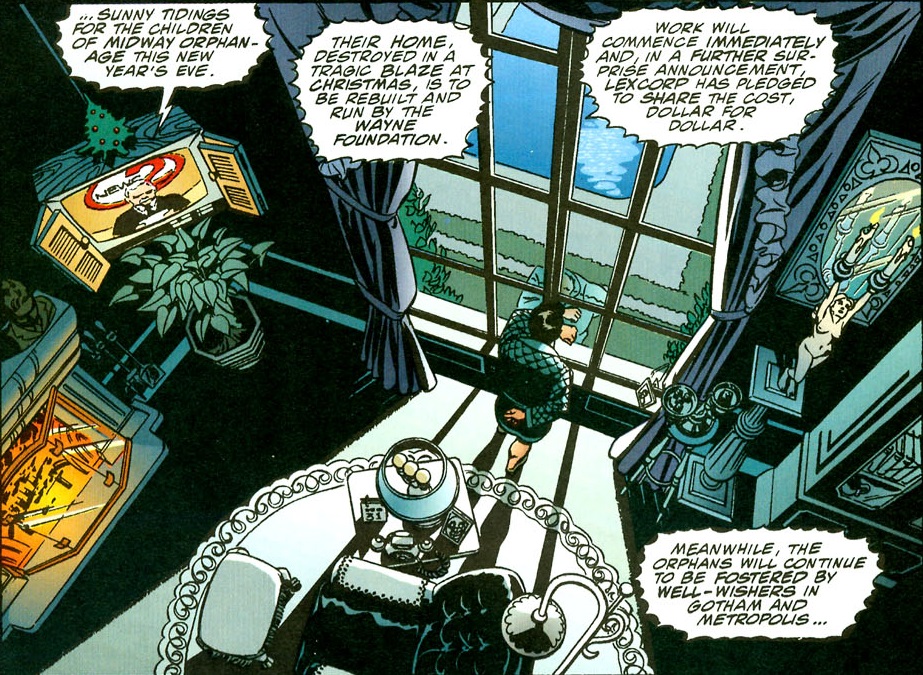
Besides her ongoing marriage troubles, we saw Sarah struggle with the fact she was still a hands-on cop at heart and ultimately felt cooped up in her new position, shuffling paper instead of chasing criminals back on the street. Doug Moench effectively summed up this aspect in a little tale called ‘Commissions’ (Batman Chronicles #2), in which there was a hostage situation at the police headquarters…

Batman Chronicles 2Batman Chronicles #2
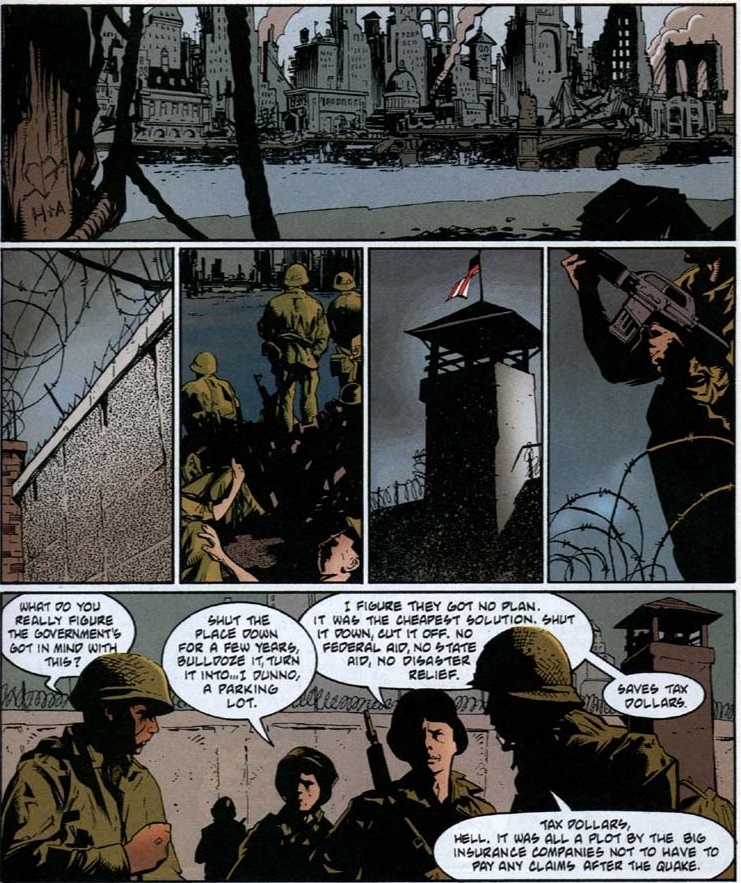
When the liberal Marion Grange replaced Armand Kroll as mayor, she acknowledged Sarah’s frustration. Grange gave her a new job as the mayor’s personal liaison to the Police Department and Sarah became more of a background character again (although Chuck Dixon did occasionally rescue her by providing Sarah with meatier supporting roles, for example in ‘The Death Lottery’ arc, from Detective Comics #708-710).

I suppose that, as a recognizable-yet-third-tier female cast member, Sarah Essen Gordon’s days were numbered. In 1998, Gotham was hit by an earthquake, which eventually lead to the No Man’s Land crossover, with the city abandoned by the federal government and mostly controlled by street gangs. Sarah stood by her husband and by the remaining police officers who fought to gradually reinstate some kind of formal order in the city. The story’s climax (cover-dated February 2000, written by Greg Rucka and Devin K. Grayson) involved Sarah going after the Joker – who had kidnapped dozens of babies over Christmas – and finally meeting her fate:

Detective Comics #741Detective Comics #741

Having the Clown Prince of Crime kill Sarah Essen Gordon was a terrible move all around. I don’t know whether to blame the editors or the writers (Devin Grayson was actually one of the few prominent female writers of Batman comics and Greg Rucka went on to become a strong feminist voice in the medium), all I know is that we lost a character that could’ve still given us plenty of great stories…

And what was the point of this sacrifice? It did nothing for the Joker’s status, since the previous decades had already more than established that he was a dangerous psychopath, with a body count in the hundreds, who was able to permanently harm the regular cast (in the late ‘80s, he had crippled Barbara ‘Batgirl’ Gordon for life and beaten Robin to death). It also did very little for James Gordon’s overall characterization, since he already had hardcore personal reasons to hate the Joker (because of what happened to his daughter) and he remained unattached until 2011’s New 52 reboot, so it didn’t even open the way for a new relationship… Hell, Jim was already a widow anyway, so not even that was a new angle.
I’ve read that the writers initially considered killing off Detective Renee Montoya, which wouldn’t have been a good choice either (she had an engrossing arc later on). Looking back, if they really wanted to leave an impression by murdering a supporting member of the GCPD, they might as well have gone with Stan Kitch or perhaps Mackenzie Bock, who was quite active during No Man’s Land yet only made a few appearences afterwards anyway.

Still, I would’ve preferred if they’d found a different way of giving the story a lasting impact. The way in which subsequent comics showed Gotham trying to rebuild and regain some normality after a year of chaos made for a much more appealing read than seeing the various cast members at the funeral or all those downbeat moments with people mourning Sarah’s departure before moving on…

detective comics #742Detective Comics #742

At the end of the day, what little long-term impact NML had on Gotham – such as a fierce rivalry between the citizens who had stayed and the ones who had fled – had nothing to do with Sarah’s death… If nothing else, at least Rucka and Grayson could’ve shown us something had changed as a specific result of that terrible moment, no matter how idiosyncratic: maybe clowns could become illegal, or there could be some kind of New Age cult worshipping Sarah Essen Gordon as the savior of Gotham’s infants.

I guess the creators felt bad about how they treated Sarah and that’s why, soon afterwards, they brought Maggie Sawyer into the Bat-books, as the head of the Major Crimes Unit. Apart from the fact that Maggie is a lesbian, you can easily imagine her earlier stories at the MCU starring Sarah Essen Gordon instead. It would’ve been more fun to see someone in that position who actually had a troubled backstory with the Caped Crusader (we got a little bit of that in Batman Beyond, which was set in a future where Barbara Gordon became police commissioner).

That said, I think there is hope. In this era bursting with multiple incarnations of comic book characters (in comics, film, television, etc), Sarah Essen Gordon is ripe for rediscovery. I heard she showed up in the Gotham TV show for a while, but that’s not enough… Recent adaptations of superhero franchises have increasingly resorted to race and gender flipping in order to bring some much-needed diversity to stories that – for historical reasons – used to attribute agency overwhelmingly to white males. Well, here is a well-defined female character who can easily replace James as the go-to depiction of Gotham’s Police Commissioner!

This wouldn’t feel too forced – after all, there is a precedent in the comics. Plus, it would actually create an interesting dynamic by giving us a police commissioner who both respects and distrusts Batman, who both resents having to resort to him and grudgingly accepts she has to (not to mention the sense of complicity rooted in their shared loyalty to Jim).

Until then, all we have is the tragic fulfillment of Sarah’s own unintended prophecy, back in 1993…

Shadow Of The Bat 09Shadow of the Bat #9

NEXT: Crossover pitches.

Posted in GOTHAM CITIZENS | Tagged , , , , , , , , , , , | 1 Comment

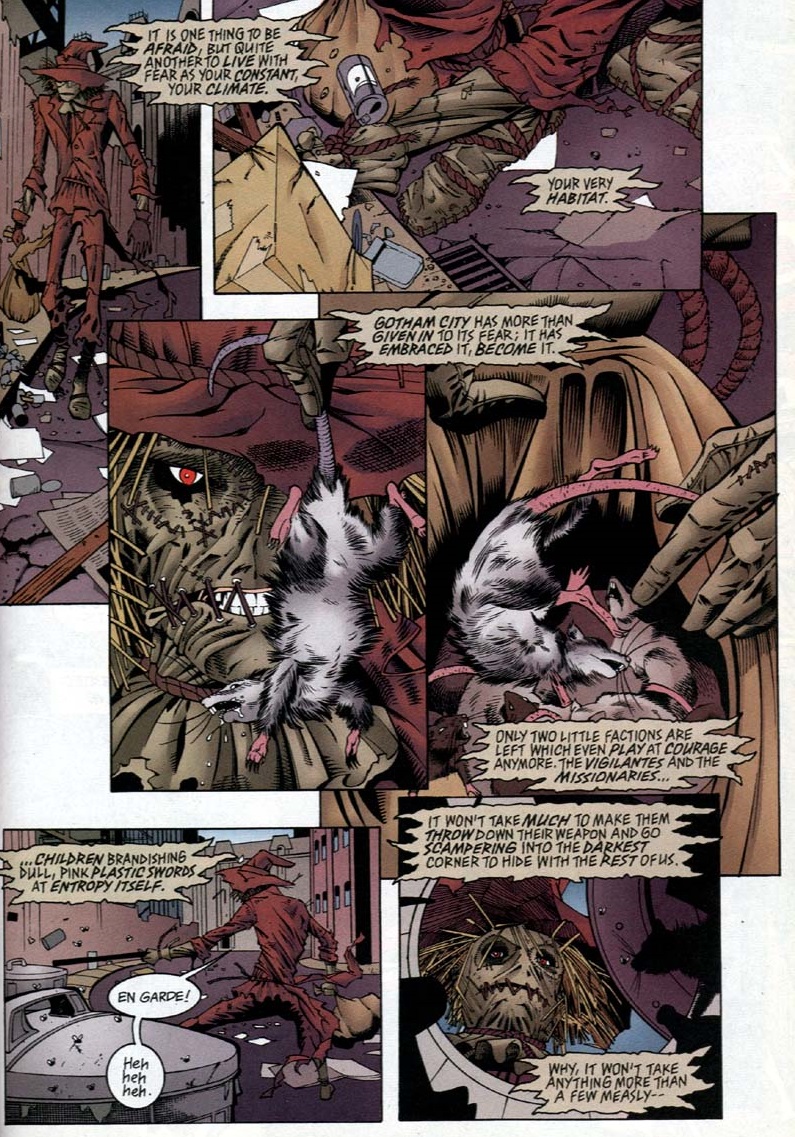
3 Scarecrow-induced hallucinations

One of the reasons the core of Batman’s rogues gallery has proven so lasting is the fact that many of his foes are super-functional storytelling devices. The Joker is a clown, so he always looks scary. The Riddler has a puzzle-compulsion, so he always provides mysteries for the Dynamic Duo to solve. Two-Face has a split personality and that coin toss thing, so he’s ideally suited for tales about free will, luck, and duality. With Poison Ivy, there’s the blatant eco-sexual symbolism.

Similarly, the Scarecrow’s modus operandi conveniently consists of spraying people with a fear-inducing gas, which a) easily allows writers to explore the subconscious of various characters, and b) can serve as a good pretext for artists to go wild, drawing freaky hallucinations. Several comics have taken advantage of this… Most memorably, Nightwing #9-10 features a lengthy, trippy Freudian vision full of callbacks to Dick Grayson’s backstory. I also have a soft spot for the Black & White short ‘Fear is the Key’ (originally published in Gotham Knights #37), which blurs the line between reality and delusion in an awesome way.

With that in mind, let’s take a closer look at how different creative teams explored the potential of Scarecrow’s gimmick…

Batman & Robin Adventures 13Batman & Robin Adventures 13Batman & Robin Adventures #13

By starting ‘Knigthmare’ (Batman & Robin Adventures #13, cover-dated December 1996) inside a Scarecrow-induced hallucination and only revealing this in the second page, writer Ty Templeton opens the proceedings with a nifty twist while quickly setting up how the whole fear gas thing works. The brisk pace, efficient storytelling, and accessibility are all hallmarks of the series and this issue doesn’t disappoint.

Penciller Brandon Kruse, inker Rick Burchett, and colorist Linda Medley pack a lot into each page. They do a stellar job with the shadowy cemetery scene (you can even glimpse the Scarecrow’s silhouette hiding in the first panel) as well as with the intoxicated security guard’s bug-eyed expression. The gassy, brightly noxious green-yellow panel borders in the transition to the ‘real’ world  guide your eyes down to the horrific title, at the bottom. The artists also sneak into the background Scarecrow’s accomplice, Michael Friday, casually walking into the room, thus establishing his personality through the lack of empathy with the screaming victim (his last name, which we find out in the next panel, is probably a nod to the fact that this is the thirteenth issue, thus paying homage to the horror franchise Friday the 13th). Moreover, you can see a poster for the ersatz-Beatles reunion that will drive the plot (not the first time that Batman and Robin had an adventure based on The Beatles). Finally, letterer Tim Harkins deserves praise for giving the guard’s word balloons a truly panicked feel.

‘The Sinister Straws of the Scarecrow’ (Batman #296, cover-dated February 1978) also begins by introducing the concept of the fear gas, as the disgraced professor Jonathan Crane explains its properties to his henchmen – a couple of former students who obediently fulfil their assigned tasks and are appropriately called ‘Strawmen:’

Batman 296Batman 296Batman 296Batman #296

You can tell this story was written by David Vern (as David V. Reed) because of the way the Scarecrow – aka ‘the Malevolent Merchant of Heartquake’ – keeps mentioning interesting factoids, whether about the human brain or the technical names of various phobias. Vern doesn’t clutter the comic with text, though, encouraging artist Sal Amendola to indulge in surrealism by confronting one of the henchmen with his biggest fear – the fear of being attacked by a godlike Dark Knight who shoots lasers out of his eyes and is able to transform into a giant bat! Jerry Serpe contributes to the psychedelic vibe by coloring that section with a garish combination of blue, purple, and yellow. Letterer Milt Snapinn joins in on the disorienting action not only by throwing a vertical word balloon into the mix, but also by having the Strawman’s scream fall out of that balloon.

(And this is only the beginning of an all-around fun issue, which includes further hallucinations, a snitch whose underworld slang is so intricate that it requires translation, Batman solving a mystery by looking at a floor plan, and a climax with the Caped Crusader reasoning himself out of fear!)

Our final example comes from ‘Mistress of Fear’ (New Year’s Evil: Scarecrow, cover-dated February 1998), in which Jonathan Crane tortures the plucky undergrad Becky Albright – who dared testify against him – by having her experience all the classic phobias in quick succession:

new year's evil - scarecrownew year's evil - scarecrownew year's evil - scarecrowNew Year’s Evil: Scarecrow

Duncan Fegredo’s art makes it so that the fears are illustrated not just by the individual images, but also by the overall layout. For agoraphobia we get Becky in a borderless panel full of negative space, signifying the unleashed fear of open places. For claustrophobia we get Becky in a clustered panel, with thick black borders, in line with the fear of closed confines. Colorist Bjarne Hansen lays on the toxic green motif. Letterer Albert de Guzman fittingly shifts the words’ fonts and sizes: the word ‘Agoraphobia?’ takes up a lot of space, the word ‘claustrophobia’ seems to be trying to break out of its balloon. The splash page in the middle shows all the fears blending into one huge panic attack, as Becky drowns in the dark while getting entangled with snakes and spiders. Her position suggests both falling *and* sinking. The last page in this sequence returns us to ‘reality,’ but it’s mostly framed with close shots, so that we continue to feel Becky’s exasperation at the wave of terror closing in on her.

Because the issue was written by an inspired Peter Milligan, it’s quite witty and cleverly constructed. After amusingly digging through both larger existential angst and mundane situations that can trigger anxieties (‘An empty park bench. A cup of cold tea. A ball of hair in the sink.’), the Scarecrow shockingly realizes that Becky’s main trauma concerns being hated because her body didn’t fit society’s standards of beauty. It’s a powerful moment, not least because this is such a recognizable fear for a young woman to have. The realization strikes a chord within Crane, himself a victim of bullying, throwing the story in a new direction.

These are just three examples. The Scarecrow has given us plenty of cool comics so far and I suppose there are many more to come. After all, his fear gas should continue to provide engaging stories as long we live in a terror-filled world driven by stress and social anxiety.


NEXT: Sarah Essen Gordon.

Posted in ART OF BATMAN COMICS | Tagged , , , , , , , , , , , , , , , | 2 Comments

Gothic Batman stories from the ‘90s

Goth subculture had quite a devoted fan base in the 1990s. You couldn’t miss the hordes of stylish, pretentious teens with black clothes and eyeliner back then. Tim Burton and Marilyn Manson were all the rage for a while. Bands like AFI mixed hardcore punk-rock with dark romantic motifs, while Slipknot rode the nu-metal wave. The Sandman became the backbone of DC’s Vertigo imprint (which didn’t prevent Garth Ennis from ruthlessly mocking its tone in the Preacher one-shot Cassidy: Blood and Whiskey). And, of course, the Dark Knight jumped on the trend…

Last year, I mentioned that in the seventies Batman comics were full of ghost stories. Well, by the nineties things got even more ominous, with a number of creators sharing a passion for classic horror, including Alan Grant (who clearly drew inspiration from Tod Browning’s The Unknown and Freaks for Shadow of the Bat #14-15) and Kelley Jones (whose art consistently dripped and oozed with gothic atmosphere). Hell, even if you set aside Elseworlds specials like the Batman – Vampire trilogy, just based on the disturbing ideas and beautifully surreal visuals of the main titles, most creators seemed to be looking for inspiration in Alejandro Jodorowsky’s Holy Blood!

So if you’re ever in the mood for eerie comics with some good old-fashioned Batman quirkiness thrown into the mix, then make sure you track down any of these ten cool tales of grave robbers, living gargoyles, homicidal maniacs, twisted traumas, demonic forces, and dreadful monsters:

 ‘The Library of Souls’ (Detective Comics #643)

detective comics 643

Batman has faced his fair share of bizarre threats – especially when written by Peter Milligan – but ‘The Library of Souls’ and its story of Stanislaus Johns, a serial killer obsessed with the Dewey Decimal Classification System, is particularly macabre (if not without some black humor). I just love how Johns, like many Gotham City villains, is at once chilling, tragic, and pathetic.

‘A Gotham Tale’ (Batman #477-478)

Batman 477

This sadly forgotten two-parter could’ve been a Hammer Films production. Locked in a safe with two people running out of oxygen, the Dark Knight proposes a Canterbury Tales-style contest to decide who should sacrifice himself in order to leave the others enough air to make it through the night.

‘Boneyard Blues’ (Batman #539)

Batman 539

Writer Doug Moench, penciller Kelley Jones, inker John Beatty, colorist Gregory Wright, and letterer Todd Klein went further than any other team in terms of turning the regular Batman title into a grotesque, full-on horror comic. Case in point: in ‘Boneyard Blues,’ the Dark Knight investigates an undertaker who desecrates corpses in order to carve sculptures out of their bones.

‘Choices’ (Legends of the Dark Knight Halloween Special)

legends of the dark knight halloween special

The first of a set of beloved Halloween stories written by Jeph Loeb and illustrated by Tim Sale, ‘Choices’ has a young Batman chasing the Scarecrow while gradually being consumed by fear and self-doubt. As you’d expect from Sale, it’s a feast of freakish visions. (This story was later retitled ‘Fears’ and published in the collection Haunted Knight.)

‘The Thane of Gotham’ (Shadow of the Bat #10)

Shadow of the Bat 10

The Caped Crusader has thirty minutes to find his way through a maze-like castle and fight a monstrous man-child in order to prevent an eccentric Scottish lord from enacting a decades-old revenge. A typically deranged tale penned by Alan Grant, with a touching ending.

Night Cries

Batman - Night Cries

Batman and a recently promoted Police Commissioner James Gordon investigate a series of murders apparently related to either a drug war or child abuse – a case with a heavy psychological toll on both of them. As the former chief writer and editor of the landmark anthologies Creepy and Eerie, Archie Goodwin sure knew how to spin a gruesome, atmospheric yarn. Scott Hampton painted and co-plotted this powerful graphic novel.

‘Terminus’ (Legends of the Dark Knight #64)

legends of the dark knight 64

With expressionist art by Chris Bachalo, ‘Terminus’ is an urban horror story set in a dodgy hotel and built around depressing slices of life. It’s written by Jamie Delano in the same dark-as-hell, verbose style as his runs on Hellblazer and Animal Man, making this possibly the most Vertigo-esque Batman issue ever. (The other obvious contender for the title is No Man’s Land Secret Files & Origins, due to the moody main story by Alisa Kwitney and Michael Zulli.)

‘Sanctum’ (Legends of the Dark Knight #54)

legends of the dark knight 54

If ‘Terminus’ feels like a Hellblazer spin-off, then ‘Sanctum’ is pretty much a Hellboy preview, with artist Mike Mignola and colorist Mark Chiarello trying out the angular, shadow-heavy approach they would develop in the acclaimed Dark Horse series. Moreover, the plot covers similar territory, as Batman is attacked (or hallucinates that he is attacked) by a blood-sucking dead man in an Lovecraft-inspired fantasy yarn.

‘Last Chance’ (Gotham Adventures #6)

Gotham Adventures #6

I’ve spoken many times about my love for the way in which the Batman Adventures line nailed the Caped Crusader’s world at its streamlined best. In ‘Last Chance,’ Ty Templeton – one of the great unsung writers of Batman comics (and the focus of a future post in Gotham Calling, sooner or later) – presents the Adventures’ version of the origin of everyone’s favorite ghost, Deadman, who watches Batman, Robin, and Nightwing investigate his own murder.

(Like many of these stories, ‘Last Chance’ works pretty well as a standalone comic, but completists may wish to know that it is also a sort of sequel to ‘Second Chances,’ from Batman & Robin Adventures #15.)

Batman versus Predator

Batman versus PredatorBatman versus Predator

John McTiernan’s Predator became an instant classic, working both as a chest-beating Schwarzenegger vehicle and as an allegory about the US military involvement in Central America. The 1990 sequel Predator 2 moved the action from the jungle to a futuristic LA, pitting the titular alien hunter against the toughest thugs in town, including a loose cannon cop played by Danny Glover (doing a combination of the two leads from Lethal Weapon). The change to an urban setting and the concept of Predator trying to figure out who exactly is the best game around could’ve been clever ways to avoid repeating the original too closely, but the movie didn’t fully live up to the premise. By contrast, the first Batman versus Predator mini-series, published the following year, got all these elements just right, as the monster slaughtered his way up the Gotham chain of power until a brutal showdown against the Dark Knight. Along the way, we got compelling characters, stylish art, and gallons of horrific violence, moodily brought to the page by Andy and Adam Kubert.

NEXT: Scary visions.

Posted in BATMAN COMICS FOR BEGINNERS | Tagged , , , , , , , , , , , , , , , , , , , , , , , , | Leave a comment