





-
Recent Posts
Categories
- ART OF BATMAN COMICS (36)
- ART OF HORROR COMICS (36)
- AWESOME COVERS (63)
- BATMAN COMICS FOR BEGINNERS (37)
- BOOKS OF THE YEAR (22)
- COLD WAR CINEMA (12)
- COVERS OF BATMAN COMICS (53)
- FANTASTIC ADVENTURES (49)
- GLIMPSES INTO AWESOMENESS (98)
- GLIMPSES INTO THE FUTURE (24)
- GLIMPSES INTO THE PAST (90)
- GOTHAM CITIZENS (37)
- GOTHAM INTERLUDES (87)
- HARDBOILED CRIME (38)
- HEADSHOTS (14)
- IF YOU LIKE THE COEN BROTHERS… (11)
- MANIFESTO (3)
- POLITICS OF BATMAN COMICS (21)
- SPYCRAFT & WARFARE (47)
- SUPER POWERS (16)
- WEBS OF FICTION (57)
- WILD WEST (8)
- WRITERS OF BATMAN COMICS (20)
- WRITERS OF SUPERMAN COMICS (4)
Drop me a line at
imbaytor@yahoo.com
Taking a break… (December 2016)
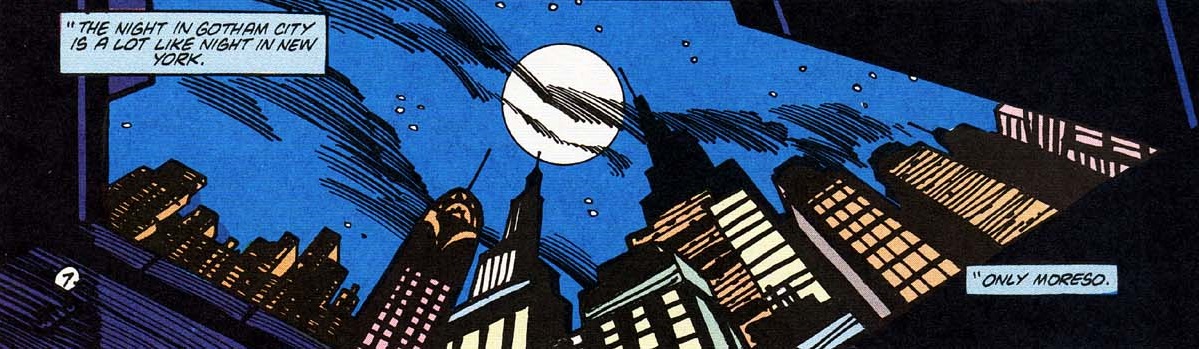 Vigilante #47
Posted in GOTHAM INTERLUDES
Tagged Albert T. DeGuzman, Liz Berube, Paul Kupperberg, Rick Burchett, Tod Smith
Leave a comment
AzBats’ X-mas spirit
During this time of year, I usually address the holiday spirit of Gotham and its citizens. This season, I was going to play with AzBats’ sunny disposition by cracking jokes about how all his favorite Christmas movies are probably rather dark – you know, stuff like Jalmari Helander’s Rare Exports or Bob Clark’s Black Christmas or, more metafictionally, Andrew Ihla’s awesome silent film cut of Tim Burton’s Batman Returns. However, let’s face it, even this wouldn’t do justice to Jean Paul Valley’s misanthropic attitude.
In fact, I don’t think anyone will be surprised to find out that AzBats considers the holiday spirit to be utter bullshit…
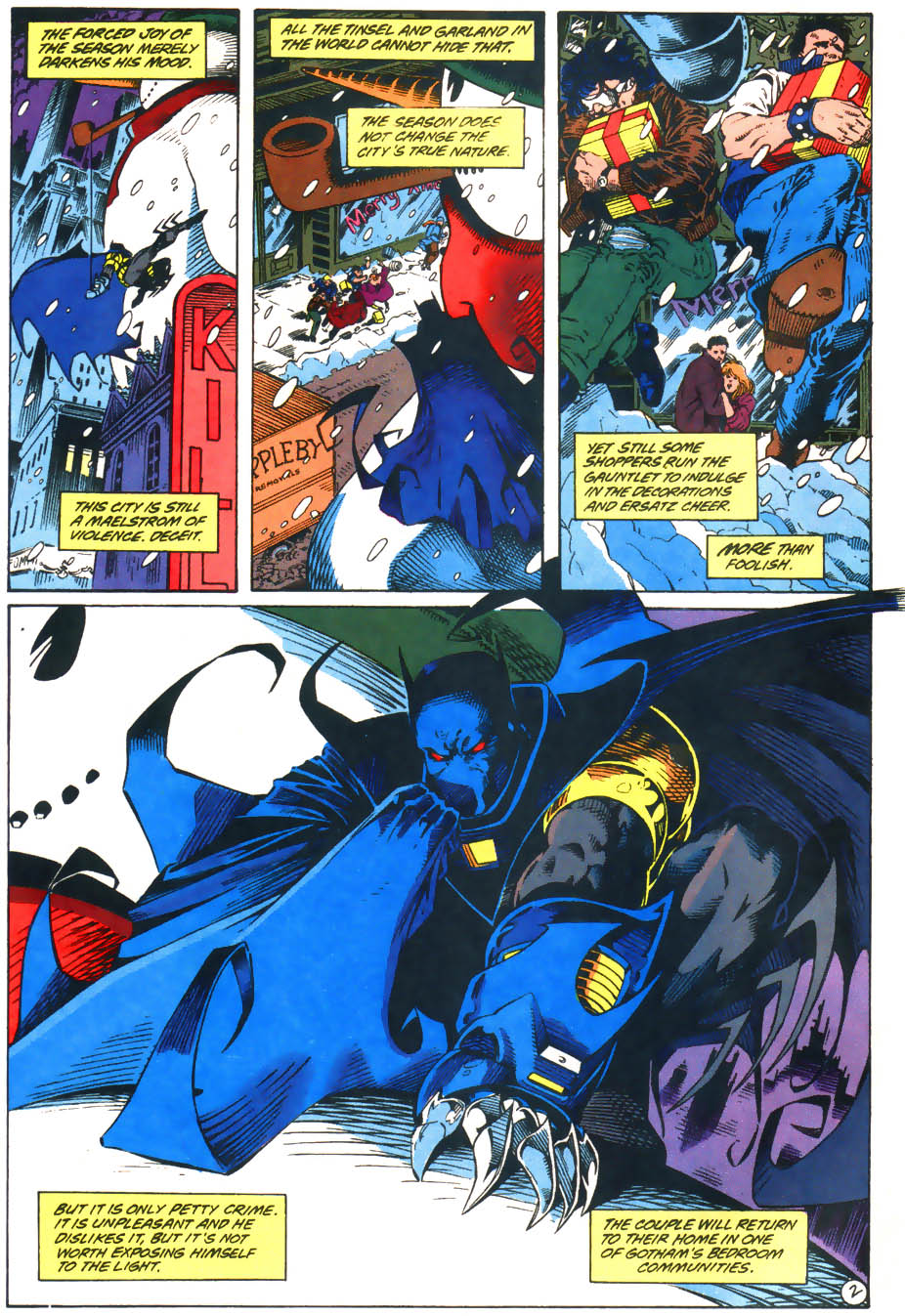
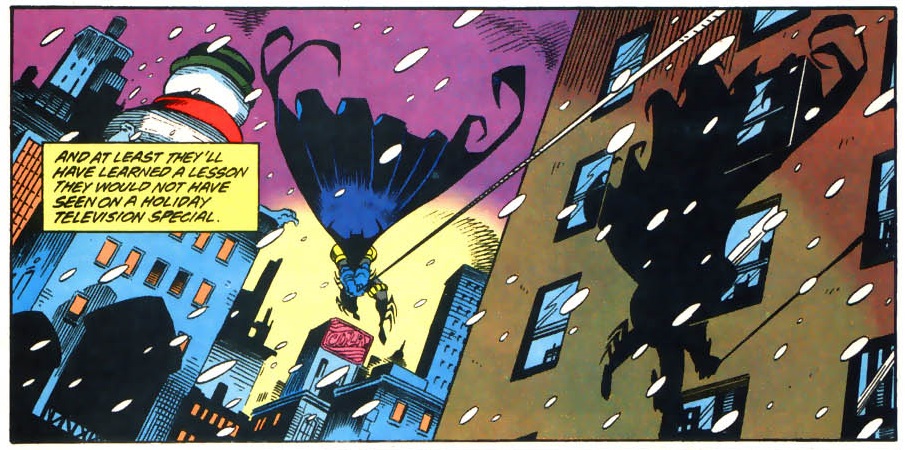 Detective Comics #670
Futuristic war comics
While Rogue One: A Star Wars Story delivers a pretty solid aliens-on-a-mission yarn, its unpretentious blend of dirty action and brazen fan service is bound to split the critical opinion. So far, the film has at least stirred up some alt-right backlash, leading Disney’s CEO to claim that there is nothing political about the latest Star Wars prequel. Although perhaps commercially sound and a progressive way to re-frame the terms of public discussion, such a rejection of political readings means inviting viewers to miss out on a particularly stimulating way to approach this fictional universe, shaped as it is by tales of war and revolution. Surely part of the franchise’s lasting success has to do with how much fun it is discuss these stories’ various implications, the more farfetched the better (Kevin Smith built a whole career on it).
In their own nasty, messed up way, jerks raving against Rogue One for featuring a diverse, female-led team on a quest to bring down a white supremacist government appear more willing to engage with the movie’s themes than Disney. Their interpretation – just like finding a parable about radicalization in these stories of kids recruited to fight with all the religious zeal and murderous violence of a galactic Daesh, or drawing considerations on historical memory and propaganda in order to explain the series’ incongruities, or analyzing what the overarching narrative implies about corporate culture – further contributes to our collective examination of a mythology that, for once, is unlikely to get you killed for heresy in the real world.
In any case, even if you see in the films a celebration of multiculturalism or militarism or terrorism or any other ‘ism’ you righteously or unfairly oppose, I’m still not convinced this should automatically prevent you from enjoying them. For me, much of the appeal of the whole sub-genre of military science fiction is precisely the way in which it presents conflict from unusual perspectives. It can provide a new take on current and recent battles by framing them in a different context or, in turn, enable us to vicariously take part in the excitement and drama of armed struggle without the full weight of recognizable tragedies. In fact, filmmakers have a history of using outer space to explore provocative genre twists: Starship Troopers is basically a WWII story where the Nazis are the heroes; Ghosts of Mars is a colonialist western with the kind of anti-natives streak that largely fell out of use since the 1950s; conversely, Avatar is a blunt anti-imperialist fable.
That got me thinking about comics that have taken advantage of this sub-genre’s potential. As a result, the idea here is not to recommend stuff that emulates the *feel* of Star Wars (let’s face it, if you’re into that type of interplanetary adventure, you’re probably already reading Brian K. Vaughan’s and Fiona Staples’ beautifully illustrated Saga and you’ve already seen the fun if flawed Guardians of the Galaxy movie). Instead, I’ll suggest three comic series that approach the concept of futuristic warfare in interesting ways:
BAD COMPANY
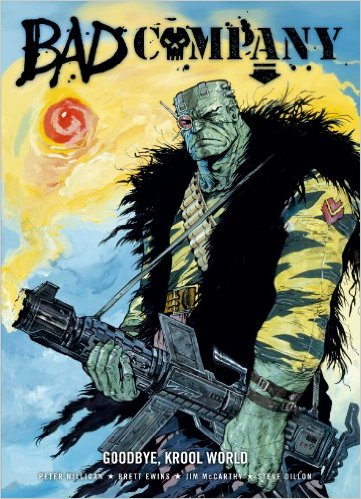
For the past four decades, the British anthology magazine 2000 AD has specialized in sci-fi/fantasy, albeit of a much edgier sort than Star Wars (the spectacular-looking Nemesis the Warlock feels like the trippy nightmare of a feverish Darth Vader, while Nikolai Dante could be the mischievous wet dream of a horny Han Solo). Of the magazine’s various ventures into martial territory, one of the most popular is Bad Company, the saga of a motley crew of renegades operating behind enemy lines in a war between humans and a sadistic alien species called Krool.
Written by Peter Milligan and illustrated by Brett Ewins and Jim McCarthy, this is a somewhat uneven series, but there is definitely a lot to like in here. In the first story-arc (originally published in 1986-1987), set in a hellish planet with hallucinogenic winds and alcoholic mud, young soldier Danny Franks is rescued by Bad Company, only to gradually realize they can be as terrifying as the enemy, especially the team leader Kano (a cross between Colonel Kurtz and Frankenstein’s monster). The second arc, ‘The Bewilderness’ (1987-1988), introduces other planets – each with a miserable name evoking ‘the lost nature of modern dislocated man’ – as well as an odd batch of new cast members to replace earlier casualties.
Among quirky concepts like mutant POWs and Mad Tommy Churchill (a soldier apparently convinced he is fighting in World War II), you’ll find a creepy depiction of the psychological effects of combat, namely the feeling of being stranded on an insane world, far away from home, increasingly dehumanized and surrounded by monsters.
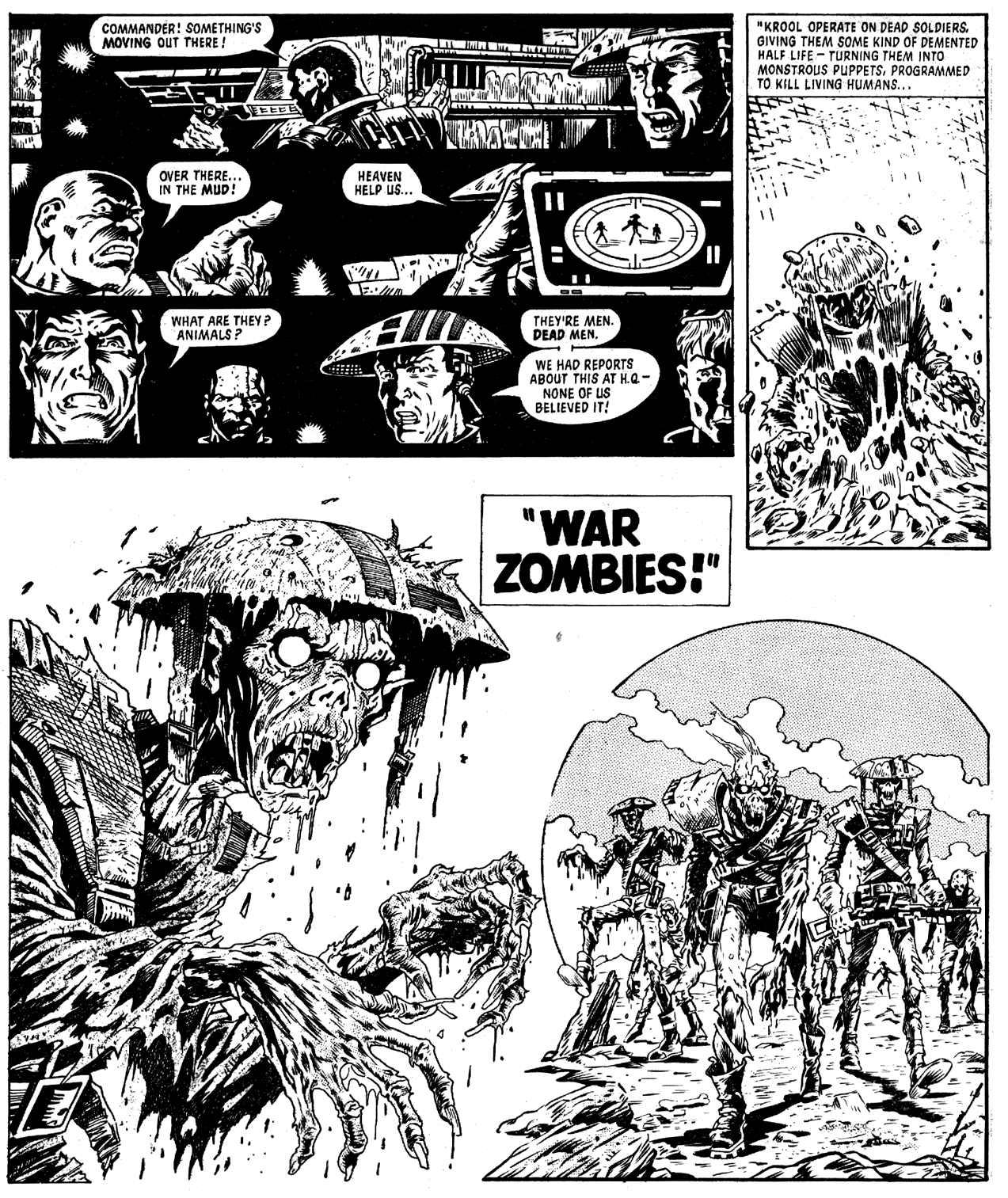
The third set of stories, ‘The Krool Heart’ (1988) – in which Danny Franks, after undergoing a psychedelic revelation, establishes an unexpected connection with the Krool – is probably the highest point, as Peter Milligan goes even further in terms of incorporating his usual fascination with questions of identity… As a fan of Milligan’s work, I’m also interested in how Bad Company compares to his other futuristic tales from this period – it’s less focused than Tribal Memories yet much more restrained than Freakwave (a surrealist apocalyptic surf comic).
The creators reunited in 1993 for a sequel focused on Kano, haunted by literal ghosts of war on yet another bizarre planet (where every day at noon time ran backwards for an hour), and again in 2001, for a face-off between Danny and Kano that sadly undid the powerful ending of ‘The Krool Heart.’ Last year, Milligan returned to the characters – now with Rufus Dayglo on pencils – for a story-arc about life as a Bad Company veteran which revised key elements of the series’ mythology.
GIVE ME LIBERTY
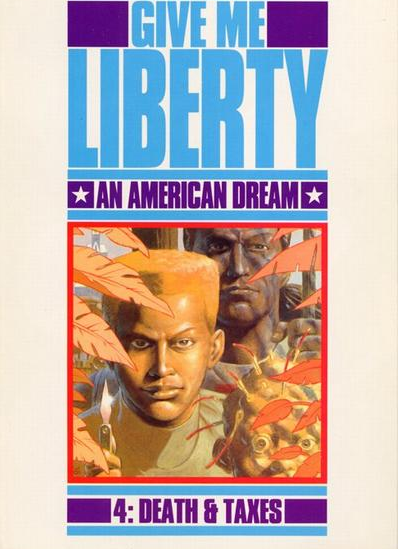
The 1990 mini-series Give Me Liberty is a relentless cyberpunk epic about Martha Washington, a girl from a rough housing project who joins the US Peace Force. Her missions include defending the Amazon rain forest from militarized hamburger companies and recovering a space cannon hijacked by militant gay neo-Nazis out to kill the United States president (a drunken liberal on the verge of a nervous breakdown). She also finds herself in the middle of a conflict with the Apache Nation and an expanding US civil war.
With the same gonzo, tongue-in-cheek spirit he brought to Elektra: Assassin and Dark Knight Strikes Again, Frank Miller spreads his satire far and wide, in all directions, coming up with such preposterous ideas as a media campaign rehabilitating the KKK, a sex scandal in the Vatican, and an ill-prepared, authoritarian leader in the White House (who is named ‘Man of the Year’ by a Time-like magazine, albeit with a less impressive cover than the latest version of the real thing). The dynamic art is provided by the brilliant Dave Gibbons, who is as skilled at framing vicious suspense and violence as at nailing deadpan comedy. This is the work of two creators who were at the absolute top of their game.
(Miller and Gibbons later brought back Martha Washington for a number of – increasingly objectivist – sequels over the years but, disappointingly, none of them came anywhere near the magic of the original series.)

As far as eighties’ over-the-top thrillers go, there are mostly three types of movies I enjoy… Some are fine examples of slick sci-fi action (Predator, Aliens, The Terminator, The Thing), some are offbeat works that nevertheless achieved broad recognition due to their visionary takes on the future (Akira, RoboCop, Escape from New York, Blade Runner, not to mention The Road Warrior and Mad Max beyond Thunderdome), and then there are the ones that, rather than transcend their schlockiness, embraced it in a fun and charming way (They Live, Highlander, Trancers, Streets of Fire). This comic, made at the tail end of the decade, oscillates between all of those tones – at times, it is as gripping and brutal as you can get, other times it dives head first into weirdness (one subplot concerns a conspiracy involving psychic schizophrenics wired into a computer software, another one concerns the Health Police led by a surgeon who declares a literal war on disease) while also getting chuckles out of campy names like Attorney General Sphincter and Colonel Crotch.
WE STAND ON GUARD
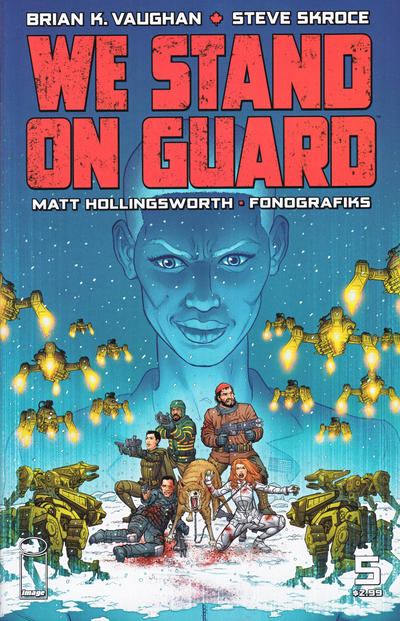
Like I said in the introduction, I don’t think it’s worth delving too much on the smutty, pacifist alien fantasy series Saga, which doesn’t need my recommendation, as it has become one of those critical darlings with plenty of devoted fans, even outside the comics community. Sure, like everything that gets a lot of love, there’s a fair amount of backlash as well… Me, I like it just fine, although not as much as Brian K. Vaughan’s more overtly political sci-fi series Y – The Last Man and Ex Machina (even if Saga’s otherworldly setting does mean we get less encyclopedic factoids and pop culture references, restraining Vaughan’s most annoying writing tics).
Instead, let me draw your attention to 2015’s We Stand On Guard, a hardcore dystopic tale set during a near-future US invasion of Canada, also written by Vaughan. With its focus on a fearless young woman joining a ragtag resistance guerilla with small odds of survival, this book anticipated many of the motifs of Rogue One, only with a lot more ruthless carnage and salty one-liners.
Securing the story’s adrenaline-charged pace and fist-pumping twists and turns, artist Steve Skroce and colorist Matt Hollingsworth seem to be having a field day, at least when it comes to conjuring up vast landscapes and intricate mecha war machines.

Besides delivering an exhilarating adventure romp, We Stand On Guard is unapologetically topical. It’s packed with allusions to military drones, terrorism, torture, and imperialism, eventually culminating in a compelling statement about the cycle of violence (all it’s missing is a Propagandhi soundtrack). Once again, Brian K. Vaughan proves that he is not only a master of cliffhangers and smart-ass banter, but also second to none in terms of coming up with clever high concepts and squeezing them for all their worth. Here, by placing stereotypically sympathetic Canadians as the targets of occupation, he imagines the War on Terror without the mantle of racial, cultural, and religious prejudice… and we are left to ponder how recognizable it still feels.
Posted in FANTASTIC ADVENTURES
Tagged 2000 AD, Bad Company, Brett Ewins, Brian K. Vaughan, Dave Gibbons, Fiona Staples, Frank Miller, Jim McCarthy, Martha Washington, Matt Hollingsworth, movies, Peter Milligan, politics, Rufus Dayglo, science fiction, space opera, Star Wars, Steve Skroce, We Stand On Guard
Leave a comment
Doug Moench’s literary Batman
Doug Moench is up there as one of the most prolific writers of Batman comics ever. From an unforgettable 1983 tale about tentacle sex until the 2009 mini-series Unseen – in which the Dark Knight battles the Invisible Man – Moench has churned out hundreds of stories, approaching Batman’s world in various ways over the years. I’ve been promising to discuss his work for quite a while and now it’s finally here: this week I will focus on Moench’s relatively grounded early stuff, from the eighties, and next month I’ll look into his more bonkers phase, from the nineties.
Picking up immediately where Gerry Conway left off, Doug Moench did a lengthy run on Batman and Detective Comics (plus a few issues of World’s Finest Comics) between 1983 and 1986, with storylines flowing back and forth between series and the kind of stress on character development that had been traditionally associated with Marvel. By then, Moench already had an impressive background as the writer of tons of horror comics, not to mention acclaimed runs on the adventure series Master of Kung Fu and the dark superhero series Moon Knight, so he adapted easily to the Caped Crusader’s corner of the DC Universe. The art was suitably gritty and atmospheric, the bulk of it illustrated by the eerie pencils of Don Newton, Gene Colan, and Tom Mandrake, served well by the noirish inks of Alfredo Alcala and Bob Smith, as well as Adrienne Roy’s muted colors. Notably, this run culminated in the epic Batman #400, the grand finale of Batman’s pre-Crisis continuity, right before the Frank Miller-shaped soft reboot.
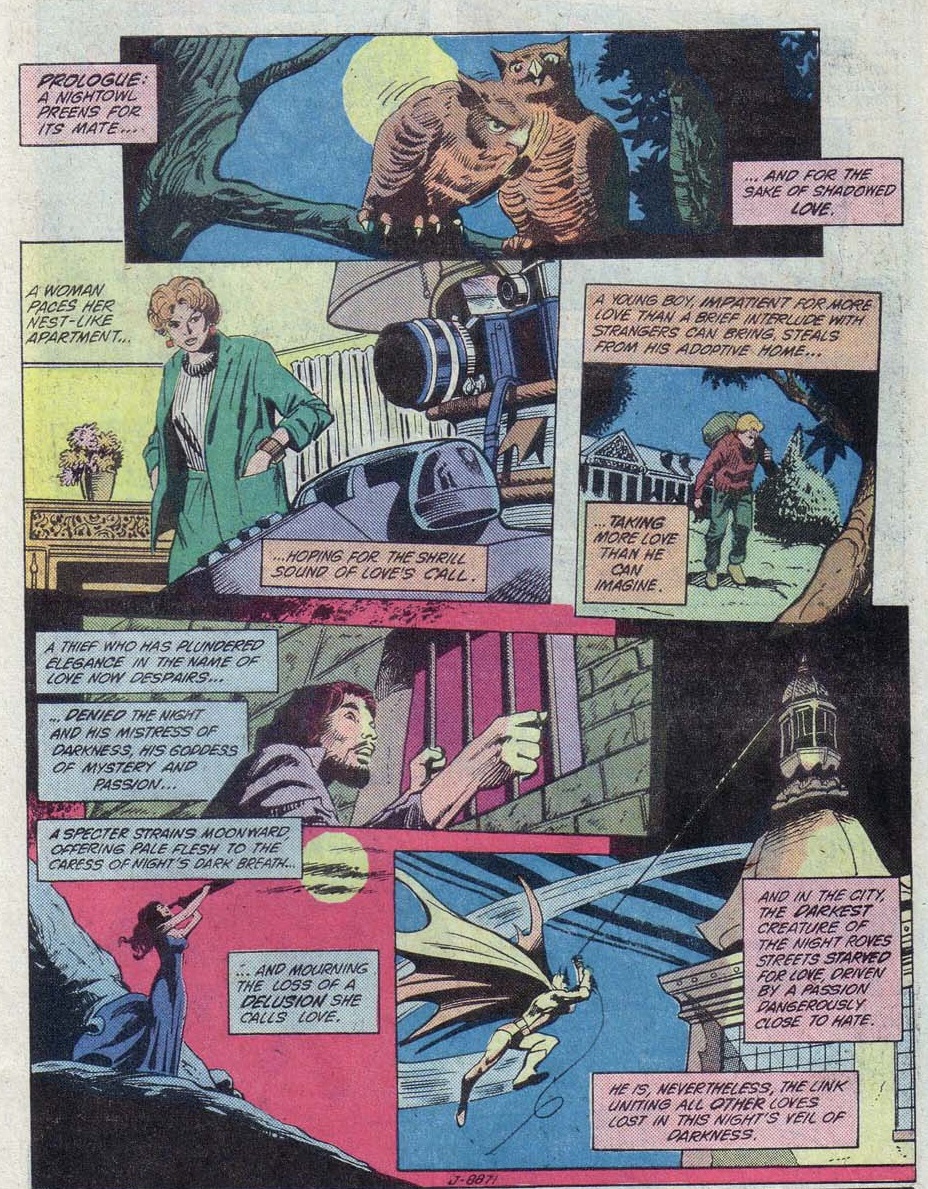
Moench built on Conway’s efforts to figure out how to make old concepts work in a mature, modern setting by infusing his comics with elements borrowed from more respected forms of literature. This was similar to what Alan Moore was doing in Saga of the Swamp Thing at the time. Although Doug Moench didn’t go nearly as far as Moore (his work essentially remained within the confines of the original genre), Batman comics, like Swamp Thing, became full of visual puns, ornate narration, gothic motifs, and elaborate (if heavy-handed) symbolism…
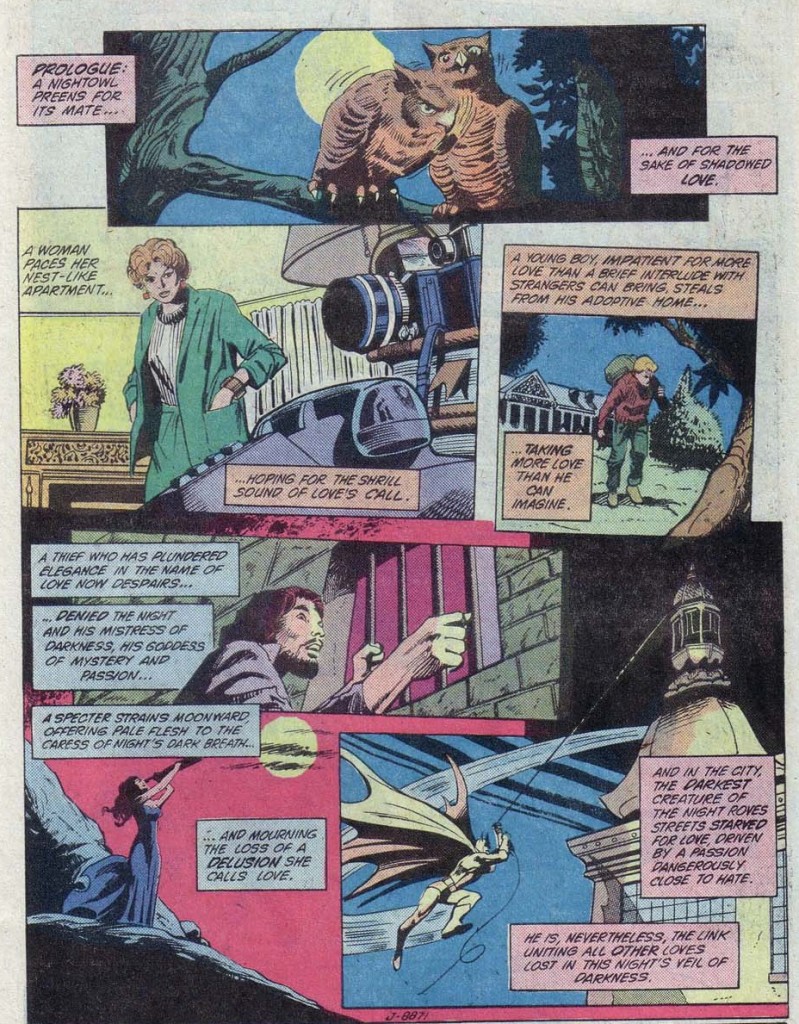 Detective Comics #530
(Yep, you can be sure those owls at the top – representing love and the night – will show up again in the comic, in the most symbolic way possible!)
I can see how some would find Doug Moench’s style cheesy and pretentious, but me, I can’t get enough of this stuff. There are so many layers in these books – this may not necessarily make them deep, yet it sure makes them a stimulating read, providing countless avenues to explore. Sometimes Moench plays with the form – in ‘The Glacier Under Gotham!’ (Batman #375), the framing is all done in rhyme (a cool twist later reveals the narration is actually being done by a character) – and sometimes he has fun with interwoven themes – like in the climax of ‘Facing the dark, blindly’ (Detective Comics #536), where all the characters have to take a chance while blinded, literally or metaphorically.
There is a particularly neat conceptual game in the tandem issues ‘Up above the sin so high’ (Batman #370) and ‘Down below’ (Detective Comics #537). In the former the Caped Crusader tries to bring down a gangster who lives in a skyscraper penthouse, in the latter he tries to convince a homeless man who lives in the sewer to come to the surface. The tales’ thematic connection is further built around both subtle and obvious parallels between the two characters Batman is dealing with (for example, each of them loses a tooth at some point in the story). Even the covers frame the Dark Knight from symmetrical perspectives.
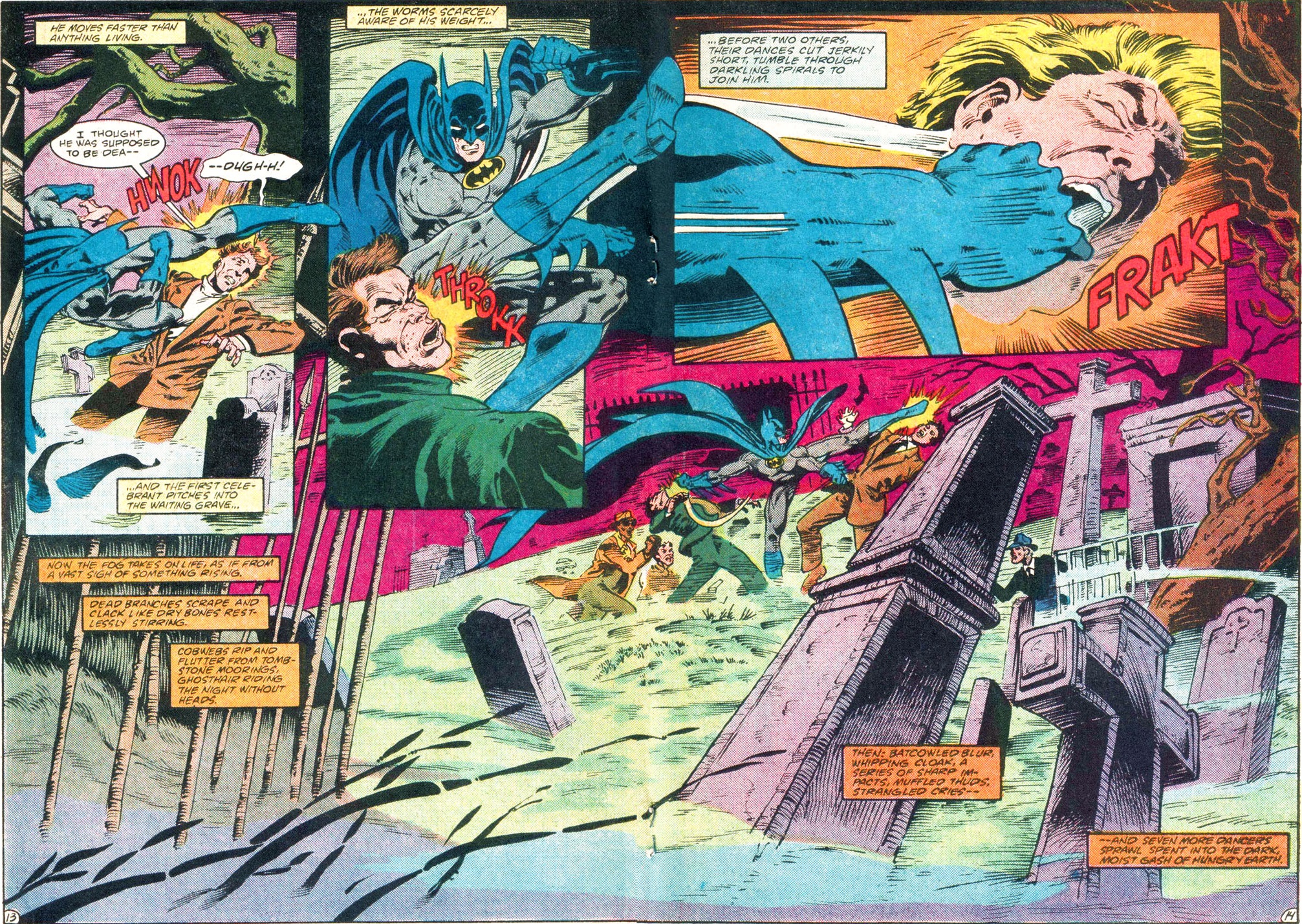
Perhaps the most on-the-nose slice of symbolism shows up in ‘A stump grows in Gotham’ (Detective Comics #552), which draws an obvious parallel between a beloved oak tree getting cut down and Batman seemingly dying at the hands of an outside hitman who promised a bunch of local criminals they could dance on the Dark Knight’s grave. Batman is almost buried in a coffin made from the tree’s wood, but reports of his death turn out to have been greatly exaggerated – just like the tree’s, whose stump is shown to be growing a new plant in the final panel!
The best bit of Moench’s playful use of metaphors and juxtapositions in this issue, though, takes place when Batman, breaking out from his coffin, actually does make criminals dance on his grave:
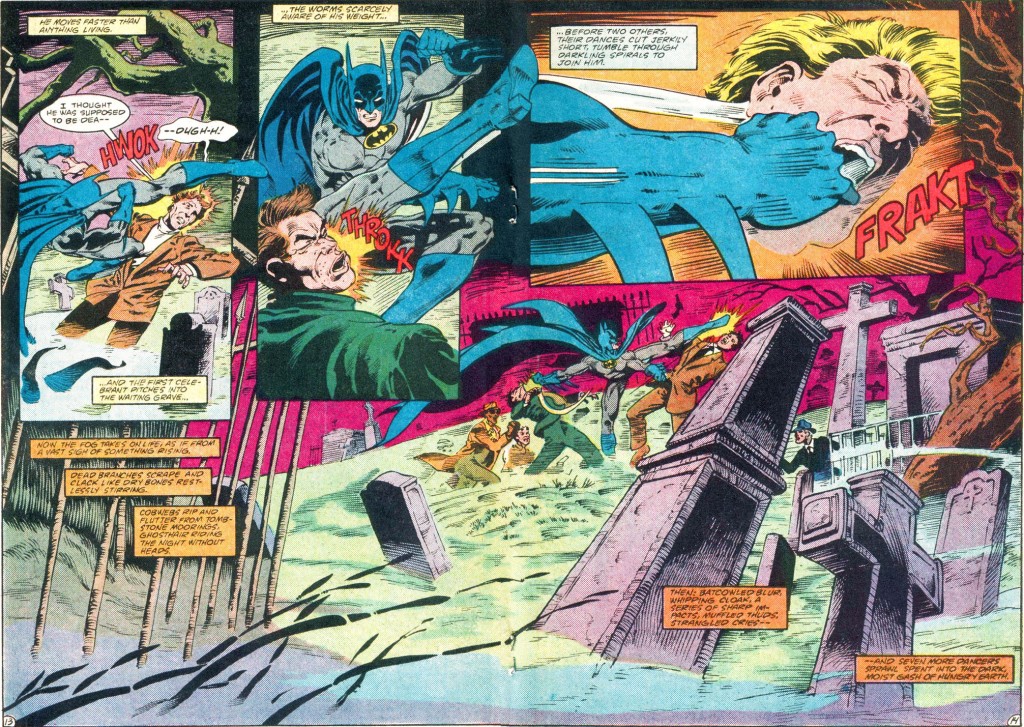 Detective Comics #552
And trust me, you don’t want to get me started on the recurring cat-shaped stalagmite in the Batcave, which represents Batman’s attraction for Catwoman… Doug Moench takes this idea as far as he can and I love every bit of it. In ‘The Batman Nobody Knows’ (Detective Comics #560), Moench goes totally overboard, turning rats, bats, flies, and spiders in the Batcave into an elaborate representation of how the Caped Crusader is trying to manipulate Robin and Catwoman into getting along.
The thing is that these literary devices serve less to distract us from the fact that we are reading a superhero comic than to encourage us to experience the genre with a specific frame of mind, exploiting the allegorical potential of its surreal costumes and tropes. Make no mistake, this is still a lighthearted horror and crime saga (with a few soap opera subplots thrown in for good measure) in which the Dynamic Duo fights bizarre crooks like Calendar Man and Captain Boomerang. For all its flourishes, Moench’s writing doesn’t shy away from delivering the kind of thrills and eccentric criminal schemes one expects from a classic Batman adventure, with a steady balance between solemnity and quirkiness that is not too distant from the BTAS cartoon show of the following decade.
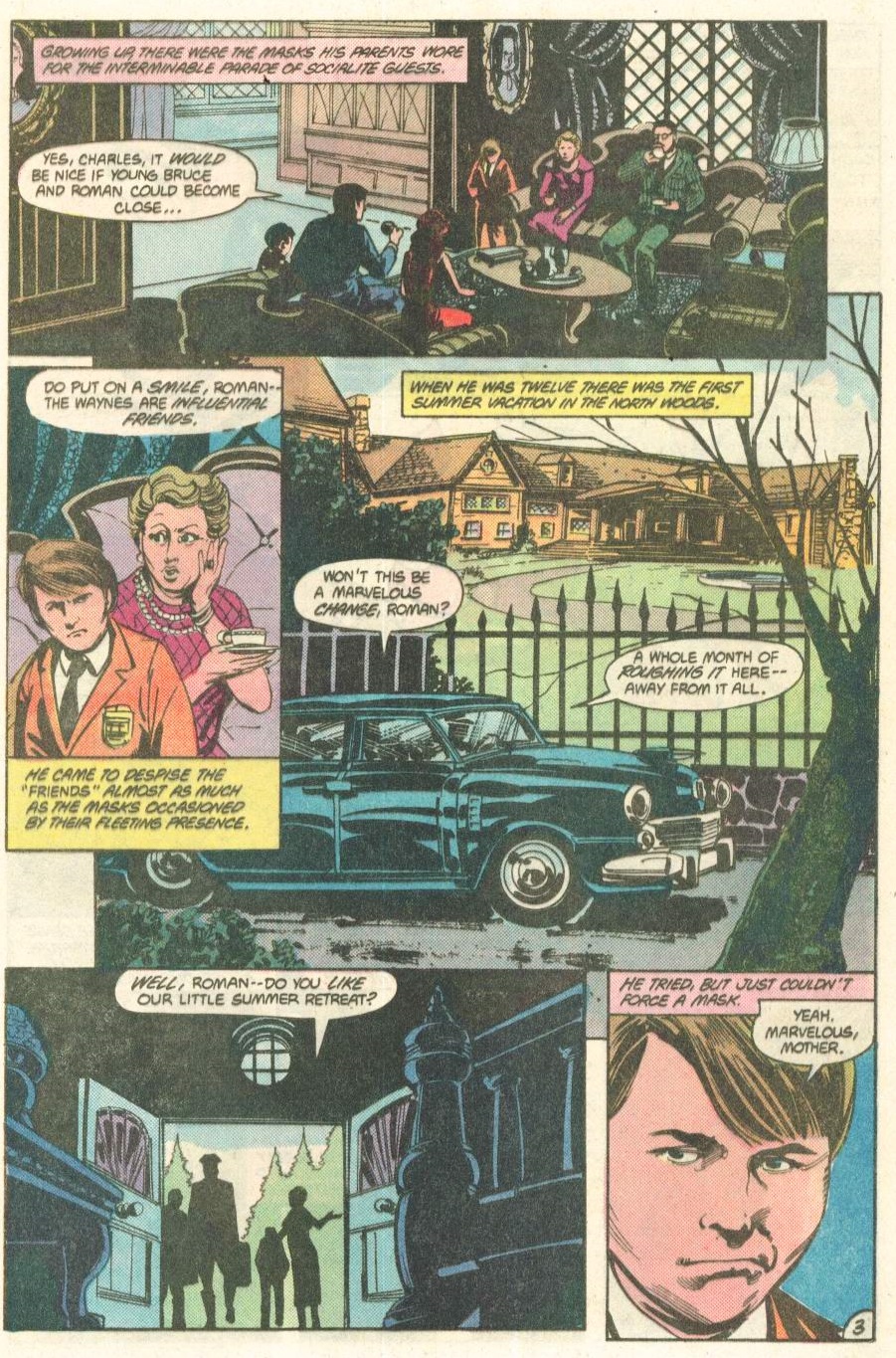
In fact, Moench’s knack for squeezing the most out of each metaphor blatantly informed his most famous villain creation: Black Mask (Roman Sionis) and his mob, the False Face Society of Gotham (introduced in the trilogy Batman #386 – Detective Comics #553 – Batman #387). Absolutely *everything* about Roman Sionis revolves around masks and faces from day one:

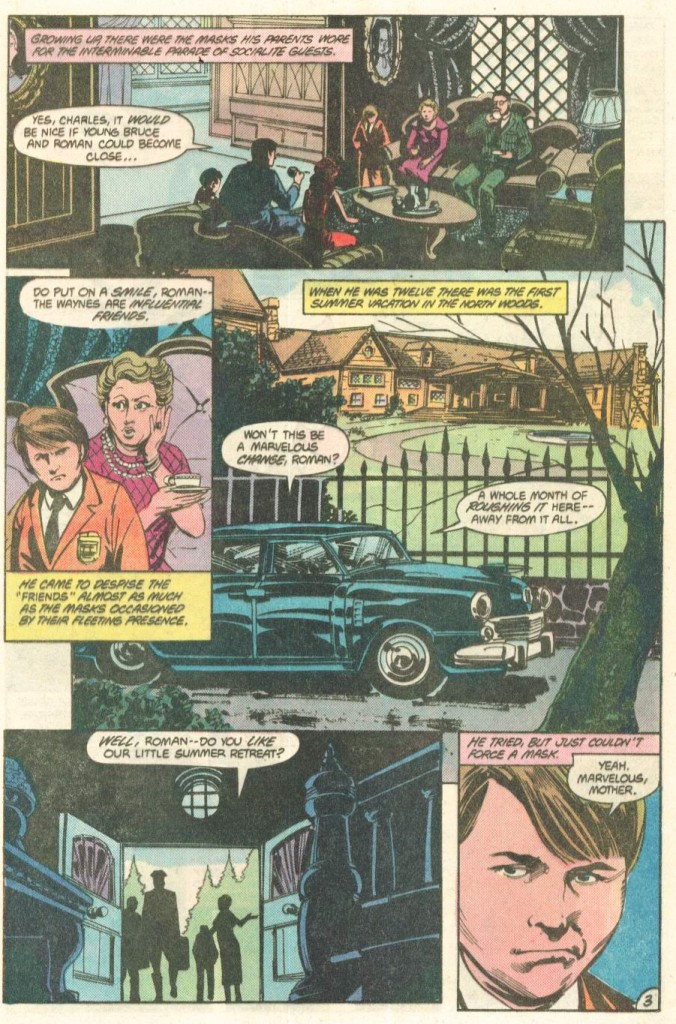 Batman #386
(Masks, of course, are symbolic by definition – and Doug Moench can’t resist reminding readers of this, in quite explicit terms, at every turn.)
Besides Black Mask, Moench has been responsible for many contributions to Batman’s supporting cast. Notably, during this era he also introduces the underrated goth villain/love interest Nocturna and the fan-favorite dirty cop Harvey Bullock, who acts like an old-school hardboiled detective and may or may not be as clumsy as he looks.
Bullock, in particular, had a great entrance into the series, starting out as a stooge appointed by the corrupt Mayor Hamilton Hill in order to screw with Police Commissioner James Gordon…
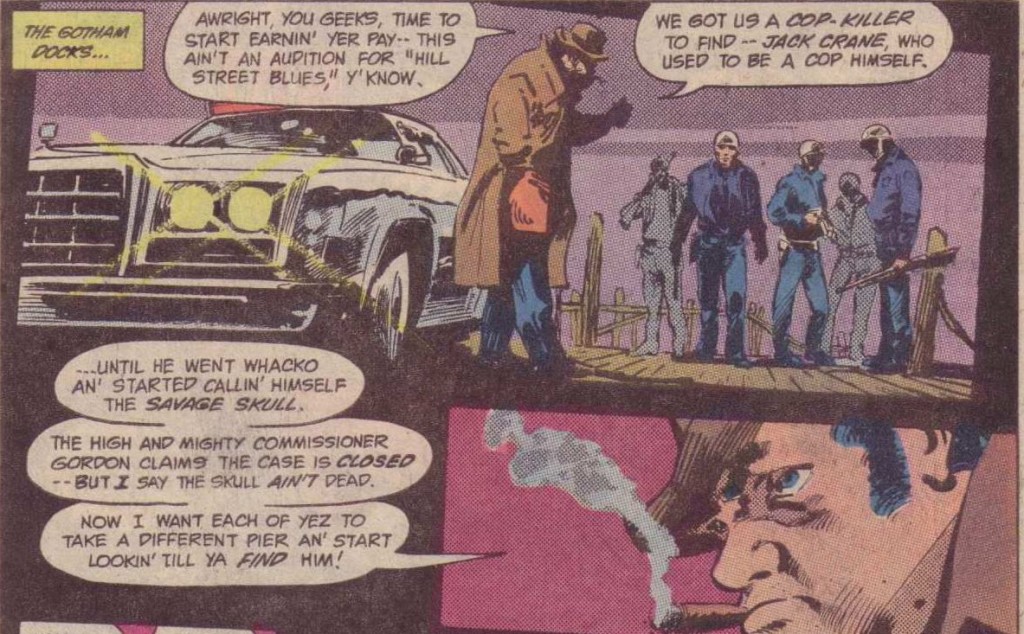 Detective Comics #528
Doug Moench’s run is full of strong characterization all around. For example, Commissioner Gordon feels weighed down by Hill’s and Bullock’s conspiracy to undermine him – in a moment of weakness, he even wishes Bullock gets killed – only to regain his motivation after a pep talk by Batman and later proving himself as a cop. In turn, Jim proves how important he is for the Dark Knight, who gets his own crucial motivational speech from Gordon at the climactic fight scene against the Savage Skull.
Harvey Bullock himself comes across as more than a one-note character. Sure, he looks crooked and buffoonish, but he also has enough of a detective instinct to track down the Savage Skull. Plus, Bullock seems to have a change of heart after being saved by Batman and Gordon… yet he then claims sole credit for the arrest in the end!
There are several other fine character moments. ‘Just as night follows day’ (Batman #383) humanizes the Caped Crusader by showing us a day and night in the life of an exhausted Bruce Wayne, who keeps trying to sleep but is always interrupted. Jason Todd’s insecurities get plenty of attention as well, like in this insightful scene right after Dick Grayson officially passes the title of Robin to Jason (who in the pre-Crisis version used to be a circus acrobat):
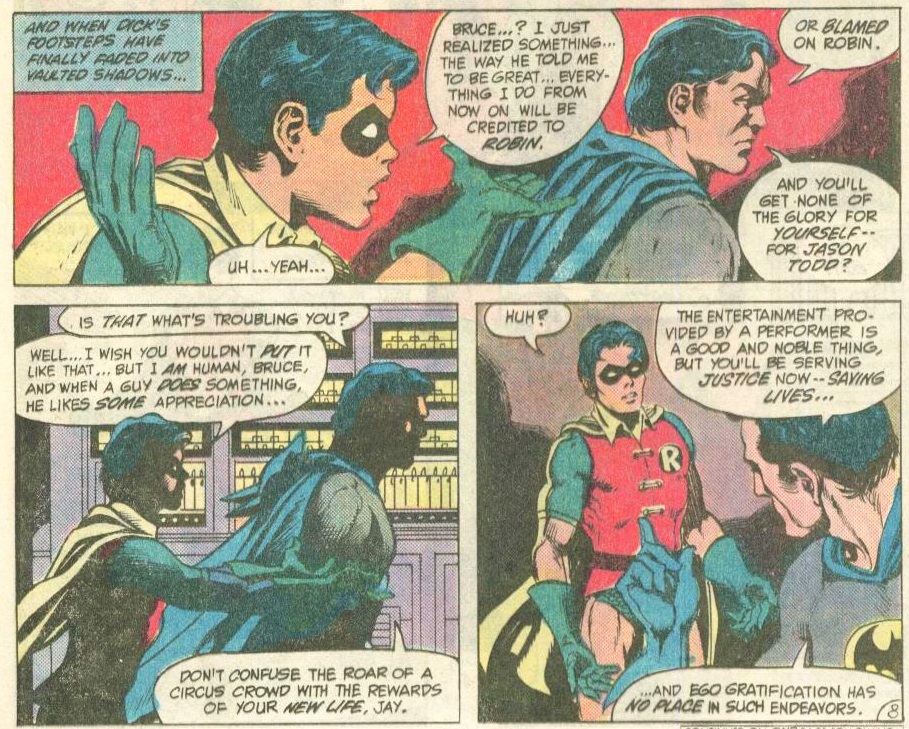 Batman #368
Doug Moench’s thoughtful exploration of the cast benefited from the fact he was the main writer shaping these characters at the time (Joey Cavalieri’s World’s Finest Comics and Mike W. Barr’s Batman and the Outsiders didn’t have nearly as much to say about daily life in Gotham’s city hall or police department or even in Wayne Manor). For the most part, Moench had the chance to develop strong internal continuity between his series without much interference from the rest of the DC Universe, despite the mandatory tie-in to Crisis on Infinite Earths.
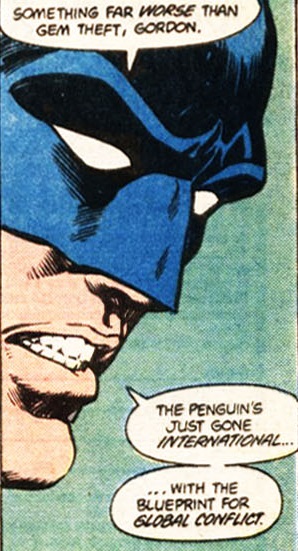
On top of the dark(ish) mood and character work, Moench’s stories were often informed by real world issues, thus anticipating to some degree the impending Frank Miller revolution. Not only did these comics explore the internal politics of Gotham City, they also entangled Batman’s adventures with the troubled politics of Central America and the Middle East. Moreover, at one point the Penguin drugged an investigative reporter into telling him everything about the US ‘Early Bird’ defense system and then tried to sell the info to the Russians!
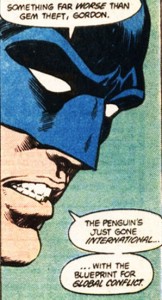 Batman #374
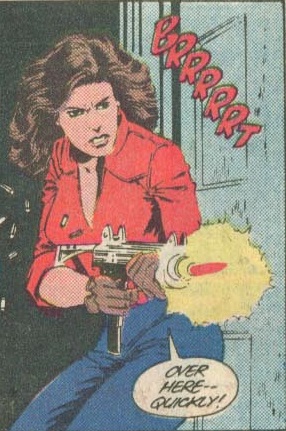
This was only one in a long line of Cold War Batman comics, albeit one with an especially satisfying ending. Doug Moench clearly had quite skeptical views about the need for the Cold War (he also addressed them in his crazy-ass Blackhawk run). The topic came up again in two of my all-time favorite Batman issues (#393-394), in which – three years before Red Heat – the Caped Crusader teamed up with a kick-ass Soviet agent, called Katia:
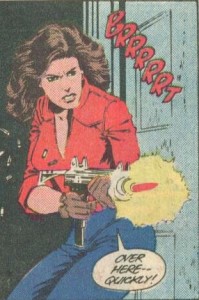 Batman #393
Rather than treating Katia as a proto-Bond girl or as a stereotypical Russian who surrenders to American materialism, Doug Moench established her as a richly nuanced character, who explicitly refused to act like Ninotchka. (Katia showed up again in Vigilante #46-47, having apparently quit the KGB and stuck around Gotham City. Unfortunately, Paul Kupperberg’s script ignored Moench’s interesting characterization and depicted her as just a slimy Russian villainess, manipulating the mob in order to smuggle classified material out of the USA.)
Another fascinating female character who repeatedly confronted Bruce’s politics was Alfred’s French daughter, Julia Pennyworth. She had been created by Gerry Conway (in Detective Comics #501-502), but Doug Moench brought her back into the series as a regular cast member. While turning Julia into a reporter wasn’t very imaginative (it made her look like a Vicky Vale knock-off), Moench cleverly imbued her with a leftist European touch. You can see it in this excerpt from a wonderful sequence that keeps alternating between, on the one level, the juvenile theatrics of masked villains (with simplistic plans and motivations) and, on the other level, an adult world of media negotiation, sexism, class awareness, and international affairs:
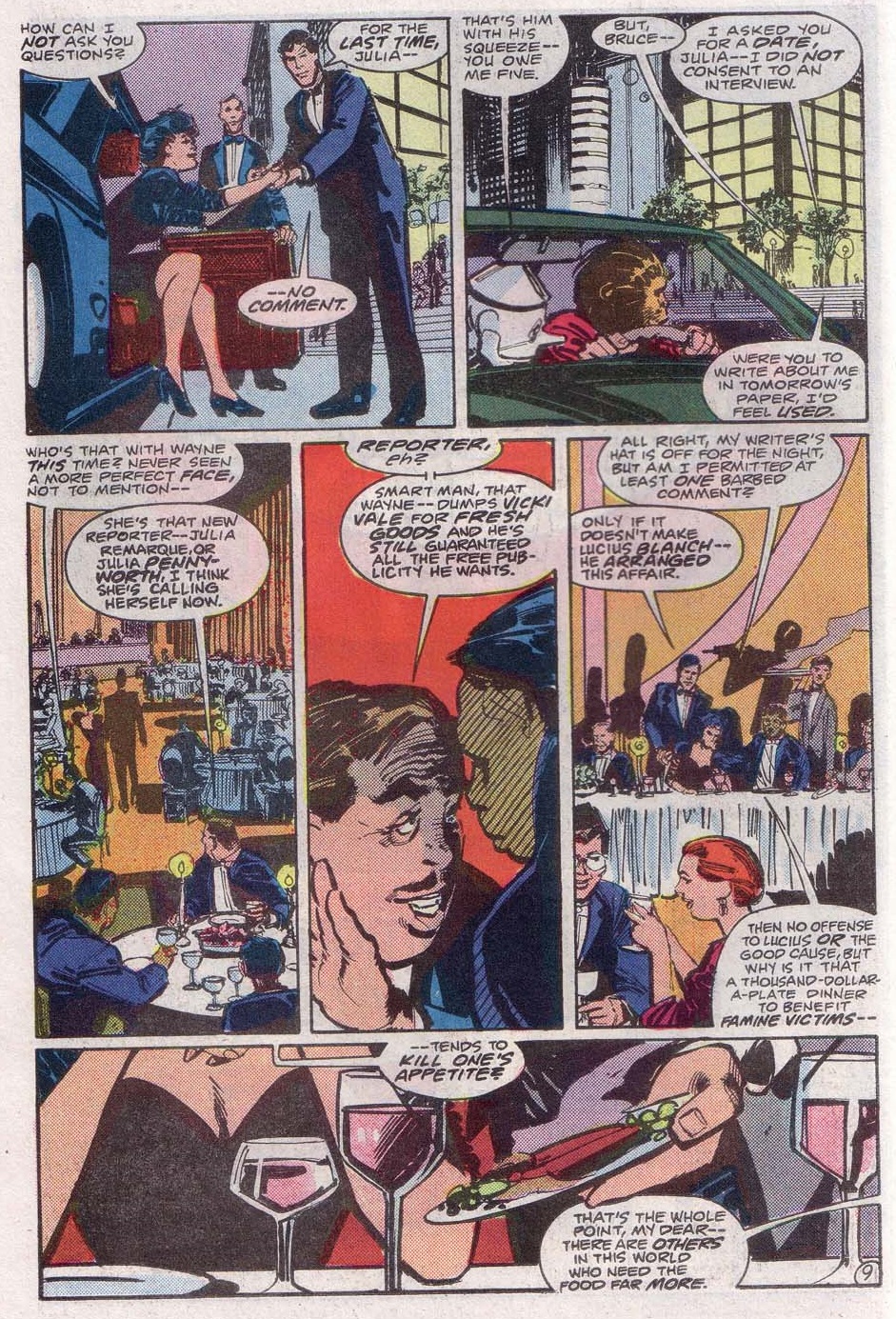 Detective Comics #553
The Caped Crusader’s politics were also addressed in a team-up issue with Green Arrow (Detective Comics #559), in which Batman represented the pro-authority right and Green Arrow the anti-systemic left. That story was called ‘It Takes Two Wings to Fly’ (as in right and left wing, geddit?).
Finally, Doug Moench seemed to really enjoy sneaking pop culture references into his comics. They were crammed with little intertextual gags like this cute wink to Mbube:
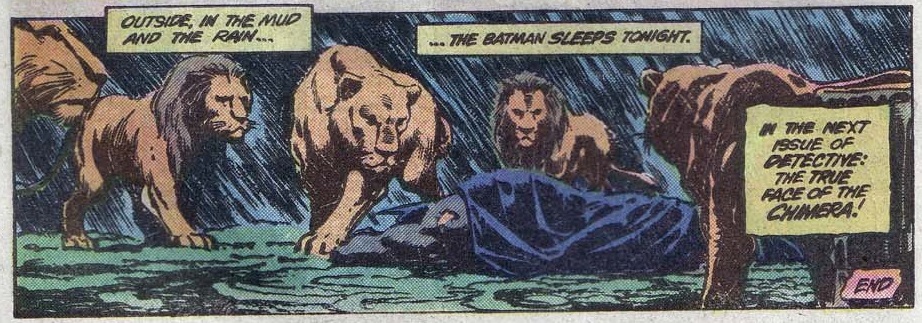 Batman #364
Specifically, Moench channeled his predilection for old Hollywood into the character of Harvey Bullock, whose dialogue consisted mostly of references to classic movie lines. Moench took this to the extreme by introducing a cinephile villain called Film Freak, whose gimmick was precisely that his crimes were reminiscent of movie scenes, including a handful of Alfred Hitchcock ones.
Years later, in 1993, Doug Moench would go back to Hitchcock. When the post-Crisis version of Batman started working together with Catwoman, James Gordon wondered if there could be something to the notion of working with a thief:

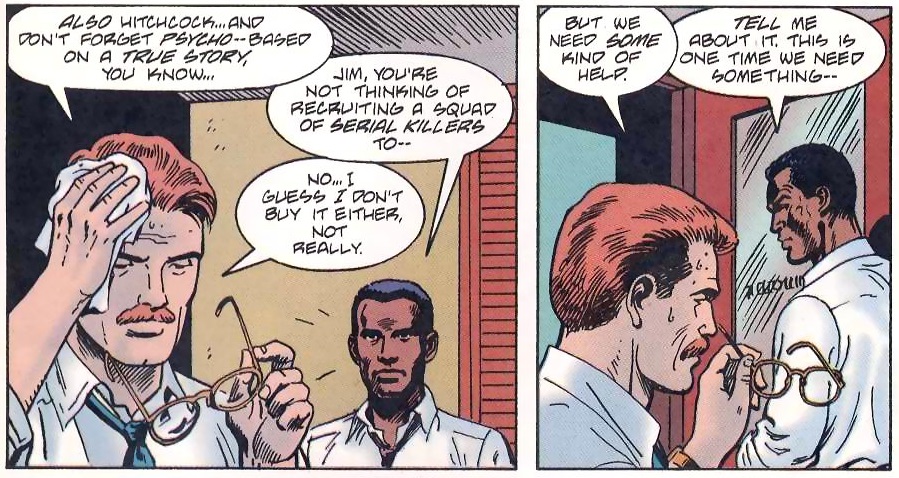 Legends of the Dark Knight #48
Indeed, some of Doug Moench’s motifs did carry over into the ‘90s. However, as we’ll see next month, they became much, much more unhinged…
Gotham City elections
For some reason, the electoral process has been on my mind. And so I turned, as I often do, to Batman comics in order to reassure myself that, as screwed up as politics appear to be at the moment in the real world, they’re still not as weird as in Gotham City.
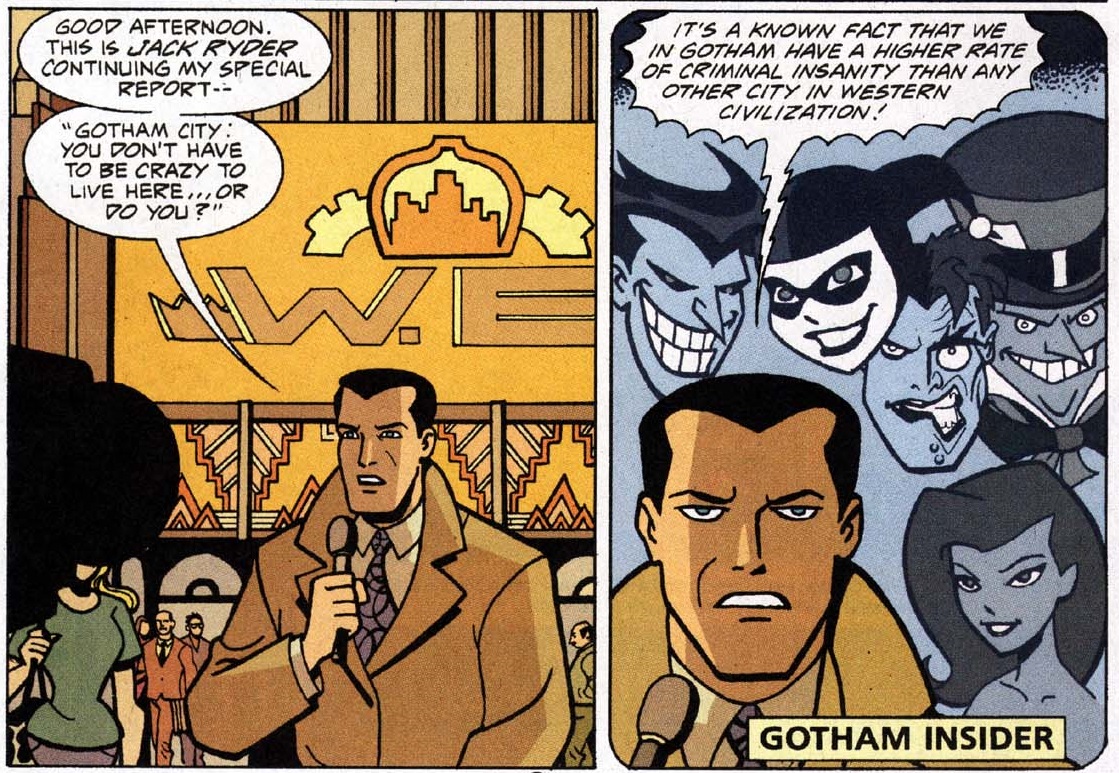
Gotham City is my favorite Batman character. I am fascinated by the notion of a city so preposterously intense and macabre that it drives most citizens off the edge. A city where if you lose your job or your loved ones, or if you find yourself upset with the direction society is heading, you’ll decide to dress up in a colorful costume and commit themed robberies faster than Howard Beale can shout ‘I’m mad as hell, and I’m not going to take this anymore!’
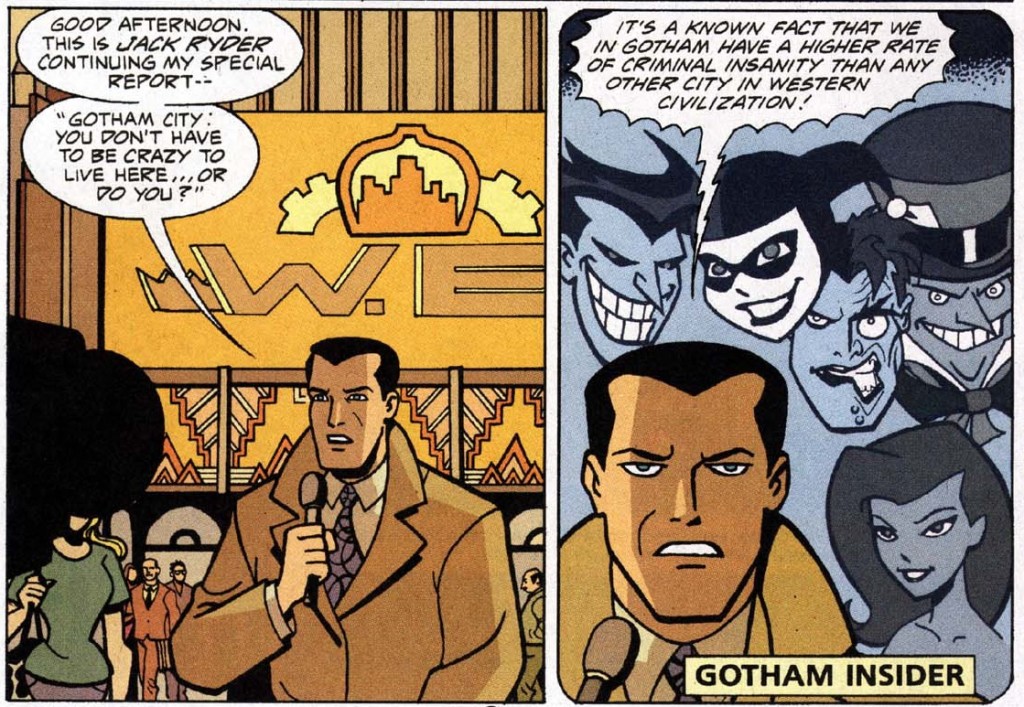 Gotham Adventures #58
If we accept that the city as whole is a bit crazy, then it stands to reason that its elections would be quite off-the-wall as well. And they are. I mean, it says something that the Penguin has managed to become mayor of Gotham in at least three alternative continuities in the comics (he also came close in both a live-action movie and a TV show). And you bet your tail that one of the things Mayor Oswald Cobblepot did was to increase funding to the Novick County Bird Sanctuary by six hundred percent! (In the neat Batman Adventures (v2) #13.)
That the electoral process is corrupt goes without saying – pretty much every institution and proceeding in Gotham City are corrupt beyond New Jersey standards. From the Court of Owls to the Tobacconists’ Club led by Rupert Thorne, there is an endless tapestry of influential cabals, secret societies, and underground lobby groups pulling strings in smoke-filled rooms.

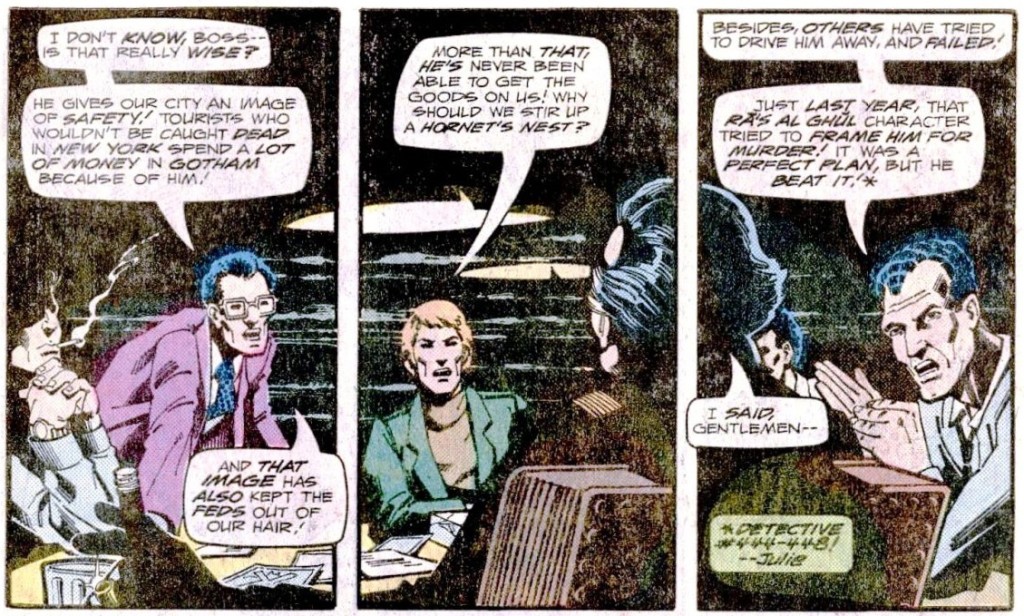 Detective Comics #471
That said, Gotham elections still manage to reach particularly ludicrous extremes. For one thing, the people behind the campaigns tend to make Malcolm Tucker look subtle and restrained in comparison. In the 1972 mayoral election, the political bosses for the two main candidates were so dishonest that even the least dirty one tried to slander his opponent by framing him for the murder of Bruce Wayne (who was not even dead!). In a 1980 recall election for police commissioner, a campaign manager orchestrated a city-wide crime wave and ended up shooting his own candidate. Hell, even in the more kid-friendly Batman Adventures universe, elections were almost as out-of-control, as shown in ‘Decision Day’ (Batman Adventures #18), in which Batgirl and Robin found out that a major candidate had sponsored an attempt to blow up police headquarters.
(And it’s not just the local elections that can get out of hand. When Evan Gregory ran for governor in 2005, the Joker electrocuted him with a joy buzzer, kidnaped his fiancée, and finally dismembered him… In the Joker’s defense, though, the Clown Prince of Crime was running against Gregory, so this turn of events wasn’t completely unexpected. In fact, the Joker was running with the populist slogan: ‘Vote for me or I’ll kill you.’)
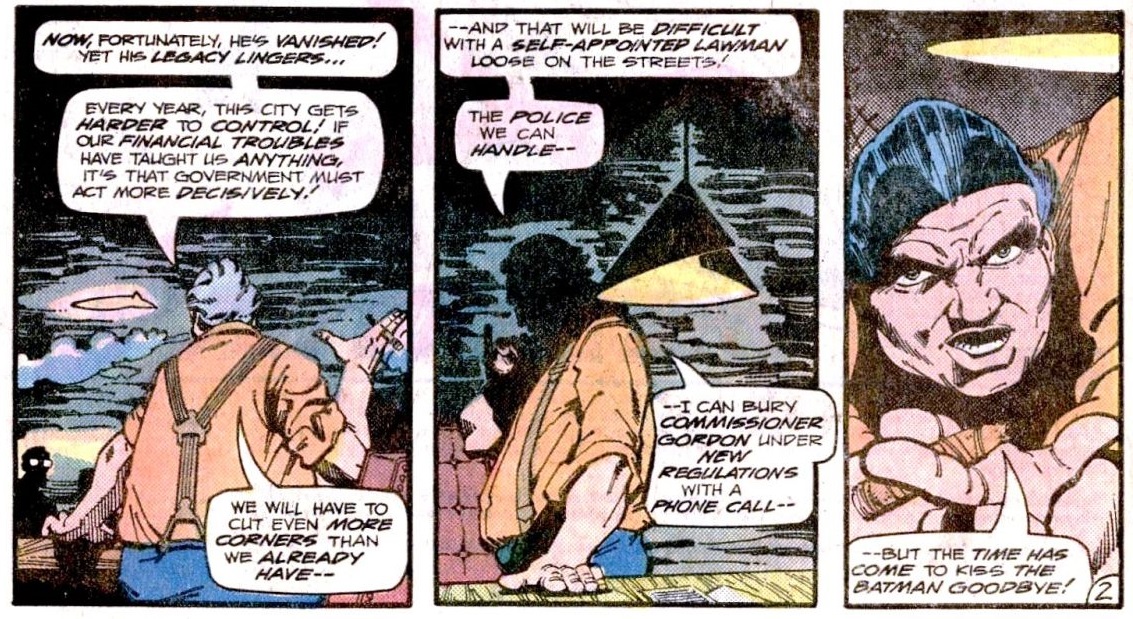
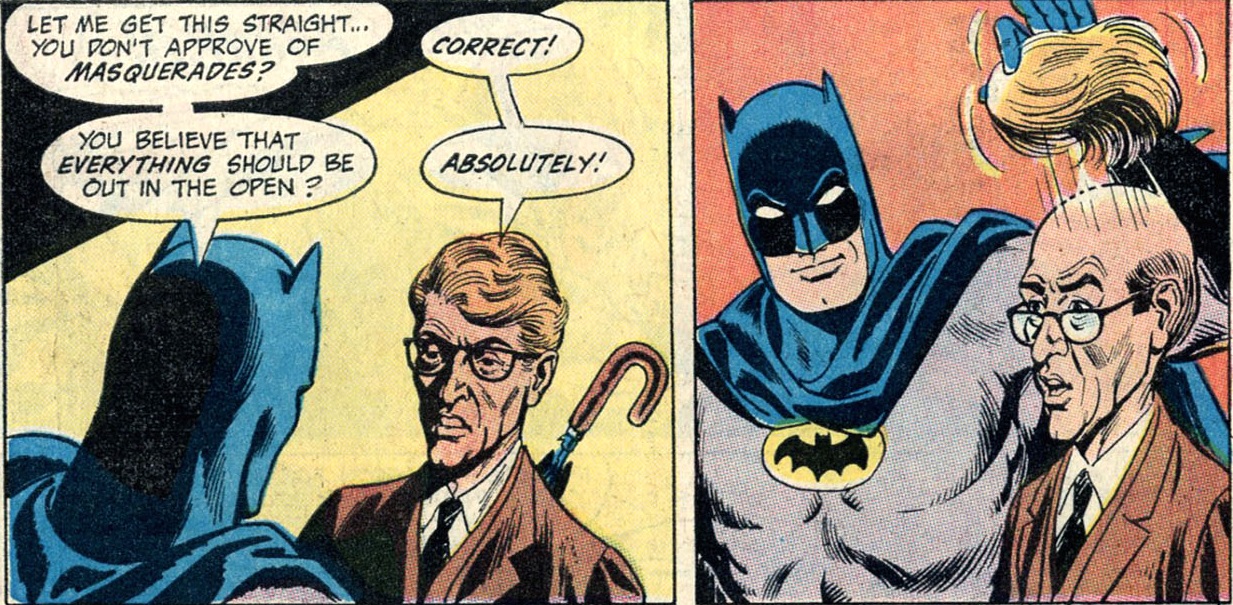
In terms of political debate, a recurring electoral topic concerns the fact that some local weirdo keeps disguising himself as a bat and beating up criminals with little regard for their civil rights. This used to be a pet cause of Arthur Reeves, who as the mayor’s public works commissioner spent his career demanding the Batman’s unmasking, all the way back to 1970:
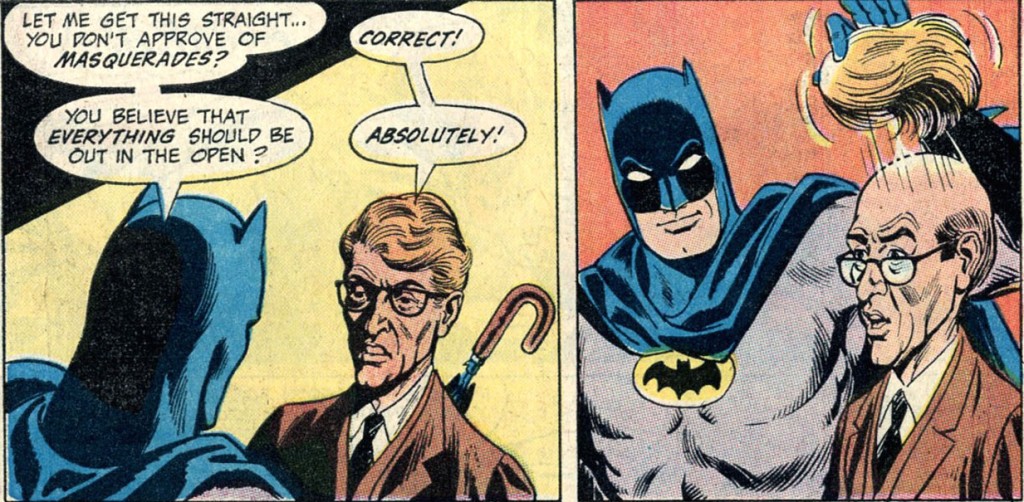 Detective Comics #399
Reeves charged Batman with murder more than once (Batman #225, Detective Comics #419, Detective Comics #463) and for years he persistently lobbied against the police’s collaboration with the Caped Crusader:
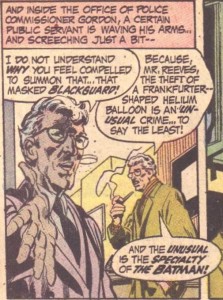 Batman #234
In 1981, Arthur Reeves finally ran for mayor on an anti-Batman platform, but lost against Reform Party candidate Hamilton Hill. Reeve’s campaign basically crashed and burned when he announced that he was going to expose the Dark Knight’s secret identity and gave the media photographs that supposedly showed Batman was a wanted mobster, but which were quickly proven to be forgeries. In fact, Arthur Reeves had obtained the photos from Rupert Thorne, who had framed Reeves in order to get his own man elected, i.e. Hamilton Hill.
As soon as he took office, Mayor Hill demanded the resignation of Police Commissioner James Gordon, replacing him with another Thorne stooge. Although Hamilton Hill was elected against the anti-Batman candidate, soon after the election Hill also declared war on the Dark Knight, giving the police shoot-to-kill orders. One of a long line of scumbag mayors, Hill remained in office until 1985, entangled in an expanding web of corruption and abuse of power.
A few years later, another mayoral campaign went off the rails when the short-lived villain Abattoir (who used to strip his victims’ flesh in order to eat their souls, as you do) crashed into a fund-raiser for the candidate Henry Etchison, leading to this horrific scene:

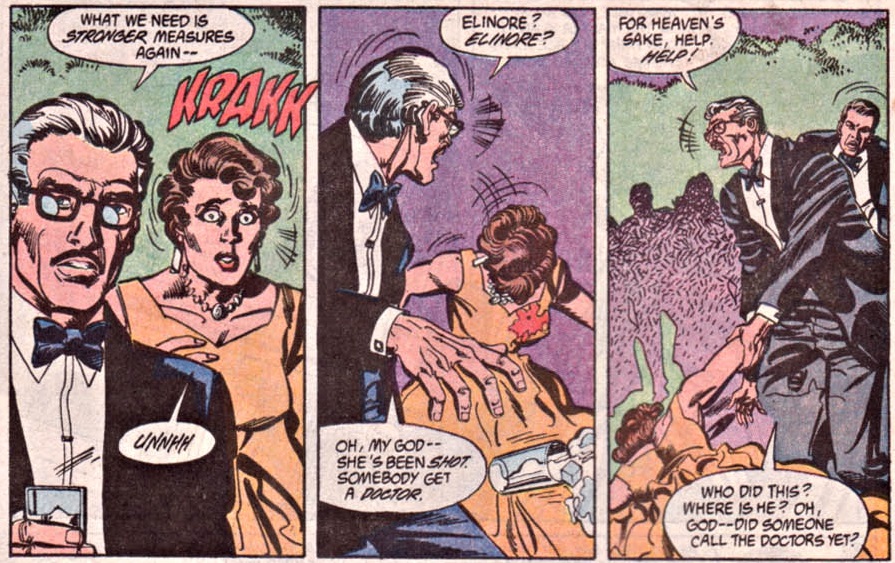 Detective Comics #625
The most pathetic thing was that, Gotham being Gotham, it turned out Etchinson himself had released the mad killer in order to get rid of his wife Elinore, who wanted a divorce – after all, while a divorce wouldn’t be convenient in the polls, a recently murdered wife could sure help his tough-on-crime campaign!
Former District Attorney Armand Krol ran for mayor in 1992, also on a platform of law and order, invoking Batman’s crusade as proof that the police force was not doing enough by itself. He promised to keep James Gordon as commissioner, but only because of Jim’s privileged relationship with Batman. Having defeated his opponent (the corrupt judge Walter Liptic, as seen in Legends of the Dark Knight Annual #2), Krol soon got a taste of Gotham City’s mayoral life – shortly after getting elected, he was kidnapped and almost drowned by a gang of misfit villains, including Catman, Calendar Man, and Killer Moth. And not long after *that*, he was kidnapped once again, now by the Joker and the Scarecrow, who forced him to bring Gotham even closer to breaking point with a series of harmful phone calls, for example causing a firefighters’ strike and leading the police into a deadly trap!
After Batman saved him from this last stunt, Armand Krol became even more of an admirer of the Dark Knight, especially the more violent, gung ho AzBats version. Indeed, Krol decided to distance himself from the ineffectual police department and to publicly endorse Batman’s activities instead. This set the stage for my favorite Gotham City mayoral campaign in the comics.
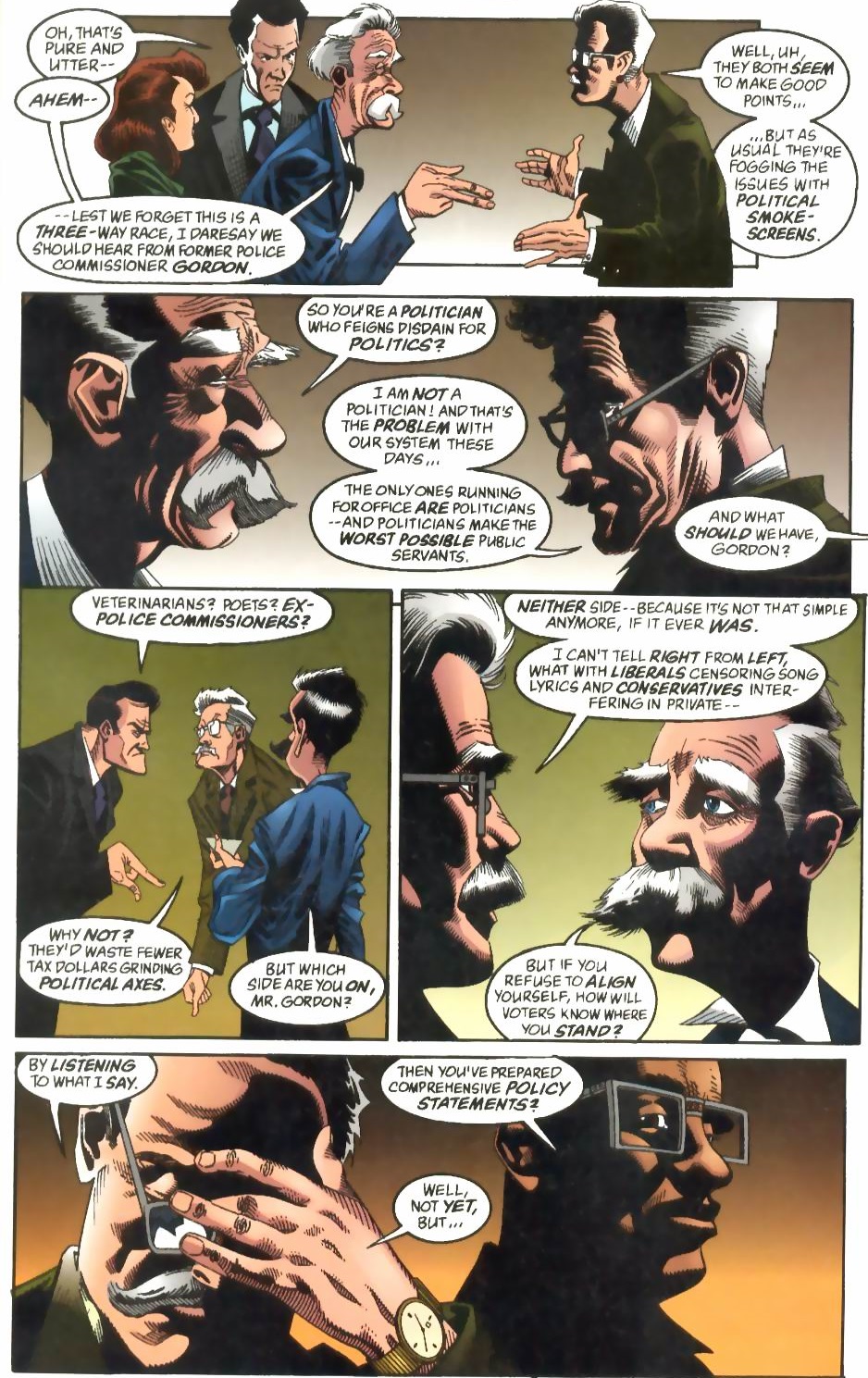
Basically, by 1995 Krol had pissed off pretty much everyone and began to fear his chances at reelection when faced with what he called ‘the latest fad – a squeaky-clean do-gooder woman candidate,’ namely District Attorney Marion Grange. To counteract Grange’s liberal appeal, Krol replaced Commissioner Gordon with Jim’s wife, Sarah Essen. A group of businessmen then decided to back James Gordon, who agreed to run as an independent candidate but was ultimately done in over charges of police brutality.
What I love about this was that, throughout 1995, there was political maneuvering taking place on the corners of almost every Batman comic, with evolving arguments and switching endorsements, just like in any real campaign. If you bought a random issue, between all the chase scenes and panels of the Caped Crusader kicking the Scarecrow in the face, you would find all these little slices of enduring political debate:

 Batman #523
This months-long subplot culminated in one of Gotham City’s most close-run elections. After the result was announced, the ensuing chess moves and negotiations between the candidates for the roles of mayor, district attorney, and police commissioner were covered in the intertwined stories of Batman #527-528, Detective Comics #693-694, and Shadow of the Bat #46-47 (cover-dated January-March 1996).
In the end, Marion Grange managed to secure her position as the new mayor, although – needless to say – not before she got a taste of the old Gotham City welcome by getting kidnapped by a lunatic serial killer…
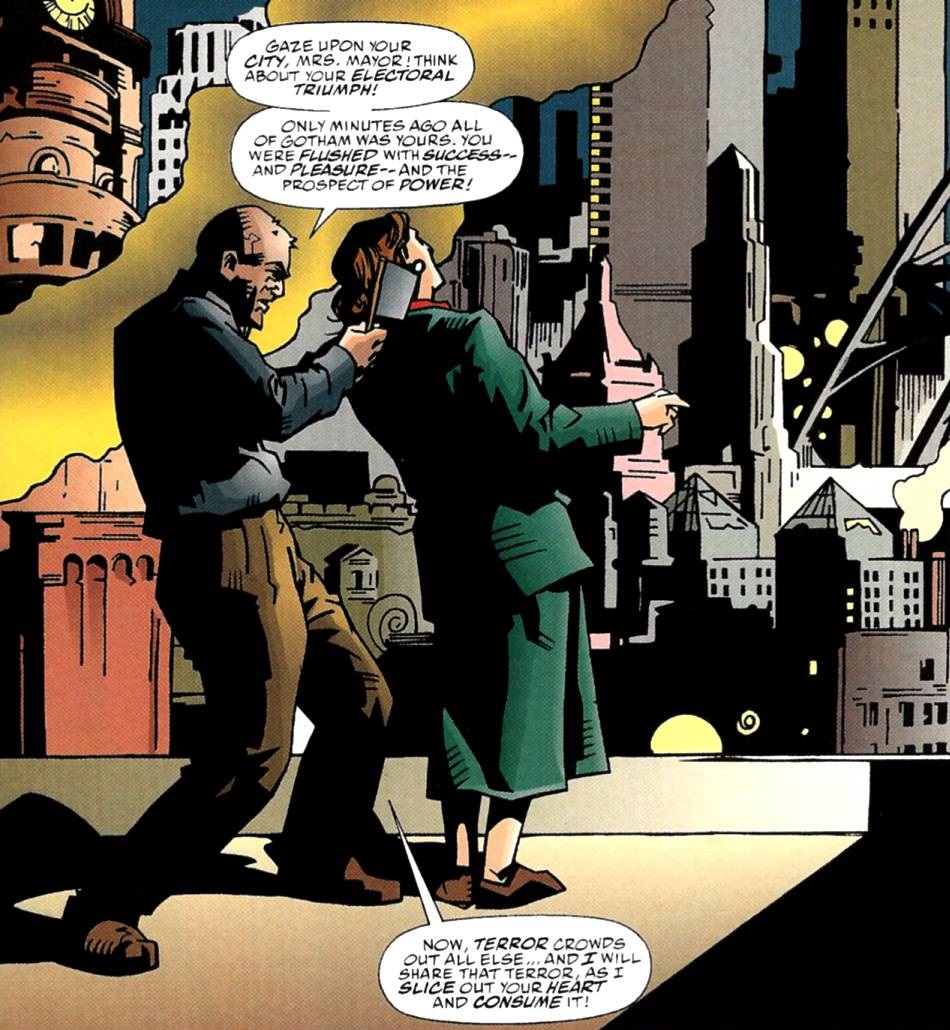 Shadow of the Bat #47
6 cool AzBats moments
One of the most infamous Batman eras was that time Jean Paul Valley – a university grad student brainwashed by a sect of the Knights Templar into becoming the assassin called Azrael – temporarily replaced Bruce Wayne as the Dark Knight. With his psycho personality, tacky armored suit, and brutally violent approach to crimefighting, Valley’s Batman – known among fans as AzBats – was set up from the get-go to be an over-the-top awful version of the Caped Crusader, thus paving the way for Bruce’s glorious return at the end of the Knightfall story arc.
It’s hard not to see in AzBats a tongue-in-cheek parody of 1990s’ *extreme* attitude. One of the running gags was that he kept tweaking his costume’s design, incorporating endless accessories while making it progressively bulkier and cyborg-looking. What’s more, AzBats spent most of the time viciously tearing criminals to shreds and treating Robin like crap (although he still managed to act less like a dick than the protagonist of Frank Miller’s All-Star Batman and Robin, the Boy Wonder). He would go on to star in Azrael, easily the shittiest Batman spinoff of the nineties, often settled with laughably bad art, dialogue, plots, characters, you name it. Living up to Jean Paul Valley’s connotation with outrageous excess, that series pushed the savage man-child angle further, revealing him to be a product of centuries of deranged human-animal genetic engineering!
In the world of Batman comics, however, even loathed characters – like the second Robin, Jason Todd – occasionally get to rise above their alleged lameness, or at least prove themselves interesting in their own way. With that in mind, here are half a dozen moments from the Knightfall era in which creators actually did some cool stuff with this twisted version of the Dark Knight:
- AzBats screws up Batman’s signature vanishing act when talking to Commissioner Gordon…

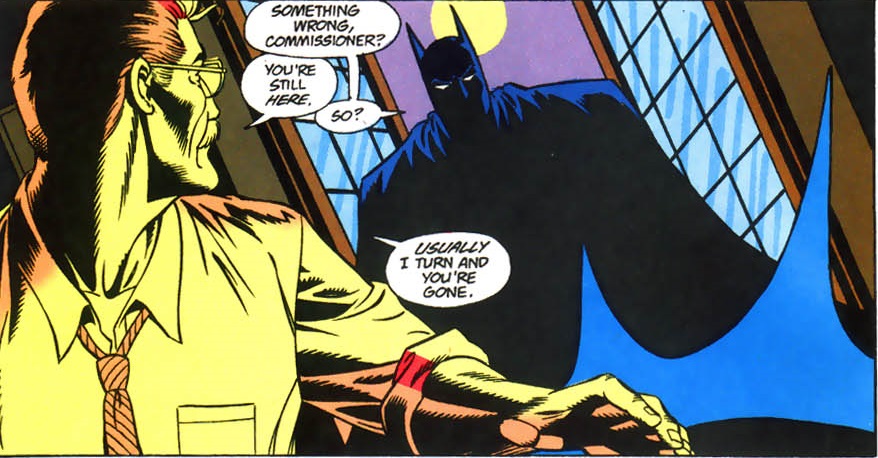 Detective Comics #666
2. AzBats offhandedly solves a case because he is so damned used to weird brainwashing techniques…
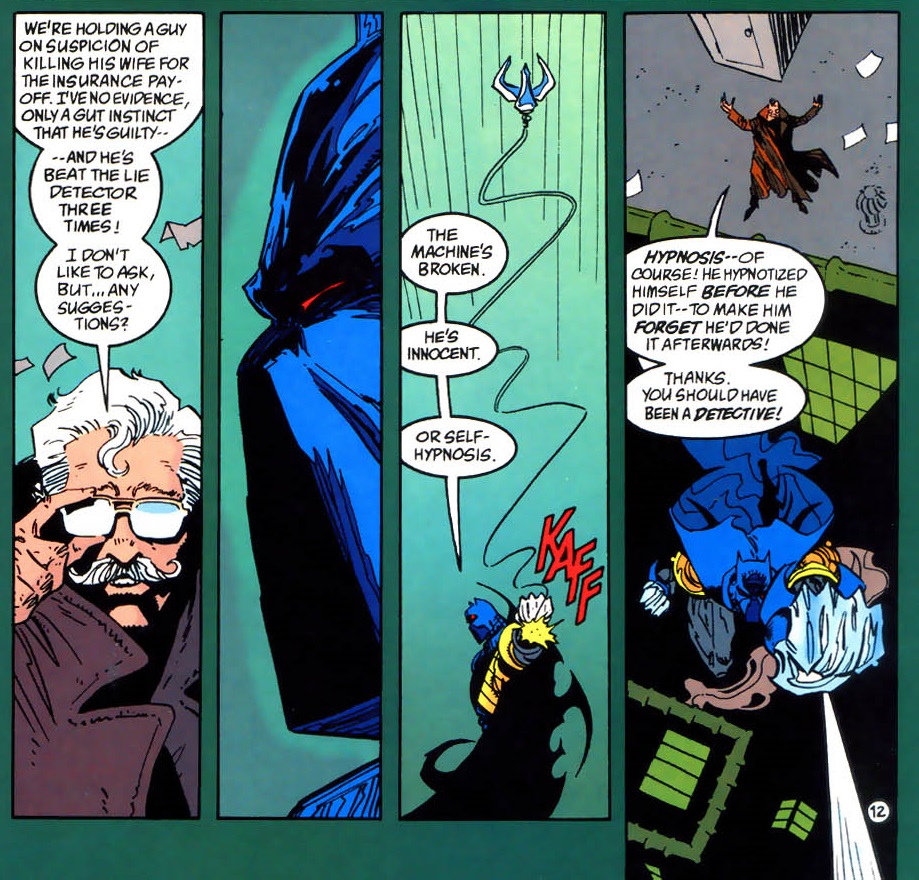 Shadow of the Bat #24
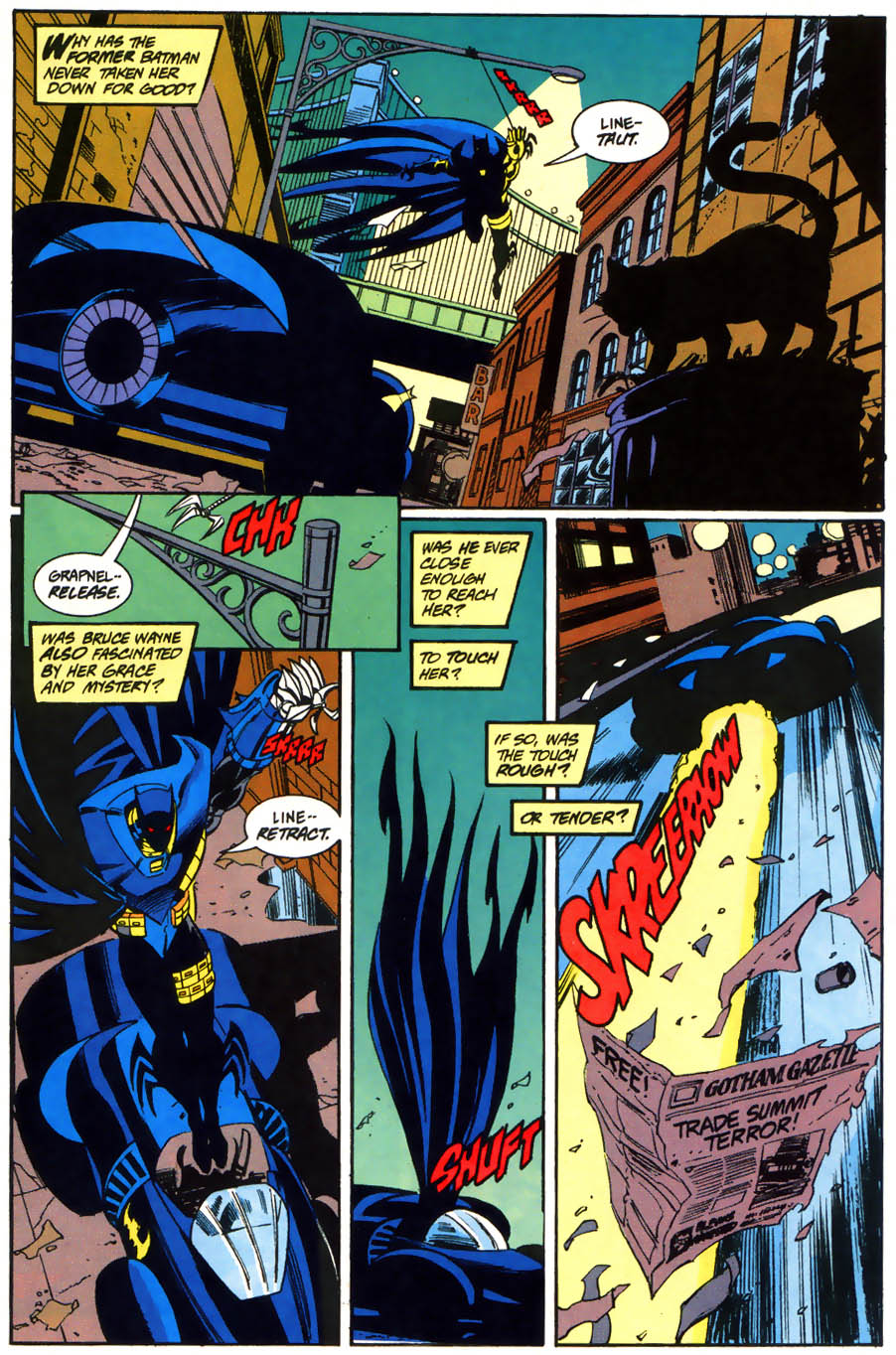
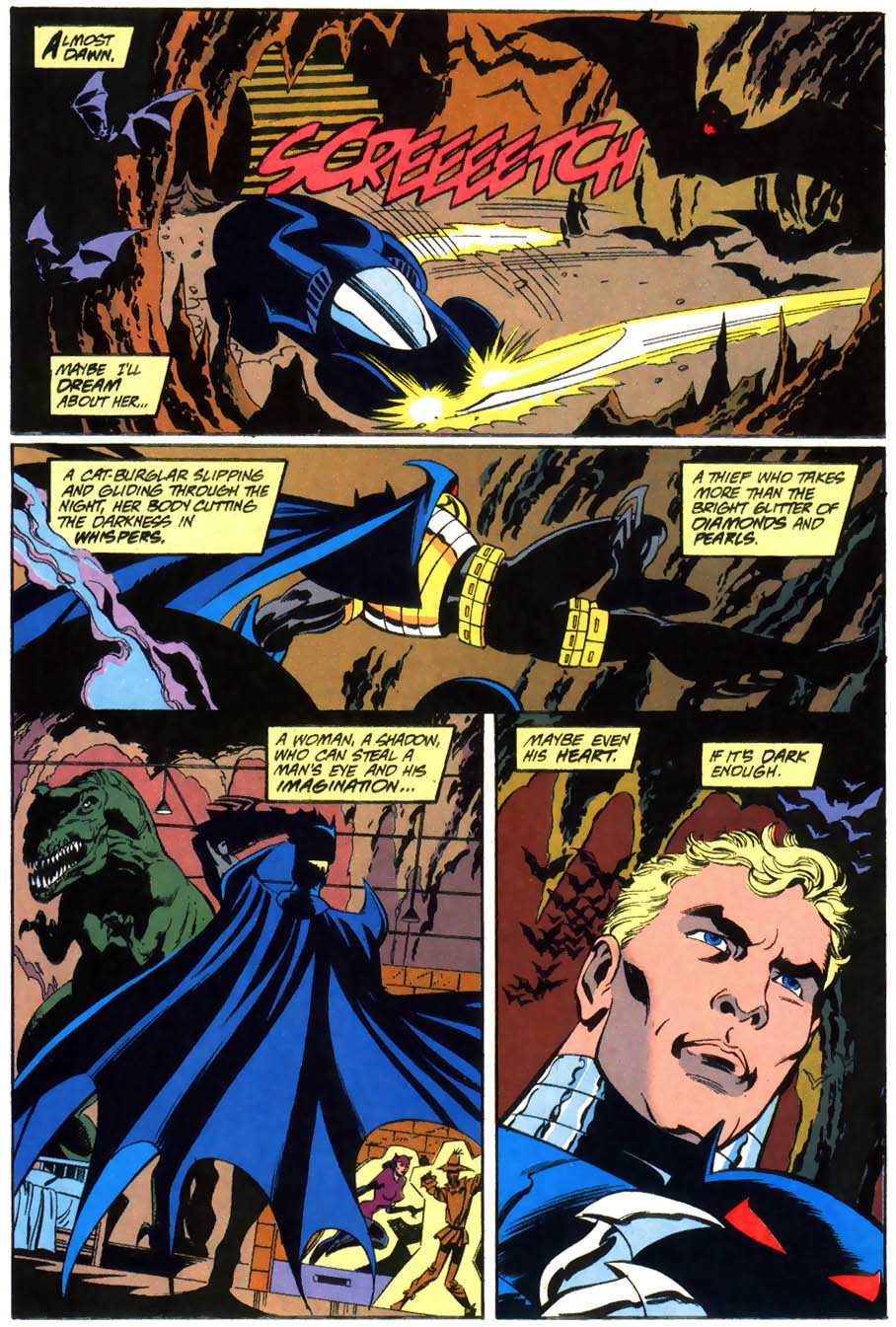
3. AzBats finds himself unexpectedly attracted to Catwoman (right before having a wet dream about her)…

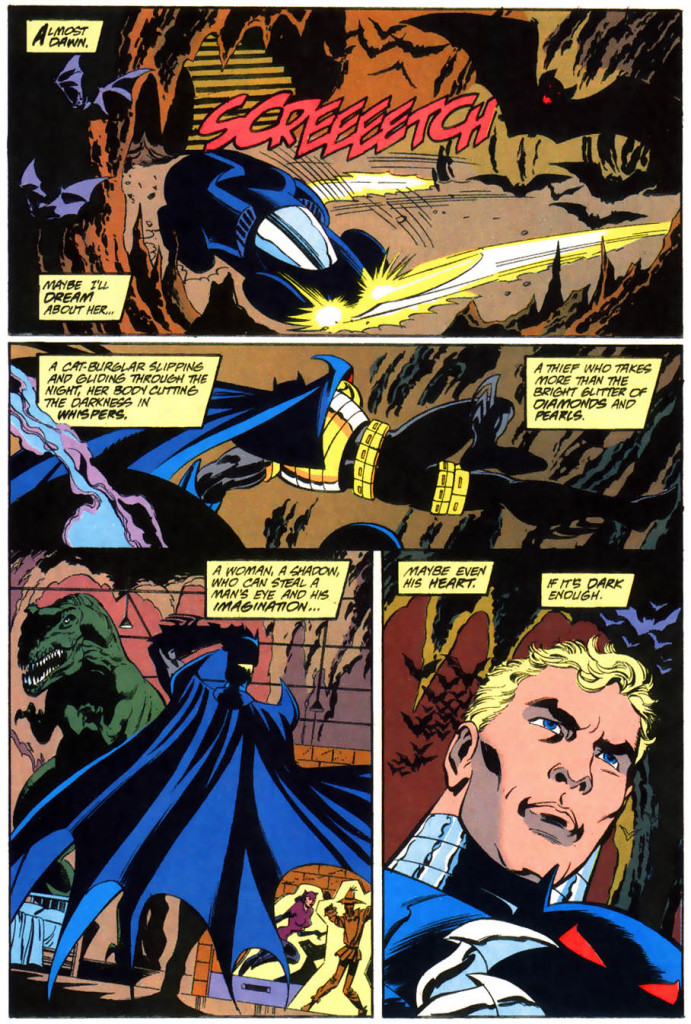 Batman #503
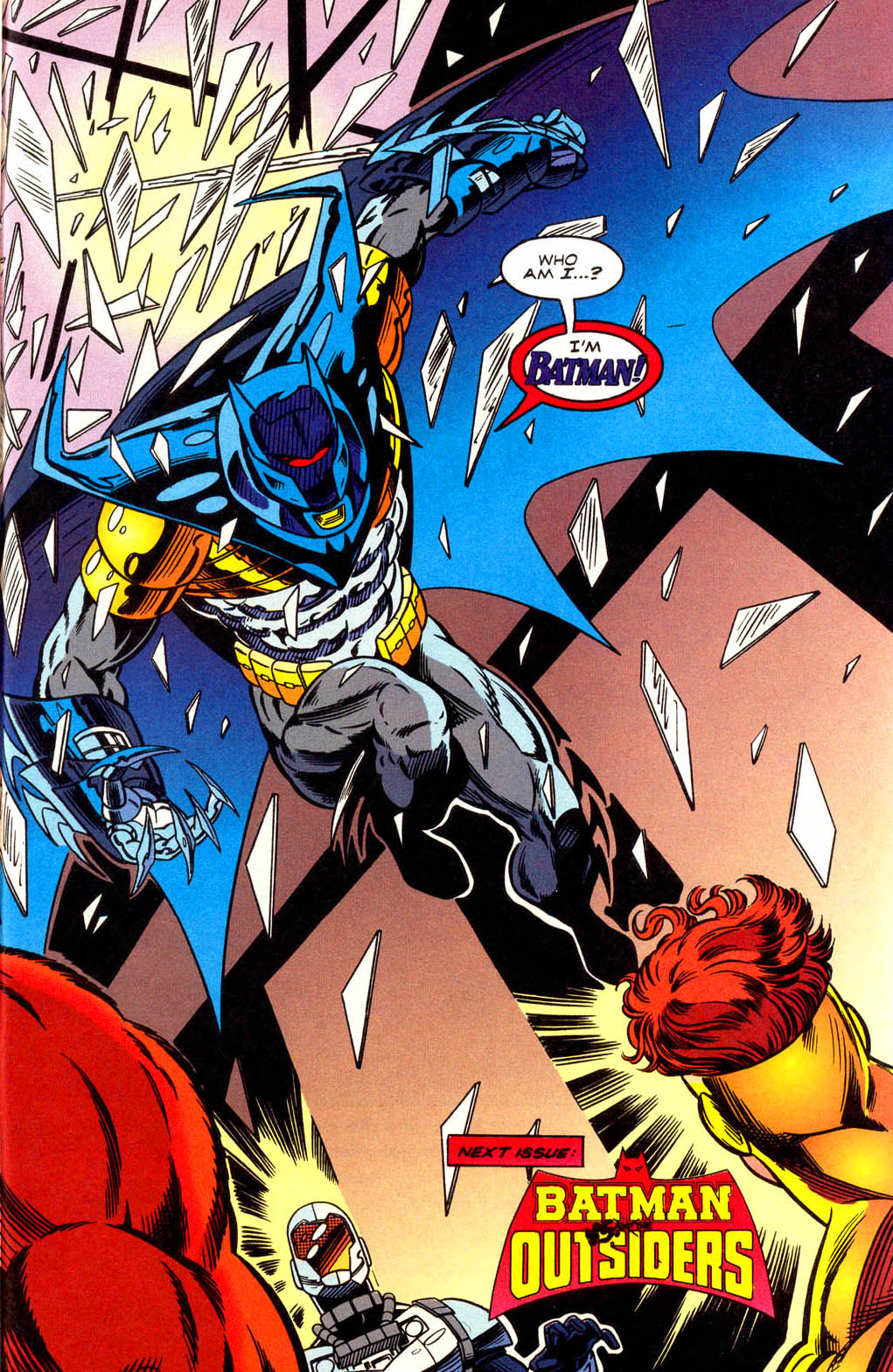
4. AzBats nails Batman’s traditional glass-shattering entrance style…
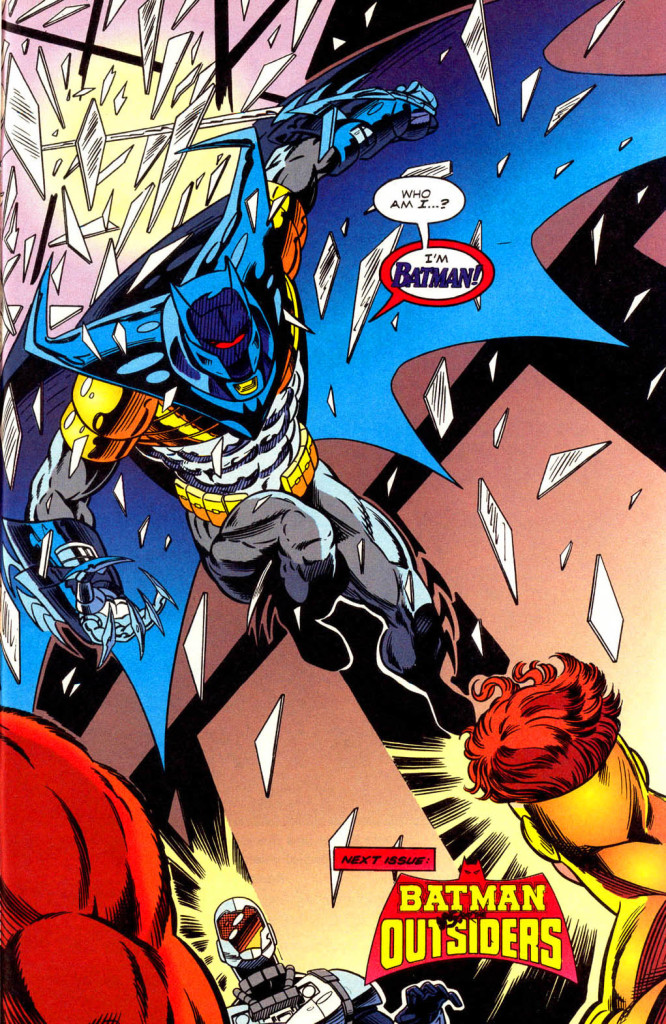 Outsiders (v2) #7
5. AzBats takes things too far (as usual) by adding a completely gratuitous glass-shattering exit…
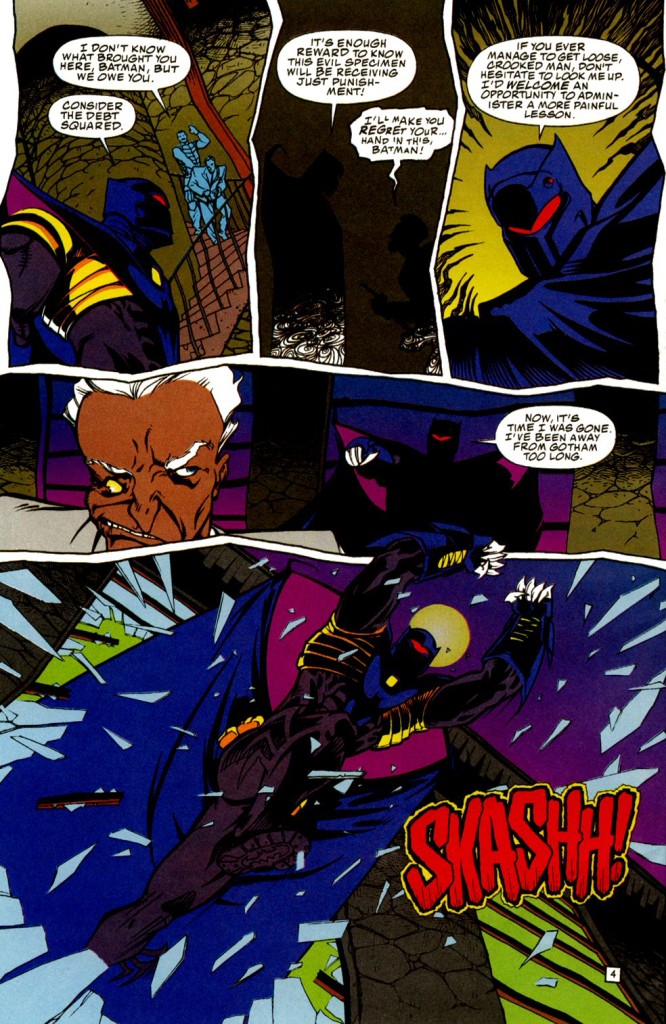 Chain Gang War #12
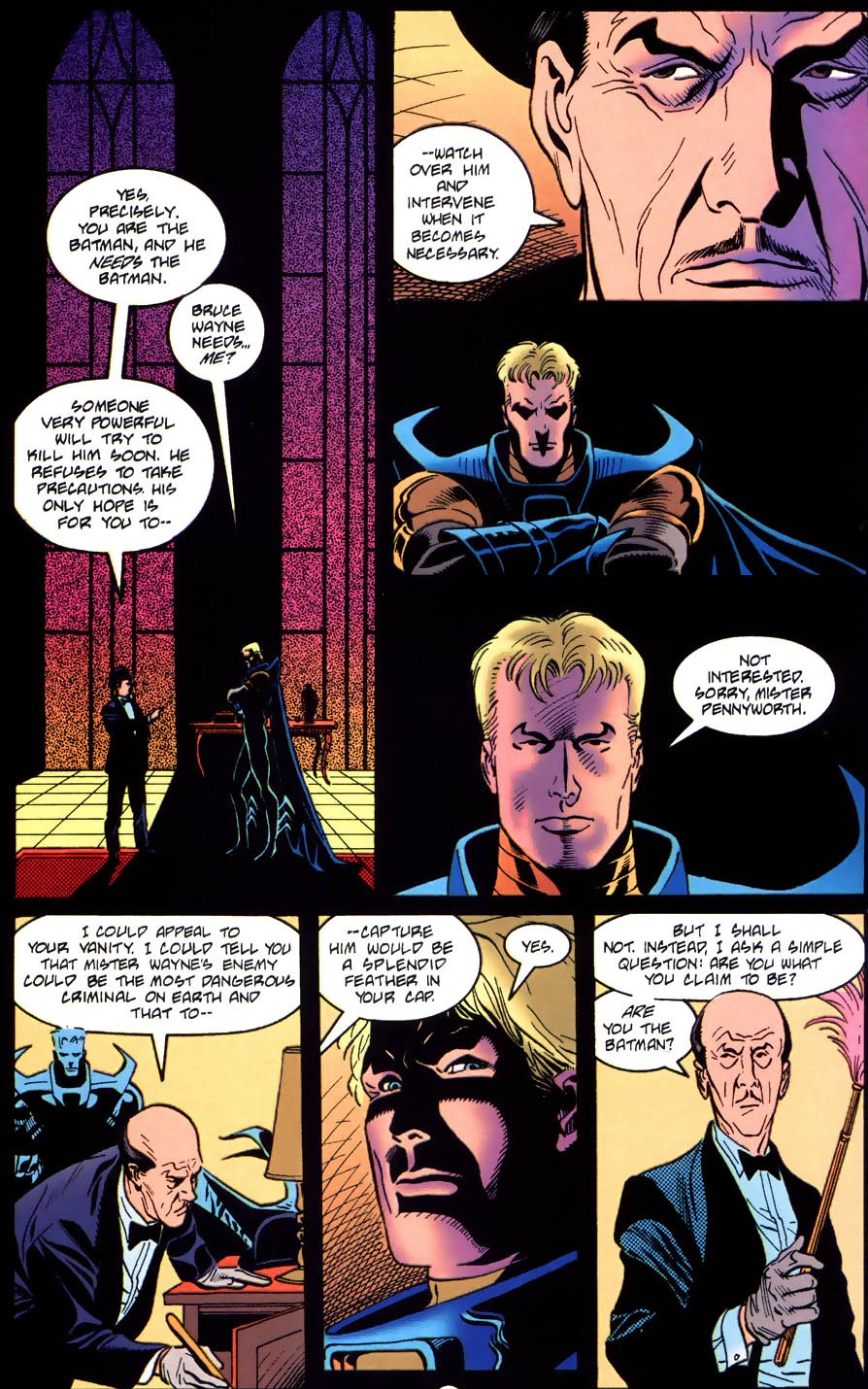
6. AzBats totally gets manipulated by Alfred into doing the right thing…


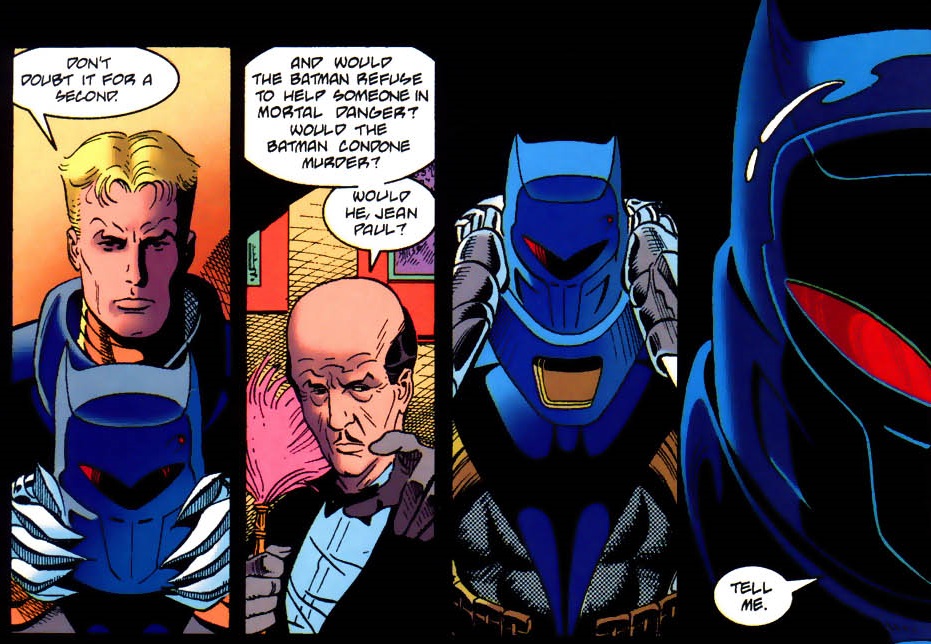 Legends of the Dark Knight #60
Oh, Alfred…
10 covers with seriously weird monsters
I’ve mentioned before how the Silver Age tended to produce strange, dream-like covers. There was a time when the best strategy to allure Batman readers seemed to be to give them colorful images that resembled the hallucinations of an euphoric mind obsessed with bizarre creatures. This obsession was probably linked to the popularity of 1950s’ sci-fi monster films, including such gems as Christian Nyby’s The Thing from Another World, Gordon Douglas’ Them!, and Nathan H. Juran’s 20 Million Miles to Earth.
As far as the Dynamic Duo was concerned, the resulting covers – drawn by artists like Curt Swan and Dick Dillin – were trippy as hell, featuring all kinds of fantastic beasts, as you can see in these ten amazing examples:
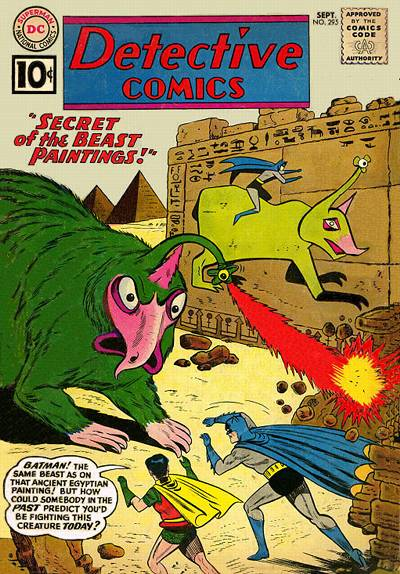
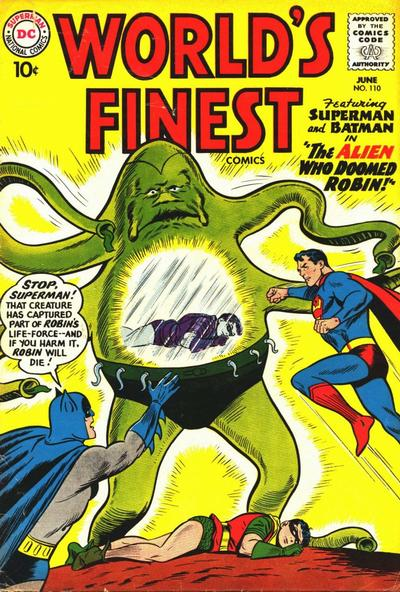
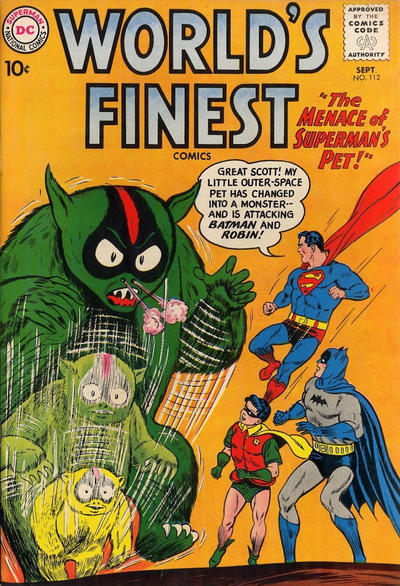
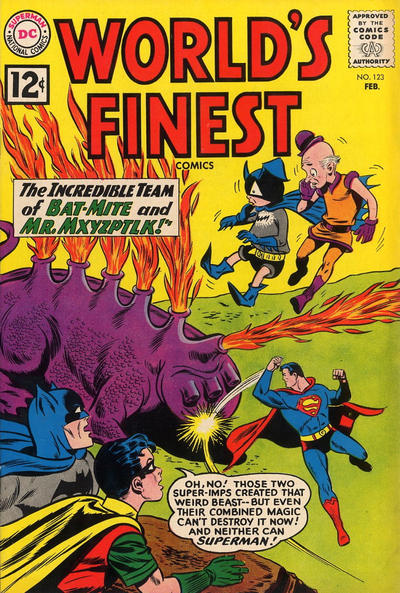
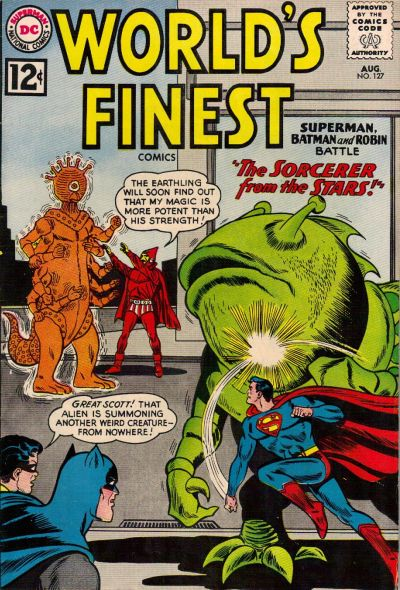
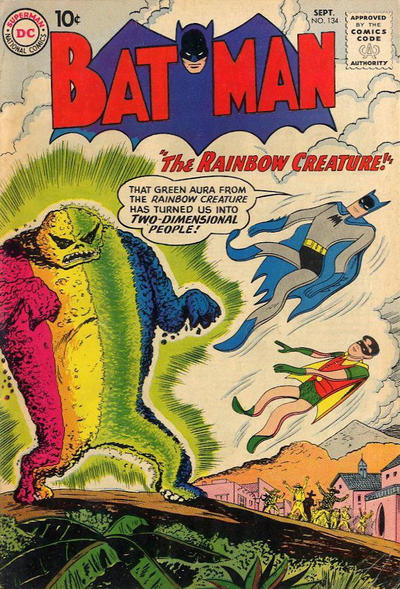
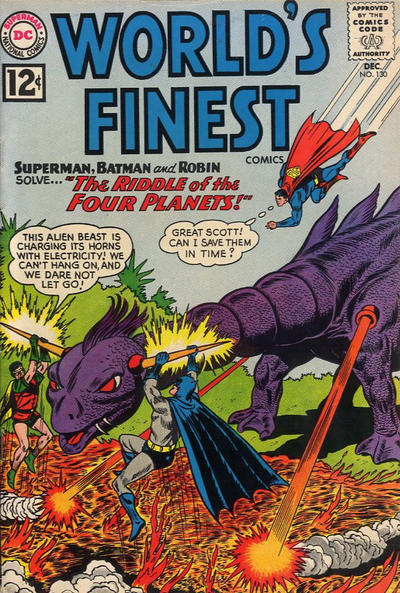
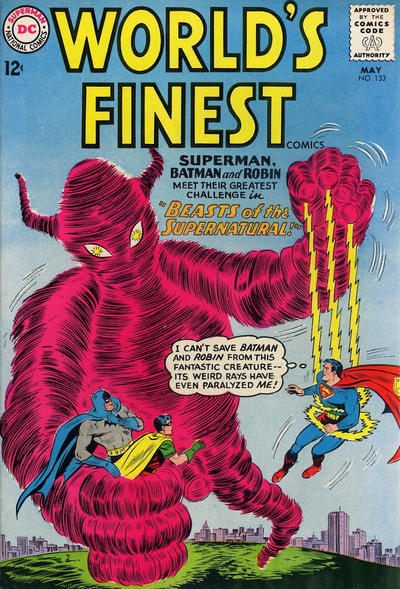
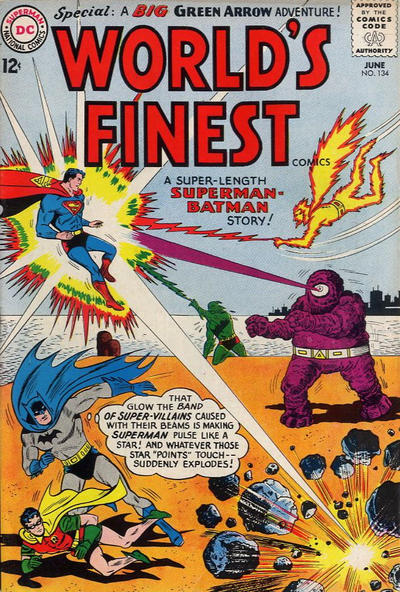
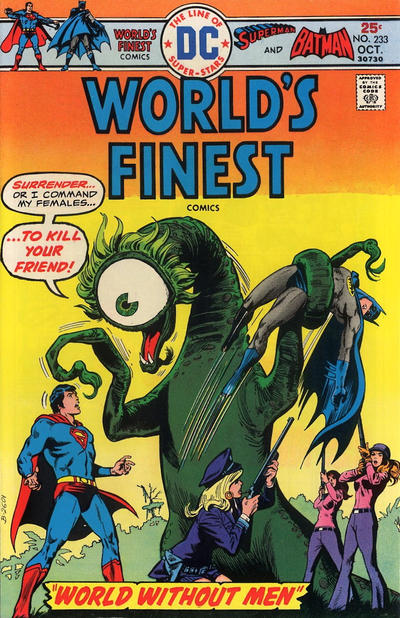
(This last one is actually from the Bronze Age, but it fits so well that I just couldn’t resist.)
Posted in COVERS OF BATMAN COMICS
Tagged covers, Curt Swan, Dick Dillin, science fiction, Silver Age
Leave a comment
Fun Batman stories
Despite being an unabashed fan of gritty film noir, moody gothic horror, and even some of the dark superhero sub-genre (so far, the Marvel Netflix shows have all kicked serious butt!), every so often I find myself ranting in this blog about the need for comics that tell wacky, rollicking stories, comics that make you smile and fill you with joy, comics that proudly appeal to all ages, comics that are not afraid to look silly while cramming each page with wild ideas and visuals. You know, fun comics. And, in particular, fun Batman comics.
Here are five wonderful tales that encapsulate the kind of cheerful, anything-goes attitude I’m talking about:
‘The Doomsday Book’ (1987)
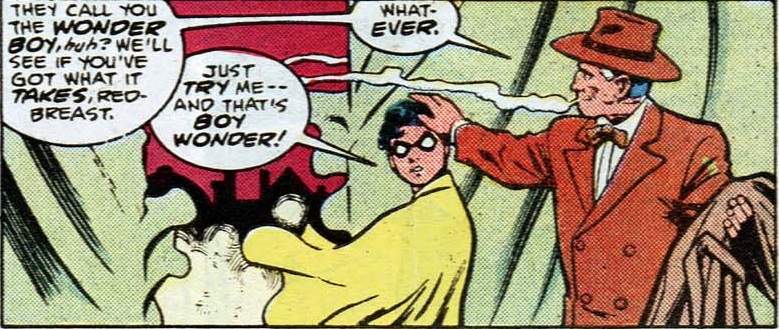 Detective Comics #572
This classic mystery adventure stars Batman and Robin (a happy-go-lucky Jason Todd) as well as the hardboiled private eye Slam Bradley and the stretchy superhero Ralph Dibney (the Elongated Man) in one of those yarns where the stakes keep escalating – it starts with a missing girl, then you find out the IRA is involved, then there turns out to be a conspiracy to assassinate the British royal family, and before you know it the Boy Wonder is riding a damn nuclear missile!
With ‘The Doomsday Book,’ writer Mike W. Barr seems to have crafted not just a celebration of the 50th anniversary of Detective Comics, but a celebration of the detective genre in general, with nods to different mystery formulas and archetypes, such as Sam Spade, Ellery Queen, and, of course, Sherlock Holmes. As if this wasn’t cool enough, the issue features the work of some of the most talented people in DC Comics at the time, including lively pencils and inks by Alan Davis, Paul Neary, Terry Beatty, Dick Giordano, Carmine Infantino, Al Vey, and E.R. Cruz, plus colors by Adrienne Roy and Carl Gafford.
Moreover, in its own way ‘The Doomsday Book’ is also a Christmas story, making this an ideal read for the upcoming holiday season.
’The Last Riddler Story’ (1993)
 The Batman Adventures #10
In this laugh-out-loud issue, writer Kelley Puckett and penciller Mike Parobeck (vigorously inked by Rick Burchett) pit the Dark Knight against no less than four hilariously dysfunctional villains. There is Mastermind, whose planning is so meticulous that he even brings his own handcuffs just in case he gets caught, Mr. Nice, who is such a swell guy that he is guilt-tripped into sharing his loot with the people he is robbing, the Perfesser, who is more interested in lecturing pedantically to his accomplice than in completing the actual crimes, and the Riddler himself, for whom actually getting away scot-free is much less important than coming up with a riddle Batman cannot solve.
Besides the over-the-top comedy, chock-full of one-liners and sight gags, the issue deserves credit for telling a great Riddler story, one that has a lot of fun with this villain’s eccentric personality. Moreover – as a bonus for comic book geeks – there is a neat metafictional angle, as each of the remaining foes is based on a senior DC editor, namely Mike Carlin, Denny O’Neil, and Archie Goodwin.
‘The Impossible Escape’ (1974)
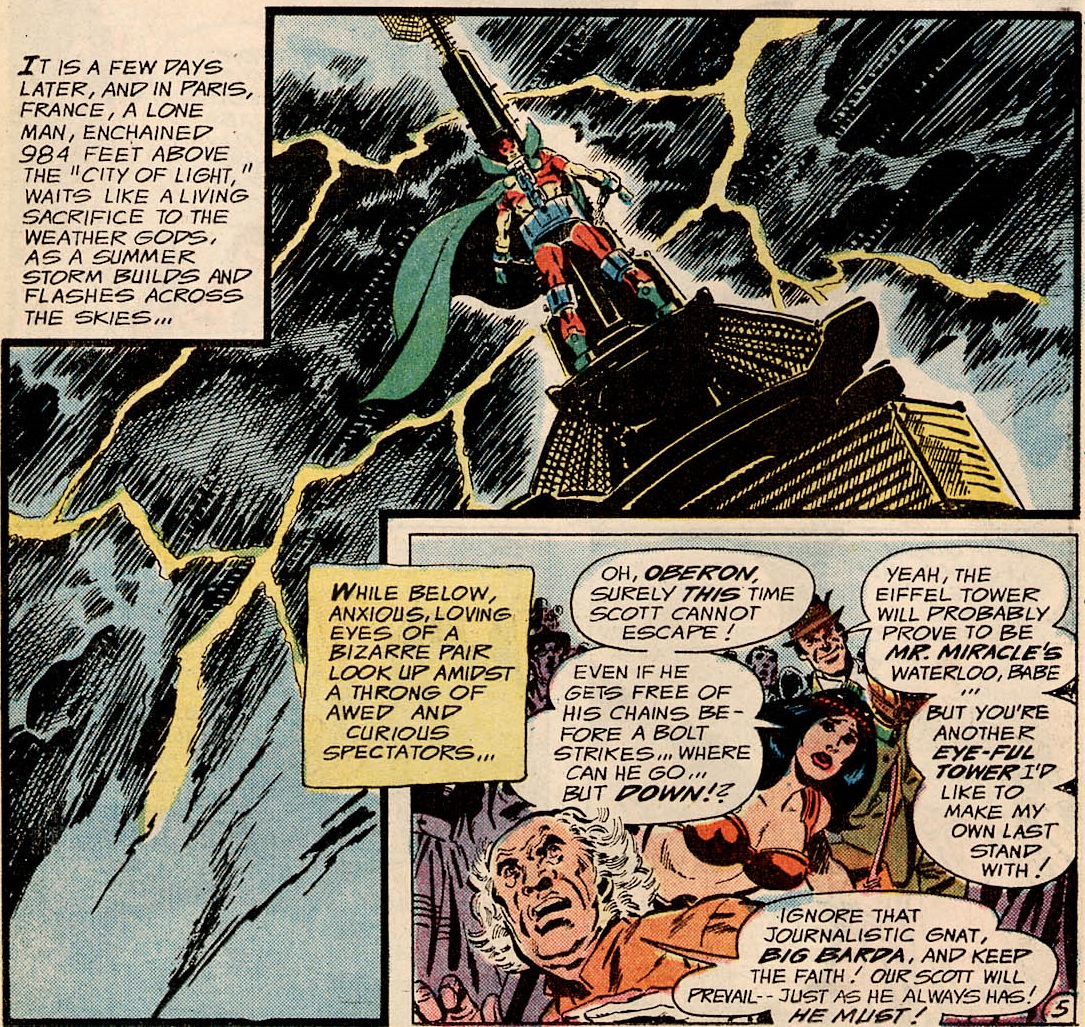
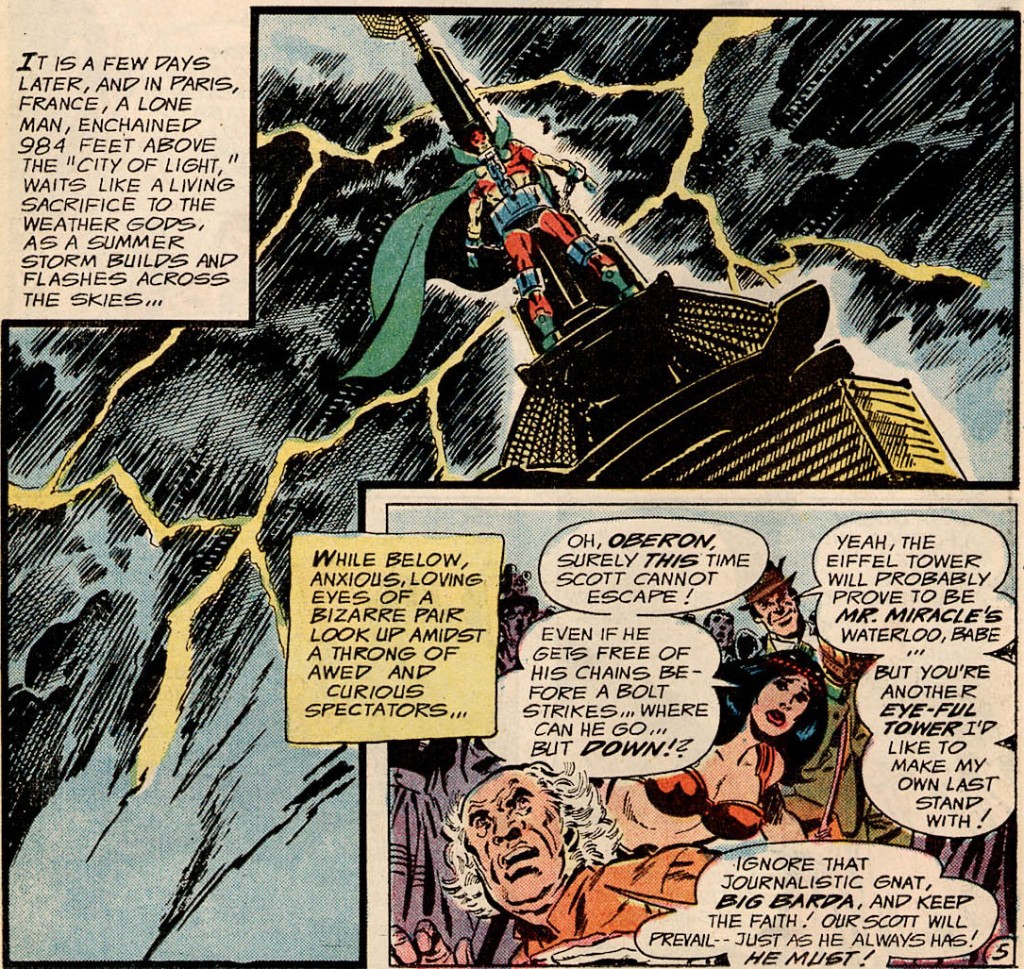 The Brave and the Bold #112
From the slam-bang opening in which Batman faces suicidal raiders at the Gotham Art Museum to the climatic chase in an ancient, maze-like Egyptian tomb, this comic never lets go. ‘The Impossible Escape’ keeps adding one off-kilter twist after another at a hell-for-leather, feverishly brisk pace, as is typical of Bob Haney’s and Jim Aparo’s exhilarating run on The Brave and the Bold.
Along the way, the Caped Crusader finds himself in a trap-filled pulp adventure that may lead him to the elusive secret of immortality. He also teams up with Mr. Miracle, the alien escape artist created by the legendary Jack Kirby. What a blast!
‘Final Christmas’ (2009)
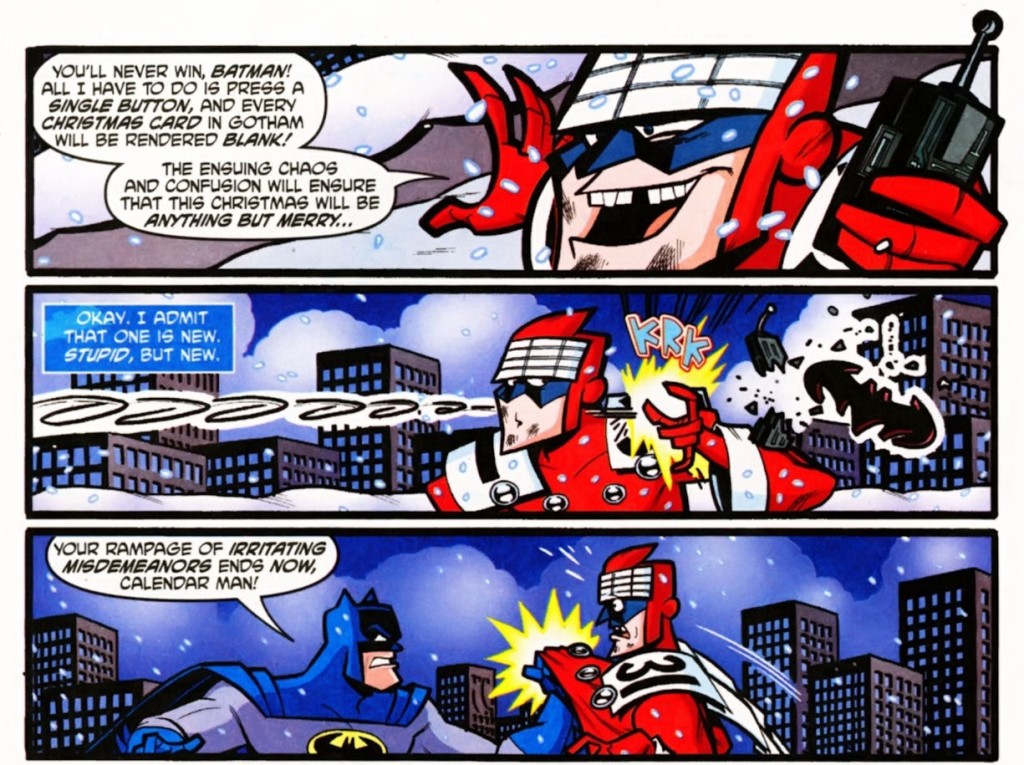 Batman: The Brave and the Bold #12
Another holiday tale and another team-up, now with the jet pack-wearing, laser pistol-carrying interplanetary couple of Alana and Adam Strange. When an anti-matter wave generated by reptilian beings jeopardizes the cosmos on Christmas Eve, Batman takes his battle against injustice into outer space!
To say that this is the greatest Batman Christmas story is selling it short – this is one of the best Christmas books ever (it deserves a place on your shelf next to Terry Pratchett’s Hogfather). Landry Q. Walker and Eric Jones capture the relentless, playful style of the Batman: The Brave and the Bold animated show (the Earth actually blows up on the third page!) while spinning a brilliant sci-fi yarn bursting with wit and heroism and an absolutely killer ending.
‘The Mystery of the $1,000,000 Treasure Hunt’ (1963)
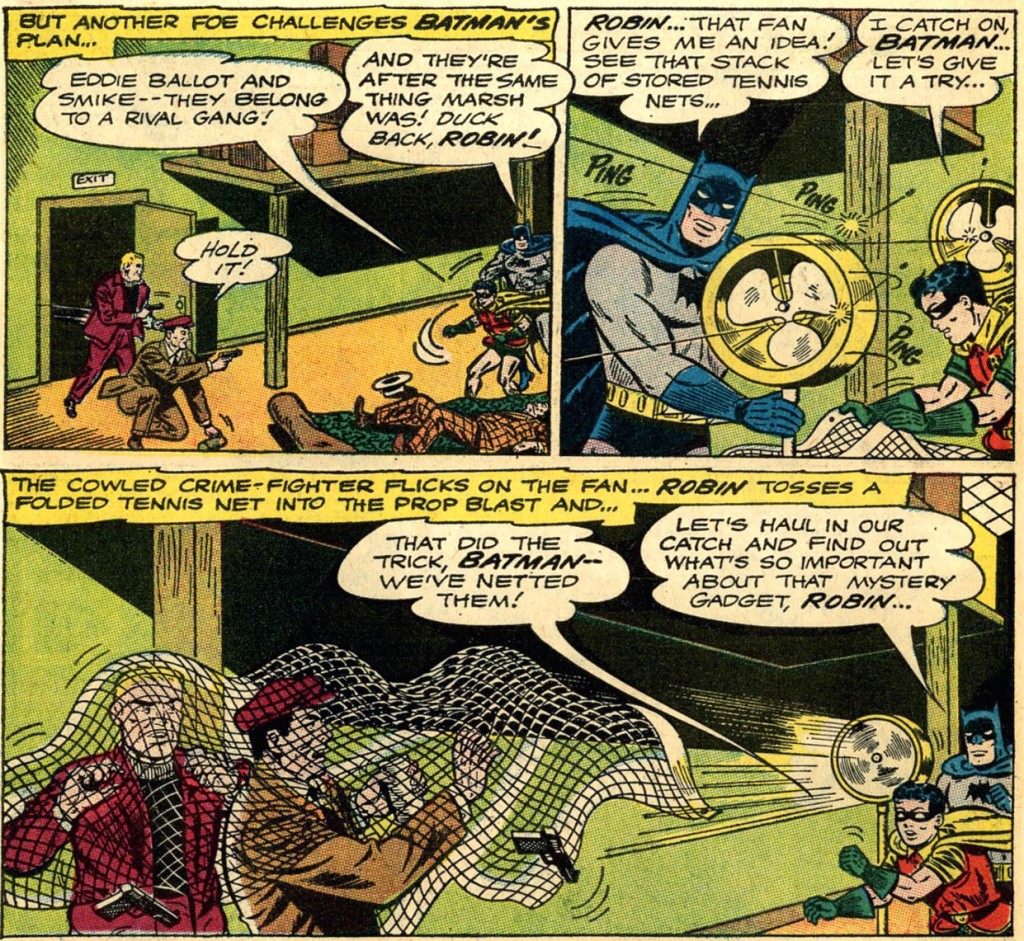 Detective Comics #313
The thing about the era known as the Silver Age is that, although the art was crude, the dialogues goofy, and the plots as contrived as they come, there was a lot of creativity, both visually and narratively. People often point to the stories with aliens and thematic villains as examples of the period’s silliness, but even tales about the less colorful side of Gotham City’s underworld could turn into priceless madcap romps.
Take ‘The Mystery of the $1,000,000 Treasure Hunt,’ in which the Dynamic Duo try to outrun various gangsters in a treasure hunt for the loot of a recently deceased crime boss. On the surface, this story by Dave Wood and Sheldon Moldoff may sound like a classically constructed Batman adventure, with the Dynamic Duo beating up criminals (while exchanging groan-inducing puns), putting together riddle-like clues, and outsmarting the villain in a last-minute plot twist. Yet it is also full of delightfully ludicrous ideas, including a cuckoo clock trap, a showdown on a submarine, Robin (a young Dick Grayson) imprisoned in a giant bottle, the Caped Crusader caught in a flying music record-shaped electrified jail cell, and an exploding robot.
Posted in BATMAN COMICS FOR BEGINNERS
Tagged Adrienne Roy, Al Vey, Alan Davis, Archie Goodwin, Bob Haney, Carl Gafford, Carmine Infantino, Christmas, Dave Wood, Denny O'Neil, Dick Giordano, E.R. Cruz, Eric Jones, Jim Aparo, Kelley Puckett, Landry Q. Walker, Mike Carlin, Mike Parobeck, Mike W. Barr, Paul Neary, Rick Burchett, Sheldon Moldoff, Terry Beatty
Leave a comment
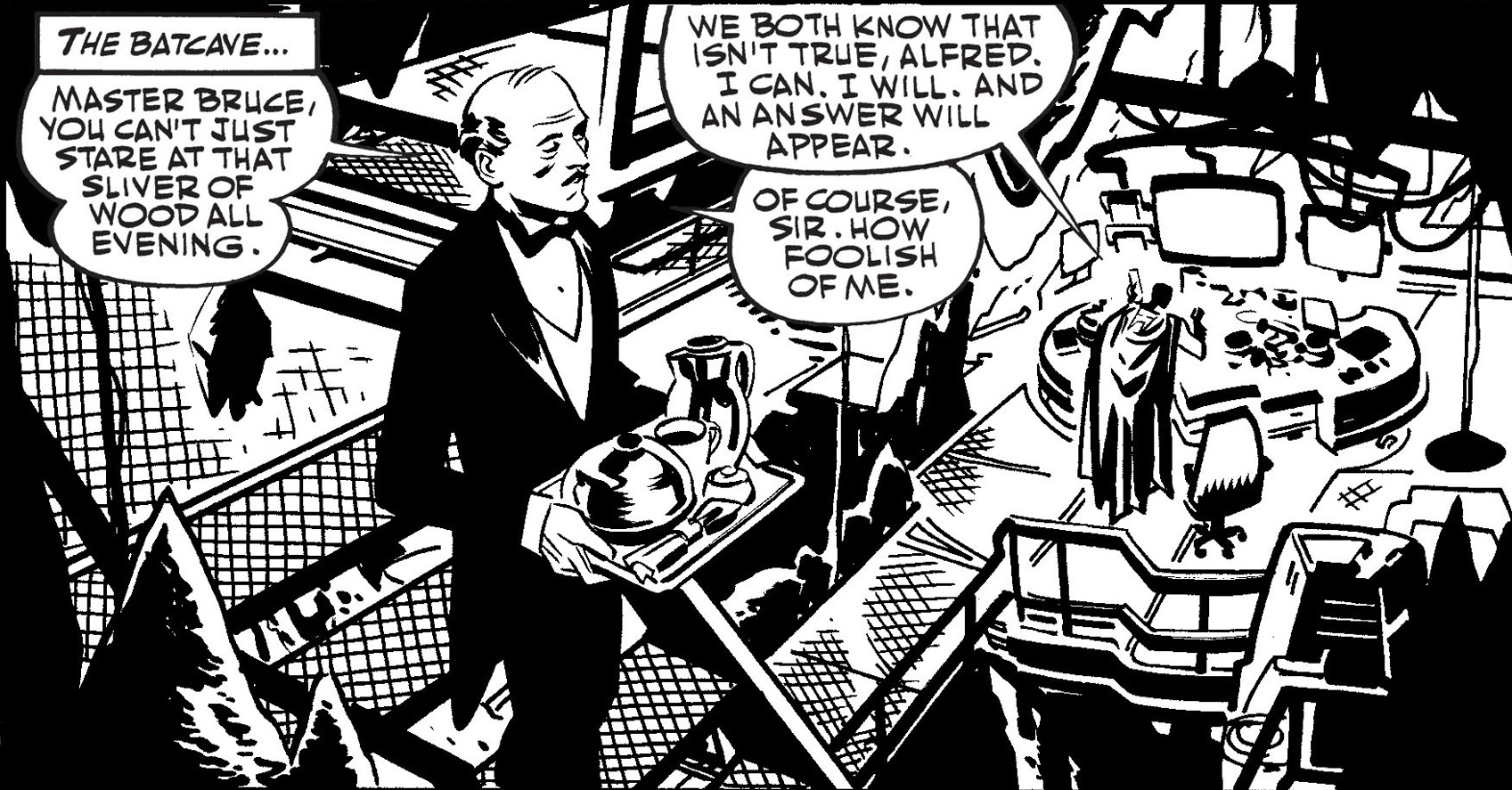
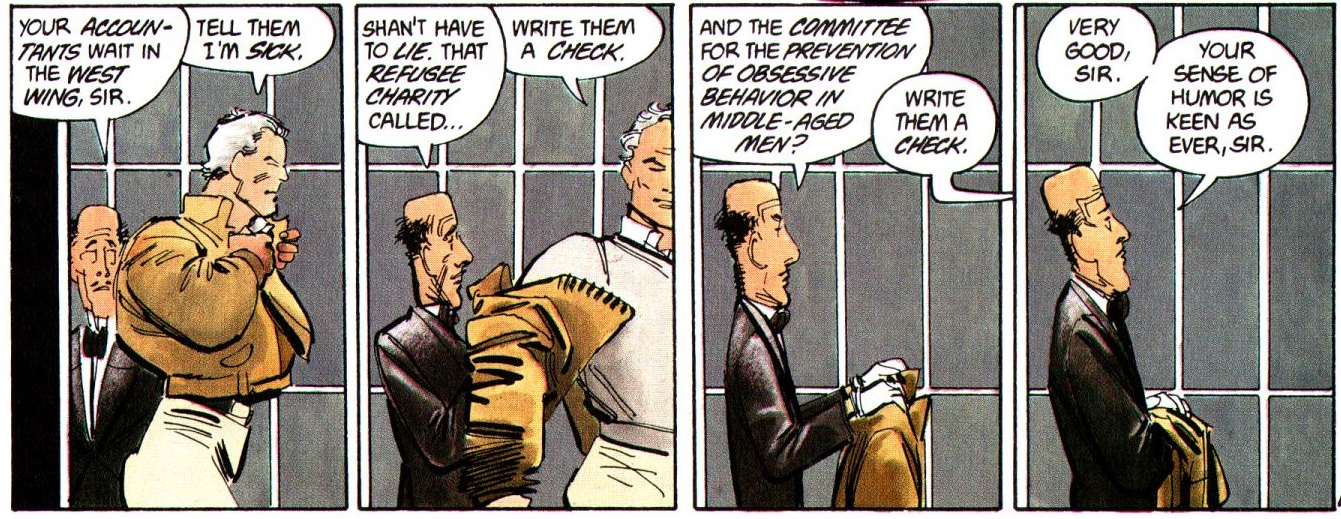
Alfred Pennyworth, passive-aggressive butler
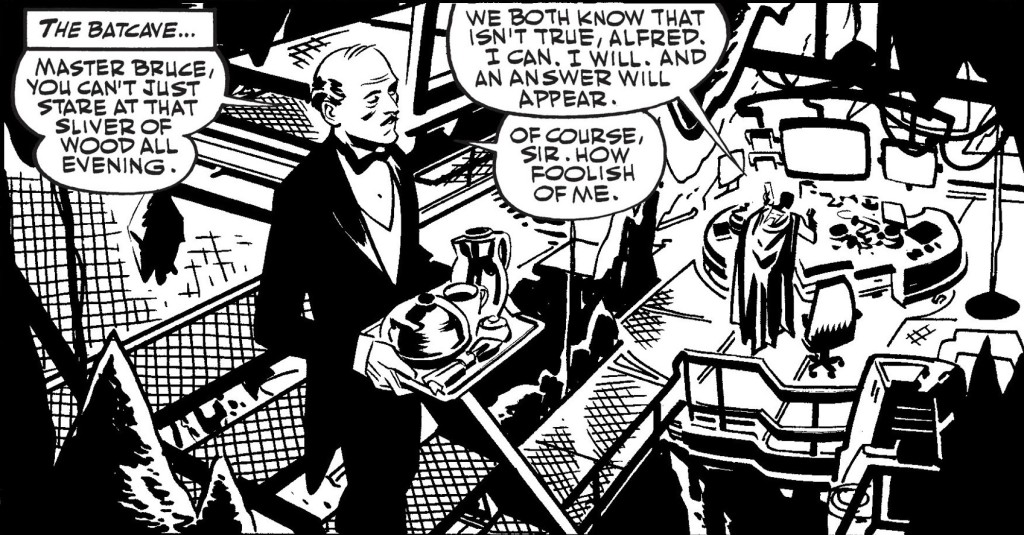 Batman Black & White (v2) #1
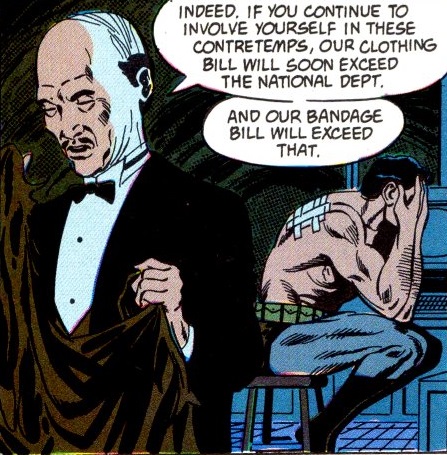 Legends of the Dark Knight #3
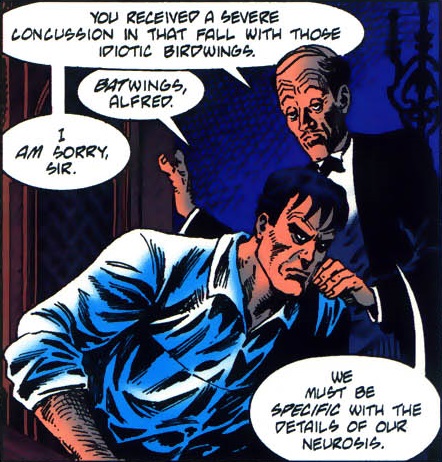 Legends of the Dark Knight Annual #5