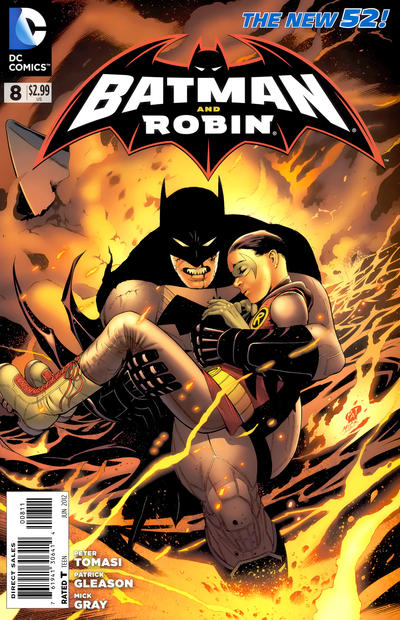
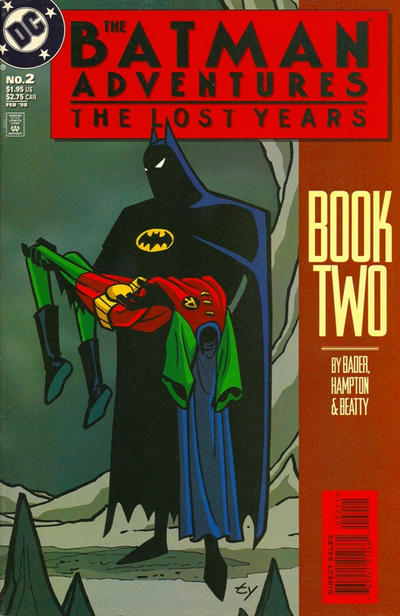
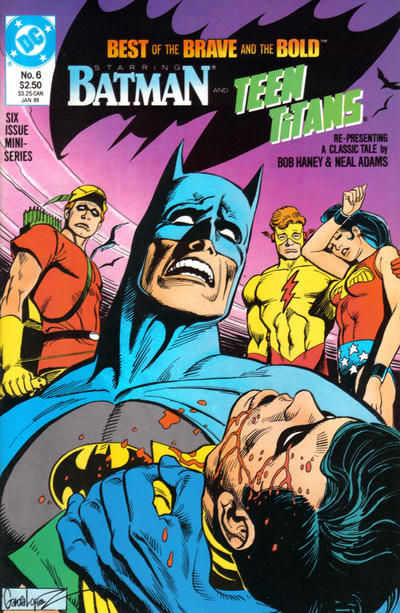
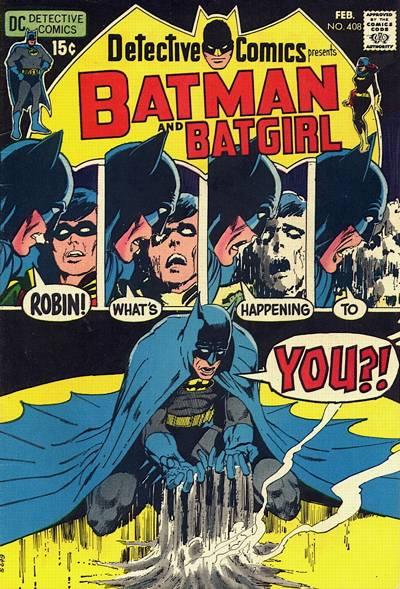
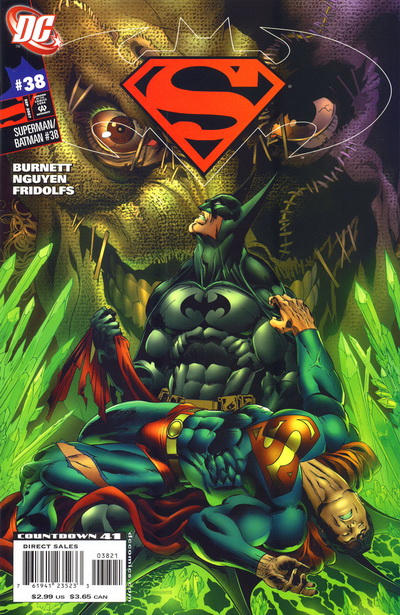
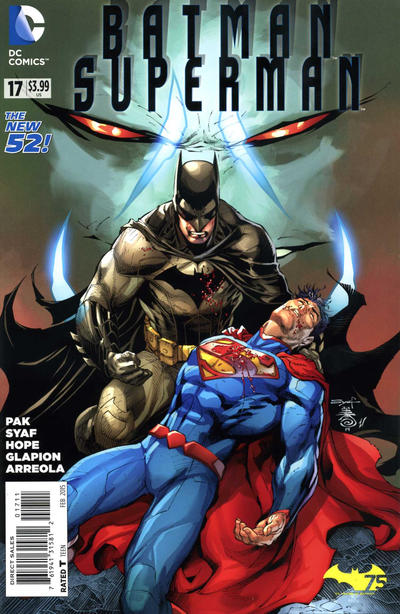
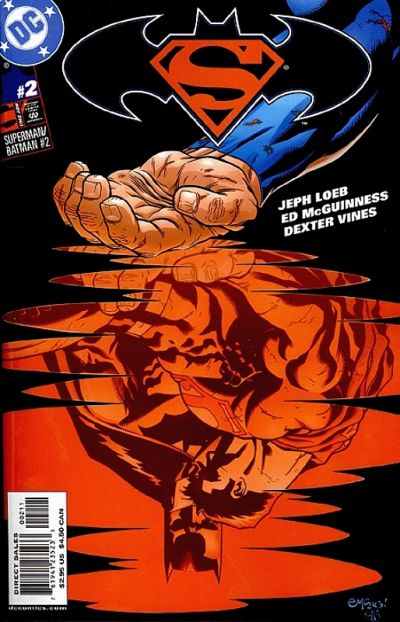
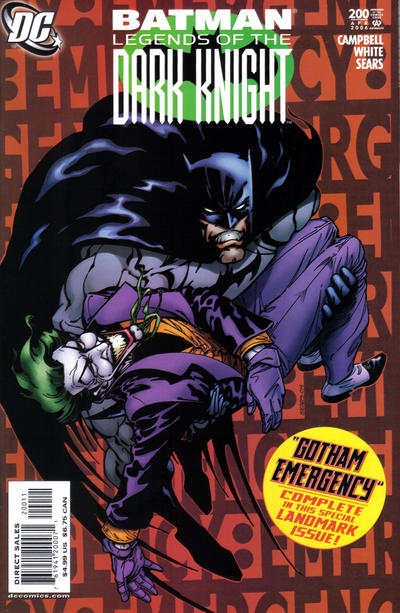
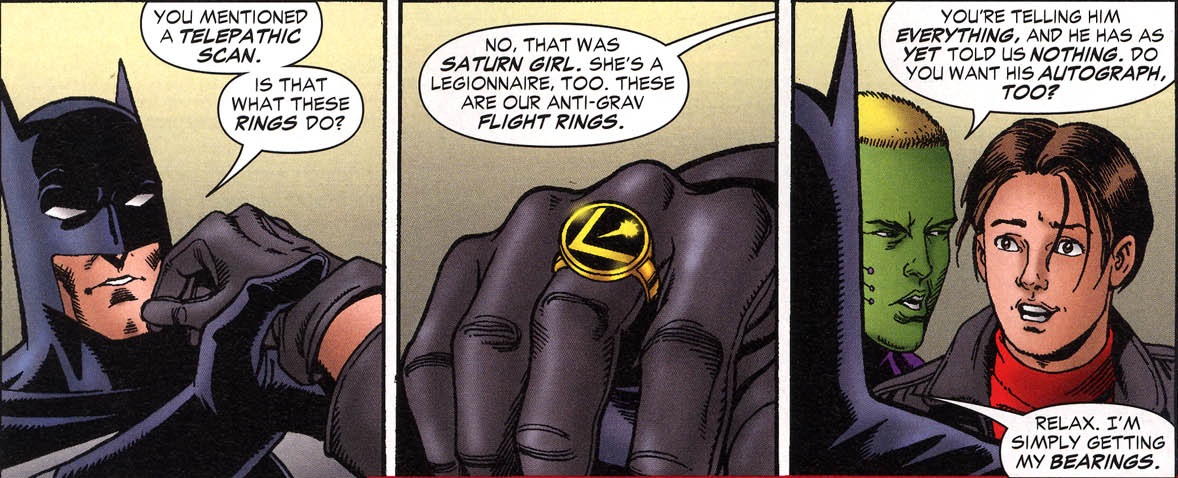
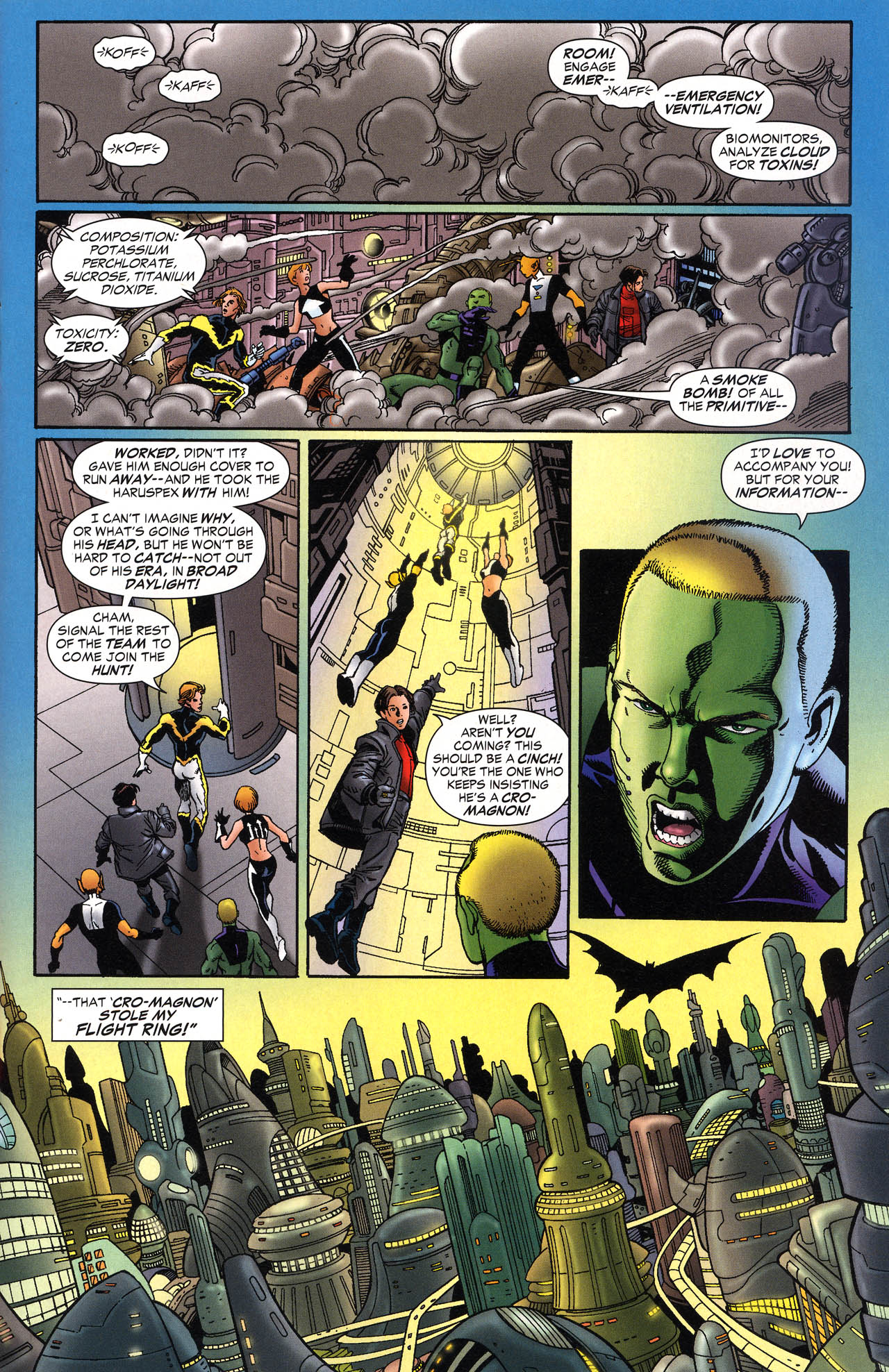
Covers with movie homages

Back when I listed 10 great Catwoman covers, I regrettably didn’t include this homage to the poster for the awesome crime movie Bullitt:

Bullitt          Catwoman 40

That image was part of a cool stunt DC pulled a few months ago, in which it commissioned a bunch of variant covers featuring movie poster homages. The results were all quite neat, with most artists going for predictably geeky and/or action-y references…

Matrix          Detective Comics 40

Harry Potter and the Sorcerer's Stone          Batman and Robin 40

The Mask          Batman 40

The Fugitive          Batman/Superman 20

Enter the Dragon          Grayson 8

…while others seemingly thought more outside the box and came up with some outlandish choices:

Jailhouse Rock           Harley Quinn

Purple Rain          Batgirl 40

Magic Mike          Justice League 40

As a total movie buff, I was all over this. In fact, it was such a fun shtick that I’m surprised the idea hasn’t been done more often in the Bat-books… after all, comic cover artists love intertextual homages.

That said, of course this is not *completely* unprecedented. Bat-covers had previously toyed with the whole movie poster design thing:

Detective Comics 549          Batman Chronicles 9

And although more loosely than in the covers for Harley Quinn and Batgirl, others had already riffed on Jailhouse Rock and Purple Rain:

Catwoman 80          Batman and Robin 6

Indeed, now that I think about it I realize that there have been more film references on the covers of Bat-books than in Community’s paintball episodes!

There have been nods to Jurassic Park, to Sergio Leone’s ‘Dollars Trilogy,’ to Star Wars and, more recently, to Night of the Hunter:

Birds of Prey 5          Robin Annual 6

Hitman One Million          Batman 38

During his string of fun covers for Harley Quinn in the early 2000s, Terry Dodson worked in a number of memorable parodies, including of famous movie posters:

The Good the Bad and the Ugly          Harley Quinn 21

Pulp Fiction          Harley Quinn 15

Moreover, if you go as far back as the Silver Age, it’s not difficult to find covers (and stories) that blatantly took their cues from motion pictures:

The Beast from 20,000 Fathoms          Batman 104

Creature from the Black Lagoon                    Detective Comics 252

King Kong          Batman 162

And then of course there’s James Bond, with that iconic imagery of female silhouettes and closing lenses, not to mention the dashing gentleman with the gun…

From Russia With Love          The Living Daylights

On the cover of Batman comics, the 007 style has been both spoofed and played more-or-less straight:

Justice League International 16          Detective Comics 877

More recently, with the reinvention of Dick Grayson as a super-spy, artists couldn’t resist returning to this well:

Grayson 01          Grayson 02

In addition, The Godfather movies have been another obvious source, especially for gangster stories:

The Godfather          Batman Eternal 14

The Godfather II          Nightwing 108

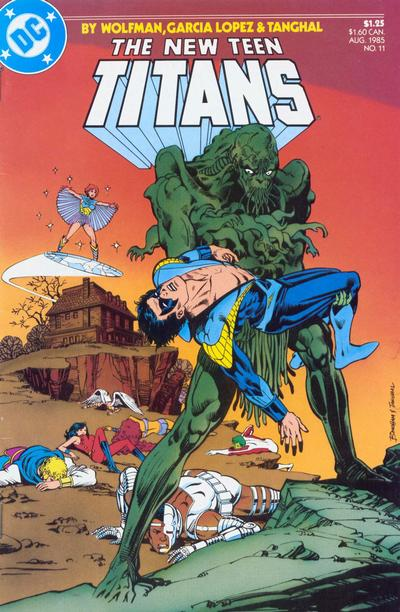
Finally, I’m pretty sure artist Jerry Bingham was giving a wink to Forbidden Planet in this cover for The New Teen Titans:

Forbidden Planet          New Teen Titans 11

Although, to be fair on this last one, Bingham could also be referencing just any of countless 1950s’ posters for B-movies with sci-fi creatures holding unconscious humans…

Invaders from Mars          Satan's Satellites

Invasion of the Saucer-Men          Tobor the Great

No wonder aliens think Earth girls are easy!

NEXT: Batman shoots dolphins.

Posted in WEBS OF FICTION | Tagged , , , , | Leave a comment

A symphony of kicks in the head

There is probably no cliché Batman fans hate more than ‘BIFF! ZAP! POW! COMICS ARE NOT JUST FOR KIDS ANYMORE!’ It’s bad enough that you don’t realize comics haven’t been *just* for kids for a very looooong time… but do you actually have to stress it with a reference to a 50-year old TV show?
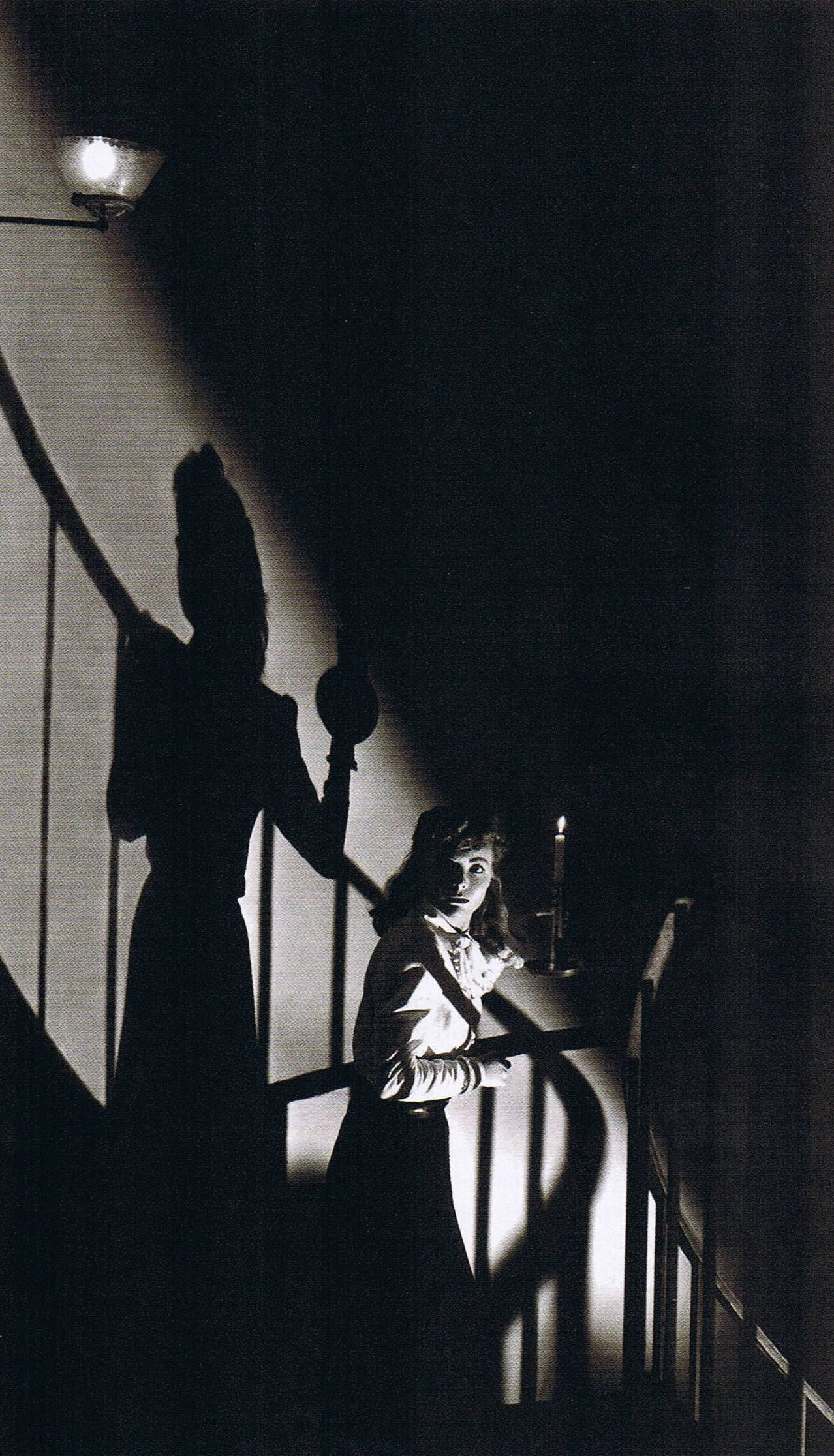
That said, I do love bombastic sound effects. As much as I mostly talk about writers and artists in this blog, Batman comics wouldn’t be nearly as cool without the onomatopoeia of talented letterers like Jim Aparo, Ben Oda, John Costanza, Todd Klein, Willie Schubert, and Tim Harkins, among many others.

So, to celebrate Gotham Calling’s first anniversary, here are 50 images of Batman loudly kicking all kinds of people (and aliens and demons) in the head:

detective comics 438Detective Comics #438
detective comics 444Detective Comics #444
BATMAN 243Batman #243
Brave and the Bold #115Brave and the Bold #115
detective comics 490Detective Comics #490
Batman 358Batman #358
Brave and the Bold 180The Brave and the Bold #180
Batman 365Batman #365
detective comics 549Detective Comics #549
Batman #382Batman #382
Batman And The Outsiders 17Batman and the Outsiders #17
Batman 393Batman #393
Batman 400Batman #400
Detective Comics 572Detective Comics #572
Detective Comics 579Detective Comics #579
Detective Comics 585Detective Comics #585
Legends 02
Legends #2
Detective Comics 590Detective Comics #590
Batman Son Of The DemonSon of the Demon
Detective Comics 592Detective Comics #592
Detective Comics 594Detective Comics #594
detective comics 595Detective Comics #595
Detective Comics 602Detective Comics #602
Detective Comics 625Detective Comics #625
Batman 431Batman #431
Batman 464Batman #464
Legends Of The Dark Knight 12Legends of the Dark Knight #12
batman jazzLegends of the Dark Knight: Jazz #1
Batman & Dracula - Red RainRed Rain
Legends Of The Dark Knight 40Legends of the Dark Knight #40
Legends Of The Dark Knight 46Legends of the Dark Knight #46
Legends Of The Dark Knight 48Legends of the Dark Knight #48
Batman 541Batman #541
Legends of the Dark Knight 58Legends of the Dark Knight #58
Batman Annual #18Batman Annual #18
batman - black & white #2Batman Black and White #2
 Legends Of The Dark Knight 88Legends of the Dark Knight #88
Legends Of The Dark Knight 97Legends of the Dark Knight #97
batman adventures #36The Batman Adventures #36
batman adventures holiday specialThe Batman Adventures Holiday Special
Legends of the Dark Knight #148Legends of the Dark Knight #148
Legends Of The Dark Knight #153Legends of the Dark Knight #153
Legends Of The Dark Knight #159Legends of the Dark Knight #159
Batman - Gotham Knights 48Gotham Knights #48
Gotham Adventures 31Gotham Adventures #31
Batman & the Monster MenBatman and the Monster Men #1
Brave and the Bold 6Batman: The Brave and the Bold #6
Batman ’66 01Batman ’66 #1
Batman Black & White 02Batman Black & White (v2) #2
Batman ’66 08Batman ’66 #8


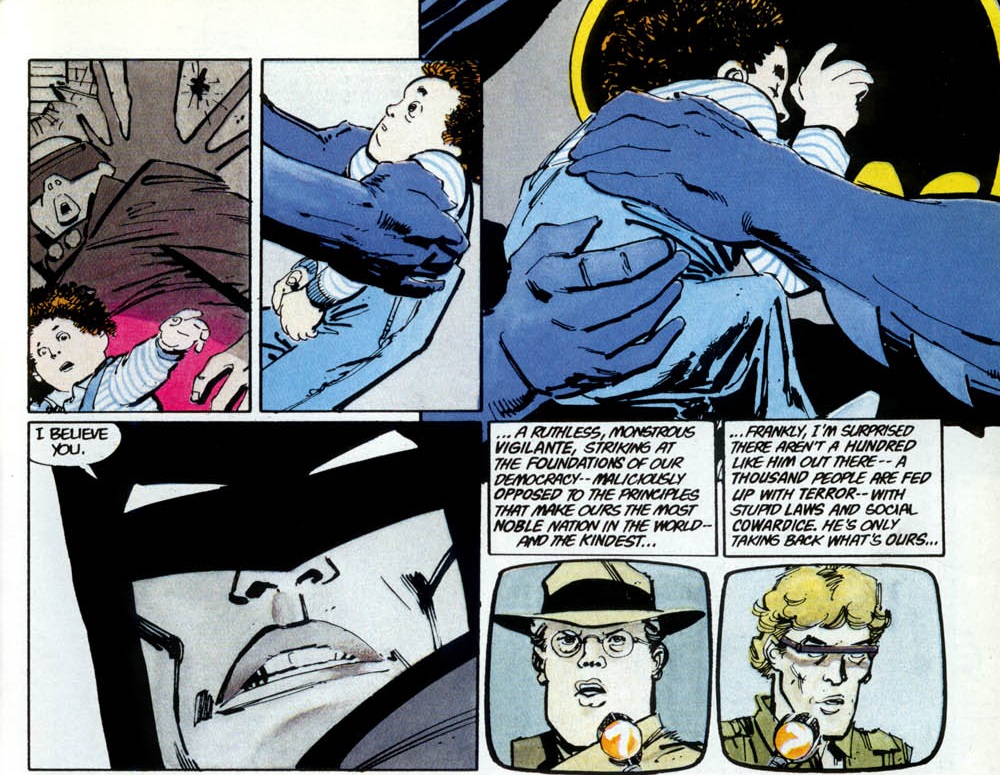
But of course, the most famous Bat-kick in the head of all time is actually silent:

Batman - Dark Knight Returns #04 The Dark Knight Returns #4

NEXT: Batman, the stripper.

Posted in ART OF BATMAN COMICS | Tagged , , , , , , | Leave a comment

Non-Batman gothic comics – part 3

If you read the last posts, you know what’s going on. Here are another couple of awesome gothic comics:

STRANGE EMBRACE

strange embraceStrange Embrace and other nightmares

It’s hard to do justice to David Hine’s nightmarish tour de force, Strange Embrace. There is nothing out there quite like it: Hine intricately weaves layers upon layers of storytelling, covering all the main phobias in the human psyche, from madness to sexual torture to everything in-between. Much of the comic is set in the Edwardian era and, along with more universal themes like alienation or fear of aging, there is a whole subtext about imperial arrogance and European decadence hiding under the guise of Christian civilization.
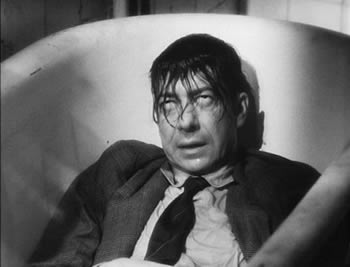
I’m deliberately keeping things vague because I don’t want to spoil what’s easily one of the sickest plot reveals you’ll ever encounter. But I can assure you that Strange Embrace includes some sequences with insects and a deformed fetus which offer definite proof that Hine is an expert at freaking readers the fuck out.

Strange Embrace     Strange Embrace     Strange Embrace

Hine has written several nifty comics. Many even feature Batman (including the delirious ‘Earthly Delights’). Yet Strange Embrace is his most accomplished work, perhaps because he also illustrated it and there was minimum editorial interference, so we get a very personal vision. Hine’s angular style is suitably odd and you can tell he put a lot of thought into coming up with the most effective ‘camera’ choices. The original art was in black and white, but I own the version colored by Rob Steen, whom I think did a stellar job of maintaining a somber atmosphere throughout the book.

I’ve seen David Hine cite Suddenly, Last Summer as a partial inspiration and I can totally see that. In terms of both content and visuals, I also wouldn’t be surprised to find out this comic was heavily influenced by the films Repulsion, Blue Velvet, and Barton Fink.

SWAMP THING (original era)

swamp thing 02Swamp Thing #2

Swamp Thing is both one of the best comics of all time and a frustrating case of too-much-of-a-good-thing. DC has stretched a simple concept beyond belief – but in their defense, they have struck gold multiple times! With that in mind, I’ve split this section into three different eras…

The whole thing started with an 8-page story by Len Wein and Bernie Wrightson in the horror anthology House of Secrets #92 (July 1971), about a scientist named Alex Olsen who died in a lab explosion in a swamp and came back as a vegetable monster (i.e. a Swamp Thing). This was a full, standalone tale, but it ended up spawning over forty years of comics!

Wein and Wrightson remade the story as an ongoing series in 1972, with scientist Alec Holland going through a similar transformation. They kept the tragic, gothic tone, but added a serial adventure flair, with Swamp Thing facing classic creatures like werewolves, witches, aliens, and the undead, not to mention the mad scientist Anton Arcane, who became his arch-nemesis. The creators were in top form, with Wrightson delivering his signature haunting art and Wein keeping things moody-as-hell through elaborate purple prose and plots wrought with poetic irony where the most awful monster was, inevitably, humanity itself.

Swamp Thing 05    Swamp Thing 06    House of Secrets 92

The series kept going even without Bernie Wrightson (starting with issue #11) and Len Wein (issue #14) – and while Nestor Redondo’s, David Michelinie’s, and Gerry Conway’s work isn’t bad, it sure isn’t as memorable. Conway eventually shook things up by reverting Swamp Thing back to a human Alec Holland and briefly making him a supporting character in Challengers of the Unknown, but later everyone agreed that the world would be a better place if we all collectively pretended that the series had ended with issue #20 and anything Conway wrote after that simply didn’t count.

SWAMP THING (Alan Moore era)

saga of the swamp thing 21The Saga of the Swamp Thing #21

Len Wein revived the Swamp Thing property in 1982, this time as editor, presumably to capitalize on the shlocky movie coming out that year (rest in peace, Wes Craven!). Again, Martin Pasko’s scripts weren’t terrible (there were a few neat ideas in there), but he didn’t make a strong case for the universe needing another Swamp Thing series (now pompously titled The Saga of the Swamp Thing). The art was initially by Tom Yeates, who did an OK job, and later by Stephen Bissette and John Totleben, who were of course phenomenal. But the biggest game-changer took place in issue #20, when Alan Moore came in as writer, killed off the protagonist, and changed comics forever.

This isn’t an overstatement. Moore’s run is the stuff of legends – like Watchmen, this is a series that all your favorite writers have read and, to some degree, are likely trying to ape (or perhaps trying to counterbalance). Almost every issue is a mind-blowing classic. ‘The Anatomy Lesson’ (arguably the greatest comic issue ever) revealed that Swamp Thing wasn’t really Alec Holland after all, just a bunch of vegetation that somehow mimicked his consciousness. ‘Roots’ managed to pull off a cameo by the JLA. There was a trio of terrifying issues guest-starring Etrigan, the Demon. The zombie/possession/incest-themed ‘Love and Death’ was the first DC issue in decades to be published without the Comics Code Authority stamp of approval, paving the way for a line of mature-oriented series (which later became the Vertigo imprint). ‘Down Amongst the Dead Men’ (in which Swamp Thing travelled to Hell, meeting Deadman and the Spectre along the way) and ‘Abandoned Houses’ (which incorporated the original House of Secrets short story into the continuity) pretty much set the blueprint for the corner of the universe Neil Gaiman would develop in The Sandman. ‘Pog’ was a sweet homage to Walt Kelly’s Pogo. ‘Rite of Spring’ showed Swamp Thing and Anton Arcane’s niece, Abigail, having hallucinogenic sex. The list goes on.

In the background of the series’ self-professed ‘sophisticated suspense’ was the fact that the eighties were a pretty scary time, socially and politically, which may explain the overall boom of horror fiction providing cathartic metaphors for that era’s anxieties. This was never clearer than in the ‘American Gothic’ arc, which used horror tropes to address topical issues like pollution, sexism, racism, and gun culture. This arc also introduced beloved cast members, including John Constantine and the aging hippie Chester Williams. Plus, it explained that the Swamp Thing was in fact a plant-based Earth Elemental created by the Parliament of Trees. Plus, there was a brief crossover with Crisis on Infinite Earths. Oh, and the climax pretty much redefined the concepts of Good and Evil in the DC Universe. And what did Alan Moore do after that? He had Swamp Thing destroy Gotham City. And after *that* he sent Swampy into space, giving the Moore-treatment to DC’s extraterrestrial characters.

Swamp Thing 43     Saga of the Swamp Thing 25     Saga of the Swamp Thing 33

The impact of Alan Moore’s run was felt across the DC Universe. Hellblazer, Black Orchid, The Sandman, and Books of Magic all have clear ties to Moore’s work. The elemental-based mythology found its way into Firestorm and Animal Man, among many others. And, memorably, traces of Swamp Thing’s space travel showed up in both James Robinson’s Starman and John Ostrander’s Martian Manhunter.

SWAMP THING (post-Moore era)

Swamp Thing 132Swamp Thing #132

You’d think Alan Moore would be an impossible act to follow, but this wasn’t the case. Rick Veitch, who along with Bissette, Totleben, and Stan Woch had been killing it on the art, became the series’ regular writer and kept Moore’s literary standards as well as countercultural sensibilities while bringing in his own brand of psychedelic satire. The first part of Veitch’s run concerned an attempt to find a host body for Swamp Thing’s replacement (which the Parliament of Trees had generated while Swamp Thing was in outer space), a storyline that was neatly resolved in a fabulous crossover with Hellblazer. The second part saw Swamp Thing travel through time, meeting DC characters from various eras, and was supposed to have culminated in a meeting with Jesus Christ but the publisher pulled the plug at the last moment, leading to Rick Veitch’s resignation.

Say what you want about Doug Wheeler, he did a solid job of wrapping up Veitch’s plot threads, and even wrote a few nice isolated tales (I quite like ‘La Terre qui Disparait’) before getting bogged down into an endless, uninspired saga pitting Swamp Thing’s Elemental dimension (the Green) against a fungus-based one (the Gray). The loss of momentum carried over into Nancy A. Collins’ run, which is a shame because there are plenty of cool moments in that run (plus a couple of very strong fill-ins by Dick Foreman). The problem is that Collins focused on Swamp Thing’s family dynamics (by then Swampy was living with Abigail and they had a daughter, Tefé), turning the comic into a horror soap opera. While this was sometimes fun, it further sucked the inspiration out of the series’ most outlandish elements, as plant creatures, Swamp Thing’s kinky sex life, and the same old villains became increasingly mundane.

A much needed breath of fresh air came in the form of Grant Morrison’s and Mark Millar’s closing run, which knocked down everything in its path. Finally coming to terms with the full implications of ‘The Anatomy Lesson,’ Swamp Thing gave up his humanity, took over all the Elements, became the most powerful being in the planet, and eventually became the Earth itself. Although a bit uneven, this run delivered the epic finale the series deserved!

Swamp Thing 66     Swamp Thing Annual 03     Swamp Thing 69

Comics being comics, this wasn’t the end. Writer Brian K. Vaughan was given another series in 2001, which was hit-and-miss but at least had the good sense to leave Swamp Thing alone and instead focus on Tefé Holland, his daughter. The same can’t be said for the 2004 Swamp Thing series nor for the 2011 reboot, which kept recombining the same characters and concepts without realizing that – Challengers of the Unknown aside – the franchise had always been at its best when breaking new ground and going in unexpected directions.

Also, there totally was a Swamp Thing cartoon, which was ama-zing.


NEXT: Batman kicks people in the head.

Posted in FANTASTIC ADVENTURES | Tagged , , , , , , , , , , , , , , , , , , , , , , , , , , | Leave a comment

Non-Batman gothic comics – part 2

If you read the last post, you know what’s going on. Here are some more comics that are gothic as hell and definitely worth checking out:

THE NEW DEADWARDIANS

The New DeadwardiansThe New DeadwardiansThe New Deadwardians #1

Set in an alternative 1910, this wonderful mini-series is one of those works that plays with horror tropes like zombies (the ‘restless’) and vampires (the ‘young’) yet it’s much less interested in cheap thrills than in fusing myth with historical fiction. In this version of post-Victorian England, the elites have managed to manipulate vampirism while the masses desperately struggle to survive among a zombie epidemic. Yes, like most British fiction, underneath all the ghastliness The New Deadwardians is essentially about class relations, but it’s also an ingenious commentary on the implications of mortality.

You can add a murder mystery to the genre mash-up – a particularly devilish one, since it concerns the murder of an undead person. Whodunits, of course, are a proven method for effectively guiding readers through the different social areas of an alternate History setting, as seen in excellent novels like Robert Harris’ Fatherland, Michael Chabon’s The Yiddish Policemen’s Union, and Mike Carey’s The Devil You Know (which is also set in a zombified London). In fact, more than a macabre parable, I would argue that The New Deadwardians is above all an imaginative and highly entertaining exercise in speculative world-building.

New Deadwardians 5     New Deadwardians 4     New Deadwardians 6

What a skillfully made comic! Dan Abnett eases us into this fascinating world by gradually (and wittily) conveying its slang and rules while avoiding obvious infodumps. I.N.J. Culbard’s art is stylish, clear, and evocative of the era – and the same goes for Travis Lanham’s lettering. Meanwhile, Patricia Mulvihill proves once again that she is one of the greatest colorists in the field.

THE SANDMAN

Sandman 04The Sandman #4

One of the most acclaimed comic series ever, The Sandman carved out its place at a peculiar intersection between the DC Universe, goth subculture, and Shakespearean lyricism… Nominally focused on Morpheus, the Lord of Dreams, the series was almost an anthology allowing Neil Gaiman to tell unbelievably diverse tales related to the concept of ‘dream’ (and to the power of storytelling) in various cultures and historical contexts. Just look at how different the two most famous issues are… ‘The Sound of Her Wings’ is just one long, quirky, and somewhat philosophical conversation between Morpheus and his sister, Death (who in this incarnation is a sexy goth chick), as she lightheartedly goes about her deadly business. By contrast, ‘A Midsummer’s Night Dream’ revolves around the 16th century premiere of William Shakespeare’s eponymous play, performed before actual fairies! What’s more, although Gaiman eventually pulled all the threads together and made them fit into a textured, overarching narrative, many of the most superb issues (‘Men of Good Fortune,’ ‘A Dream of a Thousand Cats,’ ‘August,’ ‘Ramadan’) largely work as self-contained stories in their own right.

Neil Gaiman’s writing can be smart and poetic and sometimes downright pretentious, but while his literary affectations are what raised The Sandman above the crowd, there is also a ‘hip horror’ dimension to it, humorously contrasting arcane myths with the cynical modern world (like in ‘Vampirology,’ the best episode of the cult TV series Urban Gothic). As much as The Sandman tends to be praised more for its epic, oneiric adventures as well as for the smaller-scale, magic realism-tinged human dramas, a lot of it was proudly grim and shocking, including a fair amount of gore and even an unforgettable issue about a convention of serial killers. In fact, this mix set the tone for much of what was published in the first years of the Vertigo imprint.

Another aspect which is often understated is how much the series is steeped in DC continuity. Sure, this is more blatant in the early issues, which feature appearances by the likes of John Constantine, the demon Etrigan, Doctor Destiny, Mister Miracle, and the Martian Manhunter (you can even glimpse Batman in issue #2), but the references are there, in every book, until the very end, they just become subtler along the way. The thing is that, for the most part, it does work both ways – for example, you don’t have to know Morpheus’ raven used to be a supporting character in Swamp Thing in order to follow the plot, but if you do you gain an extra layer of enjoyment! What I find so cool about The Sandman is precisely how Gaiman puts all mythologies at the same level, whether biblical, pagan, or superhero-y. This pays off beautifully in the magnificent ‘Season of Mists’ storyline, where Lucifer quits and gives Morpheus the key to Hell, leading to diplomatic negotiations between all kinds of gods and creatures from various pantheons.

Of course Gaiman doesn’t deserve all the credit. Visionary editor Karen Berger is responsible for more sophisticated comics than anyone else in the industry. A veritable who’s who of renowned illustrators contributed to the series, the names changing to fit each arc’s specific mood. Letterer extraordinaire Todd Klein gave each of the main characters a distinctive font, reflecting their personalities. Groundbreaking artist Dave McKean provided covers that were unlike anything else in the market at the time:

Sandman 65     Sandman 39     Sandman 6

The Sandman is pretty amazing on its own, but if you add it to the first couple of Swamp Thing series, the original Hellblazer, and the brilliant Lucifer spin-off written by Mike Carey, you’ll get a true literary masterpiece – over 15,000 pages of what is arguably the greatest dark fantasy meta-narrative ever told, in any media.

The Dreaming spin-off wasn’t as impressive, despite a few solid stories (‘His Brother’s Keeper,’ ‘Day’s Work, Night’s Rest,’ ‘The Dark Rose,’ ‘Coyote’s Kiss’), but if you’re feeling generous you can add to the list neat mini-series like Love Street, Petrefax, The Furies, Witchcraft, and Witchcraft: La Terreur, not to mention the two Death minis written by Gaiman himself. With a fun, balls-to-the-wall attitude, Lady Constantine, Taller Tales, and Thessaly: Witch for Hire are set in the same corner of the Vertigo world as well. As for Sandman Mystery Theatre, while also connected, I would argue that it shouldn’t make the cut because the tone is just too removed (it’s a realistic mystery series set in the 1930s with good character work and an eye for the period, albeit with very weak mysteries…).

THE SPECTRE

The Spectre 06 The Spectre (v3) #6

Even by DC standards, the Spectre’s origin (created by Jerry Siegel and Bernard Baily) is notoriously bleak. In 1940, gangsters shoved NYPD Detective Jim Corrigan into a barrel, encased him in concrete, and threw him into the river. Instead of letting him move on to the afterlife, however, God sent Corrigan back as a spirit of vengeance, i.e. a ghostly cop on a mission to liquidate evil-doers.

One of the draws of the character are the grisly and often ironic punishments he dispenses. Michael Fleisher and Jim Aparo (closely edited by Joe Orlando) went nuts with this in a legendary run on Adventure Comics (later collected as Wrath of the Spectre), where the Spectre melted a crook alive like a piece of wax and cut up another one with a pair of giant scissors before turning his accomplice into a pile of sand, among other gruesome spells.

A wordy, convoluted series in the late eighties went in a different direction, drawing horror from more esoteric lore in the form of demons and sorcery. Writer Doug Moench drastically depowered the Spectre (an aftermath of Crisis on Infinite Earths) and made him a separate, if bonded, entity from Jim Corrigan, who was now a hardboiled private investigator who said things like ‘If only every gumball were a mystery solved by teeth.’

In their long run in the 1990s (a comic you should own if there ever was one), John Ostrander and Tom Mandrake explained away Moench’s series and just ran with the notion that the Spectre was an all-powerful bastard again – in fact, he was the embodiment of the wrath of God. This allowed Mandrake to come up with all kinds of inventive and horrific visuals (dazzlingly lettered by Todd Klein). Meanwhile, Ostrander confronted the Spectre with moral dilemmas about the nature of Evil, including hot topics such as AIDS, women’s oppression, and homophobia, plus DC’s version of the Yugoslav Wars and the Arab-Israeli conflict. The series grew into a fantastical, theological odyssey, complete with provocative quotations at the beginning of each issue. Ostrander also nailed the tough cop personality of Jim Corrigan, whom he sent on a spiritual journey, literally searching for God, and then allowed to move on in a beautiful ending that finally provided closure to the character (which of course did not prevent DC from repeatedly attempting to revive the property in all kinds of weird ways).

Adventure Comics 431     The Spectre 05     The Spectre 02

Ostrander’s and Mandrake’s tremendous Spectre series stood on the border between Vertigo and the DC Universe. On the one hand, this was a very dark comic and it featured several cameos by characters associated with the Vertigo line at the time (the Spectre even fought the American Scream, from Shade, the Changing Man). On the other hand, the authors kept the series action-packed and were not afraid to engage in big superhero crossovers. Ostrander also brought back a number of faces from his previous titles, most notably the unorthodox priest Richard Craemer (formerly a supporting character in Suicide Squad).

I should point out that Batman and the Spectre have crossed paths numerous times, their contrasting methods and personalities making for some nice stories. My favorites: ‘Grasp of the Killer Cult’ (The Brave and the Bold #116) and ‘A Savage Innocence’ (The Spectre (v3) #51).

STICKLEBACK

2000AD 15172000AD 15172000AD 15172000 AD #1517

What if a Professor Moriarty-type master criminal was the hero of the story? Well, not so much the ‘hero’ as the sort of despicable, manipulative evil genius that’s shamefully fun to read about… and not even one of those charming rogues with a heart o’ gold, but a mean, ruthless, hunchbacked old geezer who can be as chilling as Papa Lazarou. And the more you read, the more you realize there may be something even more surprising hiding underneath his skin!

Set in a steam and clockpunk London at the turn of the 19th century, Stickleback is a rollicking ride of supernatural mayhem. As the intro to the second collection puts it: ‘Herein there are frights, phantasms and fantastiques aplenty. Good does not always triumph, crime often pays and the evil that men do may perversely prove to be the salvation of us all.’ For all the horridness and grotesquerie, though, it’s quite an enjoyable read, as each page is chockfull of wit and hidden background references.

Stickleback - Number of the Beast    2000AD 1824    2000 AD 1911

Masterly written by Ian Edginton, Stickleback takes place in the same reality as Edginton’s splendid pirate comic The Red Seas and it’s just as imaginative in the way it mercilessly puts a twist on familiar archetypes. (And yes, Edginton basically remade the scene above in the first issue of his Sherlock Holmes vs Zombies series, Victorian Undead.)

However, it’s the stunning art that truly elevates the comic. Not only does D’Israeli come up with maniacally flamboyant designs, he draws the whole thing in a high contrast style with nifty use of negative space reminiscent of woodblock printing.


NEXT: Even more gothic comics.

Posted in FANTASTIC ADVENTURES | Tagged , , , , , , , , , , , , , , , , , , , , , , , , , , , | Leave a comment

Non-Batman gothic comics – part 1

If you’re into Batman comics, it’s not a far cry to assume you enjoy gothic horror. After all, that’s a built-in feature of the Dark Knight. It’s been there right from the start…

detective comics 33Detective Comics #33

As Mark Fisher (citing Kim Newman) points out here, just looking at Batman’s first origin page, you can find echoes of Frankenstein (Bruce as master scientist), The Fall of the House of Usher (Wayne Manor’s melancholy, quasi-aristocratic splendor), Dracula (“Creatures of the night, what sweet music they make”), and The Cabinet of Dr Caligari (“You shall become Caligari”).

With that in mind, Batman fans may also want to check out other awesome gothic comics:

BERNIE WRIGHTSON’S SHORT STORIES

Freak ShowFreak Show

Bernie ‘Berni’ Wrightson is comics’ undisputed master of gothic art, able to bring to life both grotesque creations and lyrical beauty while imbuing each page with the eeriest of atmospheres. His drawings are the stuff The Misfits’ songs are made of.

In the mid-1970s, Wrightson illustrated several black-and-white horror stories for Warren magazines, often written by Bruce Jones. The stories aren’t exactly *scary* in the way of, say, recent movies like It Follows or Starry Eyes, but there is definitely something dreamlike and ominous about them. They’re mostly ghoulish tales with clever twist endings – some of them original, others adapting classic works from authors like Edgar Allan Poe and H.P. Lovecraft. I particularly like the über-morbid poems ‘Clarice’ and ‘A Martian Saga.’

It goes without saying that these are gorgeous comics, but there is also a lot of visual diversity here, as Bernie Wrightson experimented with different styles and techniques, making the most out of the material.

Freakshow   Creepy presents Bernie Wrightson   Berni Wrightson Master of the Macabre 3

Most of this stuff has been collected in the Master of the Macabre mini-series as well as, more recently, in the Creepy Presents: Bernie Wrightson hardcover. There is also a neat graphic novel called Freak Show, which collects a handful of Wrightson stories with the same gothic mood!

DEADMAN

STRANGE ADVENTURES 205Strange Adventures #205

Like other tragic protagonists on this list, the acrobat Boston Brand, aka Deadman, dies on his very first issue (Strange Adventures #205, dated October 1967). After being shot by a mysterious assailant with a hook for a hand during a trapeze performance, Boston Brand’s spirit is granted (by a Hindu goddess called Rama Kushna) the power to possess any living creature, so his ghost goes on a quest to find his own killer. On the way, Deadman possesses his way into every kind of crime story, involving drug dealers, biker gangs, counterfeiters, human traffickers, and, ultimately, an international society of assassins!

Deadman became such a fan-favorite that he stuck around the DC Universe long after he found his murderer and completed his karmic mission, often guest-starring in superhero tales. His early solo adventures, though, are old-school, pulpy ghost comics, even if atypically following the perspective of the ghost instead of the haunted.

Strange Adventures 205     Strange Adventures 207     Deadman 4

Although Deadman was originally created by Arnold Drake and Carmine Infantino (with inks by George Roussos), he is mostly associated with Neal Adams, who took over pencil duties in the second story and worked on the character for years. Adams brought the same kind of gothic sensibility he would bring to Batman comics, not to mention some seriously dynamic panel layouts and a number of breathtaking splash pages. His muscular style ensured consistency even as Deadman was pushed around across various titles and writers, including a handful of reliably trippy scripts by Neal Adams himself!

Yet Adams’ stories aren’t the only ones worth tracking down. Len Wein and José Luis García-López finished a brief run on Adventure Comics with a moving, gritty little tale called ‘Never Say Die!’ Bob Haney and Jim Aparo worked their usual magic in The Brave and the Bold by delivering cool team-ups between Deadman and the Dark Knight (especially ‘Second Chance for a Deadman?’ and ‘Another Kind of Justice!’). In the late eighties, Mike Baron and Dan Jurgens did an oddball series in Action Comics Weekly that started with a CIA agent getting possessed by a Mayan god in the middle of an Iran-Contra operation and it evolved into this sidesplitting sequence where Satan takes over Mikhail Gorbachev and Deadman counter-attacks by taking over Ronald Reagan… and it only gets wilder from there.
ENIGMA

EnigmaEnigma #1

And then there is Enigma, a weird, fascinating mini-series that reaches a whole other level. The plot concerns an uptight man who feels responsible for the fact that strange comic book characters are coming to life and wrecking violent chaos upon the world, with some viciously disturbing results. Yet the truth is even more astounding than he imagines…

In fact, the whole thing turns out to be an existentialist trip in which writer Peter Milligan explores his usual obsession with identity and sexuality while artist Duncan Fegredo and colorist Sherilyn van Valkenburgh do their best to unsettle the hell out of readers. It’s also a postmodern masterpiece, what with its amusingly cynical narrator whose screwed up identity doesn’t become clear until the very end.

Enigma 3     Enigma 5     Enigma 8

I think Peter Milligan doesn’t get enough credit for his skills at writing horror, both of a surreal kind (Shade, the Changing Man) and in more conventional narratives (Sub-Mariner: The Depths). Even his Batman stuff is full of creepy moments. Moreover, the team of Milligan, Fegredo, and van Valkenburgh also produced one of the best psychological horror tales of ‘90s, the brilliant one-shot Face.

THE MAN-THING

Savage Tales 1Savage Tales 1Savage Tales #1

When biochemist Ted Sallis gets killed in a swamp, some pseudo-scientific mumbo-jumbo turns him into a mindless muck creature (aka Man-Thing) with a faint recollection of his humanity and the ability to burn those who fear him with his monstrous bare hands… As if this wasn’t enough of a bummer, the swamp happens to be located in an interdimensional nexus, ushering in various bizarre cosmic threats!

Despite having debuted first, Marvel’s Man-Thing seemed destined to become a lame version of DC’s Swamp Thing, with less impressive art and an even less inspired name (if prone to double entendres, culminating in the hilariously titled Giant-Size Man-Thing). The earlier comics, written by Gerry Conway and Roy Thomas, and even the first handful of stories written by Steve Gerber, were an OK mix of horror and adventure, with the odd twist that there was nothing heroic about the protagonist, who barely understood what was going on around him. However, Gerber soon started coming up with crazier and crazier ideas, like a fucked up version of Superman who thinks Man-Thing is his mother, or a peanut butter jar that transforms into a sword-wielding prince warrior (in the same issue that introduces Howard the Duck).
Steve Gerber’s run has become a cult classic, including the politically charged ‘A Question of Survival!,’ the psychedelic extravaganza ‘Battle for the Palace of the Gods!,’ the spooky ‘And When I Died…!,’ and the post-flower power psychological drama ‘A Candle for Sainte-Cloud.’ There is an early ‘70s underground vibe to these comics, not just because it feels like everyone involved was on drugs, but because of the angry social commentary on issues like racism, environmental destruction, and the ever-looming Vietnam War. One of the recurring villains is actually a construction company called F.A. Schist!
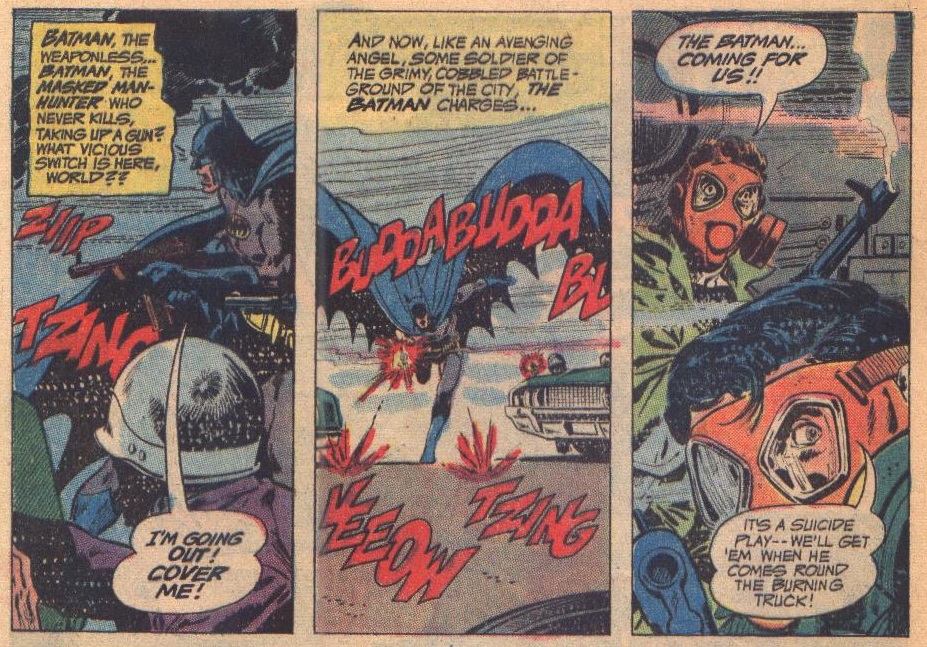
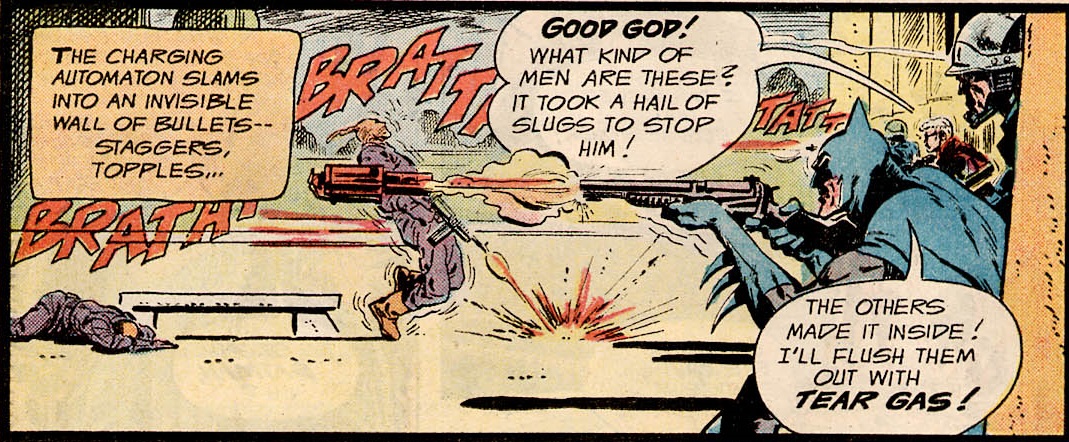
Adventure into Fear 11     Man-Thing 05     Giant-Size Man-Thing 3

Steve Gerber was one of the most interesting and original voices in the world of comics. His work on Man-Thing was full of experimentalism, from the stream-of-consciousness prose piece in ‘Song-Cry…of the Living Dead Man!’ to the metafictional final issue in which Gerber himself showed up to claim one of the characters had been dictating the stories he’d written (this was fifteen years before Grant Morrision famously wrote himself into Animal Man #26). I also really dig Gerber’s satirical tinge, particularly in the delirious saga of the old longshoreman who goes around dressed like a Viking trying to obliterate people he thinks have undermined the concept of masculinity.

Gerber went on to expand many of Man-Thing’s characters and concepts in other heady, offbeat comics he did for Marvel, such as Omega the Unknown, The Defenders, and Foolkiller, not to mention his quirky comedy runs on Howard the Duck and The Sensational She-Hulk.


NEXT: More gothic comics.

Posted in FANTASTIC ADVENTURES | Tagged , , , , , , , , , , , , , , , , , , , , , , , | Leave a comment

Top 20 Batman: Black & White stories

It’s no secret that many of the greatest Batman short stories are black-and-white. There’s something about the mood, between art house and classic Hollywood (serials aside), the urgent page count, and the overall sense of bare-bones minimalism that seems to bring out the best in everybody involved. Or maybe it’s just the fact that the most amazing creators in the industry have worked with this format…

I highly recommend the Black & White collections for anyone looking to read a bunch of solid Dark Knight tales – hell, for anyone who wants to read kick-ass comics with a fair amount of experimentation and little concern for continuity.

These are the top 20 stories:

20. ‘Long Day’ (Dustin Nguyen)

Batman Black & White 04

19. ‘I Killed the Bat!’ (Blair Butler, Chris Weston)

Batman Black & White 05

18. ‘Greetings from Gotham City’ (John Arcudi, Tony Salmons)

Gotham Knights 4

17. ‘Legend’ (Walter Simonson)

batman - black & white #2

16. ‘Hide and Seek’ (Paul Levitz, Paul Rivoche)

Gotham Knights 5

15. ‘Into the circle’ (Rafael Grampá)

Batman Black & White 02

14. ‘Funny Money’ (Harlan Ellison, Gene Ha)

Batman Gotham Knights 013

13. ‘Fear is the Key’ (Mike Carey, Steve Mannion, Hilary Barta)

Batman - Gotham Knights 37

12. ‘An Innocent Guy’ (Brian Bolland)

batman - black & white #4

11. ‘Head Games’ (Howard Mackie, Chris Samnee)

Batman Black & White 01

10. ‘The Bet’ (Paul Dini, Ronnie del Carmen)

Batman - Gotham Knights 14

9. ‘A Black and White World’ (Neil Gaiman, Simon Bisley)

batman - black & white #2

8. ‘The Black and White Bandit’ (Dave Gibbons)

Batman - Gotham Knights 12

7. ‘Case Study’ (Paul Dini, Alex Ross)

batman black and white v2

6. ‘Namtab’ (Rian Hughes)

Batman Black & White 03

5. ‘To Become the Bat’ (Warren Ellis, Jim Lee)

Gotham Knights 001

4. ‘Two of a Kind’ (Bruce Timm)

batman - black & white #1

3. ‘Last Call at McSurley’s’ (Mike W. Barr, Alan Davis)

Gotham Knights 252. ‘Devil’s Trumpet’ (Archie Goodwin, José Muñoz)

batman - black & white #1

  1. ‘Perpetual Mourning’ (Ted McKeever)

batman - black & white #1

NEXT: Gothic calling.

Posted in BATMAN COMICS FOR BEGINNERS | Tagged , , , , , , , , , , , , , , , , , , , , , , , , , , , , , , , , | 1 Comment

An average week in the life of Batman

MONDAY

BATMAN 156Batman #156

TUESDAY

Batman 333Batman #333

WEDNESDAY

batman adventures #25 The Batman Adventures #25

THURSDAY

Batman Brave and the Bold #10Batman: The Brave and the Bold #10

FRIDAY

detective comics #571Detective Comics #571

SATURDAY

Batman: Black & White #6Batman: Black & White (v2) #6

SUNDAY

Gotham Adventures #23Gotham Adventures #23Gotham Adventures #23


NEXT: Batman in black & white.

Posted in GOTHAM INTERLUDES | Leave a comment

The Mark of Zorro

Batman - Dark Knight Returns 1The Dark Knight Returns

It’s been fully established by now that Bruce Wayne’s parents watched The Mark of Zorro with him shortly before they were killed. Well, at least in the comics – on the big screen, Tim Burton changed it to Footlight Frenzy, for some reason, and Chistopher Nolan classed things up by changing it into a performance of Mefistofele.

But in the comics, The Mark of Zorro it is:

batman adventures v2 #1Batman Adventures (v2) #1

Most writers have taken it to be the 1940 version, starring Tyrone Power. It makes sense, since that film is essentially all about a dude pretending to be a foppish, wealthy playboy while secretly acting as a dark-clad vigilante who uses theatrics to bring justice to his hometown.

The Mark of Zorro

It’s also a pretty cool movie. It’s fast-paced and moody-looking and it exudes a genuine sense of hell-for-leather swashbuckling adventure. I dig all those shadows and lavish costumes! The plot is basically Robin Hood in Southern California, with Tyrone Power as a charming hero who seems to be having as much fun as the audience. Sadly, the amazing Linda Darnell isn’t given much to do outside the romantic subplot (she was 16 at the time of shooting – it took another few years before the studios let her have a go at meatier roles). Then again, you’ve got to love Basil Rathbone as a smarmy villain who waves his sword around like a Freudian metaphor.

Batman 459 Batman #459

Like many aspects of Batman’s origin, the actual film the Waynes watched on that fateful night was only determined retroactively, decades later. Indeed, some have pointed out that, at least as far as the original Batman is concerned, the chronology doesn’t fit. After all, the Dark Knight debuted in 1939, a year before the Tyrone Power film. With that in mind, it would be more fitting to assume Bruce’s parents took him to watch the 1920 silent version of The Mark of Zorro, starring Douglas Fairbanks Sr (which was in fact an obvious influence on Bill Finger and Bob Kane when they created Batman).

Personally, I prefer the Tyrone Power movie, even though the Douglas Fairbanks one does feature a Batman-like secret passage through a grandfather clock, plus a handful of frantic swordfights and action scenes!

The Mark of Zorro 1920The Caped Crusader isn’t the only Gotham citizen to draw conscious inspiration from Zorro. There is also the Cavalier, especially in the rebooted version that James Robinson and Tim Sale introduced with their excellent story ‘Blades.’

Legends of the Dark Knight 32Legends of the Dark Knight #32

Don’t take my word for it. The Mark of Zorro poster is right there on the wall of the Cavalier’s apartment:

Legends of the Dark Knight 32Legends of the Dark Knight #32

All in all, the Zorro connection is a neat little piece of Batman lore, one that pays homage to the character’s pulp origins. It’s particularly cool for fans of both classic cinema and superhero comics (I know I’m not the only one). And it’s nice to know that, even with Scott Snyder and Greg Capullo having radically reinvented the Dark Knight mythos over these past years, this is one bit of continuity that is still firmly in place.

Hopefully, it will carry on from generation to generation:

batman & robin 20Batman and Robin #20

NEXT: Batman vs gorillas.

Posted in WEBS OF FICTION | Tagged , , , , , | 1 Comment

Taking a break… (August 2015)

Action Comics Annual 001Action Comics Annual (v2) #1
Posted in GOTHAM INTERLUDES | Tagged | Leave a comment

12 slapstick Batman covers

It’s been a while since I last browsed through the Grand Comics Database in search for neat cover patterns like Batman’s encounters with angry animals or his freaky sartorial choices. So today I bring you a dozen covers with the Dynamic Duo involved in pratfalls, wacky chases, ludicrous stunts, and other slapstick hijinks.

Cue the Yakety Sax!

Batman 02Batman 33Detective Comics 161Detective Comics 96Detective Comics 134Detective Comics 74Detective Comics 74Detective Comics 121Star Spangled ComicsWorld's Finest Comics 23Batman 93Batman 39

NEXT: Batman goes to the movies.

Posted in COVERS OF BATMAN COMICS | Tagged | Leave a comment