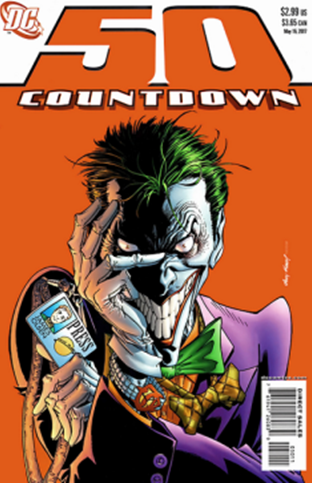
Terrific Joker Covers – part 2

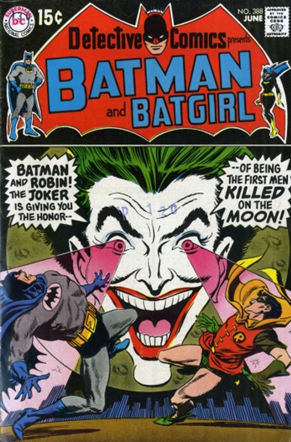
Detective Comics 388

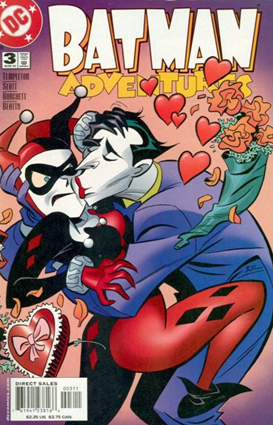
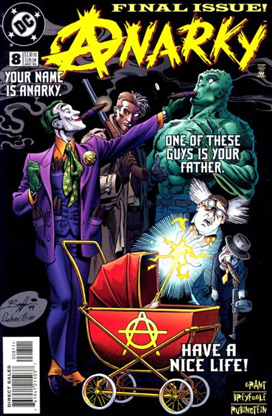
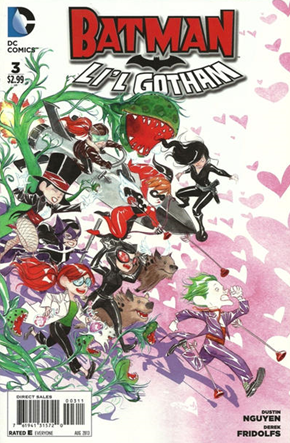
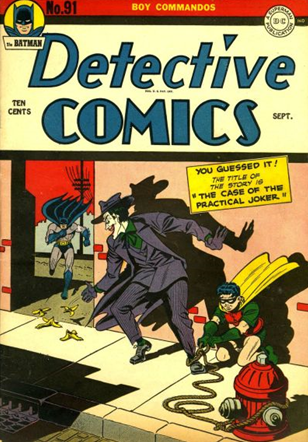
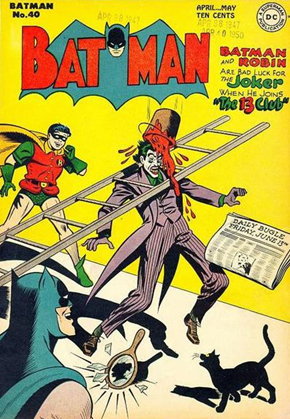
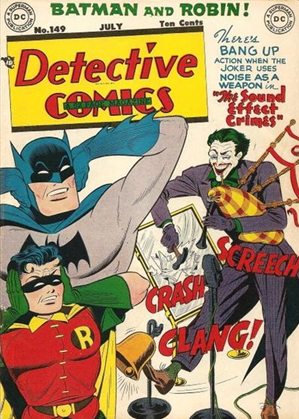
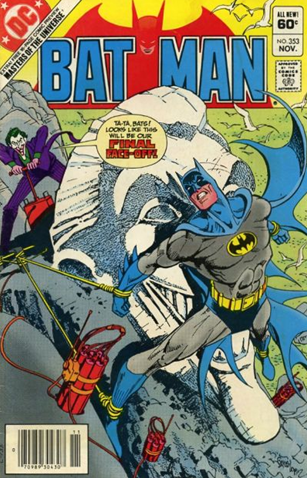
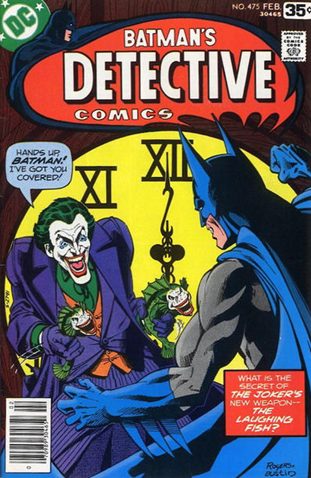
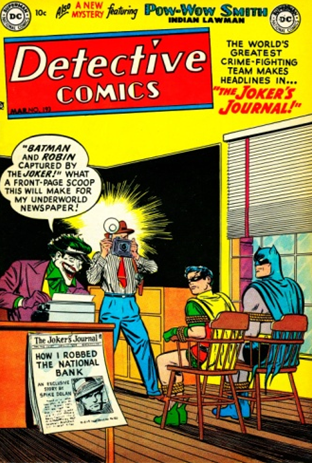
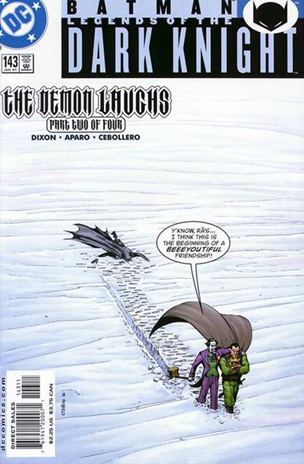
Having already highlighted some incredible Joker covers, in this post I will further showcase the versatility of the Clown Prince of Crime as an attention-grabbing front man… For one thing, his presence can just as easily be whimsical as it can be menacing. Because the Joker is, after all, a jester figure, he fits quite well in covers that go for goofiness:

Batman Adventures 3    Anarky 8

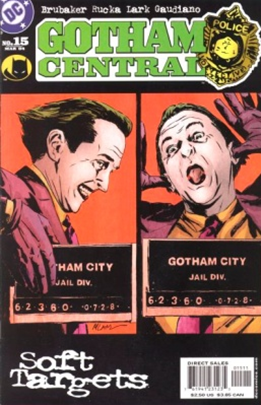
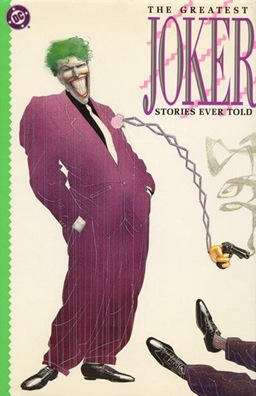
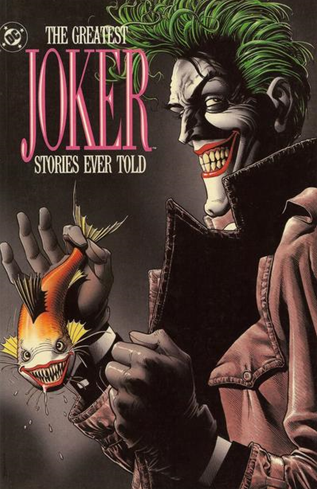
Gotham Central 15    Greatest Joker Stories

Li'l Gotham 3    Detective Comics 91

Batman 40    Detective Comics 149

Batman 353   Detective Comics 475

Detective Comics 193    Legends of the Dark Knight 143

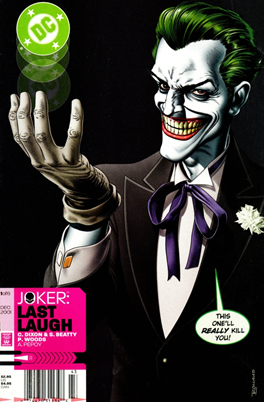
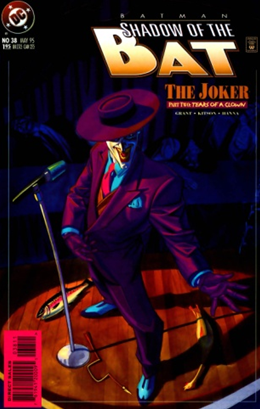
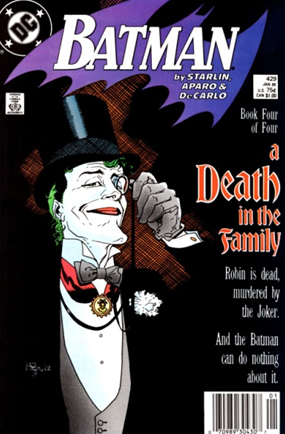
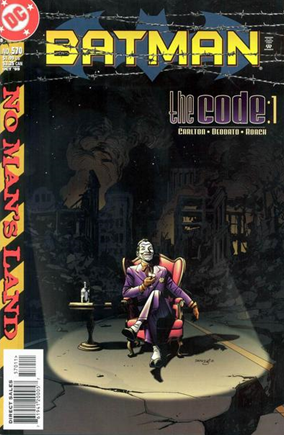
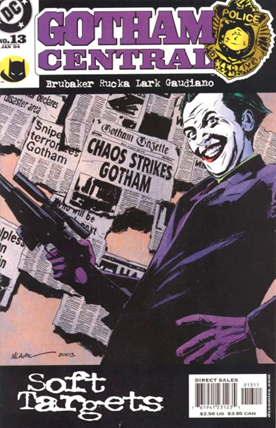
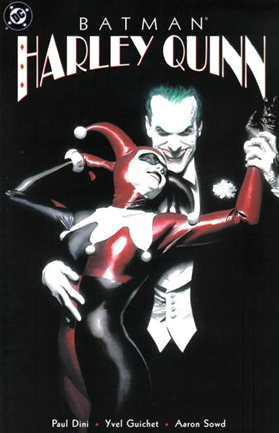
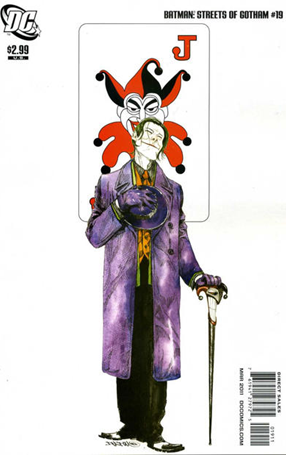
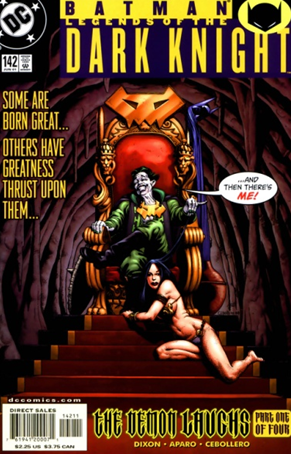
More curious, perhaps, is the fact that, for all his vaudevillian antics, the Harlequin of Hate also works as a rather stylish cover model:

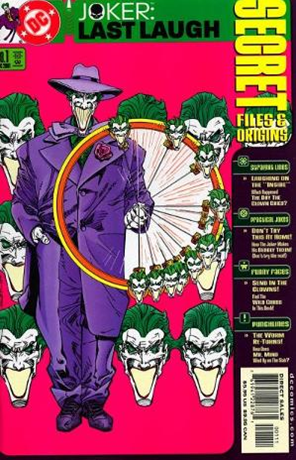
Joker: Last Laugh    Shadow of the Bat 14

Batman 429    Batman 570

Gotham Central 13    Harley Quinn

Streets of Gotham 19    Legends of the Dark Knight 142

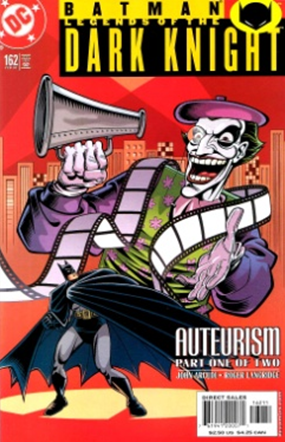
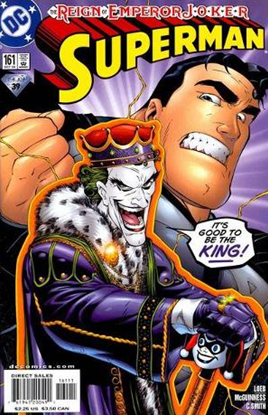
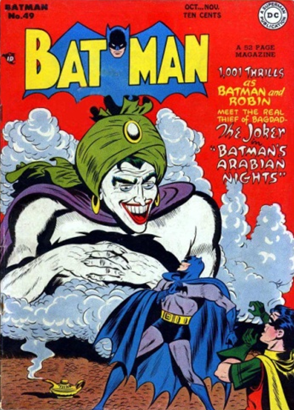
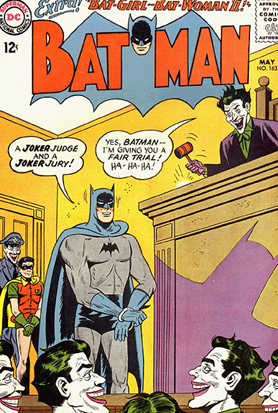
Due to the Joker’s recognizable face, role-playing can be visually interesting as well:

Legends of the Dark Knight 162    Batman 146

Superman 161    Robin: Joker's Wild

Batman 49    Batman 163

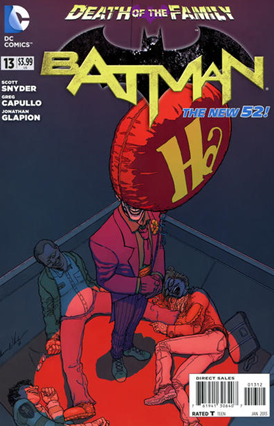
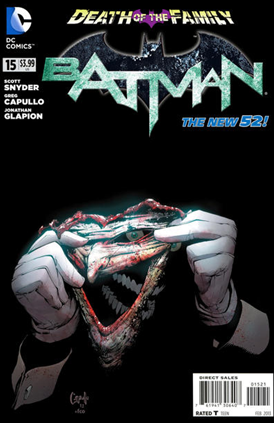
Furthermore, by now the Clown Prince of Crime is such a mainstay of Batman comics that even a simple glimpse of him is enough for us to know a ton of crap is about to hit the proverbial fan:

Batman 13    Batman 15

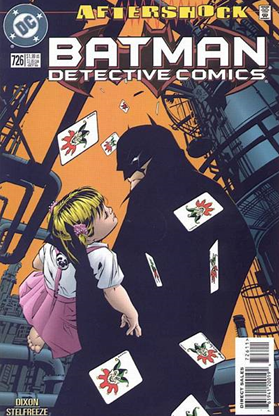
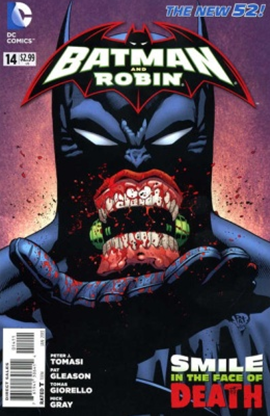
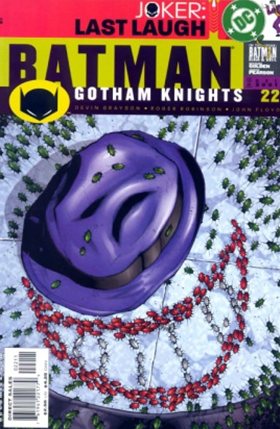
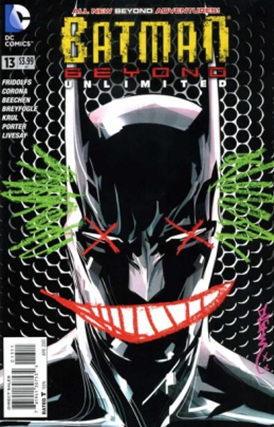
Hell, a mere allusion to the Joker’s standard colors is all it takes to give the reader the chills:

Detective Comics 726    Batman and Robin 14

Gotham Knights 22    Batman Beyond Unlimited 13

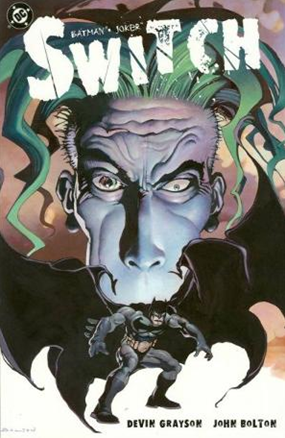
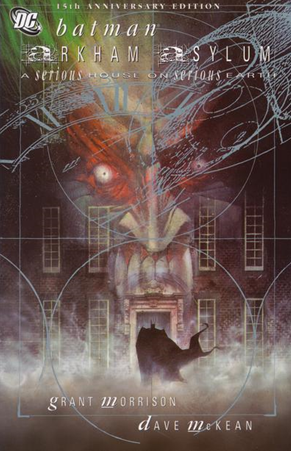
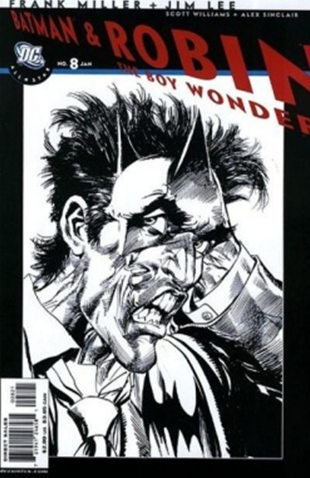
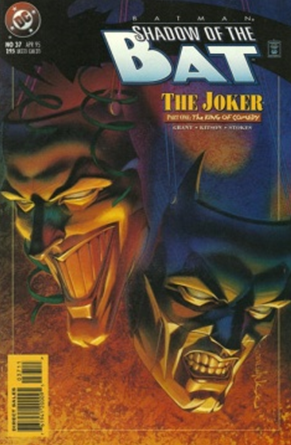
Nevertheless, some cover artists prefer more elaborate compositions, playing on less literal symbolism:

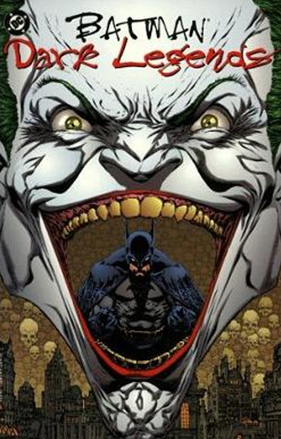
Batman Dark Legends    Batman Switch

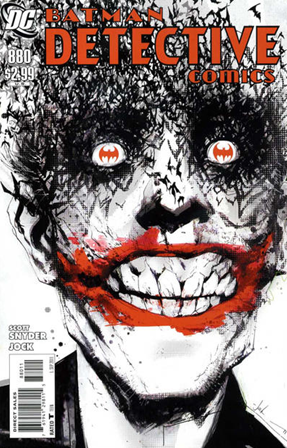
Arkham Asylum    Detective Comics 880

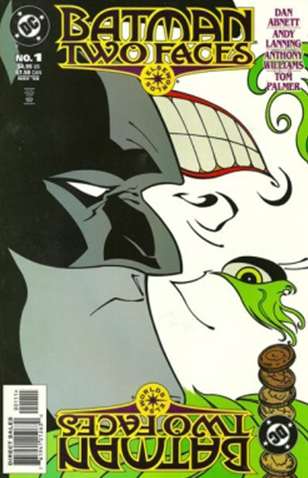
Batman Two Faces    Batman & Robin the Boy Wonder 8

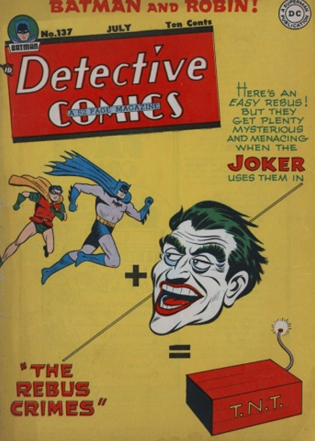
Shadow of the Bat 37    Detective Comics 137

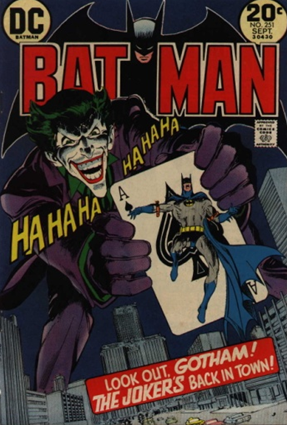
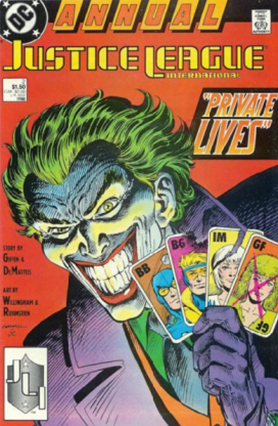
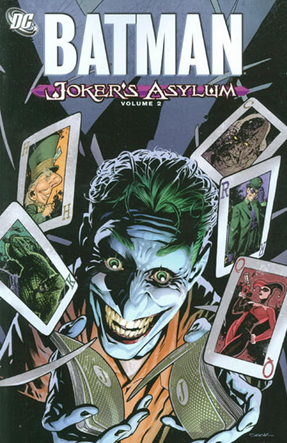
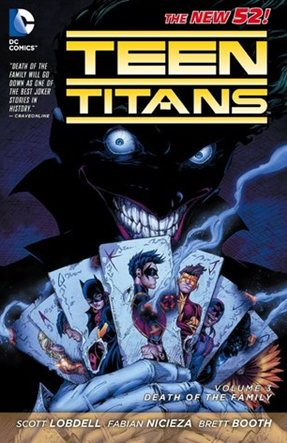
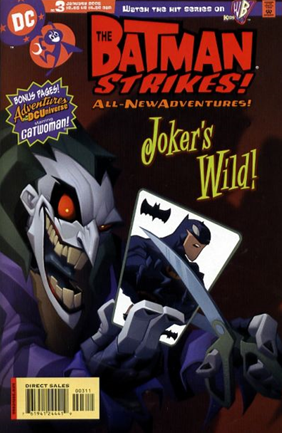
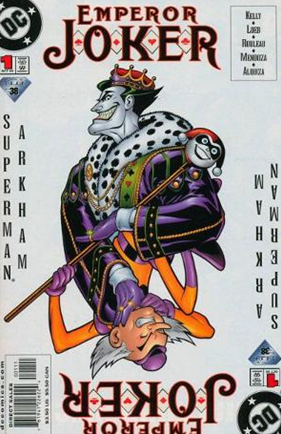
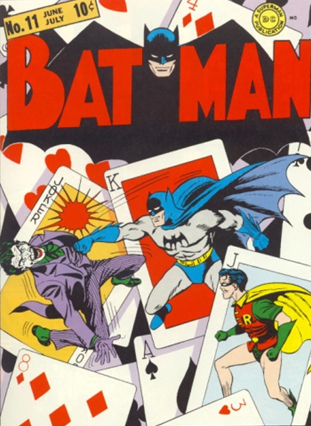
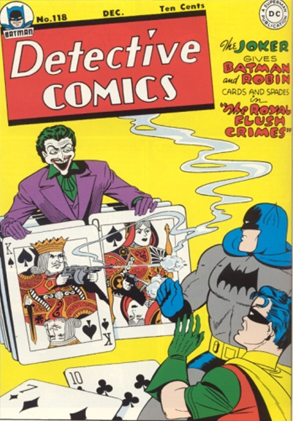
Obviously, with someone called Joker, playing cards are an easy-yet-effective symbol:

Batman 251    Justice League International annual

Joker's Asylum    Teen Titans

Batman Strikes 3    Emperor Joker

Batman 11    Detective Comics 118

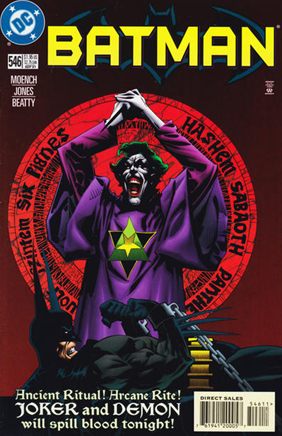
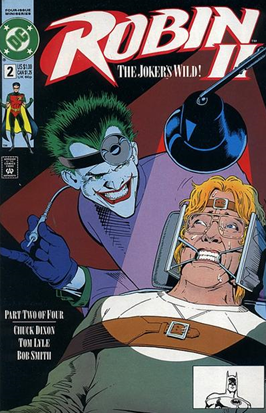
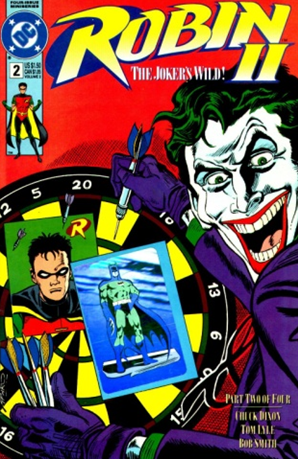
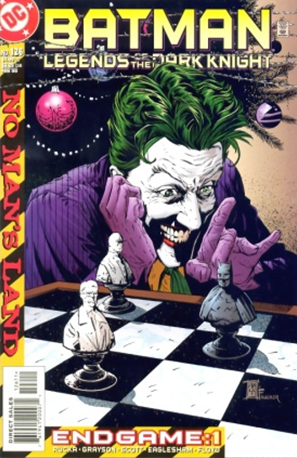
Although in practice any game will do, since ultimately playing games with Batman and Robin is what the Joker does…

Robin II    Legends of the Dark Knight 126

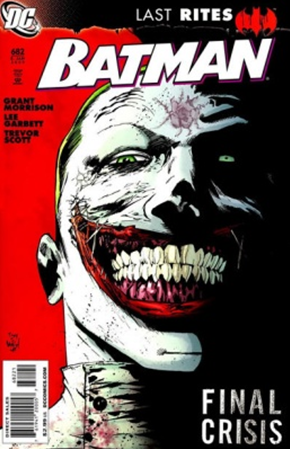
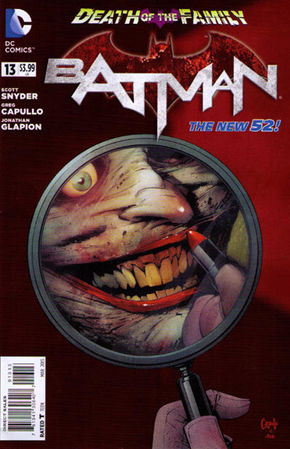
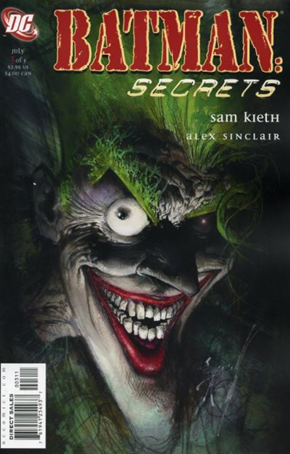
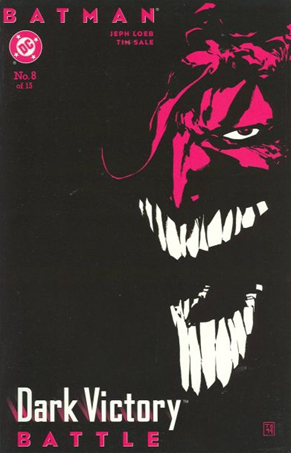
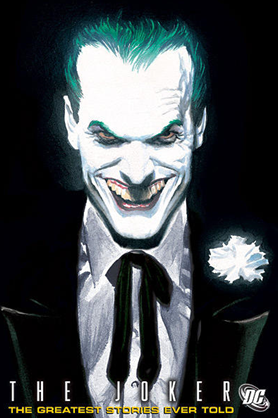
Given the character’s flair for pop art and iconoclasm, it’s not only natural but appropriate that Batman’s clownish foe has inspired so much creativity and experimentation in covers throughout the decades. And yet, as impressive as those can be, sometimes I’ll settle for an artist’s own distinct take on that creepy smile:

Batman 682    Batman 13

Batman Secrets    Batman Dark Victory

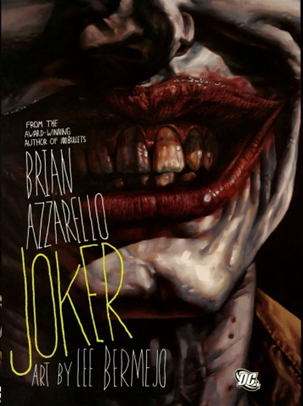
Joker greatest stories    The Joker

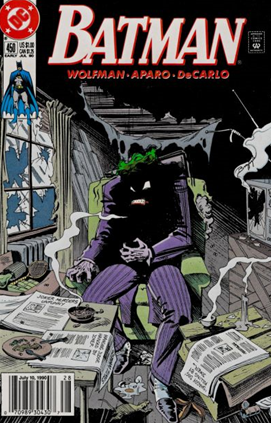
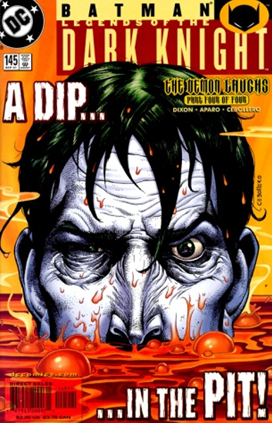
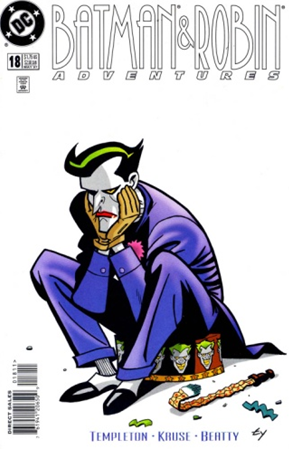
To be fair, images in which the Joker is NOT smiling can be disconcerting in their own way:

Batman 450    Legends of the Dark Knight 145

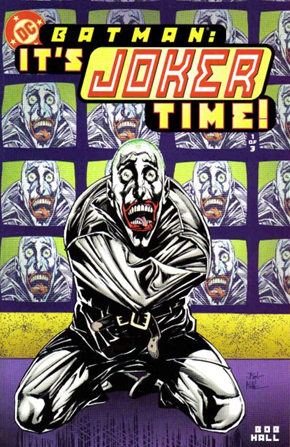
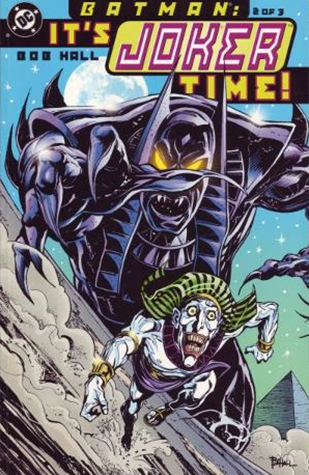
Batman & Robin Adventures 18    It's Joker Time

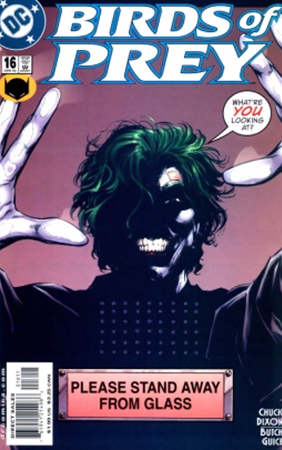
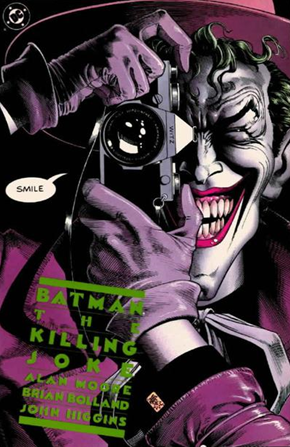
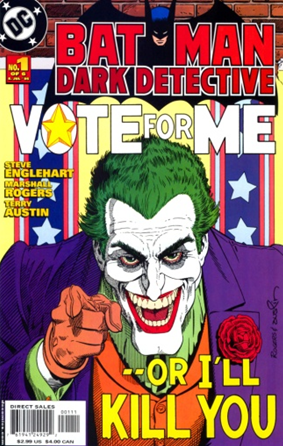
But at the end of the day, for me the most chilling Joker covers, by far, are the ones in which the clown’s grin gives way to a simple, sinister punchline:

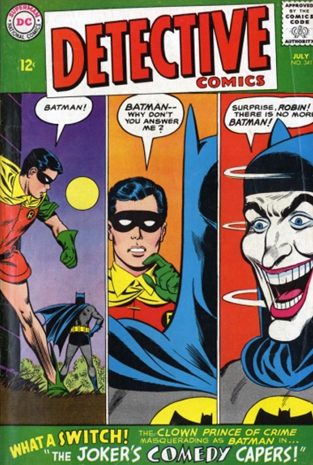
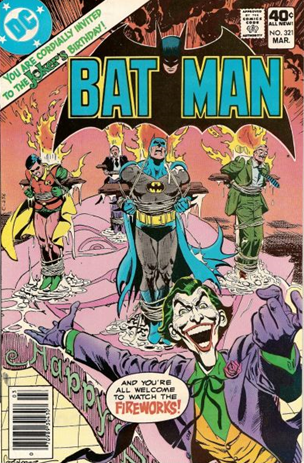
Detective Comics 341    Batman 321

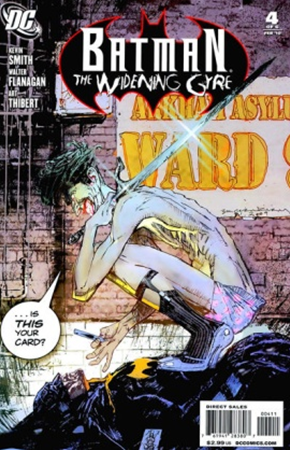
Batman Widening Gyre    Birds of Prey 16

Batman Killing Joke    Batman Dark Detective

NEXT: Batman goes through midlife crisis.

Posted in COVERS OF BATMAN COMICS | Tagged , , | Leave a comment

Terrific Joker Covers – part 1

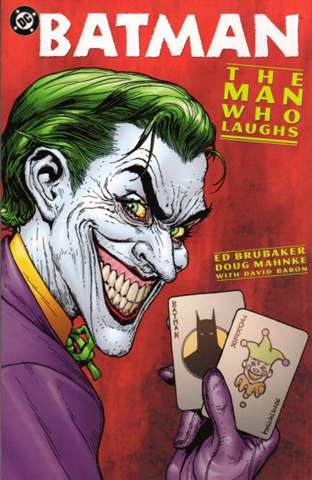
Batman Man Who LaughsA couple of weeks ago, I mentioned how clever splash pages can draw skeptical readers into a comic through the use of exciting captions and inventive design. Actually, I just like those old comics and wanted to hype them… The truth is that, as effective as splashes can be, they only really work once you’ve opened the book. So at the end of the day, they just can’t compare to the power of a kick-ass cover, which is often what gets you to pick up the damn comic and flip through it in the first place. And having looked at so many covers throughout the years, I’ve come to the conclusion that few jump at me and haunt my nightmares as much as those featuring the Joker.

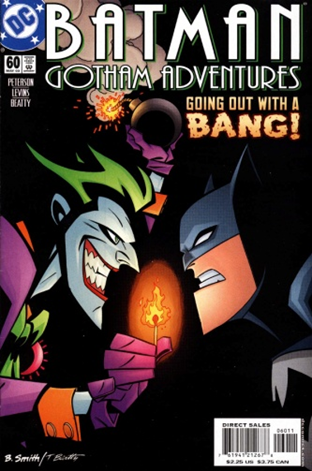
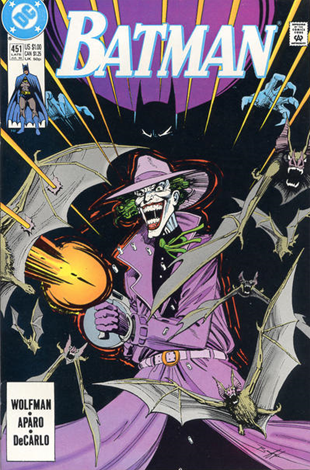
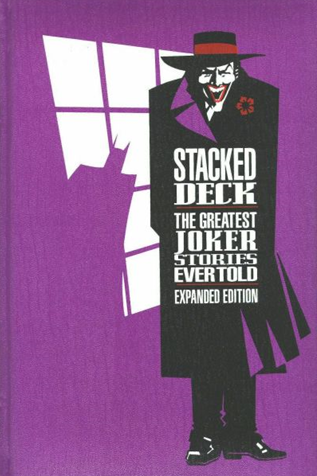
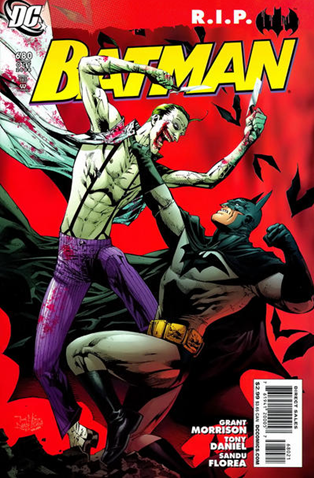
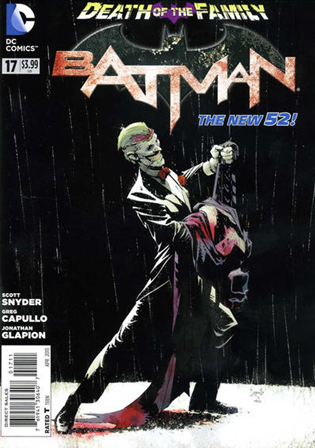
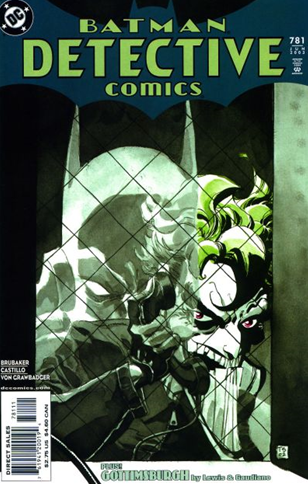
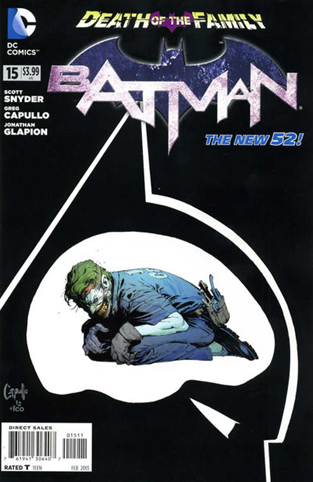
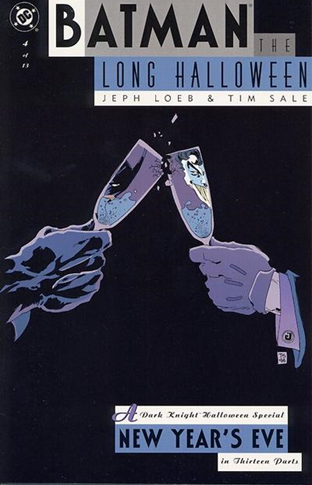
By itself, the disparity between the Joker’s playfulness and Batman’s no-nonsense attitude generates a lot of visual potential. The same can be said of the contrast between the former’s colorful look and the latter’s dark costume. But it’s more than that. The Joker is the Dark Knight’s arch-nemesis, his number one villain. Their antagonism has become so engrained in the public’s imagination that simply promising to pit those two against each other is enough in terms of suggesting an exciting story:

Gotham Adventure 60    Batman 451

Greatest Joker Stories  Batman 680

Batman 17    Detective Comics 781

Batman 15   Long Halloween 4

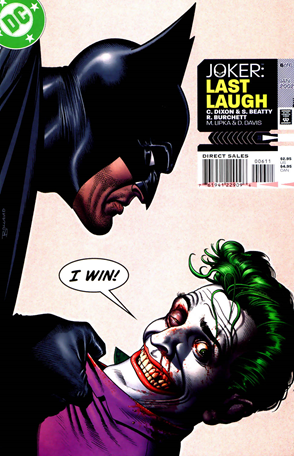
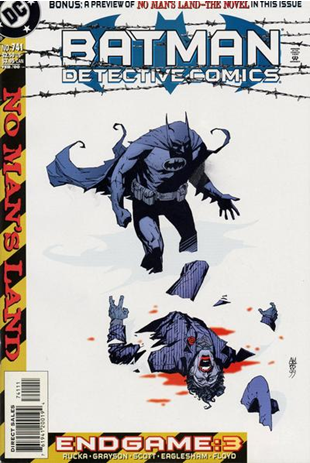
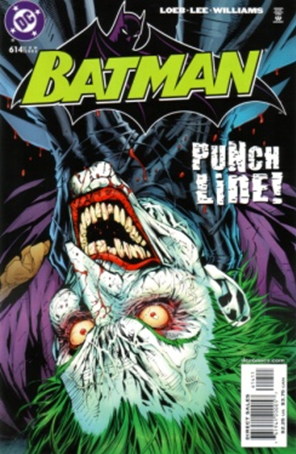
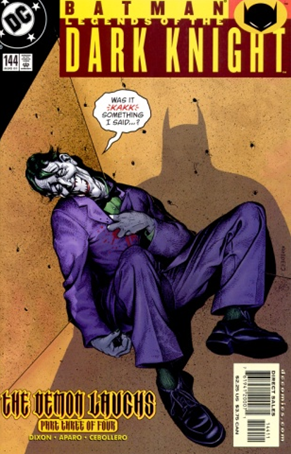
Seriously, even the covers where the Clown Prince of Crime gets his butt handed to him by the Caped Crusader are less reassuring than shit-your-pants terrifying:

Joker Last Laugh    Detective Comics 741

Batman 614    Legends of the Dark Knight 144

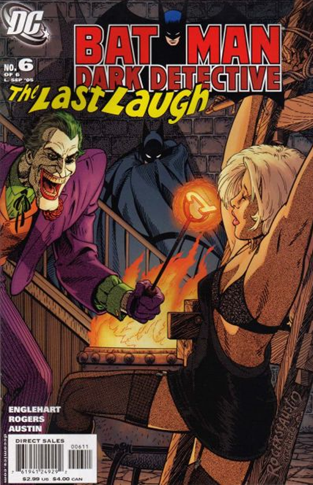
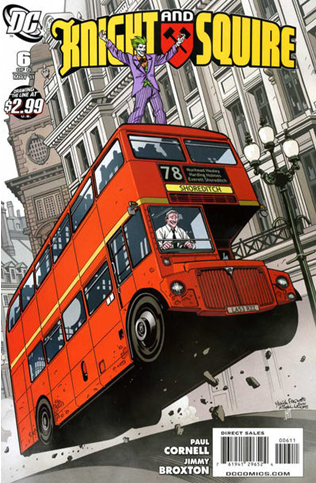
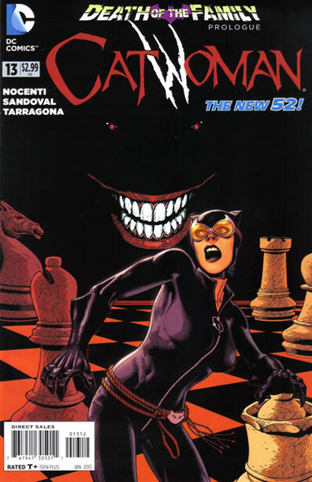
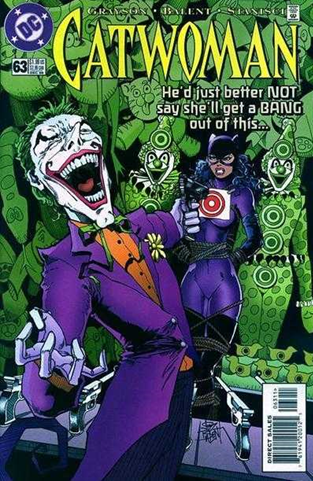
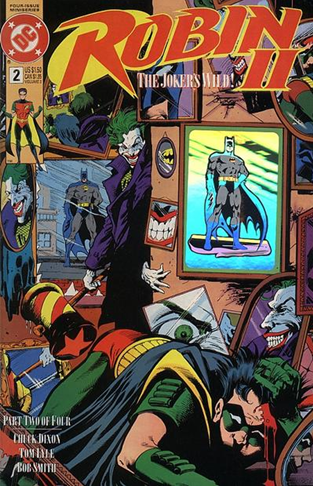
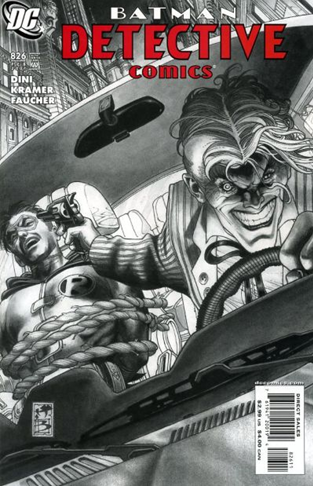
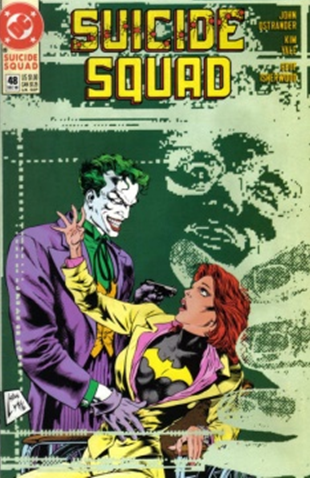
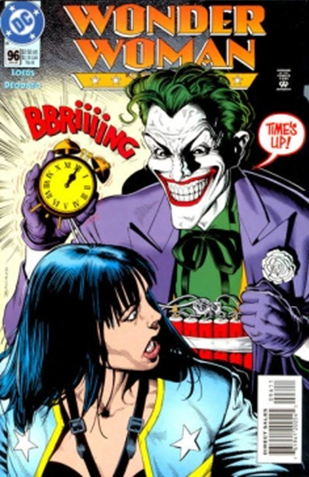
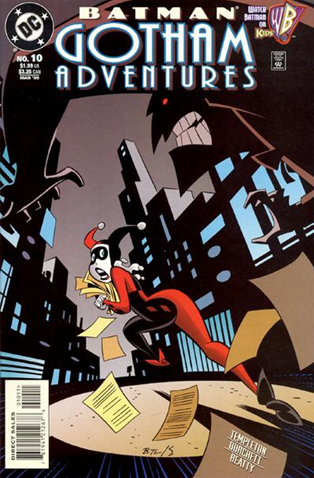
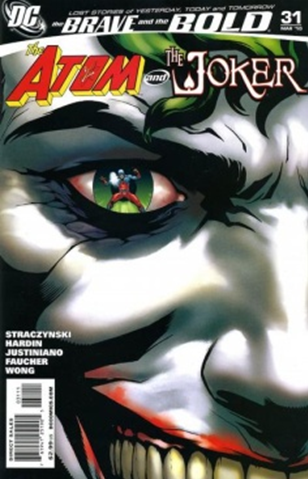
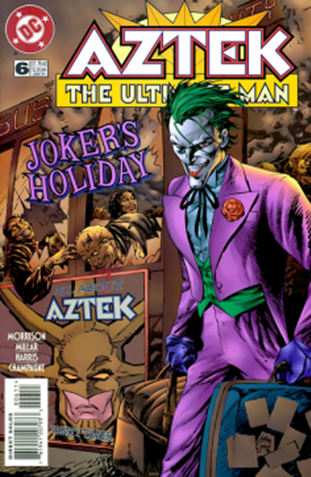
The thing is, the most frightening covers are the ones that DON’T feature Batman (or where he is just hiding in the background). After all, we already know the Dark Knight can take care of the Joker… but seeing anyone else go up against that clownish bastard can still create a dramatic sense of danger:

Batman Dark Detective 6  Knight and Squire 6

Catwoman 13   Catwoman 63

Robin II   Detective Comics 826

Suicide Squad 48    Wonder Woman 96

Gotham Adventures 10    Brave and the Bold 31

Aztek 6    Untitled4

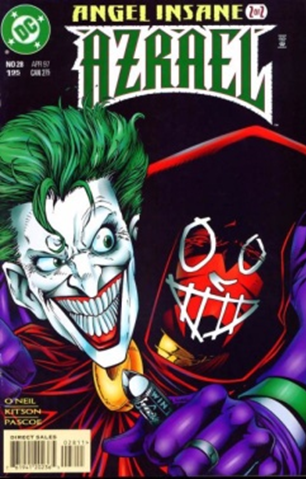
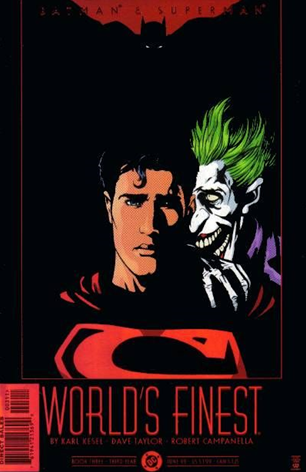
Azrael 125    World's Finest

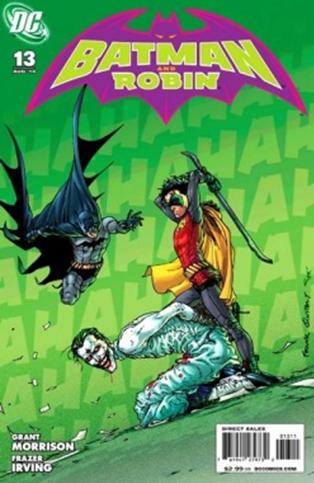
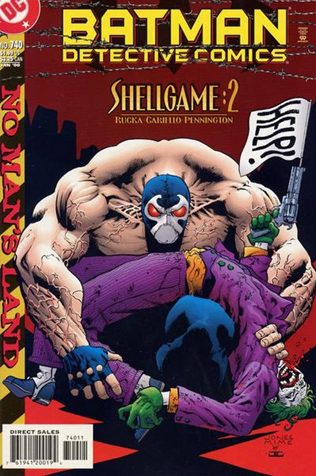
That said, the Harlequin of Hate does occasionally meet his match…. And almost invariably, those covers are a hoot:

Batman and Robin 13  Detective Comics 740

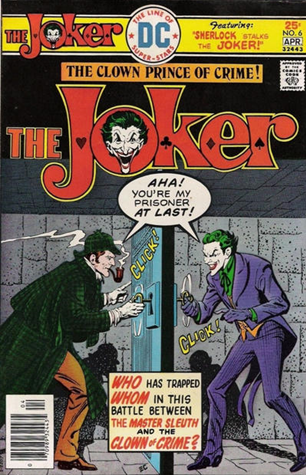
It's Joker Time 2    The Joker 6

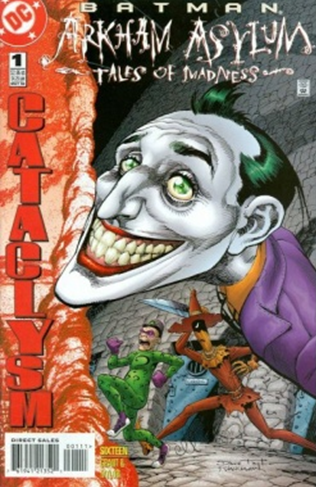
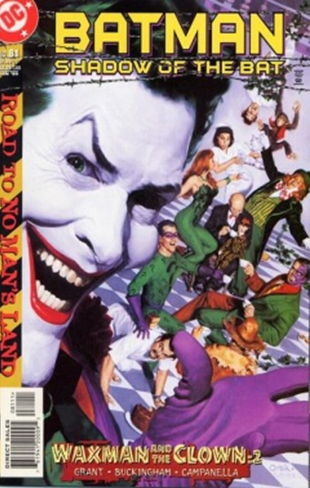
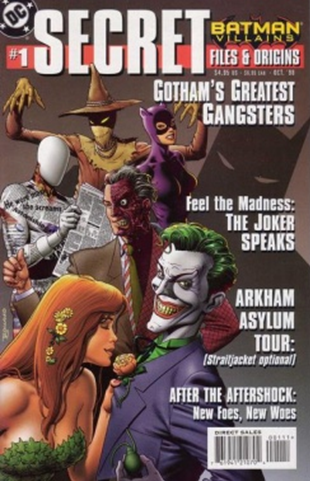
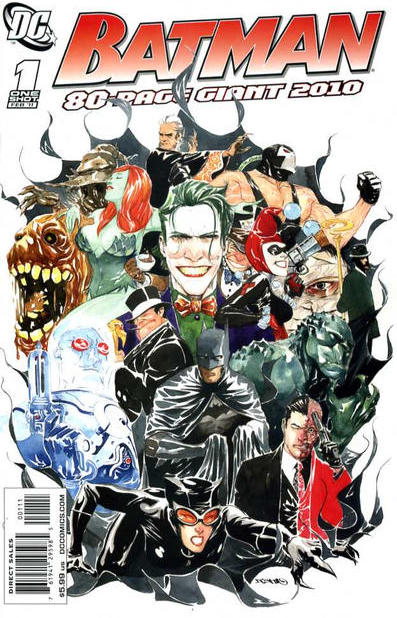
The Joker, of course, has become the most universally recognizable member of Batman’s rogues’ gallery and a staple of pop culture, no doubt helped by the unforgettable performances of Jack Nicholson and Heath Ledger (although true fans know the best rendition of the character was actually played by Mark Hamill). This may explain why, even in ensemble covers, the Clown Prince of Crime often ends up taking center stage over the other rogues:

Tales of Madness   Shadow of the Bat 81

Batman Villains Secret Files    Batman 80-Page Giant

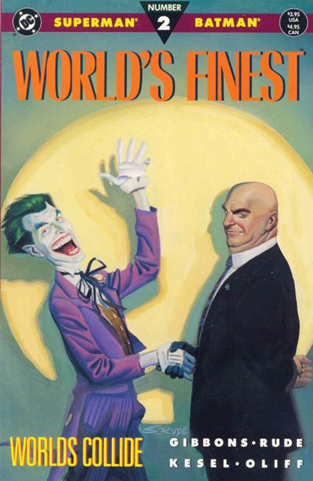
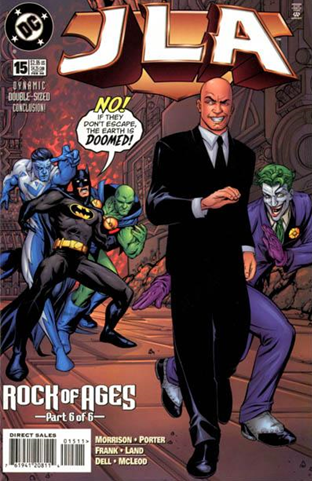
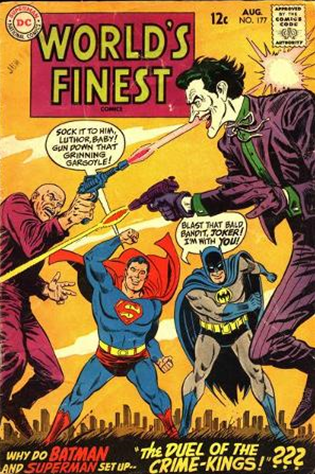
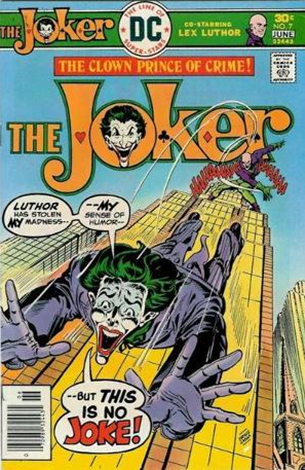
The one comic villain I can think of with comparable mainstream projection is Lex Luthor. Both mad geniuses – one slightly madder, one slightly geniuser – these two have teamed up several times and produced their share of fun covers:

World's Finest   JLA 15

World's Finest 177   The Joker 7

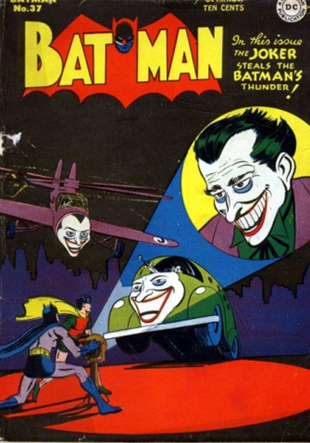
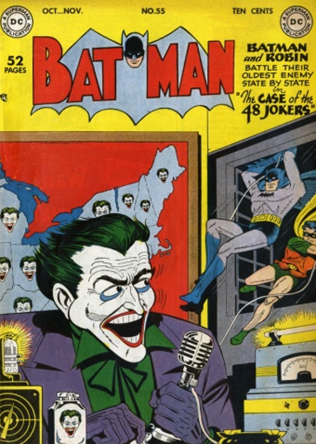
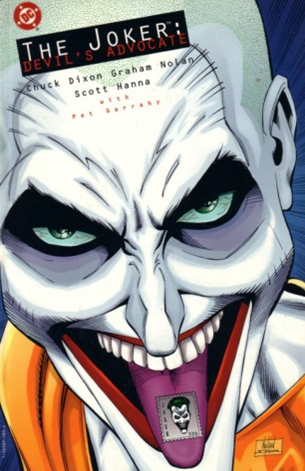
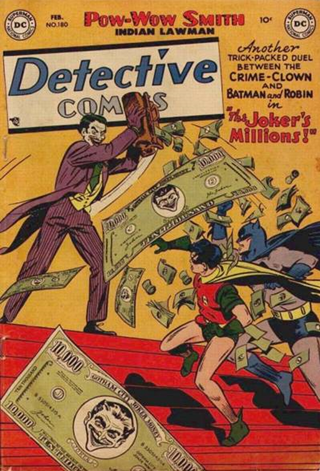
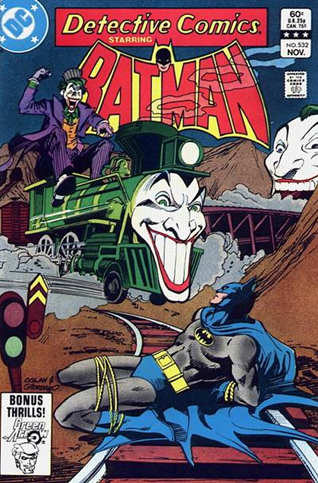
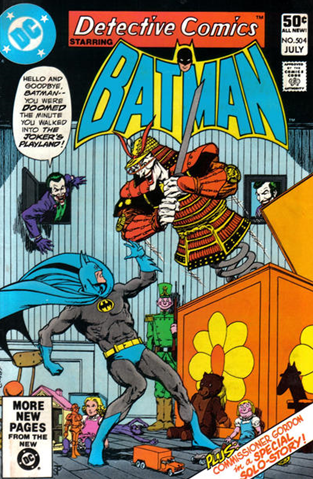
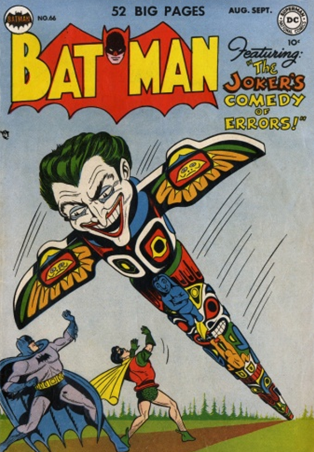
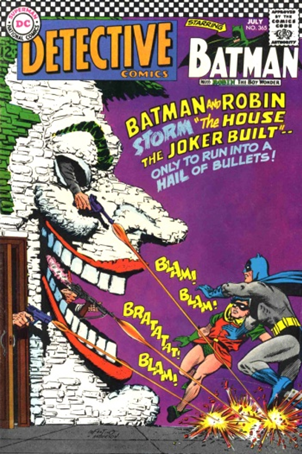
More importantly, the Joker’s lunacy allows storytellers to let their creativity go wild (we’re talking about a character who once committed a spree of crimes based on boners) and wild premises can bring out the best in cover artists. For one thing, the villain’s obsessive branding allows artists to amusingly jokerize all kinds of unexpected objects, from public and private transportation to a goddamn jack-in-the-box samurai warrior:

Batman 37   Batman 52

Joker: Devil's Advocate   Detective Comics 180

Detective Comics 532  Batman 304

Batman 66    Detective Comics 365

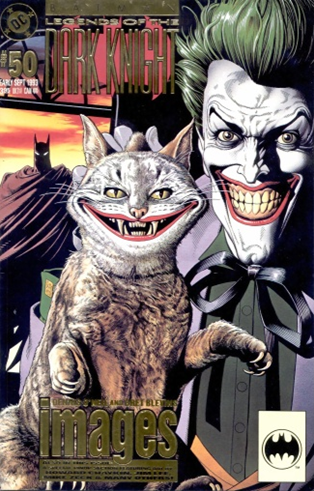
For my money, jokerized animals are particularly freaky:

Greatest Joker Stories Ever Told  Legends of the Dark Knight 50

In fact, the Joker’s covers can sometimes get downright surrealist…

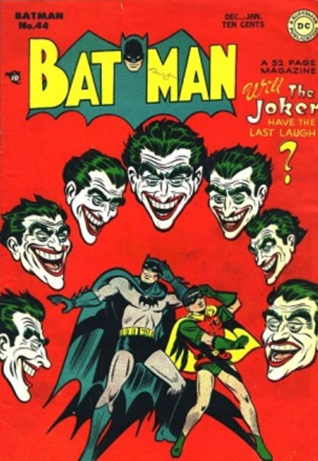
Joker: Last Laugh   Batman 44

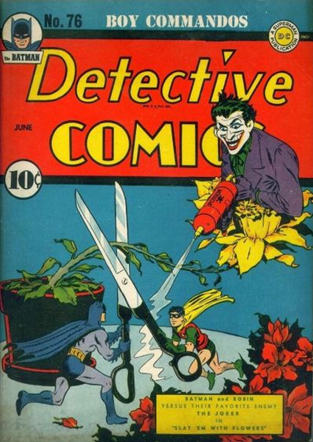
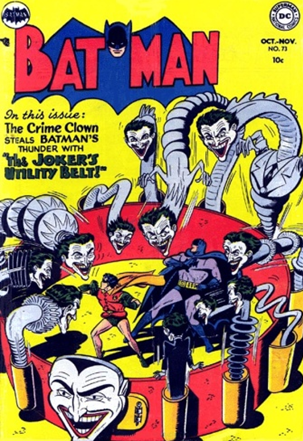
Detective Comics 76   Batman 73

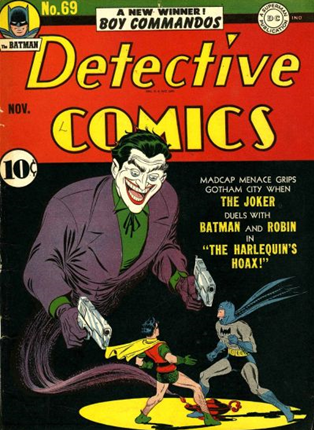
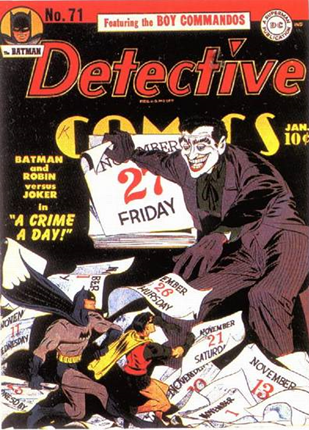
Detective Comics 69   Detective Comics 71

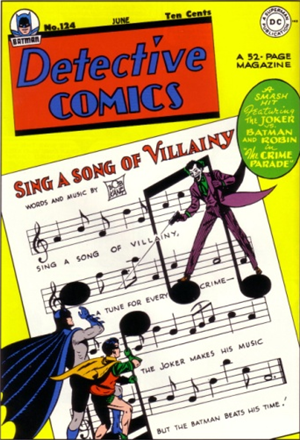
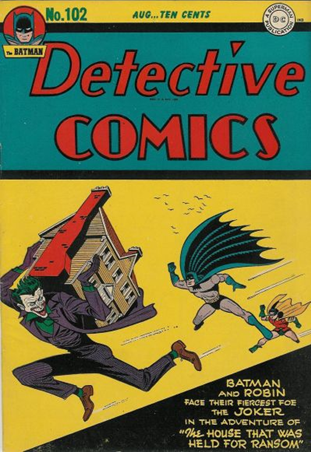
Detective Comics 124    Detective Comics 102

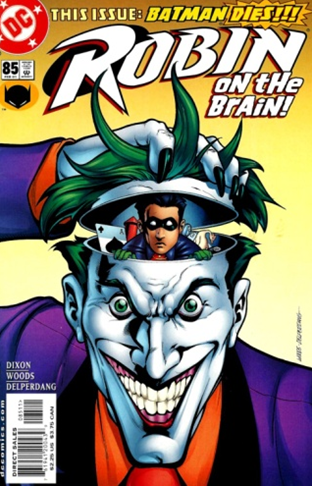
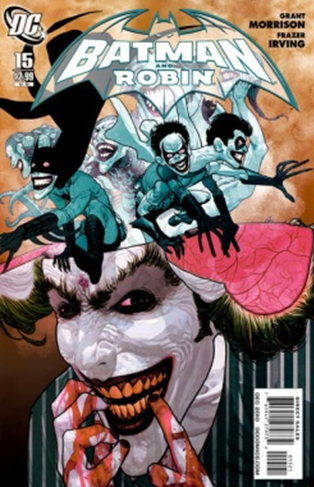
… especially when artists strive to mirror the Clown Prince of Crime’s distorted psyche:

Robin 85   Batman and Robin 15

Talk about delirium of disorder!

So now that I’ve instilled you with irreversible coulrophobia, all that’s left is for me to thank the Grand Comics Database for the cover scans and… Just kidding, I’m only halfway through. We still have to get to the really disturbing stuff.

NEXT: The Joker tries to be funny.

Posted in COVERS OF BATMAN COMICS | Tagged , , , | 2 Comments

Batman comics and the late Cold War – part 2

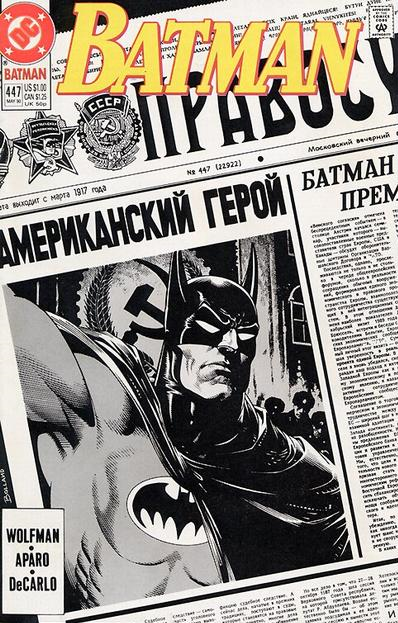
Batman 447

When people think of the end of the Cold War, they think of the fall of the Berlin Wall or of Boris Yeltsin standing on a tank in the Red Square. Me, I think of the Dark Knight fighting a dude with an S&M outfit, a luchador mask, and a bayonet for a hand.

I’ve already mentioned some of the kooky adventures Batman and his teammates go through in the 1980s, but the impact of the international scene spreads much further, with Gotham characters showing up in Cold War-inspired comics across the DC Universe. Dick Grayson leads the Teen Titans, who deal with the obligatory nuclear threat story in ‘When the Sun Goes Black!’ by facing a domestic cult devoted to atomic power. Commissioner Gordon has a small role in Paul Kupperberg’s and Mike Mignola’s underrated Phantom Stranger miniseries, where Soviet/American tension brings the world to the brink of Armageddon. Two members of Batman’s rogues’ gallery help carry out a secret mission in Russia, in a typically awesome Suicide Squad story arc…

Suicide Squad 05Suicide Squad 5Suicide Squad #5

For propaganda purposes, Washington sends the Suicide Squad to rescue a Russian political prisoner. Their task force includes the Penguin – assigned with planning, since the operation is basically a heist, only in a gulag – and Deadshot – who speaks fluent Russian, having picked it up together with a Communist Party card to piss off his father. As it often happens with Suicide Squad missions, however, everything hits the fan:

Suicide Squad 05Suicide Squad #5

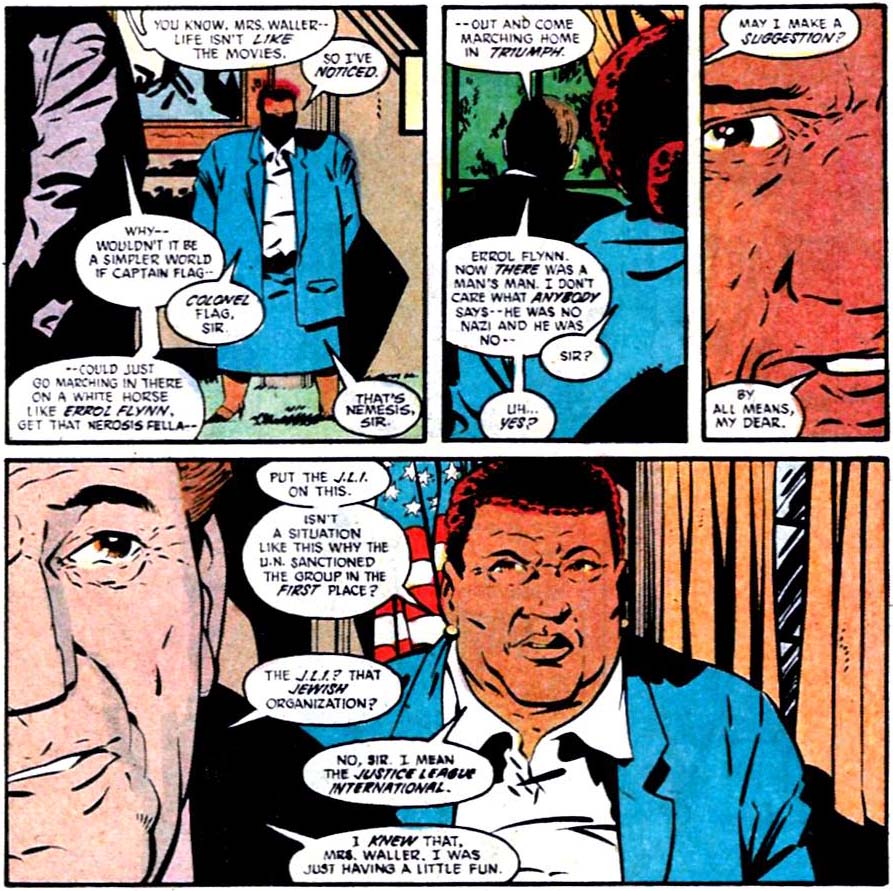
Things go so wrong, in fact, that a team member (Nemesis) is thrown to the wolves, requiring a second rescue mission later in the series. That’s when all hell breaks loose: Moscow puts pretty much every Soviet superhero on the case and, in order to prevent a diplomatic crisis, President Ronald Reagan agrees to send in the JLI to stop the Squad, although not without some horsing around first:

Justice League International 013Justice League International #13

As a result, everybody gets their ass kicked at a showdown in a Russian prison. Including Batman!

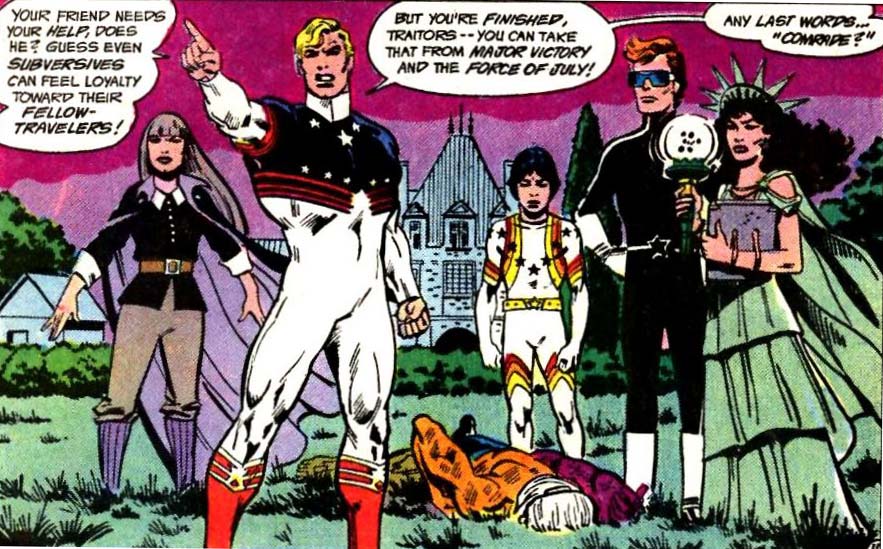
One of the many cool things about this story is that it reflects how complicated the relationship between US and USSR can be, far from a simple rivalry. This awareness can likewise be seen in the fact that a plot device which gets reused in various comics is the notion of rogue Soviet agents attacking the US on their own in order to provoke a conflict that shakes the USSR’s appeasement tendencies. It is quite the convenient trope, as it allows for stories with clichéd Russian villains while also acknowledging that Moscow does seem to be on the path to reform, usually culminating in amusing team-ups between Soviet and American characters. For example, when Fusion goes insane and tries to blow up the Statue of Liberty, the maverick Outsiders, the right-wing Force of July, and the socialist People’s Heroes actually join forces to prevent world war, in what has to be one of the most offbeat instances of superpower cooperation.

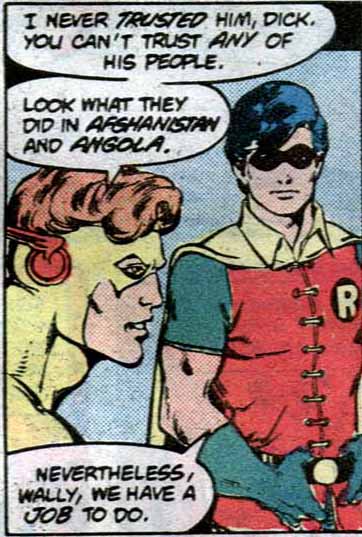
Similarly, in 1982 a grief-stricken minor Soviet official sends a plague to the US, seeking personal revenge because Americans killed his wife (bombed hotel in Hanoi) and son (in the war in El Salvador). The Teen Titans have to choose whether or not to trust the Russian superhero Starfire, apparently assigned by the Kremlin to bring in the plague carrier before it’s too late. The most skeptical of the bunch is Kid Flash, a self-professed Midwestern conservative:

New Teen Titans 018The New Teen Titans #18

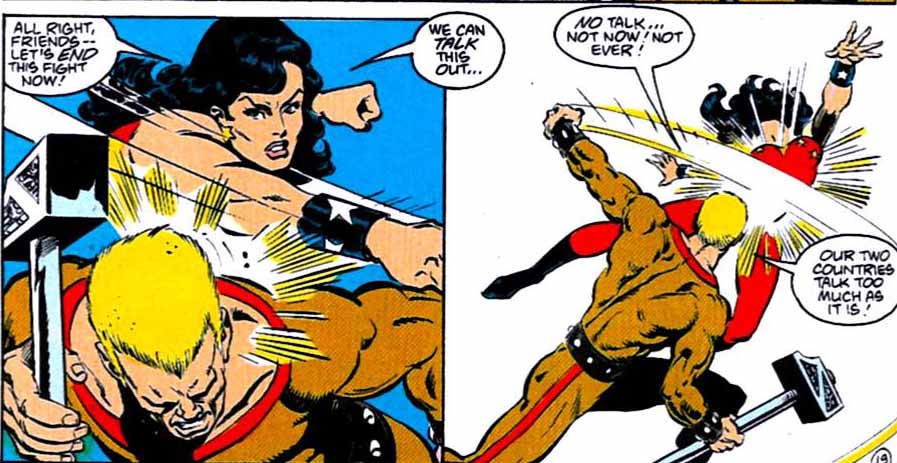
Later, under Gorbachev, Moscow and Washington agree to an exchange of knowledge, so Starfire goes back to the US for Americans to study his powers. Suspicious of glasnost, some members of the politburo secretly send super-agents Hammer and Sickle (who totally look like Ivan and Ludmilla Drago) to kill Starfire – going against the Teen Titans in the process:

New Teen Titans 48The New Teen Titans (v2) #48

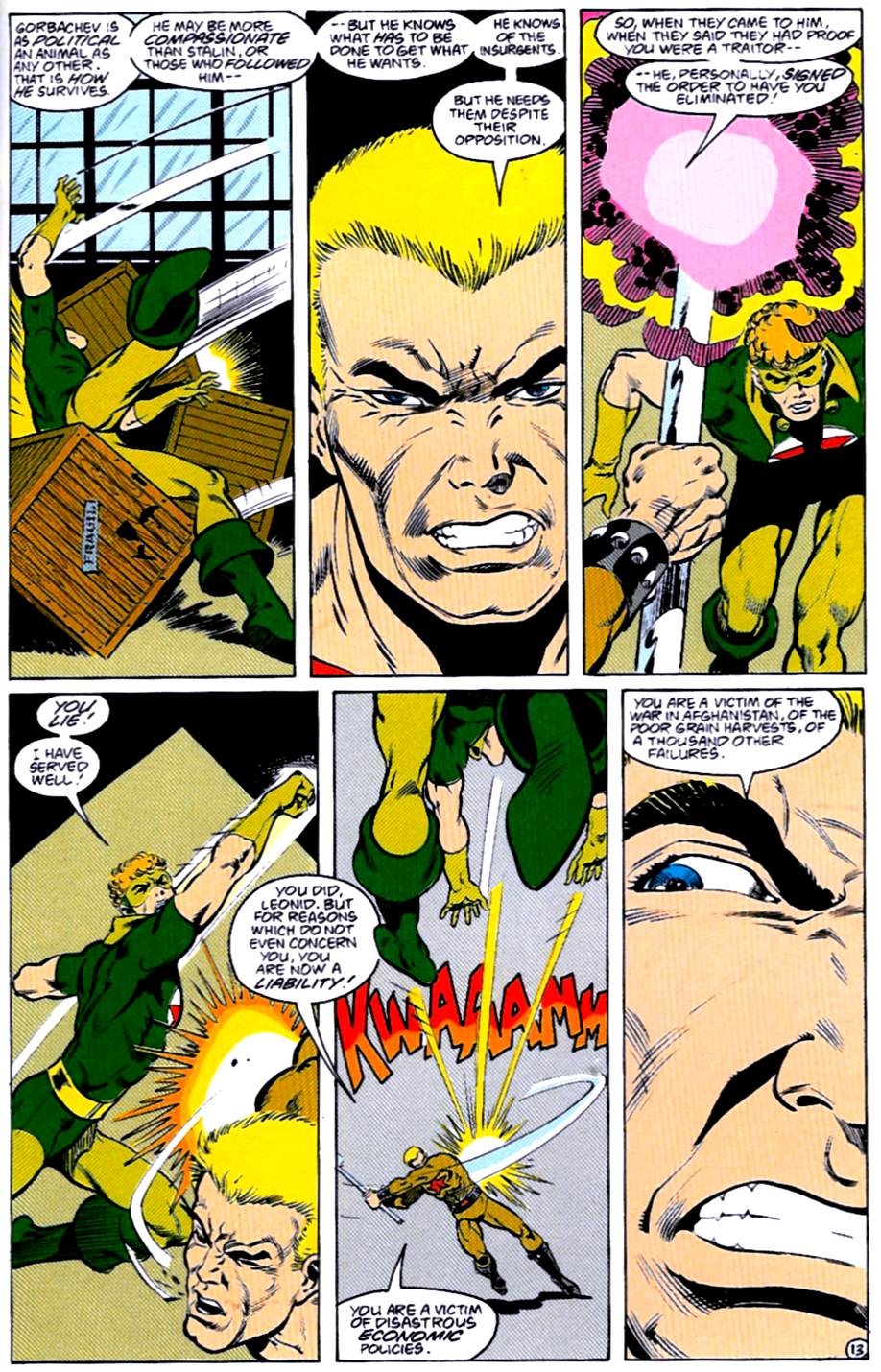
Leave it to writer Marv Wolfman to cram in a discussion about Soviet politics in the middle of a superhero slugfest:

New Teen Titans 49The New Teen Titans (v2) #49

Starfire – having reinvented himself as Red Star – ends up joining the Titans shortly before the collapse of the USSR. As far as I can tell, the two events aren’t connected, but feel free to go at it, conspiracy theorists!

As far as I’m concerned, the best use of the Soviet-agent-gone-rogue trope takes place in Batman #393-394, one of the greatest Batman stories of the ’80s (which is saying something).

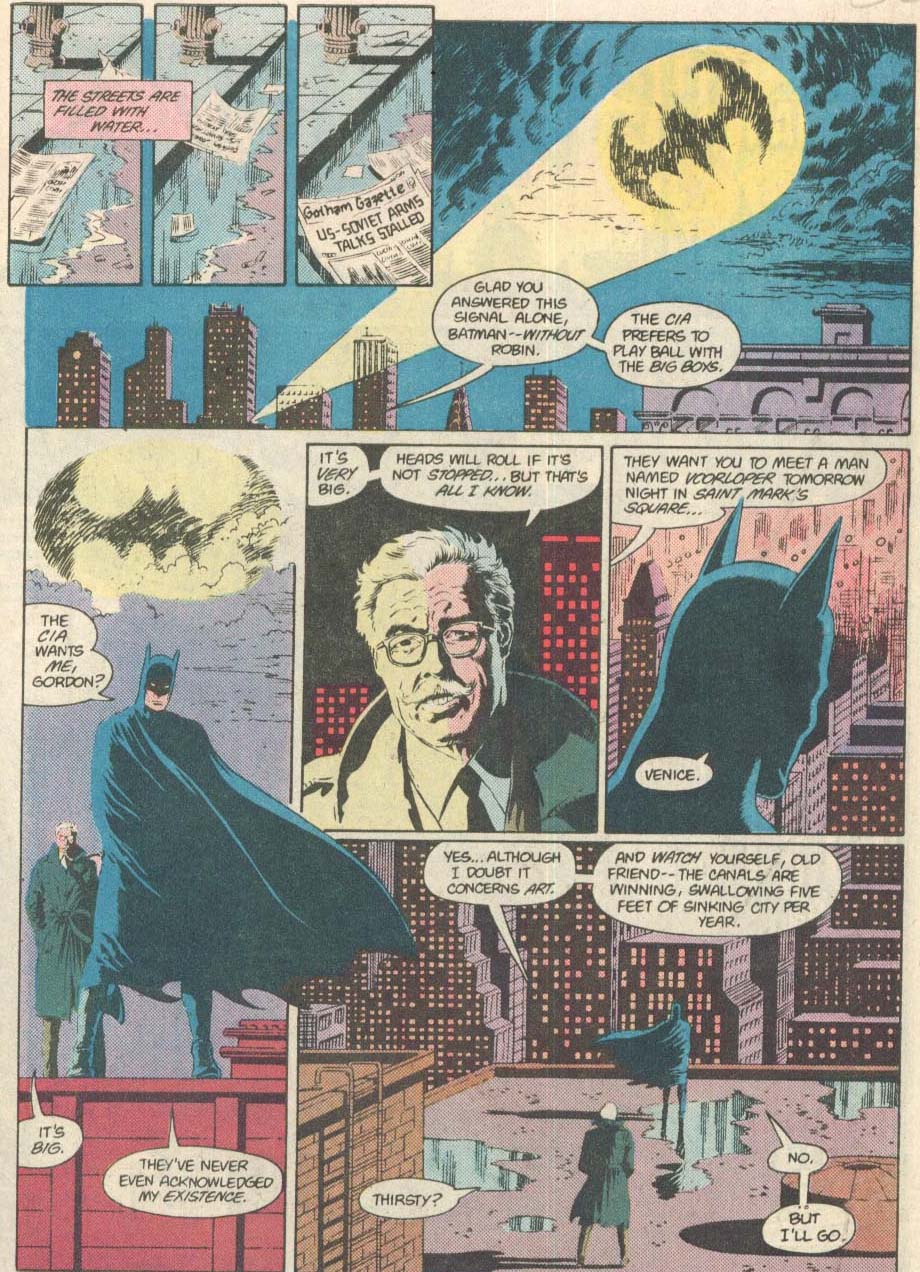
Batman 393Batman #393

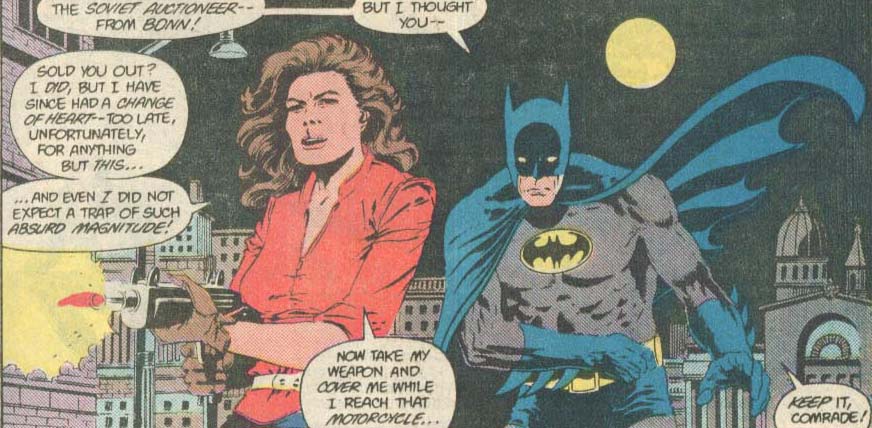
On the face of it, it’s just more of the same: a renegade KGB operative out of Bulgaria, called the Dark Rider, wants to carry out a terrorist attack against the US, so Batman partners up with a Russian spy, Katia, in order to stop him and prevent war between their nations.

Batman 393Batman #393

This tale fits into the tradition of grand espionage adventures, with the Caped Crusader chasing a plutonium-filled MacGuffin (the pre-revolutionary statue of a Cossack horseman, which comes to represent the Dark Rider himself) through Venice, Bonn, Moscow, and Switzerland, all brought to life by Paul Gulacy’s breathtakingly cinematographic art.

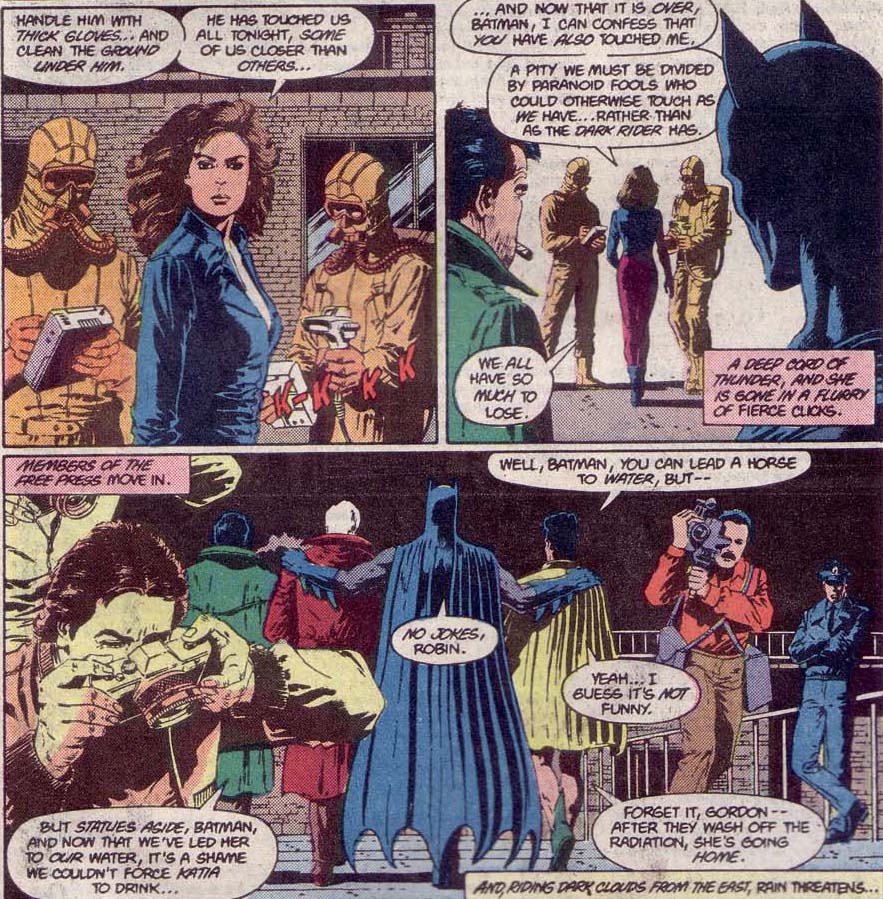
The whole thing is packed with neat, little touches… When sieging the Dark Rider in the story’s climax, Katia says ‘We split up here – I’ll go around the back.’ and Robin points out that’s usually the Batman’s line, to which she replies ‘It will take more than a “line” to save this night.’ However, in the end the Dynamic Duo save everyone precisely by wrapping an actual line around the Dark Rider’s feet! Moreover, as you probably gathered from the first page scan, there is a whole water leitmotif running through these comics. Indeed, rain, the Venice canals, thirst, snow, a bathtub, ice cubes, a water cooler, and the Gotham waterfront and reservoir all play a part in the story. That said, writer Doug Moench does go a bit overboard with the metaphor in the last page:

batman 394Batman #394

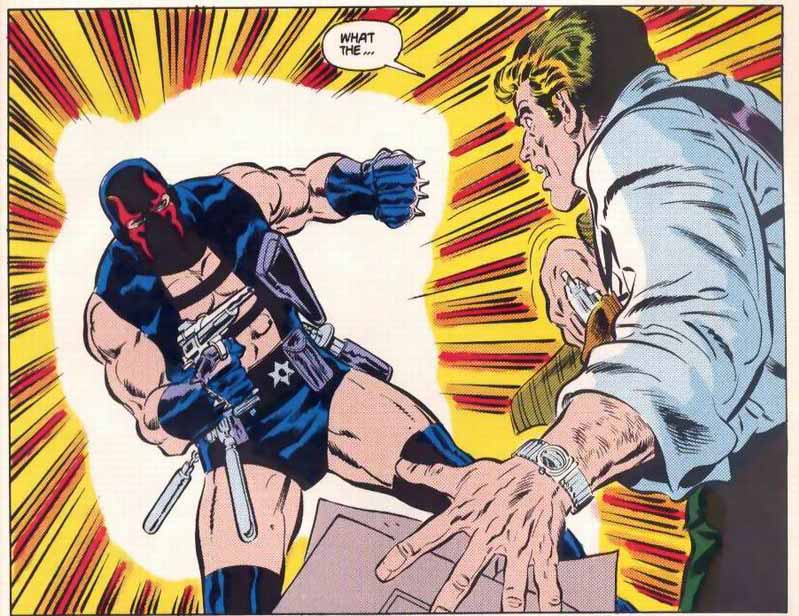
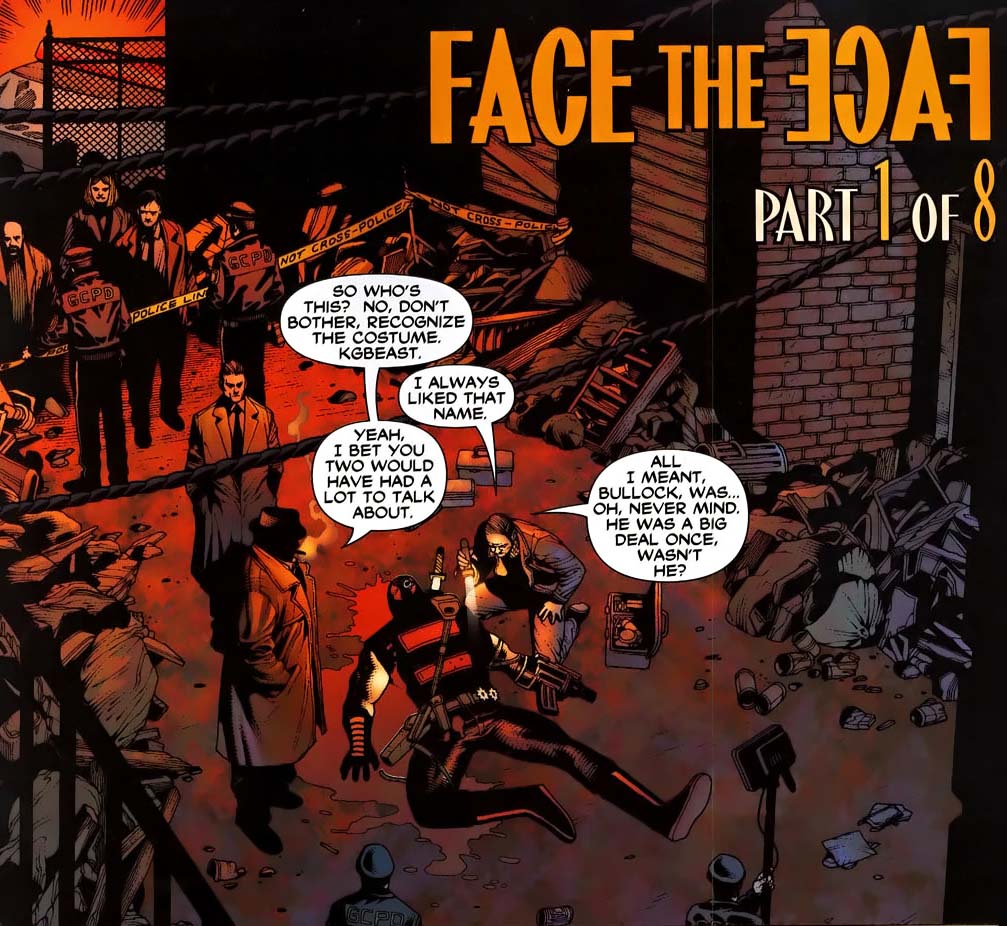
If Moench’s tale can be accused of pretentiousness, the same charge can never be made of Jim Starlin’s ‘Ten Nights of the Beast,’ which is grindhouse all the way… This time around, an obscure cell within the ranks of the USSR’s secret services, just before it gets closed down by Gorbachev, sends out its best assassin to kill 10 people involved with Reagan’s ‘Star Wars’ defense system (including Reagan himself, who is attending a Republican convention in Gotham City). The assassin is known as KGBeast – and while this is a silly name, at least it matches his sartorial choices:

Batman 417Batman #417

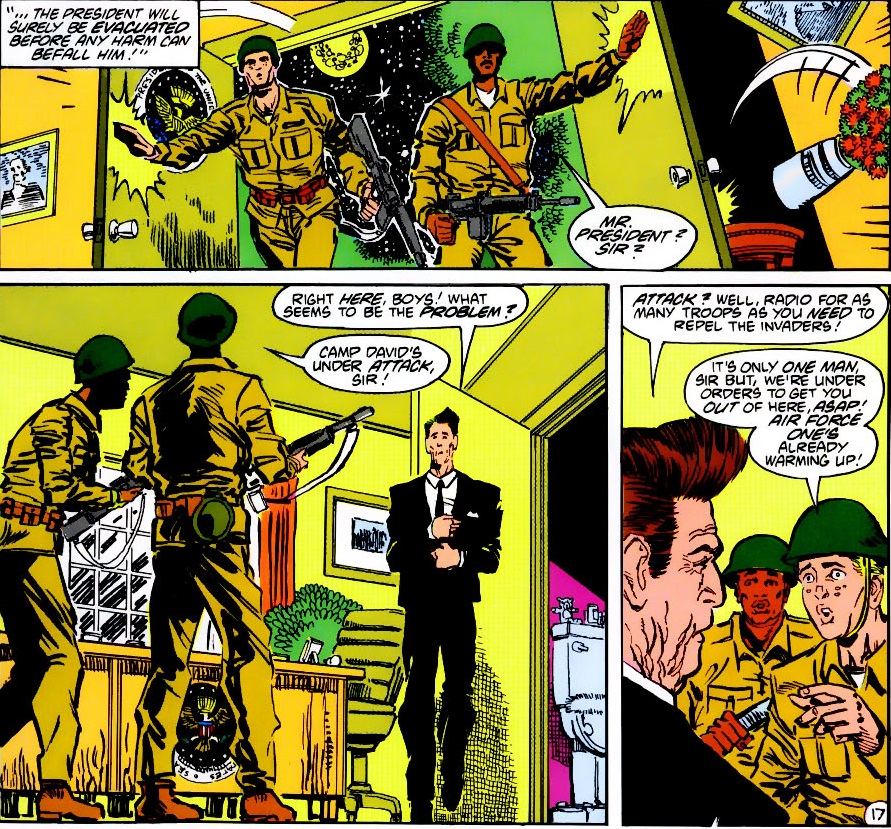
Although his hit list consists of 10 names, the KGBeast kills more than 100 people before the story is over… But hey, at least Batman manages to save Ronald Reagan, and not for the first time (besides the attack on Camp David I described in my last post, the Caped Crusader also saved the Gipper when Greek-themed villain Maxie Zeus tried to take over the 1984 L.A. Olympics, in Batman and the Outsiders #15).

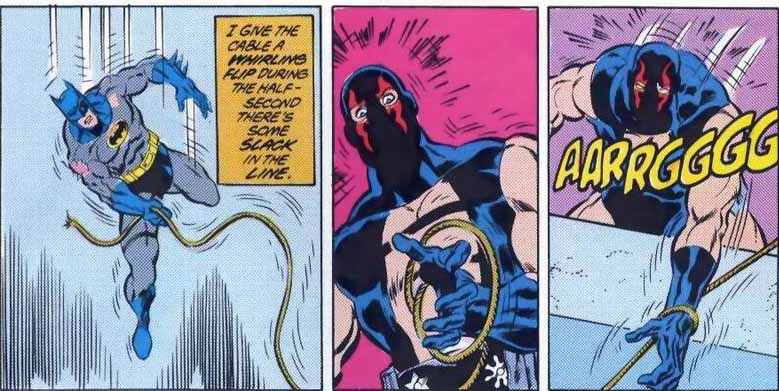
On top of all the schlock, ‘Ten Nights of the Beast’ includes the lowest point in Jim Aparo’s long career of illustrating Batman comics, namely the infamous scene in which the KGBeast gets his hand trapped by a rope, with Batman hanging on the other end…

Batman 419Batman #419

The way this sequence is drawn, it looks as if the super-resourceful Russian assassin can simply get out of it by cutting the rope. But for some unclear reason, he chooses the next best thing and CHOPS HIS OWN HAND OFF!

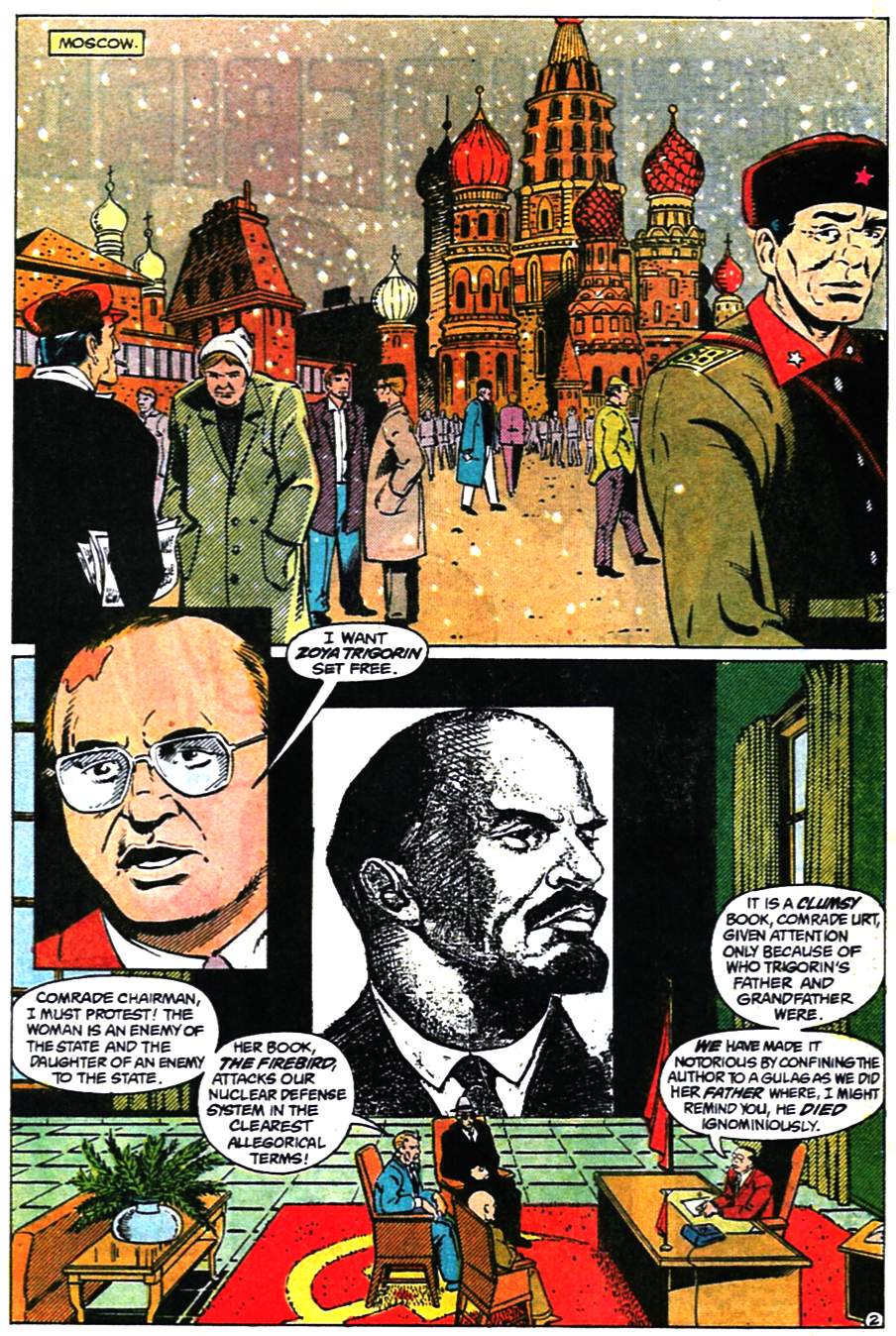
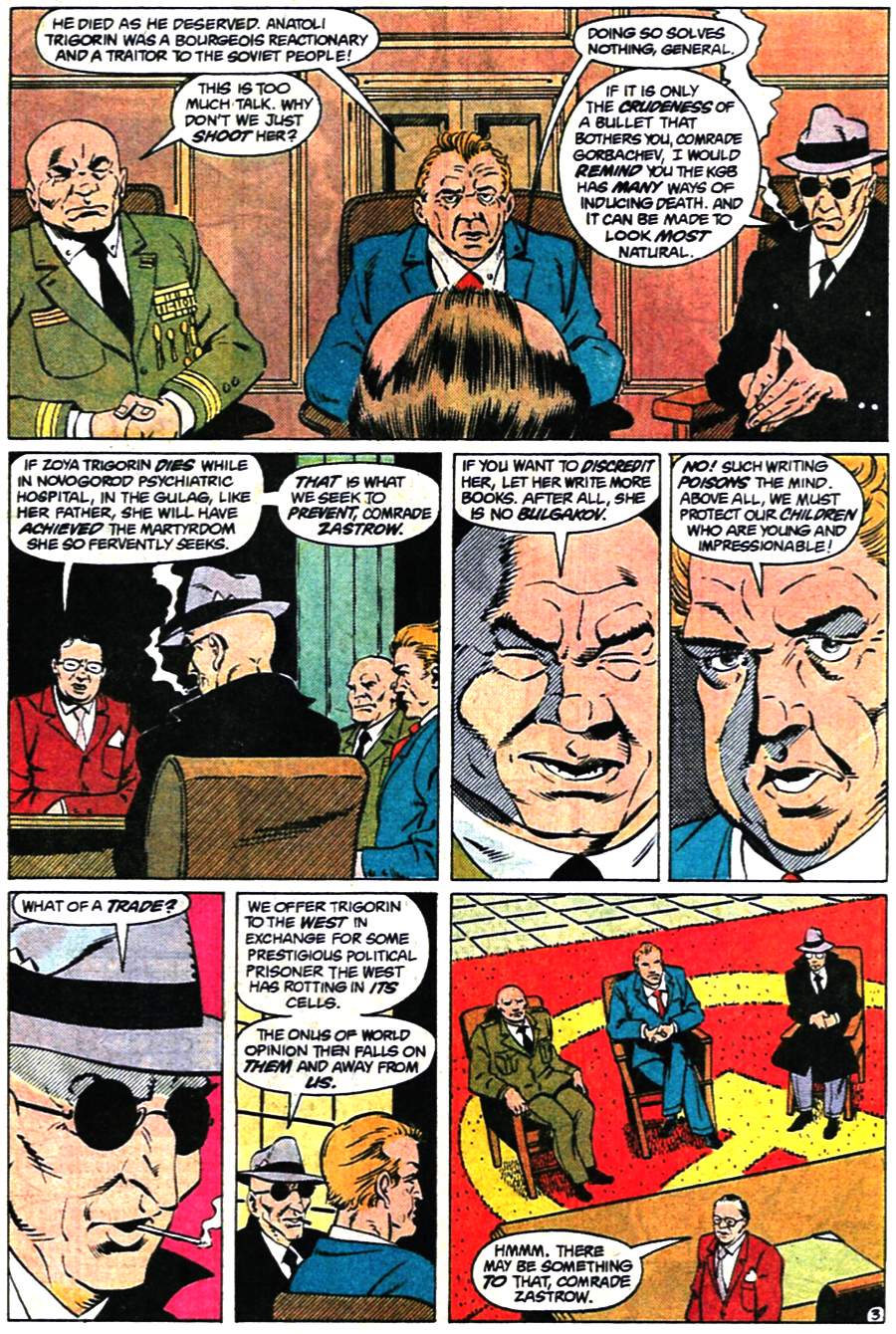
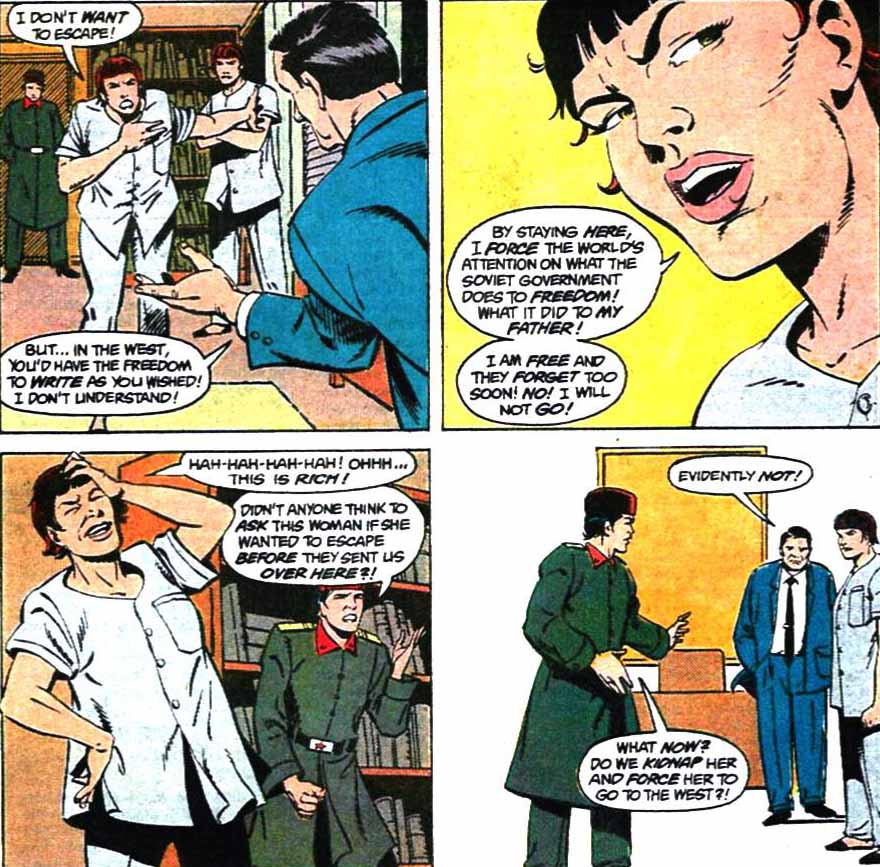
The scene is so puzzling that Marv Wolfman feels the need to address it in the sequel. Set in 1990, ‘When the Earth Dies!’ sees Batman travelling to Moscow to prevent KGBeast’s protégé, NKVDemon (yes, they went there), from murdering 10 Russians behind glasnost and perestroika, including Premier Mikhail Gorbachev, considered to have betrayed the Soviet Union and violated the tenets of Marxism. Thus, Jim Aparo gets to draw an alternative, more logical ending to the roped hand scenario:

Batman 446 Batman #446

And Wolfman once again gets to write some hilariously mismatched dialogue for such eccentrically clad characters:

Batman 447 Batman #447

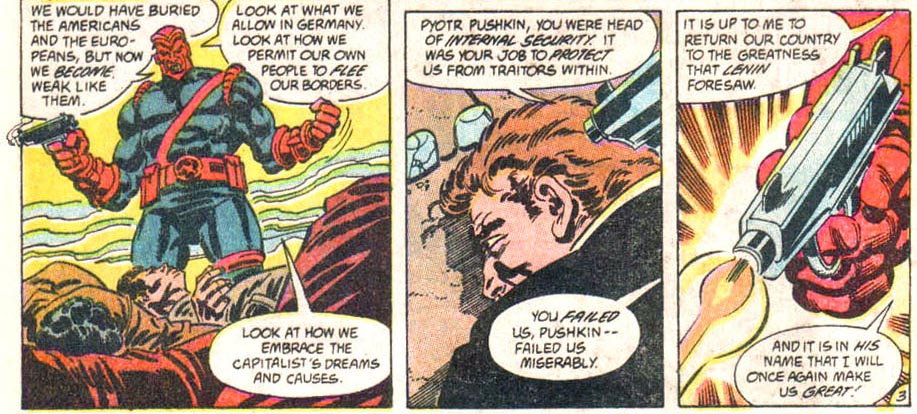
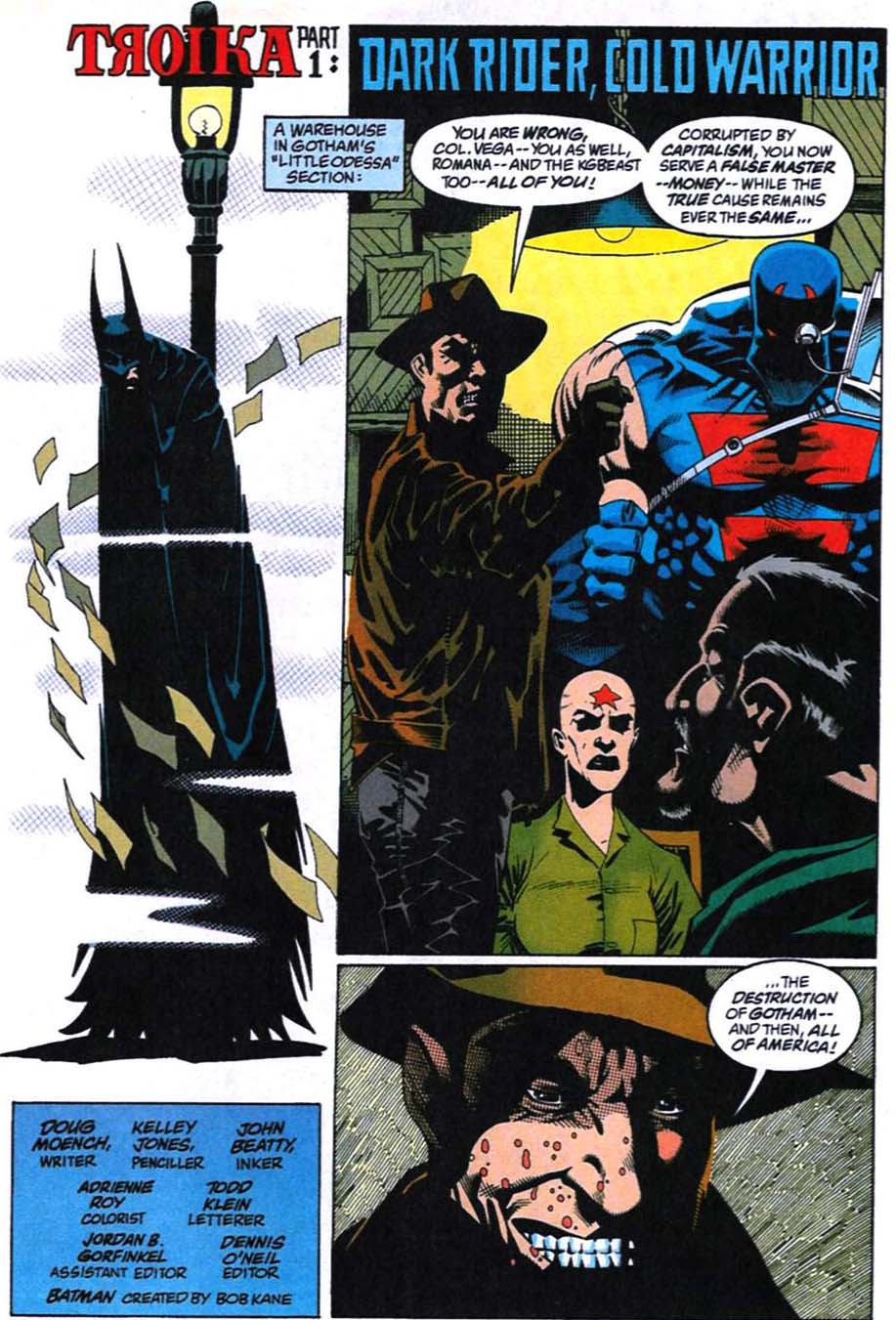
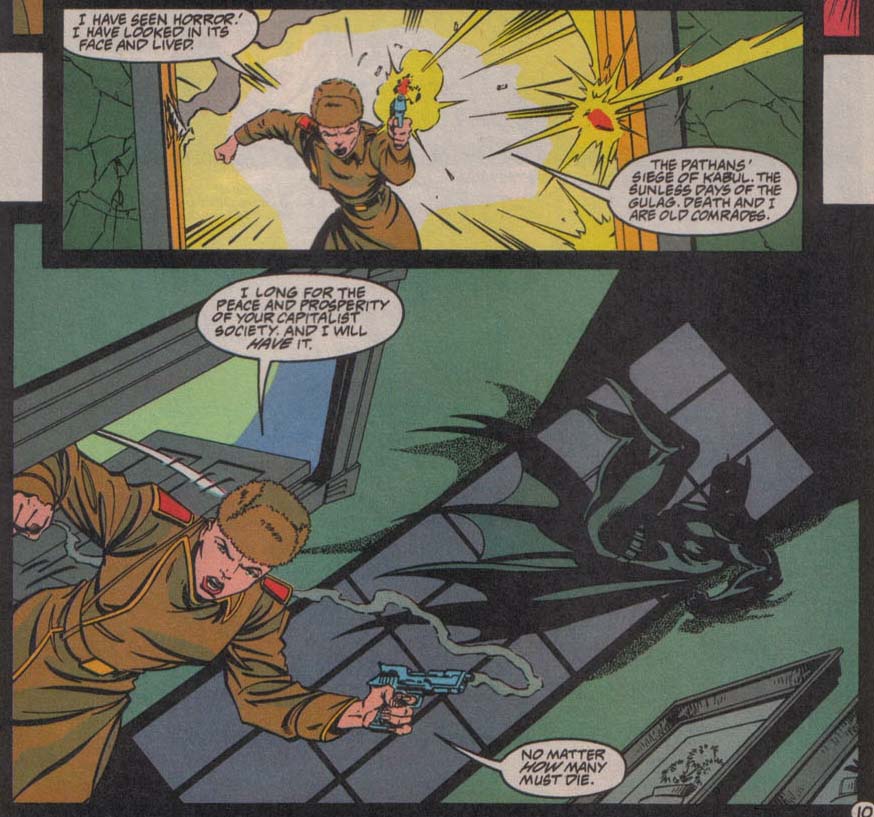
After the breakdown of the USSR, DC was left with a bunch of outdated Soviet villains. In 1994, ‘Troika’ revisited some of the Russian characters still hanging around Gotham City, including the Dark Rider and the KGBeast…

Batman 515Batman #515

The joke is that by now, like the oligarchs back home, many of these characters fully embrace the most savage side of capitalism:

Robin 014Robin (v4) #14

The KGBeast continued to pop up in Batman comics occasionally, suffering from a classic case of villain decay. The assassin that once made Gotham shake with a triple digit body count gradually found himself reduced to a pathetic running joke… In 2006, someone finally put him out of his misery:

Detective Comics 817Detective Comics #817

Still, I guess it’s a matter of time until we get a story where Vladimir Putin brings him back to life…

NEXT: The Joker traumatizes you.

Posted in POLITICS OF BATMAN COMICS | Tagged , , , , , , , , , | Leave a comment

Batman comics and the late Cold War – part 1

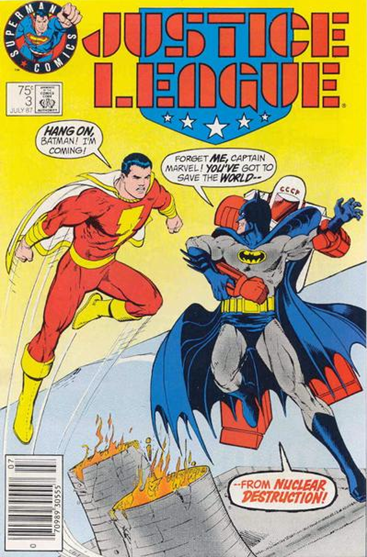
Justice League 3

1980s’ sci-fi thrillers gave us some of the bleakest visions of the future. They dealt with either impending conflict between the US and the USSR – Escape from New York, The Day After, Red Dawn – or its post-apocalyptic outcome – the Mad Max sequels, The Terminator, Akira – painting dark, gritty, and hyper-violent dystopias. This sense of dread is quite understandable, given the escalation of international tension early in the decade, what with the Soviet war in Afghanistan, Ronald Reagan’s aggressive posture towards the Evil Empire (including the threat of lodging nuclear weapons in space), NATO’s war games near the Iron Curtain, etc… Batman comics, which had been engaging with the Cold War for a while, also addressed these concerns, yet for the most part they did it through much more colorful, and decidedly weirder, imagery (yes, weirder than Tina Turner in Mad Max beyond Thunderdome).

Granted, one major exception to this rule happens to be the most popular Batman book of the decade:

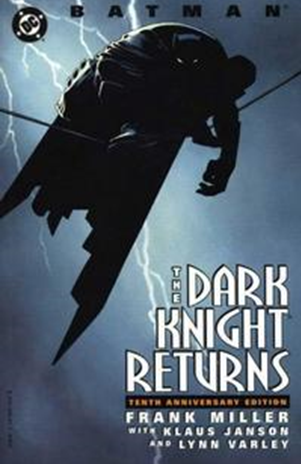
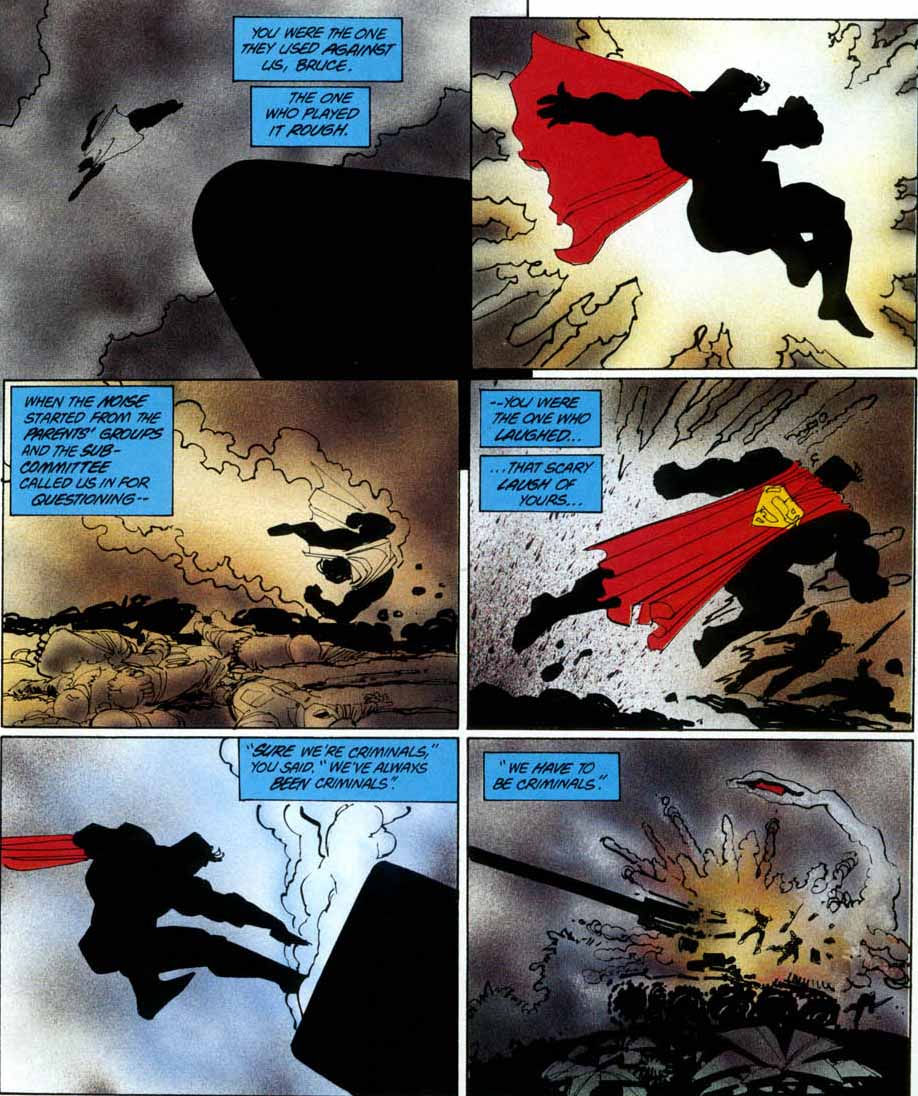
Dark Knight Returns coverIn The Dark Knight Returns, writer-artist Frank Miller fully embraces the nightmarish pessimism and cyberpunk attitude of the abovementioned movies. If anything, he manages amp them up:

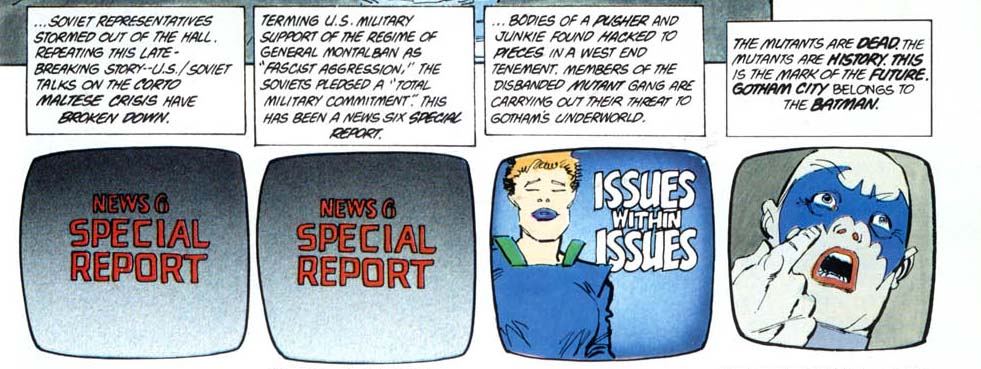
Batman - Dark Knight Returns 03The Dark Knight Returns #3

A subplot revolves around the breakdown of relations between Washington and Moscow over the Central American island of Corto Maltese. At first, this seems to be just one more of the book’s satirical touches, like Reagan’s folksy speeches or the tongue-in-cheek newscasts (which include, for example, the report that the American Hostages Guild has declared a general strike in response to ill-treatment of their members in Libya). However, the dispute over Corto Maltese soon comes to the forefront, as even poor Superman gets involved:

Dark Knight ReturnsThe Dark Knight Returns #3

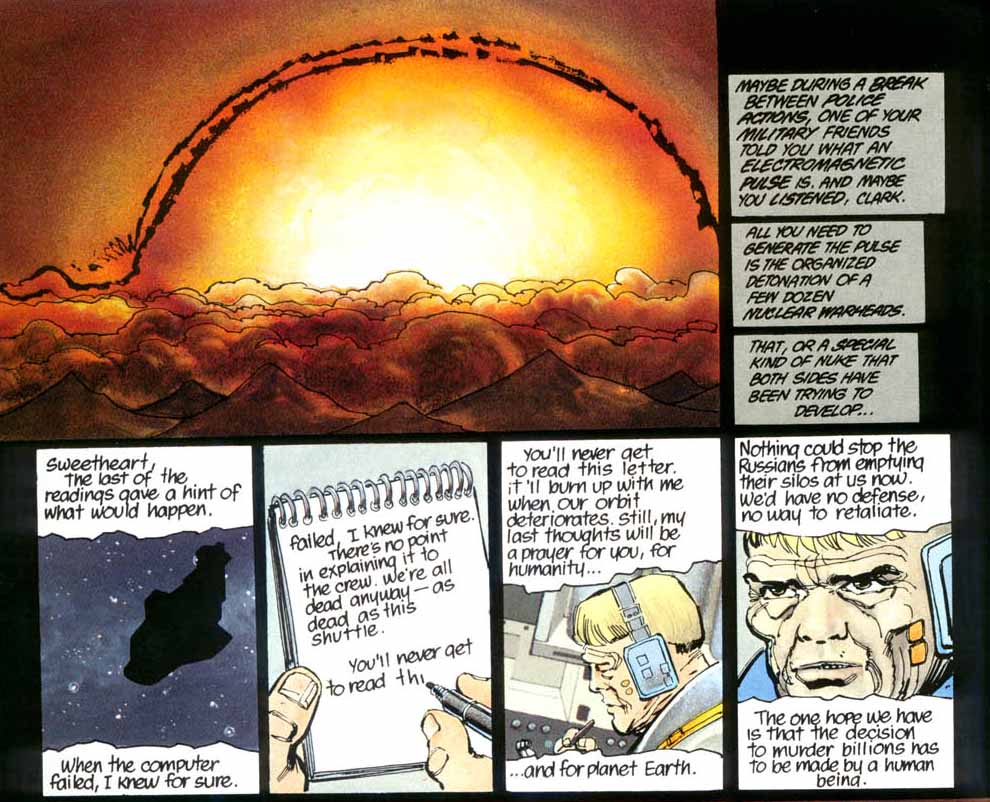
Frank Miller takes full advantage of the fact that he can take the story wherever he wants. After all, Dark Knight is not set in the same version of the DC Universe as other comics being published at the time – it is what is typically called an ‘imaginary story’ (although, like Alan Moore put it, in the end, aren’t they all?). So a Soviet missile reaches American soil, there is social chaos, martial law, environmental doom…

Dark Knight ReturnsThe Dark Knight Returns #4

Indeed, we have Miller and his collaborators to thank for one of comics’ most powerful, unforgettable images of nuclear destruction:

Dark Knight ReturnsThe Dark Knight Returns #4

In official continuity, the Cold War tends to take kookier forms. Batman staves off an alien invasion in Cuba. Bruce Wayne gets charged with treason as he is accused of funding mind-controlled espionage. His ex-girlfriend Vicki Vale investigates Russian weapons being smuggled to rebels in Guatemala, only to discover that the Joker is trying to take over that country and turn it into a giant amusement park.

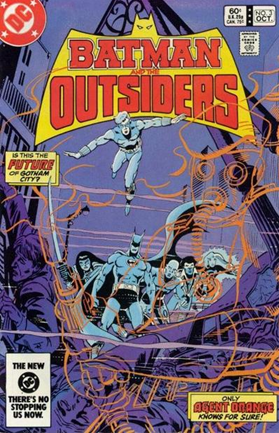
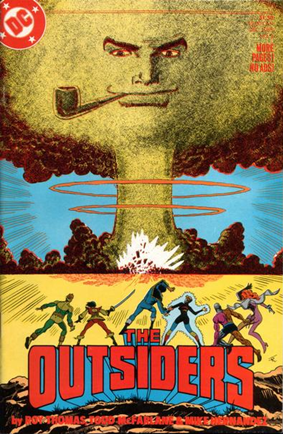
The most political threats are usually fought in the Caped Crusader’s team projects. Notably, the Cold War is all over Batman and the Outsiders and its spinoffs:

Batman and the Outsiders 3     The Outsiders

Written by the eccentric Mike W. Barr, these comics tell the adventures of a group of misfit heroes founded by Batman, who go up against madcap versions of whatever Barr had just heard about on the news. Many stories revolve around the Eastern European country of Markovia, which at one point gets invaded by Soviet troops, but only because they are tricked by a local Nazi (who literally resuscitates the corpse of Adolf Hitler).

Barr also addresses the internal threat to freedom posed by Cold War logic. In ‘…land where our fathers died…!,’ published in 1984, Batman and the Outsiders destroy Project Orwell, a right-winger’s scheme to intercept personal computers and reverse television signals in order to spy on American homes and identify individuals with ‘subversive tendencies.’ This story marks the first of many confrontations between the Outsiders and the Force of July (get it?), an ultranationalist team of American superheroes with the evocative names of Major Victory, Lady Liberty, Mayflower, Sparkler, and Silent Majority:

BatOutAnn-001-11Batman and the Outsiders Annual #1

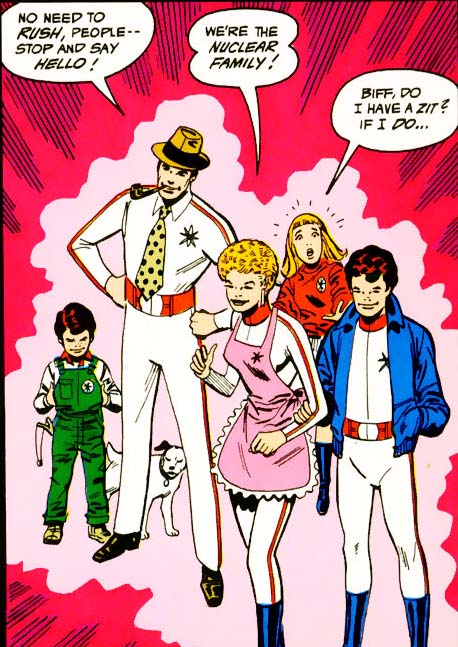
Other Cold War-themed teams to cross paths with the Outsiders include a family of radioactive automatons programmed to blow up Los Angeles in order to teach the world the horror of nuclear devastation…

the outsiders 001The Outsiders #1

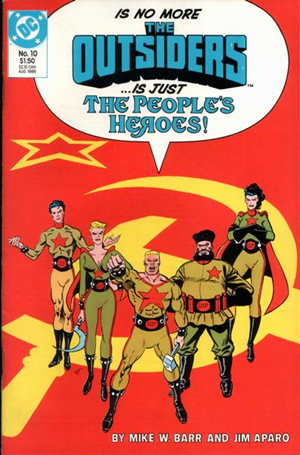
…a Russian supergroup made up of Hammer, Sickle, Bolshoi, Molotov, and Pravda…

The Outsiders 10The Outsiders #10

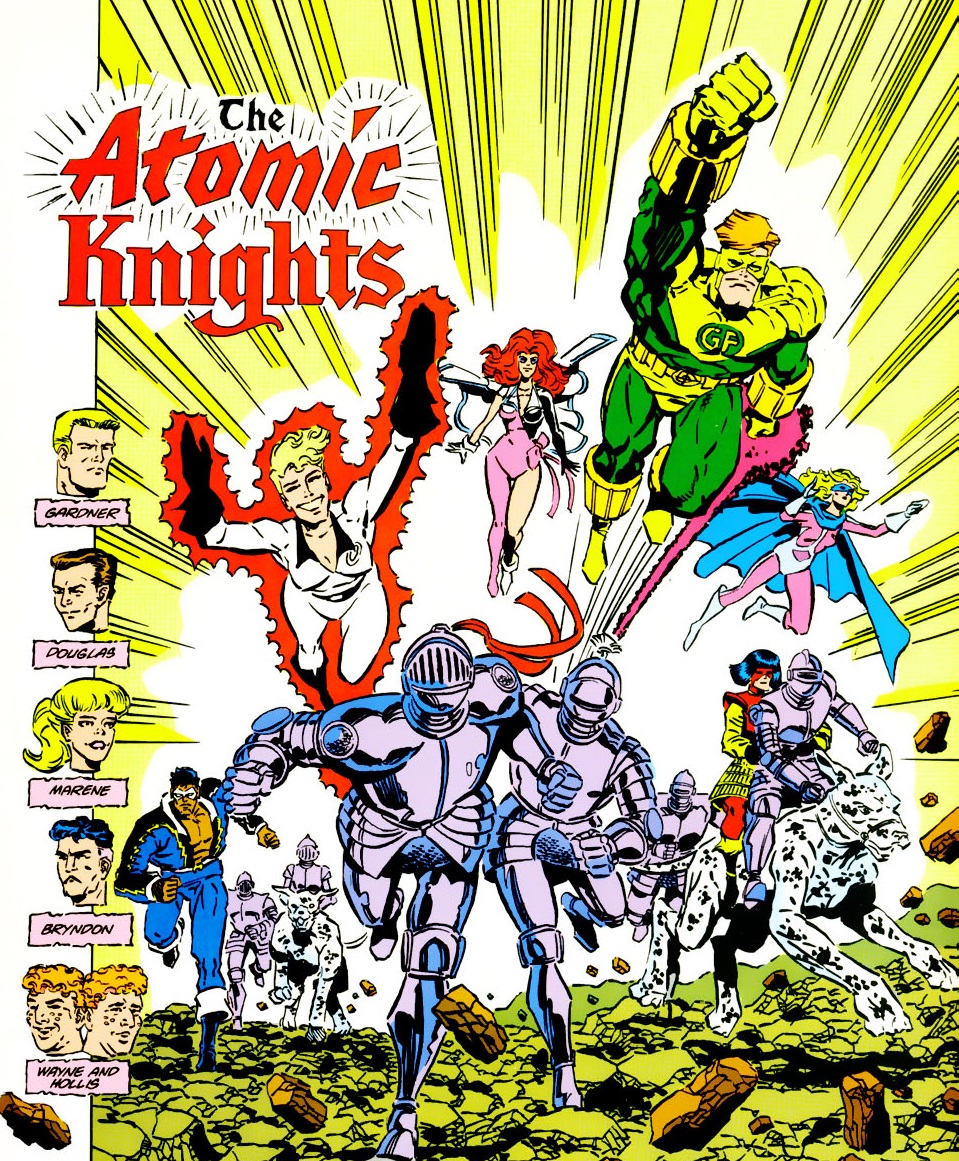
…a battalion of post-nuclear war knights, riding mutant dogs….

the outsiders #027The Outsiders #27

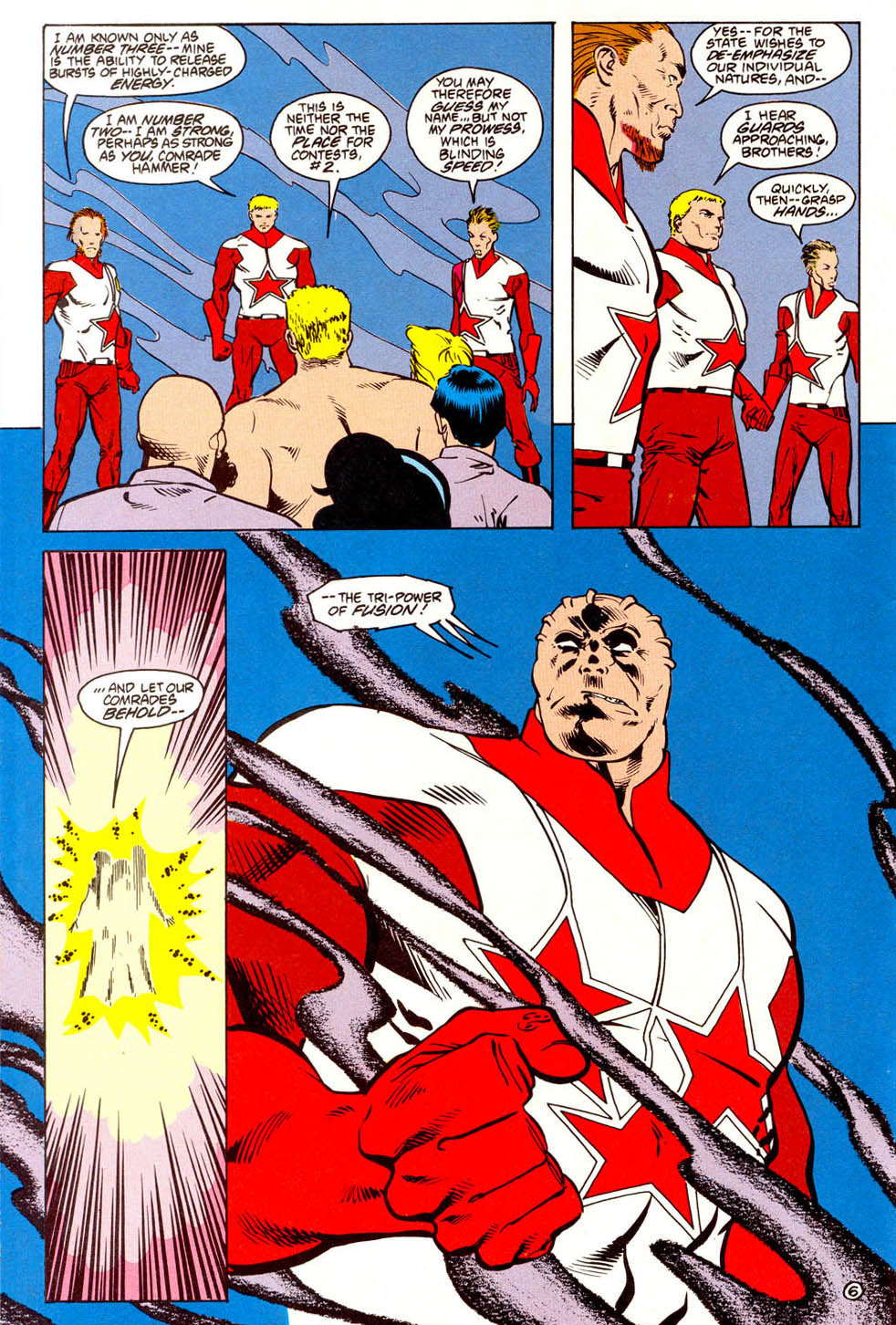
…and Fusion, the next generation in Soviet meta-human warfare:

outsiders 23The Outsiders #23

This last one actually tries to assassinate President Reagan at Camp David, but as usual Batman is on top of things:

the outsiders #024 the outsiders #024The Outsiders #24

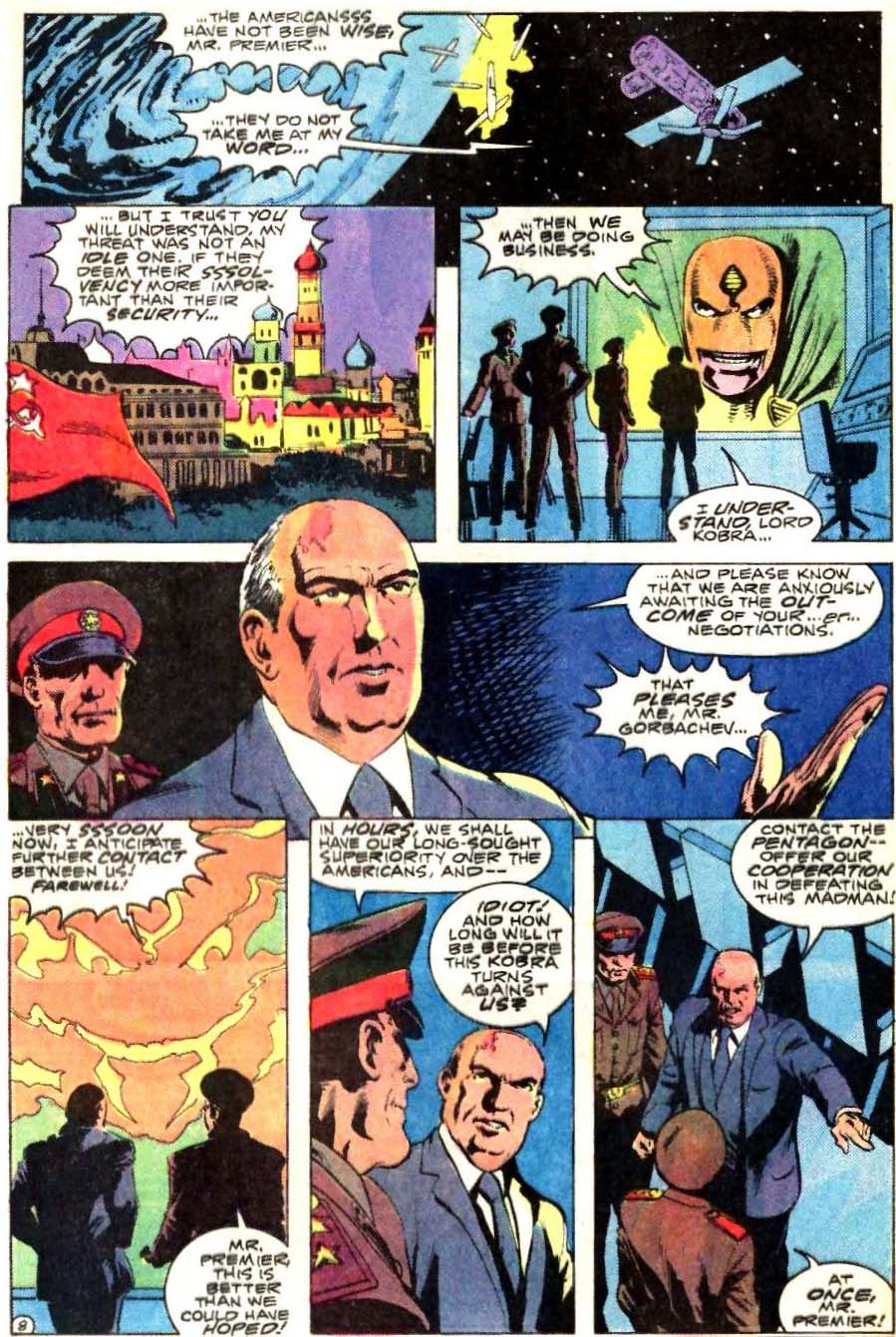
The Caped Crusader and the Outsiders also spring into action when the super-terrorist Lord Kobra takes over Reagan’s proposed SDI defense system – commonly known as ‘Star Wars’ – and demands Washington turn over the entire contents of Fort Knox… or he will sell the ‘Star Wars’ system to Soviet Russia! Not only does this make for an exciting cliff-hanger, it also gives us a cute ‘Next Issue’ blurb:

BatOut-026-23Batman and the Outsiders #26

To his credit, Mike Barr doesn’t sell Gorbachev short:

Batman and the Outsiders 027Batman and the Outsiders #27

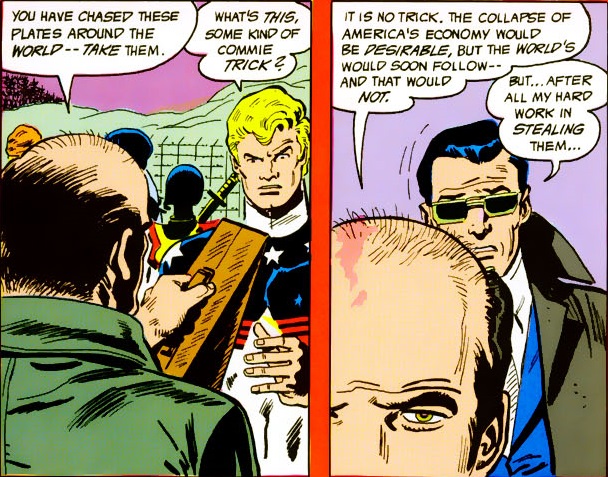
Mikhail Gorbachev shows up again in ‘Breaking the Bank!’ Worried about the USSR’s runaway inflation and growing feelings of discontent, the Soviet leader authorizes a plan to steal dollar printing plates from the US reserve. The Outsiders and Force of July chase the plates all the way to Leningrad, culminating in another pragmatic Gorbi moment:

the outsiders #004The Outsiders #4

Pragmatic, but devious. A few issues later, Gorbachev comes up with another plan to solve his country’s economic troubles. This time he gets the president of the pro-Soviet African state of Mozambia (what you get when you cross Mozambique and Zambia, down to the flag colors) to divert the profits from a huge Live Aid-like concert to combat hunger, titled Fund American Money Into Needy Eurafrica (F.A.M.I.N.E.).

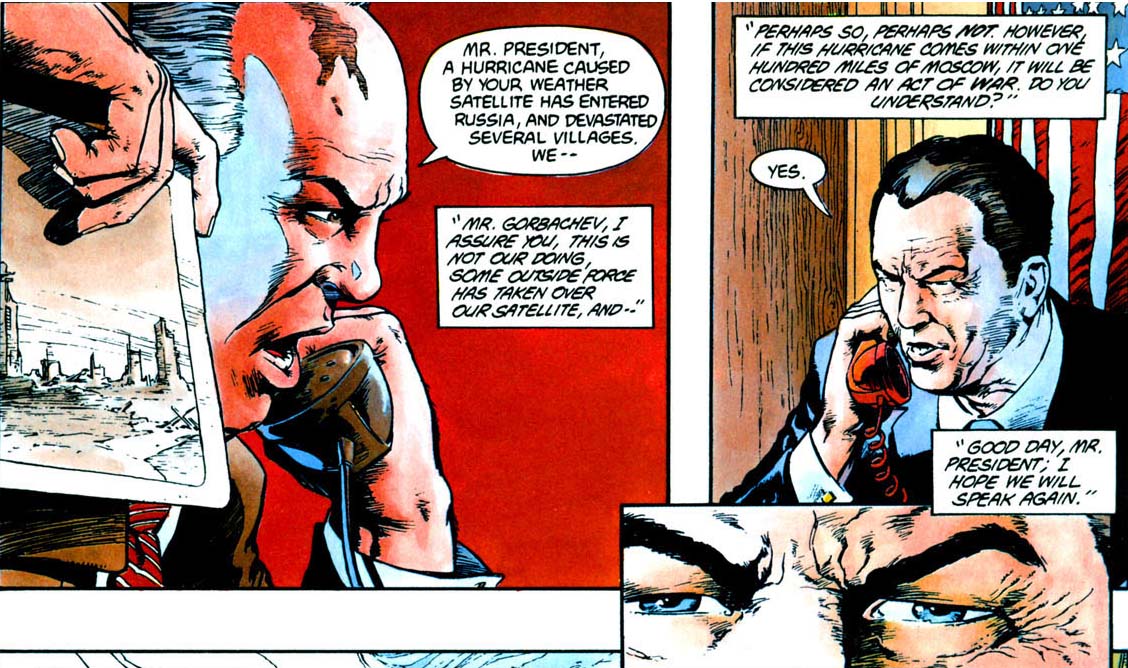
Barr had so much fun writing the Soviet leader that Gorbachev also shows up in the pages of Batman’s classic tale Son of the Demon, where a psychopathic terrorist obsessed with death and destruction uses an American weather-controlling satellite to provoke the USSR. Given the circumstances, Gorbi’s reaction doesn’t seem all that unreasonable:

Batman Son Of The DemonSon of the Demon

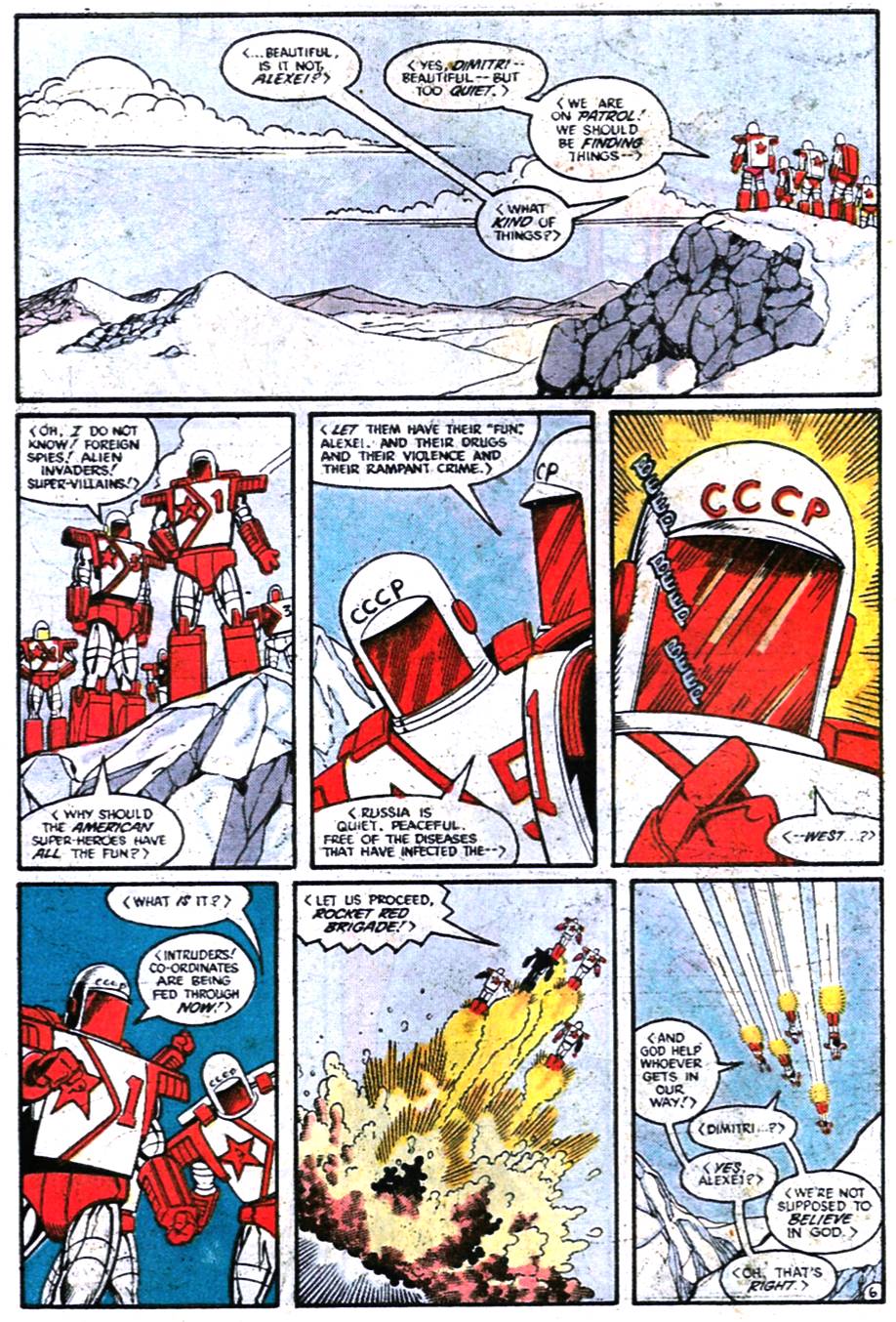
The other super-team Batman belongs to who is often entangled in international politics is the UN-affiliated Justice League. The League is called to intervene, for example, against a trio of super powered idealists from an alternative Earth (devastated by nuclear holocaust) who try to destroy this Earth’s stockpile of nuclear weapons. When the trio attacks a Russian missile base though, they have to face not only the League, but yet another group of Soviet superheroes:

Justice League 03Justice League #3

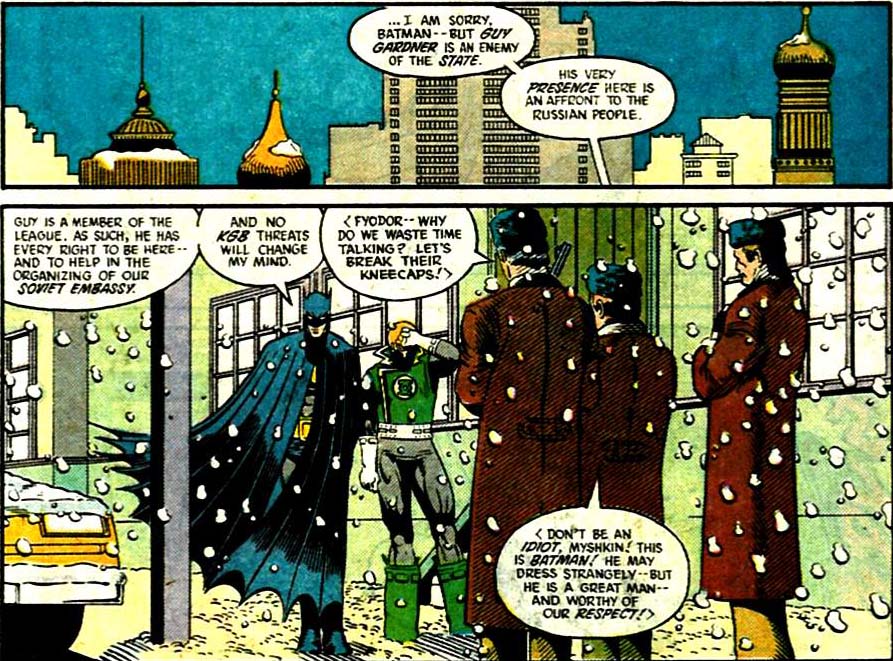
One of these Red Rockets and the American patriot Captain Atom join the League as a concession to Moscow and Washington when the team is upgraded to Justice League International (JLI). As part of the upgrade, the JLI also establishes embassies all over the world, leading to this great exchange that proves that even the KGB knows how cool Batman is:

Justice League International 08Justice League International #8

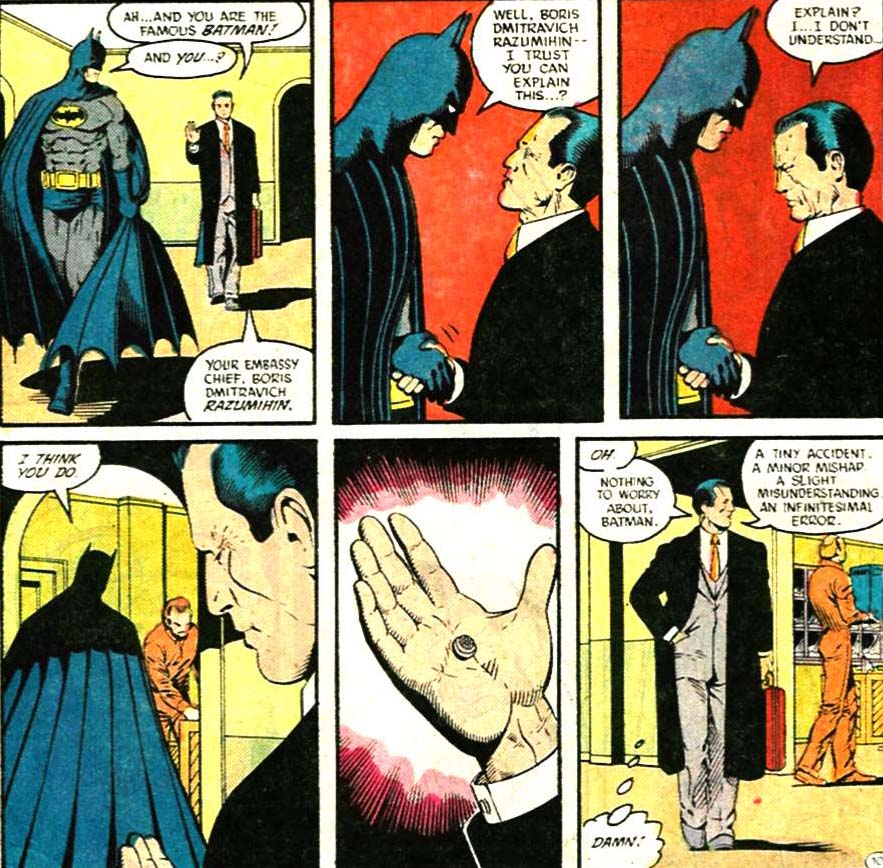
The Dark Knight, on the other hand, is no more willing to take shit from the reds than he is from anyone else:

Justice League International 008 Justice League International #8

NEXT: Batman saves Ronald Reagan’s life AGAIN.

Posted in POLITICS OF BATMAN COMICS | Tagged , , , , | Leave a comment

Great Golden Age splashes

In my post about Mike W. Barr I mentioned that one of the many nostalgic elements in his acclaimed Detective Comics run was the inclusion of surrealist title pages teasing each issue’s themes and plot. Such opening splash pages can be found in comics dating back practically to the beginning of the industry and remained a staple feature of the medium for decades, even if they had mostly fallen out of fashion by the mid-to-late 1980s, when Barr’s artists briefly reintroduced them. Naturally, the most imaginative samples came out during the whole Silver Age psychedelia. As this post will show, however, title pages were quite quirky already in the Golden Age – which shouldn’t surprise, after all we’re talking about an era in which Batman once fought a d’Artagnan lookalike who was holding a whale for ransom at a thousand dollars a ton.

Placed in the beginning of the story, the function of this kind of splash pages is to lure readers in by giving them a sneak peek of the main conflict even before the setup – an alternative to the classic strategy of starting in mid-story and quickly moving to a flashback. The initial image, along with the overblown captions, will sometimes try to create a sense that the stakes will be higher than ever, promising a life-changing experience, or at least intrigue the hell out of impressionable readers with some shocking or bizarre premise, leaving us no choice but to turn the page in order to satisfy our curiosity… only to find out that – more often than not – the introduction cheated, its image having little connection to the actual narrative other than at the most symbolic level.

Sticking to the 1940s alone, we can find plenty of intros that are outright puzzling, dream-like, almost poetic, and blatantly misleading – in short, awesome. To give a sense of how cool they were right off the bat (I just couldn’t resist!), here are my 10 favorite examples from Golden Age Batman comics.

detective comics 72Detective Comics #72

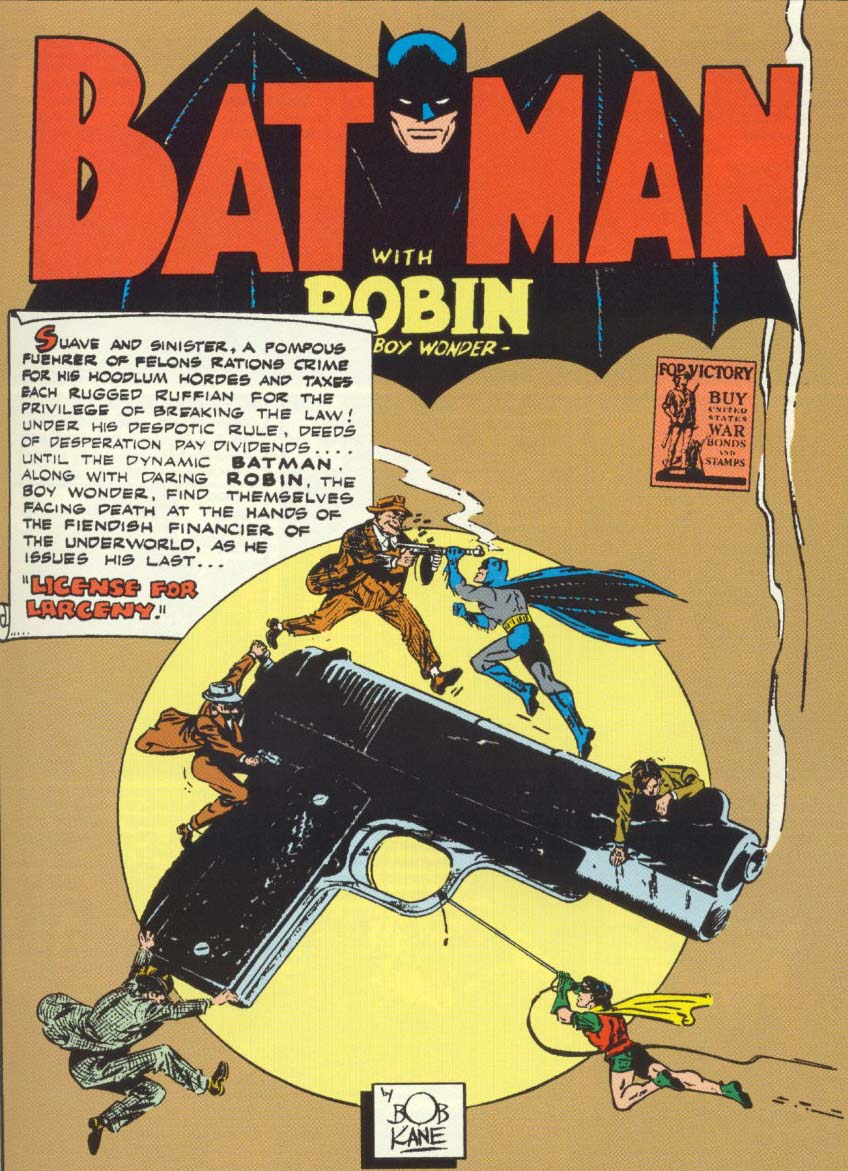
The image of Batman and Robin facing thugs armed with guns on top of a giant gun is so striking that at first you may even miss the small rectangle asking you to buy war bonds and stamps. But even before you notice it, you can easily tell this is a World War II comic because the caption seems to have lifted its characterization of the villain from an anti-Nazi pamphlet, talking of a ‘fuehrer of felons’ with ‘hoodlum hordes’ and a ‘despotic rule.’

Batman 019Batman #19

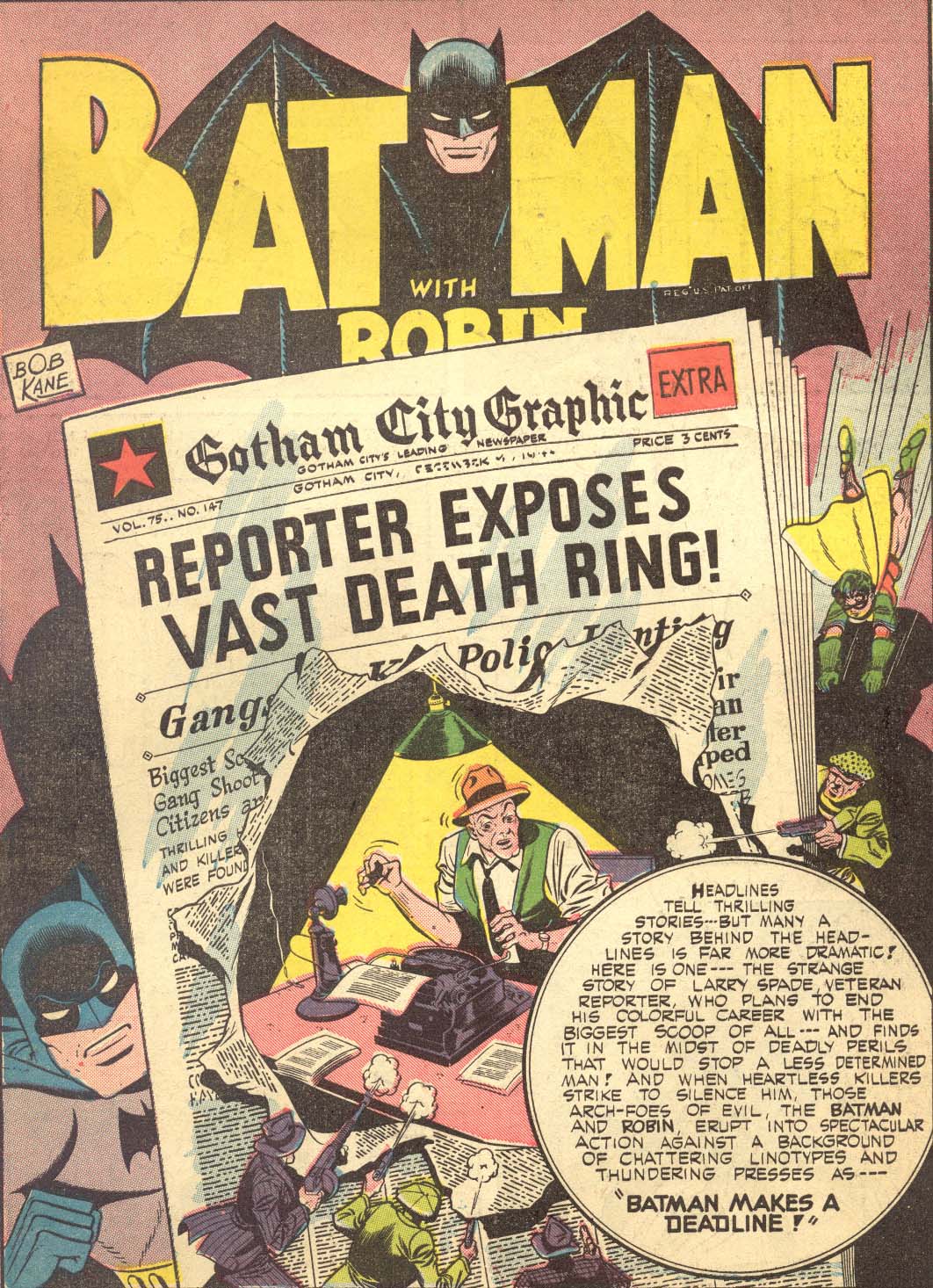
This is one seriously multi-layered splash page. On the forefront, we have the round caption summing up the premise, then there are a bunch of gangsters and Robin in mid-jump, then an oversized newspaper page with a headline about a reporter exposing a death ring, and behind it the reporter himself, who is clearly on another level but is nevertheless able to see the gangsters shooting at him through the torn paper… AND behind it all there is Batman, whose size indicates is on yet another layer, not to mention the comic’s logo at the top, which seems even more distant. The mind boggles!

detective comics 148Detective Comics #148

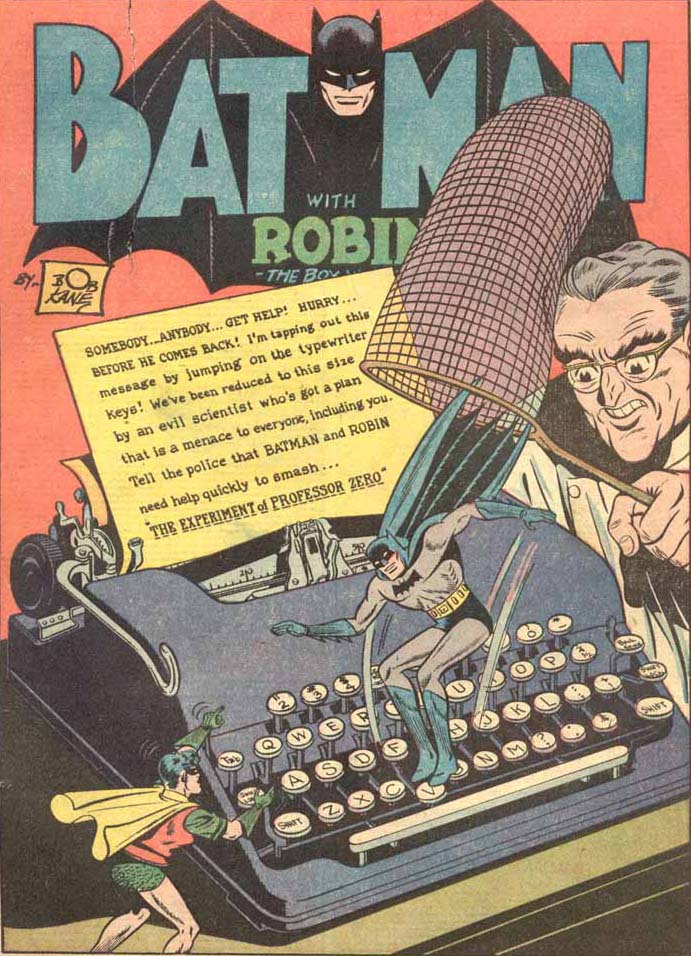
As you may have gathered by now, many of these teaser splashes involve the Dynamic Duo doing acrobatics around giant objects. This one, however, has the particularity of presenting the scenario with a more literal twist – the size difference is no longer allegorical, but the deed of an evil scientist… and the text piece introducing the story’s title is apparently not the voice of the editor, but of the Caped Crusader himself, as he types a rescue note full of melodramatic punctuation…

detective comics 082Detective Comics #82

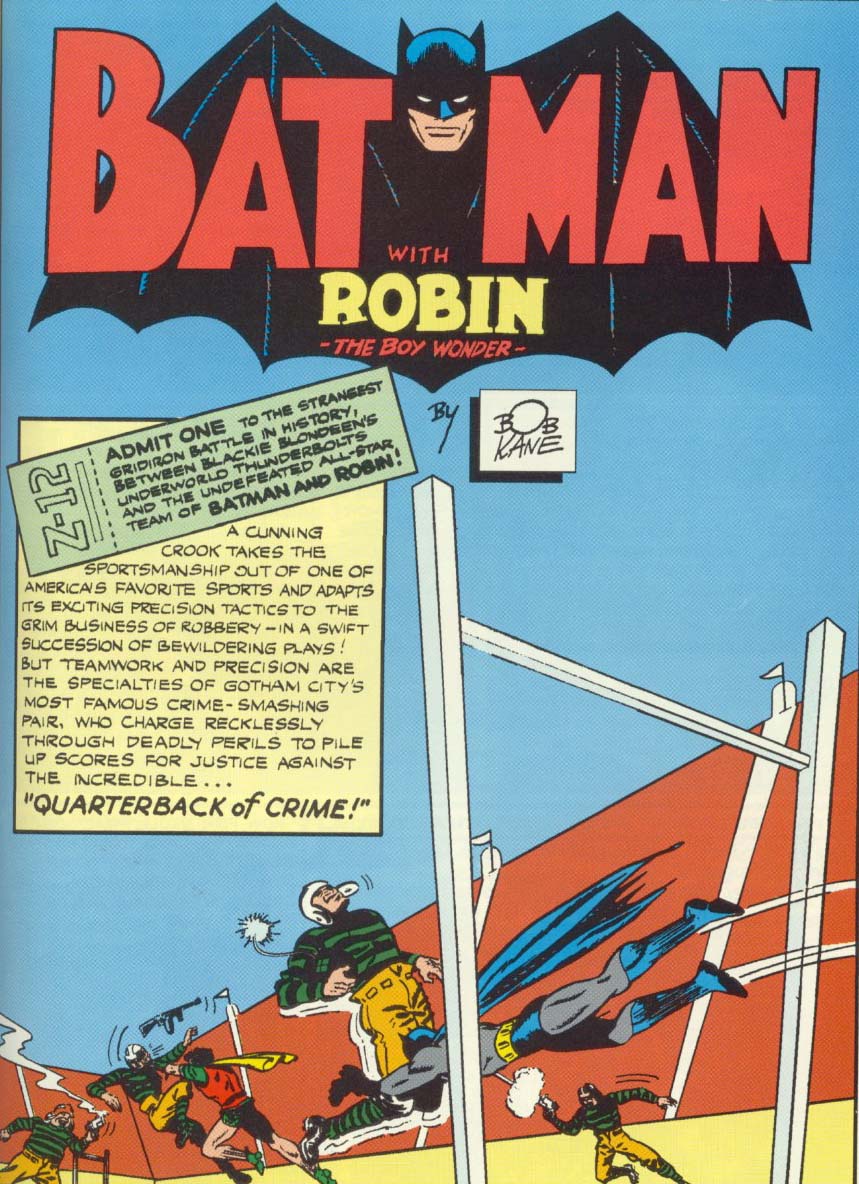
The coolness here is pretty self-explanatory. It’s not the first splash page we’ve seen with Batman and Robin fighting a team of armed goons, but this time the team looks like a freaking football team, in a stadium and all. The caption (part of which looks like a stadium ticket) doesn’t even feel the need to mention the fact that the following story includes an overweight Alfred saving the day by kicking a bomb!

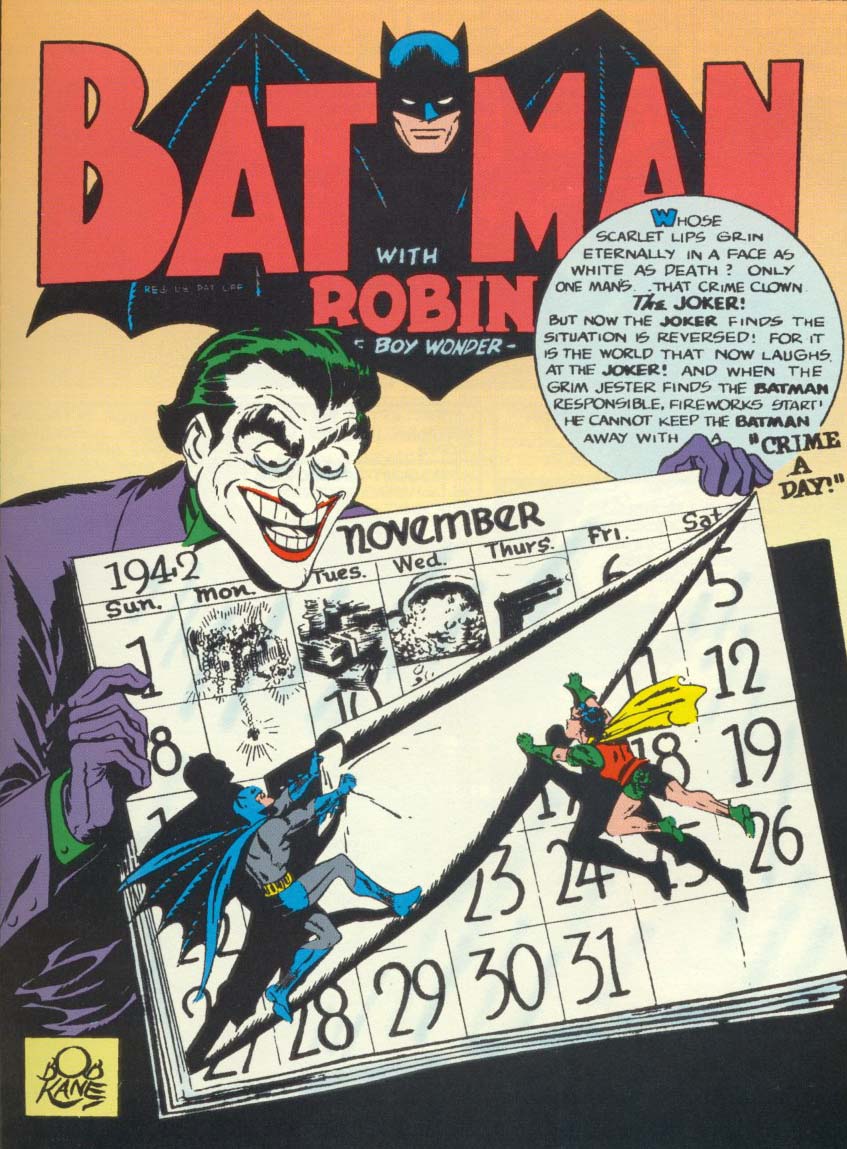
detective comics 071Detective Comics #71

With his haunting features and unconventional plans, the Joker tends to encourage some of the most memorable splashes and this one is no exception. Besides the amazing design composition, I also have a soft spot for the line: ‘He cannot keep the Batman away with a “crime a day!”’

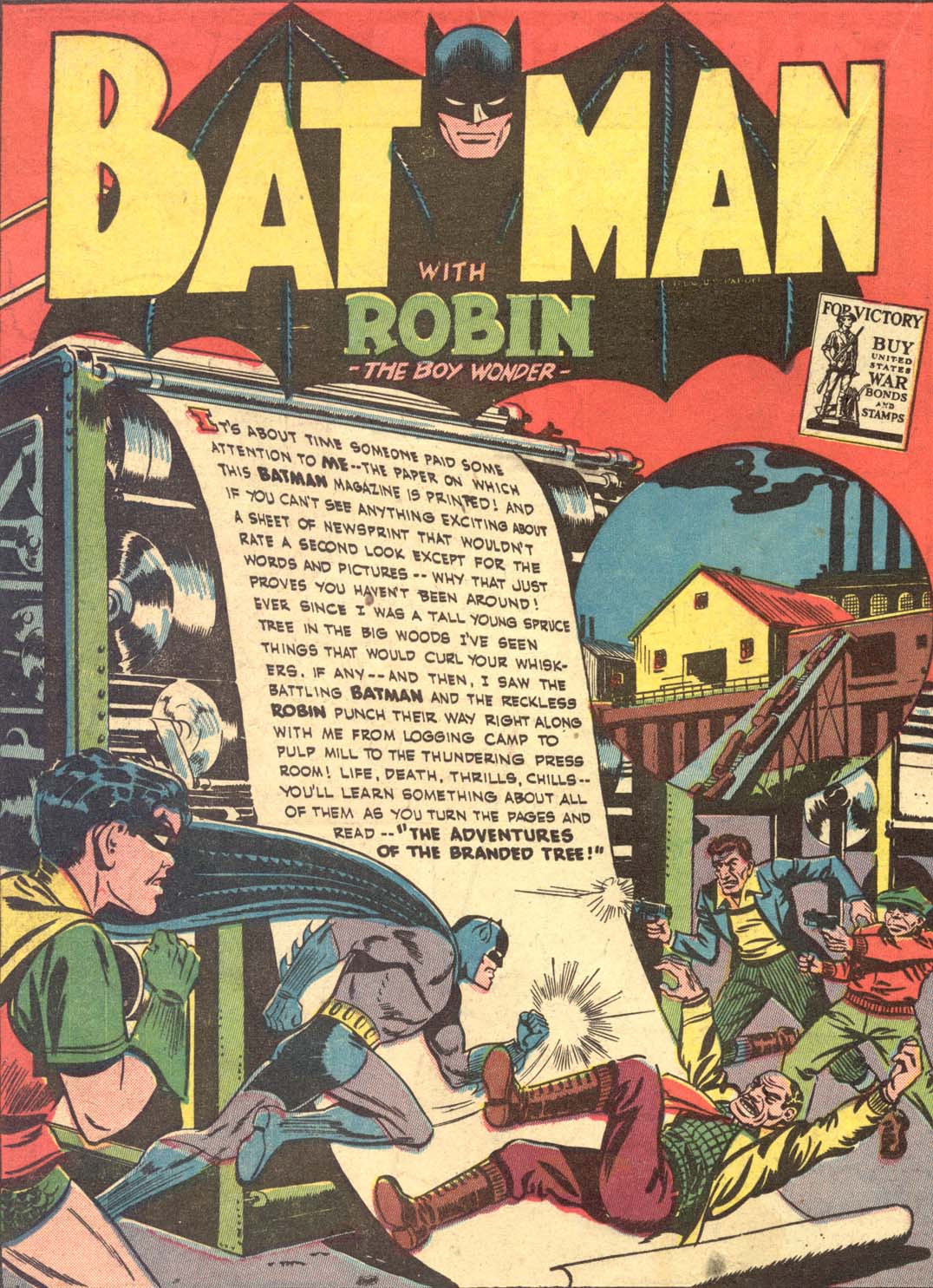
Batman 016Batman #16

Not only is the introductory text nicely integrated into the image by being written on the piece of paper going to print, it is written *from the perspective* of that paper! The paper, by the way, is so self-aware that it even knows it will end up as a Batman comic.

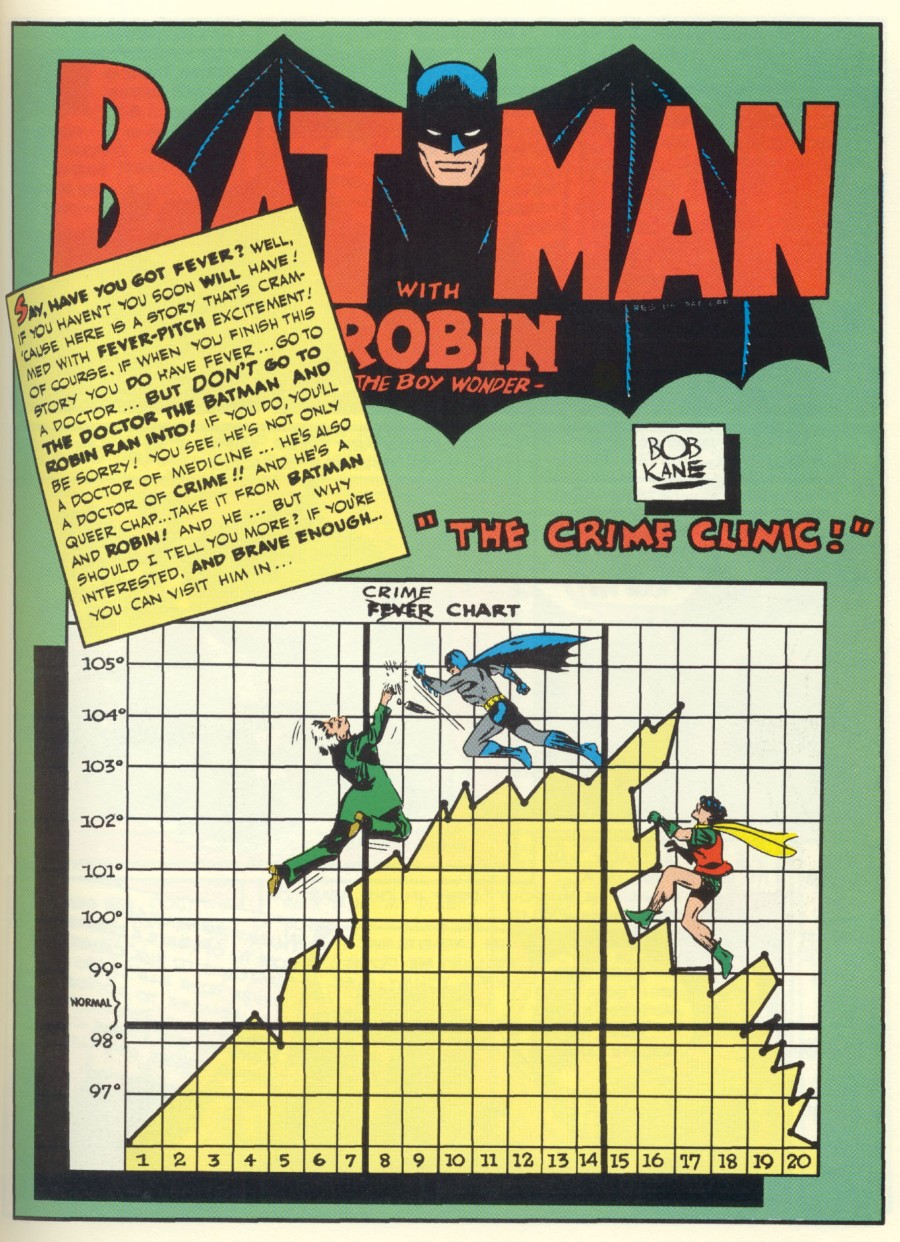
detective comics 77Detective Comics #77

Speaking of eccentric text pieces, this one is all over the place… and just in case the connection between fever and crime is not obvious enough, the art makes it even clearer by actually adding the word ‘crime’ to the top of the fever chart.

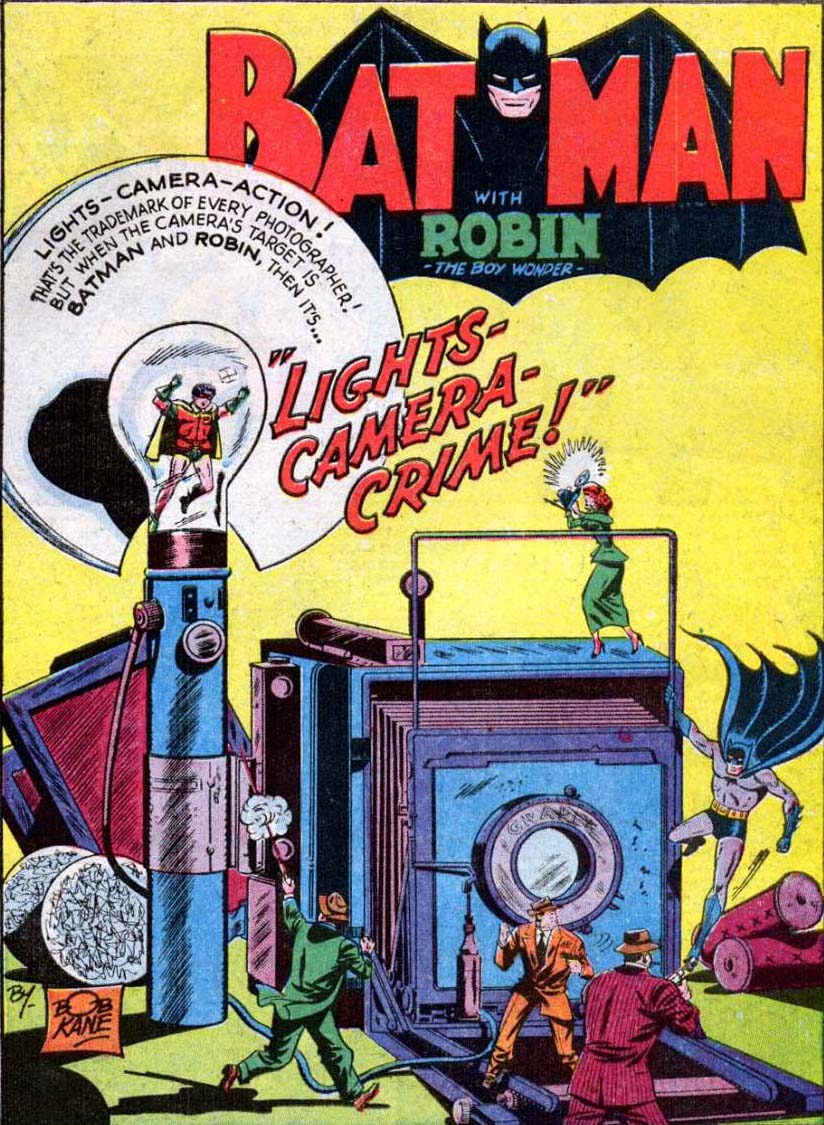
Batman 050Batman #50

Another page with all the elements: a huge prop, Batman jumping on armed gangsters, corny narration neatly integrated into the image, a title that ham-fists the word ‘crime’ into a common expression and finishes with a gratuitous exclamation mark… plus a female character for once – Vicki Vale – taking a picture of a helpless Robin.

Batman 051Batman #51

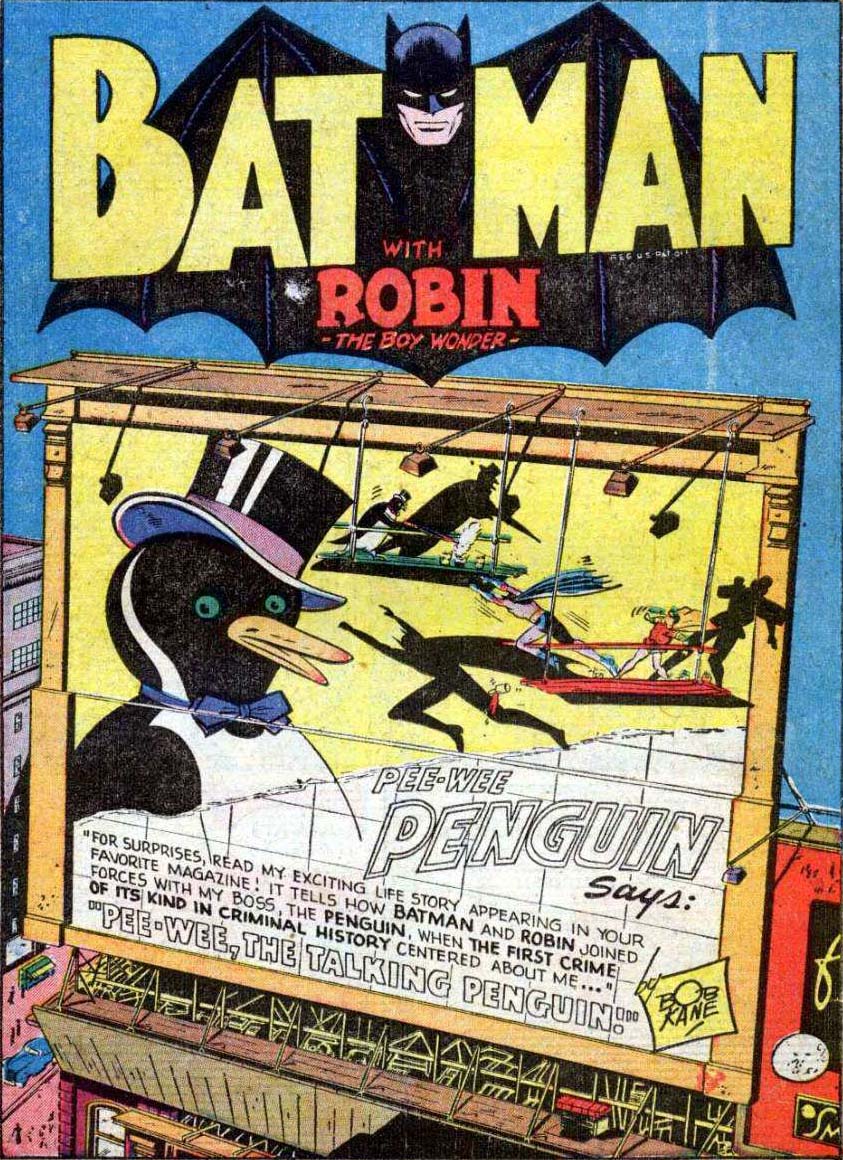
I guess it’s just a matter of time until Pee-Wee, the Talking Penguin, gets the Dark Knight/New 52 treatment and comes back as a brooding, psycho-rapist human-killer out to get revenge on climate change deniers for letting his home melt… we’ll always have this story, though!

detective comics 112Detective Comics #112

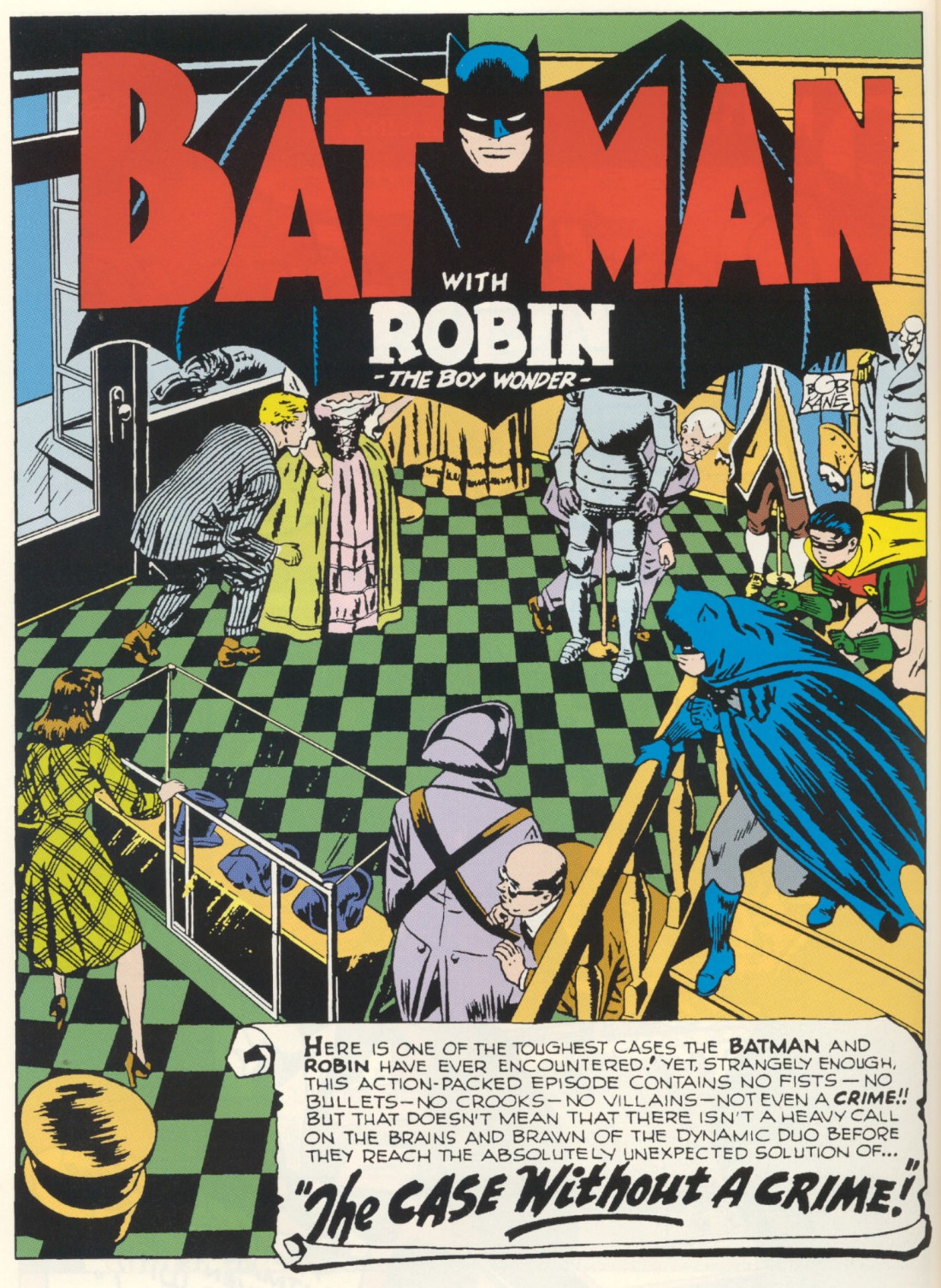
Finally, this one may be my favorite, although it is hard to fully appreciate without context. Not that it’s a bad teaser by itself… the caption and the title are intriguing enough, promising a case that kicks ass despite the absence of fists, bullets, crooks, villains, even an actual crime! But it’s after you’ve read this adorable adventure and come back that you really realise how pitch-perfect the image is, illustrating pretty much the whole plot.

NEXT: Batman saves Ronald Reagan’s life.

Posted in ART OF BATMAN COMICS | Tagged | Leave a comment

Mike W. Barr’s paradoxical Batman

Mike W. Barr’s Batman comics – particularly his work in the 1980s – tend to have a deeply recognizable authorial voice, for two very distinct reasons. On the one hand, you’d be hard-pressed to find a modern Batman writer able to so skilfully capture an old school sense of fun and wonder. On the other hand, Barr writes one of the cruelest versions of the Dark Knight, one with very ambiguous regard for human life.

Under Barr – and not many others – Batman has often killed criminals, or at least casually let them die. Noted Batmanologist Chris Sims has repeatedly pointed out that thanks to Barr the Dark Knight has used a thug as a human shield and once cold-bloodedly threw Ra’s al Ghul against his own space death rays. And, of course, in the first pages of Son of the Demon, Batman not only sends three henchmen to their deaths in a helicopter crash, he also pitilessly lets a guy take an acid bath:
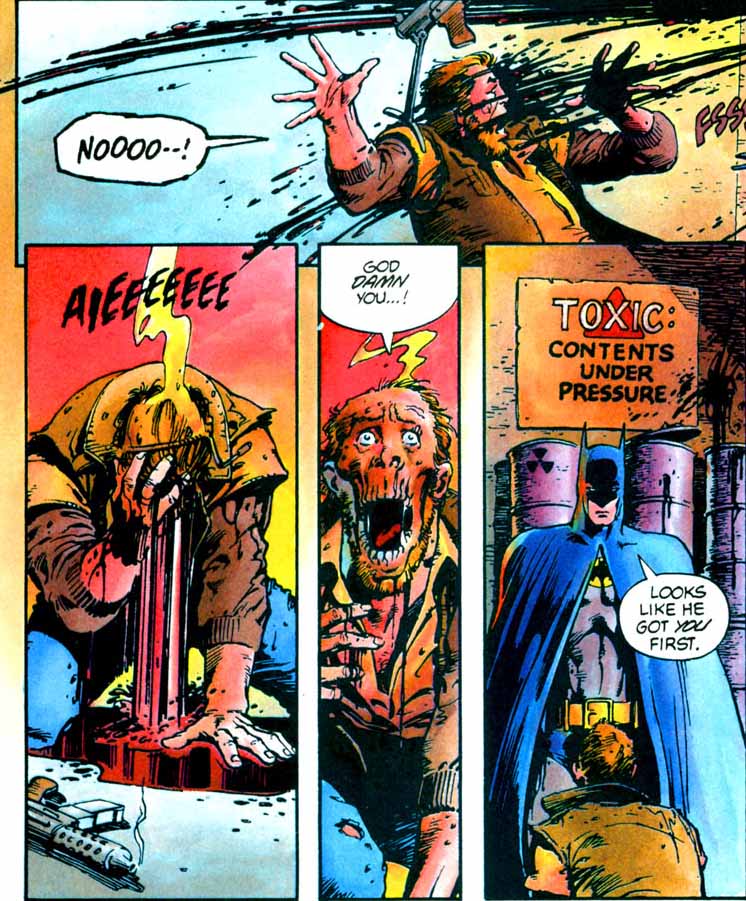
Batman Son Of The Demon

In Batman Annual #9, the terrorist group Black Heart Liberation Army gets upset that bank robbers are using the group’s badass name, arguing that ‘while liberating funds from capitalist lackey money-lenders is an excellent means of exemplifying the class struggle for the masses,’ this should not be left to ‘crude thugs who only want to enter the system…’ When the terrorists confront the robbers, Batman very deliberately uses a party favor to trick them all into shooting and blowing each other up!

Although less intentionally, there is also that time the Caped Crusader scared a man to death:
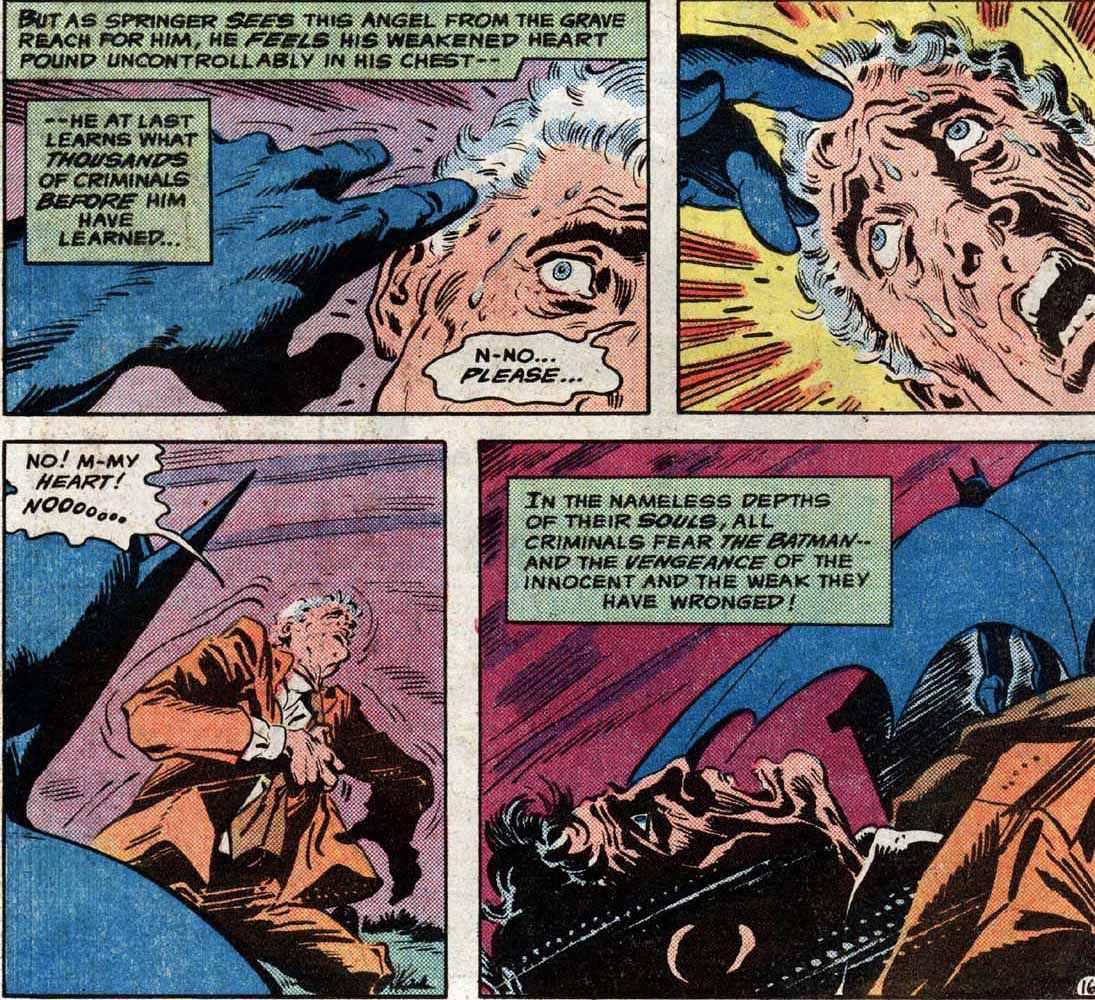
Brave & Bold 169The Brave and the Bold #169

…I mean, those two times:
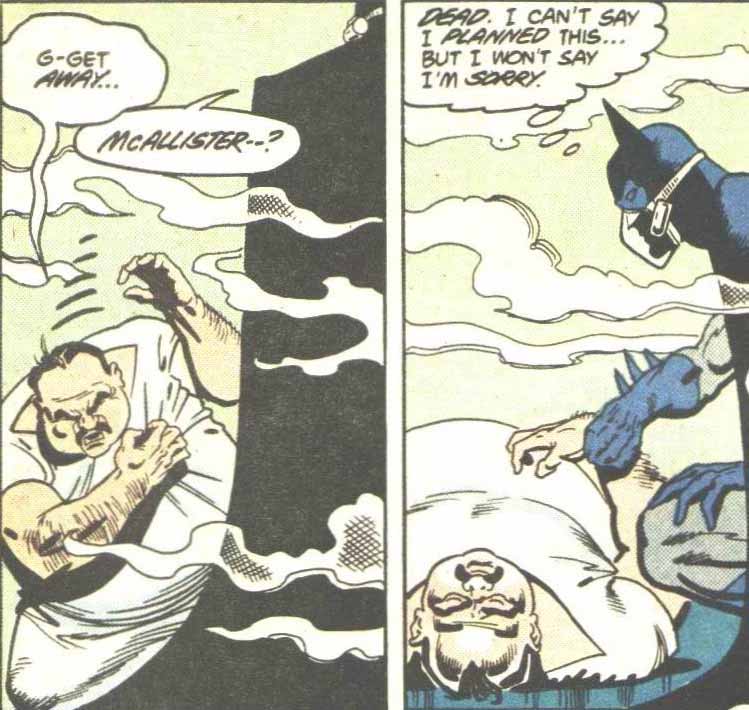
Detective Comics 579Detective Comics #579

Likewise thanks to Mike W. Barr, on the first arc of Batman and the Outsiders the villain is thrown off a castle to be dismembered by an angry mob in front of an approving Dark Knight:
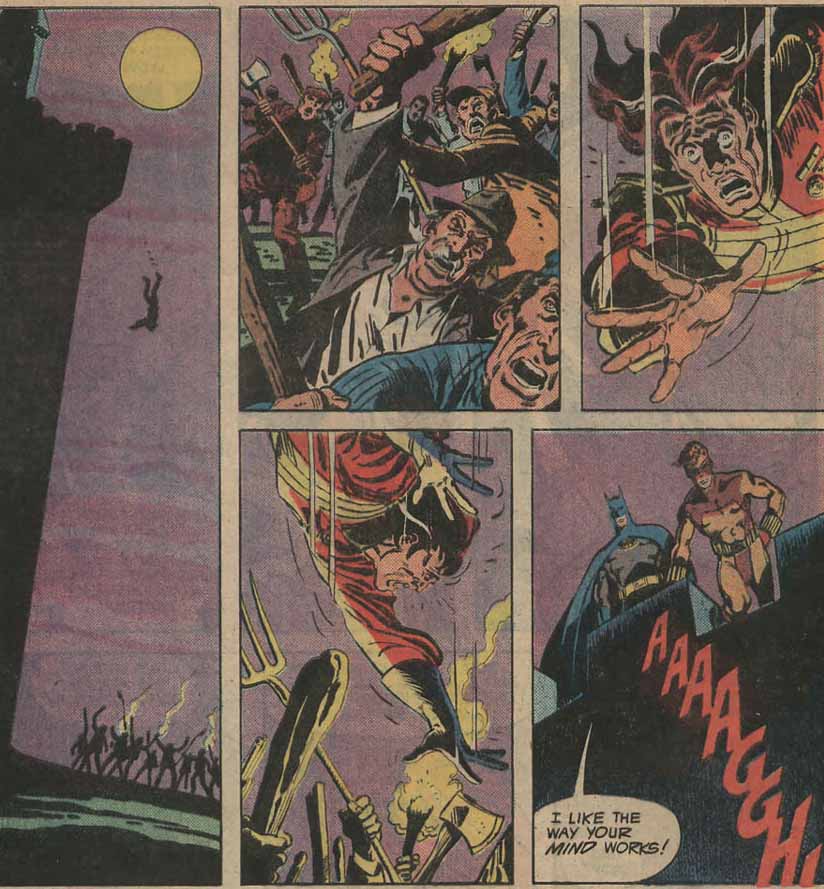
Batman and the Outsiders 2Batman and the Outsiders #2

In fact, in that series Batman comes across as especially callous, often willing to throw his teammates to the wolves… not to mention shooting a bunch of Kobra agents:
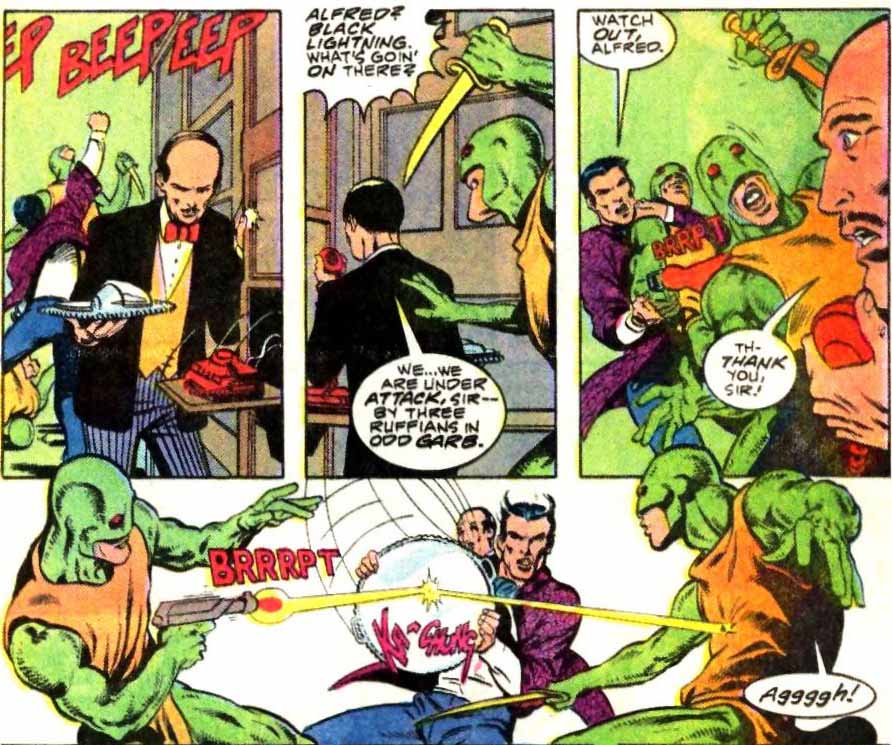
Batman and the Outsiders 26Batman and the Outsiders #26

Oh well, at least he draws the line at fighting babies:
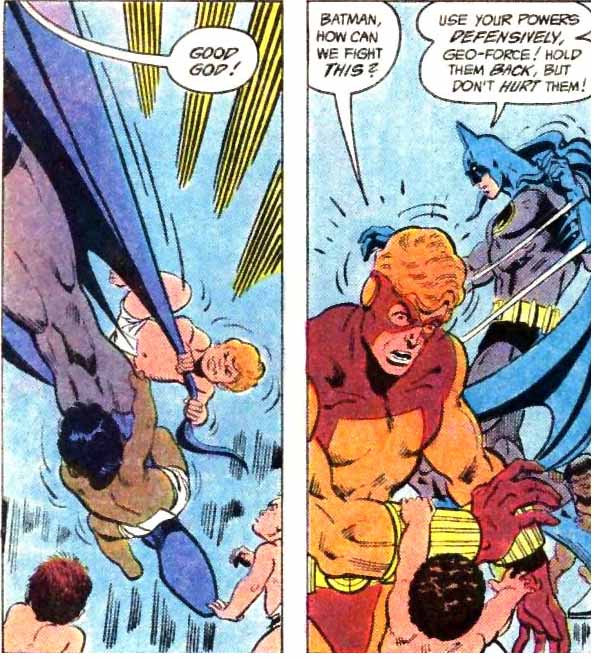
Batman and the Outsiders 08Batman and the Outsiders #8

Seriously, how bloodthirsty is Mike W. Barr’s Batman? This is how he conjures up the spirit of Christmas:
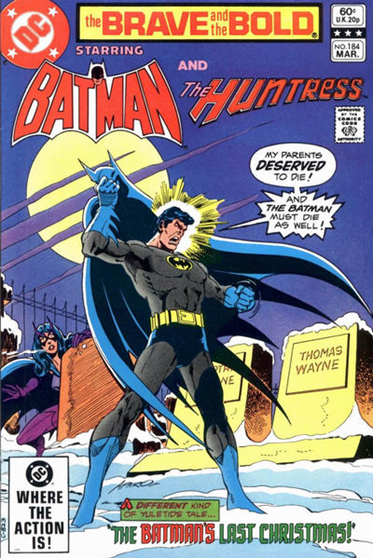
brave and the bold 184The Brave and the Bold #184

As if all this was not out of character enough, Barr also scripted the infamous ‘Year Two’ storyline, where Batman starts packing a gun (the one that killed his parents, no less) and teams up with Joe Chill (only the man who pulled the trigger, you know). Yeah, it’s as bad as it sounds.
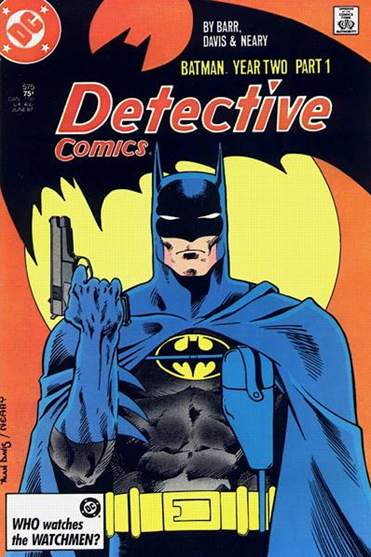
Detective Comics 575Detective Comics #575

You’d think Mike Barr has no idea what a Batman comic should be like. And yet, he totally does.

For one thing, Barr has clearly read one of the most Bat-defining tales of all time, ‘There is no hope in Crime Alley!,’ which breathed life into the neighborhood where the Waynes were shot and into Leslie Thompkins, the woman who consoled a recently orphaned Bruce. This story was an unmistakable source for two of Barr’s most famous comics: ‘The Player on the Other Side!’ and Detective Comics #574. Its influence is everywhere, from the opening description of Park Row (which both issues reproduce word for word), to Leslie Thompkins’ presence, to the riff on the classic line ‘my beginning… and my probable end’ (which even serves as title for Detective Comics #574).

‘The Player on the Other Side!’ is particularly cool. It tells the story of a kid who saw his parents killed by the police on the same day that Bruce’s parents were gunned down by Joe Chill, and grew up to be an avenging cop-killer known as The Wrath – the symmetrical opposite to Batman. A similar idea has since been used on other villains (including Bane and Prometheus, not to mention a recent reboot of the Wrath himself), but Barr really takes the doppelgänger notion in interesting directions. And so do artists Michael Golden and Mike DeCarlo, who pull off a costume based around the ‘W’ in Wrath that smoothly parallels Batman’s cowl:
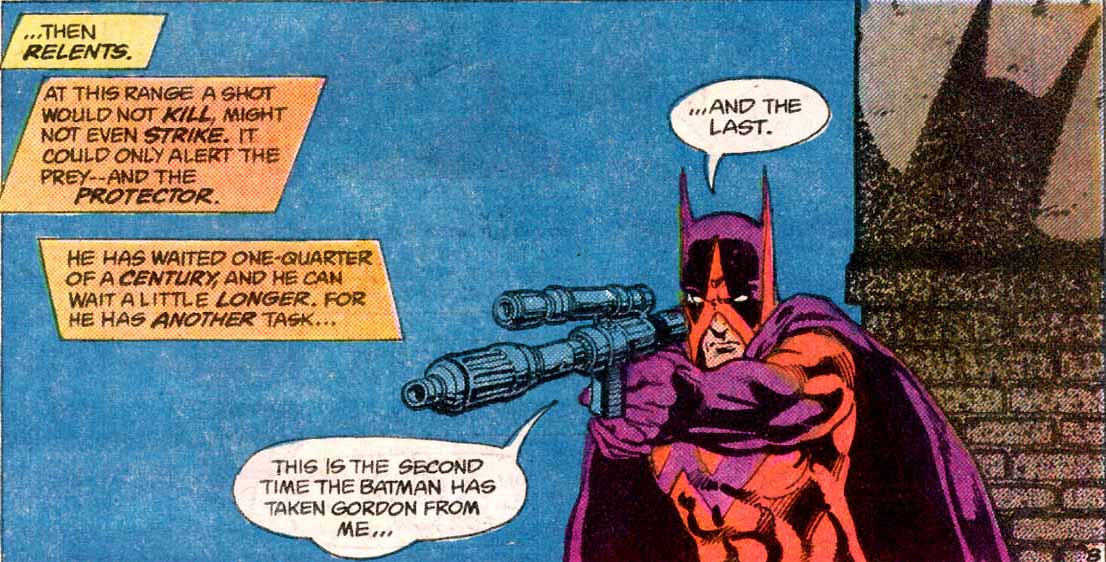
Batman The WrathBatman Special #1

Drawing on the homonymous works by Aldous Huxley, Manfred B. Lee, and Frederic Dannay (the latter two best known as Ellery Queen), ‘The Player on the Other Side!’ uses the mirror concept to explore what ultimately defines Batman. Notably, the comic illustrates the importance of the supporting cast (Gordon, Alfred, Leslie) in how the Dark Knight eventually turned out. Kudos also to Tony Bedard for having produced a sequel (in Batman Confidential #13-16) that satisfyingly develops this comic’s themes and ramifications.

The truth is that, for each instance of preposterous characterization and bold choices, you’ll probably be able to find at least one corresponding moment in which Mike W. Barr brilliantly nails the Caped Crusader, such as this great sequence after Batman gets his heart broken:
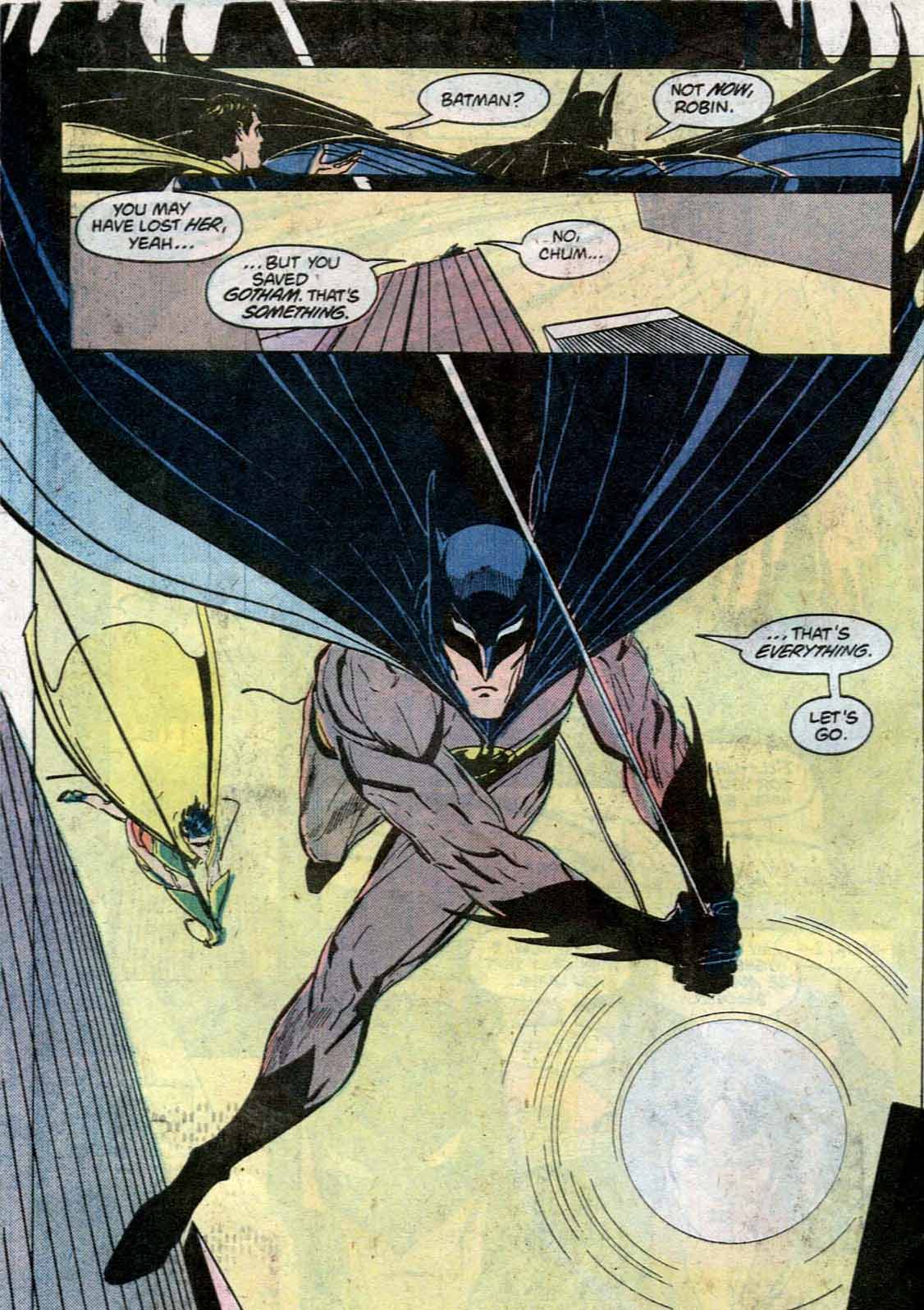
Batman Annual 1982Batman Annual #8

You’ll notice Batman calls Robin ‘chum.’ That happens a lot in these comics. Indeed, as brutal as his Dark Knight can be, Mike Barr is not averse to the occasional cheesy exchange between the Dynamic Duo. Similarly, he respects such longstanding Batman traditions as kicks in the face and gratuitous, groan-inducing puns:
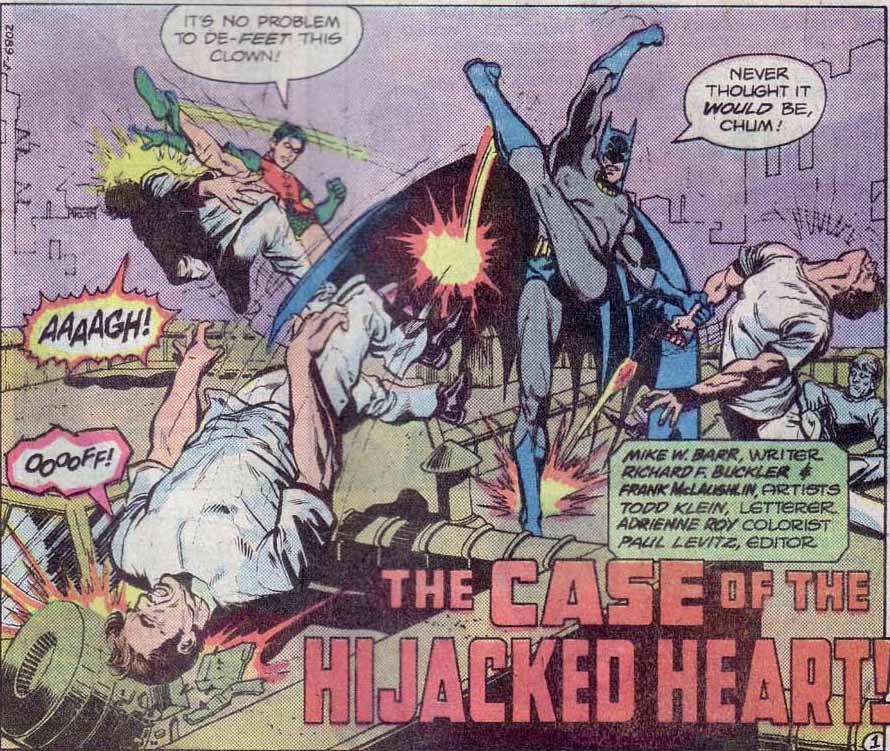
batman 329Batman #329

Moreover, Barr shows keen awareness of how the best Batman comics make use of the character’s intellectual skills. Thus, from 8-page backup stories in the main series, to full-issue team-ups with spandex-wearing superheroes from various dimensions in The Brave and the Bold, to large-scale brink-of-world-destruction sagas like Son of the Demon, Barr is likely to work a whodunit into the plot… what’s more, it’s usually a fair-play murder mystery, often involving the victim using her/his last gesture to provide a convoluted clue about the killer’s identity, Ellery Queen’s influence once again shining through (only Martin Pasko’s ‘A Clue Before Dying!’ may give Barr a run for his money as the geekiest Bat-homage to Ellery Queen). Mike Barr, it should be noted, is an admitted fan of the genre, having even penned the neat fair-play mystery series The MAZE Agency.
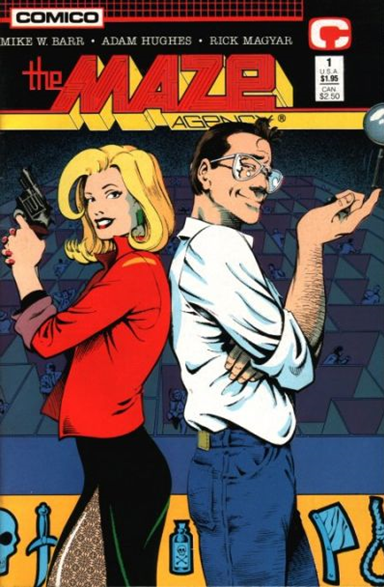
MAZE Agency 1

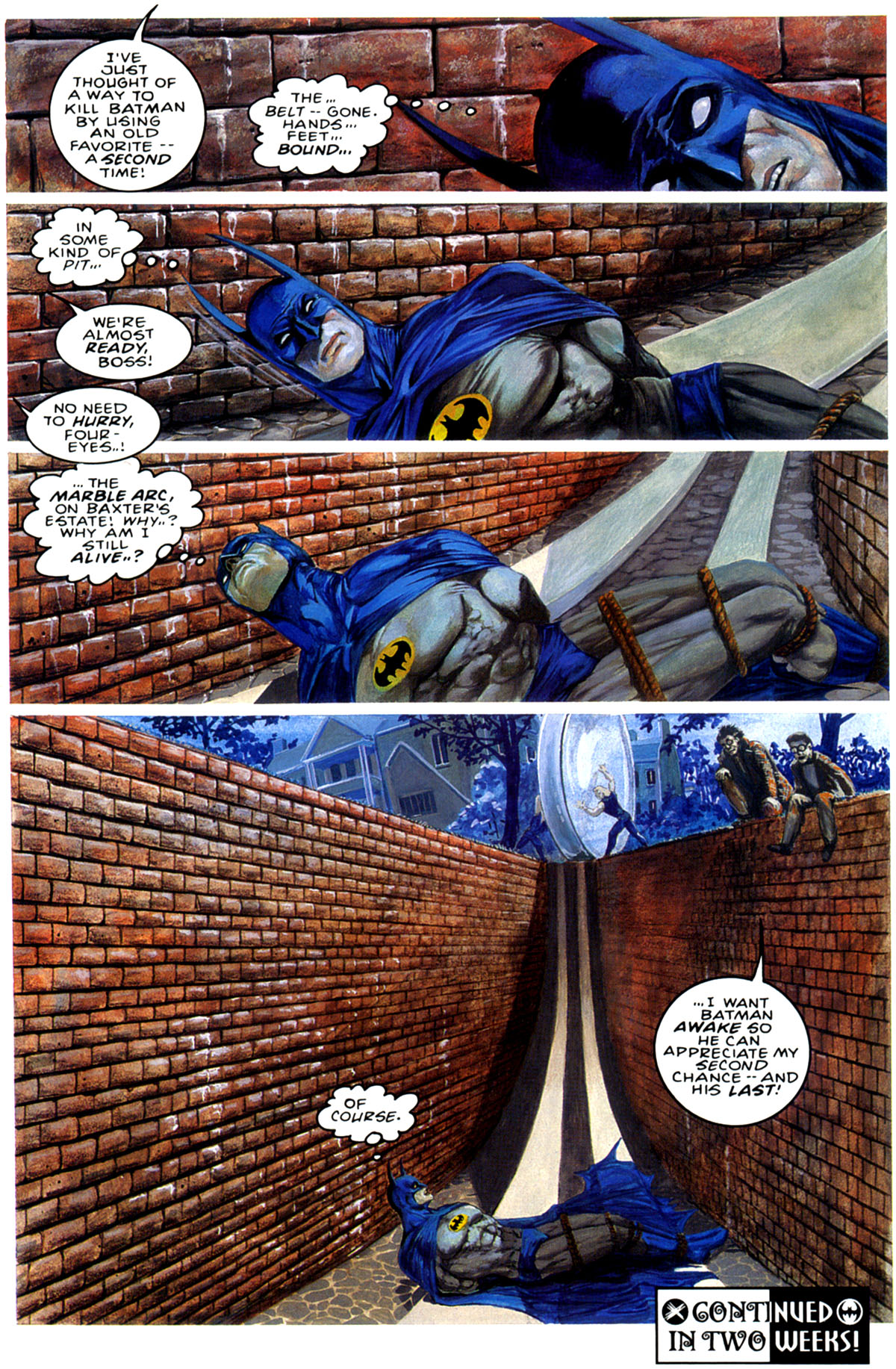
As long time fans know, another way to show off the Caped Crusader’s ingenuity and intellectual prowess is by challenging him with an elaborate deathtrap, through the kind of plot contrivance so hilariously mocked in the first Austin Powers movie. And boy can you count on Barr to deliver on this front as well:
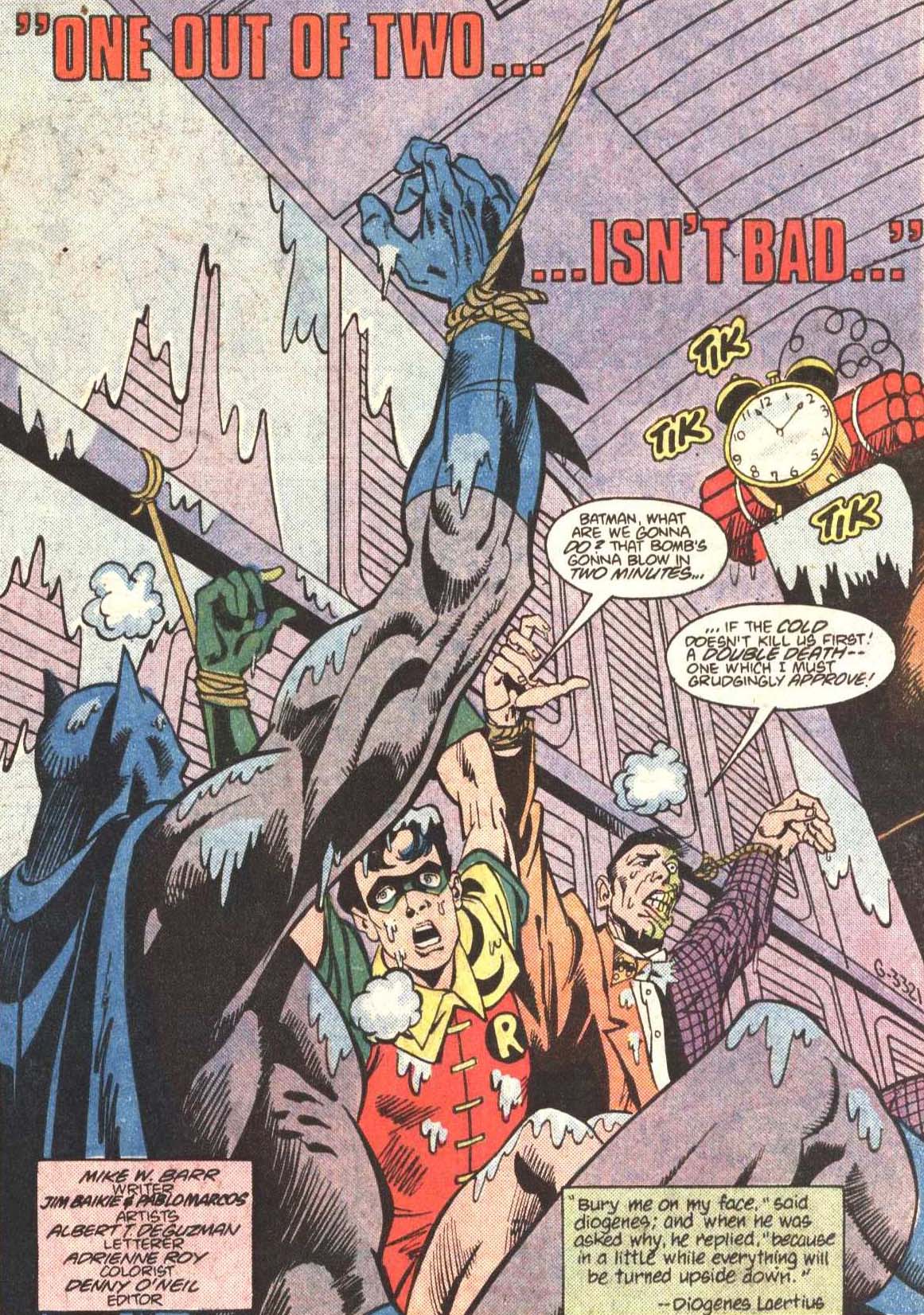
Detective Comics 581Detective Comics #581
Batman - Full CircleFull Circle

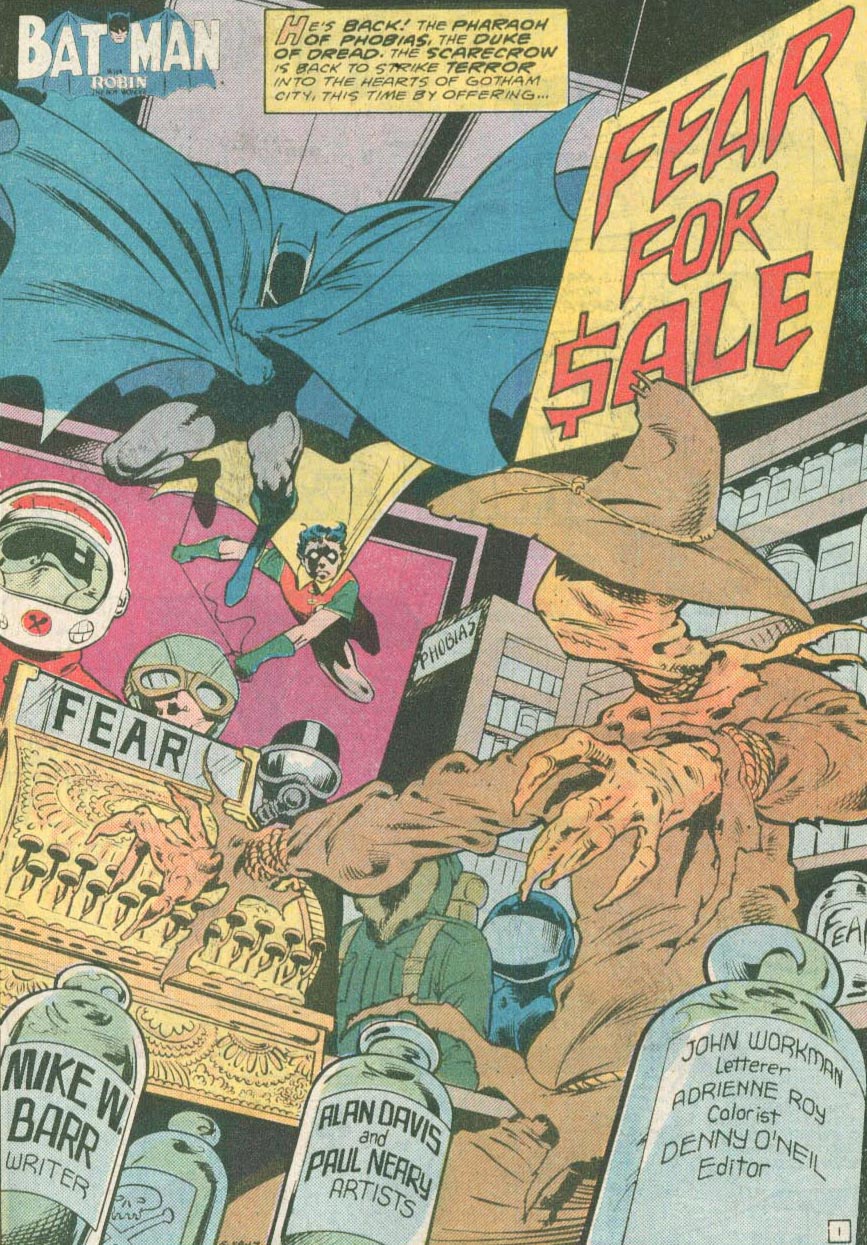
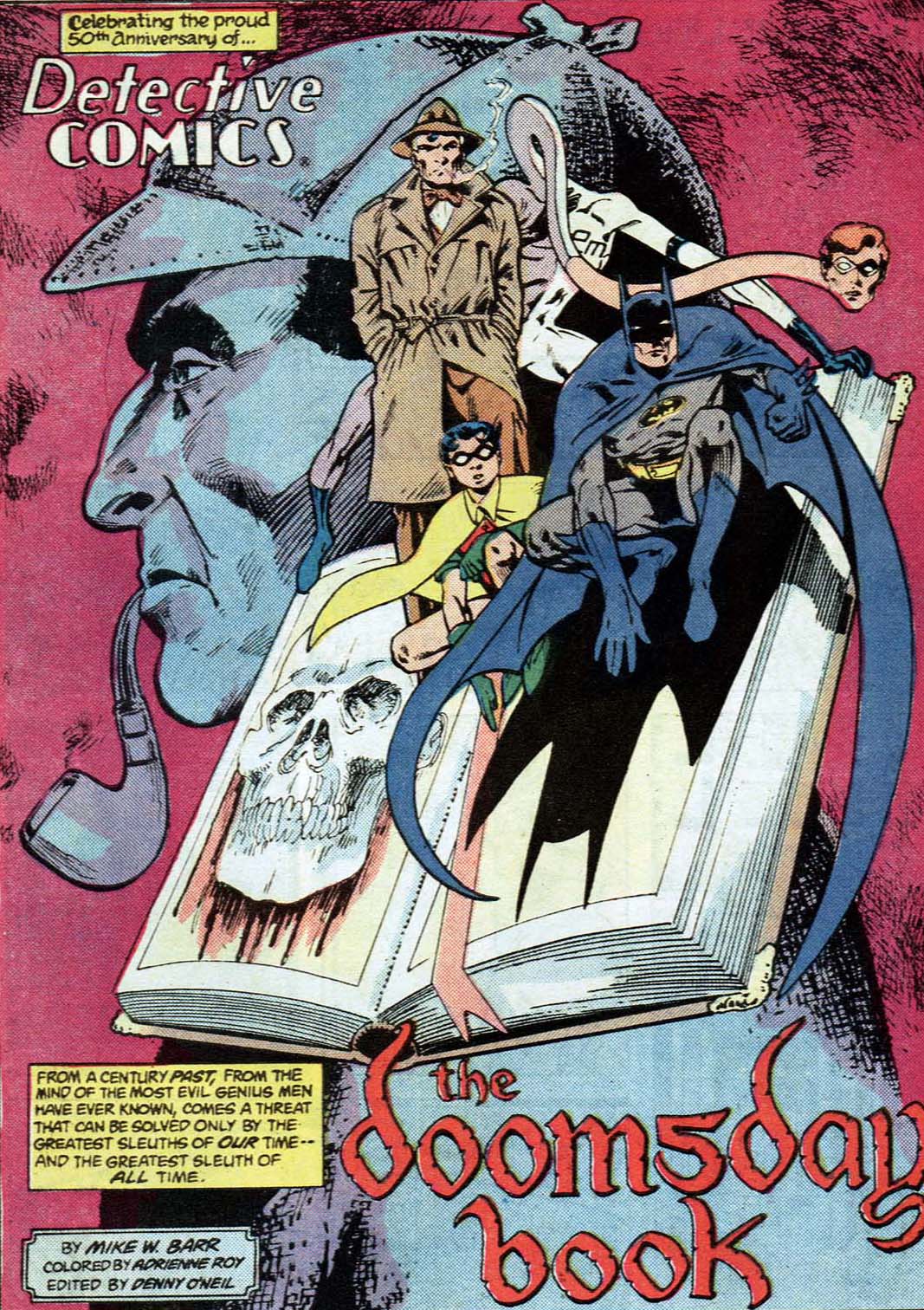
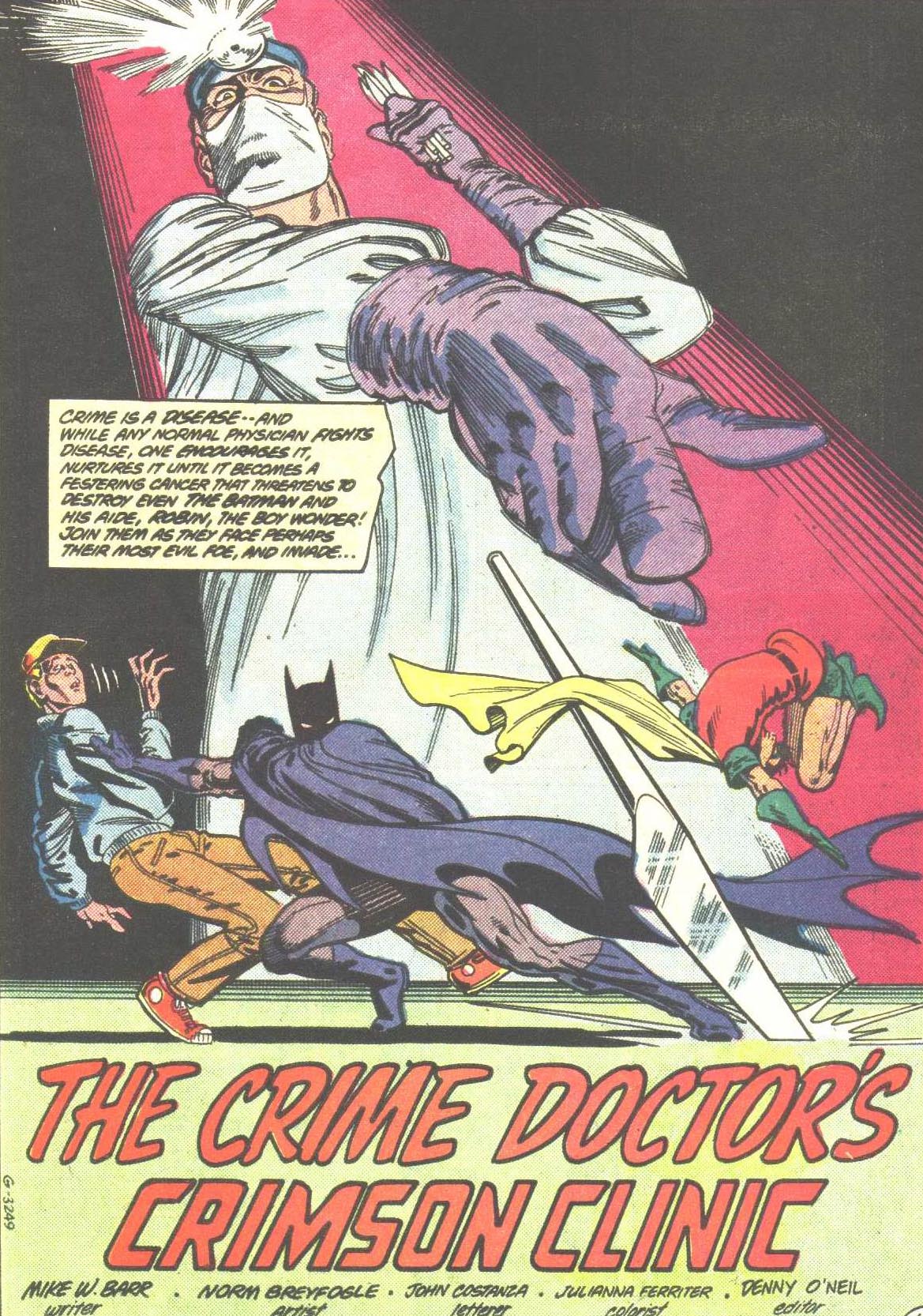
As Mike W. Barr’s affinity for deathtraps suggests, he is no stranger to Silver Age storytelling. Indeed, his most well-regarded Batman work is a throwback to that era. In the mid-1980s, at a time when the Dark Knight was at his grimmest and grittiest, Barr managed to write a colorful run of Detective Comics with a peppy, wisecracking Robin (Jason Todd) and amusing set pieces like a fight among giant billiard balls. His artists even paid homage to the kind of title splash pages so in vogue in previous decades, featuring surrealist scenes that did not show up in the actual story but nevertheless conveyed the main themes:
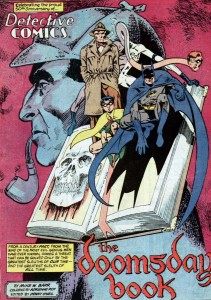
           detective comics 571               detective comics 572

           detective comics 573               Detective Comics 579

Detective Comics #571, 572, 573, 579

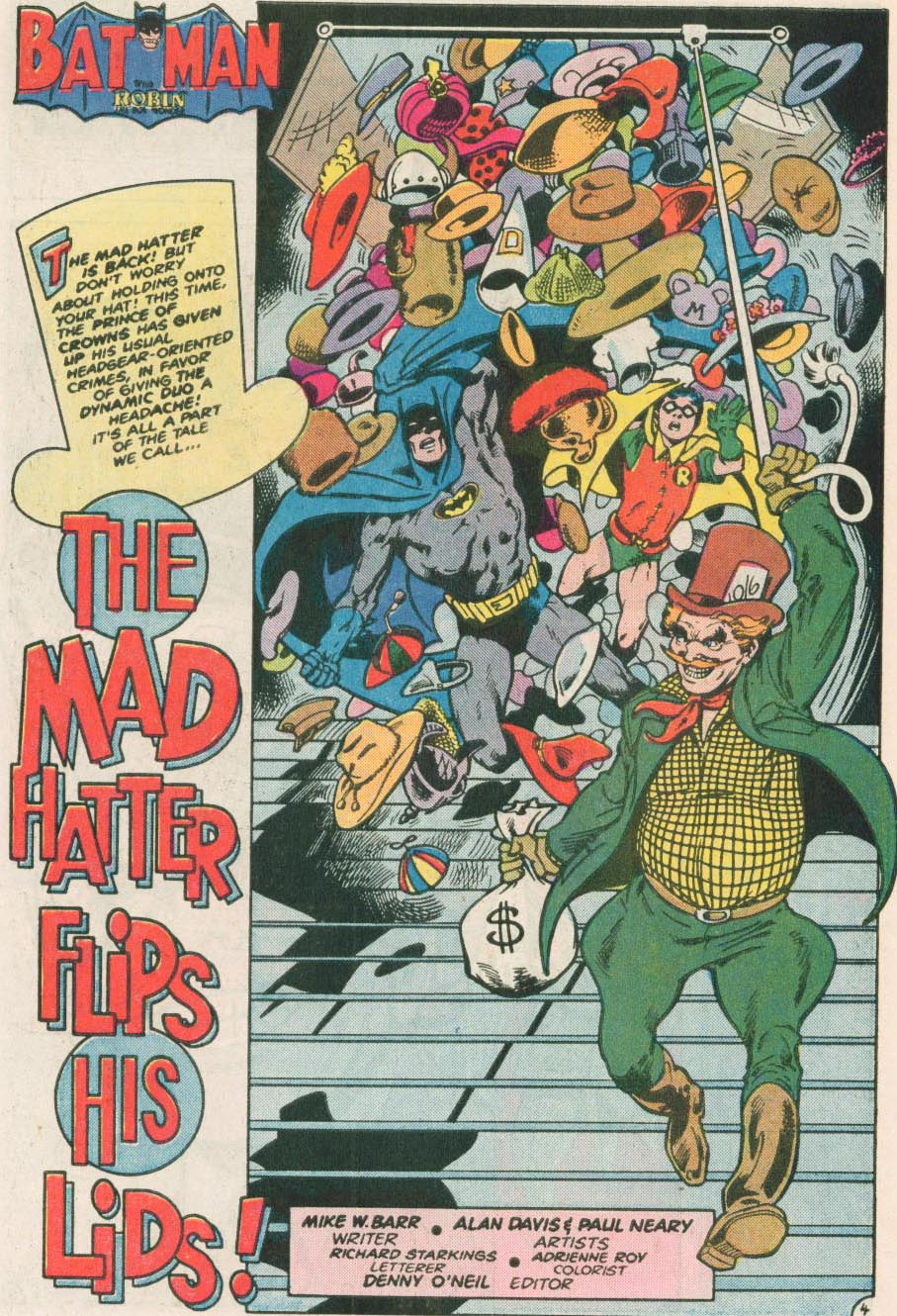
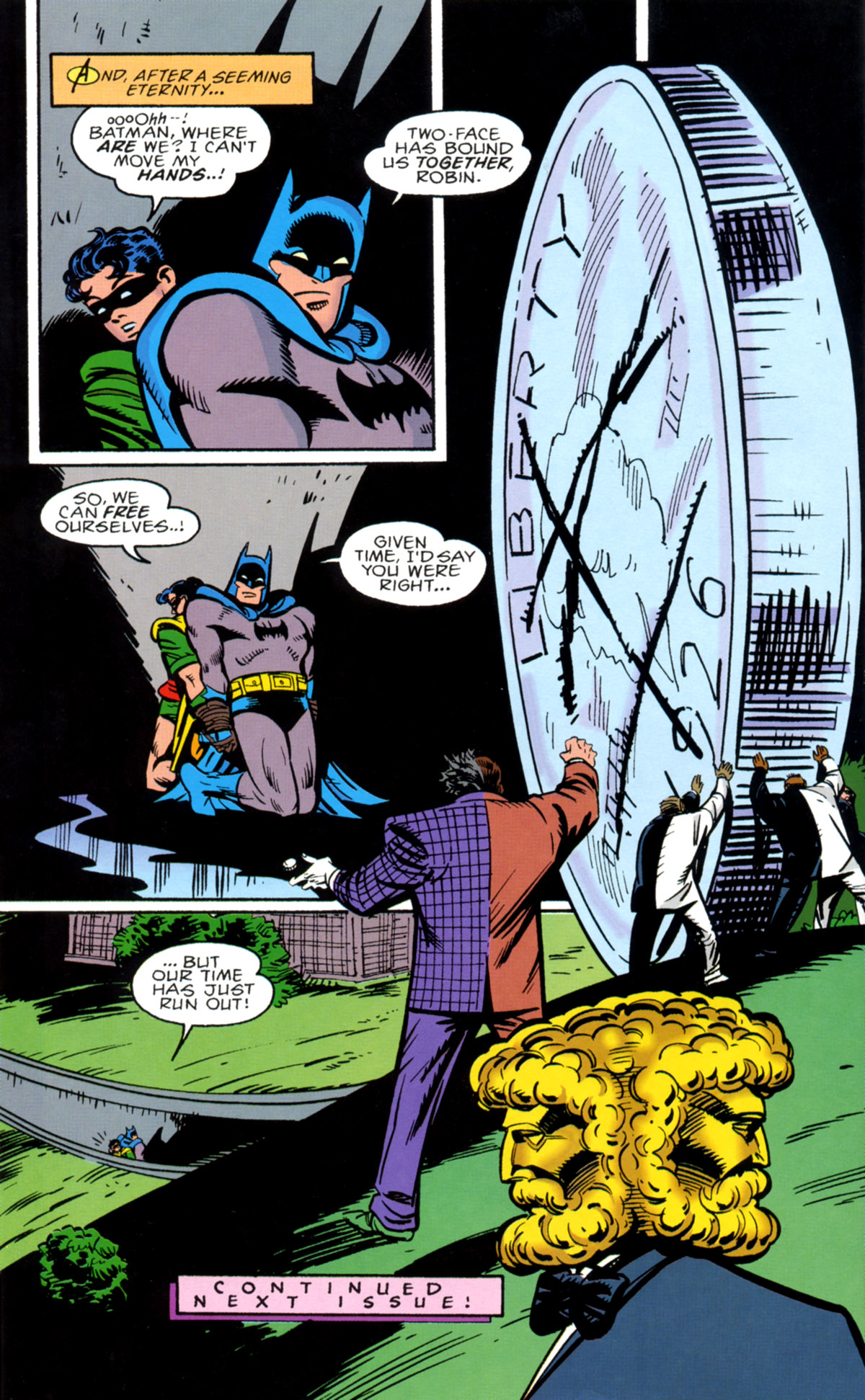
As much praise as the nostalgic elements of this run have received over the years, one aspect which doesn’t always get enough credit is Barr’s postmodern twists on traditional villains, elevating their pathological obsessions to a symbolic level. For example, instead of stealing hats or using hats to commit crimes as he usually did, this version of the Mad Hatter robs institutions evocative of idiomatic expressions about hats (such as the Gotham Sports Arena, because when a player scores three goals in one game it’s called a ‘hat trick’). And Two-Face, whose crimes typically revolve around the number two, is now apparently so fascinated by duality that he starts attacking anything that duplicates reality, such as impressionists, sculptors, and even a mirror factory!

Less renowned, but even closer to emulating Batman’s past era, is the final issue of The Brave and the Bold, titled ‘Smell of Brimstone, Stench of Death!’ Here, Barr goes into full pastiche mode. The first half of the story is set on Earth-2 (where Batman’s earliest adventures took place, in the 1940s and 1950s), pitting the Caped Crusader against a Satan-themed villain called Brimstone. Barr’s writing perfectly captures the tone of a more innocent age, from the playful pun-based clues, to Commissioner Gordon’s underwritten role, to the buildings decorated with giant props:
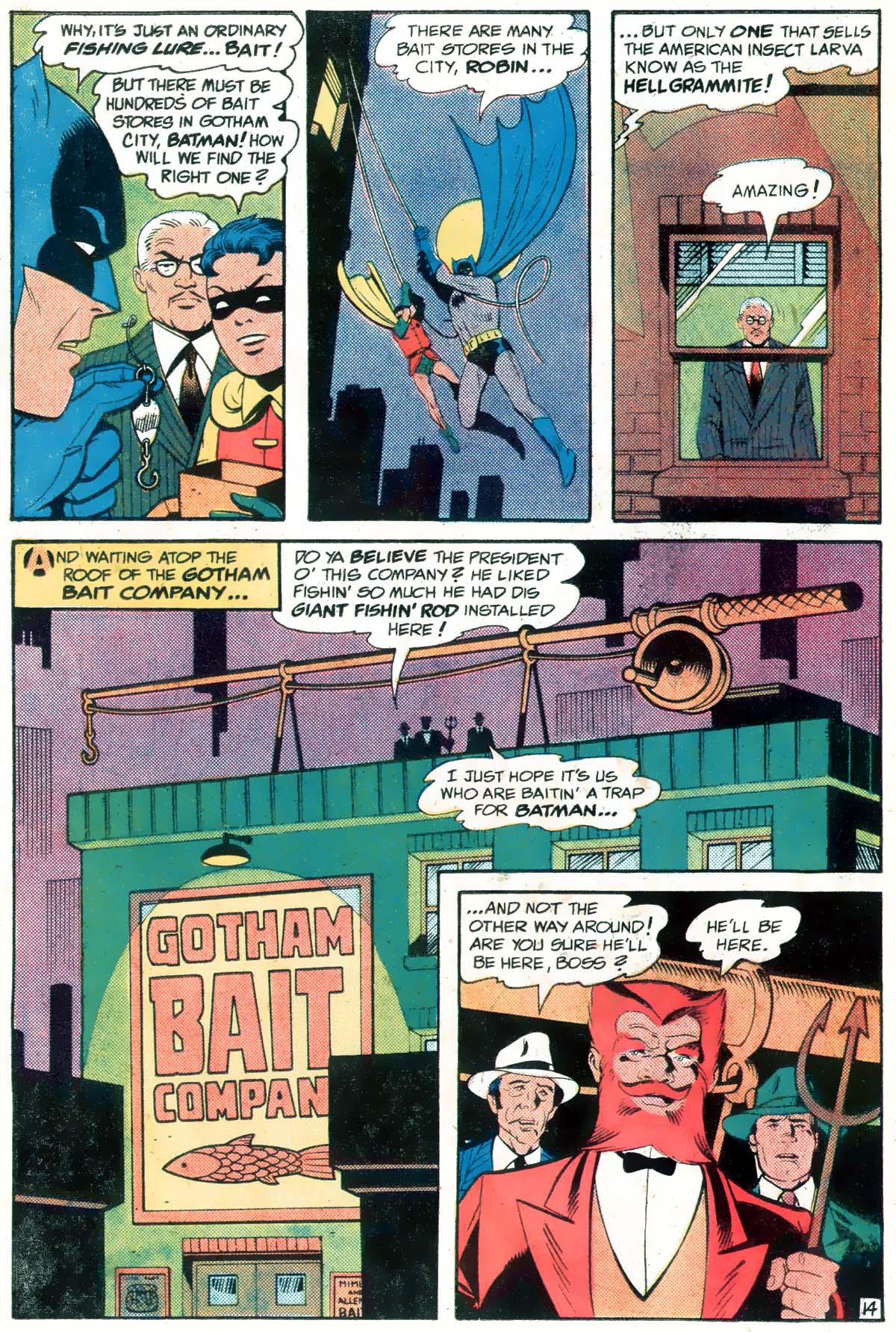
Brave and the Bold 200The Brave and the Bold #200

Much of the merit goes to artist Dave Gibbons, of course, as well as to Gary Martin, who inked this Earth-2 sequence. Yet what makes the comic awesome is that in the second part of the story Brimstone travels to the current reality (of 1983, when the comic came out), giving Barr the opportunity to tackle the near-apocalyptic feel of that period, in a tale of street gangs, racial riots, and social breakdown. Like the first part, this doesn’t come across as a spoof so much as a straightforward tale written with a different sensibility. Indeed, this section of the issue could have easily belonged to any mainstream comic of the time (including those penned by Barr). By pairing it with the Earth-2 pastiche, though, Mike W. Barr gives us a wonderful viewpoint into the evolution of Batman storytelling. And again Gibbons, who has yet to meet a challenge he cannot match, poignantly illustrates this contrast by delivering some totally ’80s art:
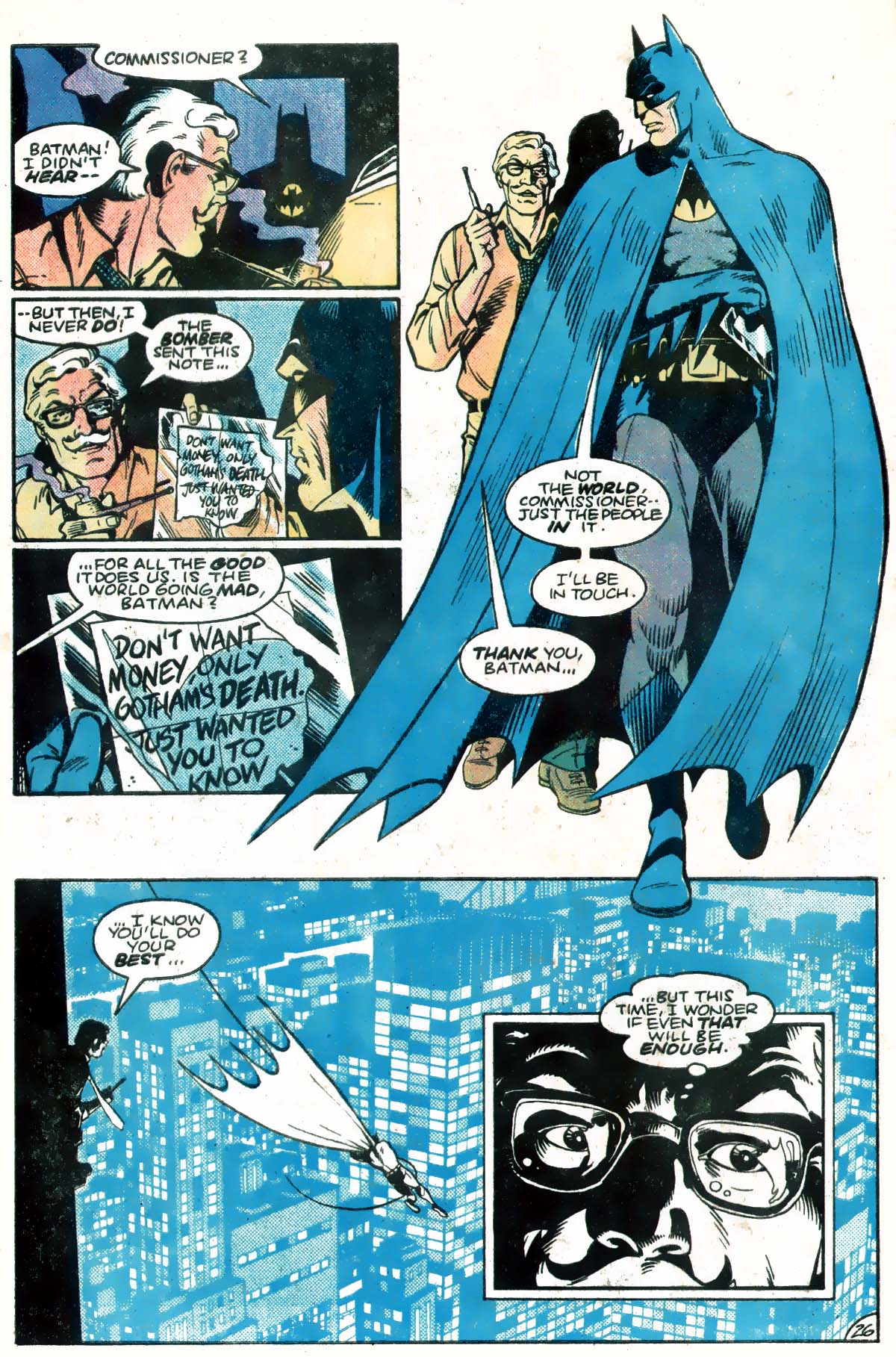
Brave and the Bold 200The issue’s format also allows Barr to pull an ingenious twist on his passion for deathtrap contraptions, as Brimstone uses the same trap twice, one for each version of Batman – having updated the device in order to remove the loophole that allowed the Caped Crusader to escape the first time around, the villain forces our hero to think of a second way out! It is such a clever idea that Barr would go on to use it again and again, most recently in the Legends of the Dark Knight story ‘The Elements of Crime.’

His best take on it, though, is in the amazing Two Face Strikes Twice!, which basically repeats the formula of ‘Smell of Brimstone, Stench of Death!’ ten years later. Once again, half the tale is written like a Golden Age comic about the Dynamic Duo (this time suitably illustrated by Joe Staton) and the other half like an issue from the characters’ contemporary incarnation, complete with Tim Drake taking over Dick Grayson’s role as Robin (and with modern, fully-painted art by Daerick Gross). What makes this tale stand out is that now the villain is Two-Face, so the whole comic is designed to evoke dualism and symmetry, the dialogue’s double entendres and the dichotomous yet complementary art styles reflecting the villain’s split personality.
     Batman Two-Face Strikes Twice     Batman Two-Face Strikes Twice
Two-Face Strikes Twice! #1

These are not the only comics to get mileage out of imitating past approaches to Batman. Michael Gilbert did a fun issue of Legends of the Dark Knight with people stuck in an elevator telling each other about their encounters with the Caped Crusader, each story aping classic artists such as Bob Kane and Neal Adams. To celebrate Batman #600, Ed Brubaker pretended to have found a bunch of previously unpublished stories, which also turned out to be recreations of the style of past publications. More memorably, ‘Night on Earth,’ a crossover with the brilliant metafictional series Planetary, features batmen from multiple dimensions, including the versions from the 1960s TV show and from The Dark Knight Returns.

Even the cartoon shows have had fun with the concept. The Batman: The Animated Series episode ‘Legends of the Dark Knight’ pays direct homage to the works of Dick Sprang and Frank Miller. The Brave and the Bold episode ‘Bat-Mite Presents: Batman’s Strangest Cases’ includes spot-on pastiches of Mad Magazine’s ‘Bat Boy and Rubin,’ Jiro Kuwata’s Bat-Manga, and the Batman/Scooby-Doo crossovers of the 1970s (guest-starring Weird Al Yankovic).

Most of these are clever and easy to appreciate, but they don’t always hold up as exciting stories in themselves nearly as well as Mike W. Barr’s. The man remains a master of retro-infused storytelling, perhaps because it is only in these tales combining old school playfulness and contemporary grittiness that Barr can truly bring together his very conflicting takes on the Dark Knight.
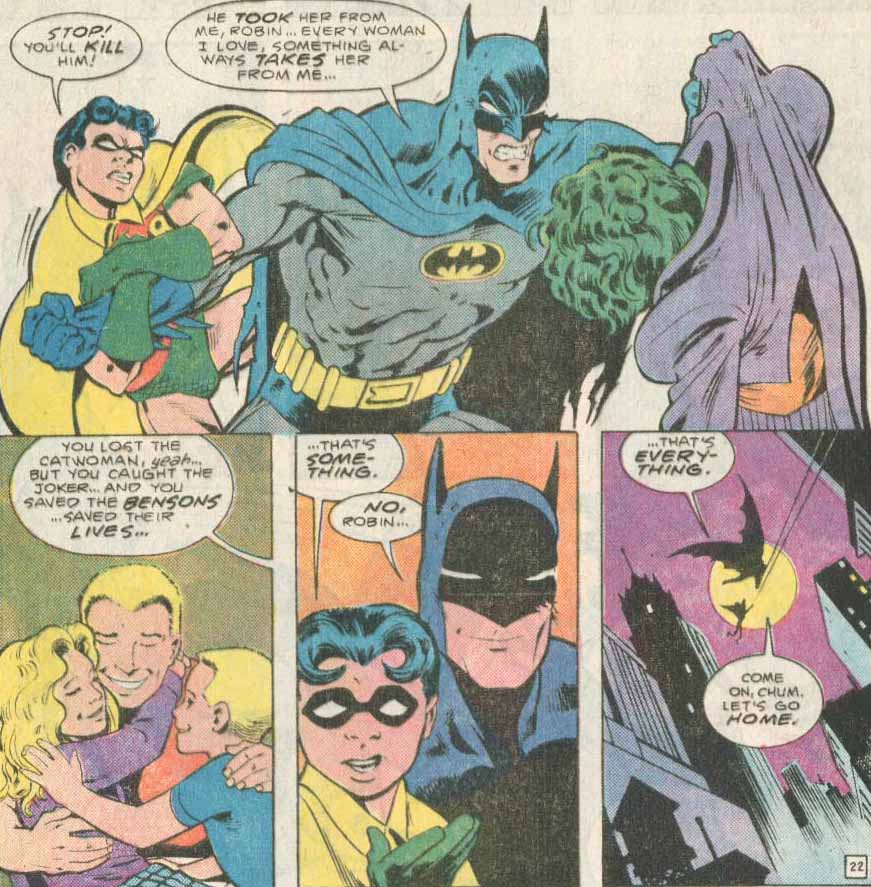
detective comics 570 Detective Comics #570

NEXT: Batman sacks the Quarterback of Crime.
Posted in WRITERS OF BATMAN COMICS | Tagged , , , , , , , , , , , , , , , , | 3 Comments

Batman comics and the Cold War détente

While access to new sources and archives, not to mention shifting paradigms and the cultural turn, have helped produce a historiography on the Cold War that moved beyond orthodox, revisionist, and neorealist interpretations to embrace, among others, constructivist, postcolonial, pericentric, transnational, and semiotic studies of the topic, it is my conviction that the abundant scholarly literature doesn’t mention often enough the fact that Batman once fought a guy called KGBeast.

Here is the first of a few of posts which will help fill this, and other, unforgivable gaps in the public’s understanding of the Cold War. After all, as a character who both preceded and outlasted the conflict – and one prone to incorporate the Zeitgeist into his comics with little regard for subtlety or tastefulness – Batman naturally faced more than his share of Cold War-related challenges. Hell, the Dynamic Duo even did its part to prevent the East German Stasi from dismantling a network that smuggled people out of the GDR:

Detective Comics #361Detective Comics #361

…and sure, that issue may not get points for treating the subject matter with the complexity it deserves, but if you’re going to nitpick, then I’ll have to point out that it is still more historically accurate than the Batman movie released around the same time, where West Germany showed up as a UN member a whole 7 years before it joined the organization!

That said, the Dark Knight’s role in the Cold War was more than just patriotically beating up red scum while spouting chauvinistic one-liners. In fact, with the onset of international détente and rising domestic anti-militarism in the late 1960s and early 1970s, the varied team behind Batman comics started shooting in all directions, each writer with his own distinctive approach, from Bob Haney’s anything-goes sense of spectacle to Mike Friedrich’s youthful idealism.

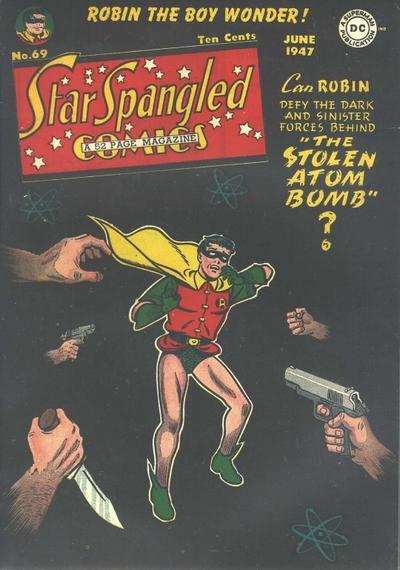
You can see this diversity, for example, in the plethora of villains who tried to go atomic. While nuclear threat stories dated at least as far back as the very start of the Cold War…

Star Spangled Comics #69Star Spangled Comics #69

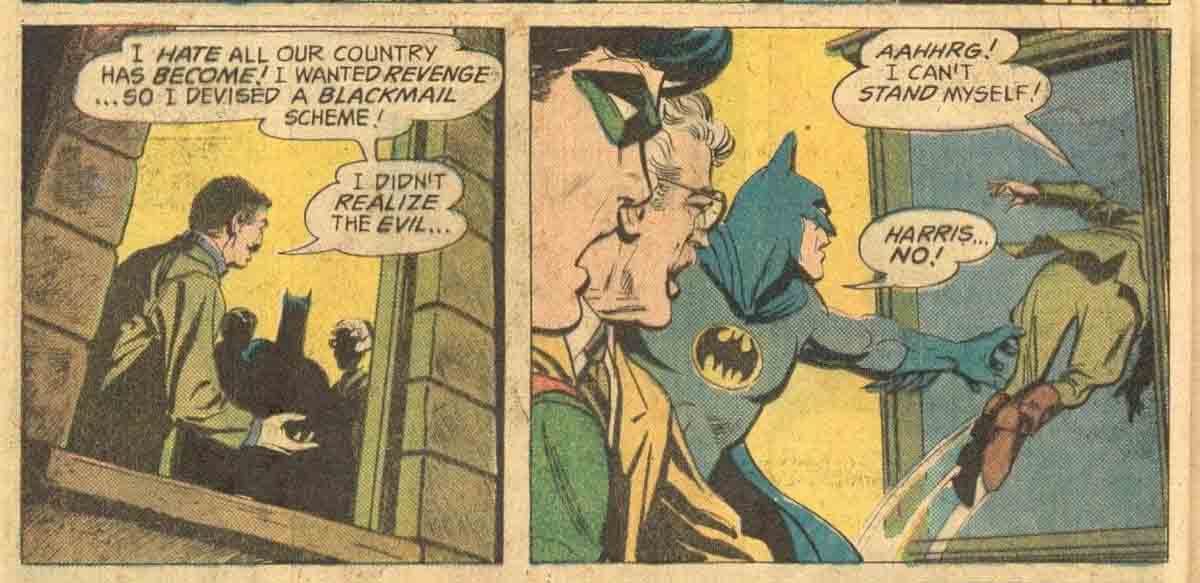
…the fear of annihilation was as topical as ever in the post-Cuban Missile Crisis, post-Dr. Strangelove era. The enemy, though, was not necessarily outside. In the exciting ‘The Doomsday Ball!’ an unidentified terrorist holds Gotham City for ransom by threatening to blow it up with a miniaturized hydrogen bomb stolen from the military. ‘The Threat of the Two-Headed Coin!’ concerns a bomb threat as well, but this time behind it is a disenchanted American general, who is clearly quite unbalanced:

Batman #258Batman #258

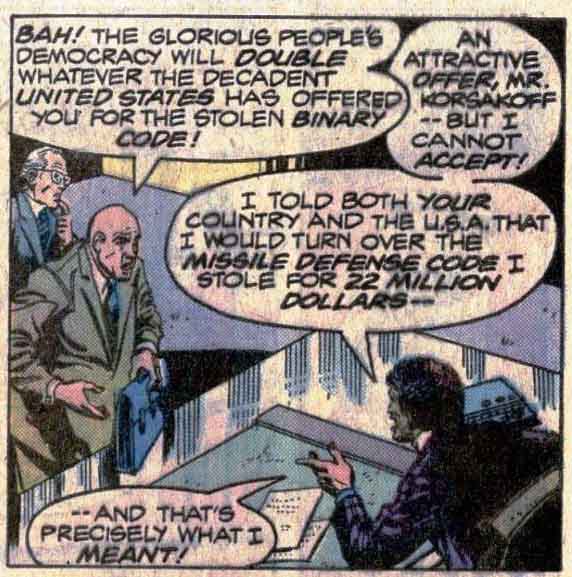
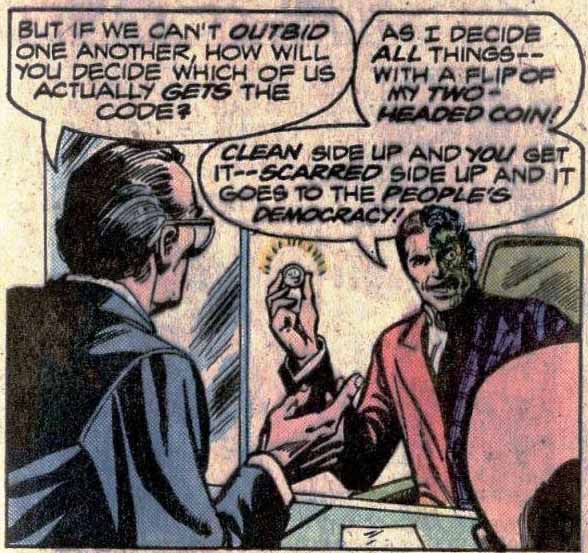
Also involved is the villain Two-Face, who wants to blackmail the government. And being obsessed with duality, of course he soon tries it a second time. Suitably taking advantage of the Cold War’s bipolar world order, Two-Face steals a security-related binary code and flirts with national treason (or double-cross, as he prefers to call it) by threatening to sell the code to America’s biggest enemy unless Washington pays him 22 million dollars. This leads to a great moment in which representatives of the two superpowers realize the kind of twisted criminal logic Batman has to deal with on a daily basis:  

Batman #314 A       Batman #314 BBatman #314

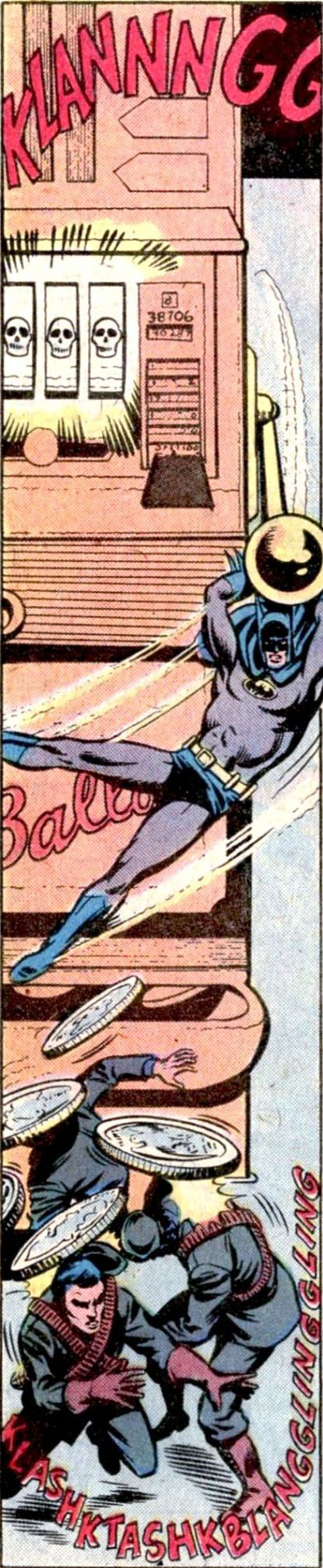
All of this is not to say that foreign Marxists never tried to blow up Gotham City with nuclear weapons. If nothing else, statistically it had to happen, since Gotham gets threatened with total destruction at least twice a year. And ironically, when anti-Western, anti-capitalist, anti-Batman urban guerrillas try their luck, the Dark Knight saves the day by literally throwing money at them:

BATMAN 305Batman #305

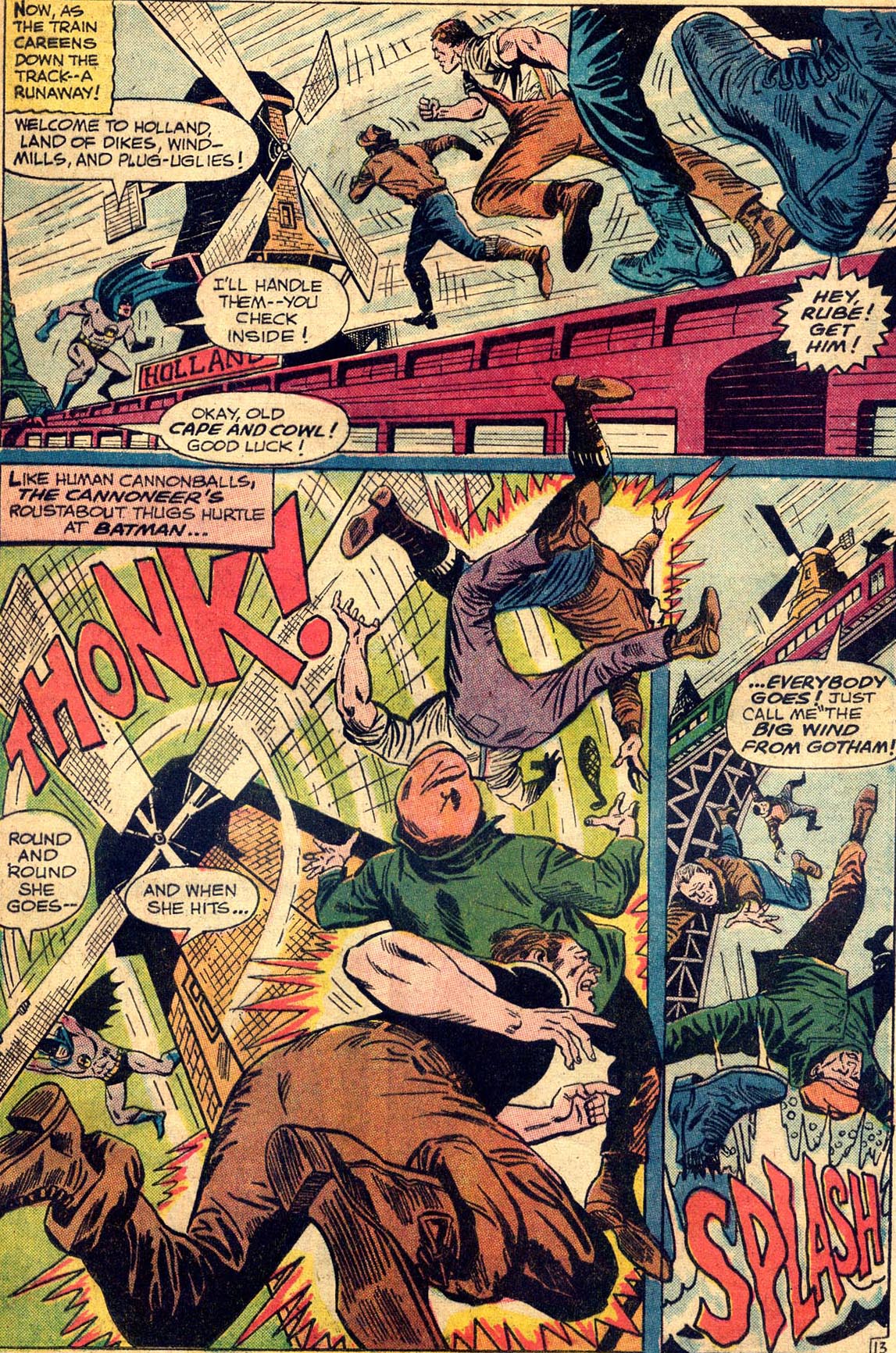
The series that engaged more often with the Cold War was Bob Haney’s The Brave and the Bold, which is not surprising, since anything could happen on the pages of that book. Haney’s approach to writing was apparently to throw in every idea he could come up with, no matter how outrageous, in the hopes of knocking readers out. Thus, while the Cold War is there, the prospect of mutually assured destruction doesn’t always seem like the maddest thing going on in the story. When a villain hijacks the Brotherhood Express, a train promoting friendship with the allies of the US, this is just a pretext for Batman to fight a guy called Cannoneer and his crew atop a moving train, using props shaped like easily recognizable foreign landmarks:

Brave_and_the_Bold-077The Brave and the Bold #77

Bob Haney’s Batman was not adverse to collaboration with high level authorities, undertaking enough preposterous missions across the world to make James Bond adventures seem like grounded, realistic, le Carré-penned tales of espionage. In ‘Count Ten… And Die!’ Anglo-American military intelligence asks the Dark Knight to retrieve Soviet plans to launch an armed space station during the World Youth Games, in Vienna (and while he’s in town, Batman also takes time to motivate the heavyweight boxer known as Wildcat for a Rocky IV-type match against a Russian champ). In ‘Nightmare without End,’ the Caped Crusader helps unmask an East German double agent in a small German village, appropriately named Kleindorf. In ‘What Lurks Below Buoy 13,’ Batman actually goes rogue, refusing to hand over an undersea satellite that could tip the balance of terror between American and Soviet nuclear submarines, instead leaving it to the care of the non-aligned Aquaman. In ‘Death by the Ounce,’ the Soviets hire an aging alien goddess to kidnap a Middle Eastern shah, paying her with an innovative youth serum.

The most entertaining tale by far is ‘A Traitor Lurks inside Earth!’ where the US centralizes its anti-missile defense system in a robot who decides that the only way to end war, poverty, and injustice is for machines to take power, in the process kick-starting a whole robot civil rights movement against the human establishment:

Brave and the Bold 103The Brave and the Bold #103

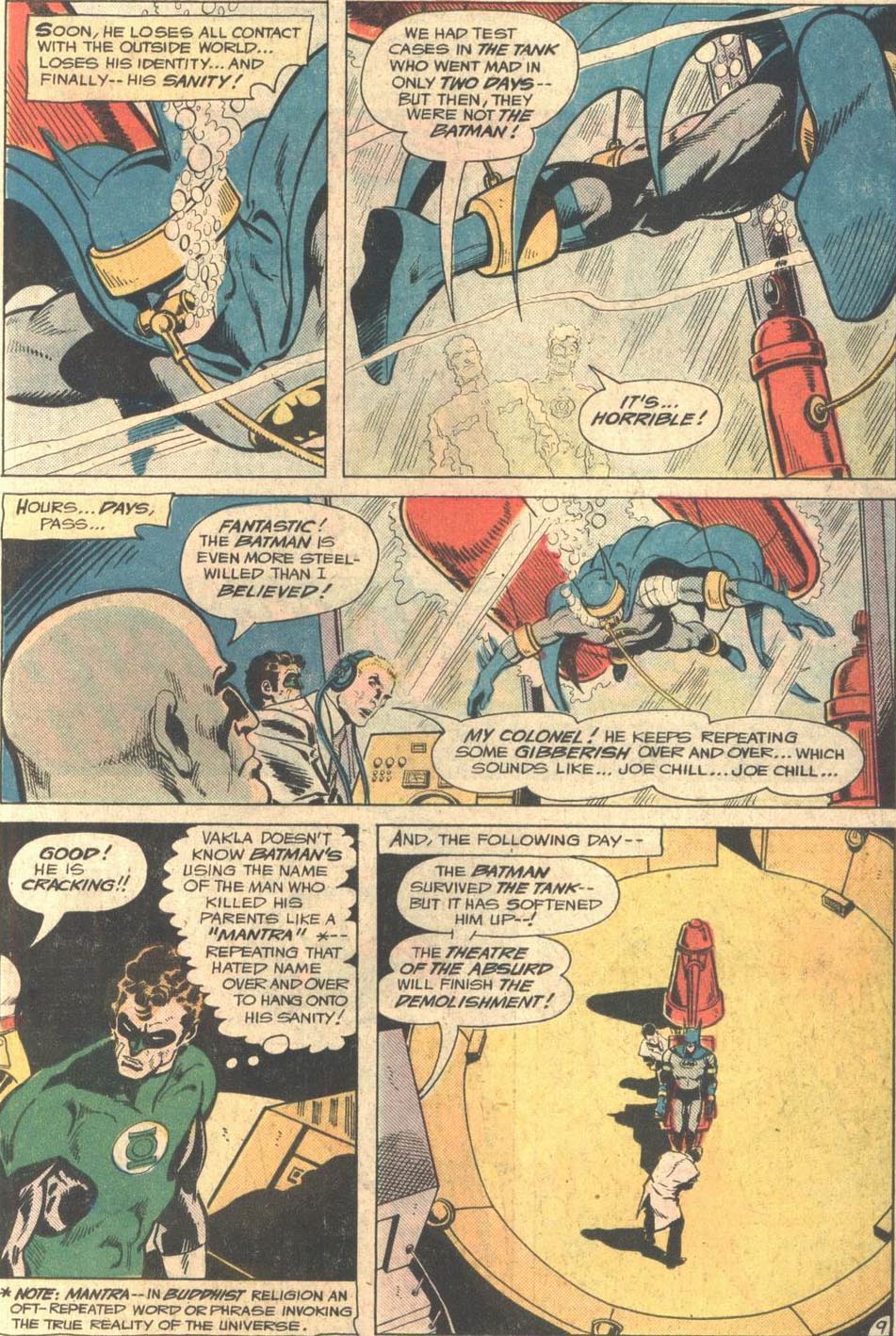
By contrast, the most disturbing story has to be ‘Demolishment!’ where Batman goes after Green Lantern, who has defected to the socialist side, and ends up getting brutally brainwashed:

Brave & Bold 134 Brave & Bold 134-10The Brave and the Bold #134

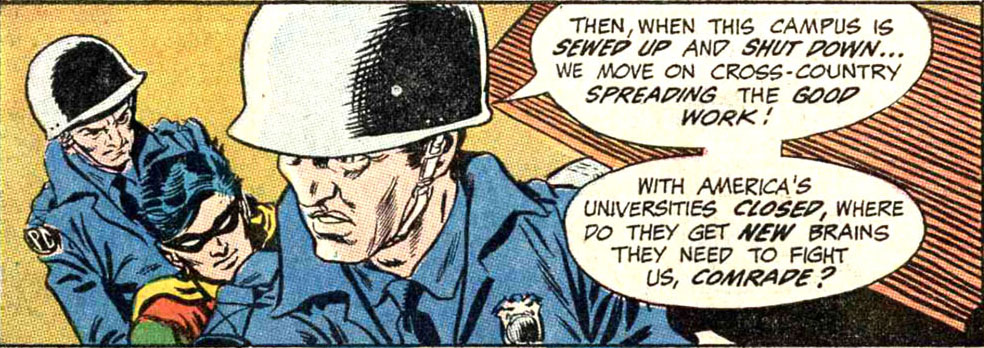
If you’re looking for old-school anticommunism in the Bat-family, however, look no further than Robin’s backup features in Detective Comics, which detailed Dick Grayson’s adventures among the youth counterculture of Hudson University. At the peak of the anti-establishment movement, writer Frank Robbins dived head-first into the notion of universities as a Cold War front. Covering all angles, in Robin’s first college adventure, ‘Strike…While the Campus is Hot,’ the villains initially seem to be students demanding strike action, then violent cops beating up defenseless protesters, then deceitful activists manipulating students into striking, and ultimately Soviet agents destabilizing the US education system:

detective comics 395Detective Comics #395

This was followed with a story about a Russian exchange-professor out to discredit NASA as payback for the Americans having put the first man on the moon, something he sought to achieve with a laser beam and some green soap. Don’t ask.

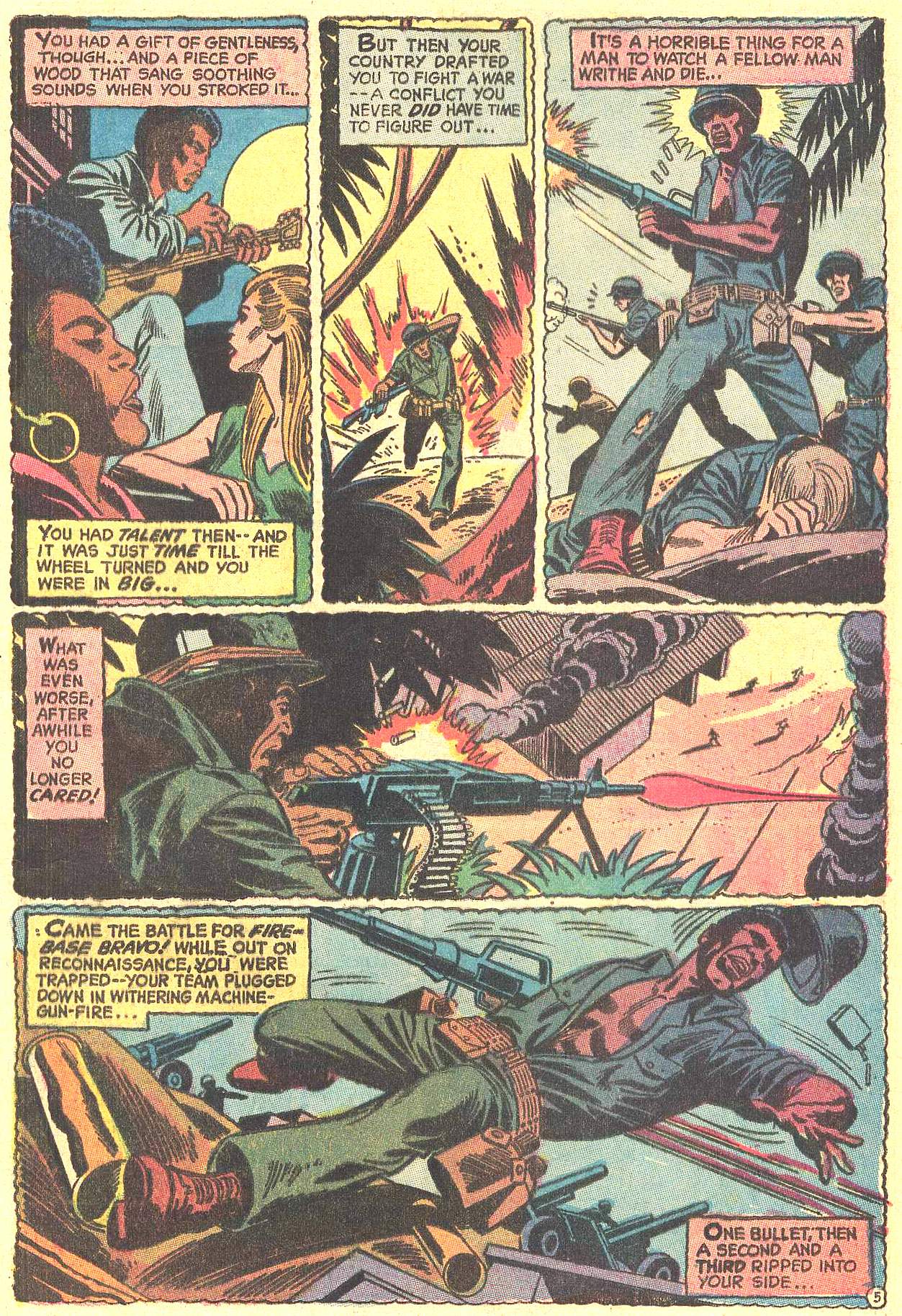
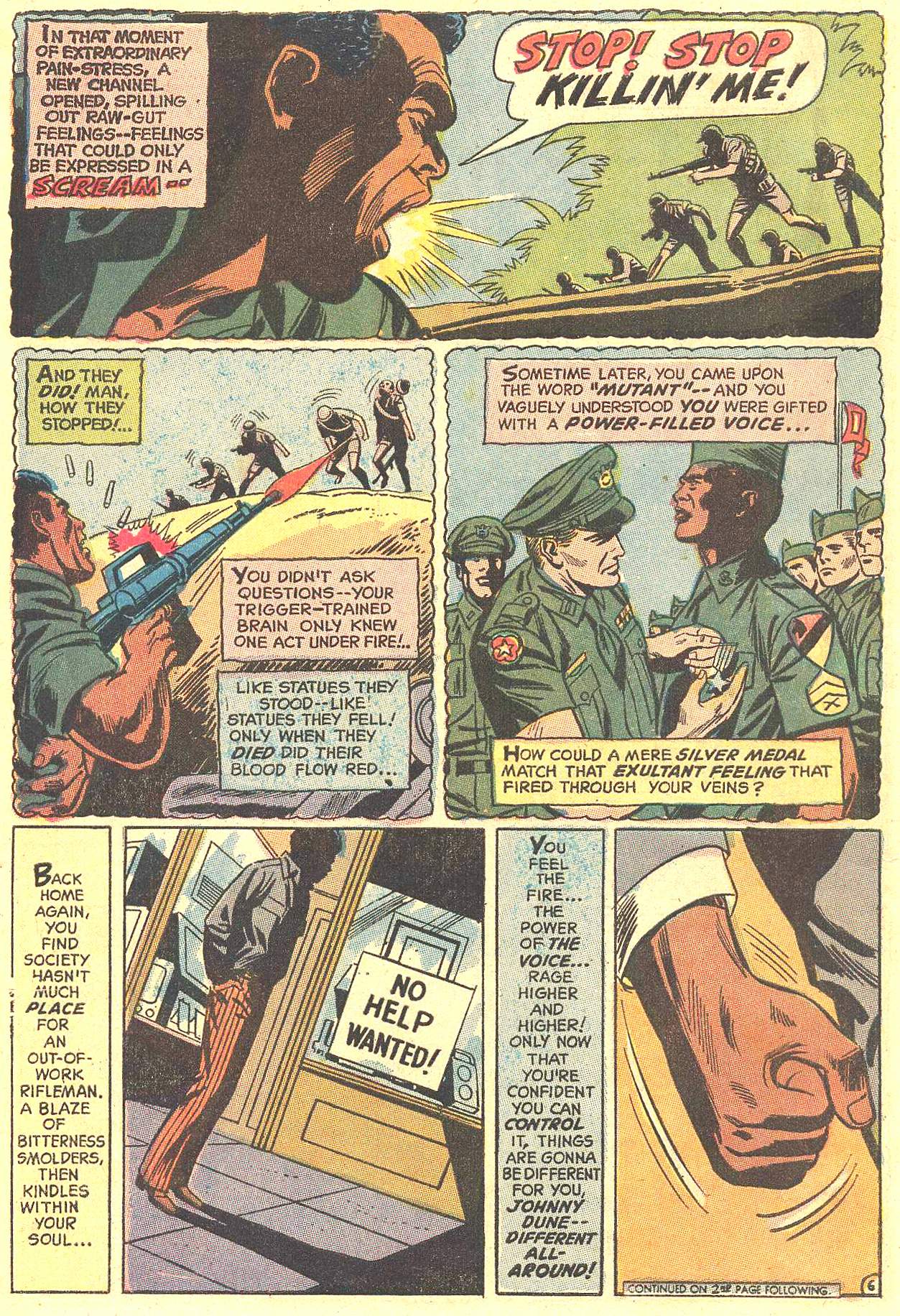
20-year old writer Mike Friedrich also seemed concerned with the home front, yet he was clearly more in tune with current generational sensibilities. A hippy protester against US warmongering served as red herring in Detective Comics #387. Friedrich also famously pitted Batman and other heroes against Johnny Dune, a resentful Vietnam vet using his supernatural voice to mobilize the youth to march against the power, in a political variation of the Pied Piper of Hamelin.

Justice League of America 95 JLofA-95_06-JohnnyDuneJustice League of America #95

Hauntingly brought to life by Dick Dillin’s pencils and Joe Giella’s inks, described as ‘the best electric rhythm-and-blues man since drugs burned out the life of Jimmy Hendrix,’ Johnny Dune comes across as sympathetic yet misguided, ultimately giving up his revolutionary tactics to pursue electoral politics.

On a more global scale, outside of the pages of The Brave and the Bold the Caped Crusader mostly kept away from international geo-ideological disputes during the détente era, unless of course you count his ongoing struggle to prevent the immortal eco-fundamentalist Ra’s al Ghul from taking over the world. The one time Batman did get directly involved was in ‘The Most Dangerous Twenty Miles in Gotham City,’ where the Dark Knight helped the government carry out a prisoner exchange between Soviet spy Ivanescu and a US agent, the villains being American lunatic-fringe ‘101% super-patriots’ out to kill Ivanescu before the trade could take place.

Batman’s main spy villain during this period was Colonel Sulphur, introduced in the classic ‘At Dawn Dies Mary MacGuffin!’

Batman241Batman #241

Sulphur heads a freelance spy ring and his work remains unattached to real world politics. Whenever he shows up, Sulphur is after secret American documents, or rocket fuel, or super-weapons, but it isn’t usually clear who exactly he is spying for. In ‘Death-Knell for a Traitor!’ Sulphur is not even spying at all, instead he is just another well-connected criminal looking for a diamond – that issue does have a gloomy, ironic Twilight Zone-worthy ending, but it’s about the trauma of World War II rather than the Cold War.

Only by the mid-1970s, with détente beginning to fall apart, do we finally get a grand, globetrotting espionage adventure in the main title, which if nothing else ought to be remembered for this moment:

Batman 281Batman #281

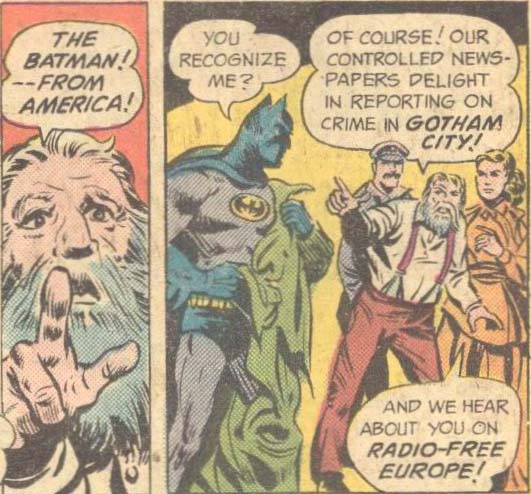
Courtesy of David V. Reed and Ernie Chua, in the storyline running from Batman #281 to Batman #283 a triple murder investigation leads the Dark Knight to look into the disappearance of a defected Hungarian nuclear scientist. This is tied to yet another terrorist plot to – you guessed it – blow up Gotham City with an atomic bomb, unless a one billion dollar ransom is met (you can tell there was rampant inflation since the ‘The Doomsday Bal!’ when the bomber settled for ten million). The investigation takes Batman to Budapest, where we find out that he is well-known on the other side of the iron curtain…

Batman281Batman #281

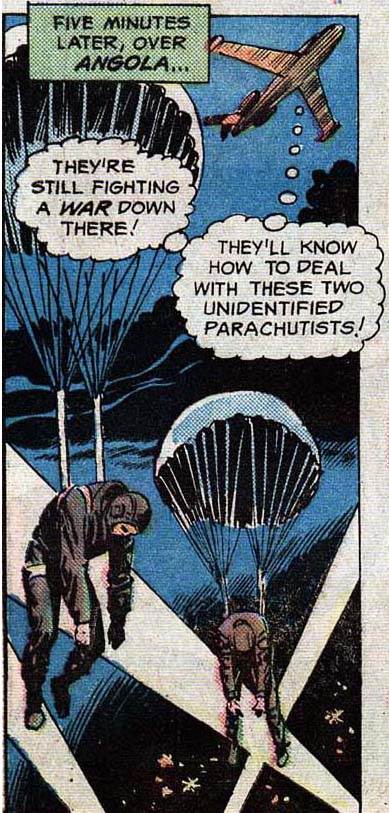
The Caped Crusader goes to Africa as well, where he sadistically disposes of two henchmen by dropping them in the middle of the Angolan Civil War:

Batman 283
Batman #283

Robin was also well-travelled in different Cold War stages, sometimes with his Teen Titans team, sometimes solo. Once he even caught a group of American soldiers stationed in West Germany who justified robbing banks in Stuttgart with the state of the global political economy:

detective comics 487Detective Comics #487

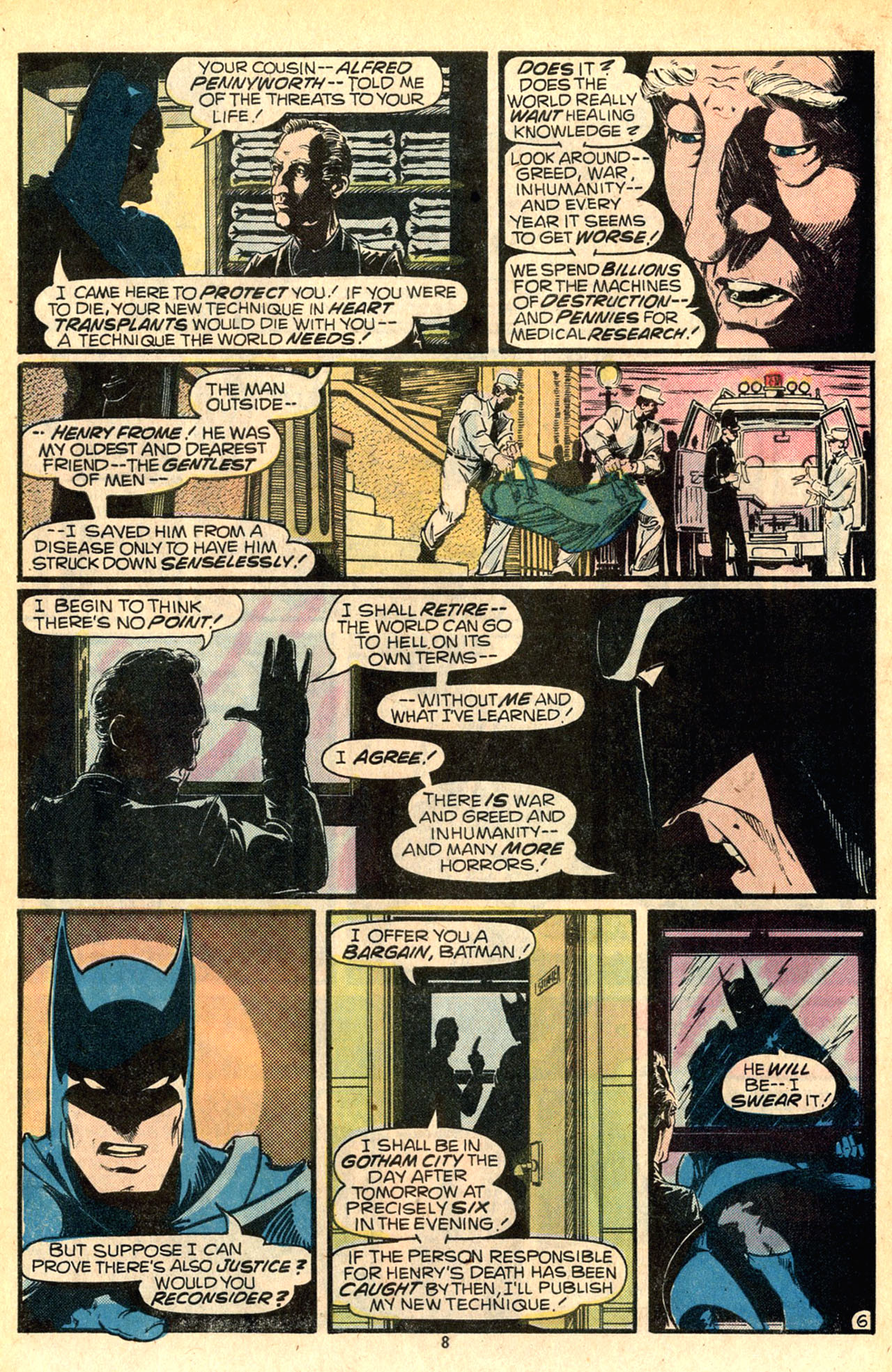
And yet, if I had to pick the comic that best captures the feeling of all-encompassing violence, paranoia, and despair of the ’70s, it would be ‘Ticket to Tragedy.’ This thrilling story by Denny O’Neil and Marshall Rogers doesn’t feature Batman thwarting bombings, fingering commies, chasing hippies, or fighting robots set up by the military-industrial complex. Instead, after decades of global conflict, the Dark Knight takes it upon himself to accomplish an even more impossible mission – to restore an old man’s hope in humanity:

detective comics 481Detective Comics #481

NEXT: Batman kills a bunch of people.

Posted in POLITICS OF BATMAN COMICS | Tagged , , , , , , , , , , , , | Leave a comment

Gotham Calling Manifesto

Over the last 75 years, hardly a month has gone by without at least one story being published featuring a millionaire dressed as a bat, more often than not beating up the mentally ill. This is something that should make us think about who we are as a species. Or maybe it isn’t, but I have anyway.

In fact, I’ve spent an unreasonable portion of my life reading and thinking about Batman. And for the upcoming months, I will share those thoughts with you. This way, even those hapless mortals who have not devoured tons upon tons of pages full of ludicrous crime plots and eccentric clothing (and the occasional mutant gorilla) can also be exposed to some of the coolest things that are to be found in Batman comics.

The blog’s focus will not just be on Batman per se, but also on the universe around him, particularly on Gotham City, the place where ‘Sorry I’m late, but on my way here I was kidnapped and brainwashed by a deranged fan of Alice in Wonderland’ is a workable excuse. I am fascinated by all the world-building and oddities that have emerged over the years around what was initially a simple knock-off of pulp heroes like Zorro and the Shadow. There will be posts on key topics such as Robin’s puberty, Batman’s role in the perestroika, and the unbelievably high mortality rate in Gotham politics, as well as on more technical aspects, like Batman’s most idiosyncratic writers or the creepiest covers to feature the Joker.

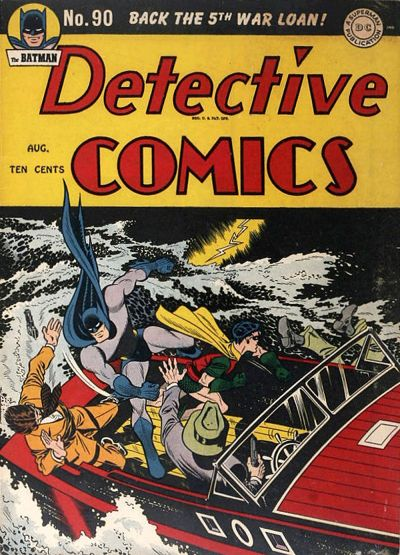
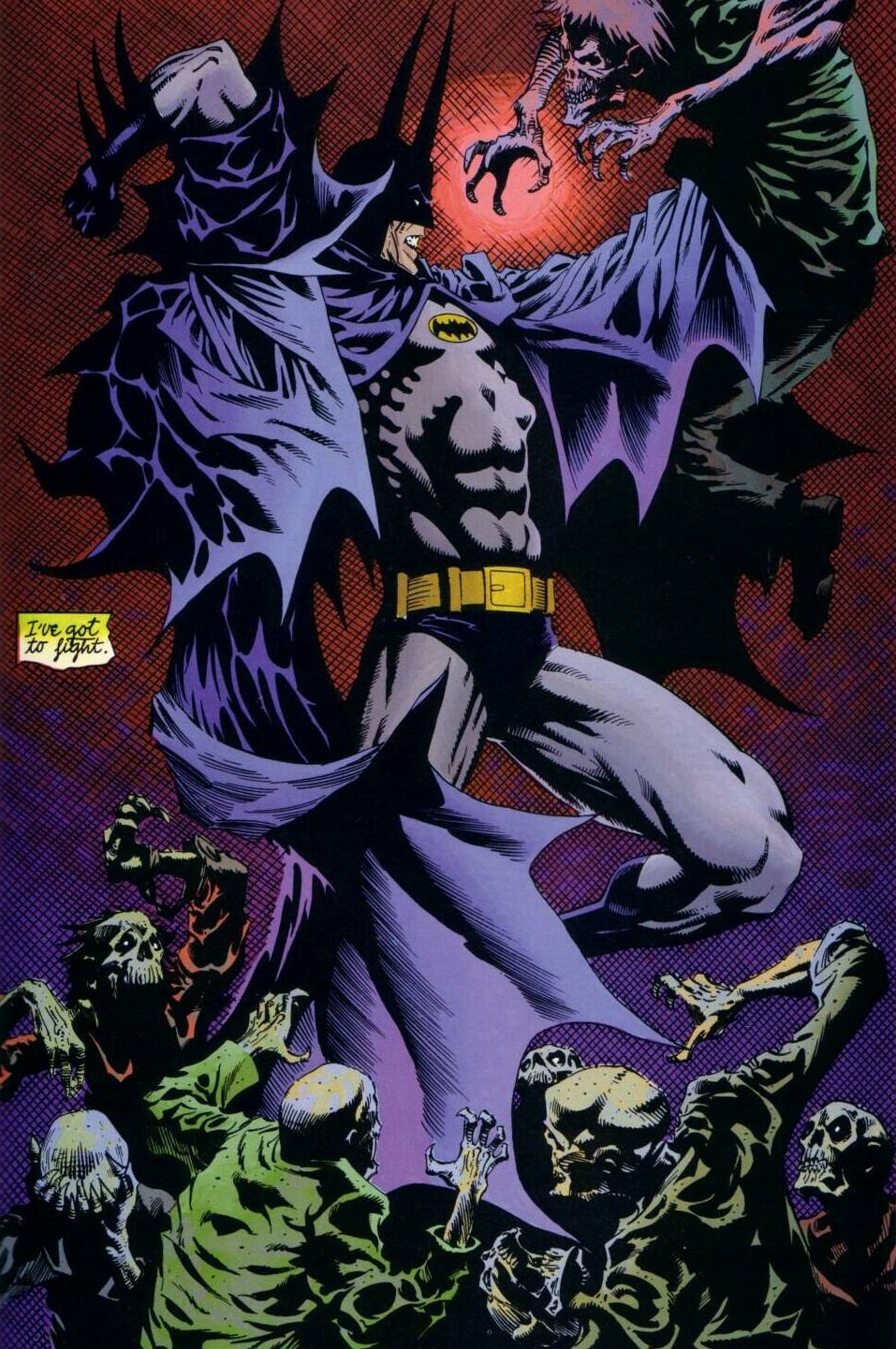
In the name of fairness – and because I don’t want to keep writing ‘IMHO’ – in this first post I will outline my general views and bias regarding Batman stories. Batman, who also goes by the less descriptive yet more ominous title of ‘Dark Knight,’ has been featured in literally thousands of stories in comics alone, not to mention other media such as cinema, television, video games, and porn. Call it versatility or inconsistency, but here is a character who has a long tradition of stories with such diverse moods as pulp adventure…

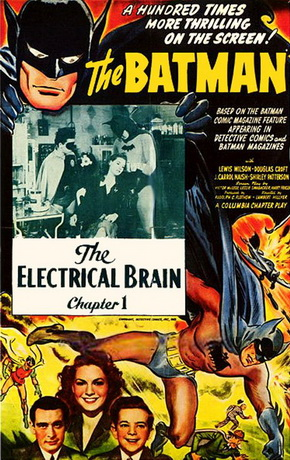
    Detective Comics 90                     Batman serial
                       Detective Comics #90                                               Batman 1940s serial

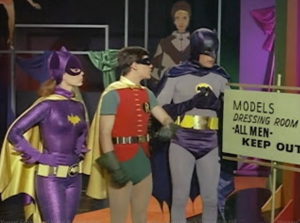
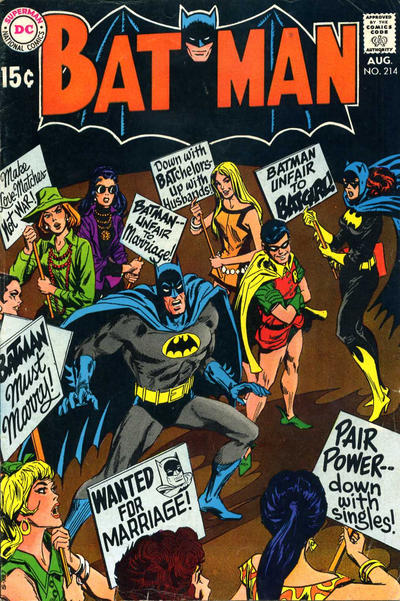
…unapologetic camp…

Batman tv series       Batman 214
                            Batman tv series                                                                  Batman #214

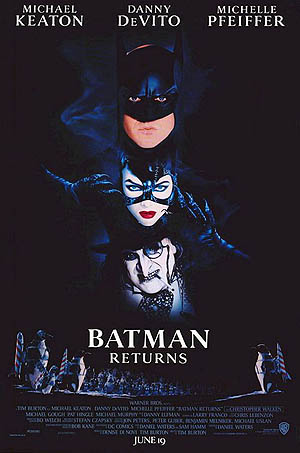
…gothic surrealism…

       Batman Returns                    Batman Red Rain
                           Batman Returns                                                   Batman: Red Rain

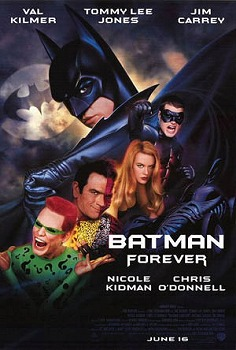
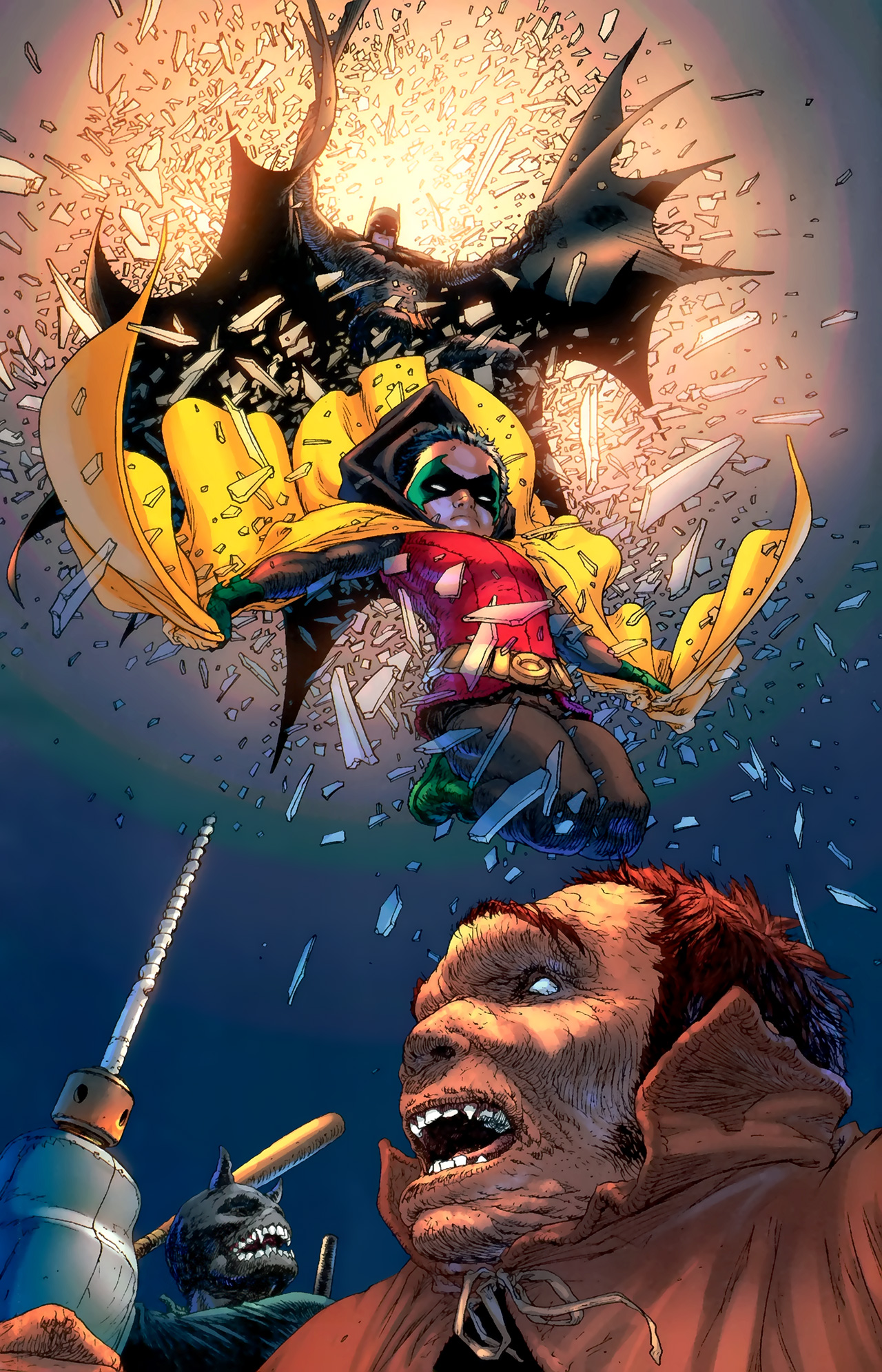
…slam-bang superhero action…

       Batman Forever                    batman and robin 03
                           Batman Forever                                                    Batman and Robin #3

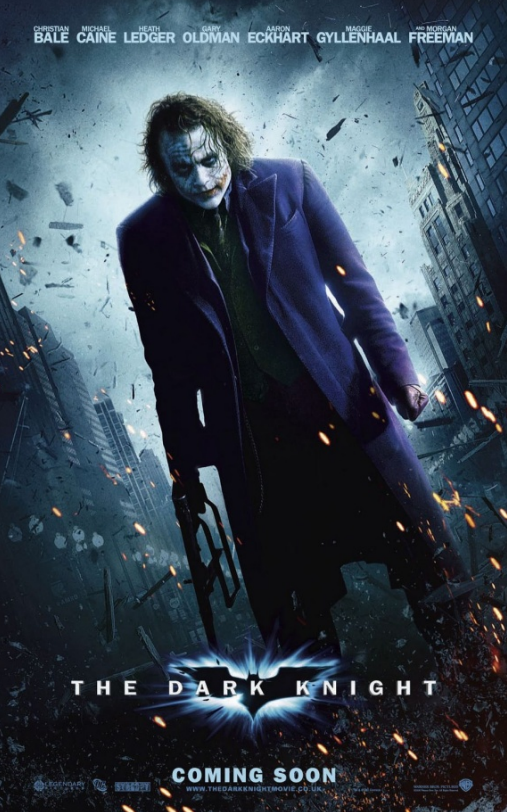
…and gritty crime thrillers.

         The Dark Knight                    Detective Comics #583
                              The Dark Knight                                                     Detective Comics #583

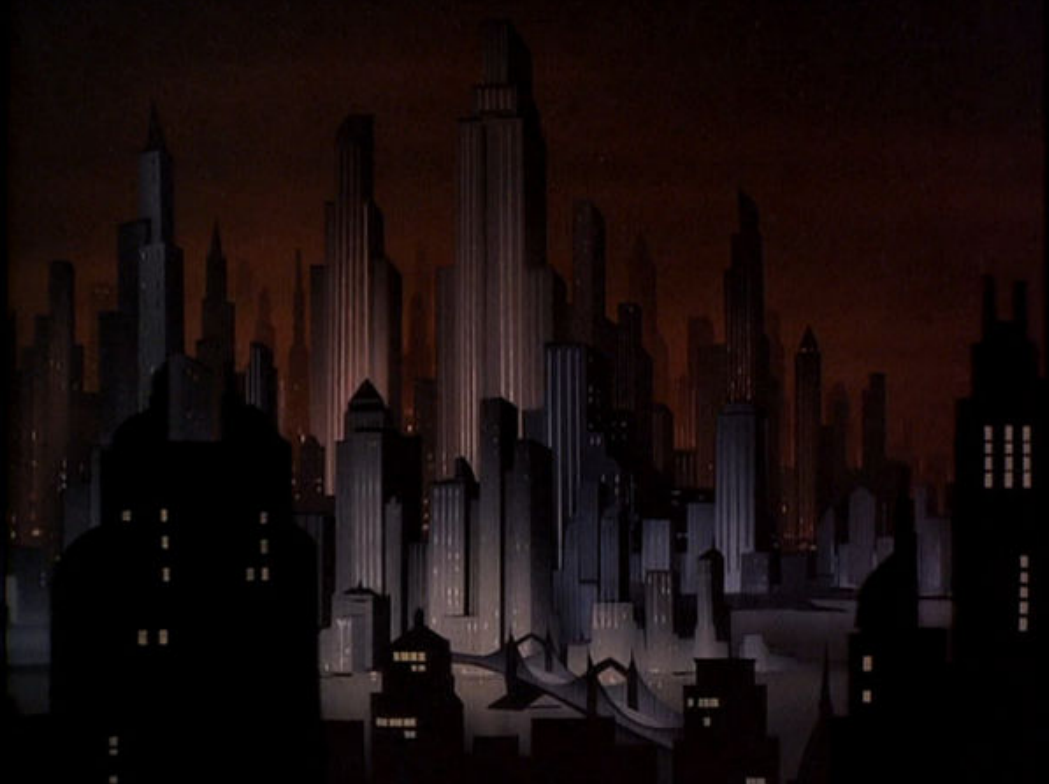
In a genre anchored by the weight of nostalgia, fans often prefer the style of the stories that first made them fall in love with the character. I am no exception. For me, like for many others in my generation, it all goes back to that moment when the Dark Knight, hanging from a zeppelin and stoned out of his mind on fear toxin, yelled at a giant hallucination of his father: ‘I am vengeance! I am the night! I am BATMAN! This means that, basically, my platonic ideal of how the Batman universe should be like comes straight from the cartoons I used to watch as a kid. For the most part, Batman: The Animated Series expertly walked a fine line, delivering stories that were moody and exciting, without feeling either overly grim or overly silly. Even weaker episodes tended to have stunning set pieces, like when Batman had to fight a massive deathtrap shaped like the solar system… And everything was made even cooler by Bruce Timm’s art deco, film noir-inspired designs:

Gotham City

The show’s interpretation of Batman and its villains was carried into the Batman Adventures line of comics, known for its fun tone and highly kinetic art style. Despite being kid-friendly, these comics – just like the cartoons that inspired them – did not feel the need to talk down to their audience. In fact, the sadly short-lived second volume of Batman Adventures – mostly written by Ty Templeton and Dan Slott – packed more clever twists, neat moments, and intricate subplots than any other ongoing series at the time. The Dark Knight faced Killer Croc, the Joker, the Cavalier, a recently elected Penguin, the police, and a horde of ninja assassins from the Society of Shadows – and that was just the first issue!

This is not to say that there aren’t plenty of great Batman comics outside the Adventures line. Throughout the ages the Caped Crusader, as he is sometimes alliteratively called, has found himself in a wide range of mind-blowing stories drawing on everything from murder mysteries to psychedelic sci-fi, from German expressionism to pop art, from serious social issues to supernatural mumbo-jumbo. Either because he is a fascinating character or simply because he is a popular one, Batman has attracted the best creators in the industry. Name your favorite mainstream comics editor, writer, artist, colorist, letterer, etc and s/he is bound to have crossed paths with the Dark Knight. Seriously, back in the 1974, DC published back-to-back issues illustrated by Howard Chaykin, Alex Toth, and Walt Simonson… yeah, eat your heart out, Mona Lisa!

Detective Comics #441
                                                                                    Detective Comics #441

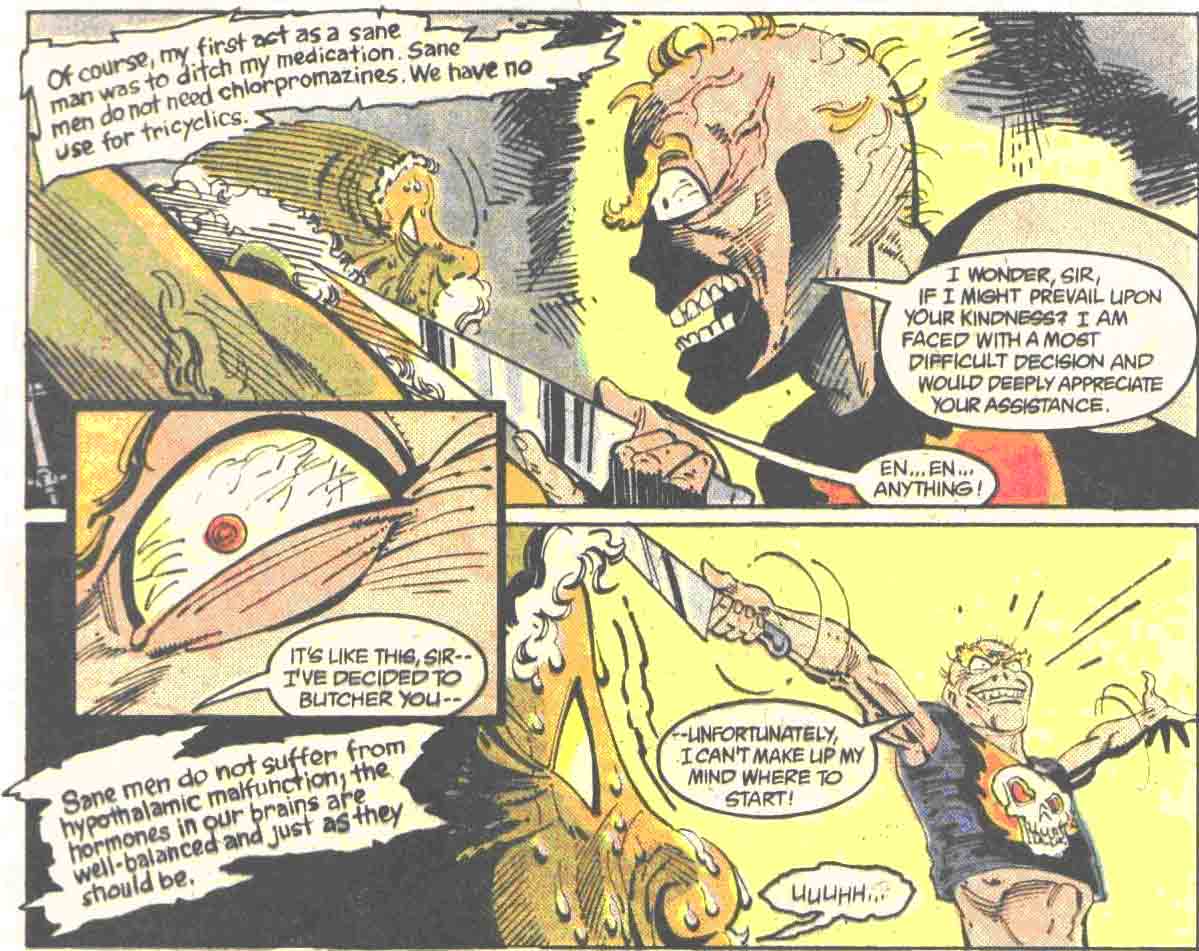
To be sure, being talented at doing comics is not necessarily the same as being talented at doing Batman comics. Critically acclaimed authors like Alan Moore and Neil Gaiman may have written their share of solid Batman stories, but if you want a straightforward tale that earnestly kicks ass while reveling in its own absurdity, you should look no further than Alan Grant. True, Grant’s dialogue has been known to cross the border over to the wrong side of cheesy (people get called ‘creep’ quite a lot) and his sense of subtlety can be best illustrated by the fact that he once penned a story called ‘Cats,’ featuring Catwoman, Catman, a couple of cat-catchers who drove around in a van labeled Schrodinger Delivery while exchanging feline factoids, and a cat burglar on top of the building of Hottin Roofing Inc, on Elliot Street. Regardless, Grant throws himself at the material with unmatched gusto, writing a badass Batman tempered with a healthy dose of dark humor and often coming up with truly twisted villains:

Detective Comics #593                                                                                   Detective Comics #593


So what makes a Batman story great? If there is such a thing as an archetypical formula, it involves the Caped Crusader facing off against an interesting villain both intellectually (usually by tracking down the culprit or figuring out the next crime) and physically (by fighting a formidable opponent and/or escaping from a deathtrap). Then again, it wasn’t that long ago that Batman was sent back in time by an alien god and ended up hanging out with a crew of 18th century pirates – and that story was ten kinds of awesome!

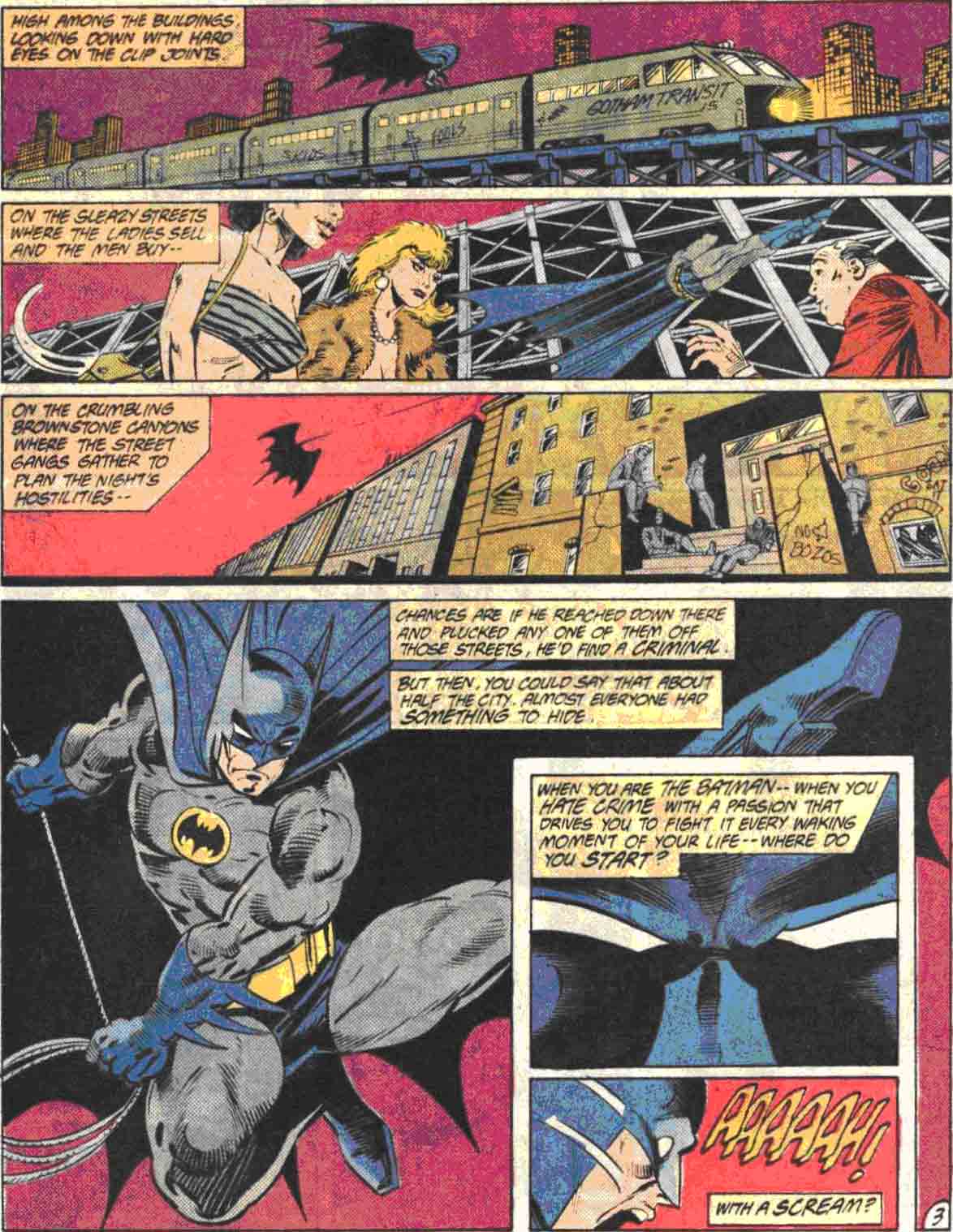
Still, it may be useful to clarify upfront my understanding of what makes the Dark Knight himself work as character. In his very first appearance, Batman was described as a ‘mysterious and adventurous figure, fighting for righteousness and apprehending the wrong doer.’ Others would label him a fetishist urban vigilante psycho and, sure, there is some of that in there. But at the end of the day what defines Batman as a character – apart from his accurate belief that *everything* looks cooler with a bat-logo on it – is the fact that he hates crime and loves his city. As simple as that. And what makes this so much fun is that his city is Gotham. The. Worst. City. Ever.

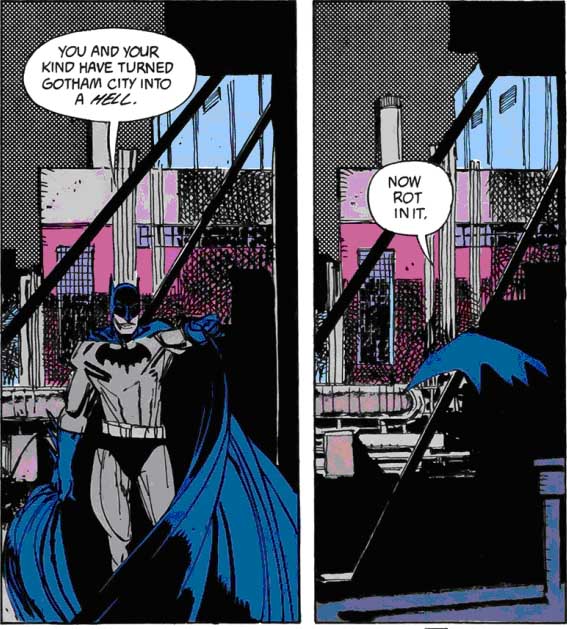
Gotham City is everything that’s wrong with our world, but it’s not our world, it’s a nightmare born of all our kinks and phobias, with homicidal clowns and masked militias doing parkour on gargoyle-ornamented rooftops, tragic monsters, ancient demons, kitsch serial killers, avant-garde terrorism, genetic experiments gone wrong, and stereotypical gangs roaming the streets at night to the soundtrack of The Misfits’ ‘Where Eagles Dare.’ It’s a place so out there that its only hope is a bulked up genius with a very large car collection.

Legends of the Dark Knight #7                                                                    Legends of the Dark Knight #7

 It is in this screwed up city that Batman wages his war on crime. Of course a ‘war on crime’ may seem just as vague as a ‘war on drugs’ or a ‘war on terror,’ but a corporate-owned comic character is supposed to last a long time so authors can be forgiven for adopting such an open-ended mission statement. Given that Bruce Wayne’s motivation stems from the death of his parents during a mugging, the Dark Knight tends to focus on larceny and street violence, although he has occasionally also been known to branch out into areas as diverse as hate speech or real estate fraud.
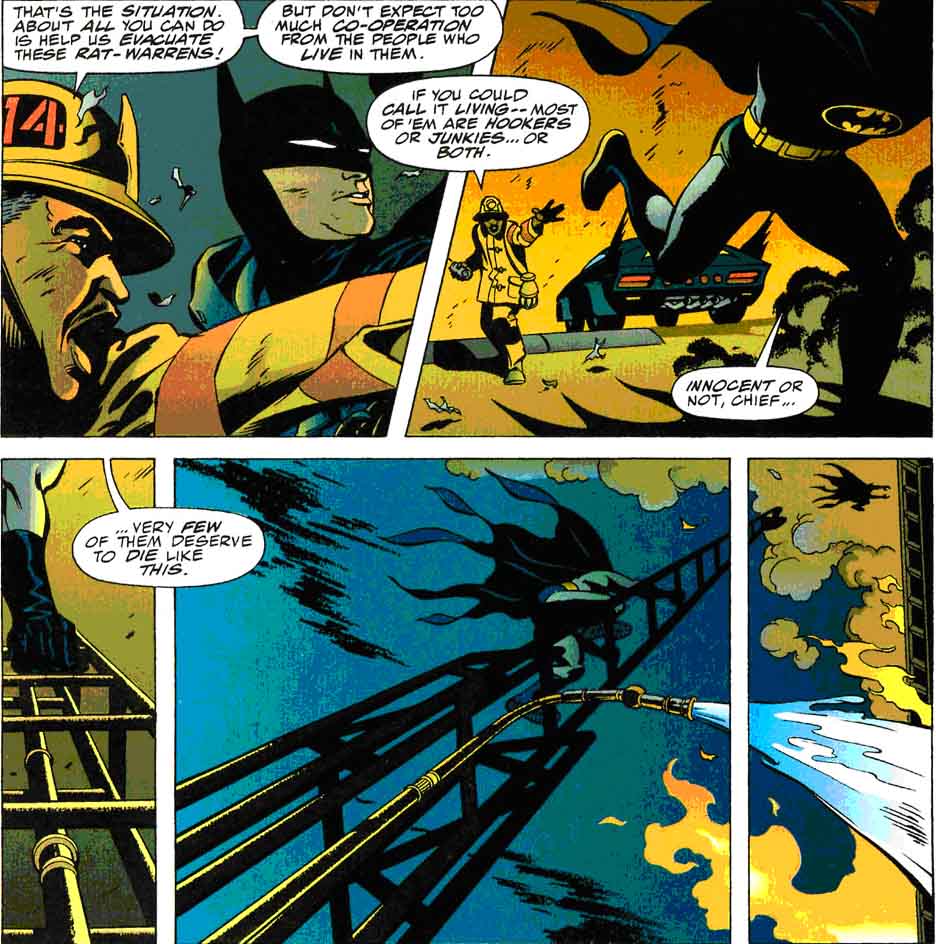
Some write him as a super-cop – he was even fully deputized until the 1980s – or as a libertarian alternative to cops – who gets results because he doesn’t have to play by legal rules and respect citizens’ rights – but the best stories are those in which Batman simply does what no one else will do because he is the most dedicated and resourceful guy in town. He steps in whenever the authorities are too busy, too corrupt, or just baffled. And although his specialty is handling bizarre villains and unconventional threats, if necessary he will even take over from the fire department:

World’s Finest #3                                                                                   World’s Finest #3

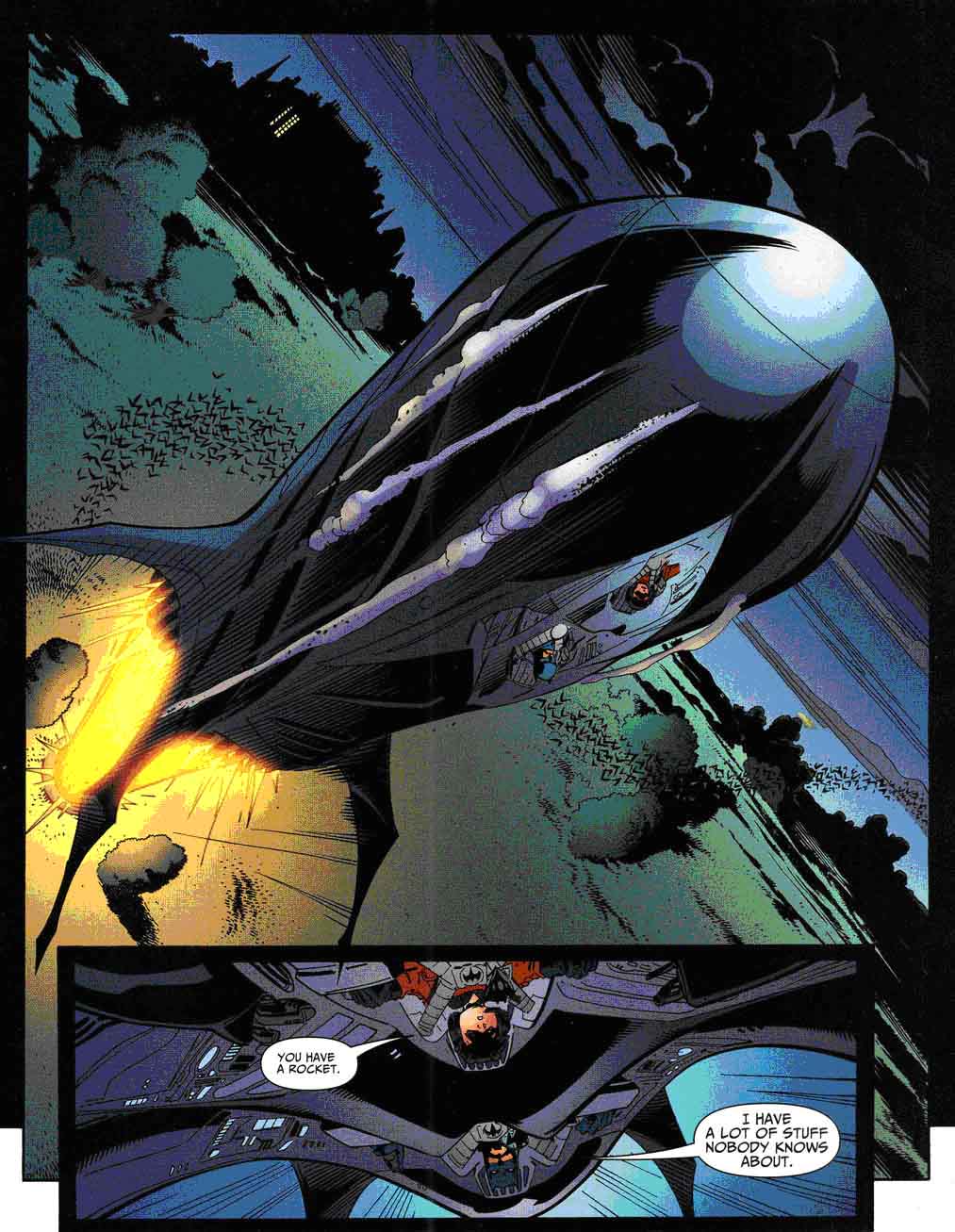
 But what makes the Caped Crusader such a special crime-fighter, apart from the twisted logic that it takes a costumed lunatic to catch another costumed lunatic? Well, while he is technically human, Batman is commonly written as a superhero. He may not be super-strong or super-fast, but his extensive martial arts training allows him to get away with some outlandish physical feats. He has a massive computer that does everything from generating poison antidotes in record time to hacking into top secret files, although admittedly this was more impressive in the early days of the internet… Crucially, Batman is also super-rich. Money may not give people *super* powers in the real world (although between his clout, egomania, and obsessive branding, Donald Trump does resemble a super-villain), but then again Batman, or more precisely Bruce Wayne, is not just rich. He is so rich that writers can shove any outrageous gadget into the plot without having to bother explaining to the readers how it came about:

Batman #658                                                                                                 Batman #658

So if you want to read stories about a down-on-his-luck hero struggling to make ends meet, go check out Spider-Man instead. It should be noted, though, that as tempting as it may be to present Bruce Wayne as an Ayn Randian capitalist Übermensch fighting against the lower classes, it is usually disingenuous to do so, Nolan’s The Dark Knight Rises notwithstanding. Bruce Wayne’s wealth is more of a convenient plot-device than a thematic statement. After all, the millionaire playboy persona is no less of a disguise than his Dark Knight melodramatics. 

Batman Adventures (v2) #9 Batman Adventures (v2) #9

 From a thematic point of view, Batman’s relentless determination is much more central to his character. Bruce Wayne is not just someone who saw his parents gunned down in front of him when he was a kid and hence vowed to dedicate his existence to the eradication of crime… he is a guy who, after making this childish vow, actually spends the rest of his life consistently focused on that one objective, studying, training, planning for every contingency, and literally going out into the streets every night just to punch criminals in the face.
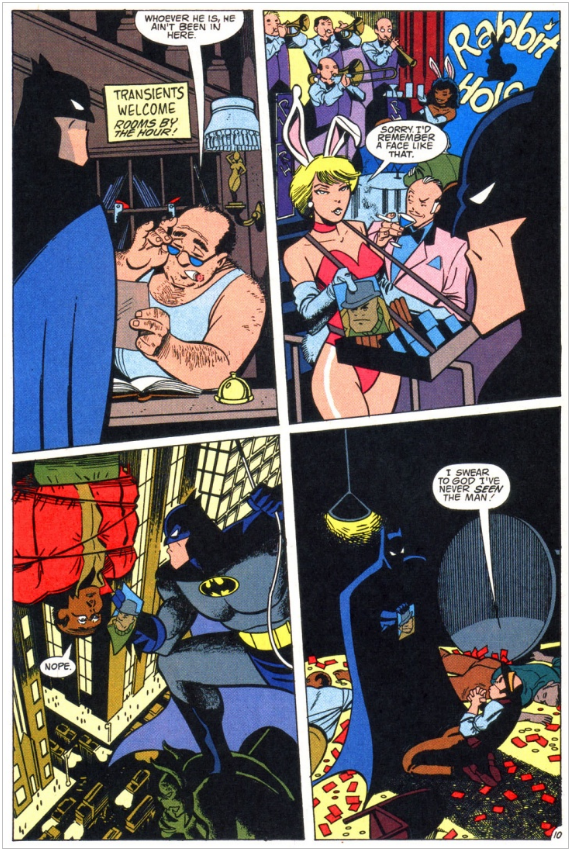
Batman’s other distinctive trait concerns the fact that he is supposed to be, as the ads put it, the World’s Greatest Detective. Not just a good detective, but the greatest. In practice, this is sometimes easy to miss, as even good writers occasionally find themselves lazily disregarding the potential of such an epithet – instead of having Batman make ingenious deductions from improbable clues, they just stick to him being a tough interrogator (i.e. torturer):
The Batman Adventures #8      The Killing Joke
                                  Batman Adventures #8                                             The Killing Joke

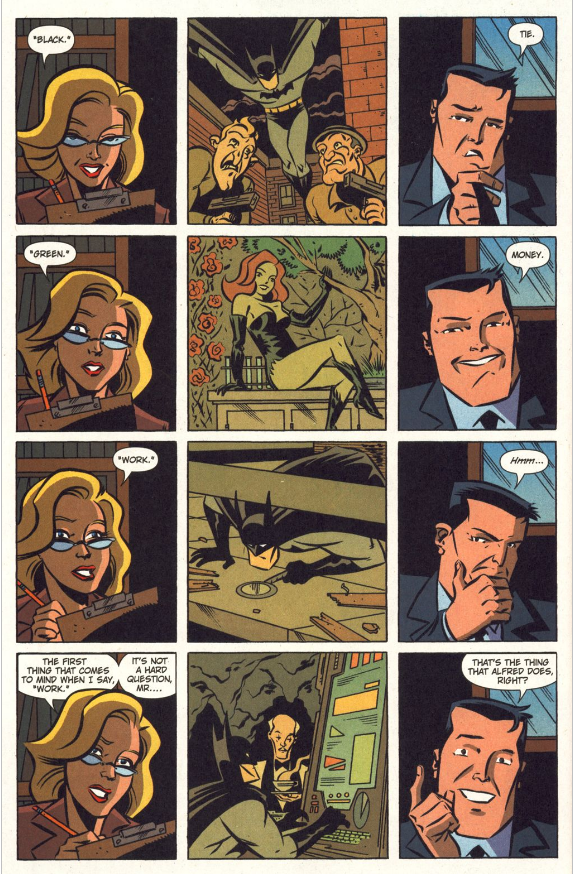
 Yet in theory, being the World’s Greatest Detective means that Batman is highly intelligent, observant, and knowledgeable. In other words, writers can get away with having the Dark Knight make impossible calculations or draw on any piece of obscure trivia to move the story forwards. Or just show off:
Gotham Adventures #56
  Gotham Adventures #56

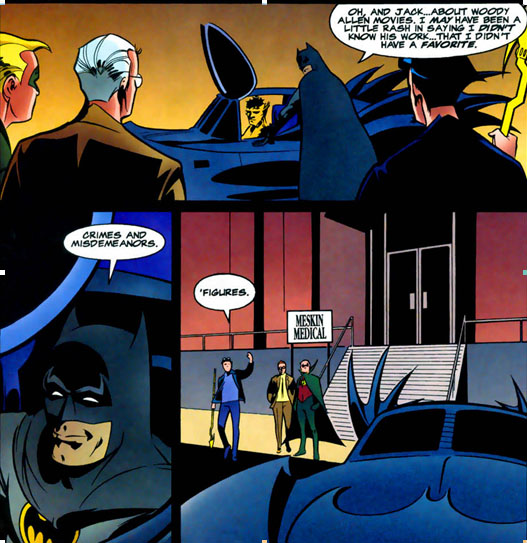
 …that’s right, as if all this was not enough to make Batman a character begging for amazing stories, let us not forget that he also possesses this final, outstanding attribute: he has great taste in films.

Starman #35 Starman #35

NEXT: Batman gets brainwashed by communists.

Posted in MANIFESTO | Tagged , , , , , , , | Leave a comment