The Batman of Arkham
This is Gotham Calling’s 800th post!
Like a proper comic book nerd, I’m a sucker for these mini-benchmarks, so I can’t resist interrupting the blog’s (quasi-)hiatus and return to an old obsession: alternative Batmen.
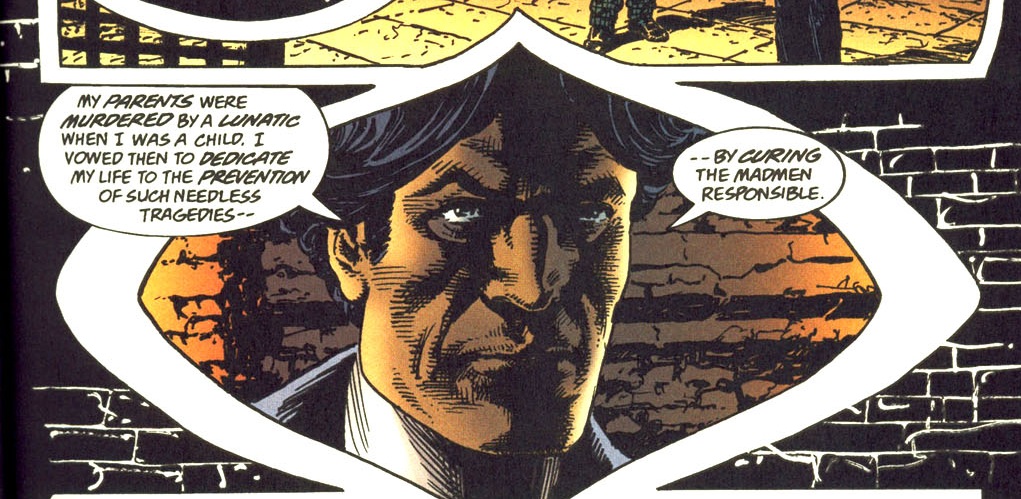
Basically, we’ve been blessed with a fair amount of alternative takes on the Dark Knight over the years, not least within DC itself… Besides the endless reboots and loose continuity projects (including the recent string of Black Label mini-series and, obviously, Absolute Batman), the character’s core concepts have been radically reworked in full-on Elseworlds tales such as the one above, where Bruce Wayne becomes a psychologist.
As I’ve pointed out before, though, some of the most fun reimaginings actually came from other publishers, which have less respect for the brand and therefore allow creators greater freedom to mess things up (although Alan Grant and Simon Bisley did push the boundaries *pretty far* in DC’s own Batman / Lobo one-shot). With that in mind, here are another couple of interesting versions of the Caped Crusader mythos:
DRAGONFLY / DRAGONFLYMAN
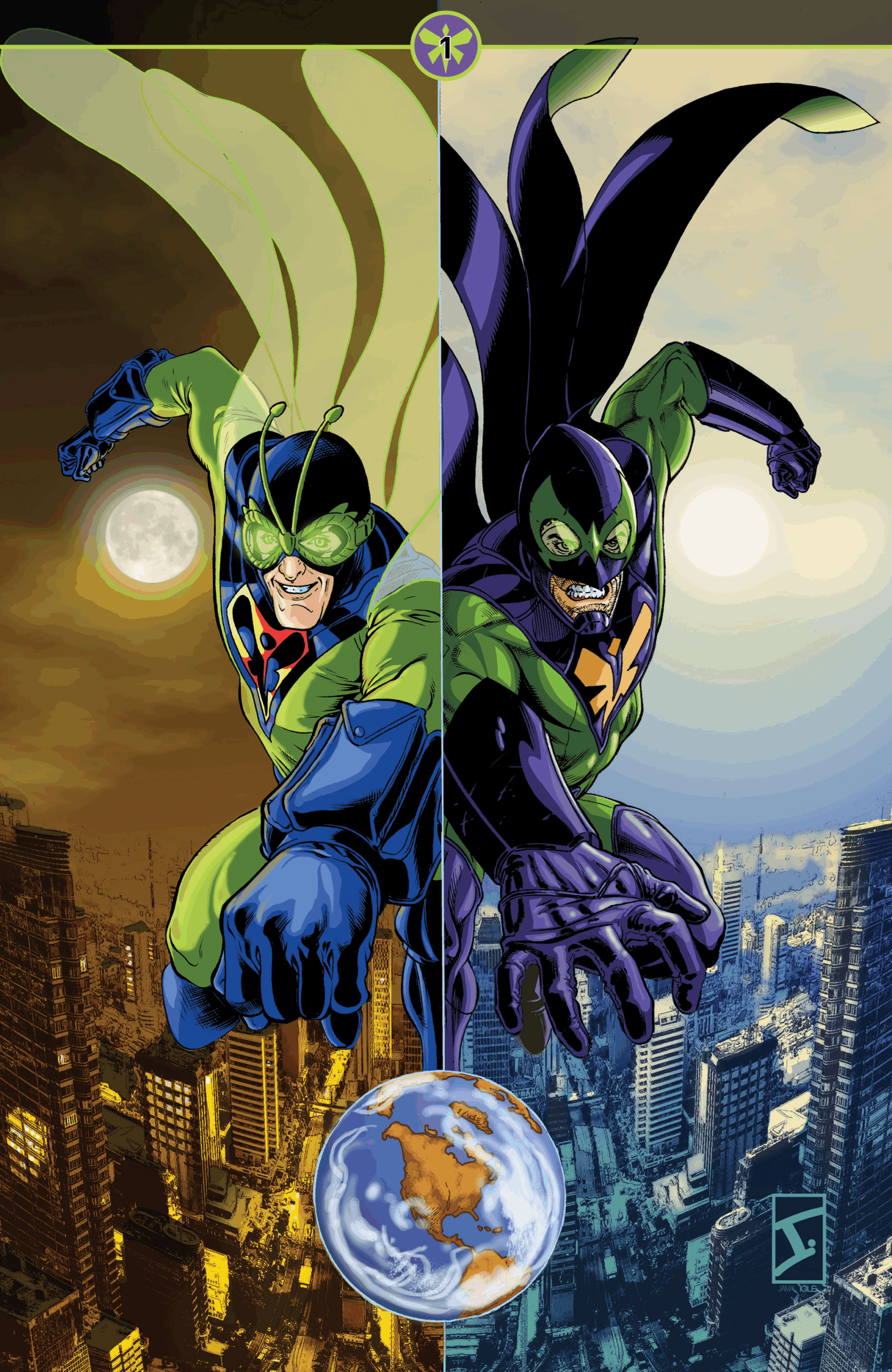
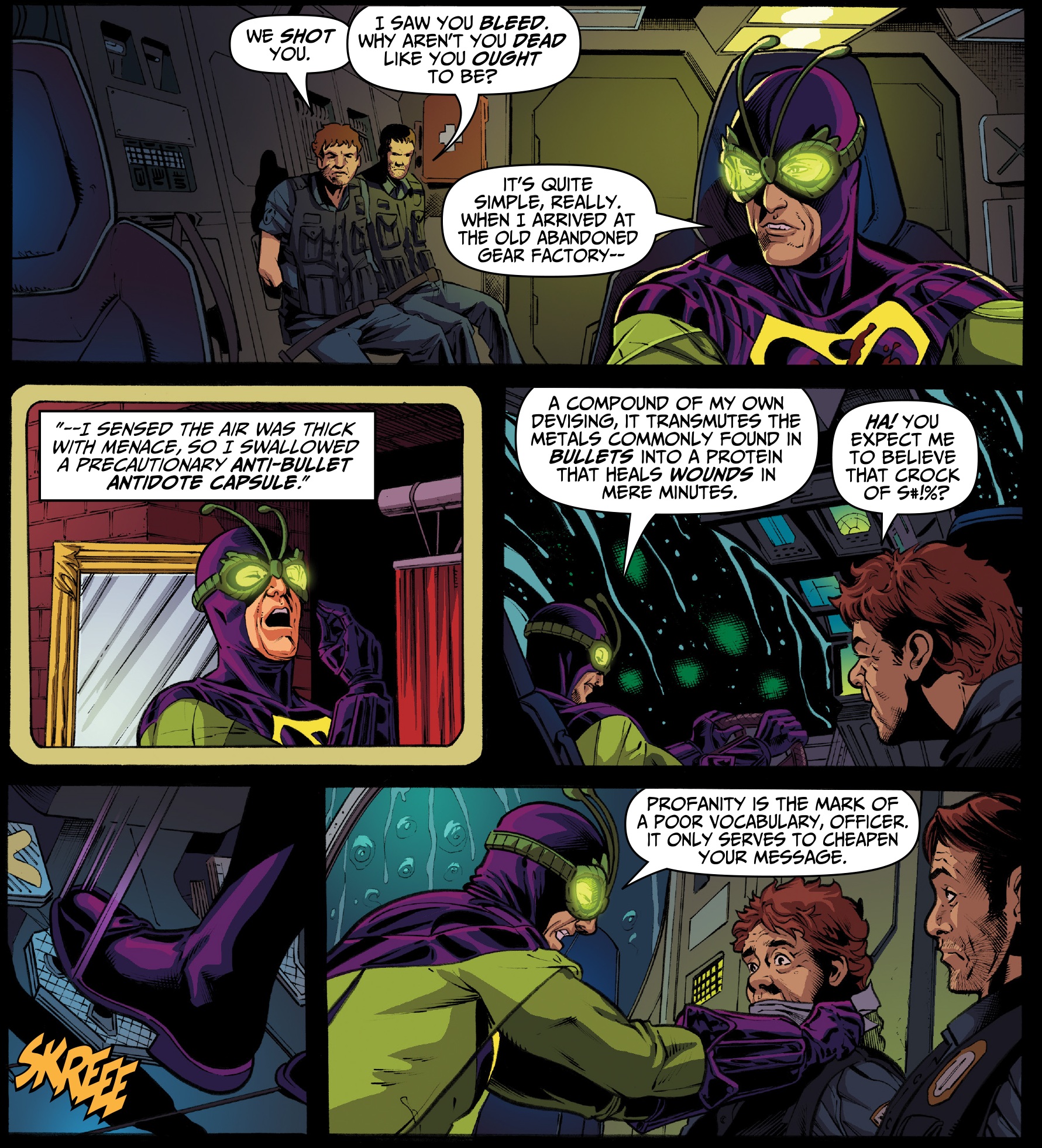
Published by Ahoy Comics, The Wrong Earth kicks off with an amusing high concept: what if a cornball Silver Age version of Batman (aka Dragonflyman) accidentally swapped places with his post-80s grim-and-gritty counterpart (Dragonfly)? On the one hand, you can pretty much guess what happens: as the naive, Adam West-y Caped Crusader confronts a violent, morally murky reality and the Frank Miller-informed Dark Knight stumbles into a colorful goofy world, black comedy ensues, as does some well-trodden commentary about the evolution of mainstream comics. On the other hand, because Tom Peyer is a clever writer with a very long background in the field, experienced in wacky throwbacks to the campy era (Batman ’66) as well as in the viciousness of modern anti-heroes (he did fill-in arcs for Mark Millar’s The Authority and Garth Ennis’ The Punisher), and because Jamal Igle put so much care in designing the cast and the look of each universe, the result is actually quite involving.
Besides the humor and the insights into the differences (and the continuities) between the two timelines, there is the sheer blast of seeing quirky off-brand spins on Batman’s rogues’ gallery (including some villains who don’t necessarily match the originals but who *seem* just like Batman villains). Peyer – mostly working with Igle and Peter Krause – even throws in nods to other classic comics for the geekiest fans out there (the riff on the cover of Green Lantern / Green Arrow #85 earned a loud laugh in my home). Moreover, following 2018’s The Wrong Earth mini-series, the project has continued to expand, flashing back to the pre-swap era in Dragonfly & Dragonflyman, then picking things up a year later in Night and Day and We Could Be Heroes. As the mind-bending plot gradually unfolds, the main characters continue to develop, which not only raises the stakes (as you fear the destructive power of the darkest reality over its counterpart), but it also creates genuine pathos, with each ersatz-Batman both transforming and responding to his surrounding environment.
Tom Scocca’s introduction to the first volume nails one other reason why the book may feel so resonant… At least since 2016, loss of innocence and the notion we have entered into a radical grimdark reboot or some kind of evil/bizarre Earth-2 crossover (not to mention a Crisis-style event) have become dominant feelings for many of us – and the past few years (and especially these past months) have only intensified the sense that ‘what was reasonable or possible no longer applies.’ In other words: ‘Life itself is a continuity problem.’
That said, I have no doubt The Wrong Earth will be best appreciated by those familiar with old and new iterations of the Caped Crusader. After all, we don’t just get a nostalgic defense of old-school comic books, but also the chance to playfully deconstruct some of the values hiding underneath the surface (like their celebratory relationship with wealth and authority).
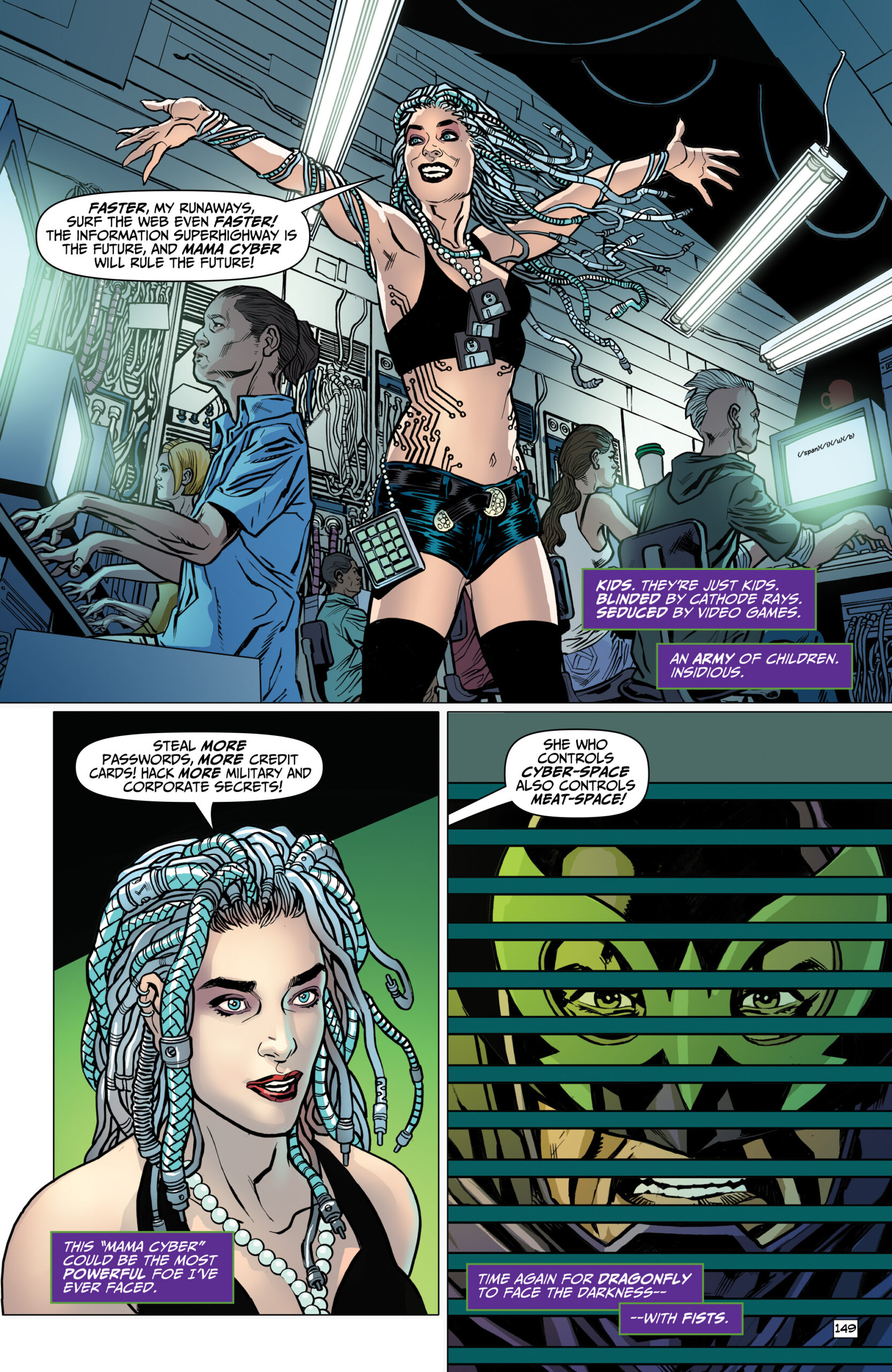
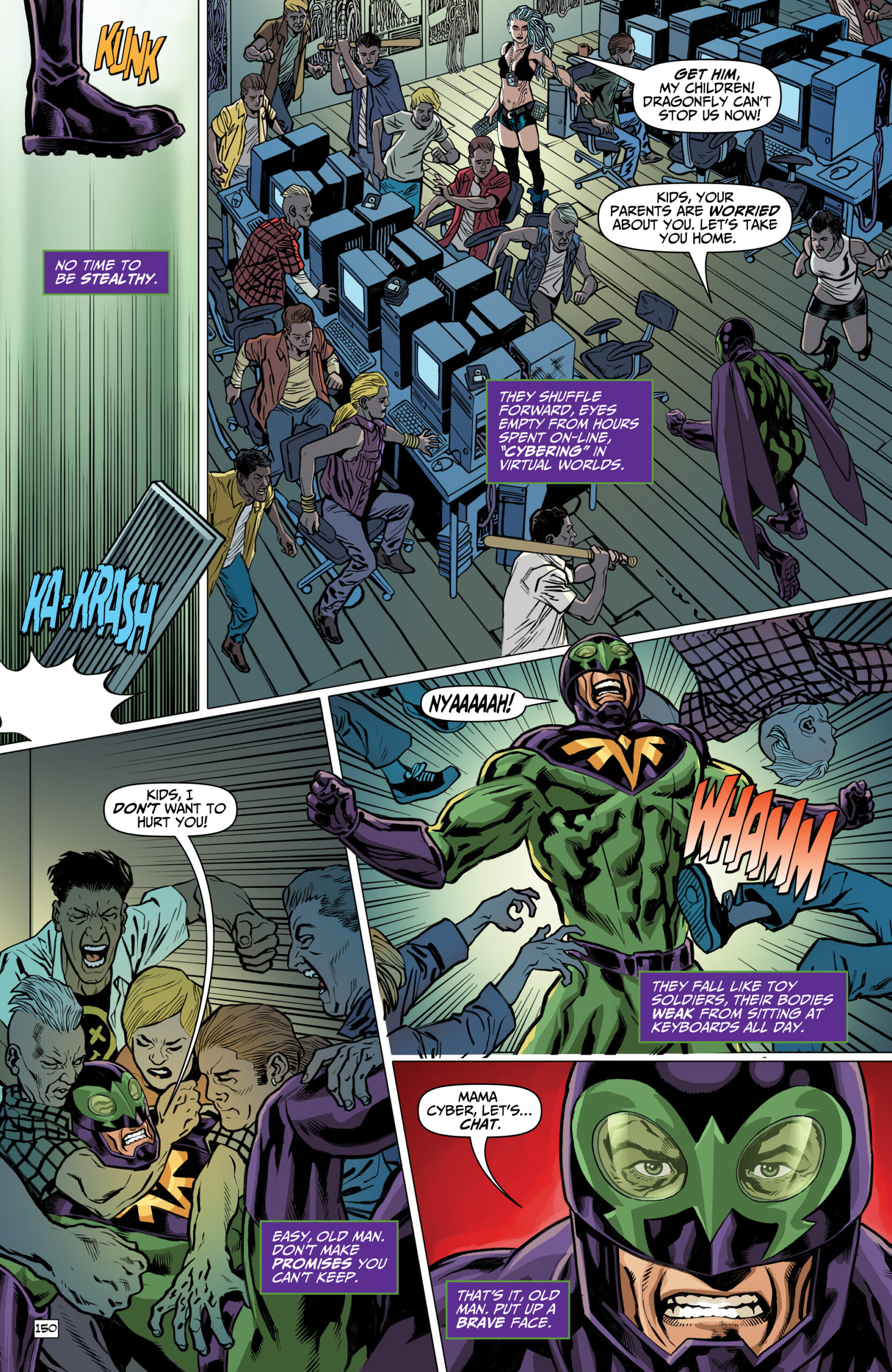
Plus, Paul Constant has written a bunch of funny ‘Tales from the Wrong Earth’ backups in the form of pastiches of different eras (delightfully illustrated by Frank Cammuso, Gary Erskine, and Tom Feister), not unlike those that could be found in similar metafictional series, such as The Escapist or Tom Strong. I particularly enjoyed the Silver Age tale in which the proto-Dynamic Duo fight The Nimby (a reactionary masked villain whose shtick is that he’s fighting new constructions in his neighbourhood). And, yes, Dragonflyman totally punches him in the face while quipping: ‘We’ve got some affordable housing for you… down at the county jail!’
My favorite, though, was his hilariously spot-on send up of the 1990s:
***************************************************************************************
THE KNIGHT
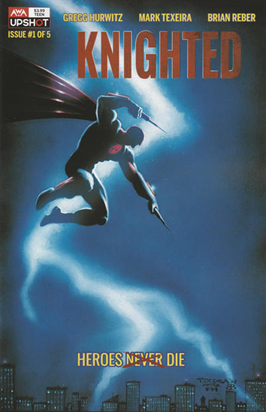
What if Batman was a loser? Or, better yet, what if a loser became Batman? Or, more generously, as Knighted writer Gregg Hurwitz explains in the book’s afterword, what if you replace Bruce Wayne with Peter Parker?
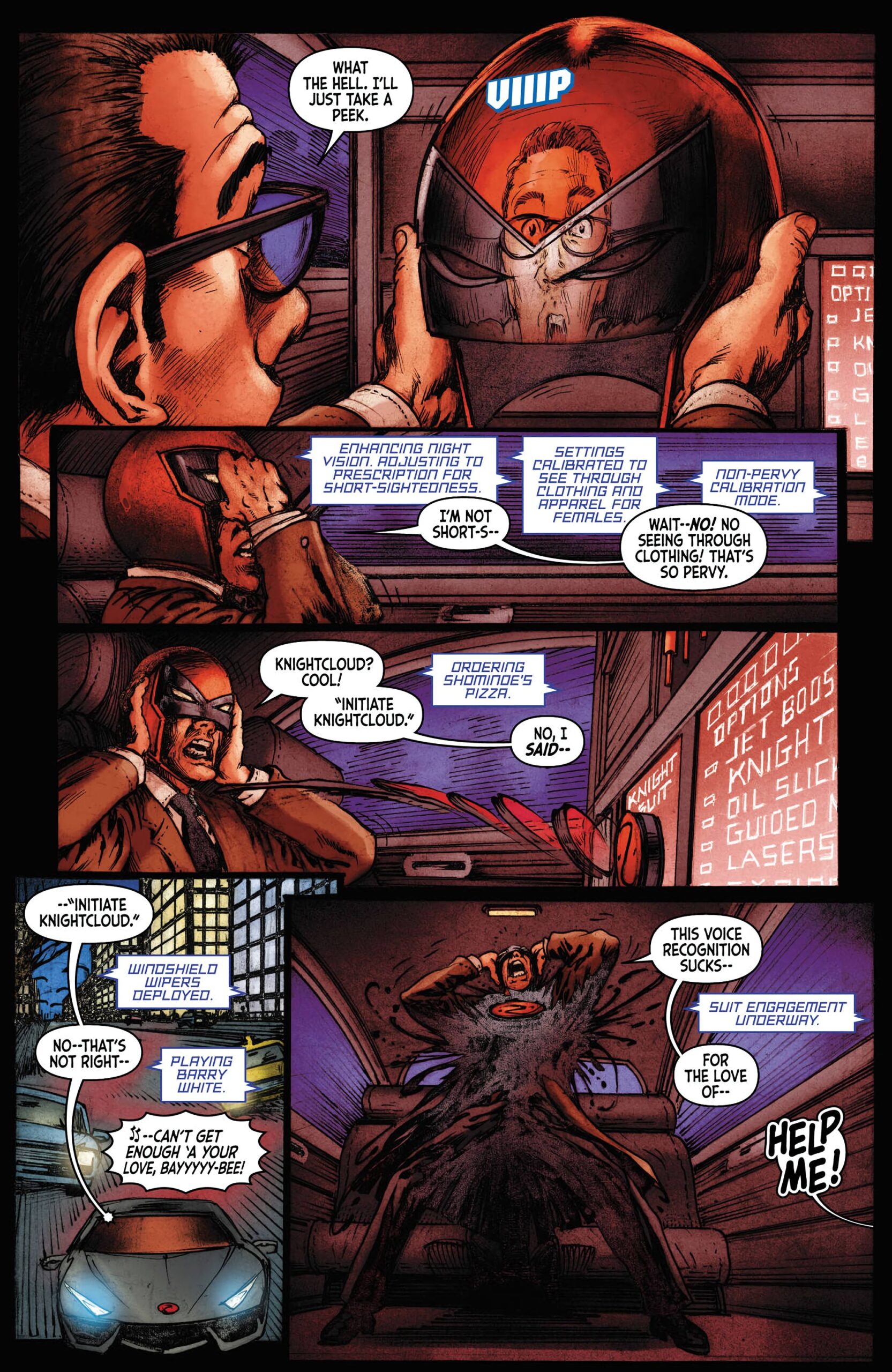
I won’t tell you how crime analyst Bob Ryder ends up as the badass vigilante known as the Knight. It’s not the most original idea, but it’s worth seeing how Hurwitz sets things up, as the premise is delivered with suitable comic timing and backed up by engaging characterization. Hell, that about sums up the whole comic, which gets a lot of mileage out of just clearly and effectively executing its high concept. This is helped by Mark Teixeira’s straightforward artwork, which also avoids flashy pyrotechnics (even though he can’t resist somewhat sexualizing almost every female character).
Check out this banger of an opening:
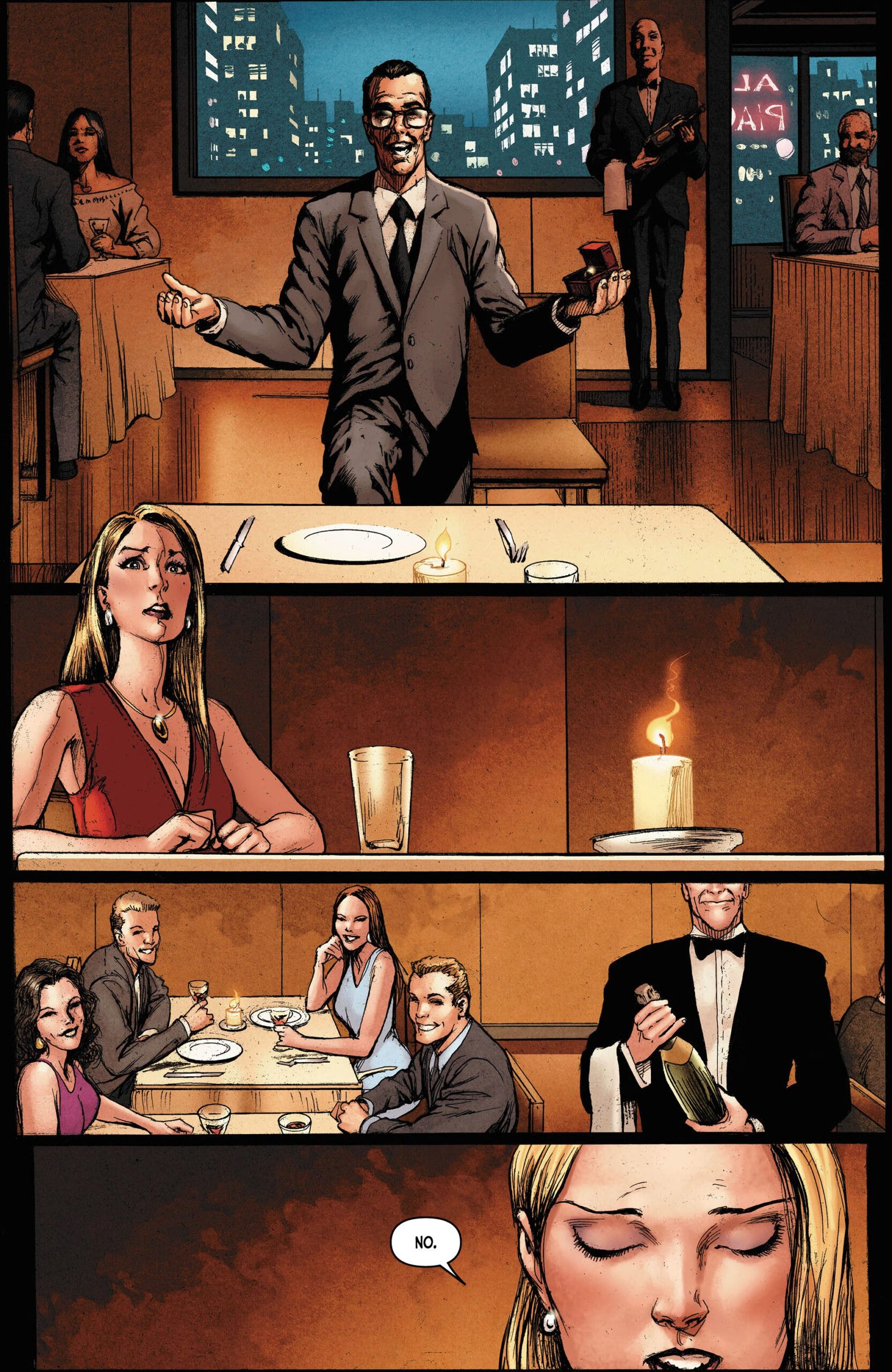
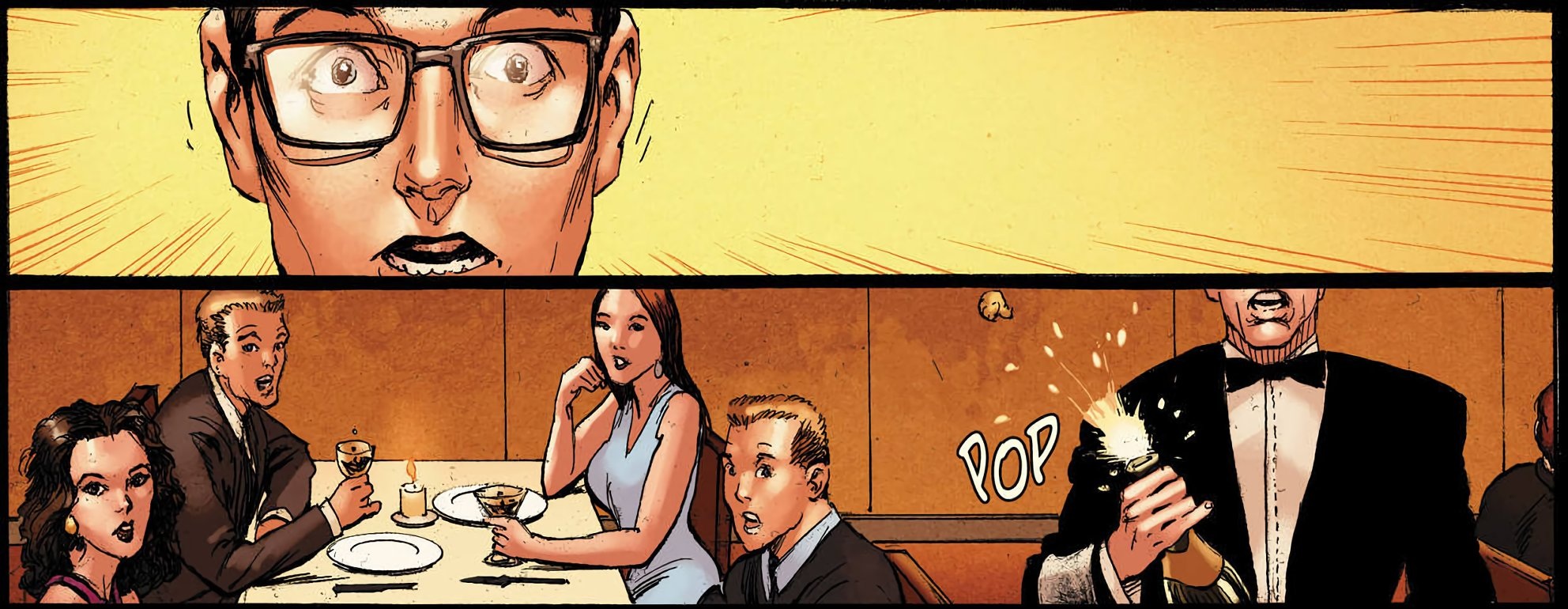
Knighted comes from AWA studios, the independent publisher editor Axel Alonso founded after spending decades revolutionizing DC (via Vertigo) and Marvel. Technically, it’s part of the shared universe J. Michael Straczynski kickstarted with 2020’s The Resistance, based on the (depressingly timely) premise that a pandemic killed millions of people, yet it also caused the emergence of a bunch of survivors with superhuman powers. Still, you don’t really need to know or have read any of this (I certainly didn’t!), as the plot is quite self-contained and Hurwitz does a pretty solid job of unobtrusively conveying all necessary information – hell, it was fun to find out the backstory while reading Knighted, along with the series’ internal worldbuilding.
Ultimately, this isn’t so much a comic about superheroes as a comedy about masculinity. Earlier on, I used the word ‘loser’ for cheeky simplicity’s sake, but Knighted isn’t all that mean-spirited towards Bob. Sure, the way the book keeps emasculating him through mom calls or couples therapy is surely meant to be amusing, on some level, but Bob isn’t a mere caricature and his general good nature earns our sympathy. Much like with Peter Parker, you may find yourself caring for the two sides of his persona, which isn’t always the case with Batman…
Indeed, the meanest – and biggest – laughs are at the expense of the alpha male dick that previously wore the Knight’s suit!