Welcome back to this neglected series of posts, now with one of the best (and funniest) films of the Coen brothers.
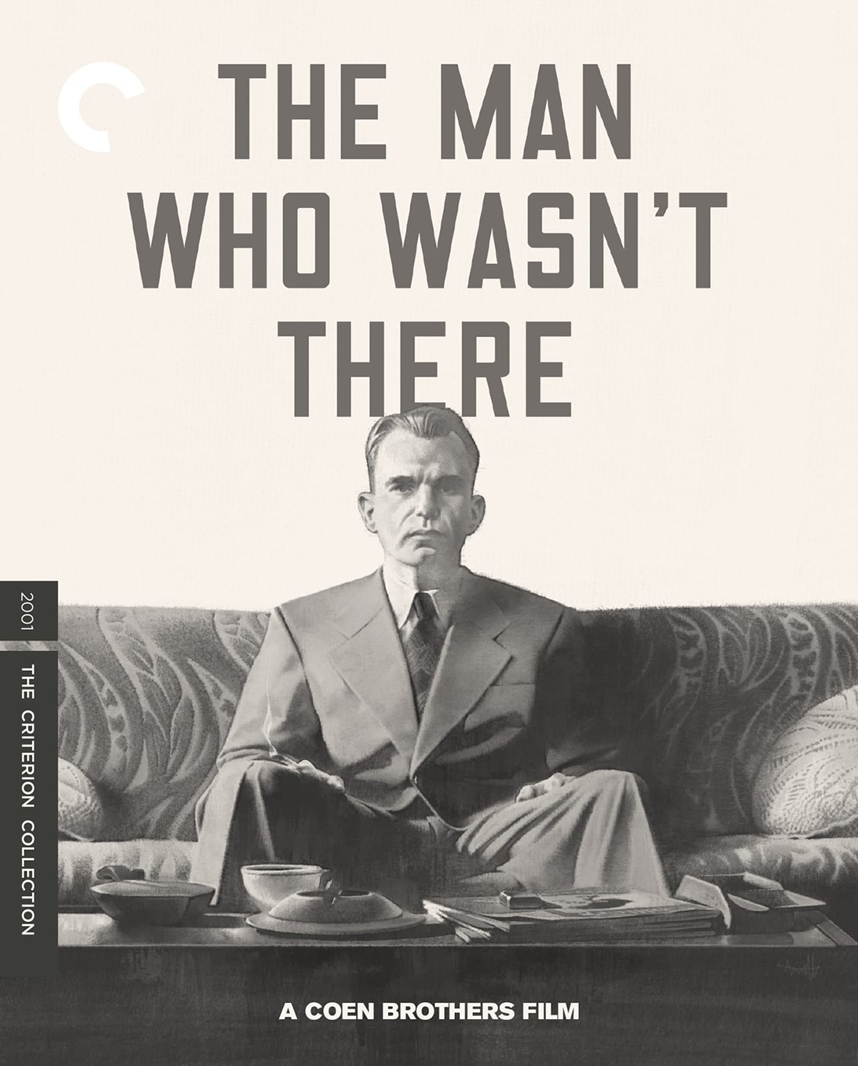
In 2001, Joel and Ethan Coen returned to their roots with The Man Who Wasn’t There, a straight-up crime thriller about an ordinary barber who bites off way more than he can chew by getting entangled in a web of blackmail and murder. Well, perhaps ‘straight-up crime thriller’ is pushing it… Yes, the picture is set in the 1940s, has a neatly worded voice-over, and is beautifully shot in black & white, so in a way it feels even more like the films noirs that originally inspired the Coens than Blood Simple or Miller’s Crossing did. Yet there are also heavy splashes of dark comedy throughout, somehow spliced with moving melancholia, as if setting the tonal blueprint for what became the acclaimed TV subgenre of men dealing with midlife crisis by venturing into a criminal enterprise with shocking results (like in Breaking Bad, Ozark, or Your Friends & Neighbors). It also contains a new spin on the brothers’ skill for memorable dialogue: this time, the protagonist is unnervingly quiet and self-contained (arguably Billy Bob Thorton’s greatest role, acting with the slightest facial expressions), creating a constantly amusing contrast with all the talkative people around him, once again brought to life by a fantastic cast (ranging from regulars like Frances McDormand and Jon Polito to newcomer James Gandolfini, who fits like a glove into the Coen world). Visually, the motifs of smoke, shadows, and spirals enrich the atmosphere while evoking the themes of deception, ambition, existential angst, and twists of fate.
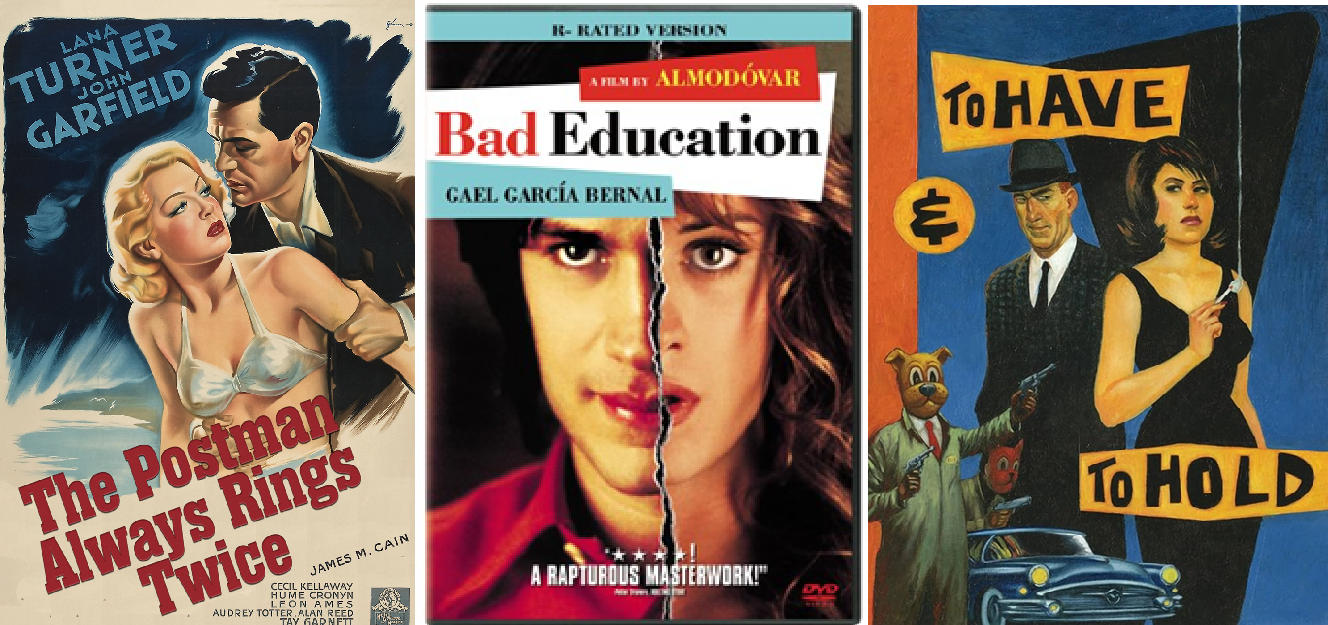
Of all the noir classics in the DNA of The Man Who Wasn’t There, I’d say the strongest influence is Tay Garnett’s The Postman Always Rings Twice. Suspenseful, twisty, and twisted, this 1946 adaptation of a James M. Cain novel shares much of the mood and a few plot beats in another tale of amateur criminals driven to disgrace by the postwar promises of the American dream. Among other rhymes between the two movies, there are courtroom scenes that do not go as planned and, of course, the ending (here with a more fatalist, religious note, but the closing lines sum up both narratives…). And sure, old Hollywood couldn’t be as explicit about sexual matters, but this film powerfully works around censorship restrictions to convey the sizzling tension between John Garfield and Lana Turner.
Then again, it’s also interesting to see Coen-esque motifs relocated to other cultures and geographies, from Mozambique (2019’s Redemption) to Argentina (2023’s The Delinquents). With his knack for cool compositions, metafictional touches, and perverse sense of humor, Spanish filmmaker Pedro Almodóvar has often given the brothers a run for their money as the master of neo-noir. His Bad Education is an even more sinuous and mesmerizing tale of blackmail, likewise dragging classic genre tropes into the 21st century, albeit arrestingly shot in garish colors and placing homosexuality at the center of the narrative. While The Man Who Wasn’t There kept a straight-faced, non-judgmental distance towards 1940s’ homophobia, Bad Education (whose elaborate chronology stretches from Francoism to the early 1980s) uses taboos and sexual fluidity to add even greater deception to its story.
As for the comic book, this time the choice couldn’t be easier: To Have & to Hold.
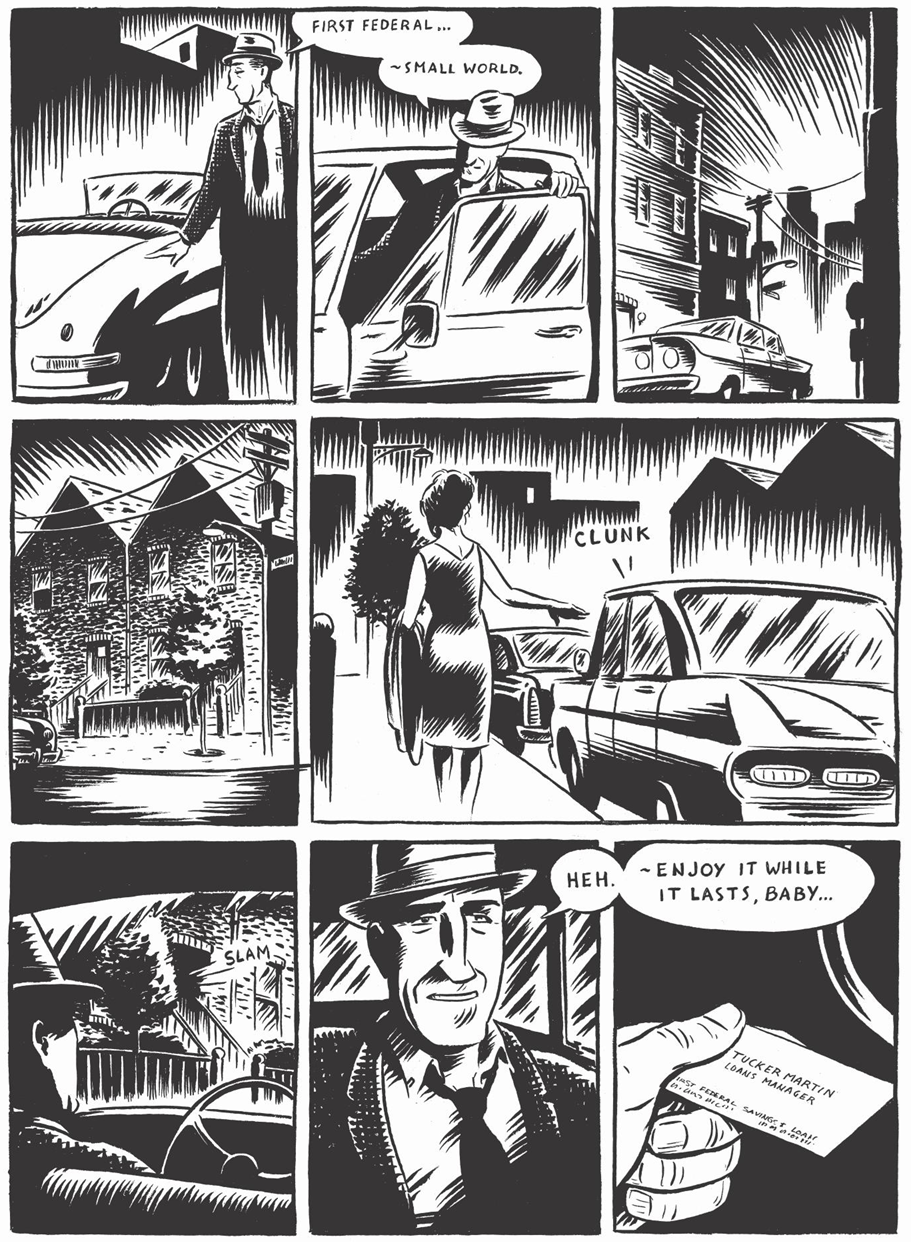
Just like The Man Who Wasn’t There, Graham Chaffee’s To Have & to Hold is a brilliant recreation of classic film noir that rises above mere pastiche, capturing the genre’s aesthetics and period feel while cleverly filtering them with a modern perspective. Set in 1962, its largely nocturnal story also revolves around a great cast of flawed, frustrated people dreaming of more satisfying lives, including a cuckolded husband whose best laid plans combine crime and revenge… and who finds himself at the mercy of human whims and ironic coincidences. The expressionist brushstrokes, with a striking style reminiscent of Johnny Craig or David Lapham at their best, are not only highly atmospheric, but they also flow with incredible confidence, communicating much of the (internal and external) action visually. My favorite drawings are of brief moments and revealing poises of characters wrapped in deep thought, usually with a cigarette in their hands and a gaze pointed towards the distance, looking, if not profound, at least intensely concentrated on figuring out a path away from their present condition.
(A couple of years ago, Chaffee followed this with a similar project, Light It, Shoot It, a neo-noir in 1970s’ Hollywood that, suitably, builds up to more of a grindhouse vibe.)