It’s been so long since I’ve properly written about comics at Gotham Calling that I’d figure I do something special to kick off this year… So I’m devoting the next five weeks to my top 25 comics of 2025!
As usual with these yearly lists, I’m focusing on bounded or online books (collections, OGNs…), which means some of the items on the list can be 2025 hardcovers and paperbacks collecting or translating comics that first came out in other formats, for example, in 2024. In other words, the list reflects new stuff you could find on stores’ and libraries’ bookshelves last year, but some of it may not feel all that new for those of you who get their comics in single issues… I myself read comics in various ways, but narrowing things down to a classical book format helps bring a minimum of coherence to these rankings.
Also, once again, I’m sticking to genre fiction, but I like to begin with an honorable mention, in this case spotlighting the non-fiction book Fortune and Glory – The Musical. Brian Michael Bendis was one of my favorite writers in the field back in the late ‘90s/early 2000s. I just couldn’t get enough of his mix of pop culture-savvy hip dialogue, black comedy, and indie storytelling sensibility (which I also associated with Quentin Tarantino, Kevin Smith, and Brian K. Vaughan, all of whom I was really into at the time), not to mention the fact he came across like a fan nicely paying it forward to other fans, packing his books’ backmatter with pro tips and all sorts of extras (short stories, scripts, pitches, designs, interviews) that were utterly cool for nerds like me. I dug Bendis’ early Marvel stuff, but I guess either mine or his or both our tastes just evolved differently… Since then, much of his writing began to annoy me and, in the past decade or so, he has mostly fallen outside my radar. I fondly recall those old comics, though, including 2000’s Fortune and Glory, a hilarious mini-series about his first attempts to make it in Hollywood, so when I saw this sequel on the shelf, I thought I’d give it a go.
As the title suggests, Fortune and Glory – The Musical is about Bendis’ foray into Broadway (specifically his work on an early stab at a Spider-Man musical). Rather than focusing on the theatre equivalent of the previous volume’s film industry jokes, however, Bendis uses the premise of starting from scratch on a new medium to flashback to the lifelong learning curve until breaking into comics in the first place. So, despite the misleading title, we don’t just get a tell-all about the roots of a notorious project, but also – and above all – a warm autobiographical piece that is much more of a love letter to comic books. In fact, between the easter egg-heavy backgrounds (this volume has cartoony artwork and colors by Bill Walko and Wes Dzioba, whose sketches of iconic covers and unnamed cameos are like a tantalizing game for aficionados) and the amusing peeks behind the curtain concerning the making (and negotiating) of those early Bendis books I actually cared about, I ultimately got way more geeky pleasure out of this than I was expecting!
And now on to books that used the medium for other types of thrills:
25. ZATANNA: BRING DOWN THE HOUSE
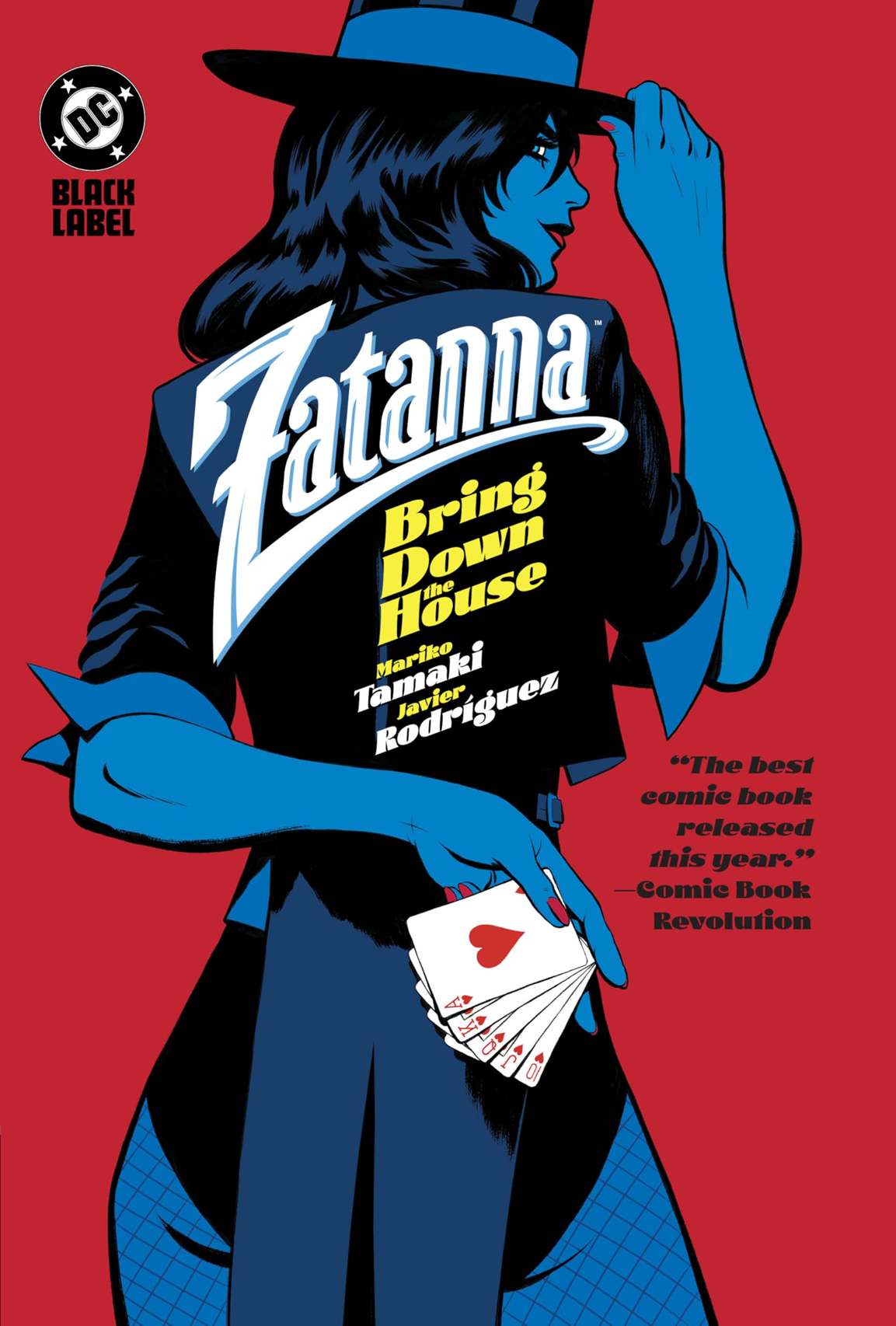
DC had a stupendous year, putting out not only plenty of kickass superhero comics, but also ambitious works (The New Gods) and some downright odd ones (Plastic Man No More!). Among other bangers, this collection (of a 2024 mini-series) is one of those comics that takes the medium’s potential to go wild with reality-bending depictions of magic and just runs with it. It stars Zatanna and features a few cameos, but writer Mariko Tamaki isn’t concerned with continuity and doesn’t demand that readers bring much baggage at all into the story (including about the protagonist herself). If anything, this works as a sort of origin tale, since Zatanna apparently hasn’t practiced magic ever since a couple of horrible episodes in her childhood – and you can pretty much guess that this adventure will lead her into uncovering her powers. Again, the point here isn’t the plot per se, which is nothing earth-shattering, despite delivering the obligatory twists and emotional payoffs.
The beauty of Zatanna: Bring Down the House lies in the way it pushes comic book magic. Tamaki wisely realizes the impact will be greater the more you anchor this world on a grounded reality that contrasts with the fantastical, so there are these neat opening stretches about Zatanna working in Las Vegas that create the perfect buildup before the main action kicks in. That said, the early sequences are a joy to read in and of themselves, because of the snappy dialogue and the attention to detail in the artwork…
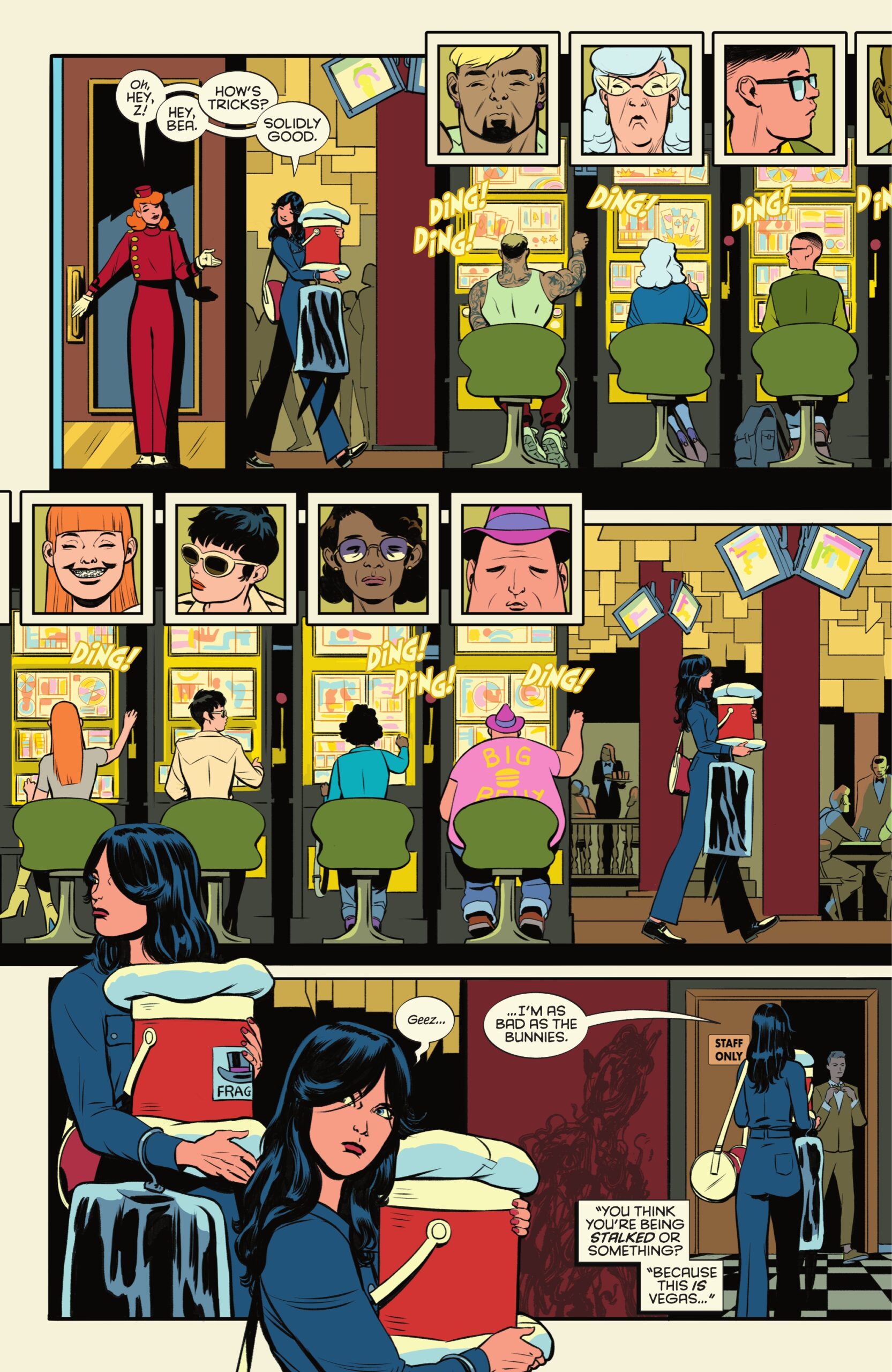
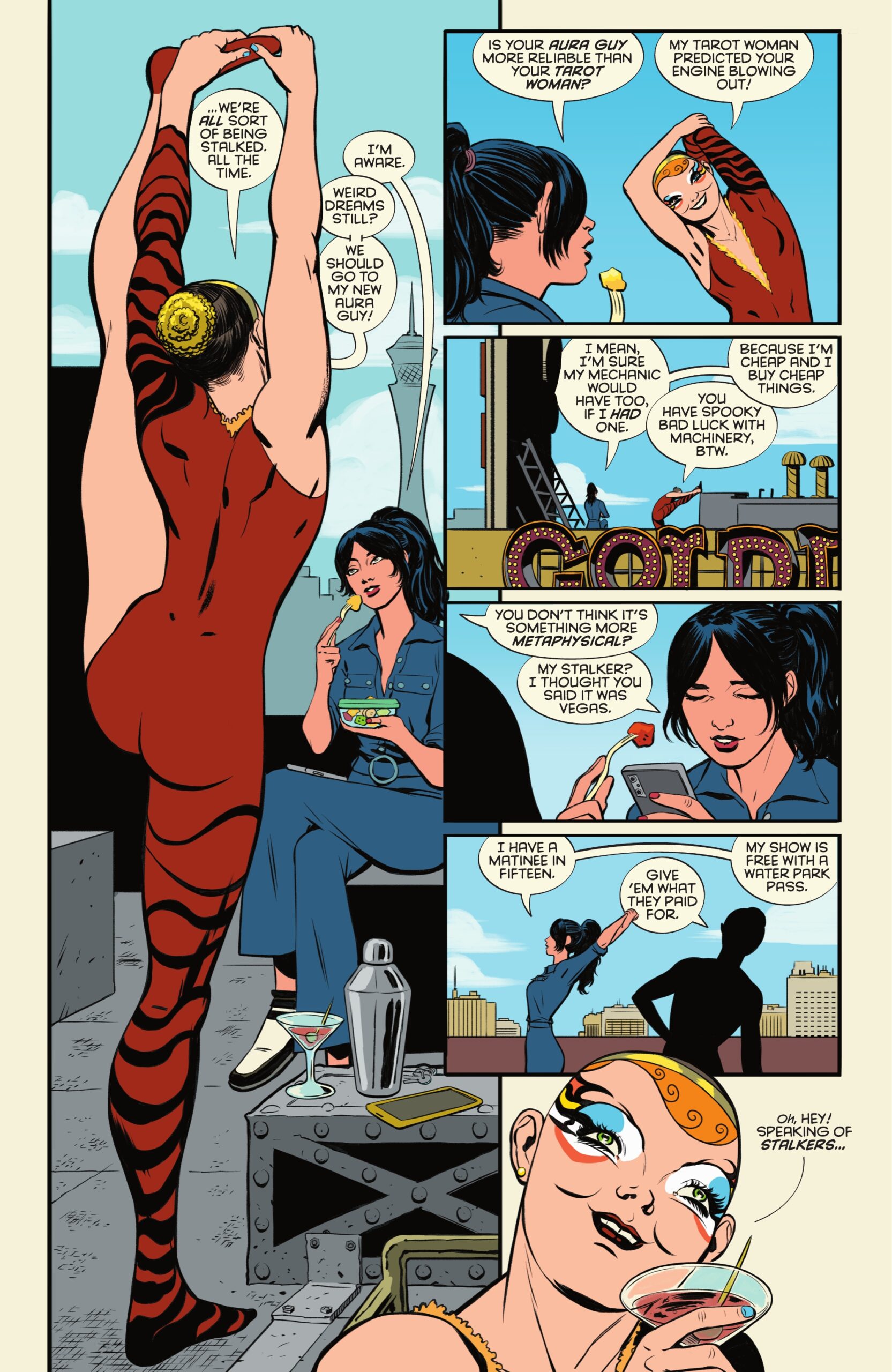
As you can see, Javier Rodriguez’s art nails this approach wonderfully, from various recognizable body postures to mundane gestures (like the way different people eat, drink or hold their phones), rendering the backgrounds with just enough detail to feel quasi-documentary. (You may think the pop colors are a bit too much but, hey, this is still *Vegas* after all…)
Once the magic takes over, then, Rodriguez and letterer Hassan Otsmane-Elhaou get to blast things into stretched-out, Kirbyesque weirdness and, sure enough, the ensuing explosion of inventive layouts (without being confusing) and surrealist character designs is nothing short of absolutely bananas. The result is a glitzy treat that’s worth getting for the sheer pleasure of flipping through it every time you feel like it.
24. NAMOR: LAST KING OF ATLANTIS
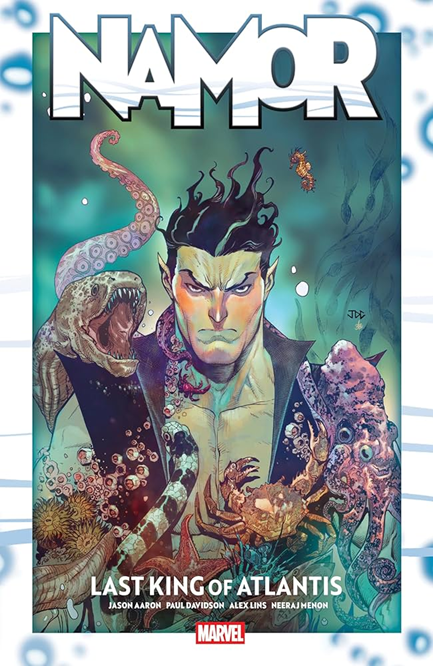
On the surface (pun intended), Last King of Atlantis tells a fairly straightforward story about Namor (aka the Sub-Mariner) trying to stop a major conflict between seven subaquatic communities (aka World War Sea) before the land-based humans take advantage of all the chaos and invade the weakened war-torn sea realms. So, basically, we follow Namor as he faces the various leaders and navigates the geopolitics of these fantastic kingdoms. There are plenty of action-packed flashbacks to his teen years, as well.
In practice, the main appeal of this book is that Jason Aaron pretty much writes the whole thing as an underwater sword & sorcery epic, crammed wall-to-wall with prose and dialogue that would make Robert E. Howard proud:
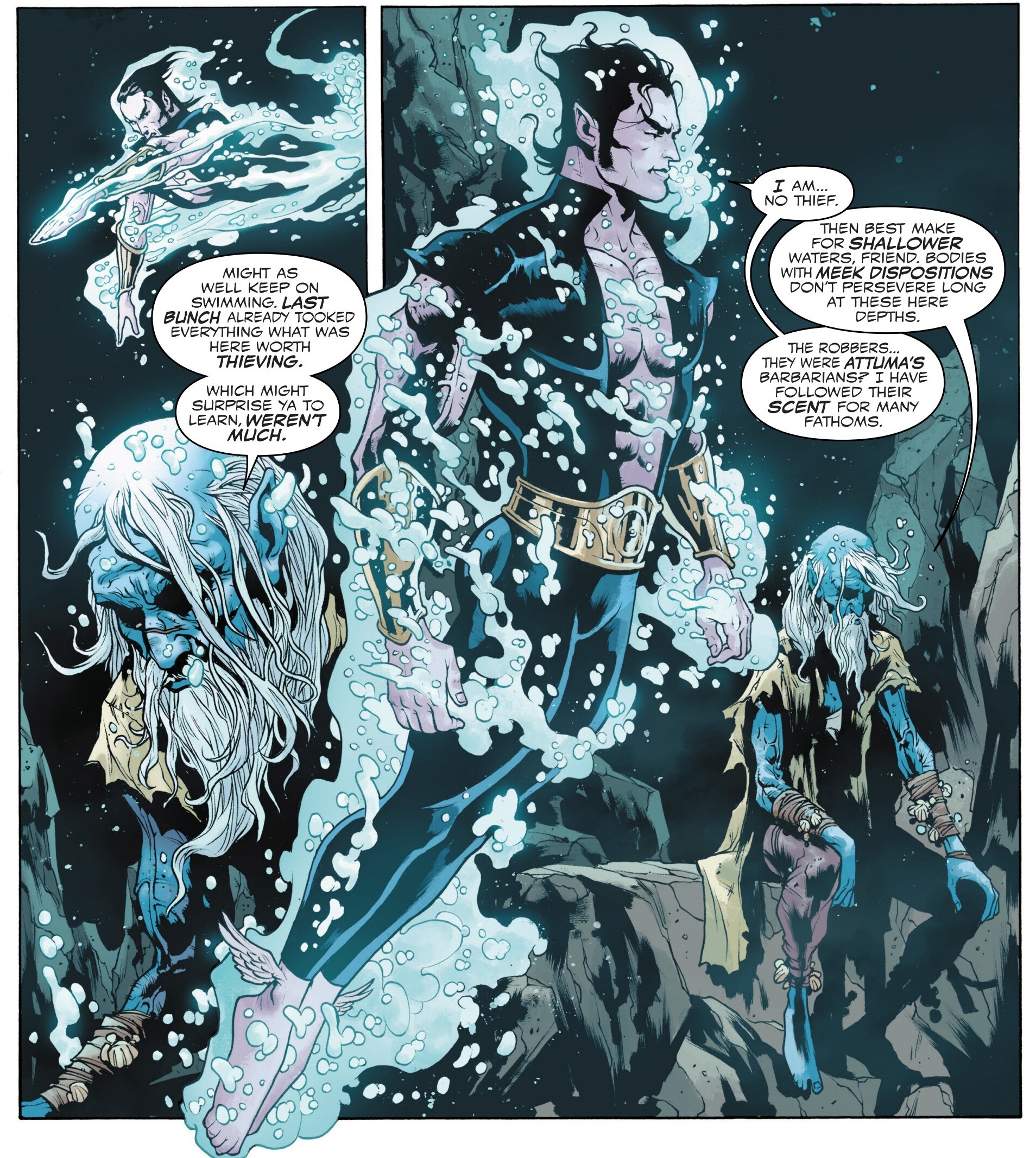
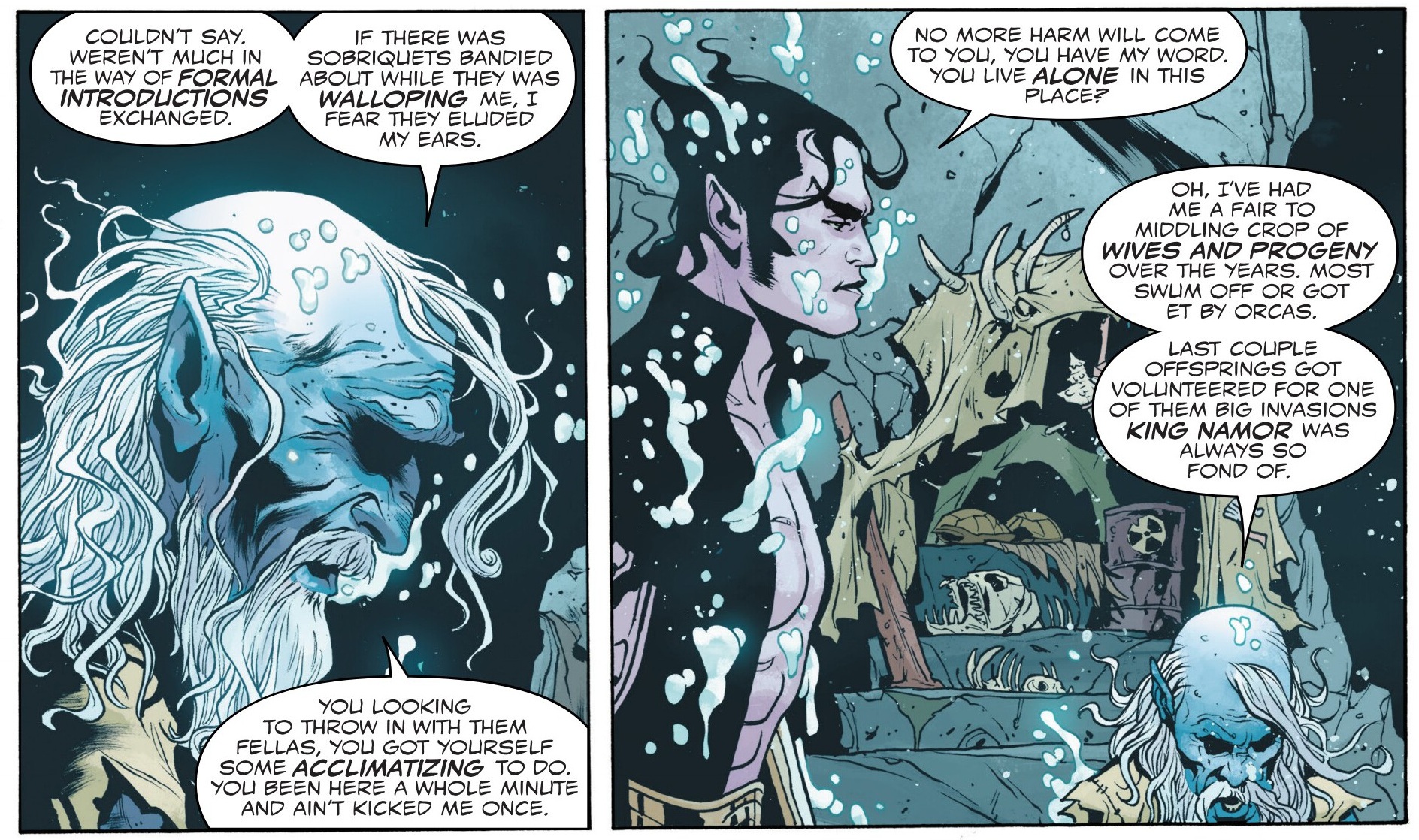
Jason Aaron, who penned a bunch of awesome Conan comics a few years ago, can do this stuff in his sleep by now (he even started another epic last year: Bug Wars). There are quaint rituals (one fight involves dueling while getting drunk on wine at the same time), odd sects (man-eating Lemurians, the tentacled monks…), and plenty of witty lines (‘I was swimming the crimson in these waters while your rawboned haunches were being perfumed and powdered by your grandfather’s nursemaids!’). Aaron even works in the sort of populism that suits this type of adventure, so that even an arrogant aristocrat like Namor ends up fighting for the little fish and the working classes of the sea.
There are also, of course, several grotesque-looking creatures, courtesy of artists Paul Davidson and Alex Lins, who provide different looks to the present-day and flashback sequences, softening the latter as if to signal a more naïve era (a vibe reinforced by Neeraj Menon’s colors).
I’ve been struggling to keep up with the intricacies of the Big Two’s output for a while, so this is just the kind of punchy, continuity-light comics I wish Marvel would put out more regularly.
23. SKIN POLICE: CRIMES AGAINST NATURE
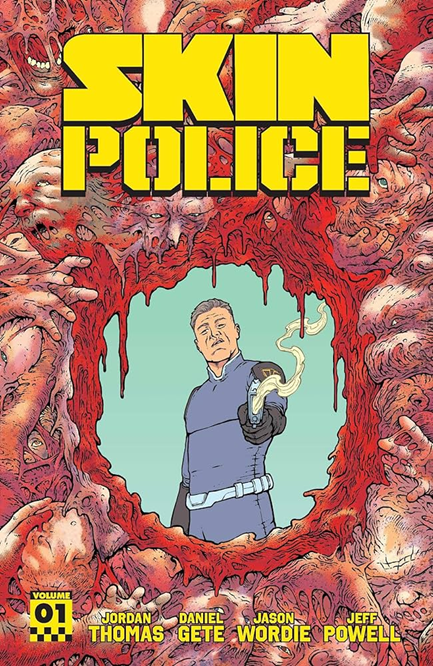
Talk about a high concept: in the next century, a fertility pandemic gives rise to a black market of clone babies, who, it turns out, can turn into homicidal monsters at any moment, so they get hunted down by a special force, informally called Skin Police.
The worst thing you can say about this comic is how derivative it’s bound to feel for anyone who has read or watched some the thousands of futuristic conspiracy thrillers already out there, as if you had put the likes of Blade Runner, The 6th Day, The Fifth Element, and Judge Dredd in a blender. At the same time, perhaps the best compliment is to note how Skin Police excels at digesting its influences, compellingly nailing the vibe of its coolest predecessors (especially the badass science fiction of the 1980s), and reworking familiar beats into a damn exhilarating ride.
That said, we get plenty of clever touches along the way. The trope about publicly exposing the truth behind a cover-up might seem naïve in an increasingly post-truth, AI-flooded era, but a few well-placed lines soften that possible line of criticism. The allegorical dimension about persecuted minorities and mental illness is so embedded into the story that the script wisely lets it play out without pontificating. And there is a nice suspense engine built around the notion that we don’t know for sure who is a clone (some of them don’t know themselves) and their maniacal outbursts are apparently linked to stress, so it can happen at any moment. Having set up the premise in a couple of paragraphs, the very first page exploits this exquisitely, as we see an accumulation of recognizable anxieties and immediately start fearing they may build up to tragedy:
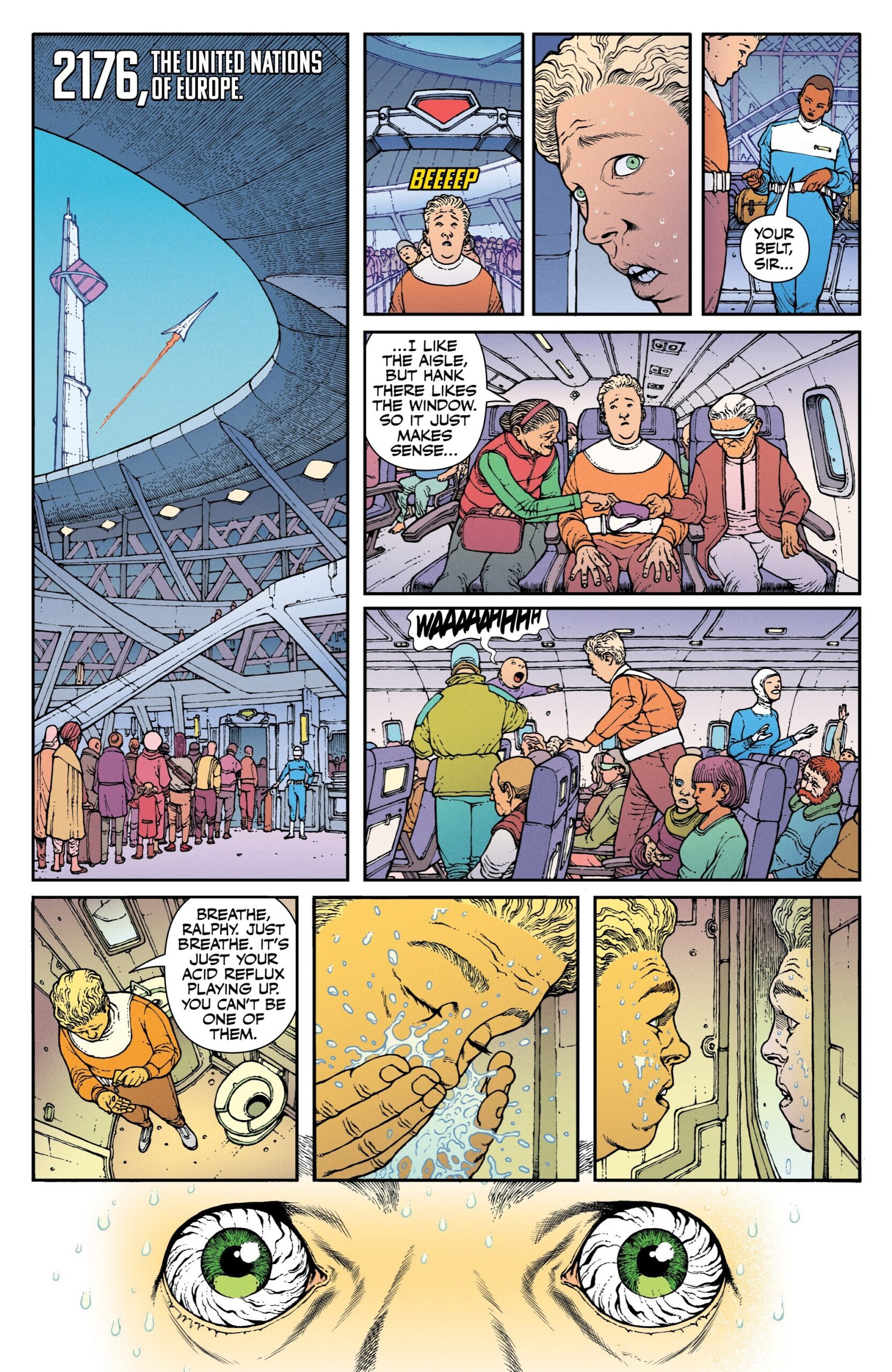
For all its big ideas, this genre does tend to thrive on captivating sci-fi imagery and gory action, so, even without shortchanging Jordan Thomas’ writing, much of the series’ power rests on the shoulders of Daniel Gete’s artwork. Neatly colored by Jason Wordie with garish choices (appropriately) reminiscent of Moebius, every single page is a visual feast.
While Skin Police’s inaugural volume certainly hit the ground running, it was also about setting up this world for the inevitable next installment. The book finishes on a cliffhanger, which can be frustrating, although a second series has just wrapped things up and it should be collected soon. I could hardly wait and actually read that one in monthly issues, so I can already confirm the overall result is just as good, except for the very end (which comes off as clumsily rushed). In particular, the second issue opens with a gut-wrenching wordless sequence and later has a tremendous bit where it feels like a whole action movie has been effectively condensed into a couple of pages, making a masterful use of ellipses.
Now that this creative team has shown they can seamlessly pull off this sort of stuff, hopefully they will push the narrative in their next projects into bolder, less predictable directions!
22. THE WRONG EARTH: DEAD RINGERS
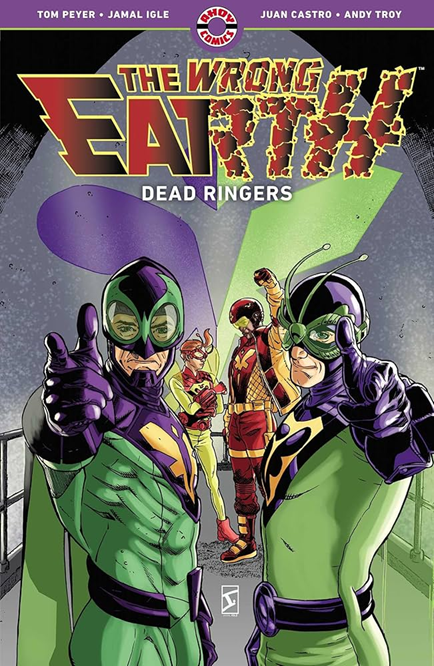
As previously explained here, the simple yet effective premise of The Wrong Earth is that a version of Adam West’s Caped Crusader switches universes with a version of Frank Miller’s Dark Knight, each one becoming a fish out of water in a world built on a very different moral structure than their own. For the past eight years, Tom Peyer has been exploiting all sorts of entertaining metafictional possibilities of this idea through a string of one-shots and mini-series, the fourth collection of which came out in early 2025.
The Adam West version of Batman was the campiest comedy of the 1960s (with the arguable exception of Dr. Goldfoot and the Bikini Machine), but its particular brand of humor has already been milked by DC itself. Likewise, The Wrong Earth is hardly the first to mock the modern turn towards grim and gritty (hell, Miller’s own work has become a parody). Fortunately, Peyer knows a thing or two about the superhero genre (as anyone who has read his brilliant Hourman run can attest), so things never run out of steam… By now, the story has taken many twists and turns, with the two heroes – Dragonfly and Dragonflyman – having eventually teamed up and met yet another version of their supporting cast in a third Earth, only for Peyer’s scripts to reshuffle the deck and send a bunch of them to different places once again, constantly changing character dynamics along the way.
It’s worth tracking down the whole saga, but the status quo at the beginning of Dead Ringers is particularly fun, with the two heroes grudgingly working together…
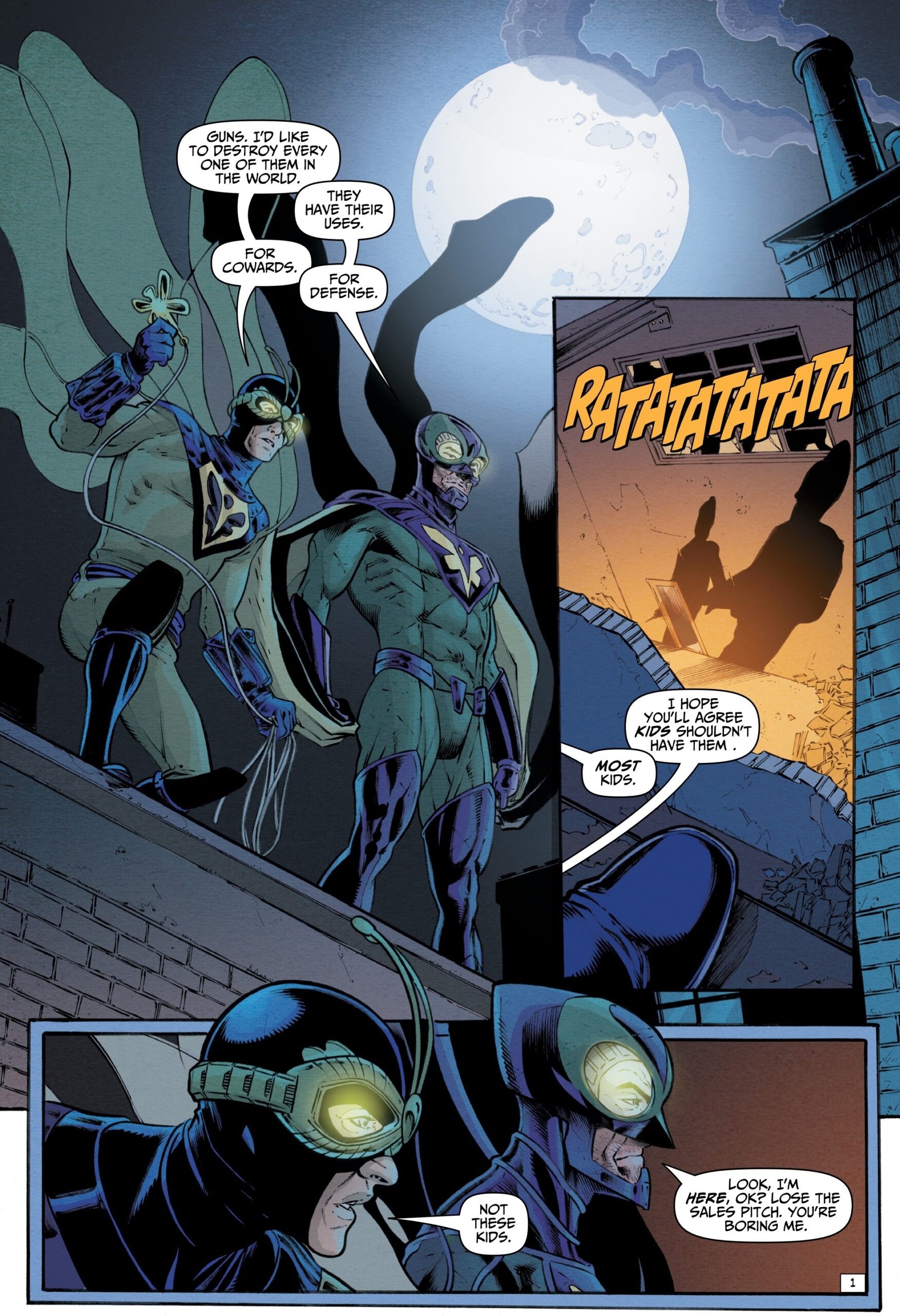
The geekiest among you no doubt recognized Jamal Igle’s visual riff on one of the most iconic pin-ups of the Dynamic Duo. The Wrong Earth is full of nods like that, even as the series smoothly works on a superficial level as well, keeping its narrative self-sufficient and independent from these intertextual easter eggs. That said, for such an inward-looking escapist fantasy comic, it surprisingly resonates with the political moment, as both humor and dramatic arcs hinge on a constant tension between innocence and cynicism, nostalgia and critical self-awareness, moral intolerance and relativism.
The standout issue is the middle one, where the two protagonists have a frank confrontation. That issue is made entirely out of splash pages, even though the only fighting in it is verbal, which equates their philosophical dispute with a classic superhero showdown while also conveying the symmetry between them. Besides the striking device, the issue is memorable for the way it tackles a core theme: the heroes seem to practically realize that the constant reboots of superheroes with a new morality are part of a strategy of brand extension which can ultimately dilute whatever significance was there to begin with, as it becomes harder for readers to invest in a story (in its tragedy or sense of heroism) when there are so many alternative versions out there. Take that, Absolute and Ultimate universes!
(Completists may also wish to check out Dragonflyman’s appearance in Toxie Team-Up #4, where he joins forces with the Toxic Avenger against the Bohemian Devil.)
21. YOU’LL DO BAD THINGS
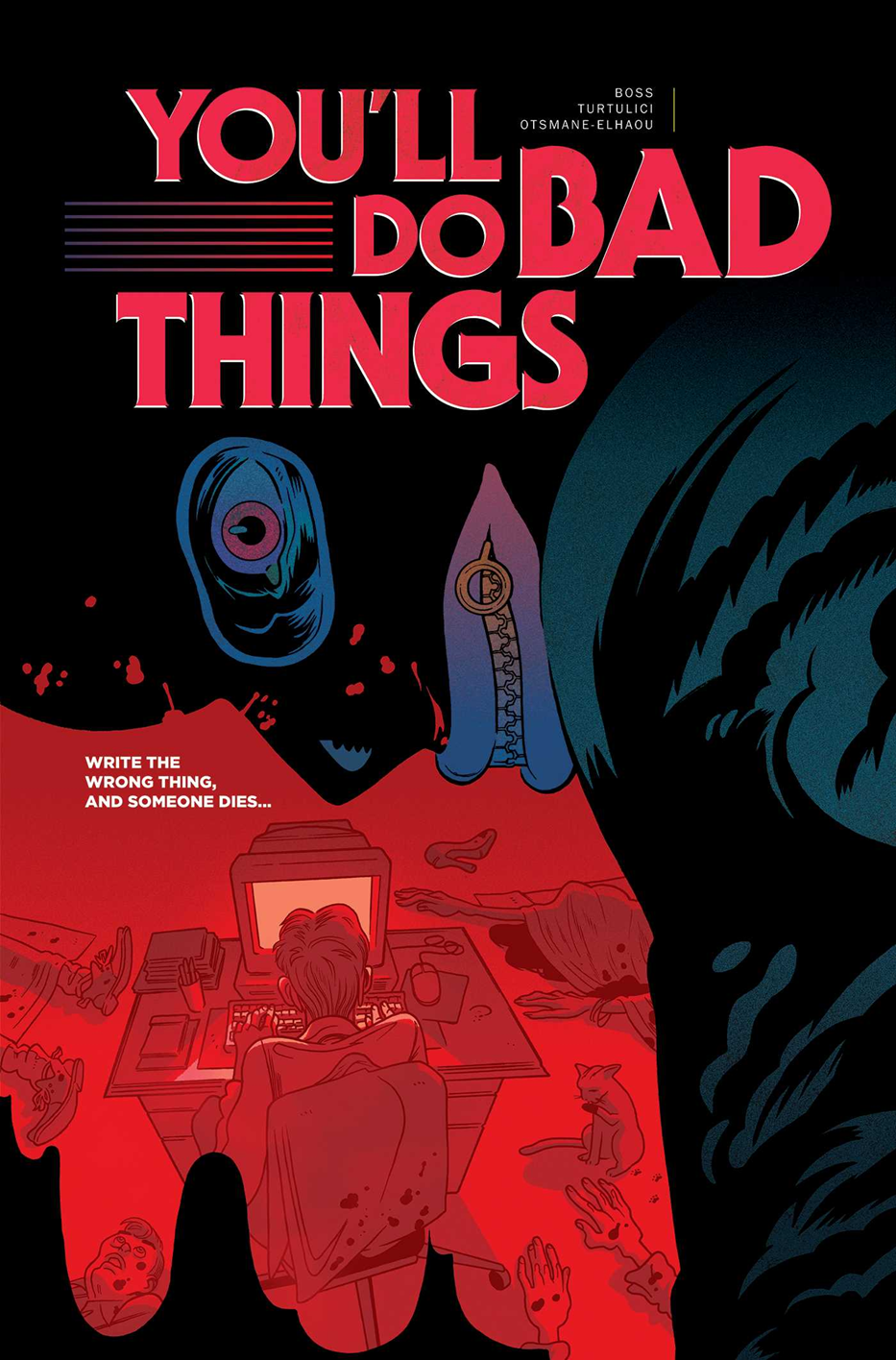
Ten years after authoring a True Crime bestseller about a serial killer, Seth Holms struggles with writer’s block as he tries to move into light fiction… and as if that wasn’t challenging enough, Holms also starts to suspect his darker drafts may be materializing into actual murders. Steering us between psychological thriller, neo-noir, murder mystery, slasher, and possibly supernatural horror (as well as a bit of editorial satire), You’ll Do Bad Things can be best described as a giallo, that old branch of Italian cinema which often blended the aforementioned genres into nightmarish concoctions where style and atmosphere typically trumped strict logic.
Suitably, then, Tyler Boss’ script is illustrated by Adriano Turulici, an Italian artist whose scratchy lines fall into a certain tradition of adult European comics specialized in lurid sex and gritty violence (particularly the Italian strain, known as fumetti neri). Like in giallo films, the colors do a lot of heavy lifting, with unnaturalistic and sometimes deliberately nauseating hues enhancing the overall eerie vibe.
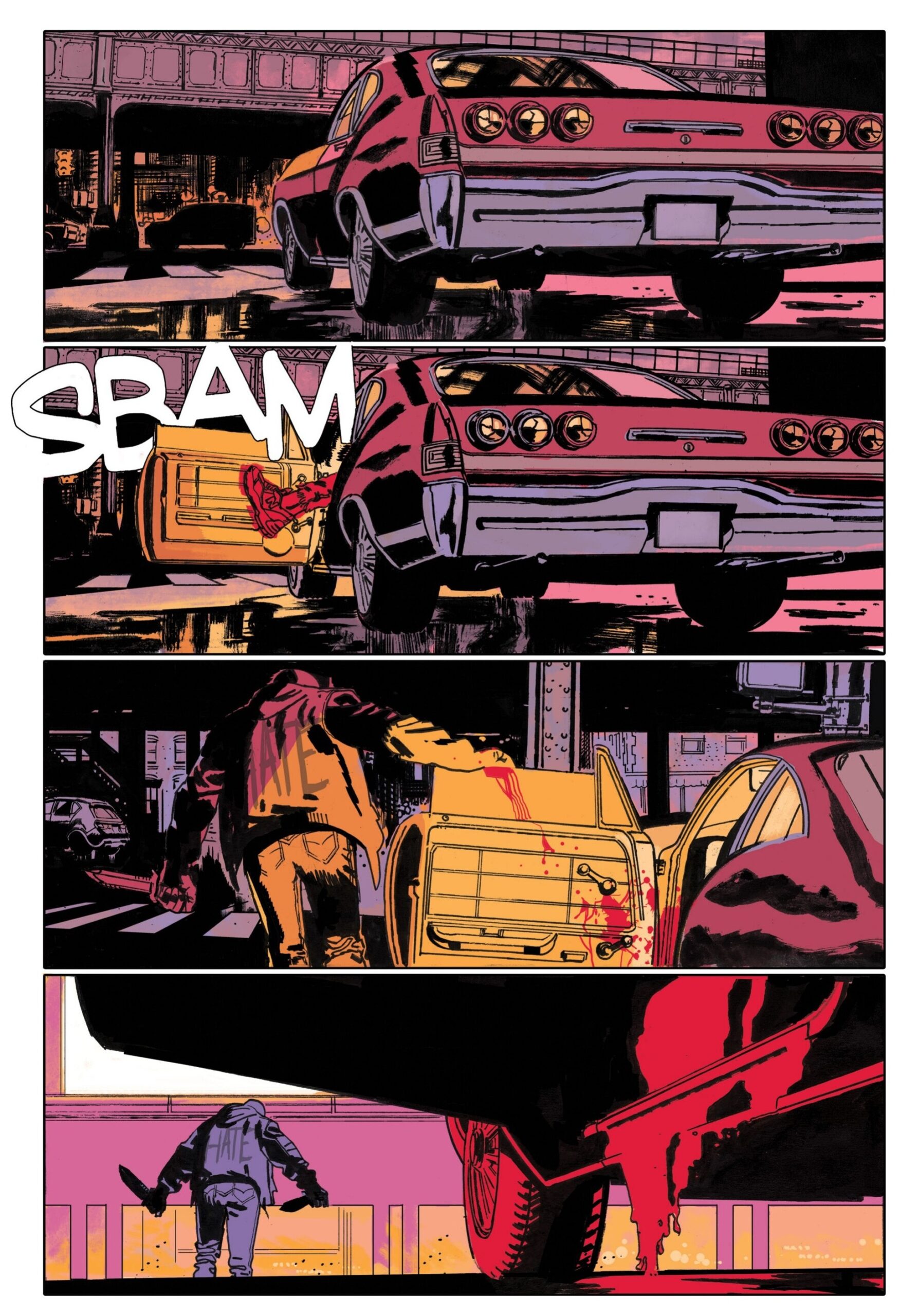
I still haven’t decided if I find the ending half-assed or brilliant. It asks a lot of the reader, but in the right mood I can appreciate its ballsy cheekiness. Even if the book doesn’t necessarily stick the landing, though, You’ll Do Bad Things is filled with hypnotic passages piercing the borders between dream, reality, and fiction. Much like the films and pulp novels that seem to have inspired this comic, it is a ride worth taking just to bask in the incredible view along the way, regardless of the final destination where you get out.