Back to cinema this week… and back to the Old West.
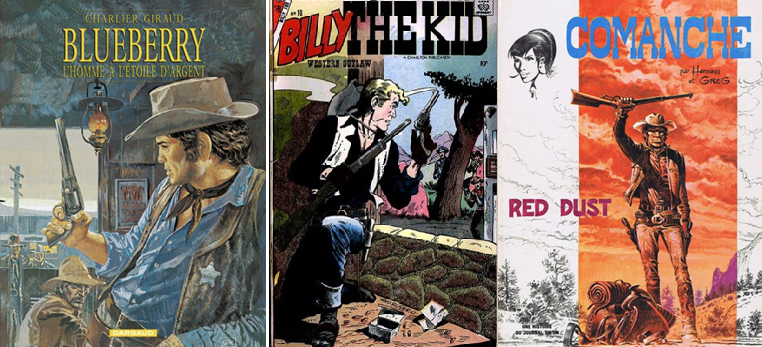
Not the wokest of genres, westerns nevertheless often provide great fodder for thinking about history and politics (especially in America), along with the obvious thrills.
Take gender dynamics, for instance. It’s not just that practically none of these pictures pass the Bechdel test – in my list of Gotham Calling’s Top 50 Westerns, there were even more instances of violence towards women than of violence towards Native Americans. Usually, pointing out that most film violence is nevertheless directed towards men is just a way to dodge the issue (by pretending like there isn’t a specifically misogynistic dimension in our society and culture), but in this case I think it’s worth noting that, traditionally, westerns have been more than a male-dominated genre… For the most part, these are movies *about* masculinity, committedly thematizing, defining, and sometimes deconstructing how men behave or should behave, including towards women. Similarly, I think it’s too narrow to describe them as casually racist, since they tend to explicitly address the topic of race relations in the US (between whites, blacks, Mexicans, and different indigenous communities), albeit not always critically.
With that in mind, here are a dozen works from various decades that approach these themes in very different ways:
Barbary Coast (1935)
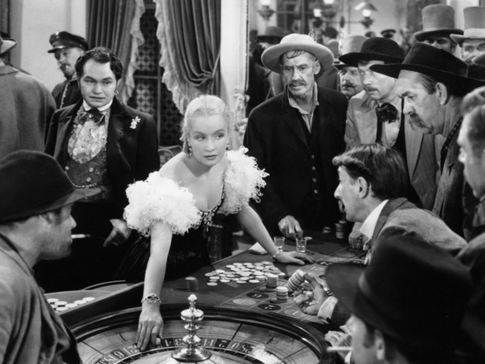
Although not as iconic as Howard Hawks’ later westerns, Barbary Coast has a lot going for it. For one thing, it’s set in 1850 San Francisco, during the California Gold Rush, presenting the city as a chaotic, vice-ridden, quasi-lawless town, where Edward G. Robinson plays a pirate-looking predecessor of his gangster characters. In turn, Miriam Hopkins plays a tough-talking Hawksian woman, even if settled with a few melodramatic beats. There are plenty of great scenes, but my pick goes for two of the most cynical trial sequences in the whole damn genre.
My Darling Clementine (1946)
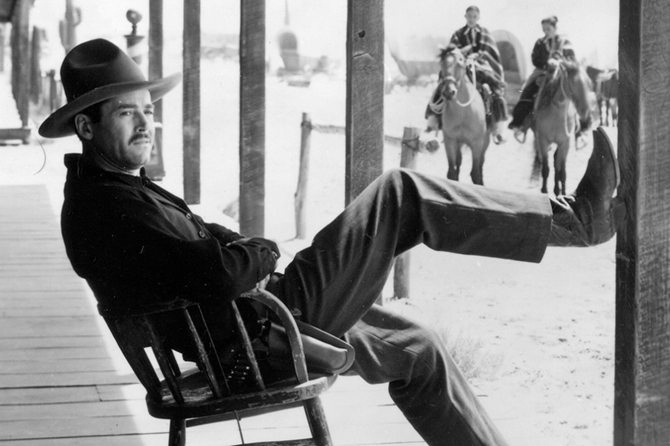
In John Ford’s take on the myth of Wyatt Earp and Doc Holliday, you’ll find the director’s signature racism and sentimentality, but also many of his best features, including a keen eye for evocative visual compositions and a rough, boisterous energy that is hard to resist. The geekiest among you may also approach My Darling Clementine as part of the elaborate backstory of Fred Van Lente’s fun mini-series Eternal Warriors: Last Ride of the Immortals (a backstory that also includes much of the first decade of comics of the rebooted Valiant Universe!)
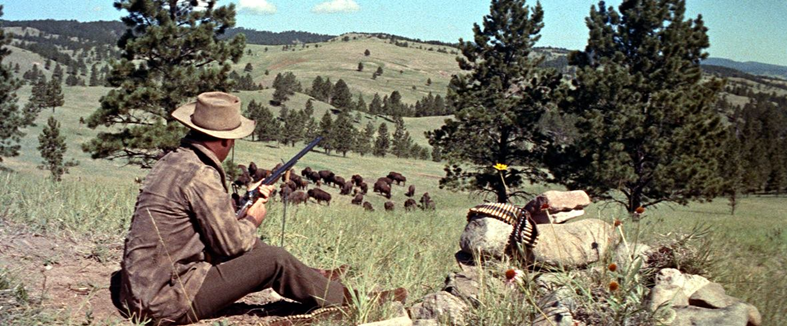
The Last Hunt (1956)
A grim, vicious affair that goes further than most of its contemporaries in terms of questioning settlers’ worldviews (instead of just presenting American genocide as a matter of self-defense and ‘civilization’). The Last Hunt is also a fascinating movie on other levels, including its commitment to teaching us in great detail about hunting and protecting buffaloes… Yep, cue in a pretty direct allegory about the treatment of Native Americans.
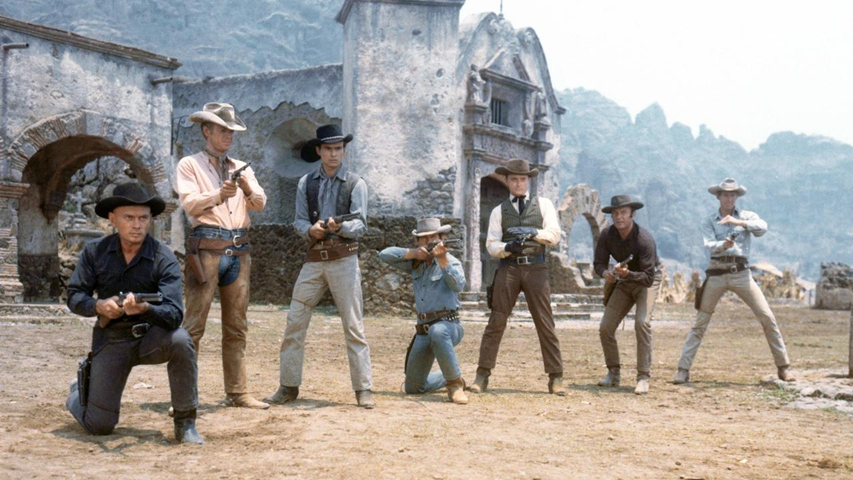
The Magnificent Seven (1960)
The folks of a poor Mexican town terrorized by a local bandit cross the border and spend what little gold they have to hire seven (very macho) gunslingers to train them and protect them. I’m sure you’ve encountered at least one of the countless variations of this story before, but this iconic Hollywood adventure stands out due to its cast’s magnetism, the epic musical theme, and a particularly pure/blunt approach to the material. If John Sturges’ classic is hardly a work of subtlety, at least it conveys an unspoken complicity between these men that is actually a major appeal of The Magnificent Seven and it may help explain why the film became such a massive success worldwide – including in the Soviet Union, despite the blatant allegory of American benign intervention abroad. To be sure, like most movies listed here, this one contains some un-PC elements, but there is also humanism in the way the heroes are transformed by their interactions with the local community. (By contrast, the cartoony 2016 remake made some half-hearted attempts at diversity while treating everyone as cardboard characters, racism as a mere joke, and the locals as little more than cannon fodder.)
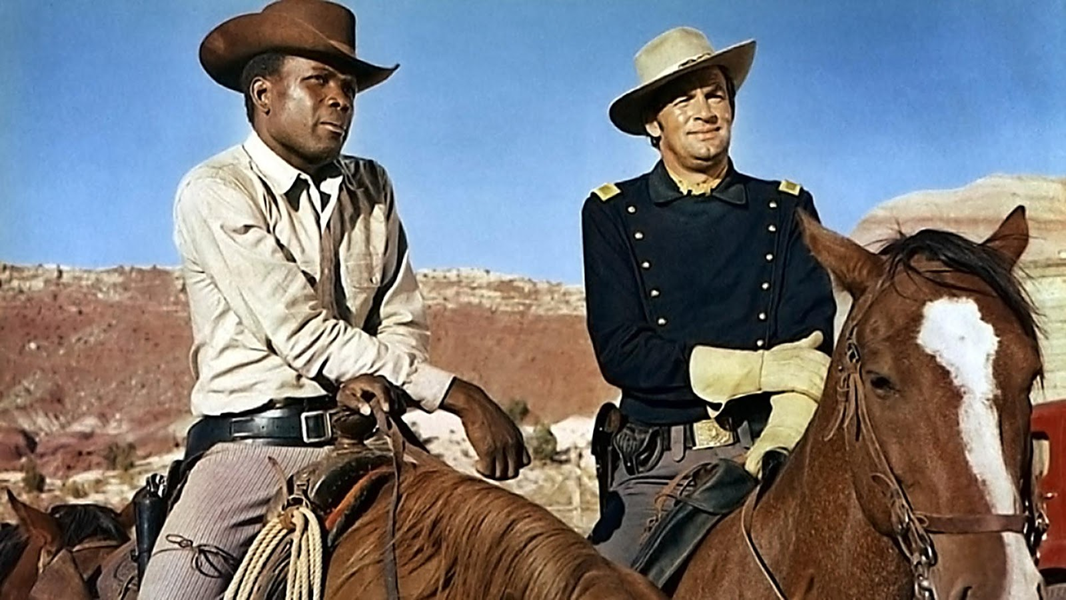
Duel at Diablo (1966)
I had to include at least one cavalry western, which is among the most interesting – and problematic – subgenres in this type of fiction, emphasizing the military dimension of nation-building. Here we have a particularly dirty, nasty take on the mythology, equal parts archetypical and revisionist in its approach to racial relations. And although the overall gesture isn’t exactly unique – especially within this list – Duel at Diablo gets an extra point for co-starring the incredible Sidney Poitier.
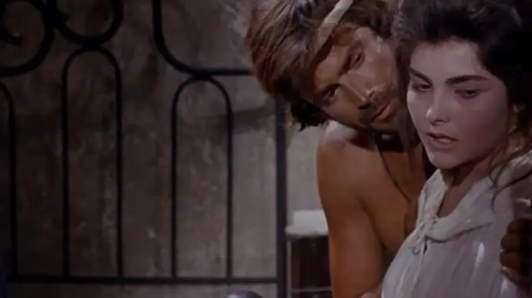
Django Kill… If You Live, Shoot! (1967)
This film is so disjointed in terms of both editing (it must beat some kind of record for close-ups) and narrative (the ingredients are all there, but bafflingly shuffled together) that the result is the most surreal western this side of Alejandro Jodorowski’s El Topo… I’m sure purists find it hard to watch, but I can also see why others would consider Django Kill… If You Live, Shoot! a sort of weird masterpiece, pushing the genre’s aesthetics beyond breaking point and into sheer awesomeness. Despite the odd English title, there is no connection to the original Django other than the horror-like levels of bloody violence.
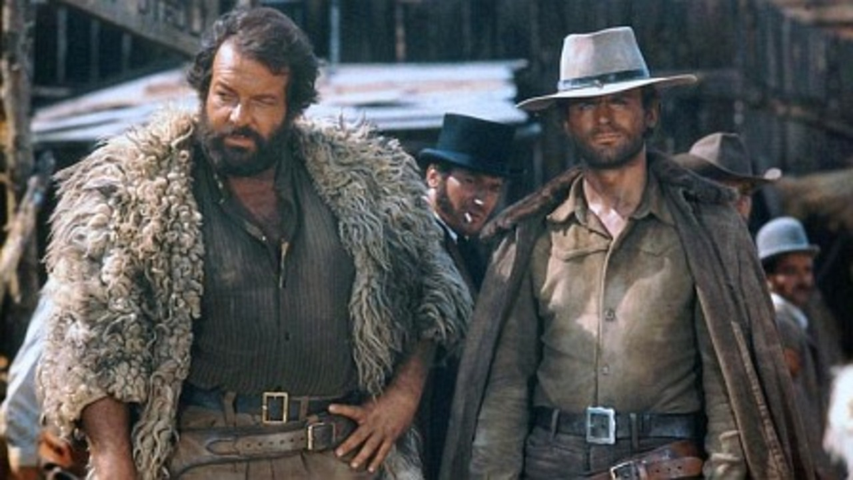
God Forgives… I Don’t! (1967)
More spaghetti western magic, but this one more conventionally put together, even if stylishly edited and photographed with ultra-dusty colors. This yarn about ruthless men torturing and deceiving each other at every turn in the name of greed or manly pride was the first collaboration between the mountain-like Bud Spencer and the acrobatic Terence Hill. The two actors would go on to do a ton of movies together, but I like God Forgives… I Don’t! much better than their later comedic outings…
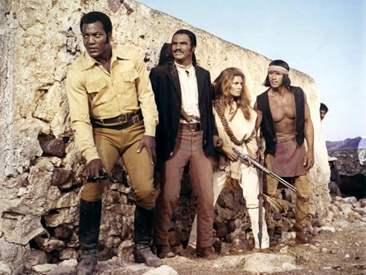
100 Rifles (1969)
An underrated piece of counterculture begging for cult classic status. 100 Rifles may be the closest Hollywood got to nailing the feel of a Zapata Western (it was even shot in Almeria), but it stands out precisely because of the way it daringly uses the setting to engage with the era’s hot topics in the US, such as Vietnam, armed insurrection, different types of racism (complete with an incendiary-for-the-time interracial romance), and the genocide against Native Americans. If this makes it sound preachy, don’t worry: the quest for the titular rifles in order to rise up against the Mexican oppressors turns into a dirty, riveting adventure full of surprising choices, held together by cool cinematography and a charismatic cast.
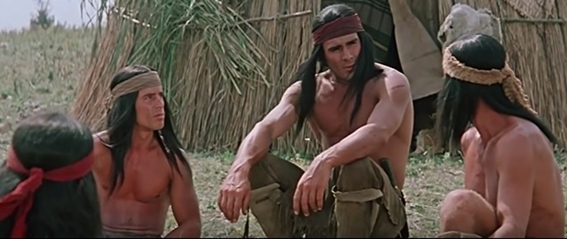
Apaches (1973)
A solid, action-packed yarn with a twist: in this East German production, the titular Apache are the heroes whereas the villains are cigar-chewing, scalp-hunting white men. This inversion on the genre’s traditional perspective has been done elsewhere, but rarely with such gusto – rather than belabor its anti-imperialist polemic, Apaches just fully commits to its violent story, interspaced by moody horse-riding interludes (shot in Bulgaria) with a very nifty soundtrack.
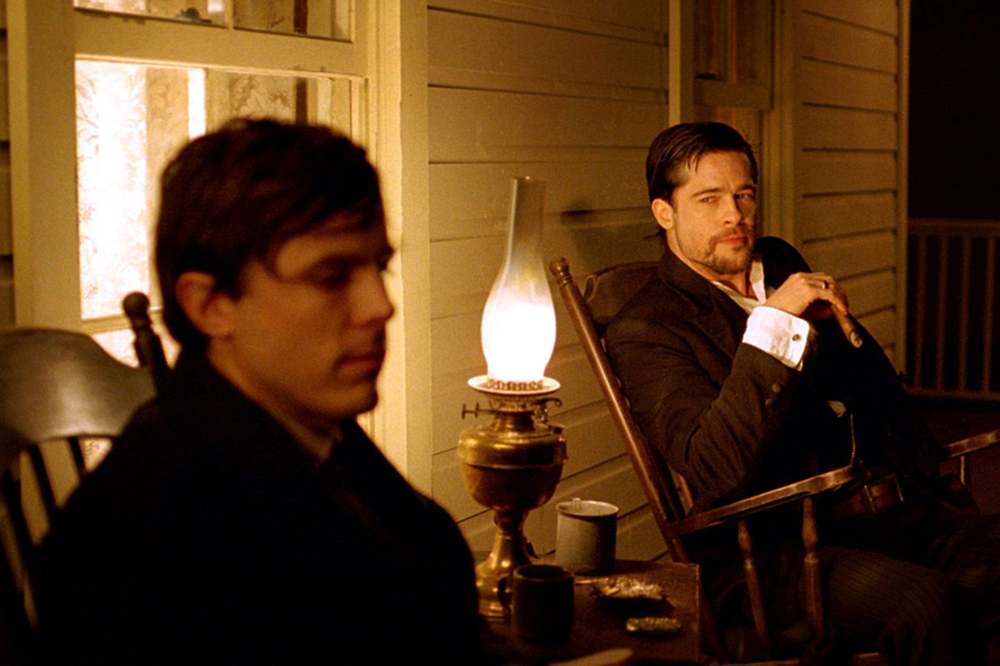
The Assassination of Jesse James by the Coward Robert Ford (2007)
With its stunning photography, ornate language, lyrical music, homoerotic subtext, and contemplative meditation about the legends of the Old West, The Assassination of Jesse James by the Coward Robert Ford is a more classic Hollywood oater (with a touch of gangster picture) than I was led to believe – and a fine one at that, even if the result is just a bit too polished and self-important for my taste… Neat title, though.
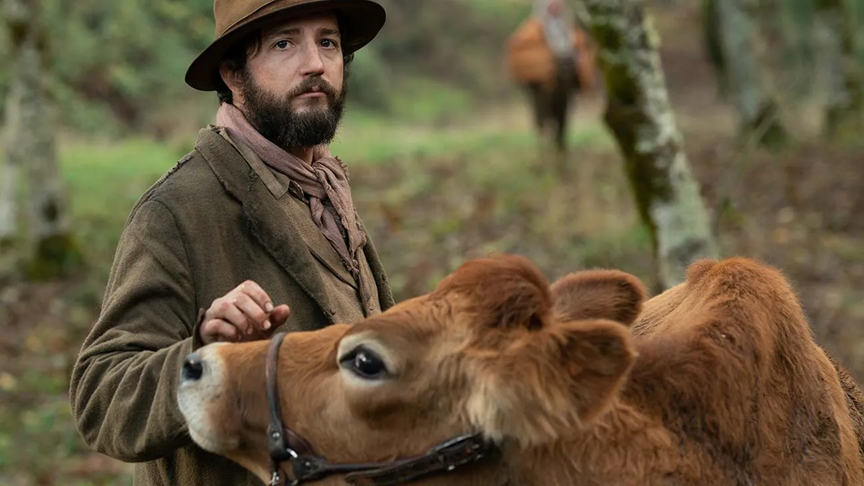
First Cow (2019)
Very slow burn, but soooo worth it… In her typical taut, restrained style, Kelly Reichardt spins, out of the first cow in Oregon, a suspenseful drama about frontier life in the wilderness, male relationships, and embryonic capitalism. First Cow proves the western setting can hold its appeal even when approached through an entirely different sensibility.
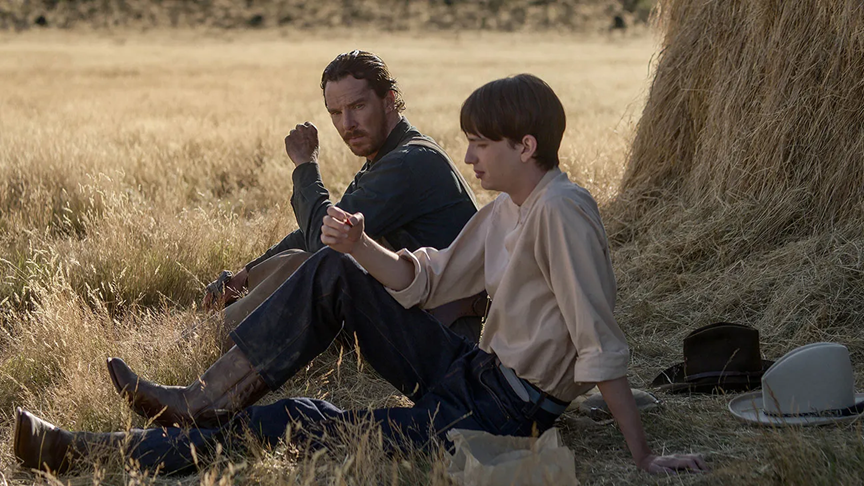
The Power of the Dog (2021)
The other remarkably beautiful, slow-burn revisionist western in recent years was also directed by a woman. Set in a ranch in 1925 Montana, The Power of the Dog follows the bubbling tension between an aggressively masculine bully and those who don’t share his rough ways, but such familiar dynamic is given a peculiar texture in this sensitive drama… The result is not as subtle or as clever as First Cow: the dialogue with the genre is more direct (including the obligatory visual nods to The Searchers) and the homoerotic undertones are hardly a novelty (especially compared to the complex relations developed by Reichardt). Still, the whole thing does build up to one hell of a payoff at the very end.