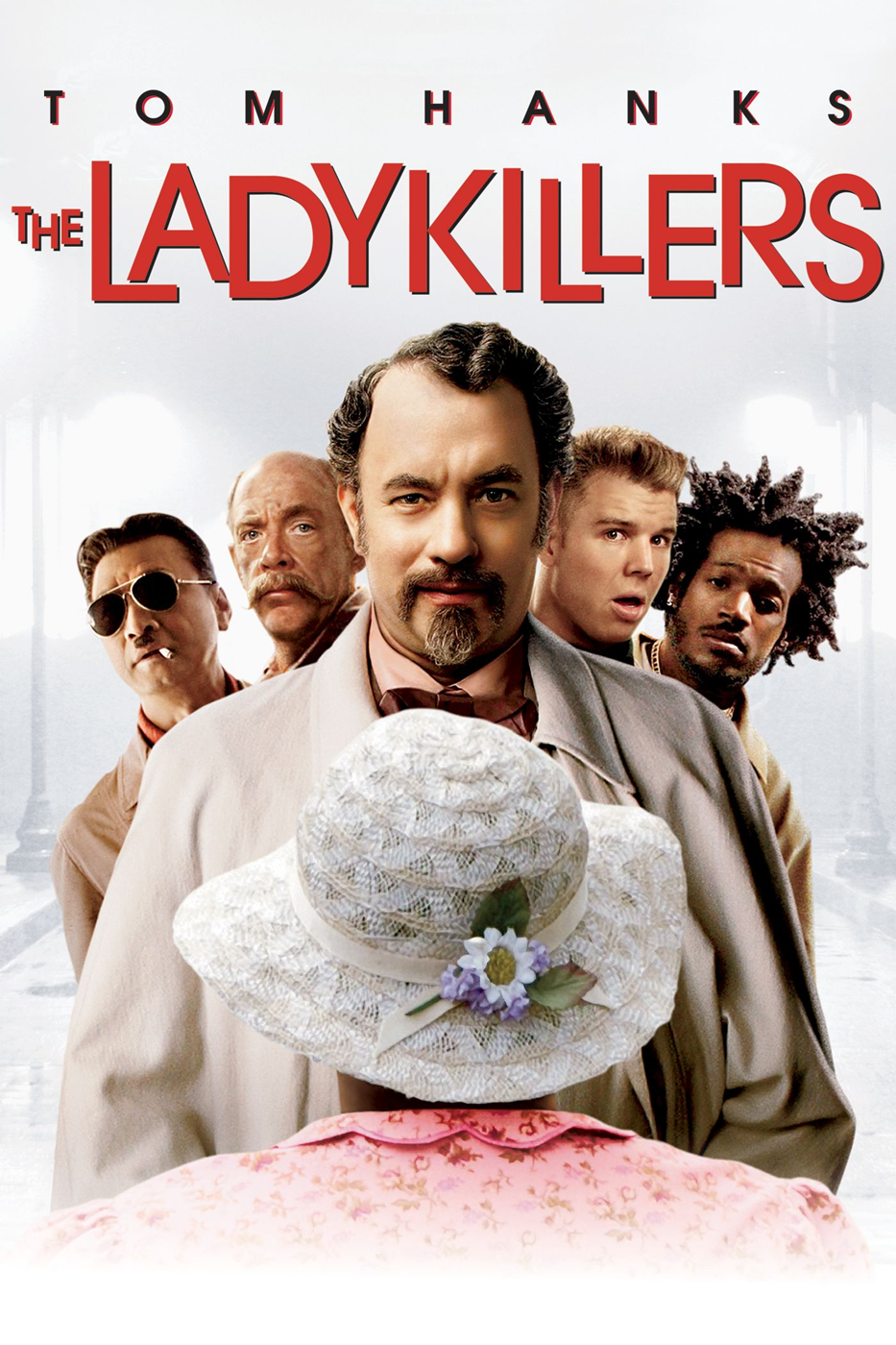
For some reason, in 2004 Joel and Ethan Coen decided to remake 1955’s classic black comedy The Ladykillers, about thieves preparing a London heist by posing as musicians practicing in the cellar of a naive old lady who inadvertently fucks up their plans. The original – like other productions coming out from Ealing Studios at the time – delightfully mined humor from the contrast between British quaintness and the macabre goings-on, whereas the Coen brothers relocated the action to Mississippi and turned every character into a grotesque exaggeration of broad – and mostly stale – stereotypes. I wouldn’t mind them blowing up the tone into sheer cartooniness (which worked just fine in Raising Arizona and The Hudsucker Proxy), except that the result was not only the brothers’ weakest film, but also the least funny, earning less laughs than any of their supposedly serious thrillers and dramas. Still, I guess it’s not entirely without redeeming features… Tom Hanks is a blast as a sinister and verbose classics professor struggling to disguise his mischievous nature, especially through a devilish snicker. Cinematographer Roger Deakins keeps things aesthetically pleasing on the screen and the pacing is nice, benefitting from the gospel soundtrack. The latter ties into recurrent allusions to segregation and to Christian faith, vague themes that I don’t think coalesce into much more than mocking the beliefs of the old lady (here played by Irma P. Hall). Thematically, I got more of a kick out of the various references to Edgar Allan Poe, whose gothic narratives of ghastly ironies can be seen as a distant relative of this type of story, even if here the whole thing is rendered as an outright farce.
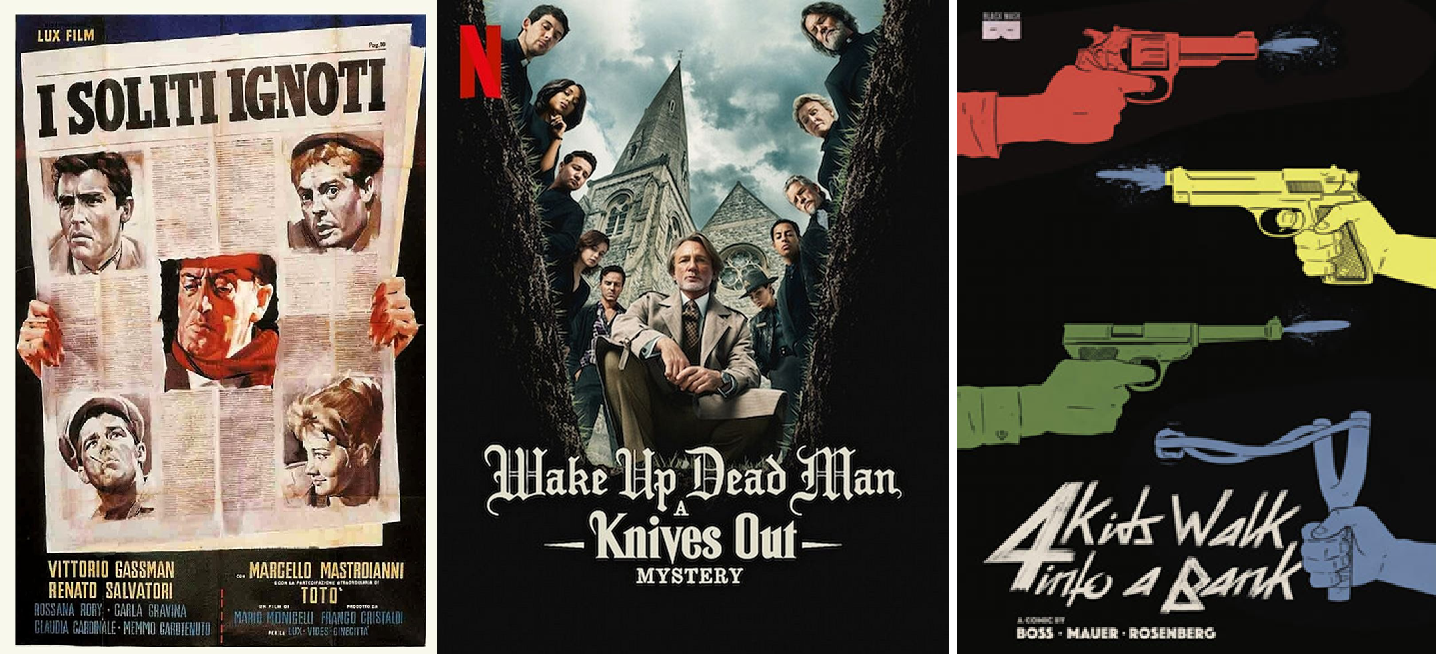
I’m not going to recommend the original The Ladykillers, even though I really like it, because that picture’s subtle tone is so far off from the Coen brothers’ remake that you are unlikely to enjoy them both. However, the Ealing production was only one of a bunch of entertaining capers to come out at the time, in the mid-to-late 1950s. For my money, the most hilarious of the lot is Mario Monicelli’s Big Deal on Madonna Street, about small-time criminals in Rome who come across what seems to be a great plan to rob a pawnshop’s safe, yet they have to face constant setbacks, mostly brought about by their own human flaws. With a nice pace and enough sight gags to appeal to any Coen fan (those Donald Duck aprons…), this comedy adds a cast of characters that are quirky but also recognizable people rather than mere caricatures, which actually makes them funnier (a scene at a wake is a wonderful piece of filmmaking, simultaneously touching and amusing). I guess Big Deal on Madonna Street is the kind of film I wish The Ladykillers had been, effectively weaving in social commentary between (or, rather, through) the laughs, in this case by offering a tour of a certain underworld of petty thieves and scammers, where everyone seems to know everyone and they are constantly in and out of prison while dreaming of a big score that will lift them out of poverty, thus exposing a hard reality underneath the lighthearted camaraderie.
If what you find most attractive in the Coens’ movie is precisely the overblown characters, however, you may prefer Wake Up Dead Man, the latest installment in Rian Johnson’s series of cartoony whodunits featuring master detective Benoit Blanc (a Daniel Craig whose drawl and speech pattern sound like a parody of Tom Hanks’). Like most Hercule Poirot stories, those films can be viewed out of order and, like The Ladykillers, they make the most out of their ensemble cast of stars while drawing humor from both visuals and witty dialogue. Wake Up Dead Man would be my pick, because it also contains a strong religious dimension (here we get a locked-room mystery in a Catholic church), although I’d argue this one is a much more accomplished work than the Coens’ extravaganza in the in the way it ties genre to matters of faith, without falling into either sentimentalism or pure cynicism… And, as usual, while the comedy helps with the suspension of disbelief, the plot is pretty clever, including a set of metafictional clues (or red herrings?) when Blanc finds a list of novels from which the murderer probably drew inspiration, thus teasing those of us who know the resolution to those tales.
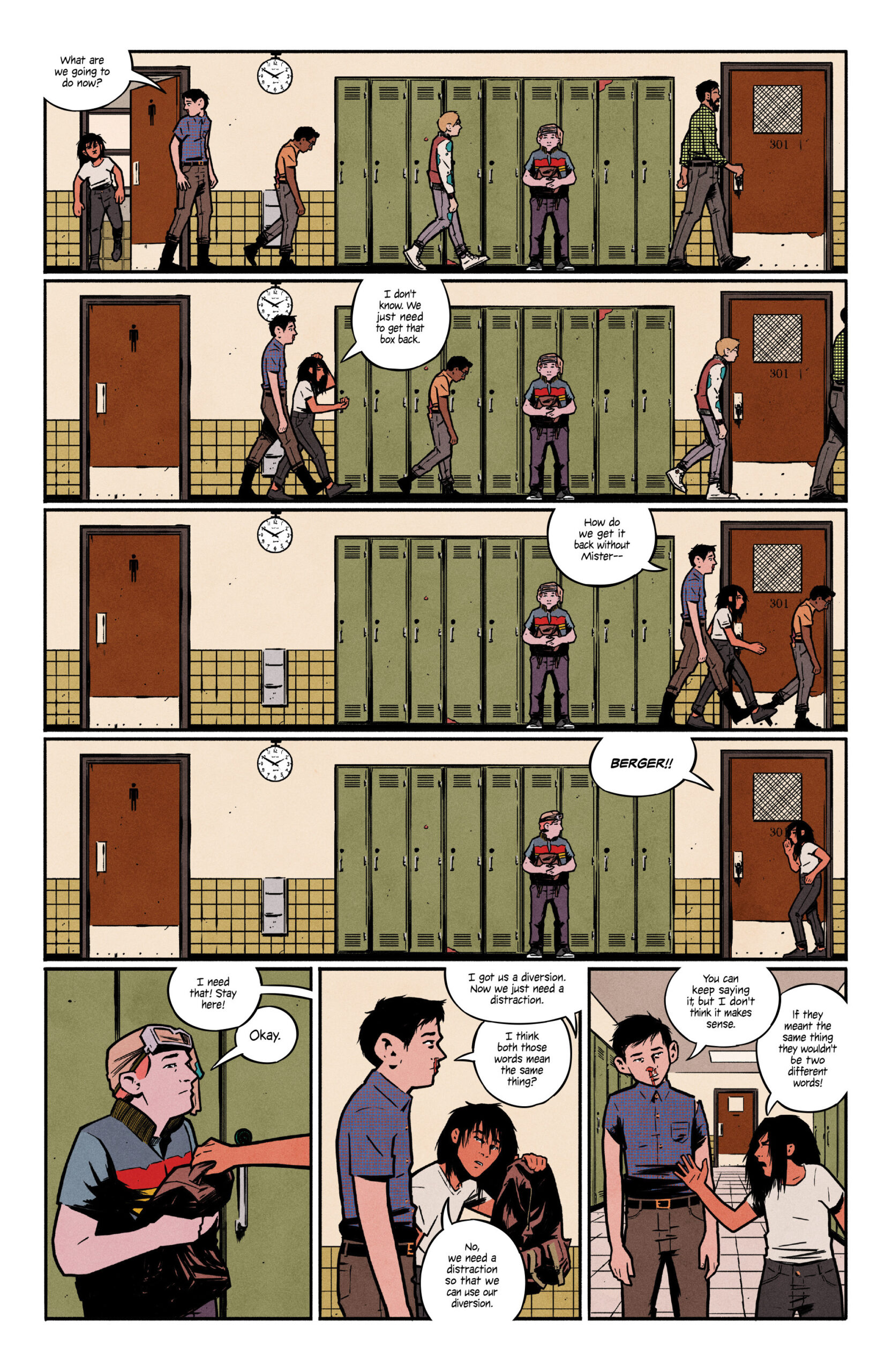
In a way, 4 Kids Walk into a Bank works almost as an inversion of The Ladykillers, with a young girl deliberately trying to sabotage a heist, again with violent consequences. Yet Matthew Rosenberg’s script for this comic is more caustic and full of surprises, nailing the way kids can’t seem to stay focused on anything for long and the charming fun of a precocious girl messing up adults’ plans (almost a decade later, he has revisited this premise in We’re Taking Everyone Down With Us). Likewise, the art of Tyler Boss – excellently flattened by Clare DeZutti and lettered by Thomas Mauer – is even more inventive than Deakin’s cinematography, using layouts and angles to add further layers of comedy. Not that I think the creators had The Ladykillers in mind when putting together this riotous mini-series: there are nods to all sorts of crime movies in the variant covers, in scattered Easter Eggs (Sidney Lumet High School, Tardi Avenue, etc), and in the chapter titles, which twist classic quotes into the kid motif (‘As far back as lunchtime I always wanted to be a Gangster.’). Apparently, there is a screen adaptation coming out soon and I hope it does with film language the magic that Tyler Boss did with comic book design (perhaps it can also polish the ending, since Rosenberg doesn’t quite stick the landing in terms of tonal shift). Regardless, if you’re into darkly humorous capers, don’t miss this cool book!