One more Quino reminder that comics can be awesome:
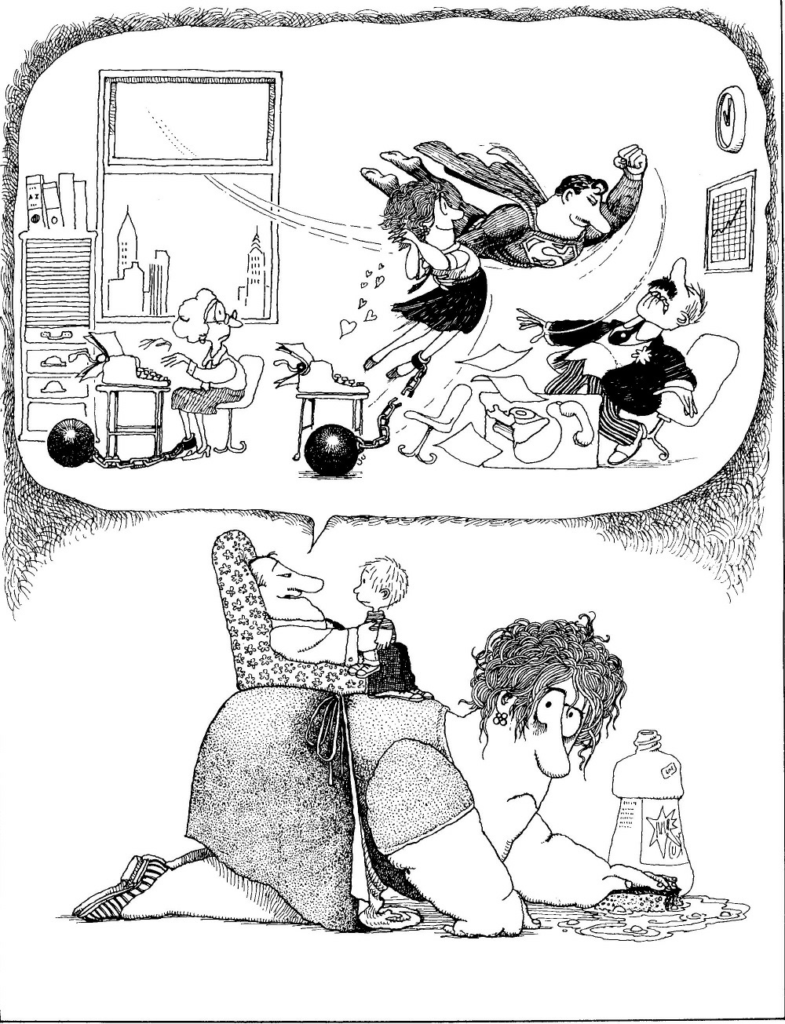
Sí… carniño
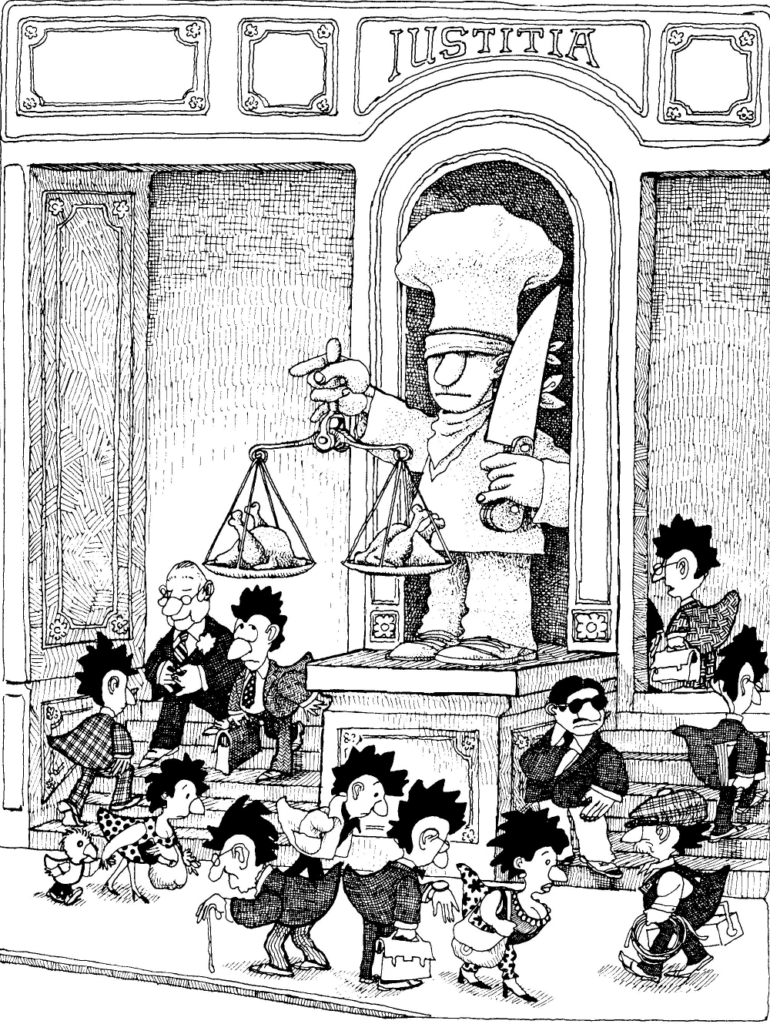
Yo no fui!

Yo no fui!
One more Quino reminder that comics can be awesome:
Sí… carniño
Yo no fui!
Yo no fui!
We’re halfway through Gotham Calling’s tour of Cold War cinema. By this stage, it isn’t just the world situation that is rapidly changing, but filmic language itself. Apart from addressing the conflict from multiple national and ideological perspectives, most of the films below impress for the way they challenged the whole medium.

51. La Jetée (France, 1962)
Let us begin on a particularly high note… Although just 28-minutes long, the massively influential La Jetée has it all: World War III, post-apocalyptic dystopia, utopia, nostalgia, romance, telepathy, time-traveling paradoxes, and an experimental approach to visuals that still stands out today.
52. The Manchurian Candidate (USA, 1962)
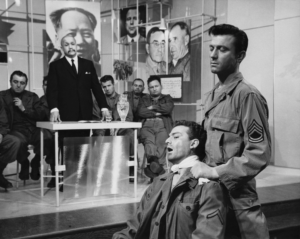
A hallucinatory conspiracy yarn about soldiers brainwashed in the Korean War (one of whom is the stepson of a McCarthy-like senator). Way more bonkers than British cinema’s own quasi-simultaneous take on the brainwashing panic (the soap operatic The Mind Benders), this darkly comedic psychological thriller – which left a lasting mark in popular imagination – both caricatures the hysteria of the previous decade and disturbingly anticipates the paranoid mindset that would follow the JFK assassination. My use of pathologizing expressions is deliberate, as The Manchurian Candidate audaciously projects the protagonists’ (and presumably society’s) mental instability through disconcerting camera angles, bizarre line readings, jarring transitions, surreal imagery, and somewhat cryptic choices likely to prompt alternative readings of the story, especially regarding Eugenie’s character (2004’s remake gives this character a clearer role, but I much prefer her ambiguity here). Plus, Frank Sinatra does martial arts.

53. Nine Days of One Year (USSR, 1962)
Set in a nuclear research institute in Siberia, this remarkable drama focuses on the love triangle of a dedicated experimental physicist (who carries on despite having received deadly doses of radiation), a lively theoretical physicist (his cynical counterpart), and a frustrated wife (whose inner monologues we get to hear). As promised by the title, the film zooms in on a few selected days in their lives, grappling with dilemmas over science (from fusion power to space exploration), the political and ethical dimension of their work (should researchers be grateful for the war that funds their studies?), interpersonal relations, and, of course, mortality. Yes, it’s thematically heavy, but the cinematography and characterization make Nine Days of One Year aesthetically and emotionally rich as well.
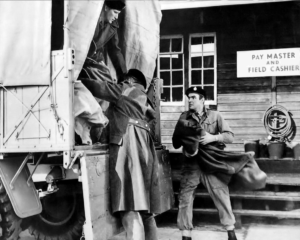
54. A Prize of Arms (UK, 1962)
Besides delivering a nail-biting heist at a British army barracks, A Prize of Arms gains an extra layer of interest because the whole thing is set against the backdrop of the Suez Crisis, so this one also works as a microcosmic illustration of the UK’s threatened – and declining – military power.
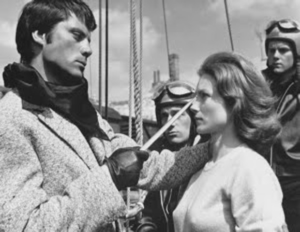
55. The Damned, aka These Are the Damned (UK, 1963 [1961])
The title evokes Village of the Damned and some of that film’s imagery does echo here, loosely, but this is a much more offbeat concoction. An eerie and unsettling sci-fi piece (with a touch of incest psychodrama) set on the English coast, The Damned somehow brings together a youth gang, an extravagant sculptor, an unlikely pair on the run, and a secret military programme to prepare children to survive the upcoming nuclear holocaust.
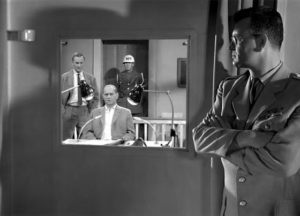
56. For Eyes Only (East Germany, 1963)
I’m not gonna lie: as a spy thriller, this is a taut yet low-key affair (loosely based on actual espionage operations) that pulls off many of the usual tropes with average competence and some groovy music. What makes For Eyes Only stand out is that, because it’s an East German production, the film fully reverses the genre’s typical geopolitical perspective: the hero is a Stasi agent who infiltrates Western secret services to prevent an attack against the East (thus implicitly validating the defensive construction of a protective Berlin Wall…). It even finishes with a chase scene in which, for once, the protagonist is desperately trying to cross the border *into* the GDR! (Recently, the show Deutschland 83 started off with a similar premise, but it had such a cynical depiction of the East that it ended up falling for the usual Western stereotypes… whereas For Eyes Only is the real deal, without any retroactive sense of irony or self-reflection.)
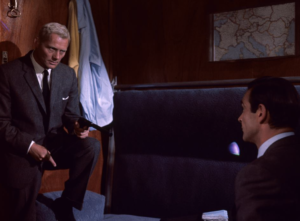
57. From Russia with Love (UK/USA, 1963)
James Bond goes to Istanbul to help a sexy Russian cipher clerk defect to the West, even though he knows damn well the whole thing is bound to be a trap. Like in most 007 pictures, the main villain is not the USSR itself, but a third party exploiting the Cold War (although the Soviets are nonetheless generally coded as evil).Besides being an obvious counterpart to the likes of For Eyes Only, this is also a spiritual opposite of A Prize of Arms: here, everyone acts as if Britain is still a major geopolitical player in the new world order, Suez and decolonization be damned. The formula and themes apply to practically all of the Bond film series, so this entry stands as representative of the entire franchise. (From Russia with Love was always my favorite… at least until 2006’s Casino Royale came along!)

58. Ikarie XB 1 (Czechoslovakia, 1963)
Interested both in outer space travel and in the evolution of earthly society, this sci-fi masterpiece about a ship searching for life in Alpha Centauri, in 2163, visualizes a utopia where the Cold War is ancient history and mechanization has freed workers from most physical labor (to the point that the astronauts actually seem bored in the first stretch of the film, before the adventure kicks in), even if there is still lingering gender, racial, and generational inequality. Ikarie XB-1 probably feels even more fantastic now than it did at the time… In just a few years, the Soviets had launched into orbit the first satellite, the first dog, and the first cosmonaut, to which JFK responded by promising – accurately, as it turned out – to put a(n American) man on the moon before the end of the decade. At the time, therefore, Czechoslovakian imagination could credibly accommodate these future paths of both technology and socialism. (Stay the fuck away from the botched US version, titled Voyage to the End of the Universe!)

59. Ladybug Ladybug (USA, 1963)
Reverberations of the Cuban Missile Crisis start to hit the screen. Set in a countryside elementary school where the nuclear attack warning suddenly goes off, Ladybug Ladybug follows the varied reactions of teachers and students, from disbelief and growing terror to Lord of the Flies shenanigans and a melancholic acceptance of mortality. Sure, with the focus on children comes some blatantly manipulative sentimentalism, but for the most part the movie gets a lot of mileage out of the naturalistic acting, the understated direction, the characters’ believable behavior, and a chilling ending (all of this makes for a stark contrast with the similarly themed – yet hysterically reactionary – Panic in Year Zero!).

60. The Little Soldier (France, 1963 [1960])
While the Algerian War gave us the greatest war movie ever made (The Battle of Algiers) and arguably the greatest musical (The Umbrellas of Cherbourg), they fully disregard the Cold War dimension. In turn, The Little Soldier follows a French agent caught between his own secret service and communists fighting for the independence of Algeria. This description makes it sound too linear, though… That’s in the film, for sure, but also everything else that Jean-Luc Godard felt like shooting at the time. The result is often baffling, but provocative enough for it to have gotten banned in France until the end of the war.
Another dazzling reminder that comics can be awesome…
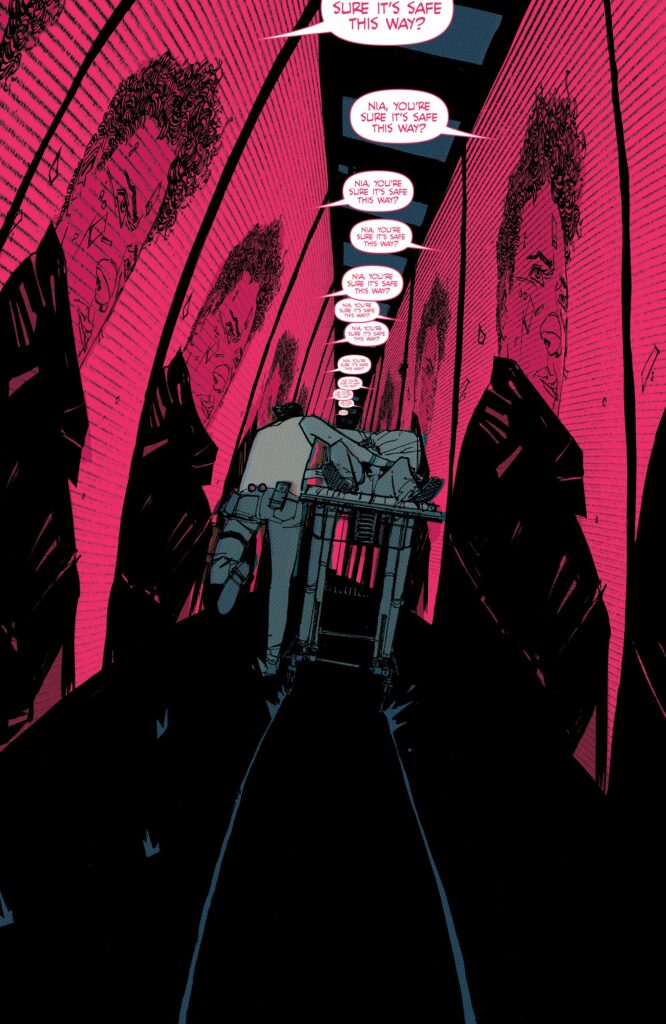
Thumbs #1

Legion of X #1
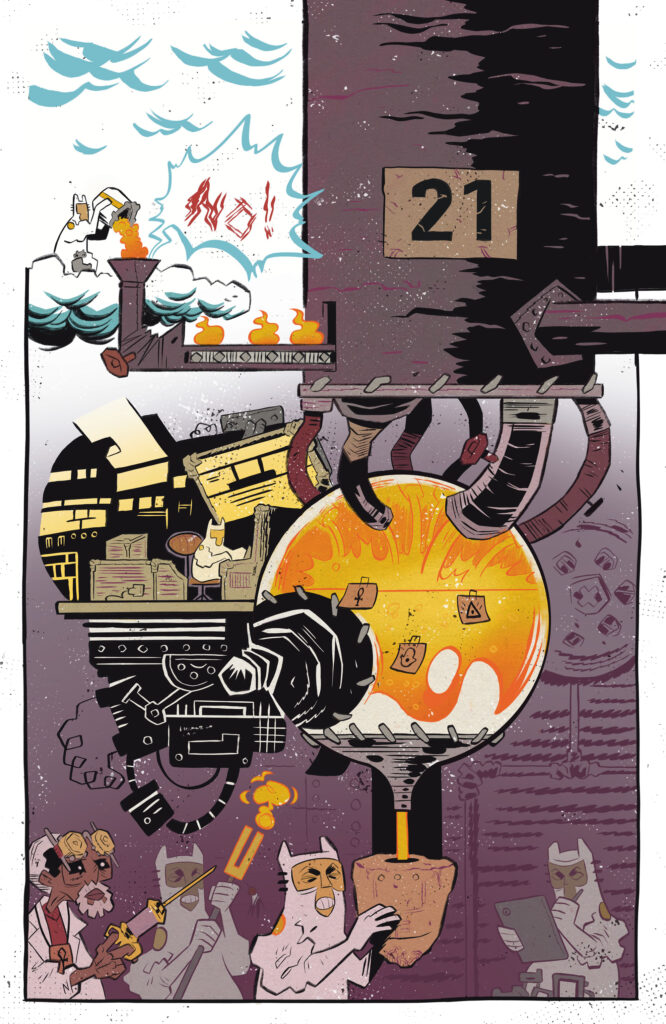
Monkey Meat #1
As much as Ed Brubaker’s work can be hit-and-miss for me, he remains one of those writers – like Garth Ennis or Warren Ellis – whose comics I always end up checking out, sooner or later. For one thing, their books tend to be pretty damn readable, in a ‘comfort food’ sort of way. But it’s more than that: even if I don’t love all these authors do, I feel like I get where they’re coming from and it’s interesting to see their latest take on familiar motifs.
For instance, Brubaker keeps going back to the culture he consumed in his youth and reimagining it through older eyes, with a more mature sensibility and characterization.
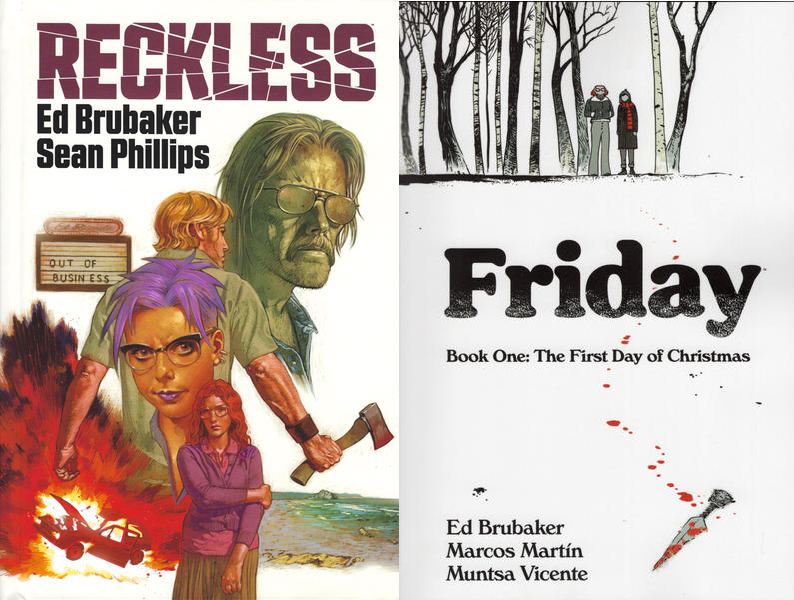
One of the most satisfying of Ed Brubaker’s regular collaborations with artist Sean Phillips has been a series of graphic novels about the exploits of Ethan Reckless (yep), a badass Vietnam vet whom people hire to solve their problems (usually through violence) when they can’t go to the authorities. Brubaker has presented this as a throwback to the John D. MacDonald-style pulp novels he read growing up, with their lurid painted covers and cool thrillers about manly adventurers, criminals, spies, and private eyes.
The premise certainly feels like an adolescent fantasy: working without a boss and only when he feels like it, in his downtime Ethan Reckless is a surfer who lives in an abandoned movie theater where he gets to watch his favorite classics on the big screen. The setting of 1970s-80s’ California likewise feels informed by nostalgia… which is not to say that Reckless posits a rose-tinted view of the era. Rather, the books fully embrace those decades’ bleaker, seedier elements, from the rise of skinheads and CIA’s dirty ops all the way to predatory real estate deals and post-hippie cults.
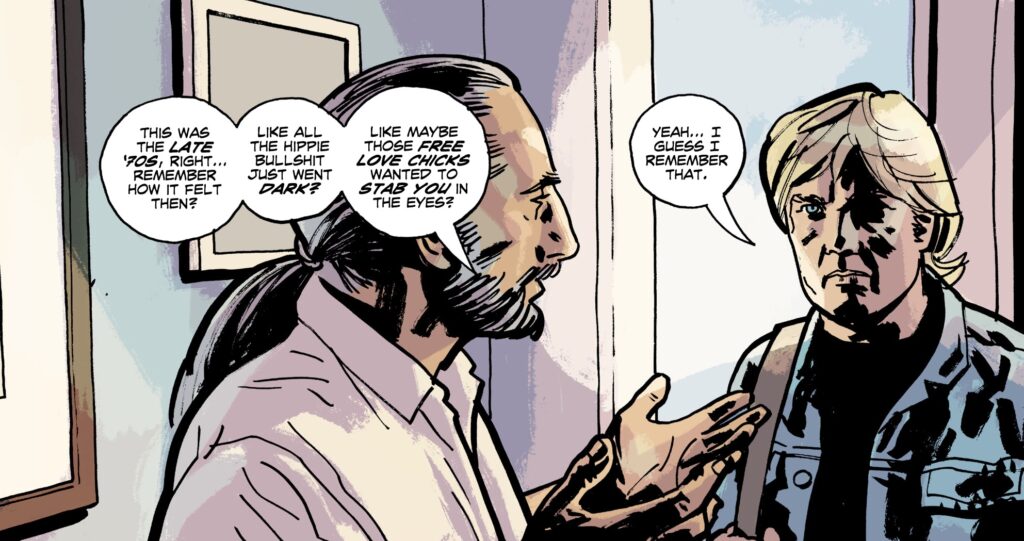
Friend of the Devil
Although sharing a neo-noir style and story beats, each book has its own identity. The second volume, Friend of the Devil, is a Chandleresque detective story in Hollywood, which is something Brubaker excels at. The third one, Destroy All Monsters, despite the bombastic title, is more of a low-key character study about friendship. And if that one fleshes out the character of Ethan Reckless’ punk assistant Anna, she effectively becomes the protagonist of the fourth book, The Ghost In You, which is a mystery yarn with hints of weird horror. And then came Follow Me Down, a devastating take on the woman-on-a-vengeful-rampage subgenre (with obligatory nods to Hannie Caulder and The Bride Wore Black) against the backdrop of a San Francisco still recovering from the 1989 earthquake.
Thanks to Brubillips’ dependable, confident storytelling (developed over twenty-plus years of collaboration), every single one of these has been a treat. Sure, there are still the occasional condescending passages (like when Ethan explains directly to the reader that he’s looking at microfiches because there weren’t digital cameras or laptops back in the 1980s), but I’ve even come to accept the overexplanatory inner monologues (which make every motivation explicit) as just another form of narrative clarity and comfort.
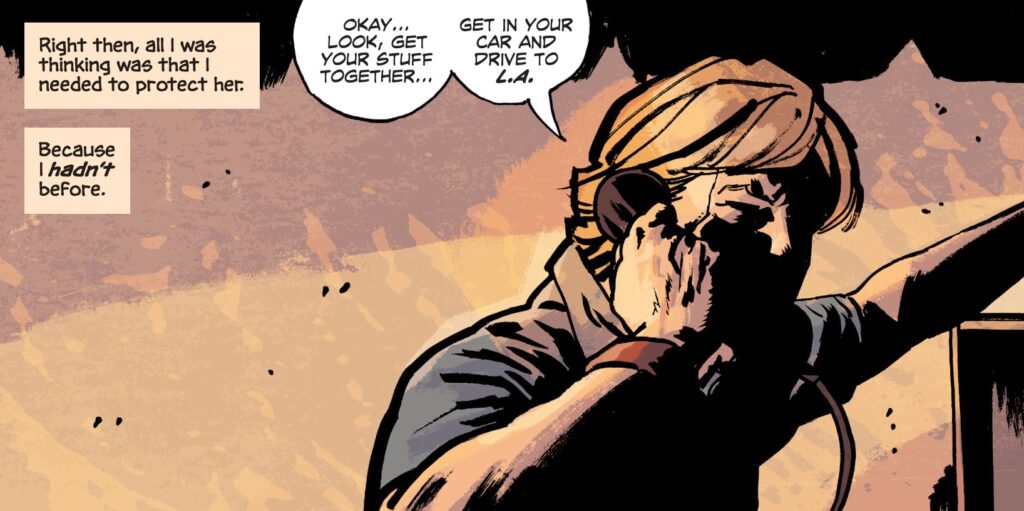
Reckless
Hell, after a while, this just becomes part of Ethan Reckless’ personality – it’s is just how he thinks, constantly justifying his actions. And the framing devise (for the most part, at least) is that Ethan is writing his memoirs in the 21st century, so I can see the tendency to oldmansplain as coherent with his authorial voice.
Moreover, as it’s often the case, what helps sell these books is Sean Phillips’ efficient, unflashy artwork. Although the word-heavy storytelling doesn’t leave much room for visually driven action, Brubaker wisely relies on Phillips to set the right the mood – which he consistently nails, in part due the addition to the team of colorist Jacob Phillips, with his knack of evoking Los Angeles’ peculiar light (especially in the beautiful surfing scenes), just as he did for Texas in That Texas Blood (an absolute must-read for fans of Criminal and Reckless).
This creative trio reunited for an unconnected project, the standalone graphic novel Night Fever, but there my praise is more uneven. Brubaker was hardly in top form, penning a derivative Eyes Wide Shut-ish midlife-crisis narrative about a family man on a business trip to Paris who gets involved in a nighttime adventure where he gets to act out stereotypical male fantasies (recently, you could find a much more ingenious spin on this type of tale in Brandon Cronenberg’s Infinity Pool). In turn, the two Phillips outdid themselves, bringing to life an eerie atmosphere that is suitably enigmatic, nightmarish, and erotic.
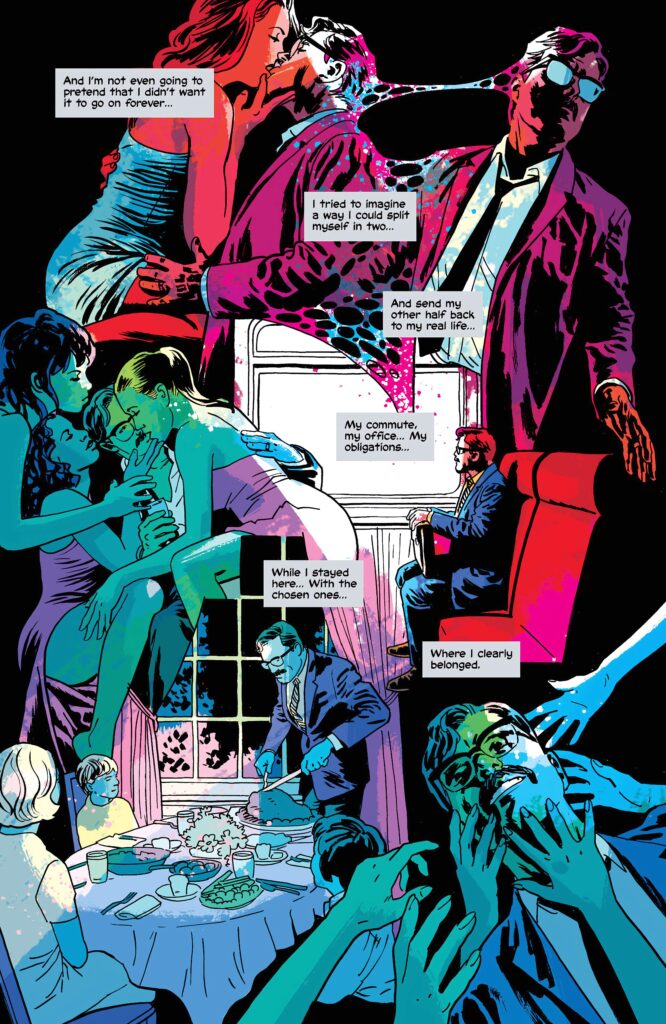
Night Fever
The other great duo who has been working with Ed Brubaker are artist Marcos Martín and colorist Muntsa Vicente, his collaborators on Friday, a series about a couple of former child detectives – now in their late teens – who get involved an atypically violent case.
The artwork in this one is particularly lovely. On top of some inventive page layouts, the delicate designs and wintery palette capture a certain sense of fading innocence and quaint small-town life, both evoking the gentle milieu of the likes of Encyclopedia Brown and imbuing it with a newfound melancholia. This creates the perfect balance for Brubaker to engage with the emergence of more mature and conflicted feelings…
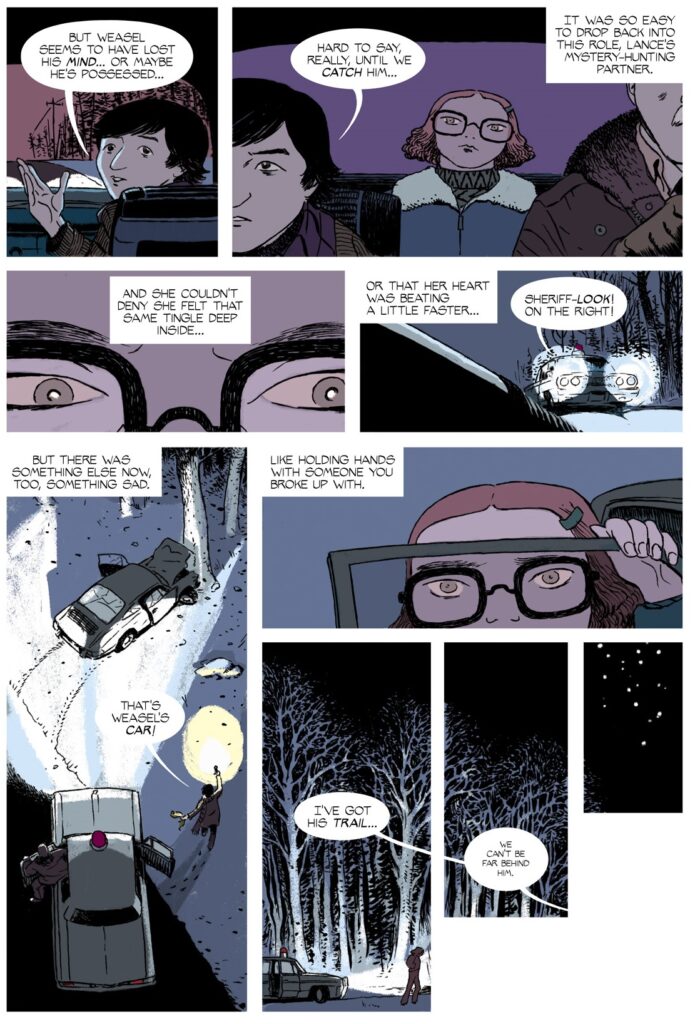
Friday #1
Not that you need much intertextual baggage to appreciate Friday… Even if you’ve never read the sort of mysteries the series is riffing on, the comic does a solid job of establishing the premise and character types as it follows an intriguing investigation (with a supernatural flavor).
That said, this is a series about growing up and the metafictional element does enhance its thematic strength. Ed Brubaker has called Friday post-YA fiction, in that it involves bringing adult themes into YA concepts (or, as a librarian reader has pointed out in the letters section, ‘middle grade’ rather than ‘young adult’ concepts). In that sense, it is a return to the gesture he did in the Criminal arc ‘The Last of the Innocent’ – and something that a number of other creators have had a stab at in recent times (none of them more hilariously than John Allison in Wicked Things).
Because Friday is a Brubaker comic, though, growing up doesn’t just mean handling more responsibilities and becoming more aware of the world’s complexity. It means shit will get dark.
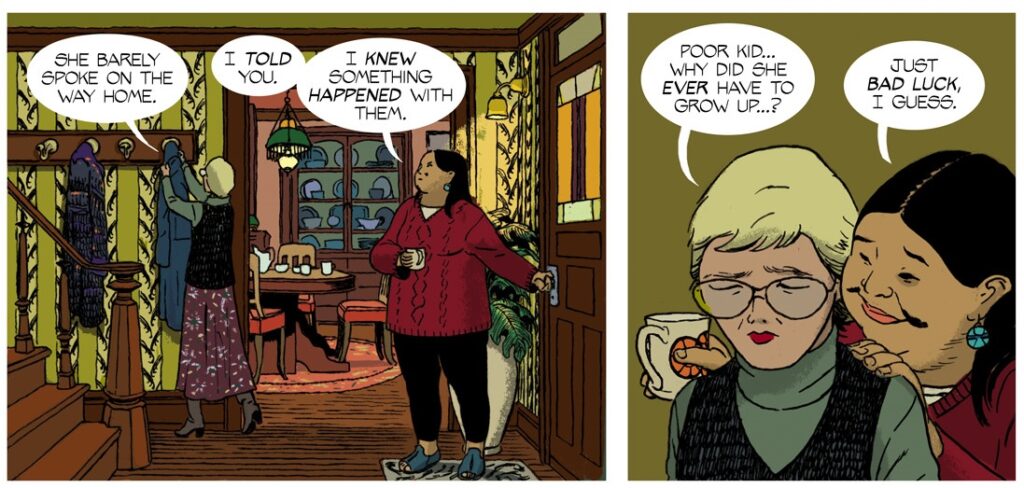
Friday #2
World events keep bringing to mind punk rock songs I hadn’t revisited in a while, but occasionally I also look for more escapist fare… This includes pleasant reminders that comics can be awesome, such as this trio of lusciously crowded Batman splash pages:
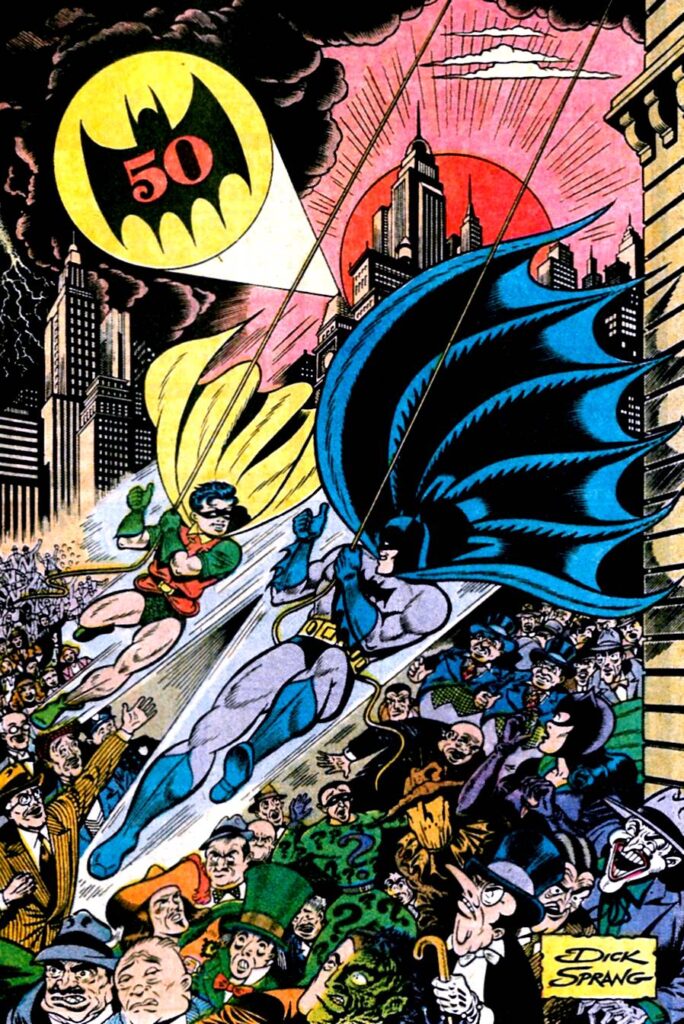
Detective Comics #600
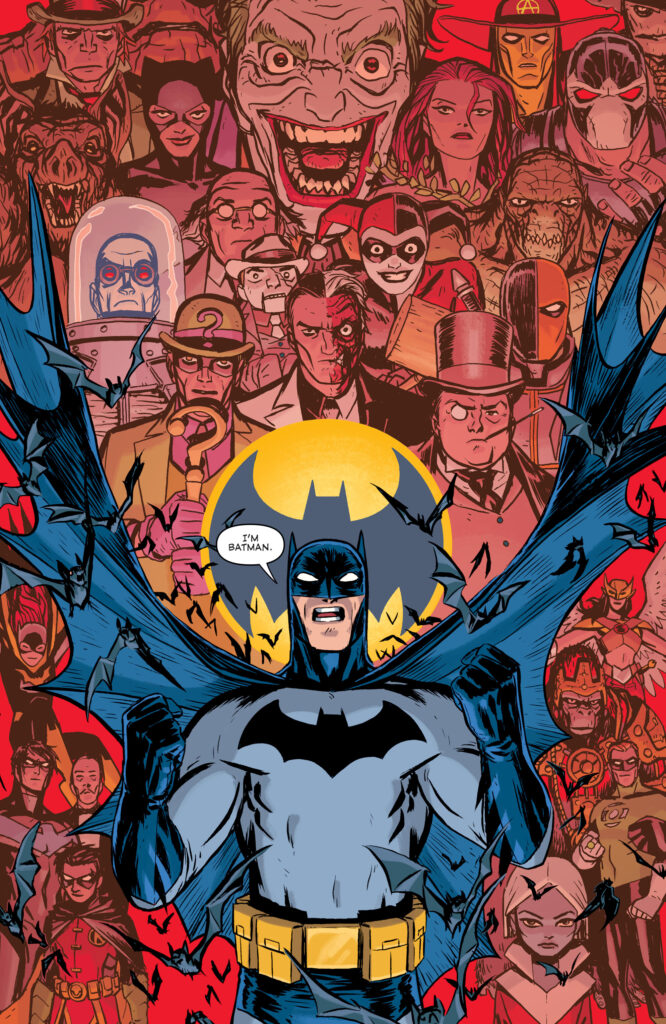
Batman: Universe #6
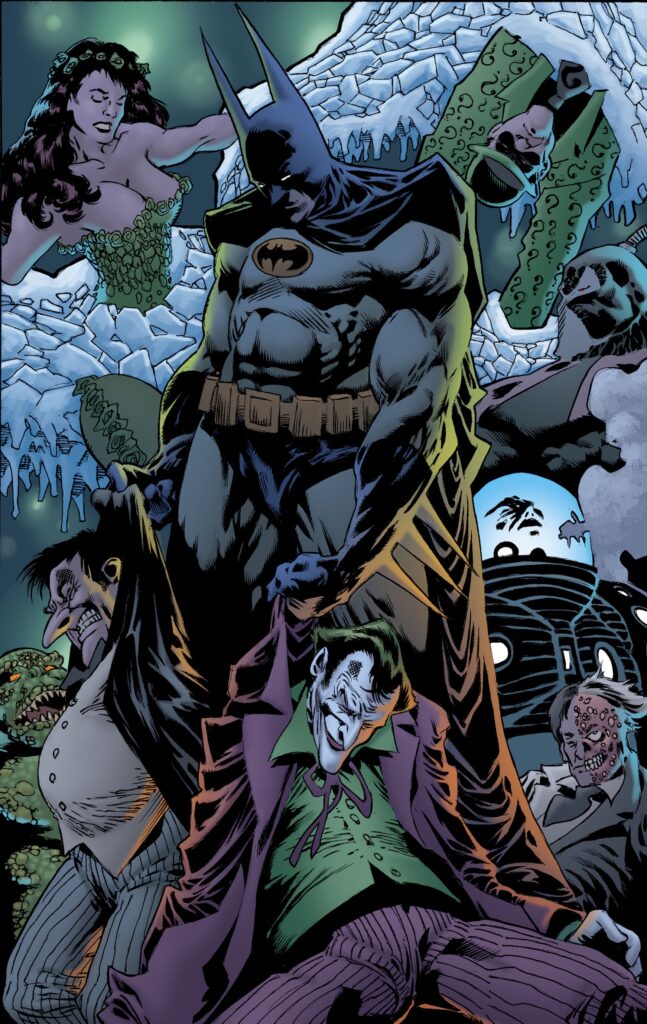
Kings of Fear #1
Gotham Calling’s curated retrospective of Cold War cinema arrives at the 1960s and, for the most part, the mood is one of doom and different types of terror… but this is nevertheless a creatively fertile period, generating a bunch of pungent films around the world.

41. Letter Never Sent, aka The Unsent Letter, aka The Unmailed Letter (USSR, 1960)
The first Soviet entry on this list is a ruthless survival adventure featuring a small group of geologists in Siberia on an expedition in search of diamonds to fund the USSR’s industry and space programme, shot through virtuoso camerawork and jaw-dropping photography. Despite the overtly political framing by the initial scroll, much of the film – made during the post-Stalin ‘thaw’ era – actually paints quite a skeptical picture of typical motifs of socialist fiction such as the authorities’ efficiency and humanity’s ability to harness nature… Hell, you can even read into it an allegory of labor camps or of nuclear destruction. (Director Mikhail Kalatozov followed this with I am Cuba, an even more spectacular-looking chronicle of the lead-up to the Cuban Revolution, but although the Cold War connection is more blatant in that one, I much prefer the genre thrills of Letter Never Sent.)
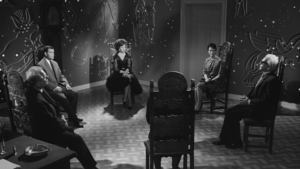
42. The Thousand Eyes of Dr. Mabuse (West Germany/Italy/France, 1960)
The culmination of one of the most eccentric trilogies in the history of cinema: if in 1922’s Dr. Mabuse the Gambler Fritz Lang captured the social chaos of post-WWI Germany through the schemes of the titular master criminal, and in 1933’s The Testament of Dr. Mabuse Lang conjured up an expressive symbol of the rise of fascism while elevating him to supervillain, The Thousand Eyes of Dr. Mabuse blasts this dark, pulpy series into the Cold War. And while this offbeat sequel is a heady puzzle box where new characters mysteriously circle each other with no clear connection to the previous films until the final minutes, thematically the series’ overarching narrative frames nuclear danger and expanding surveillance within a genealogy of evil across the decades. Moreover, many of the movie’s concepts and set pieces pave the way to the spy-fi strand that will gain prominence throughout the rest of the ‘60s.
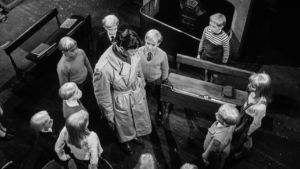
43. Village of the Damned (UK/USA, 1960)
Similarly, the primary horror in Village of the Damned doesn’t originate from the geopolitical division itself, even though the latter appears to be in the mind of the authorities responding to the odd occurrences of a small British village, including a batch of children with mental powers… The enemy within and collective thinking have never looked so sinister, but, while the military and the Home Office defend coercion in the name of national security (and monitor how the Soviets are dealing with the situation), a scientist dreams of a new generation that can push the world beyond wars, disease, and human misery. And so, despite the supernatural twist, we get another atomic-era cautionary tale about science’s destructive potential. (The premise was reworked in strident pacifist terms for 1964’s Children of the Damned, where the Cold War themes are much more pronounced, but I prefer this version’s creepy restraint and ambiguity.)

44. The Day the Earth Caught Fire (UK, 1961)
Focusing on the disruptive potential of nuclear bomb tests regardless of whether or not they lead to actual war, The Day the Earth Caught Fire is one of the most atmospheric entries into the early apocalyptic cycle, combining an over-the-top premise with an ‘adult,’ realistic treatment. Much of it is told from the perspective of a newspaper, complete with witty, rapid-fire dialogue worthy of His Girl Friday and Ace in the Hole.

45. One, Two, Three (USA, 1961)
If it’s rapid-fire dialogue you want, though, look no further than One, Two, Three, an absolutely frantic screwball farce about the head of Coca-Cola in West Berlin trying to impress his boss to get a promotion… If A Foreign Affair was Billy Wilder’s caustic take on Trümmerfilme, here the whole storyline about the capitalist’s daughter falling for a communist plays like a madcap spoof of the subgenre of divided Germany romance I brought up a few posts ago, with both sides of the Cold War cynically presented as grotesque (each in its own way) and horny (in pretty much the same way).

46. Paris Belongs to Us (France, 1961)
Part mystery, part conspiracy thriller, part existentialist drama, even without the explicit references to McCarthyism the extraordinary Paris Belongs to Us would’ve earned a place on this list for the way it eerily nails a general zeitgeist of anxiety and paranoia.

47. Pigs and Battleships (Japan, 1961)
A youthful, irreverent, and vibrantly directed gangster picture, Pigs and Battleships offers a biting portrayal of the black market rackets – and widespread prostitution – surrounding the expansion of US military bases abroad, particularly in Japan.
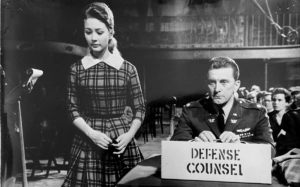
48. Town Without Pity (USA/Switzerland/West Germany, 1961)
Town Without Pity addresses a similar topic, but using a very different approach. Making the most out of an ultra-catchy song, this is a courtroom drama about the trial of Germany-based GIs accused – and guilty – of gang-raping a local girl. Based on a novel inspired by an actual incident, Gottfried Reinhardt’s picture may not be as ambiguous as Otto Preminger’s Anatomy of a Murder, but it provocatively engages with the violence of putting a rape victim on the witness stand to be confronted by a defense lawyer whose job is to publicly discredit her… It’s also a potent film about the oppressive presence of the US military abroad, about a conservative West Germany dealing with more foreign troops and military bases than any other country in the world, and about the social disruption that can be found in the various fronts of the Cold War.
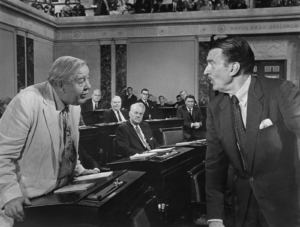
49. Advise & Consent (USA, 1962)
Speaking of Preminger… His willingness to delve in moral complexity and treat audiences like intelligent adults is in full display throughout Advise & Consent, a sophisticated political thriller about the nomination process for a US Secretary of State which tackles the era’s recent witch hunts. (If Anatomy of a Murder was no doubt on the watch list for the writers of The People v. O.J. Simpson, this one comes across like a convincing pilot episode for The West Wing!).

50. Escape from East Berlin, aka Tunnel 28 (USA/West Germany, 1962)
And so we get to the Berlin Wall, which didn’t just alter the Cold War’s landscape (drastically materializing division and adding yet another source of suffering), but it also fuelled an entire subgenre of movies about daring escapes from East Germany. Although openly propagandistic and sensationalistic – including documentary-like voice-overs and archival footage – these works nevertheless provided genuine tension and thrills by borrowing the effective dramatic structure of prison/POW narratives (having us root for heroes in search of freedom, with deadly stakes) while also resonating with outrage over the real-world situation. Still, emotional manipulation and suspense can be done with varying levels of cinematic skill… Made less than a year after the Wall’s construction, Escape from East Berlin delivers the goods with classical clarity, benefitting from a particularly taut mise-en-scene. While the acting isn’t always top-notch, director Robert Siodmak uses the expressionistic visual style he developed doing horror and film noir to create a tighteningly claustrophobic GDR. And for all its anti-communism, it’s also a story about teamwork and solidarity.
It may not be much of a consolation in the grand scheme of things, but here is your weekly reminder that, hey, at least comics can be awesome…

The Ambassadors #1
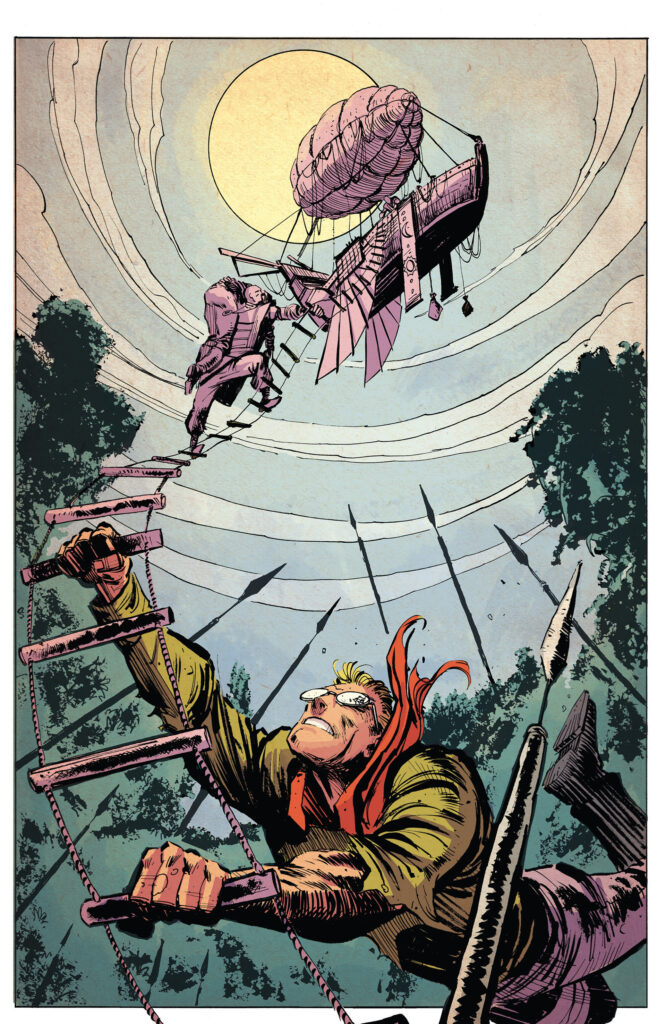
Five Ghosts: The Haunting of Fabian Gray #2
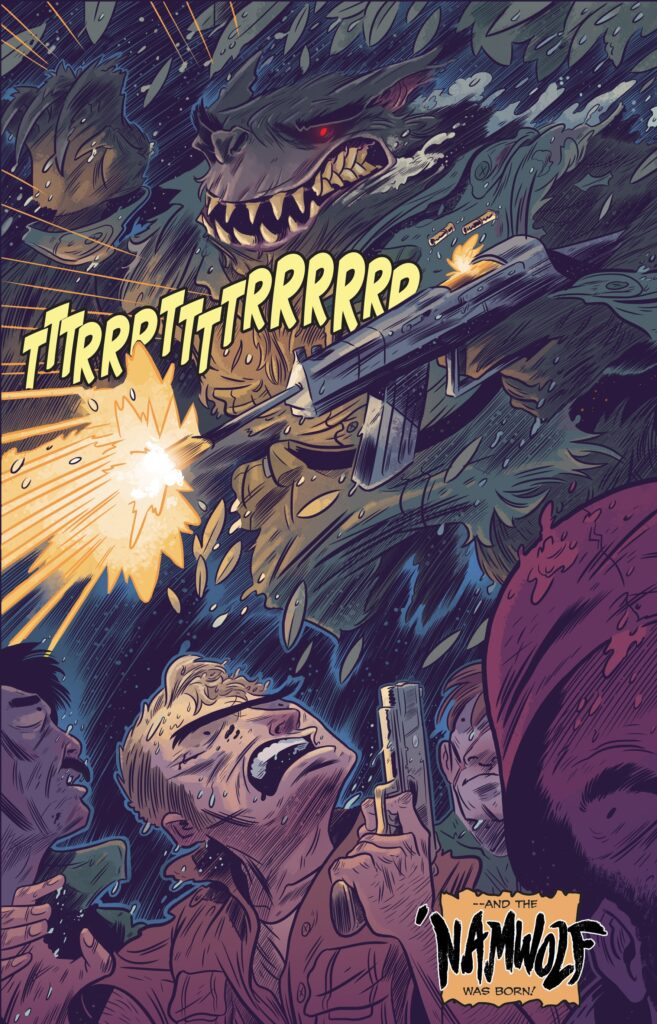
Namwolf #1
Last time I did one of these ‘Catching up with crime comics’ posts was a year ago, back in November 2022, looking specifically at Texas-set yarns (in the meantime, I’ve finally read Ethan Hawke’s and Greg Ruth’s Meadowlark, a superb-looking graphic novel that does a fine job of developing an emotional father-son dynamic among the genre thrills…). This time around, I’m focusing on more-or-less recent works written by Ed Brubaker. After all, having discussed his hit-and-miss work on Batman, I figured it’d be fair to also devote some of the blog’s attention to Brubaker’s field of expertise: no-holds-barred crime comics!
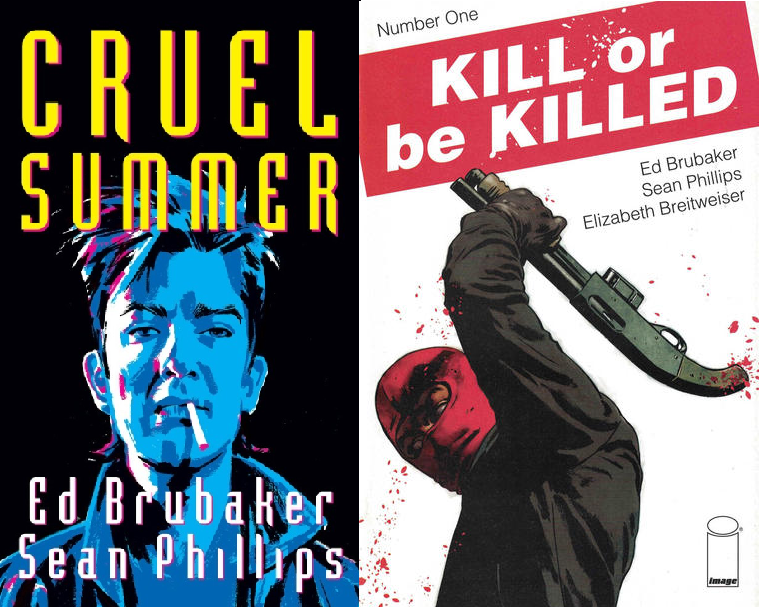
Ed Brubaker’s greatest opus continues to be Criminal, the irregular series he has been doing with Sean Phillips since 2006, chronicling the gritty dramas of different generations of low-level figures in the criminal underworld of the fictional Center City.
From the outset, Criminal stood out as a series of tense, cleverly plotted yarns about engaging characters that played with readers’ expectations, from the guy who looked soft yet turned out to be holding back violent instincts to the badass on a personal killing spree who ended up compromising when push came to shove. Having recently reread the whole thing, I found it even better than I remembered – and it felt like a much more intimate project. You can find plenty of recurring motifs from Brubaker’s comics, such as substance addiction, voyeurism (especially people seeing somebody they know having sex through windows or cupboards), and a referential attitude, explicitly commenting about movies, music, or books that influenced him (including a geeky, self-reflexive interest in how they were made and how they impact people). Like many of Brubaker’s other collaborations with Phillips, Criminal isn’t merely a case of expertly crafted genre comics – these are also comics *about* genre… and, consciously, about comics.
Brubaker’s talent, to a great degree, lies in the way he takes these elements and manages to make them personal and thematically layered through rich characterization (usually in the form of inner monologues). For instance, the two-parter ‘Bad Weekend,’ about a cranky old artist at a comic book convention, could’ve been a fan fest of industry in-jokes, deep cuts, and peeks behind the curtain, either parodying or romanticizing the medium’s milieu and history. And yet, Brubaker somehow finds a pitch-perfect tone that humanizes this odd subculture, acknowledging both that comics are often made in shitty exploitative conditions and that the result can nevertheless have a mesmerizing effect.
Suitably, part of what makes this story work so well is precisely the magic of the art form as conjured by the stylish, chiseled drawings and ultra-moody colors of Sean Phillips and his son, Jacob…
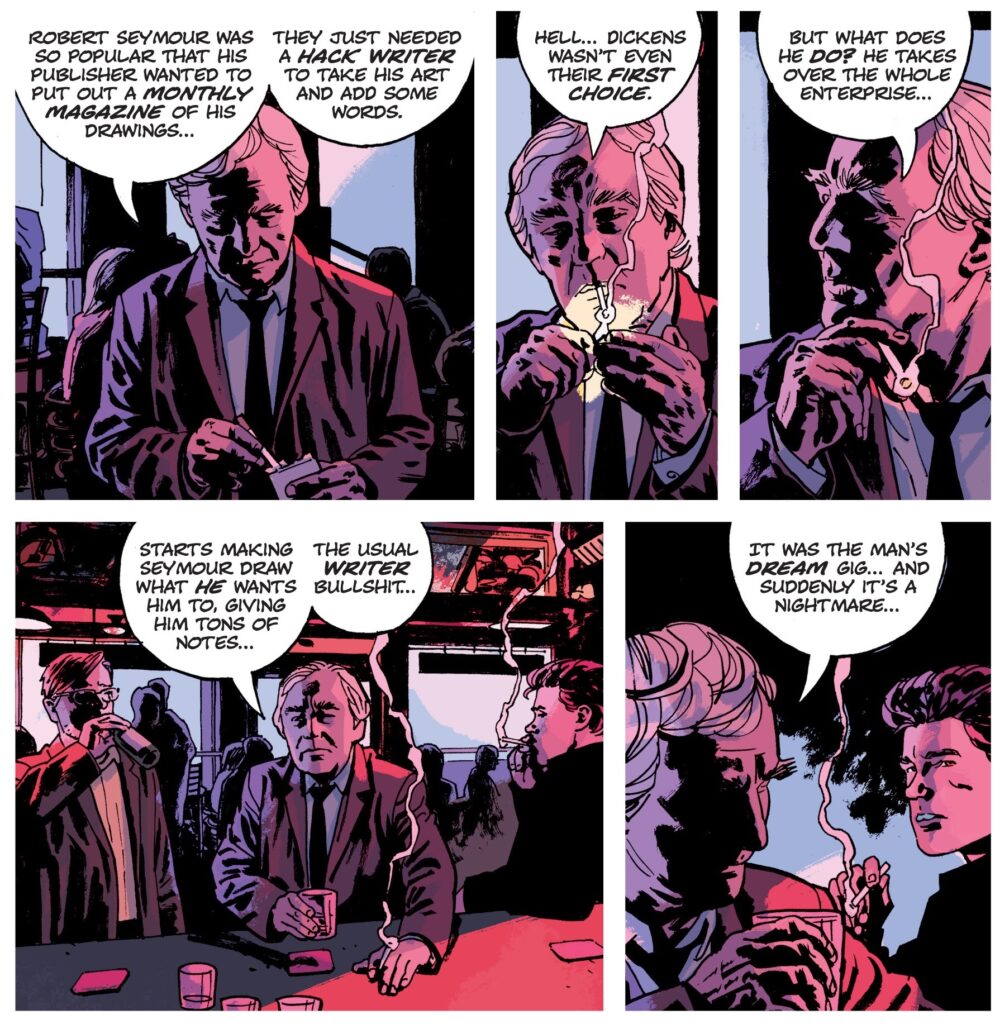
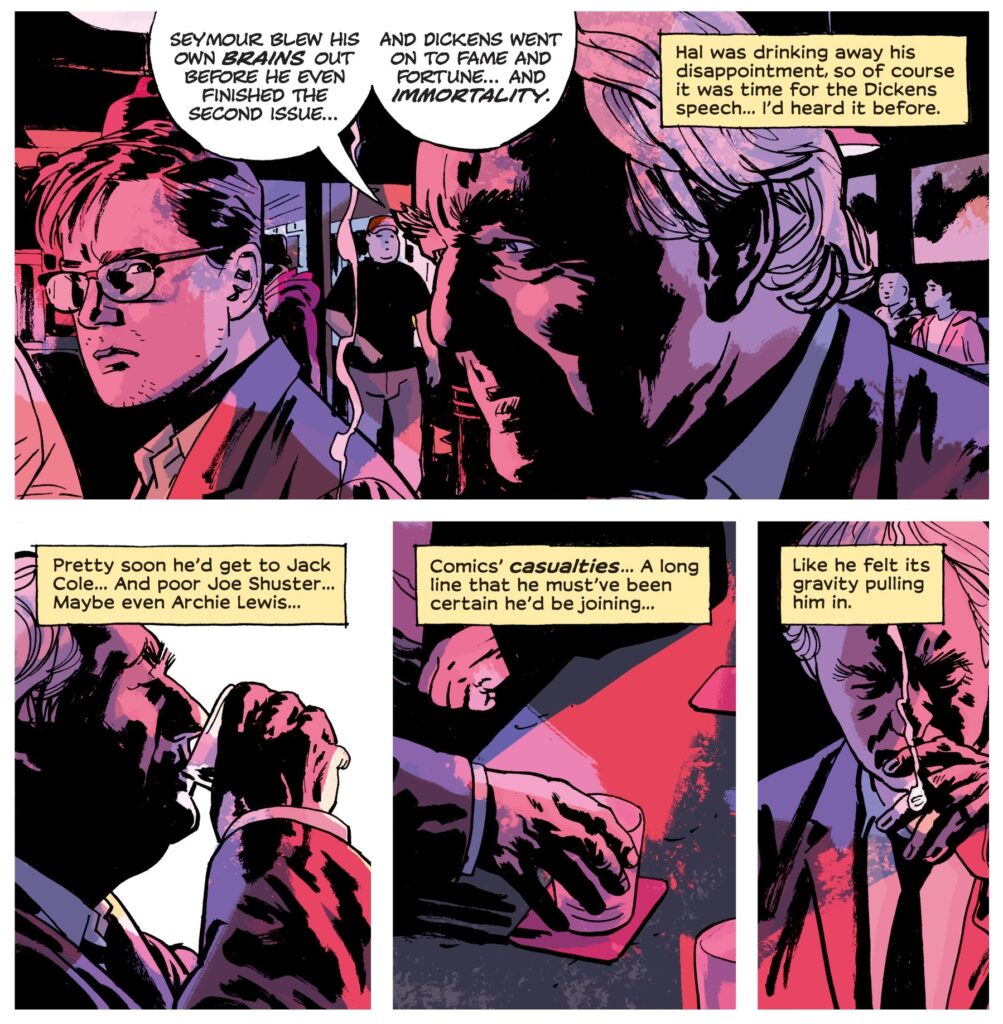
Criminal (v2) #3
Criminal’s latest arc, ‘Cruel Summer,’ came out as single issues in 2019, as a hardback collection in 2020, and, finally, as a softcover a couple of years ago. With its carefully put together mise en scène and smoky palette, this is a brilliant graphic novel (it could’ve been one of Gotham Calling’s 2020 Books of the Year, by I preferred to highlight another notable Brubillips venture, Pulp), spinning one my favorite types of crime narratives, in which the perspective keeps jumping from chapter to chapter (each focusing on a different character than the last), so that instead of a firm center of identification – and morality – you spread your empathy around while being aware of various angles that the individual cast members can’t see. There are echoes of Kubrick’s The Killing, but everyone is so lovingly fleshed out that you can get lost in their dreams and anxieties and sometimes forget you’re in the middle of a concentric tapestry of heists.
In a way, Cruel Summer feels like a culmination of the whole series (it could satisfyingly be the final book, although I’m certainly not complaining about last year’s short ‘Teeg’s Christmas Carol’ in the anthology Image! #9), revealing mysteries that were hinted at in the very first story, paying off character arcs that have been developing for years, and providing the origin of the status quo we found when we initially joined the ride. Yet this is also a taut, self-contained tale that can just as easily be appreciated by newcomers or by those who don’t fully remember past installments… In fact, since the series isn’t chronological (this story takes place in the summer of 1988, both before and after previous stories), this may be as good place as any to jump aboard. It means you’ll know a few secrets when you check out other volumes, but if you had read other volumes before you’d know a few secrets coming into this one anyway… Regardless, such background knowledge doesn’t necessarily work as a spoiler, but more likely it serves as a kind of foreshadowing, since Criminal’s power resides in the specific details.
Or, better yet, much of the power resides in little moments, especially when you get a whiff of hidden aspects of characters’ personalities combined with an awareness of their inexorably tragic fates. I’ve complained before about Ed Brubaker’s flair for overexplaining symbolism and motivations, but I think that in Cruel Summer he generally pulls this off with a pleasant literary sensibility. His beautiful narration suggests just enough for us to get a hint of who these people are, like when he links Jane’s ethics to the context of nuclear panic:

Criminal (v2) #8
The best way to explain it is with a detour about Quentin Tarantino (bear with me). I can often tell where Tarantino’s films are coming from. His sensibility was clearly formed by exploitation movies like Navajo Joe and Black Caesar (especially the perverse racialized killing near the end). The thing is that Tarantino manages to produce moments that deliver the same kind of thrill beyond a mere sense of recognition. There is an element of pastiche, for sure, but it tends to gain extra layers through remix and collage: thus, just as François Truffaut reworked a bunch of Hitchcock set pieces in the awesome, surreal black comedy The Bride Wore Black, Tarantino somehow remade that film as an even more awesome and more surreal black comedy, Kill Bill. There was a panel on Radio versus the Martians years ago that nailed it: trashy flicks from the ‘70s have great moments in them, but also a lot of lame stuff your memory deleted… yet Tarantino has successfully metabolized that age of cinema, drawing on its best ideas to create something that feels, not like the original movies, but like many of us (mis)remember them.
To a large degree, I get that from Criminal, where Ed Brubaker seems to have digested his influences and carefully synthetized them into the best version of what they can be. An early arc, ‘Lawless,’ combines the formulas of revenge and mystery with a classic heist thriller (plus a brief homage to nuns-with-guns schlock). There was a sequel of sorts, ‘The Sinners,’ which boiled down to a detective story within a gangster yarn… and it even included a deadpan riff on The Punisher: Welcome Back, Frank. And the thing is that all of this worked perfectly fine regardless of whether or not you had come across any such material before!
At the same time, as empty as Tarantino’s pop-eats-itself M.O. may seem, I do think there tends to be something there to grapple with underneath the loud surface, as he is one of those auteurs who fascinate me precisely because they keep finding new approaches to their pet themes, much like Peter Milligan or Woody Allen. Milligan has written over a thousand very different stories and practically all of them are about the fluidity of identity in one way or another, up to his latest crime comic, Dogs of London (with a focus on class identity). In Allen’s case, the 21st century has not been kind to him (in terms of either personal reputation or general quality of output), but his proto-noir exercises – like Match Point, Irrational Man, or Coup de chance – are interesting variations on the subject of life’s amoral meaninglessness, just as his dramas – like Blue Jasmine or Wonder Wheel – keep going back to characters whose retaliation for emotional hurt has devastating consequences (read into that what you will).
As for Tarantino, his 21st-century works have explored cinema’s relationship with the notion of cathartic payback in truly original, riveting, and provocative ways. Indeed, as much as I was let down by Once Upon a Time… in Hollywood, conceptually I do appreciate that the movie once again pushed revenge fiction to a new level. Rather than merely retread the historical revisionism of Inglourious Basterds and Django Unchained, Tarantino created a whole new sort of retroactive revenge: since the protagonists aren’t driven by a thirst for vengeance (because they have no idea what they’re doing, unlike the previous films’ Jews and slaves) and since there is no diegetic crime to avenge (at least compared to the one we know took place in our own reality), ultimately the revenge fantasy is only in the viewers’ minds, because we’re the only ones who truly know the stakes.
It’s this sort of extra levels I find missing in some of Brubaker’s other comics. For instance, when it comes to revisionist forays into vigilante justice, for every compelling tale that elevates or reinvents his influences and obsessions, like the devastating second arc of Criminal, you get one that comes across as uninspired fanfiction or as an on-the-nose illustrated essay about its genre or medium, like Kill or Be Killed.

Kill or Be Killed #4
I love the whole subgenre of stories deconstructing vigilantism’s problematic appeal by engaging with its practical and moral questions as much as – or perhaps even more than – I like thrillers that play it straight. While promising to daringly dramatize the inherent tensions of this narrative tradition, however, Kill or Be Killed mostly settles for directly discussing each trope and device with the reader… I guess this is meant to be metafictional, but it feels more like an obnoxious commentary track constantly asking you: ‘Do you get what I’m doing?’
Given that the book has such a clear mission statement, I miss not only Tarantino’s inventiveness, but also the unsettling weirdness and the thematic breadth of a film like Anders Thomas Jensen’s Riders of Justice or a comic like Steve Gerber’s and J.J. Birch’s Foolkiller. Even when Kill or Be Killed turns into a walls-closing-in-on-upper-class-white-guy-versus-xenophobic-stereotypes kind of tale, the result lacks the irony of a show like Ozark (whose subversive gesture was only fully acknowledged at the very end). This is all the more frustrating because the art team of Sean Phillips and colorist Elizabeth Breitweiser give it their best, making the series look nothing less than absolutely stunning.
By contrast, I’m having a much more enjoyable time with Brubillips’ other ongoing project, Reckless, which I’ll discuss in a couple of weeks…

Reckless: Destroy All Monsters
I tend to use Halloween as a pretext to write a bit about recent horror movies in Gotham Calling. One trend that has been quite prominent this year – in cinema as well as in literature – is the entanglement of horror with social and political satire. This is hardly a new approach to the genre: George A. Romero built much of his career upon it – and it has been a while since comedians Jordan Peele and Charlie Brooker reinvented themselves as horror masters, bringing their former sensibilities with them. Nevertheless, we seem to be living through particularly fruitful times…
For instance, as the incredibly successful – and incredibly fun – M3GAN evolves from family drama to creepy suspense to grindhouse schlock, it is constantly sprinkled with bits of comedic sci-fi about corporate capitalism and technophobic paranoia. Rated PG-13, this amusing entry into the ‘killer doll’ subgenre doesn’t go very far with the gore, yet it’s in that Gremlins tradition of mischievous gateway movies for young audiences getting into horror. On the whole, the film is derivative but clever. On the one hand, M3GAN knows that it doesn’t have to reinvent the wheel: there’s just something intrinsically nightmarish about having an unstoppable robot come after you – as exploited throughout the ages, from the original Westworld and The Terminator all the way to the ‘Metalhead’ episode of Black Mirror (or, if you prefer something trashier, Chopping Mall). On the other hand, it’s hard to deny this fear has gained a new resonance in today’s hyper-technological world of Alexa and ChatGPT (not to mention screen addiction and viral fake news), where our lives appear to be controlled by machines and our emotions twisted by artificial intelligence whose scary limits we are yet to fully figure out.
Then there’s Pablo Larraín’s bloody gothic fairytale El Conde, which reimagines Chilean dictator Augusto Pinochet as a literal vampire. If it feels heartless to be discussing horror fiction at a time when there is so much horror reality plastered all over the news, this is a reminder of how the former’s imagery can help translate the latter’s inconceivable extents into something easier to process. Every single image in El Conde looks absolutely gorgeous – with black & white cinematography emulating the all-time classics – even though, for a while, the film threatens to use its offbeat premise as little more than a hook to expose the corruption and violent repression of the former regime (with blood-sucking as a pretty blatant metaphor). The twists keep piling, however, and the final half hour is especially bonkers. The result may be uneven, but this is certainly an original ride full of unexpected turns.
That said, my personal favorite this year was Brandon Cronenberg’s latest foray into his signature blend of speculative science fiction and psychological horror. Set in a luxurious Eastern European holiday resort, Infinity Pool tauntingly draws on orientalist fears of foreign peoples and customs, although it ultimately casts a scathing gaze on the tourists themselves, who dismissively exploit economically dependent countries and populations while flaunting their privileged status. What could’ve been a fairly shallow – if kinky – class satire, however, is elevated by the immersive way the film engages with its mind-fuck of a story premise (which I won’t spoil here, so as not to take any edge out of the moody, suspenseful build up). Suffice it to say that Infinity Pool explores what has become one of the central motifs of our times, the doppelgänger, disturbingly illustrating how we constantly negotiate our masks and split identities as winners and losers, victims and perpetrators, defending ethics and creative intellect while caving into carnal desire and embracing the disposability of otherized bodies.
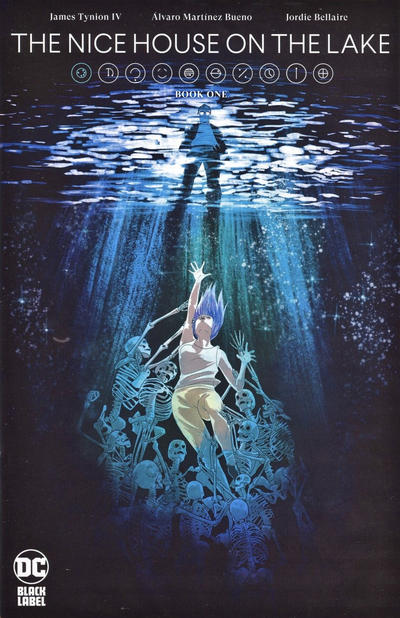
Certain aspects of Infinity Pool brought to mind one of the most brilliant horror comics in recent years, The Nice House on the Lake, where a group of young people get together at a lavish summer house, only to find out the rest of world has suddenly come apart (just the first of many shocking revelations). It has a similar vibe of an affluent, compressed First World paradise whose enjoyment depends on disregarding what takes place outside. James Tynion IV’s script is more elaborate than Cronenberg’s – including a more richly developed cast and a much more ambitious scope – but the parallels aren’t just in terms of plot points or themes… Like the abovementioned film, The Nice House on the Lake looks stunning, making the most out of its medium’s aesthetic potential in order arouse both repulsion and a sensuous allure (which may lead to disgust with one’s own temptations). Every corner of the house, every panel angle, every shade and tinge, every line of ink and dialogue appear to have been fully thought out and carefully rendered. Crafted with minute attention to detail, the series reads like nothing else on the market, firing on all cylinders when it comes to the artwork, by Álvaro Martínez Bueno, the colors, by Jordie Bellaire, and the lettering, by Andworld Design.
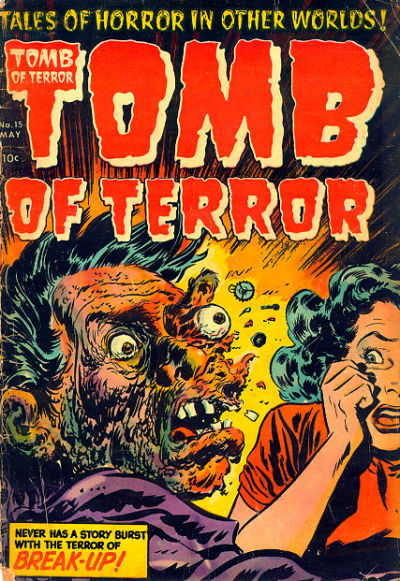
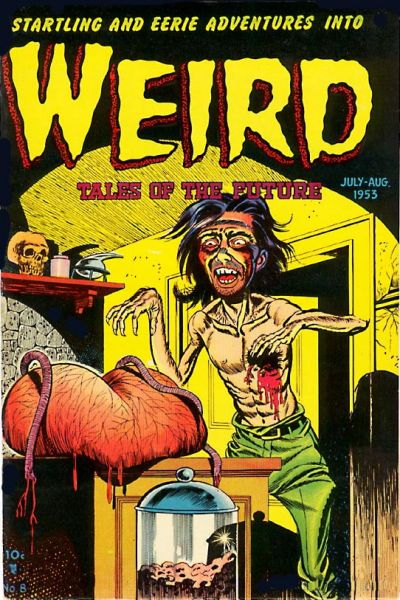
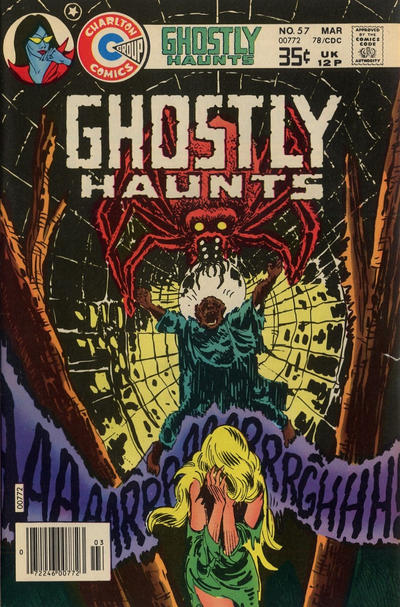
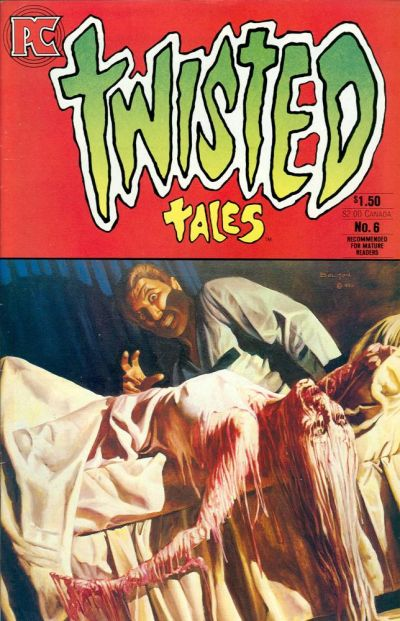
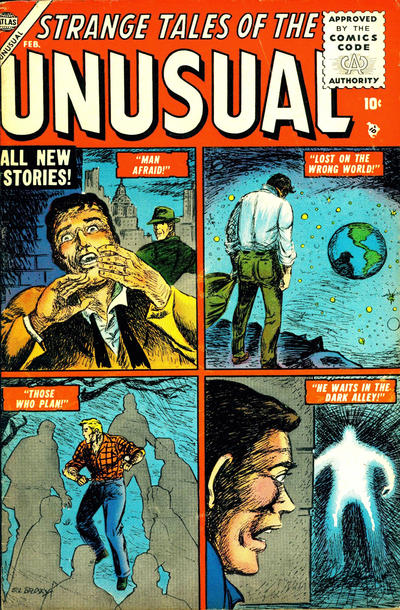
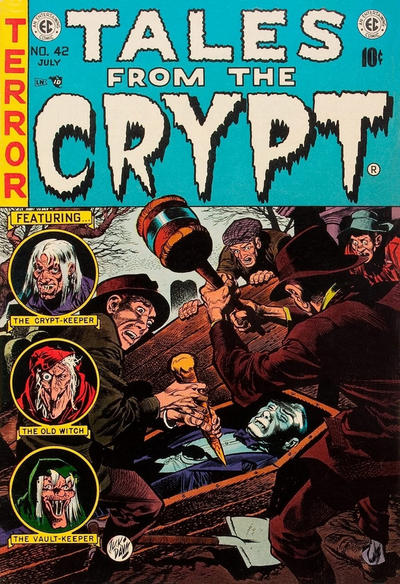
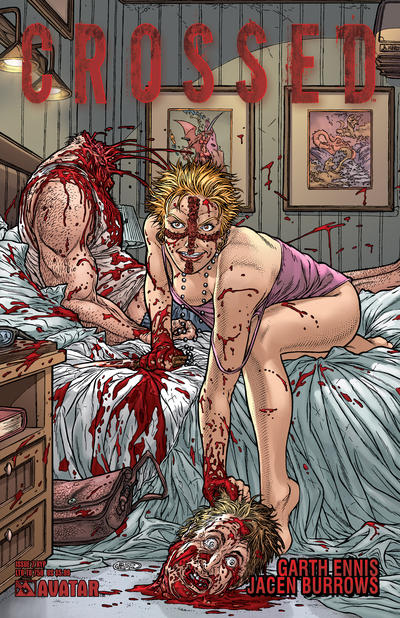
To be sure, horror casts a large shadow in North-American comics, from the relatively crude yet charmingly entertaining anthologies of the ‘50s (including the macabrely comedic short stories that led to the introduction of regulated censorship in 1954, some of them collected earlier this year in Fantagraphic’s lovely volume Deadly Beloved and other stories by Johnny Craig), whose spirit was revived in the black & white magazines of the ‘70s (which avoided the censors through a loophole), to the sleazy, in-your-face depictions of gory ultra-violence and all sorts of taboo-breaking content now published by the likes of Avatar (taking maximum advantage of the freedom from the Comics Code Authority earned since the ‘80s), not to mention the more sophisticated – if often pretentious – strain of experimental storytelling and bizarre, disconcerting visuals found in mind-bending works like Lore, Blue in Green, Stray Toasters, or The Department of Truth.
And so, this week’s reminder that comic book covers can be awesome is a tribute to the medium’s diversity:





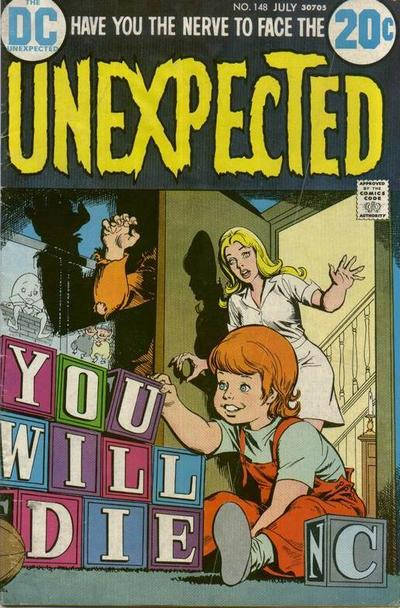
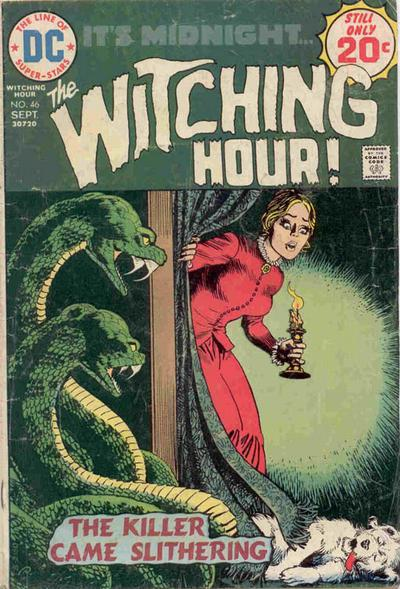
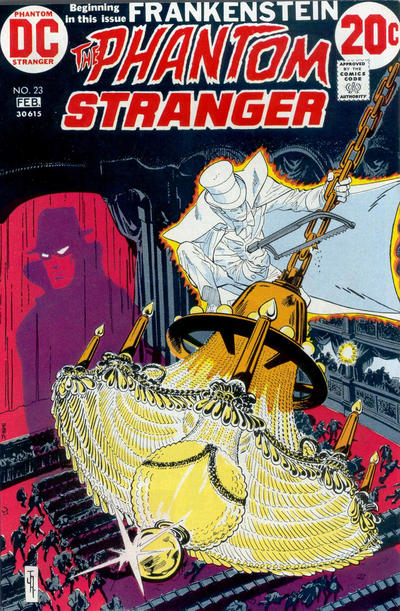


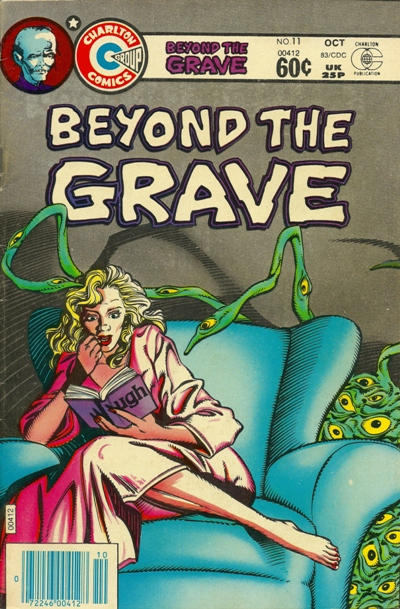
It’s time for another installment of Gotham Calling’s journey through Cold War cinema! Mixing classics with lesser-known gems, the selection below oscillates between the Cold War’s domestic, geopolitical, and fully global stakes, as the conflict’s effects are shown threatening both individuals and the planet at large.

31. The Incredible Shrinking Man (USA, 1957)
Along with its eye-catching take on the themes of emasculation and acceptance of mortality, The Incredible Shrinking Man excels in the original way it hops from one genre to the next every few minutes, gently flowing from weird humor to heartfelt drama and kickass thrills. The result is by far the best of the 1950s’ cycle of Hollywood movies about human mutations, arguably informed not only by growing concerns over the effects of nuclear radiation, but also by a society changing in unpredictable directions that threatened the idealized suburban lifestyle of Eisenhower America. (The Cold War link was made more explicit in The Amazing Colossal Man, which reverses this film’s premise, but that one is much schlockier, if charmingly so.)

32. The Spies (France/Italy, 1957)
Encroaching secrecy, surveillance, and psychological warfare come off as both unnerving and absurd in this darkly surreal entry about a doctor at a French psychiatric hospital who starts to suspect most people around him might be secret agents. In contrast to Europe ‘51, in The Spies the cold warriors are the ones who become literally indistinguishable from mental patients.
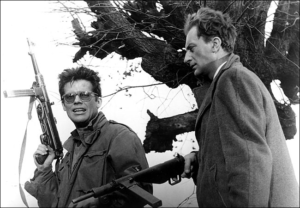
33. Ashes and Diamonds (Poland, 1958)
An astonishing historical drama/thriller/romance set in Poland immediately after World War II. The text concerns the Soviet occupation, the subtext concerns the ensuing Polish resentment, and the context is a period of relative liberalization enabled by the death of Stalin which allowed filmmakers like Andrzej Wajda to break a number of taboos. I’ve also written about Ashes and Diamonds here. (Wajda would go on to direct committed indictments of Polish politics, including the semi-satirical divorce drama Without Anesthesia and the allegorical Man of Marble/Man of Iron saga, so this entry serves to represent a larger strand of Polish oppositionist cinema…)

34. Invention for Destruction, aka A Deadly Invention (Czechoslovakia, 1958)
Gorgeously combining live action with different forms of animation, this retrofuturistic pirate adventure is set in some kind of alternate steampunk era (it’s a tribute to Jules Verne), but there’s no mistaking the implications of the super-weapon at the core of Invention for Destruction.

35. The Quiet American (USA, 1958)
The fact that The Quiet American is a noirishly shot drama set in 1952 Indochina amidst the French war against communist insurgents could be enough to earn it a place on this list. Yet this is another case where the film’s background further elevates its relevance, as writer-director-producer Joseph L. Mankiewicz drastically revised the politics of Graham Greene’s novel in order to save the face of US interventionism abroad (which is especially ironic given what was about to happen in Vietnam…). Thus, every line thrown against the protagonist feels like Mankiewicz lambasting Greene! (Scholar Adam Piette adds yet another layer by arguing that Greene’s original text was also a veiled criticism of the British policy of using the Cold War to crush the independence movements in Malaysia.)
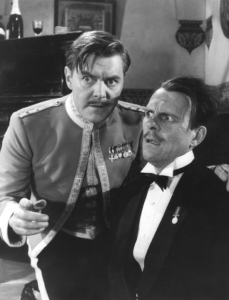
36. Carlton-Browne of the F.O., aka Man in a Cocked Hat (UK, 1959)
Parodying the onset of geopolitical competition over the Third World, in Carlton-Browne of the F.O. bumbling British diplomats try to deal with Soviet activity in a former colony whose existence they hardly remembered. Luckily, they forgot to notify their local representative of the place’s independence, decades ago, so he’s still there, completely unaware…
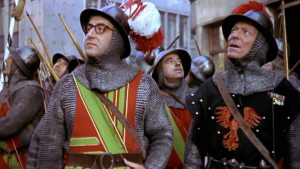
37. The Mouse That Roared (UK, 1959)
More farce with a British accent. In The Mouse That Roared, a tiny European nation declares war on the United States (in the hopes of getting Marshall aid) and ends up messing with the whole international order… I prefer the source novel, but the film has its own merits, including a triple performance by Peter Sellers that anticipates Dr. Strangelove. (Similar hit-and-miss comedies followed, in the same political spirit, including a direct sequel – the Sellers-less The Mouse on the Moon – and the Shakespearean Romanoff and Juliet, but your mileage may vary on whether you find them grating or endearing.)

38. North by Northwest (USA, 1959)
A different sort of satire, in a way. In Alfred Hitchcock’s playful – yet seminal – spy flick North by Northwest, an advertising executive gets mistaken for a secret agent… and it’s no wonder, since with so many games of smoke & mirrors even the actual spies are bound to get confused every once in a while. So far, most thrillers on this list have owed a lot to film noir, but this is a more modern-looking approach to the material, inaugurating a new type of cosmopolitan businessman adventure.

39. On the Beach (USA, 1959)
In the notoriously bleak On the Beach, nuclear war has wiped out most of the planet except for Australia, so we get to follow the last humans on Earth as they wait for the radiation to catch up with them. While this was certainly not the first Cold War film to explore the eerie prospect of global destruction, empty streets, and isolated survivors (that would be 1951’s artsy B-movie Five), it was arguably the first to have a major impact, resonating on public debates – and future productions – for years to come. (Director Stanley Kramer went on to further thematize the Cold War in the 3-hour epic courtroom drama Judgement at Nuremberg, but there this was mostly done through eloquent dialogue, whereas On the Beach makes a more powerful use of original images – and the sheer absurd of the situation – to drive its point home.)
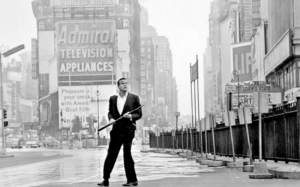
40. The World, the Flesh and the Devil (USA, 1959)
My favorite take on post-apocalyptic cinema in this period, though, is this more minimalistic – if sturdily shot – story in which Harry Belafonte wanders through a quasi-empty world, doing what he pleases (for a while, at least), as if only the entire end of civilization may free an American black man from racial discrimination… One of the reasons I’m such a sucker for 1950s’ doomsday fiction (it doesn’t even have to be particularly well-written, as long as it’s packed with stimulating ideas, like the novels The Death of Grass or I am Legend) is the glaring contrast between visions of the future that are still recognizable today (large-scale war, environmental catastrophes, pandemics, social breakdown) and the era’s more dated, conservative values, which are simultaneously reaffirmed and challenged by the new contexts (starting with an indictment of the authorities’ very failure to prevent collapse: just check out all the lingering posters in the background ironically mocking the limits of civil defense in the nuclear age). Some critics have taken issue with the film’s ending, but I like how its ambiguity suggests the possibility of truly reinventing human relations beyond the conventional Adam & Eve formula. All in all, The World, the Flesh and the Devil feels like the closest we’ve gotten to an EC comic on the big screen.