Batman movies without Batman – part 1

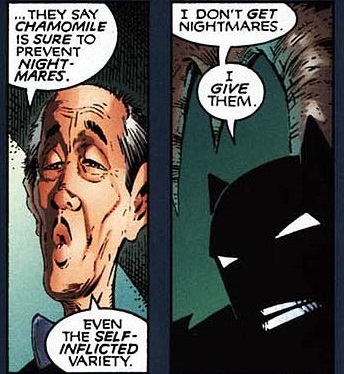
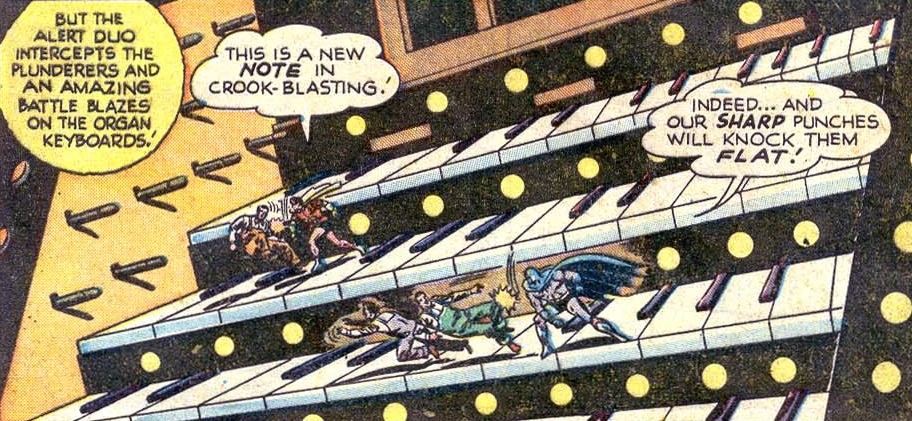
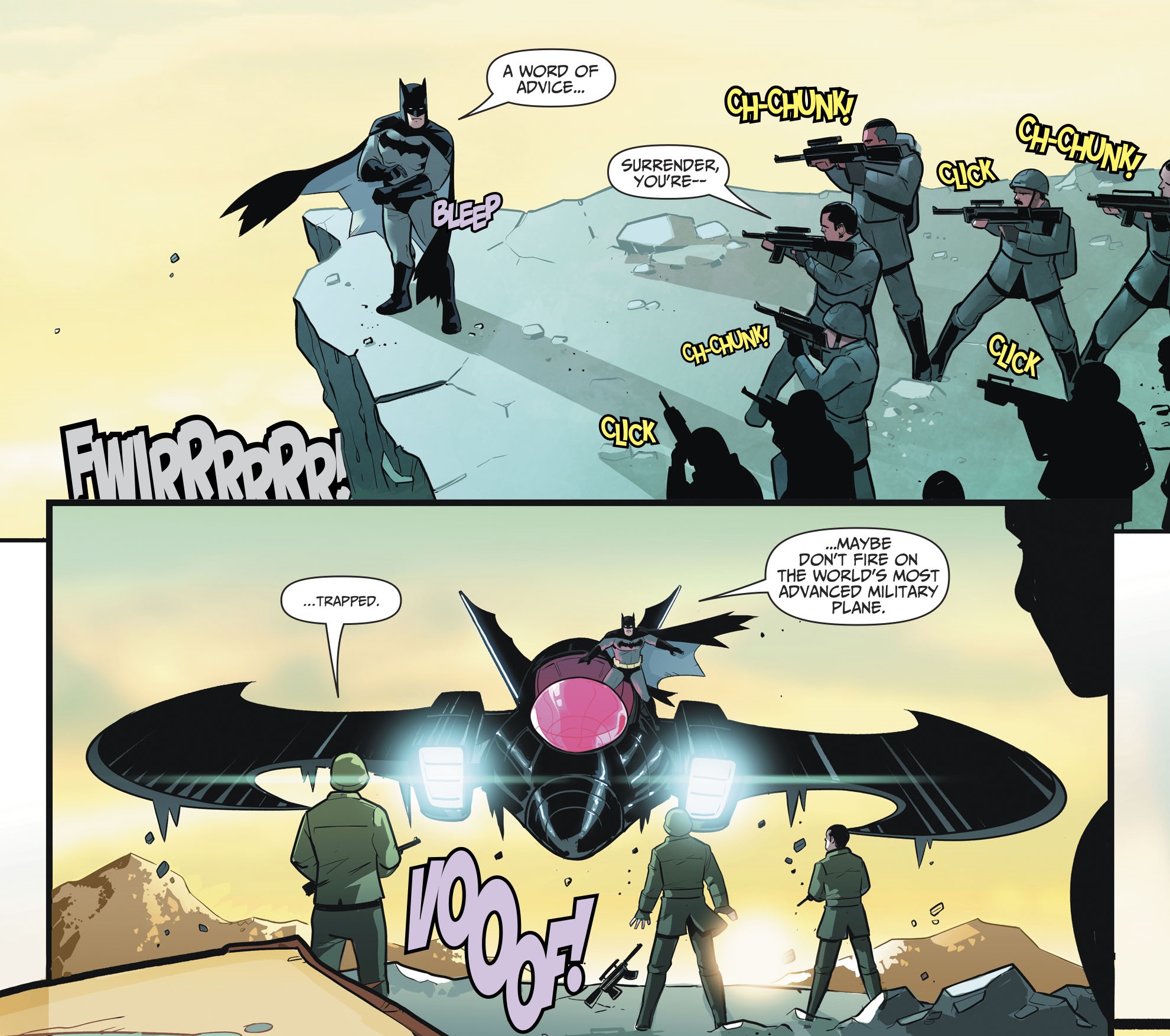
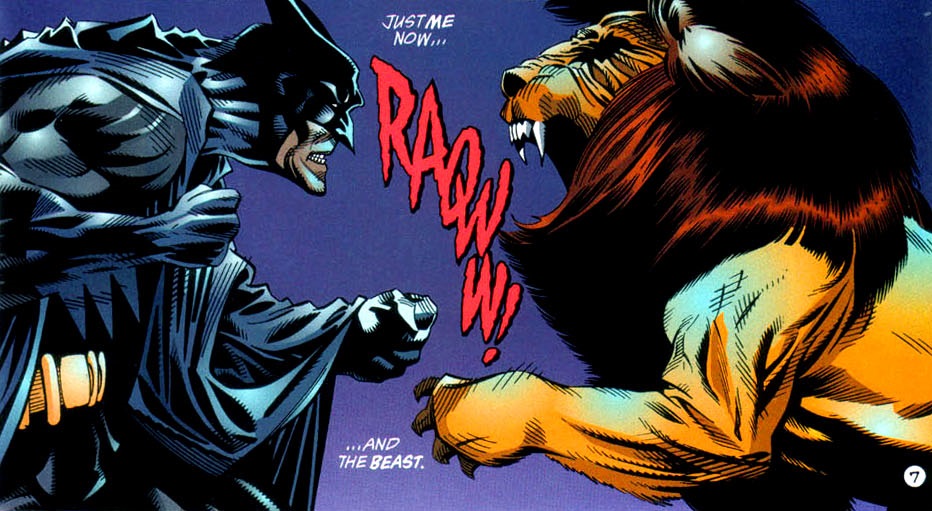
The Dark Knight has starred in over a dozen theatrical films – plus a string of direct-to-video projects – and, in fact, his filmography has become a fascinating object in its own right. Not only are there extremely disparate takes on the character, but there’s also a schizophrenic intertextual conversation developing ever since 1966’s Batman: The Movie’s opening dedication ‘to lovers of adventure, lovers of pure escapism, lovers of the unadulterated entertainment, lovers of the ridiculous and bizarre… to the fun lovers everywhere.’

Several films have made a point of forcefully distancing themselves from this campy, lighthearted spirit – materialized in the Caped Crusader’s infamous can of shark repellent spray – by injecting viciously dark, adult content into their stories about a bat-clad superhero who frequently fights a clown (besides the films directed by Tim Burton, Christopher Nolan, Zack Snyder, and Todd Phillips, it’s the case of many animated pictures). In turn, productions primarily aimed at kids have specialized in mocking those ‘grown-up’ films, with the likes of Return of the Caped Crusaders and The Lego Batman Movie directly poking fun at the very notion of a ‘serious’ take on this material. And then, of course, there is Takashi Okazaki’s and Junpei Mizusaki’s Batman Ninja, which totally plays by its own rules…

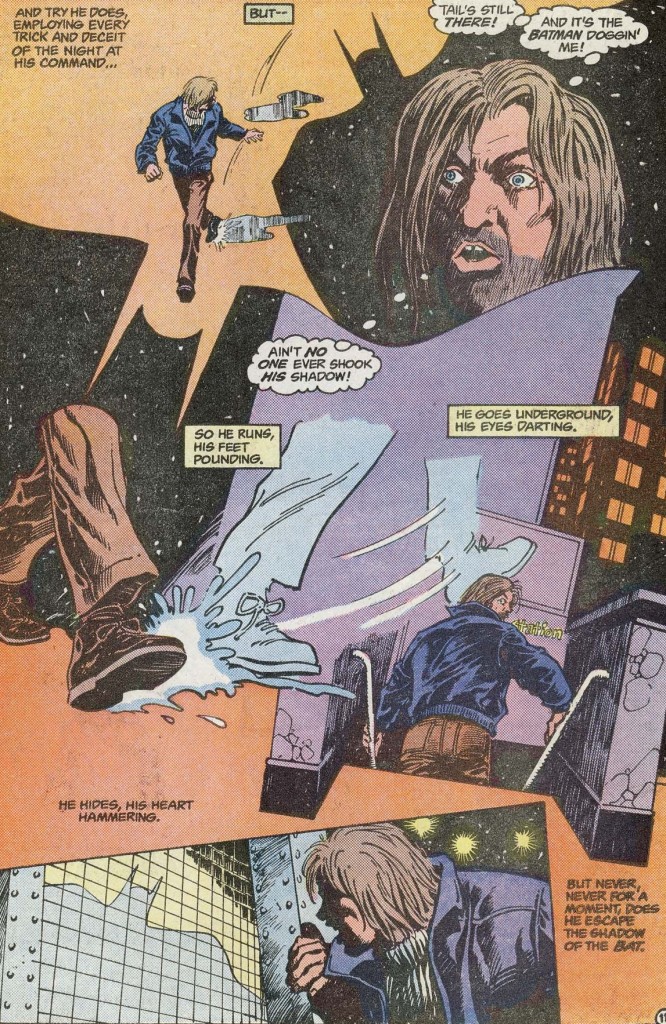
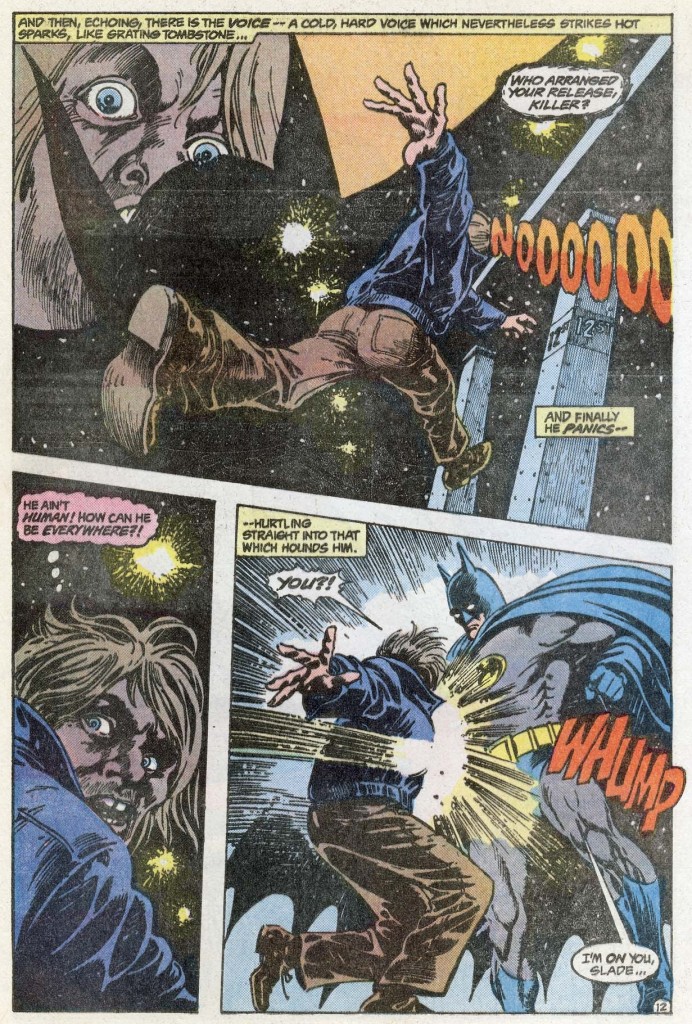
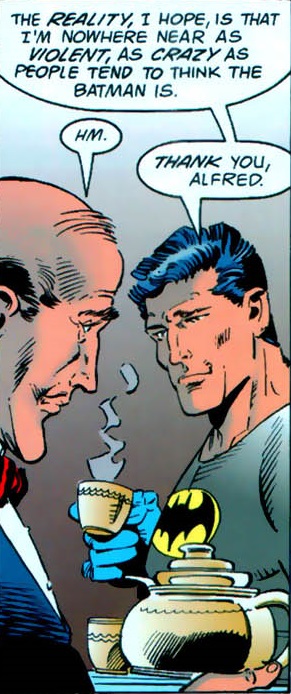
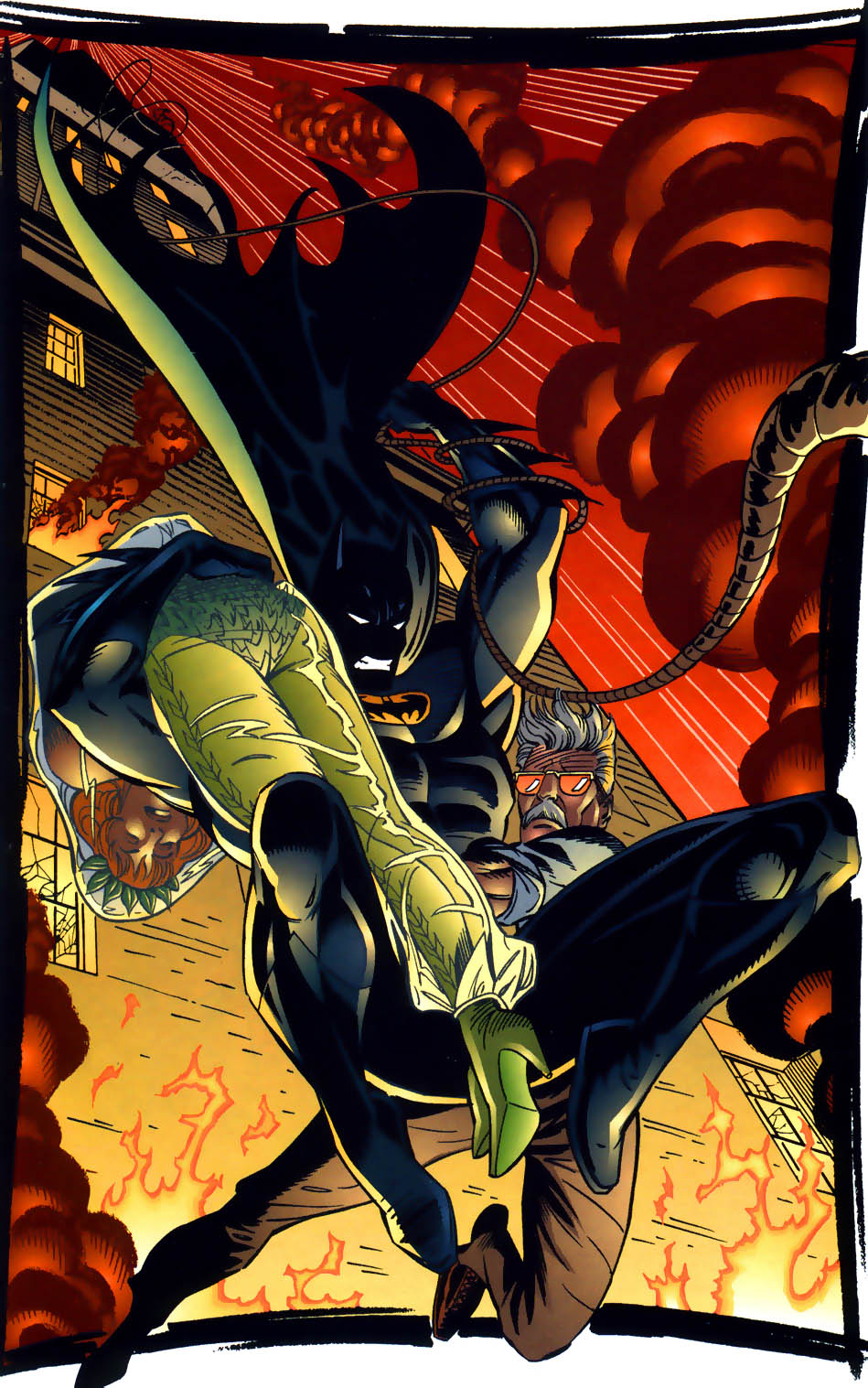
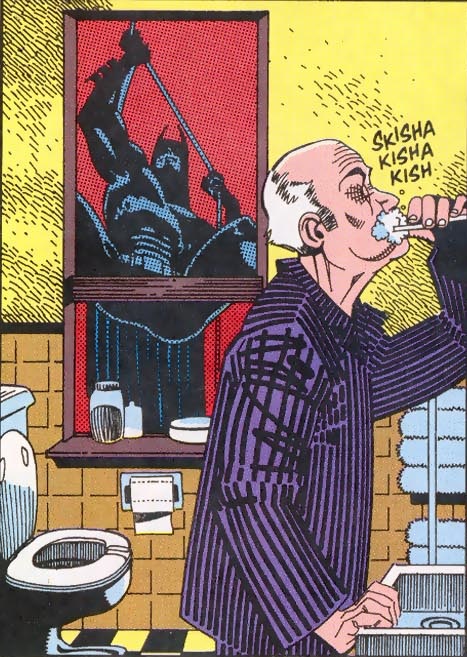
Still, nothing’s beats the Joker’s vision:

batmanjokerDetective Comics #671

Early on in this blog, almost six years ago, I had a stab at a diverse list of films that could appeal to fans of the Caped Crusader.  These were movies without a Batman, but which kind of seemed to take place in his corner of the DCU. At the time, I was trying to prove fans didn’t have to settle for Batman v Superman: Dawn of Justice. Well, now we’ve got that film’s proper sequel in the form of Zack Snyder’s much hyped cut of Justice League – a stylish, if bloated, epic whose praise tends to rely on skewed comparisons (not as stupid as Snyder’s Batman v Superman, not as forgettable as Whedon’s Justice League) and whose main entertainment value is actually watching the unleashed director indulge in his eccentricities without any sense of restraint (from the emo music video with slow-motion CGI raindrops dripping from Aquaman’s beard to Batman’s baffling, lengthy conversation with the Joker about the horrible deaths of characters who were not in the movie). So, I’ve decided to come up with another dozen suggestions to add to the list.

Once again, the idea was to pick relatively loose connections that reflected the many sensibilities in Batman’s various eras. While these films aren’t all necessarily the highest peaks of the art form, they can serve to scratch an itch or two when you’re in a Dark Knight-ish type of mood…

dario argentoThe Cat o’ Nine Tails

Dario Argento’s The Cat o’ Nine Tails has less in common with the director’s better known – and much more aesthetically impressive – giallo flicks than with Alfred Hitchcock’s brand of clever suspense… and, I would argue, with a certain type of Bronze Age-era approach to the Caped Crusader, back when Batman regularly starred in a bunch of delightfully convoluted detective stories (often written by Frank Robbins). After all, this hypnotic thriller features not only a labyrinthic whodunit and some elaborate grisly murders, but also a particularly memorable action climax which I can totally imagine in a comic.

mario bavaDanger: Diabolik

What if the Dark Knight was a super-criminal/anarchist rather than a superhero? That would be Mark Millar’s and Steve McNiven’s Nemesis, right? And what if you took the silliness and visual flair of Gardner Fox’s & Carmine Infantino’s comics and put it in the service of a kinky kitsch comedy full of trippy colors and astonishing set design? That would be Batman ’66 (or, if taken even further, Joel Schumacher’s Batman & Robin), right? And what if you packed action scenes with highly kinetic chases and gizmos that create illusions to throw pursuers off of cliffs? I guess that would be a Road Runner cartoon, right? But what if you blended all of this into a lavish production that oozes style from every pore, boasts an ultra-catchy soundtrack, and features a scene in which the ‘hero’ has sex wrapped up in stolen bank notes?

In 1968, Mario Bava (another Italian cult director!) beat the Americans to the punch in terms of pulling off something that truly *looks* like a superhero comic brought to life. It’s hardly a masterpiece in terms of plot, and it’s probably too sleazy for some people’s tastes (it’s based on an Italian comic, after all), but since the protagonist wears a ninja-like black mask and his headquarters are in a massive sci-fi cave underneath a fancy house, I’d say Batman fans owe it to themselves to check out this curio. Hell, there is even a bit involving laughing gas, shortly followed by a scene where a Poison Ivy-lookalike hands out weed to a bunch of hippies at a party!

Alex ProyasDark City

As a whole, the plot of Alex Proyas’ geek-favorite slice of surrealist science fiction has little in common with Batman’s usual tales, even if there are a number of works in which Bruce Wayne – much like Rufus Sewell’s protagonist – wakes up to a severe identity crisis, not really sure he can trust his scrambled memories. Story aside, Dark City’s setting – as the title suggests – has a striking visual resemblance to Gotham and, indeed, the film’s aesthetics often feel close to nightmarish illustrations by the likes of Jae Lee or Kelley Jones. I’m not taking a big leap here, as the comic book influence is pretty clear, from the cartoony characterization down to the superhero-ish climax (sure enough, the script was co-written by David S. Goyer). That said, the main sources are cinematic: after a very noirish opening, the main inspiration becomes 1920s’ German expressionism, to the point where much of it feels like a futuristic reimagining of The Cabinet of Dr. Caligari (which is also a key reference for the tone of many a Batman yarn).

(By the way, I recommend the 2008 Director’s Cut.)

die hardDie Hard with a Vengeance

This stone-cold classic perfectly closes the original Die Hard trilogy (in fact, this would’ve been a perfect ending to the whole franchise, as it’s been all downhill since then). After a skyscraper and an airport, it is now a whole city that becomes the setting for a game of cat and mouse between John McClane and a bunch of terrorists, but the movie does more than merely recycle the old formula… Rather than pushing the coincidence of McClane accidentally finding himself in yet another similar situation, this time around the baddie is deliberately going after him. And rather than disregarding the post-Rodney King conversation by telling one more heroic cop story, Die Hard with a Vengeance faced the issue head-on, with racial tension shaping almost every key moment in the film. Moreover, rather than having McClane be the only competent guy around (a flaw in the first sequel, I think, since the appeal of the original Die Hard was that he was a more-or-less ordinary Joe in an extraordinary situation), here he gets partnered with a resourceful – and funny – companion, making this basically a buddy movie. In turn, from a casting perspective, Bruce Willis is joined by an equally charismatic actor, Samuel L. Jackson, making DHwaV one of three cinematic masterpieces where both of them show up, along with Pulp Fiction and Unbreakable (if you’re feeling generous, you can add the spoof Loaded Weapon 1, where Willis has a cameo as McClane!).

Anyway, Jeremy Irons’ ‘Simon Says’ villain is pretty much a Batman rogue, sending out clues (in the form of riddles) about his heist while setting up challenges for the heroes all over New York/Gotham City… Hell, he even leaves the duo in a deathtrap near the end! Plus, the puzzle-like script and John McTiernan’s muscular direction were no doubt a major inspiration for Nolan’s The Dark Knight and The Dark Knight Rises.

1931Dr. Jekyll and Mr. Hyde

Robert Louis Stevenson’s novella The Strange Case of Dr Jekyll and Mr Hyde is a foundational text for the Dark Knight mythos, with its gothic take on the duality of human souls informing both Bruce Wayne/Batman and many of his foes, most notably Harvey Dent/Two-Face (although the scientist experimenting on himself with monstrous results also brings to mind the likes of Kirk Langstrom/Man-Bat). Among the various filmed adaptations, my favorite one remains Rouben Mamoulian’s perverse piece of horror, not least because of the fascinating sexual overtones (the movie came out in 1931, before Hollywood censors started strictly enforcing the Hays Code), which make this version of Hyde as disturbing, in its own way, as the one in Alan Moore’s and Kevin O’Neil’s The League of Extraordinary Gentlemen. There are visual connections as well, what with the extensive POV sequences (to which Gene Colan paid homage decades later), the split screens (not unlike comic book panels), the expressionistic cinematography (whose shots could’ve fit into the pages of any Batman: Black & White issue), and Hyde’s Joker-like grin and demeanor.

(Terence Fisher’s The Two Faces of Dr. Jekyll is pretty twisted as well, but it’s not nearly as Gotham-y…)

horrorHorrors of the Black Museum

We’ll wrap up this week with another movie about a Batman villain without a Batman, albeit much more low-key than Die Hard with a Vengeance or even Dr. Jekyll and Mr. Hyde… There is a lot to like in Arthur Crabtree’s macabre thriller about a serial killer with a theatrical personality – complete with a lair and everything – who resorts to quirky contraptions to murder each victim in shockingly gory ways. Yet it’s also fun to imagine how things would’ve worked out if the killing spree had taken place in Gotham City and was illustrated by Jim Aparo (especially the climax at the fair).

Posted in WEBS OF FICTION | Tagged , , , , , , , , , , , , , | Leave a comment

COMICS CAN BE AWESOME (19 April 2021)

A breathtaking reminder that comics can be awesome…

star wars comicStar Wars #12
bryan talbotHeart of Empire #1
grant morrisonThe Green Lantern (v5) #2
Posted in GLIMPSES INTO AWESOMENESS | Tagged , , , , , , , , , , , , , , , | Leave a comment

Spotlight on The Unknown Soldier, 1980-1982

bob haney

This is the final installment in my overview of Bob Haney’s neglected run on The Unknown Soldier, which ended with a bang.

By 1980, this World War II-set comic had turned into a fairly mechanic, well-oiled enterprise. Haney churned out scripts with his usual quota of high-octane thrills – mostly standalone tales, yet with the occasional cliffhanger ending and a few recurring characters. The art chores were secured by Dick Ayers, a veteran workhorse in the industry (not to mention a WWII veteran himself). Ayers’ vast portfolio already included a ten-year stint as the primary artist on Sgt. Fury and His Howling Commandos, as well as loads of other war comics at both Marvel and DC, so he was comfortable briskly knocking out WWII adventures that, even when not at their most inspired, were never less than serviceable, especially given Gerry Talaoc’s crisp inks. Starting with issue #237 (cover-dated March 1980), colorist Bob LeRose gradually took over from Jerry Serpe – a change that wasn’t too noticeable at first, although LeRose did eventually introduce tighter, more subdued colors, which conjured up a grittier atmosphere. Len Wein became editor in #239 and seemed satisfied with The Unknown Soldier’s direction as a solid genre series.

The issues from this era delivered what can be catalogued as relatively straight spy tales, with the possible exception of that wacky story in which the Unknown Soldier disguised himself as a proto-Pied Piper in order to lure away German children who were being used as human shields (explicitly taking advantage of the fact that they had been indoctrinated by the Hitler Youth to follow orders without questions). Even Haney’s colorful prose could be considered a part of the comic’s general throwback vibe…

dick ayersThe Unknown Soldier #241

By ‘throwback vibe’ I mean that the series, for better or worse, had grown highly disconnected from the present, settling for reliving the moral universe of World War II (albeit in its more liberal version) almost as if it had been penned during that period. Naturally, a case can be made that the very act of depicting moral certitude in the turn towards the Reaganite 1980s ultimately adds up to an implicit endorsement of the righteousness of the United States’ interventionism abroad… Still, even when the Unknown Soldier went to the USSR, in ‘Red Flows the Don!’ (#242), instead of a Cold War-era propaganda-informed caricature, you got a somber take on the brutality of the Eastern Front and a recognition of the Russian partisans’ spirit of sacrifice.

(That said, if you want a thoughtful, gut-wrenching, and more historically realistic take on the Russian Front, go grab yourself a copy of Garth Ennis’ and Steve Epting’s graphic novel about Soviet women snipers, Sara, which looks absolutely stunning, not least because of Elizabeth Breitweiser’s coloring. In turn, if you’d like an intricate WWII spy thriller featuring communists, only with much more sex and swearing, have a go at Howard Chaykin’s Blackhawk!)

As I’ve mentioned before, Bob Haney’s Unknown Soldier was not a conflicted individual. For the most part, he was a fully committed agent who didn’t hesitate before killing traitors in cold blood or, as seen in a later issue, making nonchalant statements like this one:

unknown soldierThe Unknown Soldier #257

(To be fair, in one of his final stories, at least the Unknown Soldier grudgingly lets a group of exhausted US sailors flee into neutral Sweden, after one of them poignantly explains to him: ‘Not every fighting man is like you…! Not everyone can go on forever!’)

The whole premise of a committed, ultra-efficient secret agent gave the comic a discernable James Bond flavor, although without the campier aspects. There was even a (much less sexualized) version of Miss Moneypenny:

bob haneyThe Unknown Soldier #241

(This panel also works as a smooth bit of foreshadowing, as those windmills will eventually play a key role in the story, which is actually a pretty neat spy thriller…)

Not that anyone could accuse the series of lacking a specific identity. For one thing, Bob Haney stuck to the ridiculous gimmick that the Unknown Soldier wore incredibly perfect masks *over* his bandages. Haney also toyed with the fact that anyone could wear bandages and pass themselves off as the Unknown Soldier – if the hero’s facelessness made him a master of disguise, it also made it easy for his enemies to disguise themselves as him! In fact, almost everybody turned out to be able to seamlessly disguise themselves whenever it proved convenient to the plot… The growing number of Scooby-esque unmaskings made readers increasingly unsure about whom to trust.

Moreover, in a two-parter running in issues #248-249, Haney reworked the protagonist’s origin, tweaking Joe Kubert’s initial version only to then reveal it as just a cover story and then replace it with an update (which combined the original with the retroactive introduction of the more recent supporting cast), adding to the overall uncertain feel of artificial layers wrapped around more layers.

That two-parter also marked a shift into more superhero-y territory. Having pushed grimness to the brink in ‘Season in Hell!’ (#247), set in the Warsaw ghetto, Bob Haney injected the series with a renewed sense of daring buoyancy and spectacle. In a typical move of mainstream comics, issue #250 was a blockbuster saga pitting the Unknown Soldier against DC’s other major WWII characters (the ones featured in DC Goes to War), including Sgt. Rock, Mlle. Marie, the Losers, and the Haunted Tank. It was a fun reminder that, despite the absence of superheroes and similar characters, the comic was firmly set in the DCU’s World War II (a fact that, years later, led to a wonderful homage to this run, in Rick Veitch’s Swamp Thing #82).

The next issue is even wilder, as it piles up so many plot twists that it feels almost like a parody of the series’ formula… It involves the Unknow Soldier recruiting an abbot to help him make contact with his (the abbot’s) brother, who is an important leader of the German underground resistance. This is what happens when they finally meet (the Unknown Soldier is the mustachioed guy in the checkered coat):

gerry talaocThe Unknown Soldier #251

You’d think things would be allowed to settle for a bit after these two sudden, successive switcheroos, but you’d be wrong.

The pace is so relentless that in the very next page we get this:

unknown soldierThe Unknown Soldier #251

By then then, all bets were off. One of the Unknown Soldier’s missions in this latter stage involved tackling the fact that the moon was driving pilots insane. In another one, he fought Nazi circus magicians among the mystical atmosphere of Stonehenge. And, of course, there was the issue where our hero and his lover found themselves possessed by a sorcerous version of the Beauty and the Beast!

Sure, not all of them were like this. You also got a clever whodunit set on the North-African front (complete with a major tank battle) and one arc inspired by George Seaton’s underrated spy movie 36 Hours. Yet every time you felt the comic had returned to safer ground, the next issue would burn the rulebook all over again!

joe kubert     unknown soldier     bob haney

I don’t know where this final burst into strange fantasy came from. Perhaps it was the fact that Mike W. Barr joined the editorial team. Or perhaps at least part of the explanation may involve the hype surrounding what came to be the next age-defining historical adventure blockbuster: Raiders of the Lost Ark.

Indeed, if the David Michelinie-penned Unknown Soldier sometimes captured the tone of Italian ‘macaroni combat’ movies, Bob Haney’s late run seemed increasingly in tune with the spirit of Indiana Jones. When his hero went on a mission in China, rather than finding himself immersed in cloak & dagger intrigue, the Unknown Soldier now got involved in an ancient conflict between local pirates and warlords who didn’t give a damn about his mission…

dick ayersbob haneyThe Unknown Soldier #255

I know the timing isn’t absolutely right and the tonal similarities probably have more to do with shared sources of inspiration than with direct influence. However, when you look at the splash page below, with the torn papyrus-like caption, the Nazi villain’s look, the borrowed religious imagery, and the set piece’s recognizably pulpy action (complete with a monk pointing a crossbow in the background), you’ve got to wonder… That comic came out on 24 September 1981 (according to Mike’s Amazing World), three months after the premiere of Raiders of the Lost Ark, so the creators didn’t necessarily watch the film before the issue was practically ready, but maybe some of the movie’s earlier promotional campaign had an impact, even if on a subconscious level…

unknown soldierThe Unknown Soldier #258

And where did all this lead up to? In retrospect, it should come as little surprise that the epic final issue, #268, which came out in July 1982 (yet was cover-dated October), involved a desperate Adolf Hitler preparing an invasion of biologically weaponized blood-sucking octopi, a denouement that was then topped with a revisionist twist worthy of Quentin Tarantino (if not quite as radical as the one in Inglourious Basterds). Pulling out all the stops, the issue even poignantly killed off much of the recurring cast, including the hero himself

Yes, earlier that year, the (commitedly anti-war) DC Comics Presents #42, written by Paul Levitz, had already established that the Unknown Soldier secretly survived WWII, which took some of the edge out of this twist. To be fair, though, Haney and Ayers did leave that door open anyway, through an ambiguous final image where a soldier’s gesture could be taken as a reference to the hero’s habit of scratching at the base of his facial disguises.

All in all, this is one of the all-time greatest finales to a comic book run.

hitler

Posted in SPYCRAFT & WARFARE | Tagged , , , , , , , , , , , , , , , , , | Leave a comment

COMICS CAN BE AWESOME (12 April 2021)

Your terrifying reminder that comics can be awesome:

conanSavage Sword of Conan the Barbarian #6
tom mandrakeThe Spectre (v3) #27
Si SpurrierJohn Constantine Hellblazer #12
Posted in ART OF HORROR COMICS | Tagged , , , , , , , , , , , , , | Leave a comment

15 surreal Batman covers

If there is one thing comic books excel at is producing WTF covers. Even by the standards of the medium, however, Batman has provided more than his fair share of utter weirdness, especially during the Silver Age. It’s a part of the Caped Crusader’s history that fascinates me because, even though many of his adventures at the time were pretty crude, at least they captured the notion that Batman and Robin lived in a batshit world. Take a tale like Bill Finger’s and Dick Sprang’s ‘The Lost Legion of Space’ (Batman #67, cover-dated October-November 1951): in just thirteen pages (including a beautiful title splash), the Boy Wonder travels to the 31st century, meets a futuristic Dynamic Duo, flies to a mining colony near the sun, tries to stay undercover while hanging out with a telepathic criminal, breaks from a prison guarded by robots, comes across human-headed dinosaurs, and stars in a climactic action scene straight out of a sci-fi pulp… and takes all this in a stride, because that’s just another day in the life of Batman’s partner!

In contrast to all those later generic covers that revolve around the Dark Knight in a badass pose – suggesting that the selling point of the stories inside is the cool protagonist – here are fifteen examples of covers that practically *scream* a whole other message at potential readers: they make it abundantly clear that, as far they’re concerned, the series’ key appeal is the fact that the Dynamic Duo regularly face all sorts of surreal crimes.

Batmanbatmandetective comicspenguinbatmanbatwomanbatmanworld's finest comicsBatman & RobinBatmanDetective Comicsbatman and robinbatmanbatmanbatman

Posted in COVERS OF BATMAN COMICS | Tagged , , , , , , , , , , , , , , , | Leave a comment

COMICS CAN BE AWESOME (5 April 2021)

Another triple reminder that comics can be awesome:

hayden shermanThumbs #2
youngbloodYoungblood (v6) #5
rai 1Rai (v5) #1
Posted in GLIMPSES INTO AWESOMENESS | Tagged , , , , , , , | Leave a comment

Oh, Alfred

Alfred Pennyworth

The Darkness / Batman

Dark Knight Dynasty

Dark Knight Dynasty
Legends of the Dark Knight #192Legends of the Dark Knight #192

Legends of the Dark Knight #16

Legends of the Dark Knight #16
batman's graveThe Batman’s Grave #2

Batman / Teenage Mutant Ninja Turtles #3

Batman / Teenage Mutant Ninja Turtles #3
The Batman Adventures #4The Batman Adventures #4
Posted in GOTHAM INTERLUDES | Tagged | Leave a comment

COMICS CAN BE AWESOME (29 March 2021)

A thrilling reminder that comics can be awesome…

Unknown SoldierGerry Talaocunknown soldierThe Unknown Soldier #210
Posted in GLIMPSES INTO THE PAST | Tagged , , , , , , | Leave a comment

2020’s books of the year: honorable mentions – part 4

If you read last weeks’ posts, you know what’s going on. Here is a final batch of 2020 comics worth tracking down…


WAR ON TERROR: GODKILLERS

godkillers

Collecting a five-issue mini-series, Godkillers has the kind of ridiculous and ultimately tasteless premise that, when pulled off with an unashamed straight face, can make for a kickass ride: it follows Abdul Alhazred, an Arab-American folklore professor whose atheism is defied when he finds himself recruited by (as the back cover blurb puts it) ‘a special forces unit tasked with fighting insurgents who use mythological creatures as weapons of mass destruction.’ Like he had effectively done in 2011’s Graveyard of Empires, writer Mark Sable merges geopolitics with solid military fiction and supernatural horror, playing to the strengths of the two genres as he pits the Godkillers against both ISIS and gruesome demonic creatures.

Yes, there’s something discomfiting about the way the comic literalizes the notion of religious war, but you can spot a tongue lodged in its cheek, especially in the bits concerning the team’s Christian fundamentalist commander. The backmatter includes redacted memoranda sucking up to Trump while also explaining that with ‘the current turnover amongst National Security Advisors, I felt it best to take this directly to you rather than risk someone departing the administration and leaking details of the operation to the media.’ Without ever devolving into outright parody, the series posits a nightmarish world that could’ve sprung from the former president’s deranged rhetoric (even if it stops short of justifying a Space Force). It’s a world in which the mystical realm that fuels terrorism – as well as Islamophobia – turns out to be real, yet it has no sympathy for fanatics on either side… talk about having your cake and eating it too!

Artist Maan House and colorist Hernan Cabrera get in on the game, each providing the most deadpan approach to this blood-spattered thriller as it moves from Syria to the Philippines and beyond. We are not in Hellboy’s stylized universe, but in a reality that mostly resembles our own, which makes the presence of gods and monsters even creepier… If anything, Cabrera can be blamed for going too overboard with the dusky atmosphere, as his shadows sometimes make it hard to distinguish between the different members of the extensive cast.


WE ONLY FIND THEM WHEN THEY’RE DEAD

al ewing

Another sci-fi spin on religion… and yet another deep space thriller. It’s not usually my favorite genre, but 2020 was an exceptionally strong year for the latter (or perhaps it just became too damn appealing for me to seek distance from our own collapsing planet). The first four issues of We Only Find Them When They’re Dead still managed to stand out, though, with their enticing premise: in the 24th century, there is a whole industry and lucrative trade developed around ships that strip-mine the corpses of dead gods floating around in space. We follow one of those crews, who ventures into uncharted territory.

For a tale with such an outrageous set-up, Al Ewing’s script is surprisingly committed to playing things straight. In the Isaac Asimov tradition of science fiction that exploits the contrast between cosmic concepts and small-scale logistics, We Only Find Them When They’re Dead is quite dialogue-driven, focused on a narrow group of characters, and concerned with their ship’s specific maneuvers. I wouldn’t go so far as to call it cerebral, but here is a comic for those who enjoy figuring out the rules of a world’s proto-science and then seeing the cast deal with the technical challenges the story throws at them. (For a much wilder take on the genre, check out Ewing’s ongoing run in Guardians of the Galaxy…)

WOFTWTD doesn’t look old-school, though. Simone Di Meo’s character designs wouldn’t seem out of place in a digital Disney cartoon and the coloring, assisted by Mariasara Miotti, is as aggressively blinding as the one in Far Sector. While I’m not in love with the visuals, the art does deserve some credit for successfully working around the fact that much of these earlier issues consisted of talking heads communicating at a distance, from separate compartments in the spaceship. This could’ve felt cold and static, but the dynamic page layouts – with a lot of skewed panel shapes – keep the energy flowing.


WICKED THINGS

giant days

The creative team behind the ultra-acclaimed Giant Days reunited for this parody of teen detective stories – a staple of young adult fiction that mines the open-minded curiosity and the arrogance of youth, both of which are here taken to amusing extremes. This new series stars former wonder sleuth Charlotte Grote, who is simultaneously a deductive genius and an easily distracted, hyperactive post-millennial. While attending an international award show for teen detectives, in London, she gets involved in a silly murder mystery (the joke being that the solution seems pretty obvious from the start), yet the story soon spirals into an entirely different direction, as Charlotte (sort of) joins forces with the British police to solve even more ludicrous capers…

Wicked Things nails its droll farce not only through the truly screwball pace and dialogues, but also through deft cartooning, including an endless parade of comedic expressions, character designs, and background details. Indeed, between John Allison’s witty one-liners, Max Sarin’s exaggerated drawing style, and Whitney Cogar’s cheery colors, there is not a single moment of filler in this comic, with every page packed with one funny panel after another. It was a delightful read every step of the way and I can’t wait for the next volume!

And speaking of brilliant teen comedies…


WONDER TWINS

mark russell

Between Red Sonja and Second Coming, Mark Russell is quickly becoming a serious contender for Fred Van Lente’s place as the most reliable mainstream writer in terms of engagingly combining excitement, comedy, and political philosophy. If further proof was needed, 2020 gave us the final issues – and the second collected edition – of his surprisingly smart DC maxi-series, Wonder Twins.

Honestly, if it wasn’t for Russell, I probably wouldn’t have picked this up in the first place… Stephen Byrne’s art is serviceable, but not really to my taste, and I had no particular investment in the concept: alien teen siblings with silly super-powers (after fist-bumping, he turns to water while she can transform into animals) attending a high school on Earth. And yet, not only does Wonder Twins establish Zan and Jayna as genuinely charming – he’s disarmingly upbeat, she’s perceptively sarcastic – but it also uses the notion that they come from a utopia to shed light on our own planet’s stupidity and injustice (filtered through the DCU).

The first volume, Activate!, knocked it out of the park with its sharp satire of the private prison-industrial complex (here run by Lex Luthor), toxic masculinity (including Zan’s droll failure to conform to douchebro norms), and everyday racism (one of the villains was a white lady who kept using her magical cellphone against black people). This second book, The Fall and Rise of the Wonder Twins, wraps up the previous plotlines while further spoofing the exploitation of labor and cable news channels. The amazing thing is that all this takes the form of satisfying superhero tales which both follow *and* break the genre’s formulas, culminating in some of the best Trump-era jokes during the climax, when people rally behind a defective artificial intelligence seeking to return the planet to the eighties!

It takes a certain kind of genius to turn a brightly colored teen book about a couple of lame Hanna-Barbera characters from the 1970s’ Super Friends cartoon show into a subtly deconstructive piece, but Wonder Twins is especially effective at ridiculing the Justice League’s usual story resolutions (then again, nothing screams ‘adolescent’ more than arguing that grown-ups are wrong…). Sure, Russel has been doing a similar gesture in Second Coming, but that series deals with stand-ins for the DC cast, which removes some of the edge. As for his indie farce about ultra-rich capitalists, Billionaire Island, that too feels ultimately safer, aiming at easy targets whose caricature most readers are probably willing to mercilessly mock anyway. In turn, Wonder Twins amusingly exposes the disturbing side of beloved superhero properties to their very fans, which is a much more subversive gesture.


X-RAY ROBOT

michael allred

If you’re already familiar with the wonderful collaborations of Michael and Laura Allred, you’ll be glad to know X-Ray Robot lives up to their previous work. If this is your first trip here, however, then get ready, because you’re in for a treat: this four-issue mini-series filters mind-bending science fiction through a surrealist sensibility in the story of a robotics laboratory that develops interdimensional travel. The protagonist is one of the scientists, who starts having confusing visions of other dimensions and is soon recruited by an alternate version of himself (from the future) to prevent the Ultimate Nihilist from destroying the fabric of reality!

Like in their Madman comics (which originate a neat cameo here), the combination of Michael’s psychedelic story and rubbery artwork with Laura’s flavorful colors results in something that often looks like a pop art extravaganza… Once again, the main reason this mini-series was not in my original list is that the collected edition only came out in January 2021!

It’s escapist fare, for sure, but it’s also an enthusiastic celebration of escapism itself. A flamboyant ode to upbeat Silver Age storytelling, X-Ray Robot pits ‘people of empathy, common sense, intelligence, creativity, and good will’ against ‘a soul so infinitely miserable that it not only despises mankind, but is intent on destroying all existence.’ If the comic has the same mission as its heroes, it certainly triumphs: reading X-Ray Robot is a sure way to put a goofy smile on your face.

Posted in BOOKS OF THE YEAR | Tagged , , , , , , , , , , , , , , , , , , , , , | Leave a comment

COMICS CAN BE AWESOME (22 March 2021)

Your savage reminder that comics can be awesome:

KazarSavage Tales #5
Posted in GLIMPSES INTO THE PAST | Tagged , , , , | Leave a comment