On John le Carré’s Circus novels

I won’t drift too far away and too often, but this year I want to widen the blog’s scope every once in a while. With that in mind, let’s shift gears for a bit and talk about John le Carré’s series of spy novels featuring the fictitious British counter-intelligence department known as the Circus.

le carré

When I say ‘shift gears,’ I mean it: not only are these not comic books, they are deliberately removed from the kind of pulp adventure sensibilities that inform most of the material I usually cover on this blog. John le Carré (who was himself an MI6 operative in the early 1960s’ West Germany [edit: In the previous decade, he had also worked for MI5.]) specializes in consciously anti-James Bond narratives, deglamorizing the UK’s secret services and complexifying the Cold War’s murky morality while privileging descriptions and long dialogues over violence, gadgets, and babes. It’s all perfectly personified by the recurring character of George Smiley, a middle-aged, overweight, cerebral agent, cuckolded by his wife.

Part of the reason I love these books so deeply is precisely the satisfaction of reading a sophisticated, revisionist take on the adolescent fantasies I grew up with (similar to what it felt like to first read Watchmen having grown up on much more naïve superheroes, or what it must feel like to read Criminal after a steady diet of Sin City). Another part has to do with the fact that, as a fan of superhero comics, I’m a sucker for sprawling, intertextual world-building. It’s not just that the Circus novels share characters – it’s that the focus keeps shifting in interesting ways, with one book’s lead sometimes turning up as a supporting player in another book, or a plot turn shedding new light on a previous story, or George Smiley’s evolution throughout the decades (including the weight of his marriage, always looming in the background) becoming increasingly symbolic of changing geopolitics…

call for the dead          George Smiley

George Smiley is a major player in John le Carré’s first couple of novels, 1961’s Call for the Dead and 1962’s A Murder of Quality. The earlier one – in which Smiley looks into the suicide of a Foreign Office civil servant whom he had recently interviewed for a routine security check – introduces a handful of recurring characters, including Smiley’s wife Ann Sercombe, his right-hand man Peter Guillam, Inspector Mendel, and the concept of the Circus department (so-called because it operates out of Cambridge Circus, in London).

Le Carré was still finding his voice, though, and these efforts are still a far cry from later outings. He clearly already knew that he wanted to take a very different path from Ian Fleming’s power fantasies. Lacking Bond’s virile demeanor and glamour, George Smiley is first introduced with this merciless description: ‘Short, fat, and of a quiet disposition, he appeared to spend a lot of money on really bad clothes, which hung about his squat frame like skin on a shrunken toad.’ Yet le Carré wasn’t yet sure what to do with his creation… At this stage, he was heading more in the direction of detective fiction: as the titles suggest, both books involve murder investigations and seem to be setting up Smiley as another quirky sleuth in the long tradition of British mystery literature, his counter-intelligence background serving as a new spin on the Sherlock Holmes/Hercules Poirot type of lead.
A Murder of Quality doesn’t even have much to do with espionage – it’s just an amusing little Agatha Christie-like whodunit set around an English boarding school in the small town of Carne, which serves as a springboard for some pointed social commentary about the British class system (without ever becoming a full-on trenchant satire of the UK’s elite education, a la Tom Sharpe’s Porterhouse Blue). Readable yet forgettable, the book is certainly not mandatory except for die-hard le Carré completists, even if the writing can be quite witty at times:

“Fielding began talking, pontificating rather, with an air of friendly objectivity which he knew Hecht would resent.

‘When I look back on my thirty years at Carne, I realize I have achieved rather less than a road sweeper.’ They were watching him now – ‘I used to regard a road sweeper as a person inferior to myself. Now, I rather doubt it. Something is dirty, he makes it clean, and the state of the world is advanced. But I – what have I done? Entrenched a ruling class which is distinguished by neither talent, culture, nor wit; kept alive for one more generation the distinctions of a dead age.’
Charles Hecht, who had never perfected the art of not listening to Fielding, grew red and fussed at the other end of the table.”

John le Carré          John le Carré

Fortunately, John le Carré soon came into his own with a couple of thrillers that turned the spy genre on its head, 1963’s The Spy Who Came In from the Cold and 1965’s The Looking Glass War. They were set in the same world – George Smiley played small (if crucial) roles in both of them – but operated on a whole other field by providing a bleak yet human glimpse into Cold War intelligence operations. The prose style was also different, with The Spy Who Came In from the Cold written in a much sharper, hardboiled tone, perfectly suited to its gripping, tightly plotted, twist-filled tale of double-crosses revolving around a divided Germany (where the Berlin Wall had recently gone up).

It was a huge leap: The Spy Who Came In from the Cold isn’t just John le Carré’s breakthrough novel, it’s an absolute classic. In turn, The Looking Glass War was an unpopular follow-up, probably because le Carré pushed realism and cynicism to a new level by focusing on an obsolete military intelligence department struggling to remain relevant in the latest political context. Everything about it was imbued with a devastating sense of doom, including descriptions such as this one:

“There are houses which have got the better of their occupants, whom they change at will, and do not change themselves. Furniture vans glide respectfully among them like hearses, discreetly removing the dead and introducing the living. Now and then some tenant will raise his hand, expending pots of paint on the woodwork or labor on the garden, but his efforts no more alter the house than flowers a hospital ward, and the grass will grow its own way, like grass on a grave.”

The Looking Glass War ultimately boils down to an ill-conceived mission carried out by a bunch of pathetic, petty, fallible men driven by misplaced nostalgia in a world that doesn’t really care about them. Me, I love it: this was John le Carré taking genre deconstruction to the extreme, before turning towards reconstruction in the following Smiley novels.

George Smiley          John le Carré

After moving away from the Circus for a couple of books, le Carré came back with a vengeance in 1974’s Tinker Tailor Soldier Spy, his most acclaimed masterpiece. Even though the novel brought George Smiley back to the forefront and it was structured like a mystery, this was no mere throwback: in fact, it told a whole other kind of whodunit, with Smiley hunting a mole at the Circus, clearly inspired by Kim Philby (the real-life double agent who had betrayed John le Carré’s MI6 cover). Above all, le Carré’s writing had matured substantially by then – rather than pushing readers along, Tinker Tailor Soldier Spy expects them to attentively and laboriously engage with each character and process (like a true operative would). The book takes a lot of seemingly boring situations, jargon-heavy conversations, and a super-complex plot, told at a glacial pace, and somehow manages to be incredibly absorbing and touching, beautifully merging global and personal stakes.

This book inaugurated a new phase in John le Carré’s body of work, his novels growing in terms of cast, scope, literary ambition, and word count. It was followed by two page-heavy sequels done in the same style – 1977’s The Honorable Schoolboy and 1979’s Smiley’s People – forming the ‘Karla trilogy,’ which revolved around George Smiley’s geopolitical chess games with his Soviet counterpart, Karla. Rather than a one-man show, the series was packed with well-developed figures that often took the spotlight. Notably, self-destructive journalist Jerry Westerby, who had been a supporting character in Tinker Tailor Soldier Spy, went on to become the protagonist of The Honourable Schoolboy (which was largely set in Hong Kong and war-torn Vietnam). Like the best examples of continuity, these links expand rather than limit readers’ enjoyment… Ultimately, most Circus books can work for themselves, it’s just that they work even better if you read them in order: the twist in The Spy Who Came In from the Cold is even more powerful if you’ve read Call for the Dead beforehand; the revelation of the mole in Tinker Tailor Soldier Spy is addressed in the books that followed; Smiley’s People’s moving dénouement feels like a kind of inversion of The Spy Who Came In from the Cold, once again set at the Berlin Wall.
The best work I’ve read about John le Carré, Michael Denning’s Cover Stories: Narrative and Ideology in the British Spy Thriller, points out that reading the Circus novels as a whole one can discern not just an interesting narrative, but also a fascinating ideological development, as the series keeps recontextualizing George Smiley’s position in the grand scheme of things: ‘So behind the similar narrative structures of each book is a kind of narrative across the books, a narrative of ever larger Russian dolls, and of ever smaller and less powerful roles for Smiley. Smiley descends the hierarchy of information from the cold executioner of the Circus, the shadowy figure at the end of the tale who epitomizes absolute bureaucratic knowledge, to the middle-ground hero of Tinker, Tailor, Soldier, Spy who embodies a unified knowledge of the fragmented puppets against that of the total organization, and finally, in The Honourable Schoolboy, to a puppet himself.’

alec guinness

Alec Guinness in Smiley’s People

On the big screen, Martin Ritt turned The Spy Who Came In From the Cold into a stylish, suitably downbeat slice of noir in 1965. The following year, Sidney Lumet was less successful with The Deadly Affair – an adaptation of Call for the Dead – which cheapened the source material with more violence and a less subtle approach to George Smiley’s and Ann Sercombe’s couple dynamics (although I’m pretty sure the film inspired a key twist in Tinker Tailor Soldier Spy, where le Carré took an idea from that adaptation and handled it more elegantly).

On television, the Circus novels’ heavily bureaucratic, politically savvy, counter-Bond take on spy fiction was an obvious inspiration for the awesome show The Sandbaggers. Even the original Mission: Impossible TV series, which – with its fictitious countries, outlandish plots, and minimalistic characterization – sounds like it would fall on the opposite end of the genre’s spectrum, showed a possible influence from le Carré in a few grounded, somber episodes (‘The Reluctant Dragon,’ ‘The Diplomat,’ ‘Nicole’). Another high point was the BBC’s low-key adaptations of Tinker Tailor Soldier Spy (1979) and Smiley’s People (1982), starring Alec Guinness as George Smiley.

At their best, these films and shows captured the Circus series’ cold, dour mood, yet I still miss the richness of John le Carré’s prose. The truth is that, besides the refreshing pleasure of revisionism and the geeky appeal of intricate continuity, the other reason I enjoy the hell out of these books has to do with the writing. Le Carré is a master of nailing melancholic characterization, fleshing out each cast member into a well-rounded individual. He also has a knack for dialogue, knowing when to play it cool with functional, insinuating exchanges and when to hit you with a powerful line. (‘Do you know what love is? I’ll tell you: it is whatever you can still betray.’)

That said, from the point of view of identity politics, I should point out that the cast is not very diverse, even if the series came to include increasingly nuanced portrayals of homosexuality over the years. Among the few female characters who stand out, my favorites are the recurring alcoholic Russian analyst Connie Sachs, A Murder of Quality’s Ailsa Brimley (who has a touch of Miss Marple), and Maria Andreyevna Ostrakova, the Soviet émigré in Paris who kickstarts the events of Smiley’s People.

George Smiley          John le Carré

As the Cold War drew to an end, John le Carré did a trio of novels that further expanded his universe while also playing around with form, continuously stretching his writing muscles. 1989’s The Russia House was the first book of the lot with a first-person narrator, namely Harry Palfrey, a legal adviser to the British secret services. It’s a wonderful read, with a fact-checking operation serving as a pretext to engage with the Perestroika-era USSR in a tale that is at once political and romantic. Initially, it may not seem like it belongs in the Circus series, but one of the supporting characters, Ned, then shows up as the narrator of 1990’s The Secret Pilgrim, which resembles an essay anthology framed around a set of lectures by George Smiley. In turn, Palfrey reappears (in a secondary role) in 1993’s The Night Manager, le Carré’s first proper post-Cold War entry and the closest he has come to a ‘boys’ own’ adventure yarn.

While I’m not a big fan of the clichéd The Night Manager, I can’t sing enough praise about The Secret Pilgrim, which could’ve been a perfect coda to the Circus series (and to the Cold War itself). It is also the main exception to what I said about the books mostly working as self-contained works – The Secret Pilgrim is certainly not the best place to start right away, as it’s full of spoilers about the other Circus installments (as well as Russia House) and it hits you harder the more familiar you are with George Smiley. That said, it’s a brilliant book with some of the best spy short stories ever written this side of Jorge Luis Borges’ ‘The Garden of Forking Paths.’ It’s certainly worth reading after you’ve checked out at least a couple of le Carré’s previous novels.

As for John le Carré’s subsequent output, it belongs to a whole new phase, consisting of unrelated standalone thrillers that tend to be less ideologically complex, denouncing imperialism in a (comparatively) more straightforward way. They’re not bad, but they do pack less of a punch than the Circus novels. For one thing, the characters (even the most psychologically rich ones) are not as memorable, except perhaps for the charismatic protagonists of The Tailor of Panama and The Mission Song.

george smiley

Meanwhile, most adaptations have been instantly forgettable, with the honorable exception of Tomas Alfredson’s film Tinker Tailor Soldier Spy (2011), which edited down John le Carré’s story into a visual puzzle that works as quite an eccentric piece in its own right. (Honestly, despite focusing on American gangsters rather than British spies, the closest thing to a screen version of le Carré’s signature blend of high politics and intimate drama, with an intricate, languidly told tale full of seasoned professionals talking in tradecraft-informed shorthand, was last year’s The Irishman, by Martin Scorsese.)

Finally, in 2017 John le Carré delivered a 21st century epilogue to the Circus series with A Legacy of Spies, his best novel in over a decade. If le Carré’s Cold War phase was mostly about the ambiguity of the oppressors and the later stuff about empathy with the oppressed, A Legacy of Spies intelligently combined the two perspectives in the form of a parliamentary enquiry into the sacrificed pawns of the Cold War… And not just any pawns: precisely the ones le Carré had written about early on, as the current-day investigation allowed us to visit the background of The Spy Who Came In From the Cold and Tinker Tailor Soldier Spy, thus making the book simultaneously a sequel and a prequel to those novels (even if the guilt-ridden Peter Guillam makes for an unreliable narrator).

Unlike most prequels, which basically fill in unnecessary backstory and often cheapen the original work, A Legacy of Spies actually illuminates and interrogates the other stories. It’s not a shameless nostalgia trip – in fact, the book manages to be quite topical, dealing with our collective memory of the Cold War against the background of the War on Terror, not to mention the Brexit zeitgeist. It’s also one hell of a read: it includes one of the tensest escape sequences from the GDR I’ve ever come across and, because a lot of it is told through official reports, you have to keep reading between the lines and decipher what is not being said.

In comics, nothing quite compares to the dense texture of John le Carré’s work. Nevertheless, some creators have pleasingly sought to emulate his grounded approach to the genre, most notably Antony Johnston in the Coldest City/Coldest Winter graphic novels (whose tone has absolutely nothing to do with the campy film adaptation, Atomic Blonde) and Greg Rucka in the Queen & Country series, which even includes a three-issue spin-off set during the Cold War:

Queen & Country - declassified 2Queen & Country - declassifiedQueen & Country: Declassified #2

So, assuming I’ve convinced you to give the Circus series a try, what are the obligatory reads? The first novel, Call for the Dead, is the obvious starting point for completists, but if you just want a quick sample of John le Carré’s talent, then I recommend going with The Spy Who Came In From the Cold: it’s one of the most influential books in the whole genre and it works really well on its own (in other words, the plot doesn’t require you to be familiar with Smiley’s previous adventures, it’s just that those who’ve read Call for the Dead will get a special kick out of what happens to a certain supporting character). Or you can jump straight into le Carré’s magnum opus: Tinker Tailor Soldier Spy, which is more demanding (yet rewarding) than its predecessors, but it doesn’t expect you to have read what came before. Choose any of these and let yourself get lost in the meanders of British espionage. Spy yarns will never feel the same again.

Posted in SPYCRAFT & WARFARE | Tagged , , , , , | 2 Comments

On the periphery of Batman’s rogues’ gallery

This is Gotham Calling’s 300th post!

I usually take these occasions to celebrate the richness and weirdness of Batman’s extensive rogues’ gallery, which includes all sorts of odd criminals, ranging from iconic characters like the Joker and the Penguin all the way down to this guy obsessed with eggs:

Batman: The Brave and the Bold #16Batman: The Brave and the Bold #16

Flamboyant villains play a particular role in the Batman franchise. As Geoff Klock notes in How to Read Superhero Comics and Why, they tend to operate as a kind of reflection of some aspect of the Caped Crusader’s personality: ‘The Penguin reflects the dark side of Bruce Wayne’s millionaire capitalist playboy routine. Mr. Freeze points out the dark side of Bruce Wayne’s utter lack of emotion as Batman. The shape-shifter, Clayface, suggests the anti-essential nature of the Batman/Bruce Wayne relationship, both of which are seen as persona (Batman to scare criminals, Wayne to cover up Batman under the role of a disaffected rich fop). Poison Ivy uses criminal activity (and Batman’s vigilante status is, of course, illegal) for a good cause, ecology. The Scarecrow, whose entire existence is devoted to fear, recalls that the intention of the Batman persona is the edge provided by terror. The Mad Hatter’s mind control reflects the extremities of Batman’s methods of coercion. The Riddler parodies Batman’s role as the great detective.’

I’d say this goes even for many of the minor villains, including a few I find especially charming and underused. Let’s start with the most underused of the lot – Mr. Baffle, whose only appearance took place in ‘A Gentleman in Gotham!’ (Detective Comics #63, cover-dated May 1942), by Bill Finger, Bob Kane, Jerry Robinson, and George Roussos. This foe’s high concept was that he was an extravagantly suave jewel thief (or, as the introductory text put it, ‘clever as a fox’ and ‘romantic as some buccaneer of old’) who came to Gotham City after barely escaping from fascist Europe, where he had been sentenced to death by firing squad…

His escape is a delightful screwball sequence that tells you all you need to know about Baffle’s debonair coolness, snobbery, and cunningness:

Detective Comics #63Detective Comics #63

Sure, there is something derivative about an ultra-refined criminal who feels at home in high society (it brings to mind the witty 1932 film comedies Jewel Robbery and Trouble in Paradise) and I’m certainly not saying Mr. Baffle should be amongst the Dark Knight’s greatest rogues (the ones that other creators shamelessly imitate). Still, Bill Finger does such a fine job of establishing Baffle’s gallant persona that it’s hard not feel a bit seduced by his cheerful charisma…

Detective Comics #63Detective Comics #63

Even Batman succumbs to his charm: when Mr. Baffle first outmaneuvers him, the Caped Crusader’s reaction is, uncharacteristically, to laugh about it (in fact, they both laugh, sharing a sense of humor and fair play). There seems to be an implication that there’s a kind of class solidarity operating here, as Batman has more of a blast going up against this ‘chivalrous scoundrel’ than against the lowlifes he usually beats up. The growing mutual respect pays off at the climax, a sword duel in the aptly named Random Castle (‘transplanted from Scotland stone by stone’) where both hero and villain make a point of giving each other a sporting chance. In fact, this is a fun story all around, including a rollicking chase scene halfway through. Even Bruce Wayne’s socialite girlfriend at the time, Linda Page, has a role to play.

It’s a shame we never got to see Mr. Baffle again, especially as he played really well against Bruce’s own wealthy origins. The ending was clearly meant to set up Baffle as a recurring foe, but I guess we just have to accept that, for once, the villain didn’t make it after falling hundreds of feet into the water:

Detective Comics #63Detective Comics #63

By contrast, one C-lister who came back a number of times is Crazy-Quilt, a Jack Kirby creation from way back in 1946 that has become a recurring butt of jokes about the lamest/goofiest side of Batman’s rogues’ gallery. A famed painter-turned-gang-chief, Quilt was shot by a rival gangster, which damaged his eyesight. After an unsuccessful medical operation, he became unable to see anything but bright colors – and, this being Gotham City, he devoted the rest of his life to committing color-based crimes!

To be fair, Crazy-Quilt didn’t originally start out in Gotham, but in Paris, France, where he faced the Boy Commandos – the heroes of DC’s timeless series about an international team of children who somehow got together to fight Nazis during World War II.

boy commandos          boy commandos

Crazy-Quilt (aka ‘Madman of the Spectrum!’) showed up in a bunch of the Boy Commandos’ adventures in the mid-to-late forties, with cartoony plots – drawn ‘from his palette of plunder!’ – such as robbing the sarcophagus of an ancient pharaoh known for his love of vivid colors (including brilliant jewelry) and camouflaging a road in order in order to cause the crash of a truck full of payrolls (Wile E. Coyote would be proud). My favorite of the lot is a delirious tale in which Quilt colors the sky with a thousand giant rainbows in order to temporarily blind – and then raid – the city!

The transition to Batman’s corner of the DC Universe took place in Star Spangled Comics #123 (December 1951), where he fought Robin in what is still Crazy-Quilt’s best story. He would only come across the Dark Knight himself almost thirty years later, though, in Batman #316 (October 1979), and even then Quilt remained more of a Robin villain than a Batman one – which makes sense, since the Boy Wonder is obviously the most colorful of the two (in both senses of the word).

That first comic hits the ground running, as Crazy-Quilt (‘this Renegade of the Rainbow’) breaks out of prison by discreetly smearing bits of paint on the blades of a ventilating fan throughout the winter, so that by summer, when the fan is activated, its spin creates a hypnotic combination of colors that allows him to escape. Quilt then tries to steal all the color in Gotham City, something he seeks to achieve by spraying bleach on colored pennants, cutting the circuits of color television sets, and destroying a bunch of Paul Gauguin paintings.

Above all, the creative team of France Herron and Jim Mooney have a field day with the fact that Crazy-Quilt is still an artist at heart:

Star Spangled Comics #123Star Spangled Comics #123

This is the most underused aspect of Crazy-Quilt: he isn’t just a campy criminal with a ridiculous look, he’s a character perfectly suited for tales featuring art-based clues and art-based capers (it should come as no surprise that one of the few stories to take advantage of this in a really neat way was an episode of the animated show Batman: The Brave and the Bold, namely ‘The Color of Revenge’).

Crazy-Quilt is also an ideal vehicle for dazzling visual experimentation, as both his costume (including a bizarre headpiece that projects red, yellow, and blue lights in order for him to see) and his crime sprees lend themselves to psychedelic depictions, which can work quite well in the hands of inventive artists and colorists.

Boy Commandos #33Boy Commandos #33

Indeed, contrary to popular opinion, I don’t actually regard Crazy-Quilt as necessarily lame – he’s just a zany embodiment of an era of surreal, imaginative villains who looks particularly out-of-place in a modern age with a more predominantly gritty, pseudo-realistic sensibility. (This was also Kevin Smith’s approach to the character in The Widening Gyre #4.)

The problem with pitching Crazy-Quilt as a pathetic loser, of course, is that it makes Batman and Robin come across like cruel bullies… especially when the Dynamic Duo full-on blinds him for good:

Batman #316Batman #316

(This isn’t a pretty moment… In fact, it should belong to the pantheon of things DC wants you to forget about Batman.)

Well, Crazy-Quilt didn’t exactly stay blind forever… He was eventually able to force a mercenary doctor to hook him up with three colored lenses that fed image signals through implant cables directly into the brain’s sight-centers, bypassing his eyes. Quilt then sought vengeance against Robin, unaware that Dick Grayson had by then passed the sidekick mantle on to an unexperienced Jason Todd.

This happened in the two-parter ‘A Revenge of Rainbows/One Hole in a Quilt of Madness’ (Batman #368 and Detective Comics #535, both cover-dated February 1984), which, like much of Doug Moench’s excellent eighties’ run, took the silliest concepts from Batman’s back catalogue and played them with a straight face. Fortunately, colorist Adrienne Roy was more than up to the challenge of selling bright colors as something sinister, eerily blending vivid hues with menacing shadows, especially when working over Gene Colan’s fluid pencils:

Detective Comics #535Detective Comics #535

(Naturally, a major part of the palette consists of Moench’s own deep purple prose.)

Thinking back to the Geoff Klock interpretation I mentioned earlier in the post, the fact that crooks like Crazy-Quilt embrace crime in Gotham City as a sort of performance art ends up neatly reflecting Batman’s own performative approach to crime-fighting. With that in mind, I have always admired Calendar Man’s emphasis on aesthetics as expressed through his various fashion statements.

Batman’s rogues tend to have outrageous costumes, with slight variations throughout their careers. When he first started, however, Calendar Man actually got a completely new costume for each crime, the campier the better. A proud product of the Silver Age (he made his debut in in Detective Comics #259, September 1958), Calendar Man’s gimmick was that each of his robberies was related to the date in which it was committed – and so were his outfits, which reflected, for example, the time of the year (as designed by Sheldon Moldoff)…

Detective Comics #259Detective Comics #259Detective Comics #259

…or the day of the week (by Walt Simonson)…

Batman #312Batman #312Batman #312Batman #312

…or just significant dates of the American calendar, like Valentine’s Day and the Fourth of July (by Pat Broderick and Rick Hoberg ):

Detective Comics #551Detective Comics #551
Batman #385Batman #385

(That underwear is quite something, isn’t it?)

You can just imagine him at home, in his calendar robe (Hoberg again), pondering what to wear for his next artistic crime (or criminal work of art?):

Batman #384Batman #384

Seriously, here is a guy who truly puts a lot of effort and creativity into his heists’ sartorial dimension. In fact, since Calendar Man lacks a fully fleshed origin – apart from the fact that his name is Julian Gregory Day and in Gotham City your name predetermines your psychosis – his main motivation appears to be the very desire to dress up.

Hey, as explanations go, it’s both less depressing than the mini-origin we got in ‘Every Day Counts’ (Batman 80-Page Giant (v2) #1, February 2011) and a lot more convincing than the bullshit his lawyer came up with:

Batman 80-Page Giant #3Batman 80-Page Giant #3

Indeed, once you take into account the fact that Julian Day used to be a stage magician, I don’t think it’s too farfetched to suggest that at the core of Calendar Man’s heart is a sense of spectacle and pageantry, with robberies being more of a pretext to perform than anything else.

Batman #312Batman #312

In the broader history of Batman comics, Calendar Man’s overall arc is actually similar to Crazy-Quilt’s. Having been abandoned for decades as ill-suited to the Dark Knight’s hip credentials, they were both recovered by the great Len Wein in the late ‘70s and subsequently picked up for a multi-parter in Doug Moench’s abovementioned mid-80s run, which treated them with relative dignity.

In ‘Broken Dates/The First Day of Spring/Day of Doom’ (Batman #384-385 and Detective Comics #551, cover-dated June and July 1985), Moench started by addressing head-on the obvious tension in Calendar Man’s characterization between his alleged financial motivation and his apparent infatuation with the artistic gamesmanship of crime. When the Monitor (in a brief tie-in to the Crisis on Infinite Earths crossover, at the time being set up across the various DCU titles) offered Julian Day a fortune to kill Batman, we got a glimpse of Calendar Man’s inner conflict:

Batman #384Batman #384

Understandably, Calendar Man didn’t have much of a presence in the grimmer, post-Dark Knight Returns era. When Alan Grant briefly brought him back in ‘The Misfits’ (Shadow of the Bat #7-9, December 1992-February 1993), alongside Killer Moth and Catman, the joke was precisely that these were losers among the villain community, aware that their reputation paled in comparison to that of the Joker and of the other big shots. In a desperate stab at relevance, they got together with a new player in town, Chancer (whose schtick was that he was quite lucky), and orchestrated the kidnapping of Commissioner Gordon, Mayor Armand Krol, and millionaire Bruce Wayne (thus frustrating my hopes, based on the arc’s title, that they would turn to music and form a Misfits cover band…).

Grant used Calendar Man to represent a more whimsical, gentler type of rogue, who at one point turned on Killer Moth because the latter tried to murder their victims instead of merely exchanging them for the ransom. That said, he was quite fed up with being made fun of:

Shadow of the Bat #7Shadow of the Bat #7

I don’t have a problem with a more openly comedic take on Calendar Man, like the one we got in Shadow of the Bat or in his team-ups with other time-themed villains – Chronos and Clock King – in Team Titans #13-15 (October-December 1993) and Showcase ’94 #10 (September 1994). But I am sorry he eventually got stuck with the same costume, dropping one of his most amusing and distinctive attributes.

One major exception to the nineties’ lighthearted approach to the character came with 1997’s limited series The Long Halloween, which reinvented Julian Day as a Hannibal Lecter-type figure:

Batman The Long Halloween #3The Long Halloween #3

When revisiting this version of Calendar Man three years later, Tim Sale added a head tattoo:

Dark Victory #7Dark Victory #7

The tattoo really stuck, showing up in most subsequent comics, including in the futuristic Batman Beyond, where Ryan Benjamin depicted an old, retired Julian Day (he also made sure to add a nod to Rick Hoberg’s calendar robe!). Even in Batman: Rebirth, where Scott Snyder and Tom King fully rebooted the whole concept of Calendar Man (he is now a serial killer with some kind of supernatural physiognomy, ageing in winter and then shedding his skin before being rejuvenated in spring), artist Mikel Janín kept a version of the head tattoo. That’s all fine, but I still miss the constant costume changes…

My favorite Calendar Man yarn in the past decades remains ‘All the Deadly Days’ (Batman 80-Page Giant #3, July 2000), in which Chuck Dixon had him go on a rampage over the fact that he had missed the turn of the millennium while in prison (I’ve written about it before). Dixon is a master at writing tales that capture the best of the past while also seemingly moving the characters forward… And like all the niftiest sequels (The Empire Strikes Back, Terminator 2, The Revenge of Frankenstein), his story here strikes a balance between the familiar beats that made the original so enjoyable and the boldness of taking the material in a new direction. And, sure enough, it features a new outfit, clearly designed by Mike Deodato to evoke the type of clothing style trending in post-‘Image explosion’ mainstream superhero comics at the time, complete with broad metallic shoulder pads, a humongous cloak, and the obligatory pouch:

Batman 80-Page Giant #3Batman 80-Page Giant #3

Another noteworthy set of fashion-conscious criminals are the trio of Dragon Fly, Silken Spider, and Tiger Moth, whose connections to the arts were prominent from early on. Created by Robert Kanigher and Sheldon Moldoff in Batman #181 (June 1966), the first time we saw these three was actually as provocative posters in a pop art exhibition:

Batman #181Batman #181

Although Moldoff – inked by Joe Giella – did a wonderful job of coming up with distinctive designs that worked the motifs in their names into sexy outfits, Dragon Fly, Silken Spider, and Tiger Moth weren’t meant to stick around. Instead, the whole point of the issue was to set them up as major public enemies only for them to be rapidly overshadowed by a debuting Poison Ivy. I always felt like there was an untapped story there, though: how did these three make it to the top?

Using them merely to establish Poison Ivy’s ‘ultimate femme fatale’ status wasn’t just an efficient storytelling device, but also a fairly misogynous one, preying on the trope of petty female competition while characterizing all the women in the comic as divas driven by vanity. Wisely, when Alan Grant reworked Ivy’s first encounter with the Caped Crusader, in Shadow of the Bat Annual #3 (January 1995), he completely abandoned this plotline. Grant nevertheless made a point of including a nod to the original tale in the form a small cameo, turning the trio into rock singers:

Shadow of the Bat Annual #3Shadow of the Bat Annual #3

In turn, Grant Morrison – the other Scottish Grant who left an indelible mark on Batman comics – took a different route in 2008’s crossover The Resurrection of Ra’s al Ghul, where Dragon Fly, Silken Spider, and Tiger Moth were recruited for the League of Assassins by Talia al Ghul. They got slightly more developed traits this time around: Silken Spider was now able to perform mass hypnotism (through an intoxicating nerve agent) and Tiger Moth came across as an all-American gun nut.

In a typical Morrison move, the comic fuzzily blended past continuity, alluding both to the trio’s original story (Dragon Fly complained that she used to be Public Enemy Number One, at least ‘on a series of campy pop art posters’) and to their musical career (Talia told them they weren’t ‘backstage in Vegas’ anymore). It also did that postmodernist thing of reproducing old tropes under an ironic guise that is probably not to everyone’s liking, as the three ladies all sounded hilariously bitchy.

Tony Daniel’s redesign of their costumes wasn’t as keen as Sheldon Moldoff’s (they now had more of a Vampirella sexploitation vibe), but at least they looked more ethnically diverse. I quite like this panel giving us a glimpse of their pre-act stance:

 Batman #670Batman #670

Like in their debut tale, Dragon Fly, Silken Spider, and Tiger Moth played a pretty marginal role in the overall plot of The Resurrection of Ra’s al Ghul, their main function being essentially that of a cheeky Morrisonian throwback to the franchise’s convoluted history. In his contribution to the crossover, Paul Dini had them committed to Arkham Asylum after getting poisoned, with a close-up of a doctor (sort of looking at the readers) declaring: ‘I don’t know if they’ll ever be fully functional again.’

I don’t know either. Perhaps there is no hope for those three, although I wouldn’t mind a musical team-up between them and the aforementioned Misfits cover band, with a choreography by the Death Dancer:

Azrael: Agent of the Bat #54Azrael: Agent of the Bat #54
Posted in GOTHAM CITIZENS | Tagged , , , , , , , , , , , , , , , , , , , , , , , , , , , , , , , , , | 2 Comments

15 Non-Batman covers by Marshall Rogers

I’ve talked before on this blog about how Marshall Rogers drew some of the most iconic Batman comics… Now that Gotham Calling has a broader focus, however, I’ve decided to encorage you to bask in fifteen slick, wonderfully designed covers he did for all sorts of other properties.

Marshall Rogers was a true master of the form, able to put so much into a single image while still managing to convey a solid idea of the kind of reading experience you could expect to find inside each comic. His covers are defined by clarity, movement, and elegance. Moreover, not only did Rogers’ deft line and the easy grace of his figures often display a remarkable sense of balance, but he also had a delighful comedic touch, especially when it came to facial expressions.

doctor strange 49silver surfer 2mister miracle 20Spellbounddoctor strange 50The Shadowdetectives inc.justice league europe 20secrets of haunted house 26G.I. Joe 77Justice League Europe 21What the...? 16Scorpio Rosesilver surfer 8Justice League Europe 22

Posted in AWESOME COVERS | Tagged , | Leave a comment

2019’s book of the year

League of Extraordinary Gentlemen

As I mentioned a couple of weeks ago, Gotham Calling’s 2019 book of the year is The League of Extraordinary Gentlemen: The Tempest. There were other strong contenders, most notably the first volume of Chris Ware’s Rusty Brown, with its geometric meta-narratives that continuously rework the medium’s grammar, borrowing techniques from infographics, reductive art, and modernist literature in the service of devastating tales about ageing, alienation, and skeevy voyeurism. Yet I ended up going with this collection of the mini-series (plus a droll 4-page epilogue) that served as the apocalyptic culmination of Alan Moore’s and Kevin O’Neill’s esoteric tour-de-force linking all sorts of stories and characters from various media and genres across the ages. In part, I did it because Moore has announced his retirement from the medium he has so profoundly changed, so the book feels like a final conflicted love/hate letter to his origins.

The League of Extraordinary Gentlemen is not an easy series to plough through, so those who’ve made it this far probably know what they’re getting into. Whatever you love or hate about LOEG’s previous volumes, you’re likely to find it in The Tempest, only even more so. Picking up where Century: 2009 left off, this final volume kicks off with the series’ peculiar versions of Dracula’s Wilhelmina Murray, the protagonist of Virginia Woolf’s Orlando, and Emma Peel from The Avengers (the 1960s’ spy show, not Marvel’s super-team) being hunted by a rebooted James Bond, which eventually leads to an all-out war between fantasy and humanity (which may or may not be a metaphor for the ‘fake news’ era). As usual, there is plenty of mean comedy and such an omnivorous, insurmountable barrage of references that the best format for The Tempest would ideally be a web comic with hyperlinks to Jesse Nevins’ annotations.

Even the covers are chockful of in-jokes and allusions:

The Tempest     League of Extraordinary Gentlemen     The Tempest 5

I actually agree with some of the criticism that has been levelled at the series (like how LOEG mocks patriarchal Western imperialism while indulging in many of the attitudes and stereotypes that inform this ideology), which doesn’t mean I don’t get a kick out of it. I especially love the very eccentricity of the whole thing: LOEG is a messy postmodern satirical alternate history / mega-crossover comic book series aimed at extremely well-read adults that, like Alan Moore, share a passion for – and an encyclopedic knowledge of – both high culture and bawdy pulp fiction. You can add to this Kevin O’Neill’s and Ben Dimagmaliw’s lavish, unnaturalistic artwork and colors. And the fact that the series contains so much graphic and explicit sex – and not just for the standards of a comic initially distributed by a major mainstream publisher – that some of its entries (Black Dossier and Century, in particular) are essentially literate sex comics.

The result is a dense text, piling layers upon layers of fiction while telling a massively sprawling saga (in cast, geography, and chronology) through multiple formats: not just your average comic book storytelling, but also intricate prose (including the largely descriptive ‘New Traveller’s Almanac’ in volume II), 3-D sequences, poetry, cartoons, games, and advertisements. It’s also packed with surreal humor, like The Tempest’s hilarious flashback sequence in which Captain Universe fights an incarnation of the abstract concept of infinity (‘Merely to contemplate me has driven men mad!’).

The agenda of blurring the lines between high, middle, and lowbrow is close to my heart (as you can probably tell by some of the posts in this blog). Besides, at its best, all this takes the form of a fun and thrilling affair. And while some may complain that the fun and thrills rely on extensive previous knowledge, that’s missing the point: by this stage, LOEG has long left any pretentions it might have had (and which it probably never did have) of working as a more-or-less standalone adventure saga. Rather, it’s a comic *precisely* about the fun and thrills of intertextuality!

The Tempest 3

Although I didn’t know many of the secondary characters, I had a blast finding out more about them online and tracking down some of their original appearances (for all its backwards-looking attitude, LOEG is quite a twenty-first century reading experience, taking full advantage of the modern information age). It also made it even more gratifying every time the book did engage with works I was familiar with (ah, so that’s how Yevgwny Zamyatin’s dystopian novel We fits into this world… and even though they can’t say his actual name for copyright reasons, that’s definitely an older Brain Boy working with Captain Universe!).

It’s not just that the cast and concepts are borrowed from other works. Like they did in Black Dossier, Alan Moore and Kevin O’Neill fill The Tempest with formal pastiches. Once again, while ultra-versatile letterer Todd Klein perfectly mimics the fonts from different periods, O’Neill isn’t as chameleonic – his talent consists of evoking the various publishing traditions while fusing them with LOEG’s own distinctive style. The twist is that in The Tempest the primary dialogue is no longer just with literature and audiovisual fiction, but specifically with British comic books. Some of the subplots are told in the format of daily newspaper serials, literary adaptations from Classics Illustrated, photonovels, soccer comics, and 2000 AD strips, among many other riffs. There is even a tribute to reprints of Will Eisner’s The Spirit and EC Comics’ horror short stories:

The Tempest 5

Moreover, each issue is framed like one those 1960s’ magazines ripping off US superhero comics in black and white – or, as the fake letter column aptly puts it:

The Tempest

Besides being a pretext for Alan Moore and Kevin O’Neill to spoof the kind of material they read as kids (and which directly led to Moore’s first masterpiece, Marvelman), this framing device ties in neatly with The Tempest’s themes, both because some of the action involves a British group that’s a thinly-veiled knock-off of American super-teams and because the whole book’s leitmotif is a comment on the comic industry’s long history of exploitation and appropriation. From the onset, much of LOEG has been about exposing what classic fictional characters represented (colonialist ideals, repressed sexuality, etc), just like in Moore’s other intertextual opuses: the proudly pornographic Lost Girls and the Lovecraftian horror saga Providence. Here, though, his main target appears to be the very industry – its practices and underlying philosophy – behind the production of the original works. There is even a recurring opening feature called ‘Cheated Champions of Your Childhood’ denouncing the treatment of different creators in a parodic-yet-heartfelt tone.

As a result, we get not only a fitting end to the series, but a fitting end to the comic-writing journey of the mad genius from Northampton. Like Shakeaspere, Alan Moore closes his career with The Tempest (that play’s association with finality was also tapped by Neil Gaiman, who visited it in the final issue of his own metafictional fantasy epic The Sandman). Moore goes out trashing the archetypes that dominated twentieth-century comics (and today’s screens), cheekily responding to some of the criticism of his later work (especially in the final letter column), and settling countless old scores, like Marvelman’s forced change to Miraclemen (alluded to in the column above), DC’s refusal to include a recording of ‘Immortal Love‘ in Black Dossier, or his longstanding accusation that he was cheated out of the rights to Watchmen.

In a not-exactly-subtle jab at the biggest publishers in the field, he even presents us with a superhero retirement home full of moribund old characters/intellectual properties:

The tempest

Now, for the elephant in the room: some people see a contradiction in the fact that Moore has been so outspoken against what others have done with his creations while gleefully pillaging other creators’ babies in LOEG and treating them quite disrespectfully himself. I don’t think it’s quite comparable, though… From what I’ve seen online – which is not much, admittedly – his rants have more to do with the lack of imagination of writers who seem stuck on his old stories and the misinterpretation of his comics’ politico-literary agendas by movies like From Hell and V for Vendetta. There is a case to be made that a writer engaging with other people’s books in thoughtful and original ways isn’t the same as having a mega-corporation take rights away from creators and subsequently exploit their initial work through ill-conceived products that thrive on brand recognition.

From a consumer perspective, my main issue has always been that an abundance of uninspired ancillary products tends to taint the source material – both in my mind (all the extra baggage undermines the original’s purity in my memory) and in my favorite hobby, which is to recommend books to other people (even when having seen a lame adaptation doesn’t put people off from checking the original, knowing the story certainly lessens the impact of the subsequent reading experience). Sure, some texts are more sacred than others. I feel more protective of the perfectly self-contained Watchmen – with its stark authorial vision – than of serials that have been around in multiple interpretations since decades before I was born and whose original iteration isn’t all that brilliant (for all their klutzy charm, the most appealing thing about many early Superman comics is their function as urtext for later tales). The thing with Watchmen is that so much of what makes that book so special has to do with its formal experimentation, its radical departure from what came before, and its sophisticated political subtext, so attempts to mimic it without a comparable scope of ambition, innovation, or depth seem particularly pointless.

(Having finally caved in and watched Damon Lindelof’s bizarre Watchmen sequel TV show, though, I will give it kudos for at least taking the material in a truly unexpected direction, most notably with the focus on race and the Moore-ish twist on Hooded Justice. I liked some of the world-building around Redford’s liberal utopia, incorporating tensions rather than going for a simplistic anti-PC caricature (a la Black Science #41). The meta-parodies of Zack Snyder and Chris Nolan were not only cute, but pertinent – after all, if you’re reimagining audiovisual superheroes today, you have to engage with the genre’s evolution. That said, the abundant callbacks to the comic became more distracting than rewarding – and the safe, righteous ending was especially disappointing when compared to the original’s morally discomforting fantastic-solution-to-realistic-problem payoff.)

The truth is that Alan Moore has always been a master of revisionism, having kicked off his career with mind-blowing retcons of existing properties like Captain Britain, Marvelman, and Swamp Thing. Yet his revisions always added more than they took away: they expanded the characters’ potential and explored the underlying existentialist issues at their core, telling stories that felt poignant and fresh. LOEG has somehow taken this even further, retconning much of the pop culture canon in one glorious sweeping motion.

The Tempest

That said, The Tempest is unabashedly shaped by disenchantment. When a character explains that she came from the future, another one amusingly retorts: ‘There’s a future, other than just rebooting the 20th century forever? Wonders will never cease.’ Later on, you get statements like the one in the panels above (drawn in a style reminiscent of Eagle magazine), seemingly indicting Moore’s own fans, which reverses the spirit of Prospero’s closing monologue in Black Dossier – and, indeed, rather than a utopic celebration of fiction’s benign, aspirational role, Prospero’s Blazing World now comes across as utterly disturbing and threatening.

If Watchmen darkened superheroes by imbuing them with gritty, pretentious realism and if the America’s Best Comics line (where LOEG first got started) was at the forefront of a movement towards bringing lighthearted wonder back to comics, Alan Moore now seems to have come full circle, with a vociferous repudiation of escapist fantasy. It’s a curious balancing act, however, since The Tempest is built around winks to the inner circle, wallowing in nerdy arcana, playing with specific references (instead of generic tropes) and rewarding those who recognize most cameos (like in the splash with all the werewolves of London), implicitly challenging readers to look up other books.

This is what makes it such a fascinating object. Its bile is not the elitist contempt from smug outsiders, but the self-critical reappraisal of someone who has lived in this place (and, in fact, helped build large chunks of it) for decades and is trying to get everything out of his system before moving on. It brings to mind a passage from Jerusalem‘s chapter about Dave Daniels:

“At age thirteen, David’s idea of heaven was somewhere that comics were acclaimed and readily available, perhaps with dozens of big budget movies featuring his favourite obscure costumed characters. Now that he’s in his fifties and his paradise is all around him he finds it depressing. Concepts and ideas meant for the children of some forty years ago: is that the best that the twenty-first century has got to offer? When all this extraordinary stuff is happening everywhere, are Stan Lee’s post-war fantasies of white neurotic middle-class American empowerment really the most adequate response?”

The Tempest’s final issue drives the point home. A retired Sherlock Holmes posits his own criticism of the individualistic heroic ideal. When Captain Nemo’s great-grandson blows up his science-pirate island, he muses: ‘Put to the torch the soaring kingdom of my childhood, with all its marvels.’ Underneath all the gorgeous mayhem and gags, we are left with a provocative and very personal farewell by one of the greatest figures in the history of comics…

The Tempest 2


Posted in BOOKS OF THE YEAR | Tagged , , , , , , , , | 4 Comments

COMICS CAN BE AWESOME (January 2020)

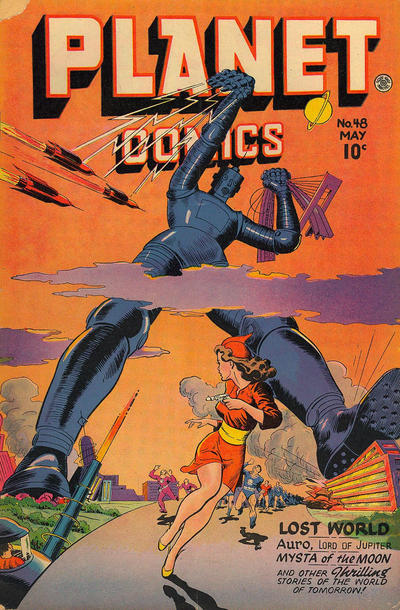
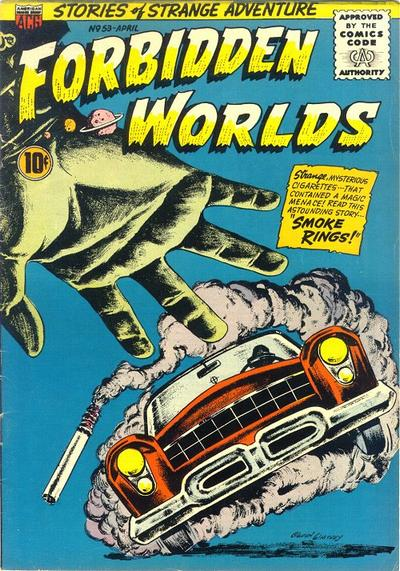
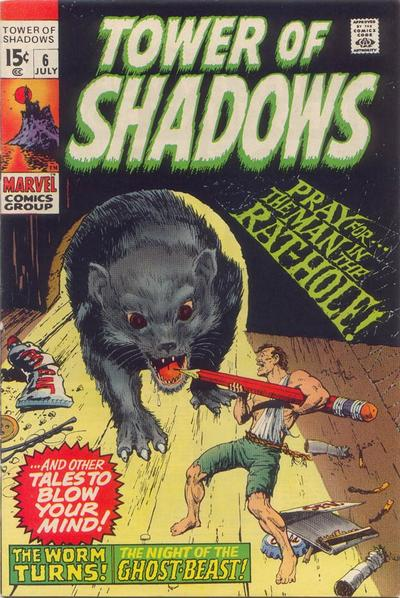
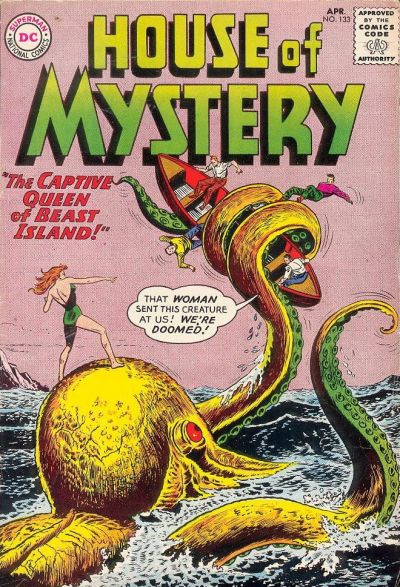
This year, Gotham Calling will continue to celebrate comics’ potential for awesomeness at the beginning of every month. To shake things up, however, instead of three jaw-dropping splash pages at a time, we’ll spotlight five kickass covers.

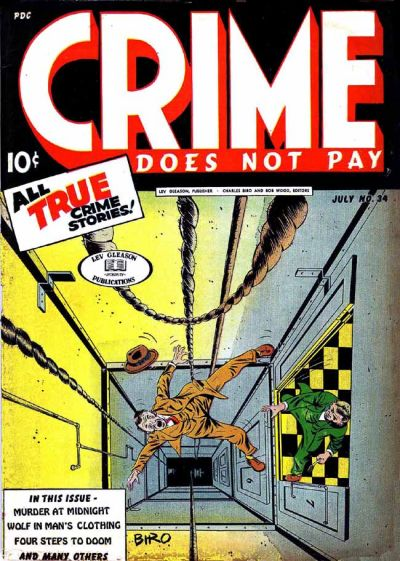
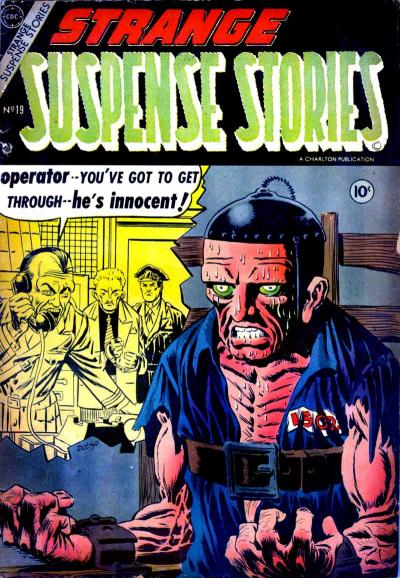
To be sure, many of these covers are better than the comics inside, whose stories don’t always live up to the premise on display (the inside art isn’t even necessarily by the same artists). Yet not only are the covers neatly designed, unabashedly weird (it’s often up there in the title!), and able to convey a whole set-up in a single image, they are also a testament to comics’ rich history of making us dream, quickly conjuring up a whole world of thrilling possibilities unconstrained by budget or by what is conventionally considered good taste…

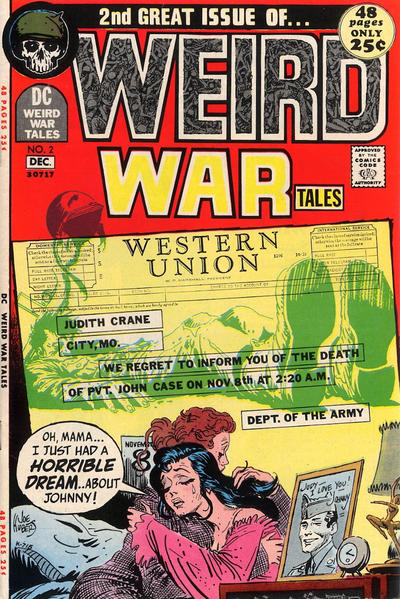
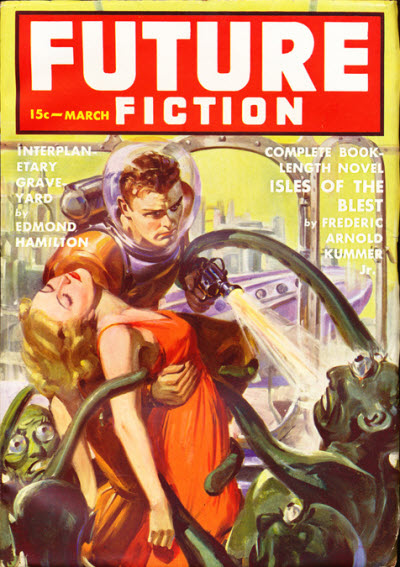
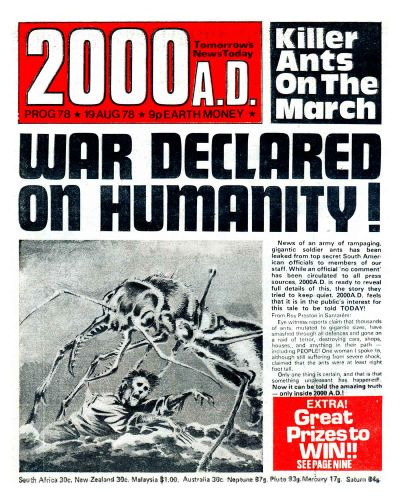
Weird Mystery Tales 11Weird Fantasy 222000 ADSpace AdventuresFrom Beyond the Unknown

Posted in GLIMPSES INTO THE PAST | Tagged , , , , , , , , , , , | Leave a comment

Have a Gotham 2020

2020 Visions

Posted in GLIMPSES INTO THE FUTURE | Tagged , , | Leave a comment

Spotlight on The League of Extraordinary Gentlemen – part 2

If you read the last post, you know what’s going on. This time around, let’s look at the set of volumes of The League of Extraordinary Gentlemen dealing with the last hundred-years-or-so, starting with the bleak Century trilogy.

Century: 1910Century: 1910

Like with earlier volumes, Century’s overarching plot isn’t that hard to follow, consisting as it does of the League’s (particularly the trio of Mina Murray, Allan Quatermain, and Orlando) attempts to prevent the rise of an antichrist, thus tying up various cult-related works, from Aleister Crowley’s Moonchild to Ira Levin’s Rosemary’s Baby, plus a bunch of Michael Moorcock stories. Suitably, given the diversification of mass culture throughout the twentieth century, LOEG’s pool of allusions became more multimedia, with the series now increasingly pillaging cinema, music, and television. This is not to say that the selection became more mainstream, as it still covered a wide territory, ranging from the hippie exploitation flick Wild in the Streets to the satirical TV show The Thick of It.

Above all, I suppose it helps to have some vague awareness of at least a few core references: the first installment, set in 1910, mostly riffs on Bertolt Brecht’s and Kurt Weil’s play The Threepenny Opera (the scene above is supposed to be to the tune of ‘The Ballad of Mack the Knife’); the second issue, set in 1969, ties into a couple of British crime movies from that era (the gritty Get Carter and the avant-garde Performance) while recreating the concert from the documentary The Stones in the Park; the conclusion, set in 2009, viciously ravages the Harry Potter franchise. Moreover, because the League – initially still operated by the British secret services, but later under the command of Prospero from the Blazing World – has acquired such an intricate history, the comic becomes quite self-referential, so LOEG’s previous books are pretty much required reading as well.

Century is as much about society and politics as it is about fiction (LOEG’s point is precisely that they all go hand in hand), provocatively painting the twentieth century as a succession of real and imagined horrors piled up on the underprivileged. Alan Moore’s work has always been class-conscious – probably due to the weight of the writer’s own working-class background – even if it tends to veer closer to anarchism (the iconoclastic, deconstructive attitude) and mysticism (the recurring notion that ideas speak through humans) rather than Marxism (a traditional materialist analysis would posit ideas as the result of structural conditions and material contexts, more than the other way around). Yet Century is one of his most upfront comics in this regard. The first issue even finishes with an agitprop ‘musical’ number based on ‘What Keeps Mankind Alive?’

Century: 1910Century: 1910

(The second issue finishes with a punk-rock version of ‘The Ballad of Immoral Earnings’ called ‘Immoral Earnings (in the U.K.)’ that was actually recorded by The Indelicates!)

Honestly, I see in this move less a reflection of the twentieth century (which had no monopoly on class-based atrocities, especially when compared to the nineteenth century of LOEG’s earlier volumes) than a reaction to the twenty-first.  These comics came out between 2009 and 2012, under the shadow of the financial crisis, when some of the Old Left reacted to the rise of identity politics by preaching a return to class-based mobilization (identity issues like race and gender being considered not only divisive in the larger anti-capitalist struggle, but also dubious because younger activists increasingly valued them as intrinsic to individuals rather than criticize them as social constructs). In Jerusalem (part of which must’ve been written around this time), Moore’s alter-ego Alma Warren makes a point of stressing her belief in the primacy of economic status at the hierarchy of social discrimination: ‘Her point is that despite very real continuing abuses born of anti-Semitism, born of racism and sexism and homophobia, there are MPs and leaders who are female, Jewish, black or gay. There are none who are poor. There never have been, and there never will be.’

Not that Moore is a stranger to intersectionality. No matter how problematic you may find LOEG’s use of racialized characters like Fu Manchu and Golliwog, Moore’s body of work has repeatedly conveyed a deep appreciation of how discourse and ideals – including depictions and prejudices – shape the world. (From the same chapter of Jerusalem: ‘As Alma sees things, it’s the metaphors that do all the most serious damage: Jews as rats, or car-thieves as hyenas. Asian countries as a line of dominoes that communist ideas could topple. Workers thinking of themselves as cogs in a machine, creationists imagining existence as a Swiss watch mechanism and then presupposing a white-haired and twinkle-eyed old clockmaker behind it all.’) His renewed emphasis on old-school class politics therefore makes more sense if seen in the context of the current era of the so-called culture wars.

Likewise, in the final issue – 2009 – there is a tinge of nostalgia for past eras (personified by Allan Quatermain) that only makes sense if seen as a frustration with the present, since LOEG’s initial spirit was clearly one of denouncing old-fashioned adventures as having whitewashed Victoriana’s background of poverty, colonialism, and all sorts of conservative values.

Century: 2009Century: 2009

Moore verges very closely to the stereotype of the cranky old man complaining about kids today. Harry Potter (who literally pisses on Quatermain) is elected as the main target, which can be outrageously funny, but it also comes across as bitter (‘This whole environment seems artificial, as if it’s been constructed out of reassuring imagery from the 1940s…’). As a result, a new set of critics turned against the series – no longer the ones daunted by LOEG’s expansive referentiality, but those who engaged with it and didn’t like what they found beneath the surface, exposing 2009 as the erudite version of a reactionary blogger ranting about how the pop culture he grew up with was better than this generation’s. (One of the most scathing, yet thought-provoking, critiques came from Marc Singer, in Breaking the Frames: Populism and Prestige in Comics Studies.)

There are other ways in which Century spoke to the present through the past. In one of LOEG’s most fanciful bits of reverse-engineering, the prose sections at the end placed the ancestors from characters of the Baltimore-set shows Homicide: Life on the Street and The Wire on the moon, thus linking their genealogy to the Baltimore Gun Club’s space program (from Jules Verne’s From the Earth to the Moon). Moreover, the 2005 bombings in London loomed over the series, from the attack and panic at the climax of 1910 to the many cryptic allusions made by the time-travelling Prisoner of London (from Ian Sinclair’s Slow Chocolate Autopsy).

Century: 2009Century: 2009

(I actually chose this excerpt because of the reference to From Hell’s insulting film adaptation, further illustrating the sheer amount of deep cuts that are *all over* this comic.)

At the end of the day, although mean-spirited, borderline incomprehensible in places, and often making you feel dirty inside, Century is still a pretty entertaining mess. I quite like the way O’Neill and Moore experiment with rhythm by repeatedly syncing the narrative to musical cues (for example, 1969’s trippy climax should be read to the tune of the Rolling Stones’ ‘Sympathy for the Devil’). Also, the artwork continues to be freaking awesome:

Century: 1969Century: 1969

The following trio of books went back to a more lighthearted style, telling straightforward yarns pitting Captain Nemo’s badass daughter (which Century had established as The Threepenny Opera’s Pirate Jenny) against Queen Ayesha from H. Rider Haggard’s novel She (and from numerous film adaptations, most notably 1935’s atmospheric gothic fantasy produced by Merian C. Cooper) in the 1920s, 1940s, and 1970s. Moore and O’Neill even dialed down the sexual content, at least compared to the ultra-smutty Century.

That said, the references in the Nemo comics are even more idiosyncratic: in Heart of Ice, Charles Foster Kane puts together a team of lesser-known Edisonade adventurers; The Roses of Berlin teams up characters from German expressionistic cinema with the ersatz-Hitler of Charles Chaplin’s The Great Dictator; the climax of River of Ghosts brings together the schlocky anti-Nazi thriller The Boys from Brazil and the goofy Bond spoof Dr. Goldfoot and the Bikini Machine.

My favorite of the lot is The Roses of Berlin, obviously reflecting my own taste as a film buff. It’s not just the geeky fun of watching Captain Nemo go up against Dr. Mabuse, Dr. Caligari, and the robot from Metropolis, but also the awe of seeing Kevin O’Neill and colorist Ben Diagmaliw successfully reinvent themselves once again… If their visuals in 1969 seemed filtered through hallucinogenic drugs and a ‘summer of love’ vibe, here they have the dark, stark brutality of a totalitarian nightmare.

Nemo: The Roses of BerlinNemo: The Roses of Berlin

A final word on sex. LOEG has gained a reputation for the way it abundantly sexualizes popular characters and their stories. Indeed, sex is a big part of the series (and, let’s face it, of pretty much all of Alan Moore’s work). As LOEG progressed, sex increasingly dripped from almost every single page in one way or another, to the point of self-parody in Black Dossier and Century… In the former, the framing sequences with Mina Murray and Allan Quatermain on the run involve as much nudity, horniness, and copulation as the dossier’s more explicitly erotic material (like its sequel to Fanny Hill), which I suppose could be seen as a way of illustrating the merging of fiction and reality.

Moreover, those who accuse Moore of overusing sexual violence across his work will surely find themselves vindicated here. LOEG’s debut issue doesn’t last six pages before the first attempted rape and the second issue revolves around a particularly surreal assault (one that is brutally inverted later in the series). Subsequent volumes feature plenty more, with even some of the main cast (men and women) getting attacked at various points, as sexual violence is treated both seriously and humorously (in line with LOEG’s overall darkly comedic tone). To be fair, this isn’t just a trope: the barrage of violence (sexual and otherwise) serves to expose widespread phenomena hidden by – or implicit in – the original stories. Notably, James Bond’s predatory exploits are rendered in a deliberately unpleasant fashion, unsubtly deglamorizing his toxic masculinity.

Likewise, the depictions of more benign, pleasurable, and consensual sex aren’t always gratuitous. For instance, they play a central role in the characterization of Mina’s and Allan’s relationship – through sex, we see their initial attraction, lasting passion, and gradual boredom. This is complicated by the sex-changing Orlando, with whom they develop a polyamorous open relationship with a varying gender balance.

Century: 1969Century: 1969

Interestingly, the different ways each character adjusts to immortality are expressed sexually. For instance, Mina, who tries to keep up with the times, feels increasingly frustrated with Allan, which affects their relationship. In turn, Orlando, who has been basking in immortality for centuries, has settled into it and always feels like having a nice time.

Century: 1969Century: 1969

Still, other times the lewdness seems more forced. Nemo’s accompanying text pieces are supposedly written by reporter Hildy Johnson (from Howard Hawk’s His Girl Friday) as a lascivious, bisexual alcoholic, which feels quite out-of-character for her.

The truth is that LOEG’s abundant lecherous content doesn’t always seem subordinate to a specific point. Indeed, if I was to look for a larger gesture here, I guess it would be, not necessarily to celebrate sexual liberation in short-sighted terms (as suggested by Eric Berlatsky), but to liberate sex from a fixed meaning: Moore’s attitude seems to be that sex in fiction, like in real life, doesn’t always require a purpose other than itself. In other words, asides from conveying the complex, extensive, and sometimes horrible role of sex in popular culture, perhaps one of the reasons there is so much of it in this comic is also just a sense of raunchy fun.

To be fair, titillation (especially via a male gaze) has traditionally been a key component of the kind of pulpy landscape LOEG came to occupy. You can hardly tell the story of the modern sci-fi, fantasy, and adventure genres without acknowledging their lurid predilection for muscled men and big-bosomed women…

amazing ghost stories Planet Comics eerie

It doesn’t mean you have to emulate it, of course, even if LOEG – for all its revisionism and grotesquerie – has always contained an element of homage, blowing up Alan Moore’s many influences by channeling them through a ludicrously exaggerated style. Ultimately, the series’ perverse glee comes not so much from lowering acclaimed literature to the standards of trashy sexploitation, but from presenting a continuum between the two levels, gradually making it seem natural that an Irish mythological hero would star in what is presumably a tribute to Russ Meyer’s filmography:

Nemo: River of GhostsNemo: River of Ghosts

In a couple of weeks, I’ll discuss how LOEG’s final book brought this fascinating series to an end while living up to its standards of intertextual insanity and ribaldry.

Posted in WEBS OF FICTION | Tagged , , , , , , , | Leave a comment

Spotlight on The League of Extraordinary Gentlemen – part 1

League of Extraordinary Gentlemen

If Master Race and other stories was Gotham Calling’s 2018 book of the year, this time around that questionable honor goes to The Tempest, the collection that marks the ending – twenty years after the first issue came out – of the violent, depraved, and flawed-yet-very-entertaining metafictional series The League of Extraordinary Gentlemen. Before going into The Tempest in some depth, though, let us look back on one of the medium’s most ambitious narrative experiments.

LOEG’s twofold premise is that 1) every single character in the series – including background extras – is borrowed from other works of fiction (mostly genre literature) and 2) every major literary work kind of fits into the same byzantine continuity. Because the comic is drawn by Kevin O’Neill, the art is gorgeously stylized. And because the whole thing is written by Alan Moore, you can stretch the definition of ‘major literary work’ to include pretty much everything you can think of, whether it’s Homer’s Odyssey or Winnie-the-Pooh. The result is basically an extreme version of the Wold Newton Universe.

The League of Extraordinary Gentlemen (v2) #5The League of Extraordinary Gentlemen (v2) #5

The League of Extraordinary Gentlemen is one of Alan Moore’s most contested masterpieces. All of his greatest works (Watchmen, V for Vendetta, From Hell, Miracleman, Swamp Thing) are challenging reads in terms of form and content, but they are also indisputably rewarding to anyone willing to engage with them. While the same can be said about LOEG, several critics seem frustrated over the fact that the ratio is somewhat different, i.e. even if you can get a lot out of it, there are just so many damn references – and some of them so obscure – that you’re not likely to grasp *every aspect* of the series, no matter how much effort you put in! (This penchant for ever-more demanding eclecticism has become a staple of Moore’s later period, reaching an apex in his colossal novel Jerusalem.)

I can see the point of that criticism, especially from readers used to fully decipherable books, but I don’t identify with it – for me, LOEG is a comic that keeps on giving, not only because it is rich with clever details and captivating themes, but also because I find myself revisiting bits of it with renewed appreciation every time I come across any of the many works referenced in the series. Like the fact that some of the dialogue is in untranslated foreign languages (ranging from Dutch to Punjabi, plus a made-up Martian language that you have to decipher with the help of a mirror), the endless referentiality is all part of the challenge!

Ironically, some of the critics’ anger may derive from the fact that LOEG did ease readers in with a rather smooth start, ushering in misleading expectations… The first couple of volumes were mostly straightforward adventure tales about a secret team of British agents in the 1890s, with a neat steampunk vibe, albeit peppered with Moore’s flair for deconstructing archetypes (the leading characters actually spent a lot of the time at each other’s throats). In line with the rest of the America’s Best Comics line, in which Moore mined literary traditions beyond superheroes for different approaches to heroic fantasy (Tom Strong drew on the pulps, Promethea on mythology, Greyshirt on Eisner’s The Spirit…), LOEG was essentially a revisionist homage to the rousing yarns of the eighteen hundreds.

League of Extraordinary Gentlemen 1     League of Extraordinary Gentlemen v2     League of Extraordinary Gentlemen II

It also helped that the members of the original roster – Mina Murray (from Dracula), Captain Nemo (from 20,000 Leagues Under the Sea and The Mysterious Island), Allan Quatermain (from King Solomon’s Mines and its sequels), Henry Jekyll/Edward Hyde (from Strange Case of Dr Jekyll and Mr Hyde), and Hawley Griffin (from The Invisible Man), led by a character from the Sherlock Holmes books – were generally well-known in Western pop culture. The same goes for the (admittedly nerdier) choices in the delightfully ornate prose story in the back matter, with Quatermain meeting John Carter of Mars and the protagonist of H.G. Wells’ The Time Machine, as well as Randolph Carter (from H.P. Lovecraft’s stories). The second volume revolved mostly around H.G. Wells’ The War of the Worlds, eventually crossing over with the same author’s The Island of Doctor Moreau.

All in all, there was still a relatively limited amount of luggage required to follow the main plot in these first couple of volumes. The remaining references then worked as a bonus – for instance, you didn’t have to be familiar with Edgar Allan Poe’s ‘The Murders in the Rue Morgue’ or Jules Verne’s Five Weeks in a Balloon beforehand, but, if you were, you’d get even more enjoyment out of the proceedings. And although the extensive prose pieces in the back matter already pointed to Moore’s increasing ambition of building a coherent universe out of everything he’d ever read, I guess fans didn’t mind as long as this didn’t get in the way of O’Neill’s pretty pictures. After all, these were two masterful storytellers who knew just how to frame and pace set pieces for maximum effect (like the way they kept giving us a sense of Griffin’s movements while keeping him invisible, without resorting to the usual ‘semi-transparent’ effects).

The fact that the main cast and concepts were in the public domain and had already been popularized in countless media adaptations made them accessible even to people who hadn’t actually read the classics, allowing the series to build up on previously established characterization.

The League of Extraordinary Gentlemen #3The League of Extraordinary Gentlemen #3

Although LOEG went into some seriously dark places (especially regarding Griffin and Hyde), the comic was also, from the outset, unabashedly funny. Besides the many in-jokes and Easter Eggs (Moore’s scripts must have been as detailed as those he did for Top 10), the credits, blurbs, and extra material framed the comic as an actual ‘Boys’ Picture Monthly’ published in late 19th century England, including tongue-in-cheek warnings such as ‘Mothers of sensitive or neurasthenic children may wish to examine the contents before passing it on to their little one, removing those pages which they consider to be unsuitable.’ Some issues even contained authentic vintage advertisements, including one for a vaginal syringe called Marvel which DC recalled out fear that it could trigger litigation from Marvel Comics (this was one of the reasons Moore shifted LOEG to a different publisher, along with an incident regarding the by-all-accounts dumbed-down film adaptation of the comic).

The pastiche in these extras often veered into outright absurdist humor. This is from the authors’ bio section in one of the collected editions: ‘MR. KEVIN O’NEILL commenced his career as a pugilist in 1859. Due to excessive drinking and repeated cerebral splintering during an early bout with Walter Phibbs, the Widnes Goliath, O’Neill passed into an insensible state from which he was never fully to awaken. However, in 1885, doctors discovered that by attaching galvanising cables directly to the comatose prize-fighter’s brain, his right hand could be made to delineate exquisite and fanciful illustrations, such as his well-known series “Modern Times, or, The Progress of a Scented Nonce,” and, of course, his scandalous “Queen Victoria and Emily Pankhurst Girl-on-Girl Novelty Flipbook.”’

In particular, Moore had a blast poking fun at the era’s rampant racism and sexism. One of the running jokes involved the contrast between, on the one hand, the over-the-top misogyny displayed by most of the cast (and by the Victorian narrator) and, on the other hand, the fact that Mina Murray was clearly the most capable character around. Indeed, apart from her and the opium-addicted Quatermain, practically everybody was a psycho…

The League of Extraordinary Gentlemen #1The League of Extraordinary Gentlemen #1The League of Extraordinary Gentlemen #1

That said, you could see Moore gradually stretching the playing field. There were allusions to previous leagues, headed by Prospero and Gulliver. LOEG’s second volume included a super-dense appendix, titled ‘The New Traveller’s Almanac,’ which sought to map out an imaginary geography stringing together all the masterworks of fantastic literature (with the exception of José Saramago’s Baltasar and Blimunda), throwing in some surrealist films as well (Duck Soup, Yellow Submarine… even The Big Lebowski!). Although Moore’s prose is always a treat, I admit the main appeal of this travelogue was figuring out the references (look, it’s Fenwick from The Mouse that Roared and Quiquendone from A Fantasy of Dr. Ox!), as there wasn’t much of a narrative thread (even if Moore did bury a key plot point for later arcs between the lines of the section on Africa). Still, I cannot help but geek out when coming across a page that crams together allusions to Candide, One Hundred Years of Solitude, and Goldfinger!

The big turning point in LOEG’s acclaim came with the graphic novel Black Dossier, where the balance between action and parodic pastiche shifted considerably. The driving story found Mina Murray and Allan Quatermain in 1958, after the collapse of George Orwell’s Nineteen Eighty-Four dictatorship (which was thus recontextualized from the titular future into the early Cold War, syncing that book’s timeline with the era that conceived it), but this turned out to be a mere framing device, as the bulk of Black Dossier was a collection of scattered documents from the League’s secret history. Although there was obvious symbolism in the way the heroes gradually escaped into the realm of imagination (here called ‘The Blazing World,’ after Margaret Cavendish’s utopia), their saga became secondary to a bunch of bizarre literary mash-ups, approaching Lovecraft’s Cthulhu mythos by channeling P.G. Wodehouse’s witty turns of phrase (‘I burst in, in high dudgeon, and prepared to give this idler Peabody a fair piece of my mind, of which I have a good few pieces left to spare, despite what everyone who knows me cares to say upon the topic.’) or Jack Kerouac’s and William S. Burroughs’ beatnik stream of consciousness (‘…alla rest o these primordial yeggs n cosmic dregs n anti matter bums n beggars can seep in yer scooped out skull lay eggs ad jingle caviar control bugs slaver ants is what they are got wiretaps on yer daydreams sex schemes holy blazin visions in their dogditch convict searchlight beams n all yoomanity’ll soon be pressin levers in its ratbox gitting monkeyshocks…’).

Many readers then turned on the series, accusing it of pretentious navel-gazing and of betraying the initial promise of more-or-less conventional fun. (If any of those readers is reading this, stop moaning and go check out Ian Edginton’s own shared comic universe, especially Stickleback and Ampney Crucis Investigates, which draw on the same type of influences without straying as far afield.) Another strain of criticism attacked the comic’s rehabilitation of the children’s character Golliwog, now rightly considered a cringeworthy racial stereotype.

While LOEG may have grown into something that wasn’t exactly what the original fans craved, it also interestingly grew into something that its creators felt truly passionate about. You can sense the care and thought and joy writer and artist put onto each page (which is more than you can say about most long-running comic book series). The same goes for colorist Ben Dimagmaliw and for letterers Bill Oakley and Todd Klein, who got to stretch their muscles through a variety of artefacts, such as a pornographic pamphlet from Nineteen Eighty-Four’s Pornsec (where the characters talk in Newspeak) and a set of postcards sent by Mina and Allan from around the world. And don’t even get me started on the comic-within-a-comic – emulating the historical strips that appeared in 1950s’ British comics – retconning Virginia Woolf’s Orlando: A Biography:

League of Extraordinary Gentlemen - Black DossierBlack Dossier

Not that the authors were the only ones having a good time: although it’s tempting to accuse LOEG of merely applying to the literary canon the kind of fanboyish continuity OCD that dominates superhero comics, I think that’s missing the point… Yes, this is masturbatory fanfic, but it’s masturbatory fanfic written by Alan Moore, which means that it’s done on an unprecedented, mind-bending scope. You don’t have to recognize every single deity in the theological treaty ‘On the Descent of Gods’ – or to recognize its author as W. Somerset Maugham’s caricature of Aleister Crowley (who goes on to play a large role in the next book) – to be blown away by the way Moore ties together all sorts of mythologies, both historically worshipped (biblical, Greco-Roman) and admittedly fictional (by the likes of Robert E. Howard and Michael Moorcock).

Granted, the meticulous world-building and in-your-face name-dropping can get tiresome in places. Yet I think it’s a gross exaggeration to argue, like some do, that LOEG as a whole became little more than a spot-the-reference game, Family Guy-style, where pleasure derives only from recognition. For one thing, Moore’s wit and O’Neill’s retro, angular visuals often kept things pretty enjoyable on their own terms, even if you don’t feel like checking out Jess Nevins’ comprehensive annotations.

Sure, Black Dossier gets better the more familiar you are with the diverse source material. And sure, not all of it is going to do it for you in the same way, as sometimes you may find yourself admiring the authors’ boldness, intelligence, and craftmanship rather than emotionally succumbing to the final product’s charm.  However, the book still works on multiple levels. While part of the appeal of the Shakespearean play ‘Faerie’s Fortunes Founded’ is contemplating Moore’s skill at mimicking the Bard’s iambic pentameter, we get more than an SNL-like empty impersonation: on the one hand, Queen Gloriana’s words foreshadow later developments and reveal an in-story reason for the League’s creation (to knit the realms of humans and gods) which doubles as a thematic statement; on the other hand, the wordplay is itself quite amusing, like when Orlando explains that he is (currently) a man while repeatedly alluding to testicles in his word choices:

Black Dossierleague of extraordinary gentlemenBlack Dossier

(We later see a performance of this play in the Blazing World, in LOEG: The Tempest.)

Plus, the riffs and references aren’t just self-indulgent winks… From the outset, LOEG’s clever merging of narratives served to comment on the obsessions and violence of the culture that spawned them in the first place, so that underneath the superficial thrills there was always plenty of rich subtext to explore, not to mention several layers of moral complexity. Moreover, as argued by Jeff Thoss, there is a poignant historiographical gesture in the series’ resurrection of comics’ affinities with paraliterary traditions going back to the nineteenth century, as it invites readers to envision a new genealogy of the comic book medium itself.

Notably, Moore kept revisiting his pet concerns, including posthuman transcendence and the power of ideas. His work has often dealt with the connection between these two themes, not only through drugs (also addressed in LOEG), but through the escapist, emancipatory potential of imagination. Going radically beyond a mere poststructuralist acknowledgment that language frames perception, Moore has made an illustrious career out of ‘mind over matter’ imagery. It’s not just Gloriana who speaks of bridging reality and myth – in Black Dossier’s psychedelic closing sequence (in 3-D!), Prospero further underlines that one of the book’s major themes is the impact of fiction itself. In one of those beautiful monologues Moore can do so well, a fourth-wall-breaking Prospero (whose long beard gives him a Moore-ish look) points out that, just as humanity created stories (like the ones in LOEG), it was also shaped by them, drawing inspiration from their ideals. ‘On dream’s foundation matter’s mudyards rest. Two sketching hands, each one the other draws: the fantasies thou’ve fashioned fashion thee.’

(Between his baroque prose and naughty playfulness, Alan Moore’s style has always reminded me of Umberto Eco, who also explored the whole fiction-shapes-reality motif, particularly in the brilliant Baudolino. Although less caustic, Jorge Luis Borges and Italo Calvino come to mind as well, so I was not surprised to find plenty of allusions to these authors’ writings in ‘The New Traveller’s Almanac.’)

In the next post, I’ll discuss how Moore and the rest of the gang continued to expand this project through a set of books that approached the fictional history of the twentieth century by somehow amping up LOEG’s level of nastiness and debauchery. If you thought Black Dossier didn’t go easy on readers, wait until you see what comes next…

Century 1910Century: 1910
Posted in WEBS OF FICTION | Tagged , , , , , , , , , | Leave a comment

Taking a break… (December 2019)

Legends of the Dark Knight #195Legends of the Dark Knight #195
Posted in GOTHAM INTERLUDES | Tagged , | Leave a comment

COMICS CAN BE AWESOME (December 2019)

And here is your December reminder that comics can be awesome:

Tokyo Ghost #2Tokyo Ghost #2
Cemetery Beach #1Cemetery Beach #1
Wild Blue Yonder #3Wild Blue Yonder #3
Posted in GLIMPSES INTO THE FUTURE | Tagged , , , , , , , , , , , | Leave a comment