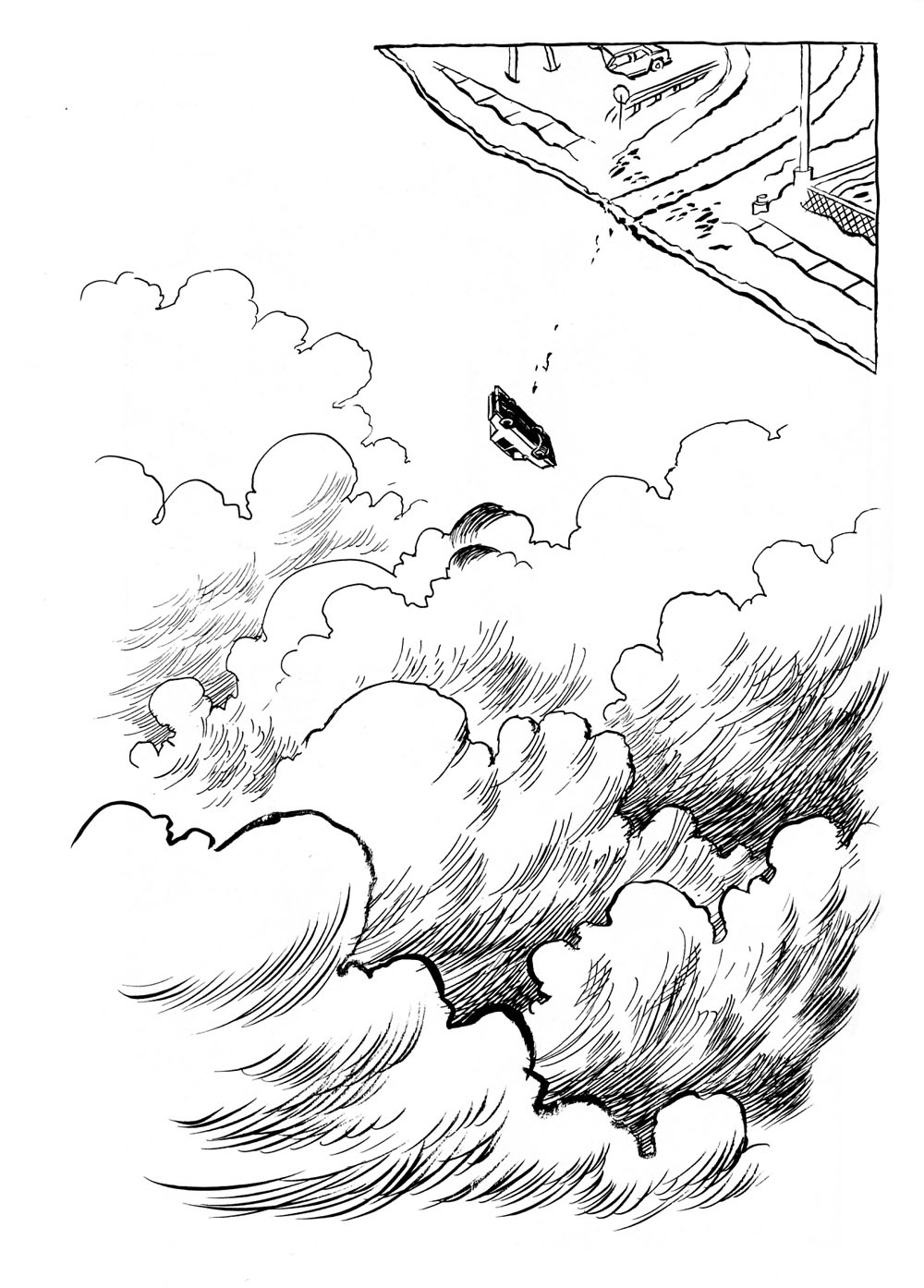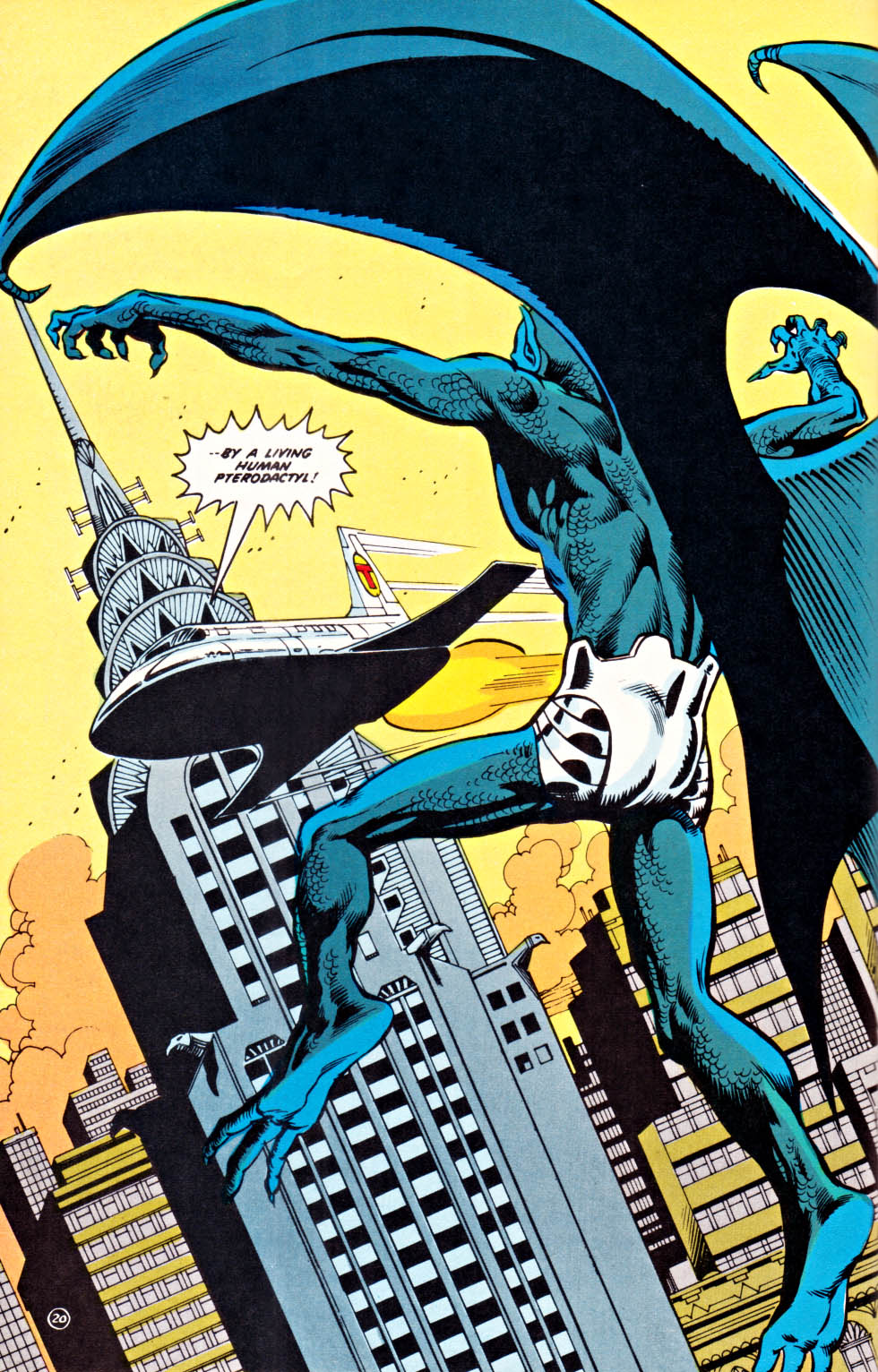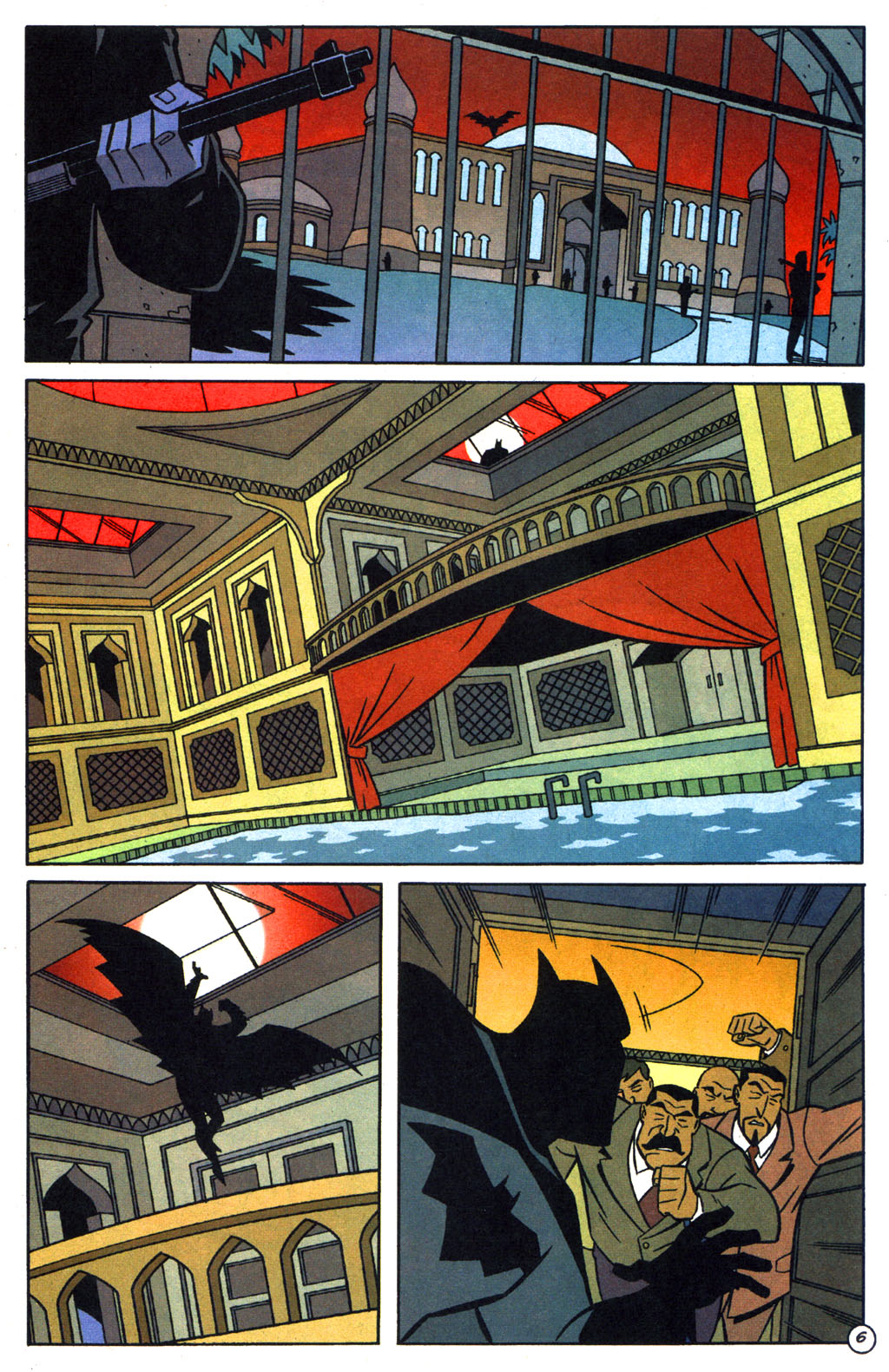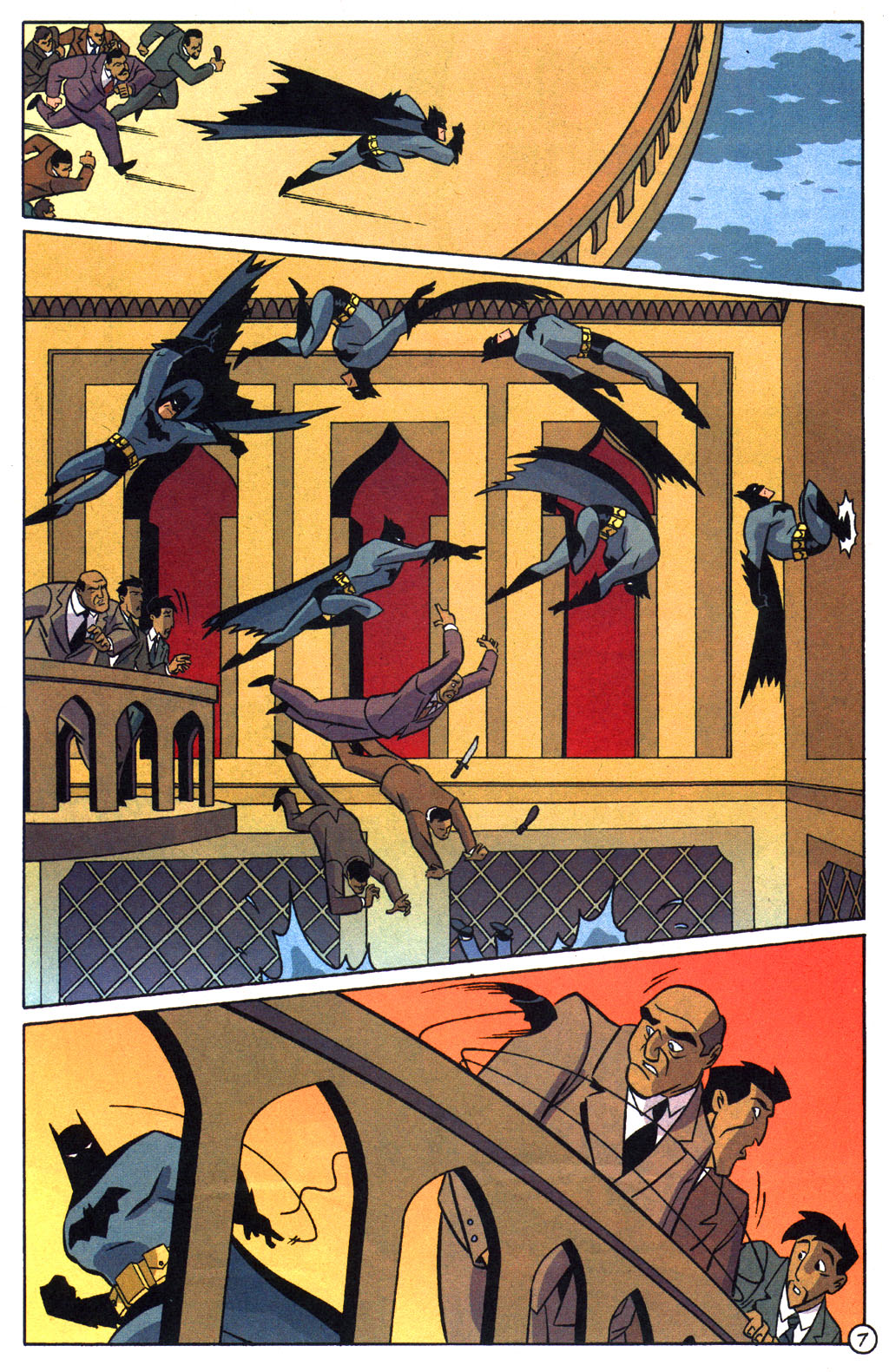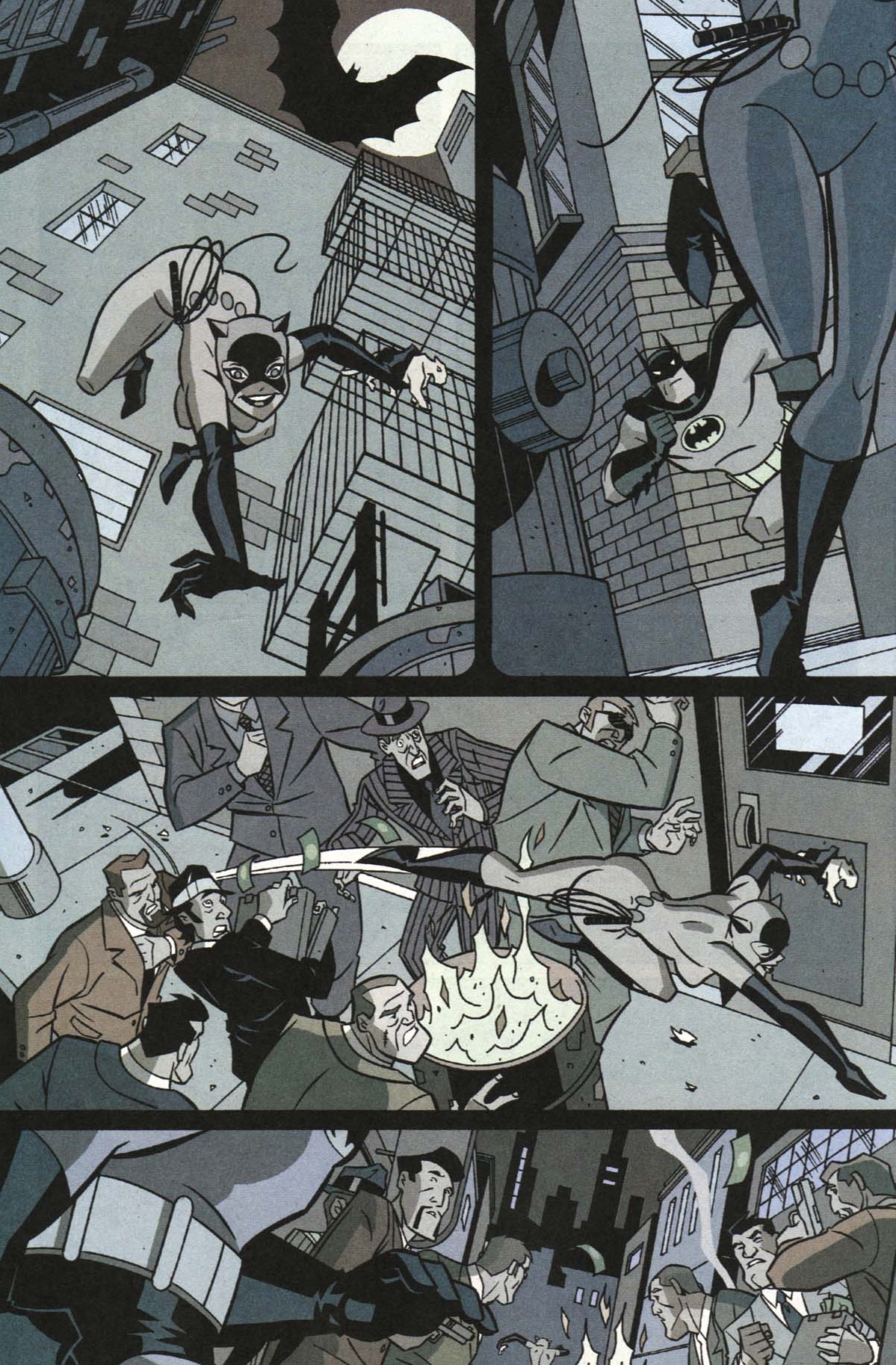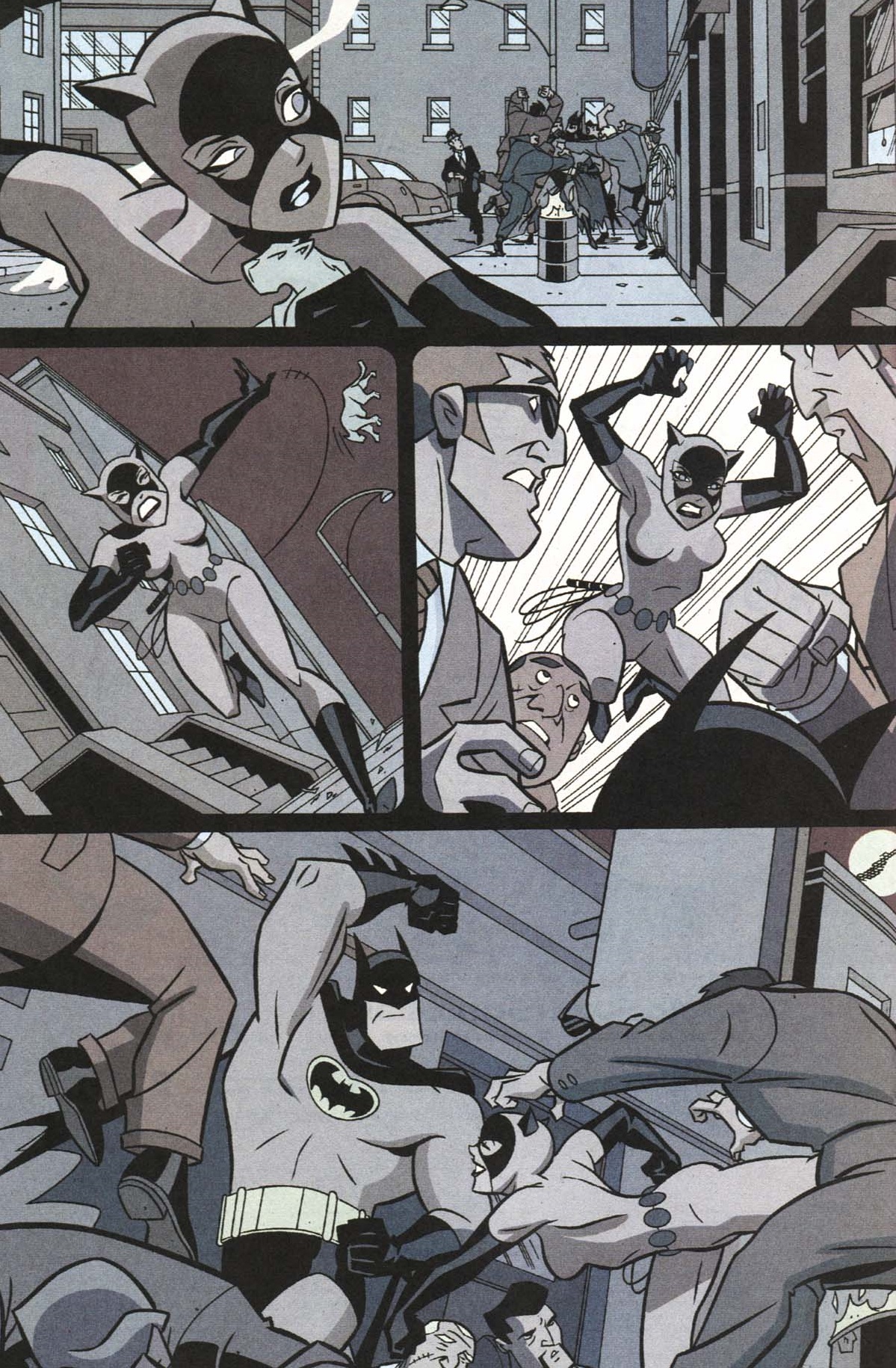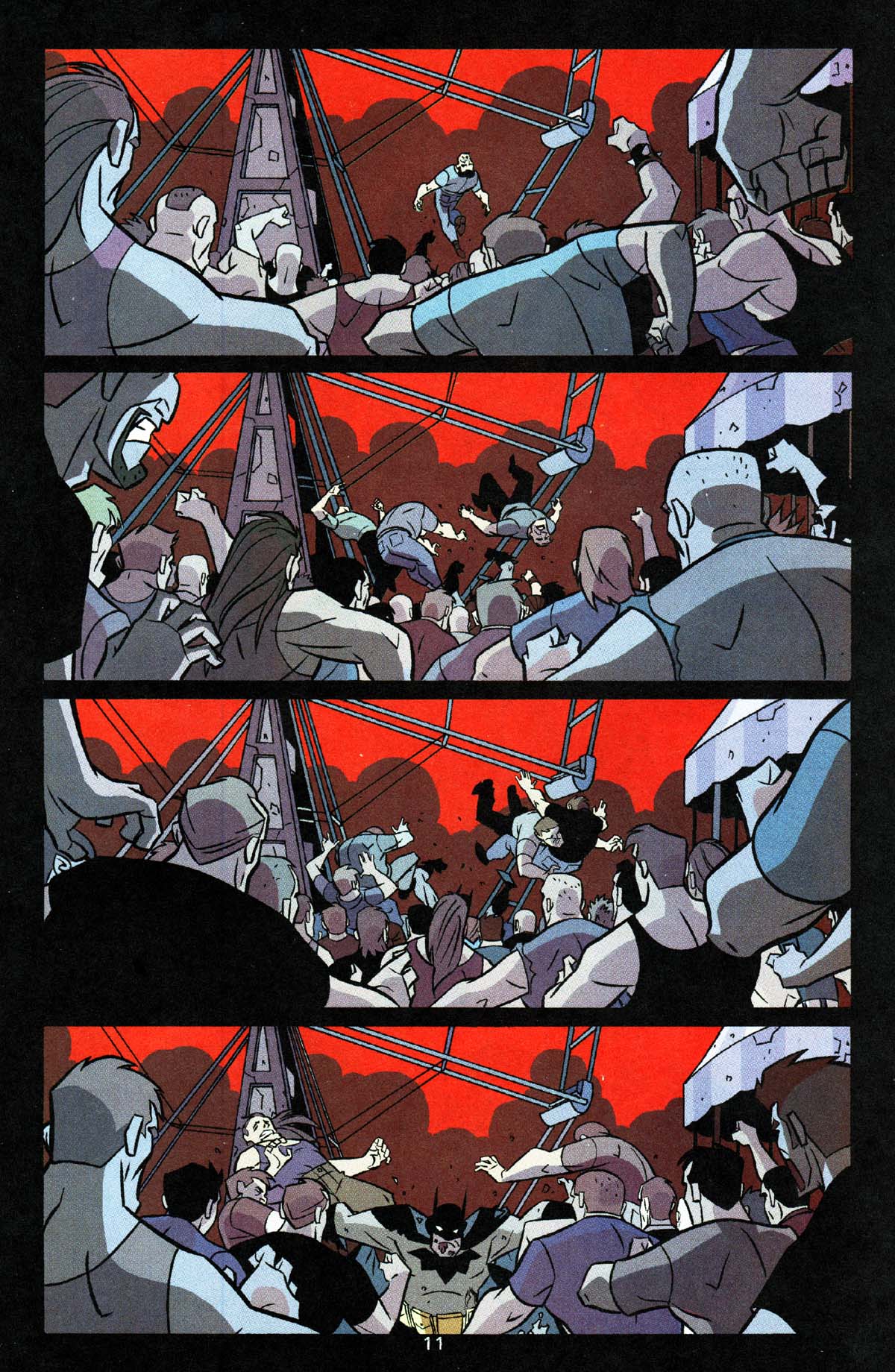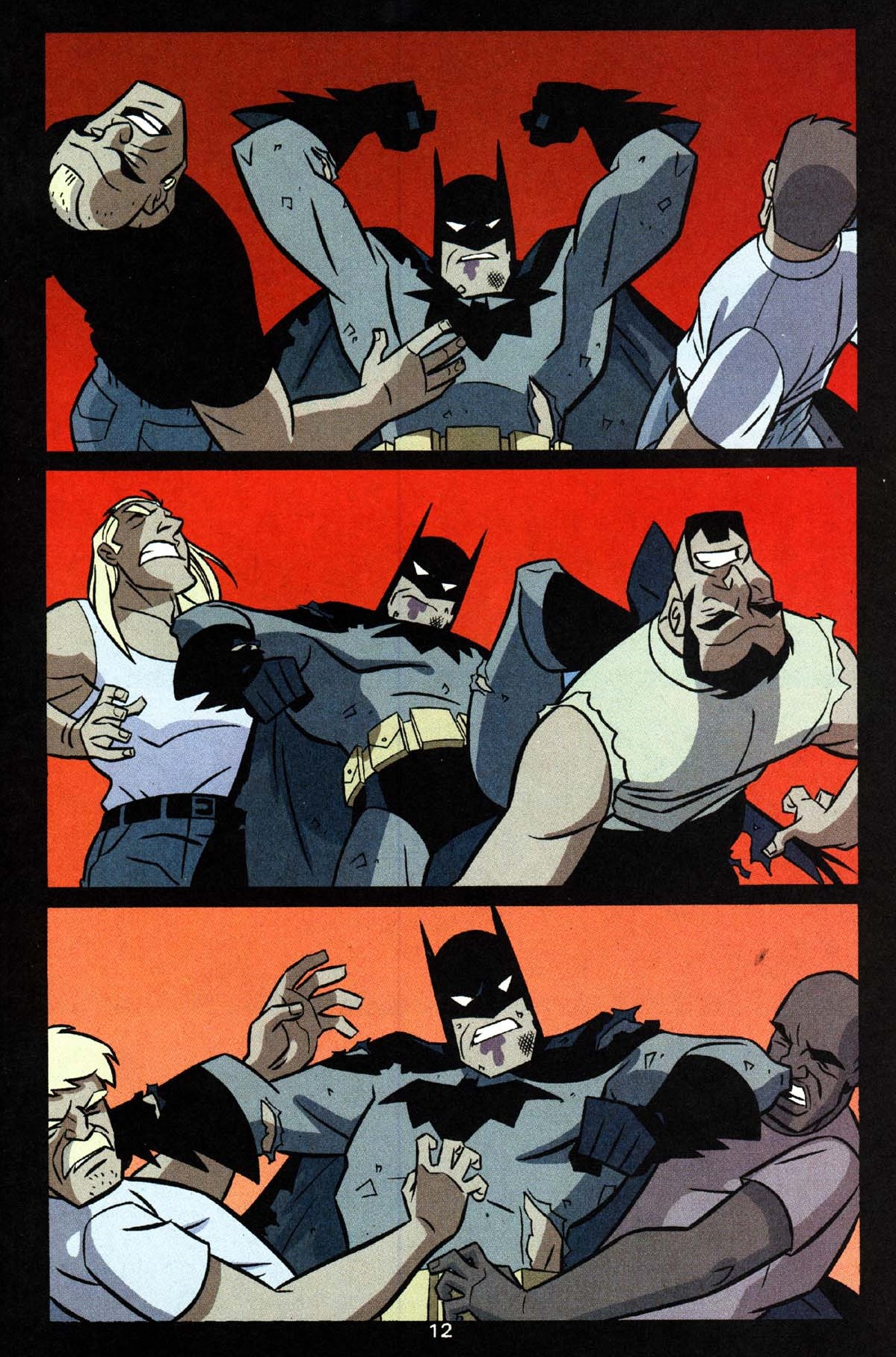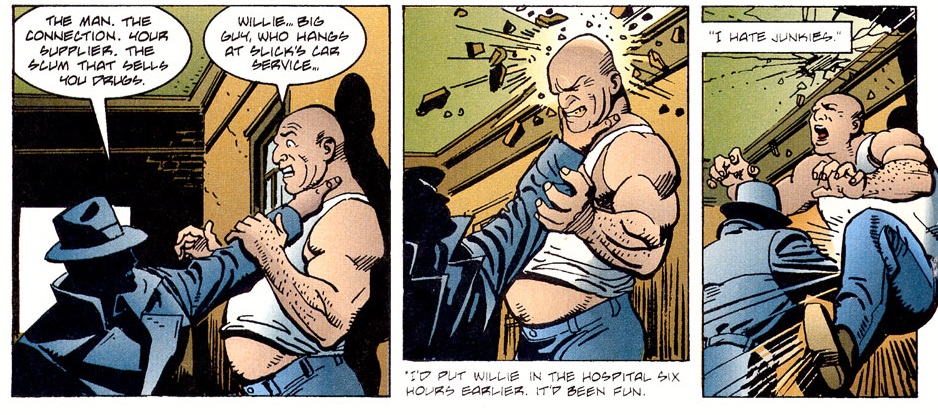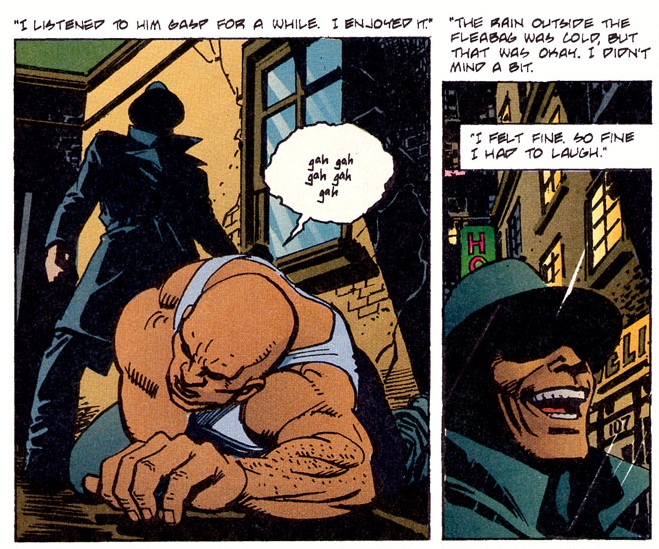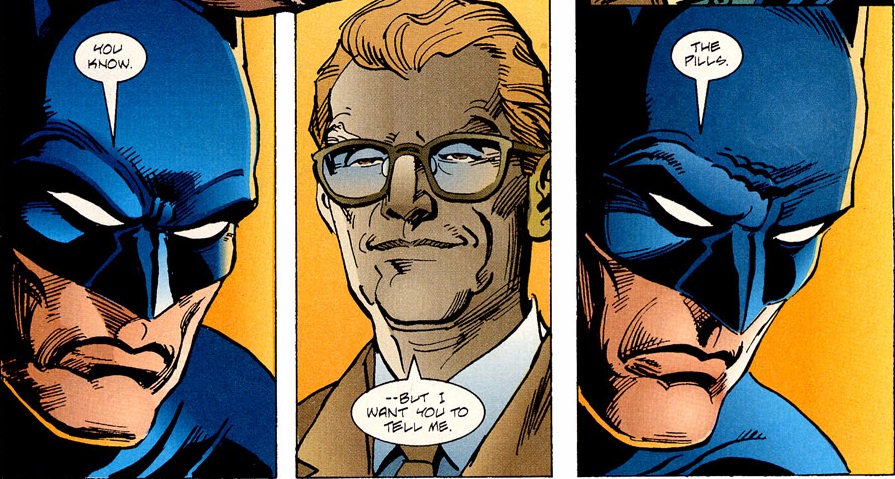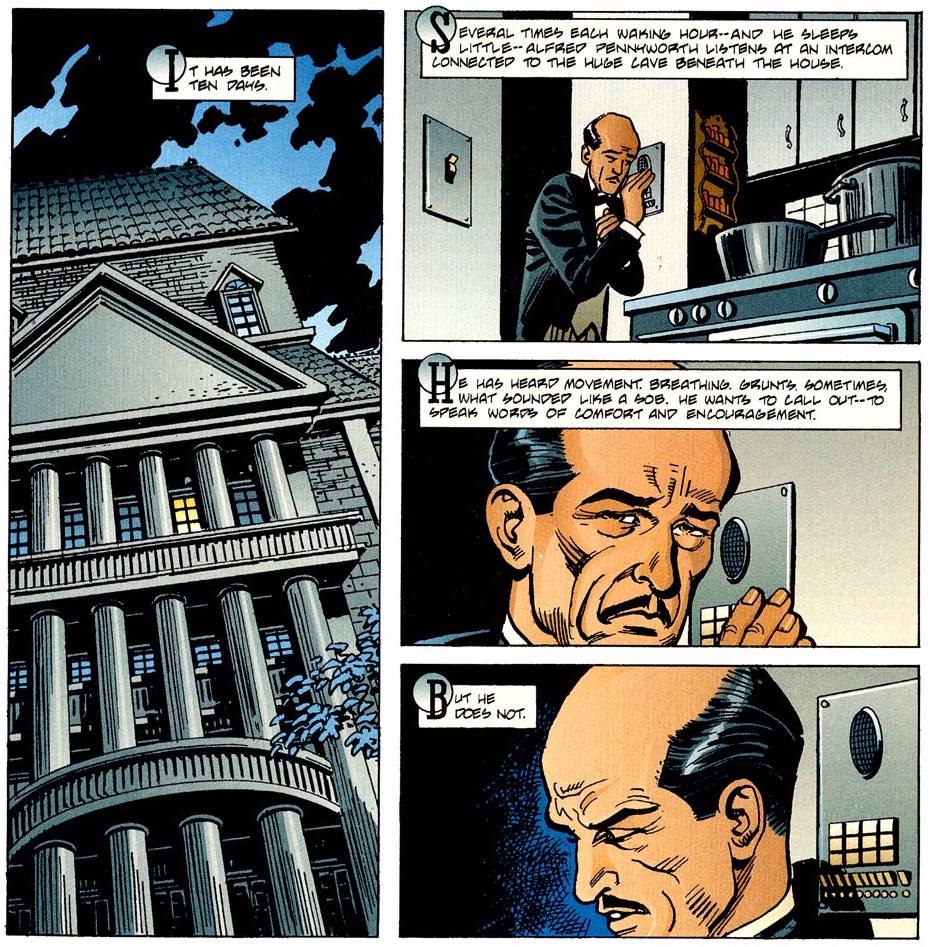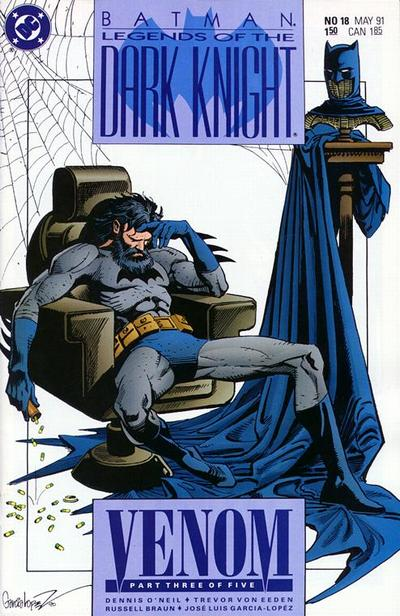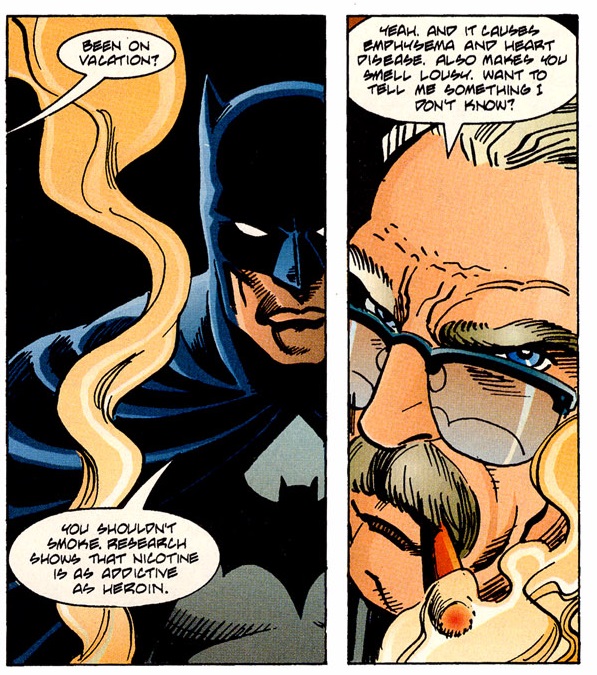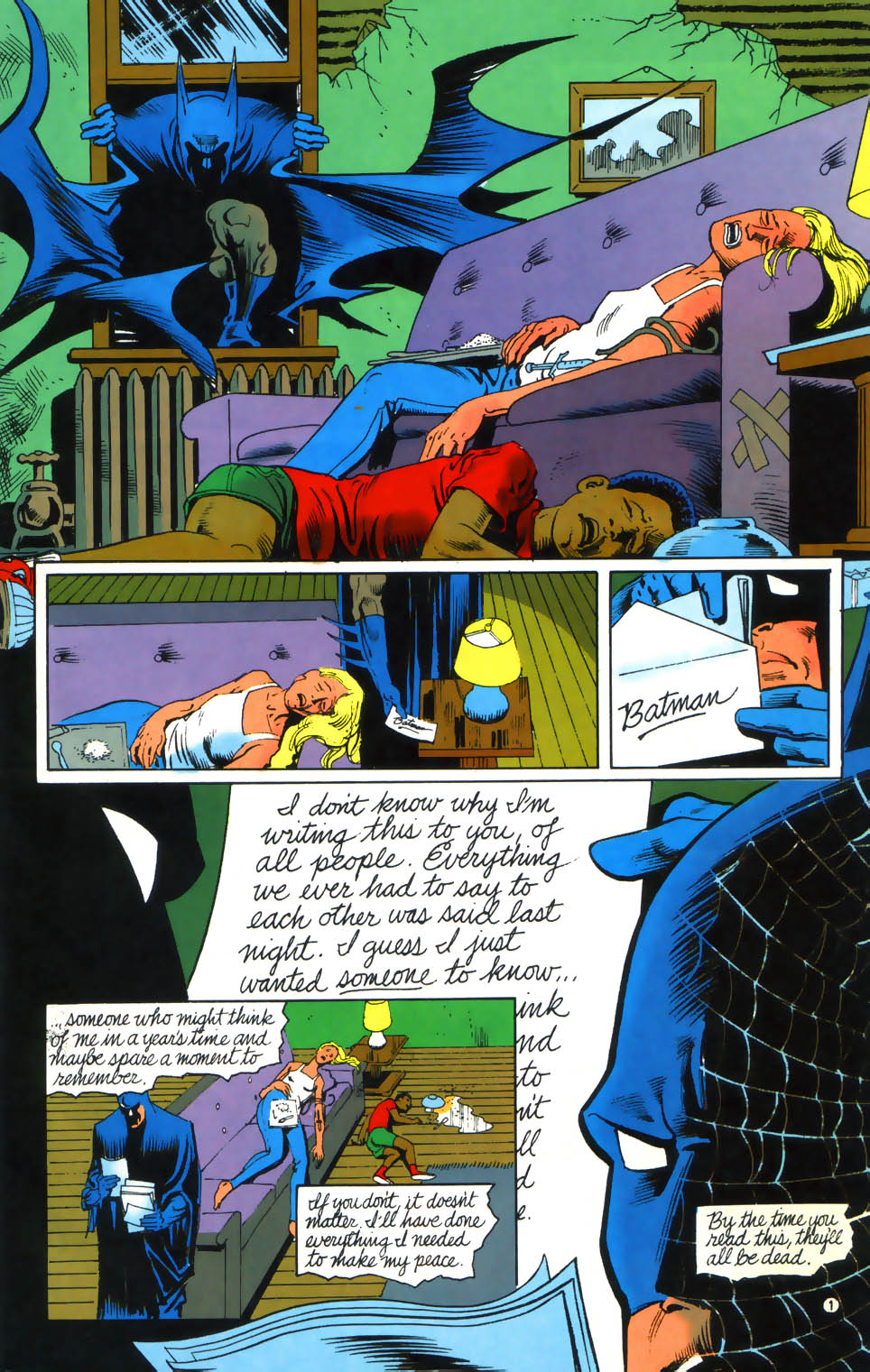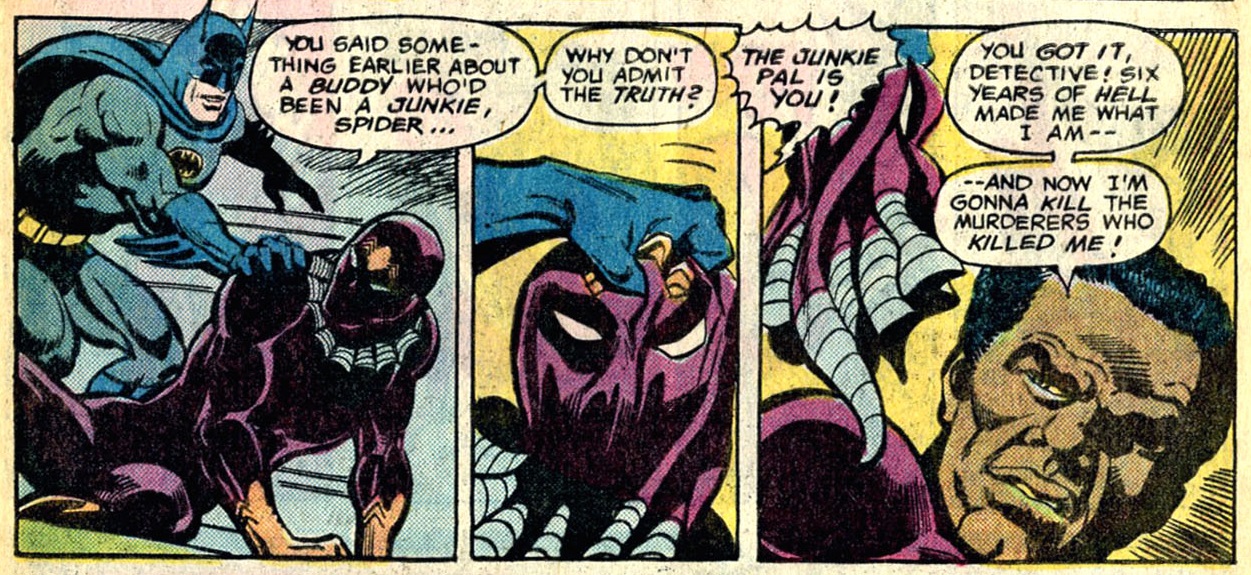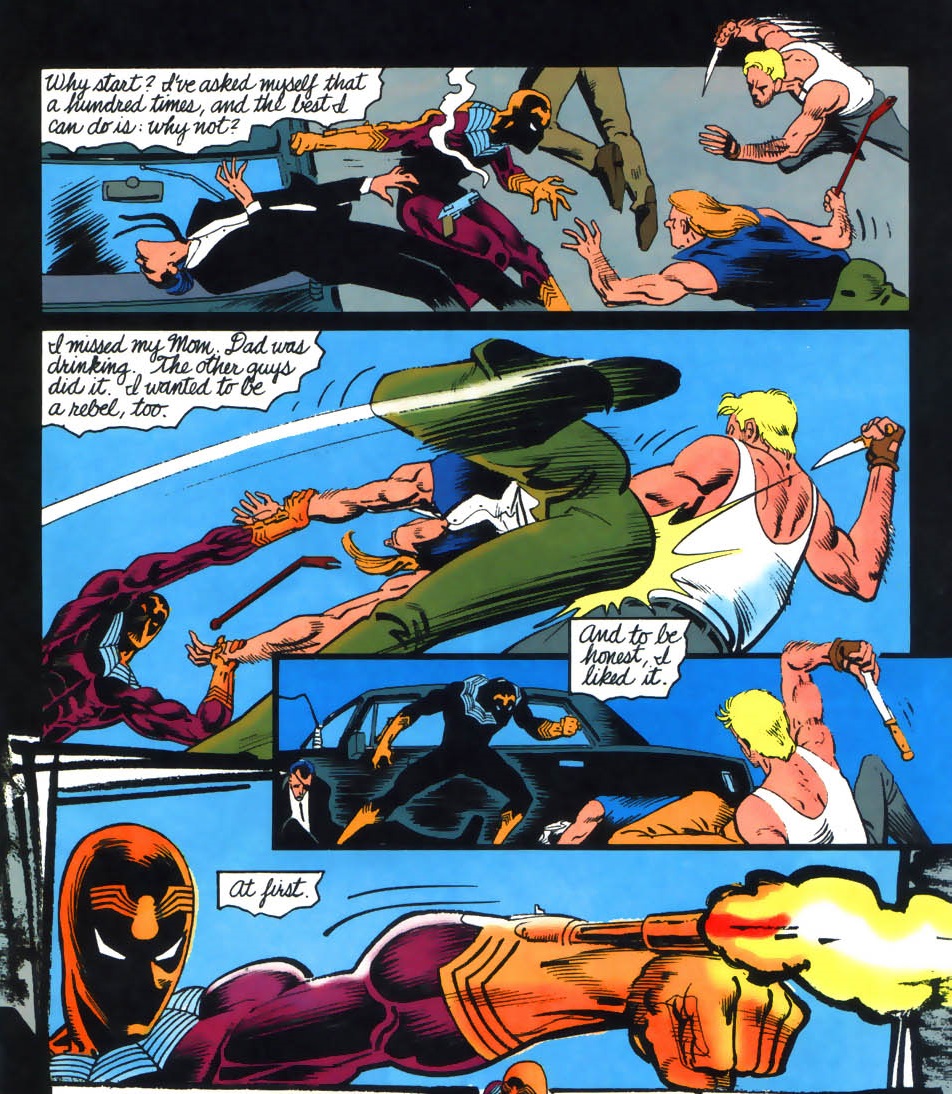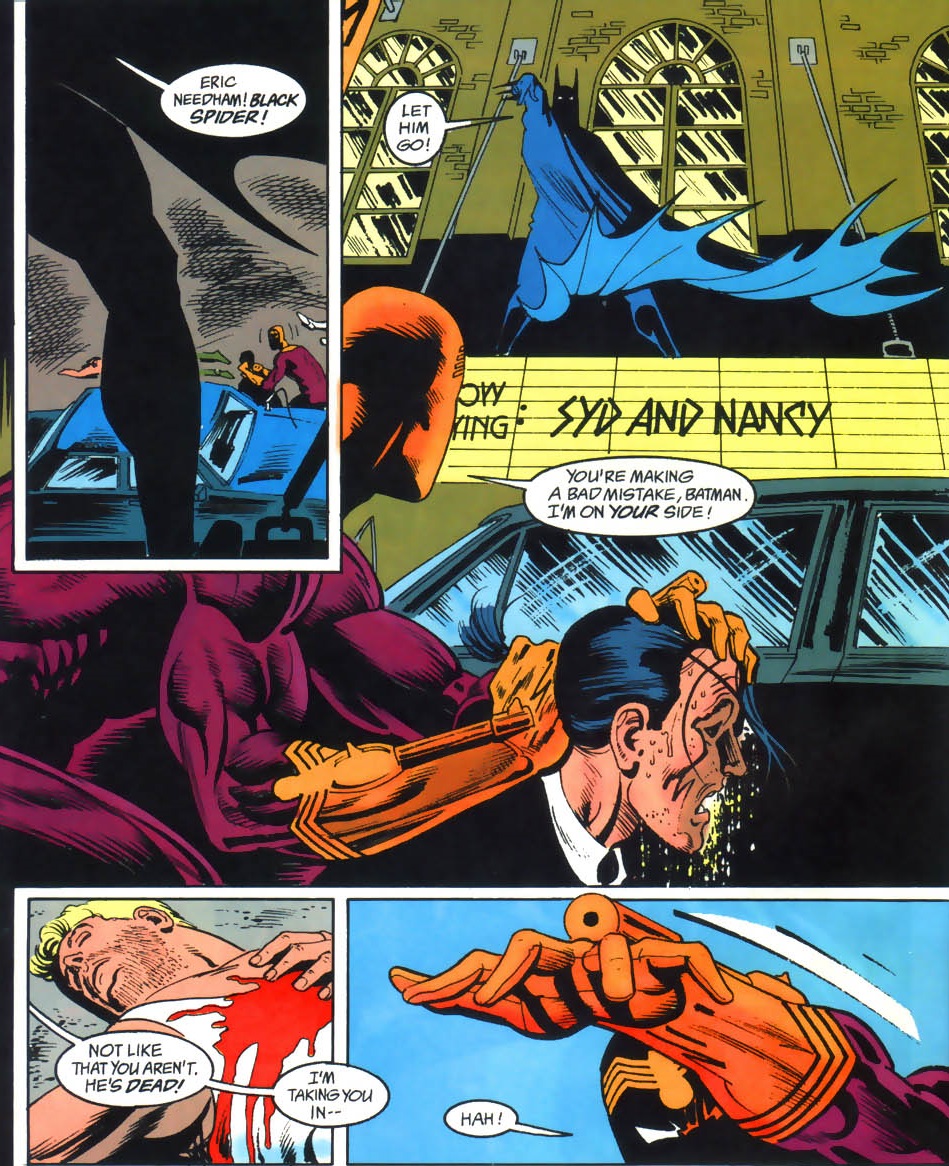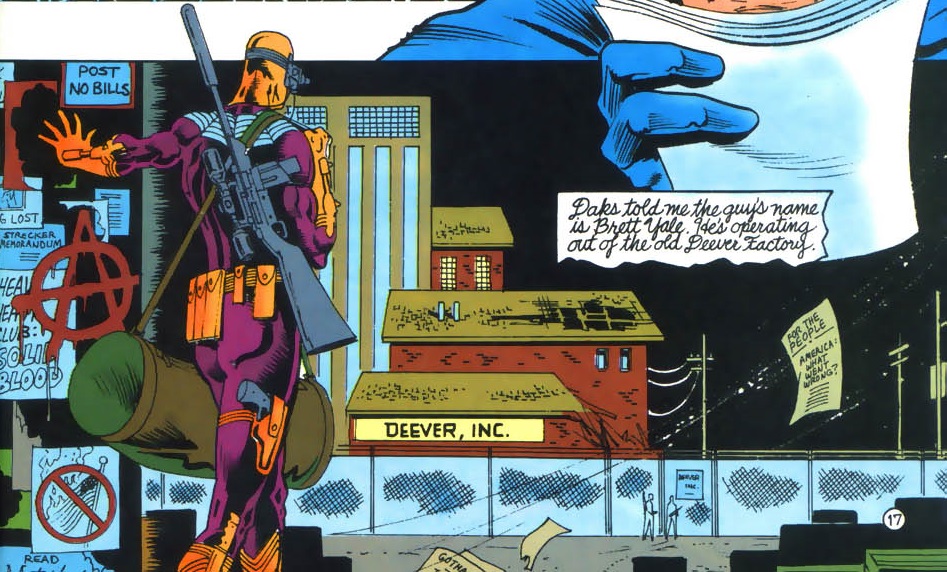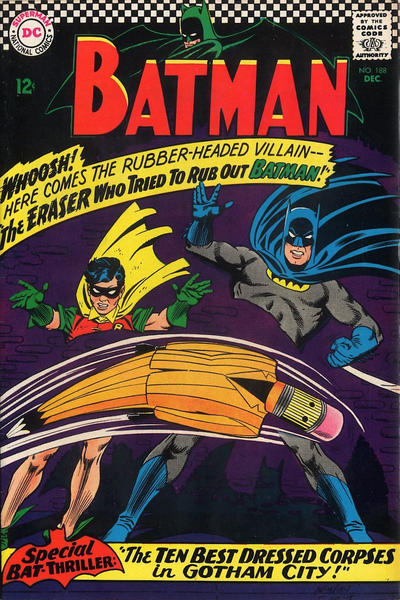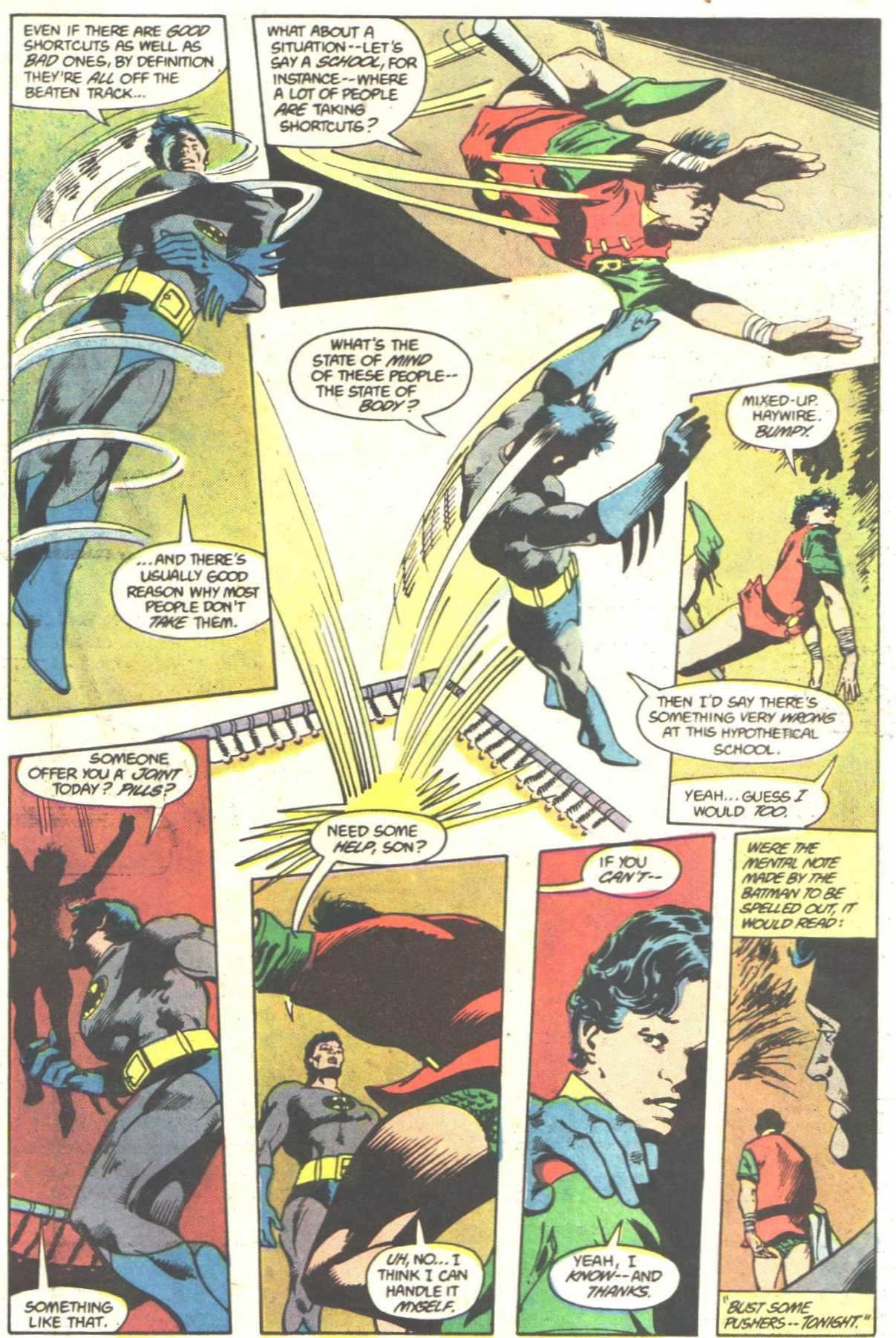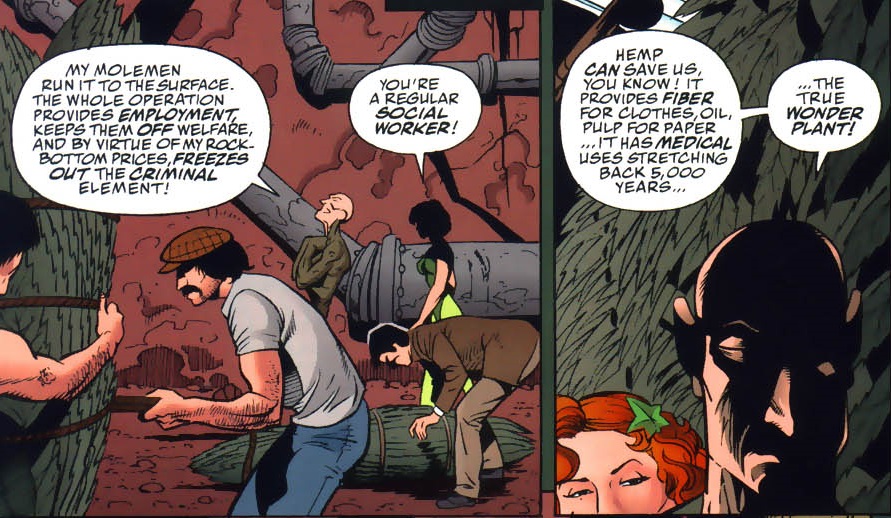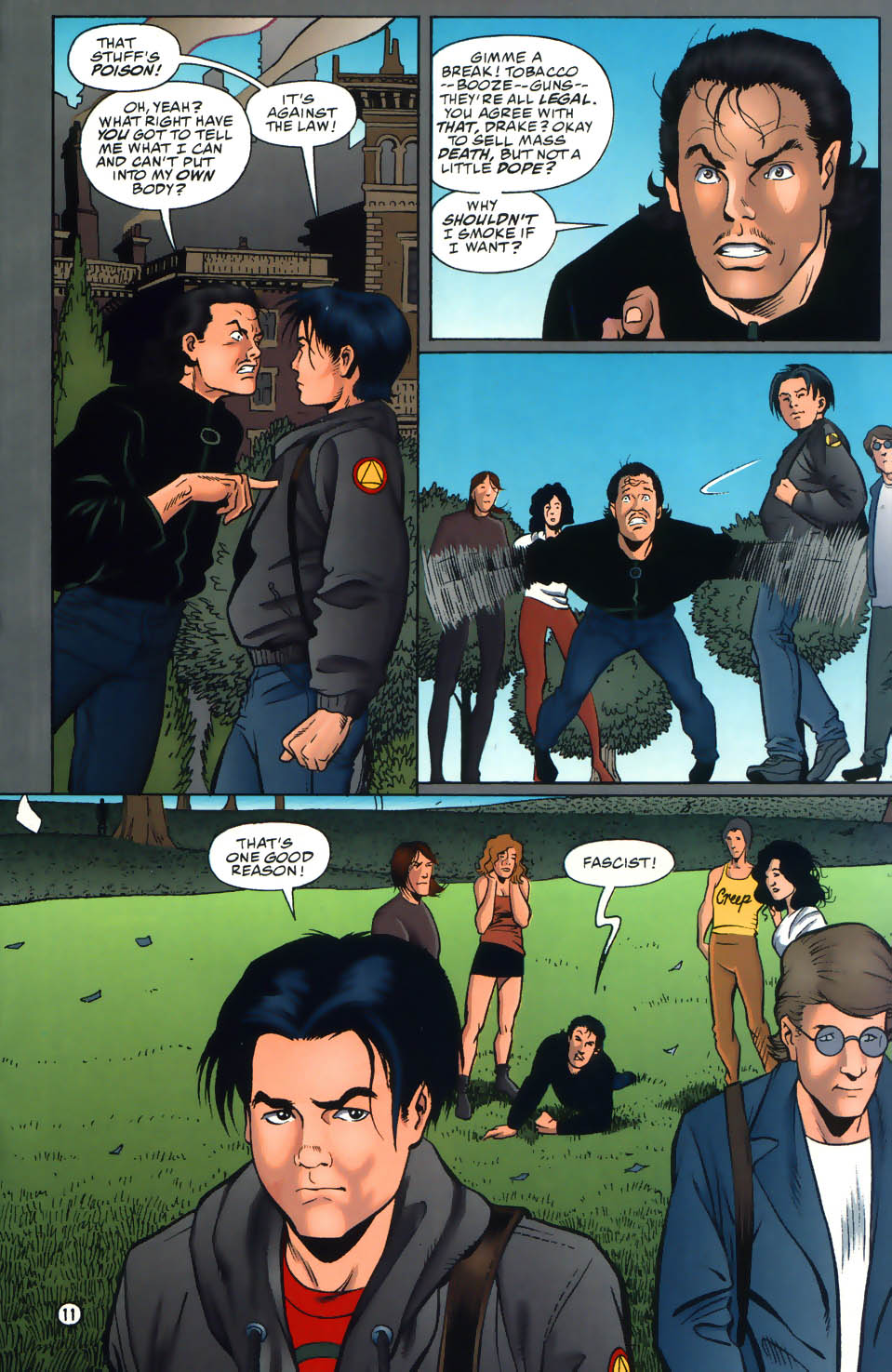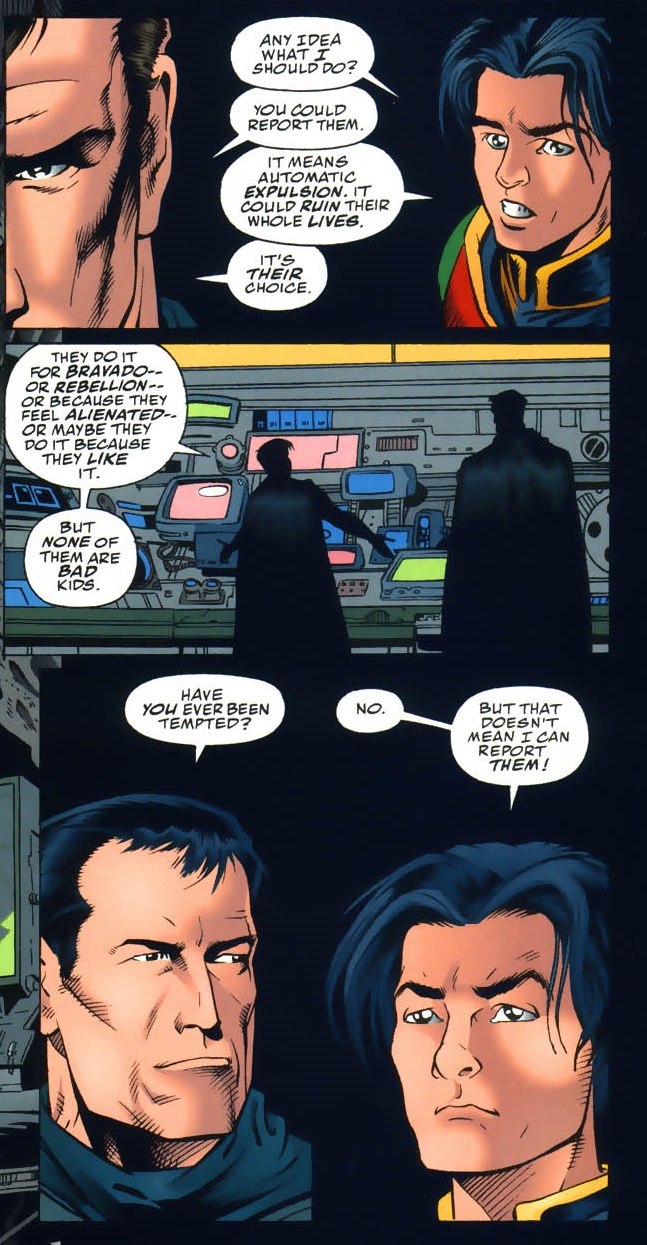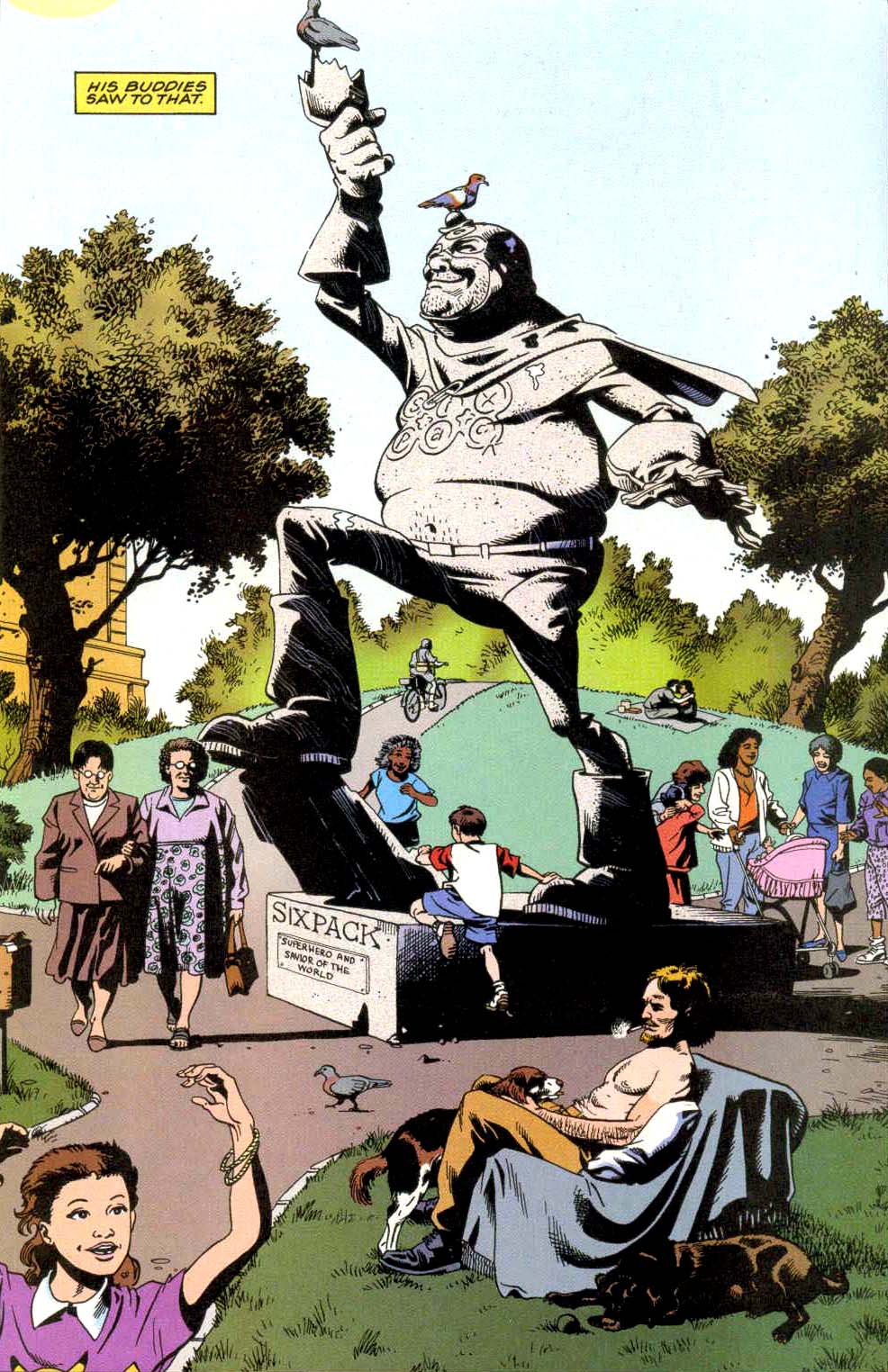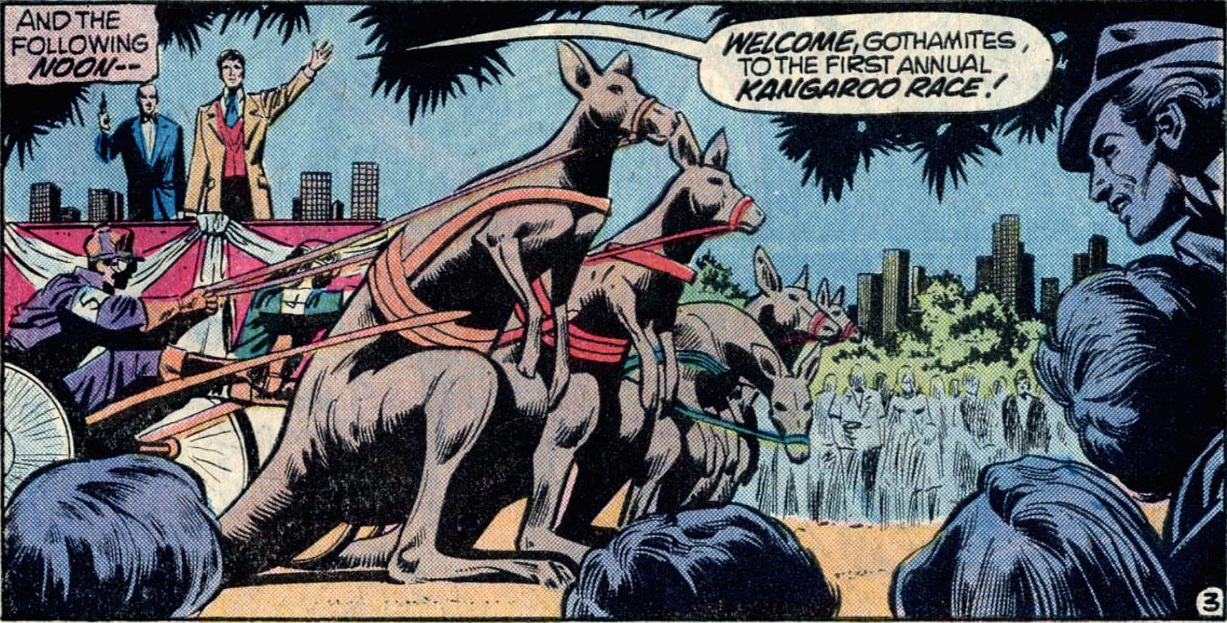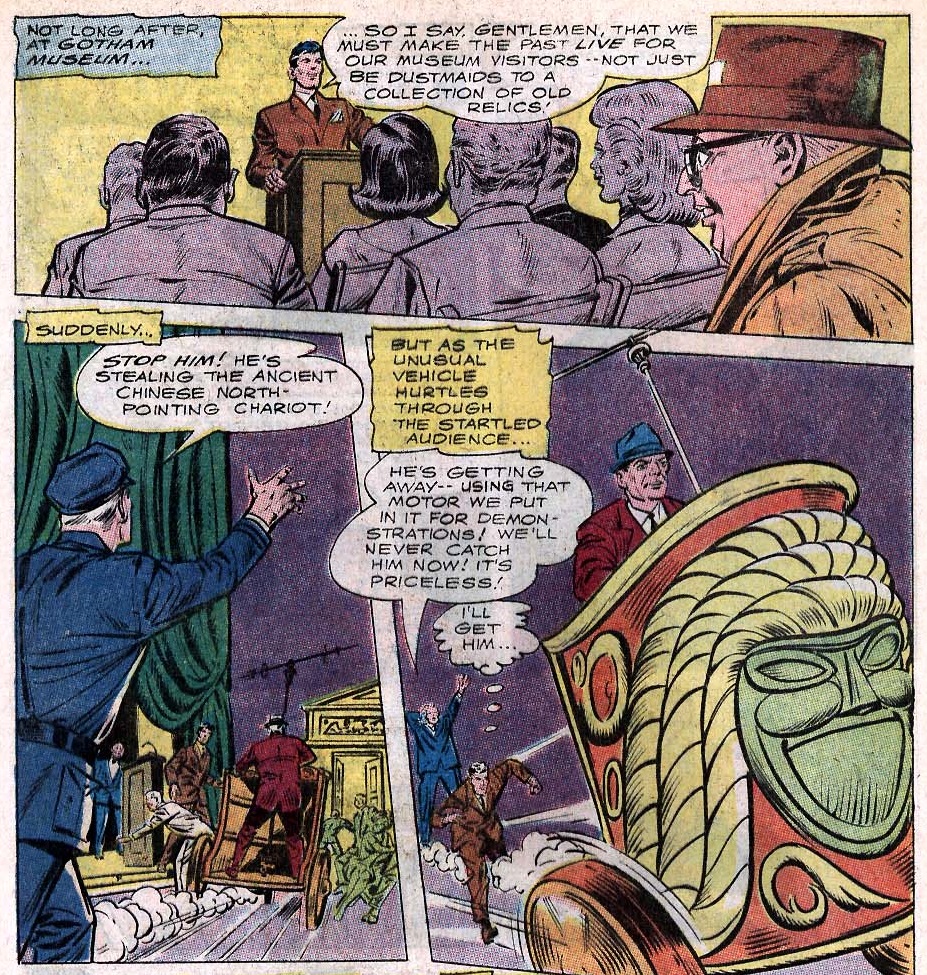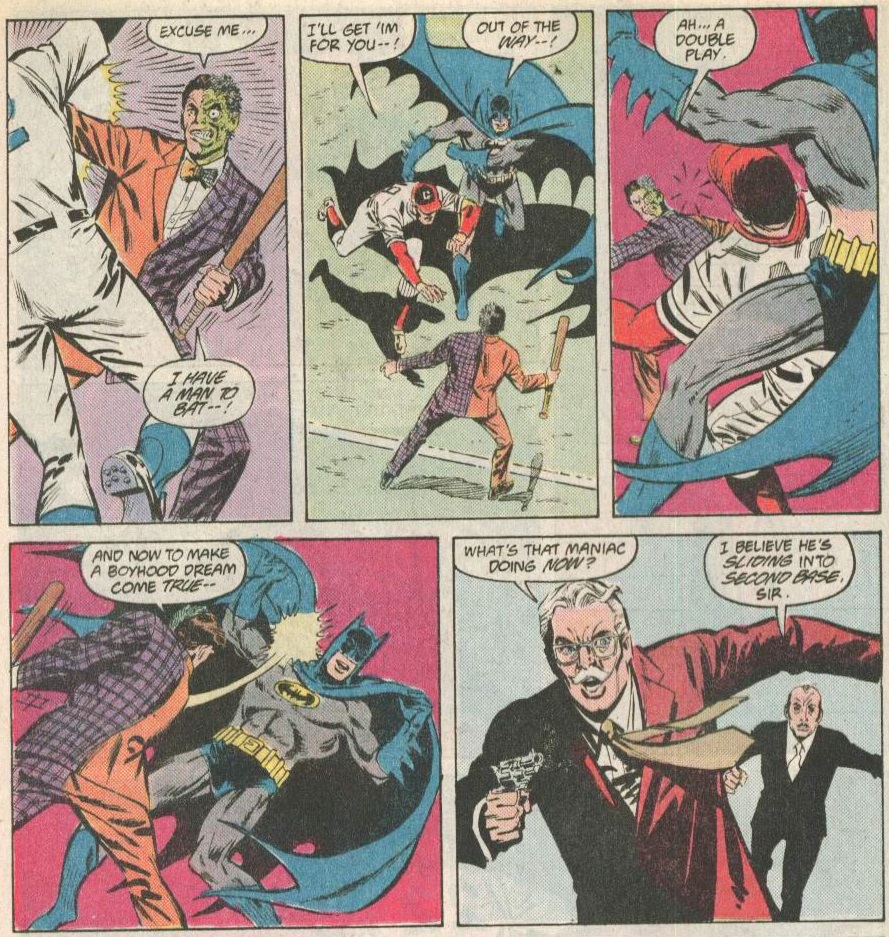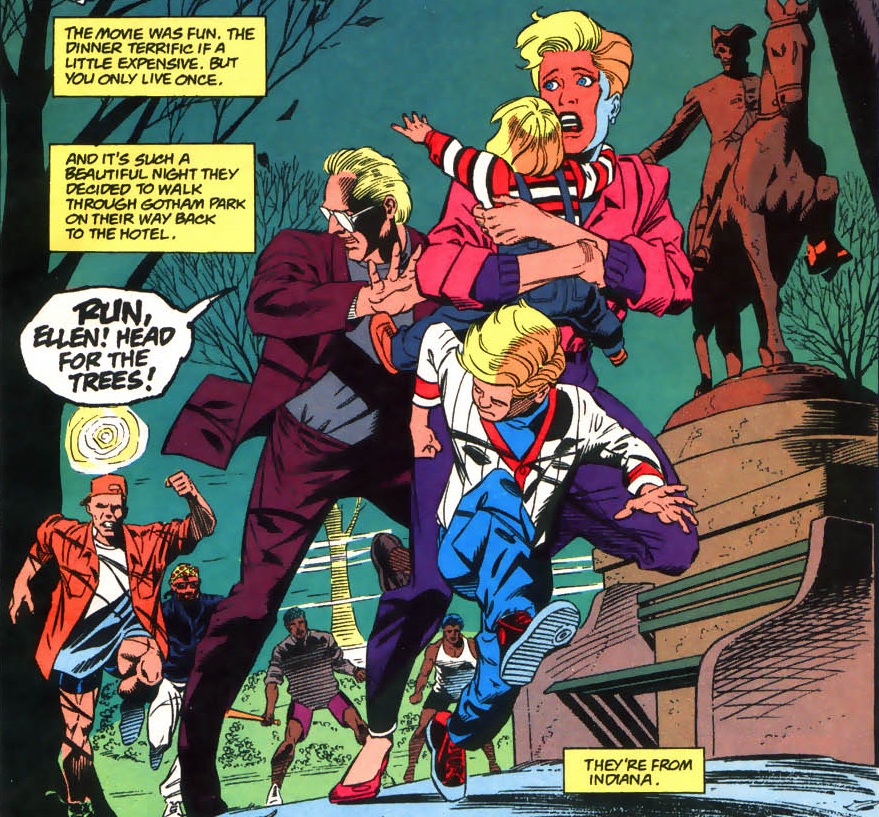
The despicable pre-Crisis Man-Bat

Man-Bat isn’t one of the most inspired concepts in Batman comics. Taking to the extreme the notion that great villains are an inversion of the heroes, Man-Bat’s name is a literal reversal of Batman’s… As for his origin, it’s just another retread of the old Jekyll and Hyde formula, as zoologist Kirk Langstrom takes a bat-gland extract and ends up becoming a bat-like mutant.

Still, I have a certain fascination for the pre-Crisis version of Man-Bat. He’s neither your regular Batman foe nor your regular Batman ally… He is basically a deranged asshole who hangs around Gotham City and unintentionally makes everyone’s life miserable, thus ushering in a strand of stories that aren’t your regular Batman adventures.

detective comics 400Detective Comics #400

To be sure, as simple and stupid as the concept of Man-Bat may sound, his debut in Detective Comics #400 (cover-dated June 1970) was actually quite neat… Yes, a lot of the story’s success derives from the excellent decision to have Neal Adams illustrate it (with inks by Dick Giordano). With the possible exception of Bernie Wrightson, no one could have come up with such a great monstrous design and infused the art with the required gothic atmosphere to sell this idea. Adams gave the material a classy treatment from the very first page, introducing a Kirk Langstrom who resembled Peter Cushing’s mad scientist in Hammer’s Frankenstein film series (which, in the previous year, had released its most macabre installment, Frankenstein Must Be Destroyed).

To Frank Robbins’ credit, he doesn’t just write a horror story about a man physically transforming into a monster, nor is he satisfied with the parallel between a man who inadvertently looks like a bat and a man who deliberately chose to look like one, even if that is obviously there as well:

detective comics 400Detective Comics #400

That first story involves the Blackout Gang – a gang of thieves who operate in the dark and in total silence with the help of “light intensifier” goggles, foam-soled shoes, and ultra-sonic cutting tools. Sure, they’re a convenient plot device to give Man-Bat a chance to show off his sonar, but they also help unfold a kaleidoscopic mirror house effect. Everyone in the story seems to be trying to emulate bats. Add to this the collection of giant papier-mâché bats at the Gotham Museum of Natural History where we first meet Langstrom (and where he later hides) and you have a comic in which the man/bat motif resonates in every single page.

Following up on this introduction, Detective Comics #402 and #407 round up the character’s initial storyline. This trilogy establishes practically all of the main elements of the Man-Bat mythos. The second part pits Batman and Man-Bat against each other as Langstrom completes his transition into a winged creature, losing his humanity psychologically as well as physically. The third part expands the role of Kirk’s fiancée, Francine Lee, who sacrifices her own humanity to be with her mutated lover, giving the saga even more of a gothic tragedy flavor.

This issue also provides one of the best replies to the age-old wedding tradition of asking guests if anyone sees fit why the marriage should not be consummated:

detective comics 407Detective Comics #407

On the one hand, Batman’s role may come across as particularly reactionary – since Kirk Langstrom consciously refuses to stop being Man-Bat and Francine’s sacrifice is put in terms of her losing her ‘human beauty,’ the Caped Crusader’s main problem seems to be merely that the couple look like inhuman beasts. Francine would thus appear to be much nobler, as she is willing to accept Kirk in spite of his deformity.

On the other hand, even if haphazardly, the story does suggest that the cost of turning into Man-Bat is not just ugliness, but insane rampage as well. This crucial point is better developed in later instalments, starting with the Langstroms’ next appearance, in the suitably titled ‘Man-Bat Madness,’ now under Frank Robbins’ own stylized pencils.

detective comics 416Detective Comics #416

The link between loss of conventional beauty and murderous rage is a classic Batman motif, also seen in villains such as Two-Face and Clayface. Robbins himself used this motif to great effect in ‘Man in the Eternal Mask’ (Detective Comics #409), about a disfigured killer out for revenge not only against the one he blames for his mutilation but against the art that immortalized his previous looks and that now torments him as a reminder of his loss (the tale finishes with a twist on The Portrait of Dorian Day, as the killer attacks his beautiful portrait and is ultimately defeated by it).

But, again, Man-Bat is a different sort of beast. Kirk Langstrom’s madness does not derive from his revolt at having been turned into a monster – after all, no matter how unintentional it was, the transformation was completely self-inflicted, so there is no one to blame but himself. For the most part, Kirk just comes across like a jerk.

It doesn’t help that he is the worst husband ever. As if it wasn’t bad enough that he keeps turning into a monster and is responsible for his wife turning into one as well, in ‘Man-Bat over Vegas’ he is even willing to shoot Francine just to solve the latest Man-Bat outburst:

detective comics 429Detective Comics #429

Frank Robbins’ final Man-Bat story was ‘King of the Gotham Jungle!’ (Batman #254), which threw the character in a different direction. Rather than a curse that turns him mad, Kirk Langstrom’s latest transformation is treated as a deliberate attempt to become a crime-fighter, with Kirk remaining perfectly lucid in his Man-Bat form and the Dark Knight accepting him as a crime-fighting ally.

This status quo leads to ‘Bring Back Killer Krag’ (The Brave and the Bold #119), in which Kirk competes with Batman to capture a mob hitman hidden in a Caribbean fortress (ruled by a dictator who calls himself ‘the Black Napoleon’). Like many of the best issues of The Brave and the Bold written by Bob Haney, this one is packed with fun, wild ideas – the duo faces everything from armed guards to an angry shark, vampire bats, and voodoo executions, building up to an awesome climax in which the Dark Knight himself takes the bat-gland serum!

That was followed by a short-lived attempt at a solo series…

man-bat

…but clearly the world wasn’t ready. The series lasted for two issues before being wrapped up as a backup feature in Detective Comics.

The Langstroms then moved to New York City. Always the horrible husband, Kirk still tried to pursue his Man-Bat crime-fighting career, living precariously on voluntary rewards by grateful citizens, even though his wife was expecting a child. In his defense, Man-Bat did develop a superpower that was as absurd as it was convenient, namely the ability to pick up on the ‘mental radiation’ of criminals (supposedly triggered by their desire and determination to commit a crime). Oh, and he totally fought a guy called SNAFU!

As if it wasn’t enough that Kirk treated his wife so poorly, he also drove his downstairs neighbor insane. Literally:

Batman Family 14Batman Family #14

Soon, the deadbeat Kirk Langstrom partnered up with private detective Jason Bard, although not without some convincing:

batman family 20Batman Family #20

Meanwhile Kirk’s poor daughter, Rebecca Elizabeth Langstrom, is suspected of being a latent demon child (Batman Family #17). Even after that mess is cleared, she turns out to be quite the unhealthy baby, having inherited oversensitive hearing from her parents, which doesn’t let her sleep. And as a father, Kirk brings all the understanding you’d expect from him…

detective comics 485Detective Comics #485

Always one for common sense solutions, Kirk steals a bunch of illegal drugs (banned by the FDA due to dangerous side effects) and hires the dodgiest ‘no-questions-asked’ doctor he can find to fix his daughter’s condition (The Brave and the Bold #165). When Batman wisely prevents him from administering the drugs (which on top of everything else have been contaminated with highly toxic bacteria) to the child, Kirk turns his anger against the Caped Crusader, even after Rebecca gets cured with the help of Superman (DC Comics Presents #35).

Indeed, by the time we get to the early 1980s, Kirk is even more of a mess. Having screwed up the proportions in his own bat-gland formula, he actually forgets his daughter is cured and so he attacks Batman in a completely misguided act of revenge for her supposed death, although not without first engaging in some old-school domestic violence:

batman #342Batman #342

Batman finally fixes everything. The Caped Crusader houses Francine when she has a breakdown and confronts Kirk with his live daughter, so that he is shaken out of the Man-Bat state.

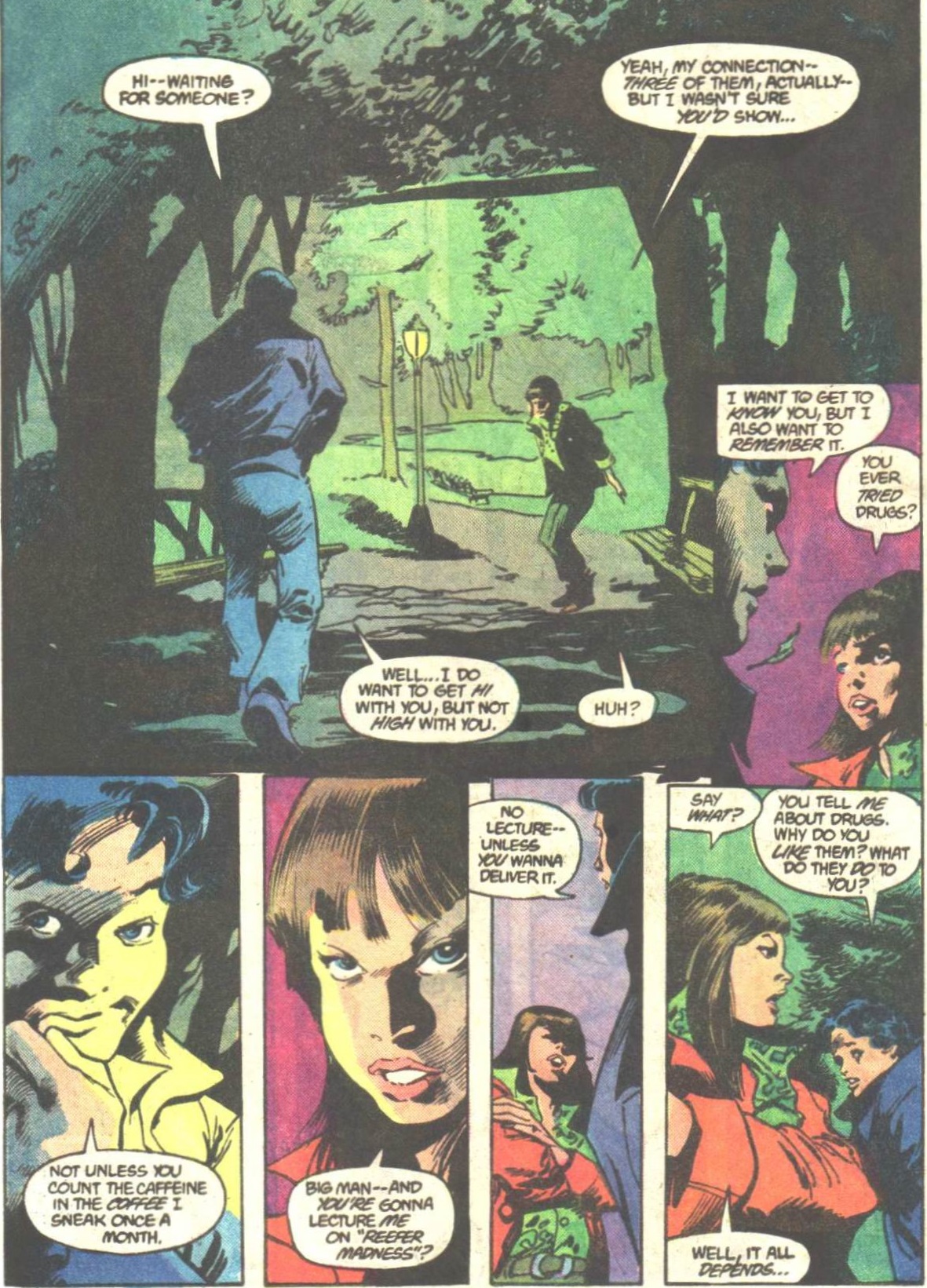
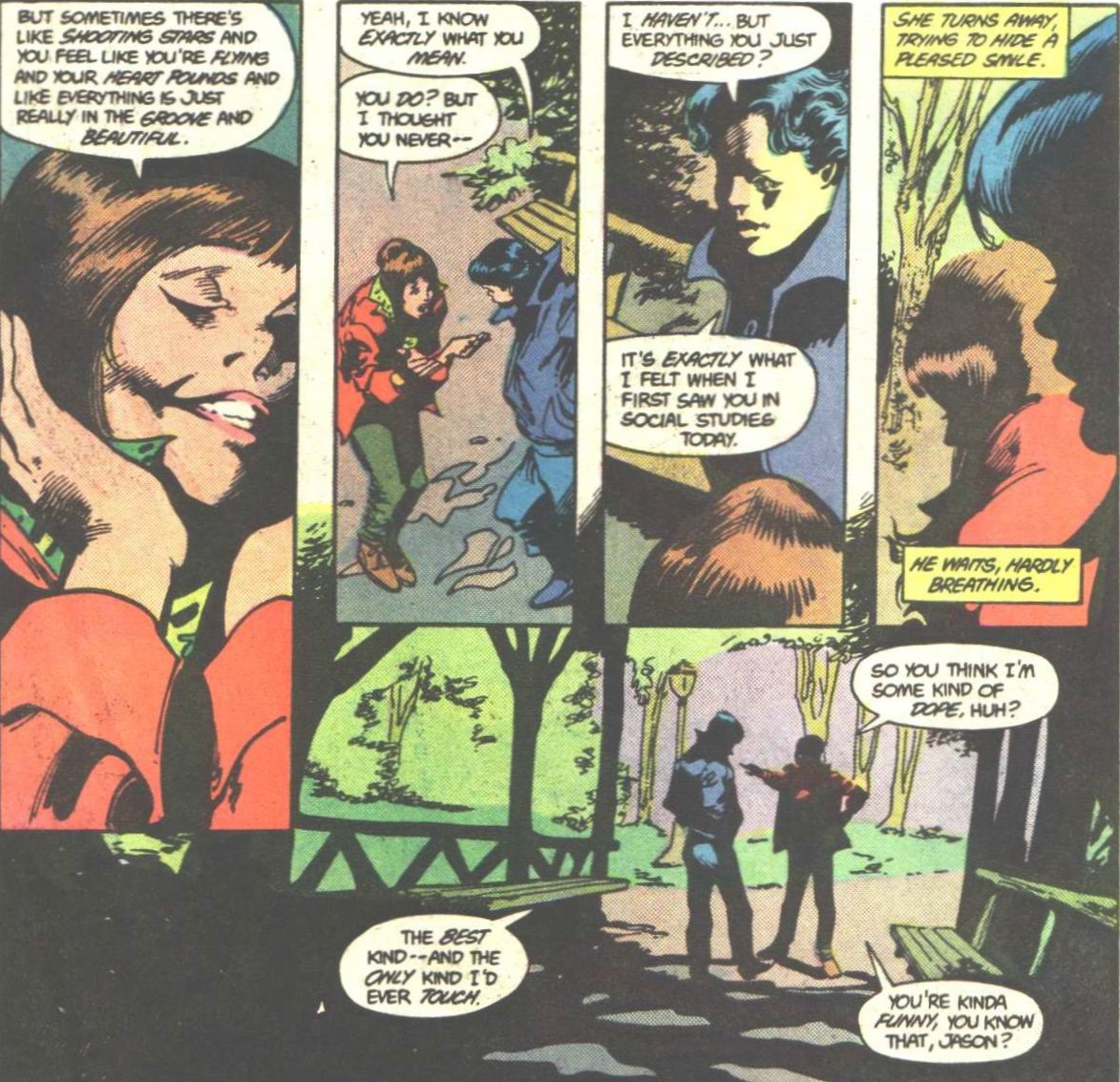
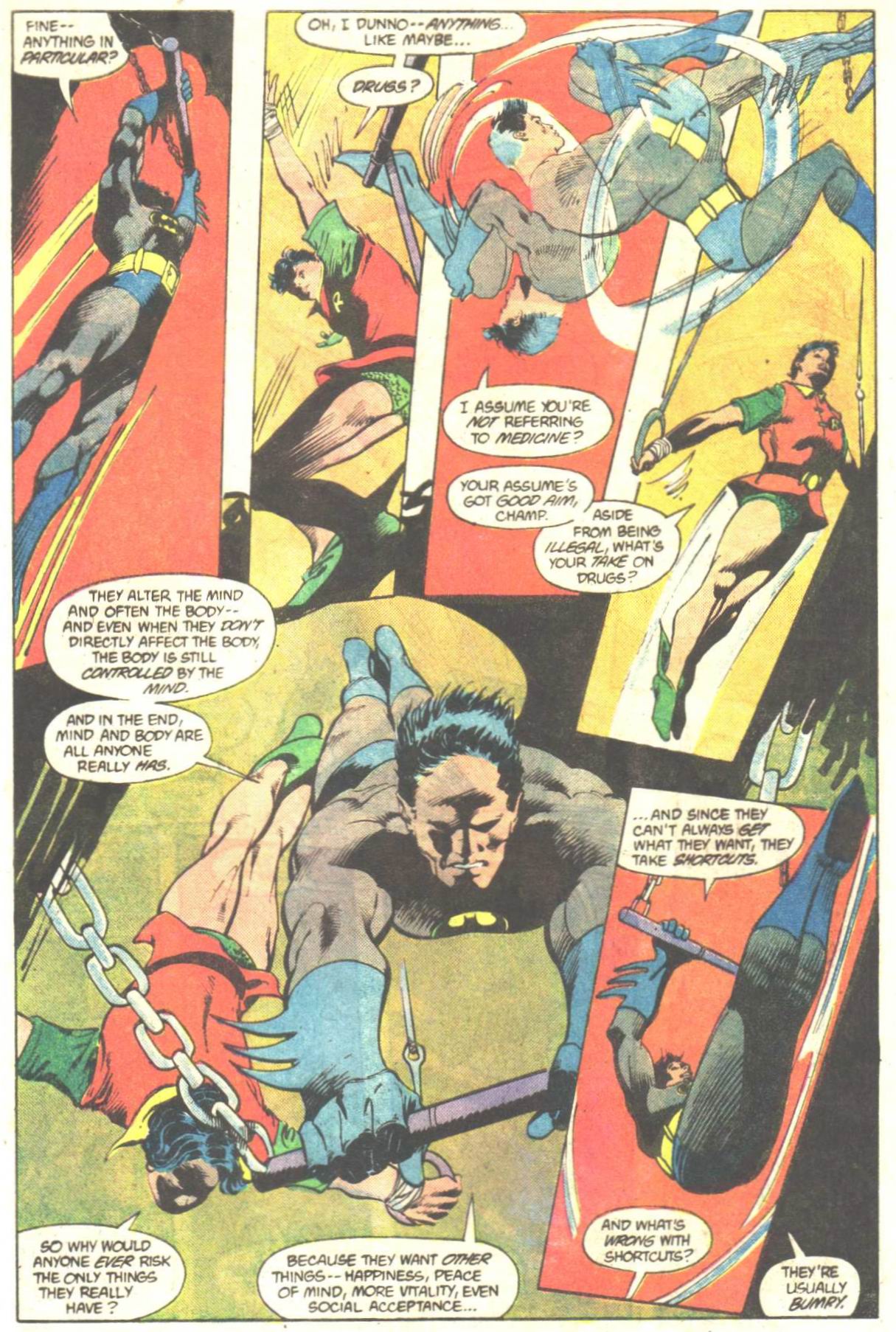
Not long after that, though, the idiot forgets to take his medication and goes on *yet another* vengeance quest for his not-dead daughter, this time kidnapping the closest thing to Batman’s son he can find: Jason Todd, the second Robin. Kirk tries to turn the poor boy into a bat, which leads to this creepy splash page:

batman 361Batman #361

The latter is not a bad comic – the art is highly atmospheric and Doug Moench, always one for symbolism overdose, works in a bunch of factoids about bats. He also uses Kirk Langstrom’s family fixation to contrast and develop Bruce’s own fatherly relationship with Jason. However, it is ultimately the same story we’ve seen before over and over again, with Kirk going berserk and Batman injecting him with some antidote in the end.

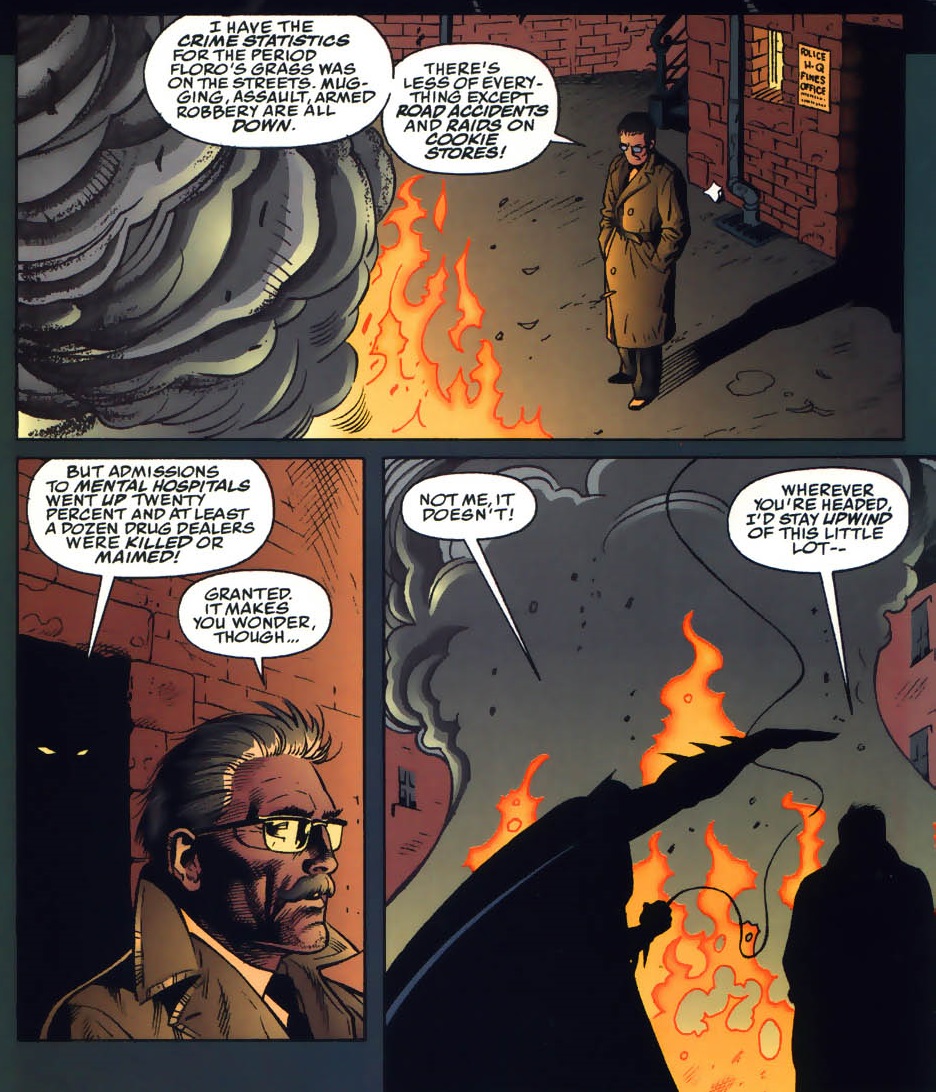
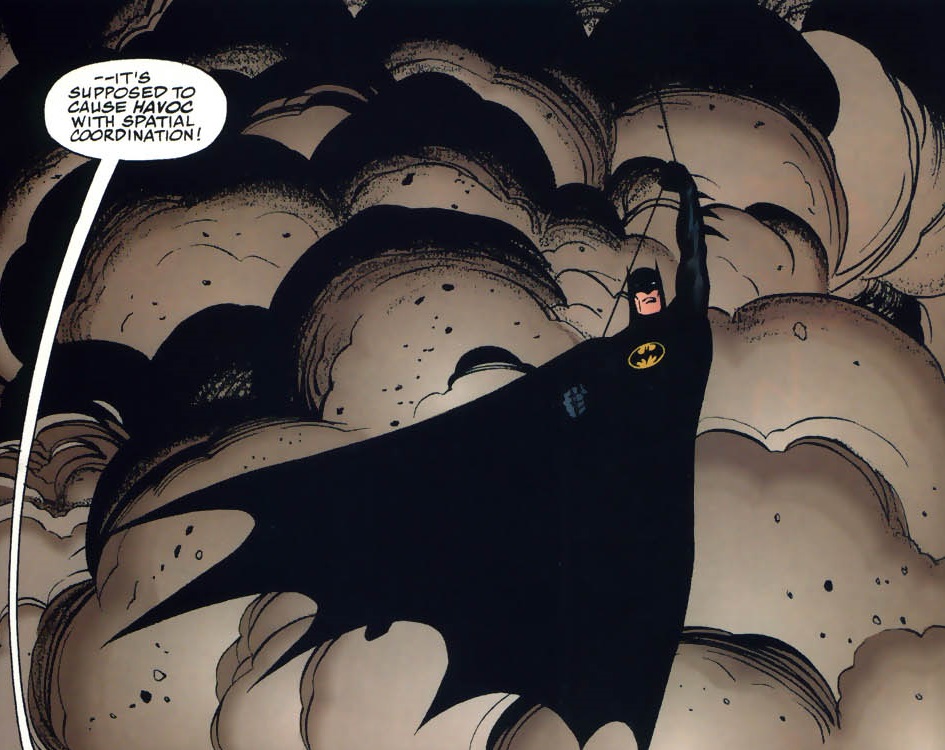
In theory, this was the last pre-Crisis confrontation between the two. If I’m not mistaken, it would take about a decade for Man-Bat and Batman to meet again in the comics (outside of the Batman Adventures line, that is). However, when Moench revisited the character in 1996 (in Batman #536-538), even though that three-parter was technically set in post-Crisis continuity, the Langstroms’ depiction sure felt like a throwback…

This time around, Kirk gets feral fever because a weird phenomenon has been stretching the night time. Well, the fact that he gets hopped up on hard drugs probably doesn’t help… Anyway, Kirk beats up Francine (again), goes on a rampage in the Gotham night (devouring an alley cat in the process), and then flies off to the North Pole. In the Arctic, Kirk runs into a secret government operation to develop an electromagnetic death-ray, in a typically paranoia-infused Moench twist. It’s a pretty terrible story all around, but of course the main attraction is seeing Man-Bat drawn by the übergothic Kelley Jones:

Batman #536Batman #536

Speaking of writers shoehorning their agenda into Man-Bat comics that are illustrated by eccentric artists: around this time, DC also published Jamie Delano’s and John Bolton’s Manbat, a mini-series about an eco-activist called Marilyn Munro (seriously) who stumbles upon Kirk and Francine Langstrom, now exiled in the desert. Increasingly frustrated with humanity’s environmental crimes and always one for poorly thought out solutions, Kirk has decided to engineer a new species to replace humans.

Delano brought to Manbat the same kind of poetic prose and in-yer-face politics that he had perfected in his runs on Hellblazer and Animal Man, taking advantage of Bolton’s flair for the grotesque in this indictment of vivisection:

ManbatManbat

DC labeled Manbat an Elseworlds tale, but it reads more like a sequel to the old stories, showing a logical evolution of the Langstroms (as long as you ignore the fact that they once had a daughter called Rebecca). What really makes this comic worthy of an out-of-continuity sticker is the fact that, even for modern Batman standards, the Dark Knight comes across like a hilariously authoritarian douchebag:

ManbatManbat

In fact, the defining reboot of Man-Bat in the post-Crisis continuity was wisely assigned to writer Chuck Dixon, an expert in streamlining and updating old concepts. In Legends of the Dark Knight Annual #5, Dixon efficiently remade the first couple of Man-Bat stories, making Kirk much more likeable in the process. Instead of a mad scientist, Kirk was now more of a tragic figure from the start – a deaf workaholic experimenting with bat genetics in order improve people’s hearing. He was still somewhat of a jerk to Francine (who was now given a scientific background herself), but that became a less prominent feature.
It’s this new Man-Bat that you find in ensuing comics (except for that Moench three-parter). Dixon reintroduced him as a regular supporting character, first in an issue of the anthology Showcase ’94 and then in a 1996 Man-Bat mini-series. They were both illustrated by Flint Henry, who, true to form, drew Man-Bat as the most disgusting creature you can imagine…

Man-Bat 1

Kirk Langstrom has continued to be reinvented and he is still somewhat of a wild card in Batman’s corner of the DCU (albeit not always an interesting one). In those pre-Crisis years, though, when Gotham wasn’t populated with all that many recognizable characters beyond Commissioner Gordon, the Batman family, and the rogues’ gallery, I find it fascinating to follow the parallel adventures of this deluded loser who just keeps screwing up.

Posted in GOTHAM CITIZENS | Tagged , , , , , , , , , , , , | Leave a comment

COMICS CAN BE AWESOME (May 2019)

While I hope superheroes don’t become as hegemonic in film as they did in comic books, Anthony and Joe Russo’s Avengers: Endgame is further proof that this genre can make for great cinema that is both fun to watch and interesting to dissect. The latest blockbuster is the phenomenal movie I wanted, complete with kickass action set-pieces, grandiose adventure, and clever engagement with otherworldly logic, not to mention the fan-rewarding self-reflexivity that is a staple of this kind of stories. Yet there is more to it… Surprisingly – although perhaps appropriately enough for an installment that aims to give us a temporary sense of closure – Endgame is also an emotional drama about grief and nostalgia for the recent past. Plus, at one point it turns into a laugh-out-loud sci-fi comedy, both mocking and mimicking Back to the Future – part II. Finally, as usual with the MCU, you can go for more political readings, including of the post-apocalyptic imagery, of the sight of Captain America fighting himself, of Thanos’ very attempt to remake the world (and control its memory), of that fist-pumping ensemble shot of female heroes taking charge (more effective than anything in Anna Boden’s and Ryan Flek’s heavy-handed Captain Marvel), or of the final passing of the torches.

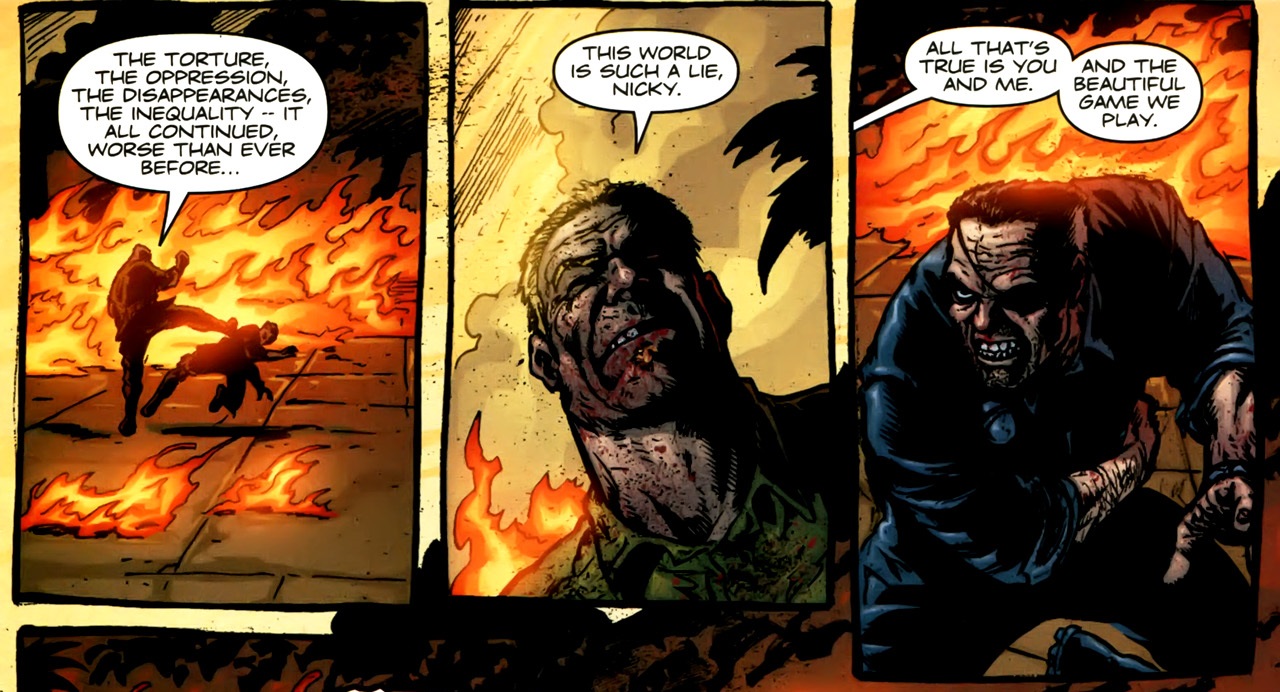
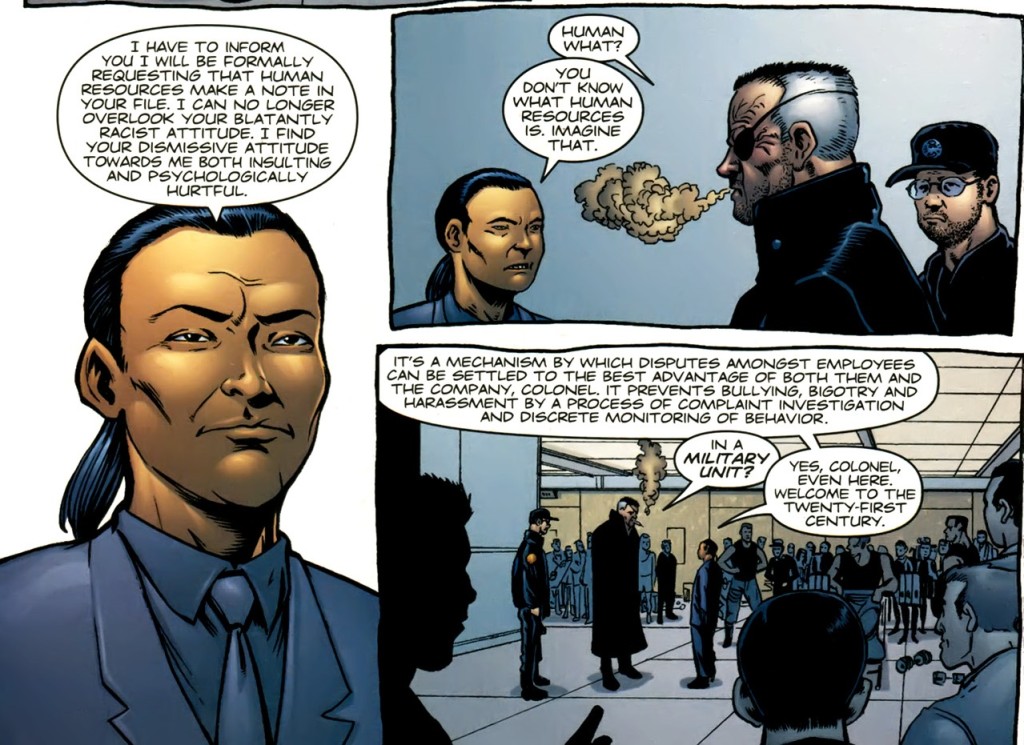
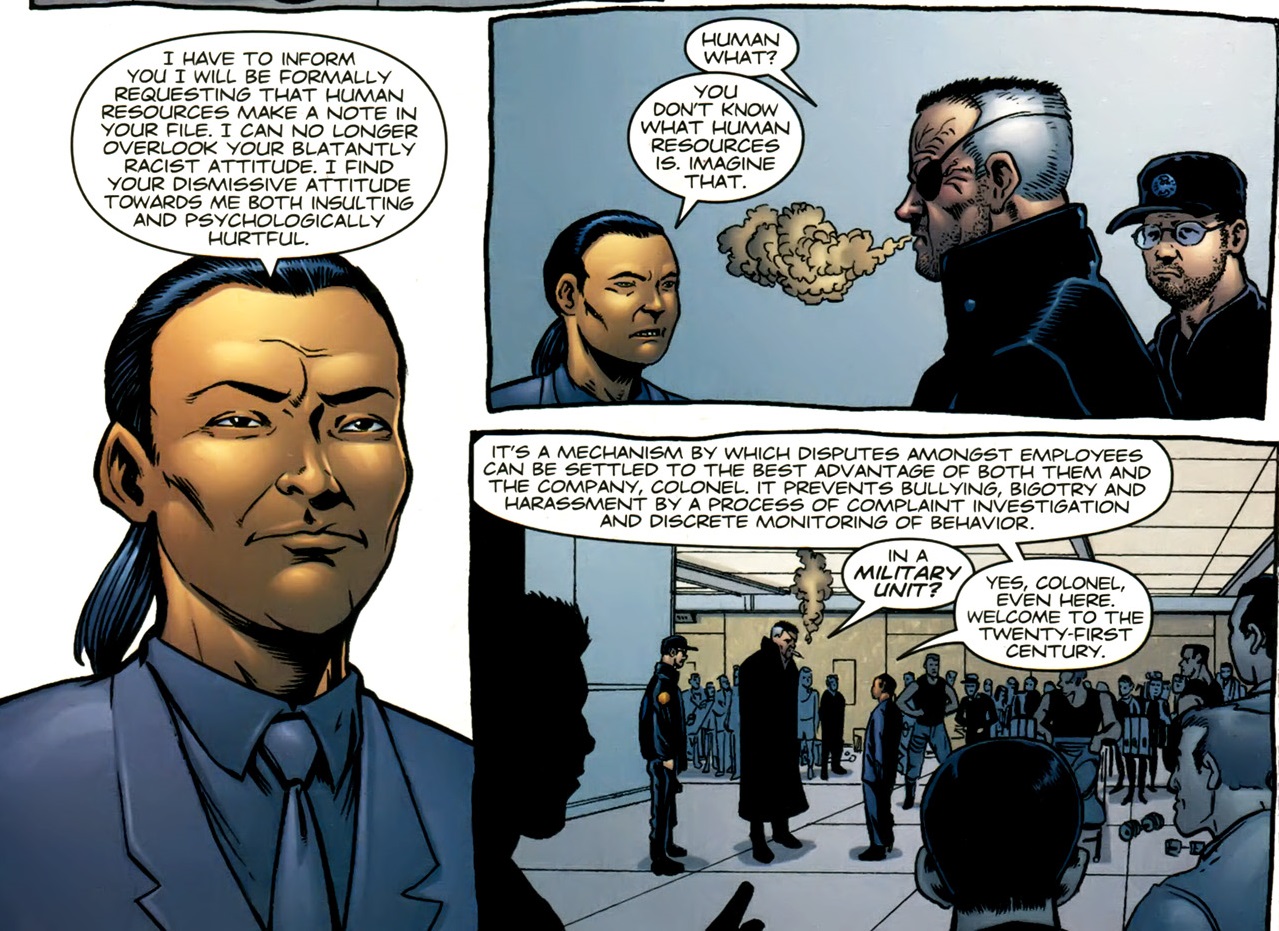
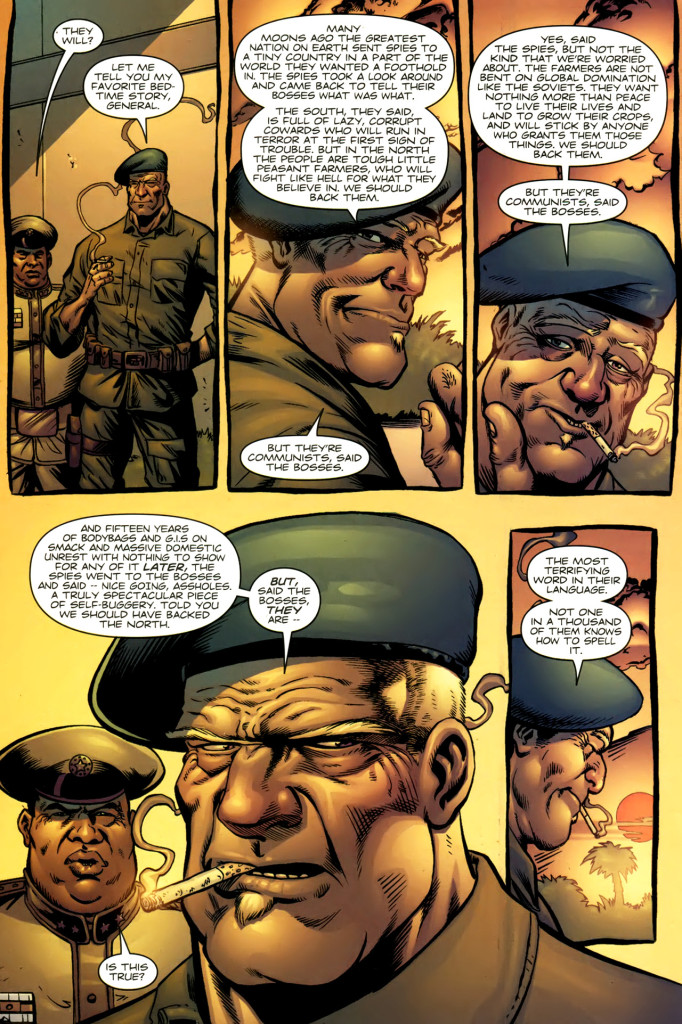
You know what else is awesome? Comics.

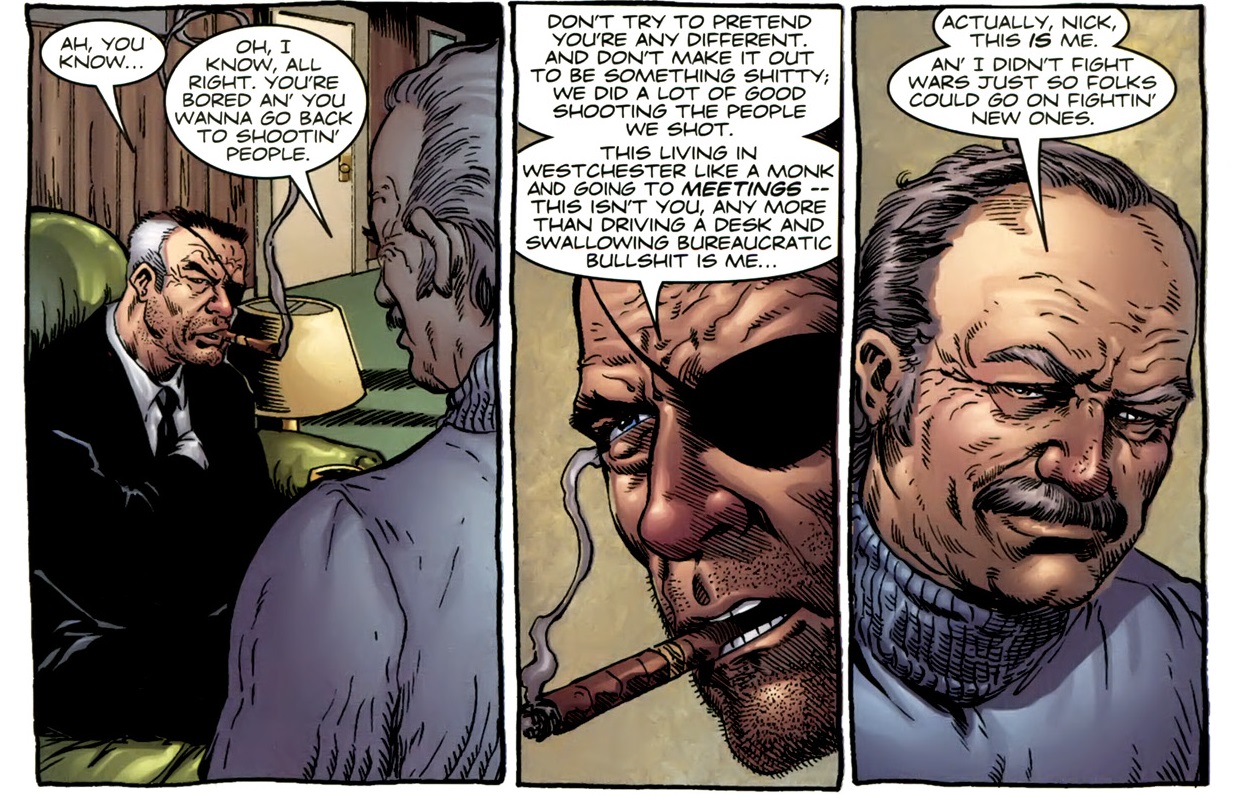
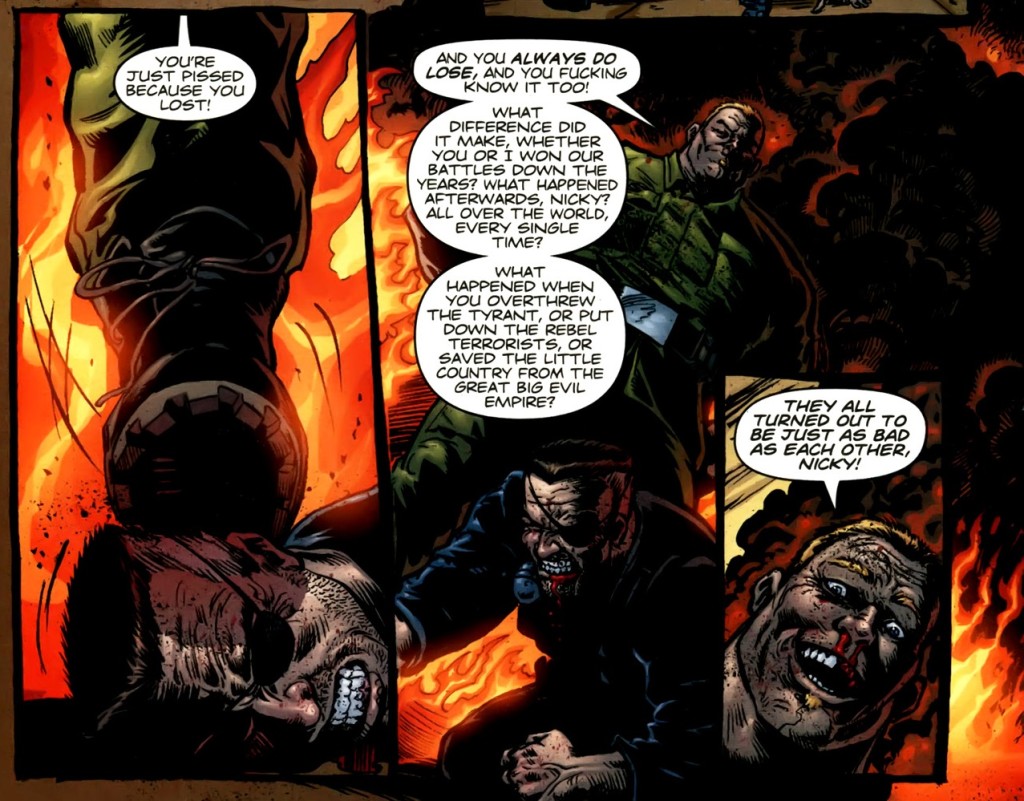
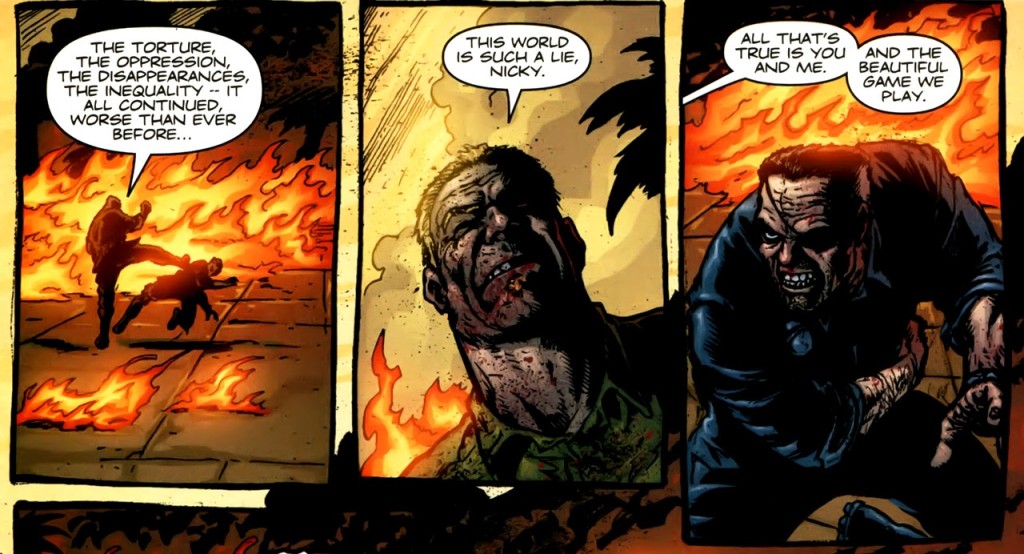
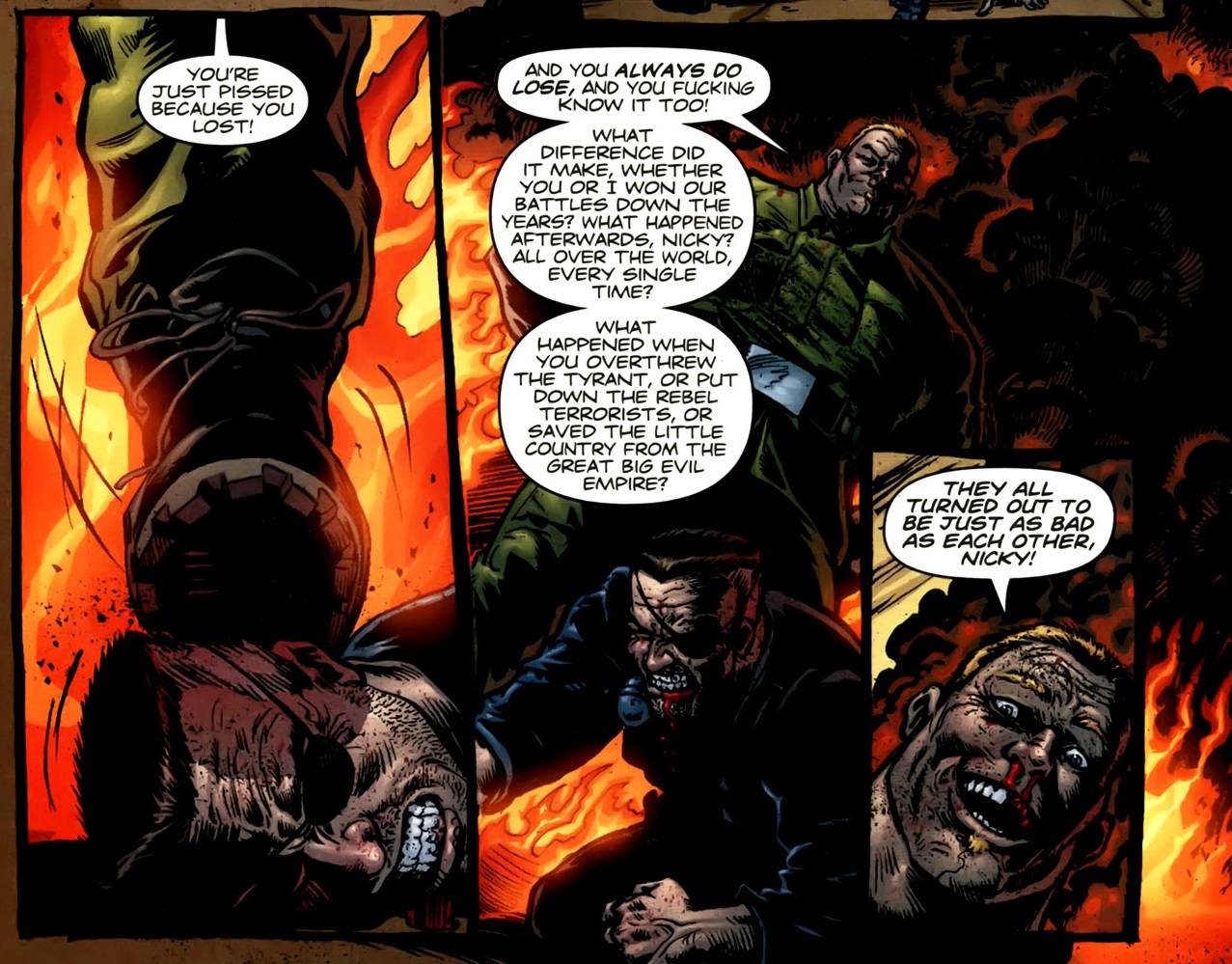
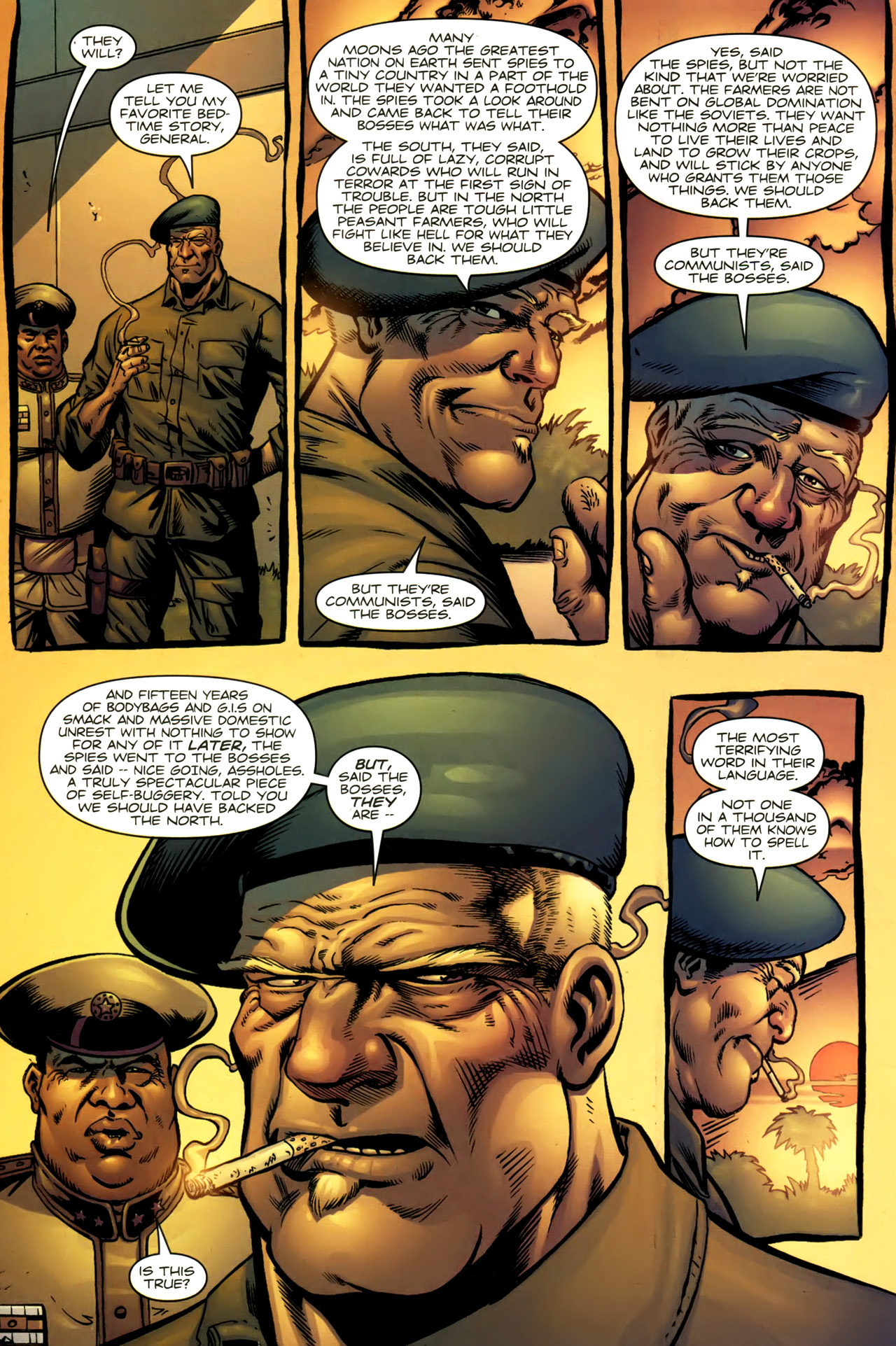
Dead DropDead Drop #2
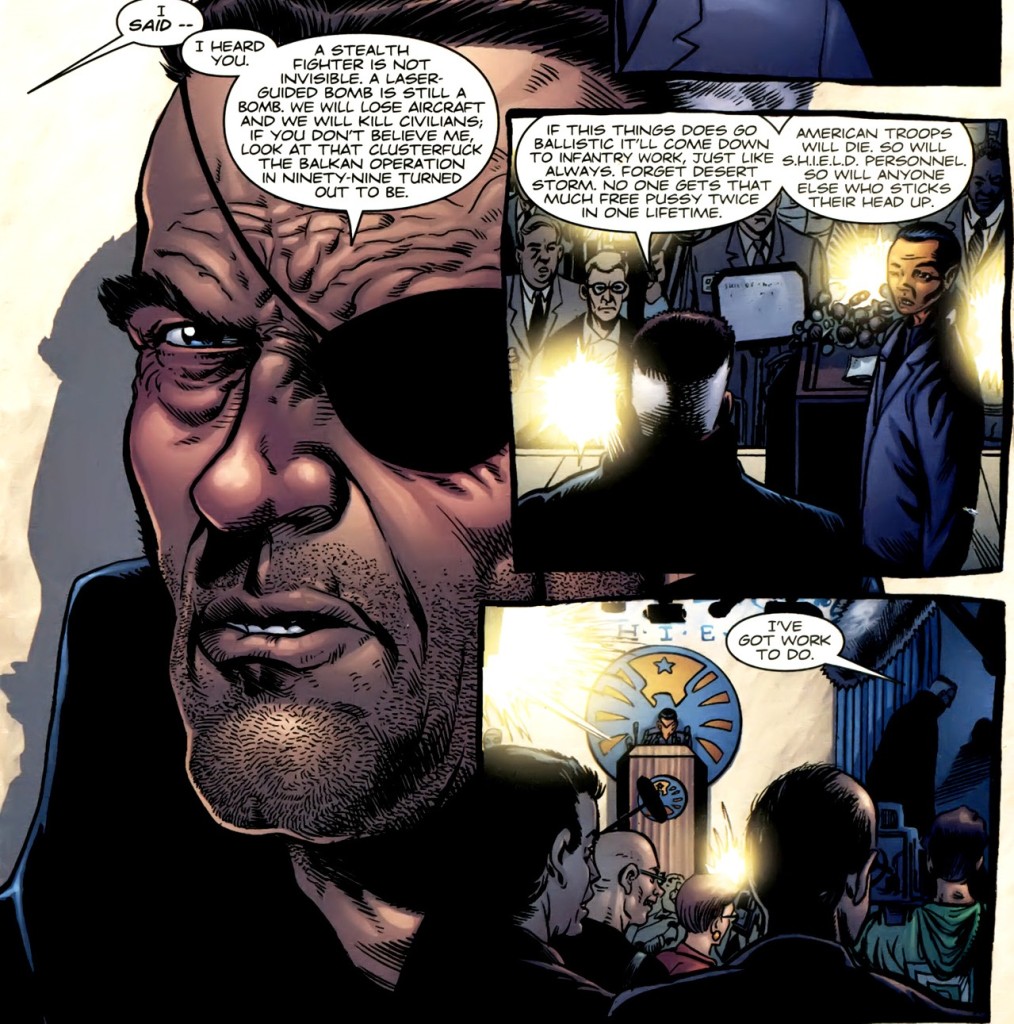
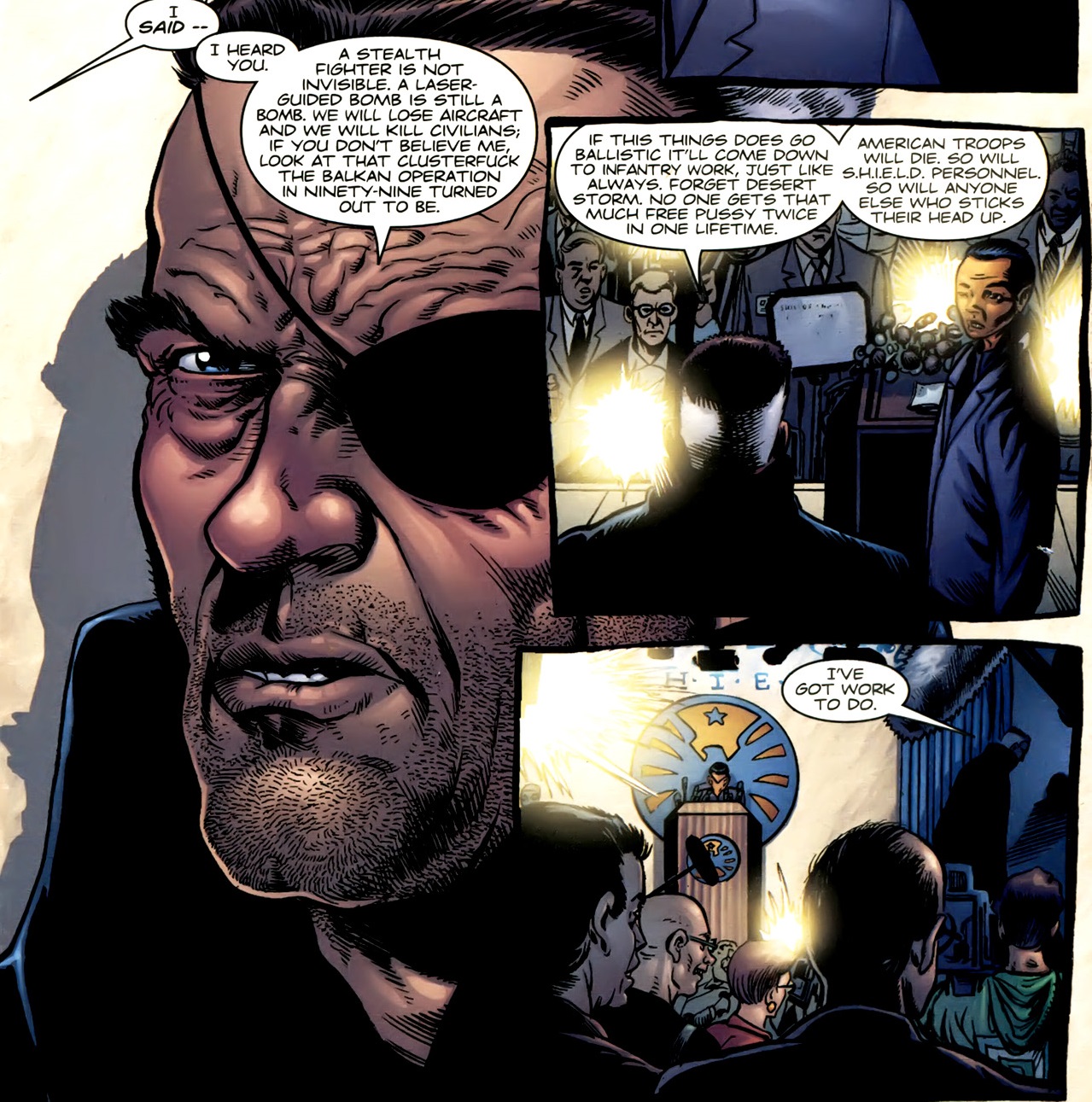
Ex Machina 36Ex Machina #36
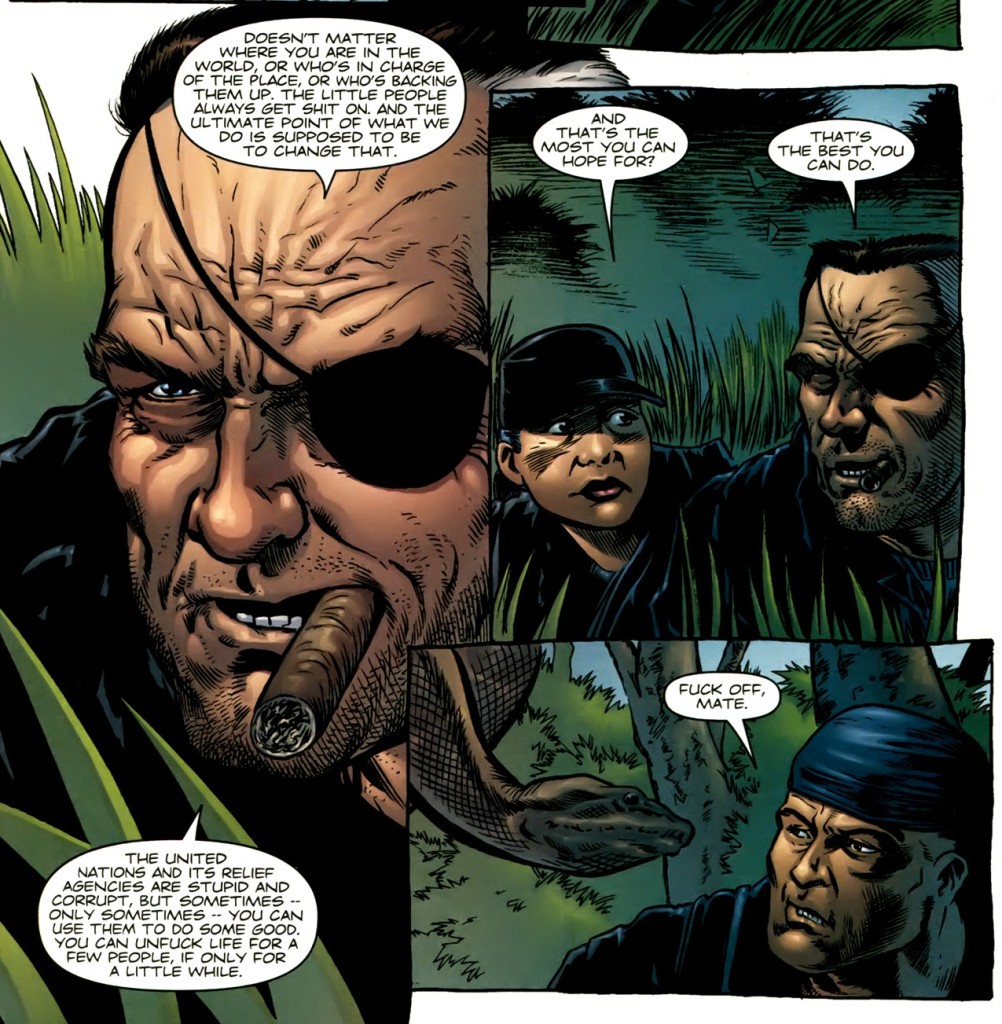
Marvel Fanfare #10Marvel Fanfare #10
Posted in SUPER POWERS | Tagged , , , , , , , , , , , , , , , | Leave a comment

Two-fisted cyberpunk comics

Every once in a while, the zeitgeist hits the world of cinema with just the right creative force for it to spit out a bunch of simultaneous gems with a similar mood. For example, 1981 was clearly one of the greatest years in terms of cool futuristic thrillers (The Road Warrior, Escape from New York, Outland), just as 1967 was one of the greatest years for gritty crime flicks (Point Blank, Le Samouraï, In the Heat of the Night) and 1973 was, if not one of the greatest, at least a damn fine year for pulpy, two-fisted adventures (Enter the Dragon, Live and Let Die, Shaft in Africa).

Looking at the movie previews from a few months ago and based on growing public concerns (from the resurgence of populist nationalism to the power of social media, especially when combined with machine learning algorithms), I had high hopes that 2019 was going to be the year of kickass, politically charged sci-fi blockbusters, but so far it seems I misjudged – Captain Marvel didn’t live up to my expectations and Alita: Battle Angel even less so.

If you crave smart, intense science fiction, the best place to look for it is still in comics. For instance, here are three series that engagingly used cybernetics to examine socio-political and even existential questions while delivering high-octane thrills along the way:


BLOODSHOT

(2012 reboot)

bloodshot 2

The black ops agent whose superiors lie to him about the true purposes of his mission is (understandably) a pretty common trope, but Bloodshot takes things one step further – the titular protagonist is a super-soldier whose mind has been constantly wiped by the shady Project Rising Spirit, so that all his personal life is a set of false memories implanted in his head to keep him motivated for combat. Between this and his regenerative, shape-shifting abilities, Bloodshoot is a walking, slaughtering metaphor for the US armed forces, doomed to perpetually fight in the name of cynical lies, sacrificing himself in order to preserve a distorted vision of reality created by his leaders.

Political subtext aside, Bloodshot’s premise mostly serves as a springboard for relentless carnage. I’ve never read the original comics from the ‘90s, but Valiant’s 2012 reboot is one long adrenaline charge… Building on the sci-fi concepts established in the companion series Harbinger (Valiant’s edgy version of the X-Men), Bloodshot’s adversaries are just as a cyberpunk as him, including telepathic children, an offshoot A.I. sprung from his brainwash program, and the paramilitary unit H.A.R.D. Corps (whose members access remotely activated super-powers). Here is a comic that makes full use of the fact that its hero is literally an unstoppable killing machine.
bloodshot 006bloodshot 006

The reboot was initially written by Duane Swierczynski, who is right at home penning badass thrillers. His run culminated in the brutal Harbinger Wars crossover, co-written with Joshua Dysart. With issue #14, Dysart and Christos Gage took over the scrips, shifting the status quo by turning the series into more of a team book, rebranded as Bloodshot and H.A.R.D.Corps. As with other Gage’s team books (Stormwatch: Post-Human Division; Avengers: The Initiative), everyone in the group was fucked up in some way, so nothing ever went fully according to plan… At first, this run also benefitted from ultra-slick art by Emanuela Lupacchino and Guillermo Ortego.

After Gage left the book, there were still a couple of nice issues. B. Clay Moore and Will Rosado did a cool flashback about sleeper communist agents programmed to take over the Ukraine. Issue #25 was a short story anthology, with the highest point being Daniel Kibblesmith’s and Johnnie Christmas’ jokey take on Charles Atlas’ classic ad. The Armor Hunters: Bloodshot mini-series (by Joe Harris and Trevor Hairsine) was the best thing to come out of the whole Armor Hunters event. More recently, Jeff Lemire took a lengthy crack at the character, but he went with a whole other tone… In turn, Joshua Dysart prominently returned to Rising Spirit and the H.A.R.D. Corps in the awesome comic Imperium, which shares some of the flavor of his Bloodshot run.

MAGNUS: ROBOT FIGHTER

(2014 reboot)

magnus robot fighter tom fowler

Dynamite’s 2014 reboot of Magnus: Robot Fighter inhabits a blissful space where there is room for both thought-provoking science fiction and the kind of visually rich action you’d expect from the series’ title… Indeed, everyone involved seems aware that, in a comic called Robot Fighter, the money shot is going to be watching the protagonist punch through rows of androids, explode their positronic brains, and disintegrate humanoid technology into thousands of wires and bolts until there’s nothing left but disjointed shrapnel. Yet Magnus doesn’t just fight robots physically – as our hero finds himself in the middle of a conflict over the human-machine hierarchy in a post-singularity future, he also has to desperately wrap his head around this world’s mindboggling theology.

Ultimately, this taut series (thirteen issues, including a number #0 that should be read between #4 and #5) delivers much more than another war against the rise of the machines. While not above revisiting a few clichés of the dystopia genre, Magnus: Robot Fighter is less about the fear of artificial intelligence than a story of different types of self-awareness and emancipation (a point driven home by the many references to Frederick Douglass). In the finest tradition of speculative fiction, writer Fred Van Lente imagines a culture where robots are the dominant force and explores its philosophical implications (for example, how would this affect the value we place on authenticity?).

And because it’s Van Lente, the whole thing is pretty funny as well:

Magnus - Robot Fighter 002Magnus - Robot Fighter 002

In fact, Magnus: Robot Fighter is packed from front to back with entertaining ideas. Its oddball society inverts Asimov’s Laws of Robotics (‘A human may not injure a robot or, through inaction, allow a robot to come to harm.’). A slogan on the wall of a THX 1138-style prison claims that ‘The output justifies the input.’ There is a cult called ‘transmechs’ (‘They’re like reverse cyborgs. Robots who harvest and graft human tissue… organs, limbs… into their own bodies.’). And don’t even get me started on the opening of issue #3, done in the style of the intro for a mechanically progressive female-fronted action show, complete with in-your-face lyrics about the Bechdel test!

The art – at first by Cory Smith, but with increasing collaboration and/or fill-ins by Joseph Cooper and Roberto Castro – is mostly boilerplate, but it occasionally includes some inventive page layouts (especially during the prison break on issues #2-3) and, overall, the storytelling does justice to Fred Van Lente’s typically kinetic pace. Plus, look out for a gratuitous Big Lebowski cameo.

TOKYO GHOST

Tokyo Ghost

Set in a Verhoeven-worthy 2089 where automation has left most of the population unemployed and the cynical Flak Corporation drowns an apathetic public in mindless entertainment, Tokyo Ghost is both a violent thriller about a couple of Flak’s enforcers fighting against the inventions of a Japanese weapons’ consortium *and* an extravagant love story about Debbie Decay (one of the last persons to refuse injecting nano-bots into her bloodstream) trying to break her boyfriend’s tech-dependence. Sure, none of this is entirely new territory, but the creative team deliver it all with plenty of pizazz, driven by a viciously satirical attitude (including bizarre tangents like a madcap action scene involving a terrorist group called ‘Infantilized Nostalgic Nursery Justice Warriors’).

Bits of the series may bring to mind Judge Dredd comics and Paul Bartel’s Death Race 2000, or even the recent film adaptation of Ready Player One. Yet Tokyo Ghost is much edgier and angrier than Spielberg’s toothless blockbuster: instead of patronizingly (and hypocritically) lecturing against consumerist alienation while mythologizing games and rewarding pop culture obsession, TG presents a truly bleak view of consumption and addiction, from the abundant visual gags to the unsubtle drug imagery. Besides channeling writer Rick Remender’s and artist Sean Murphy’s usual punk-rock influences (the two collected editions are named after Bad Religion songs – Atomic Garden and Come Join Us – and the opening of issue #9 may be a loose homage to the cover of Dead Kennedys’ Frankenchrist), Tokyo Ghost – originally published in 2015-2016 – anticipated the Trump era’s growing disillusionment with democracy and skepticism over the liberating potential of technology.

That said, it’s impossible not to see in Tokyo Ghost a case for escapism as well, since the comic is itself such an exciting extravaganza that you just want to bask in its stylish visuals and lose yourself in its gonzo world:

tokyo ghost

Sean Murphy’s art is as wild and dynamic as ever, his occasionally scratchy lines and exaggerated designs creating a poignant sense of urgency. Like in many of Murphy’s greatest works, his style is elevated by Matt Hollingsworth’s saturated colors, which smoothly shift from gritty, neon-drenched urban landscapes to the bucolic lyricism of the Japanese sequences (even if there is something synthetic-looking even about organic matter, whether it’s the natural flora or the various naked bodies). On top of it all, letterer Rus Wooton once again does a marvelous job of nailing the series’ – and the cast’s – tone.

Posted in FANTASTIC ADVENTURES | Tagged , , , , , , , , , , , , , , , , , , , , , , , , , | Leave a comment

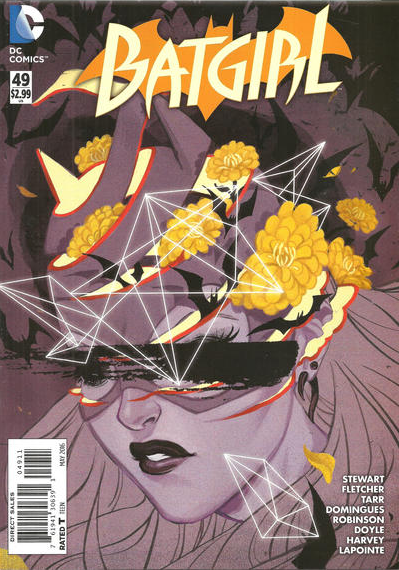
On covers featuring Cassandra Cain as Batgirl

This week has been all about celebrating my favorite features of the first eighty years of Batman comics. I’ll finish with one that I don’t think has gotten enough attention, at least not in recent times… I’m referring to all the awesome covers focusing on the early 2000s’ version of Batgirl.

batgirl 23batgirl 27

For most of the first decade of the 21st century, the title of Batgirl belonged to Cassandra Cain. Introduced during the epic No Man’s Land crossover, Cassandra Cain was the young daughter of a sadistic contract killer who raised her to be a deadly living weapon, to the point where she couldn’t even speak – her communication centers had been entirely rewired towards body language, so that combat became her primordial way of communicating.

Yeah, she was a hell of a character. And she starred in an equally eccentric series, initially with ultra-dynamic scripts and art by Kelley Puckett and Damion Scott, respectively. And, sure enough, that series had some kickass covers, first by Scott himself (inked by Robert Campanella and colored by Patrick Martin)…

batgirl 13batgirl 35

…and later by James Jean:

Batgirl 50batgirl 44

As you can see from these images, Cassandra Cain had a faceless costume, covering all of her body and features. This, plus the petite stature and feral moves, made her look darker and less human than the other crimefighters in Gotham City (which is quite appropriate for the character). In addition, the stitches in her mask gave her a kind of gothic, Tim Burton-worthy vibe.

batgirl 2batgirl 51

There were occasional variations on the costume, all stylishly delivered:

batgirl 43batgirl 45

Indeed, Cassandra Cain made for some truly neat visuals, especially when combined with the quasi-surreal, psychedelic layouts of Batgirl’s covers:

batgirl 34batgirl 42

Somehow, artists still managed to make the character quite expressive underneath that mask, both through strategic wrinkles and through overall body posture. When Cassandra Cain first joined the cast of Batman and the Outsiders, she ended up starring in a few of that series’ most entertaining covers as well:

batman and the outsiders 4batman and the outsiders 13

Yet my favorites are still the Batgirl covers by James Jean, during his incredible run in 2003-2004. I could choose any cover from that period to display here, but I’ll finish with two examples that beautifully merge symbolism and breathtaking design:

batgirl 41batgirl 46

Posted in COVERS OF BATMAN COMICS | Tagged , , , , , , , | Leave a comment

On prison breaks

Part of the general appeal of superhero comics is seeing how different creators face the challenges posed by the tight formulas. Some writers and artists manage to work their way around genre restrictions, others hang an amusing lampshade on them, or use them to their advantage by deliberately subverting expectations, or even try to turn them into a powerful symbol.

In the case of Batman stories, one convention creators have had to deal with for a long time is the fact that the members of the rogues’ gallery keep escaping from prison or, even more often, from Arkham Asylum.

Batman #527Batman #527

These escapes happen with so much regularity that they can strain belief beyond the breaking point (yes, even if you accept that Gotham’s overwhelming levels of corruption suggest that at least some of Arkham’s guards should be eminently bribable).

The easiest approach would be to just accept the trope and move on. Indeed, many creators simply disregard the prison breaks and just expect us to play along with the fact that a dangerous villain who was caught last month (or even last week!) is already free and able to plot a new scheme on the outside. It’s not asking too much – after all, these have always been the rules of the game and perhaps it *is* more interesting to just get to the main story without having to show us all the nuts and bolts of what came before. Hell, even if they show us how it happened, it ultimately doesn’t change anything, as we would’ve been fine with a ‘S/he got out somehow. Deal with it.’ type of answer.

Still, comics do occasionally tell readers how the escape came about:

Batman #523Batman #523

Authors like Doug Moench and Chuck Dixon do it, I think, because they see it as fair play. However, it’s also part of the challenge: every once in a while, there should a Batman tale with an ingenious prison break, so they know it’s up to creators to come up with something inventive and entertaining…

Detective Comics #693Detective Comics #693

And that’s the thing: escapes from Arkham Asylum don’t have to be a chore – a boring set-up for something that didn’t really need an explanation… There is a reason breakouts are a fiction subgenre by themselves, from POW tales (The Great Escape, Stalag 17) to civilian prison breaks (Brute Force, The Shawshank Redemption). They can be really fun to read about, if nothing else because they involve characters being smart, resourceful, and badass. Hey, this is why we like reading about Batman’s rogues’ gallery in the first place!

Take the three-issue arc ‘Only Happy When It Rains’ (Catwoman #58-60), by Devin K. Grayson and Jim Balent. This nifty story, set shortly after an earthquake destroyed most of Gotham City, pits Catwoman against Jonathan Crane (aka the Scarecrow). Early on, we see the latter break out of his glass cell, and it is one of the greatest sequences in the book:

Catwoman (v2) #58Catwoman (v2) #58Catwoman (v2) #58Catwoman (v2) #58

One of the things that makes this sequence so great is that it smoothly conveys much of the Scarecrow’s characterization: he’s a brilliant chemist, he knows how to manipulate human psychology, he’s arrogant, smug, and quite sadistic.

Yet the escape trope can be used not just to establish the villain’s personality and abilities (and thus set up the stakes for later on), but also to flesh out the hero. For instance, the way writer Brian K. Vaughan, penciller Rick Burchett, and inker John Lowe decided to have Batman think, talk, and move in this scene – following a breakout by Jervis Tech (aka the Mad Hatter) – perfectly distils that Dark Knight coolness we all love:

Detective Comics #787Detective Comics #787

In conclusion, while I don’t need – or want – preludes with prison breaks to every single story, I do get a kick out of the ways in which many creators have handled them. They can be clever and exciting… even terrifying.

Also, every so often, they’ve been quite funny as well:

The Batman Adventures #14The Batman Adventures #14The Batman Adventures #14
Posted in GOTHAM CITIZENS | Tagged , , , , , , , , | Leave a comment

On the Joker’s broken reflection

If you read the last posts, you know what’s going on. Each day this week I’m focusing on a specific aspect of Batman comics that really appeals to me.

As any fan of this blog can tell, I love finding patterns in this franchise’s vast and diverse publication history. Some patterns are little more than coincidences, others channel specific cultural, political, and/or editorial moments, and many of them are conscious intertextual dialogues between creators responding to each other’s works.

With that in mind, today I want to talk about a few instances when Batman broke through a mirror in order to kick the Joker’s ass…

The Dark Knight Returns #3The Dark Knight Returns #3

The sequence above is from what is arguably Batman’s most famous story, 1986’s The Dark Knight Returns, written and drawn by Frank Miller.

Let’s leave aside the Lady from Shanghai homage, which is too easy a label for any climax set at a house of mirrors. The truth is that there is something inherently eerie and allegorical about funhouse mirrors (recently exploited in Jordan Peele’s Us), so no need to see in it a reference to Orson Welles (even though Miller does generally go to the old film noir well).

There’s still a lot to unpack here, starting with the fact that the Joker threatens to shoot a child, which can be read as one of the book’s many symbols of loss of innocence (or, again, as another cinematic nod, namely to the hospital scene in the blaxploitation extravaganza Truck Turner). Above all, though, I dig the realistic touch of Batman’s narration basically acknowledging that, while visually cool and theatrical, the mirror-shattering move is not very practical. The art nails the point: it looks like an awkward strategy, and the Dark Knight pays the price with a shot in the gut.

Two years later, another highly influential Batman story came up with a similar scene:

The Killing JokeThe Killing JokeThe Killing Joke

From what I understand, The Killing Joke was written by Alan Moore before The Dark Knight Returns came out, so it’s possible that no callback was intended by this sequence. Certainly, neither the tilted framing by artist Brian Bolland nor the psychedelic colors by John Higgins suggest a direct link to Frank Miller’s opus.

It’s more likely that the two instances are just logical manifestations of the whole mid-80s deconstructionist impulse spearheaded by Miller and Moore. They both set out to explore the notion that the Joker was a distorted reflection of Batman (a view then translated to the screen by Tim Burton), which just begs for this type of setting and this type of image.

In the case of The Killing Joke, the choice of a showdown at a carnival’s hall of mirrors is especially fitting, not just because the whole book is built around symmetries (literal and metaphoric), but because the Clown Prince of Crime is discussing the multiple, inconsistent versions of his past (in his memory and, ultimately, in the ways he has been written).

Geoff Klock discusses this in How to Read Superhero Comics and Why, when examining an earlier panel where the Joker’s reflection is also disturbed (by rain on a puddle) from a Lacanian perspective: ‘the Joker’s insanity is the result of identifying, not with an image of wholeness and unity […], but with a fragmented background pelted by raindrops. In short, Moore’s Joker is insane because his mirror reflects not only his image but also overdetermination and influence. Every ego must identify with what is external, but the Joker is faced with a surplus he cannot hope to control. (The mirrors broken in the Joker’s fight with Batman in the Hall of Mirrors must take on added significance in this context.)’

I don’t mean to imply that this is a purely thematic choice. After all, it does make for a particularly striking visual – there is a reason Batman’s glass-shattering entrances have become a longstanding trope. Yet it’s the combination of awesome surface and provocative subtext that lends it so much resonance. No wonder that, when Denny O’Neil revised the Joker’s origin in 1993, he tasked Bret Blevins with putting his own spin on the broken mirror idea. Thus, for a while, in post-Crisis continuity, this was officially the first time Batman and the Joker had come face to face:

Legends of the Dark Knight #50Legends of the Dark Knight #50Legends of the Dark Knight #50
Posted in WEBS OF FICTION | Tagged , , , , , , | Leave a comment

On giant cash registers

To celebrate eighty years of stories featuring the Caped Crusader, each day of this week I’ll be highlighting something I find especially neat about Batman comics.

 Today, let’s look at over-the-top action scenes set among giant props.

Batman #185Batman #185
Batman #47Batman #47

These kinds of set pieces were a hallmark of Golden and Silver Age Batman adventures. The Dynamic Duo fought their rogues in all sorts of outlandish exhibitions, often incorporating extravagant props into their battles.

Artists like Lew Schwarz, Dick Sprang, Jim Mooney, and Sheldon Moldoff had a field day weaving in huge violins or giant cash registers into their action scenes…

Detective Comics #311Detective Comics #311

This goofy running gag gave those comics a visually surreal atmosphere that fitted in nicely with the overall playful tone.

More often than not, Batman and Robin would exchange puns related to the props they were using… For example, in ‘The Man with the Automatic Brain!’ (Batman #52, cover-dated April-May 1949), they fight a criminal gang by jumping on the keys of a giant typewriter and battering their foes with each letter. The Caped Crusader tells the gang leader that he’s finished, quipping: ‘Want us to spell it out for you?’ The Boy Wonder gets nastier: ‘Hit the shift lock, Batman, and let’s make this a capital punishment!’

Basically, the Dynamic Duo always seemed like they were having loads of fun…

Batman #75Batman #75

When later artists, from the grim-and-gritty years, wanted to recapture the charming spirit of the classic era, they often did it by revisiting this specific trope, which became a recurring nostalgic symbol of a more lighthearted approach to the world of Batman.

In 1987, while many superhero series (including the post-Dark Knight Returns Batman comics) were moving towards somber realism, Mike W. Barr and Alan Davis went in the opposite direction by paying homage to their predecessors with this cool set piece:

Detective Comics #573Detective Comics #573Detective Comics #573

That same year, Max Allan Collins and Dave Cockrum pulled a similar stunt, with a throwback of their own:

Batman #411Batman #411Batman #411

As with a lot of things in the Batman franchise, this element has gained an intertextual, metafictional dimension over time. More than a feature of older comics, the oversized props motif is now treated as a feature of the Dark Knight’s shifting past.

Thus, for example, in 2001, when Ed Brubaker and Joe Giella wanted to do a flashback about the early days of the Dynamic Duo, they went with another giant cash register:

Turning Points #2Turning Points #2

And in case you’re wondering where everybody got all these humongous props, Sholly Fisch and Rick Burchett have given us a possible answer…

Batman: The Brave and the Bold (v2) #16Batman: The Brave and the Bold (v2) #16

As you can see in these last couple of examples, many of the best creators know that part of the fun of Batman’s long, rich, and inconsistent history is giving it a kind of dreamlike continuity, embracing the contradictions while incorporating them in a fluid, multilayered narrative.

In this spirit, writer Will Pfeifer and artist Brent Anderson did a wonderful short story back in 2003, where they treated the giant cash register not just as a geeky wink to the fans, but also as an integral aspect of Gotham City’s diegetic identity:

Gotham Knights #46Gotham Knights #46

Posted in GOTHAM CITIZENS | Tagged , , , , , , , , , , , , , , , | Leave a comment

On Gotham City’s beat cops

According to Mike’s Amazing World, the very first Batman tale came out eighty years ago this week, in Detective Comics #27. I figured I should mark the occasion on this blog with something different, so this week I’m going daily – each day, I’ll put up a post spotlighting specific aspects of Batman comics I really like.

One of my favorite things, for example, is imagining the everyday lives of Gotham City’s beat cops…

Ragman (v2) #5Ragman (v2) #5

As if living and working in a crime-infested city wasn’t bad enough, those sad bastards constantly have to deal with genuinely weird threats – because in Gotham crime isn’t just everywhere, it also comes in all sorts of forms, from roller-skating gangs…

Detective Comics #503Detective Comics #503

…to jai alai-playing gangs:

Detective Comics #371Detective Comics #371

And those aren’t even the most eccentric challenges!

Gotham City’s beat cops also had to face the unforgettable 1947 robot crime wave…

Batman #42Batman #42

…and, of course, the 1967 robot crime wave:

The Brave and the Bold #74The Brave and the Bold #74

Moreover, I’m sure Gotham’s bonkers architecture doesn’t make the cops’ job any easier:

Turning Points #2Turning Points #2

Even though I don’t need a whole sub-franchise focusing on the low-ranking, uniformed police officers, I do treasure every glimpse we get into their perspective. Some of the best writers in the field have gotten quite a bit of mileage out of the fact that Gotham’s cops have to live with an urban legend about a bat-clad vigilante who keeps breaking the state’s monopoly of violence… and practically every other rule in the book, really.

This is the sort of thing that should generate some concern among the officers of the GCPD, not to mention a fair share of resentment…

Detective Comics #601Detective Comics #601

If nothing else, in the long run it’s bound to lead to a relatively jaded attitude:

Legends of the Dark Knight #2Legends of the Dark Knight #2

That said, I can’t feel too sorry for them. After all, everybody knows that Gotham cops are the sleaziest, most corrupt and depraved cops this side of Abel Ferrara’s Bad Lieutenant (or, at least, this side of Werner Herzog’s trippy remake).

So, yeah, I’m sure many of them find a way to make the most out of all of this…

Batman & Robin Adventures #20Batman & Robin Adventures #20
Posted in GOTHAM CITIZENS | Tagged , | Leave a comment

John Ostrander’s expanded Batman

John Ostrander has written more cool comics than most of his peers. Some of them feature Batman and other Gotham citizens, although those projects don’t always play to his strengths, since they tend to be short fill-ins or mini-series. Ostrander is usually at his best when doing long runs that allow him to redefine characters and show them growing through an evolving status quo, like he did with GrimJack, Firestorm, Hawkman, Martian Manhunter, and the Spectre. Nevertheless, overall Batman comics have been quite well served by Ostrander’s talent for expanding franchises in imaginative ways.

Before looking at his Batman-related work, let us consider what makes Ostrander such an engaging writer. Basically, he is a fabulous storyteller with a knack for world-building, sharp characterization, and forward momentum. His prose may not be as literary as, say, that of Alan Moore or Neil Gaiman – what with the occasional heavy-handed exposition and clunky dialogue – but he’s a master at exploring the implications of the characters’ more fantastical aspects and pitting them against each other in confrontations that reflect a broader clash of worldviews. And while Ostrander can do gritty realism when he feels like it, he can definitely do weirdness just as well:

Grimjack: Killer Instinct #3GrimJack: Killer Instinct #3

In short, John Ostrander knows how to tap into the potential of existing concepts and build on them. He’s ultimately an old-school pulp author, in the best possible sense – reading his stuff often reminds me of why I fell in love with comic books in the first place. The reason for this is the fact that, although he sometimes weaves in darker subject matter, Ostrander is not ashamed of embracing even the goofiest source material and make the most out of what is there. In the case of superheroes, this means taking the genre’s most preposterous tropes (from the campy names and costumes to the operatic battles and outlandish twists) and just running with it.

You can see all this in Ostrander’s first work for DC, the 1986 company-wide event Legends. The premise of this crossover is that the sinister Darkseid convinces people to distrust the value of superheroes, including their simpleminded morality and questionable lawfulness. In a revealing turn, however, Darkseid isn’t able to persuade the children, who are pure of heart and, therefore, know that superheroes are cool. And John Ostrander damn well knows it as well!

Not that Ostranser’s works can be dismissed as childish. In fact, they often display adult sensibilities, drawing on current affairs, typically in the form of comics-à-clef (for example, The Spectre featured ill-disguised versions of O.J. Simpson and Kurt Cobain). Perhaps because of his background in Chicago’s Organic Theater Company, Ostrander has also proven apt at satire, whether in his black comedy anthology Wasteland (no, not that one) or in the amusing, Producers-style take on elections he did for GrimJack #8.

I still get a kick out of one of the subplots running across his DC series of the late ’80s, in which big corporations sought to develop their own brand of superheroes, called Captains of Industry:

Firestorm, the Nuclear Man #88Firestorm, the Nuclear Man #88

So yeah, John Ostrander can be awesome. But does his Batman work live up to this? Well, not all of it…

In an attempt to capitalize on Tim Burton’s Batman Returns, in 1992 DC released a couple of specials about the film’s villains. While Catwoman: Defiant is an unsung gem, Ostrander’s Penguin: Triumphant is bafflingly silly – it involves the Penguin going legit and moving into Wayne Manor, which could’ve worked as a sort of homage to the Silver Age, but instead it just comes across as dumb and contrived. ‘Lost Boys’ (Batman Annual #24) is a ghost story in England that somehow manages to be utterly uninteresting. Just as instantly forgettable, the fill-in arc ‘Grotesk’ (Batman #659-662) feels like a mercenary rehash of boring clichés, despite a quirky heist attempt by a Japanese singing gangster called Johnny Karaoke and his armed geishas…

Batman 660Batman #660

Moreover, John Ostrander wrote a pretty lame Catwoman arc during the No Man’s Land crossover. If that one has any redeeming feature, it’s the Tarantinoesque interactions between henchmen who are used to viewing big events from the sidelines…

Catwoman (v2) #72Catwoman (v2) #72

(The next line is even more meta: ‘Prison shrink I had, doc by the name of Wertham, he always claimed the bat was a freakin’ weirdo an’ he just get a new Robin when one got too freaking old.’)

Fortunately, it isn’t all bad. Like I said, Ostrander tends to push forward whatever properties he touches. He enjoys playing with other people’s toys, frequently participating in crossovers, delving into older stories, reviving (and reinventing) forgotten concepts, tweaking continuity, and tying up other creators’ loose threads – in his comics, you can find, for example, a surprising follow-up to the epic finale of Grant Morrison’s Animal Man run (in Suicide Squad #58) and amusing throwbacks to the Justice League’s comedic era (Martian Manhunter #24, JLA: Incarnations #6). Moreover, nobody can accuse Ostrander of not contributing with plenty of toys of his own, having deeply enriched the DC, Marvel, and Valiant universes, not to mention the world of Star Wars.

Granted, his creations aren’t always successful, but there is such gusto in the way he keeps throwing new characters at the readers, often with an eye towards diversity, like in the cases of the gay barbarian Suu of Xoo, the African-American genius Mr. Terrific, and the Soviet half of Firestorm’s dual identity, Mikhail Arkadin (complete with a remarkably fleshed out Russian family). Notably, Ostrander has been responsible for populating the DCU with all sorts of regular people that are as interesting to read about as the superheroes, such as the psychiatrist Simon LaGrieve, the priest Richard Craemer, and the overweight White House hawk Amanda Waller, whose original version remains hands-down one of the most gripping black female characters in the history of mainstream comics.

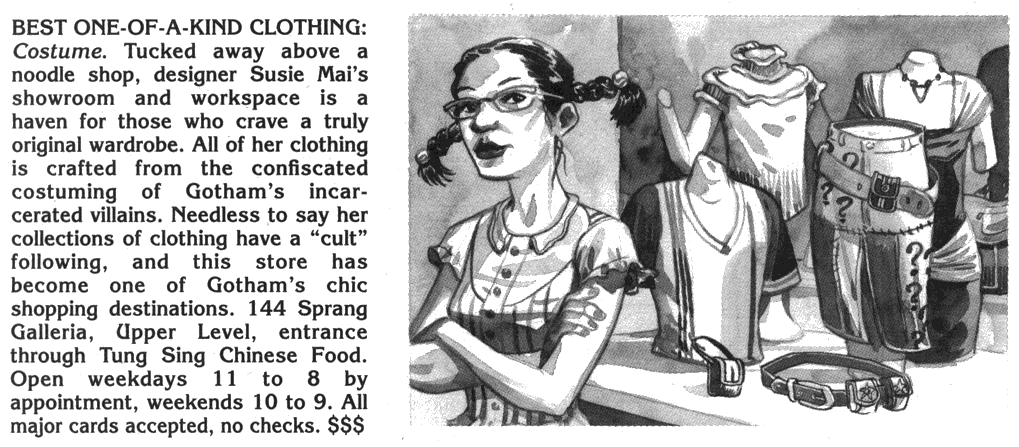
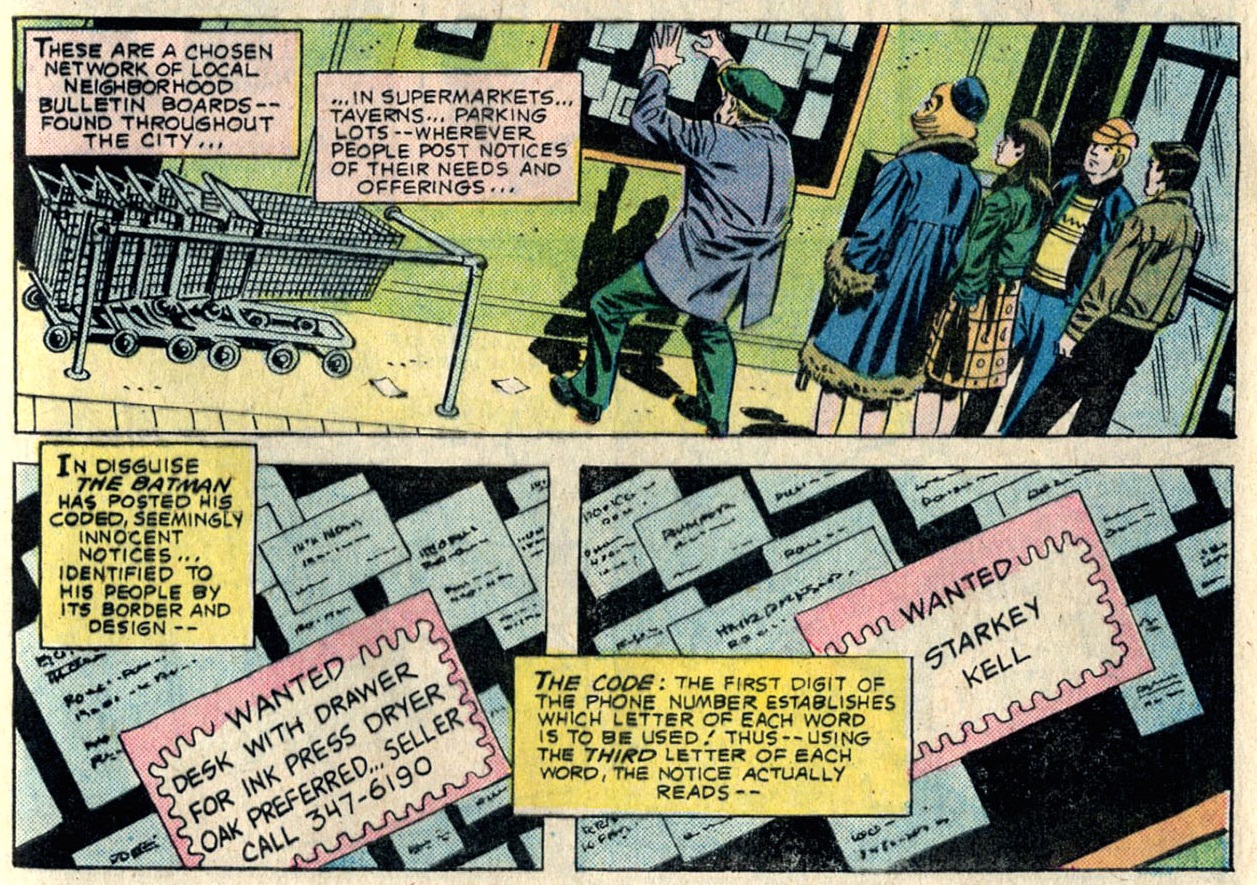
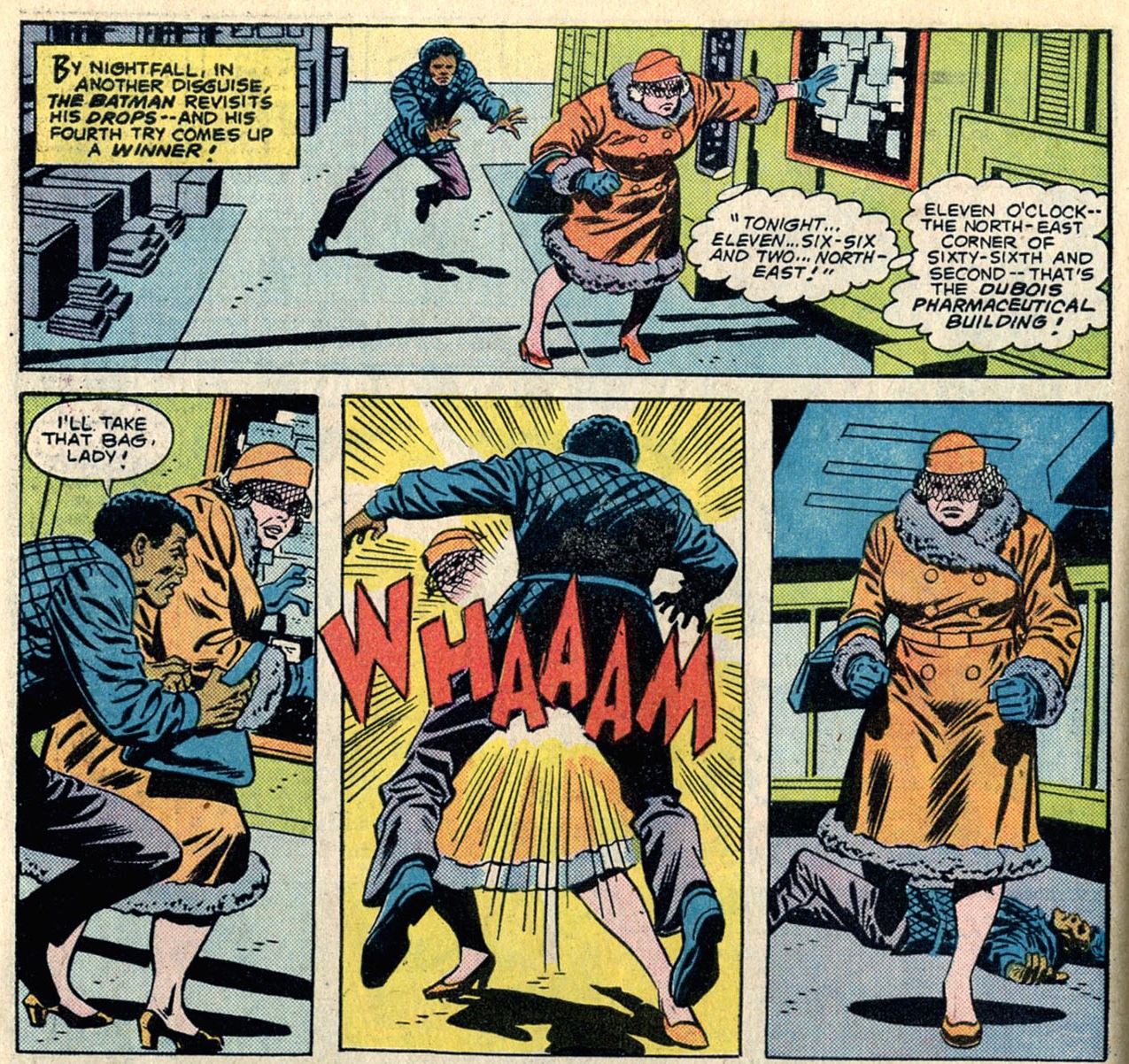
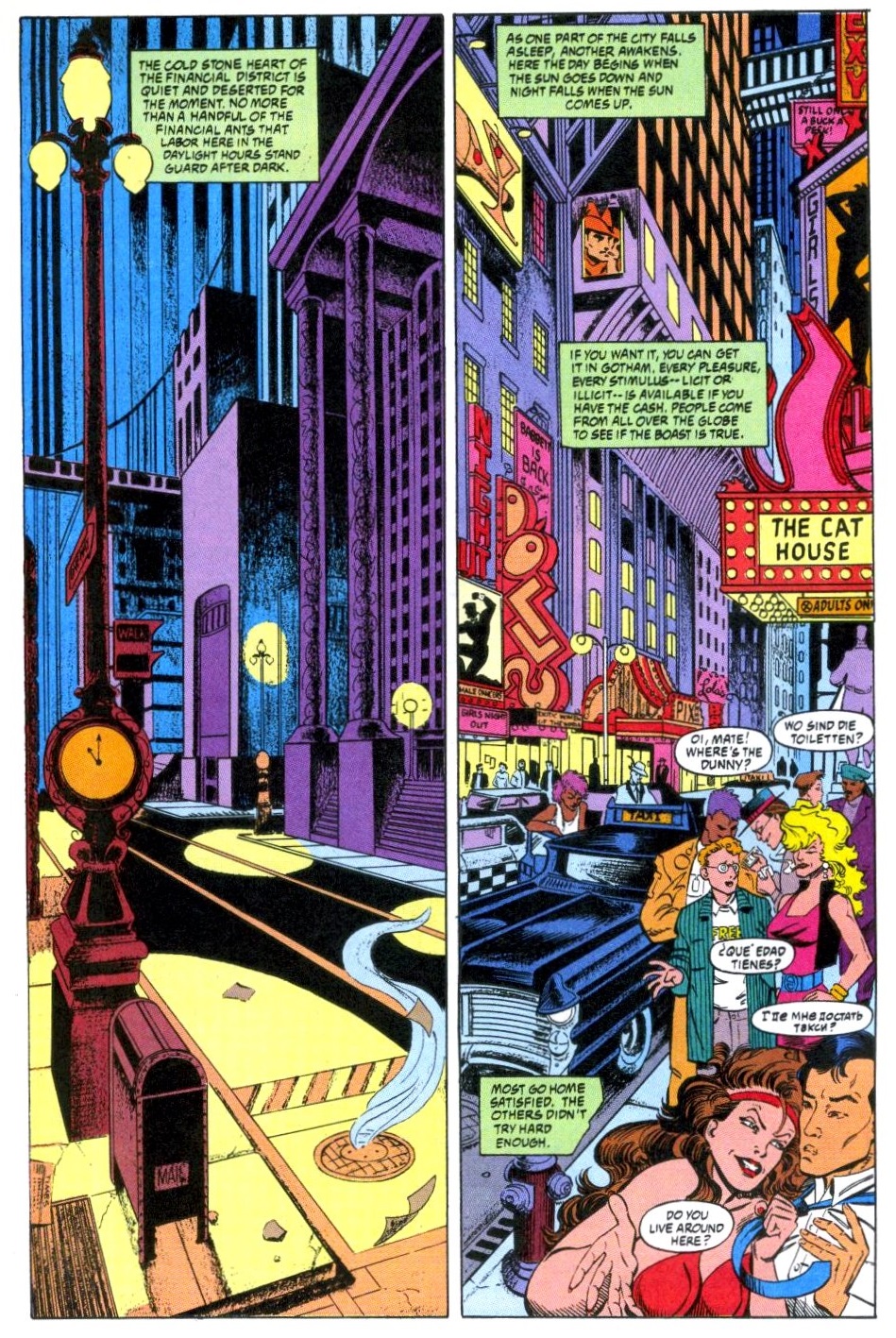
Along this line, Ostrander’s humanist touch and his flair for world-building led him to expand our perception of Gotham’s civilians and the everyday life of the city (one of my favorite topics). He did this through two Gotham Nights mini-series, elegantly illustrated by Mary Mitchell, that refreshingly moved the spotlight away from the Caped Crusader and his rogues’ gallery, focusing instead on the dreams and dramas of average Gothamites (most of whom aren’t psychopathic killers). The first mini, published in 1992, beautifully explored the city’s identity through interconnected street-level vignettes as well as through inspired musings at the beginning of each issue:

Gotham Nights #1Gotham Nights #1

The second series, which came out three years later, is more plot-centric, even if it also features its fair share of Eisneresque melodrama. Gotham Nights II takes place at the Charles Paris Amusement Park (probably named after the classic Batman artist and inker), better known to Gothamites as ‘Little Paris,’ and it evolves into a whodunit about someone trying to kill the amusement park itself.

This wonderful comic shows John Ostrander’s continued interest in the non-powered, non-costumed inhabitants of superhero universes, coming up with a whole new cast (so you don’t need to have read the previous mini to appreciate this one). Notably, Gotham Nights II introduces the artistic neighborhood of Little Bohemia, home of eccentric sculptor Francesco Xavier, who almost feels like a Peter Milligan creation… Xavier and his two groupies get all the best lines in the comic:

Gotham Nights II #2Gotham Nights II #2

Some of John Ostrander’s more Batman-centered work is equally praiseworthy, benefitting as it does from the fact that the man knows how to pen a damn crime yarn. Ostrander is one of those hardboiled liberals who gets a kick out of writing macho characters and slangy dialogue (plus, he’s arguably the king of badass one-liners). These traits are on full display in Detective Comics #622-624 (cover-dated October-December 1990), in which the Dark Knight investigates a serial killer who’s chopping up people with a machete and signing the crime scenes as ‘Batman.’

Ostrander’s crime genre credentials were mobilized for a different purpose a few years later. After the shooting of John Reisenbach, the son of Warner Brothers’ longtime marketing executive, DC’s editor-in-chief Jenette Kahn and vice-president Paul Levitz commissioned a benefit comic that, according to its backmatter, ‘would indict the proliferation of guns in this country and the ease with which they are used.’ Batman editor Denny O’Neil offered the job to Ostrander, who had once worked with an anti-gun organization. (You can read more about his views here.)

The ensuing one-shot, Seduction of the Gun, was published in 1993. While the militant agenda means that the comic does get a bit preachy at times (with people spouting detailed information about fire arms, legislation, and gun violence statistics), Seduction of the Gun is still a pretty solid crime story, stylishly illustrated by Vince Giarrano.

Seduction of the GunSeduction of the Gun

This should be no surprise: after all, like Alan Grant and Doug Moench (two other writers working on Batman comics at the time), John Ostrander had never shied away from hot political topics: his groundbreaking run in Suicide Squad was always on the cusp of international crises, Hawkworld was about a couple of (literal) aliens learning how to deal with the US system, the protagonist of Firestorm tried to stop the nuclear arms race and end African famine… Hell, just the previous year, Ostrander had been behind a provocative special issue of Blackhawk dealing with conspiracy theories! So, yes, Ostrander knew how to tell a tale that was both political and engaging, which is what he did in Seduction of the Gun: Batman gets a lot of badass moments as he goes up against street gangs and gun dealers, but this is no simple wish-fulfilment fantasy – the book brutally drives home the point that guns have consequences and no one is entirely safe from them.

With a similar gritty vibe, in the early 2000s Ostrander penned ‘Snap’ (Gotham Knights #43), a black & white short story about Batman’s urban legend status, as well as the taut thriller ‘Loyalties’ (Legends of the Dark Knight #159-161), set early in Batman’s career, when Jim Gordon’s Chicago past came back to haunt him…

Legends of the Dark Knight #160Legends of the Dark Knight #160

‘Loyalties’ delivers not only plenty of action, with Batman engaging in a kickass motorcycle race through the streets of Chicago (where Ostrander is from), but also great character moments all around, as everyone’s loyalties are put to the test – and some break down, while others don’t. In particular, this three-parter works as a nice (retroactive) introduction to pre-Batgirl Barbara Gordon, a character that Ostrander has crucially fleshed out over the years.

John Ostrander’s history with Barbara Gordon brings me to another point. His greatest contributions to the Batman mythos involved taking existing characters and imbuing them with extra depth, as well as with a life beyond the shadow of the Caped Crusader, usually on the pages of his magnum opus: Suicide Squad. This is where Ostrander, together with his wife Kim Yale, turned the former Batgirl – who had been cruelly crippled in The Killing Joke – into the super-hacker Oracle (a transformation they later revisited in Batman Chronicles #5). Coming to terms with her disability, Barbara excelled at this role throughout the 1990s and early 2000s, when Oracle was one of my favorite DC characters. Along with Babs, all sorts of familiar faces who had passed through Batman comics – such as Bronze Tiger and Katana – found a new breath of life in Suicide Squad. Notably, Ostrander turned Deadshot from a superficial Batman villain into a genuinely complex and fascinating anti-hero (Ostrander further developed Deadshot’s background in a nifty 1988 mini-series, again co-written with Kim Yale).

Other rogues – from the Penguin to Poison Ivy – were given a chance to shine in Suicide Squad while undertaking ambiguous secret assignments for Washington, led by the conflicted Rick Flag. What made this series work so well was that the villains kept their personalities even as they were recontextualized as the protagonists – mixing The Dirty Dozen with the Iran-Contra zeitgeist, this was a gleefully cynical comic about fucked up black ops agents who hated each other and mostly moved in morally dubious areas of international politics. This is why my main frustration with the recent Suicide Squad movie wasn’t just that it was an ugly, largely incoherent mess, but also the fact that it ultimately turned into a story of friends-who-are-good-at-heart on a mission to save the world from purely evil supernatural forces (even the despicable Captain Boomerang ultimately has a change of heart and comes back to save the day, for some reason), thus missing what I most like about the comic.

The Dark Knight himself made some appearances on the pages of Suicide Squad, including memorable confrontations with Amanda Waller and Rick Flag. This is the other way in which Ostrander expanded Batman’s world – he powerfully connected Bats to the wider DCU by strengthening the ties between the Caped Crusader and other properties. Batman investigated Superman for murder (JLA 80-Page Giant #1) and played a key role in various Justice League adventures (like in the masterful JLA: Incarnations mini-series and in the fun Justice League Adventures #21, as well as in the sadly uninspired JLA Versus Predator). Hell, Batman even helped save Washington from an ape coup:

 JLA: Incarnations #2 JLA: Incarnations #2

Ostrander and his regular collaborator Tom Mandrake also had the Dark Knight cross paths with the titular leads of their runs in The Spectre and Martian Manhunter. The former included a brilliant Joker tale, titled ‘A Savage Innocence,’ that tied into the series’ running theological themes by having Batman argue with the Spectre over whether or not the Clown Prince of Crime could actually be considered evil and accountable for his actions, since he was obviously insane, unable to distinguish right from wrong.

As a bonus, the issue showed us how the Joker’s reputation had affected the New York club scene:

The Spectre (v3) #51The Spectre (v3) #51

This notion that costumed heroes and villains must have a wider cultural impact in their own world is something I find infinitely appealing. John Ostrander had already touched on it in the aforementioned Detective Comics #622-624. There, besides the neat detective story, we got a fun journey into metafiction, since the mystery tied into a comic-within-the-comic about the Dark Knight (because Batman is not trademarked in the DCU). The joke, of course, is that those comics would display a distorted image of the Dynamic Duo and the rogues’ gallery, envisioned by someone who had never actually met them for real. The sample pages, drawn by Flint Henry, are freaking out there…

detective comics 622Detective Comics #622

Thus, although unfortunately John Ostrander was never given a long run in Batman comics – one where he could do for the Caped Crusader what he did for many other heroes –  he has still managed to expand their scope, making readers feel like the Dark Knight is part of a larger universe out there, full of complicated characters living their own interesting sagas.

Posted in WRITERS OF BATMAN COMICS | Tagged , , , , , , , , , , , | Leave a comment

COMICS CAN BE AWESOME (April 2019)

Your monthly reminder that comics can be awesome:

Ninja-K 4Ninja-K #4
Atomic Robo: The Flying She-Devils of the Pacific #3Atomic Robo: The Flying She-Devils of the Pacific #3
Black Science #27Black Science #27
Posted in GLIMPSES INTO AWESOMENESS | Tagged , , , , , , , , , , , , | Leave a comment