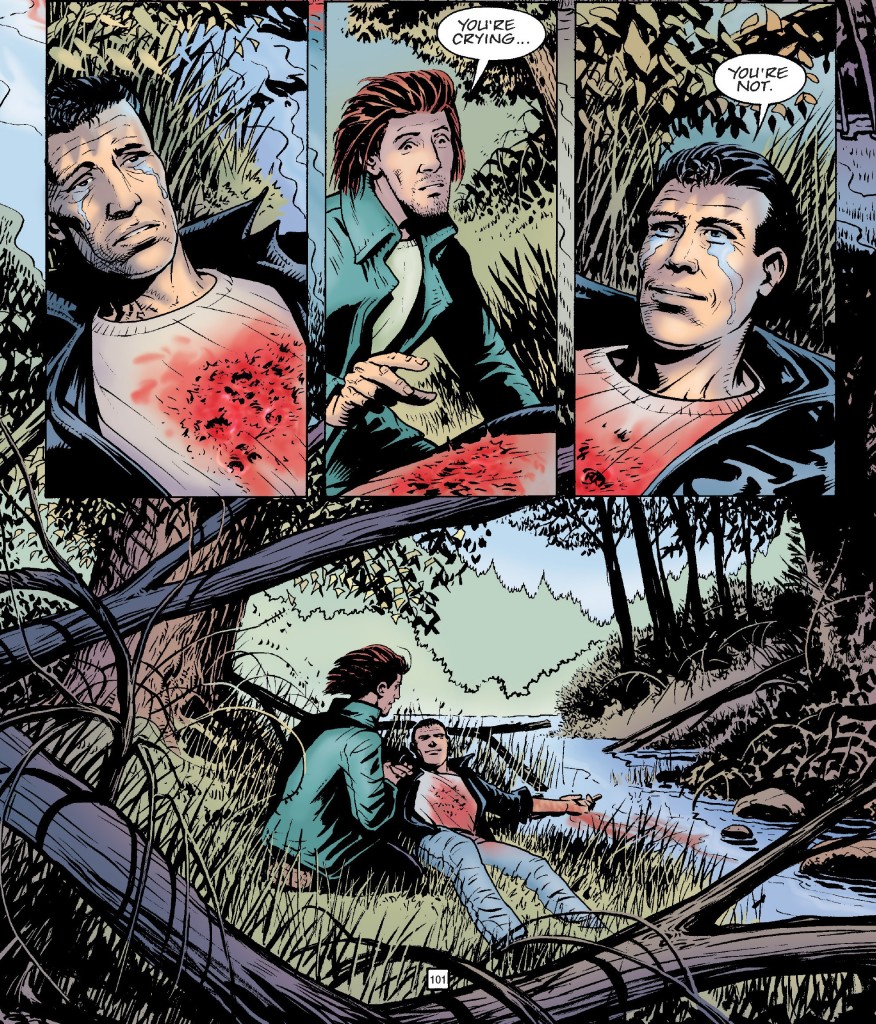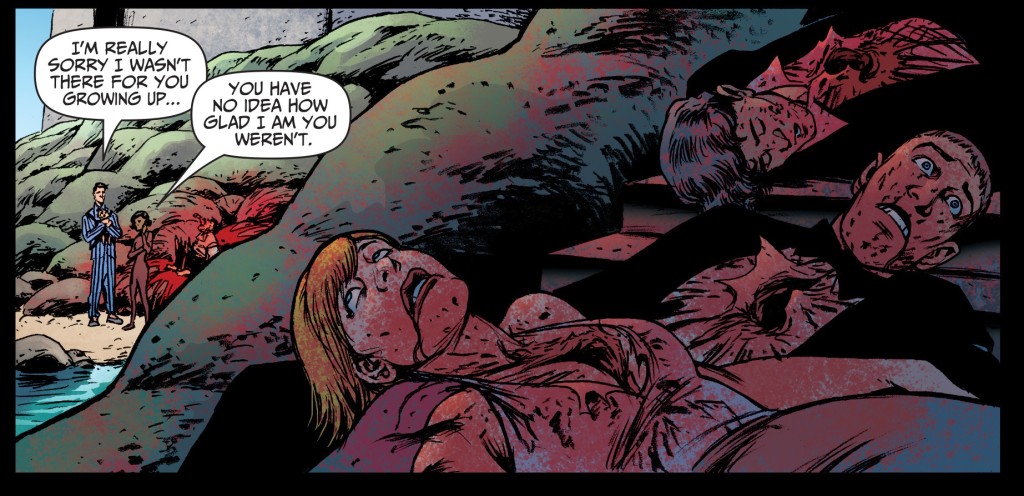
Essential Batman stories every fan should read – part 1

A while ago, reader Dave Shevlin wrote to me about his latest project of picking somewhere around 30 or so of his favorite Bat-centric tales for an imaginary deluxe volume and challenged me to do the same. The idea would be to choose, not all-time classics like The Dark Knight Returns and Year One, but personal favorite issues that could be put into a big tome of must-have Bat-comics. Obviously, this appealed to me, but I immediately got stuck wondering what classics I could leave out in order to make room for my more peripheral or obscure choices… With that in mind, I ended up preparing a list of works I expect every Batman fan is bound to read (or at least be aware of) regardless of my recommendation, which I can therefore refrain from including in my ideal anthology (even if I think they’re really good).

I will tell you about my final picks next month, but for now I’ll leave you with this preliminary selection of seminal stories that are easy to find (they’ve all been collected multiple times) and should be required reading for any fan. These are comics that profoundly shaped the Caped Crusader and his world – they’re super-influential tales that subsequent creators kept riffing on, referencing, or somehow paying homage to… Reading them means understanding much of the historical evolution and intertextual subtext of the books that followed. Yes, they’re already so well-known and regarded that I wouldn’t include them in my imaginary deluxe volume, but perhaps they’re worth listing for the checklists of new fans:

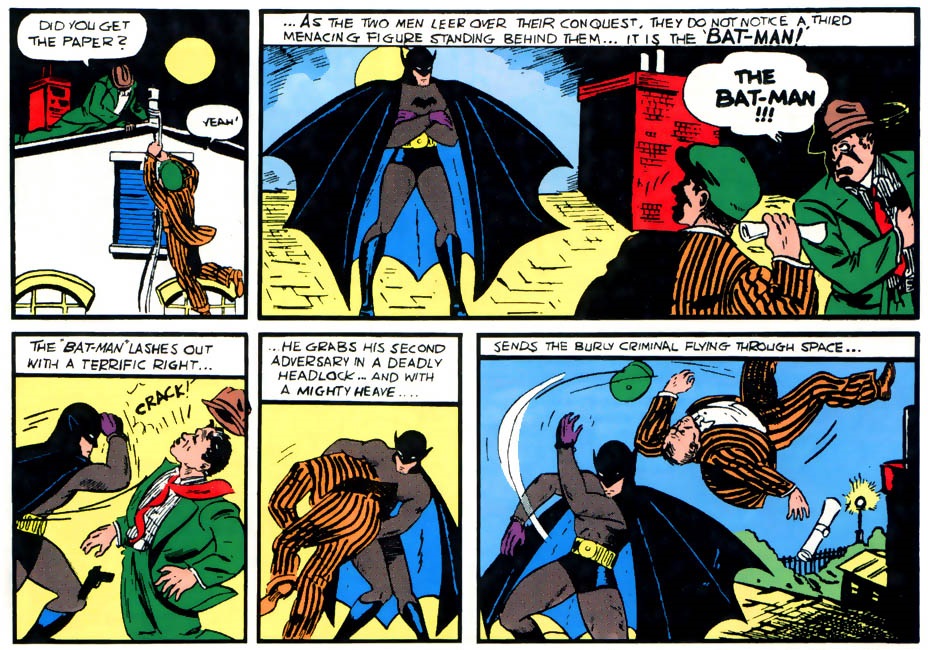
1.‘The Case of the Chemical Syndicate’ (Detective Comics #27, cover-dated May 1939), by Bill Finger (script), Bob Kane (art & letters)
detective comics #27

The story that set the stage for everything to come. I’ve wrote a bit about how this tale has been remade throughout the decades here, including the following summary: ‘Originally published in 1939, the six-page ‘The Case of the Chemical Syndicate’ (Detective Comics #27), by Bob Kane and an uncredited Bill Finger, was the first comic to feature Batman (or the Bat-Man, as he was called at the time). The plot is a modest, no-frills whodunit – swiped from a Shadow short story – about the murder of a chemical industrialist called Lambert. Neatly, the Dark Knight shows off what would become his trademarks: he punches crooks (three times), escapes from a deathtrap (a gas chamber for guinea pigs), and deduces the solution to the mystery. There are some rough edges, for sure, but I love the fact that the very final twist is the revelation that the Bat-Man is actually the rich socialite Bruce Wayne! (Sorry for the mega-spoiler.)’

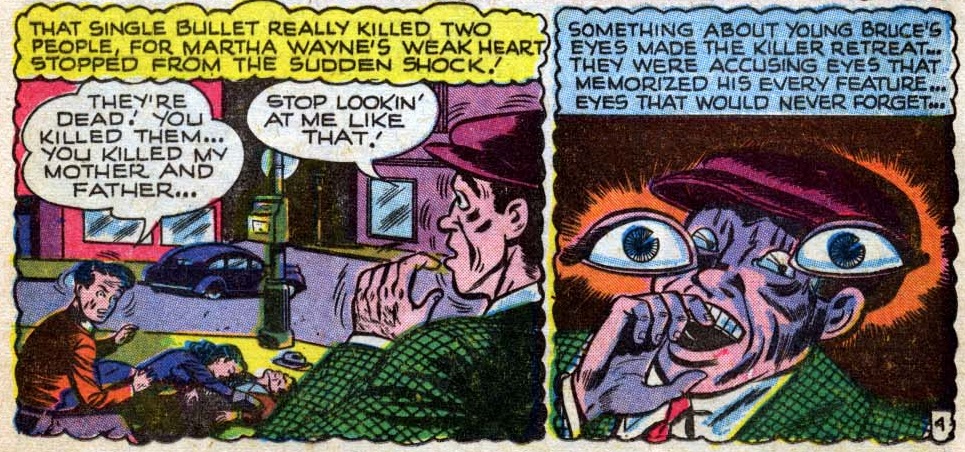
 2. ‘The Origin of the Batman!’ (Batman #47, cover-dated June-July 1948), by Bill Finger (script), Bob Kane (pencils), Charles Paris (inks), Ira Schnapp (letters)
Batman 47

This is one of the most important retellings of Batman’s origin, establishing for the first time the identity of the Waynes’ killer. It also works as an example of the film noir-tinged sensibility of the character’s Golden Age, since it’s a proper crime yarn filled with murder, action (including a dynamic fight at a gambling ship), and an ironic ending. (The final confrontation with Joe Chill was later beautifully redone in The Untold Legend of the Batman #1, which is highly recommended for anyone seeking a crash course on the Dark Knight’s history, even if it isn’t as essential a reading as the comics on this list.)

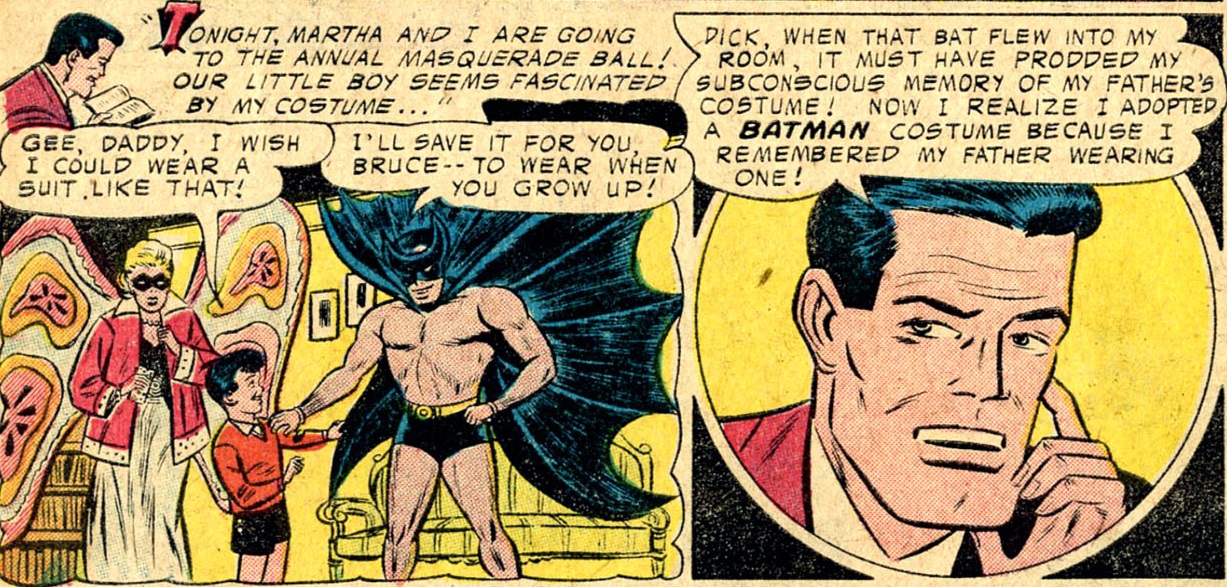
3.‘The First Batman’ (Detective Comics #235, September 1956), by Bill Finger (script), Sheldon Moldoff [as Bob Kane] (pencils), Stan Kaye (inks)
detective comics 235

This story not only introduced the idea that Thomas Wayne had once wore a Batman suit of sorts (subconsciously influencing Bruce), but – building directly on ‘The Origin of the Batman!’ – it also added further details about the Waynes’ murder, revising key elements of that fateful night. I usually dislike tales that take an origin as simple and effective as the Batman’s (especially the bit about him being the product of a *random* crime by a small-time crook) and turn them into something needlessly convoluted (there is even an amnesia subplot!), but this one has charm to spare and it did add elements to the mythos that stayed around for years. (In 2010, the Brave and the Bold cartoon show did an awesome episode called ‘Chill of the Night,’ which combined bits from ‘The Origin of the Batman’ and ‘The First Batman’ into a modern retelling that featured a truly hardboiled scene with Lew Moxon’s deathbed confession, a faustian/cosmic contest between the Spectre and the Phantom Stranger, amusing cameos by the rogues’ gallery, and the scariest sounding Dark Knight in living memory.)

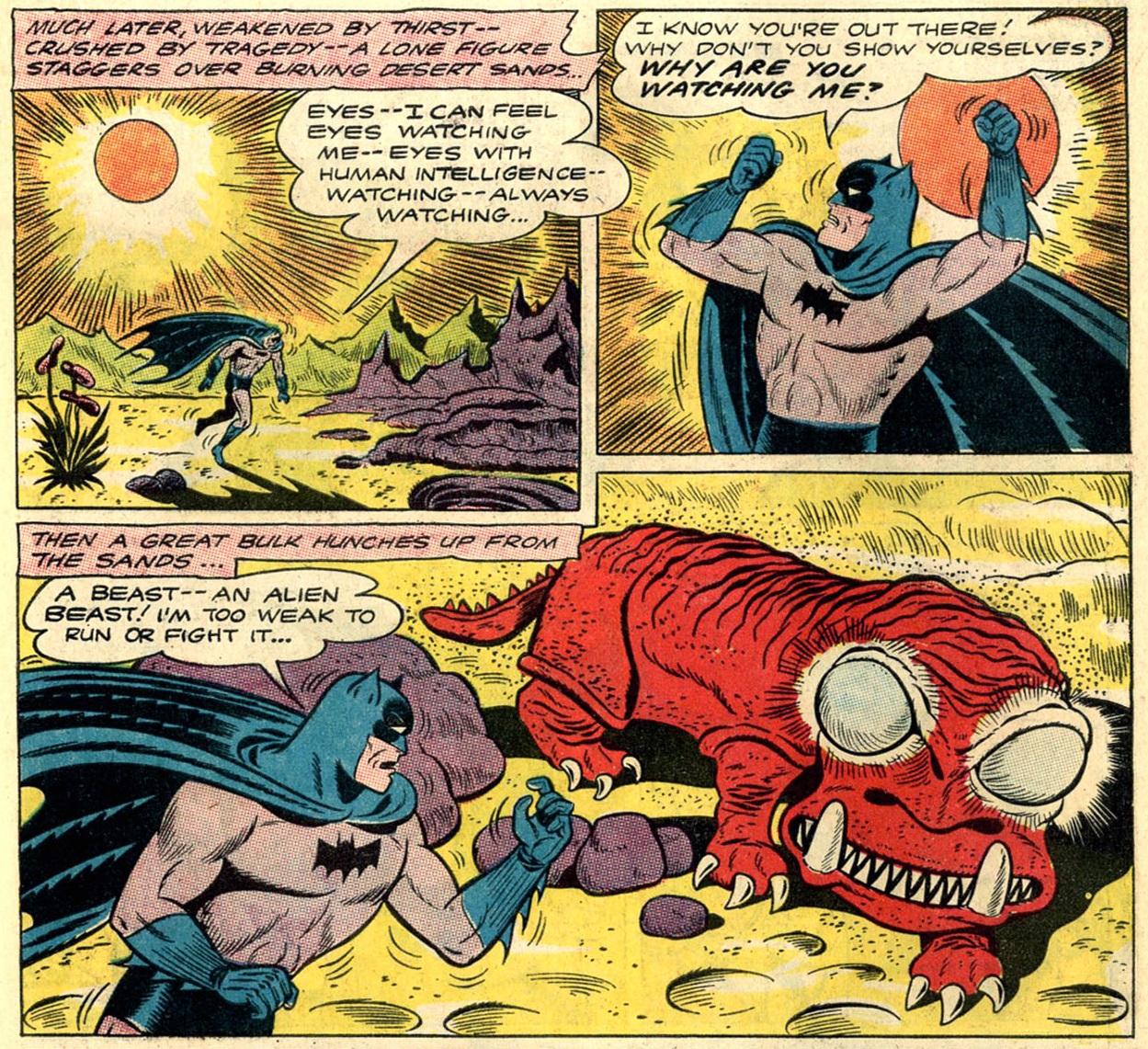
4.‘Robin Dies at Dawn’ (Batman #156, cover-dated June 1963), by Bill Finger (script), Sheldon Moldoff [as Bob Kane] (pencils), Charles Paris (inks), Stan Starkman (letters)
Batman 156

Another gem by Bill Finger and Sheldon Moldoff (ghosting for Bob Kane). A high point of Silver Age sci-fi weirdness (the first part of the story takes place on an alien planet with bizarre creatures and psychedelic colors), nowadays ‘Robin Dies at Dawn’ (like the similarly trippy ‘Batman – the Superman of Planet X!’) is perhaps mostly known for its role as a major inspiration for Grant Morrison’s Batman run. However, this kooky tale – in which the Caped Crusader keeps hallucinating about the Boy Wonder’s death while fighting the Gorilla Gang – already had a cult following before that, not least because of the whole metafictional angle of Batman feeling that he is being watched by ‘eyes with human intelligence.’ (Appropriately for a comic with such an unsettling vibe, it shares some of its premise with the pilot episode of The Twilight Zone.)

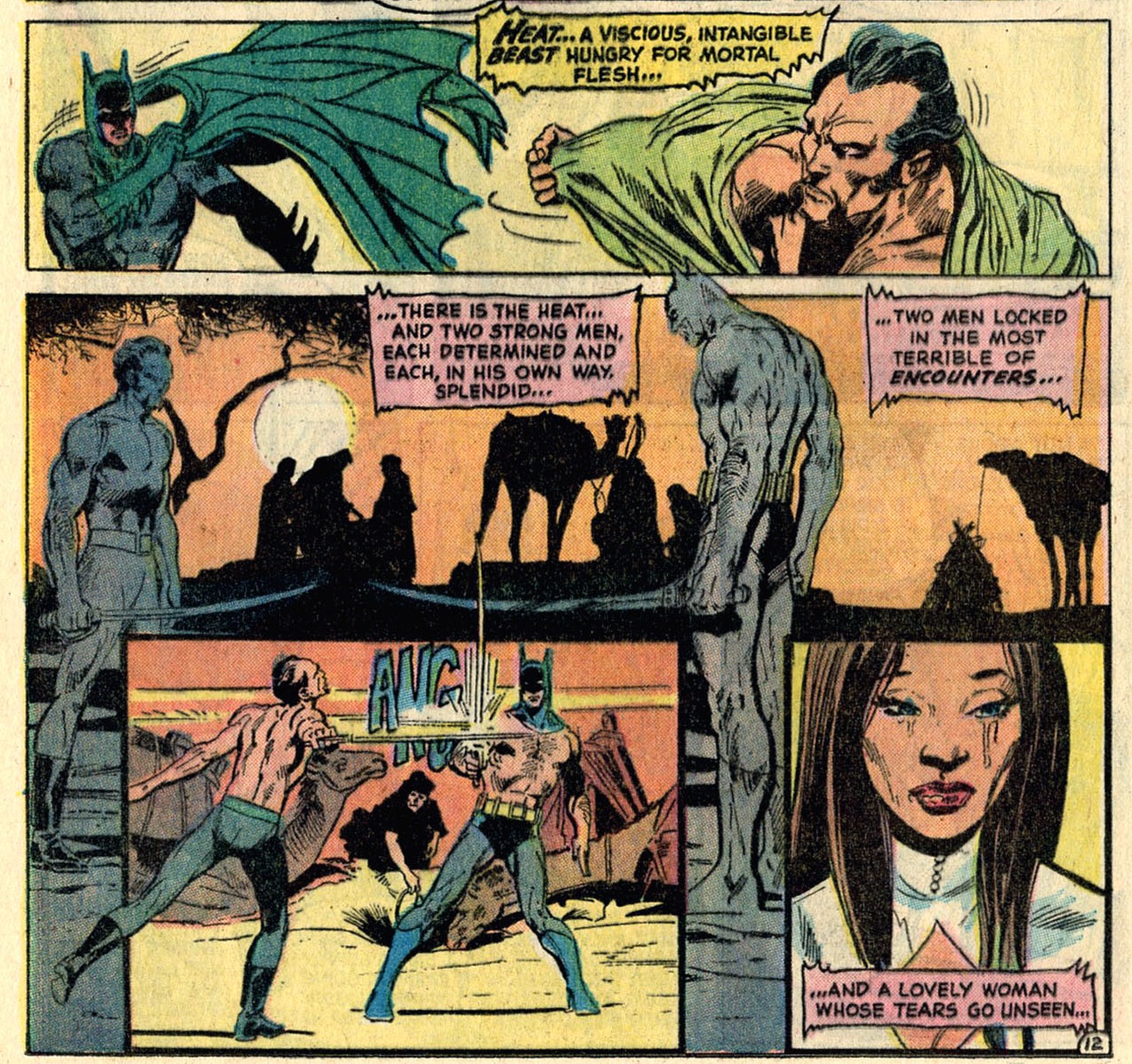
 5.‘Ra’s al Ghul saga’ (Detective Comics #411, Batman #232, Batman #242-244, cover-dated May 1971-September 1972), by Denny O’Neil (script), Bob Brown, Neal Adams, Irv Novick (pencils), Dick Giordano (inks), Ben Oda, John Costanza, Ray Holloway, Jean Izzo (letters)
Batman 244

The quintessential Bronze Age Batman story – a hell-for-leather epic that throws the Dark Knight (meanwhile redesigned by Neal Adams) into the globetrotting thrills of a vintage James Bond flick while introducing two of his greatest supporting characters: Talia and Ra’s Ghul. There are a handful of comics that could be seen as part of the saga, but Detective Comics #411, Batman #232, and the trilogy Batman #242-244 are the ones later creators keep going back to. I wrote about them here, including the following lines about the earlier issues: ‘We are definitely in grand adventure territory here. Accepting the genre’s inherent orientalism, [Denny] O’Neil combined different cultures with gusto in order to provide an out-of-this-world sense of exotic excitement: the tale takes place in an unidentified Far East country (‘a tiny Asian nation tucked into the mountains between two hostile super-powers’); we are told Ra’s al Ghul is Arabic for ‘The Demon’s Head;’ a plot point involves arms deals in South America; and in a great sequence Batman literally has to bullfight for his life. O’Neil followed this with Batman #232, where the Caped Crusader wrestles a leopard in Calcutta and climbs one of the Himalayan Mountains, under fire.’

6.’The Joker’s Five-Way Revenge!’ (Batman #251, cover-dated September 1973), by Denny O’Neil (script), Neal Adams (art)
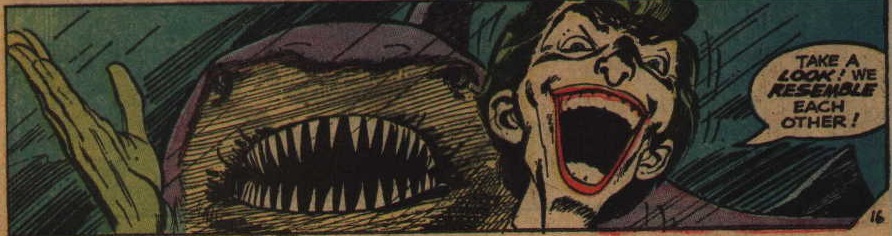
Batman 251

Besides the Ra’s al Ghul saga, the duo of Denny O’Neil and Neal Adams did several other stories together that can be considered classics (‘The Secret of the Waiting Graves,’ ‘Ghost of the Killer Skies,’ ‘A Vow from the Grave,’ ‘Half an Evil,’ ‘Night of the Reaper’), but none as influential as ‘The Joker’s Five-Way Revenge!’ This tale revamped the Clown Prince of Crime, taking him back to his murderous roots (after having been softened for almost two decades because of the Comics Code) while updating his look and style – it effectively kickstarted a version of the Joker that would linger for many years to come. The issue features two of Adams’ most famous splash pages: the opening one, with the Joker laughing behind the wheel of a car, and the one near the end, with the Caped Crusader running purposefully on the sand. Likewise, the deathtrap at the aquarium and Batman’s subsequent fight against a shark – probably a rebuttal of the infamous Shark Repellent Spray joke from the 1966 Batman movie – is fondly remembered and occasionally revisited (1994’s Mad Love has quite a fun variation of it).

7.‘There is No Hope in Crime Alley!’ (Detective Comics #457, cover-dated March 1976), by Denny O’Neil (script), Dick Giordano (art), Terry Austin (backgrounds), Ben Oda (letters)
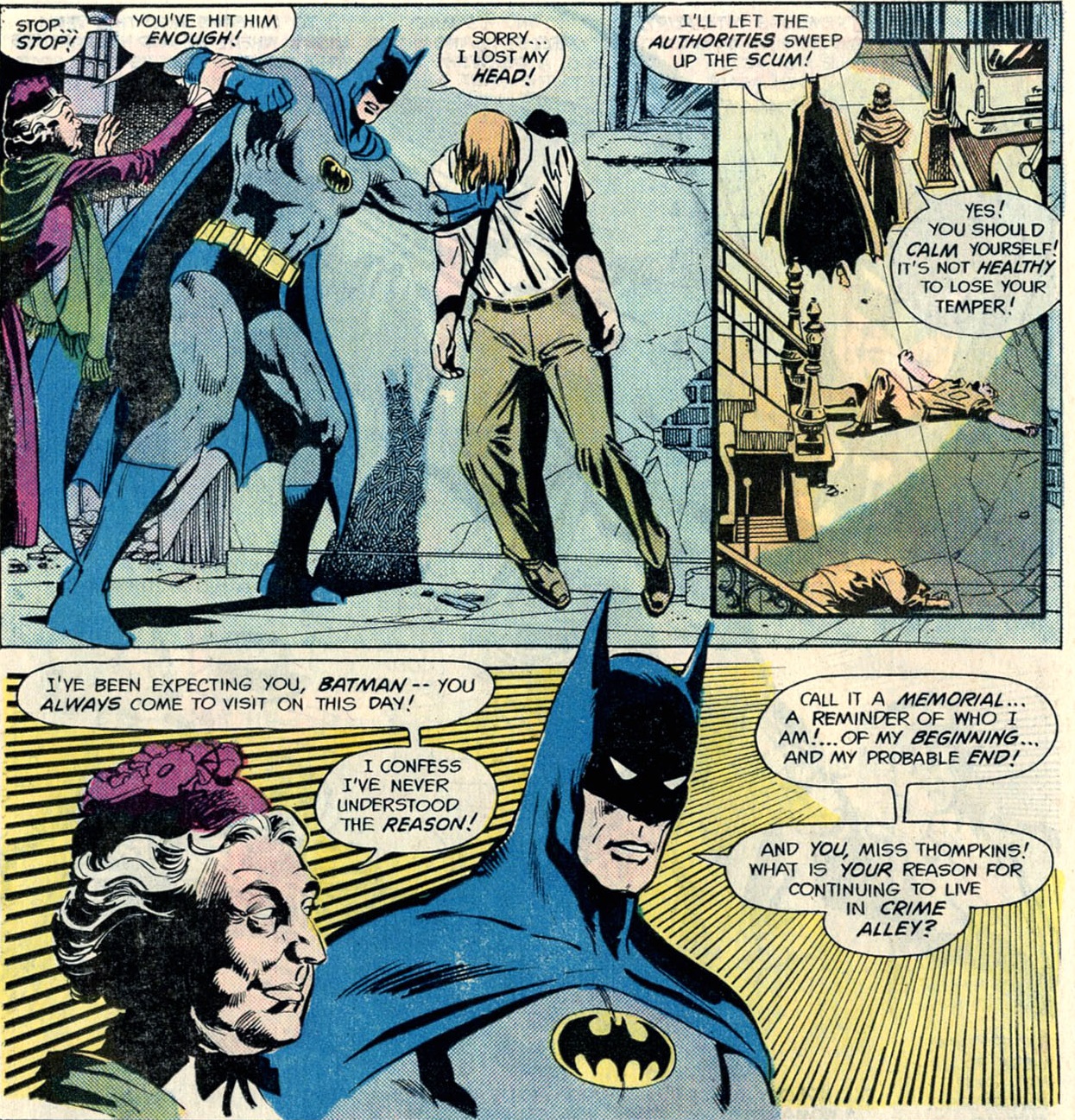
detective comics 457

The tale that established the place where the Waynes were shot (Park Row, now known as Crime Alley) and introduced Bruce’s ersatz-mother figure, Leslie Thompkins. Besides representing all that’s worth saving in Gotham City (‘Maybe the only hope our tormented civilization has left!’), Thompkins is a nice counterpoint to the Dark Knight, trying to achieve the same goal as him with pacifist methods. In that sense, this issue paved the way for all those later explorations of Batman’s morals and methods, challenging him in his own series (O’Neil had already tried a similar thing in ‘The Batman’s Burden,’ but that story didn’t leave much of a mark). All in all, ‘There is No Hope in Crime Alley!’ may be a bit schmaltzy and it’s set during an odd time when Alfred wasn’t aware of the Waynes’ murder date (because his pre-Crisis version only met Bruce as an adult), but the ending feels genuinely tender and many of its classic lines have been echoing through Batman comics ever since.

8.‘Strange Apparitions’ (Detective Comics #469-476, cover-dated May 1977-April 1978), by Steve Englehart (script), Walt Simonson, Marshall Rogers (pencils), Al Milgrom, Terry Austin (inks), Jerry Serpe, Glynis Wein (colors), Ben Oda, John Worman, Milt Snappin (letters)
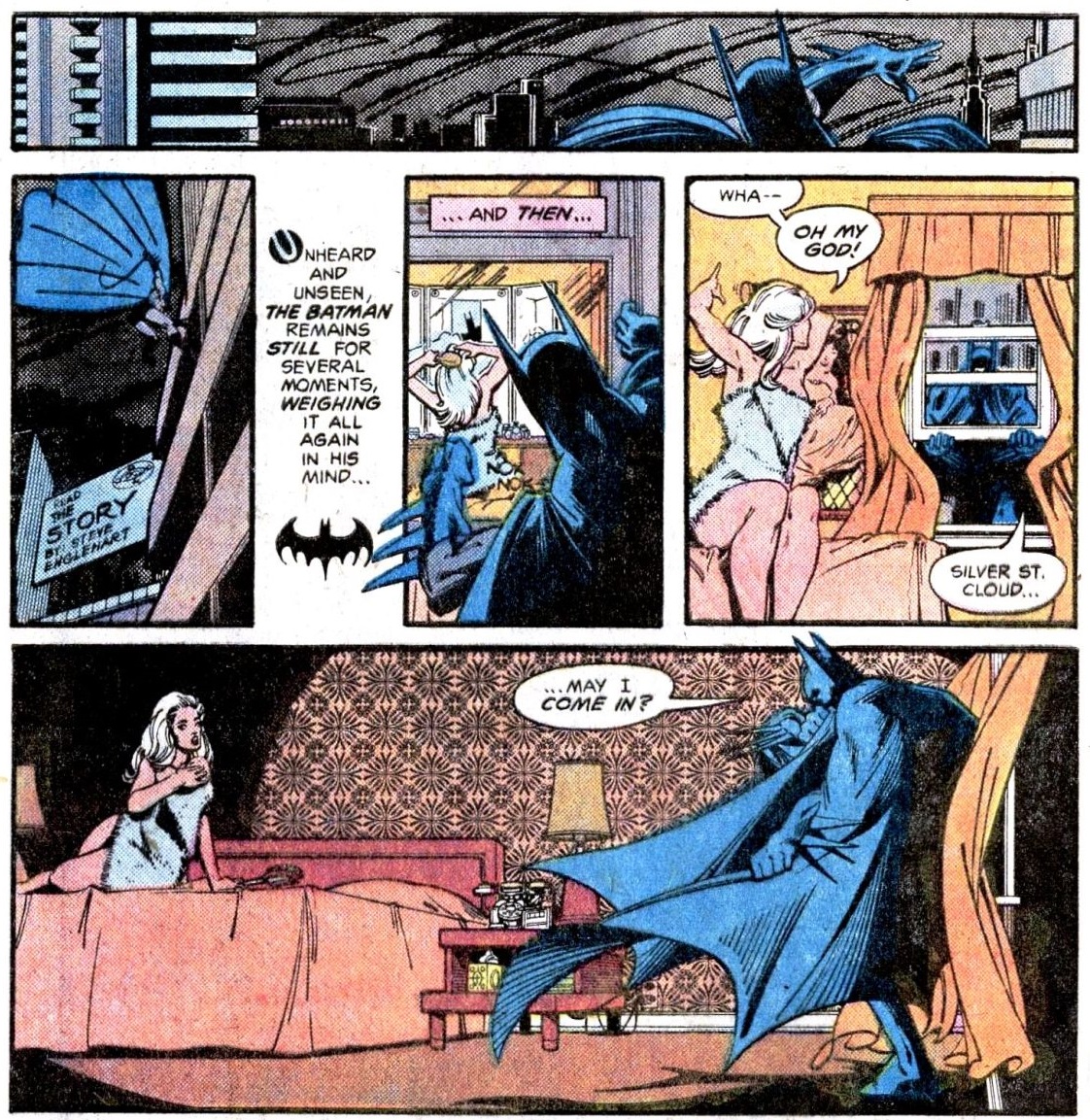
detective comics 475

Steve Englehart’s fan-favorite run in Detective Comics (especially the issues pencilled by the incredible Marshall Rogers, #471-476) excelled at drawing from Batman’s past while delivering something that felt fresh and modern. In that sense, it wasn’t just these comics’ characterization, designs, and story ideas that proved highly influential, but their whole attitude (especially when it came to the 1990s’ Batman: The Animated Series). The run works as a cohesive whole due to the overarching subplots about mad scientist Hugo Strange, political boss Rupert Thorne, and Bruce’s love interest Silver St. Cloud, even if it contains different stories within it, including the two-parter ‘The Laughing Fish!/Sign of the Joker!’ (one of the most emblematic stories ever told about the Clown Prince of Crime). I’ve written about this run here and you can find more praise for it here.

9.‘Death Strikes at Midnight and Three’ (DC Special Series #15, cover-dated Summer 1978), by Denny O’Neil (script), Marshall Rogers (art)
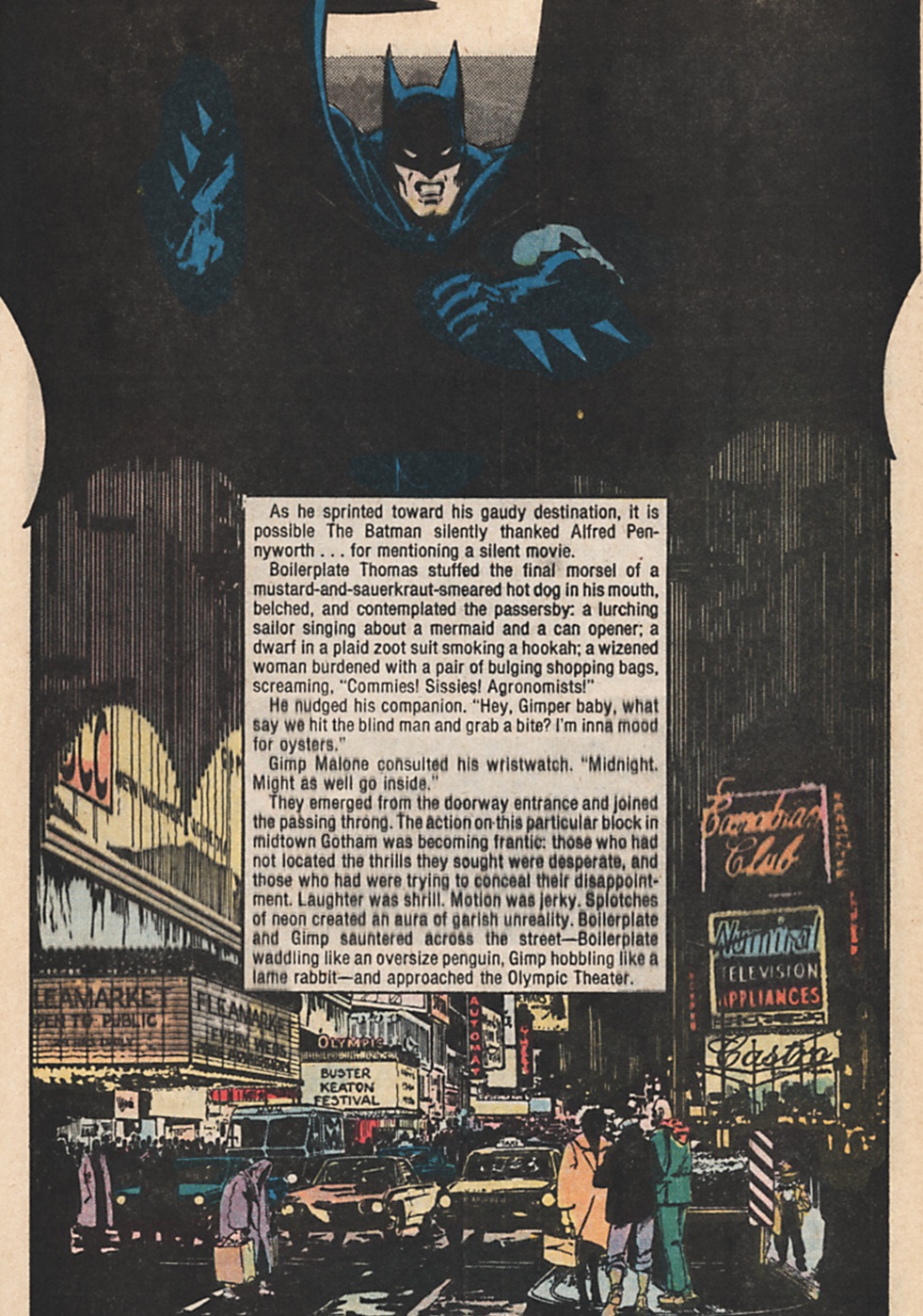
dc special 15

Yes, it’s another script by Denny O’Neil and another art job by Marshall Rogers, but ‘Death Strikes at Midnight and Three’ is a completely different beast from what came before. This taut, gritty short story pushes Batman’s crime fiction angle as far it can go, to the point of practically becoming an illustrated prose piece reminiscent of old pulps (and a damn fine one at that). Everyone who subsequently tried to experiment with the Dark Knight’s ties to noirish literature did so under the shadow of this comic.

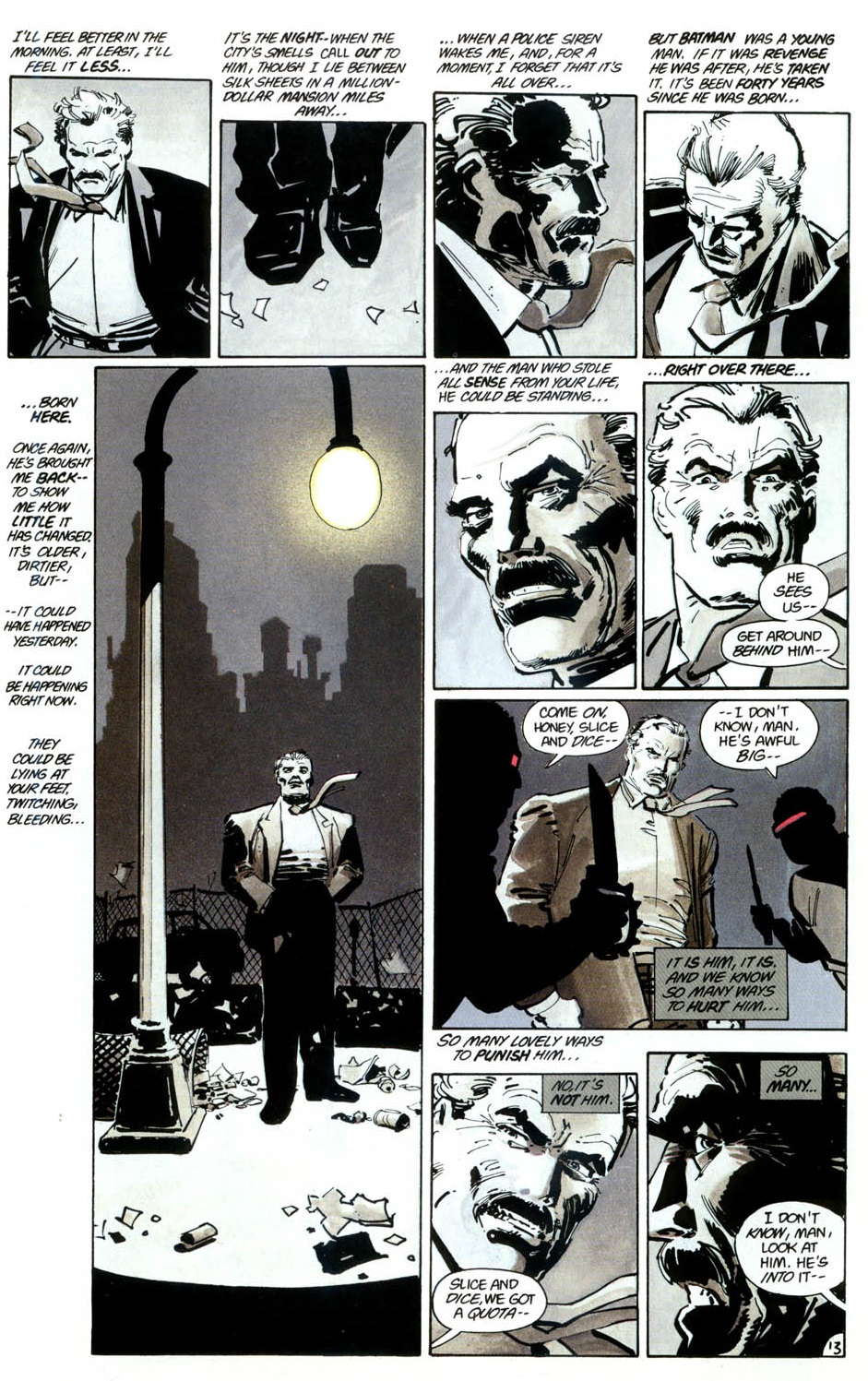
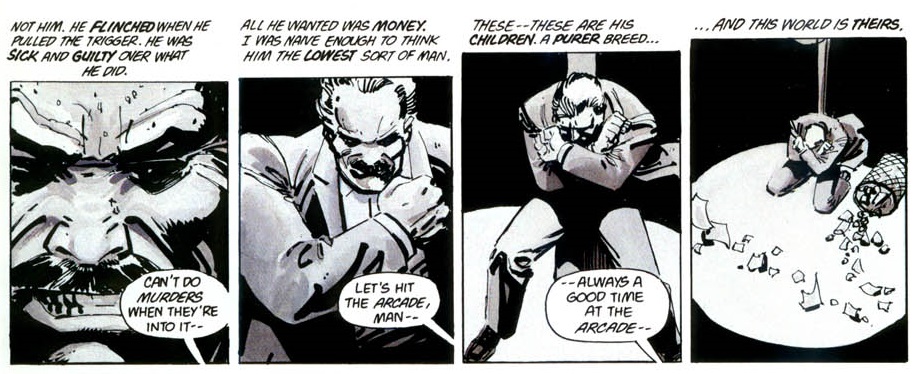
10.‘The Dark Knight Returns’ (The Dark Knight, cover-dated 1986), by Frank Miller (script and pencils), Klaus Janson (inks), Lynn Varley (colors), John Costanza (letters)
Batman - Dark Knight ReturnsDark Knight Returns

The one book that’s required reading not just for Batman fans, but for any fan of the superhero genre (or for anyone interested in the history of mainstream comics). Frank Miller blew everyone away with his formally innovative and politically charged tale about an older Batman coming out of retirement in a near-future that looked like a grim extension of Reagan-era Cold War. The powerful impact of The Dark Knight Returns (especially of the climactic face-offs with the Joker and Superman) can still be felt today, in both comics and superhero movies. I wrote about it here and Geoff Klock did a poignant analysis of DKR’s revisionary contribution in his fascinating book How to Read Superhero Comics and Why, including the following passage: ‘Miller has often stated that the only thing contemporary comics have learned from The Dark Knight Returns is the extreme level of violence it presents. His own work is not so much violent as it is more graphic and more realistic about the violence that has always inhabited superhero narratives. With The Dark Knight Returns, the reader is forced to confront what has been going on for years between the panels. Miller’s realism operates as a kind of commentary on a genre that has treated its inherent violence with kid gloves. Take, for example, the fact that Batman has in the course of his history gotten into many fights in which he is outnumbered and his opponents are armed with guns. Using only a Batarang and his fists, Batman manages to defeat them all without breaking a sweat. Miller never treats his hero so gently – his Batman is almost always wounded, sometimes badly, and the Batarang is reconceived as a kind of bat-shaped throwing star that disarms by slicing into the forearm, rather than its former, sillier portrayal as a boomerang that disarms criminals by knocking weapons out of their hands. The strength of Miller’s portrayal leaves readers with the impression that all of Batman’s fights must have been of this kind, but that they have been reading a watered-down version of the way things ‘really happened.’’

Honorable mentions (pre-Crisis): Although not as iconic as these tales, other first appearances are worth noting, such as those of Robin/Dick Grayson (Detective Comics #38, April 1940), the Joker (Batman #1, June 1940), Two-Face (Detective Comics #66, August 1942), the Riddler (Detective Comics #140, October 1948), Bat-Mite (Detective Comics #267, May 1959), Poison Ivy (Batman #181, June 1966), and Batgirl/Barbara Gordon (Detective Comics #359, January 1967). The origin tales ‘The Secret Life of Catwoman’ (Batman #62, December 1950-January 1951) and ‘The Man Behind the Red Hood’ (Detective Comics #168, February 1951) are minor classics as well.

NEXT: More essential comics.
Posted in BATMAN COMICS FOR BEGINNERS | Tagged , , , , , , , , , , , , , , , , , , , , , , , , , , , | Leave a comment

50 glass-shattering entrances

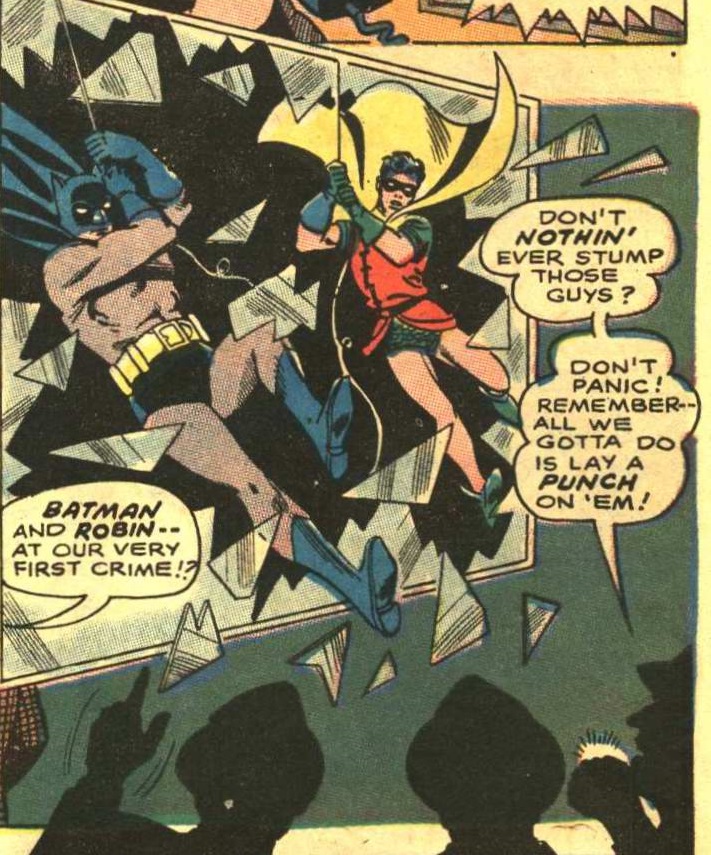
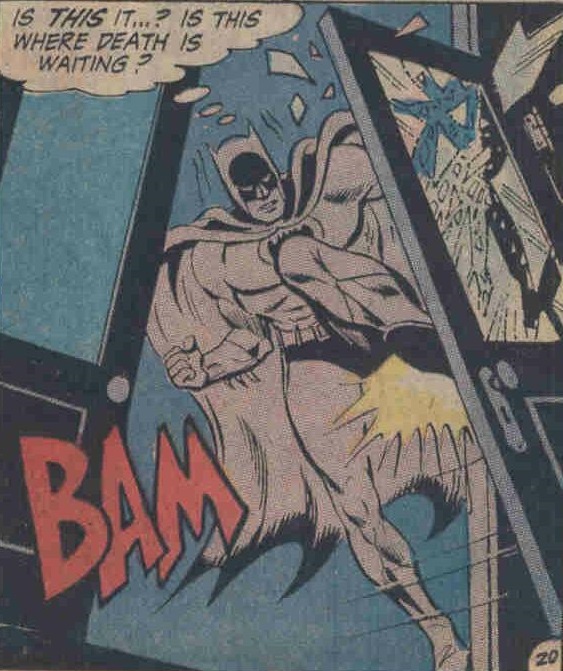
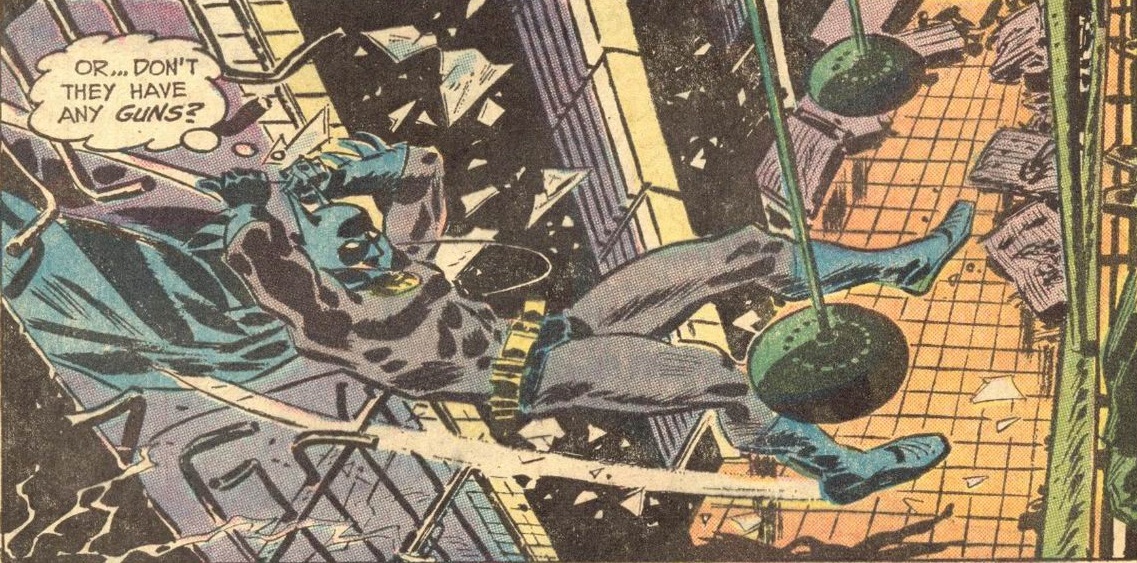
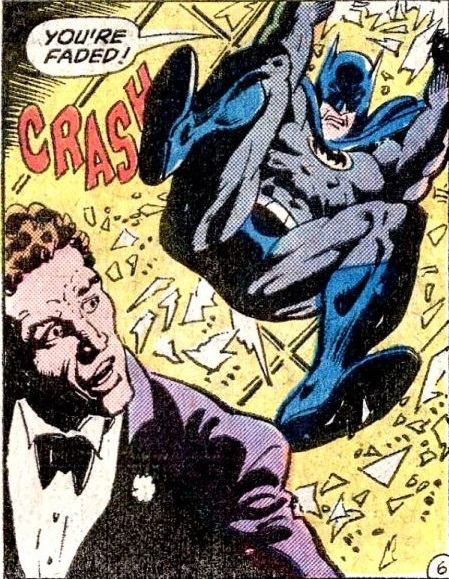
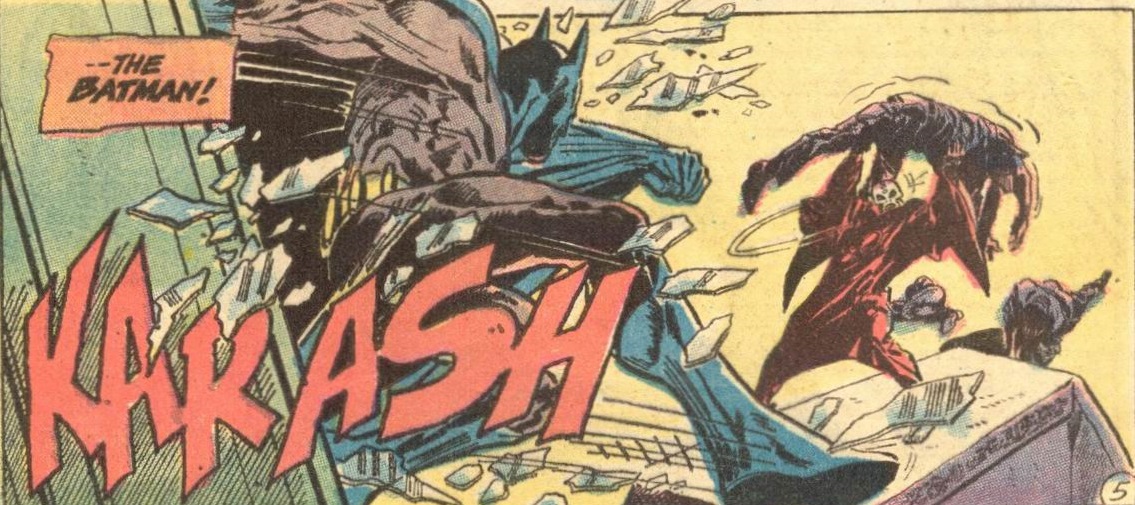
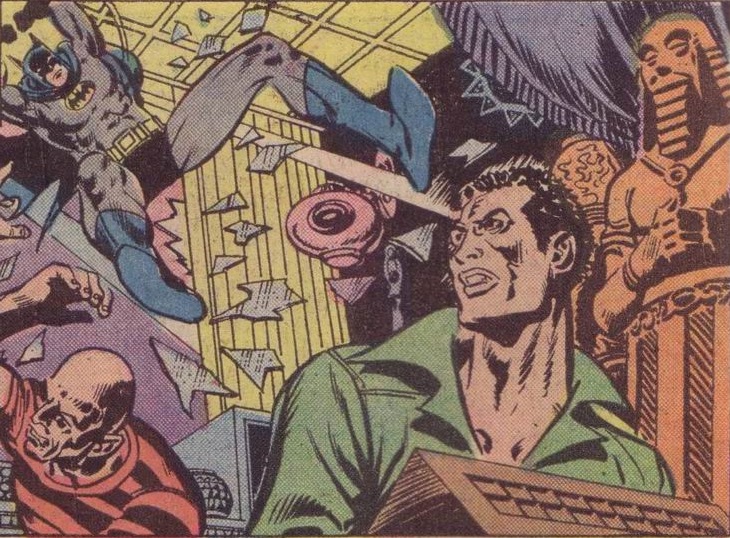
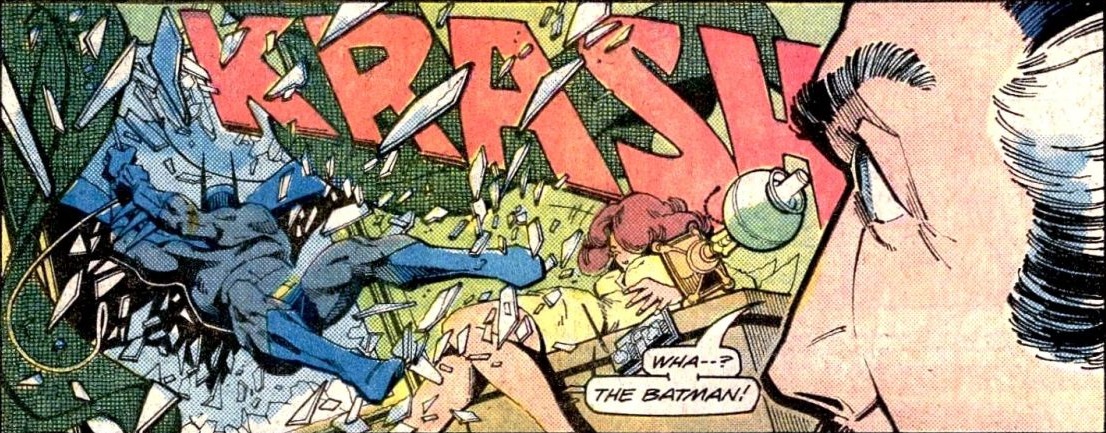
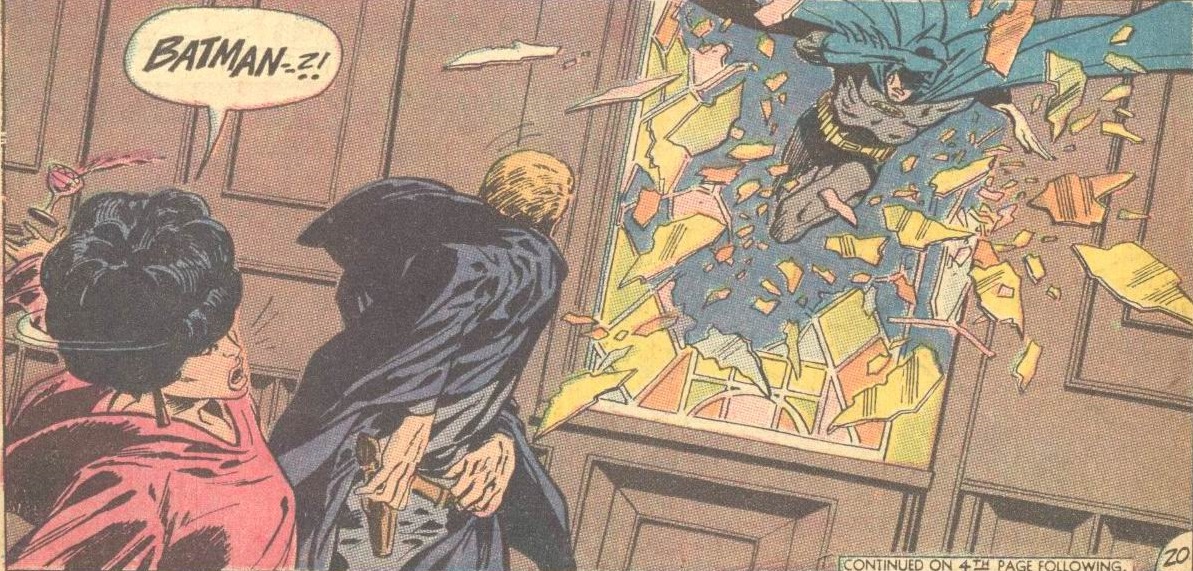
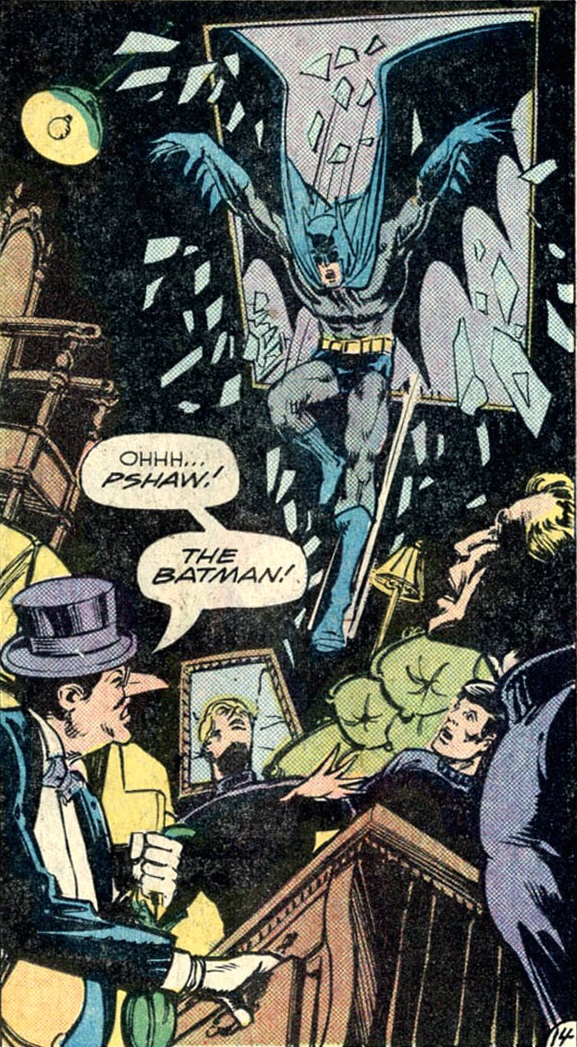
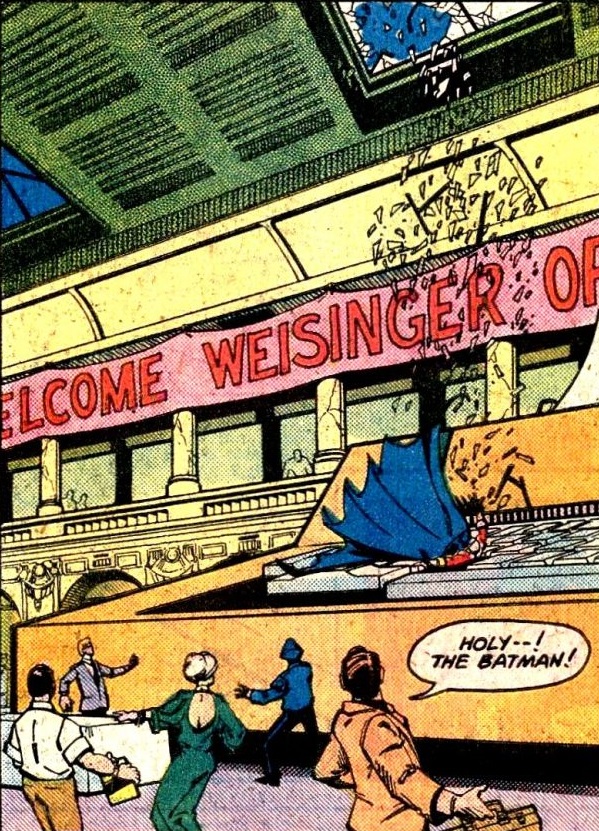
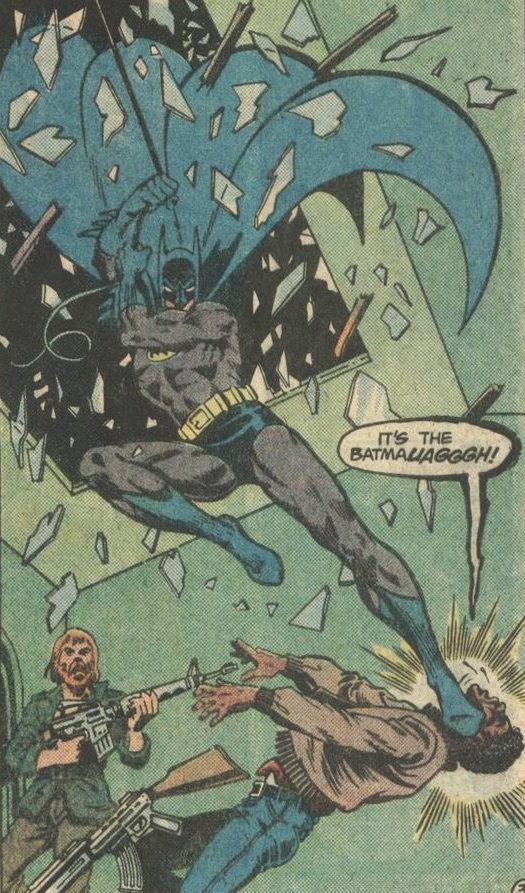
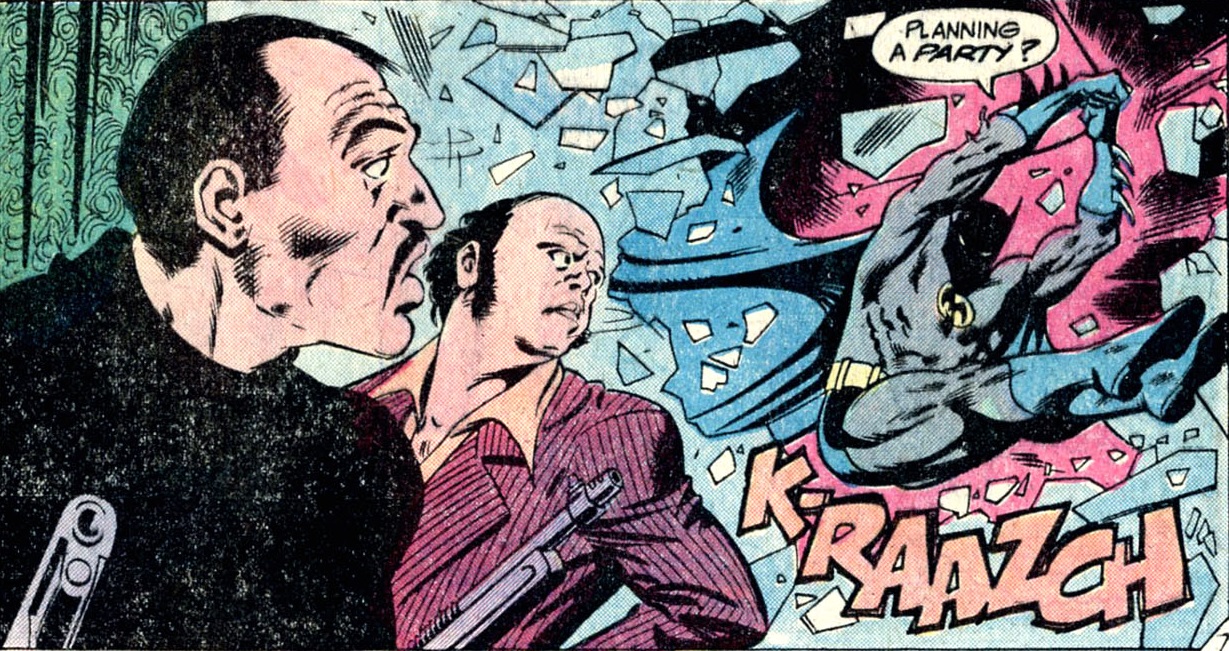
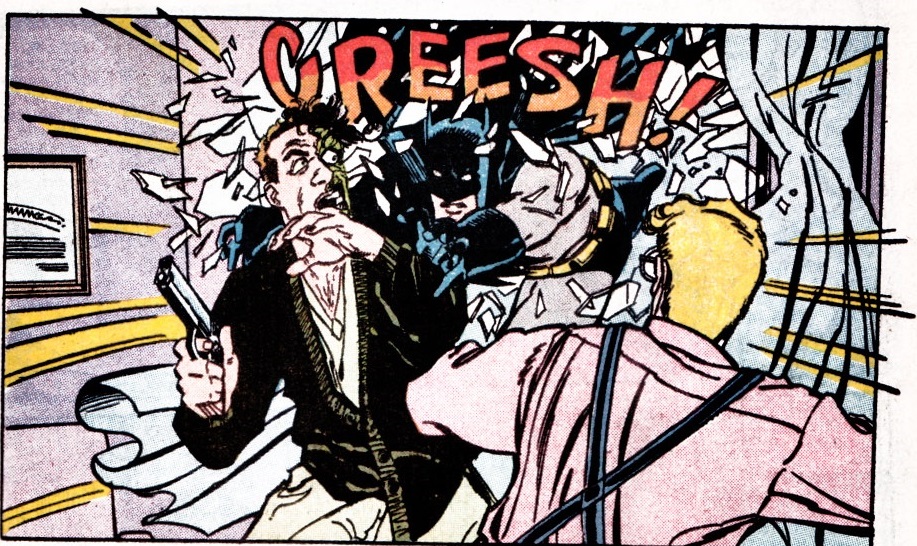
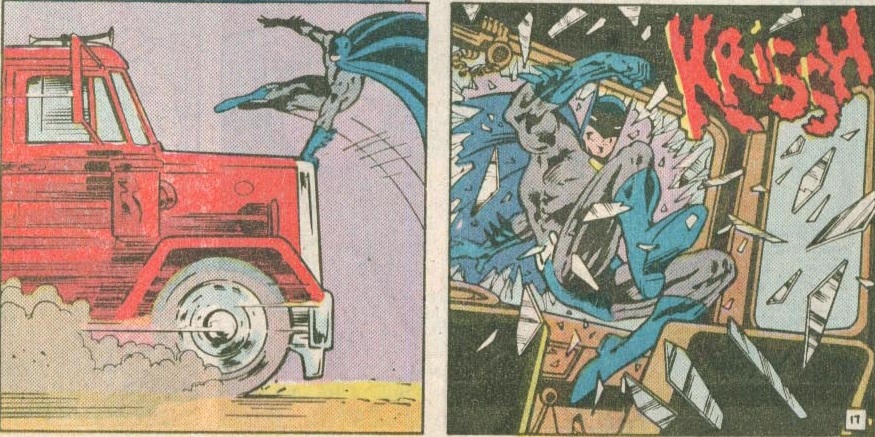
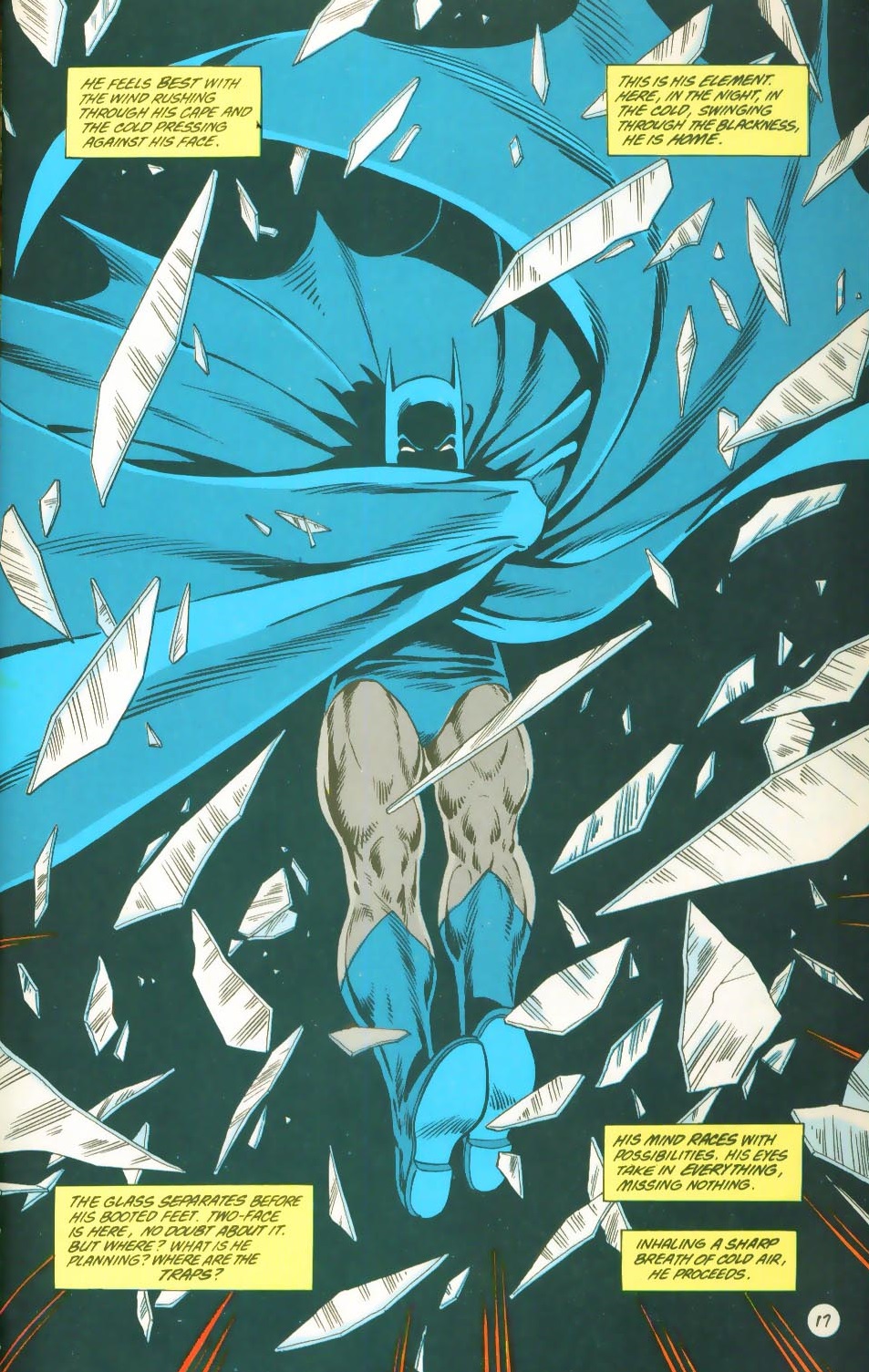
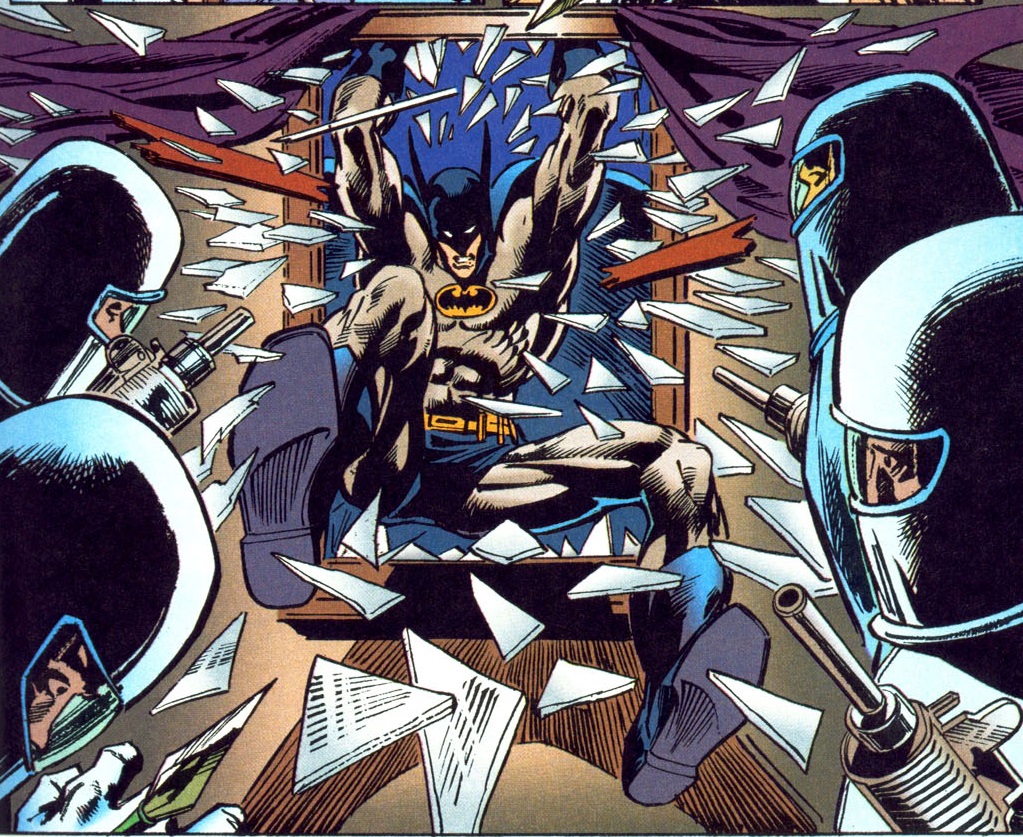
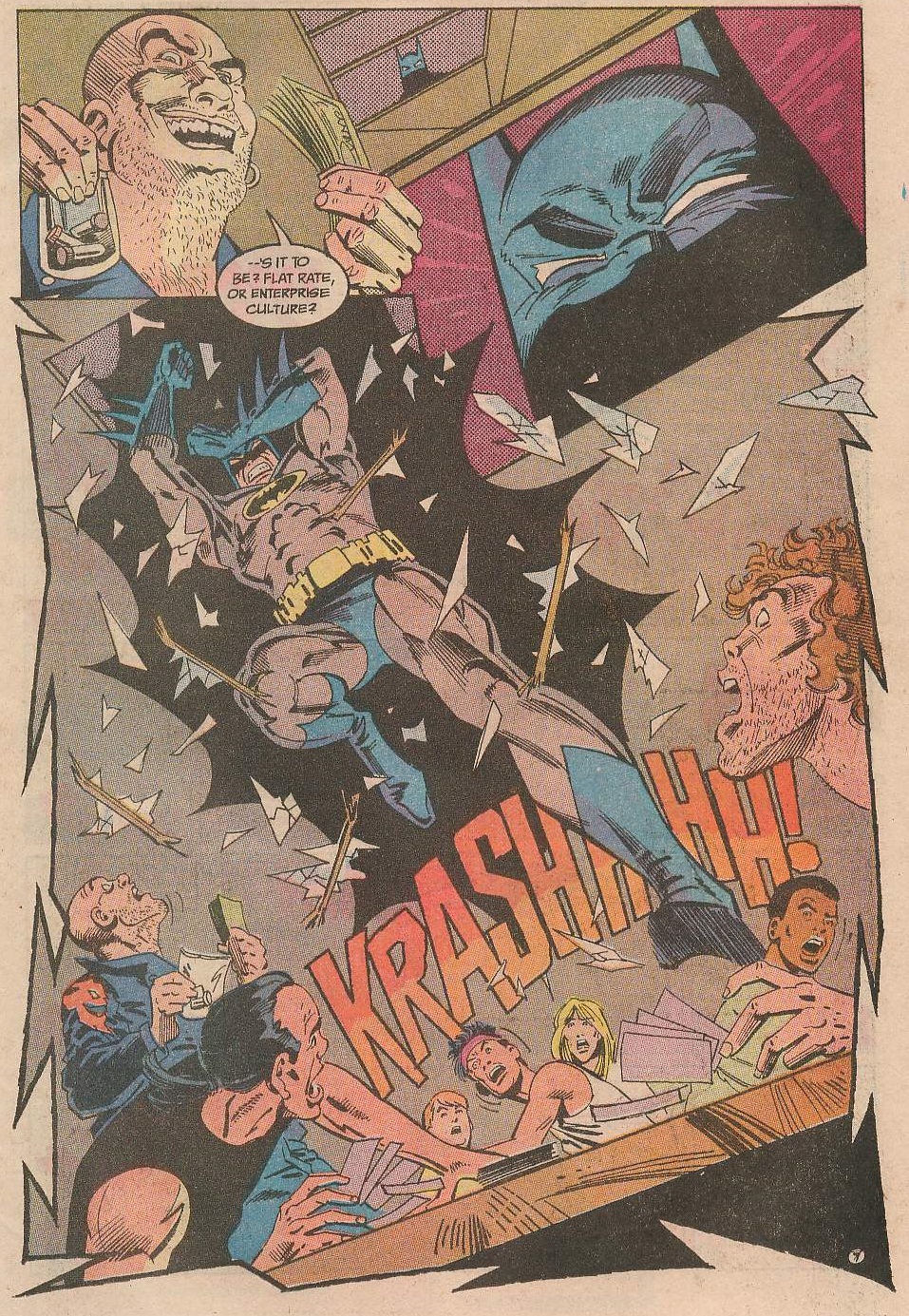
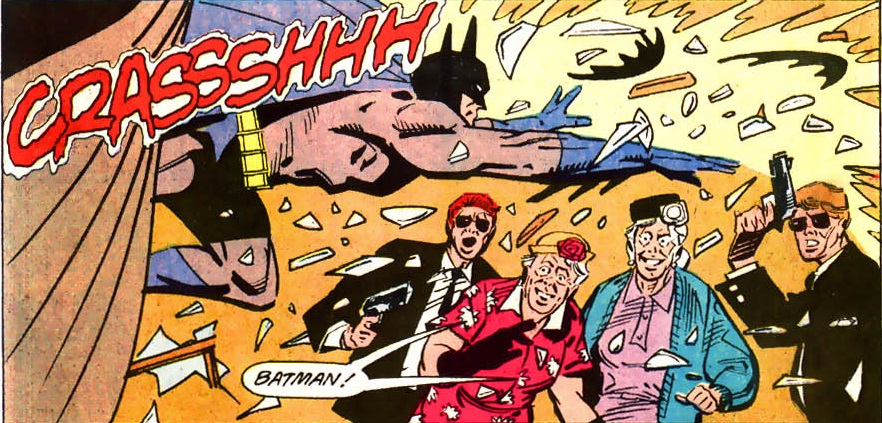
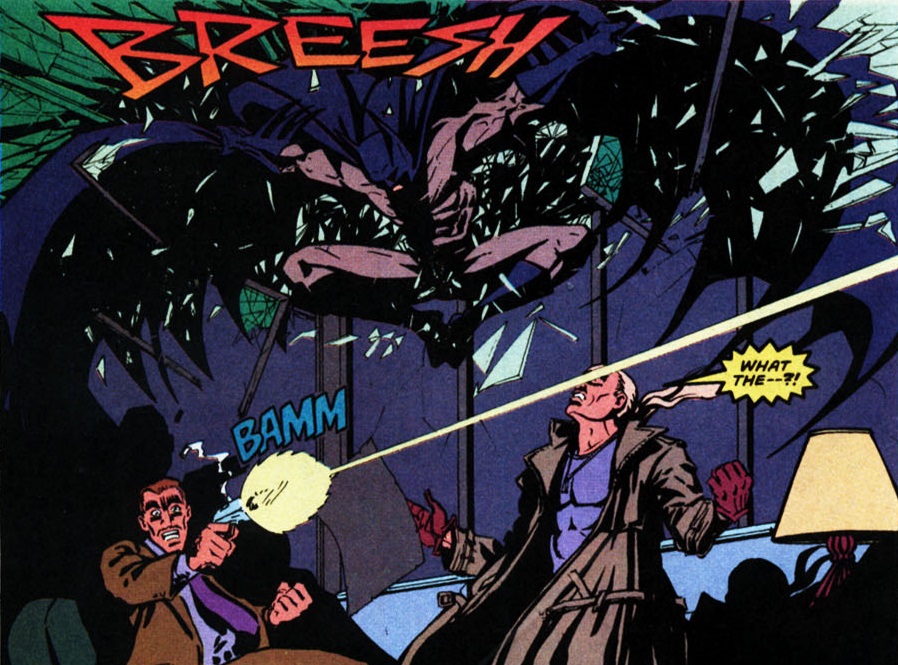
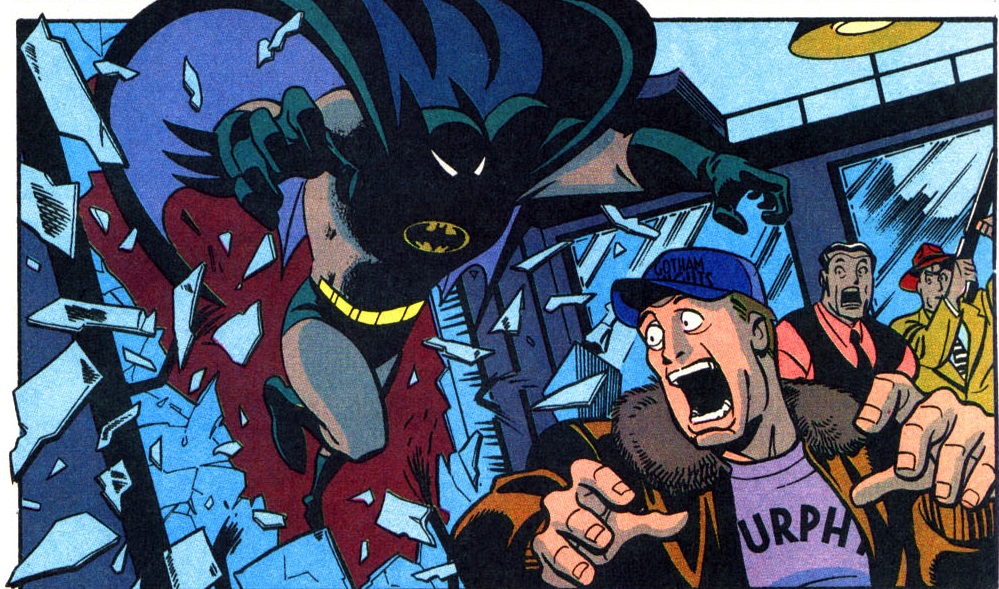
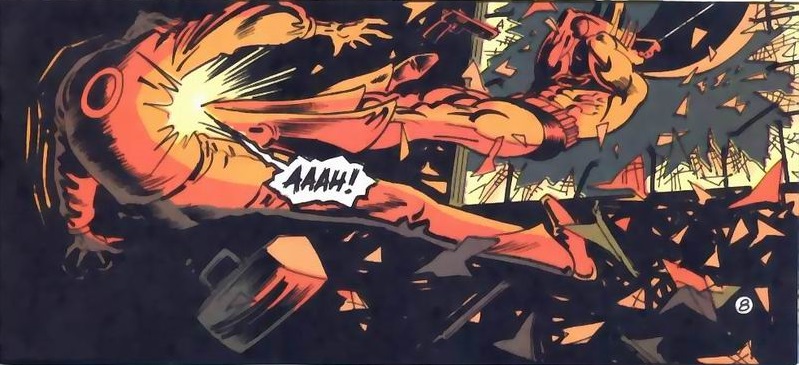
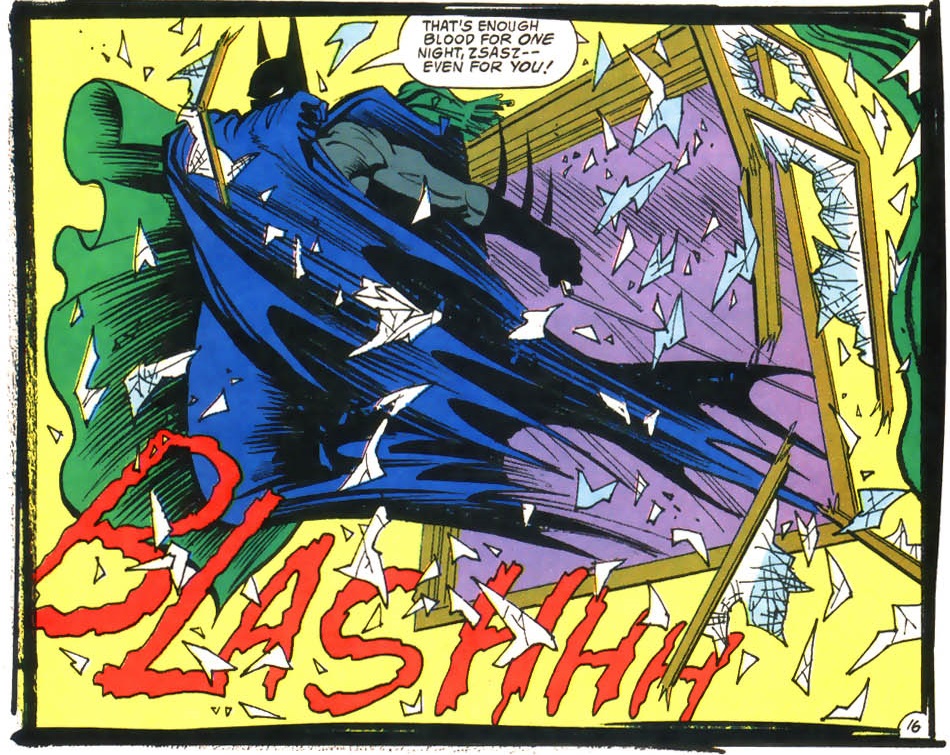
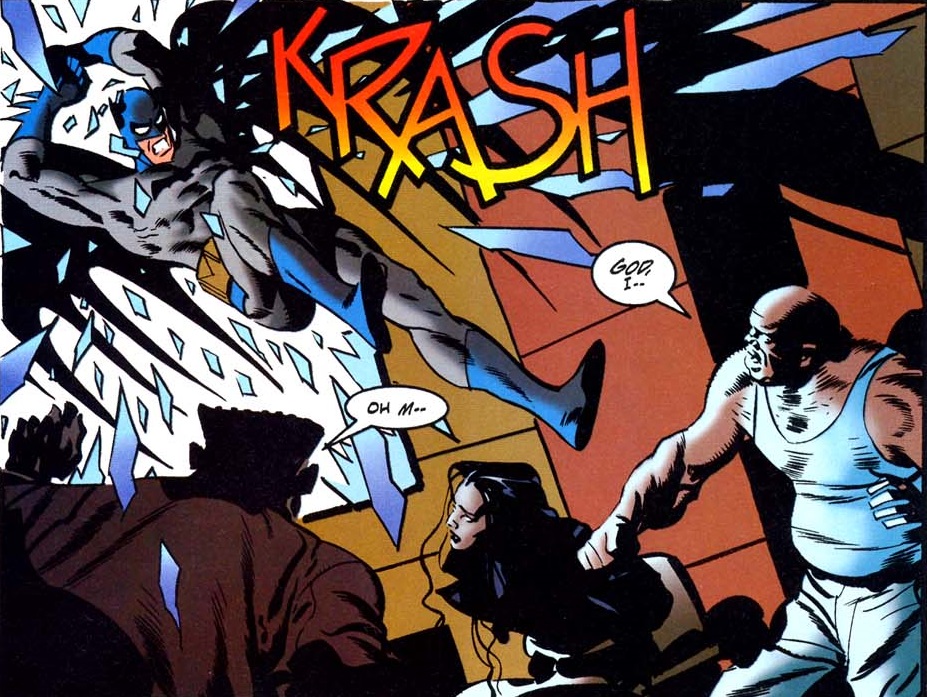
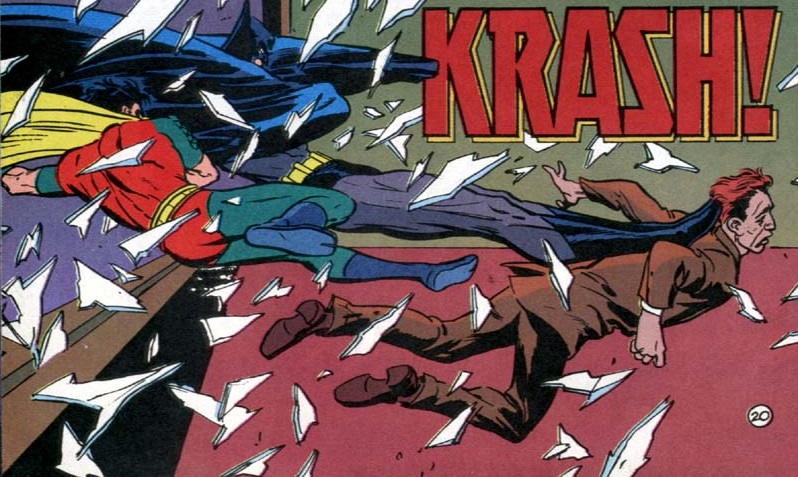
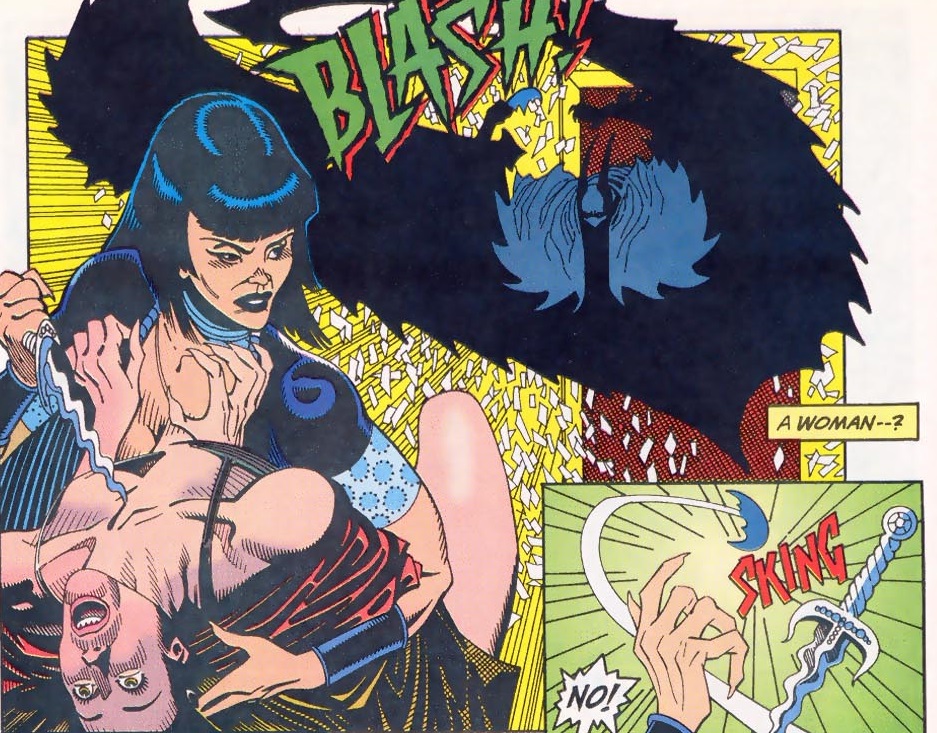
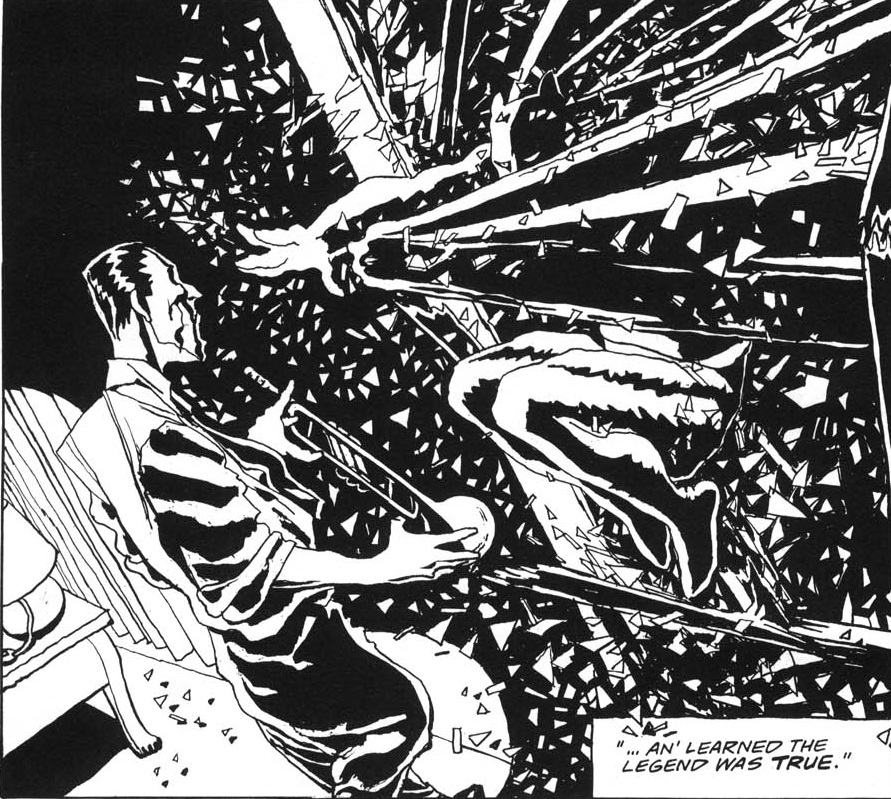
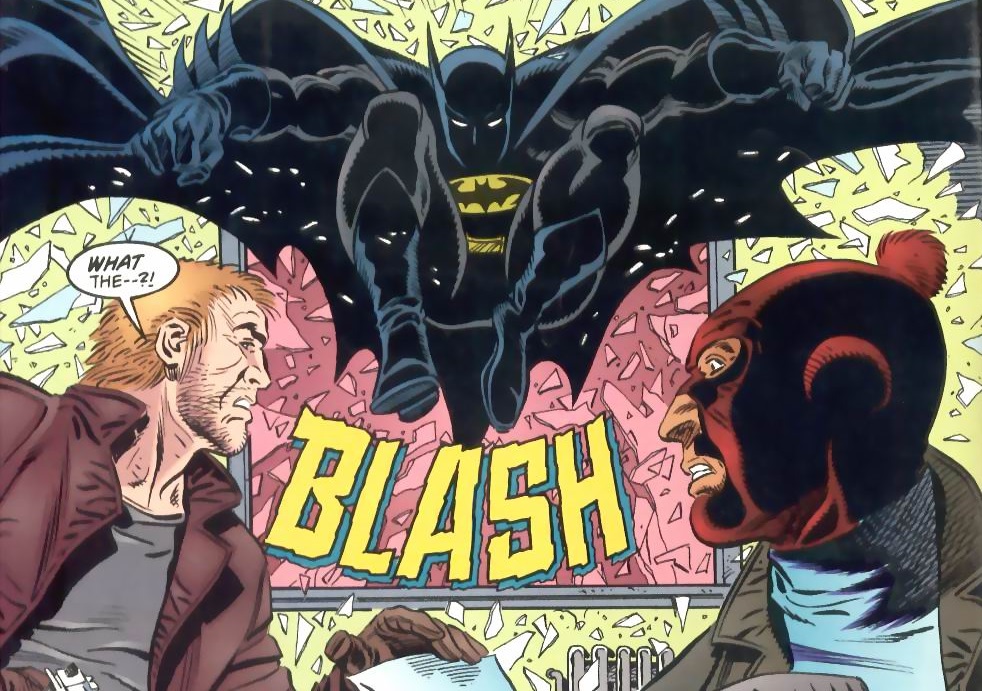
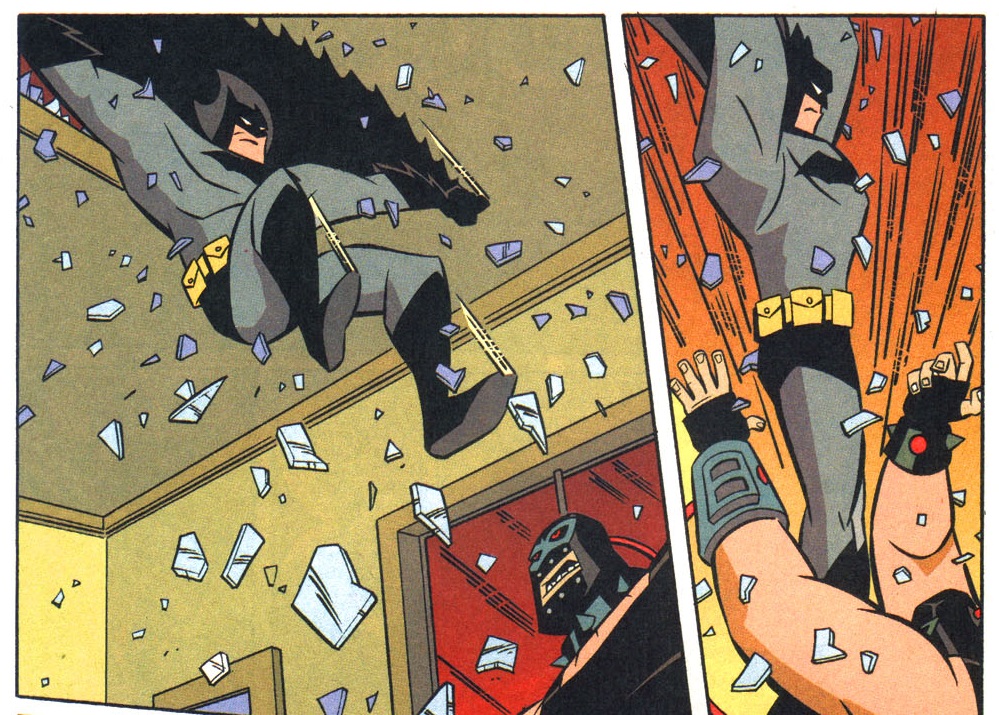
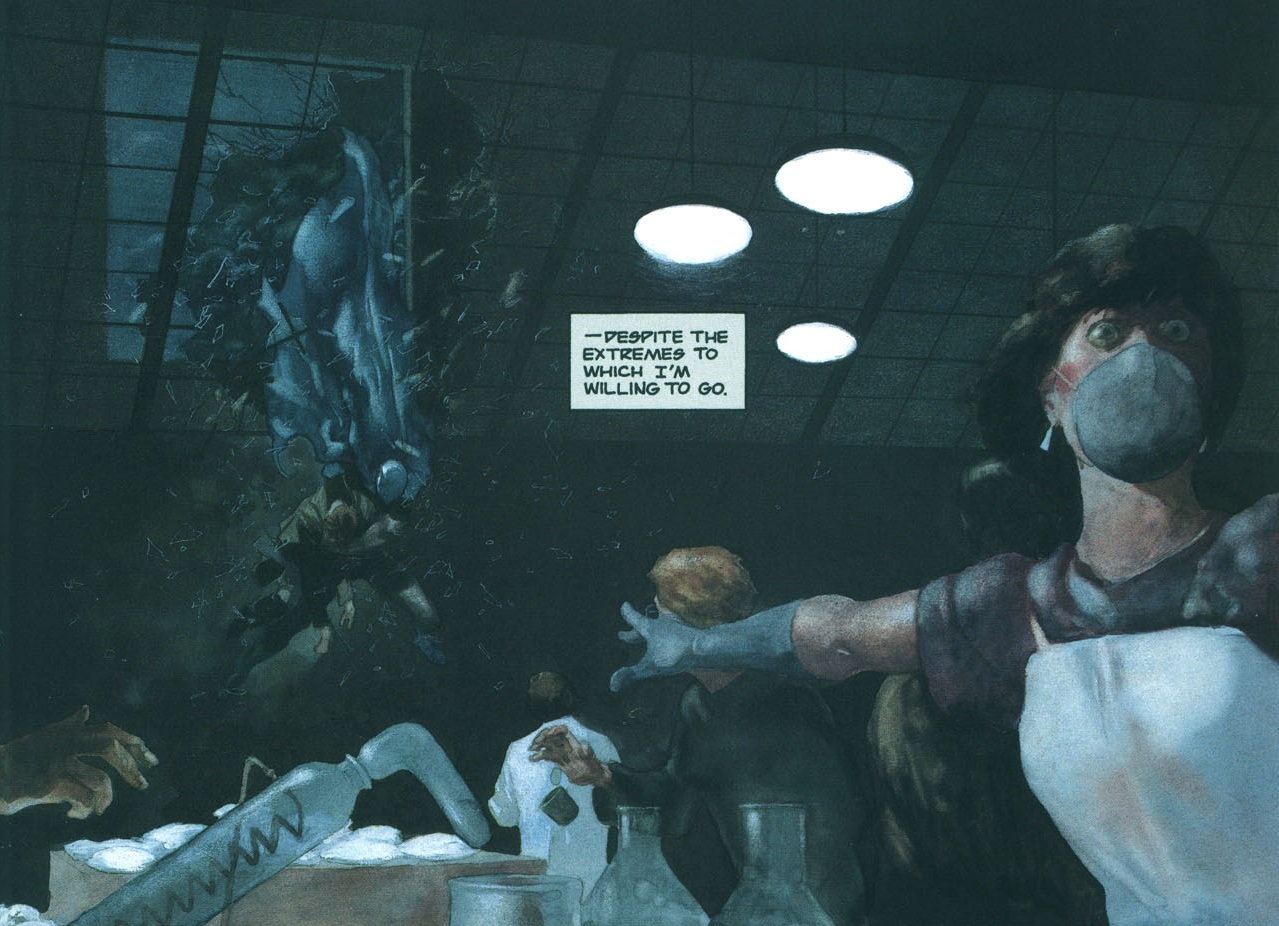
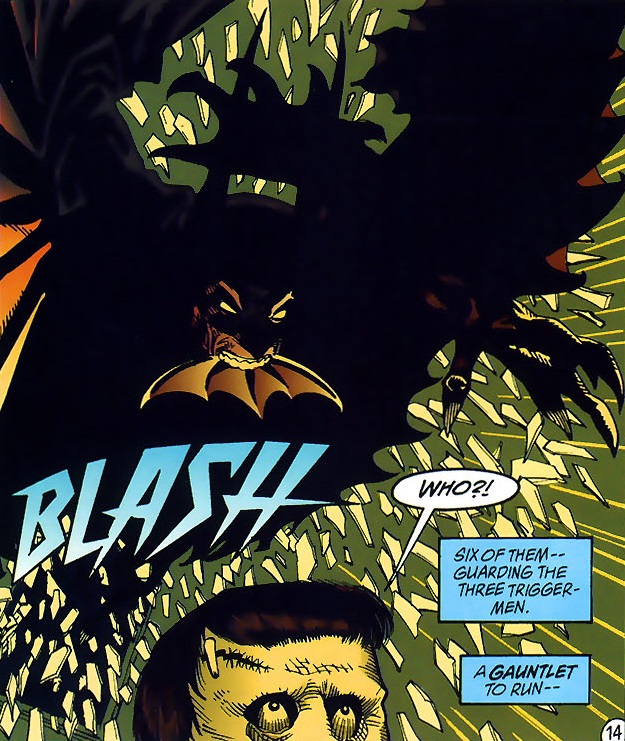
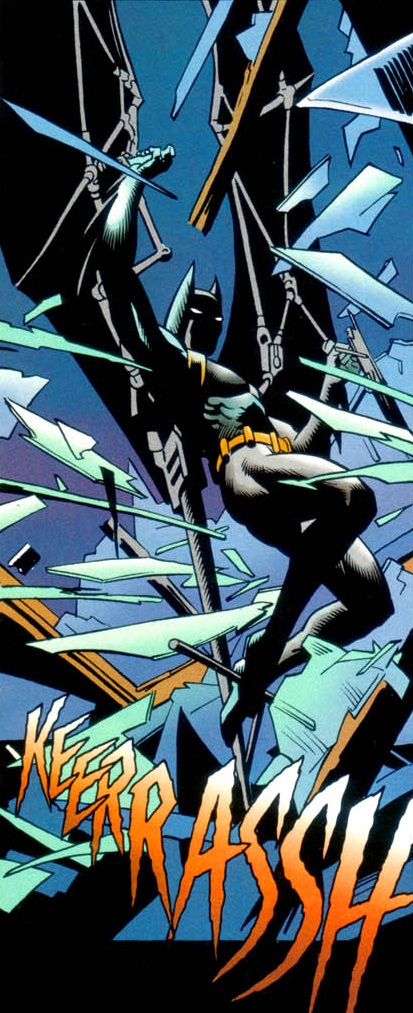
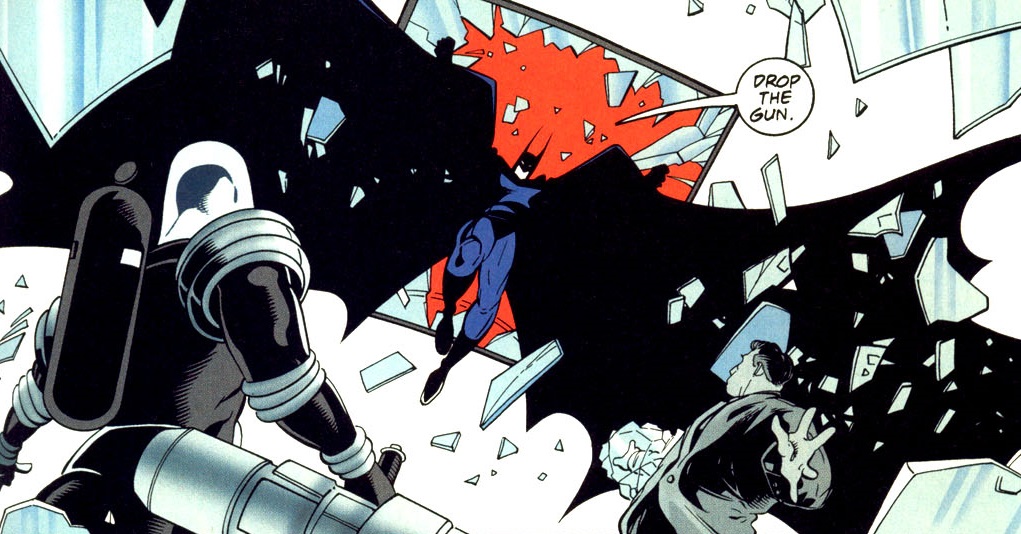
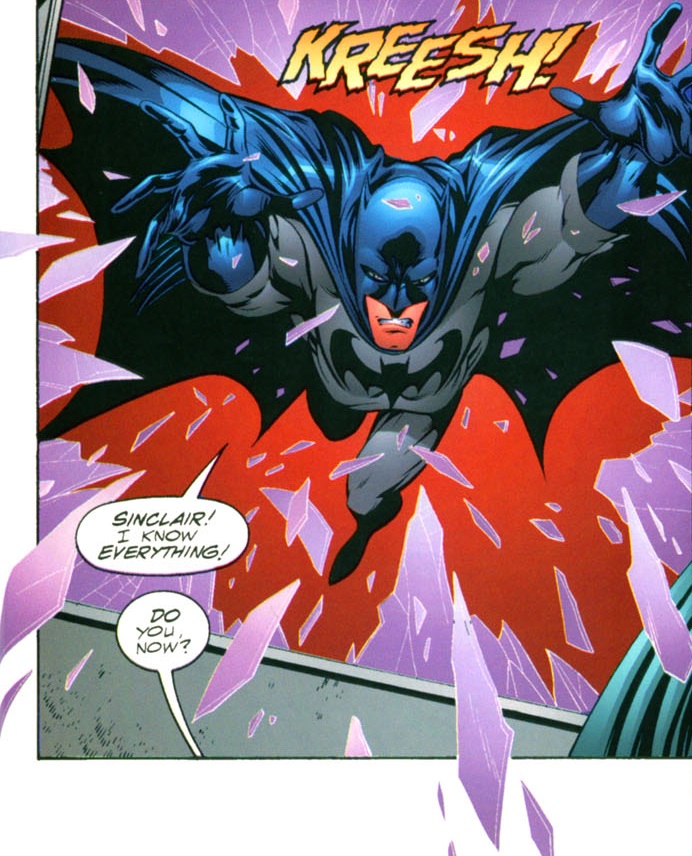
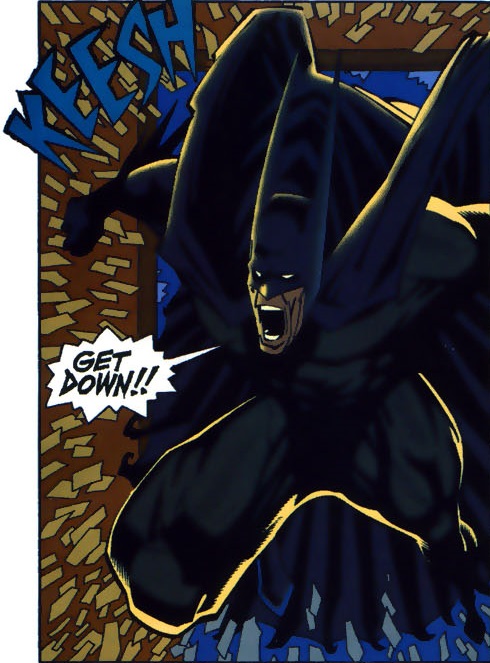
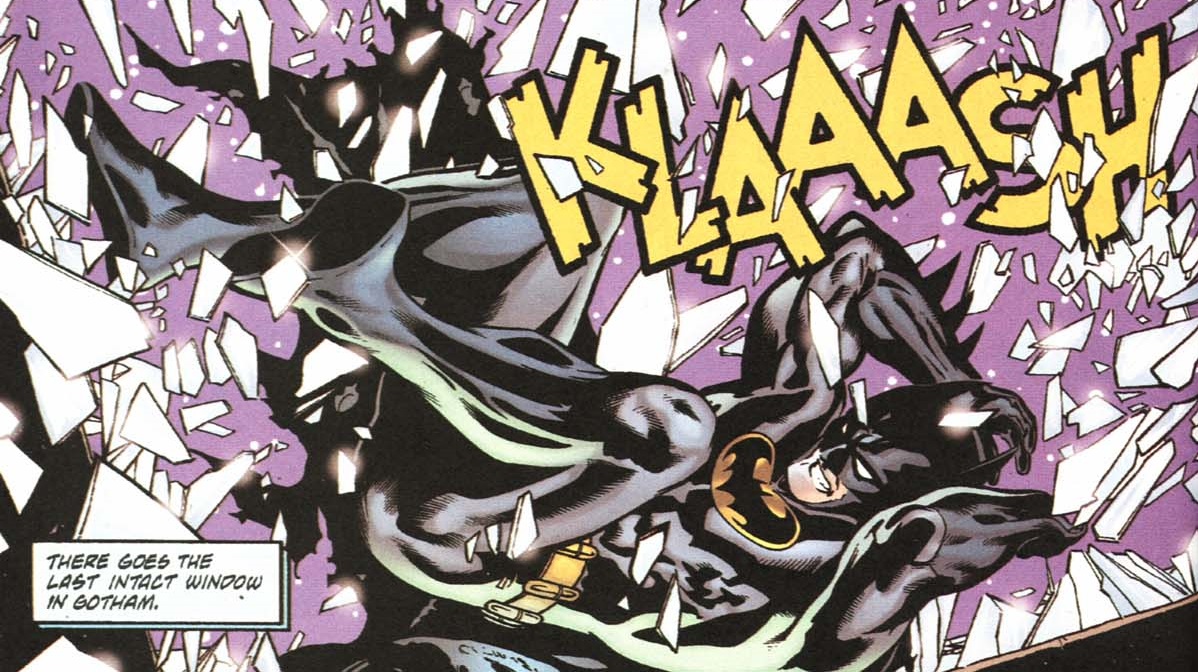
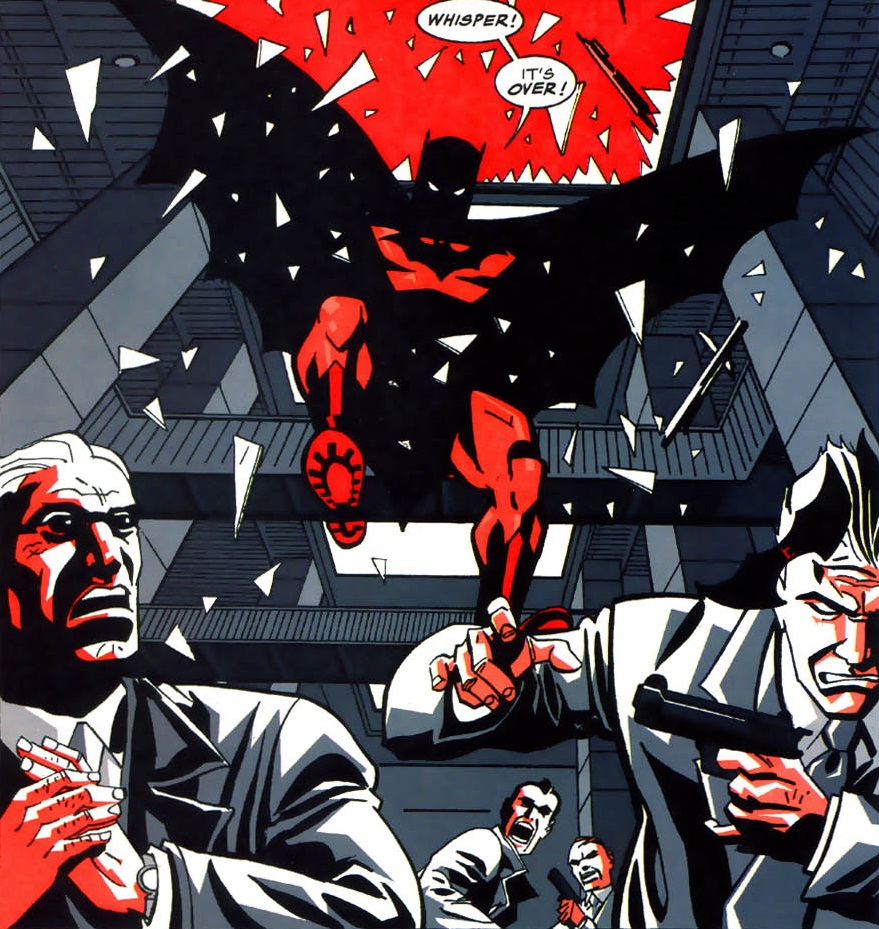
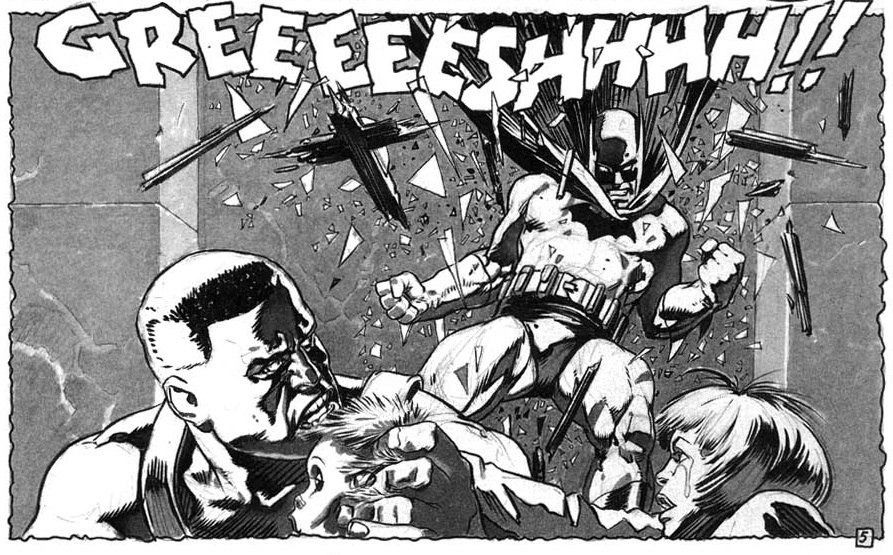
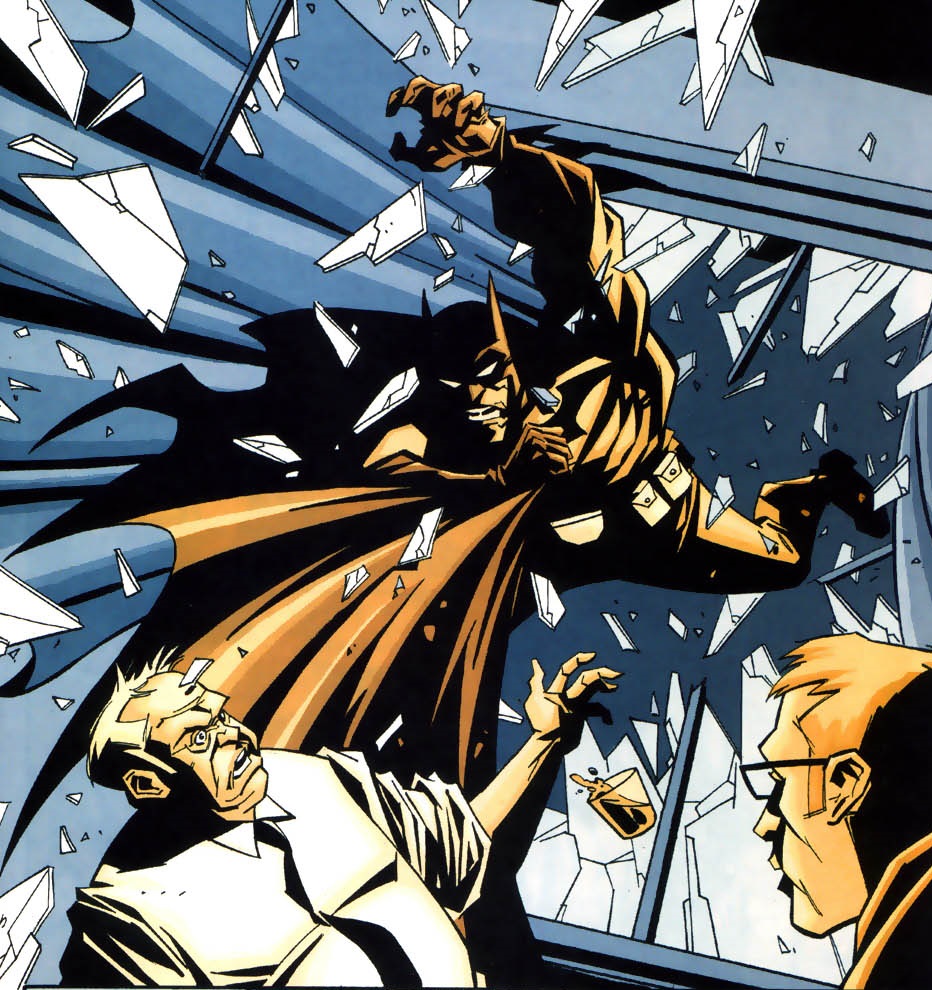
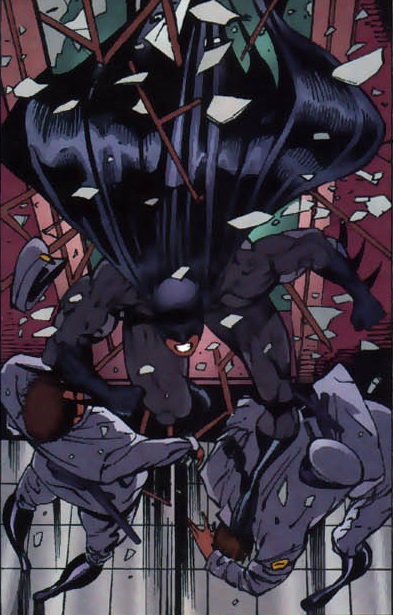
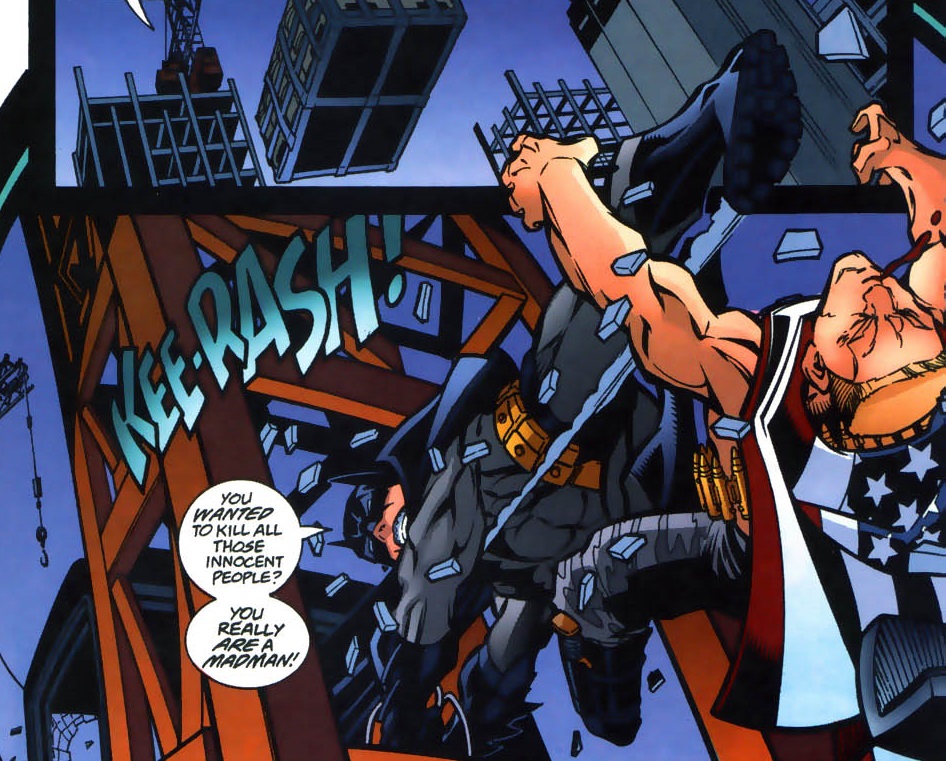
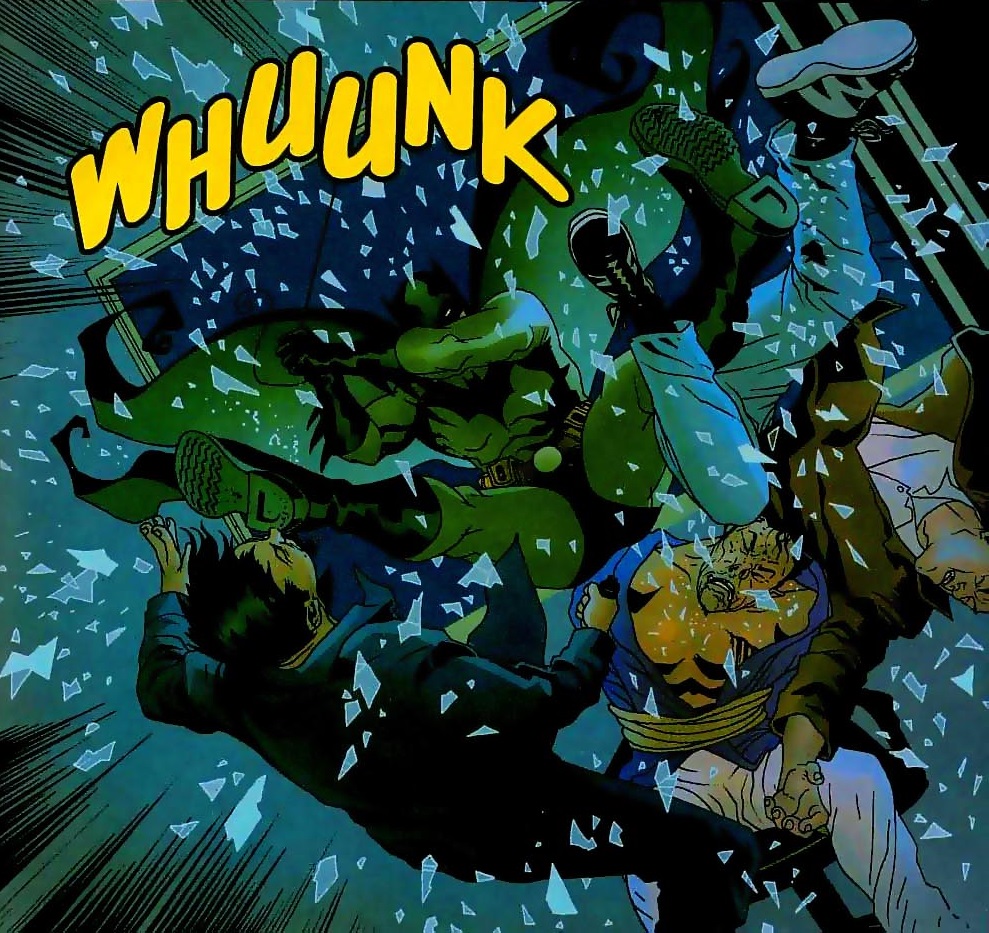
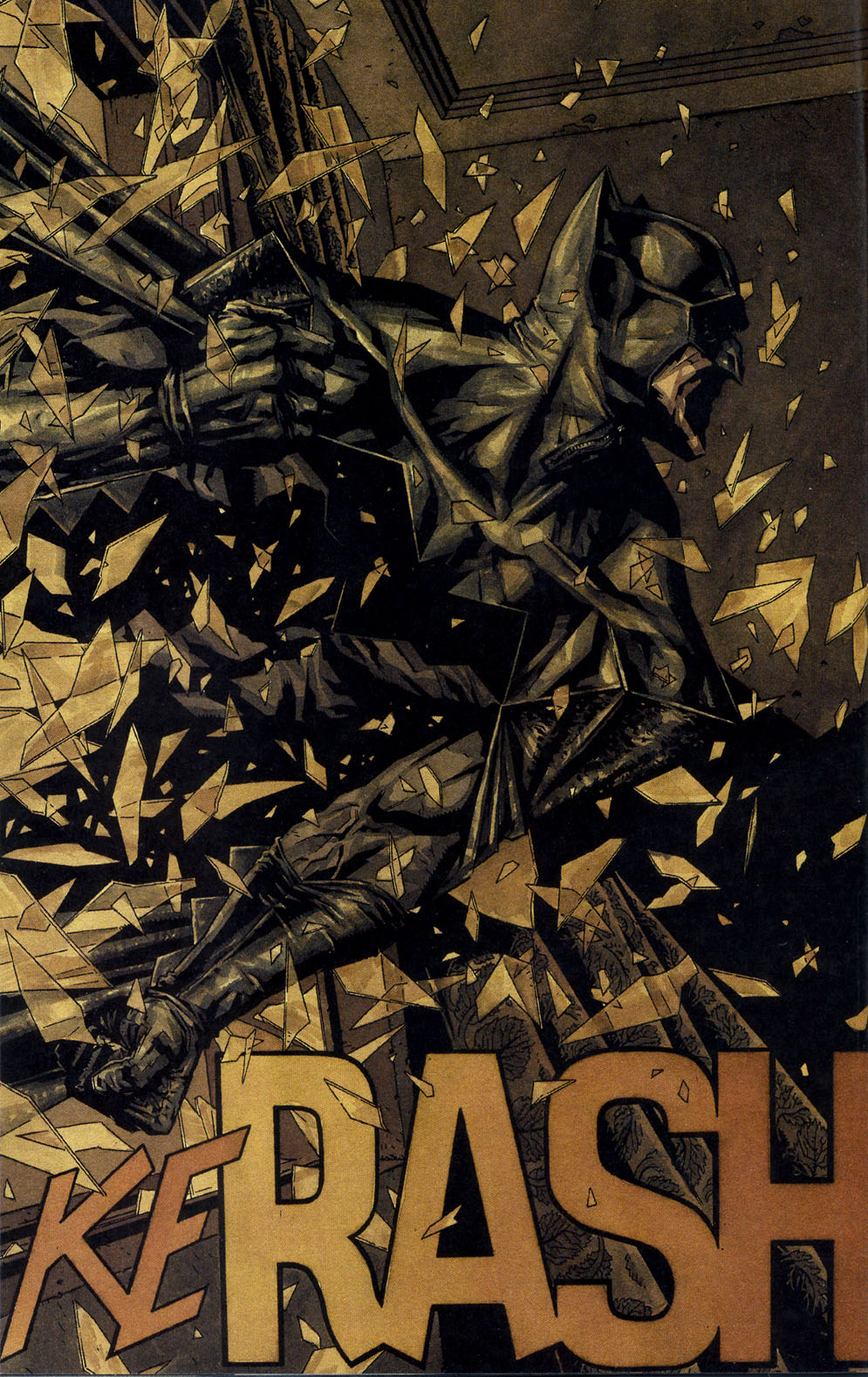
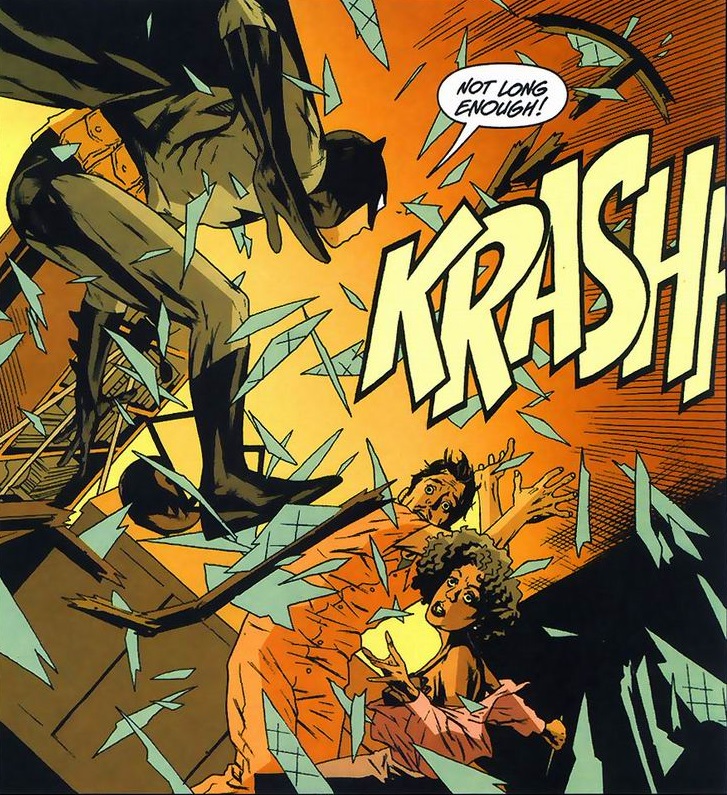
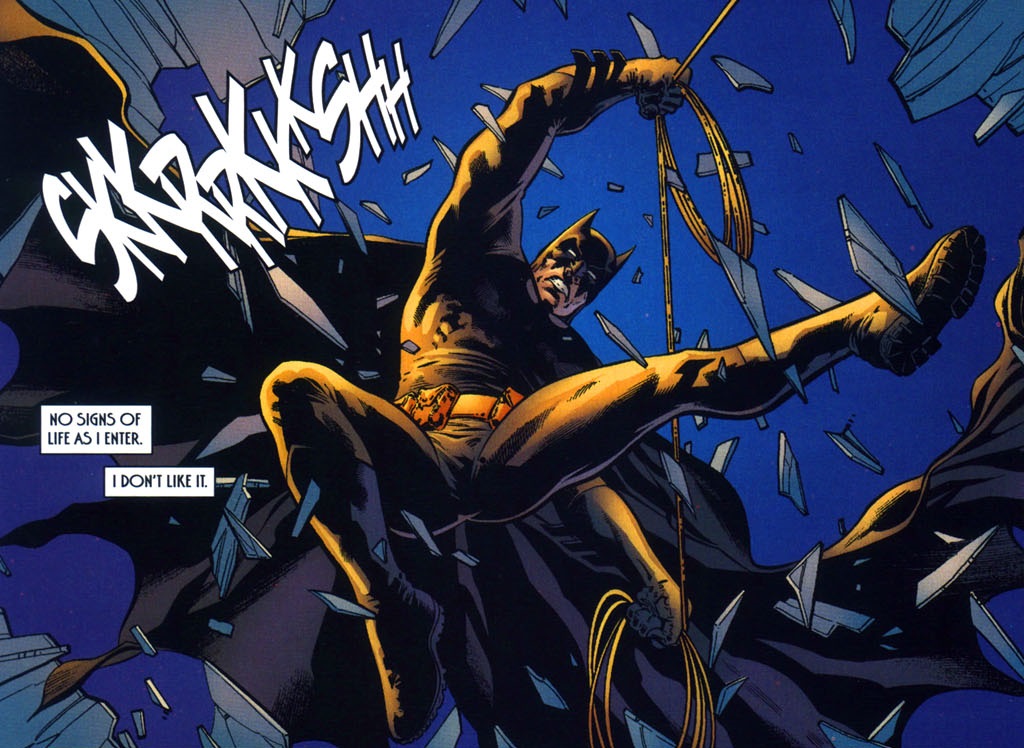
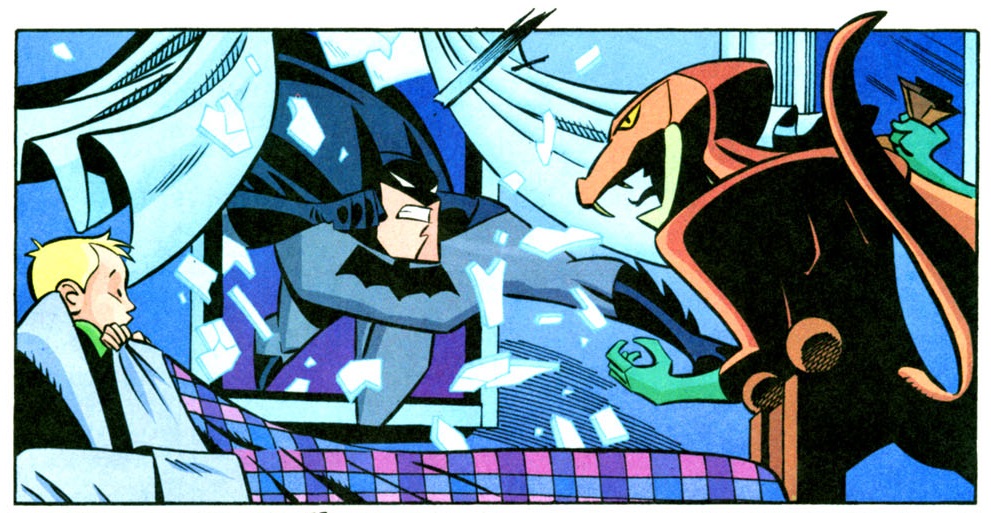
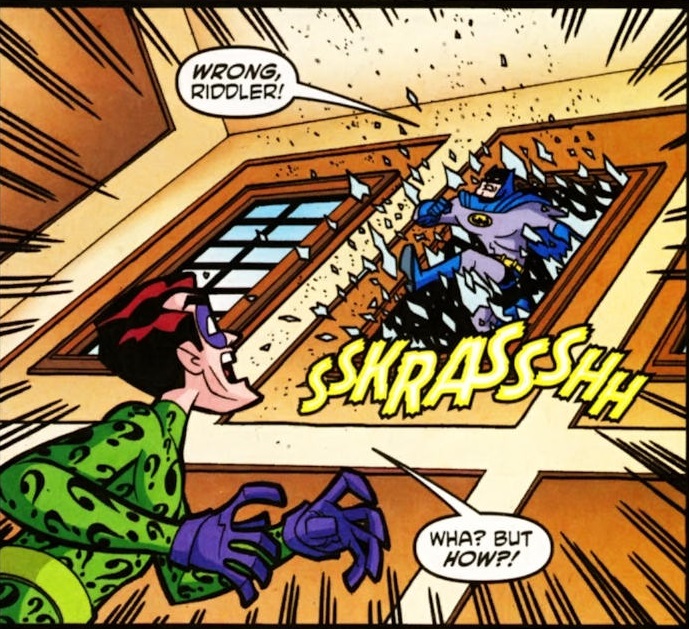
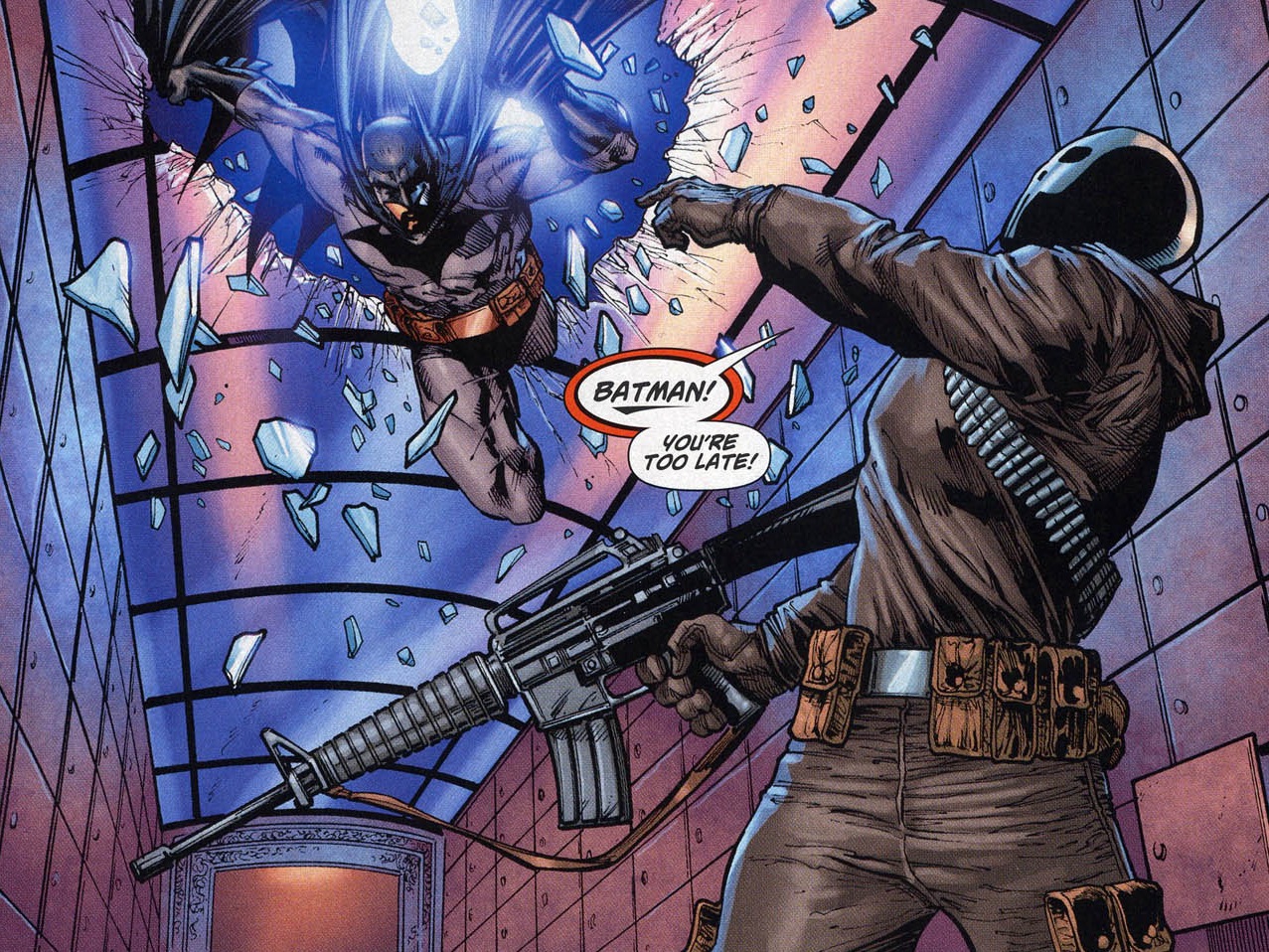
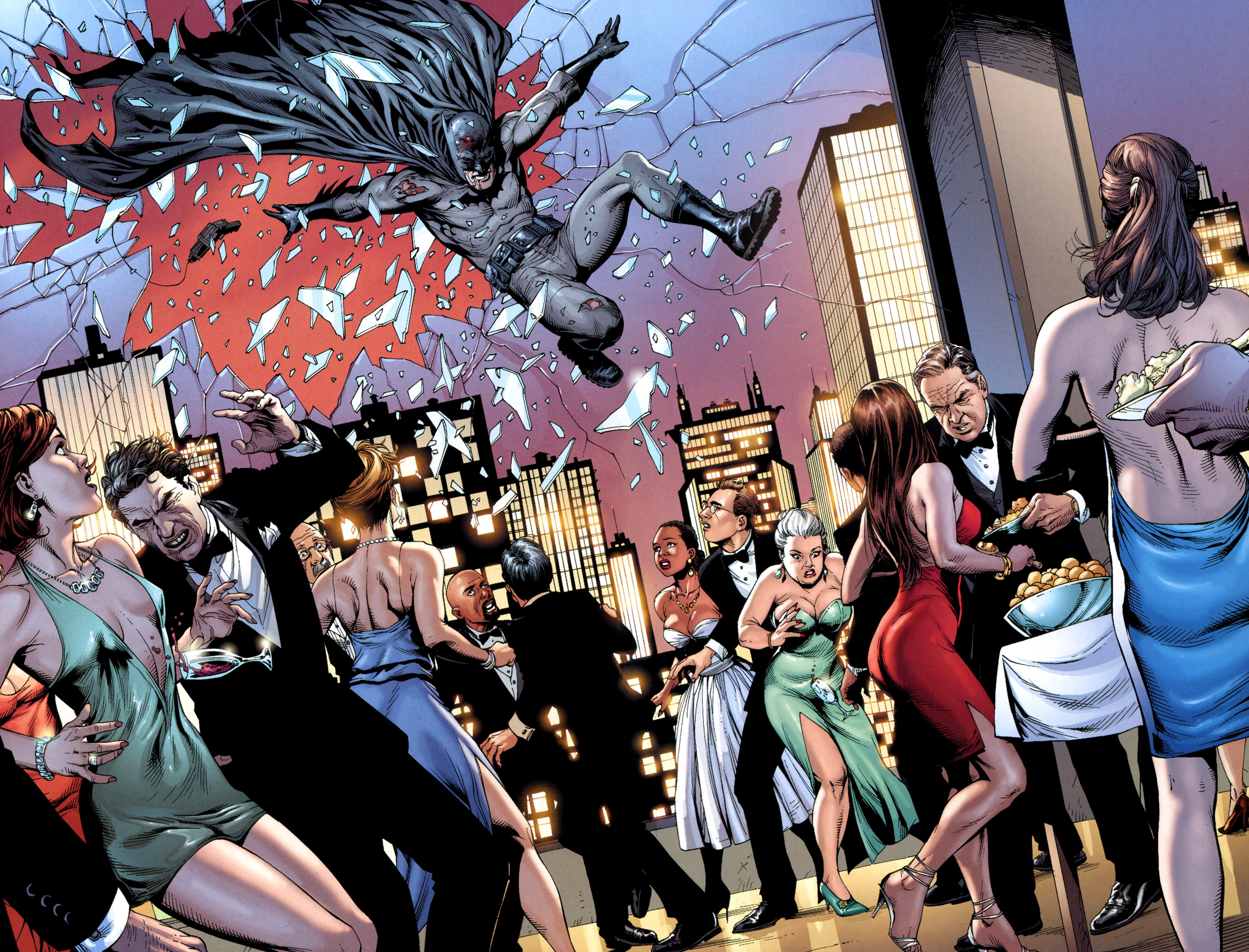
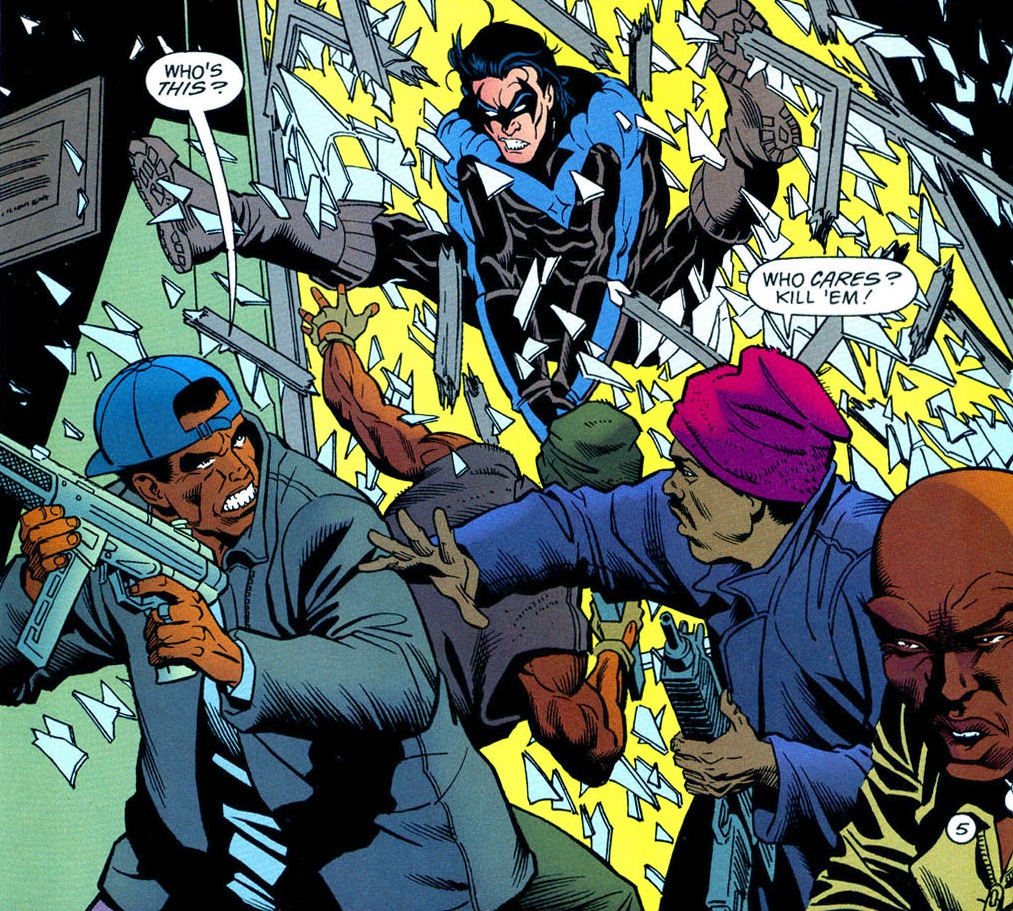
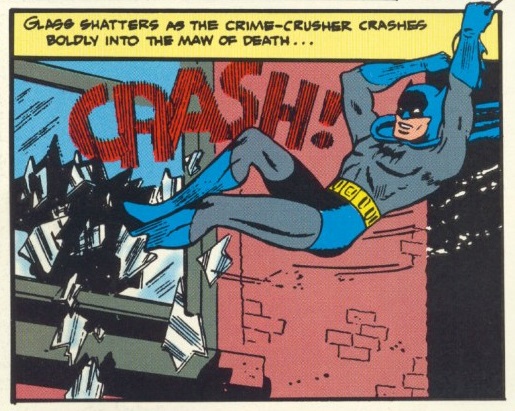
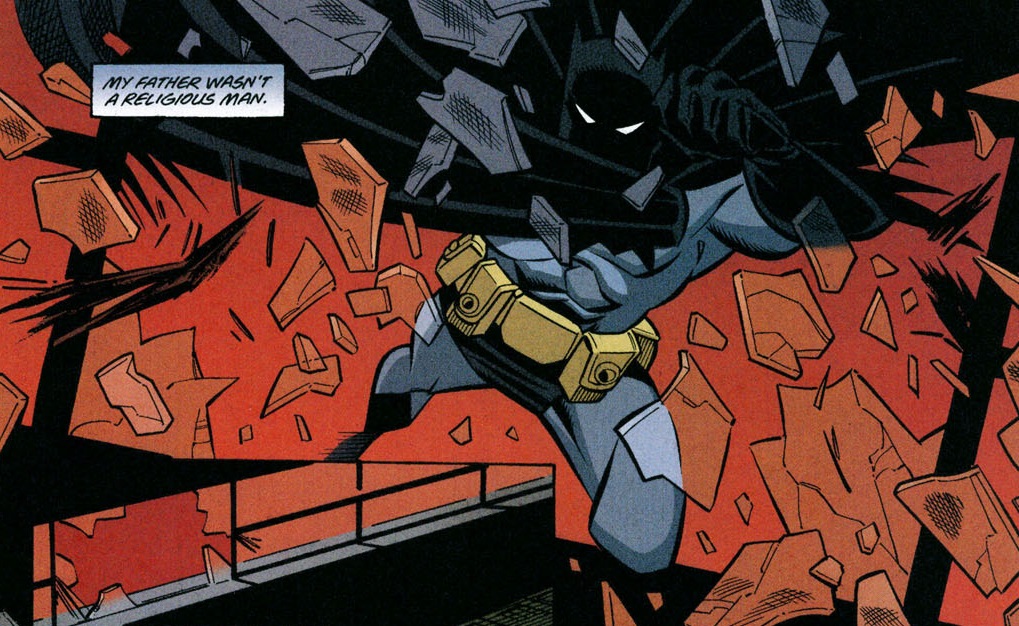
Tomorrow is Gotham Calling’s fourth anniversary. I usually mark these occasions with a compilation of kicks in the head (accompanied by exciting, onomatopoeic sound effects). However, this year I’ve decided to celebrate another longstanding tradition of Batman comics, namely the Caped Crusader’s habit of surprising his foes with sudden entrances that involve breaking a lot of glass.

Whether crashing through a window or through a glass ceiling, this trope has been reinterpreted throughout the ages, with artists coming up with various dynamic angles (although often going for the same ways of depicting broken shards). Moreover, even when Batman doesn’t supplement his theatrical entrance with a badass one-liner, these moments are often a treat due to the villains’ astonished reactions.

Enjoy these fifty glorious examples:

Detective Comics #65

Detective Comics #65

Batman #199

Batman #199

The Brave and the Bold #90

The Brave and the Bold #90

Detective Comics #421

Detective Comics #421

Batman #269

Batman #269

Detective Comics #437

Detective Comics #437

Batman #284

Batman #284

Detective Comics #471

Detective Comics #471

The Brave and the Bold #98

The Brave and the Bold #98

Batman #288

Batman #288

Detective Comics #474

Detective Comics #474

The Brave and the Bold #198

The Brave and the Bold #198

Detective Comics #484

Detective Comics #484

batman annual 14

Batman Annual #14

Detective Comics #571

Detective Comics #571

The New Titans #61

The New Titans #61

Batman/Green Arrow: The Poison Tomorrow

Batman/Green Arrow: The Poison Tomorrow

Detective Comics #614

Detective Comics #614

Detective Comics #634

Detective Comics #634

Batman Annual #18

Batman Annual #18

The Batman Adventures #33

The Batman Adventures #33
Shadow of the Bat #13Shadow of the Bat #13
Batman #493

Batman #493

Legends of the Dark Knight #72

Legends of the Dark Knight #72

Shadow of the Bat #32

Shadow of the Bat #32

Batman #516

Batman #516

Batman: Black and White #1

Batman: Black and White #1

Batman #520

Batman #520

Gotham Adventures #15

Gotham Adventures #15

Night Cries

Night Cries

Batman #541

Batman #541

Poison Ivy

Poison Ivy

Mr. Freeze

Mr. Freeze

Dark Knight Dynasty

Dark Knight Dynasty

Batman #552

Batman #552

No Man’s Land #0

No Man’s Land #0

Detective Comics #476

Detective Comics #476

Batman: Black and White #3

Batman: Black and White #3

Detective Comics #479

Detective Comics #479

Gotham Knights #5

Gotham Knights #5

Batman #575

Batman #575

Detective Comics #787

Detective Comics #787

Legends of the Dark Knight #169

Legends of the Dark Knight #169

After the Fire #2

After the Fire #2

Arkham Asylum: Living Hell #1

Arkham Asylum: Living Hell #1

Detective Comics #827

Detective Comics #827

Batman Adventures (v2) #13
Batman Adventures (v2) #13
Batman: The Brave and the Bold #9

Batman: The Brave and the Bold #9

Superman/Batman #68

Superman/Batman #68

Batman: Earth One

Batman: Earth One

By the way, the Dark Knight clearly taught this trick to his sidekicks:

Robin (v4) #53
Robin (v4) #53

NEXT: Essential Batman comics.

Posted in ART OF BATMAN COMICS | Leave a comment

COMICS CAN BE AWESOME (September)

Your Steptember reminder that comics can be awesome…

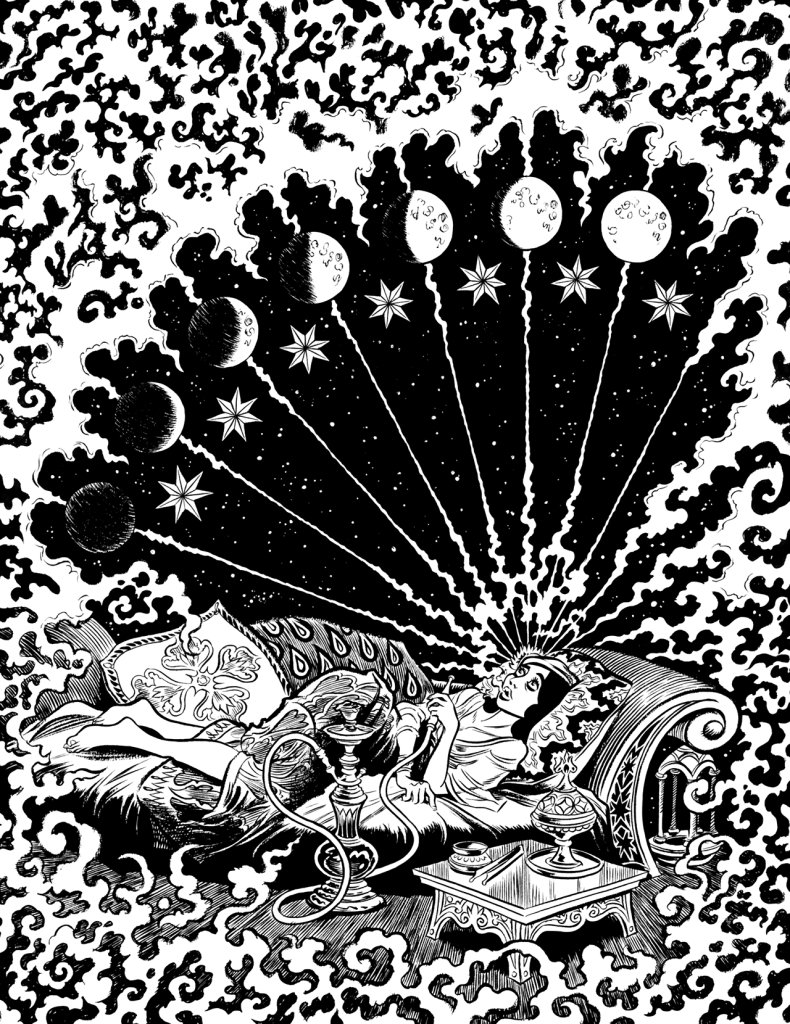
habibi

Habibi

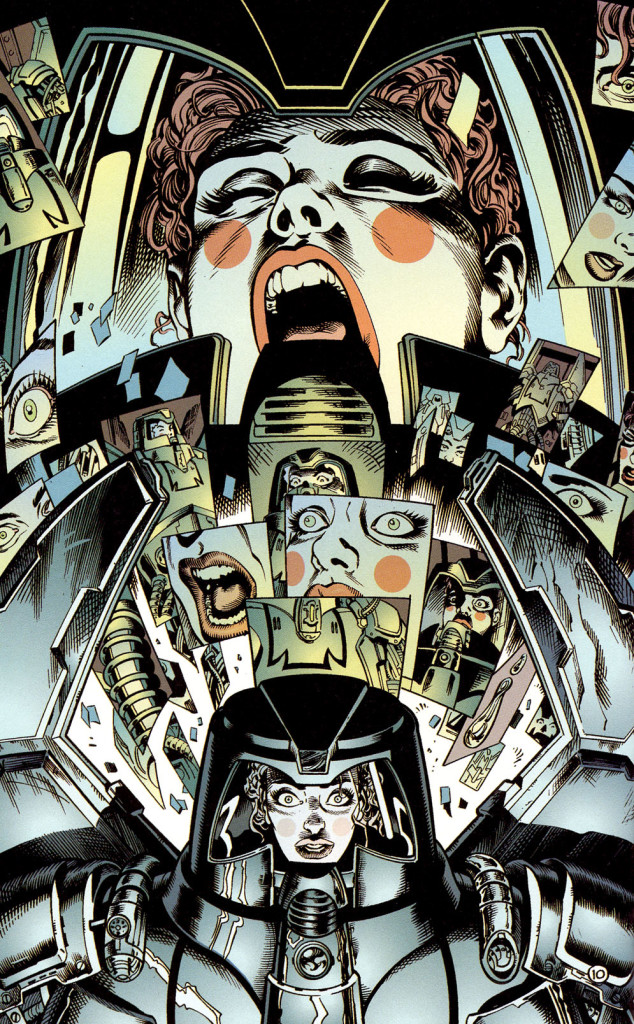
The Invisibles 21

The Invisibles (v2) #21

mesmo delivery

Mesmo Delivery

NEXT: Batman breaks the glass ceiling.


Posted in GLIMPSES INTO AWESOMENESS | Tagged , , , , , , , , | Leave a comment

Taking a break… (August 2018)

Batman: Black and White #1

Batman: Black and White #1
Posted in GOTHAM INTERLUDES | Tagged | Leave a comment

On Mission: Impossible, the film series

The last post was all about my love for the classic Mission: Impossible TV series. But what about the recent movie franchise? Well, that’s a whole other beast.

Sure, there are superficial connections, the most obvious ones being the catchy music, the maze-like plots, and the use of face masks. Both incarnations feature a fair amount of visual storytelling and both definitely owe a lot to Alfred Hitchcock and Jules Dassin. They also employ their era’s equivalent of high tech (when the agents played by Emilio Estevez or Simon Pegg hack into elevator systems, it does come across like a logical update of the trick used in the neat episode ‘The Double Circle’). Above all, the two series mostly see in the spy genre a pretext to do heist-based thrillers.

Nevertheless, ultimately the film series operates with a very different spirit from the show. The TV stories relied less on frenetic action than on deliberately paced psychological strategies and intricate sting operations (most of the gunshots took place off-screen, usually at the end, as the IMF agents walked away after having conned their targets into killing each other). Conversely, the films keep moving from one spectacular set piece to the next, laying increasing emphasis on Tom Cruise’s stunts. Moreover, while much of the show’s appeal was to watch a team of super-competent professionals coldly doing their jobs with clockwork precision, the film series revolves around a single protagonist – Ethan Hunt – with a chip on his shoulder. If the former went about rescuing dissidents, toppling dictators, and framing mobsters without ever questioning their missions, the latter tends to save the world from mass destruction and, more often than not, ends up fighting his own organization…

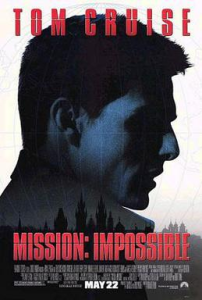
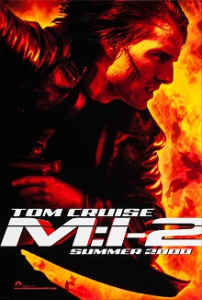
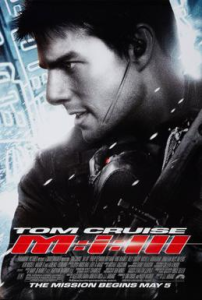
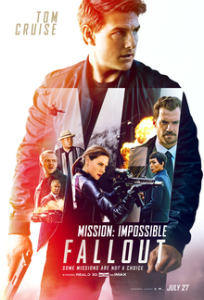
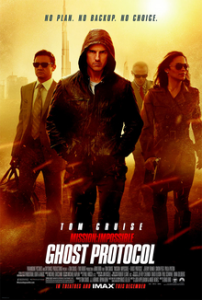
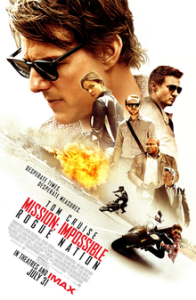
At its best, the new approach reflects a post-Watergate, post-Cold War order without a well-defined enemy, where an US agent is never entirely sure who he is working for and if he can trust his own government (which may have been infiltrated or perhaps was just evil all along). At its worst, the whole thing feels too much like a set of Cruise-centric vanity projects (just look at the posters below!). Initially, the result was so removed from the original concept that the only reason to keep the same title appeared to be cynical branding.

The truth is that, for all its Rube Goldberg-like schemes and games of cat-and-mouse, there was still something ‘adult’ and sophisticated about the TV series, whereas the films trade mostly in juvenile thrills. In that sense, you can find much worthier successors to the 60s’ show in David Mamet’s con movies (especially House of Games and The Spanish Prisoner) or in John McTiernan’s remake of The Thomas Crown Affair. And yet, the M:I flicks are not without their merits…

mission impossible    mi 2    mi 3

Kicking things off in 1996, the first film, directed by Brian De Palma, already departed from the show’s format by focusing on an agent going rogue and working on his own to clear his name. Still, there were nods to the original: the film opened with what looked like the ending of a typical M:I episode and went on to revisit trademark moments like the bombastic credits, the debriefing tape scene, and the bit with the team laying out their plans. There was also the Rififi-like heist sequence at Langley, which became instantly iconic and set the standard for the sequels. Then again, Jim Phelp’s arc would’ve had much more impact if he had actually been played by Peter Graves…

The second installment went not only with another Hitchcock-influenced director (John Woo), but also with a Hitchcock-influenced plot (it’s been called a loose remake of Notorious, with yet another rogue IMF agent in the Claude Rains role). Regardless, what we ended up with was a cartoonish action movie that was even further away from the original series – instead of smart, committed heroes and villains, the whole thing was full of cardboard characters trying to sound bright but not quite pulling it off. The only way to appreciate it was as a schlocky popcorn blockbuster – leave your brain at the door and just enjoy that kickass final chase scene with Cruise shooting up goons on a high-speed motorbike!

By the time Mission: Impossible III hit the screens, in 2006, you knew what to expect – nothing too brainy, just a stylish shot of adrenaline, and boy did it deliver. After all, unpretentious entertainment bursting with slick, rip-roaring adventure is J.J. Abrams’ specialty! Still, I suppose this was the entry that elevated the constant betrayals and layers upon layers of deception from mere plot mechanics into the series’ thematic identity. You also got sharper dialogue and more of a heart, including some well-handled family drama, as Ethan Hunt was now retired and engaged… For once, the biggest departure from the show wasn’t a descent into basic caricature, but a willingness to invest some of the cast with a bit more depth and humanity (relatively speaking, of course). Plus, it helped that the main villain was played by Phillip Seymour Hoffman in a typical knockout performance (well, two performances).

ghost protocol    rogue nation    fallout

2011’s Mission: Impossible – Ghost Protocol was more of the same, in the best possible sense. It provided the by-now-customary twists and turns of the plot without taking itself too seriously (yep, Hunt was disavowed once again) and it definitely delivered on the spectacular stunts front. Director Brad Bird brought to the proceedings the manic energy and visual awe from his previous work in animation (The Iron Giant, The Incredibles, Ratatouille). The Dubai sequence, with Tom Cruise climbing the Burj Khalifa, was especially breathtaking! As a bonus, the whole bit in which the IMF team intercepts a transaction by simultaneously tricking the two sides in nearby hotel rooms does seem like a scheme straight out of the old M:I show (it also brings to mind Johnnie To’s Drug War, which came out in the following year). Meanwhile, Ethan Hunt grew into this ultra-resourceful powerhouse who is always the most outrageously skilled guy in the room (he is basically Cruise’s version of Batman).

Christopher McQuarrie then took the helm of the series, writing and directing 2015’s Rogue Nation, which picked up shortly after the dénouement of the previous installment and built up on the new status quo, pitting the disbanded members of the IMF against the powerful Syndicate (which is no longer the mob from the TV show, but a whole network of rogue agents). In other words, if Ghost Protocol – with its globetrotting exoticism, inventive gadgets, and consistently comedic tone – was like watching a (less sexist) vintage James Bond flick, then Rogue Nation was M:I’s Quantum of Solace. (This isn’t a bad thing: I’ve come around on Quantum of Solace, which may not be the flashy, lighthearted froth most people expect from a Bond picture, but it’s a damn good action yarn and a treat for those who enjoy a more ruthless depiction of 007 – the kind you also find in the comics of Warren Ellis and Andy Diggle.) McQuarrie confidently hit all the beats with a straight face yet enough self-awareness to toy with how over-the-top the franchise had become… At one point, Alec Baldwin actually described Cruise’s character by saying: ‘Hunt is the living manifestation of destiny!’ Plus, we got yet another Hitchcock riff in the form of a cool set piece at a Vienna opera house, which was an obvious nod to the climax of The Man Who Knew Too Much.

With Fallout, Christopher McQuarrie continues to turn the series into a more streamlined ongoing saga. This is a hardcore, straight-up sequel to Rogue Nation, including callbacks to all of the previous movies. McQuarrie lacks the panache of the earlier directors, but he knows what he’s doing… The first half feels the closest to the old show, with a puzzle-like plot (about McGuffin-esque plutonium cores) steeped in subterfuge, misdirection, and a fair amount of on-the-ground improvisation. Yet you also get the film series’ motifs: extended action scenes in famous locations, political uncertainty (the villains are a diffuse coalition of terrorists, anarchists, and spies), and a bunch of monologues in which characters comment on how awesome Cruise/Hunt is. There are some timely elements as well – on the one hand, Fallout tries to present the Washington-backed IMF as the heroes by making them a more ingenious and humane alternative to the callous, torture-friendly, collateral-damage-prone CIA; on the other hand, the recurrent assortment of disguises, triple agents, and confusing shadow organizations within shadow organizations seems right at home in the post-truth era of fake news and widespread conspiracy theories.

That said, if you’re looking for sheer excitement and tension, I would still recommend tracking down badass episodes of the original TV series, like ‘Memory,’ ‘The Mercenaries,’ ‘The Exchange,’ ‘Terror,’ and ‘Bag Woman.’

Posted in SPYCRAFT & WARFARE | Tagged , , | Leave a comment

On Mission: Impossible, the original TV series

After a whole month looking at spy fiction, it’s only fair I give you my take on the latest summer blockbuster, the spy thriller Mission: Impossible – Fallout. I’ll do that in the next post, though. First, some words about the television show that inspired this movie franchise, which first aired on CBS all the way back in 1966…

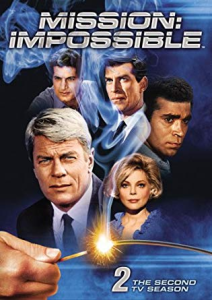
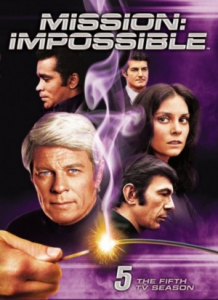
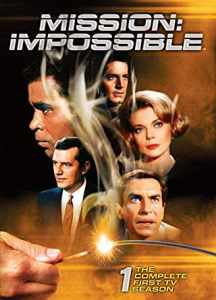
Mission Impossible season 1 Mission Impossible second season Mission Impossible season 5

It’s no secret that the ‘60s produced some of the coolest spy shows in TV history. Me, I have quite the soft spot for the noirish Hong Kong, but my favorite has got to be Mission: Impossible, the Bruce Geller-created series about an undercover organization pulling off risky, ultra-complicated assignments for the US government. They’re called the Impossible Missions Force, aka IMF, but unlike the other IMF (International Monetary Fund) they actually know what they are doing!

I see what may put some people off: the labyrinthine plots occasionally stretch viewers’ suspension of disbelief (at least if you think about them too hard) and the ironclad formula can get tiresome… With a few exceptions, each episode focuses on a different, autonomous mission, starting with a debriefing scene and ending with the successful completion of the assignment, so you can argue that there is never any real suspense about the outcome. Plus, since the agents’ personalities are kept to a minimum, the emotional stakes aren’t too high either. That said, there are still many layers of enjoyment to get from this show…

First of all, despite being firmly set in the world of espionage, the series essentially revolved around heists and cons. More than any other of the early episodes, ‘Operation Rogosh’ set the tone and firmly established M:I’s main appeal: to watch a group of grifters pull off imaginative, ambitious scams on foreign operatives and domestic criminals. The ruses often involved surreptitious break-ins (in ‘The Traitor,’ the IMF even recruited a contortionist, played by future Catwoman Eartha Kitt), stealing McGuffins, and all sorts of switcheroos. In other words, the stories were all capers at heart, even if sometimes spliced with other genres’ DNA (‘Trek’ has a spaghetti western vibe, ‘Zubrovnik’s Ghost’ is shot like classic horror, the two-parter ‘The Council’ at times feels like a gritty crime flick).

It’s a show about tradecraft. The point is not whether or not the IMF team will succeed, but how. Basically, you spend half the time trying to figure out their plan as it unfolds and then, when it hits a snag, you see them improvise a way to get things back on track. The big payoff usually comes in the form of ‘oh shit’ moments as the villains/marks realize they’ve been played – that there was no earthquake (‘The Survivors’) or they were not underwater (‘Submarine’) or in 1937 (‘Encore’) after all.

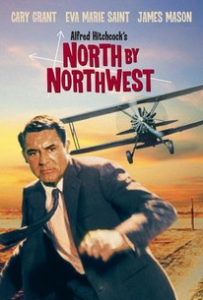
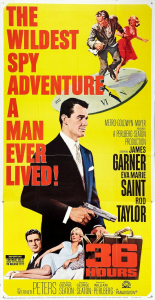
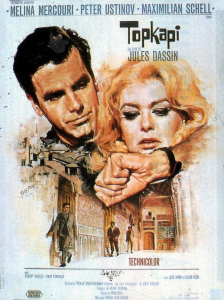
north by northwest  36 hours  Topkapi

36 Hours, The Ipcress File, Topkapi, Alfred Hitchcock’s spy thrillers… the series’ influences shine through not just in terms of the type of left turns and cliffhangers it deploys, but in terms of style. Mission: Impossible (particularly the episodes directed by Leonard J. Horn) gets a lot of mileage out of offbeat camera angles, tense close-ups, and rhythmic jump cuts, not to mention Lalo Schifrin’s unforgettable soundtrack. In turn, the show probably inspired later films such as George Roy Hill’s The Sting, Spike Lee’s Inside Man, and Steven Soderbergh’s Ocean’s trilogy.

Speaking of films, although M:I can be seen as part of the tsunami of audiovisual spy fiction that followed the success of the first James Bond pictures, the show is definitely doing its own thing. It’s interested in straight-faced, cool-headed team work, not in a promiscuous, trigger-happy lone hero with licence to kill, a twinkle in his eye, and a quip for every occasion. Sci-fi gadgets, explosions, honey traps – those sometimes show up, but they’re hardly the norm. The biggest thrills take the form of carefully executed sleights of hand rather than wild action set pieces.

So yes, the whole thing is plot-driven and a bit cerebral. We know so little about the heroes that we are forced to focus on the missions themselves. The best writers (William Read Woodfields and Allan Balter) knew this, making sure that there was always at least one inventive concept to make each episode stand out, even when adhering to the policy of minimalist characterization. Every once in a while, you do get a small tweak to the pattern – by having one of the stars taken prisoner (including in the awesome ‘The Town’) or fall in love and jeopardize the mission (my favorite of this subgenre is ‘The Short Tail Spy’) – but those are minor exceptions. As a rule, then, why should we care about the characters?

One reason is how engaging the main cast can be as they smoothly shift from one fake identity to the next and then back to the concentrated expression of a specialist at work. While the IMF agents are ultimately interchangeable, it’s hard to deny the show hit a sweet spot in seasons 2 and 3, when Jim Phelps (Peter Graves) had already replaced the uncharismatic Dan Briggs (Steven Hill) as team leader yet the power trio of makeup artist/illusionist Rollin Hand (Martin Landau), versatile actress Cinnamon Carter (Barbara Bain), and tech wizard Barney Collier (Greg Morris) were all still around. By contrast, the last couple of seasons – 6 and 7 – were certainly the weakest in terms of acting (as well as in terms of scripts).

The other reason is the team’s adversaries. Sure, most villains weren’t too complex, either – they were given only enough psychological depth to enable them to go through the IMF’s sadistic traps and mind games (with the odd episode investing them with more nuanced motivations, like in ‘The Photographer’). However, they all had an arc and, for every guest actor who chewed the scenery, you had someone bringing in their A-game. Plus, they tended to be not only vain (the reason for their fall), but also quite cunning (making them a threat to the team’s plan), which was a joy to watch.

Again, this isn’t Bond’s fantasy world: rather than over-the-top rogues with goofy henchmen, we are mostly treated to petty, embittered bureaucrats and autocrats who’ll settle for much less than world domination. That said, some of the strongest episodes feature outstanding opponents who really push the IMF, like the brilliant investigator in ‘The Mind of Stefan Miklos’ (who seems like the other side’s equivalent of Jim Phelps) and the unpredictable hitman in ‘The Killer’ (who has no MO, choosing his methods at random and at the last minute, making his moves impossible to anticipate). Then again, ‘The Amateur’ entertainingly goes in the opposite direction, with a villain who is actually a nobody that just happens to cross paths with the IMF by accident (one of a handful of sleazy roles played by Anthony Zerbe).

Trek    The Exchange

‘Trek’ and ‘The Exchange’ (stills taken from Christopher East’s M:I episode ranking)

Another thing that captivates me is the series’ approach to the Cold War. In Mission: Impossible, most countries were either fictitious or unidentified, the USSR was referenced trough euphemisms (the opposition, the enemy), and during assignments abroad the actors feigned a loose foreign accent, so you didn’t really know which language they were supposed to be speaking. There were all these fuzzy locations beyond the ‘iron curtain’ with gibberish street signs and characters with generic, Eastern European-sounding names who called each other ‘comrade,’ but communism itself was rarely more than hinted at (as opposed to fascism, which was discussed quite explicitly in the excellent ‘The Legend’). At the end of the day, IMF missions were just about moving geopolitical chess pieces in order to secure US interests. What you were left with was the Cold War at its most abstract, as pure game theory removed from ideology and contextual specificities…

(In ‘Invasion,’ we do get a bleak glimpse at the annexation of the US by the European People’s Republic, but the focus is exclusively on a military tribunal, telling us nothing about the rest of society. In any case, it’s all an IMF simulation in order to trick a double agent, so, while the ensuing dystopia can be taken as a reflection of how the team envisioned their worst nightmare, it can just as easily be seen as a strategic distortion in order to get their way.)

Ironically, by privileging Hitchcockian suspense over world affairs, I’d say the show managed to both be more exciting and make a bolder statement than Hitchcock’s later forays into this territory (Torn Curtain and Topaz). In IMF’s paranoid reality, everything was smoke and mirrors – on the one hand, you had all these masters of disguise staging events to expose the pretenders in power; on the other hand, M:I normalized the idea that there was order underneath the chaos, that there was always someone behind the wall, or under a latex mask, pulling the strings… (Even today, if you check out the newspaper right after watching an episode, you’re bound to feel suspicious as you read about the latest scandals and diplomatic turnarounds.)

That’s why it’s so neat when the show sort of goes meta and has the IMF subvert the opposition’s own attempts at deception. In ‘The Carriers,’ the team (plus George Takei) pose as enemy agents while infiltrating a training camp for foreign spies in the form of a recreation of an all-American town… So on one level you get to see how the show’s writers imagined the communists imagined them. And on another level – within the story – you get to watch a bunch of US agents pretending to be Soviet agents who are pretending to be US agents (presumably, the IMF agents themselves previously went through a parallel sort of training, since they’re so good at passing off as commies). It’s all a bit mindboggling and a lot of fun, especially the scene where Rollin Hand is taught the American way to buy hotdogs!

There are a few more of those. ‘The Play,’ in which Cinnamon stages an anti-American theater production in a socialist country, is genuinely perverse, as the IMF’s plan consists of encouraging the premier’s propensity for censorship in order to get rid of an eager minister of culture. It’s an unusually funny entry, too, which both satirizes propaganda and works as a slick propaganda piece itself. Moreover, in ‘Action!,’ the team films an enemy director filming fake footage of US war crimes (presumably in Vietnam). Thus, exactly one year before the My Lai massacre, this fascinating episode suggested that anti-war documentaries could not be trusted and US covert operations, if anything, were bringing the truth to light!

Hunted     The Reluctant Dragon

‘Hunted’ and ‘The Reluctant Dragon’

All this brings me to the point that you can just as easily see the IMF as the bad guys. After all, they are a secret organization who regularly disrupts other countries’ regimes and, even if not pulling the trigger directly, often sets up assassinations. M:I has us rooting for them by giving them sympathetic assignments: they sometimes prevent terrorist attacks or go after Nazis, mobsters, and heroin dealers. Season 5 even features a couple of memorable episodes with missions against apartheid (‘Hunted’ and ‘Kitara’). However, anyone familiar with the history of American black ops cannot help but feel suspicious.

Not that the show stayed completely away from ambiguity. Curiously, one of the most openly political episodes, ‘The Reluctant Dragon,’ went out of its way to complexify the feelings of people in the Eastern Bloc (it also featured a rather callous scheme by Rollin). In 1970, when countercultural backlash had become inescapable, ‘The Martyr’ twisted things around by having the IMF incite a student revolution abroad (one of the agents even gave a full rendition of Bob Dylan’s The Times They Are a-Changin’). This nifty episode provocatively blurred the lines not just between American hippies and foreign communists, but also between the iconography of leftist rebellion and the tools of US imperialism (Barney used a funky medallion and a Marxist treaty on agrarian reform to counteract a truth-serum-based interrogation). More clumsily, ‘The Innocent’ tried a different response by having the team recruit a young conscientious objector.

Regardless, I’d argue the issue is more structural. Since only the IMF’s foes get character development, it’s hard to avoid at least a bit of empathy with them as we see them being methodically manipulated towards their downfall. For example, even though ‘Phantoms’ pulls off one of the show’s most effective depictions of a socialist authoritarian system, Luther Adler’s performance imbues his ageing dictator with such an engrossing mix of ruthlessness and vulnerability that his final humiliation comes across as somewhat touching and tragic.

Rather than undermine the premise, these are the sort of contradictory readings and emotions that make Mission: Impossible such a stimulating treat.

Posted in SPYCRAFT & WARFARE | Tagged , , , , , | Leave a comment

Batman vs robot dinosaurs

Gotham Knights 32

Gotham Knights #32

With Jurassic World having become one of the highest grossing movie franchises of recent years, I kept waiting for the inevitable article pointing out that, if you’re into this sort of material, there is a much more satisfying way to spend your time. I’m talking about reading the awesome comic series Flesh, in which cowboys from the future go back to the age of dinosaurs in search for meat. It’s a nonstop gory thrill ride that dares the reader to sympathize with the human-killing dinosaurs, leading up to a memorable final gag.

Created by Pat Mills and published by 2000 AD, this pitch-black satire feels like an anti-Jurassic Park, except that Flesh came out more than ten years before the novel which served as basis for the film. First published in 1977, the comic was actually a reaction to the animal-hunting premise of Jaws (by the director of JP), yet probably also inspired by the chaos-in-cowboy-land of Westworld (by the writer of JP). Mills was clearly pissed off by Jaws, as he used variations of this type of high concept a number of times, most famously in Hook Jaw (where you root for a shark on a killing spree) and Shako (about a polar bear eviscerating CIA agents). Flesh is still my favorite take on this idea, although I’d argue that only the original series is required reading – the sequels are just more of the same.

But what about Batman comics? Do they have anything to offer to fans craving for Jurassic World-like action? Boy, do they!

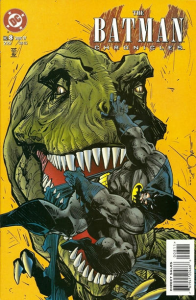
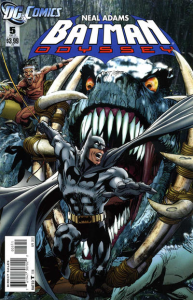
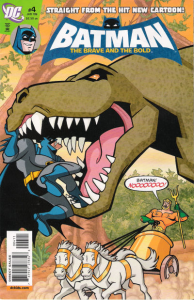
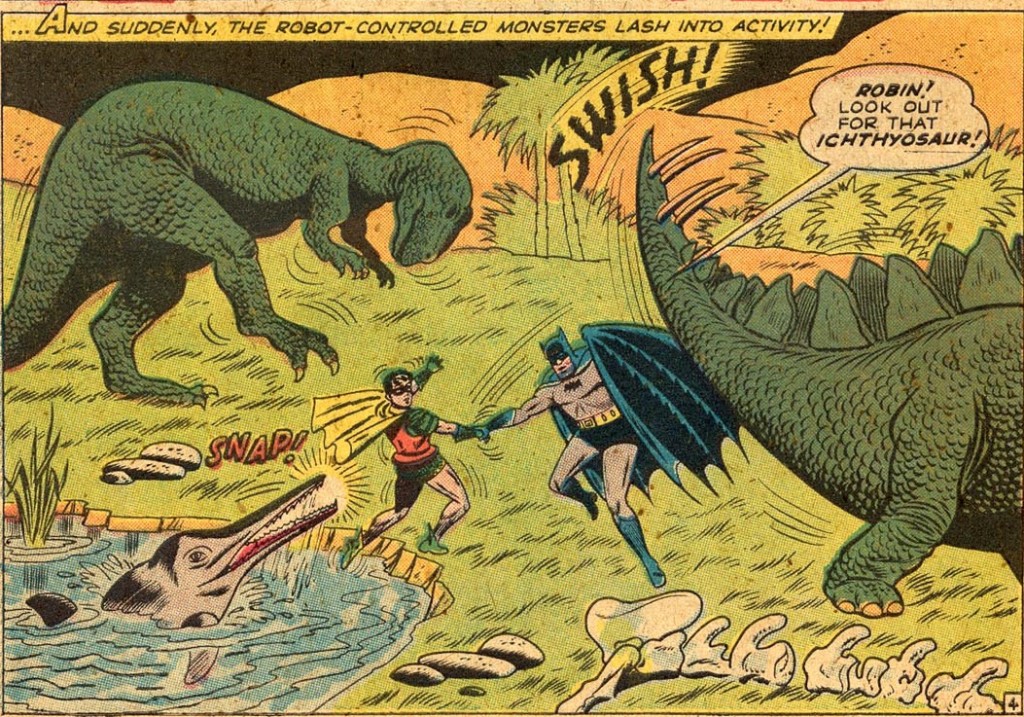
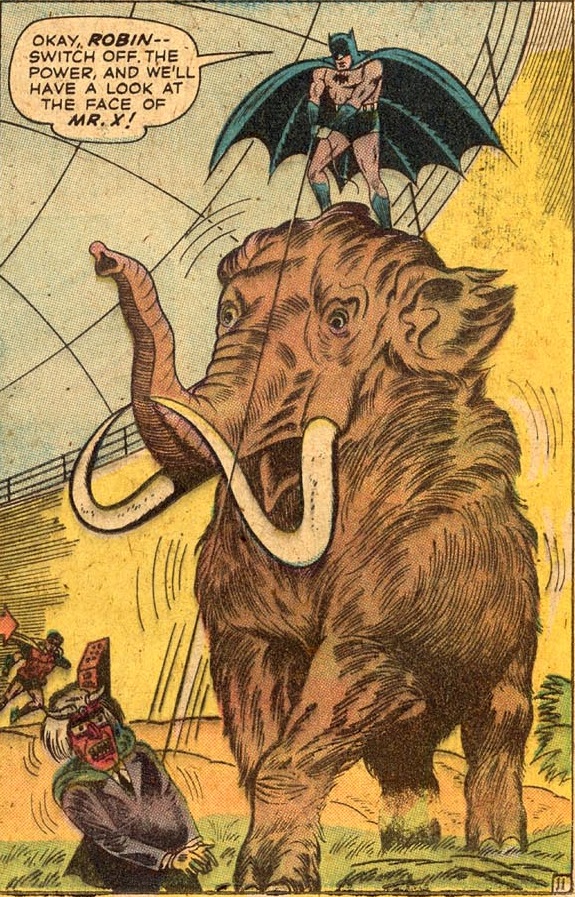
batman chronicles 8     batman odyssey 5     brave and bold 4

Between their intriguing biology, their affinity with mythological creatures (monsters, dragons…), and their varying symbolism (age, size, extinction…), dinosaurs have become an enduring source of widespread fascination. W.J.T. Mitchell wrote an insightful book about this, analyzing what he calls an uniquely malleable cultural icon, ‘a figure of both innovation and obsolescence, massive power and pathetic failure – the totem animal of modernity.’

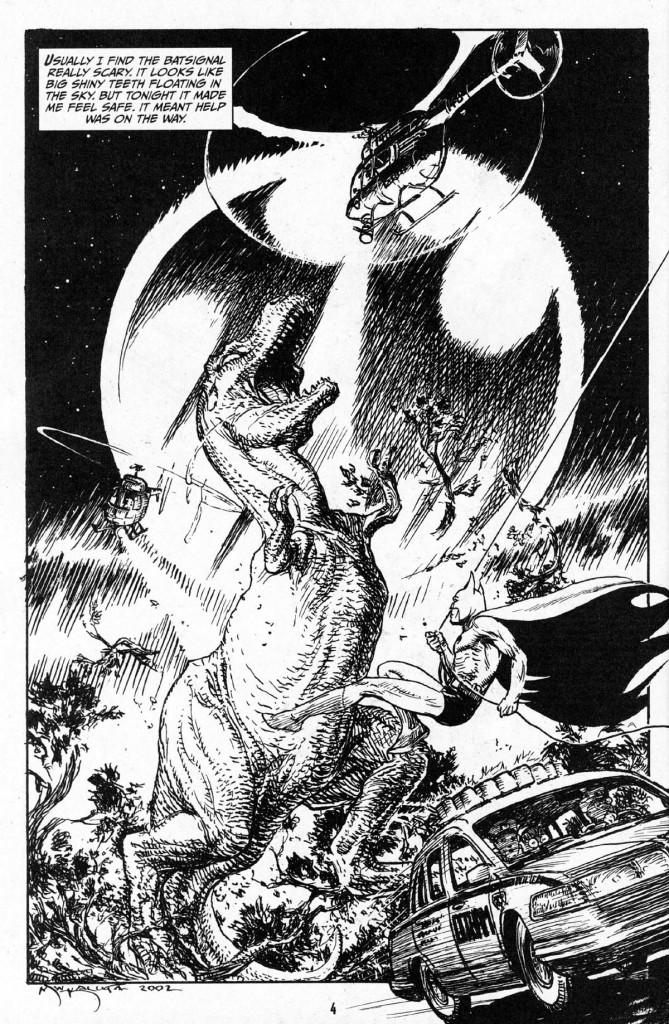
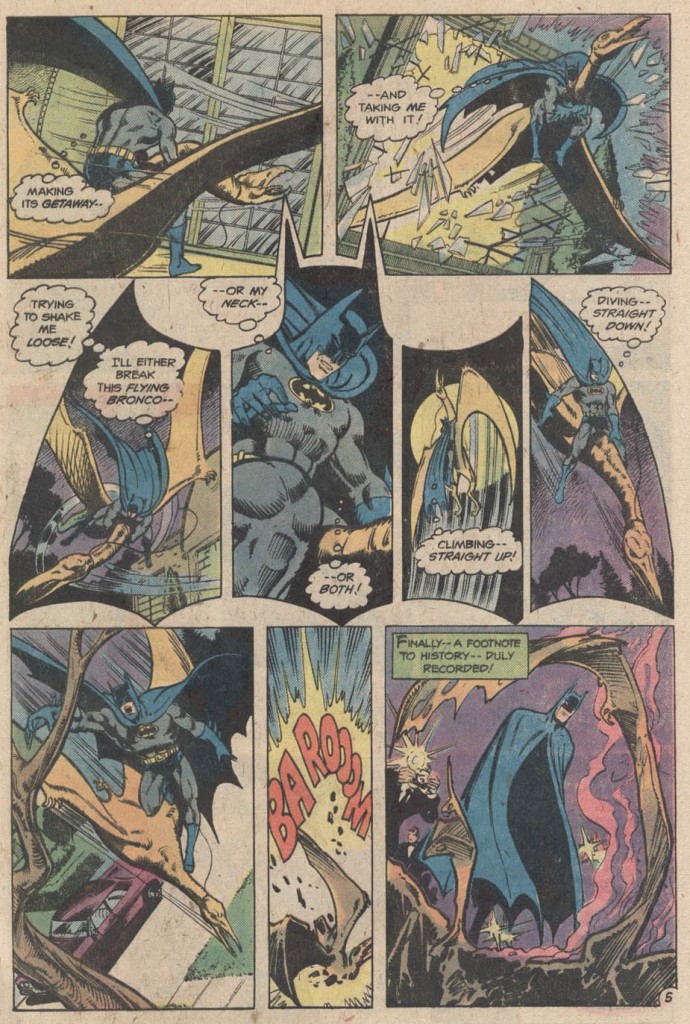
Never one to stay away from any major pop culture phenomenon for long, the Caped Crusader has been riding the dinosaur craze since early on in his career. He has had a tyrannosaurus in the Batcave for several decades now and, as seen above, artists never miss a chance to pit him against one of those on the cover! Plus, there is that toy in which he rides a T-Rex that eats criminals. For the most part, though, Batman has fought robotic dinosaurs, thus avoiding the Jurassic Park problem of expecting you to root against animals who are only following their natural instinct. With that in mind, let’s have a look at a few cool comics where the Dark Knight is chased by animatronic prehistoric creatures.

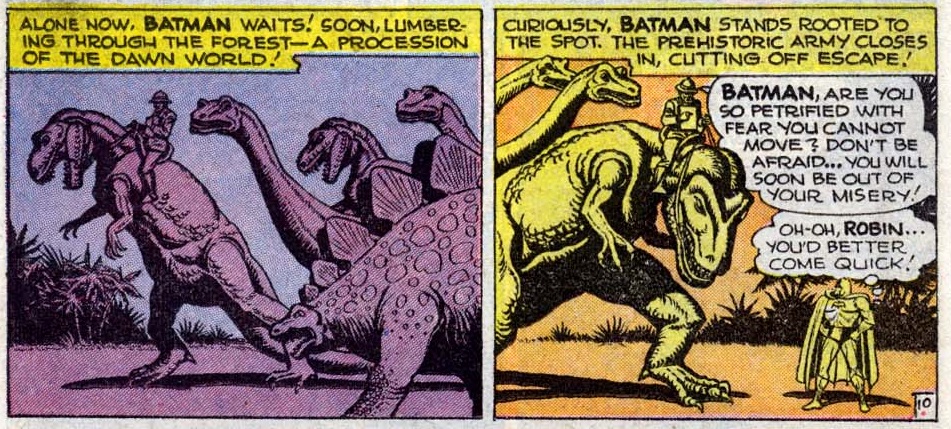
The obvious place to start is ‘Dinosaur Island’ (Batman #35, cover-dated June-July 1946). Written by Bill Finger, with art by Paul Cooper and Ray Burnley, this Golden Age tale opens with a title splash page that combines delightfully over-the-top – and historically inaccurate – narration with the amazing sight of Batman shooting arrows against a giant, gold-colored beast while Robin lies helpless on the ground:

Batman 35

Batman #35

The tale itself involves businessman Murray Wilson Hart setting up an island theme park with robot dinosaurs, where the stakes turn out to be deadlier than expected (come on, a young Michael Crichton has to have read this, right?).

In a weird move, Hart gives a dinner to big game hunters, letting them eat steaks cut from a frozen mammoth found in Siberia. The Dynamic Duo have been invited as well, ‘since they hunt the most perilous game – man!’ (a cute nod to Richard Connell). During dinner, Batman and Robin accept the challenge of trying to survive dinosaur attacks without their modern weaponry, like humans used to do back in the stone age (well, at least in the Flintstones/creationist versions of history). However, a criminal takes over the controls, so our heroes find themselves hunted by mechanical beasts that are truly out to kill them. At one point, they also fight animatronic cavemen, leading to the priceless description: ‘Robot primitive against modern man! The most bizarre battle ever fought!’

There is some ingenuity in the Dynamic Duo’s escape plan and a fair amount of charm overall. Although the story is not spectacular, I really dig some of the art, with Cooper and Burnley doing a fine, detailed job with the various creatures. The atmospheric coloring also helps:

Batman 035

Batman #35

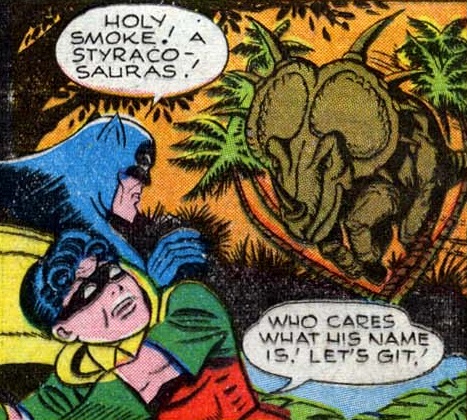
Still, of course my favorite panel is the goofiest:

Batman 35

Batman #35

(In 1997, Graham Nolan did a very loose, action-packed remake of this story, for Batman Chronicles #8, making it explicit that the Batcave’s T-Rex came from Hart’s island.)

In ‘Death in Dinosaur Hall!’ (Detective Comics #255, cover-dated May 1958), Bill Finger returned to this kind of storytelling territory, putting the Dynamic Duo under attack at the Mechanical Museum of Natural History, where they just found the corpse of the museum director. This time around the plot is cleverer, though, as Batman and Robin have to solve a proper murder mystery with several suspects, so we get to see the World’s Greatest Detective make neat deductions, like figuring out where some stolen jewels are hidden because a South American ostrich has been misplaced in the African Wildlife Hall (‘No curator would ever put a Rhea there!’).

There is also a Silver Age flavor to the proceedings, with the comic throwing readers one wild idea after another. Instead of settling for Batman fighting dinosaurs, the story features other fun set pieces, like when the Caped Crusader uses the tusk of a sabretooth tiger to claw his way out of a tar pit or when the villain – wearing an African witch doctor mask – traps the Boy Wonder inside a whale. The way the Dynamic Duo fool and capture the villain in the final act is another high point, showing the kind of imaginative resourcefulness Batman should display all the time.

The art, by Sheldon Moldoff and Charles Paris, is not as moody as in the previous tale, but it does pull off some effective dino-designs…

detective comics 255

Detective Comics #255

…not to mention this nice panel, at the climax:

detective comics 255

Detective Comics #255

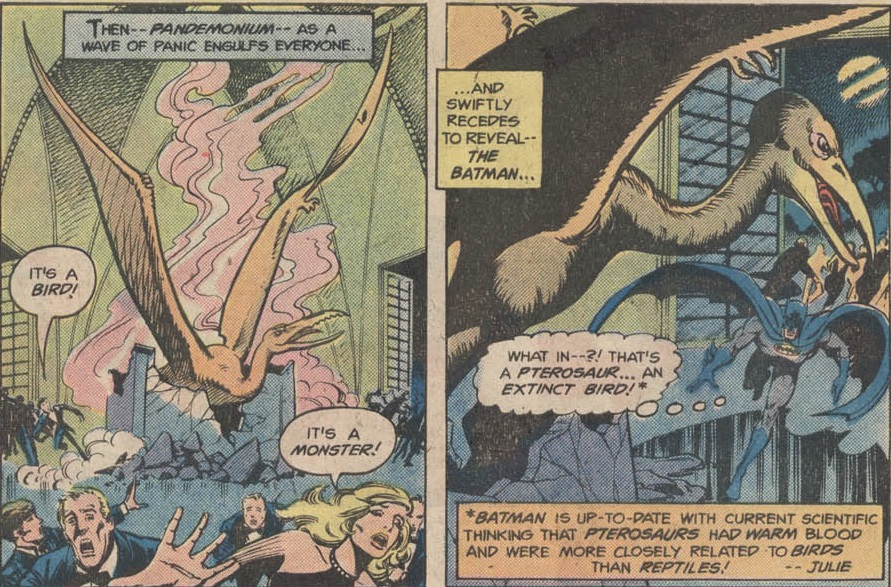
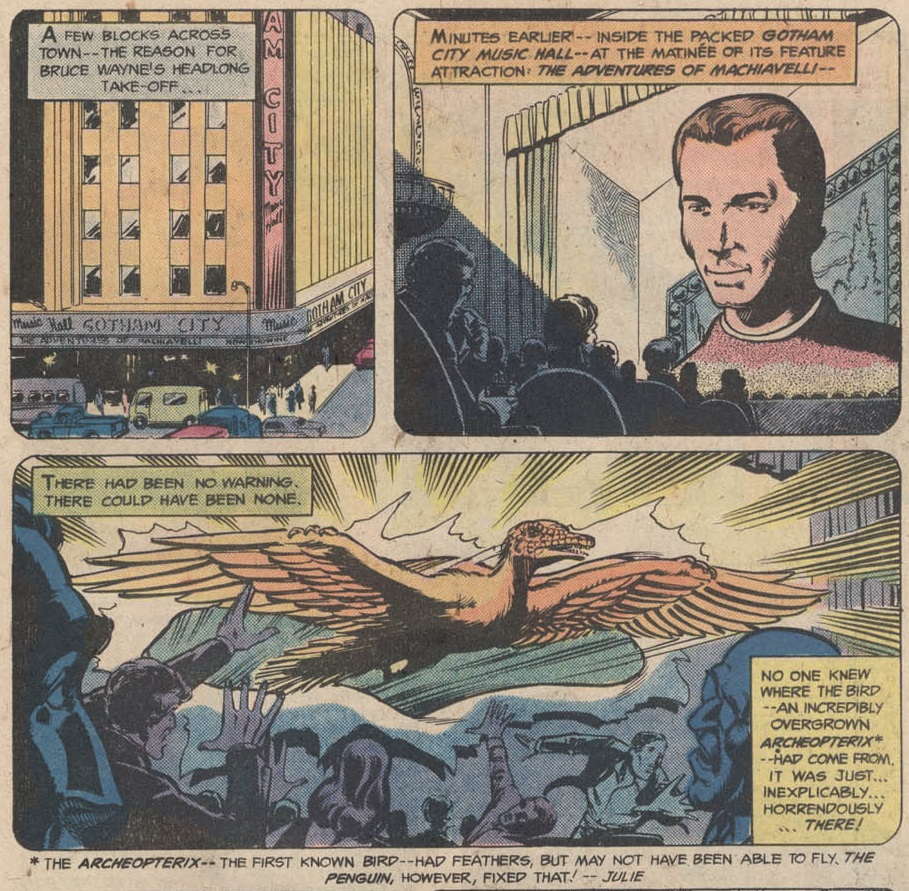
Jumping ahead two decades takes us to ‘Batman-Ex – as in Extinct’ and ‘Little Men’s Hall of Fame’ (Batman #287-288, cover-dated May-June 1977). This entertaining two-parter is set in the Dark Knight’s Bronze Age, but it’s written by David Vern (as David V. Reed), so it’s not afraid to get a bit campy at times. In fact, the opening is already quite bonkers, as it involves Gotham’s Société Française unveiling an equestrian statue of Napolean, only for the statue to explode and release a damn jurassic flying creature (while a caption box reminds us that Batman is up-to-date on pretty much every topic):

Batman 287

Batman #287

The whole thing turns out to be a plot by the Penguin, whom David Vern’s narration describes in ultra-alliterative mode as ‘that pitiless, pestiferous prince of pain and plunder.’ Apparently, the Penguin (‘that pedantic patriarch of predators’) has new M.O., which involves sending out expensive mechanical monsters imitating extinct birds in order to create a chaotic distraction from his simultaneous crime spree.

Again, for each of these attacks, we get didactic footnotes by editor Julie Schwarz:

Batman 287

Batman #287

If you think the Penguin’s strategy sounds convoluted, you haven’t seen anything yet. His actual plan is so intricate that Batman is only able to figure it out by somehow using the place of Machiavelli’s birth and the year of Napoleon’s death as vital clues (in addition to factoids about King Alaric of the Visigoths, of course).

But what about the dinosaur action? It’s even better than in the other stories, since the art is by Mike Grell (with inks by Bob Wiacek and colors by Jerry Serpe). If Vern is still stuck in the Silver Sage, Grell is clearly an artist for a more modern era, delivering a gritty vibe that creates a cool contrast with the ludicrous plot. He also does one of my favorite tricks, which to shape the panels’ layout like a Batman symbol:

Batman #287

Batman #287

You won’t find this in Jurassic World!

Posted in WEBS OF FICTION | Tagged , , , , , , , , , , , , , , , , | Leave a comment

COMICS CAN BE AWESOME (August)

Your monthly reminder that comics can be awesome…

aetheric mechanics

Aetheric Mechanics

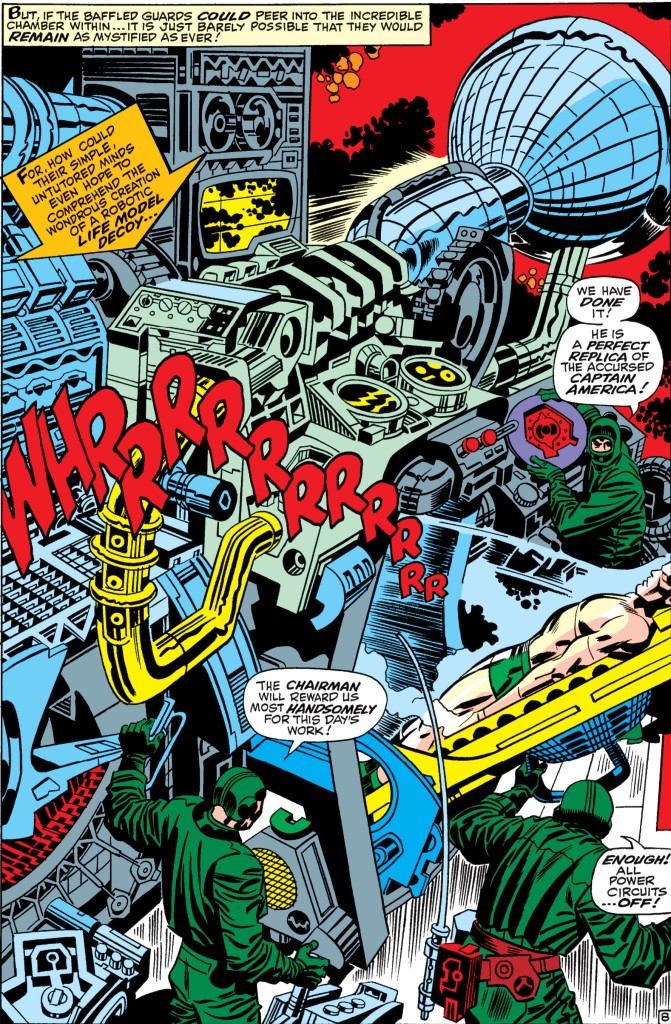
Captain America 106

Captain America #106

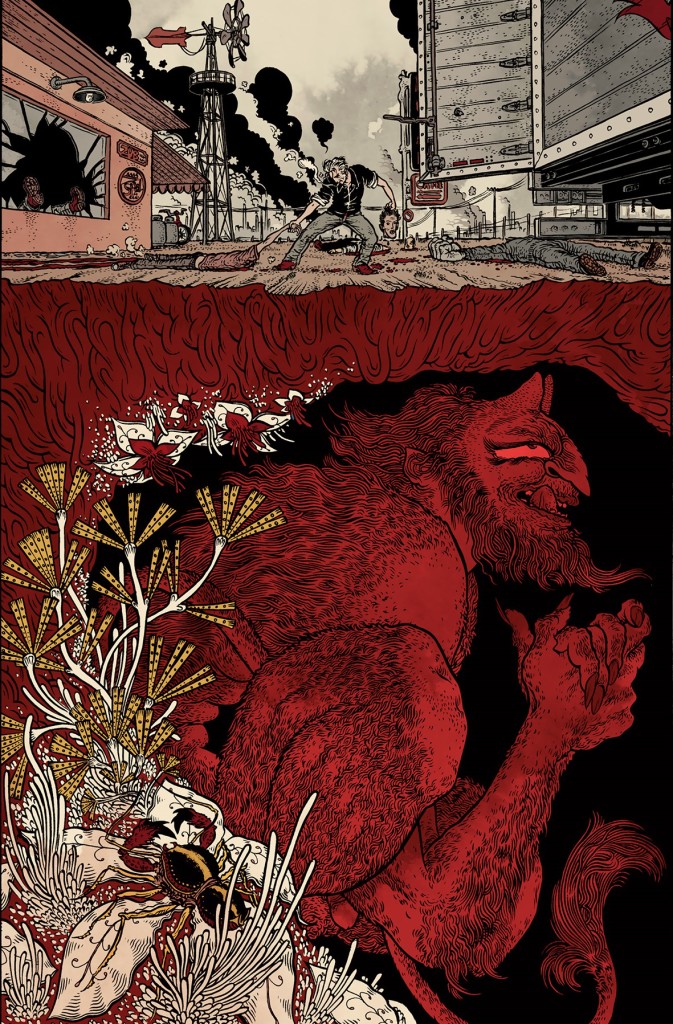
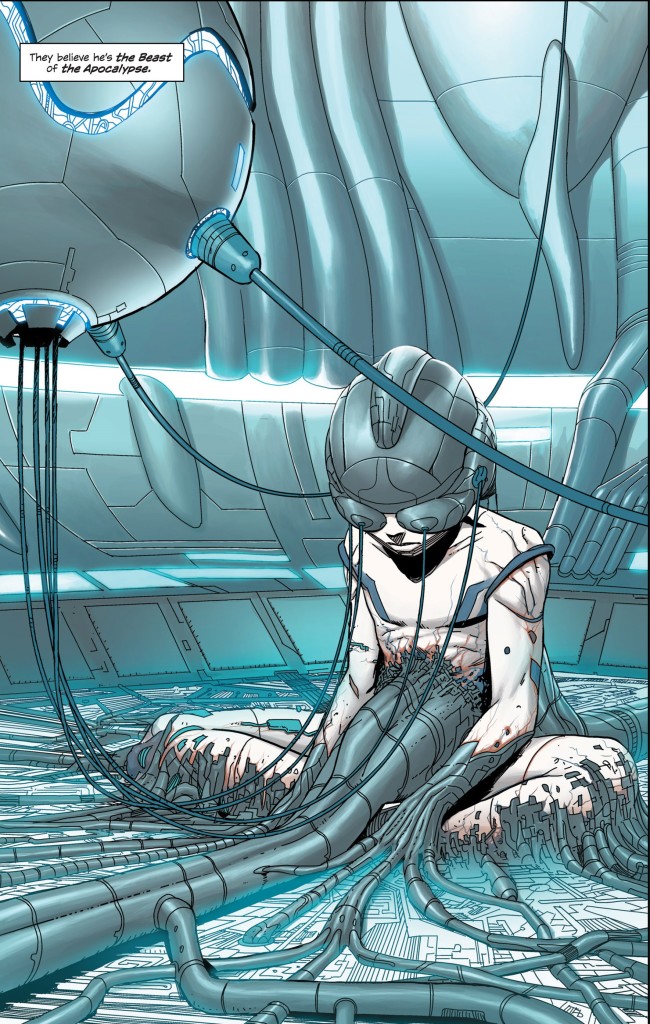
East of West #5

East of West #5
Posted in GLIMPSES INTO AWESOMENESS | Tagged , , , , , , , , , , , , , | Leave a comment

Spotlight on Polar

July is the month of spy comics at Gotham Calling. This year, I’ve discussed the black & white indie series Queen & Country and the over-the-top early adventures of the one-eyed super-spy Nick Fury. Today, I’m looking at a more recent indie comic that also features gritty black & white art and a badass one-eyed secret agent, but it takes those elements in a whole other direction.

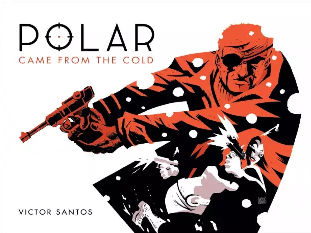
polar came from the cold

Victor Santos’ Polar started out as a silent webcomic before Dark Horse expanded it into a series of gorgeous graphic novels peppered with hardboiled dialogue (not much, though, fortunately). The series stars Black Kaiser, an unstoppable assassin / former Soviet spy who is forced out of retirement and goes on an international killing spree. This derivative story gets somewhat more complex as the plot unfolds, but the story isn’t really the main attraction here – Santos’ phenomenal art is.

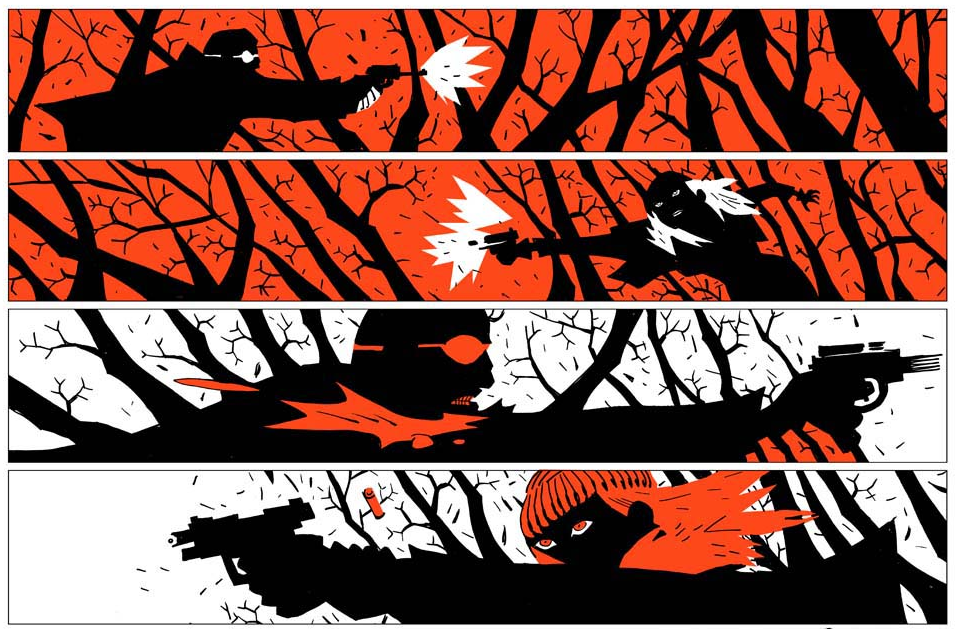
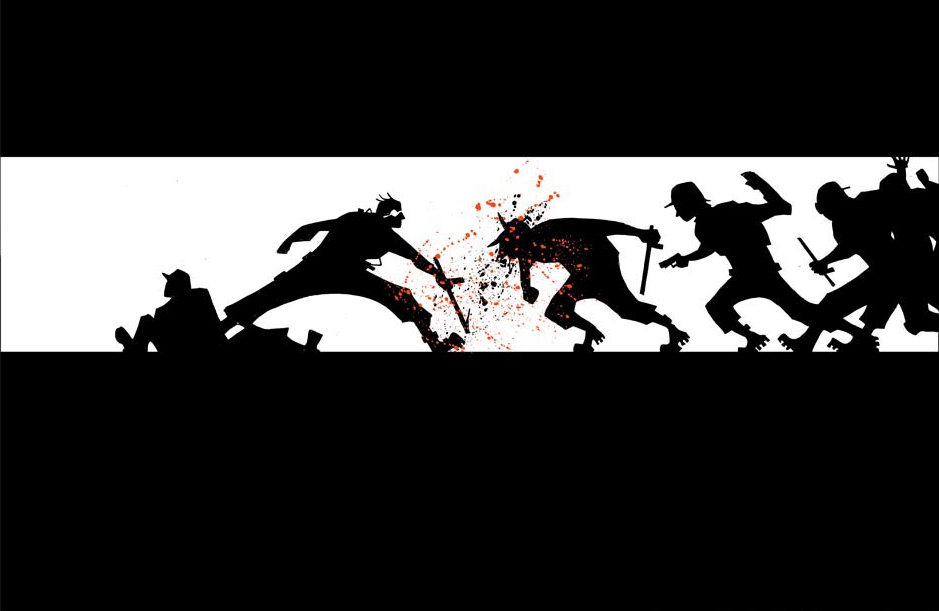
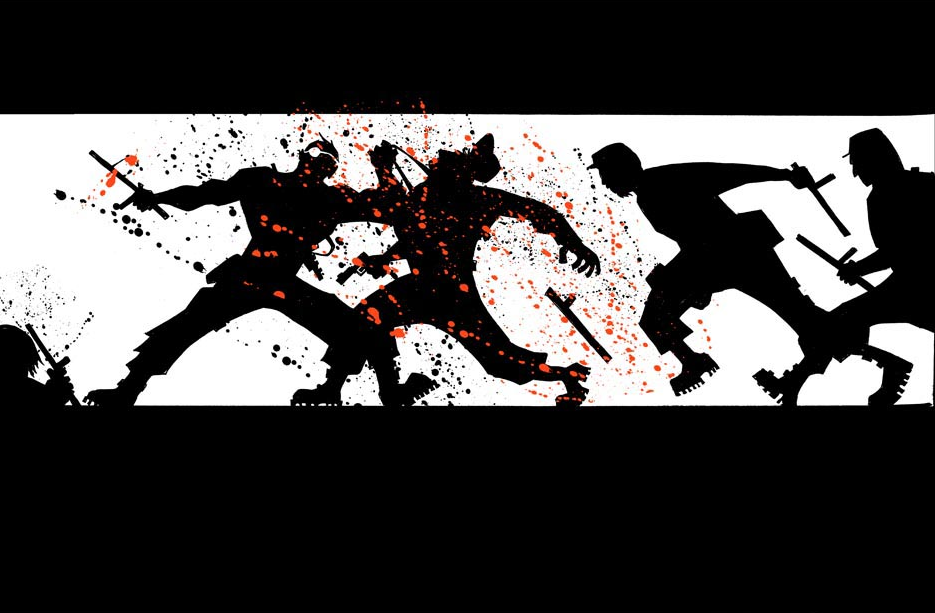
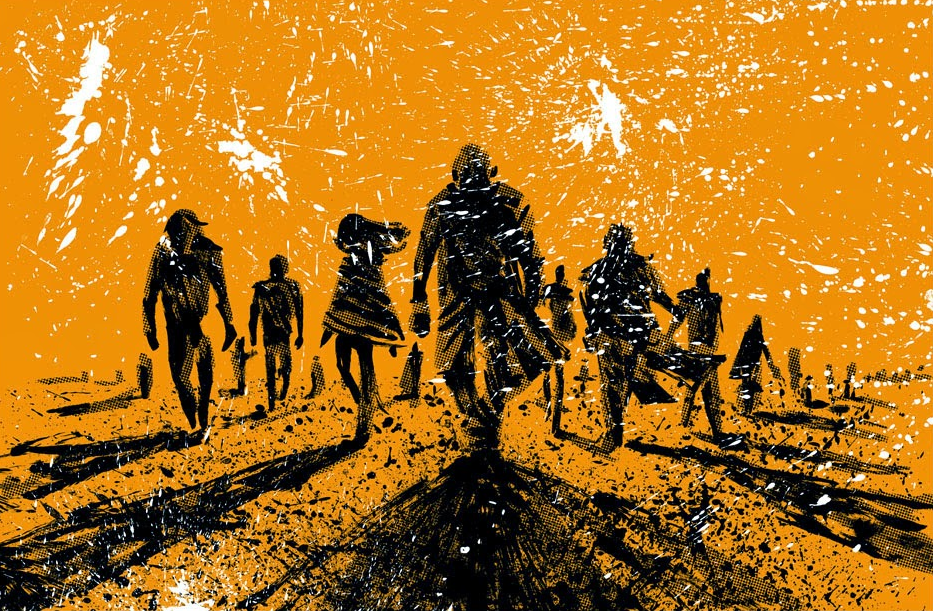
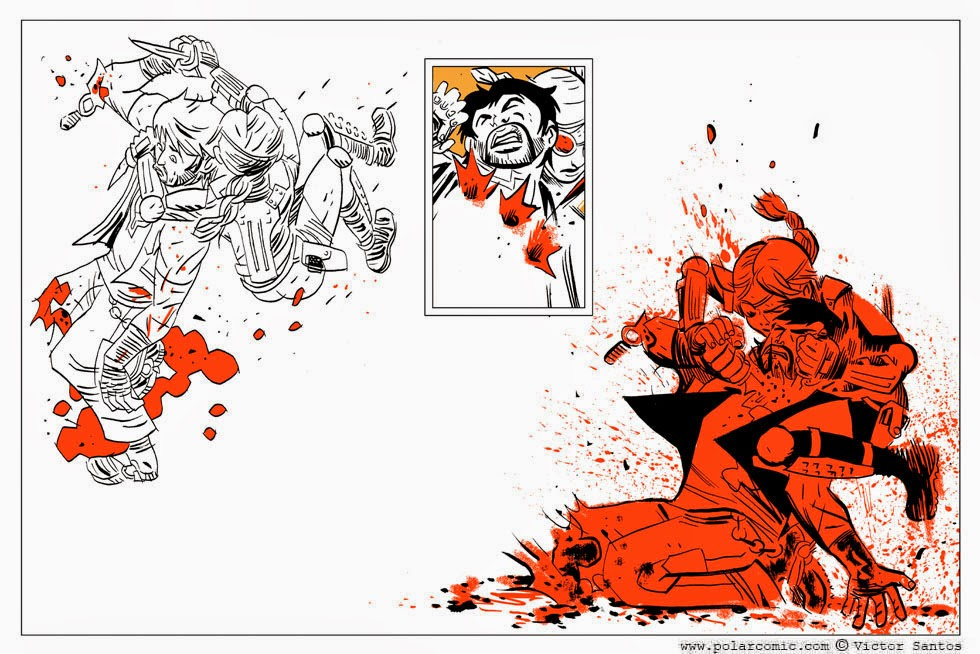
Polar is told through minimalist, stylized drawings with plenty of silhouettes and ample negative space. The colors are even more minimalistic: just black and white and the occasional bit of red-tinged orange (often used for lipstick or blood, although also used for background atmosphere when it suits the mood). Given the comic’s channeling of old-school pulp fiction and Cold War-era potboilers, this color scheme will sound appropriate to anyone who has read Robert Miklitsch’s The Red and the Black: American Film Noir in the 1950s. The result is powerfully dynamic and highly expressionistic, especially during the action scenes:

polarpolarpolar

Besides the blatant homage to Jim Steranko, there are echoes of Darwyn Cooke’s Parker, of Warren Ellis’ and Cully Hamner’s Red, and, particularly, of Frank Miller’s Sin City. Like the latter, Polar trades in film noir tropes and aesthetics while taking them to almost abstract extremes, from the ultra-macho protagonist to the pageantry of femme fatales, from the cynical worldview to the kinky links between sex and violence. Moreover, Santos has a similar flair for deploying elements such as snowflakes, shadows, and bloodstains to maximum effect (in terms of both mood and symbolic undertones).

Polar’s website mentions that the series is also meant to pay tribute to artists Jose Muñoz, Alberto Breccia, and Alex Toth, as well as to the cool 60s’ movies Tokyo Drifter, Le Samurai, and Point Blank. (The influence of film directors Jean-Pierre Melville and Sergio Leone actually gets a pretty direct nod at one point, via street signs. Similarly, Sergio Corbucci and Johnnie To lend their last names to a key character and to a noodles franchise, respectively.)

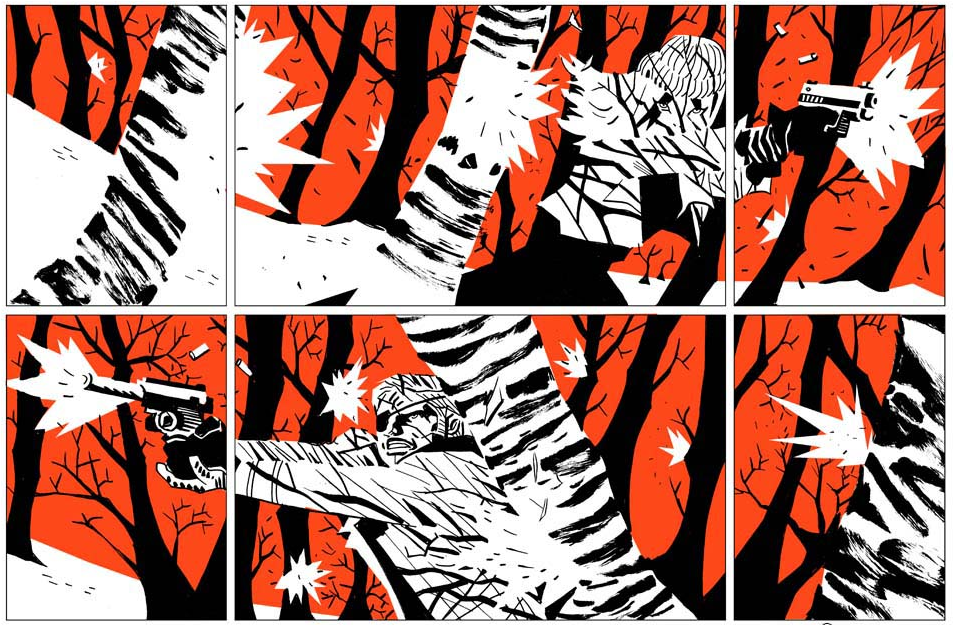
Although Victor Santos hits the ground running, you can see him gaining confidence in his craft. The first book – Came from the Cold – was a taut, straightforward thriller in which Black Kaiser mostly just moved from one set piece to the next. Yet you could already feel Santos pushing himself into constantly coming up with new ways to depict action and gore:

polarpolar

The second book – Eye for an Eye – is, if any anything, even pulpier, with Black Kaiser rescuing Christy White, a mysterious woman who has been left for dead, and training her in the art of violence. Most of the book follows her long quest for revenge and, once again, the appeal is style over substance: Santos goes for many of the same tricks as in the first volume – like sprinkling inkblots to simulate blood squirts – but there is some visual innovation, if nothing else because the new protagonist looks so different from Kaiser (the sight of White gruesomely dismembering her opponents one by one cannot help but bring to mind Kill Bill).

This book’s most daring sequences, though, take place in the bonus stories. ‘All For One,’ a spy tale set in 1974 (back when Black Kaiser worked for the Soviet Union), swaps the harsh black & white & orange tones for an explosion of bright colors, with the action at times resembling a pop art extravaganza!

The third volume – No Mercy for Sister Maria – plays with the palette even further, punctuating the black & white with occasional blues and pinks and yellows, thus suddenly shifting the atmosphere into a gloomier or a livelier vibe (even within the same page).

polar

If the effect above reminds you of a spaghetti western, you’re probably on the mark – the climax of No Mercy for Sister Maria (in which Black Kaiser, Christy White, and a ton of eccentric contract killers all simultaneously go after a mobster’s runaway wife, now turned nun) culminates in an exhilarating pastiche of the final Mexican standoff of The Good, the Bad and the Ugly, complete with a tense crescendo of close-ups of mean stares.

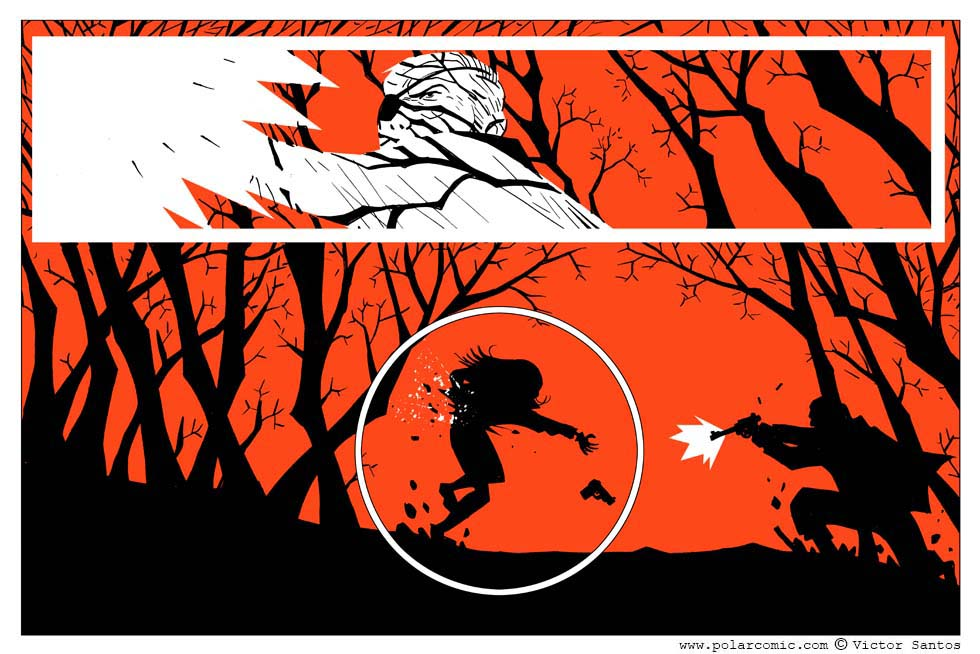
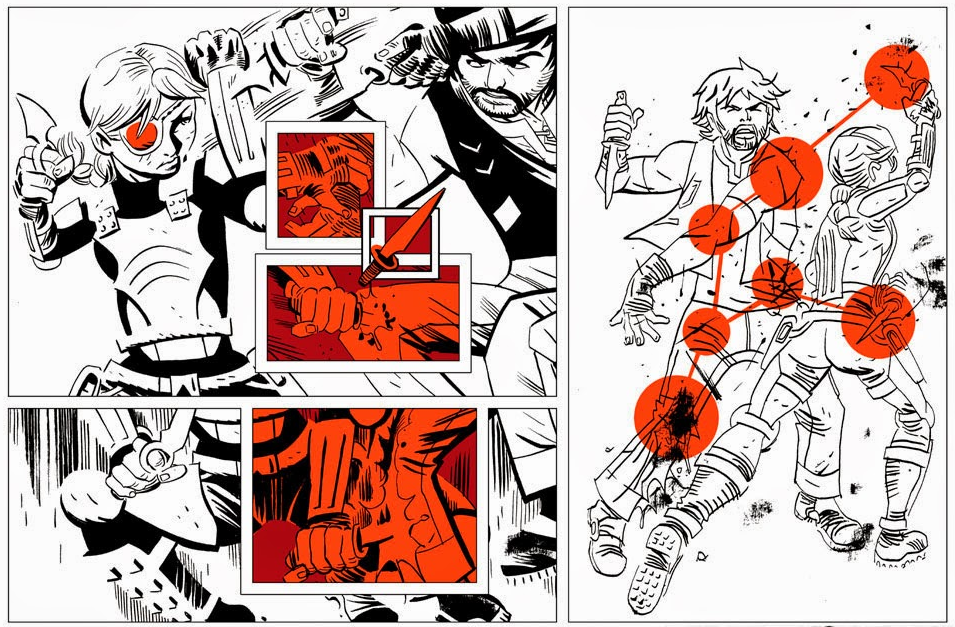
Speaking of crescendos, Victor Santos’ skill for playing with time deserves a special mention. Santos often uses small panels-within-panels to either slow down the pace (by breaking fights down to a series of specific gestures) or to juxtapose interconnected moments (like a flashback on someone’s mind). Coupled with the way the limited colors guide readers’ attention, the result is breathtaking, ushering us to engage with each movement in a manner that would be hard to do in any other medium:

polarpolar

Finally, I should point out that the lead of Polar apparently first showed up in a 2009 graphic novel named after him, Black Kaiser. I still haven’t managed to get my hands on it (the price at Amazon is insane), but the few pages available at Santos’ tumblr tell me that Black Kaiser was the product of a secret Nazi program designed to create super-agents and that he was ‘stolen’ as baby by the USSR at the end of WWII.

Of course he was.

Posted in SPYCRAFT & WARFARE | Tagged , , , , | Leave a comment

Spotlight on Jimmy’s Bastards

In the fourth week of this year’s Gotham Calling spy month, we’re looking at Jimmy’s Bastards, a recently completed mini-series about a thinly-veiled version of James Bond, called Jimmy Regent (because Bond and Regent are both London tube stations, get it?), facing the wrath of all the abandoned children that resulted from his one-night stands over the years.

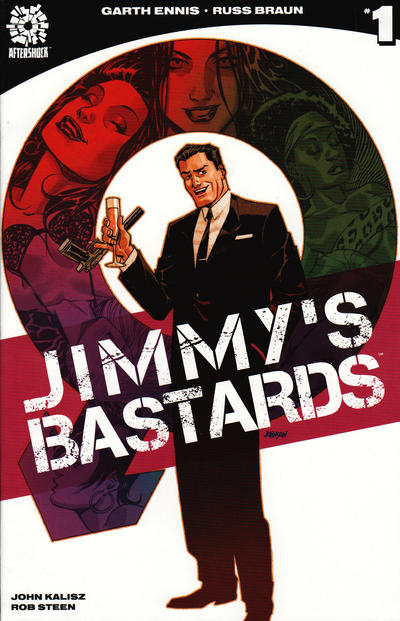
Written by Garth Ennis, drawn by Russ Braun, colored by John Kalisz, and lettered by Rob Steen, this is much less interesting as a 007 parody than as Ennis’ contribution to the ongoing culture wars…

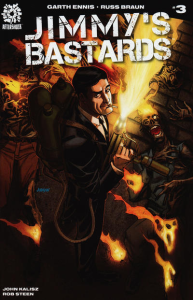
Jimmy's Bastards 1

Let’s get the parody problem out of the way. My issue with spoofing the 007 film franchise is not just that this has already been done to death for the past six decades; it’s that the Bond series is itself a parody to a large degree… Basically, Dr. No and From Russia With Love were relatively straightforward spy/adventure movies, yet almost everything from Goldfinger onwards has been a spoof of those two (with the occasional attempt to get back to basics – For Your Eyes Only, the Dalton pics, the first couple of Craig ones).

Dr. No had a Fu Manchu-esque villain in a lavish den, but he was essentially played straight – most villains since then look like caricatures of this archetype, laying out plans for world domination through long, arrogant speeches in their over-the-top lairs, delighting in personal eccentricities, leaving Bond to die in elaborate deathtraps. In From Russia With Love, Blofeld commanded killers with gimmicky (if realistic) weapons – a wristwatch with a garrote, a shoe with a poison-tipped switchblade – but later henchmen evolved into live-action cartoons, like Oddjob, Nick Nack, and Jaws. In those early movies, 007 flirted and bedded a few women, including the suggestively named Honey Rider, but this soon grew into a central motif, with Bond screwing and harassing gorgeous women all the time, many of them with jokey names (Pussy Galore, Plenty O’Toole, Xenia Onatopp).

There are all these running gags, like how James Bond tends to be an expert on whatever M asks him about that day, or his snobbery about drinks, or the multiple gadgets that look like everyday objects. In your average film, much of Bond’s dialogue consists of puns – usually sexual innuendo or heartless one-liners after killing someone. The action scenes have long ago given up on any restraint, often reaching Looney Tunes levels. Moreover, 007’s visits to Q headquarters are clearly played for laughs, with the backgrounds packed with nerdy scientists testing out goofy deadly contraptions. These are shameless action comedies and, while it is possible to mock comedies, spoofs of the Bond formula tend to merely exaggerate what is already deliberately exaggerated or point out the silliness of elements that are already done with tongue in cheek in the original…

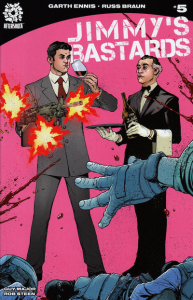
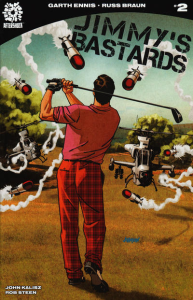
Jimmy’s Bastards is no exception. It kicks off with Jimmy Regent shooting a terrorist in the cock – who interrupts his villainous monologue with some profanity – as if this is hilariously outrageous, even though it’s still more tasteful than your typical Roger Moore double entendre. The series’ covers – which have fun with the contrast between the protagonist’s posh demeanor and his familiarity with ultra-violence – could easily have been covers for the official Bond franchise:

Jimmy's Bastards 5     Jimmy's Bastards 2     Jimmy's Bastards 3

Mocking James Bond seems lazy, especially when focusing on such an obvious target as the character’s promiscuity and missing other features (class, imperialism, extrajudicial impunity…). There are more interesting ways to play with this archetype, whether through nasty deconstruction (League of Extraordinary Gentlemen: The Black Dossier) or through clever revisionism (the actual James Bond mini-series and one-shots currently being published by Dynamite).

So, Jimmy’s Bastards isn’t particularly inspired as a Bond satire, but is it an inspired slapstick comedy, at least? Well, as always, it largely depends on your affinity with Garth Ennis’ notoriously lowbrow humor. For me, although the salty language and gory carnage can be entertaining – and Russ Braun’s art certainly nails most beats with fine comedic timing – too many of the gags feel tired and repetitive… They’re insulting not so much because they deal with offensive material (which they do), but because they’re so unfunny. Even the subplot about Ugandan dictator Idi Amin being blackmailed by people who removed his testicles – which, in theory, could work in a twisted sort of way – falls flat, drags for too long, and cannot avoid a whiff of mild racism by going back to the old ‘pathetic minority supporting character’ well (one of many stale tropes in the series).

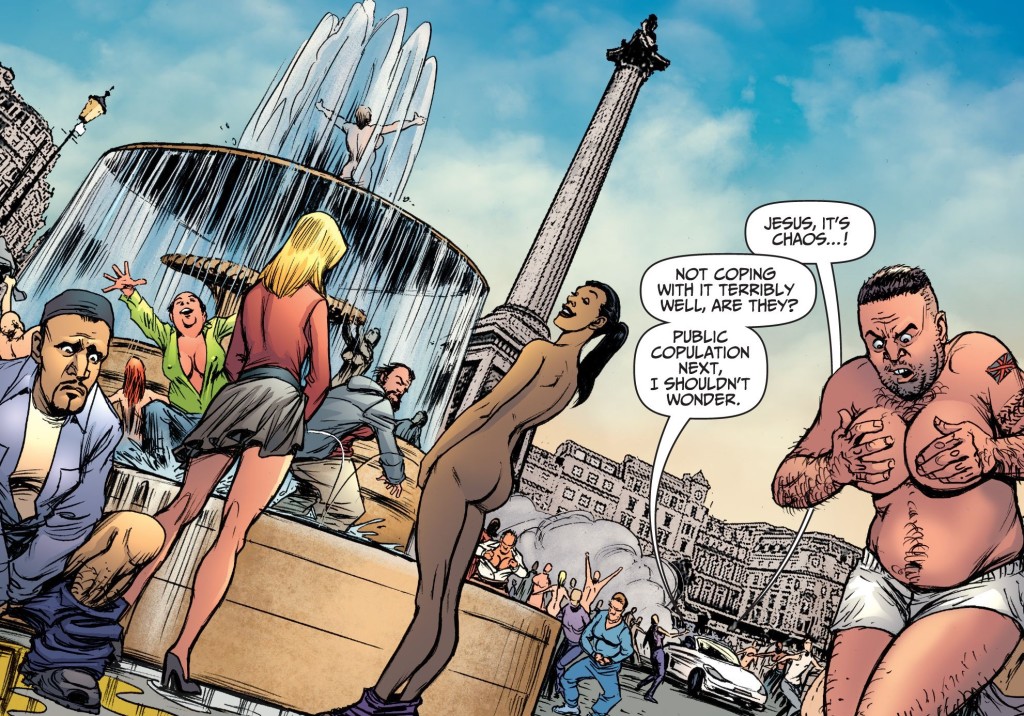
If you’re noticing a genital injury pattern, then you’re not off the mark. In fact, many of the jokes revolve around a weapon called Gender Fluid, which switches the sex organs of everybody in London. I won’t pretend like there is nothing transphobic about this source of humor – while the suddenness and involuntariness of the process is part of the joke, it only fully works if you think sex changes are a bit ridiculous, as you’re repeatedly expected to laugh at the fact that people’s gender and bodies don’t match (look, that overweight bearded man now has huge, soggy female boobs!). Still, I give Jimmy’s Bastards credit for presenting different reactions: while some characters freak out (an acknowledgement that trapping people in a body they don’t identify with can be a problem), others embrace it with cheerful open-mindedness and curiosity (suggesting that gender identity and sexuality can indeed be fluid). In every splash that Braun draws depicting a collective reaction, there are signs of both panic and joy:

Jimmy’s Bastards #4

Jimmy’s Bastards #4

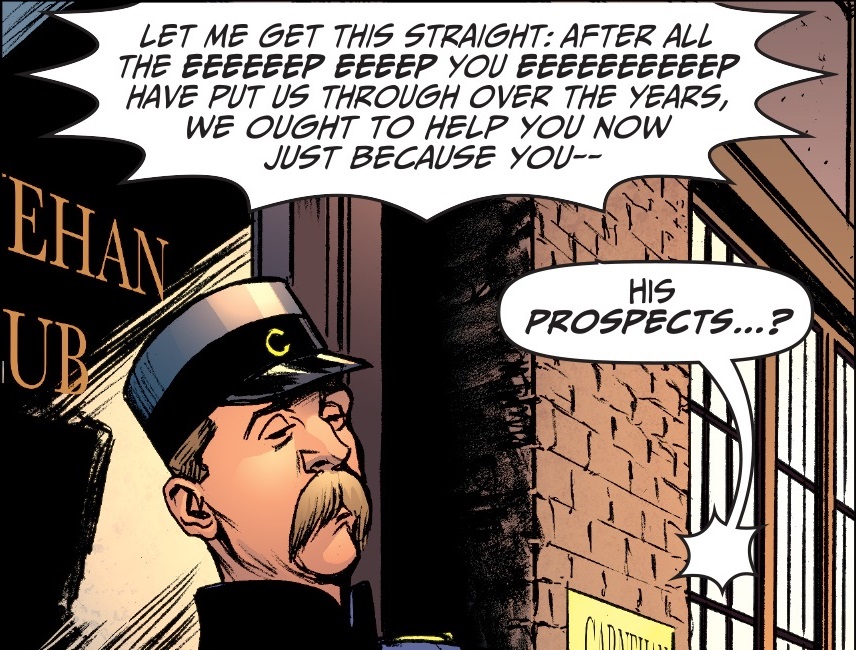
At the end, some of the Londoners actually reach out to the transgender community for guidance in adjusting to their new condition, leading to an activist’s amusingly indignant response:

Jimmy's Bastards 9

Jimmy’s Bastards #9

The sequence encapsulates the comic’s spirit: it gleefully draws on off-color jokes while seeking laughs in a caricature of identity-politics-gone-wild, but it doesn’t completely dismiss social justice causes. And if this sounds like overinterpretation, bear in mind that the series begs for such an analysis. Jimmy’s Bastards isn’t just another raunchy black farce having a laugh at Bond’s expense. We’ve had plenty of those in comics, from the French album Spoonfinger to Mark Millar’s and Dave Gibbons’ The Secret Service (aka Kingsman) – what makes this one stand out is that it consciously uses the 007 pastiche to address ongoing debates about the Snowflake Generation.

Bastards is at its best when, rather than engaging in outright polemics, it merely merges the latest trends and concepts in weird, out-of-context ways. For example, in the opening set-piece, Jimmy is apparently fighting jihadists, but he quickly undermines the orientalist stereotypes at play (‘Your name’s Martin, you were radicalized at sixth form college, you’re a tit–’) and reveals that the whole thing has been staged by Theophilus Trigger, a villain specialized in triggering traumas, who speaks only through microaggressions (‘graphic violence,’ ‘swearing,’ ‘swastikas! skeletons! pictures of shit!’). This not only sets up the comic’s theme and cartoonish tone, but it also immediately establishes that Jimmy sees himself as immune to that sort of attack.

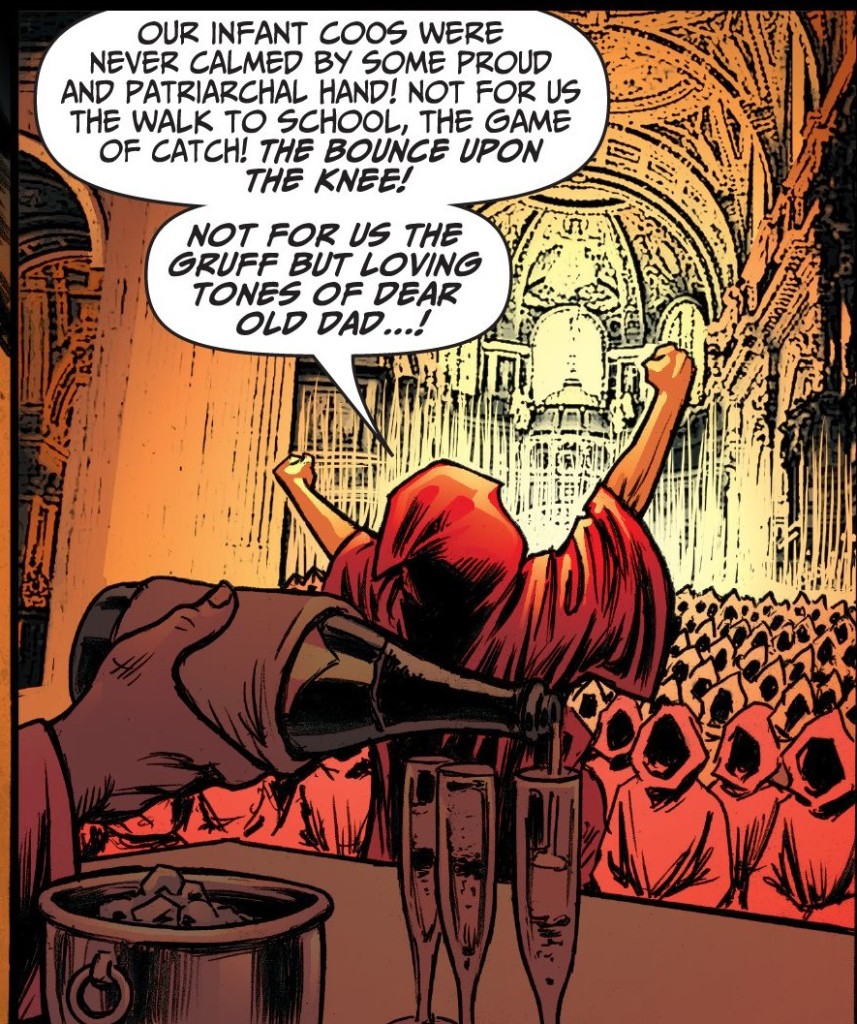
Not only do Jimmy’s one-liners often allude to SJW terminology (‘I have no safe space,’ ‘Checking my privilege.’), but the whole premise is basically a send-up of the notion of ‘failed parenting strategies,’ with the main villain coming across as a whiney millenial complaining about daddy issues:

Jimmy’s Bastards #1

Jimmy’s Bastards #1

(He even has a smart phone that he swipes right to execute his henchmen!)

Yet it’s not all played for laughs… Jimmy’s Bastards often pontificates about the issues, usually in the form of condescending conversations between Jimmy and his latest spy partner, a young black woman called Nancy McEwan. These scenes are somewhat painful to read, as they follow the annoying formula of having Jimmy tease Nancy (‘So, do you get the token business a lot?’) followed by her clichéd overreaction, followed by Jimmy showing her that he is quite a reasonable, nice guy after all (‘Well, why would I fight to defend a democracy with a parliament at its heart, if I didn’t believe in the notion of social progress?’).

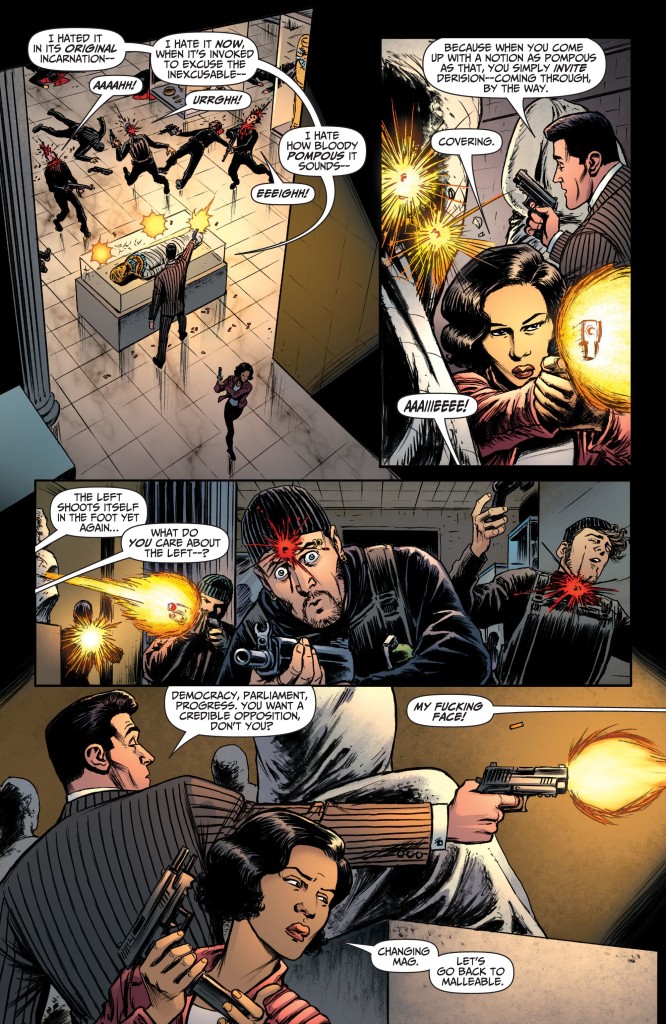
Perhaps these exchanges wouldn’t be so terrible if the comic didn’t make the protagonist sound like a blunt mouthpiece for Garth Ennis. We’ve seen this before: Jimmy Regent belongs to a long line of straight-talking Ennis heroes outlining straw-man arguments to secondary characters who keep supplying convenient cues… At least here Ennis tries not to slow down the pace too much, by integrating the conversations into the action (like the tirade about ‘political correctness’ below, during a gunfight at the British Museum), but they still look quite contrived and on-the-nose:

Jimmy’s Bastards #3

Jimmy’s Bastards #3

We get this over and over again in the first issues – Jimmy has Nancy figured out from the outset and he keeps telling her what’s what. There is even a gratuitous scene early on in which she talks to her sister (who plays no other role in the story) just so that we can get slices of expository characterization like ‘There is something about him, something I can’t quite put my finger on…’ and ‘he’s not a complete arsehole, he’s about… maybe… ninety-five percent what you’d expect.’

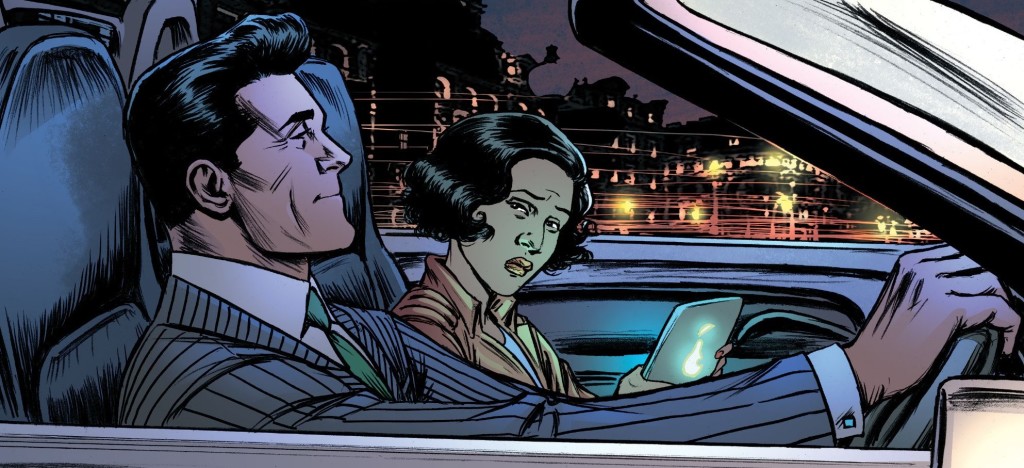
All this is made slightly more bearable by the art team of Russ Braun and John Kalisz, who not only excel at the abundant action, sex, and graphic violence, but they also make it visually clear that Jimmy Regent is as damn smug as they come… and Nancy McEwan isn’t necessarily buying all of his bullshit:

Jimmy’s Bastards #3

Jimmy’s Bastards #3

Indeed, Nancy is more than a symbol for leftist sensibility. She is smart, confident, and competent. Sure, she gets taken hostage (twice), forcing Jimmy to come to her rescue, but she also singlehandedly breaks out – in a kickass action scene – and later attacks the villains’ headquarters by herself, massacring a bunch of the bastards. She is no delicate damsel in distress, but the kind of tough woman ideal you find in other Ennis comics (Bloody Mary, The Fall & Rise of Anna Kharkova, Caliban).

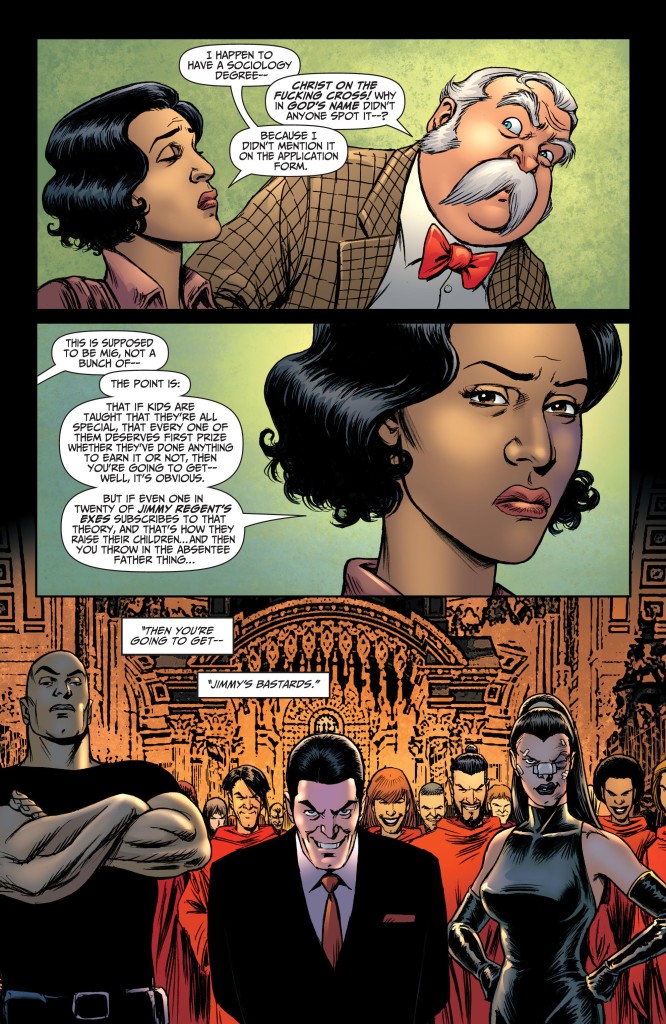
For instance, remember when I said the whole thing hinged on a send-up of failed parenting strategies? Nancy McEwan is the one who gets to make it explicit:

Jimmy’s Bastards #6

Jimmy’s Bastards #6

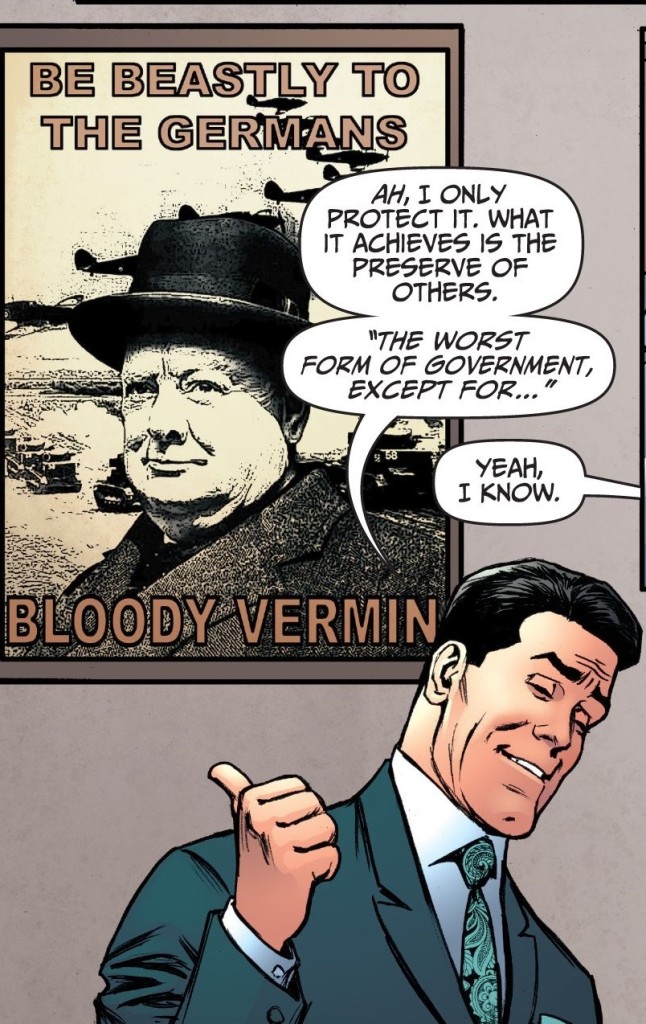
To be fair, for every ham-fisted exchange, you get a few witty details as well. There is the bit when the villains have seemingly won the day but can’t agree on what to do next… While one of them wants to use the Gender Fluid weapon to blackmail the rest of the world, another one pragmatically explains that they can’t exactly threaten the US because the current administration is such a poor negotiator (‘The only significant change would be that he’d start grabbing women by the dick.’). Then there is the penultimate gag, near the end, when Nancy finds out her mother’s identity (I won’t spoil that one). I also like the fact that the MI6 headquarters are decorated with posters of Churchill and anti-German insults, implying that some forms of discrimination are more tolerated than others, having been engrained in the UK’s proudest moment.

Jimmy's Bastards 4

Jimmy’s Bastards #4

(Nation-based generalizations in the name of anti-fascism!)

All in all, I admit that an ersatz-James Bond is not an inappropriate vehicle to explore topics such as toxic masculinity, since the original character has been a poster boy for the kind of misogynist attitude that has dominated pop culture at least since WWII. Jimmy’s Bastards trades on that iconic resonance in the second part of the story, when it pulls the rug from under the hero, taking him down a notch (albeit not in a way that truly challenges his earlier remarks). In a predictable twist, Jimmy is ‘triggered’ and retreats to his ‘safe space’ (I use the words in the sense the book does, but I’m not entirely sure Ennis knows what they’re supposed to mean).

Again, Bastards wants to have it both ways. On the one hand, the villain is ultimately defeated with the help of microaggression and the hero learns that there is such a thing as a trauma trigger. On the other hand, the villain is clearly supposed to be foolish and the hero’s arc invites us to laugh at the notion of a hypersensitive 007 who is scared silly and compulsively cuddles a puppy.

It gets worse: when Jimmy is committed to a psychiatric hospital with other insane 00 agents (who resemble Moore, Brosnan, Dalton, Craig, and Connery), Nancy asks the doctor if there is any PTSD therapy, to which he replies: ‘Yes, we’ve tried that. Turned out to be a lot of balls.’ Nancy tries to gently talk Jimmy out of his catatonic state, but of course that doesn’t work (the doctor warned her: ‘Absolute waste of time.’). She ends up admitting she *needs* Jimmy in order to save the day and tries to get him off his ‘pathetic traumatized arse’ by yelling at him to ‘man the fuck up!’

Jimmy’s Bastards #8

Jimmy’s Bastards #8

The rest of the cast seems to agree about the effectiveness of Jimmy’s brand of virility. At one point, the main villain admits to his sister that the bastards have little chance against their father, because they lack discipline, are easily discouraged, and didn’t earn their credentials (‘you’ve got a black belt in karate, but only because you wanked off your instructor every lesson’). Jimmy Regent, on the other hand, is the product of a tougher form of education: he ‘had the shit beaten out of him every day for years – until he got good enough to beat the shit out of the shit-beaters-outers. That is training.’

This makes it sound as if there is no middle ground between manly stoicism and paranoid fragility… However, after having a go at the two extremes, the comic wraps up with versions of Jimmy and Nancy that combine a bit of both attitudes.

At a time when so many high-profile creators mostly complain that they are not allowed to say what they want (i.e. to say it without criticism, without people taking offense and not buying their products), it’s refreshing to see that Garth Ennis does not reduce the issue to free speech, but actually tries to engage with social justice revindications in a way that speaks directly to his usual thematic concerns. There is a recurring tension in his work – which is much more thought-provoking than it is often given credit for – between Ennis’ support for progressive causes and his infatuation with conservative methods, between his liberal ideals and his cynicism regarding naïve liberals, between a respect for ethics and the kind of anthropological pessimism that leads to the conviction that, at the end of the day, only immoral behavior will get things done.

Ennis’ comics – especially his war stories – keep going back to the notion that, while there is something wrong with both old-school machismo and modern sensitivity, there are valuable features in each of them as well, so that ideally the old machos should become more sensitive and the younger generation should toughen up. One of the first series to stress this thesis in pretty unambiguous terms was the crime thriller Pride & Joy, published twenty years ago. It culminated in a sequence where father and son simultaneously found redemption by showing/repressing their emotional vulnerability:

Pride & Joy #4

Pride & Joy #4

Yes, this is a highly questionable false equivalent, but I see it as part of a larger motif in Garth Ennis’ oeuvre, namely the drive to rub in readers’ faces that empathy, ideology, and social awareness are not set in stone – they’re muddy and relative and under constant negotiation between contradictory impulses. Ennis has done variations of this gesture throughout years, using genre comics as a springboard to complexify manly discourse about homosexuality (for example, in A Man Called Kev and The Boys: Get Some) or different ways to relate to warfare (J for Jenny, among many others).

Underneath all its gross-out, body-shaming humor and uncomfortable, mean-spirited depictions of mental illness, Jimmy’s Bastards continues to explore Ennis’ obsessions, delivering a 21st century version of the ending of Pride & Joy:

Jimmy’s Bastards #9

Jimmy’s Bastards #9
Posted in SPYCRAFT & WARFARE | Tagged , , , , , , , , , , | 1 Comment