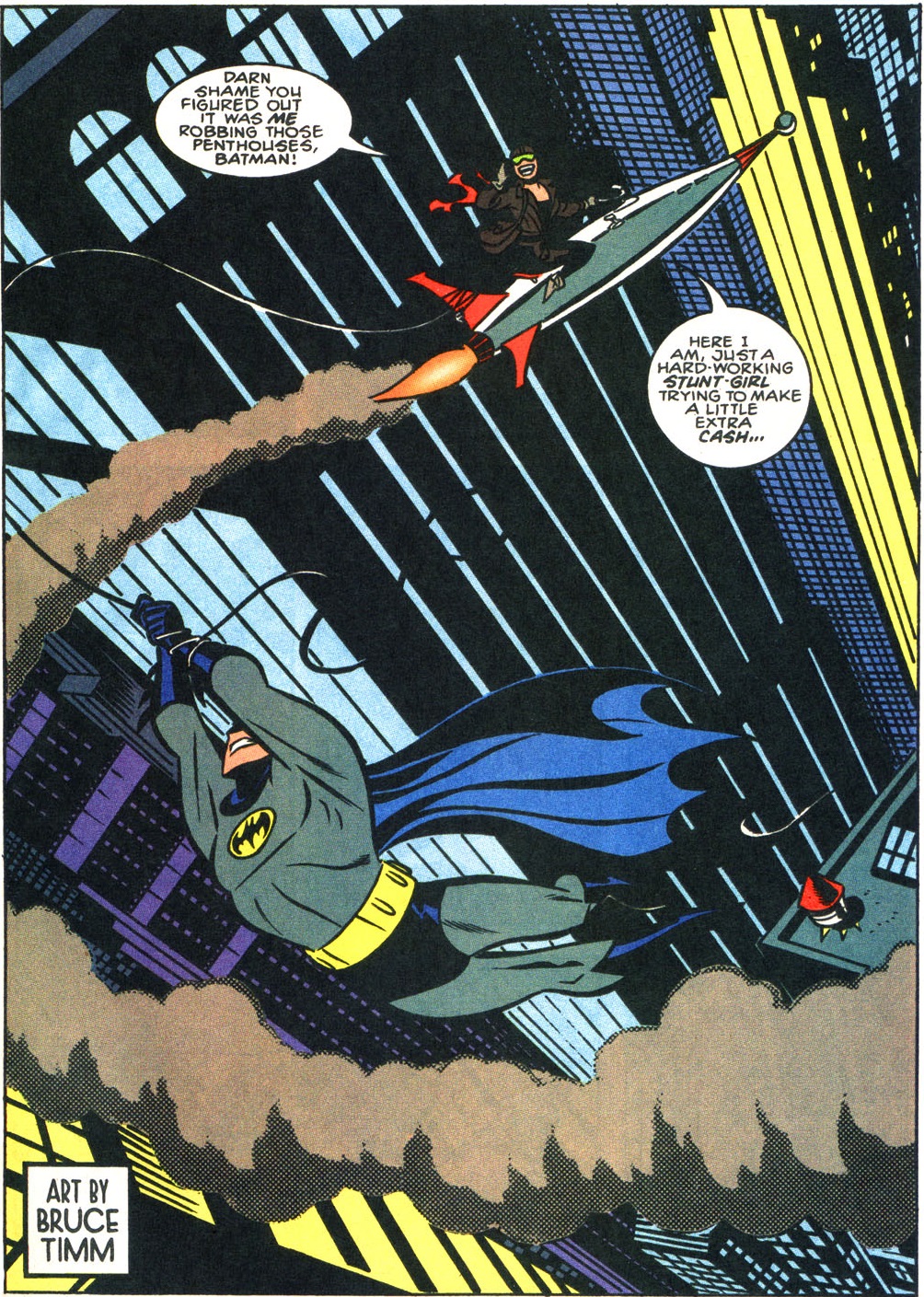
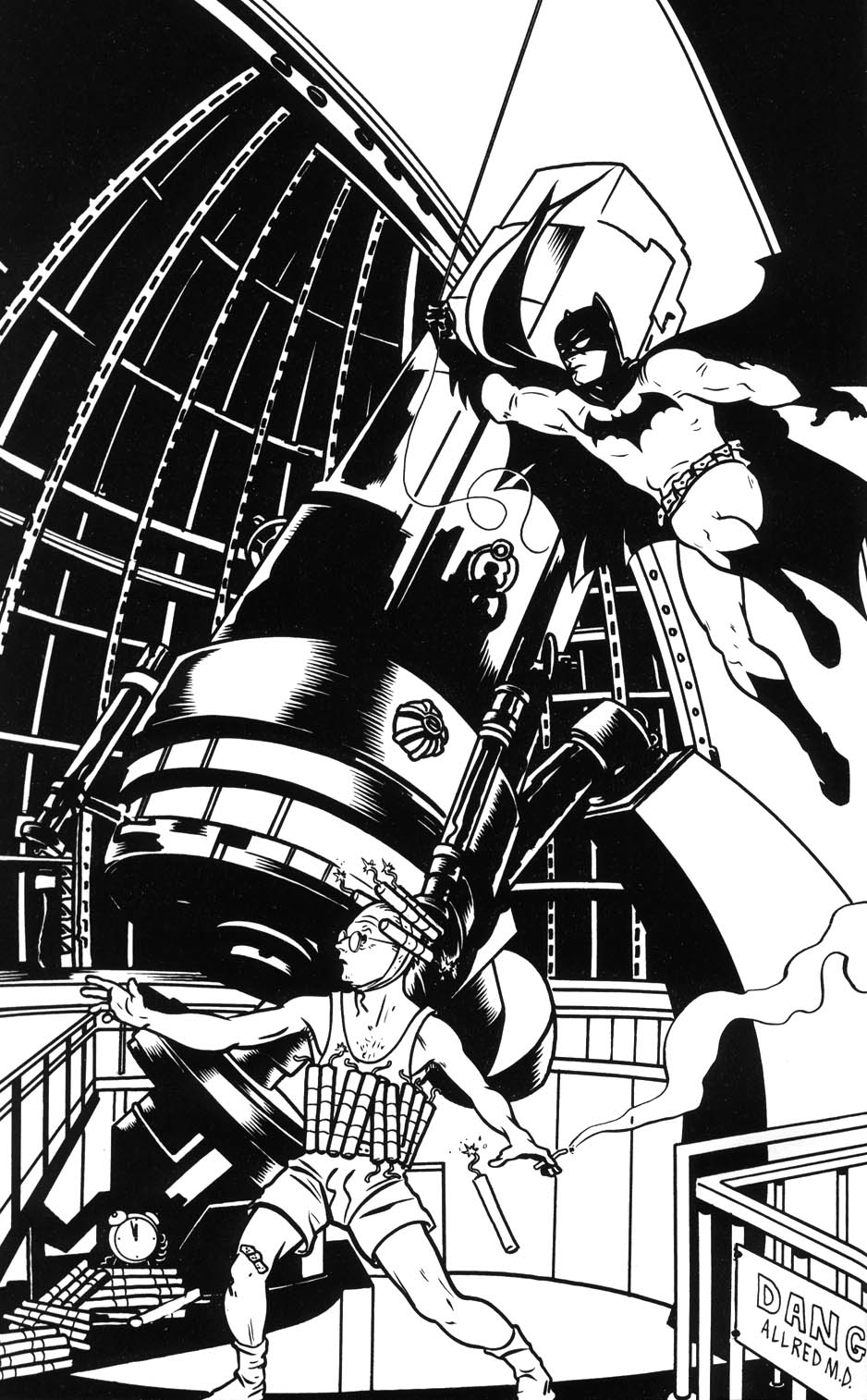
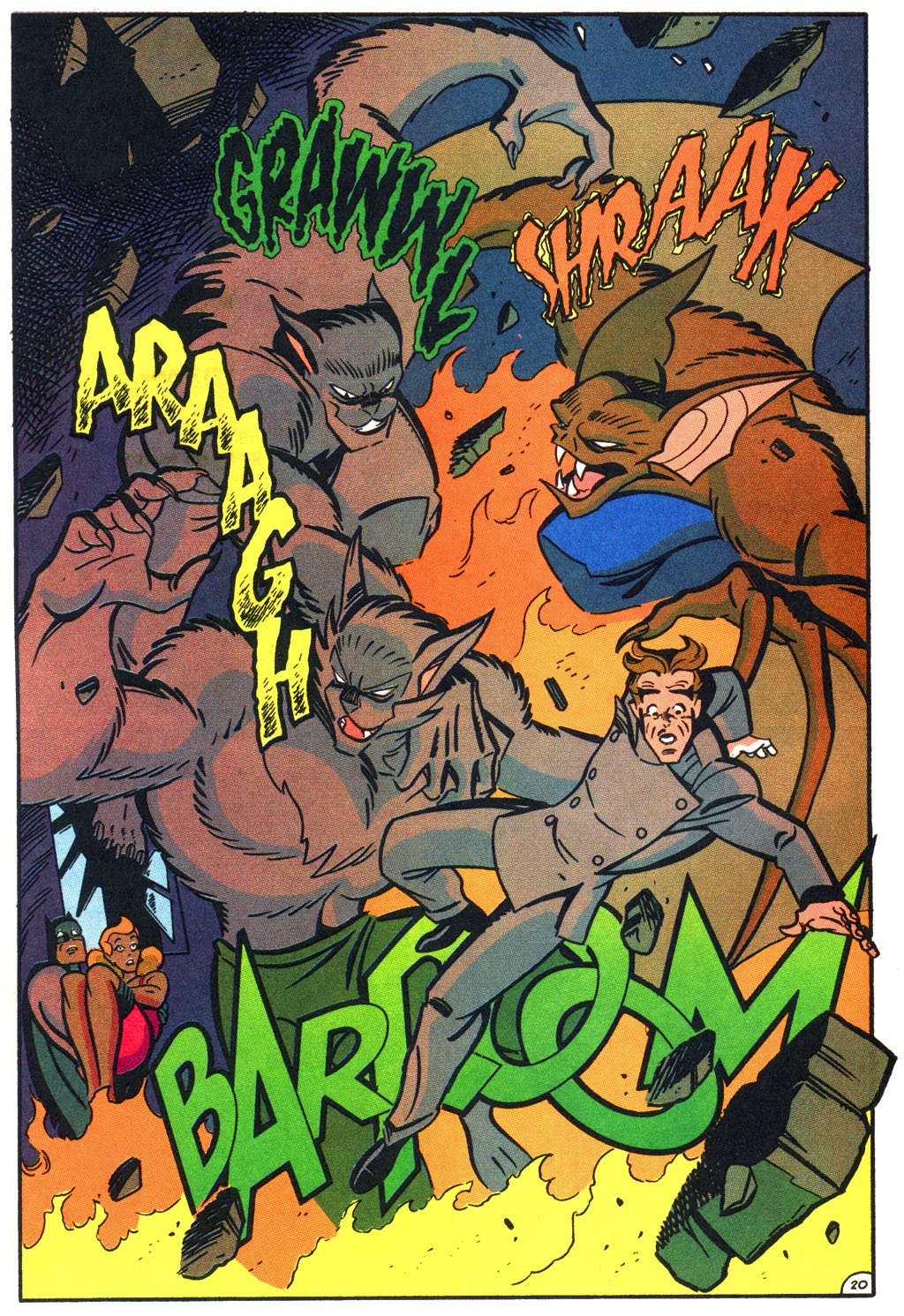
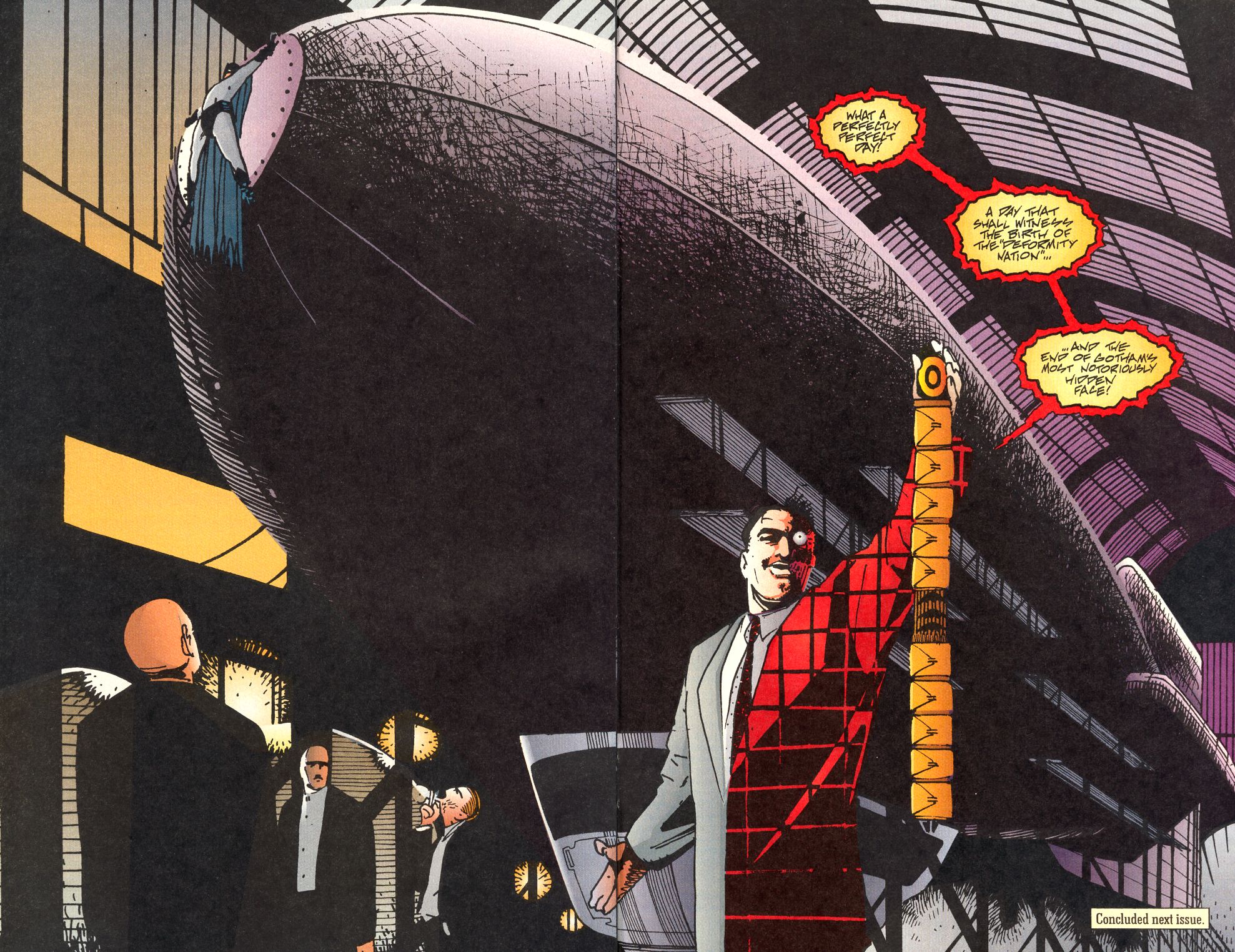
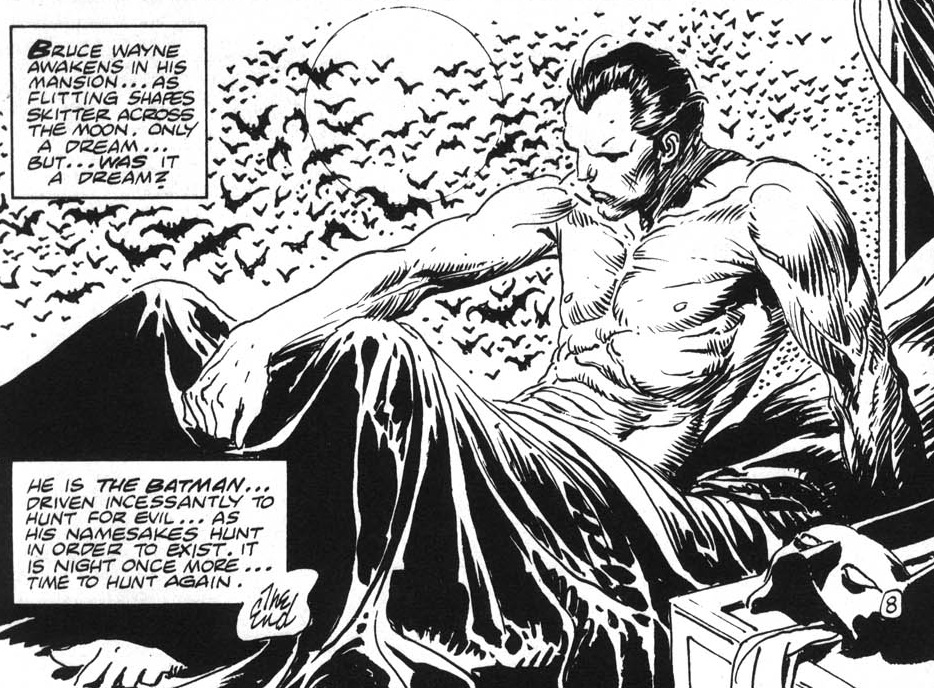
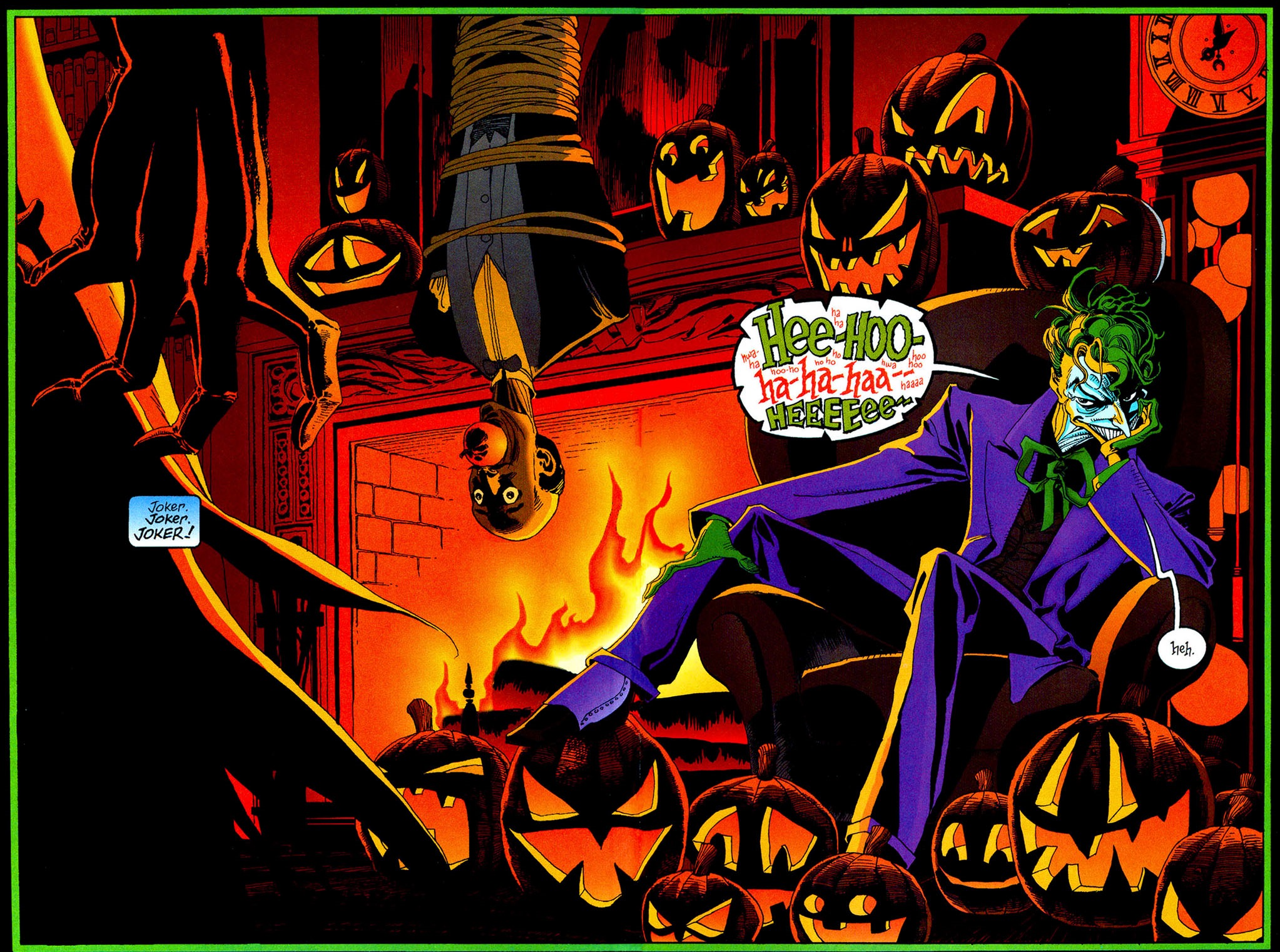
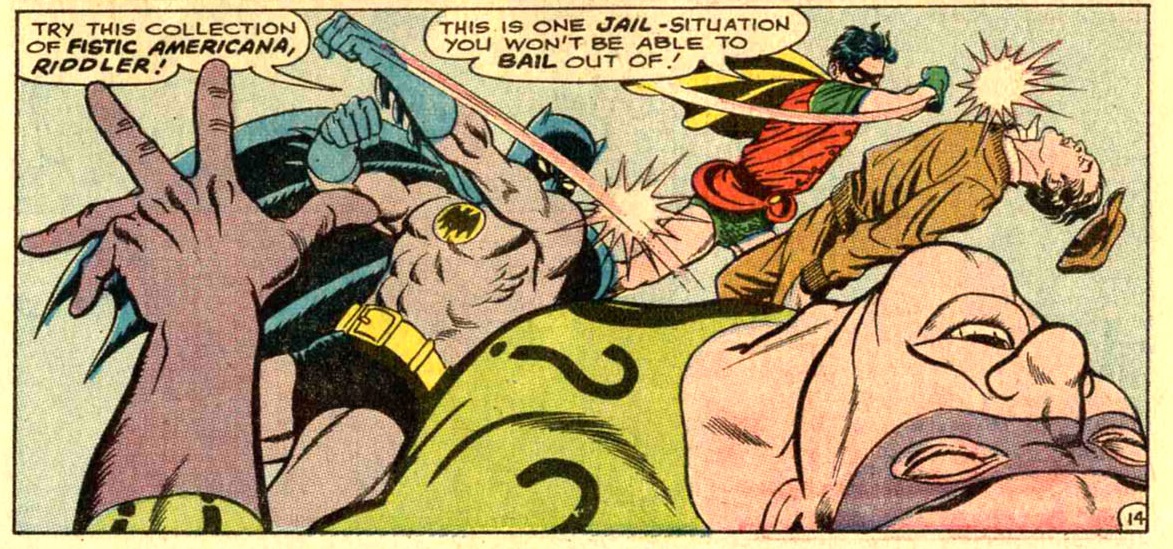
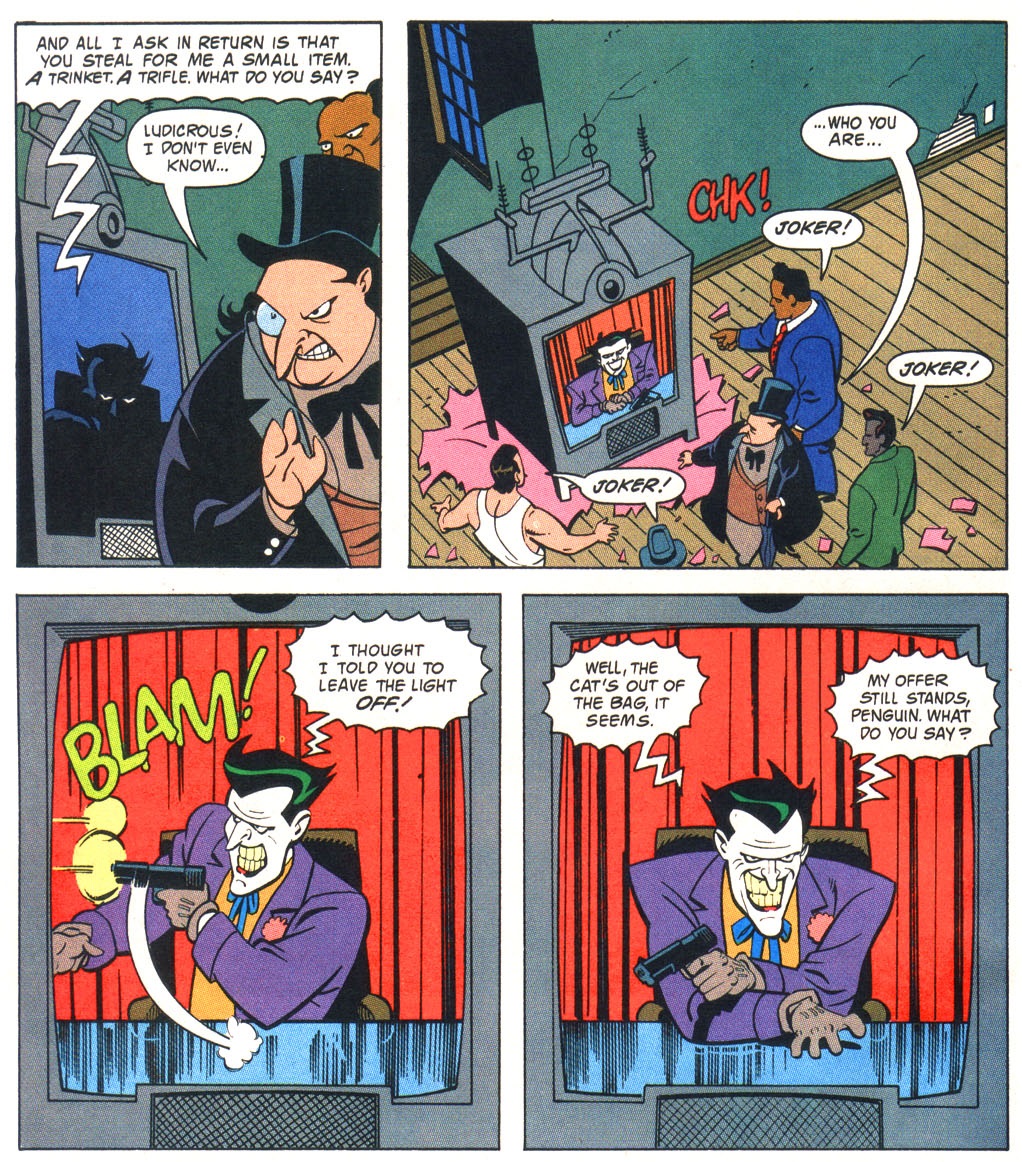
3 creepy sequences by Gene Colan

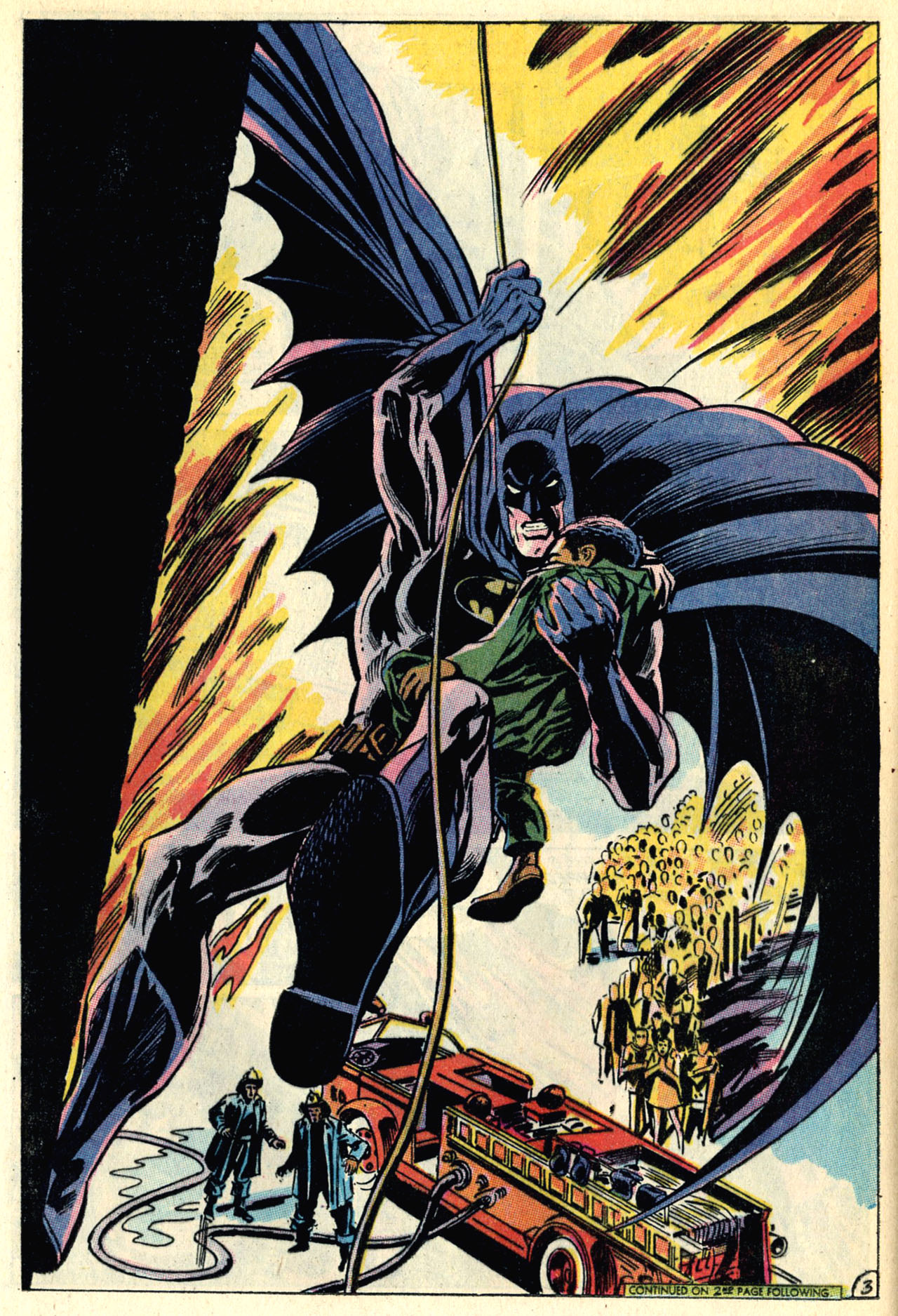
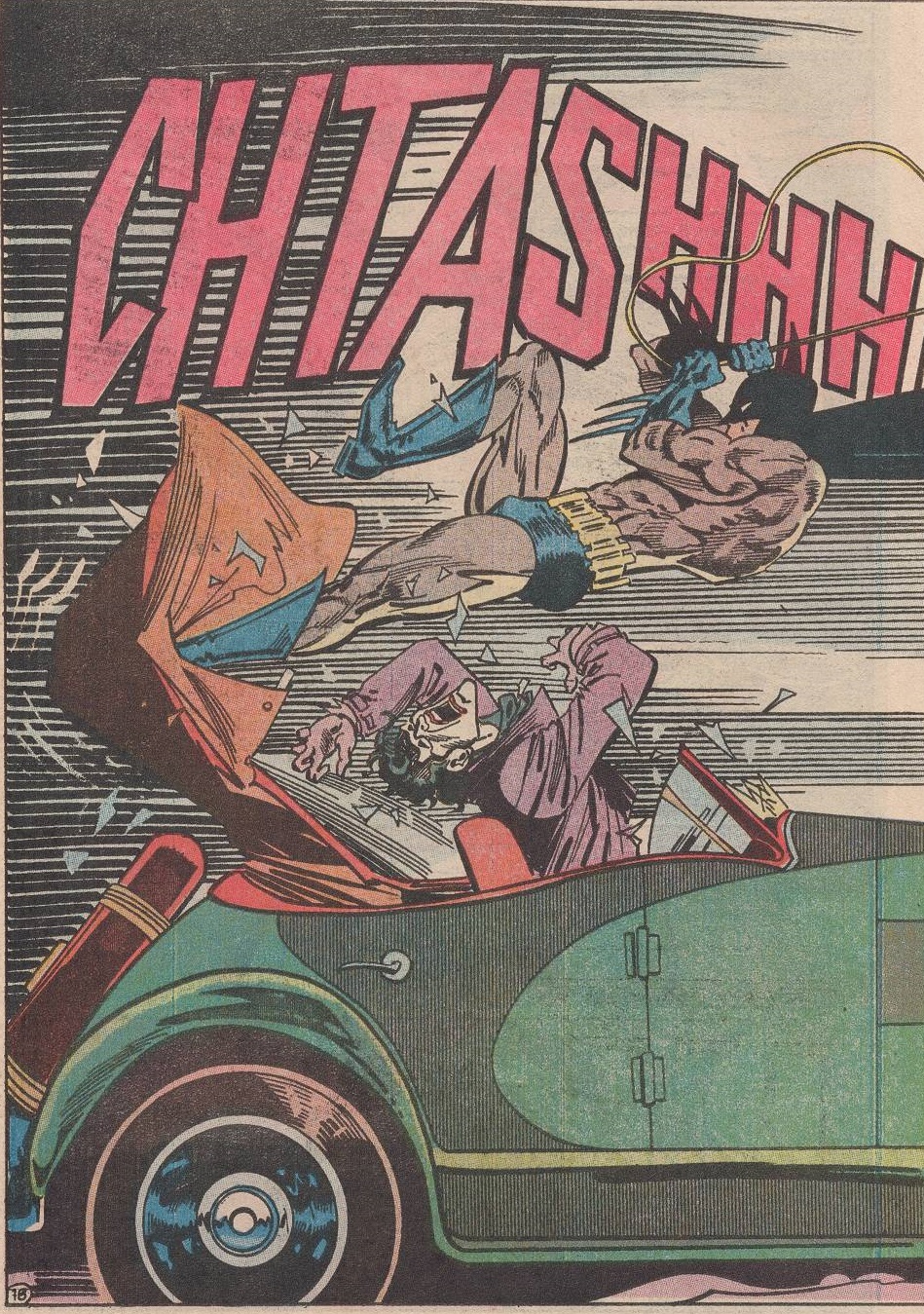
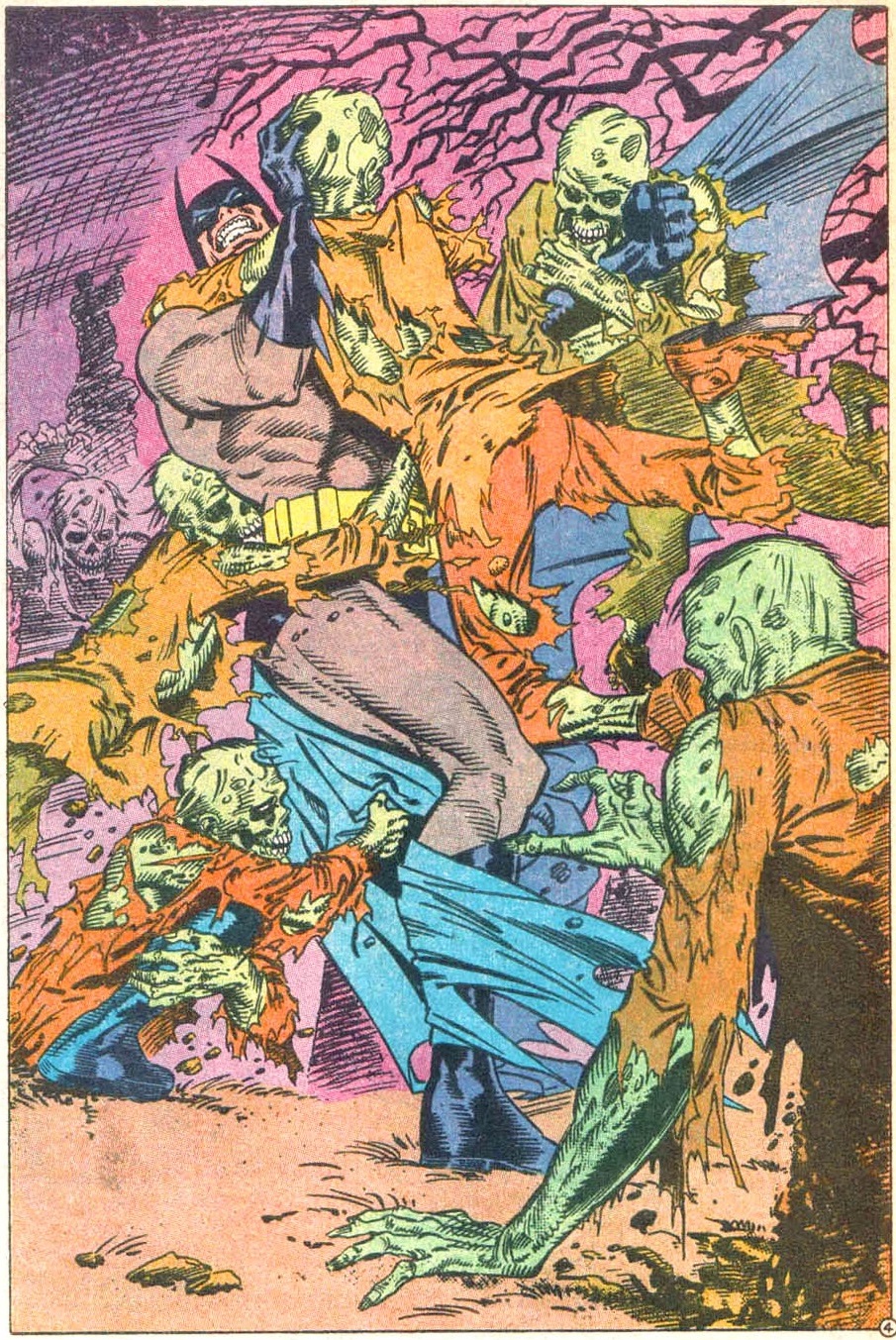
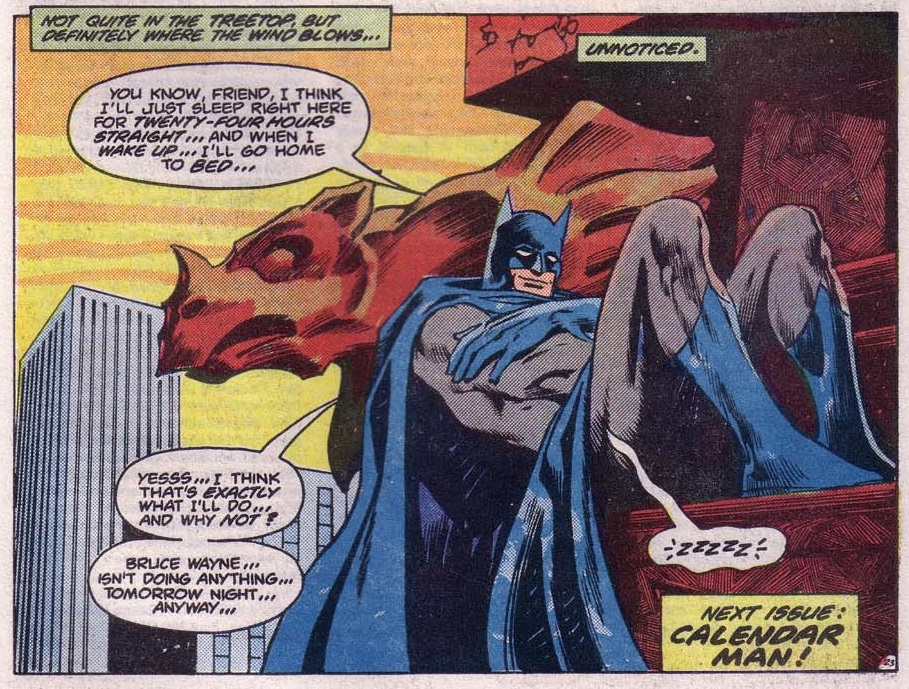
With his tilted angles and grim shadows, Gene Colan was one of the undisputed masters of horror art and he proved it time and time again during his lengthy run on Batman comics, in the early eighties. Colored by the excellent Adrienne Roy and (over)written by Gerry Conway and Doug Moench, those comics had quite a moody style, sometimes not miles away from the Saga of the Swamp Thing series coming out at the time. So, keeping with this month’s theme, I figured it’d make sense to highlight a trio of sequences drawn by Colan that wouldn’t look out of place in any self-respecting spine-chiller…

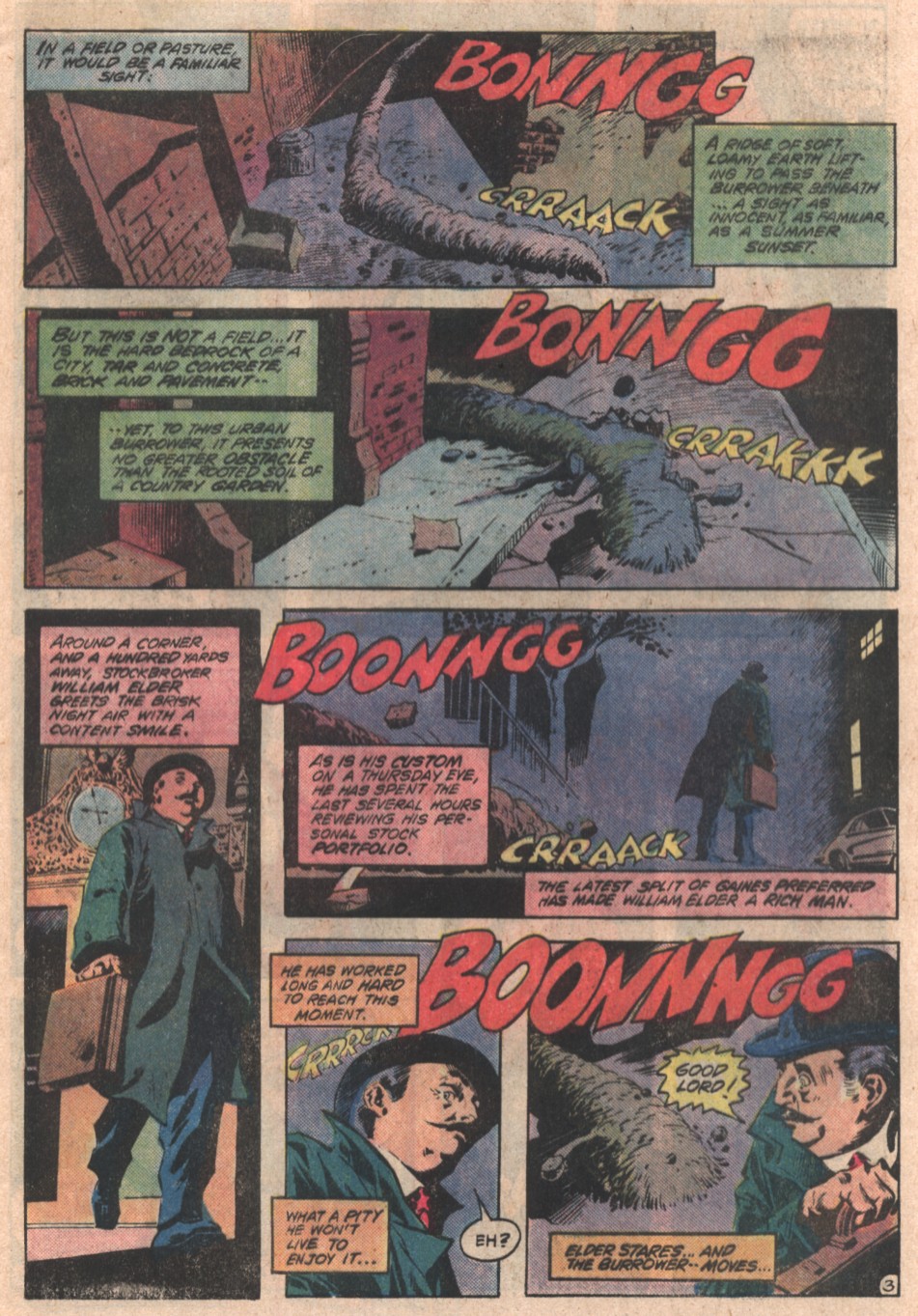
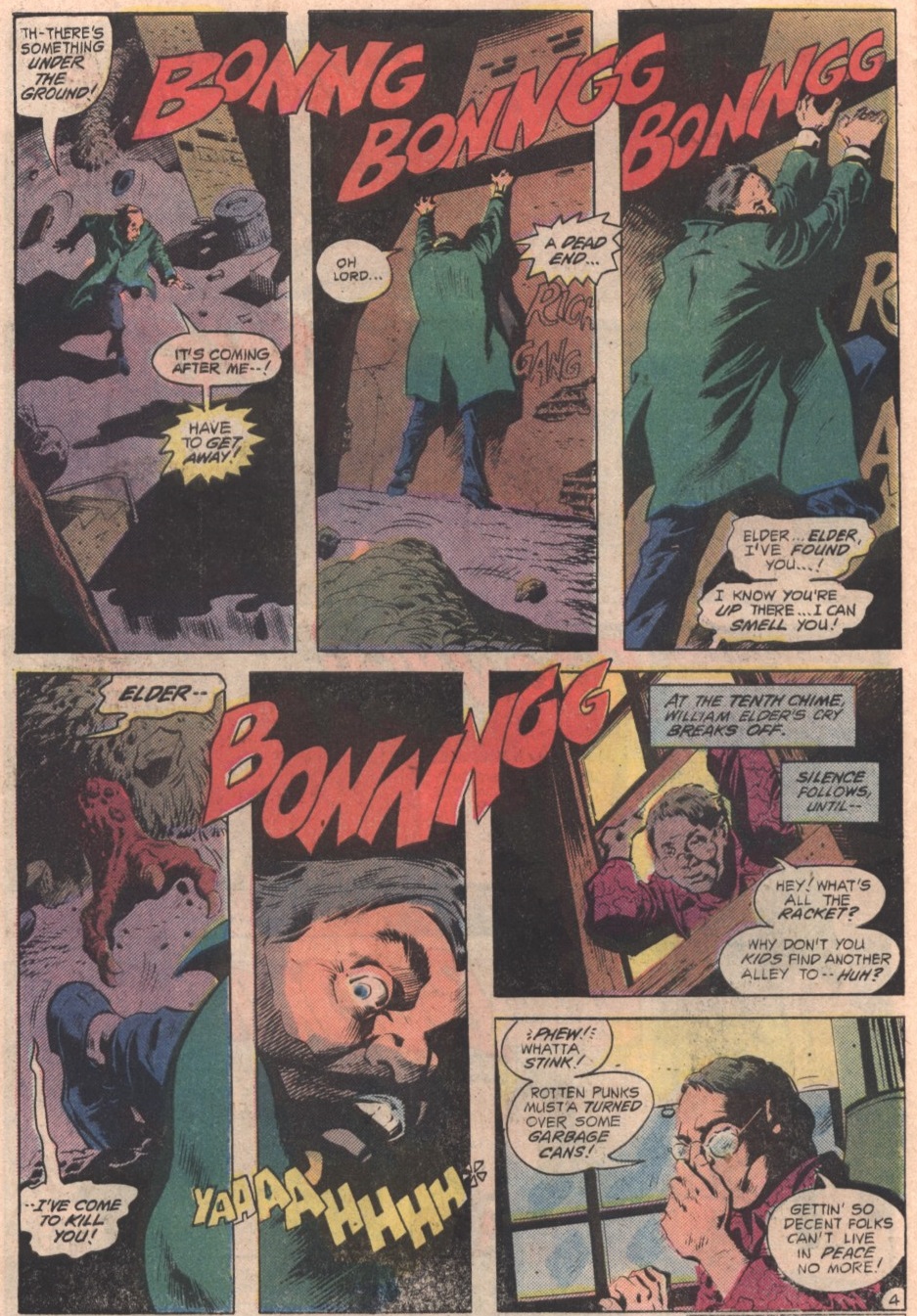
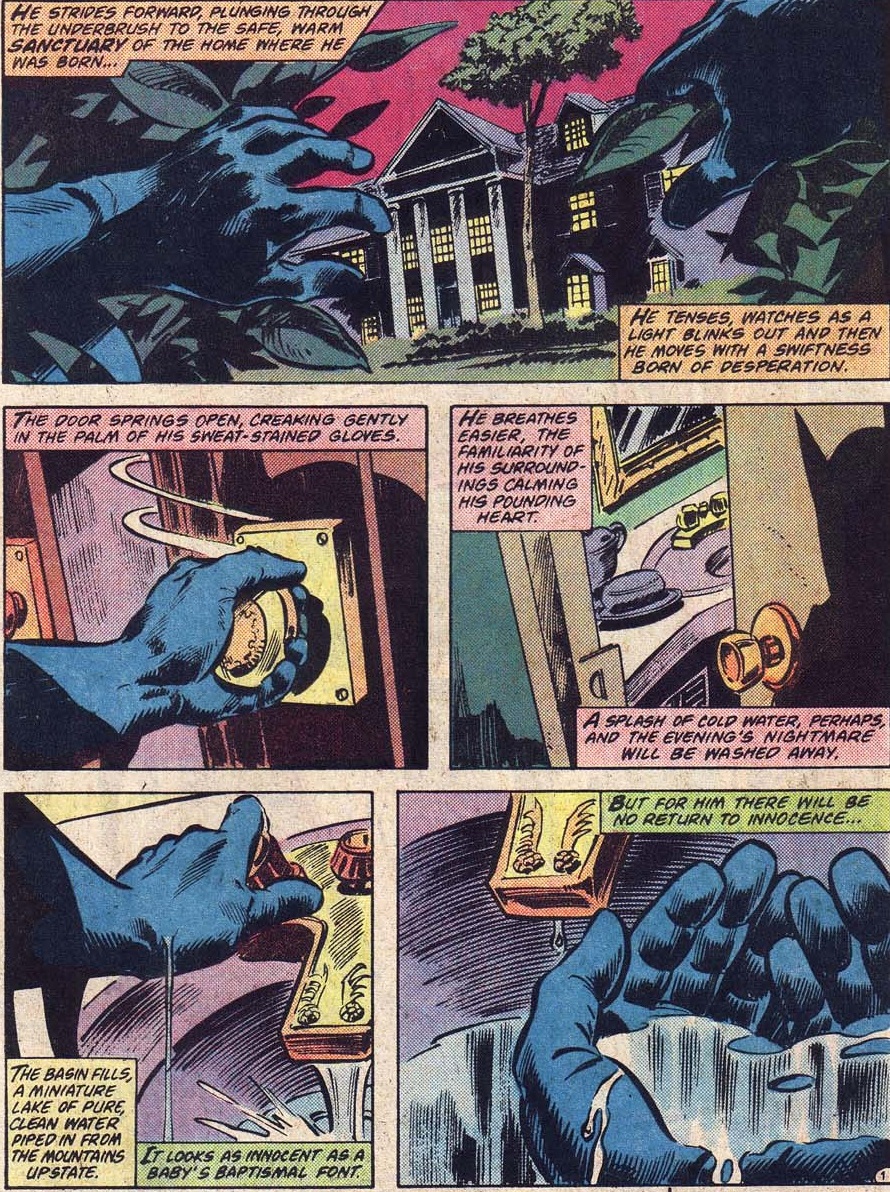
Let’s start with Gene Colan’s first issue. Inked by Adrian Gonzales and lettered by Ben Oda, ‘A Man Called Mole!’ pits the Dark Knight against a monster who travels under the earth. Although perhaps not scary enough to make Wes Craven crap his underwear,  this suspenseful sequence early on establishes the villain’s modus operandi while crafting a menacing crescendo that culminates in a nasty punchline:

batman-340batman-340Batman #340

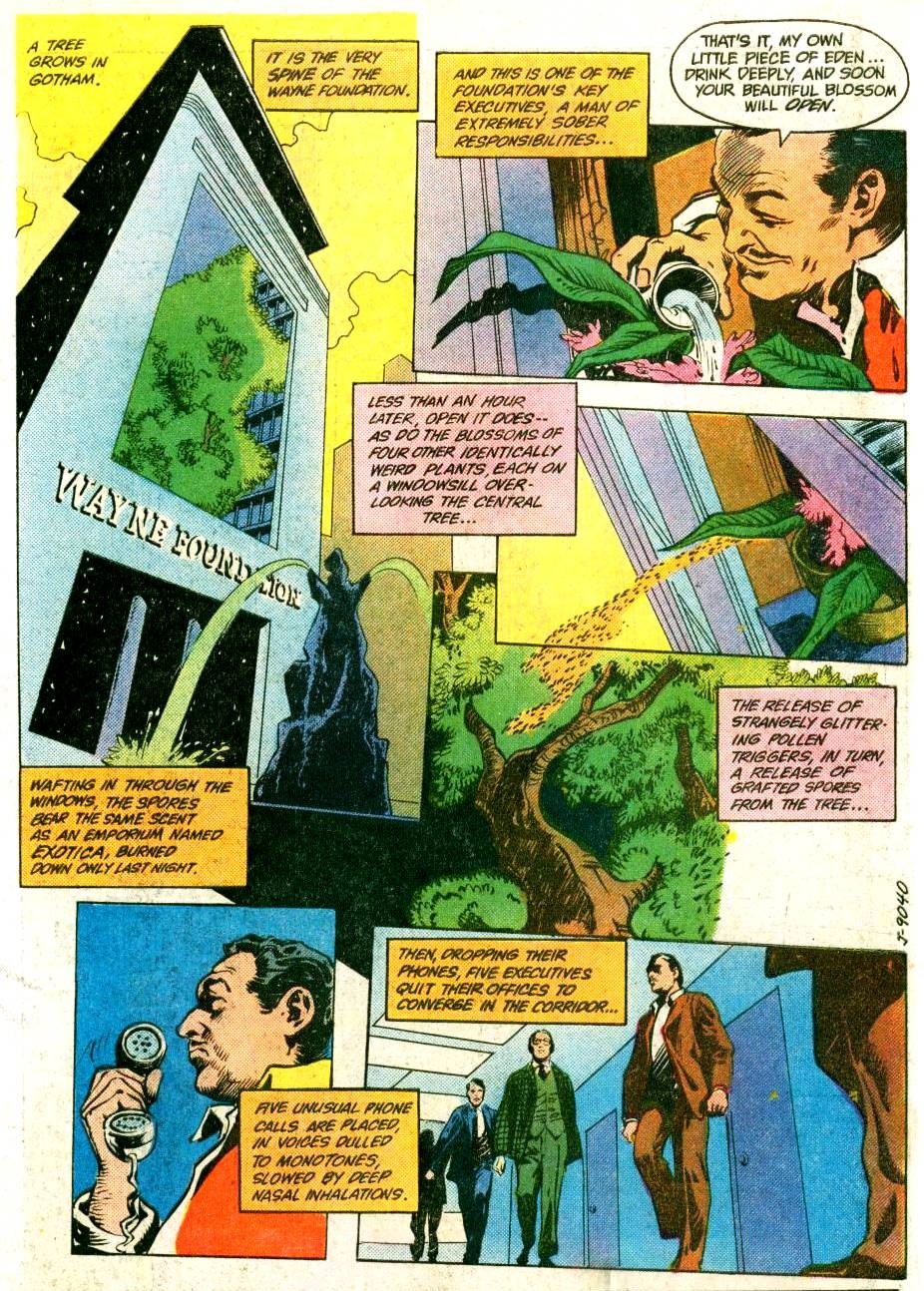
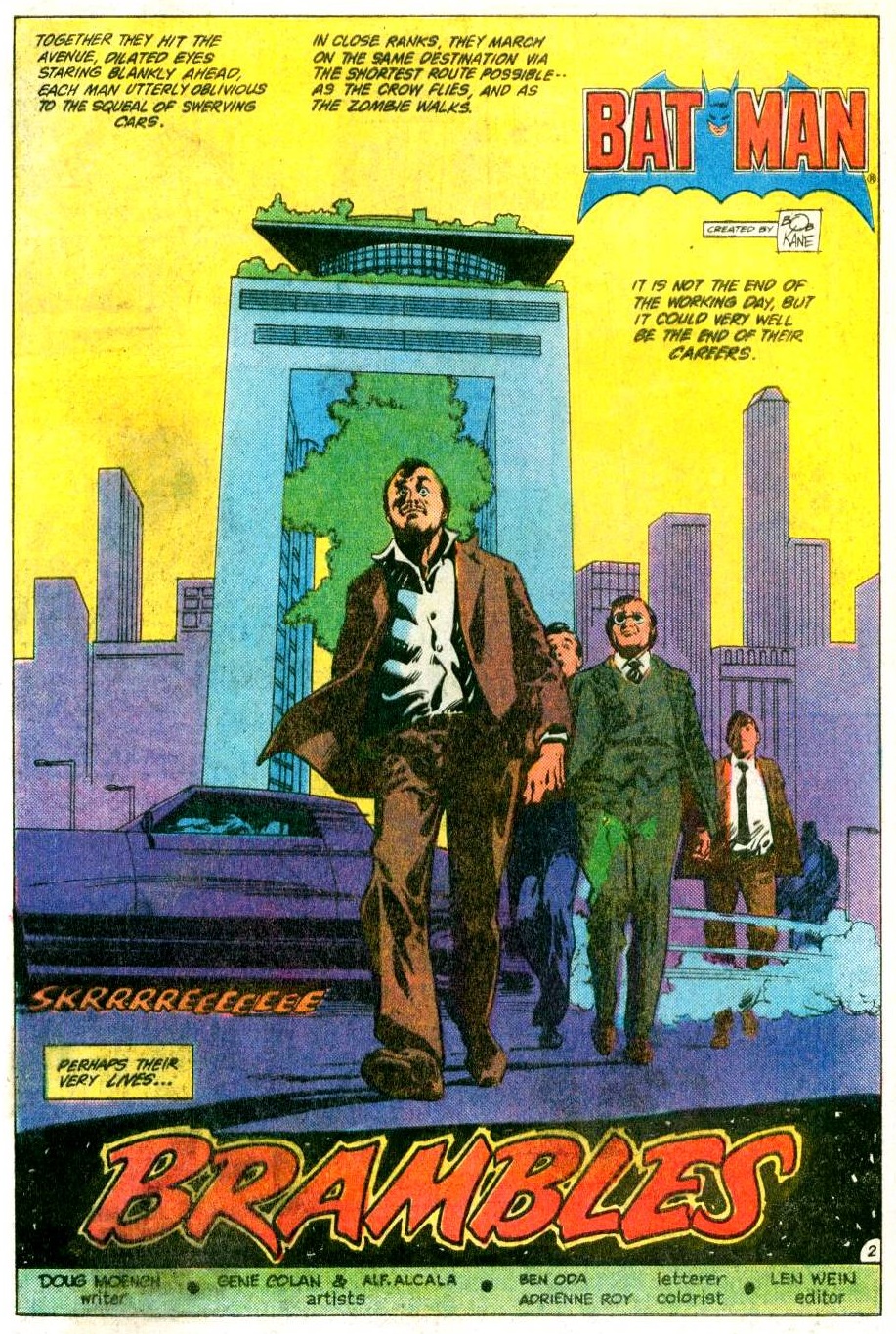
Moving on to another stylish opening, this one from an issue in which Poison Ivy seeks to manipulate the photosynthesis of her living plant-men mutations so that they’ll receive and store energy, not from sunlight, but from the brainwaves of executives of the Wayne Foundation. As a plan, it’s as delightfully farfetched as usual, but Gene Colan beautifully nails the executives’ disturbing, hypnotized look:

detective comics 534detective comics 534Detective Comics #534

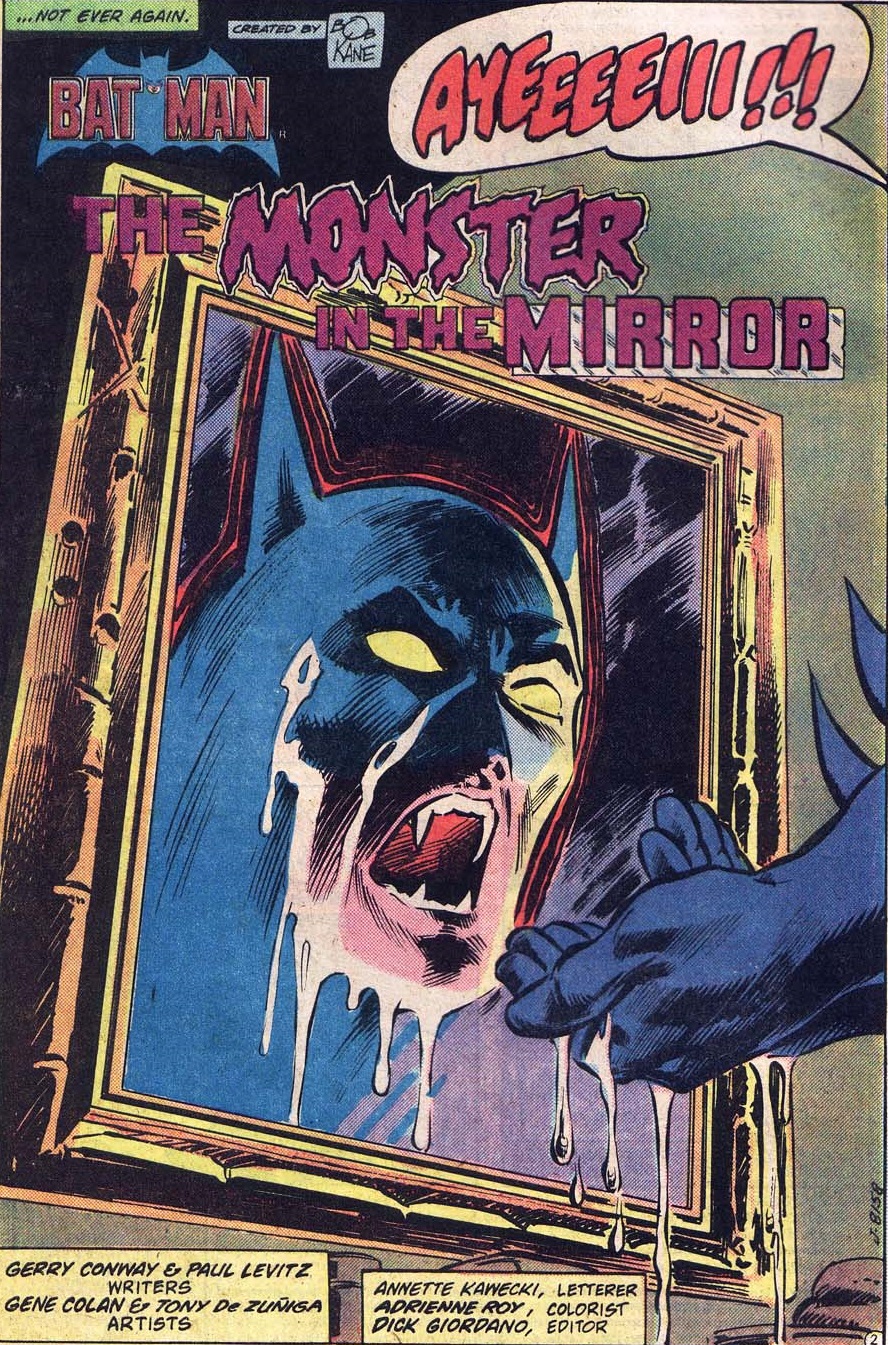
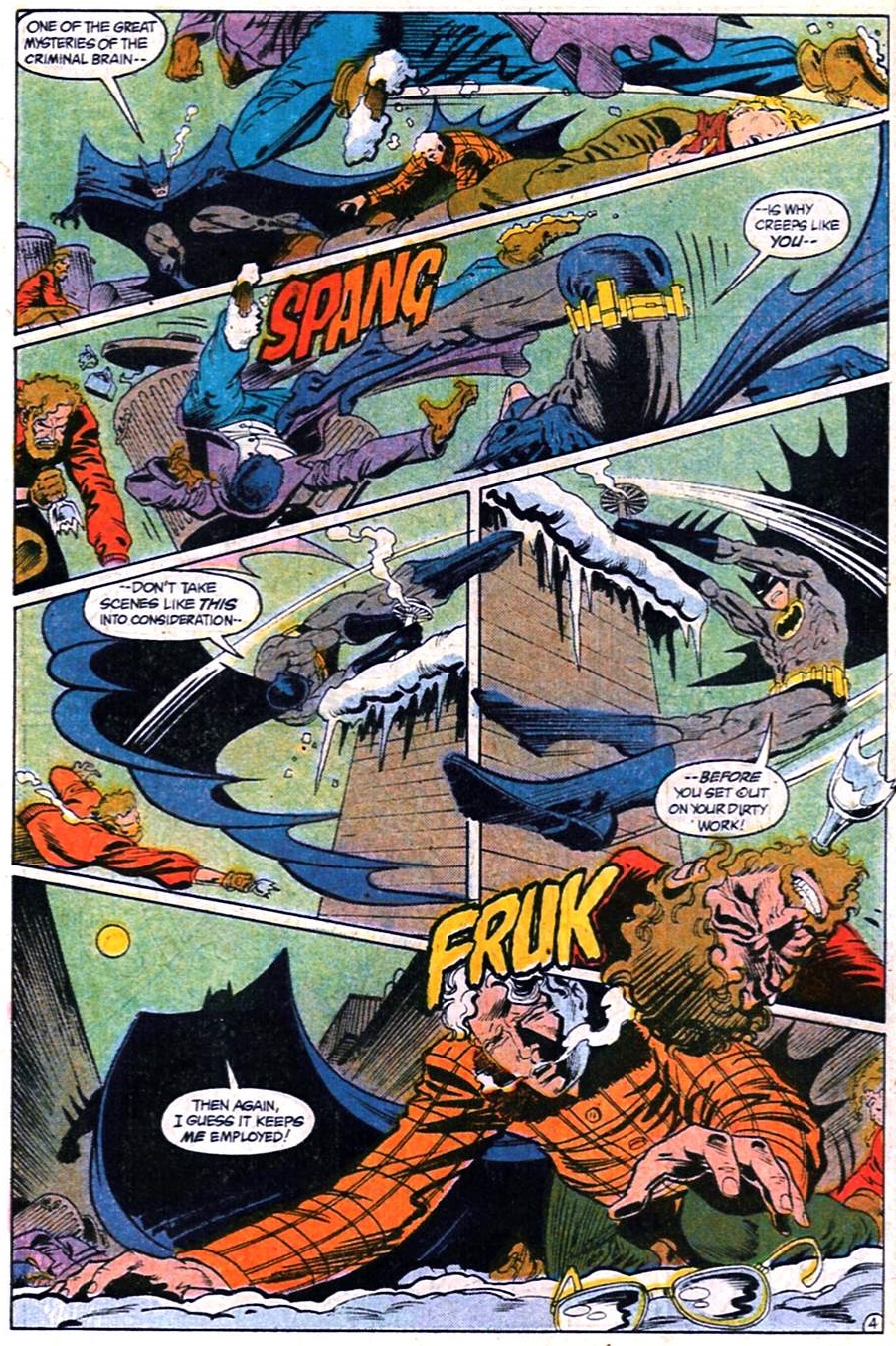
From Knightfall to Batman R.I.P., there is a long tradition of having the Caped Crusader brutally beaten down and disparagingly dragged through the mud before somehow bouncing back with a vengeance. This really used to be a thing in eighties’ adventure stories – and while The Dark Knight Returns and The Cult are probably the best-remembered examples from the world of Batman comics, there was a vicious tale that came before, vividly yet bleakly illustrated by Gene Colan. Here is a great sequence from that tale, done through Batman’s P.O.V.:

detective comics 517detective comics 517Detective Comics #517
Posted in ART OF BATMAN COMICS | Tagged , , , , , , , , , , | 1 Comment

13 Batman ghost stories

Because I’m super original, I’m devoting the whole month of October to horror… What can I say, I can’t get enough of gothic comics, especially when they involve Batman battling some restless spirit or a freaky ancient curse!

One of my favorite eras for this type of stuff is the early 1970s, when there was a massive wave of ghost stories starring the Caped Crusader. By ‘ghost stories’, I don’t necessarily mean just stories that featured ghosts, but stories that sprung from the kind of eerie yarns you imagine could be told around a campfire… Many of these built up to somber punchlines worthy of Ray Bradbury’s Dark Carnival. Some were spooky, some were poetic, and some were ultimately revealed to be mystery tales with a perfectly logical explanation (for the standards of Batman comics, that is). In any case, due to the era’s visual house style and flair for purple narration, they tended to be atmospheric as hell (by which I mean something in the wavelength of a charmingly bizarre B-movie like Roger Corman’s The Undead, not the hyper-stylized mindfuck of Nicolas Winding Refn’s The Neon Demon).

This time around, I’m not going to discuss each comic in detail, since they rely mostly on the aforementioned mood and plot twists. Suffice it to say that these stories were crafted by some of best Batman writers and artists ever and that you could do a lot worse than to track them down…


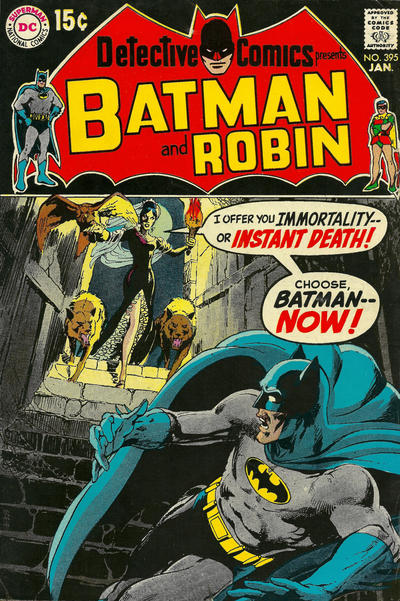
‘The Secret of the Waiting Graves’ (Detective Comics #395)

Detective Comics #395

Mostly known as the first Batman issue done by the amazing team of Denny O’Neil and Neal Adams, this comic doesn’t involve ghosts per se, but there’s still a stark gothic vibe as the Dark Knight is attacked by giant wolves, monstrous hallucinations, deadly falcons, and the possibility of immortality!

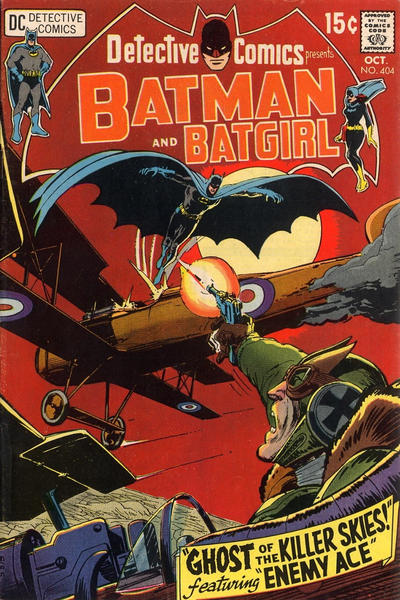
 ‘Ghost of the Killer Skies!’ (Detective Comics #404)

Detective Comics #404

During his brief stint as a film producer, Bruce Wayne travels to Spain to oversee “The Hammer of Hell” – an anti-war movie project based on the life (and apparently haunted by the ghost) of WWI pilot Baron Hans von Hammer, better known as Enemy Ace.

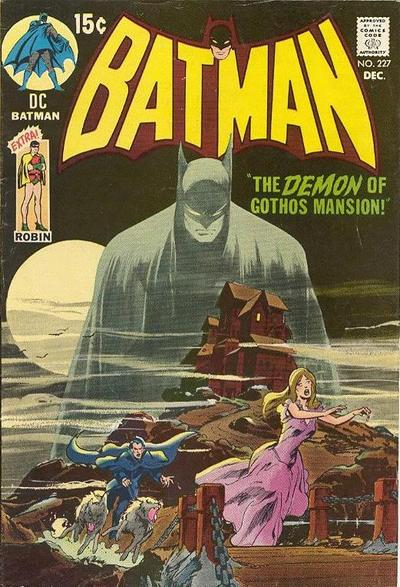
‘The Demon of Gothos Mansion!’ (Batman #227)

Batman #227

While looking for Alfred Pennyworth’s niece, Daphne (in a very rare appearance), the Dark Knight stumbles upon a coven dedicated to raising the spirit of the demon Ballk. Hijinks ensue.

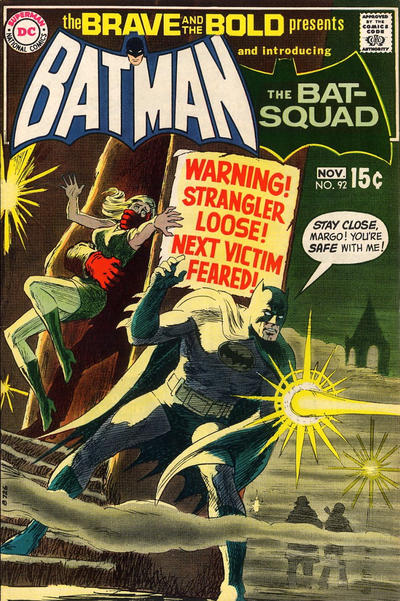
‘Night Wears a Scarlet Shroud!’ (The Brave and the Bold #92)

The Brave and the Bold #92

Another one from Bruce’s time as producer. He is now in London, working on a movie about a strangler from the turn of the century. The main actress is kidnapped by the titular killer, as everyone involved in the film seems to travel back in time. Batman then tries to solve the mystery by teaming up with a trio of British amateur detectives (in a blatant attempt by writer Bob Haney to do a backdoor pilot) and there is a neat sequence where he gets trapped under a Nazi bomb. To be fair, the plot doesn’t make a whole lot of sense and it relies on a few outrageous coincidences, but I couldn’t resist including this cover!

 ‘Legacy of Hate!’ (Detective Comics #412)

Detective Comics #412

Bruce and a set of far-removed relatives face a ghostly knight while spending a night in Waynemoor Castle, in Northern England, the ancient seat of the original Wayne family. As is typical of Frank Robbins’ scripts, the twists keep coming until the end.

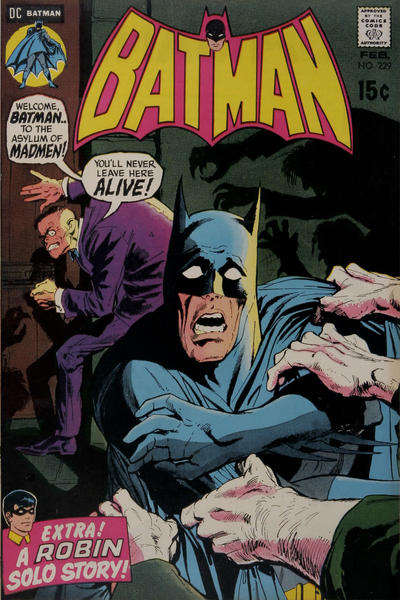
‘Asylum of the Futurians!’ (Batman #229)

Batman #229

In this weird comic from the prolific mind of Robert Kanigher, Batman may not face anything remotely resembling what you see in that cover, but he sure does have one trippy adventure. At one point, he is crowned leader of a cult of fanatics who believe they have psychic powers and are destined to take over the world!

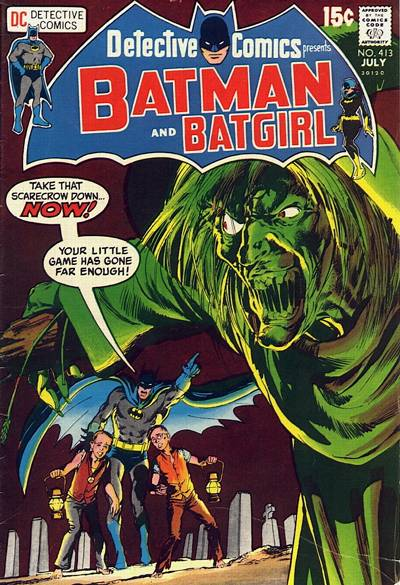
‘Freak-Out at Phantom Hollow!’ (Detective Comics #413)

Detective Comics #413

This one comes with a timeless social message about bashing hippies.

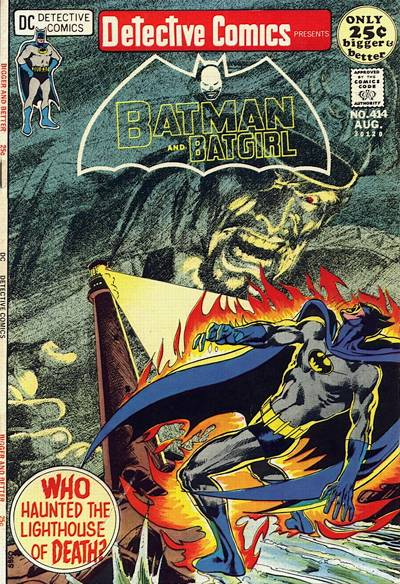
‘Legend of the Key Hook Lighthouse!’ (Detective Comics #414)

Detective Comics #414

This one would be worth it for Denny O’Neil’s opening poem alone, but the rest is quite good as well, including a nice art job by Irv Novick and Dick Giordano.

 ‘Wail of the Ghost-Bride!’ (Batman #236)

Batman #236

Despite all of his supernatural encounters – and the fact that he is a friend of Superman! – Batman continues to refuse to believe in the occult, so he is baffled when the ghost of a long dead bride keeps pointing him in the direction of a macabre murder mystery.

‘Second Chance for a Deadman?’ (The Brave and the Bold #104)

The Brave and the Bold #104

Not much of an actual horror tale, I know, but this team-up between the Caped Crusader and the spirit of the dead acrobat Boston Brand (aka Deadman) is nevertheless a compellingly tragic ghost story.

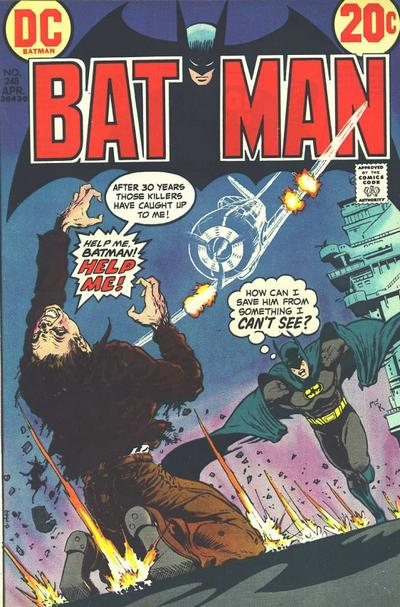
Death-Knell for a Traitor!(Batman #248)

Batman #248

A neat, Twilight Zone-ish tale about a Navy Intelligence officer tormented by an act of treason he committed in World War II.

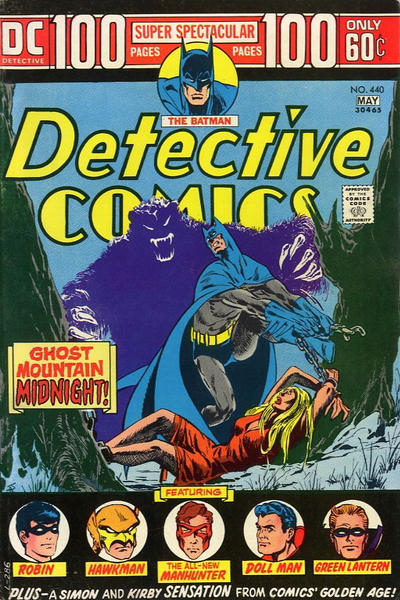
Ghost Mountain Midnight!(Detective Comics #440)

Detective Comics #440

Once again, Batman finds himself in a small town, confronting and seeking to disprove local superstitions, now in a story written by Archie Goodwin and illustrated by Sal Amendola. This time around, though, there are no hippies.

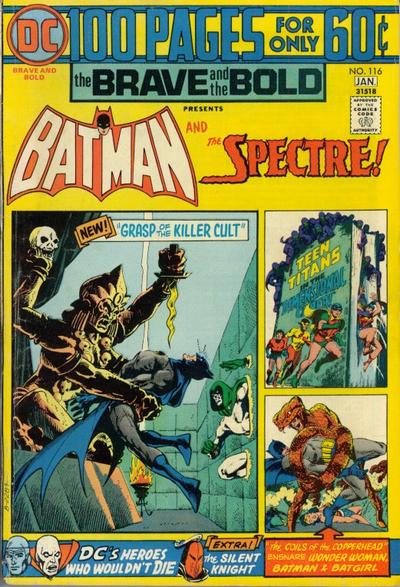
 ‘Grasp of the Killer Cult’ (The Brave and the Bold #116)

The Brave and the Bold #116

Not only does this comic feature a team-up between Batman and the Spectre against a secret band of assassins who worship Kali, but Bob Haney and Jim Aparo also throw in a couple of nods to Robert Aldrich’s The Dirty Dozen. Irresistible.


Posted in BATMAN COMICS FOR BEGINNERS | Tagged , , , , , , , , , , | 2 Comments

Another damn week in Batman’s life

MONDAY

BATMAN 221Batman #221

TUESDAY

detective comics #617Detective Comics #617

WEDNESDAY

Batman 453Batman #453

THURSDAY

batman adventures annual #1The Batman Adventures Annual #1

FRIDAY

batman - black & white #1Batman: Black and White #1

SATURDAY

The Batman Adventures #21The Batman Adventures #21

SUNDAY

legends of the dark knight 29Legends of the Dark Knight #29
 
Posted in GOTHAM INTERLUDES | Leave a comment

5 R-rated superhero comics

So yeah, Batman v Superman: Dawn of Justice. There is something puzzling in almost every scene of this film. Why did Bruce’s employees wait for his phone call before evacuating a building that was obviously about to be crushed? Why did Superman assume that he couldn’t just force Lex Luthor to contact the men who had kidnapped Martha? What the hell was the point of Luthor’s plan, anyway? And why did that drunken brute who spent much of the movie shooting guns and trying to kill people insist on dressing like Batman?

Oh well, I’m sure by now the rest of the blogosphere has covered all of the film’s plot holes and pacing problems and incoherent characterization and tasteless visual choices and its general mean-spirited vibe, but ultimately that’s not why I think this was such a missed opportunity. It’s not the jumbled politics either (Frank Miller’s The Dark Knight Returns is full of those!), nor the mindless carnage (although it could’ve at least been more inventive). I guess I could live with the dour tone if only the film wasn’t so dumb. Or I could live with the silliness if only the film didn’t take itself so seriously… Especially since there are already so many stories out there that explore the contrast between the Man of Steel and the Dark Knight in much, much more interesting ways.

World’s Finest (v2) #1World’s Finest (v2) #1

I don’t even think Ben Affleck is a bad Bruce Wayne. And the problem with Jesse Eisenberg going camp is that it doesn’t fit in with anything else in the movie. Then again, the reason why Gal Gadot steals the show is the fact that her performance does feel so different from everyone else’s – while Batman and Superman come across like brooding jerks, Wonder Woman actually brings some joy to the picture. Let’s face it, her pre-battle smirk is by far the coolest moment in the whole film!

And yet, I insist: my main issue wasn’t necessarily with the grimness per se (after all, although I tend to side with those who mourn the loss of pulpy imagination in lieu of pseudo-serious allegory, I still dug Captain America: Civil War). But by making grim assholes out of Superman and Batman – not Apollo and Midnighter, or Hyperion and Nighthawk, or, hell, Supreme and the Punisher – Zack Snyder wasted a chance to show these characters at their best in the golden age of geeky blockbusters… So now DC is launching a whole expanded cinematic universe and at its very foundation is the notion that superheroes are scary creatures that reflect the horrors of the world rather than making it better. Everything is backwards: Suicide Squad, which was supposed to be the irreverent movie about psycho anti-heroes, ended up looking upbeat in comparison…

(Don’t get me wrong, despite a couple of nice performances, Suicide Squad is a sleazy, sloppily edited clusterfuck, but at least it tries to make its protagonists likable in the end, which I suppose makes a twisted kind of sense once you accept that this is a Bizarro DCU – whereas in the original comics the Squad was created to do the dirty jobs the clean-cut superheroes wouldn’t touch, in the cinematic universe the Squad is presented as our protection against the threat of terrifying superbeings.)

That said, I gladly admit that there is a certain iconoclastic appeal in fucked up superhero stories that take this childish concept into dark places. They don’t even have to be multilayered masterpieces like the original Watchmen – it can be entertaining enough to just ramp up the violence and cheekily subvert the genre’s rules and morals. Zack Snyder’s messy opera could’ve been a bold live-action incarnation of that type of superhero exploitation… it even comes close a couple of times, but overall Batman v Superman: Dawn of Justice sadly forgets to be clever or fun.

If you’re into that kind of stuff, though, there are plenty of comics that do a much better job:

NO HERO

No Hero

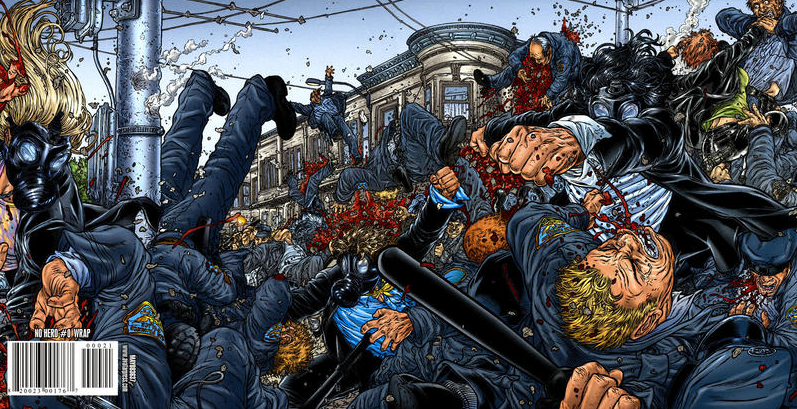
‘How much do you want to be a superhuman?’, asks the tagline of No Hero. Well, if you want to join the progressive super-team Front Line, then the process can involve unbelievable physical and psychological damage and, even after all that, the world of superheroes may not be exactly what you expect… Then again, nothing really is, in this uncompromisingly brutal, cynical blast of a comic! In the tradition of series such as Empire and Ex Machina, No Hero creates an alternative universe shaped by just a handful of people with super-powers while approaching the genre in its own eccentric way.

Writer Warren Ellis and artist Juan Jose Ryp are no strangers to sick, outrageous excess, but here, working together, they reach new heights of splatterpunk lunacy. Ellis supplies the nasty twists and the sarcastic dialogue, as well as some provocative thoughts on vigilantism. Juan Jose Ryp then delivers marvelously unhinged gore, including a bunch of splashes with a nightmarish hallucination that looks like what you would get if gremlins mated with xenomorphs.

JUPITER’S LEGACY

jupiters-legacy-1jupiters-legacy-1

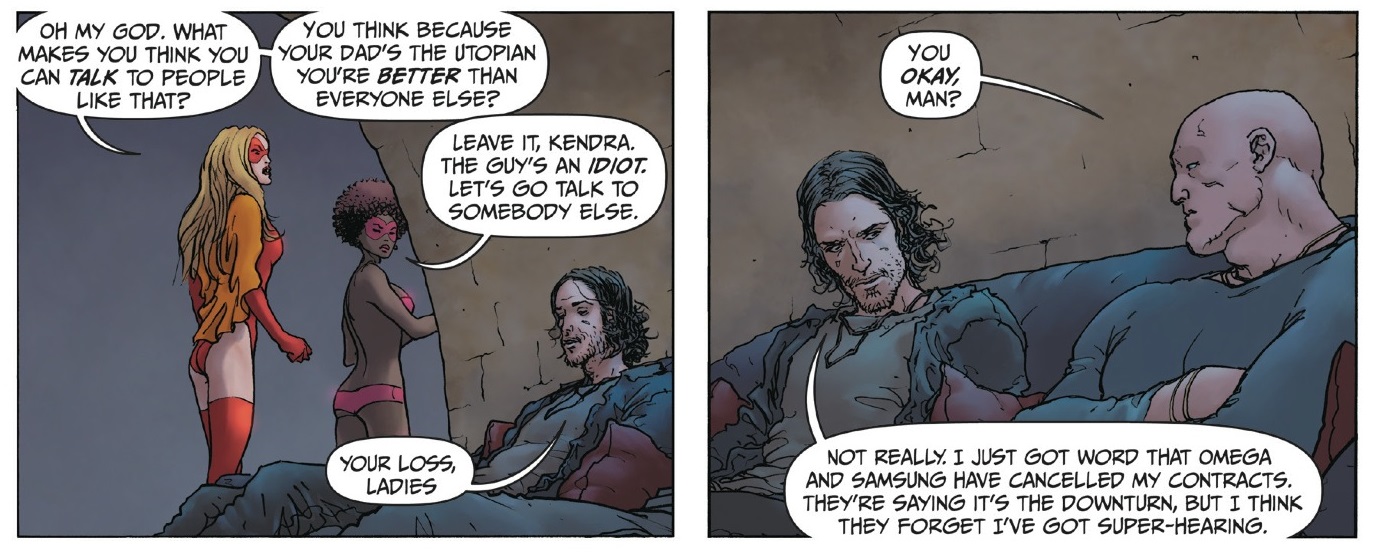
What if the offspring of Golden Age-type idealistic superheroes were a batch of shallow, narcissistic celebrities who cared mostly about their sponsors and publicists? This is the premise behind Jupiter’s Legacy, which starts by applying superhero logic to real world issues like the generation gap and the financial crisis before veering off into exciting new directions. More than using its characters as metaphors for the changing of the times, Jupiter’s Legacy revels in the perverse joy of unleashing these larger-than-life beings into a recognizable reality and then watching them tear down the place.

The series was created by Mark Millar and Frank Quitely, two veterans of this type of comic who go balls out with the concept (the first issue’s cliffhanger involves a superhero overdosing on drugs bought from an off-world dealer), switching between epic fights and mundane character moments without losing a beat. Millar has always been very hit-and-miss, but Jupiter’s Legacy proves he can still pull off a damn satisfying mix of comedy, politics, and imaginative ideas – this is Millar’s most accomplished stab at transgressive superheroes since his cult runs on The Ultimates and The Authority, way back when. As for Quitely’s art, what can I say… while this may not go down in history as his greatest work, it still blows me away, selling each of Millar’s signature ‘fuck yeah’ moments!

Mark Millar also wrote a neat spin-off, Jupiter’s Circle, with two volumes out so far. Despite the charming artwork by Wilfredo Torres, Davide Gianfelice, and Francesco Mortarino, Jupiter’s Circle takes the nostalgia goggles off, skillfully showing the contradictions of the superheroes of the Greatest Generation in the post-WWII world (cue priceless cameos by Katharine Hepburn, Sammy Davis Jr, and Ayn Rand).

SLEEPER

sleeper 01sleeper 01

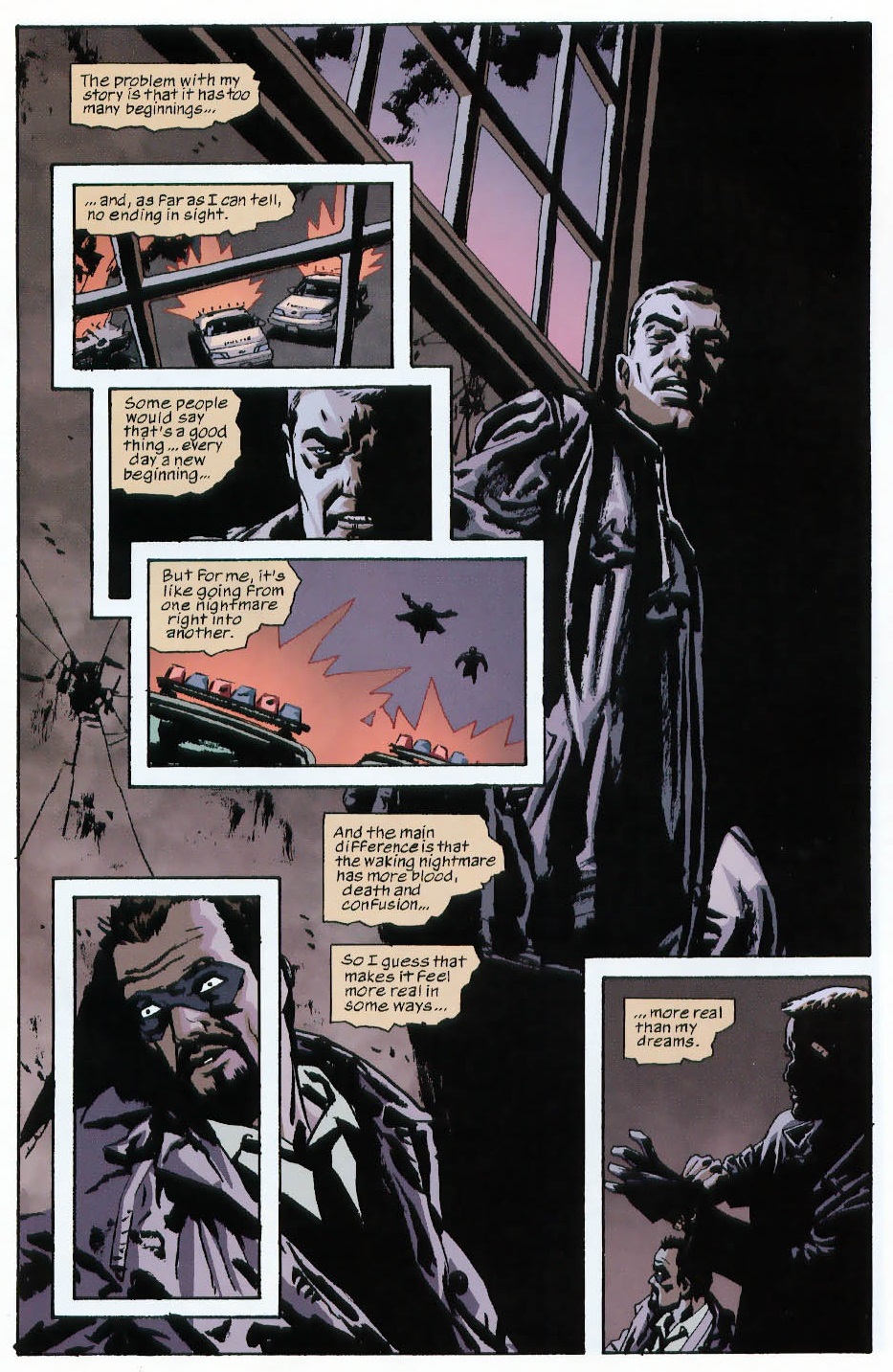
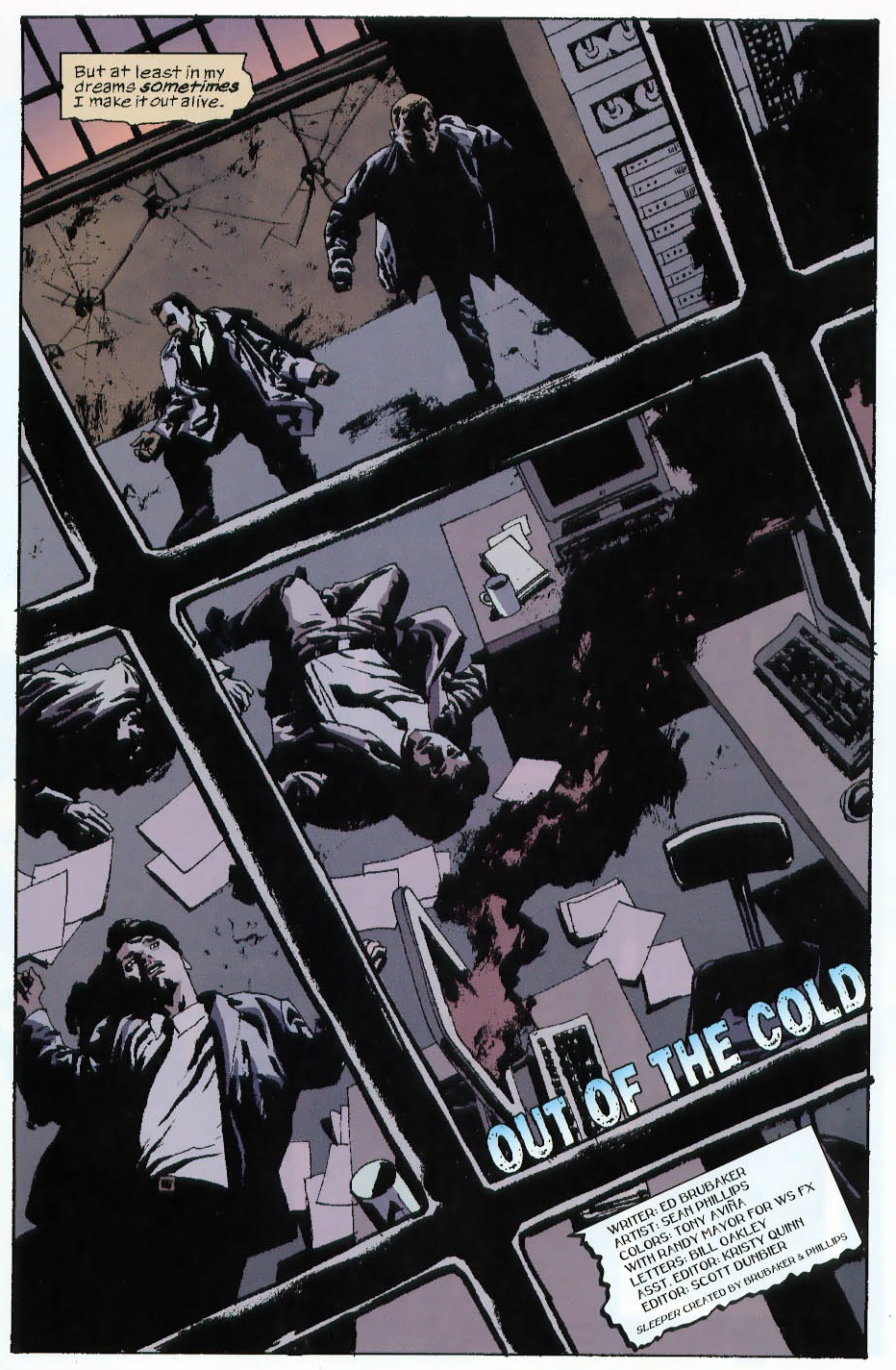
While I don’t think Zack Snyder’s films do justice to the DCU, his cinematic vision would fit relatively comfortably in the now departed WildStorm imprint. Edgy in terms of both themes and visuals, in the early 2000s WildStorm gave us several excellent series about vicious superheroes fighting each other over morally ambiguous politics. One of the most ‘adult’ comics of this crop was Ed Brubaker’s and Sean Phillips’ spy noir Sleeper, in which an undercover agent loses his liaison with the outside world while infiltrating a secret post-human organization led by earth’s most intelligent and manipulative crime lord.

Despite sharing its title with Woody Allen’s slapstick masterpiece, Sleeper is actually an expertly crafted mole thriller (à la 2002’s Infernal Affairs) spiced up with supernatural elements and global conspiracies. Besides playing with the toys of the WildStorm Universe – like the Bleed, a dimension between realities – the series creates an engaging cloak-and-dagger underworld, one inhabited by offbeat characters such as the brutish enforcer Genocide (‘he’s more than just a hair-trigger bad-ass… sometimes I think he’s like a living embodiment of black humor’) and the sadistic femme fatale Miss Misery, who literally gets her powers from being bad.

The team of Ed Brubaker and Sean Phillips, who went on to do many other acclaimed comics together (including another super-crime series, Incognito), are completely at home in this material. They clearly enjoy going into psychologically murky areas, having specialized in frustrated anti-heroes riddled with angst and sexual temptation. Brubaker excels at writing three-steps-ahead-of-you intrigue, while Phillips’ designs, drenched in moody shadows and neons by colorists Tony Avina and Carrie Strachan, give the proceedings a seedy, doomed tone.

Completists will also want to read Brubaker’s prelude mini-series Point Blank, with stylish art by Colin Wilson. Starring Cole Cash (aka Grifter, former member of the super groups Team 7 and WildC.A.T.S.), Point Blank is a serpentine hardboiled mystery that establishes Sleeper’s initial status quo. It is included in The Sleeper Omnibus collection.

STORMWATCH: TEAM ACHILLES

stormwatch team achilles

Another gem from the WildStorm line, this one about an UN-backed international unit tasked with policing superhuman terrorism. While their catchphrase ‘We’re not superheroes. We kill superheroes.’ is not entirely accurate (the team does include an Israeli telepath and a South African shapeshifter), it tells you all you need to know about their attitude. Led by the cruel Colonel Ben Santini – who is  resentful over the fact that a superhero once shot off his knee – the team has to figure out ingenious, low-budget strategies to take down ultra-powerful adversaries, whether it’s super-jihadists or the notorious Authority.

Part sci-fi military fiction, part blunt satire typical of the Bush era (the same era that gave us the memorable Masters of Horror episodes ‘Homecoming’ and ‘Pro-Life’), Stormwatch: Team Achilles is a slick, bloody series that never slows down. Creator Micah Ian Wright keeps coming up with captivating ideas, like the tale of a rejected writer with reality-warping powers who forces people to live in his shitty stories (in an issue that opens with a nod to Calvino’s brilliant metafictional novel If on a winter’s night a traveler). The characterization is broad yet effective. The dialogue is an amusing blend of macho posturing, male (and female) bonding, and gallows humor. And at one point Santini has to fight the reincarnation of George Washington!

ALIAS

alias15

Alias is the most action-light comic on this list, but it more than earns its place with hardcore profanity and a fascinating grounded take on the world of superheroes. This quirky mystery series revolves around Jessica Jones, a self-destructive private eye who used to be a costumed hero (albeit not very good at it). The first comic published under the R-rated MAX imprint, in 2001, Alias is officially set in the Marvel Universe, which means that Jessica gets to stumble into Captain America’s secret identity or end up on a date with one of the various guys to go by Ant-Man (‘He’s a real Ant-Man. Just not that Ant-Man.’). The joke is that although Jessica does have some mild powers, this doesn’t necessarily make her all that remarkable in Marvel’s New York City, where so many gods and mutants hang out.

Besides being a fun set-up, Alias’ premise resonates with the recurring themes of malaise and alienation, as both the protagonist and many of the people she investigates seem burdened by the need to feel special. The comic is almost deconstructionist in the way it approaches the Marvel Universe through mundane banter and anti-climactic plot resolutions, not to mention offbeat digressions (like the flashback with a teen Jessica masturbating to a poster of the Human Torch), nailing plenty of insightful human moments along the way. In line with this defiantly down-to-earth spirit, Michael Gaydos designed a Jessica Jones that didn’t come across as unreasonably attractive (even if she does look quite pretty in David Mack’s gorgeous covers). As for Brian Michael Bendis, still fresh off his indie career and before becoming a caricature of awful mainstream writing, he played to his strengths by creating a series that combined the straight-up crime comic Jinx with the superhero cop saga Powers. In fact, his flair for meandering and decompression fits perfectly in a comic like this, set on the edges of the big adventures of the main Marvel titles and focused on the smaller-scale story of someone stuck halfway between the outlandish superheroes and the non-powered average citizens.

In 2004, Jessica Jones went on to star in The Pulse, where she became a consultant for the Daily Bugle, providing a street-level perspective on the crossovers of this era, such as Secret War and House of M. This witty series was relatively light compared to Alias (it was no longer published by MAX, but under the regular Marvel imprint), especially the early issues drawn by Mark Bagley, who gave the comic a much more conventional look and Jessica a more standard type of beauty. Bendis then continued to use the character in his Avengers runs over the years, but from what I gather he never found anything particularly interesting for her to do. We’ll see what comes out of her new comic, which is about to launch…

To be sure, Alias is the most high-profile entry here, given that it has been successfully adapted into the gritty Jessica Jones Netflix series. As much as I love Alias, I have to admit that JJ is one of the rare live-action superhero adaptations that’s actually smarter than the source material – unlike, say, the Hulk movies or Suicide Squad or pretty much every Alan Moore adaptation. Indeed, despite doing away with most of the comic’s enjoyably salty language, Jessica Jones is a very cool show with a whirling plot and intriguing characterization all around, reinforcing the by-now-clichéd perception that the best writing at the moment is being done for the small screen (by contrast, a case has been made that blockbuster movies by definition privilege spectacle over plot, character, or themes, even when superficially borrowing the latter from other media and genres).

That said, for all the elements of fantasy it contains and despite being set in the same continuity as The Avengers film, the first season of Jessica Jones doesn’t fully confront the magnificent goofiness of superheroes. Although it doesn’t shy away from exhilarating action, so far the show has made a point of avoiding silly costumes and codenames. One of the delights of Alias, however, is precisely how it takes the opposite strategy – it explicitly acknowledges the presence of colorful heroes and villains in the city while at the same time refusing to play by the rules of their genre (just like Jessica herself). Thus, instead of the traditional slugfests, Bendis and Gaydos fill the comic with dialogue-heavy talking-head sequences that hinge on subtle panel changes (they break further away from convention in issue #10, which reads like a collage of a conversation transcript over a series of paintings). At one point, they even sneak in a whole splash page with Jessica just sitting on the toilet, thinking about a case. What’s more, as wordy as the dialogue can be, Bendis excels at suggesting what is *not* being said, whether it’s an underlying sense of frustration or increasing tension. For instance, I really dig the lengthy, virtuoso cop interrogation scene in issue #3:

alias

Posted in SUPER POWERS | Tagged , , , , , , , , , , , , , , , , , , , , , , , , , , , , , , , , | Leave a comment

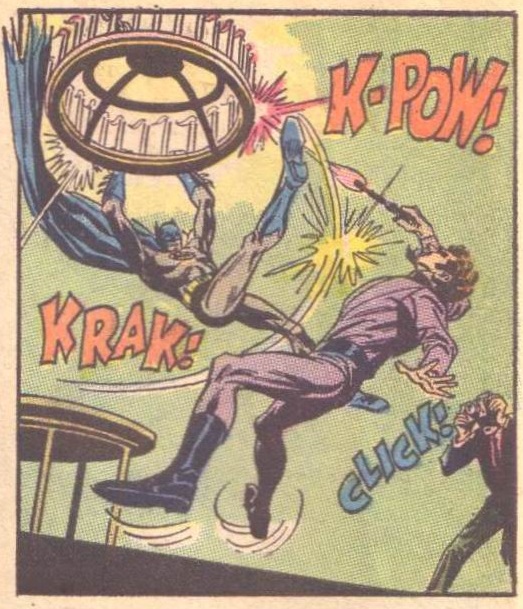
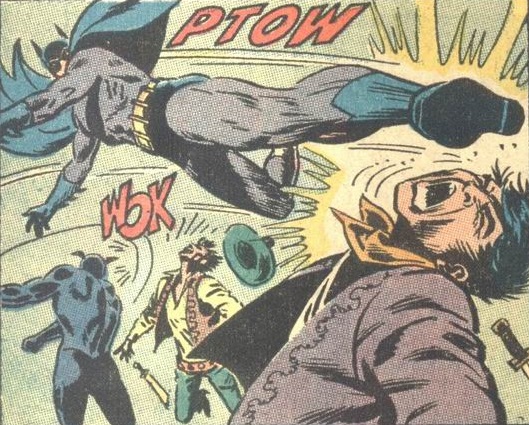
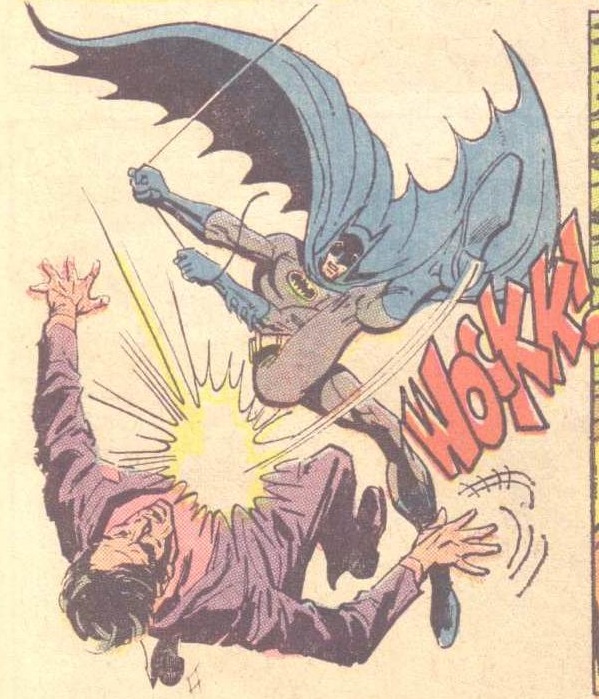
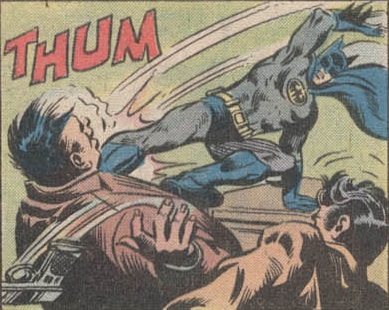
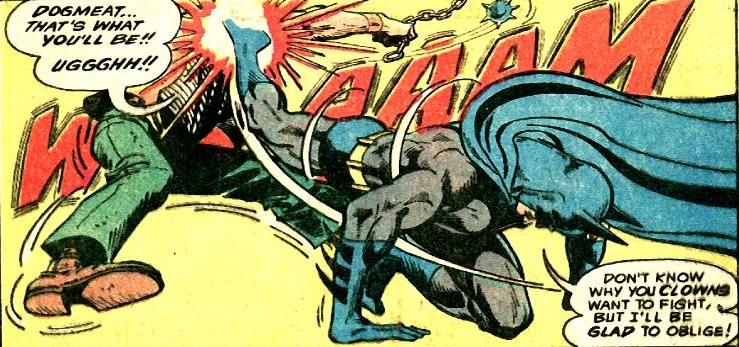
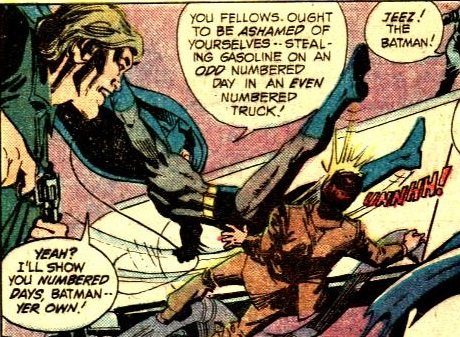
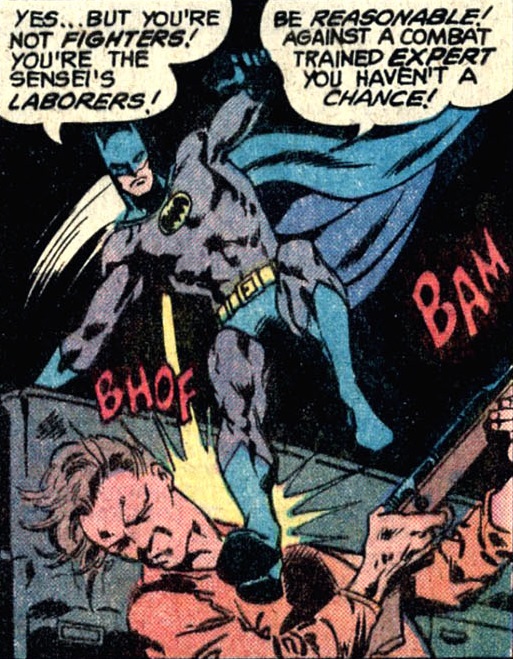
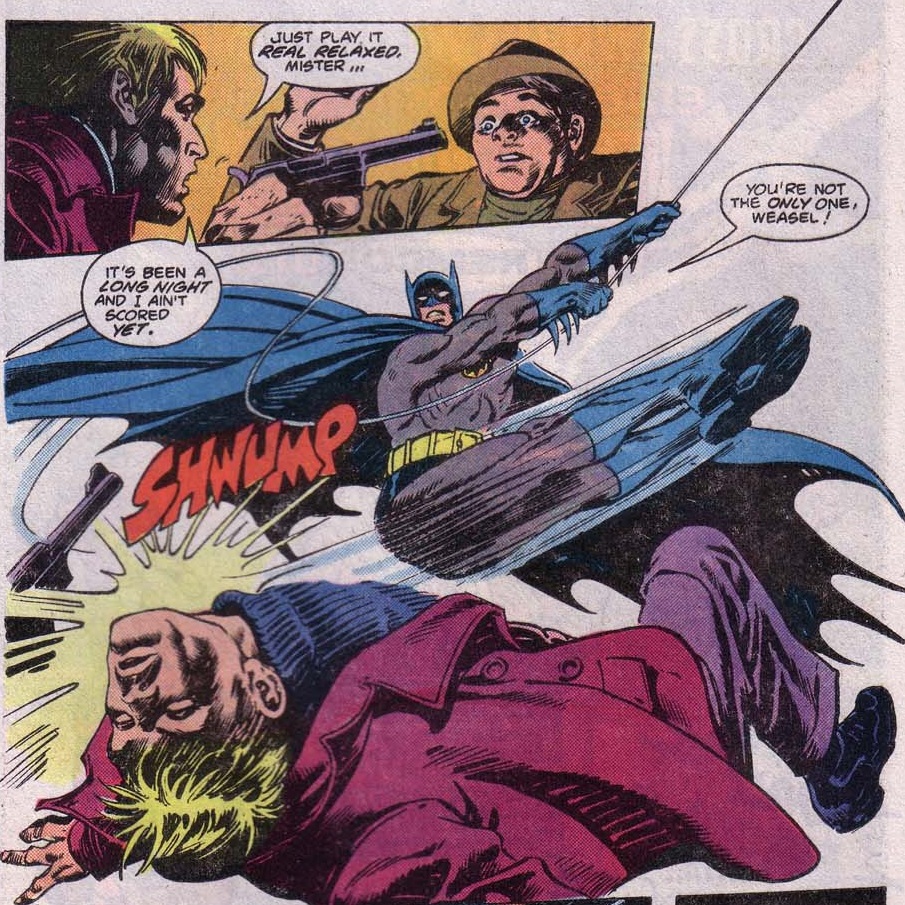
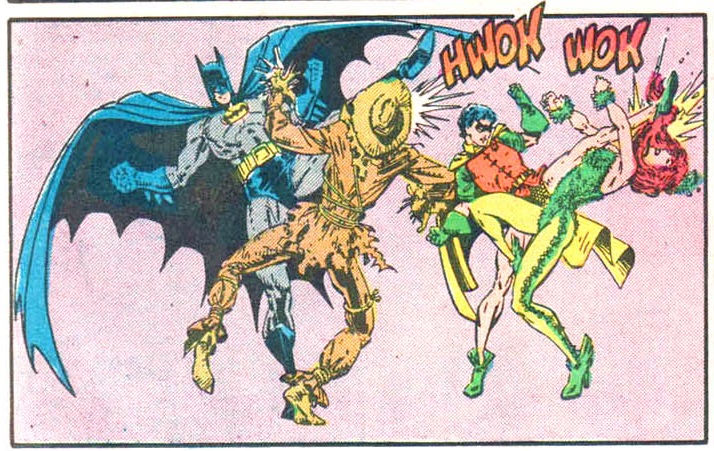
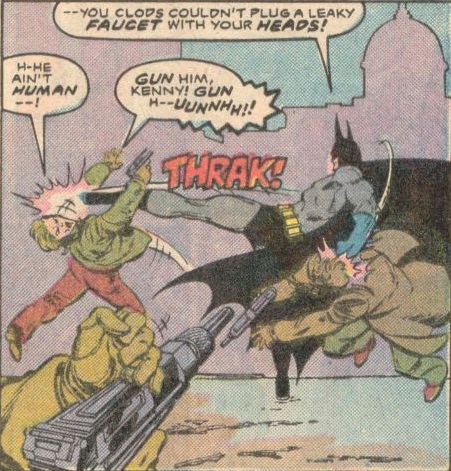
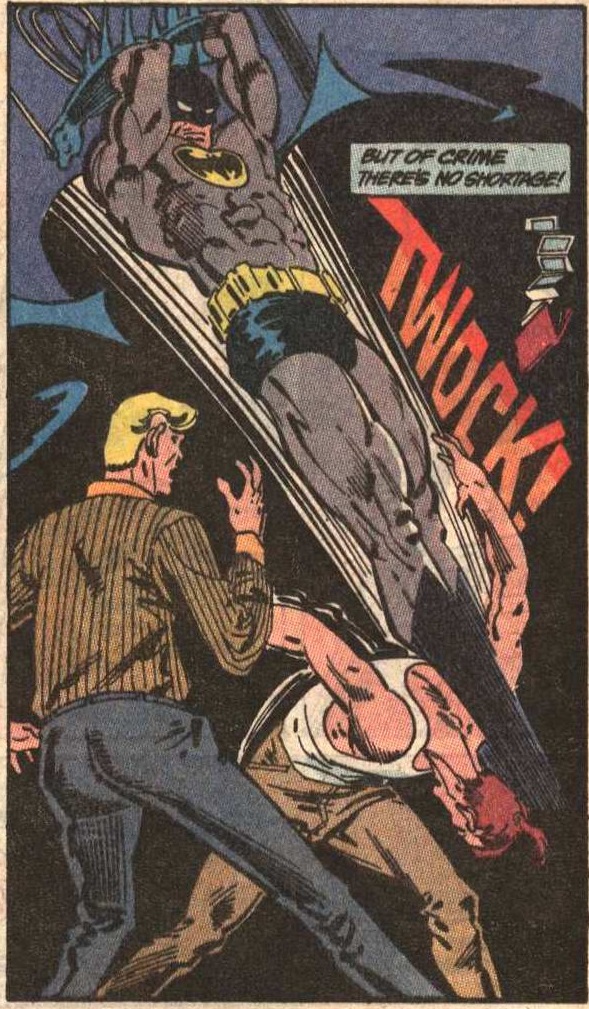
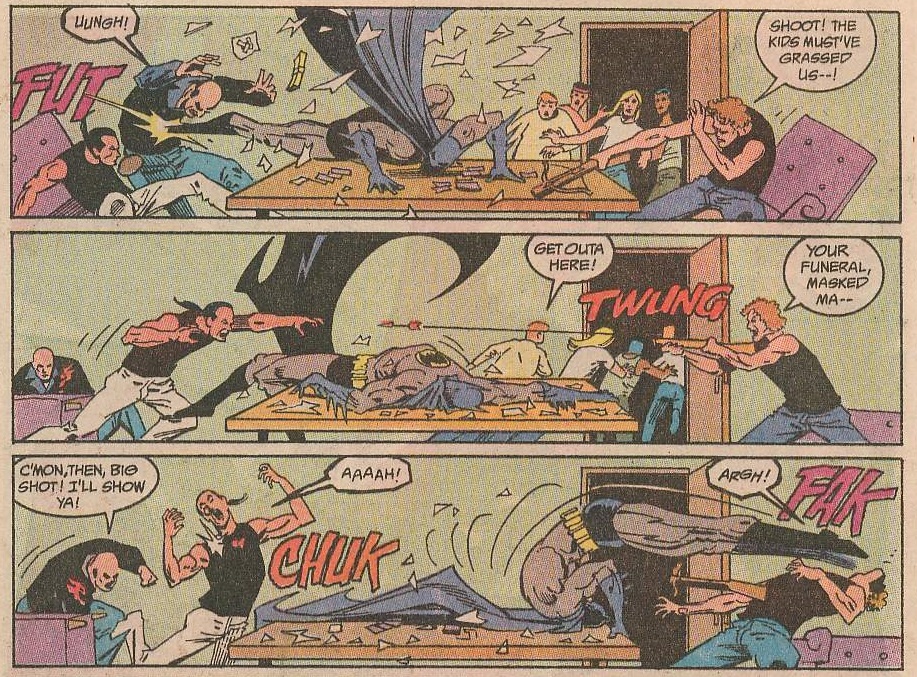
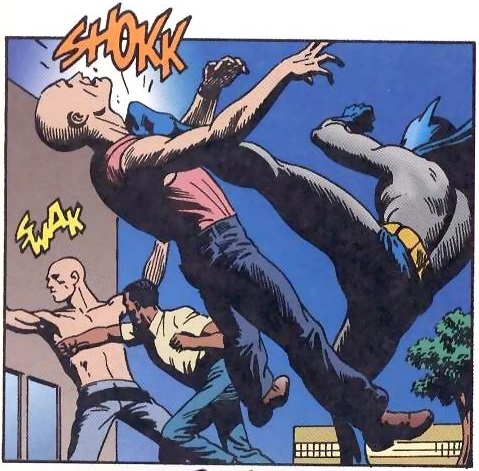
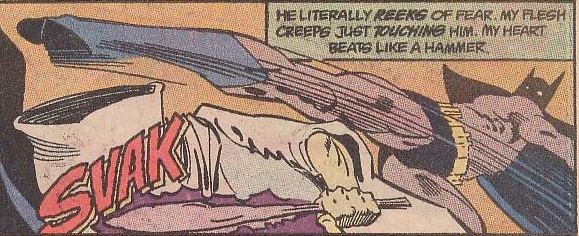
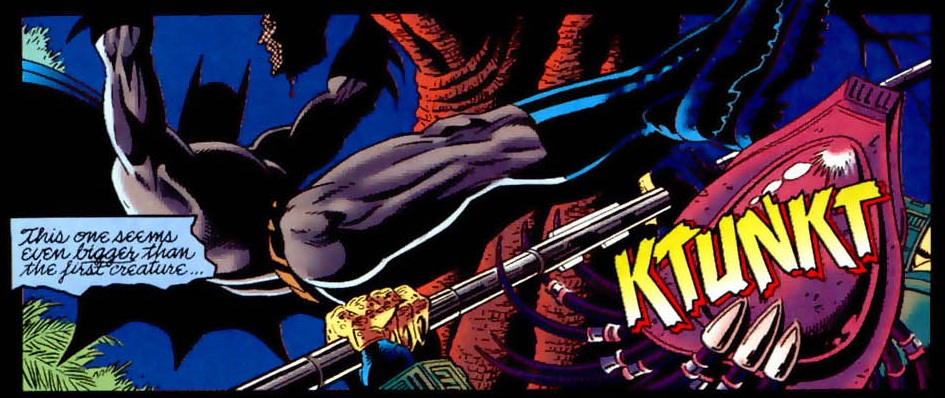
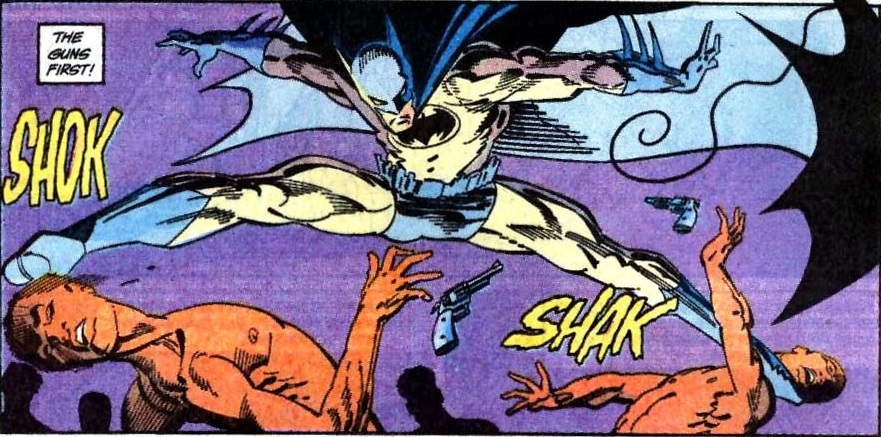
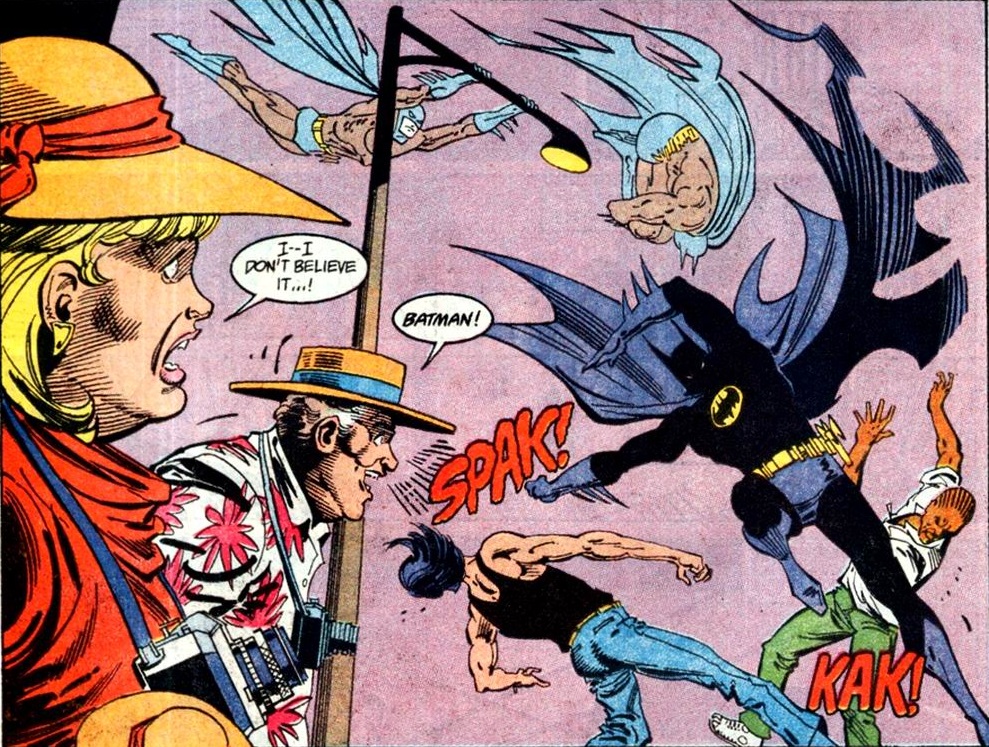
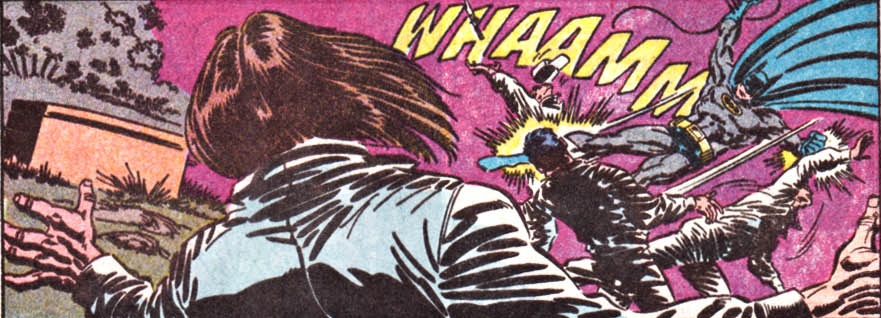
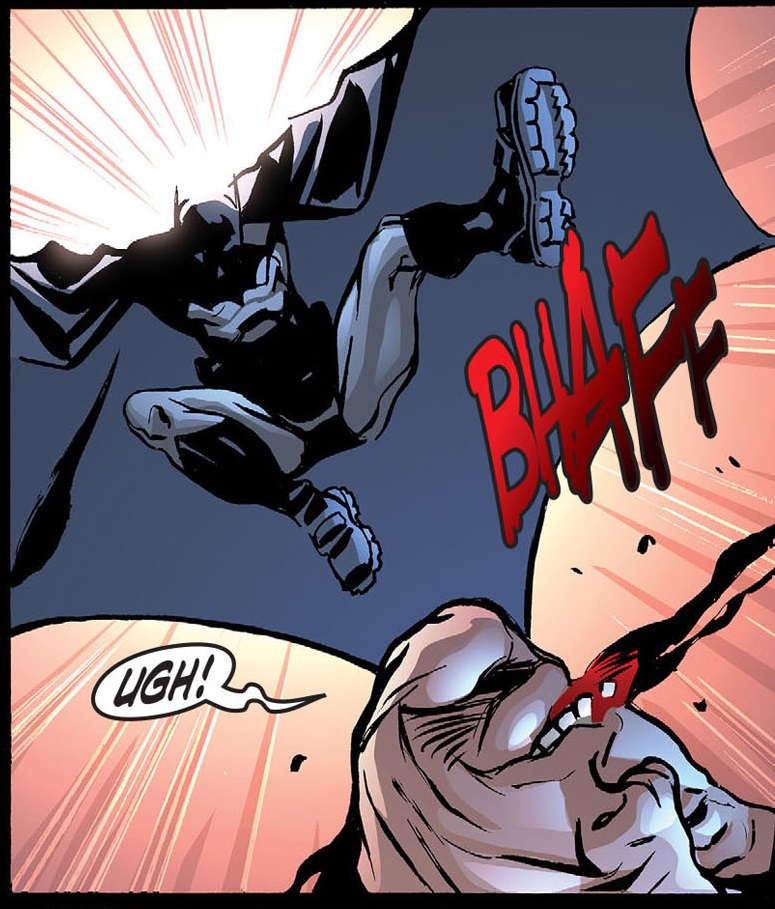
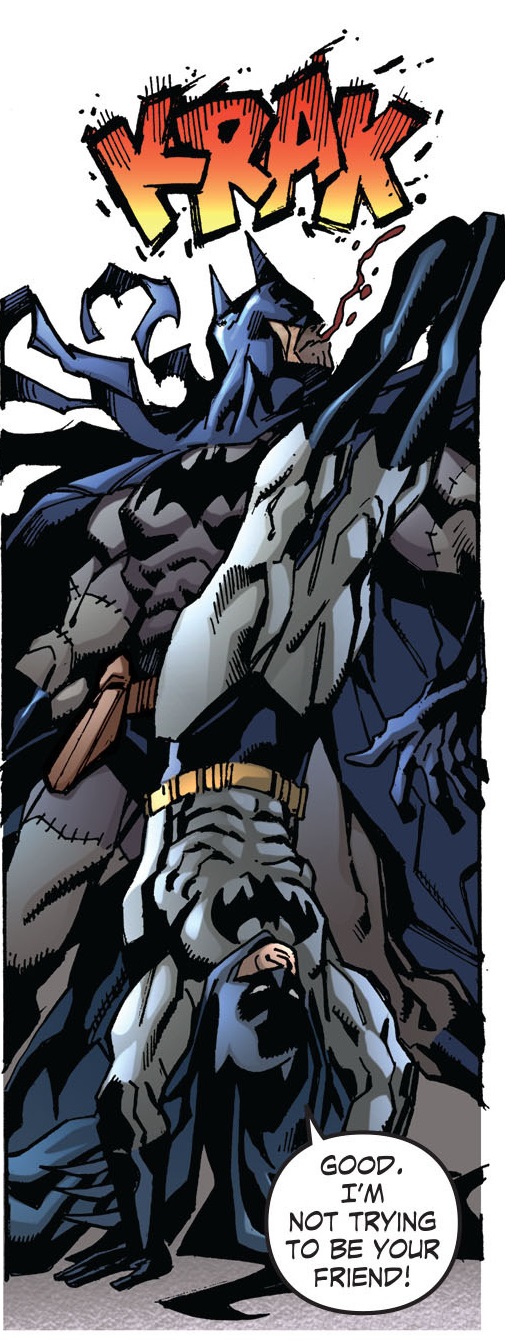
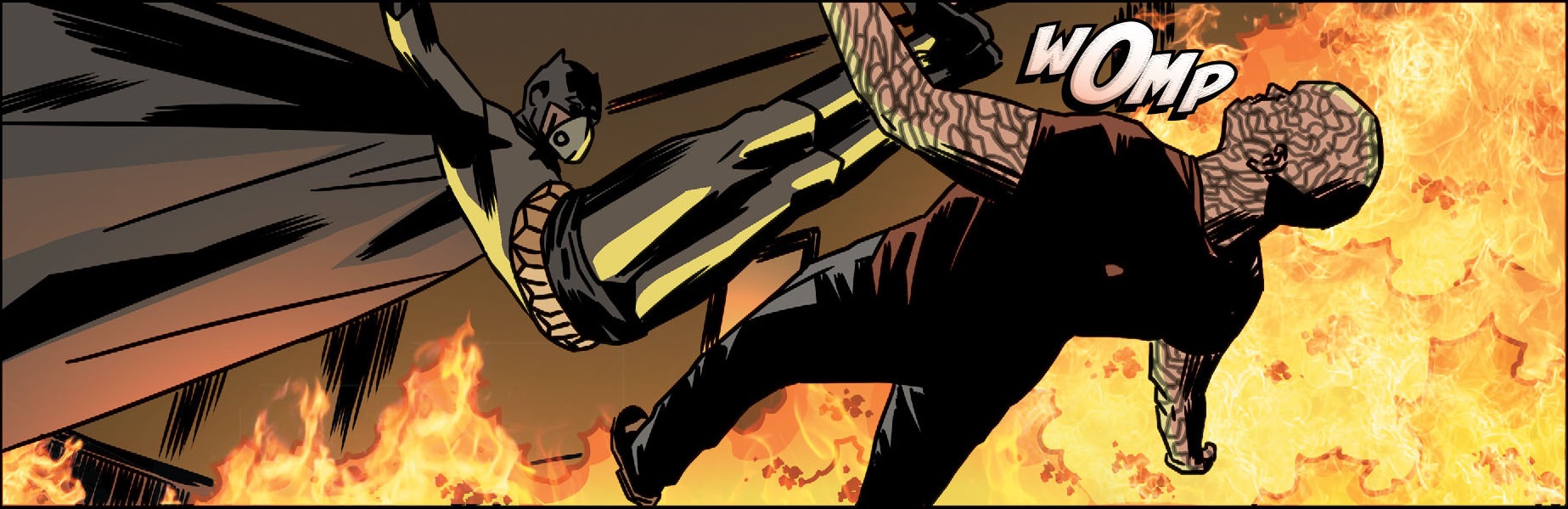
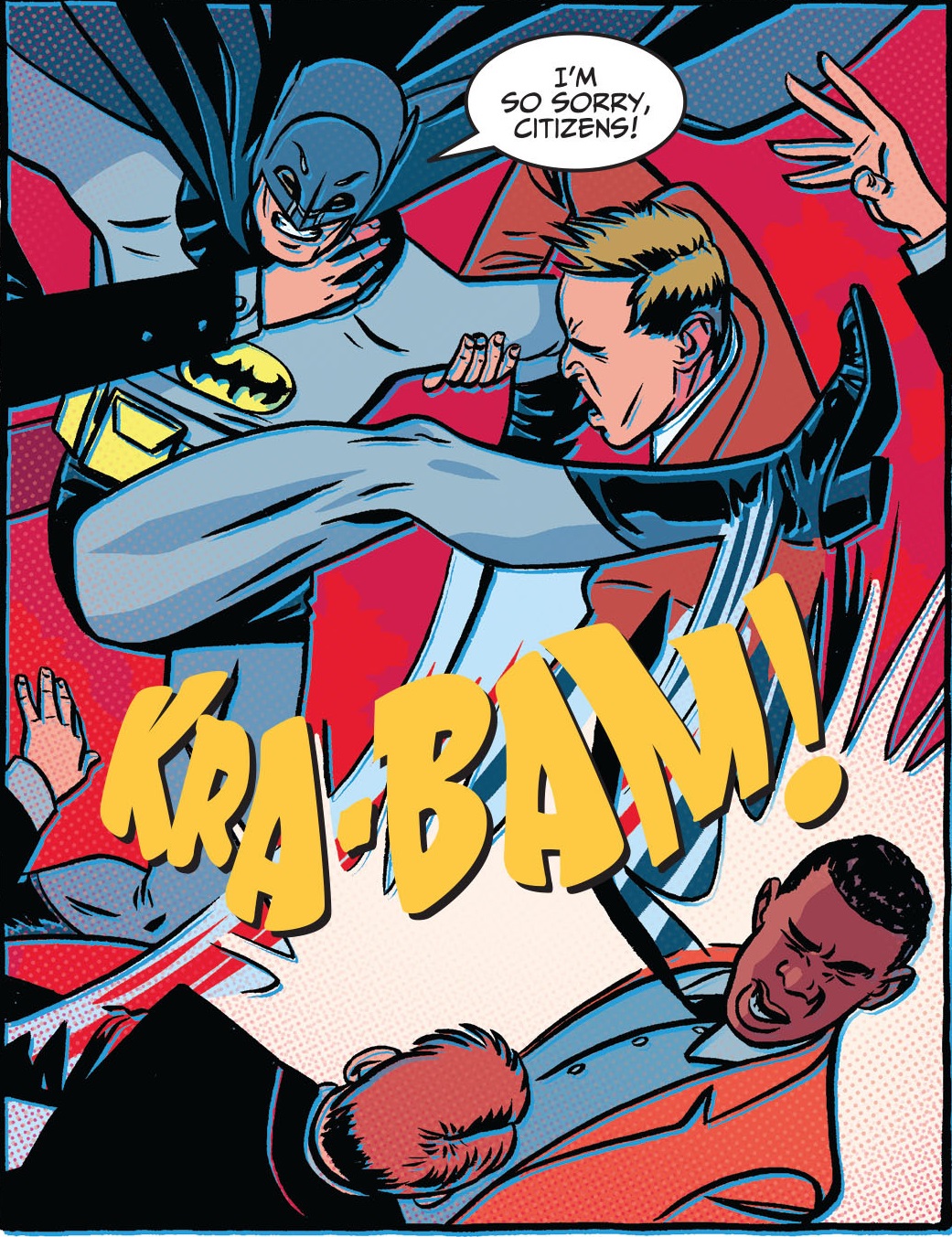
Another 50 images of kicks in the head

Today is Gotham Calling’s second anniversary, so you know what that means

Another year of compiling lists with questionable suggestions, writing down geeky rants and factoids, and thinking way too long about the characters, creators, and politics of Batman comics (plus posting a handful of unrelated stuff) as society collapses around us and the universe continues inexorably to expand.

Before this year’s compilation of loud, acrobatic bat-kicks, however, I just want to thank everyone who encouraged me to continue with this project, either in person or via generous online comments (and yes, I know I suck at replying). To quote the TV show, the worst is yet come.

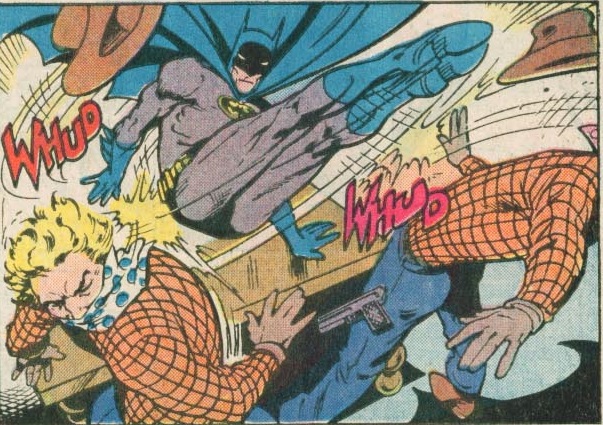
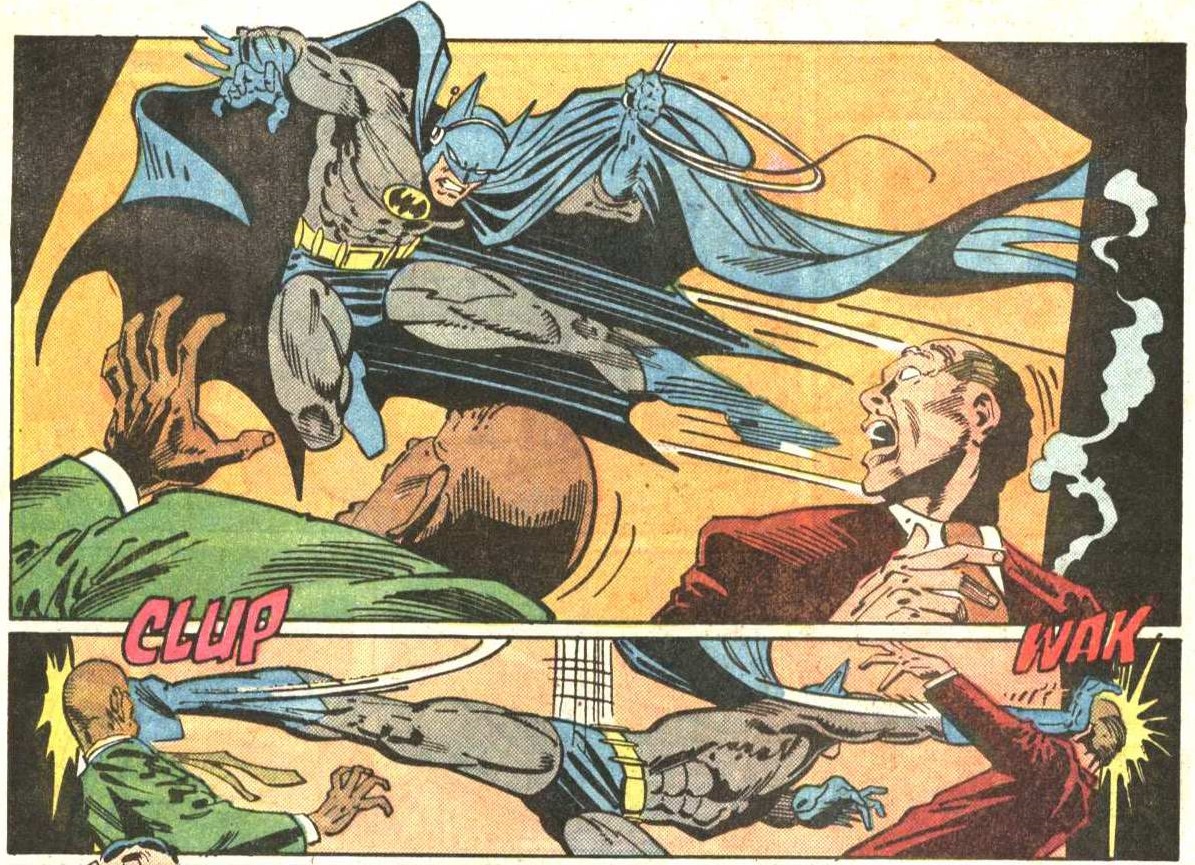
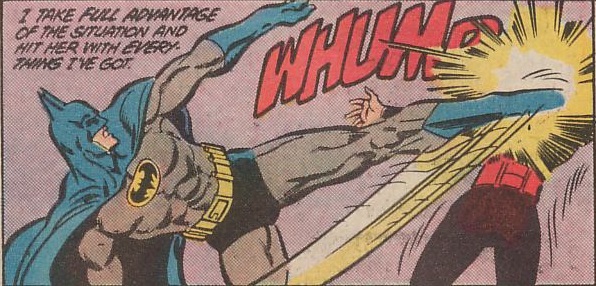
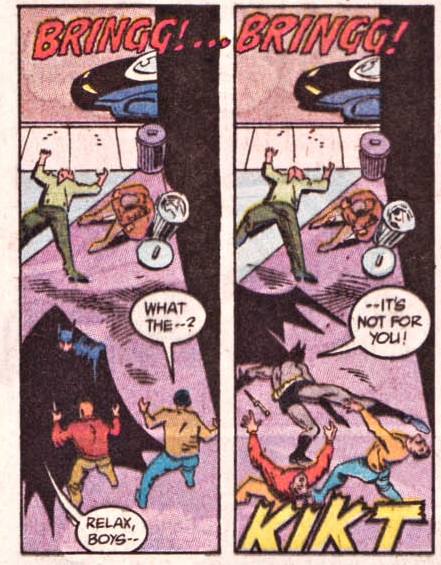
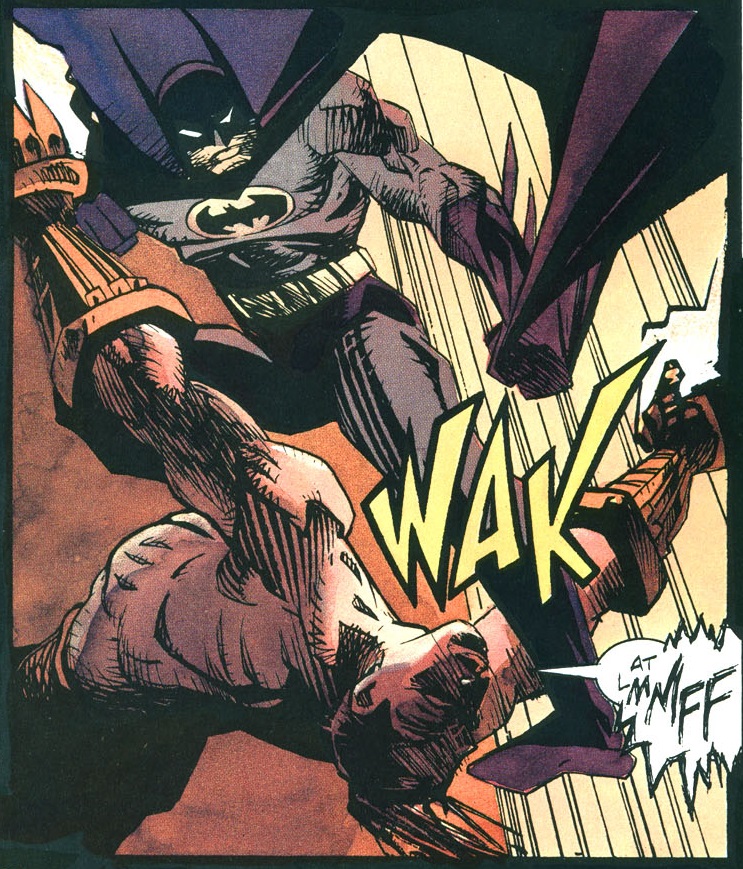
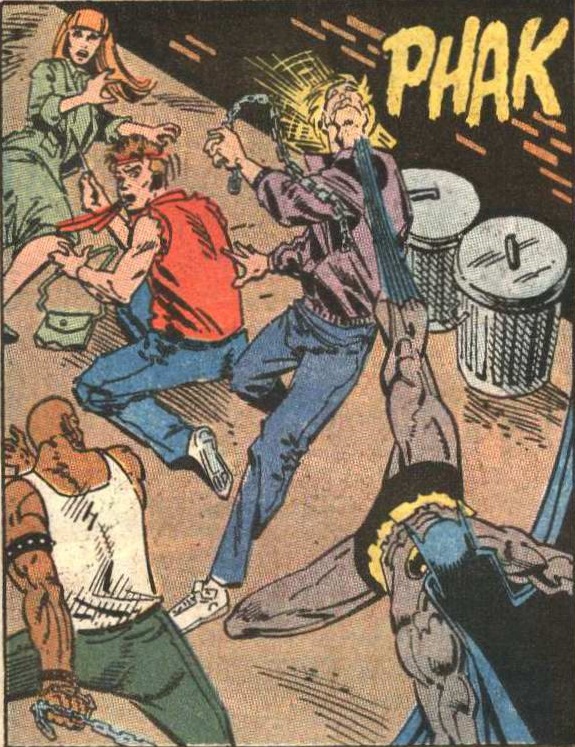
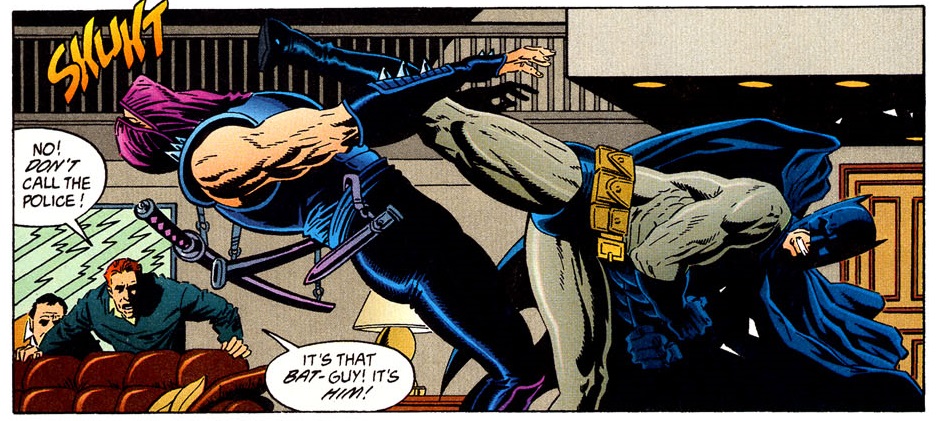
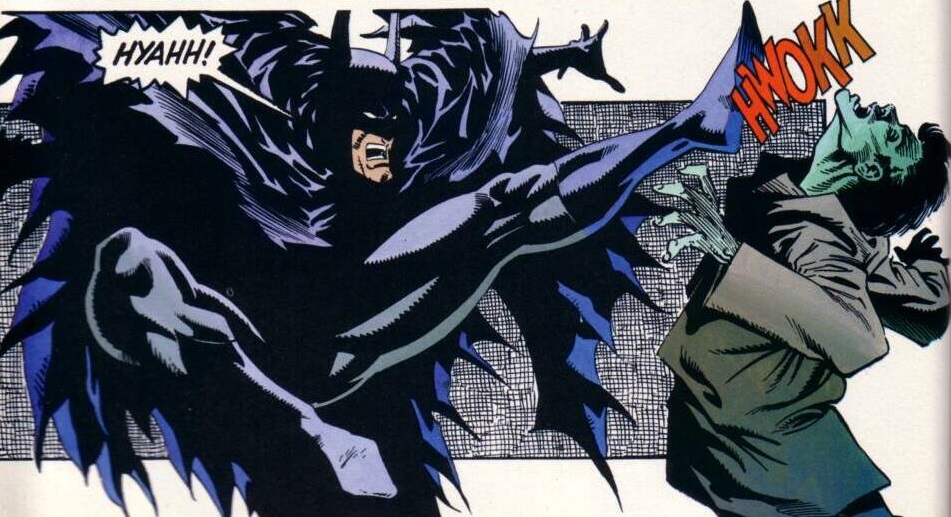
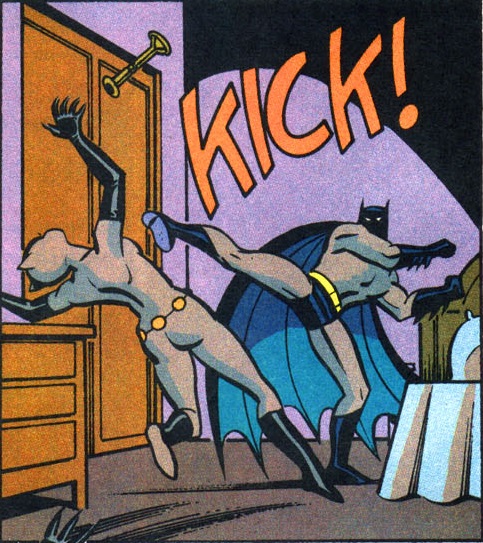
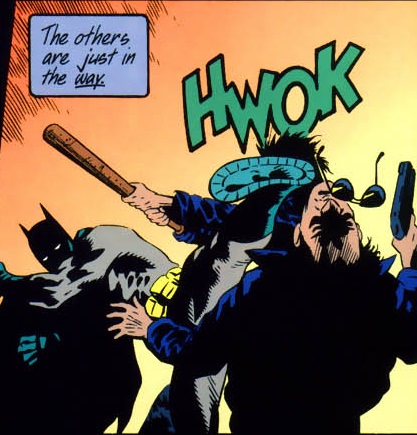
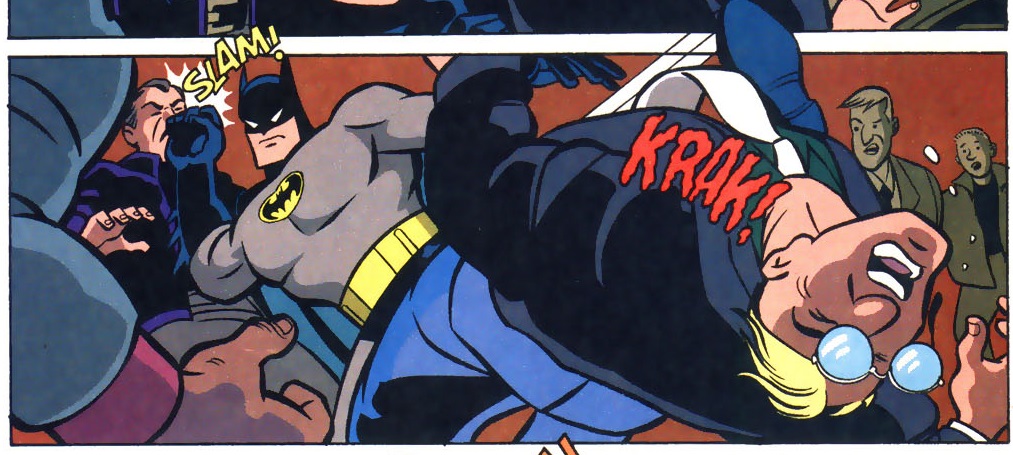
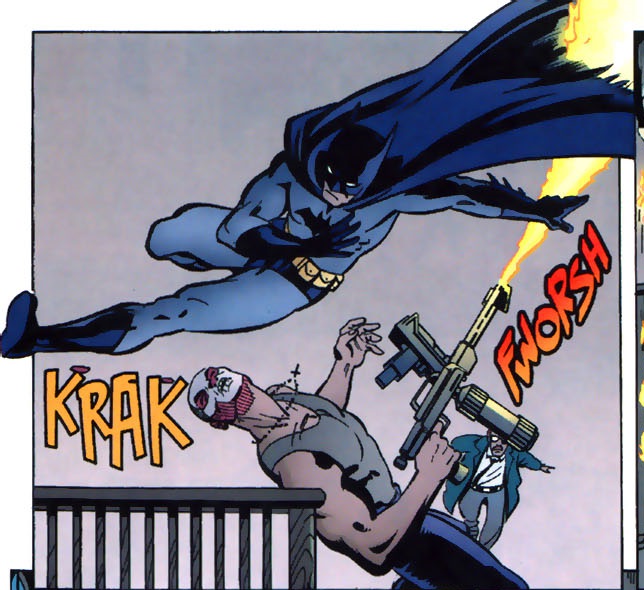
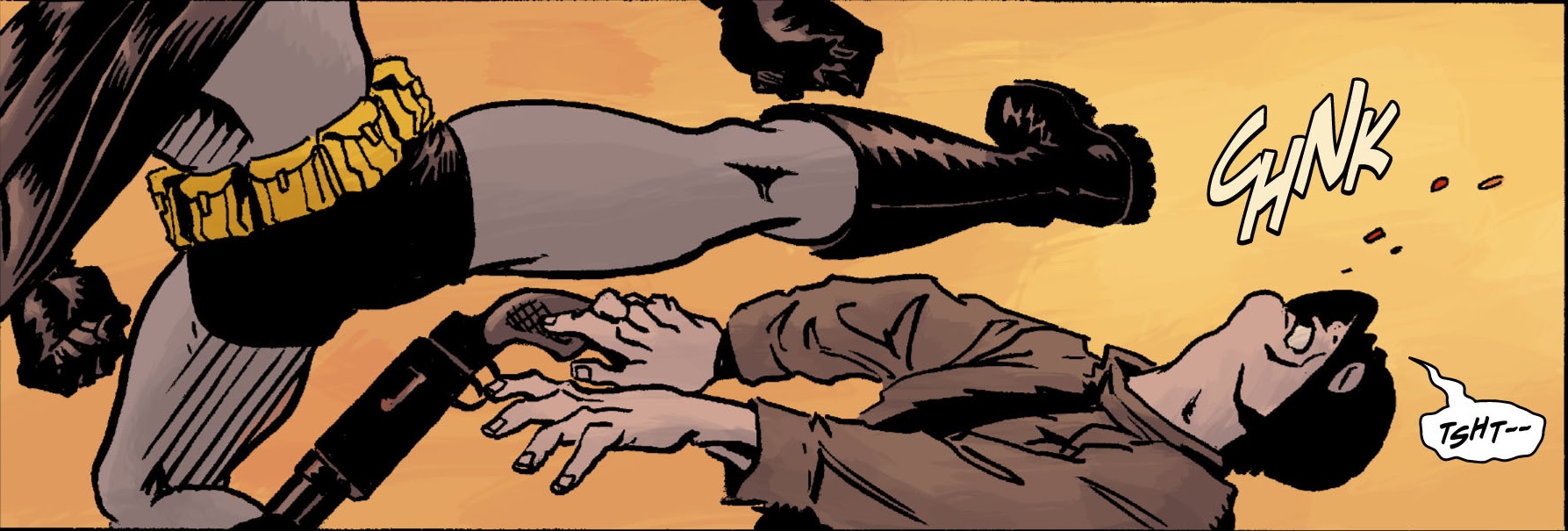
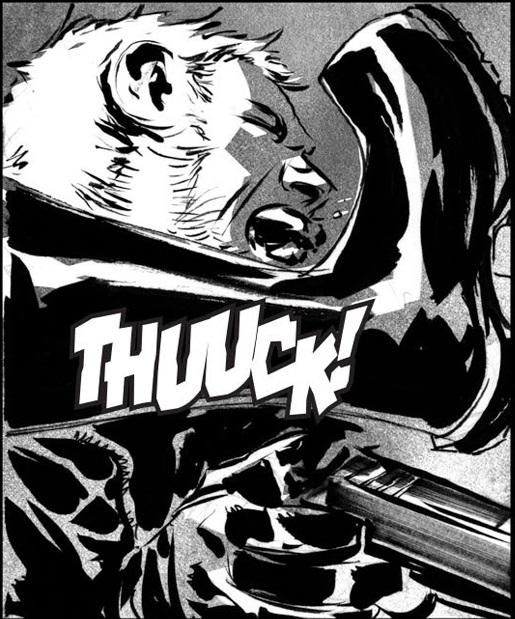
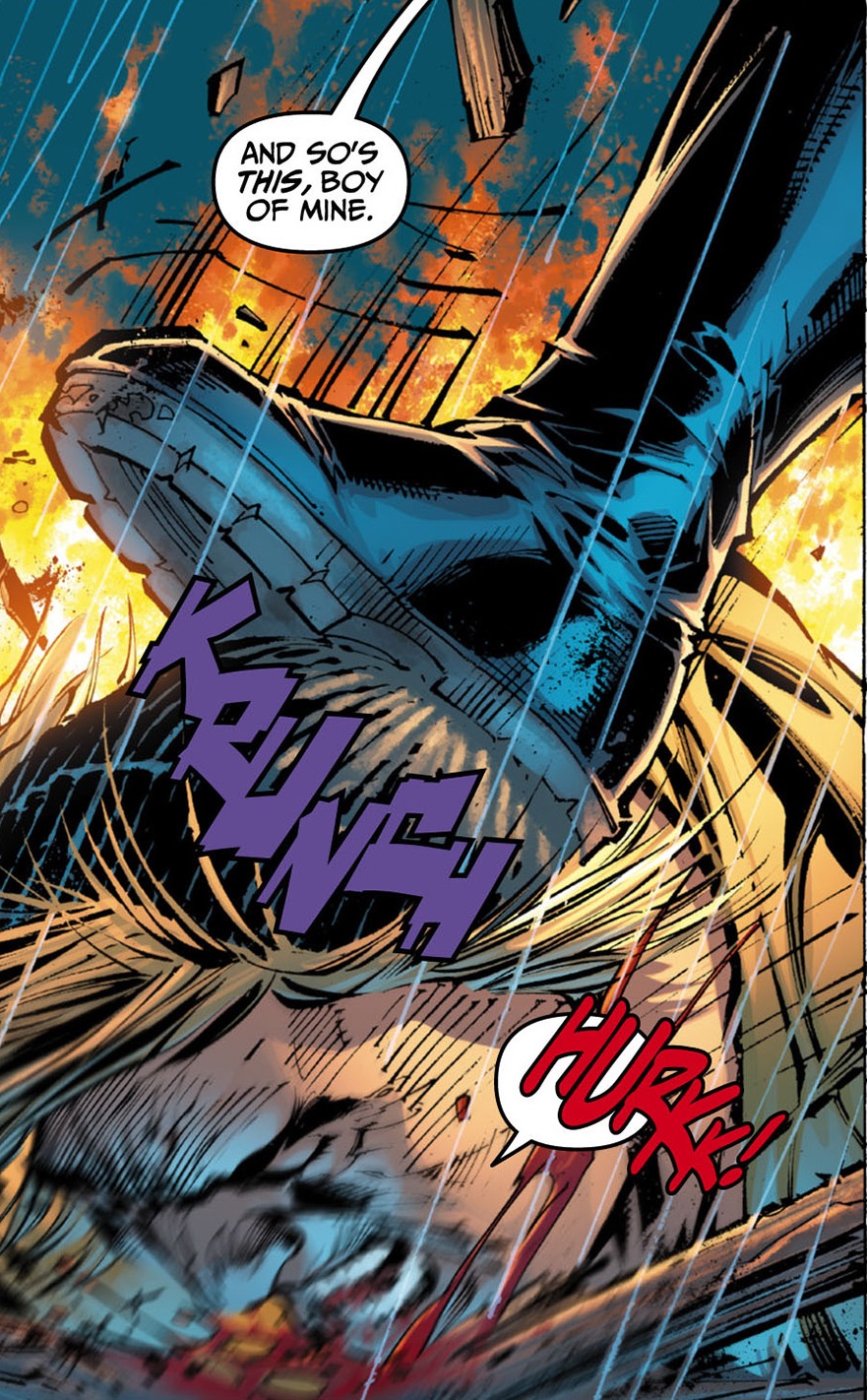
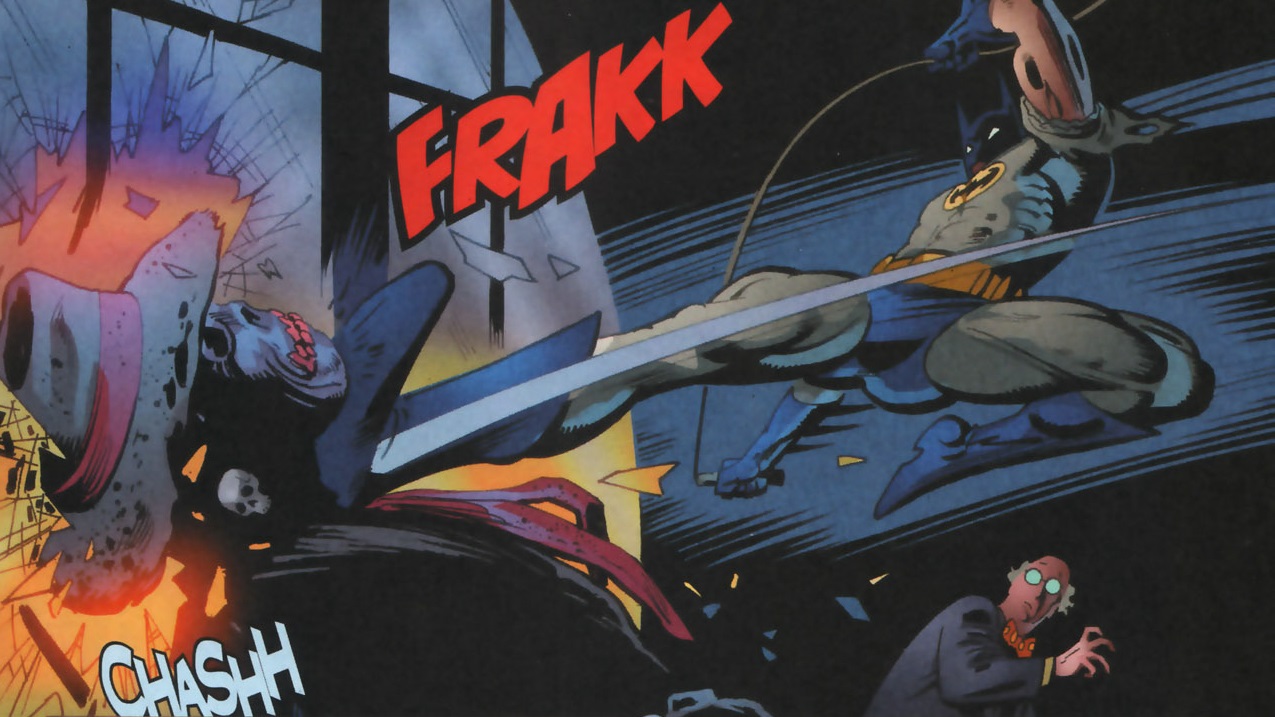
And now, please enjoy the mindless violence and, once again, dig the classy sound effects!

Batman 229Batman #229
Batman Brave & Bold 097The Brave and the Bold #97
Batman 242Batman #242
Batman 301Batman #301
Brave and the Bold 154The Brave and the Bold #154
Brave & Bold 163The Brave and the Bold #163
detective comics 490Detective Comics #490
Batman & The Outsiders 17Batman and the Outsiders #17
Batman 336Batman #336
batman 383Batman #383
Batman 400Batman #400
Legends #06Legends #6
Batman #410Batman #410
detective comics #573Detective Comics #573
Detective Comics 584Detective Comics #584
Vigilante 47Vigilante #47
detective-comics-585Detective Comics #585
cosmic odysseyCosmic Odyssey #1
detective-comics-591Detective Comics #591
batman-427Batman #427
detective-comics-601Detective Comics #601
run-riddler-runRun,  Riddler, Run #3
detective-comics-604Detective Comics #604
legends of the dark knight 13Legends of the Dark Knight #13
batman red rainRed Rain
detective comics 609Detective Comics #609
detective comics 614Detective Comics #614
legends of the dark knight 47Legends of the Dark Knight #47
batman 453Batman #453
detective comics 616Detective Comics #616
batmanvspredator2Batman vs Predator II #2
detective comics 621Detective Comics #621
batman 462Batman #462
detective comics 628Detective Comics #628
batman-adventures-36The Batman Adventures #36
batman492Batman #492
legends-of-the-dark-knight-86Legends of the Dark Knight #86
batman 540Batman #540
mad loveMad Love
batman and robin adventures 20Batman & Robin Adventures #20
legends of the dark knight 159Legends of the Dark Knight #159
batman and the monster men 2Batman and the Monster Men #2
batman-black-and-white-04Batman: Black and White (v2) #4
All Star Batman and Robin, the Boy Wonder #7All Star Batman and Robin, the Boy Wonder #7
DC Retroactive: Batman 1990sDC Retroactive: Batman 1990s
Legends of the Dark Knight 35Legends of the Dark Knight (v2) #35
Legends of the Dark Knight (v2) #67Legends of the Dark Knight (v2) #67
Legends of the Dark Knight (v2) #72Legends of the Dark Knight (v2) #72
batman 66Batman ’66 #2

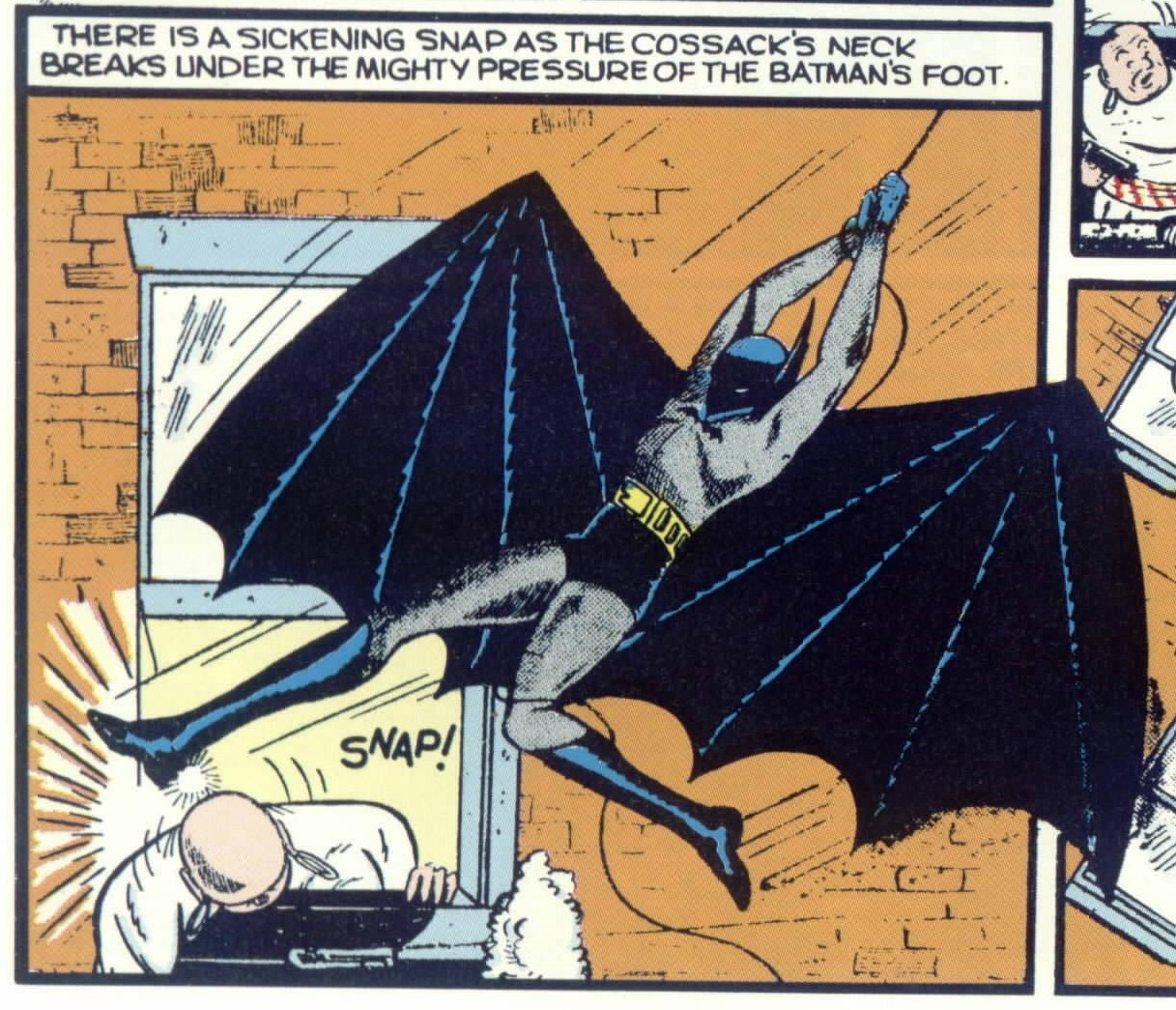
And, finally, the most infamous one of all:

detective comics 30Detective Comics #30
Posted in ART OF BATMAN COMICS | Tagged | 3 Comments

Collections of Batman stories – part 2

If you read the last post, you know what’s going on. Here are another five compilations of Batman stories worth seeking out:

TALES OF THE DEMON (1991)

tales of the demon

Tales of the Demon collects the first handful of stories Denny O’Neil wrote about Batman’s notorious (if somewhat tragic) eco-villain Ra’s al Ghul and his deadly daughter Talia, in the seventies. The mysterious al Ghul clan was a formidable creation, constantly forcing the Dark Knight out of his comfort zone both geographically and emotionally. Indeed, these are absolute classic comics that have influenced countless creators and storylines over the past decades.

Denny O’Neil, whose early work vigorously reinforced the Caped Crusader’s pulp credentials, instilled the tales with a spirit of go-for-broke adventure reminiscent of old serials (the kind that would later inspire the Indiana Jones franchise). Within the pages of this book, Batman travels around the globe, fights dangerous animals and assassins, escapes from deathtraps, has a doomed romance, and ultimately saves the world – all magnificently rendered by the elegant pencils of Bob Brown, Neal Adams, Irv Novick, Michael Golden, and Don Newton.

EGO AND OTHER TAILS (2007)

batman ego

Spotlighting one of the industry’s greatest talents, Ego and other tails collects half-dozen dynamic stories written and/or drawn by Darwyin Cooke. Given his signature proto-noir style and unmatched sense of pace, it’s tempting to call these stories ‘cinematic,’ but that wouldn’t do them justice – this is pure comics magic!

Although less ambitious than Cooke’s DC: The New Frontier, the book is full of gems. The title story is a compelling character study in which Batman has an existential discussion with his own dark side. Other high points include ‘Selina’s Big Score’ (one hell of a heist thriller and a kick-ass Catwoman tale to boot) as well as ‘Déjà vu’ (Cooke’s awesome remake of ‘Night of the Stalker!’).

LEGENDS OF THE DARK KNIGHT: ALAN DAVIS (2012)

batman alan davis

Collecting all the Batman comics illustrated by Alan Davis (except for his work on Batman and the Outsiders), this colorful book bursts with joy and energy channeled through humorously-designed expressions and eye-catching set pieces. Since every tale is written by Mike W. Barr, this also works as a showcase for Barr’s paradoxical mix of nostalgic playfulness and twisted undercurrents.

During their fan-favorite eighties’ run on Detective Comics (featuring an upbeat Jason Todd as Robin, the Boy Wonder), the team of Davis and Barr was behind such beloved stories as ‘Fear for Sale’ and ‘The Doomsday Book,’ which by themselves are worth half of this collection’s cover price. The completist among you may also appreciate the inclusion of the first chapter of Batman: Year Two and its sequel Full Circle.

LEGENDS OF THE DARK KNIGHT: NORM BREYFOGLE (2015)

detective comics 592

This collection devoted to the Batman artwork of Norm Breyfogle – the only one so far, but hopefully the first of many – is a breathtaking display of fluid layouts, vibrant lines, and freaky character designs. It opens with an uneven compilation of extremely diverse tales by Mike W. Barr, Max Allan Collins, Robert Greenberger, and Jo Duffy (including a crossover with 1988’s Millennium, DC’s intercompany event about a widespread alien robot conspiracy), before settling on almost twenty issues of hardcore Dark Knight goodness written by Alan Grant.

Breyfogle is the perfect partner in crime for Grant’s brand of badass, fist-pumping action and sick sense of humor… Their Batman keeps jumping around across the pages like a hyperactive athlete. Their Gotham is a city of outrageous psychopaths lurking among the sprawling urban decay – kind of like the New York of The Warriors or After Hours.

Seriously, this Detective Comics run by Norm Breyfogle and Alan Grant – initially in collaboration with writer John Wagner – is easily one of my favorite Batman runs of all time. Just their first dozen issues together introduced gloriously deranged villains such as the Ventriloquist, the Ratcatcher, the Corrosive Man, Mortimer Kadaver, and Cornelius Stirk… and that was before they unleashed their long-lasting takes on Etrigan and Clayface into an unsuspecting world!

DARK KNIGHT, DARK CITY (2015)

dark knight, dark city

Finally, here is a suggestion for those who like their Batman adventures weird and unsettling and with a dash of the supernatural. Dark Knight, Dark City collects five haunting tales written by Peter Milligan, with art by Kieron Dwyer, Jim Aparo, and Tom Mandrake. In the titular horror story, narrated by Gotham City itself, the Riddler tries to raise a demon by manipulating the Caped Crusader into doing all sorts of black magic rites – such as performing a tracheotomy on a baby! That story became a Batman cult classic (especially after Grant Morrison incorporated it into The Return of Bruce Wayne) but it’s not the only reason to get this book.

Milligan imbues each tale with the notion that Gotham is a city haunted by ancient evils and messed up memories. For example, the second longest story is a thoughtful two-parter about an old Holocaust survivor who brings a golem to life – and it’s damn well-executed, even if the topic is hardly unique (Gotham’s streets have seen at least one other golem, in Ragman, and there have been a number of great post-Holocaust stories, most famously ‘Night of the Reaper’).

Now, if only DC would get around to collecting the rest of Peter Milligan’s Batman comics

Posted in BATMAN COMICS FOR BEGINNERS | Tagged , , , , , , , , , , , , , , , , , , , , | Leave a comment

Collections of Batman stories – part 1

Among the countless Batman books out there – old and new, classic or disposable – there is a whole subsection that strikes me as an ideal gateway for those who have heard of this Bruce Wayne fella but are still wondering what all the fuss is about. I’m talking about books that, rather than focus on one story or story-arc, collect a whole set of self-contained comics unburdened by complicated continuity, thus giving you plenty of bang for the buck.

These collections are great if you like your Dark Knight in digest form, with accessible one-and-done tales. They often include short stories in which the Caped Crusader acts as a supporting player in someone else’s journey as well as more straightforward adventures in which Batman’s awesomeness is not just the premise but the whole point. Anthologies can also allow you to sample the versatility of this character and his world in order to find out which version you prefer, since the Dark Knight has historically starred in various types of comics, from gritty crime yarns to superhero fantasy, from campy comedy to globetrotting epics, from grounded mysteries to crazy action romps in which the hero overcomes larger-than-life challenges (because Batman, motherfucker!).

That said, as it happens with all kinds of Batman publications, there is so much to choose from that you are at least as likely to find something utterly lame as to find something genuinely cool. With this in mind, I would recommend starting with one of the following collections:

BATMAN BLACK AND WHITE: VOLUME 1 (1997)

batman - black & white

Collecting twenty Batman short stories – with barely a stinker in the bunch – this first volume of the Batman Black and White anthology series is mandatory reading for anyone who is into the psychological, film noir-influenced side of the Dark Knight. I’ve mentioned before that this series seems to bring out the best in all creators involved, so imagine what you can get when that applies to the most awesome artists and writers in the medium, like Ted McKeever, Bruce Timm, Archie Goodwin, and Walt Simonson, among many others.

As the title suggests, all stories are illustrated in moody black & white, which still leaves room for a wide range of art styles, from Matt Wagner’s deco pointillism in ‘Heist’ to Brian Bolland’s eerie photorealism in ‘An Innocent Guy,’ from Teddy Kristiansen’s childlike scratchy lines in ‘A slaying song tonight’ to Kevin Nowlan’s elaborate gothic designs in ‘Monsters in the Closet.’ What’s more, while many entries revolve around hardboiled crime fiction – including a contribution by Chuck Dixon, a master of the genre – there’s also a quirky tale about a vigilante who punishes petty acts (like jumping ahead in line or talking during a movie), a melancholic meditation on street gangs, and a funny bit about Batman and the Joker rehearsing their lines while complaining about the script.

THE GREATEST BATMAN STORIES EVER TOLD (1988)

greatest batman stories

There have been quite a few attempts at digging through the rich history of Batman comics and selecting the must-read ones – or at least selecting the most representative one-off tales – but 1988’s The Greatest Batman Stories Ever Told comes the closest to perfection (not to be confused with 2005’s Batman: The Greatest Stories Ever Told, which isn’t as wide-ranging).

Between the opening pages of ‘Batman versus the Vampire’ (a slice of horror pulp in which the Dark Knight follows his hypnotized fiancée to Hungary) and the bittersweet ending of ‘The Autobiography of Bruce Wayne’ (a coda to Earth-2 Batman, written with Alan Brennert’s skill for insightful characterization), there are literally dozens of stories full of colorful rogues, angry gorillas, and inventive escapes from deathtraps. Bona fide classics include the trippy ‘Robin Dies at Dawn’ (a key inspiration for Grant Morrison’s later Batman run), the whodunit ‘Ghost of the Killer Skies!’ (one of no less than three separate tales where Batman has to face villains armed with aircraft), the badass ‘Death Strikes at Midnight and Three’ (technically an illustrated prose piece), and the powerful ‘There Is No Hope in Crime Alley!’ Best of all, the book has all the installments of the wonderful Joe Chill trilogy – ‘The Origin of the Batman,’ ‘The First Batman,’ ‘To Kill a Legend’– an amazing example of myth-building across the decades.

Sure, not *all* of these comics have aged well, but even the ones that didn’t can provide interesting glimpses into the Caped Crusader’s publication history. The most obvious example is 1940’s ‘Hugo Strange and the Mutant Monsters,’ a crude riff on Frankenstein and King Kong that spotlights a time when Batman still lived in New York City and shot people with a machine gun attached to his Batplane.

HAUNTED KNIGHT (1996)

haunted knight

For a while, back in the nineties, it seemed like the wonder team of Jeph Loeb and Tim Sale could do no wrong. Before going on to do the acclaimed series The Long Halloween, they first left their mark on Batman with the trio of comics collected in Haunted Knight. These stories – three of the best Batman Halloween stories of all time – offer neat insights into Bruce Wayne’s insecurities early in his crime-fighting career. In ‘Fears,’ while going after the Scarecrow, Bruce wonders if he actually has a choice about being Batman. In ‘Madness,’ featuring the Mad Hatter, we learn that Batman uses Alice’s Adventures in Wonderland to cope with the loss of his mother. ‘Ghosts’ is a take on A Christmas Carol with Poison Ivy and the Joker as guiding spirits, showing Bruce that he shouldn’t limit his existence to the role of Dark Knight (fifteen years later, we got another great variation of A Christmas Carol in the form of Lee Bermejo’s gorgeous and shamelessly schmaltzy graphic novel Batman: Noël).

For all the strong character work done on Bruce Wayne (and Jim Gordon), the villains in Haunted Knight are reduced to psychotic abstractions, which gives the whole thing the feel of distorted memories. This is intensified by the dreamy artwork, with Tim Sale’s pencils, Gregory Wright’s colors, and Todd Klein’s lettering creating a stylized look that smoothly shifts from uncanny to exciting to touching to uplifting (including a beautiful, cameo-filled splash page of a costume party early on where you can tell Sale and the others are having a ball).

FEATURING TWO-FACE AND THE RIDDLER (1995)

detective comics 377If there was one positive thing to come out of Joel Schumacher’s kitsch blockbuster Batman Forever, it was DC’s decision to release a collection of comics featuring the movie’s villains: Two-Face and the Riddler. These are two of the best creations in the Caped Crusader’s rogues’ gallery, not least because they come with neat built-in story designs. Two-Face, a district attorney-turned-criminal whose disfigurement (literal and figurative) split his personality in two and who now has to flip a coin in order to decide whether to act morally or not, invites tales with duality as a theme and  symmetry as a motif. Likewise, the Riddler, a thief who sends the Dynamic Duo riddles hinting at his next heist in order to prove his intellectual superiority, is a charmingly simple story-making concept – if traditional Batman comics are all about the World’s Greatest Detective unraveling mysteries and ingeniously overcoming physical obstacles, the Riddler, with his compulsion to provide clues in the form of small puzzles that build up to a large trap, seems almost metafictionally doomed to act as a plot facilitator.

The book includes five imaginative tales from the forties and sixties. As you’d expect from comics written by Bill Finger and Gardner Fox, they are chock-full of slightly surreal sequences, like the robbery at a double-feature screening in which Two-Face replaces the reel of a Superman cartoon with a film of him threatening the audience, or an absurdly giant jigsaw puzzle that Batman puts together by assembling a team of cops in a stadium and radioing in instructions from a distance.

The modern era is represented by two exquisite comics. One is 1989’s Secret Origins Special #1, in which writer Neil Gaiman has an ageing Riddler nostalgically mourn the loss of whimsical capers in lieu of viciously violent crimes (this issue also revisits the origins of Penguin and Two-Face). The other is the brilliant ‘The Eye of the Beholder,’ in which the team of Andrew Helfer and Chris Sprouse give Two-Face’s origin a mature psychological treatment.

BATMAN ADVENTURES: VOLUME 1 (2014)

batman adventures

Whenever you see me complain about recent Batman comics or the current DC cinematic universe, this is the platonic ideal I am comparing them to. Batman Adventures is tight, sleek storytelling at its finest. Plus, it’s fun, it’s smart, it’s suited for all ages, and it actually features a likable Caped Crusader who doesn’t have to kill anyone to prove he’s cool! Borrowing the designs and spot-on, streamlined characterization from the amazing Animated Series, these comics deftly balance lighthearted antics and noirish aesthetics (including chapter titles that call back to old Hollywood, such as ‘Top of the World, Ma!,’ ‘A Star is Born!,’ and ‘Panic in the Streets’), with Batman battling retro-looking gangsters as well as his usual rogues’ gallery.

In 2014, DC started putting out collections of this series with 10 issues per volume. The first one, written with impressive pizzazz by Kelley Puckett and Martin Pasko, hits the ground running thanks to the super-stylish work of artists Ty Templeton, Brad Rader, Mike Parobeck, and Rick Burchett, as well as colorist Rick Taylor and letterer Tim Harkins. And amidst all the capers and mysteries and breakneck thrills, the book also delightfully takes a stab at less obvious genres like sports and slapstick comedy.

Posted in BATMAN COMICS FOR BEGINNERS | Tagged , , , , , , , , , , , , , , , , , , , , , , , , , , , , , , , , | Leave a comment

Taking a break… (August 2016)

batman 383Batman #383
Posted in GOTHAM INTERLUDES | Tagged | Leave a comment

Peter Milligan’s heady Batman

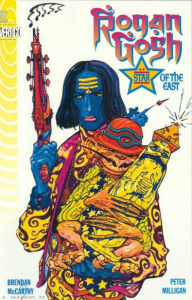
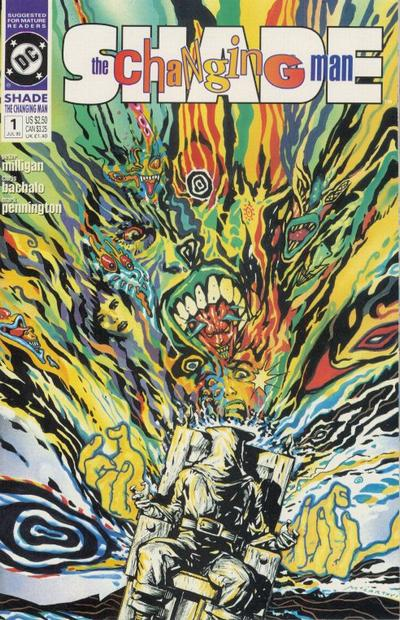
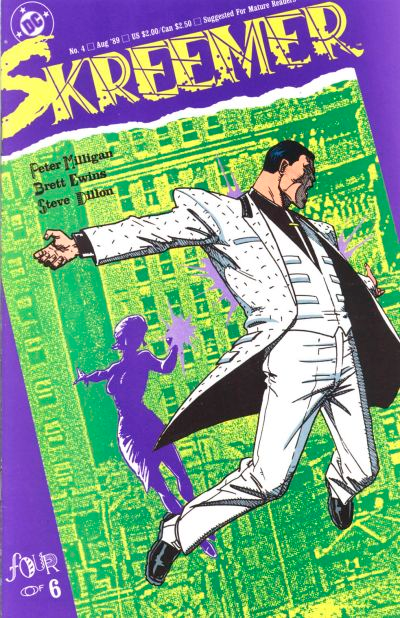
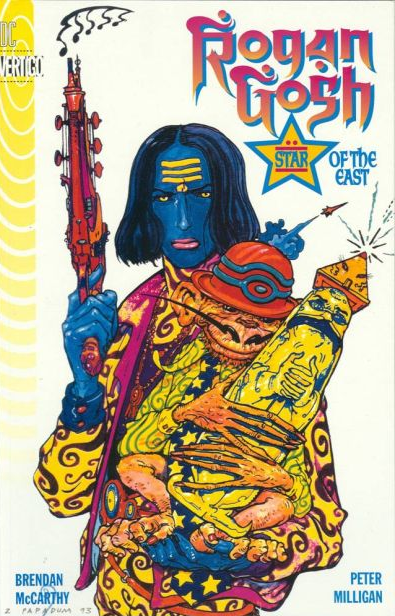
Peter Milligan has written some of my all-time favorite comic series, including the surrealist fantasy Shade, the Changing Man, the existential crime thriller Human Target, and the superhero pop satire X-Statix. However, as even his biggest fans will point out, the quality of his output is highly inconsistent… At his worst, Milligan has churned out notoriously lame work (like his infamous run on Elektra), but that’s a small price to pay for his genius. After all, when he’s on fire he can deliver densely multilayered, mind-blowing masterpieces that stand side by side with those of other acclaimed authors of the early British invasion. Seriously, Alan Moore, Grant Morrison, and Neil Gaiman would have been proud to create comics as witty and original as Enigma, Skreemer, or Rogan Gosh!
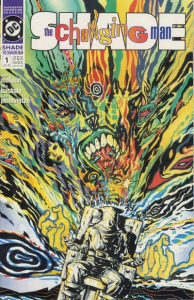
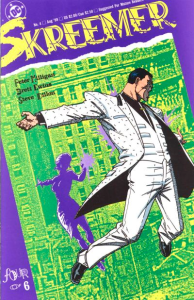
Shade, the Changing Man     Skreemer     Rogan Gosh

From a thematic perspective, Peter Milligan is actually quite reliable, as practically all of his books are about identity crises in one way or another – sexual identity, national identity, religious identity, etc. With a droll, insightful writing style, Milligan has found several imaginative ways of exploring this issue, making him a spiritual descendant of Italo Calvino and a precursor of Charlie Kaufman, albeit with the puckish Britishness of Douglas Adams’ Dirk Gently books. His dialogue is also very characteristic, with people talking in either dry quips (‘All we have, all we are, are clichés.’) or amusingly unrealistic outbursts of sincerity (‘Even when I’m about to die I like to sound interesting and special.’). And even though he has been at it for almost four decades, Milligan hasn’t lost his touch, as seen recently in the sadly truncated New Romancer, an entertaining sci-fi farce featuring Lord Byron in Silicon Valley.

So how to explain such a wildly inconsistent range of quality? Sometimes I wonder if it’s a matter of Peter Milligan not settling for his corner of cult fandom and therefore occasionally sacrificing what makes him special in order to seek mainstream appeal. For example, after writing a smart, funny take on Punisher comics with Wolverine/Punisher, Milligan awkwardly tried to nail the testosterone wish-fulfilment angle in that Happy Ending special a few years ago, with awful results. Then again, perhaps he was just feeling uninspired that day. Or it might have been an attempt at irony.

Surely a lot of this comes down to the fact that Milligan finds some projects artistically stimulating and takes on other assignments with a more mercenary attitude (hell, he also did a by-the-numbers adaptation of Jonathan Hensleigh’s Punisher movie). Writers like Warren Ellis or Brian K. Vaughan have pulled off the whole gun-for-hire thing while mostly retaining their authorial voices, but with Peter Milligan you never know whether or not his quirkiness is going to shine through. Fortunately, it normally does in Milligan’s forays into Gotham City… Although he clearly didn’t put as much soul and creativity into his Batman comics as he did into his masterworks, many of them are nevertheless quite fun and interesting!

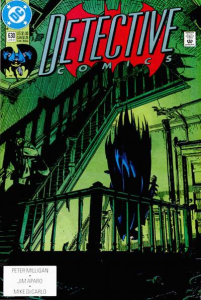
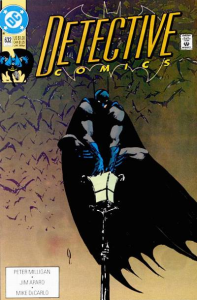
That said, you probably wouldn’t guess it just based on the pretty yet generic covers:
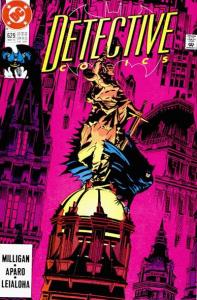
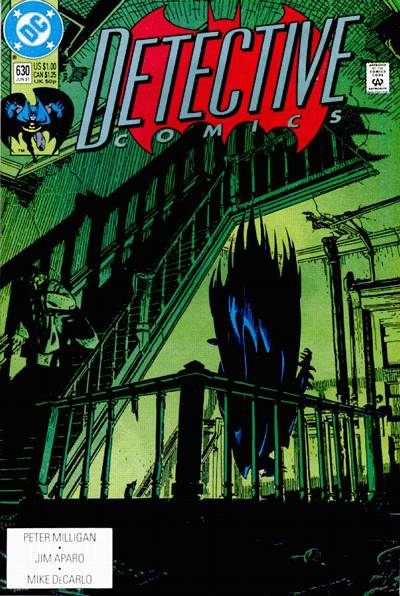
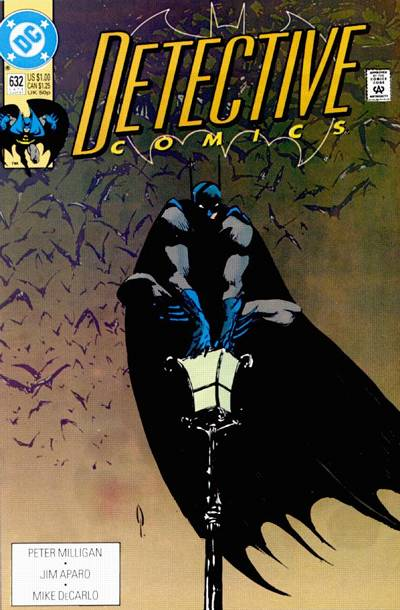
Detective Comics 629     Detective Comics 630     Detective Comics 632

Alongside his labyrinthine plotting, eccentric characterization, and postmodern sensibility, one of Milligan’s most distinctive trademarks is his gift for the alluringly bizarre. You can definitely find the latter in his Animal Man comics, which had the thankless job of following Grant Morrison’s groundbreaking run on the title – a run that had finished with Animal Man meeting Morrison and realizing his condition as a fictional character! Milligan’s strategy for dealing with this narrative dead-end was to take the series’ hero into further strange adventures, as Animal Man woke up from a coma in a parallel world where he had to protect the US President from three psychic eight-year-old triplets.

Batman had a small cameo in that story: at one point, the Dark Knight tried to face the evil triplets, but they put him six weeks in traction. So, as an alternative, Animal Man teamed up with Nowhere Man, a molecularly displaced CIA agent who mixed segments of William Burroughs’ writings into casual conversations:
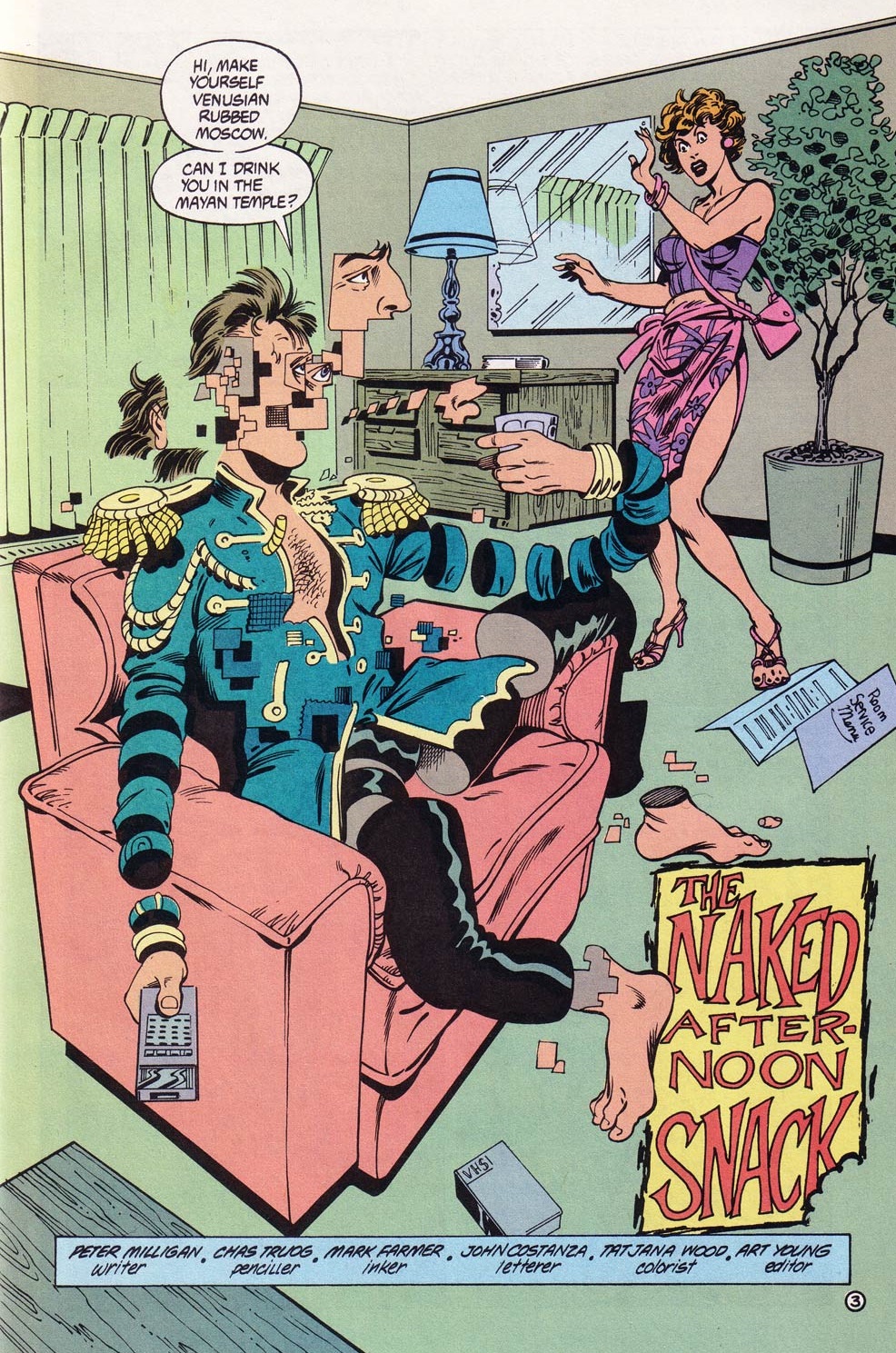
Animal Man 28Animal Man #28

To a lesser degree, Peter Milligan’s earlier full-on Batman stuff – namely the ‘Dark Knight, Dark City’ story-arc in 1990 (Batman #452-454) and his run in Detective Comics the following year – also displayed this penchant for weirdness.

It is there from the start: in the first issue of Milligan’s run – the brilliant ‘The Hungry Grass’ (Detective Comics #629) – a criminal holds Gotham City for ransom with the help of a magical grass, only instead of money he demands that all citizens wear shirts inside out and blue mascara, that they say ‘Frank Sinatra sucks’ every ten minutes, and that they carry around pornographic books! (To be fair, given their history, Batman comics can withstand this level of surrealism better than many other superhero titles.)

Peter Milligan is usually paired with vibrant artists that keep up with his wild imagination (this is taken to a psychedelic extreme in his various collaborations with Brendan McCarthy). However, his initial issues of Detective Comics were illustrated by Jim Aparo, who had an old-school figurative style. Aparo’s deadpan approach created quite a curious – and sometimes creepy – contrast with Milligan’s odd little touches, like when the Caped Crusader fought a couple of sociopathic, multiracial conjoined twin hitmen called Two Tone:
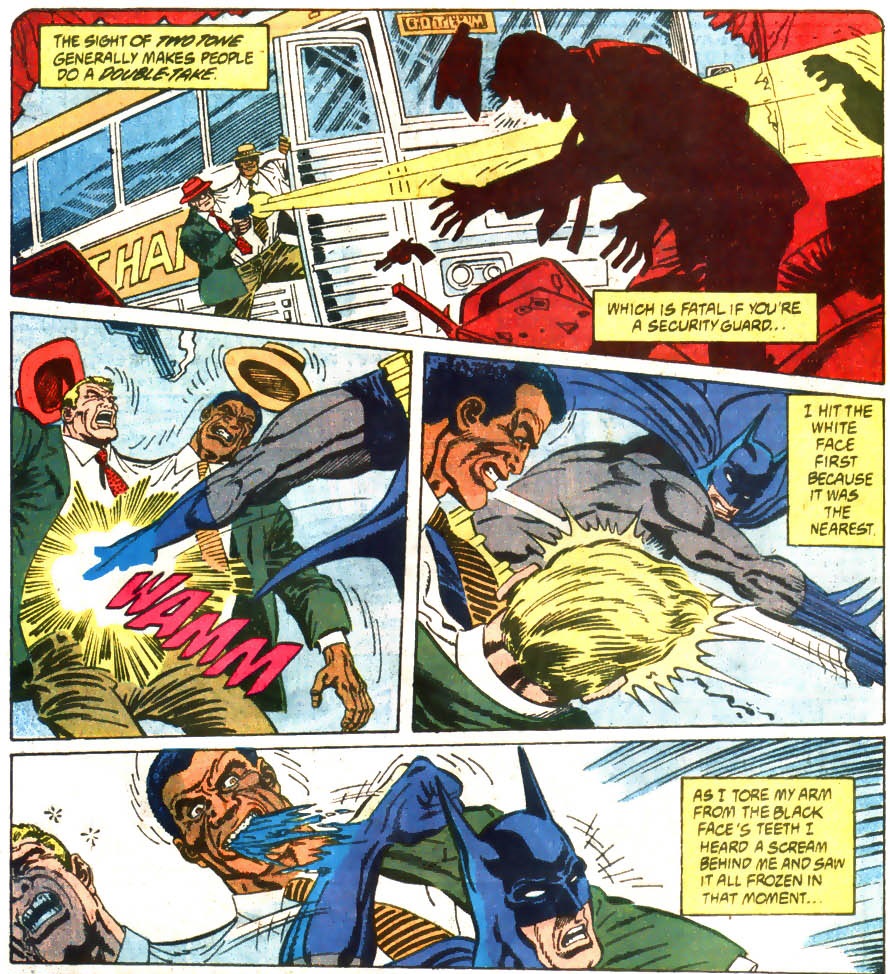
Detective Comics #630Detective Comics #630

Jim Aparo’s art also evoked the Bronze Age of Batman comics, in the 1970s, when Aparo had drawn a ton of similarly outlandish tales written by Bob Haney, for the long-running series The Brave and the Bold.

This Bronze Age vibe was appropriate, since Peter Milligan wrote a fairly classical take on the Caped Crusader, uncontaminated by the trend towards depicting Batman as a dark, brooding psycho in the aftermath of Frank Miller’s The Dark Knight Returns and Tim Burton’s 1989 mega-blockbuster. Milligan’s Batman was certainly not trying to pass off as a mysterious urban legend (in fact, in Detective Comics #629 he even spoke on CBS News).

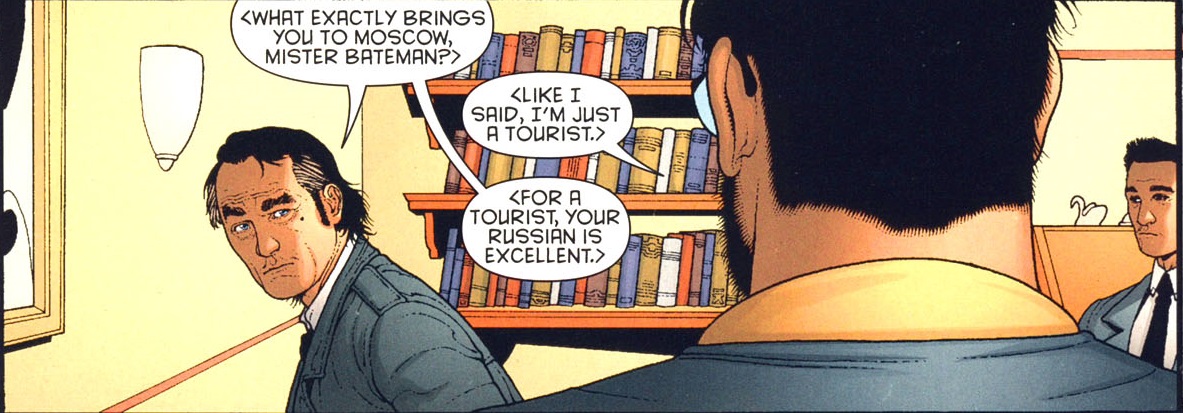
Moreover, over the years Milligan has joyfully played along with the notion that Batman is the World’s Greatest Detective and basically a Renaissance Man, or at the very least a versatile polyglot:
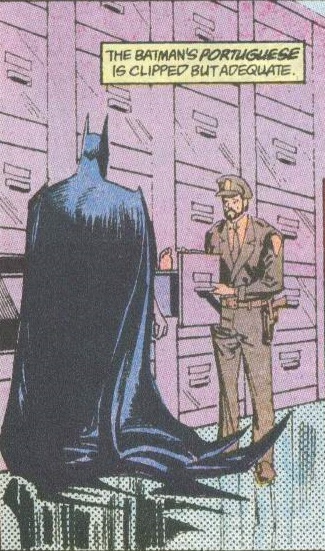
Batman 472Batman #472
Batman Confidential #32Batman Confidential #32

The relatively grounded, cavalier, and cerebral version of the Caped Crusader was ideal for the type of supernatural and/or psychological challenges Peter Milligan prepared for Batman. That said, the only time Milligan fully unleashed his brand of madness was in the mini-crossover ‘The Idiot’ (Batman #472-473, Detective Comics #639-640).

In this nightmarish saga, the hidden subconscious of four mental patients, bound together after consuming an Amazonian root, telepathically conjures a fifth personality – the titular Idiot, who tries to become more real by going on a mind-sucking rampage in Rio de Janeiro (and you thought things were bad enough in the lead-up to this year’s Olympics). In order to fight the villain on his terms, Batman eats some hallucinogenic root himself and enters the so-called Idiot Zone, with predictably trippy results:
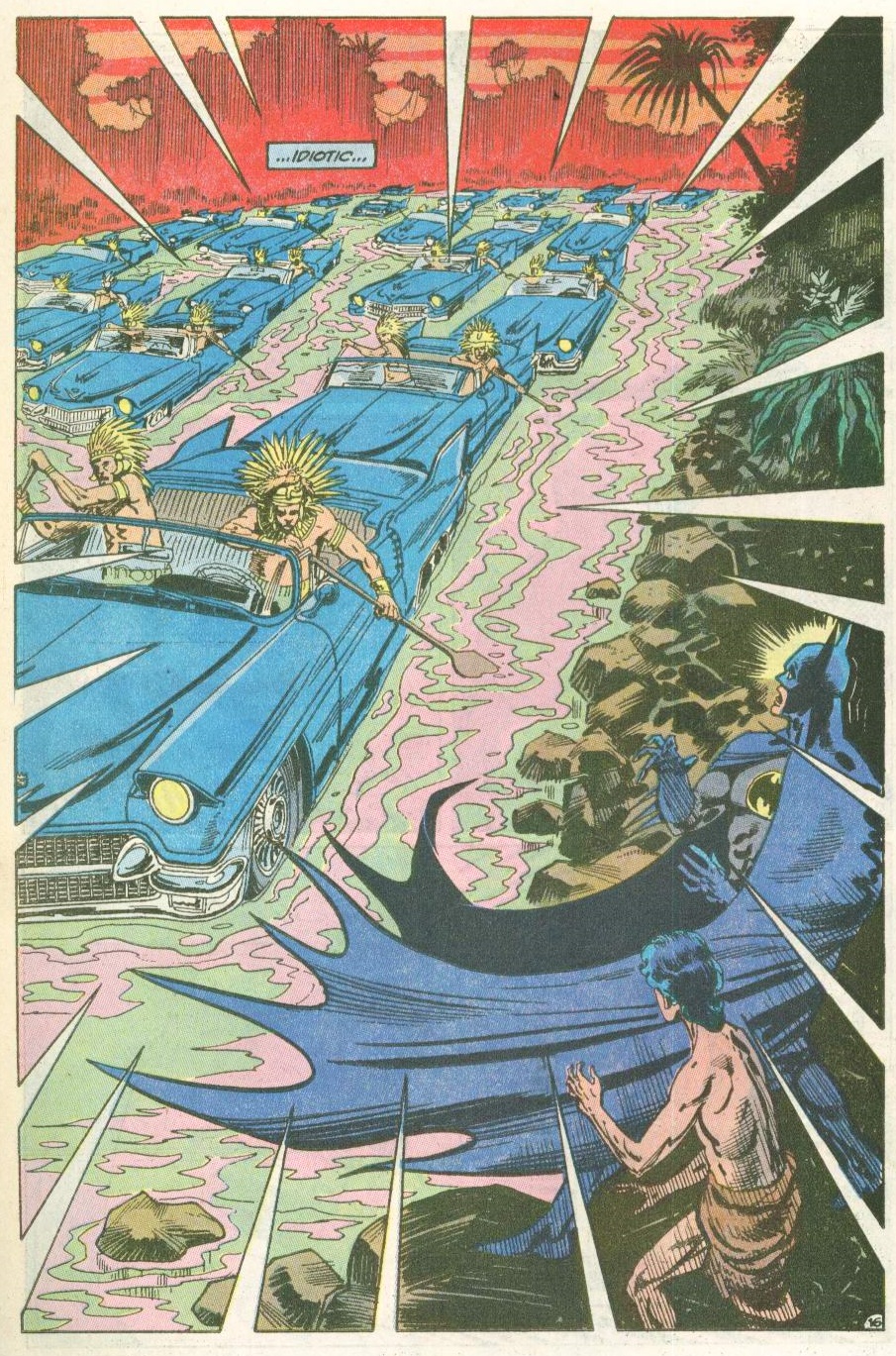
Batman 473Batman #473

More recently, Batman made a couple of brief appearances in Justice League Dark, where Peter Milligan once again sought to work his typically twisted ideas into a recognizable superhero narrative. This was an OK series about a team of idiosyncratic heroes, but it suffered from too many characters and it didn’t live up to its initial promise of unhinged strangeness (in a single page of the first issue, a shower of books killed six people, cows gave birth to mechanical meat-slicers, and a power station was suddenly imbued with consciousness).

Still, it was worth it for moments like John Constantine’s entrance into a devastated Gotham City:
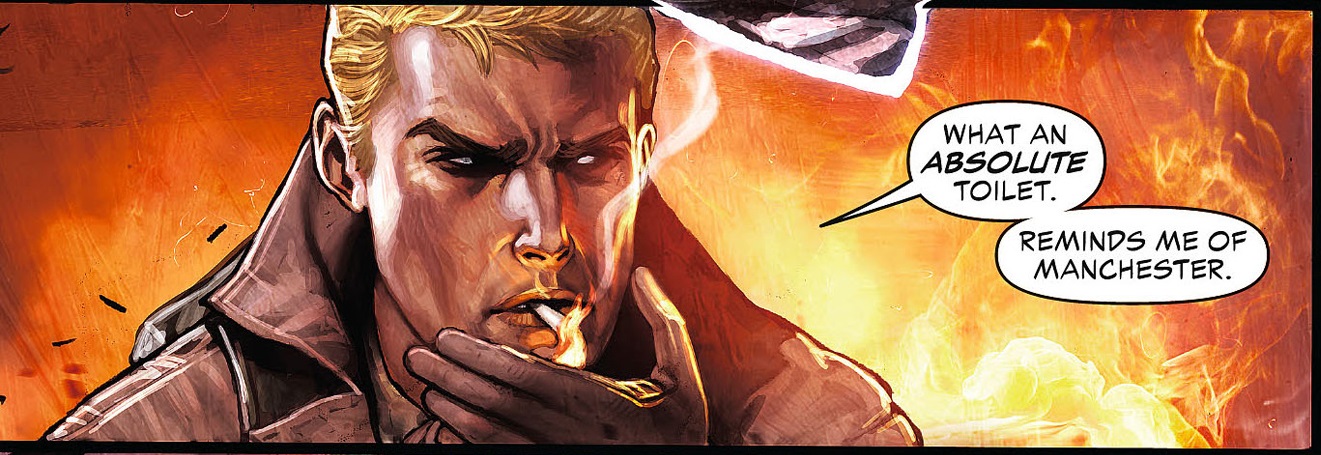
Justice League Dark 07Justice League Dark #7

I’ve stressed Peter Milligan’s knack for creating surreal, dream-like visions, but it would be unfair to imply that he is purely into bizarreness for bizarreness’ sake. In many of his best works, Milligan uses absurd fantasy or magical realism as a thought-provoking way to engage with his pet theme of identity crisis. For example, he did this in the wonderful – and shamefully overlooked – Vertigo mini-series Girl, London, and Egypt (he also did it, less successfully, in Terminal Hero and The Programme).

His Batman work is no exception. For christsake, one of Milligan’s stories is actually called ‘Identity Crisis’ (Detective Comics #633)! It’s the one where Bruce Wayne wakes up and finds out that the Batcave is no longer there and that he has never been Batman after all. When he realizes someone else is kicking butt as the Dark Knight, Bruce starts to wonder what being Batman even means at the end of the day… And yes, it’s the same premise as in the episode ‘Perchance to Dream’ from the Animated Series, but the final twist is much more of a mindfuck here. (Officially, the comic was an inspiration rather than the main basis for that episode, whose story is credited to Laren Bright and Michael Reaves. The final teleplay was by Joe R. Lansdale, who – it’s always worth remembering – besides having written his share of Batman prose short stories and novels, is also responsible for a novella about Elvis and a black JFK fighting a mummy.)

Peter Milligan even managed to shove the whole identity motif into the 2007 crossover The Resurrection of Ra’s al Ghul, a mindless adventure with all the manic energy and tongue-in-cheek orientalism of Carpenter’s Big Trouble in Little China. After co-writing the main story with Grant Morrison, Fabien Nicieza, and Paul Dini, Milligan did an epilogue called ‘The Suit of Sorrows’ (Detective Comics #842) about a suit that brought up the most violent instincts in those who wore it, forcing Batman to confront his own dark impulses.

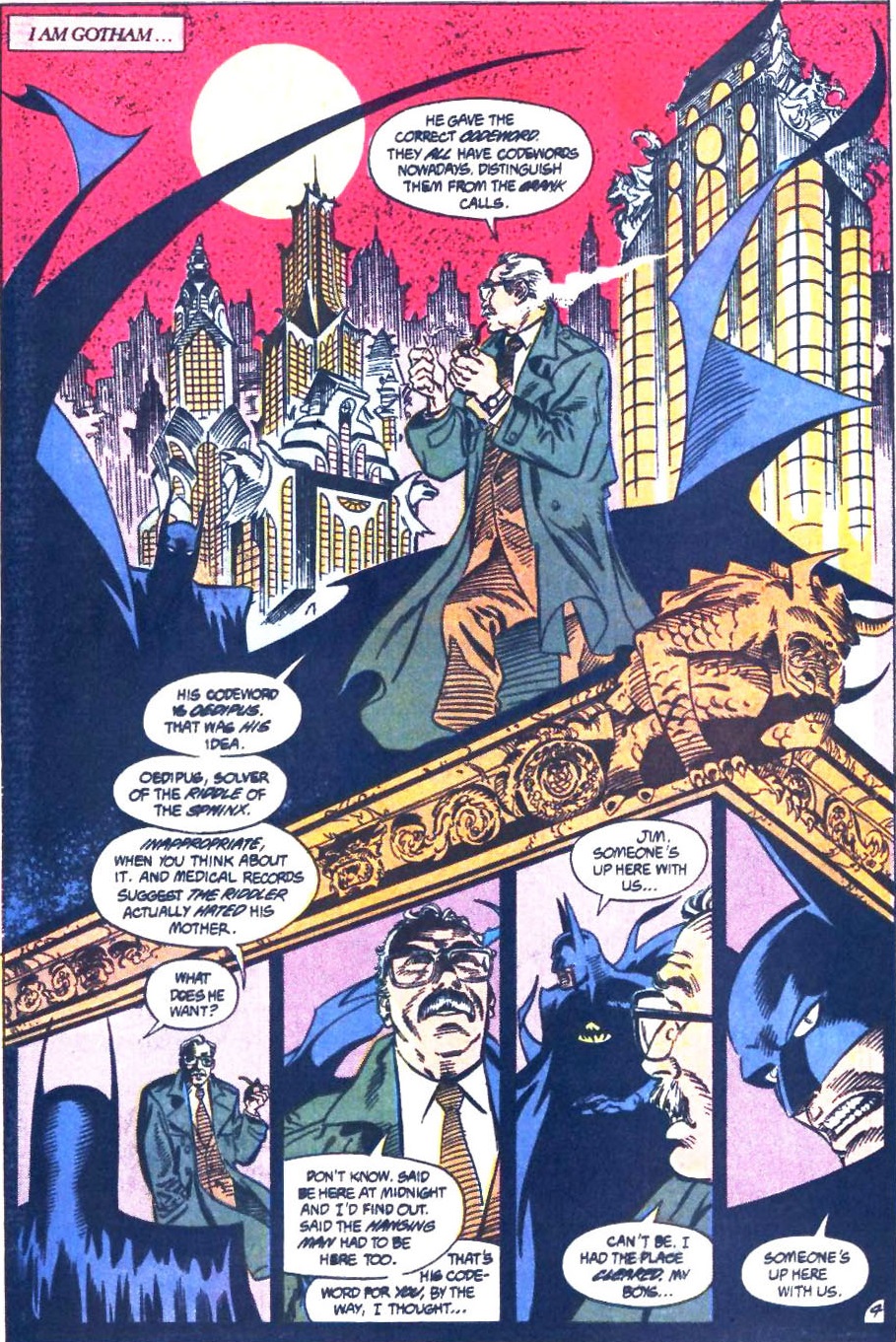
The most memorable meditation on this topic, however, takes place in ‘Dark Knight, Dark City.’ This story-arc suggests that Gotham was modeled by the demon Barbatos, who was trapped underneath the city after an aborted ritual sacrifice in 1765 (in which one of the participants was Thomas Jefferson).

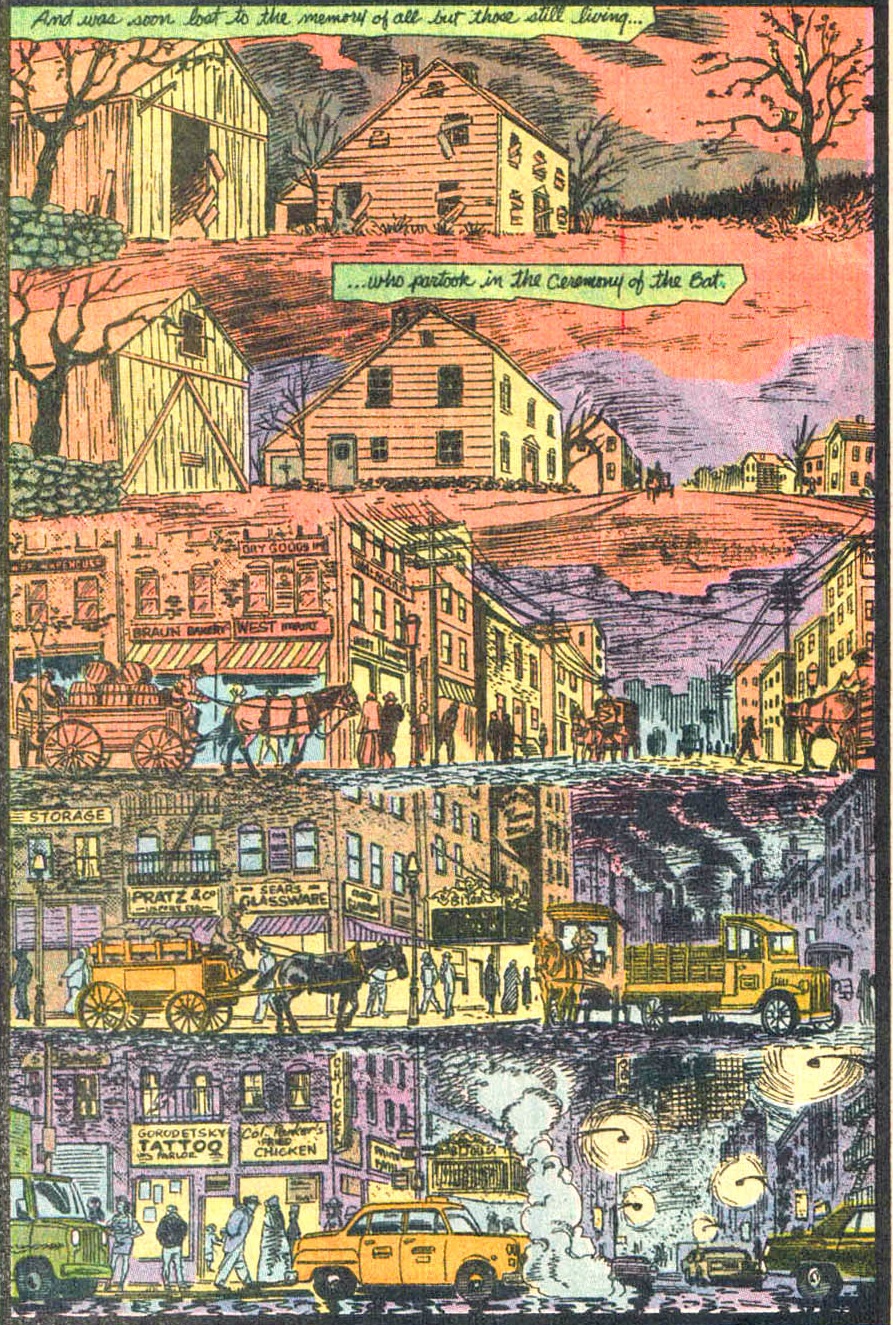
Batman 453Batman 453Batman #453

The notion of Gotham being *literally* demonic would show up time and time again – Garth Ennis played with it in The Demon, Grant Morrison revisited it in The Return of Bruce Wayne (once again linked to Barbatos). Yet ‘Dark Knight, Dark City’ also explores what this means for Batman, since his origin and personality have themselves been shaped by the city… The story culminates with Bruce, near the tombs of his parents, having the following internal monologue about determinism:

Gotham shaped me, in that it was on Gotham’s streets that you were killed… But was it the city or the demon? Accident or design? Environment? Zeitgeist? Biology? Demons?

I shake my head, breathe deeply, try to forget it. You’re born, and your history, your time, your place, is a mold into which you’re thrown… Does it make any difference if a few demons are behind it also? My parents are still just as dead. Gotham is still Gotham.

I am still… still whatever I am…

Peter Milligan’s existentialist musings were not limited to Batman himself, but to those around him. The sadly forgotten graphic novel Catwoman: Defiant featured a villain called Mister Handsome, obsessed with destroying beauty, in a clever tale about the significance of beauty in defining a person (for others as well as for oneself). In the New Year’s Evil one-shot ‘Mistress of Fear’ – which, like many of Milligan’s coolest comics, had lively art by Duncan Fegredo – the Scarecrow went after a girl who had been bullied, like him, but who refused to let it define her in the same way that he did. In ‘The Golem of Gotham’ (Detective Comics #631-632), Batman found himself between a Holocaust survivor and a gang of white supremacist kids – and, as usual, Milligan supplied plenty of twists, with each side’s motivations being less clear than what at first seemed. (It would be silly to compare ‘The Golem of Gotham’ to powerful graphic novels about the memory of the Holocaust like Art Spiegelman’s Maus or Rutu Modan’s The Property, but at the very least it reminds me of a biting issue of Martin Pasko’s and Rick Burchett’s pulpy Blackhawk run, called ‘The Needle Hand’).

Furthermore, in the terrific story-arc ‘Kid Amazo’ (JLA Classified #37-41), Frank Halloran, a philosophy student at Berkeley, had the mother of all identity crises when he found out that he was a cyborg programmed by the supervillain Amazo to destroy the Justice League of America.
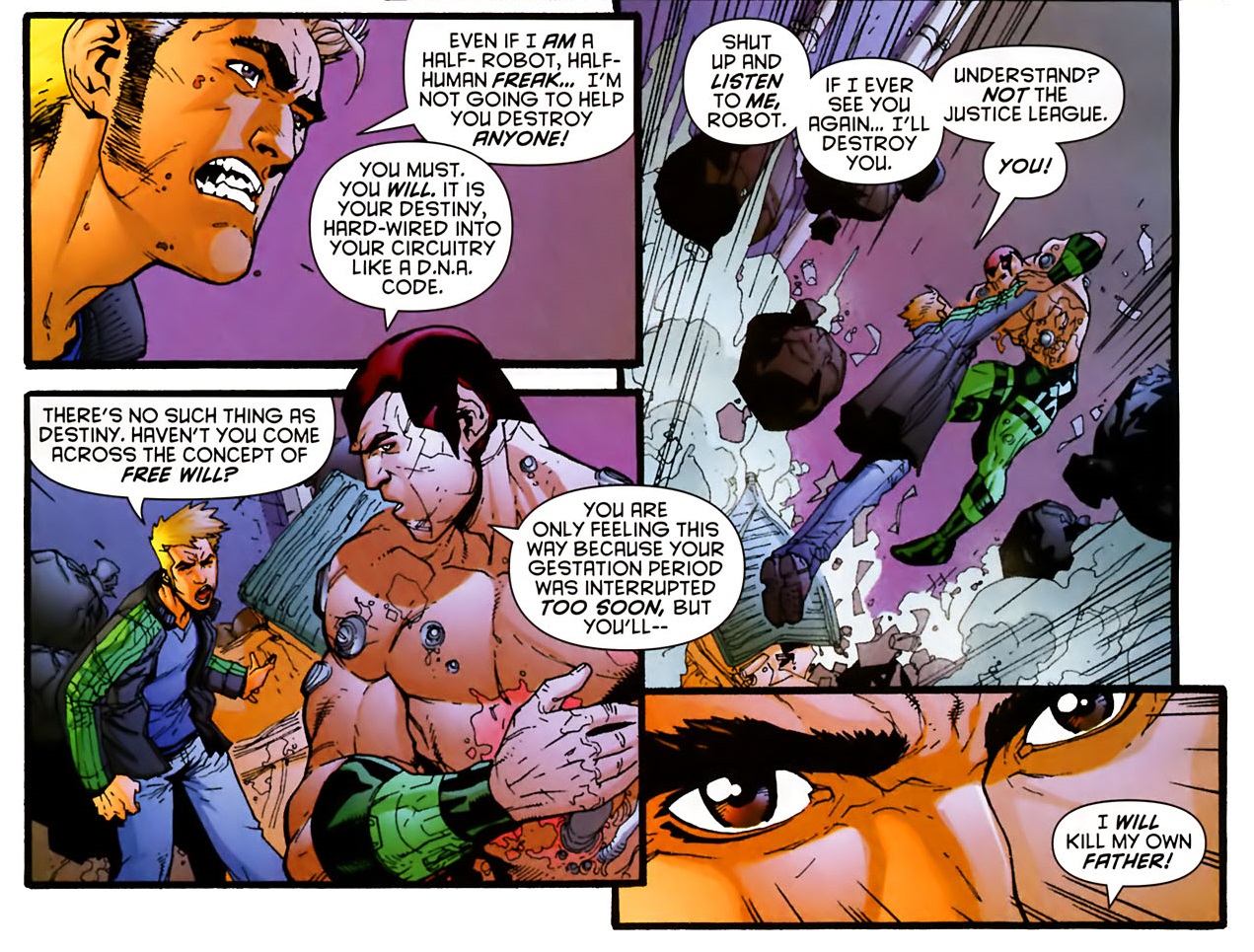
JLA Classified 037JLA Classified #37

Leave it to Peter Milligan to pepper superhero slugfests with discussions about Nietzsche and Oedipus complex… In a neat turn, Frank’s inner conflict fed into the Justice League’s own internal crisis, as there was much arguing over whether to give Frank a chance to assert his human side or to just assume that his evil robotic legacy would inevitably take over. (Milligan’s humanist Batman took the former position.) And that was before they realized that not only did Frank have all the superpowers of the JLA, he also had all of their personalities, leading to a fascinating climax!

Finally, another aspect that is often present in Peter Milligan’s most accomplished – and, ironically, most timeless – works is a direct link to their social and political zeitgeist. Shade, the Changing Man burst with the fluid fears of early ‘90s America. Human Target channeled the post-9/11 paranoia. X-Statix captured reality TV culture and the cult of celebrity that enveloped everything from Princess Diana to Élian González. Milligan’s run on Hellblazer explored the contradictions of British history and society.

It is tempting to say that this dimension isn’t as prominent in Milligan’s Batman comics, with a few exceptions. I guess one could argue that 1991’s ‘The Bomb’ (Detective Comics #638), in which the military bring in the Caped Crusader to help them track down an escaped human bomb, is ultimately a metaphor for the disarmament debate at the end of the Cold War… However, there are a couple of more obvious examples.

One of them is ‘The Bat and the Beast’ (Batman Confidential #31-35), in which the Dark Knight traveled to early-2000s Russia (and no, despite the title and the setting, the story didn’t feature the KGBeast). After the initial culture clash, Batman seemed to gradually realize that Moscow was not that different from Gotham City after all…
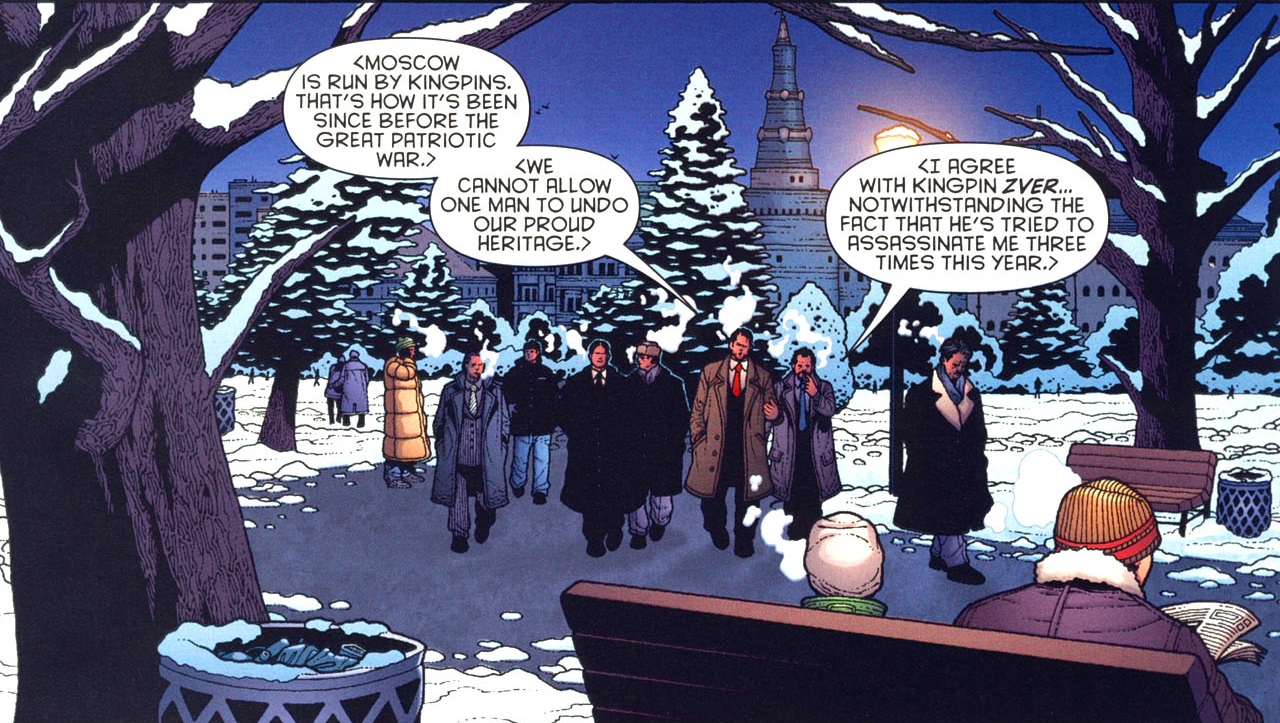
Batman Confidential 31Batman Confidential #31

And, of course, there was 2013’s Legends of the Dark Knight arc ‘Return of Batman,’ in which we found out that Waynetech’s property portfolio was decimated by the company’s exposure to the sub-prime mortgage crisis. Hit by the economic downturn, the Caped Crusader now had to become much more cost-conscious.

Too bad that at the same time he also had to prevent Ra’s al Ghul’s latest attempt to unleash biological Armageddon upon Gotham City…
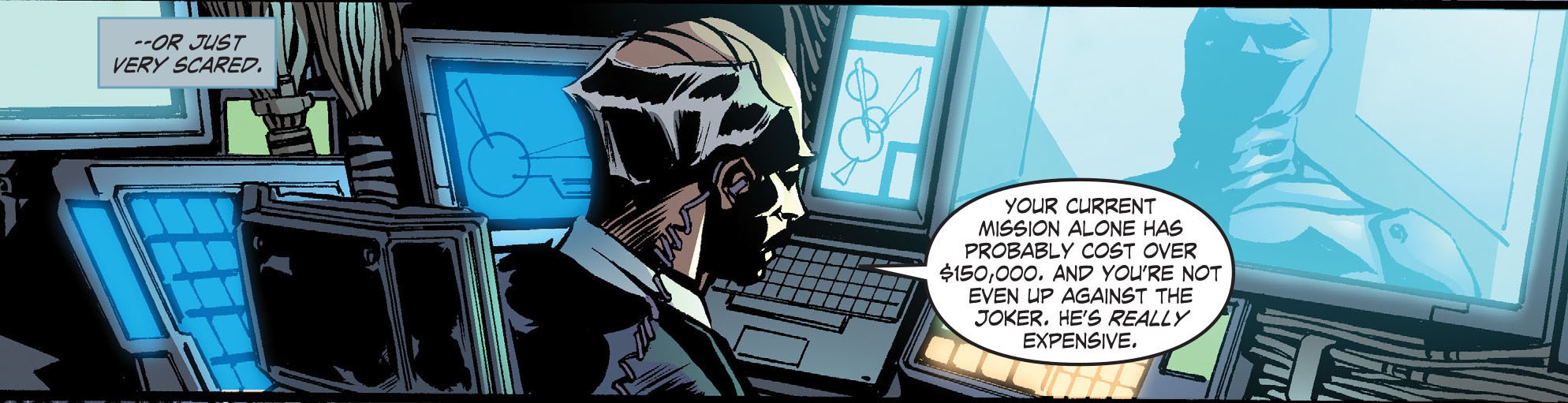
Legends of the Dark Knight 034Legends of the Dark Knight (v2) #34
Posted in WRITERS OF BATMAN COMICS | Tagged , , , , , , , , , | 3 Comments

Spotlight on The Shadow Strikes!

The mid-to-late ‘80s were the true golden age of comic books. For a few years, the industry was set on trying out all kinds of ideas and outright bombarding readers with one memorable comic after another, featuring both new and classic characters… For instance, take the Shadow, the big-nosed vigilante with a hypnotic girasol ring and a network of underground operatives at his command. After a having a go at an iconoclastic, cartoony present-day version of this crimefighter, DC shifted gears in 1989 and put out a series that was, essentially, the polar opposite of that.

And yet, in its own way, The Shadow Strikes! can be just as satisfying as its predecessor.

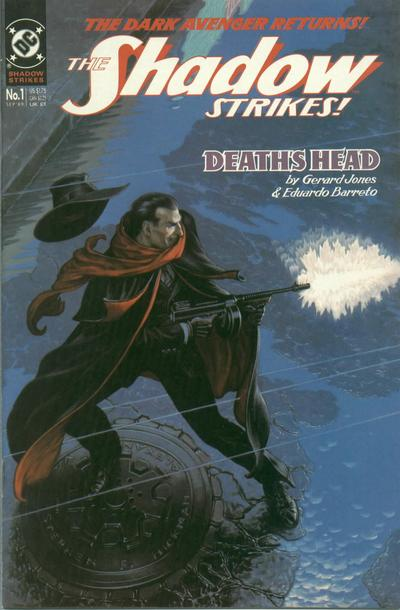
The Shadow Strikes! #1

The first obvious difference between the two takes is that the earlier one, launched in 1986 and written by Howard Chaykin and Andrew Helfer, was mostly set in the eighties, whereas The Shadow Strikes! went back to the Shadow’s roots in the Great Depression, rebooting the old property as a straightforward period piece.

The 1930s weren’t just a decor, but the very soul of the comic. It looks as if, before he sat down to work on TSS!, writer Gerard Jones came up with an extensive list of all the tropes and recognizable references related to this decade (later, he appears to have done the same regarding the 1950s for the mind-bending mini-series Martian Manhunter: American Secrets). Jones really mined the social turbulence of the Depression era for all its worth… Besides the usual stories about gang wars and racial intolerance, there was the whodunit ‘Crimson Dreams,’ which zoomed in on the politics of Hollywood’s old studio system, and the riveting ‘The Strike,’ which addressed the labor struggles of construction workers with the verve of a rocking unionist anthem.

(Not that it’s possible to completely escape your own time – after all, for all of The Shadow Strikes!’s commitment to immersing readers in a pre-Cold War past, I can’t help but detect in the thirties’ debates about military readiness and US-USSR rapprochement a distorted reflection of the concerns of the late eighties… And later on, a grand-scale storyline about oil business was clearly a nasty jab at the Gulf War!)

The list of cameos included Amelia Earhart, Mao Tse-tung, and even Gerard Jones’ own father. Moreover, Jones reverse-engineered nods to various works of fiction, from Chinatown (Jake, the cop in ‘Fireworks’) to Sullivan’s Travels (Sinclair Beckstein, the author of the play Oh Brother, Where Art Though?, in ‘To Cloud Men’s Minds’). In issue #29, guest writer Don Kraar and guest artist Dan Spiegle got in on the action as well, with a visual homage to the climax of Raiders of the Lost Ark.

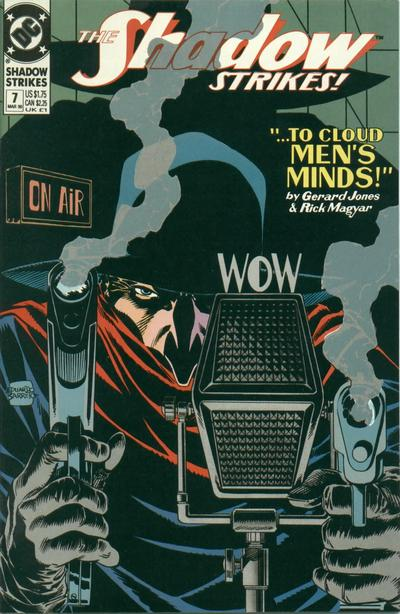
Above all, Jones paid tribute to The Shadow’s pulps and to the radio drama voiced by Orson Welles, including a team-up between the violent, no-nonsense vigilante and a lively version of the future director of Citizen Kane… The joke was that the ersatz-Welles openly identified himself with the Shadow, given that they were both masters of disguise, surprise, and choreographed misdirection. The issue (#7) even culminated in a transparent riff on the hall of mirrors’ scene from Welles’ The Lady from Shanghai (a film that looks gorgeous but whose plot doesn’t make a lick of sense).

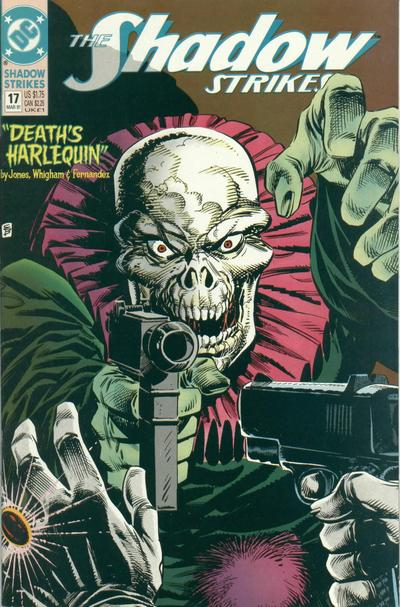
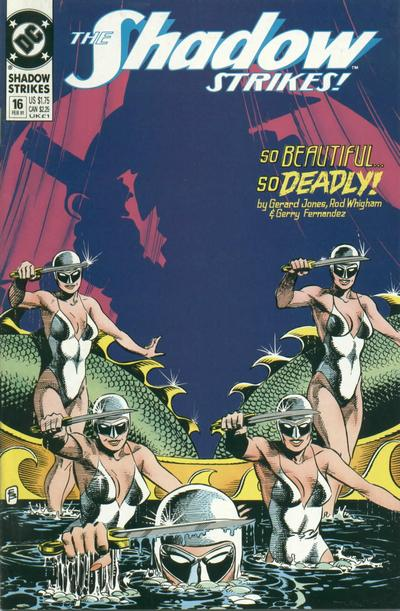
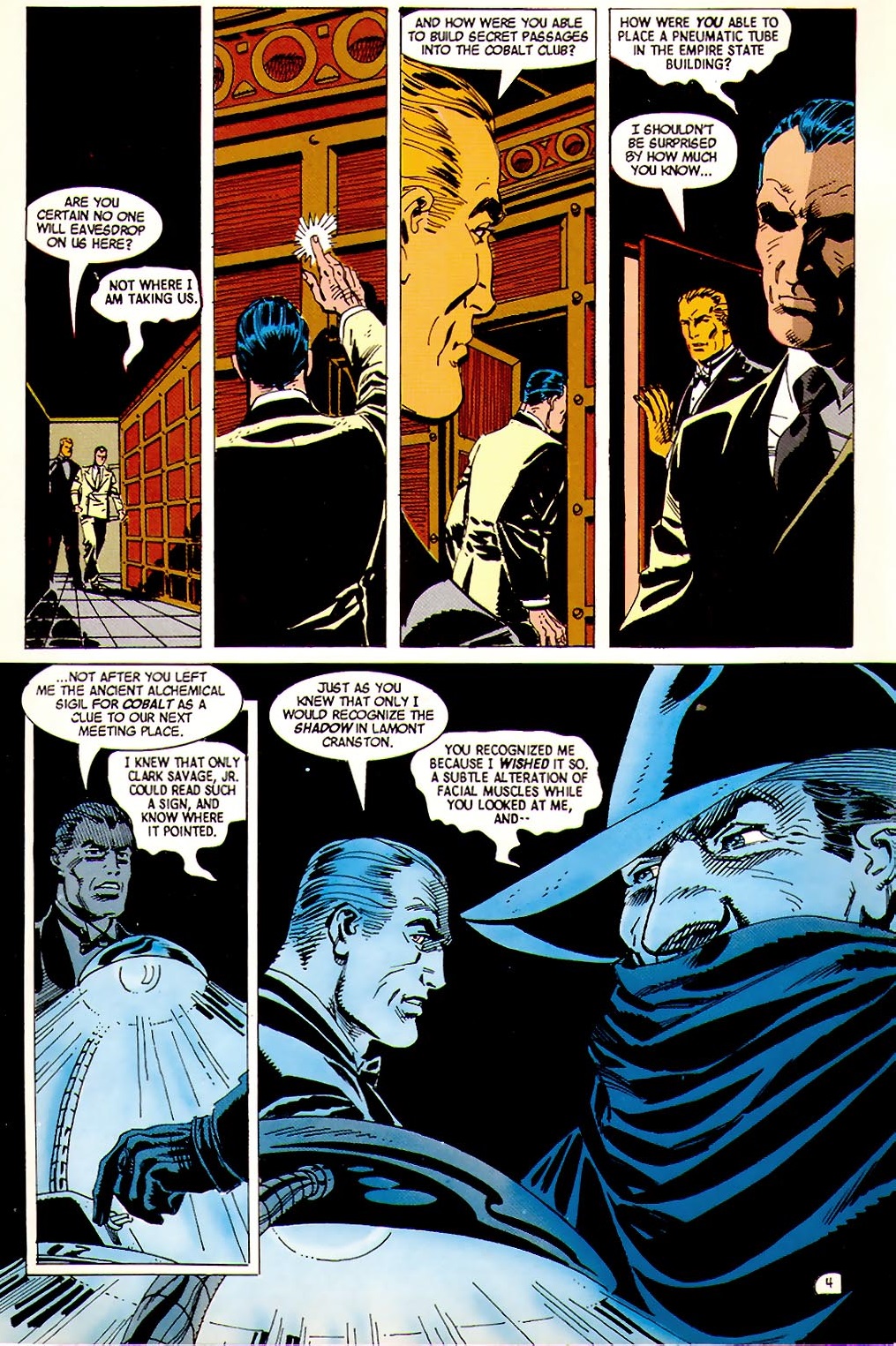
The Shadow Strikes #7     Shadow Strikes #17     The Shadow Strikes #16

In fact, just like the recent Fargo TV show has expanded beyond its initial influence and become a love letter to the Coen brothers’ entire oeuvre, The Shadow Strikes! also feels like it went way beyond Orson Welles’ radio show, bringing to mind many of his greatest works from later decades. There’s Mr. Arkadin’s frenetic, globetrotting intrigue, The Immortal Story’s orientalist tinge, F for Fake’s metafictional games, The Trial’s breathtaking visuals, Touch of Evil’s hypnotic trifecta of film noir, gothic motifs, and psychological horror…

Touch of Evil seems particularly suited for comparison. After all, on paper, that project probably sounded like just another hardboiled 1950s’ crime flick, with subplots about dirty cops (Where the Sidewalk Ends, Shield for Murder, Rogue Cop), racism (Odds Against Tomorrow, Bad Day at Black Rock, The Killing), and threats to the hero’s family (The Big Heat, The Desperate Hours, Crime Wave), but Welles’ baroque direction created an unique masterpiece. Likewise, while The Shadow Strikes! might sound like just another potboiler, the series was significantly lifted by its ‘director’ – artist Eduardo Barreto, who drew most of the early issues.

Ed Barreto drew inspiration from 1930s’ adventure comics by the likes of Milton Caniff and Noel Sickle, adopting a luscious style that couldn’t be farther from the exaggerated, whimsical art of Bill Sienkiewicz and Kyle Baker in the previous Shadow series. Credit for TSS!’s panache should also go to the palette of colorist Anthony Tollin (an unabashed fan of the Shadow who provided text pieces about the character’s various media adaptations in the back matter).

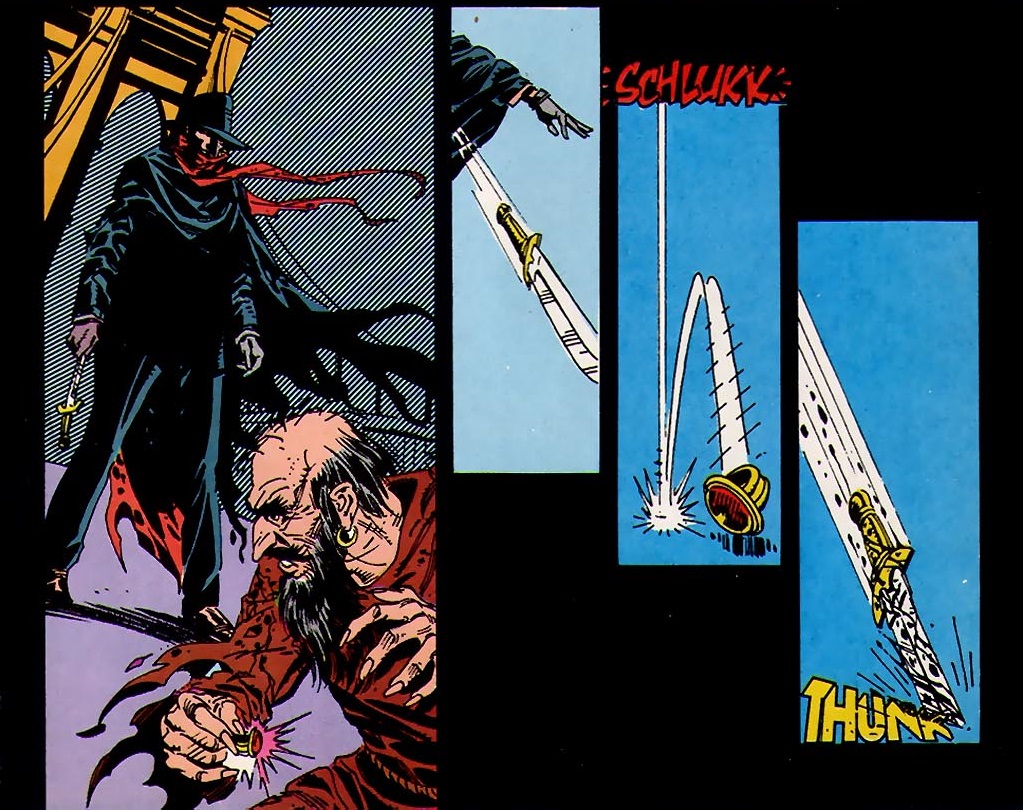
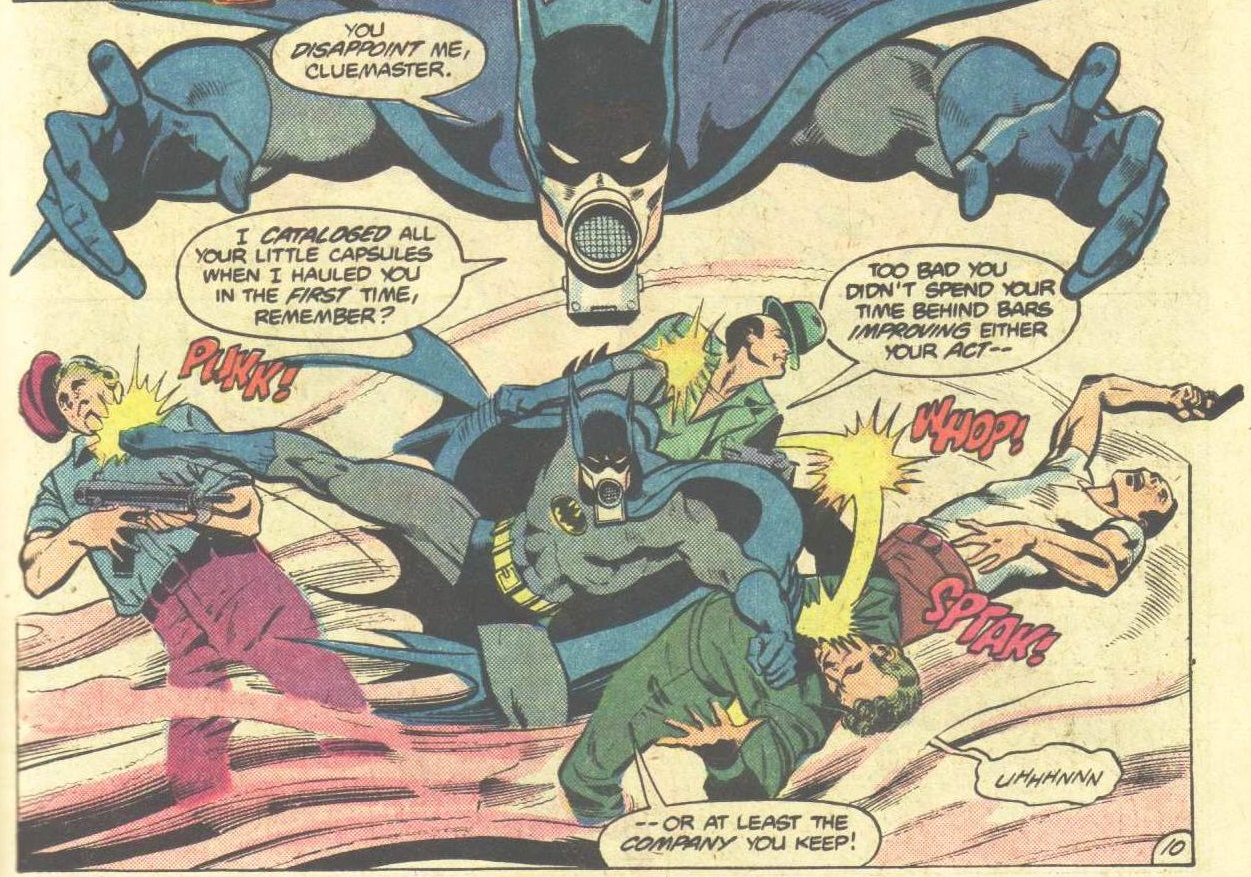
For a sense of the vicious gravitas of Barreto’s art, check out this sequence where the Shadow beheads Rasputin (with chilling sound effects courtesy of letterer David Cody Weiss):

shadow strikes 04shadow strikes 04The Shadow Strikes! #4
(Halfway through the series, Rod Whigham took over the pencils, mostly inked by Gerry Fernandez. Their storytelling wasn’t quite as strong as Barreto’s, but they nailed the moody feel of the comic.)

The gritty visual style speaks to another, more general contrast between The Shadow Strikes! and its immediate predecessor. While Howard Chaykin and Andy Helfer had approached the material as a wacko comedy (Chaykin was just off the satirical American Flagg! and Helfer was the editor of the bwahaha era of Justice League International), Gerard Jones seemed to be consciously avoiding any sense of irony. His take on the Shadow was as earnest as it gets – a two-fisted yarn packed with desperate people scheming and stalking and double-crossing each other at every turn. Notably, not only did Jones treat the protagonist’s different alter egos (high society snob Lamont Cranston, WWI pilot Kent Allard) with respect, he also did a fine job of humanizing the Shadow’s agents, especially the plucky socialite Margo Lane, whose mysterious past kept providing interesting twists almost until the end.

All in all, TSS! was one mean, unashamedly dark series, featuring brutal thrills, cynical political intrigue, and more than a couple of instances of implied sexual abuse. Unlike other revamps from this era (like Green Arrow), however, this was less a mature reimagining of a juvenile franchise than a return to its grim origins, sharing much of the spirit of Walter B. Gibson’s vintage stories.

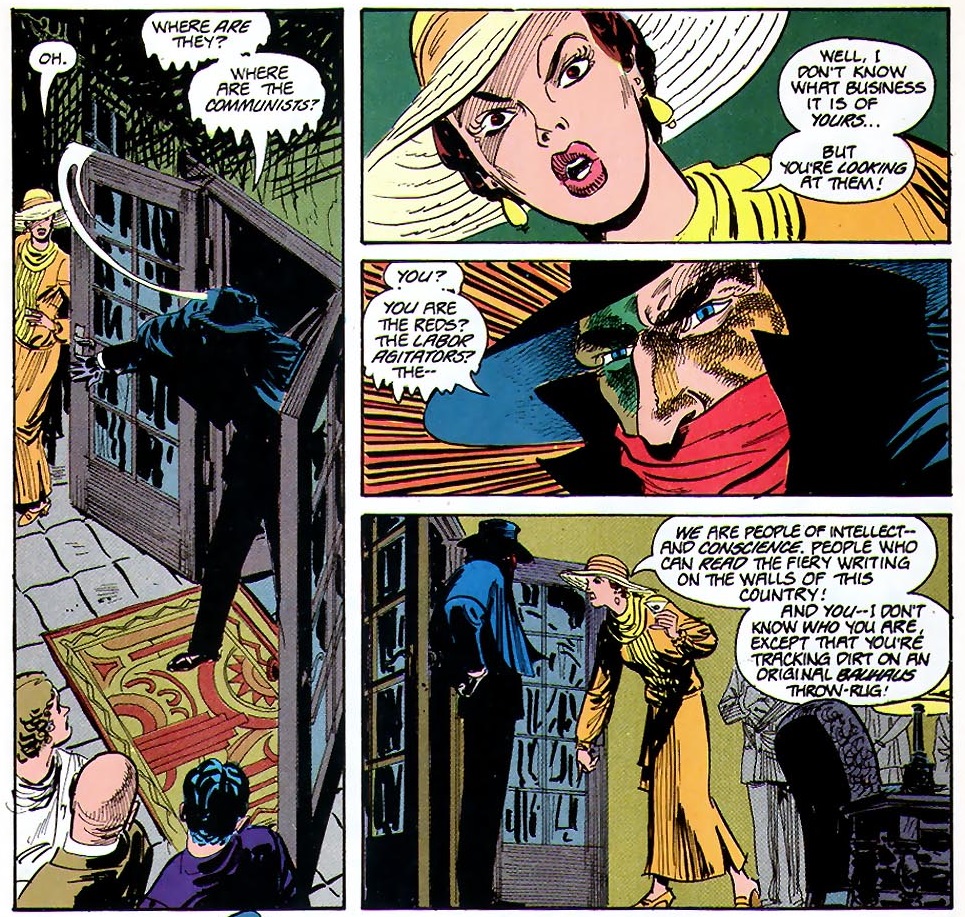
That said, The Shadow Strikes! was not entirely devoid of humorous touches:

Shadow Strikes AnnualShadow Strikes AnnualThe Shadow Strikes! Annual #1

In terms of pure fun, one of the coolest tales – and a fairly obvious editorial move – involved The Shadow Strikes! crossing over with DC’s reboot of another pulp hero from the ‘30s. Denny O’Neil had revamped the muscular scientist Doc Savage, first in a neat 1987 mini-series and then in an ongoing that opened with a no-holds-barred saga about moon aliens manipulating the Cold War. By the time TSS! debuted, Mike W. Barr had taken over the writing chores from O’Neil. Barr’s run wasn’t as remarkable – much of it just focused on bringing back old characters – but there were a few inspired moments (I quite enjoyed the annual about the 1936 Olympics).

Co-written by Gerard Jones and Mike Barr, the four-part ‘The Conflagration Man’ brought together the two adventurers and their respective teams in a quest to prevent a powerful ray-gun from falling into the hands of a megalomaniac arms manufacturer. Jones and Barr crafted an elaborate chess game of a story, with the plot twisting and turning as the large cast moved on multiple fronts. And, naturally, much was made of the contrast between the leading heroes – indeed, shortly after crossing paths, Doc Savage tried to lobotomize the Shadow!

After the obligatory initial clash, the two characters began to bond, although not without a degree of one-upmanship:

shadow strikes 06shadow strikes 06The Shadow Strikes! #6

To be sure, not all stories were equally engaging, but even when the plotting grew more uneven the pulpy ‘30s atmosphere was still enough to carry the comic (the same thing applies to Dave Stevens’ The Rocketeer – which includes a Shadow guest-appearance – and to Matt Wagner’s Sandman Mystery Theatre).

There have been other Shadow comics since then (the best-looking being ‘Hell’s Heat Wave,’ illustrated by Gary Gianni), but my curiosity was particularly prickled four years ago, when I heard that Garth Ennis was going to write the latest relaunch of the character, for Dynamite. Given that Ennis is just as comfortable doing racy slapstick as doing straight-faced grit, I wondered which version we were going to get, the ’86 one or the ’89 one… Well, his version (collected as ‘The Fire of Creation’) sure felt like a worthy heir of The Shadow Strikes!, albeit way more hardcore. Set in occupied China in the late 1930s, the comic benefited from Ennis’ flair for historical insight. It also indulged in many of his favorite tropes, like the long stretches of witty repartee or the inclusion of unredeemably despicable villains that just make you root for their bloody comeuppance after every page. And just in case you have any doubts about the comic’s ruthlessness, you get one of those typical Ennis moments when a supporting character realizes that he’s not in your run-of-the-mill escapist fiction:

The Shadow 05The Shadow #5
Posted in HARDBOILED CRIME | Tagged , , , , , , , , , , , , , , , , | Leave a comment