Spotlight on Greyshirt

If you read the last posts, you know that this month I’ve been discussing eccentric vigilante comics.

Hence Greyshirt.

Greyshirt Indigo Sunset

I have little doubt that the seeds for Greyshirt grew from Alan Moore’s contributions to The Spirit: The New Adventures, in which Moore became one of the many creators that tried to revive Will Eisner’s The Spirit. Except for the sake of nostalgia, this was a pointless exercise, since what made the original comic so amazing wasn’t the Spirit himself or his world, but rather Eisner’s willingness to play with the medium’s potential for storytelling. Either because Moore acknowledged this or because The New Adventures was cancelled and he could no longer work directly with Eisner’s hero, in the late 1990s the bearded British genius decided to create his own version of the character in the form of Greyshirt.

A masked vigilante whose secret identity (Franky Lafayette) was left for dead and who now operates out of the retro-futuristic Indigo City, Greyshirt is a blatant knockoff of the Spirit, but like I said the point isn’t the character – it’s the type of stories he finds himself in. And sure, there is a clear element of pastiche (the way Greyshirt is often a background player in the narrative, the way each first page integrates the credits into the art). However, Moore and Greyshirt’s artist/co-creator Rick Veitch pull off what most official revamps of The Spirit have failed to achieve, which is to deliver comics that push the techniques of storytelling in ways that are as original, smart, and entertaining as what Will Eisner did. In that sense, Greyshirt transcends the mere pastiche, thus truly paying tribute to Eisner’s legacy.

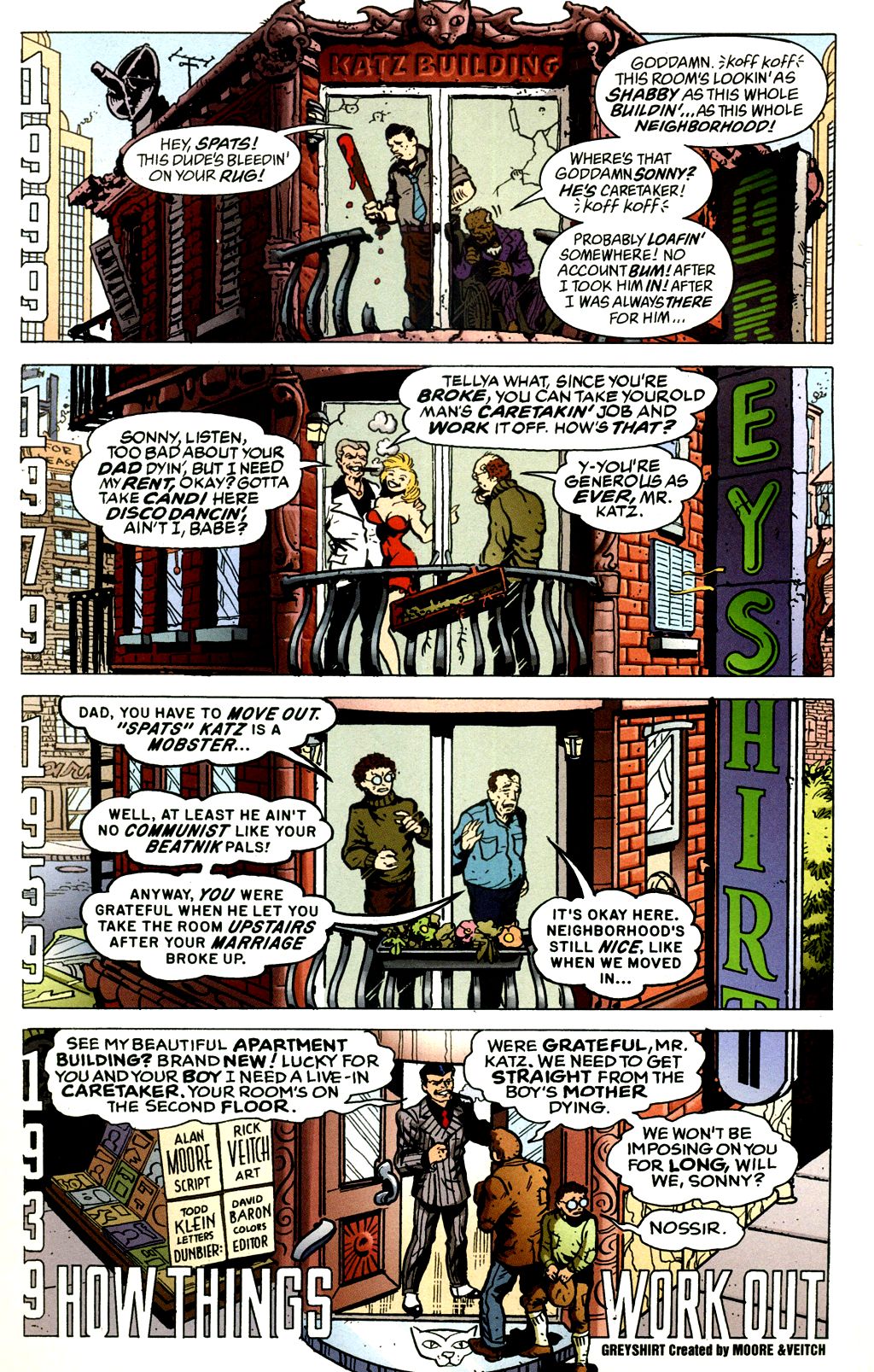
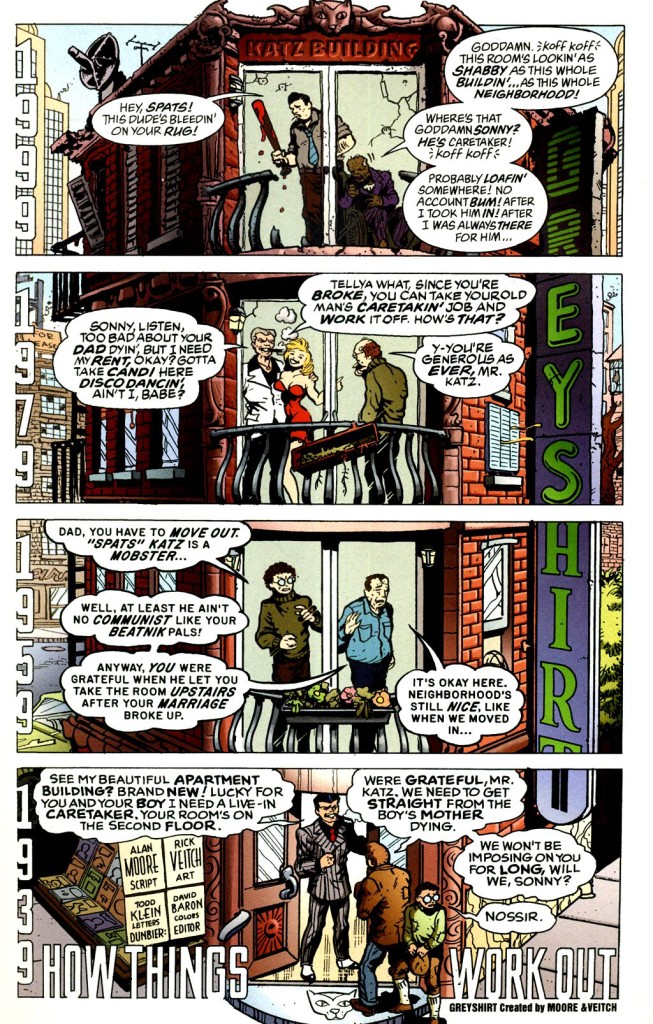
For example, take ‘Hit and Run!’ (Tomorrow Stories #7), drawn entirely with the same POV, from the back of a taxi cab. Or take ‘How Mel Got Down With Science Hero Style!’ (America’s Best Comics 64 Page Giant), which tells a hardboiled yarn through clothing advertisements. Or better yet, take the phenomenal ‘How Things Work Out’ (Tomorrow Stories #2), in which each page shows you the inside of a building owned by gangster Spats Katz, with each floor corresponding to a different time period:
Tomorrow Stories 02Tomorrow Stories #2

It’s ingenious enough that one can pretty much read ‘How Things Work Out’ in various directions – for instance, you can read the saga of each floor at a time, flipping back and forth to the first page, perhaps starting with the ground floor and then moving up chronologically. Yet if you do follow the conventional reading order the narrative is even more rewarding, not only because panel transitions are structured around wordplay, but also because you get a greater sense of the characters looking back (down) to the past, which further deepens the comic’s theme. And all this in eight pages! (Well, nine if you count the issue’s cover.)

Greyshirt’s early adventures were all similarly short (again, like Will Eisner’s The Spirit). They came out in America’s Best Comics’ awesome anthology Tomorrow Stories, alongside series with completely different styles, including the experimental erotica The Cobweb and three hilarious variations of Mad-like, anything-goes absurdity: Jack B. Quick, The First American, and Splash Brannigan.

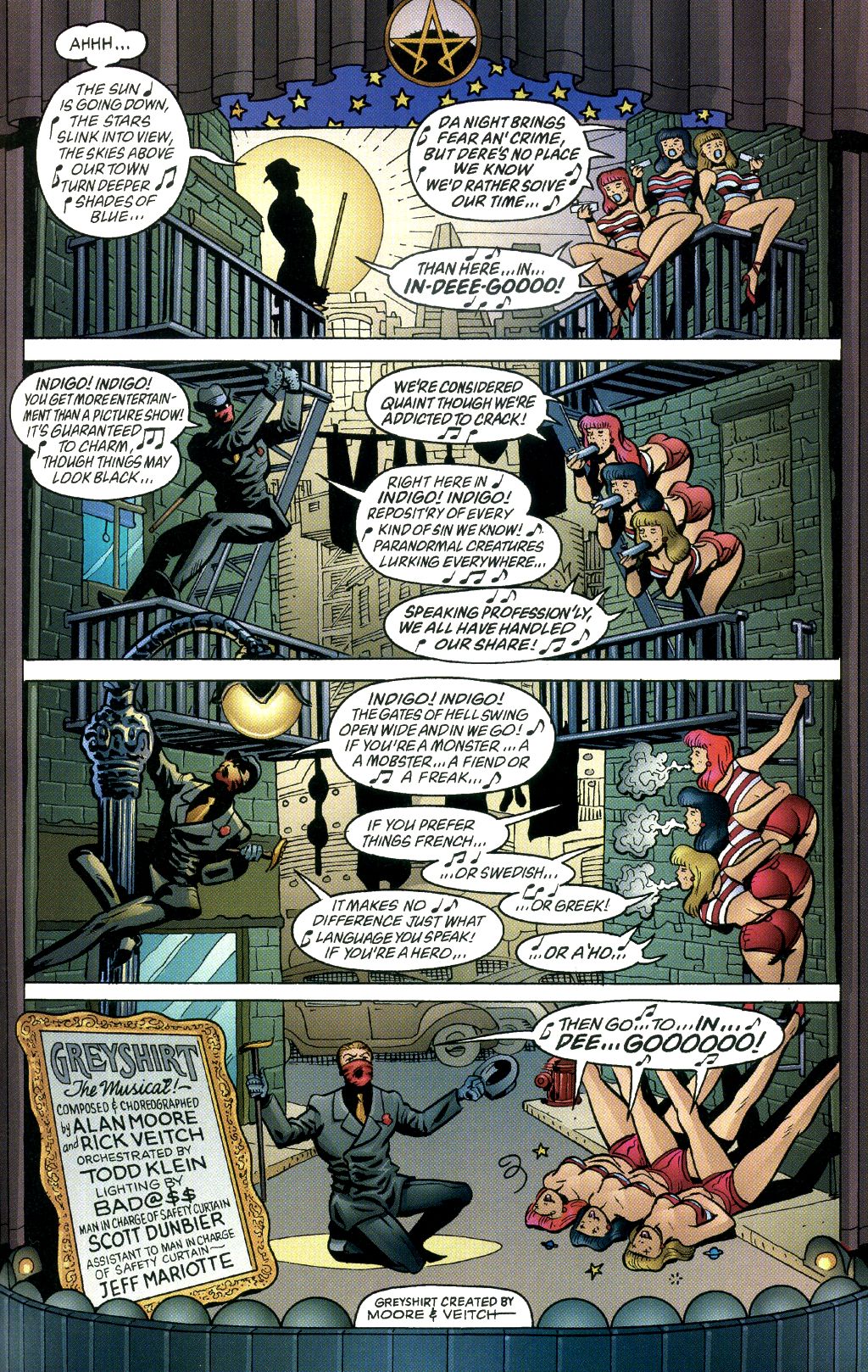
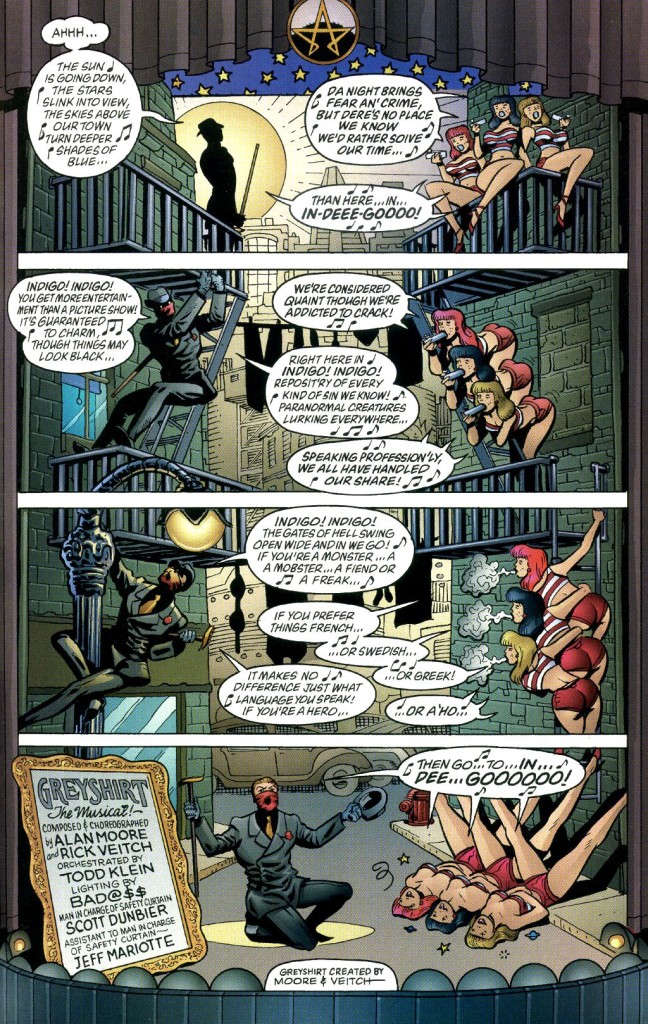
In the case of Greyshirt, the overall tone oscillated between film noir and The Twilight Zone. If you’re into the former, look no further than Greyshirt’s very first story, told from the perspective of an amnesiac who realizes he is a hunted serial killer (amnesia is, of course, a classic noir trope and I suspect Eisner himself must have been visually influenced by films like Crack-Up and Spellbound). For the latter, check out the knockout twist ending on ‘Day Release’ (Tomorrow Stories #6). And for something more outside the box – and proof that Moore’s off-color comedy was never far behind – have a look at the insane production number in ‘Greyshirt the Musical!’ (Tomorrow Stories #9):
Tomorrow Stories 09Tomorrow Stories #9

Greyshirt spun off from Tomorrow Stories into his own mini-series, Greyshirt: Indigo Sunset, now fully written by Rick Veitch (except for the goofy 6-page ‘The Butt Kicks Back!’ by Dave Gibbons). Veitch is an interesting writer with an encyclopedic knowledge of old comics, a knack for the macabre, and the courage to pursue bafflingly strange story ideas. And while his dream diaries and truther one-shot may not appeal to everyone, Veitch has produced his fair share of cult classics, including The One and his run on Swamp Thing, as well as unsung gems like the poetic post-9/11 graphic novel Can’t Get No or the War on Terror satire Army@Love.

In Indigo Sunset, Veitch built upon the short origin story told in ‘The Making of Greyshirt’ (Tomorrow Stories #3), expanding Franky Lafayette’s pre-Greyshirt background while also developing several supporting characters who had popped up in the regular series. This was basically a gangster saga, but with an eerie horror threat in the form of the Lure – a hypnotic tentacle monster that haunted Indigo City’s mine shafts.

The mini-series was a narrative tour de force, as each issue featured tales and vignettes from different eras that were gradually woven together into one massive tapestry. Even the misleading covers were cleverly integrated into the whole. Moreover, Rick Veitch, in full command of his craft, drew on the aesthetics and tropes of multiple comic traditions, such as children’s strips, romance comics, and down-and-dirty crime tales. Hell, he even included a takeoff of Scott McCloud’s Understanding Comics!

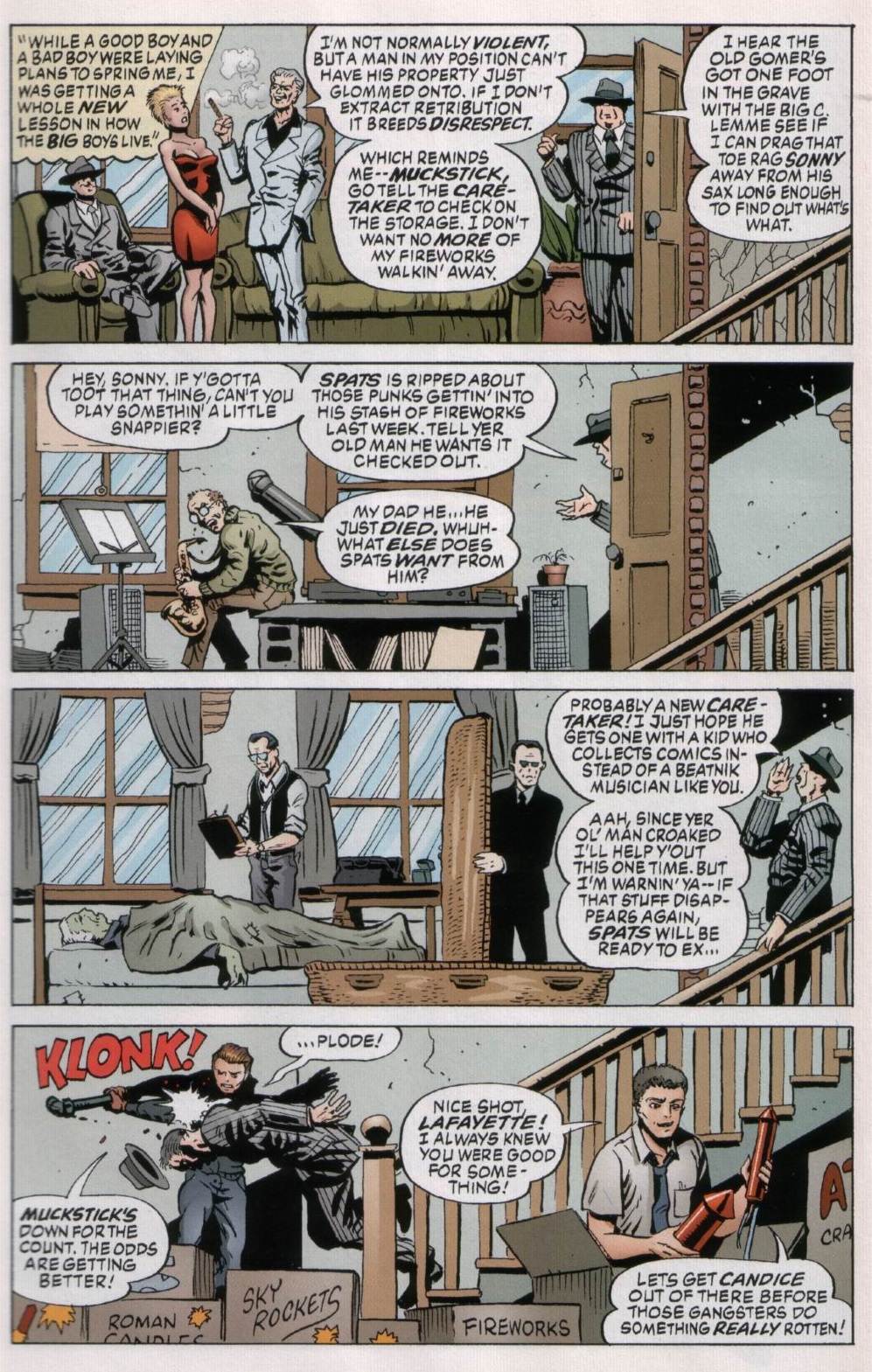
Indeed, Indigo Sunset was ultimately a metafictional love letter to the rich history of the medium, from Tijuana bibles to comics’ ironic appropriation by pop art. Not only that, but Veitch also sneaked in quite a few nods to other series published by America’s Best Comics (Top Ten, Promethea, Tom Strong) as well as to earlier Greyshirt adventures. Notably, the second issue was packed with winks to the above-mentioned ‘How Things Work Out,’ including a page that revisited that story’s layout of the interior of Spats Katz’s building:
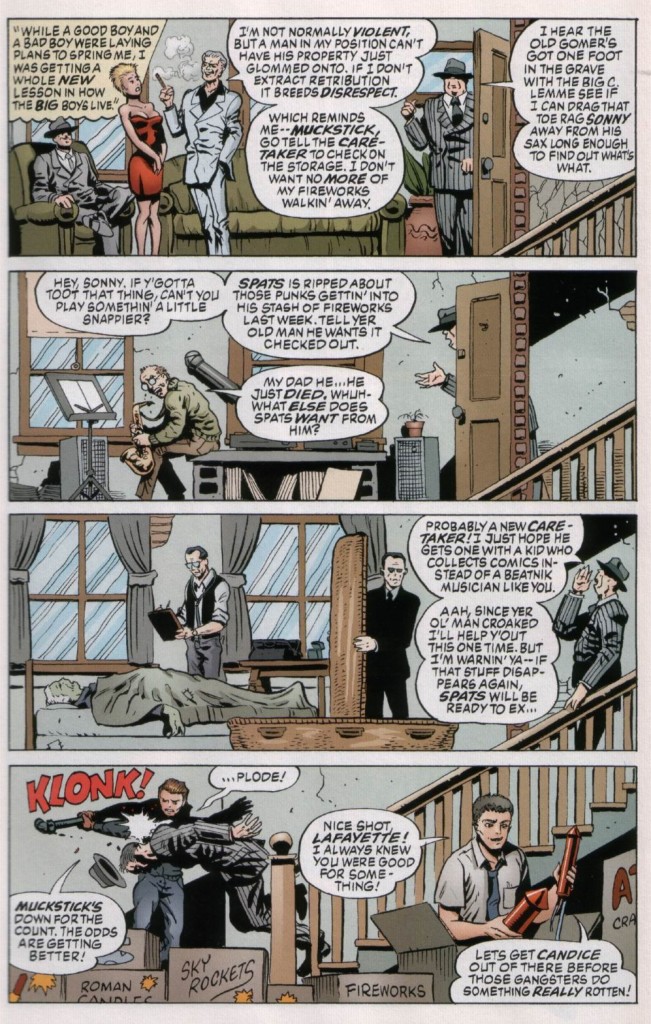
greyshirt - indigo sunset 2Greyshirt: Indigo Sunset #2

In yet another meta move, each issue finished with a bunch of pages from the local newspaper Indigo City Sunset, including news stories, gossips, an opinion section, a sports page, adverts, horoscopes, entertainment news, an amusing advice column, and, of course, a number of old-school comic strips. Not only did these newspaper excerpts help provide exposition, they also developed the various subplots (especially if you read between the lines) and rewarded fans with Easter Eggs. Plus, they further fleshed out the history and everyday life of Indigo City – it is not going too far to say that in six issues Rick Veitch managed to give the place as distinctive a personality as that of comic cities like Astro City or Opal City (not to mention Gotham!).

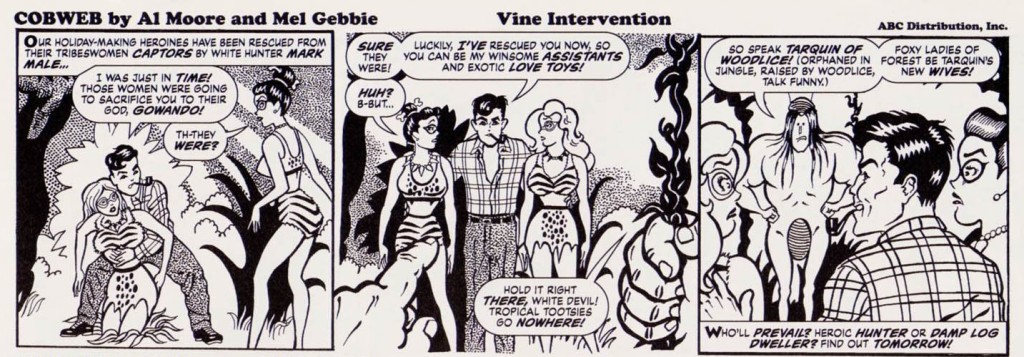
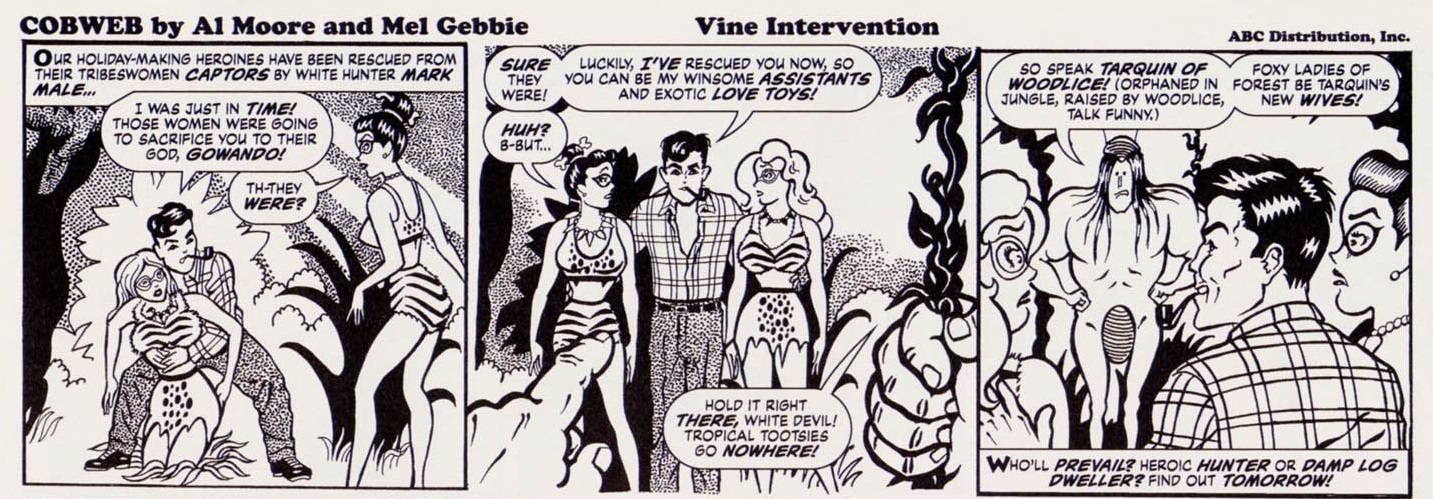
Neatly, Greyshirt shared Indigo City with another masked vigilante from the pages of Tomorrow Stories – the Cobweb. Created by Alan Moore and Melinda Gebbie, the voluptuous Cobweb and her sidekick Clarice were a couple of adventuresses whose tales apparently span centuries (later, a couple of gorgeous specials written by Steve Moore explained that they belonged to a long lineage of parthenogenetically-produced daughters). As such, this duo were the most versatile characters in Tomorrow Stories, starring, for example, in the noirish ‘Eurydice: A Retrospective’ (Tomorrow Stories #3), with its purple prose worthy of an old pulp mag; in the existentialist ‘La Toile dans le Chateau des Larmes’ (Tomorrow Stories #5), with its surrealist collage; in the newspaper serial pastiche ‘Brand New Adventure Starts Today!’ (Tomorrow Stories #8), with its cartoonish humor; and in the underground comix spoof ‘Ye Head Shoppe’ (Tomorrow Stories #7), with its over-the-top satire of the limits of women’s liberation in the 60s’ counterculture.

Such a wide range of styles benefitted from the fact that the talented Melinda Gebbie was involved in most Cobweb stories, providing incredibly diverse art to suit each particular type of comic:
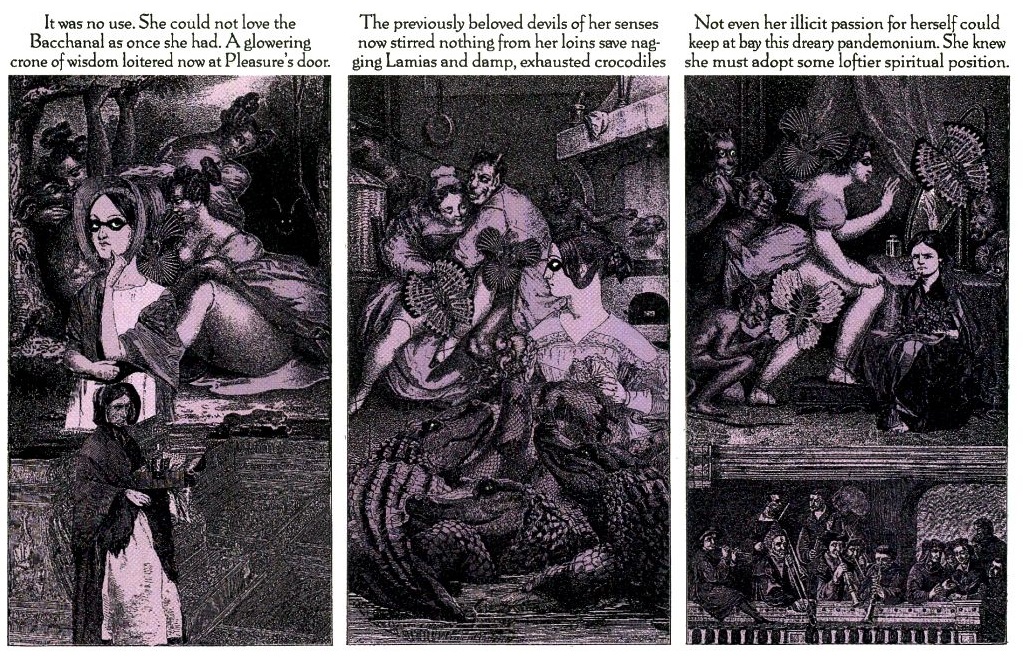
Tomorrow Stories 05Tomorrow Stories #5
tomorrow stories 08Tomorrow Stories #8

It was all written with a naughty tongue in cheek, especially the twisted ‘Li’l Cobweb’ (Tomorrow Stories #4), which wickedly pushed the subgenre of kid comic strips like Little Lulu into the fucked up world of grown-ups. (That said, Alan Moore and Melinda Gebbie didn’t go nearly as far as they did in their critically acclaimed sex comic Lost Girls.)

Given the Cobweb’s kinky promiscuity and Greyshirt’s habit of falling for the wrong dame, you get no points for guessing what happened when those two finally crossed paths under the Indigo moon…

But let me finish by returning to Will Eisner, whose groundbreaking work on The Spirit was an acknowledged inspiration for Greyshirt. In the last comic they did together with the character, Alan Moore and Rick Veitch fully blurred the line between the two universes – ‘A Greyshirt Primer’ (Tomorrow Stories Special #1), published after Eisner’s death, was a moving homage to the master, done in the style of one of his primer stories and featuring a ton of references to his works:
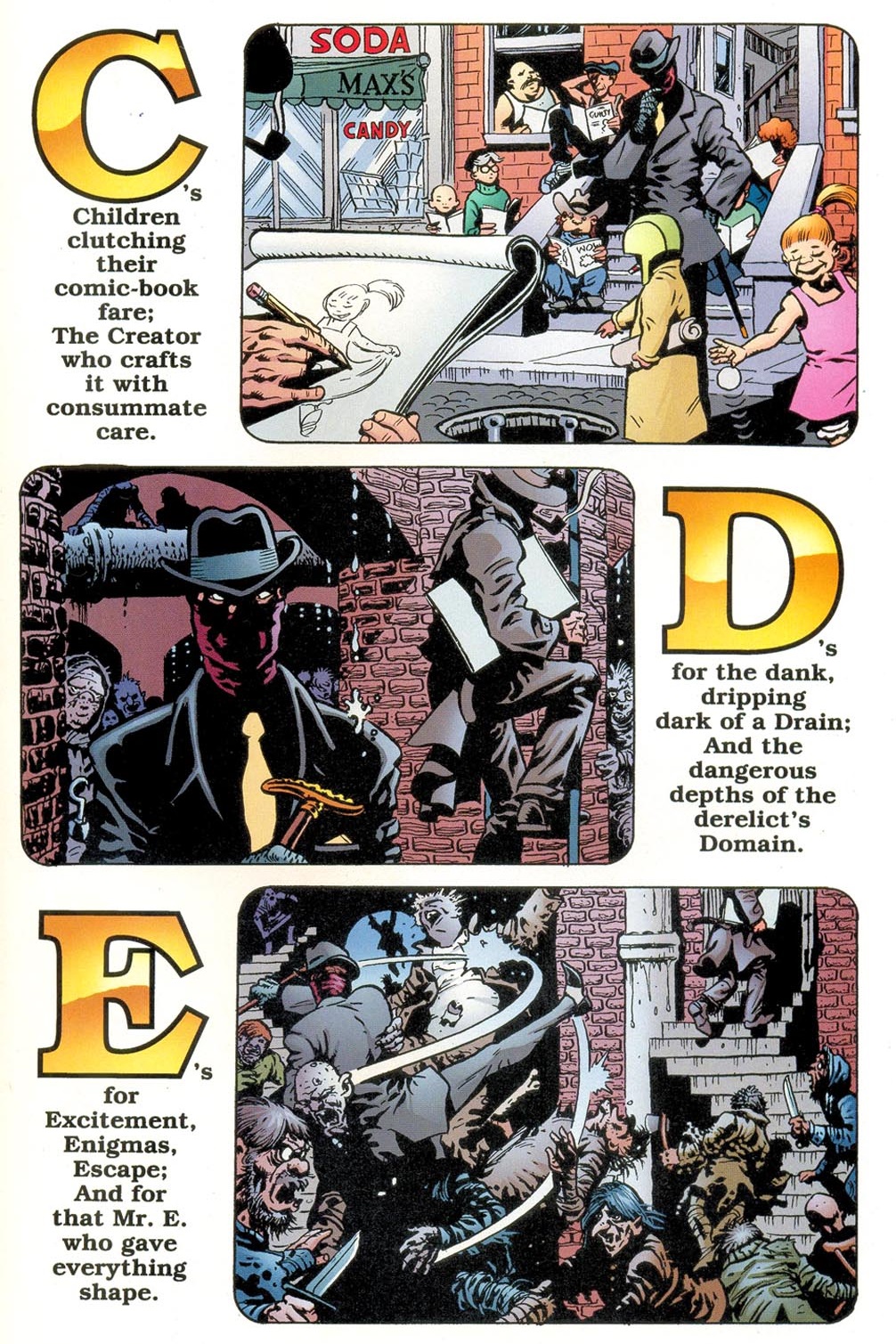
tomorrow stories specialTomorrow Stories Special #1
Posted in HARDBOILED CRIME | Tagged , , , , , , , , | Leave a comment

Spotlight on Foolkiller

As I explained last week, this month is all about vigilantes operating outside of Gotham City. Last July, I addressed obvious series about street justice like The Punisher and Vigilante, but this time around I’m focusing on more off-kilter comics.

Well, they don’t come much more off-kilter than Foolkiller.

Foolkiller

Cult favorite writer Steve Gerber first introduced the concept of Foolkiller in 1974, during his trippy run on the horror series The Man-Thing. It started out as one more drop in Gerber’s endless flood of wild ideas – a throwaway villain amusingly riffing on the era’s trend of reactionary vigilante fiction.

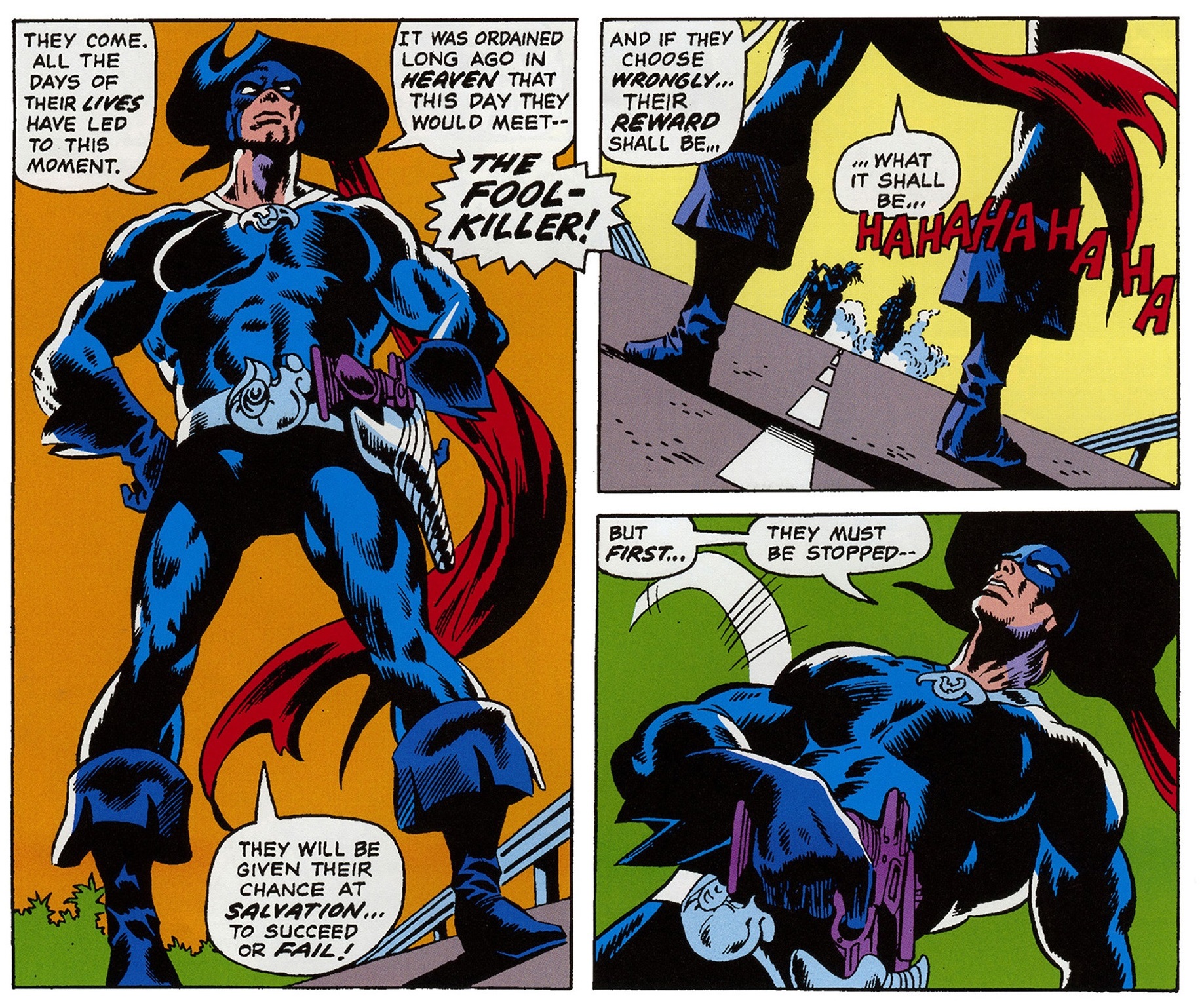
In ‘Day of the Killer, Night of the Fool!’ and ‘The Making of a Madman!’ we met a religious crusader who felt compelled by the Lord to drive around in a red convertible and incinerate anyone he considered a ‘fool’ with his weird ray gun. Artists Val Mayerick and Jack Abel illustrated his epic entrance:

man-thing 03The Man-Thing #3

Typically, Gerber soon adorned the character with all sorts of outlandish touches. The Foolkiller – later identified as Ross Everbest – was a military enthusiast (he idolized his parents, who had died in World War II and Korea) and his secret origin involved going berserk over the hippie protests against the Vietnam War. What’s more, Everbest had been born a cripple and had been healed by the evangelist Reverend Mike Pike, who became his mentor. One day, Everbest found Reverend Mike with a prostitute, so he beat the preacher to death and built him a shrine. He now consulted Mike’s corpse (preserved in formaldehyde) for guidance.

As if this wasn’t idiosyncratic enough, the Foolkiller’s modus operandi involved giving his intended victims a card, allowing them 24 hours to stop being foolish:

the man-thing 03The Man-Thing #3

After trying to kill the cast of The Man-Thing, this version of the Foolkiller met his end when a blast from his purification pistol shattered Reverend Mike’s tomb and a plexiglas shard pierced his heart. Irony!

Three years later, Steve Gerber briefly revived the concept in the classic superhero series Omega, the Unknown, in which a poet called Greg Salinger tracked down the original Foolkiller’s weapons and costume. Salinger secularized the Foolkiller’s mission, now going after those who didn’t share his poetic sensibilities. It was a delightfully kooky concept, but sadly the series was soon cancelled.

Yet the best was still to come. In 1990/1991, Gerber finally had the chance to fully develop Greg Salinger when he did a brilliant 10-issue Foolkiller comic…

foolkiller 02foolkiller 02Foolkiller #2

Like all of Steve Gerber’s greatest works, Foolkiller has an offbeat vibe that defies easy characterization. There are elements of blatant parody and the protagonist’s strange disguises are clearly played for chuckles, but this is spliced with very dark overtones and an earnest engagement with social and existential questions. In a way, this is Gerber’s version of the ‘gritty reboot’ trend taking place in the aftermath of The Dark Knight Returns, with deadly serious takes on even the most ludicrous characters. Or maybe the project started out as a satire of this trend, but Gerber is so good at writing about alienation that he couldn’t help himself (a decade later, he would go on to successfully mix high school angst and prison drama in Hard Time).

I cannot stress enough how unique and captivatingly odd the whole thing feels. To make matters even more ambiguous, J.J. Birch’s moody art – inked by Tony DeZuniga and Vincent Giarrano, colored by Greg Wright – plays it completely straight. The result is compelling as hell!

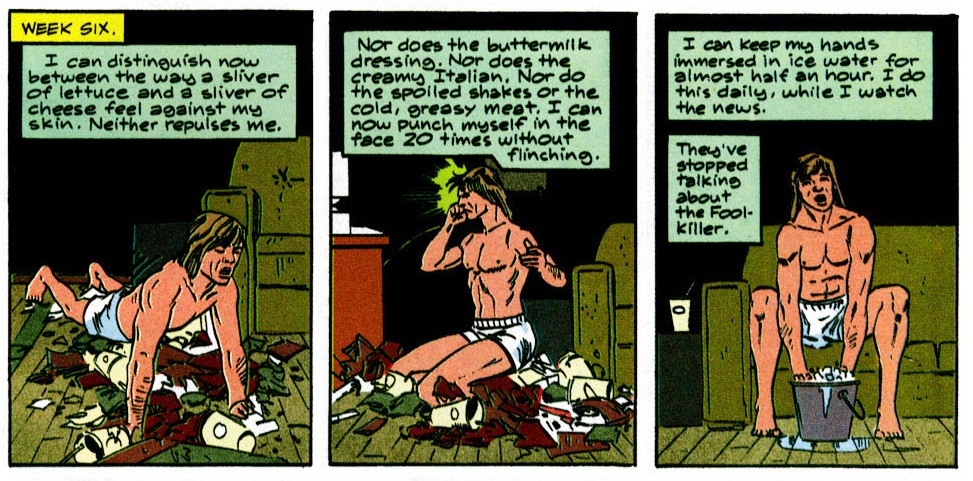
More than Greg Salinger (who had been committed to a mental institution), the real star of the series was Kurt Gerhardt, an average guy downtrodden by society who was inspired by a televised interview with Salinger into becoming the next Foolkiller. At first, Kurt’s forays into vigilantism only managed to make him even more miserable: he either botched his attacks or spent time agonizing because the media didn’t understand his peculiar mission. Kurt eventually grew into the role, although not before a memorable training montage:

Foolkiller 04Foolkiller #4

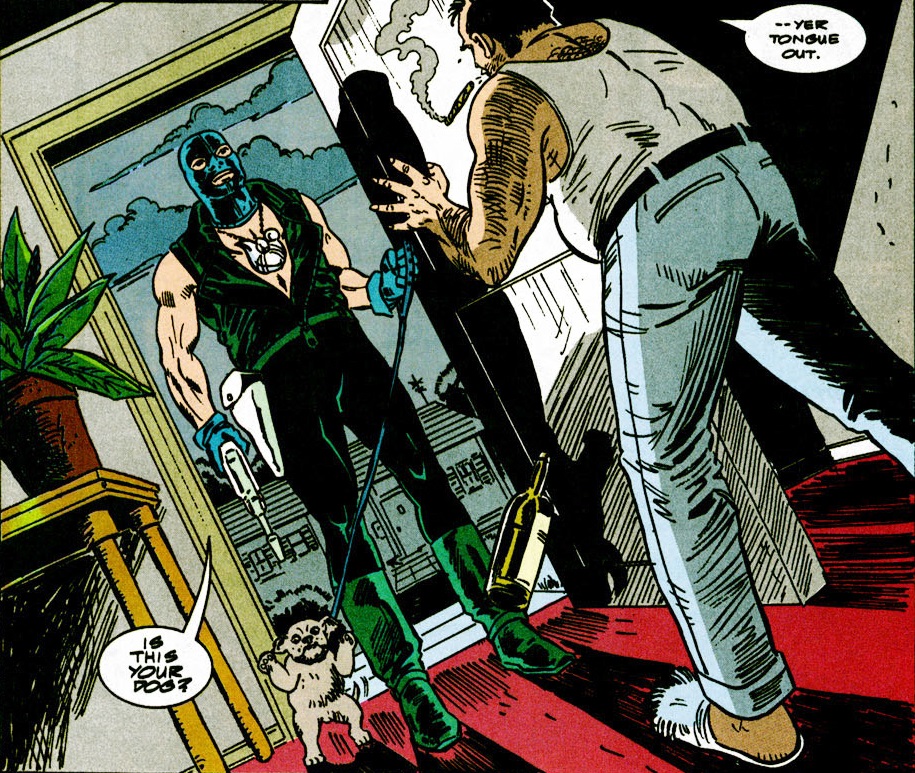
And certainly not before he started donning a freaky S&M mask:

Foolkiller 05Foolkiller #5

As you can tell from the passages above, especially the war diary, there was more than a wink at the wave of Punisher comics coming out at the time. Indeed, it’s cool that Marvel put out what was in many ways an anti-Punisher series, as Foolkiller took a similar concept yet removed most of the action, preferring to focus on deeper issues and touching slices of life (the scenes where Kurt loses his job and marriage are genuinely heartbreaking… and a whole subplot at the Burger Clown fast food joint creates a relatable, lived-in microcosm).

Not that Gerber’s comic was a straightforward, moralistic rebuttal of vigilante fiction. It didn’t shy away from rubbing our faces in the genre’s primordial appeal (for example, when Kurt took down a wife-beater), but it problematized it in a thoughtful manner, making the most out of the vague and ultimately silly nature of the word ‘fool’. Unlike Frank Castle, who is always resolute and clear-minded about his war on crime, Kurt Gerhardt was in a permanent state of crisis. He gradually realized that most people were fools in one way or another – from drunk drivers to employees of credit card companies – and that, once he accepted the possibility of killing them, it was hard to draw a clear line about who did or did not deserve his punishment… It didn’t help that at one point he was attacked by a child and had to figure out at what age people changed from victims into fools.

And just when you thought things couldn’t get more morally complicated, this happened…

Foolkiller 8

In the wonderfully mystifying ‘42 Days’ (Foolkiller #8), the Foolkiller tries to wrap his head around society’s frustration with the Gulf War. He finds fools on all sides of public debate, vaporizing demonstrators and pundits – and also going after anti-toy activists!

This fed into the series’ momentum towards increasingly uncertain political territory. Not only did Kurt expand his targets from street gangs to Trump-like corporate fat cats, he kept branching out – at one point, he even decided to deal with the issue of political correctness in college campuses. Between all this and the early nineties’ socio-economic concerns, Foolkiller serves both as an interesting time capsule and as a depressingly resonant work in today’s world. In fact, in many ways you can easily make the case that the series was well ahead of the curve, uncannily anticipating the themes of more popular, recent comics.

To be sure, you can make that claim about much of the output of Steve Gerber, who produced some of the most fascinating comics out there. While other creators have told fine stories with the Foolkiller, so far none has taken the concept into such unexpected and challenging directions!

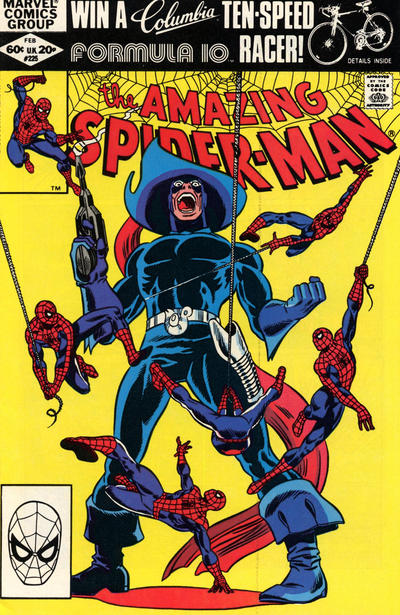
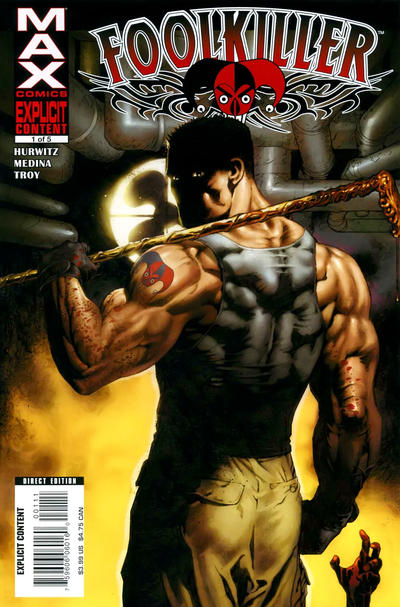
Amazing Spider-Man 225     Foolkiller MAX     Deadpool 4

Posted in HARDBOILED CRIME | Tagged , , , , , , , , , | Leave a comment

Spotlight on The Shadow

Every once in a while, I like to shift gears and spotlight comics or films set outside Gotham City that Batman fans should nevertheless enjoy because they are close to the mood of the world of the Dark Knight. Once a year, I take this one step further and devote a whole month to comics about vigilantes who don’t dress as bats yet also kick plenty of ass!

Despite some overlap with superhero stories, vigilante fiction is its own little beast, rooted in specific fictional rules, political ideals, and a viscerally satisfying (yet highly problematic) appeal. With this in mind, this year I want to take a look at what happens when this brutish subgenre is taken up by some of the quirkiest comic book authors out there

Let’s get things started with DC’s deranged revamp of The Shadow in the ‘80s.

The Shadow

Created by Walter B. Gibson in 1930, the Shadow is a remorseless vigilante who wages war on criminals with all guns blazing (literally), assisted by hypnotic abilities as well as a network of agents working for him. Besides being a huge influence on the original conception of Batman, this character has left a direct mark on pop culture, with his stylish look, his ominous laugh, and signature lines such as ‘Who knows what evil lurks in the hearts of men?’ or ‘The weed of crime bears bitter fruit. Crime does not pay… The Shadow knows!’

In the 1970s, Denny O’Neil wrote a Shadow comic series, breathtakingly illustrated by Mike Kaluta, Frank Robbins, and E.R. Cruz. O’Neil also worked the Shadow into the DC Universe by having him cross paths with the Caped Crusader in a couple of Batman issues These were spiffing adventure yarns whose tone was unabashedly pulpy (with a dash of noir), paying homage to the feel of the character’s earlier prose and radio tales.

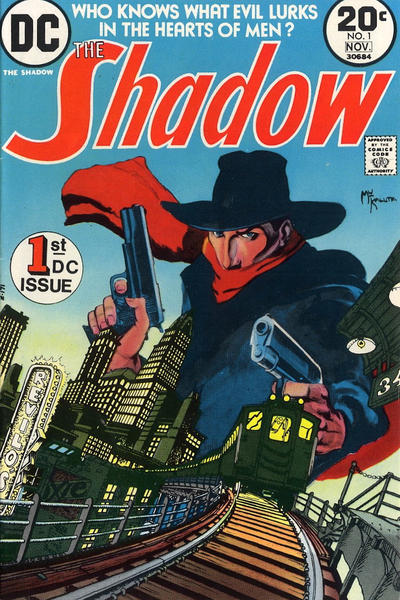
the shadow 1      the shadow 10      Batman 253

A decade later, DC took a risk and let Howard Chaykin loose on the property, resulting in an unforgettable 1986 mini-series, later collected as Blood & Judgment. The 35-year-old Chaykin had just reached a career high point with the cyberpunk critical darling American Flagg! and seemed determined continue blowing the minds of anyone who dared read his stuff. As he explained to The Comics Journal at the time, Chaykin was not a big fan of the political and moral attitudes associated with the Shadow, so he set out to reinterpret the character through tongue-in-cheek myth-debunking, taking advantage of DC’s carte blanche to go wild.

It should therefore come as no surprise that Blood & Judgment was fairly controversial. When it debuted, the series was DC’s biggest hit (next to The Dark Knight Returns), but it drew a lot of flak for its violence, sex, and iconoclastic approach to the franchise. Howard Chaykin radically revised the Shadow’s origin and established that, even though he had been around since the pre-WWII era, by the eighties this sardonic vigilante still looked as young as ever as he viciously fought crime with a pair of Uzi submachine guns (instead of the usual pistols).

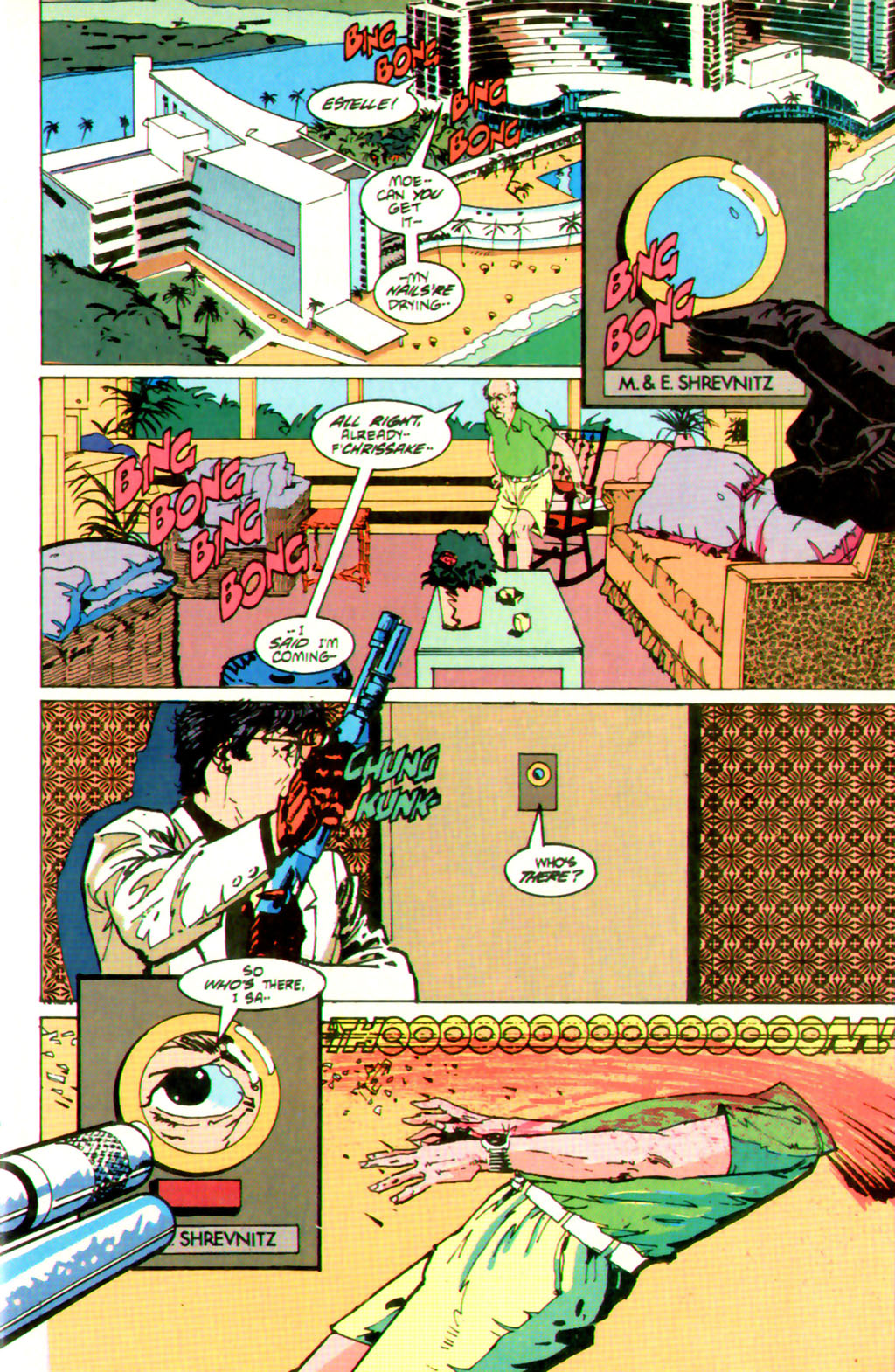
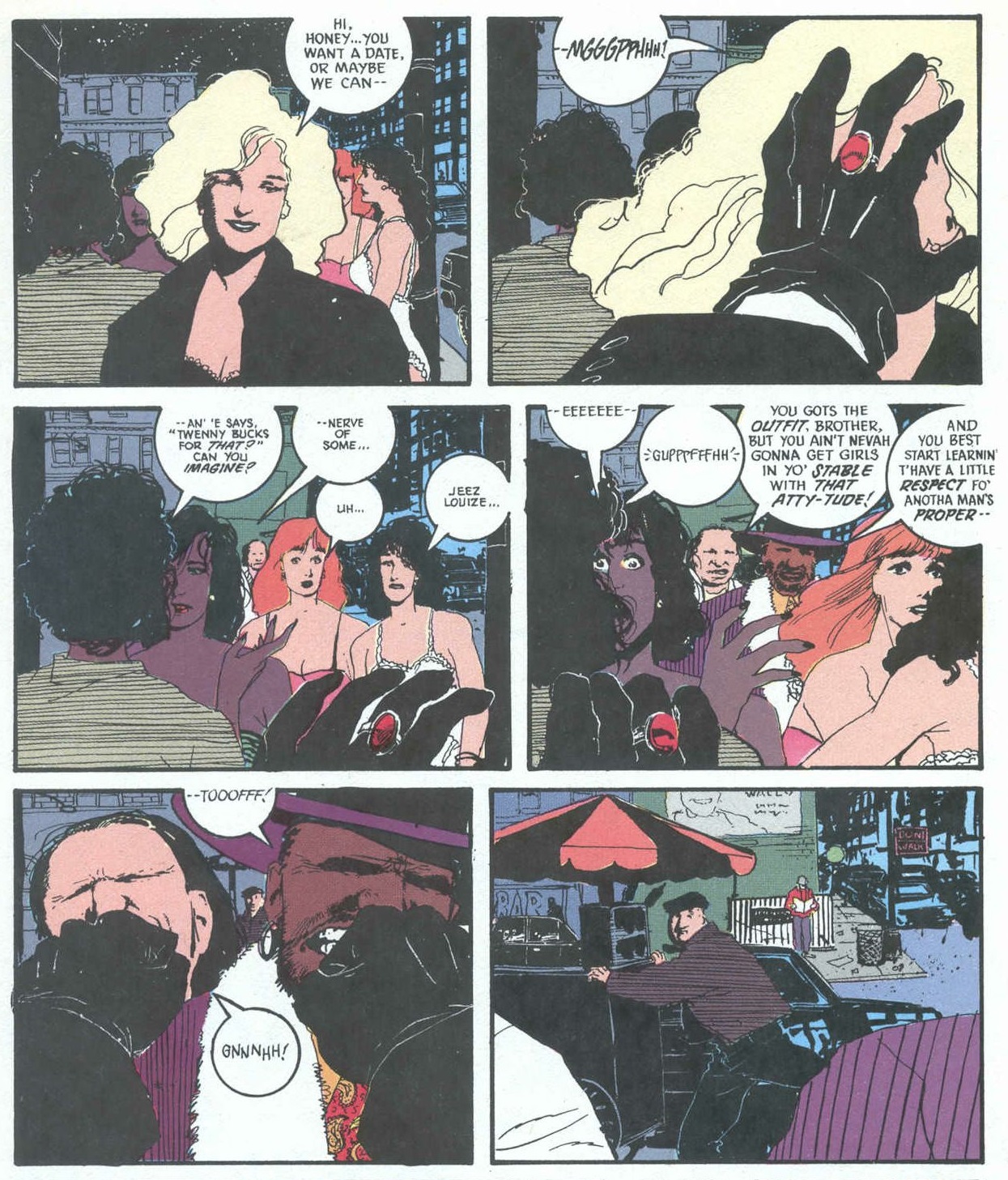
And just to make sure he pissed off as many fans as possible right off the bat, Chaykin devoted most of the first issue to killing off the Shadow’s former agents, dispatching beloved characters in gruesome ways:

shadowThe Shadow (v2) #1

Howard Chaykin’s free-for-all iteration of the Shadow made no apologies for his bloodthirstiness or male chauvinism. This was not a retcon as much as a logical extrapolation: after all, although he had preserved his youth, in the story the Shadow was still a product of the early 20th century… That, plus the fact that he had been isolated from the world (in the mystical scientific utopia of Shambala) since 1949, meant that he had hardly kept up with the times, including the latest views on heroic justice and sexism.

In fact, one of the themes running through the mini-series – indeed, through many Chaykin comics – was precisely the contrast between old values and modern times…

shadow 3The Shadow (v2) #3

So yes, Blood & Judment is a very Chaykin kind of comic, for better or worse. There is incredibly convoluted plotting, with the megalomaniac villain carrying out an elaborate plan that at one point involves threatening to nuke New York City as part of a quest to achieve eternal youth. The series has loads of characters and plenty of stuff taking place at the same time, creating a deliberately disorienting reading experience. With its sharp visuals and dazzling compositions, however, it does look terrific (although Chaykin definitely has to share credit for this with colorist Alex Wald). And, needless to say, the whole thing is gleefully raunchy… Hell, one of the subplots concerns the old, wheelchair-bound villain’s habit of having sex with a lunatic trophy wife via his laboratory-created congenital idiot son, whose body he controls via telekinesis!

While Howard Chaykin moved on to his next project (a similarly provocative revamp of Blackhawk), the editor of Blood & Judgment, Andrew Helfer, took the comic’s concepts and churned out an ongoing series set in the same over-the-top reality. Now edited by Mike Carlin, the series was written by Helfer and, at first, illustrated by Bill Sienkwiewicz, who delivered the kind of eccentric art such a comic deserved…

shadow 1The Shadow (v3) #1

Andy Helfer threw everything at the reader, kitchen sink and all. The first arc, ‘Shadows and Light,’ included at least four interlinked major villains, each with a different evil agenda, ranging from personal revenge against the Shadow to an attempt to prevent the return of Taiwan to communist China. Sure, it was a confusing mess – the pages were wordy and cluttered, the plots were overcrowded, meandering, and not always easy to follow… Still, I have a soft spot for this type of surrealist chaos!

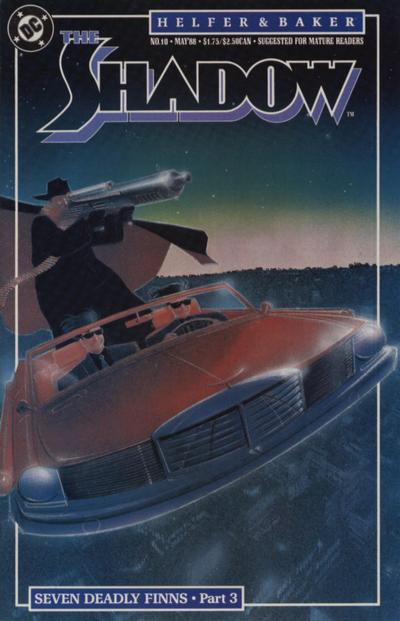
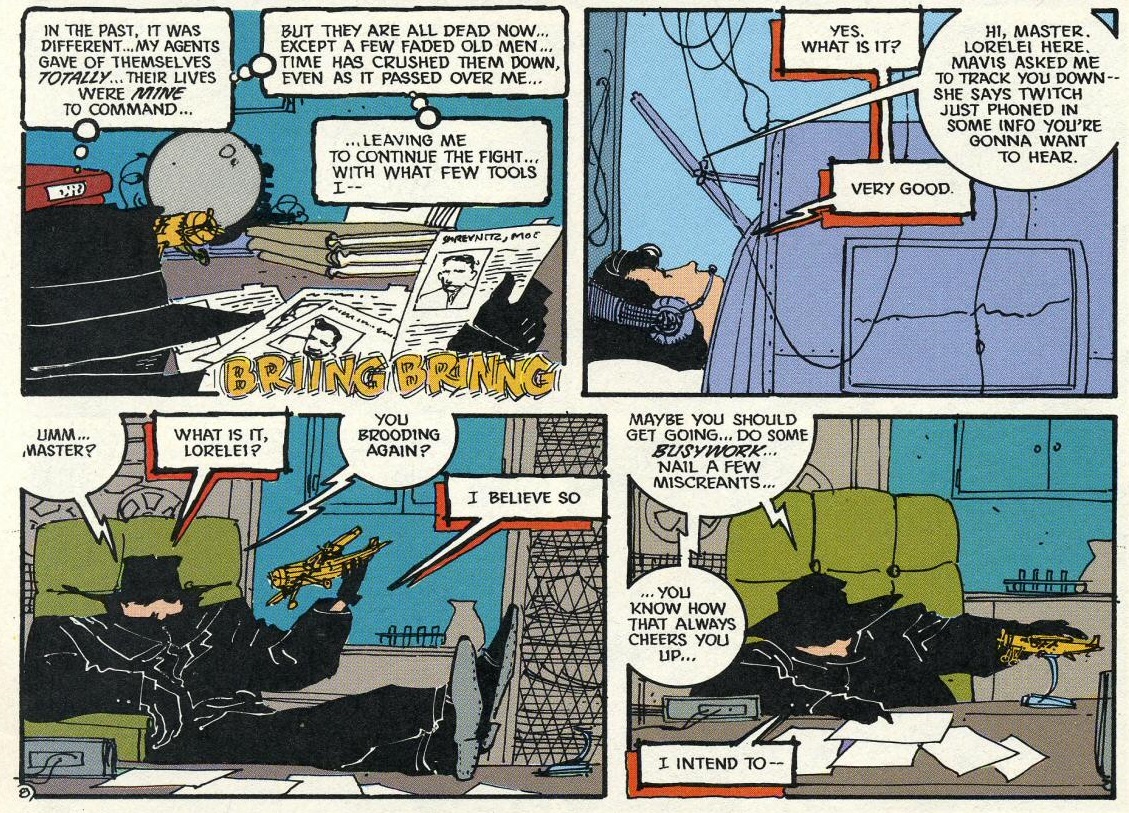
Besides sticking to Blood & Judgment’s darkly comedic spirit, Helfer brought back Chaykin’s creations such as Lamont Cranston’s half-witted clone, the Shadow’s super-powered sons Hsu-Tei and Ching Yao Chang (with their nifty flying car), and the manager of his new network of operatives, Lorelei (who was connected to an iron lung and assisted by trained monkeys). Best of all, Helfer continued to develop the mini-series’ depiction of Inspector Joe Cardona as an uproariously cranky, hard-bitten old cop.

The large and often grotesque supporting cast was more fascinating than the titular hero, whom Andrew Helfer never bothered to make all that relatable or even likable… One of the subversive running gags was precisely the fact that the Shadow ran his network of agents like a despotic boss who just happened to be in the business of slaughtering criminals. And as if that wasn’t mean enough, the Shadow died in the second half of the series and spent the last handful of issues as an increasingly mutilated corpse.

What’s more, starting in issue #8, Kyle Baker became the regular artist. This was a smart move: Baker is one of the funniest comic creators out there, both as an artist and as a writer (for example, he did the hilarious You Are Here and The Cowboy Wally Show, not to mention his masterpiece Why I Hate Saturn). As The Shadow’s own credits put it, Baker brought ‘a healthy dose of perverse enthusiasm’ to the project.

the shadow 08The Shadow (v3) #8

To be fair, the series did lose some steam after a while, although it picked up momentum again towards the end. More than the flaws, however, it’s the high points that stick in my mind…

I’m particularly fond of ‘Fragment of the Sun,’ the prologue to the first arc, which was published in The Shadow Annual #1, with pencils by Joe Orlando. Set in the late ‘40s, this issue has a lot of fun with the paranoia of the early atomic era, as the Shadow and his crew go up against a religious cult of nuclear power that tries to subliminally spread its gospel through television. The second annual is quite strong as well – it’s an amusing pastiche of Citizen Kane, dedicated to Orson Welles (who voiced the Shadow in the 1937 radio show).

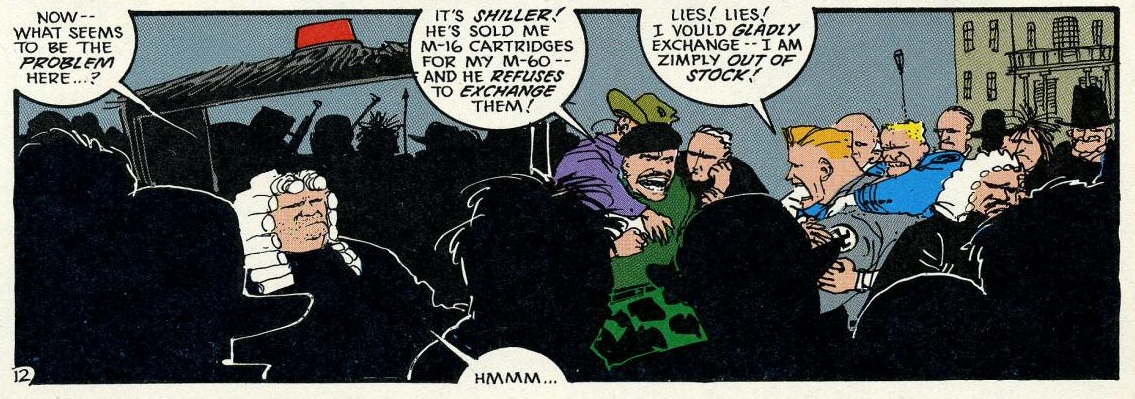
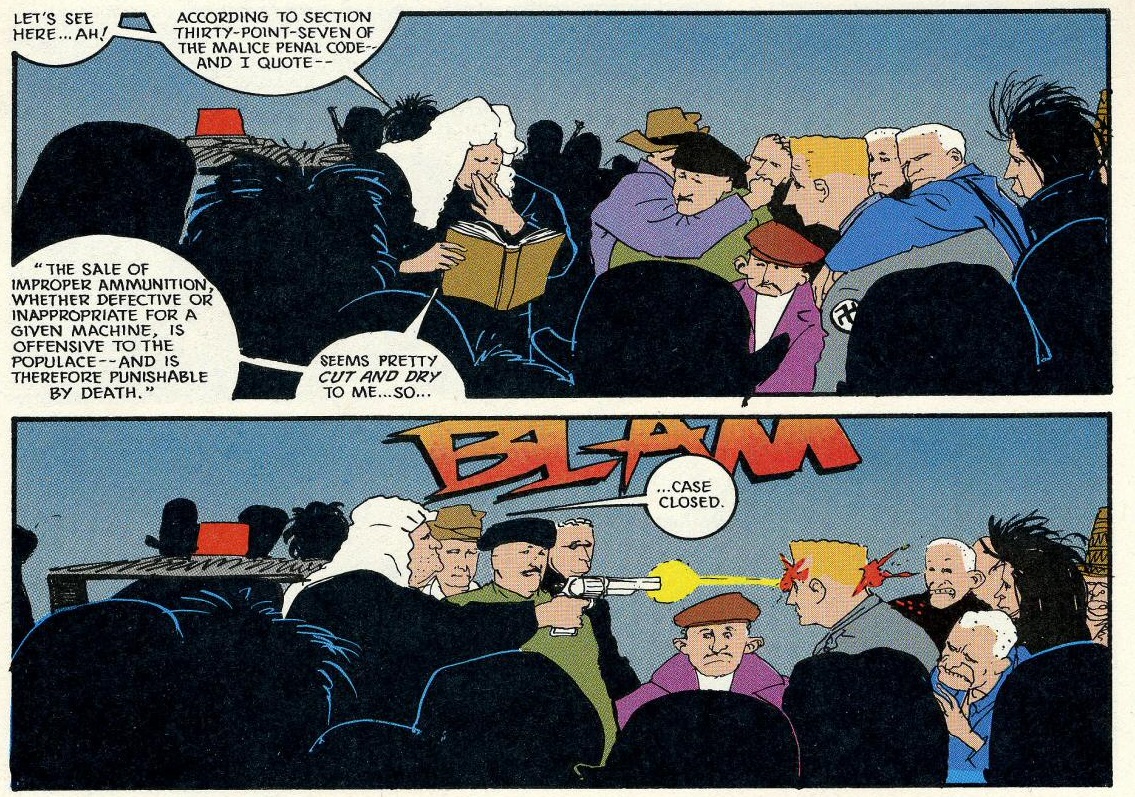
Also cult-worthy, ‘Harold Goes to Washington’ (issue #7), drawn by the wonderful Marshall Rogers, tells the twisted story of a schoolkid who wants so badly to become a war hero that he is willing to assassinate Ronald Reagan just because the president promised to usher in world peace. And in ‘A Town Called Malice’ (issue #15), the Shadow’s bumbling sons stumble into a town on the outskirts of China that serves as a haven for all sorts of criminals yet has its own peculiar brand of justice:

the shadow 15the shadow 15The Shadow (v3) #15

Andy Helfer and Kyle Baker went on to do the underappreciated mini-series Justice, Inc., where they gave the same cartoonish treatment to another classic pulp hero: in this mini, the Avenger (a master of disguise who had also shown up in a couple of issues of The Shadow) starts working for the US secret services, impersonating and toppling third world leaders, and ends up trying to shift the whole paradigm of Cold War politics. It’s a poignant, gonzo satire (even though it’s final punchline doesn’t go as far as the similar Elektra: Assassin) that remains criminally uncollected.

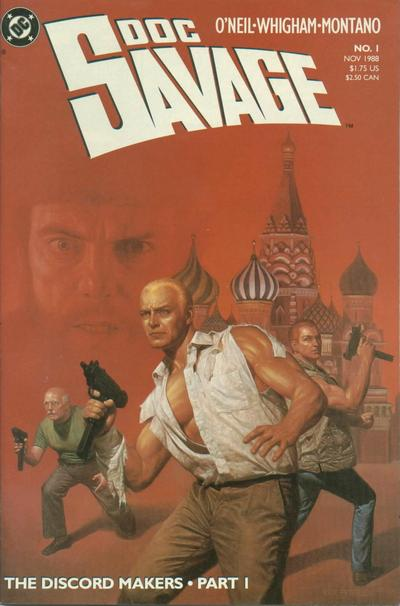
Between Justice, Inc., The Shadow, and Denny O’Neil’s revamp of Doc Savage (which also brought the titular character into the eighties), this was a fun era in which DC seemed willing to let creators drastically tear apart and rebuild old properties, nostalgia be damned.

justice, inc     the shadow 10     doc savage 1

Almost thirty years after his first take on the Shadow, Howard Chaykin returned to the character with the mini-series Midnight in Moscow, an international adventure set in 1949. Clearly a product of an older, melancholic author, this is a more uninspired, clichéd tale that lacks the manic energy of Blood & Judgment, even if it does feature a number of beautiful passages.

Meanwhile, the kind folks at Dynamite Entertainment have collected the two Chaykin minis as well as Helfer’s run, labeled The Shadow Master Series (although sadly without the annuals). So if you ever tire of portentous stories about whiny and brooding heroes, you can now easily get your hands on a crime comic that, refreshingly, doesn’t take its protagonist all that seriously…

the shadow 12The Shadow (v3) #12
Posted in FANTASTIC ADVENTURES | Tagged , , , , , , , , , , , , , | Leave a comment

Batman HATES guns

I’ve explained before why I don’t think Batman should use firearms. Given how much attention the gun debate has been getting of late, however, perhaps it is a good time to take a closer look at how strongly the Dark Knight feels about this issue.

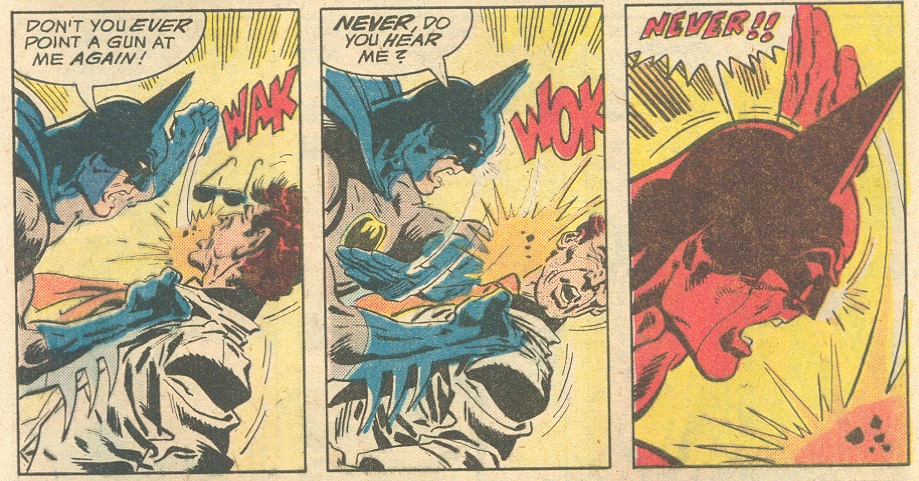
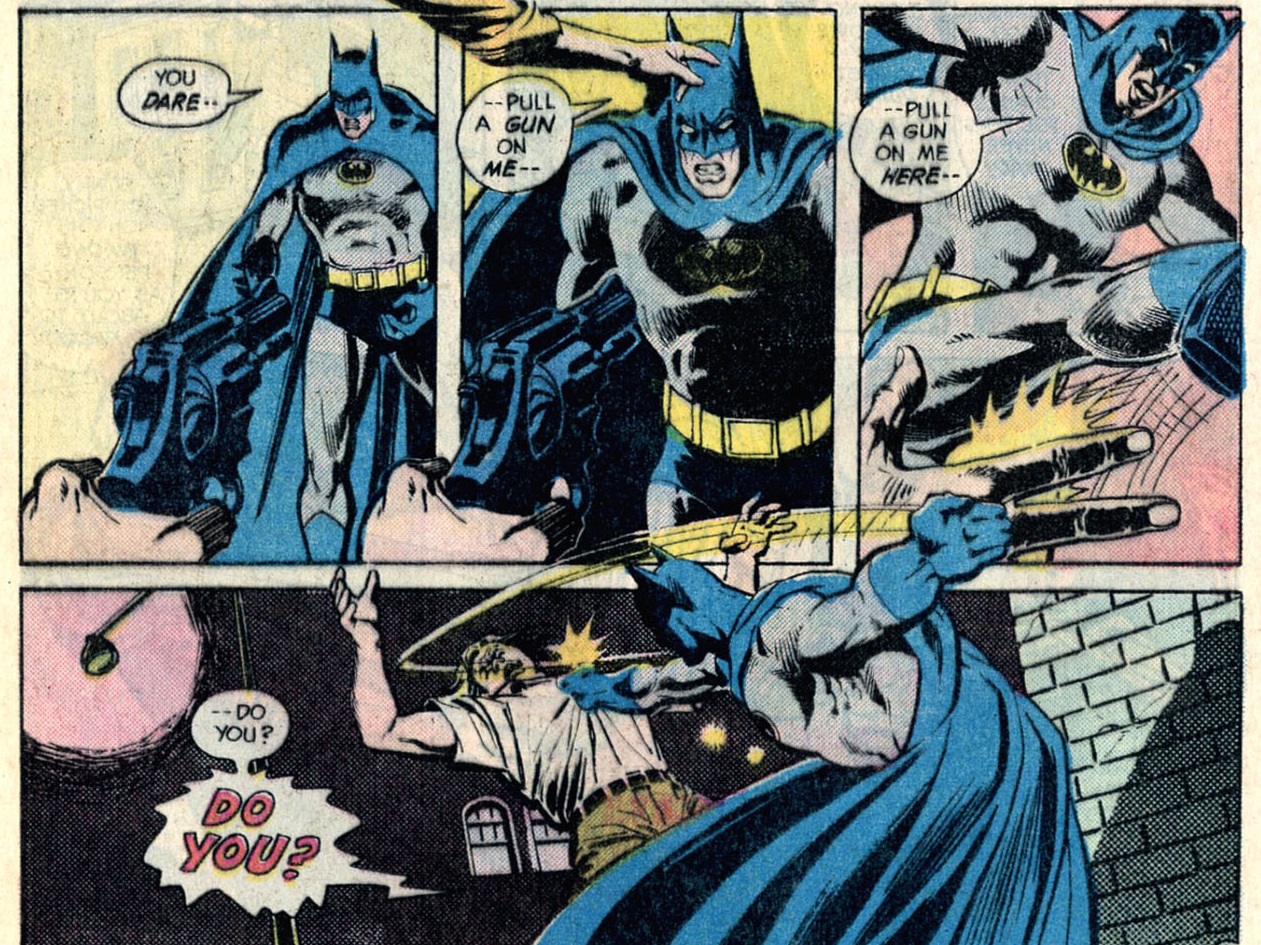
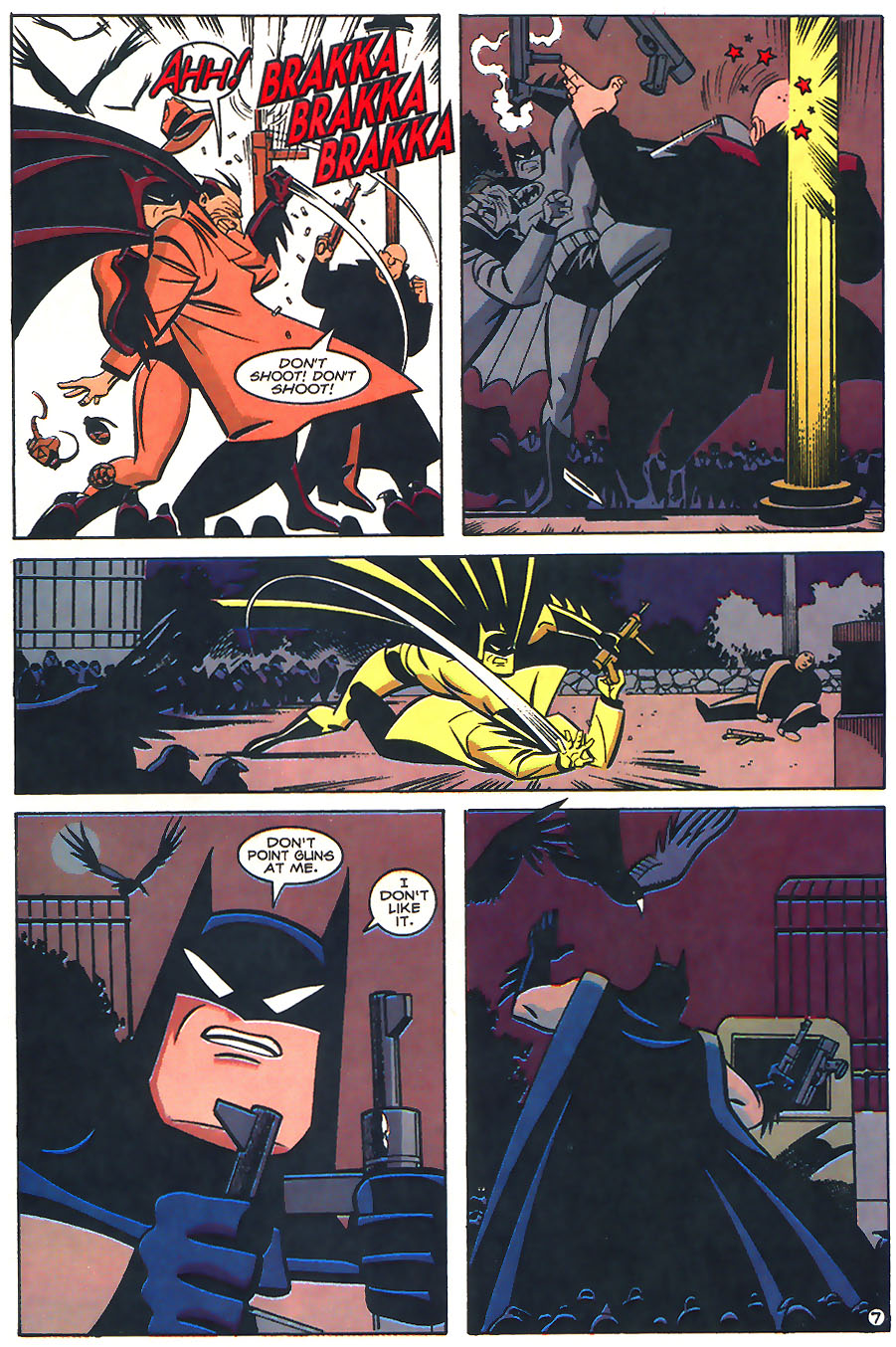
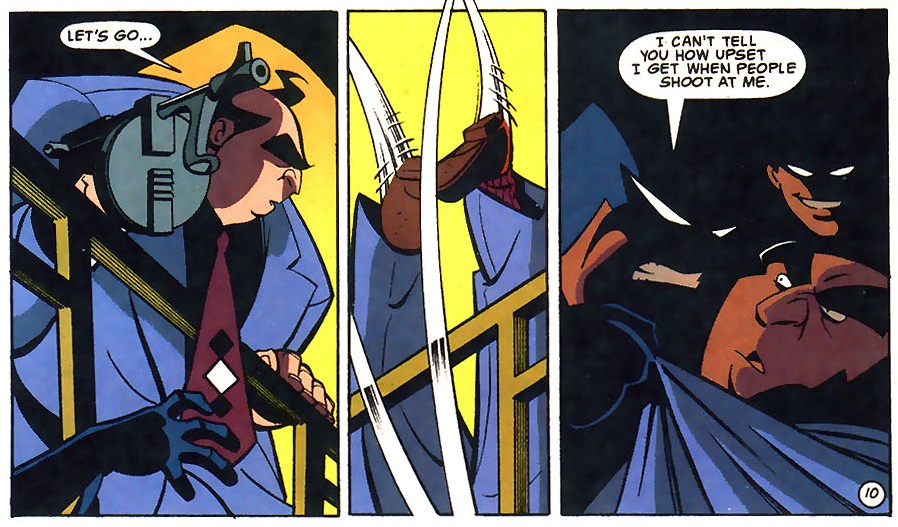
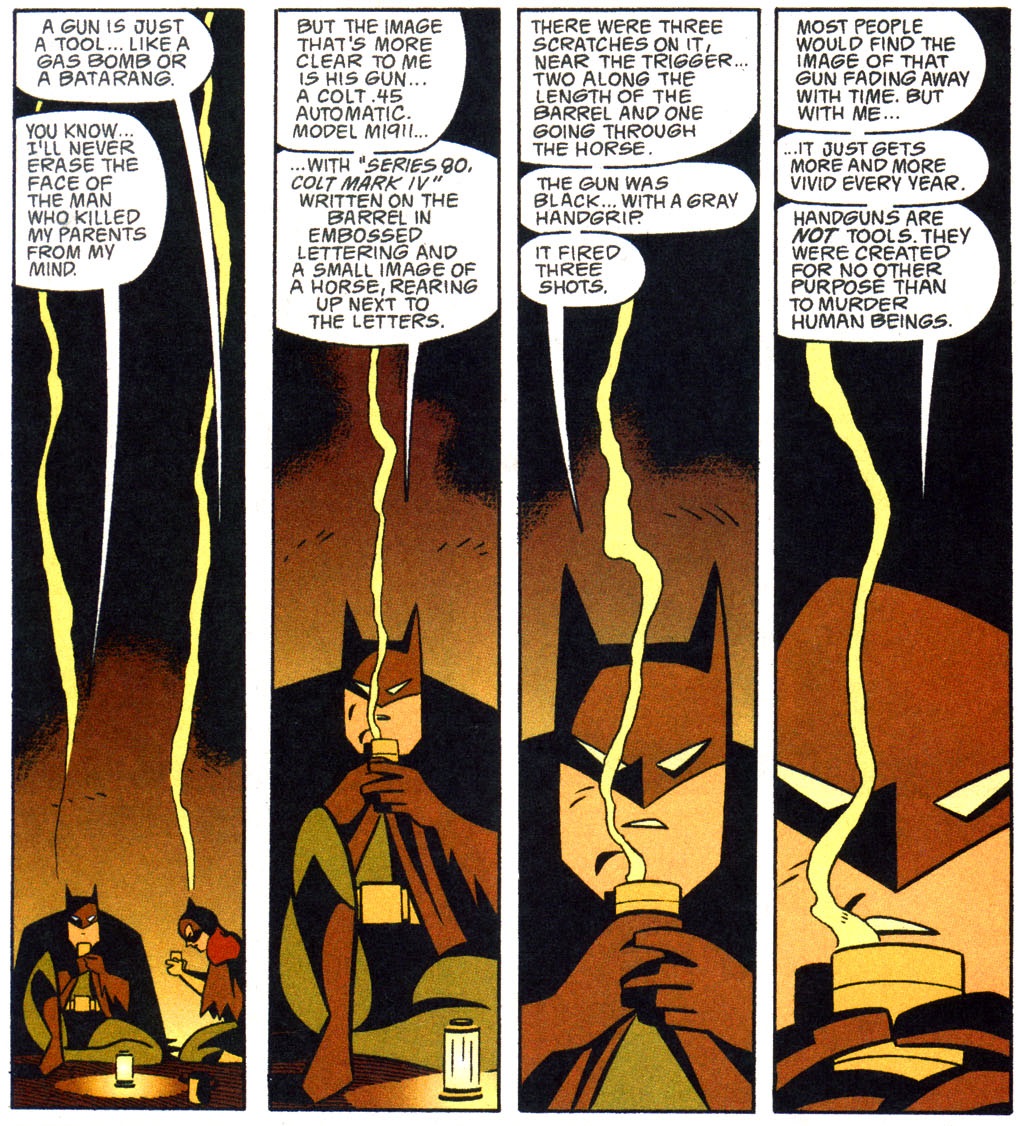
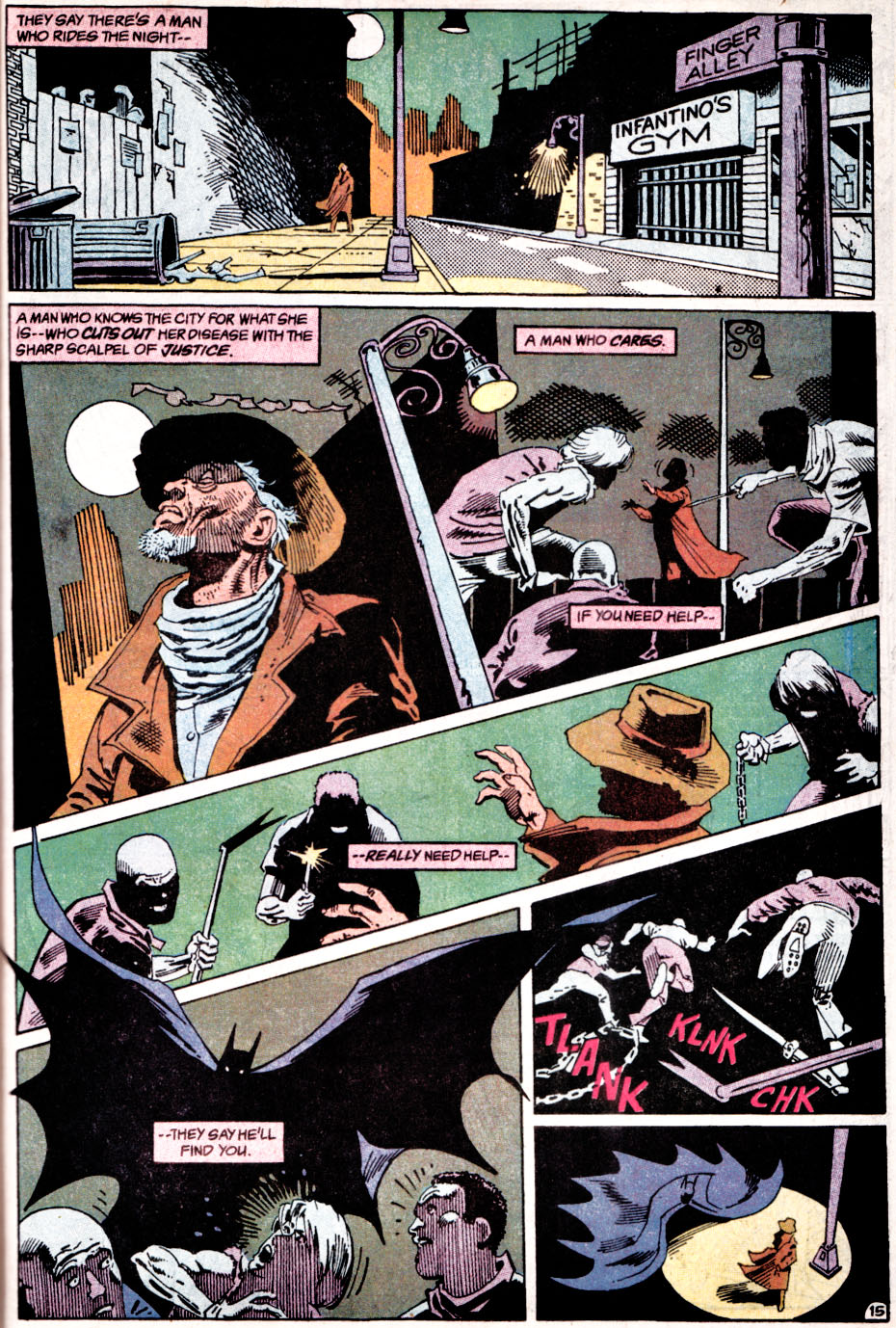
Batman hates guns. It’s not just that he objects to lethal force… He passionately loathes handguns and the people who carry them, especially when they’re pointing the darn things at him:

The Untold Legend of the Batman #2The Untold Legend of the Batman #2
Detective Comics 457Detective Comics #457

Given Batman’s origin, this hatred is a key aspect built into the blueprint of the character. After all, here is someone who is above all motivated by the tragedy of seeing his parents gunned down in front of him. Every time the Caped Crusader punches out a crook with a gun, you can tell he is somehow also fighting back against the man who shot his parents.

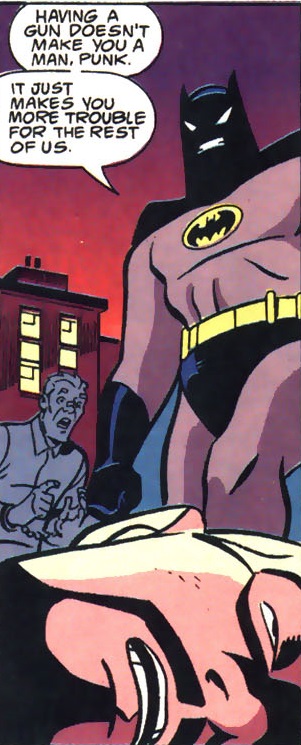
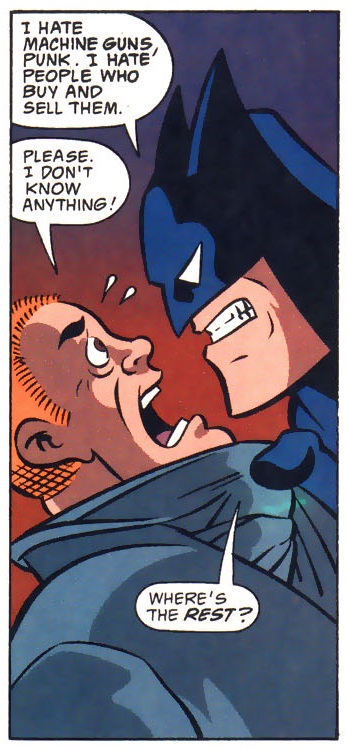
One writer who is particularly fond of using Batman’s trauma as subtext is the reliably great Ty Templeton:

Batman & Robin Adventures 04Batman & Robin Adventures #4
Batman & Robin Adventures 07Batman & Robin Adventures #7
Batman & Robin Adventures 14Batman & Robin Adventures #14
Batman & Robin Adventures 20Batman & Robin Adventures #20

These are pure Batman moments. And that’s the thing: I can root for cowboys and vigilantes who shoot everyone that get in their way (more on this next week!) and I sure can get a huge kick out of a grim crime flick like the original Get Carter, with its relentlessly violent, gun-wielding anti-hero… But when I’m reading Batman comics, I want to see the protagonist rise above his enemies and prove that he is way cooler than some jerks who assert their power with deadly weapons.

Most of all, like I said, this stuff works because it is true to the character. Indeed, after hinting at it for years during his peerless run on the Adventure books, Ty Templeton finally delved into the guns’ deeper meaning for the Dark Knight in an issue where Batgirl decided to start carrying a pistol. (Oh Barbara, if only you knew what happened to your counterpart in the regular DC Universe…)

Gotham Adventures 9Gotham Adventures #9

This is such a powerful scene, not only because Templeton nails Batman’s intense tone, but also because of the close-up on his somber expression (by the artistic dream team of Rick Burchett and Terry Beatty) and the super-moody coloring (by Lee Loughridge and Zylonol).

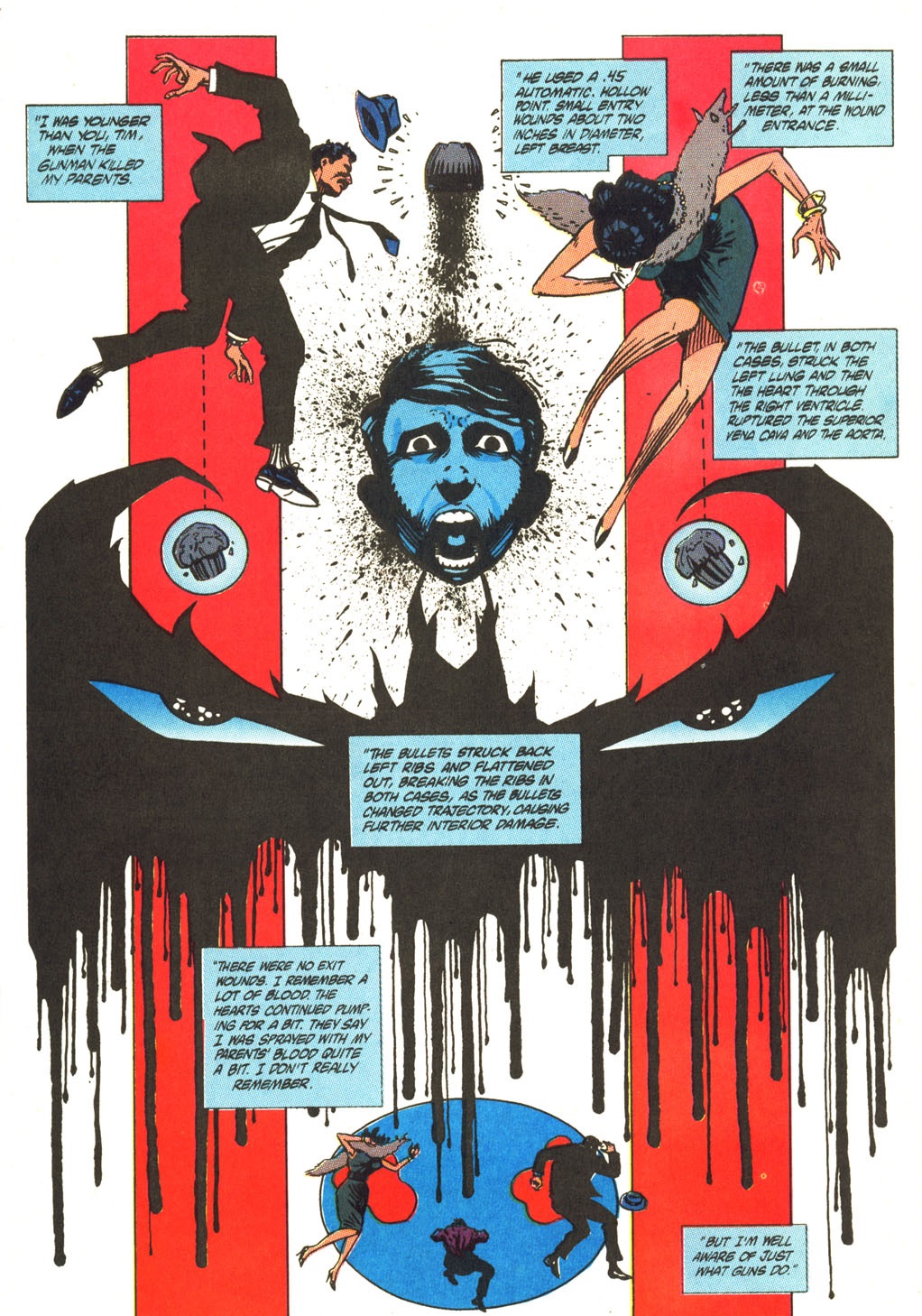
John Ostrander also wrote a similar scene in Seduction of the Gun, a deftly handled slice of agitprop focusing specifically on gun violence (with looser art, by Vince Giarrano):

seduction of the gunSeduction of the Gun

To be fair, one of the reasons the Dark Knight doesn’t use firearms is because he doesn’t really need them anyway. After all, he is a scary, virtually infallible badass ninja! Also, he has a whole arsenal of sci-fi gadgets at his disposal… So yeah, I’m willing to admit it’s a bit disingenuous to say that Batman ‘uses only the decent weapons of outrage and indignation,’ even if it does make for a pretty neat line:

detective comics 417Detective Comics #417

Still, this doesn’t erase the fact that a dyed-in-the-wool aversion to guns is an important dimension of the Caped Crusader.

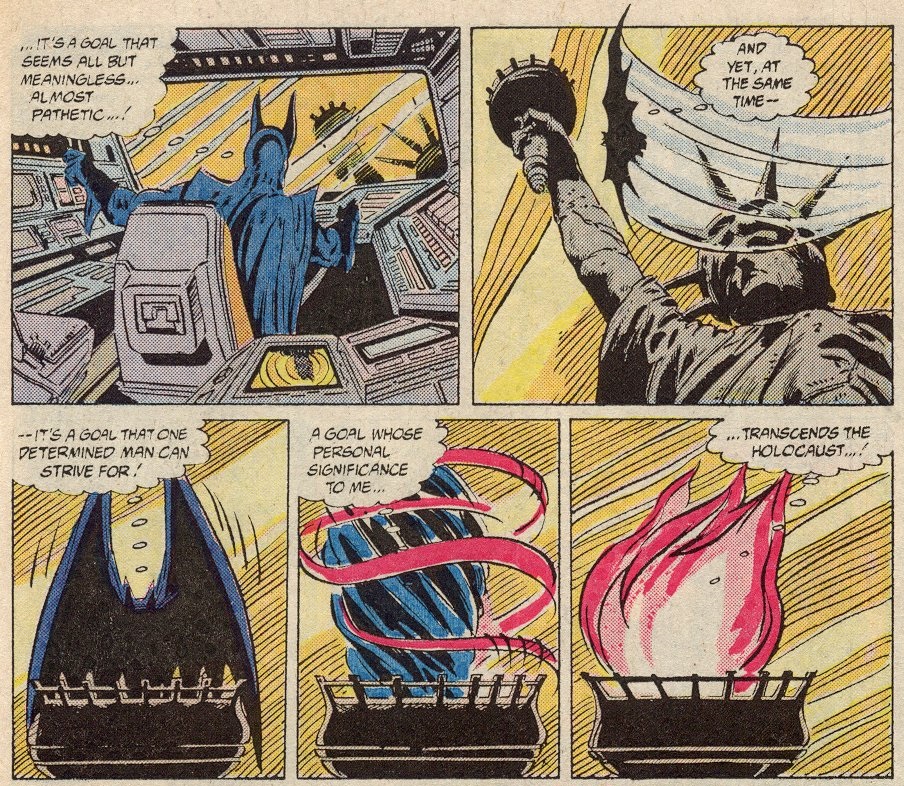
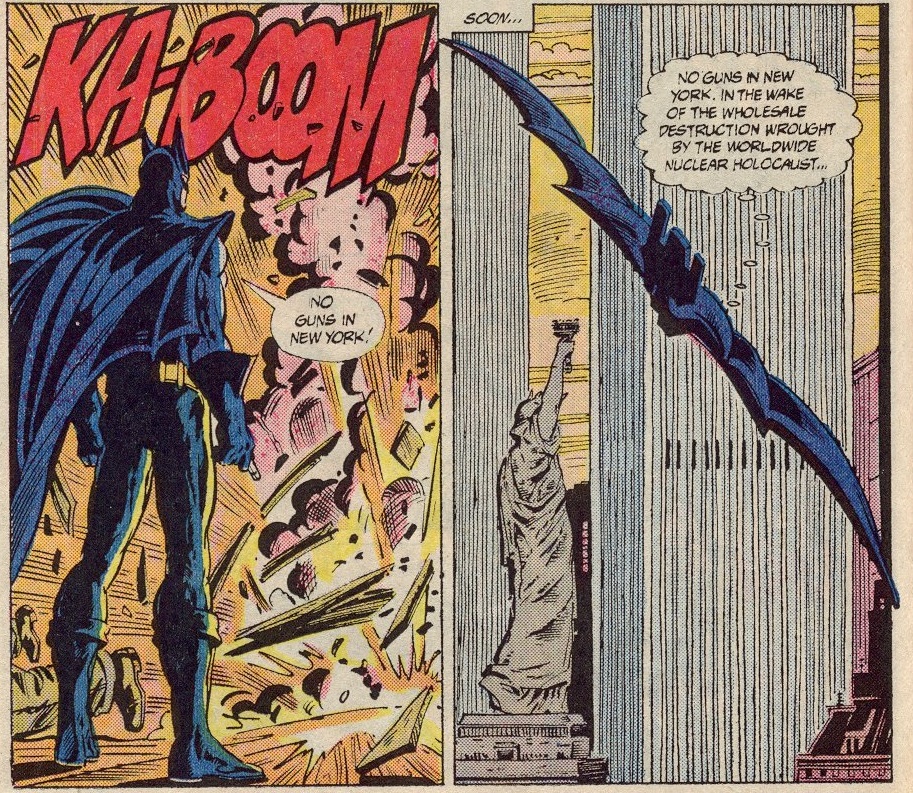
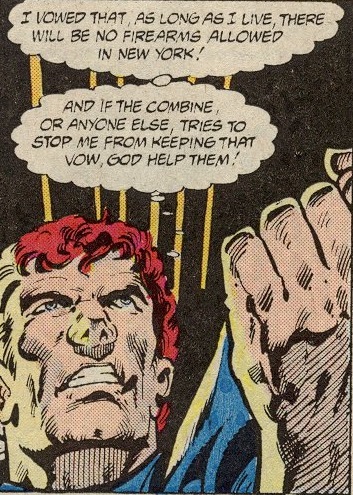
In the mid-1980s, Michael Fleisher built on that side of the character in a fascinating way. The completely unhinged series Hex told the wild exploits of bounty hunter Jonah Hex after he traveled from the 19th to the 21st century, landing smack in the middle of a post-apocalyptic dystopia. This version of New York City was home to a new Batman who didn’t allow firearms of any kind in his town… He fought a local crime syndicate called the Combine and you bet your ass his headquarters were in the goddamned Statue of Liberty:

Hex #11Hex #11Hex #11

The new Batman had been a world-class gymnast and a doctoral candidate in criminology at the John Jay College of Criminal Justice who idolized the original Caped Crusader and had been researching a thesis on his career when thermonuclear war broke out (he was actually doing research down in the Batcave when the bombs went off, killing one hundred and fifty million people). Readers didn’t learn his full name, but it was clear that his last name was Cohen and he was Jewish.

Cohen’s mother had been a rabbi who campaigned tirelessly for handgun control and his father had served as a top-level disarmament negotiator. They had been killed by an organization of fanatics – the National Reconstruction Alliance (yep, NRA) – who had focused their hatred on advocates of gun control and Jews. So their son had taken the mantle of Batman ‘to help bring back the civilized values they’d believed in.’

Hex #11Hex #11

When doing alternate versions of the Dark Knight, creators such as Brian Azzarello or Zack Snyder have gone with the uninspired twist of making him a gun-packing mean bastard, but Michael Fleisher went in the opposite direction, giving us a Batman that not only hated guns, but was thoroughly defined by that hatred. Sadly, Fleisher never got around to telling us much about this Batman’s adventures, although at least we got to see him team up with Jonah Hex to fight gargantuan killer robots in a futuristic New York City…

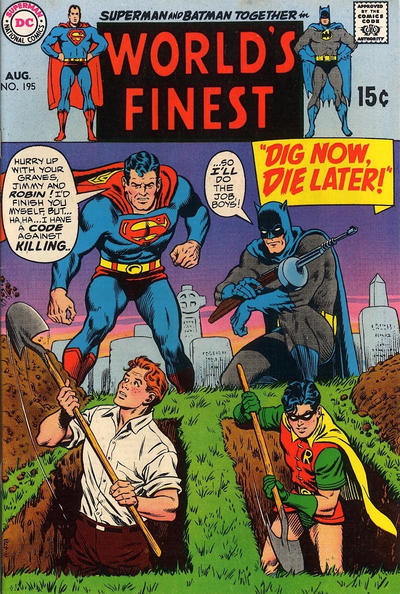
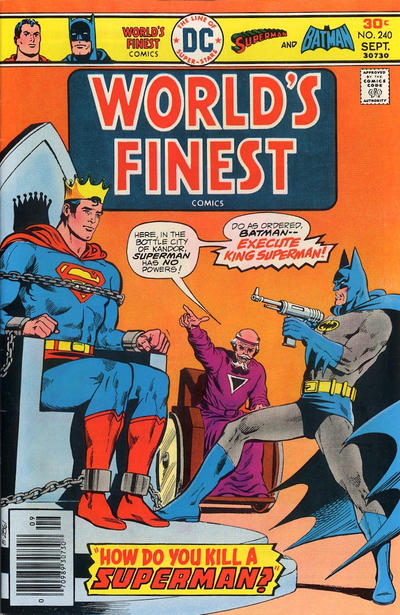
And speaking of comics that are totally bonkers, let me finish by saying that, while the sight of Batman holding a gun can often suck the fun out of a comic, I’m obviously willing to open an exception for old school goofy covers. In my book, those can get away with anything….

World's Finest 240         World's Finest 195

Posted in GOTHAM CITIZENS | Tagged , , , , , , , , , , | 3 Comments

3 sleek fights by Bret Blevins

Bret Blevins has drawn a bunch of cool Batman comics and, in the process, delivered some truly rousing fight scenes. Although Blevins doesn’t always hit the mark (especially when working with inkers or colorists that screw up his crispy pencils), at its best his art has a strong sense of geography and sleekly choreographed movements, making these slugfests a joy to behold!

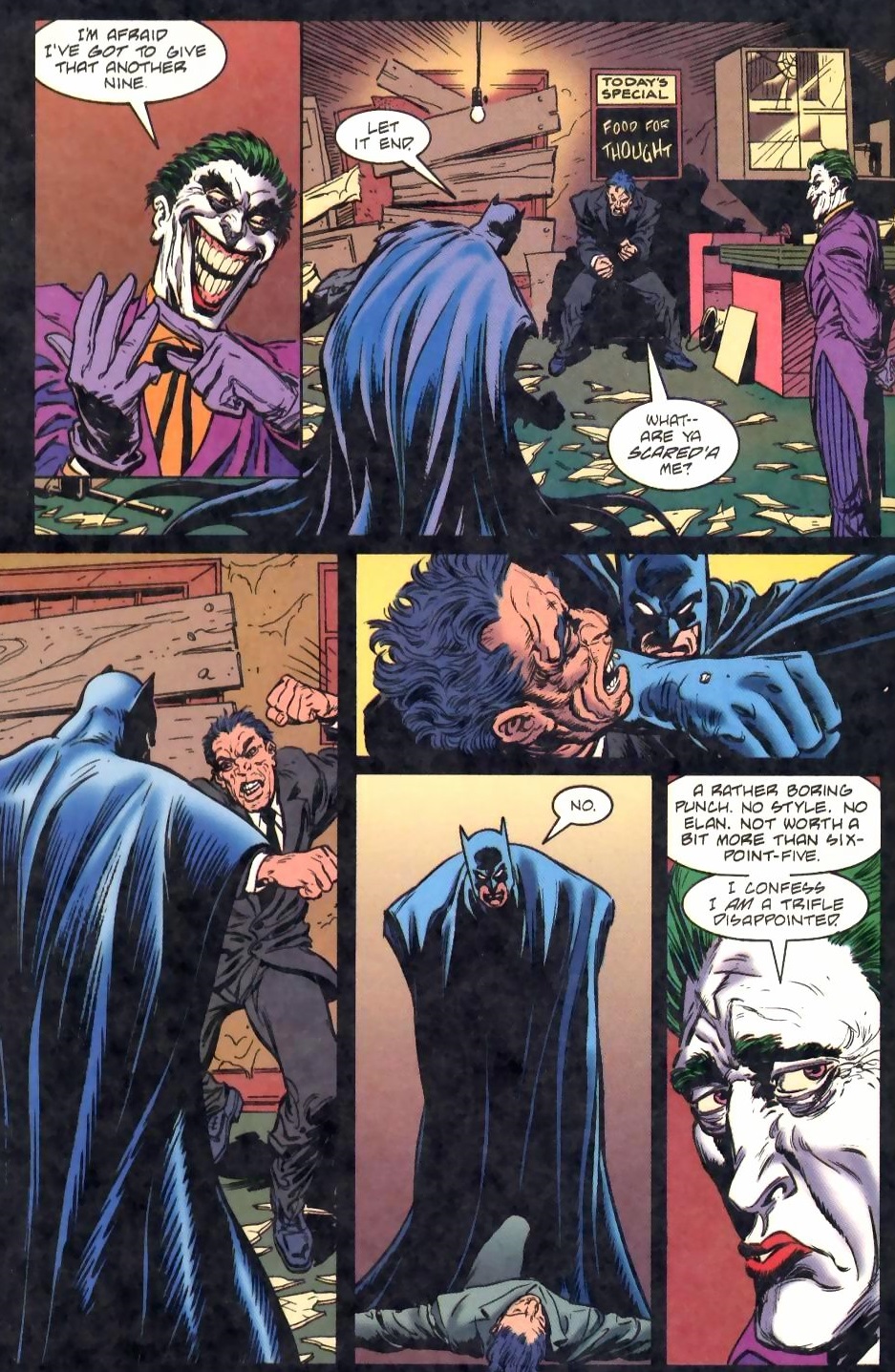
Here is an excerpt from ‘Images’ (script by Dennis O’Neil, colors by Digital Chameleon) the best story about the first confrontation between Batman and the Joker (yes, better than The Man Who Laughs). This one is a doozy, not least because of the amusing asides by the Clown Prince of Crime:

Legends Of The Dark Knight 50Legends Of The Dark Knight 50Legends Of The Dark Knight 50Legends of the Dark Knight #50

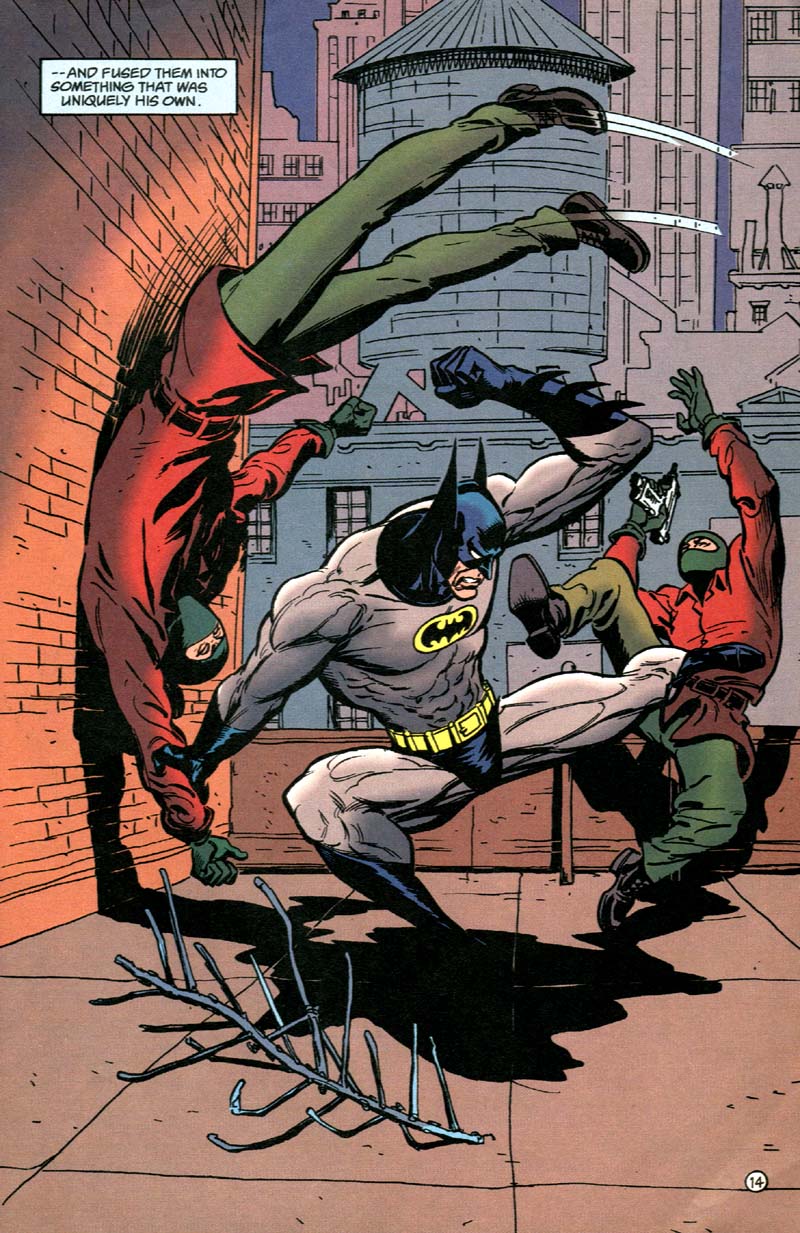
Notice how each attack flows from a previous panel establishing Batman’s spatial relationship with his opponents. Also, the Caped Crusader tries out different moves, showing off his versatility while keeping things interesting for the readers!

Later, in Shadow of the Bat, Bret Blevins gave us the chance to have a clearer look at Batman’s technique (this time with less murky colors, by Adrienne Roy), as the Dark Knight fought a couple of military-trained hitmen on a rooftop. Once again, we get a commentary track, now courtesy of Alan Grant’s characteristically pulpy narration…

Shadow Of The Bat 00Shadow Of The Bat 00Shadow Of The Bat 00Shadow of the Bat #00

That is some Fist of Fury shit right there, yes it is.

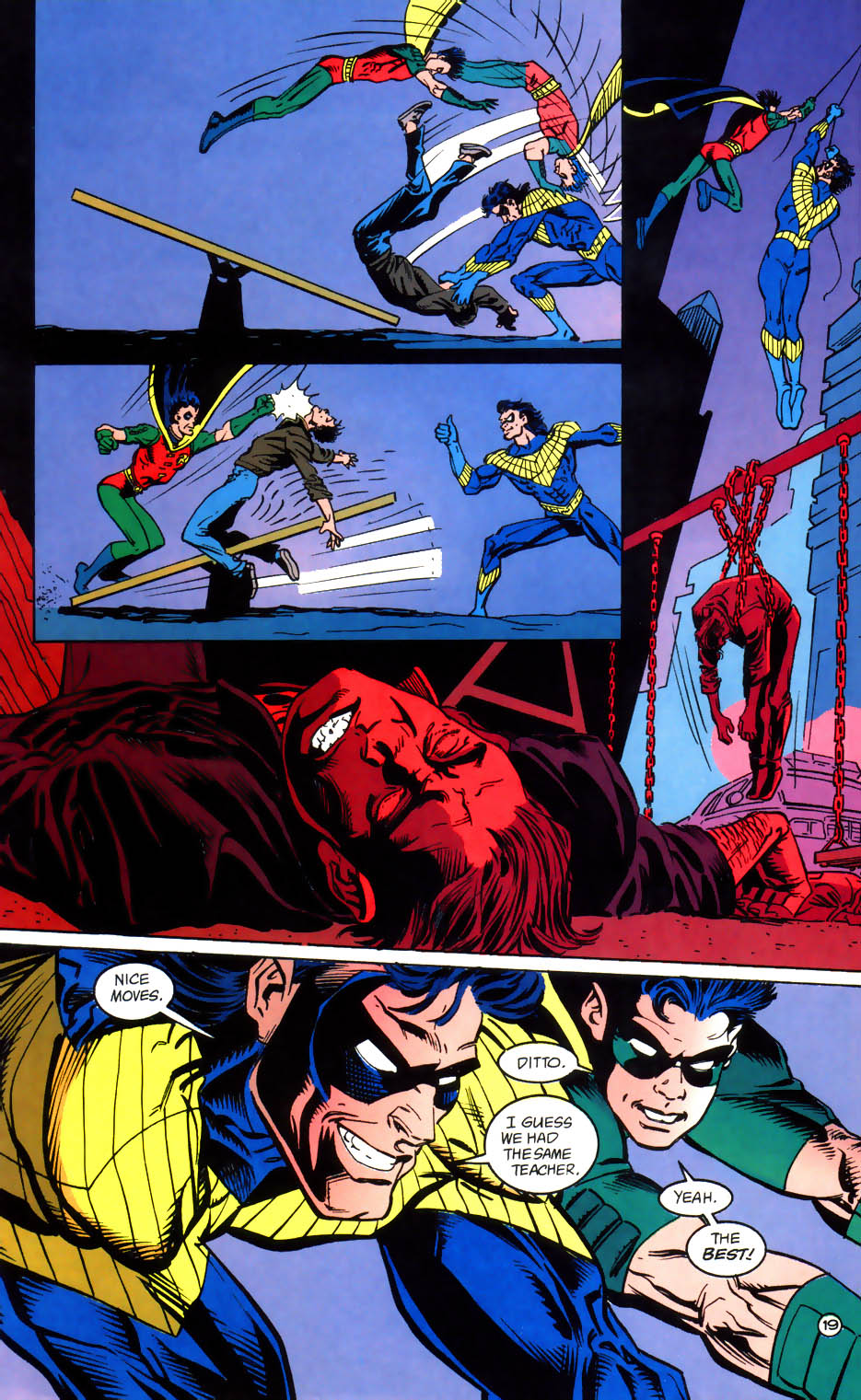
Last but not least, in another issue of the same series, Bret Blevins crafted a great sequence in which Nightwing and Robin worked as a team to bring down a bunch of hooligans at a playground. The issue was also colored by Adrienne Roy, although it’s unclear how much of it was inked by Blevins himself and how much of it was inked by Bob Smith… Regardless, it’s quite a nifty fight scene, as Dick Grayson and Tim Drake make a fun use of the props around them, Jackie Chan-style:

Shadow Of The Bat 29Shadow Of The Bat 29Shadow Of The Bat 29Shadow of the Bat #29

The best, indeed!

Posted in ART OF BATMAN COMICS | Tagged , , , , , | Leave a comment

Remaking Night of the Stalker!

A few weeks ago, I talked about remakes in comics. The thing about this medium, though, is that a lot of the time remakes are not explicit. In fact, it’s not unusual for storylines to share (and usually extend) a particular idea from an earlier arc with no-one bothering to clarify if this is meant to homage, rip-off, and/or replace the previous version.

In Batman comics, there’s the case, for example, of ‘The Dark Rider/At the Heart of Stone’ (Batman #393-394) and ‘Ten Nights of the Beast’ (Batman #417-420) – they seemed like two takes on the same story, but then ‘Troika’ (Batman #515) treated them as part of a single continuity… And what about ‘The Cult’ and ‘No Man’s Land?’ Or ‘Blind Justice’ and ‘Knigthfall?’ Or ‘Standard Operating Procedure’ and ‘Bruce Wayne: Murderer?’ Did they all happen in the same universe? If so, shouldn’t the characters be constantly struck by a sense of déjà vu?

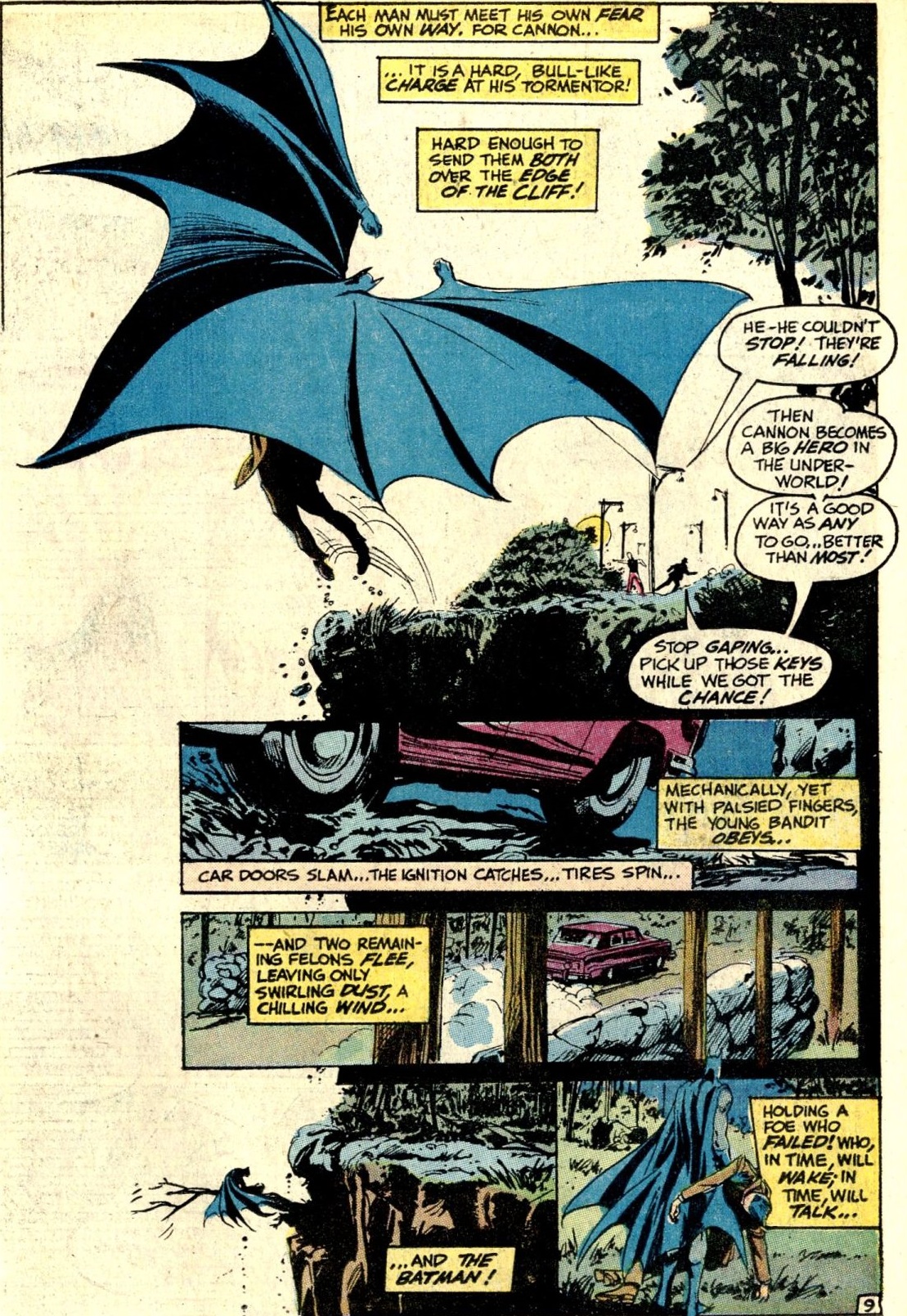
Speaking of déjà vu, every once in a while you do get a comic that is so directly informed by a previous one that it allows you to draw direct comparisons between the approaches and styles of different creators… One example concerns ‘Night of the Stalker!’ (Detective Comics #439), first published in 1974. This classic tale opens with a gang of robbers killing a little boy’s parents during their getaway. Needless to say, this brings back some personal memories to the Dark Knight, who therefore stalks the robbers into the middle of nowhere and ruthlessly gets them one by one without uttering a single word.

detective comics 439detective comics 439

‘Night of the Stalker!’ was scripted by Steve Englehart, from a plot by Vincent and Sal Amendola, who also did the pencils and background inks. According to the credits, it was based on an incident described by Neal Adams. The remaining inks were by Dick Giordano and the final editor was Archie Goodwin. Moreover, based on the Grand Comics Database, Jerry Serpe colored the story and Morris Waldinger lettered it.

The premise is simple yet very effective, with Sal Amendola deserving much credit for the way he crafted one neat scene after another… Overall, there is a rough, gritty ‘70s vibe and the comic bursts with pathos, atmosphere, and dynamic visuals! The main drawback is how text-heavy the whole thing is – while some of Steve Englehart’s prose can be moody and lyrical (‘Setting sunlight slices sharply through the dry November air, but cannot cut its chill. Rush hours throngs crowding the streets pull their coats tighter against this first touch of approaching winter…’), a lot of it is just needlessly descriptive (‘Now those leg muscles work in reverse… cushioning the impact of a death-defying leap… letting him land atop the car with no more noise than a cat!’).

Interestingly, at the time Sal Amendola’s work was apparently dished by many of his peers and the finished product was the result of several artistic clashes and compromises. Still, what we ended up with was a powerful comic that definitely stands out. It was nominated for the Best Story of the Year award at the Academy of Comic Book Arts and it has been reprinted in the collection Batman: The Greatest Stories Ever Told.

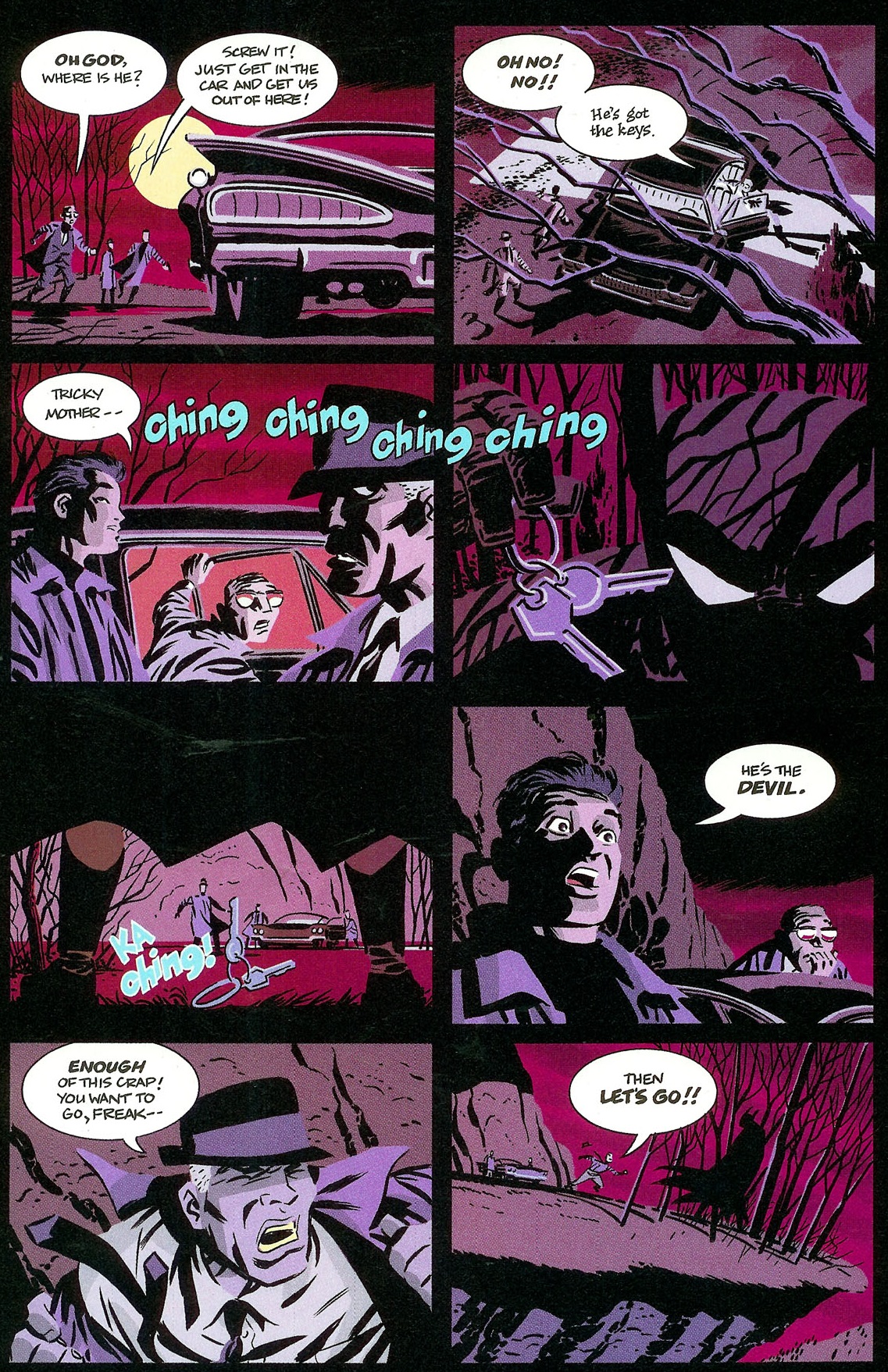
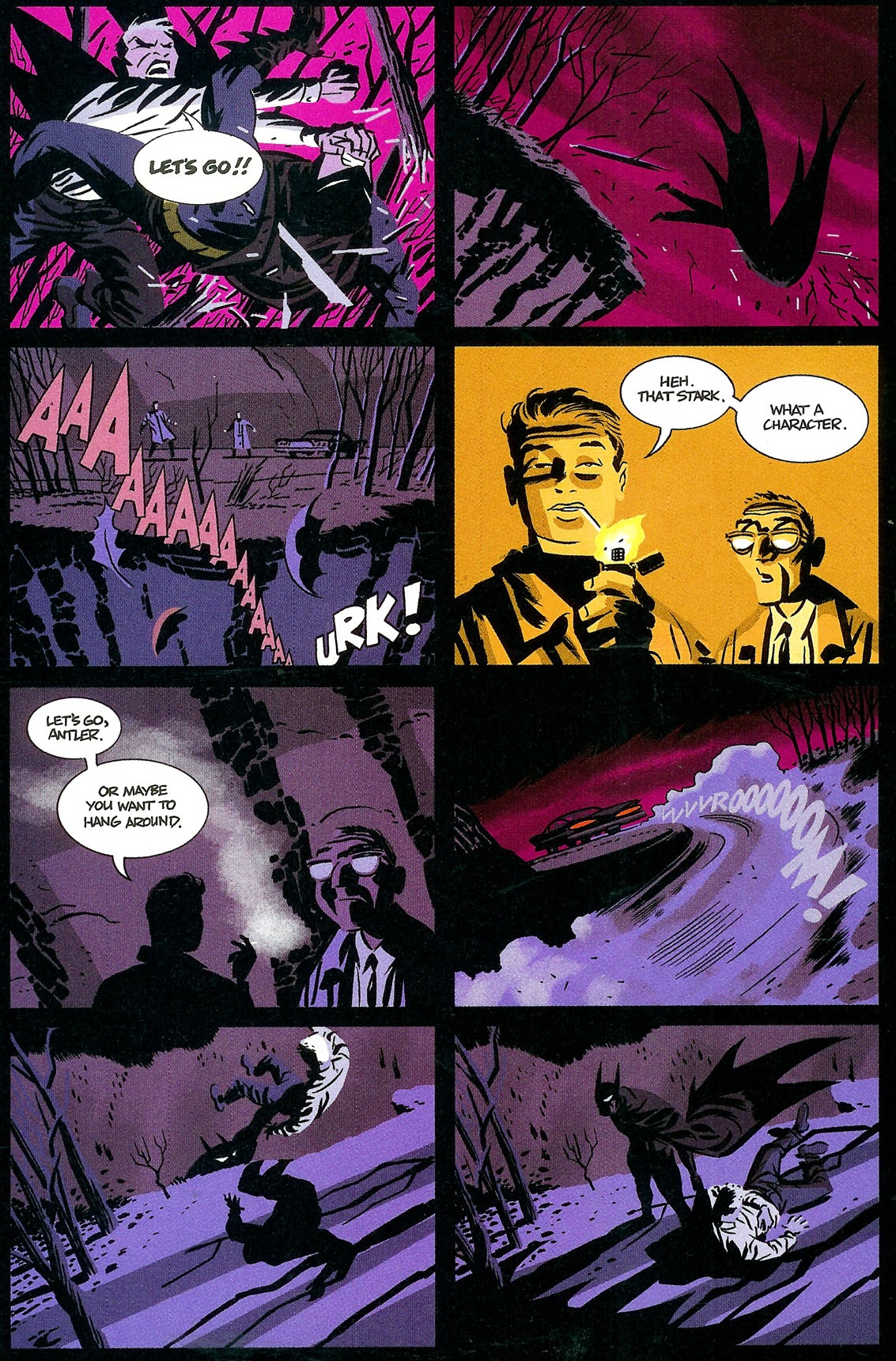
Thirty years later, Darwyn Cooke overtly remade ‘Night of the Stalker!’ in Solo #5, under the title ‘Déjà Vu’ (which had been Sal Amendola’s proposed title for the original). As far as I can tell, Cooke was in charge of practically everything – script, pencils, inks, colors, letters – so this time around we got to see a much more cohesive approach to the tale. And oh boy does it kick butt:

Solo 5Solo 5

Leave it to Darwyn Cooke to take such a classic and churn out his own masterpiece. It’s not just that the remake looks hipper or more ‘modern’ than the original… By themselves, cleaner, splashier visuals are not enough to bring a dusty concept back to life (at the end of the day, Ben-Hur’s chariot race is still much more riveting than the pod race in The Phantom Menace), but Cooke clearly conceived each tweak to maximum effect… In an obvious move, he did away with the omniscient narration, thus fixing the original’s main flaw while letting the images drive the story. He also replaced Jerry Serpe’s naturalistic colors with much starker, expressionistic choices, creating a significantly darker mood that suited the tale (despite the title, the original didn’t seem to take place during nighttime, but this version did).

Another change that jumps at anyone reading these two back-to-back is the super-cool decision to turn one of the robbers into a homage to Parker, the career criminal whose novels Darwyn Cooke would go on to successfully adapt… In Solo, he is called Stark, after the novels’ writer Richard Stark, and he looks like the actor Lee Marvin, who played the character in the brilliant crime flick Point Blank (Cooke pulled the same trick in the Catwoman graphic novel Selina’s Big Score).

Finally, I particularly like how Cooke omitted the sequence in which Batman jumps onto the roof of the thieves’ car, so that the revelation (through his shadow) becomes a surprise for the readers as well. Sadly, Cooke also left out a climactic fight in the water near the end, which I was quite fond of, but he more than made up for it in the haunting way he nailed the rest of that scene. Indeed, this is almost as flawless a piece of noirish Batman action as you are likely find… Hell, this whole issue of Solo is freaking awesome!

So yeah, I guess what I’m trying to say is that, damn it, this year the world of comics has lost one of the best.

Posted in WEBS OF FICTION | Tagged , , , , , , , , , | 2 Comments

10 times the Punisher made love, not war

I finished watching the second season of Daredevil last night. I thought the first one was good (if overpraised), but this one is much stronger. Although outstandingly well-acted and full of neat visual touches, the previous season wasn’t very dynamic… Except for the virtuoso fights, most scenes just involved characters standing still while spouting exposition at each other. This time around, though, the series hits a near-perfect balance between moments of quiet gravitas and a generally riveting pace.

Besides fixing some of the earlier flaws, the team behind Daredevil also deserves kudos for keeping much of what made the other season work. Once again, they manage to be dark and violent without completely losing their sense of fun or humanity. It remains a smart show that is proudly gritty yet it doesn’t try *too hard* to be badass (I’m looking at you, second season of True Detective). Indeed, I would say they pull off the kind of urban-crime-meets-ninja-action vibe that some of the best Daredevil comics – and many Batman comics, for that matter – were going for.

Also, like Jessica Jones, the show nails the main characters but it’s not a slave to the source material. The show runners were not afraid to flesh out underdeveloped elements of the cast (Karen Page is much more interesting in this live action version) and to craft their own story… Despite paying homage to a handful of memorable set pieces, these series don’t make me feel like I’m watching a lame remake of the comics (a la recent DC animated movies), but like I’m watching another cool adventure with the characters I love!

In this regard, Daredevil by and large does a good job with the Punisher, capturing Frank Castle’s visceral appeal without shying away from his disturbing viciousness. Even when the show adopts a more benevolent depiction, halfway through the season, it doesn’t stop engaging with the implications of Frank’s worldview, fitting him into the series’ broader themes.

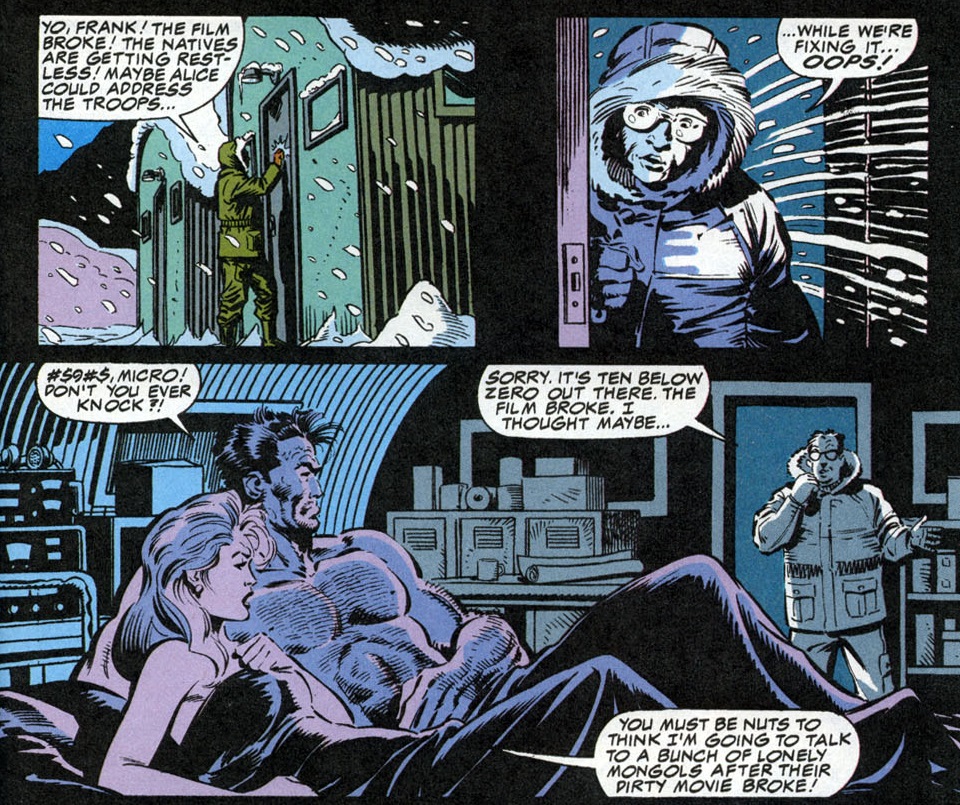
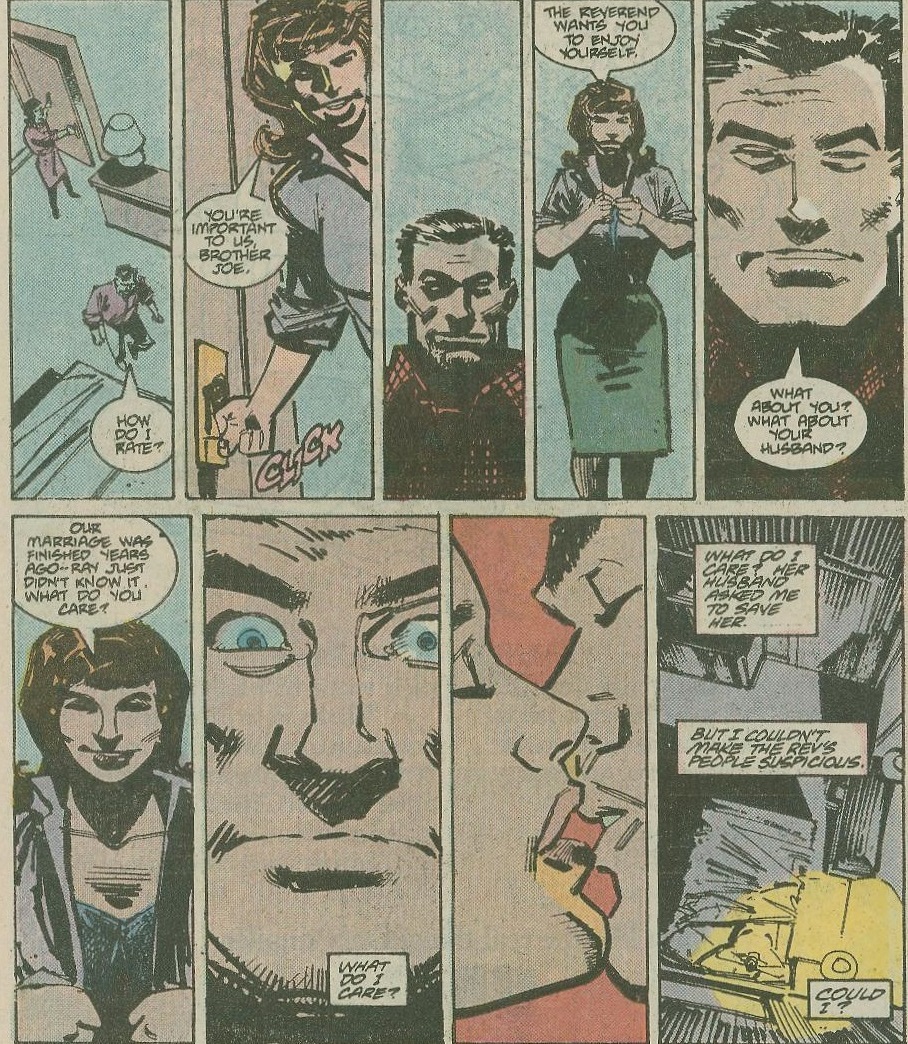
That said, there is one aspect of the Punisher’s characterization which was notably absent from Daredevil, namely his very active sex life.

Return to Big NothingReturn to Big Nothing
The Punisher War Journal 33The Punisher War Journal #33

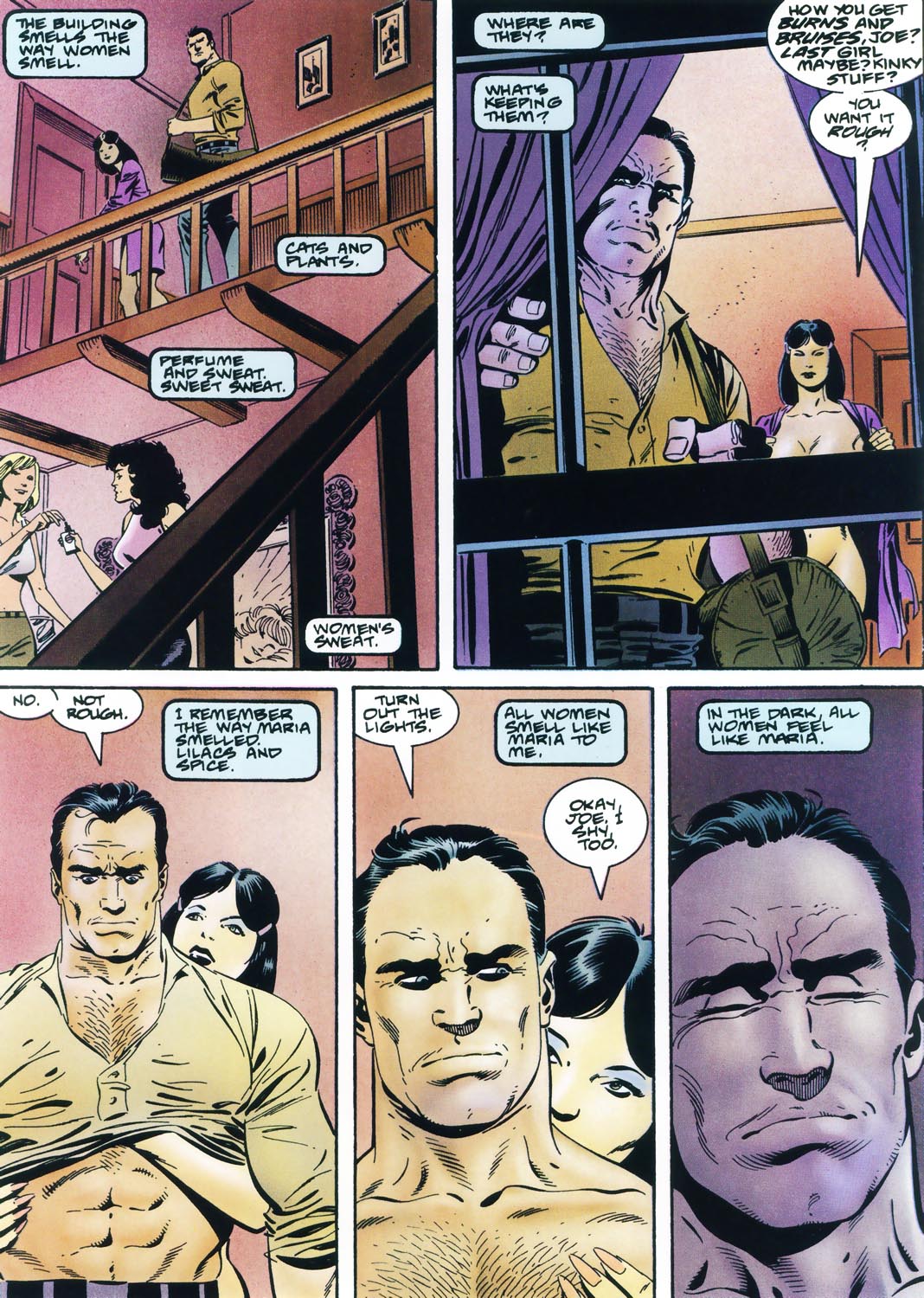
I get why the show’s writers didn’t include this – sex is usually linked with hedonism, which sort of clashes with Frank Castle’s exaggerated, stoic persona. At the same time, this trait does fit in with the character’s hypermasculine archetype.

The Punisher 28The Punisher (v6) #28
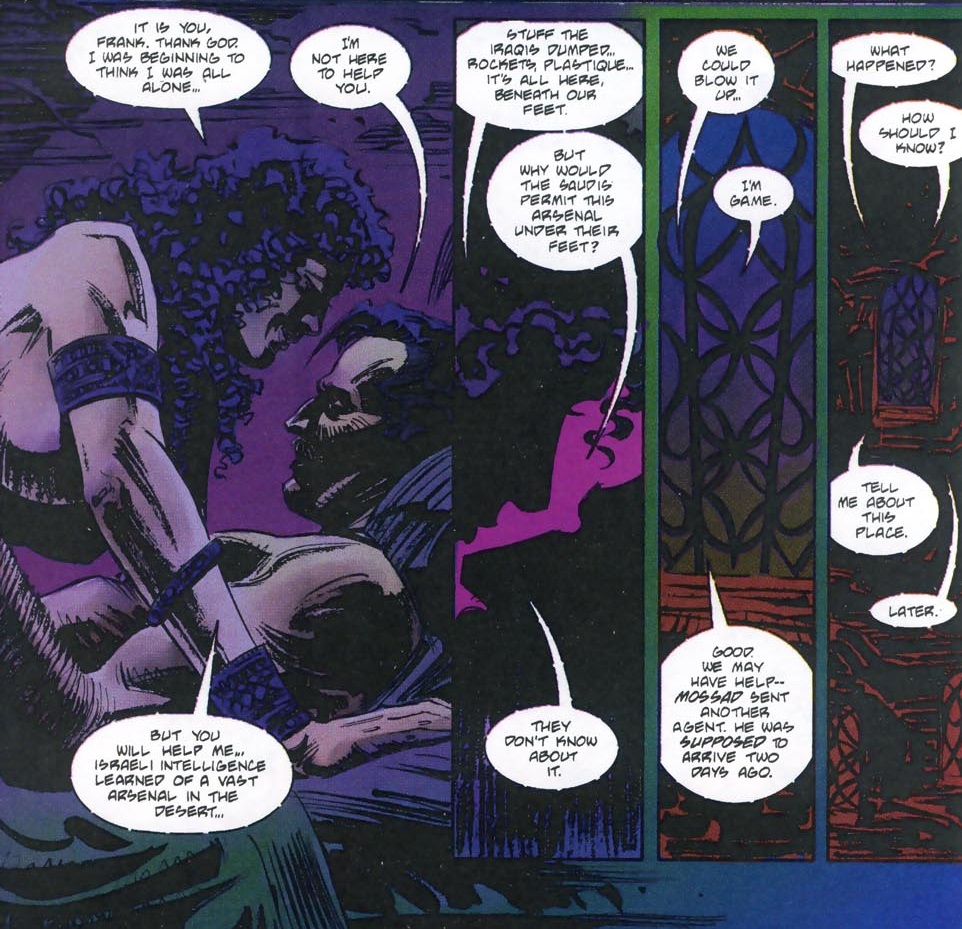
Punisher - Empty QuarterEmpty Quarter

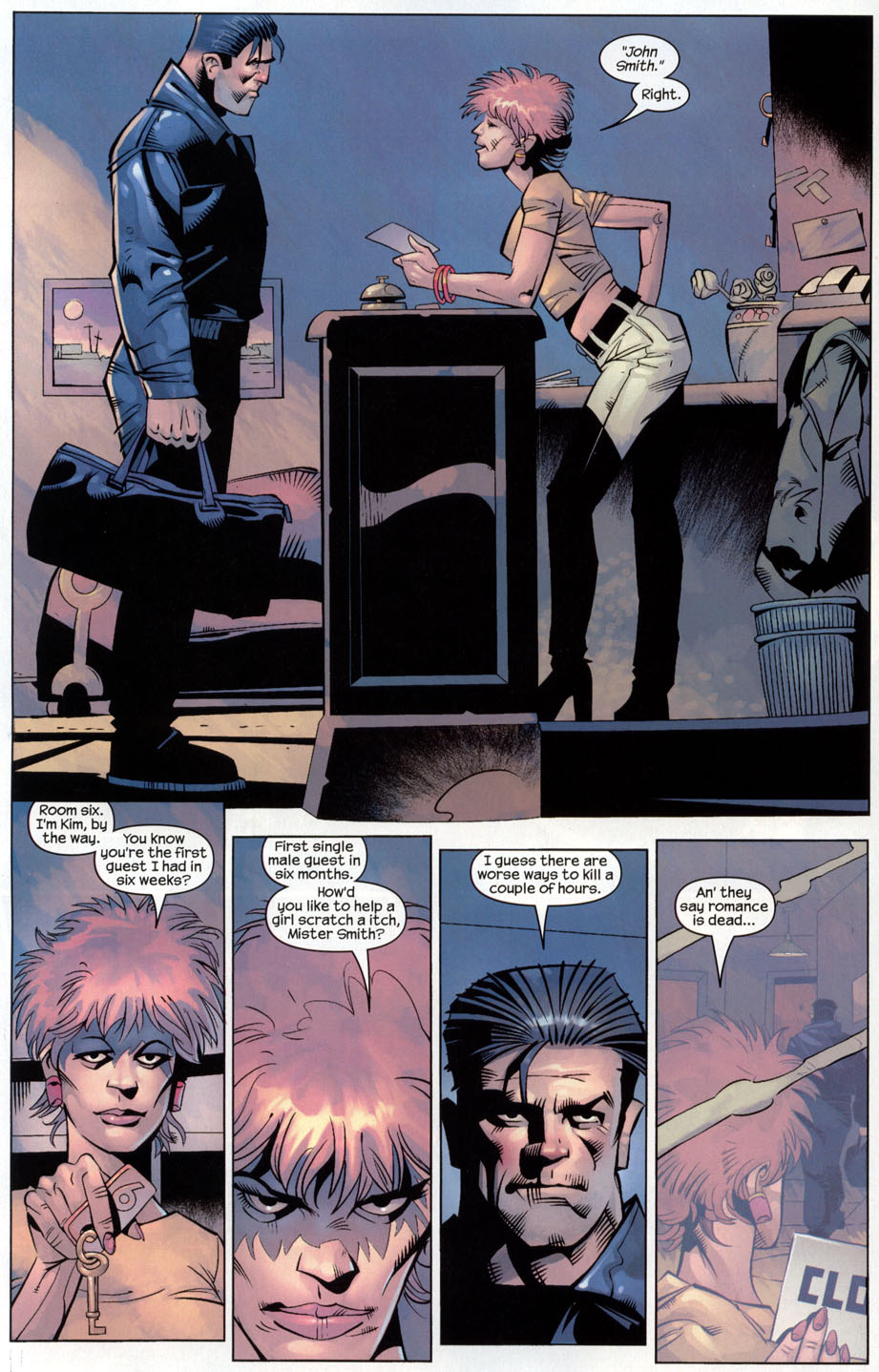
Even in the excerpts above, it’s not all fun and games. There is often a pragmatic angle to the Punisher’s sexual escapades. For example, Frank has repeatedly gotten laid while inhabiting alter egos, in order to infiltrate crime organizations:

Punisher - Assassin's GuildPunisher - Assassin's GuildAssassin’s Guild
The Punisher 5The Punisher (v2) #5

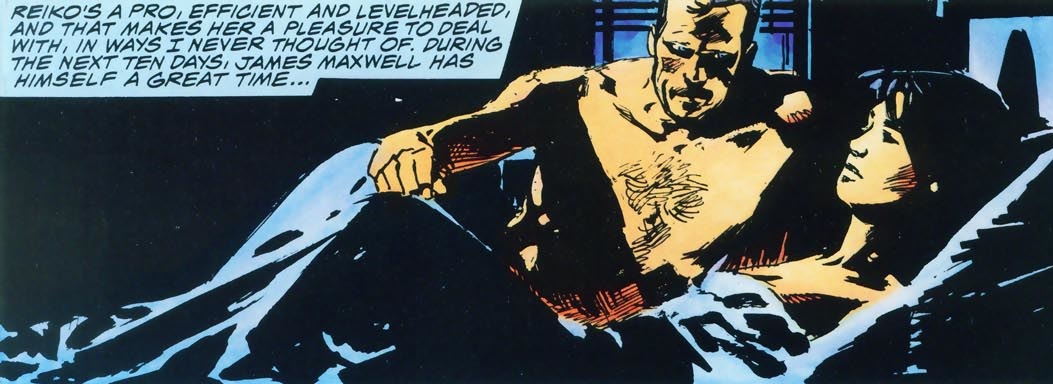
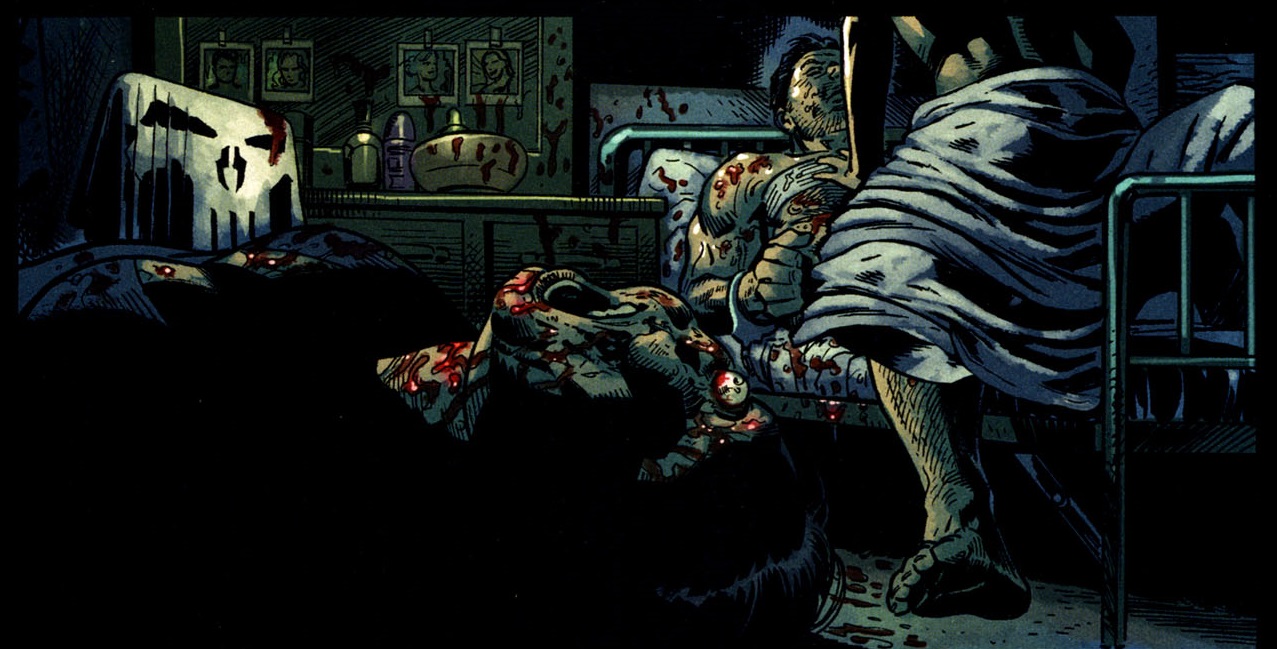
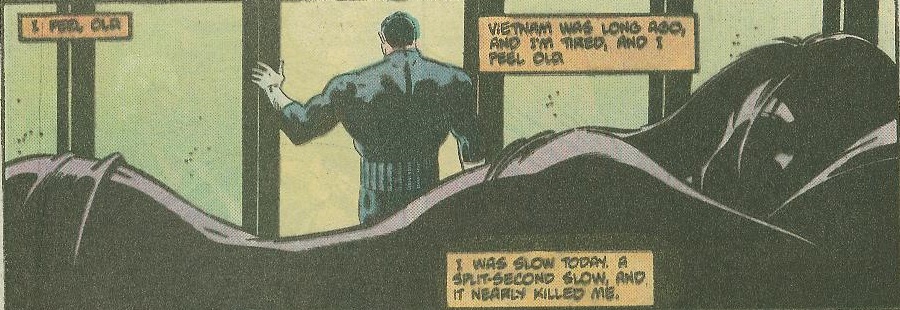
What’s more, with a few exceptions, the Punisher’s erotic interludes are not exactly joyful moments. In fact, they can sometimes be downright depressing…

the punisher max 49The Punisher MAX #49
The Punisher 02The Punisher #2

Overall, Frank Castle doesn’t seem to have a clear type… Even his strict sense of uncompromising righteousness did not prevent him from sleeping with the notorious assassin Elektra (in Thunderbolts). But hey, who am I to judge?

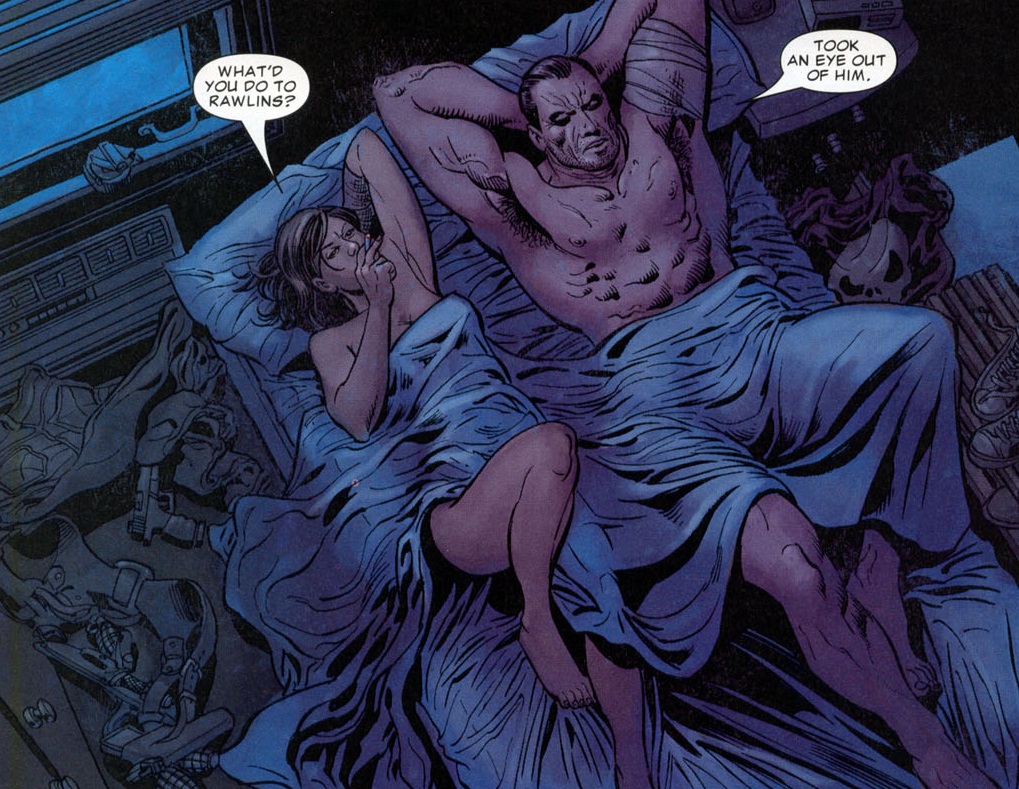
At least, someone as methodical as the Punisher probably knows how to do things right in bed. Then again, as you might expect, he is hardly a master of cutesy pillow talk…

The Punisher MAX 23The Punisher MAX #23
punisher max 16Punisher MAX (v2) #16

Posted in HARDBOILED CRIME | Tagged , | 1 Comment

Remaking The Case of the Chemical Syndicate

As far as remakes go, I’m of the school of leave-good-works-alone-and-remake-the-bad-ones-instead. To use John Carpenter’s oeuvre as an example (as I often do), I can understand the financial urge to bank on title recognition, but artistically I see no point in doing bland remakes of Assault on Precinct 13 and Halloween (or even The Fog), which are already fine films that people can watch whenever they feel like… Wouldn’t it make more sense to have someone polish the many flaws of Ghosts of Mars and give all those interesting ideas the awesome movie they deserve?

That said, the coolest remakes are the ones that go beyond lazily redoing the plot beat-for-beat while adding little more than glitz, or perhaps an alternative setting. If you’re going to revisit an existing story, then you might as well put a spin on the characters or approach the material with a significantly different vibe. For example, I liked how, instead of merely relocating Jorge Michel Grau’s We Are What We Are (which was basically a dark metaphor for urban malaise in Mexico City), Jim Mickle worked the premise into a whole other type of tale, crafting a beautifully intense psychological horror film that takes inspiration from the disturbing original yet still feels somewhat unique. What’s more, some projects can be interesting just by virtue of being made in distant eras. The remakes of RoboCop or Invasion of the Body Snatchers may not stand out on their own, but it’s appealing to see how they reflect multiple zeitgeists.

This is something I keep thinking about when reading superhero comics, which have a tendency to tell variations of the same stories over and over again (quick: how many versions of Batman’s first encounter with the Joker are there?). The latter, I suspect, is not only the product of pop-will-eat-itself, but also of the huge weight of nostalgia on fans-turned-creators, plus all the reboots and parallel continuities that have become a staple of the genre.

With all this in mind, I decided to take a look at the various remakes of ‘The Case of the Chemical Syndicate.’

detective comics 27

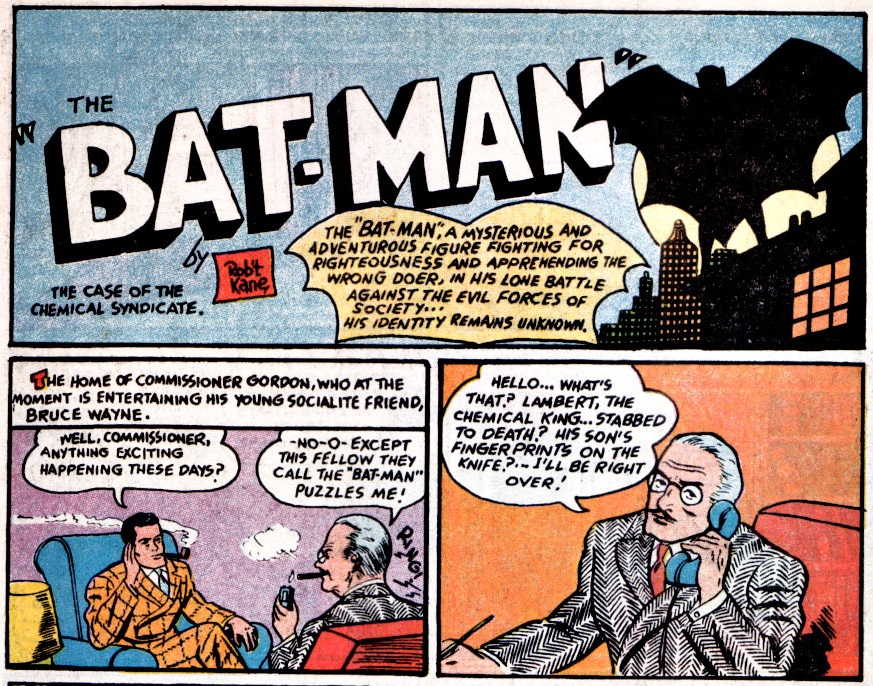
Originally published in 1939, the six-page ‘The Case of the Chemical Syndicate’ (Detective Comics #27), by Bob Kane and an uncredited Bill Finger, was the first comic to feature Batman (or the Bat-Man, as he was called at the time). The plot is a modest, no-frills whodunit – swiped from a Shadow short story – about the murder of a chemical industrialist called Lambert. Neatly, the Dark Knight shows off what would become his trademarks: he punches crooks (three times), escapes from a deathtrap (a gas chamber for guinea pigs), and deduces the solution to the mystery. There are some rough edges, for sure, but I love the fact that the very final twist is the revelation that the Bat-Man is actually the rich socialite Bruce Wayne! (Sorry for the mega-spoiler.)
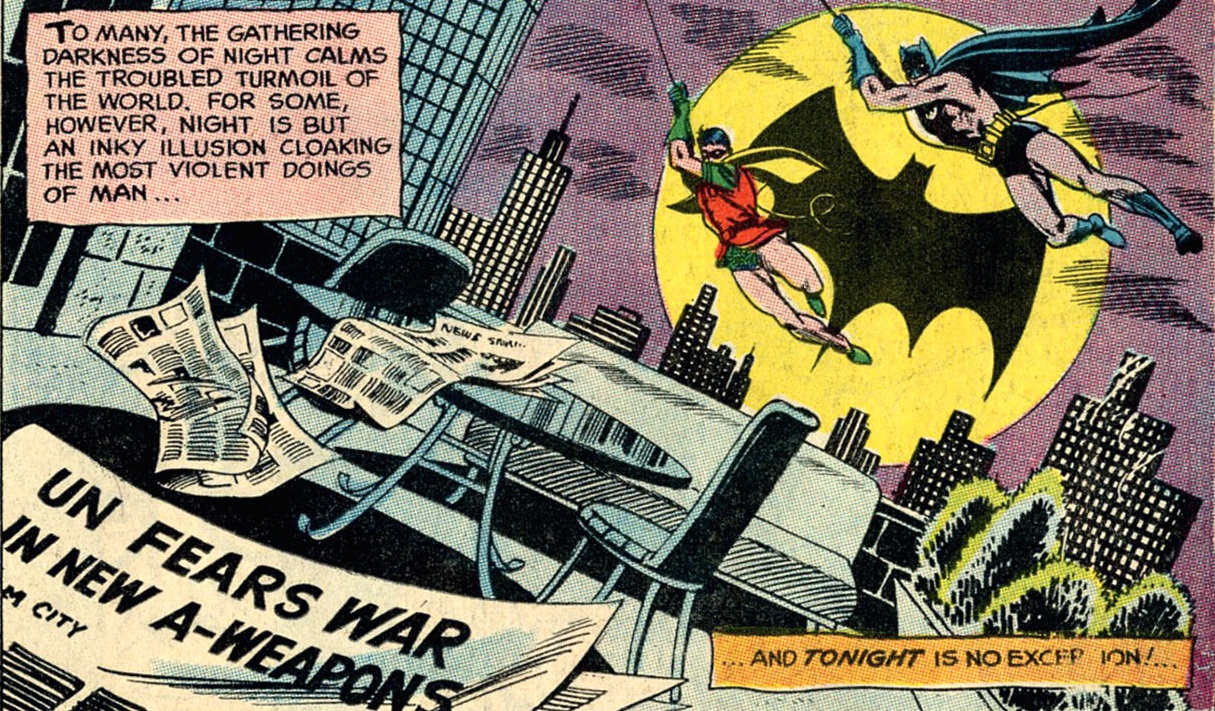
In 1969, to celebrate the 30th anniversary of the Caped Crusader’s debut, editor Julie Schwarz asked teenager Mike Friedrich to write an updated version of this tale, illustrated by the art team of Bob Brown and Joe Giella. This remake (published in Detective Comics #387) makes it clear from the start that the times are a-changin’, with the very first panel mentioning the fear of atomic war:

detective comics 387

Plot-wise, Friedrich follows the murder mystery structure quite closely but, in an inspired move, he takes a small scene from the original about Lambert’s son being the prime suspect and makes this the heart of the story, thus imbuing it with the late ‘60s generation gap!

Indeed, the comic takes every opportunity to channel the time period. There are plenty of delightfully slangy lines, such as ‘It’s just, like, you’ve become so warped by the system you just can’t dig it’ or ‘This whole scene is one big bummer, but I don’t hafta hack it, so I’m splittin’!’ And after using the peace movement as a red herring, the story finishes on a poignant (if ham-fisted) note, arguing both against condemning hippie youth just based on its rude behavior and against indiscriminately rebelling against authority just for rebellion’s sake. It’s a tight, sweet tale that shows Batman comics keeping up with the times. That said, some changes took longer than others: like in the original, there is not a single female character in sight (unless you count the Janis Joplin reference early on).
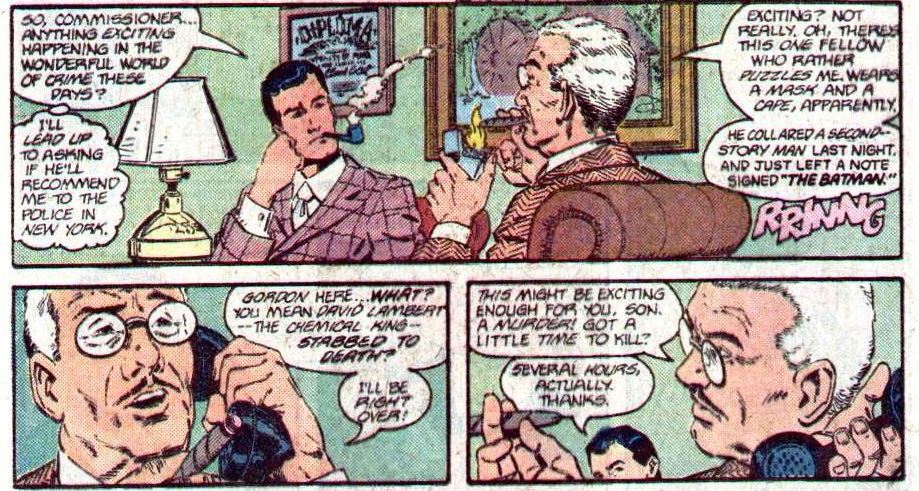
Roy Thomas and Marshall Rogers revisited the tale once again in 1986, as part of Secret Origins #6. This is a less interesting remake… Since the point of that issue is just to retell the debut of the Golden Age Batman and since Roy Thomas was notoriously nostalgic about old comics, the result is boringly close to the original, albeit with lavisher art:
secret origins 6

Still, the weight of almost fifty years of stories could not help but leave a mark. In the 1939 comic, the Dark Knight was still close to his pulp origins, including a more flexible relationship with the limits of vigilante justice… He basically killed the baddie in the end by punching him into an acid tank – and while the Bat-Man didn’t necessarily mean to do it, he didn’t seem to mind too much either, infamously postulating: ‘A fitting ending for his kind.’ The 1986 version keeps the callous line but, in one of the few departures from the original, this time around the villain falls into the acid without getting punched by the Caped Crusader.

More remarkably, five years later, in Detective Comics #627, DC reprinted the original story and the 1969 remake, together with two new variations done by contemporary writers and artists. (Also, for some weird reason, they changed the title of Mike Friedrich’s version, from ‘The Cry of Night is – Sudden Death!’ to ‘The Cry of Night is – Kill!’)

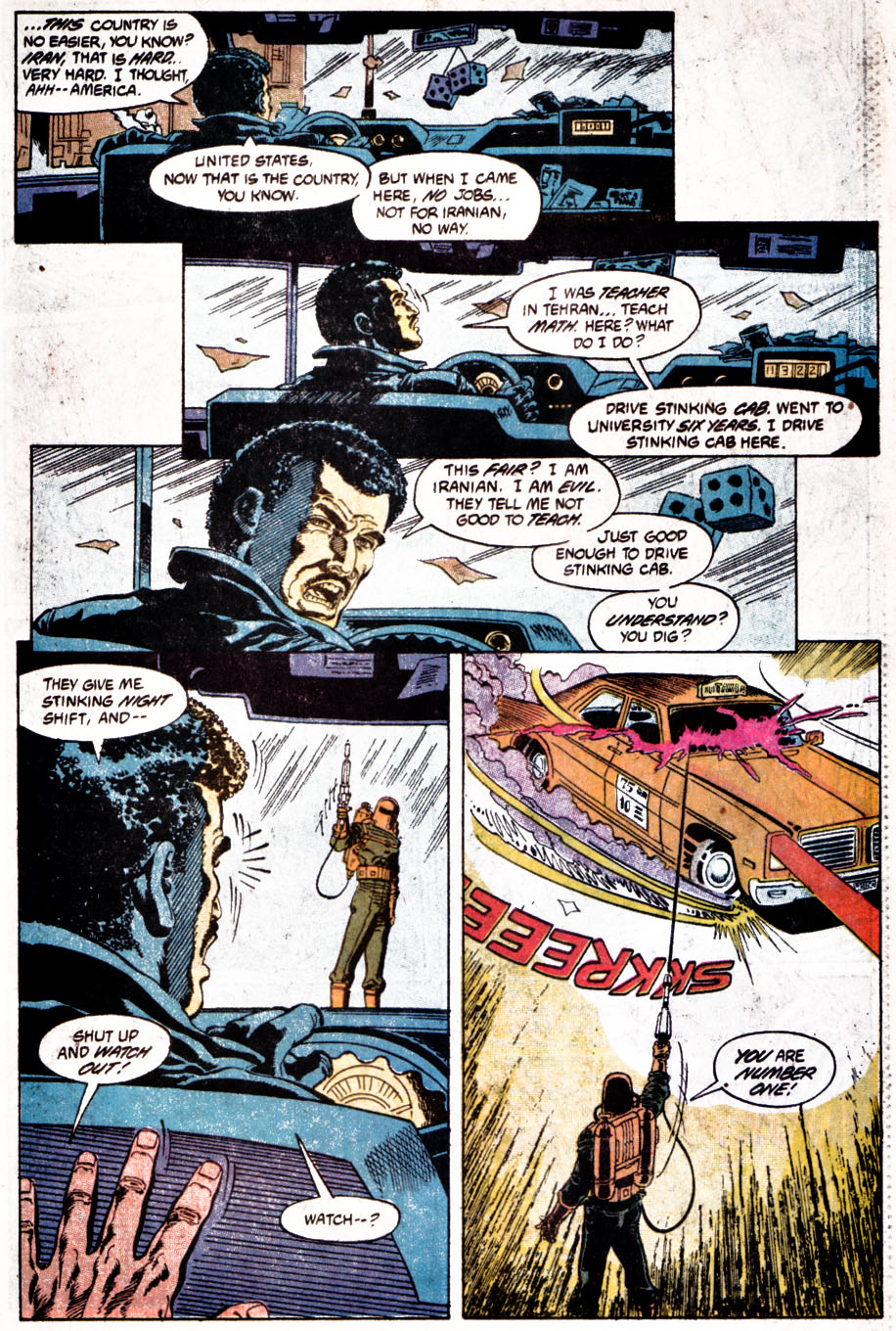
The new tales were quite something. The remake by Marv Wolfman and Jim Aparo lifts the original’s opening narration, but it quickly modernizes the setting with references to the rampant anti-Iranian sentiment of the early 1990s, due to that nation’s links to terrorism in the previous decade…

detective comics 627

While keeping the basic outline, the plot is more elaborate than in the original, even if Batman’s detective work isn’t all that impressive. Wolfman and Aparo also amp up the action, creating a new costumed villain for the occasion – the rather lame Pesticyde. This take reimagines several other details, building up on Friedrich’s introduction of generational conflict into the story. Since the Cold War was practically over by then, however, Lambert’s son no longer rebels against his father because of the company’s contribution to the arms race, but because his company is polluting the environment.

Likewise, the wonder team of Alan Grant and Norm Breyfogle bluntly shove a toxic waste angle into their remake of ‘The Case of the Chemical Syndicate.’ Needless to say with these two, their section of the comic crackles with berserk energy. Breyfogle’s art jumps off the page, culminating in a wonderful final splash. Plus, like in most Batman tales written by Grant at the time, there is a subplot about drugs… And just to make the whole affair even more nineties, the Dark Knight is frighteningly ruthless and Gotham City looks gritty as hell:

detective comics 627

(Despite the grim tone, letterer Todd Klein helps give the comic a lighter touch by squeezing references to several classic creators and editors into every sign and headline he can find.)

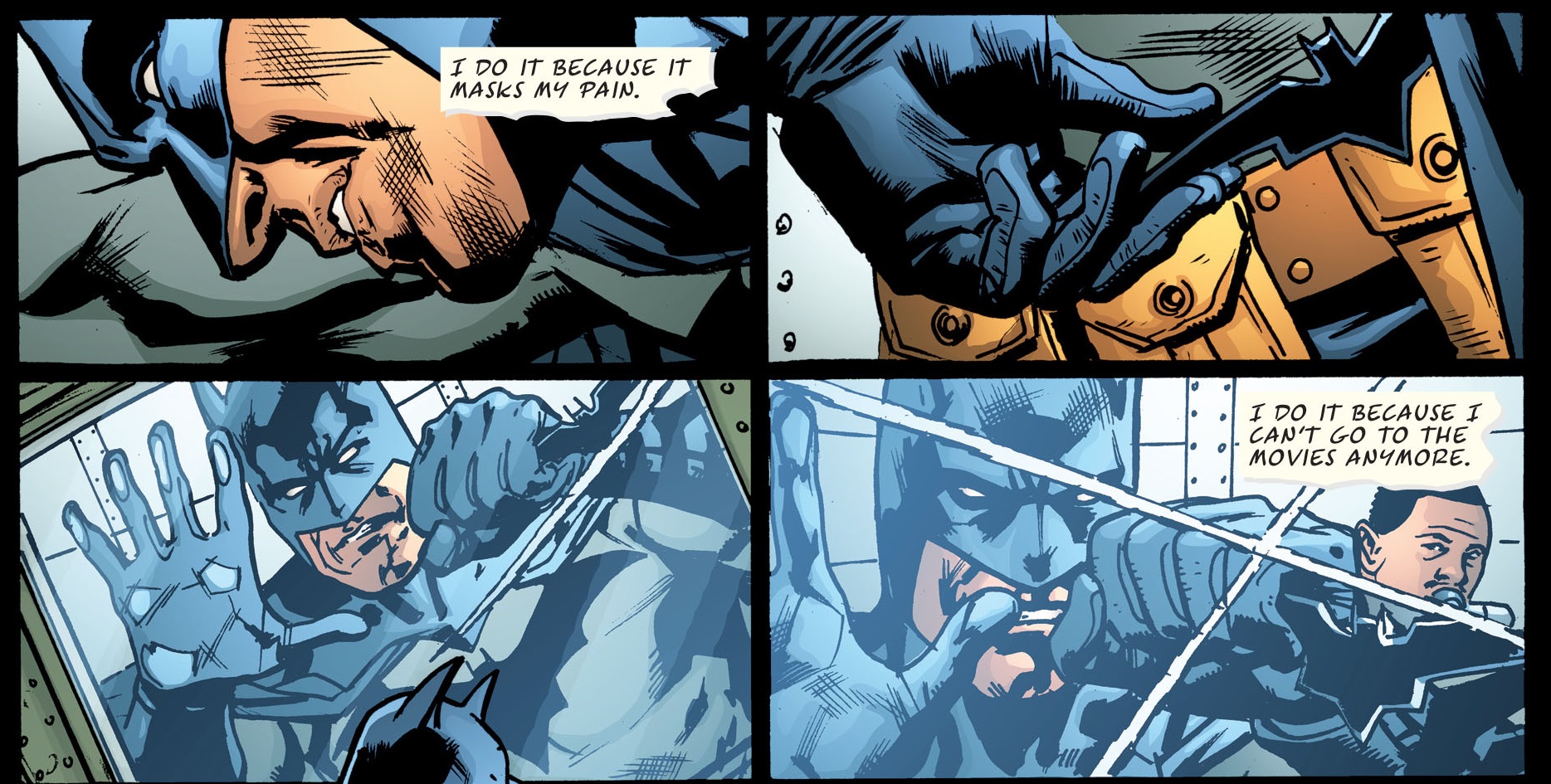
Finally, a couple of years ago, Brad Meltzer and Bryan Hitch added their own remake, in the latest volume of Detective Comics #27. This one is pretty lackluster, without any of the charm of its predecessors: there is no attempt to unfold a proper mystery, to create interesting character dynamics, or to resonate with topical concerns. In fact, there is nothing particularly inspired going on (even the reveal in the last panel is kind of ‘meh’), which, I suppose, fairly reflects the lack of creativity in the early years of the New 52 bat-books… Furthermore, Batman keeps justifying his decision to fight crime through an unbelievably cheesy voice-over throughout the comic (‘I do it because there’s nothing more powerful than an ordinary person. I do it because there’s no such thing as an ordinary person.’). Yep, it’s as bad as it sounds – and it doesn’t even look good – but at least there is a moment in which Meltzer really gets to the very heart of the Dark Knight:

Detective Comics v2 027

No wonder Batman is always so pissed. He’s missing some great movies…

Posted in WEBS OF FICTION | Tagged , , , , , , , , , , , , , , | Leave a comment

Taking a break… (March 2016)

Batman 401Batman #401
Posted in GOTHAM INTERLUDES | Tagged | Leave a comment

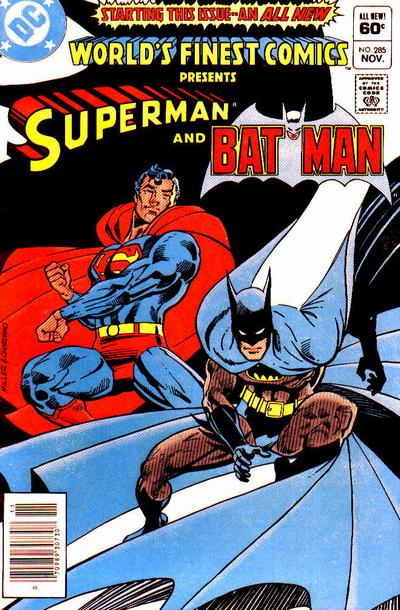
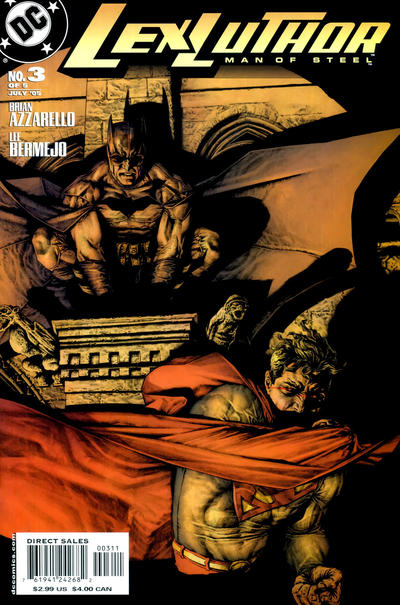
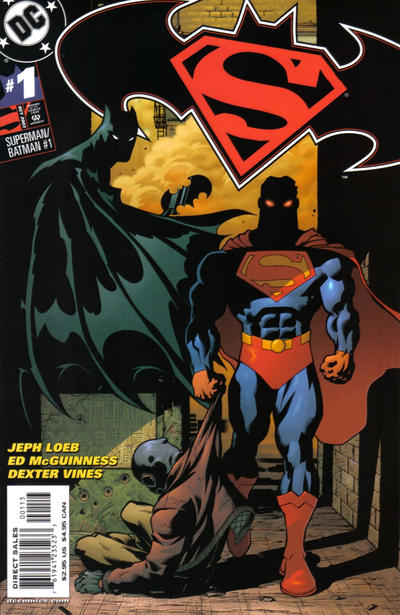
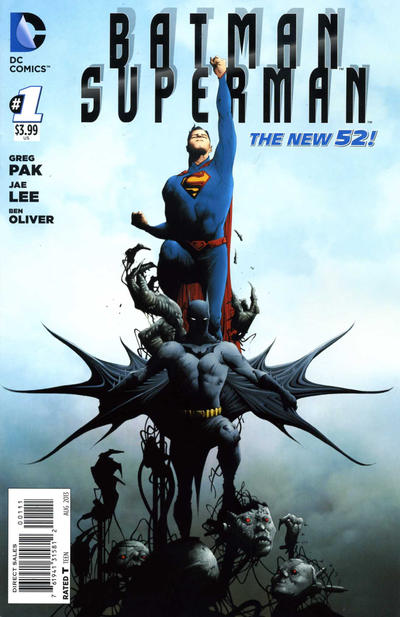
Batman & Superman covers

The thing about this boom of live-action superheroes is that, for better or worse, it is actually mimicking the source material to amazing degrees. You have the convoluted continuity involving multiple tie-ins and spin-offs. You have the non-stop reboots. You have the tension between the geeky pleasure of world-building and the castrating effects of editorial interference. And, interestingly, you’re starting to have some of the diversity as well.

Take the Marvel properties. It is impressive enough that we got a solid bunch of highly entertaining popcorn blockbusters telling straightforward superhero stories (especially the Iron Man and Avengers movies). But Hollywood has also successfully covered a lot of different ground, from the Brubaker-esque maze and all-out action of Captain America: The Winter Soldier to the otherworldly farce of Guardians of the Galaxy to the mix of schlocky sci-fi and Cold War politics of X-Men: First Class. And now there’s even the uproariously iconoclastic Deadpool! The TV shows have been great at this as well, what with the bouncy spy shenanigans of Agent Carter, the gritty crime drama of Daredevil, and the disturbingly creepy neo-noir feel of Jessica Jones. All of these are subgenres that comic fans are familiar with but many were traditionally ignored in the transitions to the screen, so it’s nice to see more people finding out that, while superheroes are generally goofy, they can be goofy in diverse ways!

In that sense, Man of Steel represents uber-violent takes on the genre like Jonathan Hickman’s and Ryan Bodenheim’s Red Mass for Mars or Warren Ellis’ and Juan Jose Ryp’s Black Summer (except that at least those had some wit). Basically, David S. Goyer wrote an Elseworlds Superman horror tale and Zack Snyder shot it like a pompous disaster movie. Man of Steel is dark, cold, and aggressive – I would say this was Snyder doing the film equivalent of all those proto-revisionist comics that tried to emulate Watchmen without fully getting the point, were it not for the fact that Snyder had already given us the definite version of that… with his own Watchmen movie!

So yeah, this week we get the sequel, Batman v Superman: Dawn of Justice. I’ll probably watch it, sooner or later. The trailer makes it look like a hyperactive kid trying way too hard to be both meaningful and badass, but then again that’s a faithful rendition of many comics with the Dark Knight. Also, I’ve already gotten my ideal Batman movie (Mask of the Phantasm), so now I’ll just settle for a weird flick.

In a way, it’s hard to go wrong with the pair of Batman and Superman, whether they’re friends or enemies. The two characters work well together, since they’re so different and complementary, visually as well as thematically. I could go on about the alien who embraces humanity and the human who tries to transcend it, but I’m sure we’ve all written that essay in school…

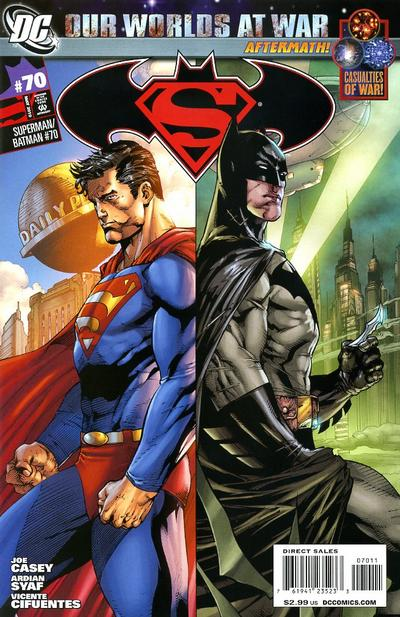
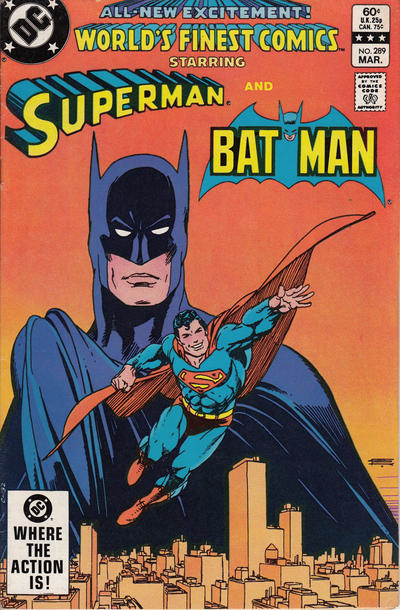
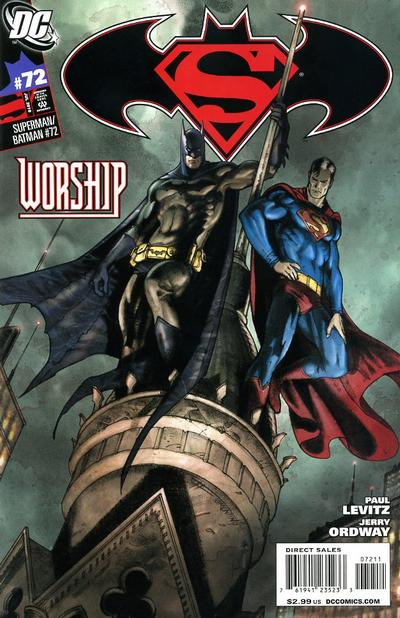
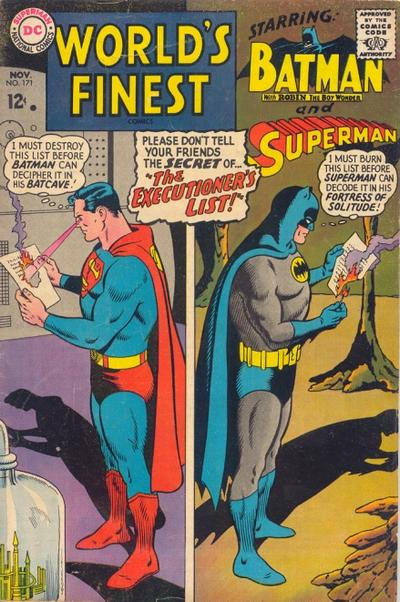
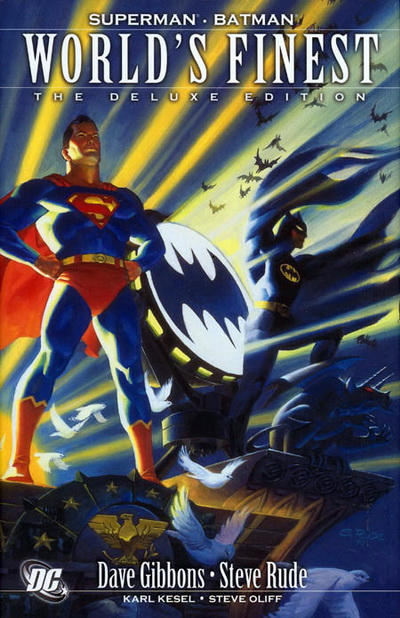
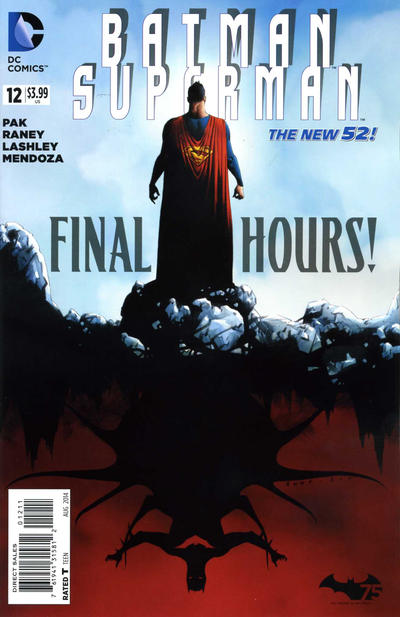
Instead, here are 10 covers with the Dark Knight and the Man of Steel posing heroically as various artists explore their contrasts and parallels:

superman batman 70world's finest comics 285lex luthor 3superman batman 1batman superman 1world's finest comics 289superman batman 72world's finest comics 171world's finestbatman superman 12

NEXT: The Case of the Chemical Syndicate.

Posted in COVERS OF BATMAN COMICS | Tagged , , , , , , , | Leave a comment