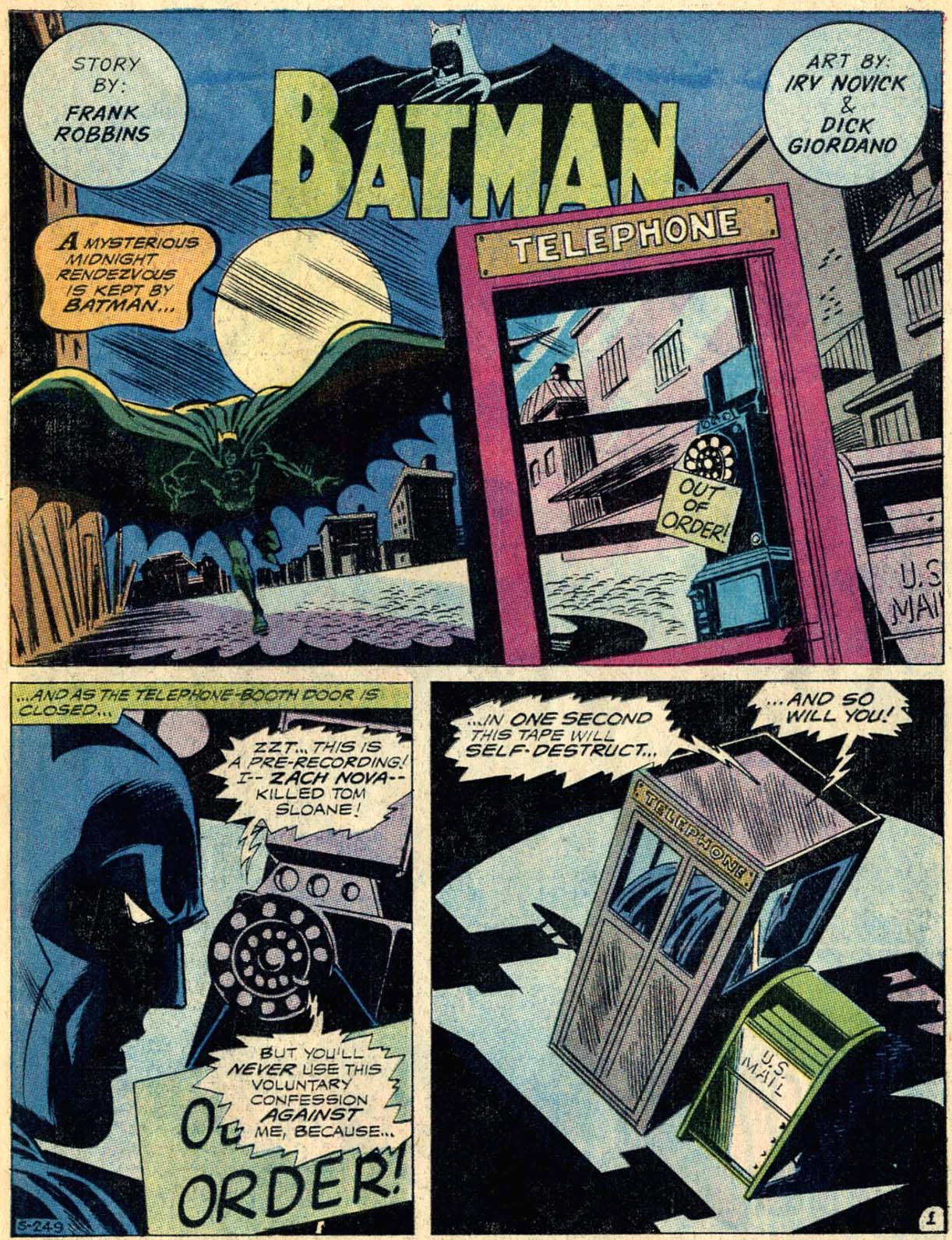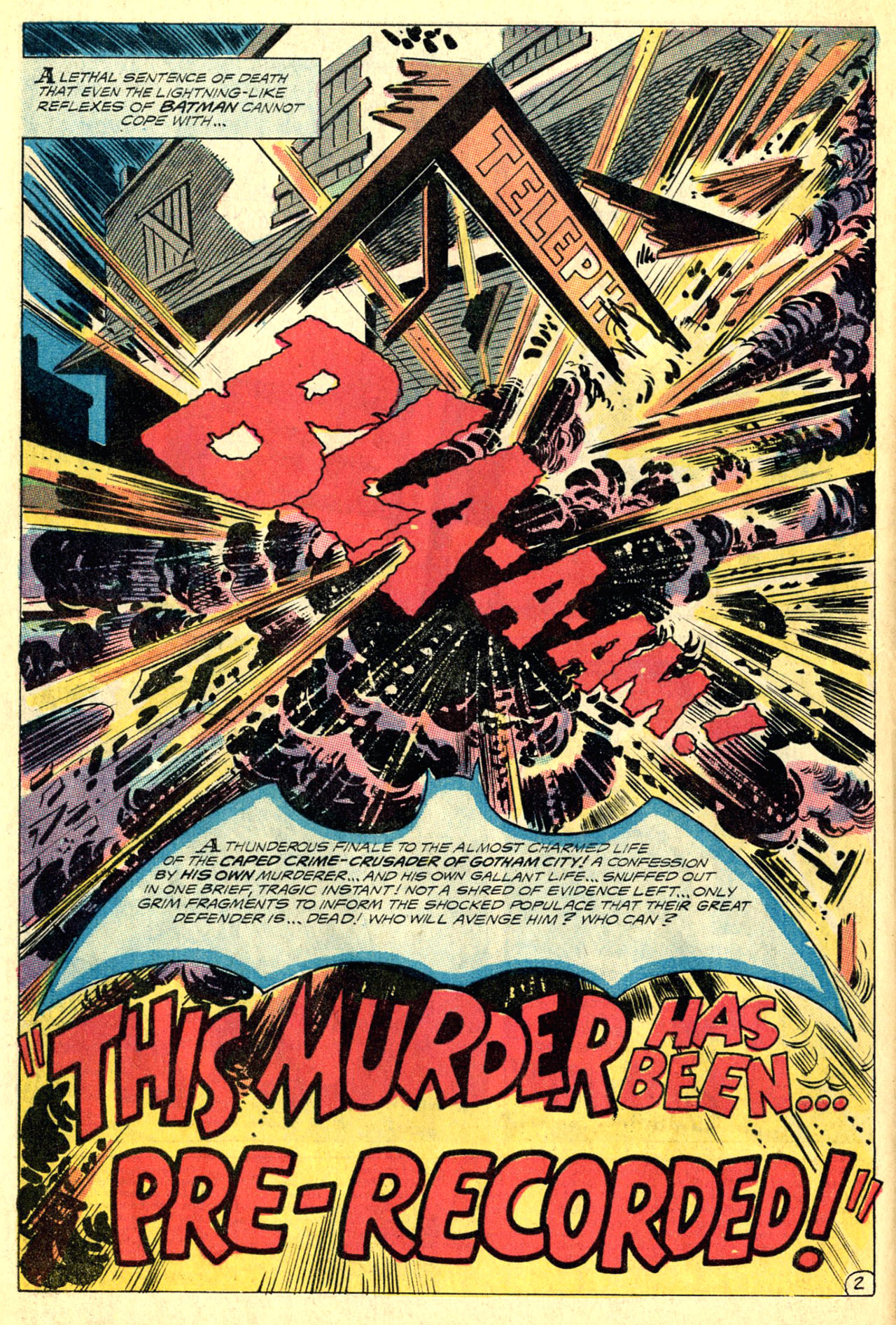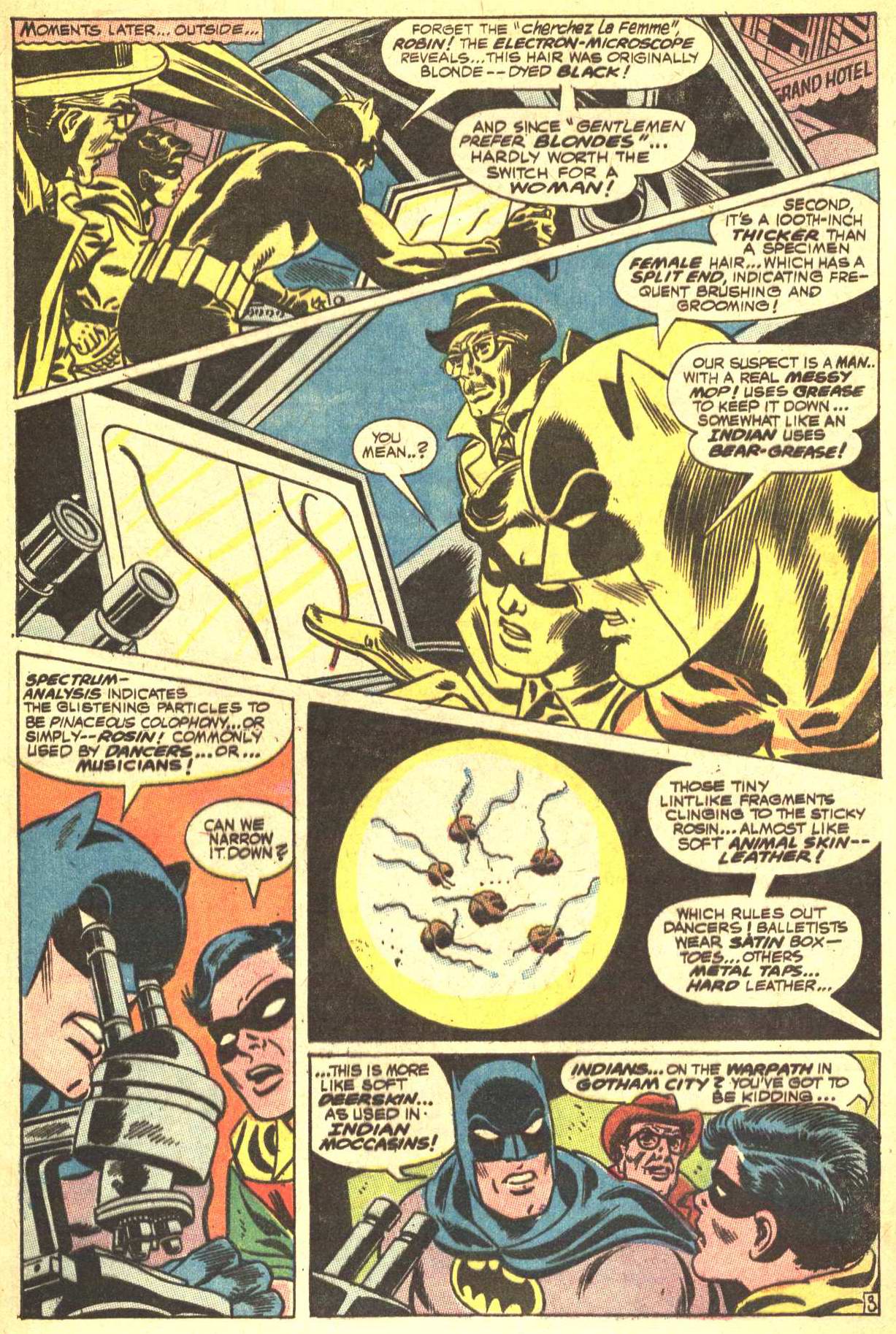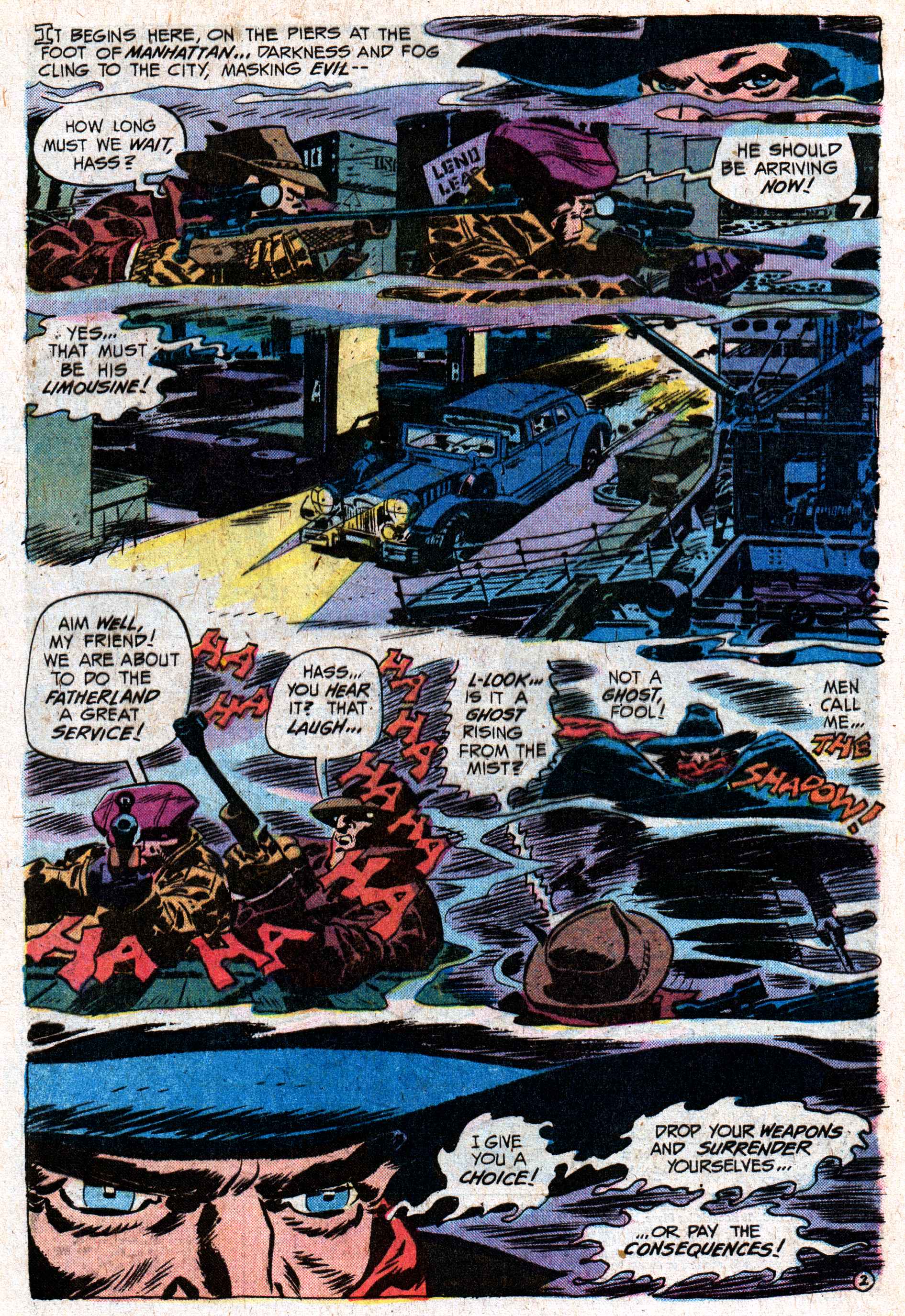
Underrated Batman stories – part 1

If you’re looking for classic Batman graphic novels and must-read stories, there are plenty of listicles on the web to serve your needs. (I’ve provided some tips myself.) But perhaps you’ve already read those and are wondering what to get next, or perhaps you’re disappointed with the drab direction the series has taken as of late and find yourself in search of past glories, or maybe you’re just a nerdy hipster who wants to impress others with arcane knowledge in order to disguise your insecurities about not being able to come up with original ideas… In any case, I’m here to help. If you want cool, self-contained comics that flew under the radar, do yourself a favor and track down these overlooked gems:

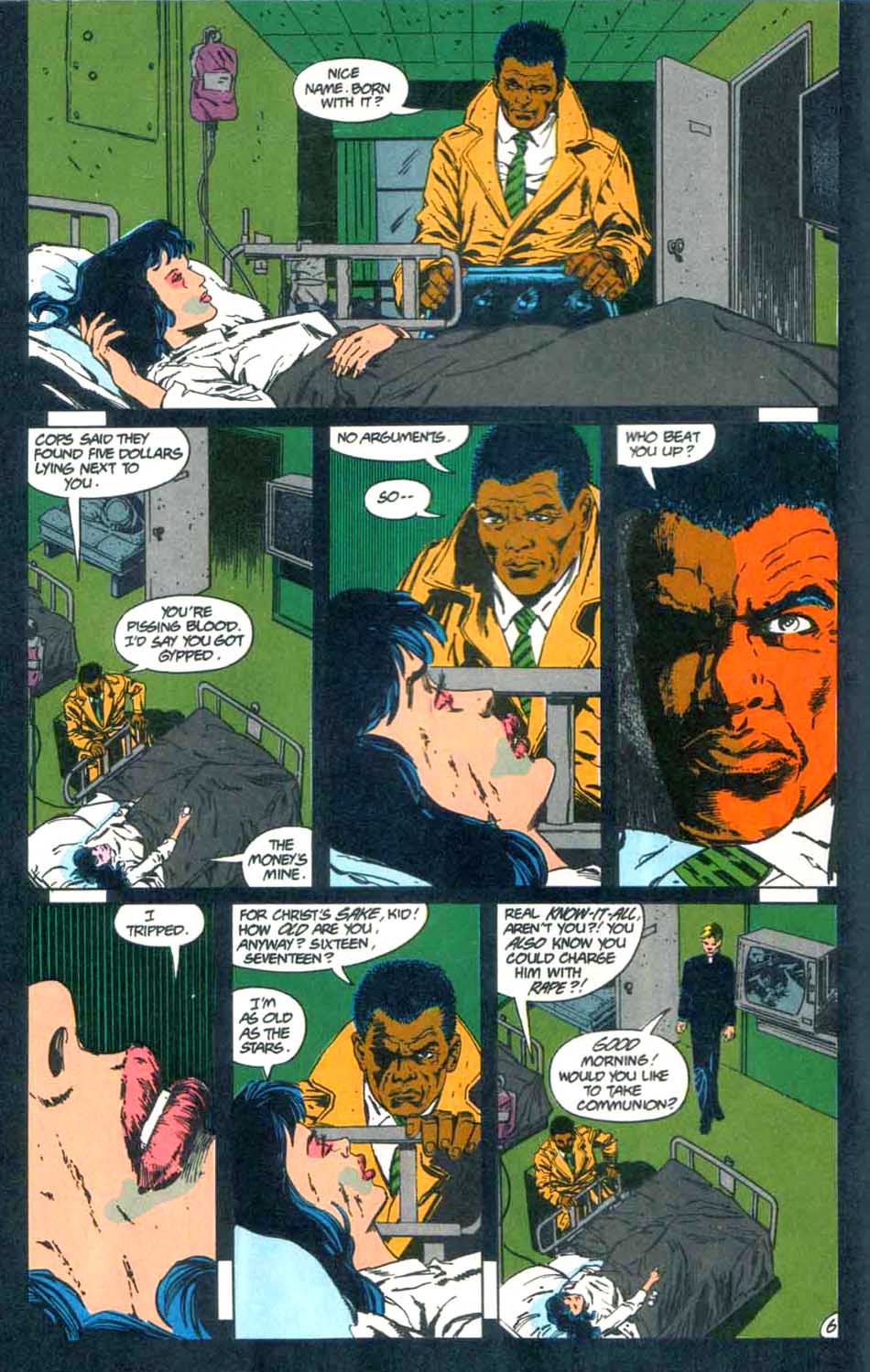
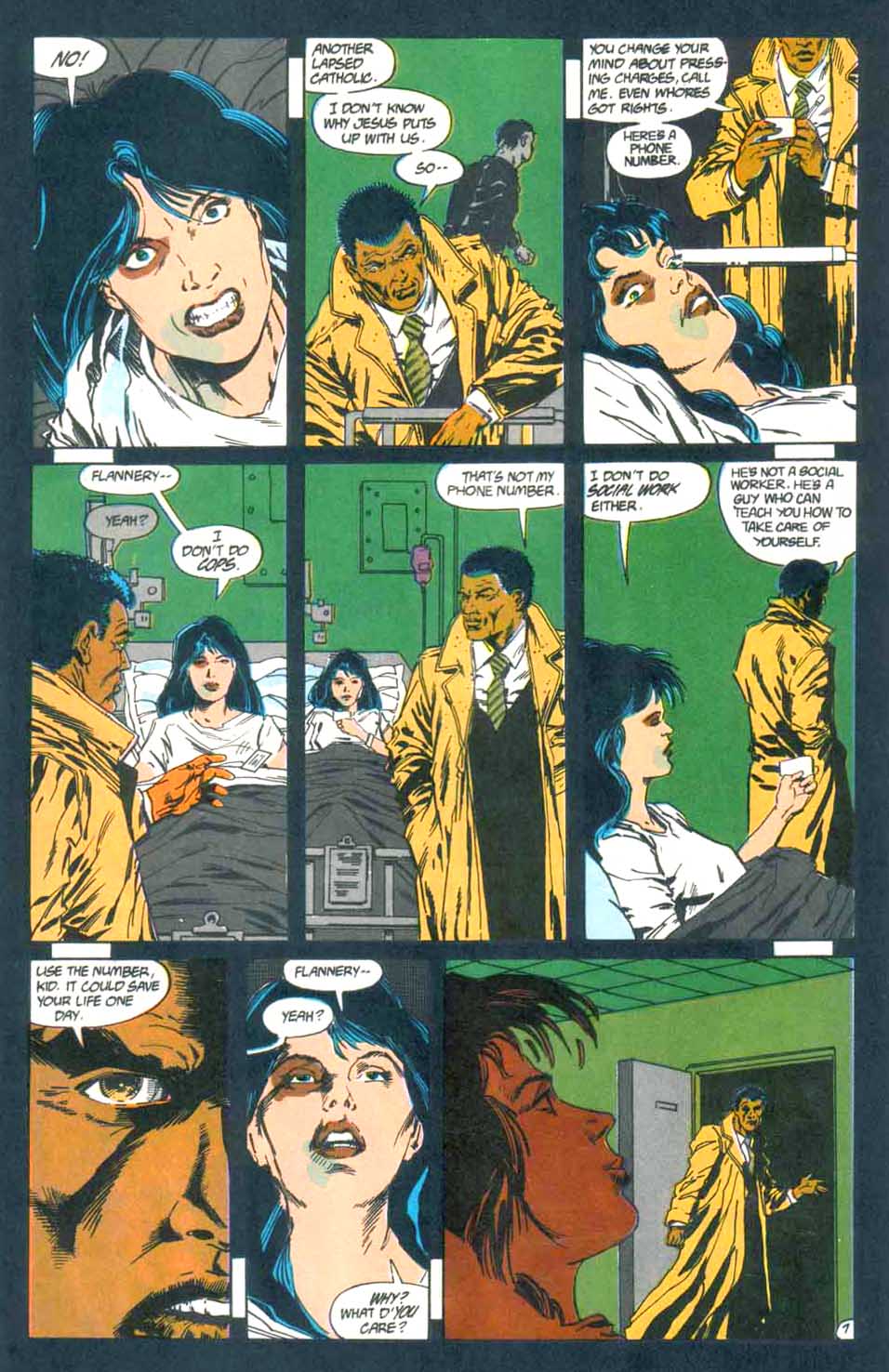
‘Heretic’ (The Hill)

Batman - The Hill

As hard as it is to write Batman stories informed by social realism, Christopher Priest pulls it off with confidence in this crime tale set in the Hill, Gotham City’s ghetto for the disenfranchised African-American community. Basically, the Dark Knight goes after a local kingpin but has to face the fact that people in the Hill are exposed to so much drama and violence in their everyday lives that they hardly give a damn about some white guy in a cape.

Artists Shawn Martinbrough and John Lowe help keep the comic tight, with a cinematic flow, although the narrative could have benefited from some decompression – it would have been more powerful and easy to follow if the various characters had been given more room to breathe. Regardless, Priest delivers pre-The Wire dialogue rich with urban slang and deals with the topic of social exclusion in a way that may be superficial but doesn’t come across as insultingly naïve or annoyingly preachy. Even better, he gives us a Bruce Wayne for whom both the Batman disguise and his douchebag playboy persona are means to an end, and who is willing to fully reinvent himself in order to achieve his aims.

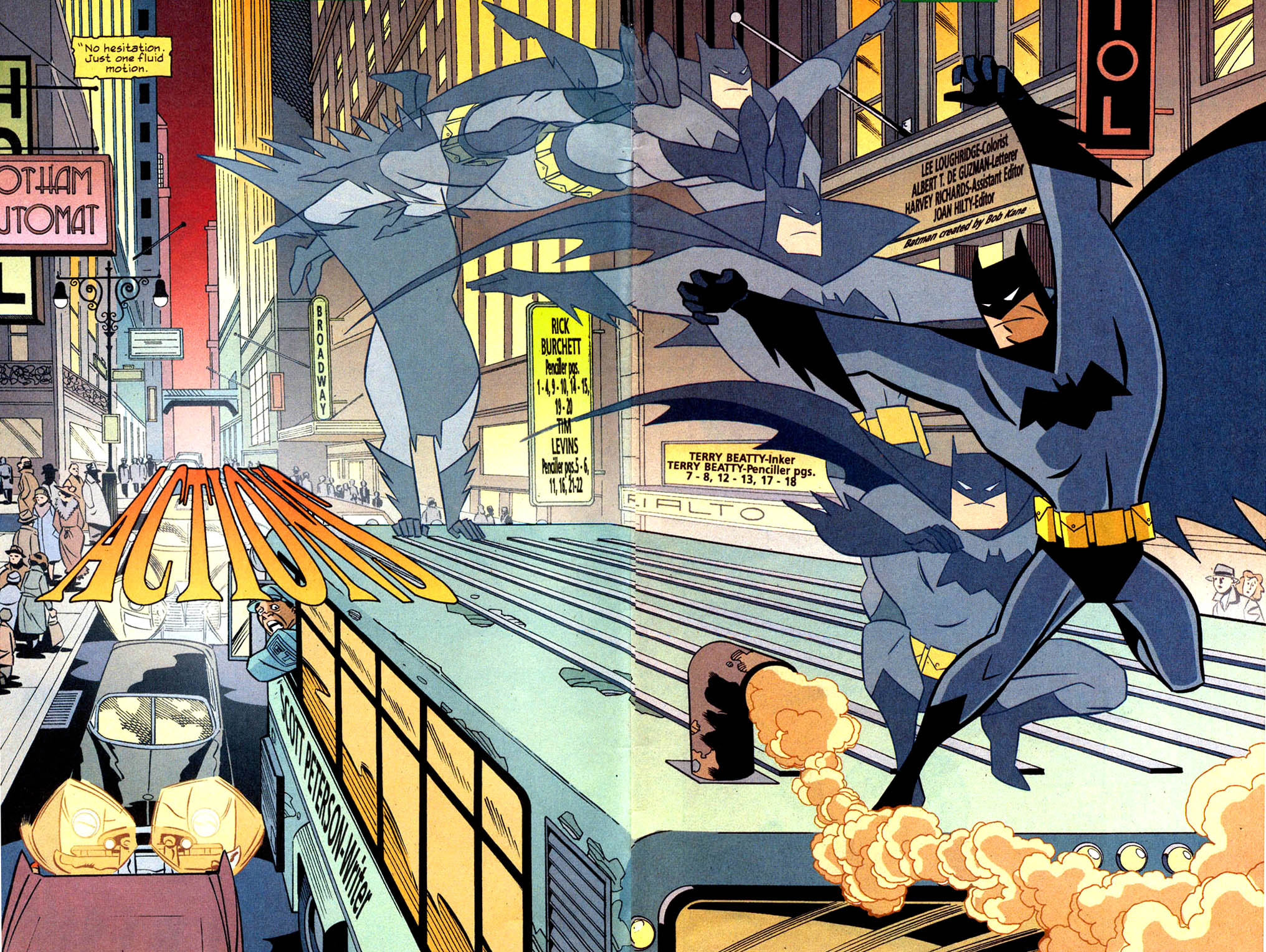
‘Actions’ (Gotham Adventures #48)

Gotham Adventures 48

Scott Peterson and Tim Levins (with occasional fill-ins by Rick Burchett) had an amazing run in Gotham Adventures. It was consistently satisfying, with the typical issue including a handful of dynamic action scenes yet still leaving enough room for a twist-filled crime story and some poignant characterization. In this sense, ‘Actions’ may seem like the least packed of the lot, as it is basically just a conversation between Robin (Tim Drake) and Alfred, accompanied by silent flashbacks and shots of Batman’s nocturnal activities. Yet this issue is such a meticulously constructed piece of storytelling that the fact that its creators make it feel simple and light becomes another one of their accomplishments.

There are three intertwined narratives: Robin coming to grips with Batman’s attitude towards the people he saves; Batman pursuing a car through the Gotham night; and, in flashback, Batman going to great lengths to help out a recently orphaned Dick Grayson. The off-page dialogue between Tim and Alfred is often superimposed on the two latter narrative threads, creating some amusing juxtapositions, such as when Alfred comments that Bruce sometimes seems ‘as though he’s entirely wrapped up in his work’ while we see an evil contortionist literally wrap himself around Batman (yes, an evil contortionist). It is a virtuoso act that culminates in a final page where all story threads pay off simultaneously. What makes the issue shine even more than its execution, however, is the fact that the choice to keep the Batman panels wordless further enhances the central theme that for the Dark Knight actions speak louder than words.

‘Carnival of the Cursed’ (Batman #224)

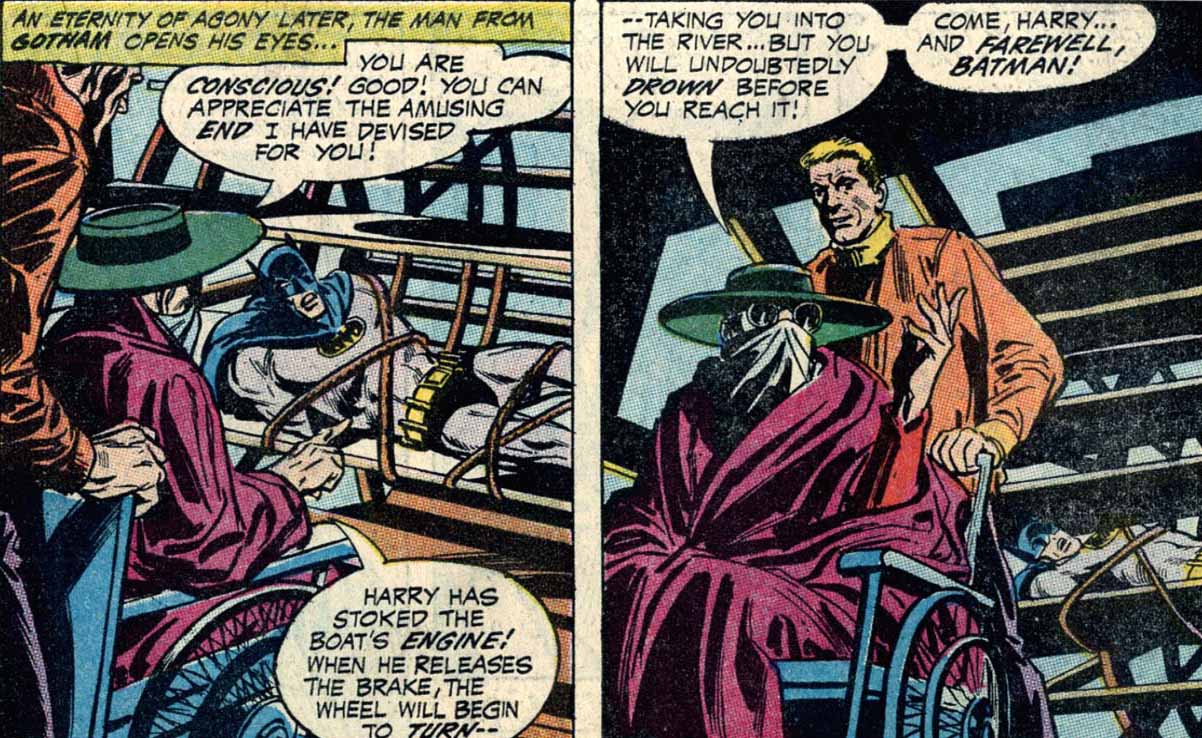
BATMAN 224

Angered that one of his favorite musicians was murdered, Batman sets off to New Orleans to bring the killers to justice. Because it’s New Orleans, he gets into a fight on a funeral second line, daringly escapes from a deathtrap on a Mississipi paddle steamer, and the whole thing culminates at a moonlit Mardi Gras parade. As I’ve pointed out before, Denny O’Neil sure knows how to write one hell of a Batman story!

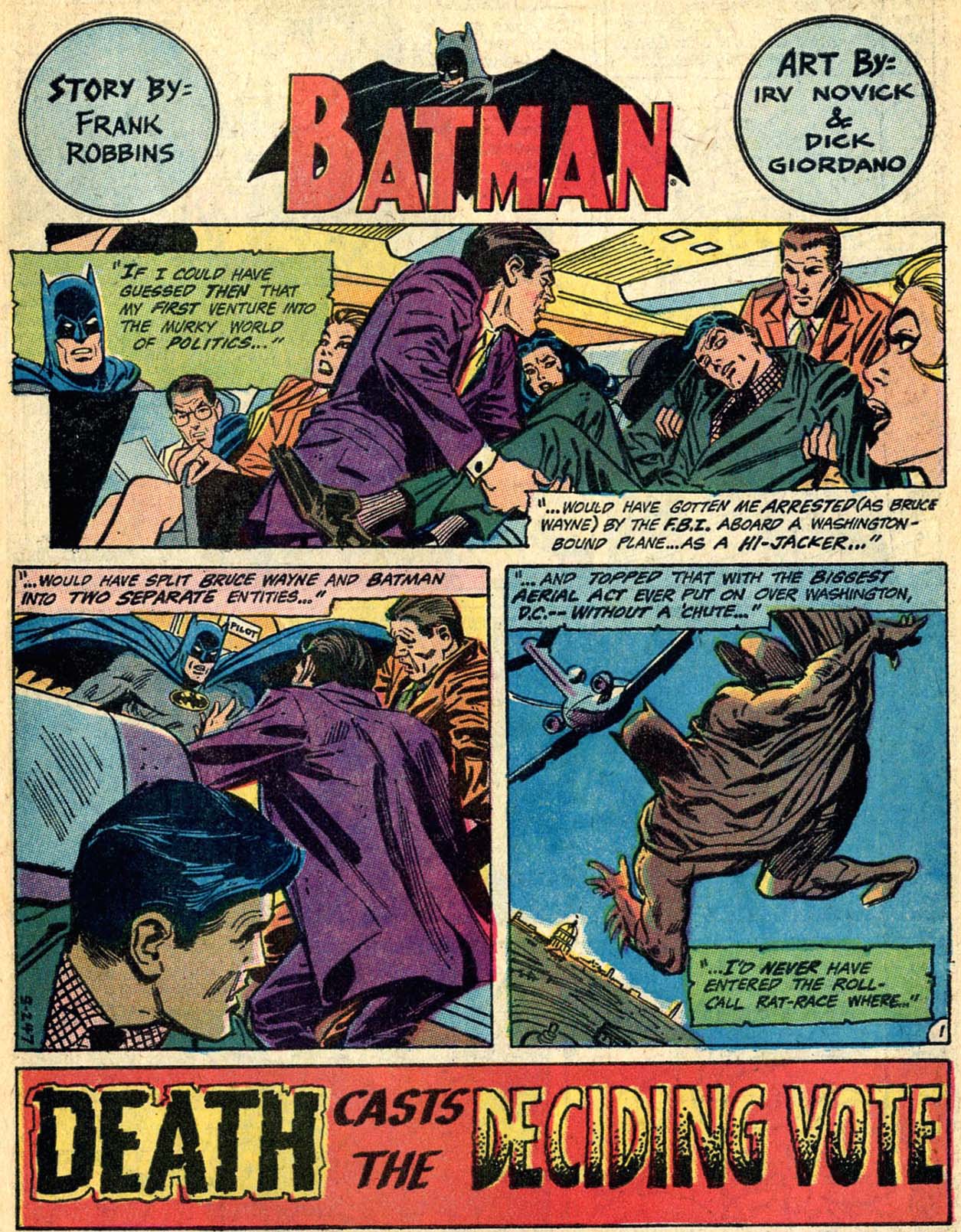
Just like a jazz song built around a recognizable structure, this comic is less about the plot than about atmosphere… and boy is there plenty of atmosphere. O’Neil is in poetic mode, from the opening lines (‘Clouds cluster in a slate-grey sky line like ancient mourners… A finger of wind pokes sharply from the river… And rain falls with a sad whisper on New Orleans…’) to the powerful ending where the horn which has spawned music, greed, and murder ends up as just a battered piece of metal on the street. But it’s the art by Irv Novick and Dick Giordano – together with the carnavalesque colors – that truly makes this comic work, bringing to life a haunted city where the malformed villain looks like just another grotesque Mardi Gras costume.

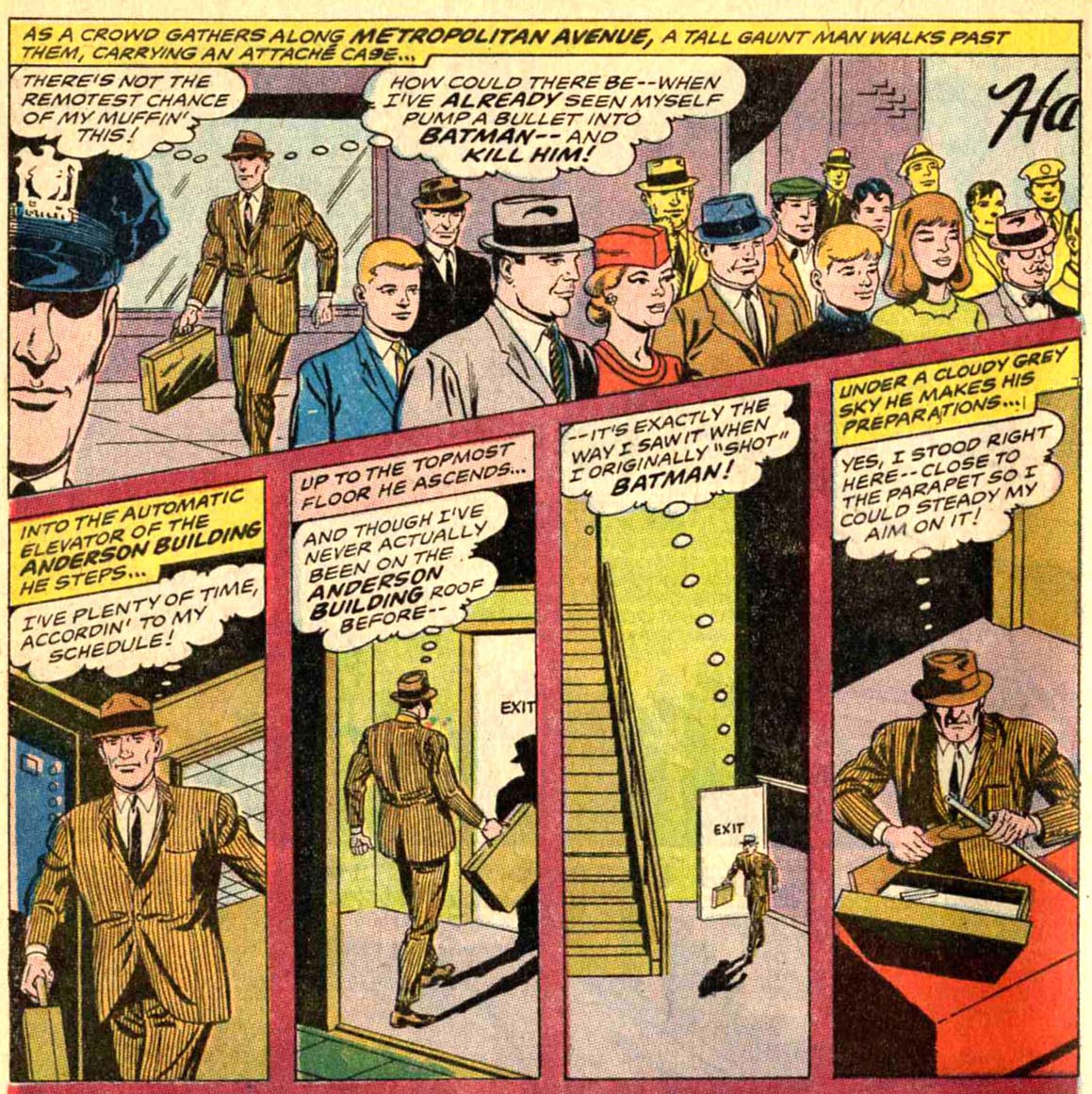
‘The Frigid Finger of Fate!’ (Detective Comics #375)

detective comics 375

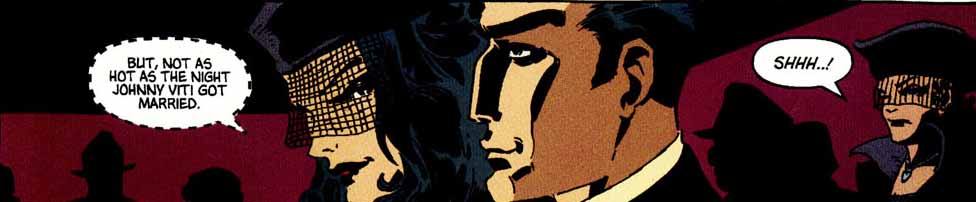
Told from the point of view of a criminal, this is one of those stories where the Caped Crusader takes the backseat, serving mostly as McGuffin and deus ex machina in someone else’s tale. Indeed, here is a story that could just as easily have come out of Will Eisner’s The Spirit. Gardner Fox’s script, one of the last in his long run, just never lets go: there’s an intriguing opening hook (a sniper is about to shoot Batman, claiming that he has already seen himself doing it), a smooth flashback (rain transitioning into shower water), a hard-on-his-luck protagonist trying to grasp the rules of a bizarre gift (his premonitions only work if he dreams them while feeling cold), a Barbara Gordon cameo, literary references ranging from Sophocles to Coleridge (and a likely autobiographical wink about authors getting story plots from dreams), a good-spirited dose of Dynamic Duo whoopass, a couple of plot twists, and a denouement that is as dark and poetic as they come.

Fox being Fox, the comic may feel a bit cluttered with text (although the wordy narration does help build up tension) and there are some quirky details, such as a Batman-themed holiday and a thief who supplies a gratuitous lesson about diamonds – still, nothing nearly as eccentric as this issue’s back-up story, which features the Elongated Man and a guy with the power to literally stop clocks with his face. As for the art, the clean lines of Chic Stone (ghosting for Bob Kane, according to the Grand Comics Database) do not always reach Eisneresque levels of expressionism and experimentation, but Irv Novick’s cover comes remarkably damn close…

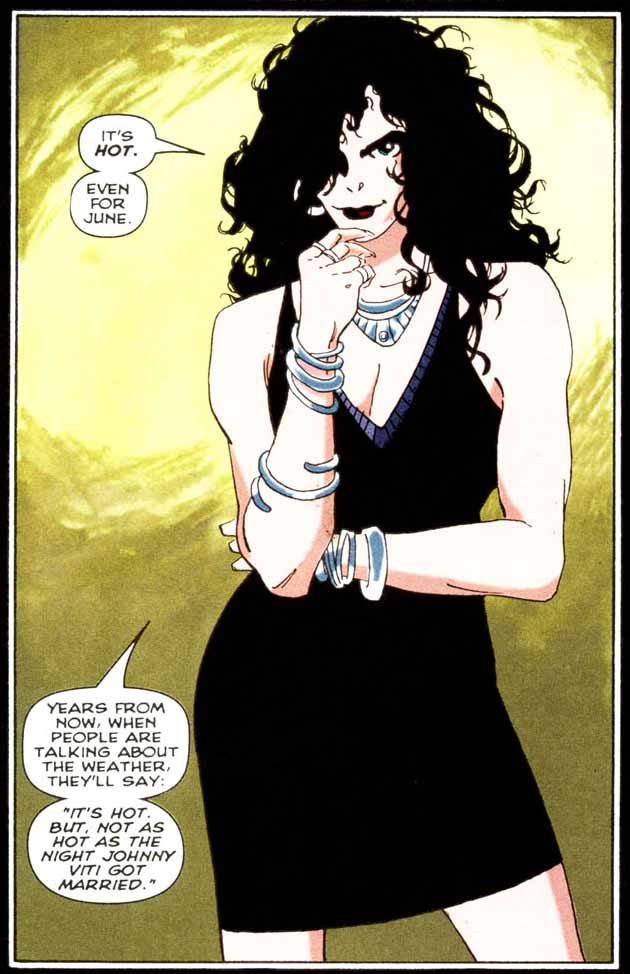
‘Earthly Delights: Scenes from a Work in Progress’ (Batman and Robin #26)

Batman And Robin 26

And now for something completely different: a freaky superhero tale set in Paris, with Dick Grayson acting as Batman (not that his identity makes any difference in this story). The Dynamic Duo gets called in by Nightrunner (AKA the French Dark Knight) when there is a breakout at the Parisian version of Arkham Asylum. What ensues is a surreal battle among an upside-down Louvre and an insane mob whose collective id has been magically unleashed. The twist is that, because it’s France, the villains are all mind-bending and highbrow, their crimes channeling various arts, such as film, architecture, sculpture, painting, performance, and literature.

Writer David Hine planned for a longer storyline but ended up getting only one issue, so he crammed all his fascinating ideas into 20 pages of madness. Hine, who is a master craftsman of bizarre, conceptual comics (if you don’t believe me, check out his Bulletproof Coffin), breaks the issue into sub-sections paying homage to specific creators, from René Magritte to Man Ray. The result is fun, challenging, and sometimes mesmerizing. No wonder Hine decided to open the comic with the word ‘Dada.’

NEXT: Batman and Leonardo da Vinci.

Posted in BATMAN COMICS FOR BEGINNERS | Tagged , , , , , , , , , , , , | Leave a comment

Frank Robbins’ oddball Batman

The 1970s were a great time for the Caped Crusader, even if, looking back, we did miss out on the chance to see Batman with a turtleneck or Catwoman with an afro (problem solved). After the kitsch of the ’60s and before the grit of the ’80s, creators seemed to have found a firm balance between a Batman that was dark enough to be cool without yet being an ultraviolent psychopath. The outlook was perfectly captured by artists like Neal Adams, Bob Brown, Irv Novick, and Jim Aparo, who gave the character realistic proportions and a gothic cape and cowl. In terms of writing, Denny O’Neil and Frank Robbins deserve a lot of credit for this tonal shift. A few weeks ago, I spotlighted O’Neil, still fondly remembered as one of the greatest Batman writers of all time. History has been less kind to Frank Robbins.

There are several reasons for this. For one thing, although Robbins would go on to write some truly solid stuff in the 1970s, he didn’t start off that way. In 1968, when he replaced Gardner Fox in Batman and Detective Comics, Robbins didn’t immediately move away from the camp of the TV show (which had just been cancelled), particularly regarding the incessant wordplay… Seriously, in Batman #205, an unrelenting kick-ass action issue if there ever was one, I counted 25 playful puns and 14 amusing alliterations (personal favorite: referring to Batman as ‘fearless ferret’).

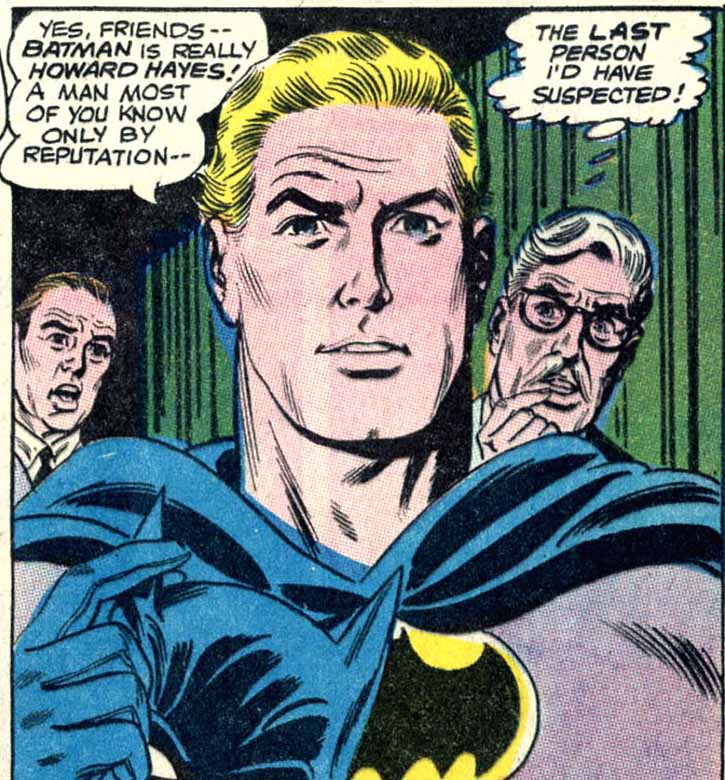
While Novick and Brown gave the stories a hard-edged look from the onset, some of Frank Robbins’ earlier scripts are firmly tongue-in-cheek, including some gloriously goofy romans à clef. In ‘Batman’s Big Blow-Off!’ a beatnik newspaper pushes the Caped Crusader into revealing his secret identity, so he convinces an obvious Howard Hughes stand-in to be used as a front.

BATMAN 211Batman #211

Things get even more out of control when the ersatz-Howard Hughes gets jealous of Batman’s popularity, undergoes intensive martial arts training, and damn near kills the Dark Knight in order to take his place!

If you think this is out there, it probably means you haven’t read ‘Dead… Till Proven Alive!’ where Batman and Robin investigate the urban legend that Paul McCartney died in 1966 and was secretly replaced by a lookalike… At one point, the Dynamic Duo tries to find out the truth by getting the Beatles to sing ‘Happy Birthday’ to Alfred and then comparing voice-recordings.

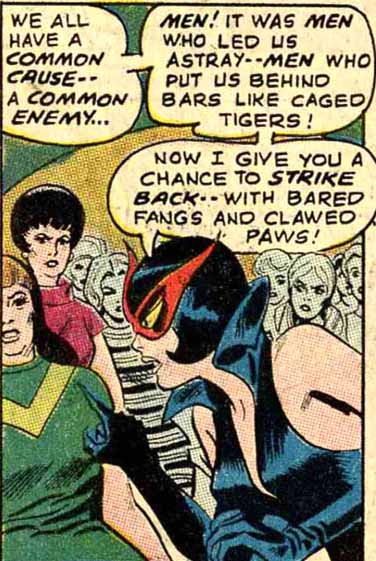
Frank Robbins was certainly fond of incorporating contemporary references in his work – a zanier version of Law & Order’s ‘ripped from the headlines’ – yet the Zeitgeist did not always manifest itself in the ways you’d expect. Take the women’s rights movement. In ‘The Case of the Purr-Loined Pearl,’ Catwoman recruits female ex-cons into her gang with the promise of getting revenge against the men in their lives…

BATMAN 210 Batman #210

The result, however, is that Catwoman forces her new partners to undergo an intensive workout and sauna program in order to be slim enough to fit into a tight, sexy costume, just like hers, so that they can serve as distraction while she steals a shiny pearl!

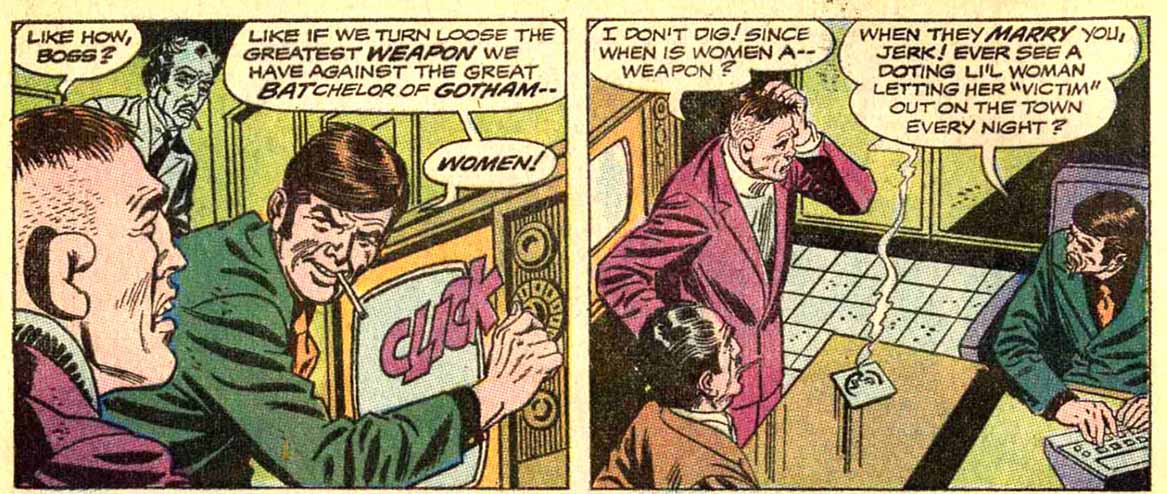
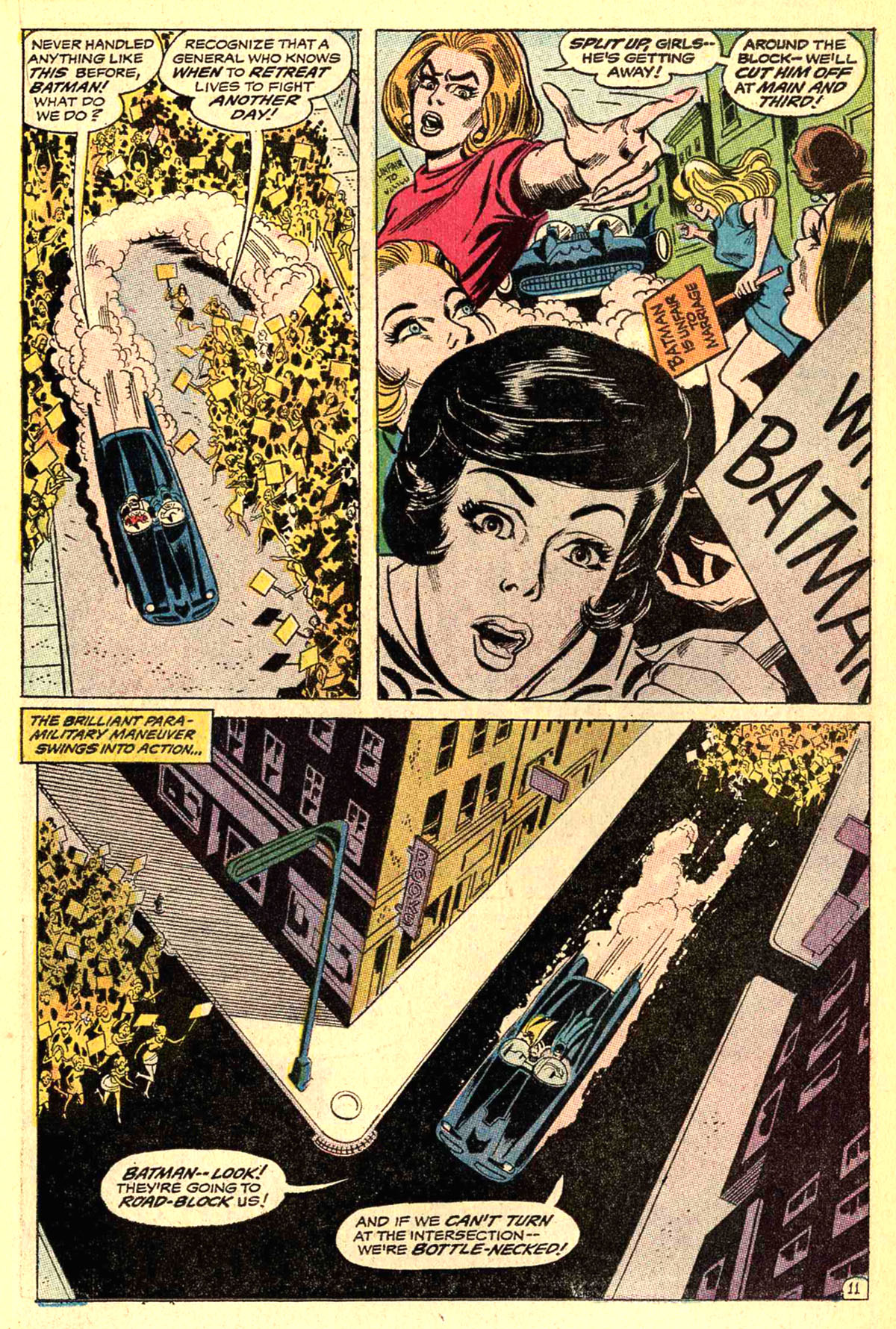
And then there is ‘Batman’s Marriage Trap!’ where some male crooks come up with the most mesmerizingly misogynous plan ever:

BATMAN 214Batman #214

In order to screw up Batman’s nightly activities, the crooks literally spend a million dollars on advertising and create a women’s NGO demanding that the Caped Crusader get married – what the gang leader respectfully refers to as a ‘chick-harassing strategy.’ This leads to Batman being chased by a massive demonstration of female protesters who accuse him of promoting singlehood:

BATMAN 214Batman #214

As if kick-starting a whole grassroots movement wasn’t already an overelaborate stratagem, trust me, in the end the crooks’ actual plan manages to make even less sense…

If Denny O’Neil was the hippy-looking liberal writer who at the same time as scripting Batman was also telling social awareness stories with Green Arrow explaining racism to Green Lantern, Frank Robbins – in his mid-fifties by then – seemed genuinely concerned, if not confused, about the values of the flower power generation. In ‘Take-Over of Paradise,’ an activist gang barricades itself on a high-rise to demand low-cost housing. Batman proudly stands up for the ‘establishment,’ grumpily arguing that the protesters are ‘grown men – in a man’s world! And they play the games with civilized rules – or suffer the consequences!’ The story does reflect divergences between well-meaning protesters and those willing to kill to achieve their aims, but in the end the main villain is revealed as a ‘femme lib’ girl, out to take over the gang and show her partners what a female leader could do.

This is just one of many stories pitting Batman – as well as Robin and Batgirl, in Detective Comics’ backup features – against out-of-control members of the younger subculture. However, in ‘Freak-Out at Phantom Hollow,’ Frank Robbins does acknowledge the intolerance faced by long-haired hippies in small town America, unsubtly comparing their plight to the witch hunts of 300 years ago.

Another reason Robbins didn’t reach O’Neil’s status is that his contributions to the Batman mythos were not as enduring…

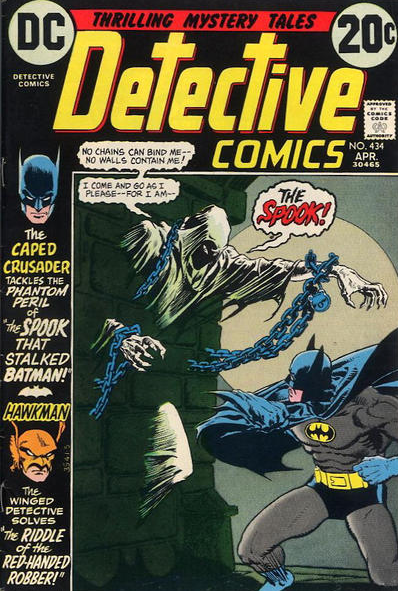
detective comics 434Frank Robbins’ most remarkable recurring villain was the Spook, an escape artist extraordinaire who charged criminals for helping them break out of jail. The Spook made very few appearances post-Robbins – ironically, the ‘Houdini of the Crime-World’ served one of the longest sentences, finally being released on parole in 2003 (in Gotham Knights #46). Pathetically, he later ended up decapitated by Batman’s ten-year-old son.

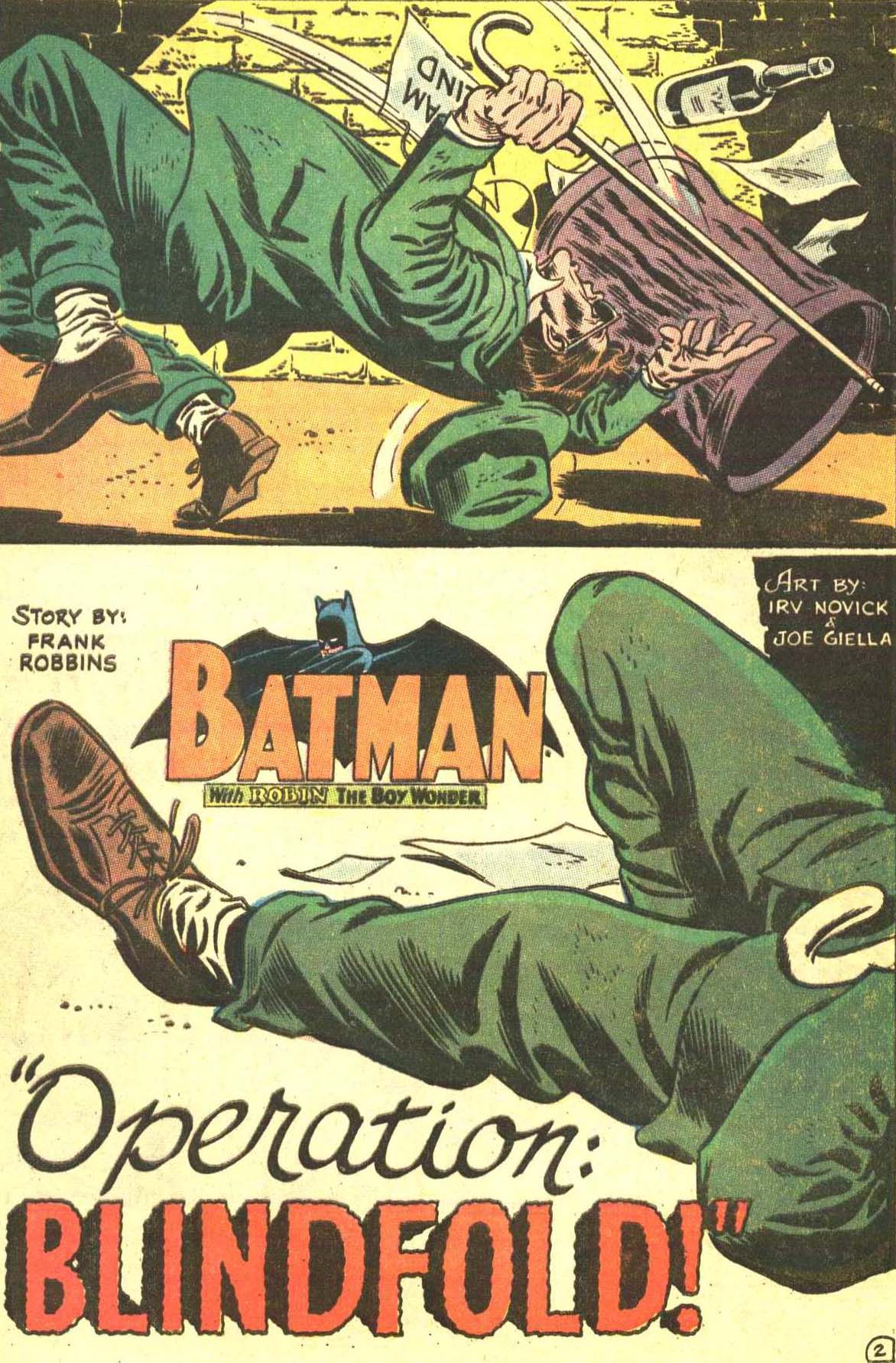
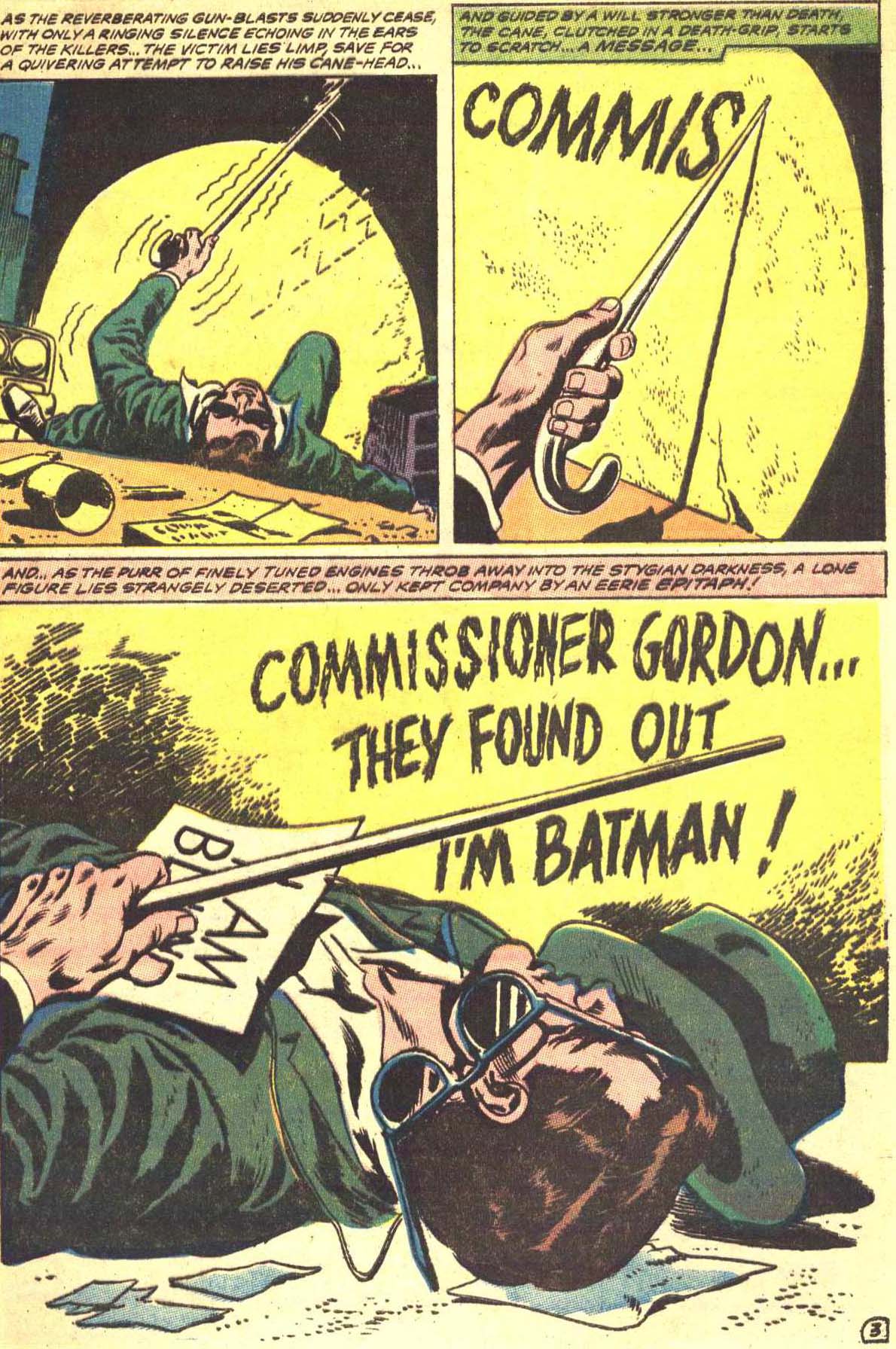
As for the Ten-Eyed-Man, a war veteran security guard who mistakenly blames Batman for his blindness, has his optic nerves reconnected into his fingertips so that he can see through his hands, and hijacks an airplane across the world in order to take his revenge on the Caped Crusader in the depths of the Vietnamese jungle – well, for some reason most writers just didn’t know what to do with this character!

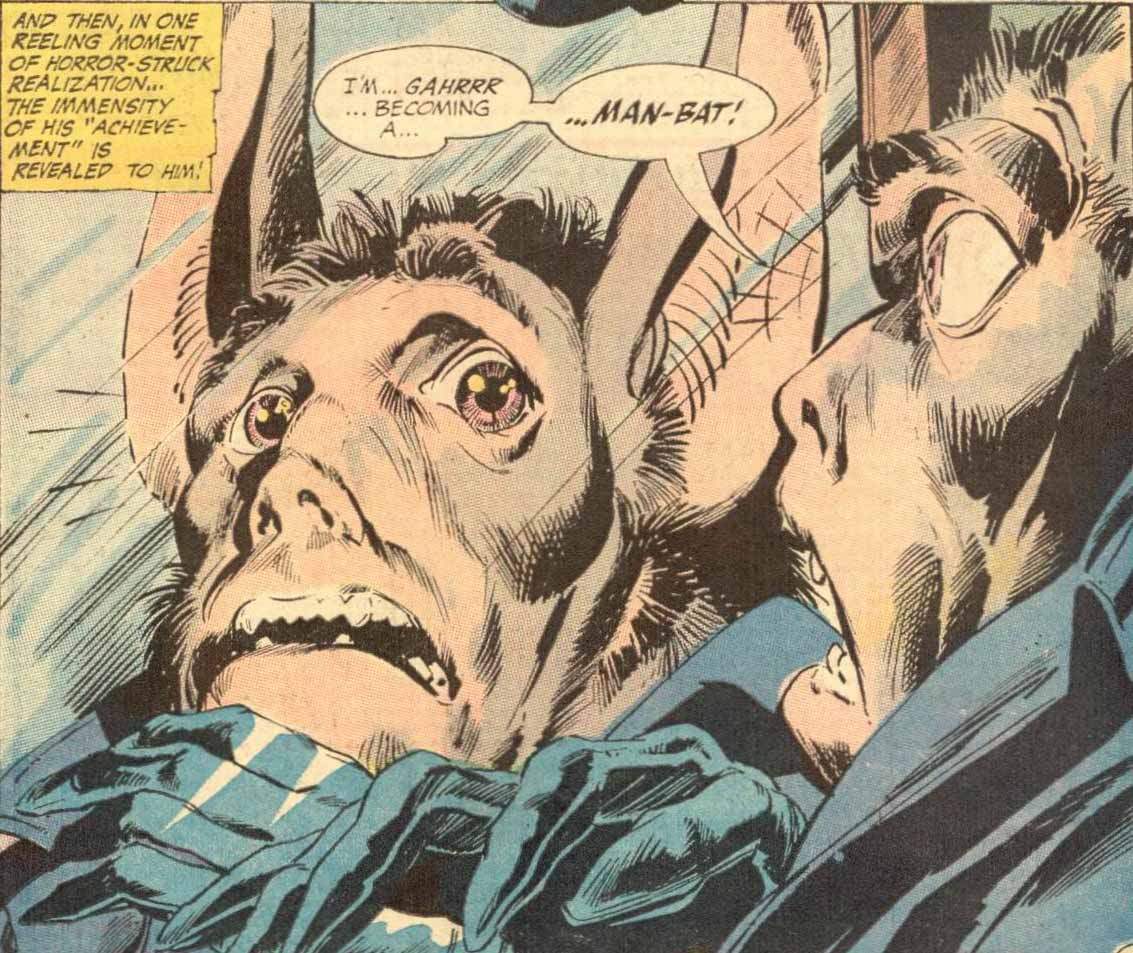
Only Man-Bat continues to find a semi-regular presence in the comics, yet he still gets much less exposure than, say, the O’Neil-created Ra’s and Talia al Ghul… This is not surprising, given that the al Ghul clan has the potential for twisted family dramatics around an interesting emotional triangle and stories in which the whole world is at stake, while Man-Bat is essentially just another variation on The Strange Case of Dr. Jekyll and Mr. Hyde, albeit a visually interesting one:

detective comics 400Detective Comics #400

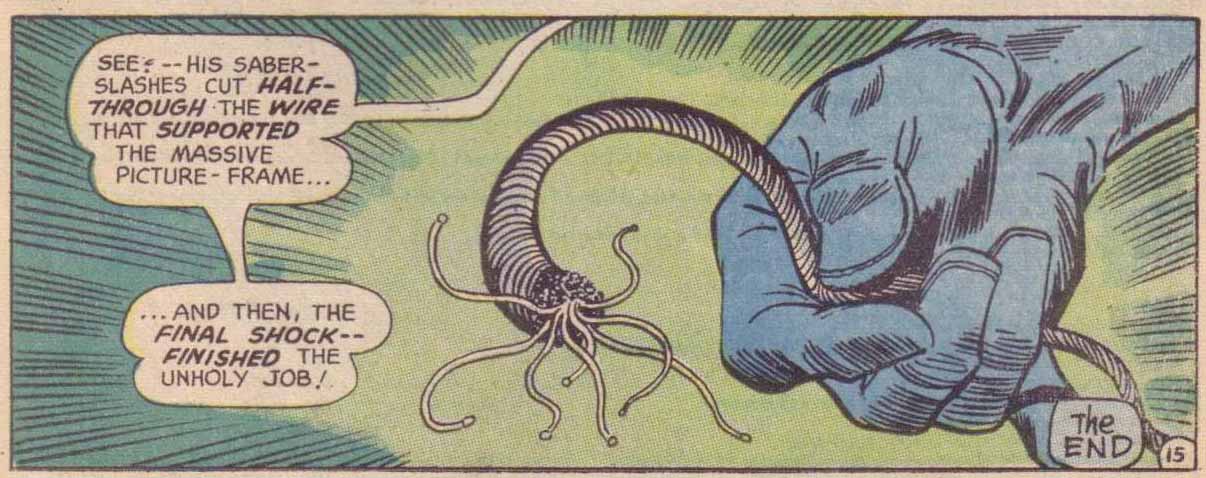
Finally, there’s the fact that Frank Robbins didn’t have Denny O’Neil’s knack to stick the landings. O’Neil usually found a perfect, poetic note to serve as punchline, whether it was Batman writing the year of the villains’ death on their tombstones in ‘The Secret of the Waiting Graves’ or a Holocaust survivor impaling himself next to the Star of David in ‘Night of the Reaper!’ In turn, more often than not Robbins was still explaining his plot twists until the very final panel…

detective comics 409Detective Comics #409

Nevertheless, the truth is that Frank Robbins wrote many fun stories. While he may have sometimes rushed the endings, he did have a skill for slam-bang openings, grabbing the reader from the start:

BATMAN 219 Batman #219

One of his trademarks was to shamelessly appear to kill Batman on the title pages:

detective comics 392Detective Comics #392

                             Batman 204Batman 204

Batman #204

                             BATMAN 220BATMAN 220

Batman #220

What’s more, Frank Robbins really played up the World’s Greatest Detective angle. Robbins’ warped imagination came up with creative crimes – and while these were not always realistic, the clues given to the reader were fair. Even his most conventional mystery tale, ‘Legacy of Hate!’ (a well-executed whodunit set in an apparently haunted castle where a ghostly knight is out to kill Bruce and a bunch of far-removed Wayne relatives), finishes with a twist that sets it apart from mere Scooby Doo-esque shenanigans.

Batman’s methods can be a bit unusual – such as in the underrated ‘Challenge of the Consumer Crusader,’ where he pretends to be the victim’s ghost in order to extract a confession from a suspect – but hey, the guy dresses up like a bat, so we already knew that he had an idiosyncratic approach to crime-fighting. Regardless, you can find plenty of clever detective fiction in these comics. This is not just true for Robbins’ later output, which increasingly consisted of straight up, gloomy crime stories. In one way or another, from early on even his wackiest scripts tended to include some kind of surprise reveal as well as advanced deductive reasoning…

Batman 206Batman #206

Robbins also illustrated a few of his comics. He was great at it, with a pre-Darwyn Cooke angular style and feathery linework evocative of 1950s’ cartoon advertisement. As an artist, Robbins’ high point is perhaps the truly moody visuals he produced for a number of issues of the Denny O’Neil-scripted version of The Shadow:

the shadow 05The Shadow #5

Robbins’ art was of course strikingly different from the mainstream Batman artists of the time, whose figures were comparatively much more photorealistic. However, his noirish pencils fitted perfectly well with somber crime stories, such as the cat-and-mouse antics with a methodical killer in ‘Forecast for Tonight… Murder,’ or the hardcore race riot and Attica-like prison revolt of ‘Blind Justice…Blind Fear!’

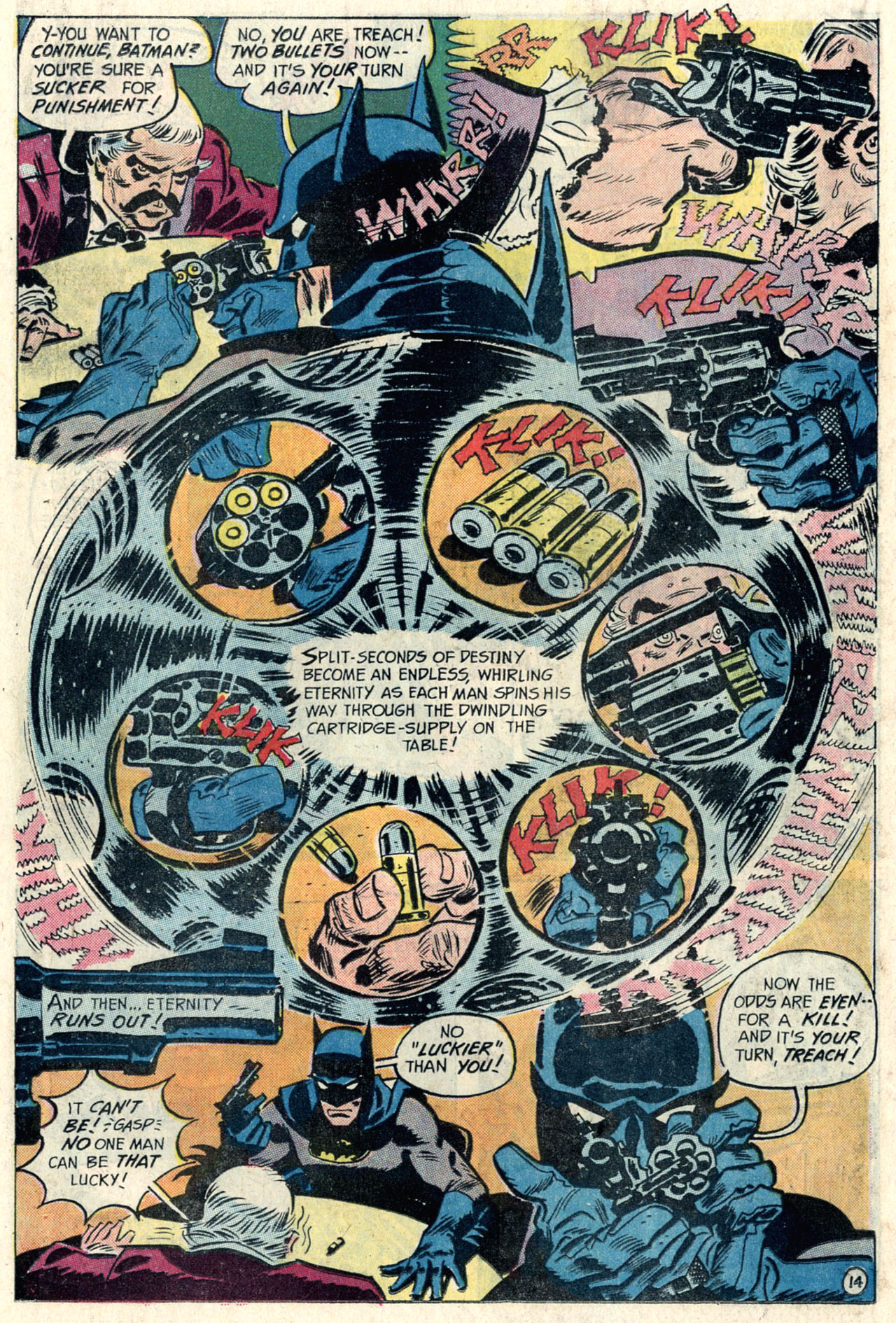
For my money, Robbins’ greatest accomplishment was ‘Killer’s Roulette!’ The issue starts with the world’s unluckiest cat burglar: first he bumps into an armed victim, then he realizes the man he intended to rob has committed suicide over gambling debts, and then Batman barges in. As if things weren’t bad enough, the burglar takes the dead man’s gun and tries to shoot the Dark Knight – always a bad idea. Soon Batman finds himself investigating a gambling network, leading up to one badass game of Russian roulette:

detective comics 426Detective Comics #426

Frank Robbins’ work may have had ups and downs, highs and lows, and may not always have been on the right side of history. But every time I look at this page, all is forgiven.

NEXT: Batman goes to New Orleans.

Posted in WRITERS OF BATMAN COMICS | Tagged , , , , , , , | 2 Comments

Henchworkers of Gotham, unite!

A spectre is haunting Gotham City – the spectre of some rich capitalist in a bat costume kicking the crap out of the underprivileged masses that are just trying to get by in this lousy economy. So if there is one group in Gotham that desperately needs to unionize, it’s henchmen and henchwomen.

I mean, talk about precarious working conditions. The schedules are terrible, the uniforms degrading, you frequently get punched in the face by Batman (or, even more humiliating, by Robin, while Batman goes after the main baddie), and there is absolutely no job security…

batman brave and the bold 10Batman: The Brave and the Bold (v2) #10

You may argue that it’s a globalized problem, not just Gotham City’s. People never think how things affect the family of a henchman. And unlike other self-professed heroes, at least Batman is not in the business of killing hoodlums!

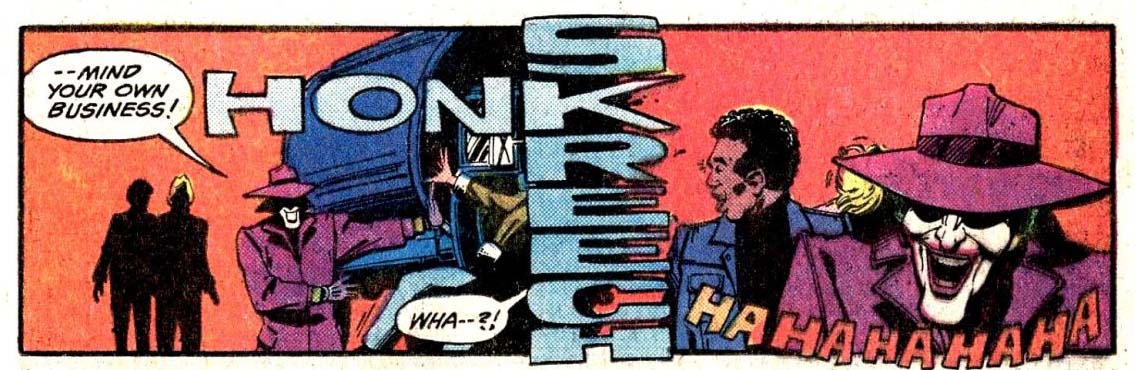
Still, there can’t be that many jobs worse than working for the Joker. For one thing, the sense of humor of the Clown Prince of Crime is lame enough to make The Office’s David Brent cringe… And while Batman does have a no-kill policy, one of comics’ longest running gags is the fact that the Joker keeps murdering his own employees willy-nilly:

detective comics 475 detective comics 475 Detective Comics #475

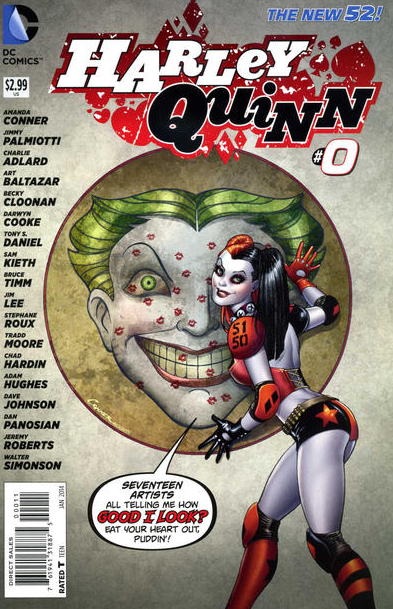
Sure, there is at least one success story of a comrade who managed to break away with her life and a book contract. After years of helping the Joker carry out his madcap plans, Harley Quinn earned her own fanbase. She even has a solo series:

Harley Quinn 00Harley Quinn (v2) #0

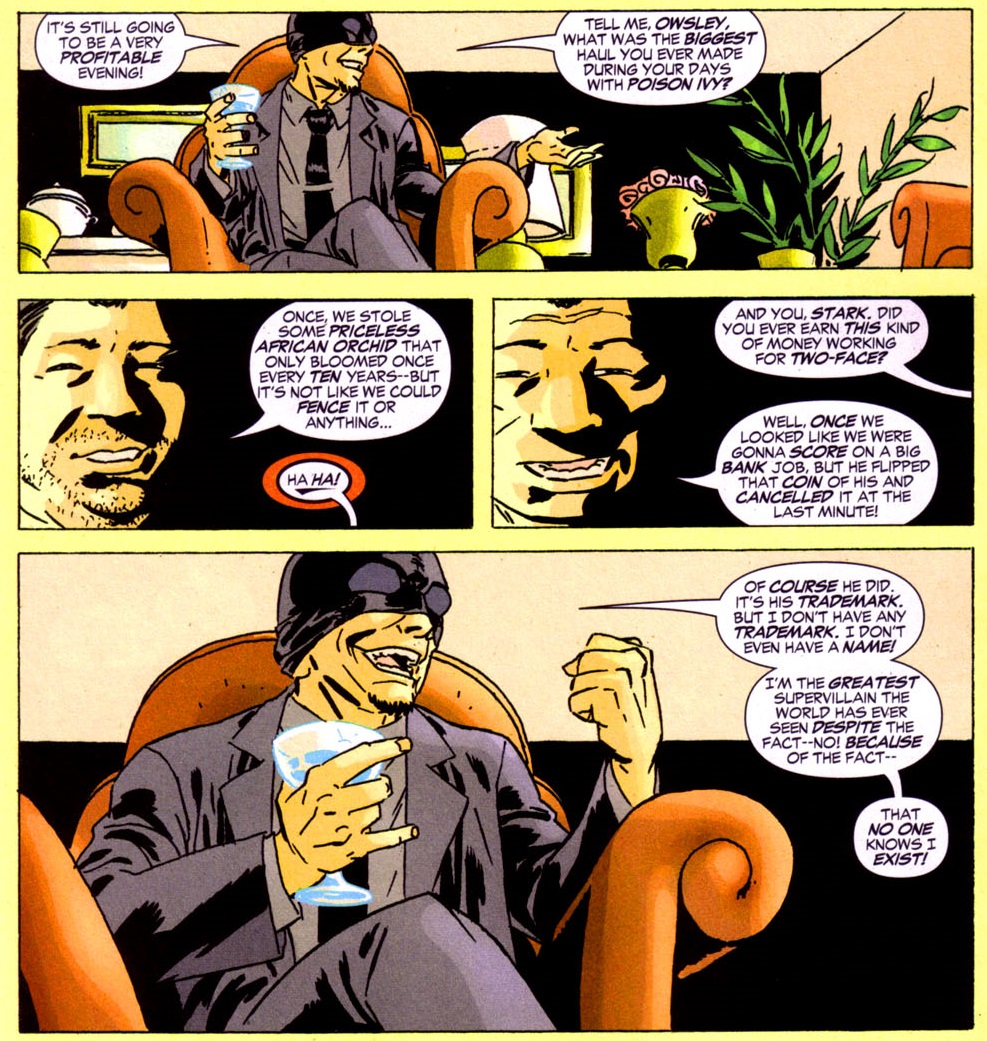
Tony Finch, another former Joker henchman, also tried to make it on his own some years ago, with less impressive results. A natural born loser, when Finch found a dial that gave him superpowers (don’t ask), he recruited a couple of thugs and made a short-lived attempt to start an independent criminal enterprise, with its own ethos:

h-e-r-o 10H-E-R-O #10

I’m afraid people still don’t know you exist, Tony. Blame the system: Gotham is a tough city for the small entrepreneur, which may explain why so many goons gravitate towards the big rogues.

In fairness, the False Face Society of Gotham does have a reputation for paying well. Moreover, as mobs go it is a relatively successful one, having managed to establish a monopoly of Gotham’s organized crime plenty of times. That said, it’s not as if its leader, Roman Sionis, is not an eccentric egomaniac as well, what with wearing a mask carved out from his father’s coffin, insisting that all his gang members disguise their faces, and even disfiguring his poor lover just so that she too must wear one of his damn masks… He makes Tony Soprano look like a well-adjusted gangster!

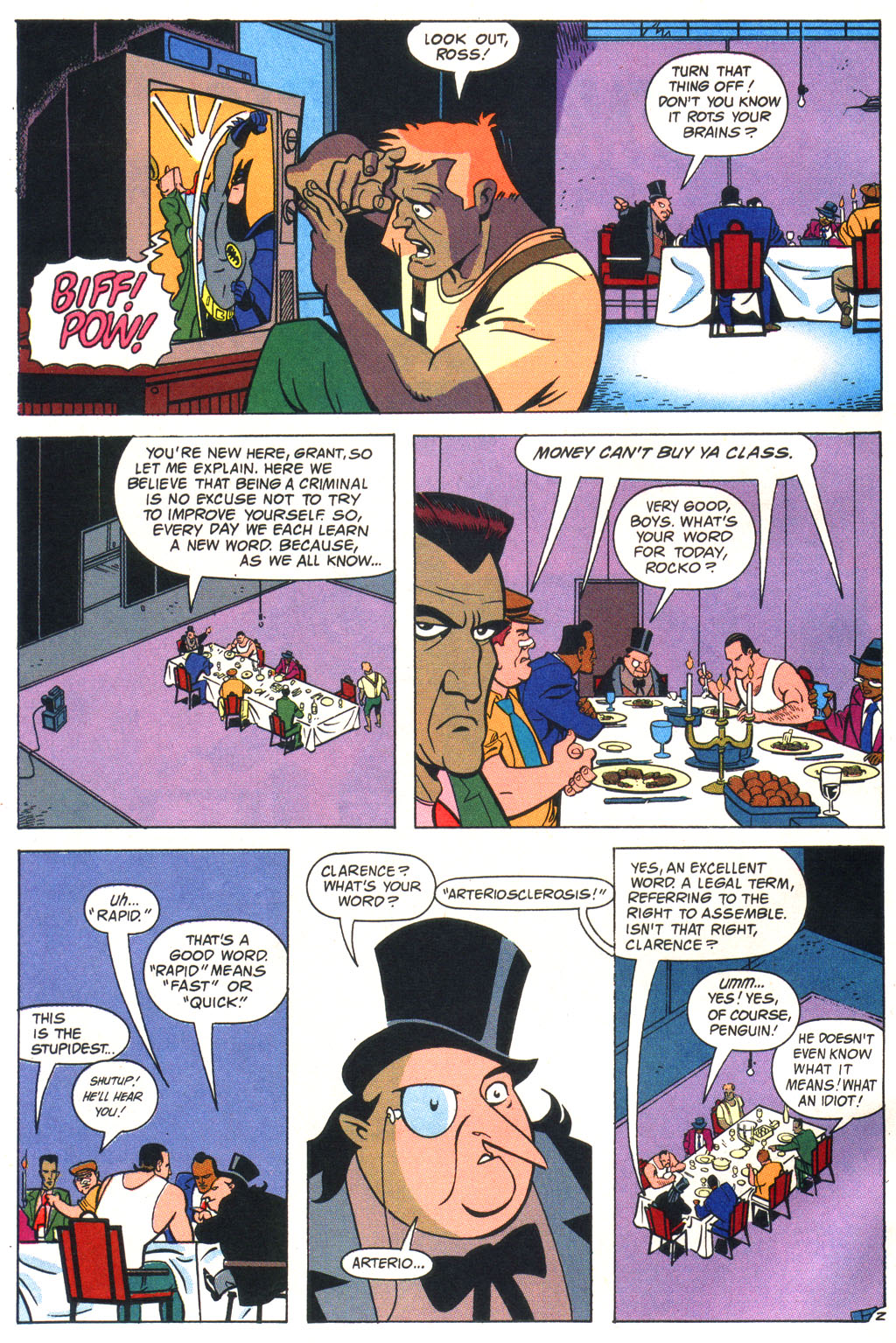
Speaking of dysfunctional mobsters, there is also the Penguin’s gang. Say what you will, but as bosses go, at least the Penguin is concerned with the education level of his staff…

batman adventures #1The Batman Adventures #1

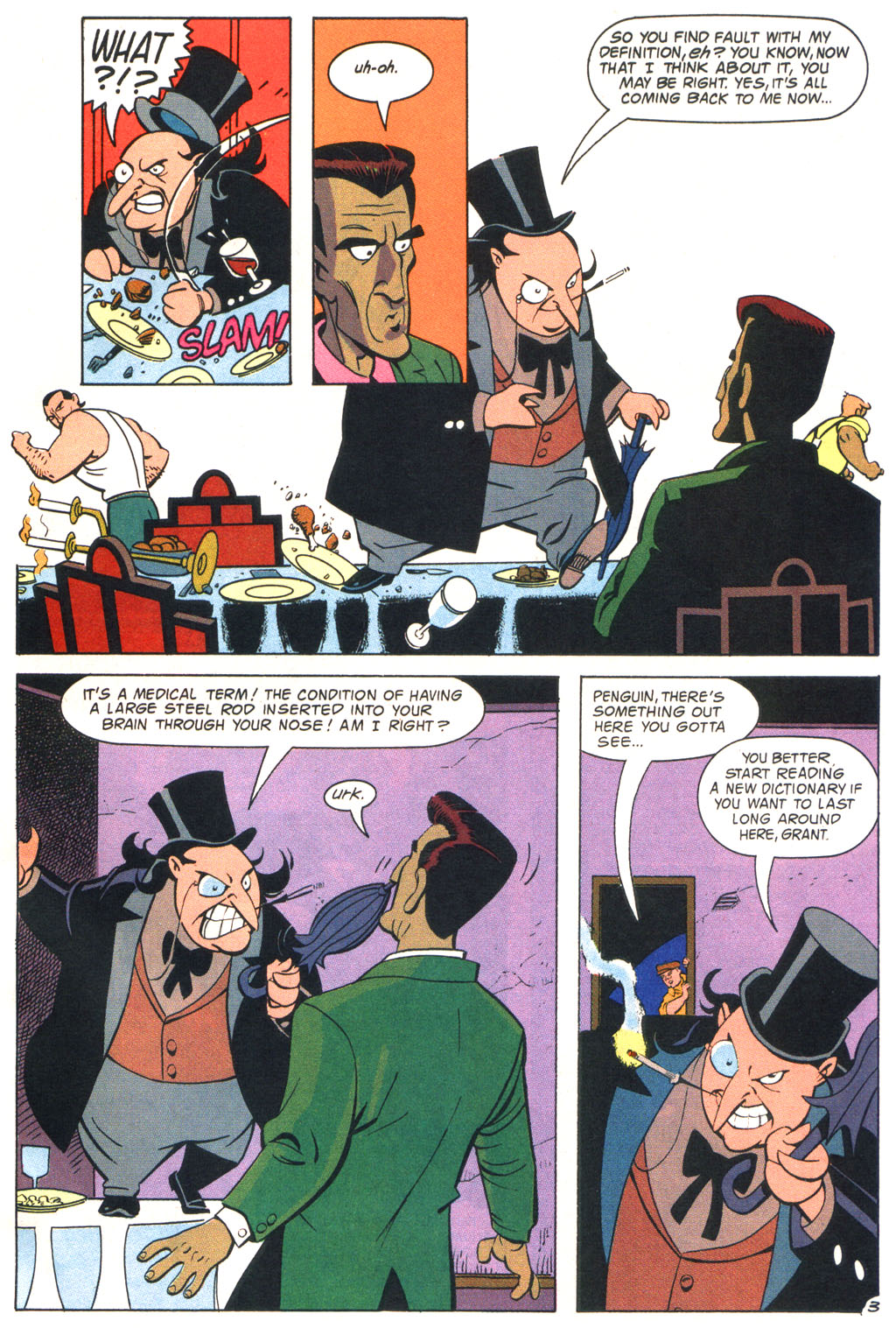
…which is not to say that you actually want to show off your knowledge in front of him:

batman adventures 01The Batman Adventures #1

Lacking class consciousness, some henchpeople are actually quite devoted to their exploitative employers. A notable example of this kind of Lumpenproletariat is Frederick Rhino, who for years remained Scarface’s loyal henchman despite all the abuse he took from what was literally a delusional puppet. Another well-known case are Query and Echo:

detective_comics annual 08Detective Comics Annual #8

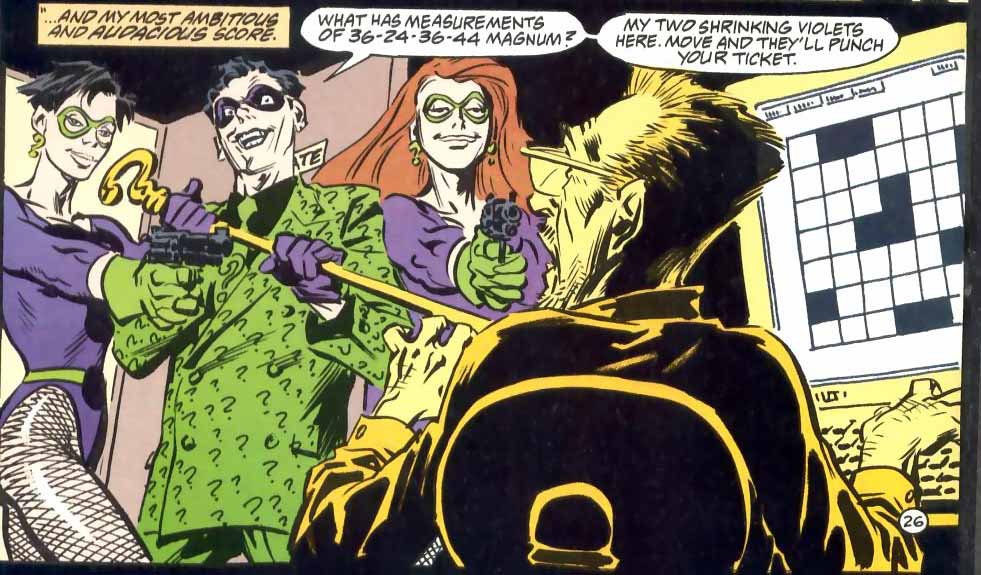
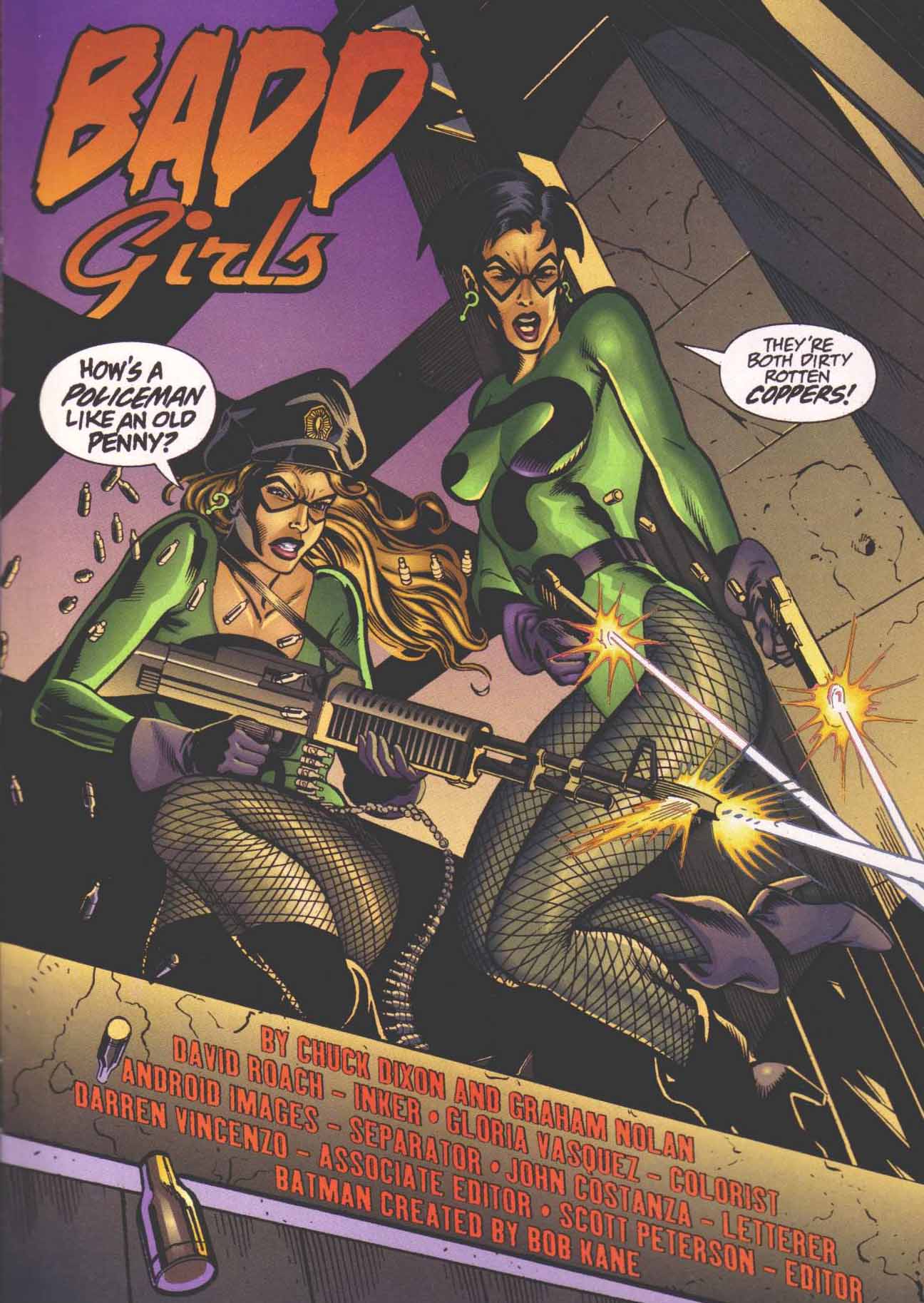
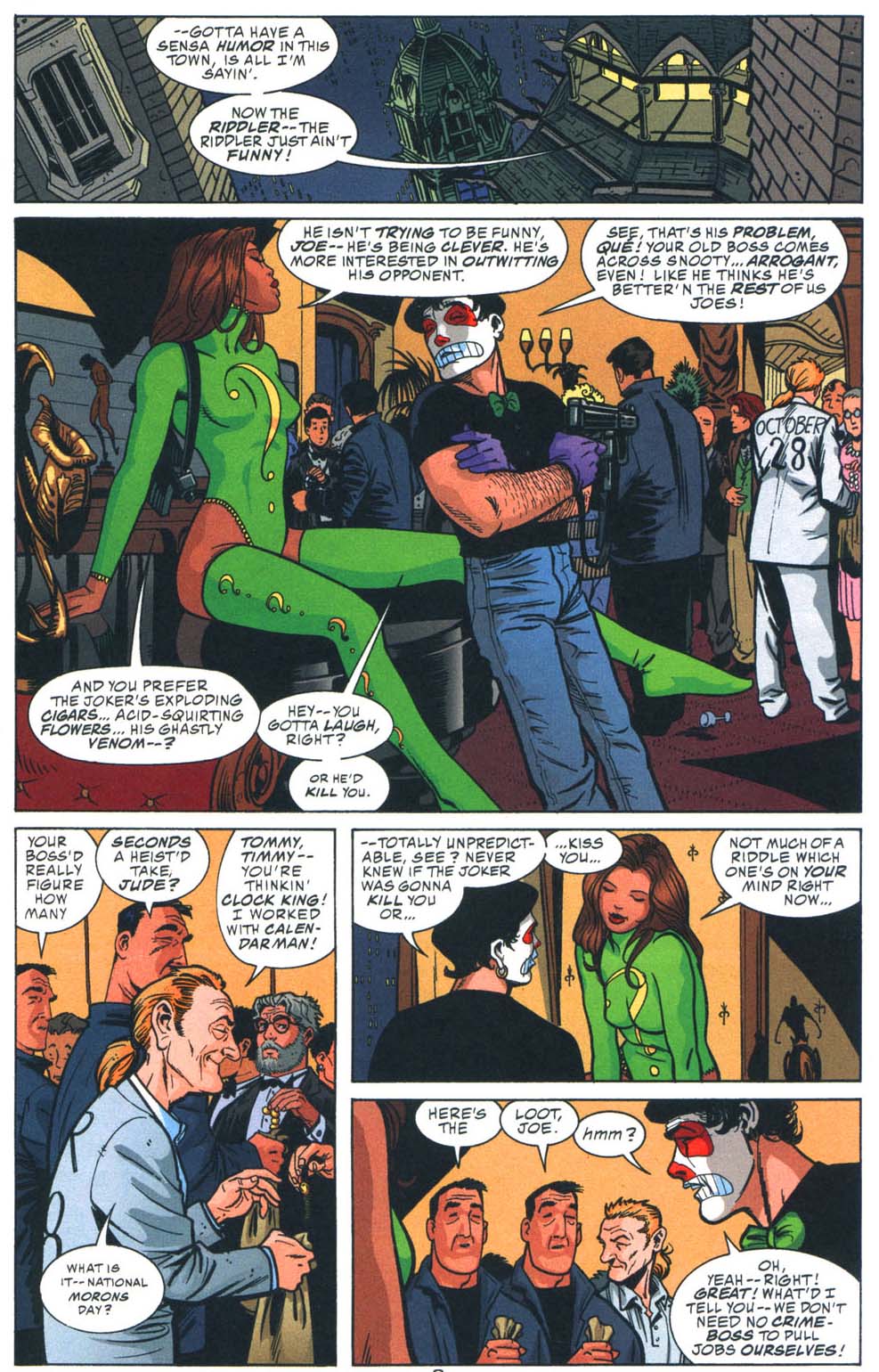
This wild pair left a promising career in an underground dominatrix club to embrace a life of crime and adrenalin, and soon found themselves hired full-time by the Riddler. Their coolest story is probably Detective Comics #705-707, which starts when they seemingly try to spring their boss from a courthouse with great panache:

Detective Comics 705Detective Comics #705

(Another high point for Query and Echo is their independent gig with Slyfox, in the rollicking Nightwing #1000000.)

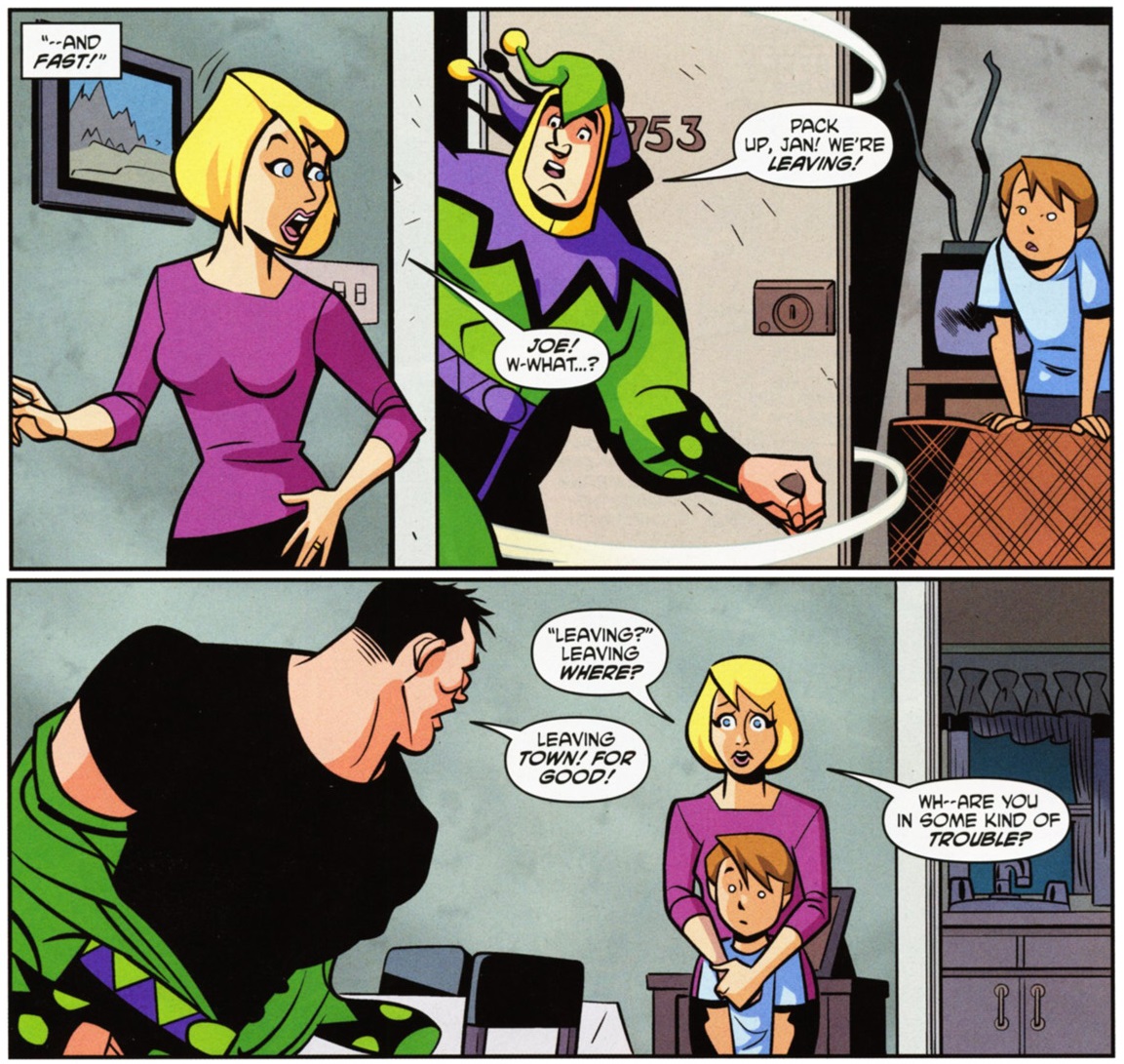
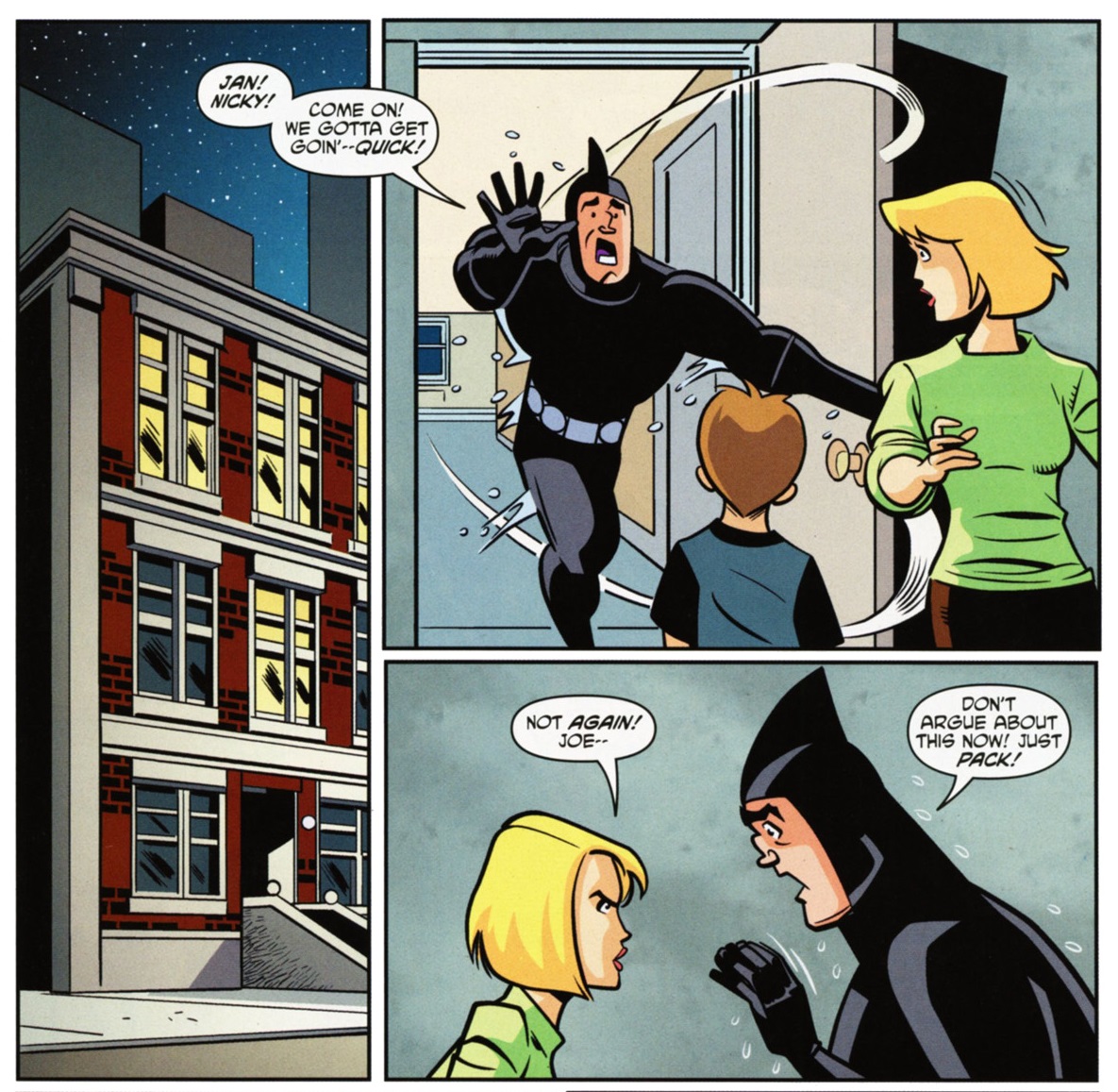
If you’re looking for an amusing take on the plight of the henchman, however, what you’ll definitely want to check out is ‘Help Wanted.’ This fun issue of the second volume of Batman: The Brave and the Bold follows the trials and tribulations of a professional henchman called Joe, who works for respected, so-called job creators like the Toyman, Clock King, and Ocean Master. Yet Joe’s long-term employment prospects are consistently cut short as Batman arrives on the scene to kick ass and take names, so he keeps moving from city to city, much to the chagrin of his wife and kid.

batman brave and the bold 10Batman: The Brave and the Bold (v2) #10

The twist ending may not be exactly world revolution and classless utopia, but it’s poignant in its own way.

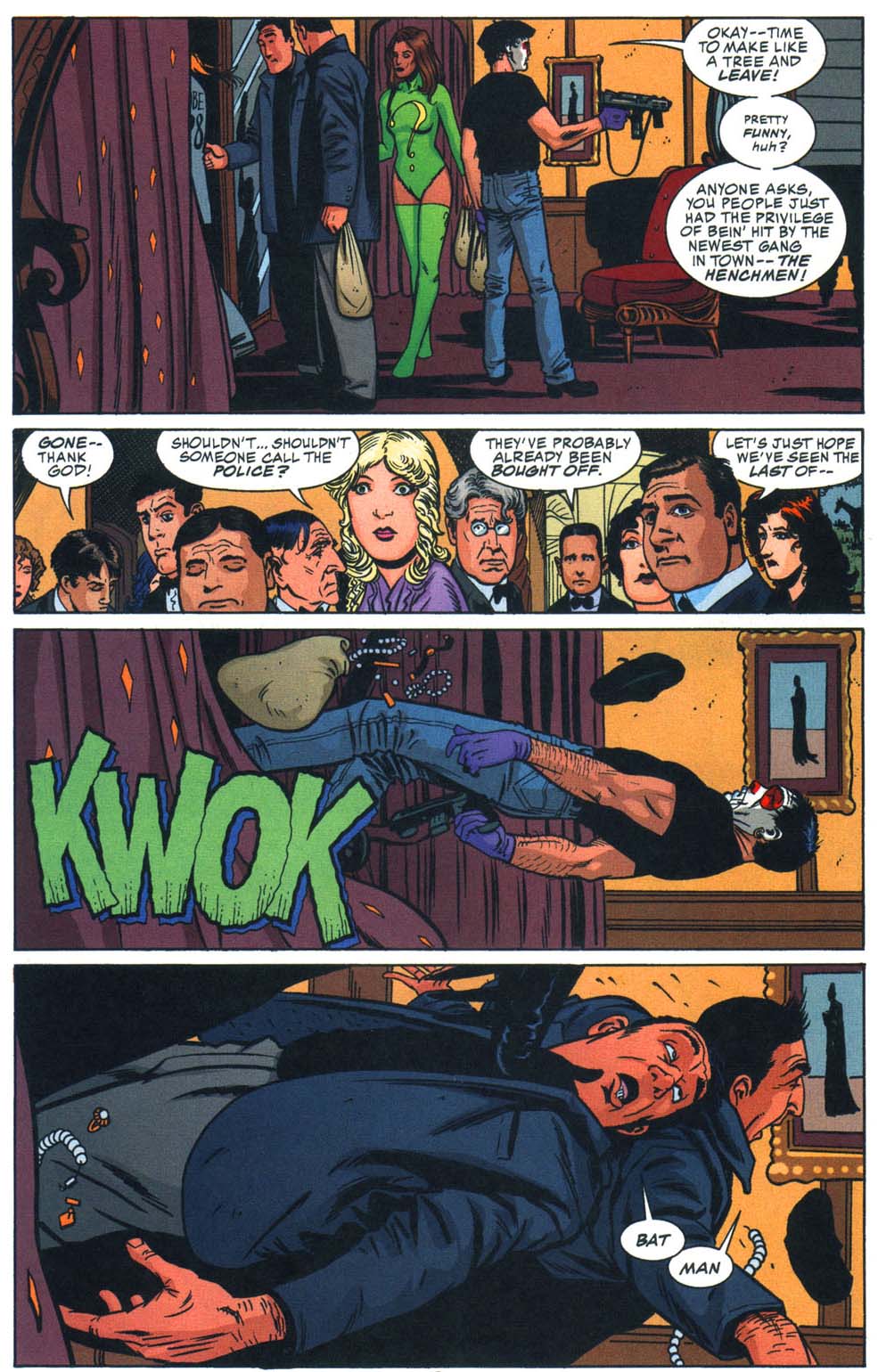
At the end of the day, to quote a classic treaty on the subject, the henchman remains the human analogue of the suffering multitudes who like good dogs sit and lick for their reward. Even on the few occasions when Gotham henchworkers join forces, it’s not to chant The Internationale, but to follow the footsteps of their employers:

World's Finest 02World's Finest 02World’s Finest (v2) #2

NEXT: Batman investigates The Beatles.

Posted in GOTHAM CITIZENS | Tagged | Leave a comment

Top 10 Batman covers by Ed Hannigan

In a world of uncertainty and subjective truths, inexorably spinning towards its entropic doom, there is one unshakable idea we can all hold on to: Ed Hannigan is one of the greatest cover artists to have ever graced Batman comics with his pencils.

Hannigan illustrated different titles, including the first five issues of Legends of the Dark Knight, which featured a clever motif of faces breaking through masks and vice-versa… this was conceptually interesting and it fitted in well with the story going on inside (for which he also provided interior art), but the images themselves were not that memorable. By contrast, working with inker Dick Giordano and colorist Anthony Tollin, in the 1980s Ed Hannigan drew a long run of unforgettable covers for Batman and Detective Comics. And because no one demanded it, here are my top 10:

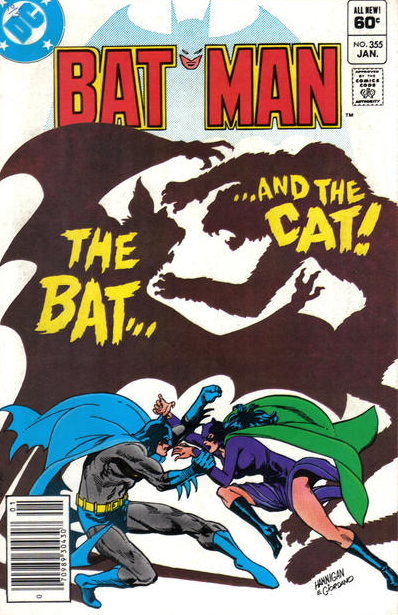
10. Batman #355

Batman 355Hannigan’s very first Batman cover has a nice concept: Batman fights Catwoman, and their shadows are those of a humanoid bat and a humanoid cat. I would have done away with the caption identifying them as ‘The bat… and the cat!’ though, as it doesn’t add anything – readers can easily tell what the conflict in the comic is going to be without this tagline. Then again, if I actually had a say, 50% percent of Batman covers would feature dinosaurs, so take that as you will.

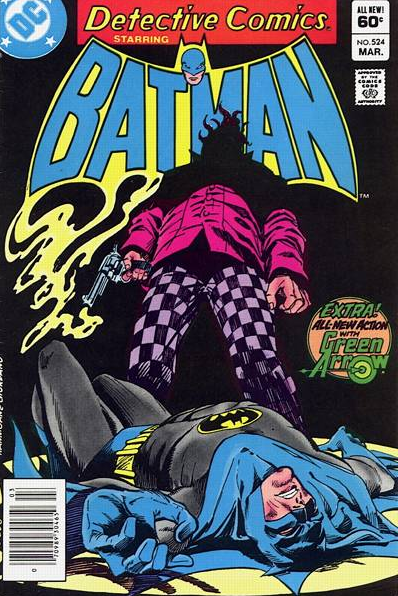
9. Detective Comics #524

detective comics 524This one is so visually striking that I considered moving it up, but there is too much goodness still ahead! The dramatic pose, the encroaching shadows, the way the smoke from the gun merges with the logo… Furthermore, if you had been following the story on the monthly titles, you would have known that the shooter is called Squid, which is just what his hair looks like in the silhouette.

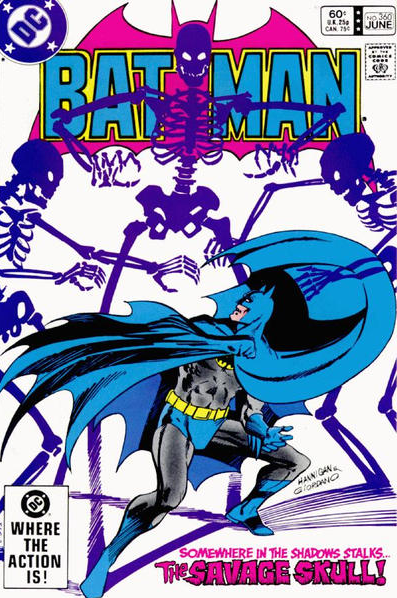
8. Batman #360

Batman 360As it will soon become clear, I’m a huge fan of covers that play with the titles’ logo on top of the page. You can tell from previous examples how during this period the logos featured Batman’s tiny head at the center of the Bat-symbol… In this cover, the way a skeleton’s strategically placed skull replaces Batman’s face may be meaningless in symbolic terms, but it looks freaking cool!

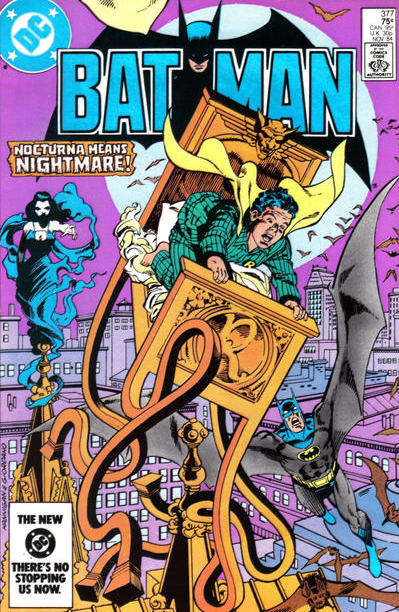
7. Batman #377

Batman 377Besides playful logos, the other trick I’m a sucker for are homages… This is why I’m so grateful to Brian Cronin for using his encyclopedic knowledge to spot cover homages each week. Here Hannigan, Giordano, and Tollin riff on the classic strip Little Nemo in Slumberland, with Jason Todd as Nemo being carried through the land of dreams. What makes it even cooler is that this fits thematically with the story inside – which involves a nightmarish Nocturna and a desperate Batman fighting for Jason’s custody.

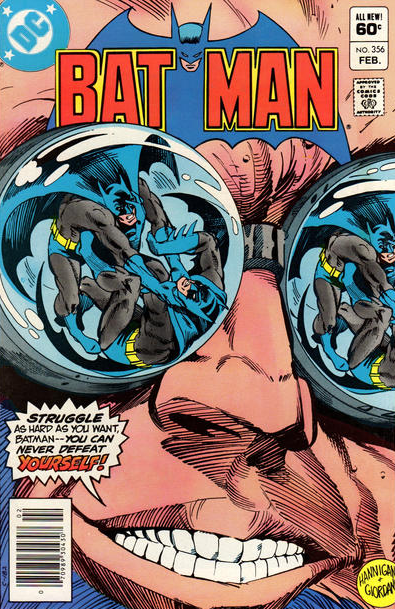
6. Batman #356

Batman 356This is one of those covers that just gets engrained in your memory. Besides the neat visual of the Dark Knight’s reflection on Professor Hugo Strange’s lenses, there is the enthralling notion of Batman strangling another Batman, made even more intriguing by Strange’s ominous words.

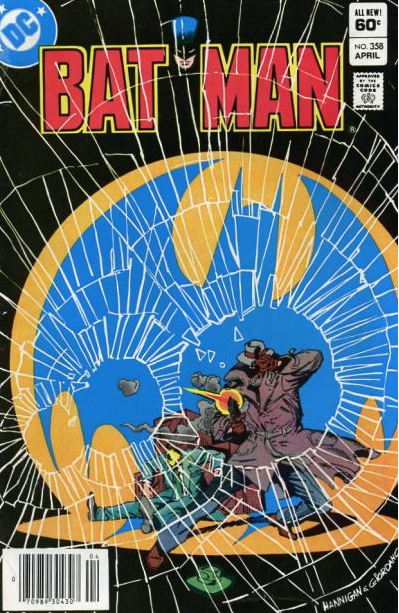
5. Batman #358

Batman 358Such a powerful image doesn’t need much explanation. The shooter (Killer Croc) seems to be shattering the cover itself as he presumably pierces the Bat-signal with his bullets. Also, because part of this month’s Bat-logo is black, it gets diluted in the image’s black background. Neat.

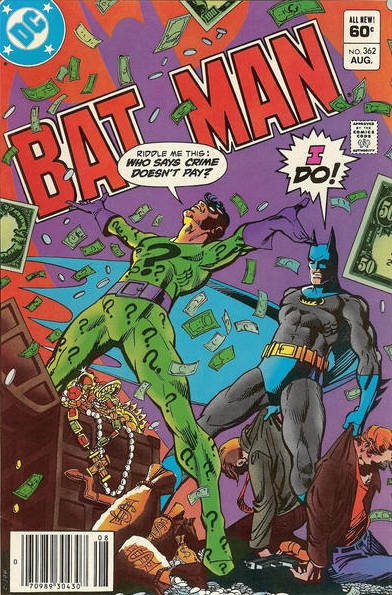
4. Batman #362

Batman 362Speaking of putting a twist on the logo’s bat-shaped portion… Here Hannigan tilts the title to the left and projects a huge Batman shadow on top of it, which basically replaces the usual design. Also, you’ve got to love the contrast between the Riddler’s gloating rhetorical question and Batman’s I-just-defeated-your-henchmen, straight-faced reply!

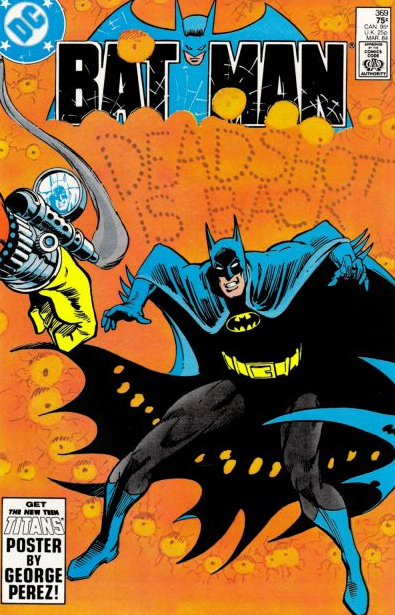
3. Batman #369

Batman 369Here the logo gets shot up, like everything else, as the hitman Deadshot shows off his marksman skills, almost castrating the Caped Crusader in the process… There is nothing particularly clever about this, but it is nevertheless an awesome image.

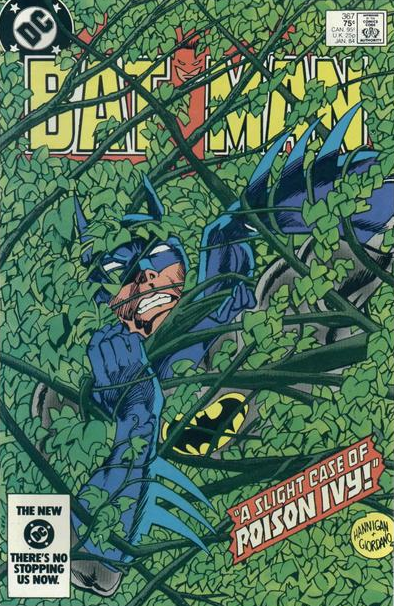
2. Batman #367

Batman 367Another one where the logo comes under attack by a villain, this time by Poison Ivy’s weeds. I love the whole green effect and just wish they had gone overboard with the concept, also partially covering up the tagline, the price, and DC’s boasting in the lower corner.

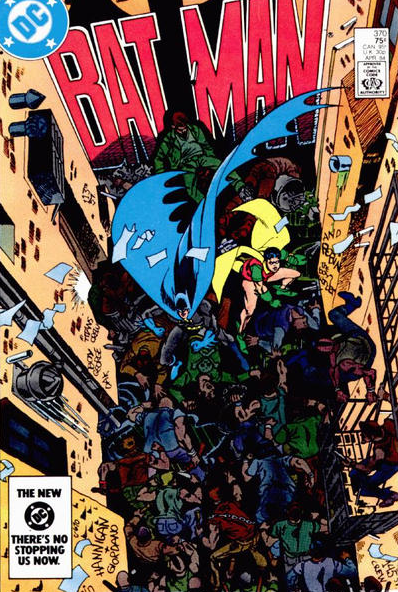
1. Batman #370

Batman 370And finally there is this gem. The Dynamic Duo fighting a gang of hoodlums in an alley which is so crowded that they find themselves with their backs against the book’s title. As if the notion of the Batman logo painted on a wall wasn’t cool enough, the logo is amusingly framed by other walls that are also filled with writings, the closest one adding ‘and Robin the Boy Wonder’ (and another one sporting Hannigan’s and Giordano’s signature). Plus, the flying trash and the dripping pipes manage to give the scene even more of a gritty vibe. So groovy.

NEXT: The henchman manifesto.

Posted in COVERS OF BATMAN COMICS | Tagged , , , | 1 Comment

The Batman spirit on the silver screen – part 2

If you read the last post, you know what’s going on. Here are another 10 movies that fans of Batman comics can enjoy instead of Zack Snyder’s upcoming blockbuster:

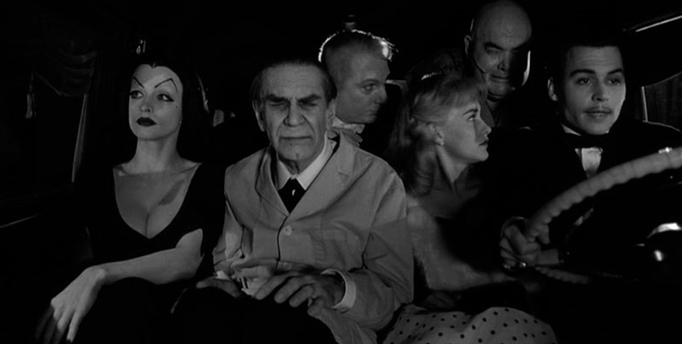
Ed WoodEd Wood

Forget Tim Burton’s Batman films. It’s in this biopic of real-life, overenthusiastic, transvestite, vampire-toothed, and reputedly worst director of all time Edward D. Wood Jr – and to some degree in Sleepy Hollow – that Burton truly brings to life the kind of gothic, quirky atmosphere where Bruce Wayne dressing up as a bat to fight crime would not seem totally out of place.

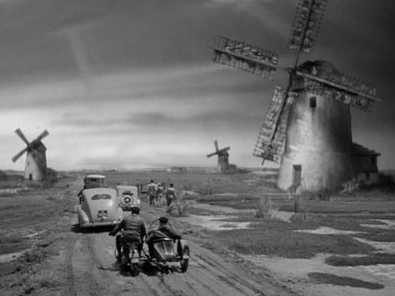
Foreign CorrespondentForeign Correspondent

Alfred Hitchcock directed a number of films with Batman-worthy set pieces, from spy yarns – The 39 Steps, The Lady Vanishes, The Man Who Knew Too Much, North by Northwest to dark psychological thrillers – The Lodger, Spellbound, Strangers on a Train, Vertigo, Psycho, Frenzy. Moreover, there is a cat burglar at the heart of To Catch a Thief, and The Birds features bird attacks straight out of a Penguin tale. Yet Foreign Correspondent is the most fun of the lot, as well as one where the hero is not just reacting to bad luck – he actually throws himself gleefully at the evil plot in front of him, just like the Caped Crusader would! The movie also belongs to a set of adventure movies made *during* World War II that seamlessly combined escapist fun with real world terror, much like the Batman comics of the time.

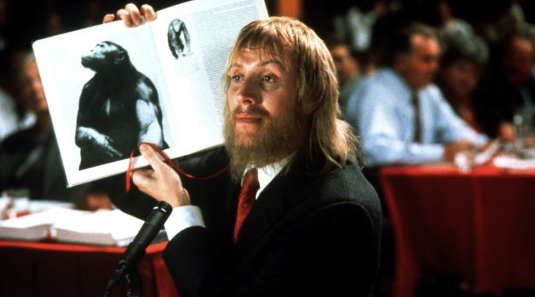
Human NatureHuman Nature

All the lead characters in this movie seem to have sprung out of the Silver Age, including the world’s hairiest woman (Patricia Arquette), a psychologist trying to teach table manners to mice (Tim Robbins), and a man who believes he is an ape (Rhys Ifans). All that’s missing is Robin in a corner, shouting ‘Great Scott!’

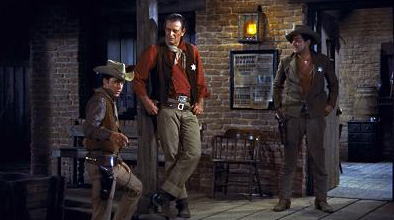
Rio BravoRio Bravo

I had to include at least one western. Despite the genre’s non-Batman-y predilection for heroes that carry guns and kill their opponents, so many other conventions fit like a glove, what with all the honorable, brooding protagonists working within and beyond the confines of the law to protect their cities from sadistic murderers. I went with Rio Bravo for two reasons. First, because Batman is such a Hawksian character, stoically carrying out his mission without mincing words, caring for those around him but more often showing it rather than saying it out loud. And second, because of the whole intergenerational bonding thing… I can just picture Alfred, Bruce, Dick, and Tim playing ‘My Rifle, My Pony, and Me’ in the Batcave.

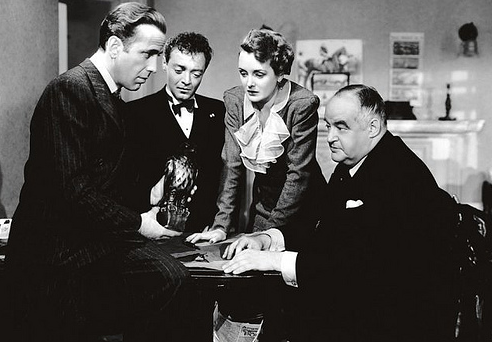
Maltese FalconThe Maltese Falcon

The doomed atmosphere, the hardboiled dialogue, and the byzantine plot of Dashiell Hammett’s novel and John Huston’s powerful film adaptation have been reverberating around Batman stories for decades (perhaps never more clearly than in David V. Reed’s script for ‘The Daily Death of Terry Tremayne’). Despite his sharp detective skills, Humphrey Bogart’s Sam Spade is perhaps too morally ambiguous to serve as an ersatz-Batman. The other characters, though, would feel right at home in the Dark Knight’s rogues’ gallery – it’s a small step from Sydney Greenstreet’s Gutman to the more recent iterations of the Penguin.

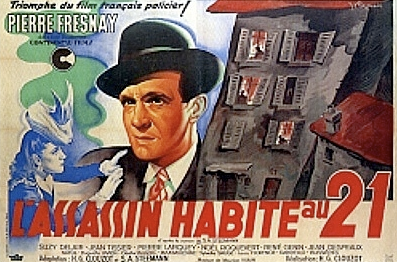
The Murderer Lives at Number 21 The Murderer Lives at Number 21

There are plenty of murder mysteries around to satisfy fans of the World’s Greatest Detective, but not many are as amusing as this one, or feature a denouement that could have just as easily come out of Mike W. Barr’s typewriter.

Seven PsychopathsSeven Psychopaths

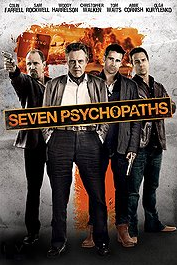
Martin McDonagh, probably best known as the writer-director of In Bruges (and of several twisted plays about rural Ireland, as well as the vicious head trip that is The Pillowman), is behind this black comedy, which has absolutely no relation to the (also darkly funny) graphic novel of the same name about 7 clinically insane secret agents trying to assassinate Adolf Hitler. Rather, this is an L.A.-based cult film waiting to happen, a 21st century The Big Lebowski. At first sight, tonally and plot-wise Seven Psychopaths couldn’t be further removed from the world of Batman comics, even if the levels of blood and violence aren’t that far off from the Bat-titles circa ‘War Games.’ Yet you can just imagine Arkham Asylum harboring characters like serial killer Jack of Diamonds, who murders mid-to-high-ranking mobsters, or the Quaker, who kills through the power of guilt-tripping his victims.

The Thing from Another World The Thing from Another World

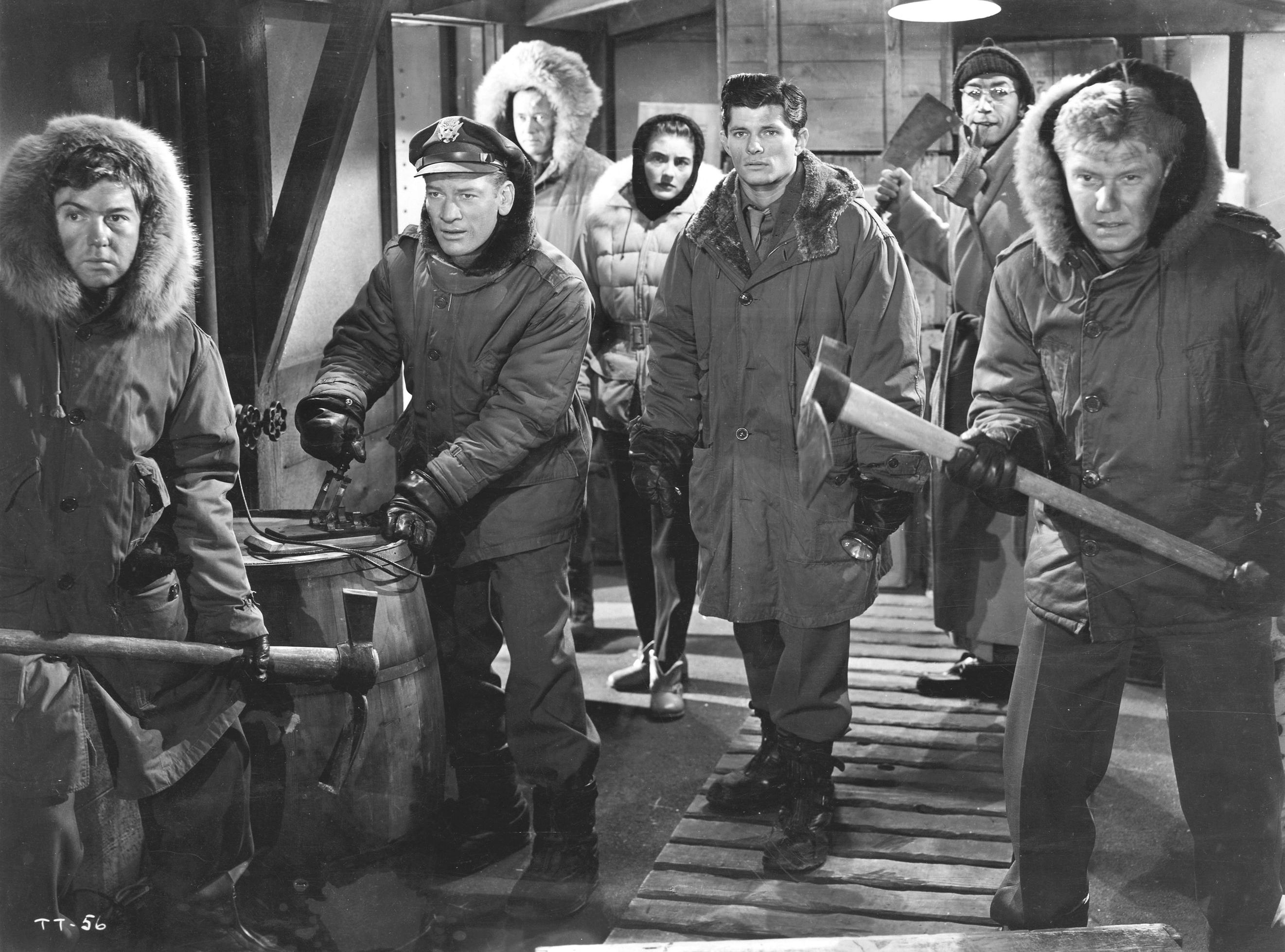
This one is for those who like stories in which Batman and his clan triumph over a supernatural threat through determination, ingenuity, and team work.

The UnknownThe Unknown

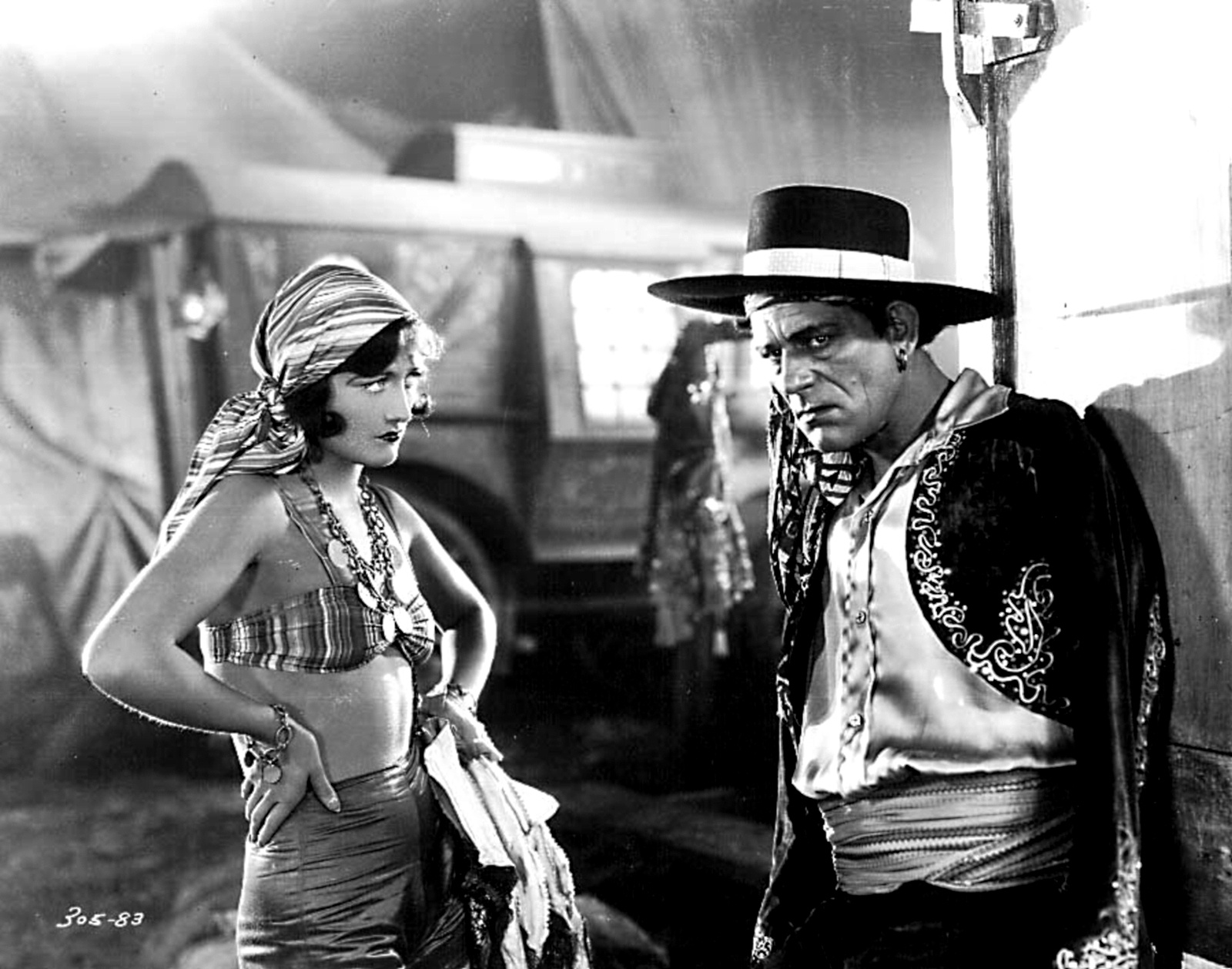
This cult classic about a circus freak and criminal called Alonzo the Armless looks like the darkest, most tragic secret origin of a soon-to-become Batman villain. And that is saying something.

White HeatWhite Heat

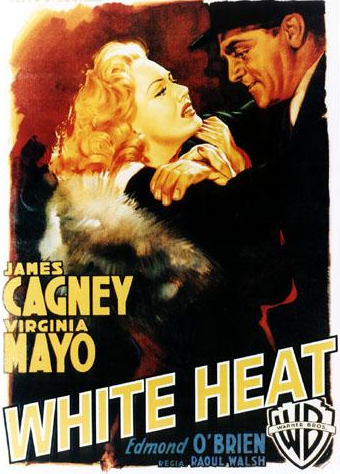
In this energetic and suspenseful gangster yarn, James Cagney plays a psychotic criminal that seems right out of an Alan Grant comic.

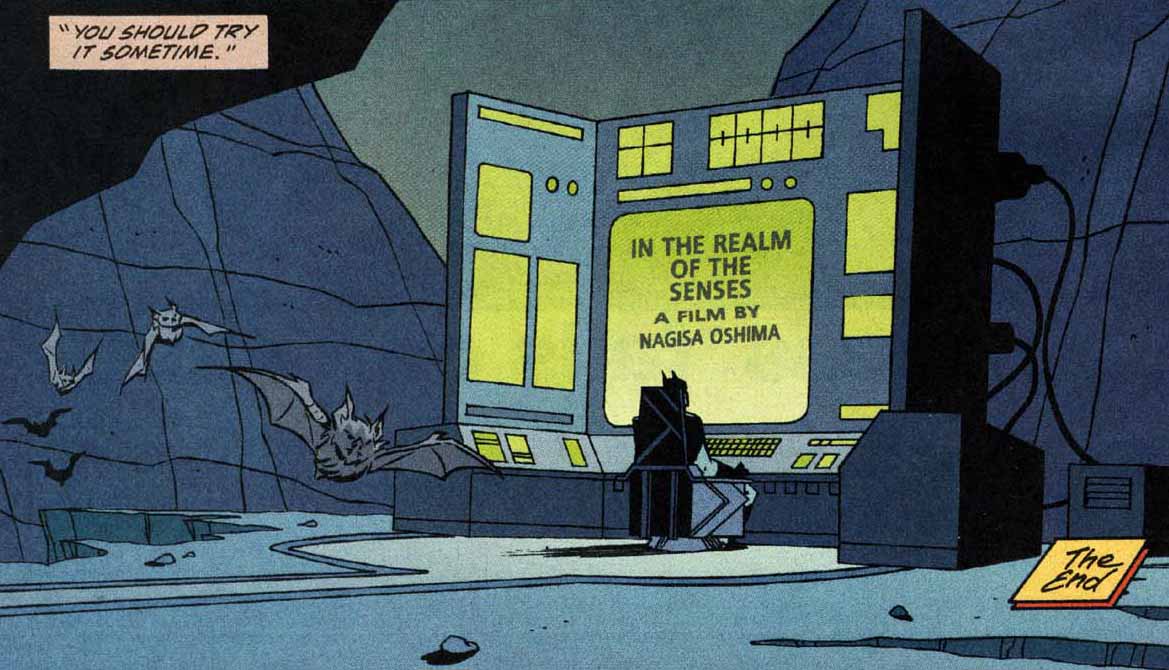
Finally, what would Batman himself recommend? Well, it is a well-known fact that his favorite movie is The Mark of Zorro, but he has also been known to spend his evenings watching Japanese erotica:

Gotham Adventures 56Gotham Adventures #56

NEXT: Batman strangles Batman.

Posted in WEBS OF FICTION | Tagged , , , , , , | Leave a comment

The Batman spirit on the silver screen – part 1

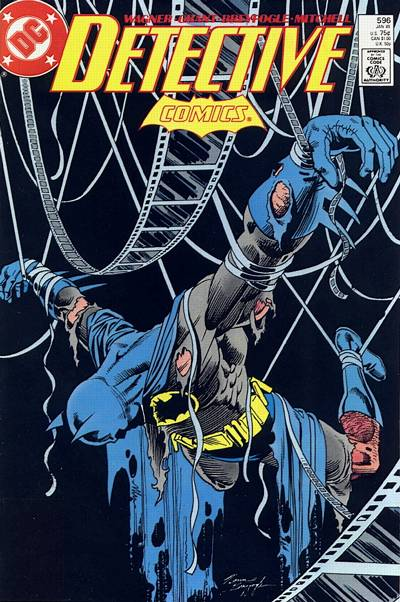
detective comics 596While I couldn’t be more cynical about the ridiculously titled Superman v Batman: Dawn of Justice (is it a court case exposé?), I’m here to argue that cinephile fans of Batman comics should have nothing to fear. If you dig the Caped Crusader’s adventures on the page, there are still plenty of films for you to enjoy!

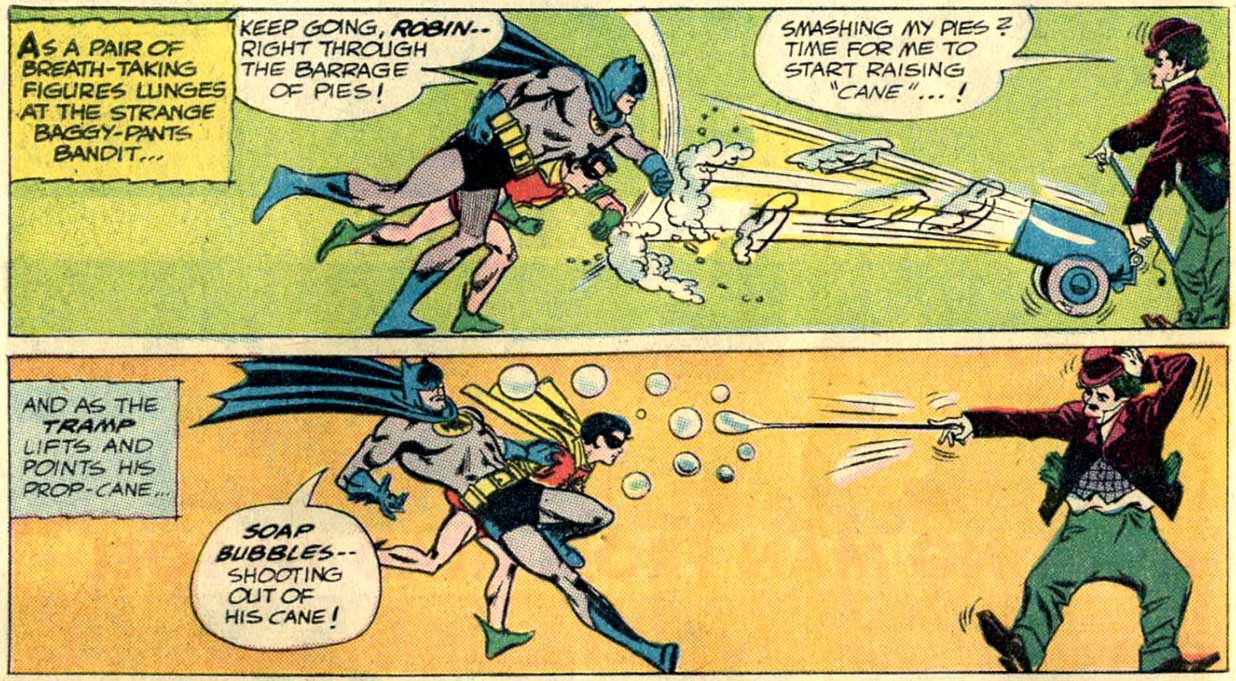
Now, needless to say, over the years Batman stories have drawn inspiration from more movies than you can count. Heck, the Dynamic Duo has even – kind of – fought Charlie Chaplin:

detective comics 341Detective Comics #341

In fact, cinema has played a role in the Batman mythos from the start – the character’s origin has usually been tied with Bruce Wayne’s parents getting killed while coming back from the movies (although Christopher Nolan pompously changed this to an opera). There is even a memorable story in which the Dark Knight literally defeats the Joker by recalling scenes from Marx Brothers comedies (Batman #260).

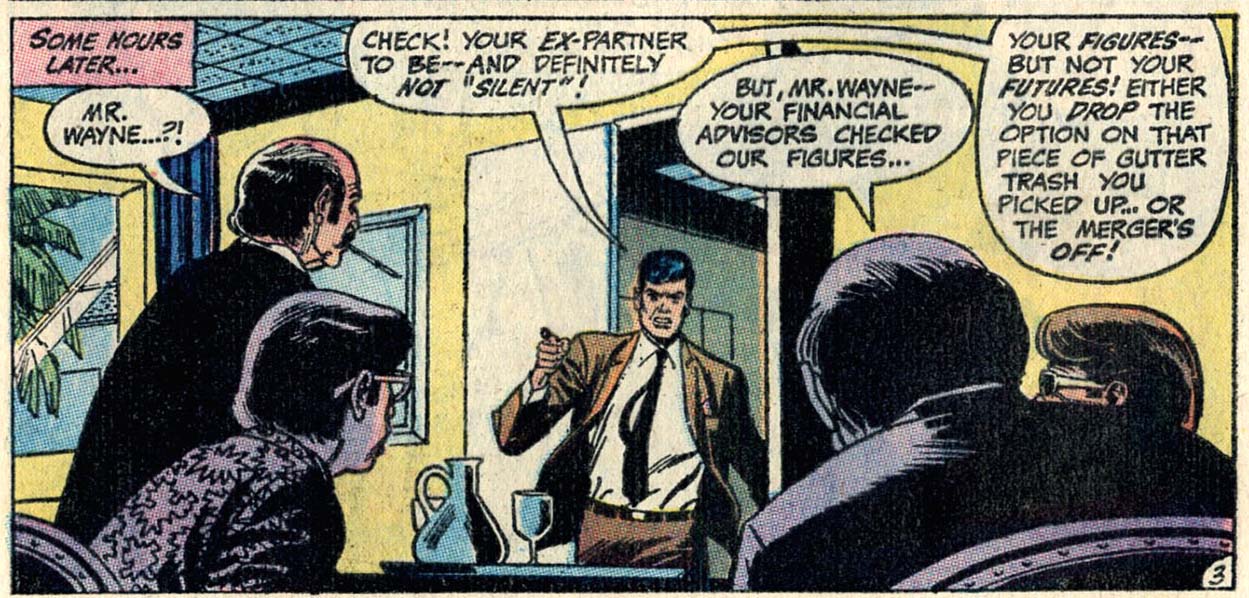
A less known fact, Bruce Wayne also happens to be one hands-on movie producer:

batman 398Detective Comics #398
detective comics 404Detective Comics #404

Regardless, outside of movies with the words ‘Batman’ or ‘Dark Knight’ in the title – and even including those – it is not easy to find films that fully reproduce the feeling of a vintage Batman comic. There is some of the Caped Crusader in a lot of action heroes, but they tend to be more gun-toting and bloodthirsty. Psychotic villains that play games with their hunter have populated the screen for decades but post-Speed terrorists and post-S7ven serial killers tend to be merely scary, not fun. And film noir and gothic horror – two major visual cues for the comics’ look – are vast and varied genres in which not all movies equally resemble the work of the most striking Batman artists.

In drawing up the following list, for the most part I tried to think outside the box and avoid obvious trappings. It would be too easy to recommend other superhero movies, or even Sherlock Holmes material. Also, unless you live in a (non-Bat)cave, you probably already know that any fan of the globetrotting side of the Dark Knight can find a similar breed of stories – including megalomaniac villains and deathtraps galore – in movies featuring Indiana Jones or James Bond. Let me get Citizen Kane out of the way as well: yes, its cinematography has been influencing comics – and particularly Batman comics – ever since the film first came out and yes, the story is about a millionaire who lives in a huge mansion and obsesses over what he lost as a child, which should strike a familiar chord.

But what about movies you don’t know or have only heard of without ever realizing how close they may appeal to the Bat-fan in you?

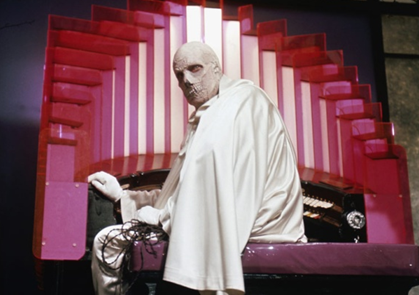
abominable dr phibesThe Abominable Dr. Phibes

The cops may be too bumbling and polite for the standards of the Dark Knight, but this movie’s villain – played by a seriously creepy Vincent Price – would not be at all out of place in a Batman comic. Dr. Phibes is at once tragic and camp, his origin and voice have echoes of Mr. Freeze in the ’90s animated series, he lives in bizarrely decorated headquarters surrounded by henchwomen, and his crimes are as theatrical as anything the Joker ever pulled – including hilariously impaling a victim with a unicorn’s head. The first ten minutes even feature a bunch of bats!

AccidentAccident

What if Rube Goldberg was a killer for hire? There are enough ingenious and overcomplicated deadly contraptions in this thriller to satisfy any fan of Denny O’Neil’s work. And in the best Batman tradition, under all the elaborate planning lies a story of loss and obsession.

And Then There Were NoneAnd Then There Were None

Ten people find themselves on a mysterious, gothic-looking island getting killed one by one in eccentric ways, so the survivors have to figure out who the villain is before it’s too late. Sounds like a Batman tale to me! (And Grant Morrison agrees.)

Bad Day at Black RockBad Day at Black Rock

Even if Batman were a one-armed vet kicking ass in a small town after WWII, he probably would sound nothing like Spencer Tracy… and yet, there is something about this movie that just makes it feel like it belongs next to one of those politically-charged stories that we get every once in a while.

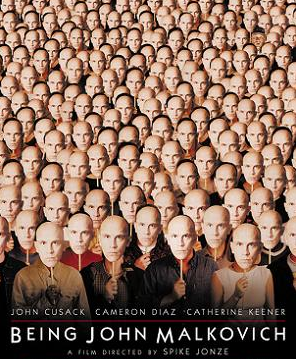
Being John MalkovichBeing John Malkovich

Here is a film that captures the kind of darkly surreal atmosphere I imagine you would find in Gotham City. There are pet monkeys, puppeteer superstars, and architectural oddities like the low-ceilinged 7 ½ floor where the protagonist works. Being John Malkovich’s plot is like a cross between a Gardner Fox comic and a Bob Dylan dream.

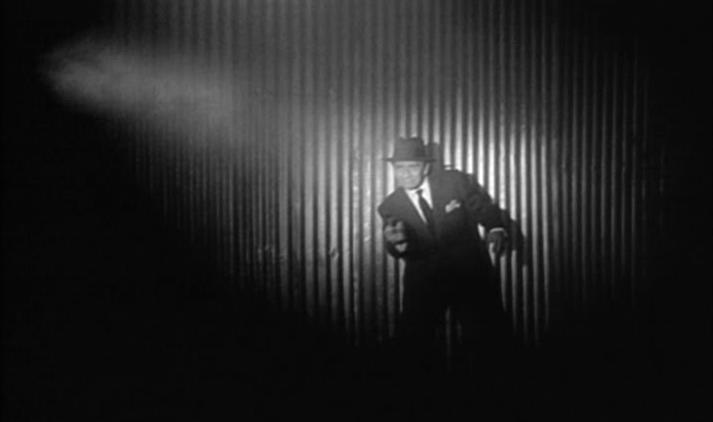
The Big ComboThe Big Combo

I hear you: if we’re going with 1950s’ crime films, why not choose one of that decades’ many phenomenal thrillers about doomed heists (like The Asphalt Jungle, Kansas City Confidential, Rififi, The Killing, Odds Against Tomorrow, or even B-movie gems such as Appointment with Danger, Time Table, Plunder Road, or The Burglar)? It is true that Batman stories tend to be more about doomed heists than police detectives obsessed with a suicidal gangster moll, but if you enjoy stylish crime stories that take place almost entirely in shadowy streets and barely lit rooms, nothing can beat The Big Combo.

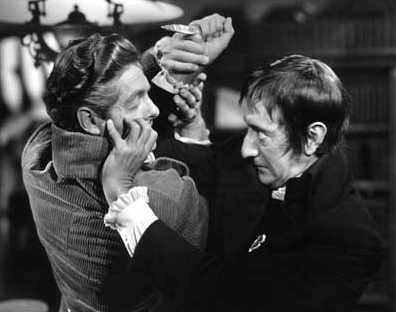
The Black BookThe Black Book

Imagine Batman getting involved in the French Revolution. Or you can just watch The Black Book (also known as Reign of Terror). Seriously, Anthony Mann directed one merciless rollercoaster of an adventure movie where each frame could be a page from the best-looking Elseworlds tale never drawn. (And if you enjoy it, check out Mann’s The Tall Target, where you can picture the Dark Knight in 1861 trying to prevent Abraham Lincoln from being assassinated during a train ride).

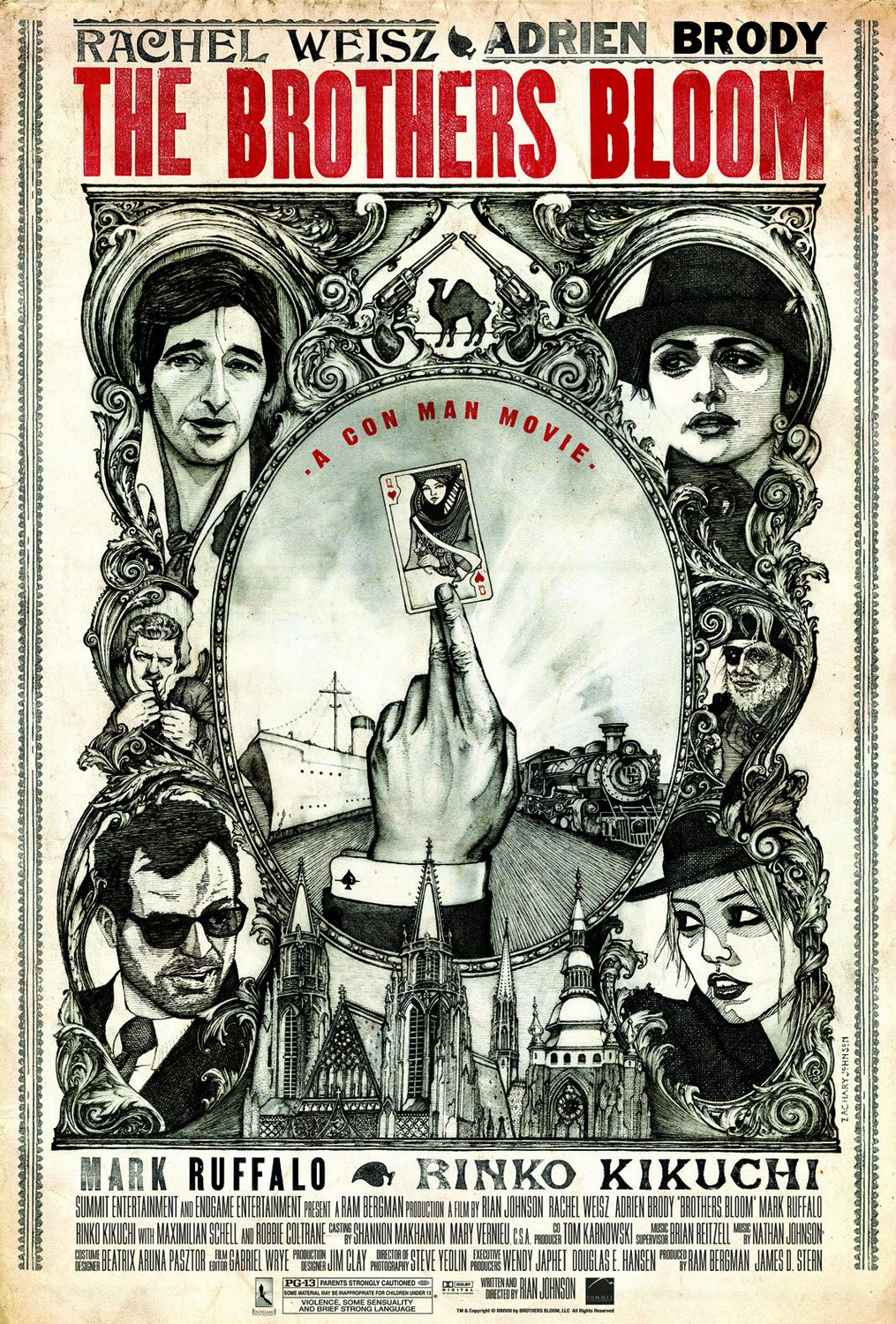
Brothers BloomThe Brothers Bloom

The two brothers from the title are a couple of con men who – together with a sidekick called Bang Bang that specializes in explosives– pull off zany capers around the world. A Batman crossover waiting to happen, if there ever was one.

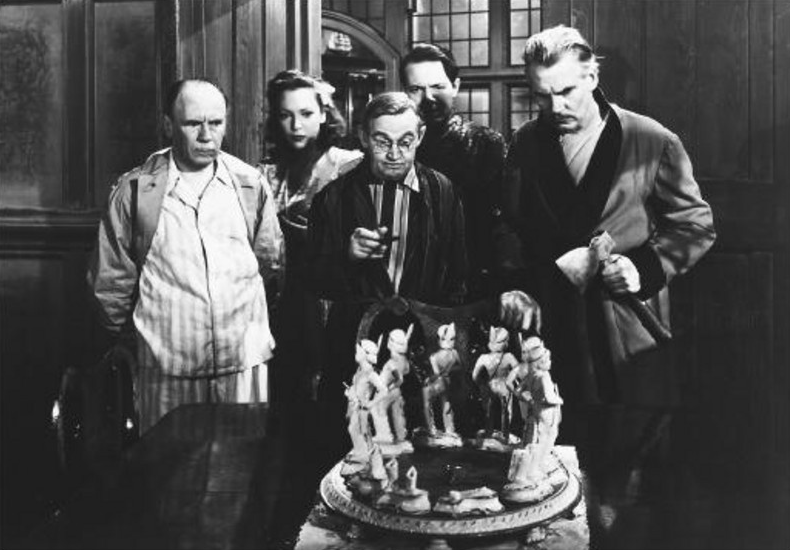
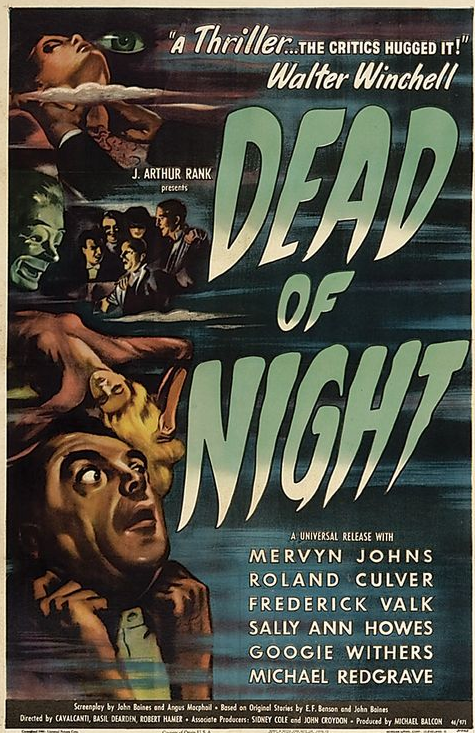
Dead of NightDead of Night

A group of guests in a country house share horror stories and, almost 70 years on, they remain more chilling than a breath full of Scarecrow fear gas. These tales are made from the same cloth as comics taking place in the haunted corners of the Batman universe such as ‘The Secret of the Waiting Graves,’ ‘Wail of the Ghost-Bride,’ or ‘A Contract With Death!’ As a special treat for Bat-fans, the most frightening story even includes a long-distance relative of Gotham’s Ventriloquist.

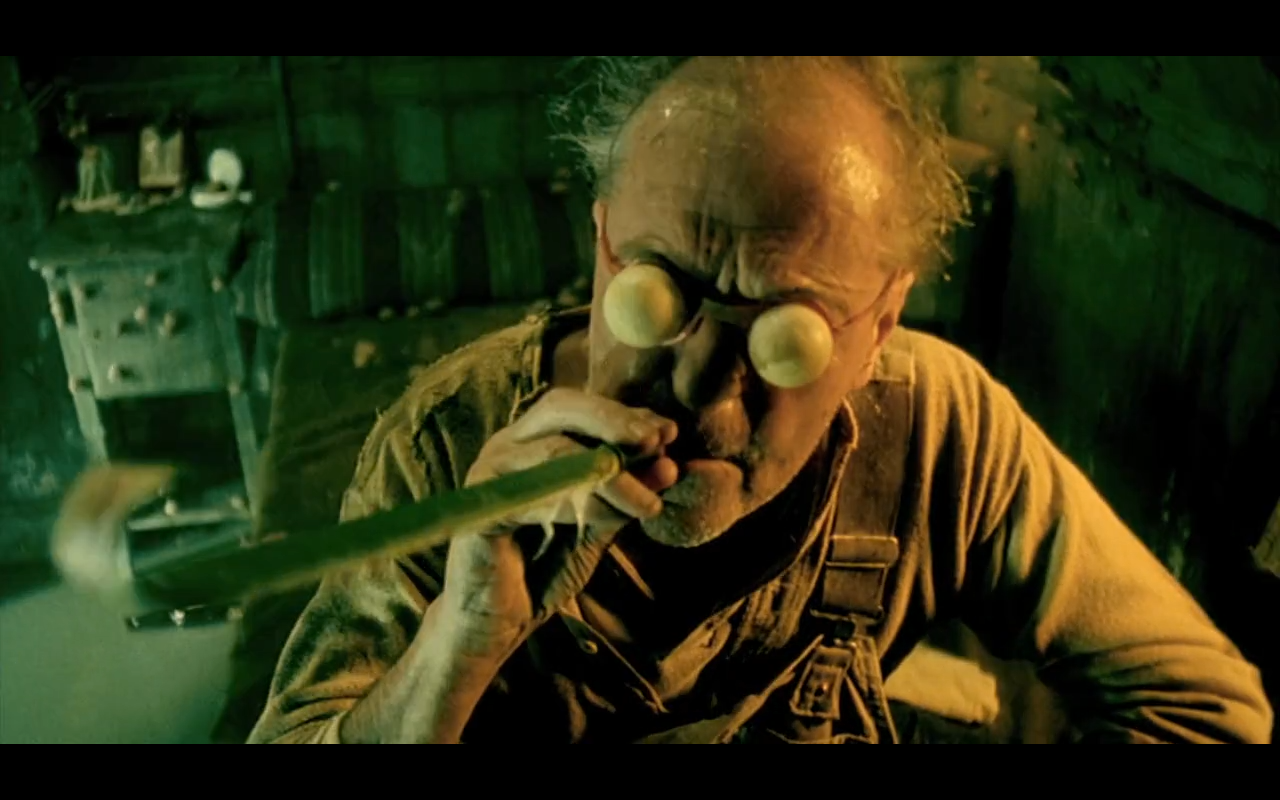
DelicatessenDelicatessen

This surrealist fantasy takes place in post-apocalyptic France, but it could just as easily have been Gotham City during the ‘No Man’s Land’ storyline. Like in Being John Malkovich, everything and everyone seem a bit off, from the deranged Frog Man (pictured above) to the vegetarian guerrilla group who live in the sewers – you know things are going to get messy if they ever bump into Killer Croc or the Ratcatcher down there! Also, there is this totally Airwolf montage.

NEXT: More films!

Posted in WEBS OF FICTION | Tagged , , , , , , | Leave a comment

Denny O’Neil’s pulpy Batman

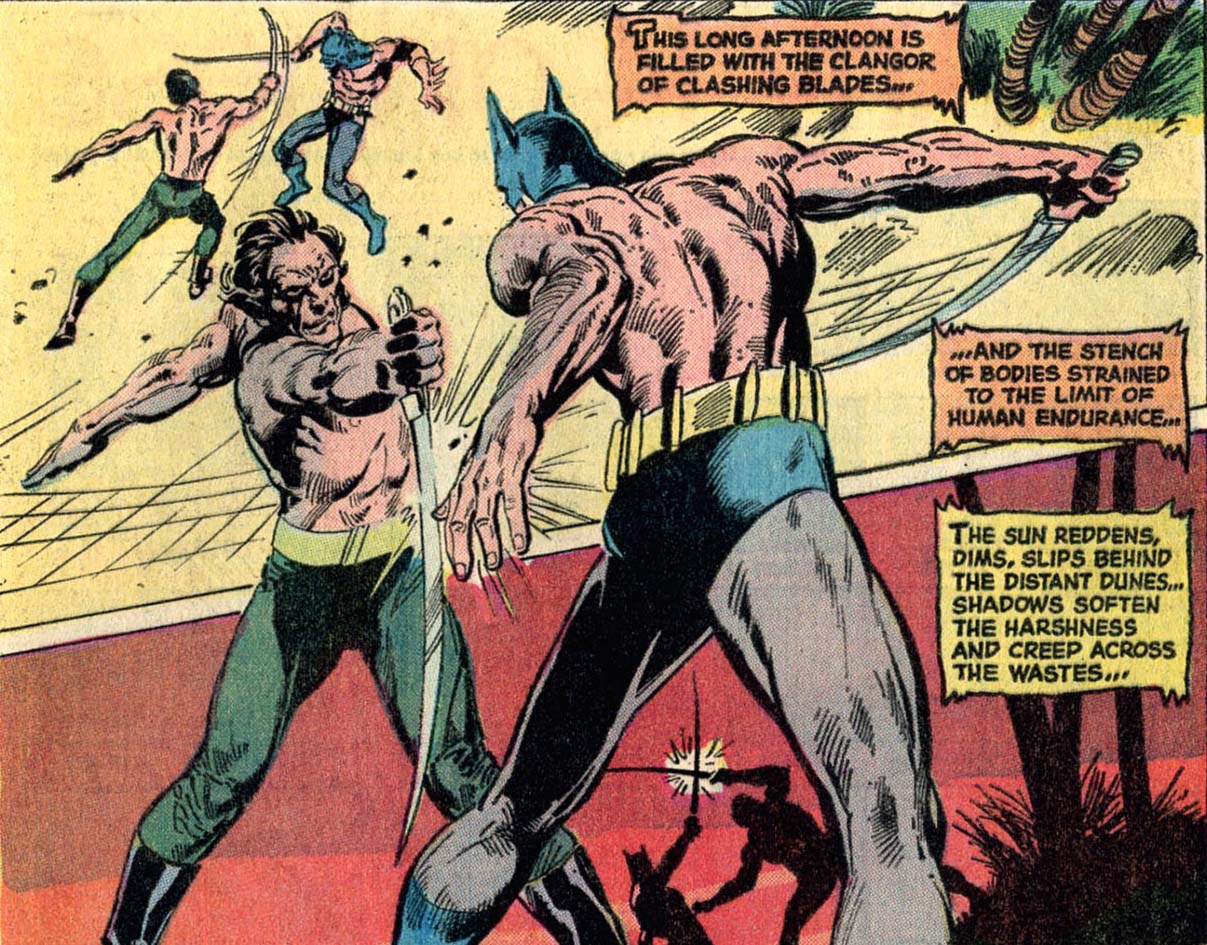
Denny O’Neil has shaped modern Batman more than any other creator. And while he consciously sought to put the ‘dark’ in ‘Dark Knight,’ part of what makes his output so appealing is the fact that the ‘knight’ side is usually there as well – O’Neil’s Batman is well-travelled, chivalrous, brave, and certainly not above some good old fashioned swordplay:

BATMAN 244Batman #244

Take O’Neil’s first issues, in the early 1970s. These featured mostly done-in-one solo stories (sans Robin) that unapologetically embraced the pulpy conventions of the material. Most of them were adventure yarns in which Bruce Wayne would roam the world with the bat-cowl in his suitcase (and no one ever found it suspicious that he and Batman would always show up in the same places). More than a strong-willed powerhouse, the Caped Crusader was depicted as a deductive genius and master of disguise, although still fallibly human. Villains would leave him to die in an elaborate deathtrap rather than simply kill him and Batman would inevitably escape through a clever loophole in the trap.

BATMAN 224Batman #224

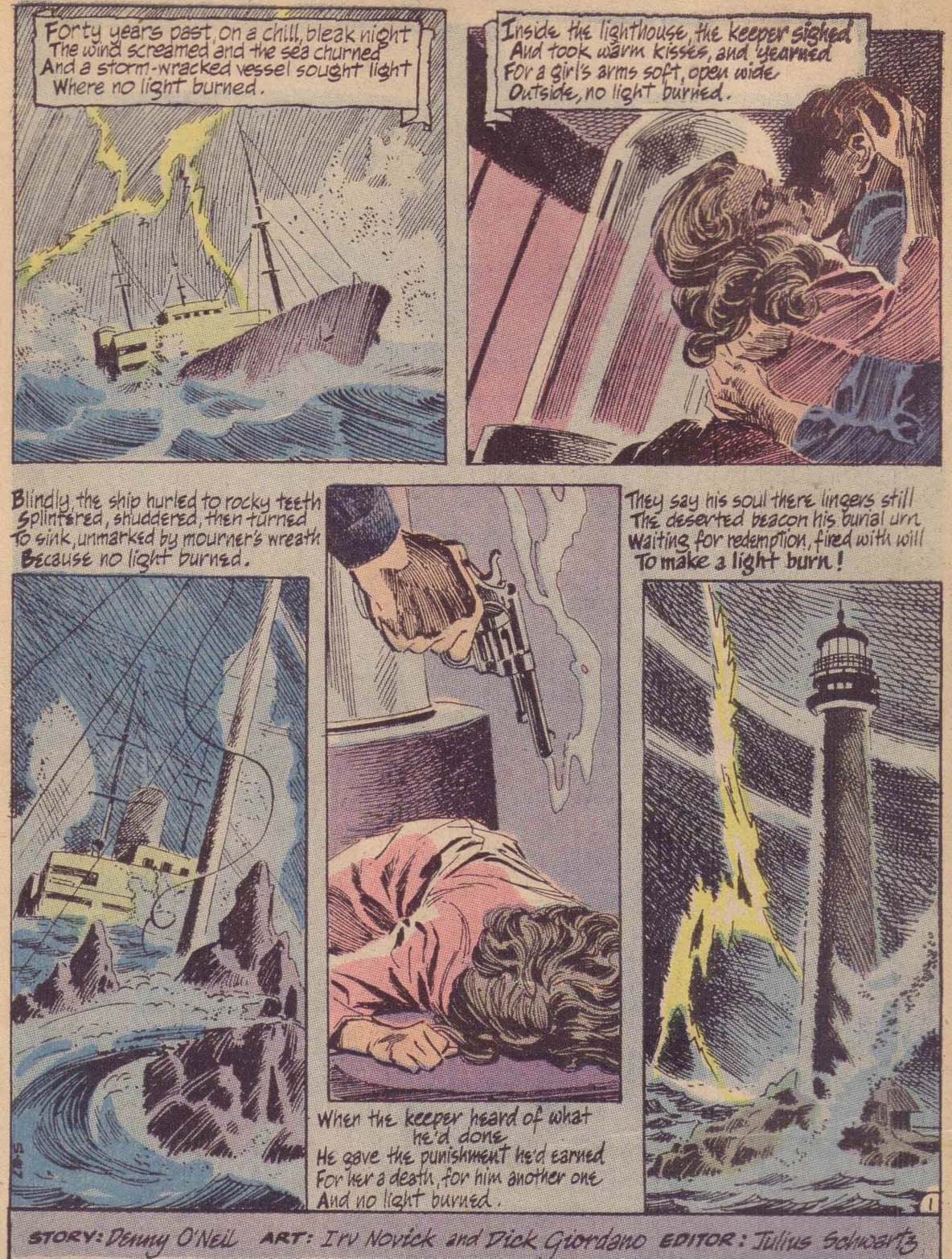
Taking advantage of Neal Adams’ and Irv Novick’s atmospheric pencils, beautifully inked by Dick Giordano, Denny O’Neil’s earlier tales were unabashedly gothic and full of over-the-top purple prose. His debut story, ‘The Secret of the Waiting Graves,’ starts by asking readers to ‘Stand still and hear the wind howling like souls in torment… see the rise of an ashen moon… breathe deeply and sniff the scent of death…’ Given the prowess of the artists working on these comics, O’Neil’s narrative captions are mostly unnecessary in terms of storytelling, but his poetic flights of fancy help create a genuinely eerie mood. ‘Legend of the Key Hook Lighthouse!’ even kicks off in verse:

detective comics 414Detective Comics #414

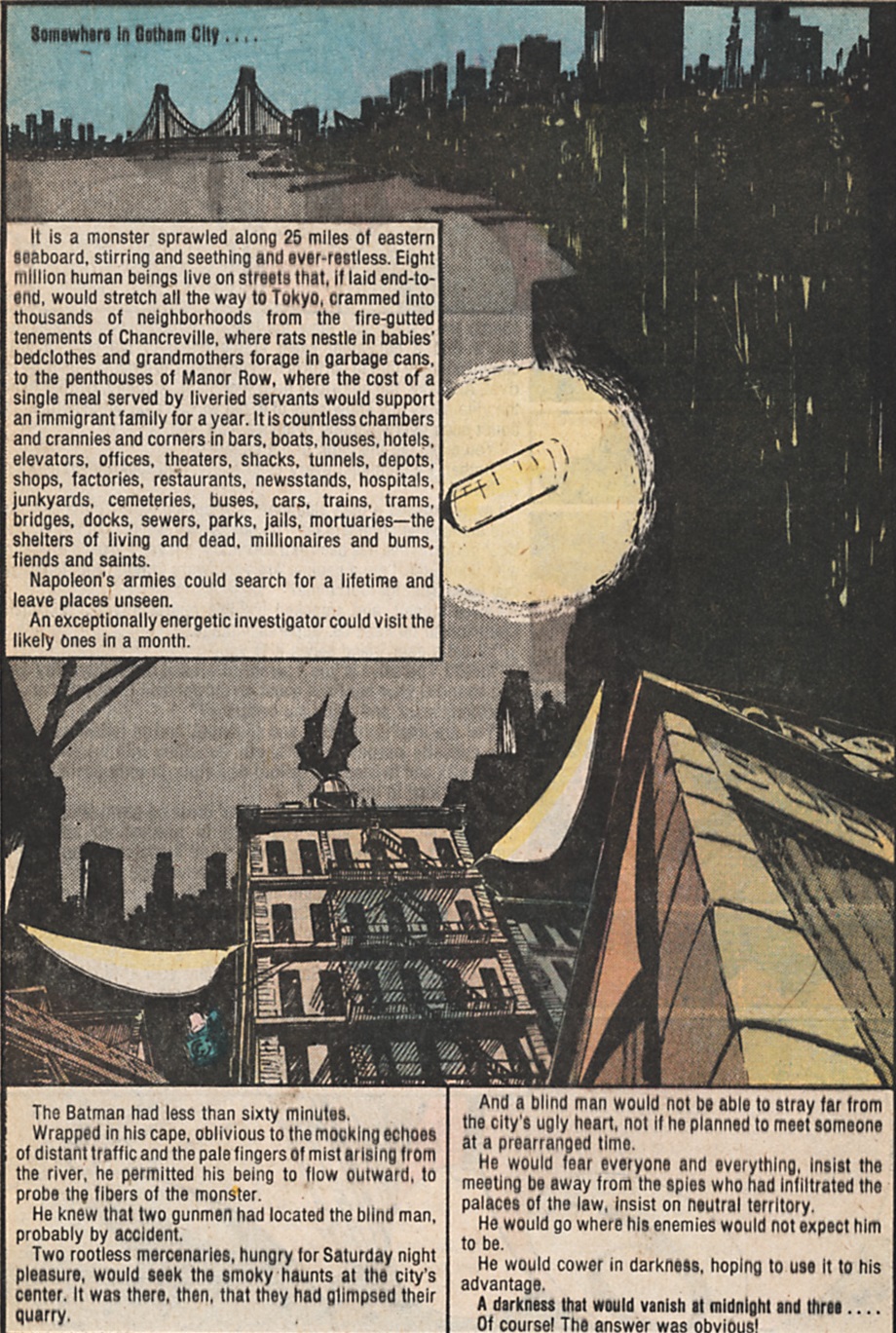
O’Neil would later take his literary affectations to the extreme in the brilliant ‘Death Strikes at Midnight and Three,’ which is part dense prose, part experimental montage, and 100% hardboiled goodness:

dc special series 15DC Special Series #15

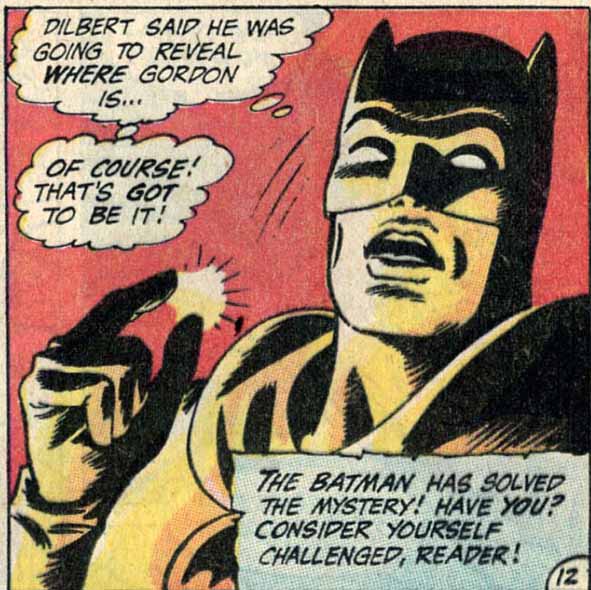
Denny O’Neill was also great at murder mysteries, which is no small feat when you have around 15 pages to set up the crime, introduce the cast of suspects, and throw in enough red herrings to make it challenging. What’s more, as these were fair play mysteries, his comics often included a neat panel directly daring the reader to spot the necessary clue to solve the puzzle.

detective comics 399Detective Comics #399

No tale combines all these trademarks as powerfully as the classic ‘Ghost of the Killer Skies!’ which features a foreign setting (Spain), a gratuitous yet exciting death-defying challenge that Batman has to overcome through ingenuity (air battle between vintage aircraft), elaborate prose adorning Neal Adams’ majestic drawings (‘Leave now the eyes of the dread Batman and follow the caped avenger through a tangle of crime and into the bleakest corner of a man’s soul…’), and an intriguing whodunit premise (a pilot strangled in mid-air, in a single-seater plane). Throw in an anti-war message and the ghost of Enemy Ace – the German WWI pilot of the amazing war comics by Robert Kanigher and Joe Kubert – and you’ve got one hell of a story in your hands!

As if all this was not enough to ensure Denny O’Neil a firm place in Bat-history, he created two of the most fascinating characters in the Batman cast – love interest Talia al Ghul and her father, the megalomaniac, repeatedly resuscitated, eco-terrorist Ra’s al Ghul. Most of these comics, reprinted in the Tales of the Demon collection, have become so engrained in the imagination of Bat-fans that it is easy to miss the slow-burn build-up of the original saga… At first sticking to the formula of done-in-one stories, O’Neil kept revealing new layers and gradually escalating the stakes until what started as typical Batman mini-adventures culminated in arguably the most memorable showdown of the Caped Crusader’s career.

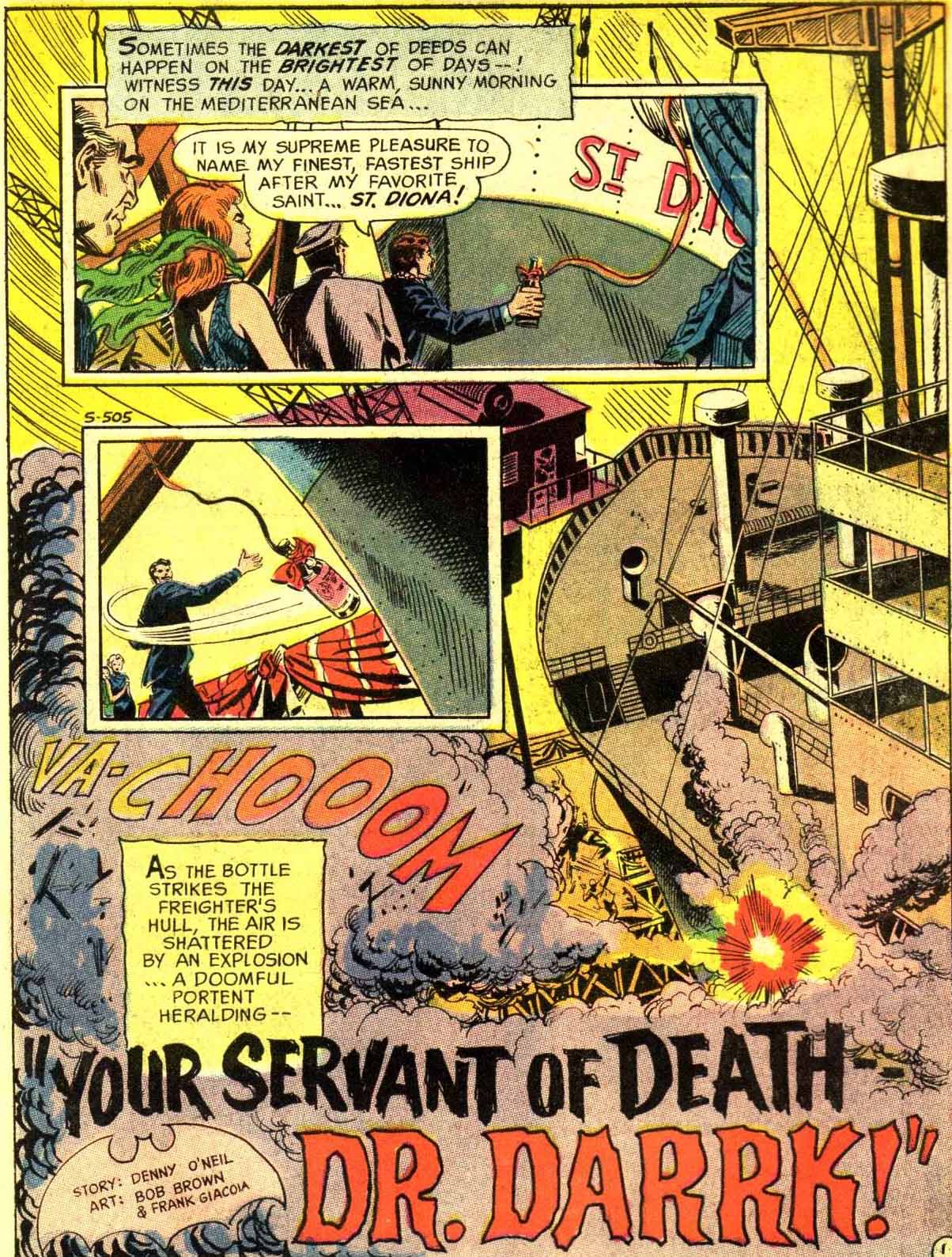
In the otherwise forgettable Detective Comics #405, Batman bodyguards a shipping magnate by facing kamikaze dolphins (where do you think the Soviets got the idea from?) and a martial arts killer, only to realize that his opponent belongs to a much vaster League of Assassins. In the following issue, the Dark Knight has his first confrontation with the League’s president, Ebenezer Darrk – despite the villain’s uninspired name, this is a nice little tale of secret passages, medieval traps, double-crosses, and last-minute escapes. Also, it opens with a bang:

detective comics 406Detective Comics #406

Detective Comics #408, scripted by Len Wein (with an even more gothic voice than O’Neil’s), is tangentially related to the Masked Manhunter’s feud with the League of Assassins, without adding much to the overall saga. Neal Adams draws some breathtaking hallucinations, but reading the issue means stomaching one of Batman’s most racialized foes, namely the Fu Manchu-inspired Dr. Tzin-Tzin (whose only redeeming quality as a character is that a few years later he stole all knowledge of Christmas from Gotham City, which even for Gotham standards is a pretty eccentric heist).

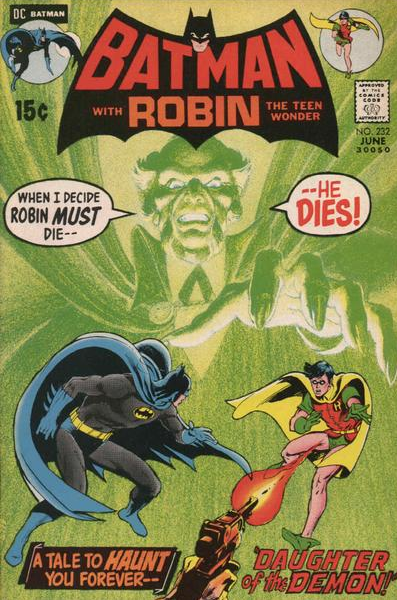
Dr. Darrk meets his demise in Detective Comics #411 – yet instead of bringing closure to the story arc, this instalment hints at an even more complex web of international intrigue. Readers meet Talia al Ghul, whose father had a falling out with Darrk ‘over some sort of business.’ We are definitely in grand adventure territory here. Accepting the genre’s inherent orientalism, O’Neil combined different cultures with gusto in order to provide an out-of-this-world sense of exotic excitement: the tale takes place in an unidentified Far East country (‘a tiny Asian nation tucked into the mountains between two hostile super-powers’); we are told Ra’s al Ghul is Arabic for ‘The Demon’s Head;’ a plot point involves arms deals in South America; and in a great sequence Batman literally has to bullfight for his life. O’Neil followed this with Batman #232, where the Caped Crusader wrestles a leopard in Calcutta and climbs one of the Himalayan Mountains, under fire. The stakes feel higher than usual – Robin gets shot in the very first page and Ra’s al Ghul makes his entrance by revealing that he has figured out Batman’s secret identity.

Batman 232The big picture continues to unfold, as we are introduced to Ubu and to the Brotherhood of the Demon. Ra’s is not even revealed as the villain until the end… and even then his motivation appears to be a melancholic wish to retire and to satisfy his daughter’s infatuation with Bruce. Indeed, in Batman #235 and Batman #240 the Dark Knight is still willing to trust and even partner up with Ra’s and Talia, whom he apparently doesn’t yet consider all that evil… although the al Ghuls’ decision to remove the brain of the director of a think tank in order to extract confidential information about the Vietnam War finally changes that.

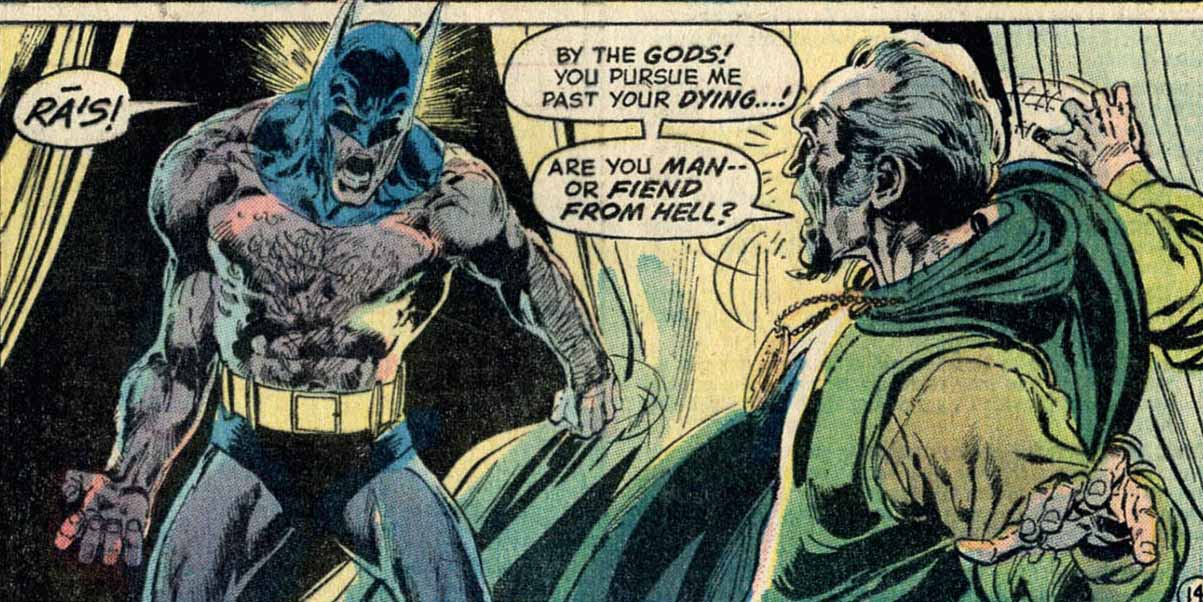
It’s with Batman #242 that the narrative picks up speed, turning into a no-holds-barred rollercoaster ride. Batman fakes Bruce Wayne’s death on the first page. By page 5, the Dark Knight himself is apparently murdered. We are introduced to Matches Malone, who will remain Bruce’s moustachioed slimy crook alter-ego for the following decades. There is a plot twist on every page as Batman rounds up a ragtag team (‘a reluctant scientist, a superstitious bandit, and a dead gangster’) to wage war against Ra’s al Ghul and his hordes of trained soldiers. By Batman #243 we’re in full-on James Bond mode, with a dynamic martial arts combat, proto-Bond girl Molly Post (who sadly only reappeared one more time, in Detective Comics #451), and henchmen getting knocked out all over the place as the heroes make their way to the villain’s lair in the Swiss Alps. This is also the issue in which we learn that a dead Ra’s al Ghul can be brought back to life by being dipped in the magical Lazarus pit. The whole thing climaxes in Batman #244, where the Caped Crusader chases a hovercraft on a pair of skis, duels Ra’s under the burning desert sun, gets poisoned by a deadly scorpion, passionately kisses Talia, and saves the world, although not before bursting into one of the most iconic Batman panels of all time in all his hairy chest glory:

BATMAN 244 Batman #244

Batman #245 serves as an epilogue, wrapping up the Bruce-Wayne-is-dead plot thread. It is dated October 1972, two years after the saga first started on the pages of Detective Comics.

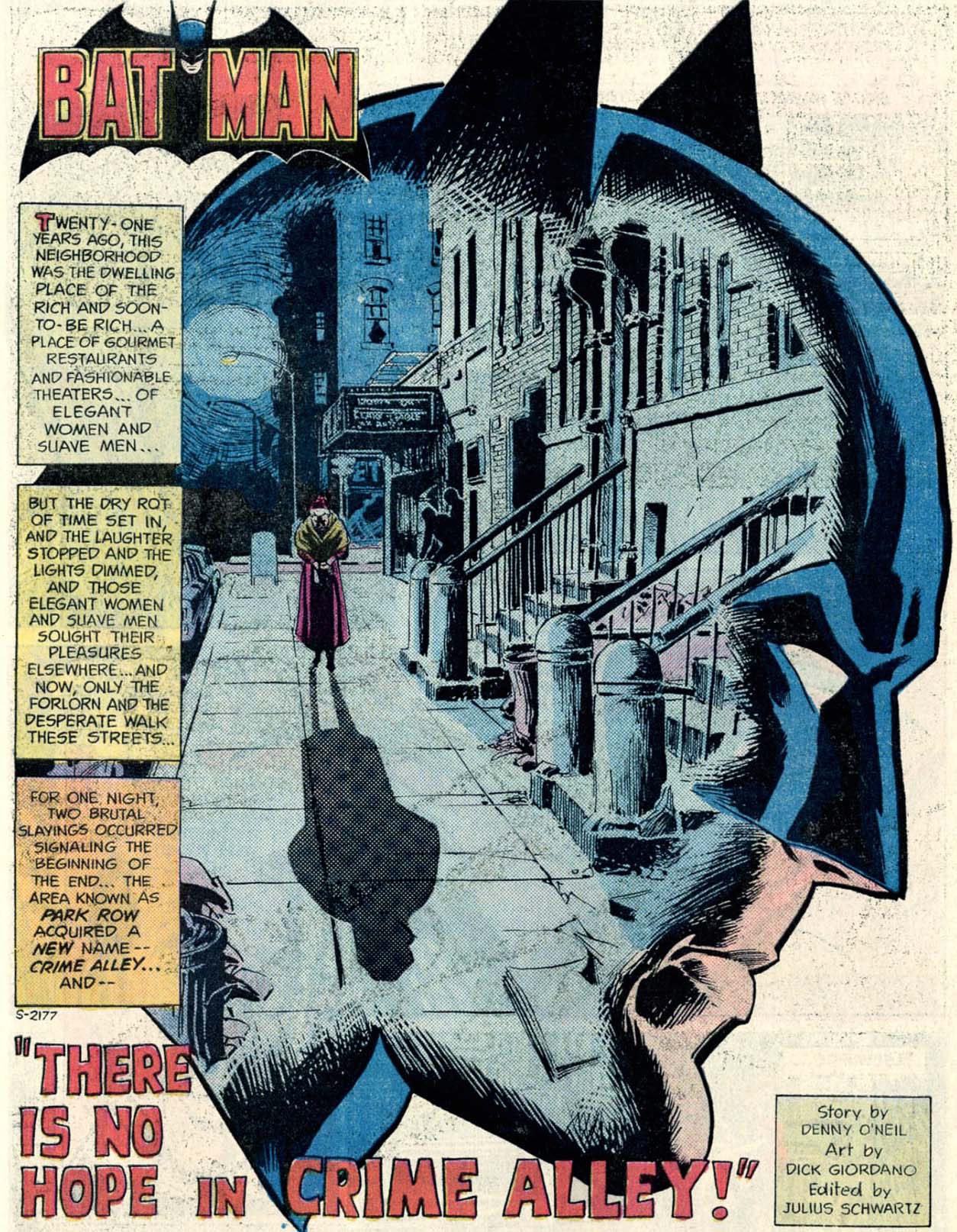
After this globetrotting extravaganza, Denny O’Neil’s Batman stories grew increasingly urban, most famously in ‘There is No Hope in Crime Alley!’ where O’Neil established the place where Bruce Wayne’s parents were killed – Park Row, now known as Crime Alley. He also created the character of Leslie Thompkins, the kind old woman who represents all that’s worth saving in Gotham City and who became a recurrent character in the Dark Knight universe.

detective comics 457Detective Comics #457

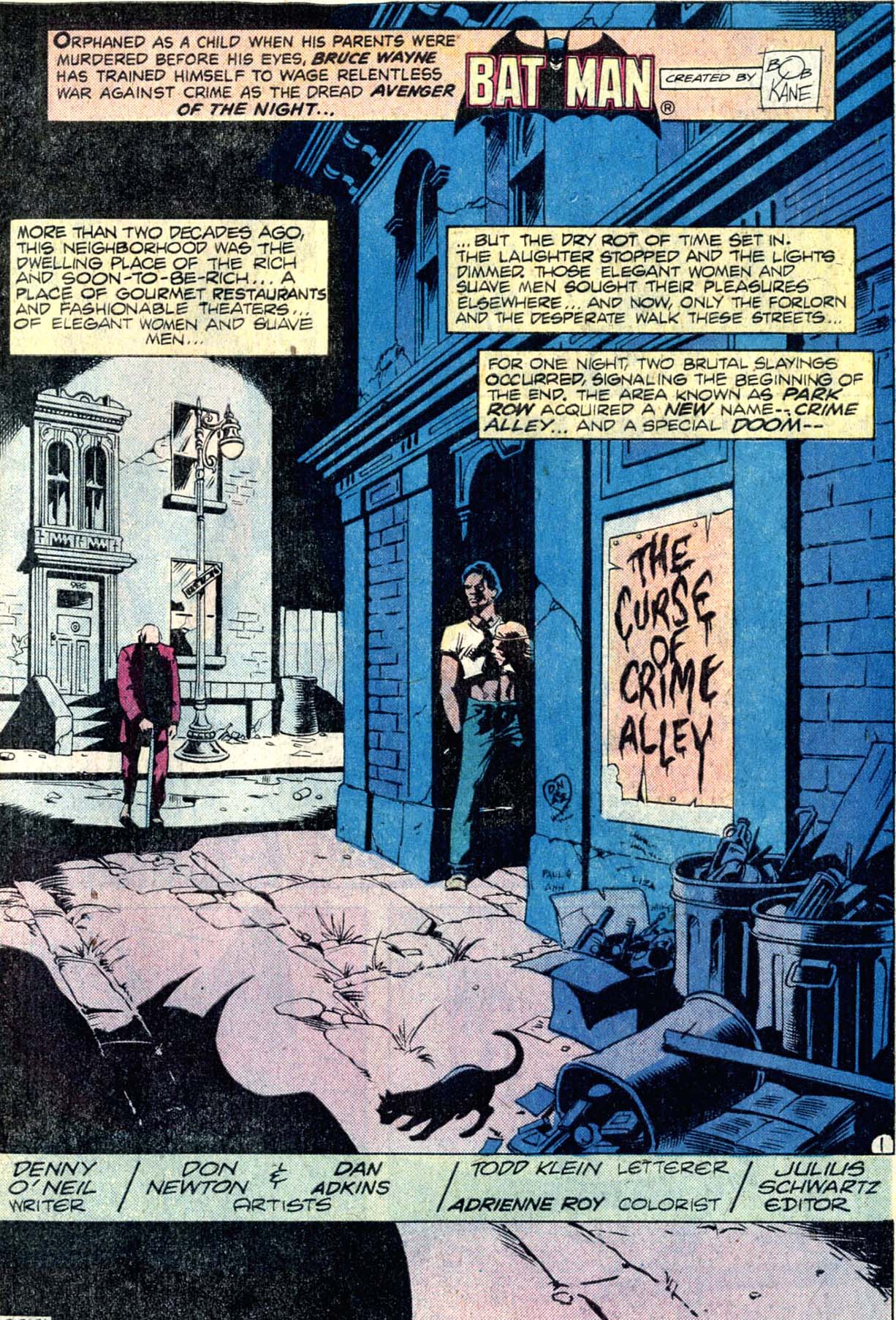
The comic became such an instant classic that the sequel, written 3 years later, directly echoed its beginning:

detective comics 483Detective Comics #483

These are cornerstone Batman comics, which not only heavily inspired Mike W. Barr but also the awesome Batman: The Animated Series episode ‘Appointment in Crime Alley.’ The latter of these issues also marks the debut of Maxie Zeus, the crime boss who swears to anyone who’ll listen that he is an actual Greek god.

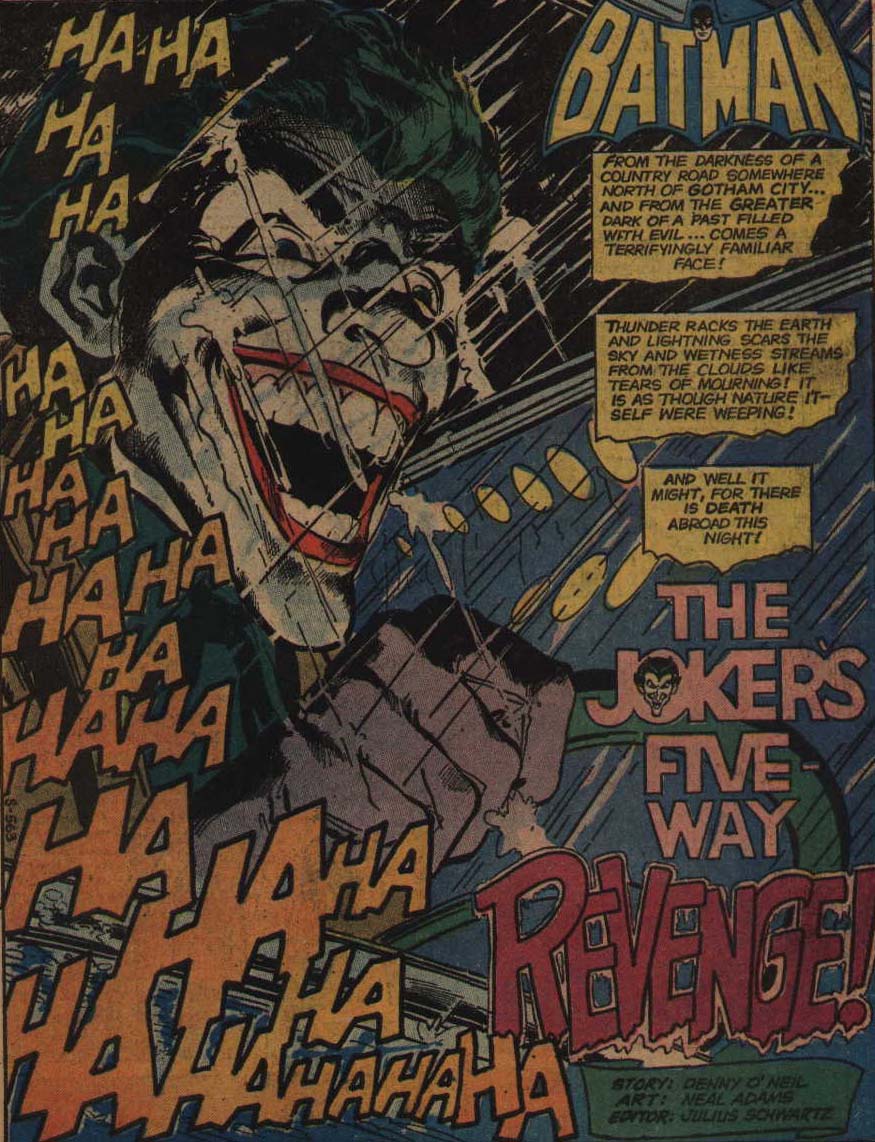
Besides introducing new elements into the Batman mythos, Denny O’Neil did a great job of breathing life into old villains who hadn’t been seen for years. Out of all the classic rogues he brought back, O’Neil’s most lasting update concerned the Clown Prince of Crime:

Batman 251 Batman #251

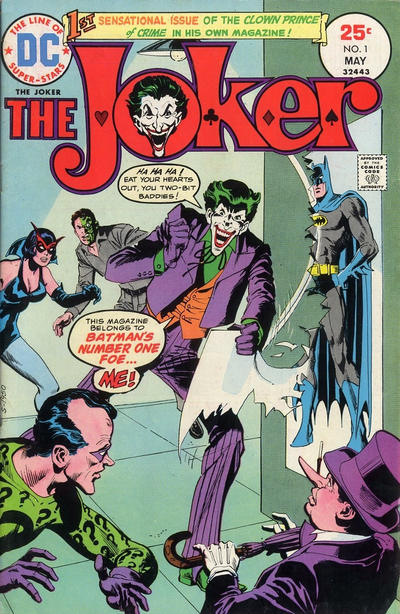
After three decades of being depicted as little more than a wacky prankster, under O’Neil the Joker returned to his roots as a sadistic murderer. His take on this rogue proved so popular that O’Neil even spun it into its own series, where the Joker faced off against other characters.

The Joker 1This series started out strongly by pitting the demented antics of the Joker against Two-Face’s own brand of twisted logic, but soon lost its footing… although in The Joker #6 O’Neil did write a particularly fun story entirely based around Sherlock Holmes references.

Denny O’Neil would continue to write Batman comics for years. He tried his hands at different kinds of stories, including a couple of Unsolved Cases of the Batman, where he challenged himself to write tales in which the Dark Knight would fail while still providing a satisfying resolution (he came closest with ‘The Galileo Solution’). O’Neil also returned to the al Ghul clan quite a few times – under his scripts, Talia married Bruce against his will (‘I Now Pronounce You Batman and Wife!’); Ra’s had the original Batwoman killed off as part of a plan to take over the League of Assassins (‘The Vengeance Vow’); Batman and Ra’s teamed up first to prevent the Earth from turning into crystal (‘The Crystal Armageddon’) and then to keep the Sensei from assassinating the world’s religious leaders for purely artistic reasons (‘Requiem for a Martyr!’); Talia and Batman had a bittersweet reunion (‘The Monkey Trap’); and we were finally given a close look at Ra’s origin (‘Birth of the Demon’). Oh, right, and the al Ghul family also hung out with the Batman-wannabe hero Azrael a bunch of times, even helping him discover that he was a motherless test tube baby whose genes had been spliced with those of various animals (‘Fallen Angel’). Bummer.

O’Neil’s other massive contribution to the Batman universe may not be as evident at first sight. I’m talking about his phenomenal series The Question:

The Question#01The Question #1

This was one of those runs, so in vogue in the ’80s and ’90s, where the author shockingly killed off an established protagonist on the very first issue in order to completely reinvent the character. Although not as extreme a revamp as Alan Moore’s Swamp Thing, Neil Gaiman’s Black Orchid, or James Robinson’s Starman, O’Neil nevertheless had the objectivist vigilante known as the Question (Vic Sage) practically beaten to death, shot in the head with a pellet gun, and thrown into the river, only for him to come back as a Zen martial arts expert who fought against villains of different philosophies.

The series was not set in Gotham, but in Hub City – which somehow managed to be even more corrupt and decadent, run as it initially was by a crazy reverend and an alcoholic mayor. Yet there were key links to the Batman universe: the Dark Knight had a cameo early on and the two heroes soon teamed up (it was the Question who set up Batman’s first encounter with the cult character Lady Shiva); the series introduced Santa Prisca, birthplace of the villain Bane, as well as the mute Harold Allnut, who became a regular assistant in the Batcave. And in an inspired move, the Question fought the Riddler… and won by asking him about life’s greatest mysteries!

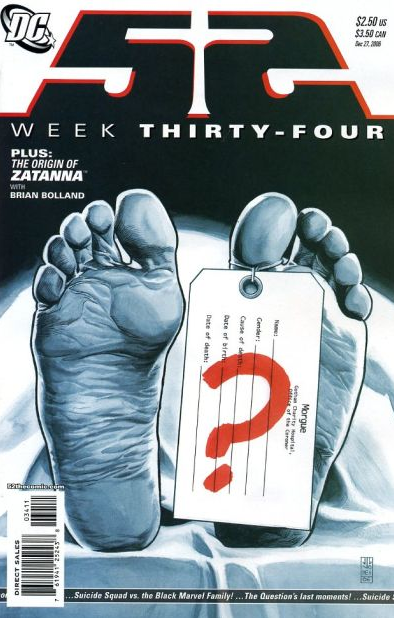
The Question and his supporting characters would later show up in various Batman-related comics, most notably in those starring Azrael and the Huntress. Furthermore, when Vic Sage died of cancer in 2006, fan-favorite ex-Gotham City cop Renee Montoya took over his legacy.

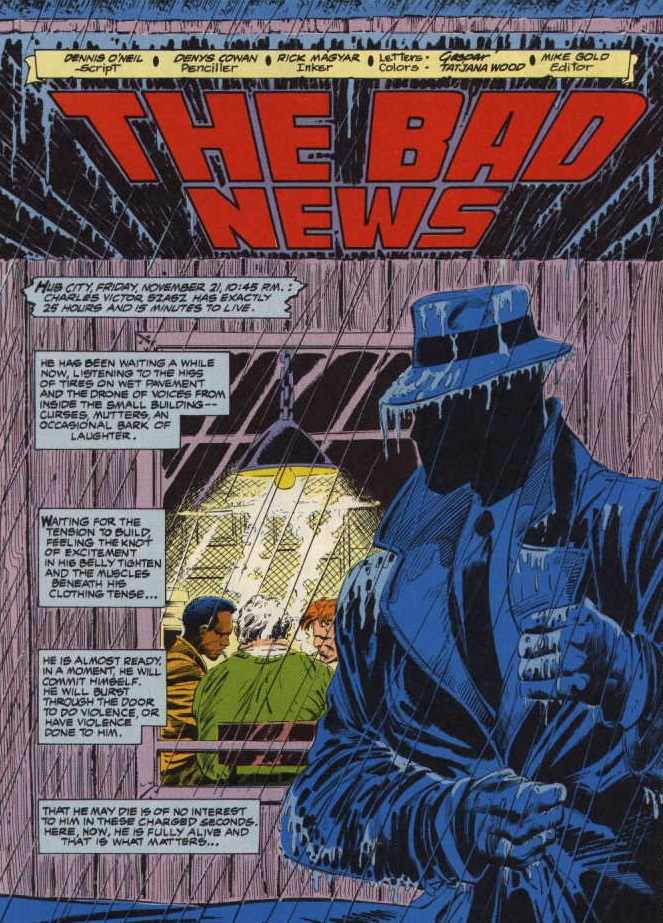
52The Question’s biggest impact on Batman, though, was arguably more subtle. Its twisted crime stories and the proto-noir mood evocative of Will Eisner’s The Spirit (which, for those of you not in the know, is the highest compliment you can pay to a comic) seem to have hugely influenced a whole generation of writers. I wonder how many of the sickest Batman tales in the last decades were a product of the trauma inflicted by this page:

The Question 06The Question #6

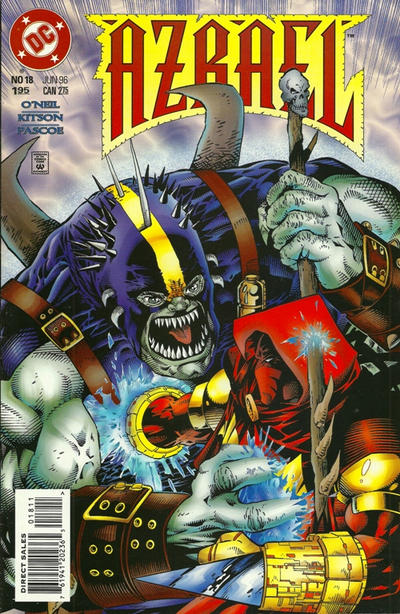
Regardless, as writer alone – which is to say, even disregarding his decisive role as group editor for Batman’s various titles from 1986 to 2000 – Denny O’Neil was responsible for some of the coolest stories and characters in the Dark Knight universe. This, my friends, is why we owe it to O’Neil to collectively forget that he also wrote over a hundred god-awful comics about the aforementioned delusional, genetically engineered human-animal hybrid killer brainwashed by a secret religious society, so-1990s-it-hurts, Azrael:

Azrael 18

NEXT: Batman vs Charlie Chaplin.

Posted in WRITERS OF BATMAN COMICS | Tagged , , , , , , , , | 2 Comments

More gold from Batman #50

My post on Golden Age splashes a while back highlighted a great opening teaser page from Batman #50. In fact, that was only one of a handful of funky-looking pages in this (otherwise not exactly a classic) comic. So, for geekness’ sake, I figured today I’d draw attention to another five of them.

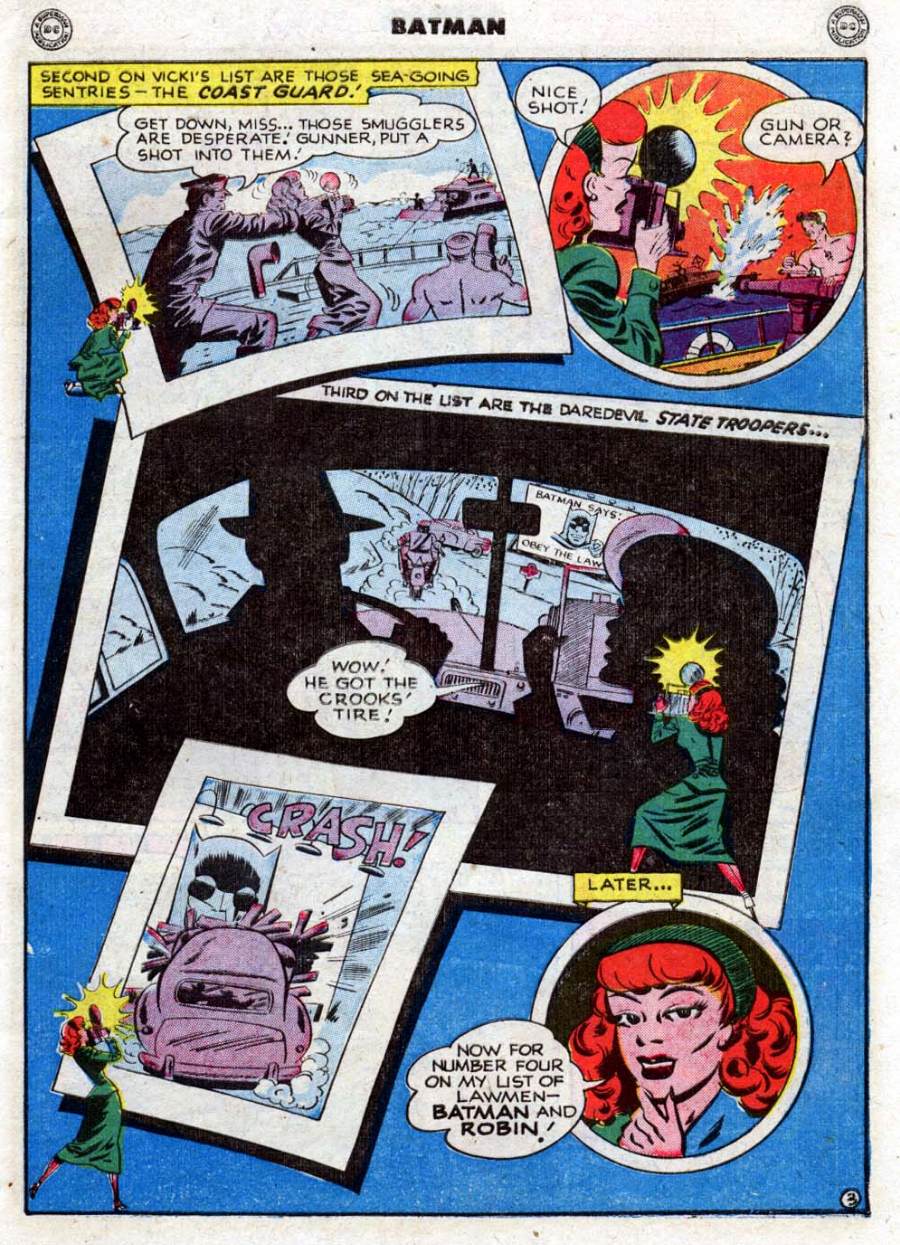
Dated December 1948–January 1949, Batman #50 was officially illustrated by Bob Kane (although according to the GCD he only drew the Batman & Robin figures, the rest of it was actually penciled by Lew Sayre Schwartz, and the whole thing was inked by Charles Paris). As was usual with the Batman series at the time, this issue contains three stories. The first one – ‘Lights- Camera- Crime!’ – features photographer Vicki Vale. In case you don’t know, Vicki Vale is the Batman comics’ equivalent of Lois Lane (except that there is no catchy song about her). Well, honestly, she’s more of a shameless copy of Lois, i.e. a nosy reporter and love interest out to expose her hero’s secret identity. In this story, Vicki’s editor assigns her with doing a series on various law enforcement groups, including on-the-spot pictures of lawmen cracking on criminals, which leads to this handsome page:

Batman 50It really feels like a movie montage. Instead of a traditional comics grid, the panels – some of which framed like photos – flow across the page and lie on top of each other, and Vicki is all over the place (she shows up seven times), facing different directions. I also like the detail of the crooks’ car smashing against an Orwellian Batman billboard.

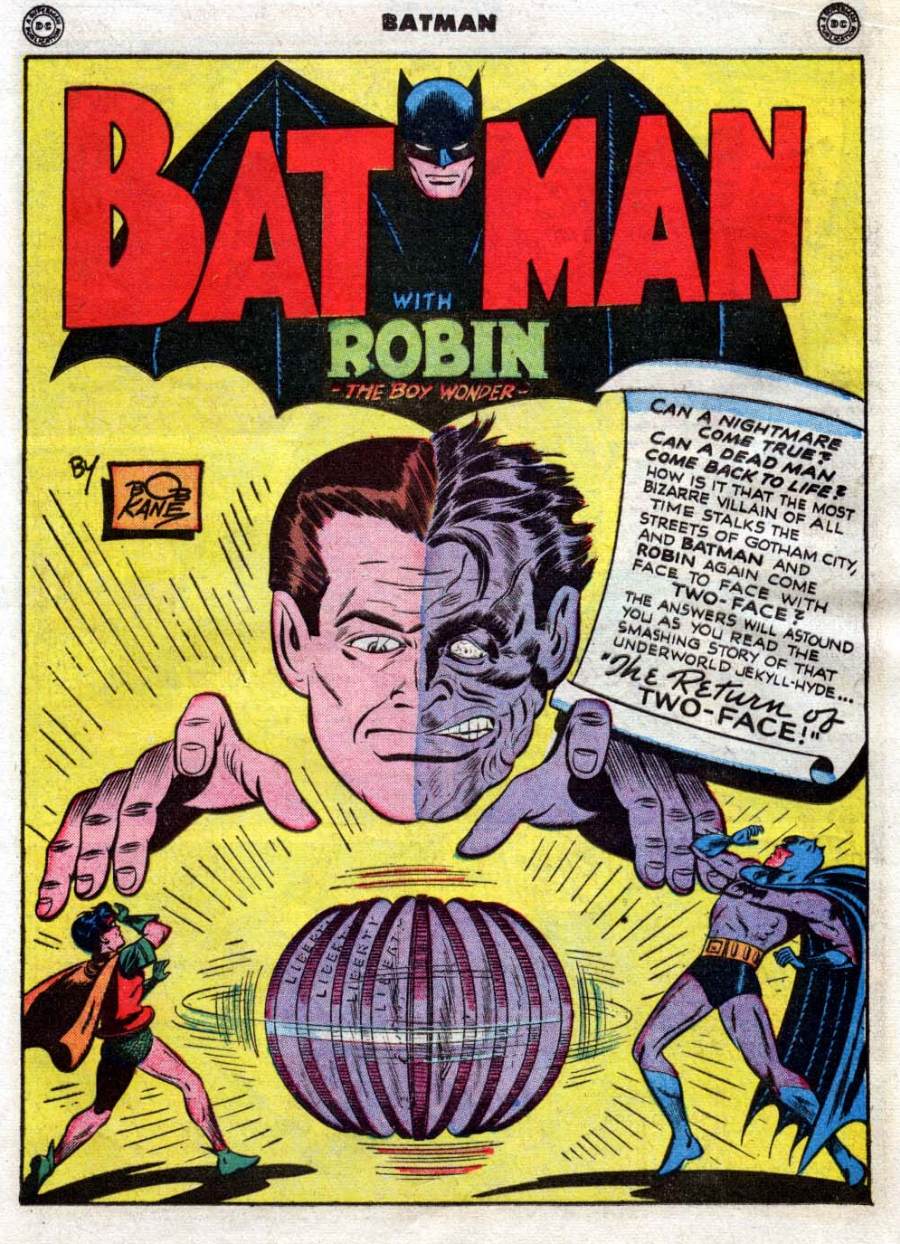
Batman 050This beauty is the title splash for the second story, ‘The Return of Two-Face!’ It is so striking that it was also used for the issue’s cover, presumably due to its hypnotic potential. Notably, there is a neat symmetry (always suited for a Two-Face story) between the two sides of the page. On Harvey Dent’s right side (our left), everything is brighter: not only his face and hand, but Robin’s colorful clothes, Bob Kane’s orange signature box (which leaves more space for the yellow background)… even the spinning coin features the word ‘Liberty.’ On the other side, Two-Face’s darker skin is complemented by Batman’s comparatively darker outfit and a text box obscuring the background. This could be the cover to a Pink Floyd concept album that never happened!

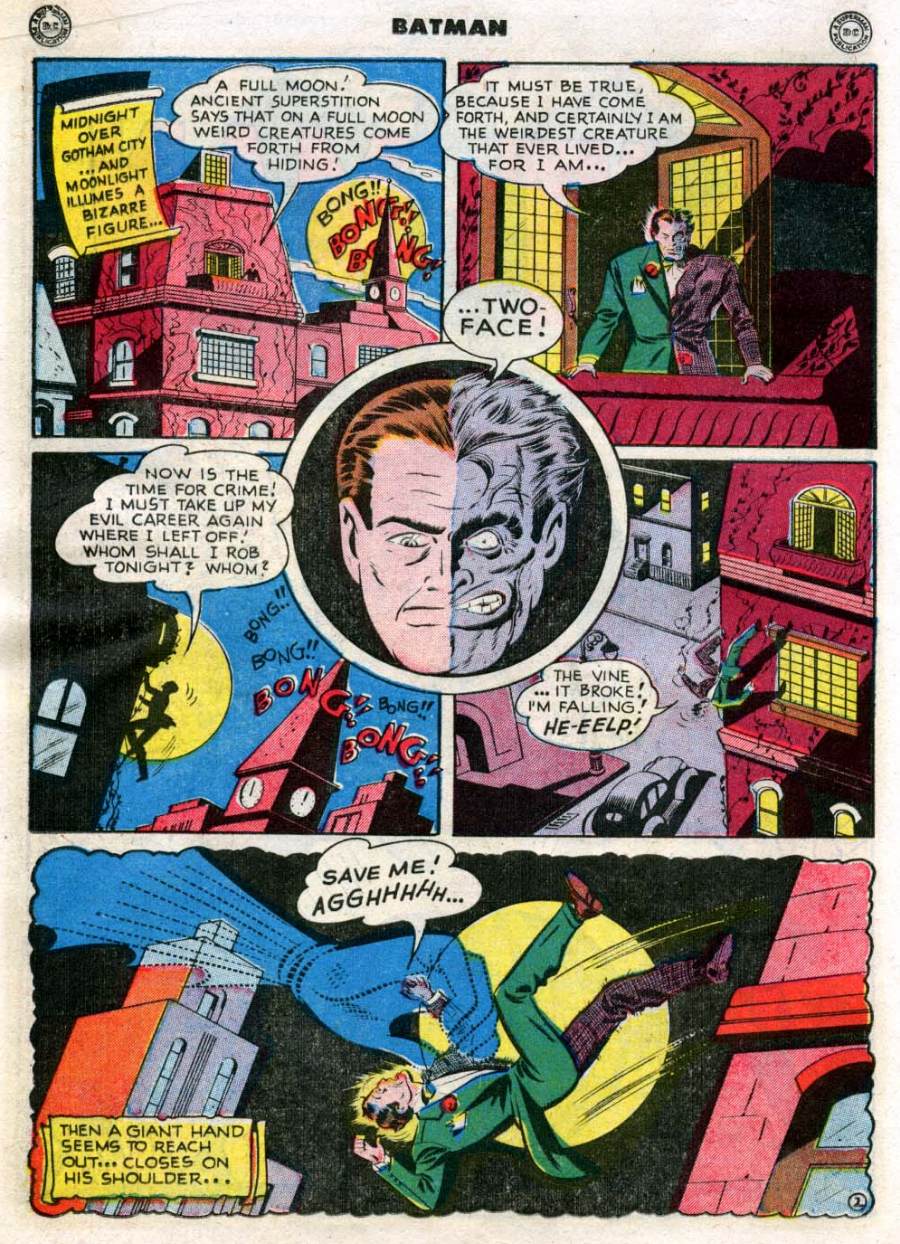
Batman #50Again, Two-Face’s split features are at the center of a pretty symmetrical page, this time illustrating a Felliniesque dream sequence. Batman comics being as loony as they are, it may not be immediately clear that something is off, but that final panel with the squiggly borders – not to mention the huge, phantasmagorical hand – is an effective reveal.

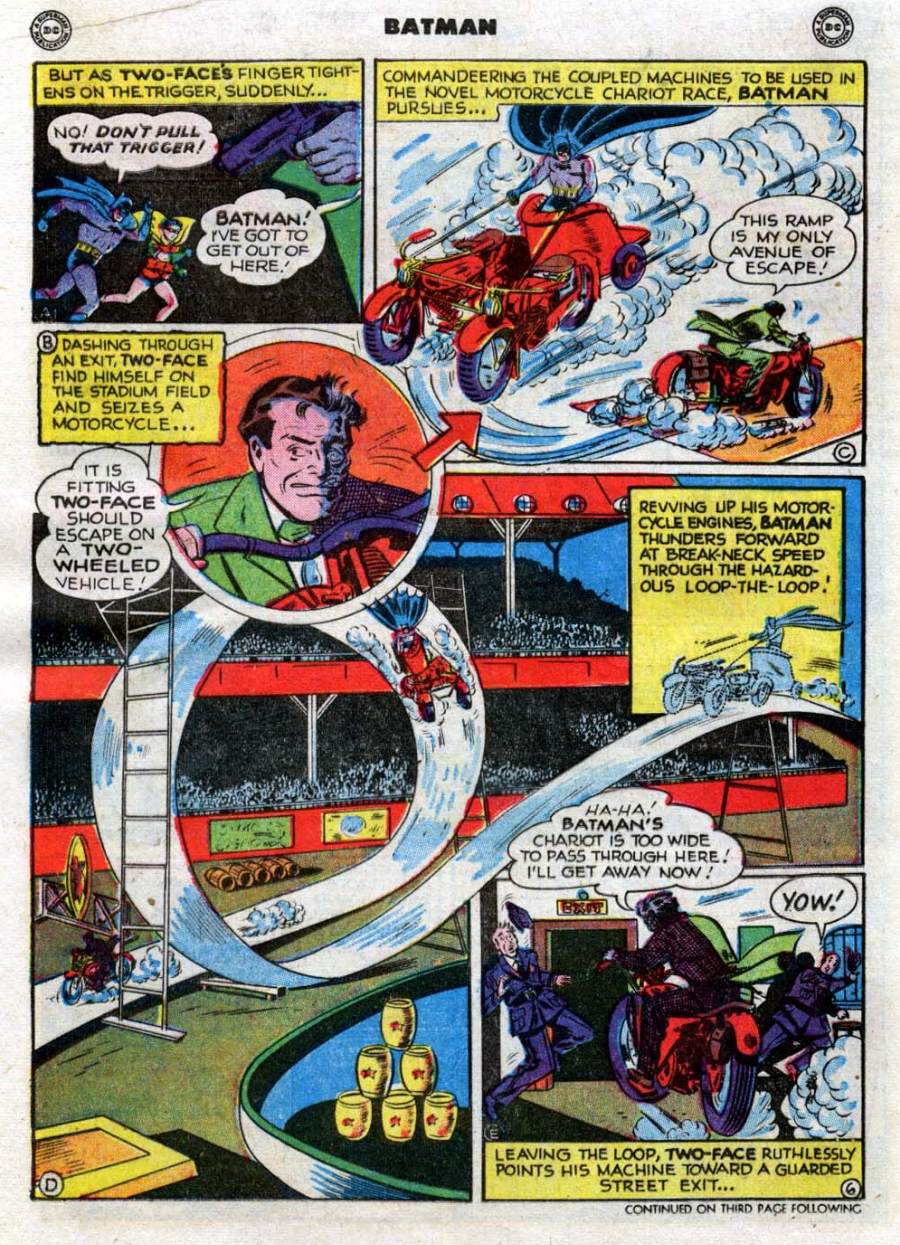
Soon, the Dynamic Duo finds itself chasing Two-Face through a stadium, during a motorcycle race:

Batman 50If the last page looked like the product of shrooms, this one is even trippier. It’s not just the massive spiral track where Batman chases Two-Face… the layout itself seems designed to make us dizzy with its non-linear reading order (helpfully clarified by the letters A to D in the panel corners, in case you get lost). What I don’t get is the guards’ surprised reaction – this is Gotham City, guys, by now you should be used to crazy stunts like this. Hell, this isn’t even the wackiest chase in the comic: 4 pages later Batman rides an elephant!

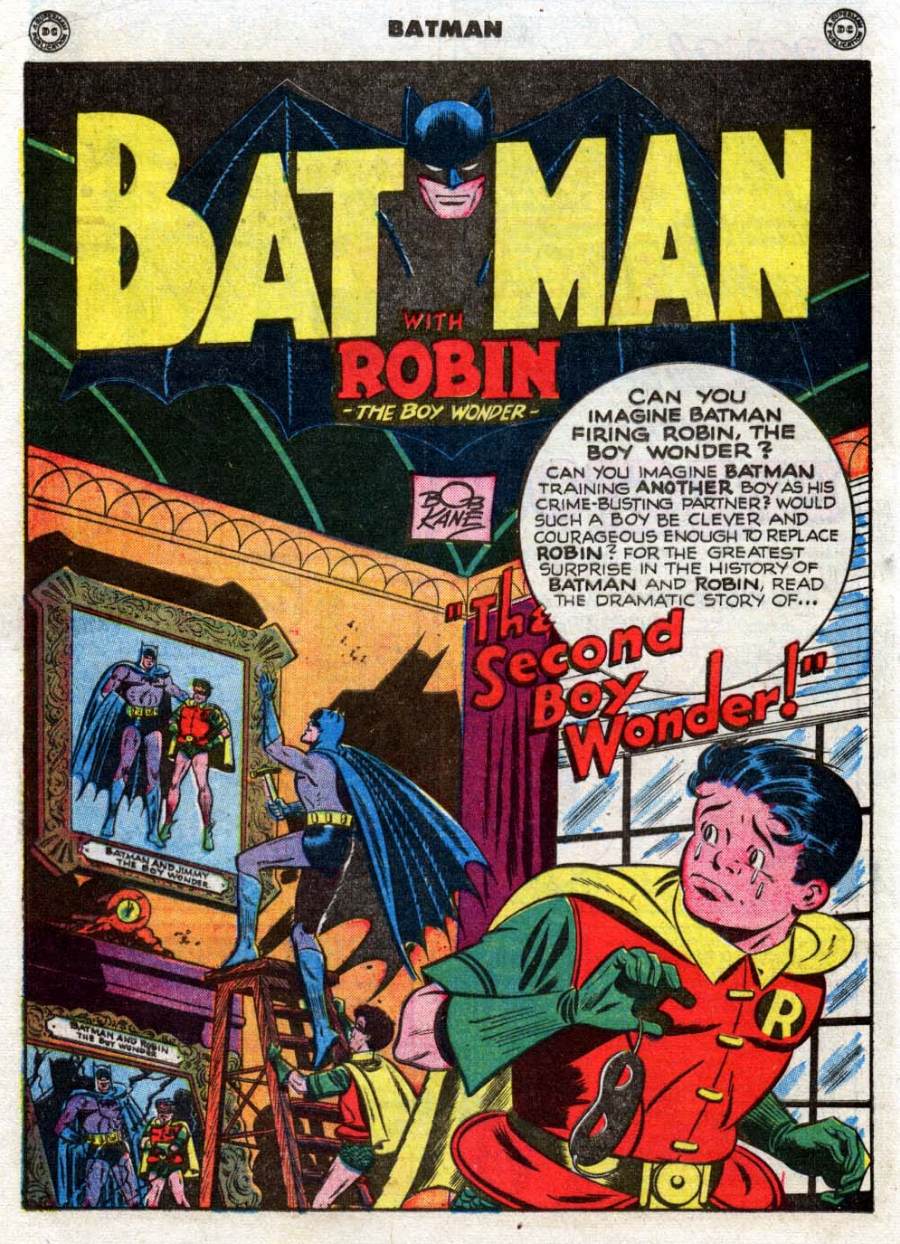
Batman 050Finally, there is the splash page for the issue’s third story. From the Boy Wonder’s melodramatic tears to the kaleidoscopic effect of the four Robin suits, the whole image is a delight. The campiest aspect, though, is the fact that they’re clearly not in the Batcave (hence the window), which raises the question of why Batman would have a portrait of the Dynamic Duo on top of Wayne Manor’s fireplace… won’t guests get suspicious, Bruce?

NEXT: Batman shows off his chest hair.

Posted in ART OF BATMAN COMICS | Tagged , , | Leave a comment

Batman’s very long beginning

Between Christopher Nolan’s movies and the Gotham TV show, a new generation of fans really seems to be digging dark, pseudo-realistic takes on Batman. But with 75 years’ worth of comics to choose from, people don’t necessarily know what to read. Maybe they want a place to start, or maybe they just want an isolated story that doesn’t take much time, doesn’t cost much money, and, crucially, doesn’t require familiarity with decades of background continuity. That’s why I’m here. (Well, technically, that’s why DC’s marketing department is wherever it is – me, I’m just doing it for the cause.)

A logical place to start has got to be Frank Miller’s and David Mazzucchelli’s Year One. As I explained earlier this week, not only is it one of the best Batman comics ever, it literally follows Bruce Wayne’s first year as the Dark Knight so the backstory is kept to a minimum. Yet where do you go from there? The logical answer would be Year Two, but actually – as I have also pointed out – that happens to be one of the worst Batman books around. Instead, you may want to explore other comics from the ‘Year One’ line. These are comics that take place during the Dark Knight’s earlier years (although not necessarily in his initial year) and feature a more humanized, relatively fallible Batman. They tend to put story first and serve as introduction to key concepts and characters. All the background you need is to know that Bruce’s parents were shot and, frankly, even if you’ve never picked up a comic you’ve probably seen it happen plenty of times.

One of the many comics that link directly to Miller’s and Mazzucchelli’s book is the excellent Shaman, which begins before Year One and then runs parallel with it, but works as a self-contained mystery. And while I doubt the world was crying out for a story tying Batman’s mask to Native American symbolism, veteran Bat-writer Dennis O’Neil delivers plenty of neat moments:

Legends Of The Dark Knight 003Legends of the Dark Knight #3

Also, Catwoman: Her Sister’s Keeper expands Catwoman’s elliptical origin from Year One, showing some of that book’s scenes from Selina Kyle’s perspective. In true ’80s fashion, writer Mindy Newell channels the jazzy dialogue and urban tone of a James Ellroy novel. In fact, even if you’re into grit, Her Sister’s Keeper is quite hardcore:

Catwoman (1989) 01 Catwoman (1989)Catwoman #1

Probably the most accomplished work to follow in Year One’s steps is Jeph Loeb’s and Tim Sale’s The Long Halloween. This comic, which was a major inspiration for Nolan’s The Dark Knight, addresses the transformation of Gotham from a city of gangsters into a city of insane, costumed criminals, while also serving as an origin story for Two-Face. The Long Halloween picks up threads from Year One and has a similarly hardboiled atmosphere, although Sale’s gorgeously stylized artwork gives it a very different flow from Mazzucchelli’s pencils – for one thing, Bruce Wayne looks less like a young Gregory Peck and more like someone who could knock out Arnold Schwarzenegger. More importantly, the book is full of taut characterization (particularly of Batman, Gordon, and district attorney Harvey Dent), shameless homages to The Godfather films, perhaps one too many gratuitous cameos by the rogues’ gallery, and a genuinely clever whodunit. And instead of beaten up prostitute Selina, we get a mob-connected party girl:

Long Halloween 01The Long Halloween #1

Loeb and Sale have worked together on other ‘Year One’ projects. Haunted Knight collects their earlier comics, about Bruce Wayne’s first Halloweens as the Dark Knight – although not as intricately plotted, they contain poignant insights into Bruce’s personality. The duo also did a sequel to The Long Halloween called Dark Victory, which shows how Batman took in Robin while involved in another mystery plot of gangsters and themed villains. Dark Victory shares most of the virtues and flaws of its predecessor, without the freshness.

Batman Dark Victory 01Dark Victory #1

If Dark Victory is still recommendable, then the same can’t be said for Catwoman: When in Rome, except for Tim Sale’s dazzling art. While supposedly a missing piece in The Long Halloween/Dark Victory trilogy – taking place during the latter – When in Rome is plagued with dumb character developments and huge plot holes, as is typical of Jeph Loeb’s 21st century output. If it’s Sale’s art that’s pulling you in, then you’ll be better suited with the Tales of the Batman collection, which includes a bunch of groovy comics drawn by him.

Other works have been designed to tie in with Year One, even copying the font of Bruce’s and Gordon’s internal monologues (originally lettered by God-of-letterers Todd Klein). One of these books is Ed Brubaker’s and Doug Mahnke’s The Man Who Laughs, about Batman’s first encounter with the Joker. Brubaker successfully emulates Frank Miller’s voice, although, oddly enough, a major plot point does contradict (or at least disregard) Year One’s final scene. Still, it’s a tightly paced comic… this Brubaker guy, it’s a shame he didn’t write more crime stuff!

Batman - The Man Who Laughs The Man Who Laughs

Using a mix of film noir and gothic horror that is not for all tastes, Matt Wagner reworked a couple of Golden Age stories in Batman and the Monster Men (including the introduction of the deranged Professor Hugo Strange) and Batman and the Mad Monk (featuring a kinky cult straight out of a 1940s’ RKO production). Wagner filled these with nods to the abovementioned comics by Miller, Loeb, and Brubaker.

Batman & The Mad Monk #6Batman and the Mad Monk #6

A more obscure yet worthwhile read is the graphic novel Night Cries. Written by the great Archie Goodwin and illustrated in painted impressionistic style by Scott Hampton, it features a particularly powerful characterization of James Gordon, who in the story has just become police commissioner. And it’s as cheerful as you’d expect a tale of serial killers and child abuse to be.

Furthermore, many cool stories in the first series of Legends of the Dark Knight were set during Batman’s early years. ‘Prey’ is a twisted, alternative version of the Caped Crusader’s first clash with Hugo Strange, close in mood to Year One. Writer Doug Moench followed it up with the racism-themed ‘Heat’ (which is much more interesting than the direct sequel, ‘Terror’). ‘Images’ is another good take on Batman’s initial face-off with the Joker. ‘Clay’ tells the origin of Clayface (Matt Hagen). ‘Loyalties’ explains the background of Barbara Gordon’s adoption by James Gordon.

Besides these, a number of DC annuals tell ‘Year One’ tales about supporting characters, and tend to do it quite well. The best is by far Batman Annual #14 (‘The Eye of the Beholder’), an amazing, psychological reimagining of Two-Face’s origin (which is pretty much incompatible with The Long Halloween). The annuals with Batman’s first encounters with Poison Ivy, the Riddler, Scarecrow, and Man-Bat have been collected in the book Four of a Kind. Robin (Dick Grayson) gets a well-crafted origin story in Robin Annual #4:

Robin Annual 4Robin Annual #4

There is also an underrated graphic novel about Dick’s training, called The Gauntlet:

Batman Chronicles - The Gauntlet The Gauntlet

Building on these works, Chuck Dixon and Scott Beatty have written a string of first-rate mini-series about the first years of Batman’s main sidekicks, namely Robin: Year One (about post-Gauntlet Dick Grayson), Batgirl: Year One (about Barbara Gordon’s crime-fighting debut), and Nightwing: Year One (which sees Dick maturing from Robin into Nightwing, as well as his replacement as Robin by Jason Todd). These are fun comics, bursting with excitement and nice character moments. Because Dixon spent so much time writing the older versions of these characters, he manages to sneak in a lot of foreshadowing, which makes the comics rewarding for old fans while keeping them accessible to new ones. For example, check out these hints of the Joker’s future, violent involvement with Robin and Batgirl:

Robin Year One 4Robin: Year One #4
batgirl - year one 9Batgirl: Year One #9

I should clarify that, like Year One, these are all stories set in the so-called post-Crisis continuity, which ran from 1987 to 2011. If you are interested in comics set before that, then the perfect place to start would be The Untold Legend of the Batman, which fills you in on the Dark Knight’s convoluted background up until the 1980s while telling a gripping story in its own right, written in Len Wein’s overwrought style:

Untold Legend of the Batman 2The Untold Legend of the Batman #2

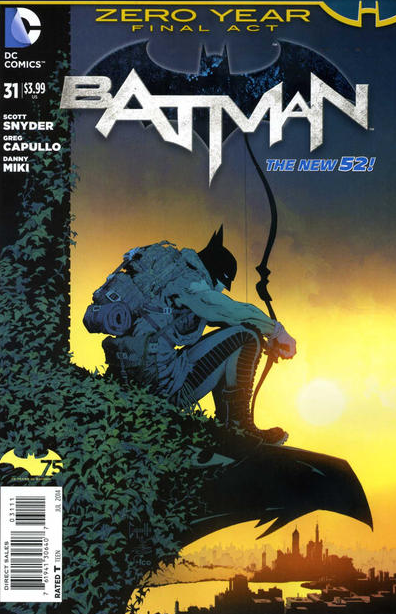
As for the continuity currently running in Batman comics, I guess the obvious equivalent would be Zero Year:

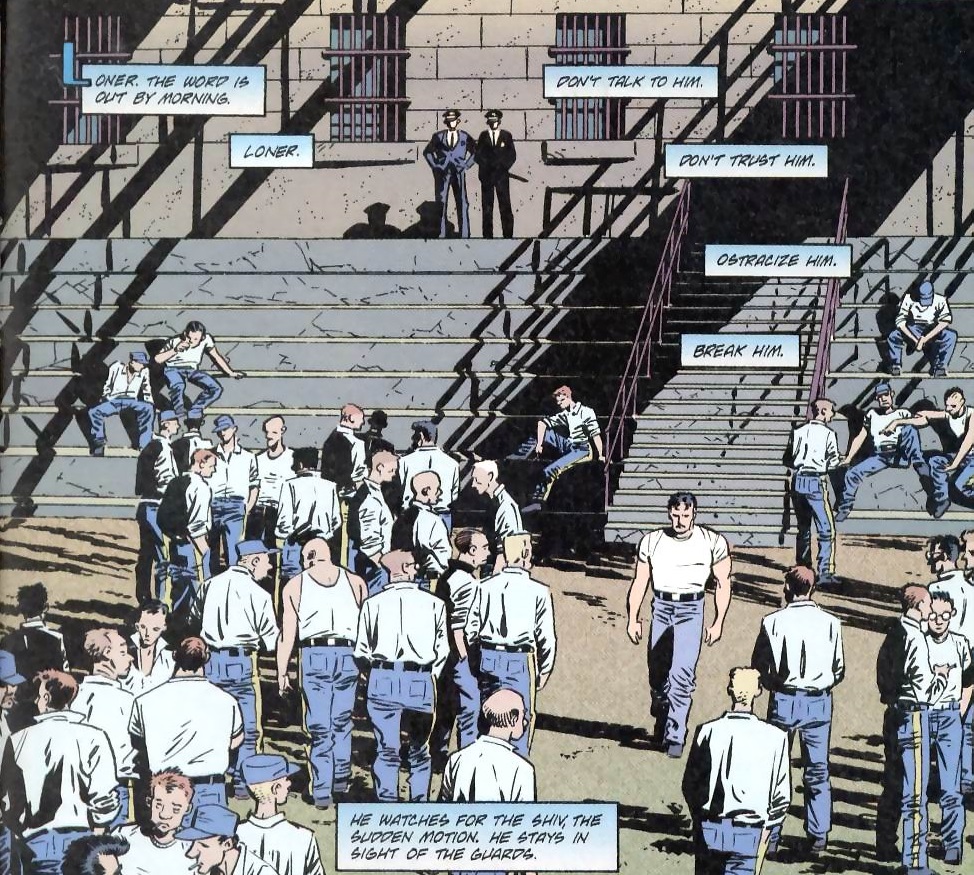
Batman 31But what if you are just looking for a quick fix and don’t care about long-reaching narratives? DC has put out a few series specialized in self-contained Batman stories, including Batman: Black & White and the already mentioned Legends of the Dark Knight. The average level of quality is quite high, but some deserve extra praise. Among the most fascinating Legends are the existentialist character study ‘Mask’ (#39-40)…

legends of the dark knight 39Legends of the Dark Knight #39

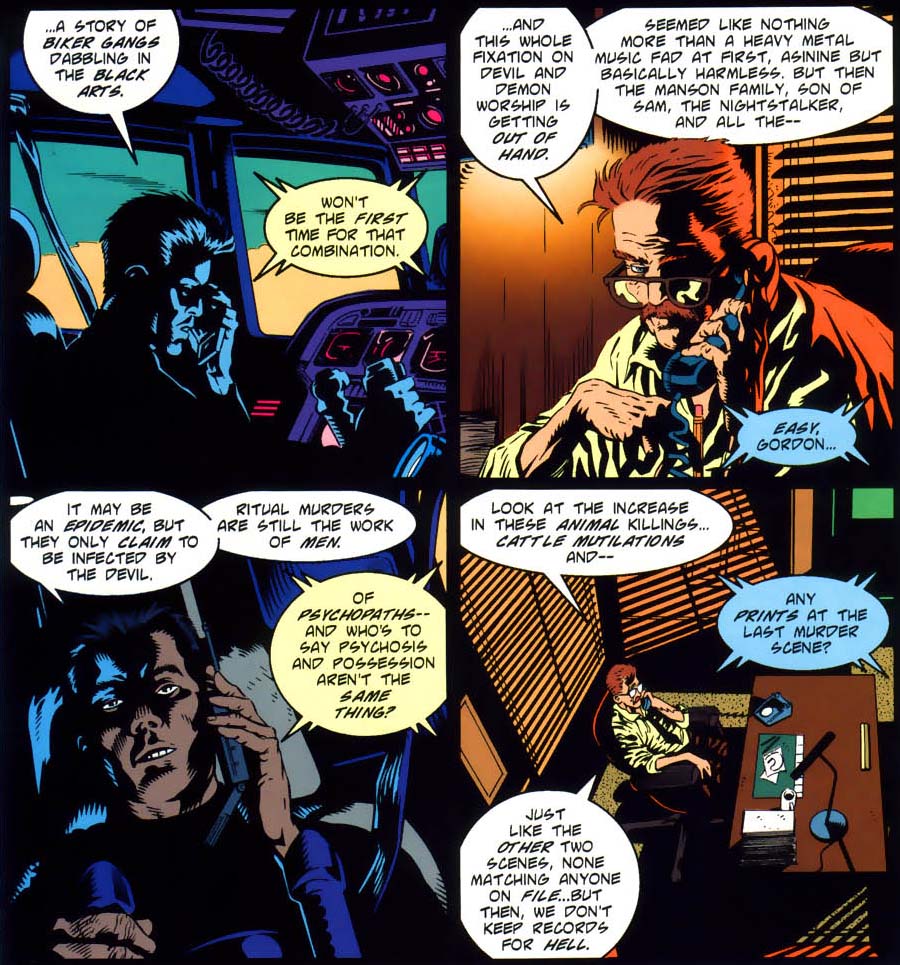
…and the paranoia-inducing ‘Conspiracy’ (#86-88), which merges pretty much every conspiracy theory floating around in the mid-90s, from all-powerful secret societies to Satanist biker gangs:

Legends Of The Dark Knight 86 Legends of the Dark Knight #86

You can also find tales gritty enough to give Dirty Harry a run for his money in ‘Storm’ (#58), ‘Terminus’ (#64), and ‘Criminals’ (#69-70):

Legends Of The Dark Knight -69Legends of the Dark Knight #69

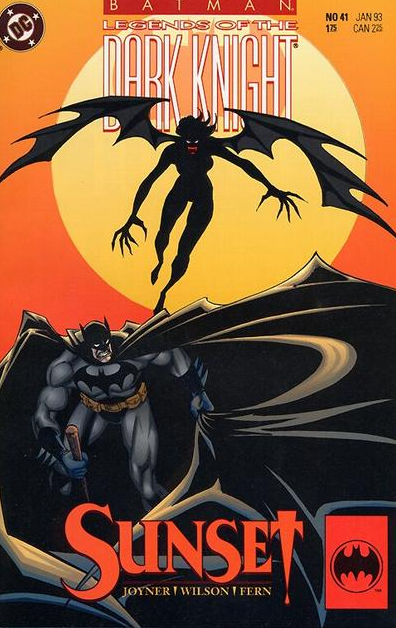
Of course this is just the tip of the iceberg. For example, if you like your Batman comics more on the insane side, there is ‘Engines’ (#74-75), which is as mind-boggling as one could expect when letting the surrealist Ted McKeever play in Gotham City. And of course, let us never forget ‘Sunset’ (#41), which is – I kid you not – a Batman remake of Billy Wilder’s classic film noir Sunset Blvd… but with vampires.

Legends of the Dark Knight 41

NEXT: Batman makes Robin cry.

Posted in BATMAN COMICS FOR BEGINNERS | Tagged , , , , , , , , , , , , , , , , , , | Leave a comment

Frank Miller’s goddamn Batman

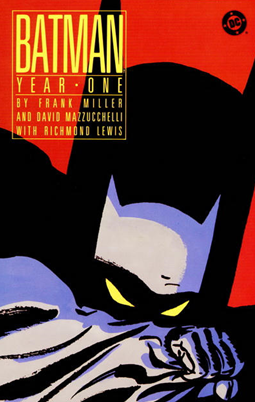
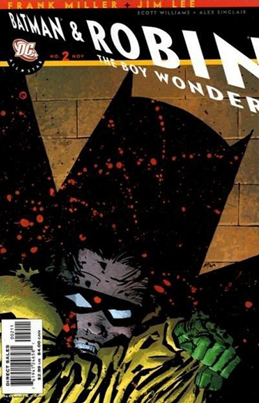
          Batman Year One          All Star Batman & Robin

All kinds of people have written Batman stories. Not just people: even Snoopy has done it. But one author has the particularity of having written both the most critically acclaimed Batman comics of all time, and the most universally reviled.

Frank Miller first became, inarguably, one of the most influential voices in the evolution of Batman with 1986’s The Dark Knight Returns (DKR).
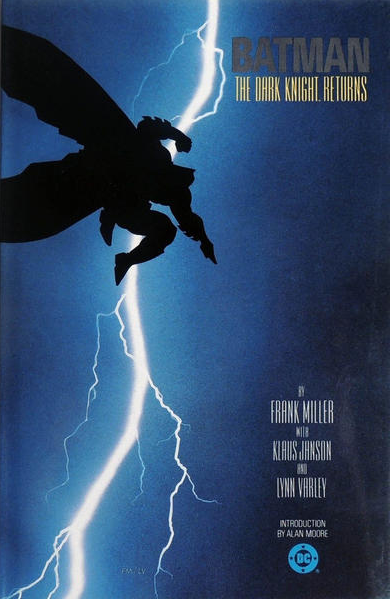
Dark Knight ReturnsTogether with Watchmen, DKR brought mainstream attention to adult-oriented superhero deconstructionism, kick-starting decades of grim & gritty copycats. And just like Watchmen, it remains a gripping read after all these years – and one that can appeal even to those who are not fans of the genre – because of how well-crafted and ‘modern’ it feels (if unabashedly rooted in 1980s’ angst). However, both works are even more powerful if you’re familiar with their background.

In the case of DKR, the book redefined the depiction of Batman to such a degree that it is easy to miss how groundbreaking it was. Although a handful of creators in the previous 15 years had given the Caped Crusader an increasingly somber tone, he remained a fundamentally underwritten character. More importantly, Frank Miller’s approach stood in stark contrast to Batman’s incarnation in the campy 1960s TV show that was still quite resonant in popular imagination. Instead of a simple, goofy, friendly, masked Adam West, we got this man:
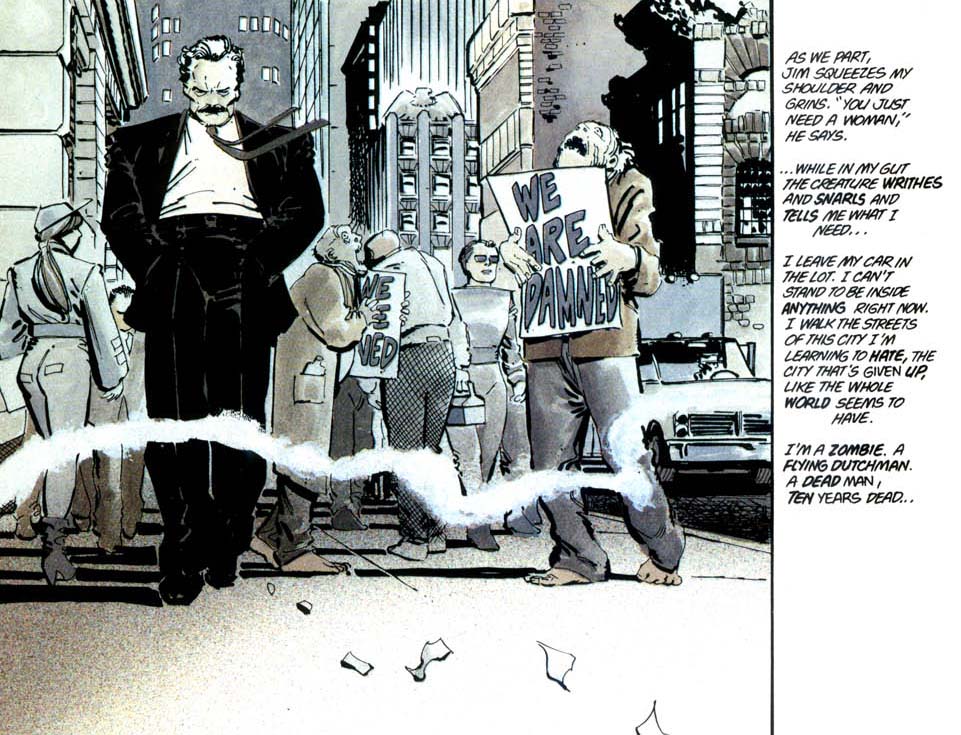
Batman - Dark Knight Returns

       In the opening pages of DRK, we meet an old, mentally unstable Bruce Wayne, who retired his Batman persona and now drowns it in alcohol. Soon, we see him back in his suit and back in the street beating up punks, because that’s how you deal with midlife crisis… It’s not that Miller engaged with the psychological and ideological implications of Bruce’s compulsion in a particularly sophisticated way, but the fact that he addressed them to such an unprecedented extent was gratifying enough. More than condone or mock Batman’s actions, DKR gleefully rubs in our faces how cool and satisfying and at the same time problematic our infatuation with this nutjob can be.
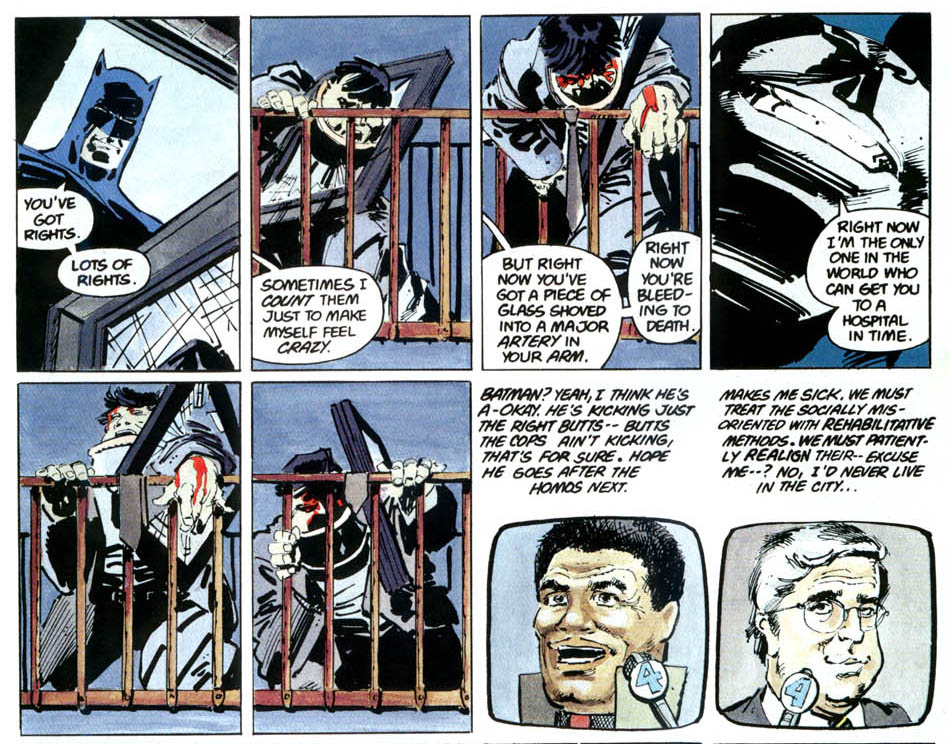
Dark Knight Returns       And it’s not just the taboo of treating the Dark Knight this way, it’s the notion that a Batman comic can be drenched in contradictory politics and graphic violence. It’s the catharsis, after decades of bat-and-mouse games, of reading the final showdown between Batman and the Joker, in a fight to the death. It’s the whole ‘this ain’t your daddy’s funny pages’ attitude that Miller brilliantly encapsulates with in-your-face visual touches like using the traditionally harmless batarangs as razor blades or revisiting the moment Bruce Wayne first decided to become Batman as he saw a bat flying through an open window… in DKR, when Bruce decides to once again don the cape and cowl, we see a bat break through the damn glass!

DKR punched Batman comics in the balls and they’ve been in its awe ever since. The image of pearls falling during the Waynes’ murder has become a recurrent visual cue. The notions that Batman is a psychopath and that he can kick Superman’s ass have been taken for granted by many creators. Offhand allusions to Jason Todd’s death and to Commissioner Gordon’s wife Sarah were treated as canonical for a while, even though it was obvious DKR could not belong to then-current continuity (if nothing else because of the collapse of the Soviet Union). And of course there’s Jim Starlin’s and Bernie Wrightson’s The Cult – to quote the always quotable Joe McCulloch, if ‘Frank Miller’s book is the big tough dog with the bowler hat in the Looney Tunes, [The Cult] is the jumpy little dog that races around and does nothing but tell it how completely fucking awesome it is.’

And yet, dated as the book is, it’s not just respect and nostalgia keeping it alive, the truth is that DKR has not completely lost its edge. Foreshadowing, callbacks, overlapping conversations, and multiple intertwined narrative strands give the story a sense of grand scale. Plus it’s full of energy and unrelenting escalation, from the initial summer heat wave to the final near-WWIII nuclear winter. Batman goes up against Two-Face in the first chapter, a mutant gang in the second, Joker in the third, and finally Superman himself in the apocalyptic climax!

That’s right, a mutant gang. The whole thing is packed with grotesque imagery while tapping straight into the eighties’ Zeitgeist of out-of-control violent crime, Reaganomics, and New Age psychobabble (Arkham Asylum is now Arkham Home for the Emotionally Troubled). It’s like a Batman-shaped Jello Biafra song, as Miller throws around the kind of absurdly dark humor he would later bring to the script of Robocop 2.
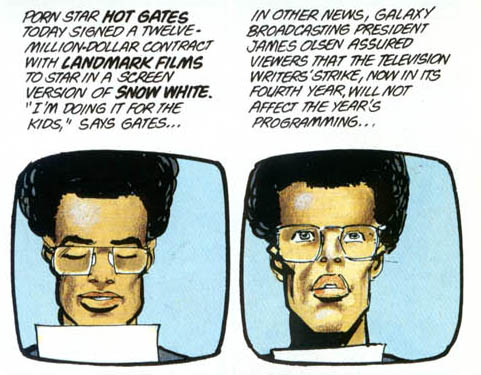
Batman - Dark Knight Returns

All of this is enhanced a thousand-fold by Frank Miller’s pencils, Klaus Janson’s inks, Lynn Varley’s colors, and John Costanza’s letters. So much of that sense of grand scale I was talking about comes from information-heavy pages, often crammed with as many as 16 panels at once, including loads of talking heads on TV screens… and not only do Miller and his crew pull this off as highly readable, they use it to build up tension before each of the book’s unforgettable splash pages. Take, for example, the way Batman’s return is gradually revealed while keeping him mostly off-panel:
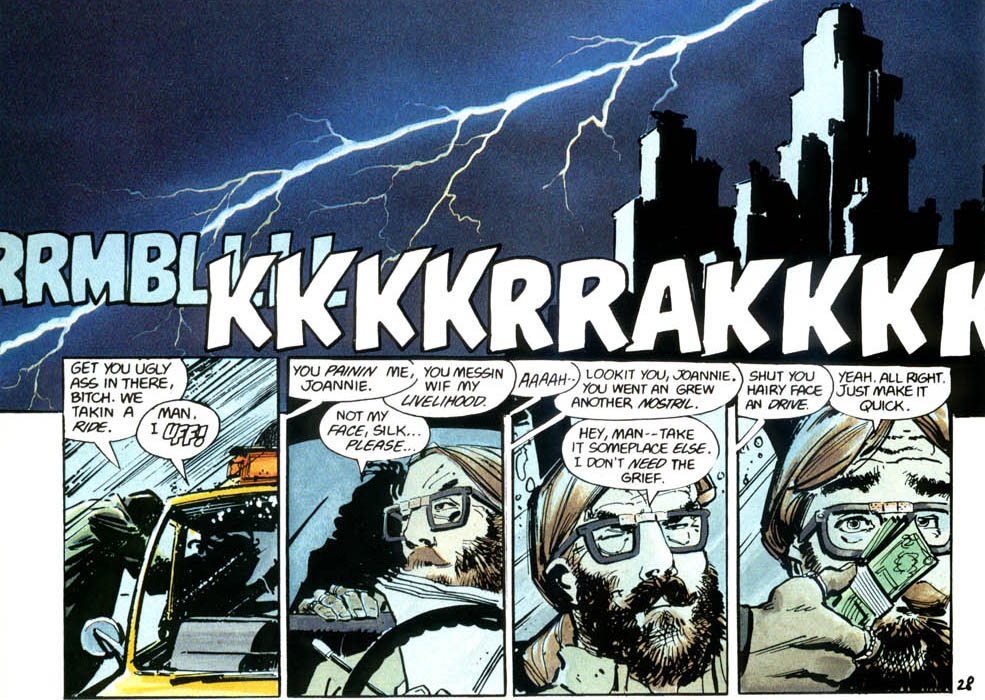
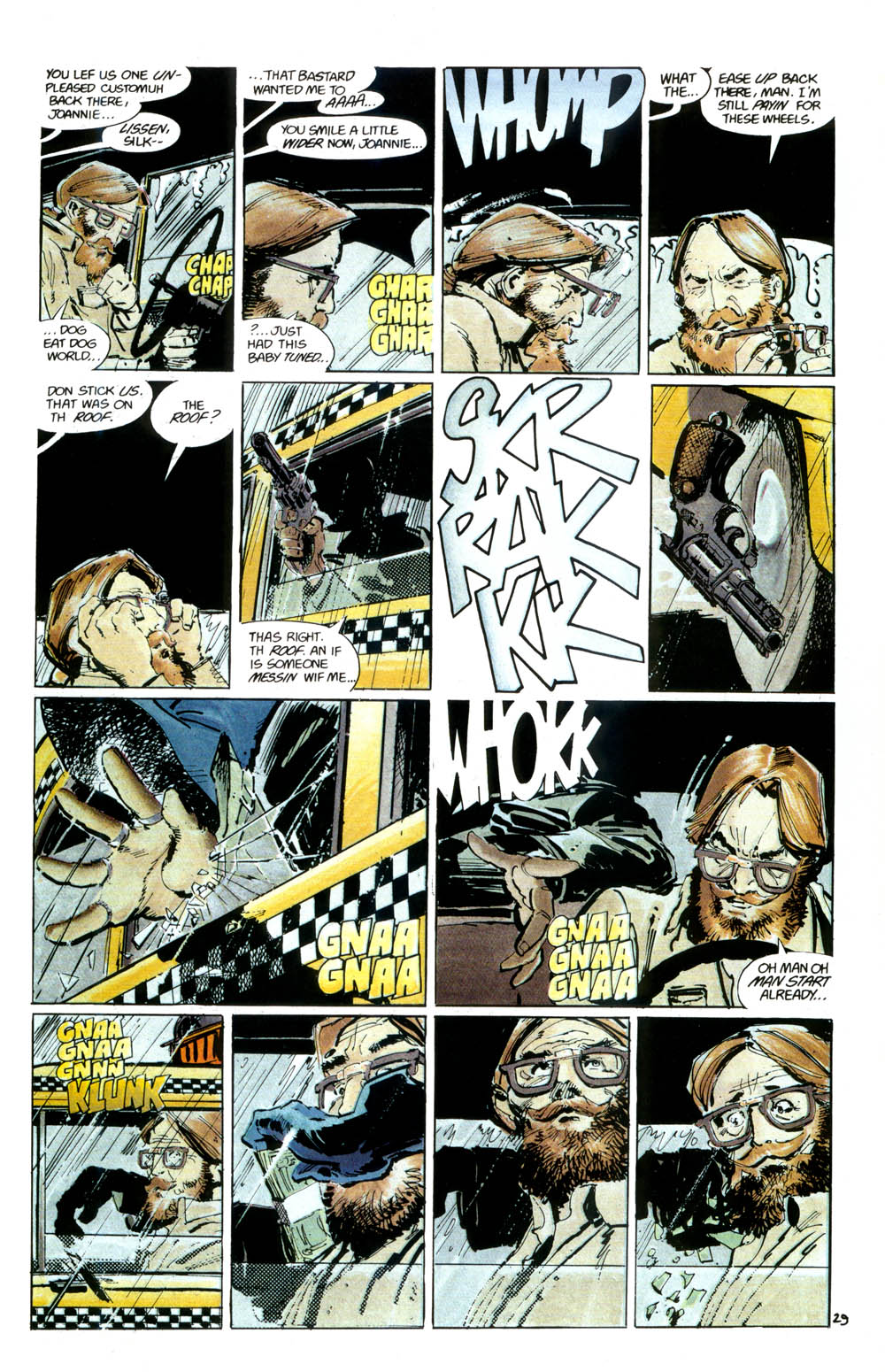
Batman - Dark Knight ReturnsDark Knight Returns It’s these pages upon pages of shadowy hints and claustrophobic panel grids that lend such pathos to the Dark Knight’s inevitable full-page entrance:

Batman - Dark Knight Returns #01You’d think DKR would be impossible to top. However, according to the latest poll at Comics Should Be Good, Frank Miller’s follow-up project may be even more beloved. In 1987’s Batman: Year One, Miller – this time with David Mazzucchelli on art duties – told the beginning of the Dark Knight’s career, effectively setting up much of the tone and continuity Batman comics would follow for the next two and a half decades.

Starting with a young Bruce Wayne’s return to Gotham after having trained around the world, the book covers the roughly one-year period in which Bruce develops his Batman identity, giving us a glimpse of his learning curve as he first tackles the city’s organized crime and rampant corruption. Composed mostly of short vignettes intercut with a few long sequences, Year One is more character study than conventional plot. In an inspired decision, we don’t just get to follow Batman’s growth, but that of Lieutenant James Gordon, who is almost as much a main character as Bruce. Both are fighting for (and against) the city, but one from outside the law and the other from within, one from a position of privilege and the other under constant threat – until they finally join forces when they realize they can hardly trust anyone but each other… It’s a fascinating parallel, and one that is made clear from the opening page:
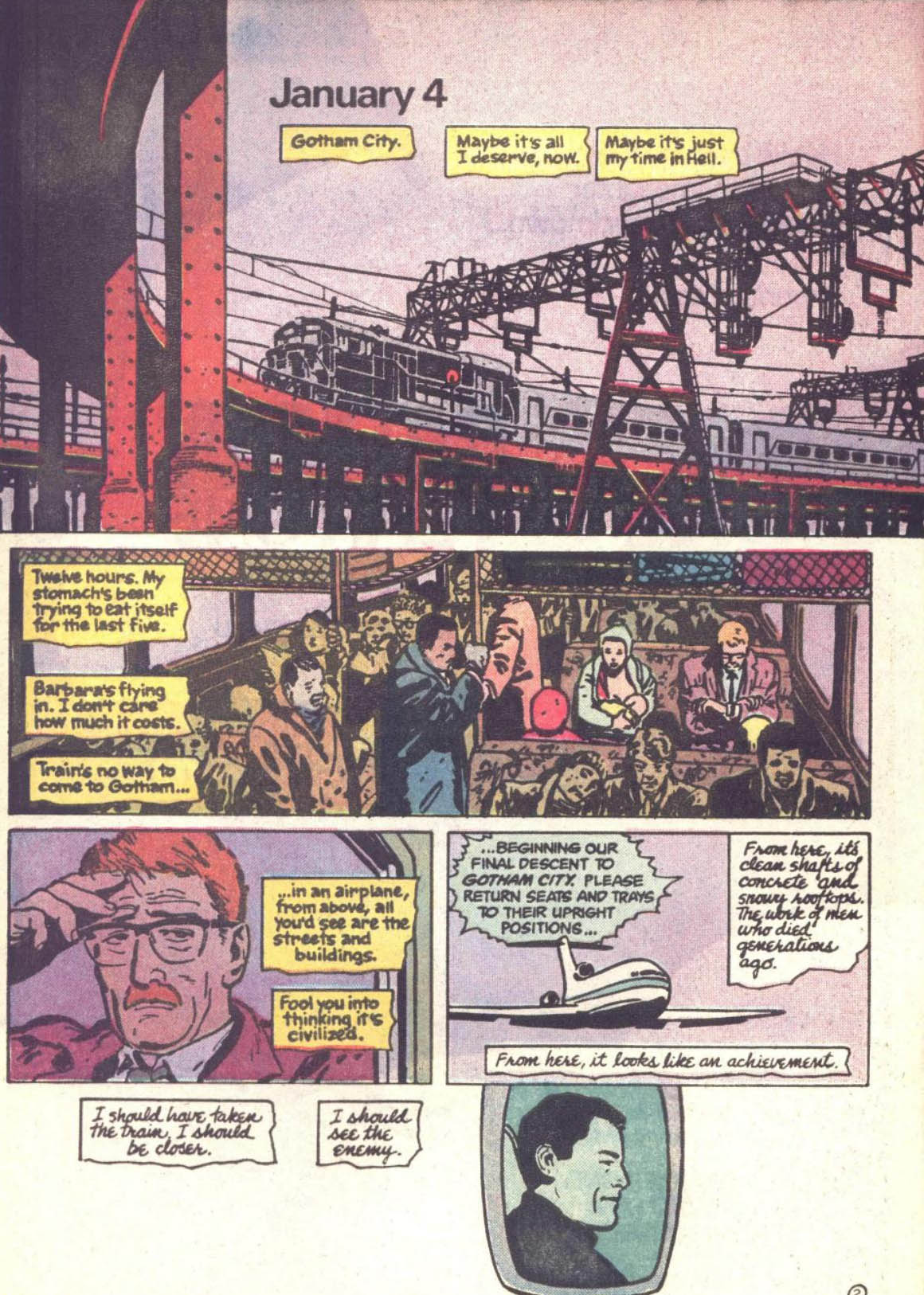
Batman 404The atmosphere is markedly different from DKR, not least because of Mazzucchelli’s grounded artwork (with moody colors by Richmond Lewis). This is by far the most realistic take on Batman, certainly more than the Christopher Nolan movies, which it heavily inspired. Year One reads like a hardboiled crime story that could make Dashiell Hammett proud, albeit one where a central character sometimes wears a mask with pointy ears. Gotham City is as seedy as it gets – I dare you to spot all the Taxi Driver riffs on this page:
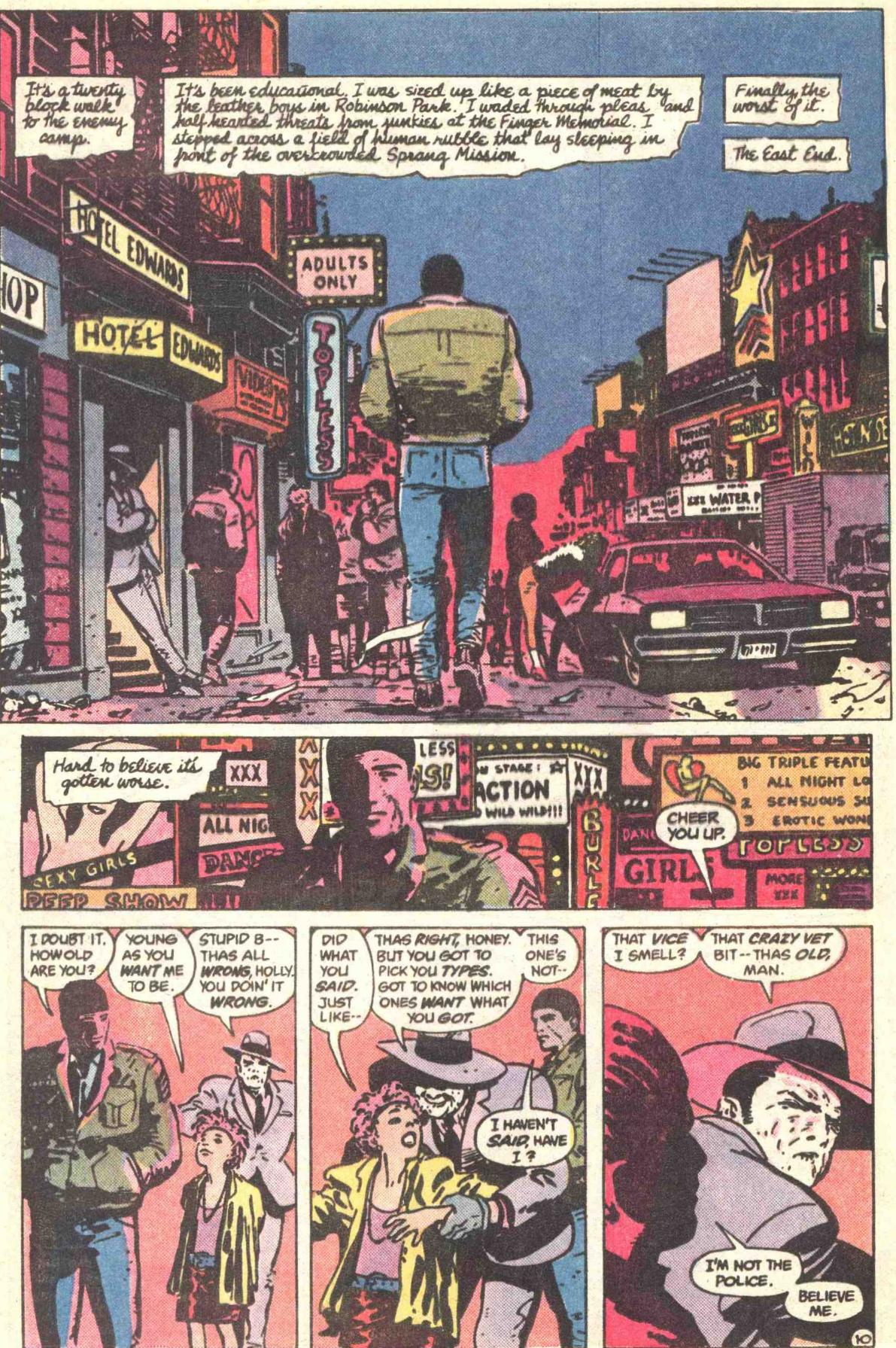
Batman 404That’s Bruce Wayne disguised as a veteran in his first crime-fighting outing, about to get his butt handed to him… his massive screw-up in this sequence leads to Year One’s most seminal scene:
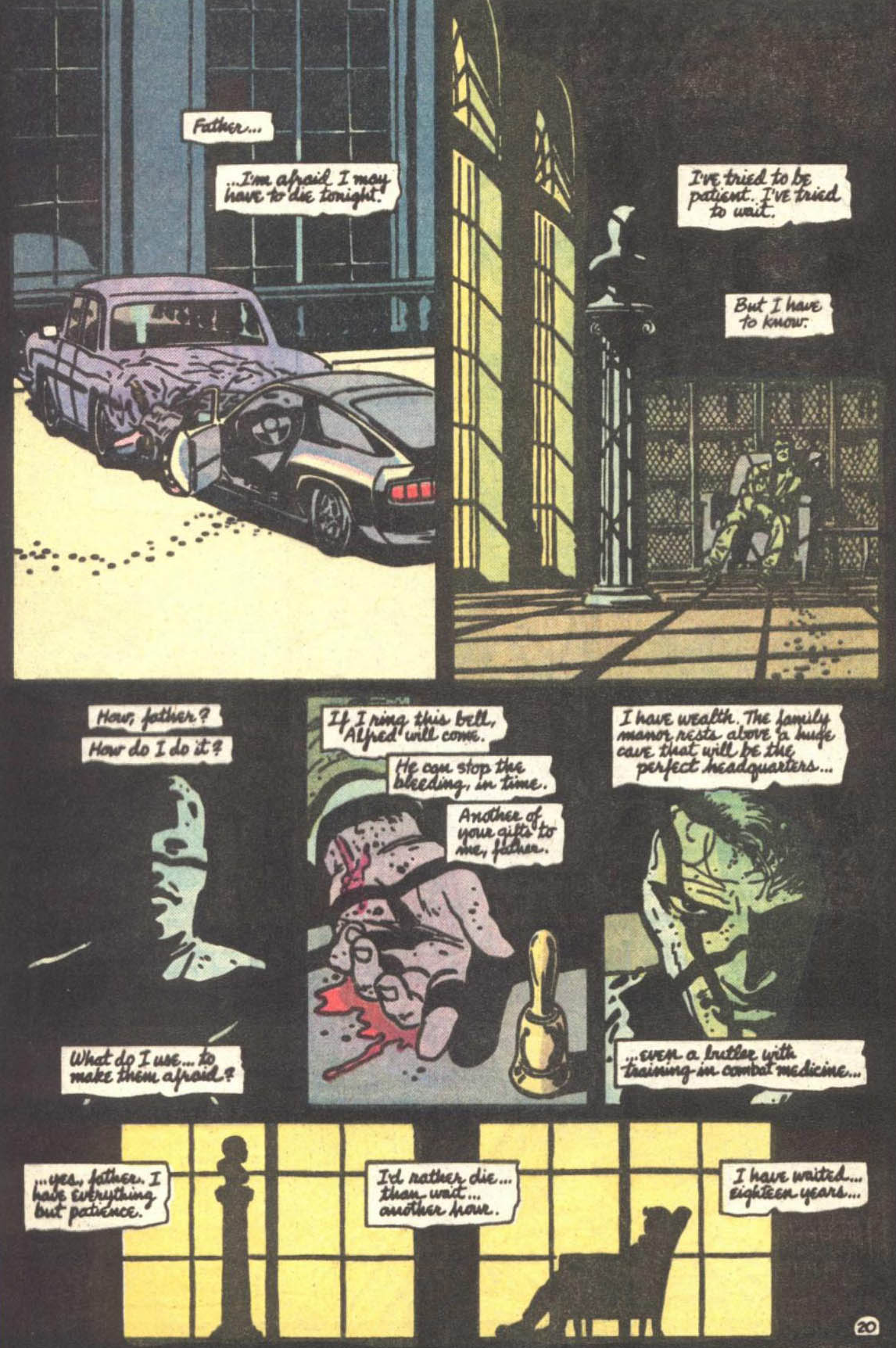
Batman Year 1In a direct echo of DKR, the bat that inspires Bruce doesn’t merely fly through an open window, like in Batman’s classic origin…
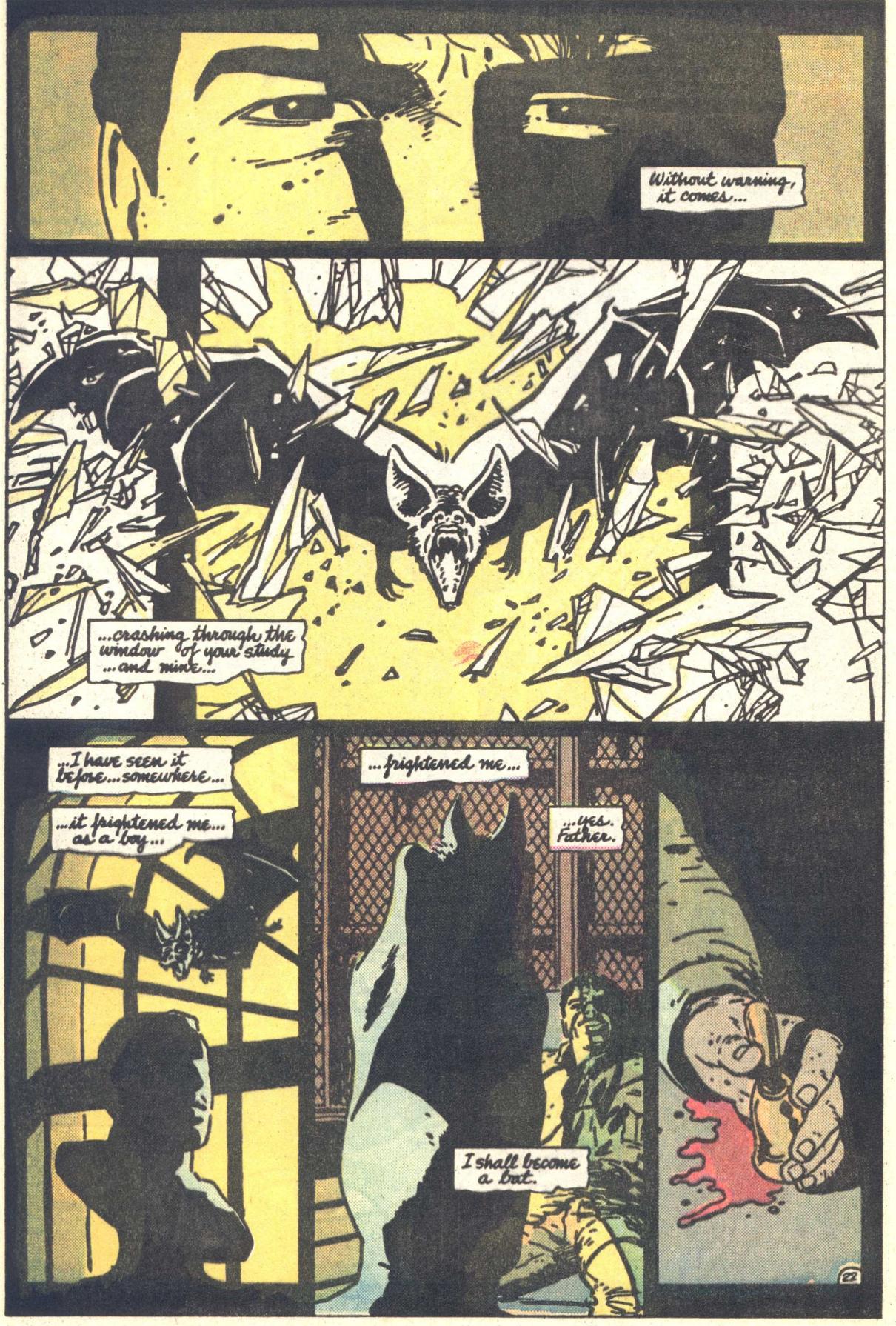
Batman - Year OneThis is the end of the first chapter (originally published as the issue Batman #404) – in the following three, things get even more intense, as Batman and Gordon are continuously put to the test, physically and psychologically. In the end, they carve out a small niche of honesty in Gotham City, but there’s clearly still a lot to be done.

Having left his indelible mark on the Dark Knight, Frank Miller moved on to other projects. It took until 1994 for him to first revisit the character, with the Spawn/Batman one-shot:
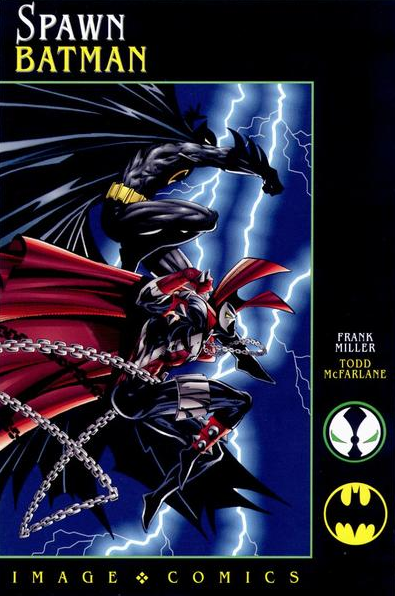
Spawn/BatmanIn this intercompany crossover drawn by Todd McFarlane, Batman grudgingly teams up with Image Comics’ homeless, amnesiac, demonic anti-hero Spawn. There is some mindless plot involving cyborgs with decapitated human heads, but the comic’s mostly just Batman and Spawn being jerks to each other, leading up to a fun punchline. Although the cover shamelessly tries to make it look like a follow-up to DKR, the breadth and gravitas of the former are completely lacking. It would be another 7 years before a proper sequel showed up:
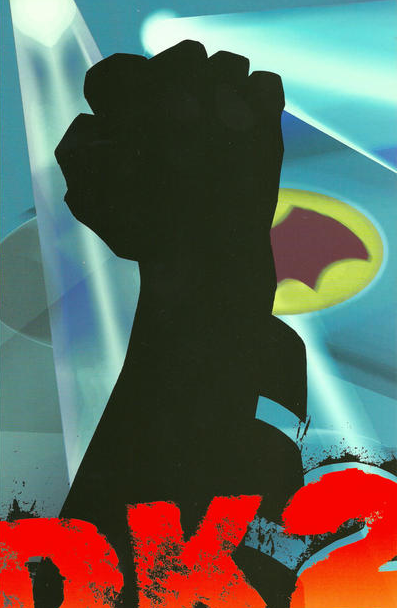
Dark Knight Strikes AgainIf The Dark Knight Returns was a manifestation of 1980s’ Cold War cyberpunk nihilism, The Dark Knight Strikes Again channeled late 1990s’ hyper-sexualized satirical exuberance. To put it in Carpenter terms, if DKR was Escape from New York, then DKSA was Escape from LA. On top of the newscasts (from many diverse, thematic channels, including bizarre anchors such as naked women, manga cartoons, and Alfred E. Neuman), now we got bombarded with misogynistic adverts, a ‘superhero chic’ fashion trend, a computer-generated President of the United States, and an overload of swearing and pop culture Easter eggs.
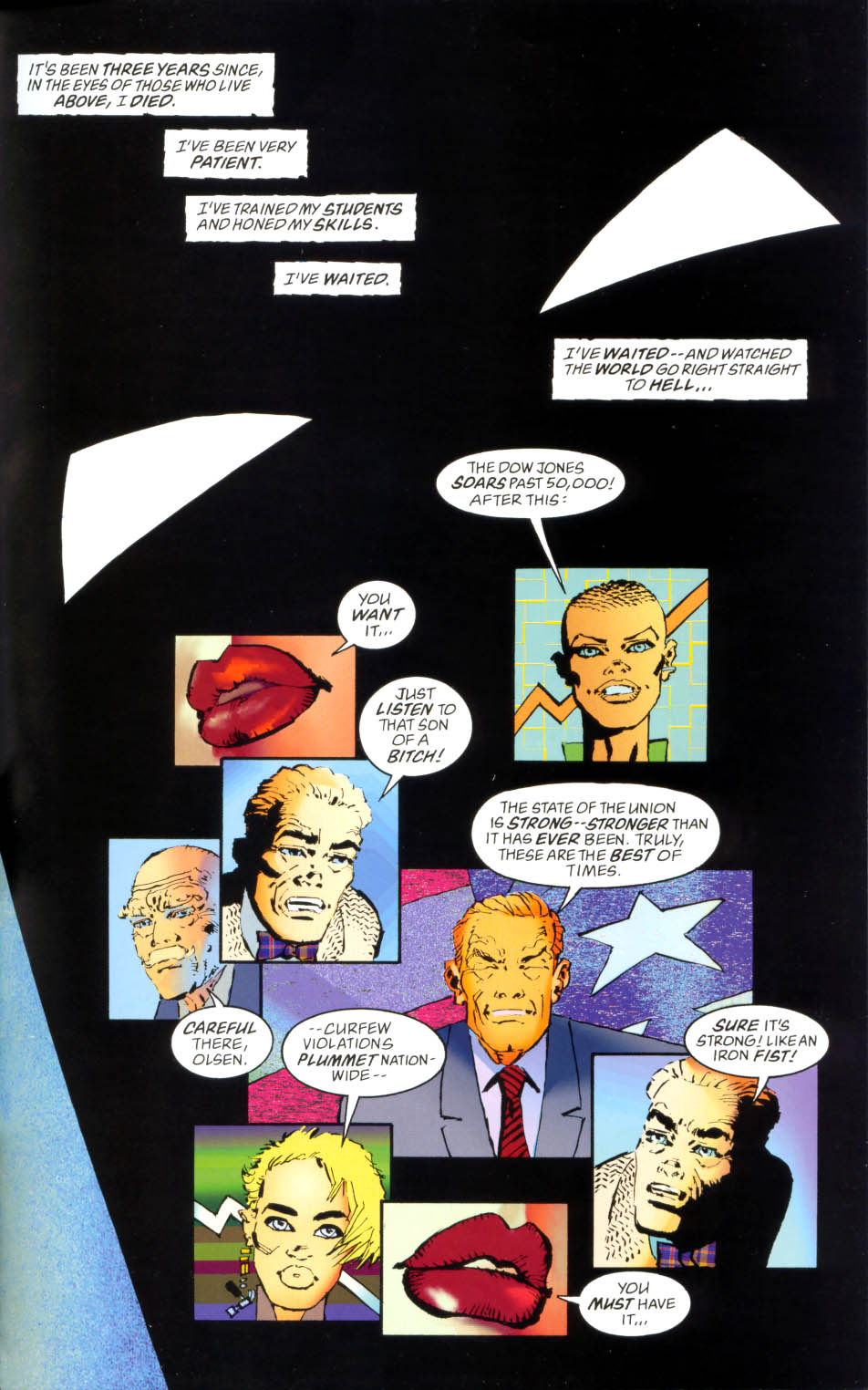
The Dark Knight Strikes AgainDKSA is kind of a mess, but a glorious one. Once again, threats follow one after the other without letting go: there’s a tyrannical government, an asteroid headed for Earth, rumors of an alien invasion, Lex Luthor, Brainiac, and the return of the Joker – and that’s before the planet somehow gets sucked by a giant energy matrix. Make no mistake, we’re unapologetically in superhero fantasy territory, the book populated by outlandish versions of DC characters such as the Atom, the Question, Green Arrow, Green Lantern, and Plastic Man, not to mention countless cameos. With his tongue firmly lodged in his cheek and apparently burning with revolutionary fervor, Miller throws all sorts of iconoclastic images at the reader, from Wonder Woman and Superman having sex in space to Batman beating up the Secretary of State and the Chairman of the Joint Chiefs of Staff.
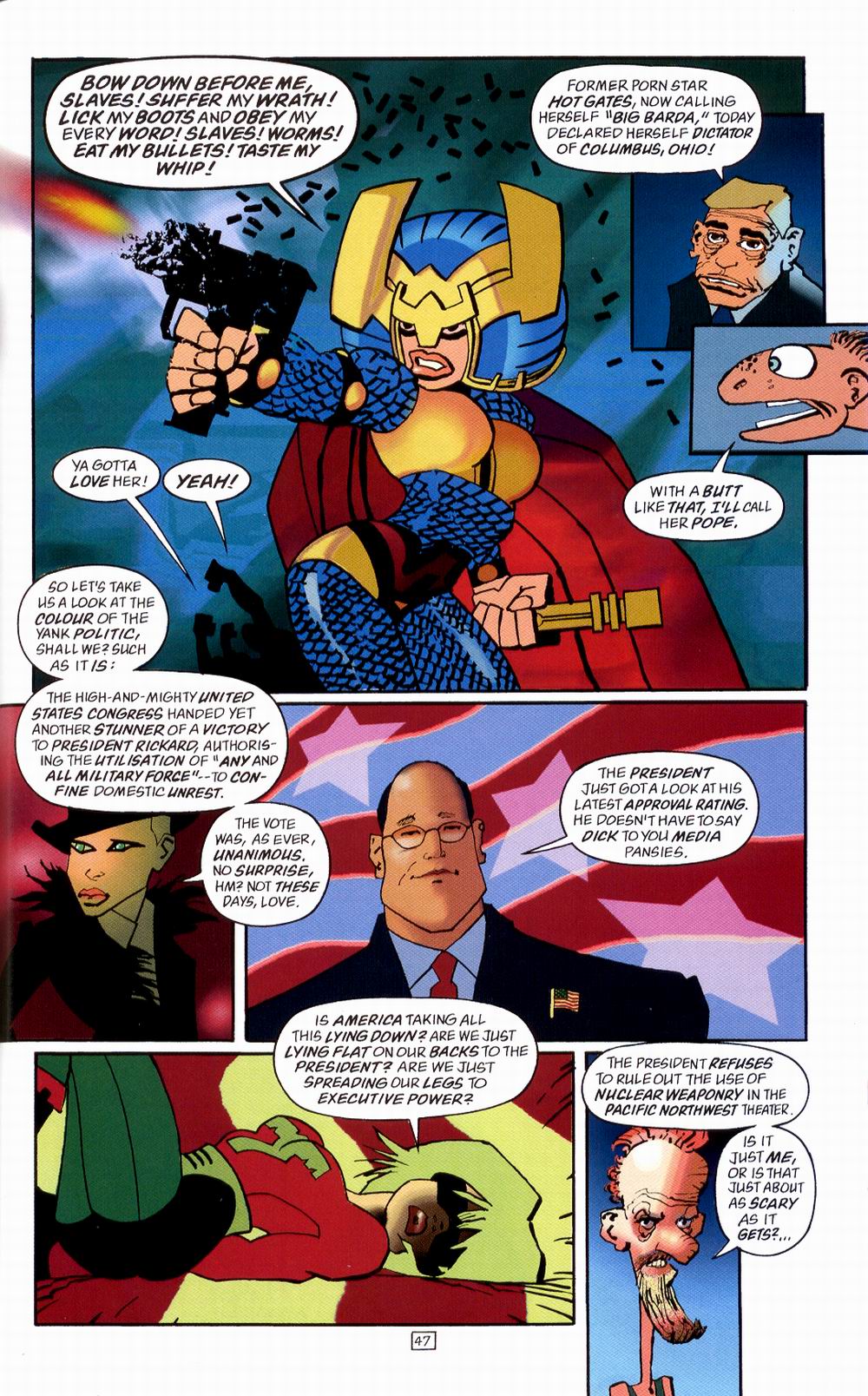
Dark Knight 2Frank Miller’s art keeps up with the new attitude, delivering psychedelic layouts and bow-before-me double-page spreads. Like in DKR, Miller slowly builds up the Dark Knight’s entrance, this time waiting until the end of the first chapter, almost 80 pages into the book, before he lets us gaze at Batman’s ugly mug (everyone is ugly in this comic, which suits it just fine). Art-wise, though, it’s as much Lynn Varley’s show as it is Miller’s. The book looks like a blinding neon-light. Varley saturates it with bright colors, pixilates strategic bits, and creates dazzling effects as in the sequence where Batman’s army releases the Flash (who for years had been kept running in a wheel to provide electricity for a third of the country).
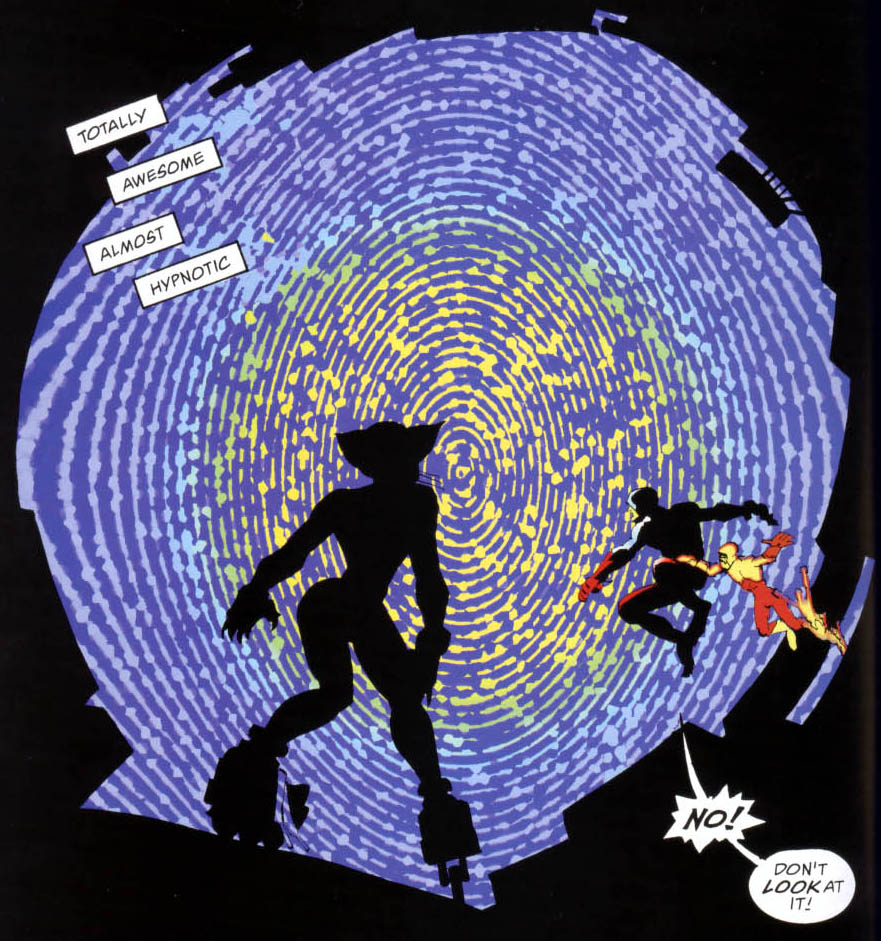
Dark Knight Strikes AgainWhile many panned DKSA, it still has a significant cult following. The same can’t be said for Frank Miller’s next big Batman project – and no, I’m not referring to the movie screenplay where Miller interestingly reinvented Bruce Wayne as an underprivileged vigilante who lives in the ghetto and gets called Batman because his signet ring leaves a bat-shaped mark when he punches criminals.
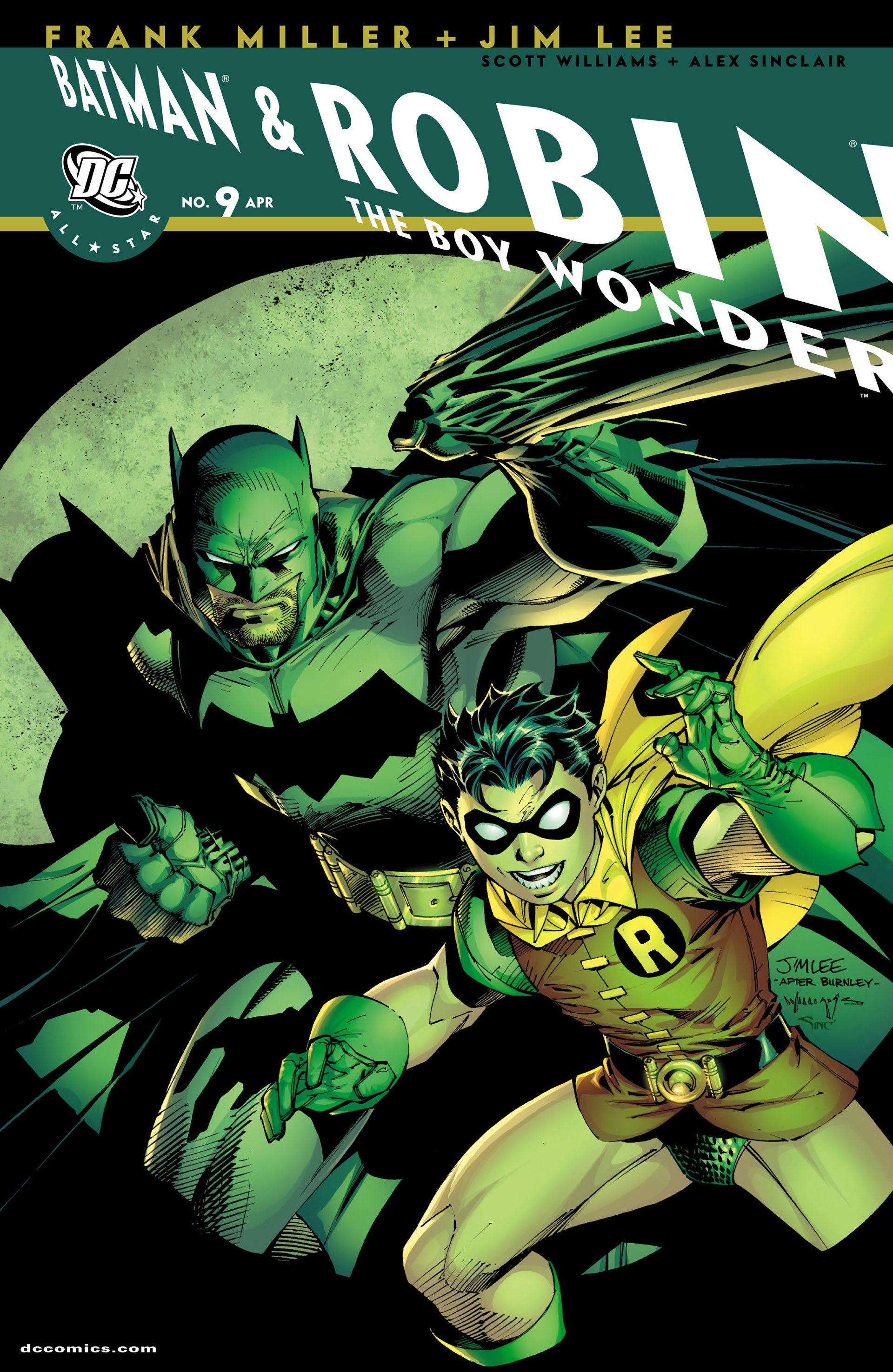
All Star Batman and Robin 9

All Star Batman & Robin the Boy Wonder tells the story of how the Dark Knight first took Robin (Dick Grayson) under his wing. This Batman is an unlikable douchebag, a fully-formed egomaniac, and a sadist. His version of tough love consists of leaving Dick – hours after the kid’s parents were murdered – to sleep on the Batcave’s floor, encouraging him to hunt and eat rats to survive… Among all the physical and verbal abuse, Batman delivers what instantly became the comic’s most infamous passage:
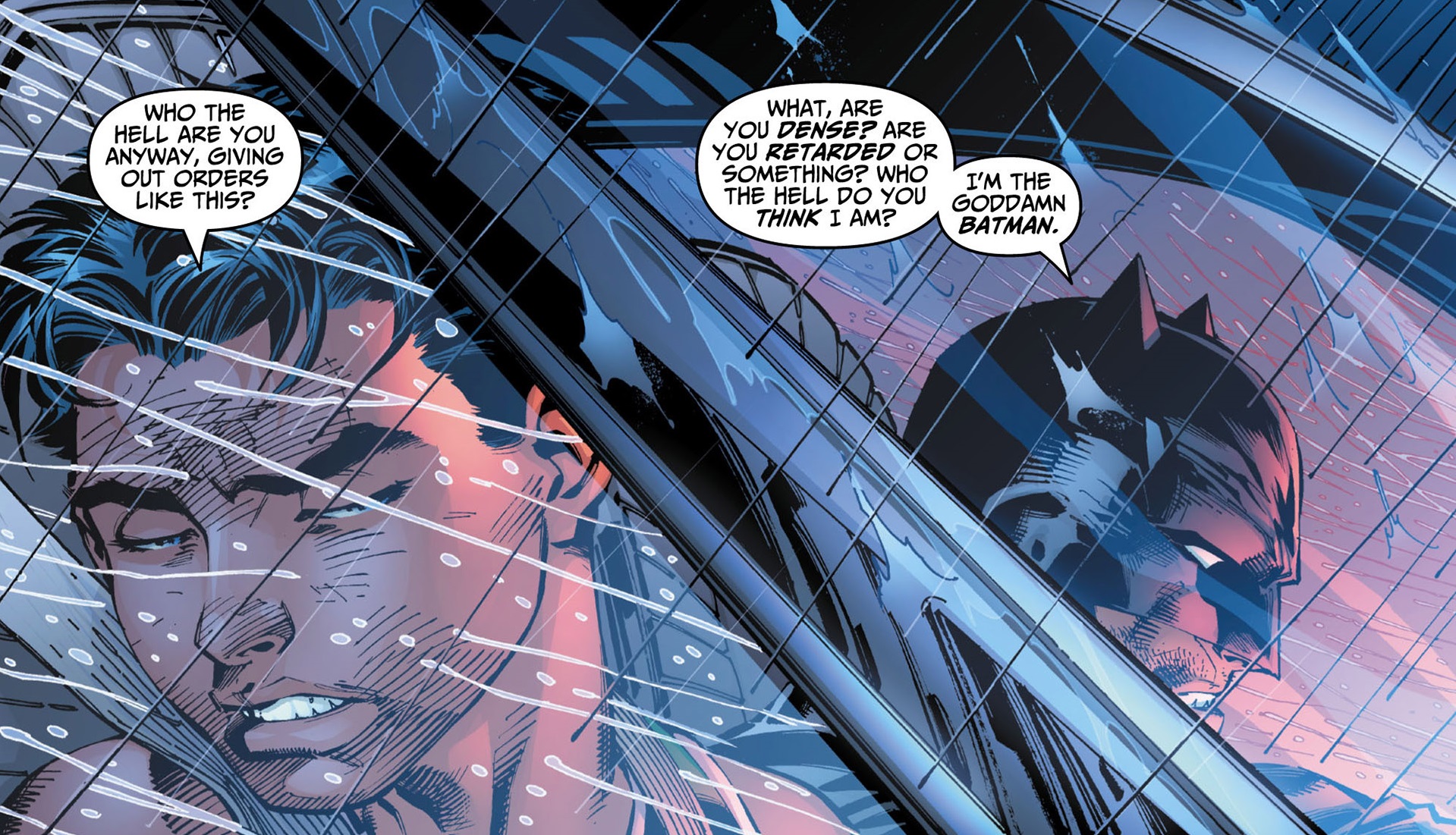
All Star Batman and Robin 2

In what I assume is Frank Miller’s idea of a provocation, the expression ‘goddamn Batman’ keeps coming up, as if to encourage a drinking game… Like the Dark Knight, the other characters in All Star (there are many, as Miller keeps enlarging the cast without doing anything interesting with them) are all assholes, including a hyperbolically man-hating Wonder Woman that sounds like an anti-feminist caricature. The only redeeming approach to this comic is to take it as a mean-spirited joke at DC’s expense (think Garth Ennis, on a bad day) – there’s no way the scene where Batman paints himself yellow to face Green Lantern (whose powers don’t work on yellow things) is not being played for laughs on some level, despite the stern dialogue:
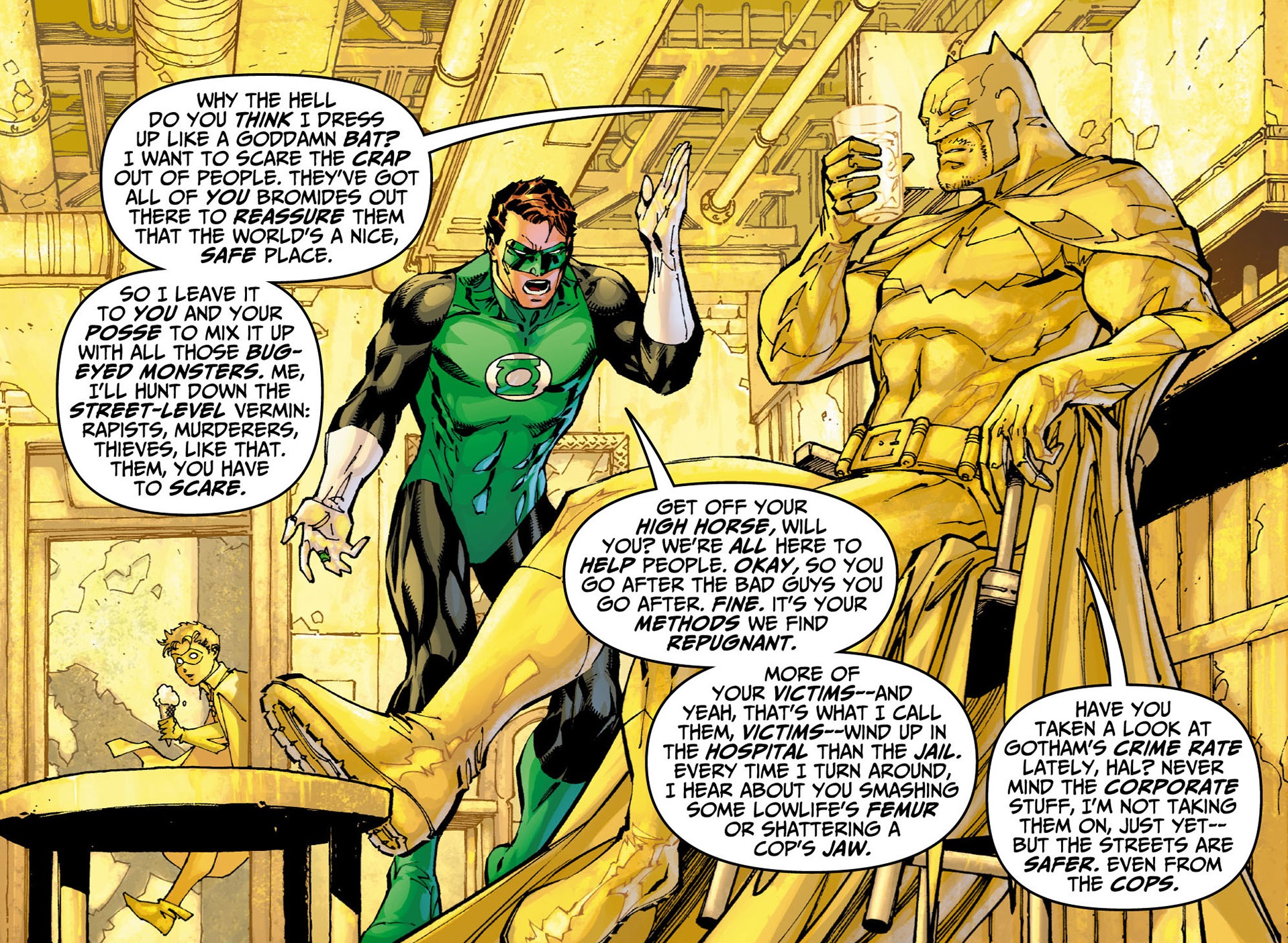
All Star Batman and Robin 9It’s not just the dialogue that’s terrible – the endless internal monologues, with their awful badass-wannabe staccatos, seem to come out of abandoned first drafts for Frank Miller’s much cooler, film noir-pastiche series, Sin City.

As for the art, by Jim Lee (pencils), Scott Williams (inks), and Alex Sinclair (colors), there is a lot to be admired here, but it is too conventional to express Miller’s eccentricities. The comic is full of boring superhero poses and objectified women (Sin City also fetishizes female bodies, of course, but at least there Miller’s use of negative space and high-contrast black & white creates a distinctly atmospheric visual style, while All Star is straight-up cheesecake of the blandest brand).
All Star Batman and Robin 3

And finally there is 2011’s Holy Terror. This started as Frank Miller’s pet project about Batman fighting Osama Bin Laden, an overtly propagandistic tale in line with those World War II comics where mainstream superheroes punched Hitler in the chin. After DC dropped the project, Miller ended up doing a graphic novel featuring an obvious ersatz-Batman called the Fixer (as well as thinly veiled versions of Gotham City, Catwoman, and Commissioner Gordon).

Holy TerrorHoly Terror was widely bashed with (deserved) accusations of Islamophobia, reinforced by Frank Miller’s chauvinistic interviews at the time. Not even Miller’s impressive, expressionistic art renders the comic less painfully unreadable. I guess I could live with the tastelessness of a superhero story about Al-Qaeda or with the discomfort over the book’s war-mongering politics were it not for its crude bigotry and no-nonsense, irony-free delivery:

Holy TerrorSo what went wrong? How did the most respected Batman author of the eighties turn into such an inept, maligned creator? There are two tempting answers.

One is to regard Frank Miller’s Batman work as part of a broader creative decline throughout his career. In the ’80s, everything Miller touched turned to gold, such as his two celebrated runs on Daredevil and respective spinoffs – especially the insane masterpiece that is Elektra: Assassin. His ’90s portfolio, although less ambitious than in the previous decade, includes plenty of strong work: Hard Boiled, The Man Without Fear, Sin City, even 300 is not too bad. In the 21st century, though, Frank Miller’s voice has become a parody of macho posturing and faux-noir tropes. The laughably bad movie The Spirit (written and directed by Miller) seems like an Airplane-style spoof of Sin City. You can blame this trajectory on Miller running out of steam or go into more personal territory and read it as a result of his devotion to Objectivism, which took away the postmodern ambiguity of his early work. Regardless, no series illustrates this (d)evolution better than Martha Washington: the original 1990 mini-series was a very cool futuristic satire, which was followed by a bunch of solid-yet-dispensable sequels with gradually diminishing returns until a pompous, jingoistic finale in 2007’s Martha Washington Dies one-shot.
Martha Washington Goes to WarAnother interpretation is that Frank Miller’s voice hasn’t changed that much, but Batman comics have (to a great degree, precisely because of Miller’s original impact). Writing the Dark Knight as a quasi-Charles Bronson loose-cannon vigilante in a violent and sleazy world was relatively shocking, innovative, and thought-provoking in the mid-1980s, but certainly no longer in the 2000s, where such a depiction has become the norm. Miller’s recent work is just another drop in the ocean of comics featuring an arrogant, lunatic Batman, albeit a particularly unpleasant one to read. His latest stuff does seem to be trying to outdo the competition by raising the level of cruelty, but perhaps the most rewarding way to approach it is to regard it as a commentary on the state of the art – by presenting Batman as an unsympathetic Dark Knight-on-steroids, these comics can serve to either denounce the dangers of this power fantasy if taken to a logical extreme or to refreshingly mock its self-importance. Either way, I’m not sure Frank Miller has been informed…

All Star Batman and Robin 7

NEXT: Batman comics for beginners.
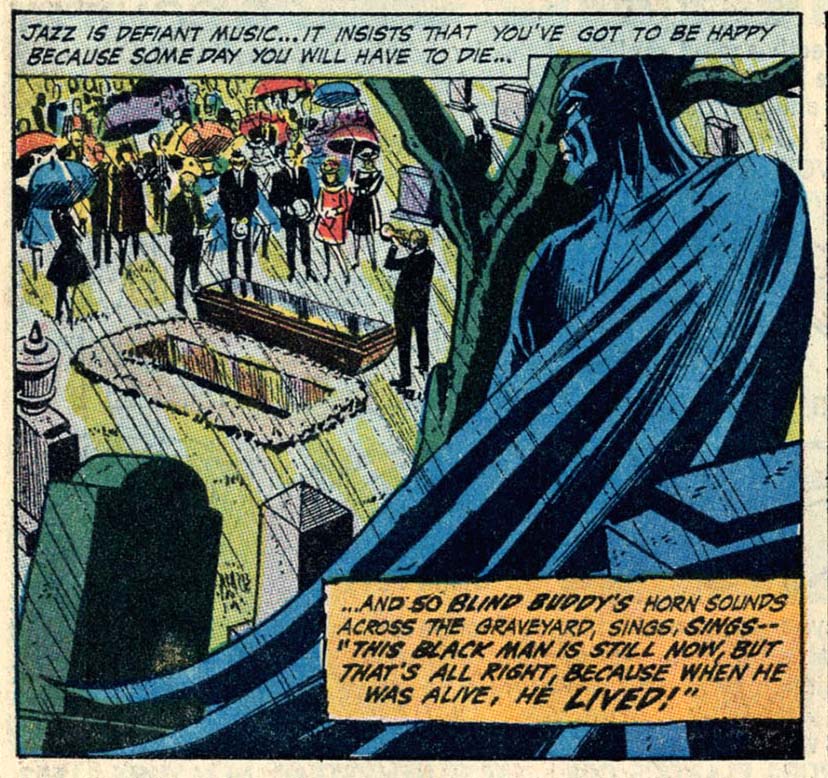
Posted in WRITERS OF BATMAN COMICS | Tagged , , , , , , , , , , , , , , | 2 Comments