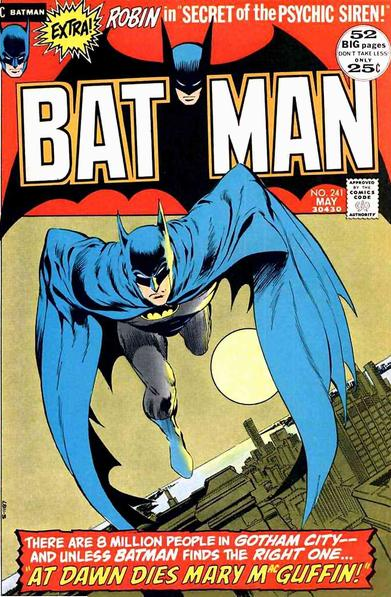
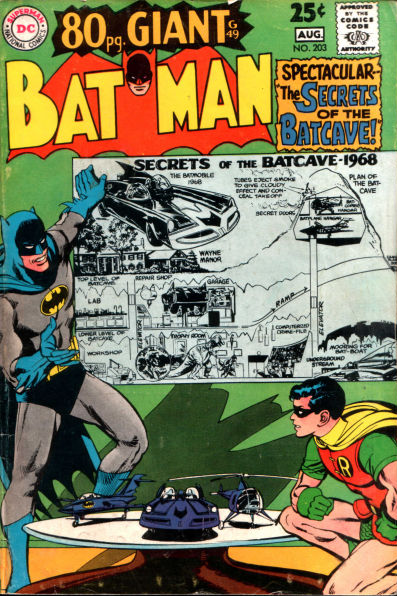
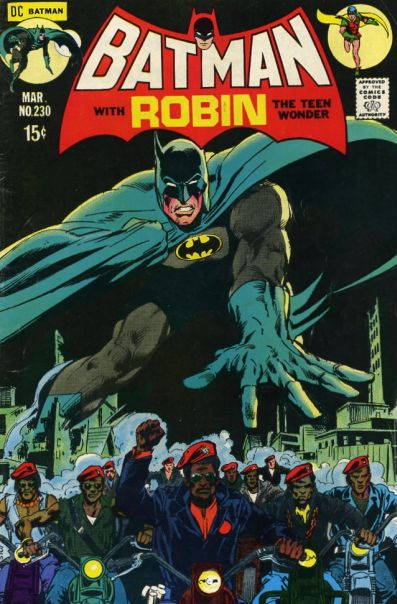
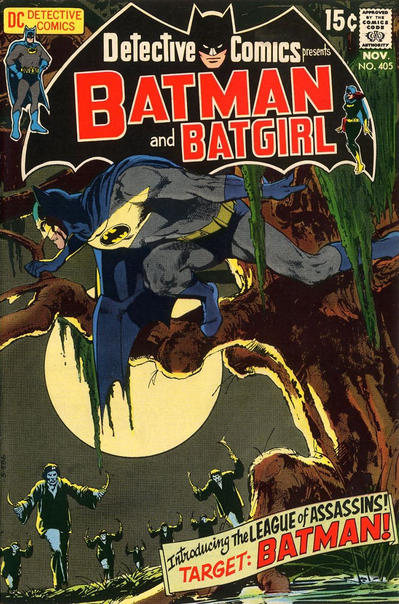
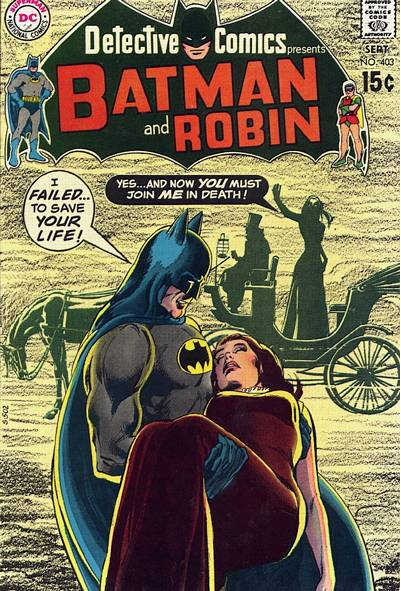
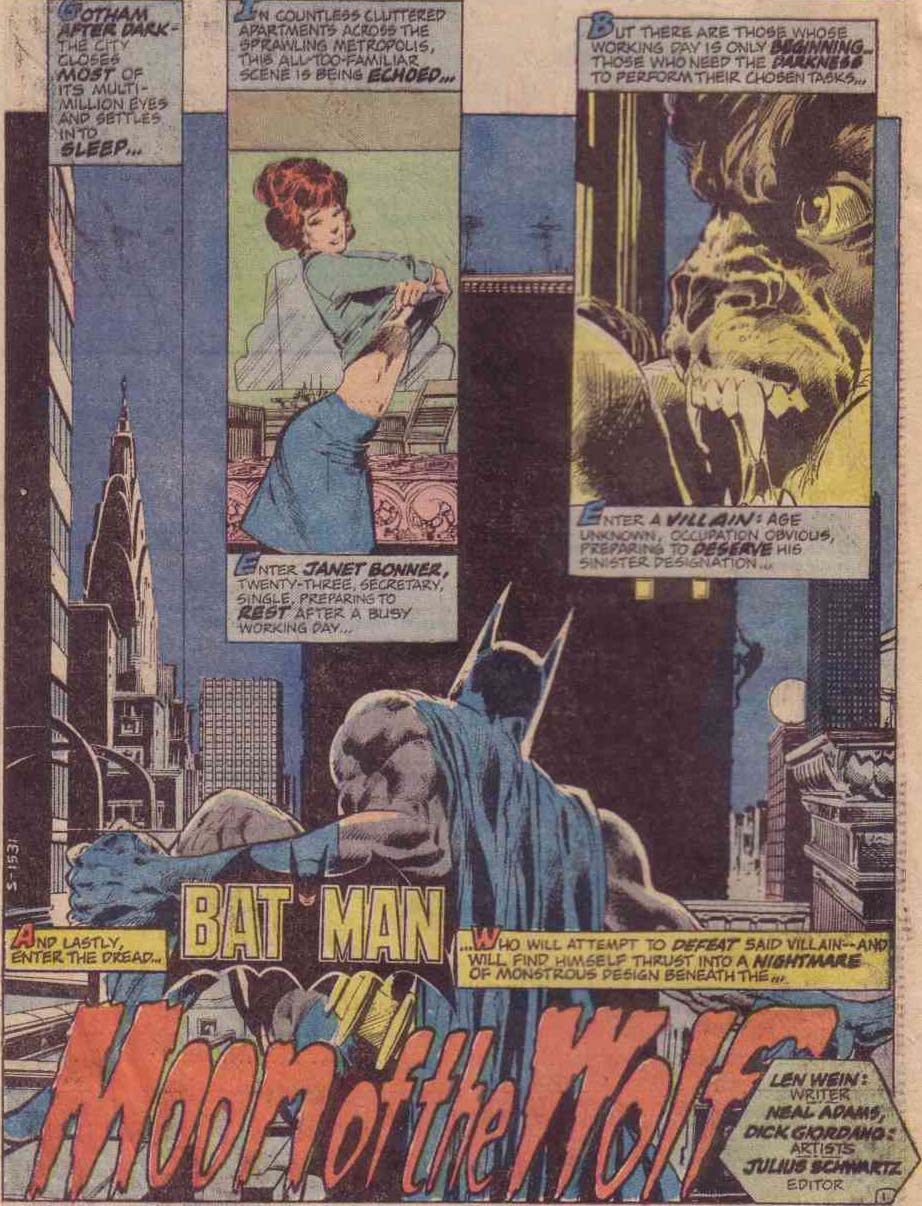
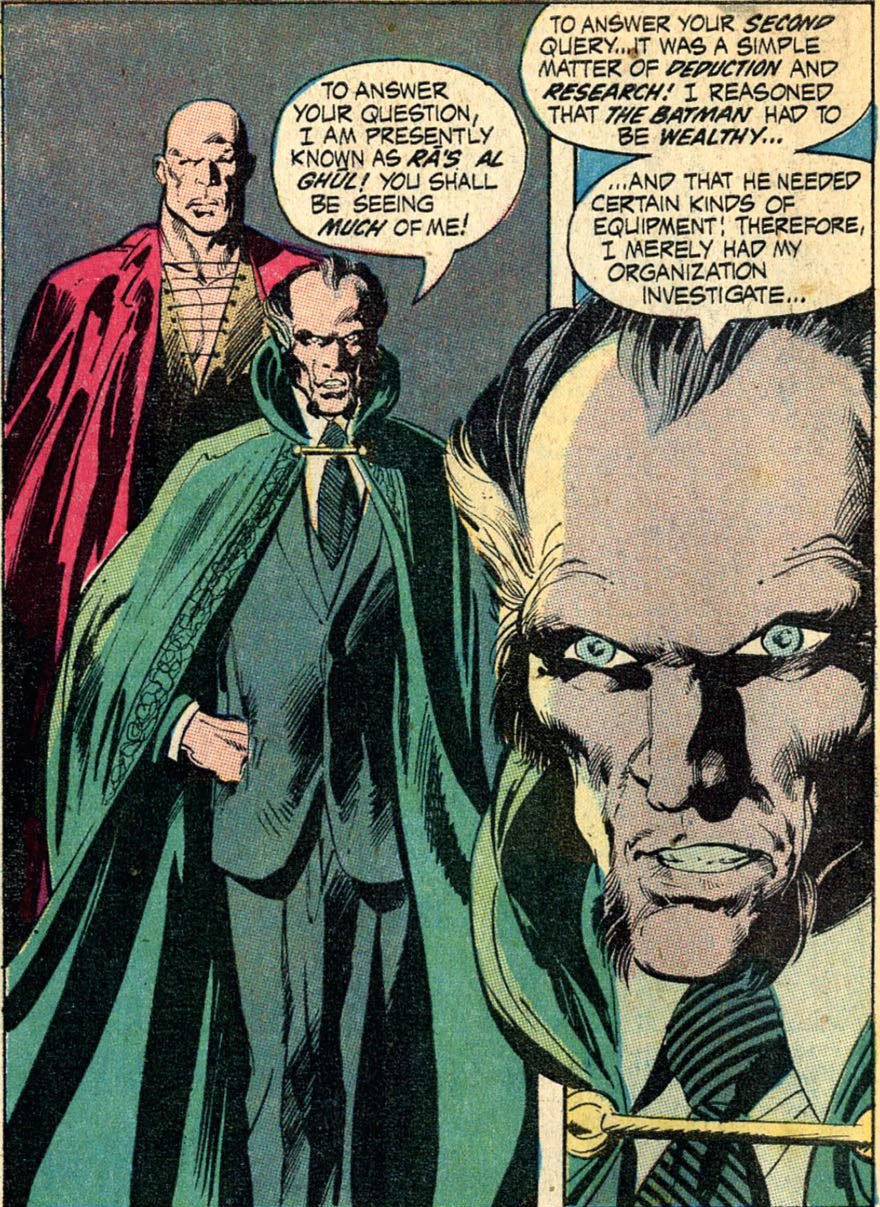
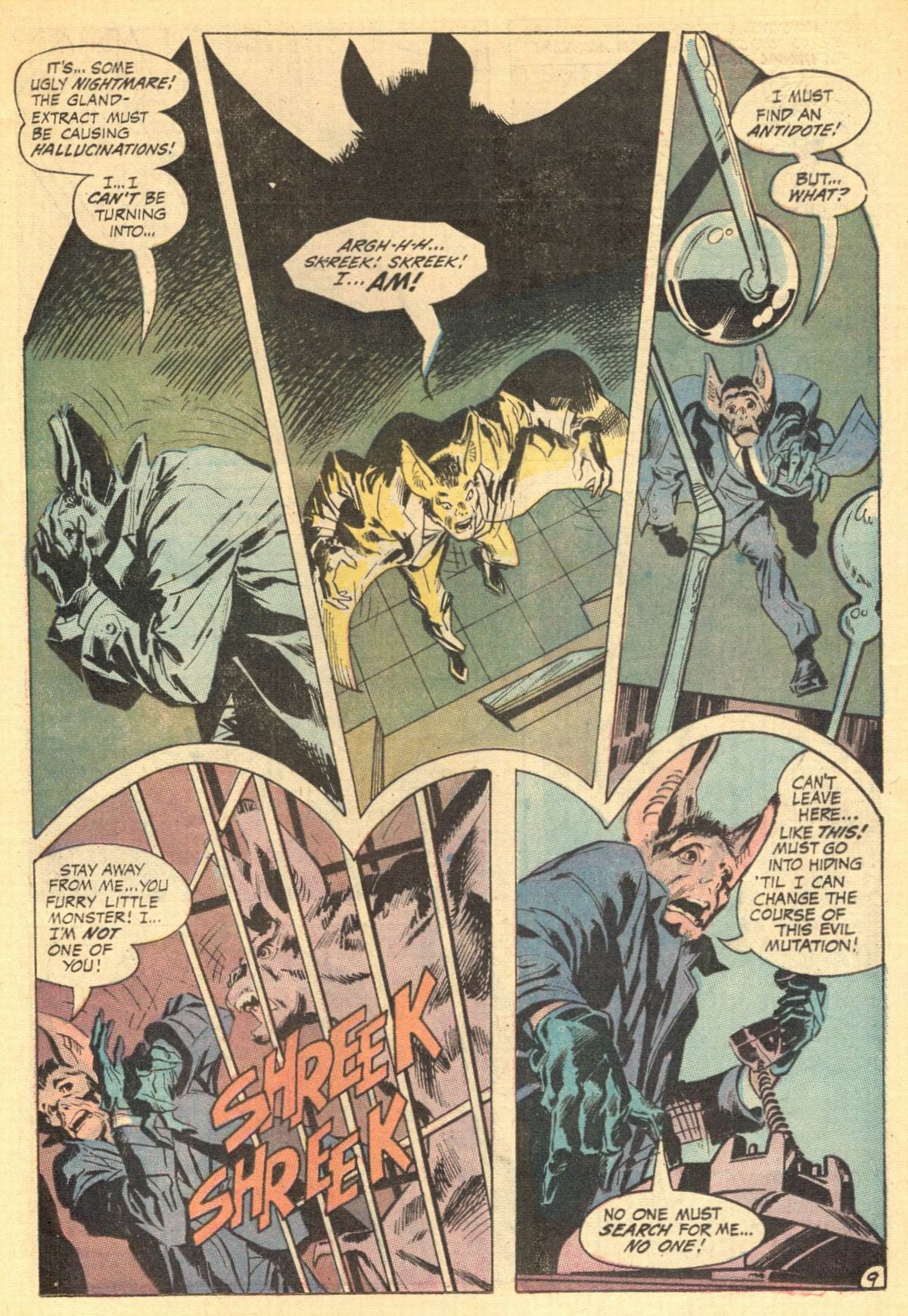
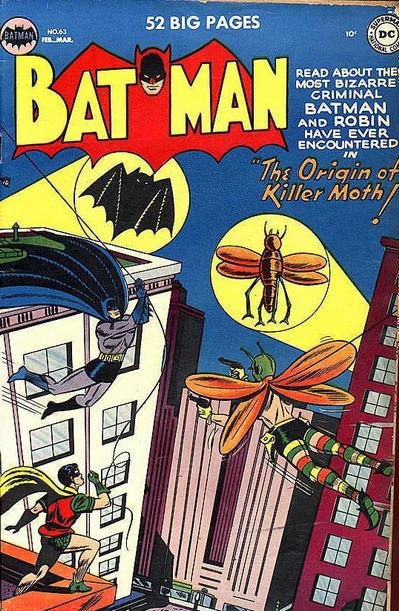
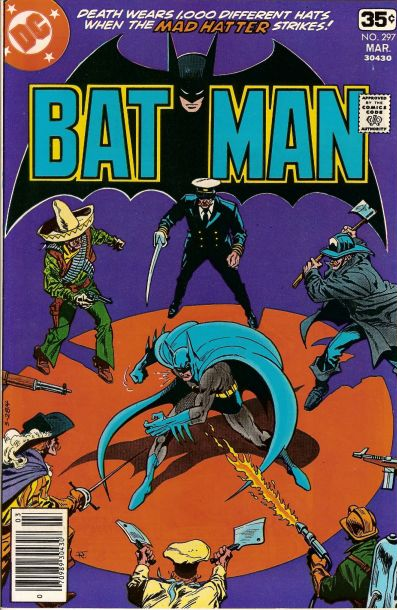
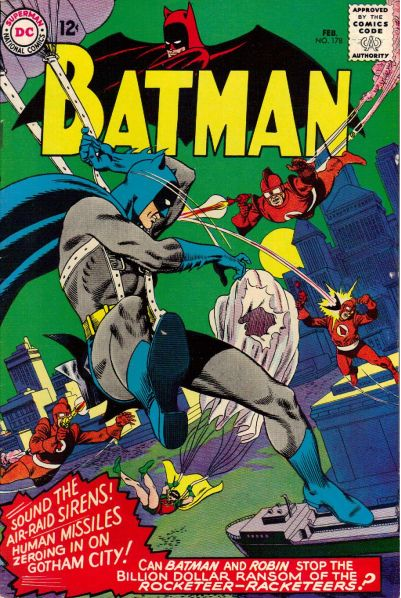
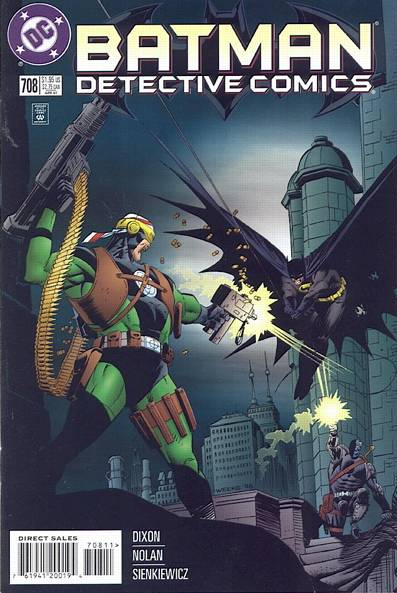
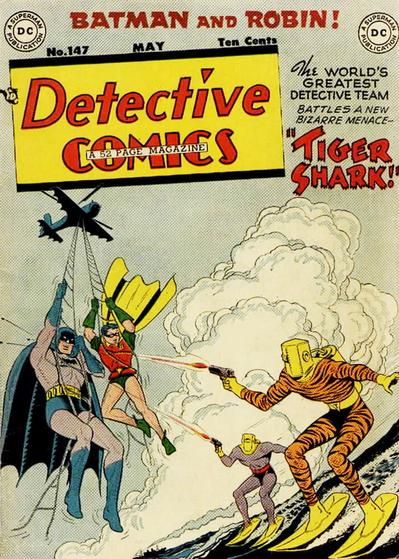
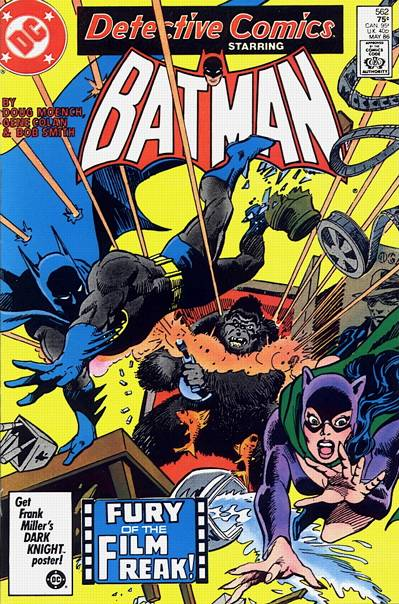
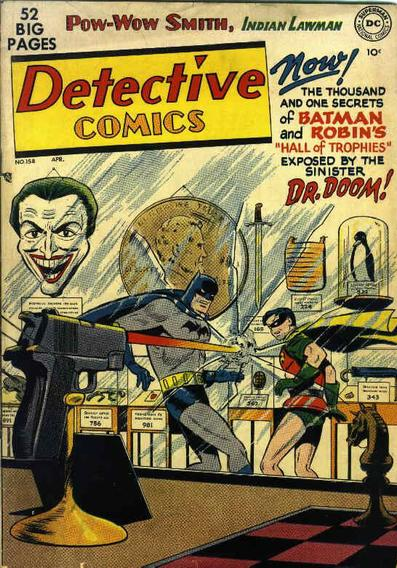
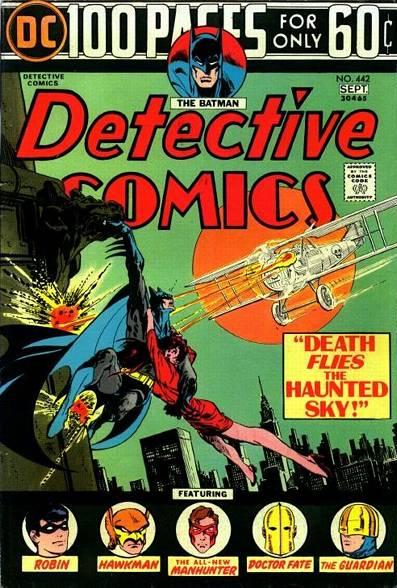
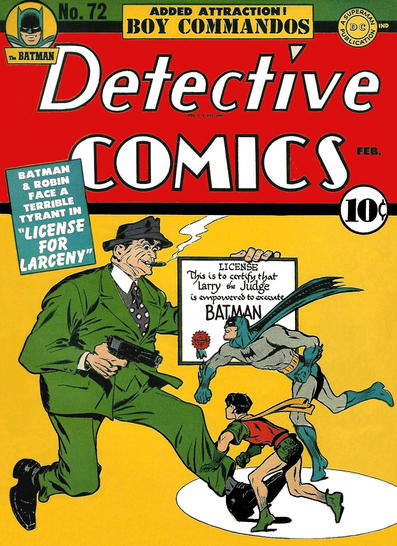
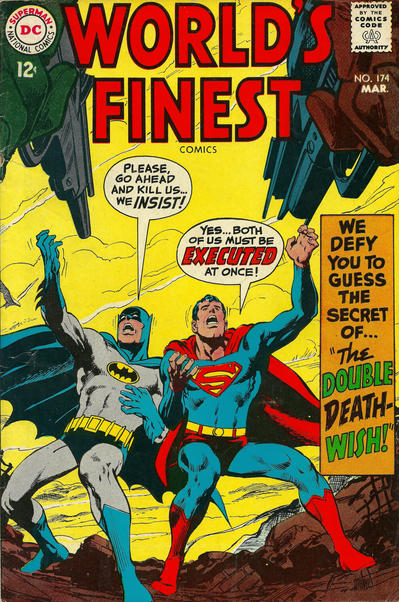
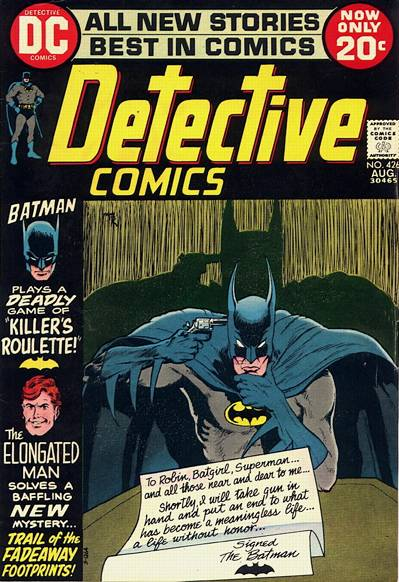
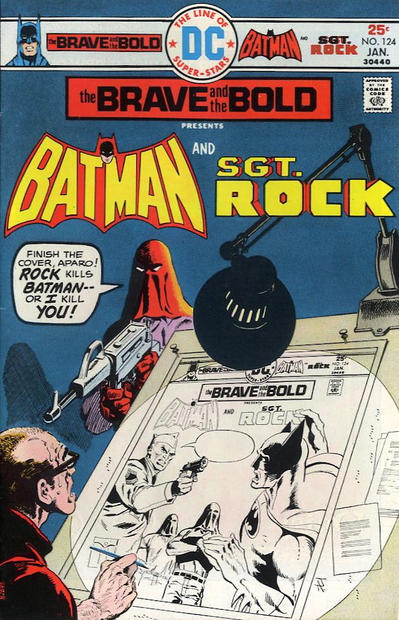
Gunning for Batman – part 1

Batman 604

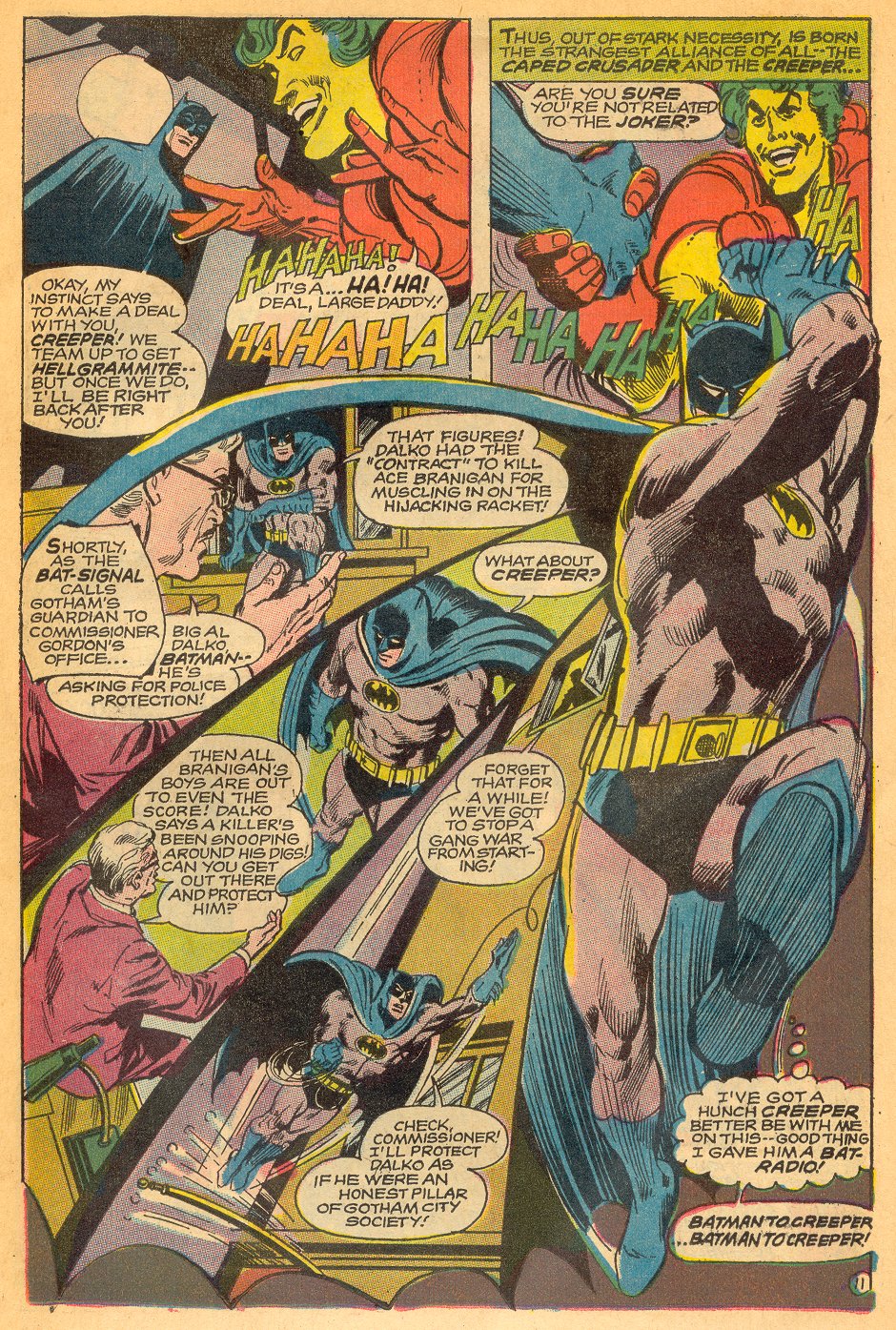
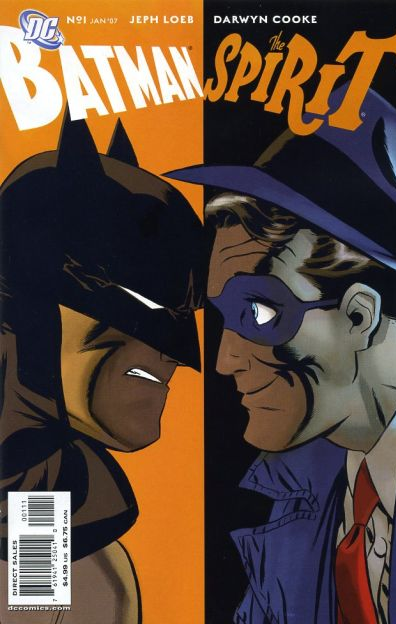
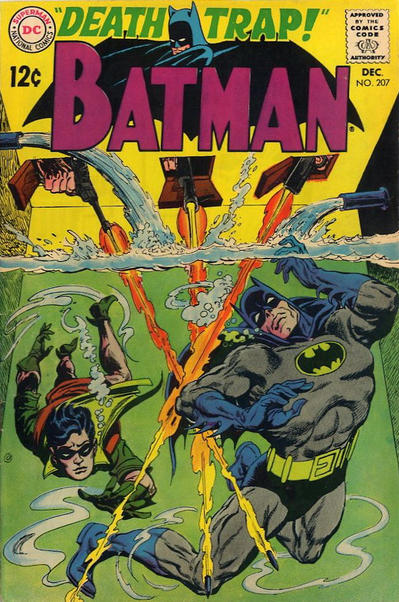
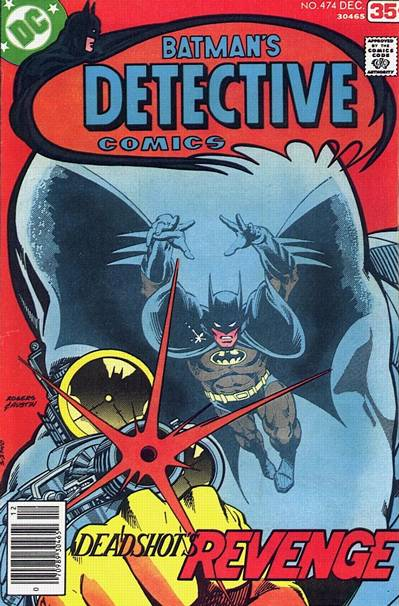
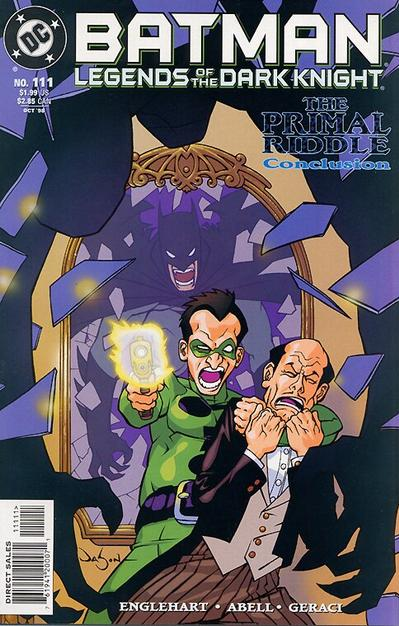
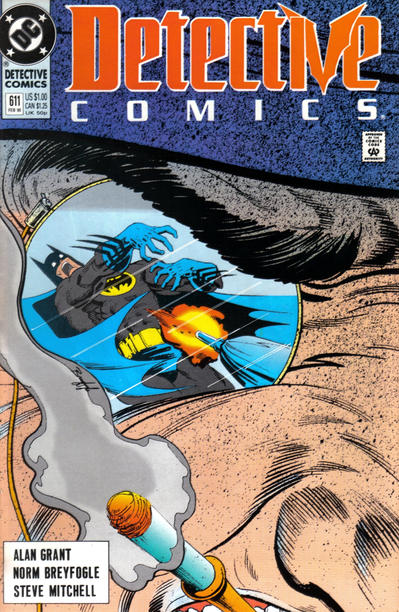
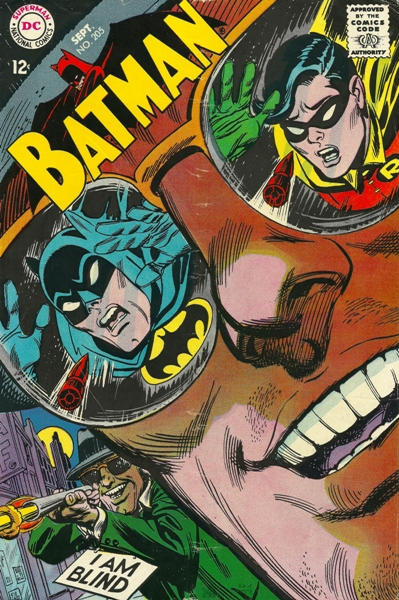
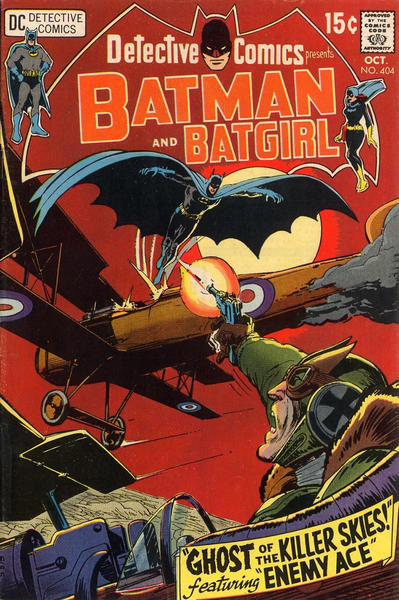
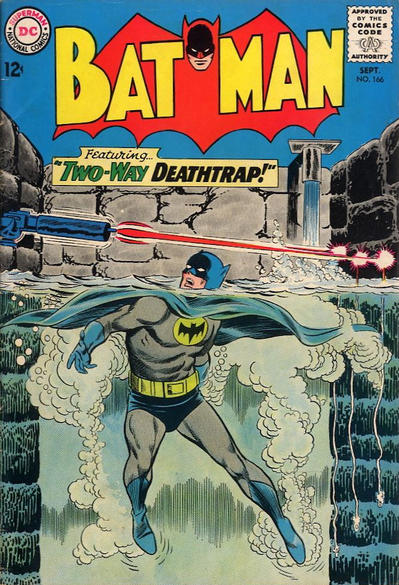
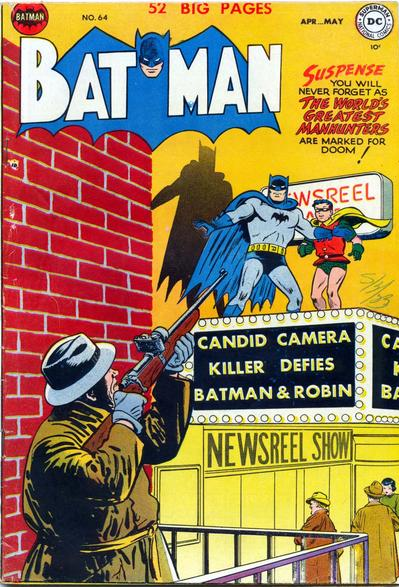
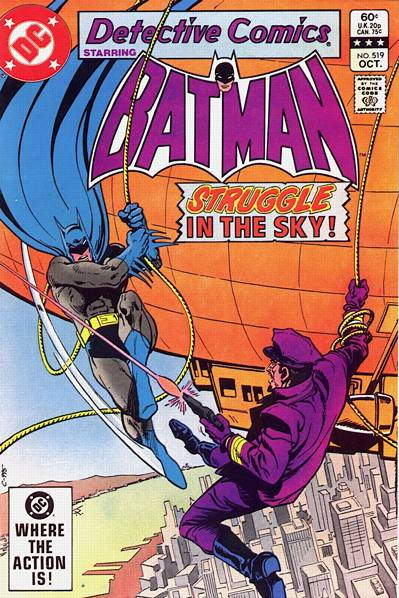
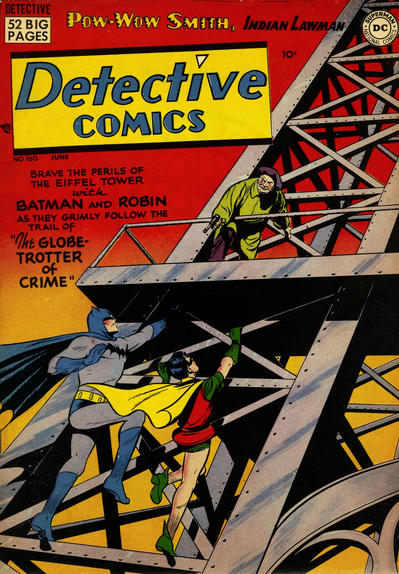
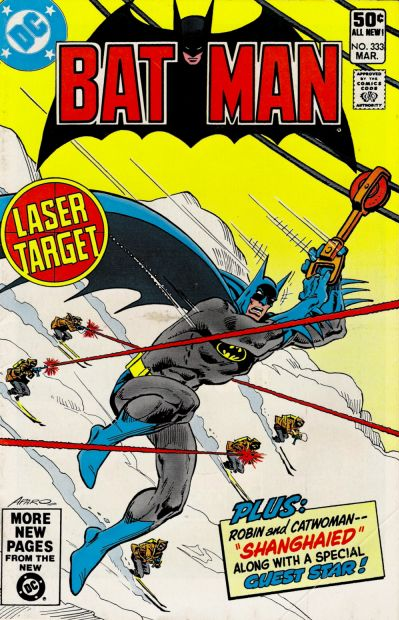
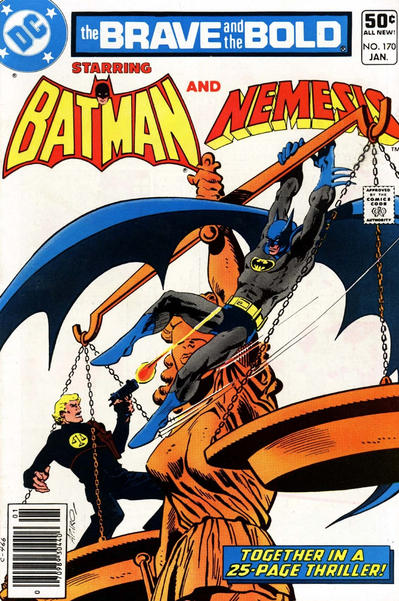
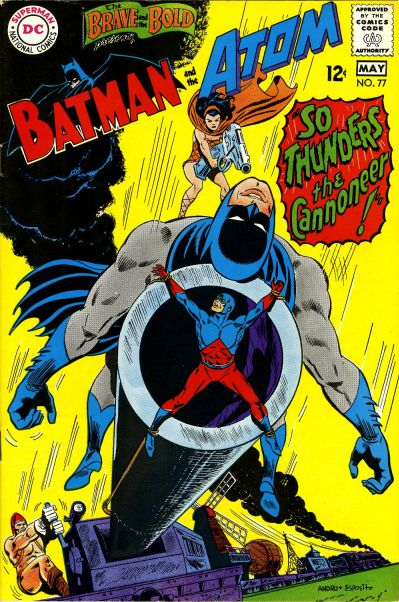
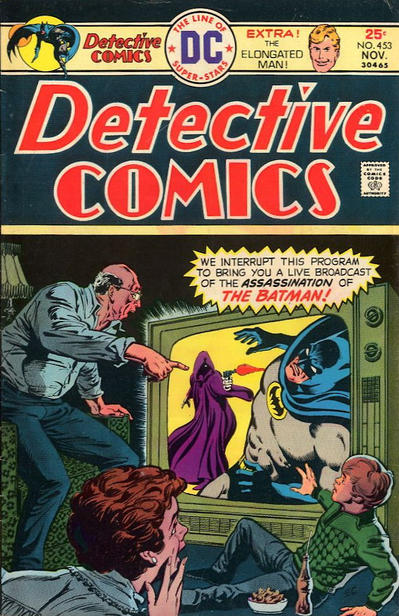
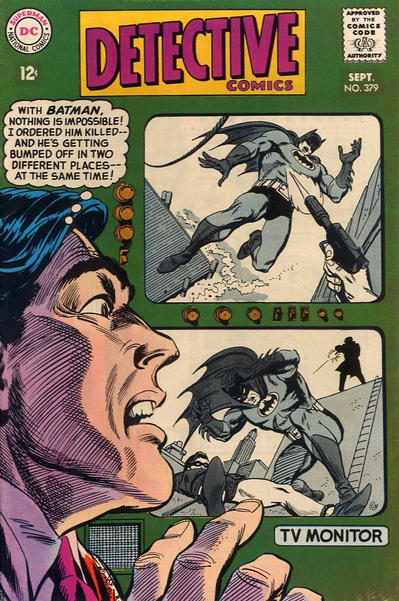
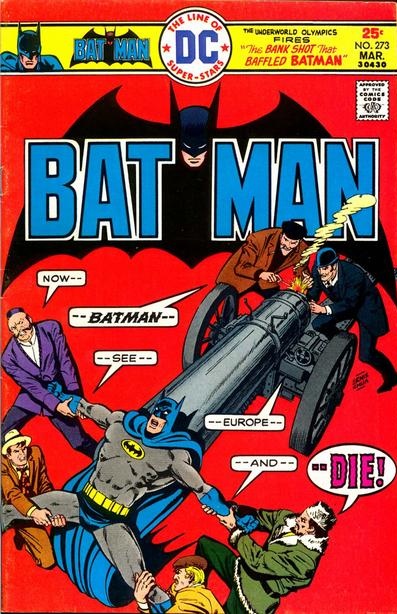
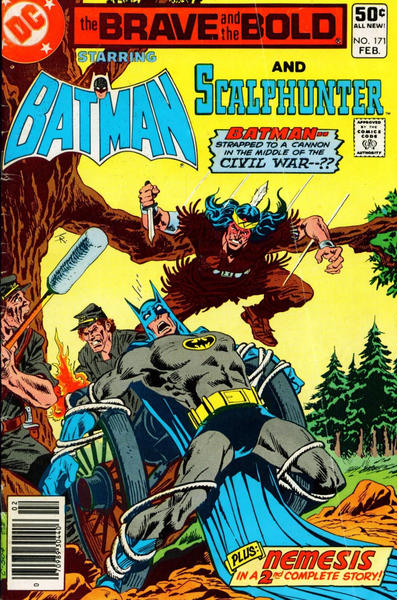
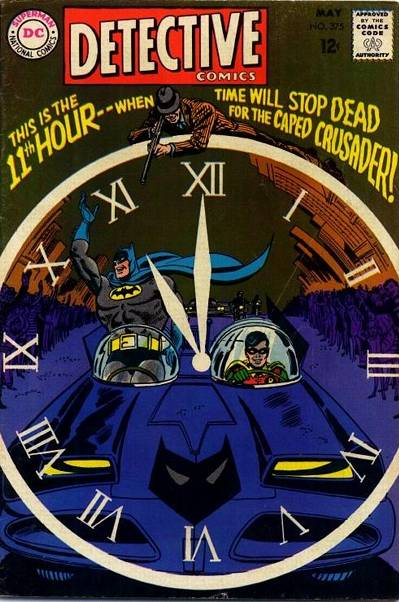
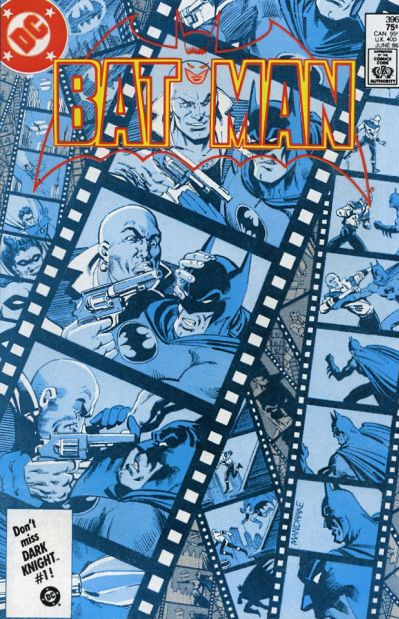
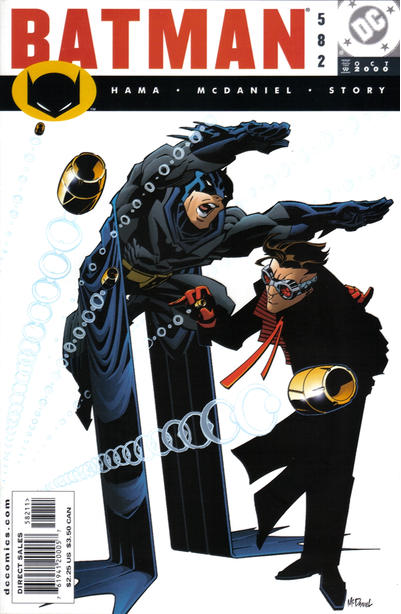
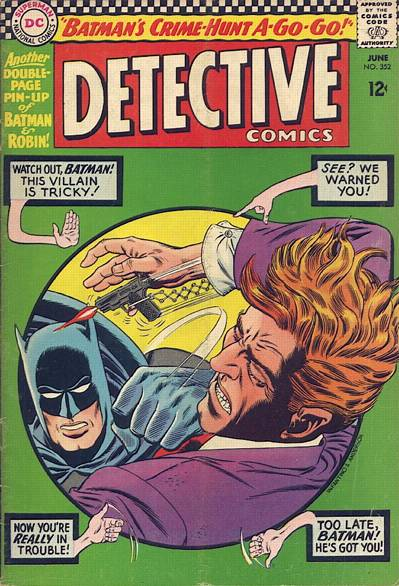
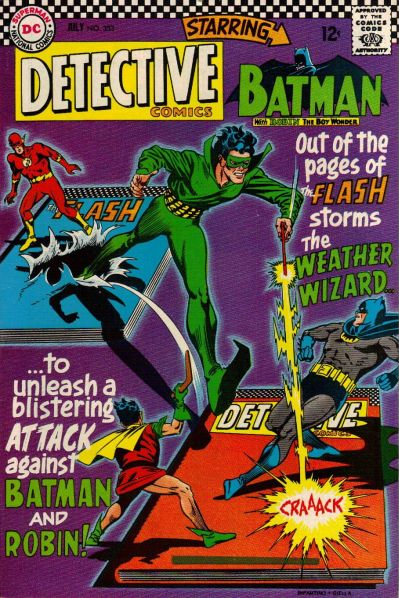
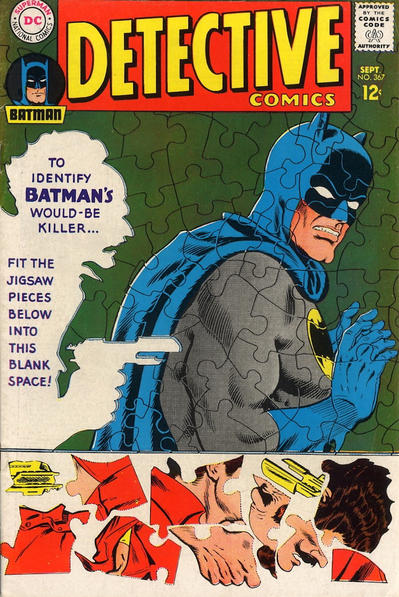
In the past, I have expressed my passion for covers that feature the Joker at his most creepy and surreal, as well as covers with some kind of visual twist involving their logo. But just in case you think I’m hard to please, or that there is anything remotely refined about my tastes, let’s get this straight: I am also a huge sucker for covers where it looks like Batman is about to get shot!

Just in covers alone, more guns have been pointed at the Dark Knight than at the average character in a Johnnie To thriller. Yet it’s a formula that keeps on giving. There is something about the simple immediacy of danger brought on by a pointed gun which generates dynamism and urgency, with Batman for once seeming helpless and vulnerable…

Batman 145     Detective Comics 334
Batman 201     Brave and the Bold 107

Batman 249     Detective Comics 443

Batman and Robin 28     Batman 518

Legends of the Dark Knight 14     Legends of the Dark Knight 22

Detective Comics 430     Detective Comics 477

On the other hand, the fact that Batman has to face a loaded gun can sometimes serve to reinstate his action hero credentials, with the Caped Crusader coming across as more badass than ever:

 Batman 395     Detective Comics 428

Gotham Knights 60     Batman 34

Detective Comics 162     Legends of the Dark Knight 135

Batman Chronicles 16     Batman 559

Batman and Robin 27     Detective Comics 514

The same is true of covers where Batman is not just threatened, but actually getting shot at. While some give out a sense a desperation…

Batman Strikes 8     Brave and the Bold 133

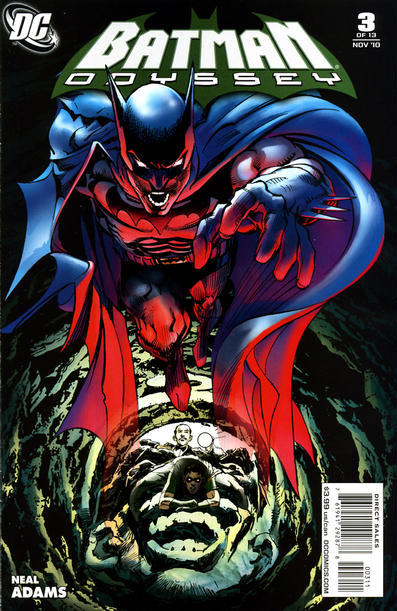
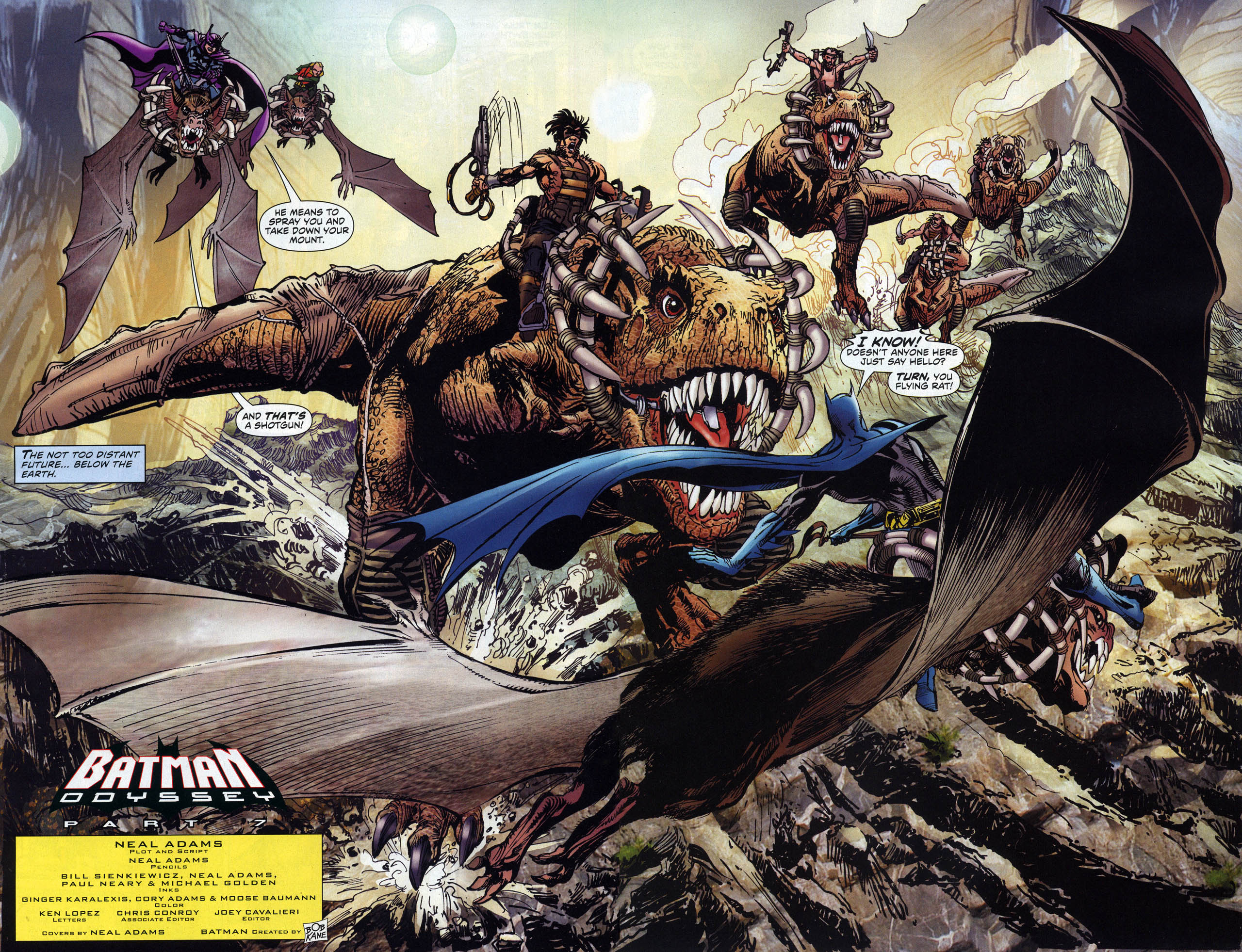
Batman 418     Batman: Odyssey

…many just highlight how much of an unstoppable crime-fighting machine the Dark Knight can be, relentlessly going up against a violent sea of bullets in the name of justice like a Bizarro version of Tony Montana:

Detective Comics 684     Detective Comics 439

Batman Adventures 9     Batman 82

Batman 438     Legends of the Dark Knight 133

JLA Classified 26     Detective Comics 755

Batman 374     Detective Comics 424

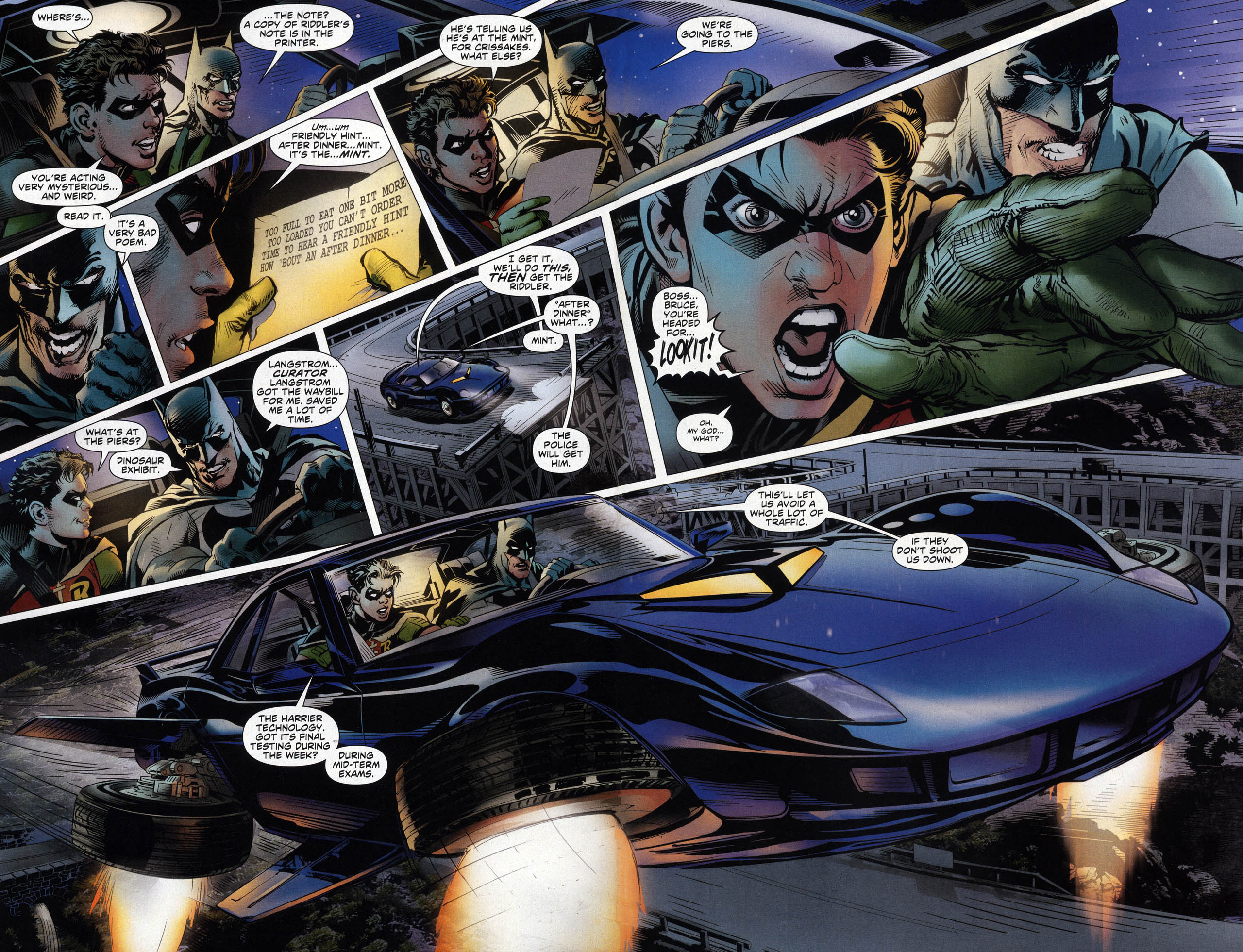
Batman Odyssey 2     Detective Comics 656

All Star Batman and Robin 7

Which is not to say that, every once in a while, things don’t get delightfully goofy:

Batman 74     Batman 170

Batman 315     Batman 117

Brave and the Bold 99     Batman 113

Fighting Kite-Man with the help of a bat-shaped paraglider? Rolling on jet-skates towards an armed alien? Struggling with demon possession in front of the Flash? Magically flying around on another planet? An ad for the Viking Prince? Things cannot get much sillier than this!

NEXT: Things get much sillier than this.

Posted in COVERS OF BATMAN COMICS | Tagged , | Leave a comment

Batman and fascism

World's Finest 9

Some people apply the label ‘fascist’ to a specific early 20th century ideology, and perhaps to some later derivative political projects. Others use the term more loosely, applying it to people who come across as authoritarian, unapologetically violent, and/or intolerant of different world views. For me, ‘fascist’ is what I call anyone who pisses me off. And you know who pisses me off? People who think they’re being clever when they call Batman a fascist.

I get it. There is something about a masked vigilante who resorts to torture and extrajudicial invasion of privacy that reflects totalitarian urges. Arguably, there is a fascist subtext inherent to superhero iconography in general, what with all the uniformed Übermenschen imposing order through brute force. But sticking this label on Batman still feels more like a superficial insult than a poignant analysis. I mean, the character himself is not supposed to be an actual fascist!

Except, you know, when he’s written by Frank Miller:

Batman - Dark Knight Returns 04The Dark Knight Returns #4

The Batman of Dark Knight Returns can be seen as ‘the worst sort of reactionary fascist,’ even if at one point he does fight an Arian woman with swastikas for nipples.

The thing about Miller’s take on Batman, though, is that this is not meant to be the familiar Caped Crusader, but rather a self-conscious twist on it. And once you start counting all the purposely alternative versions of the Dark Knight, then anything goes. For every story where Batman’s authoritarian tendencies take over (like Kingdom Come or the underrated ‘The Tyrant,’ in Shadow of the Bat Annual #2), there is an opposite comic with him as a committed anti-fascist. In ‘Berlin Batman,’ Paul Pope reimagines Bruce Wayne as Baruch Wane, a Jewish Dark Knight helping out oppositionists in 1938 Germany. In Howard Chaykin’s very cool Dark Allegiances, Batman is a plutocrat in the politically charged atmosphere of the Great Depression who goes up against homegrown American fascists.

Batman - Dark AllegiancesDark Allegiances

Likewise, the movies are a whole other universe. Christopher Nolan’s trilogy seems to endorse mass secret surveillance as well as police hordes gleefully marching with their batons in the air to beat up civilians – which of course no democratic government would ever support, right? Anyway, it’s not as if anything in The Dark Knight Rises really makes sense.

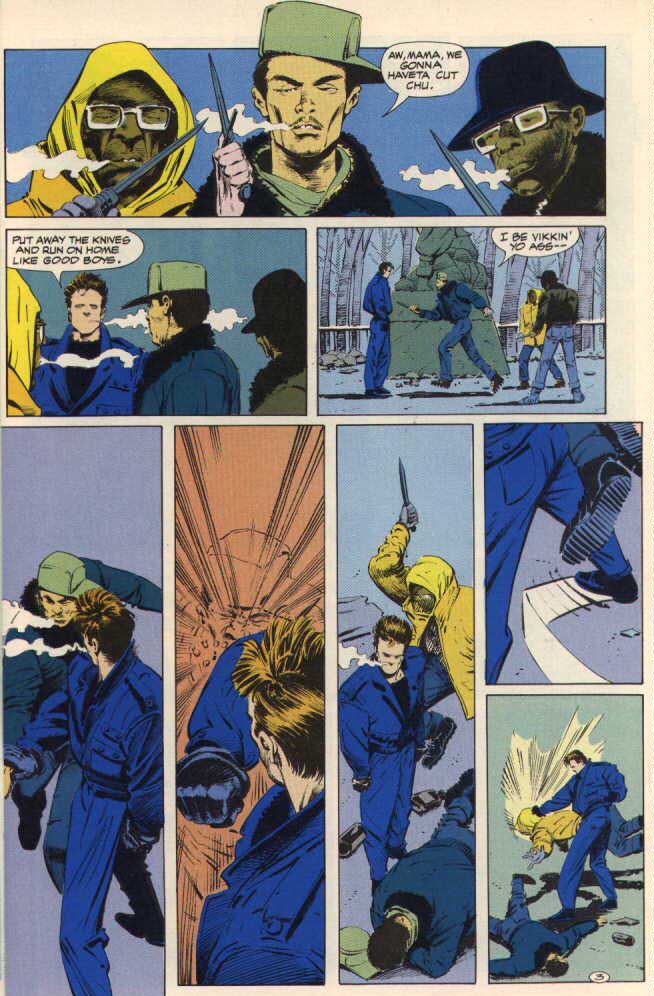
In the regular comics, Batman is less of an Übermensch than a Renaissance Man, powered not by genes but by training and study. He does believe in instilling fear, although not of the state but specifically of Batman (what the Scarecrow once called ‘chiropter-homophobia’), and sees himself as a crime-fighter rather than a ruler. The Caped Crusader is also more of a Gothamist than a nationalist. And he does not advocate genocide or anti-Semitism… in fact, he doesn’t discriminate, beating up thugs from any ethnic background:

Batman 418Batman #418

What’s more, Batman has kicked more Nazi butt than Indiana Jones! Sure, he didn’t personally punch Adolf Hitler during World War II, like Superman or Captain America did, but in 1942 the Dark Knight took care of a network of Nazi spies operating in the US.

That story, published in Batman #14 (cover-dated December 1942-January 1943), starts off with the saga of Fred Hopper, a young wide-eyed amateur movie photographer trying to break in as a newsreel cameraman. Just to get rid of the annoying wannabe, an editor sets him up with the almost impossible task of getting shots of a reclusive multimillionaire, but Fred succeeds when a couple of veteran cameramen help him infiltrate the millionaire’s home. It’s an old-fashioned paparazzo success story! Except there’s a catch: Fred Hopper is actually called Fritz Hoffner and he is a member of a spy ring whose headquarters even have a swastika-shaped lamp:

Batman 14Fearing that Batman could get in the way of the Nazi plot to sabotage America’s war effort, the spies decide to kill the Caped Crusader. Conveniently, Fred is soon tasked by the Gotham City Newsreel Company with filming a publicity stunt the Dynamic Duo is doing for the war bond campaign, but the assassination attempt fails. Later, Batman and Robin barely make it out alive when they try to prevent the spies from blowing up storage tanks for the gasoline that takes American bombers across the ocean. The whole thing culminates with a showdown at the Nazi headquarters, where the Dark Knight puts the weird lamp to good use:

Batman 14Yep, in a non-too-subtle ironic twist, that swastika-lamp totally saves the day:

Batman 14Decades later, in the awesome ‘The Angel, the Rock and the Cowl!’ (The Brave and the Bold #84), Bob Haney retroactively establishes that Bruce Wayne was in France just before D-Day, following secret instructions from Winston Churchill himself. There is some Notorious in there, but mostly that comic feels like a balls-to-the-wall war movie in the style of Kelly’s Heroes, Secret Invasion, and Where Eagles Dare, not to mention Inglourious Basterds. And it is only one of many instances in which Batman fought Nazis and neo-Nazis in the pages of The Brave and the Bold…

Batman Brave & Bold 188The Brave and the Bold #188

Seriously, poor Jim Aparo is responsible for more images of Nazis than Leni Riefenstahl!

Batman Brave and the Bold 162     Batman Brave and the Bold 126     Batman Brave and the Bold 189

By the 1990s, writers were clearly struggling to innovate. You could read about Batman fighting Nazi zombies (Legends of the Dark Knight Annual #1) and Nazi demons (Hitman #3).

As far as threats from the past go, it’s safe to say that there is only one kind of villain that seems to get Batman giddier to fight than Nazis…

Batman The Brave and the Bold #6Batman: The Brave and the Bold #6

NEXT: Batman gets shot. A lot.

Posted in POLITICS OF BATMAN COMICS | Tagged , , , , , , , , , | Leave a comment

Spotlight on Batman: The Animated Series – part 2

The New Batman AdventuresIn 1997, Batman: The Animated Series gave way to The New Batman Adventures, which had an edgier attitude. The animation became more fluid and the character designs highly stylized. Gotham gained a more modern look that combined late 20th century yuppie fashion with remnants of the original retro-avant-garde aesthetics. Bruce Timm and company also shook up the status quo: they brought in Tim Drake as Robin (with Jason Todd’s post-Crisis origin), promoted Batgirl to Bruce’s main sidekick (and even more than that, according to the spin-off movie Mystery of the Batwoman), and played with conventions by having Catwoman closely flirt with Nightwing. If anyone could pull it off, though, it was this team – after all, these guys even got away with making Superman sound noirish as hell.

Again, different fans of the comics can find plenty to enjoy:

Batman Animated Judgment Day

Although this incarnation of the show doesn’t have that many episodes primarily informed by crime fiction, Judgement Day provides a well crafted mystery tale set among Gotham City’s peculiar underworld, as a violent new vigilante goes after various members of the rogues’ gallery. He calls himself The Judge and if you think Antonin Scalia’s approach to the law is scary, wait until you see this dude literally throw the book at the Riddler!

Batman Animated Double Talk

Some of the most psychologically charged BTAS moments involved villains facing the challenges of reforming. Double Talk, in which a released Ventriloquist struggles to keep his sanity, fits into that noble tradition. Of all the Scarface episodes, this one comes the closest to matching Read My Lips for sheer spookiness.

Batman Animated Mean Seasons

And then there is the episode where the Bat-gang goes up against Calendar Girl, a supermodel who commits colorful, conceptual crimes together with three semi-naked, bowtie-wearing bodybuilders in order to get revenge on the sexist, ageist politics of the fashion and entertainment industries. While engaging with serious real-world issues in typically idiosyncratic terms, Mean Seasons is above all an orgy of visually delightful set pieces, including an amazing 2½-minutes-long, totally gratuitous fight against a giant robotic dinosaur!

Batman Animated The Ultimate Thrill

As far as edge-of-your-seat action goes, the episode to beat is The Ultimate Thrill. Introducing the animated version of the adrenaline-fuelled Roxy Rocket (a character first created in the cool Batman Adventures Annual #1), this episode makes great use of the new, slicker animation style through a series of frenetic chases, mostly through the air. Keen, clear, and exciting: current Hollywood could learn a thing or two from these guys!

Batman Animated Over the Edge

The most out-of-the-box plot can be found in the brutal Over The Edge, which starts with cops shooting at Batman and blowing up the Batcave while Commissioner Gordon yells at a megaphone ‘Bruce Wayne, stop where you are!’ What is more incredible, the episode manages to downright top that scene every couple of minutes, never letting go until a denouement that feels, not like a shameless copout as you might expect, but like a well-earned, powerful payoff.

Batman Animated Joker's Millions

Finally, the most amusing episode of this era is Joker’s Millions, which has a lot of fun with the Joker’s relationship with money. It includes an almost Mel Brooks-like barrage of one-liners and sight gags.

Batman Beyond

Having proven their superior skills with a streamlined (yet relatively conventional) take on the Caped Crusader, the animated team then went on to reinvent the wheel. Batman Beyond moved the continuity decades into the future, where an aged Bruce Wayne tutored a teenage Terry McGinnis into playing the role of the Dark Knight in a cyberpunk Gotham City.

What could have been just another series about a young, impulsive hero with a wise mentor was in fact able to carry the weight of the backstory established in the previous shows, creating a reality that drew on Batman mythology yet also felt fresh and daring. The new status quo brought forth interesting identity questions about what really defined Batman (given a neat visual depiction in the episode Lost Soul, where Terry had to fight the Batsuit itself). The overall look seemed straight out of Akira and the soundtrack was now made up of techno music and industrial rock. The plots revolved around teen issues and sci-fi themes – if BTAS had often been about rogues with sympathetic motivations taken to violent extremes, Batman Beyond’s villains usually reflected technology’s destructive impact on their body and eventually their mind.

For all these radical departures, there were still recognizable elements. April Moon was a rare, film noir-inspired episode. Sneak Peek showed a villain’s tragic rise and fall in the tale of a ruthless techno-paparazzo. Shriek, which was full of memorable moments, introduced a rogue with a creative sound-based gimmick (one that worked in ways it never could have on a comic). Black Out provided tremendous fight scenes with the malleable assassin Inque (and so did the sequel, Disappearing Inque). Eyewitness was the show’s take on Over the Edge, as Commissioner Barbara Gordon had the police hunt down Batman after he killed Mad Stan, a terrorist bomber who hilariously spoke only through rants made up of enraged libertarian clichés. The Eggbaby was the obligatory episode played for laughs – successfully so – with Terry having to take care of an electronic baby while battling a gang led by Ma Mayhem (‘A tabloid gave her that name. It was the golden age of alliteration.’). And if the first seasons were still quite hit-and-miss, by the third season almost every episode topped the previous one in terms of utter coolness.

Batman Beyond April Moon Batman Beyond Sneak Peak Batman Beyond Shriek

Batman Beyond Black Out Batman Beyond Over the Edge Batman Beyond Eggbaby

One tale set in the Batman Beyond universe managed to combine all elements. The direct-to-video film Return of the Joker included a cleverly constructed whodunit, the Joker at his sickest, an over-the-top climax, hardcore action, and an unforgettable, subversive twist on the Batman family, as well as some pitch-black comic relief. Yet be warned: the film – especially in its uncut version – is dark enough to make Christian Bale sound like Adam West.

At the end of the day, whether you’re a long time comics reader or just taking your first steps in Gotham City, the Bruce Timm-produced animated shows are a great place to get your bat-fix, if nothing else because they were created to be accessible to everyone – from kids to parents, from diehard fans to casual viewers. You don’t need to have read a thousand stories before jumping in and there are no convoluted crossovers to trick you into buying scattered issues just to figure out what the hell is going on… That said, if you really want to know how the whole animated Batman saga wraps up, you’re still going to have to track down the second season finale of the Justice League Unlimited TV series!

But hey, what if you’re a whole different kind of Batman fan? What if you prefer light-hearted escapades, anything-goes superhero fantasy, and larger-than-life adventures in which the Caped Crusader interacts with the rest of the DC cast? Well, in that case, screw the BTAS – just go watch any episode of the wonderfully witty Batman: The Brave and the Bold cartoon:

Batman Brave & Bold cartoon

NEXT: Batman kicks Nazis in the face.

Posted in WEBS OF FICTION | Tagged , , , | Leave a comment

Spotlight on Batman: The Animated Series – part 1

A couple of months ago I recommended films for fans of Batman comics, so I figured this time I’d suggest some TV shows. Once again, I tried to think of different types of connections, including shows with resourceful, anti-gun action heroes (McGyver), super-detectives with a dark, eccentric supporting cast (The Pretender), mind-bogglingly intricate traps (Mission: Impossible), atmospheric horror and science fiction (The Twilight Zone, The X-Files, Black Mirror), bizarre rogues that are both frightening and grotesquely amusing (Twin Peaks, The League of Gentlemen), self-contained suspenseful and psychological tales (Alfred Hitchcock Presents), and even obvious parodies (Darkwing Duck). There’s also some show called Gotham that everyone keeps telling me about…

But at the end of the day, there is no getting around it: I just can’t ignore Batman: The Animated Series (BTAS).

Batman: The Animated SeriesCo-created by acclaimed producer (and amazing artist) Bruce Timm, BTAS distilled the essence of the best elements of the Batman universe into their purest form. The Dark Knight was a cool, well-adjusted hero, sometimes working together with a likeable, teenage Robin (Dick Grayson). Most villains had a tragic origin story and sooner or later tried – and mostly failed – to reform, thus appearing as nuanced characters that usually mirrored one or more aspects of Batman himself. BTAS also featured what is arguably the best rendition of Gotham City, setting it in a time that never was, the future as imagined in the 1940s: art deco buildings, zeppelins in the sky, advanced computers alongside TV sets that still played black & white, ’90s motorbikes and Depression-era newspaper boys sharing the same streets…

Along with the stylish animation, every technical detail was just right, from the sound to the casting to the freaking credits’ font! The writing started off as effective and – the occasional misstep aside – soon moved on to excellent: BTAS delivered thrilling bat-and-mouse games between the Caped Crusader and the rogues while also exploring themes such as obsession, empathy, recidivism, and trust. The storytelling approach varied, ranging from straightforward tales like Mad as a Hatter, which elegantly took a simple premise and allowed it to escalate until a twisted conclusion, to more experimental narratives like Dreams in Darkness, which was built around the flashbacks and hallucinations of a Bruce Wayne gradually descending into madness (thanks for the lifelong childhood trauma, guys).

My aim here is not to give a simple list of favorite episodes (aka a list of practically all the episodes written by Paul Dini) nor is it to provide in-depth analysis of BTAS (I could never be as insightful as Steven Padnick or as comprehensive as the folks at World’s Finest, from whom I took the stills below). The purpose of this post is to guide Bat-fans who are still more or less unfamiliar with the show to episodes that may speak directly to their specific tastes…

If you want to see Batman in crime stories:

Batman Animated P.O.V.

In P.O.V., Detective Bullock and police officers Wilkes and Montoya tell their superiors different versions of a sting operation gone wrong. The fun is not just in putting the narrative puzzle together, but in how each tale illuminates its narrator’s character. Bullock persistently lies to cover up his recklessness and to justify his dislike of Batman. Wilkes’ narration betrays his own admiration for the Dark Knight by describing him as a supernatural figure. Montoya gives an honest account of what happened, humbly acknowledging her shortcomings while also diplomatically picking holes in Bullock’s version of events. Leave it to the BTAS to do a Citizen Kane/Rashomon homage on a kids’ show, especially in the pre-Pulp Fiction era when this kind of non-linear storytelling had not yet become as commonplace as it is today.

Batman Animated It's Never Too Late

Not only does “It’s Never Too Late” flawlessly mimic the look and feel of 1930s gangster sagas and 1940s film noir, it also borrows from those genres tropes such as estranged brothers, mobsters, priests, a war between crime families, a blown up Italian restaurant, some poverty row-like social drama, plenty of mob slang, and a couple of ingenious flashbacks. What is more, the plot keeps throwing the viewer one twist after another until the final emotional payoff. The only way this thing could get any more legit old school crime drama would be if Humphrey Bogart and John Garfield had come back from the grave to make voice cameos!

Batman Animated Bullet for Bullock

Someone is out to get Bullock, so he enlists Batman for help – what you get is not exactly a buddy cop comedy, but there is still plenty of fun to be had in watching these two characters grudgingly play off of each other. Sure, it may seem too easy to go with a clear-cut adaptation of a comic by Chuck Dixon, whose writing is already as cinematic and as peppered with hardboiled dialogue as they come. That said, even for fans of the original, A Bullet for Bullock is pure delight. Almost 20 years on, it can still hold its own next to the millions of cop shows on television for sheer style and tight plotting. Also, the story’s resolution shows Gotham City at its deranged best.

If you like the psychological elements of the rogues’ gallery:

Batman Animated Two-Face

This reimaging of Two-Face’s origin includes a great scene where Harvey Dent undergoes hypnosis in a shadowy room. The rain builds up outside and a flash of lightning lights up half of Dent’s face, briefly foreshadowing the transformation to come as his voice and expression begin to reveal the monster inside him. The atmosphere then grows increasingly tense as Harvey starts trashing up the place and threatening his psychologist at the sound of thunder before finishing on a typically melancholic note. Man, Two-Face is the show at its moodiest.

Batman Animated Read My Lips

Read My Lips brings Scarface to the screen, proving once and for all that he is one of the most disturbing Gotham rogues. A doll warehouse is the suitably eerie setting and a jazzy soundtrack evokes the speakeasies that inspired the gangster’s looks and accent. The direction is full of neat touches, with Batman emerging from shadows, windy blinds, and steam that rises from the street. And crucially, Joe R. Lansdale’s teleplay perfectly captures how downright sinister Scarface can be, right until the final, cruel shot. Talk about frayed ends of sanity, folks!

Batman Animated Sideshow

Although the BTAS’ take on Killer Croc isn’t always the most sophisticated (or the quirkiest), Sideshow really packs a punch. Batman chases his reptilian foe into the wilderness and we get a closer glimpse of Croc’s soul when he finds shelter among a band of secluded circus freaks. Shoving Croc into Denny O’Neil’s and Neal Adams’ deservedly classic story ‘A Vow from the Grave’ while throwing out the original’s murder mystery plot, this episode is full of mesmerizing sequences of the two protagonists facing each other away from the Gotham turf, out of their element, in the middle of nowhere, exposing who they are at their core.

If you enjoy ingenious set pieces, including creative capers and escapes:

Batman Animated Clock King

Appropriately for a story about a villain obsessed with time, The Clock King’s plot has the precision of a wristwatch mechanism as Batman has to match wits with someone as good at planning as he is. Also, and at the risk of sounding too alliterative, there is a beautiful balance of pathos and puns – and it all culminates with a formidable face-off at a giant clock that is at once suspenseful and symbolic.

Batman Animated Cape and Cowl Conspiracy

Elliot S! Maggin reworked his 12-page story from Detective Comics #450 into this episode where Batman has to face one sadistic deathtrap after another, building up to a keen twist ending. The Cape and Cowl Conspiracy brings a great comic to life on the screen, and it even manages to provide an alternative solution to the wax museum challenge that is just as clever as the original one was.

Batman Animated Almost Got'Im

The Joker, Two-Face, Poison Ivy, Killer Croc, and the Penguin play poker while exchanging stories about how they nearly killed Batman. Almost Got’Im doesn’t get a single beat wrong: not only does it have the wittiest dialogue of any episode in the show, its direction is masterful – from the opening shots of each player’s hands to the timing of Catwoman’s perfect closing line.

If you’re looking for kick-ass action:

Batman Animated See No Evil

Perhaps ironically, Batman fighting an invisible man makes for some seriously awesome visuals. The icing on the cake is that See No Evil is also emotionally complex, since the villain, for once, is not so much an outlandish rogue with a megalomaniac plan but an average crook with common motivations who ultimately engages in a sadly recognizable crime. The scene with Batman desperately clinging to the top of a speeding invisible car cracks me up every time, especially the reaction of a nearby bum: ‘I didn’t know he could fly, too.’

Batman Animated Heart of Steel

Despite resorting to one cliché too many, you have to admire the Heart of Steel two-parter for ticking so many boxes: there are high stakes, a 1950s paranoia vibe, weird-looking sci-fi gadgets, out of control A.I., creepy clones, and a handful of violent proto-deaths, not to mention a pre-Batgirl Barbara Gordon… and the sequel, His Silicone Soul, is even more intense!

Batman Animated Off Balance

Off Balance sees Batman go off against Count Vertigo, which ushers in some freaky, distorted sequences. The episode gets away with a few cheesy lines and even the odd stodgy animation bit, not least because it gets the James Bondian feel it is going for just right, especially with the introduction of the mysterious, foreign-sounding Talia al Ghul. More importantly, in the best Batman tradition, it includes some truly neat moments of heroes overcoming physical challenges by figuring out a logical loophole in their trappings.

If you like your Batman stories with a twist:

Batman Animated Perchance to Dream

Bruce Wayne wakes up to find out that all is right with the world after all and his life as Batman was but a dream. Perchance to Dream is a great example of taking what could have been just a plot gimmick and turning it into a meaningful statement about the Dark Knight, thematically rich and topped with one of the show’s most heartbreaking denouements.

Batman Animated The Man Who Killed Batman

The notion of Batman accidently getting killed by a common thief would be an intriguing premise in itself, but the fact that said thief is basically 1970s Woody Allen really nails it. What makes The Man Who Killed Batman so great is that we get to keep our batcake and eat it too: despite the title, any viewer knows that sooner or later the Caped Crusader will turn out to be alive and ready to continue kicking butt for at least the remaining episodes of the season. What the story lacks in suspense, though, it pays back in entertainment value as we are treated to the reactions of the criminal underworld to Batman’s odd demise. The Joker’s hilarious funeral service is a high point, with the Clown Prince of Crime showing sadness at losing his straight man, anger at having been beaten to the punch, and, finally – because, no matter what even beloved writers say, the Joker is nothing if not adaptable – just happily moving on.

Batman Animated Trial

The Caped Crusader is put on trial by Arkham Asylum’s inmates as the new D.A. grapples with Gotham City’s unconventional guardian and dysfunctional criminals. Trial gets some laughs out of the rogues’ wacky role-playing, but it also adds to the show’s overarching interrogation of Batman mythology. Watch out for some nice high-contrast animation in the sequence where the lights go out.

And if you just want to have some good old fashioned fun in Gotham City:

Batman Animated Harley's Holiday

When Harley Quinn is released from Arkham Asylum, she gets involved in a screwball crescendo worthy of Howard Hawks, to the point that she finds herself being simultaneously chased by the Dynamic Duo, an angry Bullock, and a fish truck driven by a mobster in boxer shorts. Oh, and a freaking tank! Harley’s Holiday may not be the deepest episode, even if a dark subtext about Harley Quinn’s psychology is looming under every slapstick gag… This is not even the best Harley-centric episode – that would be Harlequinade… But this sure is the show at its most hilarious and damn it if the final scene isn’t at once funny, tragic, and heartwarming.

NEXT: More cartoons.

Posted in WEBS OF FICTION | Tagged , , , , , , , , , | Leave a comment

Have a Gotham 2015

batman adventures holiday specialThe Batman Adventures Holiday Special
Posted in GOTHAM INTERLUDES | Tagged , | Leave a comment

Taking a break… (December 2014)

detective comics 598Detective Comics #598
Posted in GOTHAM INTERLUDES | Tagged | Leave a comment

Gotham X-mas spirit

Hitman 22     Batman 596

Ah, the holidays. Say want you want about Gotham’s unstoppable descent into an urban playground of psychopaths and vigilantes, not even Fox News can accuse the city of not having a Christmas spirit!

After all, this is the time of year when Santa brings joy to those around him:

dc holiday special 1980Super-Star Holiday Special 1980

All over Gotham, everyone is cheerful and having a nice time:

Batman 309Batman #309

Helpless orphans get their wishes:

Batman 027Batman #27

Even in the suburbs, people are kind to strangers:

Batman 247Batman 247Batman #247

And what about Batman? Well, for once he actually gets to fight crime without lifting a finger:

BATMAN 219 BATMAN 219 Batman #219

NEXT: Batman watches TV.

Posted in GOTHAM CITIZENS | Tagged , | Leave a comment

10 Killer Croc designs

Of all the members of Batman’s rogues gallery, Killer Croc has got to be one of the most inconsistent. He has been written as a street smart thug with a skin disease, as a dumb superhuman monster, and even as a freaky version of Clyde Barrow dating a woman trapped in the body of a child (you know, the kind of thing that happens when you let Steve Gerber write for a kids show). Amusingly enough, Killer Croc’s appearance has also been all over the place. Just check out these 10 different spins on the concept of a guy who looks like a crocodile…

The underworld crime boss, by Dan Jurgens:

batman 359Batman #359

This was the first time we saw Killer Croc’s semi-naked body. Also, as far as I know, this is the only reference to his monarchist tendencies.

The dragon-like apparition, by Dave McKean:

Arkham AsylumArkham Asylum: A Serious House on Serious Earth

According to the annotated script, Killer Croc is meant to represent unreason, mindless strength, the brute appetites of nature and man, the Old Dragon of Revelations, the marlin in Old Man and the Sea, the Serpent, Jesus Christ, and Moby Dick, as well as ‘our evolutionary past rising up to threaten us with destruction,’ because Grant Morrison was not afraid of sounding too pretentious. (I wonder if Neil Gaiman also served as a visual model in this scene, like he did earlier in the book…)

The heartbroken robber, by Bo Hampton:

Batman & Robin Adventures 23 Batman & Robin Adventures #23

We’ve all been there, Croc…

The eccentric brute, by John McCrea:

Hitman 03Hitman #3

Hey, at least it’s better than Friends!

The terror of Arkham Asylum, by Ryan Sook:

Arkham Asylum - Living Hell #4 Arkham Asylum: Living Hell #4

Like in Peter Pan, geddit?

The mutated mercenary, by Jim Lee:

Batman 610Batman #610

Is it just me, or with that trenchcoat Killer Croc looks like a total pervert at large?

The cannibalistic pimp, by Eduardo Risso:

Batman 620Batman #620

Cheetah pattern! Boy, it’s a shame Killer Croc doesn’t wear shirts more often.

The raging dinosaur/alien hybrid, by Francesco Mattina:

Joker's Asylum - Killer CrocJoker’s Asylum: Killer Croc

Wait until Ellen Ripley gets a load of this… Interestingly, though, in the comic inside Croc is more of the strong, silent type.

The ethnic henchman, by Lee Bermejo:

JokerJoker

This one is just wrong on so many levels.

The reptilian cock blocker, by Sam Kieth:

Arkham Asylum MadnessArkham Asylum: Madness

Perfect spot for a date, if you ask me.


NEXT: Batman sings.

Posted in ART OF BATMAN COMICS | Tagged , , , , , , , , , , , , , , , | Leave a comment

Alan Moore’s mundane Batman

Although he has fallen from grace somewhat in recent years, I think it’s not controversial to say that Alan Moore is a strong contender for the title of greatest comics’ writer of all time, and possibly God. Watchmen alone would secure his place in the medium’s pantheon, but Moore is hardly a one-trick pony, having created masterpieces in genres as diverse as political dystopia (V for Vendetta), superheroes/sci-fi (Miracleman), horror (Saga of the Swamp Thing), existentialist character study (A Small Killing), historical crime (From Hell), fantasy (Promethea), metafictional adventure (The League of Extraordinary Gentlemen), and erotica (Lost Girls), as well as a mix of most of these in his phenomenal prose novel Voice of the Fire. He has also written a handful of comics involving Batman.

By putting intelligent twists on familiar archetypes and plots, Alan Moore’s genius lies in elevating conventional formulas into sophisticated entertainment (or, alternatively, in taking challenging concepts and making them accessible). Some of his comics can be demanding, but unlike his most pretentious peers Moore actually rewards you for the effort. For example, Watchmen is simultaneously a thought-provoking anti-superhero deconstruction AND an awesome superhero story, one that makes you care about a naked blue dude who sees through time and builds a palace on Mars.

Moore’s most obvious trademark is to embed panels with various layers of juxtaposition, especially when transitioning from scene to scene. This technique can bring out themes by emphasizing symbolic connections, or it can merely amuse readers by creating visual puns. I say ‘merely,’ but I would argue that as a rule Moore’s playfulness is not appreciated enough except in discussions of his more blatantly comedic output (Future Shocks, D.R. & Quinch, Bojeffries Saga, Tomorrow Stories, Top Ten). I suspect the reason for this is that many fans prefer to think Alan Moore took his work as seriously as they do. However, even his grimmest stories are never devoid of a sense of humor, which (true to his British comics’ background) can be quite dark and iconoclastic.

Swamp Thing 39Swamp Thing (v2) #39

There are three main themes in Alan Moore’s oeuvre. One of them is transcendence – many of Moore’s protagonists evolve beyond humanity not just physically, but through expanded consciousness, whether it be Michael Moran, Alec Holland, Jon Osterman, Sophie Bangs, or even Jack the Ripper. Moore gets a kick out of writing godlike POVs, resulting in some mind-bending reading experiences. Another recurrent theme, connected to this one, is the power of ideas. This is something he feels quite strongly about (as seen in the trippy documentary The Mindscape of Alan Moore) and it takes various forms in his books, which have addressed how reality can be transformed by ideologies, imagination, dreams, and, crucially, fiction.

The third, more controversial, leitmotif is sexuality. Alan Moore has taken a lot of grief from critics and colleagues for the abundance of rape in his comics. Although this is a valid object of analysis, I think it kind of misses the larger point: Moore’s comics (and prose, and short films) are not fixated on rape as much as they are fixated on sex, in all its forms. Across his work, there is gay sex and straight sex, threesomes and orgies, role playing and bondage, incest and necrophilia, sex with transgender characters and minors and animals and superheroes and aliens and gods and Earth elementals. There is sexual violence, for sure, in some instances treated in a realistic, respectful way or as a powerful satirical metaphor, and other times played for laughs or gratuitous shock value. But there is also plenty of loving, tender sex and joyful lust. Not only has Moore written a whole art/porno graphic novel concerning the lesbian exploits of Alice (from Alice in Wonderland), Wendy (from Peter Pan), and Dorothy (from The Wizard of Oz), thanks to him one of the biggest mainstream publishers in the field has released some highly original comics devoted to sex:

Swamp Thing 34     Promethea 10     Watchmen 7

Overall, Alan Moore’s Batman stories are not all that rich as far as these themes go, which may be an indication of how relatively little he invested in them. In that sense, Moore’s work with Superman is much more fascinating (not only the actual Superman tales, but also the stuff with Supreme and Mr. Majestic). Needless to say, this will not stop me from picking those comics apart.

Moore’s best known Batman work is The Killing Joke. It has been analyzed to death, from the role of dualism to its homoerotic subtext. Although Brian Bolland’s gorgeous pencils are a great part of the book’s appeal, the script itself has gained legendary status, especially Moore’s opening words for Bolland:

WELL, I’VE CHECKED THE LANDING GEAR, FASTENED MY SEATBELT, SWALLOWED MY CIGAR IN A SINGLE GULP AND GROUND MY SCOTCH AND SODA OUT IN THE ASTRAY PROVIDED, SO I SUPPOSE WE’RE ALL SET FOR TAKE OFF. BEFORE WE GO SCREECHING OFF INTO THOSE ANGRY CREATIVE SKIES FROM WHICH WE MAY BOTH WELL RETURN AS BLACKENED CINDERS, I SUPPOSE A FEW PRELIMINARY NOTES ARE IN ORDER, SO SIT BACK WHILE I RUN THROUGH THEM WITH ACCOMPANYING HAND MOVEMENTS FROM OUT CHARMING STEWARDESS IN THE CENTRE AISLE.

[…] I WANT YOU TO FEEL AS COMFORTABLE AND UNRESTRICTED AS POSSIBLE DURING THE SEVERAL MONTHS OF YOUR BITTERLY BRIEF MORTAL LIFESPAN THAT YOU’LL SPEND WORKING ON THIS JOB, SO JUST LAY BACK AND MELLOW OUT. TAKE YOUR SHOES AND SOCKS OFF. FIDDLE AROUND INBETWEEN YOUR TOES. NOBODY CARES.

Like John Ford’s The Searchers, this work keeps making it to ‘best of’ lists mostly on the strength of people’s memories of an impressive beginning and a killer ending, disregarding the flaws in the middle (although at least The Killing Joke never meanders, as each panel ties perfectly into the next). Which is not to say that there hasn’t been a backlash. According to your mindset while reading it, The Killing Joke can be either a fantastic Joker story (one with a defining take on the Clown Prince of Crime, with one of his most extreme plans, and with an interesting examination of his relationship with the Dark Knight), or a terrible Batman comic (one where Batman doesn’t do much until the end, where cruel things happen to beloved characters, and where there isn’t any fun to be had).

As for the Moore elements highlighted above, the book is full of symbolic and/or darkly humorous juxtapositions. Just check out the following scene:

Batman - The Killing Joke Batman - The Killing Joke Batman - The Killing Joke Transcendence doesn’t play much of a role in the book, except perhaps in the sense that Batman and the Joker seem to metafictionally realize they are stuck in a loop, unable to break character. The story does touch upon the power of ideas (more specifically, madness) and sexuality (Barbara Gordon’s naked pictures), but not in a very profound way…

Ultimately, I would say that The Killing Joke doesn’t deserve a place near the top of Moore’s cannon (or, arguably, Batman’s cannon) but it is hardly a complete failure. After all, even when not blowing your mind an average Moore book can still hold its own. The Ballad of Halo Jones and Tom Strong are more satisfying than 90% of the comics that came out last week. Hell, even Moore’s stints in Spawn and WildC.A.T.S. are quite enjoyable in their own right. Sure, there are exceptions, but not that many!

The other prominent Alan Moore comic to feature the Caped Crusader is the classic Superman tale ‘For the Man Who Has Everything.’ Once again, Batman isn’t given much to do in the story (as opposed to Robin, who totally saves the day!). He does, however, get a line that is both funny and naughty:

Superman - For The Man Who Has EverythingSuperman Annual #11

In contrast to these well-remembered tales, Alan Moore’s most obscure piece of Batman writing is probably ‘The Gun,’ a prose short story (with a few illustrations by Garry Leach) for the British Batman Annual in 1985. Much like Winchester ’73 (a way cooler western than The Searchers), the story follows a gun as it’s passed from owner to owner, including Joe Chill, who uses it to murder Bruce Wayne’s parents. Although oozing with a 1980s’ urban grit vibe, Moore uses the setting of the Gotham City Fair to hint at the kind of surreal constructions you could find in the old comics:

‘To his left stood a gigantic Thermos flask, fully seventy feet tall.

To his right stood a massive chromium washing machine the size of a house. Everything was bright and colossal and gleaming, with brilliant coloured spotlights playing over the exhibits and the thronging crowds. Happy families moved in streams around the exhibits like shoals of neon-lit tropical fish swimming in an ocean of piped Muzak.’

Alan Moore’s most engrossing take on the Batman universe, however, took place in the pages of Swamp Thing, the beloved horror series about a muck creature who learns how to channel the vegetable kingdom. The Caped Crusader has a brief cameo in issue #44, but #51 really takes things to another level. Here, Swamp Thing’s girlfriend, Abigail Cable, finds herself in a bizarre court case over the fact that she had sex with the plant monster (technically, she is charged with ‘crimes against nature’). Unable to deal with moral intolerance in Louisiana, she jumps bail and runs away to Gotham City, a ‘place where people can get lost.’ When she arrives, Moore applies to Gotham the series’ characteristic purple prose, accompanied by Rick Veitch’s haunting illustrations:

Swamp Thing 51Swamp Thing (v2) #51

The sexual motif, already present in the story’s premise, reappears as Abigail immediately meets some friendly prostitutes and gets arrested by a police raid. Realizing she is a fugitive, Gotham law assigns her an extradition hearing. Meanwhile, public opinion goes berserk over the so-called Louisiana ‘Beauty and the Beast’ morals scandal.

In issue #52, Swamp Thing comes to Abby’s rescue, giving the city authorities an ultimatum: either release her in the next hour or deal with an enraged vegetable demigod. Nothing happens, so Swamp Thing responds by using his green powers to turn Gotham into a jungle, which leads to some breathtaking sequences:

Swamp Thing 52Swamp Thing 52Swamp Thing (v2) #52

Gotham being Gotham, citizens deal with this transformation in the most outlandish ways, quickly adapting to the new surroundings by unleashing their buried urges. The whole thing turns into a weird social experiment…

And then the Dark Knight comes onto the scene, spoiling everyone’s fun by crushing the foliage with his metallic Batmobile and attacking Swamp Thing with defoliant. In Moore’s world, if Swamp Thing is the liberator of humankind’s natural instincts and the avenger of ecological crimes, then Batman is the defender of the industrial and puritanical status quo. Appropriately enough, the Caped Crusader gets his ass handed to him by the supernatural monster. When he ultimately wins (he’s Batman, after all), it’s not by defeating Swamp Thing, but by standing up to Gotham’s mayor and arguing for sexual tolerance:

Swamp Thing 53Swamp Thing 53Swamp Thing (v2) #53

We get yet another unconventional affair in Batman Annual #11. ‘Mortal Clay’ is a sequel to Len Wein’s and Marshall Rogers’ Detective Comics #478-479, which introduced Preston Payne (aka Clayface III), a toxic, deformed man in an exoskeleton suit who believes he is in a relationship with a store mannequin called Helena:

Batman Annual 11Part of the joke is that because of Preston Payne’s old fashioned values he can hardly distinguish between an actual woman and a lifeless, female-shaped dummy. But there is also a kinky undertone, especially as Payne starts to suspect that Helena is cuckolding him with Batman. Of course mannequins are designed to be sexualized to some degree (two store clerks even discuss their arousal), so in a sense Payne is only responding to the wider objectification of women, in his own twisted way:

Batman Annual 11Moore gets a lot of mileage out of juxtaposing Payne’s delusional narration with the reality on display in the images. It’s a fun story that ends with a suitably dark punchline.

This is pretty much all we got in terms of straightforward Batman stories. Alan Moore’s take on the Dark Knight never reaches for transcendence. His Batman isn’t the World’s Greatest Detective, just a run-of-the-mill hero. In fact, he isn’t even a mysterious creature of the night, since he gives a public speech at Swamp Thing’s funeral (Swamp Thing #55). Perhaps Moore’s unpublished project, Twilight of the Superheroes, would have changed this: in the proposal, Batman, The Shadow, Tarzan, and Doc Savage were described as being ‘basically more elemental forces than people.’

In a less literal sense – and I know I’m not the only one to spot this – Batman is all over Watchmen. Rorschach is an extreme version of the gritty vigilante you can often find in Detective Comics. Ozymandias (who was born in 1939, the year of Batman’s debut) is a rich genius, one who transcends common morality and changes the world by using artists and inventors. Night Owl has the toys, as well as a sexual fetish related to the dangerous lifestyle and ridiculous costume. I could now go on to write another 20,000 words about Watchmen, but more erudite minds than mine have already done it (for example, the always knowledgeable Tim Callahan).

In any case, as far as Batman analogues go, nothing beats Professor Night in Alan Moore’s pastiche of 1950s’ World’s Finest Comics

Supreme 47Supreme #47

Seriously, this version of the Batcave even has an ‘ultra-modern computer that can deliver dozens of facts within minutes.’ Adorable.

NEXT: Crocodiles.

Posted in WRITERS OF BATMAN COMICS | Tagged , , , | 2 Comments

Non-Batman crime comics – part 2

If you read the last post, you know what’s going on. Here are another 5 non-superhero crime comics for fans of Batman’s noirish side:

Human Target

Human Target 09Christopher Chance is a body guard who impersonates his clients, using his skills to pull a fast one on whoever is trying to kill them. There have been plenty of Human Target comics and even a TV show, but the string of awesome stories written by Peter Milligan between 1999 and 2005 stands in a class of its own. The main twist is that, under Milligan, Christopher Chance not only takes over his clients’ looks, but more often than not goes native, inhabiting their personality to such a degree that he forgets who he really is.

This concept plays neatly to Peter Milligan’s strengths, since virtually all of his comics are about identity crises. What’s more, Milligan is a master of plotting, pillaging the zeitgeist – from 9/11 to steroids-related sports scandals – and delivering tales that are as entertaining as they are thematically rich. In Human Target, the plots are full of switcheroos, constantly pulling the rug from under everyone’s feet, to the point that readers are usually as confused as the characters themselves about who is who – most of the time it’s not even entirely clear whether we are following Christopher Chance’s adventures or those of his deluded assistant.

Human Target 01 Human Target 01 Human Target #1

Even if you’re not into Peter Milligan’s Batman comics (although you ought to be, with a few exceptions), give this sucker a try, as it’s written with a whole different kind of voice. It’s also more action-based than Milligan’s other – equally brilliant – crime comics, Skreemer and The Extremist. And if this isn’t endorsement enough, bear in mind that the art chores fell upon some of the industry’s greatest talents, namely Edvin Biukovic, Javier Pulido, Cliff Chiang, and Cameron Stewart.

Parker

Parker - The HunterYou’d think it would be impossible to improve upon Richard Stark’s (née Donald E. Westlake) novels about tough-as-nails career criminal Parker, written as they are in a terse style that perfectly matches the cold-hearted, professional attitude of their protagonist. At the very least, it would be hard to reach the heights of the hypnotic Point Blank, the only creatively successful adaptation of the material. And yet, Darwyn Cooke somehow pulls it off almost flawlessly in this series of graphic novels.

Parker: The HunterParker: The HunterThe Hunter

You can (and should) say what you want about Darwyn Cooke’s abominable work on the Watchmen prequels, but he is unquestionably one of the medium’s greatest visual storytellers. And here he is completely in his element, telling the kind of story he likes, starring a virile anti-hero, set in a period that merges well with his nostalgic, cartoonish art style – not that Cooke doesn’t take the chance to add different styles to his portfolio, especially in the second book, ‘The Outfit.’ Fans of his amazing Catwoman graphic novel Selina’s Big Score should get a special kick out of this series, as that tale was obviously heavily influenced by Richard Stark’s work.

Scalped

Scalped 01Much like The Wire, Scalped is one of those critical darlings that manages to live up to the hype. Set in an Indian reservation, this comic is part gangster saga, part undercover cop thriller, part 30-year-old mystery, part casino heist, part social realism, part modern day western. It starts off as merely kick-ass, and then evolves into a sprawling epic about a gallery of fascinating characters.

Scalped 01Scalped 01Scalped #1

One of the pleasures of Scalped is watching Jason Aaron grow from a writer who is great at balls-to-the-wall violence and testosterone-fueled dialogue into someone who is just as comfortable writing quietly moving human drama. Meanwhile, the team of artist R.M. Guéra and colorist Giulia Brusco bring in the kind of distinctively gritty, dusty look the comic deserves. It doesn’t get much better than this.

Sin City

Sin CityFrank Miller’s early ventures into Batman comics were already informed by hardboiled fiction, but Miller took things to a whole other level with Sin City. It’s as if there was an explosion at the film noir factory. In this series of sweaty pulp-as-hell stories set in the most decadent and crime-ridden town this side of Gotham, you can find pretty much every genre archetype blown up to the point of caricature, from the toughest tough guy (who ends up in the electric chair and needs two rounds of shocks, because just one wouldn’t do the trick) to the femme fatale to end all femme fatales (effectively brought to life by Eva Green in the latest film adaptation).

Sin City 01Sin City 01Sin City #1

Along with the exaggerated, Chandler-on-overdrive prose, Sin City features breathtaking art that masterfully uses negative space. This is Frank Miller-the-artist at the top of his game, confidently controlling the pace of the narrative while providing one powerful visual after another. In later entries, Miller also plays with color, sparsely illustrating specific details, to memorable effect. By the way, I’m restricting this list to comics in English, but if you read French (or if you find a translation in any language you read), there is a Belgian series called Berceuse Assassine which also has a limited color palette and rivals Sin City for the award of noiriest comic of all time.

Stray Bullets

Stray BulletsAnd then there’s Stray Bullets, the only crime comic that can stand up to Scalped. David Lapham’s opus takes place over 20 years (from the mid-1970s to the mid-1990s) and features a huge cast of quirky characters engaged in all kinds of seamy, illicit, or just plain twisted behavior. Stories do not follow a chronological order, so in theory you can pick up any random issue or book and dive in. They range from more or less self-contained narratives (which are pieces of a larger puzzle, but cool enough on their own) to specific character studies (including the surrealist alter ego of one of the protagonists). Compared to Lapham’s recent output in other comics, which is full of over-the-top violence and frat house attitude, Stray Bullets shows much more restraint and insight into humanity, albeit peppered with dark humor. As for the art, it’s a master class of expressive ‘acting,’ as well as dramatic and comedic timing.

Stray Bullets 10Stray Bullets #10

Although David Lapham’s Batman-related work is clearly much less heartfelt, you can see some of his genius in City of Crime, an engrossing exploration of the sordid side of Gotham. Don’t take my word for it, just check out what Greg Burgas, one of the keenest comics bloggers out there, wrote about it. Or better yet, read the damn thing yourself.

detective comics 801 Detective Comics #801

NEXT: Batman talks about sex.

Posted in HARDBOILED CRIME | Tagged , , , , , , , , , , , , , , , , , , | Leave a comment