Gotham Calling’s 120 Cold War movies – part 7

Overall, this is one of the most coherent installments of Gotham Calling’s canon of Cold War cinema. For one thing, most of the entries below are political dramas (a genre I adore) in one way or another… At a time when Marvel was translating Cold War politics into jingoistic entertainment for youngsters, Hollywood increasingly churned out ‘grown-up’ speculative fictions about where the world might be heading in the near or far future (clearly, we were in the aftermath of the Cuban Missile Crisis, when shit just got real). To be fair, there was already quite a long lineage of films dramatizing the workings of government (going at least as far back as 1933’s Gabriel Over the White House, a jaw-dropping fantasy where the US president becomes a socialist dictator who solves the world’s problems), but the 1960s were a particularly high point for this type of movies, both within and outside the United States (I didn’t add it to the list because it isn’t as directly related to the Cold War, but Francesco Rosi’s Hands Over the City is also phenomenal). That said, for contrast, I’ve also included a couple of a entries focused on a new generation which grew up in the Cold War but didn’t necessarily identify with it in the same way as their parents.
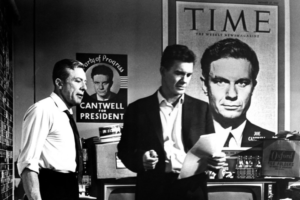
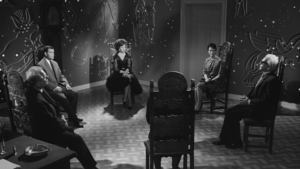
61. The Best Man (USA, 1964)

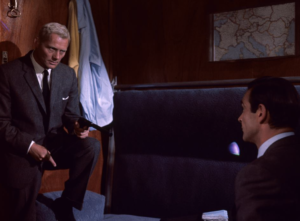
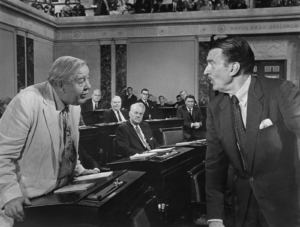
The bitter political melodrama The Best Man portrays the race for a presidential nomination with notable authenticity (for the most part, at least). Needlessly to say, among the differences between the leading candidates (including Henry Fonda, playing, as usual, the face of liberal politics) are their views on the threat of communism and the ‘missile gap.’
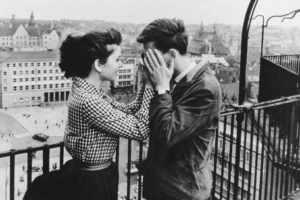
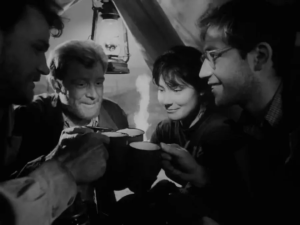
62. Divided Heaven, aka The Divided Sky (East Germany, 1964)

East German cinema produced a number of fiction and non-fiction films about the Berlin Wall, usually validating the reinforced division (like in For Eyes Only, which I brough up last time). By the mid-60s, however, the focus had begun shift, with filmmakers emphasizing the painful personal toll of separation. Adapting a best-seller by Christa Wolf (who co-wrote the screenplay), Divided Heaven is a devastatingly beautiful drama about a doomed romance, told through a complex flashback structure and startling stream-of-consciousness editing, which manages to criticize some aspects of the GDR driving its citizens away (including the intolerant hardliners and a lack of opportunities) while being much more candid, nuanced, and even-handed than any western movie about this subject. Much of the story takes place shortly before the Berlin Crisis, but the Wall looms implicitly over the entire picture and is powerfully evoked through various visual motifs splitting up the screen.
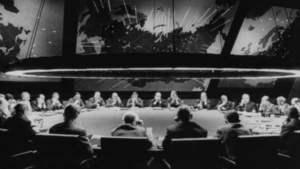
63. Dr. Strangelove or: How I Learned to Stop Worrying and Love the Bomb (UK/USA, 1964)

Deterrence based on mutually assured destruction rests on the assumption that everyone will act logically, but what happens when irrational, stupid, and fanatical people get into positions of power? That’s right, we’ve finally arrived at what is commonly – and deservedly – considered the greatest Cold War film classic… In this dark satire of the balance of terror, a deranged Air Force general manages to order an attack on the USSR (by exploiting a logical loophole in the system), so it’s up to the US President, an RAF captain, and a mad scientist (all of them played by Peter Sellers) to figure out how to prevent WWIII. Like other Stanley Kubrick pictures, Dr. Strangelove is about the dehumanizing logic of war, but on a larger scale and much funnier than usual. That said, rather than approaching the possibility of nuclear annihilation through all-around absurdist humor (like The Bed Sitting Room a few years later), the movie begins with a very deliberate deadpan tone before methodically ramping up the grotesquerie and silliness.

64. Fail Safe (USA, 1964)

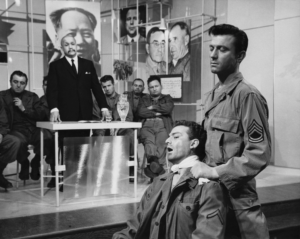
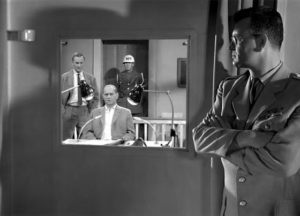
Like in Dr. Strangelove, we get to be a fly-on-the-wall witness to top-level decision-making during a nuclear crisis, leading to an equally unforgettable ending. Despite the obvious links, however, Fail Safe stands apart from Kubrick’s masterpiece – and not just because of the very different tone (earnest drama instead of farce). Rather than human irrationality overriding the system, Fail Safe exposes a flawed system to begin with, one where we’re a mere technical glitch away from large-scale tragedy. Its polemic about human agency vs overreliance on impersonal computers, therefore, seems enduringly relevant today. (This also completes a trilogy of smart political thrillers starring Henry Fonda, whom we have seen trying to become Secretary of State in Advise & Consent and presidential candidate in The Best Man.)
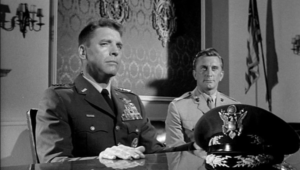
65. Seven Days in May (USA, 1964)

Then again, when the US government tries to pursue nuclear disarmament, it has to face the hawks’ staunch opposition at home. Set in the near future, this gripping web of political intrigue showcases how the global conflict corrodes domestic democracy. Note that, while Seven Days in May is Rod Serling’s first script on this list, by then he had already written some of the most iconic pieces of Cold War fiction for The Twilight Zone (not to mention the UN-commissioned TV special Carol for Another Christmas, a comically heavy-handed update of Dickens’ novella where the ghosts convert a right-wing isolationist to the cause of global cooperation!).

66. Walking the Streets of Moscow (USSR, 1964)

Light as a feather, Walking the Streets of Moscow offers a lyrical, quasi-utopian depiction of everyday life in the Soviet capital. Bodies flow through urban space as if in a dance amidst young love and artistic dreams, the competition with the West largely implicit in the inconvenient military service and in the annoying neighbor who keeps playing records in English… This may not be what life was like – but it shows you what it allegedly aspired to be.

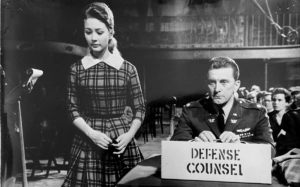
67. The 10th Victim (Italy/France, 1965)

Indeed, not everyone imagined the future as one of grey totalitarian takeover or nuclear conflict. Best remembered for Ursula Andress’ gun bra, The 10th Victim envisages doing away with wars by letting humanity vent out its violent instincts in the form of a global game where selected people hunt and kill each other. In a liberating contrast to Cold War grimness, we thus get the usual motifs of suspicion and deception displaced onto a psychedelic world where social and aesthetic values have evolved in ostensibly weird ways (including a bourgeois appreciation of comic books!). Beautifully shot, this is a cool, swingy mix of humor, sex, and fashion show, offering quite a prescient satire of reality TV. (1969’s The Gladiators and 1975’s Rollerball developed a similar premise, but through a realistic, downbeat tone that does not feel as fresh.)
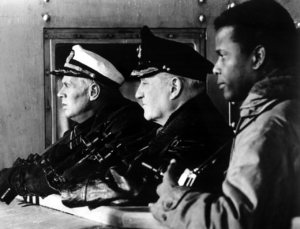
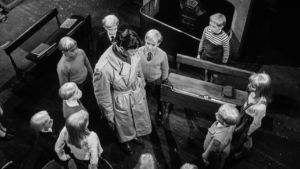
68. The Bedford Incident (UK/USA, 1965)

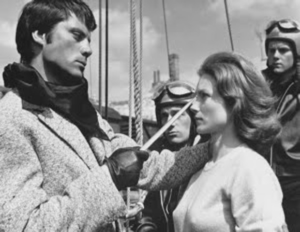
The Bedford Incident reimagines Moby Dick off the coast of Greenland – only, instead of a white whale, the captain here is obsessed with hunting a Soviet submarine. An underappreciated gem.
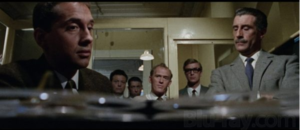
69. The Ipcress File (UK, 1965)

The first (Western) anti-Bond thriller on this list, The Ipcress File takes what could’ve been the premise of a 007 mission – involving a missing scientist and mind control – and amusingly assigns it to Harry Palmer, a low-level anti-hero dispassionately working for a dreary, underfunded, bureaucracy-laden intelligence service. I’m sure Mick Herron is familiar with this one.
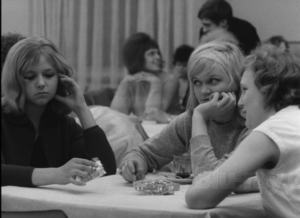
70. Loves of a Blonde (Czechoslovakia, 1965)

Concerned with the many frustrated young women working in his factory, in a village in the middle of Czechoslovakia, a supervisor convinces the People’s Army to change its military manoeuvres so that the soldiers can join the local girls for a big dance. Arguably the most delightful film of the Czech New Wave, Loves of a Blonde is a charming low-key dramedy with naturalistic performances, semi-improvised dialogue, and a delicate, organic pace. You can find in it a bittersweet depiction of life under socialism or a more universal tale about the perennial theme of young people looking for love (and sex).
Posted in COLD WAR CINEMA | Tagged , , , , | Leave a comment

COMICS CAN BE AWESOME (4 December 2023)

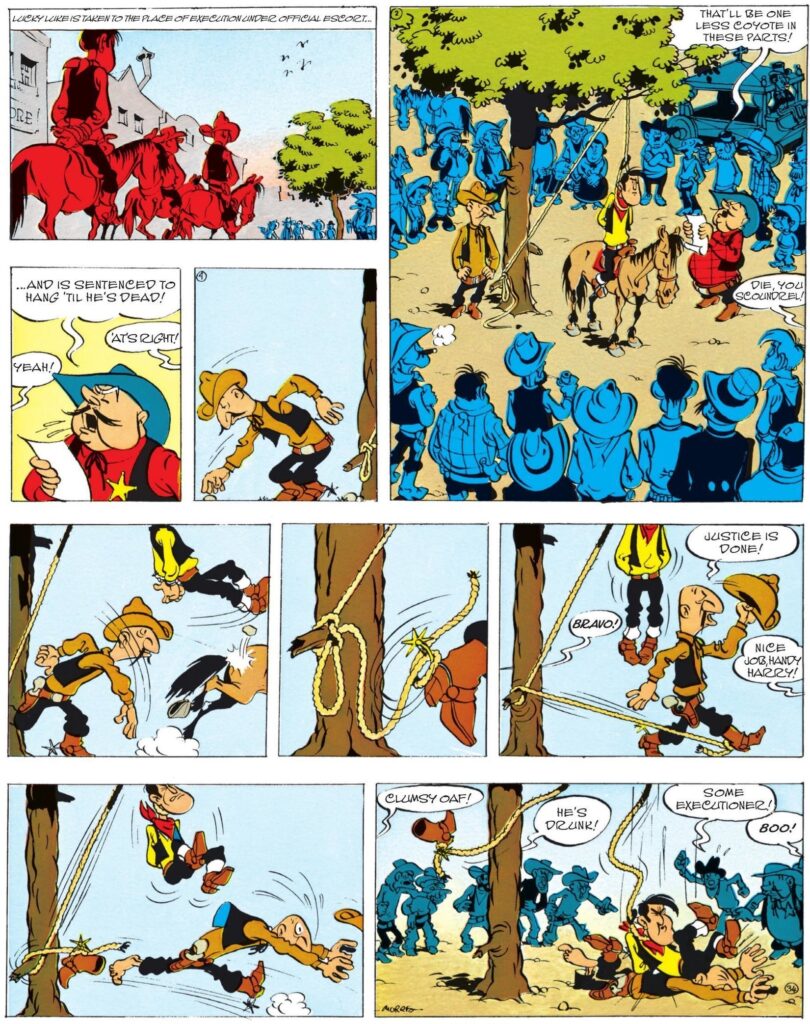
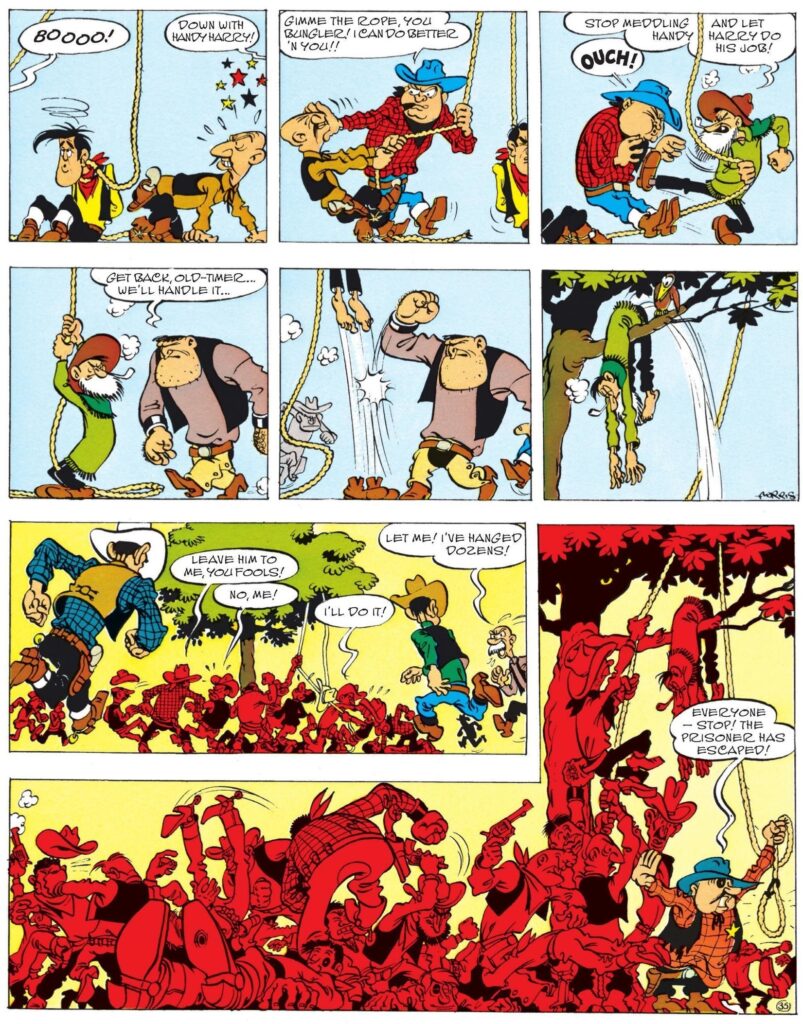
A Lucky Luke reminder that comics can be awesome:

Lucky Luke’s Double

Posted in GLIMPSES INTO THE PAST | Tagged , , | Leave a comment

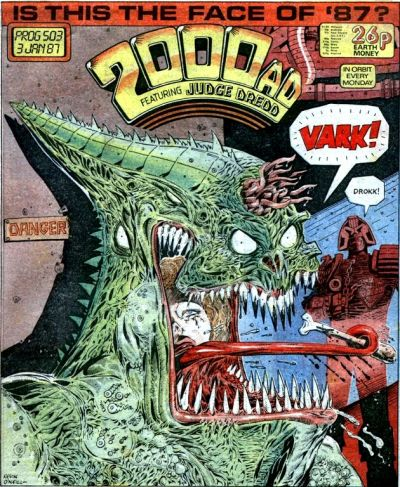
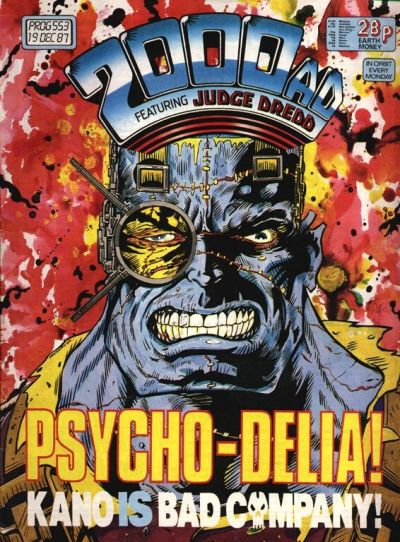
Another dozen 2000 AD covers

As mentioned before, I’m a huge fan of 2000 AD’s covers, especially of the way they spotlight the amazing character designs in those comics. With that in mind, this week I want to single out a specific subgenre of cover artwork, namely headshots that call attention to the facial features of the vast cast that has populated this anthology throughout the decades.

The features of the ‘cover models’ are often grotesque. This matches the magazine’s scornfully caustic outlook of the world as a vile, corrupt, and ultimately ridiculous place.

A key component of 2000 AD’s attitude is that it taps into a ferociously critical branch of science fiction, one that harkens at least as far back as the surreal Taylorist dystopias of Yevgeny Zamyatin’s We and Aldous Huxley’s Brave New World in the early 20th century, and which was kept alive by authors like Octavia E. Butler, with her gritty Parable book series in the ‘90s about a near-future civilizational collapse. Hell, social commentary has become such a standard staple of futuristic sci-fi that even a full-on spectacle shamelessly laden with product placement, such as Michael Bay’s The Island, can contain – seemingly without a trace of self-awareness – a populist indictment of corporate capitalism and celebrate the liberation of alienated workers.

The mix of angry defiance and commercial entertainment is plastered all over these covers…

Arguably the filmmaker that best captured the spirit of 2000 AD was Paul Verhoeven with his cyberpunk trilogy of RoboCop, Total Recall, and Starship Troopers. The latter movie, in particular, was infamously derided as a pure fascist fantasy, its ironic touches deemed insufficient to counterbalance the fact that the protagonists you’re most likely to root for represent an authoritarian civilization fighting an enemy that seems to come out of Nazi propaganda… Similar criticism has been geared towards 2000 AD’s most popular strip, Judge Dredd, but in both cases I’d say it’s too simplistic to merely consider them proto-fascist narratives; I see them more as works about the appeal of fascism (the same applies to Tom Strong, as compellingly argued by Geoff Klock in How to Read Superhero Comics and Why). You may not find fascism appealing, but the recognition that there is something alluring, cathartic, and libidinal about that ideology is not even a provocation anymore – if anything, it’s an invitation to try to understand the rise of the alt-right, from Trump to Bolsonaro.
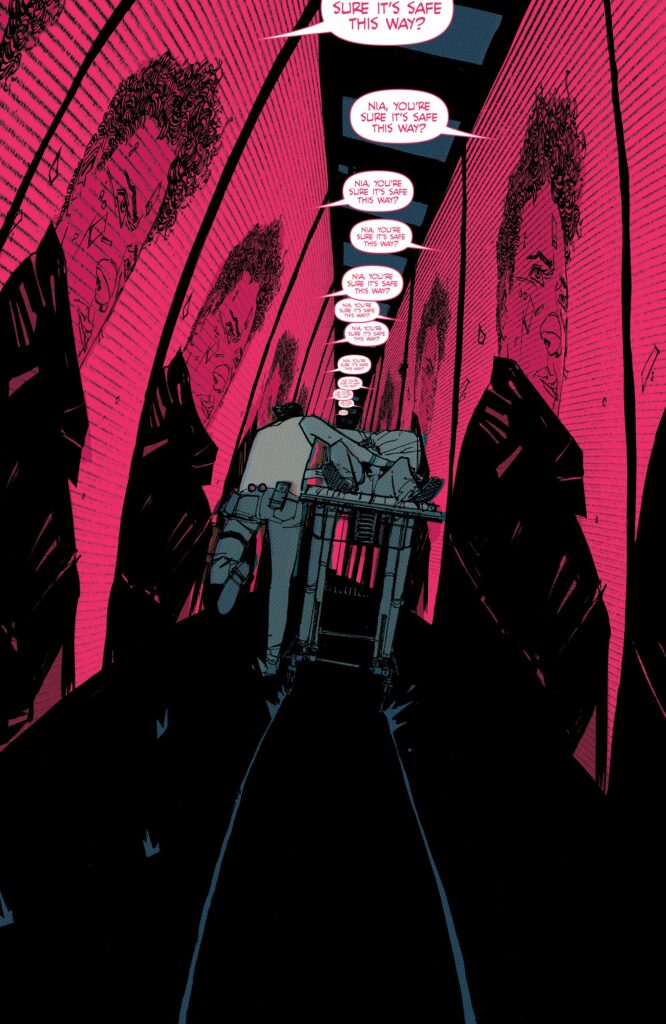
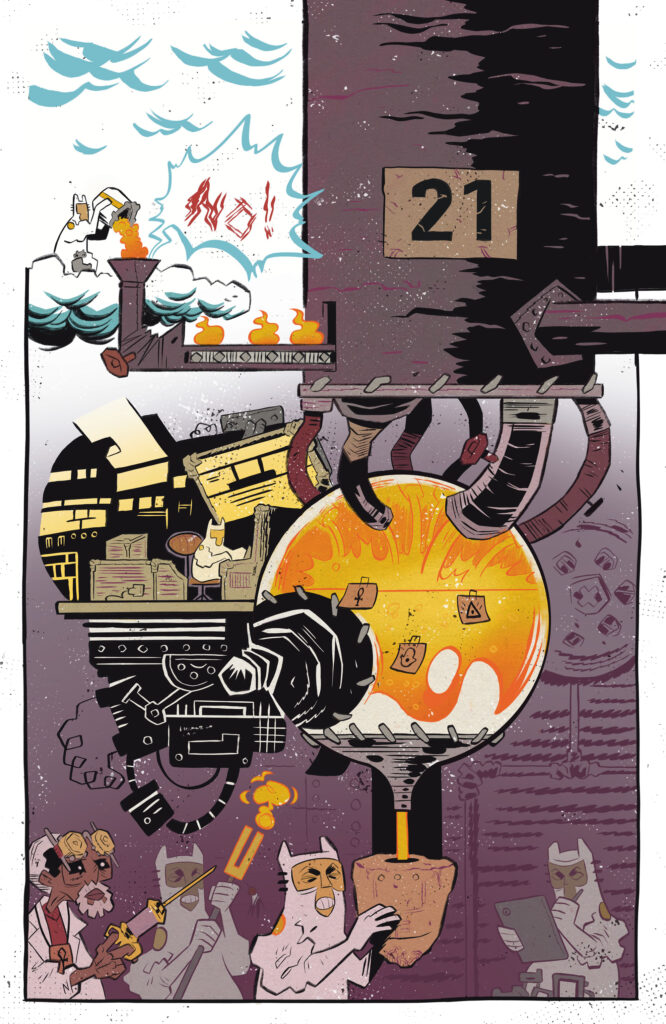
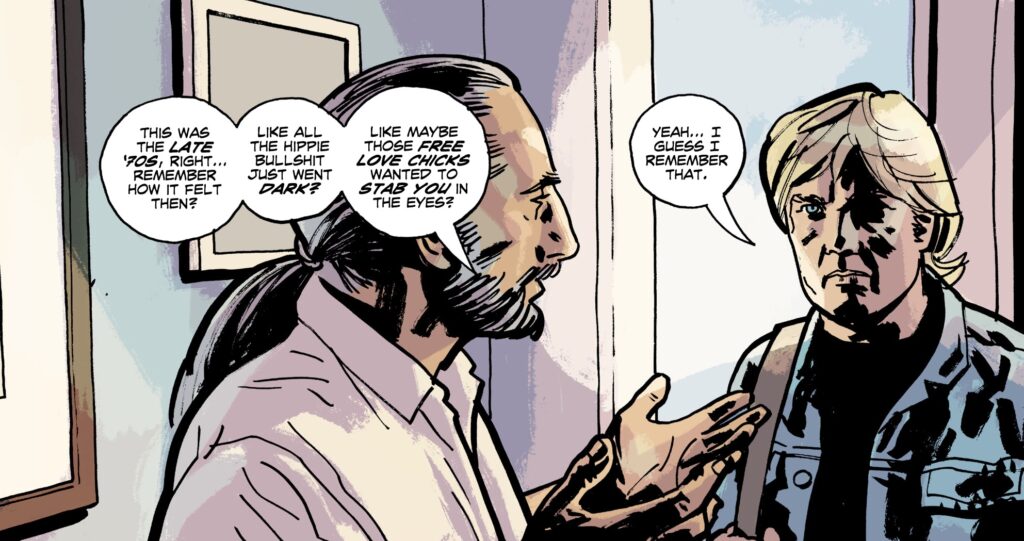
I keep finding echoes of the visually experimental and politically explosive iconoclasm of 2000 AD – and of Verhoeven, I suppose – in comic books like Marcos Prior’s and David Rubín’s Grand Abyss Hotel, Christopher Sebela’s and Hayden Sherman’s Cold War, or Juan Doe’s Spectro, although they’re bound to be informed by many other sources of inspiration (in the former’s case, certainly Frank Miller and Paul Pope… weirdly combined with the Frankfurt School of Critical Theory).

As critics and the magazine’s publisher itself keep remind us, often with a certain degree of self-mythologization, 2000 AD comes from a dark place (its seminal decade mostly coincided with Thatcherism), albeit not devoid of joy (in line with its counter-cultural sensibility). Over the years, creators have taken the chance to cut loose in terms of exaggeration and deformity, as highlighted by the close-ups in the covers. Artists with a remarkably widespread range of styles have had a go at this type of image, halfway between a mugshot and a classical portrait, showing off by detailing not only different faces, but also very different attitudes and expressions. In doing so, they have rendered a set of visceral personifications of society’s rapaciousness and monstrosity.

Posted in HEADSHOTS | Tagged , , , , , , , , , , , , , , , , , , , , , | Leave a comment

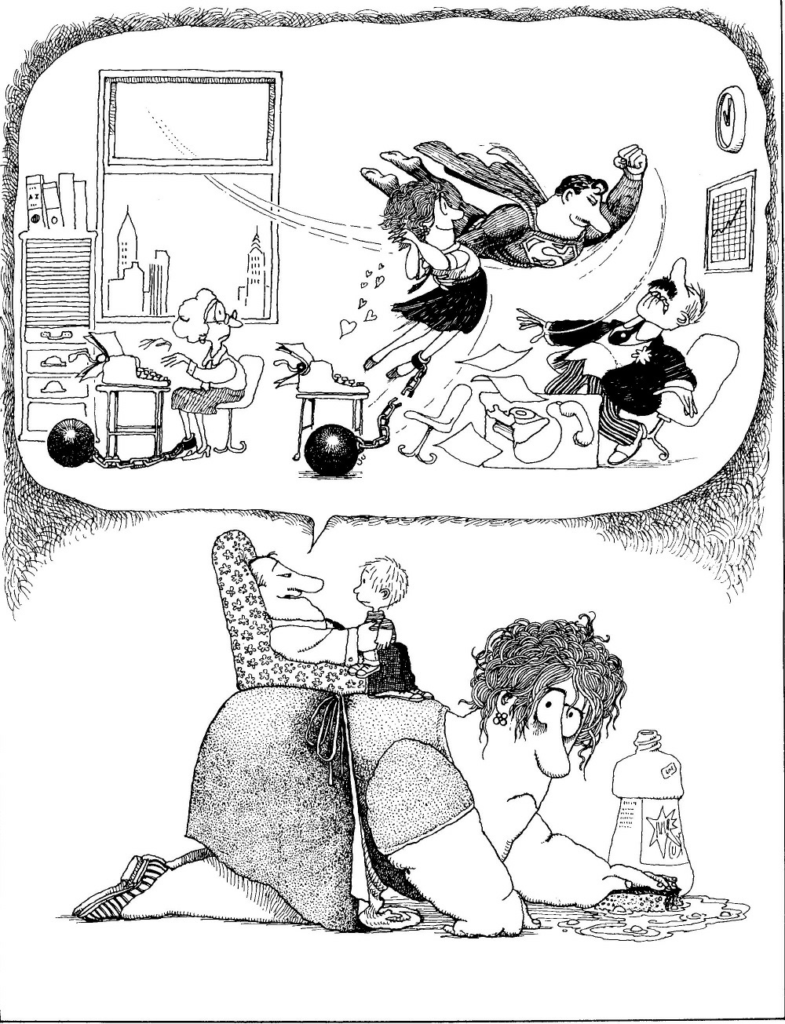
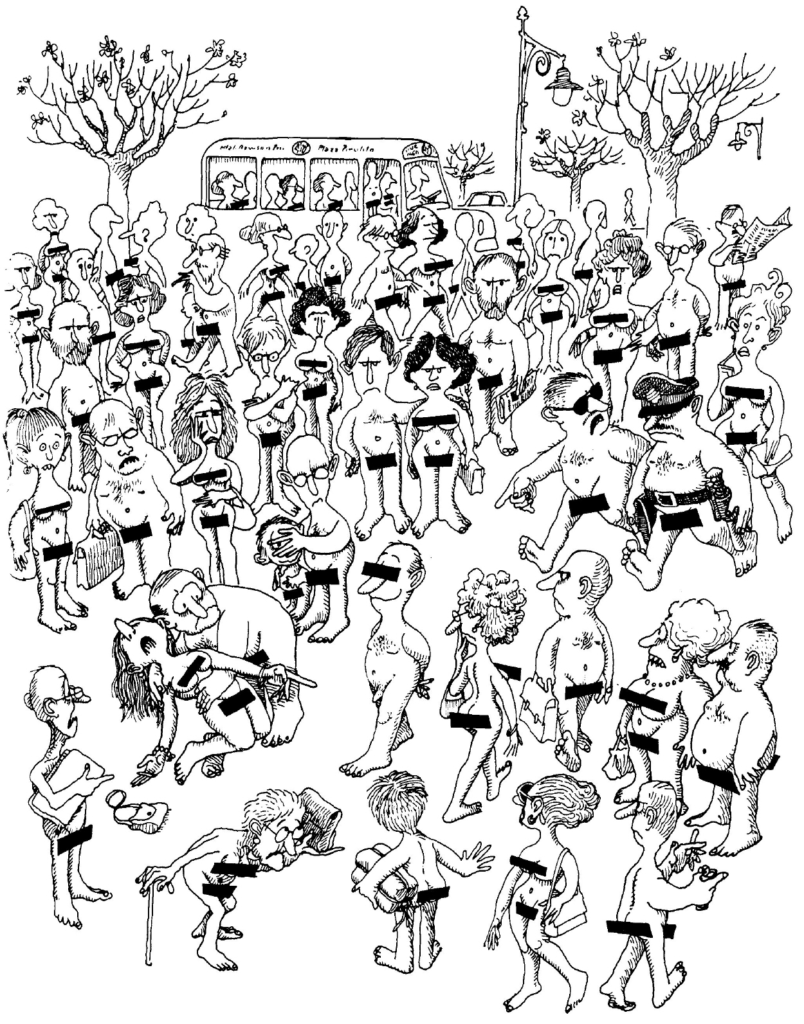
COMICS CAN BE AWESOME (27 November 2023)

One more Quino reminder that comics can be awesome:

Sí… carniño

Yo no fui!

Yo no fui!

Posted in GLIMPSES INTO AWESOMENESS | Tagged | Leave a comment

Gotham Calling’s 120 Cold War movies – part 6

We’re halfway through Gotham Calling’s tour of Cold War cinema. By this stage, it isn’t just the world situation that is rapidly changing, but filmic language itself. Apart from addressing the conflict from multiple national and ideological perspectives, most of the films below impress for the way they challenged the whole medium.

51. La Jetée (France, 1962)

Let us begin on a particularly high note… Although just 28-minutes long, the massively influential La Jetée has it all: World War III, post-apocalyptic dystopia, utopia, nostalgia, romance, telepathy, time-traveling paradoxes, and an experimental approach to visuals that still stands out today.

52. The Manchurian Candidate (USA, 1962)

A hallucinatory conspiracy yarn about soldiers brainwashed in the Korean War (one of whom is the stepson of a McCarthy-like senator). Way more bonkers than British cinema’s own quasi-simultaneous take on the brainwashing panic (the soap operatic The Mind Benders), this darkly comedic psychological thriller – which left a lasting mark in popular imagination – both caricatures the hysteria of the previous decade and disturbingly anticipates the paranoid mindset that would follow the JFK assassination. My use of pathologizing expressions is deliberate, as The Manchurian Candidate audaciously projects the protagonists’ (and presumably society’s) mental instability through disconcerting camera angles, bizarre line readings, jarring transitions, surreal imagery, and somewhat cryptic choices likely to prompt alternative readings of the story, especially regarding Eugenie’s character (2004’s remake gives this character a clearer role, but I much prefer her ambiguity here). Plus, Frank Sinatra does martial arts.

53. Nine Days of One Year (USSR, 1962)

Set in a nuclear research institute in Siberia, this remarkable drama focuses on the love triangle of a dedicated experimental physicist (who carries on despite having received deadly doses of radiation), a lively theoretical physicist (his cynical counterpart), and a frustrated wife (whose inner monologues we get to hear). As promised by the title, the film zooms in on a few selected days in their lives, grappling with dilemmas over science (from fusion power to space exploration), the political and ethical dimension of their work (should researchers be grateful for the war that funds their studies?), interpersonal relations, and, of course, mortality. Yes, it’s thematically heavy, but the cinematography and characterization make Nine Days of One Year aesthetically and emotionally rich as well.

54. A Prize of Arms (UK, 1962)

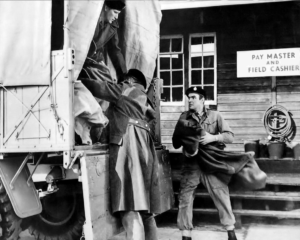
Besides delivering a nail-biting heist at a British army barracks, A Prize of Arms gains an extra layer of interest because the whole thing is set against the backdrop of the Suez Crisis, so this one also works as a microcosmic illustration of the UK’s threatened – and declining – military power.

55. The Damned, aka These Are the Damned (UK, 1963 [1961])

The title evokes Village of the Damned and some of that film’s imagery does echo here, loosely, but this is a much more offbeat concoction. An eerie and unsettling sci-fi piece (with a touch of incest psychodrama) set on the English coast, The Damned somehow brings together a youth gang, an extravagant sculptor, an unlikely pair on the run, and a secret military programme to prepare children to survive the upcoming nuclear holocaust.

56. For Eyes Only (East Germany, 1963)

I’m not gonna lie: as a spy thriller, this is a taut yet low-key affair (loosely based on actual espionage operations) that pulls off many of the usual tropes with average competence and some groovy music. What makes For Eyes Only stand out is that, because it’s an East German production, the film fully reverses the genre’s typical geopolitical perspective: the hero is a Stasi agent who infiltrates Western secret services to prevent an attack against the East (thus implicitly validating the defensive construction of a protective Berlin Wall…). It even finishes with a chase scene in which, for once, the protagonist is desperately trying to cross the border *into* the GDR! (Recently, the show Deutschland 83 started off with a similar premise, but it had such a cynical depiction of the East that it ended up falling for the usual Western stereotypes…  whereas For Eyes Only is the real deal, without any retroactive sense of irony or self-reflection.)

57. From Russia with Love (UK/USA, 1963)

James Bond goes to Istanbul to help a sexy Russian cipher clerk defect to the West, even though he knows damn well the whole thing is bound to be a trap. Like in most 007 pictures, the main villain is not the USSR itself, but a third party exploiting the Cold War (although the Soviets are nonetheless generally coded as evil).Besides being an obvious counterpart to the likes of For Eyes Only, this is also a spiritual opposite of A Prize of Arms: here, everyone acts as if Britain is still a major geopolitical player in the new world order, Suez and decolonization be damned. The formula and themes apply to practically all of the Bond film series, so this entry stands as representative of the entire franchise. (From Russia with Love was always my favorite… at least until 2006’s Casino Royale came along!)

58. Ikarie XB 1 (Czechoslovakia, 1963)

Interested both in outer space travel and in the evolution of earthly society, this sci-fi masterpiece about a ship searching for life in Alpha Centauri, in 2163, visualizes a utopia where the Cold War is ancient history and mechanization has freed workers from most physical labor (to the point that the astronauts actually seem bored in the first stretch of the film, before the adventure kicks in), even if there is still lingering gender, racial, and generational inequality. Ikarie XB-1 probably feels even more fantastic now than it did at the time… In just a few years, the Soviets had launched into orbit the first satellite, the first dog, and the first cosmonaut, to which JFK responded by promising – accurately, as it turned out – to put a(n American) man on the moon before the end of the decade. At the time, therefore, Czechoslovakian imagination could credibly accommodate these future paths of both technology and socialism. (Stay the fuck away from the botched US version, titled Voyage to the End of the Universe!)

59. Ladybug Ladybug (USA, 1963)

Reverberations of the Cuban Missile Crisis start to hit the screen. Set in a countryside elementary school where the nuclear attack warning suddenly goes off, Ladybug Ladybug follows the varied reactions of teachers and students, from disbelief and growing terror to Lord of the Flies shenanigans and a melancholic acceptance of mortality. Sure, with the focus on children comes some blatantly manipulative sentimentalism, but for the most part the movie gets a lot of mileage out of the naturalistic acting, the understated direction, the characters’ believable behavior, and a chilling ending (all of this makes for a stark contrast with the similarly themed – yet hysterically reactionary – Panic in Year Zero!).

60. The Little Soldier (France, 1963 [1960])

While the Algerian War gave us the greatest war movie ever made (The Battle of Algiers) and arguably the greatest musical (The Umbrellas of Cherbourg), they fully disregard the Cold War dimension. In turn, The Little Soldier follows a French agent caught between his own secret service and communists fighting for the independence of Algeria. This description makes it sound too linear, though… That’s in the film, for sure, but also everything else that Jean-Luc Godard felt like shooting at the time. The result is often baffling, but provocative enough for it to have gotten banned in France until the end of the war.

Posted in COLD WAR CINEMA | Tagged , , , , | Leave a comment

COMICS CAN BE AWESOME (20 November 2023)

Another dazzling reminder that comics can be awesome…

Thumbs #1

Legion of X #1

Monkey Meat #1

Posted in GLIMPSES INTO AWESOMENESS | Tagged , , , , , , , , | Leave a comment

Catching up with crime comics – Ed Brubaker edition, part 2

As much as Ed Brubaker’s work can be hit-and-miss for me, he remains one of those writers – like Garth Ennis or Warren Ellis – whose comics I always end up checking out, sooner or later. For one thing, their books tend to be pretty damn readable, in a ‘comfort food’ sort of way. But it’s more than that: even if I don’t love all these authors do, I feel like I get where they’re coming from and it’s interesting to see their latest take on familiar motifs.

For instance, Brubaker keeps going back to the culture he consumed in his youth and reimagining it through older eyes, with a more mature sensibility and characterization.

One of the most satisfying of Ed Brubaker’s regular collaborations with artist Sean Phillips has been a series of graphic novels about the exploits of Ethan Reckless (yep), a badass Vietnam vet whom people hire to solve their problems (usually through violence) when they can’t go to the authorities. Brubaker has presented this as a throwback to the John D. MacDonald-style pulp novels he read growing up, with their lurid painted covers and cool thrillers about manly adventurers, criminals, spies, and private eyes.

The premise certainly feels like an adolescent fantasy: working without a boss and only when he feels like it, in his downtime Ethan Reckless is a surfer who lives in an abandoned movie theater where he gets to watch his favorite classics on the big screen. The setting of 1970s-80s’ California likewise feels informed by nostalgia… which is not to say that Reckless posits a rose-tinted view of the era. Rather, the books fully embrace those decades’ bleaker, seedier elements, from the rise of skinheads and CIA’s dirty ops all the way to predatory real estate deals and post-hippie cults.

Friend of the Devil

Although sharing a neo-noir style and story beats, each book has its own identity. The second volume, Friend of the Devil, is a Chandleresque detective story in Hollywood, which is something Brubaker excels at. The third one, Destroy All Monsters, despite the bombastic title, is more of a low-key character study about friendship. And if that one fleshes out the character of Ethan Reckless’ punk assistant Anna, she effectively becomes the protagonist of the fourth book, The Ghost In You, which is a mystery yarn with hints of weird horror. And then came Follow Me Down, a devastating take on the woman-on-a-vengeful-rampage subgenre (with obligatory nods to Hannie Caulder and The Bride Wore Black) against the backdrop of a San Francisco still recovering from the 1989 earthquake.

Thanks to Brubillips’ dependable, confident storytelling (developed over twenty-plus years of collaboration), every single one of these has been a treat. Sure, there are still the occasional condescending passages (like when Ethan explains directly to the reader that he’s looking at microfiches because there weren’t digital cameras or laptops back in the 1980s), but I’ve even come to accept the overexplanatory inner monologues (which make every motivation explicit) as just another form of narrative clarity and comfort.

Reckless

Hell, after a while, this just becomes part of Ethan Reckless’ personality – it’s is just how he thinks, constantly justifying his actions. And the framing devise (for the most part, at least) is that Ethan is writing his memoirs in the 21st century, so I can see the tendency to oldmansplain as coherent with his authorial voice.

Moreover, as it’s often the case, what helps sell these books is Sean Phillips’ efficient, unflashy artwork. Although the word-heavy storytelling doesn’t leave much room for visually driven action, Brubaker wisely relies on Phillips to set the right the mood – which he consistently nails, in part due the addition to the team of colorist Jacob Phillips, with his knack of evoking Los Angeles’ peculiar light (especially in the beautiful surfing scenes), just as he did for Texas in That Texas Blood (an absolute must-read for fans of Criminal and Reckless).

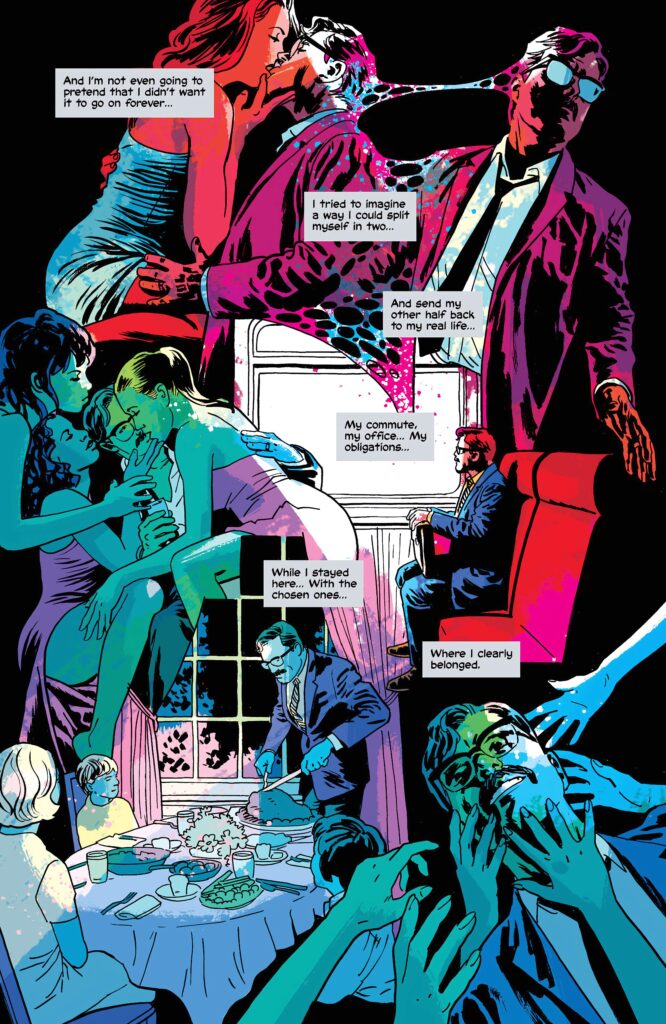
This creative trio reunited for an unconnected project, the standalone graphic novel Night Fever, but there my praise is more uneven. Brubaker was hardly in top form, penning a derivative Eyes Wide Shut-ish midlife-crisis narrative about a family man on a business trip to Paris who gets involved in a nighttime adventure where he gets to act out stereotypical male fantasies (recently, you could find a much more ingenious spin on this type of tale in Brandon Cronenberg’s Infinity Pool). In turn, the two Phillips outdid themselves, bringing to life an eerie atmosphere that is suitably enigmatic, nightmarish, and erotic.

Night Fever

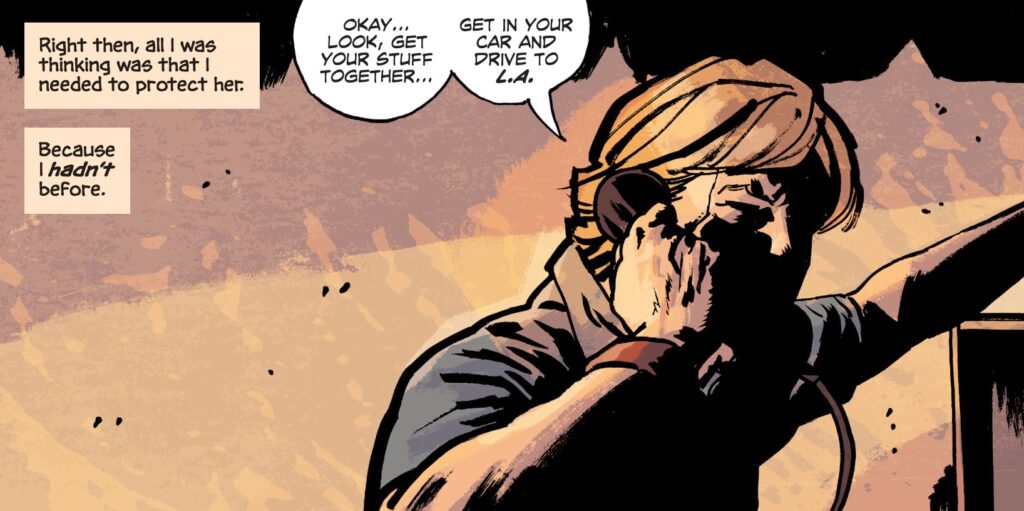
The other great duo who has been working with Ed Brubaker are artist Marcos Martín and colorist Muntsa Vicente, his collaborators on Friday, a series about a couple of former child detectives – now in their late teens – who get involved an atypically violent case.

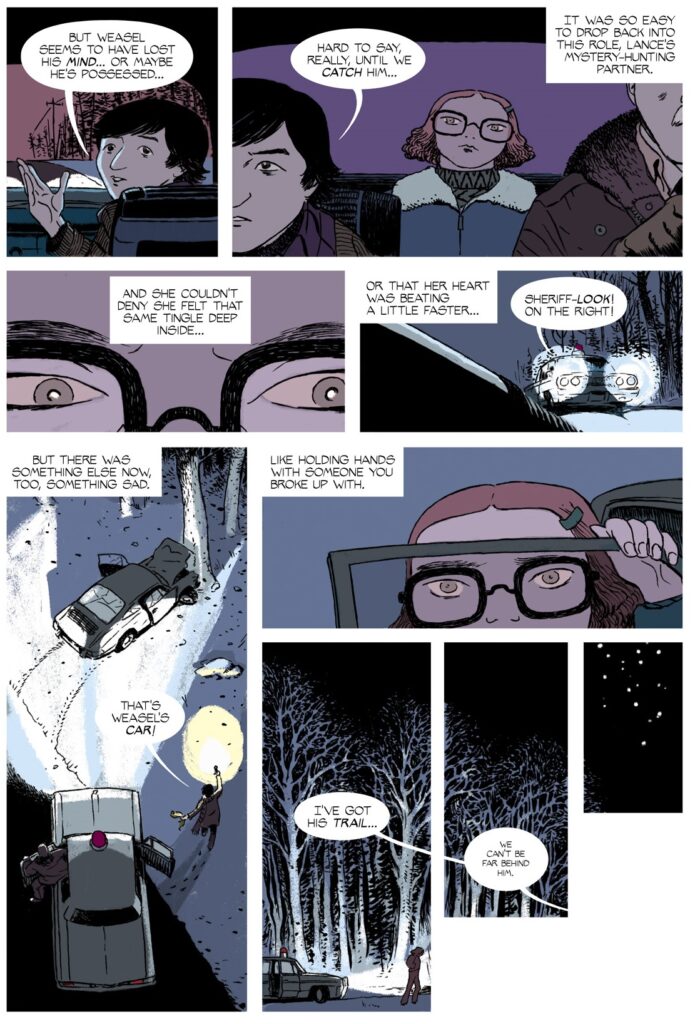
The artwork in this one is particularly lovely. On top of some inventive page layouts, the delicate designs and wintery palette capture a certain sense of fading innocence and quaint small-town life, both evoking the gentle milieu of the likes of Encyclopedia Brown and imbuing it with a newfound melancholia. This creates the perfect balance for Brubaker to engage with the emergence of more mature and conflicted feelings…

Friday #1

Not that you need much intertextual baggage to appreciate Friday… Even if you’ve never read the sort of mysteries the series is riffing on, the comic does a solid job of establishing the premise and character types as it follows an intriguing investigation (with a supernatural flavor).

That said, this is a series about growing up and the metafictional element does enhance its thematic strength. Ed Brubaker has called Friday post-YA fiction, in that it involves bringing adult themes into YA concepts (or, as a librarian reader has pointed out in the letters section, ‘middle grade’ rather than ‘young adult’ concepts). In that sense, it is a return to the gesture he did in the Criminal arc ‘The Last of the Innocent’ – and something that a number of other creators have had a stab at in recent times (none of them more hilariously than John Allison in Wicked Things).

Because Friday is a Brubaker comic, though, growing up doesn’t just mean handling more responsibilities and becoming more aware of the world’s complexity. It means shit will get dark.

Friday #2

Posted in HARDBOILED CRIME | Tagged , , , , , , , , , | Leave a comment

COMICS CAN BE AWESOME (13 November 2023)

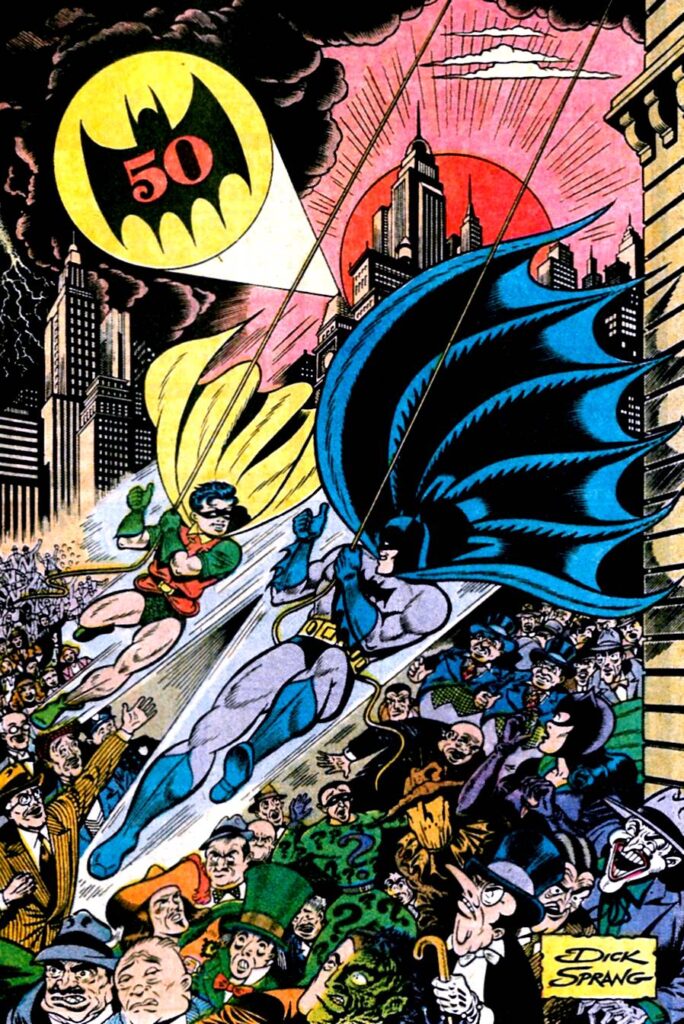
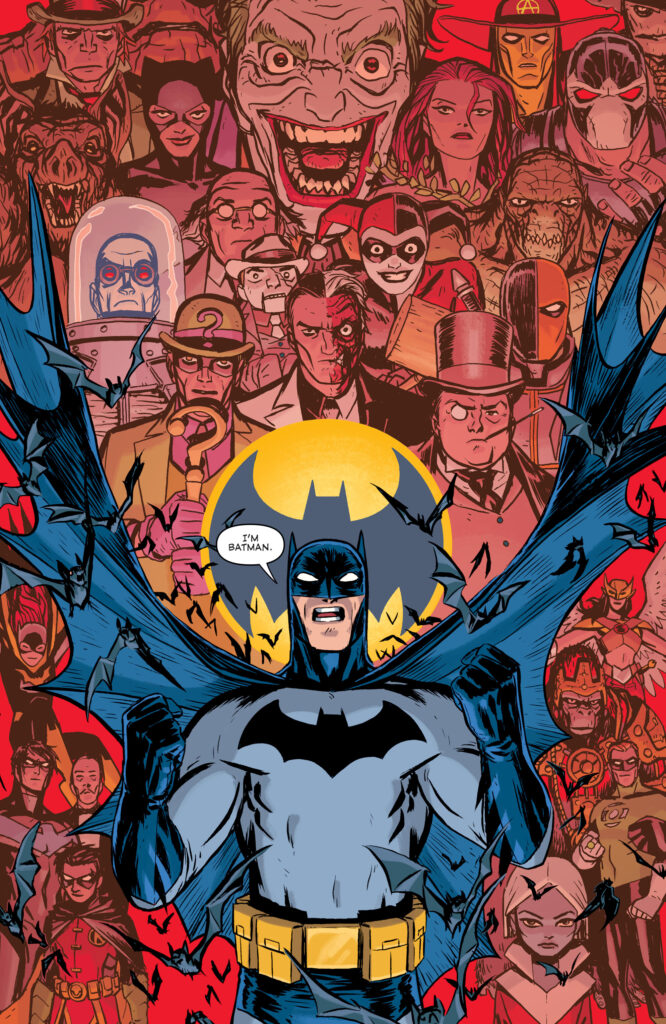
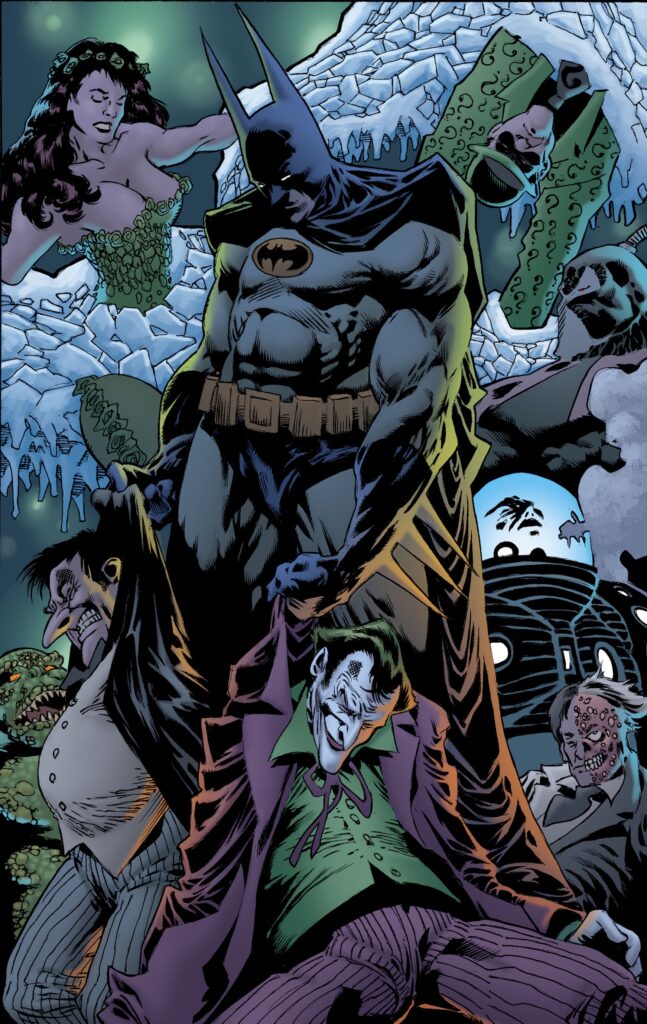
World events keep bringing to mind punk rock songs I hadn’t revisited in a while, but occasionally I also look for more escapist fare… This includes pleasant reminders that comics can be awesome, such as this trio of lusciously crowded Batman splash pages:

Detective Comics #600

Batman: Universe #6

Kings of Fear #1

Posted in GOTHAM INTERLUDES | Tagged , , , , , | Leave a comment

Gotham Calling’s 120 Cold War movies – part 5

Gotham Calling’s curated retrospective of Cold War cinema arrives at the 1960s and, for the most part, the mood is one of doom and different types of terror… but this is nevertheless a creatively fertile period, generating a bunch of pungent films around the world.

41. Letter Never Sent, aka The Unsent Letter, aka The Unmailed Letter (USSR, 1960)

The first Soviet entry on this list is a ruthless survival adventure featuring a small group of geologists in Siberia on an expedition in search of diamonds to fund the USSR’s industry and space programme, shot through virtuoso camerawork and jaw-dropping photography. Despite the overtly political framing by the initial scroll, much of the film – made during the post-Stalin ‘thaw’ era – actually paints quite a skeptical picture of typical motifs of socialist fiction such as the authorities’ efficiency and humanity’s ability to harness nature… Hell, you can even read into it an allegory of labor camps or of nuclear destruction. (Director Mikhail Kalatozov followed this with I am Cuba, an even more spectacular-looking chronicle of the lead-up to the Cuban Revolution, but although the Cold War connection is more blatant in that one, I much prefer the genre thrills of Letter Never Sent.)

42. The Thousand Eyes of Dr. Mabuse (West Germany/Italy/France, 1960)

The culmination of one of the most eccentric trilogies in the history of cinema: if in 1922’s Dr. Mabuse the Gambler Fritz Lang captured the social chaos of post-WWI Germany through the schemes of the titular master criminal, and in 1933’s The Testament of Dr. Mabuse Lang conjured up an expressive symbol of the rise of fascism while elevating him to supervillain, The Thousand Eyes of Dr. Mabuse blasts this dark, pulpy series into the Cold War. And while this offbeat sequel is a heady puzzle box where new characters mysteriously circle each other with no clear connection to the previous films until the final minutes, thematically the series’ overarching narrative frames nuclear danger and expanding surveillance within a genealogy of evil across the decades. Moreover, many of the movie’s concepts and set pieces pave the way to the spy-fi strand that will gain prominence throughout the rest of the ‘60s.

43. Village of the Damned (UK/USA, 1960)

Similarly, the primary horror in Village of the Damned doesn’t originate from the geopolitical division itself, even though the latter appears to be in the mind of the authorities responding to the odd occurrences of a small British village, including a batch of children with mental powers… The enemy within and collective thinking have never looked so sinister, but, while the military and the Home Office defend coercion in the name of national security (and monitor how the Soviets are dealing with the situation), a scientist dreams of a new generation that can push the world beyond wars, disease, and human misery. And so, despite the supernatural twist, we get another atomic-era cautionary tale about science’s destructive potential. (The premise was reworked in strident pacifist terms for 1964’s Children of the Damned, where the Cold War themes are much more pronounced, but I prefer this version’s creepy restraint and ambiguity.)

44. The Day the Earth Caught Fire (UK, 1961)

Focusing on the disruptive potential of nuclear bomb tests regardless of whether or not they lead to actual war, The Day the Earth Caught Fire is one of the most atmospheric entries into the early apocalyptic cycle, combining an over-the-top premise with an ‘adult,’ realistic treatment. Much of it is told from the perspective of a newspaper, complete with witty, rapid-fire dialogue worthy of His Girl Friday and Ace in the Hole.

45. One, Two, Three (USA, 1961)

If it’s rapid-fire dialogue you want, though, look no further than One, Two, Three, an absolutely frantic screwball farce about the head of Coca-Cola in West Berlin trying to impress his boss to get a promotion… If A Foreign Affair was Billy Wilder’s caustic take on Trümmerfilme, here the whole storyline about the capitalist’s daughter falling for a communist plays like a madcap spoof of the subgenre of divided Germany romance I brought up a few posts ago, with both sides of the Cold War cynically presented as grotesque (each in its own way) and horny (in pretty much the same way).

46. Paris Belongs to Us (France, 1961)

Part mystery, part conspiracy thriller, part existentialist drama, even without the explicit references to McCarthyism the extraordinary Paris Belongs to Us would’ve earned a place on this list for the way it eerily nails a general zeitgeist of anxiety and paranoia.

47. Pigs and Battleships (Japan, 1961)

A youthful, irreverent, and vibrantly directed gangster picture, Pigs and Battleships offers a biting portrayal of the black market rackets – and widespread prostitution – surrounding the expansion of US military bases abroad, particularly in Japan.

48. Town Without Pity (USA/Switzerland/West Germany, 1961)

Town Without Pity addresses a similar topic, but using a very different approach. Making the most out of an ultra-catchy song, this is a courtroom drama about the trial of Germany-based GIs accused – and guilty – of gang-raping a local girl. Based on a novel inspired by an actual incident, Gottfried Reinhardt’s picture may not be as ambiguous as Otto Preminger’s Anatomy of a Murder, but it provocatively engages with the violence of putting a rape victim on the witness stand to be confronted by a defense lawyer whose job is to publicly discredit her… It’s also a potent film about the oppressive presence of the US military abroad, about a conservative West Germany dealing with more foreign troops and military bases than any other country in the world, and about the social disruption that can be found in the various fronts of the Cold War.

49. Advise & Consent (USA, 1962)

Speaking of Preminger… His willingness to delve in moral complexity and treat audiences like intelligent adults is in full display throughout Advise & Consent, a sophisticated political thriller about the nomination process for a US Secretary of State which tackles the era’s recent witch hunts. (If Anatomy of a Murder was no doubt on the watch list for the writers of The People v. O.J. Simpson, this one comes across like a convincing pilot episode for The West Wing!).

50. Escape from East Berlin, aka Tunnel 28 (USA/West Germany, 1962)

And so we get to the Berlin Wall, which didn’t just alter the Cold War’s landscape (drastically materializing division and adding yet another source of suffering), but it also fuelled an entire subgenre of movies about daring escapes from East Germany. Although openly propagandistic and sensationalistic – including documentary-like voice-overs and archival footage – these works nevertheless provided genuine tension and thrills by borrowing the effective dramatic structure of prison/POW narratives (having us root for heroes in search of freedom, with deadly stakes) while also resonating with outrage over the real-world situation. Still, emotional manipulation and suspense can be done with varying levels of cinematic skill… Made less than a year after the Wall’s construction, Escape from East Berlin delivers the goods with classical clarity, benefitting from a particularly taut mise-en-scene. While the acting isn’t always top-notch, director Robert Siodmak uses the expressionistic visual style he developed doing horror and film noir to create a tighteningly claustrophobic GDR. And for all its anti-communism, it’s also a story about teamwork and solidarity.

Posted in COLD WAR CINEMA | Tagged , , , , | Leave a comment

COMICS CAN BE AWESOME (6 November 2023)

It may not be much of a consolation in the grand scheme of things, but here is your weekly reminder that, hey, at least comics can be awesome…

The Ambassadors #1

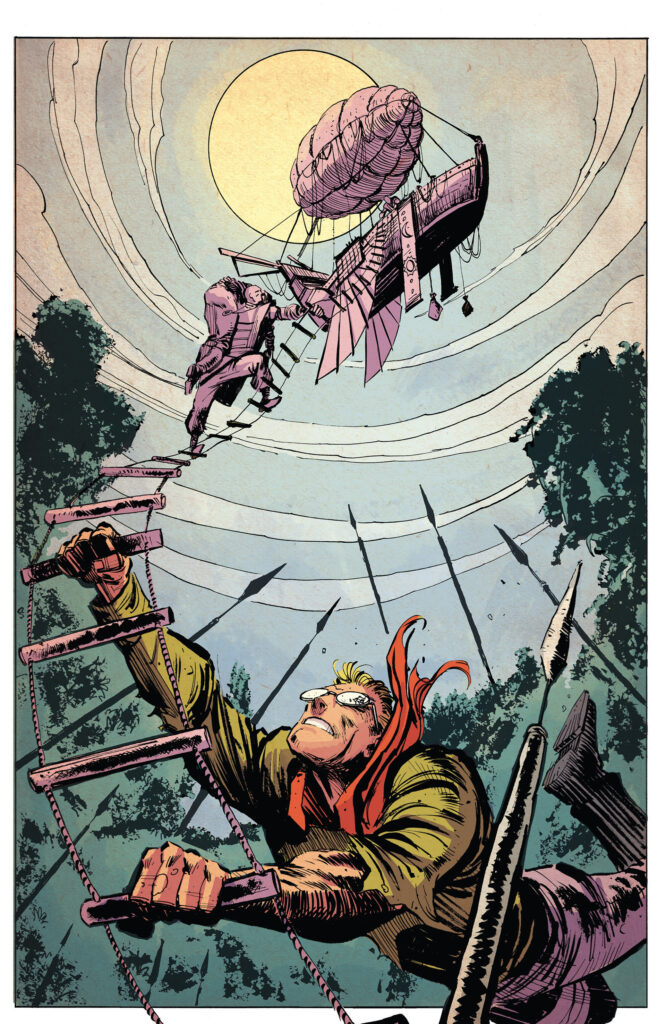
Five Ghosts: The Haunting of Fabian Gray #2

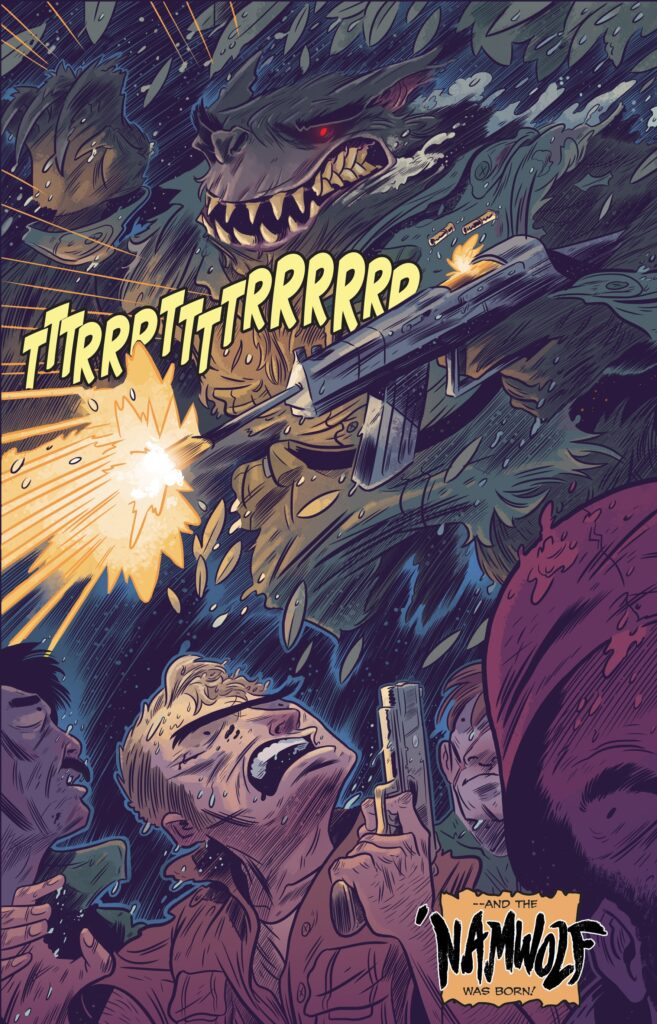
Namwolf #1

Posted in GLIMPSES INTO AWESOMENESS | Tagged , , , , , , , , | Leave a comment