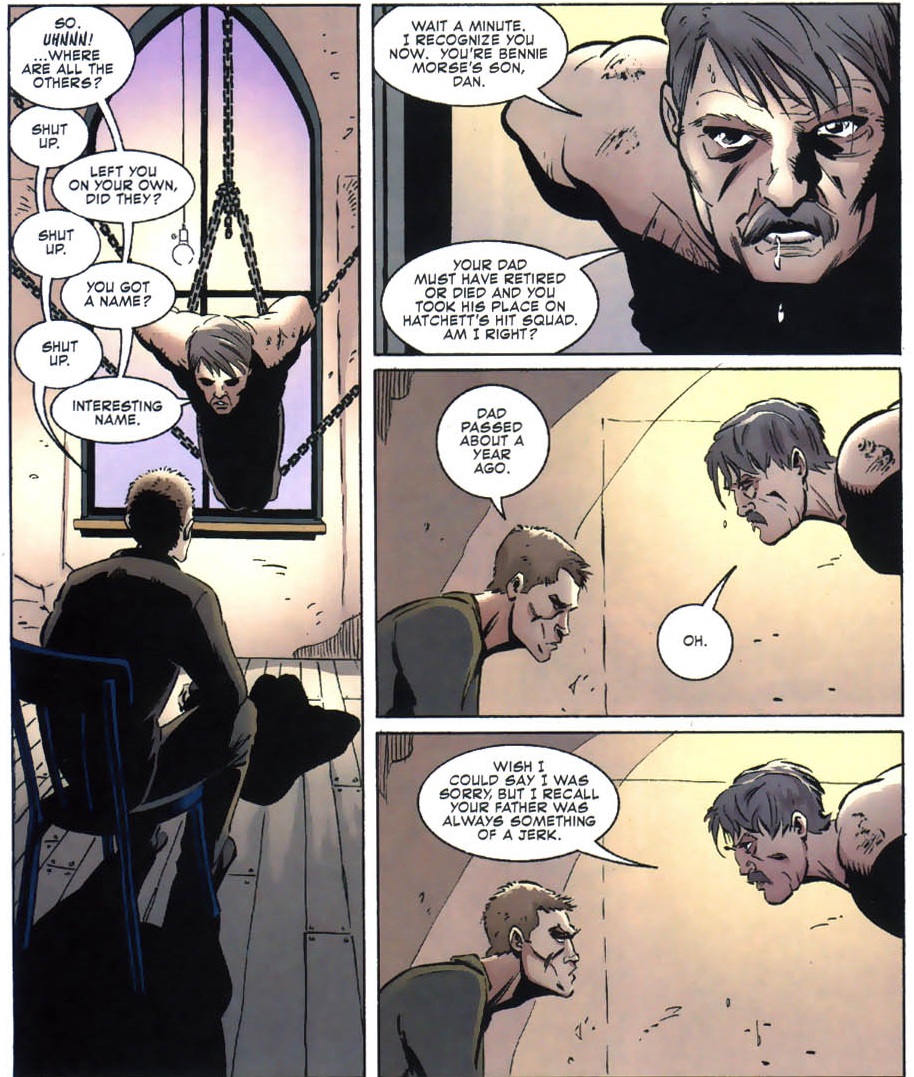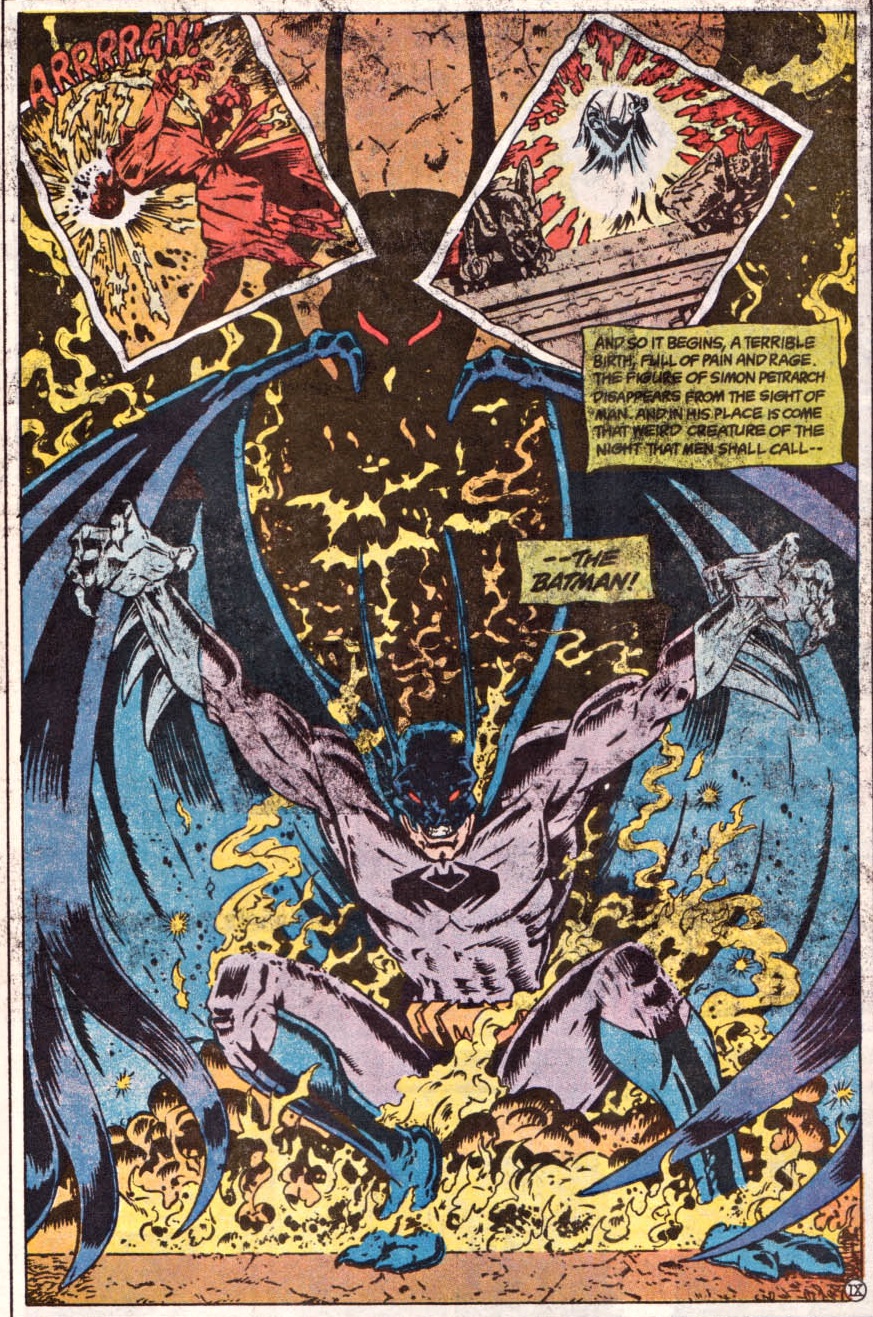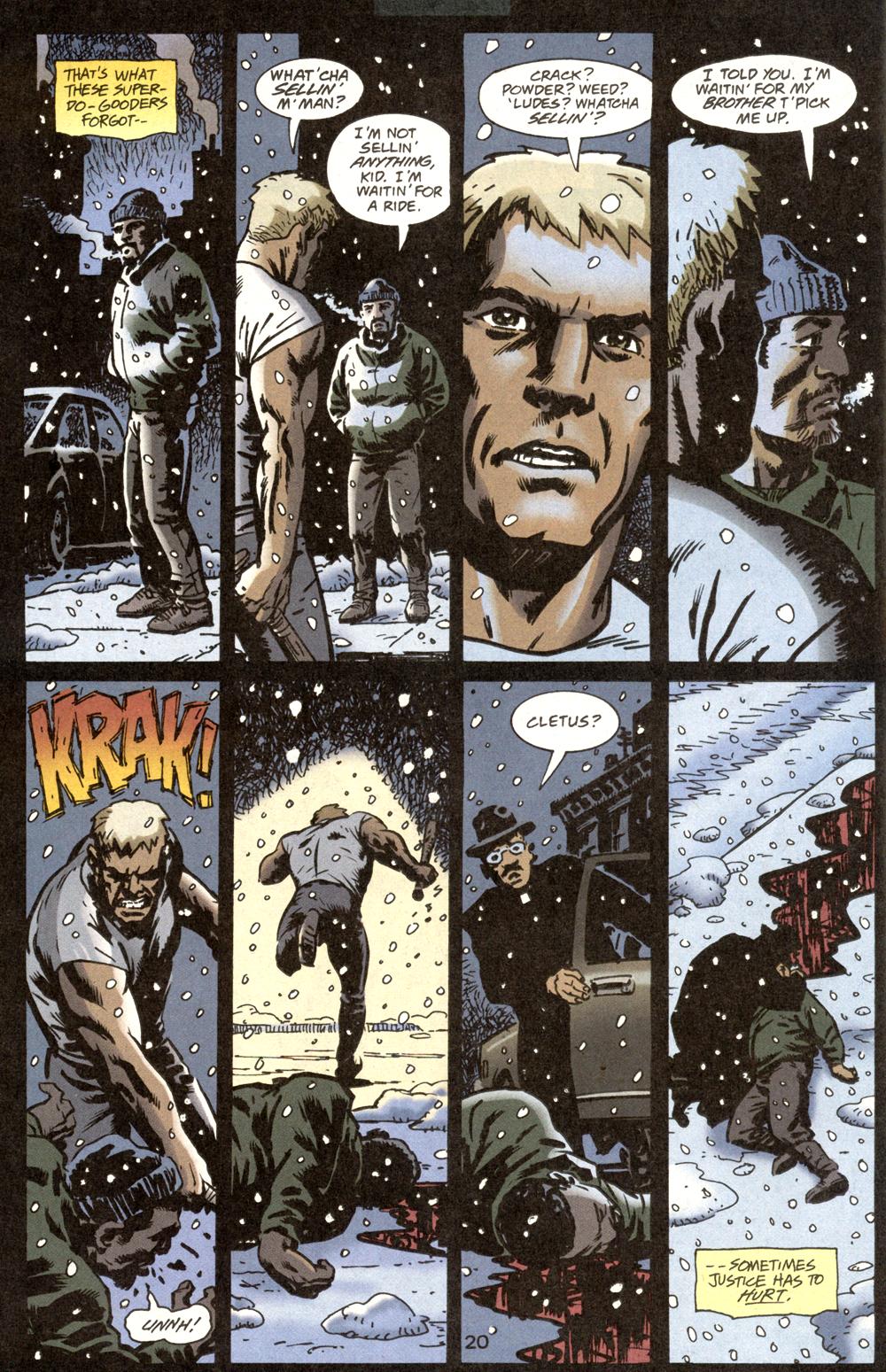
On Gotham City’s beat cops

According to Mike’s Amazing World, the very first Batman tale came out eighty years ago this week, in Detective Comics #27. I figured I should mark the occasion on this blog with something different, so this week I’m going daily – each day, I’ll put up a post spotlighting specific aspects of Batman comics I really like.

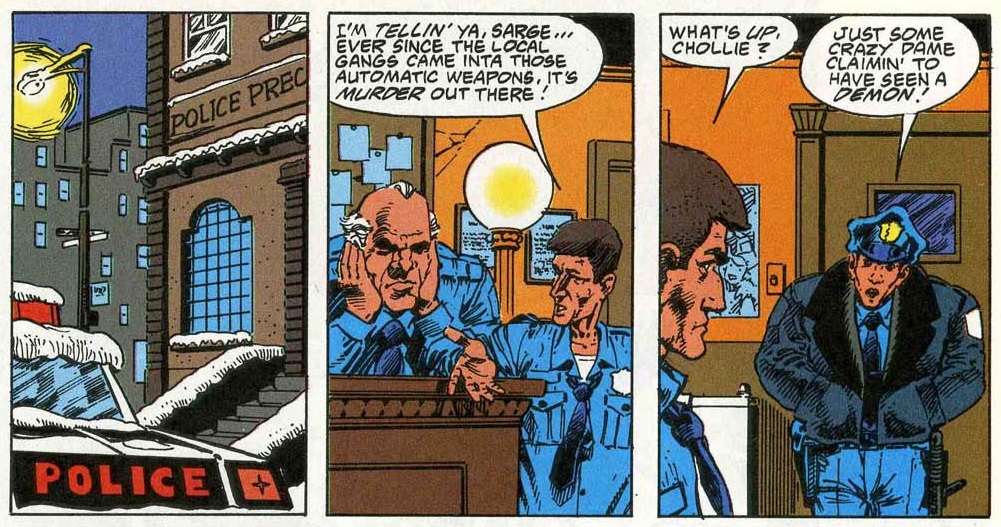
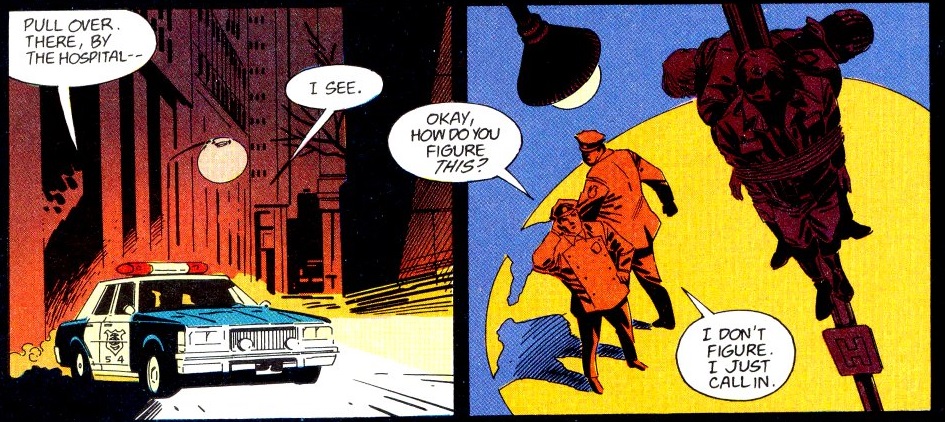
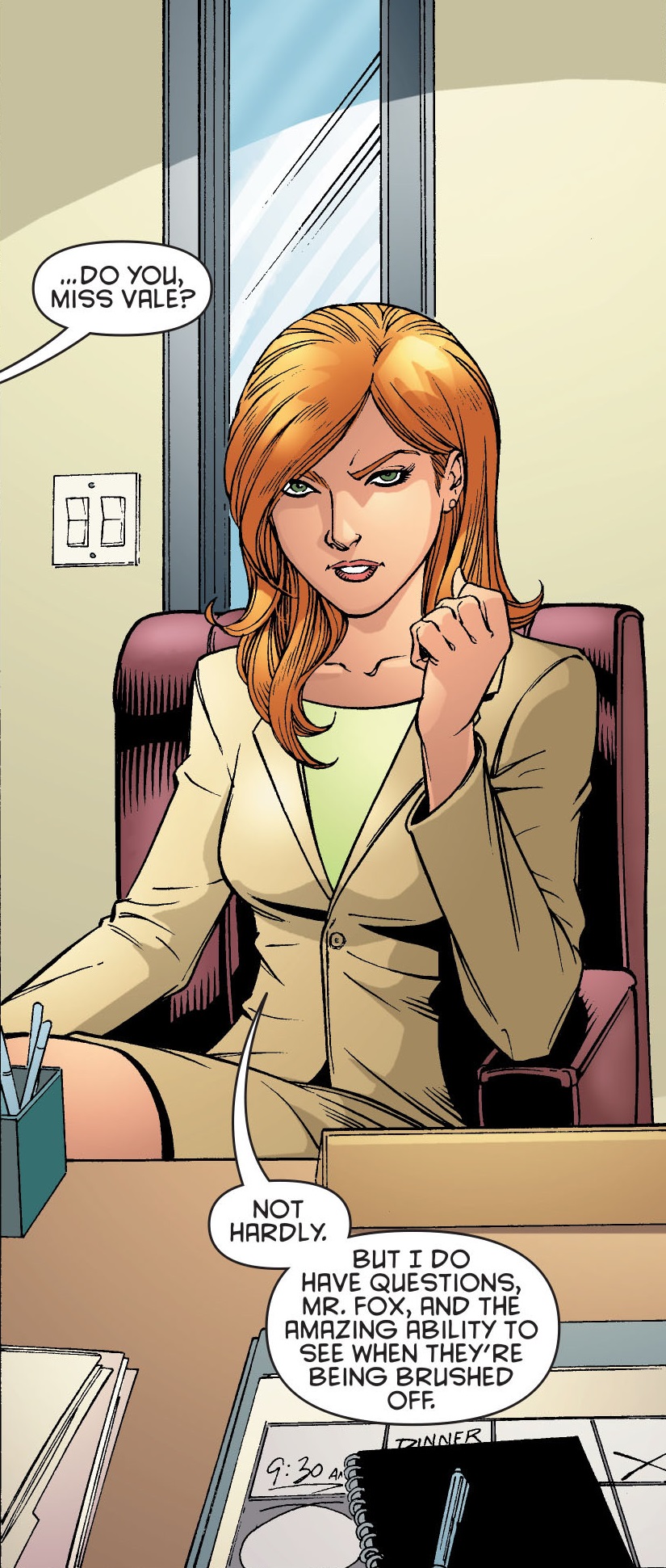
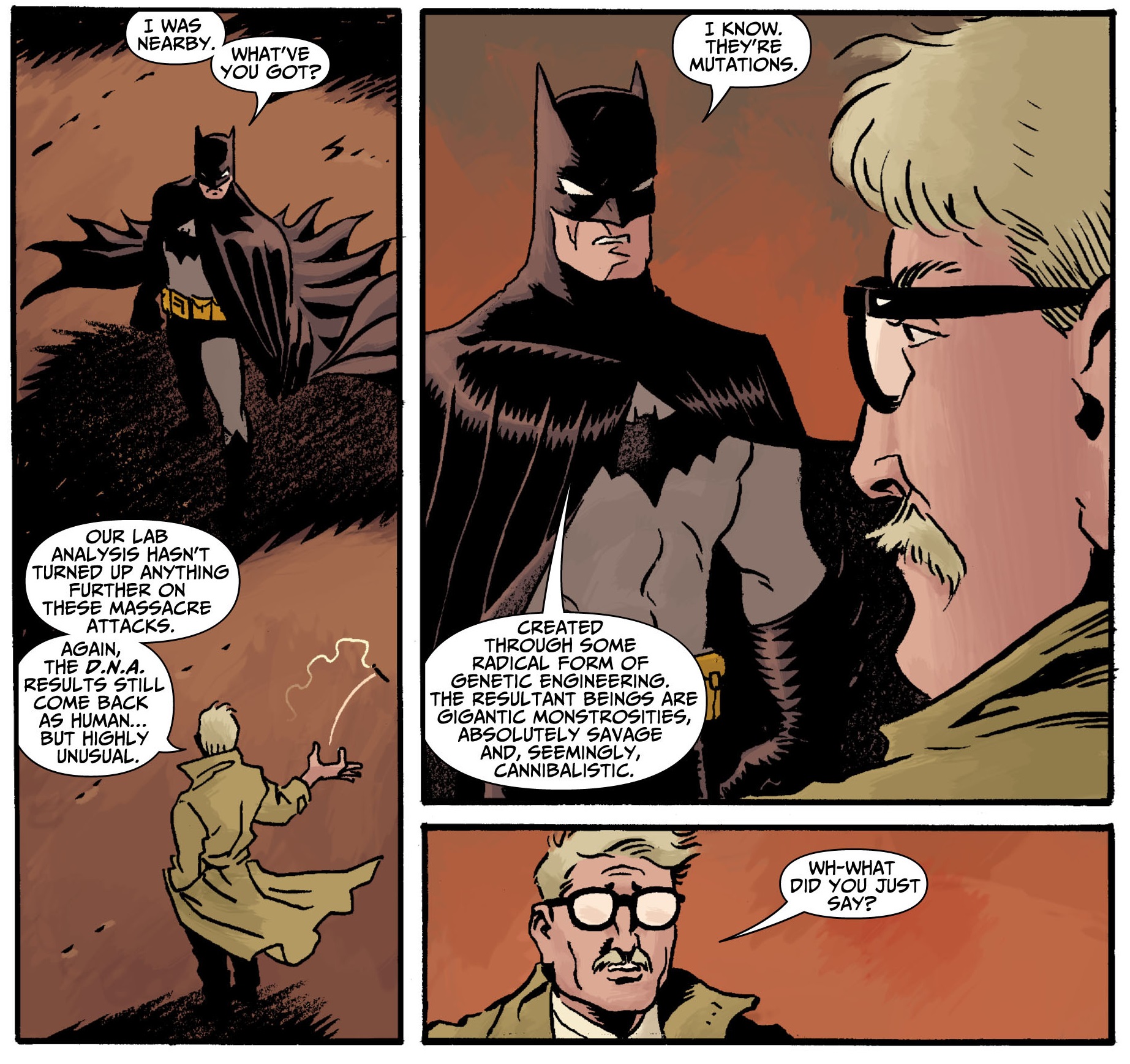
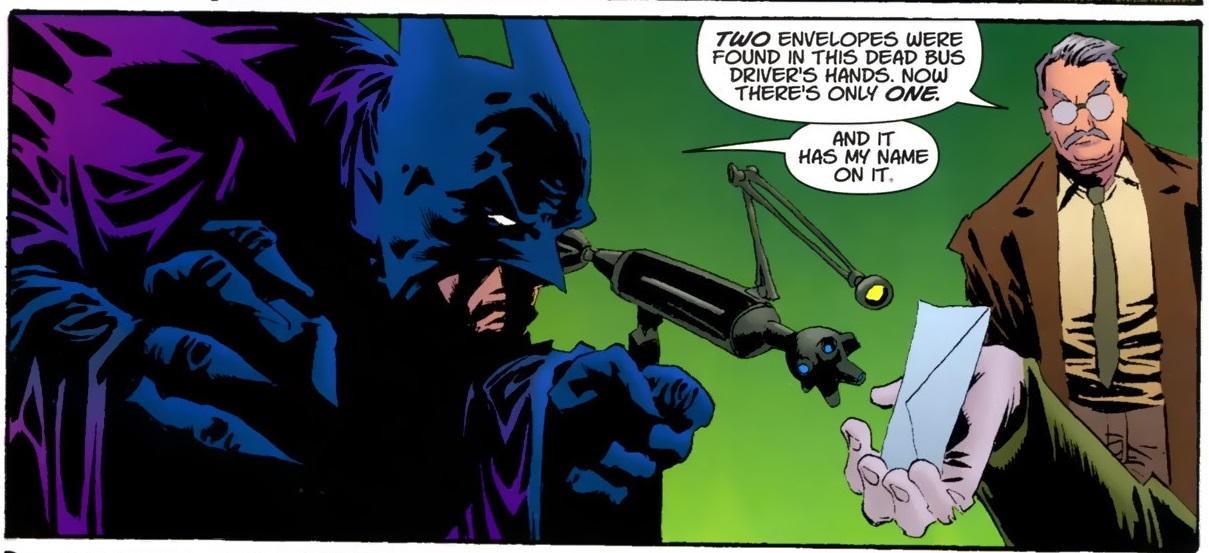
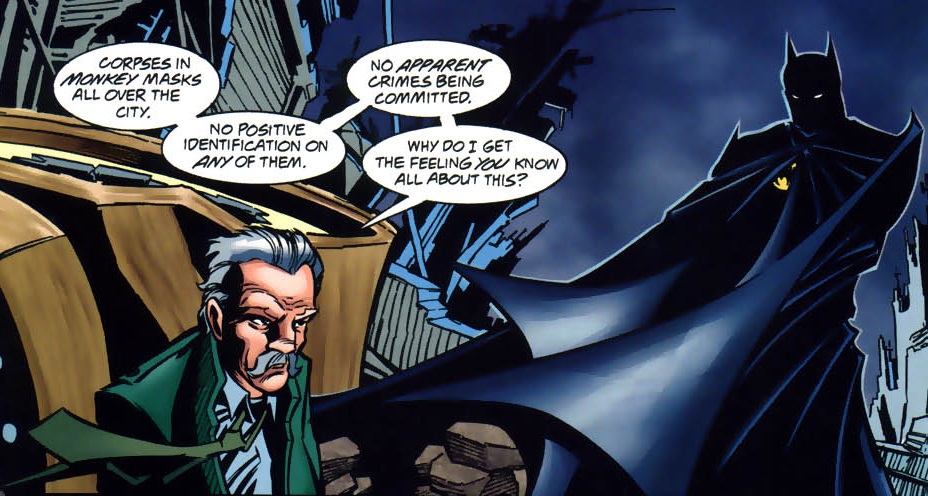
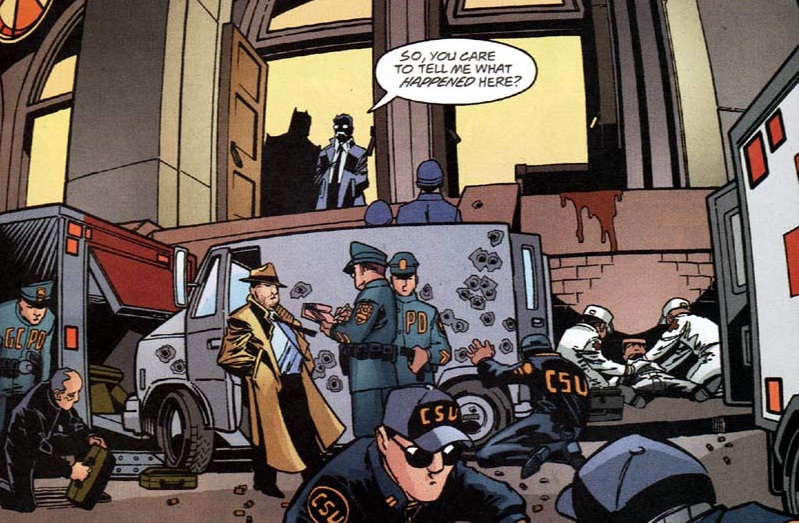
One of my favorite things, for example, is imagining the everyday lives of Gotham City’s beat cops…

Ragman (v2) #5Ragman (v2) #5

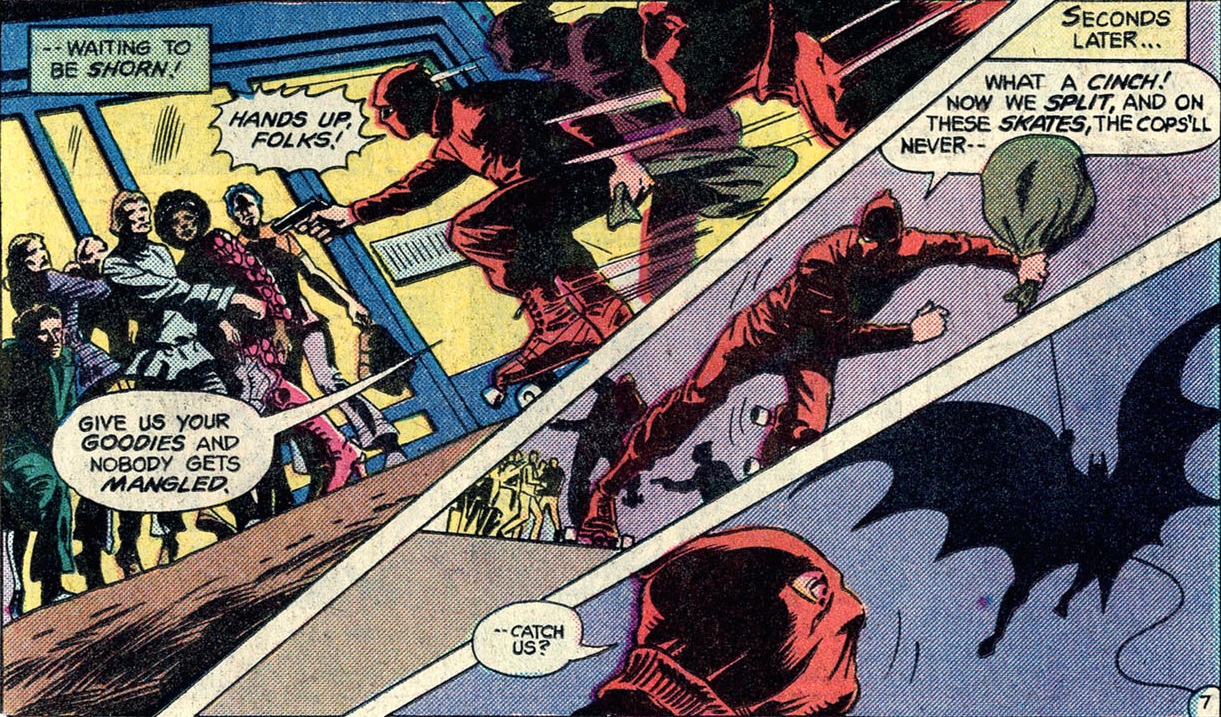
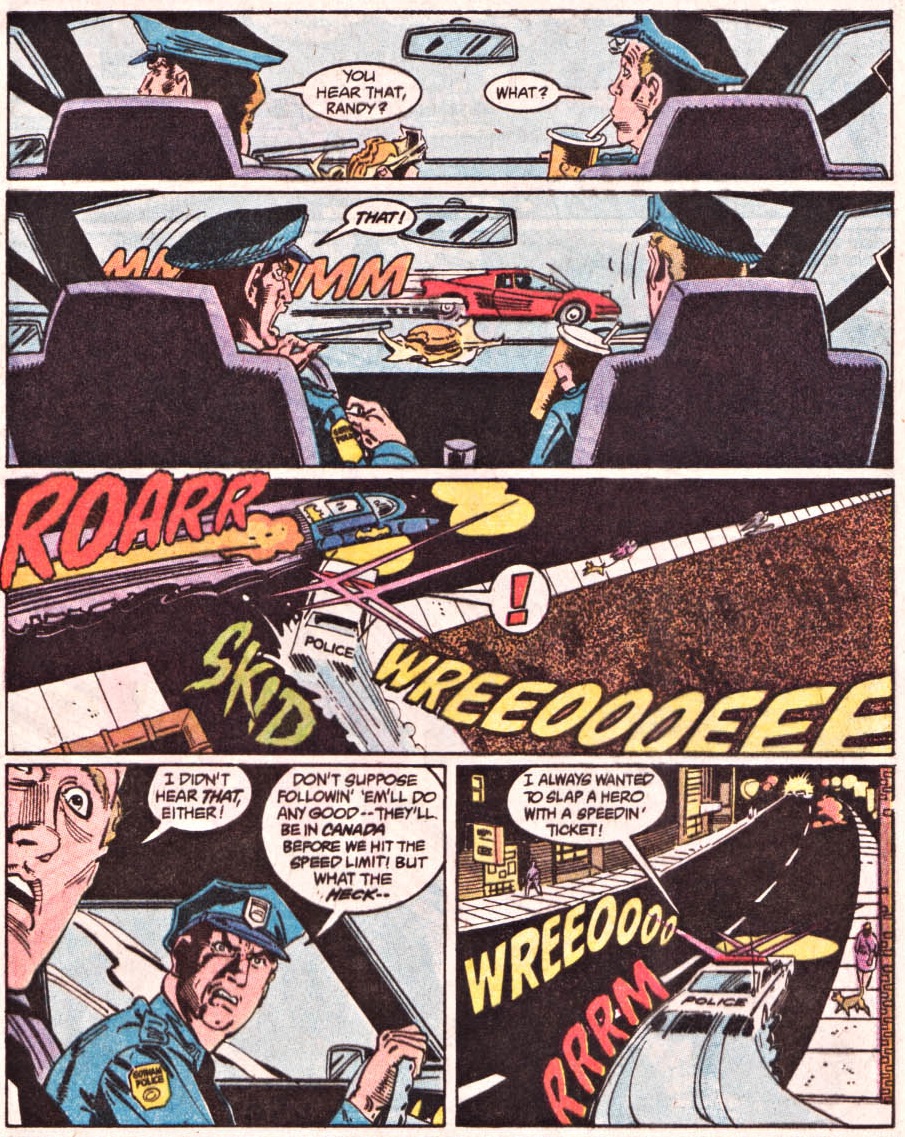
As if living and working in a crime-infested city wasn’t bad enough, those sad bastards constantly have to deal with genuinely weird threats – because in Gotham crime isn’t just everywhere, it also comes in all sorts of forms, from roller-skating gangs…

Detective Comics #503Detective Comics #503

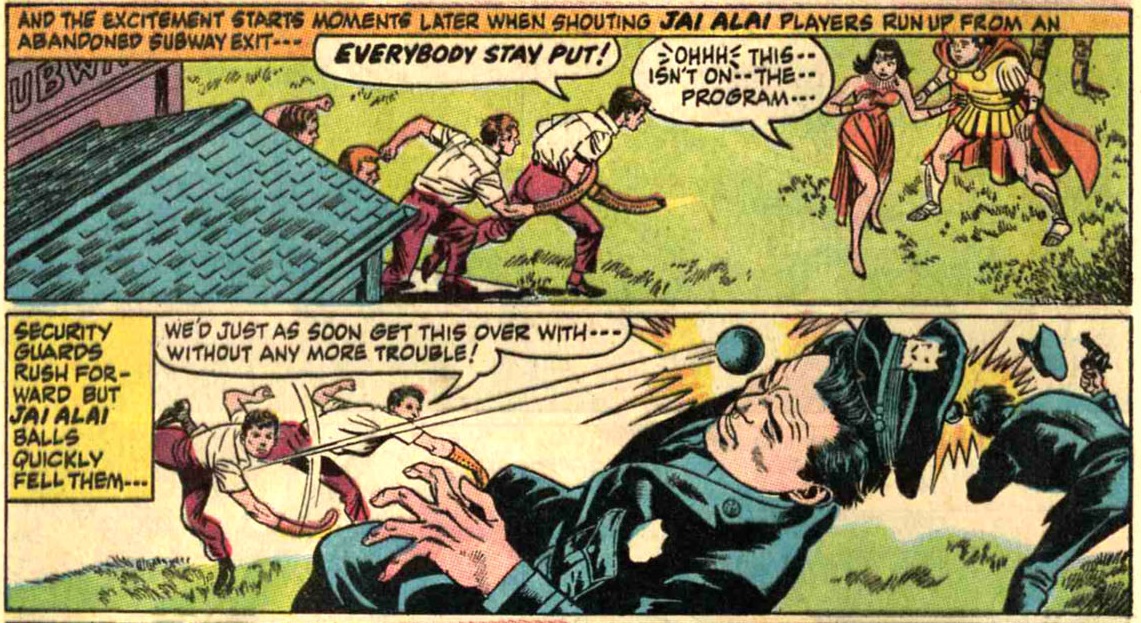
…to jai alai-playing gangs:

Detective Comics #371Detective Comics #371

And those aren’t even the most eccentric challenges!

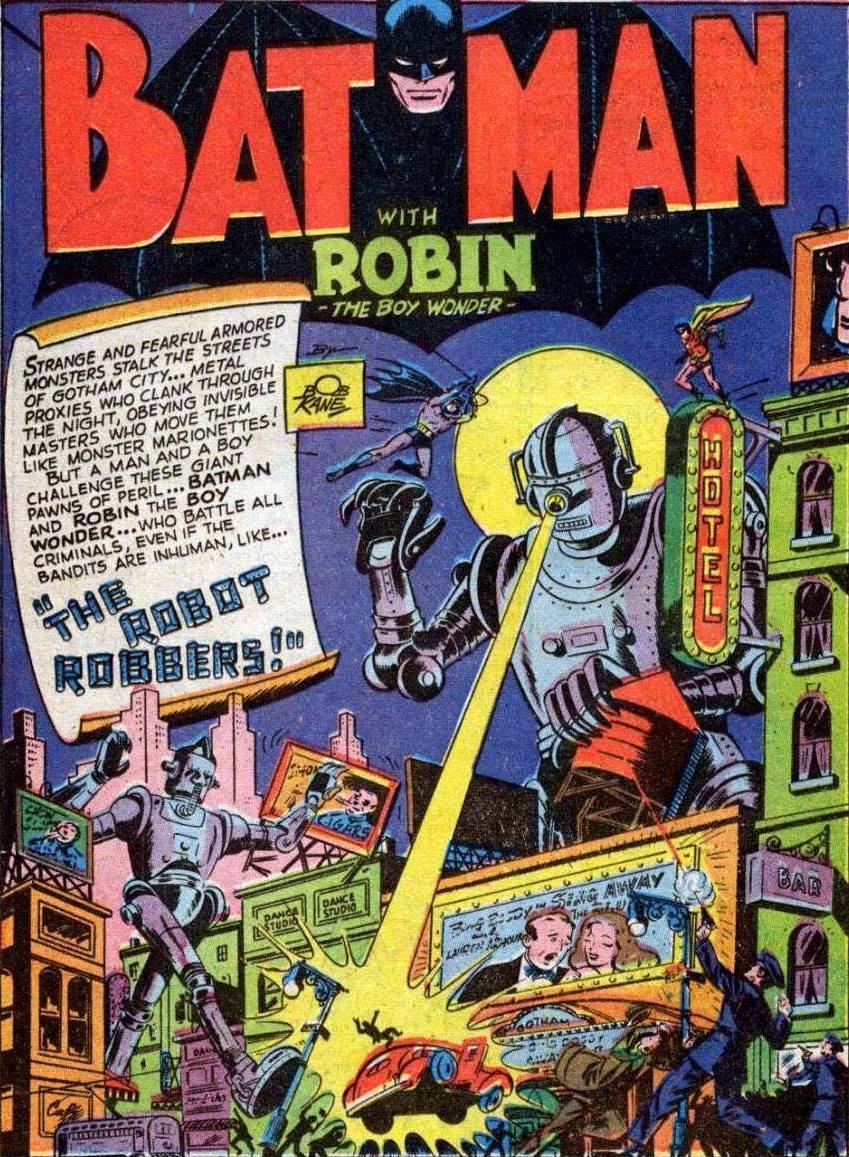
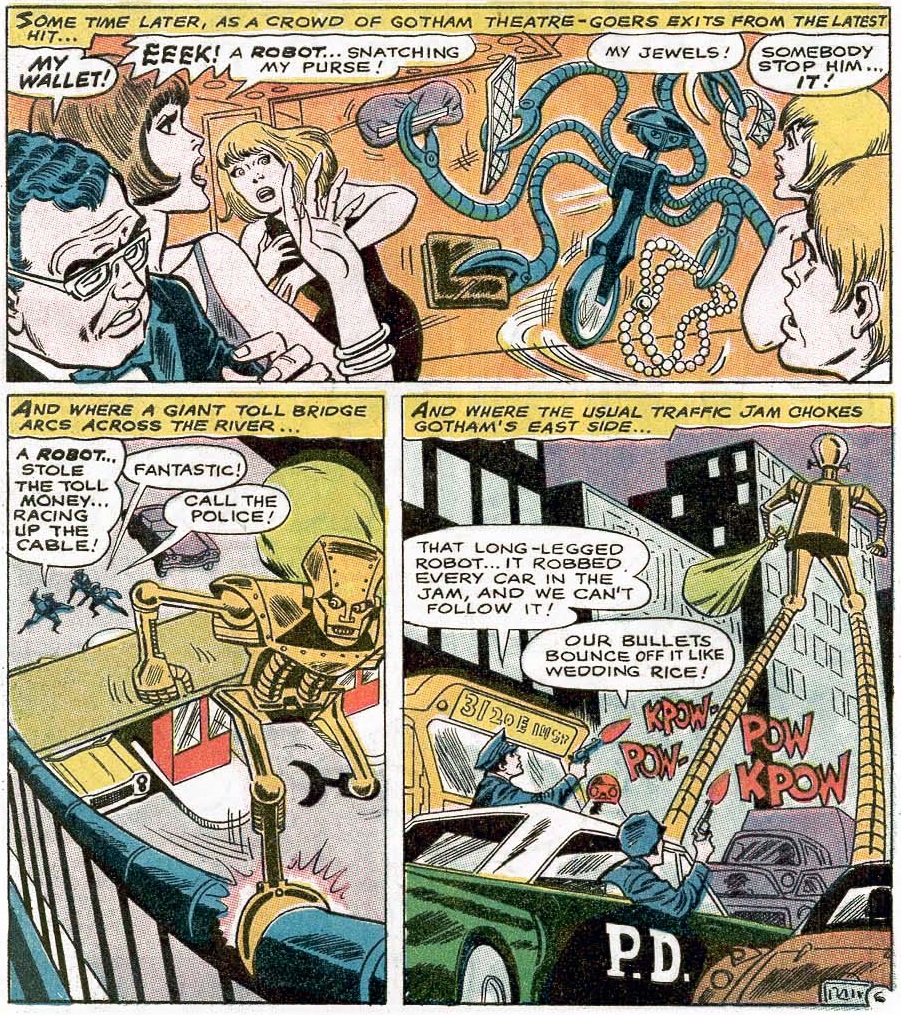
Gotham City’s beat cops also had to face the unforgettable 1947 robot crime wave…

Batman #42Batman #42

…and, of course, the 1967 robot crime wave:

The Brave and the Bold #74The Brave and the Bold #74

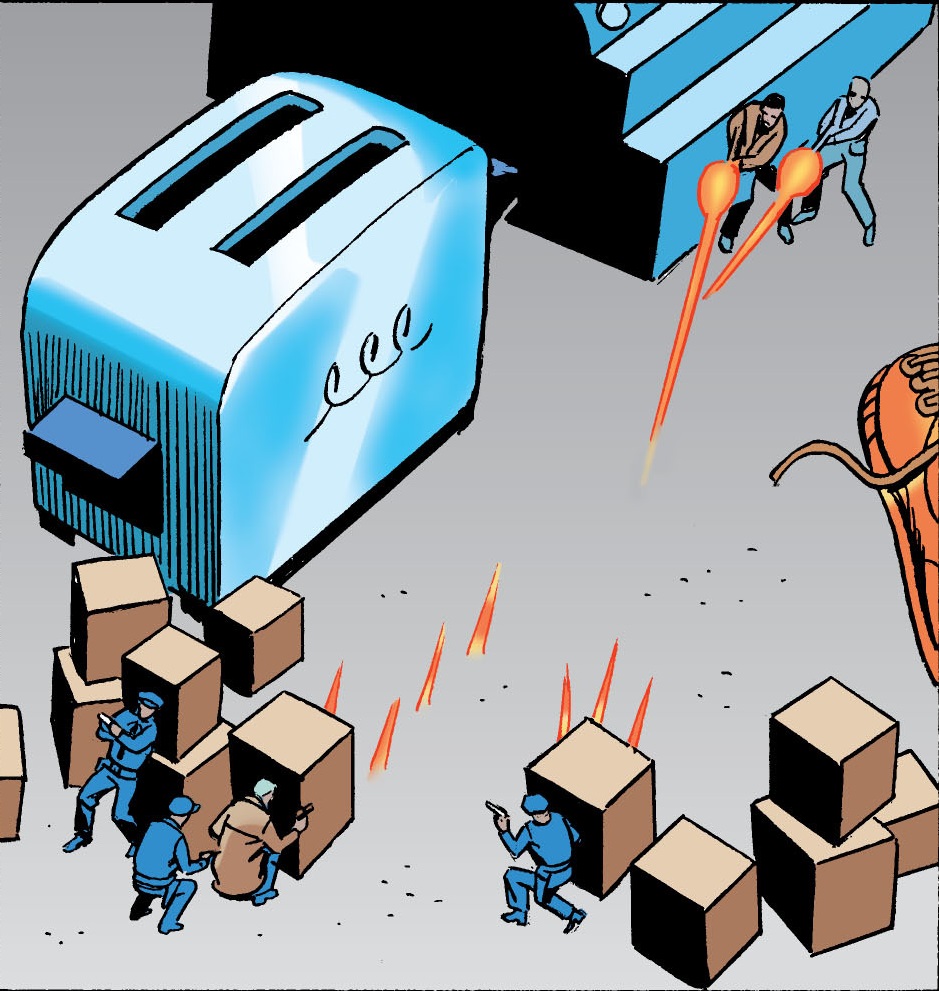
Moreover, I’m sure Gotham’s bonkers architecture doesn’t make the cops’ job any easier:

Turning Points #2Turning Points #2

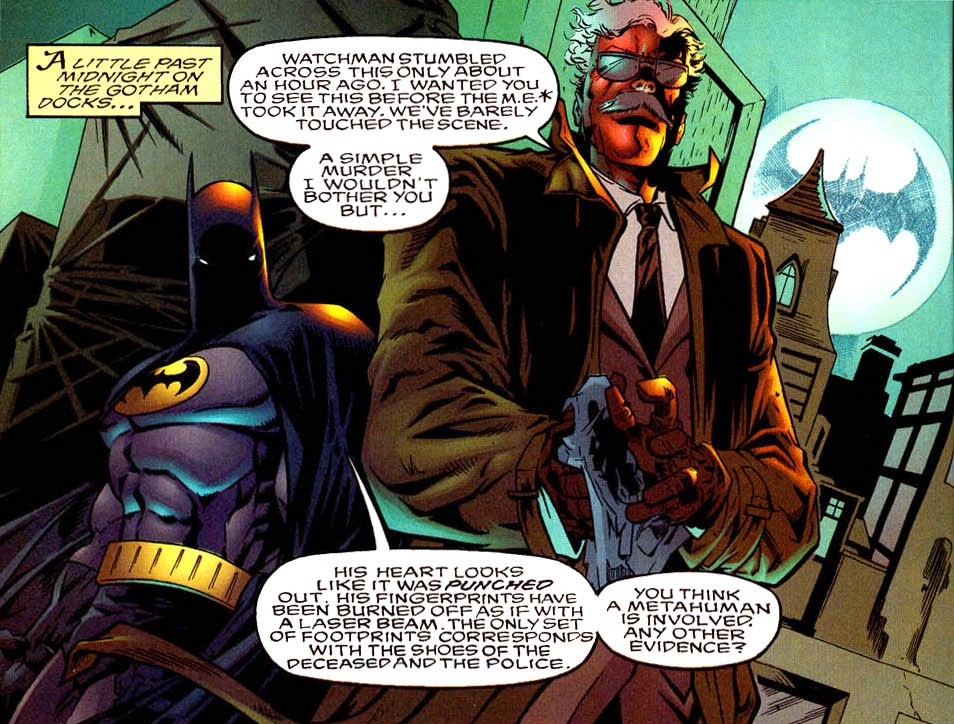
Even though I don’t need a whole sub-franchise focusing on the low-ranking, uniformed police officers, I do treasure every glimpse we get into their perspective. Some of the best writers in the field have gotten quite a bit of mileage out of the fact that Gotham’s cops have to live with an urban legend about a bat-clad vigilante who keeps breaking the state’s monopoly of violence… and practically every other rule in the book, really.

This is the sort of thing that should generate some concern among the officers of the GCPD, not to mention a fair share of resentment…

Detective Comics #601Detective Comics #601

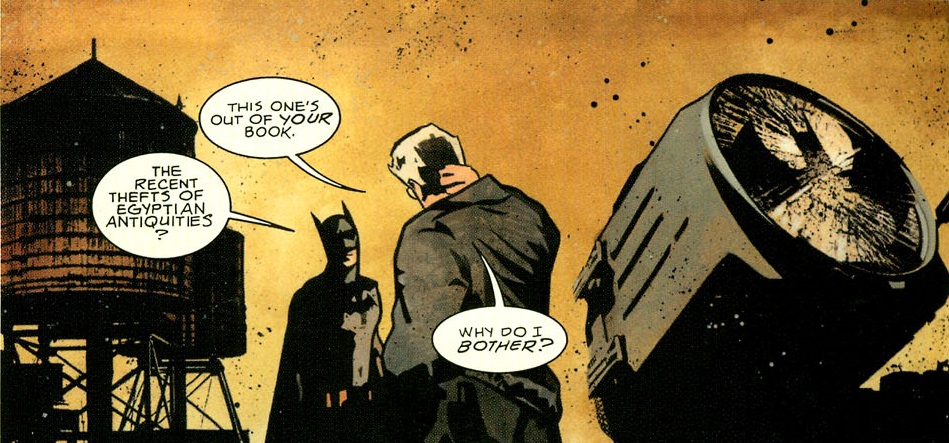
If nothing else, in the long run it’s bound to lead to a relatively jaded attitude:

Legends of the Dark Knight #2Legends of the Dark Knight #2

That said, I can’t feel too sorry for them. After all, everybody knows that Gotham cops are the sleaziest, most corrupt and depraved cops this side of Abel Ferrara’s Bad Lieutenant (or, at least, this side of Werner Herzog’s trippy remake).

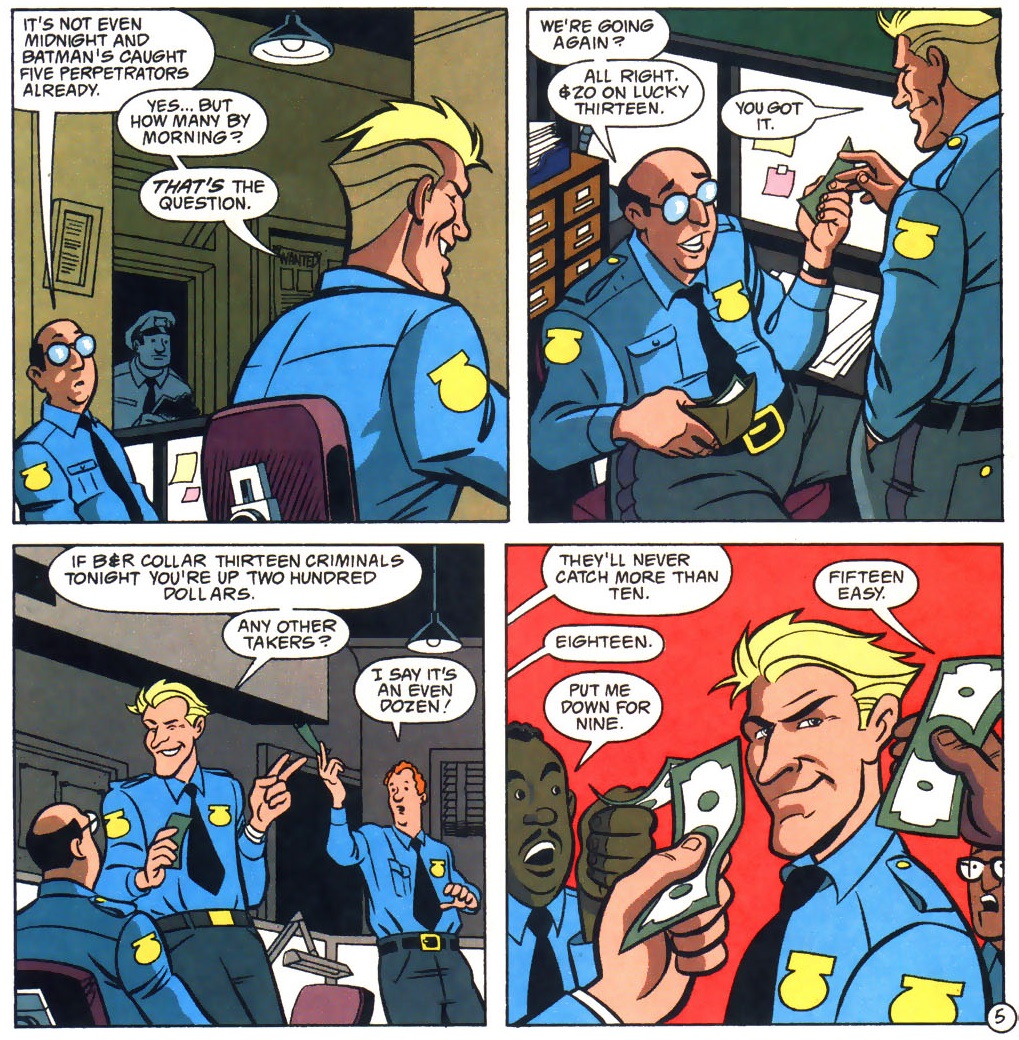
So, yeah, I’m sure many of them find a way to make the most out of all of this…

Batman & Robin Adventures #20Batman & Robin Adventures #20
Posted in GOTHAM CITIZENS | Tagged , | Leave a comment

John Ostrander’s expanded Batman

John Ostrander has written more cool comics than most of his peers. Some of them feature Batman and other Gotham citizens, although those projects don’t always play to his strengths, since they tend to be short fill-ins or mini-series. Ostrander is usually at his best when doing long runs that allow him to redefine characters and show them growing through an evolving status quo, like he did with GrimJack, Firestorm, Hawkman, Martian Manhunter, and the Spectre. Nevertheless, overall Batman comics have been quite well served by Ostrander’s talent for expanding franchises in imaginative ways.

Before looking at his Batman-related work, let us consider what makes Ostrander such an engaging writer. Basically, he is a fabulous storyteller with a knack for world-building, sharp characterization, and forward momentum. His prose may not be as literary as, say, that of Alan Moore or Neil Gaiman – what with the occasional heavy-handed exposition and clunky dialogue – but he’s a master at exploring the implications of the characters’ more fantastical aspects and pitting them against each other in confrontations that reflect a broader clash of worldviews. And while Ostrander can do gritty realism when he feels like it, he can definitely do weirdness just as well:

Grimjack: Killer Instinct #3GrimJack: Killer Instinct #3

In short, John Ostrander knows how to tap into the potential of existing concepts and build on them. He’s ultimately an old-school pulp author, in the best possible sense – reading his stuff often reminds me of why I fell in love with comic books in the first place. The reason for this is the fact that, although he sometimes weaves in darker subject matter, Ostrander is not ashamed of embracing even the goofiest source material and make the most out of what is there. In the case of superheroes, this means taking the genre’s most preposterous tropes (from the campy names and costumes to the operatic battles and outlandish twists) and just running with it.

You can see all this in Ostrander’s first work for DC, the 1986 company-wide event Legends. The premise of this crossover is that the sinister Darkseid convinces people to distrust the value of superheroes, including their simpleminded morality and questionable lawfulness. In a revealing turn, however, Darkseid isn’t able to persuade the children, who are pure of heart and, therefore, know that superheroes are cool. And John Ostrander damn well knows it as well!

Not that Ostranser’s works can be dismissed as childish. In fact, they often display adult sensibilities, drawing on current affairs, typically in the form of comics-à-clef (for example, The Spectre featured ill-disguised versions of O.J. Simpson and Kurt Cobain). Perhaps because of his background in Chicago’s Organic Theater Company, Ostrander has also proven apt at satire, whether in his black comedy anthology Wasteland (no, not that one) or in the amusing, Producers-style take on elections he did for GrimJack #8.

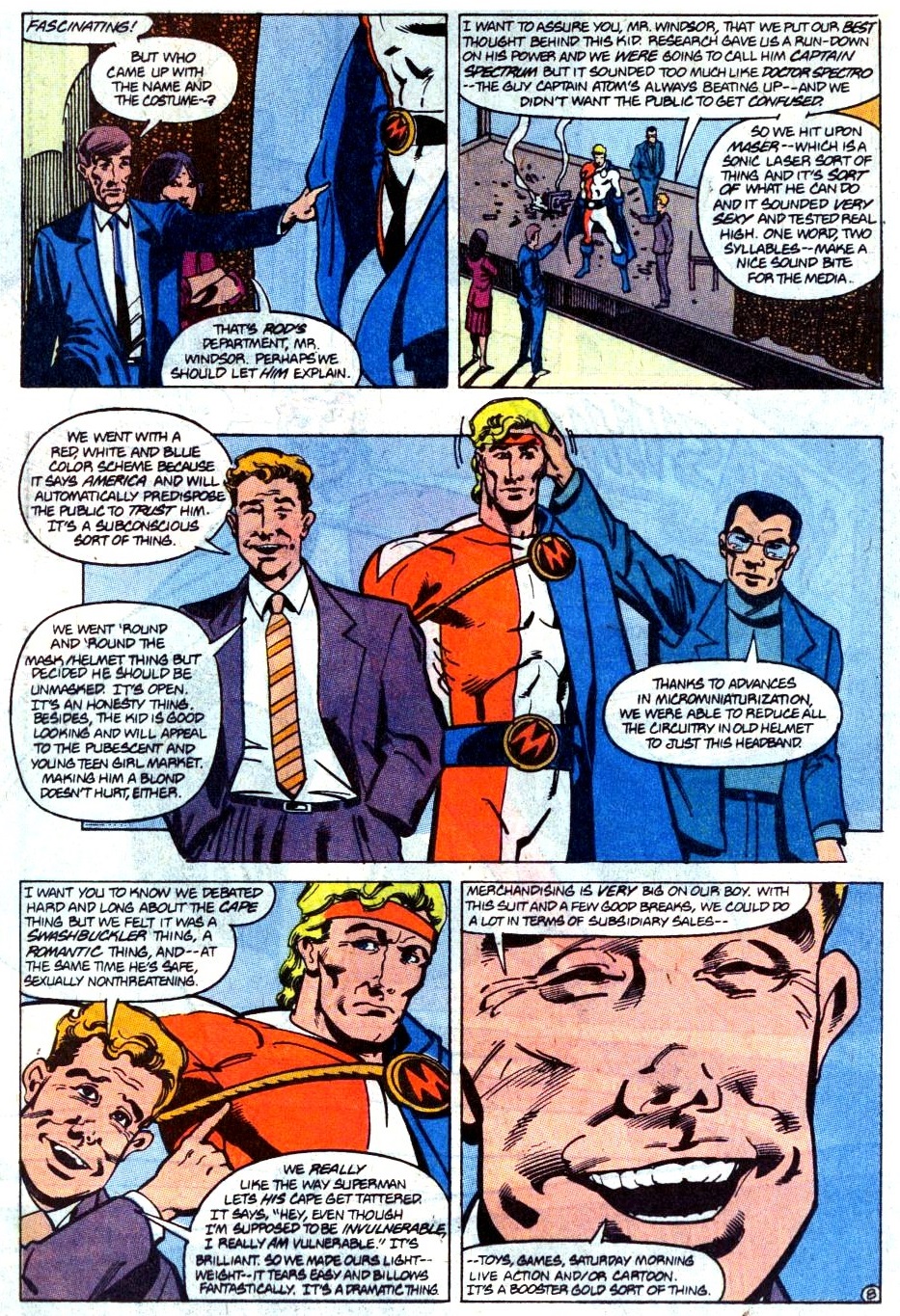
I still get a kick out of one of the subplots running across his DC series of the late ’80s, in which big corporations sought to develop their own brand of superheroes, called Captains of Industry:

Firestorm, the Nuclear Man #88Firestorm, the Nuclear Man #88

So yeah, John Ostrander can be awesome. But does his Batman work live up to this? Well, not all of it…

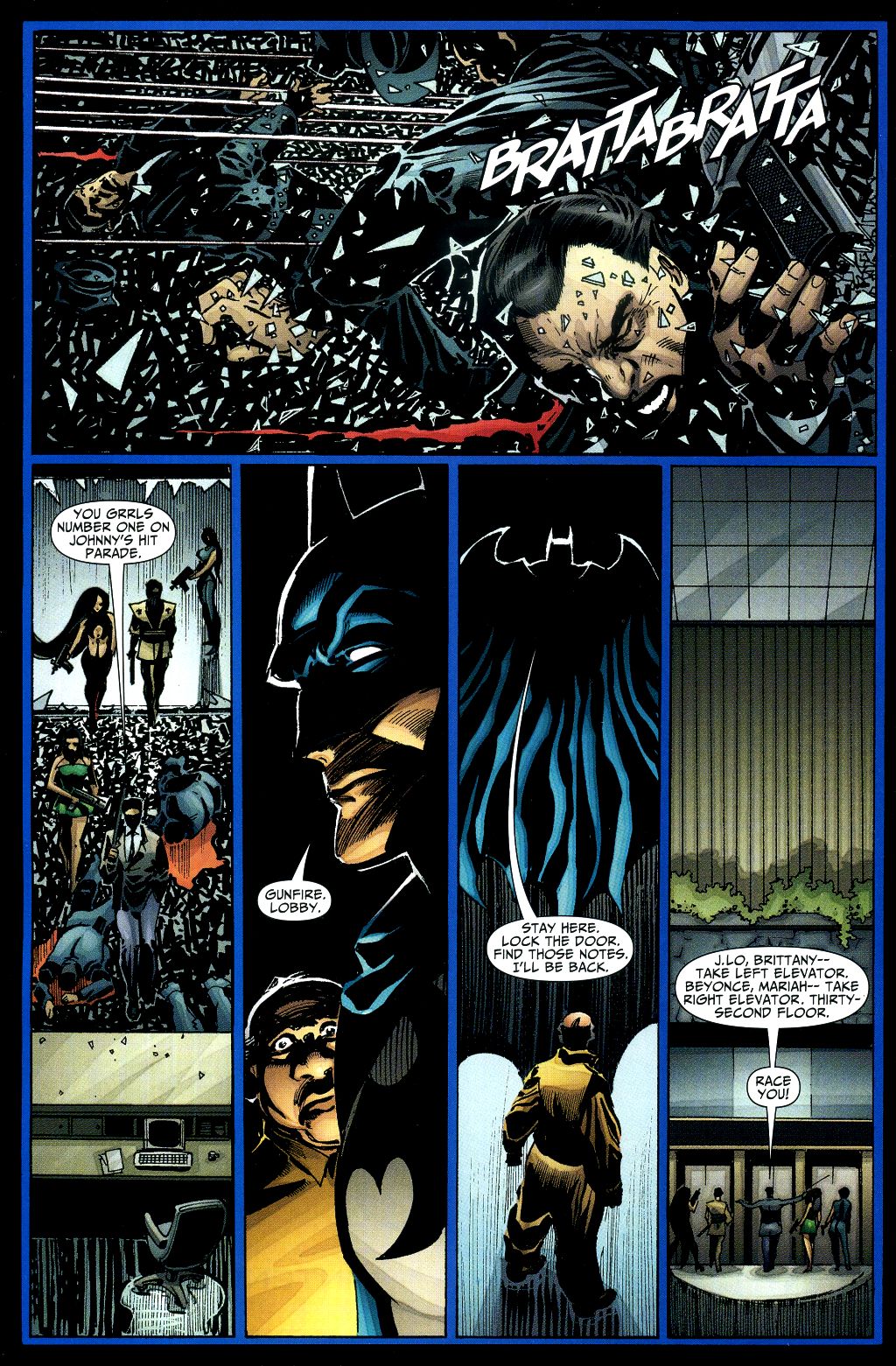
In an attempt to capitalize on Tim Burton’s Batman Returns, in 1992 DC released a couple of specials about the film’s villains. While Catwoman: Defiant is an unsung gem, Ostrander’s Penguin: Triumphant is bafflingly silly – it involves the Penguin going legit and moving into Wayne Manor, which could’ve worked as a sort of homage to the Silver Age, but instead it just comes across as dumb and contrived. ‘Lost Boys’ (Batman Annual #24) is a ghost story in England that somehow manages to be utterly uninteresting. Just as instantly forgettable, the fill-in arc ‘Grotesk’ (Batman #659-662) feels like a mercenary rehash of boring clichés, despite a quirky heist attempt by a Japanese singing gangster called Johnny Karaoke and his armed geishas…

Batman 660Batman #660

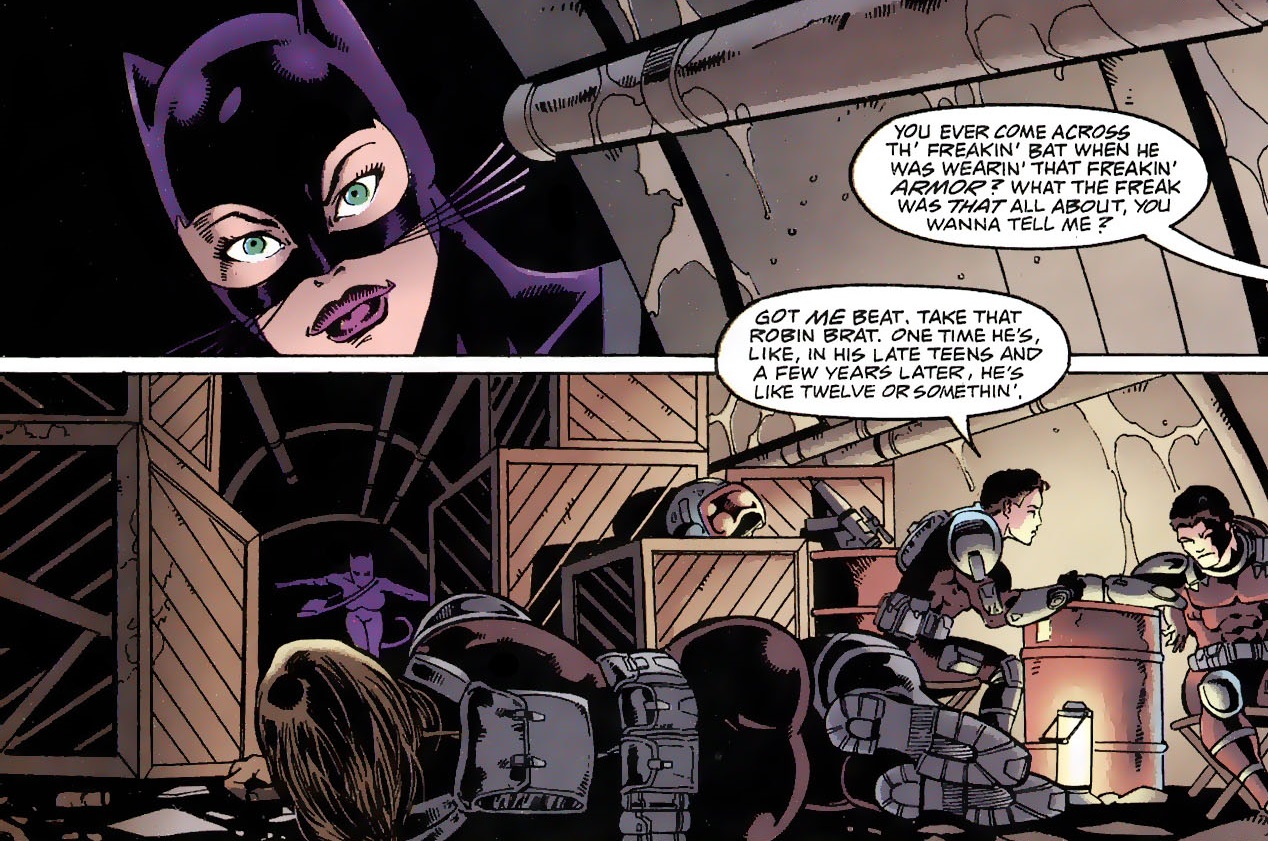
Moreover, John Ostrander wrote a pretty lame Catwoman arc during the No Man’s Land crossover. If that one has any redeeming feature, it’s the Tarantinoesque interactions between henchmen who are used to viewing big events from the sidelines…

Catwoman (v2) #72Catwoman (v2) #72

(The next line is even more meta: ‘Prison shrink I had, doc by the name of Wertham, he always claimed the bat was a freakin’ weirdo an’ he just get a new Robin when one got too freaking old.’)

Fortunately, it isn’t all bad. Like I said, Ostrander tends to push forward whatever properties he touches. He enjoys playing with other people’s toys, frequently participating in crossovers, delving into older stories, reviving (and reinventing) forgotten concepts, tweaking continuity, and tying up other creators’ loose threads – in his comics, you can find, for example, a surprising follow-up to the epic finale of Grant Morrison’s Animal Man run (in Suicide Squad #58) and amusing throwbacks to the Justice League’s comedic era (Martian Manhunter #24, JLA: Incarnations #6). Moreover, nobody can accuse Ostrander of not contributing with plenty of toys of his own, having deeply enriched the DC, Marvel, and Valiant universes, not to mention the world of Star Wars.

Granted, his creations aren’t always successful, but there is such gusto in the way he keeps throwing new characters at the readers, often with an eye towards diversity, like in the cases of the gay barbarian Suu of Xoo, the African-American genius Mr. Terrific, and the Soviet half of Firestorm’s dual identity, Mikhail Arkadin (complete with a remarkably fleshed out Russian family). Notably, Ostrander has been responsible for populating the DCU with all sorts of regular people that are as interesting to read about as the superheroes, such as the psychiatrist Simon LaGrieve, the priest Richard Craemer, and the overweight White House hawk Amanda Waller, whose original version remains hands-down one of the most gripping black female characters in the history of mainstream comics.

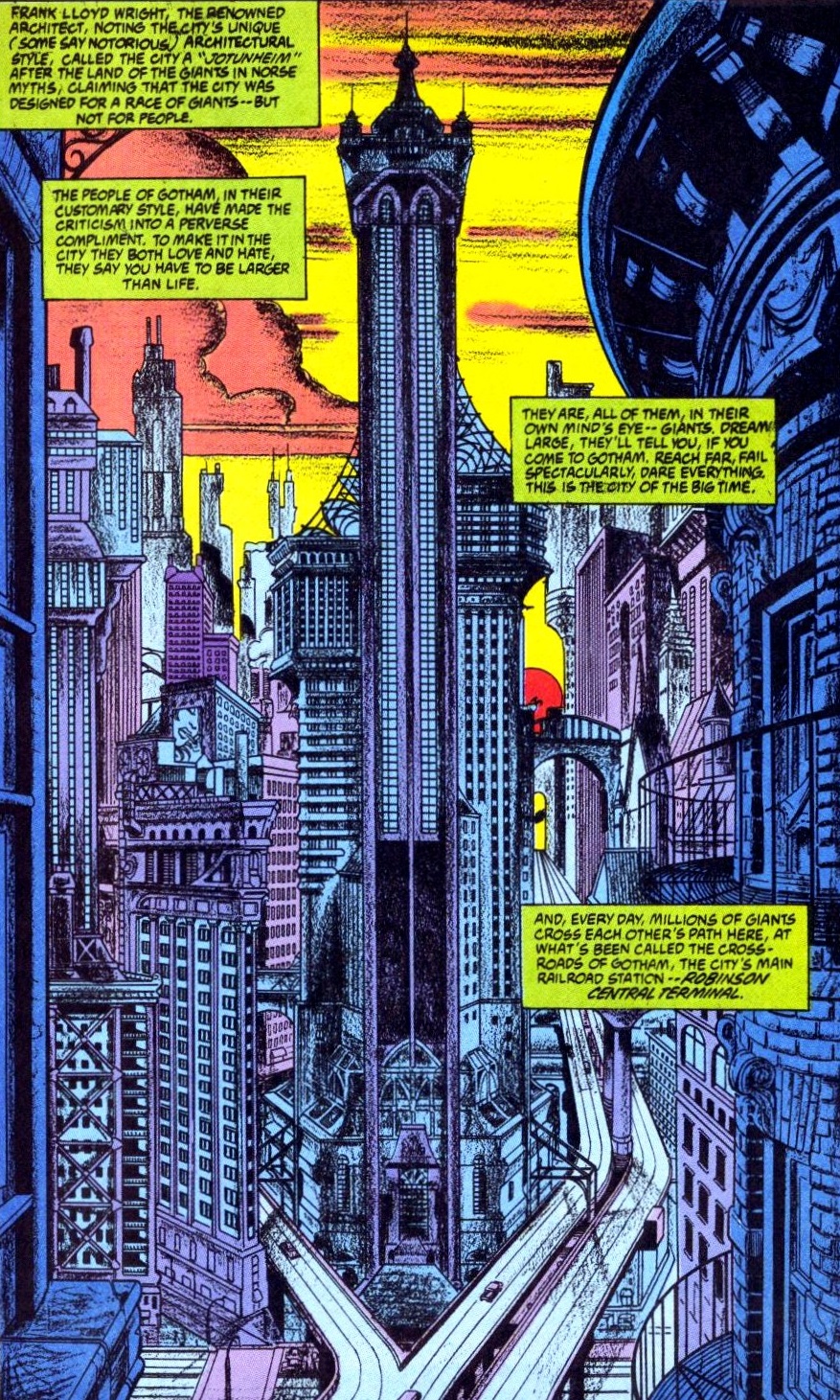
Along this line, Ostrander’s humanist touch and his flair for world-building led him to expand our perception of Gotham’s civilians and the everyday life of the city (one of my favorite topics). He did this through two Gotham Nights mini-series, elegantly illustrated by Mary Mitchell, that refreshingly moved the spotlight away from the Caped Crusader and his rogues’ gallery, focusing instead on the dreams and dramas of average Gothamites (most of whom aren’t psychopathic killers). The first mini, published in 1992, beautifully explored the city’s identity through interconnected street-level vignettes as well as through inspired musings at the beginning of each issue:

Gotham Nights #1Gotham Nights #1

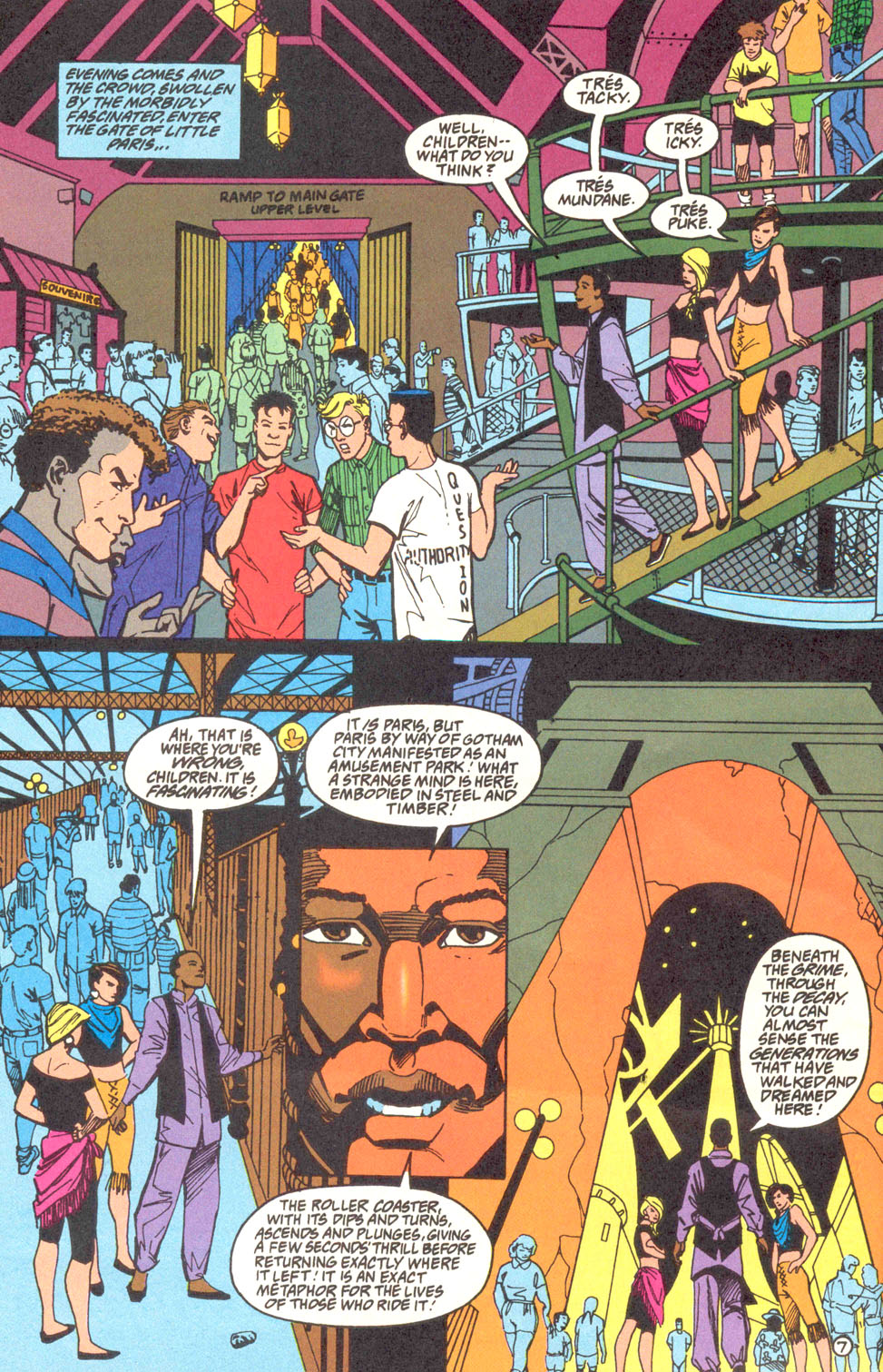
The second series, which came out three years later, is more plot-centric, even if it also features its fair share of Eisneresque melodrama. Gotham Nights II takes place at the Charles Paris Amusement Park (probably named after the classic Batman artist and inker), better known to Gothamites as ‘Little Paris,’ and it evolves into a whodunit about someone trying to kill the amusement park itself.

This wonderful comic shows John Ostrander’s continued interest in the non-powered, non-costumed inhabitants of superhero universes, coming up with a whole new cast (so you don’t need to have read the previous mini to appreciate this one). Notably, Gotham Nights II introduces the artistic neighborhood of Little Bohemia, home of eccentric sculptor Francesco Xavier, who almost feels like a Peter Milligan creation… Xavier and his two groupies get all the best lines in the comic:

Gotham Nights II #2Gotham Nights II #2

Some of John Ostrander’s more Batman-centered work is equally praiseworthy, benefitting as it does from the fact that the man knows how to pen a damn crime yarn. Ostrander is one of those hardboiled liberals who gets a kick out of writing macho characters and slangy dialogue (plus, he’s arguably the king of badass one-liners). These traits are on full display in Detective Comics #622-624 (cover-dated October-December 1990), in which the Dark Knight investigates a serial killer who’s chopping up people with a machete and signing the crime scenes as ‘Batman.’

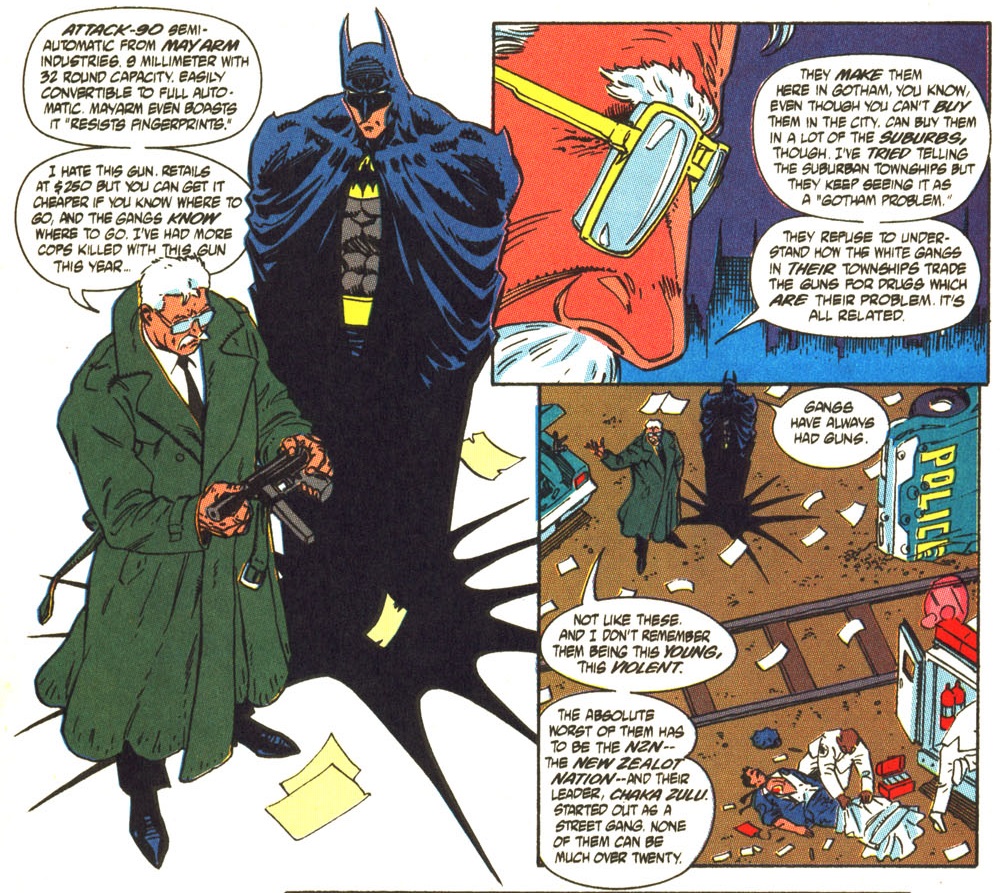
Ostrander’s crime genre credentials were mobilized for a different purpose a few years later. After the shooting of John Reisenbach, the son of Warner Brothers’ longtime marketing executive, DC’s editor-in-chief Jenette Kahn and vice-president Paul Levitz commissioned a benefit comic that, according to its backmatter, ‘would indict the proliferation of guns in this country and the ease with which they are used.’ Batman editor Denny O’Neil offered the job to Ostrander, who had once worked with an anti-gun organization. (You can read more about his views here.)

The ensuing one-shot, Seduction of the Gun, was published in 1993. While the militant agenda means that the comic does get a bit preachy at times (with people spouting detailed information about fire arms, legislation, and gun violence statistics), Seduction of the Gun is still a pretty solid crime story, stylishly illustrated by Vince Giarrano.

Seduction of the GunSeduction of the Gun

This should be no surprise: after all, like Alan Grant and Doug Moench (two other writers working on Batman comics at the time), John Ostrander had never shied away from hot political topics: his groundbreaking run in Suicide Squad was always on the cusp of international crises, Hawkworld was about a couple of (literal) aliens learning how to deal with the US system, the protagonist of Firestorm tried to stop the nuclear arms race and end African famine… Hell, just the previous year, Ostrander had been behind a provocative special issue of Blackhawk dealing with conspiracy theories! So, yes, Ostrander knew how to tell a tale that was both political and engaging, which is what he did in Seduction of the Gun: Batman gets a lot of badass moments as he goes up against street gangs and gun dealers, but this is no simple wish-fulfilment fantasy – the book brutally drives home the point that guns have consequences and no one is entirely safe from them.

With a similar gritty vibe, in the early 2000s Ostrander penned ‘Snap’ (Gotham Knights #43), a black & white short story about Batman’s urban legend status, as well as the taut thriller ‘Loyalties’ (Legends of the Dark Knight #159-161), set early in Batman’s career, when Jim Gordon’s Chicago past came back to haunt him…

Legends of the Dark Knight #160Legends of the Dark Knight #160

‘Loyalties’ delivers not only plenty of action, with Batman engaging in a kickass motorcycle race through the streets of Chicago (where Ostrander is from), but also great character moments all around, as everyone’s loyalties are put to the test – and some break down, while others don’t. In particular, this three-parter works as a nice (retroactive) introduction to pre-Batgirl Barbara Gordon, a character that Ostrander has crucially fleshed out over the years.

John Ostrander’s history with Barbara Gordon brings me to another point. His greatest contributions to the Batman mythos involved taking existing characters and imbuing them with extra depth, as well as with a life beyond the shadow of the Caped Crusader, usually on the pages of his magnum opus: Suicide Squad. This is where Ostrander, together with his wife Kim Yale, turned the former Batgirl – who had been cruelly crippled in The Killing Joke – into the super-hacker Oracle (a transformation they later revisited in Batman Chronicles #5). Coming to terms with her disability, Barbara excelled at this role throughout the 1990s and early 2000s, when Oracle was one of my favorite DC characters. Along with Babs, all sorts of familiar faces who had passed through Batman comics – such as Bronze Tiger and Katana – found a new breath of life in Suicide Squad. Notably, Ostrander turned Deadshot from a superficial Batman villain into a genuinely complex and fascinating anti-hero (Ostrander further developed Deadshot’s background in a nifty 1988 mini-series, again co-written with Kim Yale).

Other rogues – from the Penguin to Poison Ivy – were given a chance to shine in Suicide Squad while undertaking ambiguous secret assignments for Washington, led by the conflicted Rick Flag. What made this series work so well was that the villains kept their personalities even as they were recontextualized as the protagonists – mixing The Dirty Dozen with the Iran-Contra zeitgeist, this was a gleefully cynical comic about fucked up black ops agents who hated each other and mostly moved in morally dubious areas of international politics. This is why my main frustration with the recent Suicide Squad movie wasn’t just that it was an ugly, largely incoherent mess, but also the fact that it ultimately turned into a story of friends-who-are-good-at-heart on a mission to save the world from purely evil supernatural forces (even the despicable Captain Boomerang ultimately has a change of heart and comes back to save the day, for some reason), thus missing what I most like about the comic.

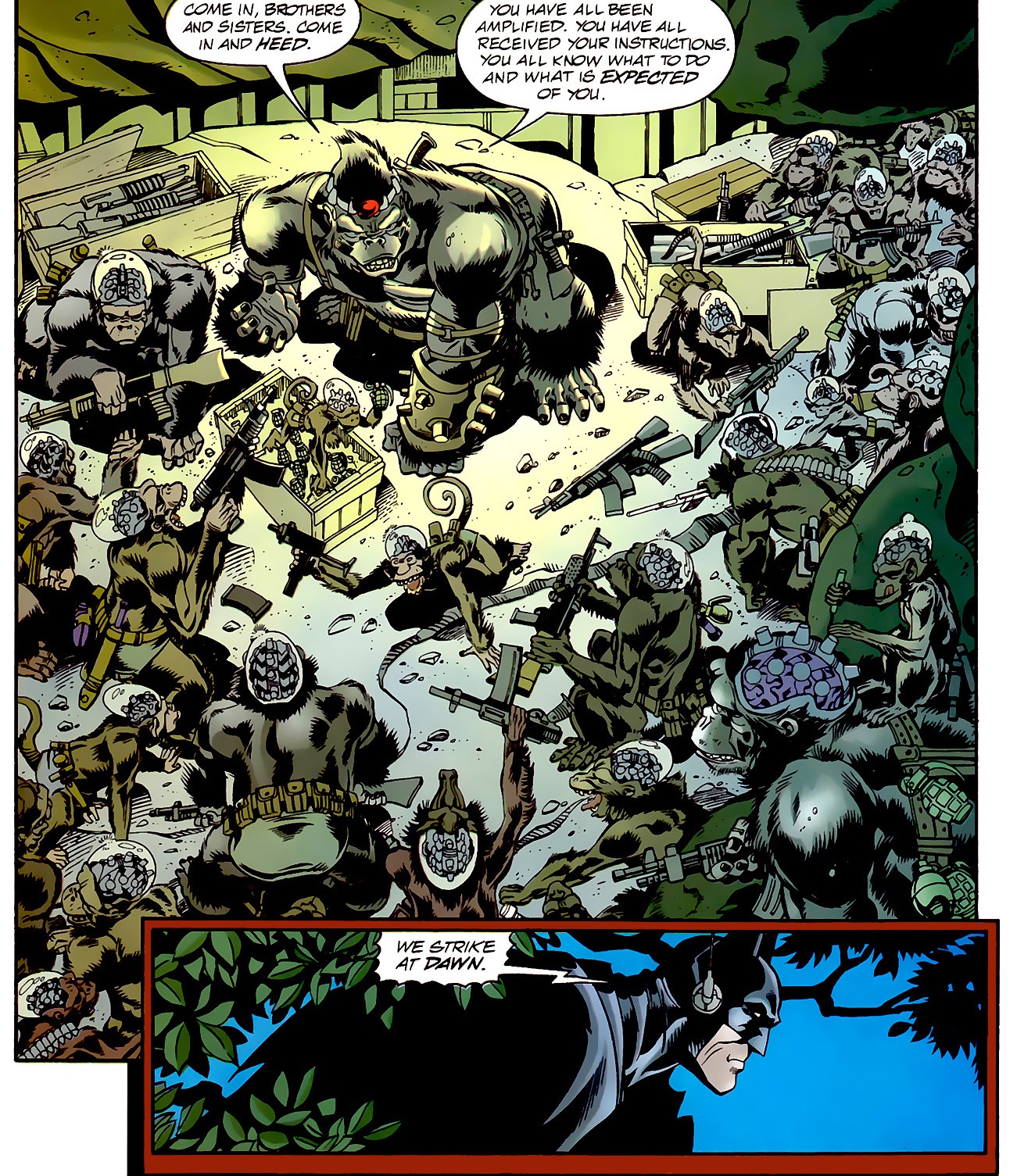
The Dark Knight himself made some appearances on the pages of Suicide Squad, including memorable confrontations with Amanda Waller and Rick Flag. This is the other way in which Ostrander expanded Batman’s world – he powerfully connected Bats to the wider DCU by strengthening the ties between the Caped Crusader and other properties. Batman investigated Superman for murder (JLA 80-Page Giant #1) and played a key role in various Justice League adventures (like in the masterful JLA: Incarnations mini-series and in the fun Justice League Adventures #21, as well as in the sadly uninspired JLA Versus Predator). Hell, Batman even helped save Washington from an ape coup:

 JLA: Incarnations #2 JLA: Incarnations #2

Ostrander and his regular collaborator Tom Mandrake also had the Dark Knight cross paths with the titular leads of their runs in The Spectre and Martian Manhunter. The former included a brilliant Joker tale, titled ‘A Savage Innocence,’ that tied into the series’ running theological themes by having Batman argue with the Spectre over whether or not the Clown Prince of Crime could actually be considered evil and accountable for his actions, since he was obviously insane, unable to distinguish right from wrong.

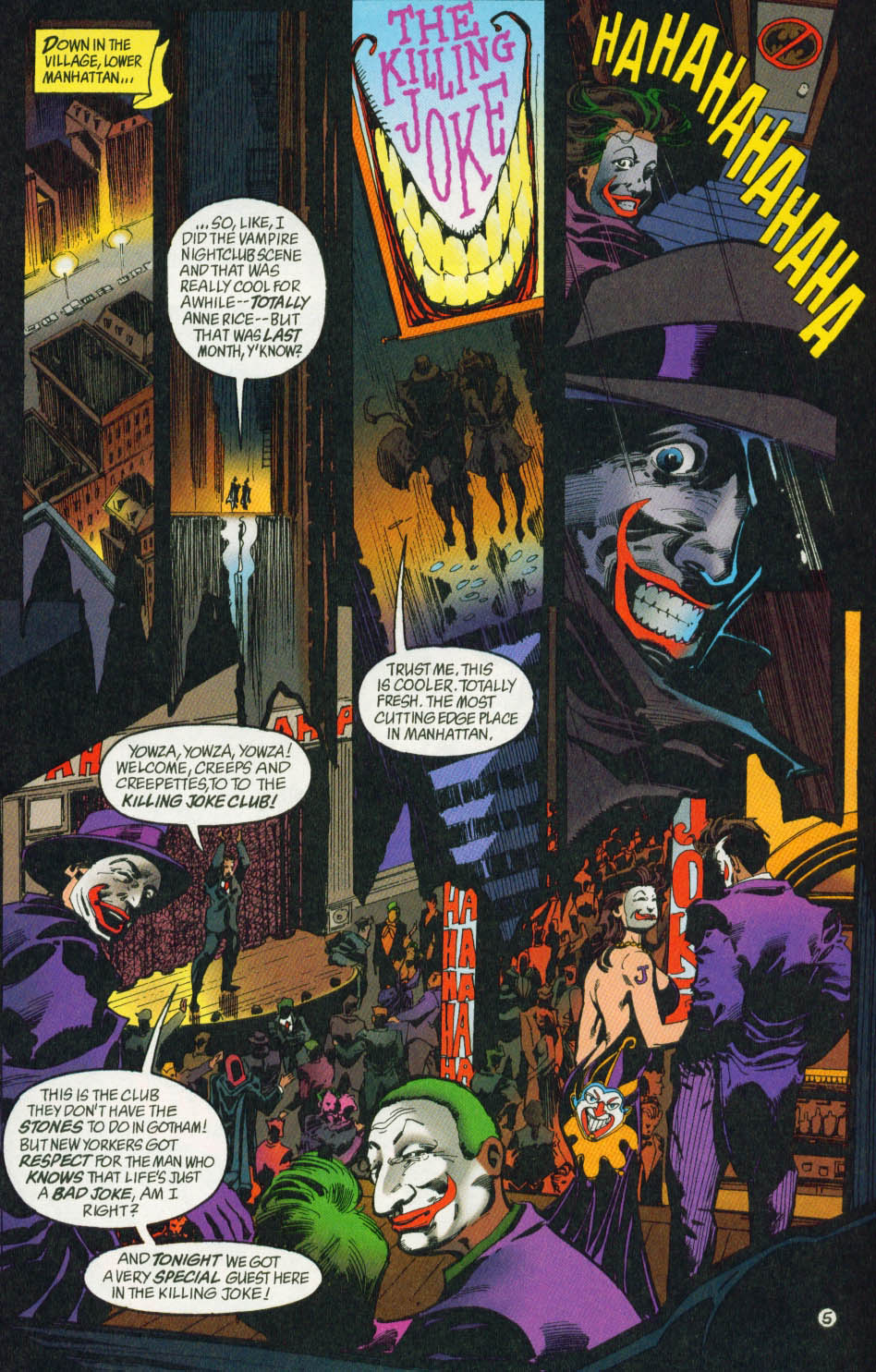
As a bonus, the issue showed us how the Joker’s reputation had affected the New York club scene:

The Spectre (v3) #51The Spectre (v3) #51

This notion that costumed heroes and villains must have a wider cultural impact in their own world is something I find infinitely appealing. John Ostrander had already touched on it in the aforementioned Detective Comics #622-624. There, besides the neat detective story, we got a fun journey into metafiction, since the mystery tied into a comic-within-the-comic about the Dark Knight (because Batman is not trademarked in the DCU). The joke, of course, is that those comics would display a distorted image of the Dynamic Duo and the rogues’ gallery, envisioned by someone who had never actually met them for real. The sample pages, drawn by Flint Henry, are freaking out there…

detective comics 622Detective Comics #622

Thus, although unfortunately John Ostrander was never given a long run in Batman comics – one where he could do for the Caped Crusader what he did for many other heroes –  he has still managed to expand their scope, making readers feel like the Dark Knight is part of a larger universe out there, full of complicated characters living their own interesting sagas.

Posted in WRITERS OF BATMAN COMICS | Tagged , , , , , , , , , , , | Leave a comment

COMICS CAN BE AWESOME (April 2019)

Your monthly reminder that comics can be awesome:

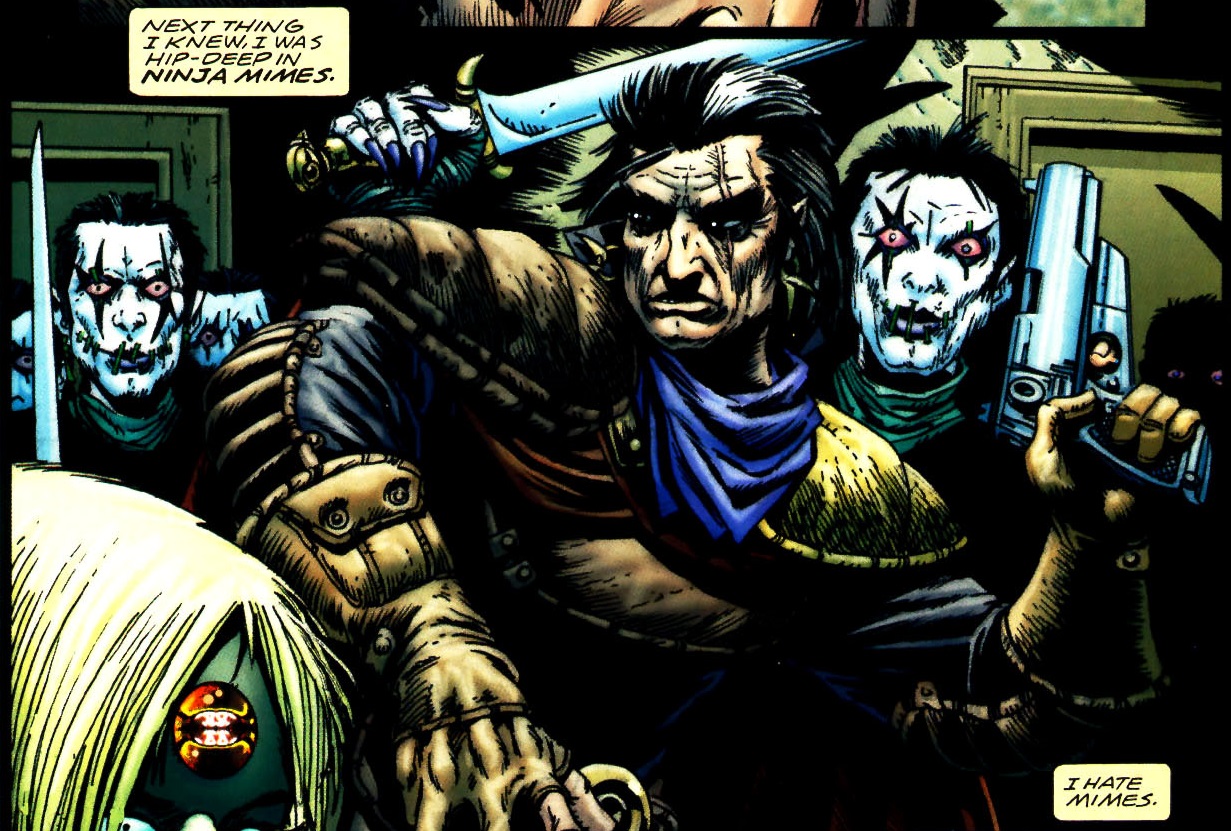
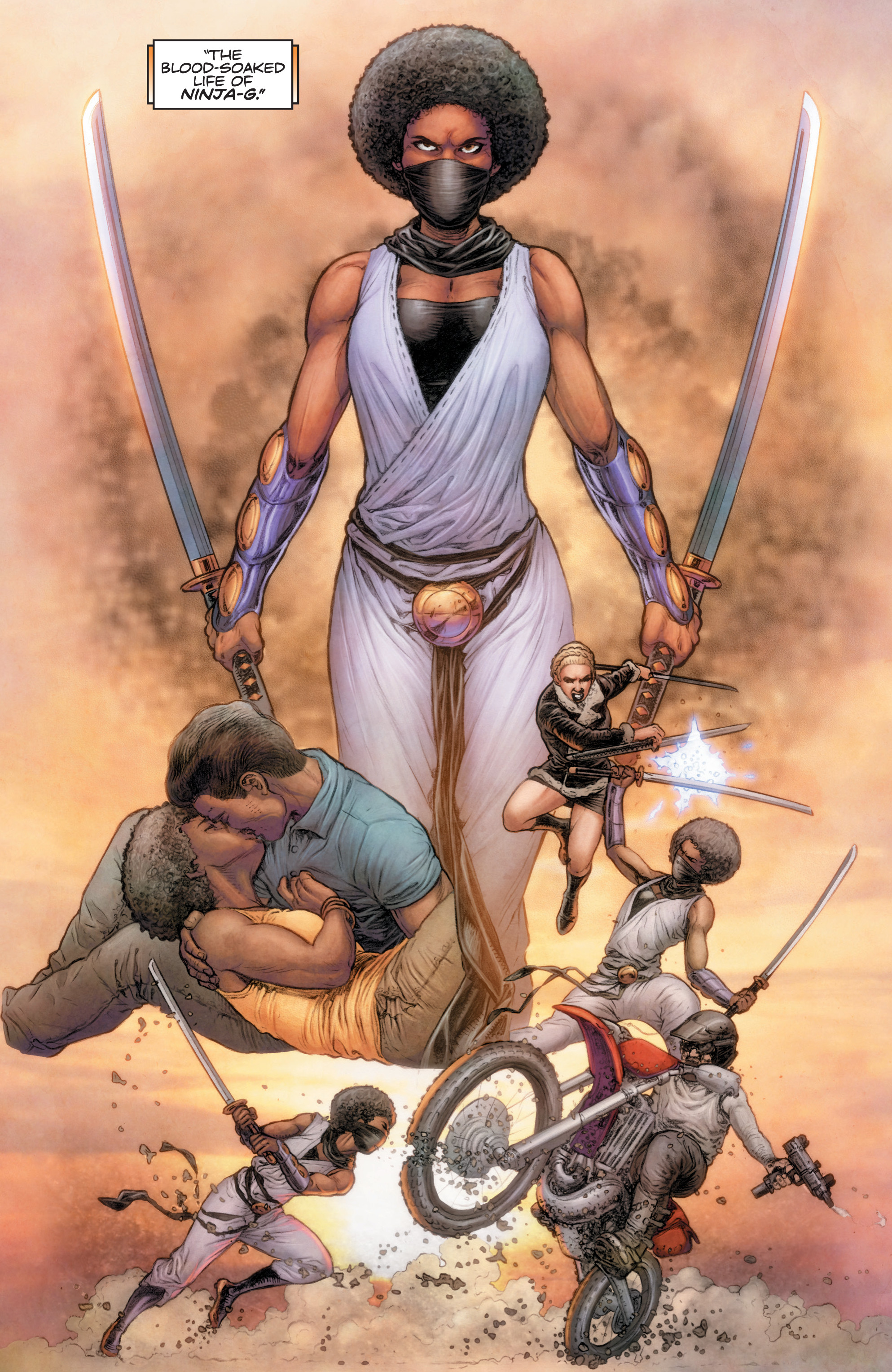
Ninja-K 4Ninja-K #4
Atomic Robo: The Flying She-Devils of the Pacific #3Atomic Robo: The Flying She-Devils of the Pacific #3
Black Science #27Black Science #27
Posted in GLIMPSES INTO AWESOMENESS | Tagged , , , , , , , , , , , , | Leave a comment

The looks of Vicki Vale

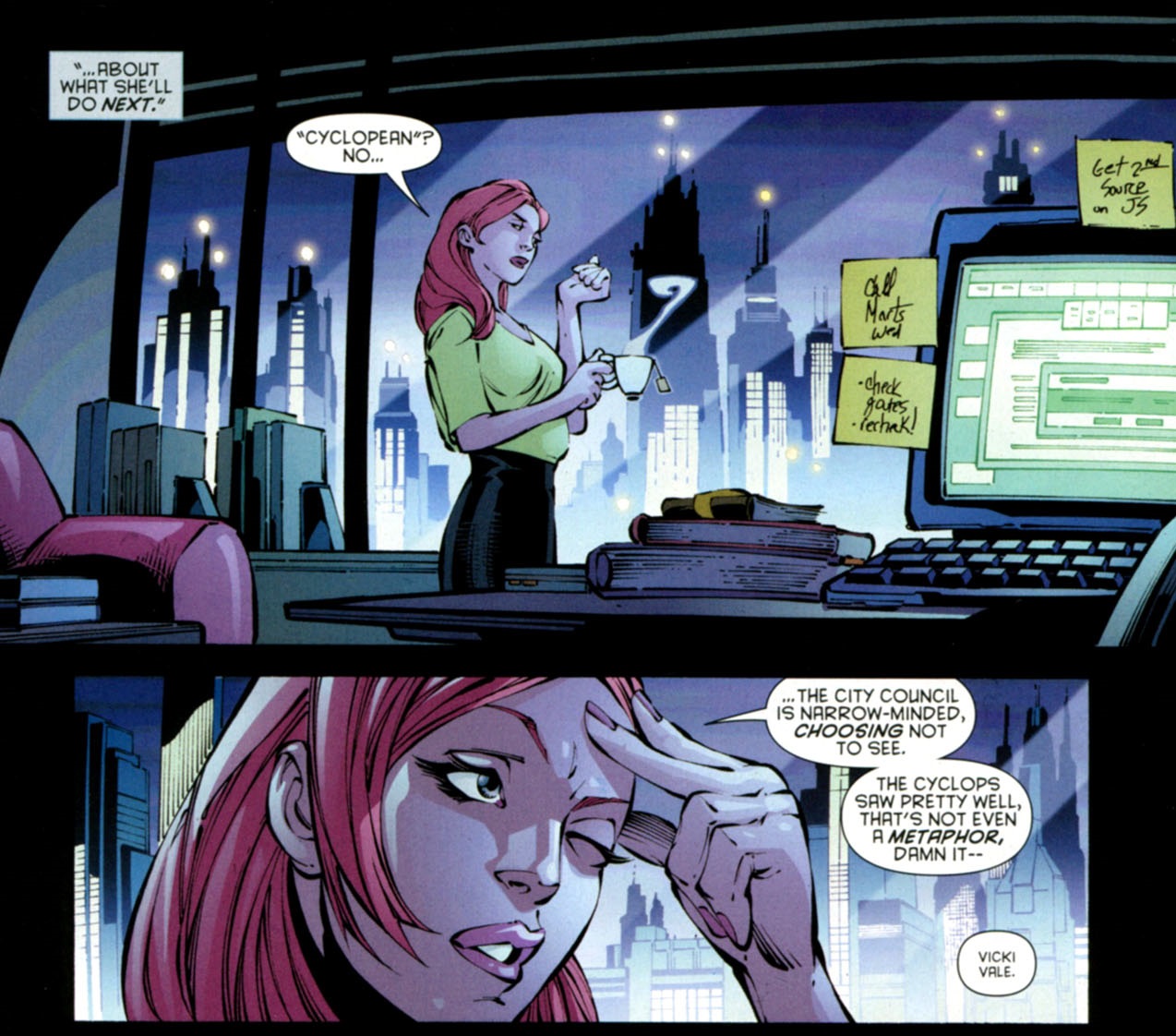
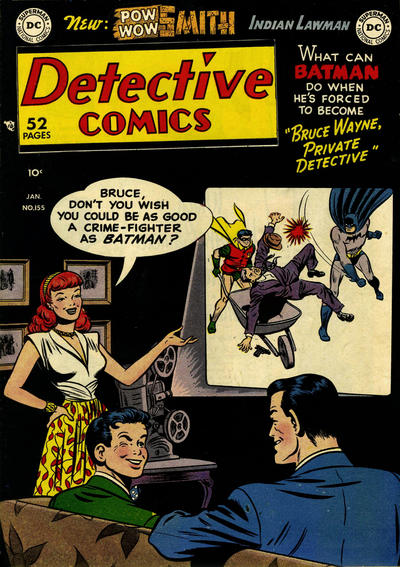
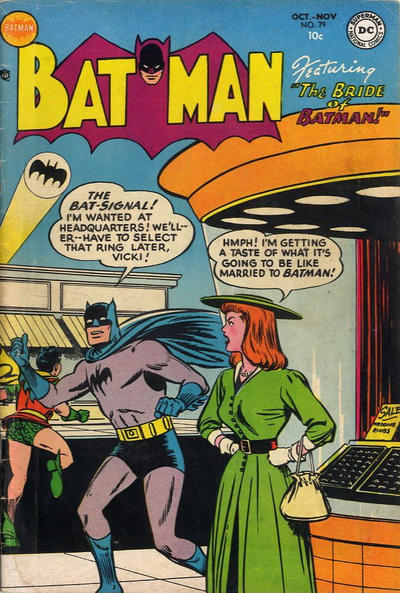
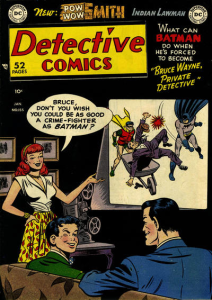
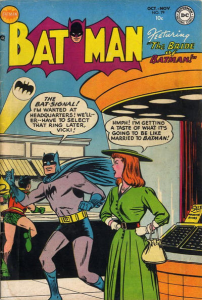
detective comics 155          batman 79

Among the fascinating things about Batman comics is the fact that, because they have been going on for eight decades, you get to trace social and aesthetic evolutions on all sorts of fronts. One of those fronts is the way women are depicted, which can be seen in the transformations that the various recurring female members of the cast have gone through. The case of Vicki Vale is particularly illustrative, I think, because she has remained confined to a similar type of supporting role (unlike, say, Selina Kyle or Talia al Ghul), so you get to assess the range of depictions given to a very specific character type.

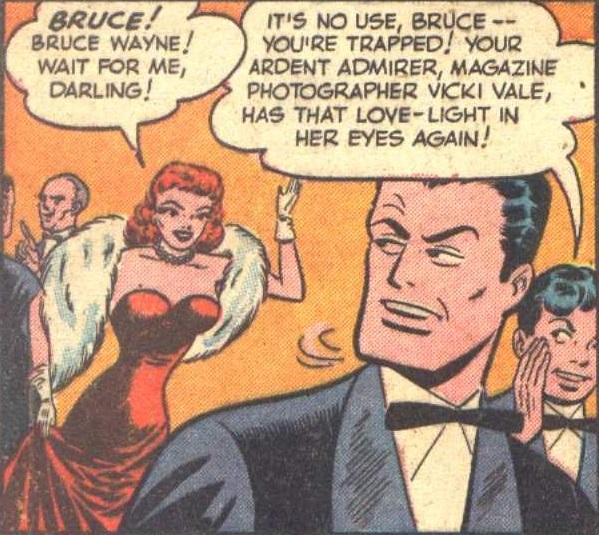
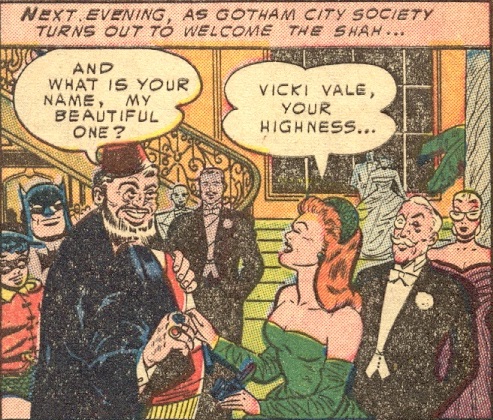
The love interest/snoopy reporter (in this case, photojournalist) who is out to expose the protagonist’s secret identity is a standard superhero trope, made famous by Lois Lane and brilliantly deconstructed in Astro City: Local Heroes #2. Created by Bill Finger, Bob Kane, and Lew Sayre Schwartz – and first introduced in Batman #49 (cover-dated October 1948) – Vicki Vale was a rip-off character from the start, yet artists managed to give her some panache precisely through the way she looked, most notably her striking red hair (made all the more memorable by the fact that it was often placed in contrast with green garments).
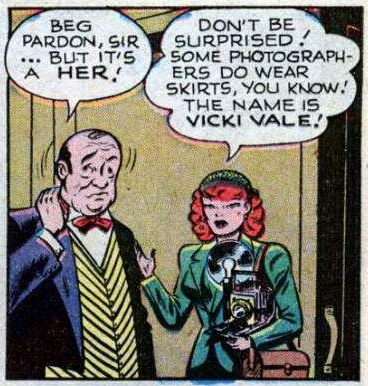
Batman 49Batman #49

In Vicki Vale’s debut story – the delightful Mad Hatter farce ‘The Scoop of the Century!’ – her style and overall characterization had a bit of a Hildy Johnson (from Howard Hawks’ His Girl Friday) thing going on. The Hawksian connection makes sense, since her role in Batman’s life is comparable to that of many women in Hawks’ screwball comedies (Bringing Up Baby, Ball of Fire, I Was a Male War Bride, Monkey Business, Man’s Favorite Sport?)i.e. a playful foil for men’s self-important professionalism and seriousness.

That said, you could also catch traces of film noir’s femme fatales (in all their diversity), even though Vicki Vale wasn’t exactly a manipulative temptress (or, at least, not a deadly one). Artists Lew Schwarz and Dick Sprang – both inked by Charles Paris – seemed influenced by actresses like Audrey Totter and Rita Hayworth when they drew her in the early 1950s:
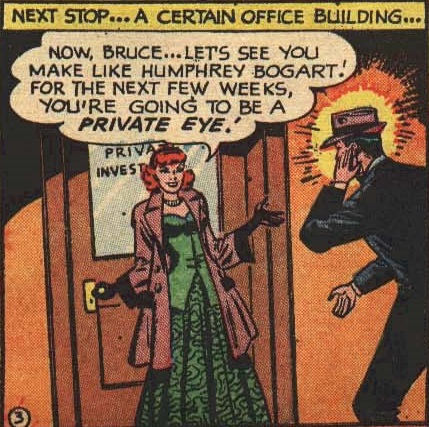
detective comics 155Detective Comics #155
Batman 64Batman #64
Batman 79Batman #79

Soon, however, the moralist supervision of the Comics Code Authority – the industry’s self-censorship body, formed in 1954 – took its toll. By the early 1960s, Sheldon Moldoff was drawing Vicki Vale as a much more wholesome figure:
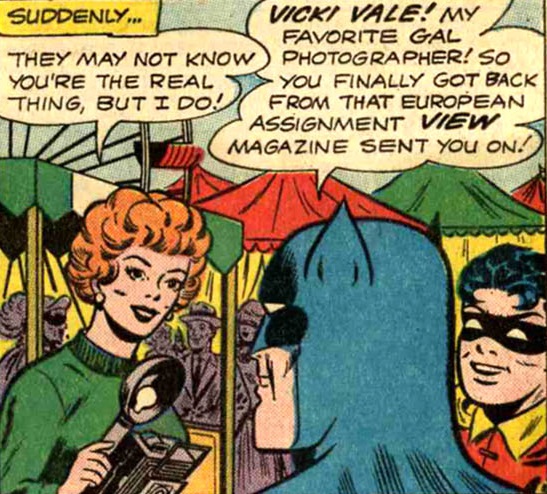
detective comics 309Detective Comics #309

Vicki Vale was temporarily purged from Batman comics in 1964, when editor Julie Schwarz tried to move the Caped Crusader away from his many Silver Age trappings. To be fair, while it’s fun to see the Dark Knight go to outlandish lengths to protect his secret, I suppose there are only so many times you can go to that well with the same character before she starts to look like too much of a fool.

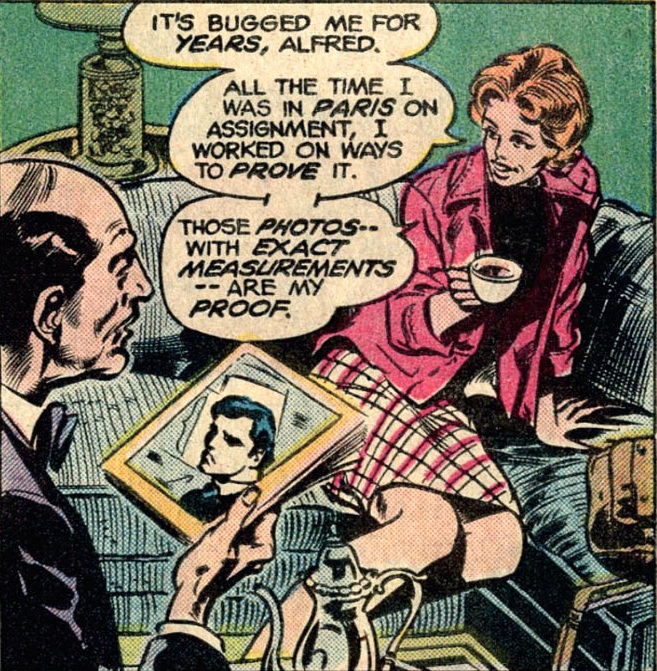
When Vicki Vale occasionally popped up again, she kept variations of a conservative look, albeit with some modern nuances, adjusting to fashion and shifting moral standards. Although no longer an unabashed sexpot, Vale was still nevertheless graceful and charming, in a classy way. Here is how Carl Potts and the great Don Newton drew her in 1977 and 1982, respectively:
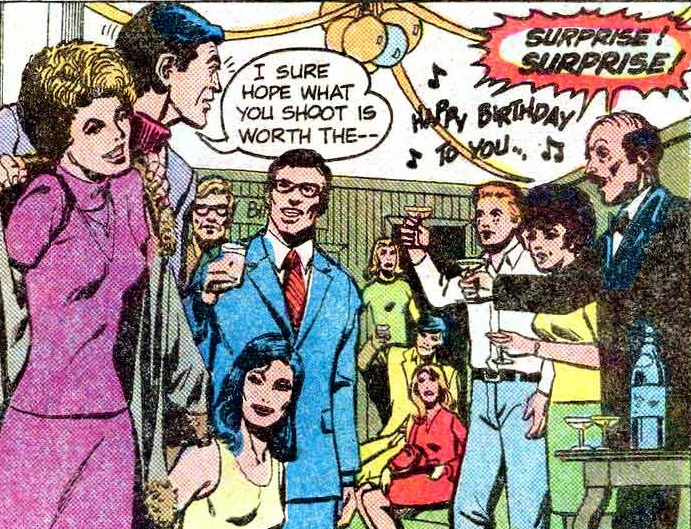
Batman Family 11Batman Family #11
detective comics 515Detective Comics #515

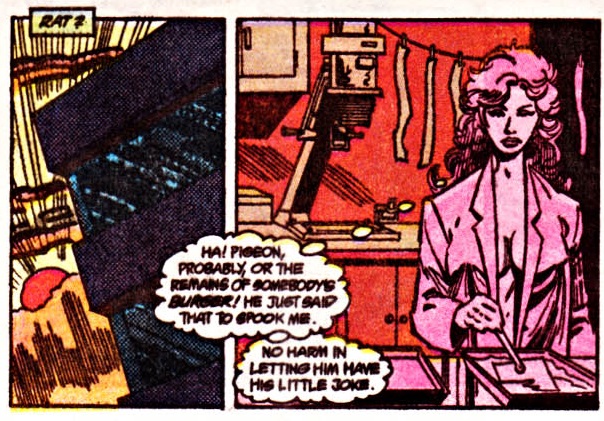
Notice how colorists Bob LeRose and Adrienne Roy (one of my all-time favorite colorists) gave Vicki Vale’s wardrobe a purple and pink motif, in tune with traditional notions of womanhood.

That said, by the 1980s things were beginning to change again. During Gerry Conway’s and Doug Moench’s excellent runs in Batman and Detective Comics, Vicki Vale became a regular cast member. She actually got some of her best stories – and richer characterization – during this period, playing a key part in a mayoral election, getting promoted to editor of Picture News magazine, and at one point taking a leave of absence in order to do field work in Guatemala (she went there looking for Soviets and ended up finding something much scarier – the Joker!).

It was also in 1982 that, under Gene Colan’s groovy pencils and Klaus Janson’s deft inks, Vicki Vale’s style turned much more casual. Between Adrienne Roy’s pink tones, the bracelets, the perm, and the proto-punk looseness, I would say there were hints of early Madonna here…
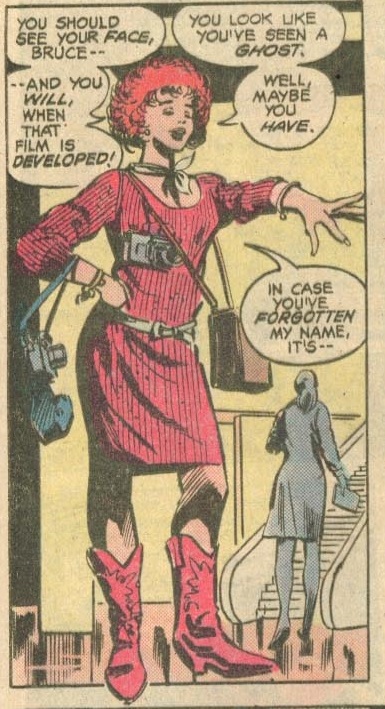
Batman 344Batman #344

That said, Vicki Vale wasn’t exactly edgy. Sure, she hit a guy who harassed her (Detective Comics #526) and she enthusiastically fired a machine gun in that kickass Guatemala tale (Detective Comics #532), but I don’t want to overstate things. At the end of the day, by and large most of Don Newton’s and Gene Colan’s images of Vicki Vale during this period wouldn’t look out of place on a promo for the then-popular TV series Dynasty which makes sense, since many of her storylines were soap opera-worthy, especially the love triangle with Bruce Wayne and Catwoman… followed by one involving Nocturna… and then another one, involving Alfred’s daughter…
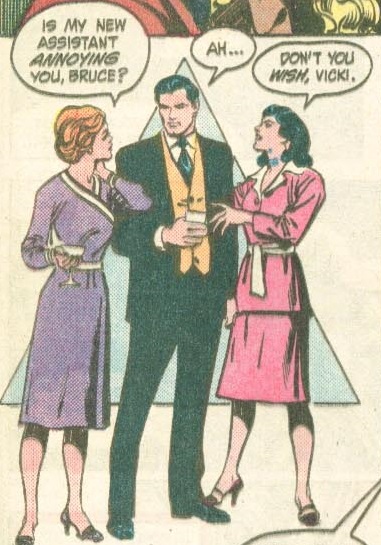
Batman 376Batman #376

(Subtle background, right?)

My favorite 1980s’ time capsule consists of a subplot about Vicki Vale going to the gym. In comics from 1985, the fitness craze was clearly treated as a new phenomenon and Doug Moench had some fun at the expense of the neoliberal, New Age-tinged attitude and rhetoric that went along with this trend.

I’m not sure whether this next page was illustrated by Rick Hoberg or Chuck Patton (they both get art credits in the issue), but it sure nails the emergence of a new kind of athletic femininity:
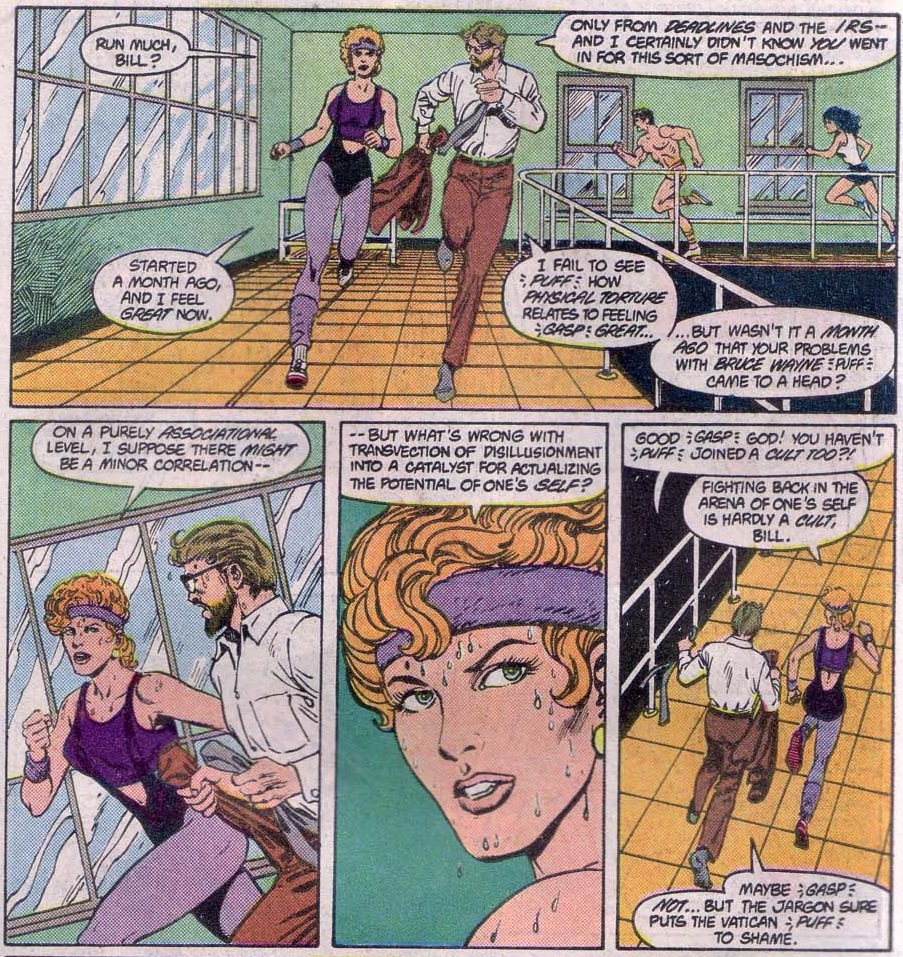
batman 385Batman #385

It’s odd to see how much space was devoted to Vicki Vale’s body-changing workout. What started out like a semi-satirical jab at Jane Fonda turned into a homage to a type of muscular female beauty, the kind personified by Brigitte Nielsen – and, eventually, sort of embodied in the characters played by Sigourney Weaver in Aliens and Linda Hamilton in Terminator 2: Judgment Day.

Tom Mandrake showed off this new, more androgynous physique in a scene colored by Adrienne Roy, who now gave Vicki’s outfit a masculine-coded blue:
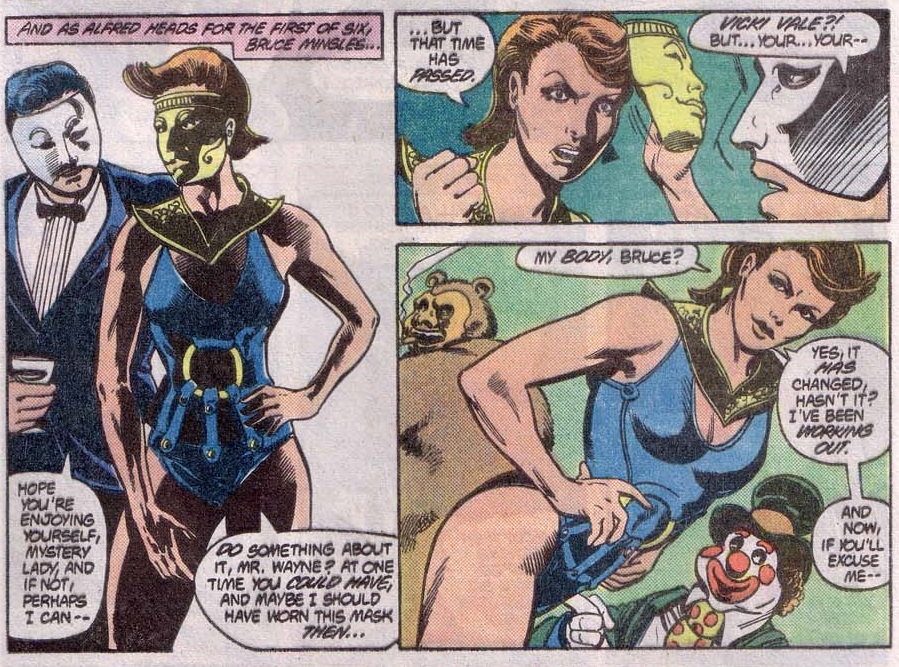
batman 387Batman #387

(Another way to look at that blue and yellow combination is that it evokes Batman’s own colors, thus placing the two characters at a more equal level.)

The change did not last long, though. Soon, the butch haircut and imposing posture reverted to a more conventional look – instead of projecting physical strength, Vicki Vale went back to projecting mostly elegance and sophistication.

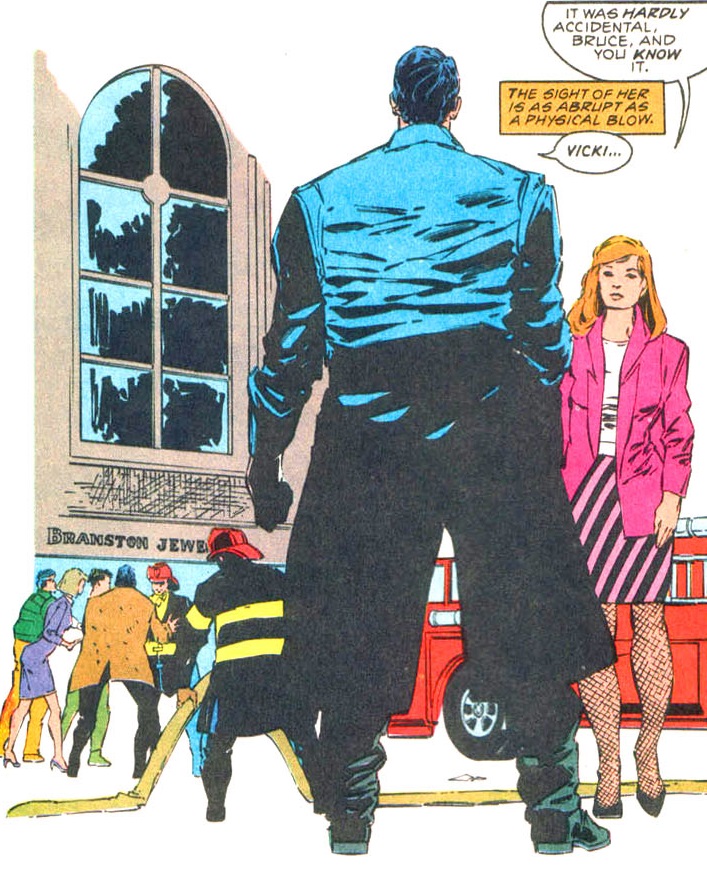
Indeed, in the post-Crisis reboot, Vicki Vale looked like the prototype of an American, Reagan-era career woman. As an intelligent, emancipated reporter, I suppose it made sense that she appeared to be cut from the same cloth as Murphy Brown.
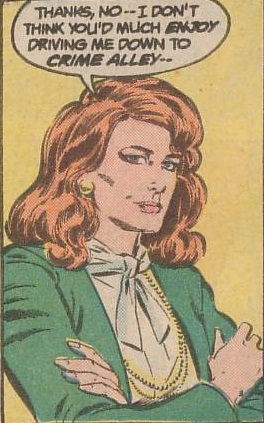
Batman #408Batman #408

(Yes, the green wardrobe made a comeback as well!)

In an eye-popping 1989 pin-up, Steve Bove gave Vicki Vale another 1980s’ trademark: voluminous, ultra-wavy hair that seemed to wildly envelop her face. Add to that the makeup, the high heels, and the flirty, voluptuous stance and you’ve got Vicki fully updated to the zeitgeist’s mainstream notion of sexiness, coming across like a glamorous model posing for photos (instead of taking them):
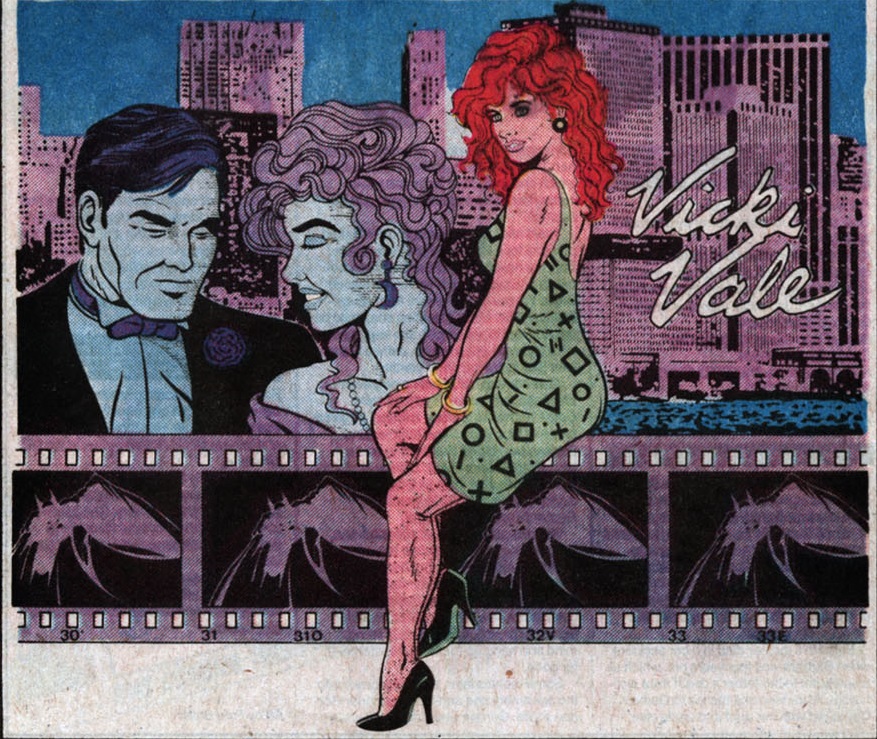
Batman Annual #13Batman Annual #13

(Despite being an independent working woman, Vicki Vale was never a particularly forceful feminist icon… Still, it does feel somewhat diminishing to see her presented in such a passive pose, deprived of the agency acquired in recent years, her whole attire making her look unfairly objectified and vulnerable.)

Meanwhile, 1989 was also the year that Tim Burton’s Batman movie came out. Vicki Vale, who had quite a prominent role in the film, was played by Kim Basinger…

kim basinger

The fact that Tim Burton went with a sad-eyed blonde – rather than a plucky redhead – was one of his many departures from the comics. It may be taken as part of Burton’s wider attempt to reimagine the Batman mythos through a retro-noirish lens (Basinger does fit that sort of vibe – she even went on to play a Veronica Lake look-alike in the awesome movie L.A. Confidential).

In any case, like several choices in that blockbuster, this one had an impact in the comics, to some degree. While most artists didn’t directly copy Kim Basinger’s facial features (except for Paul Gulacy, in Legends of the Dark Knight #12, because Gulacy always had a thing for including cinematic cameos in his work, especially in his collaborations with notorious film buff Doug Moench), you can find some echoes of Basinger’s looks  in the way Jim Aparo and Tom Grindberg approached Vicki Vale at the time.
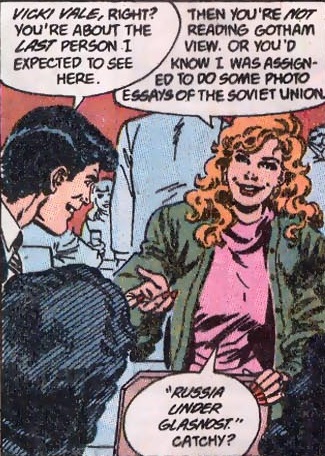
Batman 445Batman #445
Batman 484Batman #484

(As you can see, unlike the film’s mostly black and white wardrobe, Adrienne Roy – who didn’t share Burton’s aversion to bright colors – stuck to Vicki’s green and pink sartorial choices.)

Since nobody seemed interested in doing anything original with Vicki Vale, she just went through the loop of being another girlfriend of Bruce Wayne who often got into trouble and ultimately challenged his double life, just like Silver St. Cloud, Julia Remarque, or, later, Vesper Fairchild (all of them fine characters for a while, but given relatively little to do, which is a shame). To be fair, Vicki herself seemed aware of this, getting increasingly sick of being treated like a damsel in distress…
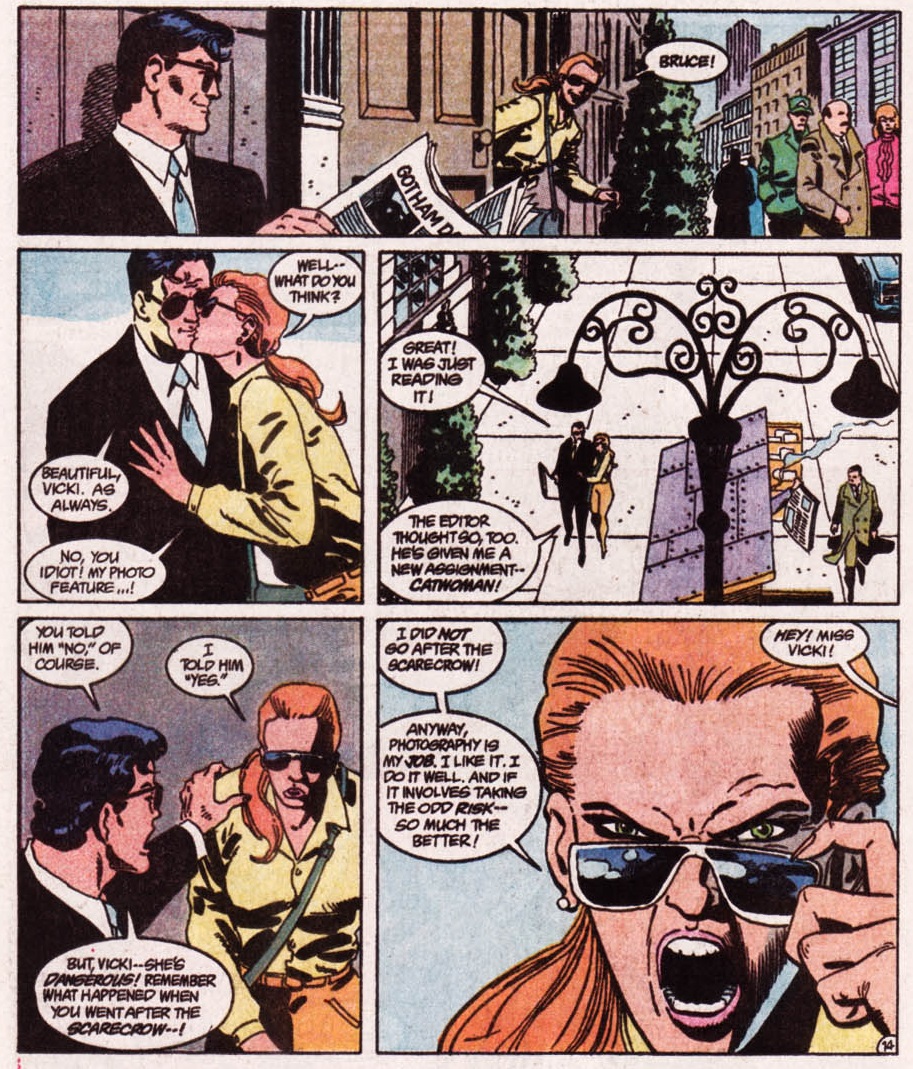
Batman 460Batman #460

Thus, after a few brief – and repetitive – subplots in the early 1990s, Vicki Vale once again disappeared from the pages of Batman comics.

It took another quasi-hiatus of almost two decades before creators proved ready to revisit her typical storyline (such is the cycle of comics). Indeed, Vicki Vale has made a small comeback in the last decade. Writer Fabien Nicieza helped rescue her from limbo in 2009, at the time of Bruce Wayne’s apparent death in Grant Morrison’s remarkable Batman run. The most striking aspect of Vale’s reboot was that she seemed younger than ever, now oozing a distinctly millennial vibe:
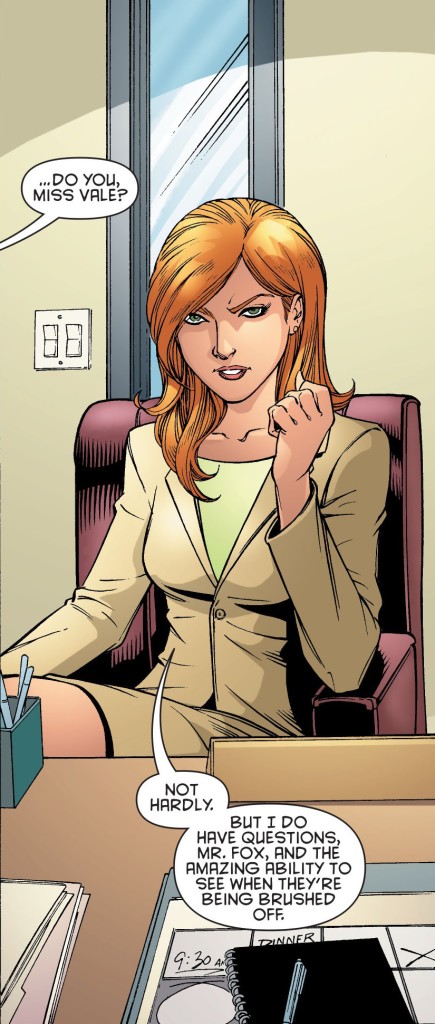
Red Robin 6Red Robin #6
Batman And Robin #18Batman And Robin #18

I skipped the version of Vicki Vale in 2005’s All-Star Batman and Robin, the Boy Wonder, because that one deserves closer attention…

Frank Miller had already put his spin on Gotham’s favorite reporter in the introduction to the collected edition of Dark Knight Strikes Again, written as a Vicki Vale column about Bruce Wayne’s funeral. In that text piece, she was hilariously out-of-character (it gave the impression that she had lost her marbles or was writing while drunk) and the whole thing devolved into an unsubtle (in an entertaining kind of way) objectivist rant, thus perfectly setting up the tone for the comic that followed.

A younger Vicki then showed up in Miller’s next project set in his gonzo version of the DCU, the infamous All-Star Batman and Robin. Among the many outrageous features of this ridiculously atrocious series was the hyper-sexualization of practically every woman throughout the book. Like with the overall politics and über-gritty attitude, this trait almost suggests a parody of superhero comics – in this case, by taking the leering male gaze to an absurd extreme. However, the whole thing appears to be played with a straight face, which is both baffling and uncomfortable.

Who knows what goes on in Frank Miller’s head anymore, but penciller Jim Lee, inker Scott Williams, and colorist Alex Sinclair sure threw themselves at the sleazy material without a visible trace of irony, especially in this glitzy splash page:
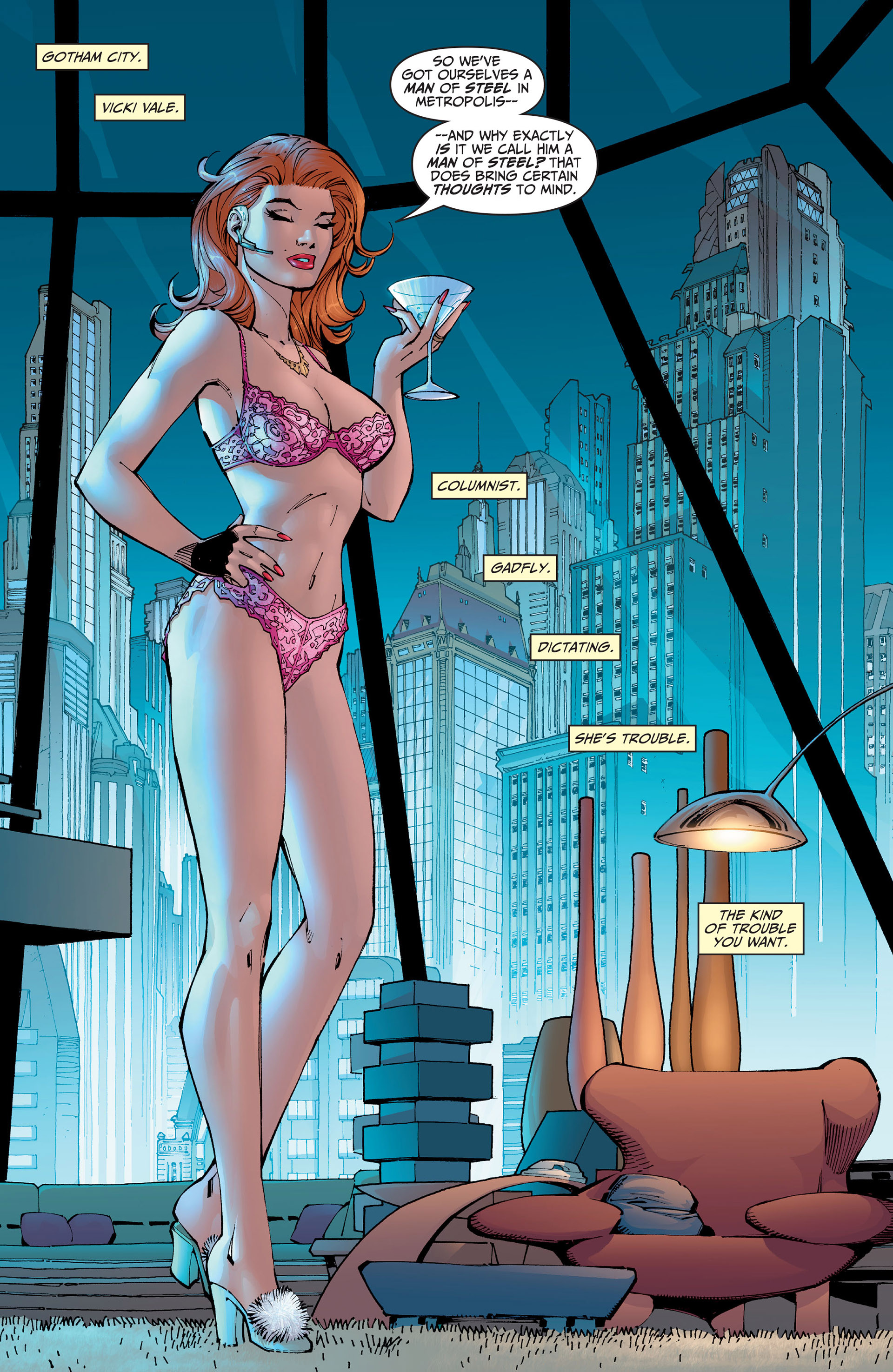
All Star Batman and RobinAll-Star Batman & Robin the Boy Wonder #1

And yet, while I don’t think anybody has ever approached the character with such over-the-top levels of softcore sexploitation, Jim Lee was hardly the only artist to give fans a revealing view of Vicki Vale’s slim, sensual body. In fact, Vale’s very first comic, back in pre-Code 1948, provided a generous glimpse:
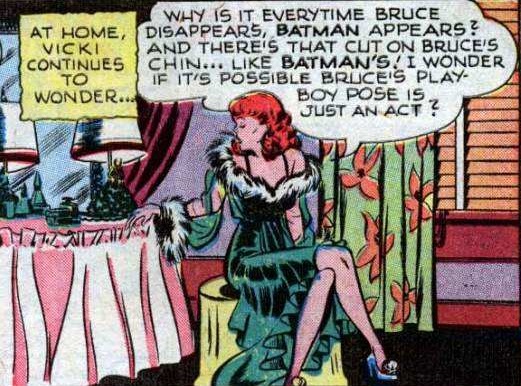
Batman 49Batman #49

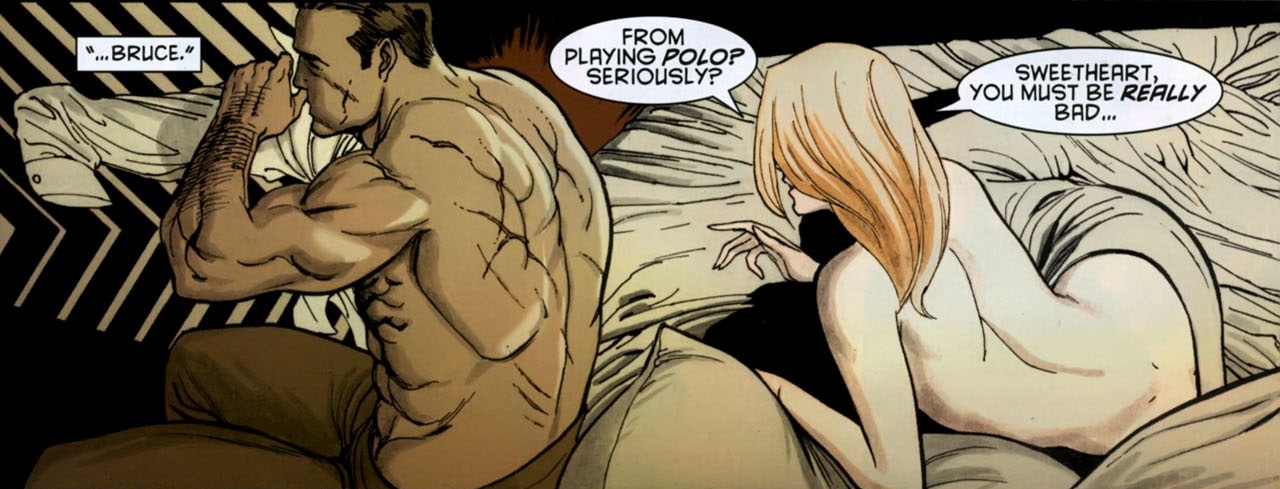
It’s not just that Vicki Vale is always depicted as attractive (you can argue that’s a defining feature of the character, like being a photographer), it’s that a number of (male) creators seem particularly infatuated with her. They are often willing to follow Vale into intimate scenarios, where she is shown with most of her clothes off. Sometimes this is done in a relatively tasteful way, other times less so, but it’s definitely a running motif:
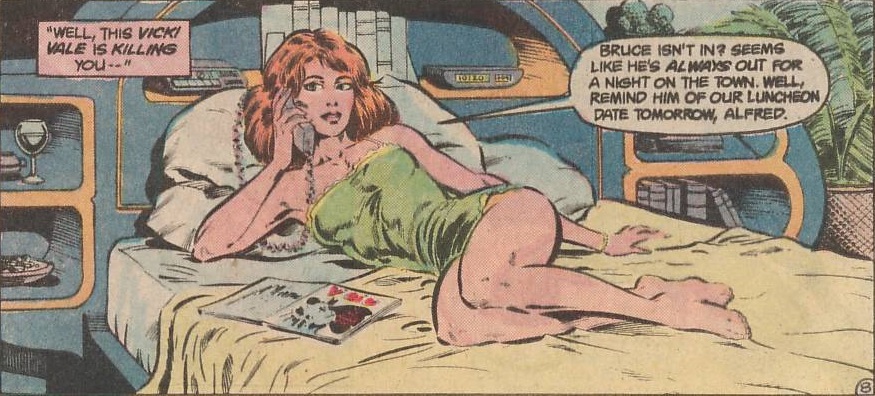
Batman #408Batman #408
Batman 455Batman #455
Gotham Gazette – Batman Alive?Gotham Gazette – Batman Alive?

For the most part, this has been the fate of Vicki Vale – often underwritten, shamefully underused, her looks being her main distinguishing feature… Sure, she was allowed some superficial changes over time (including more intricate stories – and an athletic makeover! – in the mid-80s), but overall she remained largely confined to the same boring character arc.

So, for once, I’ve got to hand it to the ‘New 52’ reboot: at least writer Scott Snyder has tried to give Vicki Vale a more complex and interesting role in the Batman mythos, treating her with greater maturity and nuance. The artists, however, are not necessarily on the same page…
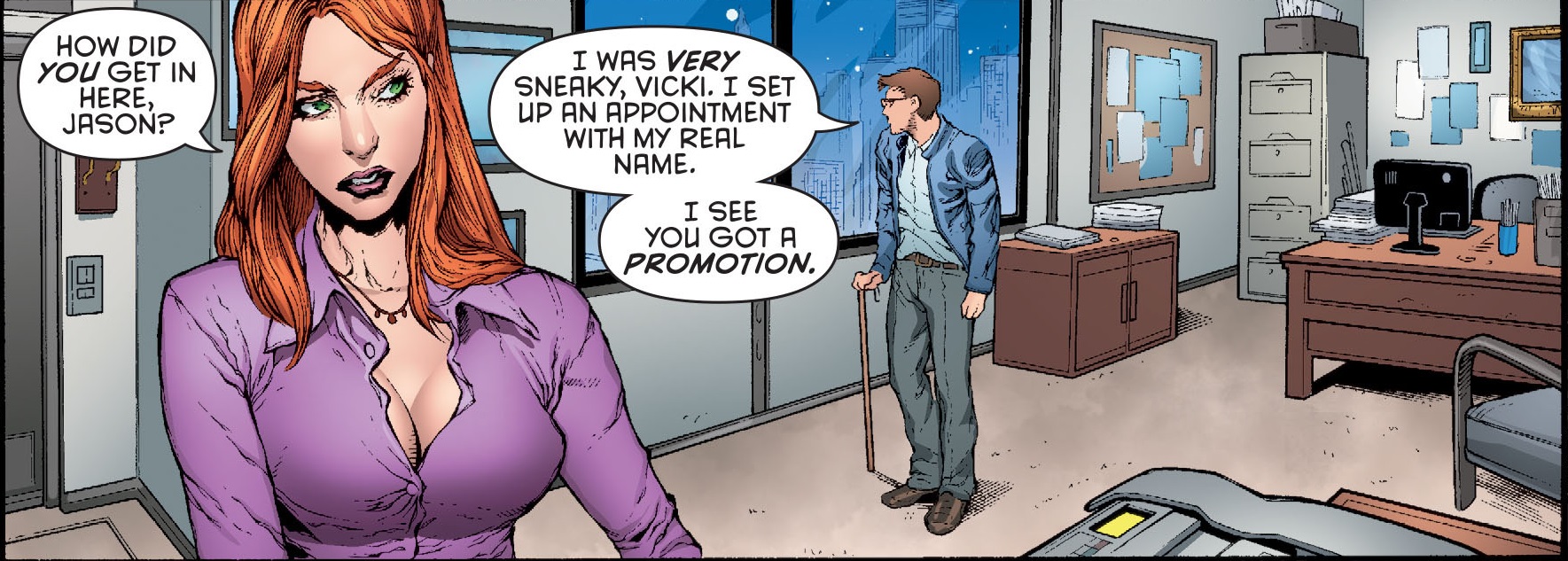
Batman Eternal 052Batman Eternal #52 
 
Posted in GOTHAM CITIZENS | Tagged , , , , , , , , , , , , , , , , , , , , , , , , , , , , , , , | Leave a comment

We should stop meeting like this…

Batman & the Monster MenBatman and the Monster Men #5
Gotham After Midnight #6Gotham After Midnight #6
Nightwing #23Nightwing #23
Batman 583Batman #583
jla 80 page giantJLA 80-Page Giant #1
the ankhThe Ankh
Posted in GOTHAM INTERLUDES | Tagged , | Leave a comment

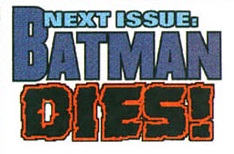
On the discreet BATMAN DIES!!! event

In November 2000, the ‘Next Issue’ blurbs in the Batman family of comics announced that something big was about to go down…

Batman #585Batman #585
Catwoman 88Catwoman (v2) #88
Robin 84Robin (v4) #84

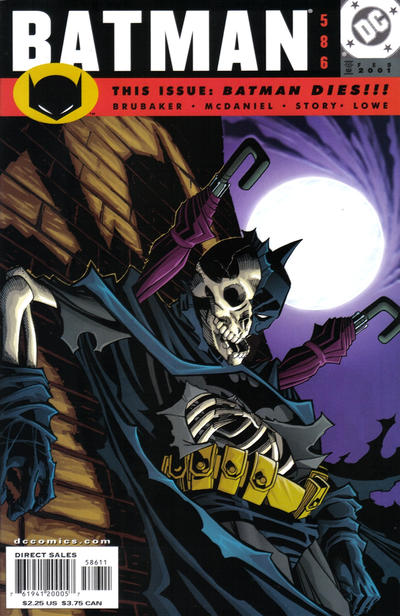
The premise of a story in which the Dark Knight seemingly kicks the bucket is hardly unique (there is even a whole collection devoted to this subgenre). Still, some of you may find it odd that this event remains relatively unnoticed, especially in comparison with the much-publicized Batman deaths written by Grant Morrison less than a decade later (in Batman R.I.P. and Final Crisis). The reason for this is that the blurbs’ promise was extremely misleading: rather than a crossover in which Batman met his demise, the following month DC delivered a set of unconnected issues focusing on different members of the rogues’ gallery, with many of them fantasizing about killing the Caped Crusader.

Even if it was just a cynical stunt, this gimmick allowed creators to present the world as viewed through the rogues’ distorted eyes. They could therefore shift each series’ gaze, taking the side of the foes rather than that of the heroes, and even play intertextual games by providing alternative views on the events from previous comics. As a result, they actually gave us some very cool tales…

Batman 586

Sadly, Batman #586 wasn’t one them. It’s readable, for sure, but very light on ideas… This fantasy about the Penguin’s rather pedestrian plot to kill Batman has a fairly decompressed approach – the whole thing is basically an extended action scene and, even though it’s rendered by Scott McDaniel with his usual gusto and dynamism, there isn’t anything particularly original about it. The only clever twist comes near the end, but it isn’t enough to make up for either the lacklustre lead-up or the uninspired final revelation. I find this a shame, really, since writer Ed Brubaker has proven that he can do alternative history/speculative tales with interesting nuances, for Batman (Gotham Adventures #33) as well as for other superheroes (What If Aunt May Had Died Instead of Uncle Ben?), but here he wasn’t at the top of his game.

Chuck Dixon took greater advantage of the ‘Batman Dies!!!’ gimmick, penning a couple of insightful issues about the psychologies of an A-list villain, the Joker (Robin #85), and a Z-list one, Nite-Wing (Nightwing #51). (He also wrote one about Bane, ‘The Suitor’ (Birds of Prey #26), but it’s a run-of-the-mill yarn that is as much about characterization as about deftly setting up plot points for future arcs, something that Dixon can pretty much do with his eyes closed.)

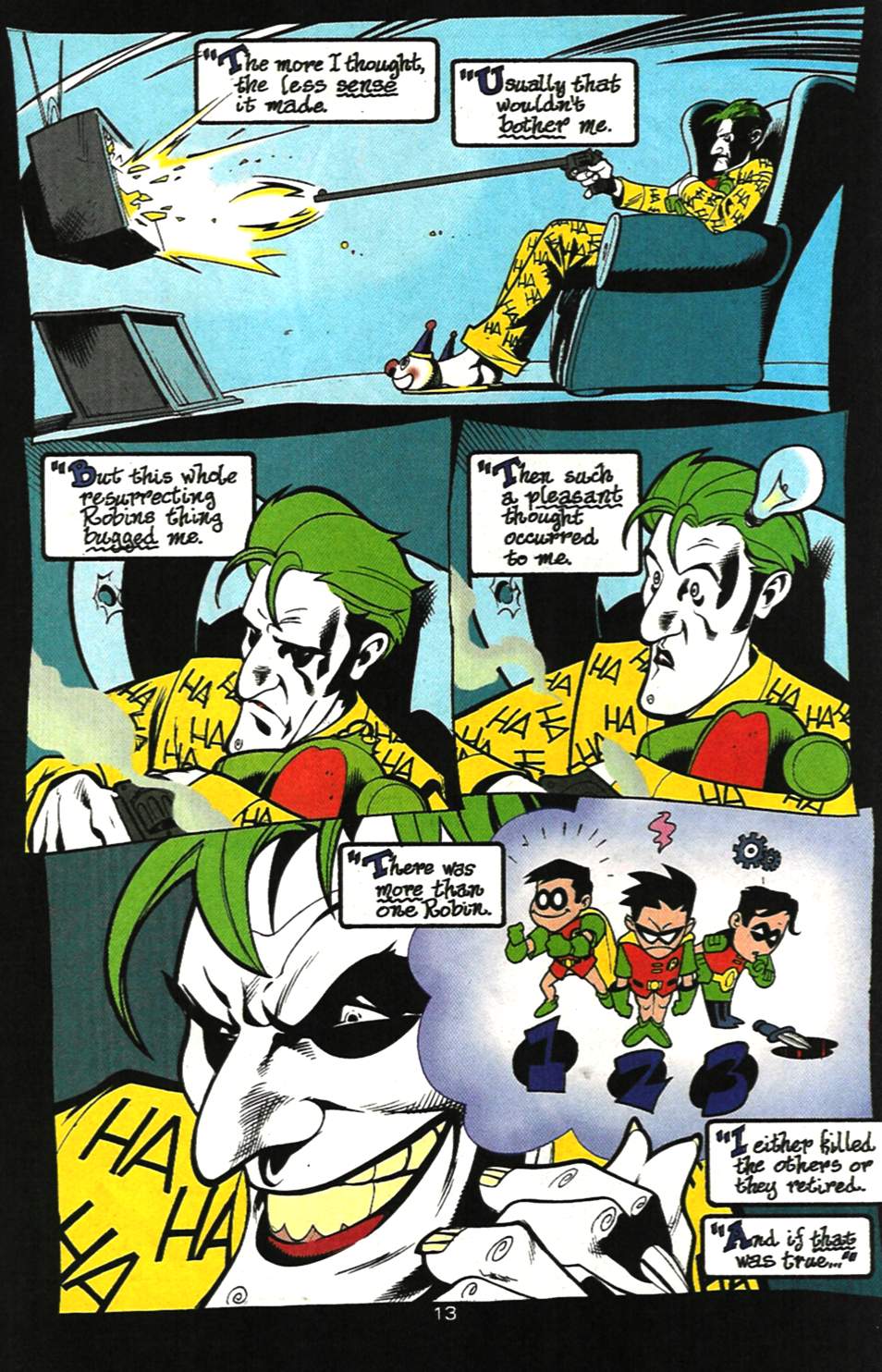
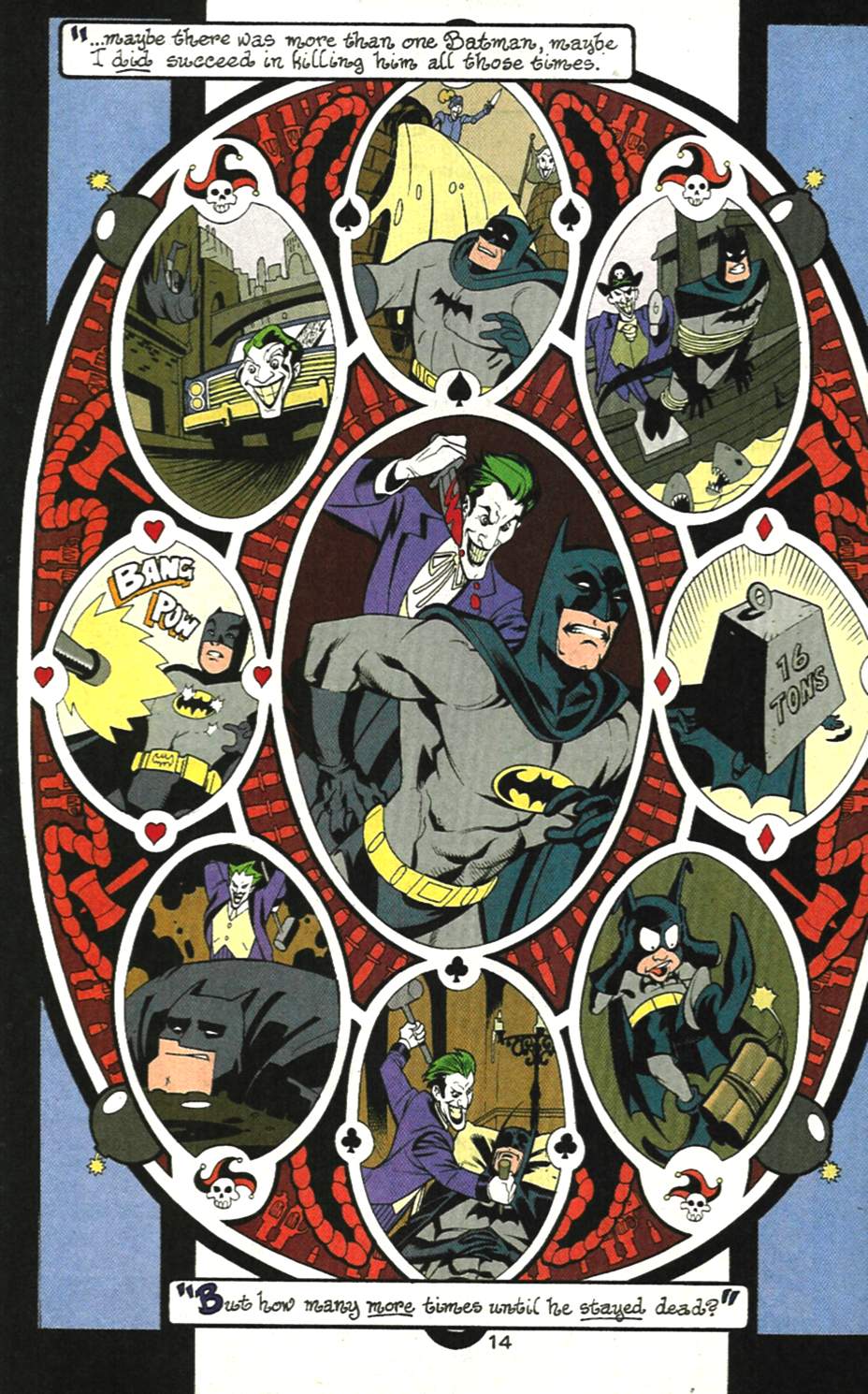
The Joker tale, ‘Fool’s Errand,’ is loads of fun, with the villain, locked up in Arkham Asylum, recounting his history with the Boy Wonder throughout the years. The result is amusing not just because the Joker only knows one side of his previous encounters with Robin, but also because the way he puts together the missing bits is both absurd and intelligent, which is my favorite take on the Clown Prince of Crime. Thus, we get to revisit older comics – such as A Death in the Family and Joker’s Wild – with a fresh eye. (There are even nods to out-of-continuity Silver Age stories, explained by the fact that we are looking at the delusions of a madman.)

Plus, the art team of Pete Woods, Jesse Delperdang, and Noelle Giddings does justice to Dixon’s script by finding visually inventive ways to convey the Joker’s warped mind:

Robin 85Robin 85Robin (v4) #85

(As you can see above, letterer Willie Schubert also totally got into the looney spirit of things!)

Technically, Nightwing’s contribution to the ‘Batman Dies!!!’ event is ‘Modern Romance’ (issue #52), which Chuck Dixon wrote from the point of view of Catwoman, even including an early fantasy sequence (with lovely Greg Land art) in which she kills the Dark Knight. However, the previous issue – about Tad Ryerstad, the confused vigilante who briefly went by the name of “Nite-Wing”– is the one that best captures the event’s potential.

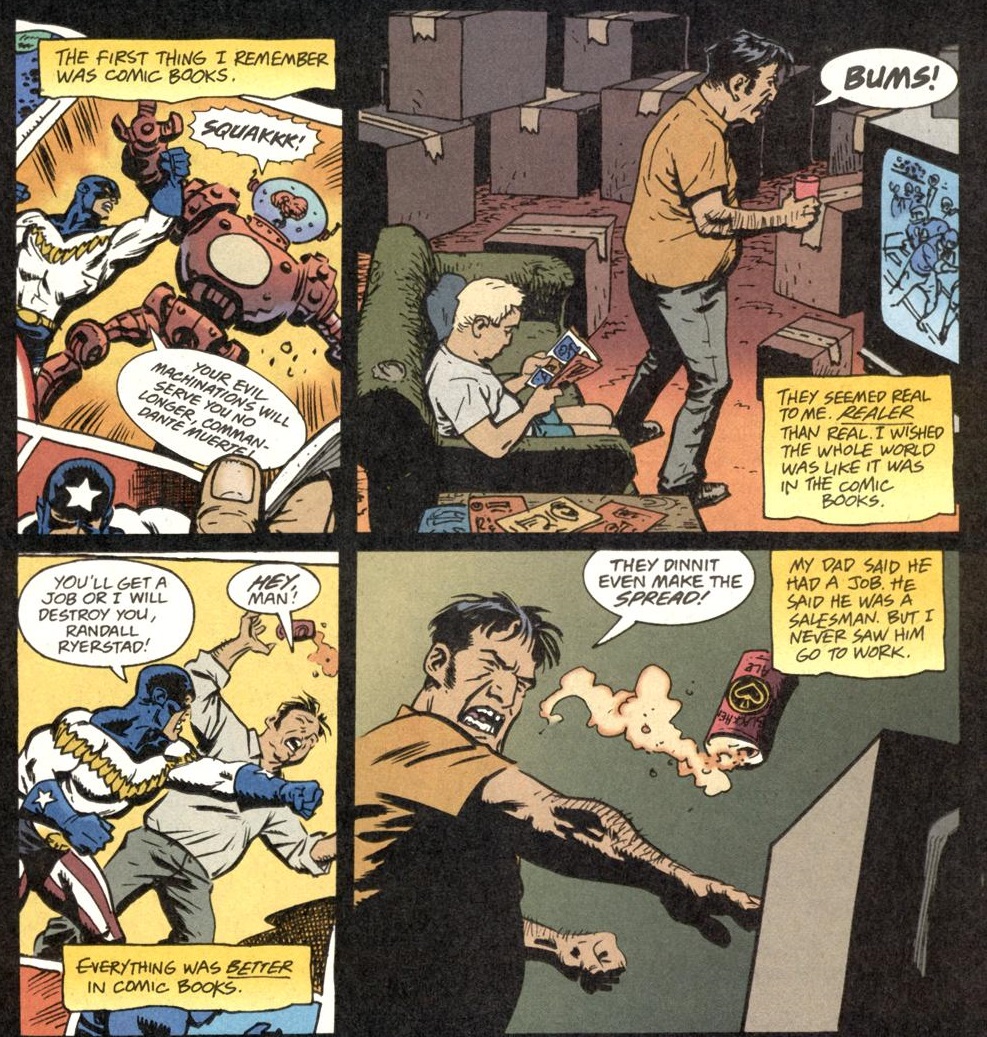
On the surface, ‘Tad’  appears to be a variation of the ‘Fool’s Errand’ formula, giving us a glimpse into the psyche of a recurring foe of Nightwing as he reminisces while locked up in a Blackgate prison cell. Yet Dixon ultimately does something quite different here, revising our perspective in much more drastic terms. Tad’s character was initially mostly played for laughs, albeit of a darker breed, in line with the overall tone of Dixon’s Nightwing run. In this issue, though, he comes across as a decidedly tragic figure, his early childhood an amalgamation of white trash imagery, his conviction that he’s a hero as misguided as Travis Bickle’s…

If the Joker’s schizophrenia served as a pretext for surrealism, Tad’s sociopathic disposition informs a grittier tale, one where the violence of the real world is contrasted with the typically escapist narratives of superhero comics:

Nightwing 51Nightwing #51

Let me rephrase: the contrast isn’t really between escapist fiction and reality, since, at the end of the day, the ‘reality’ presented in the comic is itself part of a superhero narrative… in fact, this kind of ‘realism’ has its own tradition in the genre, with the most renown example being 1986’s Watchmen. Tad, as presented in this story, may think of himself as having a more realistic understanding of the world, but he’s actually the representative of a type of fiction – he’s a less successful version of Watchmen’s Rorschach, he’s the flip-side of the way the Punisher is usually depicted (including by Dixon himself).

Guest artist Kieron Dwyer and colorist Patricia Mulvihill drive the point home in this brutal scene:

Nightwing 51Nightwing #51

Catwoman’s ‘Always Leave ’em Laughing’ has a couple of metafictional levels as well. Bronwyn Carlton’s approach to the ‘Batman Dies!!!’ gimmick consists of having Harley Quinn pitch a television show about Catwoman to a group of TV producers. On one level, Quinn’s ideas are illustrated through sequences drawn in the style of Bruce Timm’s animated series (Staz Johnson and Craig Rousseau are listed as pencillers – based on their other works, I’m guessing Johnson drew the ‘real world’ stuff and Rousseau did the pitched material). On another level, Carlton uses the producers’ notes to jokingly comment on previous comics, questioning continuity gaps (‘Oka-aa-ay, right, okay, then – we lose the sister.’) and looking back on the tastelessness of Selina Kyle’s post-Crisis origin (‘It’s much too dark!’). The final product is an entertaining issue all around, even if it doesn’t even bother to justify the promise that Batman was going to die!

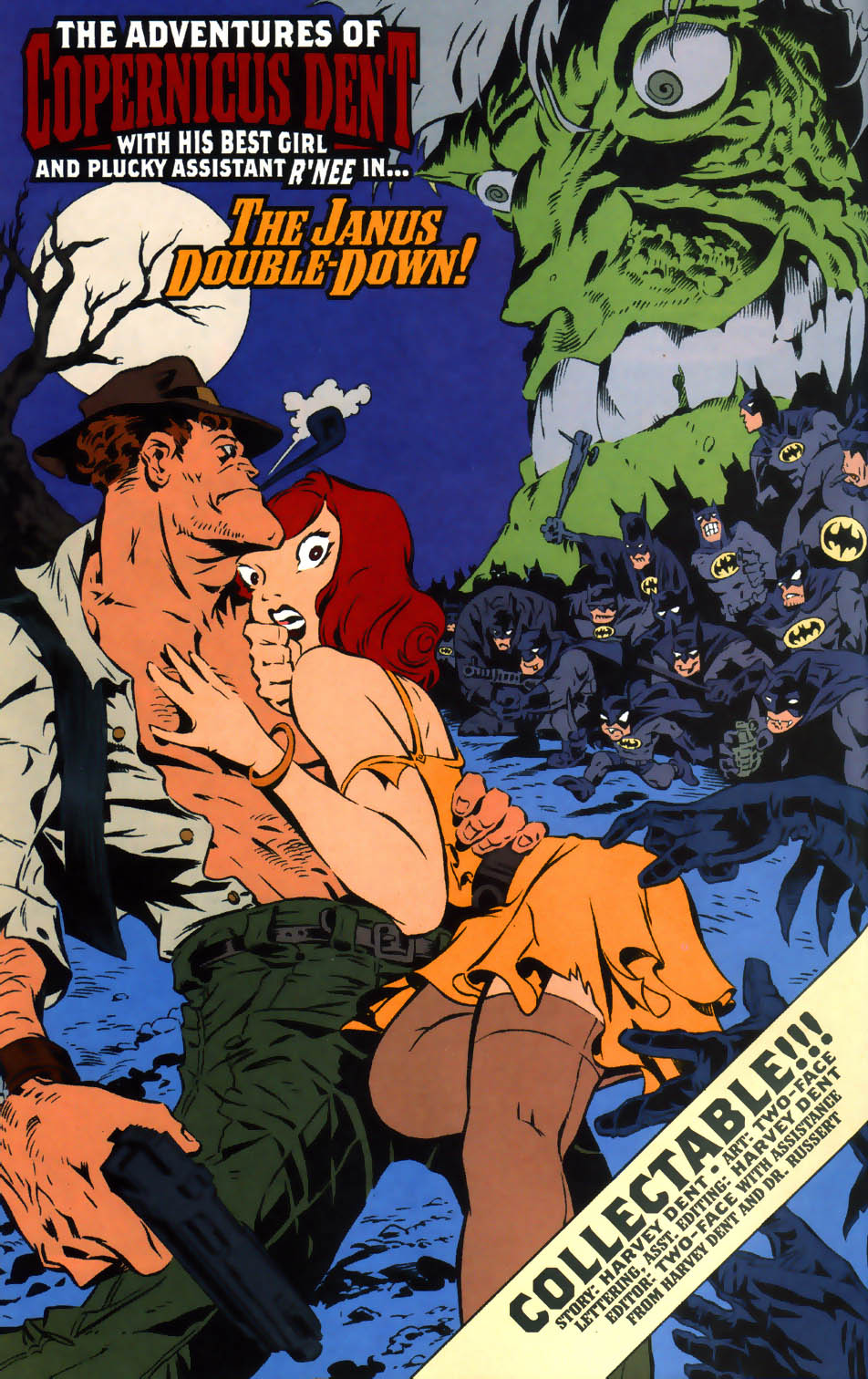
The best use of meta-narrative, however, took place on the pages of Detective Comics, where an art therapy program served as a pretext to depict Two-Face’s fantasies in mesmerizingly strange terms:

Detective Comics #753Detective Comics #753Detective Comics #753

Greg Rucka clearly had a blast writing this one. The comic-within-a-comic hilariously channels Two-Face’s infatuation with Renée Montoya (a long-running subplot in Rucka’s work) into a two-fisted (of course) pulpy adventure where Harvey Dent fights himself, the repetitive storyline reflecting his obsession with doubling and duality. That said, the ending is actually a bit touching if you take into account that it reveals not just Harvey’s sense of inadequacy (‘He only wanted the world to change for him.’) but also his own tragic awareness of it (since he is the one writing about it).

What sells the whole thing, though, is the exuberant art. The first and last pages are consistent with the previous issues in this run, from Brad Rader’s restrained pencils and John Lowe’s firm inks to Wildstrorm FX’s minimalistic colors. In turn, the middle section feels like something from another world: it opens with what appears to be a crude homage to Bernie Wrightson’s work on Swamp Thing, but it soon adopts a more Mad-like cartoon style, quite suited to the material’s whacky tone. Steve Mannion’s exaggerated pencils are inked by Hilary Barta, a perfect choice for this kind of stuff (as proven by his stint on Splash Brannigan).

In the end, we get a comic in which sharp lines and a melancholic mood temporarily give way to wild designs and riotous fantasy before returning to a dark version of normality. I can’t think of a neater embodiment of Two-Face’s inner self!

Posted in WEBS OF FICTION | Tagged , , , , , , , , , , , , , , , , , , , , | Leave a comment

COMICS CAN BE AWESOME (March 2019)

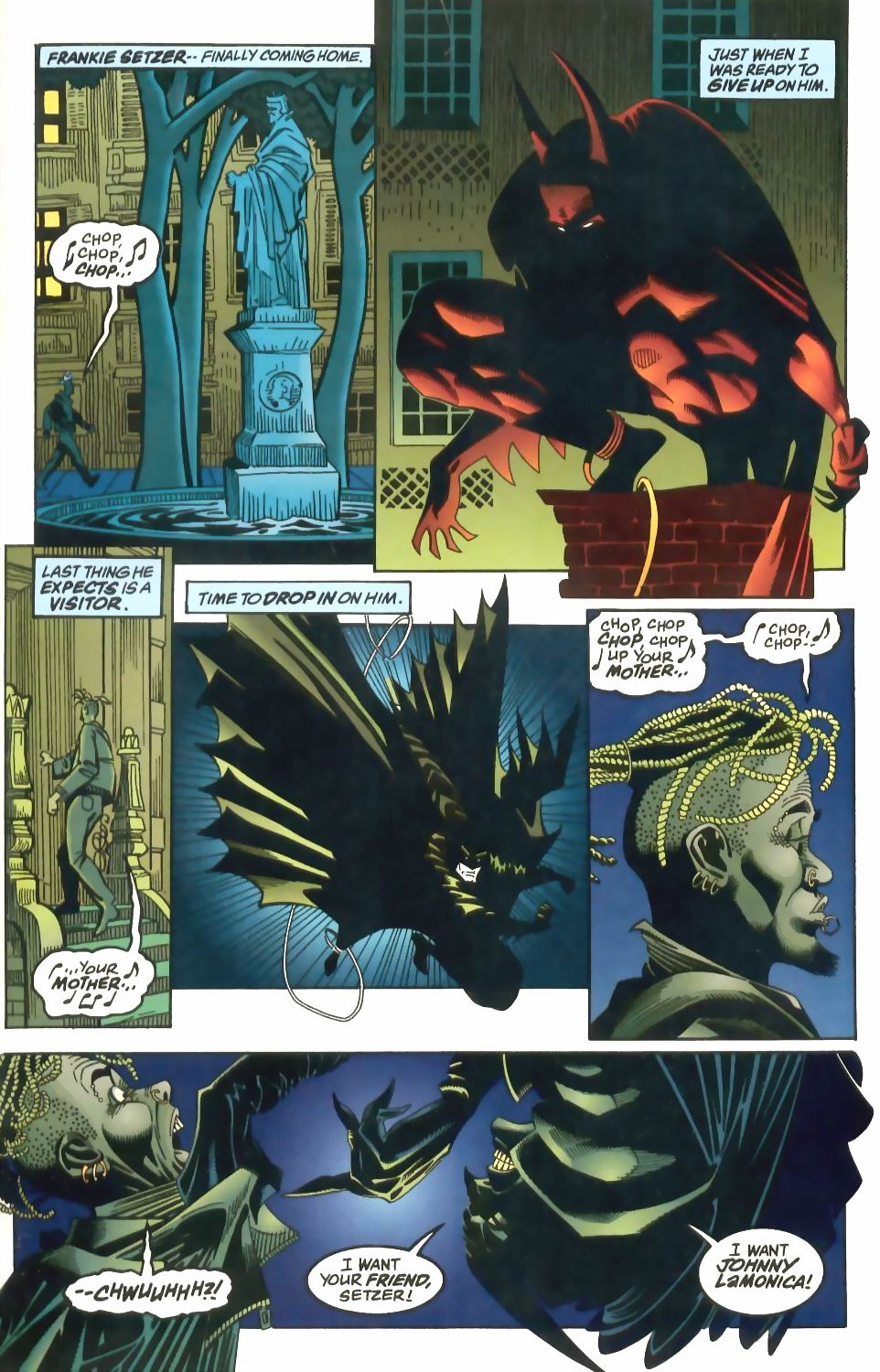
Your March reminder that comics can be awesome…

Paper Girls 3Paper Girls #5
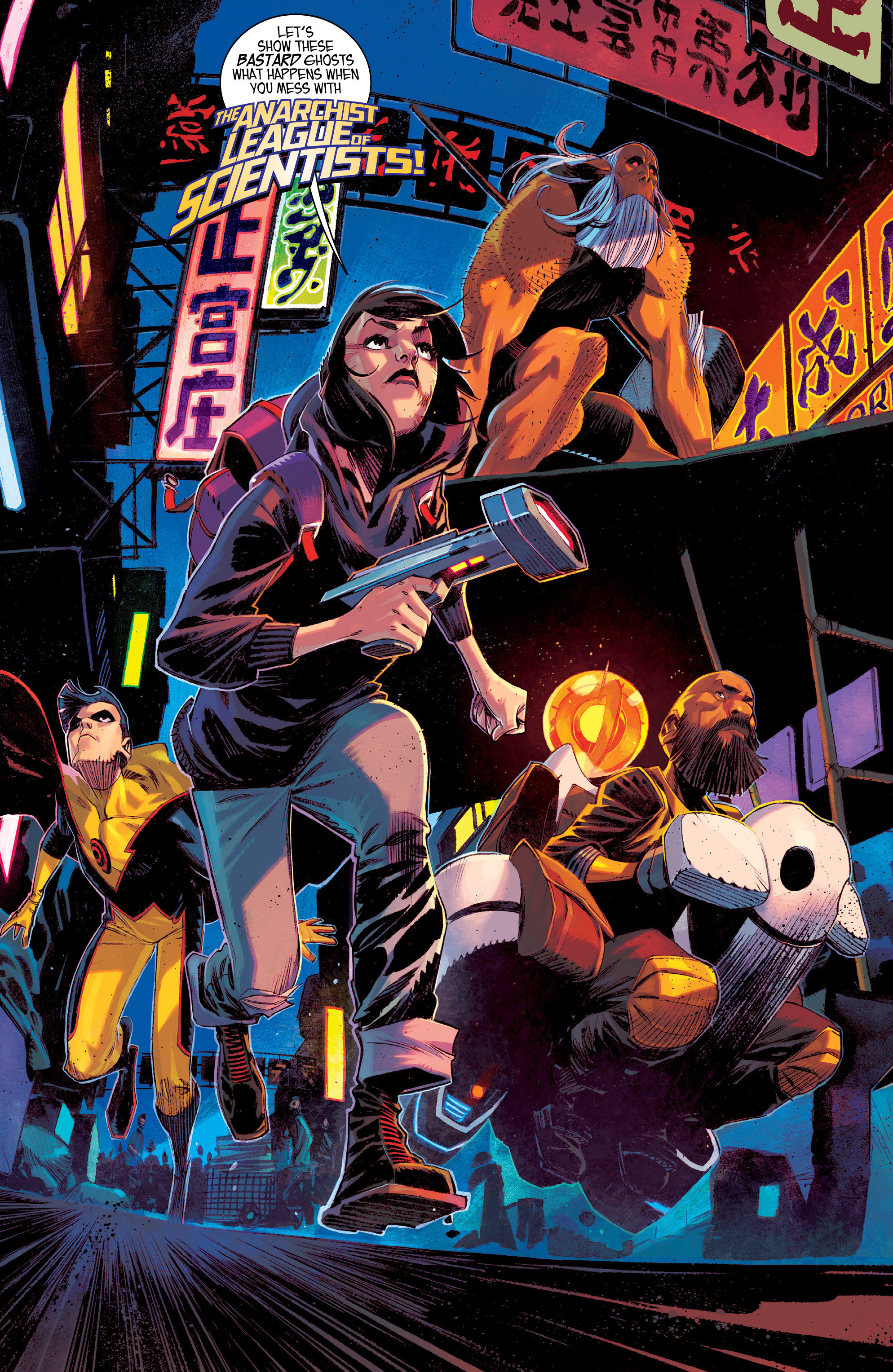
Five Ghosts 2Five Ghosts #2
Archer & Armstrong 21Archer & Armstrong (v2) #21
Posted in GLIMPSES INTO AWESOMENESS | Tagged , , , , , , , , , , , , , , | Leave a comment

3 striking uses of red by Greg Wright

I don’t write much about colorists in this blog. Coloring is one of those ungrateful tasks that, while absolutely vital to the feel of a comic, tends to go unnoticed when it’s merely done well. According to mainstream coloring conventions, competence implies not drawing attention to your craft, which means that fans – and even professional critics – often dismiss colorists in favor of a discussion about pencillers (revealingly called ‘artists’), even though the latter’s work can actually be brutally elevated or spoiled by the color choices.

There are exceptions, of course. Even in more traditional books, some colorists’ styles do manage to stand out, either because they try out innovative techniques or because they go for particularly flashy effects. A perfect example of the latter is Gregory Wright’s work on the main Batman series, which he colored from 1995 to 2002 (with some holes in the middle). While I’m not always a fan of Wright’s coloring, his over-the-top approach fit especially well into the Doug Moench/Kelley Jones/John Beatty/Todd Klein run, where – under the editorial supervision of Jordan B. Gorfinkel and Dennis O’Neil – everyone’s contribution seemed deliberately extreme.

True to the expressionistic, horror-tinged slant of the comic, Greg Wright’s hauntingly eerie palette looks like something he put together after watching the original Suspiria. With that in mind, let’s check out three ways he uses the color red, each of them creating a different mood:

Batman 519Batman #519

This is the more playful one of the lot. Having fun with the fact that Kelley Jones draws the Dark Knight like a demon – the beast-like posture, the hooves-like feet, the claws-like hands, the horns-like ears, the tail-like cape – Greg Wright colored Batman in the top panel with a hue somewhere between red and orange, as if he’s watching his prey from a hellish pit. Besides generating a visual pun, the choice contributes to the overall atmosphere: Wright reverts to nocturnal tones in the rest of the page, but that sinister scarlet silhouette looms menacingly over everything else.

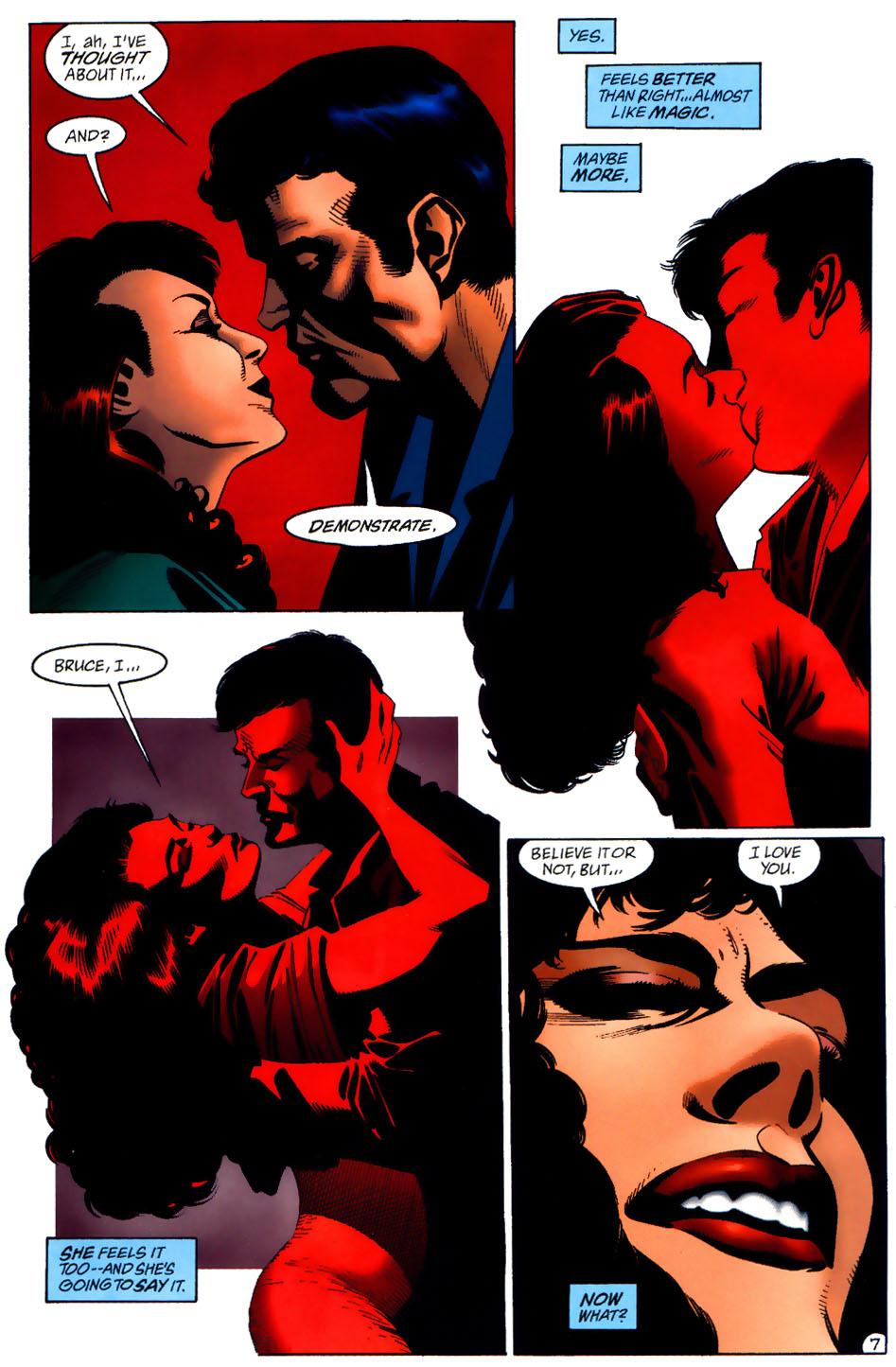
Thirty issues later, Wright used red to establish a whole other vibe in this exchange between Bruce Wayne and Vesper Fairchild:

Batman #549Batman #549

It’s a romantic scene, so you could argue the prominent red symbolizes love and the blood pumping through the couple’s hearts. But let’s face it: this tone of crimson suggests carnal passion. Check out the way it starts as a background color and then takes over their whole beings as they kiss before concentrating on Vesper’s lips in that final close-up… This is lust enveloping them. That third panel in particular, with Vesper (in a drawing with hints of Bride of Frankenstein, consistent with Jones’ gothic horror obsession) pressing her body against Bruce while grabbing his head and pouting, is a forceful image of barely contained sexual desire threatening to explode.

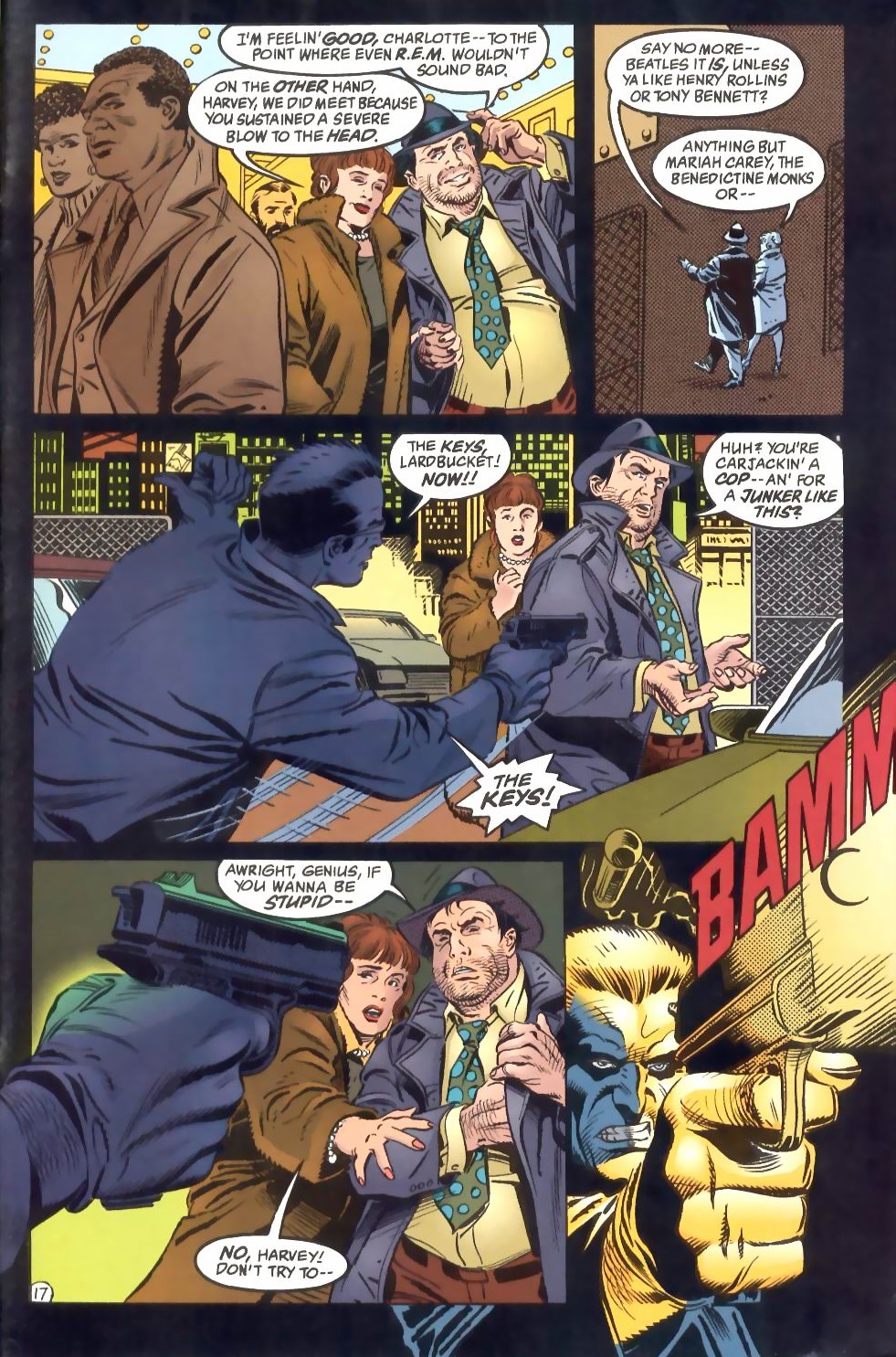
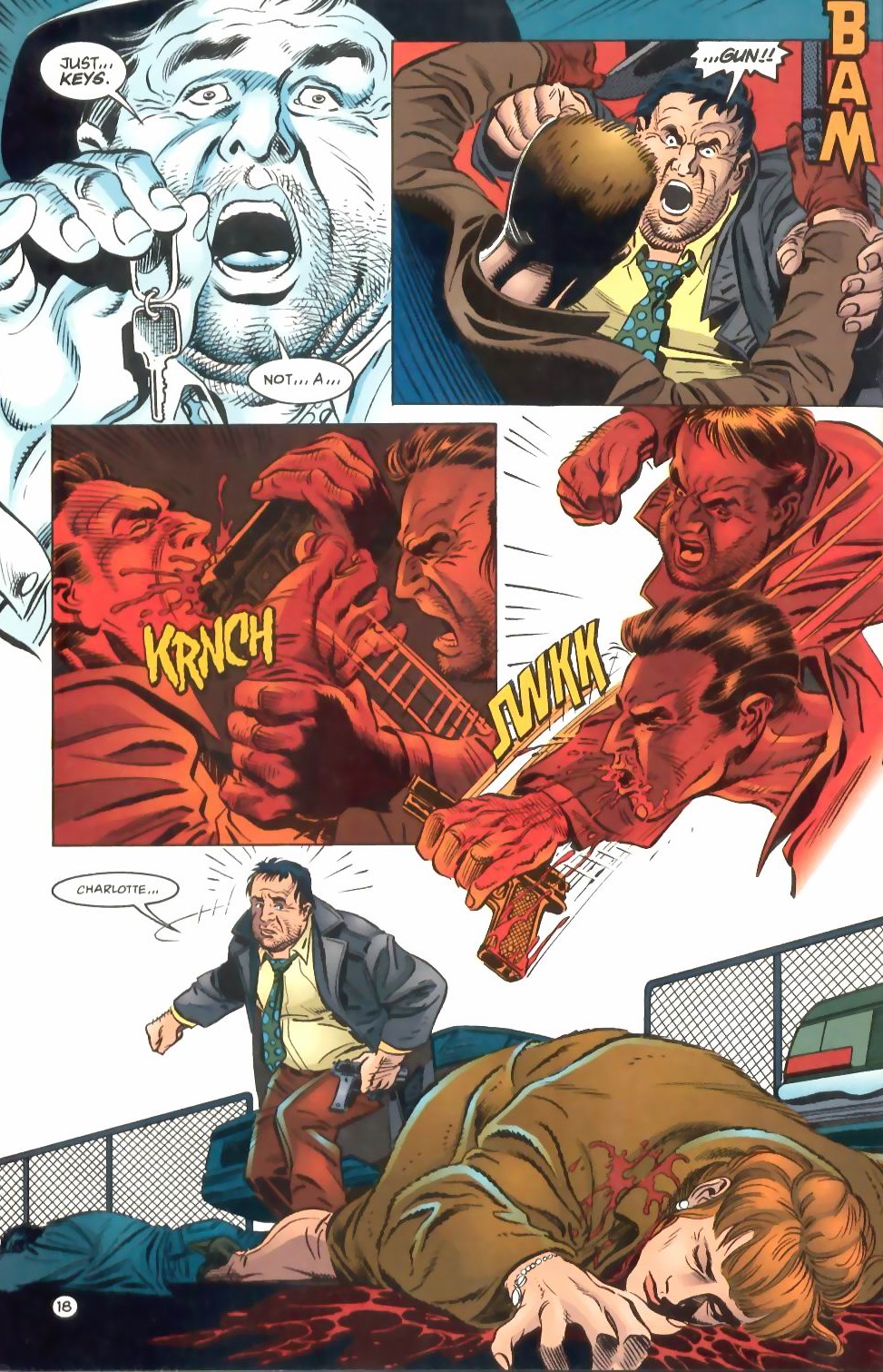
Kelley Jones didn’t draw the next example, taken from the crime story ‘Fades to Black.’ It was penciled and inked by Eduardo Barreto, who has a much more realistic linework, so Wright went for less flashy color choices, for the most part:

Batman 520Batman 520Batman #520

The red clearly represents violence in this sequence, starting with the shot’s onomatopoeic ‘BAMM’ and finishing with the blood flooding out of Charlotte. Between those two instances, Wright uses red to illustrate Harvey Bullock’s fury, once again spreading from the background and taking over a couple of panels. These expressionist panels are also an interruption in the grounded colors of the protagonists in the images that open and close the scene – they mark a moment when Bullock is seeing red (another visual pun), consumed by out-of-control rage before regaining his sanity at the end of the page, thus rendering the back-to-earth transition all the more powerful and tragic.

There you have it. Greg Wright raised the impact of three great pages with his variations of red. Now don’t get me started on his shades of blue…

Posted in ART OF BATMAN COMICS | Tagged , , , , , , , , | 2 Comments

Brilliant sci-fi short stories

As much as I enjoy sci-fi epics, I’m also a huge sucker for a tauter brand of science fiction.  Short stories are an ideal form for this genre: since sci-fi often revolves more around ideas than characters, it can be fun to just briefly wrap your head around a thoughtful concept without having to read a sprawling saga about it. Writers like Ray Bradbury (‘The Rocket Man’), Philip K. Dick (‘The Defenders’), and Isaac Asimov (‘Reason’) – not to mention Italo Calvino (‘World Memory’) and Jorge Luis Borges (‘Tlön, Uqbar, Orbis Tertius’) – elevated this type of tale to an art form, building entire worlds and exploring mind-blowing premises in only a handful of pages.

In comic books, sci-fi short stories have a very long tradition, with specialized anthologies ranging from the golden age of EC Comics to the British cyberpunk magazine 2000 AD. Some of the most talented writers and artists in the medium know how to use this space to full advantage, whether by giving readers glimpses of possible futures, by sketching out alternative societies, or by hinting at the ramifications of all kinds of speculative scenarios. In no more than ten pages, they can craft brief-yet-memorable reading experiences, usually culminating in a twist ending or an ironic punchline.

Here are 10 masterpieces everybody should read:

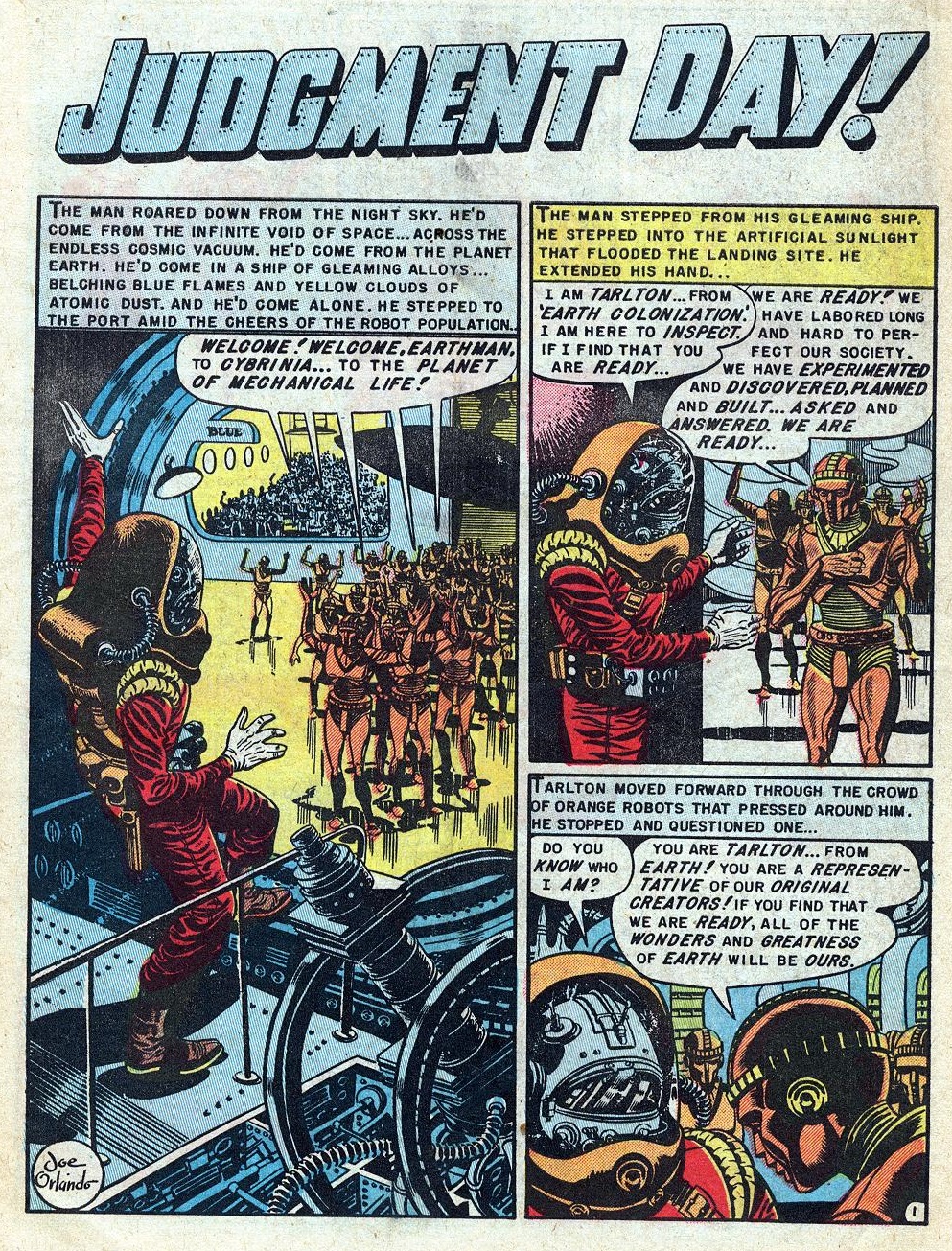
judgment day

‘Judgment Day!’ (originally published in Weird Fantasy #18, cover-dated March-April 1953), by Bill Gaines, Al Feldstein (plot), Al Feldstein (script), Joe Orlando (art), Marie Severin (colors), Jim Wroten (letters)

This story has become mostly known for the dispute it caused between editor Bill Gaines and the censors at the Comics Code Authority. However, ‘Judgment Day!’ deserves to be just as well-remembered for what it is: a powerful example of socially aware sci-fi, using the futuristic robot planet of Cybrinia to denounce what was going on at home in the 1950s. It’s also praiseworthy for Joe Orlando’s meticulous rendition of intricate circuitry and bendy architecture. Marie Severin’s colors, with their shifts from shiny surfaces to rusty metal, help sell the poignant message.

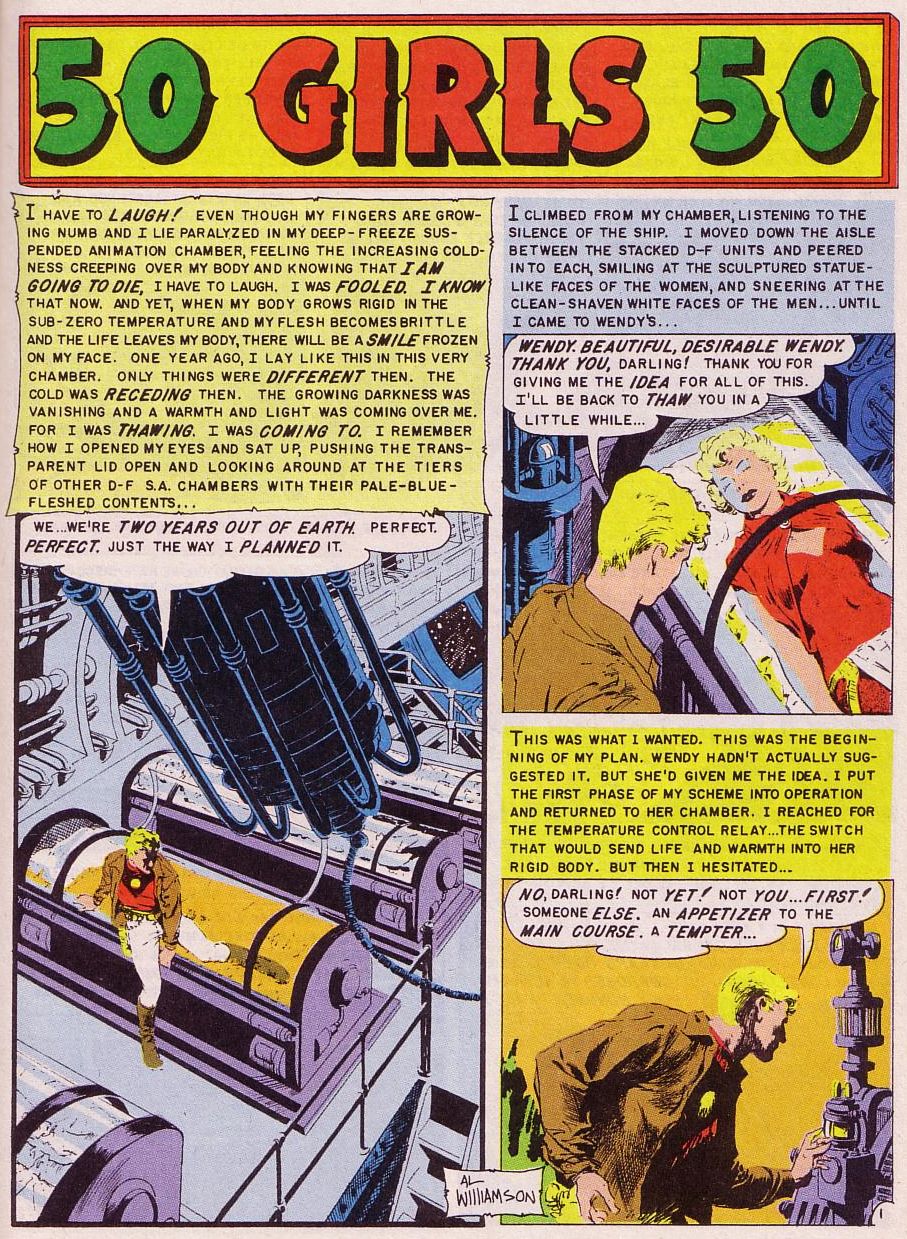
50 Girls 50

‘50 Girls 50’ (originally published in Weird Science #20, cover-dated July-August 1953), by Bill Gaines, Al Feldstein (plot), Al Feldstein (script), Al Williamson (pencils), Al Williamson, Frank Frazetta, Roy Krenkel (inks), Marie Severin (colors), Jim Wroten (letters)

A dark tale of lust and greed about a man who manipulates women by thawing them out of deep-freeze suspended animation during a century-long space trip… and just when you think things couldn’t get more noir, ’50 Girls 50′ hits you with another disturbing twist! The typically gorgeous art by Al Williamson and Frank Frazetta creates an eerie contrast with the seedy tone.

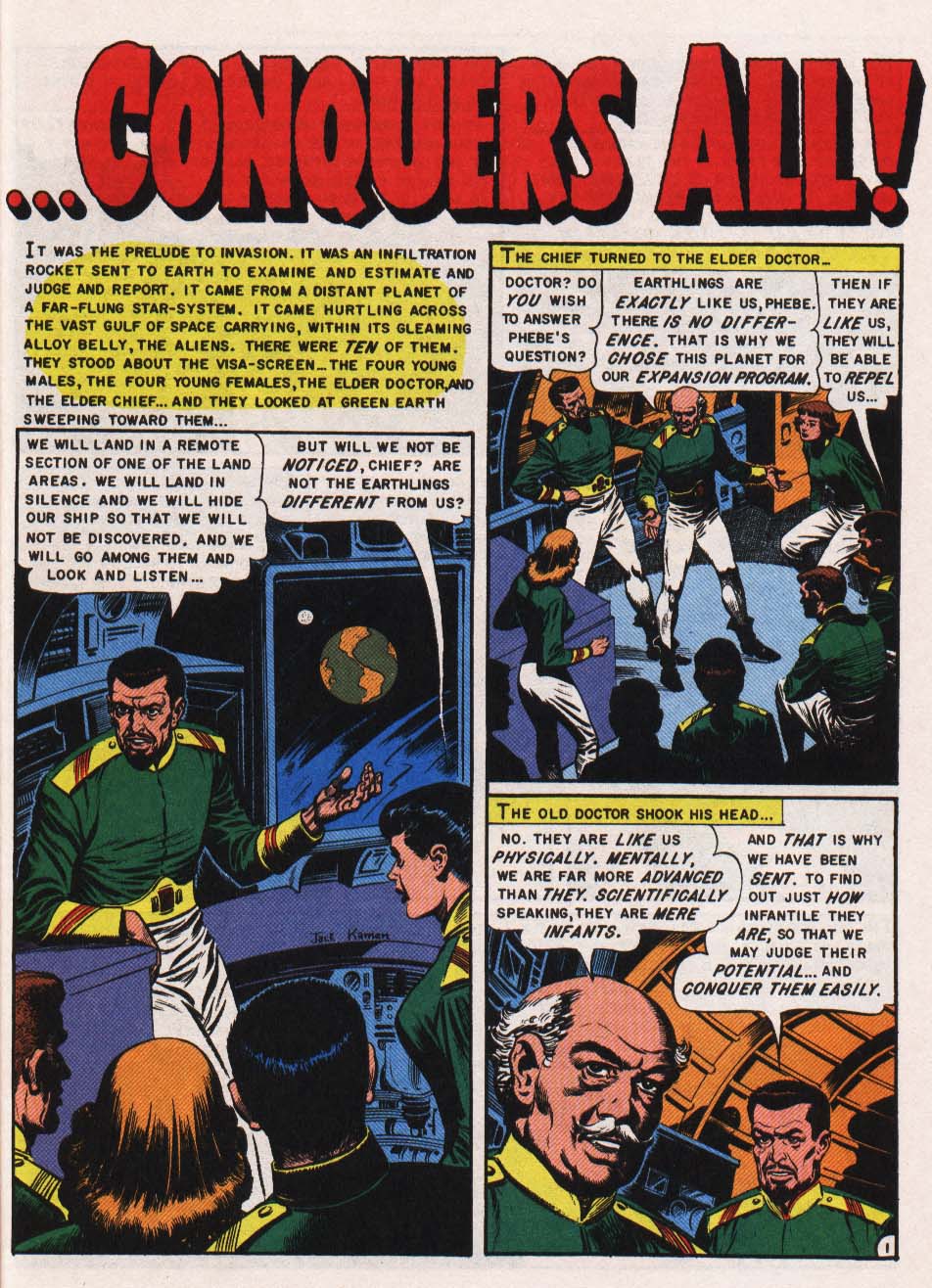
Conquers All

‘…Conquers All!’ (originally published in Weird Fantasy #20, cover-dated July-August 1953), by Bill Gaines, Al Feldstein (plot), Al Feldstein (script), Jack Kamen (art), Marie Severin (colors), Jim Wroten (letters)

One more gem from the prolific partnership of Bill Gaines and Al Feldstein. This one is also a sexual tale, albeit much less cynical. Although there is something dated in the strict link between love and gender division, I have a soft spot for this quirky story of alien invaders from an ultra-technological race coming to grips with human emotions.

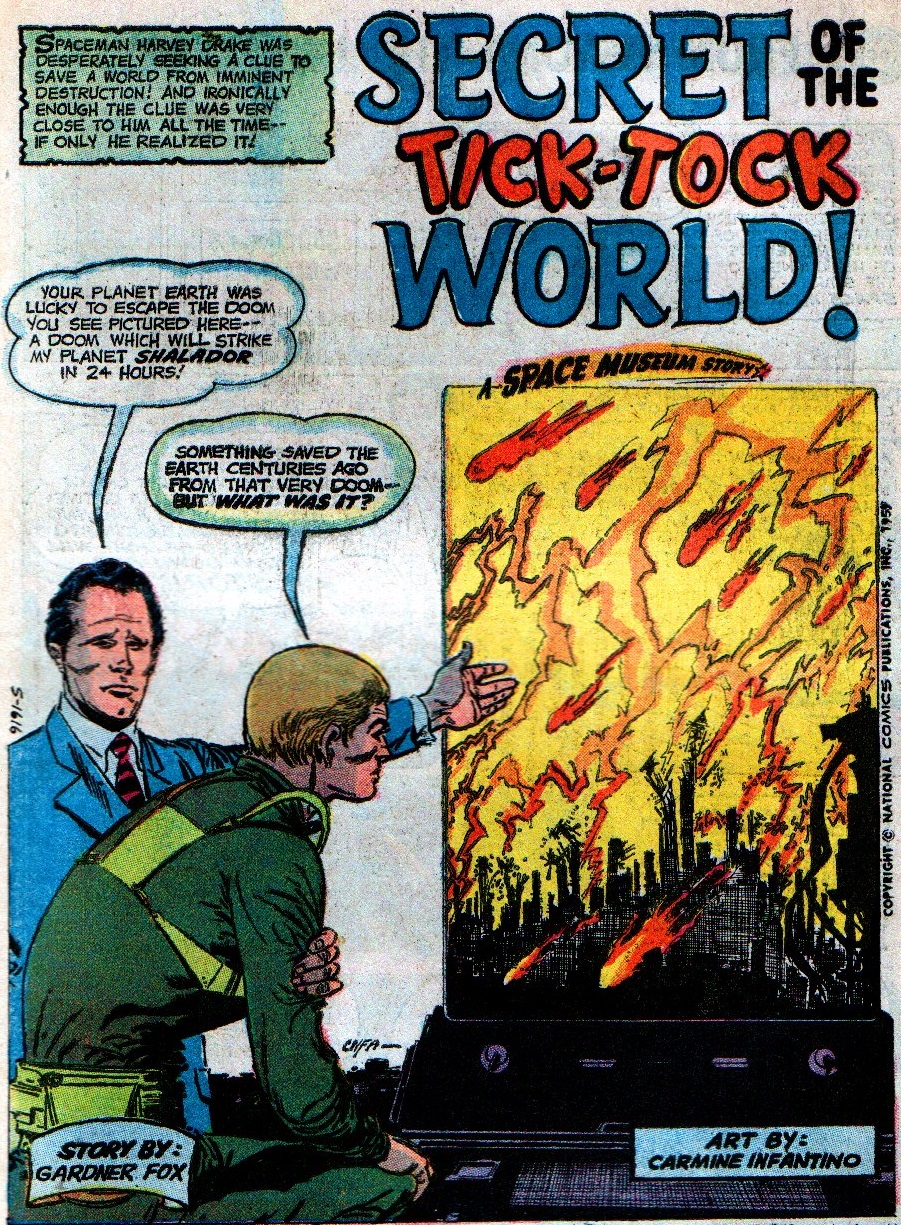
Tick-Tock World

‘Secret of the Tick-Tock World!’ (originally published in Strange Adventures #109, cover-dated October 1959), by Gardner Fox (script), Carmine Infantino (art)

Because sci-fi can also be a springboard for pulpy adventure. Gardner Fox’s approach to the genre tends to be sunnier than the folks at EC, loosely using science as a gateway for enthralling escapades and wild vistas rather than provocative statements. Appropriately served by Carmine Infantino’s wholesome art, ‘Secret of the Tick-Tock World!’ is a charming, unpretentious tale that nevertheless touches on the classic sci-fi theme of how predetermined humanity’s destiny really is, after all…

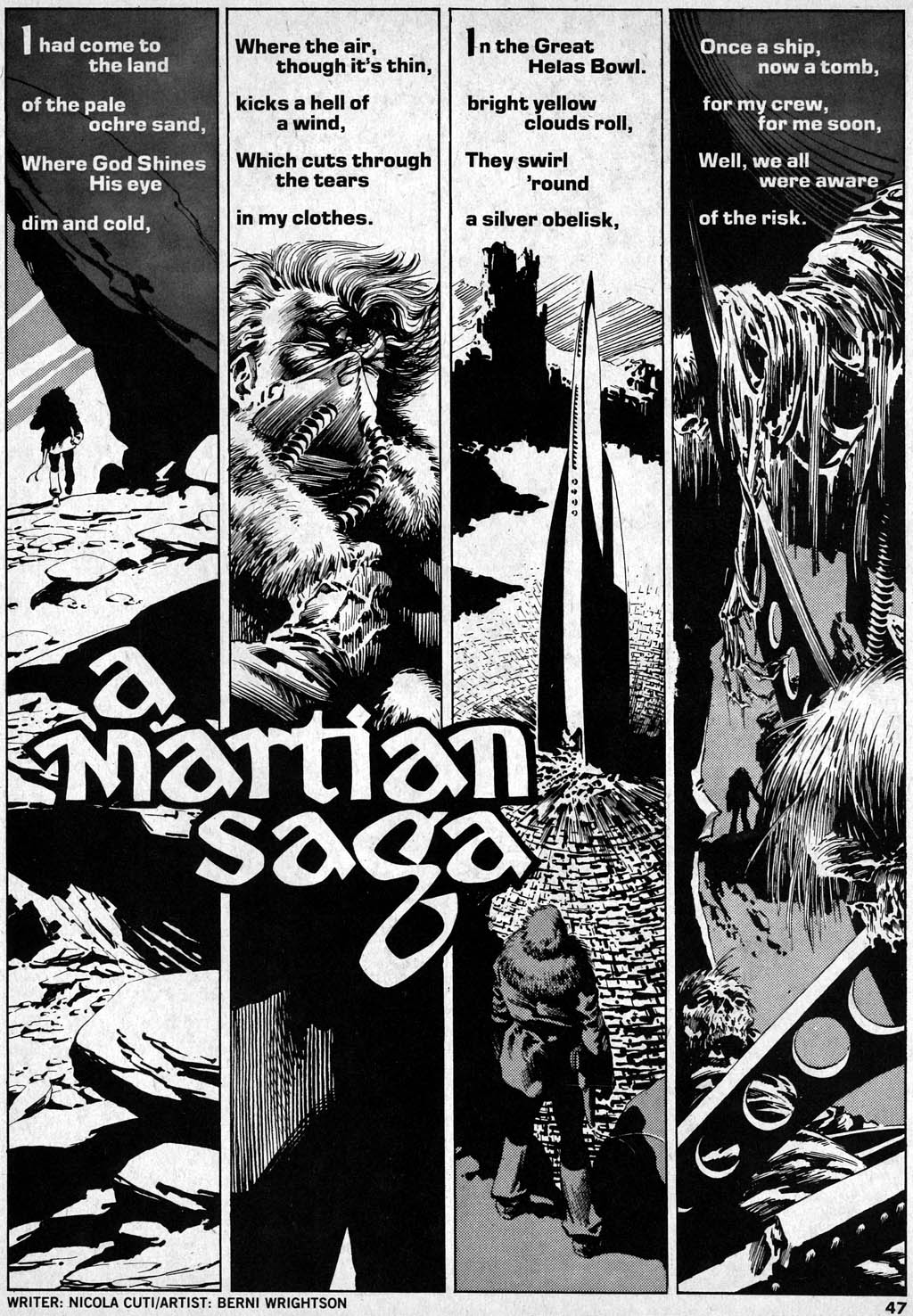
A Martian Saga

‘A Martian Saga’ (originally published in Creepy #87, cover-dated March 1977), by Nicola Cuti (script), Bernie Wrightson (art)

More interplanetary adventure, this time in the form of a tongue-in-cheek poem about an astronaut stuck on Mars with only three days worth of oxygen, majestically illustrated by the master of gothic art, Bernie Wrightson.

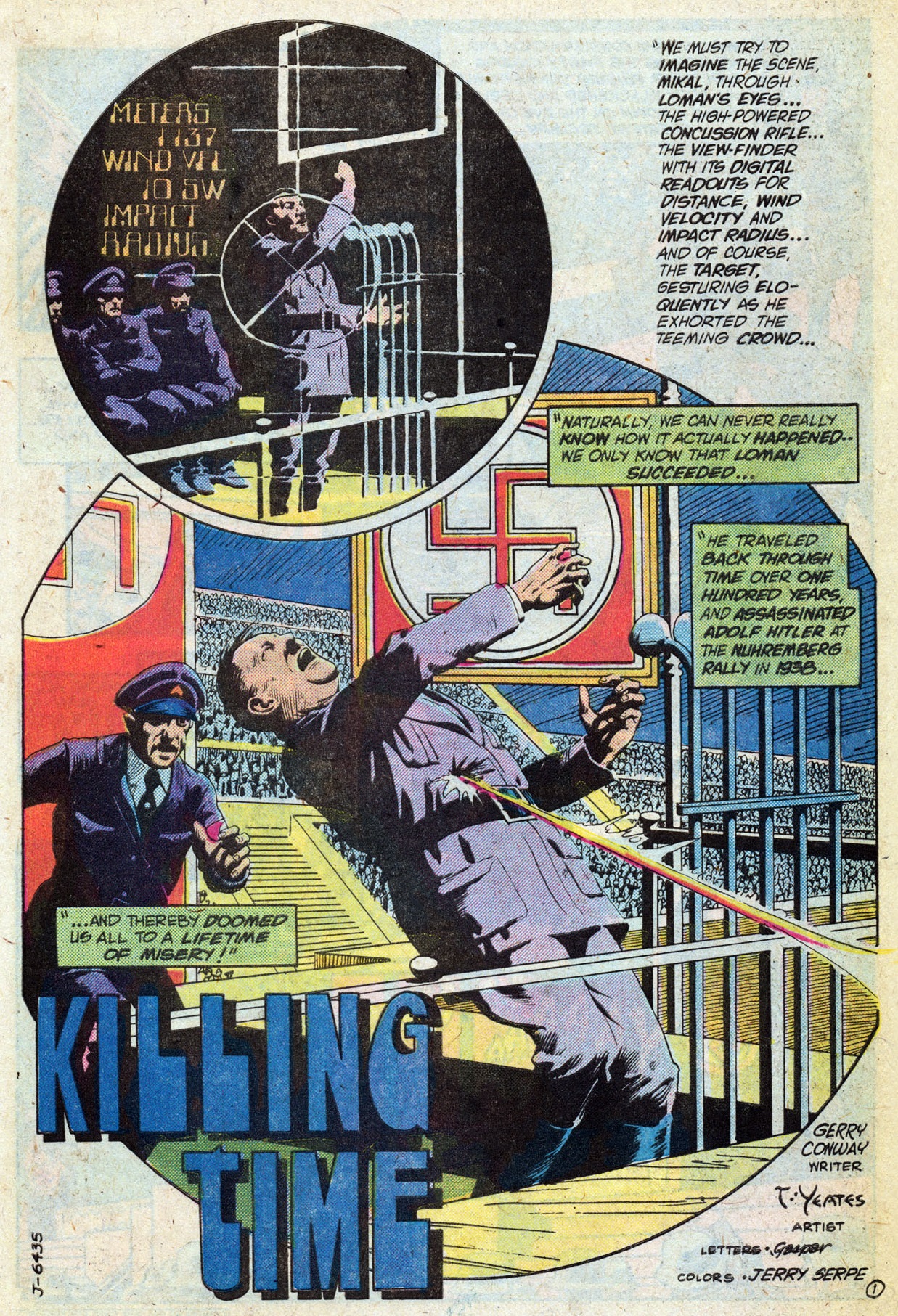
killing time

‘Killing Time’ (originally published in Mystery in Space #114, cover-dated December 1980), by Gerry Conway (script), Tom Yeates (art), Jerry Serpe (colors), Gaspar Saladino (letters)

Sure, the old travelling-back-in-time-to-kill-Hitler premise has become a cliché (Ivar, Timewalker #2 had a lot of fun with this). And not just that: it betrays a simplistic reading of history as solely shaped by outstanding individuals, with little regard for structural forces. That said, it’s all in the way you tell the story – and in ‘Killing Time’ Gerry Conway and Tom Yeates manage to put a clever spin on it by playing with perspective, leading to a transcendent finale.
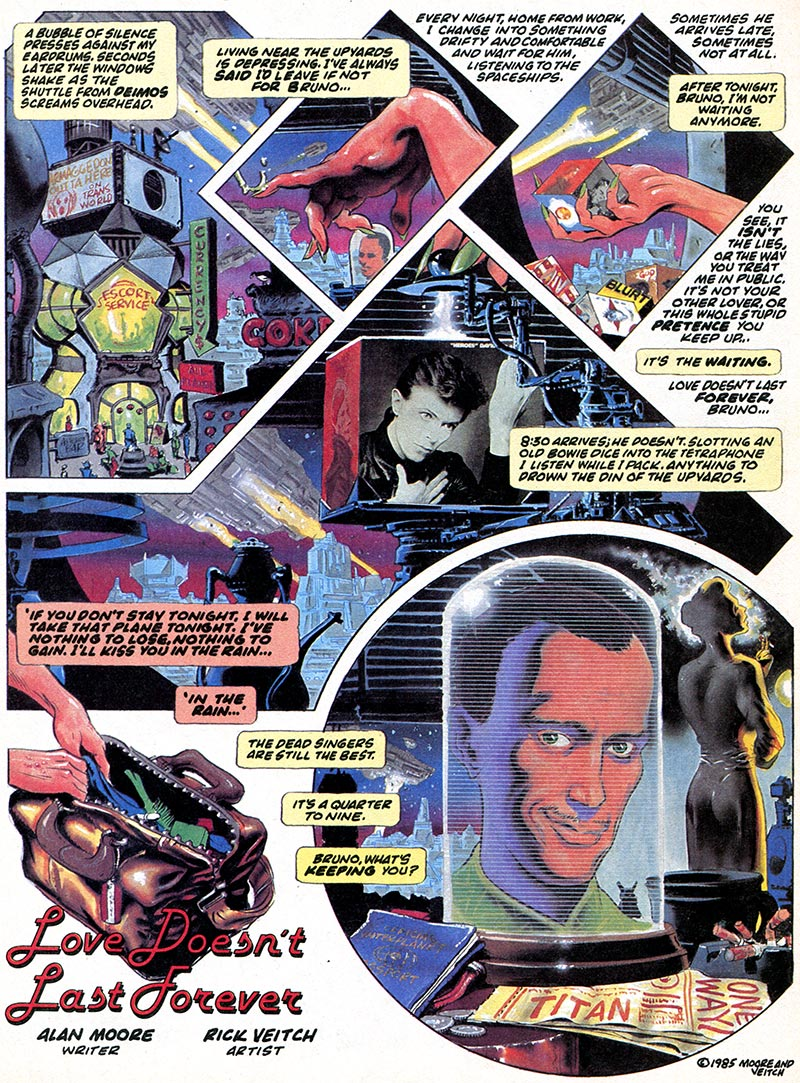
Love Doesn't Last Forever

‘Love Doesn’t Last Forever’ (originally published in Epic Illustrated #34, cover-dated February 1986), by Alan Moore (script), Rick Veitch (art, colors)

A bitter extrapolation from 1980s’ anxieties and attitudes towards sex, with an Alan Moore touch. I guess the twist is meant to expose readers’ prejudices (hence the strategically placed word balloon early on), but the beauty of it is that ‘Love Doesn’t Last Forever’ works regardless of whether or not the ending feels like a revelation – it’s still a breathtaking example of sophisticated worldbuilding and characterization in just eight pages, each of them fabulously brought to life by Rick Veitch’s art and colors.

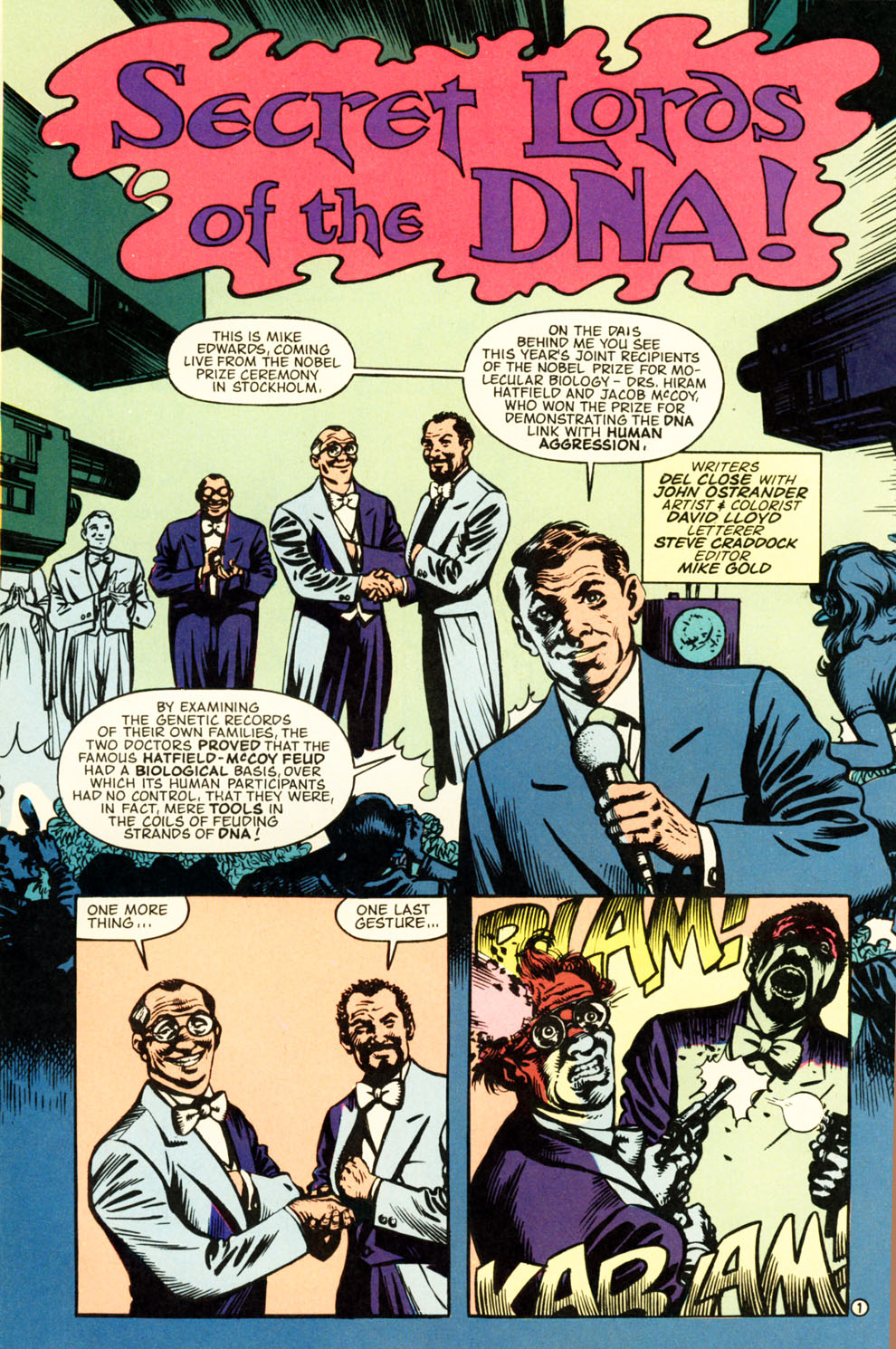
Secret Lords of the DNA

‘Secret Lords of the DNA!’ (originally published in Wasteland #7, cover-dated June 1988), by Del Close, John Ostrander (script), David Lloyd (art, colors), Steve Craddock (letters)

An absurdist satire about surrendering to determinism, blatantly written under the auspices of renewed Cold War tension, like much of DC’s output at the time. If nothing else, ‘Secret Lords of the DNA!’ would be worth reading just for David Llloyd’s trippy forays into surrealism.

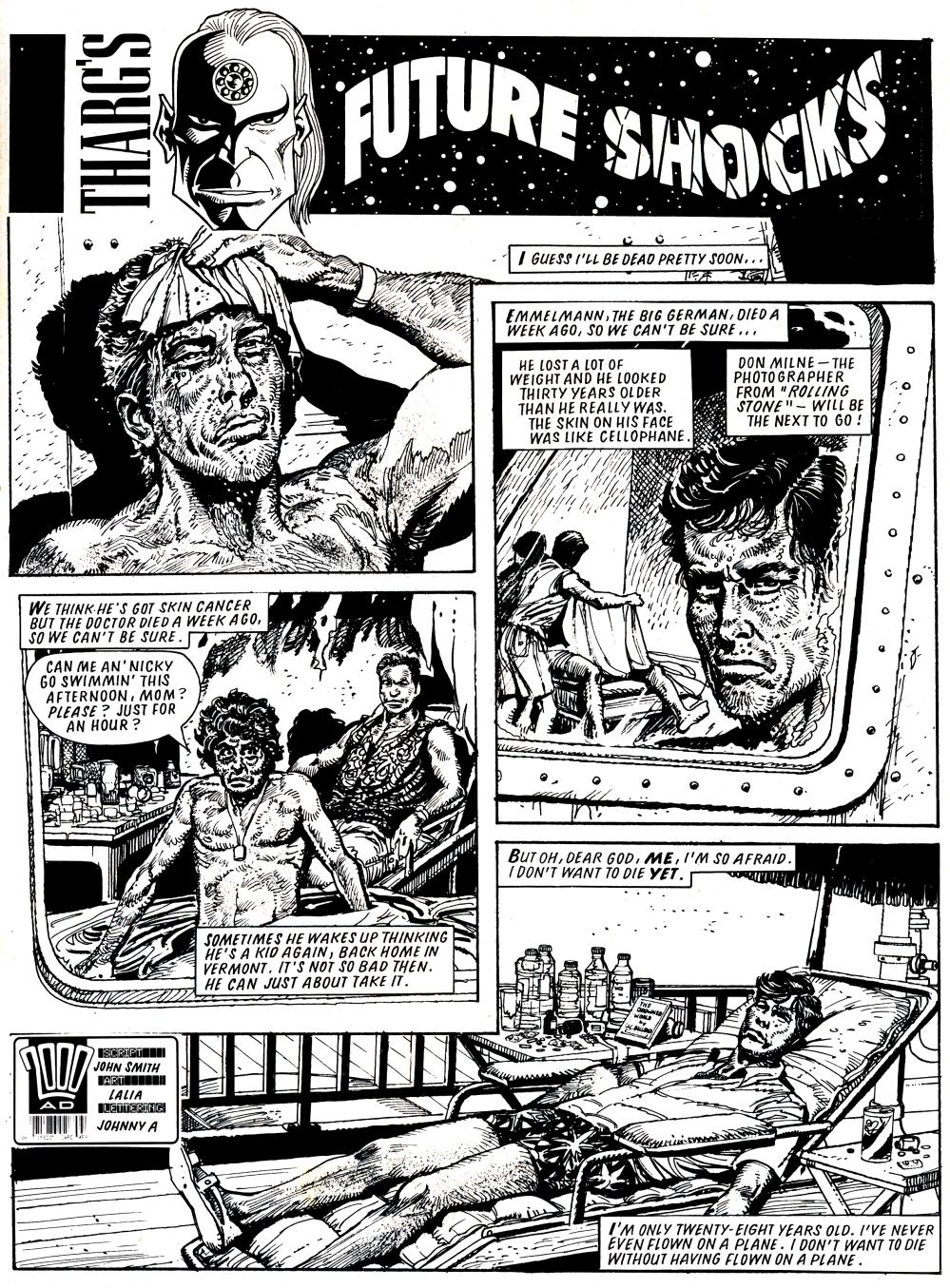
2000AD #605

‘The Osmotic Man’ (originally published in 2000 AD #605, cover-dated December 1988), by John Smith (script), Horacio Lalia (art), John Aldrich (letters)

A nightmarish slice of speculative fiction, ‘The Osmotic Man’ takes a sci-fi premise and runs with it until its logical conclusion, rendered with grit and precision by Horacio Lalia. Probably less an environmentalist parable than a sick fantasy prompted by too much British rainy weather.

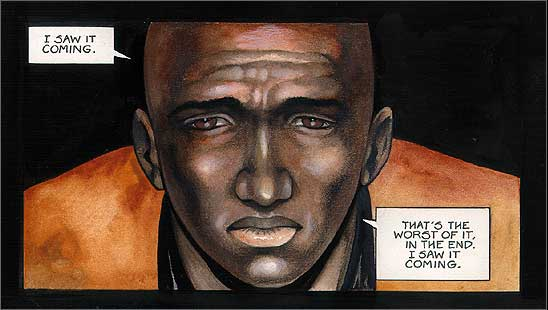
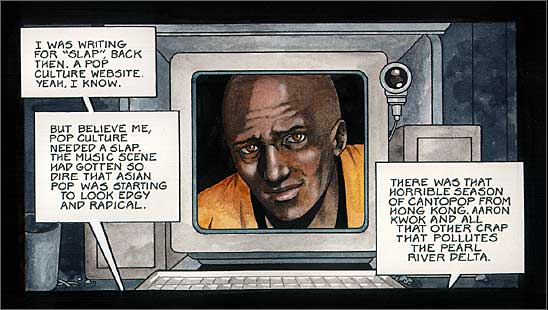
superidolsuperidolsuperidol

‘Superidol’ (originally published in artbomb.net, in 2001-2002), by Warren Ellis (script), Colleen Doran (art)

This is the only story on the list to cross the ten-page limit (it’s has thirteen!), but I just couldn’t resist including Warren Ellis’ and Colleen Doran’s underrated webcomic about pop culture taking over society. A 21st century companion piece to Borges’ ‘The Zahir.’

Posted in FANTASTIC ADVENTURES | Tagged , , , , , , , , , , , , , , , , , , , , , , , , , , , , , , , | 3 Comments

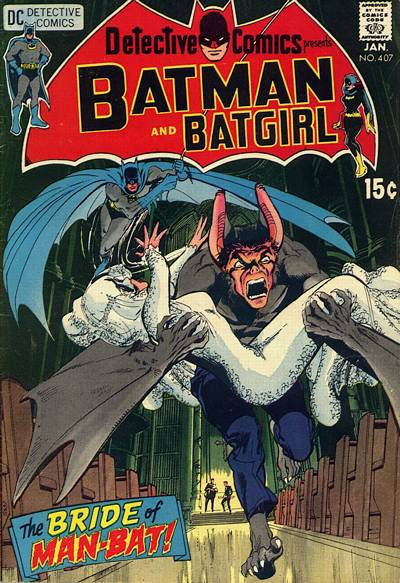
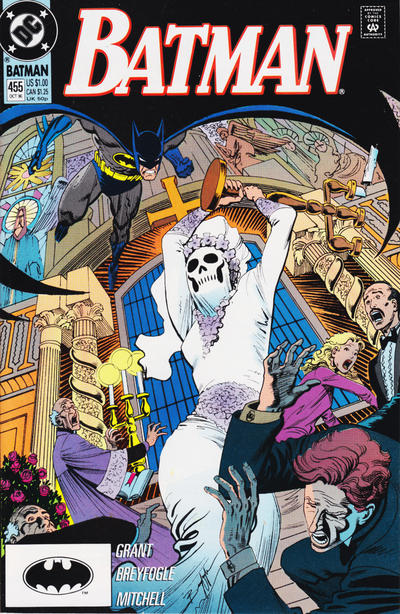
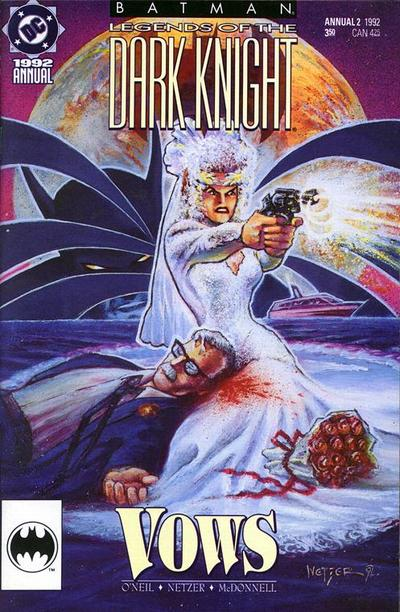
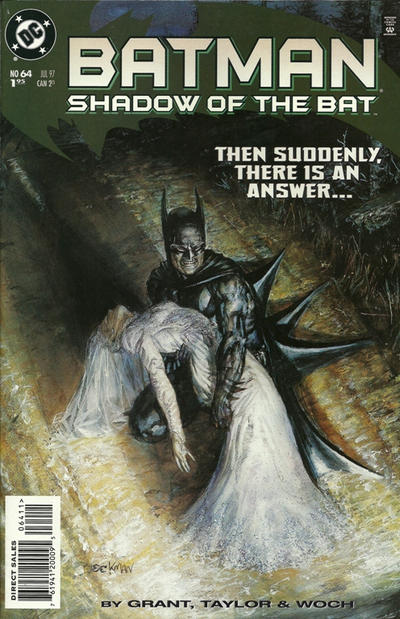
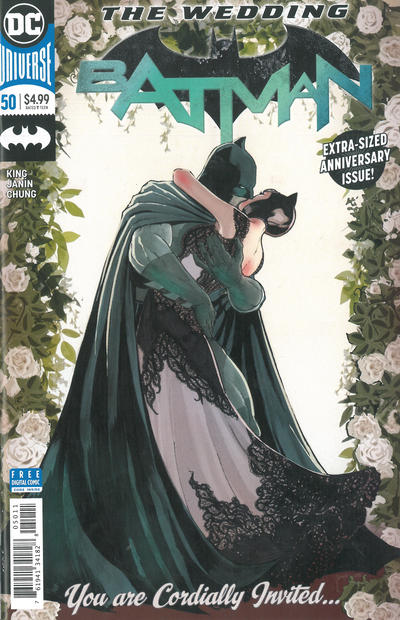
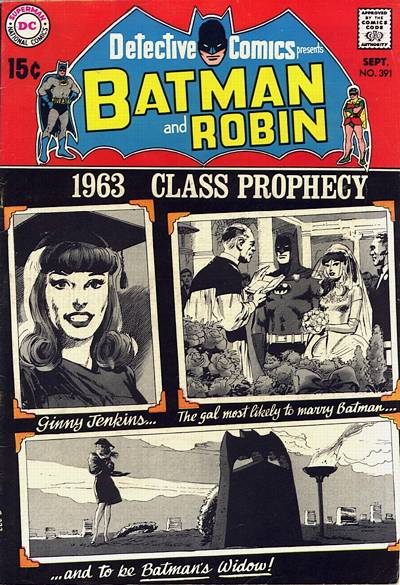
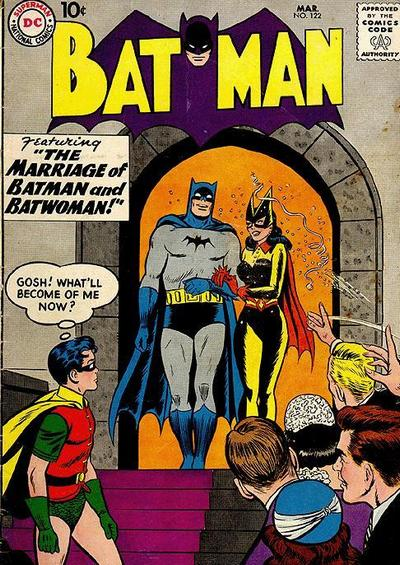
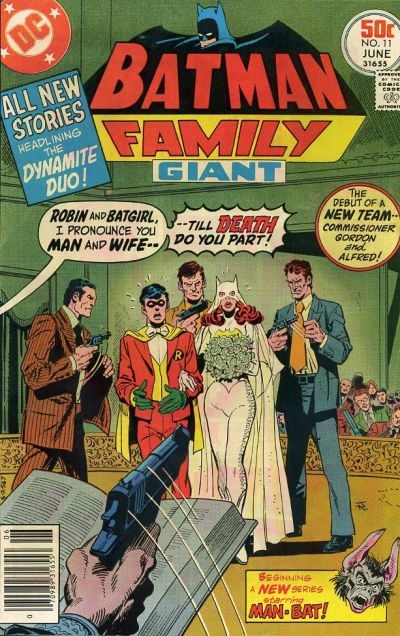
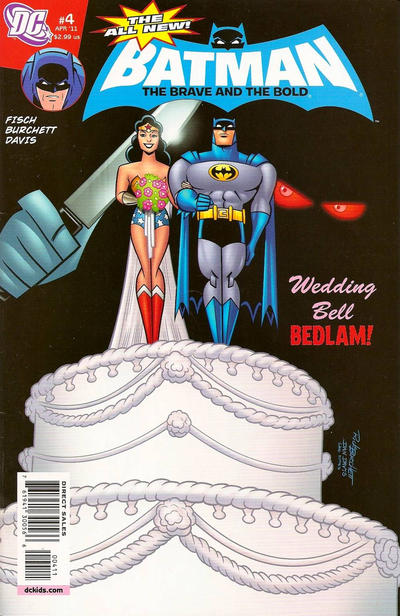
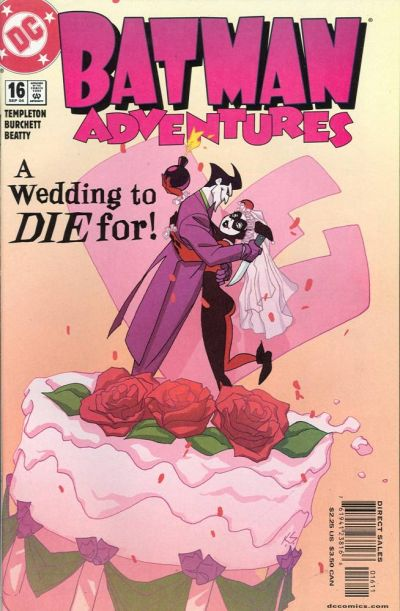
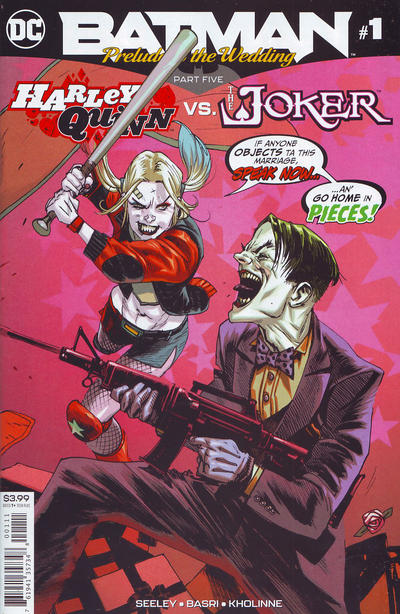
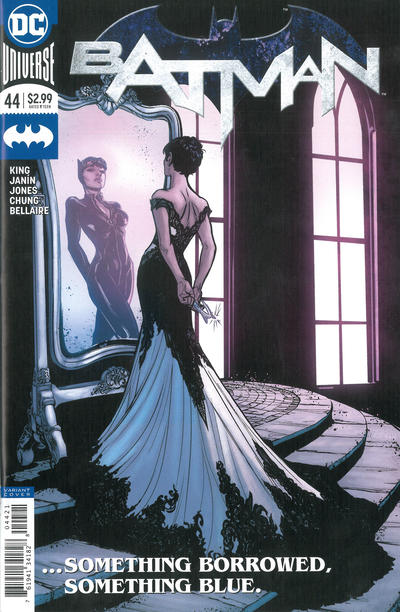
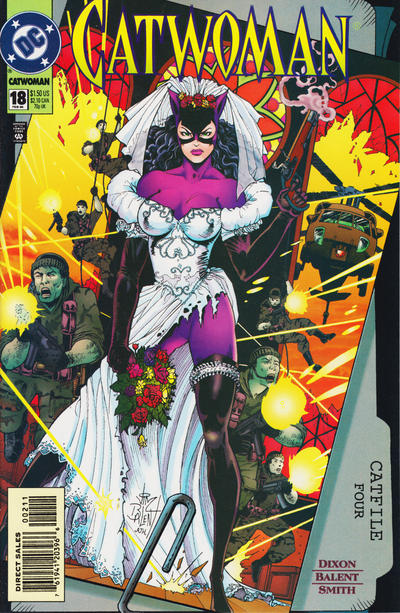
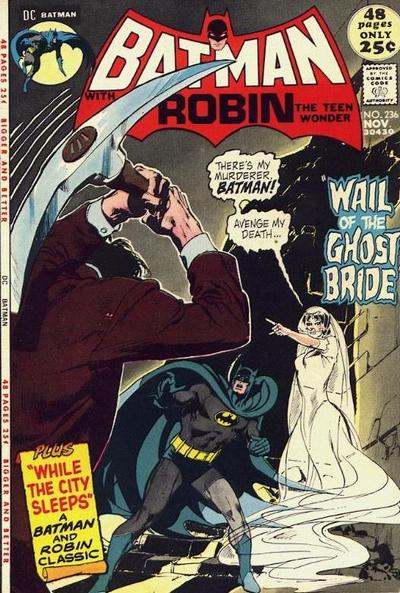
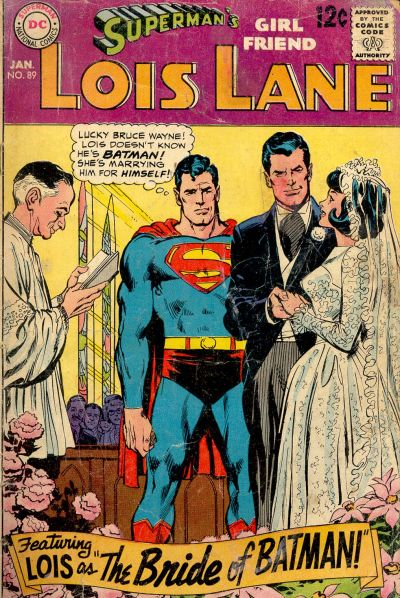
15 wedding-themed covers of Batman comics

Valentine, Schmalentine. Still, everything can serve as a pretext to browse through goofy covers of the Batman family of comics…

Throughout the years, brilliant artists like Neal Adams, Curt Swan, and Joëlle Jones have had a field day enveloping the Dark Knight and his supporting cast in wedding-themed imagery. The pompous formality and traditional respectability of wedding ceremonies make for a fun combination with the masked insanity and mayhem of Batman’s world. After all, if the Caped Crusader, Catwoman, and/or the Joker are around, you know frantic violence cannot be far behind!

Here are 15 covers that gleefully exploit this contrast:

detective comics 407batman 455Legends of te Dark Knight Annual 2shadow of the bat 64Batman 50detective comics 391batman 122batman family 11all new batman brave and bold 4batman adventures 16 gcdbatman prelude to the weddingbatman 44catwoman 18batman 236Lois Lane 89

Posted in COVERS OF BATMAN COMICS | Tagged , , , | Leave a comment