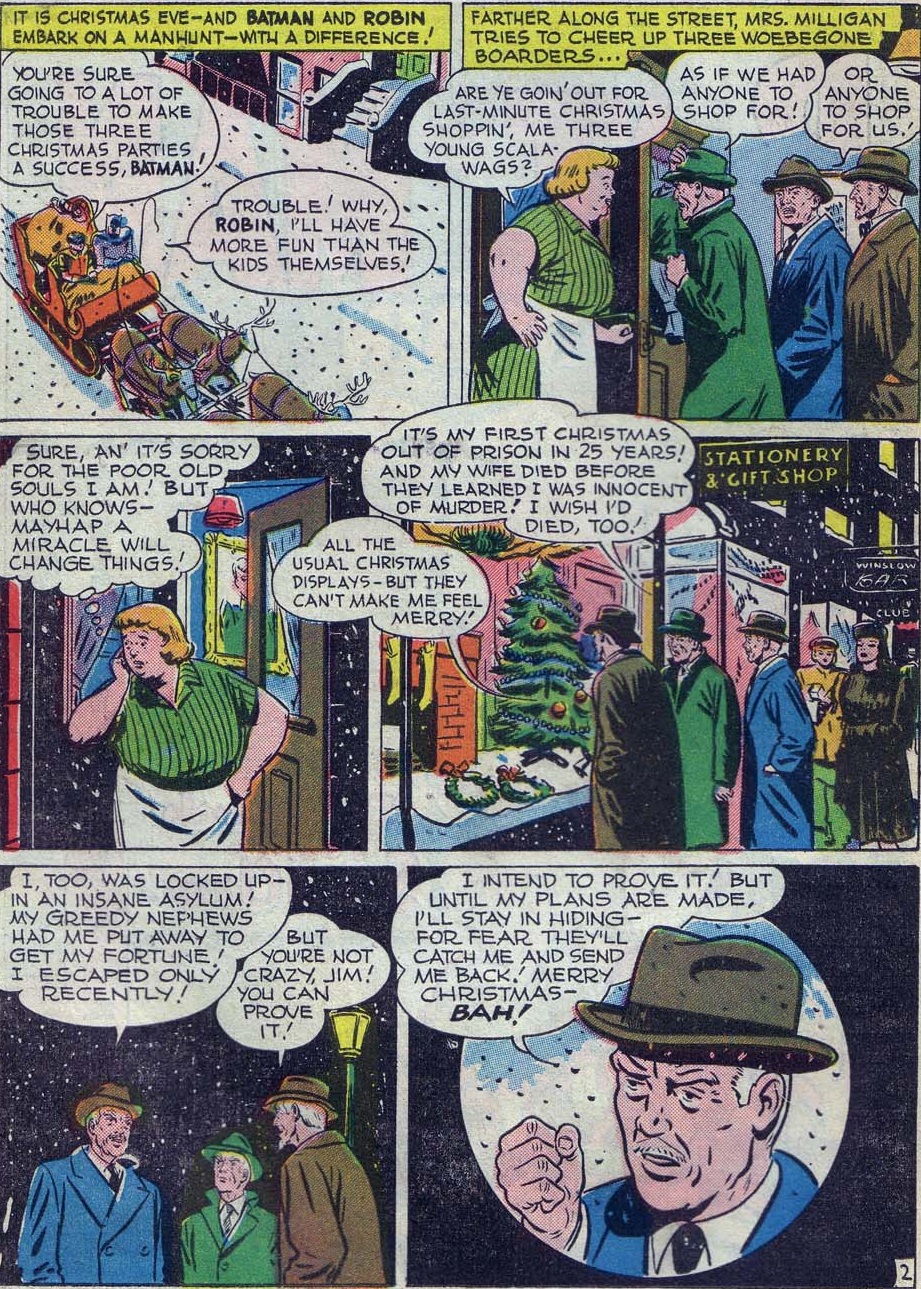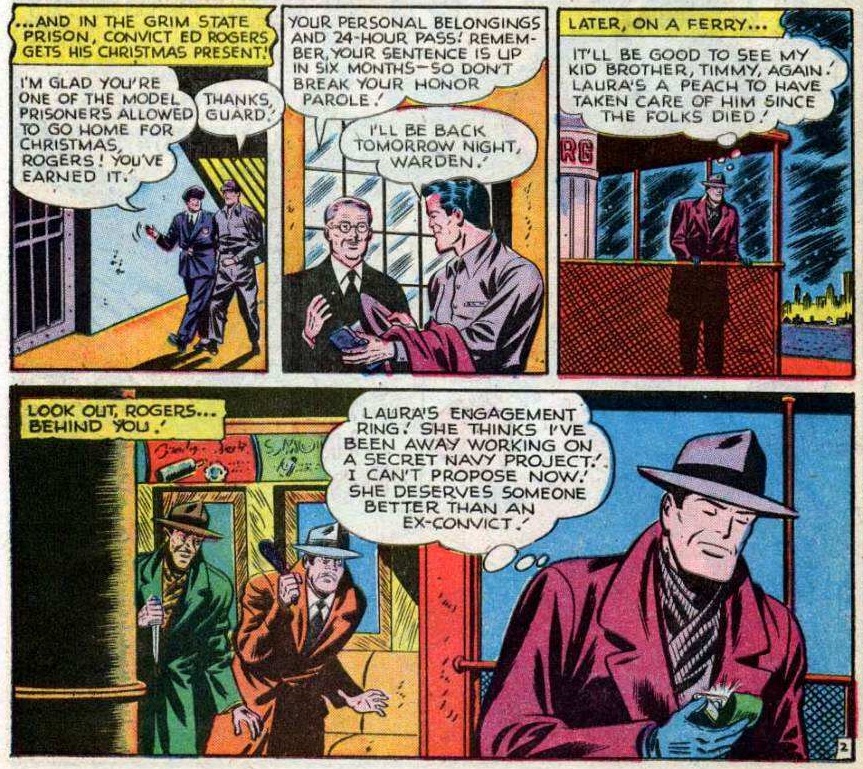
My ideal deluxe omnibus volume – part 1

A couple of months ago, I listed a bunch of comics I assume every Batman fan will come across, sooner or later. With that out of the way, let us move on to some of my personal favorites – i.e. to stories I keep returning to over and over again (and which I think everyone should read as well, even if not all of them can be considered classics or masterpieces). I’ll stick to stories that are less than 100 pages just to prevent the selection from feeling *too* uneven, even though the story sizes can still vary a lot within such a wide range (and even though it means setting aside two brilliant mini-series written by Dave Gibbons: 1990’s World’s Finest and 1992’s Batman versus Predator). So, if I was to put together a giant tome that conveniently collected 30 of these tales, this is what you would find inside:

1. ‘The Trial of Titus Keyes!’ (Batman #20, cover-dated December 1943-January 1944), by Bill Finger (script), Bob Kane (pencils), Jerry Robinson (inks), George Roussos (letters)

Batman 20

An early experiment in storytelling, probably influenced by Citizen Kane and/or Will Eisner’s The Spirit.  I wrote about my love for this story here, including the following lines: ‘Bill Finger was in top form here, crafting a neat courtroom procedural around an innocent-looking man being trialed as an arch-criminal. The comic features many staples of the genre, such as agitated examinations and cross-examinations, a last minute surprise witness, and a plot twist every couple of pages. Finger cleverly figured out a strategy to weave in the action scenes and madcap excitement readers expected from a Batman comic: basically, although the main narrative thread takes place in court, the witnesses’ testimonies become flashbacks revealing parts of the case, namely the parts where Batman and Robin kick butt and take names.’ (12 pages.)


2. ‘Next Stop – Danger!’ (Batman #43, cover-dated October-November 1947), by Bill Finger (script), Jim Mooney (pencils), Ray Burnley (inks), Ira Schnapp (letters)

Batman 43

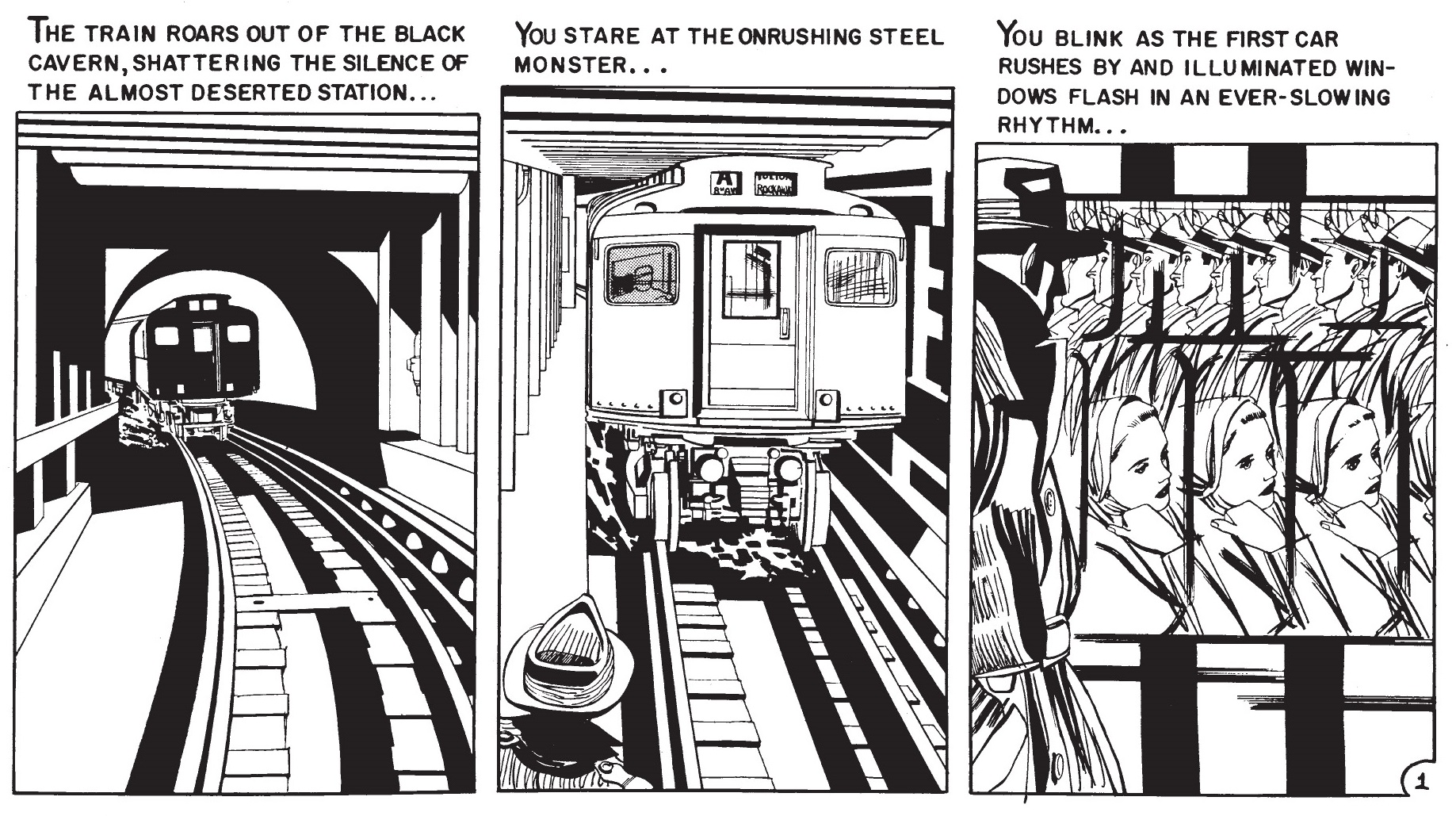
I just can’t get enough of Golden Age stories about how average citizens can be, in their own way, almost as heroic as the Dynamic Duo. In ‘Next Stop – Danger!,’ we follow the paths of a bored subway driver, a blind beggar, an uninspired playwright, a desperate woman, a guilt-ridden newspaper boy, and a couple of wanted racketeers, all of whom end up playing a role in an action-packed Batman adventure (although perhaps it makes more sense to say that Batman is the one playing a supporting role in their own personal sagas). Writer Don Cameron had already toyed with a similar structure five years earlier, in ‘Destination Unknown’ (also taking place in a train ride), but Bill Finger really elevates the idea in this version by imbuing the cast with quite a heartfelt degree of humanity and hints of postwar malaise. I talked a little bit more about it here. (13 pages)


3. ‘The Parasols of Plunder’ (Batman #70, cover-dated April-May 1952), by Bill Woolfolk (script), Bob Kane, Lew Schwartz (pencils), Charles Paris (inks)

Batman 70

Because Batman comics are also about eccentric villains, wacky plans, and surreal set pieces… There is something charmingly naive about this tale in which the Penguin (‘that grotesque bird of ill-omen’) starts an umbrella business and spends much of the story trying to get the Caped Crusader to endorse his products. The Penguin may be one of Batman’s least interesting rogues in terms of personality, but his looks, his obsession with birds, and his use of umbrellas as weapons often provide fun visuals. ‘The Parasols of Plunder’ is a great example, as it’s full of memorably outlandish confrontations, all of them delightfully brought to life on the page (according to the Grand Comics database, Bob Kane drew the Dynamic Duo and Lew Sayre Schwartz drew the rest, as part of their arrangement at the time). One of the high points is a page that begins with what could’ve been a poster for Jacques Demy’s beautiful musical The Umbrellas of Cherbourg and finishes with a dozen businessmen hilariously hurled through the air by a magnetic statue of Alexander Hamilton. (12 pages)


4. ‘The Nine Worlds of Batman!’ (Detective Comics #208, cover-dated June 1954), by Ed Herron (script), Dick Sprang (pencils), Charles Paris (inks)

detective comics 208

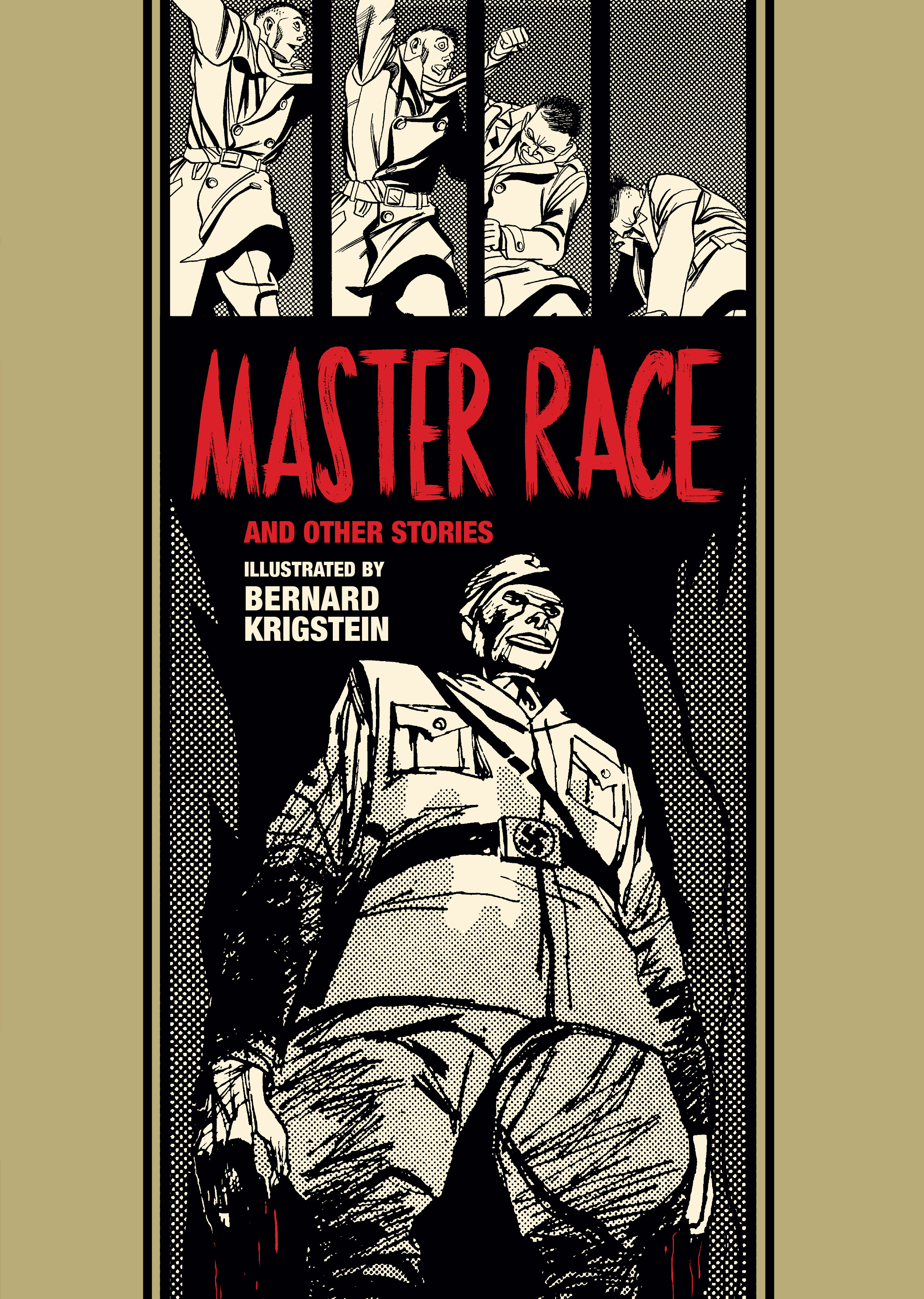
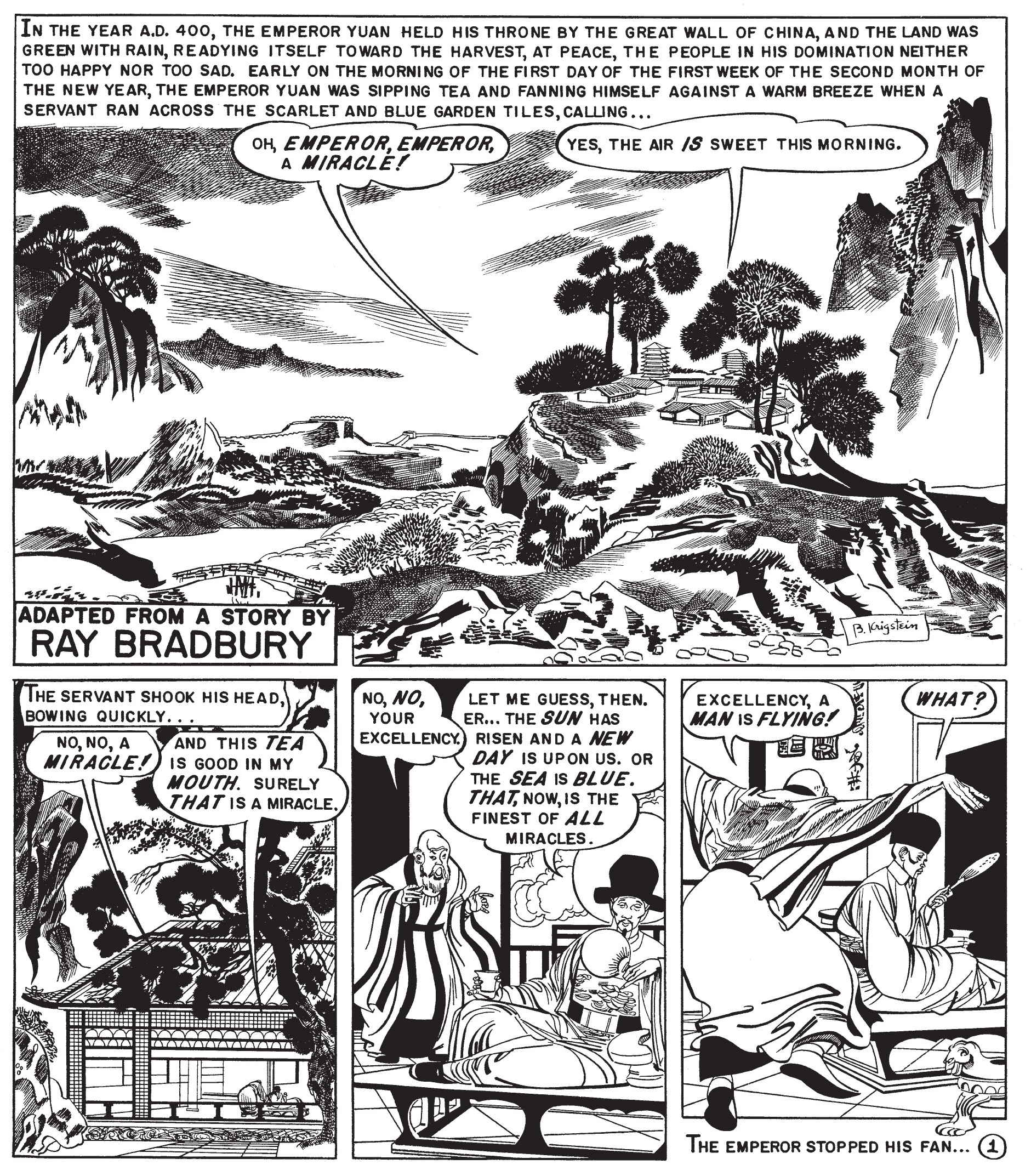
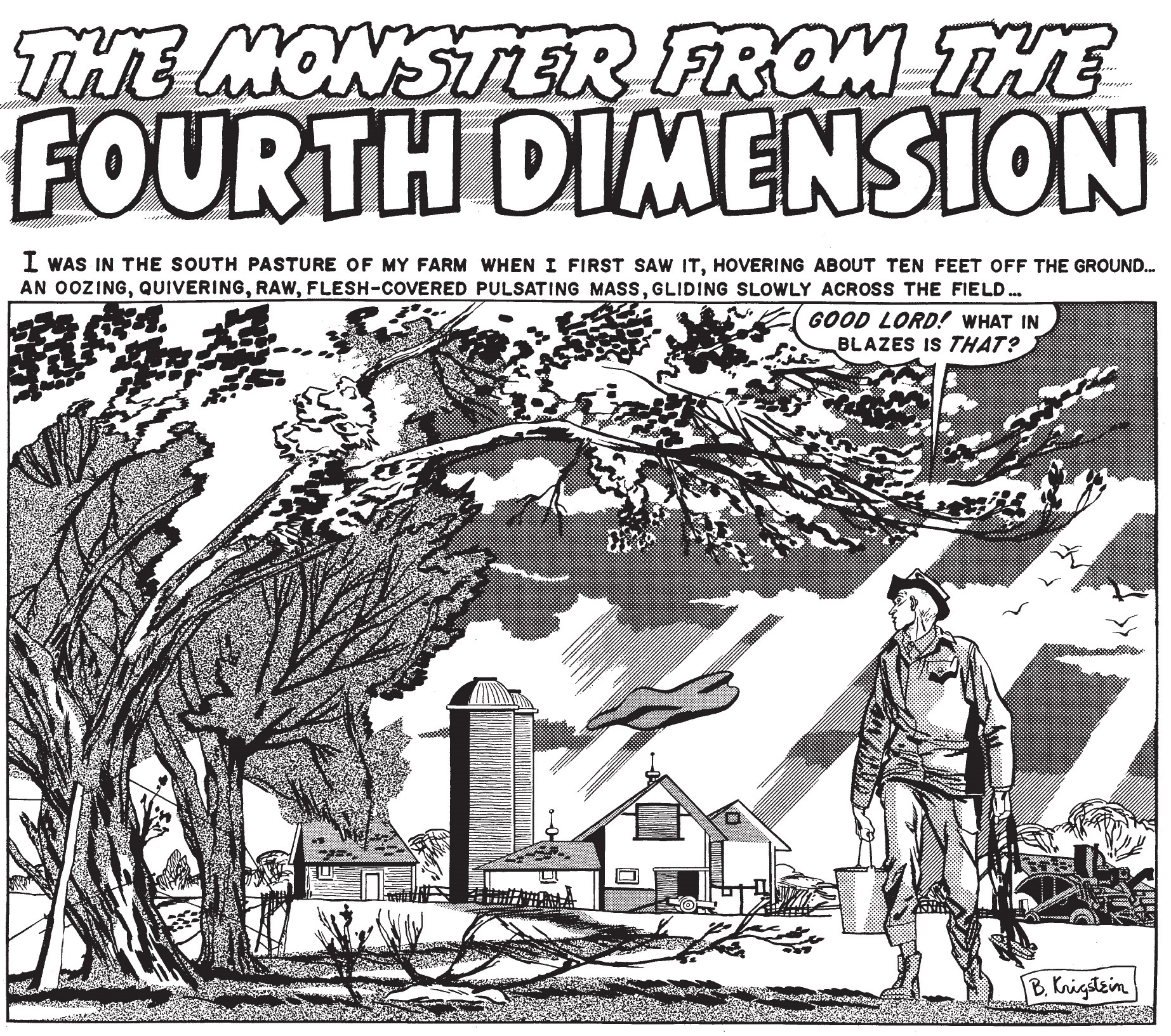
I had to include at least one story drawn by the great Dick Sprang, probably the most popular and influential of Bob Kane’s ghost artists – and the one who visually defined Batman’s transition into the bonkers world of psychedelic science fiction, in the 1950s. In ‘The Nine Worlds of Batman!,’ Sprang gets to go wild with the designs for high-tech machinery and space suits as the World’s Greatest Detective investigates a whodunit at the Space Research College, where each testing chamber turns into a deathtrap. We thus get one of my favorite aspects of Batman comics, which is how they tend to put an offbeat spin on their zeitgeist’s fears and obsessions – in this case, on the Atomic Age’s misuses of science and dreams of space exploration (you can say it was DC’s lighthearted response to the kind of thoughtful, somber sci-fi EC Comics was cranking out at the time, now collected in books like Spawn of Mars and other stories). As a bonus, the action is deliciously hectic (in the first page alone, criminals blow up a bank with a missile, the Dynamic Duo solve a case before speeding to a new crime scene, and Batman figures out an important clue while Commissioner Gordon screams hysterically) and the mystery plot is pretty cool as well, with Batman and Robin trying – and not always succeeding – to stay one step ahead of the criminals. Pure pulpy goodness. (12 pages)


5. ‘The Strange Death of Batman!’ (Detective Comics #347, cover-dated January 1966), by Gardner Fox (script), Carmine Infantino (pencils), Joe Giella (inks), Gaspar Saladino (letters)

detective comics 347

After a courtroom drama and a sci-fi thriller, we get an entry that taps into some of the most appealing tropes of the superhero genre, from its playful reflexivity to the endless potential of multidimensional continuities. That said, who would’ve thought that an issue about an ill-defined villain who looks like a giant rubber ball could be so unforgettable? Obviously, part of the reason is Carmine Infantino’s slick drawing style, which turned the Bouncer’s frenetic, ricochet-prone antics into a thing of grace and beauty. But let’s face it: as fun as it is to see the Bouncer’s confrontations with the Dynamic Duo (who fight him by using their knowledge of elasticity and induction heating, because Gardner Fox never missed a chance to cram some nerdy factoids into his comics), the real high point is the final act of the story, which takes a bizarre metafictional turn… and the twists keep on coming until the end. The result is a lovely ode to Silver Age imagination. (14 pages)


6. ‘The Angel, the Rock and the Cowl!’ (The Brave and the Bold #84, cover-dated June-July 1969), by Bob Haney (script), Neal Adams (art), Ben Oda (letters)

The brave and the bold 84

Chronology be damned: in this kickass spy yarn, a still relatively young-looking Batman has a flashback about the time he fought in World War II and bumped into DC’s resident war hero, Sgt Rock. I like my Batman comics with manic energy and a brazenly tasteless attitude, so this one is right up my alley… Bob Haney’s adrenaline-charged script has a James Bond-ish Bruce Wayne – in and out of costume – jump from a motorcycle into a moving airplane, throw a grenade against a German aircraft before parachuting into occupied France, and beat up Nazis every couple of pages. Part of the reason this works so well is Neal Adams’ art, which at the time was muscular yet elegant: thinking of it cinematically, it had the ‘sophisticated adventure’ feel of Michael Powell’s and Emeric Pressburger’s earlier collaborations (like Contraband) and the lush, gothic atmosphere of Hammer classics (like The Curse of Frankenstein). Irresistible. (23 pages)


7. ‘Legend of the Key Hook Lighthouse!’ (Detective Comics #414, cover-dated August 1971), by Denny O’Neil (script), Irv Novick (pencils), Dick Giordano (inks), Gaspar Saladino (letters)

detective comics 414

Denny O’Neil’s run in Batman/Detective Comics from the early 1970s holds a special place in my heart – together with Batman Adventures and the Alan Grant/Norm Breyfogle run, these formed my platonic ideal of Batman comics. And it’s not just the classic tales O’Neil wrote for Neal Adams, it’s also the lesser-known stories pencilled by Irv Novick, a veteran of the medium who played almost as big a role as Adams in terms of updating the Dark Knight into an athletic – yet fallible – adventurer who moved between the worlds of gothic horror and film noir. (Dick Giordano, who inked both Adams and Novick, clearly deserves much of the credit as well!). ‘Legend of the Key Hook Lighthouse!’ combines much of what made these comics so great, from the empathic characterization (including a particularly engaging female character) to O’Neil’s purple prose (‘This is the one who exists to right wrongs! – A mind bright as tungsten flamed cased in a superb body’), from the haunting images (Batman emerging from the darkness, the general’s hand in the water) to the poetic ending (in this case, it’s literally a poem). (15 pages)


8. ‘The stage is set… for murder!’ (Detective Comics #425, cover-dated July 1972), by Denny O’Neil (script), Irv Novick (pencils), Dick Giordano (inks), Milt Snappin (letters)

detective comics 425

Another O’Neil & Novick collaboration. This is one of their fair play mysteries, somehow managing to establish a bunch of credible suspects and red herrings before Batman figures out the killer. Even though these stories could’ve had more pathos if they had more time to breathe and to flesh out the cast, they are usually neat and clever – and I do get a kick out of seeing Batman own up to his reputation as World’s Greatest Detective. ‘The Stage is set for Murder!’ is probably not the tightest foray into this formula, but I find it particularly entertaining because it’s set around a production of Macbeth, so O’Neil can use the theater milieu to get away with some over-the-top characterization… Both the villain’s motivation and the disguise used early on are kind of ridiculous, yet the exaggerated sense of melodrama and theatricality seem to fit in this context. (15 pages)


9. ‘Killer’s Roulette!’ (Detective Comics #426, cover-dated August 1972), by Frank Robbins (script, art), Ben Oda (letters)

detective comics 426

Besides writing dozens of stories about the Dark Knight and his supporting cast, Frank Robbins also drew a handful of them. His style was way more velvety and cartoony than that of other artists in the Batman titles at the time, but it did convey a noirish mood that was perfectly suited to the character. For my money, Robbins’ art was enough to elevate even tales that otherwise felt rushed and somewhat contrived. My favorite of these is ‘Killer’s Roulette!’ Despite the somewhat campy title page, it’s a grim little yarn about gambling with hardboiled dialogue and a truly macabre premise, culminating in an intense – and powerfully illustrated – climax that really pushes Batman’s code against using firearms (not to mention the kind of imagery you could get away with under the Comics Code Authority). (15 pages)


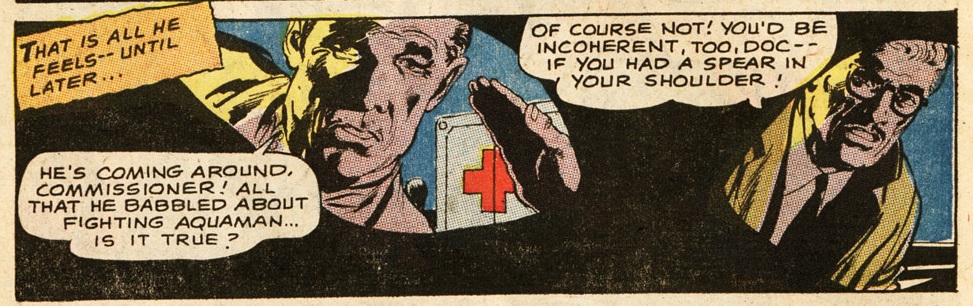
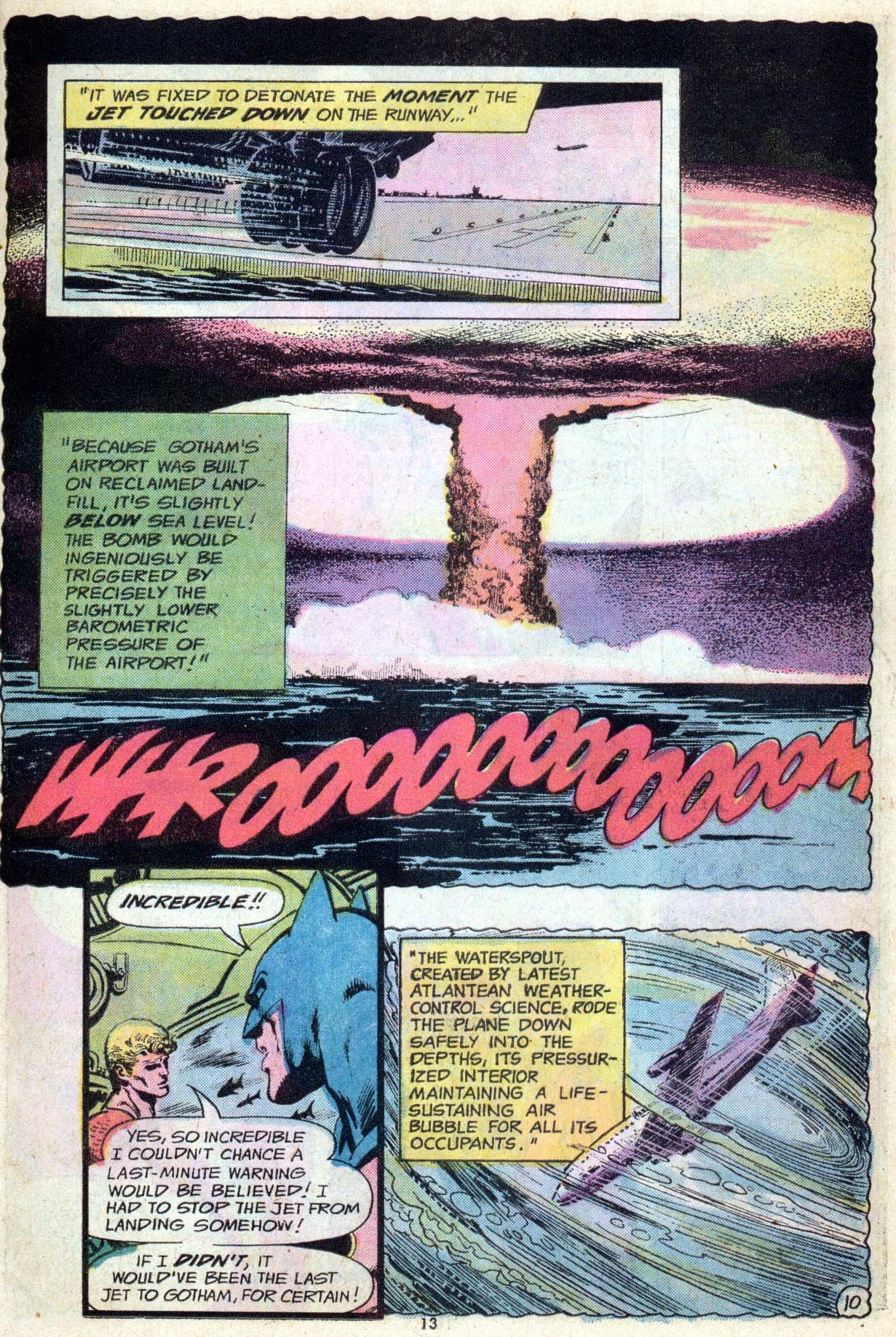
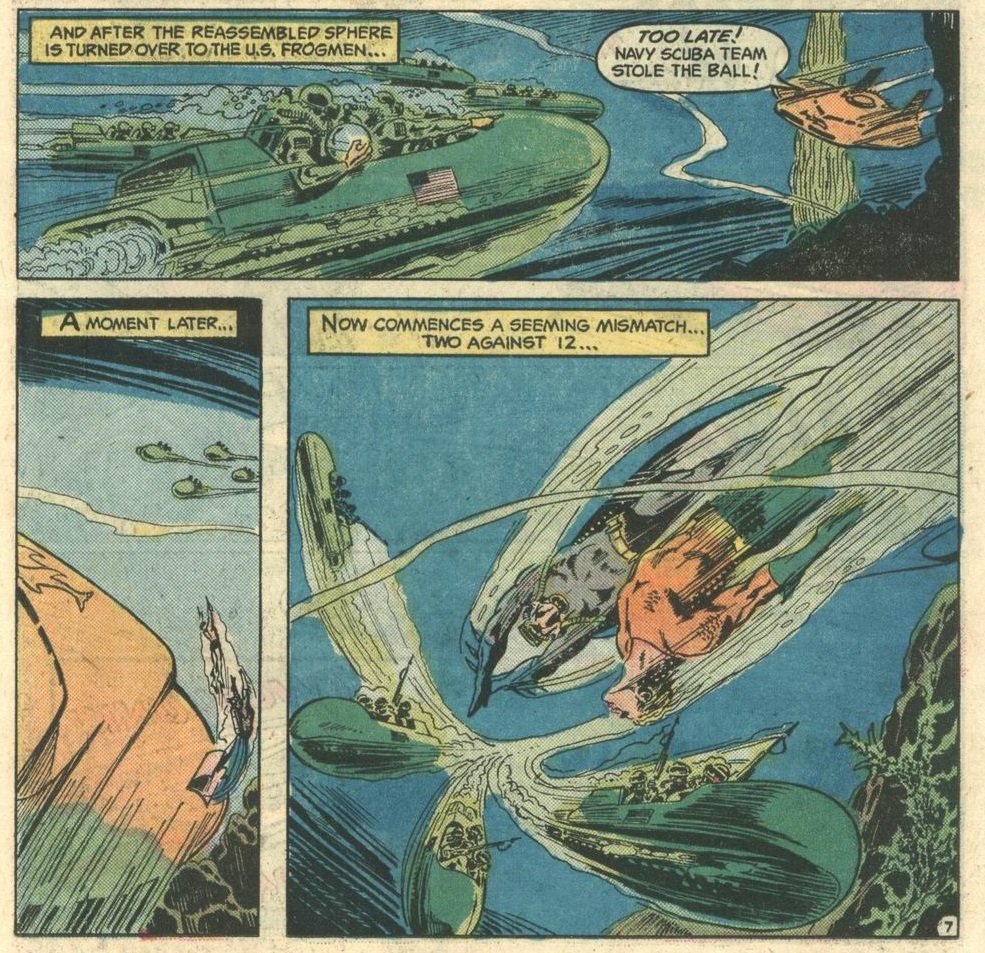
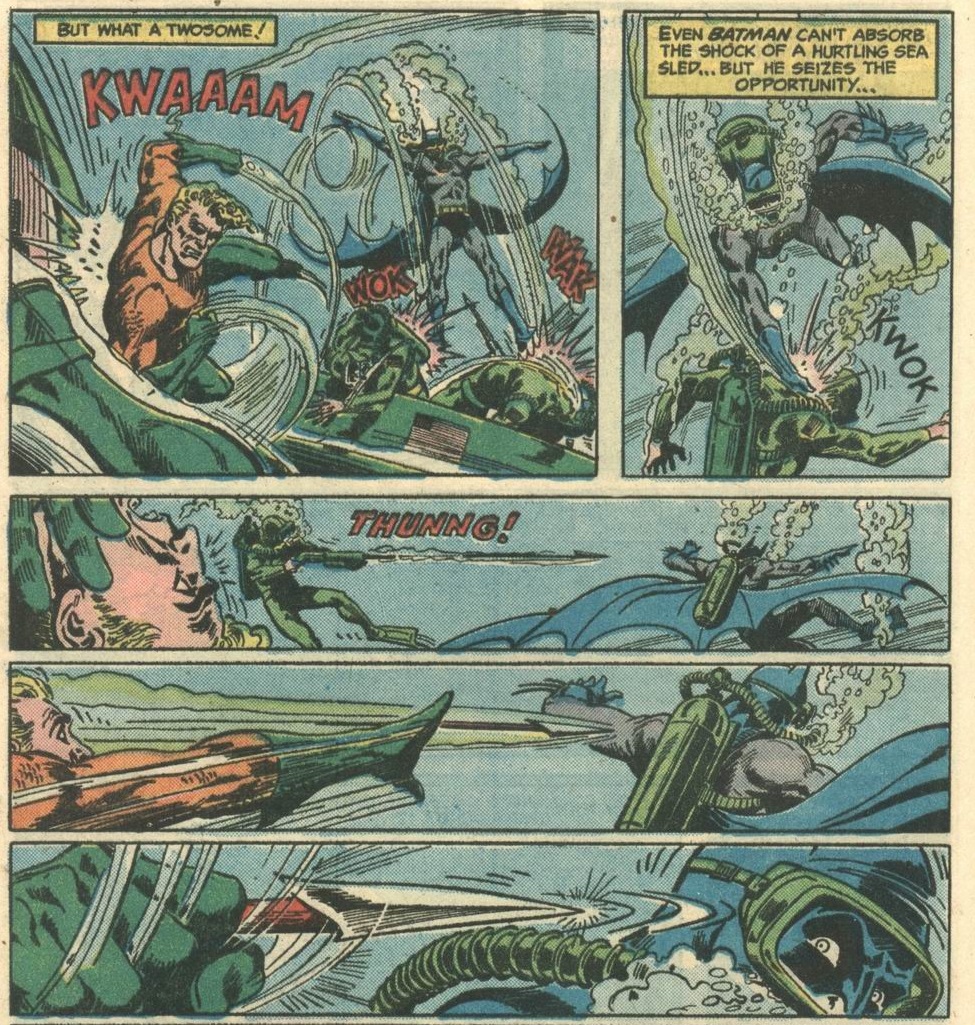
10. ‘The Impossible Escape’ (The Brave and the Bold #112, cover-dated April-May 1974), by Bob Haney (script), Jim Aparo (art, letters)

Brave and the Bold 112

I dig this comic so much that I’ve written about it before. This is what I had to say: ‘From the slam-bang opening in which Batman faces suicidal raiders at the Gotham Art Museum to the climatic chase in an ancient, maze-like Egyptian tomb, this comic never lets go. ‘The Impossible Escape’ keeps adding one off-kilter twist after another at a hell-for-leather, feverishly brisk pace, as is typical of Bob Haney’s and Jim Aparo’s exhilarating run on The Brave and the Bold. Along the way, the Caped Crusader finds himself in a trap-filled pulp adventure that may lead him to the elusive secret of immortality. He also teams up with Mr. Miracle, the alien escape artist created by the legendary Jack Kirby. What a blast!’ (By the way, Batman’s subsequent team-ups with Mr. Miracle – the Cold War-tinged ‘Death by the Ounce’ and the sci-fi-ish ‘Mile High Tombstone!’ – are packed with almost as many shameless thrills and crazy ideas.) (20 pages)

Posted in BATMAN COMICS FOR BEGINNERS | Tagged , , , , , , , , , , , , , , , , , , , , , , , , , , | Leave a comment

COMICS CAN BE AWESOME (November)

Whether you’re celebrating or crying over the recent electoral results, here is your monthly reminder that comics can be awesome:

The Spectre (v3) #50

The Spectre (v3) #50

Captain Atom #56

Captain Atom #56

The Demon (v3) #15

The Demon (v3) #15
Posted in GLIMPSES INTO AWESOMENESS | Tagged , , , , , , , , , , , , , , | Leave a comment

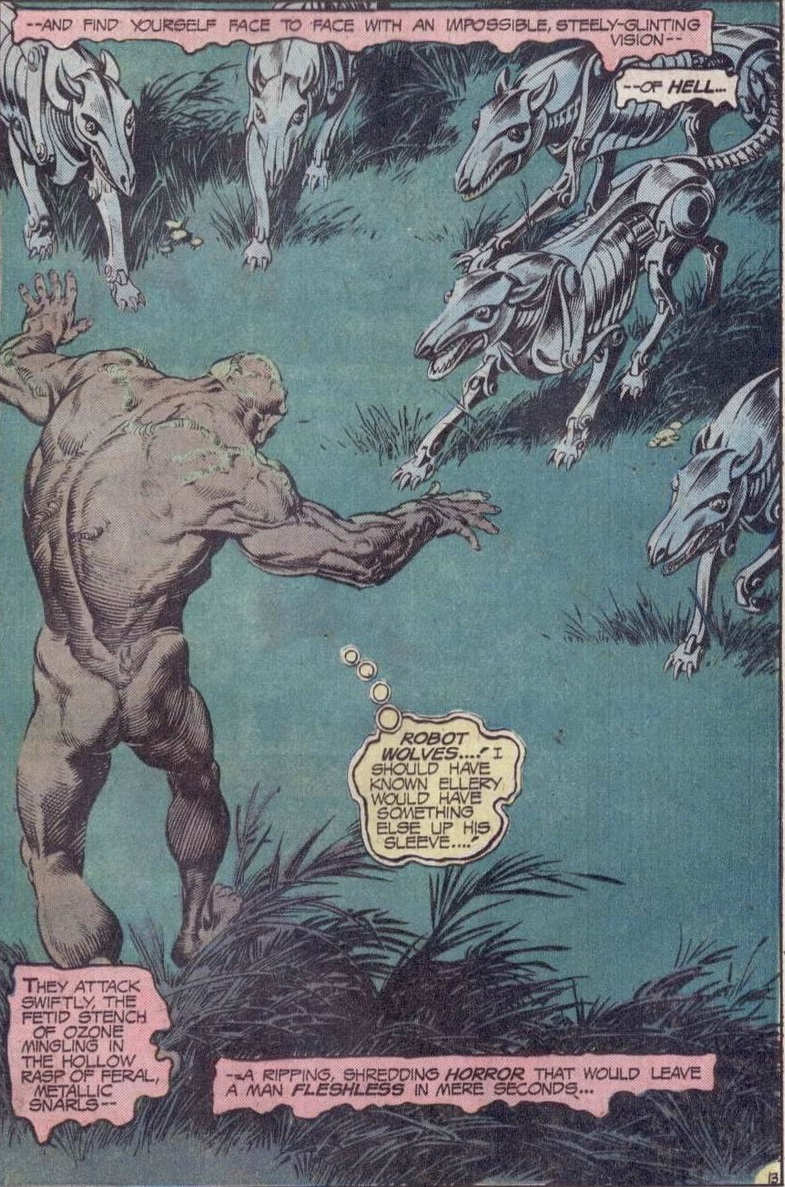
A wonderfully grotesque Swamp Thing double page spread

Because no Halloween is complete without revisiting the greatest horror comic book series of all time.

swamp thing 61

Swamp Thing (v2) #61
Posted in ART OF HORROR COMICS | Tagged , , , , , | Leave a comment

Taking a break… (October 2018)

Because sometimes life gets in the way.

gotham after midnight

Gotham After Midnight #1
Posted in GOTHAM INTERLUDES | Tagged , | Leave a comment

COMICS CAN BE AWESOME (October)

Your monthly reminder that comics can be awesome…

Chrononauts 1

Chrononauts #1

No Hero 3

No Hero #3

Space Riders 3

Space Riders #3
Posted in GLIMPSES INTO AWESOMENESS | Tagged , , , , , , , | Leave a comment

Norm Breyfogle (1960-2018)

Damn it, I’ve only just found out… One of the greatest Batman artists of all time died last Monday.

One day, Gotham Calling will look closely into Norm Breyfogle’s fluid designs and dynamic storytelling. Until then, I leave you with this splash page featuring some of his most memorable creations:
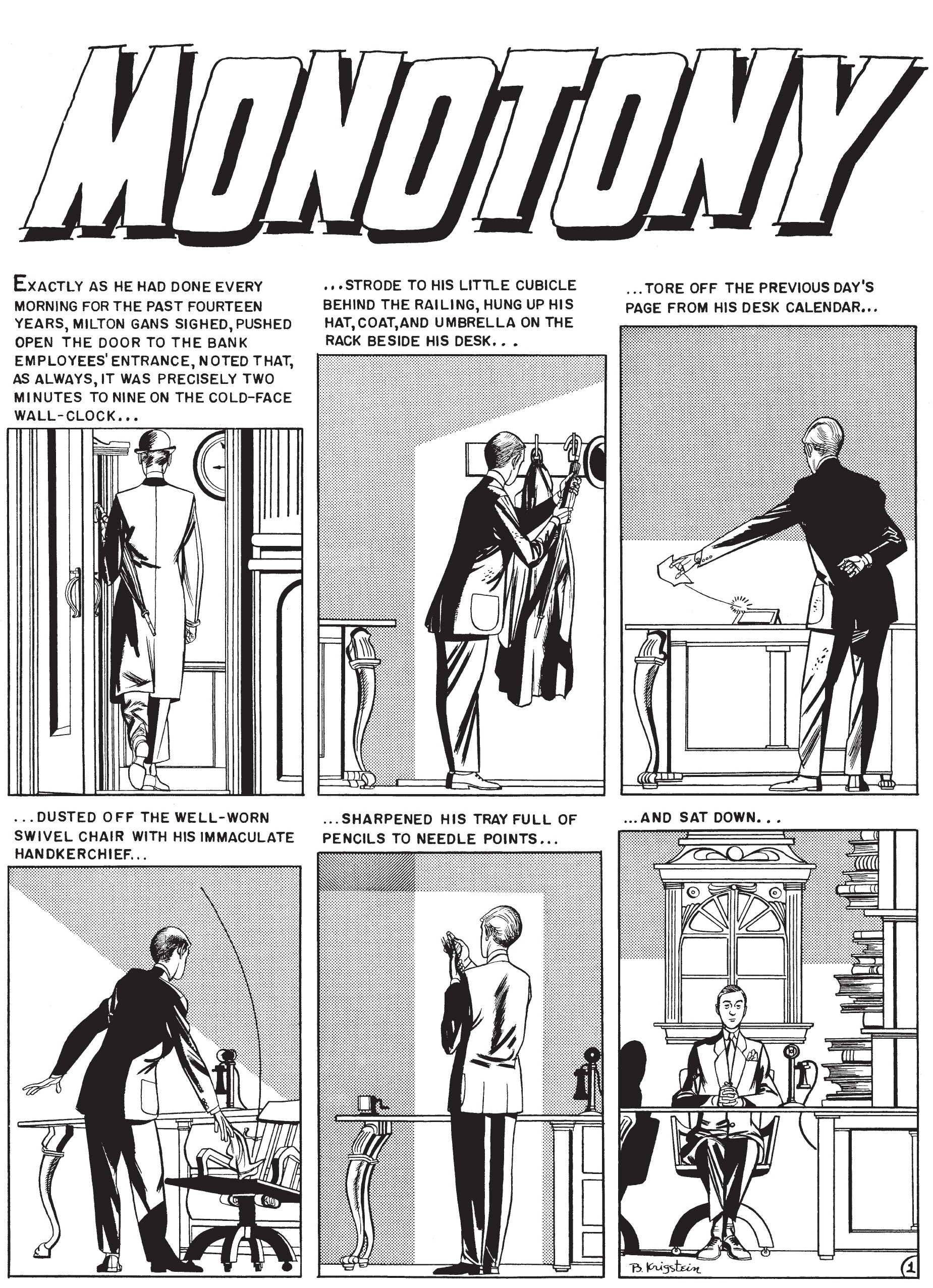
detective comics 598

Detective Comics #598
Posted in ART OF BATMAN COMICS | Tagged | 1 Comment

Essential Batman stories every fan should read – part 2

If you read the last post, you know what’s going on. This is the second part of my list of essential comics that serve as the best possible gateway into grasping the overall Batman meta-narrative. This week, I’m highlighting post-Crisis works:

11.‘Batman: Year One’ (Batman #404-407, cover-dated February-May 1987), by Frank Miller (script), David Mazzucchelli (art), Richmond Lewis (colors), Todd Klein (letters)

batman 405

The second of Frank Miller’s one-two punch assault on Batman comics (and on the medium as a whole), Year One replaced DKR’s operatic scale with a restrained, grounded account of the Dark Knight’s first year in Gotham City. Between Miller’s tense prose and David Mazzucchelli’s grimy art, this is probably the closest anyone has ever come to pulling off a rendition of Batman that truly reads like a straight-up, hardboiled crime yarn (with the possible exception of ‘Death Strikes at Midnight and Three,’ as mentioned last week). I discussed this story-arc here, including the following passage: ‘Starting with a young Bruce Wayne’s return to Gotham after having trained around the world, the book covers the roughly one year period in which Bruce develops his Batman identity, giving us a glimpse of his learning curve as he first tackles the city’s organized crime and rampant corruption. Composed mostly of short vignettes intercut with a few long sequences, Year One is more character study than conventional plot. In an inspired decision, we don’t just get to follow Batman’s growth, but that of Lieutenant James Gordon, who is almost as much a main character as Bruce. Both are fighting for (and against) the city, but one from outside the law and the other from within, one from a position of privilege and the other under constant threat – until they finally join forces when they realize they can hardly trust anyone but each other…’ (This book was so popular that it spanned the whole subgenre of ‘Year One’ comics.)

12.‘The Killing Joke’ (The Killing Joke, cover-dated 1988), by Alan Moore (script), Brian Bolland (art), John Higgins (colors), Richard Starkings (letters)

Batman - The Killing Joke

As sympathetic as I am with the critical readings of The Killing Joke that have stressed its place in the tradition of brutalizing female characters just to advance the characterization of male protagonists, I still cannot fully bring myself to claim this prestige one-shot is not some kind of masterpiece. Alan Moore has certainly written better comics, but this remains a fluid tale – with gorgeous art by Brian Bolland – where every image and line of dialogue resonates with decades of history between Batman and the Joker. In How to Read Superhero Comics and Why, Geoff Klock perceptively explores some of the various layers, setting up the discussion like this: ‘While The Dark Knight Returns shows order from the perspective of Batman, The Killing Joke shows both the terror and the peculiar joyfulness of living within a fictional world burdened by an insanity of signification, and the anxiety caused by contradictory influence and overdetermination. It takes its place in the initial phase of the revisionary superhero narrative in that it exposes the construction of its own narrative, and superhero narratives in general, through several key reflexive moments and metaphors. The image with which the story opens (and to which it fades) is that of the concentric rings created by raindrops in a shallow puddle. […] The randomly falling raindrops that create lesser or greater waves upon the puddle’s surface stand for individual superhero stories and their effect on the field of storytelling. […] Shallow but broad, the puddle emphasizes the tradition or field of signification from which The Killing Joke emerges. As the last image, it points to where any Batman work will end up – just another drop in the pond, another arbitrary center of organization that will reverberate into the character’s fictional history to greater or lesser effect.’

13.‘Arkham Asylum: A Serious House on Serious Earth’ (Arkham Asylum, cover-dated October 1989), by Grant Morrison (script), Dave McKean (art), Gaspar Saladino (letters)

Arkham Asylum

Grant Morrison’s and Dave McKean’s contribution to the movement to push Batman comics into a more mature, sophisticated direction, this acclaimed graphic novel has the Dark Knight wander around Arkham Asylum and confront revised iterations of his villains, who act as allegories for notions of sanity and different mythological traditions. I do think there is merit to this work (for example, McKean’s painted art is suitably nightmarish), even though I wasn’t very generous when I brought it up here, relating it to Tim Burton’s films. Nikolai Fomich has a more thought-provoking take on the book here, which begins by addressing the sexual undertones of the rogues’ gallery: ‘These emblematic villains bring into the Batman universe different kinds of sexual queerness – not merely non-normative kinds of sexuality, some kinds of which (such as homosexuality) are often symbolically associated with good within Batman narratives, but rather various kinds of queerness that are destructive – the Mad Hatter’s brainwashing of young girls and pedophilia; Clayface III’s agalmatophili, or love of (female) mannequins, a love which he sometimes forgoes when he feels the urge to touch real human beings, a touch which turns them into clay; Joker’s anarchic and nihilistic egotism, which at times takes the form of a predatory sexuality; Two-Face’s repression of all his rage and aggression, arguably sexual in part; Maxie Zeus’ masturbatory obsession, steaming from his ego and delusional belief that he is a transvestite god who comprises both sexes; and Killer Croc’s vaginal deformation, symbolic for the wet, dark, and ravenous Dragon of legend and religion, representative of the “danger” and voraciousness of female sexuality. Batman’s relationship to these various mad villains is symbolically indicative of his own psychosexual health. Whether he fears them, relates to them, or defeats them in a story is important in understanding what authors and artists are saying in those texts about Batman’s psychologically and sexuality.’

14.‘A Death in the Family’ (Batman #426-429, cover-dated December 1988-January 1989), by Jim Starlin (script), Jim Aparo (pencils), Mike DeCarlo (inks), Adrienne Roy (colors), John Costanza (letters)

Batman 427

Batman 427

Another ultra-gritty, Joker-centric tale from the late ‘80s – yet this one doesn’t aim towards highbrow literature. Instead, A Death in the Family is like a distillation of the decade’s schlockiest blockbusters, complete with bloody macho action, Arab terrorists, globetrotting adventure, and an over-the-top climax in which the Dark Knight has to face the Joker’s diplomatic immunity (because the Clown Prince of Crime somehow became an Iranian ambassador). This Reaganite time capsule earned its place in the history of Batman comics not just because it revolved around the possibility of killing off the second Boy Wonder (Jason Todd), but because it infamously decided the story’s outcome via a 900 telephone number voting system, through which readers sealed the fate of the young character! Moreover, the Joker’s actions in this tale and in The Killing Joke pretty much defined his relationship with Batman for the following decades. That said, it’s a shame A Death in the Family is the first Jim Aparo-drawn entry on the list, as his pencils here pale in comparison to his earlier work. (Aparo’s lengthy run with Bob Haney on The Brave and the Bold is certainly an influential classic, but there isn’t any specific issue or set of issues that left an outstanding mark… The team-ups with Sgt. Rock are memorably bonkers, but you can just as easily pick up any other story to get a sense of that run.)

15.‘Knightfall’ (Batman #489-514, Batman Annual #17, Batman/Punisher: Lake of Fire, Catwoman (v2) #1-13, Detective Comics #659-681, Detective Comics Annual #6, Justice League Task Force #5-6, Legends of the Dark Knight #59-63, Mitefall, Punisher/Batman: Deadly Knights, Robin (v4) #1-13, Robin Annual #2, Shadow of the Bat #16-34, Showcase ’93 #7-12, Showcase ’94 #3-10, and Vengeance of Bane, cover-dated January 1993-January 1995), by Doug Moench, Dennis O’Neil, Jo Duffy, Chuck Dixon, Alan Grant, John Wagner (script), Jim Aparo, Norm Breyfogle, Mike Manley, Jim Balent, Mike Gustovich, Ron Wagner, Eduardo Barreto, Barry Kitson, Graham Nolan, Lee Weeks, Sal Velluto, Kevin O’Neill, John Romita Jr, Tom Grummett, Phil Jimenez, John Cleary, Kieron Dwyer, Bret Blevins, Vince Giarrano, John Beatty, Mark Bright, Klaus Janson, Bill Willingham, Bob McLeod, Tim Sale, P. Craig Russell, Michael T. Gilbert, Teddy Kristiansen, Mike Vosburg (pencils), Jim Aparo, Norm Breyfogle, Tom Mandrake, Bob Wiacek, Joe Rubinstein, Dick Giordano, Rick Burchett, Scott Hanna, Terry Austin, Mike Manley, Frank McLaughlin, Romeo Tanghal, Eduardo Barreto, James Pascoe, Ande Parks, Bob Smith, Bob McLeod, Klaus Janson, Gerry Fernandez, Jeff Albrecht, Ron McCain, Kevin O’Neill, Ray Kryssing, John Stokes, Jose Luis Garcia-Lopez, Carlos Pedrazzini, Steve George, Vince Giarrano, Bob McLeod, Jimmy Palmiotti, Bruce Patterson, Peter Gross, P. Craig Russell, Michael T. Gilbert, Teddy Kristiansen (inks), Adrienne Roy, Matt Hollingsworth, Buzz Setzer, Glenn Whitmore, Christie Scheele, Klaus Janson, Tom McCraw, Bernie Mireault, Lovern Kindzierski, Teddy Kristiansen, Dave Hornung (colors), Jim Aparo, Richard Starkings, Tim Harkings, Ken Bruzenak, Willie Schubert, Albert DeGuzman, Bob Pinaha, John Costanza, Clem Robins, Albert DeGuzman, Todd Klein, Bill Oakley (letters)

Batman 497Batman 497

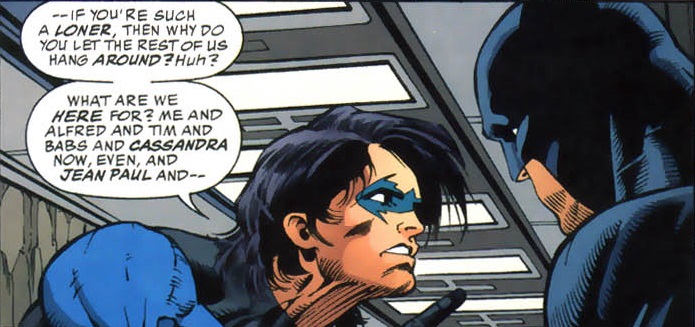
The output of DC comics in the ‘90s was marked by earth-shattering events (Superman’s death, Hal Jordan’s transformation into Parallax, etc), usually at the center of ambitious crossovers. Batman comics were no exception, with group editor Denny O’Neil coordinating a handful of different series, by different creators, into a coherent overarching narrative coming out weekly over long periods of time (in some cases, for over a year). To get a feel for the era, every fan should check out – at least partially – one of these sagas, with Knightfall being the most obvious candidate (together with its epilogue, Prodigal). In this crossover, the villain Bane (created specifically for the story) broke Batman’s spine, so Bruce Wayne was replaced by Jean Paul Valley, a super-violent psychopath with a bulging armored suit. The whole thing worked as an exciting-if-uneven epic at the surface level, but there was a metafictional subtext as well, with various characters – and, presumably, the readers – facing the fact that the old-school Caped Crusader was much cooler than the grim, bulky cyborg anti-heroes who were all the rage in comics at time. Knightfall (which has been collected in multiple editions) looms over the nineties – since mid-1992, most issues built up to the crossover; in its aftermath, key relations between characters were lastingly defined by what had transpired in that tale. This bombastic meta-series is also a chance to get acquainted with the decade’s most prolific creators (such as writers Doug Moench, Chuck Dixon, and Alan Grant, artists Norm Breyfogle and Graham Nolan, colorist Adrienne Roy, and cover-artist Kelley Jones), who shaped Batman’s world for years to come.

16.’The Long Halloween’ (The Long Halloween #1-13, cover-dated December 1996-December 1997), by Jeph Loeb (script), Tim Sale (art), Greg Wright (colors), Richard Starkings (letters)

The Long Halloween

Of the many sequels to Batman: Year One, this is the one that stood above the crowd and made the most remarkable impression, smoothly bridging the gap – both storywise and stylistically – between the more realistic Miller/Mazzucchelli version of Gotham and the wilder version you find in most comics. When I wrote about it here, I put it this way: ‘This comic, which was a major inspiration for [Christopher] Nolan’s The Dark Knight, addresses the transformation of Gotham from a city of gangsters into a city of insane, costumed criminals, while also serving as an origin story for Two-Face. The Long Halloween picks up threads from Year One and has a similarly hardboiled atmosphere, although [Tim] Sale’s gorgeously stylized artwork gives it a very different flow from Mazzucchelli’s pencils – for one thing, Bruce Wayne looks less like a young Gregory Peck and more like someone who could knock out Arnold Schwarzenegger. More importantly, the book is full of taut characterization (particularly of Batman, Gordon, and district attorney Harvey Dent), shameless homages to The Godfather films, perhaps one too many gratuitous cameos by the rogues’ gallery, and a genuinely clever whodunit.’

17.‘No Man’s Land’ (Azrael, Agent of the Bat #50-61, Batman #563-574, Batman – Day of Judgment, Batman: Harley Quinn, Catwoman #66-77, Day of Judgment #1-5, Detective Comics #730-741, Hitman #37-46, JLA #32-33, Legends of the Dark Knight #116-126, Nightwing #32-39, No Man’s Land #0-1, Robin #67-73, Shadow of the Bat #83-94, The Batman Chronicles #16-18, Young Justice – No Man’s Land, cover-dated March 1999-February 2000. See the reading order here.), by Dennis O’Neil, Bob Gale, Devin Grayson, Greg Rucka, Kelley Puckett, Janet Harvey, Bronwyn Carlton, Chuck Dixon, Scott Beatty, Dafydd Wyn, Paul Dini, John Ostrander, Geoff Johns, Larry Hama, Garth Ennis, Mark Waid, Ian Edginton, Steven Barnes, Jordan B. Gorfinkel, Lisa Klink (script), Roger Robinson, Alex Maleev, Dale Eaglesham, Frank Teran, Jon Bogdanove, Damion Scott, Dan Jurgens, Sergio Cariello, Mike Deodato, Mat Broome, Sergio Cariello, Jason Pearson, Chris Renaud, Pascal Alixe, Eduardo Barreto, Graham Nolan, Dean Zachary, Yvel Guichet, Jim Balent, Matt Smith, Christopher Jones, Wayne Faucher, Frank Teran, Phil Winslade, Mike Deodato, Tom Morgan, John McCrea, Mark Pajarillo, D’Israeli, Rick Burchett, Paul Gulacy, Paul Ryan, Rafael Kayanan, Scott McDaniel, Greg Land, Staz Johnson, Gordon Purcell, N. Steven Harris, Guy Davis, Jason Minor, Pablo Raimondi, Andy Kuhn (pencils), James Pascoe, Wayne Faucher, Jaime Mendoza, Frank Teran, Eduardo Barreto, John Floyd, Bill Sienkiewicz, Matt Ryan, David Roach, Sean Parsons, John Floyd, Mark Pennington, Cam Smith, Wayne Faucher, Sal Buscema, Eduardo Barreto, Bill Sienkiewicz, Jaime Mendoza, Robert Campanella, Aaron Sowd, John Stanisci, Marlo Alquiza, Steve Mitchell, Frank Teran, Phil Winslade, David Roach, Rob Hunter, Garry Leach, Walden Wong, Matt Banning; Aaron Sowd, D’Israeli, James Hodgkins, Randy Eberling, Andy Lanning, Mark McKenna, Karl Story, Drew Geraci, Stan Woch, Marlo Alquiza, Guy Davis, Randy Emberlin, Chris Ivy (inks), Demetrius Bassoukos, Dave Stewart, Noelle Giddings, Gloria Vasquez, Richard Horie; Tanya Horie, Greg Wright, Noelle Giddings, Pamela Rambo, Patricia Mulvihill, Ian Laughlin, Rob Schwager, Tanya Horie; Richard Horie, Roberta Tewes, James Sinclair, Greg Wright, Carla Feeny, Pat Garrahy, John Kalisz, D’Israeli, Bob Schwager, Felix Serrano, Klaus Janson, Digital Chameleon, Adrienne Roy, Jason Wright (colors), Ken Bruzenak, Rob Ro; Alex Bleyaert, Willie Schubert, Todd Klein, John Costanza, Bill Oakley, Rick Parker, Clem Robins, Ken Lopez, Albert DeGuzman, Tim Harkins, Ellie DeVille, Patricia Prentice (letters)

Batman No Man’s Land #1

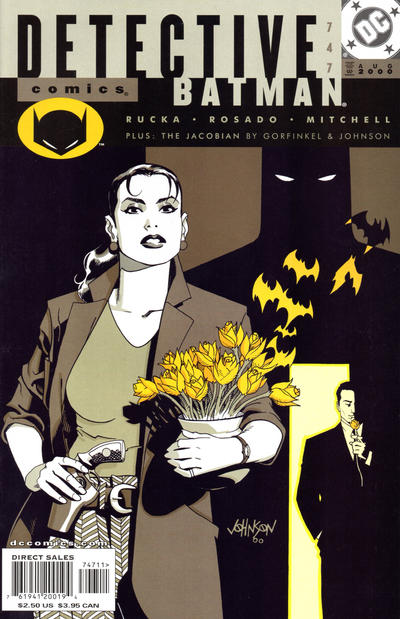
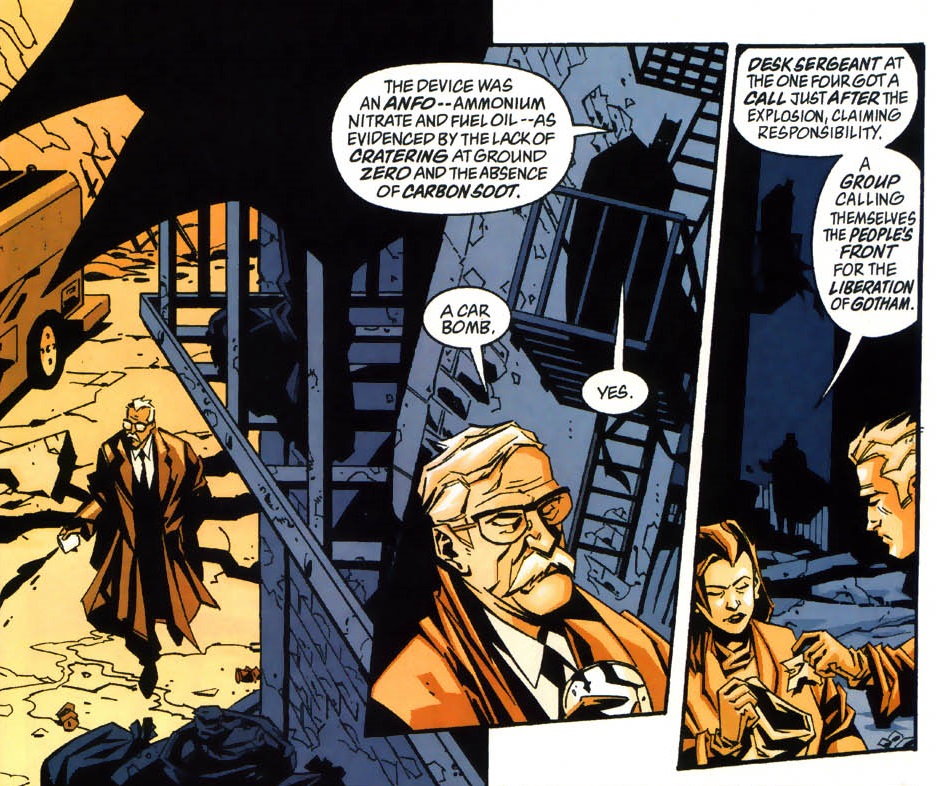
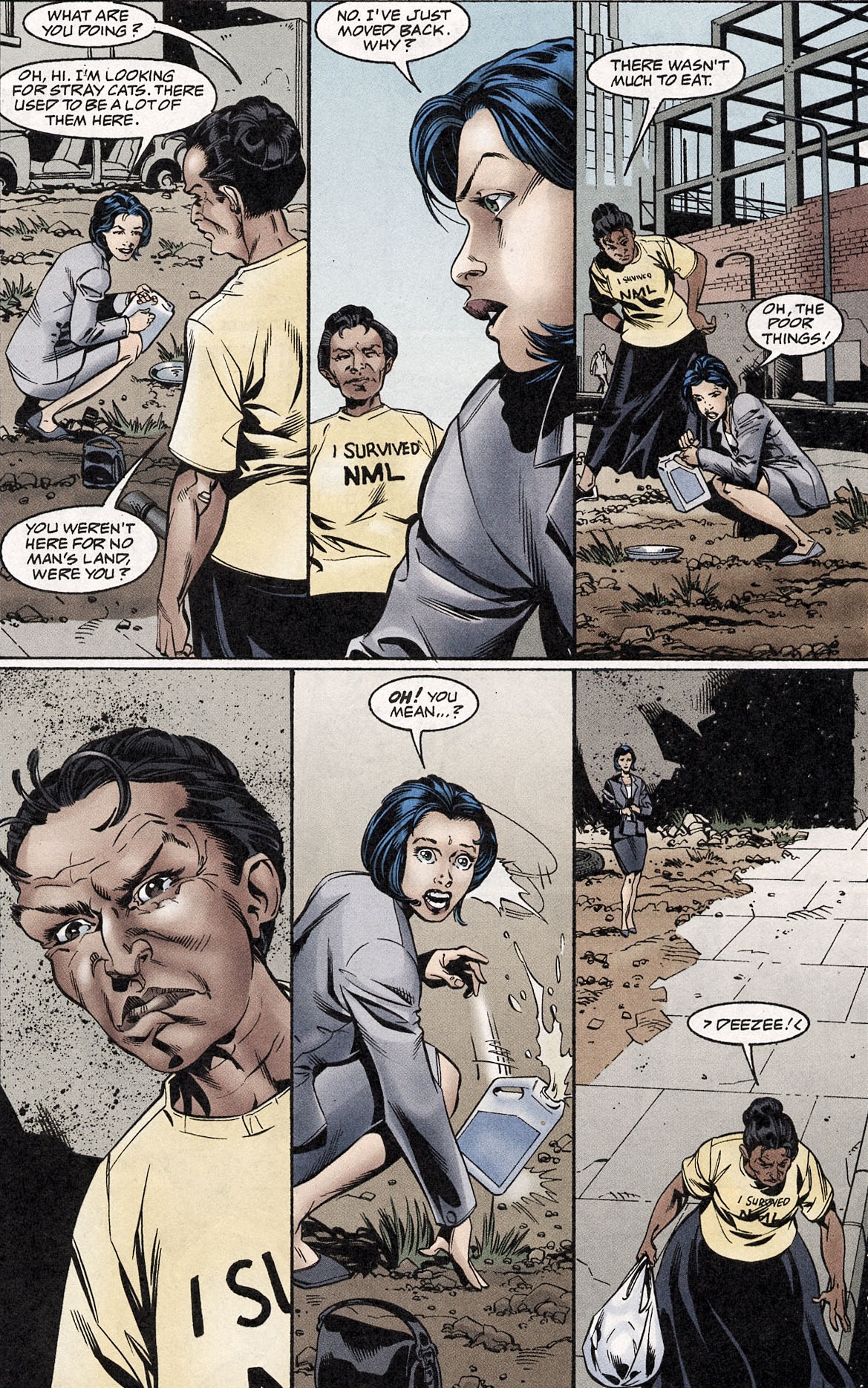
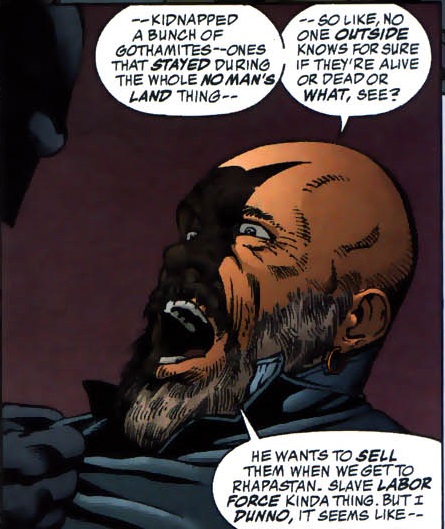
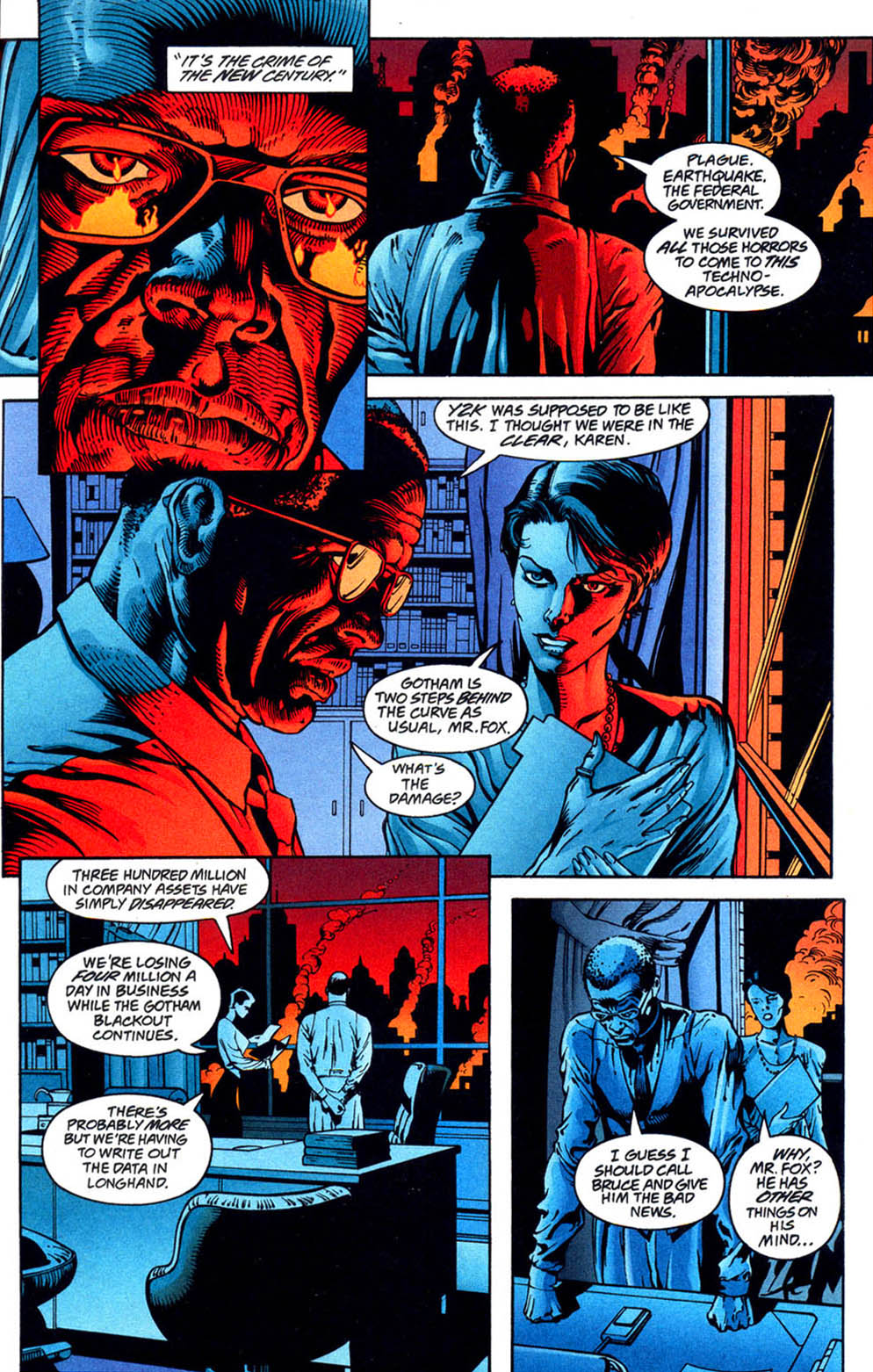
Another fundamental crossover – the one that closed the nineties and ushered in a new era of Batman comics (which included regular callbacks to the events in No Man’s Land). Above all, this is an essential work for those interested in the Dark Knight’s supporting cast and surrounding world, as it takes place after an earthquake destroyed Gotham and the government isolated the city from the rest of the United States, which allowed creators to play with various post-apocalyptic tropes. You get to see the people who stayed behind – the cops, the outlandish villains, the average citizens – reinvent civilization, including new variations of language and technology, as well a new hierarchy of value (‘a box of matches is more valuable than a camera, and a bike is more useful than a Ferrari’). Sprawling sagas are always hit-and-miss, but overall there is some genuinely engaging storytelling in this one. The more completist among you will want to go further and read about the earthquake, in Cataclysm, and other tales leading up to the government’s drastic decision, many of them collected in the Road to No Man’s Land paperbacks (see a comprehensive reading order here). If you find the prospect of reading over a hundred issues too intimidating, though, at least track down NML’s highest points (listed here).

18.‘Tower of Babel’ (JLA #43-46, cover-dated July-October 2000), by Mark Waid (script), Howard Porter, Steve Scott (pencils), Drew Geraci, Mark Propst (inks), Pat Garrahy, John Kalisz (colors), Ken Lopez (letters)

JLA #43JLA #43

A solid understanding of the history of Batman comics has to take into account that, even though some choose to treat the character as a street-level ninja detective or vigilante, he is also firmly embedded in the world/genre of superheroes… and you can’t get a purer superhero yarn than Tower of Babel, from the frenetic pace of Mark Waid’s script down to Howard Porter’s exaggerated art style. It’s fairly easy to spot the roots of this story-arc in which the Dark Knight shows that he could theoretically defeat all the members of the Justice League of America. There is a clear line from the Batman vs Superman slugfest in DKR and from Grant Morrison’s reinvention of Bruce Wayne as an almost godlike, hyperintelligent planner who is *always* the most badass in the room (an approach Morrison prominently inaugurated in JLA’s early issues) until Tower of Babel, which took to the extreme the notion that this non-powered human was actually a match for some of the most powerful superhumans in the DC Universe. Yet the latter isn’t just an entertaining take on geeky discussions of the who-would-win-in-a-fight variety – this story left its own mark in the field, engraining the view that Batman was a paranoid douchebag who inevitably pushed away those closest to him (a view that dominated DC comics in the early years of the 21st century).

 19.‘Batman and Son’ (Batman #655-658, cover-dated September-December 2006), by Grant Morrison (script), Andy Kubert (pencils), Andy Kubert, Jesse Delperdang (inks), Dave Stewart, Guy Major (colors), Nick J. Napolitano, Rob Leigh (letters)

batman 655

Grant Morrison’s radical seven-year run on Batman comics opened with a bang: its first story-arc turned the Caped Crusader’s world upside down by introducing his son, Damian Wayne, a hilariously arrogant kid who was trained to be a master assassin (and who went on to become one of the best additions to the cast in ages). Besides proving his willingness to shake the general status quo, Morrison also cheerfully revised the tone of the whole line: since the end of NML, most Batman-related books had become increasingly somber, with a misanthropic Dark Knight acting almost like a villain in his own series, but Batman and Son presented a well-adjusted Bruce Wayne in a tale with shamelessly ludicrous concepts and several laugh-out-loud moments. The book also set the stage for Morrison’s later stunts, including Bruce’s death (in Batman R.I.P. and Final Crisis), the replacement of the Dynamic Duo (Batman and Robin), Bruce’s time-travelling saga (The Return of Bruce Wayne), and the expansion of the Caped Crusader into an international franchise (Batman Incorporated).

20.‘The Court of Owls’ (Batman (v2) #1-11, cover-dated November 2011-September 2012), by Scott Snyder, James Tynion IV (script), Greg Capullo, Rafael Albuquerque (pencils), Jonathan Glapion, Rafael Albuquerque (inks), FCO Plascencia, Nathan Fairbairn, Dave McCaig (colors), Richard Starkings, Jimmy Betancourt, Patrick Brosseau, Dezi Sienty (letters)

batman 1

The last few years of Batman comics have been marked by so many surprising twists and changes in direction that stunts have become the new norm. This accelerated tendency goes back to Grant Morrison’s run, but many recent fans seem to have jumped on board with the so-called ‘New 52’ reboot, when Scott Snyder and Greg Capullo took over the main Batman series. Snyder has loosely recycled ideas from the last eight decades of stories, but he has done so in a particularly appealing way: whereas with Morrison the intertextual connections were a big part of the fun, in Snyder’s work readers don’t feel like they are necessarily missing much if they’re not aware of Batman’s long publication history. Add to this a horror-tinged flair for shock value and Capullo’s cartoony, dynamic pencils and you’ve got yourself a hugely successful take on this property. There are other starting points, for sure, but the first Snyder-Capullo collaboration, ‘The Court of Owls,’ laid the groundwork for what was to come both in terms of plot and of general approach to storytelling.
 

Honorable mentions (post-Crisis): Some comics have acquired enough of a lasting following and/or critical acclaim to deserve attention from any self-respecting Batman fan, even if they weren’t as influential as the ones listed above… It’s the case of Mike W. Barr’s and Alan Davis’ run in Detective Comics (#569-574, December 1986-May 1987), the graphic novel Son of the Demon (December 1987), Alan Grant’s and Norm Breyfogle’s run in Detective Comics (#583-594, 601-621, February-December 1988, June 1989-September 1990), the story-arc ‘Dark Knight, Dark City’ (Batman #452-454, August-September 1990), Kelley Puckett’s run in The Batman Adventures (#1-3, 6-30, October 1992-March 1995), the one-shot Mad Love (February 1994), the anthology Batman: Black and White (#1-4, June-September 1996), the story-arc ‘Hush’ (Batman #608-619, December 2002-November 2003), the mini-series Arkham Asylum: Living Hell (#1-6, July-December 2003), and the ongoing series Gotham Central (#1-40, February 2003-April 2006).
Posted in BATMAN COMICS FOR BEGINNERS | Tagged , , , , , , , , , , , , , , , , , , , , , , , , , , , , , , , , , , , , , , , , , , , , , , , , , , , , , , , , , , , , , , , , , , , , , , , , , , , , , , , , , , , , , , , , , , , , , , , , , , , , , , , , , , , , , , , , , , , , , , , , , , , , , , , , , , , , , , , , , , , , , , , , , , , , , , , , , , , , , , , , , , , , , , , , , , , , , , , , , , , , , , , , , , , , , , , , , , , , , , , , , , , , , , , , , , , , , | Leave a comment

Essential Batman stories every fan should read – part 1

A while ago, reader Dave Shevlin wrote to me about his latest project of picking somewhere around 30 or so of his favorite Bat-centric tales for an imaginary deluxe volume and challenged me to do the same. The idea would be to choose, not all-time classics like The Dark Knight Returns and Year One, but personal favorite issues that could be put into a big tome of must-have Bat-comics. Obviously, this appealed to me, but I immediately got stuck wondering what classics I could leave out in order to make room for my more peripheral or obscure choices… With that in mind, I ended up preparing a list of works I expect every Batman fan is bound to read (or at least be aware of) regardless of my recommendation, which I can therefore refrain from including in my ideal anthology (even if I think they’re really good).

I will tell you about my final picks next month, but for now I’ll leave you with this preliminary selection of seminal stories that are easy to find (they’ve all been collected multiple times) and should be required reading for any fan. These are comics that profoundly shaped the Caped Crusader and his world – they’re super-influential tales that subsequent creators kept riffing on, referencing, or somehow paying homage to… Reading them means understanding much of the historical evolution and intertextual subtext of the books that followed. Yes, they’re already so well-known and regarded that I wouldn’t include them in my imaginary deluxe volume, but perhaps they’re worth listing for the checklists of new fans:

1.‘The Case of the Chemical Syndicate’ (Detective Comics #27, cover-dated May 1939), by Bill Finger (script), Bob Kane (art & letters)

detective comics #27

The story that set the stage for everything to come. I’ve wrote a bit about how this tale has been remade throughout the decades here, including the following summary: ‘Originally published in 1939, the six-page ‘The Case of the Chemical Syndicate’ (Detective Comics #27), by Bob Kane and an uncredited Bill Finger, was the first comic to feature Batman (or the Bat-Man, as he was called at the time). The plot is a modest, no-frills whodunit – swiped from a Shadow short story – about the murder of a chemical industrialist called Lambert. Neatly, the Dark Knight shows off what would become his trademarks: he punches crooks (three times), escapes from a deathtrap (a gas chamber for guinea pigs), and deduces the solution to the mystery. There are some rough edges, for sure, but I love the fact that the very final twist is the revelation that the Bat-Man is actually the rich socialite Bruce Wayne! (Sorry for the mega-spoiler.)’

 2. ‘The Origin of the Batman!’ (Batman #47, cover-dated June-July 1948), by Bill Finger (script), Bob Kane (pencils), Charles Paris (inks), Ira Schnapp (letters)

Batman 47

This is one of the most important retellings of Batman’s origin, establishing for the first time the identity of the Waynes’ killer. It also works as an example of the film noir-tinged sensibility of the character’s Golden Age, since it’s a proper crime yarn filled with murder, action (including a dynamic fight at a gambling ship), and an ironic ending. (The final confrontation with Joe Chill was later beautifully redone in The Untold Legend of the Batman #1, which is highly recommended for anyone seeking a crash course on the Dark Knight’s history, even if it isn’t as essential a reading as the comics on this list.)

3.‘The First Batman’ (Detective Comics #235, September 1956), by Bill Finger (script), Sheldon Moldoff [as Bob Kane] (pencils), Stan Kaye (inks)

detective comics 235

This story not only introduced the idea that Thomas Wayne had once wore a Batman suit of sorts (subconsciously influencing Bruce), but – building directly on ‘The Origin of the Batman!’ – it also added further details about the Waynes’ murder, revising key elements of that fateful night. I usually dislike tales that take an origin as simple and effective as the Batman’s (especially the bit about him being the product of a *random* crime by a small-time crook) and turn them into something needlessly convoluted (there is even an amnesia subplot!), but this one has charm to spare and it did add elements to the mythos that stayed around for years. (In 2010, the Brave and the Bold cartoon show did an awesome episode called ‘Chill of the Night,’ which combined bits from ‘The Origin of the Batman’ and ‘The First Batman’ into a modern retelling that featured a truly hardboiled scene with Lew Moxon’s deathbed confession, a faustian/cosmic contest between the Spectre and the Phantom Stranger, amusing cameos by the rogues’ gallery, and the scariest sounding Dark Knight in living memory.)

4.‘Robin Dies at Dawn’ (Batman #156, cover-dated June 1963), by Bill Finger (script), Sheldon Moldoff [as Bob Kane] (pencils), Charles Paris (inks), Stan Starkman (letters)

Batman 156

Another gem by Bill Finger and Sheldon Moldoff (ghosting for Bob Kane). A high point of Silver Age sci-fi weirdness (the first part of the story takes place on an alien planet with bizarre creatures and psychedelic colors), nowadays ‘Robin Dies at Dawn’ (like the similarly trippy ‘Batman – the Superman of Planet X!’) is perhaps mostly known for its role as a major inspiration for Grant Morrison’s Batman run. However, this kooky tale – in which the Caped Crusader keeps hallucinating about the Boy Wonder’s death while fighting the Gorilla Gang – already had a cult following before that, not least because of the whole metafictional angle of Batman feeling that he is being watched by ‘eyes with human intelligence.’ (Appropriately for a comic with such an unsettling vibe, it shares some of its premise with the pilot episode of The Twilight Zone.)

 5.‘Ra’s al Ghul saga’ (Detective Comics #411, Batman #232, Batman #242-244, cover-dated May 1971-September 1972), by Denny O’Neil (script), Bob Brown, Neal Adams, Irv Novick (pencils), Dick Giordano (inks), Ben Oda, John Costanza, Ray Holloway, Jean Izzo (letters)

Batman 244

The quintessential Bronze Age Batman story – a hell-for-leather epic that throws the Dark Knight (meanwhile redesigned by Neal Adams) into the globetrotting thrills of a vintage James Bond flick while introducing two of his greatest supporting characters: Talia and Ra’s Ghul. There are a handful of comics that could be seen as part of the saga, but Detective Comics #411, Batman #232, and the trilogy Batman #242-244 are the ones later creators keep going back to. I wrote about them here, including the following lines about the earlier issues: ‘We are definitely in grand adventure territory here. Accepting the genre’s inherent orientalism, [Denny] O’Neil combined different cultures with gusto in order to provide an out-of-this-world sense of exotic excitement: the tale takes place in an unidentified Far East country (‘a tiny Asian nation tucked into the mountains between two hostile super-powers’); we are told Ra’s al Ghul is Arabic for ‘The Demon’s Head;’ a plot point involves arms deals in South America; and in a great sequence Batman literally has to bullfight for his life. O’Neil followed this with Batman #232, where the Caped Crusader wrestles a leopard in Calcutta and climbs one of the Himalayan Mountains, under fire.’

6.’The Joker’s Five-Way Revenge!’ (Batman #251, cover-dated September 1973), by Denny O’Neil (script), Neal Adams (art)

Batman 251

Besides the Ra’s al Ghul saga, the duo of Denny O’Neil and Neal Adams did several other stories together that can be considered classics (‘The Secret of the Waiting Graves,’ ‘Ghost of the Killer Skies,’ ‘A Vow from the Grave,’ ‘Half an Evil,’ ‘Night of the Reaper’), but none as influential as ‘The Joker’s Five-Way Revenge!’ This tale revamped the Clown Prince of Crime, taking him back to his murderous roots (after having been softened for almost two decades because of the Comics Code) while updating his look and style – it effectively kickstarted a version of the Joker that would linger for many years to come. The issue features two of Adams’ most famous splash pages: the opening one, with the Joker laughing behind the wheel of a car, and the one near the end, with the Caped Crusader running purposefully on the sand. Likewise, the deathtrap at the aquarium and Batman’s subsequent fight against a shark – probably a rebuttal of the infamous Shark Repellent Spray joke from the 1966 Batman movie – is fondly remembered and occasionally revisited (1994’s Mad Love has quite a fun variation of it).

7.‘There is No Hope in Crime Alley!’ (Detective Comics #457, cover-dated March 1976), by Denny O’Neil (script), Dick Giordano (art), Terry Austin (backgrounds), Ben Oda (letters)

detective comics 457

The tale that established the place where the Waynes were shot (Park Row, now known as Crime Alley) and introduced Bruce’s ersatz-mother figure, Leslie Thompkins. Besides representing all that’s worth saving in Gotham City (‘Maybe the only hope our tormented civilization has left!’), Thompkins is a nice counterpoint to the Dark Knight, trying to achieve the same goal as him with pacifist methods. In that sense, this issue paved the way for all those later explorations of Batman’s morals and methods, challenging him in his own series (O’Neil had already tried a similar thing in ‘The Batman’s Burden,’ but that story didn’t leave much of a mark). All in all, ‘There is No Hope in Crime Alley!’ may be a bit schmaltzy and it’s set during an odd time when Alfred wasn’t aware of the Waynes’ murder date (because his pre-Crisis version only met Bruce as an adult), but the ending feels genuinely tender and many of its classic lines have been echoing through Batman comics ever since.

8.‘Strange Apparitions’ (Detective Comics #469-476, cover-dated May 1977-April 1978), by Steve Englehart (script), Walt Simonson, Marshall Rogers (pencils), Al Milgrom, Terry Austin (inks), Jerry Serpe, Glynis Wein (colors), Ben Oda, John Worman, Milt Snappin (letters)

detective comics 475

Steve Englehart’s fan-favorite run in Detective Comics (especially the issues pencilled by the incredible Marshall Rogers, #471-476) excelled at drawing from Batman’s past while delivering something that felt fresh and modern. In that sense, it wasn’t just these comics’ characterization, designs, and story ideas that proved highly influential, but their whole attitude (especially when it came to the 1990s’ Batman: The Animated Series). The run works as a cohesive whole due to the overarching subplots about mad scientist Hugo Strange, political boss Rupert Thorne, and Bruce’s love interest Silver St. Cloud, even if it contains different stories within it, including the two-parter ‘The Laughing Fish!/Sign of the Joker!’ (one of the most emblematic stories ever told about the Clown Prince of Crime). I’ve written about this run here and you can find more praise for it here.

9.‘Death Strikes at Midnight and Three’ (DC Special Series #15, cover-dated Summer 1978), by Denny O’Neil (script), Marshall Rogers (art)

dc special 15

Yes, it’s another script by Denny O’Neil and another art job by Marshall Rogers, but ‘Death Strikes at Midnight and Three’ is a completely different beast from what came before. This taut, gritty short story pushes Batman’s crime fiction angle as far it can go, to the point of practically becoming an illustrated prose piece reminiscent of old pulps (and a damn fine one at that). Everyone who subsequently tried to experiment with the Dark Knight’s ties to noirish literature did so under the shadow of this comic.

10.‘The Dark Knight Returns’ (The Dark Knight, cover-dated 1986), by Frank Miller (script and pencils), Klaus Janson (inks), Lynn Varley (colors), John Costanza (letters)

Batman - Dark Knight ReturnsDark Knight Returns

The one book that’s required reading not just for Batman fans, but for any fan of the superhero genre (or for anyone interested in the history of mainstream comics). Frank Miller blew everyone away with his formally innovative and politically charged tale about an older Batman coming out of retirement in a near-future that looked like a grim extension of Reagan-era Cold War. The powerful impact of The Dark Knight Returns (especially of the climactic face-offs with the Joker and Superman) can still be felt today, in both comics and superhero movies. I wrote about it here and Geoff Klock did a poignant analysis of DKR’s revisionary contribution in his fascinating book How to Read Superhero Comics and Why, including the following passage: ‘Miller has often stated that the only thing contemporary comics have learned from The Dark Knight Returns is the extreme level of violence it presents. His own work is not so much violent as it is more graphic and more realistic about the violence that has always inhabited superhero narratives. With The Dark Knight Returns, the reader is forced to confront what has been going on for years between the panels. Miller’s realism operates as a kind of commentary on a genre that has treated its inherent violence with kid gloves. Take, for example, the fact that Batman has in the course of his history gotten into many fights in which he is outnumbered and his opponents are armed with guns. Using only a Batarang and his fists, Batman manages to defeat them all without breaking a sweat. Miller never treats his hero so gently – his Batman is almost always wounded, sometimes badly, and the Batarang is reconceived as a kind of bat-shaped throwing star that disarms by slicing into the forearm, rather than its former, sillier portrayal as a boomerang that disarms criminals by knocking weapons out of their hands. The strength of Miller’s portrayal leaves readers with the impression that all of Batman’s fights must have been of this kind, but that they have been reading a watered-down version of the way things ‘really happened.’’

Honorable mentions (pre-Crisis): Although not as iconic as these tales, other first appearances are worth noting, such as those of Robin/Dick Grayson (Detective Comics #38, April 1940), the Joker (Batman #1, June 1940), Two-Face (Detective Comics #66, August 1942), the Riddler (Detective Comics #140, October 1948), Bat-Mite (Detective Comics #267, May 1959), Poison Ivy (Batman #181, June 1966), and Batgirl/Barbara Gordon (Detective Comics #359, January 1967). The origin tales ‘The Secret Life of Catwoman’ (Batman #62, December 1950-January 1951) and ‘The Man Behind the Red Hood’ (Detective Comics #168, February 1951) are minor classics as well.

NEXT: More essential comics.

Posted in BATMAN COMICS FOR BEGINNERS | Tagged , , , , , , , , , , , , , , , , , , , , , , , , , , , | Leave a comment

50 glass-shattering entrances

Tomorrow is Gotham Calling’s fourth anniversary. I usually mark these occasions with a compilation of kicks in the head (accompanied by exciting, onomatopoeic sound effects). However, this year I’ve decided to celebrate another longstanding tradition of Batman comics, namely the Caped Crusader’s habit of surprising his foes with sudden entrances that involve breaking a lot of glass.

Whether crashing through a window or through a glass ceiling, this trope has been reinterpreted throughout the ages, with artists coming up with various dynamic angles (although often going for the same ways of depicting broken shards). Moreover, even when Batman doesn’t supplement his theatrical entrance with a badass one-liner, these moments are often a treat due to the villains’ astonished reactions.

Enjoy these fifty glorious examples:

Detective Comics #65

Detective Comics #65

Batman #199

Batman #199

The Brave and the Bold #90

The Brave and the Bold #90

Detective Comics #421

Detective Comics #421

Batman #269

Batman #269

Detective Comics #437

Detective Comics #437

Batman #284

Batman #284

Detective Comics #471

Detective Comics #471

The Brave and the Bold #98

The Brave and the Bold #98

Batman #288

Batman #288

Detective Comics #474

Detective Comics #474

The Brave and the Bold #198

The Brave and the Bold #198

Detective Comics #484

Detective Comics #484

batman annual 14

Batman Annual #14

Detective Comics #571

Detective Comics #571

The New Titans #61

The New Titans #61

Batman/Green Arrow: The Poison Tomorrow

Batman/Green Arrow: The Poison Tomorrow

Detective Comics #614

Detective Comics #614

Detective Comics #634

Detective Comics #634

Batman Annual #18

Batman Annual #18

The Batman Adventures #33

The Batman Adventures #33
Shadow of the Bat #13Shadow of the Bat #13

Batman #493

Batman #493

Legends of the Dark Knight #72

Legends of the Dark Knight #72

Shadow of the Bat #32

Shadow of the Bat #32

Batman #516

Batman #516

Batman: Black and White #1

Batman: Black and White #1

Batman #520

Batman #520

Gotham Adventures #15

Gotham Adventures #15

Night Cries

Night Cries

Batman #541

Batman #541

Poison Ivy

Poison Ivy

Mr. Freeze

Mr. Freeze

Dark Knight Dynasty

Dark Knight Dynasty

Batman #552

Batman #552

No Man’s Land #0

No Man’s Land #0

Detective Comics #476

Detective Comics #476

Batman: Black and White #3

Batman: Black and White #3

Detective Comics #479

Detective Comics #479

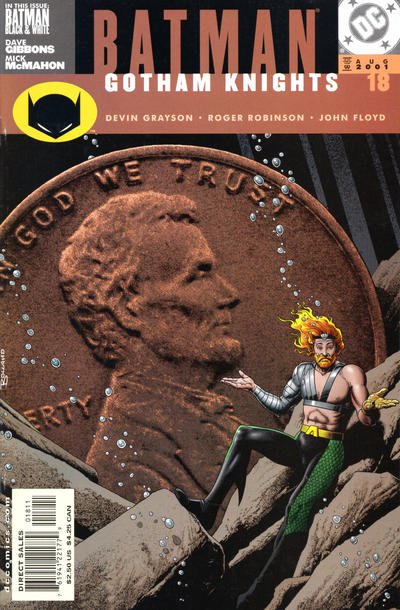
Gotham Knights #5

Gotham Knights #5

Batman #575

Batman #575

Detective Comics #787

Detective Comics #787

Legends of the Dark Knight #169

Legends of the Dark Knight #169

After the Fire #2

After the Fire #2

Arkham Asylum: Living Hell #1

Arkham Asylum: Living Hell #1

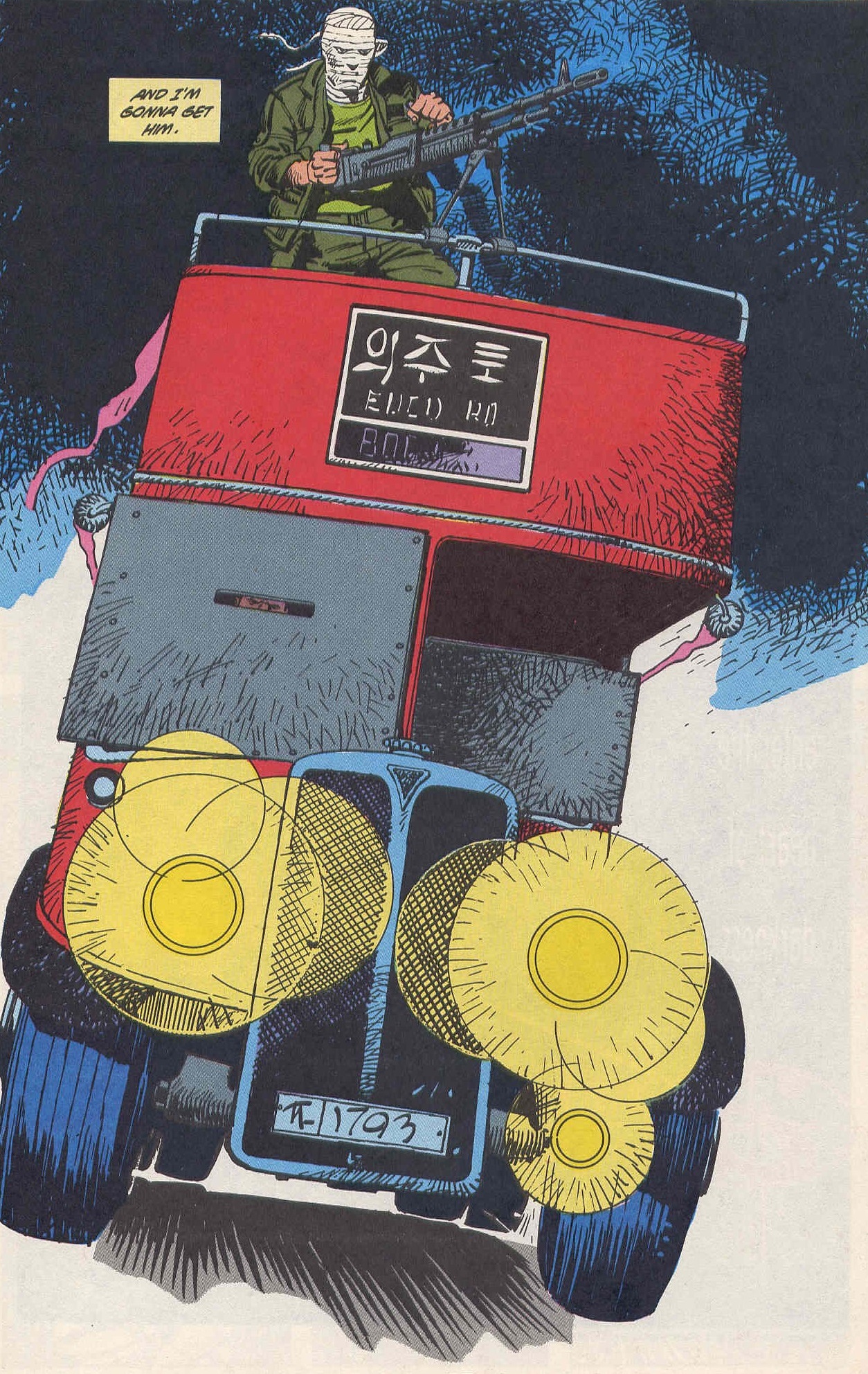
Detective Comics #827

Detective Comics #827

Batman Adventures (v2) #13

Batman Adventures (v2) #13

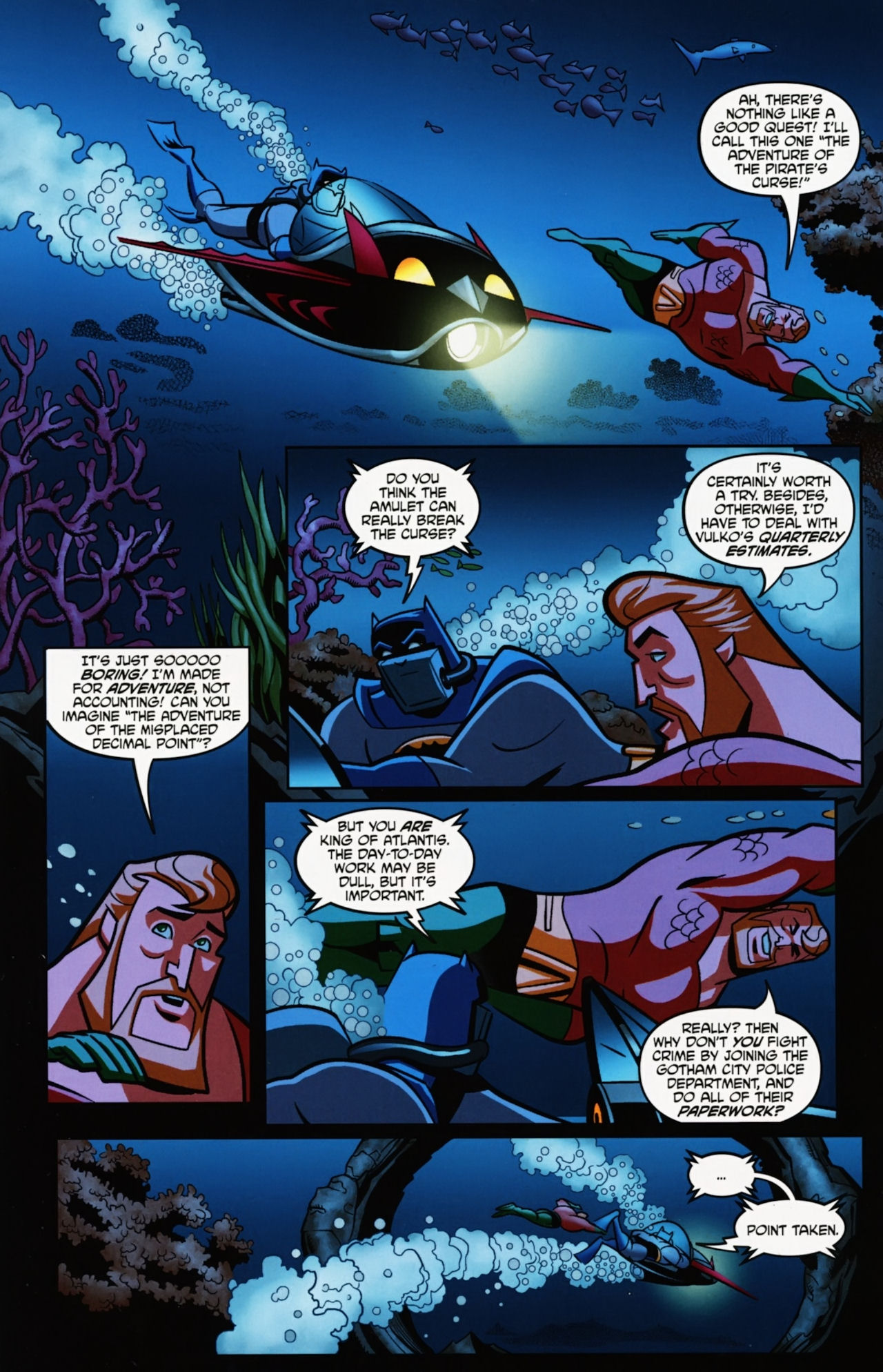
Batman: The Brave and the Bold #9

Batman: The Brave and the Bold #9

Superman/Batman #68

Superman/Batman #68

Batman: Earth One

Batman: Earth One

By the way, the Dark Knight clearly taught this trick to his sidekicks:

Robin (v4) #53

Robin (v4) #53

NEXT: Essential Batman comics.

Posted in ART OF BATMAN COMICS | Leave a comment

COMICS CAN BE AWESOME (September)

Your Steptember reminder that comics can be awesome…

habibi

Habibi

The Invisibles 21

The Invisibles (v2) #21

mesmo delivery

Mesmo Delivery

NEXT: Batman breaks the glass ceiling.


Posted in GLIMPSES INTO AWESOMENESS | Tagged , , , , , , , , | Leave a comment