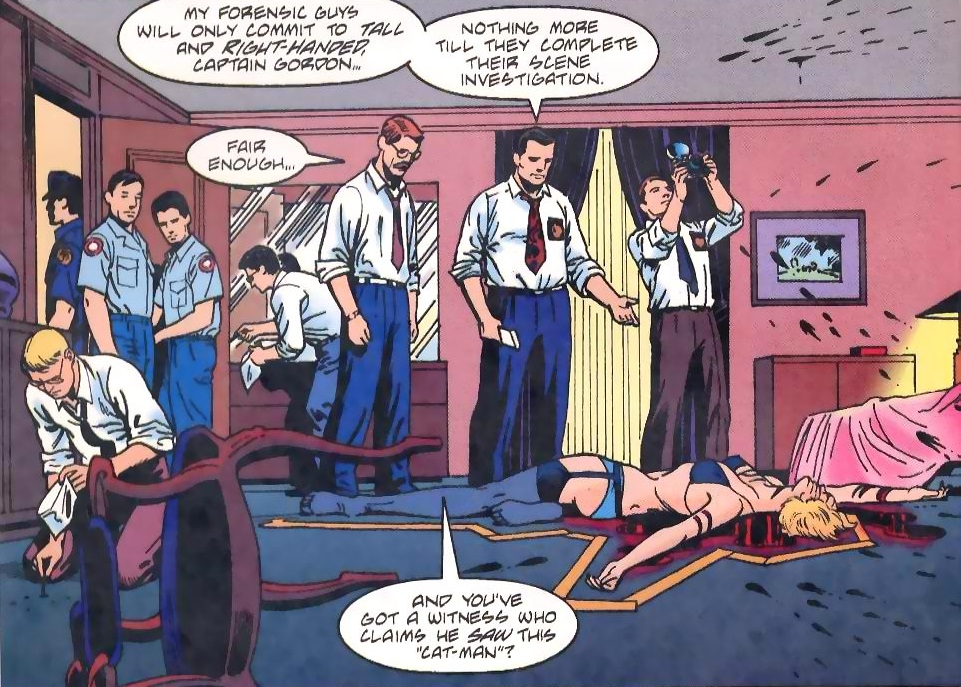
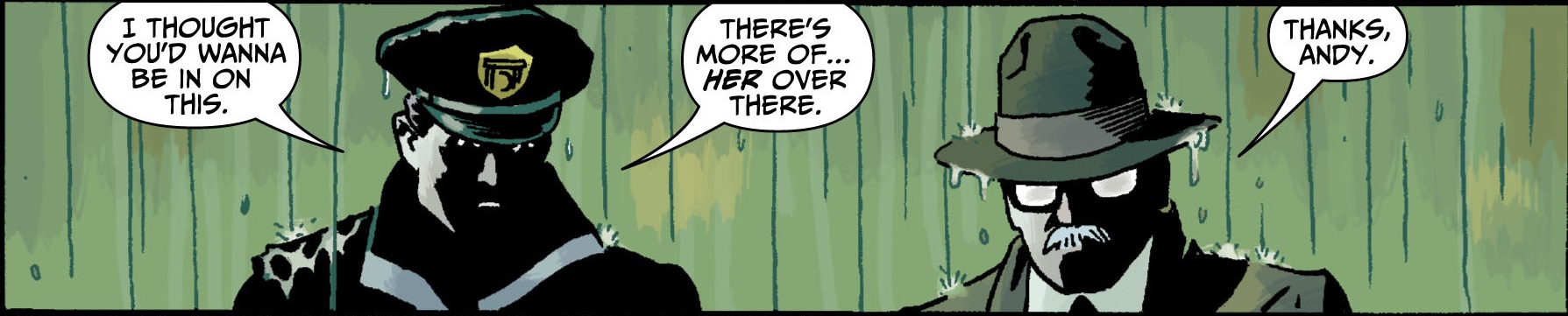
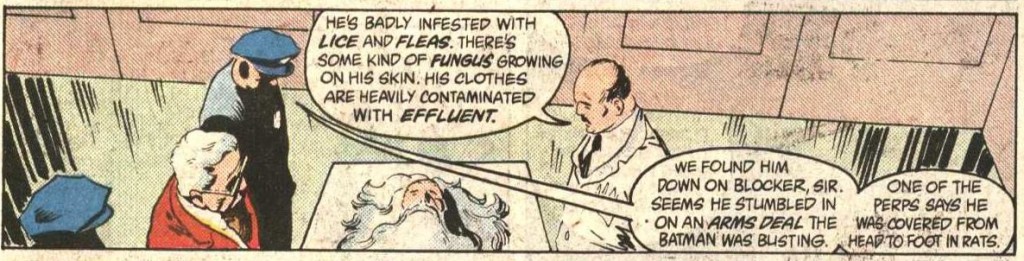
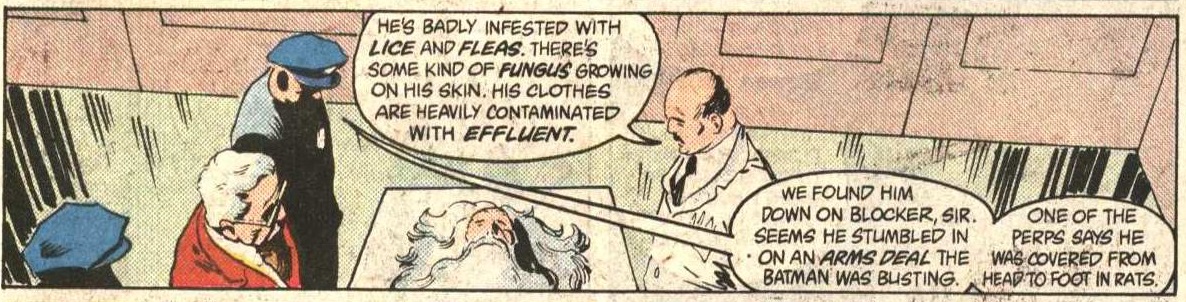
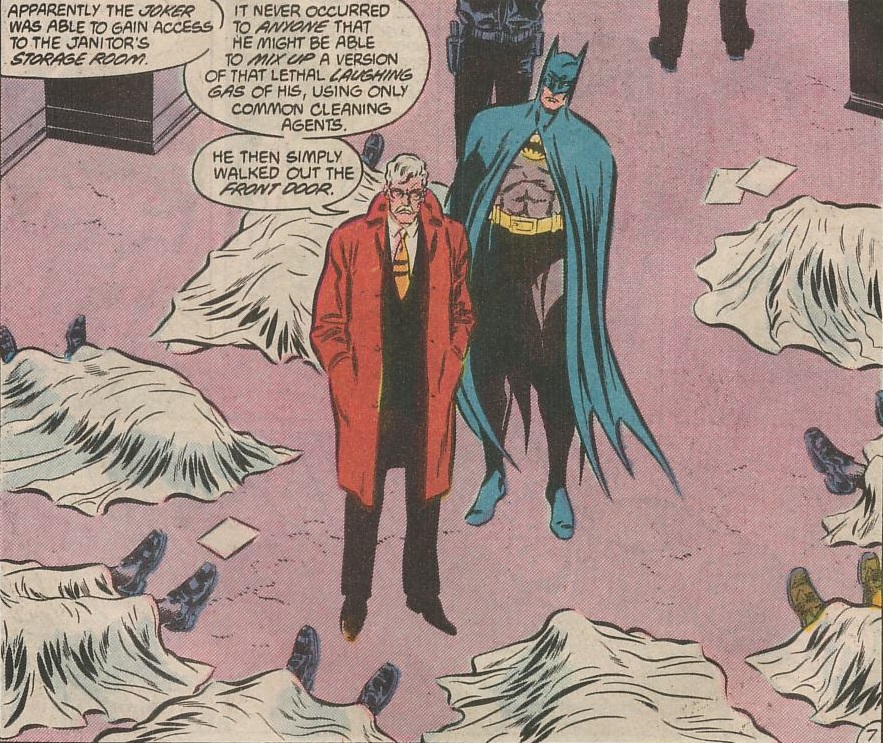
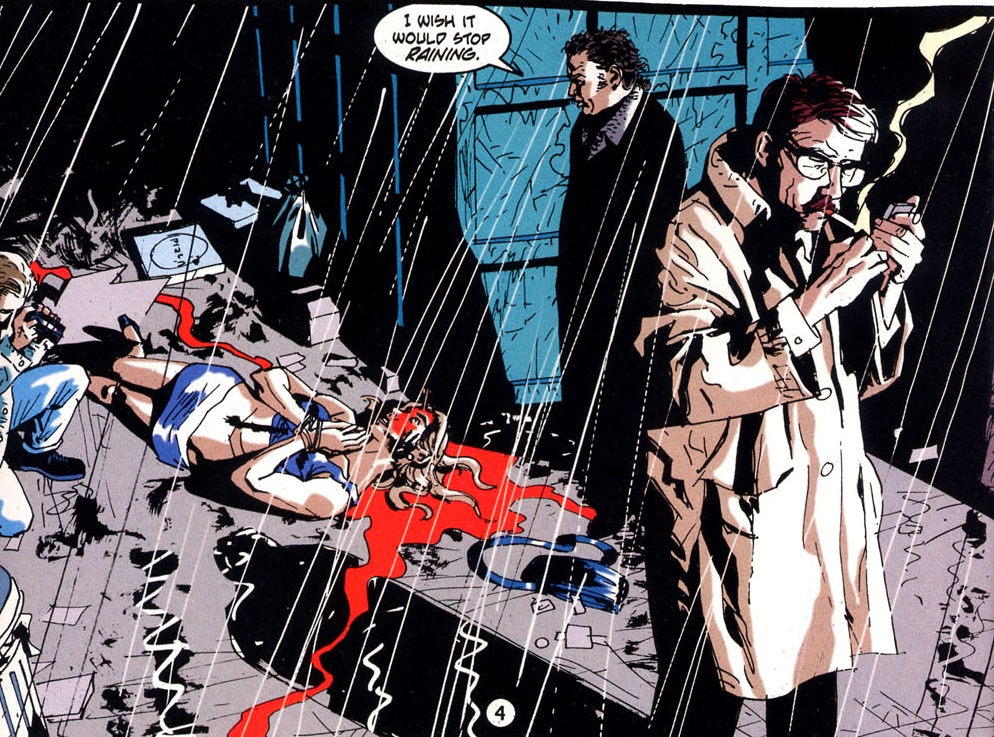
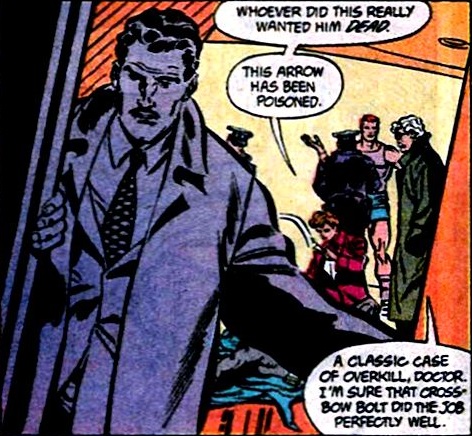
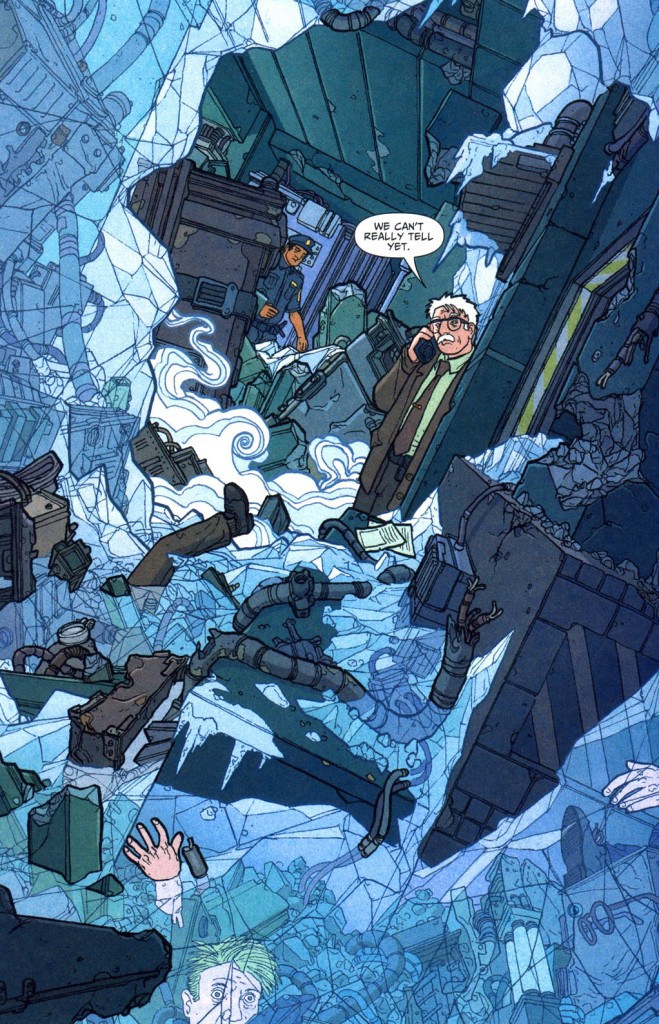
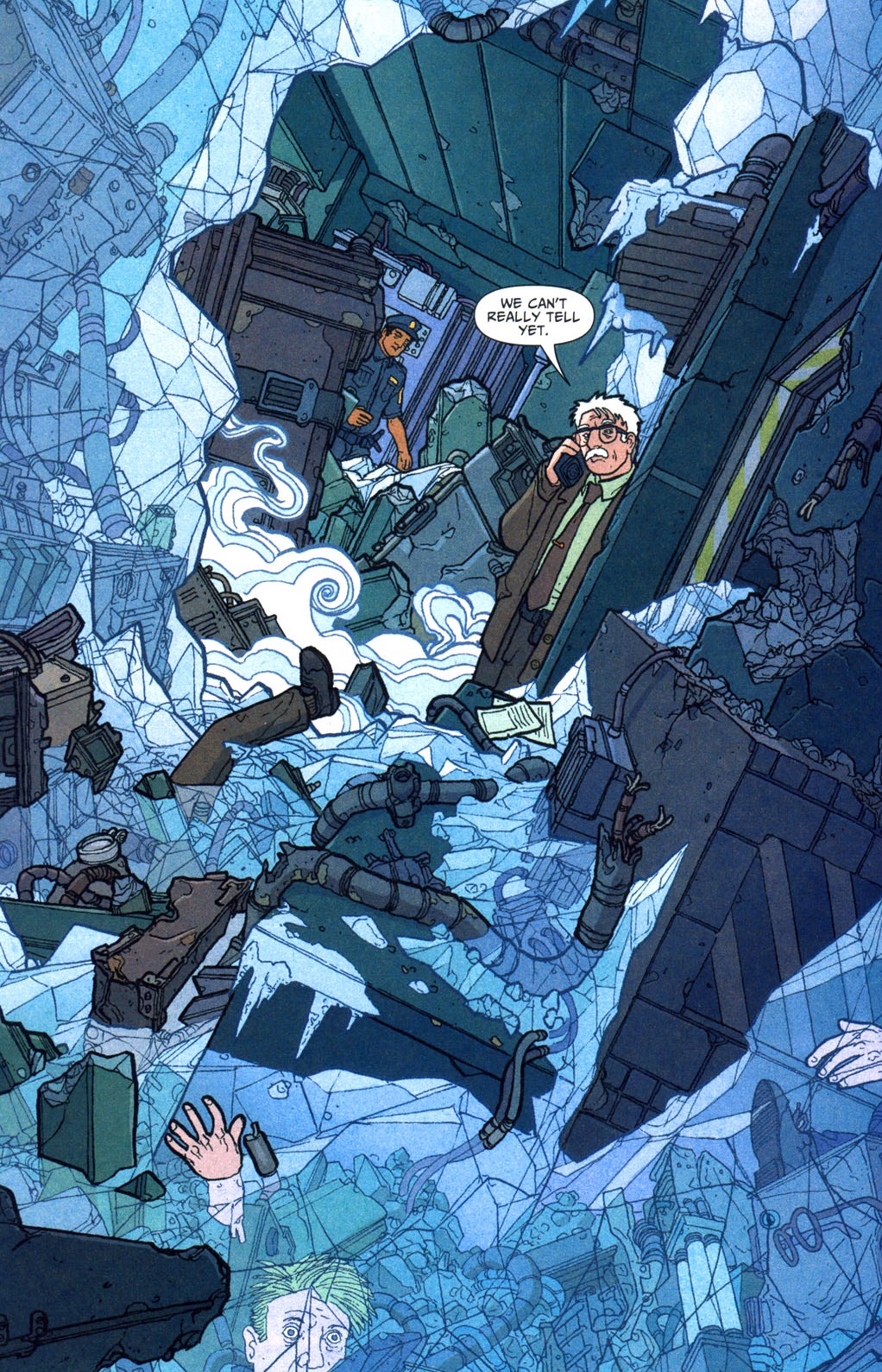
It must suck to be Gordon

MONDAY

Legends Of The Dark Knight 46Legends of the Dark Knight #46

TUESDAY

Batman and the Monster MenBatman and the Monster Men #2

WEDNESDAY

Detective Comics 586Detective Comics #586

THURSDAY

Batman 426Batman #426

FRIDAY

Legends Of The Dark Knight 98Legends of the Dark Knight #98

SATURDAY

batman 434Batman #434

SUNDAY

Legends Of The Dark Knight 194Legends of the Dark Knight #194


NEXT: Batman v Superman.

Posted in GOTHAM INTERLUDES | Tagged , | Leave a comment

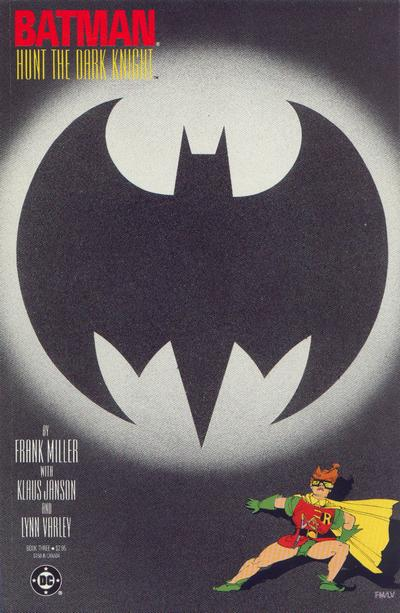
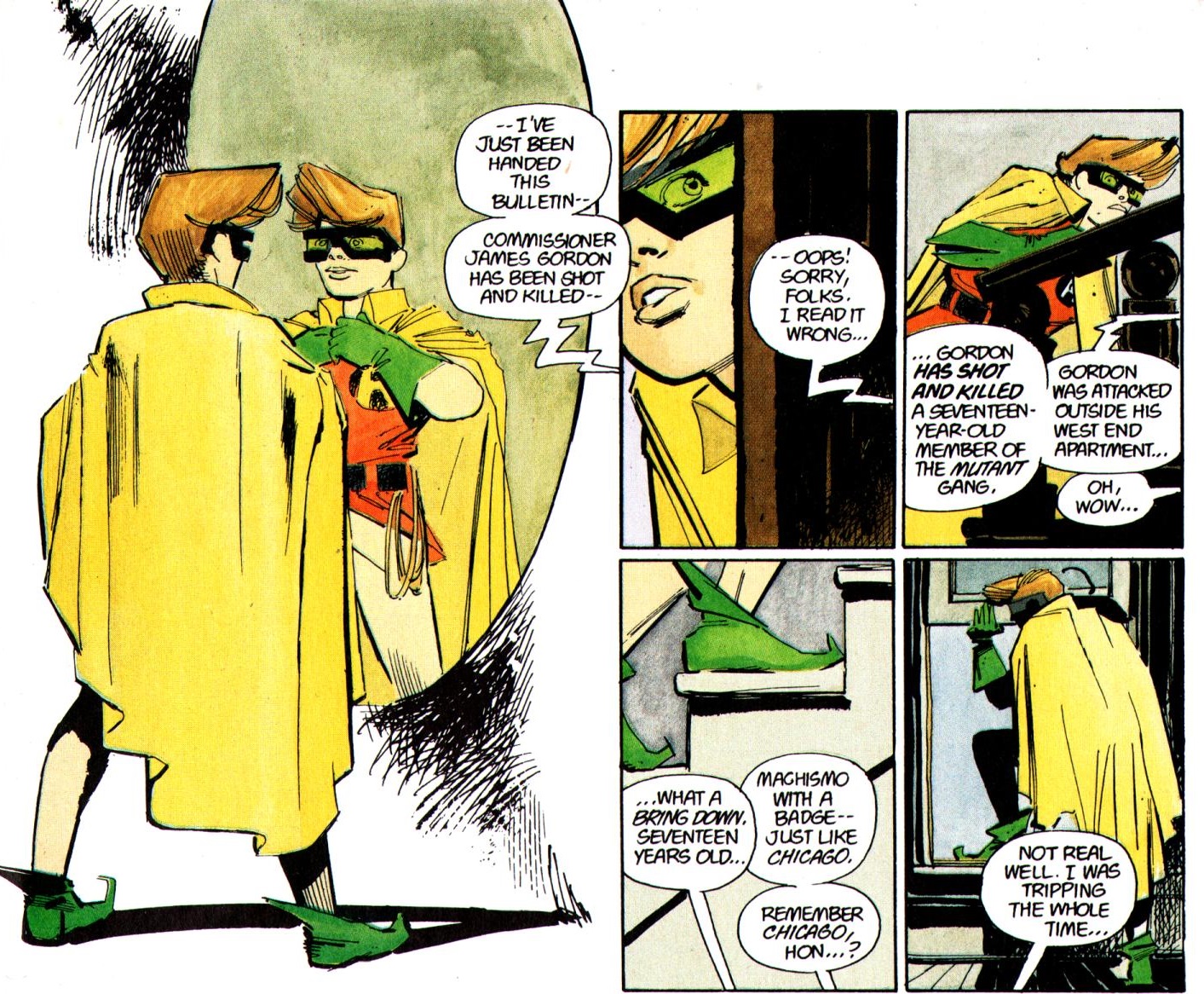
On Carrie Kelley, Robin

Dark Knight 3

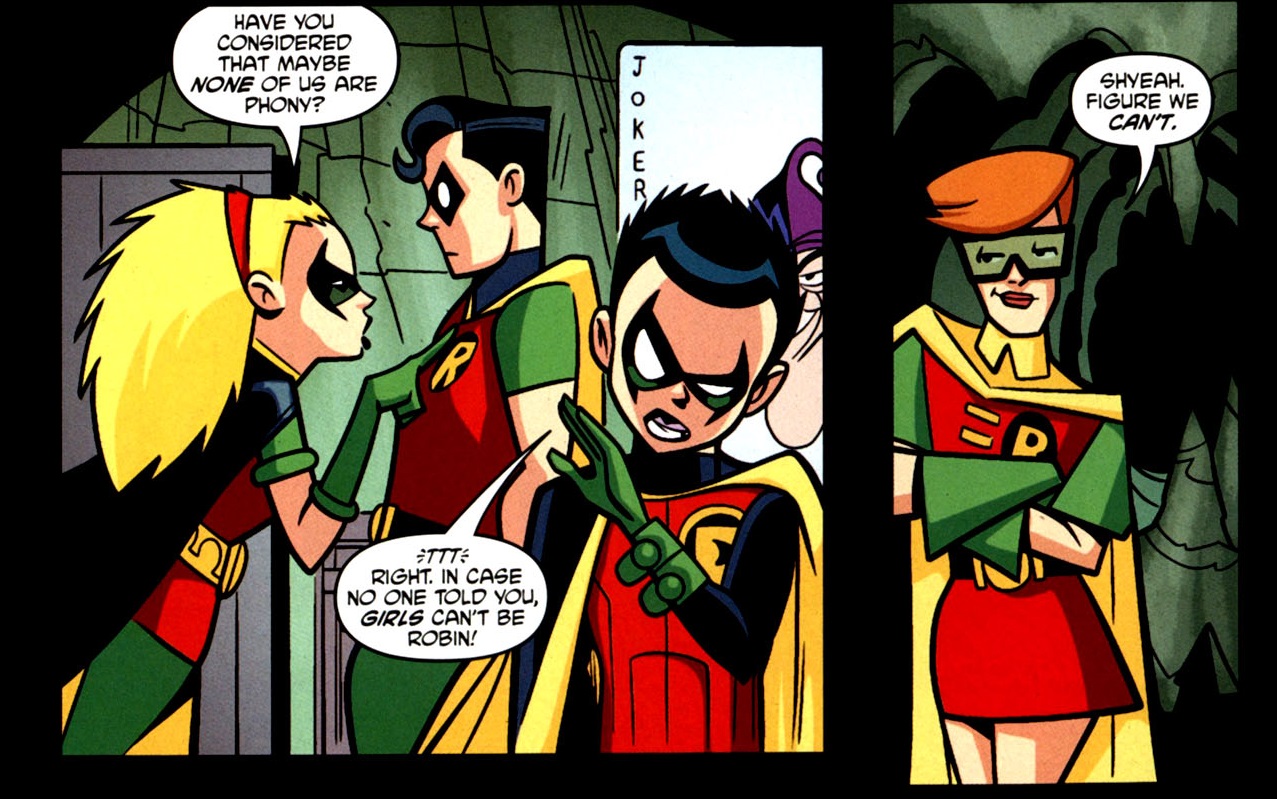
Of all the bare-legged kids who have given Batman a helping hand over the years, Carrie Kelley is probably my favorite. She’s this spunky teen who just goes ahead and dresses in that silly suit and totally owns it, kicking enough butt to impress the Dark Knight. In many ways, she anticipated future Robins like Tim Drake and Stephanie Brown. Also, I suppose it helped that she made her debut on the pages of one of the most acclaimed comics in the freaking history of the entire medium!

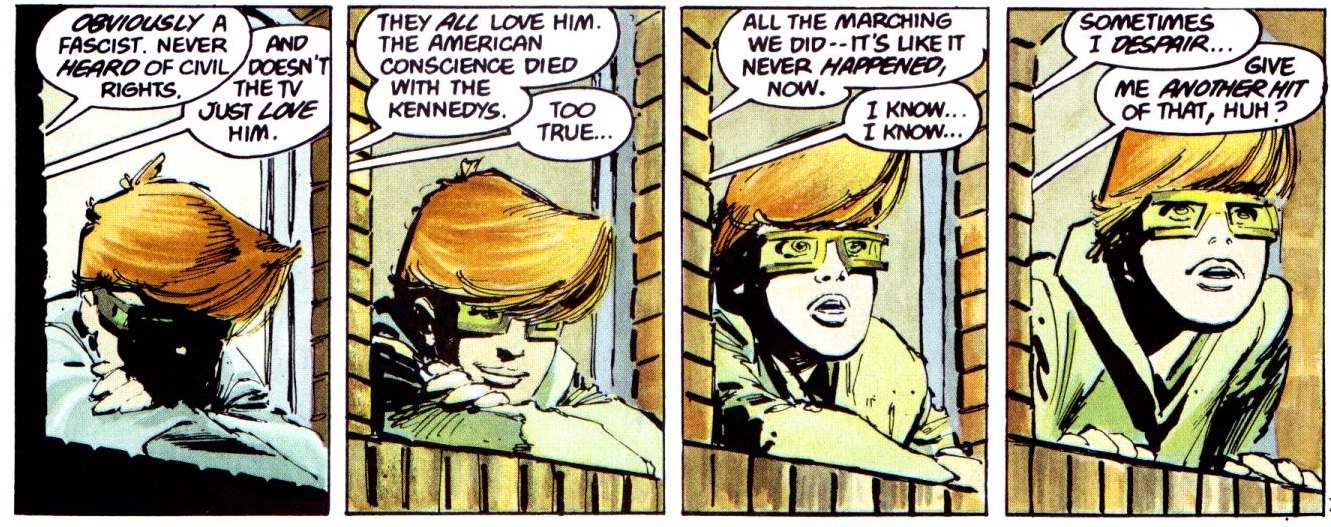
We meet Carrie early on in The Dark Knight Returns, when she and her friend Michelle take a shortcut through a decadent video arcade and almost end up getting knifed by a street gang of mutants (yes, it was the eighties). She’s saved by Batman and immediately becomes a fan.

Here’s Carrie when she first sees the Bat-Signal in the sky:

Dark Knight Returns

I love her parents’ ramblings in the background. It’s easy to forget how (intentionally) funny Frank Miller used to be, despite The Dark Knight Returns’ reputation as a serious bastion of the turn towards grim and gritty superhero comics.

The fact that we get so little of Carrie Kelley’s backstory plays into the book’s general theme that the world is so obviously screwed up that all it takes is one inspiring figure for people to start acting up and taking matters into their own hands. But at the same time, in a way this also makes Carrie special. After all, it suggests that, unlike the Robins that came before her (Dick Grayson and Jason Todd), Carrie is not an orphan and she doesn’t need a family trauma to drive her… unless of course you consider having stoner hippie parents a trauma!

Dark Knight Returns 2

Charmingly, while Batman is out terrorizing the Gotham City night by severely beating up kidnappers and pimps, Carrie approaches crime-fighting like a cartoon character from the Looney Tunes. Her weapon of choice is a slingshot and the first thing she does is sneak a stick of dynamite into the butt of a con artist who is hustling bystanders with a game of Three Card Monte! Adorable.

She eventually follows some mutants into the dump where Batman gets his ass handed to him by their gang leader. In fact, Carrie actually saves the Caped Crusader’s life when the mutant leader is about to crush his skull with a crowbar (the preferred killing method for costumed heroes in the Batman comics of the time).

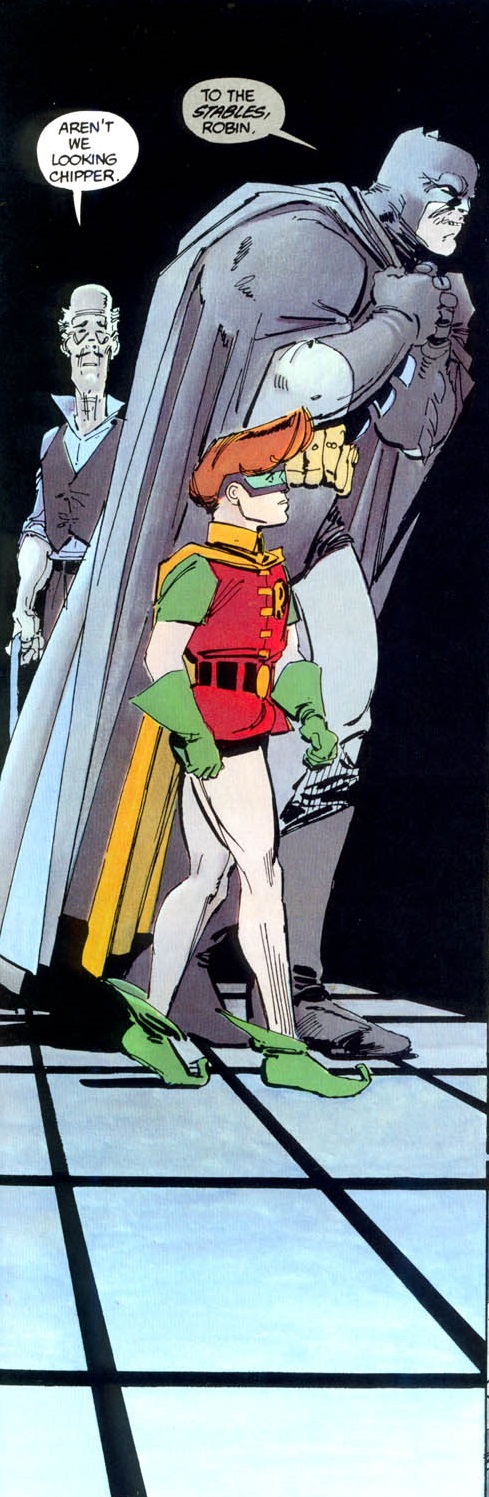
After bailing out the Dark Knight, Carrie drags him to the Batmobile and makes a splint for his broken arm. Batman is so impressed that he admits he’s Bruce Wayne and shows her the Batcave, practically hiring her on the spot. Wow, talk about a successful spontaneous application!

Dark Knight Returns 02

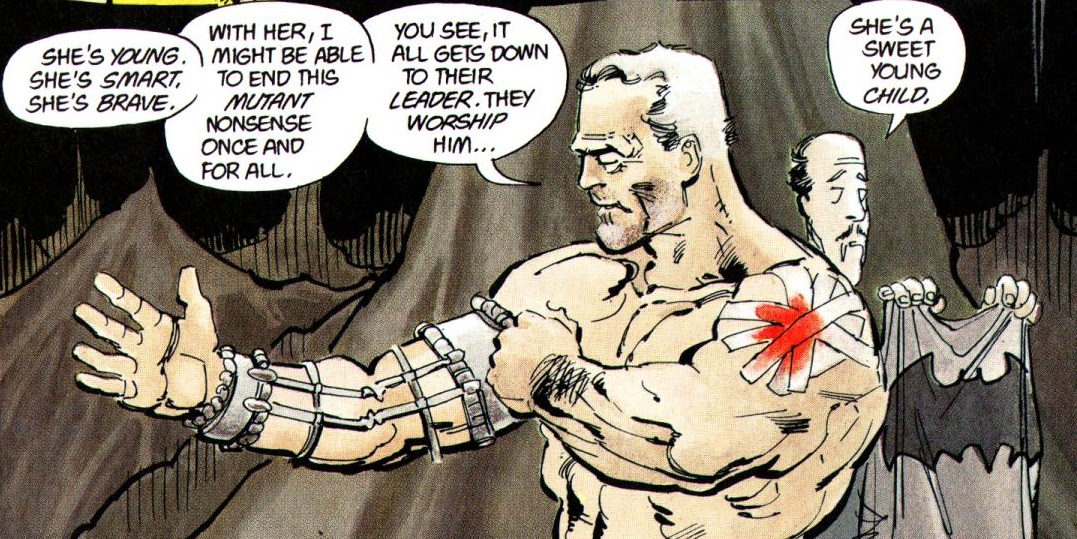
Carrie’s first mission is to put on a pink shirt and a bald cap, pretend she’s a member of the mutant gang, and convince all the other members to gather around the sewer pipe at West River and 40, where the Dark Knight will publicly humiliate their leader.

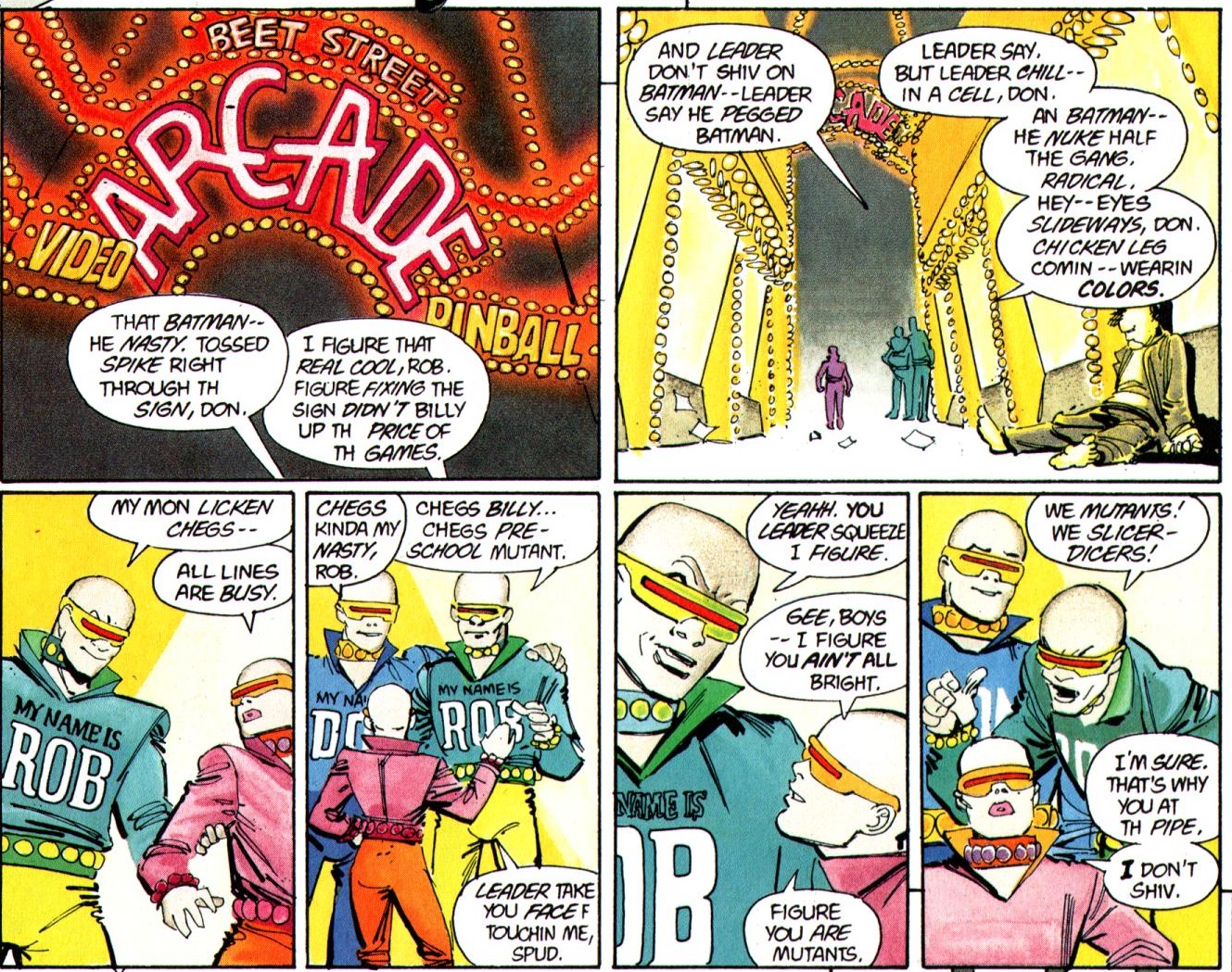
She first approaches a couple of mutants near the arcade where she first saw Batman, earlier in the story, and we get a healthy dose of Miller-esque street slang:

Dark Knight Returns 2

Carrie and Bruce have a nice dynamic going on, which basically consists of Batman ordering her to stay put and she just straight-up disobeying him all the time, whether by engaging with a transsexual Nazi in a fight or by breaking into a house with a sentient explosive doll. You know, just your average juvenile rebellion.

That said, she does keep saving Batman’s bacon when he inevitably bites off more than he can chew. For example, when the Caped Crusader gets caught up in a struggle with a bunch of cops, Carrie rescues him by flying a damn helicopter, much to his surprise. She also spots a key clue to tracking down the Joker. Indeed, one of the running gags concerns the fact that, while Batman acquired his skills through years of intensive training and roaming the earth, Carrie just seems to have picked up all the necessary stuff in school and in the girl scouts.

Although he does teach her how to ride a horse.

Dark Knight Returns 4

Batman’s final confrontation with the Joker in the county fair has deservedly become legendary. But it’s a shame that it has completely overshadowed Carrie’s own elaborate, exciting action set piece, on a roller-coaster, facing an armed henchman and yet another explosive doll. Also, during the famous Batman-Superman face-off, Carrie helps distract the Man of Steel while driving a tank. And later on, she is the one who digs up Batman from his grave. So many iconic moments!

As if Carrie Kelley wasn’t zany enough already, in The Dark Knight Strikes Back Frank Miller went on to dress her in a leopard spandex and turn her into a rollerblading vigilante called Catgirl.

However, Carrie still made a few amusing cameos in the Robin suit.  She was in the very cool ‘Batman Dies at Dawn!’ (Batman: The Brave and the Bold (v2) #13), where the Phantom Stranger gathers all Robins – past, present, and future – in order to save a wounded Dark Knight. Hilarity ensues.

Batman - Brave & The Bold #13

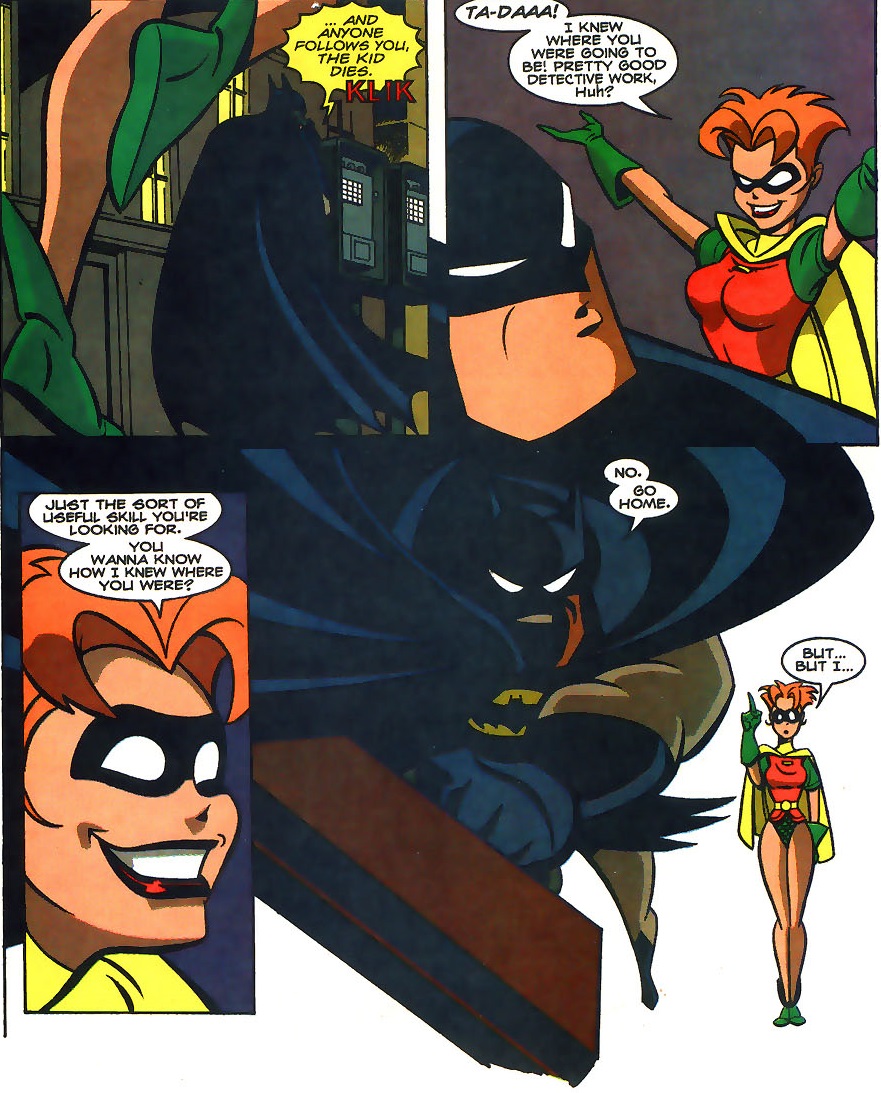
Moreover, a version of Carrie showed up in the DC Adventures Universe. In Batman & Robin Adventures #6, when a tabloid newspaper announced that Batman had fired Robin (Dick Grayson), she was one of the many volunteers to audition for the job.

This version of the Caped Crusader, though, was decidedly not pleased to see her…

Batman & Robin Adventures 06

It’s a really fun story with super-dynamic art. But hey, it was written by Ty Templeton and drawn by Rick Burchett, so that pretty much goes without saying!

More recently, Peter Tomasi introduced a New 52 version of Carrie Kelley during his run in Batman and Robin. Ah, and I guess I should probably mention the fact that Carrie has another new identity in some kind of Dark Knight Returns sequel/fan-fic DC is putting out nowadays… but I don’t really care.

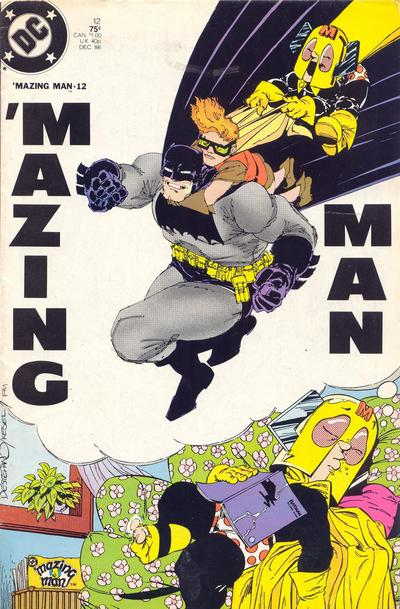
She is still Robin in my dreams:

'Mazing Man 12

NEXT: Poor Commissioner Gordon.

Posted in GOTHAM CITIZENS | Tagged , , , , , | Leave a comment

Bronze Age Splashes

Even though Archie Goodwin was an amazing writer (not to mention a legendary editor), I’m not as big a fan of his 1970s’ run on Detective Comics as others are. I gladly admit, though, that in terms of art, those are some pretty awesome comics.

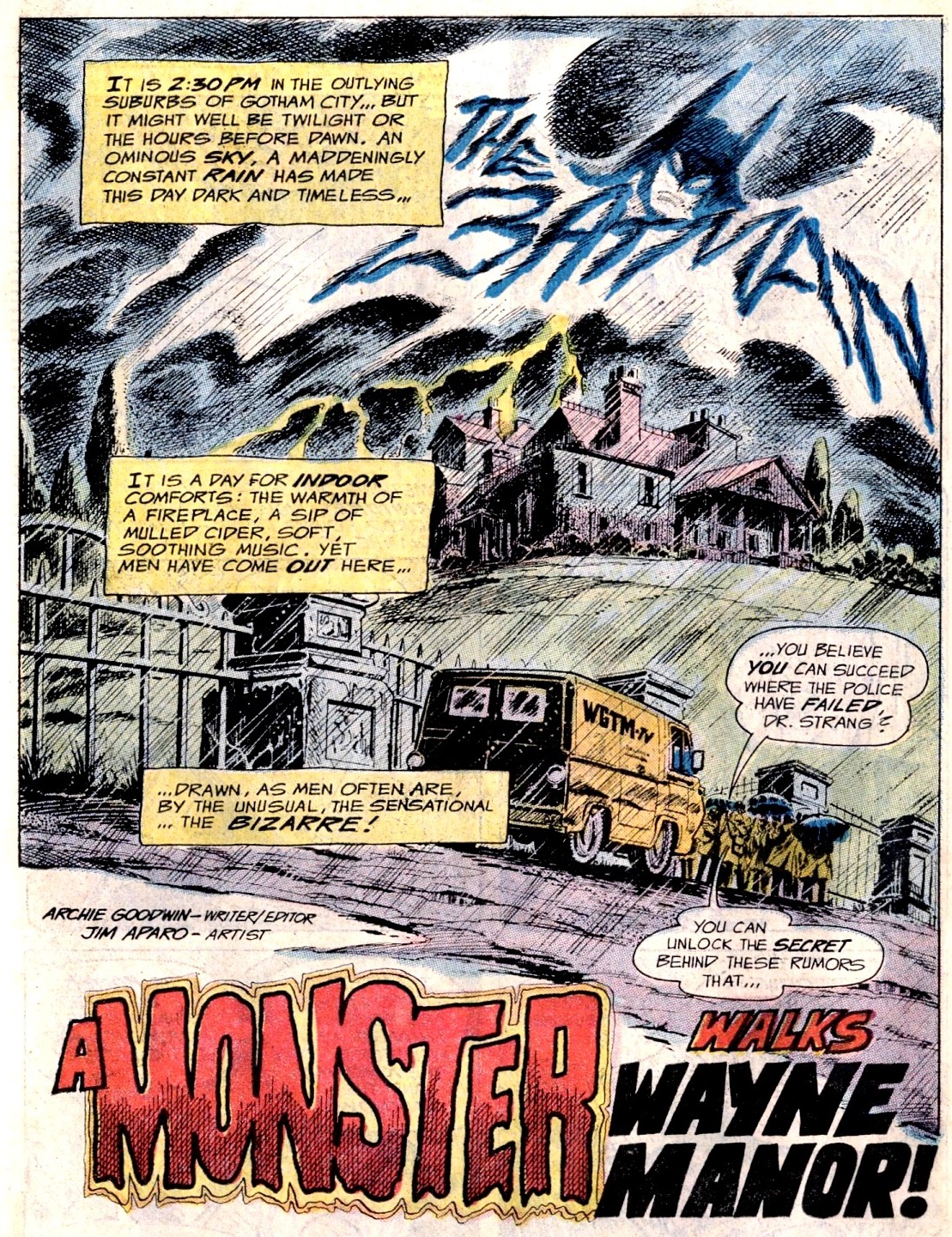
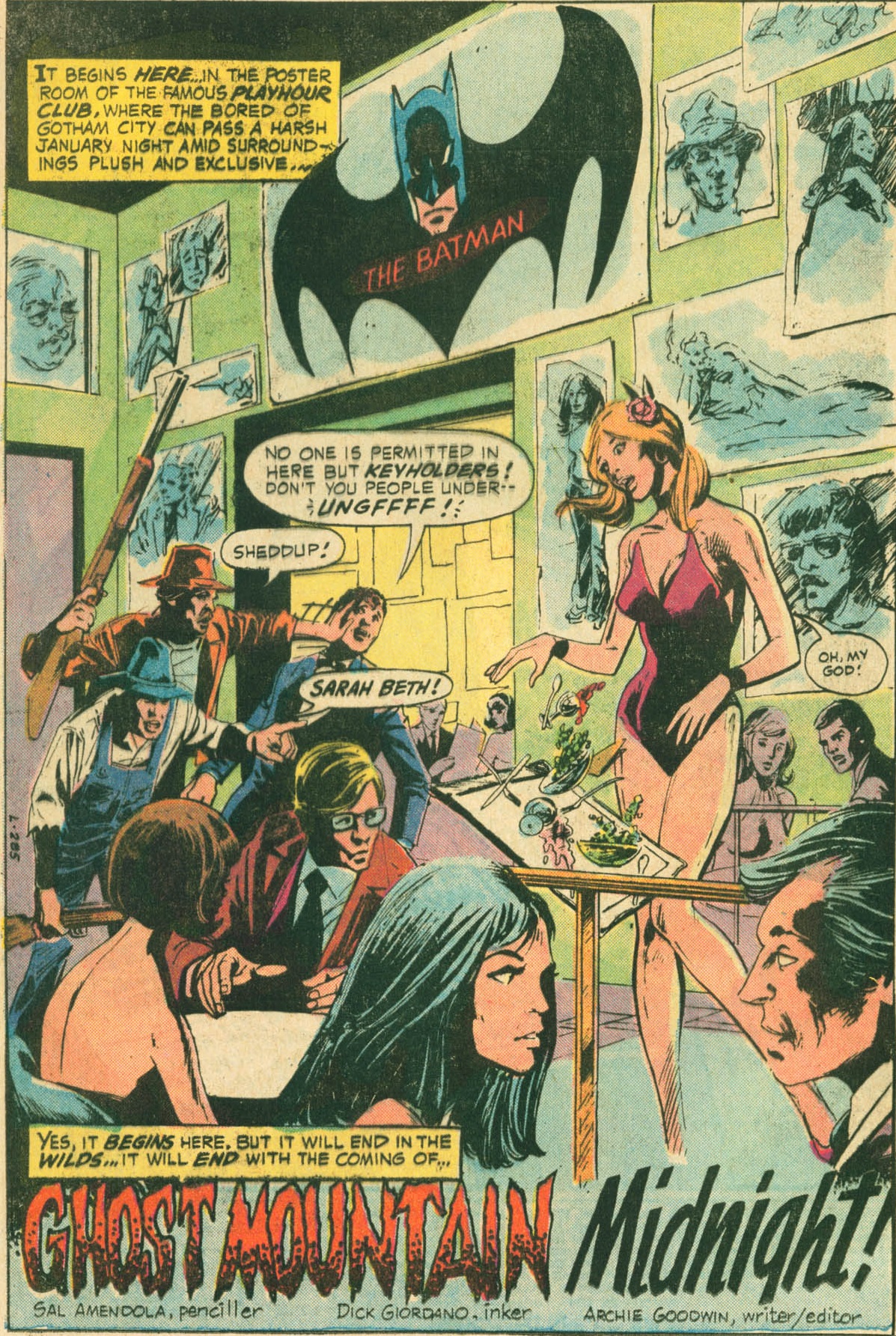
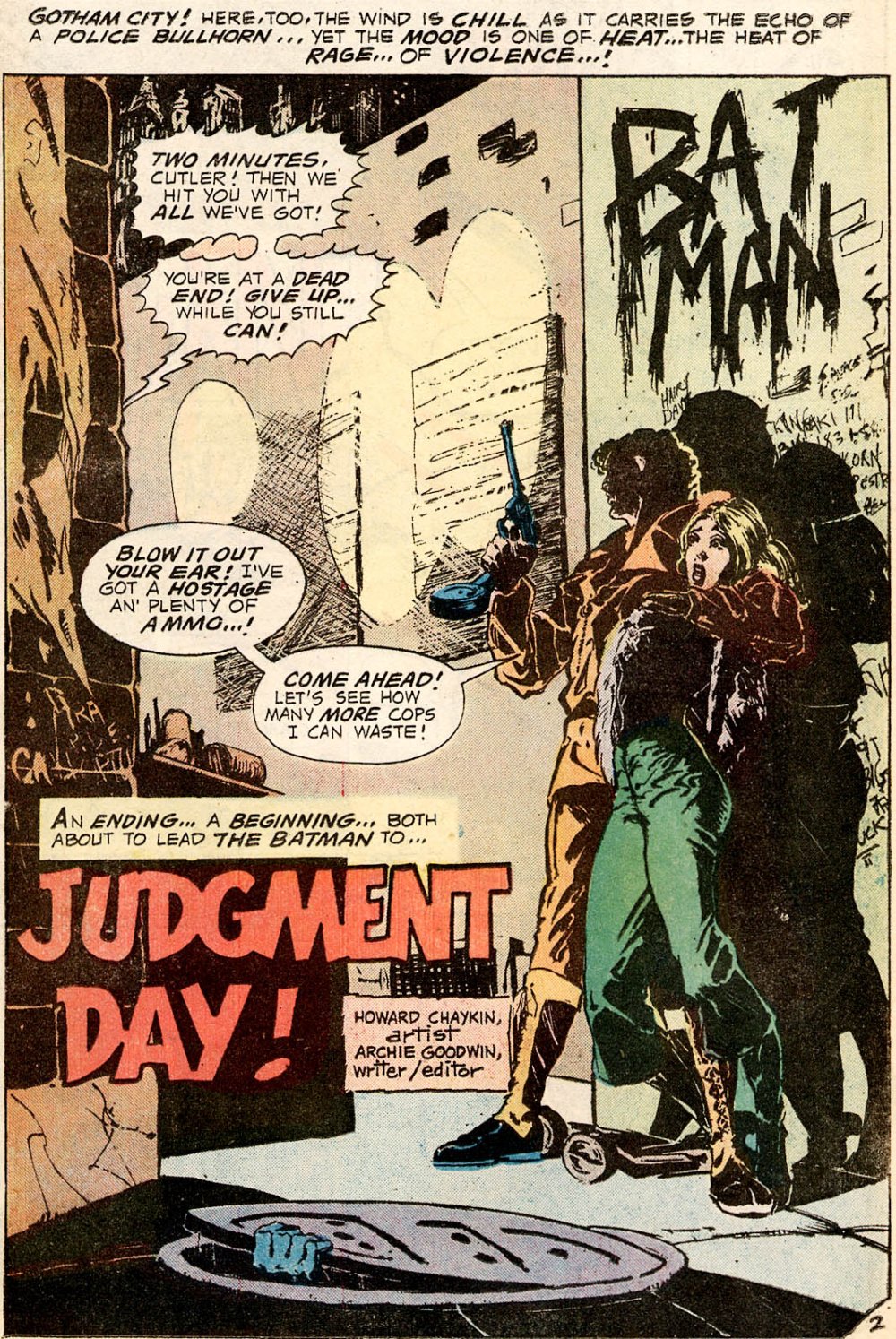
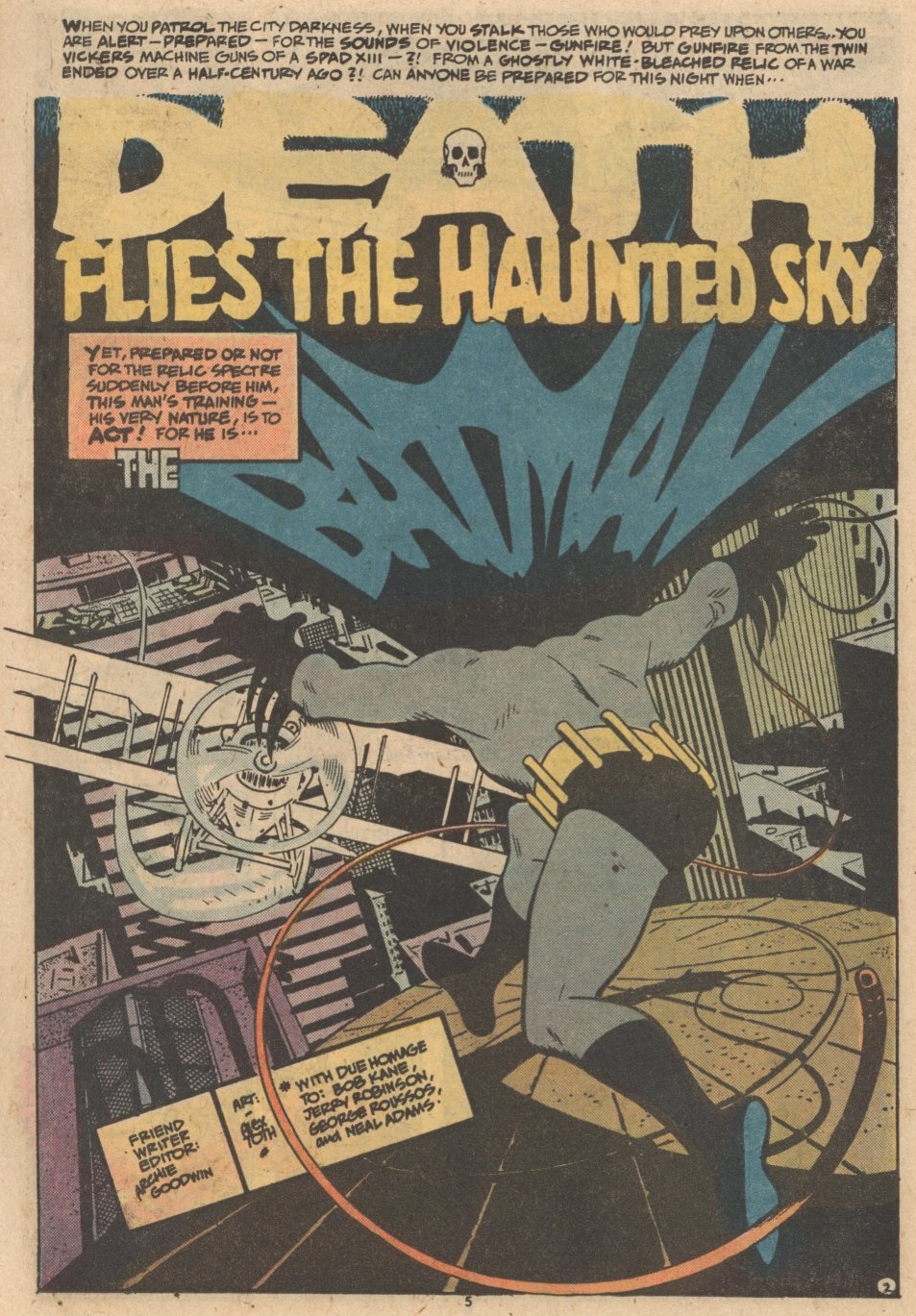
One of my favorite bits was the fact that artists dropped the traditional Batman logo from the opening splash pages and started integrating it in clever ways, like Will Eisner used to do in The Spirit.

detective comics 437Detective Comics #437

If there is one thing Jim Aparo excelled at, it was opening pages. The man knew how to draw an opening that pulled you right in, not least because those skewed perspectives and lettering just seemed like an invitation to let yourself slide.

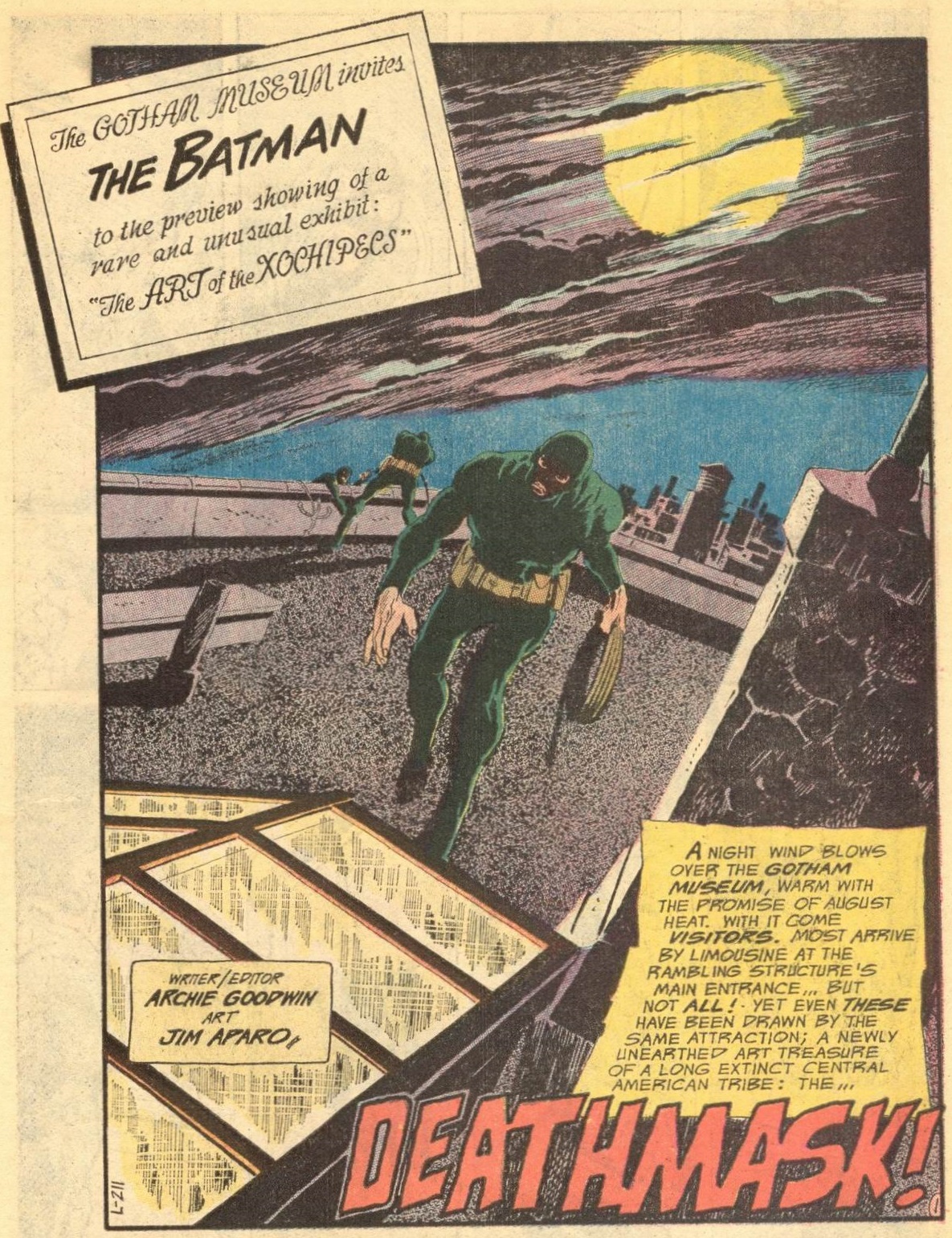
In his first splash for Goodwin, Aparo worked in the words ‘The Batman’ as a name on an invitation, which is cute enough. However, I think his second go was more ingenious…

detective comics 438Detective Comics #438

This time around, Jim Aparo screwed the full logo (including that creepy Batman head) into a thunder! What’s more, the resulting image actually matches the horror theme of comic.

After Aparo, the remaining artists continued to try out new things:

detective comics 440Detective Comics #440

In the page above, Sal Amendola managed to fit in the full logo as well, now disguised as a painting. It is certainly not as powerful, but what the hell… I always enjoy these glimpses into Gotham City’s night life anyway!

detective comics 441Detective Comics #441

Howard Chaykin’s art at the time wasn’t as experimental and maximalist as it would be in later DC projects (like his insane revamps of The Shadow and Blackhawk). Still, he packed a lot into this gritty page. Not only is there a ‘Batman’ graffiti on the wall, but you can see the Dark Knight beginning to crawl out of the sewer, so you know asses are going to be kicked.

Also, because Chaykin was already Chaykin, it totally says ‘big fat fuck’ on the lower part of the wall.

detective comics 442Detective Comics #442

Which brings us to this beauty, by Alex Toth, done in his signature art deco-ish style. It’s a bit crammed, but what a sense of design… I would totally hang this as a poster on my wall.

Moreover, Archie Goodwin took his typical trick of using the narration to build up to the story’s title a little bit further this time. He now added a caption introducing the stylized Batman logo as well. And Toth just ran with it like the genius he was!

Damn it, there was some serious talent working on Batman comics in those days.

detective comics 443Detective Comics #443

See what I mean by serious talent?

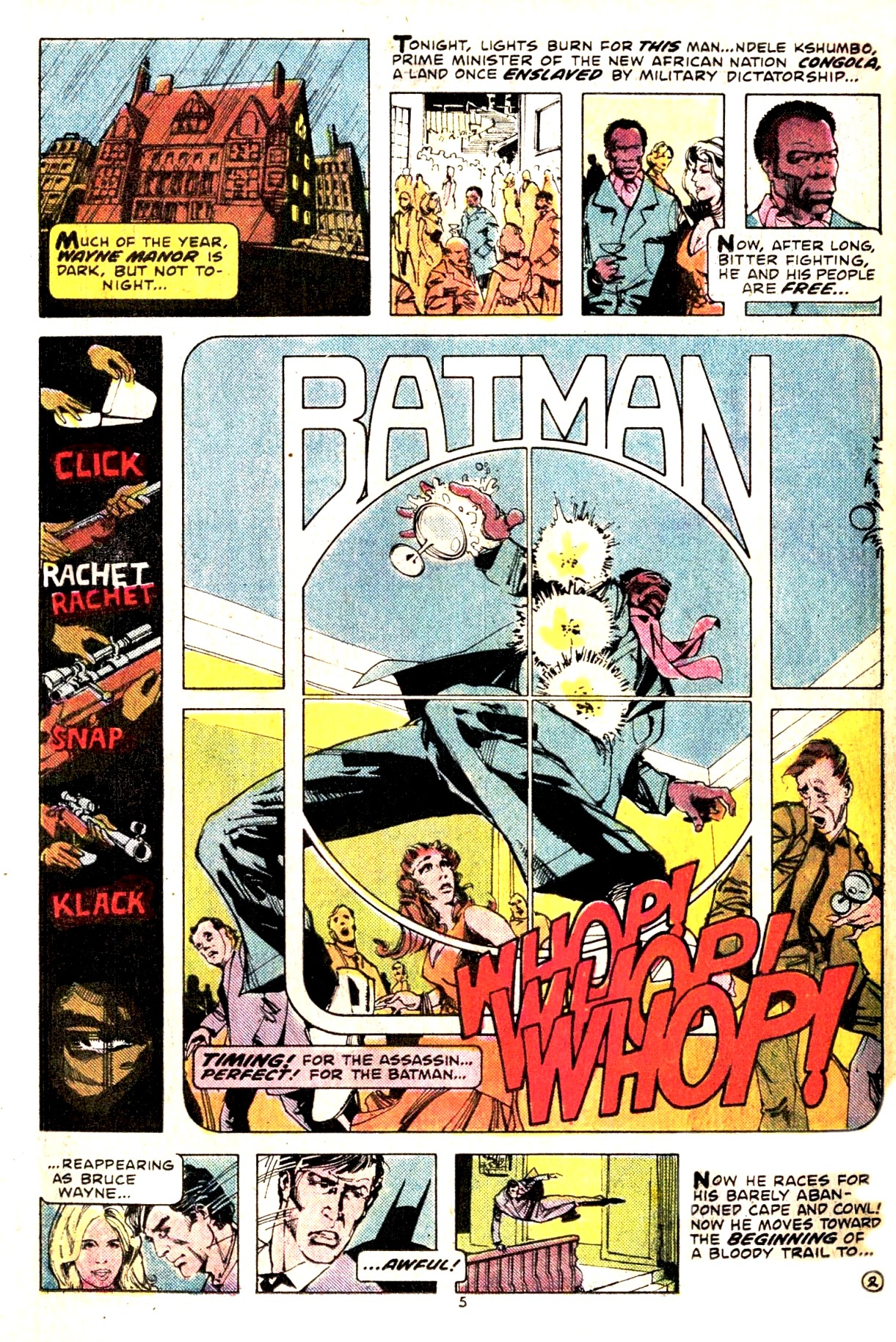
First of all, a moment of silence for Ndele Kshumbo. It must have been bad enough being the Prime Minister of Congola (an imaginary country which I assume at the time was stuck between Mobutu’s ruthless dictatorship in Congo and an Angola still embroiled in its liberation struggle against the Portuguese), but he couldn’t even enjoy a drink in peace when he came to Gotham…

Anyway, Walt Simonson uses the word ‘Batman’ to frame the panel, or rather the sub-panel, from the point of view of the killer. The best part is that Simonson’s art is so dynamic that the word practically works as an additional sound effect – as far as I’m concerned, the last thing Ndele Kshumbo did before he died was shout for the Caped Crusader to avenge him.

And this is all before we actually get to the title & credits page, which is even more of a knockout!

NEXT: The greatest Robin. Ever.

Posted in ART OF BATMAN COMICS | Tagged , , , , , , | Leave a comment

On Westerns – part 2

If you read the last post, you know what’s going on. Here are a few more reasons why I enjoy western movies:

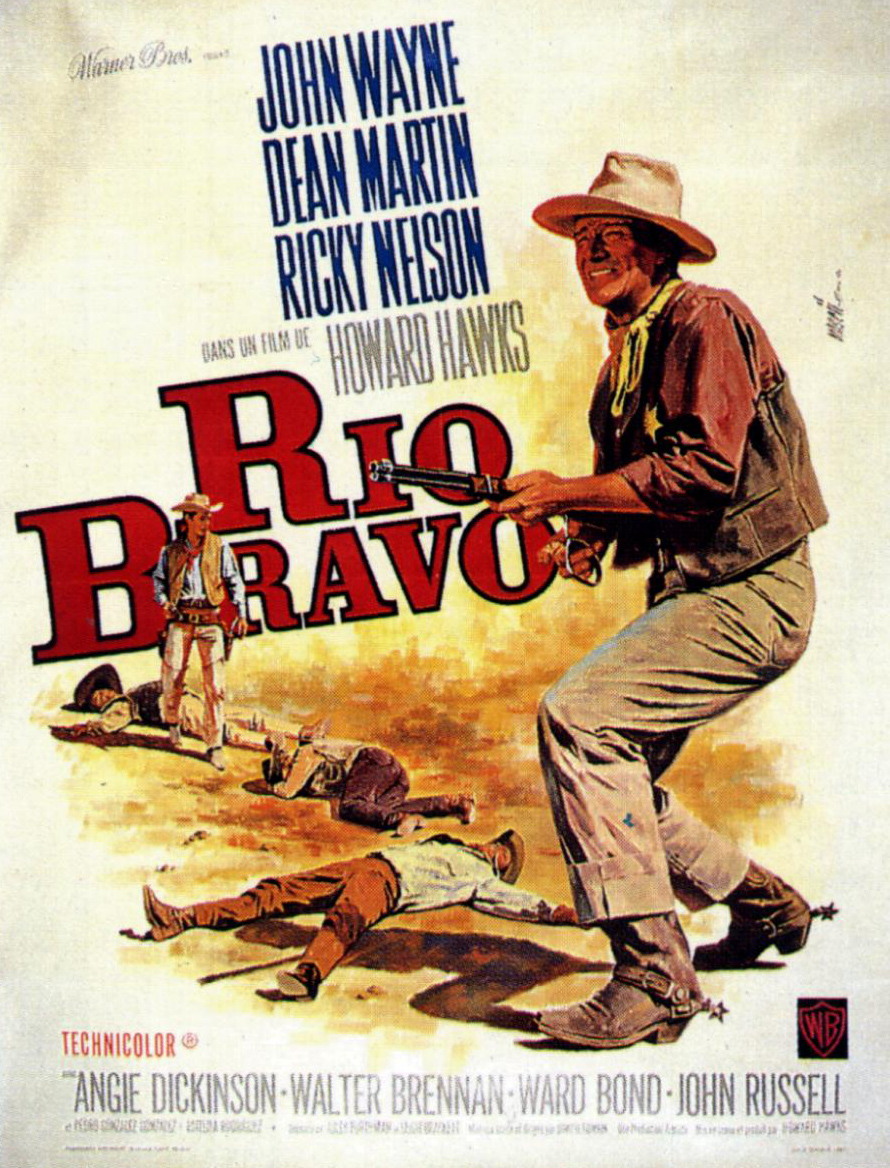
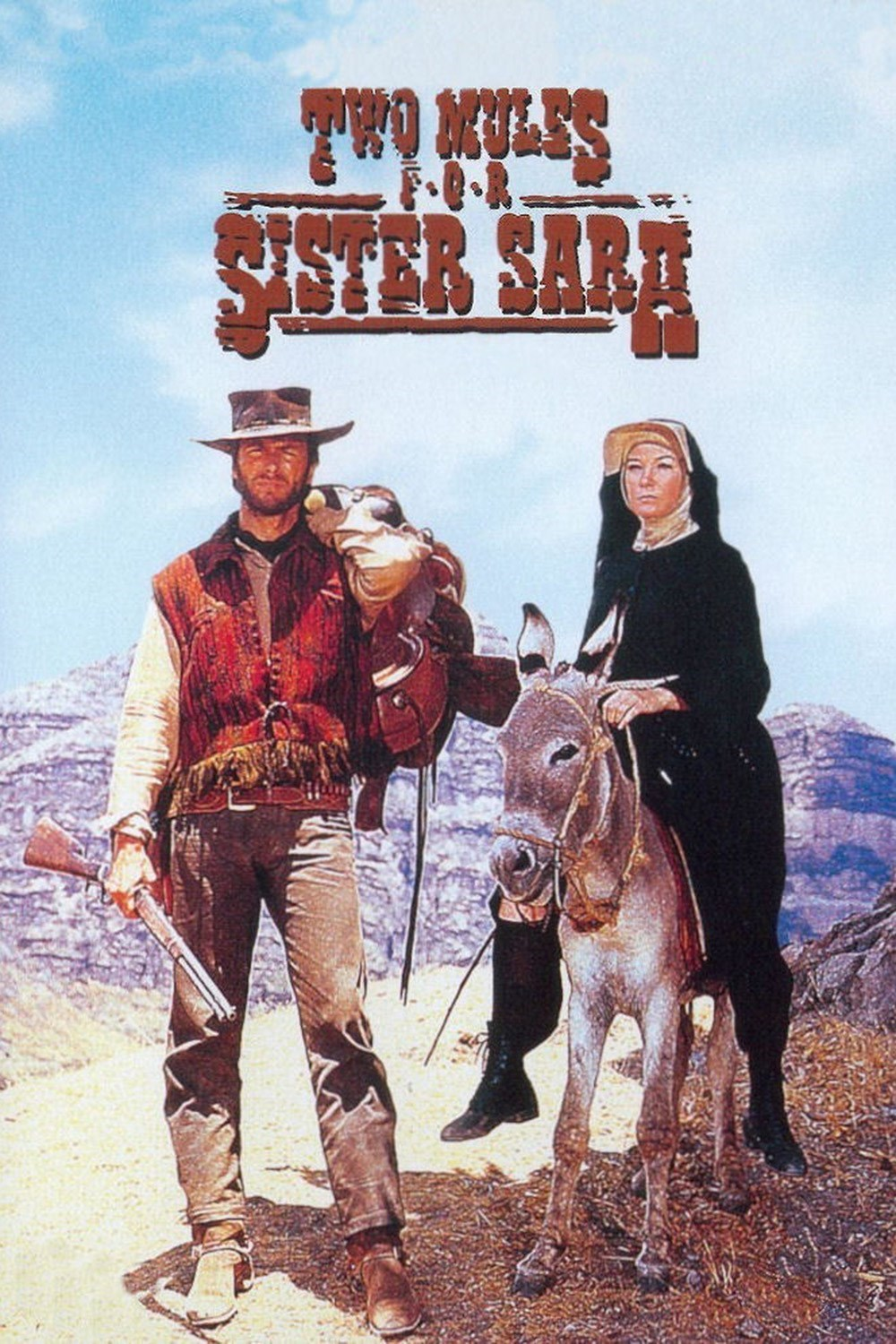
rio bravo          Two Mules for Sister Sara

Besides the gritty mood and aesthetics, I like the fact that westerns usually have something to say about America (and, in the case of spaghetti westerns, about Italian politics as well).

Some horse operas are deliberately celebratory and nostalgic, emphasizing either conservative or liberal values at the core of US history. Others are more critical, explicitly denouncing past crimes or acting as metaphors for contemporaneous issues, like McCarthyism, civil rights, or the Vietnam War. Even when they don’t have a clear message, western films tend to illustrate elements of American identity such as individualism, gun culture, and paranoid frontier status.

The Man Who Shot Liberty Valance and High Noon are not only a joy to watch, but also interesting to decipher politically (the latter is especially fun if you try to read in it a premonitory allegory about Batman comics, since it involves the vengeful return of a terrifying thug called Frank Miller). Tonino Valerii’s The Price of Power is, oddly, a western about the JFK assassination (yep). Some people even claim Django Unchained is about racism, but then again people see racism everywhere nowadays.

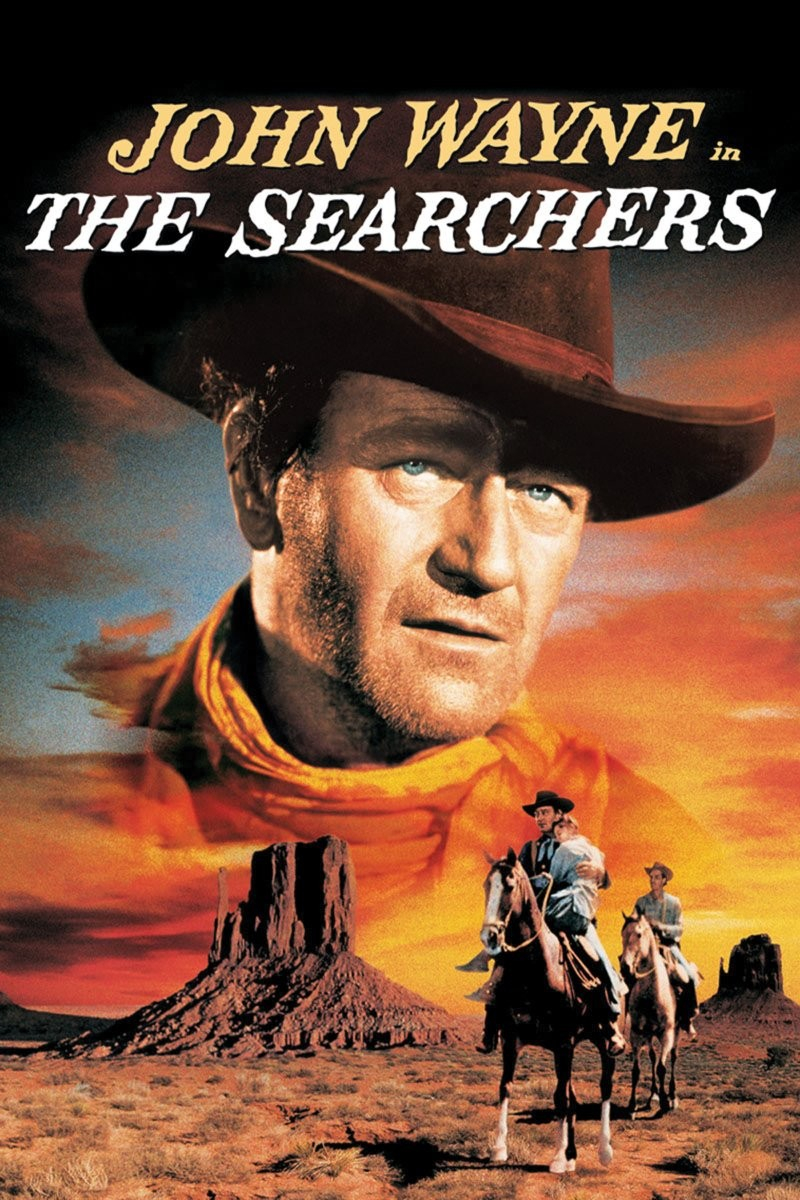
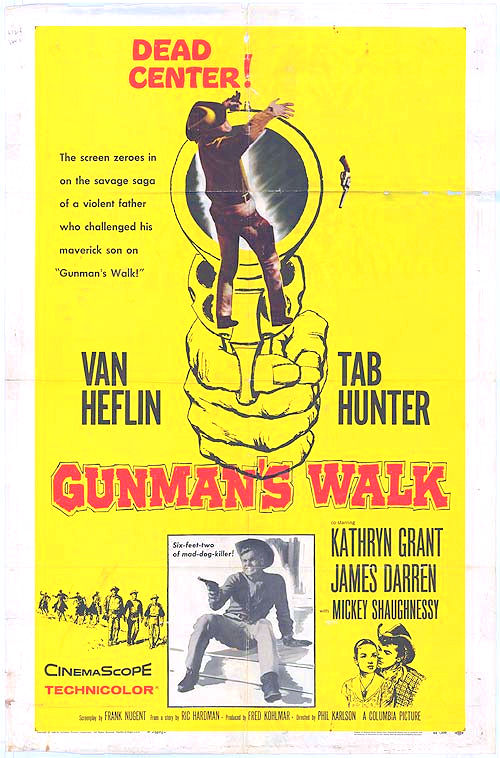
The Searchers          gunman's walk

Speaking of racism, classic westerns do have quite a poor track record in terms of depicting Native Americans. They started addressing this issue in increasingly complex ways in the 1950s… John Ford’s The Searchers has a reputation for being a provocative revisionist take on the matter, but I don’t think the movie earns it. As far as I’m concerned, the unappreciated Dakota Incident and Gunman’s Walk do a much better job!

But of course, if we’re talking about westerns and politics, then we cannot escape Mexico…

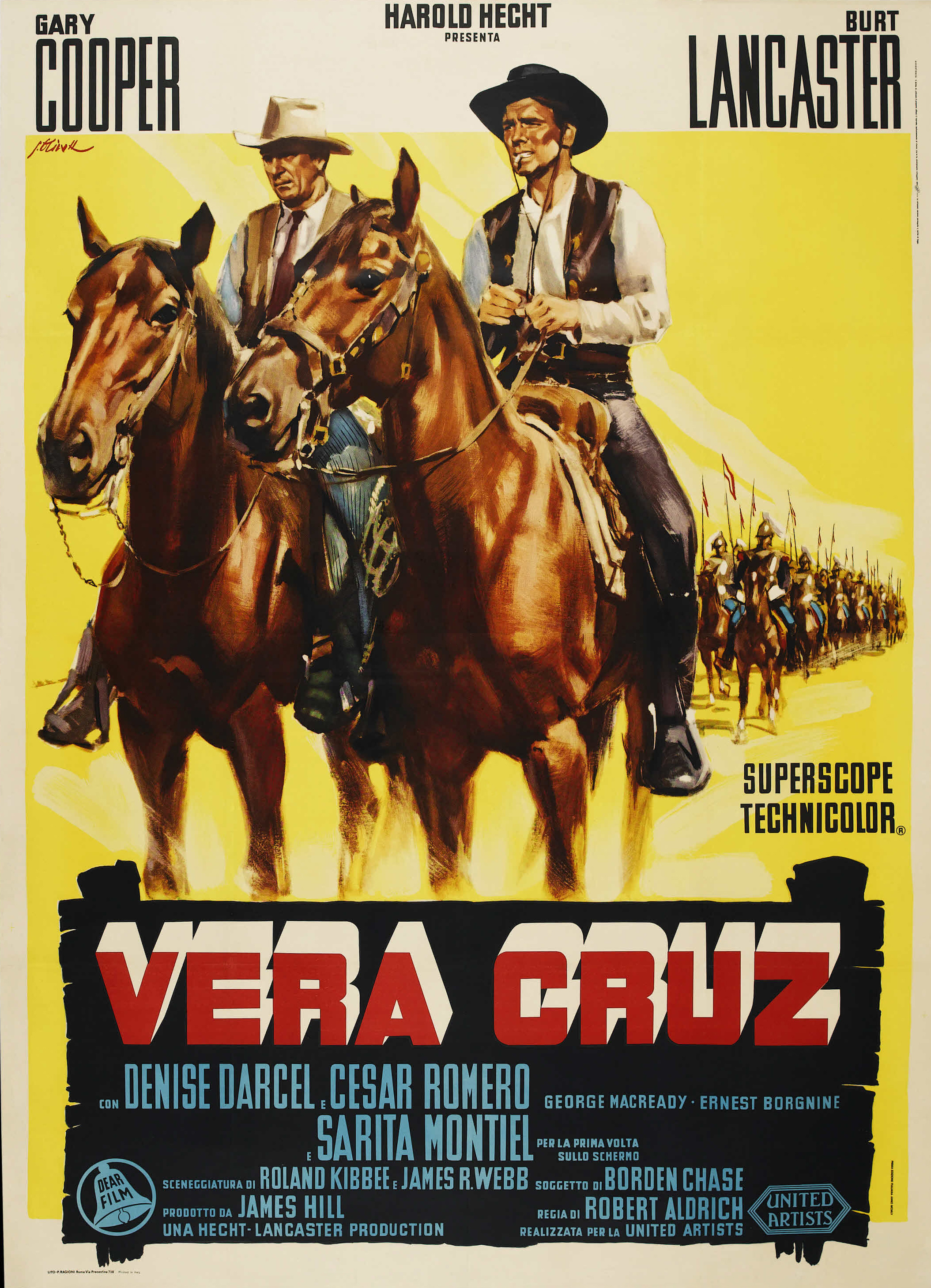
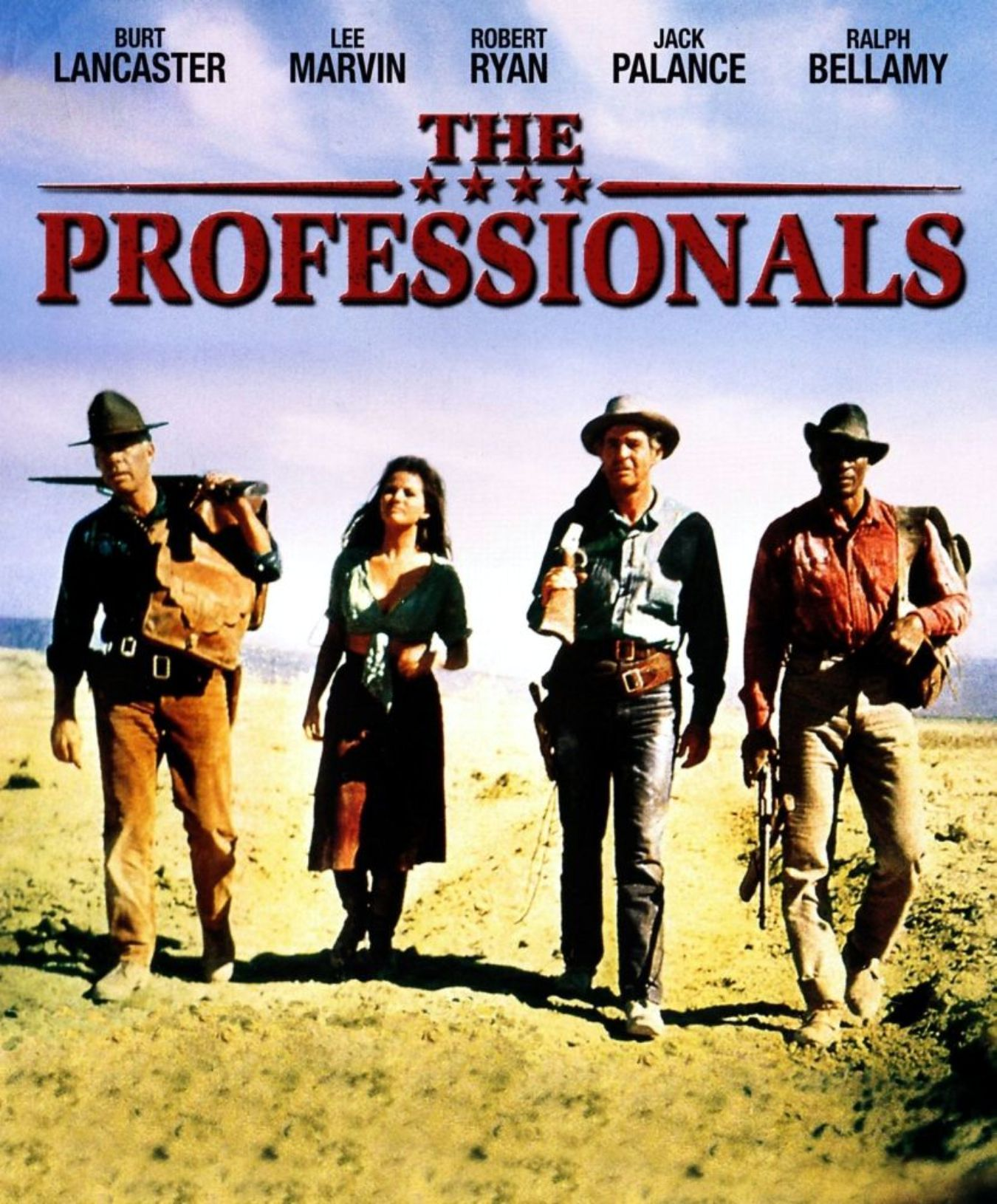
Vera Cruz          The Professionals

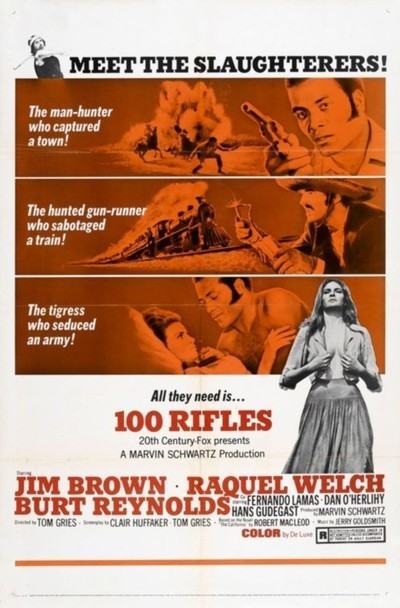
There are just so many awesome yarns south of the border – and they often get down and dirty in Mexico’s bloody history! Even if you leave out the Franco-Mexican War (the setting for the amusing Vera Cruz and Two Mules for Sister Sara) and just focus on the Mexican Revolution, you have the bigger-than-life The Wild Bunch, the compellingly schlocky 100 Rifles… the list goes on, but ultimately none of them beats Richard Brooks’ The Professionals, which is an all-out adventure romp with a particularly delicious closing line.

(Brooks later did the proto-western Bite the Bullet, which is not about Mexico but it also finishes on an anti-capitalist note.)

Furthermore, there is a whole subgenre of revolutionary Italian oaters – the ‘Zapata westerns’. They’re usually about some gringo getting involved in the Mexican civil war and feature the kind of sadism you’d expect from late ’60s Italian cinema. Some seem more militant, like A Bullet for the General, while others look more like an excuse to blow stuff up, like The Mercenary, but I’m not going to lie: I dig them all. Yes, even with the uneven acting and the fucked up sexual politics. Maybe it’s the cheesy sentimentality that does it for me, but most likely it’s those hauntingly weird soundtracks.

a bullet for the general          100 Rifles

Finally, the geek in me loves the fact that this is a genre that constantly builds on itself. For instance, Edward L. Cahn’s Law and Order, John Sturges’ Gunfight at the O.K. Corral, and Edward Dmytryk’s Warlock are all different variations of the legend of Wyatt Earp and Doc Holliday (and they are all excellent).

Like superhero stories, many westerns are part of an evolving intertextual dialogue, citing, revising, updating, and/or paying homage to their predecessors… Contrary to comics, though, you’re not actually expected to have a degree in the genre’s history and spend a fortune on auxiliary titles just to follow the plot!

Still, this self-referential dimension can be quite rewarding for those in the inner circle. I guess the most famous example is how Fred Zinnemann did a downbeat picture about a frustrated sheriff looking for help defending his town from outlaws (High Noon) and Howard Hawks responded by doing a badass flick about a fearless sheriff in the same situation who just shuts up and takes care of business (Rio Bravo).

Critics are also fond of pointing out that Hawks kind of remade Rio Bravo as the entertaining El Dorado and once again as the lamer Rio Lobo… That is true but it misses the larger point that Rio Bravo was itself basically a loose variation of Hawks’ classic adventure drama Only Angels Have Wings. So in this case I think it’s less about westerns commenting on each other than about the fact that Hawks just really liked to tell stories about manly professionals of different generations carrying out their work in inhospitable conditions and about women trying to pierce through their stoic exterior (he went on to revisit this formula in the very lighthearted romantic drama Hatari!).

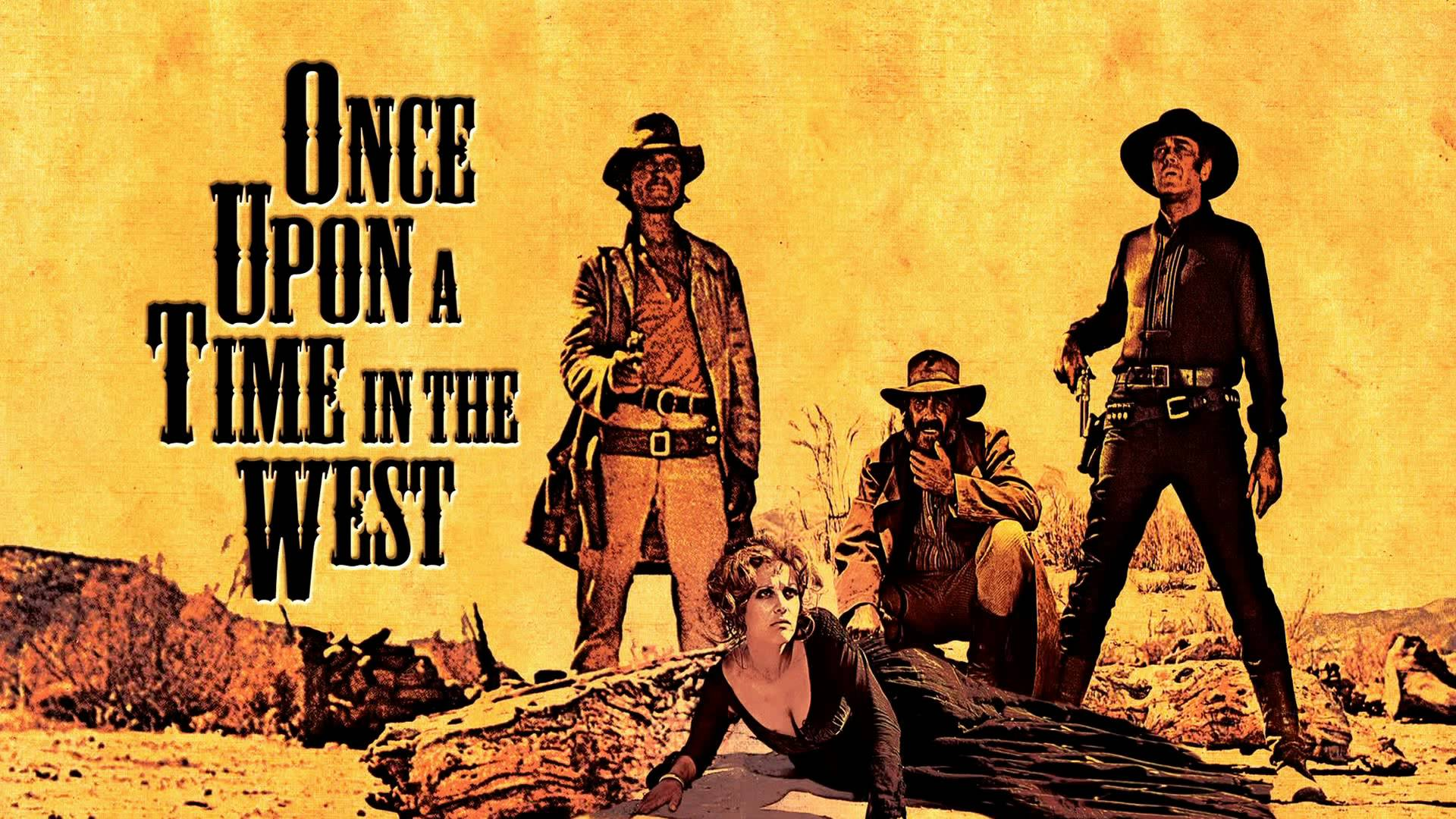
Once Upon a Time in the WestOnce Upon a Time in the West (1968)

There’s more. You get an extra kick out of watching Unforgiven if you’ve seen any other western with Clint Eastwood before… Also, you can find plenty of metafictional layers in the work of Sergio Leone. His Once Upon a Time in the West is full of winks to the classics. Duck, You Sucker is Leone’s answer to the Zapata westerns. And he was heavily involved in My Name Is Nobody, which is basically a clash between an old-school spaghetti western and the then-new brand of fagioli western comedies.

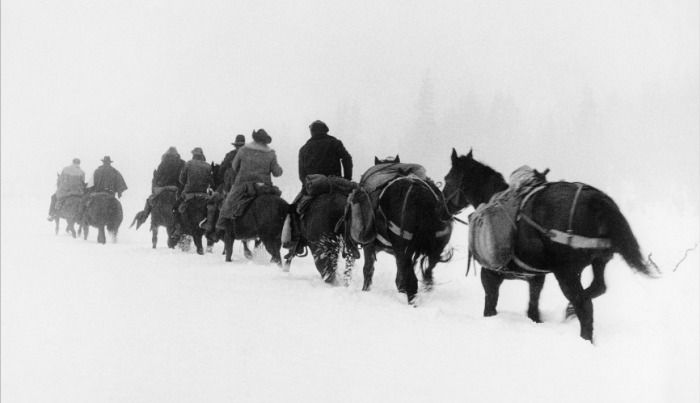
This brings us to The Hateful Eight, which I think combines all the elements that make westerns great. Quentin Tarantino delivers tense Mexican standoffs, violent shootings, and an Ennio Morricone score, while also bringing in elements of other genres (mystery, horror, dark comedy). The titular eight characters who hate each other for various reasons, stuck together in a cabin during a blizzard, provide a simple, minimalistic set-up that enables a quasi-parable about larger themes. Above all, the film offers a meditation on the messed up history of complicated racial relations in the United States, ultimately seeking a glimmer of hope in Abraham Lincoln’s legacy (real or fictitious). And, needless to say, Tarantino pays a heartfelt homage to the history of the genre itself, from the Hawksian sense of claustrophobia to the snowbound visuals of the bleak The Great Silence and the underrated Day of the Outlaw.

Day of the OutlawDay of the Outlaw (1959)

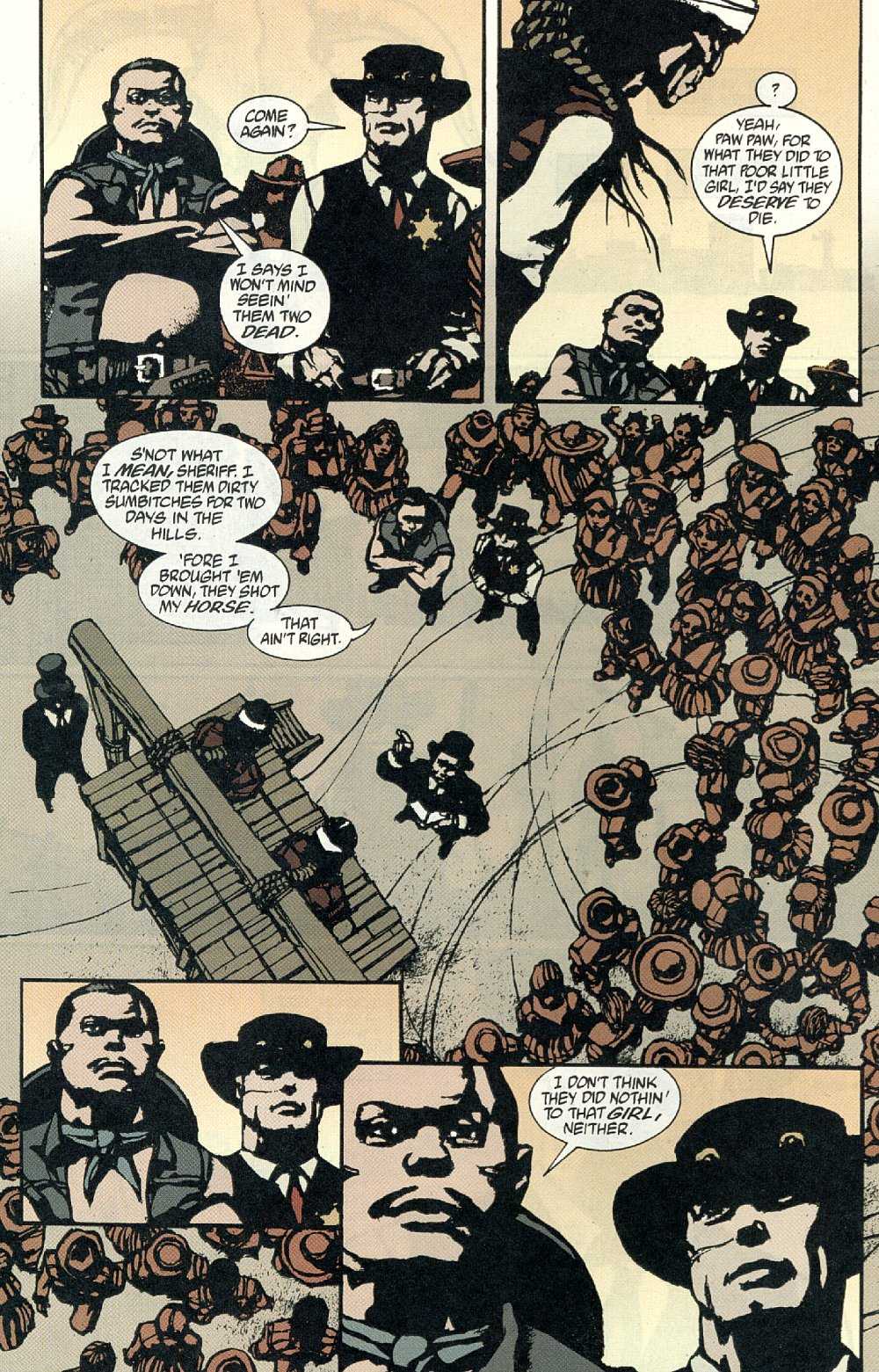
Regarding comics, if we’re talking mean-spirited westerns, I quite like Hermann Huppen’s Wild Bill is Dead, which is a revenge tale that takes quite a detour. Hermann had drawn a bunch of westerns before (in the Comanche series), but this was the first one done in the stunning style he began experimenting with in the 1990s, with beautiful watercolors. He also wrote it – and while there is nothing particularly original or charming about Hermann’s scripts, this old-school Belgian author knows how to spin a two-fisted yarn. In that sense, Wild Bill is Dead belongs next to other gritty adventures he has crafted as a pretext to explore different landscapes and political issues, including Afrika, Caatinga, and the more surrealist Sarajevo Tango.

That said, The Hateful Eight’s flair for sardonic dialogue and the focus on post-Civil War racial issues points more sharply to Loveless, by Brian Azzarello, Marcelo Frusin, and Danijel Zezelj. This series had its moments, but it took way too long to find its feet, so instead I’ll recommend Azzarello’s and Zezelj’s less ambitious El Diablo. It’s a neat little western that for a while seems to be about a manhunt, but it has splashes of horror and noir, not to mention a handful of plot twists up its sleeve.

el diabloel diabloEl Diablo


NEXT: Batman makes a splash.

Posted in WILD WEST | Tagged , , , , , , , | Leave a comment

On Westerns – part 1

When I wrote about Quentin Tarantino films last month, I promised to follow up with comic suggestions for fans of The Hateful Eight. I’ll include a couple of recommendations in my next post, but before that let me share a few thoughts on why I just can’t get enough of westerns!

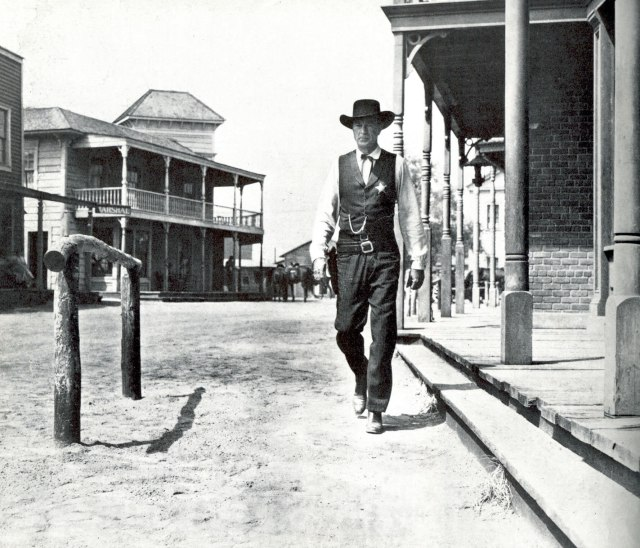
High NoonHigh Noon (1952)

First of all, there is something about the time distance and the ‘simplicity’ of the surroundings. The natural landscapes, the small villages, the whole quasi-lawlessness thing… all this allows for basic themes (honor, revenge, justice, redemption, law and order) to be explored at their core in an almost allegorical way, uncontaminated by the caveats of a more recognizable setting or a more complex context. Some of the greatest westerns, like Henry King’s The Gunfighter or Delmer Dave’s 3:10 to Yuma, are essentially super-suspenseful morality plays.

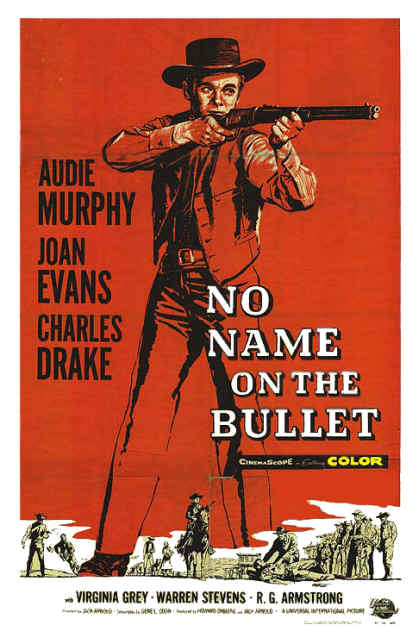
This is not to say that there is no room for moral complexity. It pisses me off how every time critics are trying to sell you on a western they try to contrast it with the supposedly clear-cut morality of the old ‘good guys vs bad guys’ formula (it’s the same thing with superheroes, really). In fact, filmmakers have been telling murky stories in this genre for more than half a century… If you go back to the ‘50s, you can find loads of thoughtful oaters, from classics like Bend of the River to more obscure flicks like No Name on the Bullet.

3:10 to yuma          No Name on the Bullet

Comic writers, used to exuberant spectacle, often get bored with the limitations of western conventions (this is why every few years Jonah Hex finds himself in a post-apocalyptic future, or batting zombies, or flying around in the steampunk airship of Ra’s al Ghul!). Yet in cinema the relatively limited number of occupations and settings often leads to a kind of economical storytelling that appeals to me… Settled with mostly uneducated characters and unable to hide behind modern pop culture references, screenwriters go for terse dialogue and minimalistic symbols in order to convey plot and characterization. This means you have to concentrate to make sure you pick up everything that’s going on, which can make for quite an engaging viewing experience.

Director Budd Boetticher, screenwriter Burt Kennedy, and actor Randolph Scott did a series of unpretentious chamber westerns that got the most out of this sense of simple clarity (the best of the lot is 1959’s Ride Lonesome). Yet the guy who really elevated this type of craftsmanship to a whole other level was Sergio Leone, especially starting with For a Few Dollars More.

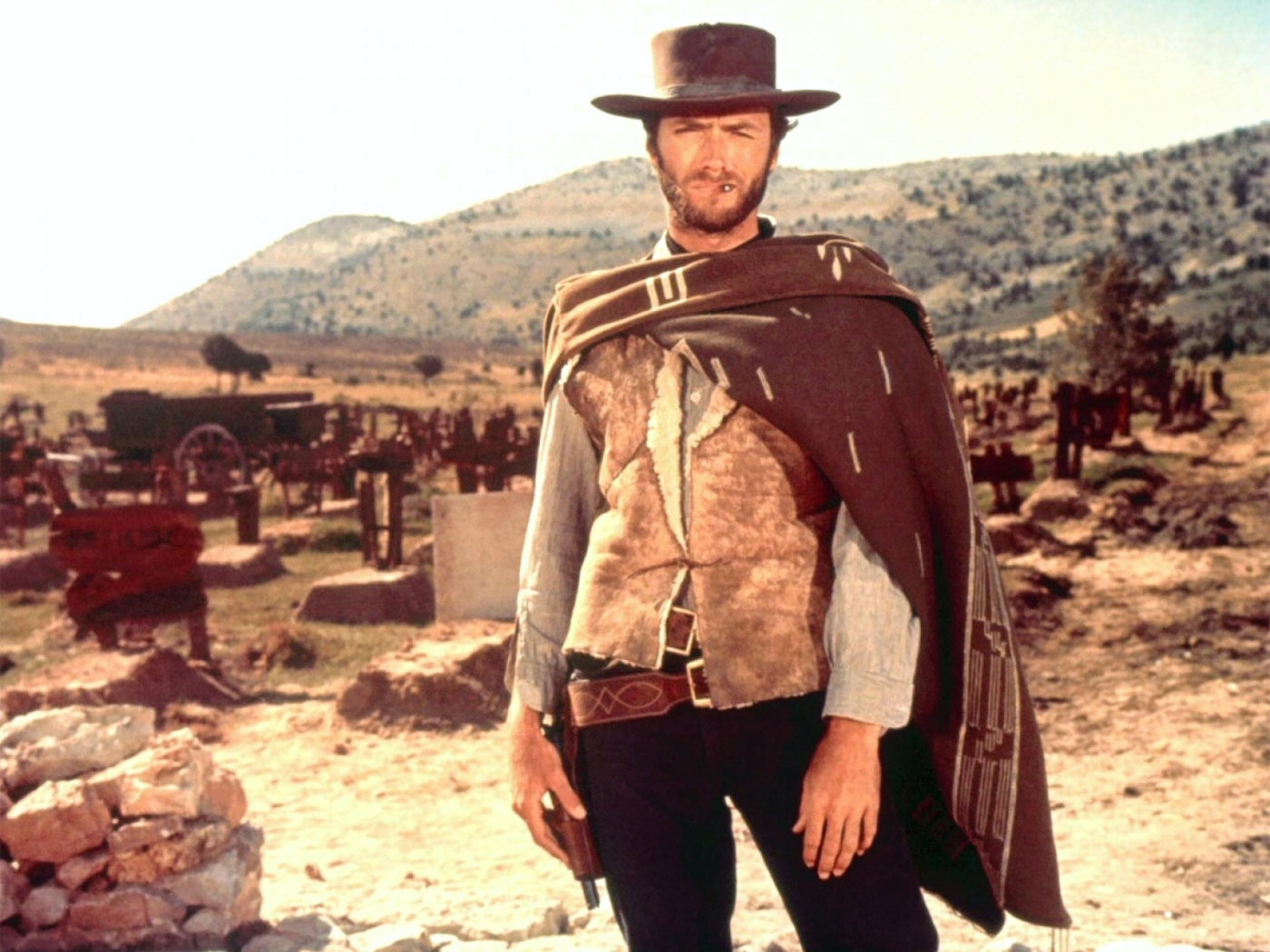
Clint EastwoodClint Eastwood as the Man with (supposedly) No Name

Many ‘spaghetti westerns’ followed Leone’s handbook, keeping the words sparse, the mood serene, and the action visually driven. My favorite in this mold is actually the French Cemetery without Crosses (also known as The Rope and the Colt). Another worthy French entry is the recent Far from Men, which is not exactly a western (it’s set in the Algerian war) but it sure feels like one!

(That said, this tendency can be taken to an infuriating extreme, like with Monte Hellman’s The Shooting or Alejandro Iñarritu’s The Revenant… both look quite pretty, though.)

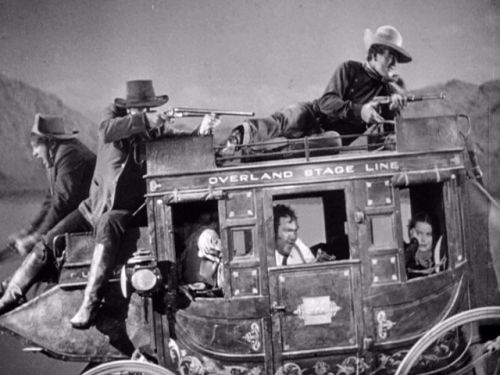
Most of all, there is something purely *cinematic* about westerns. The atmosphere of constant tension because of the ease with which people can kill, the cathartic power of a shot, the feel of chivalrous adventure from all the horse-riding, the gravitas of these archetypes, the scenic backgrounds… There is a reason why the most defining examples of the genre (Ford’s Stagecoach, Leone’s The Good, the Bad and the Ugly, Peckinpah’s The Wild Bunch) are not merely great westerns – they are some of the most freaking iconic cinema masterpieces of all time!

Stagecoach 1939Stagecoach (1939)

Sure, there are shitloads of duds, but the ingredients are there to make it work fairly easily. At least two beloved westerns simply relocated Akira Kurosawa’s samurai epics to the American Wild West (A Fistful of Dollars is a rip-off of the awesome Yojimbo and John Sturges’ The Magnificent Seven is a remake of Seven Samurai), yet they both turned out to be highly entertaining pictures in their own right. Johnny Guitar may end on kind of a weird note, but that opening half an hour is worth its weight in gold. Hell, throw in enough double-crosses and competently crafted set pieces, and even a middle-of-the-road dustraiser like Buchanan Rides Alone can be a darn enjoyable way to spend 78 minutes.

Basically, if you add an operatic Ennio Morricone score to the image of a gunfighter on a horse, then you’re halfway there to producing a satisfying movie. To be fair, it doesn’t even have to be Morricone – many westerns rely on atmosphere stitched together by a cool soundtrack, whether it’s Bob Dylan songs in Pat Garrett and Billy the Kid or Leonard Cohen tracks in McCabe & Mrs. Miller. (Then again, Rancho Notorious is as vicious as any other Fritz Lang movie, but it only works if you disregard the fact that it’s punctuated by a hilariously mismatched ballad that serves as a bizarre, baritone Greek chorus.)

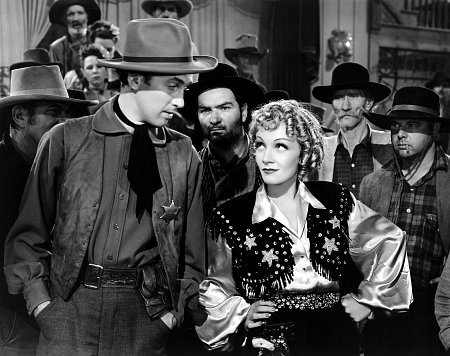
And if the sheer number of instantly recognizable tropes makes it easy to use shorthand and achieve intertextual resonance, it also lends itself to obvious parody. Besides genre spoofs (the funniest is still, by far, Blazing Saddles), there are plenty of hybrids that work simultaneously as westerns and as comedies. I’m not a big fan of the lowbrow slapstick of the Trinity movies starring Terence Hill – also known as ‘fagioli westerns’ – but I do get a kick out of the tongue-in-cheek zaniness of Sam Raimi’s The Quick and the Dead (not to mention the third Back to the Future). And while Destry Rides Again doesn’t make me laugh out loud, I do find it incredibly charming.

Destry Rides AgainDestry Rides Again (1939)

Indeed, even if you regard the western as a proper genre (and not merely as a shared historical setting), it is loose enough to easily allow for crossbreeding. In the 1940s, some directors approached it with a cool film noir sensibility, for example in the stylish Winchester ’73 and Yellow Sky (not to mention John Huston’s angry neo-western The Treasure of Sierra Madre). In the 1950s, the supernatural anthology TV show The Twilight Zone had a bunch of episodes set in the Old West, including ‘Mr. Denton on Doomsday,’ ‘The Grave,’ and ‘Dust’ (the show’s creator, Rod Serling, also wrote the lesser-known, straight-up western drama Saddle the Wind). Among the most accomplished attempts to fuse westerns with a horror vibe, you can find 1970’s And God Said to Cain as well as last year’s Bone Tomahawk.

The latter are also violent as hell, because no-holds-barred sound and fury is another thing westerns can deliver like nobody’s business.

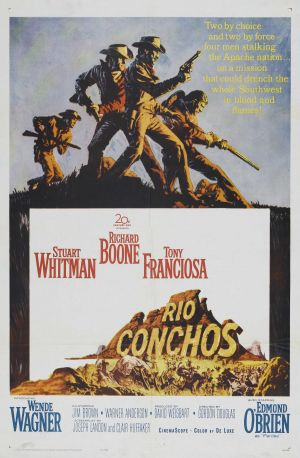
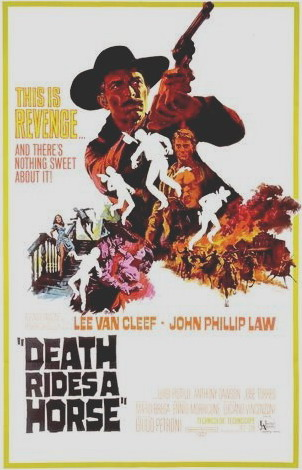
rio conchos          death rides a horse

Americans have come up with their fair share of gritty westerns (particularly Gordon Douglas, the man behind Rio Conchos and Barquero). If you are into raw, visceral insanity, though, few movies can match the power of Italian horse operas like Death Rides a Horse.

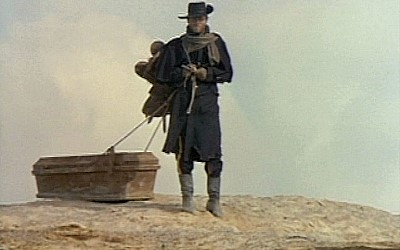
And in terms of pure brutality, there is of course Django – you know, the one with the dude dragging his coffin around and inspiring countless imitations, homages, and kick-ass songs.

DjangoDjango (1966)

NEXT: More on westerns.

Posted in WILD WEST | Tagged , | Leave a comment

6 Batman breakups

With Valentine’s Day around the corner and all the schmaltzy faux-romantic mood in the air, I guess this is the time to have a look at half a dozen times when Bruce Wayne said goodbye to the women in his life (and vice versa).

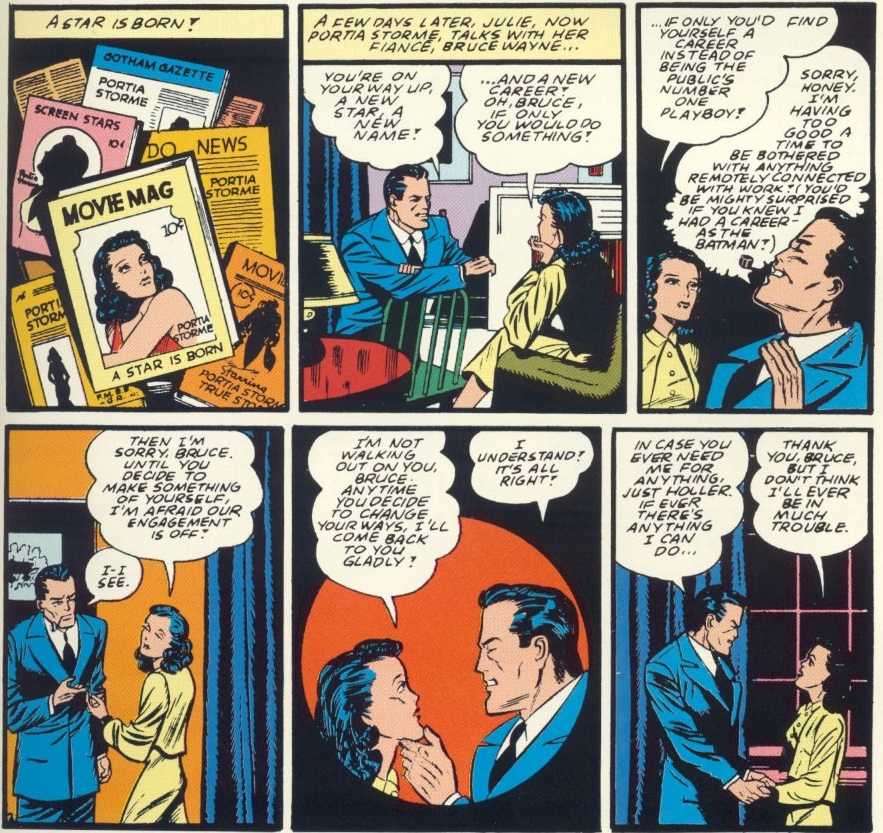
In Detective Comics #49, actress Julie Madison becomes a movie star, so naturally she changes her name and breaks off their engagement. Bruce, smoking a pipe, is completely debonair about it:

detective comics 049

Julie clearly looks disappointed by so much nonchalance (especially in that fish-eye lens panel).

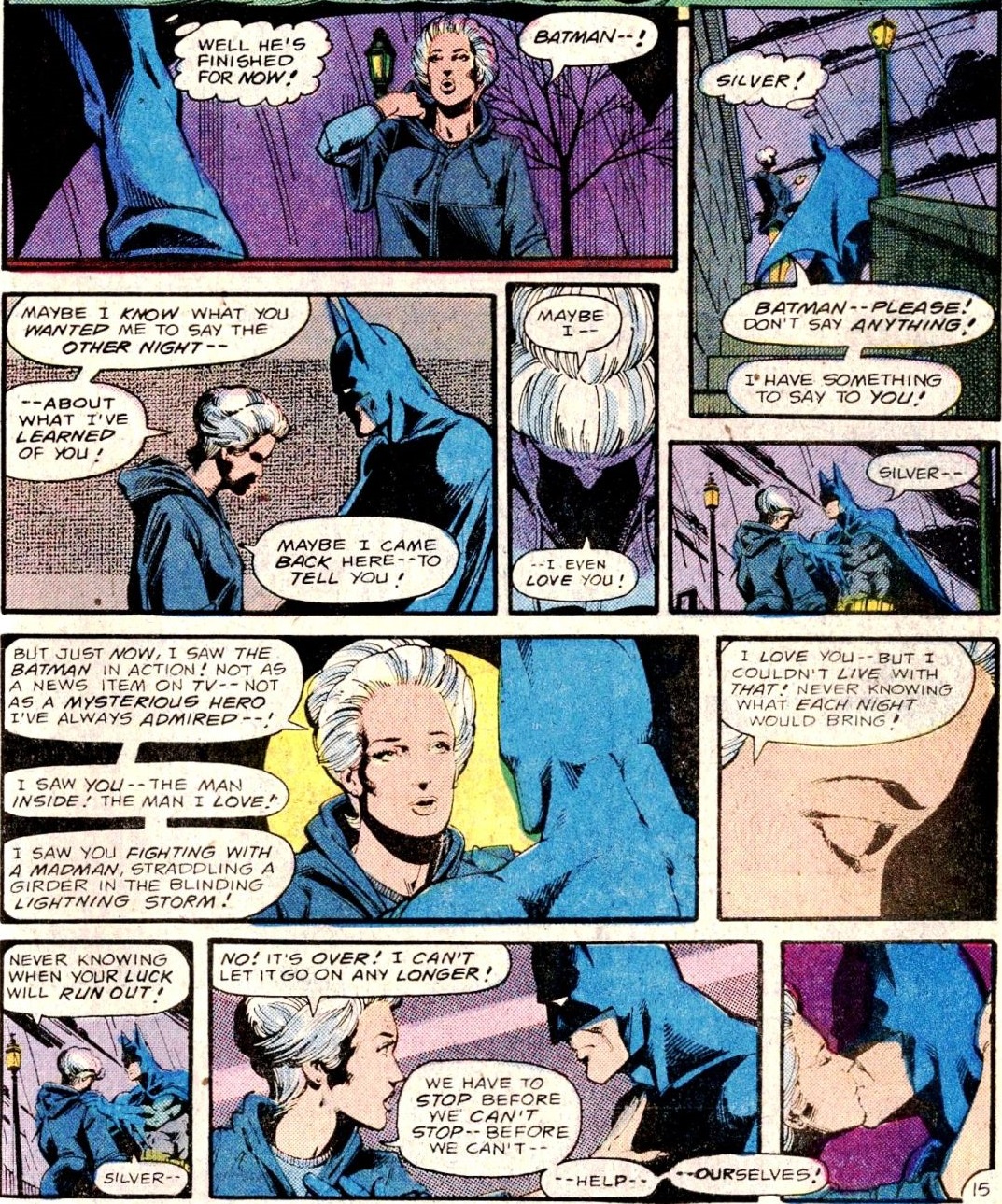
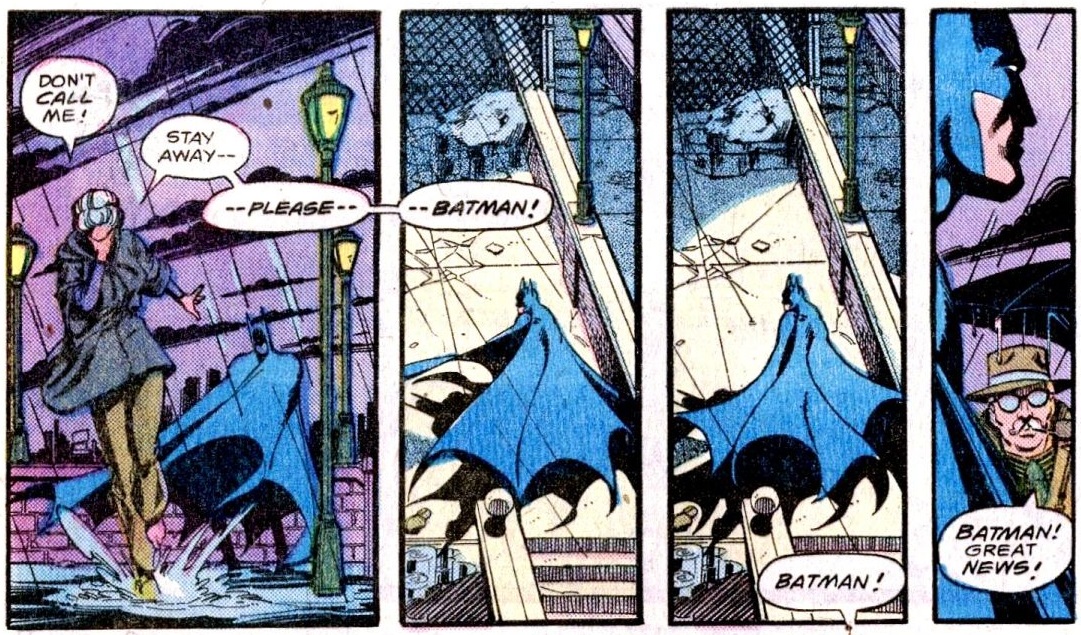
But it’s not as if Batman is completely heartless… When socialite Silver St. Cloud breaks up with him, in Detective Comics #476, the Dark Knight is almost speechless:

detective comics 476detective comics 476

Great timing, Commissioner Gordon!

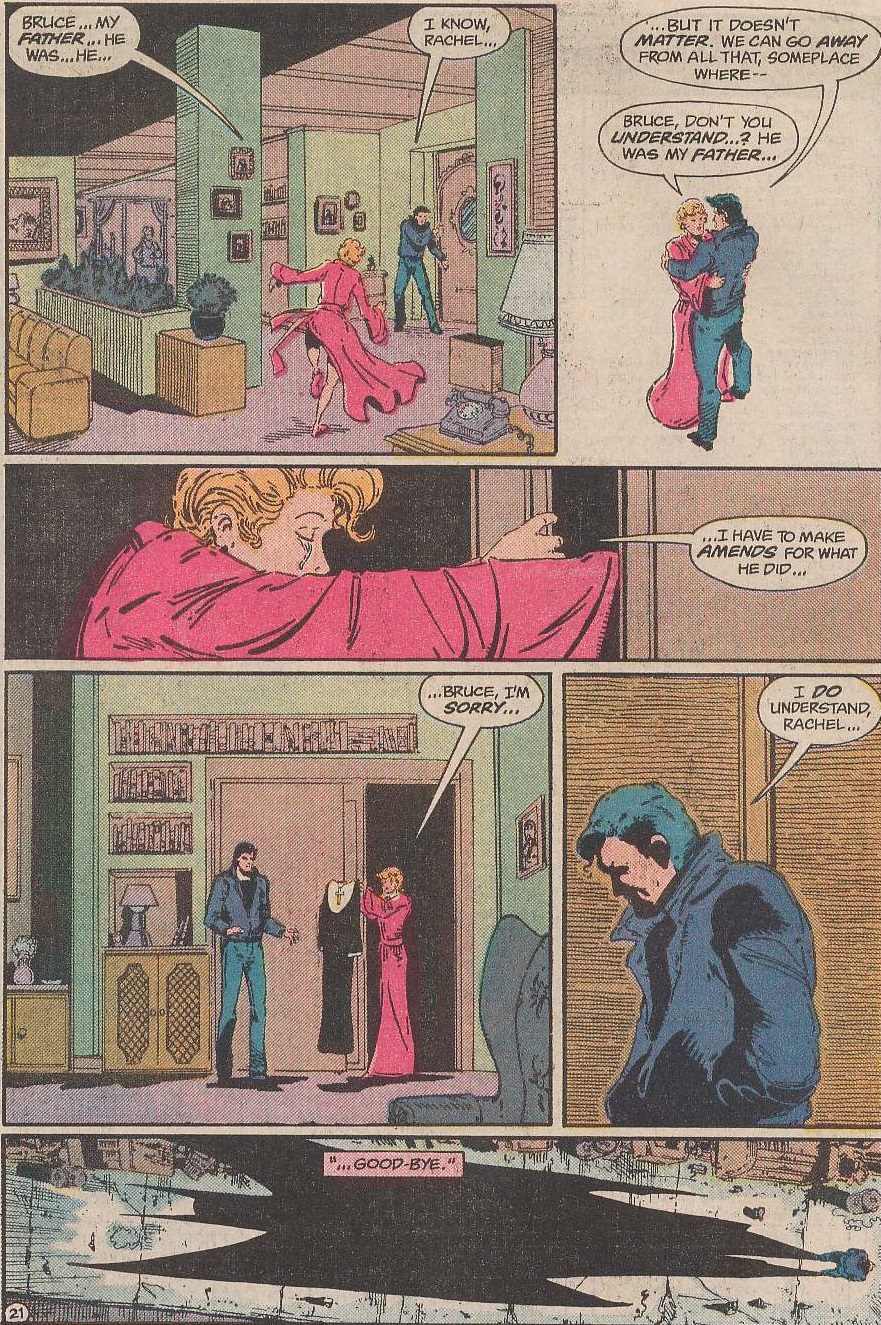
Poor Bruce Wayne, he keeps getting dumped… That said, with social activist Rachel Caspian, I’m not sure what he was expecting. In Detective Comics #578, he just saw her father fall off a building after a murdering spree as the villain Reaper, yet somehow Bruce still thinks that will not affect their immediate plans:

detective comics #578

On the plus side, we get a huge Todd McFarlane bat-shadow, which is nice.

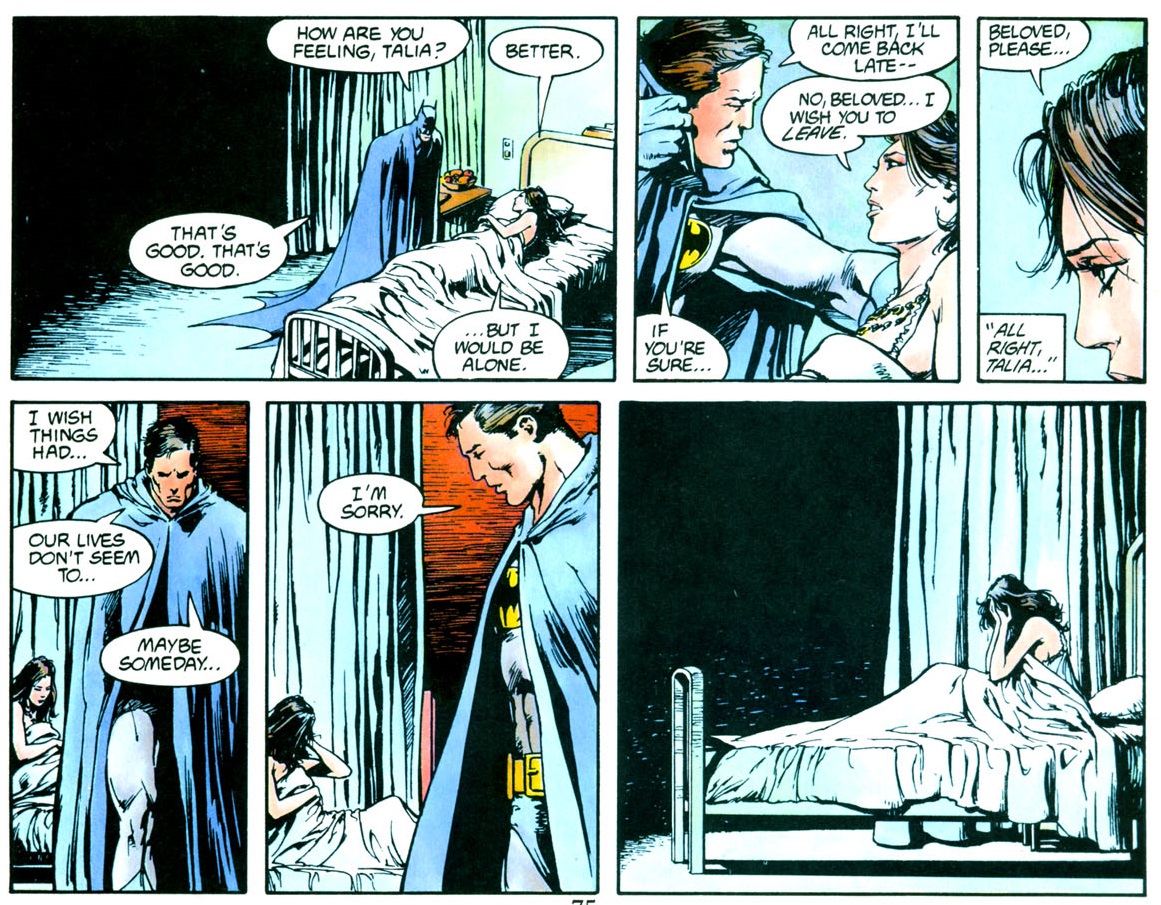
Batman and the world-conquering villainess Talia al Ghul have split up plenty of times. However, the most powerful one is probably in Son of the Demon, what with Talia supposedly losing their baby and everything…

Batman Son Of The Demon

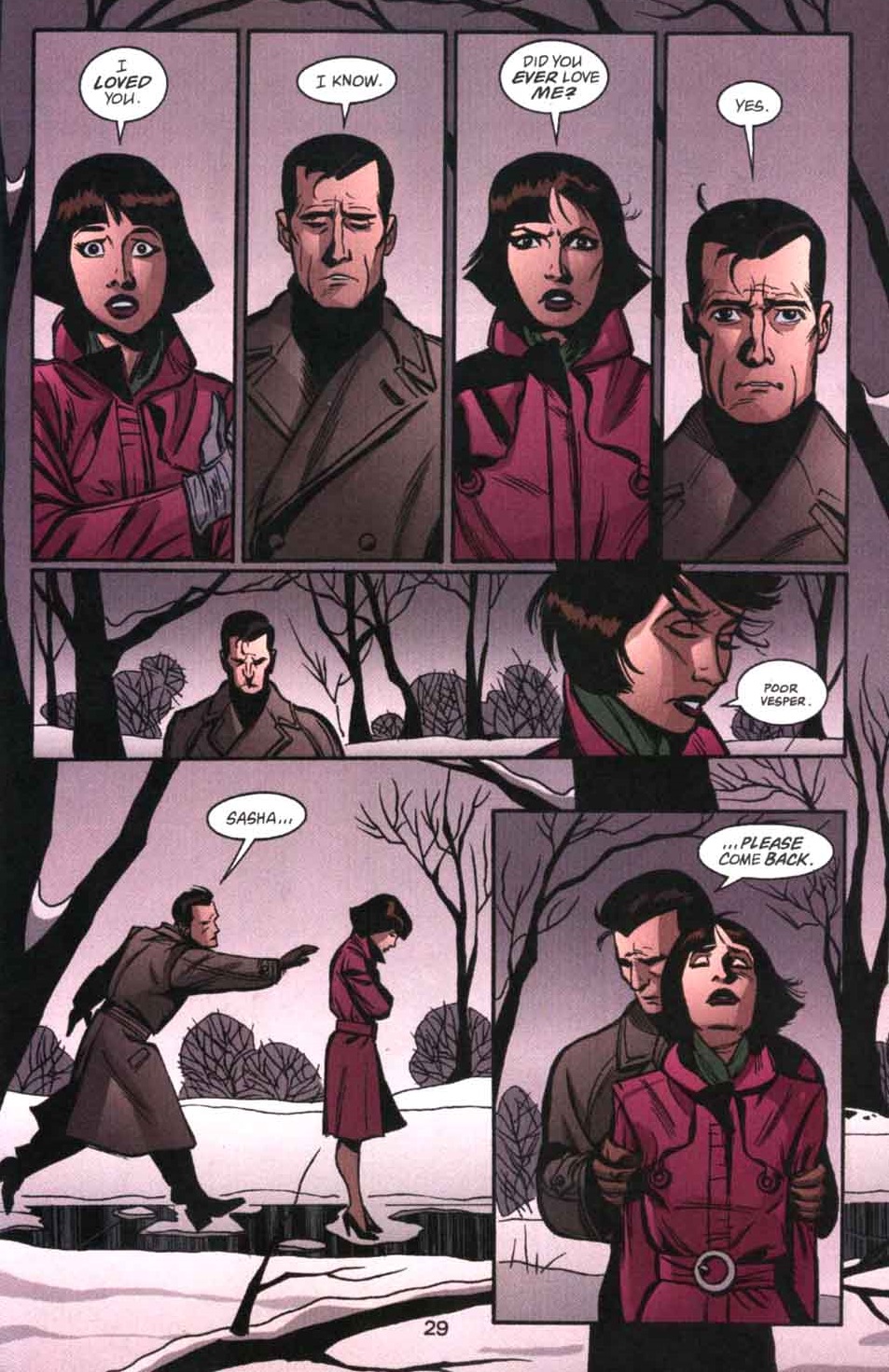
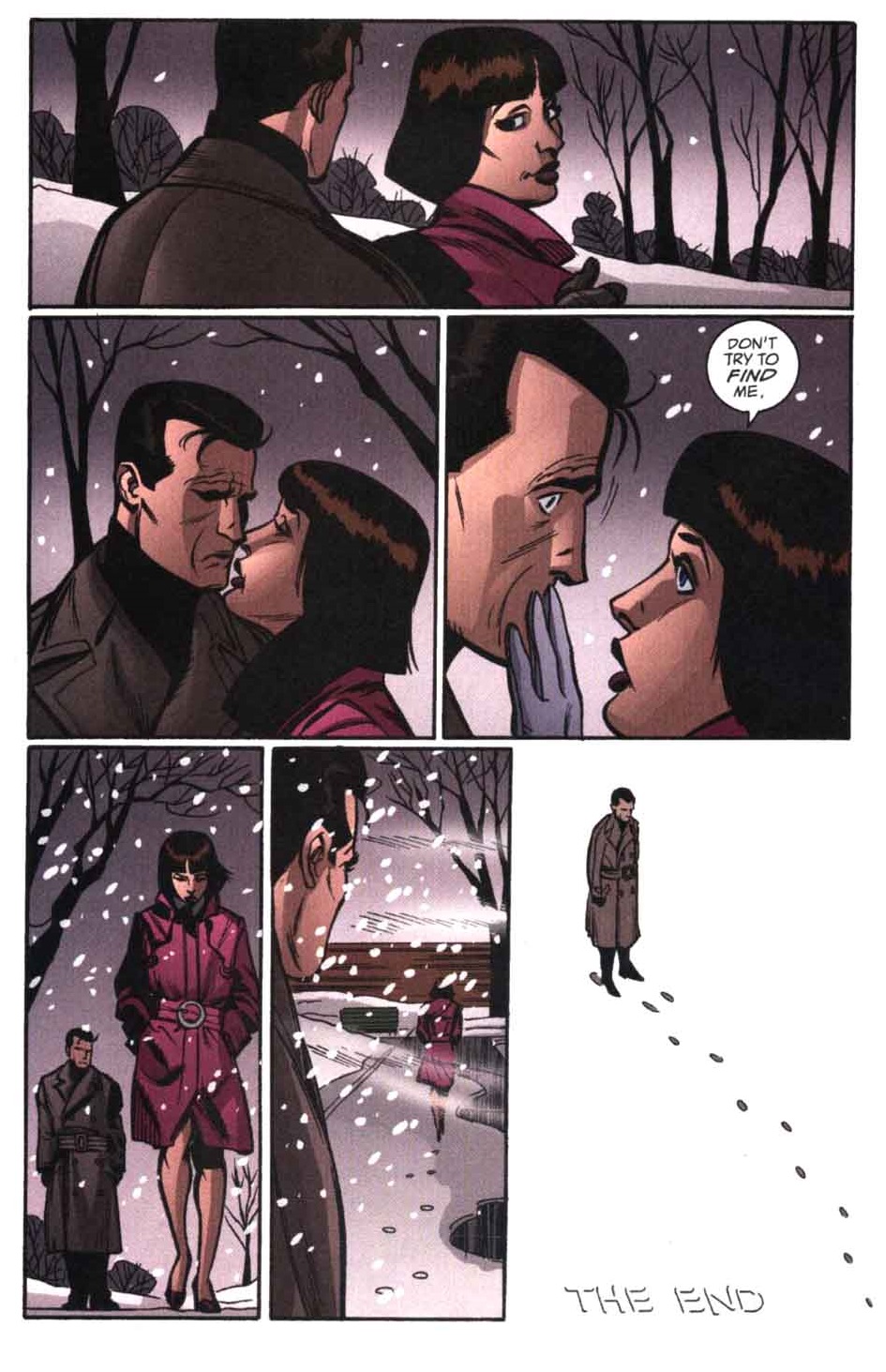
I am going to skip the whole thing with radio talk show host Vesper Fairchild (needless to say, it didn’t end well). I’d rather go straight to  Detective Comics #775, where Greg Rucka wrote one hell of a coda for Bruce and his former bodyguard Sasha Bordeaux. It’s worth reading the whole thing, of course, but I love how artist Rick Burchett absolutely nails the final moments:

Detective Comics 775Detective Comics 775

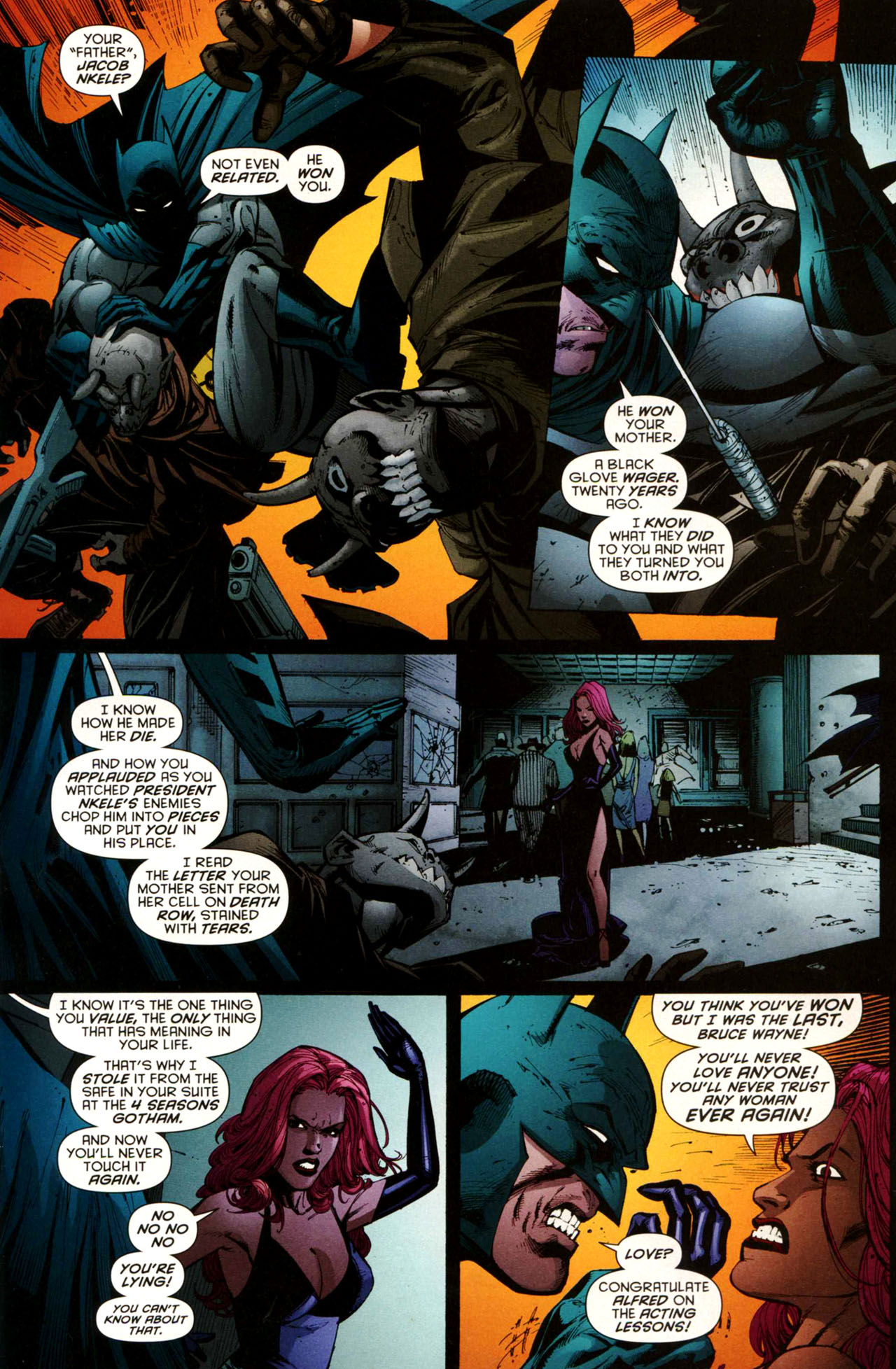
Finally, there is the crazy-ass ending to Bruce’s relationship with fashion model/African ruler Jezebel Jet, in Batman #681, while fighting the sinister secret organization Black Glove. For once, the Caped Crusader is actually the one calling the shots. He even gets a super-douchey final line:

Batman 681

NEXT: Go West.

Posted in GOTHAM CITIZENS | Tagged , , , | Leave a comment

On The Outsiders

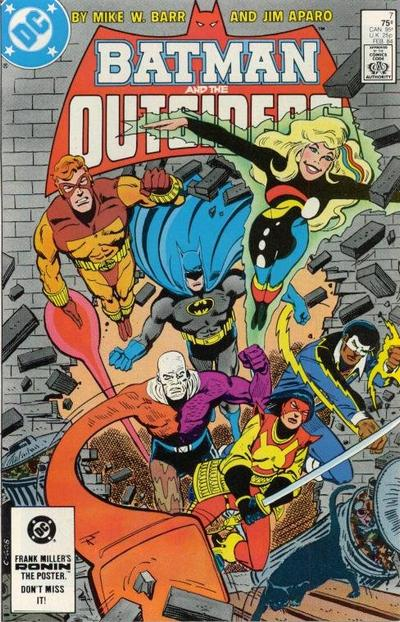
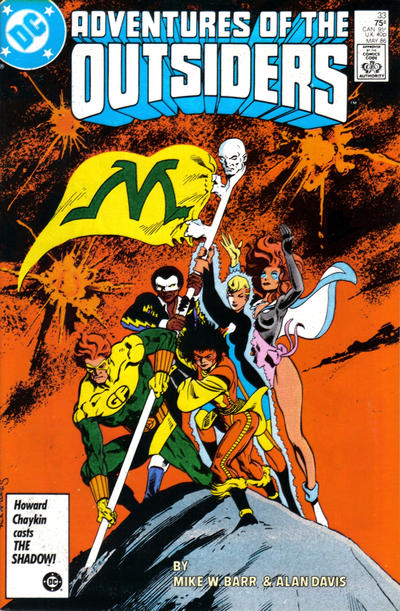
Between all those Robins and Batgirls, Batman does seem to have a thing for sidekicks. In the 1980s, the Dark Knight took this to the extreme when he brought in all the weirdos he could find and put together his very own super-team, called The Outsiders.

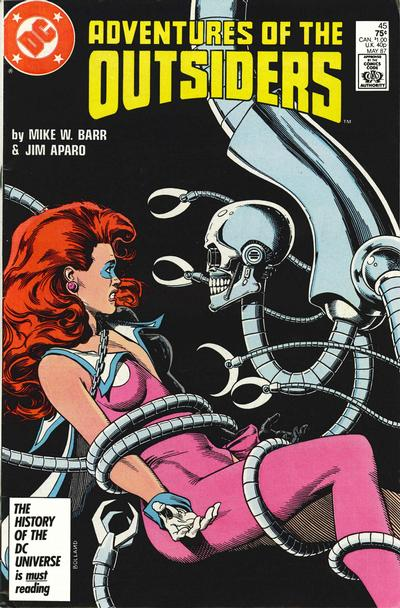
Batman and the Outsiders          Adventures of the Outsiders

The resultant comics were not very good, but they were packed with interesting ideas. I suppose the high-concept behind the Outsiders was that, much like Batman, they were all loners who learned to bond by fighting crime together (as you do). That said, I’ve always thought of them more as a group of odd and/or lame heroes who have a bunch of odd and/or lame adventures.

Like the team itself, though, for all their flaws these comics are certainly greater than the sum of their parts…

They also look goofy as hell:

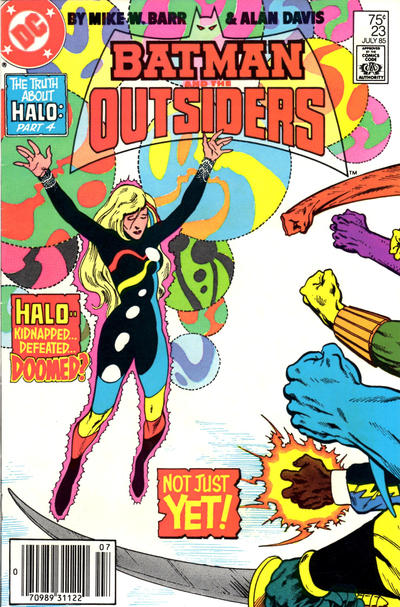
Batman And The Outsiders 23Batman And The Outsiders 23Batman and the Outsiders #23

Although most of the team was created by writer Mike W. Barr and artist Jim Aparo, two of the characters had actually been around for a while: Jefferson Pierce (aka Black Lightning) and Rex Mason (aka Metamorpho, the Element Man).

The former, who could shoot electrical bolts from his fingertips, was one of the first African-American superheroes to take a starring role at DC. When he joined the Outsiders, Black Lightning was going through an existential crisis because he had gotten a girl killed while trying to take out a couple of robbers. He eventually achieved some closure after talking to the girl’s parents (though not before they hired the Masters of Disaster to go after him). There was also a subplot about Black Lightning teaching at a fucked up Gotham City school, but it wasn’t exactly the 4th season of The Wire…

As for Metamorpho, the multicolored shapeshifter who could change into any element in the human body, he already had a history of cool team-ups with the Caped Crusader on the pages of The Brave and the Bold. Besides looking like an LSD-induced hallucination, Metamorpho had a mind-boggling love life – he kept breaking up and getting back together with ditzy socialite Sapphire Stagg, whose rich father wanted to kill the Element Man in order to arrange her marriage to his Neanderthal servant.

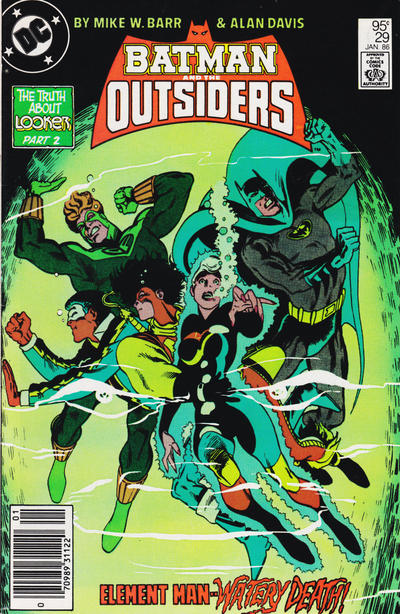
Adventures of the Outsiders           Batman and the Outsiders 29

The comics gave us some strong female characters as well. Tatsu Yamashiro (aka Katana) was a badass Japanese martial artist who saw her family killed in front of her, including her two children. This may sound like a pretty standard vigilante origin, but Mike Barr made sure she was offbeat enough for the group by having her carry a sword inhabited by the spirit of her slain husband! Katana had many neat moments in the series – I especially like ‘The Silent Treatment!’ (Batman and the Outsiders #21), in which her mission to take a valuable Japanese vase to an exhibition while piercing through a horde of thugs is cleverly juxtaposed with a radio broadcast about football.

Moreover, Katana forged a nice friendship with Gabrielle Doe (aka Violet Harper, aka Halo), the youngest member of the team. In a sweet bit of characterization, Batman explicitly paired these two because he learned from his own experience with Robin the importance of having someone younger and more upbeat around to restrain your vindictive brooding.

Halo’s backstory kept getting more convoluted as the series progressed. She started out as an amnesiac girl who could fly and create colorful auras, each color associated with a different superpower. Then she discovered she was a runaway teen who had stolen a formula for a new drug (‘whose addictive properties make heroin look like talcum powder’) and had ruthlessly killed her boyfriend when he’d gotten cold feet. Then she found out she was actually a mystical energy-being who had taken over a human body, in a story that looked like the inside of a lava lamp. Boy, no wonder she ended up joining a cult at one point!

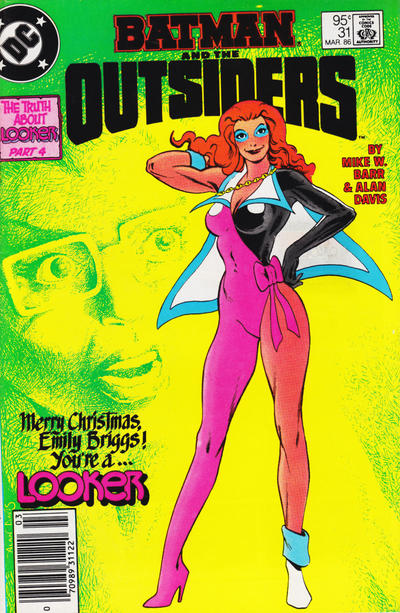
Batman and the Outsiders 23          Batman and the Outsiders 31

The Outsiders were eventually joined by Emily Briggs (aka Looker), a mousy bank clerk who, much to her and her husband’s surprise, turned out to be an astonishingly sexy heir to the throne of the ancient underground civilization of Abyssia. The thing is, being super-hot was actually part of her vast set of powers, which raises some obvious gender issues – and in his defense, Barr didn’t shy away from them, pitting Looker’s peculiar notion of empowerment against the views of both male and female characters.

Finally, after Batman inevitably left the team, the closest thing to a leader was Brion Markov (aka Geo-Force), prince of Markovia, one of the many fictitious Eastern European nations in comics. Geo-Force had earth-based powers and a conflicting relationship with his family. Oh, and there was an issue where he decapitated a dude with a huge swastika-shield – although, to be fair, his kill-rate was still fairly low compared with Katana, who slayed dozens of guys throughout the series…

Come to think of it, the oddest thing about the Outsiders wasn’t the fact that Batman had a private superhero team for a while, but how unbelievably nonchalant everyone seemed to be about breaking the ‘don’t kill’ rule. Yep, even the Dark Knight. Oh, Mike Barr.

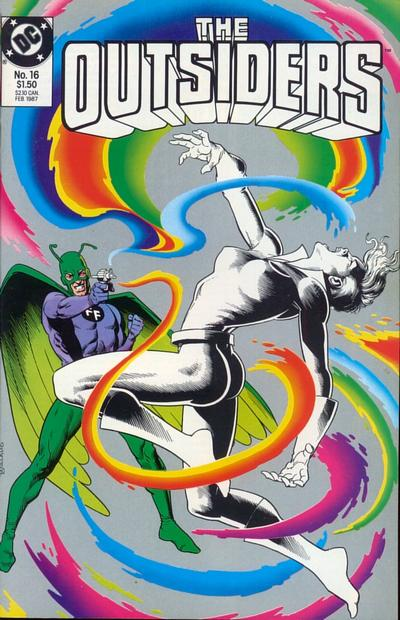
The Outsiders 16          Adventures of the Outsiders 45

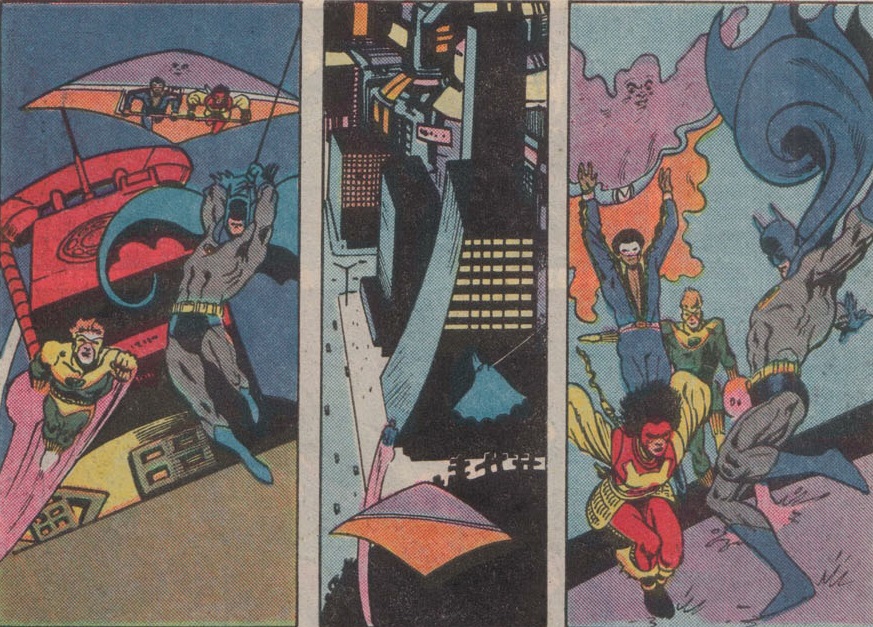
As you can probably tell, these comics were all over the map, although not without a certain charm. There were amusing fight scenes, overwrought soap opera moments, and quite a lot of Christmas stories. Jim Aparo’s art was already past its prime, but Alan Davis took over for a while and his pencils can make even less-inspired designs look slick and fun.

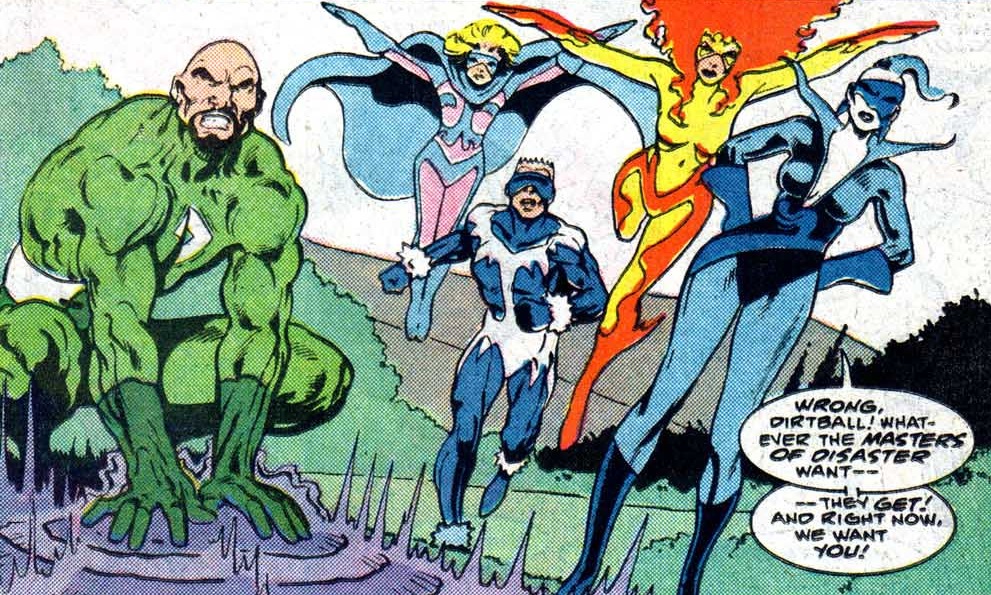
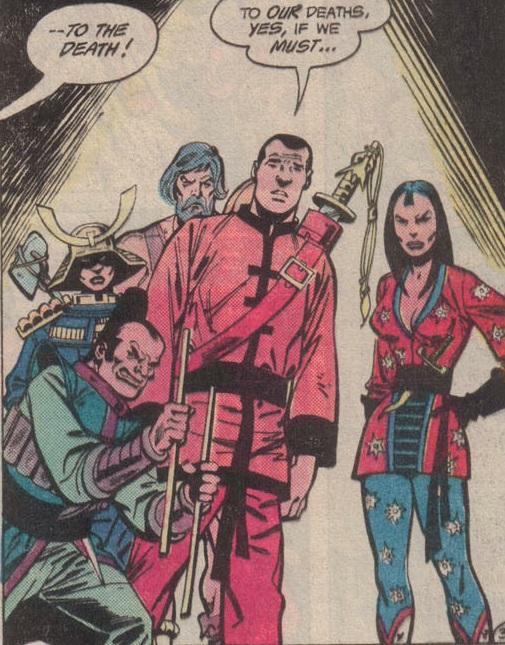
Between Batman and the Outsiders, Adventures of the Outsiders, and The Outsiders, plus a couple of annuals and a special, Barr wrote around 80 issues of this stuff. He devoted a lot of it to characterization, but I never found the series’ protagonists to be all that engaging… By contrast, I genuinely love the smorgasbord of quirky super-villain teams they had to face:

Adventures of the Outsiders 33Adventures of the Outsiders #33
Batman & The Outsiders 12Batman and the Outsiders #12
Batman and the Outsiders Annual 1Batman and the Outsiders Annual #1

My favorite aspect of these stories, though, is how political they were from the get-go. In the first arc, Batman quit the Justice League of America because Superman and Wonder Woman refused to intervene in a revolution taking place in Markovia. After crushing the Markovian insurgence, the Outsiders went on to face disgruntled Vietnam vets, anti-capitalist terrorists, Soviet troops, an African dictatorship, a cyborg oil magnate, and an armed group called ‘The Liberators’ who supposedly took over a zoo to protest the fact that society pampers and protects animals while letting people live in poverty.

The Dark Knight and his gang of misfits also stepped in when Maxie Zeus disrupted the opening ceremony of the Los Angeles Olympics, with Ronald Reagan asking Batman to prevent another Munich. Furthermore, in the 1984 Annual, our heroes stopped the Orwellian director of the American Security Agency (appropriately called Eric Blairman) from installing a spyware system in everyone’s home – which suggests that Batman was an inspiration for Edward Snowden!

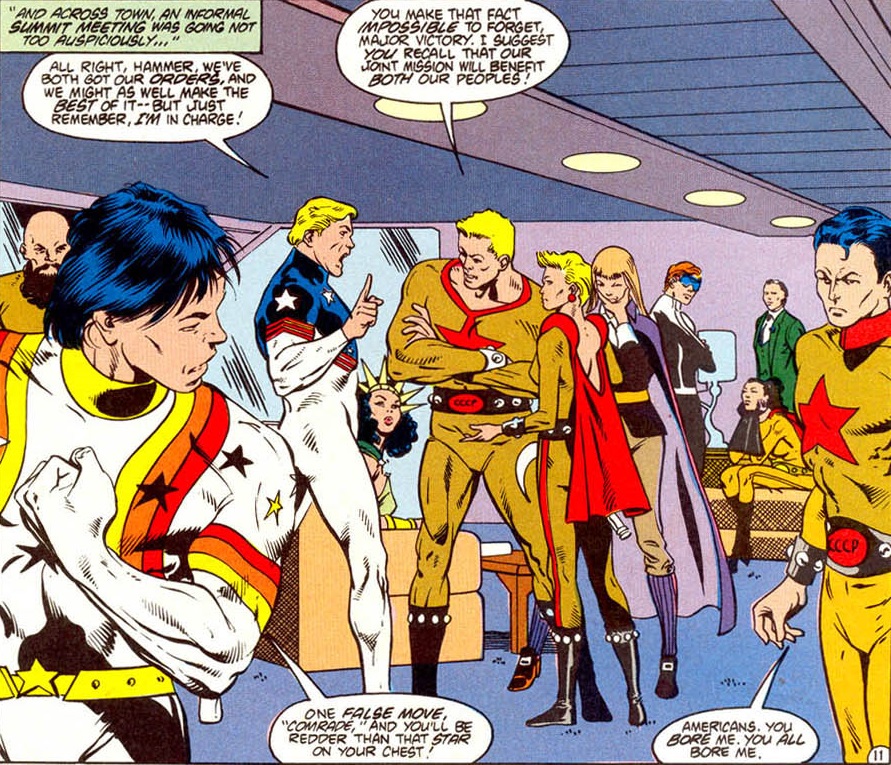
And, of course, there was that priceless team-up between the left-wing People’s Heroes and the right-wing Force of July…

outsiders 23The Outsiders #23

In fact, Mike Barr wrote plenty of Cold War adventures, especially in the final stretch, and the ones involving Soviet superheroes are always fun to read. Still, Barr is no Garth Ennis, so we never get anything as good the Glorious Five Year Plan (and certainly no Love Sausage).

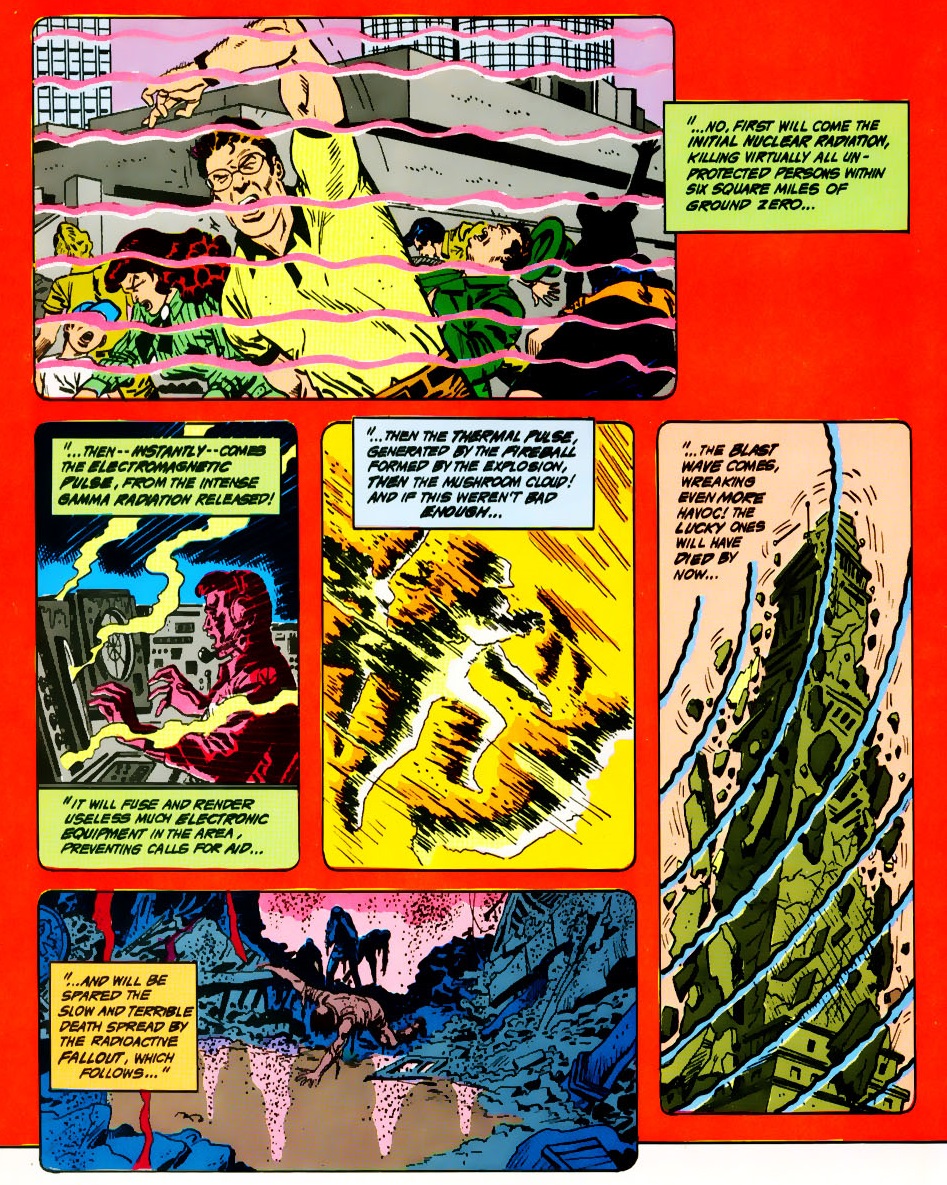
What we do get is all sorts of bizarre manifestations of the 1980s’ understandable obsession with nuclear terror. In Batman and the Outsiders #5-6, we meet a telepathic professor who’s been in a cryonic sleep chamber since 1947, convinced that the world has been devastated by an atomic war. In issues #25-27, Lord Kobra’s terrorist cult takes over Reagan’s ‘Star Wars’ missile defense system. We get some nuclear winter imagery in issue #31 (albeit in a story about Halley’s Comet crashing onto earth) and once again in Adventures of the Outsiders #39:

adventures of the outsiders 39Adventures of the Outsiders #39

(Man, those are some sick colors by Adrienne Roy…)

This last story involves an expert in the field whose family died of radiation poisoning and is himself terminally ill, so he builds a group of radioactive automatons to blow up Los Angeles and show the world how terrible a nuclear war would be! The man may be mad, but he’s not without a twisted sense of humor – the automatons look like his younger pipe-smoking self, his wife, children, and dog, so he calls them Nuclear Family.

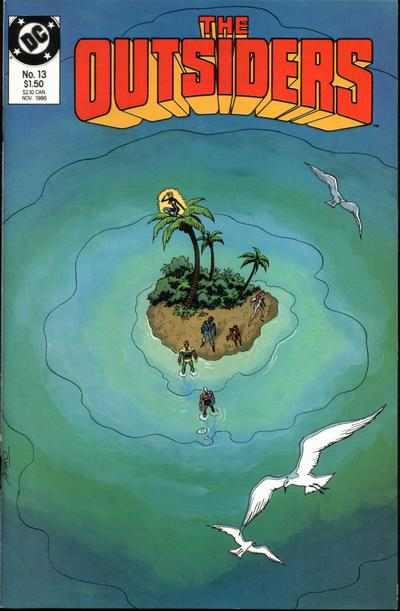
The motif returns near the end of the series, when the Outsiders are actually joined by a hero called Atomic Knight! One of the final stories involves yet another depressed scientist who creates a set of robots to rule humanity, thus saving it from itself and the impending threat of nuclear destruction…

The Outsiders 13          Outsiders 4

DC has revived the Outsiders a few times since then – and while those comics weren’t all bad, they weren’t nearly as memorable as Mike W. Barr’s original run, uneven and cheesy and sometimes just plain weird as it undoubtedly was.

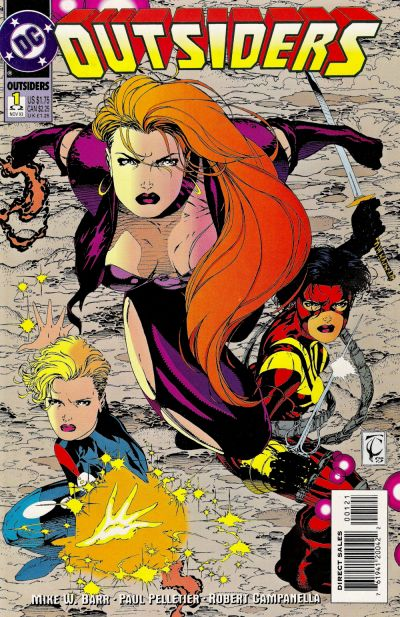
That said, if the 1980s’ Outsiders comics channeled their decade’s zeitgeist for all its worth, the 1990s’ version (also written by Barr) sure kept up with the times…

OutsidersOutsiders

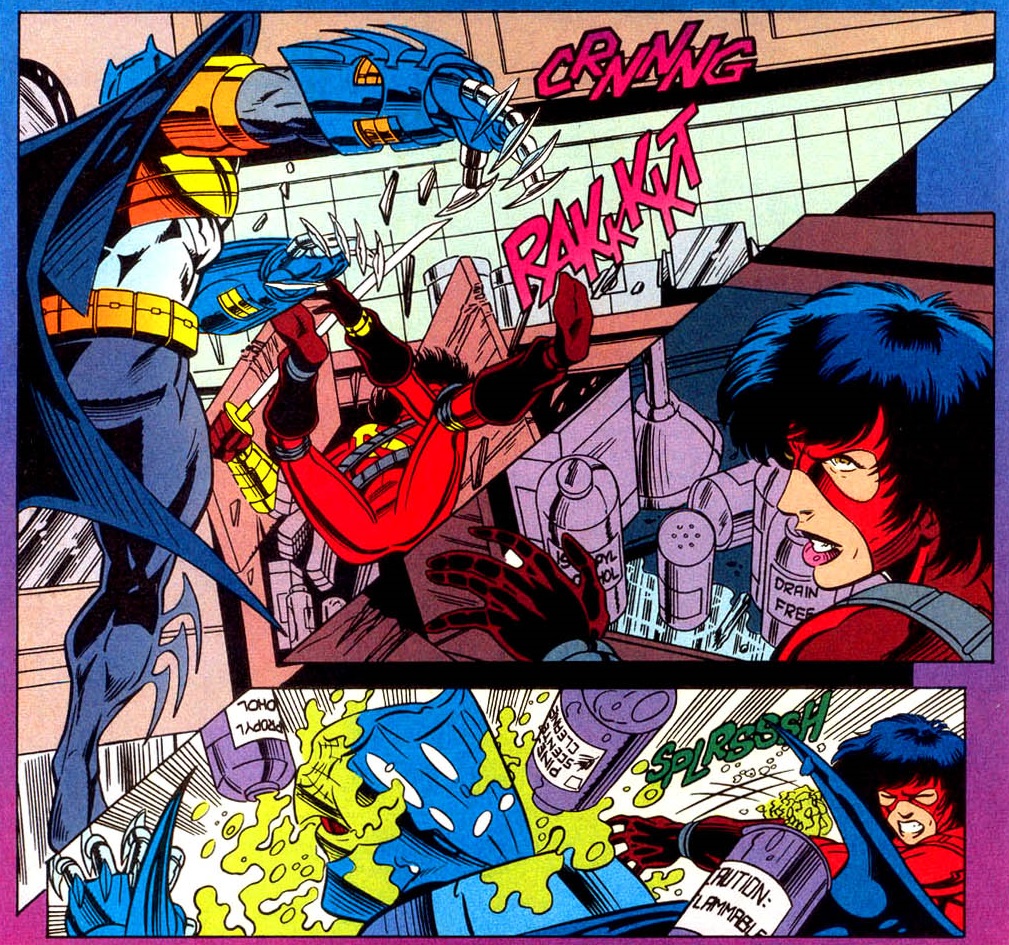
These comics are sooooo ’90s… But what the hell, at least we got to see Katana fight AzBats:

outsiders 08outsiders 08Outsiders (v2) #8

NEXT: Batman, the lady killer.

Posted in GOTHAM CITIZENS | Tagged , , , , , , | 1 Comment

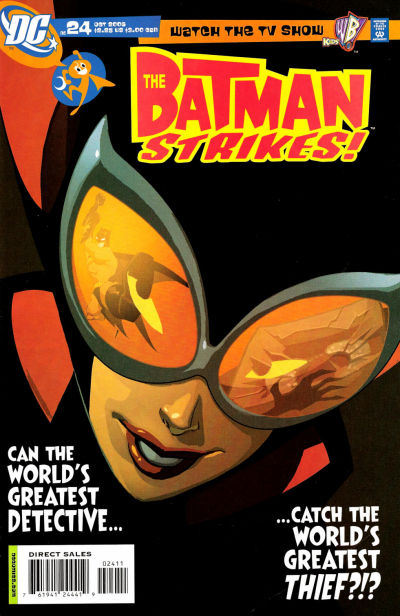
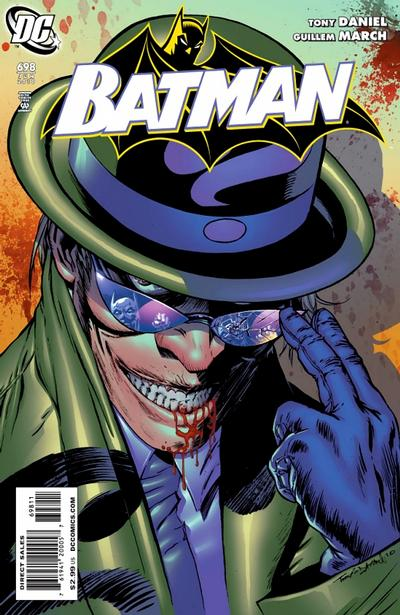
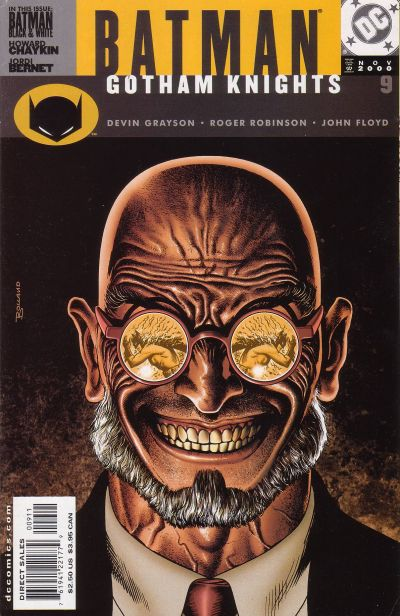
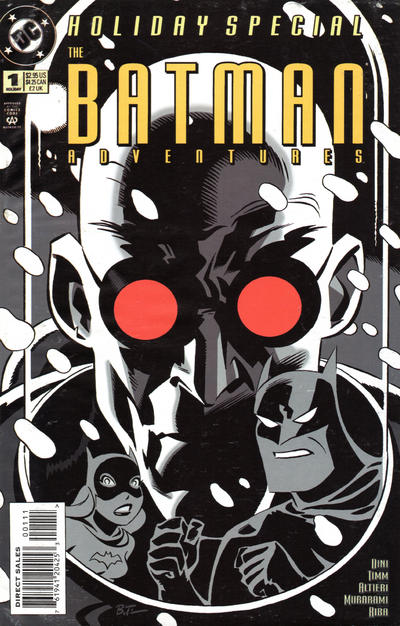
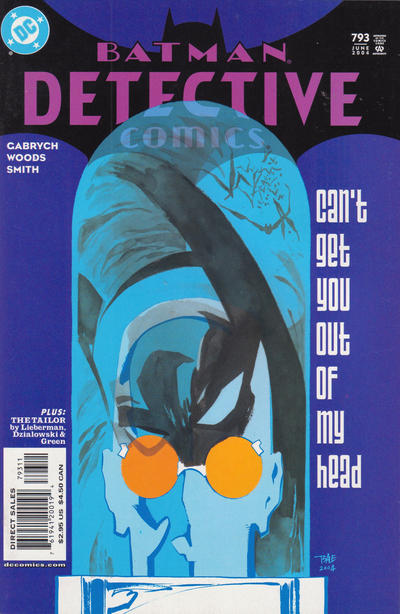
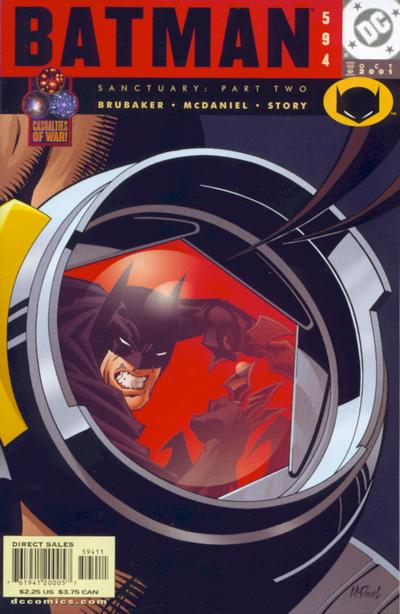
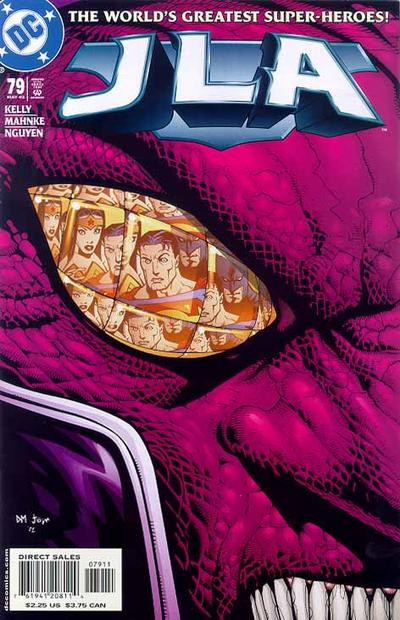
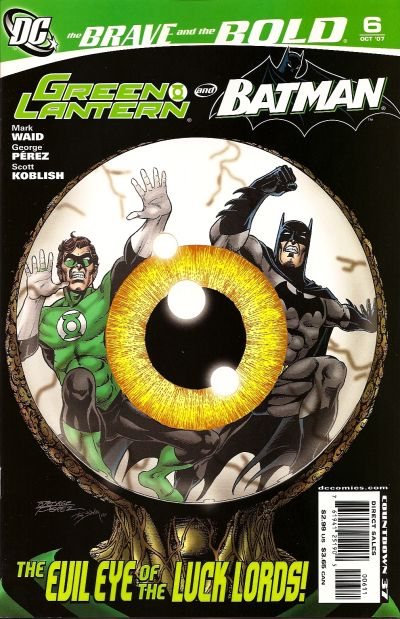
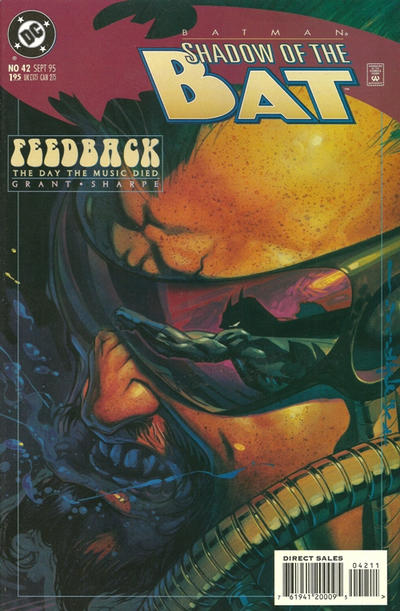
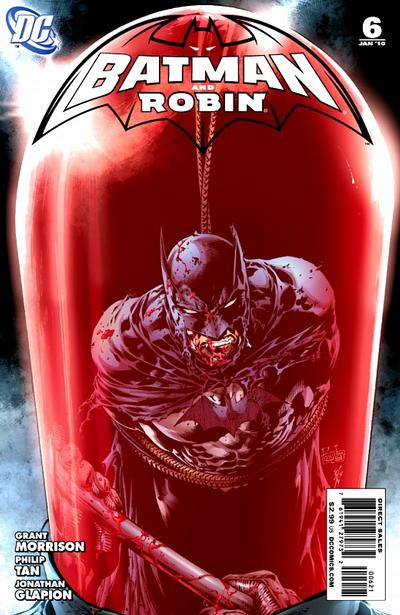
10 villainous covers with Batman’s reflection

A year ago, when I did a couple of posts about covers where it looks like Batman is about to get shot, I spotlighted a few cool ones that worked the Dark Knight’s reflection into close-ups of his villains… Besides providing neat angles and designs, these images are also great because, in a way, they allow us to look at Batman through his foes’ point-of-view.

I can’t get enough of this stuff, so here are another ten nice covers that follow the same pattern:

The Batman Strikes 24Batman 698Gotham Knights 9Batman Adventures Holiday SpecialDetective Comics 793Batman 594JLA 79The Brave and the Bold 6Shadow of the Bat 42Batman and Robin 6

NEXT: On the Outsiders, looking in.

Posted in COVERS OF BATMAN COMICS | Tagged | Leave a comment

6 villains you definitely won’t find in Batman v Superman

This is Gotham Calling’s 100th post, so I’m celebrating by focusing on one of my favorite aspects of Batman lore, namely the unbelievable amount of obscure, silly villains the Caped Crusader has faced over the years. In Gotham City, it looks as if every gimmick imaginable has somehow been used for evil (especially if you count all the odd foes created specifically for the 1960s’ TV show). Once Batman even fought a dude with the power to turn people into musical performers!

Seriously, in terms of eccentric, goofy-looking, pun-prone supervillains, no-one can beat the Dark Knight’s rogues’ gallery, with the possible exception of Captain Laserbeam:
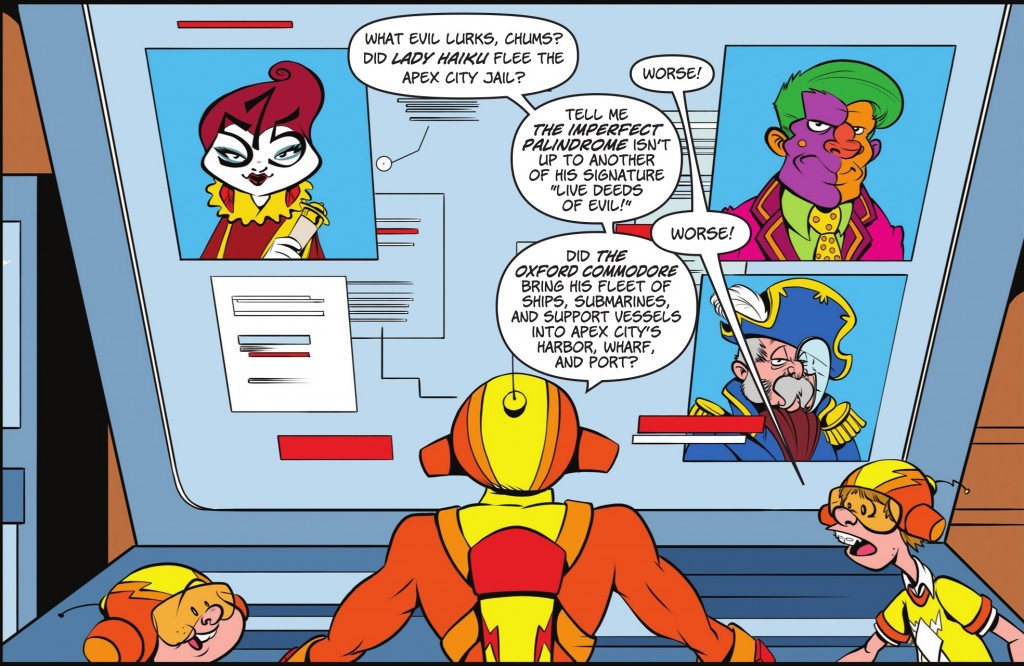
Thrilling Adventure HourThe Thrilling Adventure Hour

Nowadays, there is so much speculation across the internet over who is going to show up in the fast-approaching Batman v Superman: Dawn of Justice. However, one thing I can tell you for sure – none of these six villains is getting anywhere near a Zack Snyder blockbuster anytime soon:

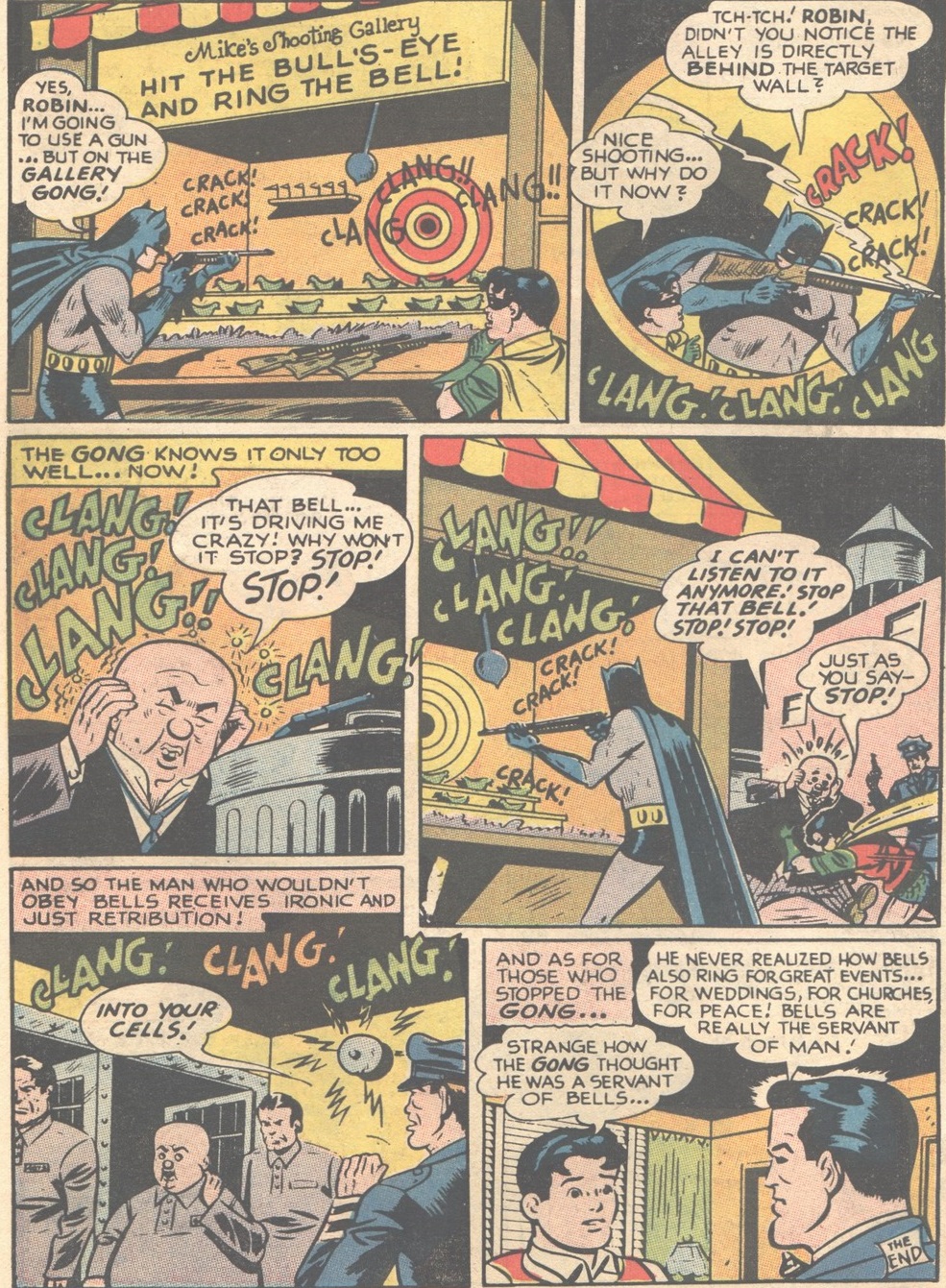
THE GONG

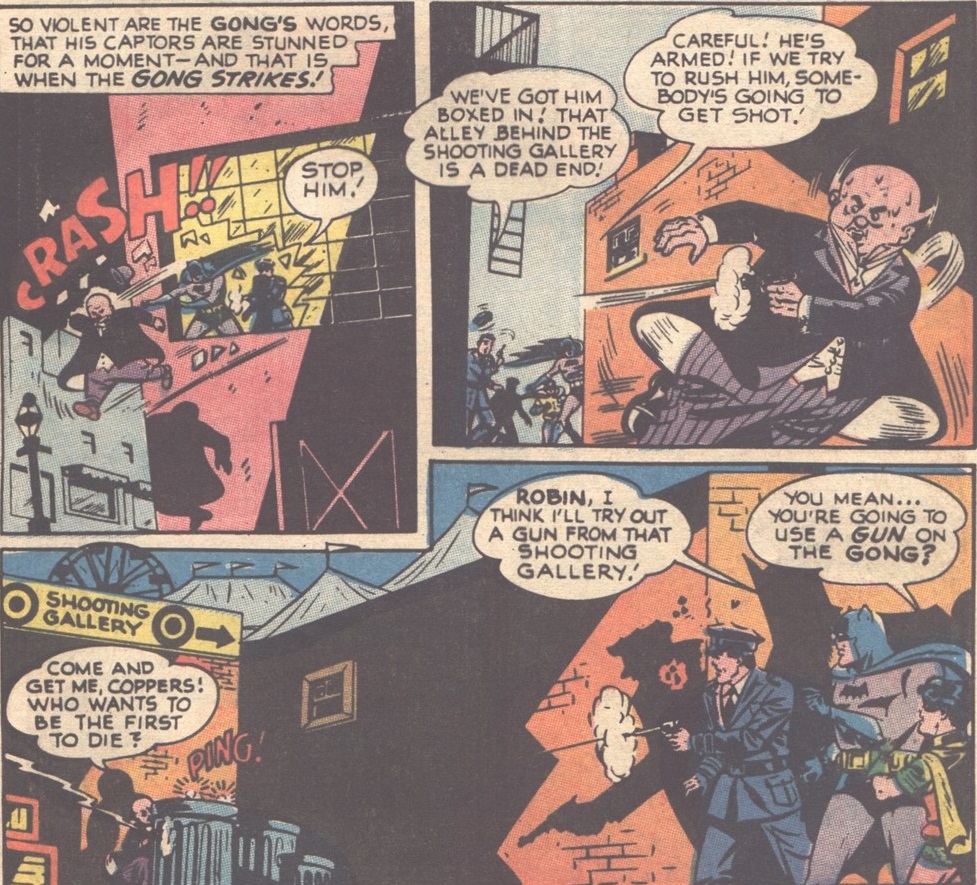
As far as I know, Ed Peale, aka the Gong, has only appeared in one tale: ‘The Bandit of the Bells!’ (Batman #55, reprinted in Batman #198).

His origin story is as complex, relatable, and full of pathos as it can get:
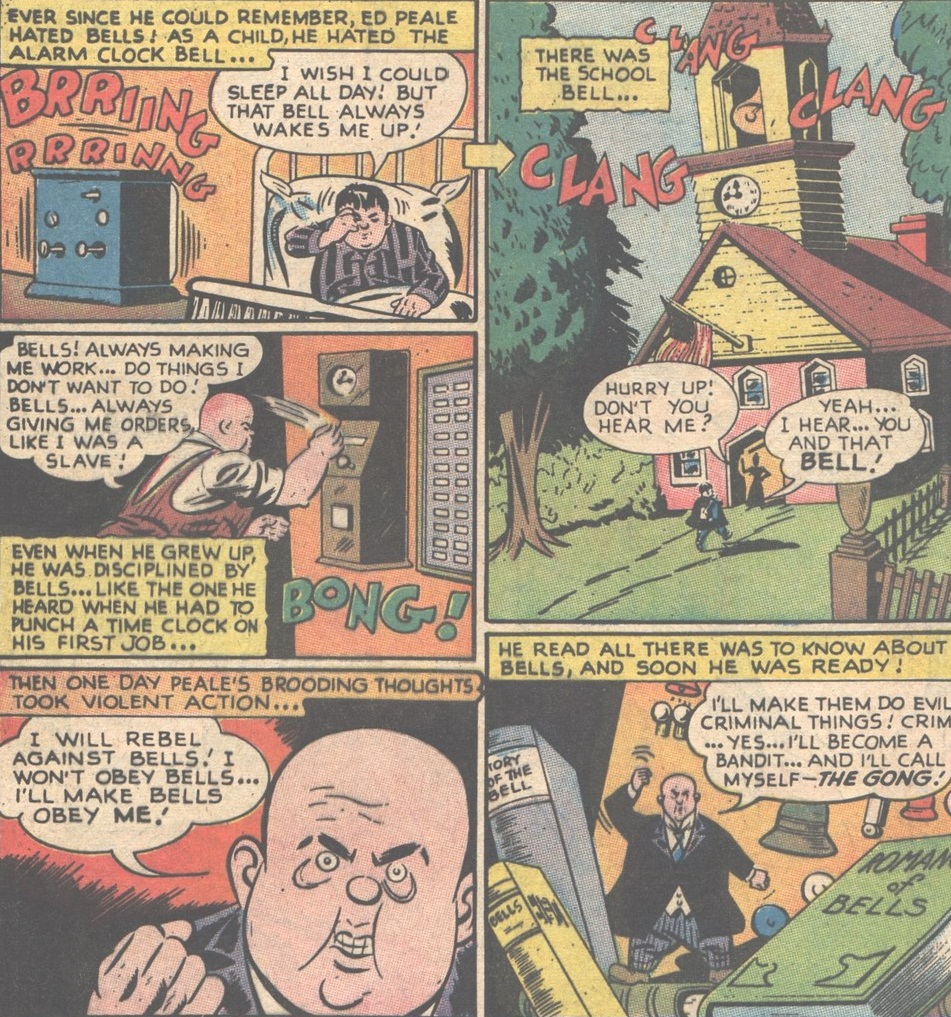
Batman 198

It sounds like a stretch at first, but Ed Peale proves to be quite creative in terms of getting the most out of his shtick of making bells ‘do evil, criminal things!’ He makes false alarm calls so that the sirens of a fire engine, an ambulance, and a patrol car create a ‘sound cover’ over the alarm of the jewelry store he is robbing. He rings the starter’s bell to summon down every elevator operator in a building, so that no-one spots his gang (the Gong’s gang!) crashing a diamond cutter’s office on the top floor. He even manages to get his hands on a huge bell crammed with gems and gold nuggets!

And, of course, his very appearance (designed by Charles Paris) further reinforces the whole motif:
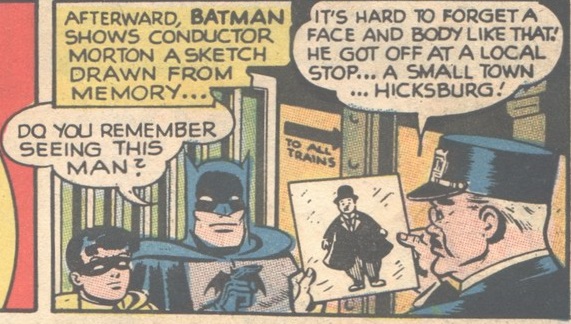
Batman 198

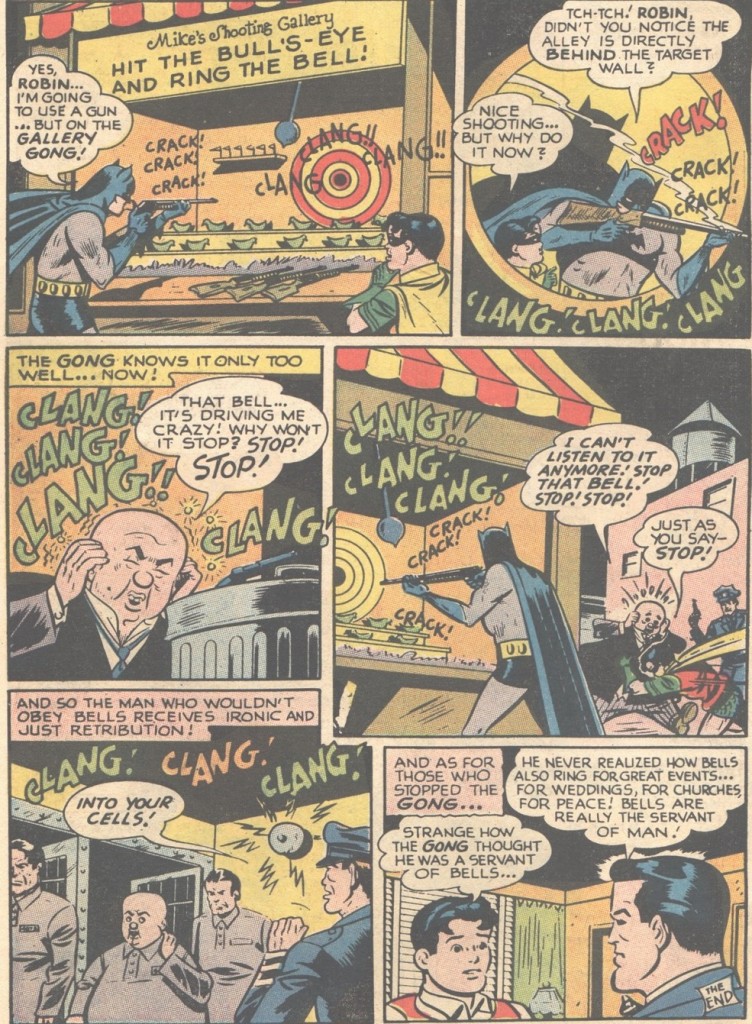
In typical thematic consistency, everything in this comic revolves around bells. Batman tracks down the Gong by drawing on bell-related clues. The villain’s obligatory deathtrap consists of leaving the Dynamic Duo adrift on a loose buoy. Unsurprisingly, the resolution also involves bells, in a scene that, for once, convincingly justifies the Caped Crusader using a gun:
Batman 198Batman 198

What an important moral lesson!

AGE O’QUARIOUS

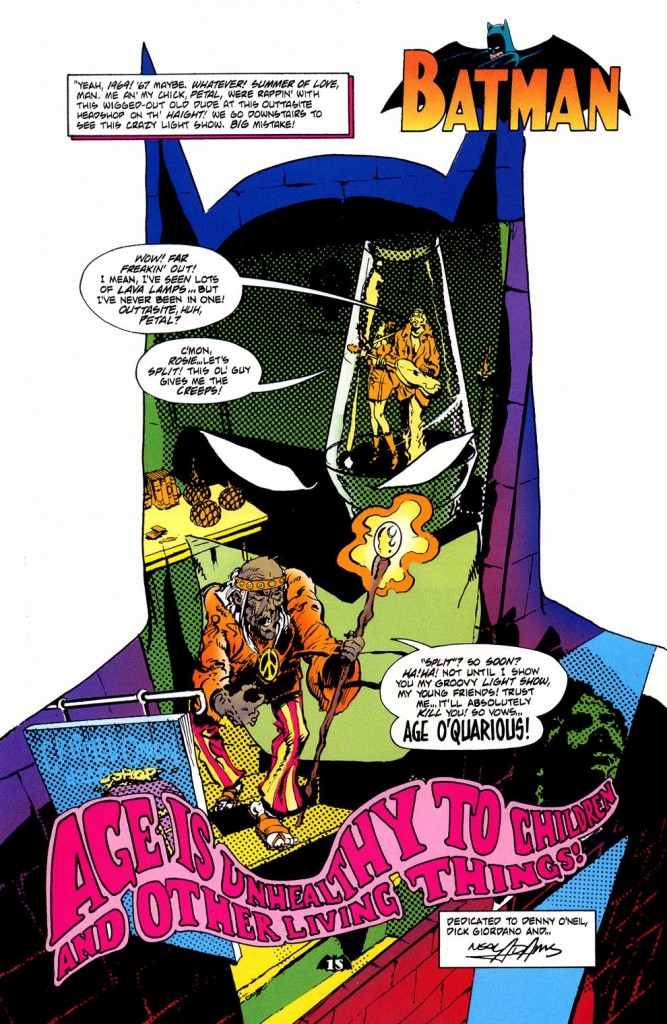
Between all the free love, the hallucinogenic drugs, the hippie movement, and the broader generational clash, the 1960s must have been a damn crazy era. And if there is one Batman villain who personifies this craziness, it’s Age O’Quarious (get it?).
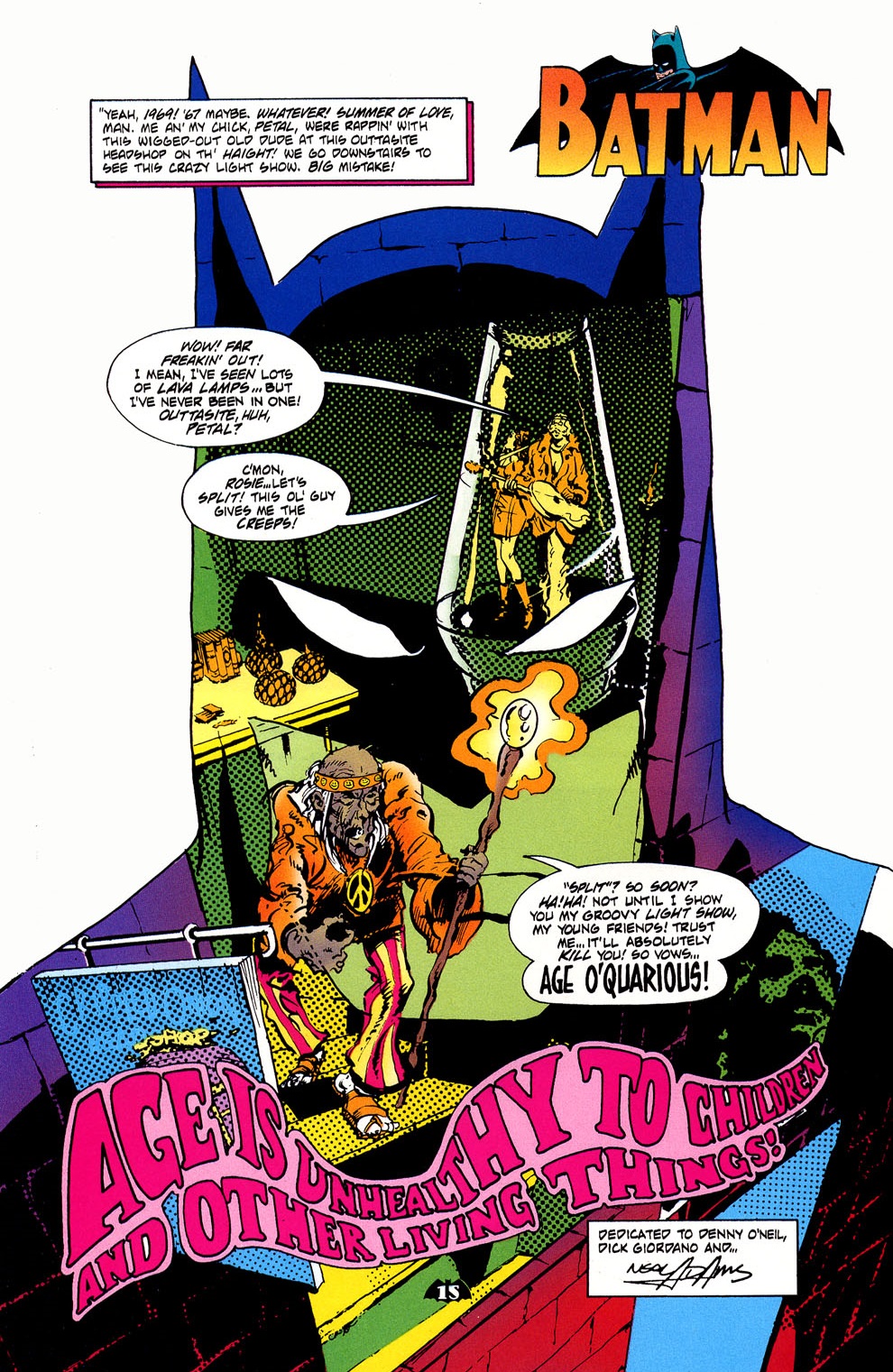
Legends Of The Dark Knight 94

Age O’Quarious was actually created in 1997. Michael T. Gilbert did a very cool, metafictional anthology issue called ‘Stories’ (Legends of the Dark Knight #94), about an ersatz-Salman Rushdie stuck in an elevator, waiting for a group of fundamentalists to come and kill him. While the skeptical writer awaits his death, the other passengers tell him about their personal encounters with the Dark Knight – and each flashback is a riff on a different comics’ period. For the Dennis O’Neil era, Gilbert came up with this doozy of a pastiche, set in the late sixties, about a scientist who was fired for being ‘too old’ and now seeks revenge against ‘youth culture’ by inventing a black-light wand that can absorb youth!

It’s a brilliant homage, not only because it comments on the values of the time, but because both Batman’s speech to Age O’Quarious and the story’s final twist genuinely feel like the kind of stuff you can find in those comics. Moreover, Gilbert (who, besides writing, also drew and colored the issue) absolutely nailed the trippy visual style of an art job by Dick Giordano and Neal Adams.

MR. CAMERA

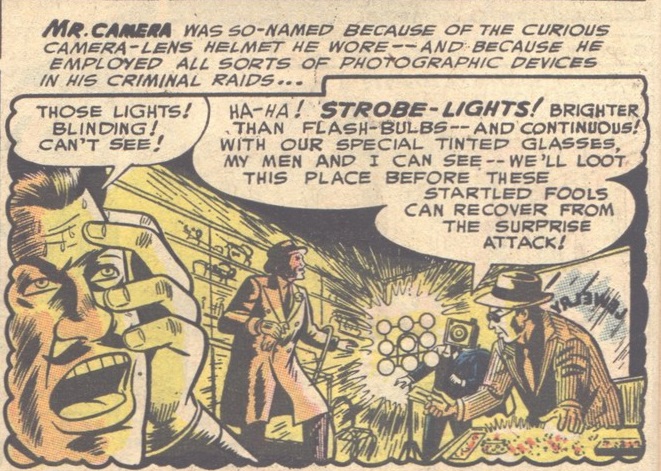
Created by David Vern and Sheldon Moldoff (as Bob Kane), Mr. Camera first showed up in 1954, in ‘The Boy Wonder Confesses!’ (Batman #81, later reprinted in Batman #185).

With a name like that, you get no prizes for guessing what his gimmick was…
Batman 185

Also, because this was the fifties, you can be darn sure there was a fight on top of a giant camera (and later one involving a giant slide projector).

Me, I would have loved to see Mr. Camera show up every few years, each time engaging with a new visual arts movement, from décolage to postminimalism… At the very least, he deserved a cameo in Andy Warhol’s Batman Dracula picture!

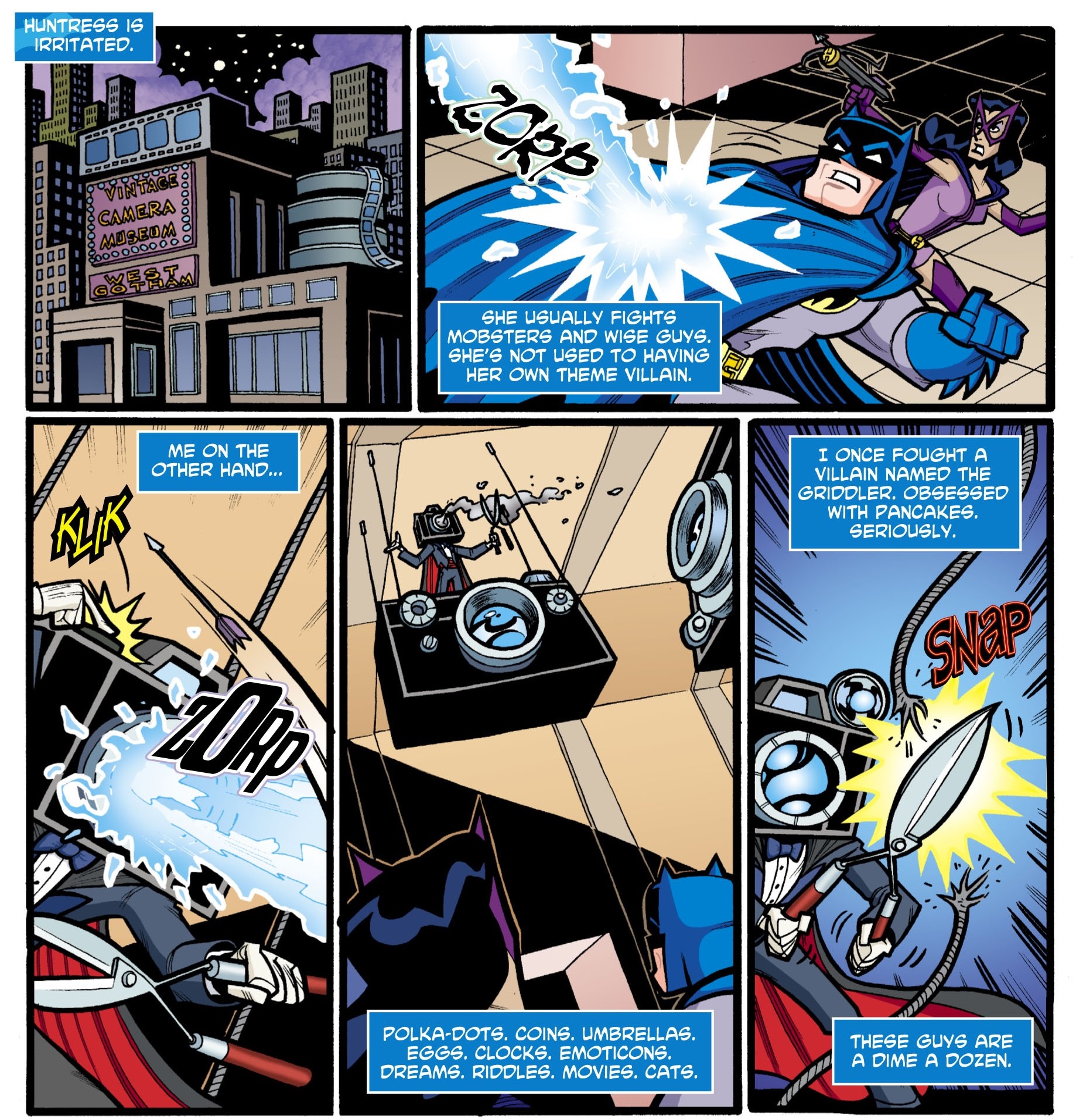
However, surprisingly almost 60 years went by before the character found his way back to the pages of a Batman comic, with ‘Captured by Mr. Camera!’ (Batman: The Brave and the Bold #14). Written by Landry Q. Walker, with art by Eric Jones, this issue was as packed with fun and zest as any episode of the Brave and the Bold cartoon show (where Mr. Camera did have a couple of cameos).
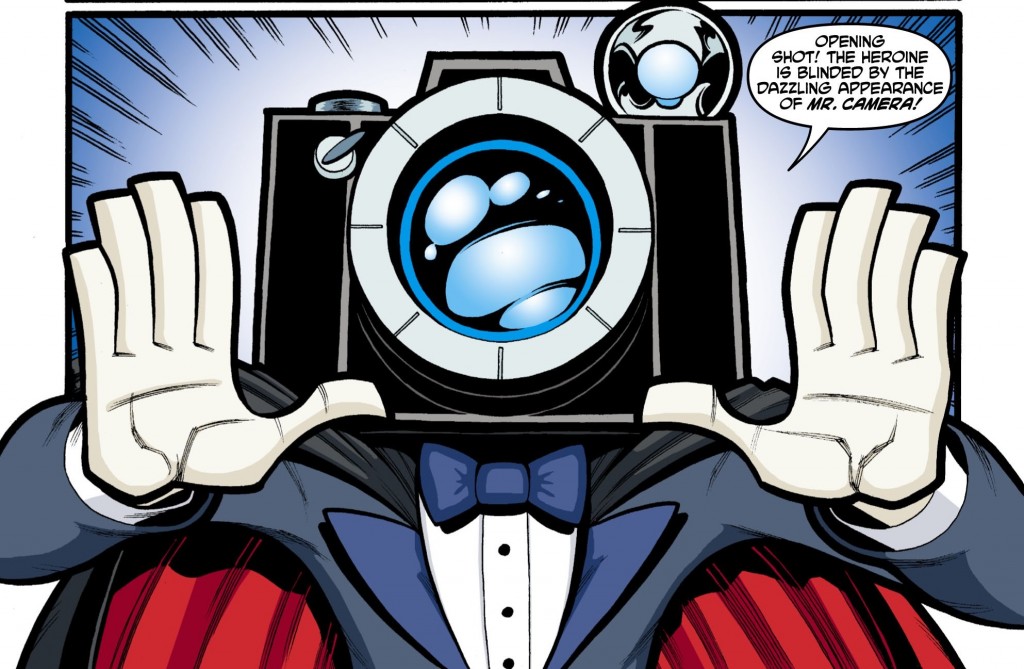
Batman - The Brave and the Bold 014

This time around, the camera-themed rogue goes after a different vigilante, namely the Huntress, who is a bit freaked out, as I guess anyone would be if stalked by a creepy criminal with a huge camera for a head. Well, not quite everyone – the Caped Crusader handles the situation with characteristic nonchalance:
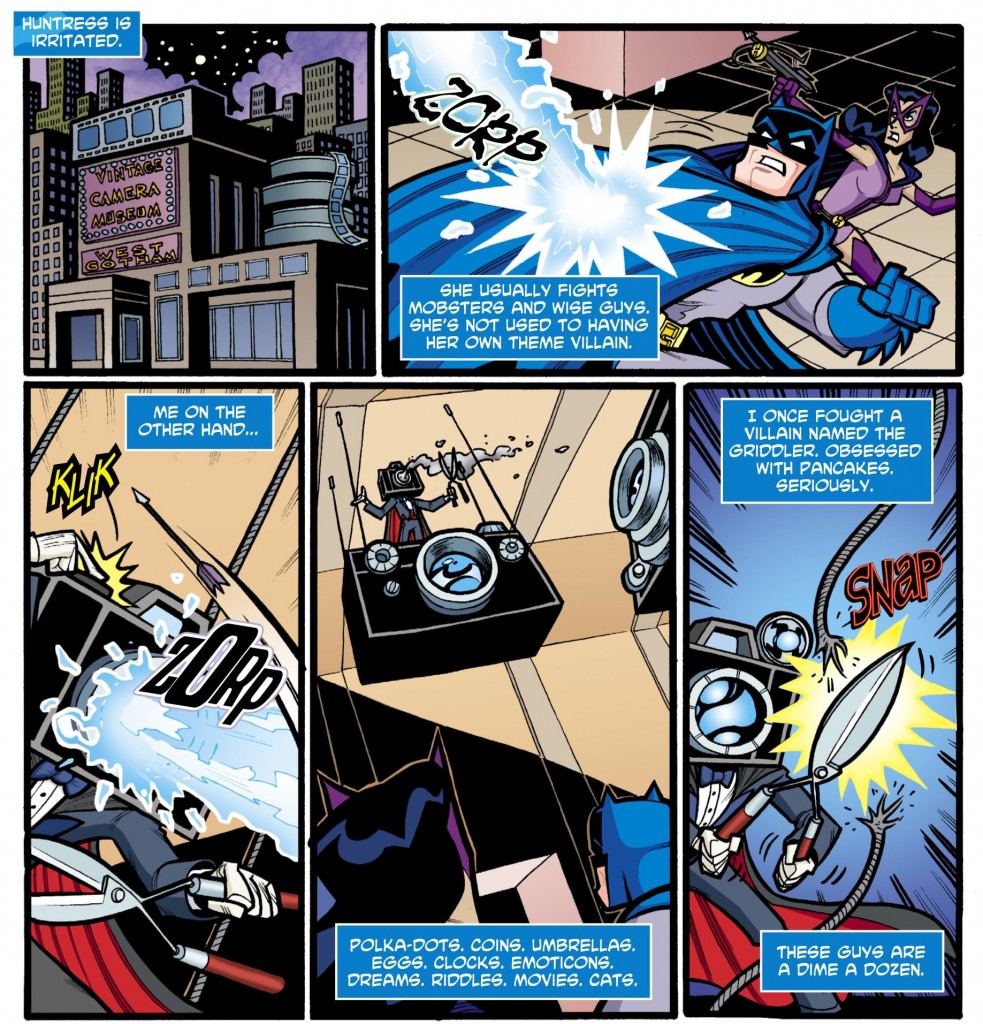
Batman - The Brave and the Bold 014

It was a clever reboot, which even set the stage for Mr. Camera to return as more of a threat, but so far this foe hasn’t gotten another chance at the spotlight.

THE MATCH

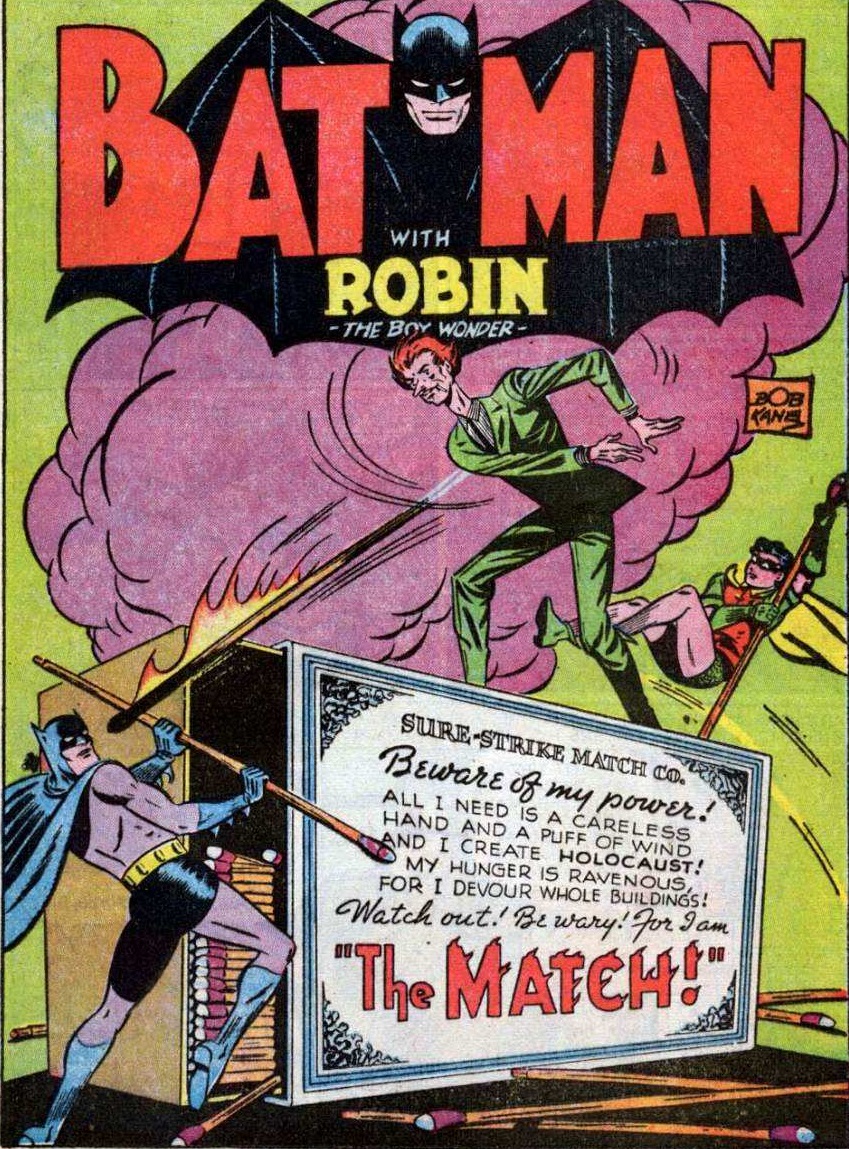
Written by Bill Finger and illustrated by Charles Paris, ‘The Match!’ (Batman #45, cover-dated February-March 1948) introduced the titular villain, an arson racketeer who, for a fee, sets fires for clients in need of insurance money.

Like with Mr. Camera, a lot of what appeals to me about the Match has to do with the wonderful design. Charles Paris didn’t bother with a glitzy costume, though, he just made the character’s physiognomy resemble a match:
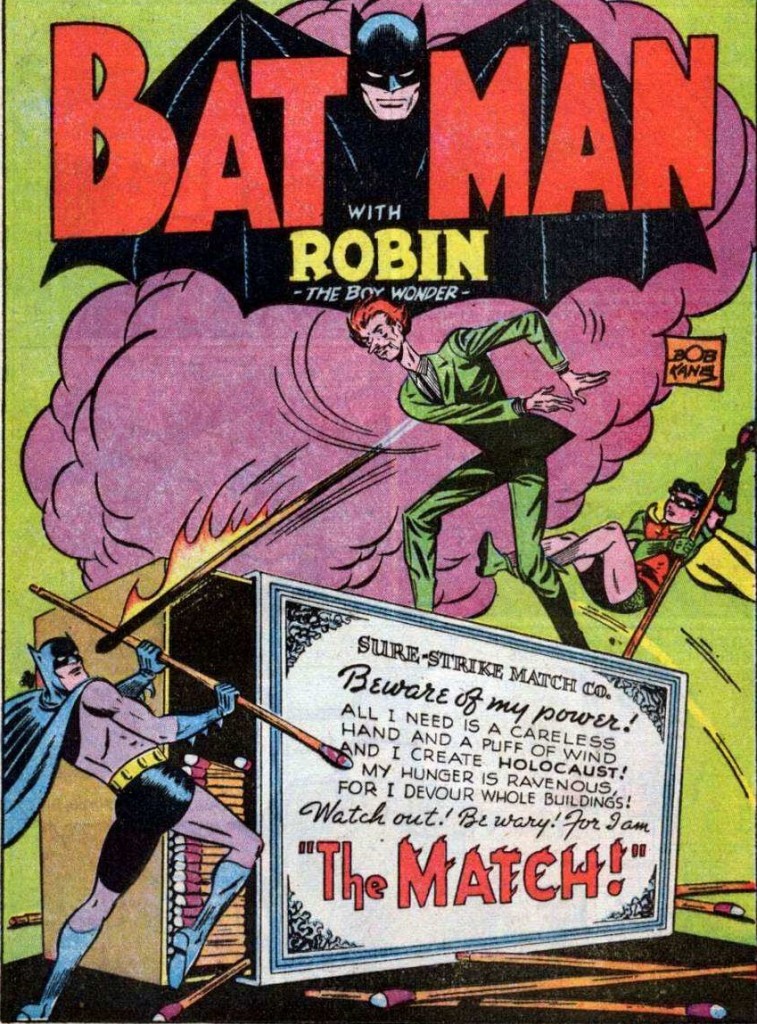
Batman 045

I also like the way Paris made the villain’s headquarters look like a bunch of burned matchsticks:
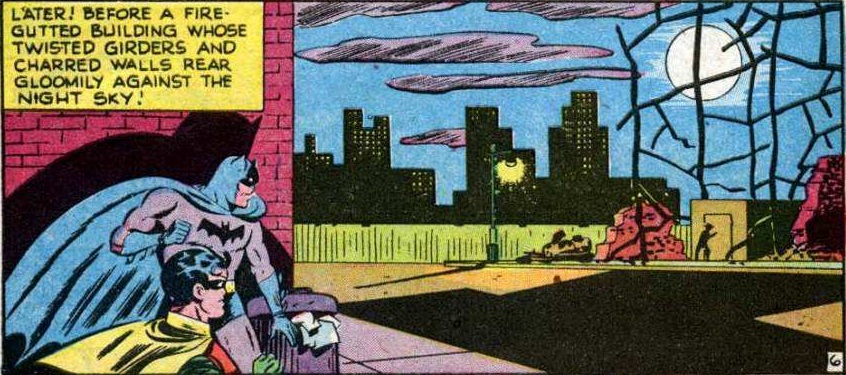
Batman 045

All in all, this is a weird little story that reads simultaneously like a lean crime adventure and like an ill-disguised advertisement for the Fire Department. It actually starts out with the Dynamic Duo joining the Gotham City Fire Patrol and finishes with the Boy Wonder addressing the readers directly, telling kids not to play with matches!

THE BOUNCER

The Bouncer came on the scene with ‘The Strange Death of Batman!’ (Detective Comics #347), first published in 1966. He was a young metallurgist who stumbled onto an alloy of rubber, steel, and chrome, which could bounce higher than anything else (he called it ‘elastalloy’). Naturally, the nameless metallurgist used this discovery to make a supervillain suit, turn himself into a human Wham-O SuperBall, and go on a crime spree in Gotham City. So yeah, the Bouncer’s basic gimmick was that he, well, bounced. A lot.

By itself, this may sound kind of lame. However, the Bouncer’s first appearance had a lot going for it. For one thing, the story was written by factoid-loving Gardner Fox, which means that not only was it full of delightfully cheesy puns, but halfway through we got a lesson about elasticity! Furthermore, Carmine Infantino and Joe Giella delivered some crisp and vibrant art:
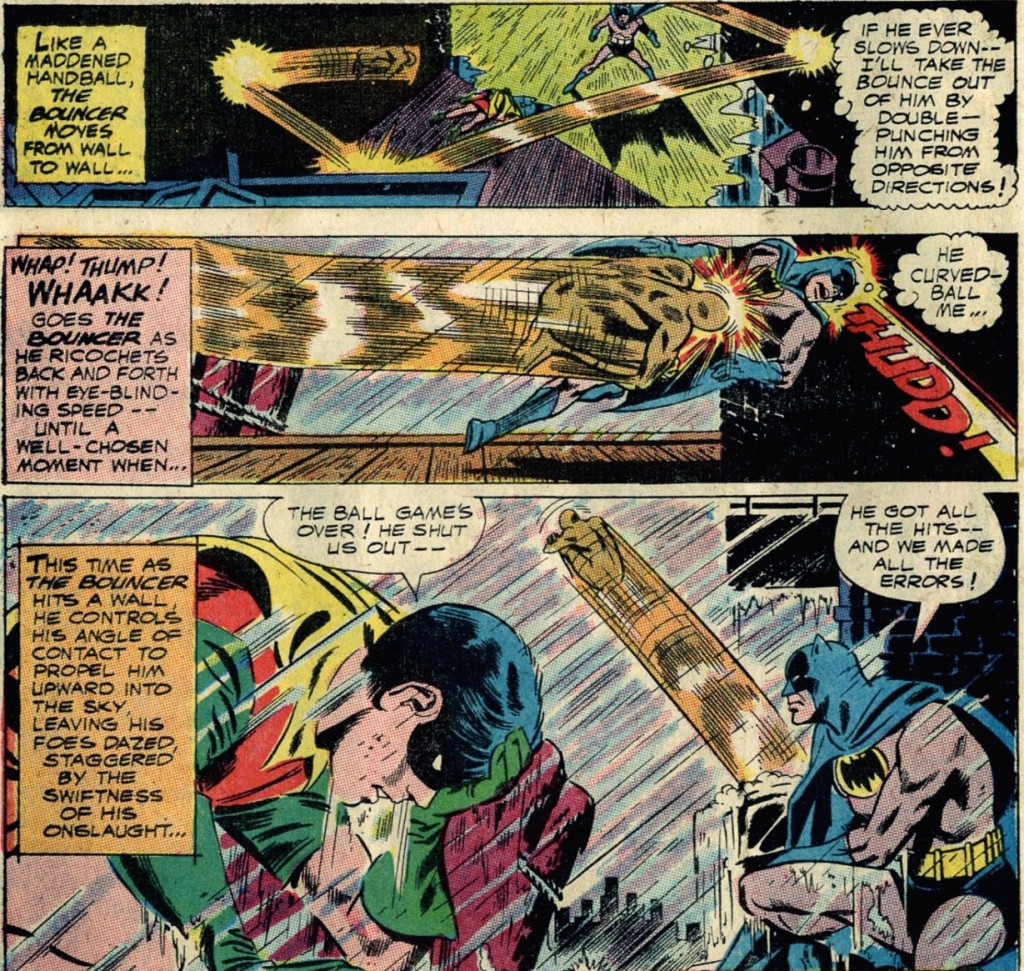
detective comics 347

To be sure, the Bouncer wasn’t the most memorable aspect of this tale (more on that below). In fact, given his ill-defined personality and his limited bag of tricks, fans weren’t exactly crying out for a return. Thus, after this, the Bouncer didn’t have much of a career, although he did show up once again in ‘While the Bat’s Away…’ (Batman #336), a fun issue that brought together many of the Caped Crusader’s third-string villains.

(Also, I’m guessing the Bouncer must have been, at the very least, a visual inspiration for the lead of the entertaining slacker-superhero series, The Bounce.)

GARDNER FOX

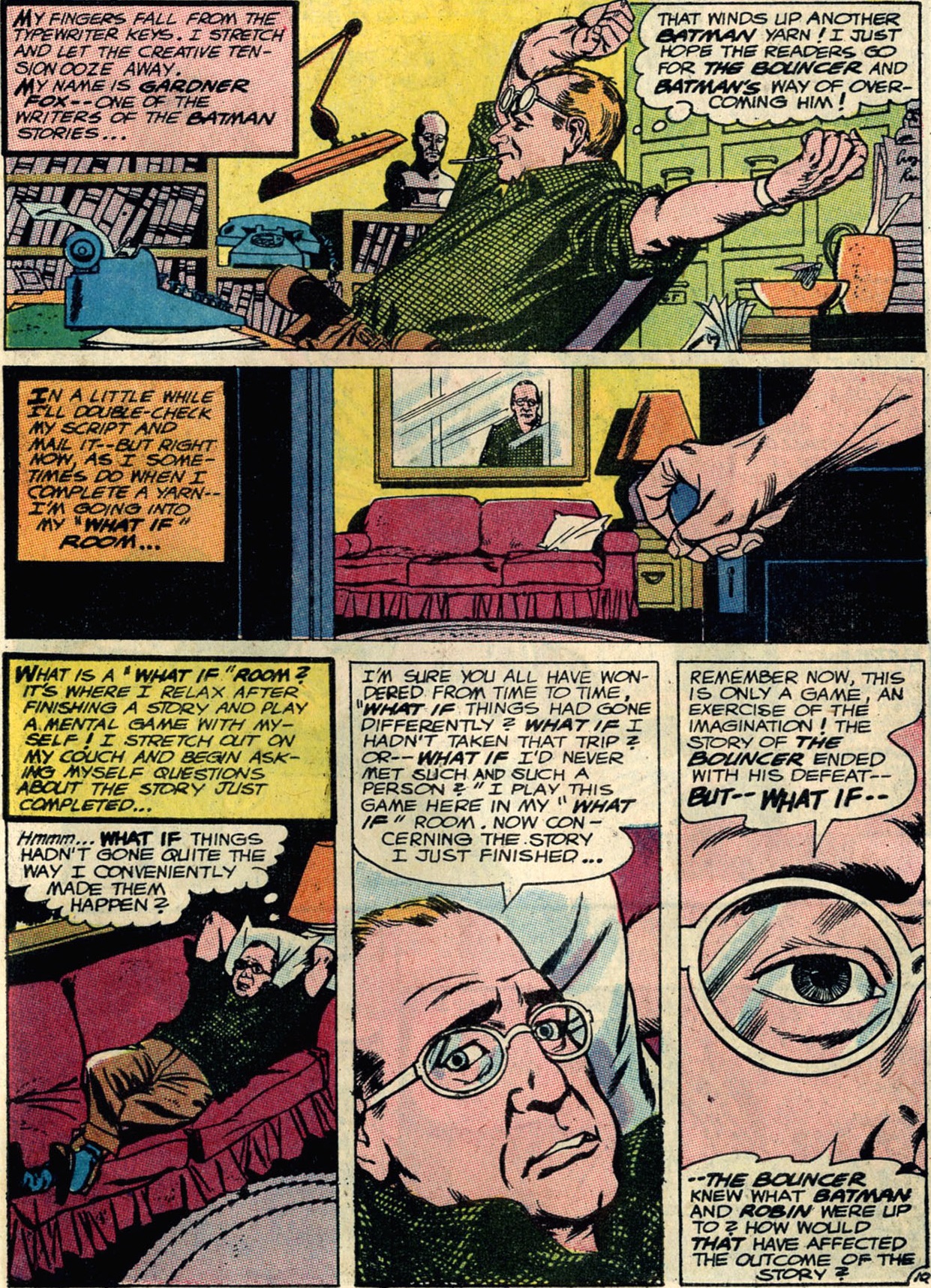
In a way, Gardner Fox is the least obscure character on this list. After all, he was a real-life author who wrote thousands of comics, many of which set in Gotham City. But even as a fictional character, Gardner Fox’s credits list exceeds those of the Gong, Age O’Quarious, Mr. Camera, the Match, and the Bouncer since he enjoyed writing himself into his own stories (like in The Flash #123 and Strange Adventures #140). What’s more, other writers have included him in their comics as well (Captain Carrot and his Amazing Zoo Crew!, DC Comics Presents: Hawkman, DC Comics Presents: The Atom). Fox isn’t usually depicted as a villain, but I would argue he comes close enough in the aforementioned ‘The Strange Death of Batman!’

For the first nine pages of Detective Comics #347, Batman and Robin (here also referred to as ‘the Gang-Busting Gladiators’) face the Bouncer and you may be tempted to assume that the opening splash’s remark about this being an offbeat story was pure comics’ hyperbole. Indeed, the whole thing unfolds like a fairly straightforward adventure: the plot wraps up when the Dynamic Duo saves the day through a comic bookish plan involving electrodes and a high frequency beam.

Except that then we get this page:
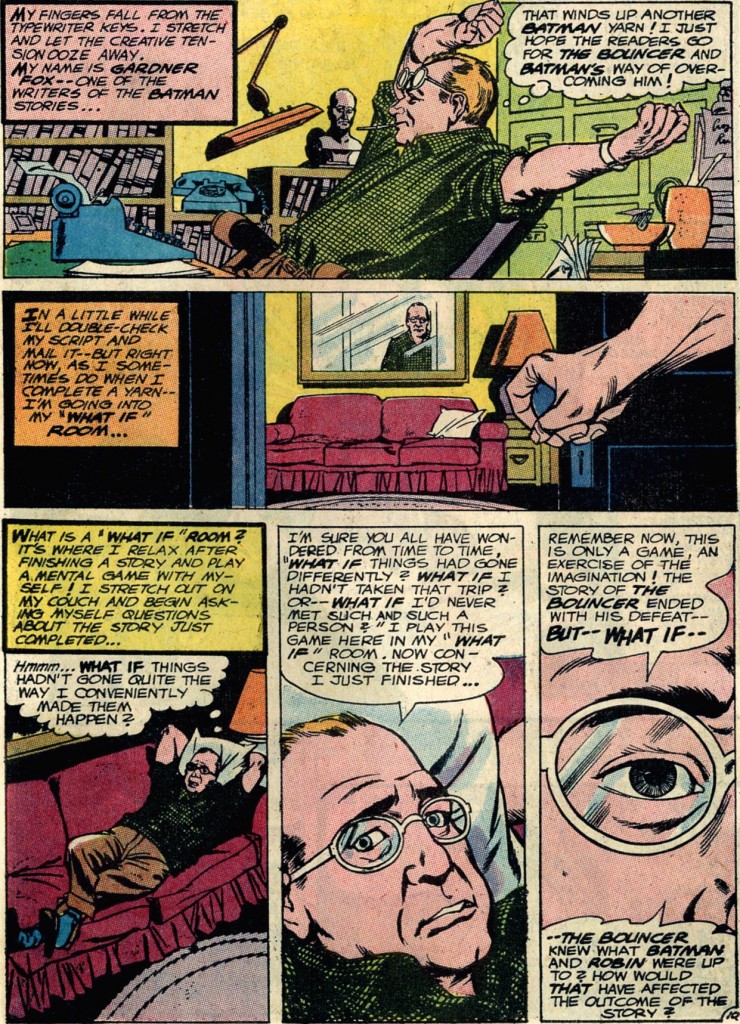
detective comics 347

Gardner Fox goes on to imagine another version of the story… and this time, the Bouncer actually  manages to kill Batman! That’s right: there is a comic where Gardner Fox is literally shown to be responsible for the murder of the Dark Knight, on a whim. And things only get wilder from there, as Robin seeks out revenge and eventually teams up with a Batman from a parallel universe.

Put that in your movie, Mr. Snyder, and I will give you my money.


NEXT: Batman burns.
Posted in GOTHAM CITIZENS | Tagged , , , , , , , , , , , , , | Leave a comment

Comics for Tarantino fans – part 2

If you read the last post, you know what’s going on. Here are more comic suggestions for fans of Quentin Tarantino’s films:

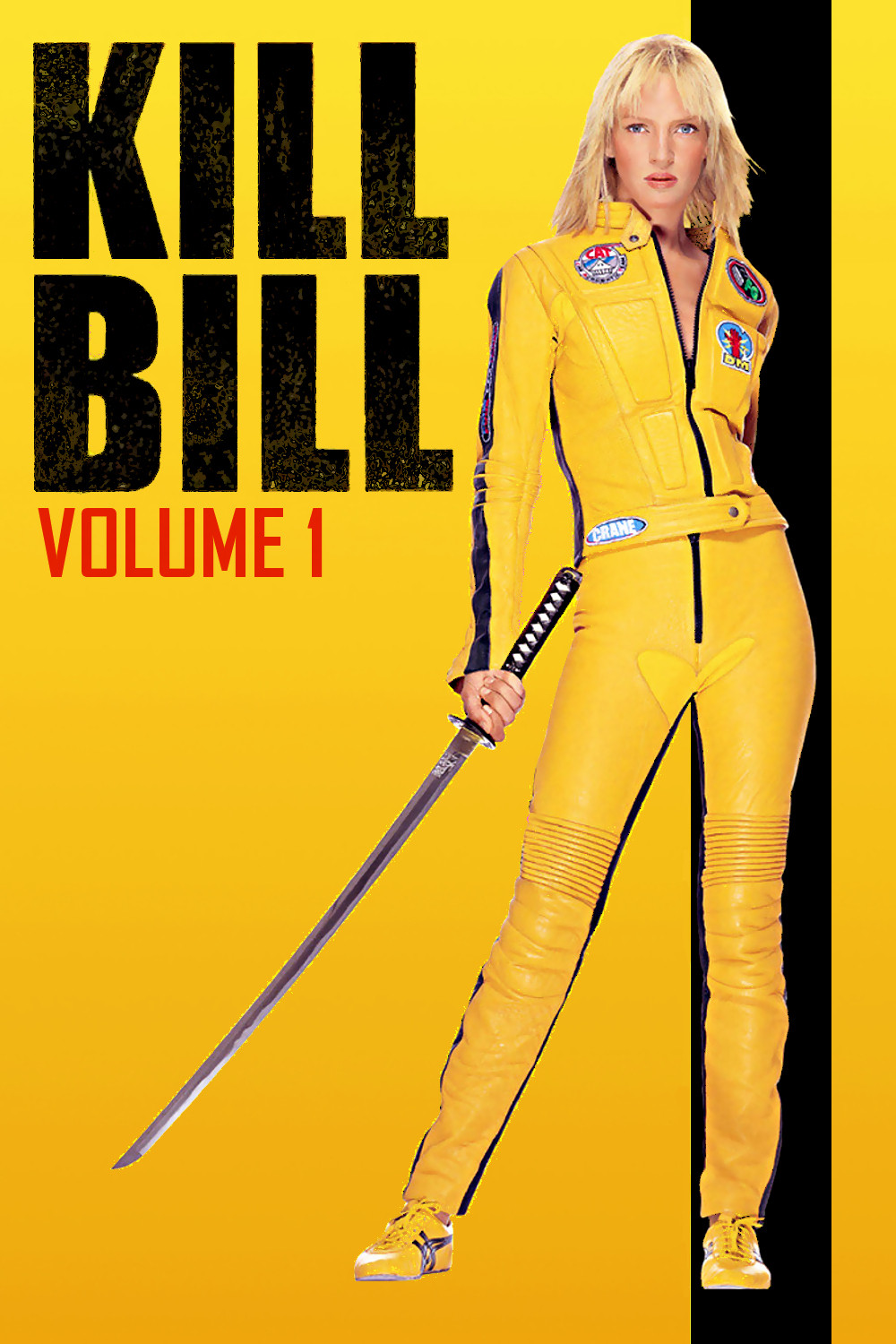
Kill Bill    Death Proof    Inglourious Basterds

After the subdued crime drama Jackie Brown, Tarantino abandoned all pretenses of realism and embarked on a series of stylized projects, starting with the surreal revenge opus Kill Bill. A blast of energy, ultra-violence, and over-the-top aesthetics, this shamelessly schlocky pop culture collage sees Uma Thurman kill and maim her way through an assortment of pulpy archetypes deliciously called the Deadly Viper Assassination Squad. It’s split in two volumes, the first one a dazzlingly choreographed bloodbath drenched in orientalist iconography (complete with a sick animé sequence) and the second one a relatively more introspective neo-western – yet both equally basking in geeky Easter eggs and fetishistic mutilation.

In comics, that’s the recipe behind Hard Boiled, the early ‘90s nutso cyberpunk classic written by Frank Miller and deliriously illustrated by Geof Darrow. The plot revolves around a psychotic tax collector who is actually a confused insurance investigator who is actually a cybernetic killer (or maybe not), but the plot is not the point. The point is the all-around visual orgy of kinetic destruction.

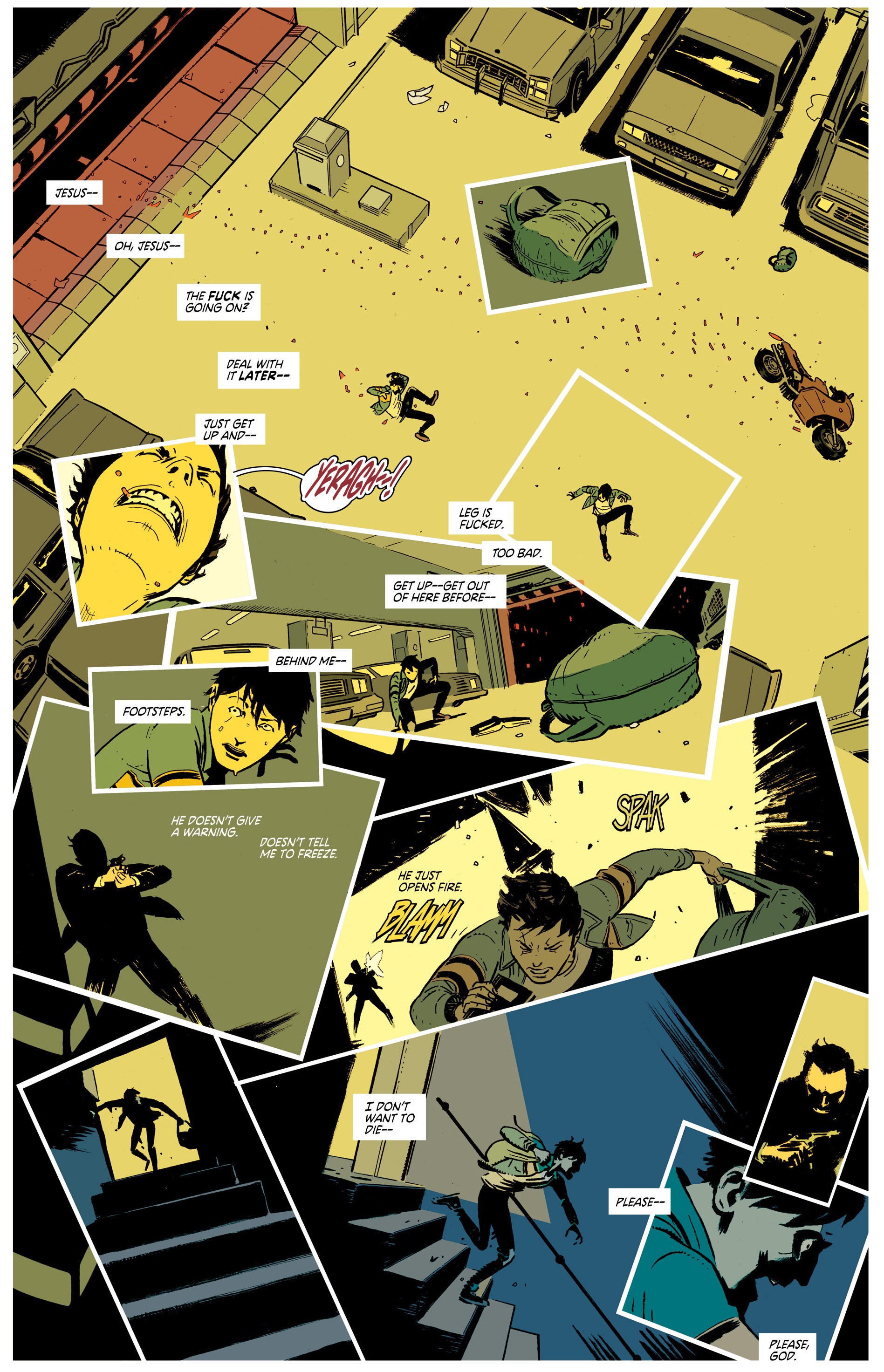
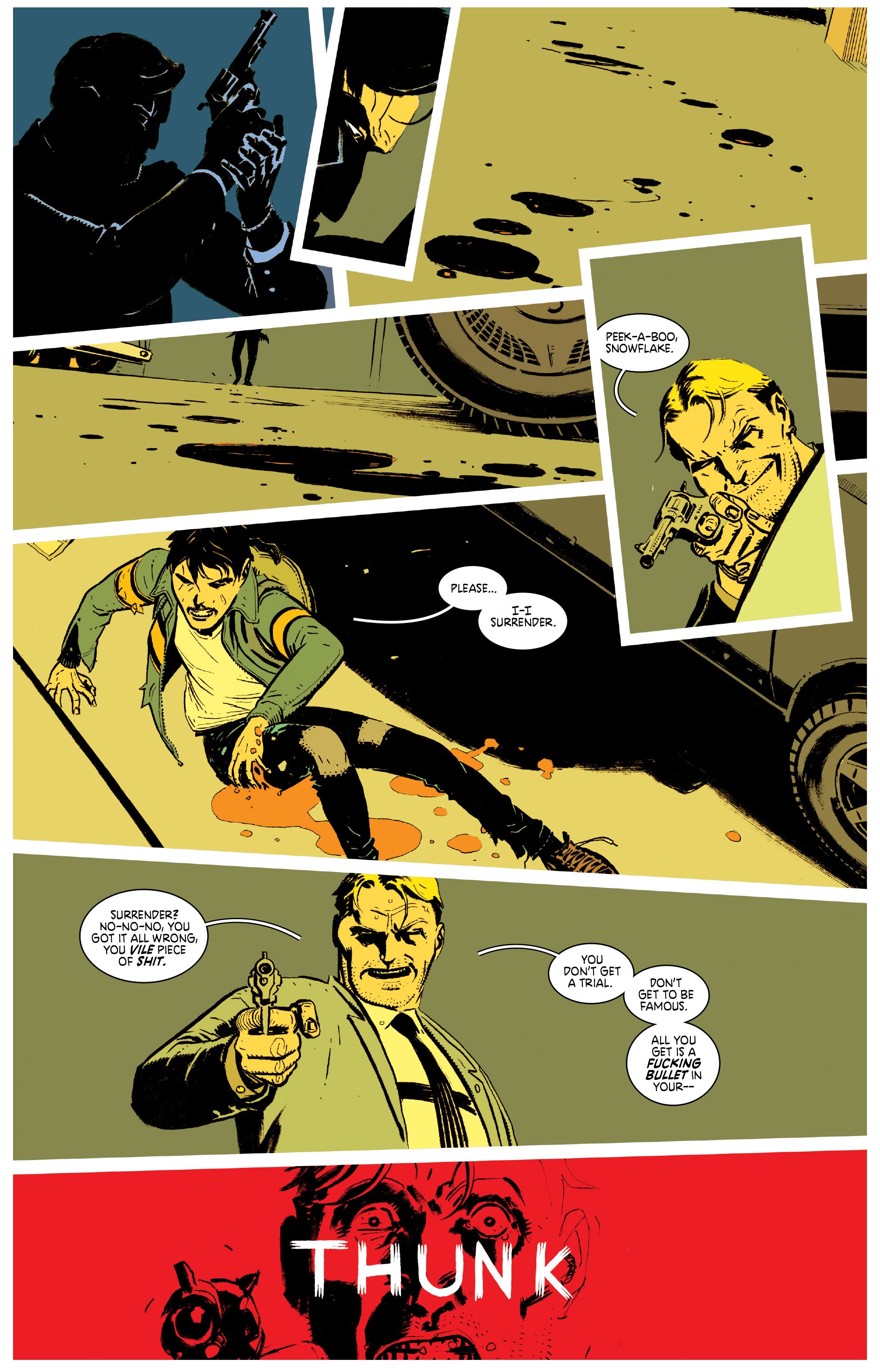
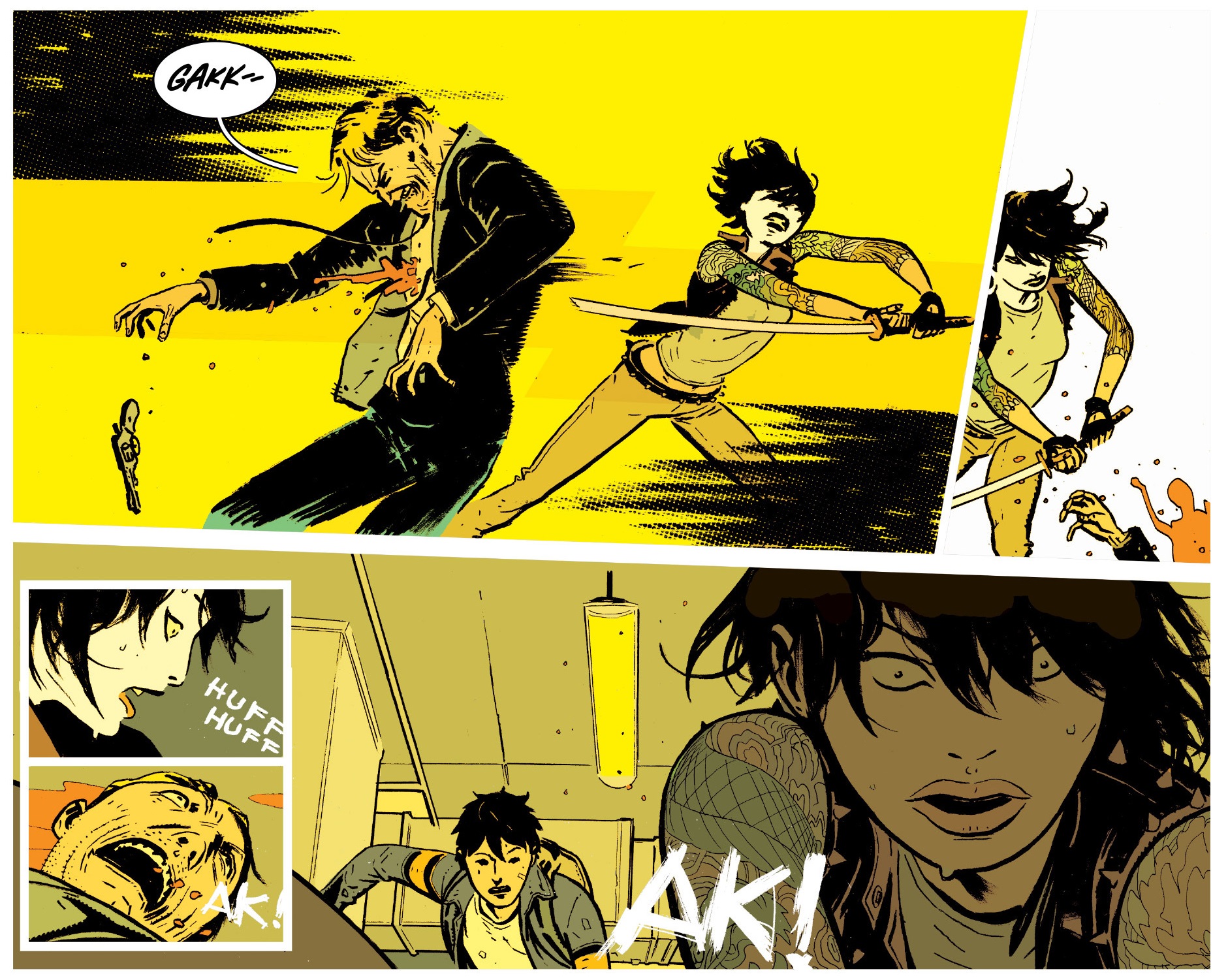
If you prefer something more recent, then start getting Deadly Class. Written with gusto by Rick Remender, this ongoing series about a school of assassins is brought to the page by what is arguably the best fucking art team in comics today – Wesley Craig and Lee Loughridge, whose depictions of martial arts and murder mayhem can be just as inventive and exhilarating as any action scene in Kill Bill

Deadly Class 01Deadly Class 01Deadly Class 01Deadly Class #1

Then there was Death Proof, Quentin Tarantino’s half of Grindhouse, the pastiche of B-movie double bills he did with Robert Rodriguez in 2007. It’s a throwback to the ‘70s, including to the original Mad Max, but if you squint, you can see parallels with the recent Fury Road as well, in that they both tell car-centric stories about empowering women. That said, while George Miller’s latest masterpiece is a flashy spectacle of relentless chases across a futuristic wasteland, Tarantino settled for a deliberately patchy slasher with long stretches of colorful banter and Kurt Russel as a serial killer called Stuntman Mike (who I assume is a descendant from the truck driver in Spielberg’s Duel). Sure, this flick lacks the gravitas of his other directorial efforts, but the thing is that Death Proof – especially the longer version which was distributed separately – still works as a nasty little bare-bones chiller, even if you disregard the fact that it’s a tongue-in-cheek tribute to exploitation films (hey, what Tarantino picture isn’t, to some degree?).

Death Proof definitely comes to mind when reading Bitch Planet, another riff on the cheap thrills of sleazy cinema (in this case blaxploitation, low-budget sci-fi, and above all women-in-prison flicks). Set in a misogynistic dystopia where ‘non-compliant women’ are sent into space, Bitch Planet’s idiosyncratic take on feminism (including some wonderful satirical adverts) is likewise bound to piss off critics across genders. Yet if writer Kelly Sue DeConnick clearly shares Tarantino’s passion for B-movies, she has enough ironic distance towards trashy genre fiction to mock its sexist tropes while giddily rejoicing in its guilty pleasures. The result is a manic and refreshing read, made even cooler by Valentine De Landro’s retro art, particularly on the series’ magnificent covers.

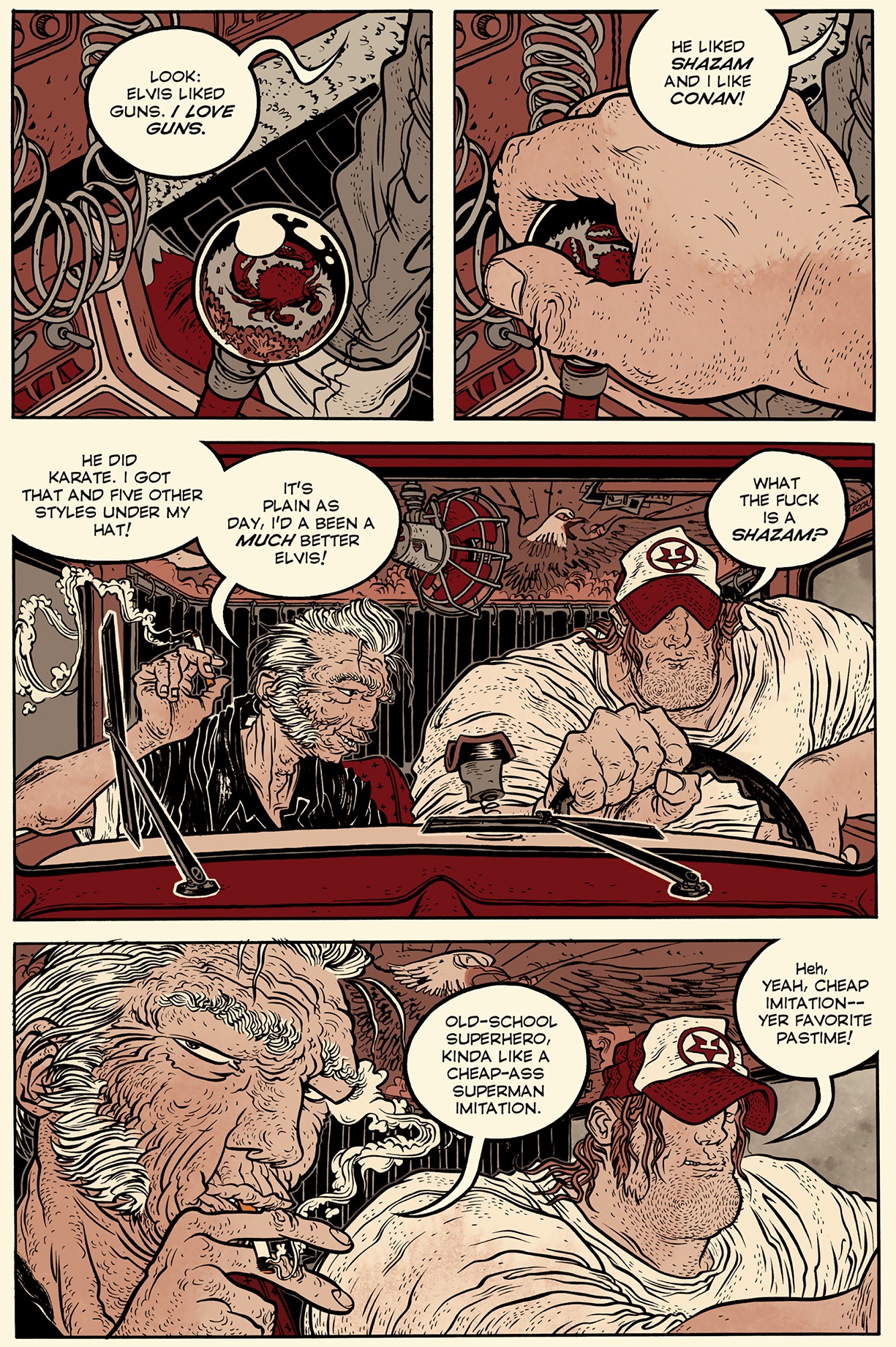
Of course, Death Proof was only part of the overall Grindhouse project. For the first half of this double-feature, Robert Rodriguez provided a cartoonish spin on zombie plagues, Planet Terror, where Tarantino had a small role as a rapist with mutant genitals. While less artsy and pretentious than his partner in crime, Rodriguez doesn’t lack panache – he made the most out of the chosen format, namely through a great gag about missing footage. There were also amusing faux trailers by various directors, including one for Machete, which Rodriguez later turned into its own riotous feature film (followed by the even sillier Machete Kills). My suggestion for fans of this kind of grungy-looking violent action is Rafael Grampá’s off-kilter one-shot Mesmo Delivery, about a truck ride that goes horribly wrong:

mesmo deliveryMesmo Delivery

And what about Inglourious Basterds, the suspenseful, tightly edited slice of nazixploitation set in Quentin Tarantino’s revisionist version of World War II (in which, naturally, cinema is the most powerful weapon of all)? Tarantino explicitly drew on the string of macaroni combat productions that followed The Dirty Dozen‘s sadistic footsteps, but he ended up with a spy comedy which, I think, owes just as much to the escalating farce of the original To Be or Not to Be, especially the climax at the premiere of a hilariously crude propaganda film in occupied Paris. (As quirky a WWII adventure as Inglourious Basterds certainly is, though, it’s still not as quirky as Hannibal Brooks, the oddball picture about Oliver Reed trying to take an elephant across Europe in 1944.)

It’s hard not to go overboard with this one, since anti-Nazi retribution is such a beloved theme in comics. Even if one is to resist the temptation of once again bringing up Garth Ennis (who has done *tons* of WWII stories), there is still plenty left to choose from… Regarding the artistic side of the war in occupied France, you’d be hard-pressed find a more thoughtful and well-crafted book than Moving Pictures, by Kathryn and Stuart Immonen. But let’s face it, many fans will be less interested in ‘thoughtful’ than in ‘bombastic pulp’ when searching for the comics’ equivalent of Inglourious Basterds. And in the mouthwatering absence of what would have been Jack Kirby’s version of the film, one option could be to settle for The Iron Ghost: Geist Reich, an enjoyable whodunit about a Shadow-ish avenger in bombed Berlin during the last days of the war, courtesy of Chuck Dixon and Sergio Cariello.

Or better yet, go get Seven Psychopaths, by Fabien Vehlmann and Sean Phillips, about an even more outlandish mission to assassinate Hitler…

7 Psychopaths

As for Django Unchained, this incendiary mix of spaghetti western and blaxploitation took the revenge fantasy format of Kill Bill, Death Proof, and Inglourious Basterds to a new extreme by applying it to America’s history of slavery. Like its predecessors, the film went for subversive entertainment in the shape of a rollicking ballet of gory catharses and shocking anti-climaxes, but it struck a deeper nerve in the Obama-era zeitgeist of racial identity politics. To be fair, as gut-wrenching as Django Unchained can be, it’s still lighter than the Sergio Corbucci westerns that inspired Tarantino, if nothing else because of the inclusion of uproarious humor (at some points nearing the similarly-themed satire of Blazing Saddles). This left critics to puzzle over what’s more politically incorrect – the notion that the movie is a tasteless genre exercise or the disturbing implications of taking it seriously? Me, I think the moral confusion is part of the appeal. I can appreciate why many people would prefer a safe, sentimental approach to this topic, or even a more complex and profound one, but I find there is something entrancingly mesmerizing about the way Tarantino keeps stretching out the Monsieur Candie dinner scene into ever-increasing uncomfortable directions.

For a seemingly less transgressive engagement with the issues of Django Unchained, you may want to go with Kyle Baker’s Nat Turner, about the titular real-life African-American slave who led a rebellion in 1831. This powerful graphic novel is more respectfully straight-faced, although Baker doesn’t shy away from vivid sensationalism. He also takes the chance to indulge in virtuoso storytelling – most of the book is ‘silent,’ with Baker’s expressive art carrying the bulk of the narrative.

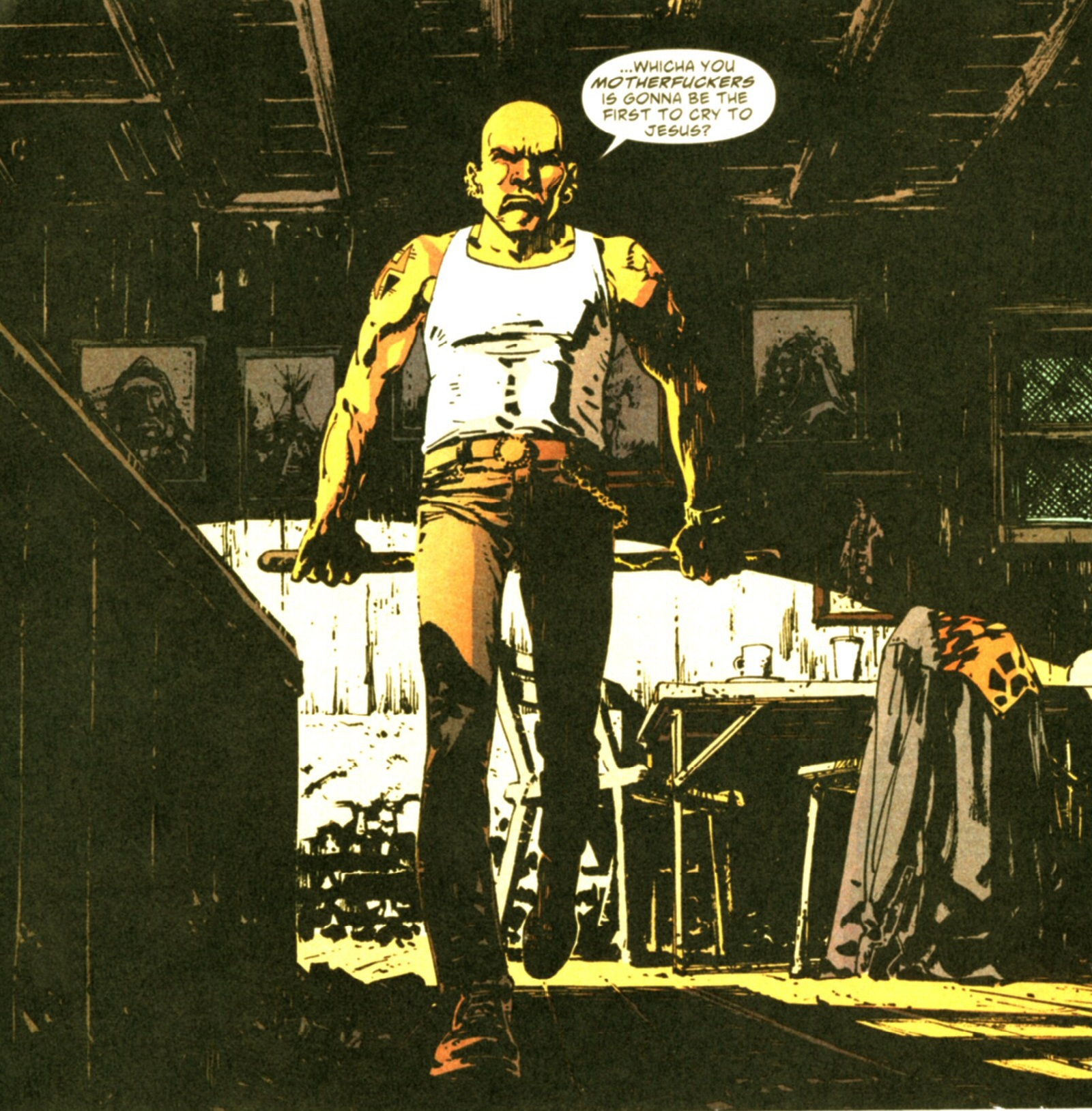
Django Unchained actually got a sequel of sorts in comics: a crossover mini-series with Zorro written by Quentin Tarantino and Matt Wagner, and illustrated by Esteve Polls. What’s more, the film’s original script has been directly adapted, with art by R.M. Guéra and colors by Giulia Brusco. The latter team was no doubt picked because of their impressive work in Scalped, the critically acclaimed crime series set in an Indian reservation. And honestly, if you want an intense, provocative take on the tropes of the western genre, I don’t think anything can beat Scalped.

Scalped 01Scalped 01Scalped 01Scalped #1

Finally, we come to The Hateful Eight, Quentin Tarantino’s latest love letter to cinema… Well, unfortunately I will only be able to watch it next week, so I don’t have any suggestions for this one yet. But I promise to write something about it soon!

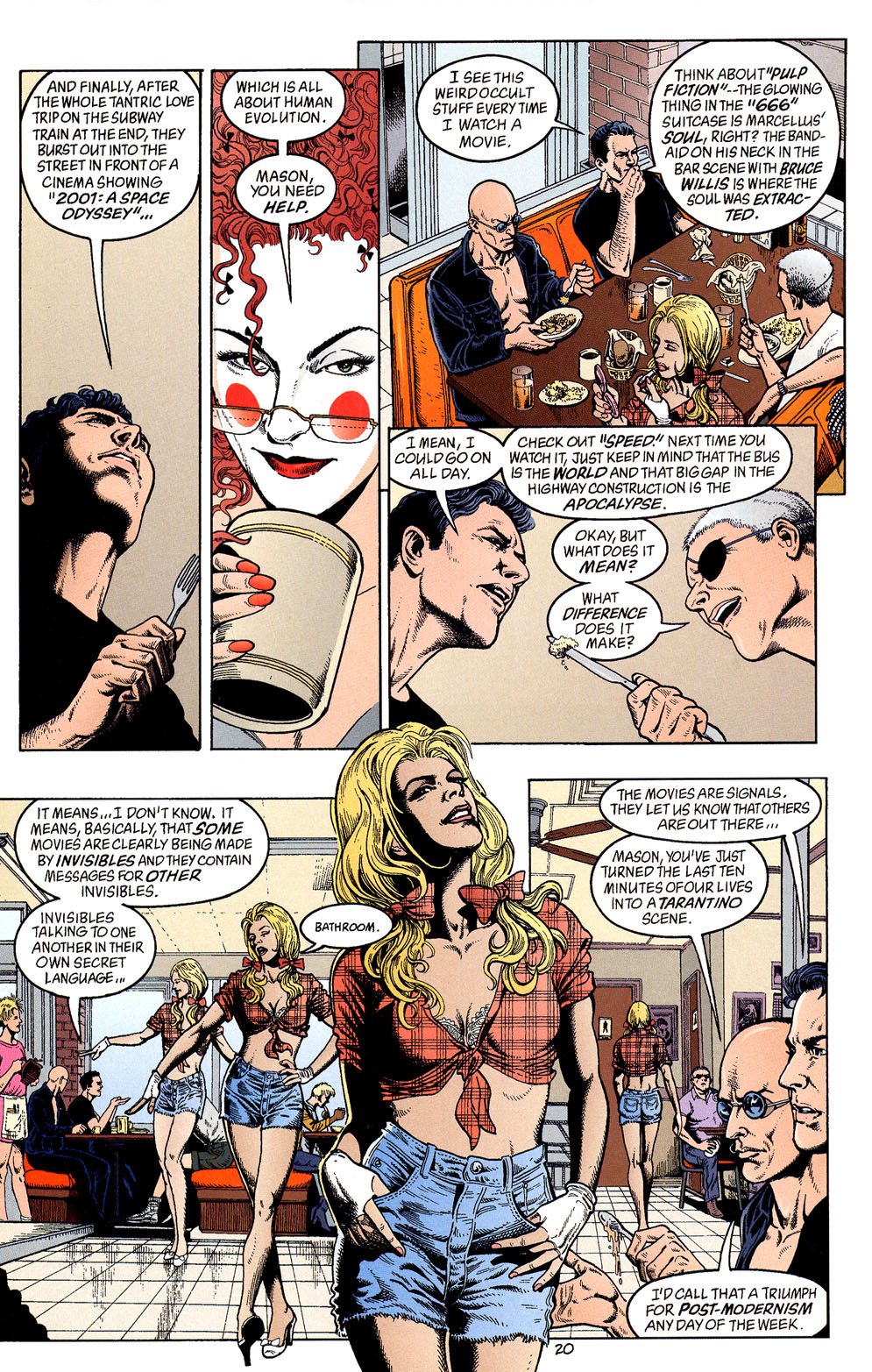
In the meantime, I’ll leave you with a neat homage to this iconoclastic director from The Invisibles, Grant Morrison’s metaphysical conspiracy thriller about an international secret society trying to liberate human consciousness. The Invisibles’ financier, billionaire Mason Lang, mentions Pulp Fiction during a monologue about movies in a scene at a diner which – as team leader King Mob points out – feels like it’s straight out of a Tarantino film:

The Invisibles v2 01The Invisibles v2 01The Invisibles (v2) #1

NEXT: Batman joins the fire department.

Posted in WEBS OF FICTION | Tagged , , , , , , , , , , , , , , , , , , , , , , , , , | Leave a comment