

-
Recent Posts
Categories
- ART OF BATMAN COMICS (36)
- ART OF HORROR COMICS (35)
- AWESOME COVERS (59)
- BATMAN COMICS FOR BEGINNERS (36)
- BOOKS OF THE YEAR (22)
- COLD WAR CINEMA (12)
- COVERS OF BATMAN COMICS (52)
- FANTASTIC ADVENTURES (51)
- GLIMPSES INTO AWESOMENESS (98)
- GLIMPSES INTO THE FUTURE (23)
- GLIMPSES INTO THE PAST (83)
- GOTHAM CITIZENS (37)
- GOTHAM INTERLUDES (86)
- HARDBOILED CRIME (42)
- HEADSHOTS (12)
- MANIFESTO (3)
- POLITICS OF BATMAN COMICS (21)
- SPYCRAFT & WARFARE (47)
- SUPER POWERS (16)
- WEBS OF FICTION (56)
- WILD WEST (7)
- WRITERS OF BATMAN COMICS (20)
- WRITERS OF SUPERMAN COMICS (4)
Drop me a line at
imbaytor@yahoo.com
Gotham X-mas spirit
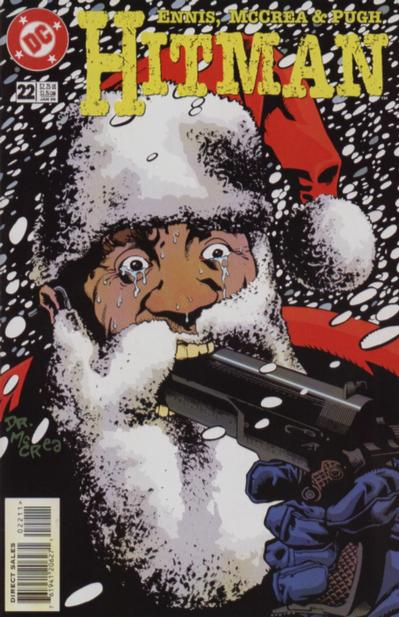
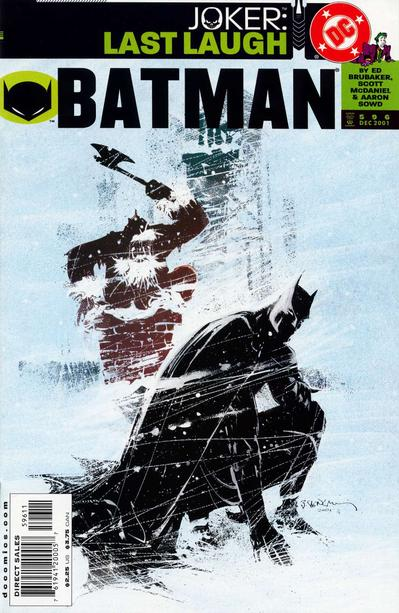
Ah, the holidays. Say want you want about Gotham’s unstoppable descent into an urban playground of psychopaths and vigilantes, not even Fox News can accuse the city of not having a Christmas spirit!
After all, this is the time of year when Santa brings joy to those around him:
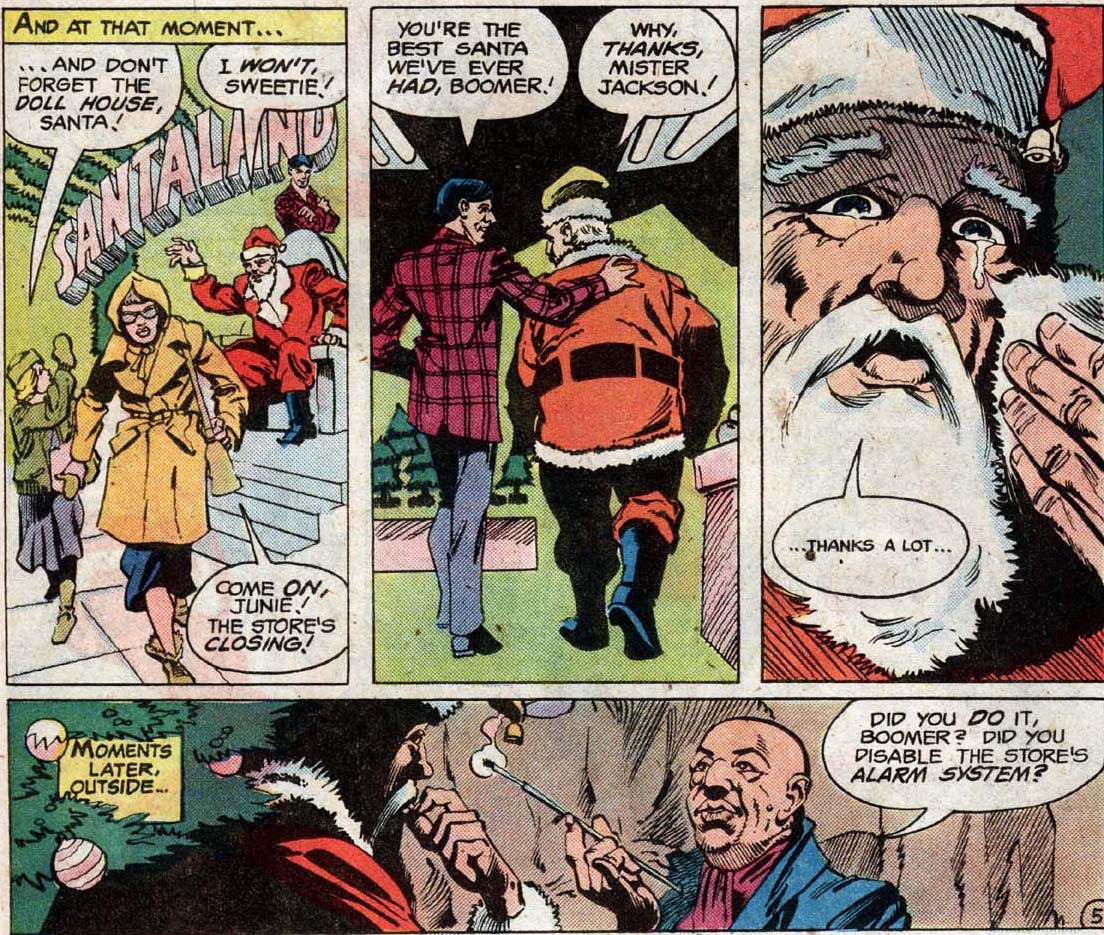 Super-Star Holiday Special 1980
All over Gotham, everyone is cheerful and having a nice time:
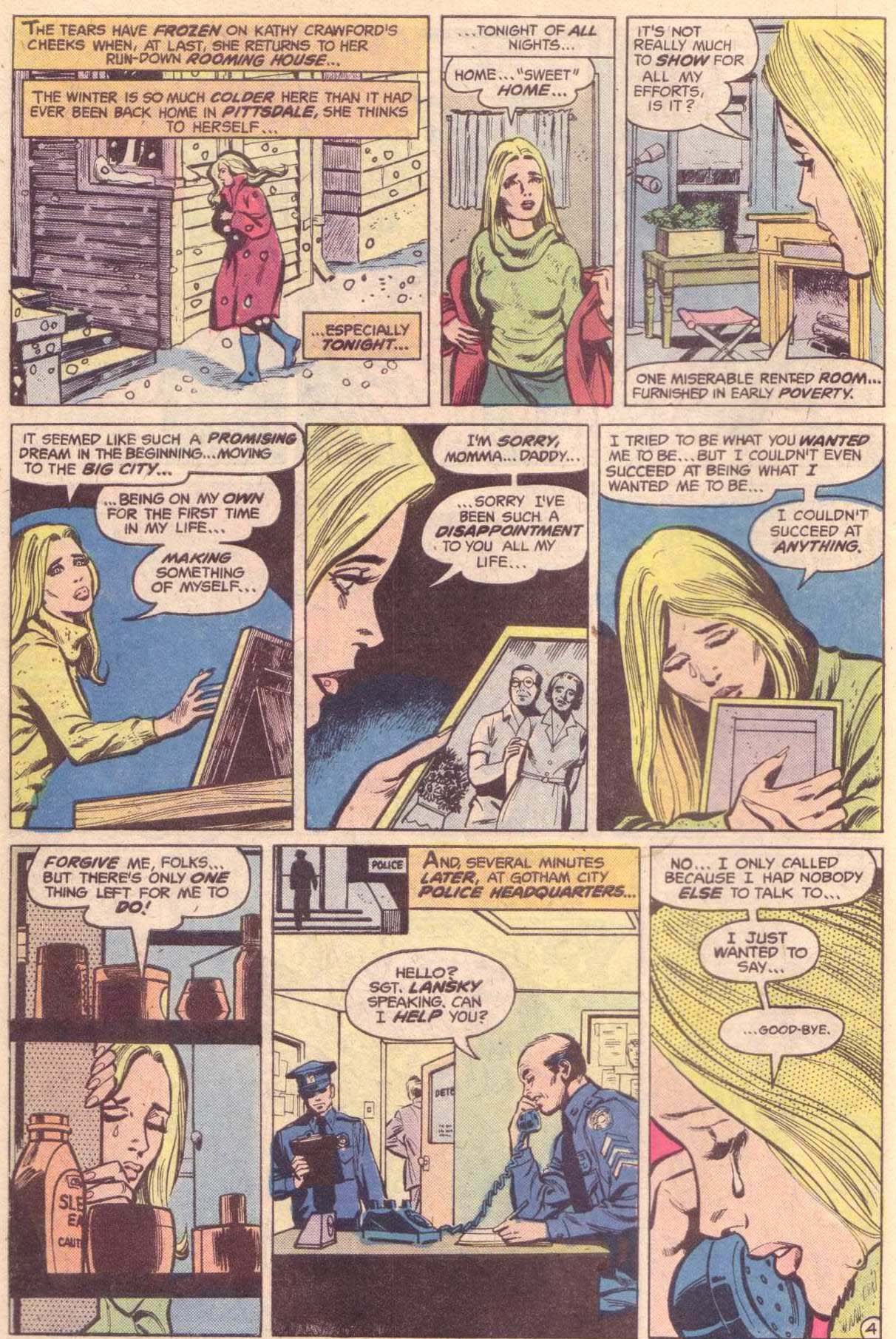 Batman #309
Helpless orphans get their wishes:
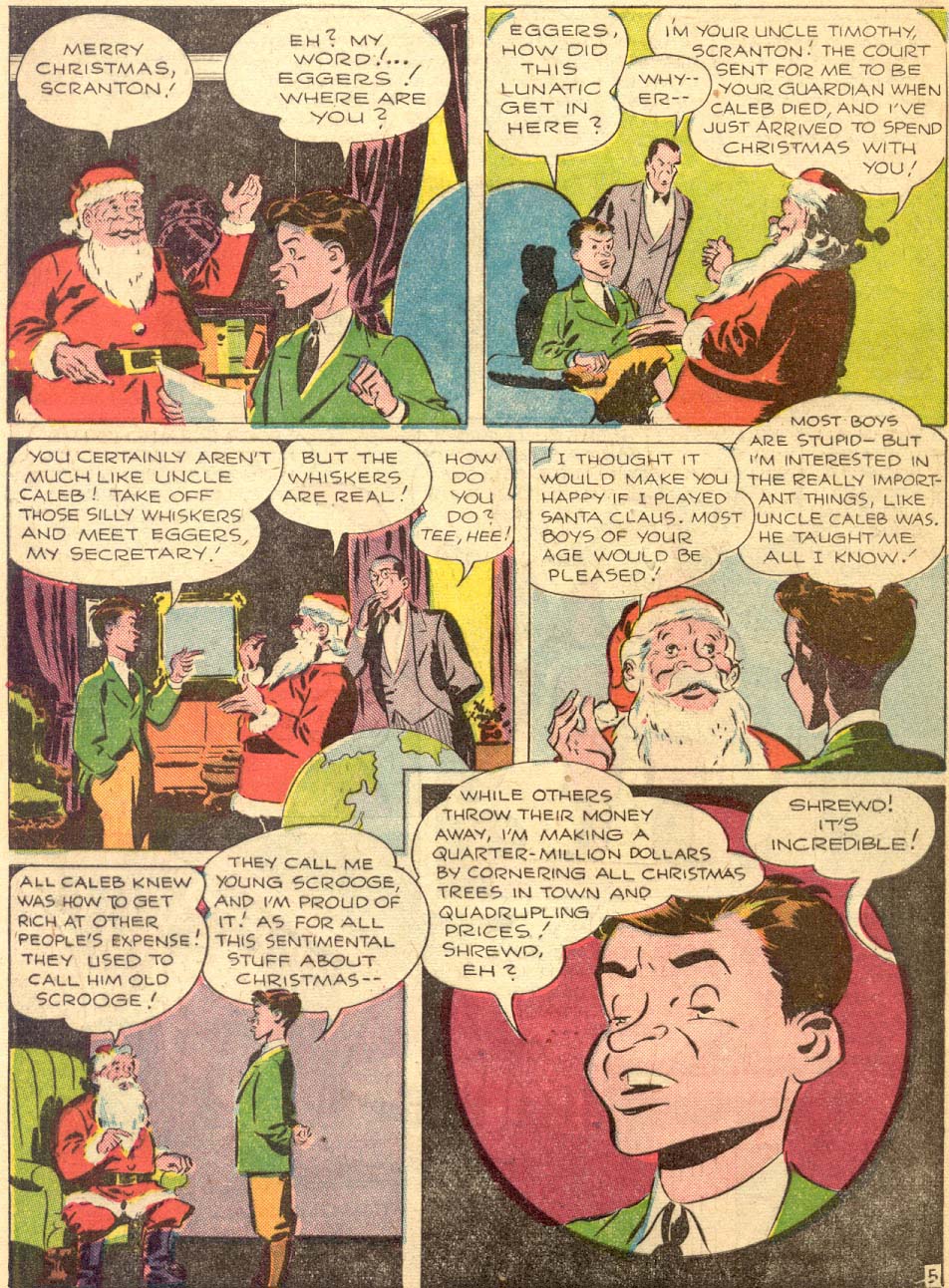 Batman #27
Even in the suburbs, people are kind to strangers:
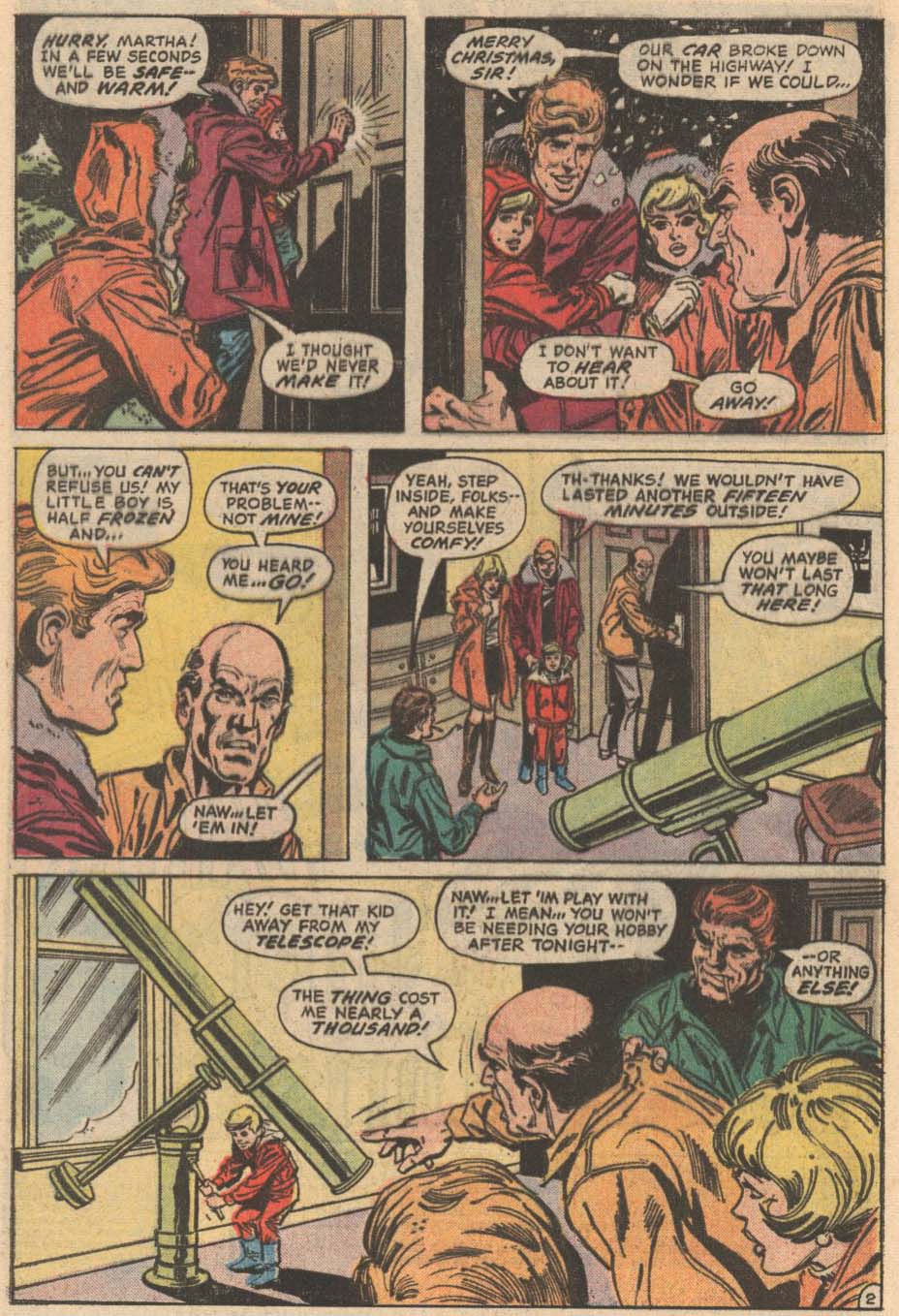
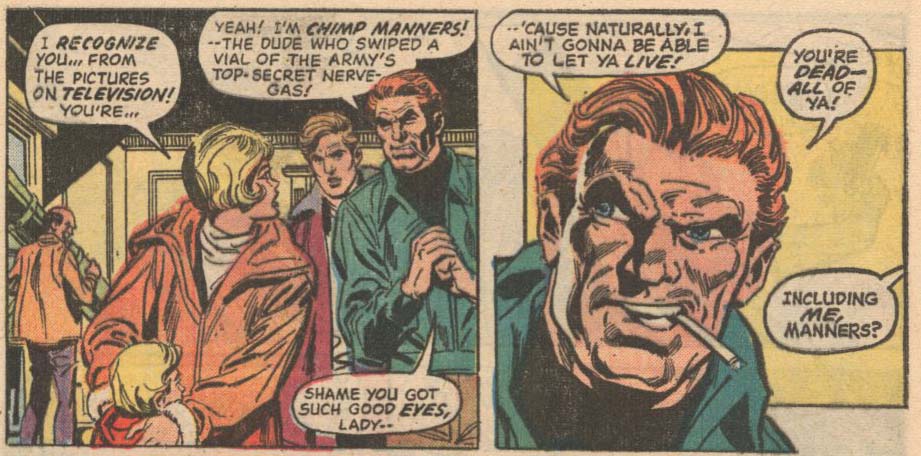 Batman #247
And what about Batman? Well, for once he actually gets to fight crime without lifting a finger:
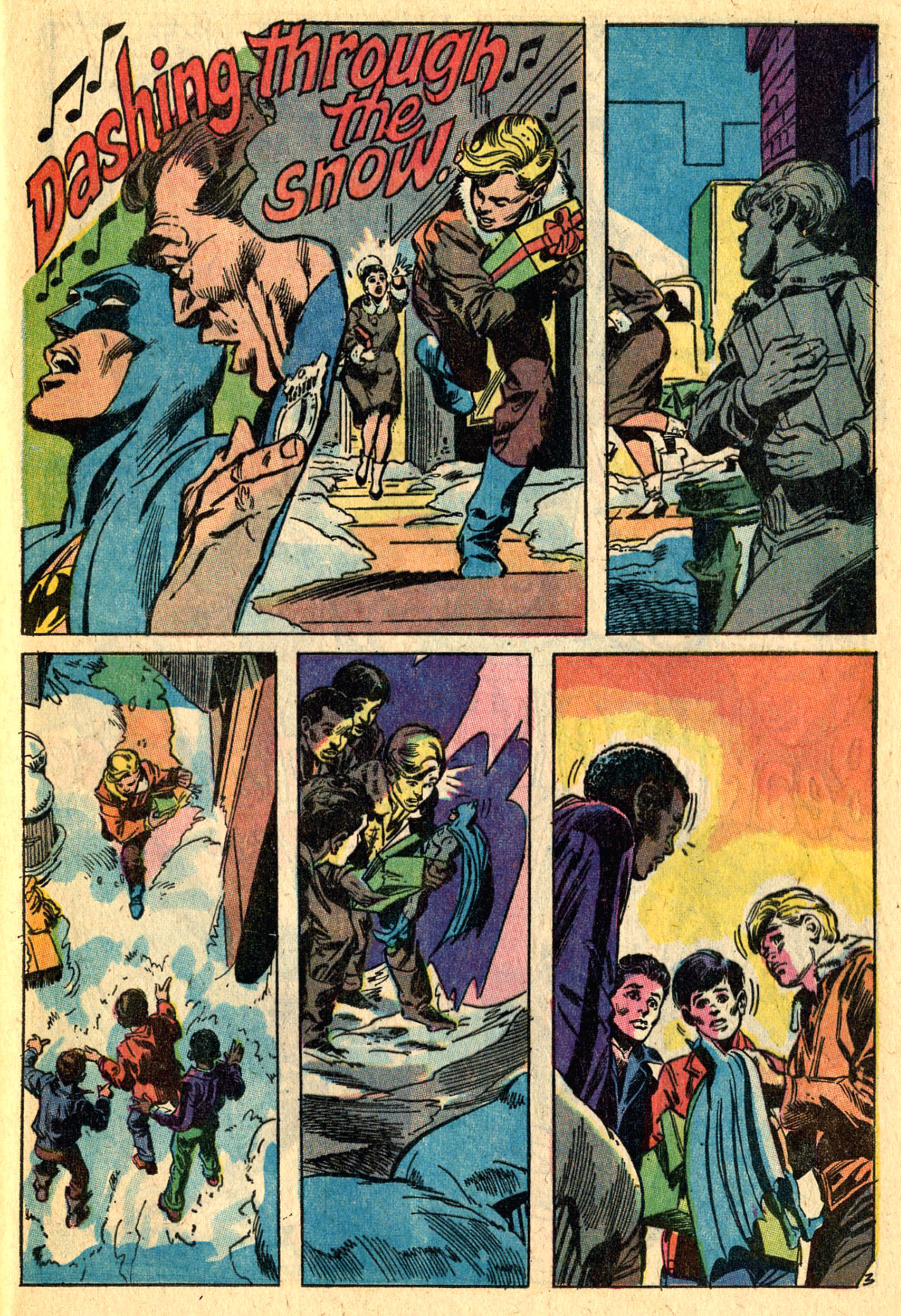
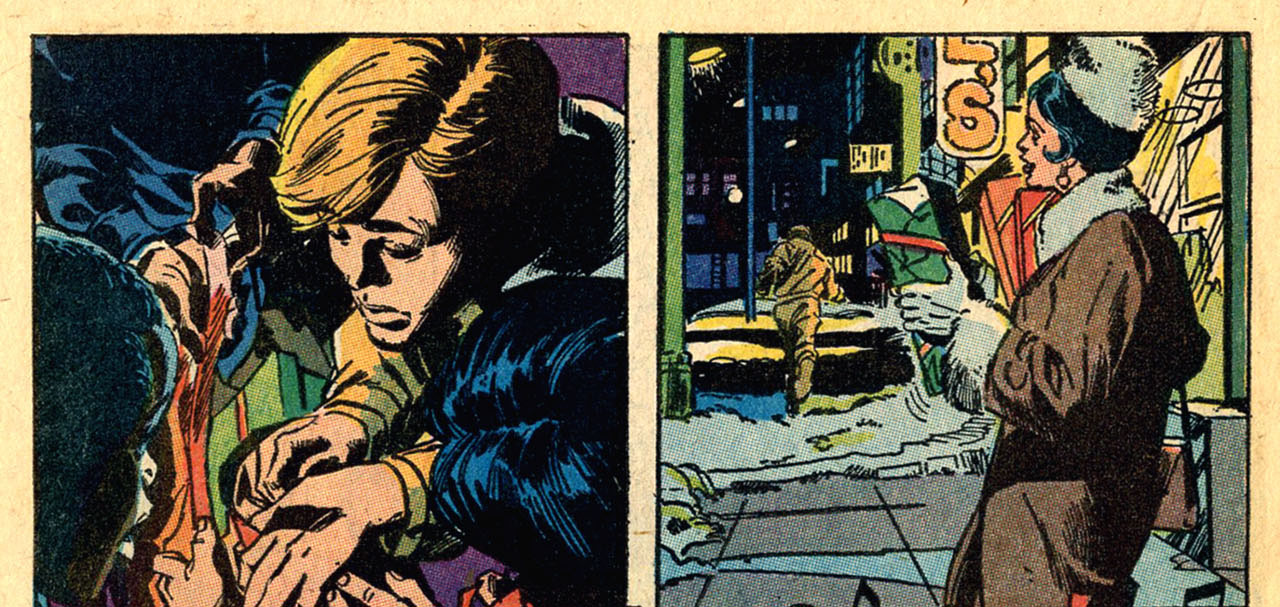 Batman #219
NEXT: Batman watches TV.
10 Killer Croc designs
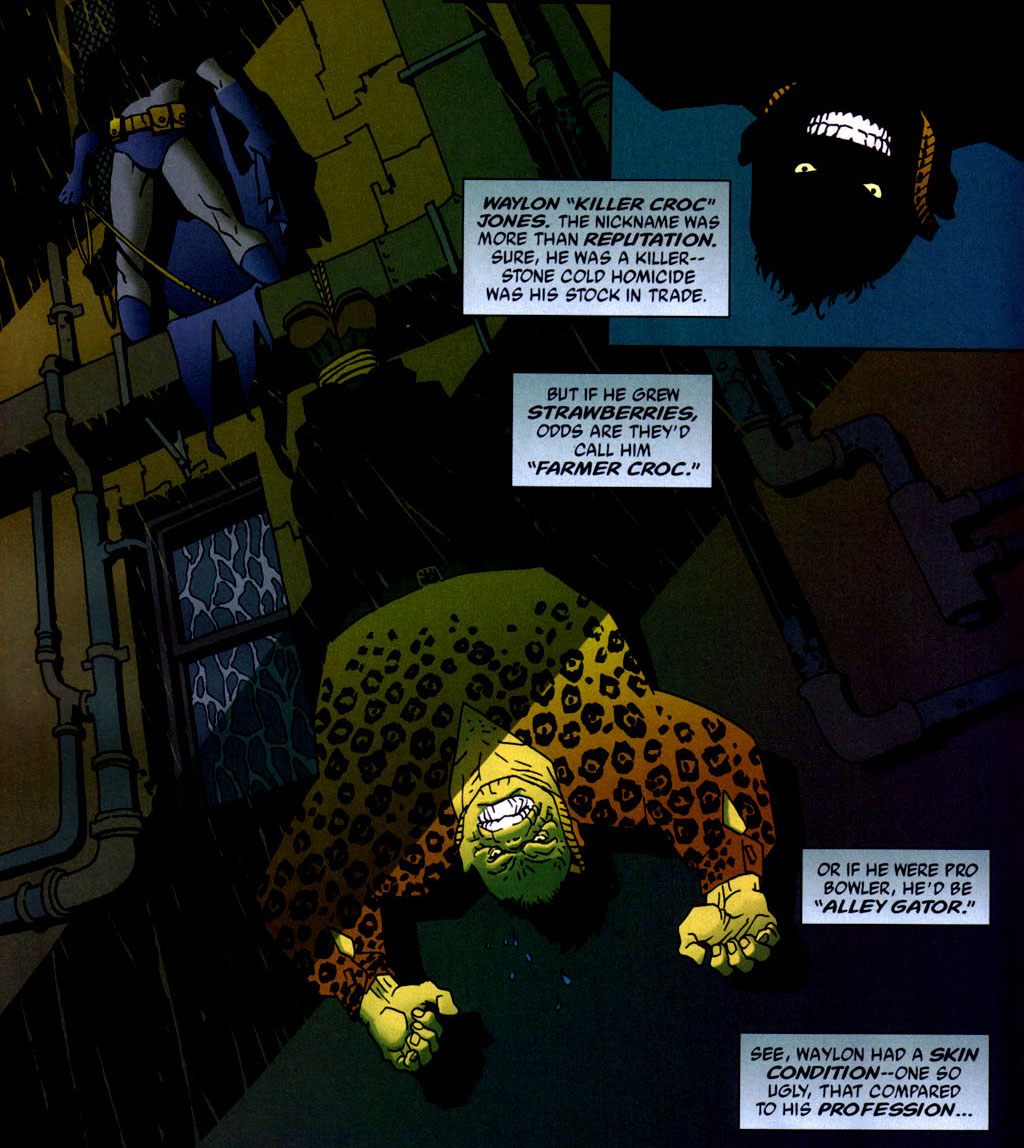
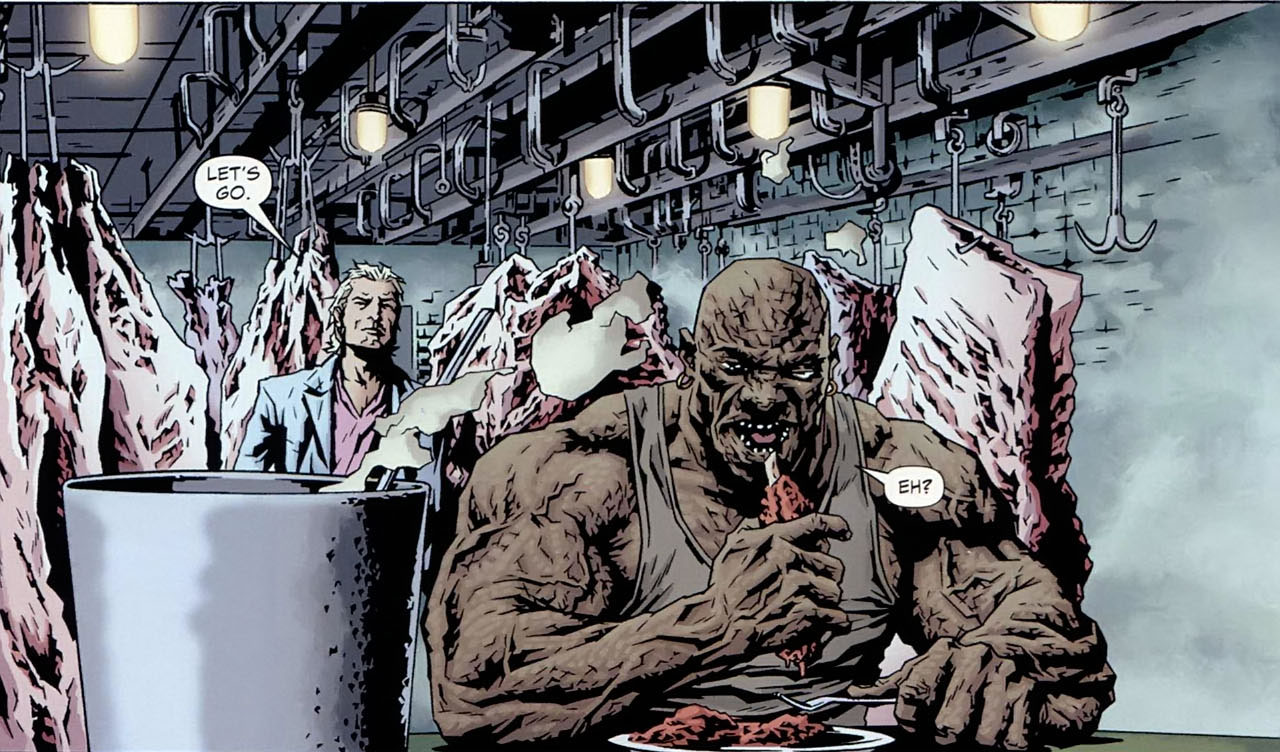
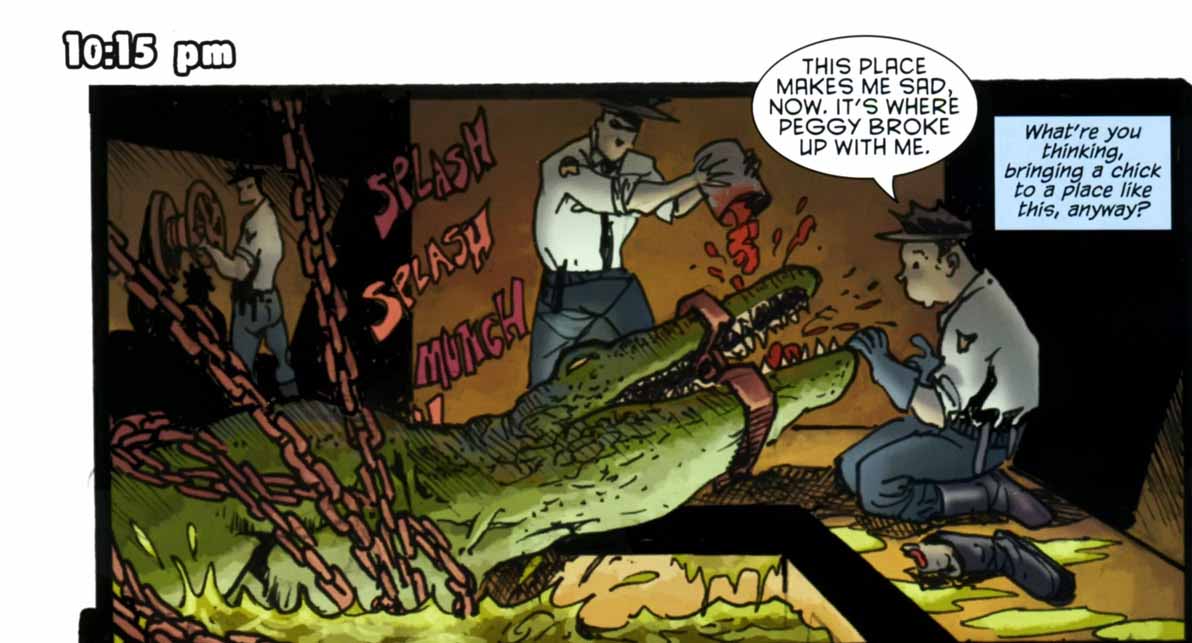
Of all the members of Batman’s rogues gallery, Killer Croc has got to be one of the most inconsistent. He has been written as a street smart thug with a skin disease, as a dumb superhuman monster, and even as a freaky version of Clyde Barrow dating a woman trapped in the body of a child (you know, the kind of thing that happens when you let Steve Gerber write for a kids show). Amusingly enough, Killer Croc’s appearance has also been all over the place. Just check out these 10 different spins on the concept of a guy who looks like a crocodile…
The underworld crime boss, by Dan Jurgens:
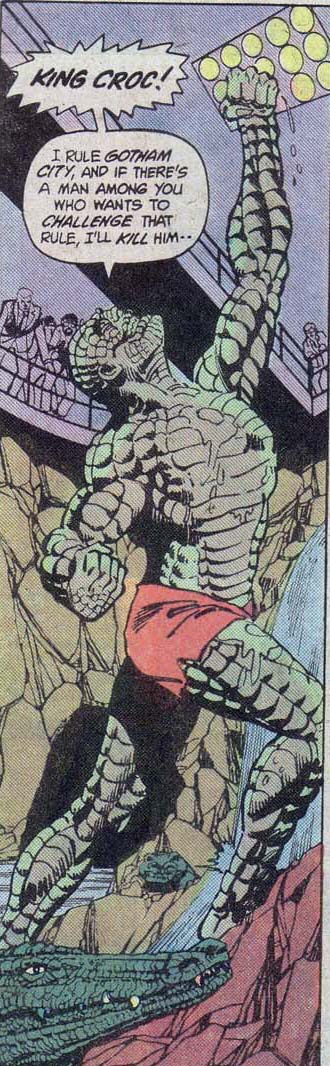 Batman #359
This was the first time we saw Killer Croc’s semi-naked body. Also, as far as I know, this is the only reference to his monarchist tendencies.
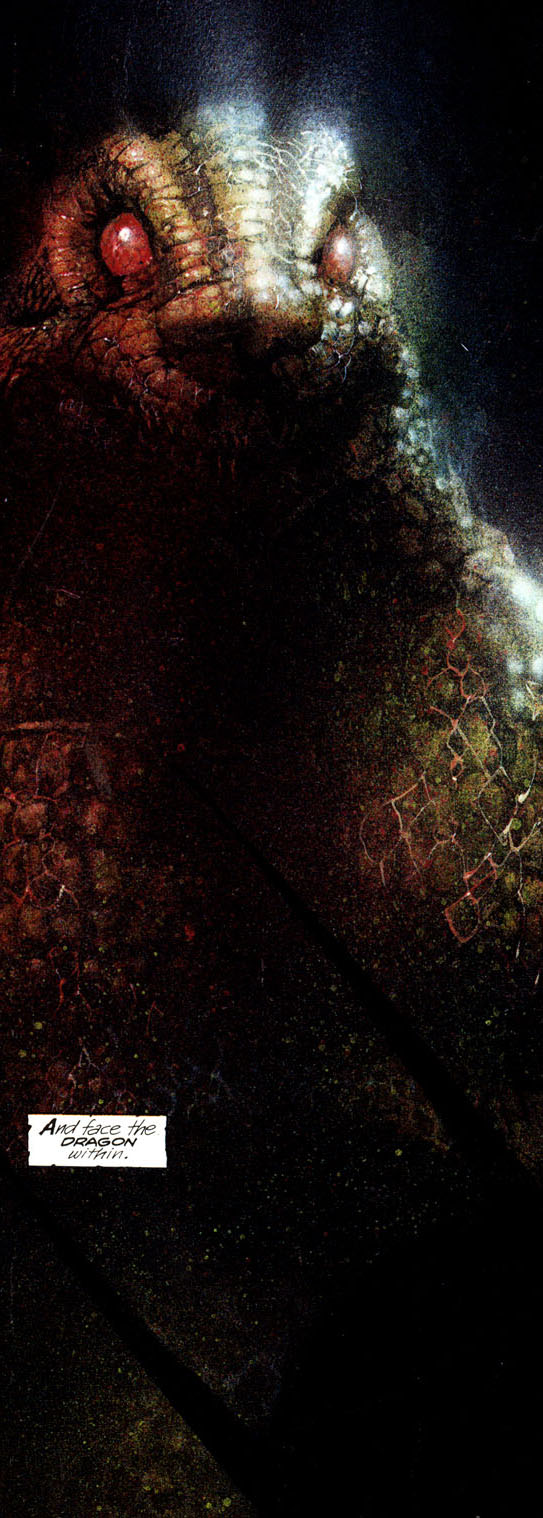
The dragon-like apparition, by Dave McKean:
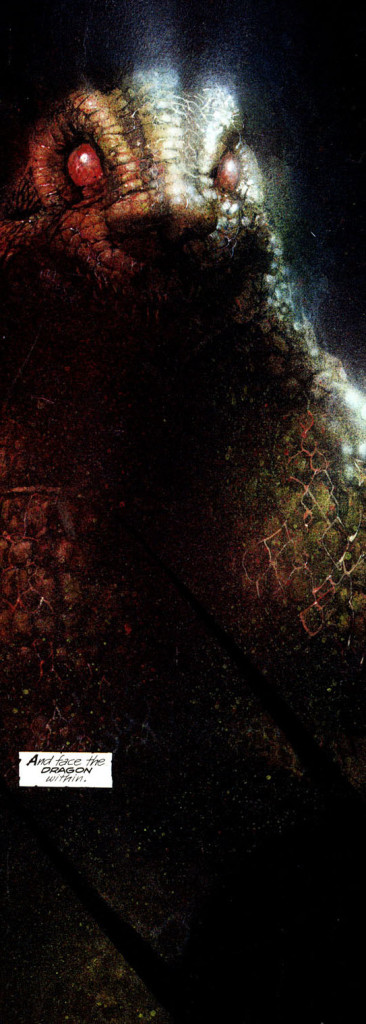 Arkham Asylum: A Serious House on Serious Earth
According to the annotated script, Killer Croc is meant to represent unreason, mindless strength, the brute appetites of nature and man, the Old Dragon of Revelations, the marlin in Old Man and the Sea, the Serpent, Jesus Christ, and Moby Dick, as well as ‘our evolutionary past rising up to threaten us with destruction,’ because Grant Morrison was not afraid of sounding too pretentious. (I wonder if Neil Gaiman also served as a visual model in this scene, like he did earlier in the book…)
The heartbroken robber, by Bo Hampton:
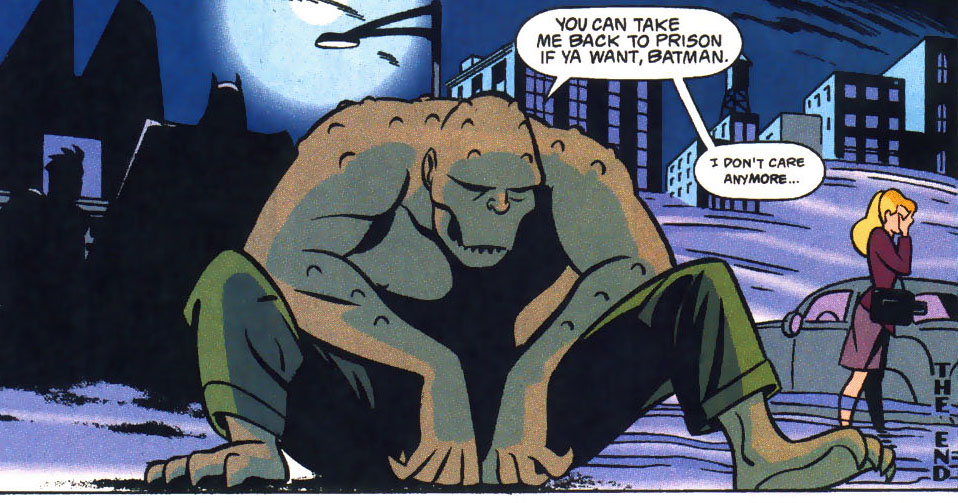 Batman & Robin Adventures #23
We’ve all been there, Croc…
The eccentric brute, by John McCrea:
 Hitman #3
Hey, at least it’s better than Friends!
The terror of Arkham Asylum, by Ryan Sook:
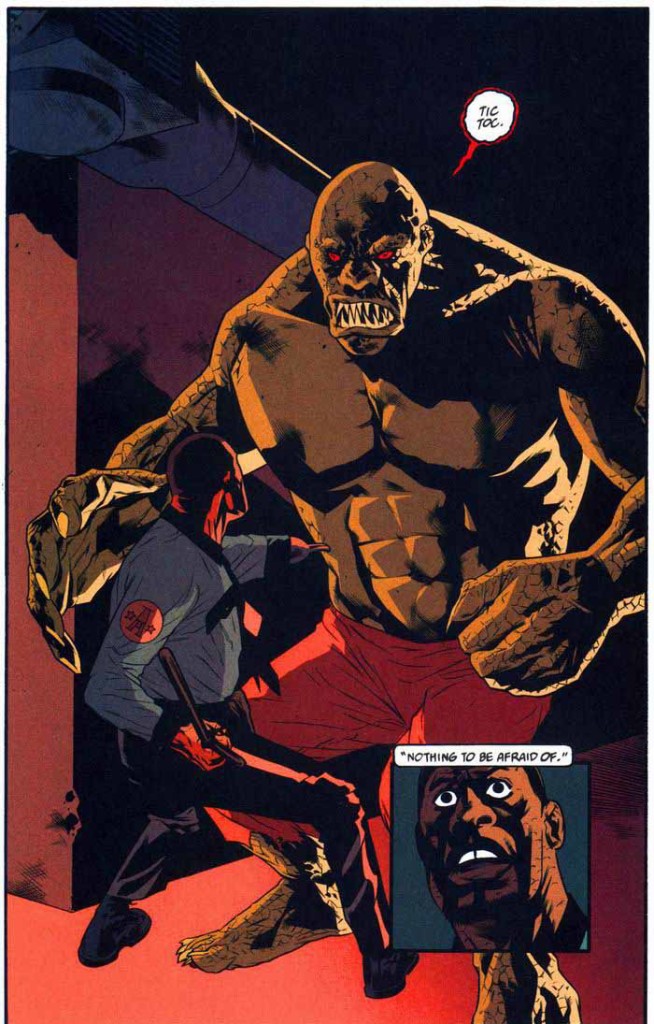 Arkham Asylum: Living Hell #4
Like in Peter Pan, geddit?
The mutated mercenary, by Jim Lee:
 Batman #610
Is it just me, or with that trenchcoat Killer Croc looks like a total pervert at large?
The cannibalistic pimp, by Eduardo Risso:
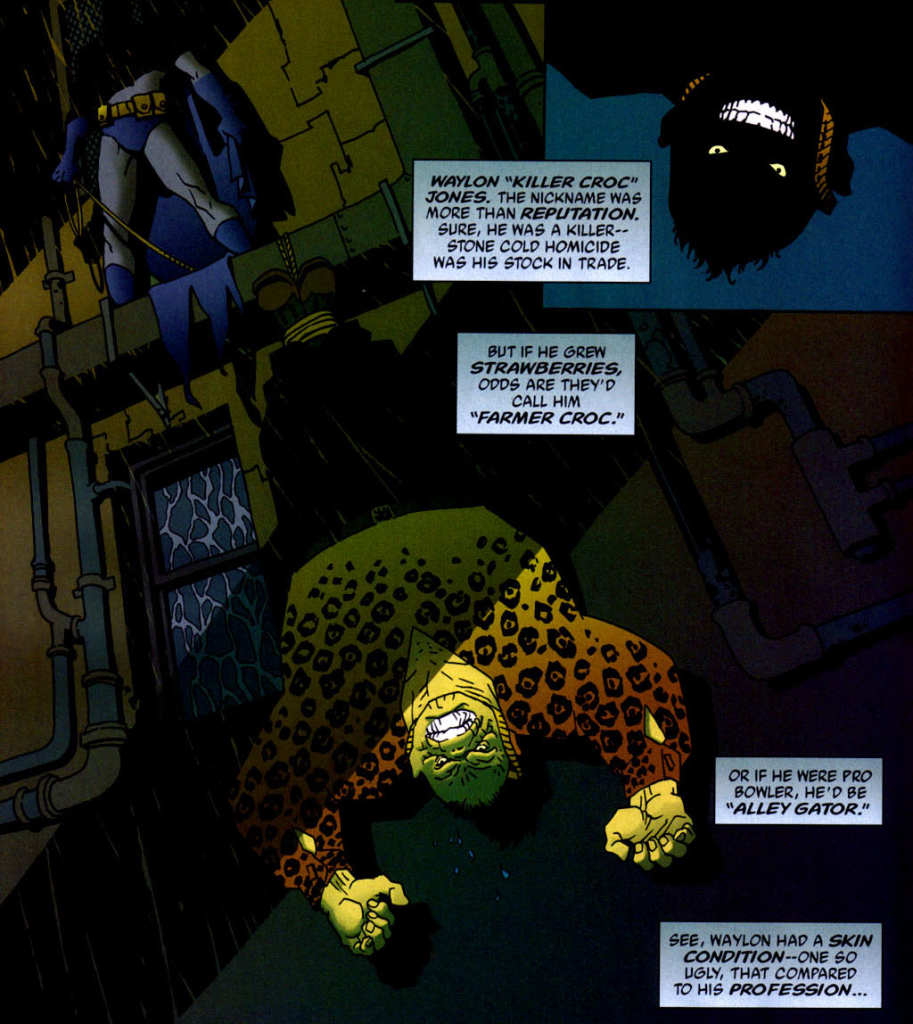 Batman #620
Cheetah pattern! Boy, it’s a shame Killer Croc doesn’t wear shirts more often.
The raging dinosaur/alien hybrid, by Francesco Mattina:
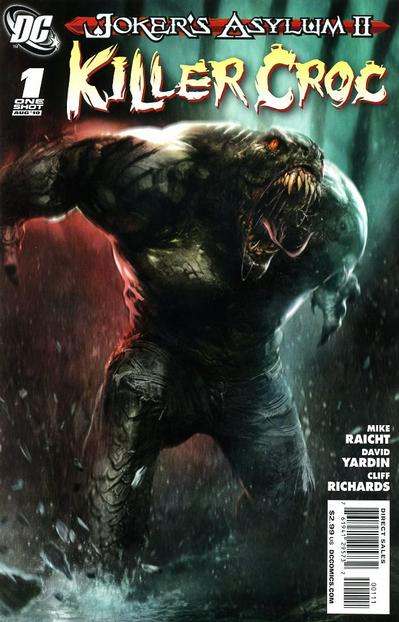 Joker’s Asylum: Killer Croc
Wait until Ellen Ripley gets a load of this… Interestingly, though, in the comic inside Croc is more of the strong, silent type.
The ethnic henchman, by Lee Bermejo:
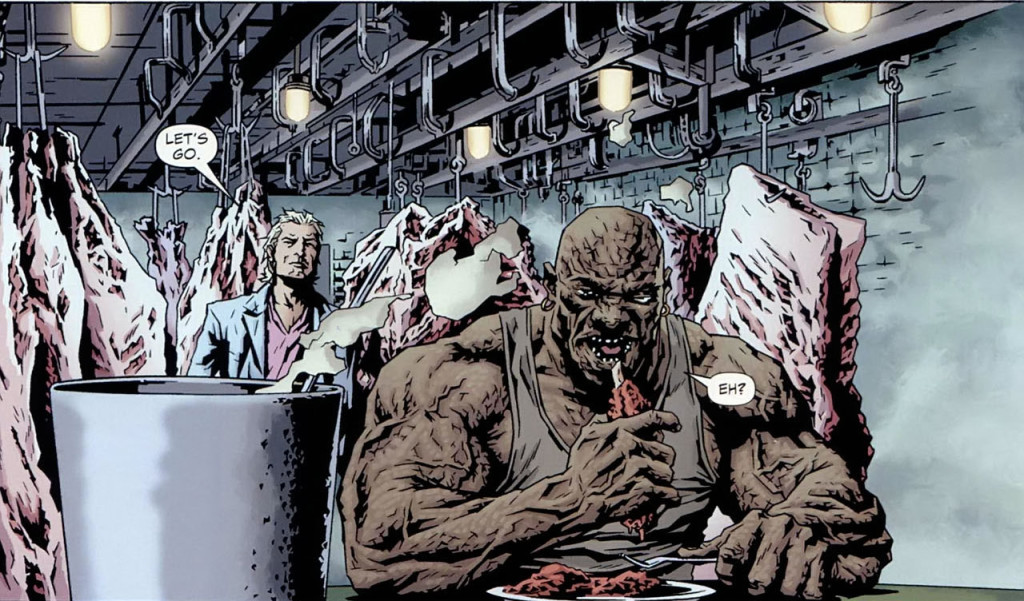 Joker
Joker
This one is just wrong on so many levels.
The reptilian cock blocker, by Sam Kieth:
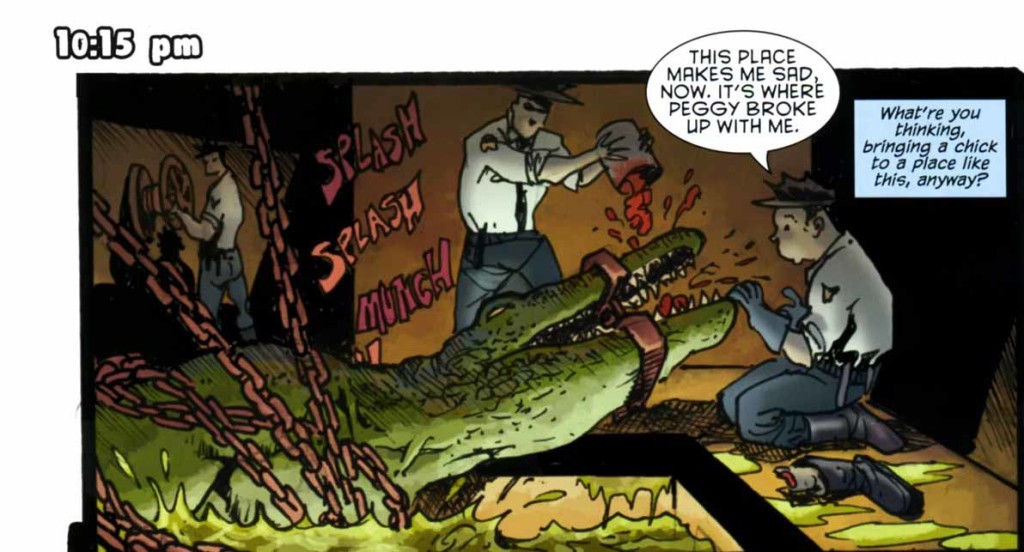 Arkham Asylum: Madness
Perfect spot for a date, if you ask me.
NEXT: Batman sings.
Alan Moore’s mundane Batman
Although he has fallen from grace somewhat in recent years, I think it’s not controversial to say that Alan Moore is a strong contender for the title of greatest comics’ writer of all time, and possibly God. Watchmen alone would secure his place in the medium’s pantheon, but Moore is hardly a one-trick pony, having created masterpieces in genres as diverse as political dystopia (V for Vendetta), superheroes/sci-fi (Miracleman), horror (Saga of the Swamp Thing), existentialist character study (A Small Killing), historical crime (From Hell), fantasy (Promethea), metafictional adventure (The League of Extraordinary Gentlemen), and erotica (Lost Girls), as well as a mix of most of these in his phenomenal prose novel Voice of the Fire. He has also written a handful of comics involving Batman.
By putting intelligent twists on familiar archetypes and plots, Alan Moore’s genius lies in elevating conventional formulas into sophisticated entertainment (or, alternatively, in taking challenging concepts and making them accessible). Some of his comics can be demanding, but unlike his most pretentious peers Moore actually rewards you for the effort. For example, Watchmen is simultaneously a thought-provoking anti-superhero deconstruction AND an awesome superhero story, one that makes you care about a naked blue dude who sees through time and builds a palace on Mars.
Moore’s most obvious trademark is to embed panels with various layers of juxtaposition, especially when transitioning from scene to scene. This technique can bring out themes by emphasizing symbolic connections, or it can merely amuse readers by creating visual puns. I say ‘merely,’ but I would argue that as a rule Moore’s playfulness is not appreciated enough except in discussions of his more blatantly comedic output (Future Shocks, D.R. & Quinch, Bojeffries Saga, Tomorrow Stories, Top Ten). I suspect the reason for this is that many fans prefer to think Alan Moore took his work as seriously as they do. However, even his grimmest stories are never devoid of a sense of humor, which (true to his British comics’ background) can be quite dark and iconoclastic.
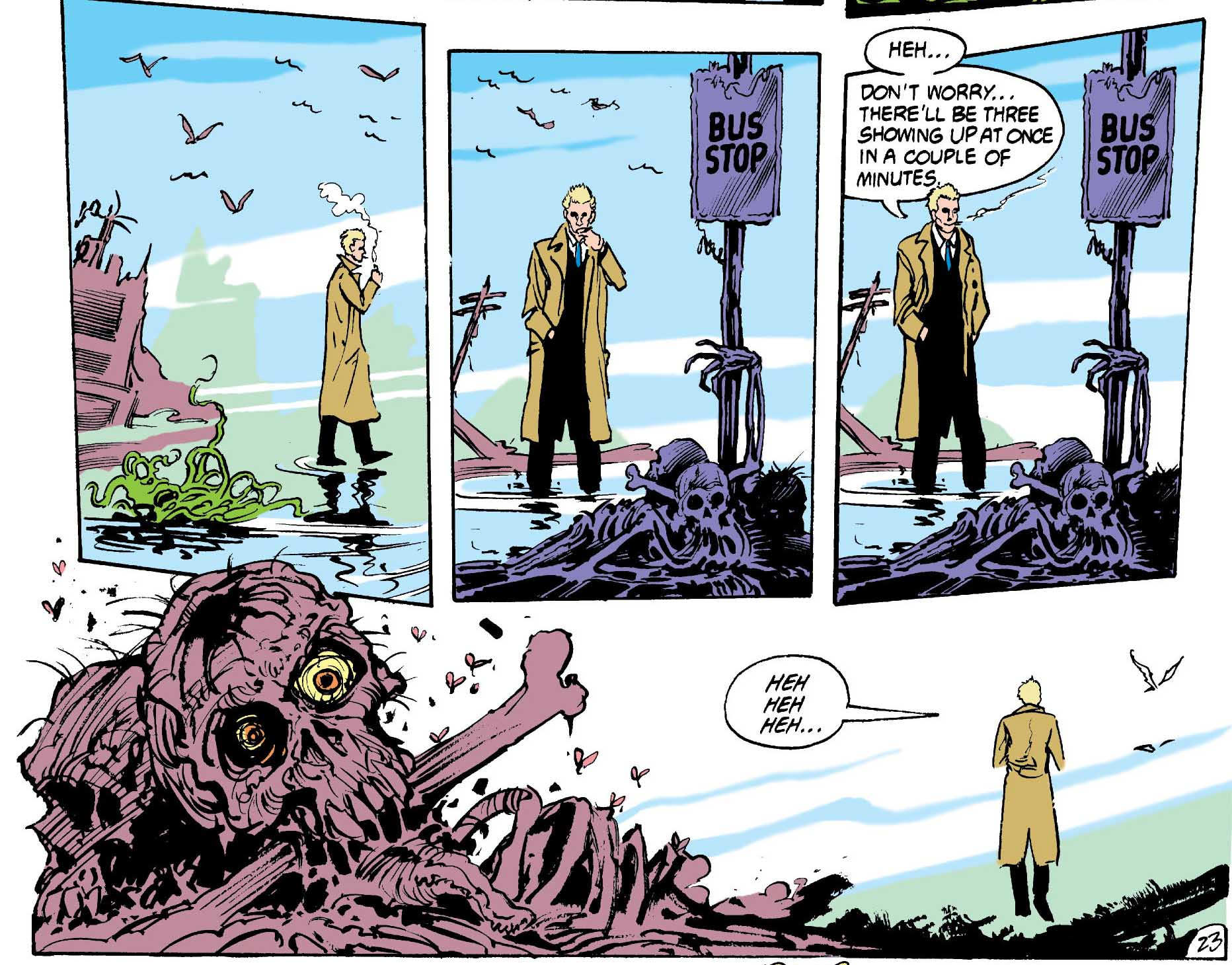
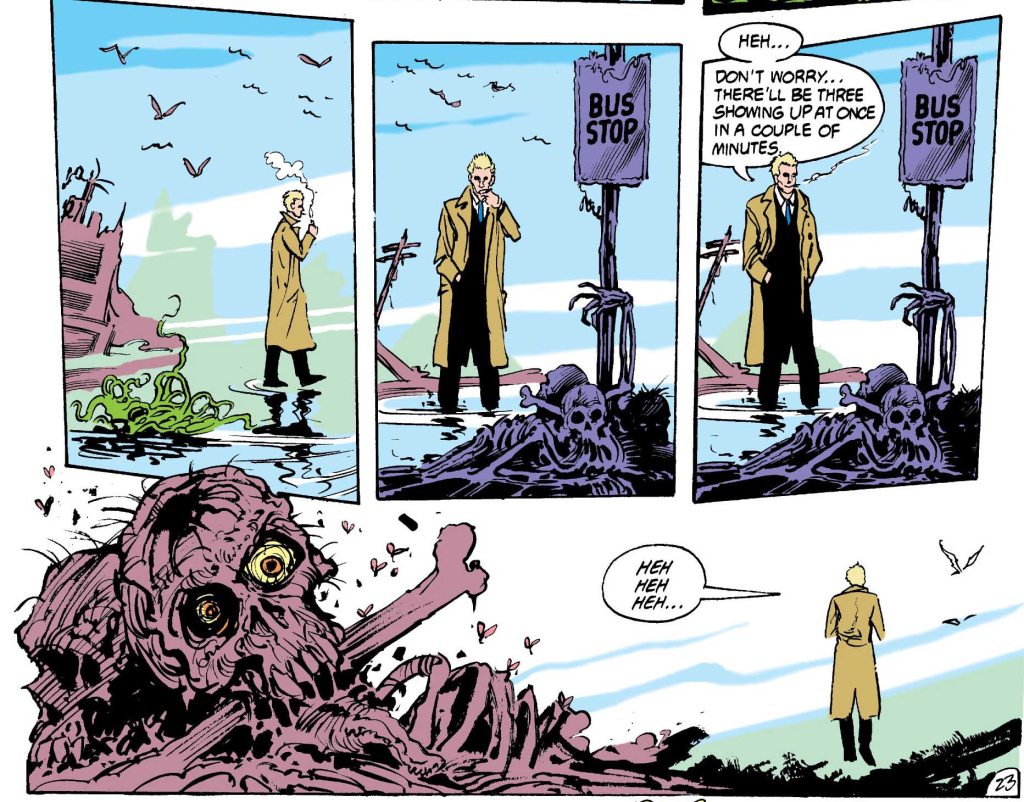 Swamp Thing (v2) #39
There are three main themes in Alan Moore’s oeuvre. One of them is transcendence – many of Moore’s protagonists evolve beyond humanity not just physically, but through expanded consciousness, whether it be Michael Moran, Alec Holland, Jon Osterman, Sophie Bangs, or even Jack the Ripper. Moore gets a kick out of writing godlike POVs, resulting in some mind-bending reading experiences. Another recurrent theme, connected to this one, is the power of ideas. This is something he feels quite strongly about (as seen in the trippy documentary The Mindscape of Alan Moore) and it takes various forms in his books, which have addressed how reality can be transformed by ideologies, imagination, dreams, and, crucially, fiction.
The third, more controversial, leitmotif is sexuality. Alan Moore has taken a lot of grief from critics and colleagues for the abundance of rape in his comics. Although this is a valid object of analysis, I think it kind of misses the larger point: Moore’s comics (and prose, and short films) are not fixated on rape as much as they are fixated on sex, in all its forms. Across his work, there is gay sex and straight sex, threesomes and orgies, role playing and bondage, incest and necrophilia, sex with transgender characters and minors and animals and superheroes and aliens and gods and Earth elementals. There is sexual violence, for sure, in some instances treated in a realistic, respectful way or as a powerful satirical metaphor, and other times played for laughs or gratuitous shock value. But there is also plenty of loving, tender sex and joyful lust. Not only has Moore written a whole art/porno graphic novel concerning the lesbian exploits of Alice (from Alice in Wonderland), Wendy (from Peter Pan), and Dorothy (from The Wizard of Oz), thanks to him one of the biggest mainstream publishers in the field has released some highly original comics devoted to sex:
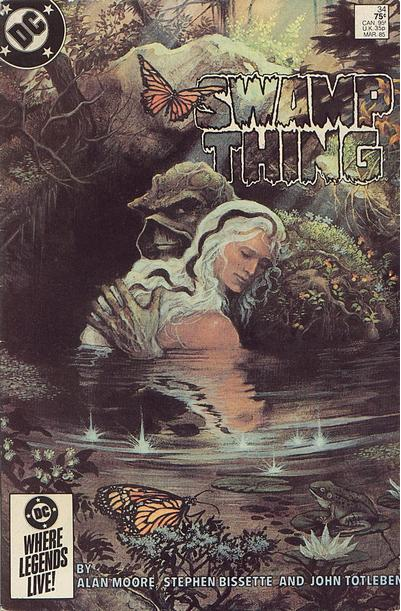
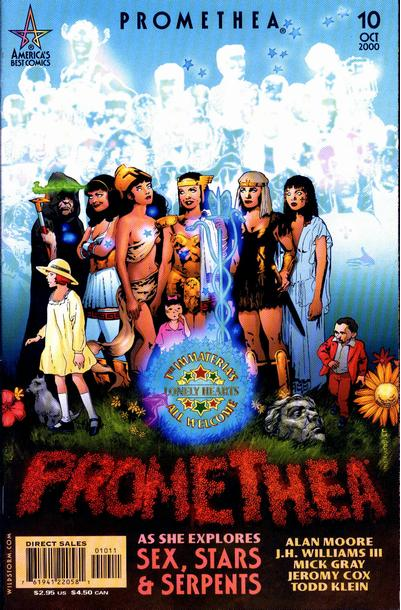
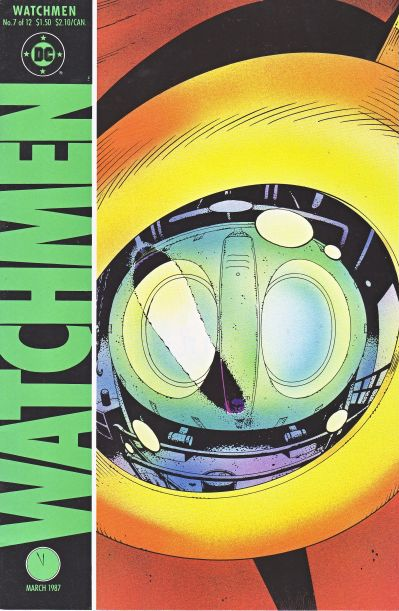
Overall, Alan Moore’s Batman stories are not all that rich as far as these themes go, which may be an indication of how relatively little he invested in them. In that sense, Moore’s work with Superman is much more fascinating (not only the actual Superman tales, but also the stuff with Supreme and Mr. Majestic). Needless to say, this will not stop me from picking those comics apart.
Moore’s best known Batman work is The Killing Joke. It has been analyzed to death, from the role of dualism to its homoerotic subtext. Although Brian Bolland’s gorgeous pencils are a great part of the book’s appeal, the script itself has gained legendary status, especially Moore’s opening words for Bolland:
WELL, I’VE CHECKED THE LANDING GEAR, FASTENED MY SEATBELT, SWALLOWED MY CIGAR IN A SINGLE GULP AND GROUND MY SCOTCH AND SODA OUT IN THE ASTRAY PROVIDED, SO I SUPPOSE WE’RE ALL SET FOR TAKE OFF. BEFORE WE GO SCREECHING OFF INTO THOSE ANGRY CREATIVE SKIES FROM WHICH WE MAY BOTH WELL RETURN AS BLACKENED CINDERS, I SUPPOSE A FEW PRELIMINARY NOTES ARE IN ORDER, SO SIT BACK WHILE I RUN THROUGH THEM WITH ACCOMPANYING HAND MOVEMENTS FROM OUT CHARMING STEWARDESS IN THE CENTRE AISLE.
[…] I WANT YOU TO FEEL AS COMFORTABLE AND UNRESTRICTED AS POSSIBLE DURING THE SEVERAL MONTHS OF YOUR BITTERLY BRIEF MORTAL LIFESPAN THAT YOU’LL SPEND WORKING ON THIS JOB, SO JUST LAY BACK AND MELLOW OUT. TAKE YOUR SHOES AND SOCKS OFF. FIDDLE AROUND INBETWEEN YOUR TOES. NOBODY CARES.
Like John Ford’s The Searchers, this work keeps making it to ‘best of’ lists mostly on the strength of people’s memories of an impressive beginning and a killer ending, disregarding the flaws in the middle (although at least The Killing Joke never meanders, as each panel ties perfectly into the next). Which is not to say that there hasn’t been a backlash. According to your mindset while reading it, The Killing Joke can be either a fantastic Joker story (one with a defining take on the Clown Prince of Crime, with one of his most extreme plans, and with an interesting examination of his relationship with the Dark Knight), or a terrible Batman comic (one where Batman doesn’t do much until the end, where cruel things happen to beloved characters, and where there isn’t any fun to be had).
As for the Moore elements highlighted above, the book is full of symbolic and/or darkly humorous juxtapositions. Just check out the following scene:
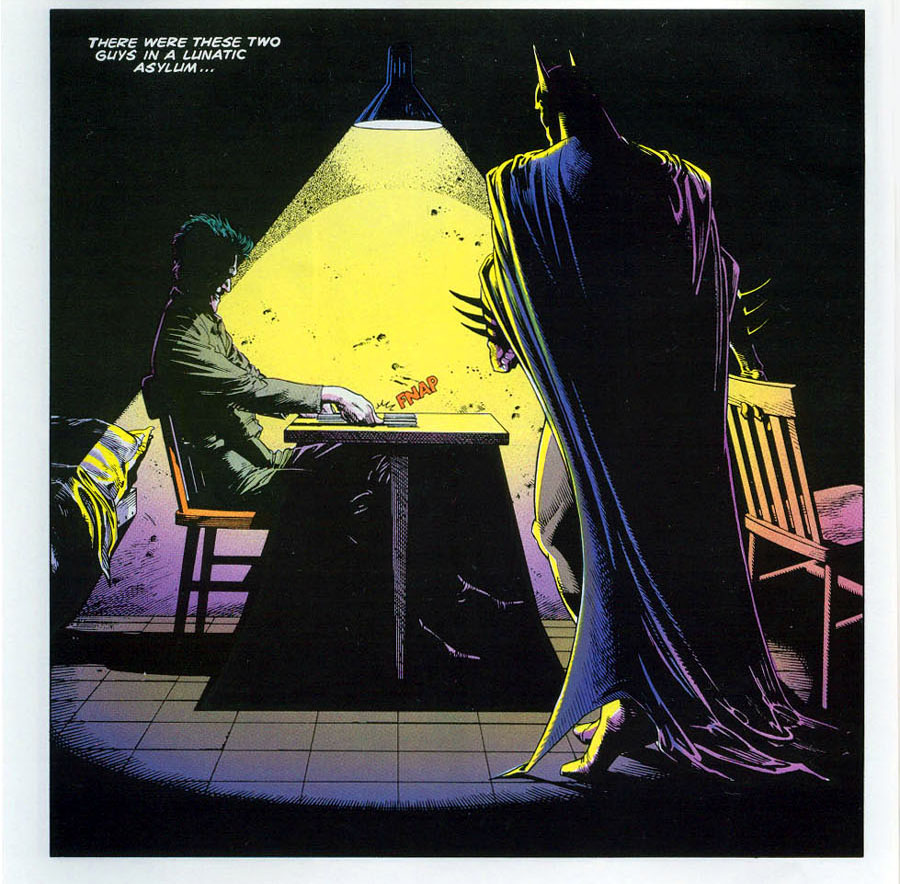
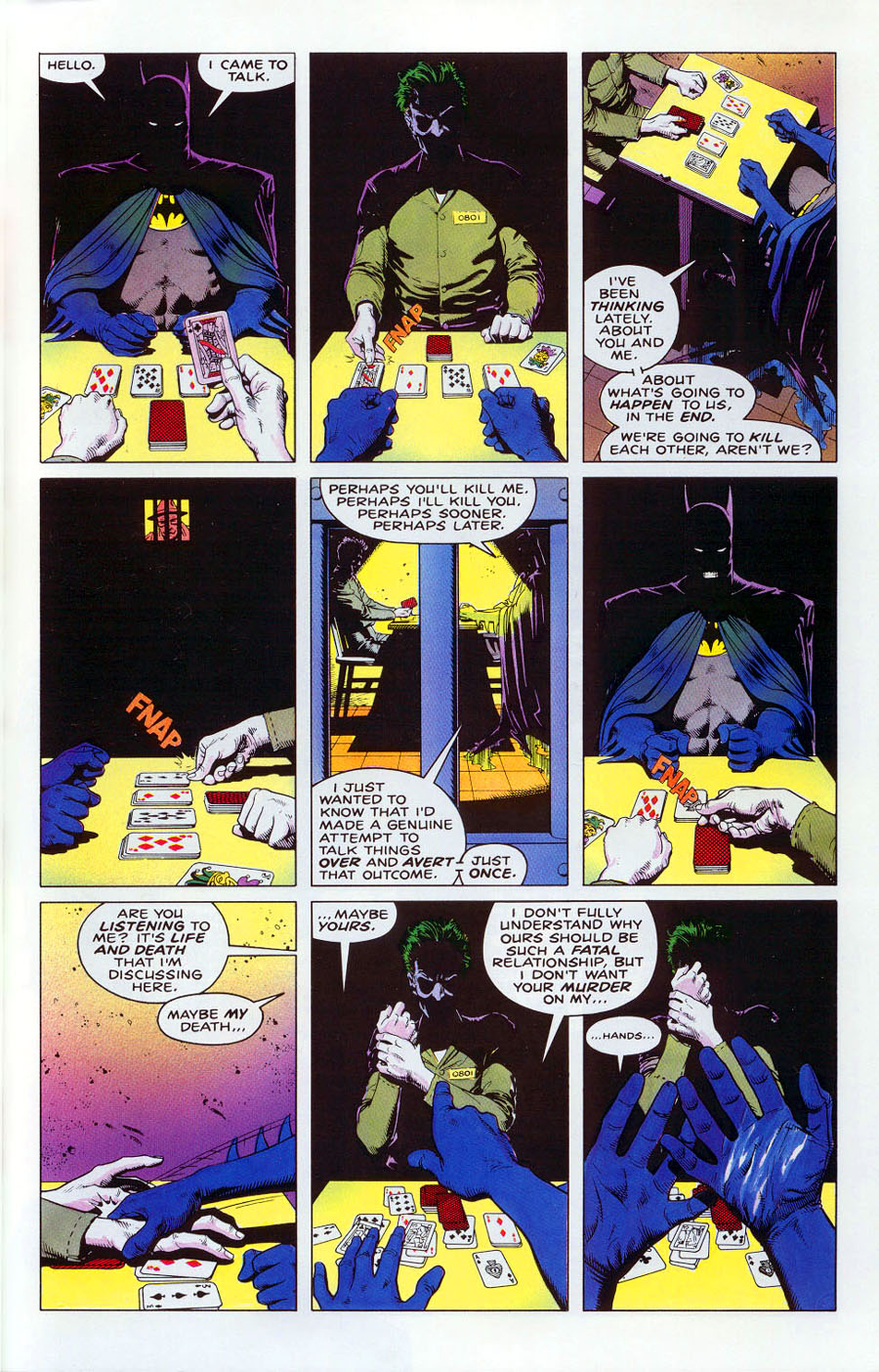
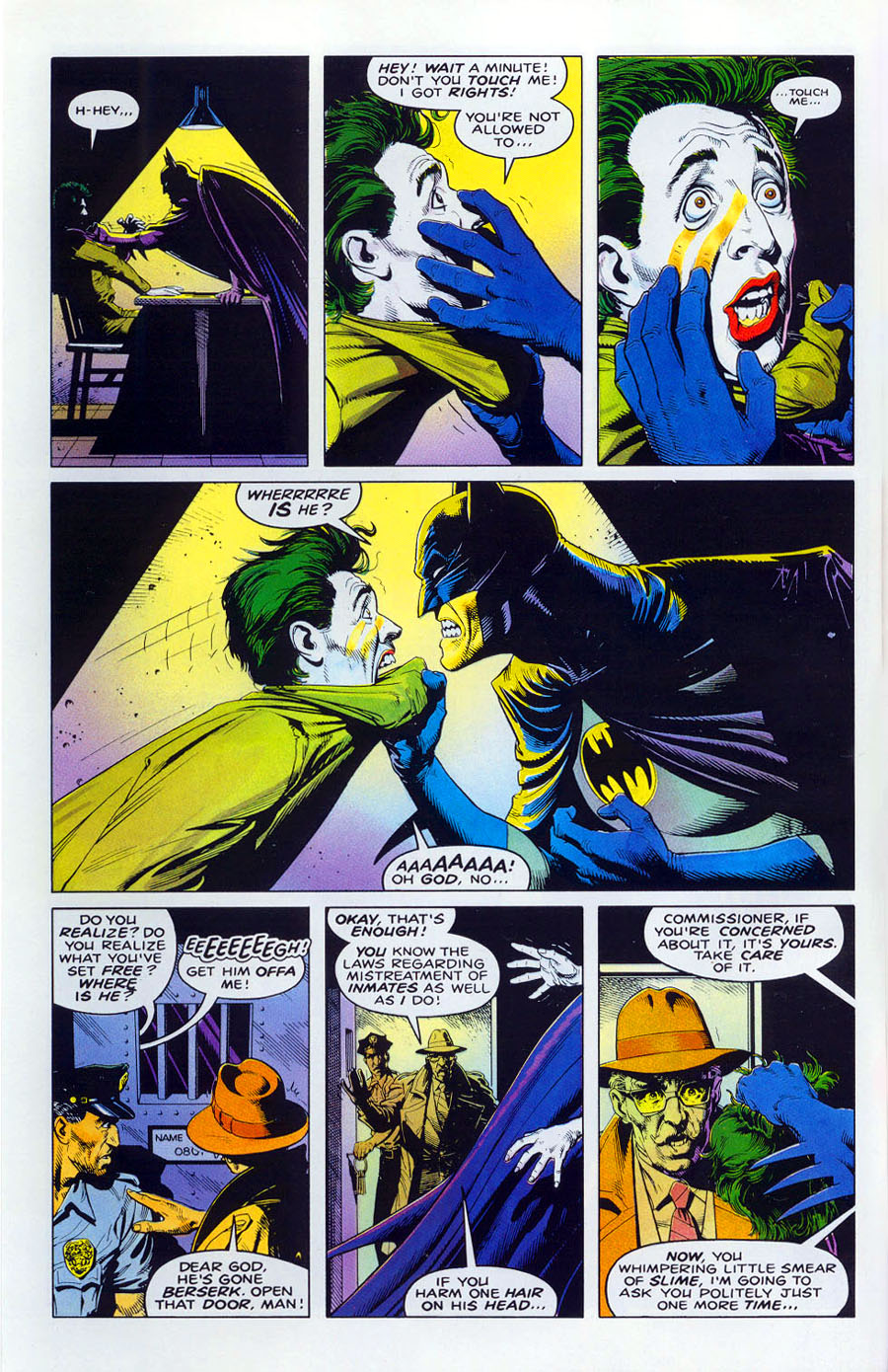 Transcendence doesn’t play much of a role in the book, except perhaps in the sense that Batman and the Joker seem to metafictionally realize they are stuck in a loop, unable to break character. The story does touch upon the power of ideas (more specifically, madness) and sexuality (Barbara Gordon’s naked pictures), but not in a very profound way…
Ultimately, I would say that The Killing Joke doesn’t deserve a place near the top of Moore’s cannon (or, arguably, Batman’s cannon) but it is hardly a complete failure. After all, even when not blowing your mind an average Moore book can still hold its own. The Ballad of Halo Jones and Tom Strong are more satisfying than 90% of the comics that came out last week. Hell, even Moore’s stints in Spawn and WildC.A.T.S. are quite enjoyable in their own right. Sure, there are exceptions, but not that many!
The other prominent Alan Moore comic to feature the Caped Crusader is the classic Superman tale ‘For the Man Who Has Everything.’ Once again, Batman isn’t given much to do in the story (as opposed to Robin, who totally saves the day!). He does, however, get a line that is both funny and naughty:
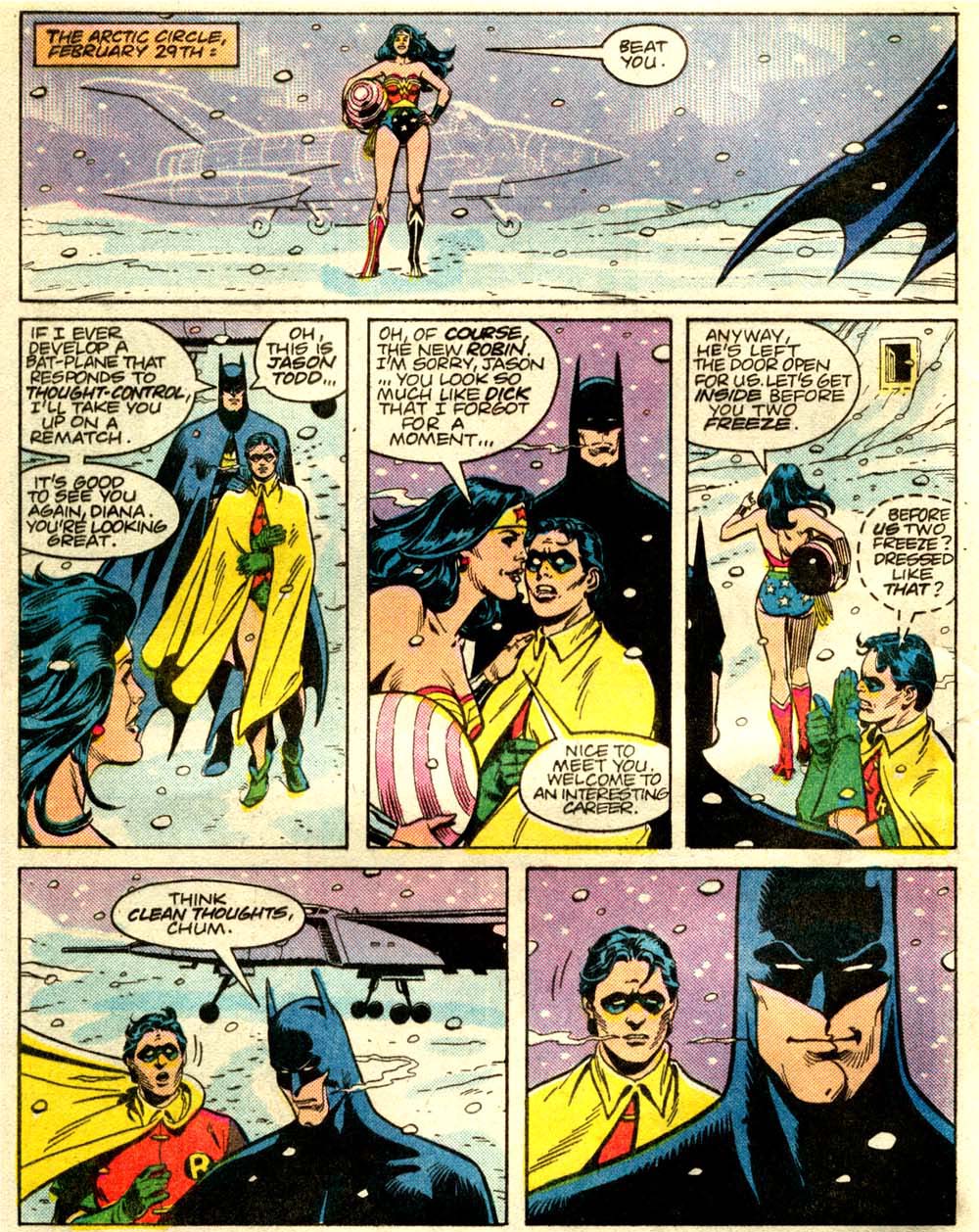 Superman Annual #11
In contrast to these well-remembered tales, Alan Moore’s most obscure piece of Batman writing is probably ‘The Gun,’ a prose short story (with a few illustrations by Garry Leach) for the British Batman Annual in 1985. Much like Winchester ’73 (a way cooler western than The Searchers), the story follows a gun as it’s passed from owner to owner, including Joe Chill, who uses it to murder Bruce Wayne’s parents. Although oozing with a 1980s’ urban grit vibe, Moore uses the setting of the Gotham City Fair to hint at the kind of surreal constructions you could find in the old comics:
‘To his left stood a gigantic Thermos flask, fully seventy feet tall.
To his right stood a massive chromium washing machine the size of a house. Everything was bright and colossal and gleaming, with brilliant coloured spotlights playing over the exhibits and the thronging crowds. Happy families moved in streams around the exhibits like shoals of neon-lit tropical fish swimming in an ocean of piped Muzak.’
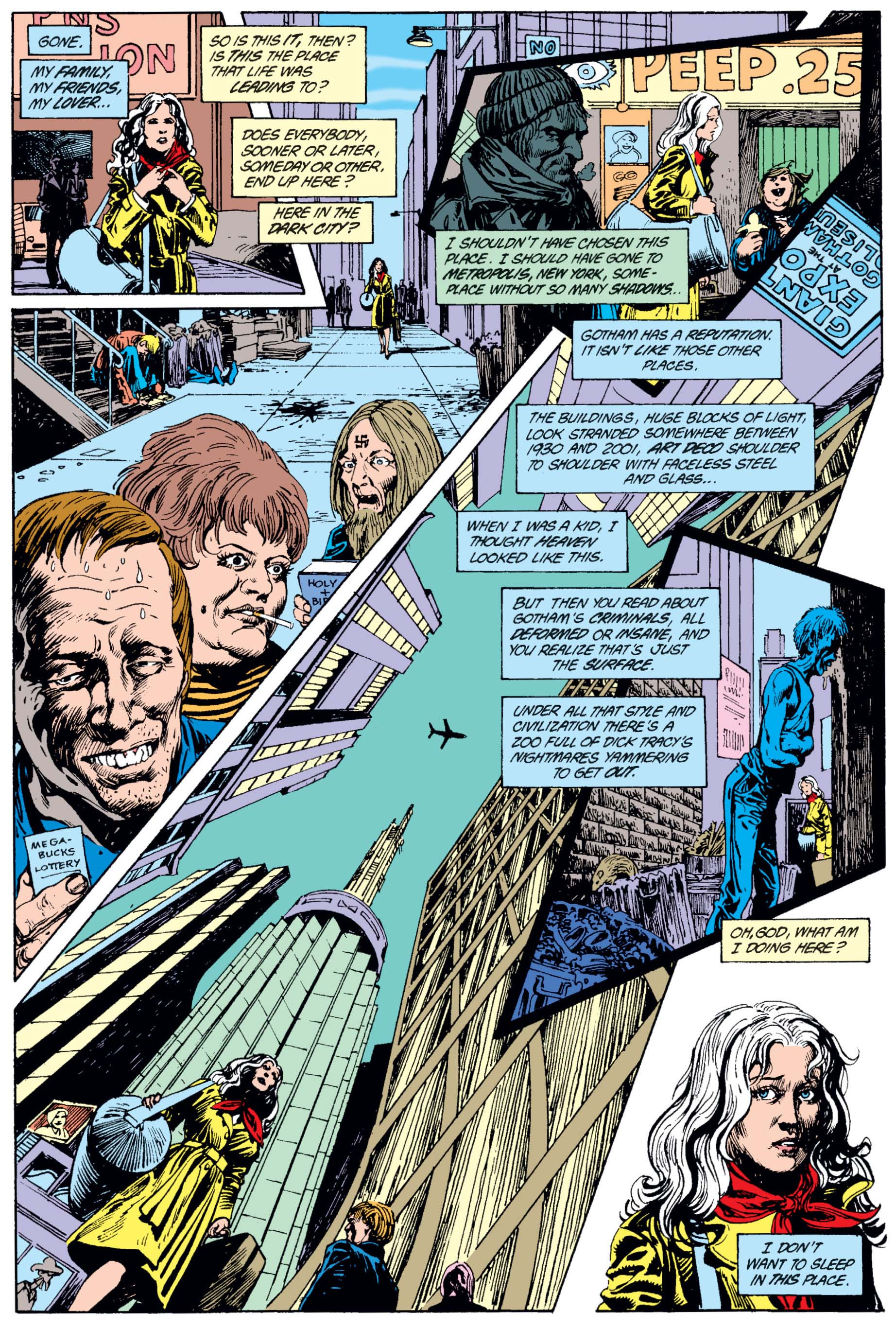
Alan Moore’s most engrossing take on the Batman universe, however, took place in the pages of Swamp Thing, the beloved horror series about a muck creature who learns how to channel the vegetable kingdom. The Caped Crusader has a brief cameo in issue #44, but #51 really takes things to another level. Here, Swamp Thing’s girlfriend, Abigail Cable, finds herself in a bizarre court case over the fact that she had sex with the plant monster (technically, she is charged with ‘crimes against nature’). Unable to deal with moral intolerance in Louisiana, she jumps bail and runs away to Gotham City, a ‘place where people can get lost.’ When she arrives, Moore applies to Gotham the series’ characteristic purple prose, accompanied by Rick Veitch’s haunting illustrations:
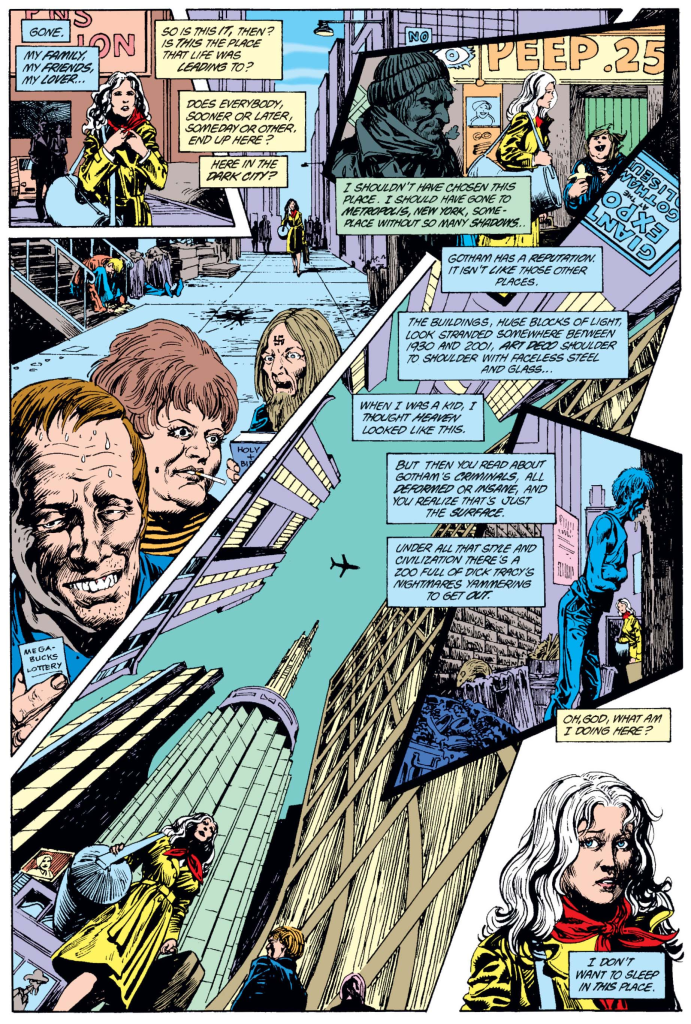 Swamp Thing (v2) #51
The sexual motif, already present in the story’s premise, reappears as Abigail immediately meets some friendly prostitutes and gets arrested by a police raid. Realizing she is a fugitive, Gotham law assigns her an extradition hearing. Meanwhile, public opinion goes berserk over the so-called Louisiana ‘Beauty and the Beast’ morals scandal.
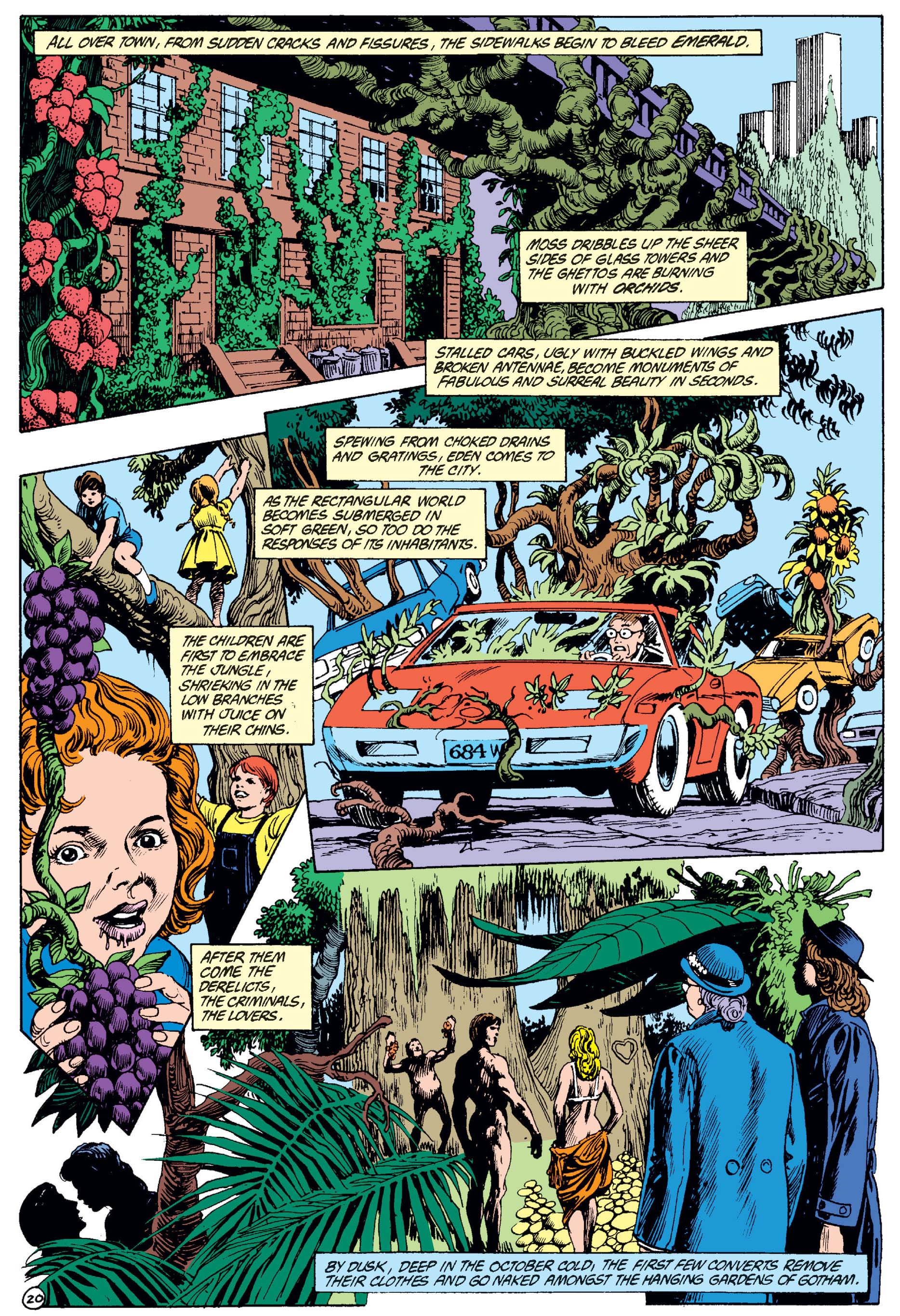
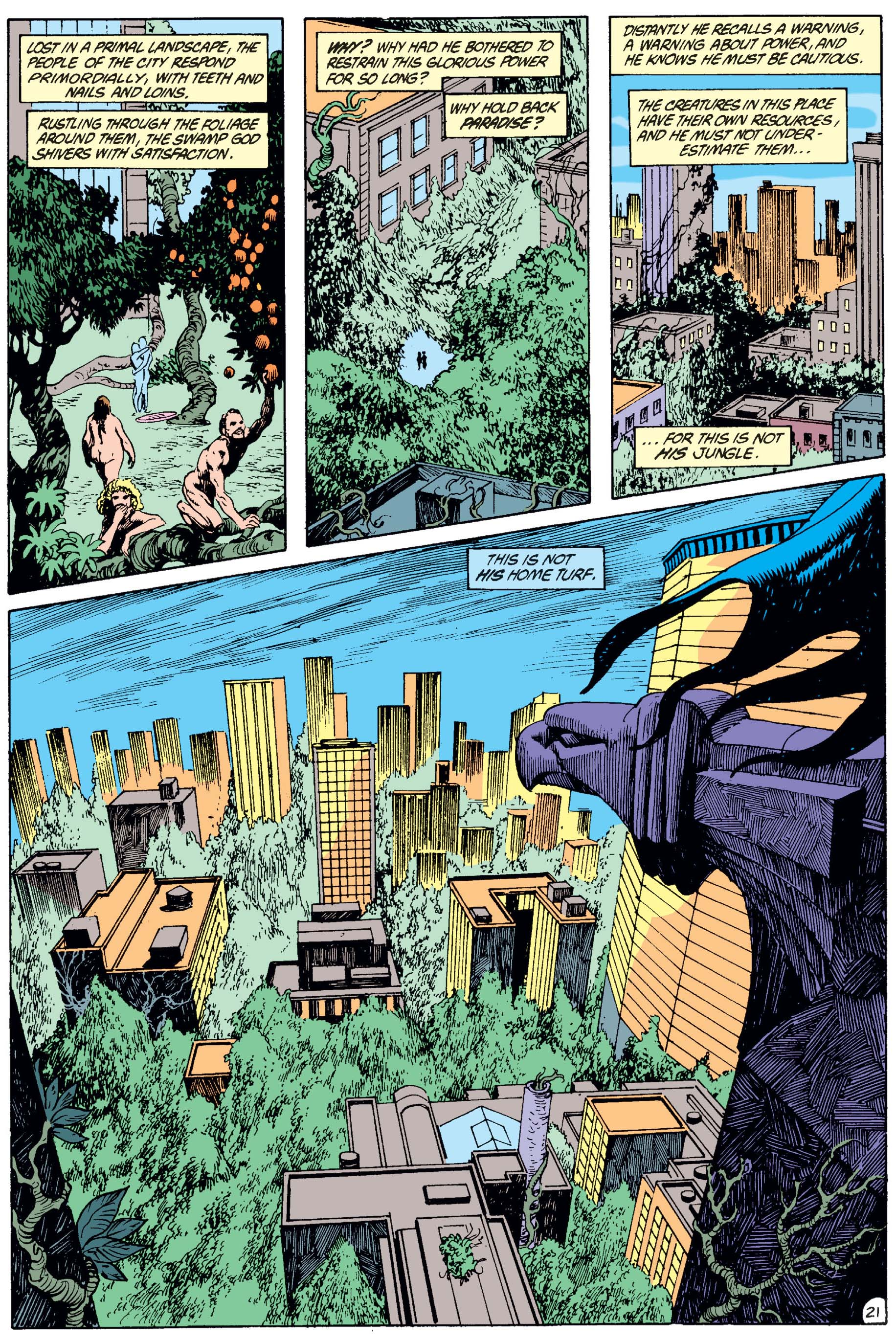
In issue #52, Swamp Thing comes to Abby’s rescue, giving the city authorities an ultimatum: either release her in the next hour or deal with an enraged vegetable demigod. Nothing happens, so Swamp Thing responds by using his green powers to turn Gotham into a jungle, which leads to some breathtaking sequences:

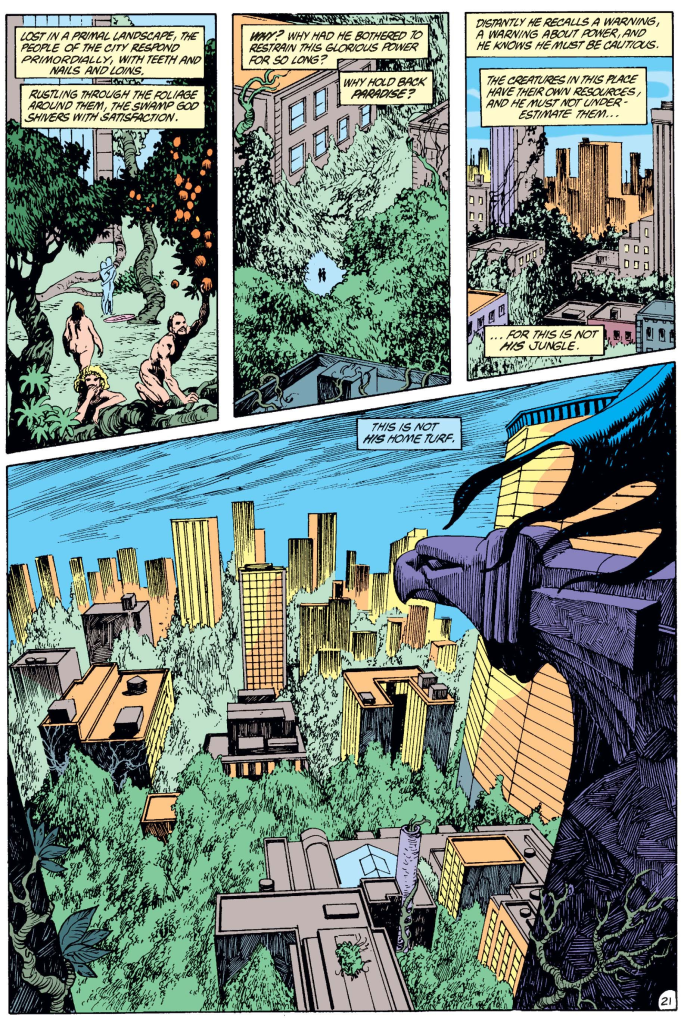 Swamp Thing (v2) #52
Gotham being Gotham, citizens deal with this transformation in the most outlandish ways, quickly adapting to the new surroundings by unleashing their buried urges. The whole thing turns into a weird social experiment…
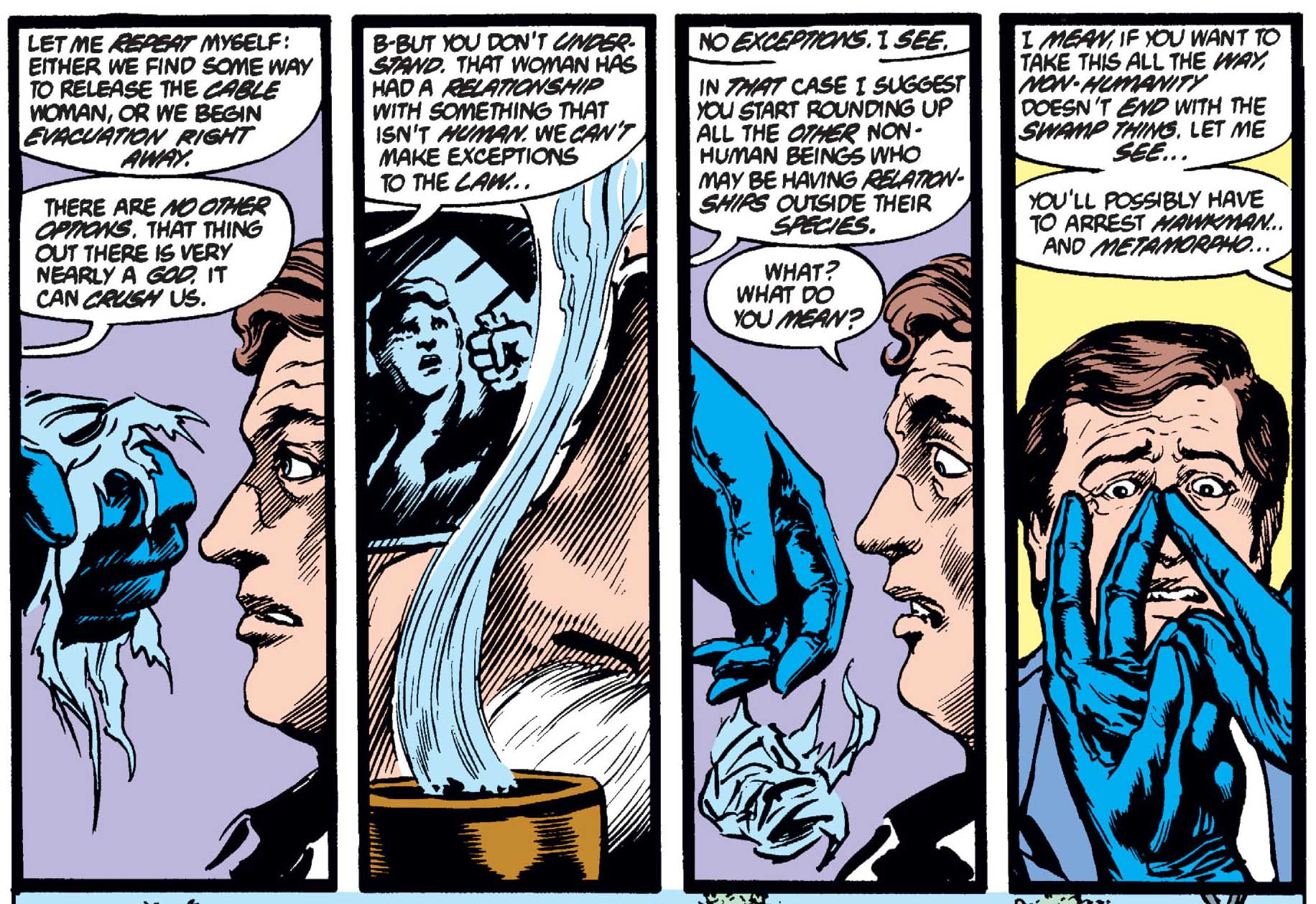
And then the Dark Knight comes onto the scene, spoiling everyone’s fun by crushing the foliage with his metallic Batmobile and attacking Swamp Thing with defoliant. In Moore’s world, if Swamp Thing is the liberator of humankind’s natural instincts and the avenger of ecological crimes, then Batman is the defender of the industrial and puritanical status quo. Appropriately enough, the Caped Crusader gets his ass handed to him by the supernatural monster. When he ultimately wins (he’s Batman, after all), it’s not by defeating Swamp Thing, but by standing up to Gotham’s mayor and arguing for sexual tolerance:

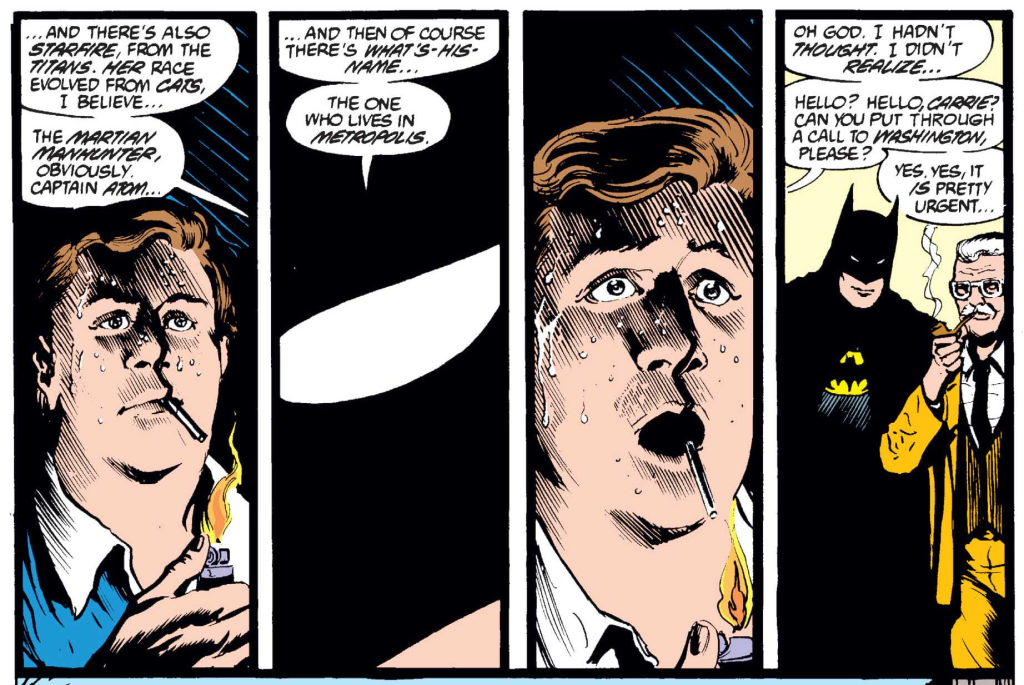 Swamp Thing (v2) #53
We get yet another unconventional affair in Batman Annual #11. ‘Mortal Clay’ is a sequel to Len Wein’s and Marshall Rogers’ Detective Comics #478-479, which introduced Preston Payne (aka Clayface III), a toxic, deformed man in an exoskeleton suit who believes he is in a relationship with a store mannequin called Helena:
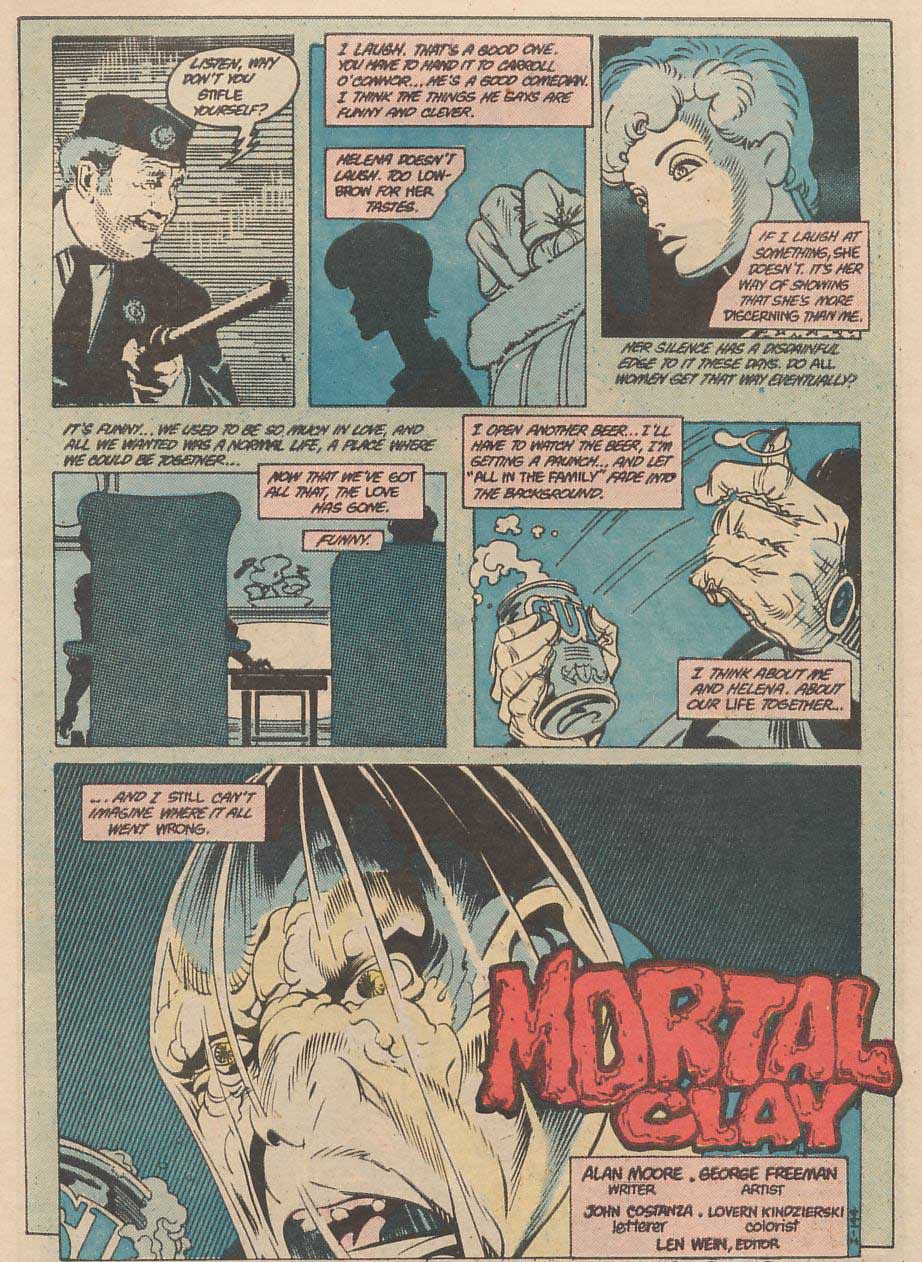 Part of the joke is that because of Preston Payne’s old fashioned values he can hardly distinguish between an actual woman and a lifeless, female-shaped dummy. But there is also a kinky undertone, especially as Payne starts to suspect that Helena is cuckolding him with Batman. Of course mannequins are designed to be sexualized to some degree (two store clerks even discuss their arousal), so in a sense Payne is only responding to the wider objectification of women, in his own twisted way:
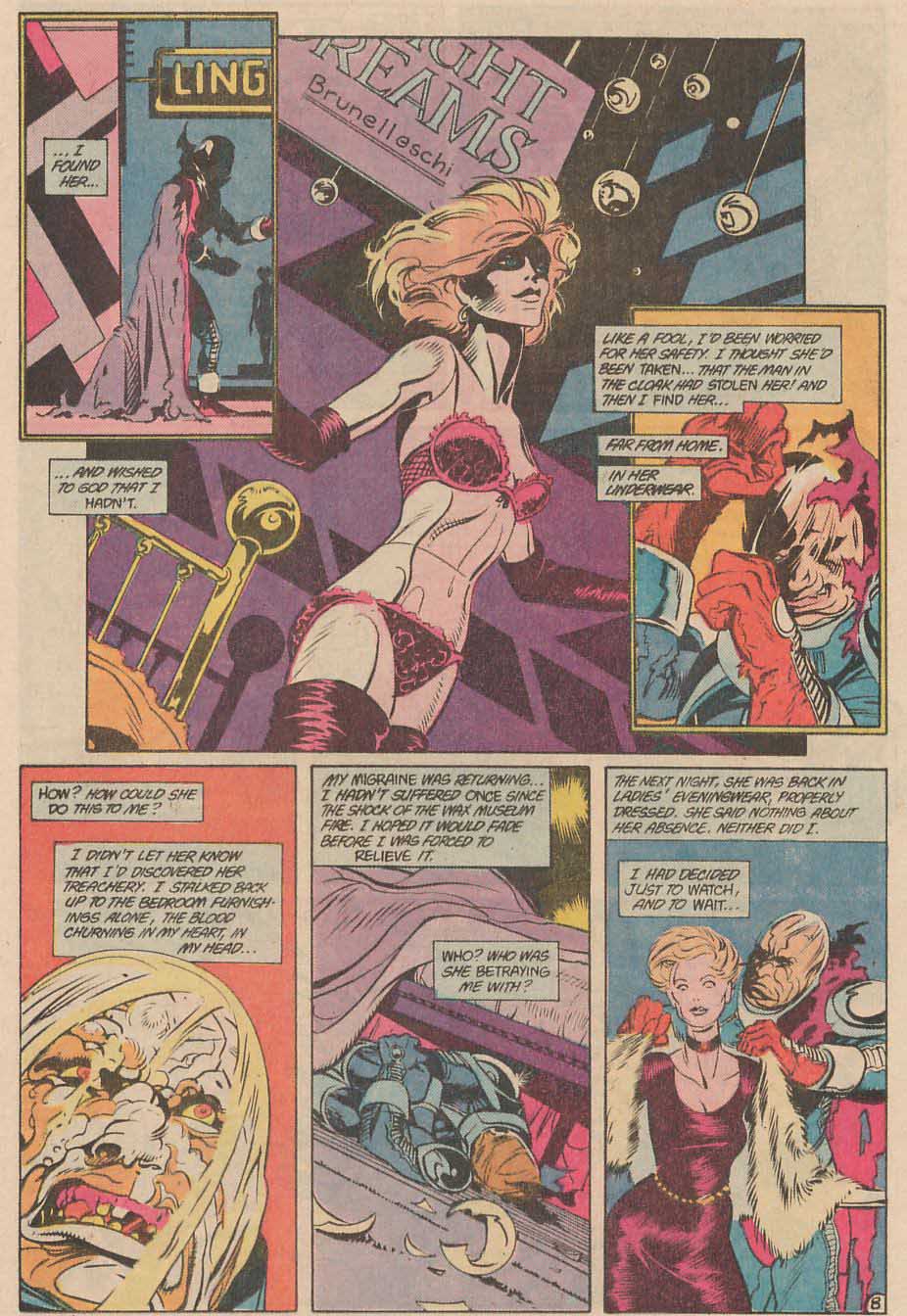 Moore gets a lot of mileage out of juxtaposing Payne’s delusional narration with the reality on display in the images. It’s a fun story that ends with a suitably dark punchline.
This is pretty much all we got in terms of straightforward Batman stories. Alan Moore’s take on the Dark Knight never reaches for transcendence. His Batman isn’t the World’s Greatest Detective, just a run-of-the-mill hero. In fact, he isn’t even a mysterious creature of the night, since he gives a public speech at Swamp Thing’s funeral (Swamp Thing #55). Perhaps Moore’s unpublished project, Twilight of the Superheroes, would have changed this: in the proposal, Batman, The Shadow, Tarzan, and Doc Savage were described as being ‘basically more elemental forces than people.’
In a less literal sense – and I know I’m not the only one to spot this – Batman is all over Watchmen. Rorschach is an extreme version of the gritty vigilante you can often find in Detective Comics. Ozymandias (who was born in 1939, the year of Batman’s debut) is a rich genius, one who transcends common morality and changes the world by using artists and inventors. Night Owl has the toys, as well as a sexual fetish related to the dangerous lifestyle and ridiculous costume. I could now go on to write another 20,000 words about Watchmen, but more erudite minds than mine have already done it (for example, the always knowledgeable Tim Callahan).
In any case, as far as Batman analogues go, nothing beats Professor Night in Alan Moore’s pastiche of 1950s’ World’s Finest Comics…
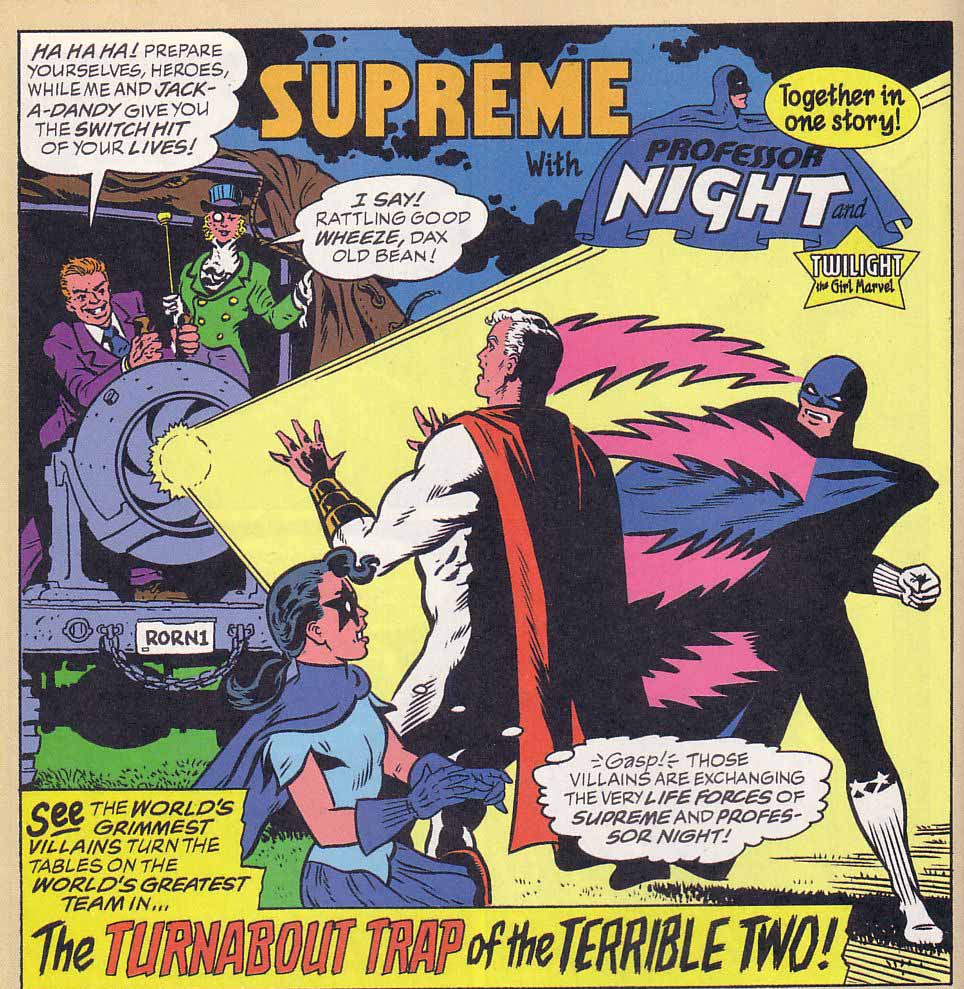 Supreme #47
Seriously, this version of the Batcave even has an ‘ultra-modern computer that can deliver dozens of facts within minutes.’ Adorable.
NEXT: Crocodiles.
Posted in WRITERS OF BATMAN COMICS
Tagged Alan Moore, Brian Bolland, Garry Leach, Rick Veitch
2 Comments
Non-Batman crime comics – part 2
If you read the last post, you know what’s going on. Here are another 5 non-superhero crime comics for fans of Batman’s noirish side:
Human Target
 Christopher Chance is a body guard who impersonates his clients, using his skills to pull a fast one on whoever is trying to kill them. There have been plenty of Human Target comics and even a TV show, but the string of awesome stories written by Peter Milligan between 1999 and 2005 stands in a class of its own. The main twist is that, under Milligan, Christopher Chance not only takes over his clients’ looks, but more often than not goes native, inhabiting their personality to such a degree that he forgets who he really is.
This concept plays neatly to Peter Milligan’s strengths, since virtually all of his comics are about identity crises. What’s more, Milligan is a master of plotting, pillaging the zeitgeist – from 9/11 to steroids-related sports scandals – and delivering tales that are as entertaining as they are thematically rich. In Human Target, the plots are full of switcheroos, constantly pulling the rug from under everyone’s feet, to the point that readers are usually as confused as the characters themselves about who is who – most of the time it’s not even entirely clear whether we are following Christopher Chance’s adventures or those of his deluded assistant.

 Human Target #1
Even if you’re not into Peter Milligan’s Batman comics (although you ought to be, with a few exceptions), give this sucker a try, as it’s written with a whole different kind of voice. It’s also more action-based than Milligan’s other – equally brilliant – crime comics, Skreemer and The Extremist. And if this isn’t endorsement enough, bear in mind that the art chores fell upon some of the industry’s greatest talents, namely Edvin Biukovic, Javier Pulido, Cliff Chiang, and Cameron Stewart.
Parker
 You’d think it would be impossible to improve upon Richard Stark’s (née Donald E. Westlake) novels about tough-as-nails career criminal Parker, written as they are in a terse style that perfectly matches the cold-hearted, professional attitude of their protagonist. At the very least, it would be hard to reach the heights of the hypnotic Point Blank, the only creatively successful adaptation of the material. And yet, Darwyn Cooke somehow pulls it off almost flawlessly in this series of graphic novels.

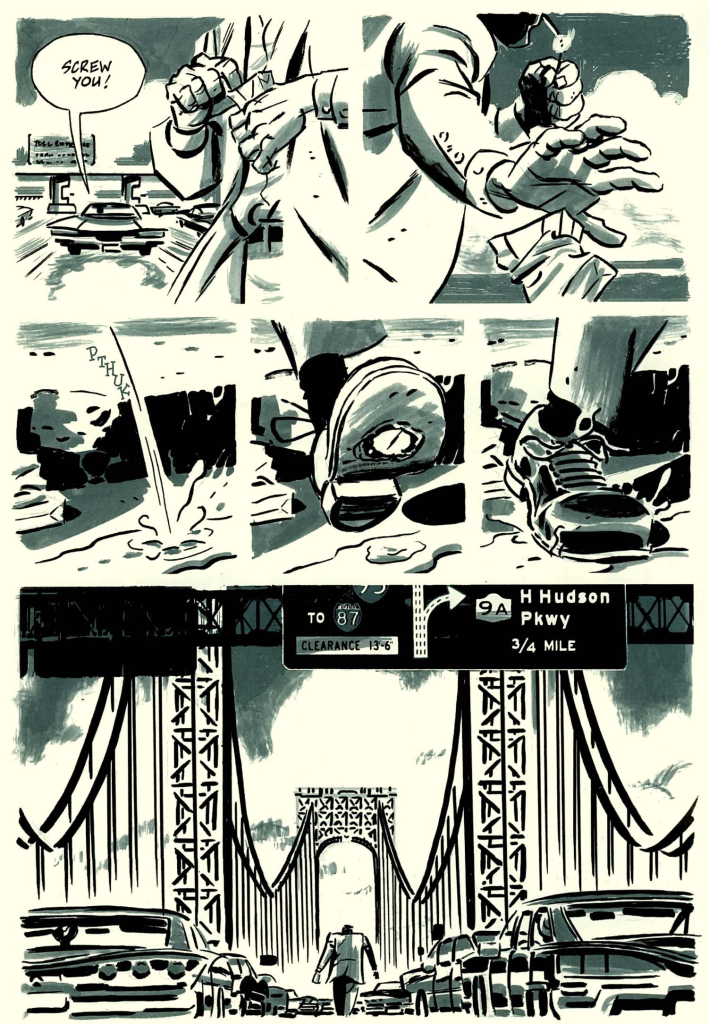 The Hunter
You can (and should) say what you want about Darwyn Cooke’s abominable work on the Watchmen prequels, but he is unquestionably one of the medium’s greatest visual storytellers. And here he is completely in his element, telling the kind of story he likes, starring a virile anti-hero, set in a period that merges well with his nostalgic, cartoonish art style – not that Cooke doesn’t take the chance to add different styles to his portfolio, especially in the second book, ‘The Outfit.’ Fans of his amazing Catwoman graphic novel Selina’s Big Score should get a special kick out of this series, as that tale was obviously heavily influenced by Richard Stark’s work.
Scalped
 Much like The Wire, Scalped is one of those critical darlings that manages to live up to the hype. Set in an Indian reservation, this comic is part gangster saga, part undercover cop thriller, part 30-year-old mystery, part casino heist, part social realism, part modern day western. It starts off as merely kick-ass, and then evolves into a sprawling epic about a gallery of fascinating characters.

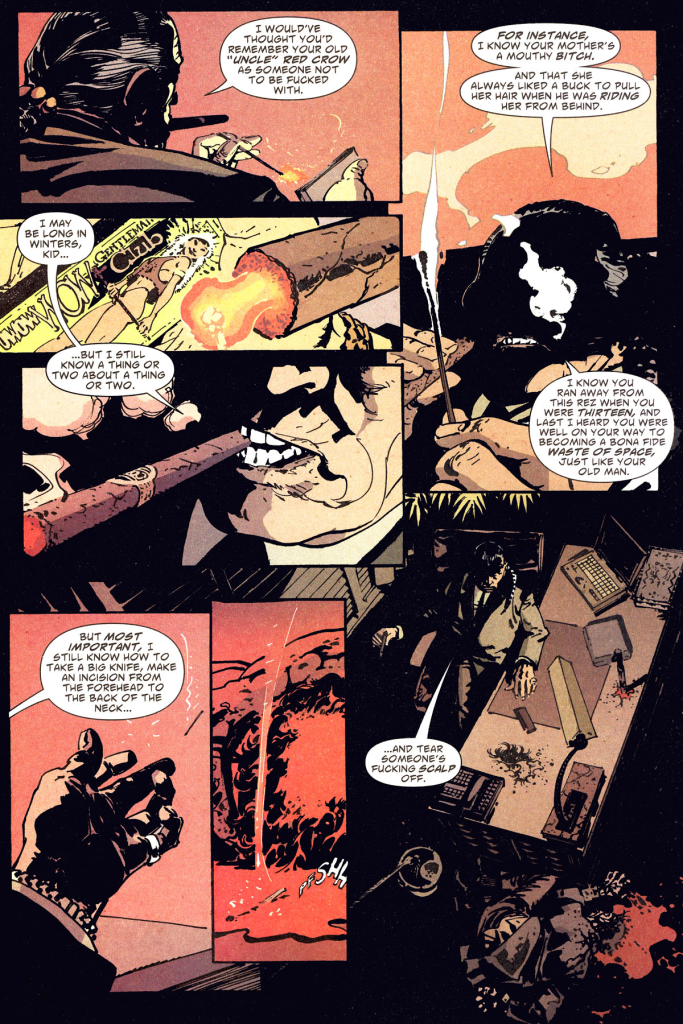 Scalped #1
One of the pleasures of Scalped is watching Jason Aaron grow from a writer who is great at balls-to-the-wall violence and testosterone-fueled dialogue into someone who is just as comfortable writing quietly moving human drama. Meanwhile, the team of artist R.M. Guéra and colorist Giulia Brusco bring in the kind of distinctively gritty, dusty look the comic deserves. It doesn’t get much better than this.
Sin City
 Frank Miller’s early ventures into Batman comics were already informed by hardboiled fiction, but Miller took things to a whole other level with Sin City. It’s as if there was an explosion at the film noir factory. In this series of sweaty pulp-as-hell stories set in the most decadent and crime-ridden town this side of Gotham, you can find pretty much every genre archetype blown up to the point of caricature, from the toughest tough guy (who ends up in the electric chair and needs two rounds of shocks, because just one wouldn’t do the trick) to the femme fatale to end all femme fatales (effectively brought to life by Eva Green in the latest film adaptation).

 Sin City #1
Along with the exaggerated, Chandler-on-overdrive prose, Sin City features breathtaking art that masterfully uses negative space. This is Frank Miller-the-artist at the top of his game, confidently controlling the pace of the narrative while providing one powerful visual after another. In later entries, Miller also plays with color, sparsely illustrating specific details, to memorable effect. By the way, I’m restricting this list to comics in English, but if you read French (or if you find a translation in any language you read), there is a Belgian series called Berceuse Assassine which also has a limited color palette and rivals Sin City for the award of noiriest comic of all time.
Stray Bullets
 And then there’s Stray Bullets, the only crime comic that can stand up to Scalped. David Lapham’s opus takes place over 20 years (from the mid-1970s to the mid-1990s) and features a huge cast of quirky characters engaged in all kinds of seamy, illicit, or just plain twisted behavior. Stories do not follow a chronological order, so in theory you can pick up any random issue or book and dive in. They range from more or less self-contained narratives (which are pieces of a larger puzzle, but cool enough on their own) to specific character studies (including the surrealist alter ego of one of the protagonists). Compared to Lapham’s recent output in other comics, which is full of over-the-top violence and frat house attitude, Stray Bullets shows much more restraint and insight into humanity, albeit peppered with dark humor. As for the art, it’s a master class of expressive ‘acting,’ as well as dramatic and comedic timing.
 Stray Bullets #10
Although David Lapham’s Batman-related work is clearly much less heartfelt, you can see some of his genius in City of Crime, an engrossing exploration of the sordid side of Gotham. Don’t take my word for it, just check out what Greg Burgas, one of the keenest comics bloggers out there, wrote about it. Or better yet, read the damn thing yourself.
 Detective Comics #801
NEXT: Batman talks about sex.
Non-Batman crime comics – part 1
As much as I love the outlandish side of Batman comics, with characters like Pee-Wee, the Talking Penguin, I’m actually a huge fan of Dark Knight stories that deploy tropes such as hardboiled dialogue, elaborate capers, twist-filled mysteries, and single-minded vigilantes moving through a seedy underworld…

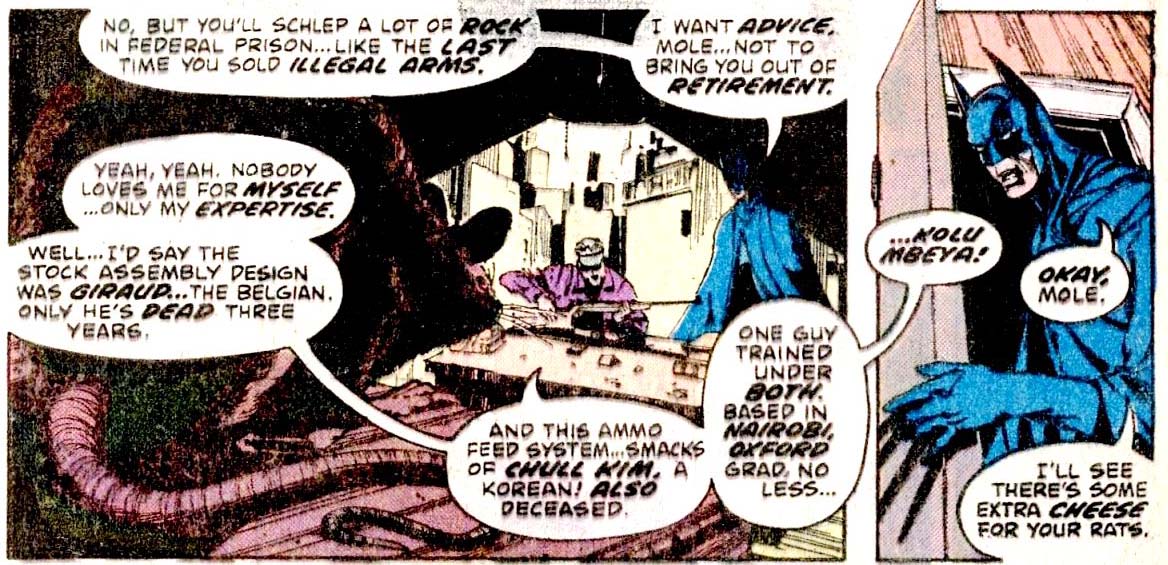 Detective Comics #443
If you happen to be like me, you may also enjoy crime comics that feature less ridiculously clad protagonists. In that case, make sure you check out these suckers:
100 Bullets
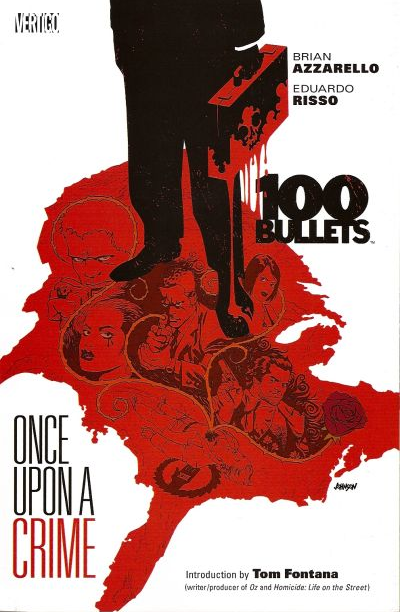 Imagine that a well-dressed old man with piercing eyes walks up to you one day and hands you an attaché case with irrefutable evidence of who’s to blame for the worst thing that ever happened to you. He also hands you a gun and one hundred rounds of untraceable ammunition – all with the assurance that even if you choose to use terminal force to exact your revenge no law enforcement agency can touch you. This is the initial premise of 100 Bullets, as that same offer is made to various down-on-their-luck characters, although the overarching plot soon shifts to a byzantine conspiracy involving the people behind the attaché and most of the intended victims. Along its 100 issues (and a recent 8 issue sequel), the series tells violent stories in all sorts of subgenres of crime fiction, featuring ghetto gangbangers and high class mobsters, amnesiac detectives and rough prison inmates, desperate losers and alpha male psychopaths… It also paints a multifaceted portrait of crime in 21st century America.

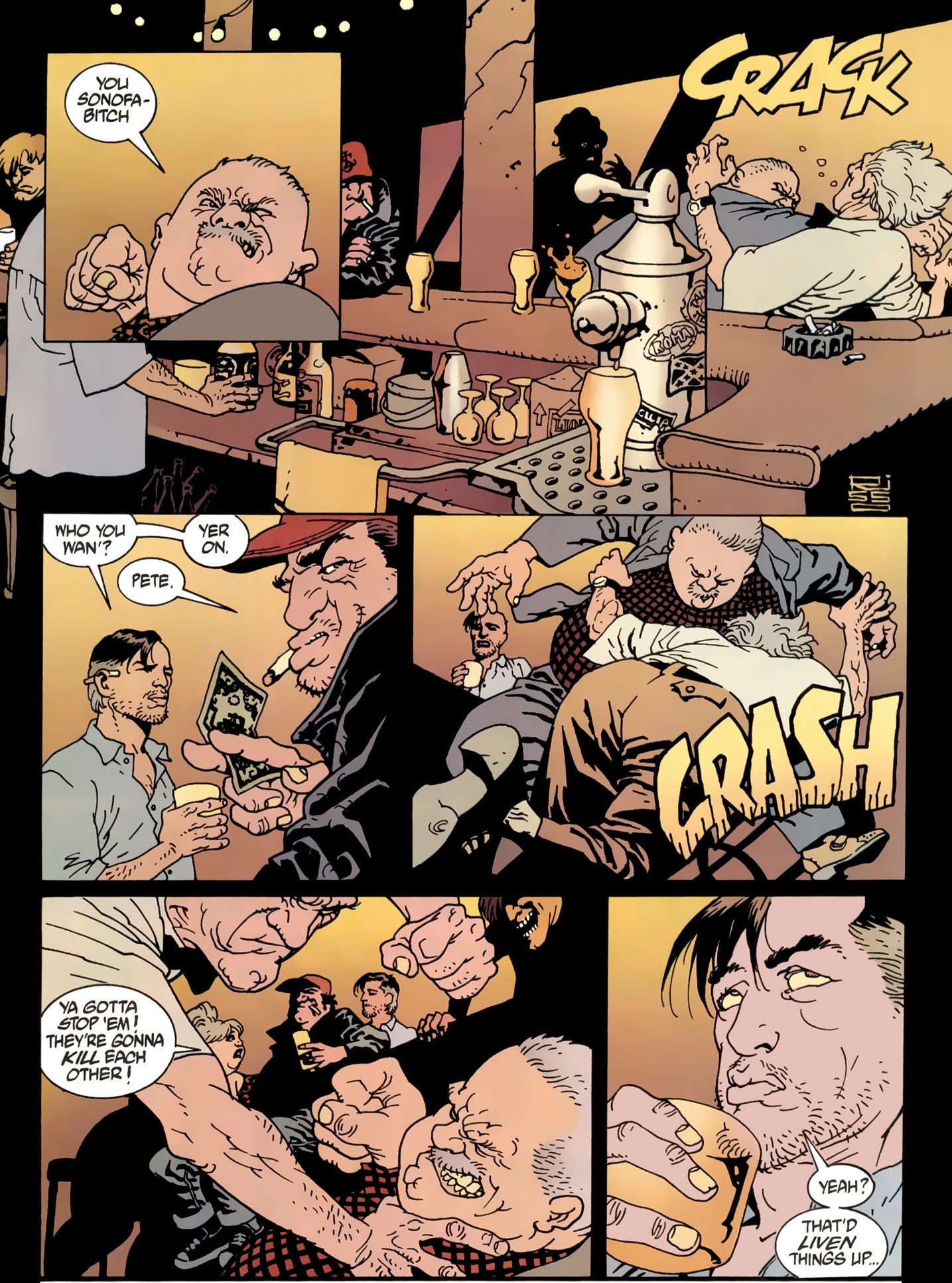 100 Bullets #4
Behind the comic are three idiosyncratic creators. Brian Azzarello’s trademark as a writer is the fact that in his stories no one will ever say or do anything in a straightforward manner if there is a more roundabout way to go about it. While his labyrinthic approach to dialogue and plotting can get tiresome, at its best it deepens the narrative with multiple layers of meaning while celebrating the richness of American slang. Eduardo Risso’s art style is also an acquired taste, but there is no denying that he has one of the most original ‘cameras’ in comics, framing the action through inventive angles (including, well into the series, a POV shot from inside a mouth about to bite a hotdog). Similarly, Patricia Mulvihill’s coloring choices are not always obvious, but somehow they tend to work. 100 Bullets is especially recommended for fans of this trio’s Batman-related comics: Broken City and the tale that ran in Wednesday Comics.
Brian Michael Bendis’ black & white crime comics
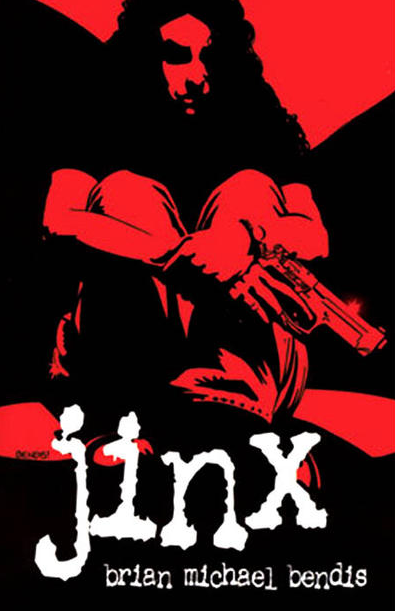 As difficult as it may be to believe it now, before becoming the most omnipresent writer at Marvel, Brian Michael Bendis wrote and drew some seriously cool indie crime comics in the 1990s. Goldfish is a neo-noir tale about a con man going up against a gangster called Lauren Bacall (way to wear your influences on your sleeve, Brian). It’s full of atmosphere and bravado, not to mention a great anti-climax (one of Bendis’ specialties). Jinx features the same con man when he was younger and focuses on his relationship with a female bounty hunter called Jinx in a plot that riffs on The Good, the Bad and the Ugly, of all things. Less retro, with a more Generation X urban vibe, it’s a slow-burn comic, not afraid to take long narrative detours and to flesh out its characters by giving them plenty of room to chat. Torso, co-written with Marc Andreyko, is set in 1930s Cleveland and based on the true story of how Eliot Ness investigated a serial killer who left only the torsos of his victims behind. It is suitably stylish and interesting.
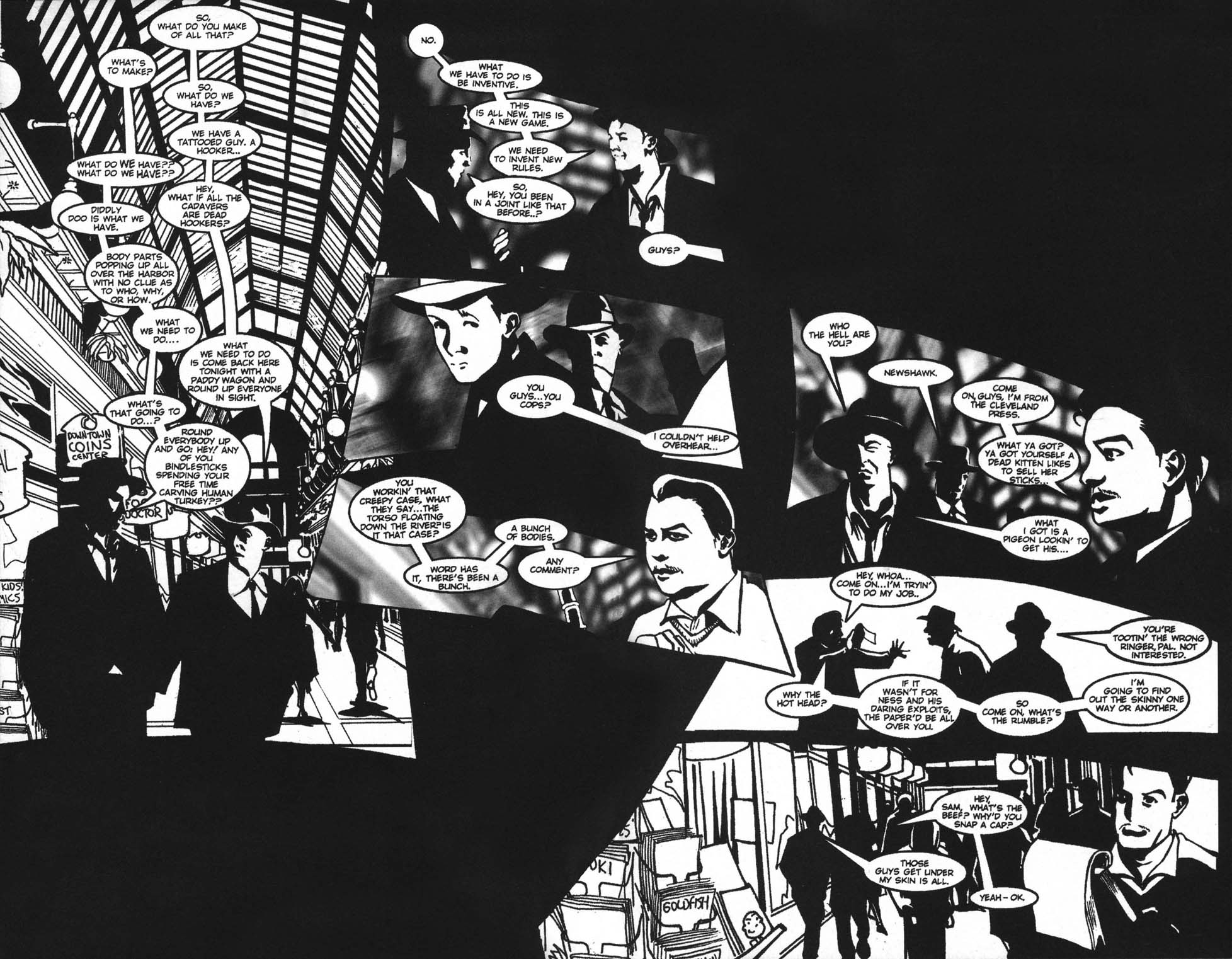 Torso
Torso
Bendis’ dialogue reads like the bastard child of David Mamet and Quentin Tarantino, with just as much swearing and pop culture references. His artwork has a DIY feel, mixing drawings and scanned photos, but it more than makes up for any shortcomings through experimental layouts. The bounty hunter Jinx shows up again in Sam & Twitch, a Spawn-spinoff Bendis wrote (but did not draw) in the early 2000s. Sam & Twitch actually started off as an uninspired horror comic (including a storyline that is beat for beat the same as the opening arc of Bendis’ long running superhero police procedural Powers, only with witches), but it grew into a strong crime series.
In this case, there’s not much of a chance to test the field through Batman comics, as Brian Michael Bendis practically hasn’t done any. His only related work is the short story ‘Citizen Wayne’ in Batman Chronicles #21, in which he reimagined the Dark Knight mythos through the lens of the classic film Citizen Kane (it’s neat, but not as much as Mark Waid’s and Brian Augustyn’s exploration of the same idea in Legends of the Dark Knight Annual #4).
Button Man
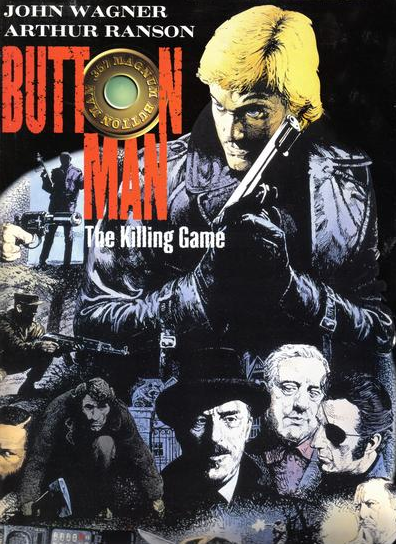 What if the rich could get the poor to kill each other for sport and bet on the result? Or rather, what if The Hunger Games had been written in the 1990s, set in contemporary reality, featured grown men, and overflowed with British nastiness (a la Get Carter)? Well, that’s Button Man. The original story, ‘The Killing Game,’ really packs a punch. The first sequels, ‘The Confession of Harry Exton’ and ‘Killer Killer,’ although unnecessary and lacking the freshness of that initial outing, are nevertheless gripping reads. As for the fourth entry in the series, ‘The Hitman’s Daughter,’ that one may as well be ignored forever.
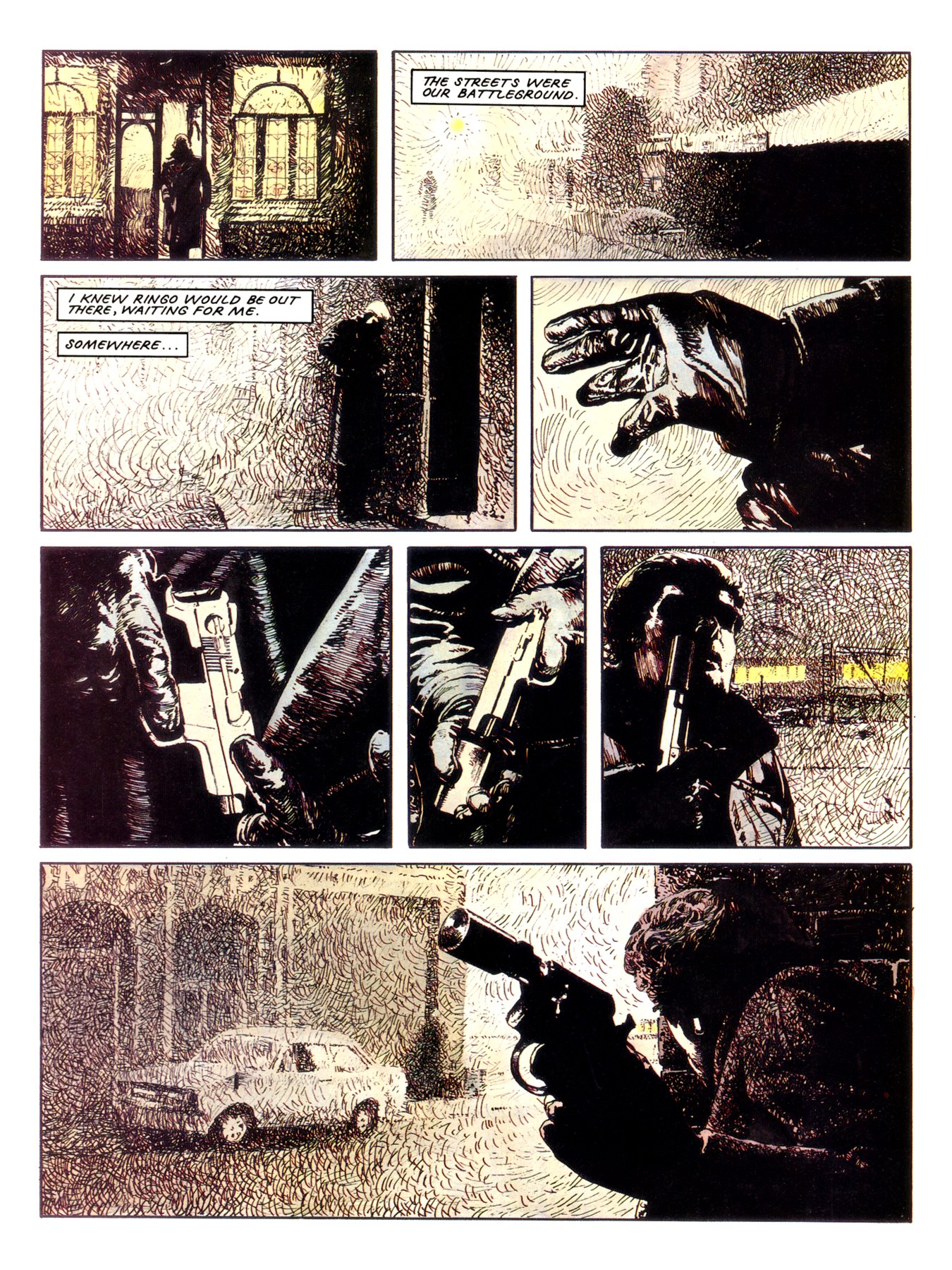 The Killing Game
Whether you know John Wagner from his Batman comics (most notably his legendary run in Detective Comics alongside Alan Grant) or from his tons of other work, Button Man will not disappoint. This is as tautly written a tale as they come. As for the art, Arthur Ranson’s hyper-realism and sense of pace perfectly convey the moments of tension and the ferocity of each killing blow.
Criminal
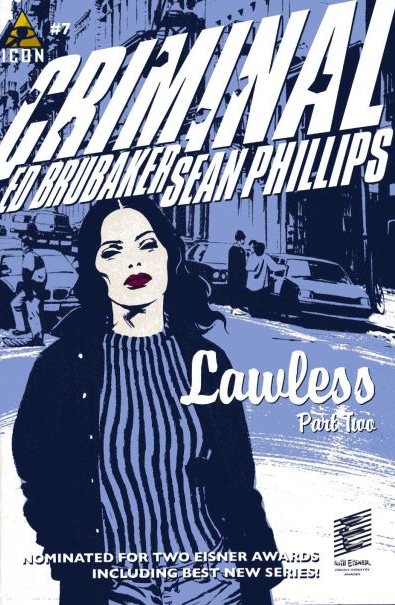 This critically acclaimed comic began as a bunch of well-told, firmly grounded crime stories that drew on some of the conventions of the genre but treated them realistically (as opposed to, say, the ultra-stylized approach of 100 Bullets). Criminal gradually became more and more ambitious, as characters and settings from across the series were shown to be interlinked in a wide narrative tapestry. There are also metafictional touches – most famously, the characters in the story arc ‘The Last of the Innocent’ are essentially grown up versions of the teenagers from Archie Comics, for some reason.
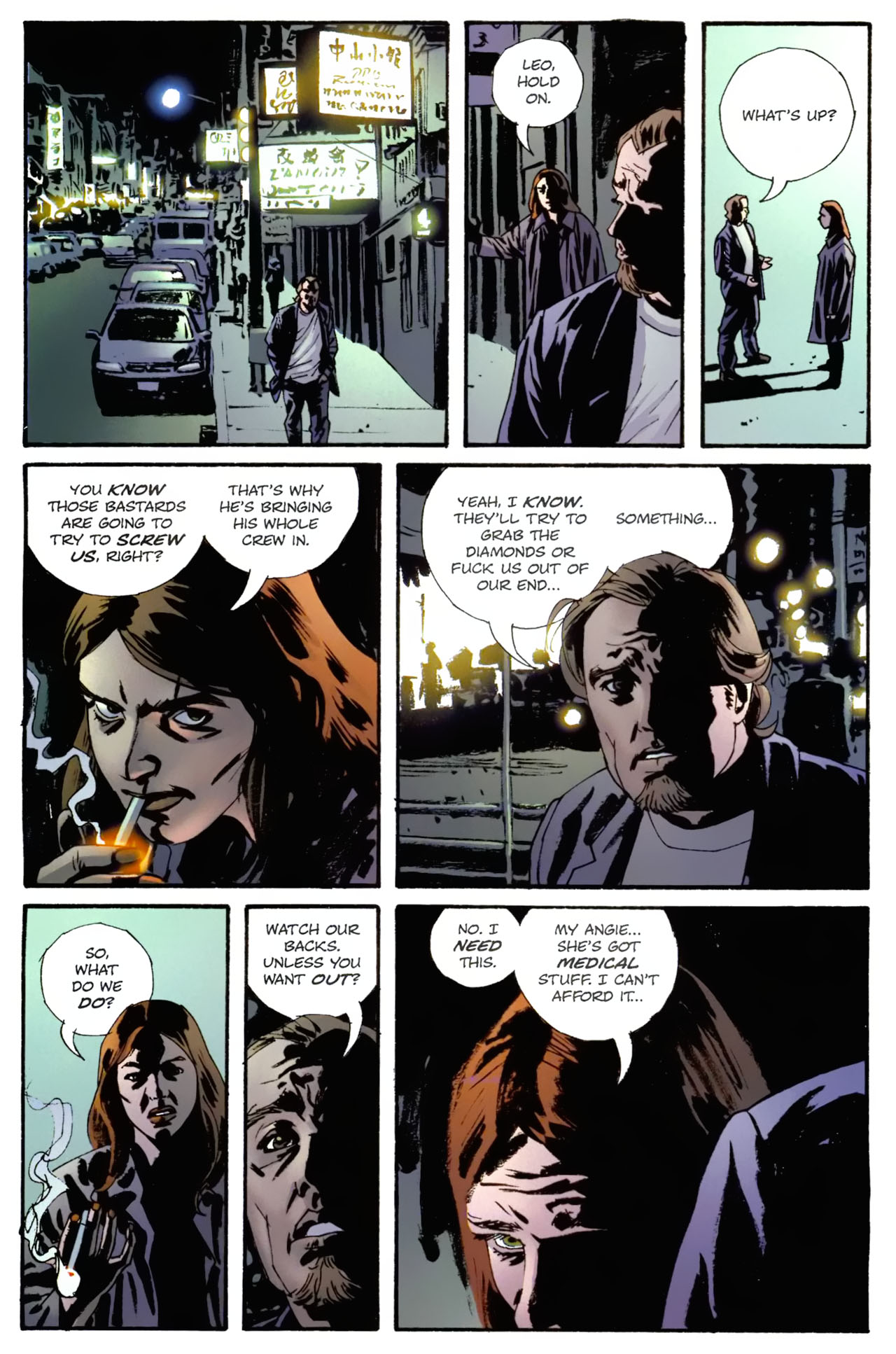 Criminal #2
Ed Brubaker and Sean Phillips play really well off each other, having worked on a ton of projects together, including the Elseworld’s tale Gotham Noir. In the early 2000s, Brubaker was quite a prolific writer in the Batman universe, with his best work by far being comics that were directly inspired by crime fiction, namely Gotham Central, his run on Catwoman, and the underrated story arc ‘Dead Reckoning’ (Detective Comics #777-782).
Hit
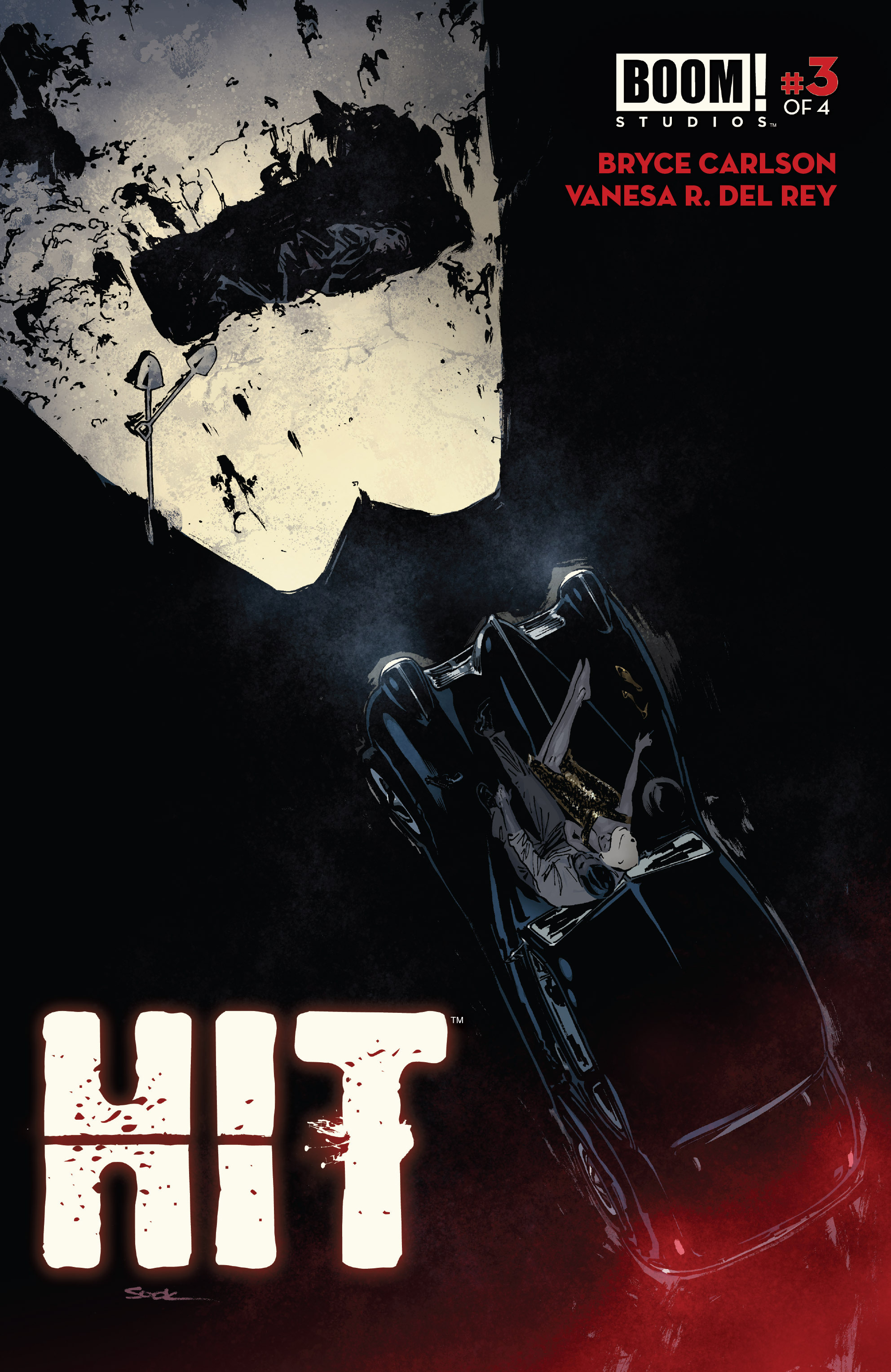
In 1950s Los Angeles, a clandestine hit squad made up of cops goes around executing gangsters in the middle of the night. Throw in a million twists, turns, and double-crosses, as well as the obligatory femme fatale, and you’ve got the starting point for Hit. What could have been just another clichéd L.A. Confidential knock-off is elevated with great panache by Bryce Carlson and Vanesa R. Del Rey. So far these two have not done any Batman comics – and while I hope they manage to get more projects like this one rolling, on the strength of their work here I wouldn’t mind seeing what they could do in Gotham City, especially if helped by Archie van Buren’s gorgeous colors…
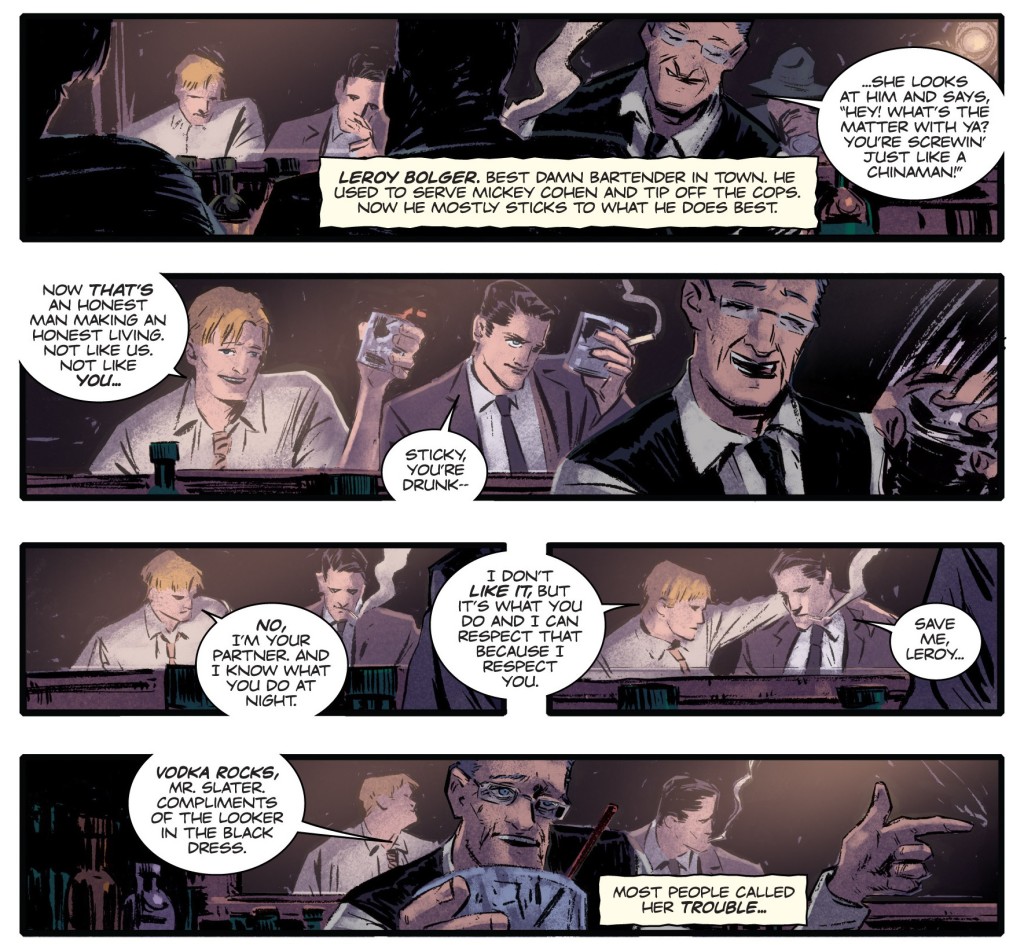
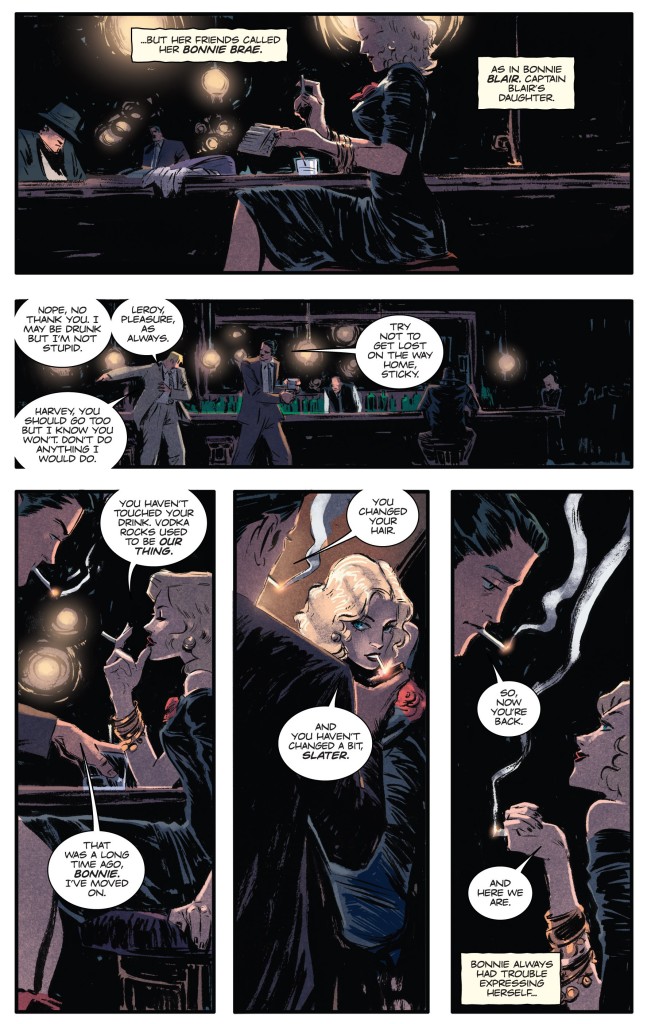 Hit #1
Posted in HARDBOILED CRIME
Tagged 100 Bullets, Archie van Buren, Arthur Ranson, Brian Augustyn, Brian Azzarello, Brian Michael Bendis, Bryce Carlson, Button Man, Criminal, Ed Brubaker, Eduardo Risso, Hit, John Wagner, Marc Andreyko, Mark Waid, noir, Patricia Mulvihill, Sean Phillips, Vanesa R. Del Rey
Leave a comment
On the lifespan of Gotham mayors
While no job in Gotham City offers worse conditions than being a henchman, working in local politics comes remarkably close. Seriously, even House of Cards’ Frank Underwood would be scared of this place. As if it wasn’t bad enough that politicians are under constant threat, they are often threatened in the most preposterous ways…
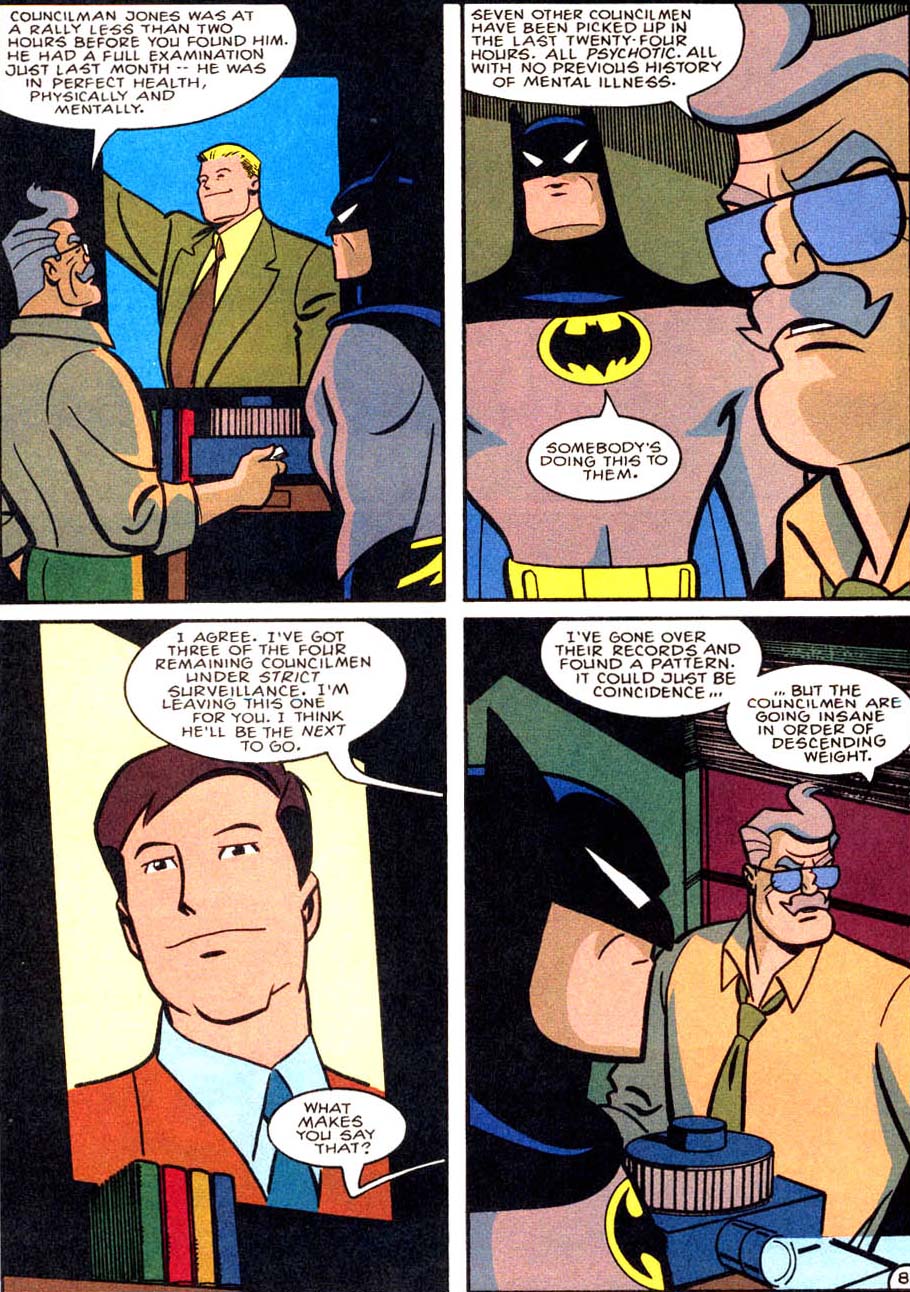 The Batman Adventures #28
Hell, when he was City Council Chairman, Rupert Thorne was even attacked by the ghost of a quack psychiatrist:
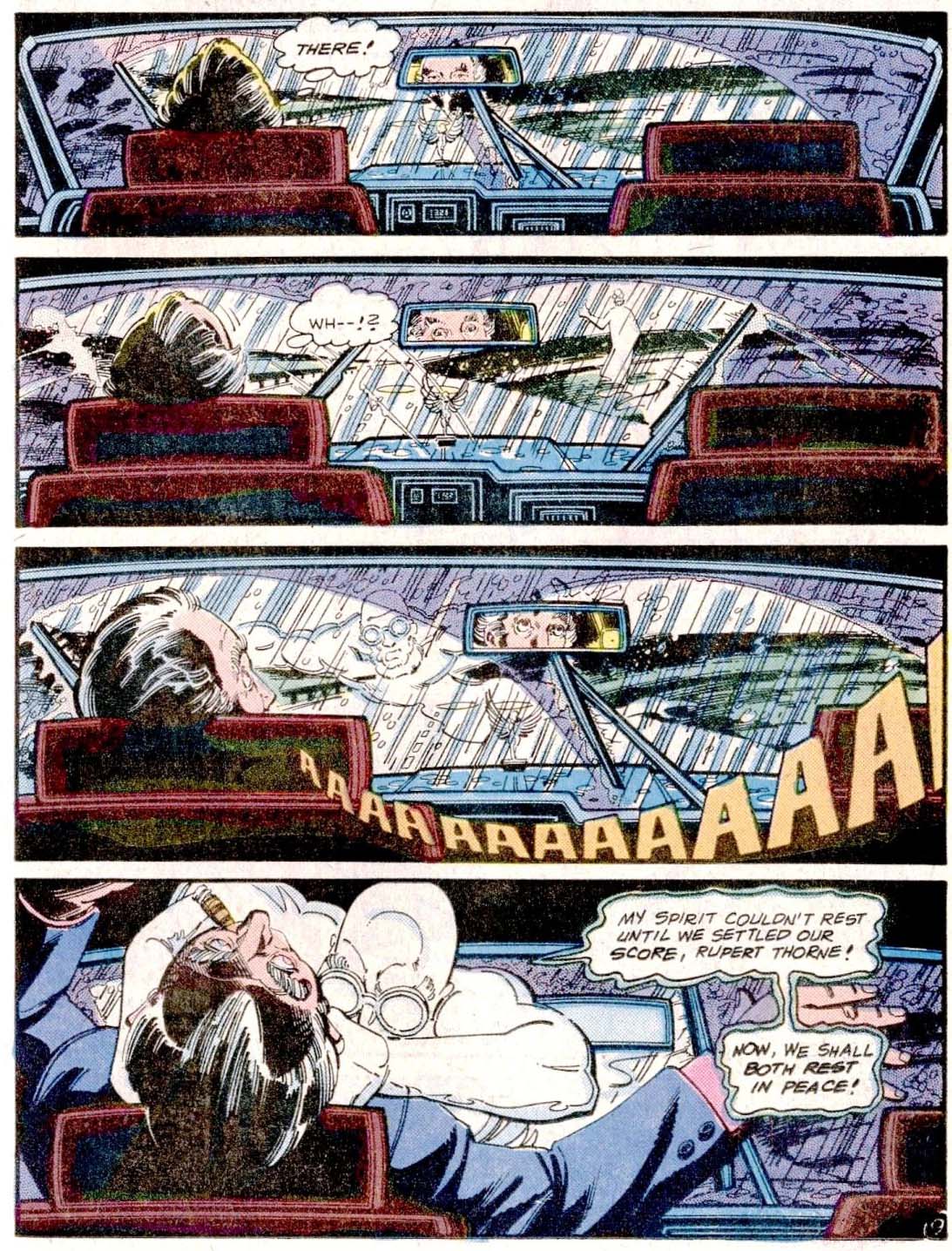 Detective Comics #476
The most dangerous position, by far, is being the actual mayor. Looking back, whenever Mayor Hamilton Hill showed up in Batman: The Animated Series, it was usually to be kidnapped, to have his son’s birthday party attacked by a psychotic clown, to get strapped to the hands of a tower clock, or to be replaced by an evil robot. Still, compared to his counterparts in the comics, he got off lightly.
Famously, the mayor in The Dark Knight Returns had the worst day of his career when he agreed to meet with the leader of a gang of rebel mutants:
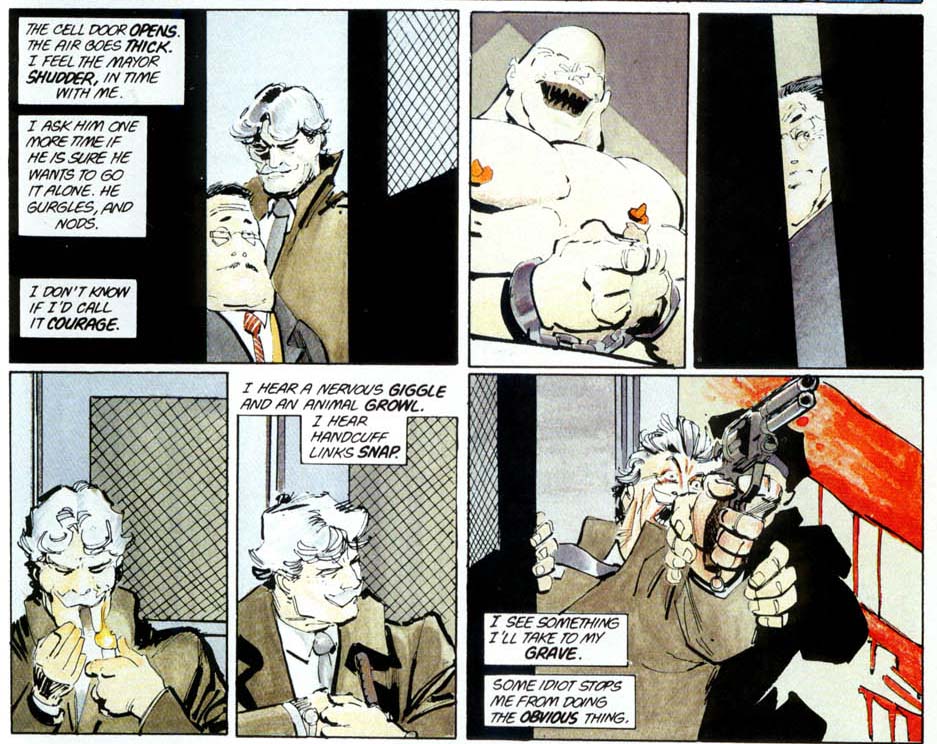 The Dark Knight Returns #2
It shouldn’t be surprising that Commissioner Gordon also watches the mayor die (in a car explosion) in the terrible mini-series The Cult, since – as I’ve mentioned before – that comic goes a very long way to mimic Frank Miller’s classic. In fact, it’s not just the mayor…
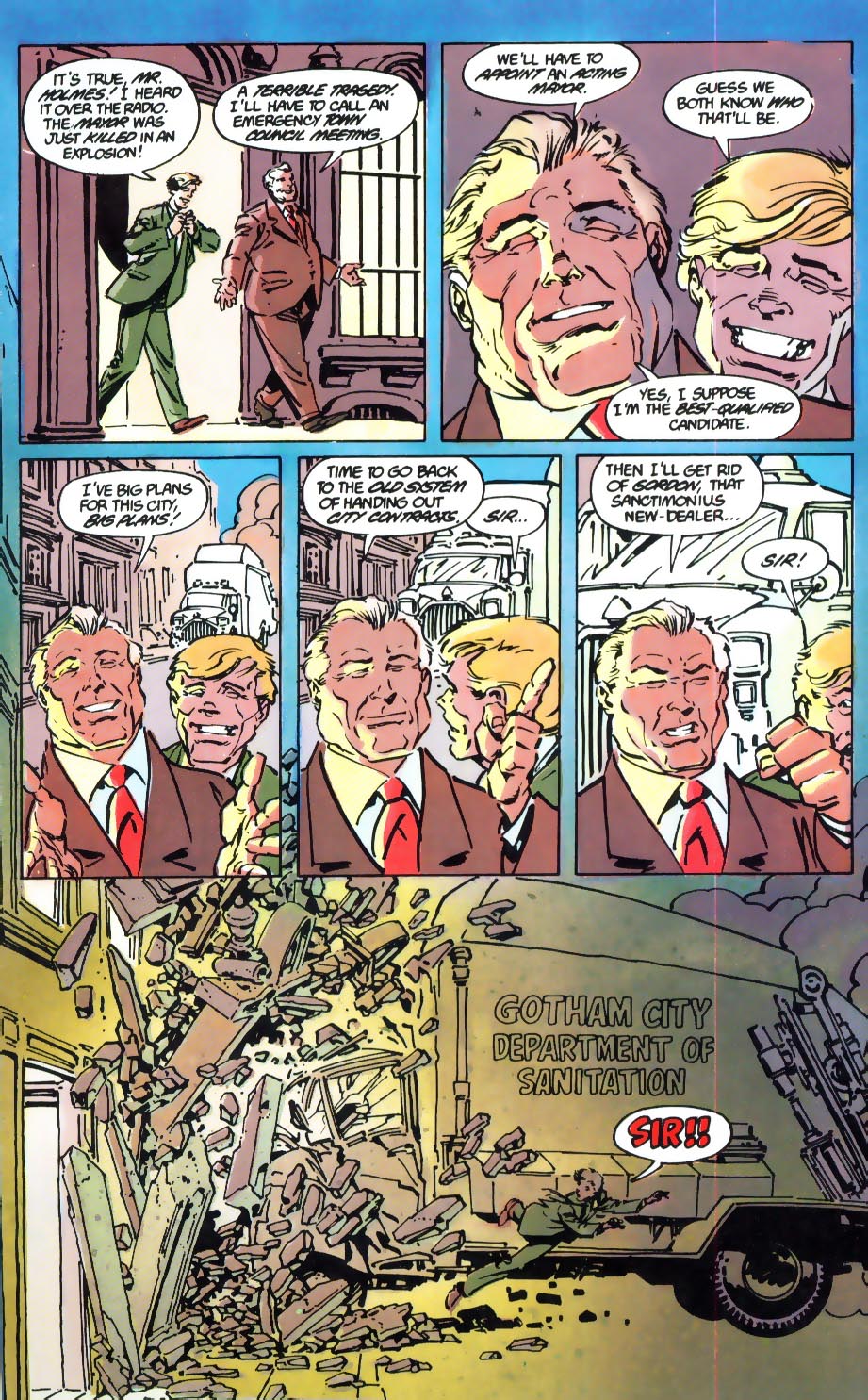 The Cult #2
…with typical lack of restraint, throughout The Cult the mayor’s potential successors also get slaughtered in horrific ways!
So far, you could reasonably chuck it all to 1980s’ excess, but it didn’t stop there. In 1991, Mayor Julius Lieberman was eviscerated by a predator:
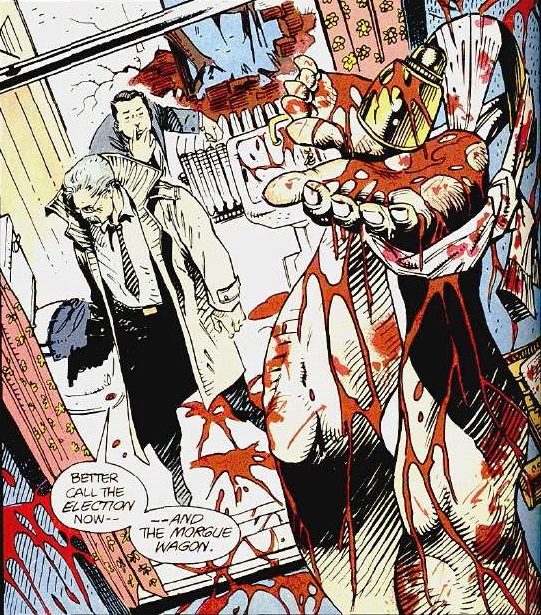 Batman versus Predator #2
Yes, one of those predators.
By contrast, Mayor Armand Krol managed to outlive his term, although not by much. After losing reelection in 1995, his subsequent bid for the governorship was cut short when he died in the second outbreak of the Clench virus, unleashed into the city by the eco-villain Ra’s al Ghul. Krol’s successor, Marion Grange, did not have it easy either, what with dealing with the Clench epidemic, a wave of suicides and riots due to mass ontological despair in 1997 (caused by a passing Godwave, whatever that is), an earthquake, and the descent of the city into anarchy as the federal government cut off access to Gotham. Mayor Grange died shot by a sniper, unlucky ‘till the end… the bullet was actually meant for Bruce Wayne, but she got in the way!
By then, killing off the mayor had practically become a city tradition. In his excellent ‘Made of Wood’ story arc, Ed Brubaker retroactively established that in the late 1940s Mayor Thorndike had been beaten to death by an enemy of the original Green Lantern. Mayors in alternate realities – from Master of the Future to Earth One – met deadly fates as well. It became a staple of Batman comics:
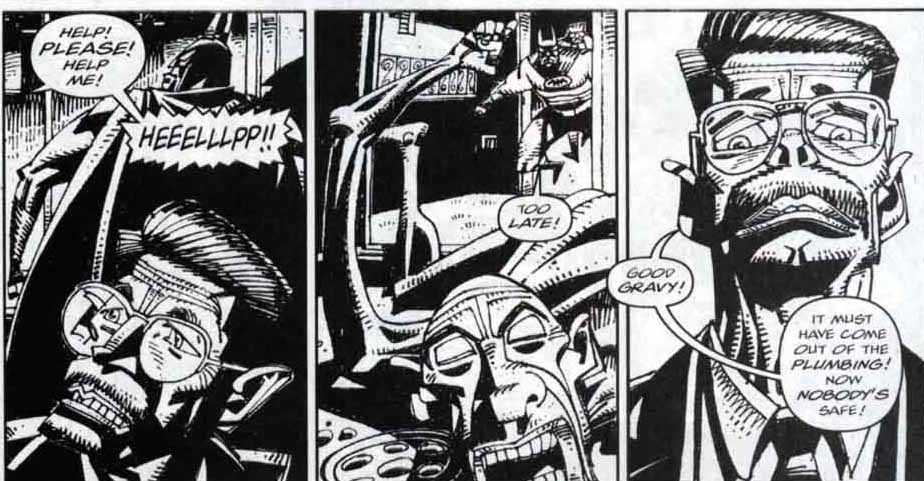 Gotham Knights #18
I know what you are thinking: Commissioner Gordon always seems to be there. Much like Jessica Fletcher in Murder, She Wrote, he’s an obvious yet overlooked suspect, right? After all, most of these mayors did try to fire him at one point or another… Well, in Gordon’s defense, even after he retired and was replaced by Commissioner Michael Akins, things didn’t improve. In this panel, Akins is the guy giving the statement, Mayor Daniel Danforth Dickerson III is the one on the floor:
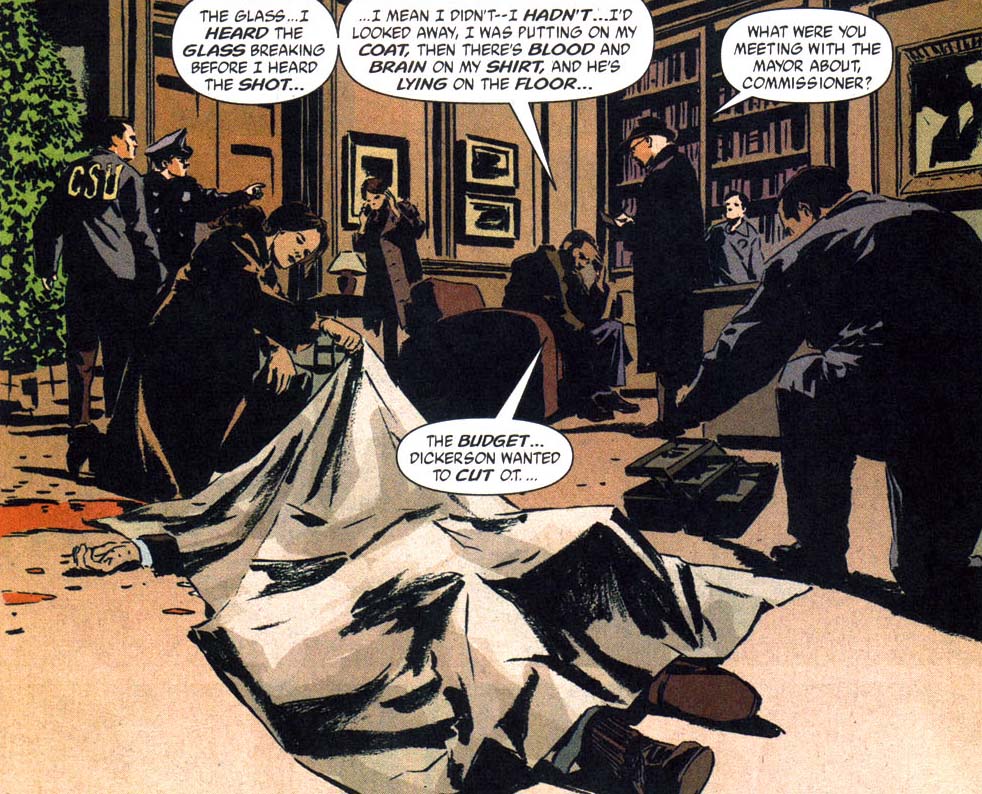 Gotham Central #12
Posted in GOTHAM CITIZENS
Tagged Batman: The Animated Series, Ed Brubaker, Frank Miller, Gotham City, politics
Leave a comment
More covers that play with the logo

Ok, I’ll call it: as far as Batman-related covers go, nothing will ever beat Lucha Libre #774. And yet, many have tried, some have even come close. Last week I wrote about my soft spot for covers that have fun with Batman’s logo. As breathtaking as those are, you can find even more imaginative logo distortions if you look not just at comics where Batman is the star, but at other series associated with the Dark Knight.
For example, there are the comics about Batman’s superhero team, the JLA…


…and the ones about The Outsiders, Batman’s *other* superhero team:


There’s also the very cool Birds of Prey, about a team founded by ex-Batgirl Barbara Gordon:


And, of course, let us not forget the Suicide Squad, Washington’s criminal-based black ops team (and Dirty Dozen rip-off) where many of Batman’s rogues end up:


Because the various Robins need someone to hang out with while Batman is off hobnobbing with the big names, they’ve joined their own share of superhero teams with experimental covers, including Young Justice…


…and the Teen Titans:


The Teen Titans in particular have been around for quite a while (since the 1960s!) and have starred in several different series. Many of these comics playfully incorporate their logo into the cover images:


Sadly, in the last couple of decades this proud Teen Titan tradition has been mostly lost, so it’s a cause for celebration whenever it occasionally reappears in more recent incarnations:


Besides team comics, spin-offs about individual Batman characters have also found inventive strategies to frame the titles of their series, such as Nightwing…


…or Catwoman:


Curiously, for such a crappy comic, Azrael, Agent of the Bat had a surprisingly high number of covers that played with the logo in interesting ways:


Granted, although I’m a sucker for this kind of thing, even I have to admit artists are not always equally successful. Still, I’ll take an ambitious cover that screws up the logo because it tried to do something different over a boring one any day…

It actually took me a while to figure out what was going on in the cover above, but once I realized that the comic’s title was spelled out with knocked out ninjas, I was totally in. Now, if only that fourth guy had been decapitated…
NEXT: Obituaries for Gotham mayors.
Messing around with Batman’s logo
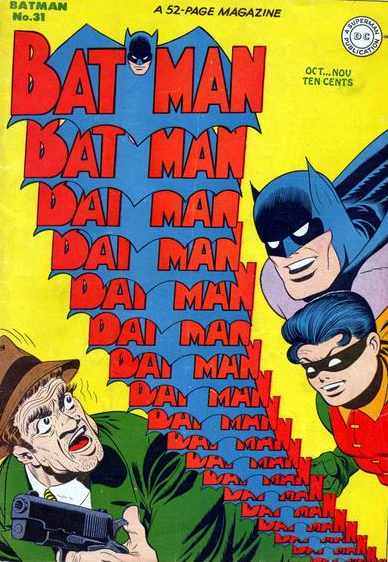
In my world-changing countdown of Ed Hannigan’s Batman covers, I mentioned how much I love it when he put a spin on the series’ logo. Yet Hannigan, God’s gift to cover artists that he undoubtedly is, was hardly the only one to have fun with the iconic design.
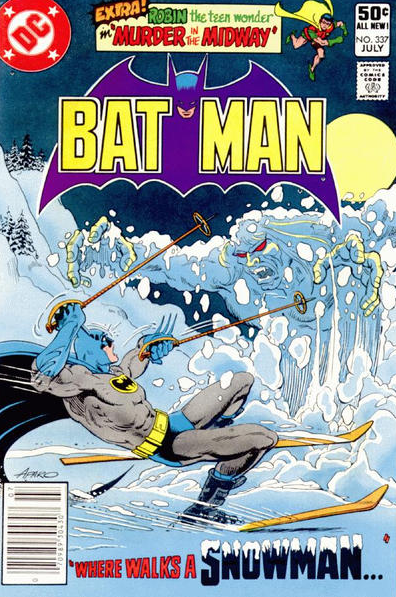
As far as pulling stunts with the cover logo goes, a personal favorite of mine is Batman #354, which actually came out shortly before Ed Hannigan’s legendary run. Before I show it, however, let me try to give you a sense of how innovative it was… Covers for the Batman series had a pretty consistent logo in the early 1980s, bat-shaped and with the Dark Knight’s head between ‘Bat’ and ‘Man.’ You can see it, for example, in this cover which features the Caped Crusader being rudely interrupted while trying to enjoy a ski ride:
While the logo sometimes shifted colors to match each cover’s mood, or was pushed to the background to let other elements shine, it retained a pretty coherent shape and place. This is why it was so cool to see penciller Keith Giffen, inker Dick Giordano, and colorist Anthony Tollin suddenly play with the format:
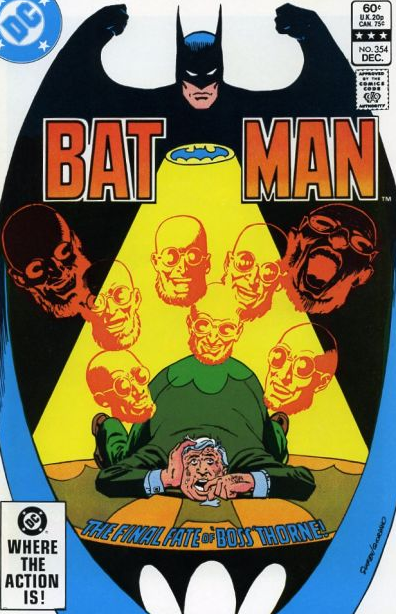
Man, this is such a great cover, particularly in the context of the regular ones that preceded it. Not only does it expand the logo to frame the whole image, it adds further detail to Batman’s face and hands, making it seem as if the Dark Knight himself is hovering over the scene (in fact, his shadow is even projected onto the floor).
Since then, it has become less groundbreaking to screw with a series’ logo, although it’s still rare enough to jump at you from the stands. Take Detective Comics – I remember being so used to seeing its classic font and format…
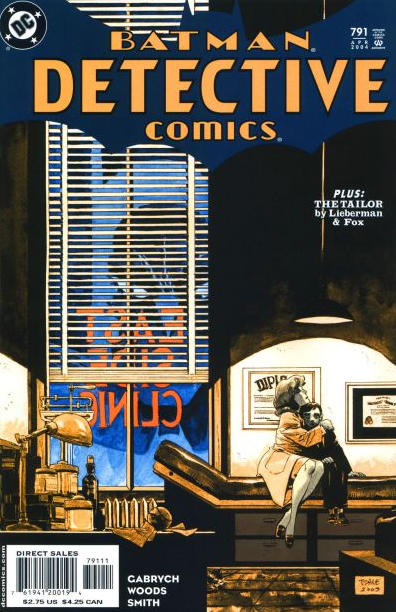
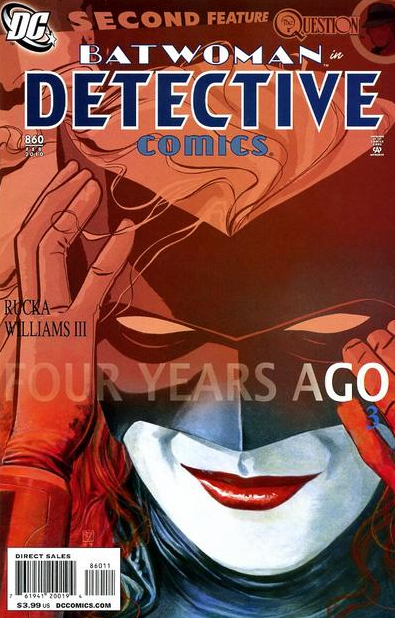
…that merely breaking the pattern was enough to make me giddy for these:
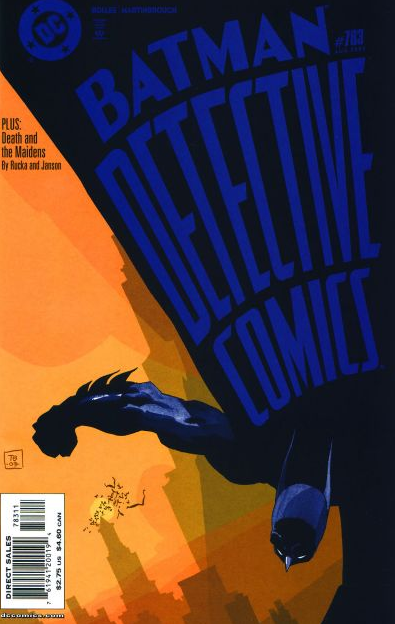
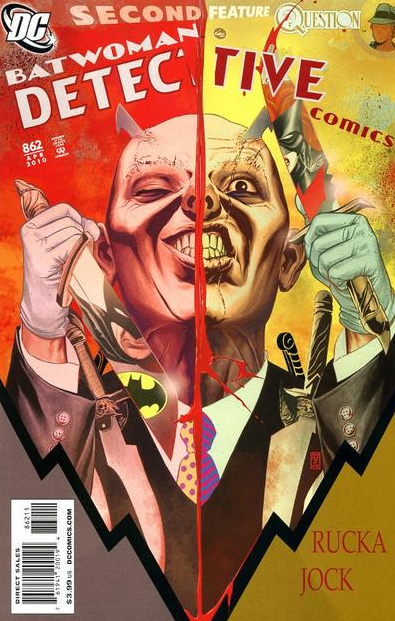
That said, as striking as it can be to simply distort the logo, the covers that really get me are those that integrate it into the layout in particularly clever ways…
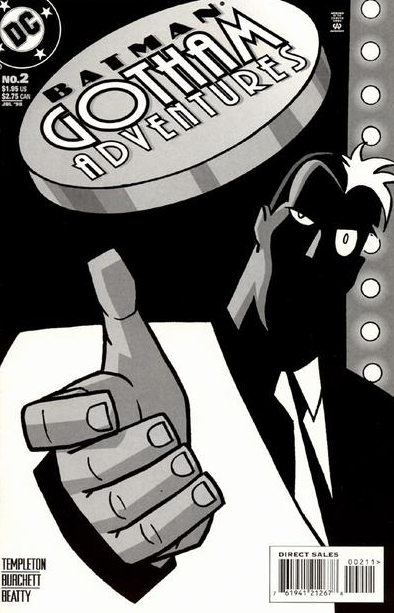
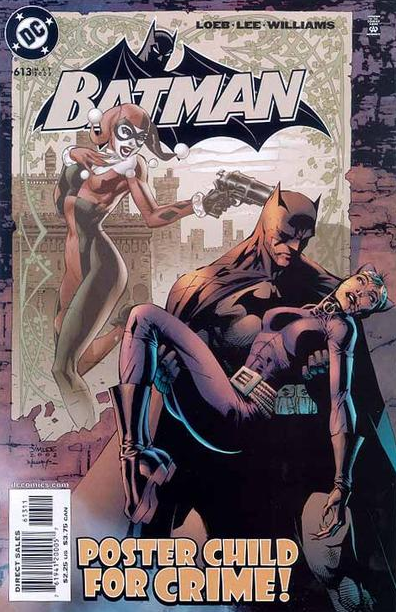
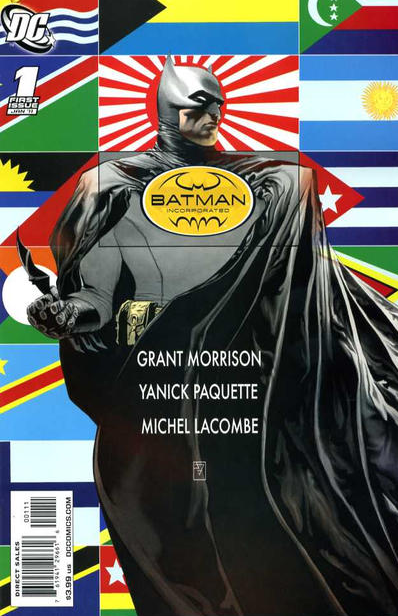
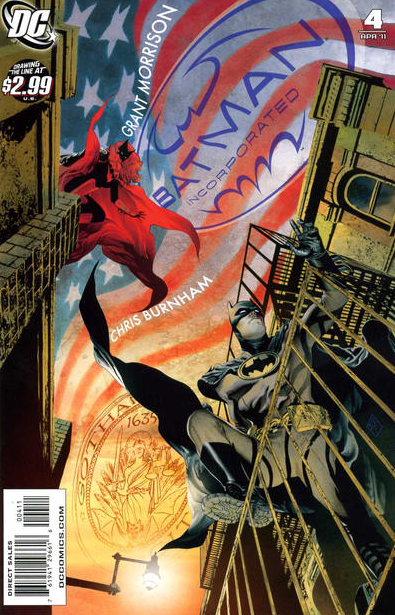
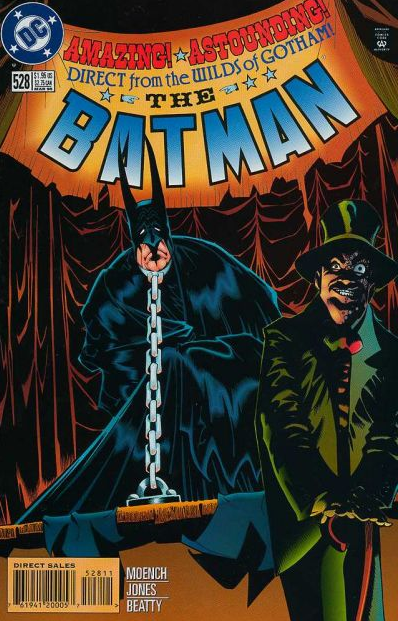
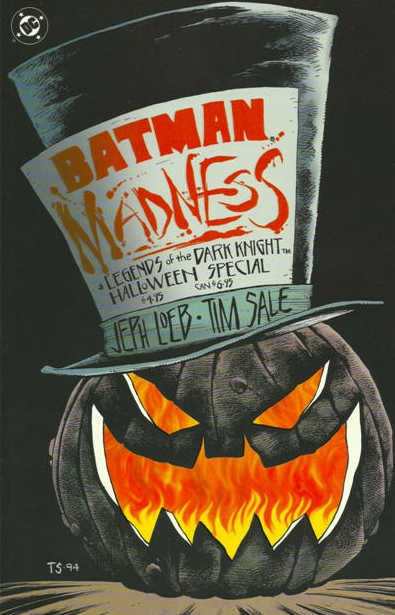
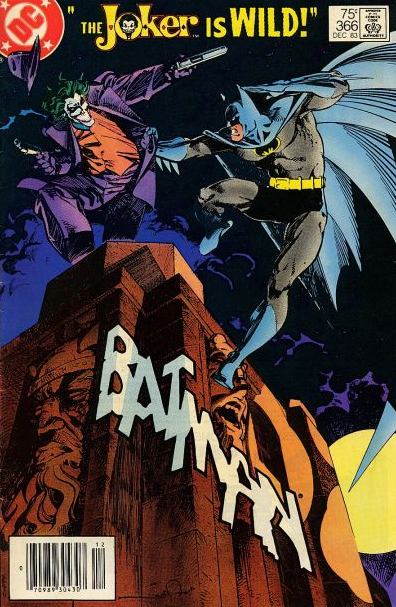
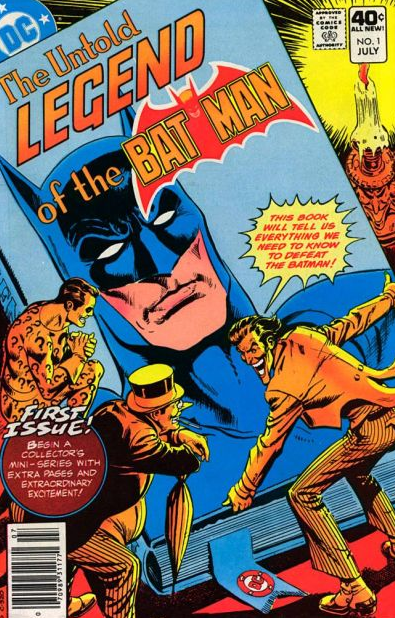
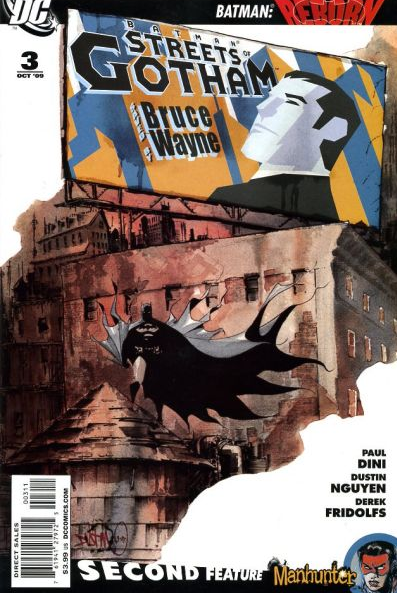
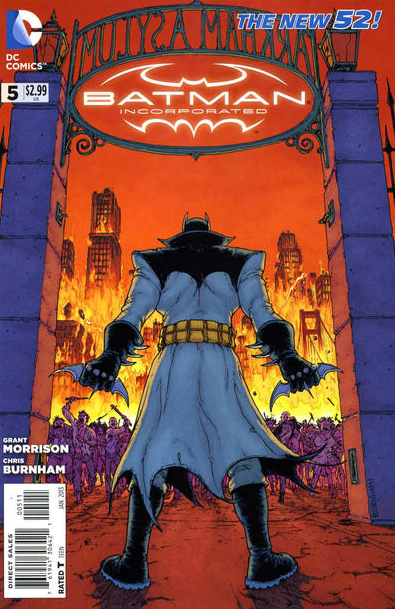
I’m clearly not alone on this. In fact, in 2001 DC challenged its artists to do just that, so across various comics we got covers where the series’ titles were turned into all sorts of objects. This, of course, was insanely awesome (even though DC editors were not ballsy enough to trust their artists, since the titles were also added in a boring font, in small print, to the top of the covers):
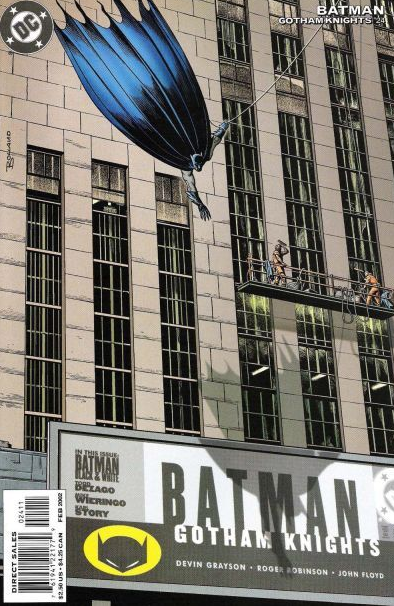
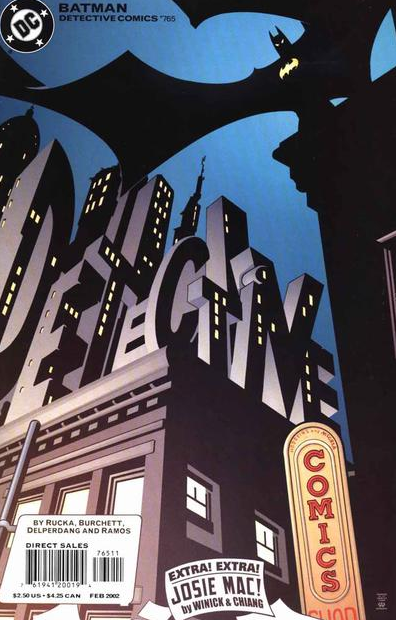
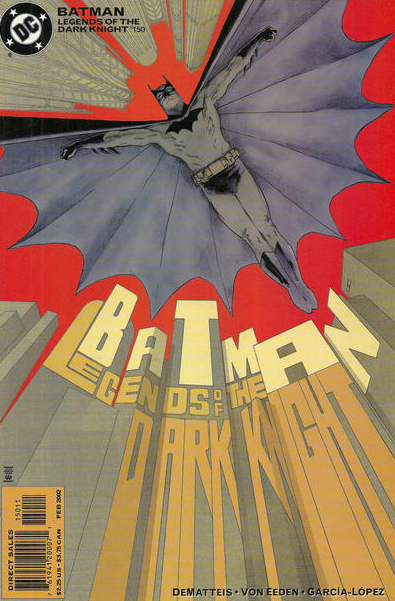
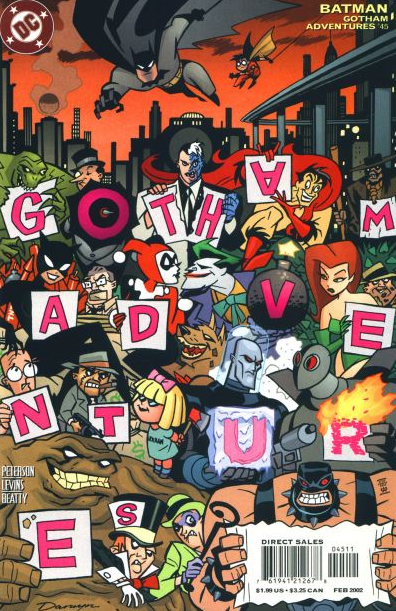
Another neat trick is when, instead of transforming the title logo into a different object, artists just treat it as a solid item in itself. This creates cover images with a twisted internal logic, as Batman interacts with the title of his own comic:
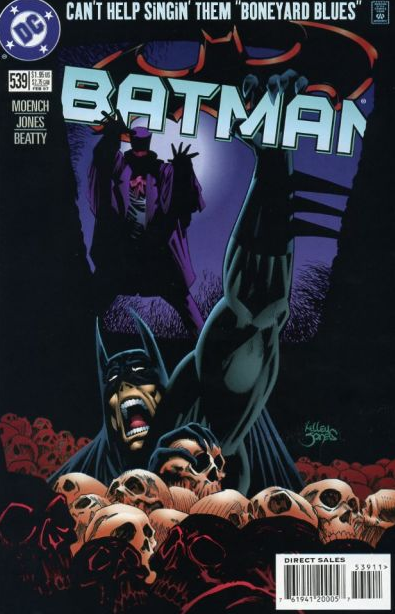
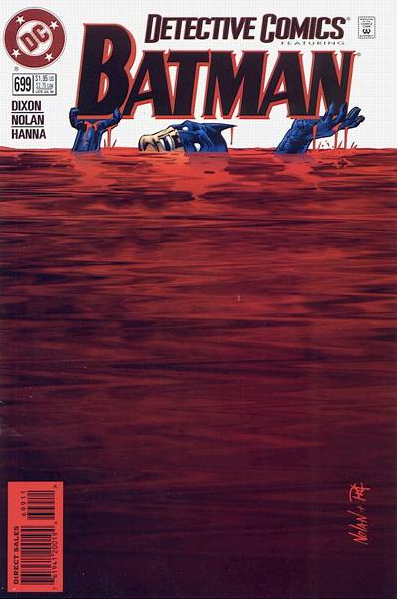
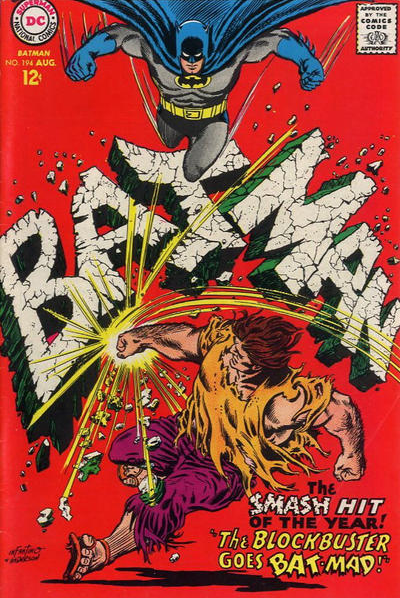
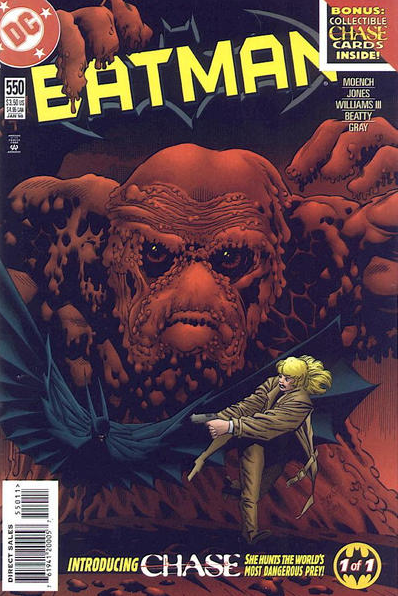
In this subgenre, I particularly like covers where the villains, not content with going after the Dark Knight, just go ahead and destroy his damn logo:
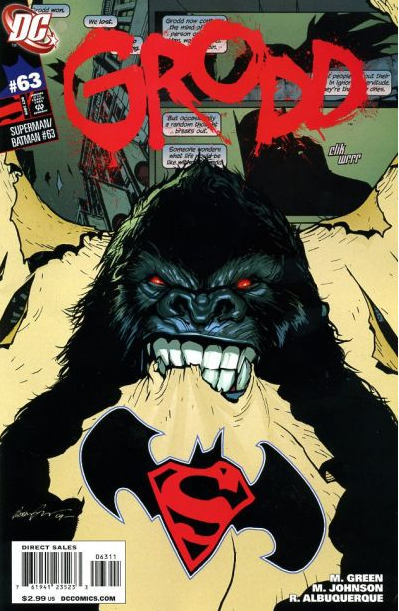
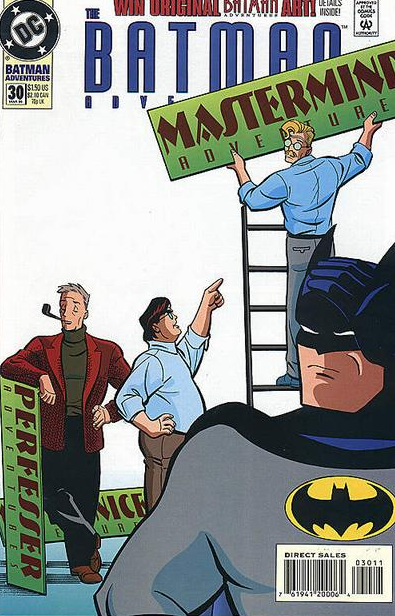
Ultimately, logos are just so much fun that Batman and Robin even got a portable one, to show off on special occasions:
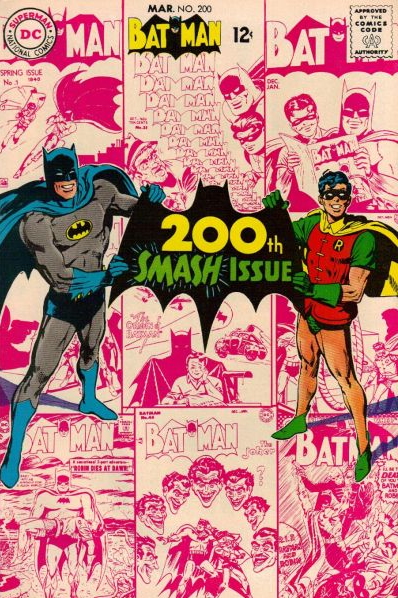
NEXT: Batman turns into an ape.
Posted in COVERS OF BATMAN COMICS
Tagged Anthony Tollin, covers, Dick Giordano, Keith Giffen
Leave a comment
Underrated Batman stories – part 2
If you read the last post, you know what’s going on. Here are another 5 accessible, self-contained Batman stories that usually don’t make it to the big lists but are nevertheless worth tracking down:
‘Black Masterpiece’ (Batman Annual #18)
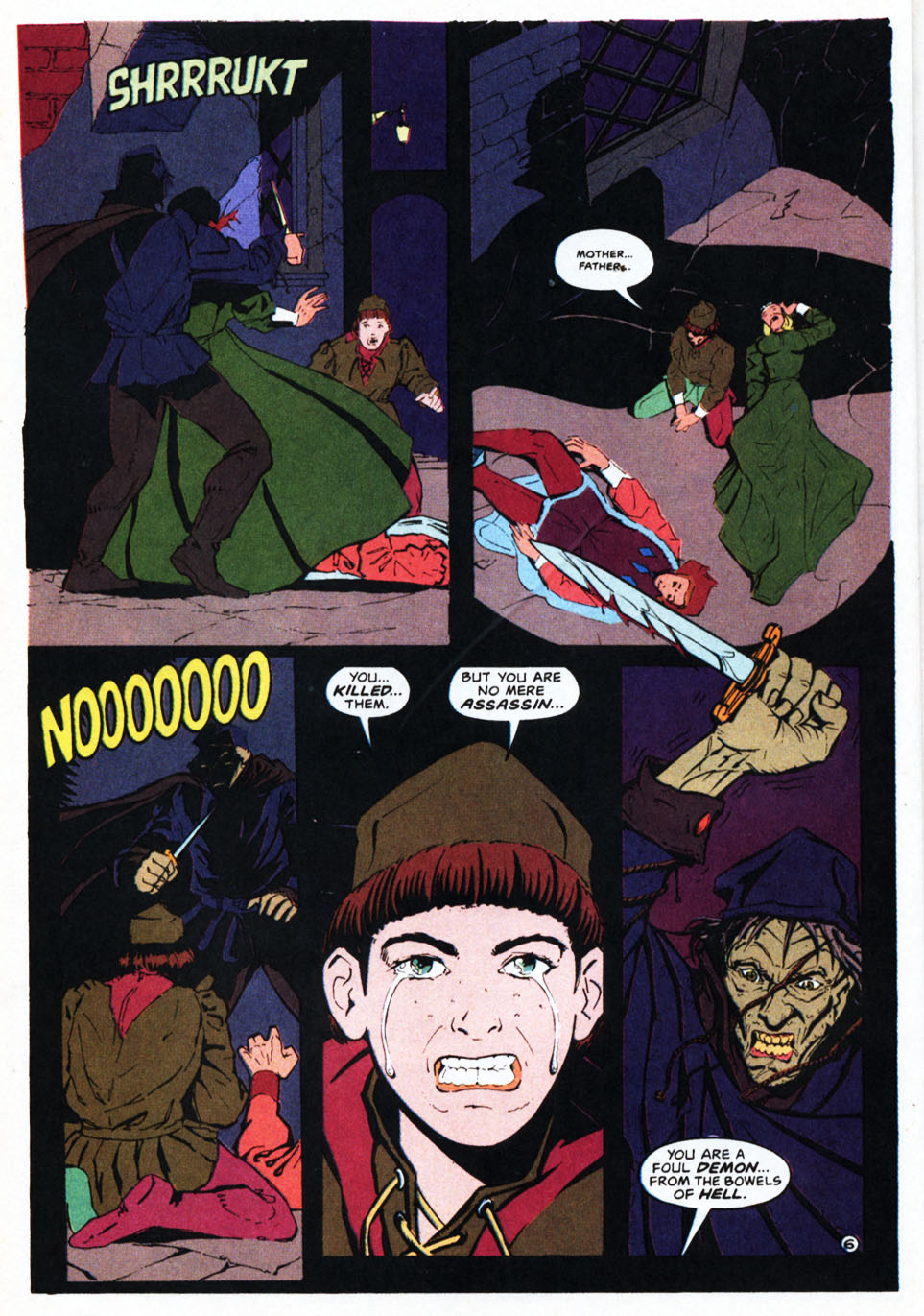
When a band of Gotham thieves, headed by a pretentious curator, steals the Mona Lisa and holds the painting for ransom, it’s up to Batman to recover the famous artwork. Intercut with this narrative, we get a saga set in 15th/16th century Florence, where the actual Mona Lisa (the woman who served as model) is kidnapped and a rich orphan goes to her rescue while wearing a Bat-suit and wings designed by Leonardo da Vinci himself! The result is not exactly an Elseworlds tale about an early modern Caped Crusader as much as a taut story that first draws parallels between the two plotlines and ultimately brings them together in a particularly cool ending.
‘Anatomy of a Murder’ (Shadow of the Bat #71)
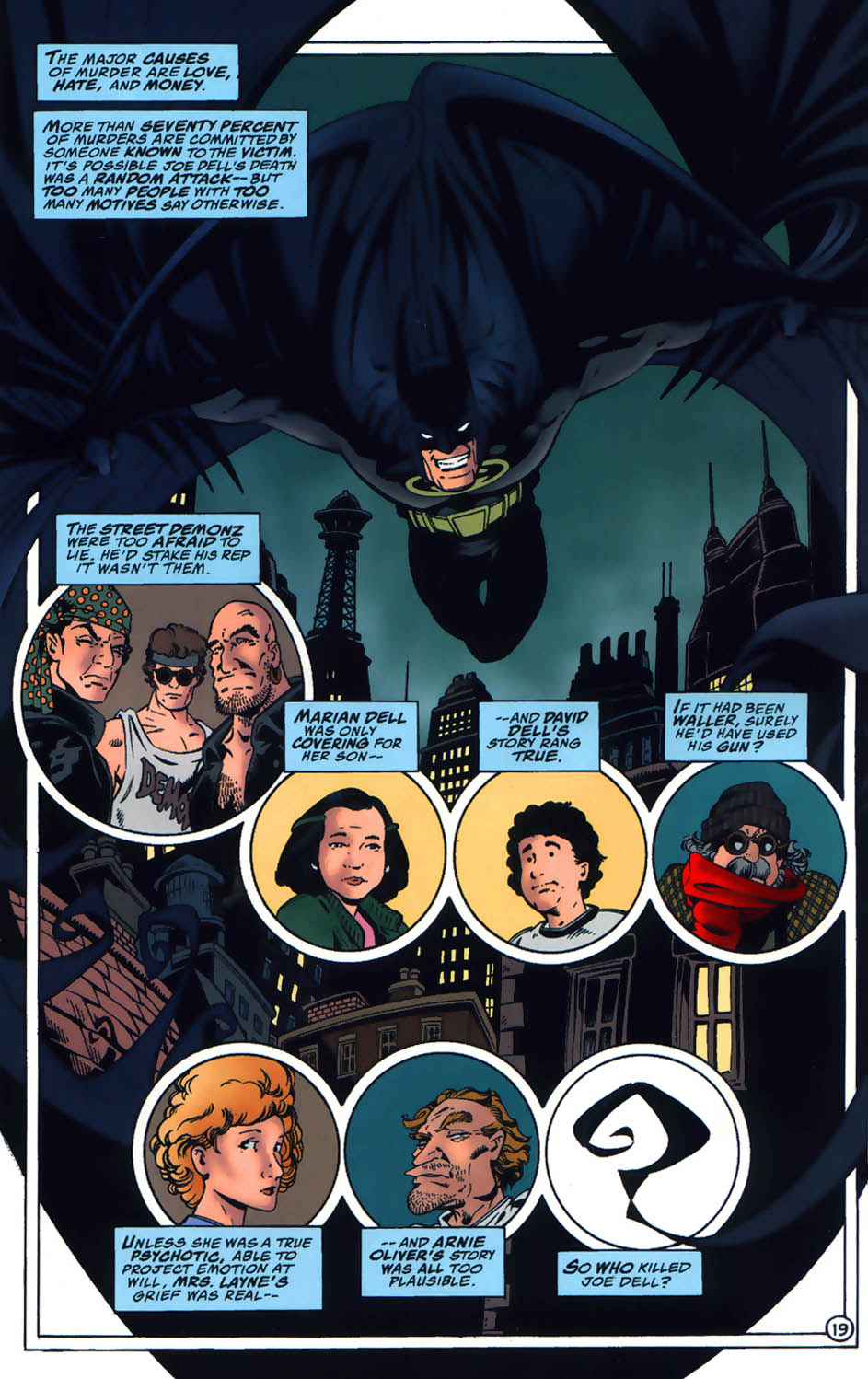
I had to include at least one mystery tale. The World’s Greatest Detective investigates the stabbing of an ordinary man, piercing through the web of love, hatred, jealousy, and contradictory behaviors that make up any life. My passion for Alan Grant’s twisted creations is no secret, but here we don’t get madcap villains or inventive action set pieces, just a labyrinthic whodunit and grounded human drama.
Penciller Mark Buckingham has the ungrateful task of illustrating a comic which consists mostly of interviews with each of the suspects. He nevertheless takes every opportunity to shine, such as in the image above, which features what has got to be one of the most generous depictions of the size of Batman’s cape.
‘Deathtrap A-Go-Go!’ (Batman Adventures (v2) #9)
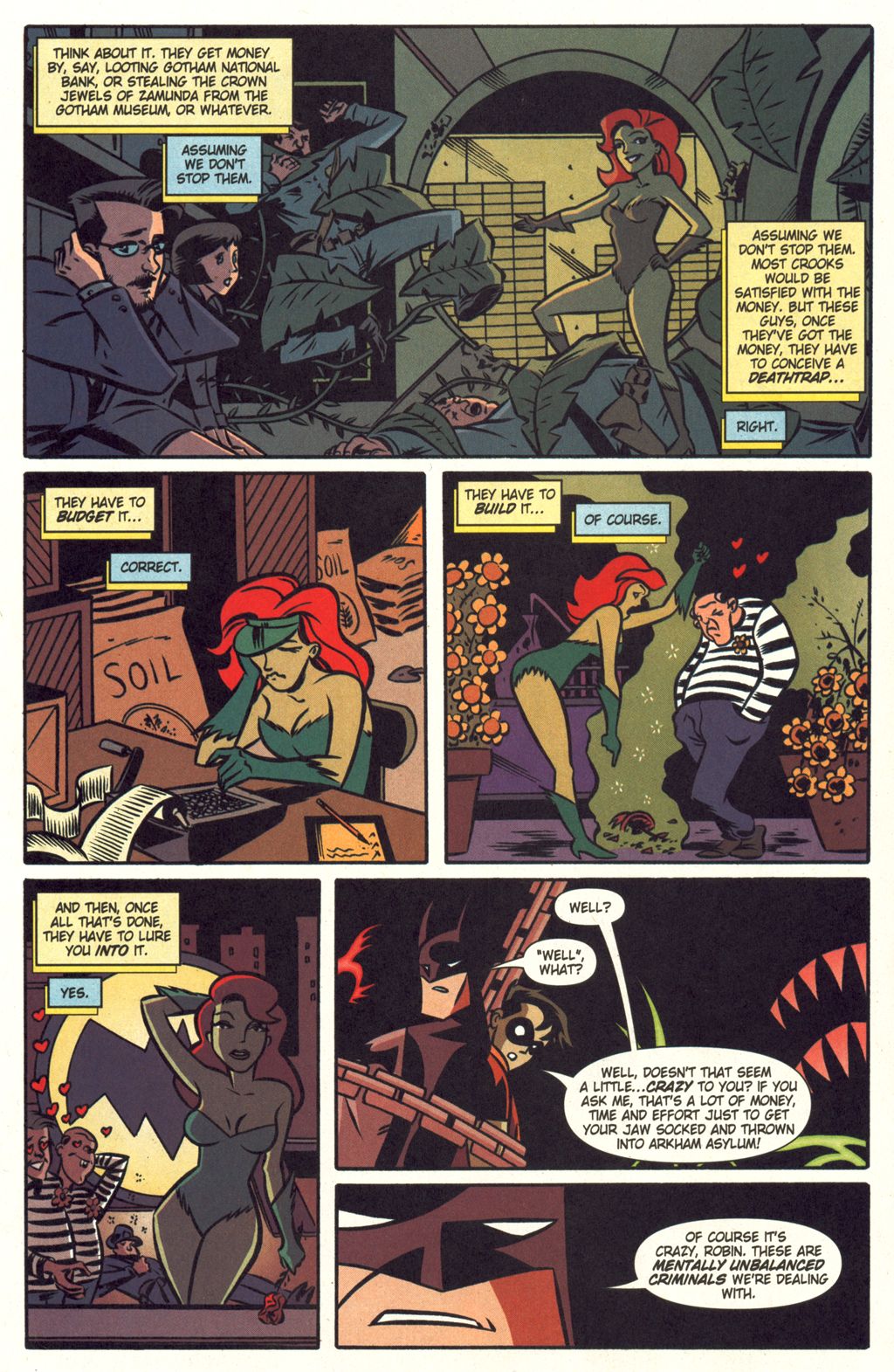
In an abandoned warehouse somewhere in Gotham, the Dynamic Duo, surrounded by monsters and caught in a deathtrap with time ticking away until their supposed demise (or as Batman might as well call it, just another night), discuss the very concept of ‘deathtrap.’ What the comic lacks in plot, it more than makes up for in hilarious gags and one-liners. Less a metafictional satire of a ridiculous trope than a celebration of its imaginative potential, there are enough ideas in these 17 pages to fill in a 2-year run by today’s pacing standards. As if that wasn’t enough, the issue’s backup story, in which Bruce Wayne goes to a therapy evaluation, is just as witty.
‘Work That’s Never Done’ (Batman Confidential #49)
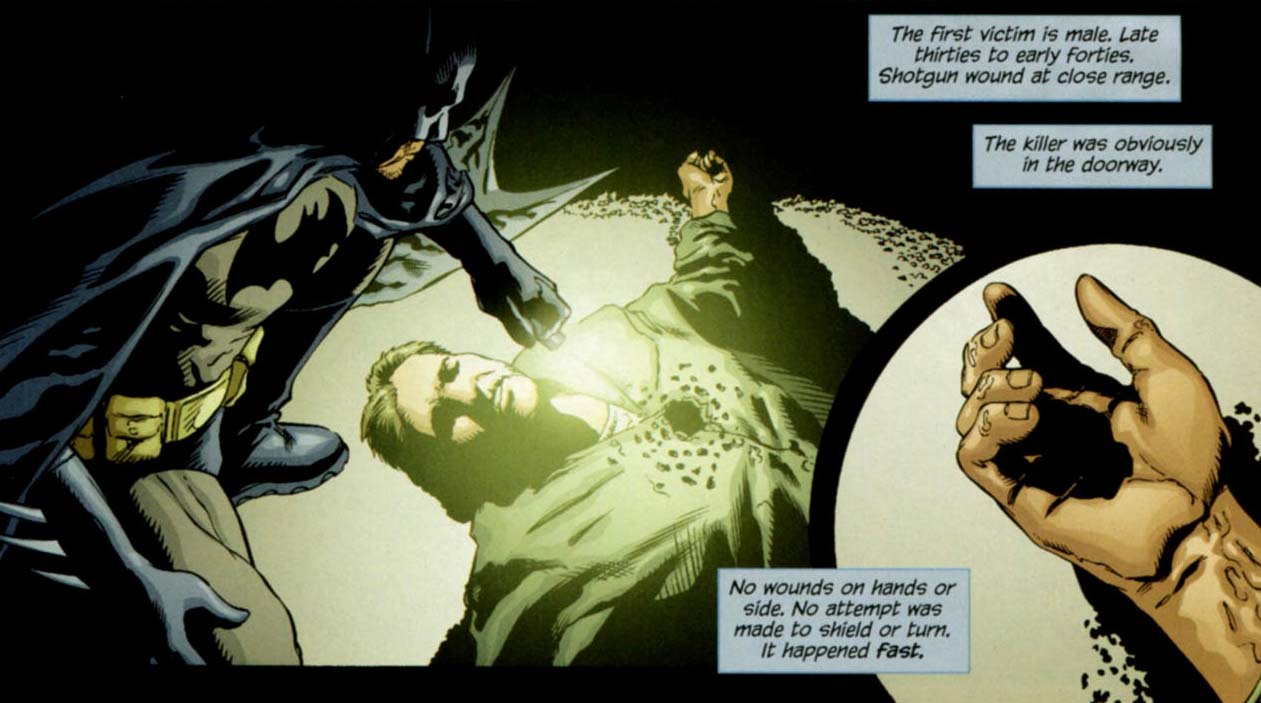
Few comics have nailed Batman’s inner voice as captivatingly as this one. Following a 911 distress call, the Dark Knight arrives on a crime scene ahead of the cops and we are shown how the mind of the World’s Greatest Detective operates. Besides figuring out what happened and tracking down the killer, readers are privy to parallel, non-stop deductions delivered with terse precision: ‘When I woke up this afternoon, crumbs were on the stairs and in the kitchen. Either the mansion has mice or Alfred is burned out and stress-eating again. I’ll need to set some traps or buy him a round trip ticket to Bermuda.’
‘The Guardian of 100 Cities!’ (Batman #95, reprinted in Batman #258)
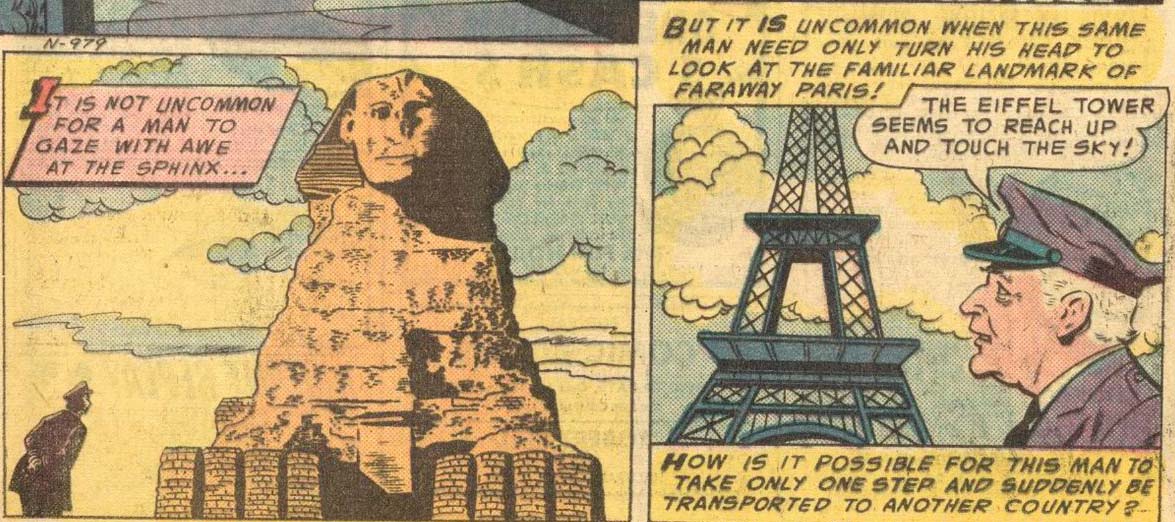
Finally, I wanted an example from Batman’s most innocent era. While this may not be the cleverest or wackiest tale Bill Finger ever scripted, nor one with particularly creative visuals by Sheldon Moldoff, it’s still one that gets me every time. The overall plot is quite simple, involving Batman and Robin chasing a bunch of criminals in a movie set and befriending an aging actor called Roger Stanton in the process. Yet there is so much charm packed into these 8 pages!
The story opens with a well-pulled twist, setting up the reader for a supernatural, globe-trotting adventure, only to quickly scale things down in the transition to the second page. Other twists follow, as Roger Stanton keeps surprising the Dynamic Duo and growing as a character until the very end. As was typical of the time, the action scenes incorporate the setting in fun ways, like when Robin knocks out a crook by swinging from a Dutch windmill. There are also cute details, such as the Caped Crusader holding the fugitives in a movie prop jail. Finally, it’s hard to resist a comic where the Boy Wonder utters the line: ‘Batman, I saw something moving near the Taj Mahal!’
NEXT: Batman goes skiing.
Posted in BATMAN COMICS FOR BEGINNERS
Tagged Alan Grant, Bill Finger, Mark Buckingham, Sheldon Moldoff
Leave a comment