Smells Like Will Eisner’s Spirit

detective comics 600

Detective Comics #600

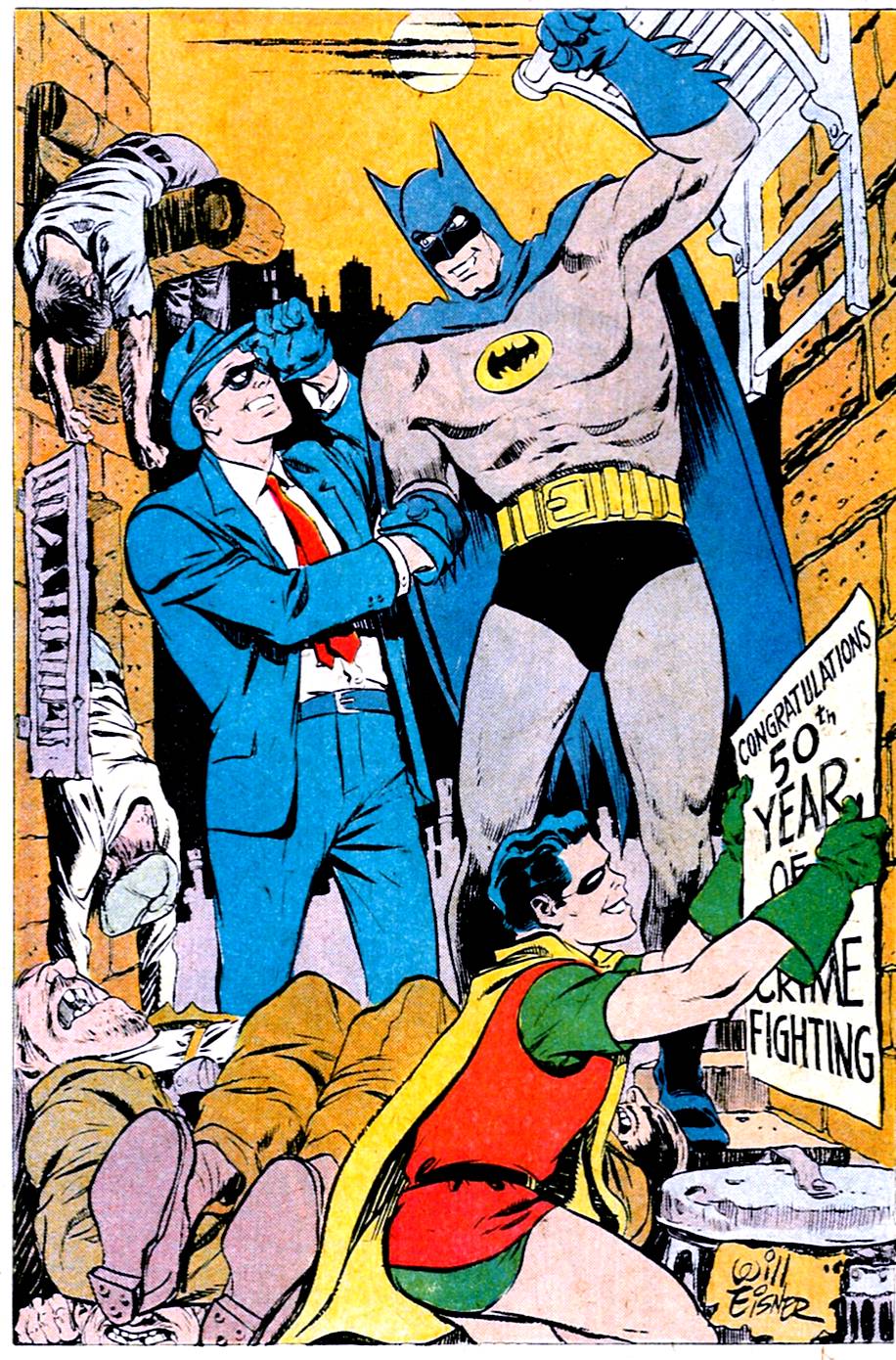
In terms of stylish, offbeat crime stories featuring a masked vigilante and a pipe-smoking, irresponsibly lenient police commissioner, it’s hard to beat Batman comics. However, while The Spirit didn’t have such an engaging protagonist, such a fascinating rogues’ gallery, or such an eccentric city as background, it did have Will Eisner. Eisner was one of the greatest comics’ craftsmen of all time, and his work on The Spirit (at least after he came back from WWII) was a tour de force which left a lasting mark on the adventures of the Dark Knight.

Heavily inspired by Citizen Kane and film noir, Eisner’s comics were full of experimental storytelling, shadowy atmosphere, expressionist violence, Dutch angles, pulp poses, and femme fatales. A recognizable trademark was the way in which the first page of each story used to integrate the series’ title, as if it was part of the opening scene:
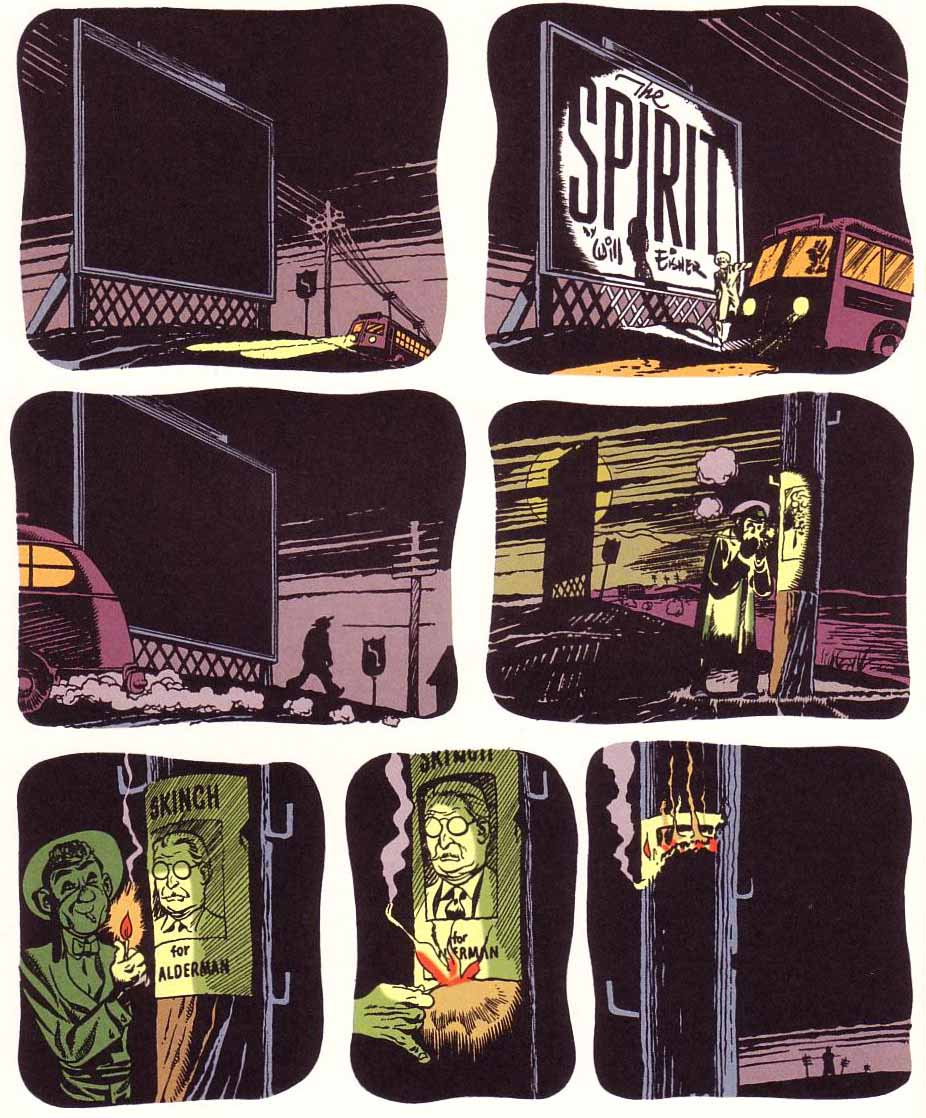
spirit - the partnerThe Spirit: ‘The Partner’

Will Eisner – and a host of ghost artists and assistants – kept coming up with new and effective visual tricks to suit each story’s specific mood. ‘The Killer,’ a psychological tale about a returned war vet, subtly used the same circular framing throughout the comic, in different contexts, including a Lady in the Lake-like POV sequence. Memorable escapades set in the Arab world such as ‘The Jewel of Death’ and its sort-of remake ‘Blood of the Earth’ riffed on Pépé le Moko and The Mask of Dimitrios. ‘The Last Trolley’ famously captured the feeling of swinging around in an old trolley:
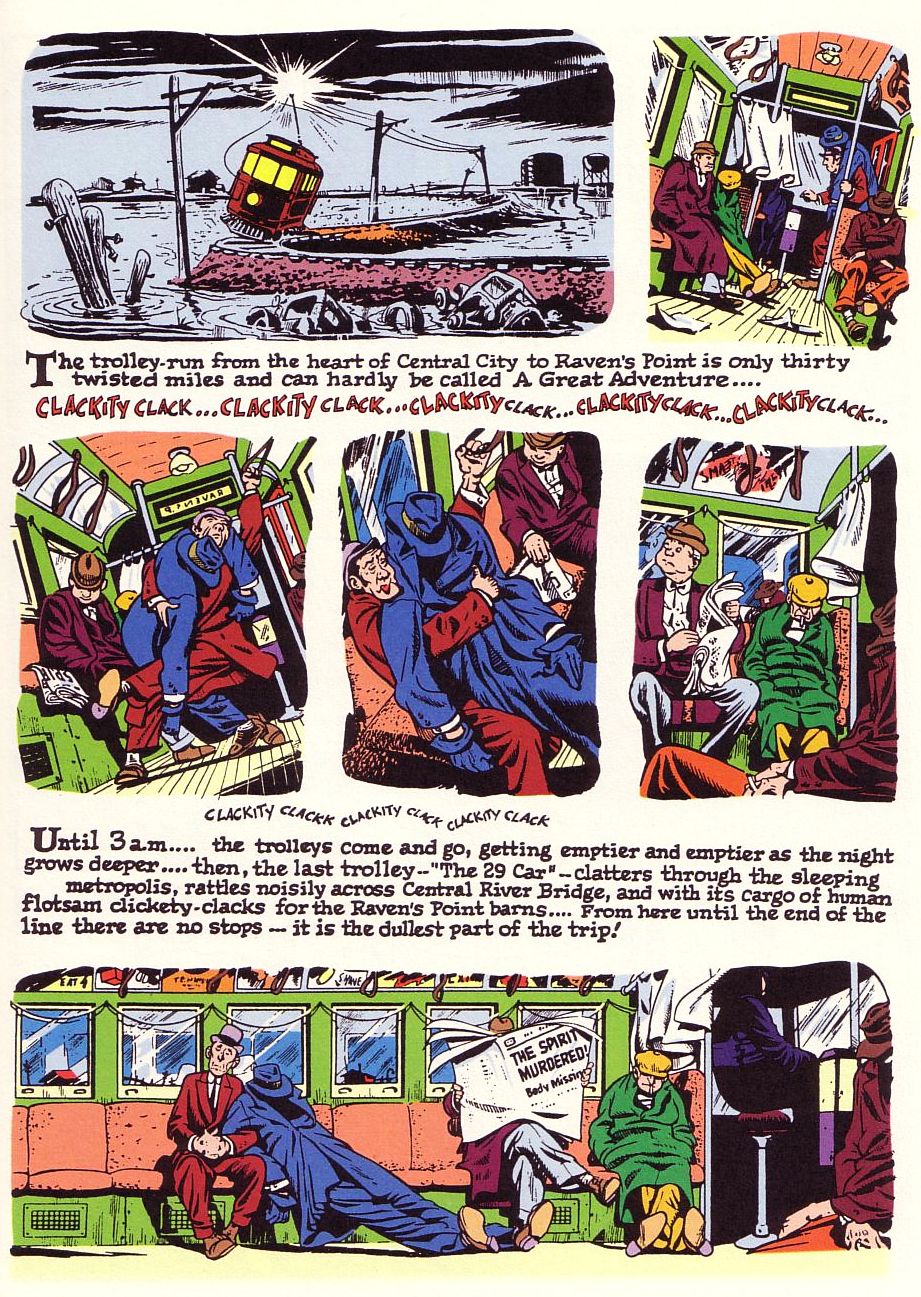
Eisner Spirit - The Last TrolleyThe Spirit: ‘The Last Trolley’

Here was an author in complete control of the medium. One tale opens with the line ‘It will take you ten minutes to read this story…’ and damn it if it’s not true! Fifty years later, guys like Frank Miller and Darwyn Cooke were still trying to catch up with the kind of mastery of sequential art Eisner and his team demonstrated back in the 1940s…
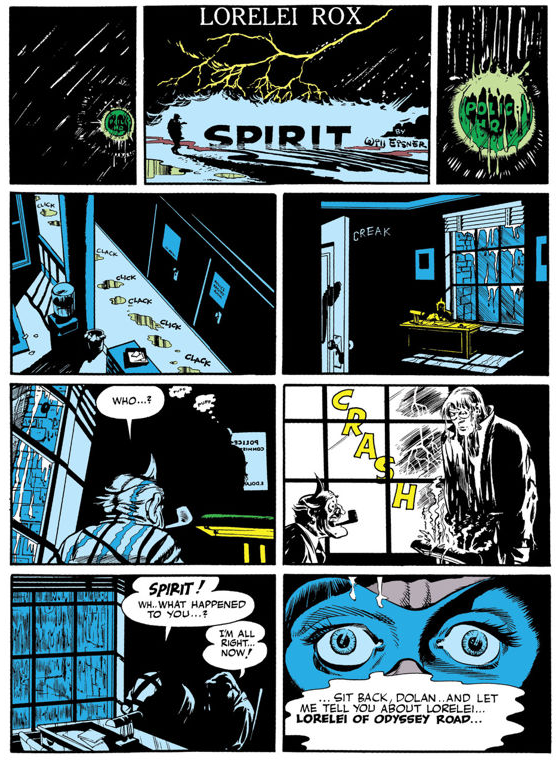
Lorelei RoxThe Spirit: ‘Lorelei Rox’

Not all stories of The Spirit are hits, with some sexist and racial stereotypes being particularly cringeworthy. Overall, though, these comics are a fun time capsule of the angst and aspirations of postwar America. Notably, they engage with different styles, from two-fisted action to goofy comedy, from magical realism to exotic adventure, from science fiction to children’s reading primers, or even a weird combination of all of these (‘The Story of Sam’). In the final years, Eisner handed over the writing chores and the series continued to explore new directions as the Spirit temporarily moved to the moon with a bunch of convicts (that’s right).

Although ostensibly the hero, the Spirit (aka Denny Colt) often played a supporting role in the series, serving merely as a pretext for short, self-contained narratives about a wide range of characters who came into contact with the masked vigilante. You can see Will Eisner’s fascination with the human condition and the dark side of the American dream, which decades later led him to exchange pulp conventions for straight-up melodrama in masterpieces like A Life Force and Dropsie Avenue: The Neighborhood.

It’s not difficult to see how The Spirit came to influence so many Batman artists and writers. In fact, I would argue that Eisner’s work proved influential already at the time… Take ‘Next Stop – Danger!’ (Batman #43), which mostly takes place during a subway ride. Like many tales of The Spirit, this 1947 comic begins by pushing the masked heroes to the background, focusing instead on the desperate lives of ordinary citizens about to cross paths with the Dynamic Duo:

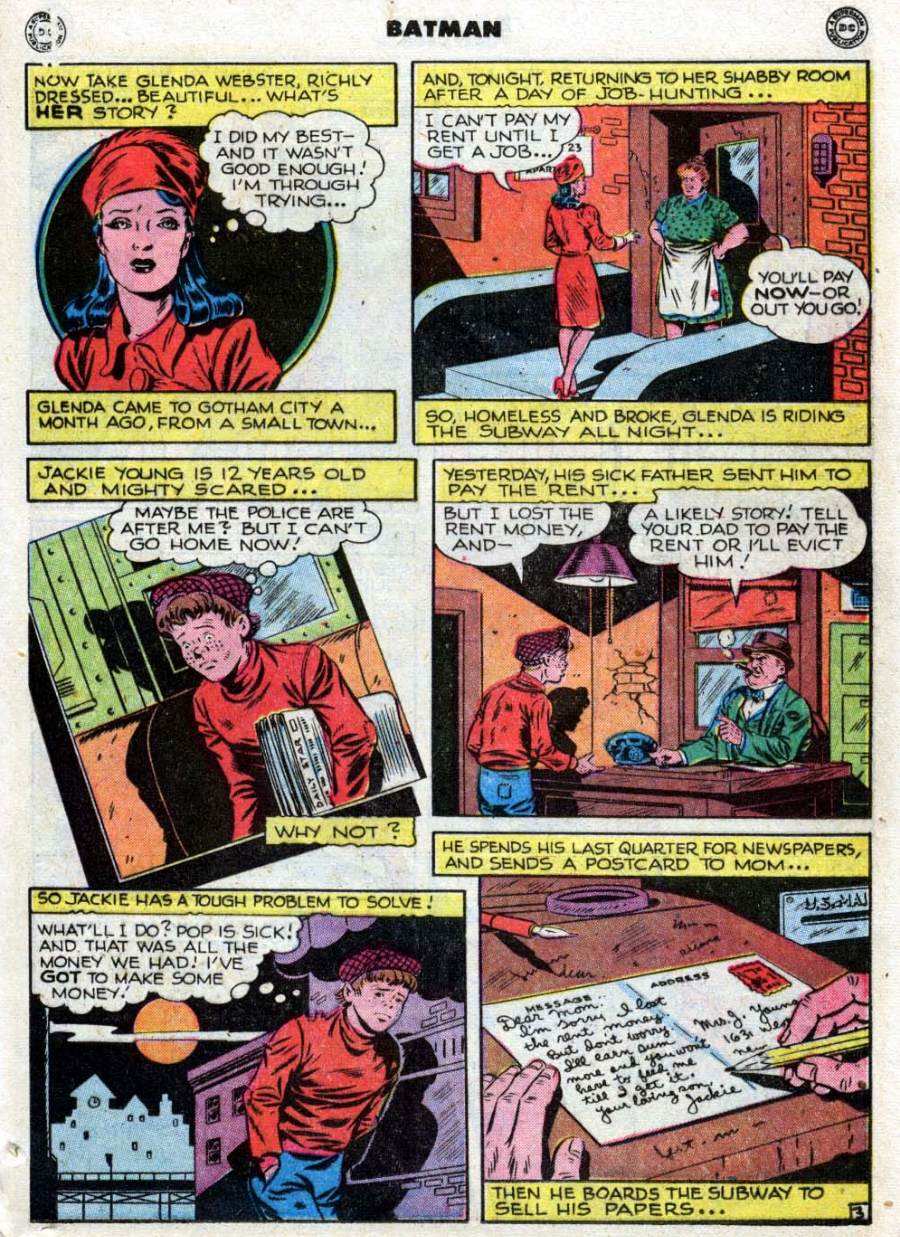
Batman043_16Batman 043 Batman #43

Batman and Robin come into the picture while chasing a couple of crooks who seek refuge in the subway. Each passenger plays a role in the ensuing confrontation and, by the end of the ride, their fates are all transformed in some way. While the art is cruder than Eisner’s and the ending lacks both his cruelty and his sense of humor, one can easily imagine a slight variation of this plot in the pages of The Spirit.

That said, the Batman tale which most openly acknowledged The Spirit’s legacy came out four decades later, in Detective Comics #497:
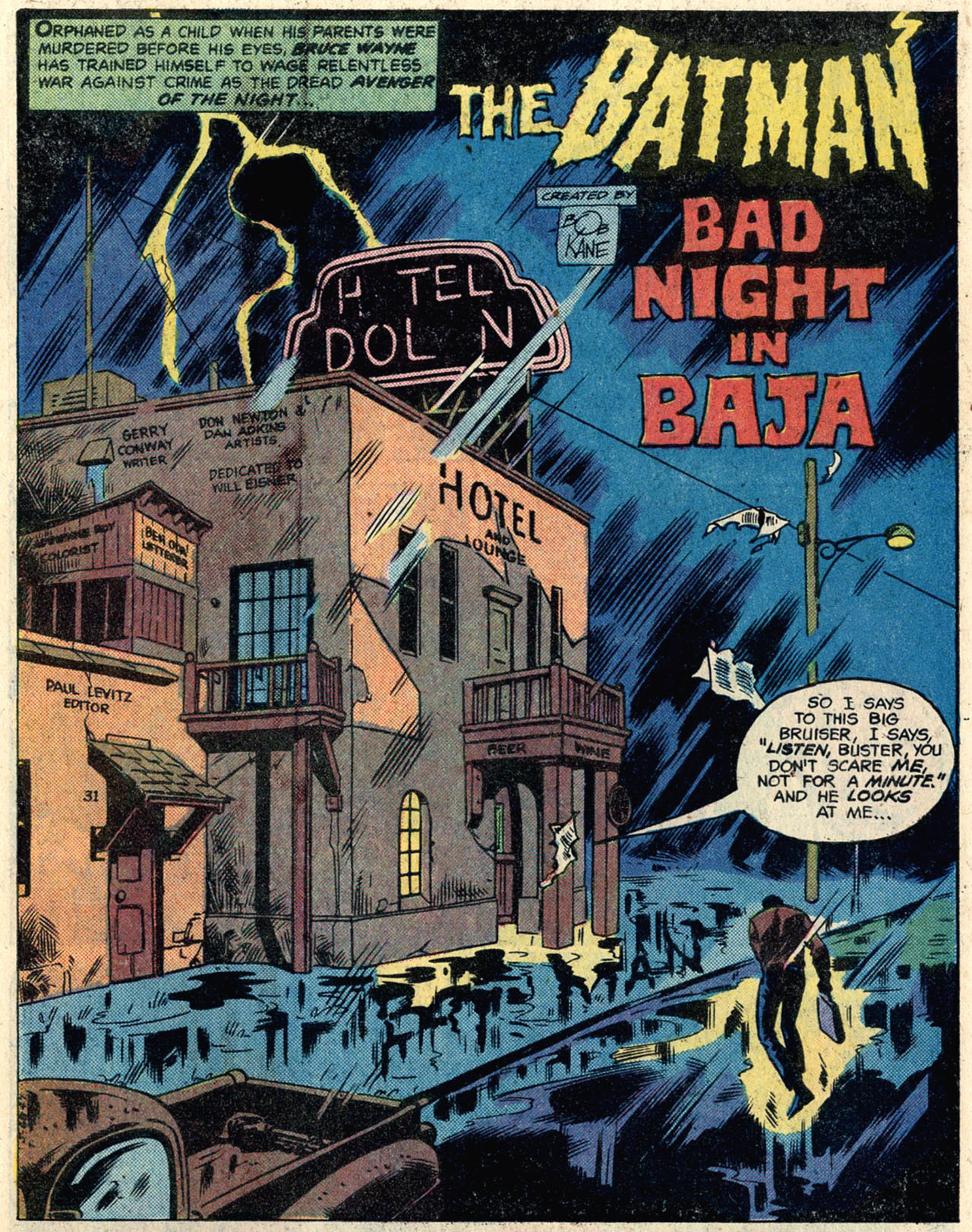
detective comics 497Detective Comics #497

A rainy night in a Mexican small town. A sleazy bar where losers hang out and the owner complains that the rain is the only thing preventing him from burning the place down. A couple argues on the top floor, a spoiled wife walking out halfway through the honeymoon. A stranger walks in, with a bullet in his arm and a suitcase full of valuable documents. By the end of the story, he will have touched each of these lives… Once again, even though this is a Batman comic (the stranger who walks into the bar is Bruce Wayne), the fun of ‘Bad Night in Baja’ is watching all the subplots intertwine and pay off, as what would usually be peripheral characters are brought to the forefront.

Besides the mosaic structure and the focus on small-scale human drama, writer Gerry Conway includes various other winks to Will Eisner, from the hotel’s name (a play on Dolan, The Spirit’s version of Commissioner Gordon) to a criminal overlord called Squid (evoking the recurring villain The Octopus). The art, by the great Don Newton and Dan Adkins, also captures the noirish mood of hunched silhouettes and newspapers flying in the wind. And following the tradition of incorporating the series’ logo into the title page, the opening splash (above) features the words ‘The Batman’ as both a lightning and a shadow on the puddles in front of the hotel. All of this makes the comic cooler, although at the end of the day this is a cool comic not just because it is fun to spot nods to the master, but because aping The Spirit is such an effective place to start when writing a one-shot crime story!

Perhaps less obvious, Doug Moench’s script for ‘The Spider’s Ninth Leg!’ (from the anniversary issue Detective Comics #550) also displays a distinctively Eisneresque tone. In this comic overloaded with symbolism, Batman chases a junky called Joey Redwine through Gotham’s rooftops. Joey has just stolen a candlestick from a church and killed a nun – and the chase is intercut with flashbacks showing the eight key steps that led him to this moment. Given the on-the-nose religious imagery, it should come as no surprise where Joey ends up:

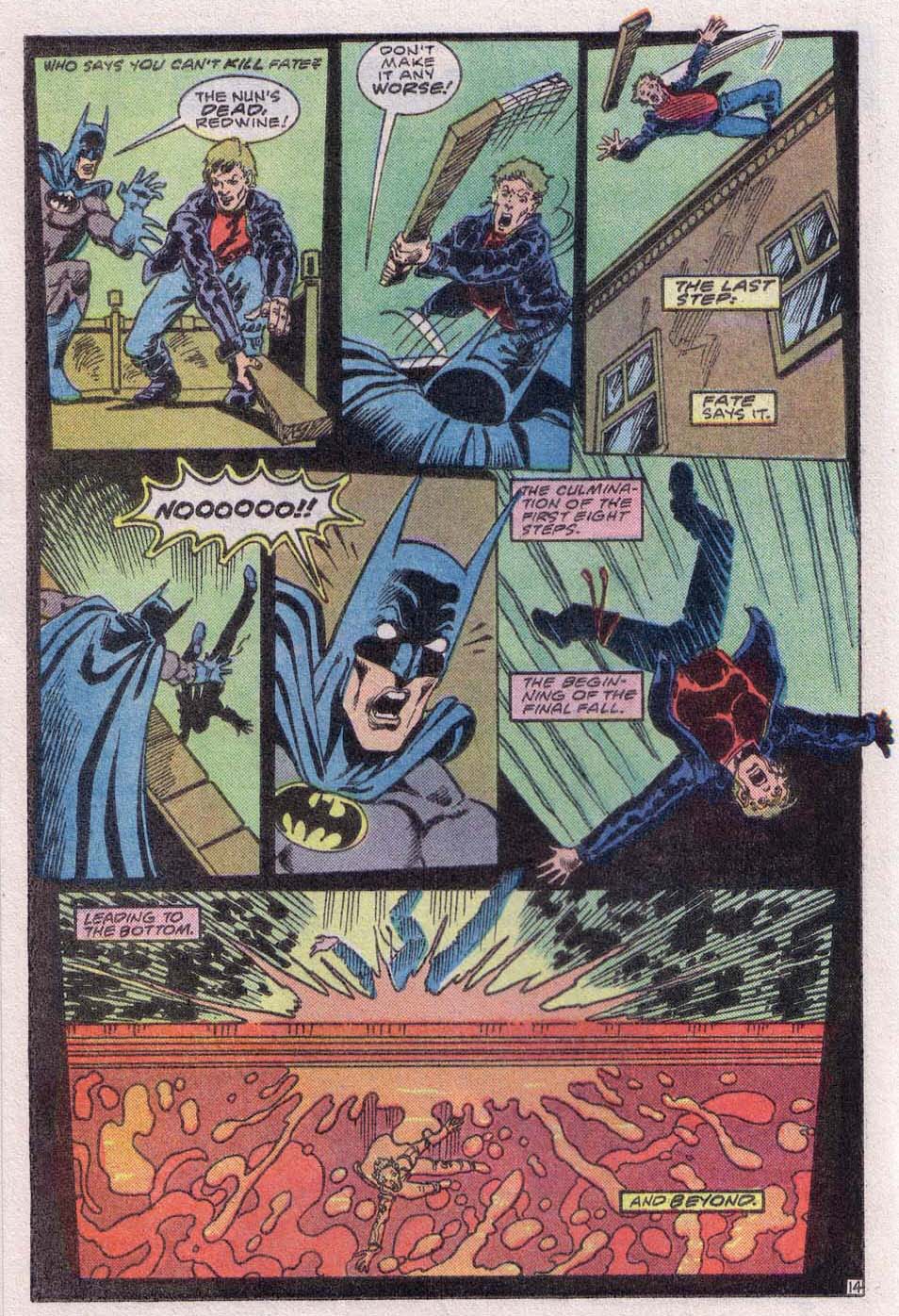
detective comics 550detective comics 550Detective Comics #550

As you can tell from this denouement, it’s not much of a Batman yarn, in the traditional sense. The Dark Knight is an outside force (‘fate,’ as Moench’s narration puts it) and doesn’t do anything particularly heroic, much less save the day. ‘The Spider’s Ninth Leg!’ operates on a different level – it’s a downbeat morality play, one where Batman plays an essentially symbolic and instrumental role. It’s an examination of delinquency, showing how the kind of street criminals the Caped Crusader regularly beats up can have quite complicated background stories, with particular emphasis on child abuse (a key point in the comic, which finishes with the implication that Joey encounters his abusive father in Hell).

One writer with a knack for self-contained, non-Batman-centric stories that finish with poignant twist endings is Chuck Dixon, author of ‘Death Comes Home’ (Detective Comics #716) and ‘The Factor of Fear!’ (Gotham Knights #19). A personal favorite of mine is ‘Rocket Scientist’ (Detective Comics #704), which deals with the most inept criminal since Virgil Starkwell:

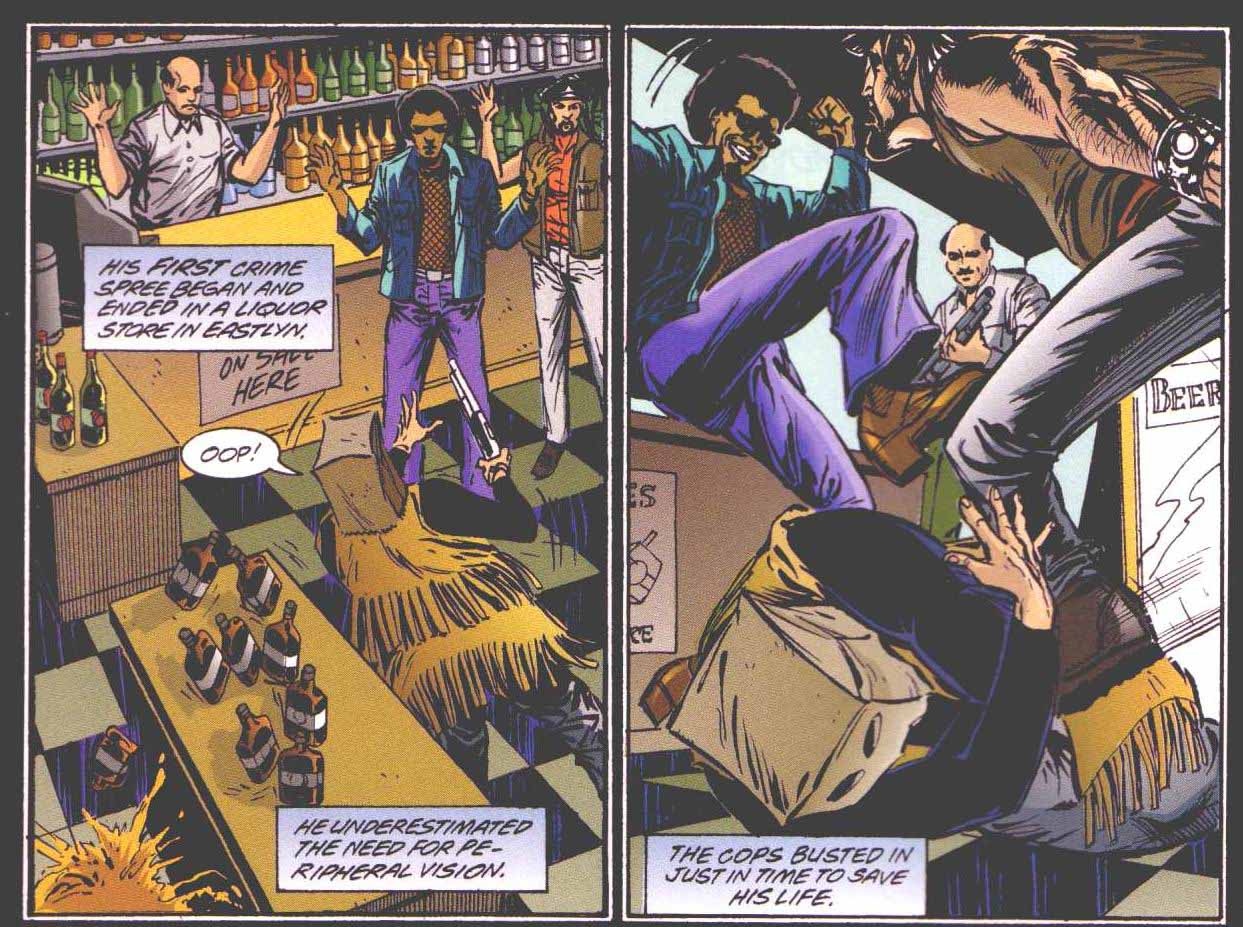
detective comics 704detective comics 704Detective Comics #704

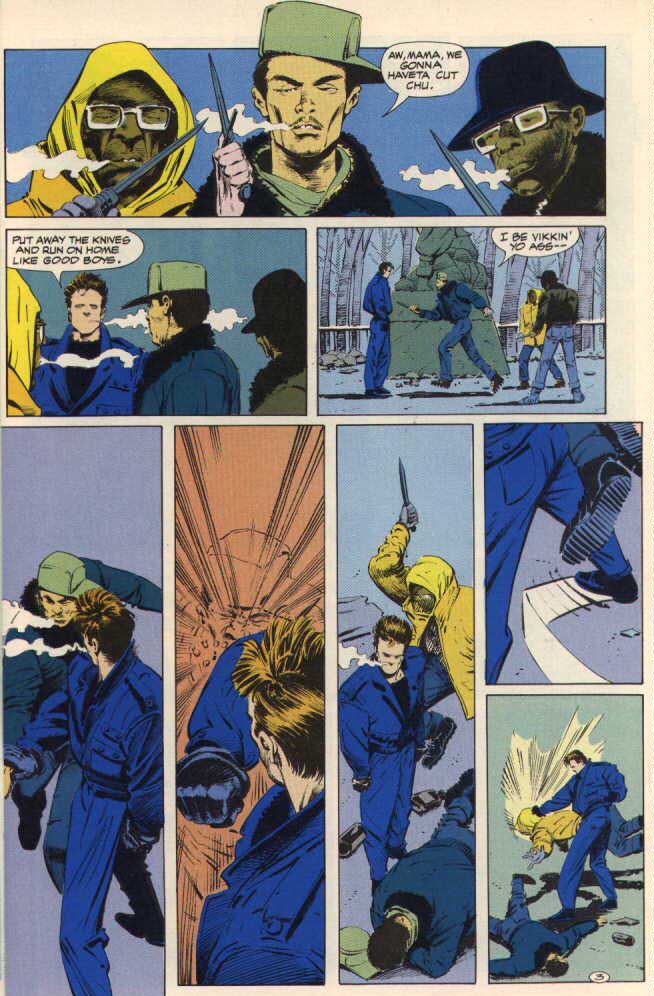
And then there is Dennis O’Neil’s and Denys Cowan’s The Question. I’ve mentioned before how this series crucially interacted with Batman comics, but it’s also worth noting that The Question came closer than anything else to capturing The Spirit’s… well, spirit. For one thing, there was inescapable visual continuity as both comics revolved around an action hero with blue gloves, trenchcoat, and a fedora. Moreover, The Question often spotlighted the doomed lives of marginal characters who were part of an intricate tapestry of twisted coincidences and interrelated plotlines, all told with a nasty sense of irony worthy of Will Eisner:

The Question 05The Question 05The Question 05The Question #5

Taking all of this into account, you would be forgiven for thinking that a Batman/Spirit crossover would be the most awesome thing ever…
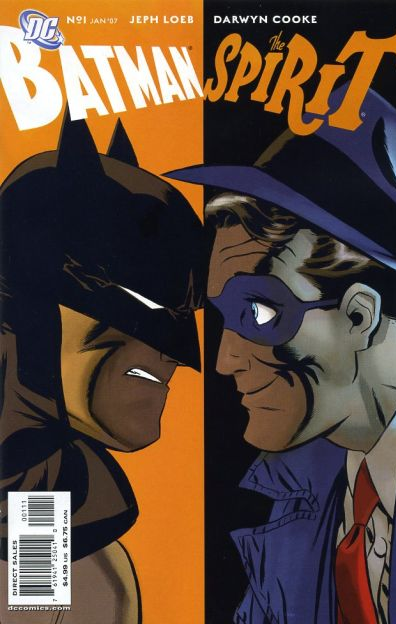
Batman/The Spirit

However, you would be wrong.
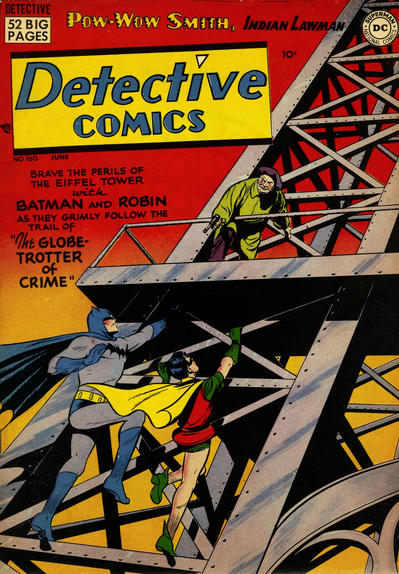
NEXT: Batman fights a one-eyed octopus.

Posted in WEBS OF FICTION | Tagged , , , , , , , , , , | Leave a comment

Gunning for Batman – part 2

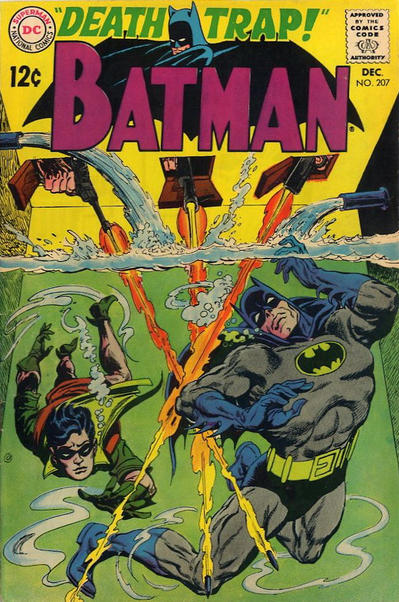
Batman 207

While Batman getting shot at may by itself generate some kick-ass covers, over the years several artists have gone out of their way to make such a premise even more rock and roll.

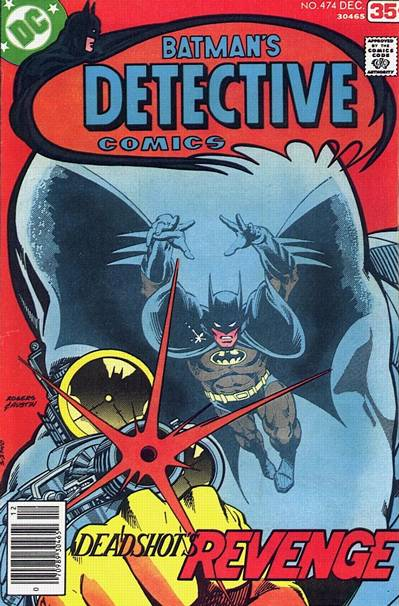
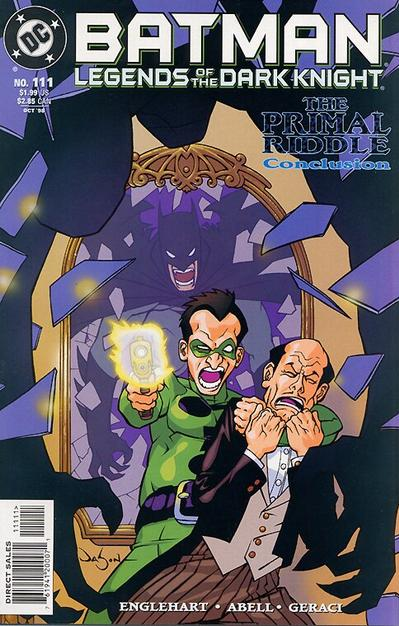
A recurrent strategy has been to come up with cool angles involving Batman’s reflection:

Detective Comics 474     egends of the Dark Knight 111

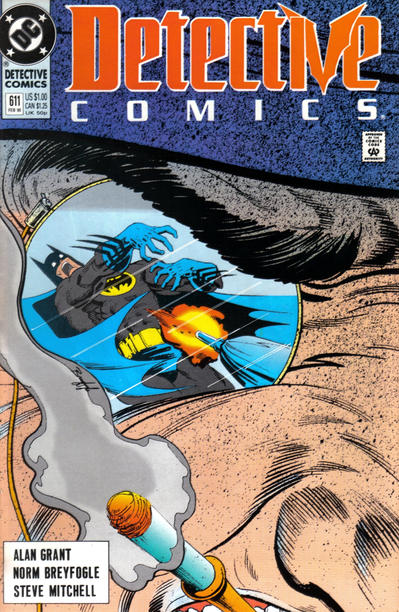
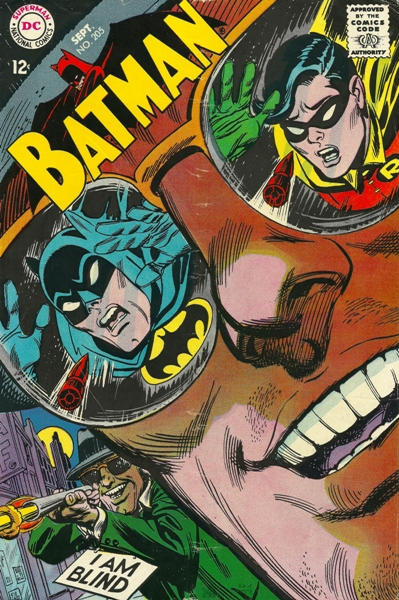
Detective Comics 611     Batman 205

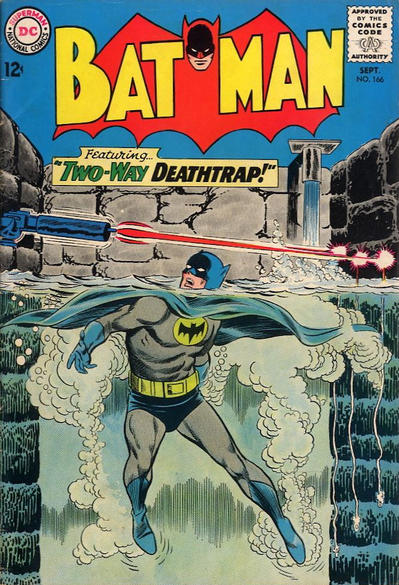
To give their comics more of a summer blockbuster vibe, other artists have taken advantage of the fact that, because of his unusual lifestyle, the Dark Knight often dodges bullets in the most unlikely places…

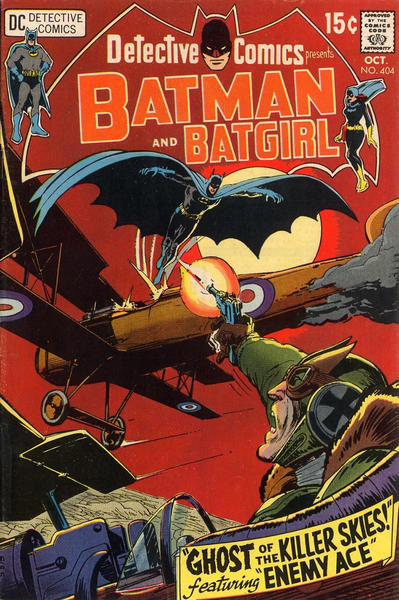
Detective Comics 404     Batman 166

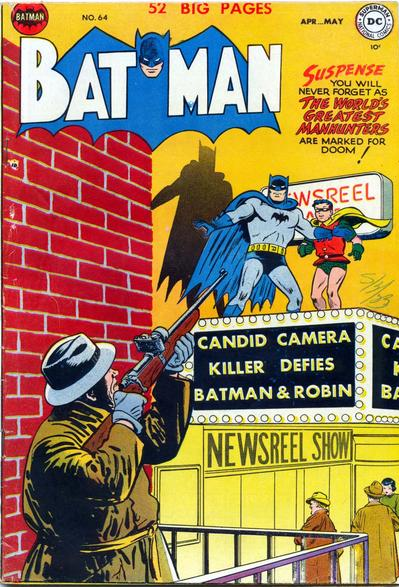
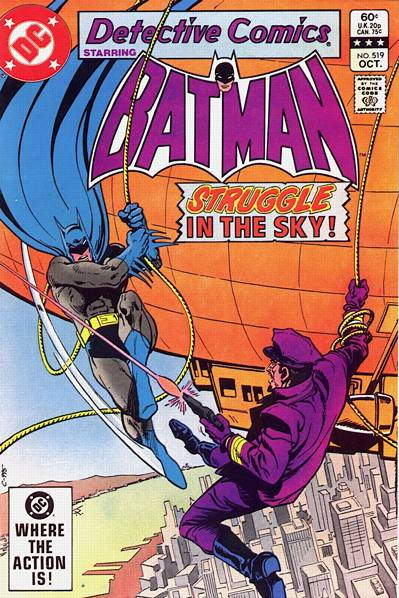
Batman 64     Detective Comics 519

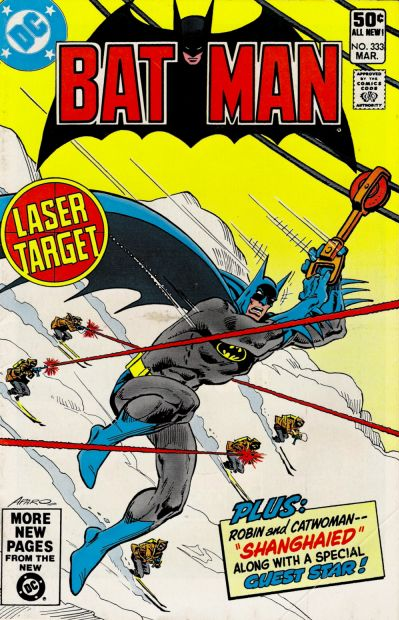
Detective Comics 160     Batman 333

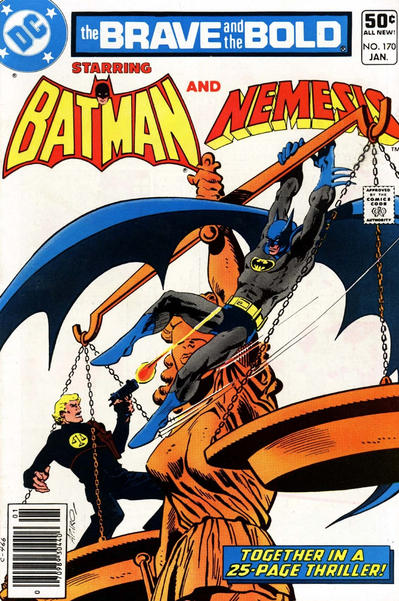
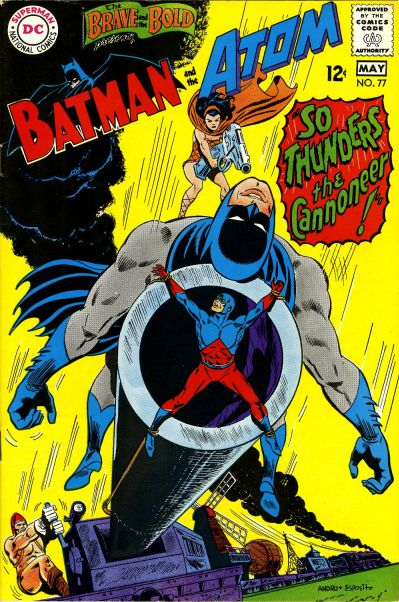
Brave and the Bold 170     Brave and the Bold 77

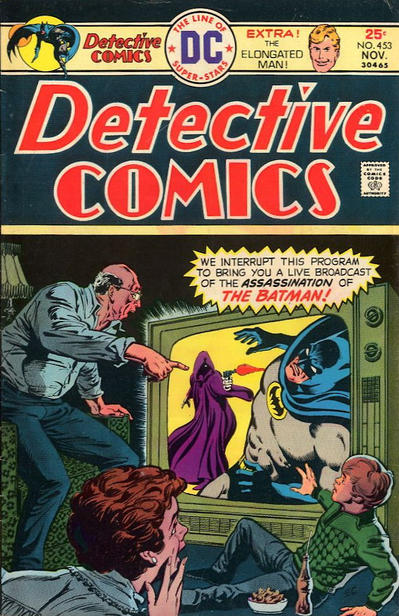
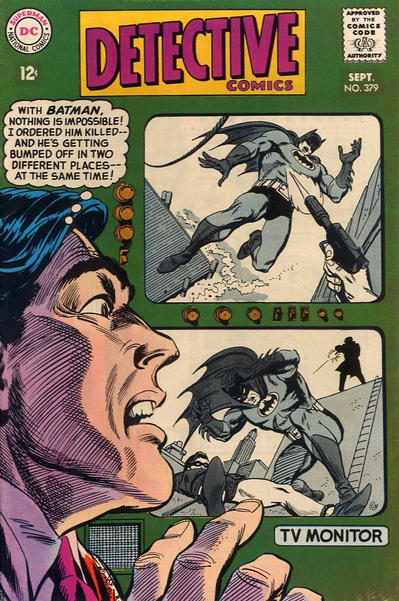
…and sometimes even while being broadcast:

Detective Comics 453     Detective Comics 379

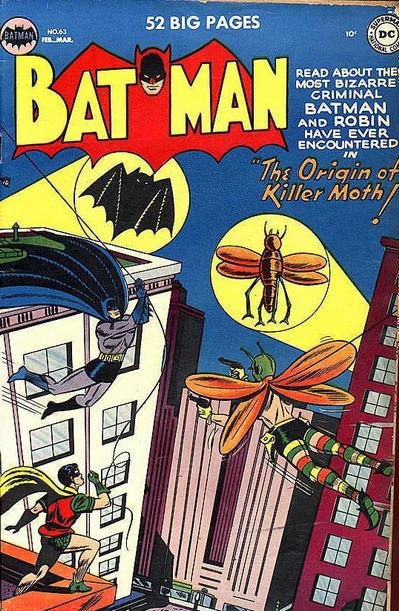
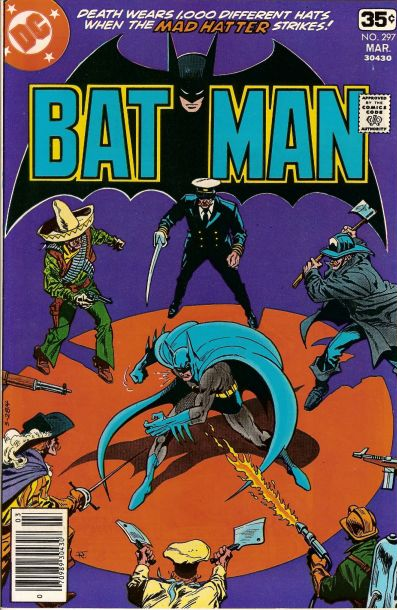
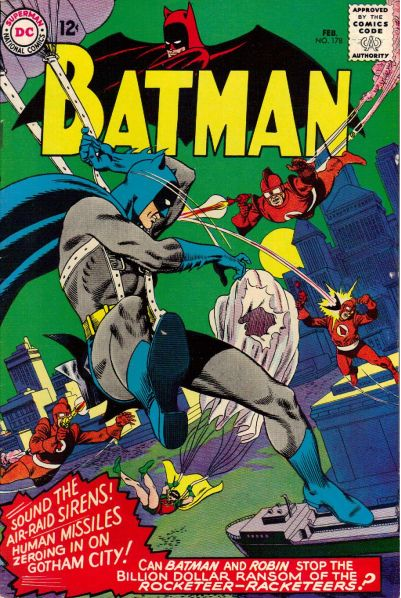
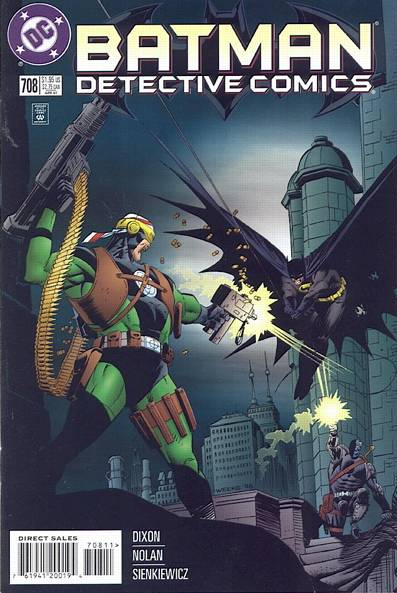
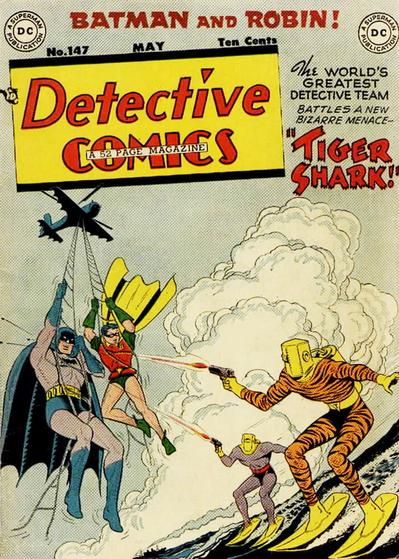
If the ‘where’ can get a bit nuts, then the ‘who’ usually feels like it’s on drugs! People shooting at the Caped Crusader tend to elevate what could have been a pedestrian M.O. through their peculiar fashion sense:

Batman 63     Batman 297

Batman 178     Detective Comics 708

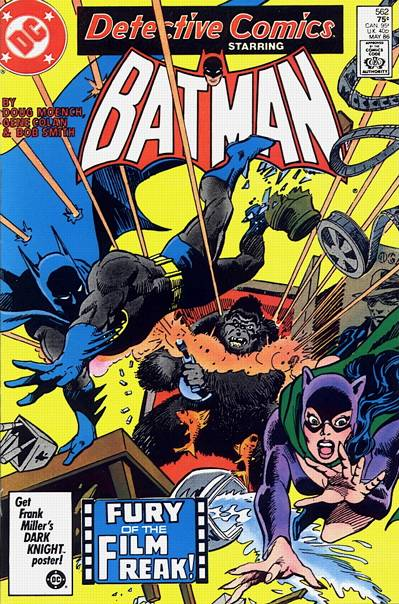
Detective Comics 147     Detective Comics 562

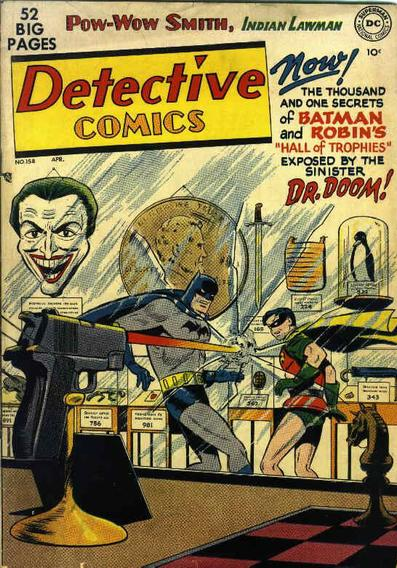
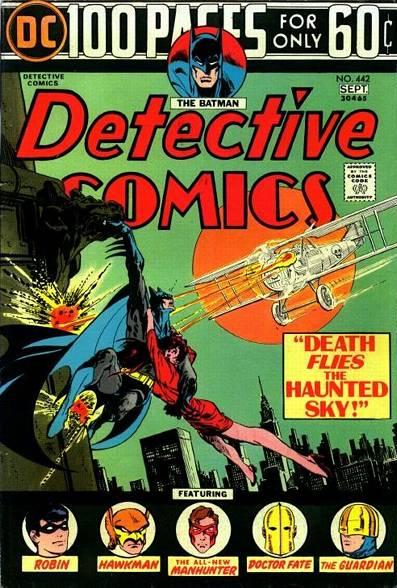
Among the many unconventional objects used to gun down Batman, you can find a weapon that shoots by itself and a freaking ghost airplane from WWI…

Detective Comics 158     Detective Comics 442

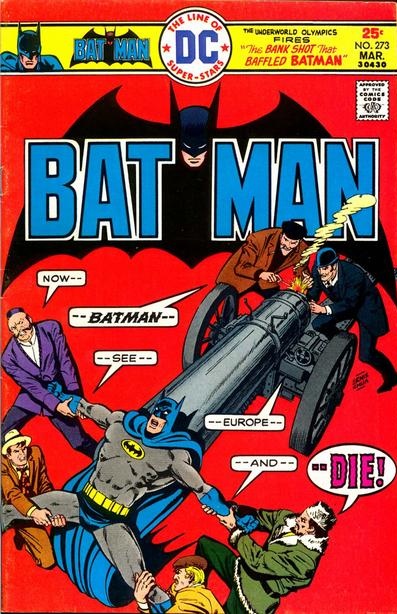
…and, needless to say, a couple of Civil War cannons:

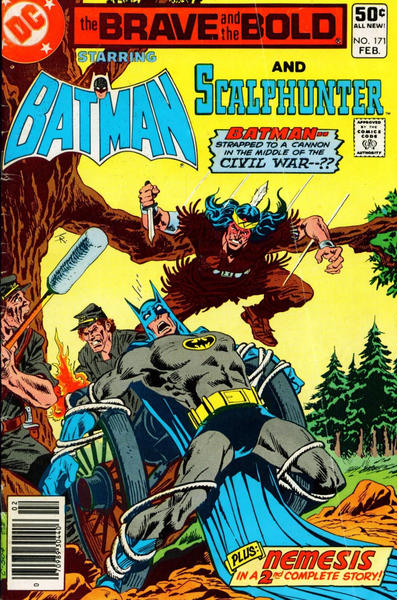
Batman 273     The Brave and the Bold 171

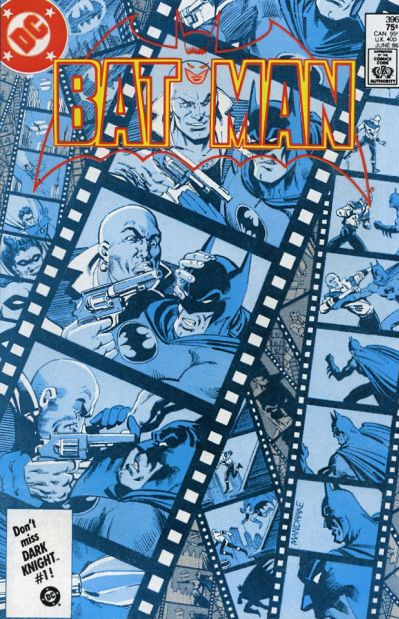
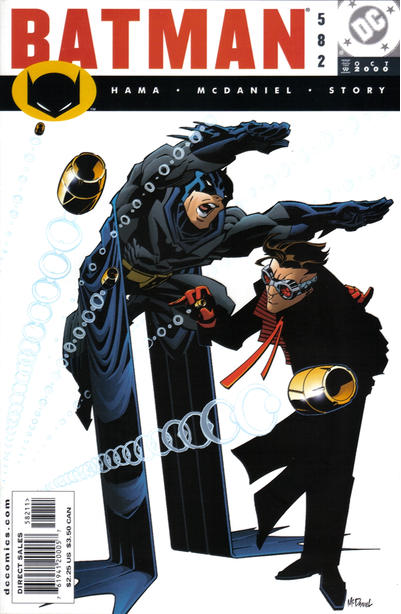
As screwy as all this is, things can still feel a bit boring every once in a while, so artists have also gotten quite creative with the overall cover design…

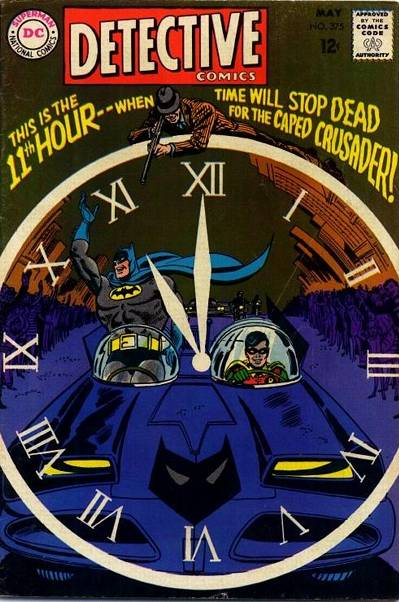
Detective Comics 375     Batman 396

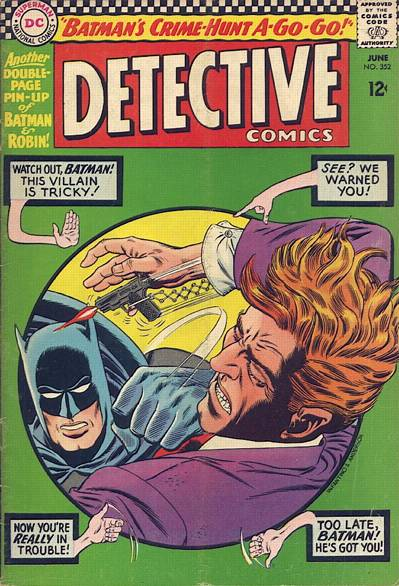
Batman 582     Detective Comics 352

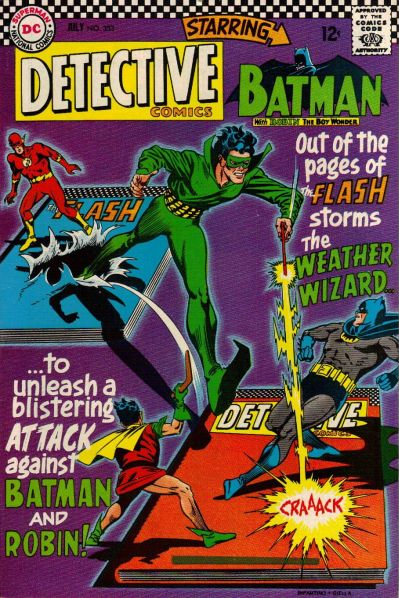
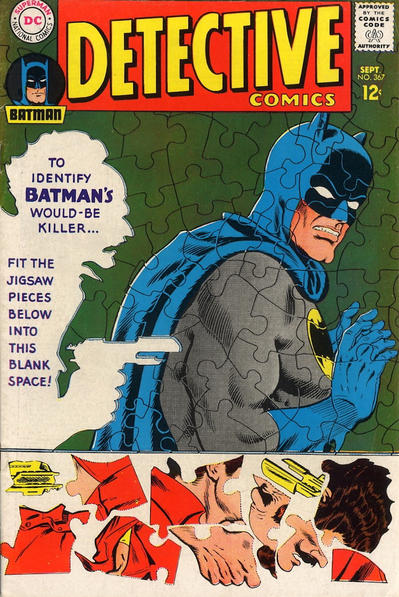
Detective Comics 353     Detective Comics 367

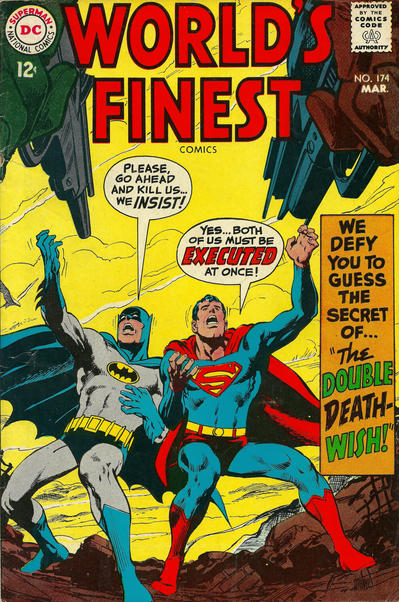
At the end of the day, though, all I ask for is to see the Dark Knight facing the barrel of a gun in the most intriguing circumstances…

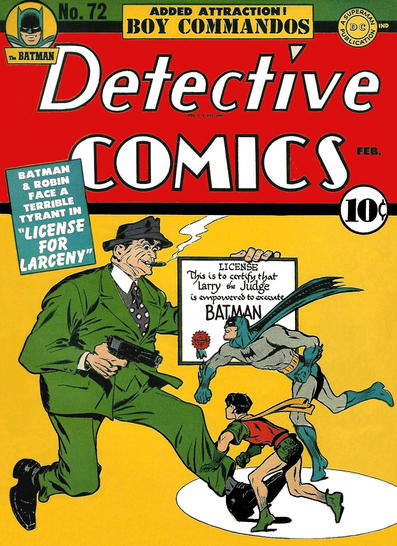
Detective Comics 72     World's Finest Comics 174

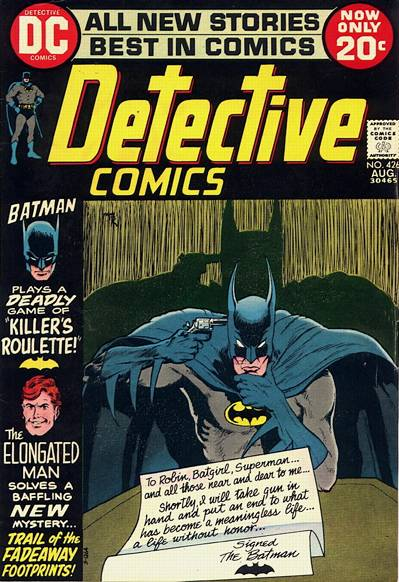
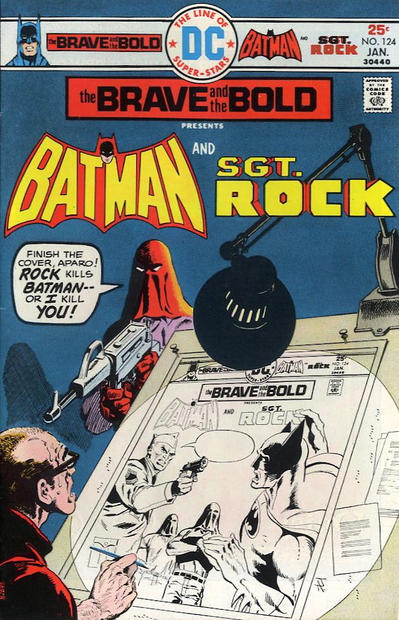
Detective Comics 426     Brave and the Bold 124

NEXT: The Spirit of Will Eisner.

Posted in COVERS OF BATMAN COMICS | Tagged , | Leave a comment

Gunning for Batman – part 1

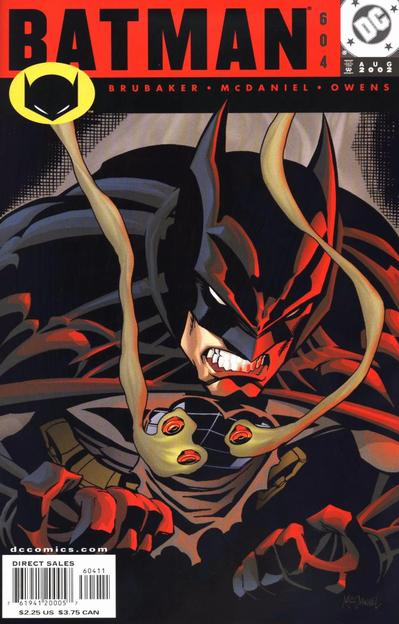
Batman 604

In the past, I have expressed my passion for covers that feature the Joker at his most creepy and surreal, as well as covers with some kind of visual twist involving their logo. But just in case you think I’m hard to please, or that there is anything remotely refined about my tastes, let’s get this straight: I am also a huge sucker for covers where it looks like Batman is about to get shot!

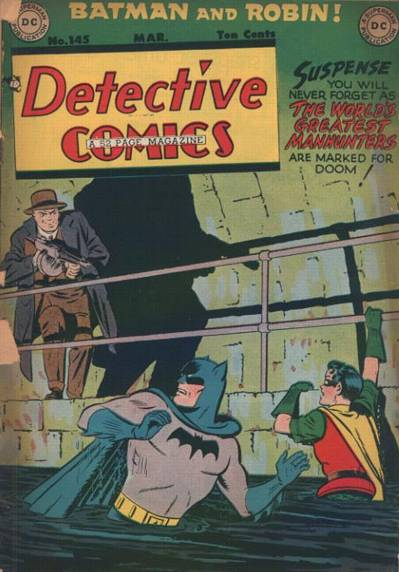
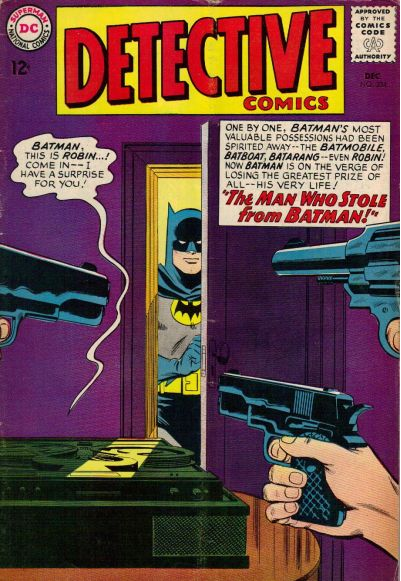
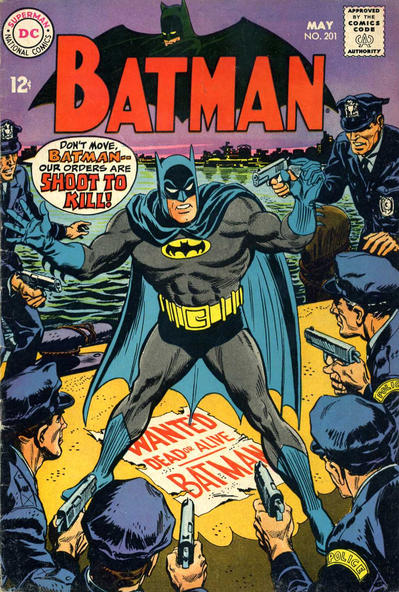
Just in covers alone, more guns have been pointed at the Dark Knight than at the average character in a Johnnie To thriller. Yet it’s a formula that keeps on giving. There is something about the simple immediacy of danger brought on by a pointed gun which generates dynamism and urgency, with Batman for once seeming helpless and vulnerable…

Batman 145     Detective Comics 334

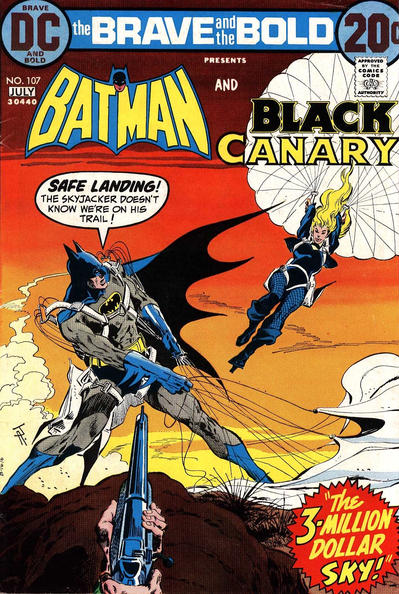
Batman 201     Brave and the Bold 107

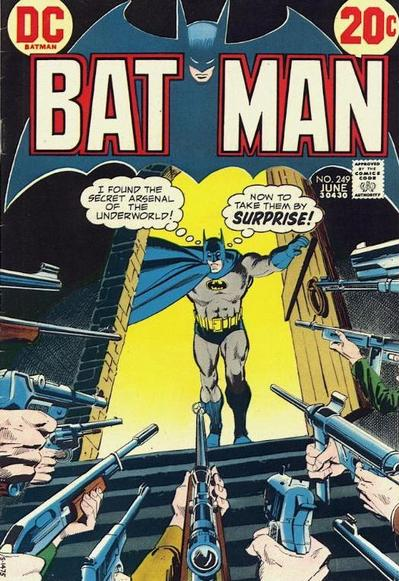
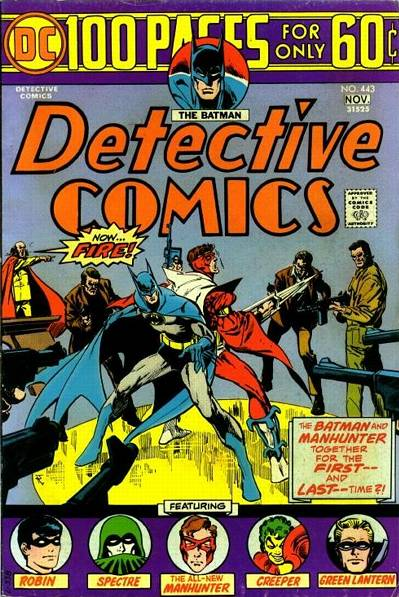
Batman 249     Detective Comics 443

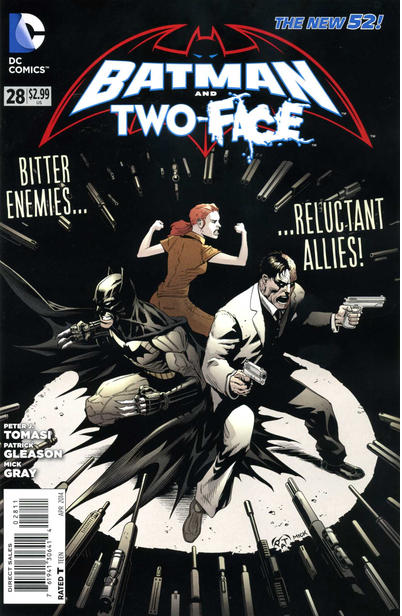
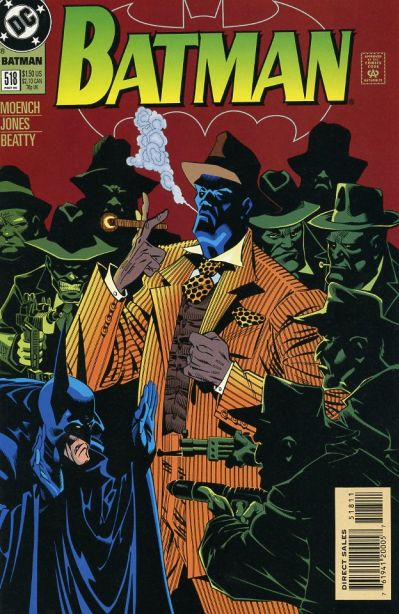
Batman and Robin 28     Batman 518

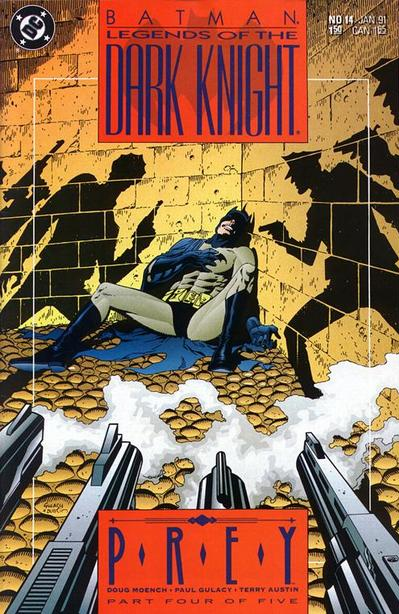
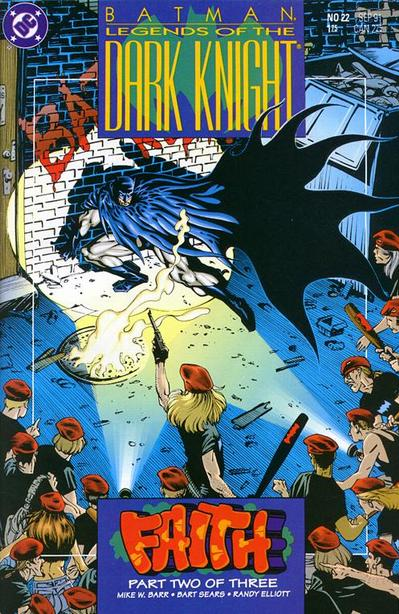
Legends of the Dark Knight 14     Legends of the Dark Knight 22

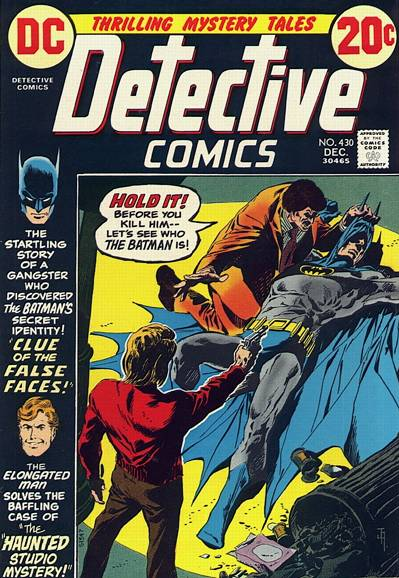
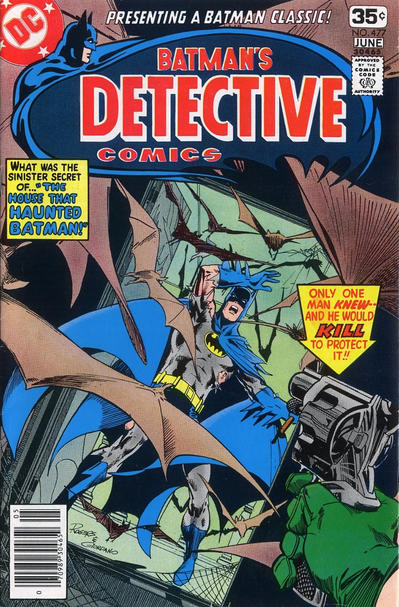
Detective Comics 430     Detective Comics 477

On the other hand, the fact that Batman has to face a loaded gun can sometimes serve to reinstate his action hero credentials, with the Caped Crusader coming across as more badass than ever:

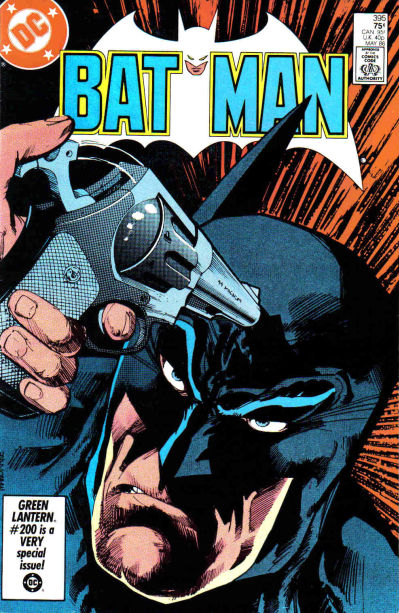
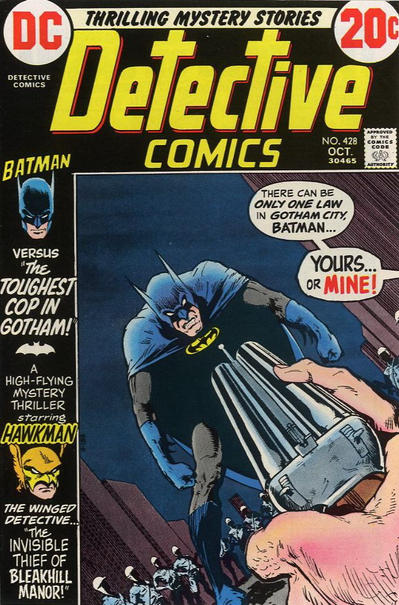
 Batman 395     Detective Comics 428

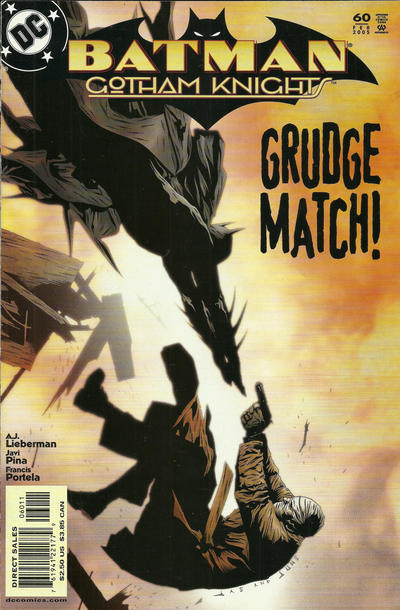
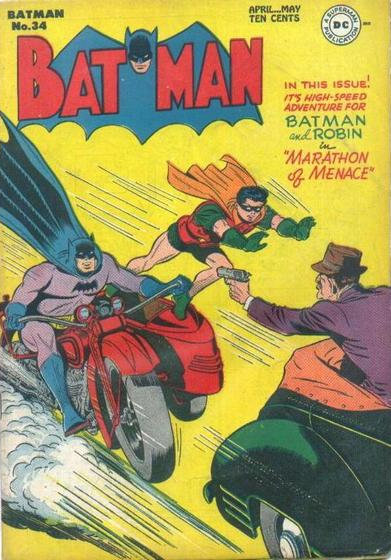
Gotham Knights 60     Batman 34

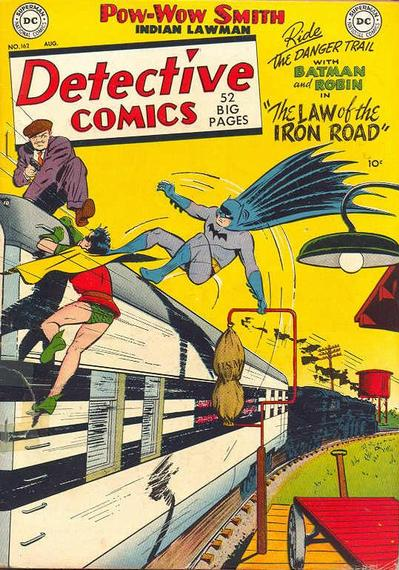
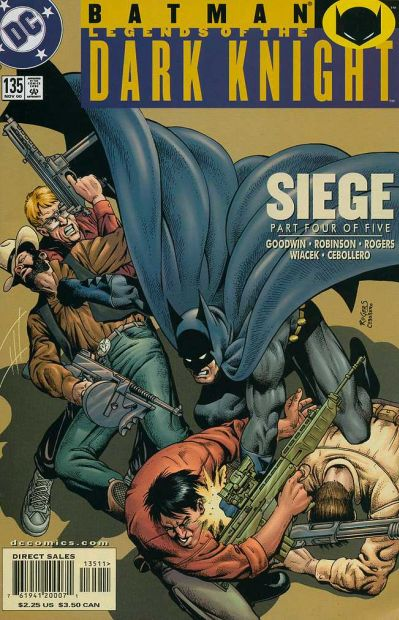
Detective Comics 162     Legends of the Dark Knight 135

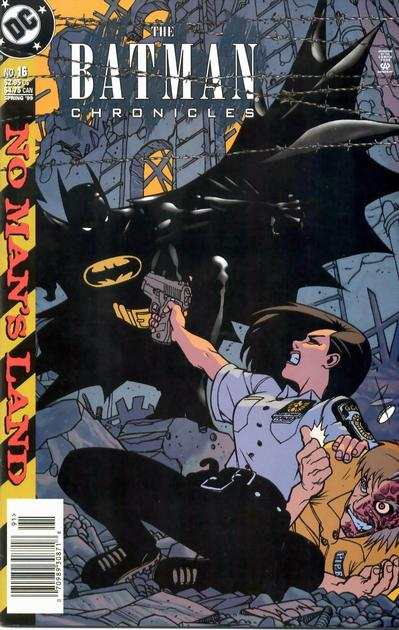
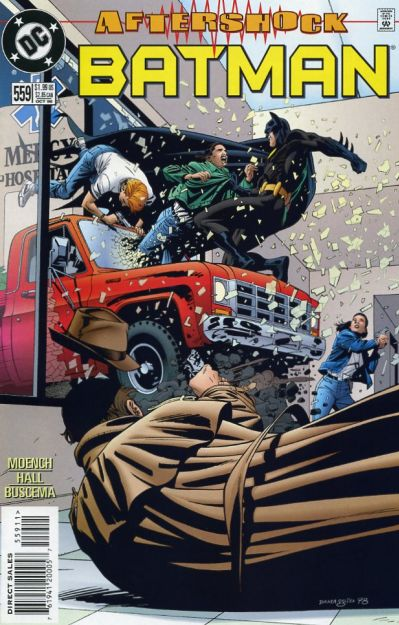
Batman Chronicles 16     Batman 559

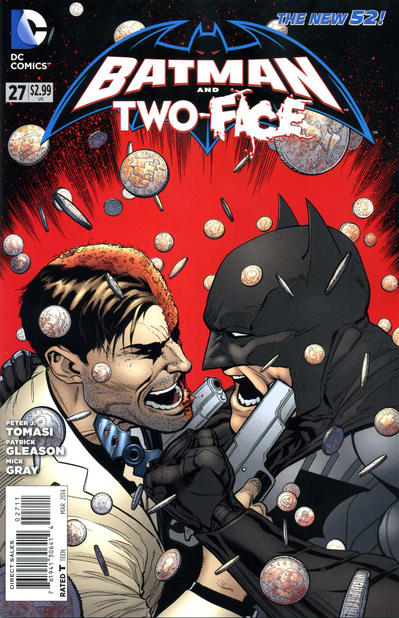
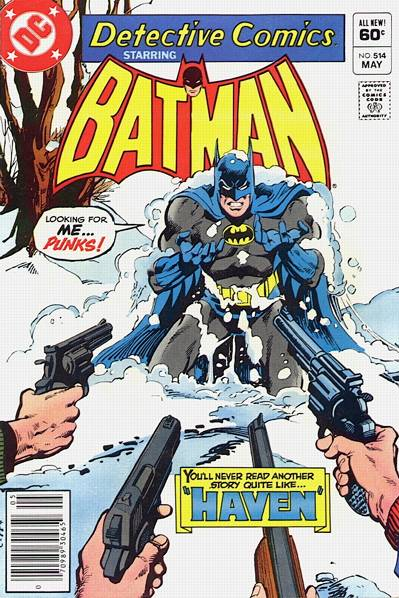
Batman and Robin 27     Detective Comics 514

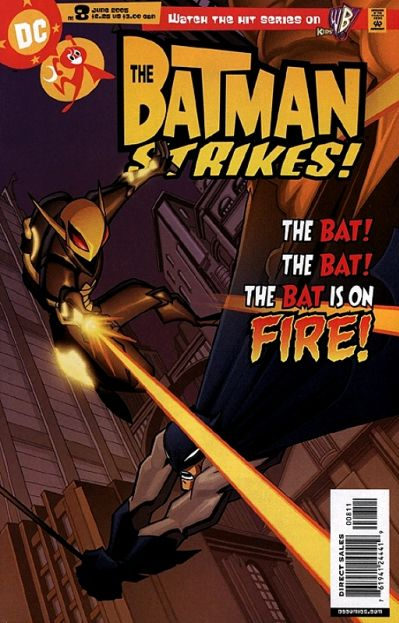
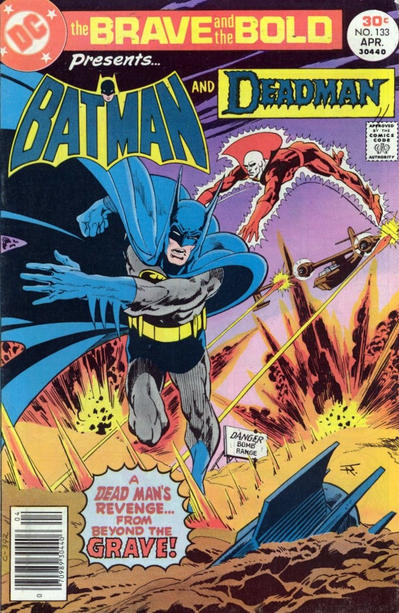
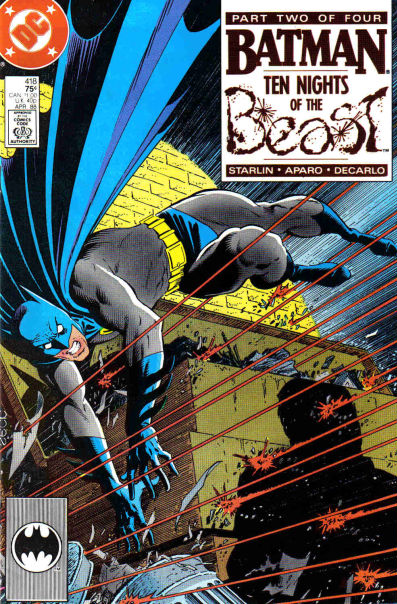
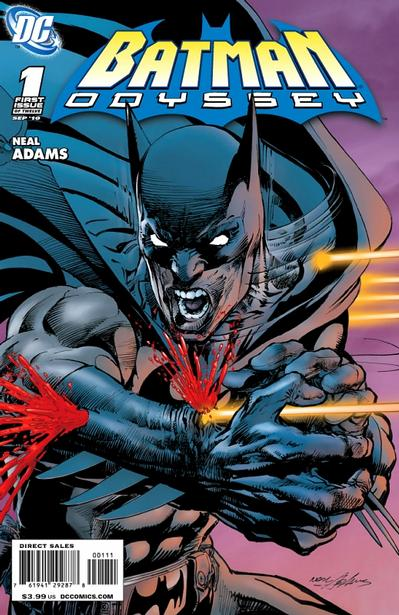
The same is true of covers where Batman is not just threatened, but actually getting shot at. While some give out a sense a desperation…

Batman Strikes 8     Brave and the Bold 133

Batman 418     Batman: Odyssey

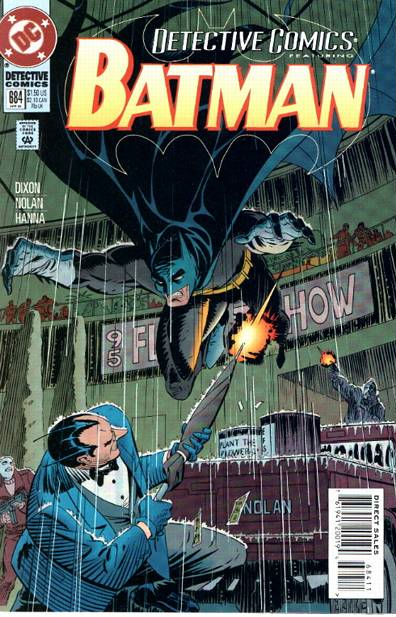
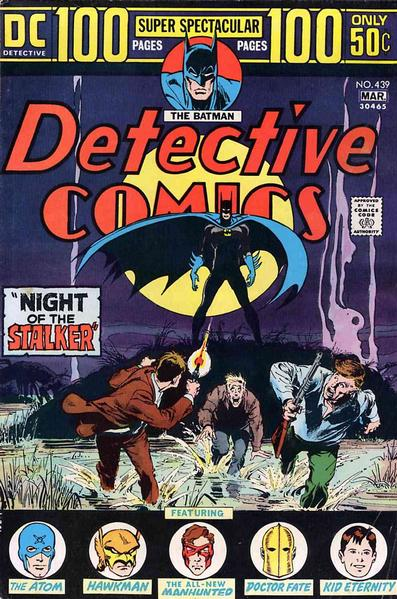
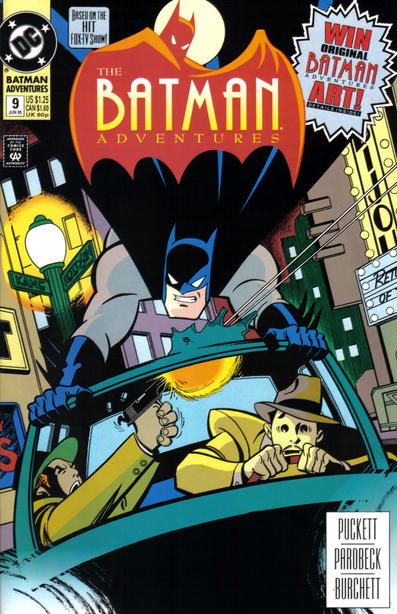
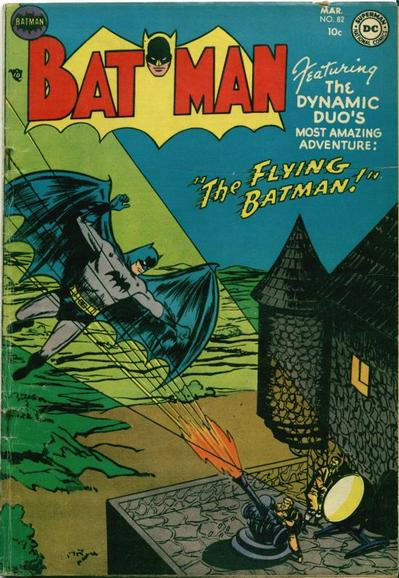
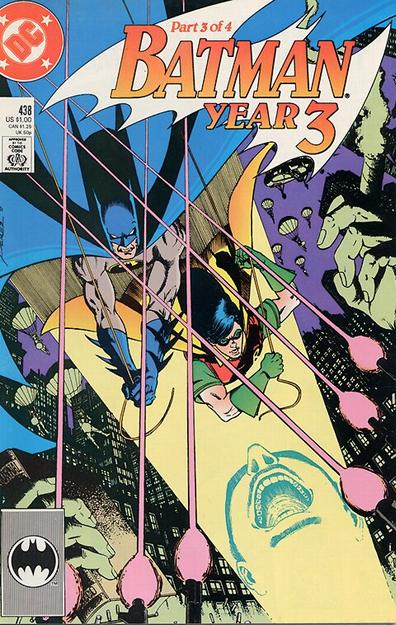
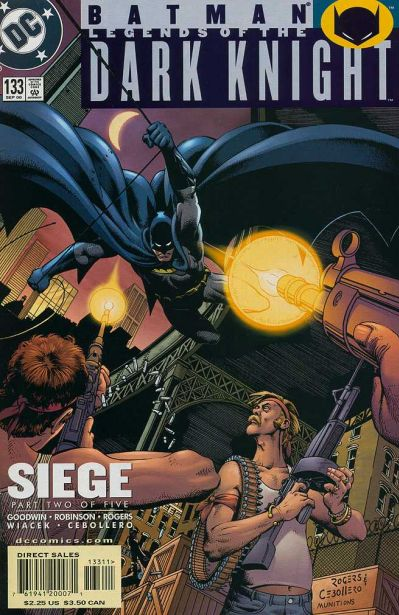
…many just highlight how much of an unstoppable crime-fighting machine the Dark Knight can be, relentlessly going up against a violent sea of bullets in the name of justice like a Bizarro version of Tony Montana:

Detective Comics 684     Detective Comics 439

Batman Adventures 9     Batman 82

Batman 438     Legends of the Dark Knight 133

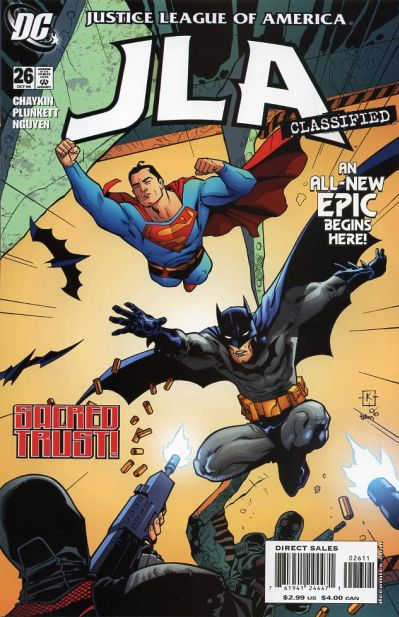
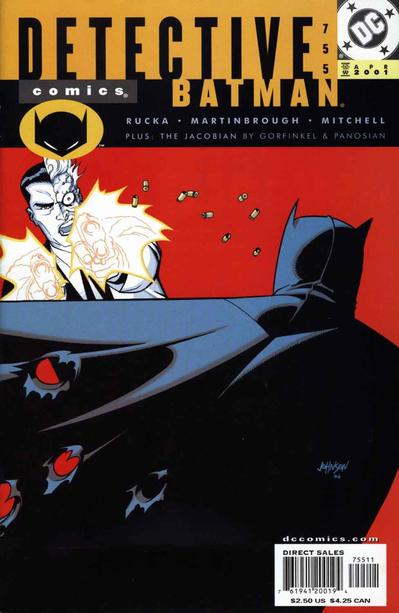
JLA Classified 26     Detective Comics 755

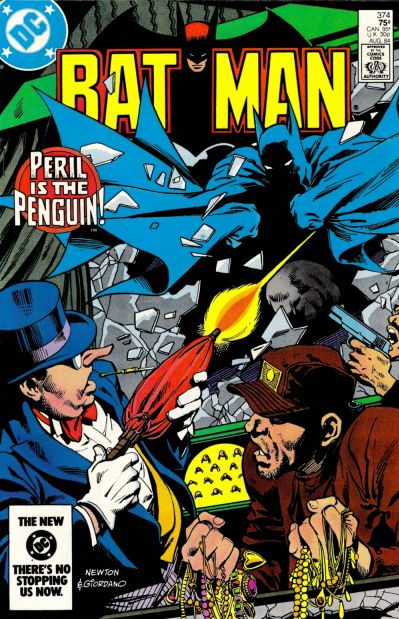
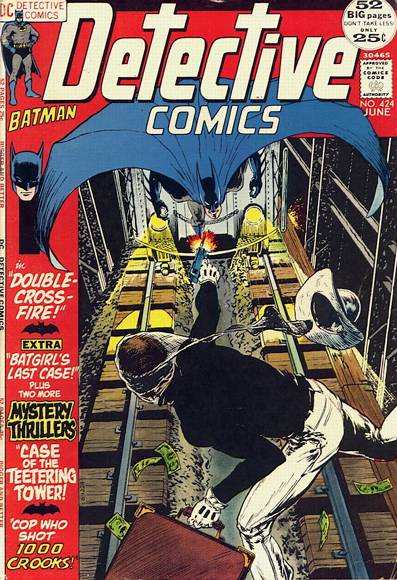
Batman 374     Detective Comics 424

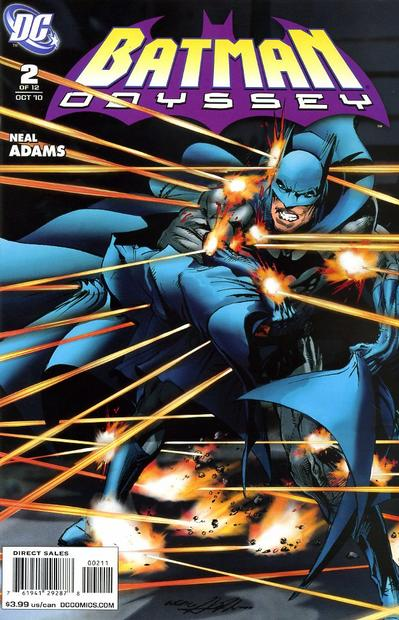
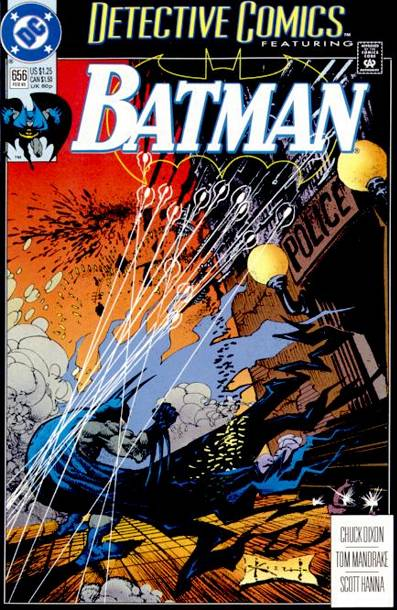
Batman Odyssey 2     Detective Comics 656

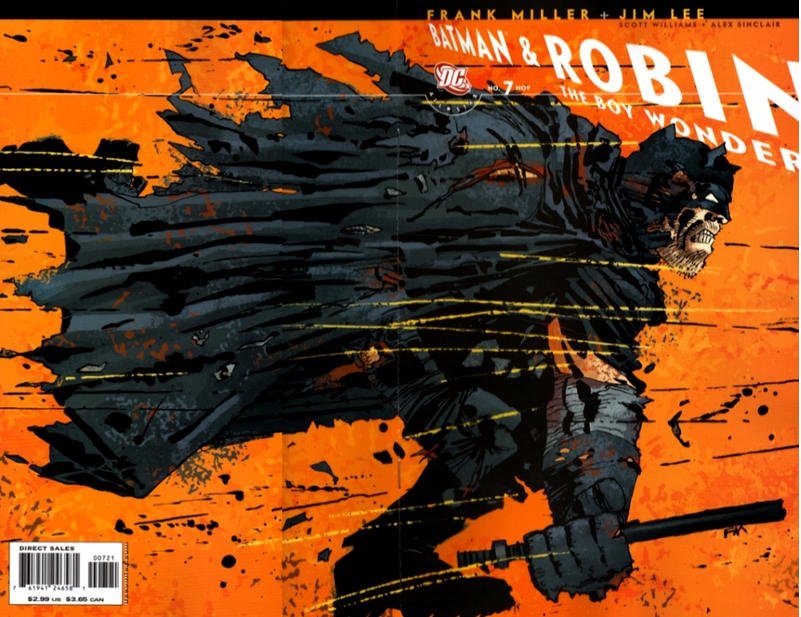
All Star Batman and Robin 7

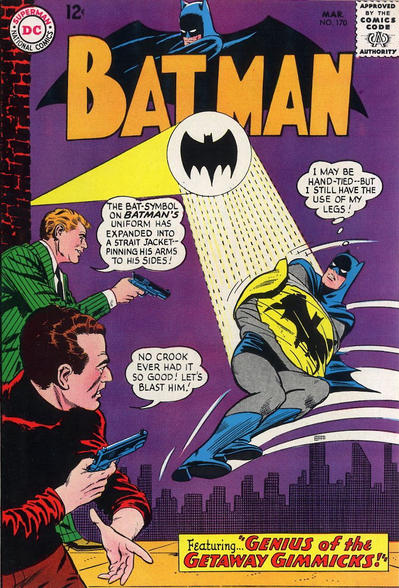
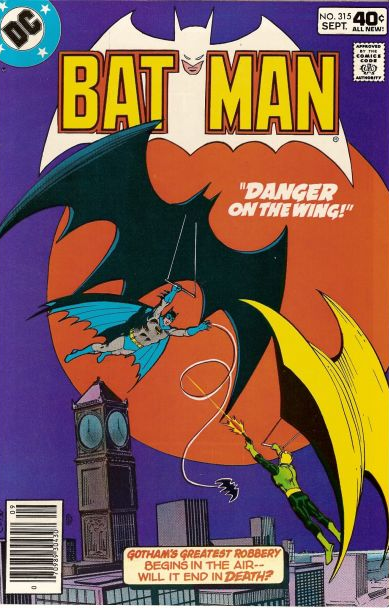
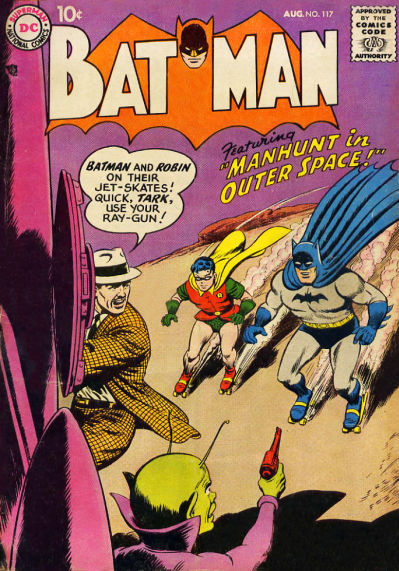
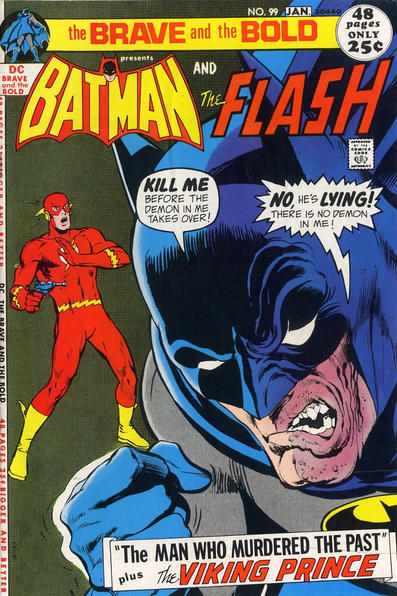
Which is not to say that, every once in a while, things don’t get delightfully goofy:

Batman 74     Batman 170

Batman 315     Batman 117

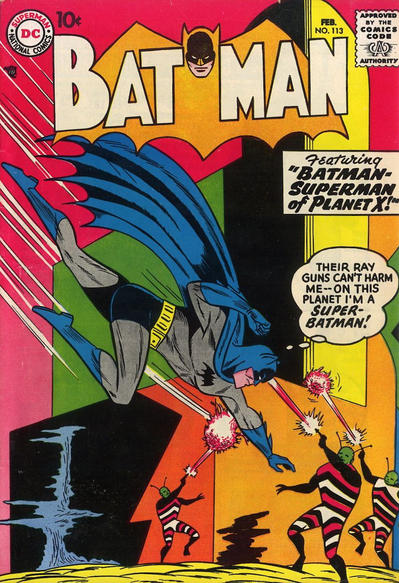
Brave and the Bold 99     Batman 113

Fighting Kite-Man with the help of a bat-shaped paraglider? Rolling on jet-skates towards an armed alien? Struggling with demon possession in front of the Flash? Magically flying around on another planet? An ad for the Viking Prince? Things cannot get much sillier than this!

NEXT: Things get much sillier than this.

Posted in COVERS OF BATMAN COMICS | Tagged , | Leave a comment

Batman and fascism

World's Finest 9

Some people apply the label ‘fascist’ to a specific early 20th century ideology, and perhaps to some later derivative political projects. Others use the term more loosely, applying it to people who come across as authoritarian, unapologetically violent, and/or intolerant of different world views. For me, ‘fascist’ is what I call anyone who pisses me off. And you know who pisses me off? People who think they’re being clever when they call Batman a fascist.

I get it. There is something about a masked vigilante who resorts to torture and extrajudicial invasion of privacy that reflects totalitarian urges. Arguably, there is a fascist subtext inherent to superhero iconography in general, what with all the uniformed Übermenschen imposing order through brute force. But sticking this label on Batman still feels more like a superficial insult than a poignant analysis. I mean, the character himself is not supposed to be an actual fascist!

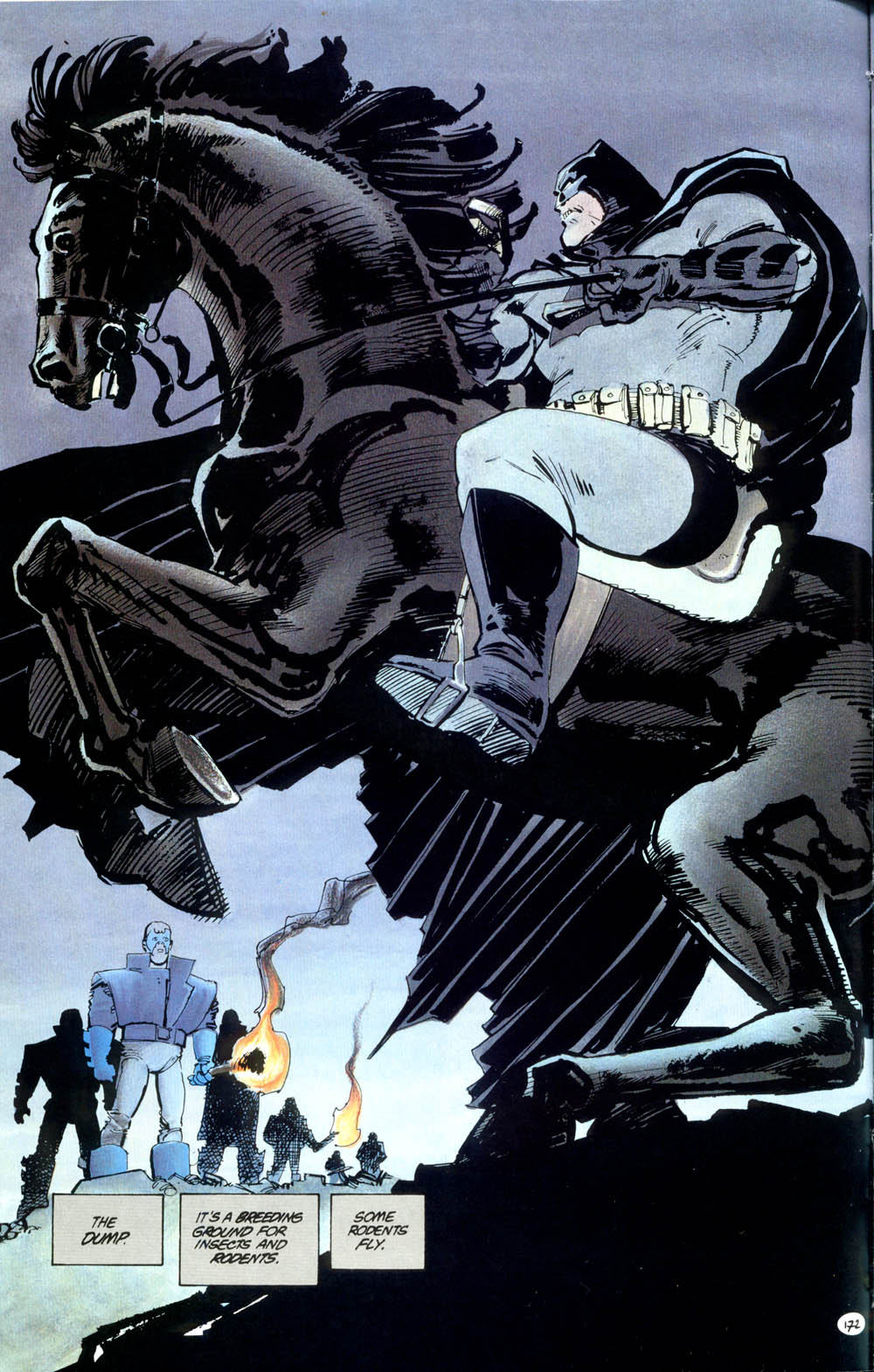
Except, you know, when he’s written by Frank Miller:

Batman - Dark Knight Returns 04The Dark Knight Returns #4

The Batman of Dark Knight Returns can be seen as ‘the worst sort of reactionary fascist,’ even if at one point he does fight an Arian woman with swastikas for nipples.

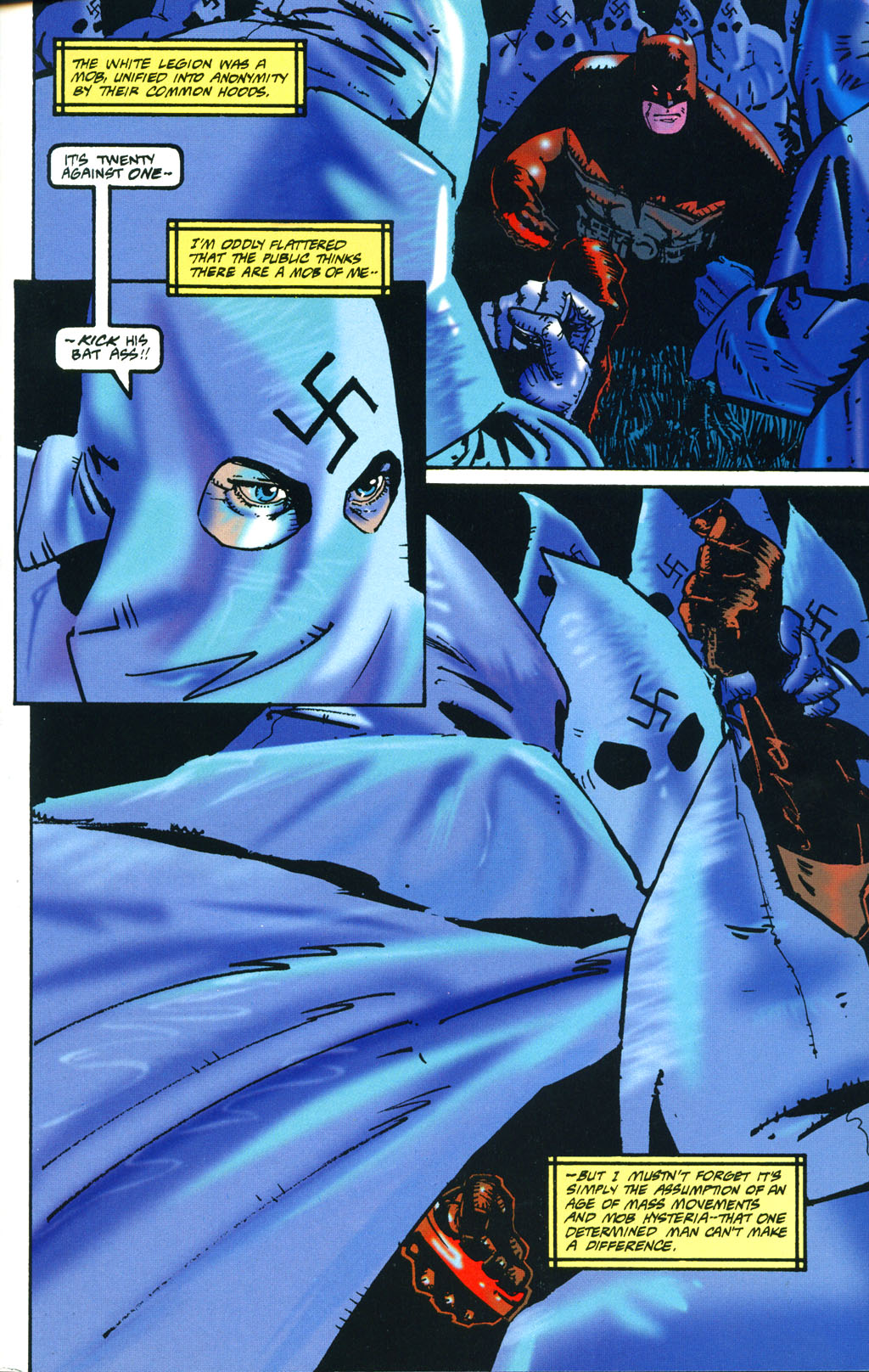
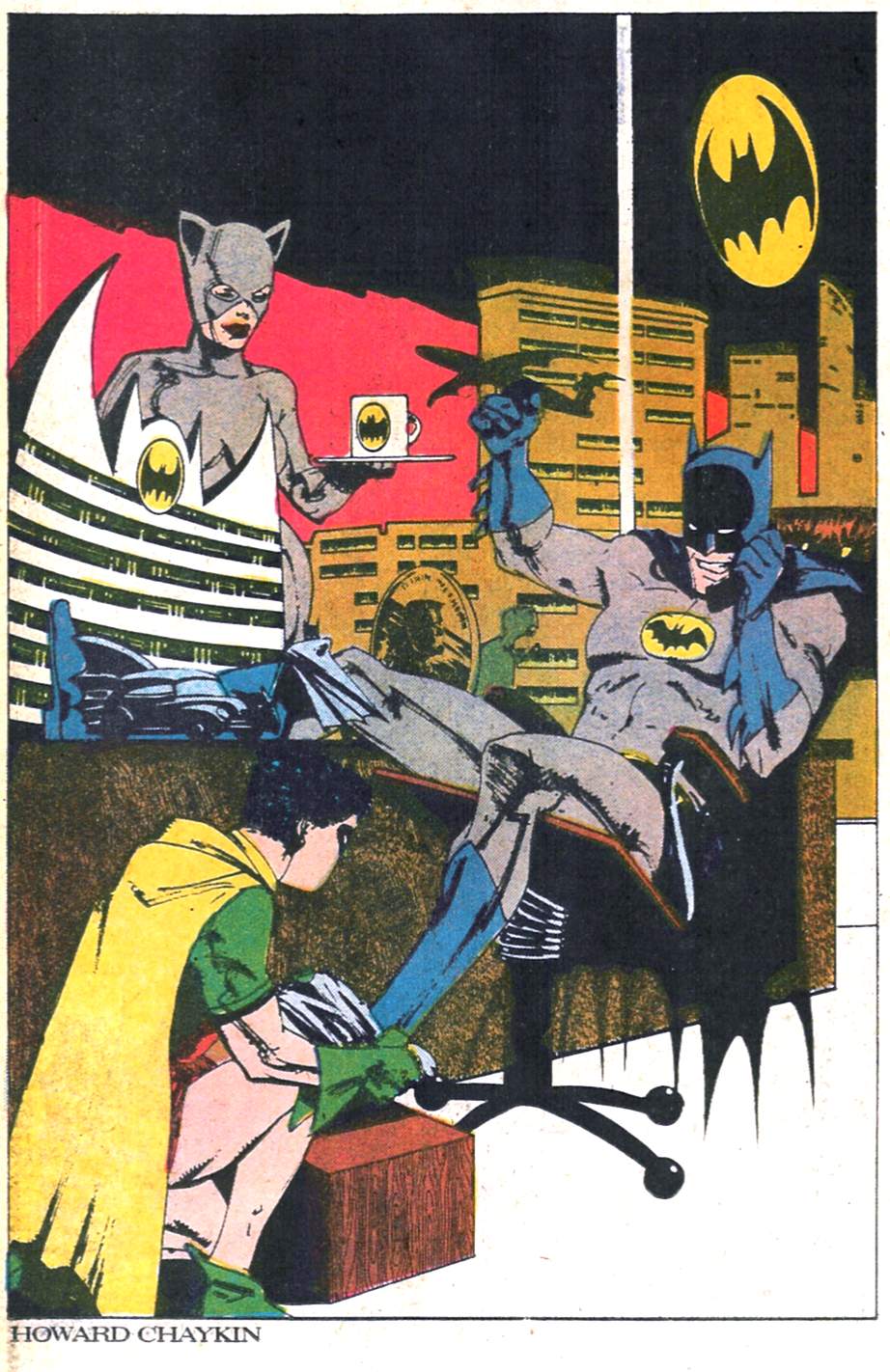
The thing about Miller’s take on Batman, though, is that this is not meant to be the familiar Caped Crusader, but rather a self-conscious twist on it. And once you start counting all the purposely alternative versions of the Dark Knight, then anything goes. For every story where Batman’s authoritarian tendencies take over (like Kingdom Come or the underrated ‘The Tyrant,’ in Shadow of the Bat Annual #2), there is an opposite comic with him as a committed anti-fascist. In ‘Berlin Batman,’ Paul Pope reimagines Bruce Wayne as Baruch Wane, a Jewish Dark Knight helping out oppositionists in 1938 Germany. In Howard Chaykin’s very cool Dark Allegiances, Batman is a plutocrat in the politically charged atmosphere of the Great Depression who goes up against homegrown American fascists.

Batman - Dark AllegiancesDark Allegiances

Likewise, the movies are a whole other universe. Christopher Nolan’s trilogy seems to endorse mass secret surveillance as well as police hordes gleefully marching with their batons in the air to beat up civilians – which of course no democratic government would ever support, right? Anyway, it’s not as if anything in The Dark Knight Rises really makes sense.

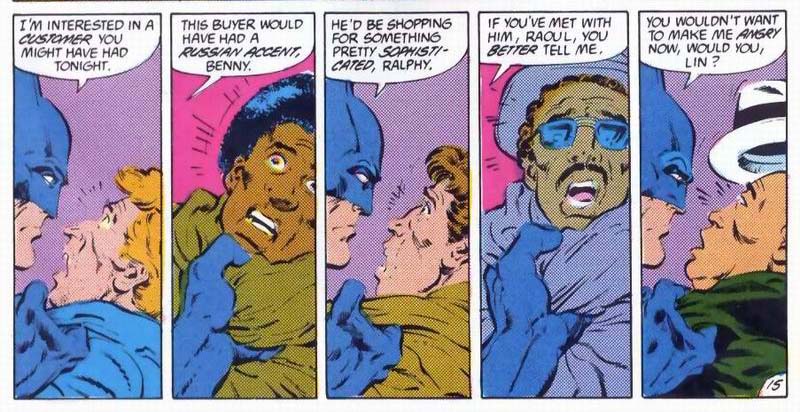
In the regular comics, Batman is less of an Übermensch than a Renaissance Man, powered not by genes but by training and study. He does believe in instilling fear, although not of the state but specifically of Batman (what the Scarecrow once called ‘chiropter-homophobia’), and sees himself as a crime-fighter rather than a ruler. The Caped Crusader is also more of a Gothamist than a nationalist. And he does not advocate genocide or anti-Semitism… in fact, he doesn’t discriminate, beating up thugs from any ethnic background:

Batman 418Batman #418

What’s more, Batman has kicked more Nazi butt than Indiana Jones! Sure, he didn’t personally punch Adolf Hitler during World War II, like Superman or Captain America did, but in 1942 the Dark Knight took care of a network of Nazi spies operating in the US.

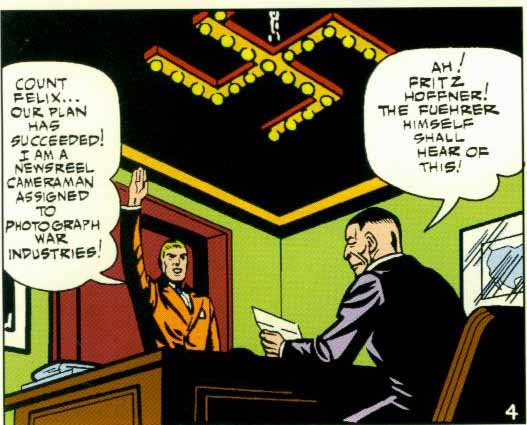
That story, published in Batman #14 (cover-dated December 1942-January 1943), starts off with the saga of Fred Hopper, a young wide-eyed amateur movie photographer trying to break in as a newsreel cameraman. Just to get rid of the annoying wannabe, an editor sets him up with the almost impossible task of getting shots of a reclusive multimillionaire, but Fred succeeds when a couple of veteran cameramen help him infiltrate the millionaire’s home. It’s an old-fashioned paparazzo success story! Except there’s a catch: Fred Hopper is actually called Fritz Hoffner and he is a member of a spy ring whose headquarters even have a swastika-shaped lamp:

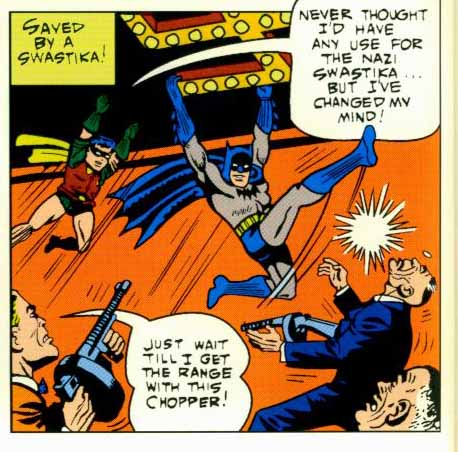
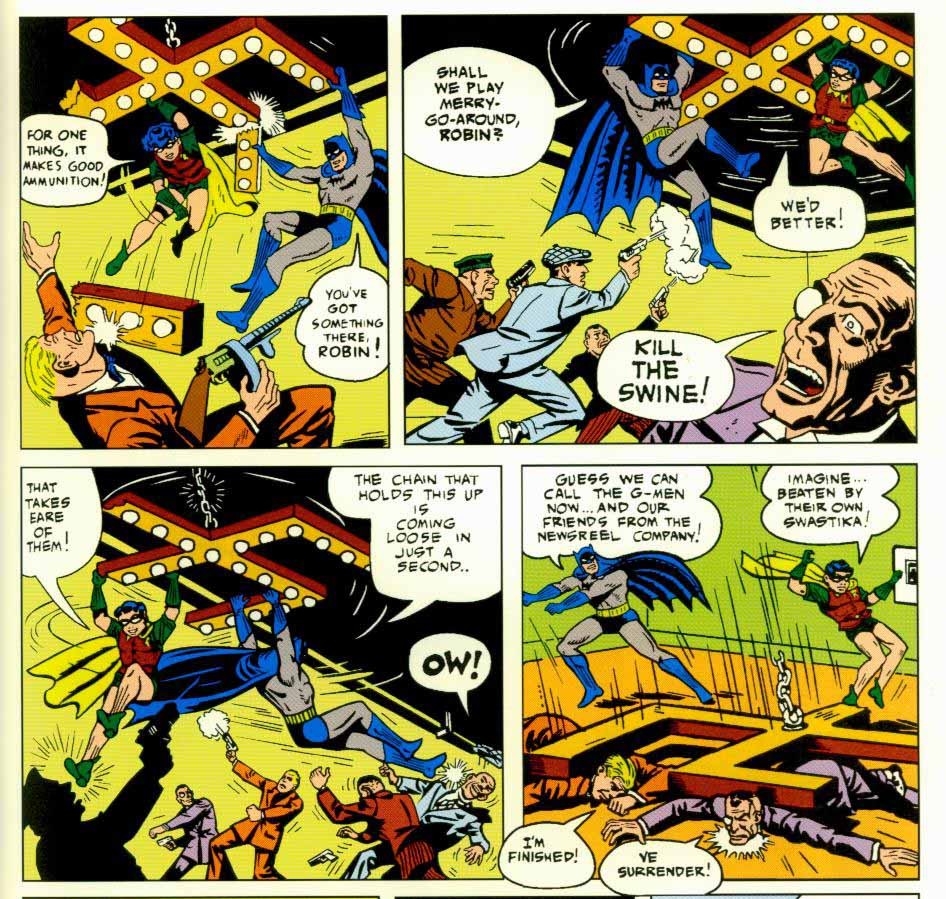
Batman 14Fearing that Batman could get in the way of the Nazi plot to sabotage America’s war effort, the spies decide to kill the Caped Crusader. Conveniently, Fred is soon tasked by the Gotham City Newsreel Company with filming a publicity stunt the Dynamic Duo is doing for the war bond campaign, but the assassination attempt fails. Later, Batman and Robin barely make it out alive when they try to prevent the spies from blowing up storage tanks for the gasoline that takes American bombers across the ocean. The whole thing culminates with a showdown at the Nazi headquarters, where the Dark Knight puts the weird lamp to good use:

Batman 14Yep, in a non-too-subtle ironic twist, that swastika-lamp totally saves the day:

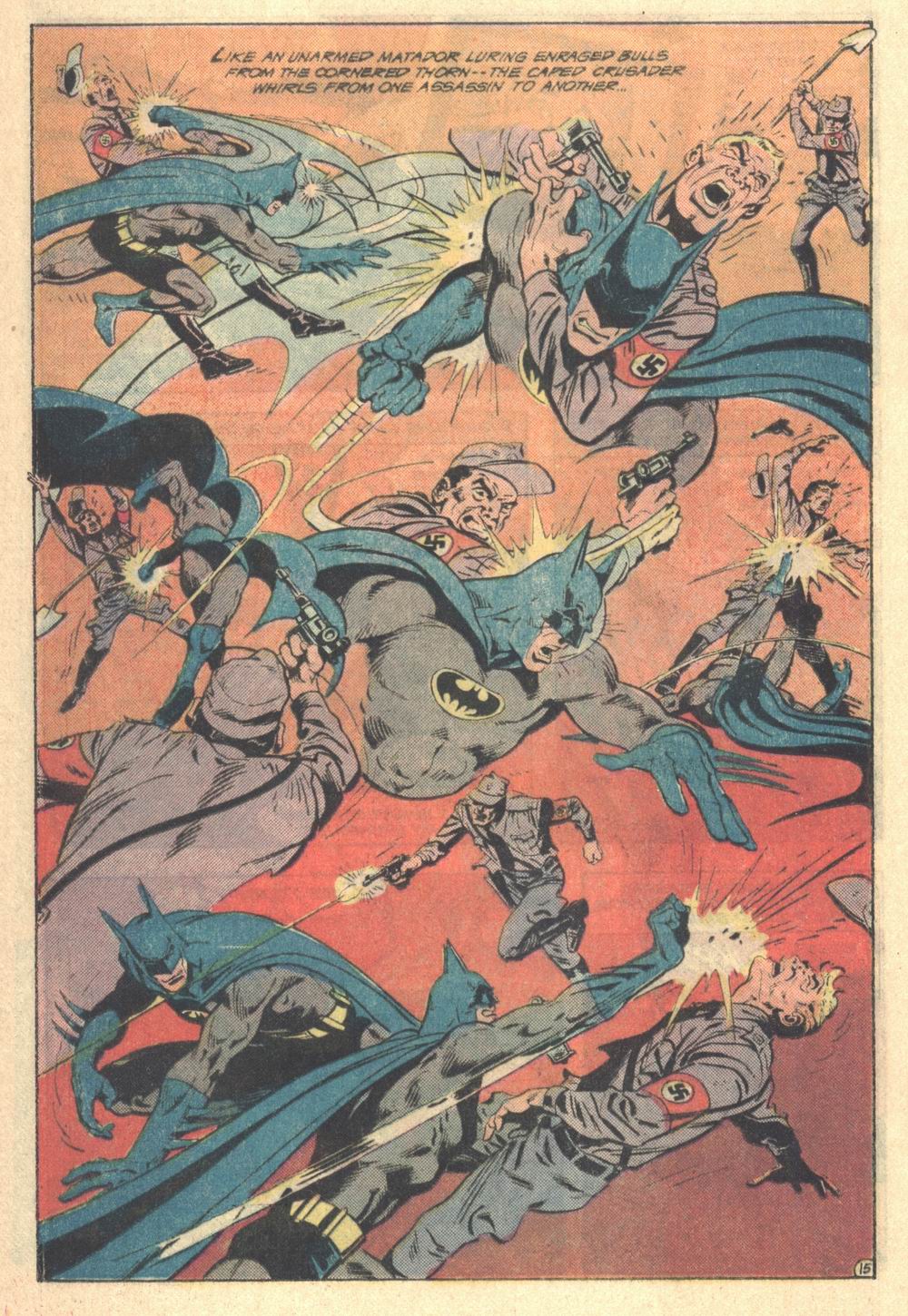
Batman 14Decades later, in the awesome ‘The Angel, the Rock and the Cowl!’ (The Brave and the Bold #84), Bob Haney retroactively establishes that Bruce Wayne was in France just before D-Day, following secret instructions from Winston Churchill himself. There is some Notorious in there, but mostly that comic feels like a balls-to-the-wall war movie in the style of Kelly’s Heroes, Secret Invasion, and Where Eagles Dare, not to mention Inglourious Basterds. And it is only one of many instances in which Batman fought Nazis and neo-Nazis in the pages of The Brave and the Bold…

Batman Brave & Bold 188The Brave and the Bold #188

Seriously, poor Jim Aparo is responsible for more images of Nazis than Leni Riefenstahl!

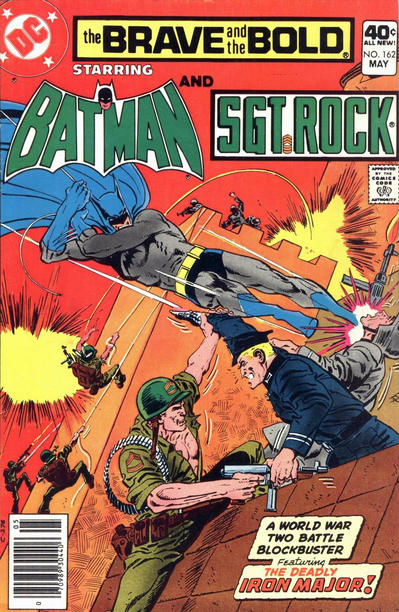
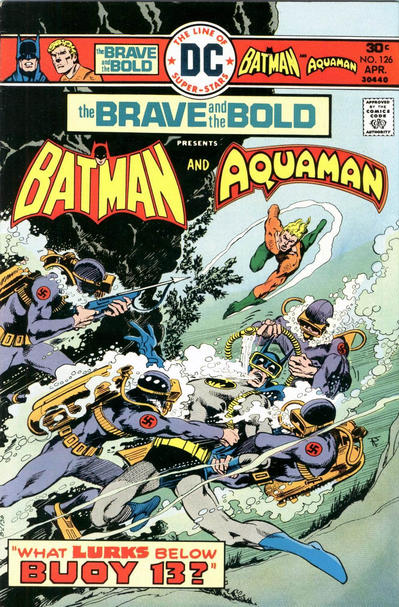
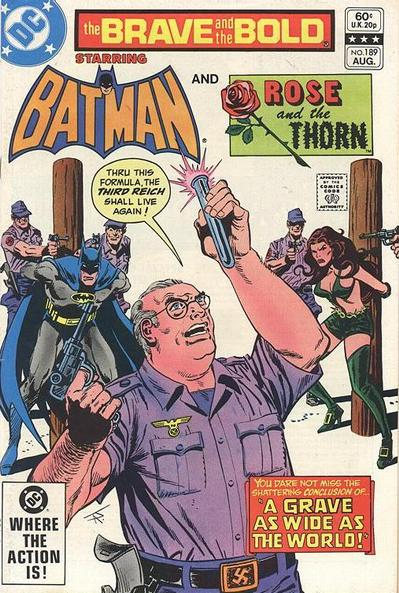
Batman Brave and the Bold 162     Batman Brave and the Bold 126     Batman Brave and the Bold 189

By the 1990s, writers were clearly struggling to innovate. You could read about Batman fighting Nazi zombies (Legends of the Dark Knight Annual #1) and Nazi demons (Hitman #3).

As far as threats from the past go, it’s safe to say that there is only one kind of villain that seems to get Batman giddier to fight than Nazis…

Batman The Brave and the Bold #6Batman: The Brave and the Bold #6

NEXT: Batman gets shot. A lot.

Posted in POLITICS OF BATMAN COMICS | Tagged , , , , , , , , , | Leave a comment

Spotlight on Batman: The Animated Series – part 2

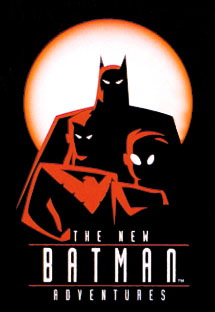
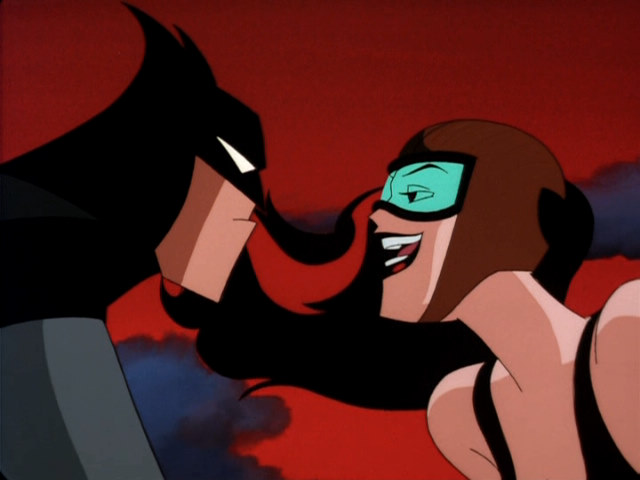
The New Batman AdventuresIn 1997, Batman: The Animated Series gave way to The New Batman Adventures, which had an edgier attitude. The animation became more fluid and the character designs highly stylized. Gotham gained a more modern look that combined late 20th century yuppie fashion with remnants of the original retro-avant-garde aesthetics. Bruce Timm and company also shook up the status quo: they brought in Tim Drake as Robin (with Jason Todd’s post-Crisis origin), promoted Batgirl to Bruce’s main sidekick (and even more than that, according to the spin-off movie Mystery of the Batwoman), and played with conventions by having Catwoman closely flirt with Nightwing. If anyone could pull it off, though, it was this team – after all, these guys even got away with making Superman sound noirish as hell.

Again, different fans of the comics can find plenty to enjoy:

Batman Animated Judgment Day

Although this incarnation of the show doesn’t have that many episodes primarily informed by crime fiction, Judgement Day provides a well crafted mystery tale set among Gotham City’s peculiar underworld, as a violent new vigilante goes after various members of the rogues’ gallery. He calls himself The Judge and if you think Antonin Scalia’s approach to the law is scary, wait until you see this dude literally throw the book at the Riddler!

Batman Animated Double Talk

Some of the most psychologically charged BTAS moments involved villains facing the challenges of reforming. Double Talk, in which a released Ventriloquist struggles to keep his sanity, fits into that noble tradition. Of all the Scarface episodes, this one comes the closest to matching Read My Lips for sheer spookiness.

Batman Animated Mean Seasons

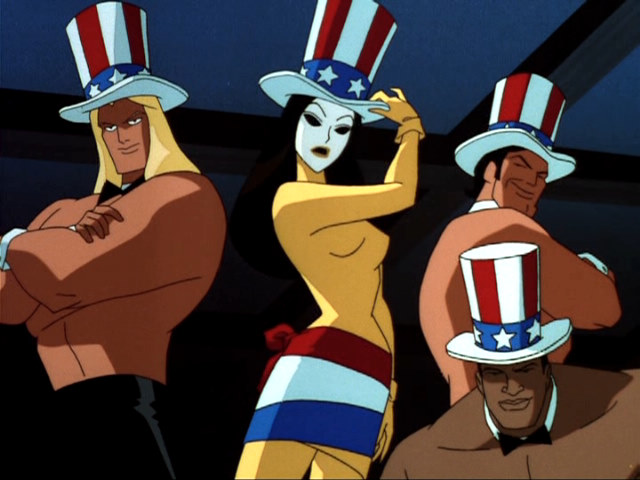
And then there is the episode where the Bat-gang goes up against Calendar Girl, a supermodel who commits colorful, conceptual crimes together with three semi-naked, bowtie-wearing bodybuilders in order to get revenge on the sexist, ageist politics of the fashion and entertainment industries. While engaging with serious real-world issues in typically idiosyncratic terms, Mean Seasons is above all an orgy of visually delightful set pieces, including an amazing 2½-minutes-long, totally gratuitous fight against a giant robotic dinosaur!

Batman Animated The Ultimate Thrill

As far as edge-of-your-seat action goes, the episode to beat is The Ultimate Thrill. Introducing the animated version of the adrenaline-fuelled Roxy Rocket (a character first created in the cool Batman Adventures Annual #1), this episode makes great use of the new, slicker animation style through a series of frenetic chases, mostly through the air. Keen, clear, and exciting: current Hollywood could learn a thing or two from these guys!

Batman Animated Over the Edge

The most out-of-the-box plot can be found in the brutal Over The Edge, which starts with cops shooting at Batman and blowing up the Batcave while Commissioner Gordon yells at a megaphone ‘Bruce Wayne, stop where you are!’ What is more incredible, the episode manages to downright top that scene every couple of minutes, never letting go until a denouement that feels, not like a shameless copout as you might expect, but like a well-earned, powerful payoff.

Batman Animated Joker's Millions

Finally, the most amusing episode of this era is Joker’s Millions, which has a lot of fun with the Joker’s relationship with money. It includes an almost Mel Brooks-like barrage of one-liners and sight gags.

Batman Beyond

Having proven their superior skills with a streamlined (yet relatively conventional) take on the Caped Crusader, the animated team then went on to reinvent the wheel. Batman Beyond moved the continuity decades into the future, where an aged Bruce Wayne tutored a teenage Terry McGinnis into playing the role of the Dark Knight in a cyberpunk Gotham City.

What could have been just another series about a young, impulsive hero with a wise mentor was in fact able to carry the weight of the backstory established in the previous shows, creating a reality that drew on Batman mythology yet also felt fresh and daring. The new status quo brought forth interesting identity questions about what really defined Batman (given a neat visual depiction in the episode Lost Soul, where Terry had to fight the Batsuit itself). The overall look seemed straight out of Akira and the soundtrack was now made up of techno music and industrial rock. The plots revolved around teen issues and sci-fi themes – if BTAS had often been about rogues with sympathetic motivations taken to violent extremes, Batman Beyond’s villains usually reflected technology’s destructive impact on their body and eventually their mind.

For all these radical departures, there were still recognizable elements. April Moon was a rare, film noir-inspired episode. Sneak Peek showed a villain’s tragic rise and fall in the tale of a ruthless techno-paparazzo. Shriek, which was full of memorable moments, introduced a rogue with a creative sound-based gimmick (one that worked in ways it never could have on a comic). Black Out provided tremendous fight scenes with the malleable assassin Inque (and so did the sequel, Disappearing Inque). Eyewitness was the show’s take on Over the Edge, as Commissioner Barbara Gordon had the police hunt down Batman after he killed Mad Stan, a terrorist bomber who hilariously spoke only through rants made up of enraged libertarian clichés. The Eggbaby was the obligatory episode played for laughs – successfully so – with Terry having to take care of an electronic baby while battling a gang led by Ma Mayhem (‘A tabloid gave her that name. It was the golden age of alliteration.’). And if the first seasons were still quite hit-and-miss, by the third season almost every episode topped the previous one in terms of utter coolness.

Batman Beyond April Moon Batman Beyond Sneak Peak Batman Beyond Shriek

Batman Beyond Black Out Batman Beyond Over the Edge Batman Beyond Eggbaby

One tale set in the Batman Beyond universe managed to combine all elements. The direct-to-video film Return of the Joker included a cleverly constructed whodunit, the Joker at his sickest, an over-the-top climax, hardcore action, and an unforgettable, subversive twist on the Batman family, as well as some pitch-black comic relief. Yet be warned: the film – especially in its uncut version – is dark enough to make Christian Bale sound like Adam West.

At the end of the day, whether you’re a long time comics reader or just taking your first steps in Gotham City, the Bruce Timm-produced animated shows are a great place to get your bat-fix, if nothing else because they were created to be accessible to everyone – from kids to parents, from diehard fans to casual viewers. You don’t need to have read a thousand stories before jumping in and there are no convoluted crossovers to trick you into buying scattered issues just to figure out what the hell is going on… That said, if you really want to know how the whole animated Batman saga wraps up, you’re still going to have to track down the second season finale of the Justice League Unlimited TV series!

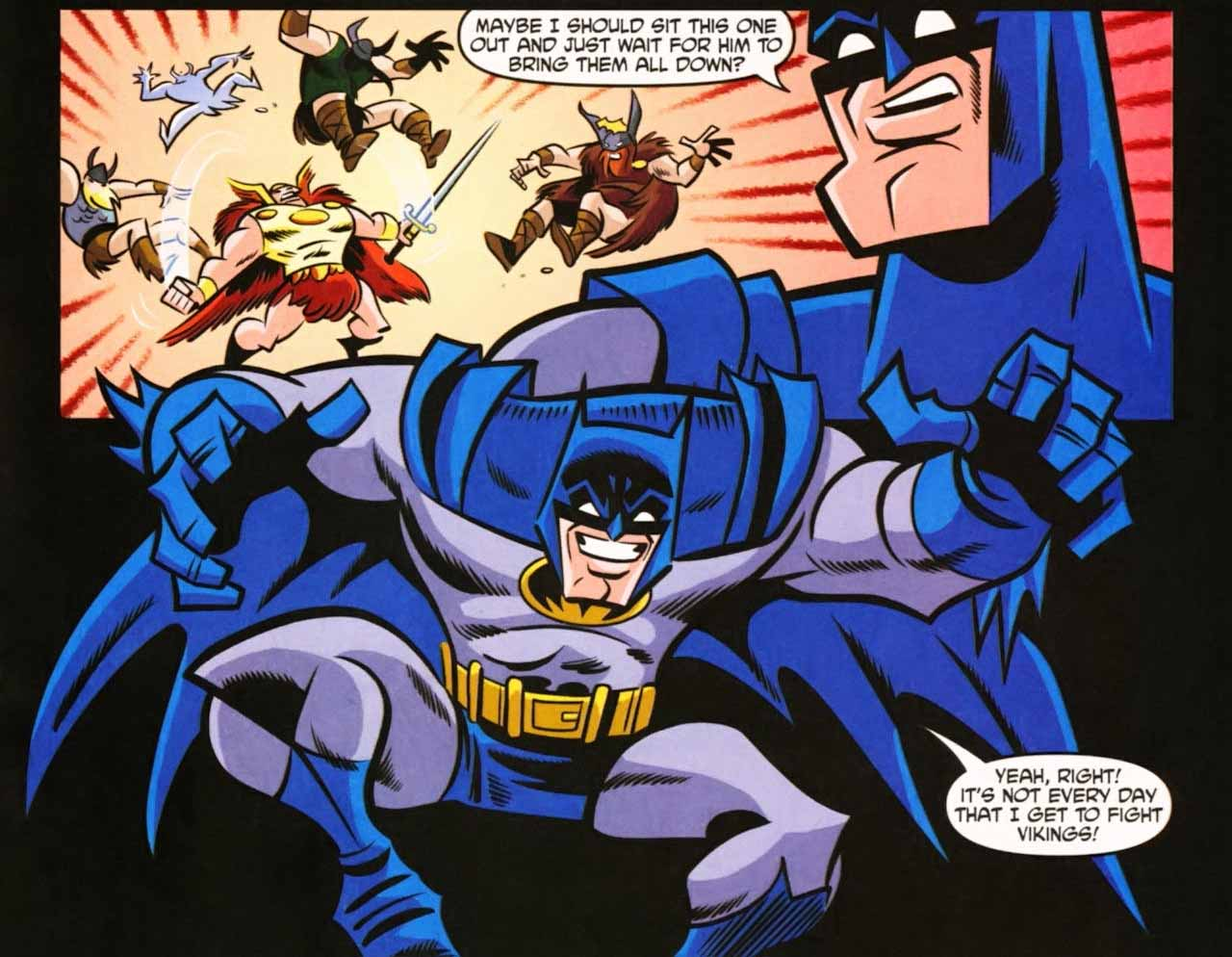
But hey, what if you’re a whole different kind of Batman fan? What if you prefer light-hearted escapades, anything-goes superhero fantasy, and larger-than-life adventures in which the Caped Crusader interacts with the rest of the DC cast? Well, in that case, screw the BTAS – just go watch any episode of the wonderfully witty Batman: The Brave and the Bold cartoon:

Batman Brave & Bold cartoon

NEXT: Batman kicks Nazis in the face.

Posted in WEBS OF FICTION | Tagged , , , | Leave a comment

Spotlight on Batman: The Animated Series – part 1

A couple of months ago I recommended films for fans of Batman comics, so I figured this time I’d suggest some TV shows. Once again, I tried to think of different types of connections, including shows with resourceful, anti-gun action heroes (McGyver), super-detectives with a dark, eccentric supporting cast (The Pretender), mind-bogglingly intricate traps (Mission: Impossible), atmospheric horror and science fiction (The Twilight Zone, The X-Files, Black Mirror), bizarre rogues that are both frightening and grotesquely amusing (Twin Peaks, The League of Gentlemen), self-contained suspenseful and psychological tales (Alfred Hitchcock Presents), and even obvious parodies (Darkwing Duck). There’s also some show called Gotham that everyone keeps telling me about…

But at the end of the day, there is no getting around it: I just can’t ignore Batman: The Animated Series (BTAS).

Batman: The Animated SeriesCo-created by acclaimed producer (and amazing artist) Bruce Timm, BTAS distilled the essence of the best elements of the Batman universe into their purest form. The Dark Knight was a cool, well-adjusted hero, sometimes working together with a likeable, teenage Robin (Dick Grayson). Most villains had a tragic origin story and sooner or later tried – and mostly failed – to reform, thus appearing as nuanced characters that usually mirrored one or more aspects of Batman himself. BTAS also featured what is arguably the best rendition of Gotham City, setting it in a time that never was, the future as imagined in the 1940s: art deco buildings, zeppelins in the sky, advanced computers alongside TV sets that still played black & white, ’90s motorbikes and Depression-era newspaper boys sharing the same streets…

Along with the stylish animation, every technical detail was just right, from the sound to the casting to the freaking credits’ font! The writing started off as effective and – the occasional misstep aside – soon moved on to excellent: BTAS delivered thrilling bat-and-mouse games between the Caped Crusader and the rogues while also exploring themes such as obsession, empathy, recidivism, and trust. The storytelling approach varied, ranging from straightforward tales like Mad as a Hatter, which elegantly took a simple premise and allowed it to escalate until a twisted conclusion, to more experimental narratives like Dreams in Darkness, which was built around the flashbacks and hallucinations of a Bruce Wayne gradually descending into madness (thanks for the lifelong childhood trauma, guys).

My aim here is not to give a simple list of favorite episodes (aka a list of practically all the episodes written by Paul Dini) nor is it to provide in-depth analysis of BTAS (I could never be as insightful as Steven Padnick or as comprehensive as the folks at World’s Finest, from whom I took the stills below). The purpose of this post is to guide Bat-fans who are still more or less unfamiliar with the show to episodes that may speak directly to their specific tastes…

If you want to see Batman in crime stories:

Batman Animated P.O.V.

In P.O.V., Detective Bullock and police officers Wilkes and Montoya tell their superiors different versions of a sting operation gone wrong. The fun is not just in putting the narrative puzzle together, but in how each tale illuminates its narrator’s character. Bullock persistently lies to cover up his recklessness and to justify his dislike of Batman. Wilkes’ narration betrays his own admiration for the Dark Knight by describing him as a supernatural figure. Montoya gives an honest account of what happened, humbly acknowledging her shortcomings while also diplomatically picking holes in Bullock’s version of events. Leave it to the BTAS to do a Citizen Kane/Rashomon homage on a kids’ show, especially in the pre-Pulp Fiction era when this kind of non-linear storytelling had not yet become as commonplace as it is today.
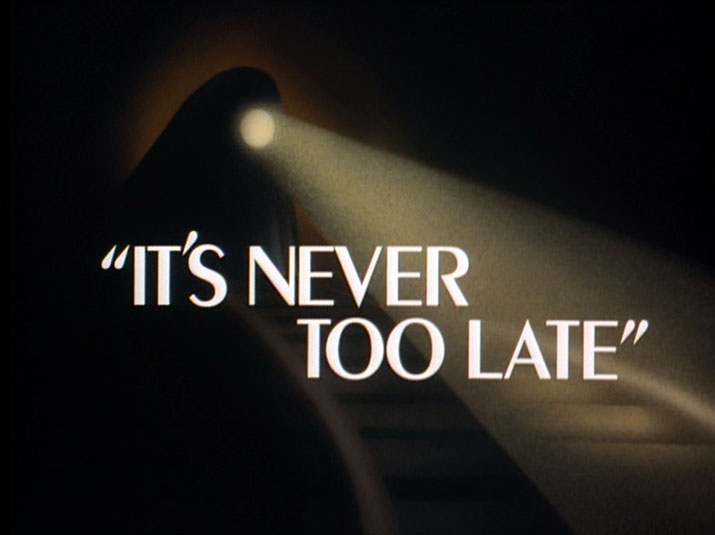
Batman Animated It's Never Too Late

Not only does “It’s Never Too Late” flawlessly mimic the look and feel of 1930s gangster sagas and 1940s film noir, it also borrows from those genres tropes such as estranged brothers, mobsters, priests, a war between crime families, a blown up Italian restaurant, some poverty row-like social drama, plenty of mob slang, and a couple of ingenious flashbacks. What is more, the plot keeps throwing the viewer one twist after another until the final emotional payoff. The only way this thing could get any more legit old school crime drama would be if Humphrey Bogart and John Garfield had come back from the grave to make voice cameos!

Batman Animated Bullet for Bullock

Someone is out to get Bullock, so he enlists Batman for help – what you get is not exactly a buddy cop comedy, but there is still plenty of fun to be had in watching these two characters grudgingly play off of each other. Sure, it may seem too easy to go with a clear-cut adaptation of a comic by Chuck Dixon, whose writing is already as cinematic and as peppered with hardboiled dialogue as they come. That said, even for fans of the original, A Bullet for Bullock is pure delight. Almost 20 years on, it can still hold its own next to the millions of cop shows on television for sheer style and tight plotting. Also, the story’s resolution shows Gotham City at its deranged best.
If you like the psychological elements of the rogues’ gallery:

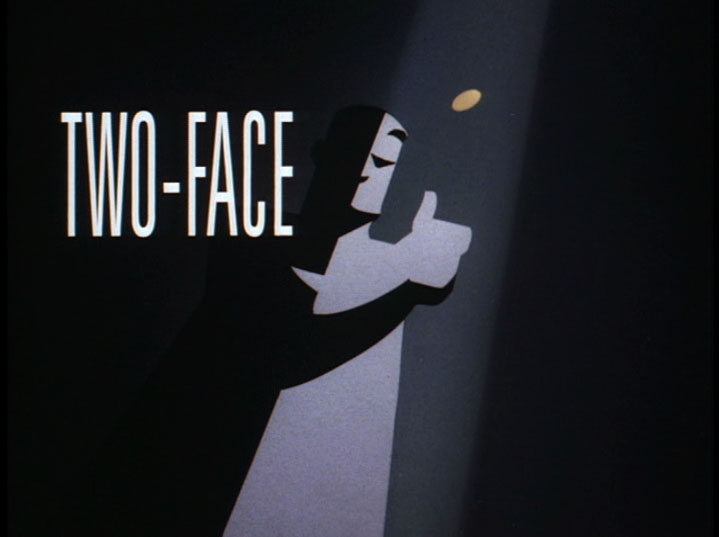
Batman Animated Two-Face

This reimaging of Two-Face’s origin includes a great scene where Harvey Dent undergoes hypnosis in a shadowy room. The rain builds up outside and a flash of lightning lights up half of Dent’s face, briefly foreshadowing the transformation to come as his voice and expression begin to reveal the monster inside him. The atmosphere then grows increasingly tense as Harvey starts trashing up the place and threatening his psychologist at the sound of thunder before finishing on a typically melancholic note. Man, Two-Face is the show at its moodiest.

Batman Animated Read My Lips

Read My Lips brings Scarface to the screen, proving once and for all that he is one of the most disturbing Gotham rogues. A doll warehouse is the suitably eerie setting and a jazzy soundtrack evokes the speakeasies that inspired the gangster’s looks and accent. The direction is full of neat touches, with Batman emerging from shadows, windy blinds, and steam that rises from the street. And crucially, Joe R. Lansdale’s teleplay perfectly captures how downright sinister Scarface can be, right until the final, cruel shot. Talk about frayed ends of sanity, folks!

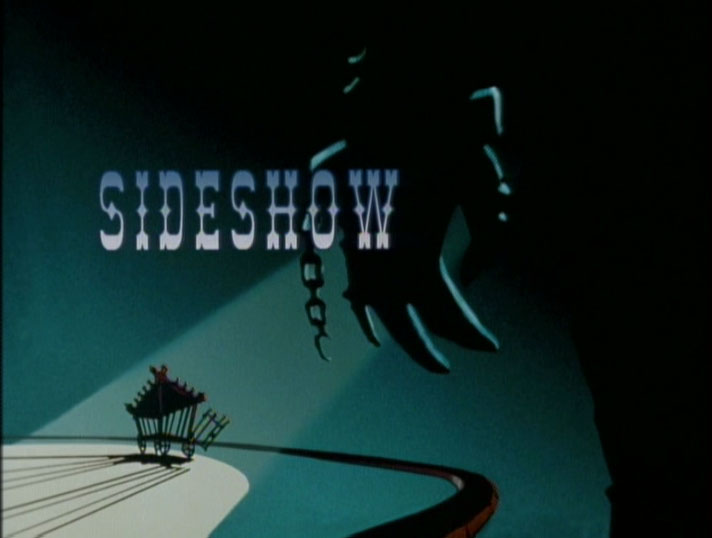
Batman Animated Sideshow

Although the BTAS’ take on Killer Croc isn’t always the most sophisticated (or the quirkiest), Sideshow really packs a punch. Batman chases his reptilian foe into the wilderness and we get a closer glimpse of Croc’s soul when he finds shelter among a band of secluded circus freaks. Shoving Croc into Denny O’Neil’s and Neal Adams’ deservedly classic story ‘A Vow from the Grave’ while throwing out the original’s murder mystery plot, this episode is full of mesmerizing sequences of the two protagonists facing each other away from the Gotham turf, out of their element, in the middle of nowhere, exposing who they are at their core.

If you enjoy ingenious set pieces, including creative capers and escapes:

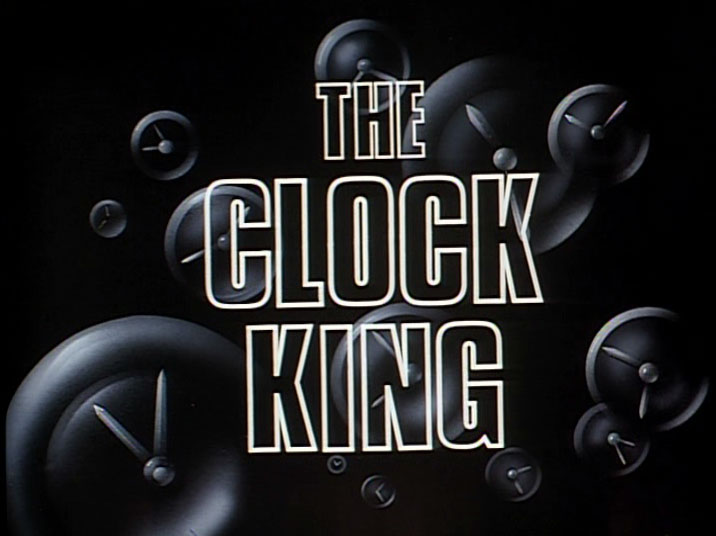
Batman Animated Clock King

Appropriately for a story about a villain obsessed with time, The Clock King’s plot has the precision of a wristwatch mechanism as Batman has to match wits with someone as good at planning as he is. Also, and at the risk of sounding too alliterative, there is a beautiful balance of pathos and puns – and it all culminates with a formidable face-off at a giant clock that is at once suspenseful and symbolic.

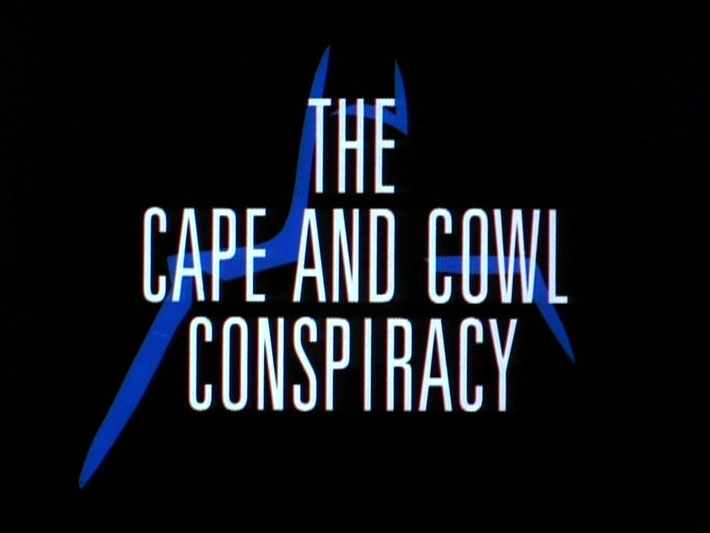
Batman Animated Cape and Cowl Conspiracy

Elliot S! Maggin reworked his 12-page story from Detective Comics #450 into this episode where Batman has to face one sadistic deathtrap after another, building up to a keen twist ending. The Cape and Cowl Conspiracy brings a great comic to life on the screen, and it even manages to provide an alternative solution to the wax museum challenge that is just as clever as the original one was.
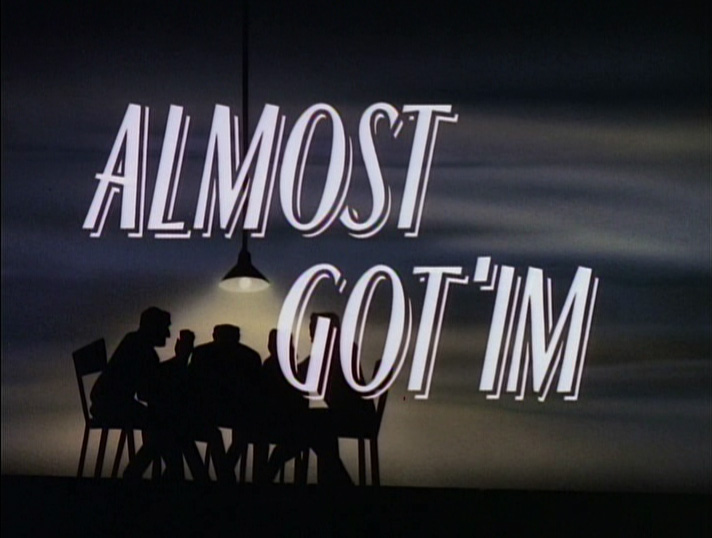
Batman Animated Almost Got'Im

The Joker, Two-Face, Poison Ivy, Killer Croc, and the Penguin play poker while exchanging stories about how they nearly killed Batman. Almost Got’Im doesn’t get a single beat wrong: not only does it have the wittiest dialogue of any episode in the show, its direction is masterful – from the opening shots of each player’s hands to the timing of Catwoman’s perfect closing line.

If you’re looking for kick-ass action:

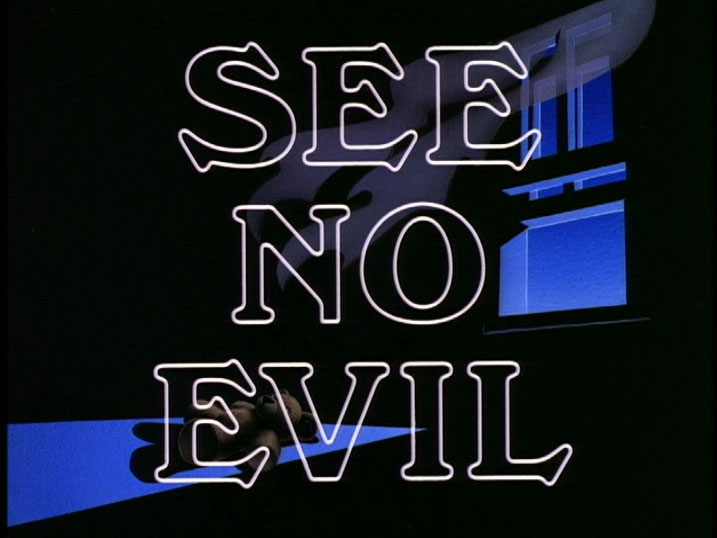
Batman Animated See No Evil

Perhaps ironically, Batman fighting an invisible man makes for some seriously awesome visuals. The icing on the cake is that See No Evil is also emotionally complex, since the villain, for once, is not so much an outlandish rogue with a megalomaniac plan but an average crook with common motivations who ultimately engages in a sadly recognizable crime. The scene with Batman desperately clinging to the top of a speeding invisible car cracks me up every time, especially the reaction of a nearby bum: ‘I didn’t know he could fly, too.’

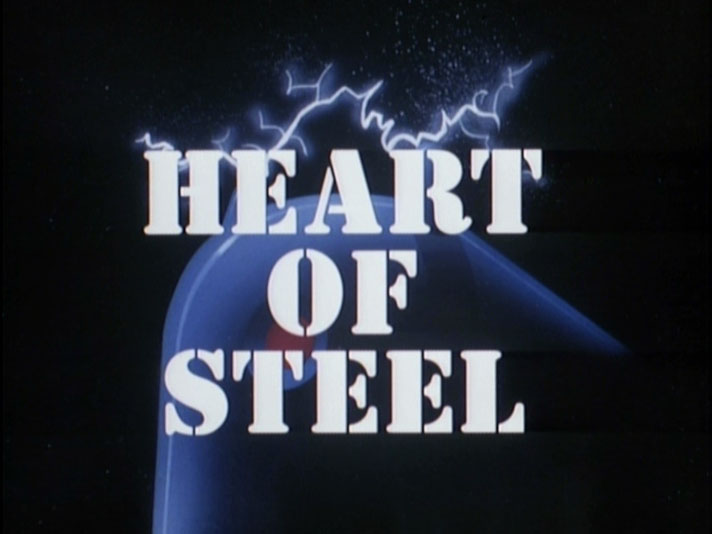
Batman Animated Heart of Steel

Despite resorting to one cliché too many, you have to admire the Heart of Steel two-parter for ticking so many boxes: there are high stakes, a 1950s paranoia vibe, weird-looking sci-fi gadgets, out of control A.I., creepy clones, and a handful of violent proto-deaths, not to mention a pre-Batgirl Barbara Gordon… and the sequel, His Silicone Soul, is even more intense!

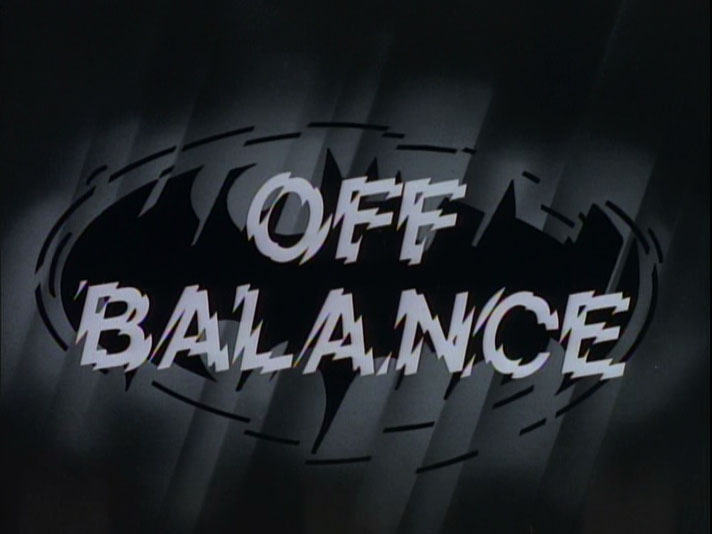
Batman Animated Off Balance

Off Balance sees Batman go off against Count Vertigo, which ushers in some freaky, distorted sequences. The episode gets away with a few cheesy lines and even the odd stodgy animation bit, not least because it gets the James Bondian feel it is going for just right, especially with the introduction of the mysterious, foreign-sounding Talia al Ghul. More importantly, in the best Batman tradition, it includes some truly neat moments of heroes overcoming physical challenges by figuring out a logical loophole in their trappings.

If you like your Batman stories with a twist:

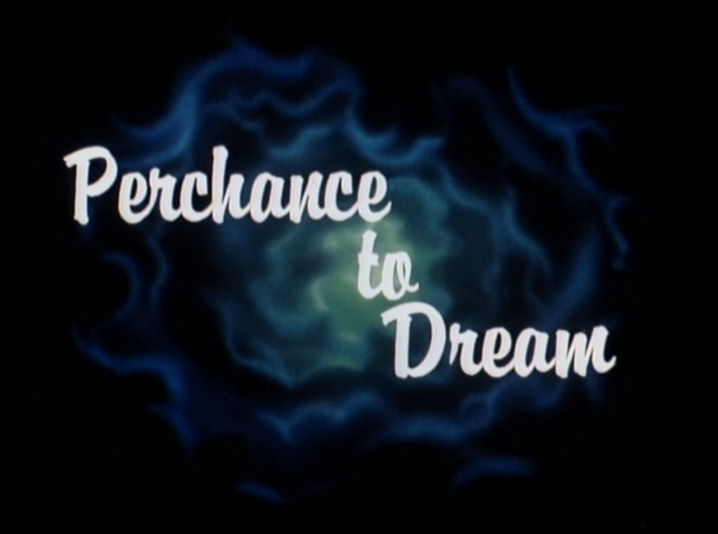
Batman Animated Perchance to Dream

Bruce Wayne wakes up to find out that all is right with the world after all and his life as Batman was but a dream. Perchance to Dream is a great example of taking what could have been just a plot gimmick and turning it into a meaningful statement about the Dark Knight, thematically rich and topped with one of the show’s most heartbreaking denouements.

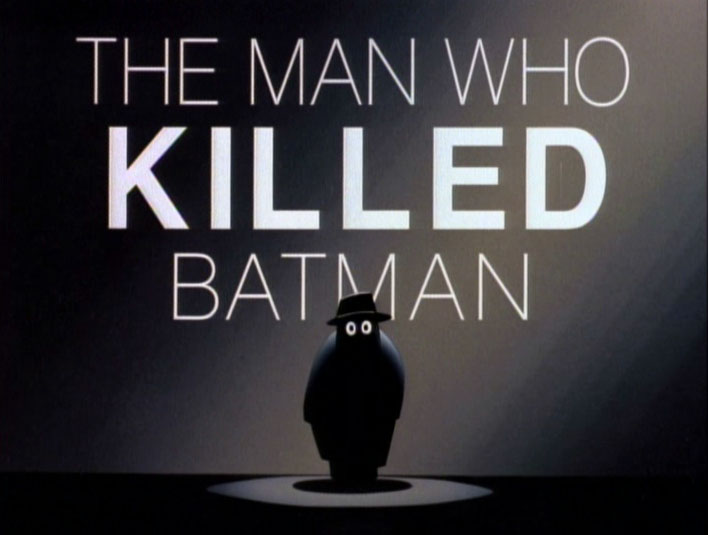
Batman Animated The Man Who Killed Batman

The notion of Batman accidently getting killed by a common thief would be an intriguing premise in itself, but the fact that said thief is basically 1970s Woody Allen really nails it. What makes The Man Who Killed Batman so great is that we get to keep our batcake and eat it too: despite the title, any viewer knows that sooner or later the Caped Crusader will turn out to be alive and ready to continue kicking butt for at least the remaining episodes of the season. What the story lacks in suspense, though, it pays back in entertainment value as we are treated to the reactions of the criminal underworld to Batman’s odd demise. The Joker’s hilarious funeral service is a high point, with the Clown Prince of Crime showing sadness at losing his straight man, anger at having been beaten to the punch, and, finally – because, no matter what even beloved writers say, the Joker is nothing if not adaptable – just happily moving on.

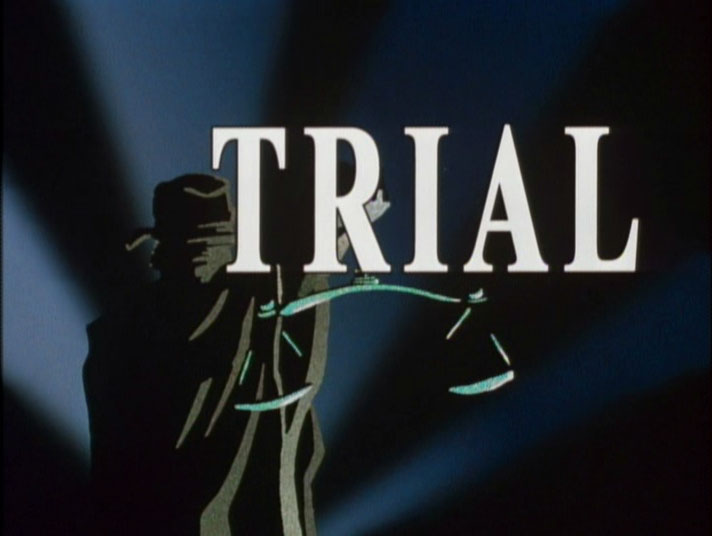
Batman Animated Trial

The Caped Crusader is put on trial by Arkham Asylum’s inmates as the new D.A. grapples with Gotham City’s unconventional guardian and dysfunctional criminals. Trial gets some laughs out of the rogues’ wacky role-playing, but it also adds to the show’s overarching interrogation of Batman mythology. Watch out for some nice high-contrast animation in the sequence where the lights go out.

And if you just want to have some good old fashioned fun in Gotham City:

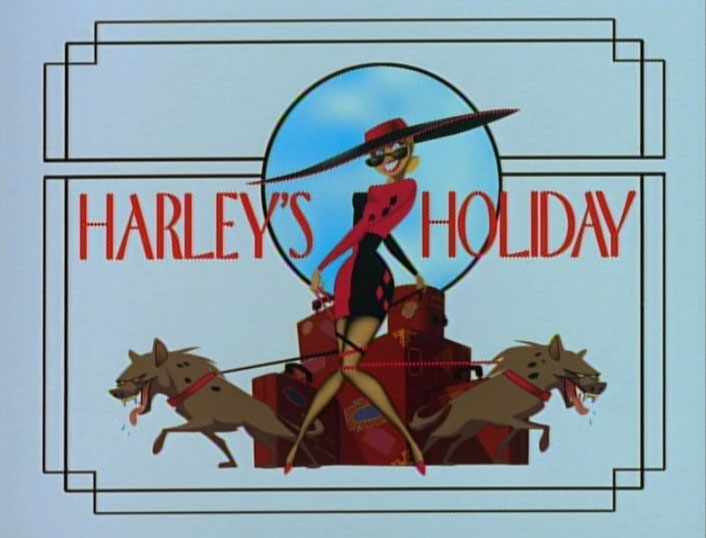
Batman Animated Harley's Holiday

When Harley Quinn is released from Arkham Asylum, she gets involved in a screwball crescendo worthy of Howard Hawks, to the point that she finds herself being simultaneously chased by the Dynamic Duo, an angry Bullock, and a fish truck driven by a mobster in boxer shorts. Oh, and a freaking tank! Harley’s Holiday may not be the deepest episode, even if a dark subtext about Harley Quinn’s psychology is looming under every slapstick gag… This is not even the best Harley-centric episode – that would be Harlequinade… But this sure is the show at its most hilarious and damn it if the final scene isn’t at once funny, tragic, and heartwarming.
NEXT: More cartoons.
Posted in WEBS OF FICTION | Tagged , , , , , , , , , | Leave a comment

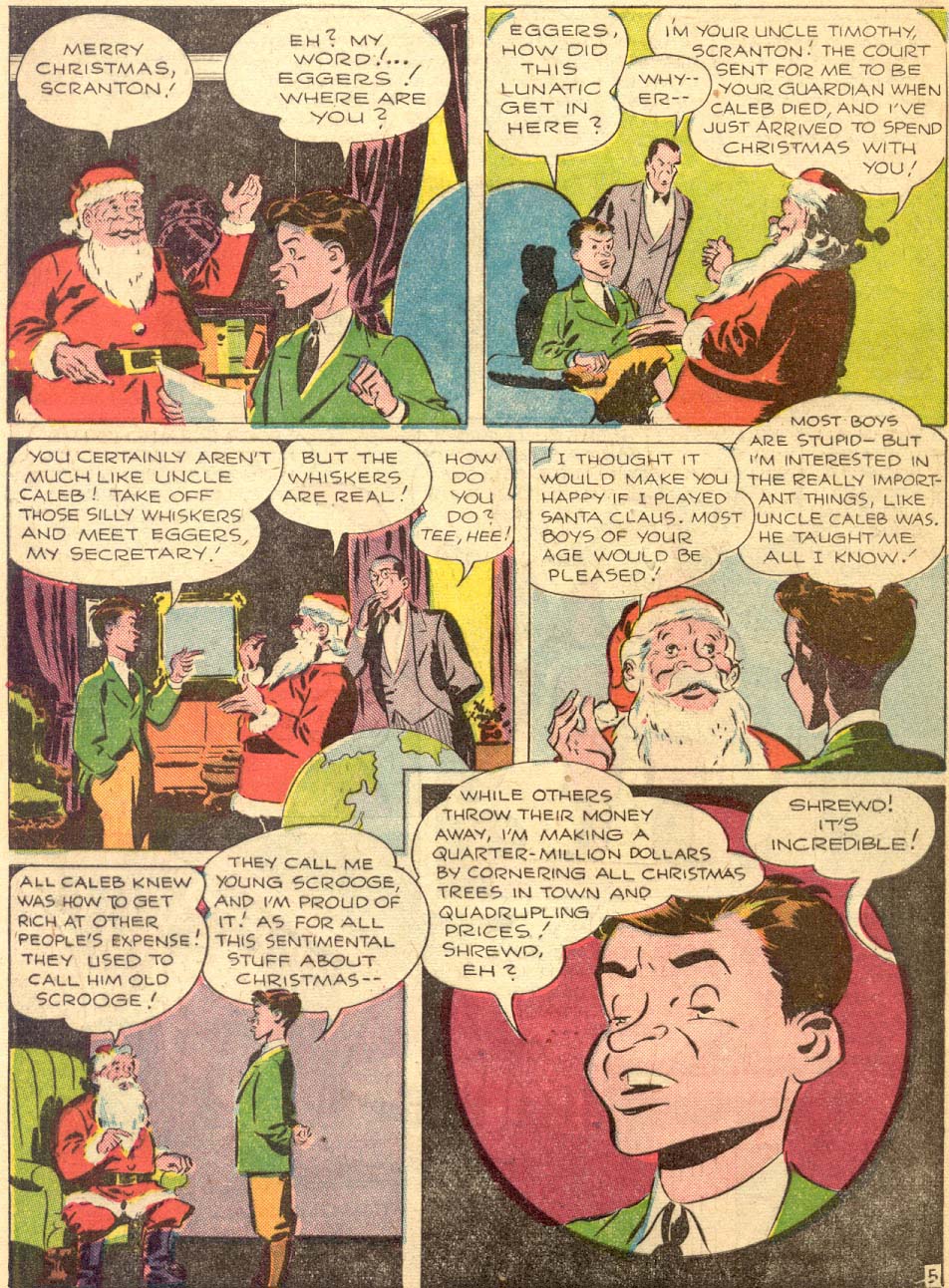
Have a Gotham 2015

batman adventures holiday specialThe Batman Adventures Holiday Special
Posted in GOTHAM INTERLUDES | Tagged , | Leave a comment

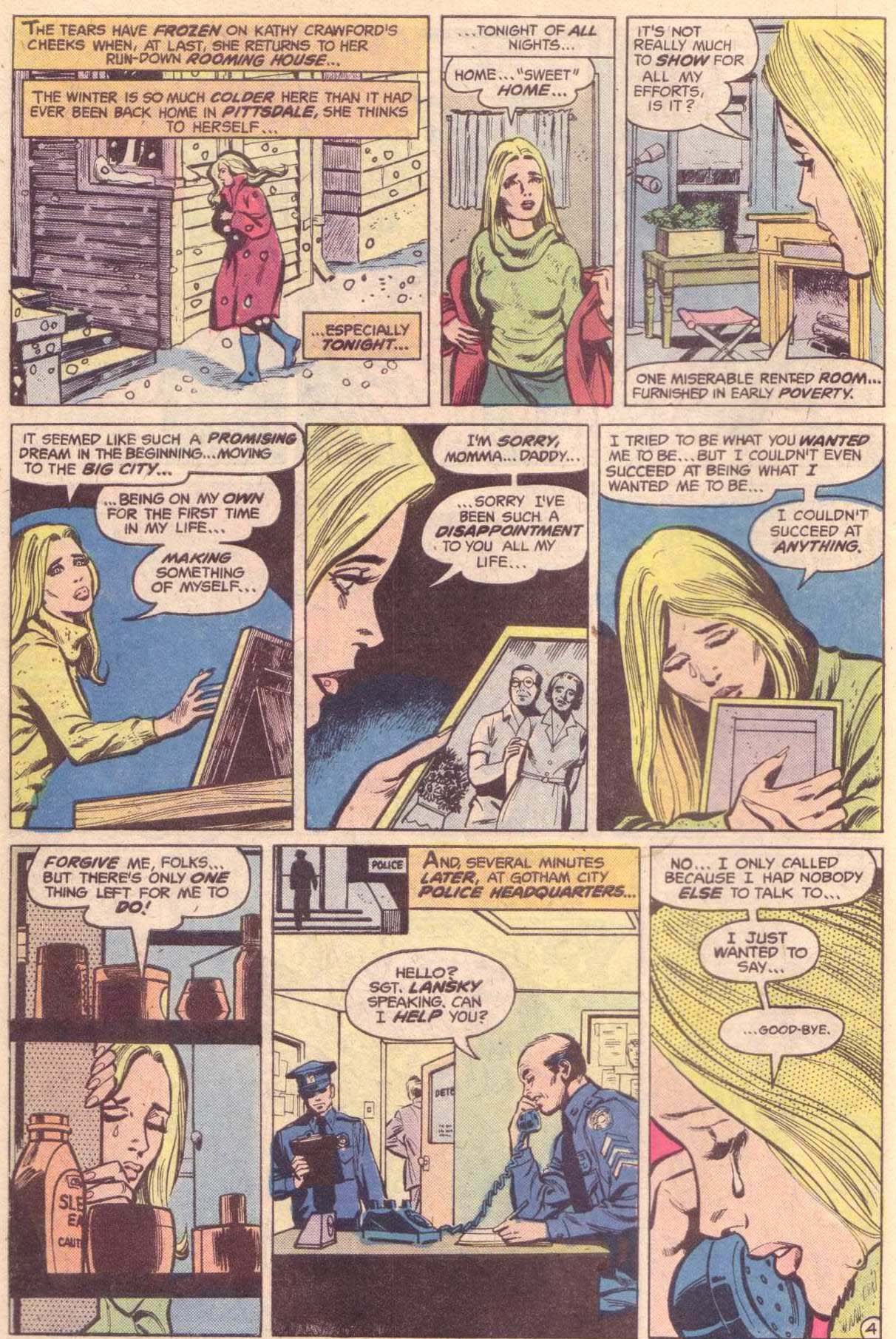
Taking a break… (December 2014)

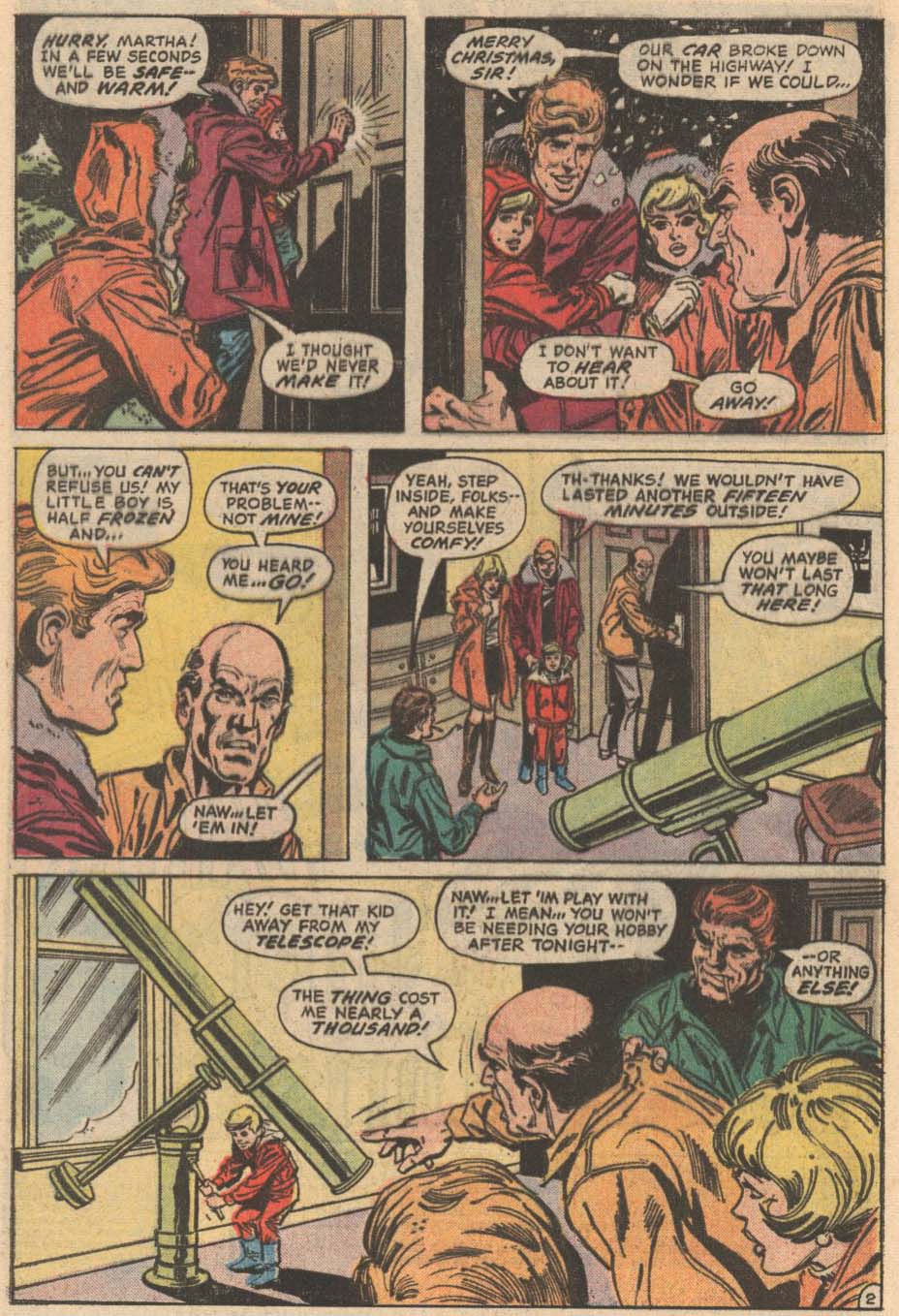
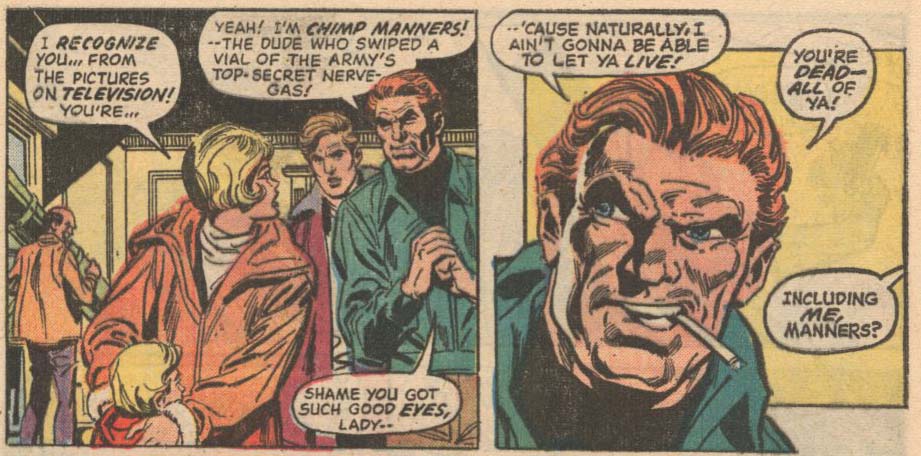
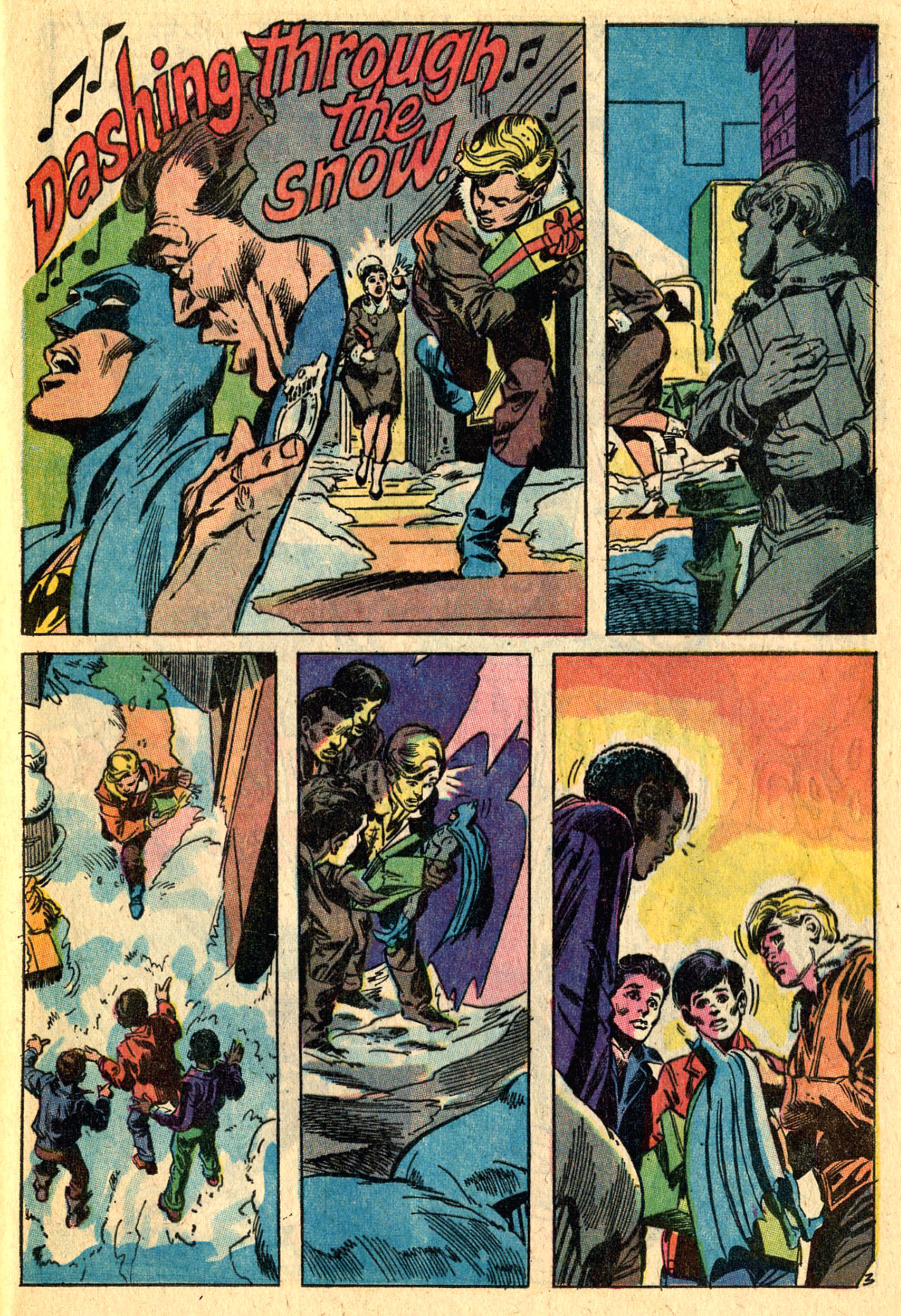
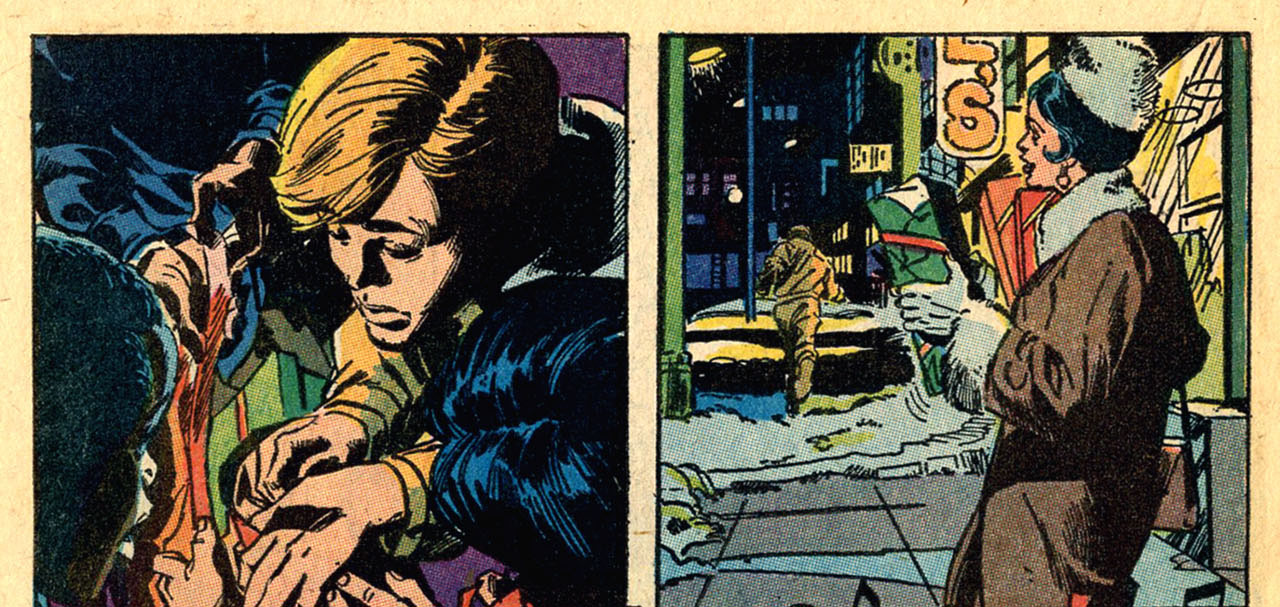
detective comics 598Detective Comics #598
Posted in GOTHAM INTERLUDES | Tagged | Leave a comment

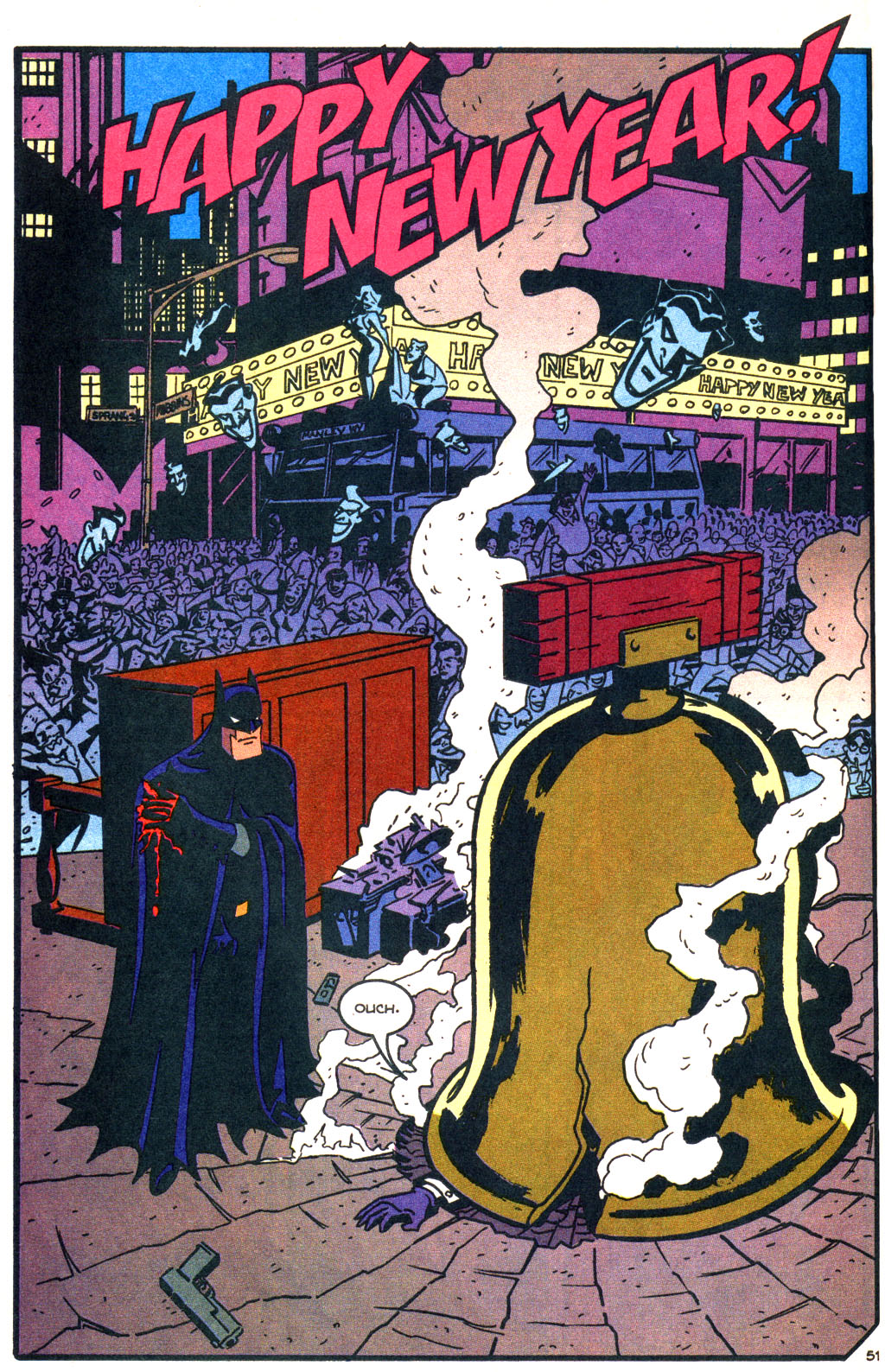
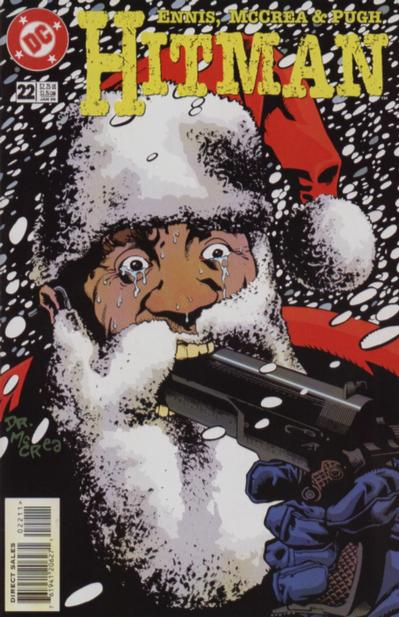
Gotham X-mas spirit

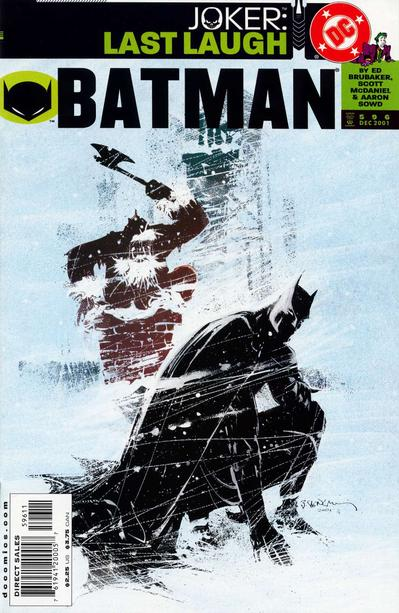
Hitman 22     Batman 596

Ah, the holidays. Say want you want about Gotham’s unstoppable descent into an urban playground of psychopaths and vigilantes, not even Fox News can accuse the city of not having a Christmas spirit!

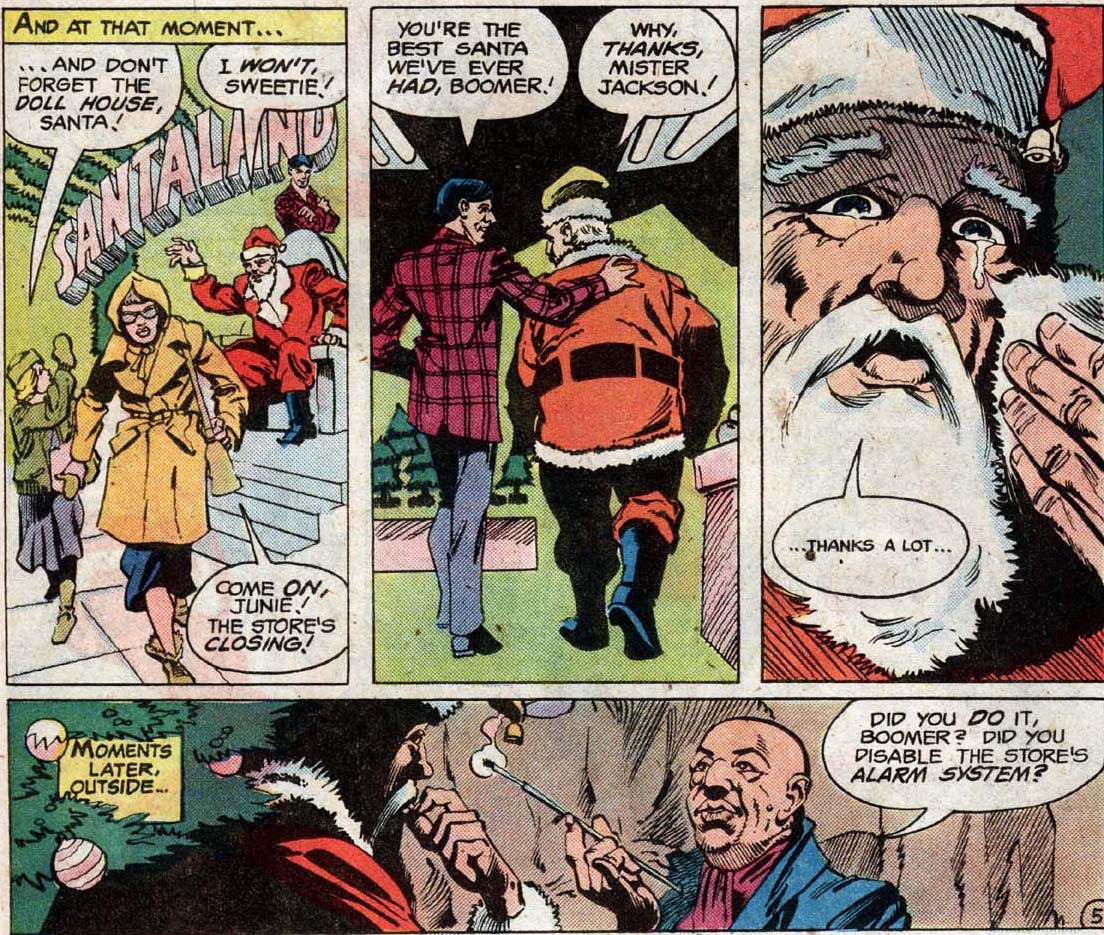
After all, this is the time of year when Santa brings joy to those around him:

dc holiday special 1980Super-Star Holiday Special 1980

All over Gotham, everyone is cheerful and having a nice time:

Batman 309Batman #309

Helpless orphans get their wishes:

Batman 027Batman #27

Even in the suburbs, people are kind to strangers:

Batman 247Batman 247Batman #247

And what about Batman? Well, for once he actually gets to fight crime without lifting a finger:

BATMAN 219 BATMAN 219 Batman #219

NEXT: Batman watches TV.

Posted in GOTHAM CITIZENS | Tagged , | Leave a comment

10 Killer Croc designs

Of all the members of Batman’s rogues gallery, Killer Croc has got to be one of the most inconsistent. He has been written as a street smart thug with a skin disease, as a dumb superhuman monster, and even as a freaky version of Clyde Barrow dating a woman trapped in the body of a child (you know, the kind of thing that happens when you let Steve Gerber write for a kids show). Amusingly enough, Killer Croc’s appearance has also been all over the place. Just check out these 10 different spins on the concept of a guy who looks like a crocodile…

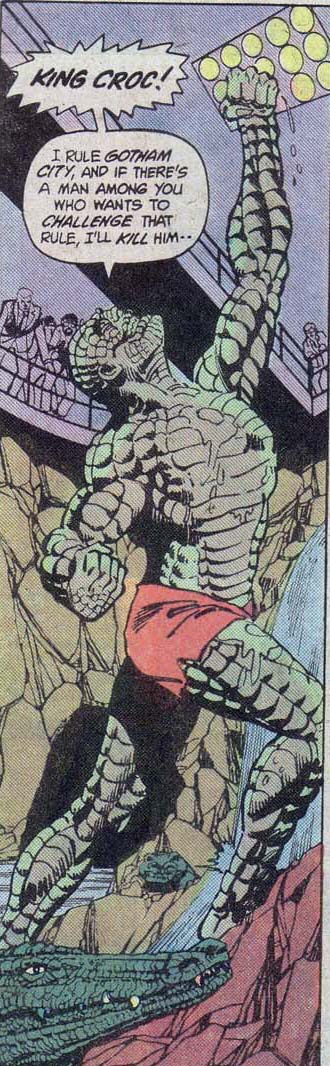
The underworld crime boss, by Dan Jurgens:

batman 359Batman #359

This was the first time we saw Killer Croc’s semi-naked body. Also, as far as I know, this is the only reference to his monarchist tendencies.

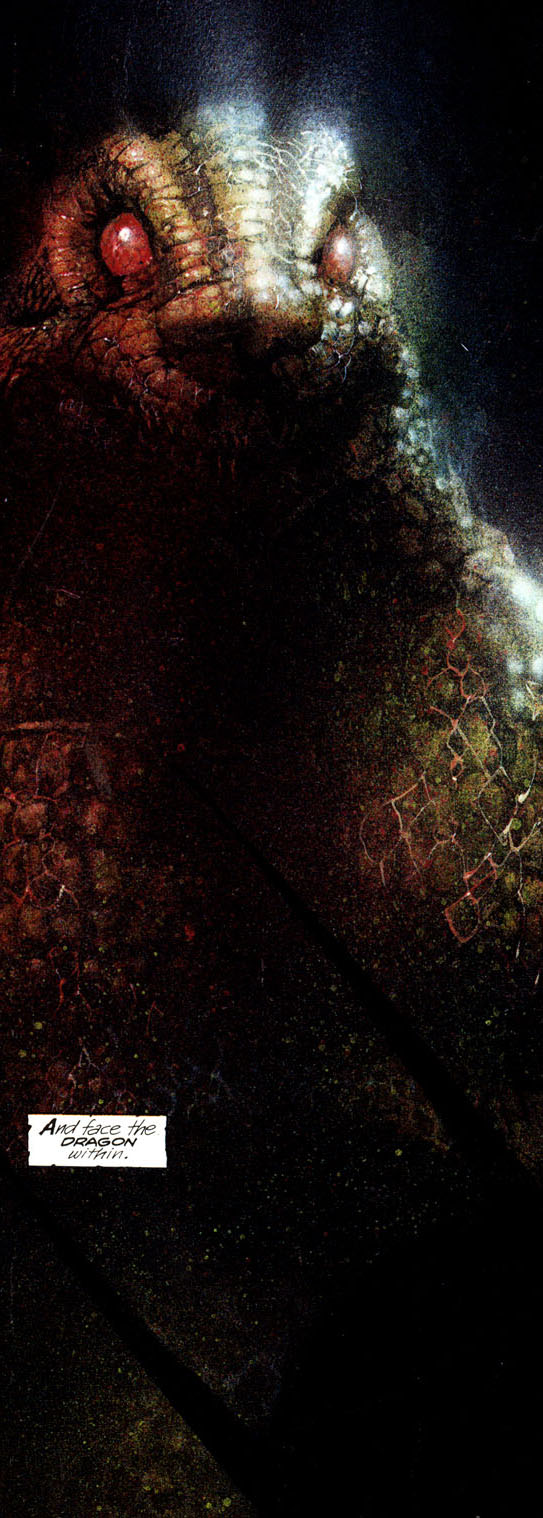
The dragon-like apparition, by Dave McKean:

Arkham AsylumArkham Asylum: A Serious House on Serious Earth

According to the annotated script, Killer Croc is meant to represent unreason, mindless strength, the brute appetites of nature and man, the Old Dragon of Revelations, the marlin in Old Man and the Sea, the Serpent, Jesus Christ, and Moby Dick, as well as ‘our evolutionary past rising up to threaten us with destruction,’ because Grant Morrison was not afraid of sounding too pretentious. (I wonder if Neil Gaiman also served as a visual model in this scene, like he did earlier in the book…)

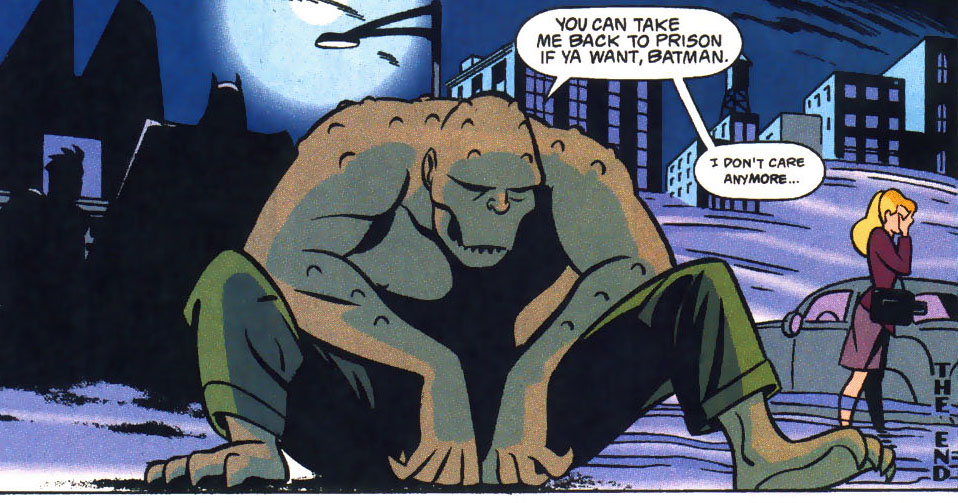
The heartbroken robber, by Bo Hampton:

Batman & Robin Adventures 23 Batman & Robin Adventures #23

We’ve all been there, Croc…

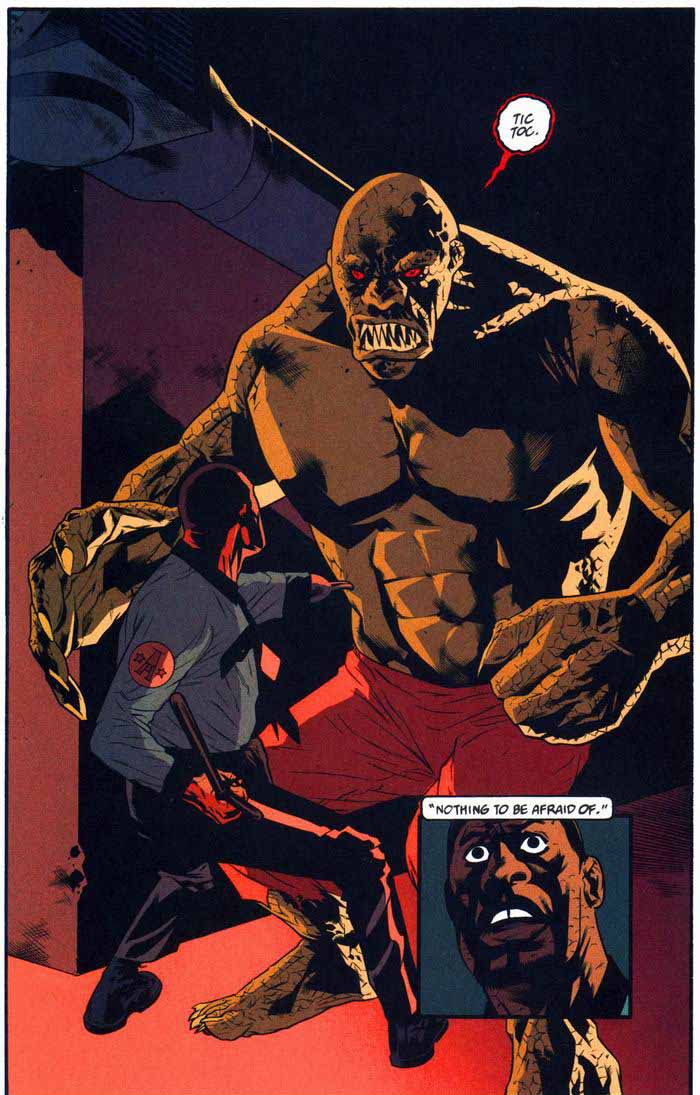
The eccentric brute, by John McCrea:

Hitman 03Hitman #3

Hey, at least it’s better than Friends!

The terror of Arkham Asylum, by Ryan Sook:

Arkham Asylum - Living Hell #4 Arkham Asylum: Living Hell #4

Like in Peter Pan, geddit?

The mutated mercenary, by Jim Lee:

Batman 610Batman #610

Is it just me, or with that trenchcoat Killer Croc looks like a total pervert at large?

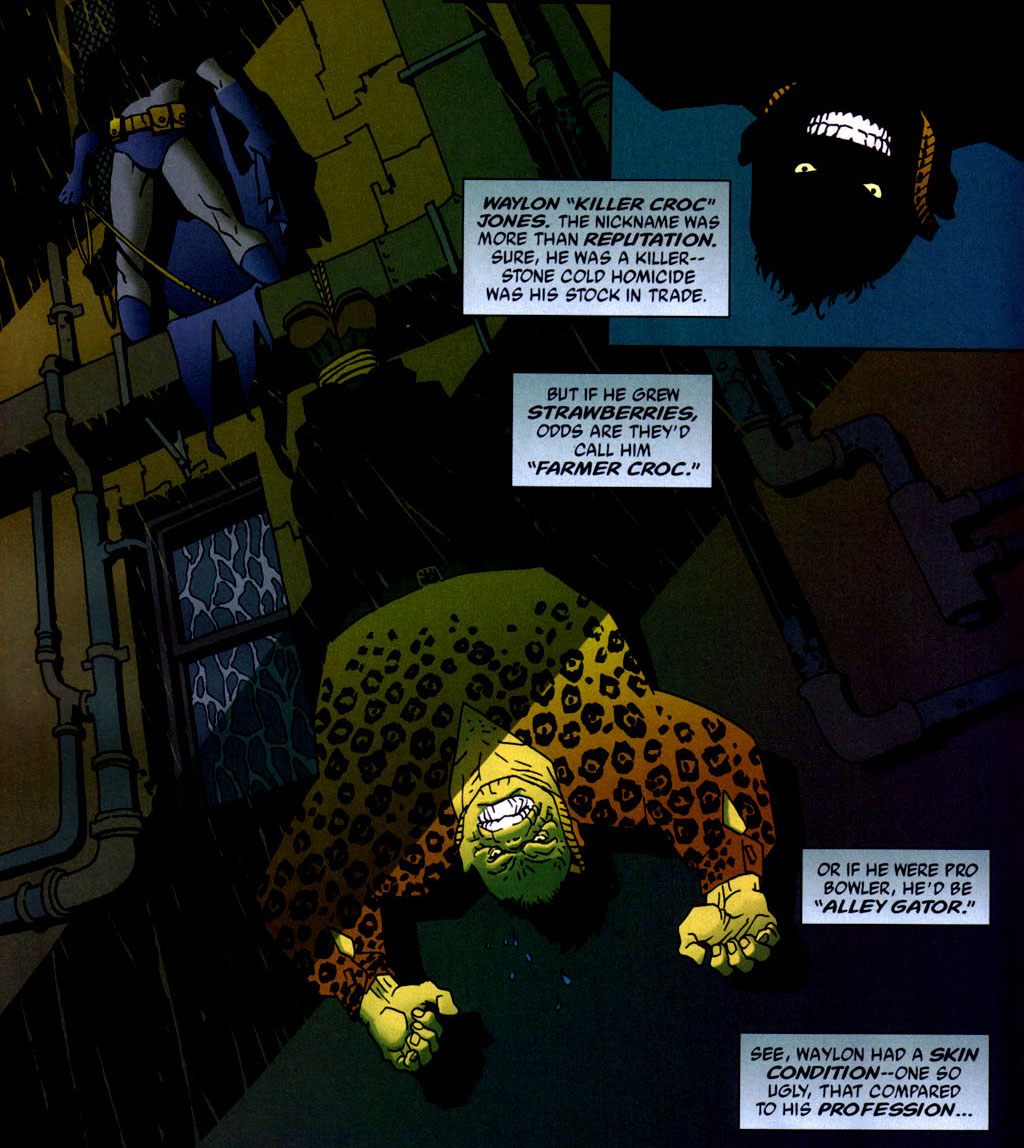
The cannibalistic pimp, by Eduardo Risso:

Batman 620Batman #620

Cheetah pattern! Boy, it’s a shame Killer Croc doesn’t wear shirts more often.

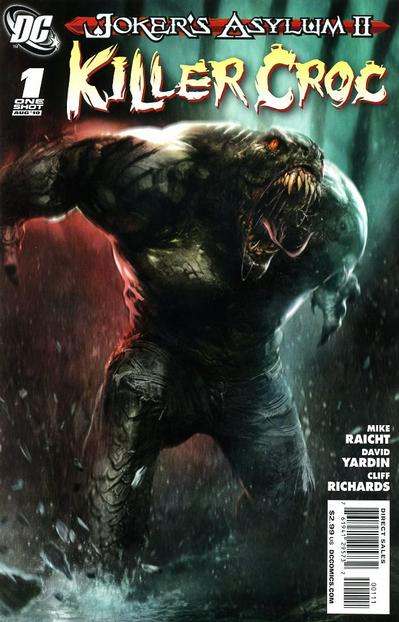
The raging dinosaur/alien hybrid, by Francesco Mattina:

Joker's Asylum - Killer CrocJoker’s Asylum: Killer Croc

Wait until Ellen Ripley gets a load of this… Interestingly, though, in the comic inside Croc is more of the strong, silent type.

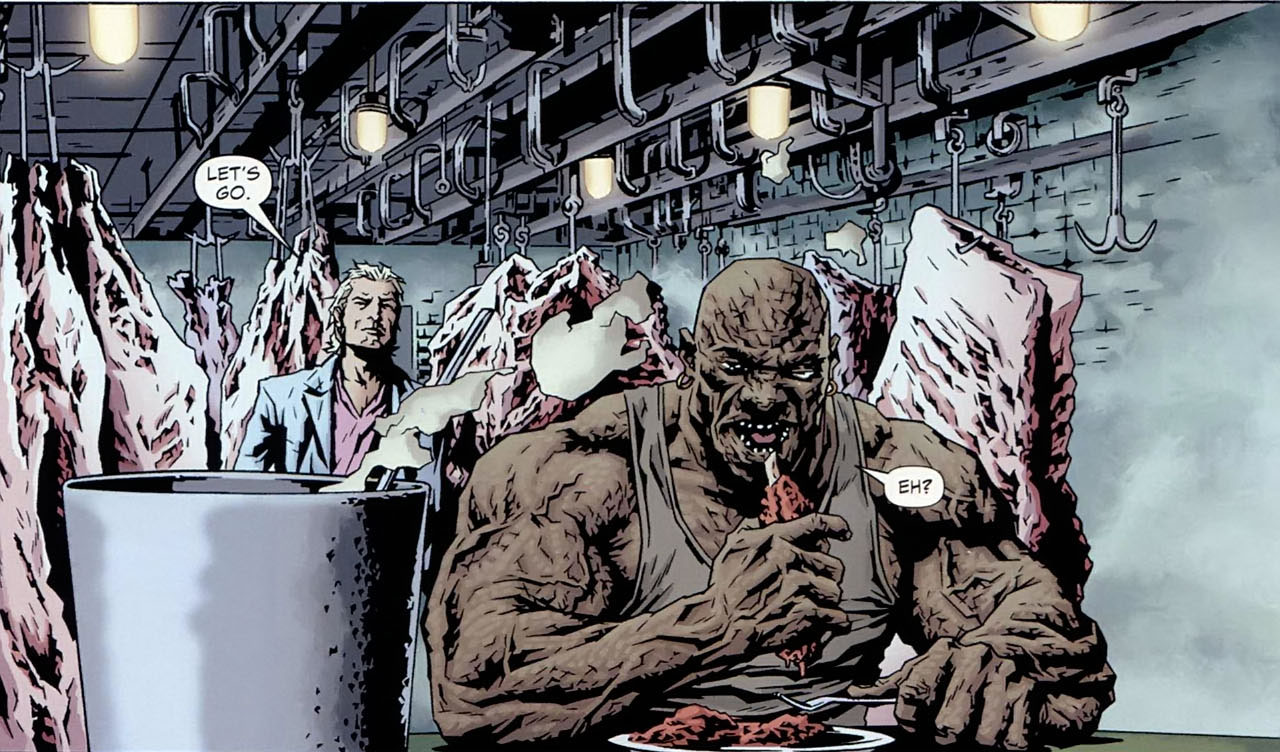
The ethnic henchman, by Lee Bermejo:

JokerJoker

This one is just wrong on so many levels.

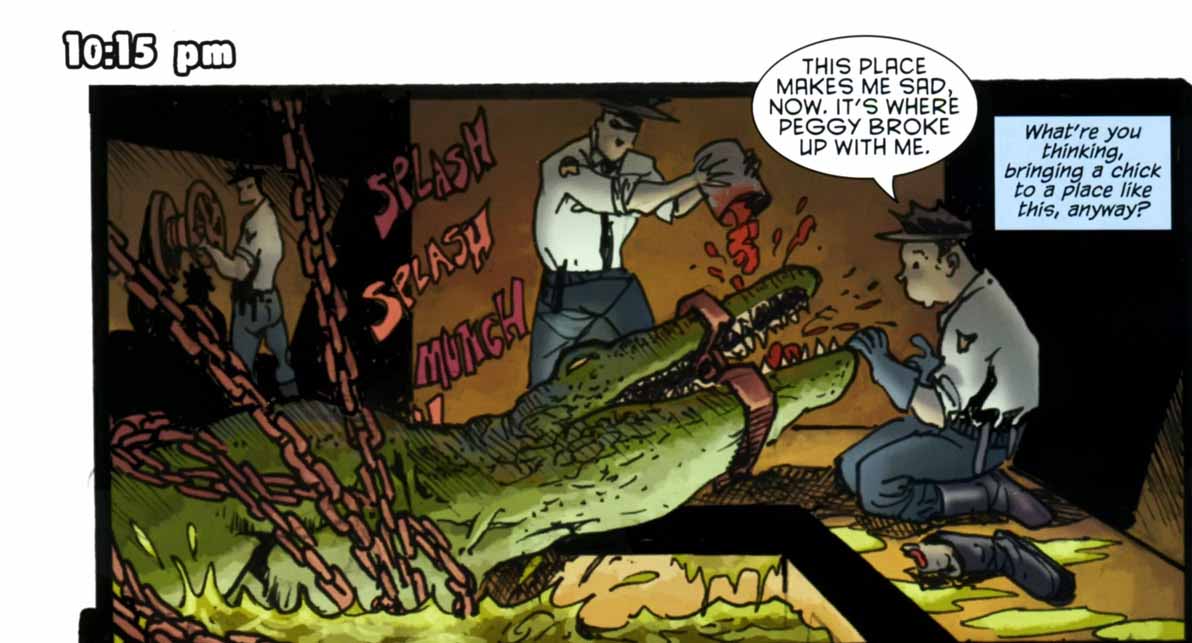
The reptilian cock blocker, by Sam Kieth:

Arkham Asylum MadnessArkham Asylum: Madness

Perfect spot for a date, if you ask me.


NEXT: Batman sings.

Posted in ART OF BATMAN COMICS | Tagged , , , , , , , , , , , , , , , | Leave a comment