Non-Batman crime comics – part 1

As much as I love the outlandish side of Batman comics, with characters like Pee-Wee, the Talking Penguin, I’m actually a huge fan of Dark Knight stories that deploy tropes such as hardboiled dialogue, elaborate capers, twist-filled mysteries, and single-minded vigilantes moving through a seedy underworld…

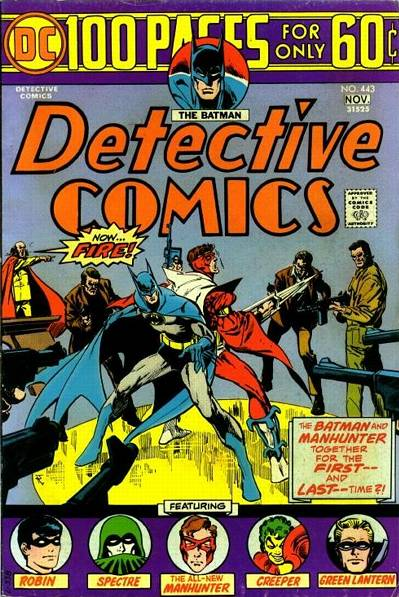
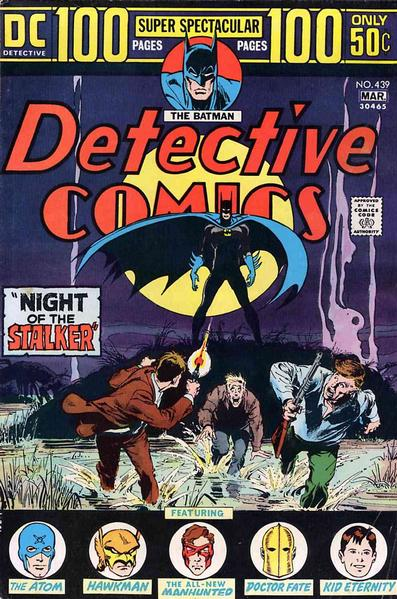
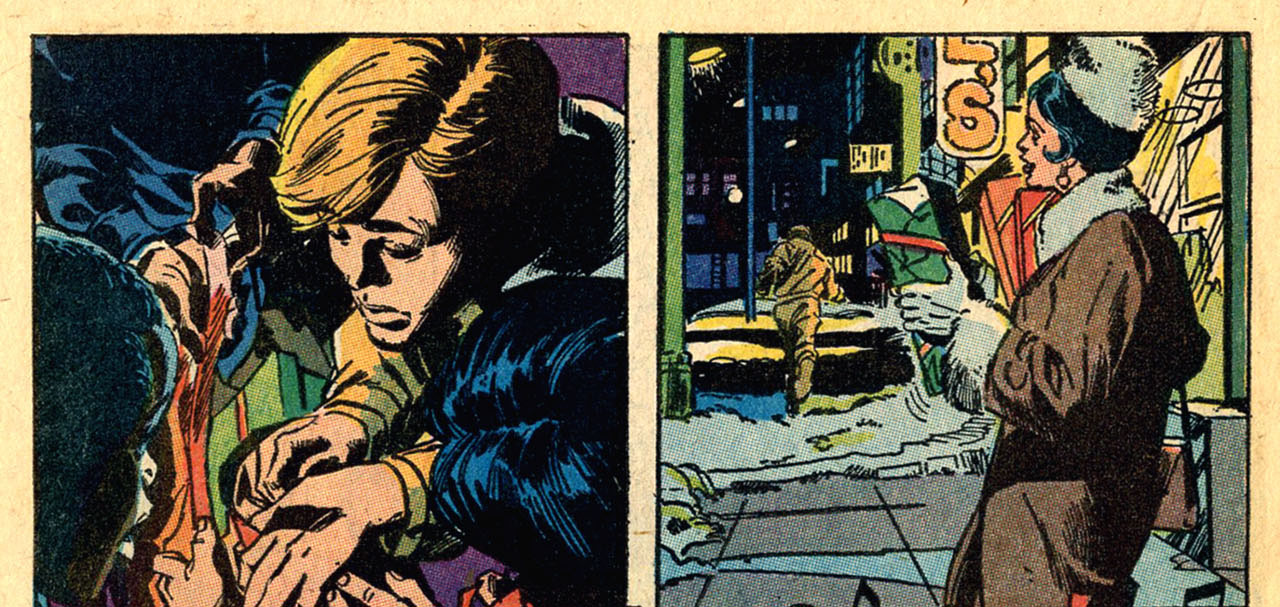
detective comics 443detective comics 443Detective Comics #443

If you happen to be like me, you may also enjoy crime comics that feature less ridiculously clad protagonists. In that case, make sure you check out these suckers:

100 Bullets

100 BulletsImagine that a well-dressed old man with piercing eyes walks up to you one day and hands you an attaché case with irrefutable evidence of who’s to blame for the worst thing that ever happened to you. He also hands you a gun and one hundred rounds of untraceable ammunition – all with the assurance that even if you choose to use terminal force to exact your revenge no law enforcement agency can touch you. This is the initial premise of 100 Bullets, as that same offer is made to various down-on-their-luck characters, although the overarching plot soon shifts to a byzantine conspiracy involving the people behind the attaché and most of the intended victims. Along its 100 issues (and a recent 8 issue sequel), the series tells violent stories in all sorts of subgenres of crime fiction, featuring ghetto gangbangers and high class mobsters, amnesiac detectives and rough prison inmates, desperate losers and alpha male psychopaths… It also paints a multifaceted portrait of crime in 21st century America.

100Bullets_04100Bullets_04100 Bullets #4

Behind the comic are three idiosyncratic creators. Brian Azzarello’s trademark as a writer is the fact that in his stories no one will ever say or do anything in a straightforward manner if there is a more roundabout way to go about it. While his labyrinthic approach to dialogue and plotting can get tiresome, at its best it deepens the narrative with multiple layers of meaning while celebrating the richness of American slang. Eduardo Risso’s art style is also an acquired taste, but there is no denying that he has one of the most original ‘cameras’ in comics, framing the action through inventive angles (including, well into the series, a POV shot from inside a mouth about to bite a hotdog). Similarly, Patricia Mulvihill’s coloring choices are not always obvious, but somehow they tend to work. 100 Bullets is especially recommended for fans of this trio’s Batman-related comics: Broken City and the tale that ran in Wednesday Comics.

 Brian Michael Bendis’ black & white crime comics

JinxAs difficult as it may be to believe it now, before becoming the most omnipresent writer at Marvel, Brian Michael Bendis wrote and drew some seriously cool indie crime comics in the 1990s. Goldfish is a neo-noir tale about a con man going up against a gangster called Lauren Bacall (way to wear your influences on your sleeve, Brian). It’s full of atmosphere and bravado, not to mention a great anti-climax (one of Bendis’ specialties). Jinx features the same con man when he was younger and focuses on his relationship with a female bounty hunter called Jinx in a plot that riffs on The Good, the Bad and the Ugly, of all things. Less retro, with a more Generation X urban vibe, it’s a slow-burn comic, not afraid to take long narrative detours and to flesh out its characters by giving them plenty of room to chat. Torso, co-written with Marc Andreyko, is set in 1930s Cleveland and based on the true story of how Eliot Ness investigated a serial killer who left only the torsos of his victims behind. It is suitably stylish and interesting.

torsoTorso

Bendis’ dialogue reads like the bastard child of David Mamet and Quentin Tarantino, with just as much swearing and pop culture references. His artwork has a DIY feel, mixing drawings and scanned photos, but it more than makes up for any shortcomings through experimental layouts. The bounty hunter Jinx shows up again in Sam & Twitch, a Spawn-spinoff Bendis wrote (but did not draw) in the early 2000s. Sam & Twitch actually started off as an uninspired horror comic (including a storyline that is beat for beat the same as the opening arc of Bendis’ long running superhero police procedural Powers, only with witches), but it grew into a strong crime series.

In this case, there’s not much of a chance to test the field through Batman comics, as Brian Michael Bendis practically hasn’t done any. His only related work is the short story ‘Citizen Wayne’ in Batman Chronicles #21, in which he reimagined the Dark Knight mythos through the lens of the classic film Citizen Kane (it’s neat, but not as much as Mark Waid’s and Brian Augustyn’s exploration of the same idea in Legends of the Dark Knight Annual #4).

Button Man

Button ManWhat if the rich could get the poor to kill each other for sport and bet on the result? Or rather, what if The Hunger Games had been written in the 1990s, set in contemporary reality, featured grown men, and overflowed with British nastiness (a la Get Carter)? Well, that’s Button Man. The original story, ‘The Killing Game,’ really packs a punch. The first sequels, ‘The Confession of Harry Exton’ and ‘Killer Killer,’ although unnecessary and lacking the freshness of that initial outing, are nevertheless gripping reads. As for the fourth entry in the series, ‘The Hitman’s Daughter,’ that one may as well be ignored forever.

Button Man - Killing GameThe Killing Game

Whether you know John Wagner from his Batman comics (most notably his legendary run in Detective Comics alongside Alan Grant) or from his tons of other work, Button Man will not disappoint. This is as tautly written a tale as they come. As for the art, Arthur Ranson’s hyper-realism and sense of pace perfectly convey the moments of tension and the ferocity of each killing blow.

Criminal

CriminalThis critically acclaimed comic began as a bunch of well-told, firmly grounded crime stories that drew on some of the conventions of the genre but treated them realistically (as opposed to, say, the ultra-stylized approach of 100 Bullets). Criminal gradually became more and more ambitious, as characters and settings from across the series were shown to be interlinked in a wide narrative tapestry. There are also metafictional touches – most famously, the characters in the story arc ‘The Last of the Innocent’ are essentially grown up versions of the teenagers from Archie Comics, for some reason.

criminal 02Criminal #2

Ed Brubaker and Sean Phillips play really well off each other, having worked on a ton of projects together, including the Elseworld’s tale Gotham Noir. In the early 2000s, Brubaker was quite a prolific writer in the Batman universe, with his best work by far being comics that were directly inspired by crime fiction, namely Gotham Central, his run on Catwoman, and the underrated story arc ‘Dead Reckoning’ (Detective Comics #777-782).

Hit

Hit 03

In 1950s Los Angeles, a clandestine hit squad made up of cops goes around executing gangsters in the middle of the night. Throw in a million twists, turns, and double-crosses, as well as the obligatory femme fatale, and you’ve got the starting point for Hit. What could have been just another clichéd L.A. Confidential knock-off is elevated with great panache by Bryce Carlson and Vanesa R. Del Rey. So far these two have not done any Batman comics – and while I hope they manage to get more projects like this one rolling, on the strength of their work here I wouldn’t mind seeing what they could do in Gotham City, especially if helped by Archie van Buren’s gorgeous colors…

Hit 01Hit 01Hit #1

NEXT: More gritty, sordid, hardboiled crime.

Posted in HARDBOILED CRIME | Tagged , , , , , , , , , , , , , , , , , , | Leave a comment

On the lifespan of Gotham mayors

While no job in Gotham City offers worse conditions than being a henchman, working in local politics comes remarkably close. Seriously, even House of Cards’ Frank Underwood would be scared of this place. As if it wasn’t bad enough that politicians are under constant threat, they are often threatened in the most preposterous ways…

batman adventures 28The Batman Adventures #28

Hell, when he was City Council Chairman, Rupert Thorne was even attacked by the ghost of a quack psychiatrist:

detective comics 476Detective Comics #476

The most dangerous position, by far, is being the actual mayor. Looking back, whenever Mayor Hamilton Hill showed up in Batman: The Animated Series, it was usually to be kidnapped, to have his son’s birthday party attacked by a psychotic clown, to get strapped to the hands of a tower clock, or to be replaced by an evil robot. Still, compared to his counterparts in the comics, he got off lightly.

Famously, the mayor in The Dark Knight Returns had the worst day of his career when he agreed to meet with the leader of a gang of rebel mutants:

Batman - Dark Knight Returns 02The Dark Knight Returns #2

It shouldn’t be surprising that Commissioner Gordon also watches the mayor die (in a car explosion) in the terrible mini-series The Cult, since – as I’ve mentioned before – that comic goes a very long way to mimic Frank Miller’s classic. In fact, it’s not just the mayor…

Batman The Cult 02The Cult #2

…with typical lack of restraint, throughout The Cult the mayor’s potential successors also get slaughtered in horrific ways!

So far, you could reasonably chuck it all to 1980s’ excess, but it didn’t stop there. In 1991, Mayor Julius Lieberman was eviscerated by a predator:

Batman Vs PredatorBatman versus Predator #2

Yes, one of those predators.

By contrast, Mayor Armand Krol managed to outlive his term, although not by much. After losing reelection in 1995, his subsequent bid for the governorship was cut short when he died in the second outbreak of the Clench virus, unleashed into the city by the eco-villain Ra’s al Ghul. Krol’s successor, Marion Grange, did not have it easy either, what with dealing with the Clench epidemic, a wave of suicides and riots due to mass ontological despair in 1997 (caused by a passing Godwave, whatever that is), an earthquake, and the descent of the city into anarchy as the federal government cut off access to Gotham. Mayor Grange died shot by a sniper, unlucky ‘till the end… the bullet was actually meant for Bruce Wayne, but she got in the way!

By then, killing off the mayor had practically become a city tradition. In his excellent ‘Made of Wood’ story arc, Ed Brubaker retroactively established that in the late 1940s Mayor Thorndike had been beaten to death by an enemy of the original Green Lantern. Mayors in alternate realities – from Master of the Future to Earth One – met deadly fates as well. It became a staple of Batman comics:

Batman - Gotham Knights 18Gotham Knights #18

I know what you are thinking: Commissioner Gordon always seems to be there. Much like Jessica Fletcher in Murder, She Wrote, he’s an obvious yet overlooked suspect, right? After all, most of these mayors did try to fire him at one point or another… Well, in Gordon’s defense, even after he retired and was replaced by Commissioner Michael Akins, things didn’t improve. In this panel, Akins is the guy giving the statement, Mayor Daniel Danforth Dickerson III is the one on the floor:

Gotham Central #12Gotham Central #12

NEXT: Gritty, sordid, hardboiled crime.

Posted in GOTHAM CITIZENS | Tagged , , , , | Leave a comment

More covers that play with the logo

Catwoman 36

Ok, I’ll call it: as far as Batman-related covers go, nothing will ever beat Lucha Libre #774. And yet, many have tried, some have even come close. Last week I wrote about my soft spot for covers that have fun with Batman’s logo. As breathtaking as those are, you can find even more imaginative logo distortions if you look not just at comics where Batman is the star, but at other series associated with the Dark Knight.

For example, there are the comics about Batman’s superhero team, the JLA…

JLA Annual 3     JLA 61

…and the ones about The Outsiders, Batman’s *other* superhero team:

Batman and the Outsiders 17     Adventures of the Outsiders 38

There’s also the very cool Birds of Prey, about a team founded by ex-Batgirl Barbara Gordon:

Birds of Prey 38     Birds of Prey 11

And, of course, let us not forget the Suicide Squad, Washington’s criminal-based black ops team (and Dirty Dozen rip-off) where many of Batman’s rogues end up:

Suicide Squad 4     Suicide Squad 17

Because the various Robins need someone to hang out with while Batman is off hobnobbing with the big names, they’ve joined their own share of superhero teams with experimental covers, including Young Justice…

Young Justice 40     Young Justice 21

…and the Teen Titans:

Teen Titans 18     Teen Titans 15

The Teen Titans in particular have been around for quite a while (since the 1960s!) and have starred in several different series. Many of these comics playfully incorporate their logo into the cover images:

Teen Titans 16     Tales of the Teen Titans 65

Tales of the Teen Titans 30     Tales of the Teen Titans 34

Tales of the Teen Titans 33     Tales of the Teen Titans 39

Sadly, in the last couple of decades this proud Teen Titan tradition has been mostly lost, so it’s a cause for celebration whenever it occasionally reappears in more recent incarnations:

Teen Titans Go 3     Teen Titans 24

Besides team comics, spin-offs about individual Batman characters have also found inventive strategies to frame the titles of their series, such as Nightwing

Nightwing 64     Nightwing 63

…or Catwoman:

Catwoman 50     Catwoman 79

Catwoman 81     Catwoman 32

Curiously, for such a crappy comic, Azrael, Agent of the Bat had a surprisingly high number of covers that played with the logo in interesting ways:

Azrael 85     Azrael 82

Azrael 33     Azrael 80

Azrael 91     Azrael 69

Granted, although I’m a sucker for this kind of thing, even I have to admit artists are not always equally successful. Still, I’ll take an ambitious cover that screws up the logo because it tried to do something different over a boring one any day…

Robin 97

It actually took me a while to figure out what was going on in the cover above, but once I realized that the comic’s title was spelled out with knocked out ninjas, I was totally in. Now, if only that fourth guy had been decapitated…

NEXT: Obituaries for Gotham mayors.

Posted in COVERS OF BATMAN COMICS | Tagged | Leave a comment

Messing around with Batman’s logo

Batman 31

In my world-changing countdown of Ed Hannigan’s Batman covers, I mentioned how much I love it when he put a spin on the series’ logo. Yet Hannigan, God’s gift to cover artists that he undoubtedly is, was hardly the only one to have fun with the iconic design.

As far as pulling stunts with the cover logo goes, a personal favorite of mine is Batman #354, which actually came out shortly before Ed Hannigan’s legendary run. Before I show it, however, let me try to give you a sense of how innovative it was… Covers for the Batman series had a pretty consistent logo in the early 1980s, bat-shaped and with the Dark Knight’s head between ‘Bat’ and ‘Man.’ You can see it, for example, in this cover which features the Caped Crusader being rudely interrupted while trying to enjoy a ski ride:

Batman 337

While the logo sometimes shifted colors to match each cover’s mood, or was pushed to the background to let other elements shine, it retained a pretty coherent shape and place. This is why it was so cool to see penciller Keith Giffen, inker Dick Giordano, and colorist Anthony Tollin suddenly play with the format:

Batman 354

Man, this is such a great cover, particularly in the context of the regular ones that preceded it. Not only does it expand the logo to frame the whole image, it adds further detail to Batman’s face and hands, making it seem as if the Dark Knight himself is hovering over the scene (in fact, his shadow is even projected onto the floor).

Since then, it has become less groundbreaking to screw with a series’ logo, although it’s still rare enough to jump at you from the stands. Take Detective Comics – I remember being so used to seeing its classic font and format…

Detective Comics 783     Detective Comics 860

…that merely breaking the pattern was enough to make me giddy for these:

Detective Comics 783     Detective Comics 862

That said, as striking as it can be to simply distort the logo, the covers that really get me are those that integrate it into the layout in particularly clever ways…

Gotham Adventures 02     Batman 613

Batman Incorporated 01     Batman Incorporated 04

Batman 528     Batman Madness

Batman 366     The Untold Legend of the Batman

Streets of Gotham 3     Batman Incorporated 5

I’m clearly not alone on this. In fact, in 2001 DC challenged its artists to do just that, so across various comics we got covers where the series’ titles were turned into all sorts of objects. This, of course, was insanely awesome (even though DC editors were not ballsy enough to trust their artists, since the titles were also added in a boring font, in small print, to the top of the covers):

Gotham Knights 24     Detective Comics 765

Legends of the Dark Knight 150     Gotham Adventures 45

Another neat trick is when, instead of transforming the title logo into a different object, artists just treat it as a solid item in itself. This creates cover images with a twisted internal logic, as Batman interacts with the title of his own comic:

Batman 539     Detective Comics 699

In this subgenre, I particularly like covers where the villains, not content with going after the Dark Knight, just go ahead and destroy his damn logo:

Batman 194     Batman 550

Superman / Batman 63     The Batman Adventures 30

Ultimately, logos are just so much fun that Batman and Robin even got a portable one, to show off on special occasions:

Batman 200

NEXT: Batman turns into an ape.

Posted in COVERS OF BATMAN COMICS | Tagged , , , | Leave a comment

Underrated Batman stories – part 2

If you read the last post, you know what’s going on. Here are another 5 accessible, self-contained Batman stories that usually don’t make it to the big lists but are nevertheless worth tracking down:

‘Black Masterpiece’ (Batman Annual #18)

Batman Annual 18

When a band of Gotham thieves, headed by a pretentious curator, steals the Mona Lisa and holds the painting for ransom, it’s up to Batman to recover the famous artwork. Intercut with this narrative, we get a saga set in 15th/16th century Florence, where the actual Mona Lisa (the woman who served as model) is kidnapped and a rich orphan goes to her rescue while wearing a Bat-suit and wings designed by Leonardo da Vinci himself! The result is not exactly an Elseworlds tale about an early modern Caped Crusader as much as a taut story that first draws parallels between the two plotlines and ultimately brings them together in a particularly cool ending.

‘Anatomy of a Murder’ (Shadow of the Bat #71)

Shadow Of The Bat 71

I had to include at least one mystery tale. The World’s Greatest Detective investigates the stabbing of an ordinary man, piercing through the web of love, hatred, jealousy, and contradictory behaviors that make up any life. My passion for Alan Grant’s twisted creations is no secret, but here we don’t get madcap villains or inventive action set pieces, just a labyrinthic whodunit and grounded human drama.

Penciller Mark Buckingham has the ungrateful task of illustrating a comic which consists mostly of interviews with each of the suspects. He nevertheless takes every opportunity to shine, such as in the image above, which features what has got to be one of the most generous depictions of the size of Batman’s cape.

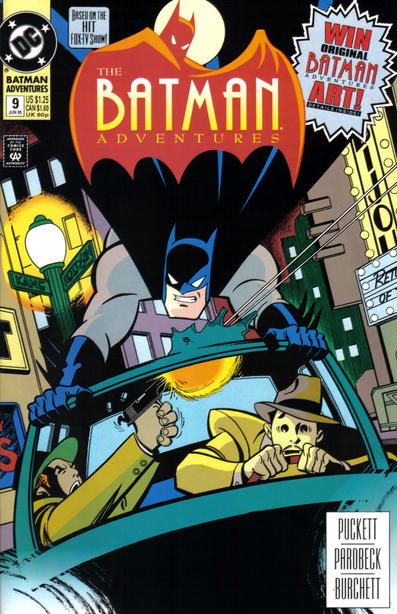
‘Deathtrap A-Go-Go!’ (Batman Adventures (v2) #9)

batman adventures 9

In an abandoned warehouse somewhere in Gotham, the Dynamic Duo, surrounded by monsters and caught in a deathtrap with time ticking away until their supposed demise (or as Batman might as well call it, just another night), discuss the very concept of ‘deathtrap.’ What the comic lacks in plot, it more than makes up for in hilarious gags and one-liners. Less a metafictional satire of a ridiculous trope than a celebration of its imaginative potential, there are enough ideas in these 17 pages to fill in a 2-year run by today’s pacing standards. As if that wasn’t enough, the issue’s backup story, in which Bruce Wayne goes to a therapy evaluation, is just as witty.

‘Work That’s Never Done’ (Batman Confidential #49)

Batman Confidential 49

Few comics have nailed Batman’s inner voice as captivatingly as this one. Following a 911 distress call, the Dark Knight arrives on a crime scene ahead of the cops and we are shown how the mind of the World’s Greatest Detective operates. Besides figuring out what happened and tracking down the killer, readers are privy to parallel, non-stop deductions delivered with terse precision: ‘When I woke up this afternoon, crumbs were on the stairs and in the kitchen. Either the mansion has mice or Alfred is burned out and stress-eating again. I’ll need to set some traps or buy him a round trip ticket to Bermuda.’

‘The Guardian of 100 Cities!’ (Batman #95, reprinted in Batman #258)

Batman 258

Finally, I wanted an example from Batman’s most innocent era. While this may not be the cleverest or wackiest tale Bill Finger ever scripted, nor one with particularly creative visuals by Sheldon Moldoff, it’s still one that gets me every time. The overall plot is quite simple, involving Batman and Robin chasing a bunch of criminals in a movie set and befriending an aging actor called Roger Stanton in the process. Yet there is so much charm packed into these 8 pages!

The story opens with a well-pulled twist, setting up the reader for a supernatural, globe-trotting adventure, only to quickly scale things down in the transition to the second page. Other twists follow, as Roger Stanton keeps surprising the Dynamic Duo and growing as a character until the very end. As was typical of the time, the action scenes incorporate the setting in fun ways, like when Robin knocks out a crook by swinging from a Dutch windmill. There are also cute details, such as the Caped Crusader holding the fugitives in a movie prop jail. Finally, it’s hard to resist a comic where the Boy Wonder utters the line: ‘Batman, I saw something moving near the Taj Mahal!’

NEXT: Batman goes skiing.

Posted in BATMAN COMICS FOR BEGINNERS | Tagged , , , | Leave a comment

Underrated Batman stories – part 1

If you’re looking for classic Batman graphic novels and must-read stories, there are plenty of listicles on the web to serve your needs. (I’ve provided some tips myself.) But perhaps you’ve already read those and are wondering what to get next, or perhaps you’re disappointed with the drab direction the series has taken as of late and find yourself in search of past glories, or maybe you’re just a nerdy hipster who wants to impress others with arcane knowledge in order to disguise your insecurities about not being able to come up with original ideas… In any case, I’m here to help. If you want cool, self-contained comics that flew under the radar, do yourself a favor and track down these overlooked gems:

‘Heretic’ (The Hill)

Batman - The Hill

As hard as it is to write Batman stories informed by social realism, Christopher Priest pulls it off with confidence in this crime tale set in the Hill, Gotham City’s ghetto for the disenfranchised African-American community. Basically, the Dark Knight goes after a local kingpin but has to face the fact that people in the Hill are exposed to so much drama and violence in their everyday lives that they hardly give a damn about some white guy in a cape.

Artists Shawn Martinbrough and John Lowe help keep the comic tight, with a cinematic flow, although the narrative could have benefited from some decompression – it would have been more powerful and easy to follow if the various characters had been given more room to breathe. Regardless, Priest delivers pre-The Wire dialogue rich with urban slang and deals with the topic of social exclusion in a way that may be superficial but doesn’t come across as insultingly naïve or annoyingly preachy. Even better, he gives us a Bruce Wayne for whom both the Batman disguise and his douchebag playboy persona are means to an end, and who is willing to fully reinvent himself in order to achieve his aims.

‘Actions’ (Gotham Adventures #48)

Gotham Adventures 48

Scott Peterson and Tim Levins (with occasional fill-ins by Rick Burchett) had an amazing run in Gotham Adventures. It was consistently satisfying, with the typical issue including a handful of dynamic action scenes yet still leaving enough room for a twist-filled crime story and some poignant characterization. In this sense, ‘Actions’ may seem like the least packed of the lot, as it is basically just a conversation between Robin (Tim Drake) and Alfred, accompanied by silent flashbacks and shots of Batman’s nocturnal activities. Yet this issue is such a meticulously constructed piece of storytelling that the fact that its creators make it feel simple and light becomes another one of their accomplishments.

There are three intertwined narratives: Robin coming to grips with Batman’s attitude towards the people he saves; Batman pursuing a car through the Gotham night; and, in flashback, Batman going to great lengths to help out a recently orphaned Dick Grayson. The off-page dialogue between Tim and Alfred is often superimposed on the two latter narrative threads, creating some amusing juxtapositions, such as when Alfred comments that Bruce sometimes seems ‘as though he’s entirely wrapped up in his work’ while we see an evil contortionist literally wrap himself around Batman (yes, an evil contortionist). It is a virtuoso act that culminates in a final page where all story threads pay off simultaneously. What makes the issue shine even more than its execution, however, is the fact that the choice to keep the Batman panels wordless further enhances the central theme that for the Dark Knight actions speak louder than words.

‘Carnival of the Cursed’ (Batman #224)

BATMAN 224

Angered that one of his favorite musicians was murdered, Batman sets off to New Orleans to bring the killers to justice. Because it’s New Orleans, he gets into a fight on a funeral second line, daringly escapes from a deathtrap on a Mississipi paddle steamer, and the whole thing culminates at a moonlit Mardi Gras parade. As I’ve pointed out before, Denny O’Neil sure knows how to write one hell of a Batman story!

Just like a jazz song built around a recognizable structure, this comic is less about the plot than about atmosphere… and boy is there plenty of atmosphere. O’Neil is in poetic mode, from the opening lines (‘Clouds cluster in a slate-grey sky line like ancient mourners… A finger of wind pokes sharply from the river… And rain falls with a sad whisper on New Orleans…’) to the powerful ending where the horn which has spawned music, greed, and murder ends up as just a battered piece of metal on the street. But it’s the art by Irv Novick and Dick Giordano – together with the carnavalesque colors – that truly makes this comic work, bringing to life a haunted city where the malformed villain looks like just another grotesque Mardi Gras costume.

‘The Frigid Finger of Fate!’ (Detective Comics #375)

detective comics 375

Told from the point of view of a criminal, this is one of those stories where the Caped Crusader takes the backseat, serving mostly as McGuffin and deus ex machina in someone else’s tale. Indeed, here is a story that could just as easily have come out of Will Eisner’s The Spirit. Gardner Fox’s script, one of the last in his long run, just never lets go: there’s an intriguing opening hook (a sniper is about to shoot Batman, claiming that he has already seen himself doing it), a smooth flashback (rain transitioning into shower water), a hard-on-his-luck protagonist trying to grasp the rules of a bizarre gift (his premonitions only work if he dreams them while feeling cold), a Barbara Gordon cameo, literary references ranging from Sophocles to Coleridge (and a likely autobiographical wink about authors getting story plots from dreams), a good-spirited dose of Dynamic Duo whoopass, a couple of plot twists, and a denouement that is as dark and poetic as they come.

Fox being Fox, the comic may feel a bit cluttered with text (although the wordy narration does help build up tension) and there are some quirky details, such as a Batman-themed holiday and a thief who supplies a gratuitous lesson about diamonds – still, nothing nearly as eccentric as this issue’s back-up story, which features the Elongated Man and a guy with the power to literally stop clocks with his face. As for the art, the clean lines of Chic Stone (ghosting for Bob Kane, according to the Grand Comics Database) do not always reach Eisneresque levels of expressionism and experimentation, but Irv Novick’s cover comes remarkably damn close…

‘Earthly Delights: Scenes from a Work in Progress’ (Batman and Robin #26)

Batman And Robin 26

And now for something completely different: a freaky superhero tale set in Paris, with Dick Grayson acting as Batman (not that his identity makes any difference in this story). The Dynamic Duo gets called in by Nightrunner (AKA the French Dark Knight) when there is a breakout at the Parisian version of Arkham Asylum. What ensues is a surreal battle among an upside-down Louvre and an insane mob whose collective id has been magically unleashed. The twist is that, because it’s France, the villains are all mind-bending and highbrow, their crimes channeling various arts, such as film, architecture, sculpture, painting, performance, and literature.

Writer David Hine planned for a longer storyline but ended up getting only one issue, so he crammed all his fascinating ideas into 20 pages of madness. Hine, who is a master craftsman of bizarre, conceptual comics (if you don’t believe me, check out his Bulletproof Coffin), breaks the issue into sub-sections paying homage to specific creators, from René Magritte to Man Ray. The result is fun, challenging, and sometimes mesmerizing. No wonder Hine decided to open the comic with the word ‘Dada.’

NEXT: Batman and Leonardo da Vinci.

Posted in BATMAN COMICS FOR BEGINNERS | Tagged , , , , , , , , , , , , | Leave a comment

Frank Robbins’ oddball Batman

The 1970s were a great time for the Caped Crusader, even if, looking back, we did miss out on the chance to see Batman with a turtleneck or Catwoman with an afro (problem solved). After the kitsch of the ’60s and before the grit of the ’80s, creators seemed to have found a firm balance between a Batman that was dark enough to be cool without yet being an ultraviolent psychopath. The outlook was perfectly captured by artists like Neal Adams, Bob Brown, Irv Novick, and Jim Aparo, who gave the character realistic proportions and a gothic cape and cowl. In terms of writing, Denny O’Neil and Frank Robbins deserve a lot of credit for this tonal shift. A few weeks ago, I spotlighted O’Neil, still fondly remembered as one of the greatest Batman writers of all time. History has been less kind to Frank Robbins.

There are several reasons for this. For one thing, although Robbins would go on to write some truly solid stuff in the 1970s, he didn’t start off that way. In 1968, when he replaced Gardner Fox in Batman and Detective Comics, Robbins didn’t immediately move away from the camp of the TV show (which had just been cancelled), particularly regarding the incessant wordplay… Seriously, in Batman #205, an unrelenting kick-ass action issue if there ever was one, I counted 25 playful puns and 14 amusing alliterations (personal favorite: referring to Batman as ‘fearless ferret’).

While Novick and Brown gave the stories a hard-edged look from the onset, some of Frank Robbins’ earlier scripts are firmly tongue-in-cheek, including some gloriously goofy romans à clef. In ‘Batman’s Big Blow-Off!’ a beatnik newspaper pushes the Caped Crusader into revealing his secret identity, so he convinces an obvious Howard Hughes stand-in to be used as a front.

BATMAN 211Batman #211

Things get even more out of control when the ersatz-Howard Hughes gets jealous of Batman’s popularity, undergoes intensive martial arts training, and damn near kills the Dark Knight in order to take his place!

If you think this is out there, it probably means you haven’t read ‘Dead… Till Proven Alive!’ where Batman and Robin investigate the urban legend that Paul McCartney died in 1966 and was secretly replaced by a lookalike… At one point, the Dynamic Duo tries to find out the truth by getting the Beatles to sing ‘Happy Birthday’ to Alfred and then comparing voice-recordings.

Frank Robbins was certainly fond of incorporating contemporary references in his work – a zanier version of Law & Order’s ‘ripped from the headlines’ – yet the Zeitgeist did not always manifest itself in the ways you’d expect. Take the women’s rights movement. In ‘The Case of the Purr-Loined Pearl,’ Catwoman recruits female ex-cons into her gang with the promise of getting revenge against the men in their lives…

BATMAN 210 Batman #210

The result, however, is that Catwoman forces her new partners to undergo an intensive workout and sauna program in order to be slim enough to fit into a tight, sexy costume, just like hers, so that they can serve as distraction while she steals a shiny pearl!

And then there is ‘Batman’s Marriage Trap!’ where some male crooks come up with the most mesmerizingly misogynous plan ever:

BATMAN 214Batman #214

In order to screw up Batman’s nightly activities, the crooks literally spend a million dollars on advertising and create a women’s NGO demanding that the Caped Crusader get married – what the gang leader respectfully refers to as a ‘chick-harassing strategy.’ This leads to Batman being chased by a massive demonstration of female protesters who accuse him of promoting singlehood:

BATMAN 214Batman #214

As if kick-starting a whole grassroots movement wasn’t already an overelaborate stratagem, trust me, in the end the crooks’ actual plan manages to make even less sense…

If Denny O’Neil was the hippy-looking liberal writer who at the same time as scripting Batman was also telling social awareness stories with Green Arrow explaining racism to Green Lantern, Frank Robbins – in his mid-fifties by then – seemed genuinely concerned, if not confused, about the values of the flower power generation. In ‘Take-Over of Paradise,’ an activist gang barricades itself on a high-rise to demand low-cost housing. Batman proudly stands up for the ‘establishment,’ grumpily arguing that the protesters are ‘grown men – in a man’s world! And they play the games with civilized rules – or suffer the consequences!’ The story does reflect divergences between well-meaning protesters and those willing to kill to achieve their aims, but in the end the main villain is revealed as a ‘femme lib’ girl, out to take over the gang and show her partners what a female leader could do.

This is just one of many stories pitting Batman – as well as Robin and Batgirl, in Detective Comics’ backup features – against out-of-control members of the younger subculture. However, in ‘Freak-Out at Phantom Hollow,’ Frank Robbins does acknowledge the intolerance faced by long-haired hippies in small town America, unsubtly comparing their plight to the witch hunts of 300 years ago.

Another reason Robbins didn’t reach O’Neil’s status is that his contributions to the Batman mythos were not as enduring…

detective comics 434Frank Robbins’ most remarkable recurring villain was the Spook, an escape artist extraordinaire who charged criminals for helping them break out of jail. The Spook made very few appearances post-Robbins – ironically, the ‘Houdini of the Crime-World’ served one of the longest sentences, finally being released on parole in 2003 (in Gotham Knights #46). Pathetically, he later ended up decapitated by Batman’s ten-year-old son.

As for the Ten-Eyed-Man, a war veteran security guard who mistakenly blames Batman for his blindness, has his optic nerves reconnected into his fingertips so that he can see through his hands, and hijacks an airplane across the world in order to take his revenge on the Caped Crusader in the depths of the Vietnamese jungle – well, for some reason most writers just didn’t know what to do with this character!

Only Man-Bat continues to find a semi-regular presence in the comics, yet he still gets much less exposure than, say, the O’Neil-created Ra’s and Talia al Ghul… This is not surprising, given that the al Ghul clan has the potential for twisted family dramatics around an interesting emotional triangle and stories in which the whole world is at stake, while Man-Bat is essentially just another variation on The Strange Case of Dr. Jekyll and Mr. Hyde, albeit a visually interesting one:

detective comics 400Detective Comics #400

Finally, there’s the fact that Frank Robbins didn’t have Denny O’Neil’s knack to stick the landings. O’Neil usually found a perfect, poetic note to serve as punchline, whether it was Batman writing the year of the villains’ death on their tombstones in ‘The Secret of the Waiting Graves’ or a Holocaust survivor impaling himself next to the Star of David in ‘Night of the Reaper!’ In turn, more often than not Robbins was still explaining his plot twists until the very final panel…

detective comics 409Detective Comics #409

Nevertheless, the truth is that Frank Robbins wrote many fun stories. While he may have sometimes rushed the endings, he did have a skill for slam-bang openings, grabbing the reader from the start:

BATMAN 219 Batman #219

One of his trademarks was to shamelessly appear to kill Batman on the title pages:

detective comics 392Detective Comics #392

                             Batman 204Batman 204

Batman #204

                             BATMAN 220BATMAN 220

Batman #220

What’s more, Frank Robbins really played up the World’s Greatest Detective angle. Robbins’ warped imagination came up with creative crimes – and while these were not always realistic, the clues given to the reader were fair. Even his most conventional mystery tale, ‘Legacy of Hate!’ (a well-executed whodunit set in an apparently haunted castle where a ghostly knight is out to kill Bruce and a bunch of far-removed Wayne relatives), finishes with a twist that sets it apart from mere Scooby Doo-esque shenanigans.

Batman’s methods can be a bit unusual – such as in the underrated ‘Challenge of the Consumer Crusader,’ where he pretends to be the victim’s ghost in order to extract a confession from a suspect – but hey, the guy dresses up like a bat, so we already knew that he had an idiosyncratic approach to crime-fighting. Regardless, you can find plenty of clever detective fiction in these comics. This is not just true for Robbins’ later output, which increasingly consisted of straight up, gloomy crime stories. In one way or another, from early on even his wackiest scripts tended to include some kind of surprise reveal as well as advanced deductive reasoning…

Batman 206Batman #206

Robbins also illustrated a few of his comics. He was great at it, with a pre-Darwyn Cooke angular style and feathery linework evocative of 1950s’ cartoon advertisement. As an artist, Robbins’ high point is perhaps the truly moody visuals he produced for a number of issues of the Denny O’Neil-scripted version of The Shadow:

the shadow 05The Shadow #5

Robbins’ art was of course strikingly different from the mainstream Batman artists of the time, whose figures were comparatively much more photorealistic. However, his noirish pencils fitted perfectly well with somber crime stories, such as the cat-and-mouse antics with a methodical killer in ‘Forecast for Tonight… Murder,’ or the hardcore race riot and Attica-like prison revolt of ‘Blind Justice…Blind Fear!’

For my money, Robbins’ greatest accomplishment was ‘Killer’s Roulette!’ The issue starts with the world’s unluckiest cat burglar: first he bumps into an armed victim, then he realizes the man he intended to rob has committed suicide over gambling debts, and then Batman barges in. As if things weren’t bad enough, the burglar takes the dead man’s gun and tries to shoot the Dark Knight – always a bad idea. Soon Batman finds himself investigating a gambling network, leading up to one badass game of Russian roulette:

detective comics 426Detective Comics #426

Frank Robbins’ work may have had ups and downs, highs and lows, and may not always have been on the right side of history. But every time I look at this page, all is forgiven.

NEXT: Batman goes to New Orleans.

Posted in WRITERS OF BATMAN COMICS | Tagged , , , , , , , | 2 Comments

Henchworkers of Gotham, unite!

A spectre is haunting Gotham City – the spectre of some rich capitalist in a bat costume kicking the crap out of the underprivileged masses that are just trying to get by in this lousy economy. So if there is one group in Gotham that desperately needs to unionize, it’s henchmen and henchwomen.

I mean, talk about precarious working conditions. The schedules are terrible, the uniforms degrading, you frequently get punched in the face by Batman (or, even more humiliating, by Robin, while Batman goes after the main baddie), and there is absolutely no job security…

batman brave and the bold 10Batman: The Brave and the Bold (v2) #10

You may argue that it’s a globalized problem, not just Gotham City’s. People never think how things affect the family of a henchman. And unlike other self-professed heroes, at least Batman is not in the business of killing hoodlums!

Still, there can’t be that many jobs worse than working for the Joker. For one thing, the sense of humor of the Clown Prince of Crime is lame enough to make The Office’s David Brent cringe… And while Batman does have a no-kill policy, one of comics’ longest running gags is the fact that the Joker keeps murdering his own employees willy-nilly:

detective comics 475 detective comics 475 Detective Comics #475

Sure, there is at least one success story of a comrade who managed to break away with her life and a book contract. After years of helping the Joker carry out his madcap plans, Harley Quinn earned her own fanbase. She even has a solo series:

Harley Quinn 00Harley Quinn (v2) #0

Tony Finch, another former Joker henchman, also tried to make it on his own some years ago, with less impressive results. A natural born loser, when Finch found a dial that gave him superpowers (don’t ask), he recruited a couple of thugs and made a short-lived attempt to start an independent criminal enterprise, with its own ethos:

h-e-r-o 10H-E-R-O #10

I’m afraid people still don’t know you exist, Tony. Blame the system: Gotham is a tough city for the small entrepreneur, which may explain why so many goons gravitate towards the big rogues.

In fairness, the False Face Society of Gotham does have a reputation for paying well. Moreover, as mobs go it is a relatively successful one, having managed to establish a monopoly of Gotham’s organized crime plenty of times. That said, it’s not as if its leader, Roman Sionis, is not an eccentric egomaniac as well, what with wearing a mask carved out from his father’s coffin, insisting that all his gang members disguise their faces, and even disfiguring his poor lover just so that she too must wear one of his damn masks… He makes Tony Soprano look like a well-adjusted gangster!

Speaking of dysfunctional mobsters, there is also the Penguin’s gang. Say what you will, but as bosses go, at least the Penguin is concerned with the education level of his staff…

batman adventures #1The Batman Adventures #1

…which is not to say that you actually want to show off your knowledge in front of him:

batman adventures 01The Batman Adventures #1

Lacking class consciousness, some henchpeople are actually quite devoted to their exploitative employers. A notable example of this kind of Lumpenproletariat is Frederick Rhino, who for years remained Scarface’s loyal henchman despite all the abuse he took from what was literally a delusional puppet. Another well-known case are Query and Echo:

detective_comics annual 08Detective Comics Annual #8

This wild pair left a promising career in an underground dominatrix club to embrace a life of crime and adrenalin, and soon found themselves hired full-time by the Riddler. Their coolest story is probably Detective Comics #705-707, which starts when they seemingly try to spring their boss from a courthouse with great panache:

Detective Comics 705Detective Comics #705

(Another high point for Query and Echo is their independent gig with Slyfox, in the rollicking Nightwing #1000000.)

If you’re looking for an amusing take on the plight of the henchman, however, what you’ll definitely want to check out is ‘Help Wanted.’ This fun issue of the second volume of Batman: The Brave and the Bold follows the trials and tribulations of a professional henchman called Joe, who works for respected, so-called job creators like the Toyman, Clock King, and Ocean Master. Yet Joe’s long-term employment prospects are consistently cut short as Batman arrives on the scene to kick ass and take names, so he keeps moving from city to city, much to the chagrin of his wife and kid.

batman brave and the bold 10Batman: The Brave and the Bold (v2) #10

The twist ending may not be exactly world revolution and classless utopia, but it’s poignant in its own way.

At the end of the day, to quote a classic treaty on the subject, the henchman remains the human analogue of the suffering multitudes who like good dogs sit and lick for their reward. Even on the few occasions when Gotham henchworkers join forces, it’s not to chant The Internationale, but to follow the footsteps of their employers:

World's Finest 02World's Finest 02World’s Finest (v2) #2

NEXT: Batman investigates The Beatles.
Posted in GOTHAM CITIZENS | Tagged | Leave a comment

Top 10 Batman covers by Ed Hannigan

In a world of uncertainty and subjective truths, inexorably spinning towards its entropic doom, there is one unshakable idea we can all hold on to: Ed Hannigan is one of the greatest cover artists to have ever graced Batman comics with his pencils.
Hannigan illustrated different titles, including the first five issues of Legends of the Dark Knight, which featured a clever motif of faces breaking through masks and vice-versa… this was conceptually interesting and it fitted in well with the story going on inside (for which he also provided interior art), but the images themselves were not that memorable. By contrast, working with inker Dick Giordano and colorist Anthony Tollin, in the 1980s Ed Hannigan drew a long run of unforgettable covers for Batman and Detective Comics. And because no one demanded it, here are my top 10:
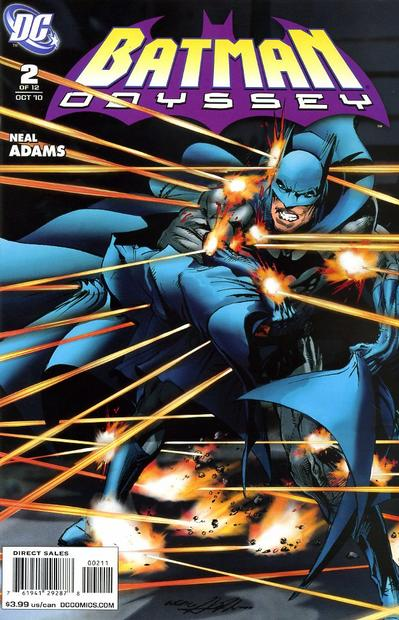
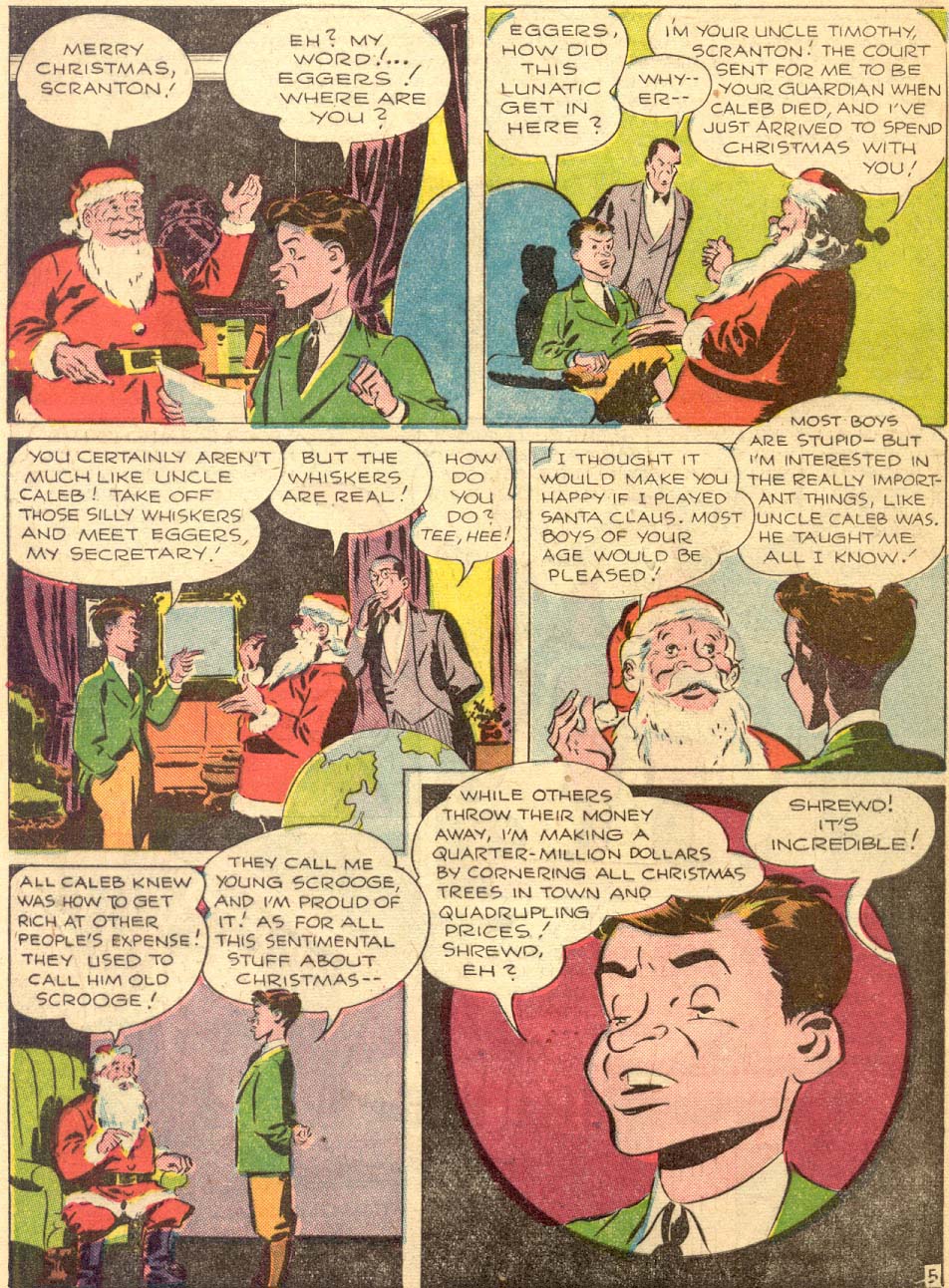
10. Batman #355
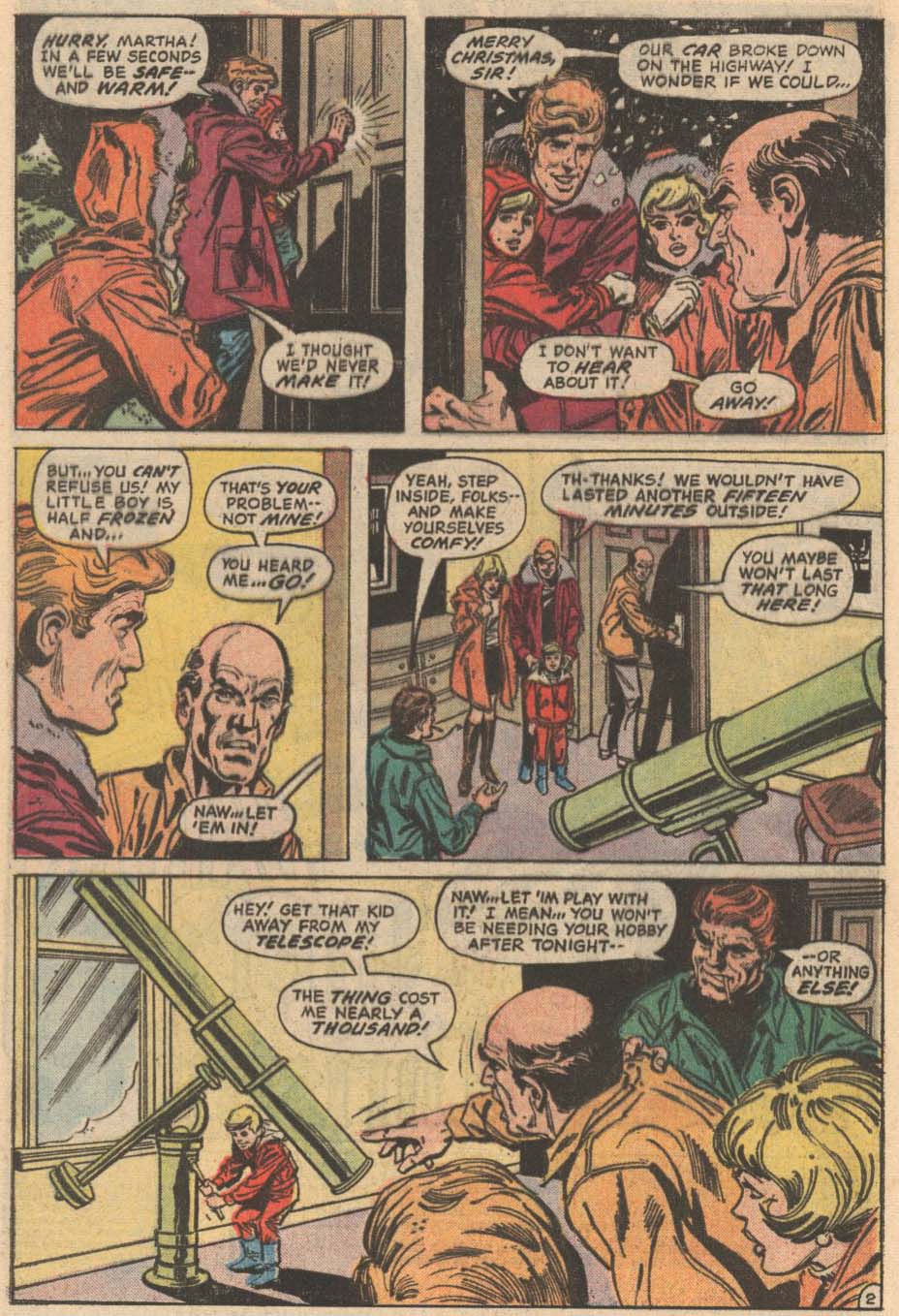
Batman 355Hannigan’s very first Batman cover has a nice concept: Batman fights Catwoman, and their shadows are those of a humanoid bat and a humanoid cat. I would have done away with the caption identifying them as ‘The bat… and the cat!’ though, as it doesn’t add anything – readers can easily tell what the conflict in the comic is going to be without this tagline. Then again, if I actually had a say, 50% percent of Batman covers would feature dinosaurs, so take that as you will.

9. Detective Comics #524

detective comics 524This one is so visually striking that I considered moving it up, but there is too much goodness still ahead! The dramatic pose, the encroaching shadows, the way the smoke from the gun merges with the logo… Furthermore, if you had been following the story on the monthly titles, you would have known that the shooter is called Squid, which is just what his hair looks like in the silhouette.

8. Batman #360

Batman 360As it will soon become clear, I’m a huge fan of covers that play with the titles’ logo on top of the page. You can tell from previous examples how during this period the logos featured Batman’s tiny head at the center of the Bat-symbol… In this cover, the way a skeleton’s strategically placed skull replaces Batman’s face may be meaningless in symbolic terms, but it looks freaking cool!

7. Batman #377

Batman 377Besides playful logos, the other trick I’m a sucker for are homages… This is why I’m so grateful to Brian Cronin for using his encyclopedic knowledge to spot cover homages each week. Here Hannigan, Giordano, and Tollin riff on the classic strip Little Nemo in Slumberland, with Jason Todd as Nemo being carried through the land of dreams. What makes it even cooler is that this fits thematically with the story inside – which involves a nightmarish Nocturna and a desperate Batman fighting for Jason’s custody.

6. Batman #356

Batman 356This is one of those covers that just gets engrained in your memory. Besides the neat visual of the Dark Knight’s reflection on Professor Hugo Strange’s lenses, there is the enthralling notion of Batman strangling another Batman, made even more intriguing by Strange’s ominous words.

5. Batman #358

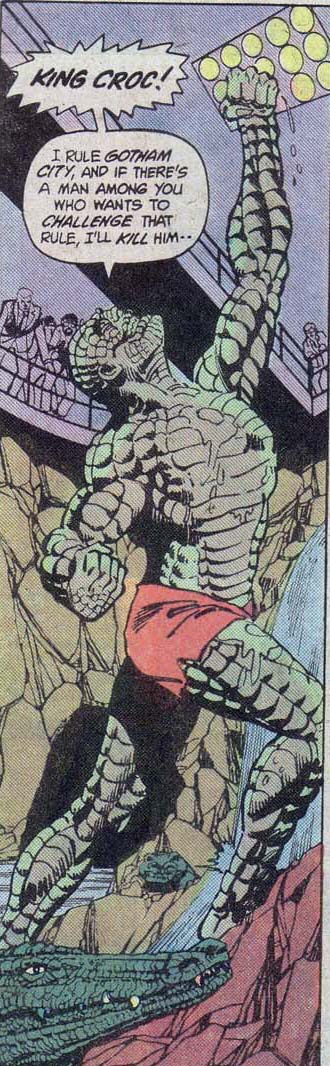
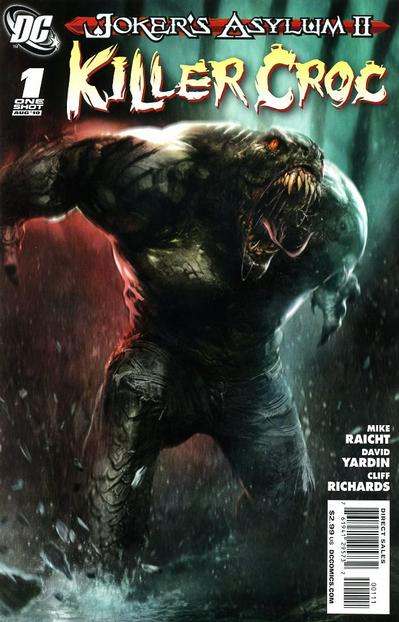
Batman 358Such a powerful image doesn’t need much explanation. The shooter (Killer Croc) seems to be shattering the cover itself as he presumably pierces the Bat-signal with his bullets. Also, because part of this month’s Bat-logo is black, it gets diluted in the image’s black background. Neat.

4. Batman #362

Batman 362Speaking of putting a twist on the logo’s bat-shaped portion… Here Hannigan tilts the title to the left and projects a huge Batman shadow on top of it, which basically replaces the usual design. Also, you’ve got to love the contrast between the Riddler’s gloating rhetorical question and Batman’s I-just-defeated-your-henchmen, straight-faced reply!

3. Batman #369

Batman 369Here the logo gets shot up, like everything else, as the hitman Deadshot shows off his marksman skills, almost castrating the Caped Crusader in the process… There is nothing particularly clever about this, but it is nevertheless an awesome image.

2. Batman #367

Batman 367Another one where the logo comes under attack by a villain, this time by Poison Ivy’s weeds. I love the whole green effect and just wish they had gone overboard with the concept, also partially covering up the tagline, the price, and DC’s boasting in the lower corner.

1. Batman #370

Batman 370And finally there is this gem. The Dynamic Duo fighting a gang of hoodlums in an alley which is so crowded that they find themselves with their backs against the book’s title. As if the notion of the Batman logo painted on a wall wasn’t cool enough, the logo is amusingly framed by other walls that are also filled with writings, the closest one adding ‘and Robin the Boy Wonder’ (and another one sporting Hannigan’s and Giordano’s signature). Plus, the flying trash and the dripping pipes manage to give the scene even more of a gritty vibe. So groovy.

NEXT: The henchman manifesto.

Posted in COVERS OF BATMAN COMICS | Tagged , , , | 1 Comment

The Batman spirit on the silver screen – part 2

If you read the last post, you know what’s going on. Here are another 10 movies that fans of Batman comics can enjoy instead of Zack Snyder’s upcoming blockbuster:

Ed WoodEd Wood

Forget Tim Burton’s Batman films. It’s in this biopic of real-life, overenthusiastic, transvestite, vampire-toothed, and reputedly worst director of all time Edward D. Wood Jr – and to some degree in Sleepy Hollow – that Burton truly brings to life the kind of gothic, quirky atmosphere where Bruce Wayne dressing up as a bat to fight crime would not seem totally out of place.

Foreign CorrespondentForeign Correspondent

Alfred Hitchcock directed a number of films with Batman-worthy set pieces, from spy yarns – The 39 Steps, The Lady Vanishes, The Man Who Knew Too Much, North by Northwest to dark psychological thrillers – The Lodger, Spellbound, Strangers on a Train, Vertigo, Psycho, Frenzy. Moreover, there is a cat burglar at the heart of To Catch a Thief, and The Birds features bird attacks straight out of a Penguin tale. Yet Foreign Correspondent is the most fun of the lot, as well as one where the hero is not just reacting to bad luck – he actually throws himself gleefully at the evil plot in front of him, just like the Caped Crusader would! The movie also belongs to a set of adventure movies made *during* World War II that seamlessly combined escapist fun with real world terror, much like the Batman comics of the time.

Human NatureHuman Nature

All the lead characters in this movie seem to have sprung out of the Silver Age, including the world’s hairiest woman (Patricia Arquette), a psychologist trying to teach table manners to mice (Tim Robbins), and a man who believes he is an ape (Rhys Ifans). All that’s missing is Robin in a corner, shouting ‘Great Scott!’

Rio BravoRio Bravo

I had to include at least one western. Despite the genre’s non-Batman-y predilection for heroes that carry guns and kill their opponents, so many other conventions fit like a glove, what with all the honorable, brooding protagonists working within and beyond the confines of the law to protect their cities from sadistic murderers. I went with Rio Bravo for two reasons. First, because Batman is such a Hawksian character, stoically carrying out his mission without mincing words, caring for those around him but more often showing it rather than saying it out loud. And second, because of the whole intergenerational bonding thing… I can just picture Alfred, Bruce, Dick, and Tim playing ‘My Rifle, My Pony, and Me’ in the Batcave.

Maltese FalconThe Maltese Falcon

The doomed atmosphere, the hardboiled dialogue, and the byzantine plot of Dashiell Hammett’s novel and John Huston’s powerful film adaptation have been reverberating around Batman stories for decades (perhaps never more clearly than in David V. Reed’s script for ‘The Daily Death of Terry Tremayne’). Despite his sharp detective skills, Humphrey Bogart’s Sam Spade is perhaps too morally ambiguous to serve as an ersatz-Batman. The other characters, though, would feel right at home in the Dark Knight’s rogues’ gallery – it’s a small step from Sydney Greenstreet’s Gutman to the more recent iterations of the Penguin.

The Murderer Lives at Number 21 The Murderer Lives at Number 21

There are plenty of murder mysteries around to satisfy fans of the World’s Greatest Detective, but not many are as amusing as this one, or feature a denouement that could have just as easily come out of Mike W. Barr’s typewriter.

Seven PsychopathsSeven Psychopaths

Martin McDonagh, probably best known as the writer-director of In Bruges (and of several twisted plays about rural Ireland, as well as the vicious head trip that is The Pillowman), is behind this black comedy, which has absolutely no relation to the (also darkly funny) graphic novel of the same name about 7 clinically insane secret agents trying to assassinate Adolf Hitler. Rather, this is an L.A.-based cult film waiting to happen, a 21st century The Big Lebowski. At first sight, tonally and plot-wise Seven Psychopaths couldn’t be further removed from the world of Batman comics, even if the levels of blood and violence aren’t that far off from the Bat-titles circa ‘War Games.’ Yet you can just imagine Arkham Asylum harboring characters like serial killer Jack of Diamonds, who murders mid-to-high-ranking mobsters, or the Quaker, who kills through the power of guilt-tripping his victims.

The Thing from Another World The Thing from Another World

This one is for those who like stories in which Batman and his clan triumph over a supernatural threat through determination, ingenuity, and team work.

The UnknownThe Unknown

This cult classic about a circus freak and criminal called Alonzo the Armless looks like the darkest, most tragic secret origin of a soon-to-become Batman villain. And that is saying something.

White HeatWhite Heat

In this energetic and suspenseful gangster yarn, James Cagney plays a psychotic criminal that seems right out of an Alan Grant comic.

Finally, what would Batman himself recommend? Well, it is a well-known fact that his favorite movie is The Mark of Zorro, but he has also been known to spend his evenings watching Japanese erotica:

Gotham Adventures 56Gotham Adventures #56

NEXT: Batman strangles Batman.

Posted in WEBS OF FICTION | Tagged , , , , , , | Leave a comment