10 noir short stories

Given the ongoing heated discussion over police reform and how to rethink public safety, I guess this is an appropriate occasion to highlight one of my favorite genres: crime fiction. As far as comic books go, although there were precedents, this genre truly boomed in the late 1940s/early 1950s, coinciding with the first waves of film noir and probably appealing to much of the same audiences: men who had come back from WWII and were more interested in violent tales about fucked up lives than in the superhero fantasy that had dominated comics’ war years.

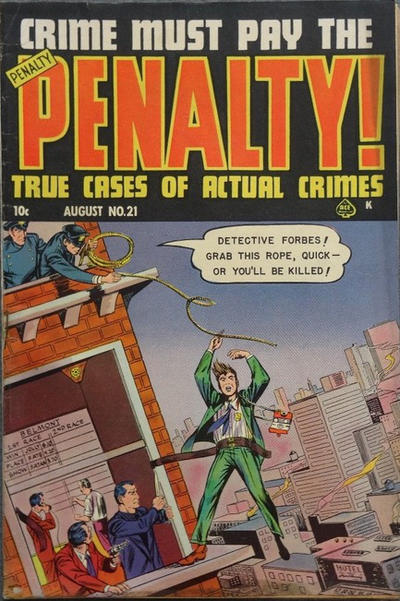
One of the alluring things about noir is the way it delves into shades of grey. Even when featuring vicious, irredeemable characters, its stories tend to humanize at least some of those who find themselves tempted or cornered into acting outside the law. That said, like the movies, comics sought to skew the conservative charge that they were making criminal behavior appealing – and they did so by tacking on ironic and/or downbeat endings where morality often took the form of ‘poetic justice.’ In fact, many of them went one step further by displaying titles that explicitly promised an anti-crime stand, despite the seductively lurid images inside…

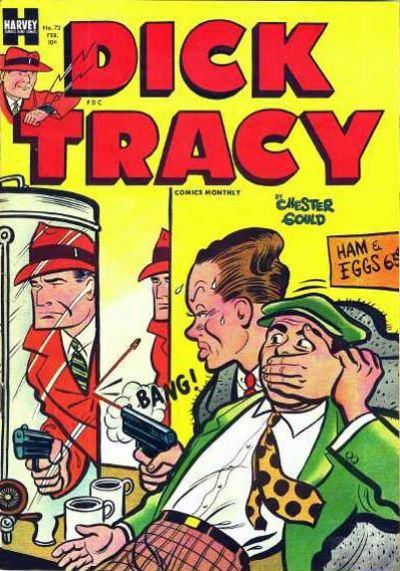
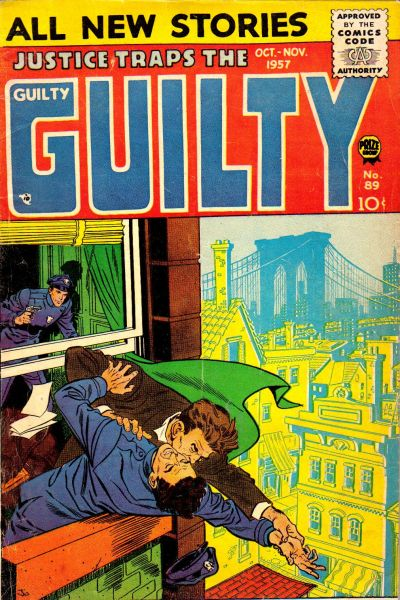
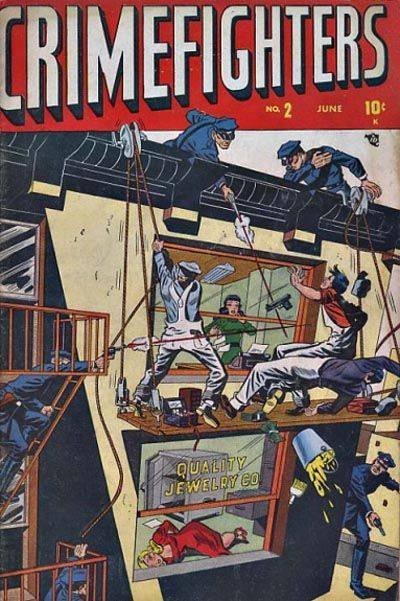
Crime Does Not PayFight Against CrimeCrime Must Pay the Penalty!

The connection to film noir runs deeper than that, though. There is little doubt that comic book creators were avid consumers of crime flicks, which clearly inspired many of their aesthetic choices, from sweaty close-ups to shadowy silhouettes, not to mention the specific look and postures of the various femmes fatales.

The influence was also in terms of the cynical, angst-filled view of postwar society, often blending leftist and reactionary sensibilities. Disturbed veterans, backlash against women’s work-related ascension during the war, and the little guy’s helplessness against corporate capitalism’s moral corruption were recurring themes in film noir. For example, the darkness-drenched psychological thriller High Wall finds a peculiar approach to each of these topics by merging them with the (also very noirish) trope of the amnesiac murderer. That movie also benefits from some great supporting characters, although without reaching the hights of the cast of Pickup on South Street, the phenomenal cult classic about a pickpocket artist who gets more than he bargained for when he accidentally steals a secret microfilm. This latter one is sometimes discarded as tainted by Cold War propaganda because of its communist villains, but the picture is playing on a whole other field, focusing on a trio of lowlifes who are desperately trying to get by while the higher-ups play their geopolitical games (all told through Sam Fuller’s sensationalistic style). Similarly, although the Red Scare context is also pretty inescapable when considering Elia Kazan’s Panic in the Streets (where, living up to the title, everyone is on edge as the authorities’ race to stop a (blatantly allegorical) plague coming from abroad and spreading through the working class and criminal underworld), the main allure is the realistic tour through New Orleans’ lowest milieus, stunningly photographed and culminating in one of noir’s most memorable chases, at a coffee warehouse…

It wasn’t just in American cinema, either. The Italian Bitter Rice, the Japanese Stray Dog, and the French Elevator to the Gallows did similar gestures, tapping into their own society’s tensions and traumas at the time. In the United Kingdom, there was a string of taut, gritty noirs in the turn towards the 1960s, including titles such as Pickup Alley, Hell is a City, and Never Let Go. The latter one, in particular, presents a bleak depiction of a middle class obsessed with consumer goods while getting a lot of mileage out of bourgeois fears, from youth delinquency to the loss of property and even the merciless march of work-related technological dependency.

At their best, comics didn’t merely copy the movies’ narratives and visuals. In anthologies like EC’s Crime SuspenStories and Shock SuspenStories, you could see writers and artists ingeniously translating and reinventing the language of film noir into a new medium. Here are ten short stories that did this wonderfully:

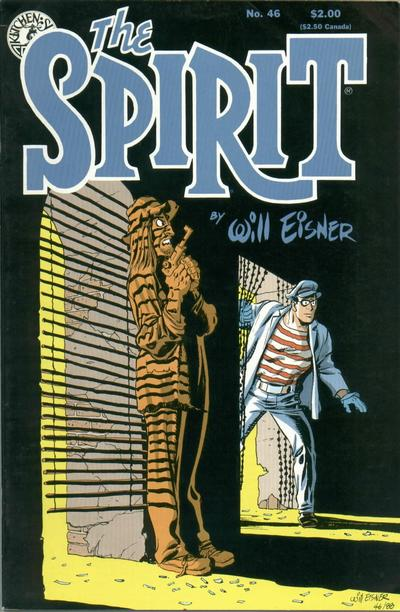
Will Eisner Spirit

‘Ten Minutes’ (originally published in The Spirit newspaper strip, September 1949), by Jules Feiffer (script), Will Eisner (script and art), Jamison (colors), and Abe Kanegson (letters)

Will Eisner’s strip about the street-level adventures of a domino mask-wearing vigilante is one of the most influential crime comics in the history of the medium, inspiring countless other works throughout the decades, from further takes on The Spirit to Alex Segura’s, Monica Gallagher’s, and George Kambadai’s quirky new spin on the subgenre, The Black Ghost. The noir influence was obvious, but perhaps never more so than in ‘Ten Minutes,’ where we witness the final moments in the life of Freddy, a frustrated young man from a downtrodden neighborhood who makes a decision that changes the course of his life. It’s one of those stories where the Spirit remains in the periphery of the action, with the comic preferring to delve into Freddy’s perspective and doomed fate. I also love the way Eisner plays with pacing, filling the pages with parallel interactions that serve both to lengthen the reading time (thus ramping up the tension) and to convey Freddy’s sense of alienation.

Jack Kamen

‘The Sewer’ (originally published in Crime SuspenStories #5, cover-dated June-July 1951), by Johnny Craig (script and art), Marie Severin (colors), and Jim Wroten (letters)

Flashback structure? Check. Murder driven by lust? Check. Overwhelming rain? Check. Macabre irony? Check. Desperate guy caught in a nightmarish spiral? Hell yeah. The only noir ingredient missing from ‘The Sewer’ is the black & white chiaroscuro (unless you read the uncolored version in Fantagraphics’ Voodoo Vengeance and Other Stories collection), but that’s ok, because Marie Severin’s color choices contribute to the chilling atmosphere, especially her poetic, green-heavy panels at the end of each death sequence…

Shock SuspenStories

‘Piecemeal’ (originally published in Shock SuspenStories #8, cover-dated April-May 1953), by Bill Gaines (script), Al Feldstein (script), Jack Kamen (art), Marie Severin (colors), and Jim Wroten (letters)

Deadly love triangles are a staple of film noir, from The Postman Always Rings Twice to Sudden Fear, and while the mechanics of ‘Piecemeal’ are pretty straightforward, two elements raise it above the crowd. One of them is Sally’s voluptuous femme fatale, who is a cross between Lana Turner and Gloria Grahame in the aforementioned pictures – her interactions with our protagonist are rendered by Jack Kamen in such a way that you can really feel the tingling sexual tension in the air. The other one is the shocking clincher – even those who see it coming are bound to be struck by how horrific things get!

Reed Crandal

‘From Here to Insanity’ (originally published in Crime SuspenStories #18, cover-dated August-September 1953), by Bill Gaines (plot), Al Feldstein (plot, script), Reed Crandall (art), Marie Severin (colors), and Jim Wroten (letters)

Masterfully plotted, with Al Feldstein’s wordy narration stretching out the suspense, ‘From Here to Insanity’ offers readers a spirited clash between the unstoppable force of an edgy fugitive (drawn by Reed Crandall like a bug-eyed psychopath) and the immovable object that can be a gentle old lady. You cannot look away, as the tense clash is unsettlingly captured by both story and artwork. There is also something to be said about the tale’s gender politics, given the peculiar way in which it delivers a punishment for misogyny (as underlined by the final punchline).

big racket

‘Big Racket’ (originally published in Dynamite #4, cover-dated November 1953), by Pete Morisi (art)

I had to include at least one private eye!

My favorite summer read this year was Ernest Mandel’s Delightful Murder: A Social History of the Crime Story, a fascinating analysis of the evolution of literary crime fiction and how it parallels the evolution of crime itself (as well as of organized capitalism). The only time the book – which first came out in 1984 – mentions comics, though, is when denouncing the genre’s post-Mickey Spillane degradation into simplistic, sadistic thrillers which found a semi-fascist low in comic books (in a rare hysterical passage, Mandel blames the medium itself, because of its reliance on visuals over words, concluding apocalyptically that ‘increasing illiteracy undoubtedly constitutes a formal expression of cultural decline, corresponding in its own way to the decline of bourgeois society and the threat of a decline of civilization itself.’)

Prejudices aside, I swear he could be writing about Johnny Dynamite, a nasty detective comic that pushed the boundaries of what this medium could get away with before the institutionalized censorship of the Comics Code Authority. ‘Big Racket’ is a perfect example: it opens with a deadly shoot-out in the dark, followed by a flashback in which Dynamite recalls facing a gangster who used to run a prostitution ring, having sex with a bombshell (who is later tortured), and going on a killing spree. I don’t know who wrote it (perhaps artist Pete Morisi himself), but whoever it was sure captured the tough-guy voice of the era’s pulp prose and movie voice-overs. The closing line, in particular, is as noir as it gets!

George Evans

‘Well Trained’ (originally published in Shock SuspenStories #15, cover-dated June-July 1954), by Carl Wessler (script), George Evans (art), Marie Severin (colors), and Jim Wroten (letters)

Carl Wessler and George Evans formed one of the greatest partnerships in the history of noir comics, with a solid string of hard-hitting collaborations in the mid-1950s. ‘Well Trained’ is arguably their most visceral: in this hardboiled revenge tale, a cop becomes obsessed with punishing his wife’s killer through the death penalty, effectively using the state as a weapon (thus implicitly recognizing the profoundly tormenting dimension of the countdown towards capital punishment). Readers may find their sympathies shifting as the protagonist’s legalist attitude soon rises up to a sadistic fever pitch.

The Squealer

‘The Squealer’ (originally published in Crime SuspenStories #25, cover-dated October-November 1954), by Jack Oleck (script), George Evans (art), Marie Severin (colors), and Jim Wroten (letters)

Another sordid comic about violent cops, ‘The Squealer’ is more of a character study, delving into the life and mindset of Lieutenant Ed Zimmer. Dirty and brutal, yet also committed to his son and with a trace of self-pity (‘You’re not gonna end up like me, Jerry! You’re gonna be somebody.’), Zimmer is not only the kind of well-rounded, conflicted figure noir is made of, but also the embodiment of the grim postwar era of corrupt institutions and frustrated American dreams which spawned the genre in the first place.

Bernie Kriegstein

‘In the Bag’ (originally published in Shock SuspenStories #18, cover-dated December 1954 – January 1955), by Carl Wessler (script), Bernie Krigstein (art), Marie Severin (colors), and Jim Wroten (letters)

Wessler also scripted this gripping tale from the point of view of an officer chasing a potential murderer with a suspicious bag. Like ‘Well Trained,’ ‘In the Bag’ is a story of obsession, once again exploring the line between cops’ sense of righteousness and the scarier side of an emboldened police. The great Bernie Krigstein then furthered the psychological intensity through murky, saturated tones and his typical technique of breaking down the action into rows of small moments (one page has 17 panels!), individualizing each step leading up towards the soul-crushing finale.

customer is always right

‘The Customer Is Always Right’ (originally published in San Diego Comic Con Comics #2, cover-dated August 1993), by Frank Miller (script, art)

Jumping forward decades in time, we get this amazing slice of retro-fetishistic neo-noir. Frank Miller’s work is so damn evocative that, even though ‘The Customer Is Always Right’ is just three-pages long, its conversation between two apparent strangers on a rainy balcony manages to pull off a memorably spellbinding mood, not to mention an elegant twist ending that still packs a punch. And yes, reduced to a stark black & white silhouette, the woman above looks practically naked… Sin City plays according to its own rules: everything about it is deliberately exaggerated, from the characters to the contrived, derivative plots and hyper-stylized visuals. (That said, if you look at the original noir period, you’ll find plenty of films where these elements were just as mesmerizingly overblown, both in famous productions like Gilda and, particularly, in second-tier works like The Unsuspected.) This story, in particular, deserves to be considered a modern classic, especially as it is fairly easy to track down, having been republished in multiple Sin City collections, such as the one-shot The Babe Wore Red and other stories and the trade paperback Booze, Broads & Bullets.

Greyshirt

‘How Things Work Out’ (originally published in Tomorrow Stories #2, cover-dated November 1999), by Alan Moore (script), Rick Veitch (art), David Baron (colors), and Todd Klein (letters)

As you can tell from the title page above, the densely packed ‘How Things Work Out’ follows the abusive relationship between a gangster and his live-in caretaker’s son, with each panel row focusing on a different decade and a different floor of the same building (with a rotating perspective from page to page). The high concept may sound too gimmicky (in addition to the pastiche elements of Rick Veitch’s artwork and Todd Klein’s lettering), but leave it to Alan Moore to actually imbue the tale with quasi-poetic emotional beats. Indeed, the second published story of the Spirit-inspired Greyshirt comic lives up to its roots. It’s nothing short of brilliant.

Posted in HARDBOILED CRIME | Tagged , , , , , , , , , , , , , , , , , , , , , , , , , , , , , , , | Leave a comment

COMICS CAN BE AWESOME (7 September 2020)

Your pop art reminder that comics can be awesome:

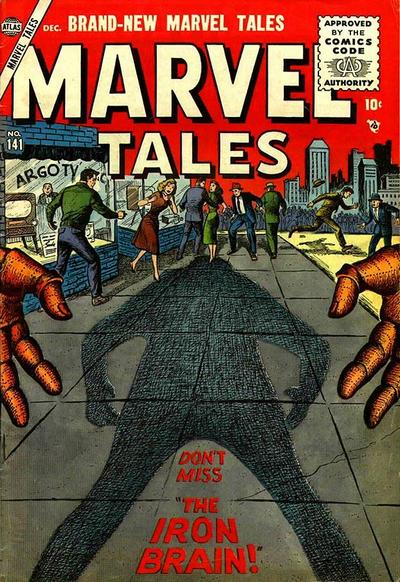
InvisiblesMystery Tales1963MadmanShade, The Changing Man

Posted in AWESOME COVERS | Tagged , , , , , , , , , , , | Leave a comment

1990s’ Batman comics reading guide – part 6

Night CriesNight Cries

Back in part 3 of this reading guide, I mentioned how 1994’s crossover event Zero Hour: Crisis in Time! retroactively altered the DCU’s past and, thus, served to selectively revise (or fix) certain aspects of Batman’s canon. Rather than stick to the official changes, though, I suggest using the fact that we are now dealing with a new timeline to introduce an alternative version of the Dark Knight’s early years, which can be read as a flashback (in theory, these works can be read at any place after Zero Hour, but I recommend reading them after No Man’s Land, so as not to dramatically break the flow of present-day continuity).

And yes, the main point of this exercise is to rescue a bunch of great comics from the 1990s and early 2000s that didn’t quite fit in with the continuity from the first post in this guide!

Batman Long Halloween          Batman

CAPTAIN GORDON ERA [Many of these comics built on Frank Miller’s and David Mazzucchelli’s ‘Batman: Year One,’ expanding its subplots and further developing the characterization of Captain James Gordon. In other words, the events of that 1986 story-arc remain canon (except for its very last scene, which should be disregarded). Curiously, even though these books were published without a rigid unifying vision for over a decade and done by very different creative teams, not only does their own cross-continuity actually work out fairly well, but so does the general tone, with most tales heavily influenced by film noir and gothic horror.]

Legends of the Dark Knight #89-90: ‘Clay’ (collected in Batman: Monsters) [The revised debut of Clayface (Mathhew Hagen) and Matches Malone. Starts three weeks after Batman’s debut.]

Batman & the Monster Men #1-6 (collected as Batman & the Monster Men) [Matt Wagner reimagines a classic Golden Age yarn and, in the process, provides a new version of Batman’s first encounter with Professor Hugo Strange and of the Batmobile’s debut. (It basically replaces ‘Prey’ (Legends of the Dark Knight #11-15) but, with a bit of goodwill, the two stories can sort of coexist, since this one finishes with Strange adopting the public persona he has at the beginning of ‘Prey.’)]

Batman and the Mad Monk #1-6 (collected as Batman and the Mad Monk) [Wagner’s sequel once again updates a Golden Age classic. It also depicts Batman’s second encounter with Catwoman. The ending leads straight into The Man Who Laughs.]

The Man Who Laughs [This one-shot by Ed Brubaker and Doug Mahnke is a modern retelling of Batman’s first encounter with the Joker (replacing Legends of the Dark Knight #50) that doubles as a new origin for the Bat-Signal (also replacing ‘Prey’).]

Legends of the Dark Knight Halloween Special: Choices (collected in Haunted Knight) [An early confrontation between Batman and the Scarecrow that can serve as a nice introduction to that rogue]

The Long Halloween #1-13 (collected as The Long Halloween) [Jeph Loeb and Tim Sale followed their set of Legends of the Dark Knight Halloween specials with this riveting limited series that takes place over a year and chronicles the debut of Two-Face (replacing Batman Annual #14). Since it features the Scarecrow (among many other rogues), the series also cancels out Batman Annual #19, which placed this villain’s debut after Two-Face’s. Loeb later included a reference to issue #3 in Batman #615 (part of his blockbuster ‘Hush’ story arc).]

Legends of the Dark Knight Halloween Special: Madness (collected in Haunted Knight) [Loeb’s and Sale’s second Halloween special must somehow be set after The Long Halloween (because Batman mentions Two-Face) despite the fact that Jim Gordon’s son is still a baby. To make it even more far-fetched, Gordon has recently adopted a teen Barbara, who is nevertheless absent from the next couple of books (we must assume she went to some kind of boarding school). Still, this is a damn neat comic on its own!]

Legends of the DC Universe          Batgirl

COMMISSIONER GORDON ERA [A bunch of scattered comics with solid character work that, when read in this order, chronicle an alternate version of the expansion of the Bat Family….]

Night Cries [In this graphic novel (by Archie Goodwin and Scott Hampton), James Gordon recently became Police Commissioner. The ending actually leads quite smoothly into Dark Victory.]

Dark Victory #0-13 (collected as Dark Victory) [This sequel to The Long Halloween features Dick Grayson’s debut as Robin, revising Robin Annual #4. (An early development also seriously contradicts Legends of the Dark Knight Annual #2.)]

Batman/Superman/Wonder Woman: Trinity (collected as Trinity) [Matt Wagner’s mini-series about a team-up between DC’s three main superheroes is set not too long after Robin’s debut and it works as a new introduction to Ra’s al Ghul (whom Batman has already fought in this past).]

Batman: Ego (collected in Ego and Other Tails) [Darwyn Cooke’s masterful one-shot feels like it takes place relatively early in the Dark Knight’s career, when Batman was still a bit unsure about his mission but Robin had already made his debut. One of the flashback panels matches Wagner’s version of Hugo Strange better than the one in ‘Prey’ (although the references to Two-Face are more aligned with the version in Batman: The Animated Series).]

Legends of the DC Universe #6: ‘Fear of God’ [One of a string of neat comics written by Kelley Puckett in the late ‘90s about the early days of Batman’s sidekicks. This one involves a team-up between Robin and Superman.]

Batman: Batgirl [Also by Puckett, this fun 1997 one-shot depicts an early confrontation between Barbara Gordon (who recently became Batgirl) and the Joker.]

Legends of the DC Universe #10-11: ‘Folie a Deux’ [Another kickass yarn by Puckett about the first Batgirl, this one alternating between flashbacks of her origin and a team-up with Commissioner Gordon]

Huntress: Year One #1-6 (collected as Huntress: Year One) [I’m a fan of this 2008 mini-series (by Ivory Madison and Cliff Richards) retconning the Huntress’ origin, set while Barbara Gordon was still Batgirl. Most changes to the 1989 Huntress comic actually align with Greg Rucka’s and Rick Burchett’s Cry for Blood mini.]

Birth of the Demon (collected in Batman: Birth of the Demon) [This beautiful one-shot revealing Ra’s al Ghul’s origin (set after Batman has fought him quite a few times) contains a couple of lines about Talia’s mother that directly contradict Son of the Demon, so I’m placing it in this alternate continuity.]

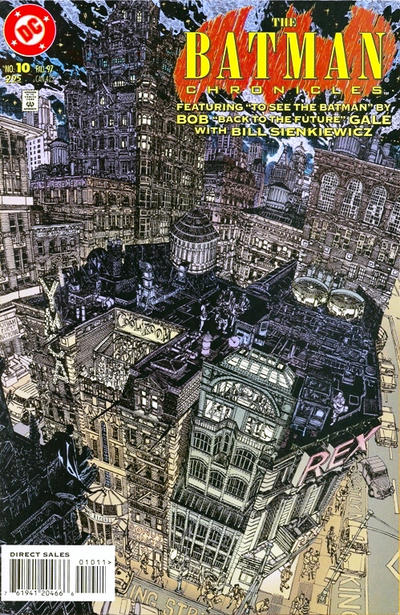
The Batman Chronicles #5: ‘Oracle: Year One – Born of Hope/Decoys/Of Mice and Men’ [All of these stories are set in the past and, while they don’t necessarily contradict earlier comics, I think they work nicely here, as flashbacks in the style of vignettes. The most recent one concerns Barbara Gordon’s evolution between The Killing Joke and Sword of Azrael (or, better yet, before her debut as Oracle in Suicide Squad #23, which – like this tale – was also written by John Ostrander and Kim Yale).]

The Batman Chronicles #19: ‘Got a Date with an Angel/Rapscallions/The Penny Plunderers’ [Another issue with stories from the past (although the one with the Huntress could also be set in the present)]

Posted in BATMAN COMICS FOR BEGINNERS | Tagged , , , , , , , , , , , , , , , , , , , , , , | Leave a comment

COMICS CAN BE AWESOME (31 August 2020)

Your action-packed reminder that comics can be awesome:

ActionRugged ActionAction ComicsShaolin CowboyPunisher

Posted in AWESOME COVERS | Tagged , , , , , , , , , , , , , , , | Leave a comment

COMICS CAN BE AWESOME (24 August 2020)

Your scary reminder that comics can be awesome:

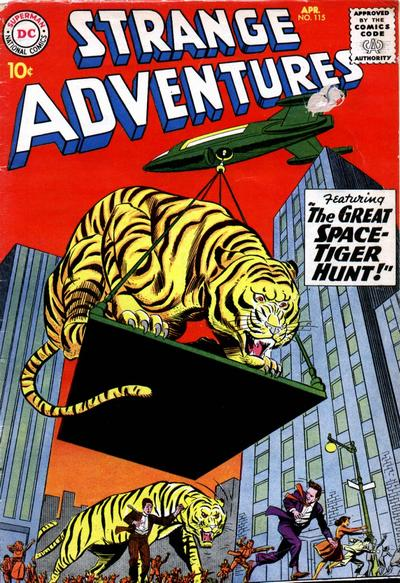
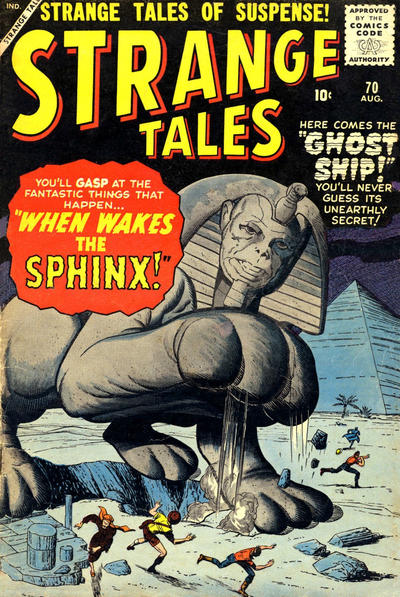
Alien Encounterstales of horrorStrange Stories of SuspenseMystery TalesUncanny Tales

Posted in ART OF HORROR COMICS | Tagged , , , , , , , , , , , | Leave a comment

COMICS CAN BE AWESOME (17 August 2020)

Goofing around with Batman, Robin, and Superman…

World's FinestWorld's Finest ComicsSupermanRobinBatman

Posted in COVERS OF BATMAN COMICS | Tagged , , , , | Leave a comment

COMICS CAN BE AWESOME (10 August 2020)

Just another reminder that comics can be awesome, science adventure edition…


Captain TriumphDoc SavageAnna MercuryTom StrongAtomic Robo

Posted in AWESOME COVERS | Tagged , , , , , , , , , , , , , , | Leave a comment

Taking a break (August 2020)

The usual summer break… Regular posts will only return in September, but, since we are still living in unusual times, I’ll try to keep the weekly COMICS CAN BE AWESOME section going throughout August. After all, pulp fiction – from Jack Kirby’s surreal sci-fi to Frank Miller’s The Dark Knight Returnsremains both a source of temporary distraction and a way to visualize a critique of the very system that spawn it. As Jason Read wrote, pop culture ‘might be baby food after all, but even baby food can be flung against the wall in rage.’

Stay safe!

Shadow of the Bat #42Shadow of the Bat #42
Posted in GOTHAM INTERLUDES | Tagged , , , , , , , | Leave a comment

COMICS CAN BE AWESOME (3 August 2020)

Your suspenseful reminder that comics can be awesome…

Real Clue Crime SToriesdetective comicssuspense detectiveCrime SuspenStoriesThe Perfect Crime

Posted in GLIMPSES INTO THE PAST | Tagged , , , , , , , , , , , | Leave a comment

1990s’ Batman comics reading guide – part 5

Batman: Mr. FreezeBatman: Mr. Freeze

By the late ‘90s, not only had the Batman family of books become a well-oiled machine, but three new awesome spin-offs joined the line: Nightwing, about Dick Grayson reinventing himself as a solo vigilante in the neighboring city of Blüdhaven, with action-packed scripts by Chuck Dixon and ultra-stylized visuals by Scott McDaniel; Birds of Prey (initially a set of specials, later turned into a regular series, also penned by Dixon) about the partnership between the wheelchair-bound hacker Oracle and the globetrotting Black Canary; and the funniest of the lot, Hitman, about the telepathic contract killer Tommy Monaghan (this was technically a spin-off of Garth Ennis’ and John McCrea’s run on Demon, but set in the Cauldron, Gotham’s lower-class Irish district). Moreover, there was a proliferation of specials and mini-series, most of them quite good.

Meanwhile, Staz Johnson became the regular penciller on Robin, bringing in a relatively more realistic – yet dynamic – style to the series. Azrael’s look also improved drastically once artist Roger Robinson came on board. In turn, Chuck Dixon’s replacement by Doug Moench as the main writer of Catwoman resulted in much less inspired scripts (can’t win them all, I suppose). Moreover, Devin K. Grayson became one of the franchise’s go-to writers, penning scattered tales (usually featuring Nightwing or Catwoman). In terms of the larger narrative, Batman returned to the Justice League of America (followed by Oracle and the Huntress) – and while I’ve mostly stayed clear of the superhero team books so far, I’ve decided to include some JLA-related material in this final stretch because much of it was written by Grant Morrison, so you can see him establish the approach to the Caped Crusader he would later develop in his Batman run in the 2000s.

That said, after 1996’s Legacy crossover the regular series once again went their different ways for a while, now with less subplots tying them together. Even the tie-ins to the larger DC events worked relatively well on their own, with no need to read other comics to get what was going on. This means that, for the most part, you can follow each series independently up until 1998’s Cataclysm crossover. With that in mind, instead of jumping around between individual issues, this time I’ll just list blocks of issues for each series (in alphabetical order) to be read between larger events.

Hitman          batman

Batman #535 (collected in Batman by Doug Moench & Kelley Jones, v1)

Birds of Prey: Manhunt #1-4 (collected in Birds of Prey, v1)

Detention Comics: ‘Momma’s Boy’ [This special anthology includes a Robin story.]

Hitman #1-7 (collected in Hitman, v1 & 2)

Justice League: A Midsummer’s Nightmare #1-3 (collected as Justice League: A Midsummer’s Nightmare ) [The mini-series by Mark Waid, Fabien Nicieza, Jeff Johnson, and Darick Robertson that brought together the main heroes in the DC Universe (including Batman), ushering in the revamped JLA.]

Robin (v4) #34


THE FINAL NIGHT [All you need to know about this DC crossover is that an alien entity has consumed the sun.]

Batman #536: ‘Darkest Night of the Man-Bat: Predation’ (collected in Batman by Doug Moench & Kelley Jones, v2) [Moench’s approach to Kirk and Francine Langstrom in this arc feels much closer to the pre-Crisis version of the characters than to Dixon’s recent reboot.]

Detective Comics #703: ‘Howling in the Dark’

Hitman #8: ‘The Night the Lights Went Out’ (collected in Hitman, v2: Ten Thousand Bullets)

Robin (v4) #35: ‘Iced!’

Batman #537-358: ‘Darkest Night of the Man-Bat: Pursuit/Predemtion’ (collected in Batman by Doug Moench & Kelley Jones, v2) [Wraps up the storyline from Batman #536, but it takes place after The Final Night.]

batman          Gordons Law

POST-FINAL NIGHT

Azrael #21-26

Azrael + The Question [This team-up special, set after Azrael #26, features not only the Question (next seen in The Question Returns one-shot), but also Junior Musto, from Denny O’Neil’s cult run on The Question.]

Aztek, the Ultimate Man #1-10 (collected as JLA Presents: Aztek, The Ultimate Man) [Since I’ve decided to include JLA material, I might as well add this nifty spin-off (co-written by Morrison) as well. Plus, issues #6-7 do guest-star Batman and the Joker. The final issue (#10) takes place at the same time as JLA #5, so it works better if read immediately afterwards.]

Batman #539-541 (collected in Batman by Doug Moench & Kelley Jones, v2)

The Batman Chronicles #6-7

Blackgate: ‘Hatred’s Home’

Detective Comics #704-711 [The issue ‘Knight Out’ (#711), about Bruce Wayne’s love life, works better if read before Bruce meets Vesper Fairchild, in Batman #540.]

Flash + Nightwing  [A team-up special by Brian Augustyn, Mark Waid, and Eduardo Barreto]

Gordon’s Law #1-4 (collected in Gordon of Gotham) [An awesome crime yarn starring Commissioner James Gordon, by Dixon and Klaus Janson.]

Hitman #9-12 (collected in Hitman, v3: Local Heroes) [Set before JLA #5, since it still references Superman’s long-haired look.]

JLA #1-5 (collected in JLA Deluxe Edition, v1 and JLA by Grant Morrison Omnibus; the first four issues also collected as JLA, v1: New World Order) [‘Woman of Tomorrow’ (#5) features Superman’s radical new look and cameos by Aztek and Tommy Monaghan. It runs parallel to Aztek #10 and to the neat JLA: Tomorrow Woman one-shot (by Tom Peyer and Yannick Paquette), which should be read afterwards.]

Legends of the Dark Knight #94: ‘Stories’ [A wonderful issue (by Michael T. Gilbert) in which characters stuck in an elevator compare their memories of meeting Batman, done in the style of various different eras.]

Batman: Poison Ivy (collected in Arkham: Poison Ivy) [One-shot by John Francis Moore and Brian Apthorp]

Robin + Impulse [A team-up special by Brian Augustyn, Mark Waid, and John Royle]

Shadow of the Bat #56-58 [‘Leaves of Grass,’ featuring Floronic Man with a new body after having been recently decapitated in Swamp Thing #170.]


PULP HEROES [Not exactly a crossover: DC’s 1997 annual issues were all pastiches of pulp magazines – thus, while they don’t have to be read together, it’s fun do so!]

Azrael Annual #3: ‘The Vampire Bat’ [Done in the style of a noirish detective yarn (specifically, The Maltese Falcon)]

Batman Annual #21: ‘The Scream of the Green Dragon’ (collected in Tales of the Batman: J.H. Williams III) [Done in the style of The Shadow]

Catwoman Annual #4: ‘I Married a Mummy’ [Done in the style of a horror/fantasy adventure]

Detective Comics Annual #10: ‘Warrior Breed’ [Done in the style of two-fisted war action]

Hitman Annual #1: ‘Coffin Full of Dollars’ (collected in Hitman, v2: Ten Thousand Bullets) [Done in the style of a western]

JLA Annual #1: ‘Hardboiled Hangover/Lockdown’ [Done in the style of hardboiled mystery and two-fisted action]

Nightwing Annual #1: ‘Forever Hold Your Peace’ (collected in Nightwing, v2: Rough Justice (2015 edition)) [Done in the style of a romance potboiler]

Robin Annual #6: ‘The Law West of Gotham’ [Another western]

Shadow of the Bat Annual #5: “I was the love-slave of a plant-based killer!” [Another noirish detective yarn]

Azrael          catwoman

POST-PULP HEROES

Anarky #1-4 (collected in Batman: Anarky) [This mini-series must be set after Hitman #20.]

Azrael #27-33

Batman: Bane (collected in Legacy, v2 (2018 edition)) [Bear in mind that this one-shot (by Chuck Dixon and Rick Burchett) takes place after Nightwing has started operating in Blüdhaven, at the beginning of the Nightwing ongoing series.]

Batman #542-546 (collected in Batman by Doug Moench & Kelley Jones, v2)

Batman + Arsenal [Like Bane, this team-up special (by Devin K. Grayson and Rodolfo Damaggio) takes place after Nightwing has moved to Blüdhaven.]

The Batman Chronicles #8-10

Batman / Wildcat #1-3 (collected in Batman/Wildcat)

Catwoman (v2) #41-53 [I skipped #38-40, because it consists of a goofy ‘Year Two’ story]

Detective Comics #712-713

Hitman #13-20 (collected in Hitman, v3 & 4) [The arc ‘Ace of Killers’ (#15-20) features Jason Blood and Etrigan, revisiting the storyline from Demon (v3) #52-54.]

JLA #6-9 (collected in JLA, v2: American Dreams, JLA Deluxe Edition, v1, and JLA by Grant Morrison Omnibus)

Batman: Mr. Freeze (collected in Arkham: Mister Freeze) [One-shot by Paul Dini and Mark Buckingham]

Nightwing (v2) #1-12 (collected in Nightwing, v1: A Knight in Blüdhaven (or just Blüdhaven in the 2014 edition) & v2: Rough Justice)

Robin (v4) #36-45

Shadow of the Bat #59-67

The Spectre (v3) #51 [Guest-appearance by the Dark Knight, who recently encountered the Spectre in Batman #540-541.]

Starman (v2) #33-34 (collected in Starman Omnibus, v3) [Guest-appearance by the Dark Knight in one of the greatest superhero series of the ‘90s.]

Starman          Scare Tactics

SCARE TACTICS [On the surface, Len Kaminski’s and Anthony Williams’ quirky series Scare Tactics (about a rock band made up of teenage monsters) may have little to do with Batman, but there are enough connections to justify its inclusion here.]

Showcase ’96 #11

Scare Tactics #1-9

Catwoman + Screamqueen [The main story works by itself. The back-up continues from Impulse + Gross-Out and Superboy + Slither… and leads into the backup of Robin + Fang.]

Robin + Fang

Scare Tactics #10-12 [Issues #10-11 are set in Gotham City.]


GENESIS [The main thing you need to know about this DC crossover is that an interstellar phenomenon is making humans feel like something is missing, ushering in existential crises.]

Azrael #34: ‘Genesis’

Batman #547: ‘Dark Genesis’ (collected in Batman by Doug Moench & Kelley Jones, v2)

Robin (v4) #46: ‘Dark at Dawn’

robin          Batman Predator

POST-GENESIS

Azrael #35-39 [‘The Angel and the Hitman’ (#35) guest-stars Tommy Monaghan, so it should come before Hitman #23, where Tommy’s life begins to spiral out of control.]

Azrael / Ash [This intercompany crossover has the particularity of reuniting the creative team behind the original Sword of Azrael mini-series (Denny O’Neil and Joe Quesada). I would read it either right before or right after Azrael #35, because the hero’s flirty banter with Oracle matches their dynamic at the time.]

Batman #548-552 (collected in Batman by Doug Moench & Kelley Jones, v2) [‘Chasing Clay’ (#550, collected in Tales of the Batman: J.H. Williams III) introduces Cameron Chase, the agent of the DEO (Department of Extranormal Operations) who will go on to star in her own awesome series.]

Batman 80-Page Giant #1-2

Batman Annual #22 [Part of the larger DC crossover Ghosts]

The Batman Chronicles #13 [Published later, but probably set before Cataclysm.]

Batman / Phantom Stranger [One-shot by Alan Grant and Arthur Ranson that is actually a sequel to Detective Comics #614, published seven years before!]

Batman: Scottish Connection (collected in Batman: International)

Batman Secret Files & Origins #1

Batman / Toyman #1-4

Batman versus Predator III #1-4 (collected as Batman Versus Predator III: Blood Ties)

Birds of Prey: Black Canary / Batgirl (collected in Birds of Prey, v1 (2015 edition))

Birds of Prey: The Ravens (collected in Birds of Prey, v2) [Sets up one of the arcs of the upcoming Birds of Prey ongoing series.]

Catwoman (v2) #54-55 [Devin Grayson replaces Moench as the regular writer, kicking things off with a couple of fun standalone tales.]

Catwoman / Wildcat #1-4 (collected in Batman/Wildcat)

Detective Comics #714-718 [You may as well add #726, which seems set before Cataclysm.]

Gordon of Gotham #1-4 (collected in Gordon of Gotham)

Hitman #21-28 (collected in Hitman, v4 & 5)

JLA #10-17 (collected in JLA Deluxe Edition, v2 and JLA by Grant Morrison Omnibus; issues #10-15 also in JLA, v3: Rock of Ages and #16-17 in JLA, v4: Strength in Numbers) [Between #15 and #16, read the one-shot New Year’s Evil: Prometheus.]

New Year’s Evil: Scarecrow [One-shot by Peter Milligan and Duncan Fegredo]

Nightwing (v2) #13-18 (collected in Nightwing, v2: Rough Justice) [Read the short story ‘The Breaks’ (Nightwing #½, collected in the third volume) between #15 and #16.]

Nightwing / Huntress #1-4 (collected in Nightwing, v3: False Starts) [To be read after Nightwing (v2) #18]

Resurrection Man #7, 9-10 [Issue #7, in which Resurrection Man comes to Gotham, works pretty well on its own. Issues #9-10, where he meets Tommy Monaghan – and which therefore take place before Hitman #23 – build on storylines from earlier Resurrection Man issues, but they’re not hard to follow. (Issue #8 has no direct Batman connection, but it’s a nice Halloween tale.)]

Robin (v4) #47-52 [The very final pages of #52 take place during Cataclysm. You can either read the issue here (and take those pages as foreshadowing) or right after Cataclysm (if you don’t mind waiting out the cliffhanger).]

Shadow of the Bat #68-72


FLASHBACKS [These comics came out in the 2000s, but they must be set sometime around here, before Cataclysm.]

Arkham Asylum: Living Hell #1-6 (collected as Arkham Asylum: Living Hell)

Batman: The Hill

Batman / Starman /Hellboy (collected in Starman Omnibus, v4 and Hellboy: Masks and Monsters) [This intercompany crossover, cover-dated 1999, also belongs here.]

Batman: Unseen #1-5 (collected as Batman: Unseen)

Legends of the Dark Knight #142-145 (collected as DC Comics Presents: Batman – The Demon Laughs)

World’s Finest (v2) #1-10 (collected as Batman & Superman: World’s Finest) [This very cool limited series (written by Karl Kesel) consists of retroactive flashbacks to Batman/Superman team-ups throughout the ages, but it’s best read as a whole in order to capture the overall arc.]

batman          robin

CATACLYSM ADDENDA [Cataclysm inaugurated the final phase of this overall era of Batman comics, with the editorial and creative team that had been around for most of the ‘90s providing a last batch of stories with the same tone and cast, paying off many of the lingering subplots. I’ve written a reading order for Cataclysm and its aftermath (including the massive No Man’s Land crossover) here and here. At the time, I left out the comics below because they largely ignore the events of Cataclysm, yet they must take place between that crossover and No Man’s Land:

Anarky (v2) #1-8 [Last time, I only included the first issues, but the whole series fits here. The main story must take place after JLA #20-21, since Superman is back to his old look.]

Birds of Prey #1-7 (collected in Birds of Prey, v2)

Chase #1-9, followed by Chase #1,000,000 (collected as Chase) [In ‘Shadowing the Bat’ (#7-8, collected in Tales of the Batman: J.H. Williams III), Cameron Chase returns to Gotham.]

Hitman #29-36 (collected in Hitman, v5: Tommy’s Heroes) [Hitman #1,000,000, part of the DC One Million crossover, takes place between #33 and #34.]

JLA #18-31 (collected in JLA Deluxe Edition, v3) [DC One Million takes place between #23 and #24]

Robin 80th Anniversary 100-Page Super Spectacular: ‘Aftershocks’ [This special – which came out earlier this year! – includes a short story by Nightwing’s original creative team (Chuck Dixon and Scott McDaniel) set during Cataclysm, right after Nightwing #19.]

Superman: The Odyssey [It’s a Superman one-shot, but it features a very cool Batman cameo in flashback and it’s done by the Detective Comics team of Chuck Dixon and Graham Nolan.]

Posted in BATMAN COMICS FOR BEGINNERS | Tagged , , , , , , , , , , , , , , , , , , , , , , , , , , , , , , , , , , , , , | Leave a comment