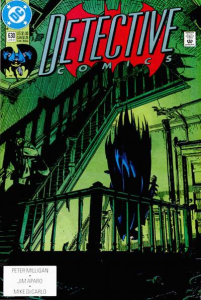
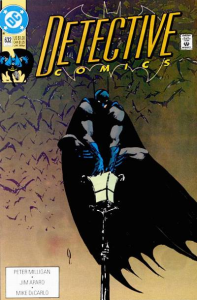
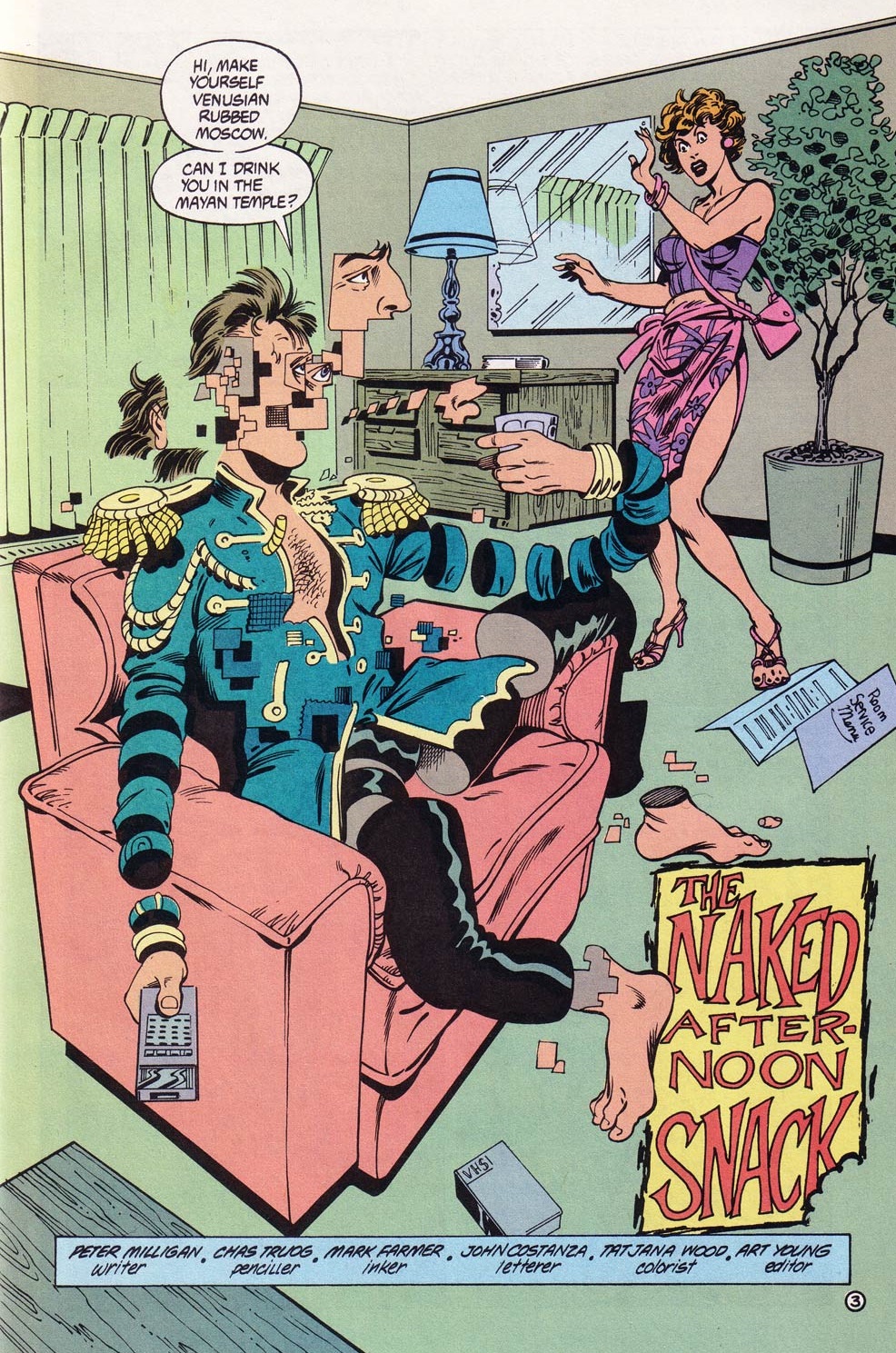
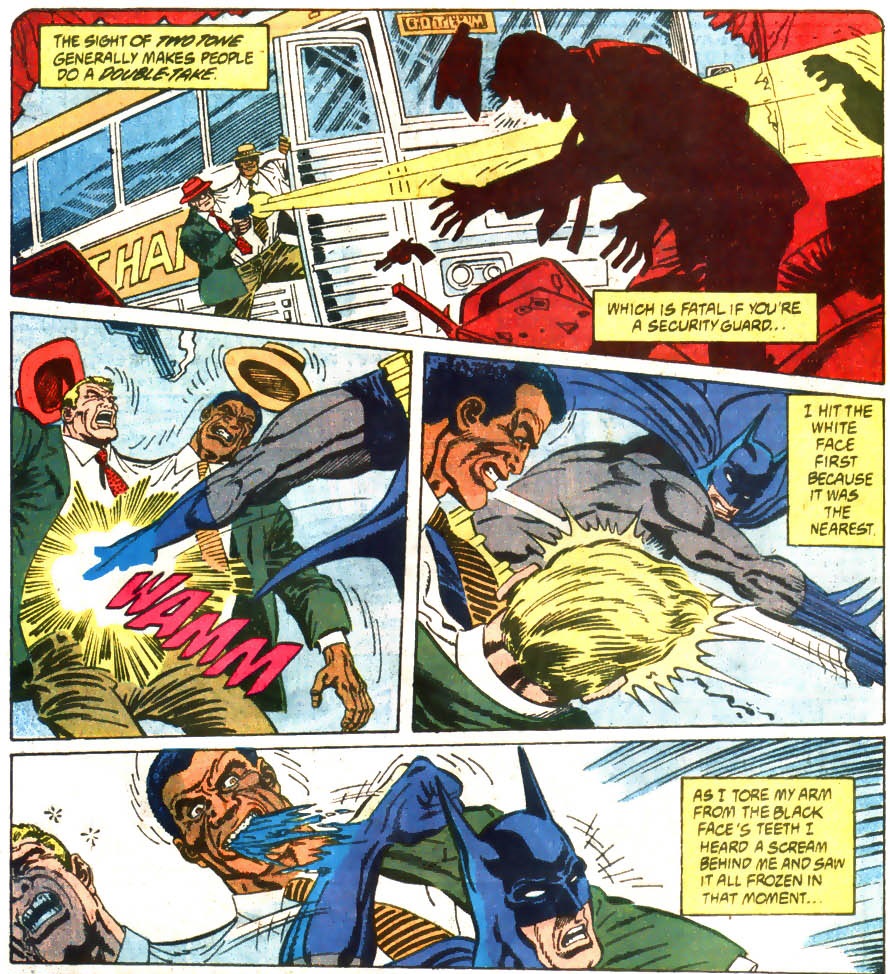
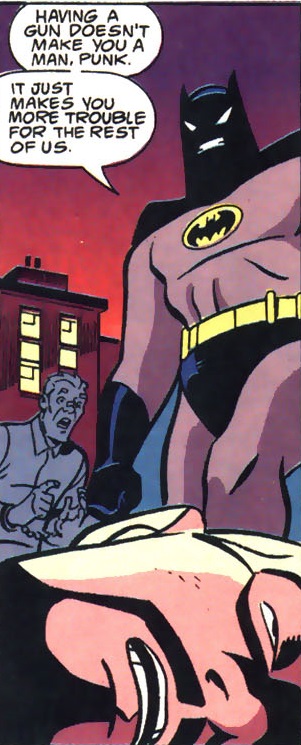
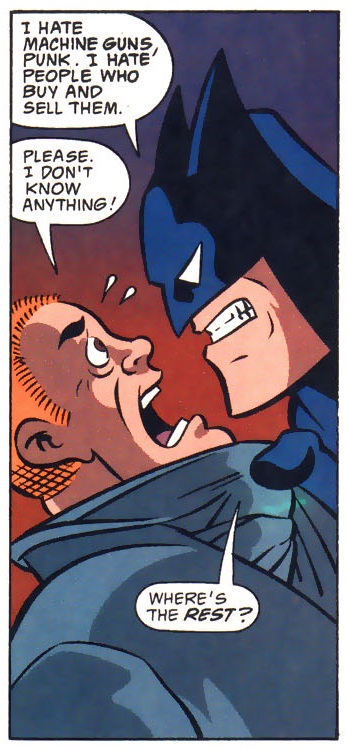
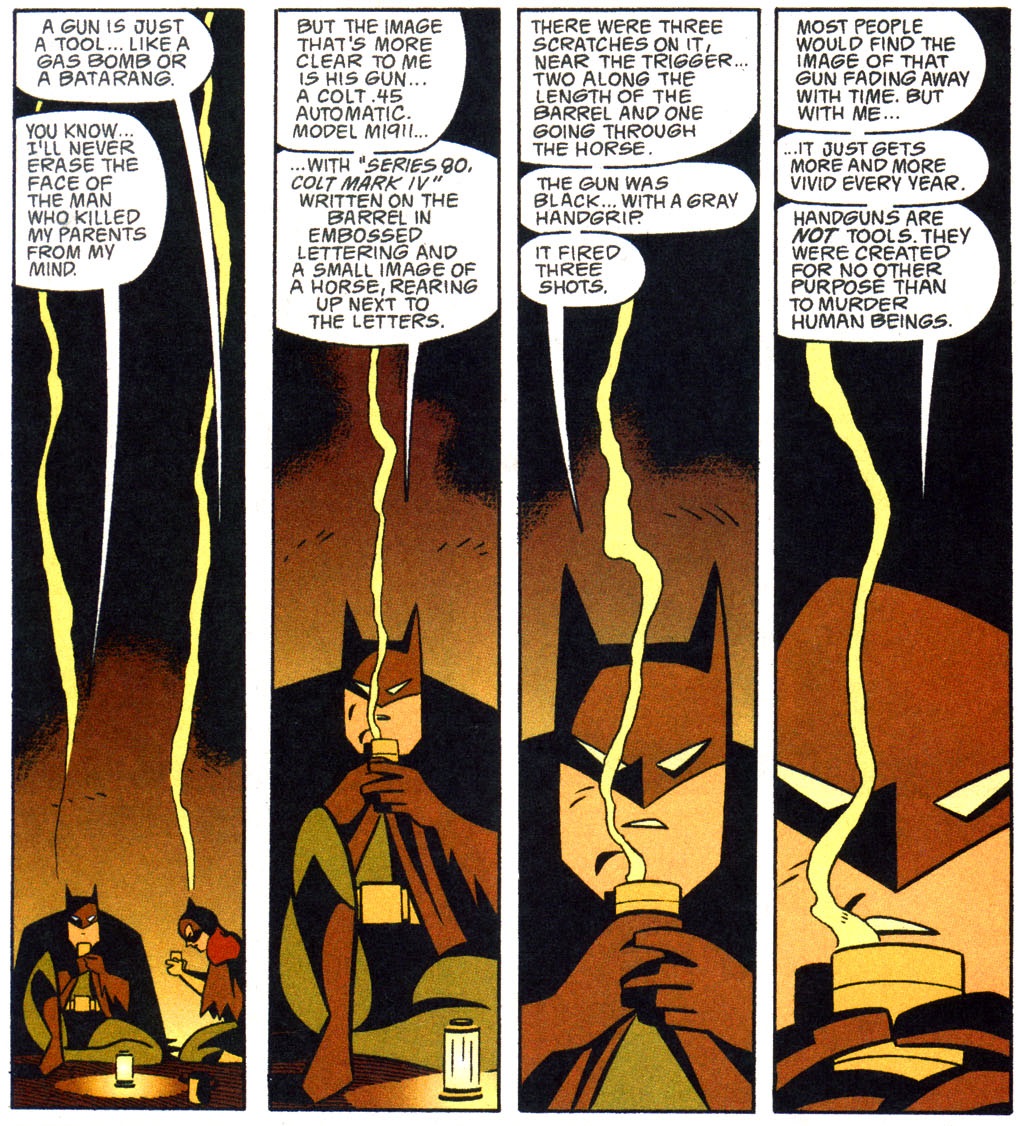
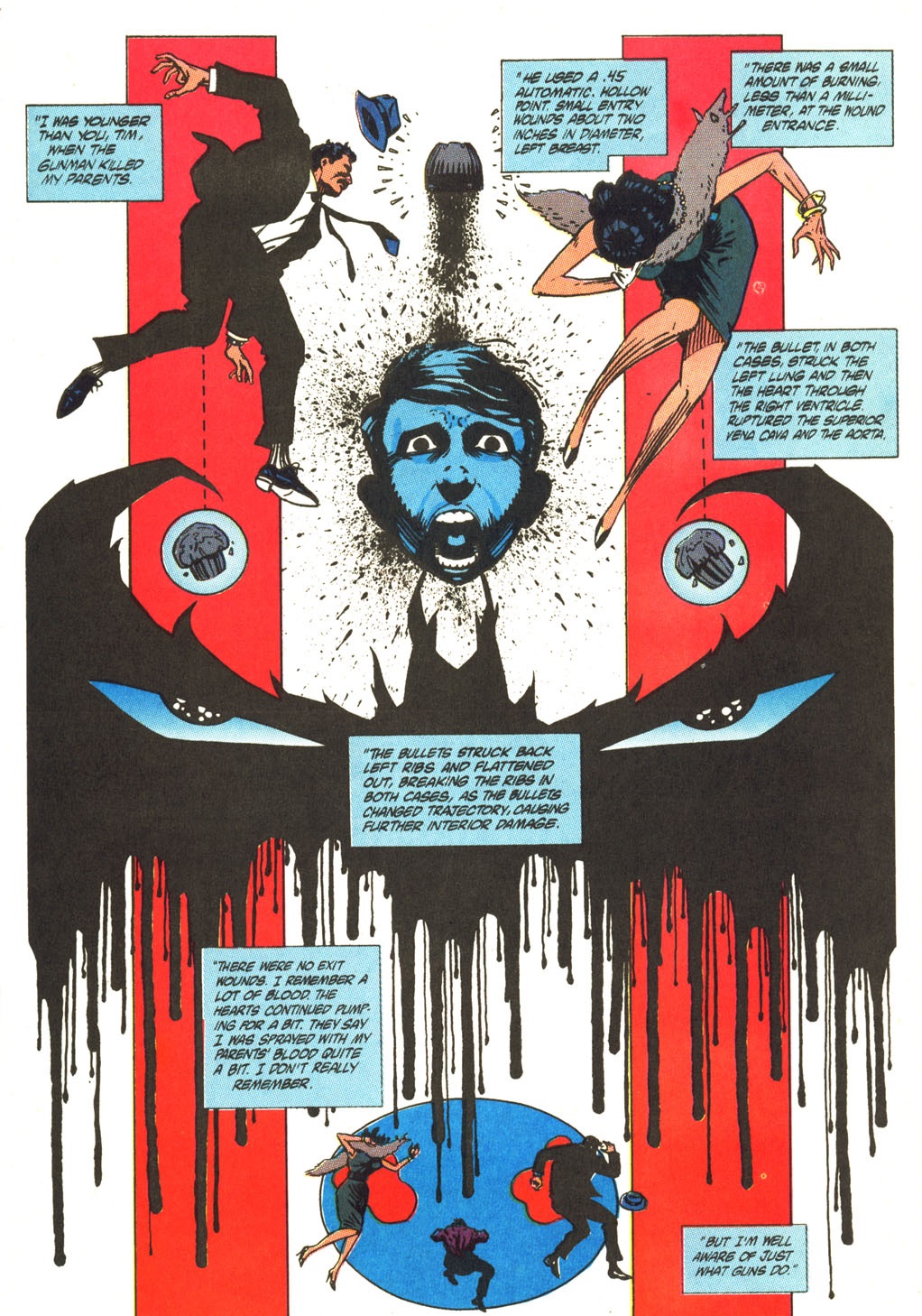
Remaking Night of the Stalker!

A few weeks ago, I talked about remakes in comics. The thing about this medium, though, is that a lot of the time remakes are not explicit. In fact, it’s not unusual for storylines to share (and usually extend) a particular idea from an earlier arc with no-one bothering to clarify if this is meant to homage, rip-off, and/or replace the previous version.

In Batman comics, there’s the case, for example, of ‘The Dark Rider/At the Heart of Stone’ (Batman #393-394) and ‘Ten Nights of the Beast’ (Batman #417-420) – they seemed like two takes on the same story, but then ‘Troika’ (Batman #515) treated them as part of a single continuity… And what about ‘The Cult’ and ‘No Man’s Land?’ Or ‘Blind Justice’ and ‘Knigthfall?’ Or ‘Standard Operating Procedure’ and ‘Bruce Wayne: Murderer?’ Did they all happen in the same universe? If so, shouldn’t the characters be constantly struck by a sense of déjà vu?

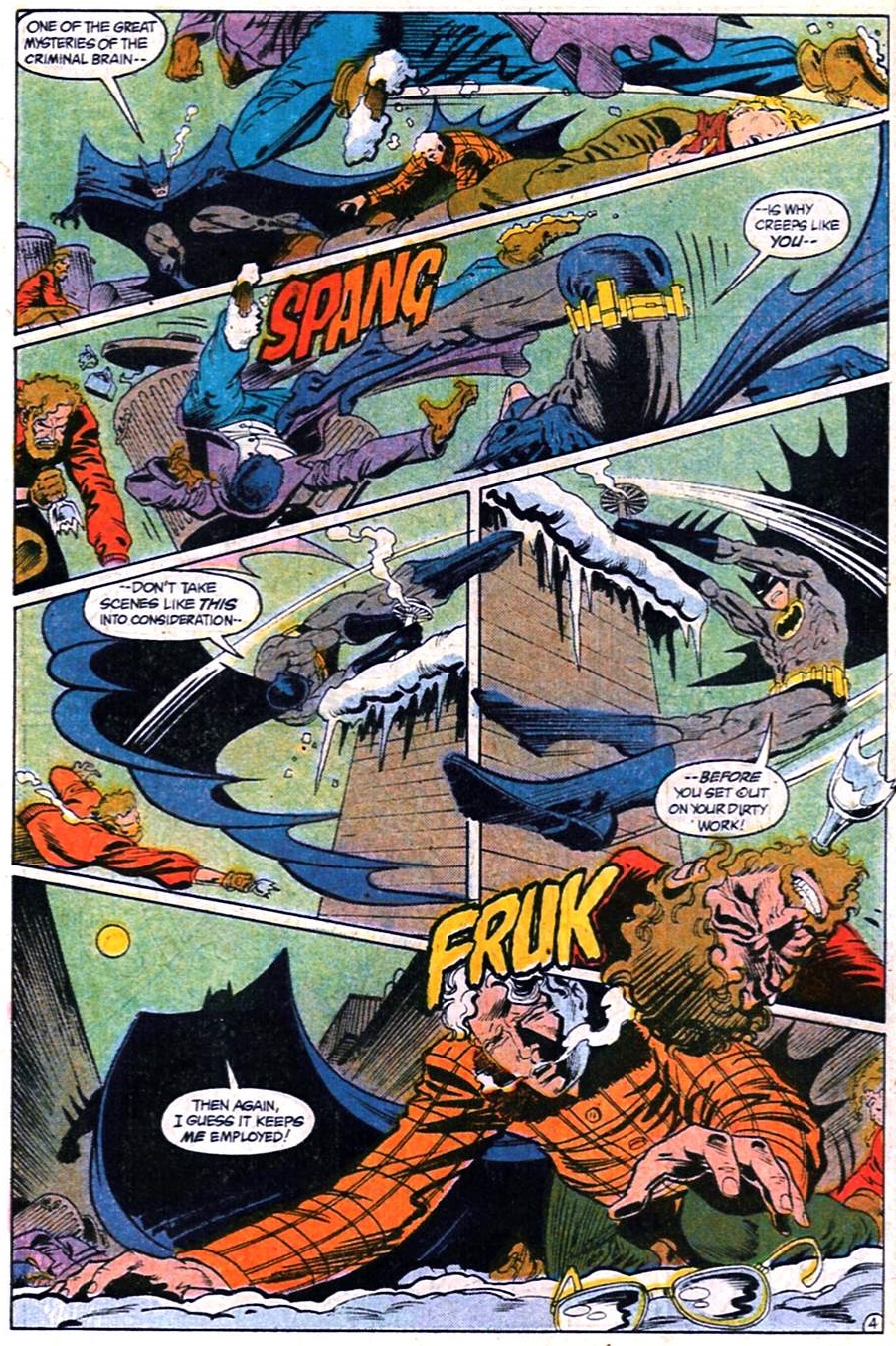
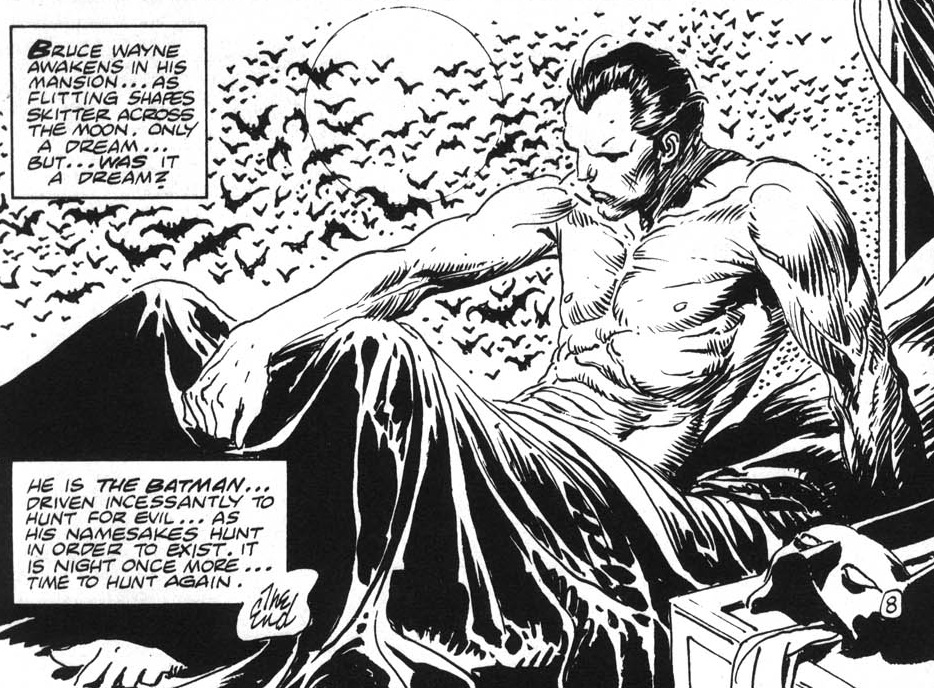
Speaking of déjà vu, every once in a while you do get a comic that is so directly informed by a previous one that it allows you to draw direct comparisons between the approaches and styles of different creators… One example concerns ‘Night of the Stalker!’ (Detective Comics #439), first published in 1974. This classic tale opens with a gang of robbers killing a little boy’s parents during their getaway. Needless to say, this brings back some personal memories to the Dark Knight, who therefore stalks the robbers into the middle of nowhere and ruthlessly gets them one by one without uttering a single word.

detective comics 439detective comics 439

‘Night of the Stalker!’ was scripted by Steve Englehart, from a plot by Vincent and Sal Amendola, who also did the pencils and background inks. According to the credits, it was based on an incident described by Neal Adams. The remaining inks were by Dick Giordano and the final editor was Archie Goodwin. Moreover, based on the Grand Comics Database, Jerry Serpe colored the story and Morris Waldinger lettered it.

The premise is simple yet very effective, with Sal Amendola deserving much credit for the way he crafted one neat scene after another… Overall, there is a rough, gritty ‘70s vibe and the comic bursts with pathos, atmosphere, and dynamic visuals! The main drawback is how text-heavy the whole thing is – while some of Steve Englehart’s prose can be moody and lyrical (‘Setting sunlight slices sharply through the dry November air, but cannot cut its chill. Rush hours throngs crowding the streets pull their coats tighter against this first touch of approaching winter…’), a lot of it is just needlessly descriptive (‘Now those leg muscles work in reverse… cushioning the impact of a death-defying leap… letting him land atop the car with no more noise than a cat!’).

Interestingly, at the time Sal Amendola’s work was apparently dished by many of his peers and the finished product was the result of several artistic clashes and compromises. Still, what we ended up with was a powerful comic that definitely stands out. It was nominated for the Best Story of the Year award at the Academy of Comic Book Arts and it has been reprinted in the collection Batman: The Greatest Stories Ever Told.

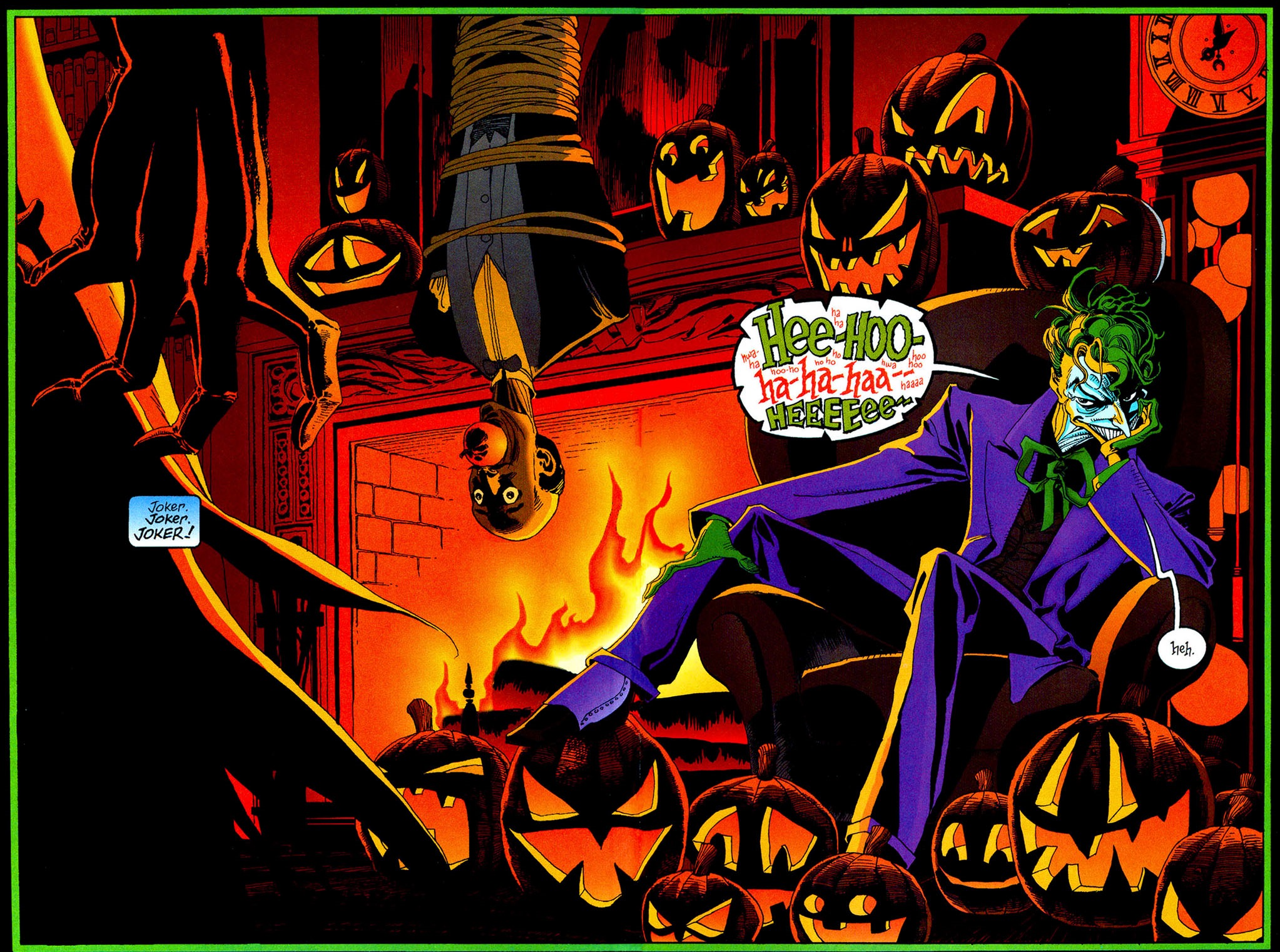
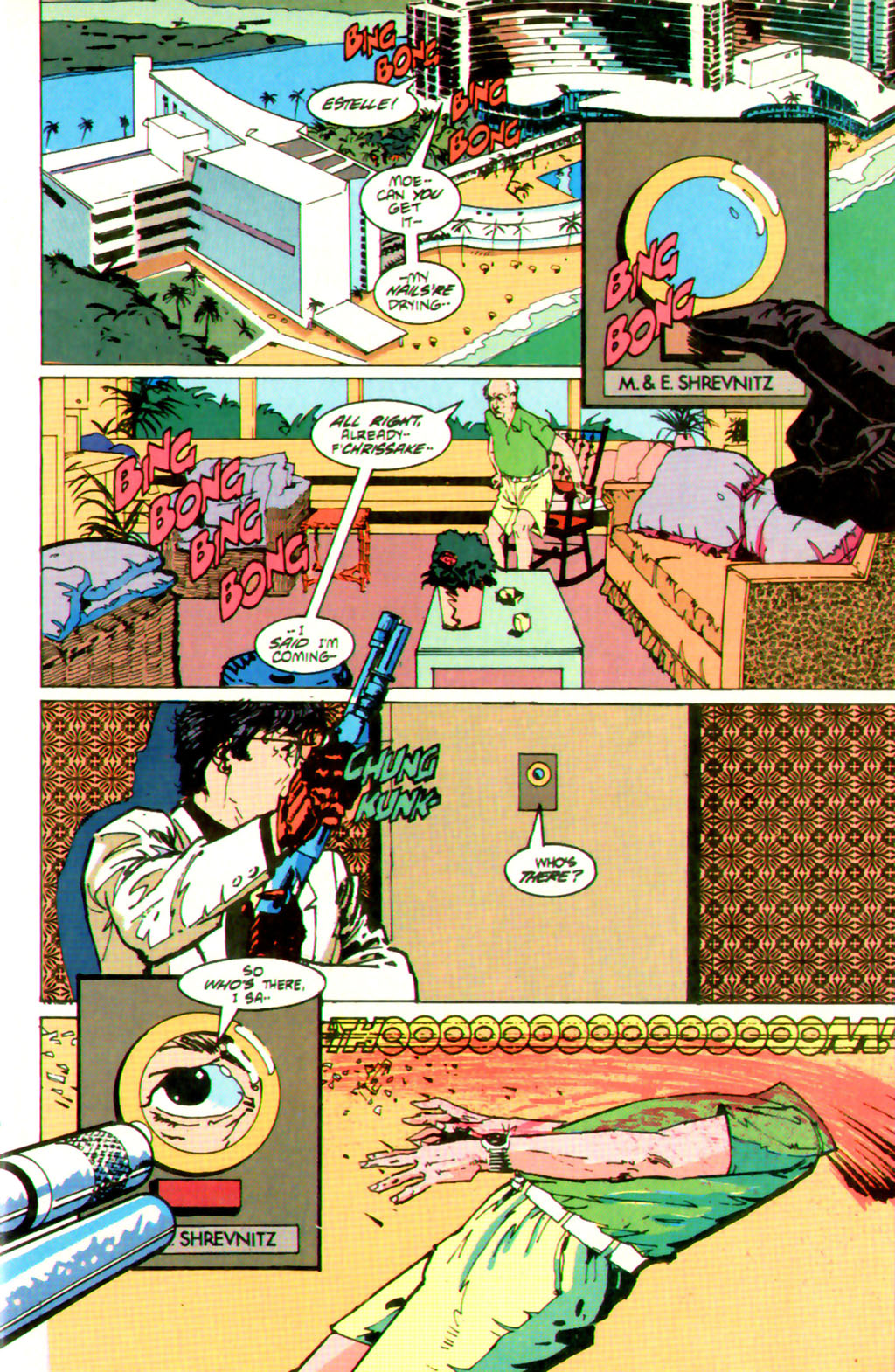
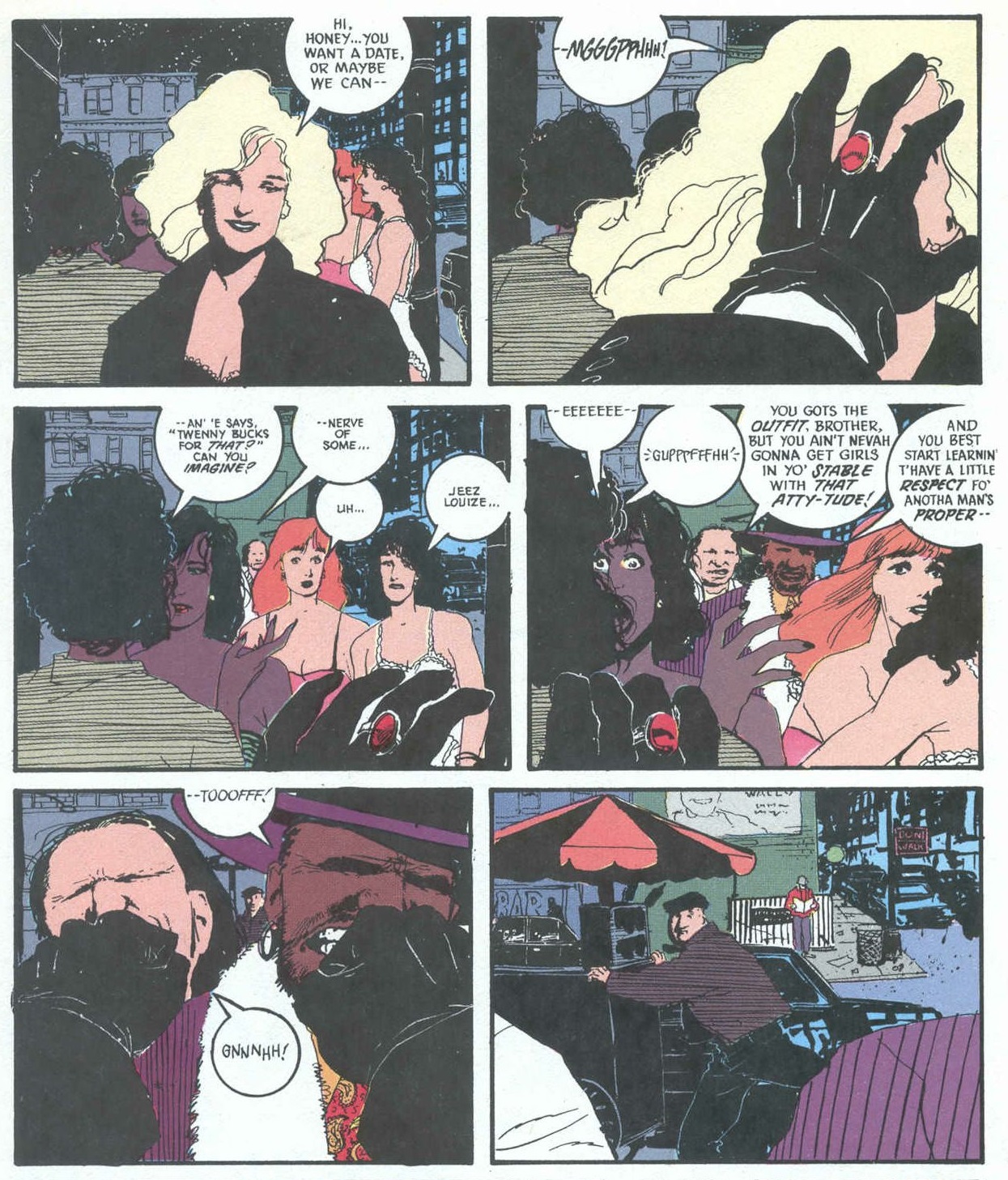
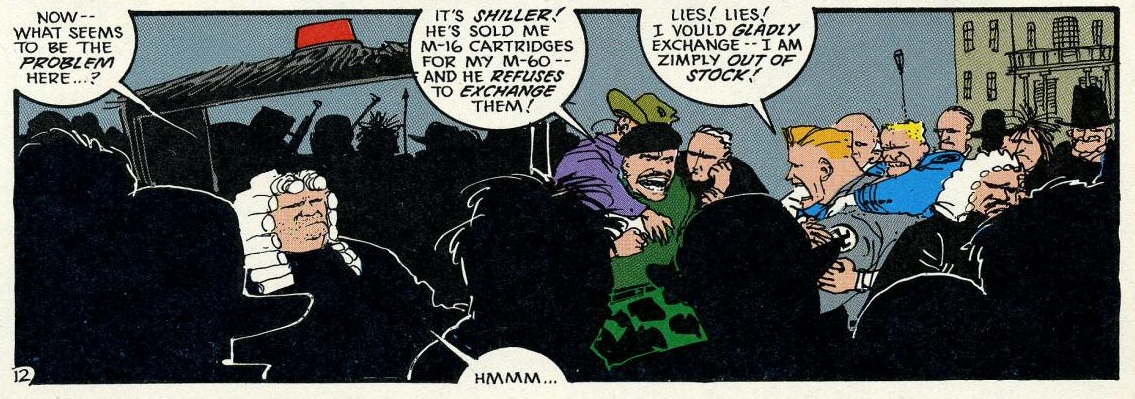
Thirty years later, Darwyn Cooke overtly remade ‘Night of the Stalker!’ in Solo #5, under the title ‘Déjà Vu’ (which had been Sal Amendola’s proposed title for the original). As far as I can tell, Cooke was in charge of practically everything – script, pencils, inks, colors, letters – so this time around we got to see a much more cohesive approach to the tale. And oh boy does it kick butt:

Solo 5Solo 5

Leave it to Darwyn Cooke to take such a classic and churn out his own masterpiece. It’s not just that the remake looks hipper or more ‘modern’ than the original… By themselves, cleaner, splashier visuals are not enough to bring a dusty concept back to life (at the end of the day, Ben-Hur’s chariot race is still much more riveting than the pod race in The Phantom Menace), but Cooke clearly conceived each tweak to maximum effect… In an obvious move, he did away with the omniscient narration, thus fixing the original’s main flaw while letting the images drive the story. He also replaced Jerry Serpe’s naturalistic colors with much starker, expressionistic choices, creating a significantly darker mood that suited the tale (despite the title, the original didn’t seem to take place during nighttime, but this version did).

Another change that jumps at anyone reading these two back-to-back is the super-cool decision to turn one of the robbers into a homage to Parker, the career criminal whose novels Darwyn Cooke would go on to successfully adapt… In Solo, he is called Stark, after the novels’ writer Richard Stark, and he looks like the actor Lee Marvin, who played the character in the brilliant crime flick Point Blank (Cooke pulled the same trick in the Catwoman graphic novel Selina’s Big Score).

Finally, I particularly like how Cooke omitted the sequence in which Batman jumps onto the roof of the thieves’ car, so that the revelation (through his shadow) becomes a surprise for the readers as well. Sadly, Cooke also left out a climactic fight in the water near the end, which I was quite fond of, but he more than made up for it in the haunting way he nailed the rest of that scene. Indeed, this is almost as flawless a piece of noirish Batman action as you are likely find… Hell, this whole issue of Solo is freaking awesome!

So yeah, I guess what I’m trying to say is that, damn it, this year the world of comics has lost one of the best.

Posted in WEBS OF FICTION | Tagged , , , , , , , , , | 2 Comments

10 times the Punisher made love, not war

I finished watching the second season of Daredevil last night. I thought the first one was good (if overpraised), but this one is much stronger. Although outstandingly well-acted and full of neat visual touches, the previous season wasn’t very dynamic… Except for the virtuoso fights, most scenes just involved characters standing still while spouting exposition at each other. This time around, though, the series hits a near-perfect balance between moments of quiet gravitas and a generally riveting pace.

Besides fixing some of the earlier flaws, the team behind Daredevil also deserves kudos for keeping much of what made the other season work. Once again, they manage to be dark and violent without completely losing their sense of fun or humanity. It remains a smart show that is proudly gritty yet it doesn’t try *too hard* to be badass (I’m looking at you, second season of True Detective). Indeed, I would say they pull off the kind of urban-crime-meets-ninja-action vibe that some of the best Daredevil comics – and many Batman comics, for that matter – were going for.

Also, like Jessica Jones, the show nails the main characters but it’s not a slave to the source material. The show runners were not afraid to flesh out underdeveloped elements of the cast (Karen Page is much more interesting in this live action version) and to craft their own story… Despite paying homage to a handful of memorable set pieces, these series don’t make me feel like I’m watching a lame remake of the comics (a la recent DC animated movies), but like I’m watching another cool adventure with the characters I love!

In this regard, Daredevil by and large does a good job with the Punisher, capturing Frank Castle’s visceral appeal without shying away from his disturbing viciousness. Even when the show adopts a more benevolent depiction, halfway through the season, it doesn’t stop engaging with the implications of Frank’s worldview, fitting him into the series’ broader themes.

That said, there is one aspect of the Punisher’s characterization which was notably absent from Daredevil, namely his very active sex life.

Return to Big NothingReturn to Big Nothing
The Punisher War Journal 33The Punisher War Journal #33

I get why the show’s writers didn’t include this – sex is usually linked with hedonism, which sort of clashes with Frank Castle’s exaggerated, stoic persona. At the same time, this trait does fit in with the character’s hypermasculine archetype.

The Punisher 28The Punisher (v6) #28
Punisher - Empty QuarterEmpty Quarter

Even in the excerpts above, it’s not all fun and games. There is often a pragmatic angle to the Punisher’s sexual escapades. For example, Frank has repeatedly gotten laid while inhabiting alter egos, in order to infiltrate crime organizations:

Punisher - Assassin's GuildPunisher - Assassin's GuildAssassin’s Guild
The Punisher 5The Punisher (v2) #5

What’s more, with a few exceptions, the Punisher’s erotic interludes are not exactly joyful moments. In fact, they can sometimes be downright depressing…

the punisher max 49The Punisher MAX #49
The Punisher 02The Punisher #2

Overall, Frank Castle doesn’t seem to have a clear type… Even his strict sense of uncompromising righteousness did not prevent him from sleeping with the notorious assassin Elektra (in Thunderbolts). But hey, who am I to judge?

At least, someone as methodical as the Punisher probably knows how to do things right in bed. Then again, as you might expect, he is hardly a master of cutesy pillow talk…

The Punisher MAX 23The Punisher MAX #23
punisher max 16Punisher MAX (v2) #16

Posted in HARDBOILED CRIME | Tagged , | 1 Comment

Remaking The Case of the Chemical Syndicate

As far as remakes go, I’m of the school of leave-good-works-alone-and-remake-the-bad-ones-instead. To use John Carpenter’s oeuvre as an example (as I often do), I can understand the financial urge to bank on title recognition, but artistically I see no point in doing bland remakes of Assault on Precinct 13 and Halloween (or even The Fog), which are already fine films that people can watch whenever they feel like… Wouldn’t it make more sense to have someone polish the many flaws of Ghosts of Mars and give all those interesting ideas the awesome movie they deserve?

That said, the coolest remakes are the ones that go beyond lazily redoing the plot beat-for-beat while adding little more than glitz, or perhaps an alternative setting. If you’re going to revisit an existing story, then you might as well put a spin on the characters or approach the material with a significantly different vibe. For example, I liked how, instead of merely relocating Jorge Michel Grau’s We Are What We Are (which was basically a dark metaphor for urban malaise in Mexico City), Jim Mickle worked the premise into a whole other type of tale, crafting a beautifully intense psychological horror film that takes inspiration from the disturbing original yet still feels somewhat unique. What’s more, some projects can be interesting just by virtue of being made in distant eras. The remakes of RoboCop or Invasion of the Body Snatchers may not stand out on their own, but it’s appealing to see how they reflect multiple zeitgeists.

This is something I keep thinking about when reading superhero comics, which have a tendency to tell variations of the same stories over and over again (quick: how many versions of Batman’s first encounter with the Joker are there?). The latter, I suspect, is not only the product of pop-will-eat-itself, but also of the huge weight of nostalgia on fans-turned-creators, plus all the reboots and parallel continuities that have become a staple of the genre.

With all this in mind, I decided to take a look at the various remakes of ‘The Case of the Chemical Syndicate.’

detective comics 27

Originally published in 1939, the six-page ‘The Case of the Chemical Syndicate’ (Detective Comics #27), by Bob Kane and an uncredited Bill Finger, was the first comic to feature Batman (or the Bat-Man, as he was called at the time). The plot is a modest, no-frills whodunit – swiped from a Shadow short story – about the murder of a chemical industrialist called Lambert. Neatly, the Dark Knight shows off what would become his trademarks: he punches crooks (three times), escapes from a deathtrap (a gas chamber for guinea pigs), and deduces the solution to the mystery. There are some rough edges, for sure, but I love the fact that the very final twist is the revelation that the Bat-Man is actually the rich socialite Bruce Wayne! (Sorry for the mega-spoiler.)

In 1969, to celebrate the 30th anniversary of the Caped Crusader’s debut, editor Julie Schwarz asked teenager Mike Friedrich to write an updated version of this tale, illustrated by the art team of Bob Brown and Joe Giella. This remake (published in Detective Comics #387) makes it clear from the start that the times are a-changin’, with the very first panel mentioning the fear of atomic war:

detective comics 387

Plot-wise, Friedrich follows the murder mystery structure quite closely but, in an inspired move, he takes a small scene from the original about Lambert’s son being the prime suspect and makes this the heart of the story, thus imbuing it with the late ‘60s generation gap!

Indeed, the comic takes every opportunity to channel the time period. There are plenty of delightfully slangy lines, such as ‘It’s just, like, you’ve become so warped by the system you just can’t dig it’ or ‘This whole scene is one big bummer, but I don’t hafta hack it, so I’m splittin’!’ And after using the peace movement as a red herring, the story finishes on a poignant (if ham-fisted) note, arguing both against condemning hippie youth just based on its rude behavior and against indiscriminately rebelling against authority just for rebellion’s sake. It’s a tight, sweet tale that shows Batman comics keeping up with the times. That said, some changes took longer than others: like in the original, there is not a single female character in sight (unless you count the Janis Joplin reference early on).

Roy Thomas and Marshall Rogers revisited the tale once again in 1986, as part of Secret Origins #6. This is a less interesting remake… Since the point of that issue is just to retell the debut of the Golden Age Batman and since Roy Thomas was notoriously nostalgic about old comics, the result is boringly close to the original, albeit with lavisher art:

secret origins 6

Still, the weight of almost fifty years of stories could not help but leave a mark. In the 1939 comic, the Dark Knight was still close to his pulp origins, including a more flexible relationship with the limits of vigilante justice… He basically killed the baddie in the end by punching him into an acid tank – and while the Bat-Man didn’t necessarily mean to do it, he didn’t seem to mind too much either, infamously postulating: ‘A fitting ending for his kind.’ The 1986 version keeps the callous line but, in one of the few departures from the original, this time around the villain falls into the acid without getting punched by the Caped Crusader.

More remarkably, five years later, in Detective Comics #627, DC reprinted the original story and the 1969 remake, together with two new variations done by contemporary writers and artists. (Also, for some weird reason, they changed the title of Mike Friedrich’s version, from ‘The Cry of Night is – Sudden Death!’ to ‘The Cry of Night is – Kill!’)

The new tales were quite something. The remake by Marv Wolfman and Jim Aparo lifts the original’s opening narration, but it quickly modernizes the setting with references to the rampant anti-Iranian sentiment of the early 1990s, due to that nation’s links to terrorism in the previous decade…

detective comics 627

While keeping the basic outline, the plot is more elaborate than in the original, even if Batman’s detective work isn’t all that impressive. Wolfman and Aparo also amp up the action, creating a new costumed villain for the occasion – the rather lame Pesticyde. This take reimagines several other details, building up on Friedrich’s introduction of generational conflict into the story. Since the Cold War was practically over by then, however, Lambert’s son no longer rebels against his father because of the company’s contribution to the arms race, but because his company is polluting the environment.

Likewise, the wonder team of Alan Grant and Norm Breyfogle bluntly shove a toxic waste angle into their remake of ‘The Case of the Chemical Syndicate.’ Needless to say with these two, their section of the comic crackles with berserk energy. Breyfogle’s art jumps off the page, culminating in a wonderful final splash. Plus, like in most Batman tales written by Grant at the time, there is a subplot about drugs… And just to make the whole affair even more nineties, the Dark Knight is frighteningly ruthless and Gotham City looks gritty as hell:

detective comics 627

(Despite the grim tone, letterer Todd Klein helps give the comic a lighter touch by squeezing references to several classic creators and editors into every sign and headline he can find.)

Finally, a couple of years ago, Brad Meltzer and Bryan Hitch added their own remake, in the latest volume of Detective Comics #27. This one is pretty lackluster, without any of the charm of its predecessors: there is no attempt to unfold a proper mystery, to create interesting character dynamics, or to resonate with topical concerns. In fact, there is nothing particularly inspired going on (even the reveal in the last panel is kind of ‘meh’), which, I suppose, fairly reflects the lack of creativity in the early years of the New 52 bat-books… Furthermore, Batman keeps justifying his decision to fight crime through an unbelievably cheesy voice-over throughout the comic (‘I do it because there’s nothing more powerful than an ordinary person. I do it because there’s no such thing as an ordinary person.’). Yep, it’s as bad as it sounds – and it doesn’t even look good – but at least there is a moment in which Meltzer really gets to the very heart of the Dark Knight:

Detective Comics v2 027

No wonder Batman is always so pissed. He’s missing some great movies…

Posted in WEBS OF FICTION | Tagged , , , , , , , , , , , , , , | Leave a comment

Taking a break… (March 2016)

Batman 401Batman #401
Posted in GOTHAM INTERLUDES | Tagged | Leave a comment

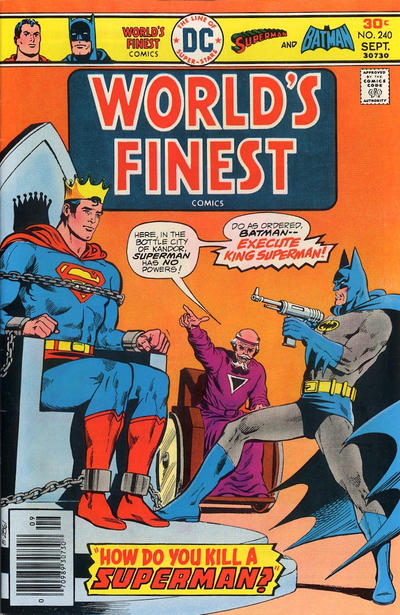
Batman & Superman covers

The thing about this boom of live-action superheroes is that, for better or worse, it is actually mimicking the source material to amazing degrees. You have the convoluted continuity involving multiple tie-ins and spin-offs. You have the non-stop reboots. You have the tension between the geeky pleasure of world-building and the castrating effects of editorial interference. And, interestingly, you’re starting to have some of the diversity as well.

Take the Marvel properties. It is impressive enough that we got a solid bunch of highly entertaining popcorn blockbusters telling straightforward superhero stories (especially the Iron Man and Avengers movies). But Hollywood has also successfully covered a lot of different ground, from the Brubaker-esque maze and all-out action of Captain America: The Winter Soldier to the otherworldly farce of Guardians of the Galaxy to the mix of schlocky sci-fi and Cold War politics of X-Men: First Class. And now there’s even the uproariously iconoclastic Deadpool! The TV shows have been great at this as well, what with the bouncy spy shenanigans of Agent Carter, the gritty crime drama of Daredevil, and the disturbingly creepy neo-noir feel of Jessica Jones. All of these are subgenres that comic fans are familiar with but many were traditionally ignored in the transitions to the screen, so it’s nice to see more people finding out that, while superheroes are generally goofy, they can be goofy in diverse ways!

In that sense, Man of Steel represents uber-violent takes on the genre like Jonathan Hickman’s and Ryan Bodenheim’s Red Mass for Mars or Warren Ellis’ and Juan Jose Ryp’s Black Summer (except that at least those had some wit). Basically, David S. Goyer wrote an Elseworlds Superman horror tale and Zack Snyder shot it like a pompous disaster movie. Man of Steel is dark, cold, and aggressive – I would say this was Snyder doing the film equivalent of all those proto-revisionist comics that tried to emulate Watchmen without fully getting the point, were it not for the fact that Snyder had already given us the definite version of that… with his own Watchmen movie!

So yeah, this week we get the sequel, Batman v Superman: Dawn of Justice. I’ll probably watch it, sooner or later. The trailer makes it look like a hyperactive kid trying way too hard to be both meaningful and badass, but then again that’s a faithful rendition of many comics with the Dark Knight. Also, I’ve already gotten my ideal Batman movie (Mask of the Phantasm), so now I’ll just settle for a weird flick.

In a way, it’s hard to go wrong with the pair of Batman and Superman, whether they’re friends or enemies. The two characters work well together, since they’re so different and complementary, visually as well as thematically. I could go on about the alien who embraces humanity and the human who tries to transcend it, but I’m sure we’ve all written that essay in school…

Instead, here are 10 covers with the Dark Knight and the Man of Steel posing heroically as various artists explore their contrasts and parallels:

superman batman 70world's finest comics 285lex luthor 3superman batman 1batman superman 1world's finest comics 289superman batman 72world's finest comics 171world's finestbatman superman 12

NEXT: The Case of the Chemical Syndicate.

Posted in COVERS OF BATMAN COMICS | Tagged , , , , , , , | Leave a comment

It must suck to be Gordon

MONDAY

Legends Of The Dark Knight 46Legends of the Dark Knight #46

TUESDAY

Batman and the Monster MenBatman and the Monster Men #2

WEDNESDAY

Detective Comics 586Detective Comics #586

THURSDAY

Batman 426Batman #426

FRIDAY

Legends Of The Dark Knight 98Legends of the Dark Knight #98

SATURDAY

batman 434Batman #434
SUNDAY

Legends Of The Dark Knight 194Legends of the Dark Knight #194


NEXT: Batman v Superman.

Posted in GOTHAM INTERLUDES | Tagged , | Leave a comment

On Carrie Kelley, Robin

Dark Knight 3

Of all the bare-legged kids who have given Batman a helping hand over the years, Carrie Kelley is probably my favorite. She’s this spunky teen who just goes ahead and dresses in that silly suit and totally owns it, kicking enough butt to impress the Dark Knight. In many ways, she anticipated future Robins like Tim Drake and Stephanie Brown. Also, I suppose it helped that she made her debut on the pages of one of the most acclaimed comics in the freaking history of the entire medium!

We meet Carrie early on in The Dark Knight Returns, when she and her friend Michelle take a shortcut through a decadent video arcade and almost end up getting knifed by a street gang of mutants (yes, it was the eighties). She’s saved by Batman and immediately becomes a fan.

Here’s Carrie when she first sees the Bat-Signal in the sky:

Dark Knight Returns

I love her parents’ ramblings in the background. It’s easy to forget how (intentionally) funny Frank Miller used to be, despite The Dark Knight Returns’ reputation as a serious bastion of the turn towards grim and gritty superhero comics.

The fact that we get so little of Carrie Kelley’s backstory plays into the book’s general theme that the world is so obviously screwed up that all it takes is one inspiring figure for people to start acting up and taking matters into their own hands. But at the same time, in a way this also makes Carrie special. After all, it suggests that, unlike the Robins that came before her (Dick Grayson and Jason Todd), Carrie is not an orphan and she doesn’t need a family trauma to drive her… unless of course you consider having stoner hippie parents a trauma!

Dark Knight Returns 2

Charmingly, while Batman is out terrorizing the Gotham City night by severely beating up kidnappers and pimps, Carrie approaches crime-fighting like a cartoon character from the Looney Tunes. Her weapon of choice is a slingshot and the first thing she does is sneak a stick of dynamite into the butt of a con artist who is hustling bystanders with a game of Three Card Monte! Adorable.

She eventually follows some mutants into the dump where Batman gets his ass handed to him by their gang leader. In fact, Carrie actually saves the Caped Crusader’s life when the mutant leader is about to crush his skull with a crowbar (the preferred killing method for costumed heroes in the Batman comics of the time).

After bailing out the Dark Knight, Carrie drags him to the Batmobile and makes a splint for his broken arm. Batman is so impressed that he admits he’s Bruce Wayne and shows her the Batcave, practically hiring her on the spot. Wow, talk about a successful spontaneous application!

Dark Knight Returns 02

Carrie’s first mission is to put on a pink shirt and a bald cap, pretend she’s a member of the mutant gang, and convince all the other members to gather around the sewer pipe at West River and 40, where the Dark Knight will publicly humiliate their leader.

She first approaches a couple of mutants near the arcade where she first saw Batman, earlier in the story, and we get a healthy dose of Miller-esque street slang:

Dark Knight Returns 2

Carrie and Bruce have a nice dynamic going on, which basically consists of Batman ordering her to stay put and she just straight-up disobeying him all the time, whether by engaging with a transsexual Nazi in a fight or by breaking into a house with a sentient explosive doll. You know, just your average juvenile rebellion.

That said, she does keep saving Batman’s bacon when he inevitably bites off more than he can chew. For example, when the Caped Crusader gets caught up in a struggle with a bunch of cops, Carrie rescues him by flying a damn helicopter, much to his surprise. She also spots a key clue to tracking down the Joker. Indeed, one of the running gags concerns the fact that, while Batman acquired his skills through years of intensive training and roaming the earth, Carrie just seems to have picked up all the necessary stuff in school and in the girl scouts.

Although he does teach her how to ride a horse.

Dark Knight Returns 4

Batman’s final confrontation with the Joker in the county fair has deservedly become legendary. But it’s a shame that it has completely overshadowed Carrie’s own elaborate, exciting action set piece, on a roller-coaster, facing an armed henchman and yet another explosive doll. Also, during the famous Batman-Superman face-off, Carrie helps distract the Man of Steel while driving a tank. And later on, she is the one who digs up Batman from his grave. So many iconic moments!

As if Carrie Kelley wasn’t zany enough already, in The Dark Knight Strikes Back Frank Miller went on to dress her in a leopard spandex and turn her into a rollerblading vigilante called Catgirl.

However, Carrie still made a few amusing cameos in the Robin suit.  She was in the very cool ‘Batman Dies at Dawn!’ (Batman: The Brave and the Bold (v2) #13), where the Phantom Stranger gathers all Robins – past, present, and future – in order to save a wounded Dark Knight. Hilarity ensues.

Batman - Brave & The Bold #13

Moreover, a version of Carrie showed up in the DC Adventures Universe. In Batman & Robin Adventures #6, when a tabloid newspaper announced that Batman had fired Robin (Dick Grayson), she was one of the many volunteers to audition for the job.

This version of the Caped Crusader, though, was decidedly not pleased to see her…

Batman & Robin Adventures 06

It’s a really fun story with super-dynamic art. But hey, it was written by Ty Templeton and drawn by Rick Burchett, so that pretty much goes without saying!

More recently, Peter Tomasi introduced a New 52 version of Carrie Kelley during his run in Batman and Robin. Ah, and I guess I should probably mention the fact that Carrie has another new identity in some kind of Dark Knight Returns sequel/fan-fic DC is putting out nowadays… but I don’t really care.

She is still Robin in my dreams:

'Mazing Man 12

NEXT: Poor Commissioner Gordon.

Posted in GOTHAM CITIZENS | Tagged , , , , , | Leave a comment

Bronze Age Splashes

Even though Archie Goodwin was an amazing writer (not to mention a legendary editor), I’m not as big a fan of his 1970s’ run on Detective Comics as others are. I gladly admit, though, that in terms of art, those are some pretty awesome comics.

One of my favorite bits was the fact that artists dropped the traditional Batman logo from the opening splash pages and started integrating it in clever ways, like Will Eisner used to do in The Spirit.

detective comics 437Detective Comics #437

If there is one thing Jim Aparo excelled at, it was opening pages. The man knew how to draw an opening that pulled you right in, not least because those skewed perspectives and lettering just seemed like an invitation to let yourself slide.

In his first splash for Goodwin, Aparo worked in the words ‘The Batman’ as a name on an invitation, which is cute enough. However, I think his second go was more ingenious…

detective comics 438Detective Comics #438

This time around, Jim Aparo screwed the full logo (including that creepy Batman head) into a thunder! What’s more, the resulting image actually matches the horror theme of comic.

After Aparo, the remaining artists continued to try out new things:

detective comics 440Detective Comics #440

In the page above, Sal Amendola managed to fit in the full logo as well, now disguised as a painting. It is certainly not as powerful, but what the hell… I always enjoy these glimpses into Gotham City’s night life anyway!

detective comics 441Detective Comics #441

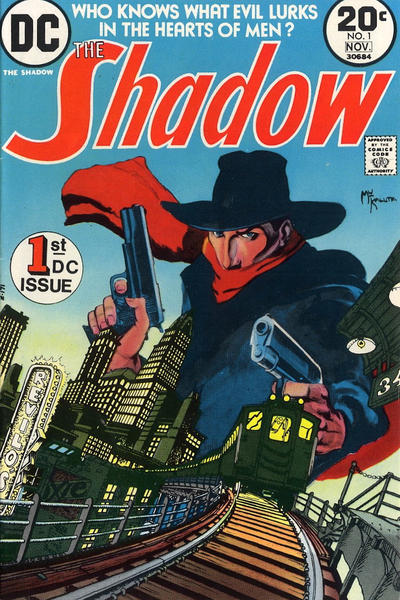
Howard Chaykin’s art at the time wasn’t as experimental and maximalist as it would be in later DC projects (like his insane revamps of The Shadow and Blackhawk). Still, he packed a lot into this gritty page. Not only is there a ‘Batman’ graffiti on the wall, but you can see the Dark Knight beginning to crawl out of the sewer, so you know asses are going to be kicked.

Also, because Chaykin was already Chaykin, it totally says ‘big fat fuck’ on the lower part of the wall.

detective comics 442Detective Comics #442

Which brings us to this beauty, by Alex Toth, done in his signature art deco-ish style. It’s a bit crammed, but what a sense of design… I would totally hang this as a poster on my wall.

Moreover, Archie Goodwin took his typical trick of using the narration to build up to the story’s title a little bit further this time. He now added a caption introducing the stylized Batman logo as well. And Toth just ran with it like the genius he was!

Damn it, there was some serious talent working on Batman comics in those days.

detective comics 443Detective Comics #443

See what I mean by serious talent?

First of all, a moment of silence for Ndele Kshumbo. It must have been bad enough being the Prime Minister of Congola (an imaginary country which I assume at the time was stuck between Mobutu’s ruthless dictatorship in Congo and an Angola still embroiled in its liberation struggle against the Portuguese), but he couldn’t even enjoy a drink in peace when he came to Gotham…

Anyway, Walt Simonson uses the word ‘Batman’ to frame the panel, or rather the sub-panel, from the point of view of the killer. The best part is that Simonson’s art is so dynamic that the word practically works as an additional sound effect – as far as I’m concerned, the last thing Ndele Kshumbo did before he died was shout for the Caped Crusader to avenge him.

And this is all before we actually get to the title & credits page, which is even more of a knockout!

NEXT: The greatest Robin. Ever.

Posted in ART OF BATMAN COMICS | Tagged , , , , , , | Leave a comment

On Westerns – part 2

If you read the last post, you know what’s going on. Here are a few more reasons why I enjoy western movies:

rio bravo          Two Mules for Sister Sara

Besides the gritty mood and aesthetics, I like the fact that westerns usually have something to say about America (and, in the case of spaghetti westerns, about Italian politics as well).

Some horse operas are deliberately celebratory and nostalgic, emphasizing either conservative or liberal values at the core of US history. Others are more critical, explicitly denouncing past crimes or acting as metaphors for contemporaneous issues, like McCarthyism, civil rights, or the Vietnam War. Even when they don’t have a clear message, western films tend to illustrate elements of American identity such as individualism, gun culture, and paranoid frontier status.

The Man Who Shot Liberty Valance and High Noon are not only a joy to watch, but also interesting to decipher politically (the latter is especially fun if you try to read in it a premonitory allegory about Batman comics, since it involves the vengeful return of a terrifying thug called Frank Miller). Tonino Valerii’s The Price of Power is, oddly, a western about the JFK assassination (yep). Some people even claim Django Unchained is about racism, but then again people see racism everywhere nowadays.

The Searchers          gunman's walk

Speaking of racism, classic westerns do have quite a poor track record in terms of depicting Native Americans. They started addressing this issue in increasingly complex ways in the 1950s… John Ford’s The Searchers has a reputation for being a provocative revisionist take on the matter, but I don’t think the movie earns it. As far as I’m concerned, the unappreciated Dakota Incident and Gunman’s Walk do a much better job!

But of course, if we’re talking about westerns and politics, then we cannot escape Mexico…

Vera Cruz          The Professionals

There are just so many awesome yarns south of the border – and they often get down and dirty in Mexico’s bloody history! Even if you leave out the Franco-Mexican War (the setting for the amusing Vera Cruz and Two Mules for Sister Sara) and just focus on the Mexican Revolution, you have the bigger-than-life The Wild Bunch, the compellingly schlocky 100 Rifles… the list goes on, but ultimately none of them beats Richard Brooks’ The Professionals, which is an all-out adventure romp with a particularly delicious closing line.

(Brooks later did the proto-western Bite the Bullet, which is not about Mexico but it also finishes on an anti-capitalist note.)

Furthermore, there is a whole subgenre of revolutionary Italian oaters – the ‘Zapata westerns’. They’re usually about some gringo getting involved in the Mexican civil war and feature the kind of sadism you’d expect from late ’60s Italian cinema. Some seem more militant, like A Bullet for the General, while others look more like an excuse to blow stuff up, like The Mercenary, but I’m not going to lie: I dig them all. Yes, even with the uneven acting and the fucked up sexual politics. Maybe it’s the cheesy sentimentality that does it for me, but most likely it’s those hauntingly weird soundtracks.

a bullet for the general          100 Rifles

Finally, the geek in me loves the fact that this is a genre that constantly builds on itself. For instance, Edward L. Cahn’s Law and Order, John Sturges’ Gunfight at the O.K. Corral, and Edward Dmytryk’s Warlock are all different variations of the legend of Wyatt Earp and Doc Holliday (and they are all excellent).

Like superhero stories, many westerns are part of an evolving intertextual dialogue, citing, revising, updating, and/or paying homage to their predecessors… Contrary to comics, though, you’re not actually expected to have a degree in the genre’s history and spend a fortune on auxiliary titles just to follow the plot!

Still, this self-referential dimension can be quite rewarding for those in the inner circle. I guess the most famous example is how Fred Zinnemann did a downbeat picture about a frustrated sheriff looking for help defending his town from outlaws (High Noon) and Howard Hawks responded by doing a badass flick about a fearless sheriff in the same situation who just shuts up and takes care of business (Rio Bravo).

Critics are also fond of pointing out that Hawks kind of remade Rio Bravo as the entertaining El Dorado and once again as the lamer Rio Lobo… That is true but it misses the larger point that Rio Bravo was itself basically a loose variation of Hawks’ classic adventure drama Only Angels Have Wings. So in this case I think it’s less about westerns commenting on each other than about the fact that Hawks just really liked to tell stories about manly professionals of different generations carrying out their work in inhospitable conditions and about women trying to pierce through their stoic exterior (he went on to revisit this formula in the very lighthearted romantic drama Hatari!).

Once Upon a Time in the WestOnce Upon a Time in the West (1968)

There’s more. You get an extra kick out of watching Unforgiven if you’ve seen any other western with Clint Eastwood before… Also, you can find plenty of metafictional layers in the work of Sergio Leone. His Once Upon a Time in the West is full of winks to the classics. Duck, You Sucker is Leone’s answer to the Zapata westerns. And he was heavily involved in My Name Is Nobody, which is basically a clash between an old-school spaghetti western and the then-new brand of fagioli western comedies.

This brings us to The Hateful Eight, which I think combines all the elements that make westerns great. Quentin Tarantino delivers tense Mexican standoffs, violent shootings, and an Ennio Morricone score, while also bringing in elements of other genres (mystery, horror, dark comedy). The titular eight characters who hate each other for various reasons, stuck together in a cabin during a blizzard, provide a simple, minimalistic set-up that enables a quasi-parable about larger themes. Above all, the film offers a meditation on the messed up history of complicated racial relations in the United States, ultimately seeking a glimmer of hope in Abraham Lincoln’s legacy (real or fictitious). And, needless to say, Tarantino pays a heartfelt homage to the history of the genre itself, from the Hawksian sense of claustrophobia to the snowbound visuals of the bleak The Great Silence and the underrated Day of the Outlaw.

Day of the OutlawDay of the Outlaw (1959)

Regarding comics, if we’re talking mean-spirited westerns, I quite like Hermann Huppen’s Wild Bill is Dead, which is a revenge tale that takes quite a detour. Hermann had drawn a bunch of westerns before (in the Comanche series), but this was the first one done in the stunning style he began experimenting with in the 1990s, with beautiful watercolors. He also wrote it – and while there is nothing particularly original or charming about Hermann’s scripts, this old-school Belgian author knows how to spin a two-fisted yarn. In that sense, Wild Bill is Dead belongs next to other gritty adventures he has crafted as a pretext to explore different landscapes and political issues, including Afrika, Caatinga, and the more surrealist Sarajevo Tango.

That said, The Hateful Eight’s flair for sardonic dialogue and the focus on post-Civil War racial issues points more sharply to Loveless, by Brian Azzarello, Marcelo Frusin, and Danijel Zezelj. This series had its moments, but it took way too long to find its feet, so instead I’ll recommend Azzarello’s and Zezelj’s less ambitious El Diablo. It’s a neat little western that for a while seems to be about a manhunt, but it has splashes of horror and noir, not to mention a handful of plot twists up its sleeve.

el diabloel diabloEl Diablo


NEXT: Batman makes a splash.

Posted in WILD WEST | Tagged , , , , , , , | Leave a comment

On Westerns – part 1

When I wrote about Quentin Tarantino films last month, I promised to follow up with comic suggestions for fans of The Hateful Eight. I’ll include a couple of recommendations in my next post, but before that let me share a few thoughts on why I just can’t get enough of westerns!

High NoonHigh Noon (1952)

First of all, there is something about the time distance and the ‘simplicity’ of the surroundings. The natural landscapes, the small villages, the whole quasi-lawlessness thing… all this allows for basic themes (honor, revenge, justice, redemption, law and order) to be explored at their core in an almost allegorical way, uncontaminated by the caveats of a more recognizable setting or a more complex context. Some of the greatest westerns, like Henry King’s The Gunfighter or Delmer Dave’s 3:10 to Yuma, are essentially super-suspenseful morality plays.

This is not to say that there is no room for moral complexity. It pisses me off how every time critics are trying to sell you on a western they try to contrast it with the supposedly clear-cut morality of the old ‘good guys vs bad guys’ formula (it’s the same thing with superheroes, really). In fact, filmmakers have been telling murky stories in this genre for more than half a century… If you go back to the ‘50s, you can find loads of thoughtful oaters, from classics like Bend of the River to more obscure flicks like No Name on the Bullet.

3:10 to yuma          No Name on the Bullet

Comic writers, used to exuberant spectacle, often get bored with the limitations of western conventions (this is why every few years Jonah Hex finds himself in a post-apocalyptic future, or batting zombies, or flying around in the steampunk airship of Ra’s al Ghul!). Yet in cinema the relatively limited number of occupations and settings often leads to a kind of economical storytelling that appeals to me… Settled with mostly uneducated characters and unable to hide behind modern pop culture references, screenwriters go for terse dialogue and minimalistic symbols in order to convey plot and characterization. This means you have to concentrate to make sure you pick up everything that’s going on, which can make for quite an engaging viewing experience.

Director Budd Boetticher, screenwriter Burt Kennedy, and actor Randolph Scott did a series of unpretentious chamber westerns that got the most out of this sense of simple clarity (the best of the lot is 1959’s Ride Lonesome). Yet the guy who really elevated this type of craftsmanship to a whole other level was Sergio Leone, especially starting with For a Few Dollars More.

Clint EastwoodClint Eastwood as the Man with (supposedly) No Name

Many ‘spaghetti westerns’ followed Leone’s handbook, keeping the words sparse, the mood serene, and the action visually driven. My favorite in this mold is actually the French Cemetery without Crosses (also known as The Rope and the Colt). Another worthy French entry is the recent Far from Men, which is not exactly a western (it’s set in the Algerian war) but it sure feels like one!

(That said, this tendency can be taken to an infuriating extreme, like with Monte Hellman’s The Shooting or Alejandro Iñarritu’s The Revenant… both look quite pretty, though.)

Most of all, there is something purely *cinematic* about westerns. The atmosphere of constant tension because of the ease with which people can kill, the cathartic power of a shot, the feel of chivalrous adventure from all the horse-riding, the gravitas of these archetypes, the scenic backgrounds… There is a reason why the most defining examples of the genre (Ford’s Stagecoach, Leone’s The Good, the Bad and the Ugly, Peckinpah’s The Wild Bunch) are not merely great westerns – they are some of the most freaking iconic cinema masterpieces of all time!

Stagecoach 1939Stagecoach (1939)

Sure, there are shitloads of duds, but the ingredients are there to make it work fairly easily. At least two beloved westerns simply relocated Akira Kurosawa’s samurai epics to the American Wild West (A Fistful of Dollars is a rip-off of the awesome Yojimbo and John Sturges’ The Magnificent Seven is a remake of Seven Samurai), yet they both turned out to be highly entertaining pictures in their own right. Johnny Guitar may end on kind of a weird note, but that opening half an hour is worth its weight in gold. Hell, throw in enough double-crosses and competently crafted set pieces, and even a middle-of-the-road dustraiser like Buchanan Rides Alone can be a darn enjoyable way to spend 78 minutes.

Basically, if you add an operatic Ennio Morricone score to the image of a gunfighter on a horse, then you’re halfway there to producing a satisfying movie. To be fair, it doesn’t even have to be Morricone – many westerns rely on atmosphere stitched together by a cool soundtrack, whether it’s Bob Dylan songs in Pat Garrett and Billy the Kid or Leonard Cohen tracks in McCabe & Mrs. Miller. (Then again, Rancho Notorious is as vicious as any other Fritz Lang movie, but it only works if you disregard the fact that it’s punctuated by a hilariously mismatched ballad that serves as a bizarre, baritone Greek chorus.)

And if the sheer number of instantly recognizable tropes makes it easy to use shorthand and achieve intertextual resonance, it also lends itself to obvious parody. Besides genre spoofs (the funniest is still, by far, Blazing Saddles), there are plenty of hybrids that work simultaneously as westerns and as comedies. I’m not a big fan of the lowbrow slapstick of the Trinity movies starring Terence Hill – also known as ‘fagioli westerns’ – but I do get a kick out of the tongue-in-cheek zaniness of Sam Raimi’s The Quick and the Dead (not to mention the third Back to the Future). And while Destry Rides Again doesn’t make me laugh out loud, I do find it incredibly charming.

Destry Rides AgainDestry Rides Again (1939)

Indeed, even if you regard the western as a proper genre (and not merely as a shared historical setting), it is loose enough to easily allow for crossbreeding. In the 1940s, some directors approached it with a cool film noir sensibility, for example in the stylish Winchester ’73 and Yellow Sky (not to mention John Huston’s angry neo-western The Treasure of Sierra Madre). In the 1950s, the supernatural anthology TV show The Twilight Zone had a bunch of episodes set in the Old West, including ‘Mr. Denton on Doomsday,’ ‘The Grave,’ and ‘Dust’ (the show’s creator, Rod Serling, also wrote the lesser-known, straight-up western drama Saddle the Wind). Among the most accomplished attempts to fuse westerns with a horror vibe, you can find 1970’s And God Said to Cain as well as last year’s Bone Tomahawk.

The latter are also violent as hell, because no-holds-barred sound and fury is another thing westerns can deliver like nobody’s business.

rio conchos          death rides a horse

Americans have come up with their fair share of gritty westerns (particularly Gordon Douglas, the man behind Rio Conchos and Barquero). If you are into raw, visceral insanity, though, few movies can match the power of Italian horse operas like Death Rides a Horse.

And in terms of pure brutality, there is of course Django – you know, the one with the dude dragging his coffin around and inspiring countless imitations, homages, and kick-ass songs.

DjangoDjango (1966)

NEXT: More on westerns.

Posted in WILD WEST | Tagged , | Leave a comment