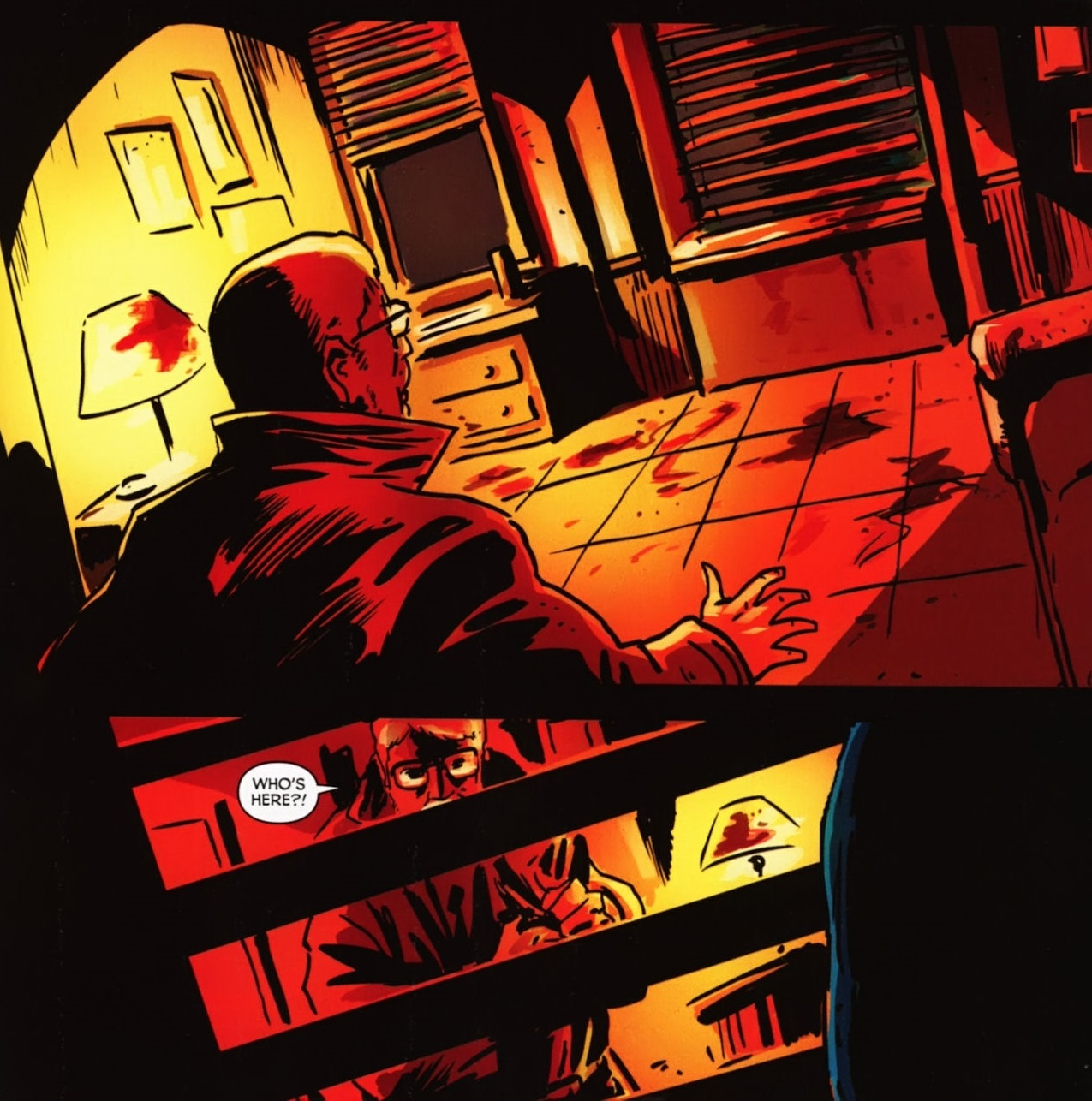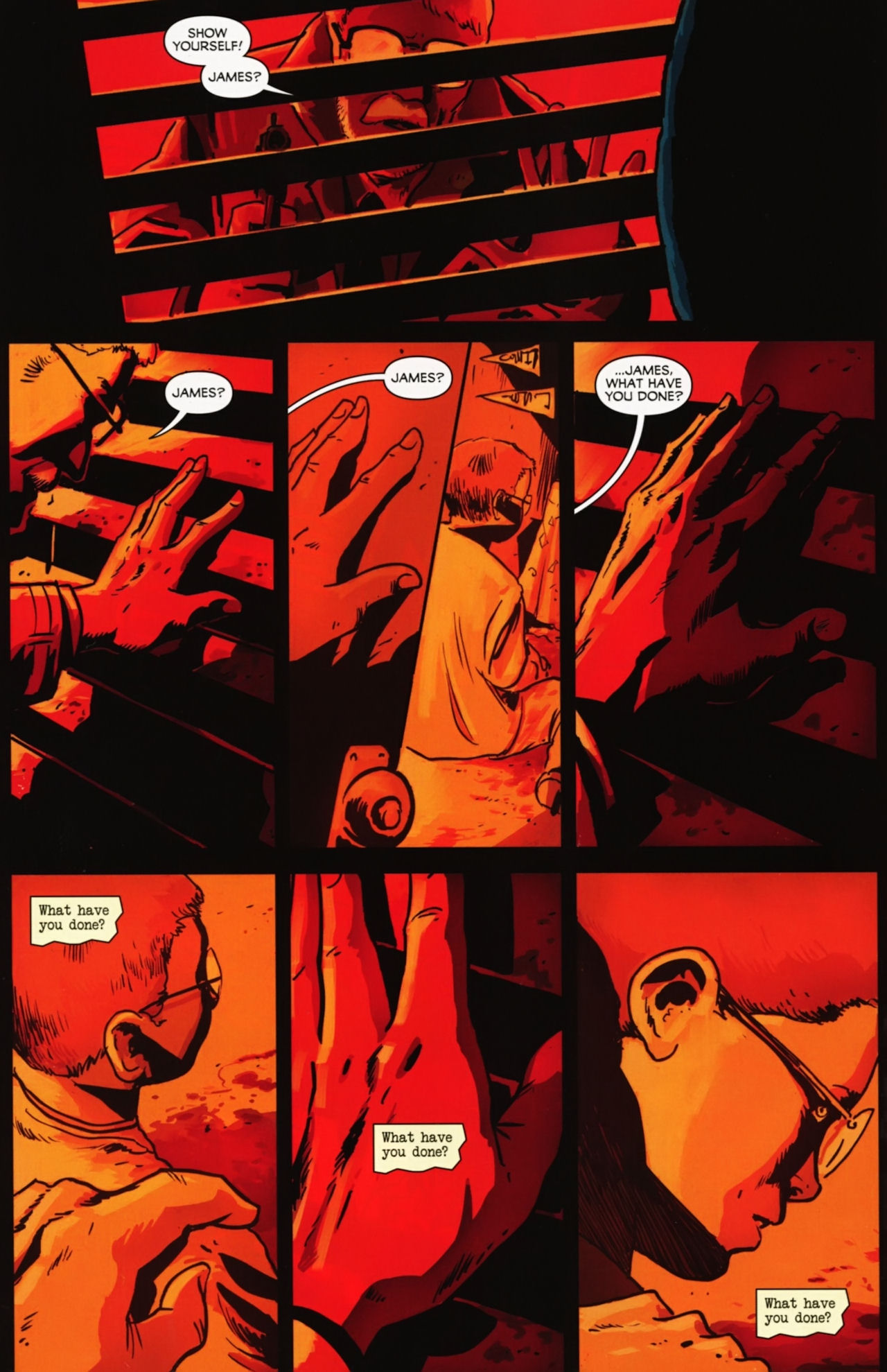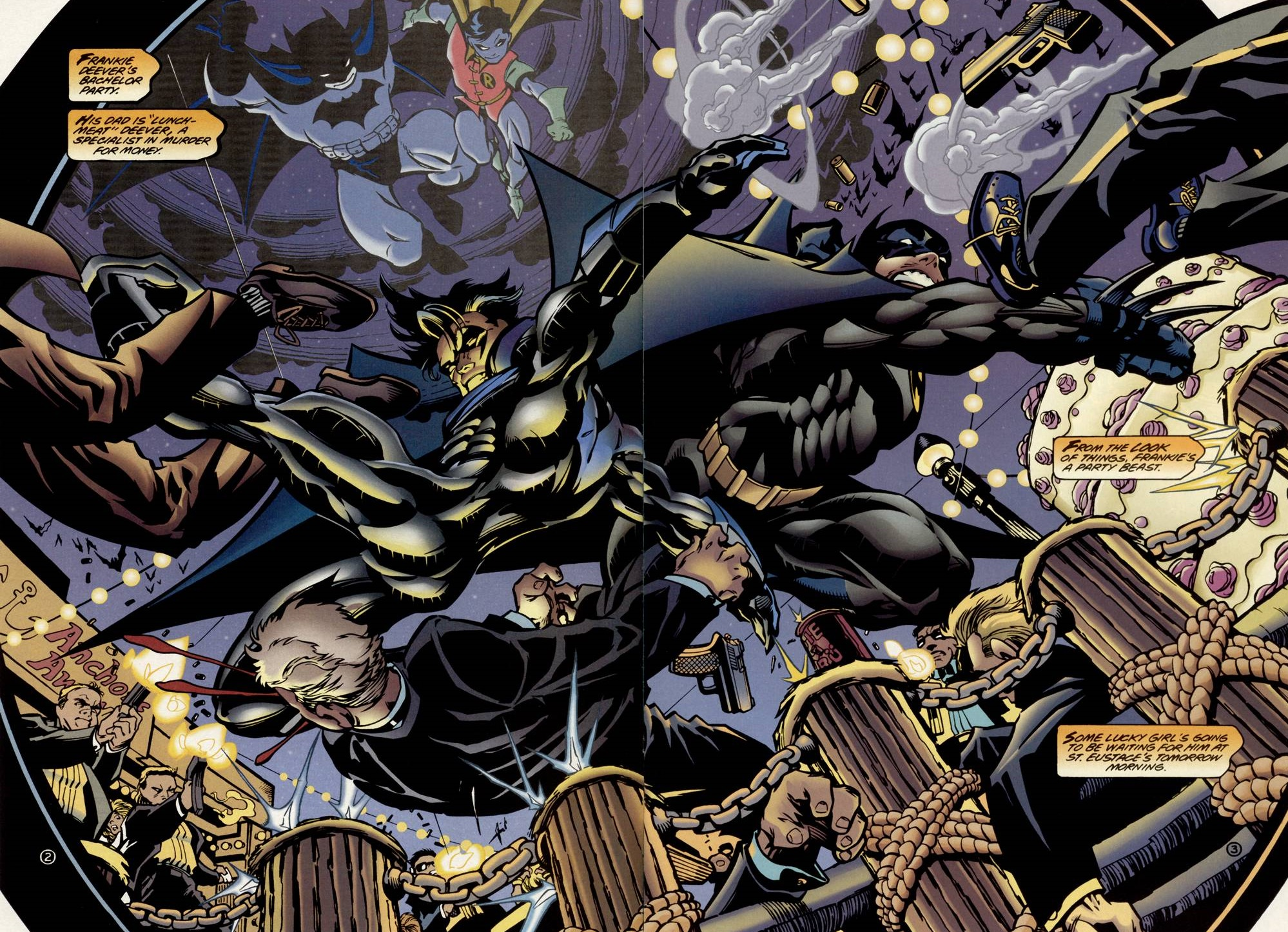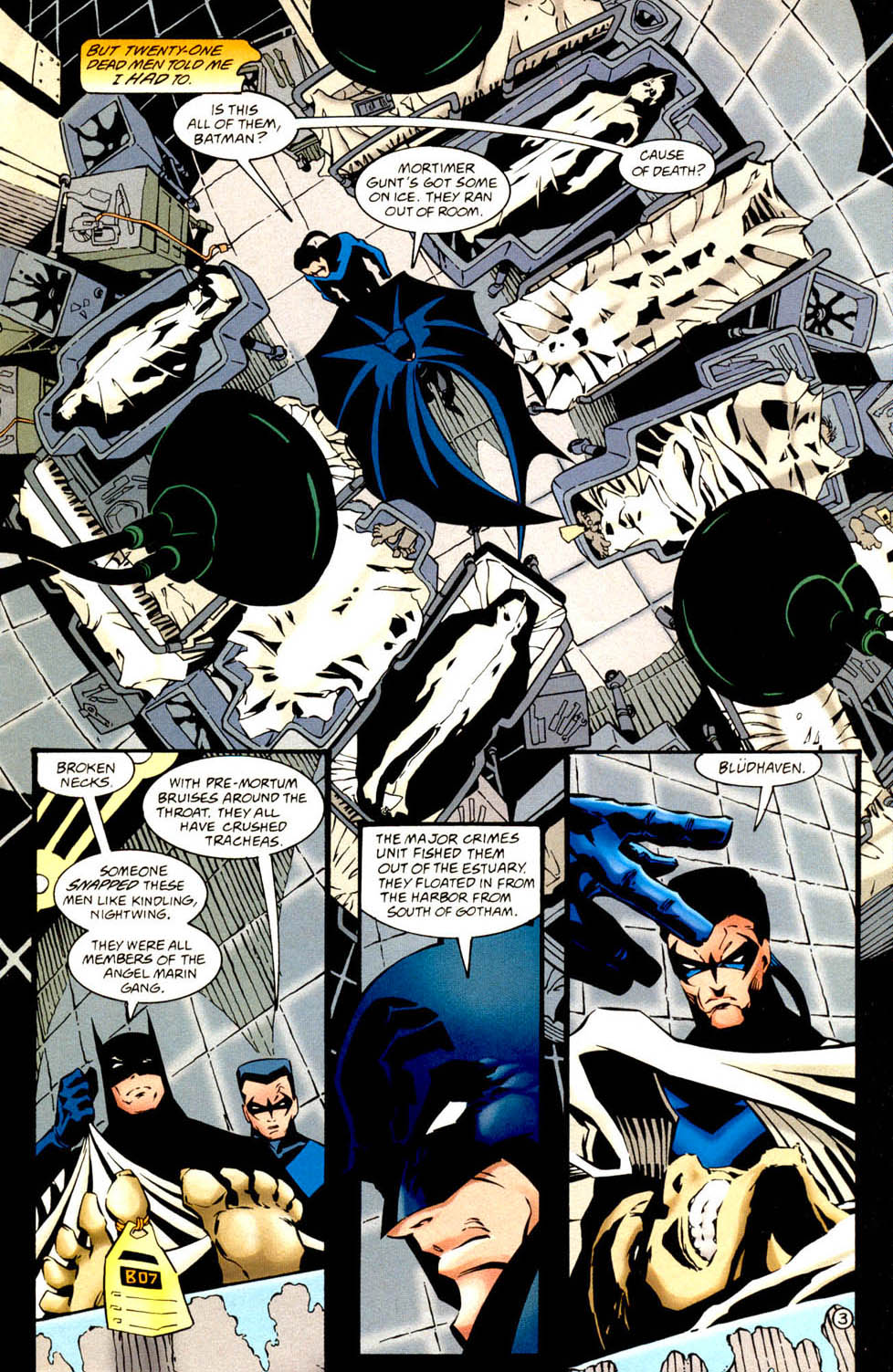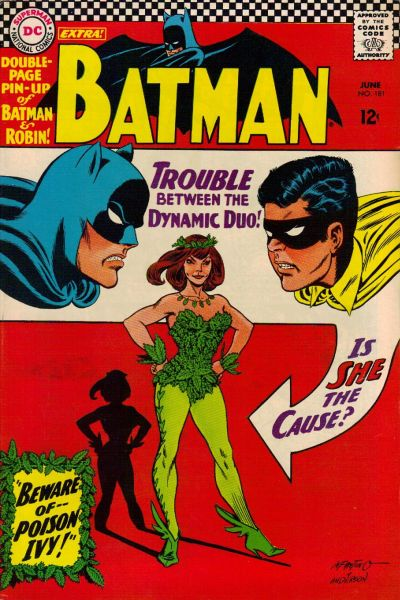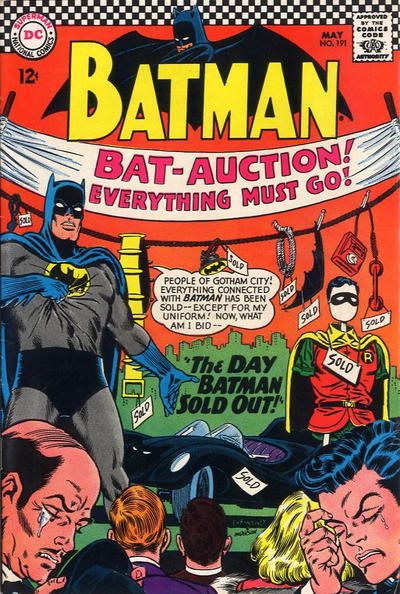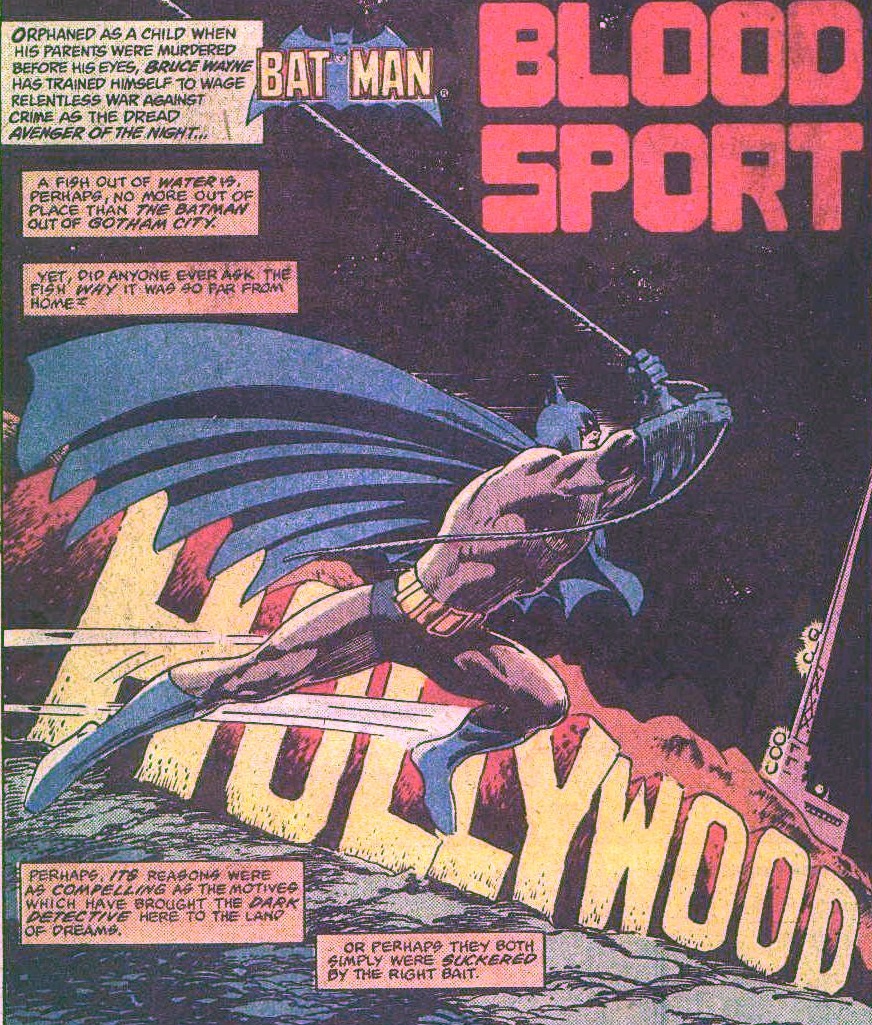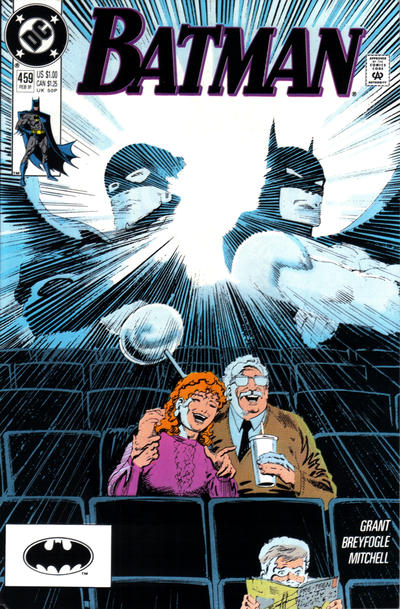
Gerry Conway’s marvelized Batman

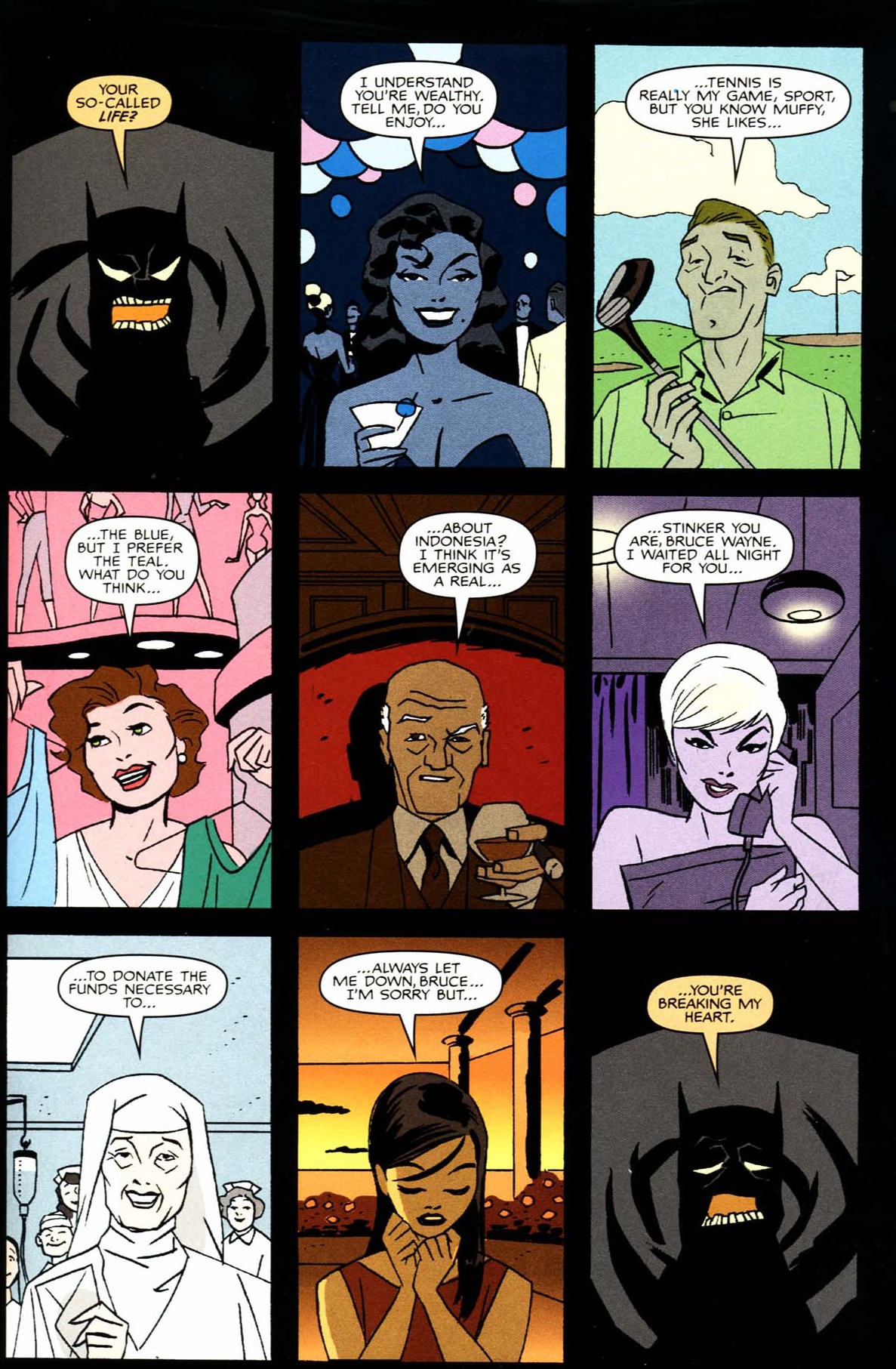
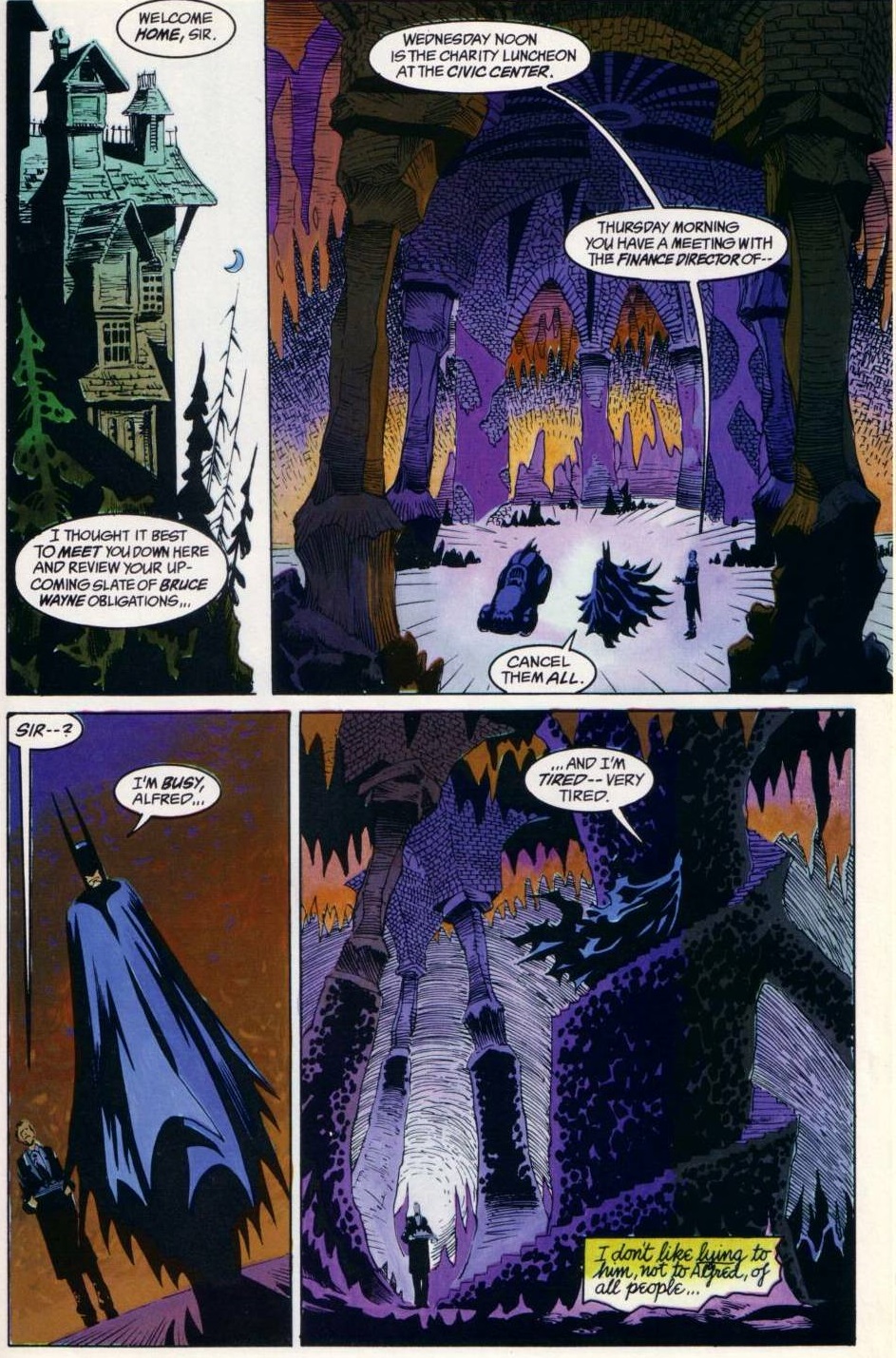
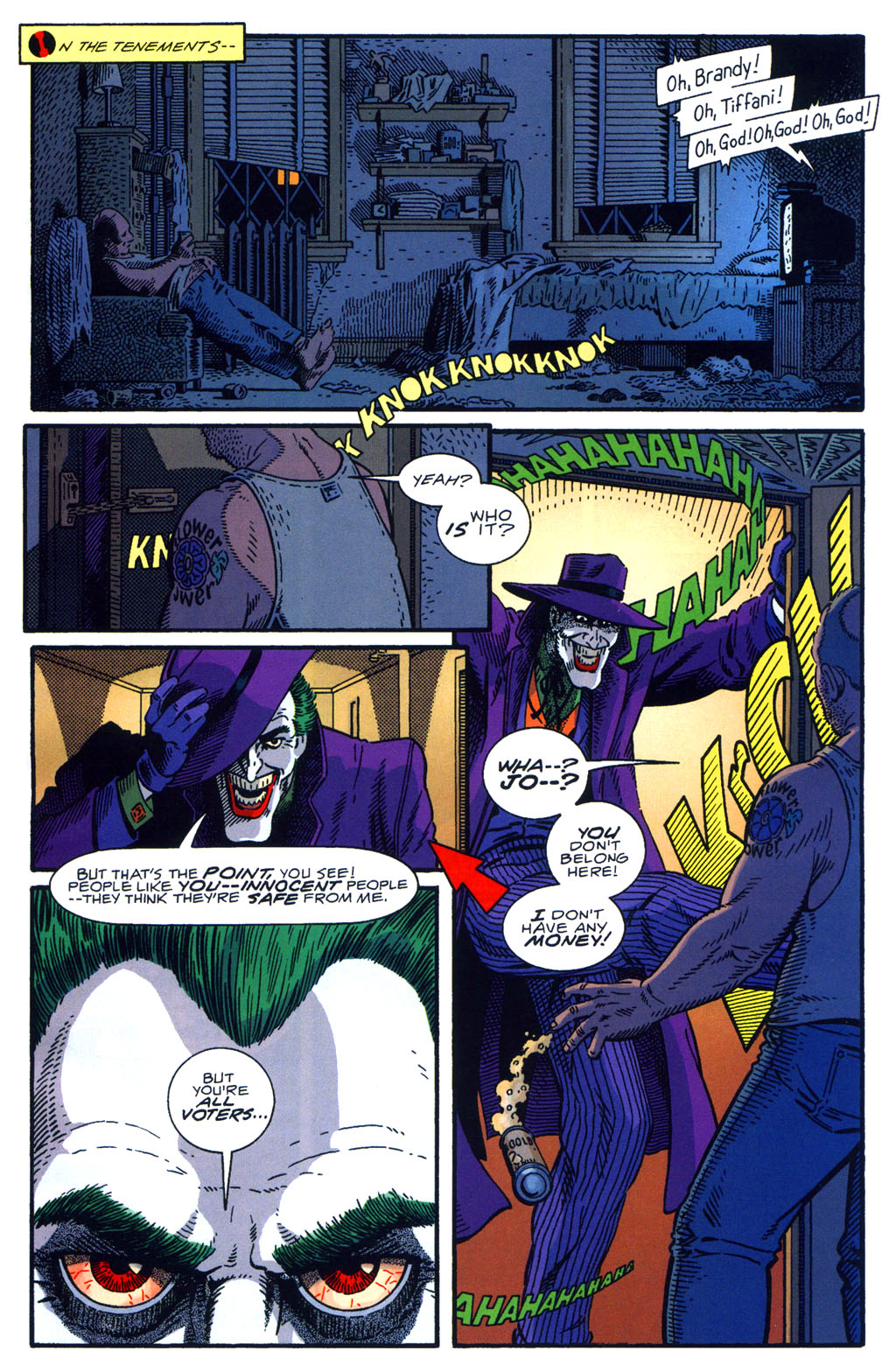
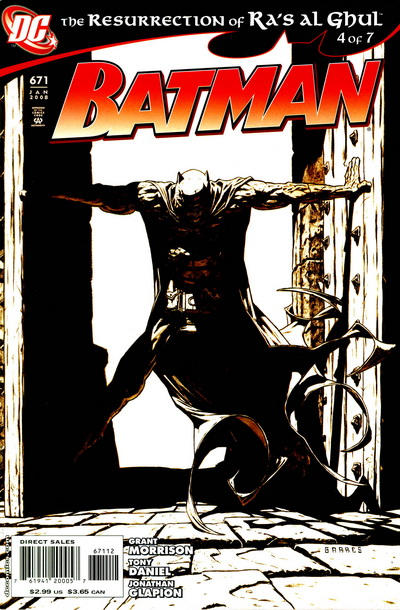
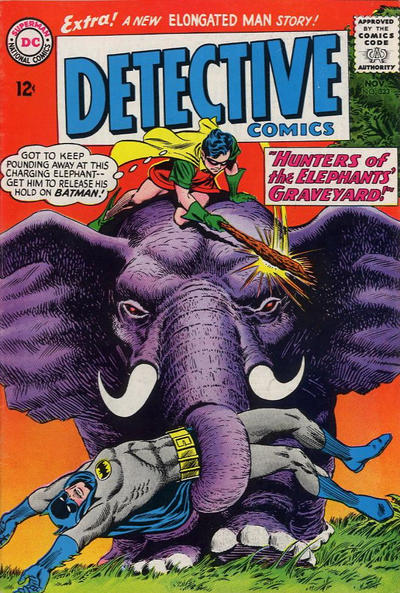
After being largely ignored for a long time, Gerry Conway’s Batman run in the early 1980s has been the object of well-deserved rediscovery in recent years (not least because of the haunting pencils by Don Newton and Gene Colan). These are cool comics that mark the marvelization of the adventures of the Dark Knight.

By ‘marvelization,’ I mean taking the then-usual Batman formula of self-contained stories – where a threat emerged and was swiftly dealt with by the Caped Crusader, who predictably restored the status quo in less than 20 pages – and giving it the treatment, developed by Marvel, of ongoing subplots, more developed and relatable characters, and a relatively higher degree of realism. This was an approach Conway was familiar with, having worked at Marvel for quite a while (including on that Spider-Man arc where something happens to Spidey’s girlfriend… don’t remember what).

To be sure, Conway wrote his fair share of isolated Batman tales over the years which were no more than one or two issues long and remained faithful to the old formula. With his post-Detective Comics #500 work, though, he began weaving an awesome polygonal tapestry worthy of any comic published by the competition. Since then, of course, this has become the norm, but it wasn’t at the time. While other Batman writers had introduced soap opera-like multi-issue plotlines before – such as Steve Englehart, Len Wein, and Marv Wolfman – no one had really done it on this scale.
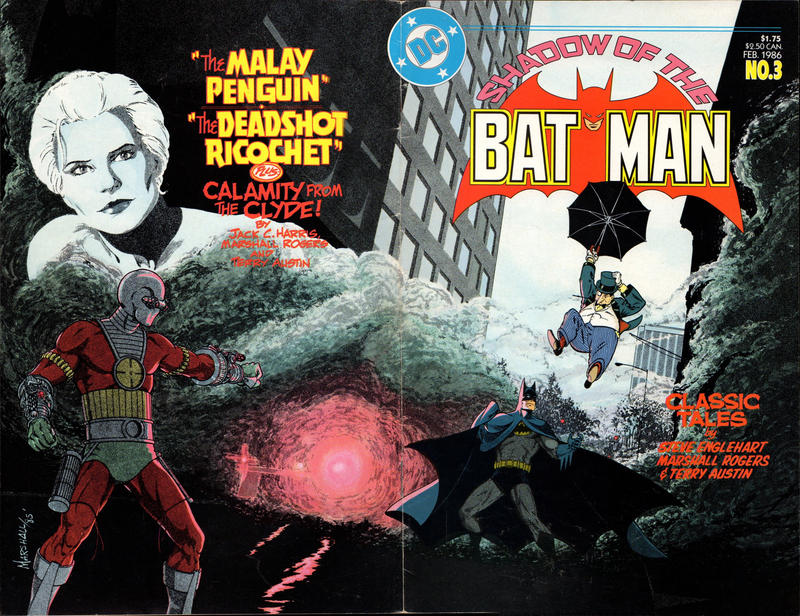
Shadow of the Batman 3

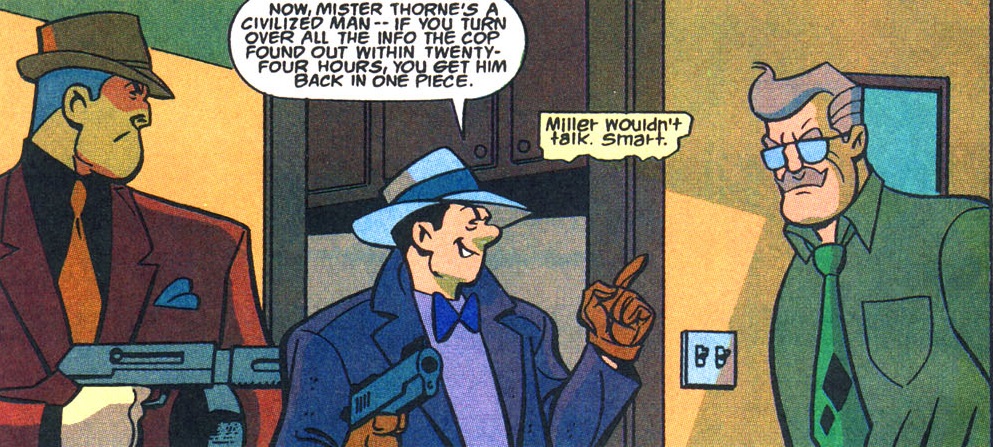
Steve Englehart, in particular, appeared to be a major source of inspiration. I’ve praised Englehart’s work when discussing his beloved run in collaboration with Marshall Rogers, and I’ll gladly admit I like some of its less iconic sequels. However, the best comics to follow the Englehart-Rogers run in terms of plot as well as in spirit were definitely those written by Gerry Conway. In the earlier run, political boss Rupert Thorne had Professor Hugo Strange killed and was subsequently haunted by his ghost, ending up committed to Arkham Asylum. Conway had Thorne released and back to pulling political strings behind the scenes, only to be once again haunted by the mad professor’s ghost, now retconned as a smoke and mirrors trick pulled off by Strange, who had faked his own death because that’s just how he rolled. Meanwhile, the hitman Deadshot – another memorable villain from the Englehart-Rogers run – also returned under Conway, now with a contract on Bruce Wayne.

This may sound more derivative than it actually is. What Conway did wasn’t a lazy remake of Englehart’s stories so much as a cool riff on them. He took something that worked and threw it into a new context… While discussing the Englehart-Rogers run, I ridiculously compared it to 1970s’ car chase crime movies (it made sense at the time) – well, if those comics had the raw energy and charming klutziness of Vanishing Point and the original Gone in 60 Seconds, then Conway’s work is their slicker, darker 1980s extension, i.e. To Live and Die in L.A.

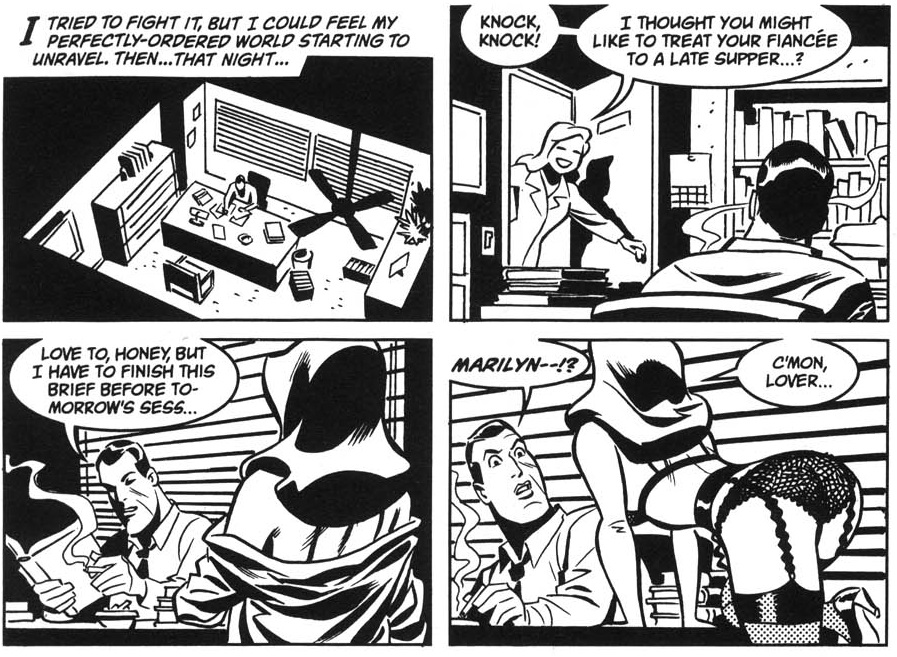
Gerry Conway wasn’t just interested in revisiting the past, but also in giving you a sense that things were changing, evolving, going places… Commissioner Gordon was fired. Batman moved his headquarters. Bruce Wayne wooed and was dumped by Catwoman and then Vicki Vale. By the end of the run, there was a new kid running around in a Robin suit. Sure, most changes were superficial and/or short-lived, but Conway created the illusion of forward momentum. And he did it by pouring buckets of moody gravitas onto his writing:
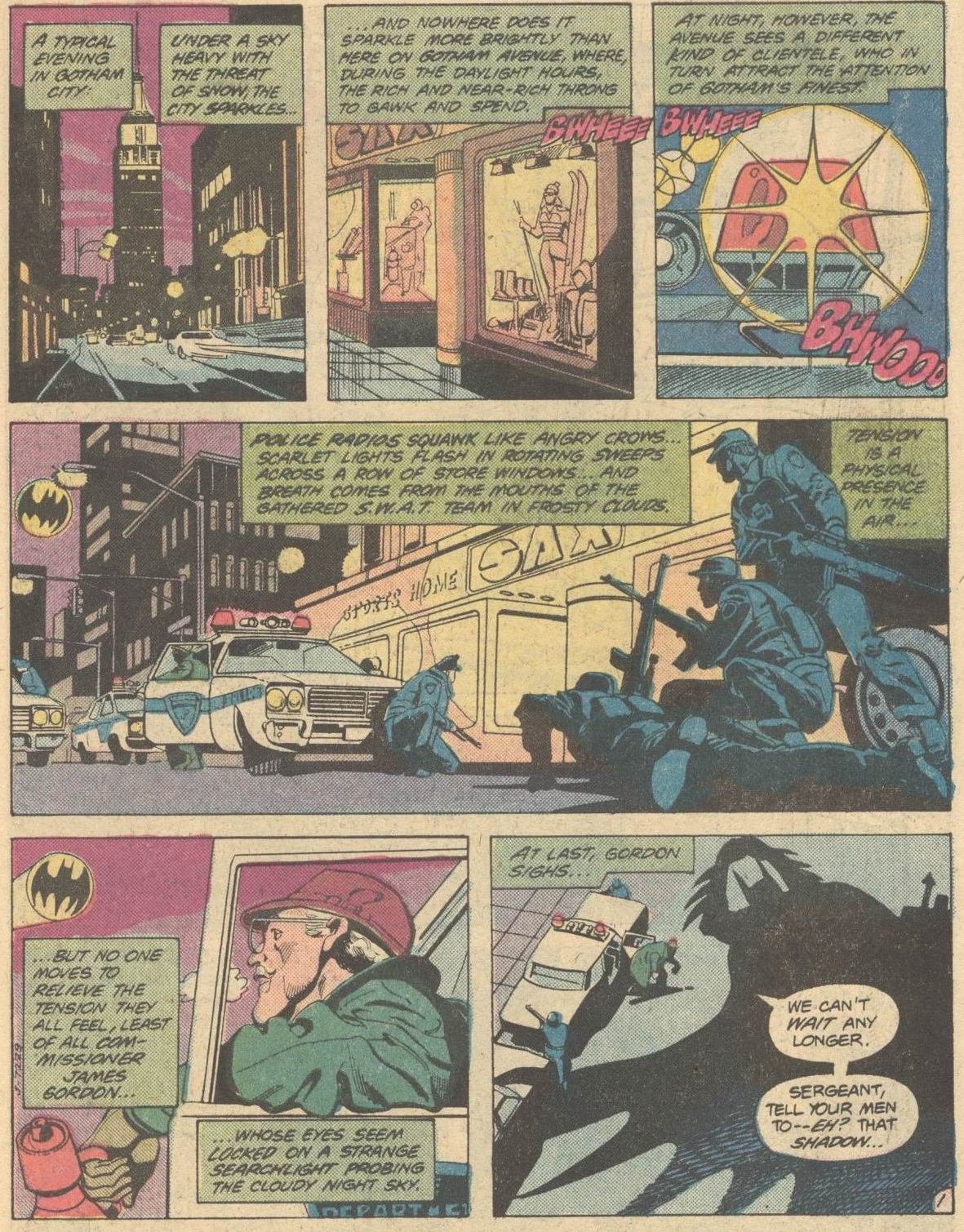
Batman 337Batman #337

Not that these comics take themselves too seriously. They aren’t gritty in the way that, say, Conway’s Cinder and Ashe is (by which I mean so-gritty-it-makes-your-eyes-bleed). Their tone is just ’mature’ enough to create a captivating contrast with the most childish elements of Batman’s universe.

So, even when Conway rehashed old storylines and used the rogues’ gallery (besides the usual suspects, he brought back such obscure one-shot villains as Anthony Lupus and the Mole), the stakes seemed higher now that a perfect resolution wasn’t inevitable and adventures could have lasting consequences. The rogues’ plots were as silly as in the Golden Age, yet modern storytelling made the villains scarier, because they no longer appeared to be doing their demented antics in a colorful surrealist world, but in something relatively closer to our own recognizable reality.

For example, the guise of pseudo-realism makes it especially creepy to watch Poison Ivy use her powers to manipulate the board members of Wayne Enterprises (all men) into signing their shares off to her…
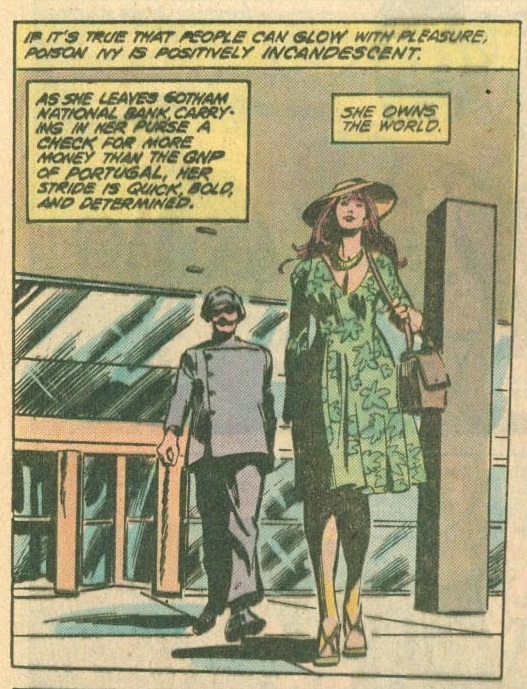
Batman 344Batman #344

…or to watch Two-Face escape from Arkham Asylum by hypnotizing the guards:
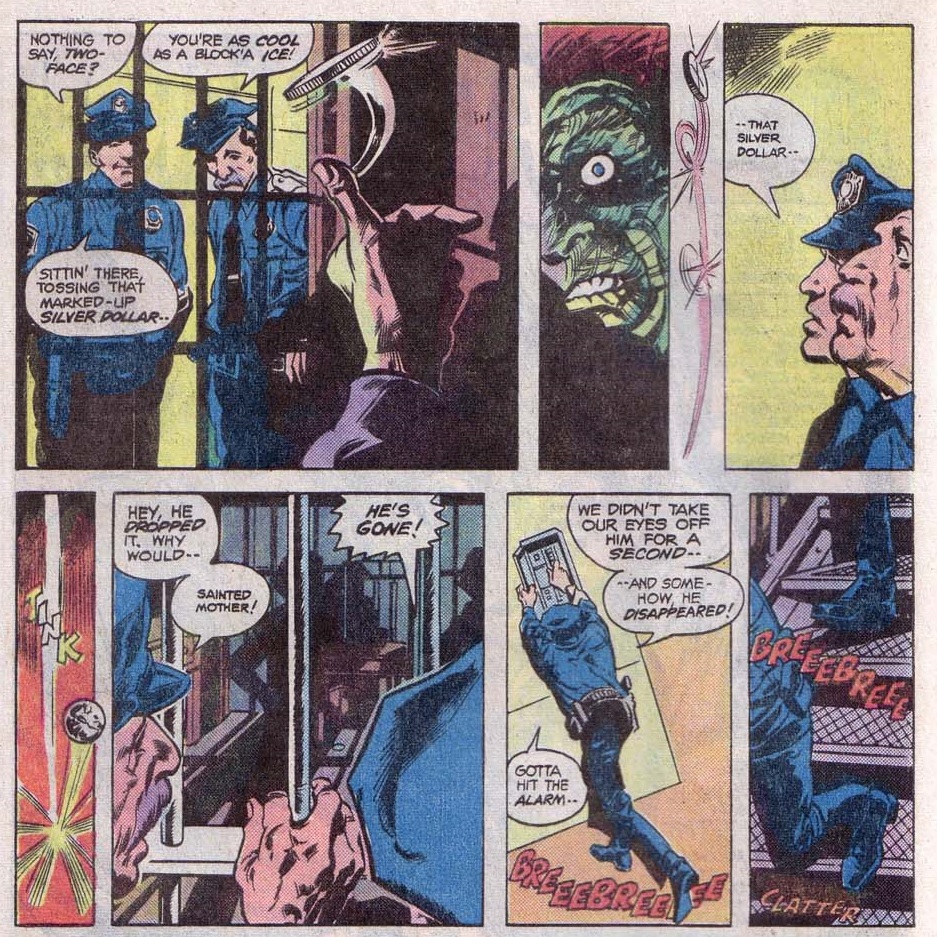
batman 346Batman #346

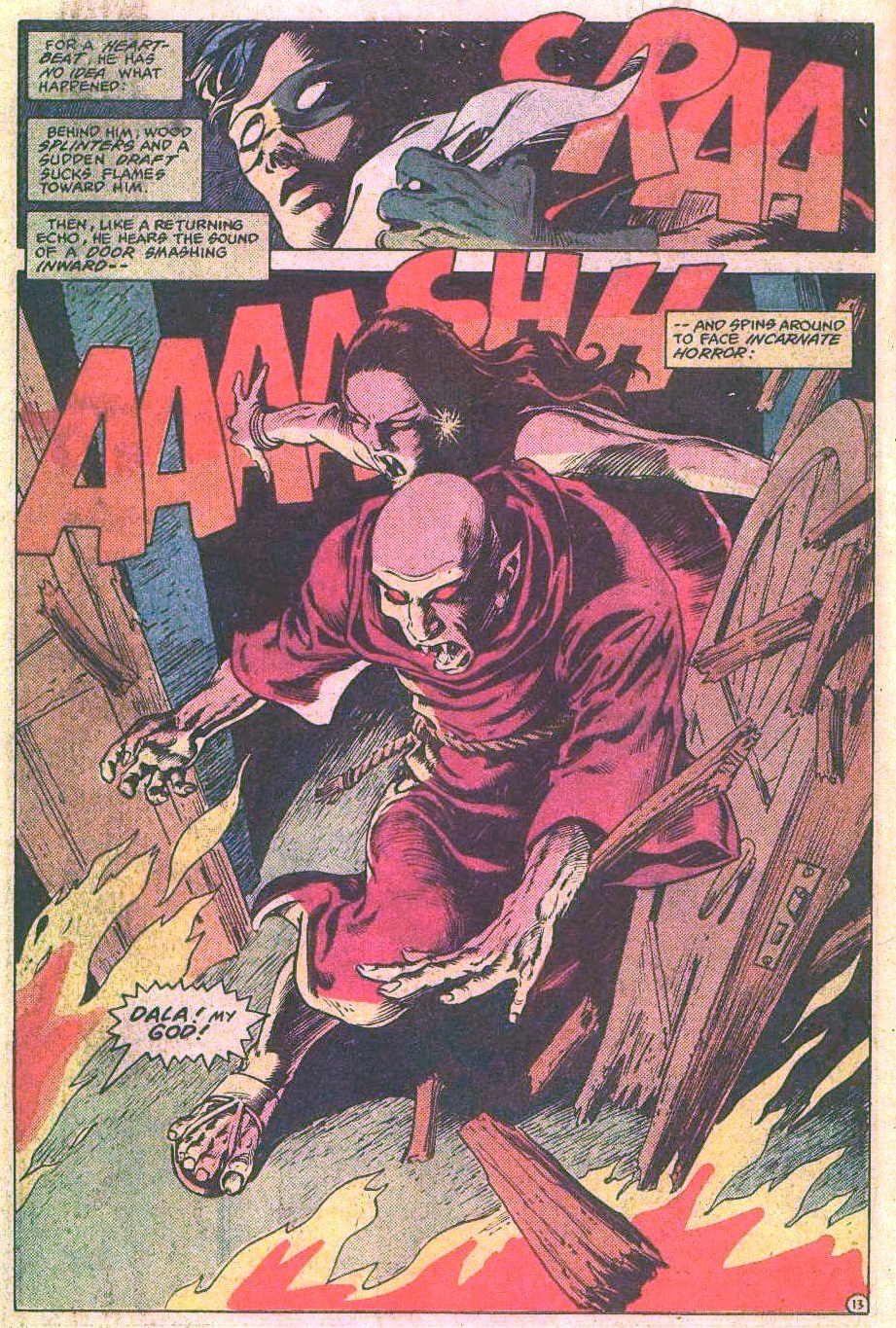
In a daring move, Gerry Conway also recreated the Red Monk, a gothic villain from way back in Detective Comics #31 (Batman’s fifth published adventure or thereabouts). Instead of a sequel, this started off as a full-on remake, oozing with 1980s make-up and special effects:
batman 349Batman #349

Talk about sinister rouge. This arc (in which Conway shares writing credits with Paul Levitz) has a great, nightmarish vibe and taps into different levels of horror, from the eerie supernatural of Dracula to the real life cruelty of slavery.

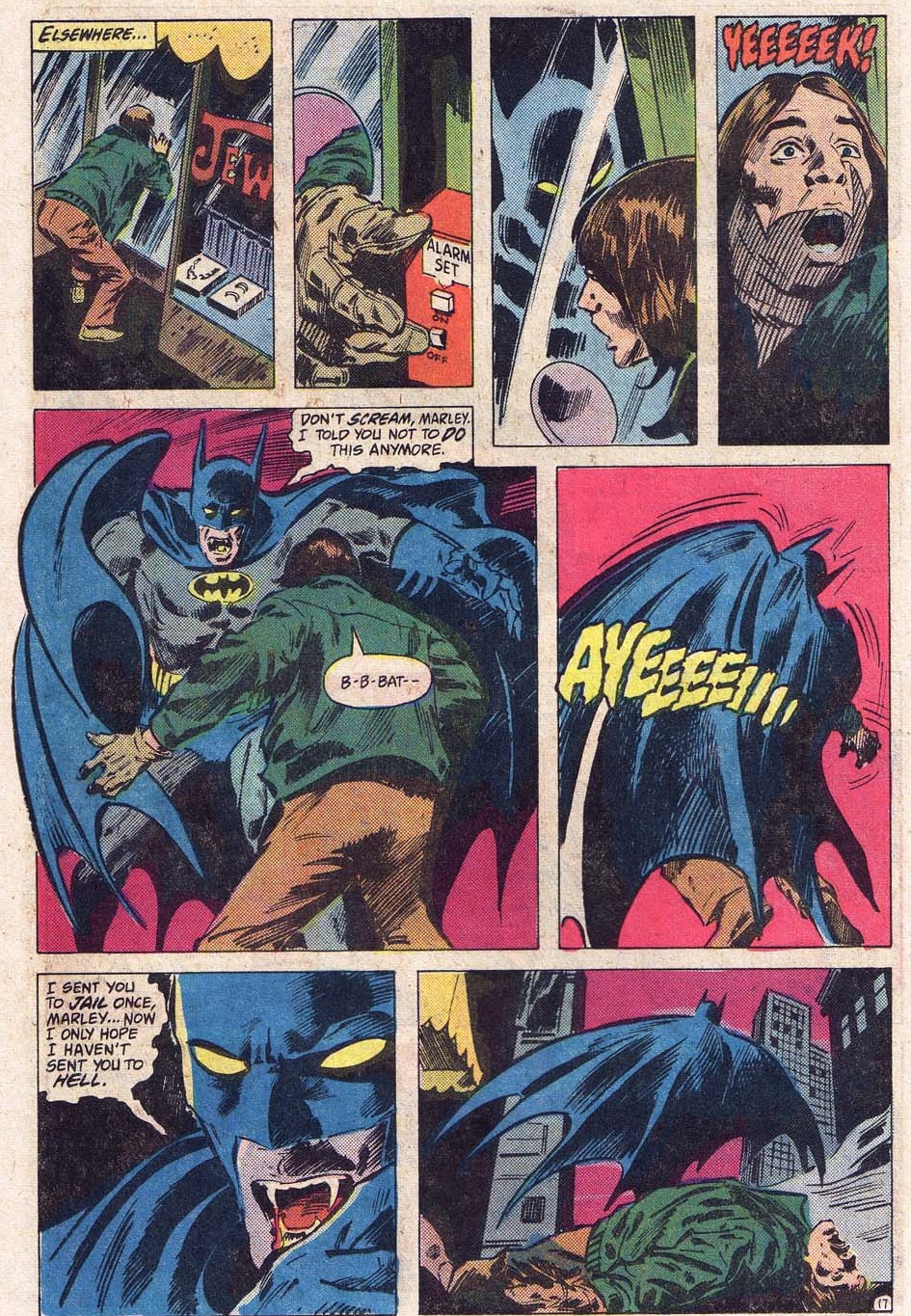
Now, naturally Conway knew he could pull this off because he was working with the amazing Gene Colan (whose atmospheric art had also graced Conway’s scripts on Daredevil), but it’s still a gutsy tale given the overall attempt to keep things relatively grounded. What’s more, the story takes a truly unexpected left turn as the Red Monk bites Batman’s neck, which turns the Dark Knight into an actual vampire for a few issues:
detective comics 517Detective Comics #517

That’s right, for a while Batman was a bloodsucking monster in an official, in-continuity (until 1986) DC comic. Not a Kelley Jones-penciled Elseworlds tale, not even a crazy Bob Haney-written one-off, but a saga in the main titles! How awesome is that? (Well, admittedly not as awesome as that episode of The Brave and the Bold where a vampiric Batman tries to lure the Justice League to their death by throwing a dinner party in their satellite.)

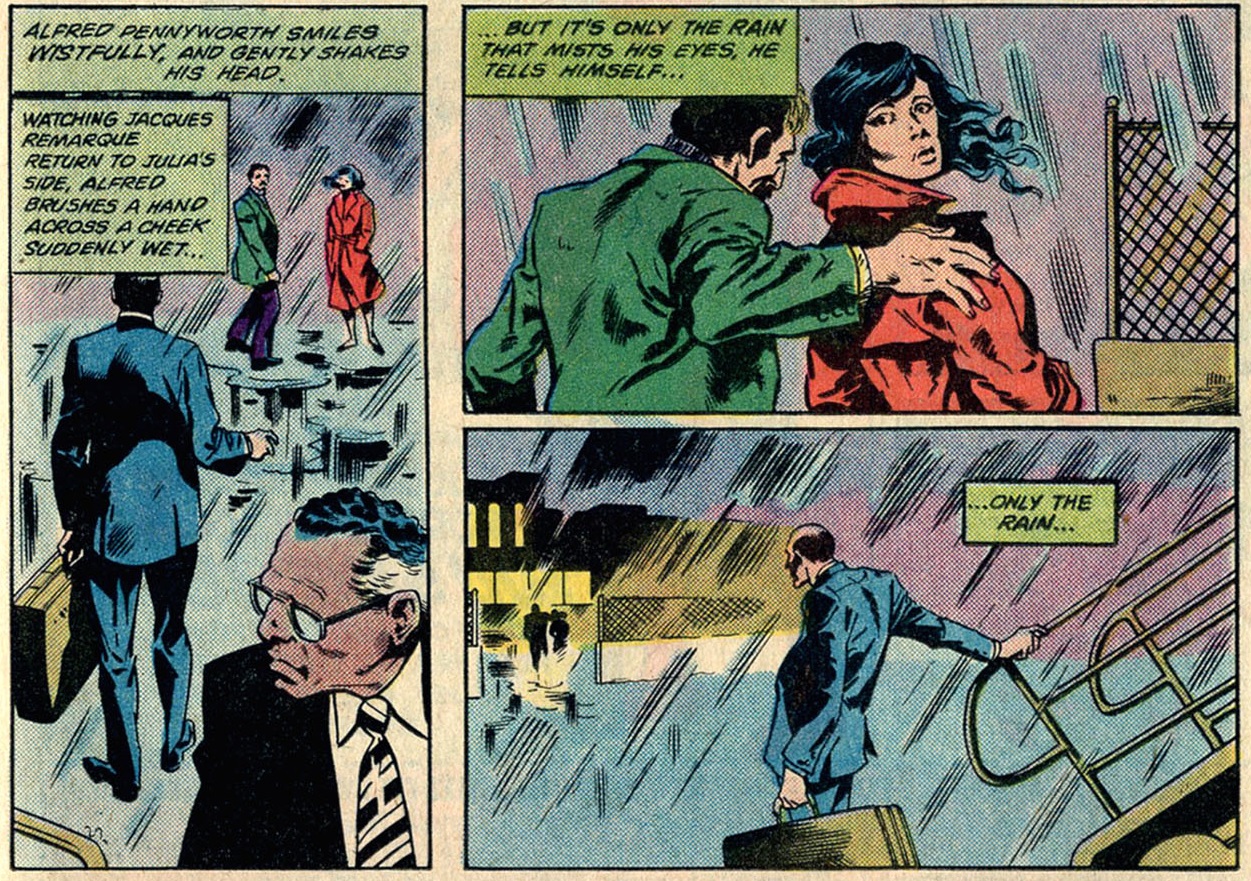
Like the villains, the supporting characters were also given more weight. We learn more about Alfred’s and Lucius Fox’s past as secret agents during World War II (in British intelligence and the OSS, respectively). Alfred, who had a love affair with French Resistance agent Mlle. Marie, meets an illegitimate daughter who wants to kill him:
detective comics 502Detective Comics #502

Other members of the cast are given personal issues and small arcs. Dick Grayson, who by now has dropped out of college and outgrown his role in the Dynamic Duo, goes back to the circus to try to forge his own path and do some soul searching, but eventually comes back as he realizes how much he values Batman’s friendship. James Gordon has an existential crisis after the Mayor asks for his resignation, only to then pull through with help from his daughter Barbara. Selina Kyle tries to disregard her criminal past as Catwoman, but decides she first has to fully come to terms with it.

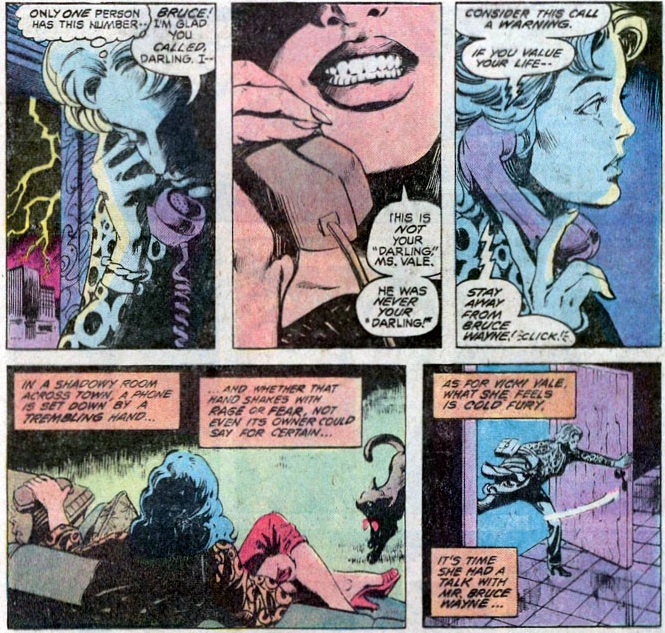
Speaking of Selina, between her and Vicki Vale, Bruce’s love life grows increasingly complicated, even soap operatic:
batman 354Batman #354

Gerry Conway also explored Gotham City’s politics to an unprecedented degree, capturing the sense that shady dealings and double-crosses were everywhere. During his run, Gotham elects a sleazy new mayor, in the pocket of gang boss Rupert Thorne – who is slipping into paranoia over the Hugo Strange haunting – and a new police commissioner obsessed with killing Batman. There is so much corruption and backstabbing going on that it’s no wonder you end up with City Hall meetings like this one:
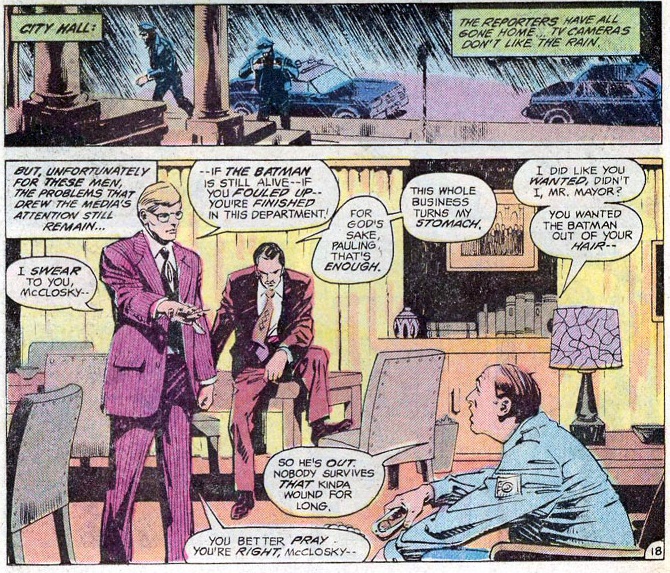
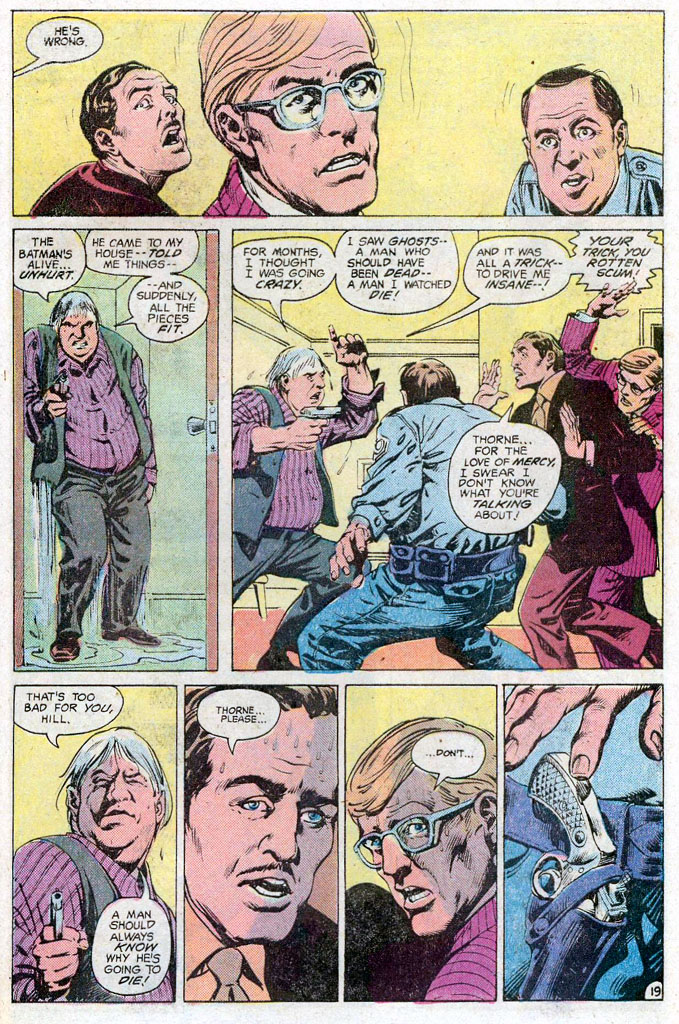
batman 354batman 354batman 354Batman #354

In addition, Conway created a bunch of new costumed foes. One of my favorite issues, Batman #337, with pencils by the majestic José García-López, gives us the Snowman. Freezing his victims and using cold as a weapon, at first this villain seems to be a mere Mr. Freeze knock-off (although, upon finding the first frozen body, Commissioner Gordon stupidly remarks that he has never seen anything like it before). As it turns out, however, the Snowman has a much more twisted origin: his mother accidentally had sex with a yeti! The story somehow manages to play this absolutely straight and it even finishes on a poetic note (partly ruined by the fact that there is an unnecessary sequel a few issues later).

The Snowman isn’t the only new villain who is a product of odd parental decisions… The Sportsman murders star athletes because as a kid he was not very good at sports and so his father forcibly injected him with steroids. Then there is Colonel Blimp, who wants to take revenge on the Navy – with an armed dirigible – because they closed down the zeppelin project where his dad used to work (in the 1950s). Oh, and there is Dagger…who throws daggers… because he really likes daggers… they’re the family business, you know?
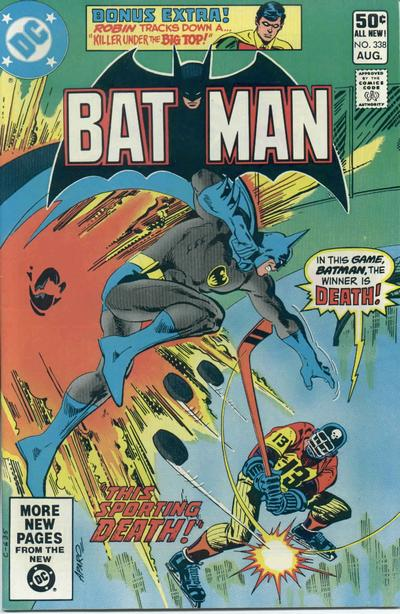
Batman 338

So yeah, no wonder these foes didn’t stick. For all the effort Gerry Conway and his occasional co-writers put into breathing life into established cast members, their new creations are quite lazy. I do like the Squid, who takes control of Gotham’s underworld in the final act of Conway’s run, but he basically comes out of a jokey wink to the Octopus in Eisner’s The Spirit (as mentioned here). And the least we say about Pharoh Khafre, the better (it took another 28 years until we got a decent Batman comic about an Ancient Egypt-themed villain). Though I will say this about Manikin, the disfigured supermodel taking revenge on the fashion industry: while her story isn’t particularly good, the idea of a supermodel villain is not out of place given the rogues’ predilection for costumes and general sense of performance, not to mention the fact that the theme of disfigurement is pretty much a leitmotif in Batman adventures (indeed, the animated episode Mean Seasons explores the same premise).

The one breakout villain was the scale-covered gangster known as Killer Croc. Conway did a great job of slowly unfolding the new rogue… Croc starts off as a background character and at first he looks like just another thug, albeit one who keeps to the shadows and is less inclined to follow the herd than others. The story seems to be setting up the Squid as the next big villain and Killer Croc as some kind of lowlife wild card – but then Conway pulls the rug from under the readers by making Croc the bigger threat. Indeed, the character’s big reveal is not so much when we finally see his deformed face (and later his crocodile-like body) but when we realize he has both street smarts and cold blood, making him much more calculating and difficult to predict than the Caped Crusader’s usual assortment of impulsive, madcap foes. The scene where Croc spots Batman hiding from the Squid’s men always sends chills down my spine:
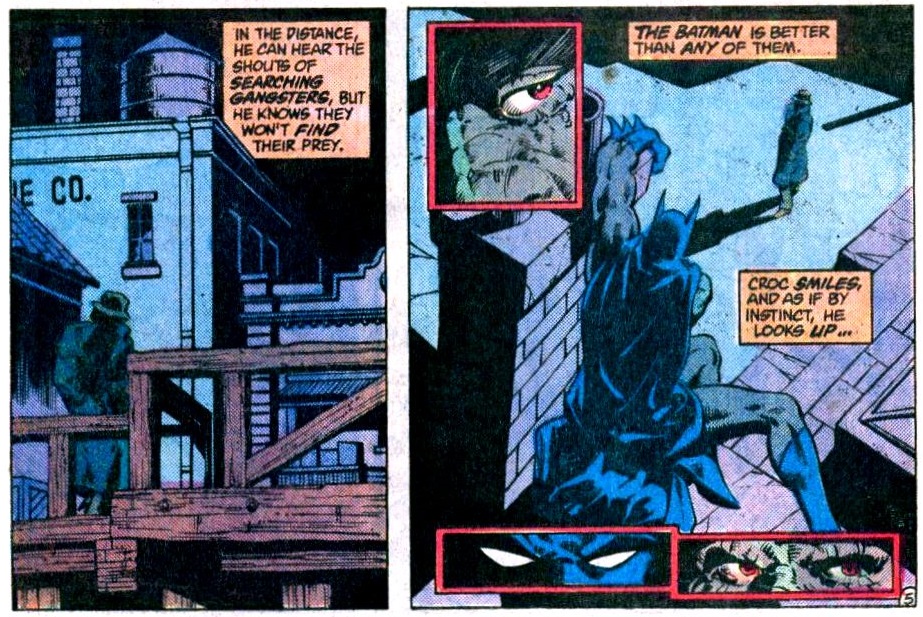
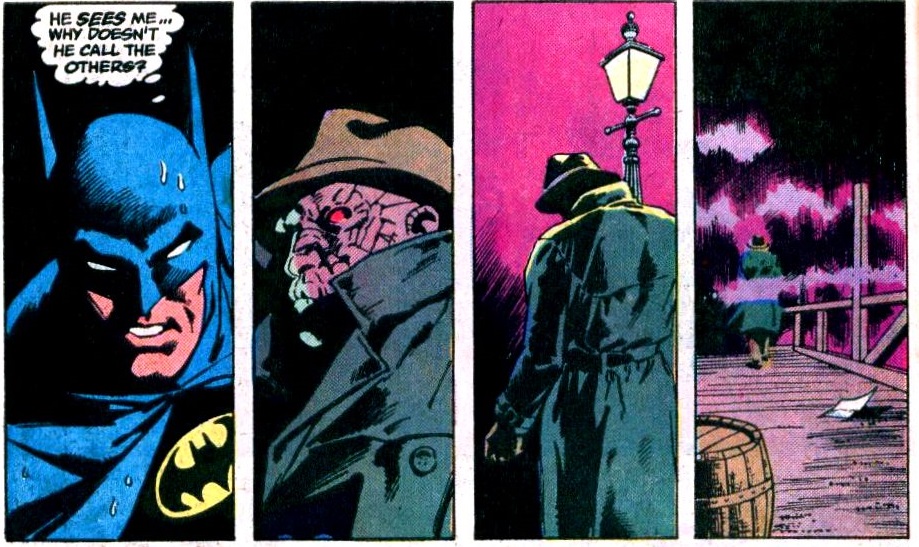
detective comics 524detective comics 524Detective Comics #524

By the climactic final issue of Conway’s run (‘All My Enemies Against Me’), Killer Croc has made such an impression that all the established members of the rogues’ gallery fear being outdone and rush to kill Batman before Croc nails it. Credit for the character’s longevity, however, must go to the art teams in these issues, since it clearly wasn’t Conway’s characterization that resonated with future writers. Although Killer Croc continues to show up in Batman comics to this day, his only similarity to Conway’s creation is the visuals of a man who looks like a crocodile – in terms of personality, Croc has been reduced to a dumb brute in most appearances since then.

The other noteworthy contribution from this era is Jason Todd, the teenager who went on to become the second Robin.
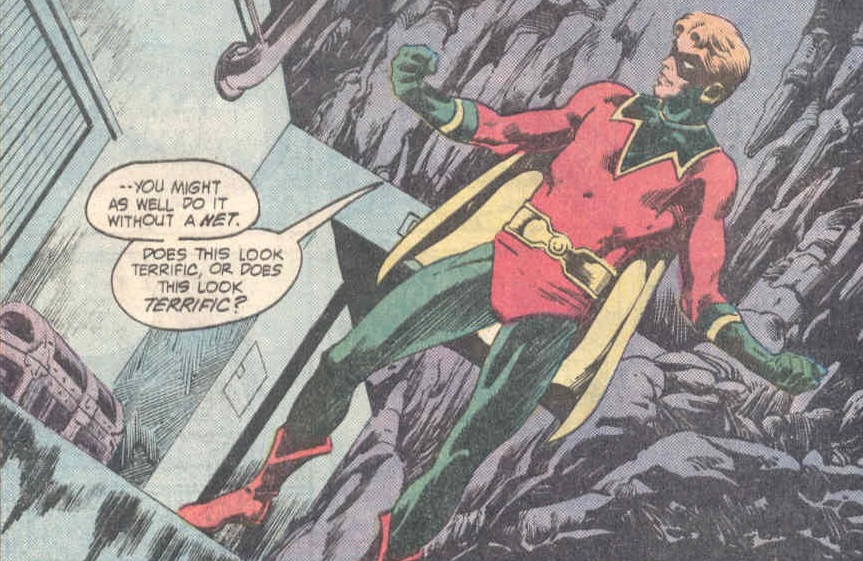
detective comics 526Detective Comics #526

The notion of replacing Dick Grayson (who had been around as a young sidekick for over 40 years) is inspired, but it also turns out to be a missed opportunity… Rather than give Jason Todd a distinct origin and personality, Conway ends up writing a very close variation of the original Robin’s origin story: circus acrobat parents killed because of extortion racket. I don’t know how much of this was editorially dictated, so maybe Conway was just following orders from the higher-ups – in his defense, at least he got some pathos out of the parallel with Dick Grayson’s backstory:
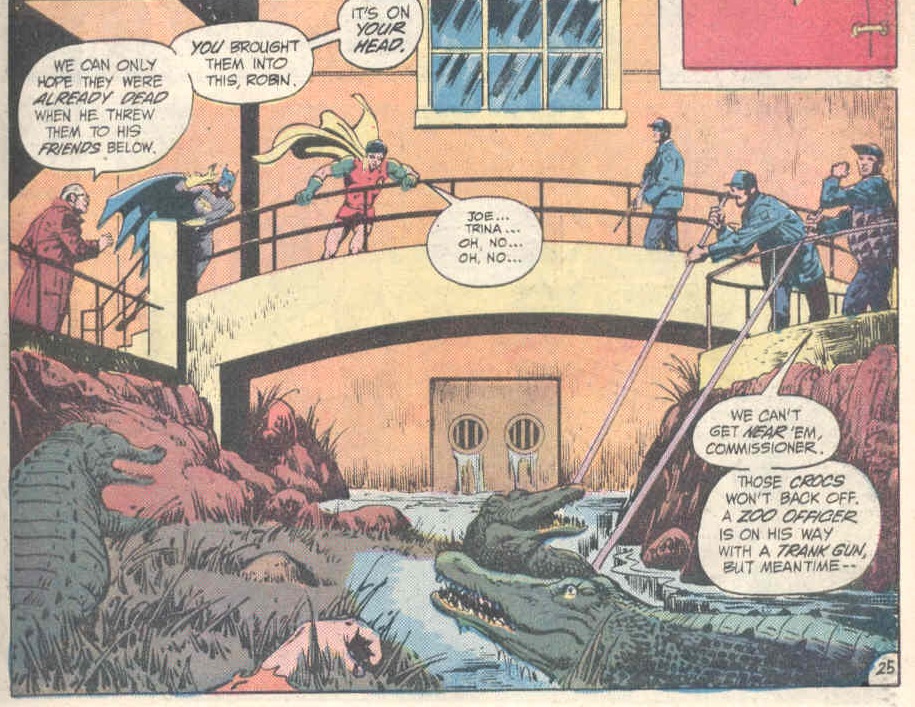
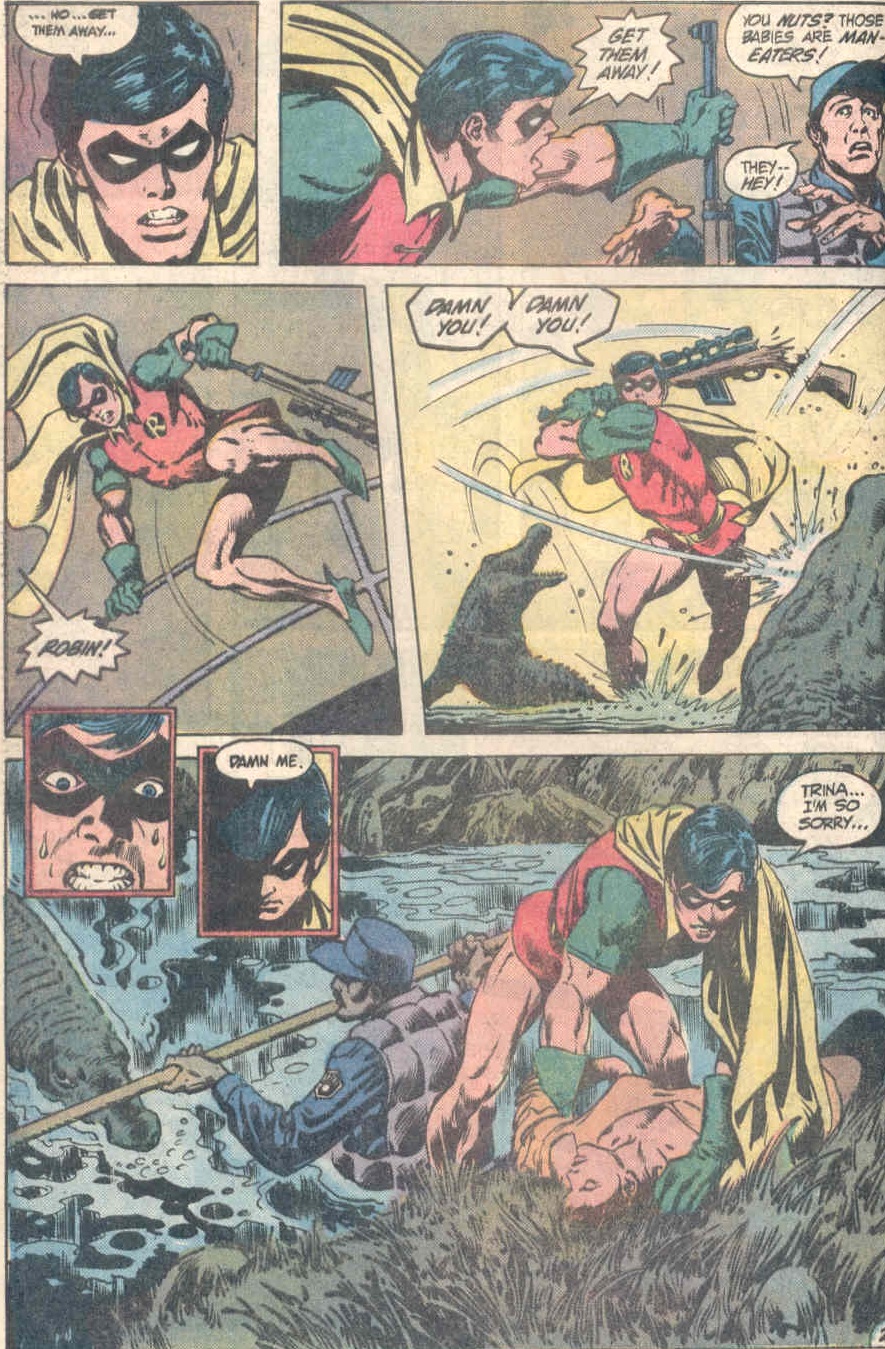
detective comics 526detective comics 526Detective Comics #526

In any case, this decision would be rectified (for better or worse) a few years later, when Jason Todd was rebooted as a street kid whose lowlife father was killed by Two-Face. So once again, for all of Gerry Conway’s innovation in terms of storytelling, his character ideas didn’t seem to have a long-lasting impact…

That said, it would still take a few years for Crisis on Infinite Earths to undo Gerry Conway’s work. In the meantime, writing duties fell upon Doug Moench, whose run closely followed Conway’s in tone and plotting. In fact, most of Moench’s 1980s output on Batman and Detective Comics consists of picking up Conway’s loose ends or delivering sequels to his stories. But to be fair, there is a lot more to say about Moench and I will say it on some other post… and you can bet that post will feature even more vampires!
NEXT: The worst is yet to come.

Posted in WRITERS OF BATMAN COMICS | Tagged , , , , , , , , , , , | 2 Comments

Film noir detective stories – part 2

If you read the last post, you know what’s going on. Here are more film suggestions for fans of noir detective stories:

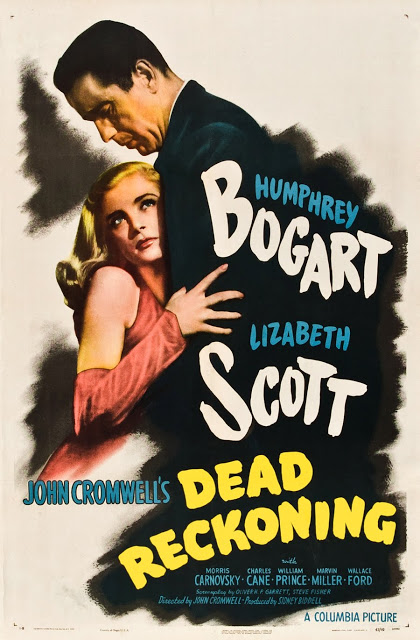
DEAD RECKONING (1947)

Dead Reckoning 1947

-Put Christmas in your eyes and keep your voice low. Tell me about paradise and all the things I’m missing. I haven’t had a good laugh since before Johnny was murdered.

When Captain Warren ‘Rip’ Murdock (Humphrey Bogart) investigates the mysterious disappearance of a close friend who served with him in World War II, he finds himself caught in an intricate web of crime, romance, and double-crosses, all covered in shadows and overwrought dialogue.

I’m not gonna lie, Dead Reckoning isn’t A-list material. Even at the time, this must have felt like Frank Miller’s Sin City: derivative, contrived, artificial, and trying so hard to be hardboiled that it borders self-parody. But what can I say – I’m such a fan of the genre that if you mix the usual ingredients just right, that’s enough for me. Also, if he had been more athletic, Bogie would have made a great Batman!

RIFF-RAFF (1947)

Riffraff 1947

-You shouldn’t do that, Mr. Hammer. It gives the place a bad reputation.

-You mean a worse reputation.

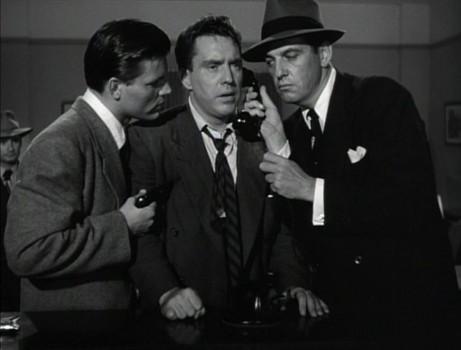
Not so much a mystery as a snappy adventure about charming detective Dan Hammer (Pat O’Brien) who operates out of Panama City and unwittingly comes into the possession of a map showing the locations of oil deposits in South America, which everyone seems to be after. Besides being an entertaining watch, Riff-Raff has a kick-ass opening sequence.

I LOVE TROUBLE (1948)

I Love Trouble 1948-People don’t spot me when I’m following, unless they’re looking for it. Your wife was looking for it.

This B-movie has pretty much all you can ask from a mystery film noir. There is a wisecracking private eye (Franchot Tone), a circuitous plot full of twists and tension, chiaroscuro photography, intriguing femme fatales, and smart, fast-paced repartee. Pure fun.

THE THIRD MAN (1949)

The Third Man 1949

-Nobody thinks in terms of human beings. Governments don’t. Why should we? They talk about the people and the proletariat, I talk about the suckers and the mugs – it’s the same thing.

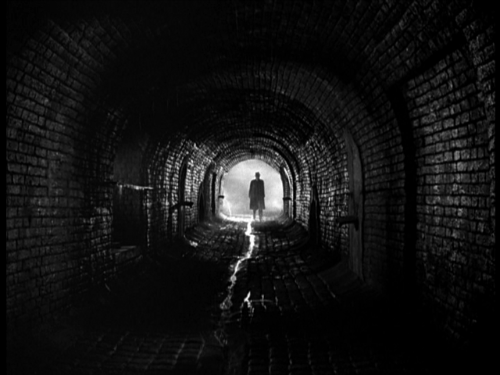
American pulp writer Holly Martins (Joseph Cotton) arrives in occupied Vienna, only to find out that his childhood friend has died in suspicious circumstances. Add to this premise black market dealings, cold war politics, and an engrossing love triangle. Plus gorgeous cinematography and a superb zither-based musical score. And a bunch of memorable moments like the chase through the sewers and Orson Welles’ cuckoo clock monologue. AND one of the coolest closing shots I can think of!

Writer Graham Greene and director Carol Reed did some fine work together (the previous year, they had worked on the excellent The Fallen Idol), but this really is something special. The Third Man isn’t just the best film on this list, it’s one of the greatest movies ever.

D.O.A. (1950)

DOA 1950

-You’re just like any other man, only more so.

Man walks into a police station. ‘I’d like to report a murder.’ A cop asks him where the murder was committed. ‘San Francisco, last night.’ The cop asks who was murdered. The man replies: ‘I was.’

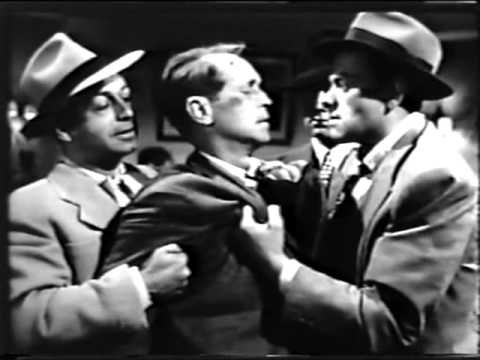
The man is accountant and notary Frank Bigelow (Edmond O’Brien), an average guy who was poisoned and has just a few days to live, which he uses to find out who killed him and why. In the ensuing thriller, O’Brien runs and shouts and fights and sweats like a pig.

The movie is in public domain, so there is no excuse not to watch it.

KISS ME DEADLY (1955)

Kiss Me Deadly

-What’s this all about? I’ll make a quick guess. You were out with some guy who thought “no” was a three-letter word.

Nominally an adaptation of a Mickey Spillane novel (with Ralph Meeker playing Mike Hammer), Kiss Me Deadly is equal parts detective story and deconstruction of the detective archetype… and that’s before the plot completely departs from the book by turning into a macabre cold war fantasy. Regardless, what an ending!

In the way that it takes the film noir format but treats it in an ironic, almost dreamlike fashion, Kiss Me Deadly anticipates such L.A.-set meandering postmodern mystery movies as The Long Goodbye, The Big Lebowski, and Inherent Vice.

WITNESS FOR THE PROSECUTION (1957)

Witness for the Prosecution

-Touching isn’t it? The way he counts on his wife…

-Yes, like a drowning man clutching at a razor blade.

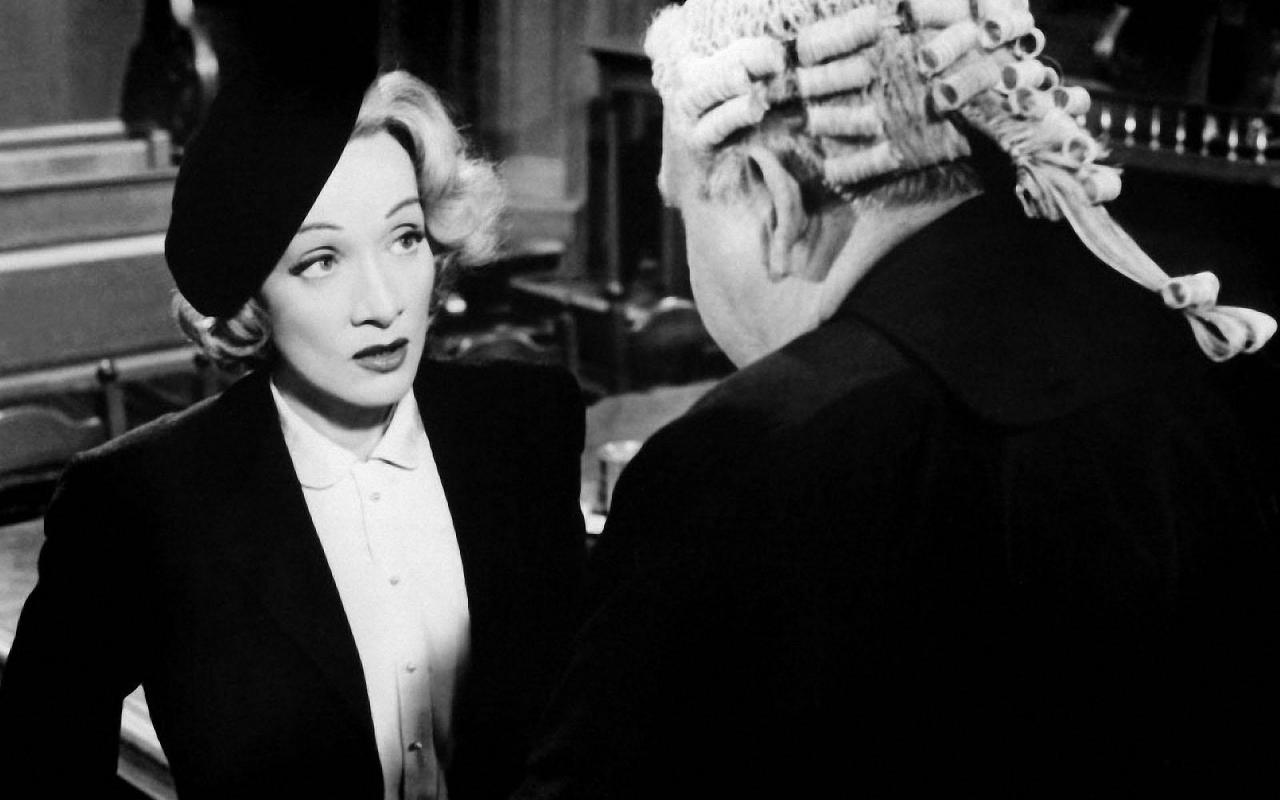
When people talk about Billy Wilder’s film noirs, they tend to bring up classic masterpieces like Double Indemnity, Sunset Boulevard, and Ace in the Hole. But although minor in comparison, Witness for the Prosecution is also a must-see, especially as far as mysteries go. Based on an Agatha Christie play, it tells the story of Sir Wilfrid Robarts (Charles Laughton), a London barrister who takes a client accused of murder (Tyrone Power) despite strong circumstantial evidence pointing to him as the killer.

The true star of picture, though, is Marlene Dietrich as Power’s wife. Her character has something of Dietrich’s complex femme fatales in early talkies like Morocco and Shanghai Express, but most of all she seems to pick up from where she left off in Wilder’s brilliant satire A Foreign Affair.

THE CRIMSON KIMONO (1959)

The Crimson Kimono

-Life is like a battle. Someone has to get a bloody nose.

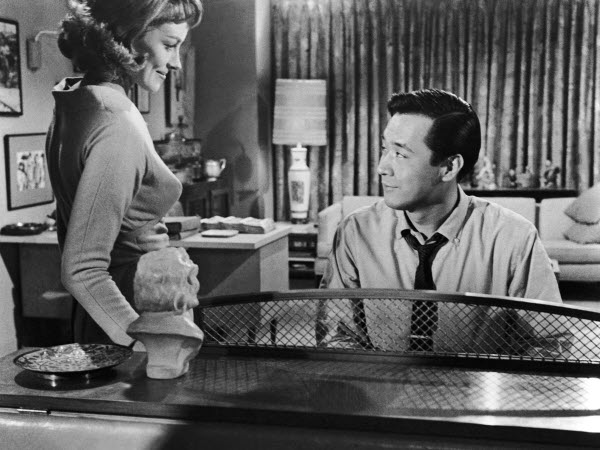
Two police detectives and Korean War veterans, Charlie Bancroft (Glenn Corbett) and Joe Kajaku (James Shigeta), investigate the murder of a burlesque stripper in this lurid drama about race relations revolving around Los Angeles’ Asian-American community.

Leave it to Sam Fuller to take what seems like a basic whodunit and throw it into unexpected directions… To quote the essential blog Film Noir of the Week: ‘Fuller’s films exist in their own bizarre world. It’s a pulpy, slangy, slapdash place where plot threads are picked up and abandoned willy-nilly, where stuntmen’s faces are clearly visible during fight scenes, and where emotion trumps reason.’ Indeed, more than a mystery, a romantic drama, or a social problem film, The Crimson Kimono is above all a feverish mess of Fuller craziness, zigging when you think it will zag, with quirky artists and samurai lovers coming and going between odd karate set pieces. Like the story and characters, the editing is mesmerizing – sometimes ultra-stylish (check out the amazing opening!) and sometimes puzzling (who exactly is in that final chase through the parade?), but never boring.


NEXT: Batman is attacked by a hockey player.

Posted in HARDBOILED CRIME | Tagged , , , , | Leave a comment

Film noir detective stories – part 1

Although film noir was a product of the 1940s and (arguably) the 1950s, since then its serpentine plots, mordant dialogue, and shadowy atmosphere have persistently inspired spoofs as well as straight-faced pastiches, including several Batman comics. With that in mind, last year I suggested that fans of the Dark Knight check out The Maltese Falcon. And this week I’m recommending another 15 detective films which are cut from the same cloth.

Let me start by pointing out that Batman’s whole noir connection makes a lot of sense, and not just because of his pulpy origins – after all, Batman is supposed to be the World’s Greatest Detective and the ‘tough detective’ has become one of the most recognizable noir tropes, popularized by private eyes like Sam Spade and Philip Marlowe (created by Dashiell Hammett and Raymond Chandler, respectively). And as much as Gotham has changed throughout the years, it is typically as full of sadistic mobsters and desperate suckers as the cities in those classic Hollywood crime movies.

A couple of comics have gone further than others, fully reimagining Batman’s cast through mysteries set in the film noir era:

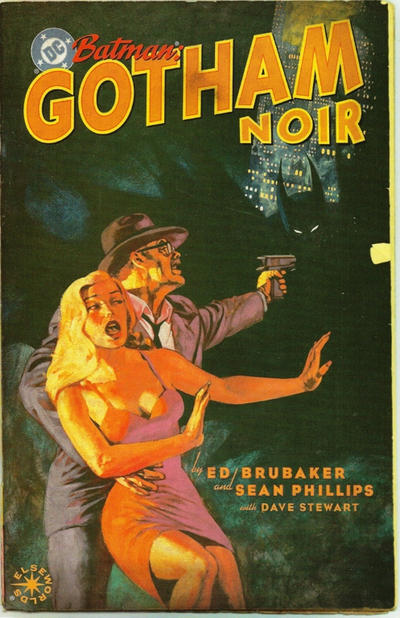
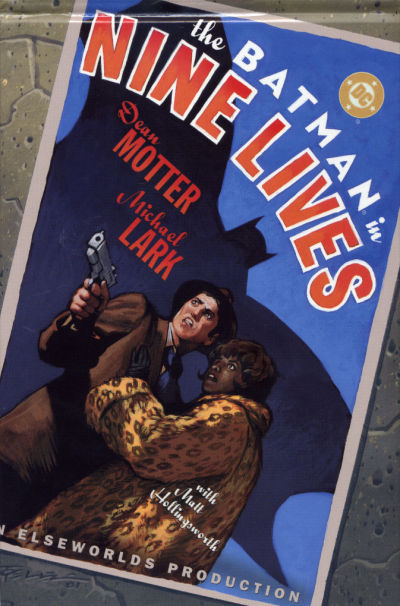
Gotham Noir          Batman Nine Lives

Gotham Noir casts James Gordon as a heavy-drinking private investigator and Selina Kyle as a Rita Hayworth-looking nightclub owner, among other familiar names. Set in 1949, this is a sordid tale that pays homage to noir conventions such as the narrated flashback structure while tapping into the mood of post-WWII trauma and disenchantment. It’s an early collaboration by Ed Brubaker and Sean Phillips, two devout fans of the genre (they also paid homage to Hammett in their Hawkman story ‘The Black Bird’ and are currently working on the noir series The Fade Out).

Another Elseworlds comic, Nine Lives has shamus Dick Grayson look into the murder of an African-American Selina Kyle, with the nine suspects being clever combinations of Batman characters and noir clichés. Dean Motter’s tight script delivers the obligatory easter eggs, but it also has more than a few surprises up its sleeve. And if Phillips did a stellar job of channeling the aesthetics of period posters in Gotham Noir, here Michael Lark’s photorealistic art – with colors by Matt Hollingsworth – makes you feel like you’re actually watching a reel for the best-looking neo-noir movie this side of The Man Who Wasn’t There.

All in all, these are truly great comics which work as internally consistent thrillers while also providing Batman fans with amusing intertextual winks. Marvel successfully adopted the same formula years later, publishing cool noir versions of the X-Men, Spider-Man, and Luke Cage.

That said, there’s nothing quite like the original movies:

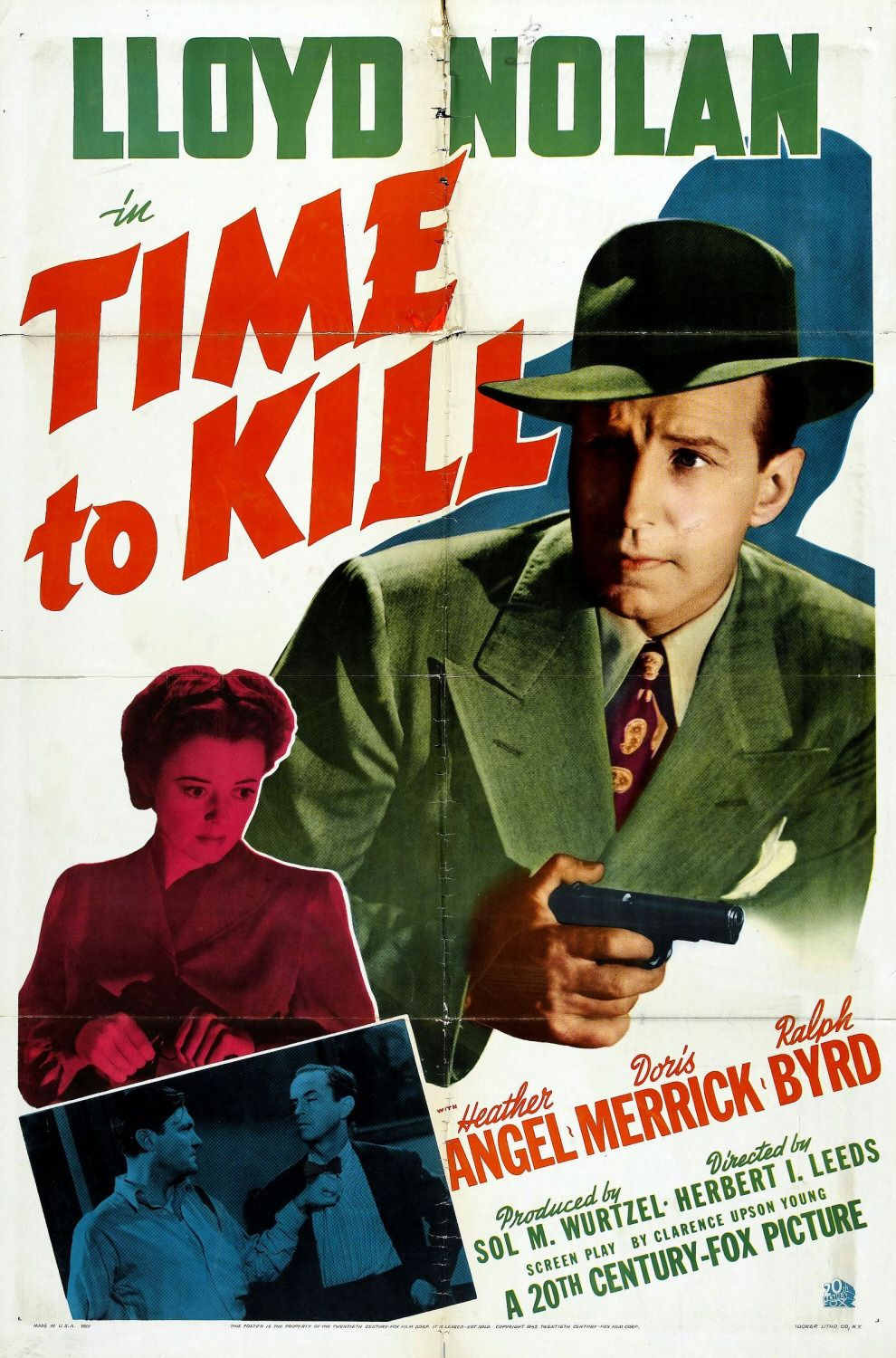
TIME TO KILL (1942)

Time to Kill-And don’t leave town. We want a statement!

-You can have the one the bank sent me. You’ll get a great laugh out of that.

Let’s get this out of the way: I’m not including the overrated Philip Marlowe movie The Big Sleep on this list, because I honestly think you can have a much better time reading the original novel. However, I can’t resist recommending the much lesser known Time to Kill, which is also an adaptation of a Marlowe story (The High Window), even if the protagonist has been changed to private detective Michael Shayne (played with gusto by Lloyd Nolan). Without an ounce of pretension, this is a well-paced mystery spiced up with sharp one-liners.

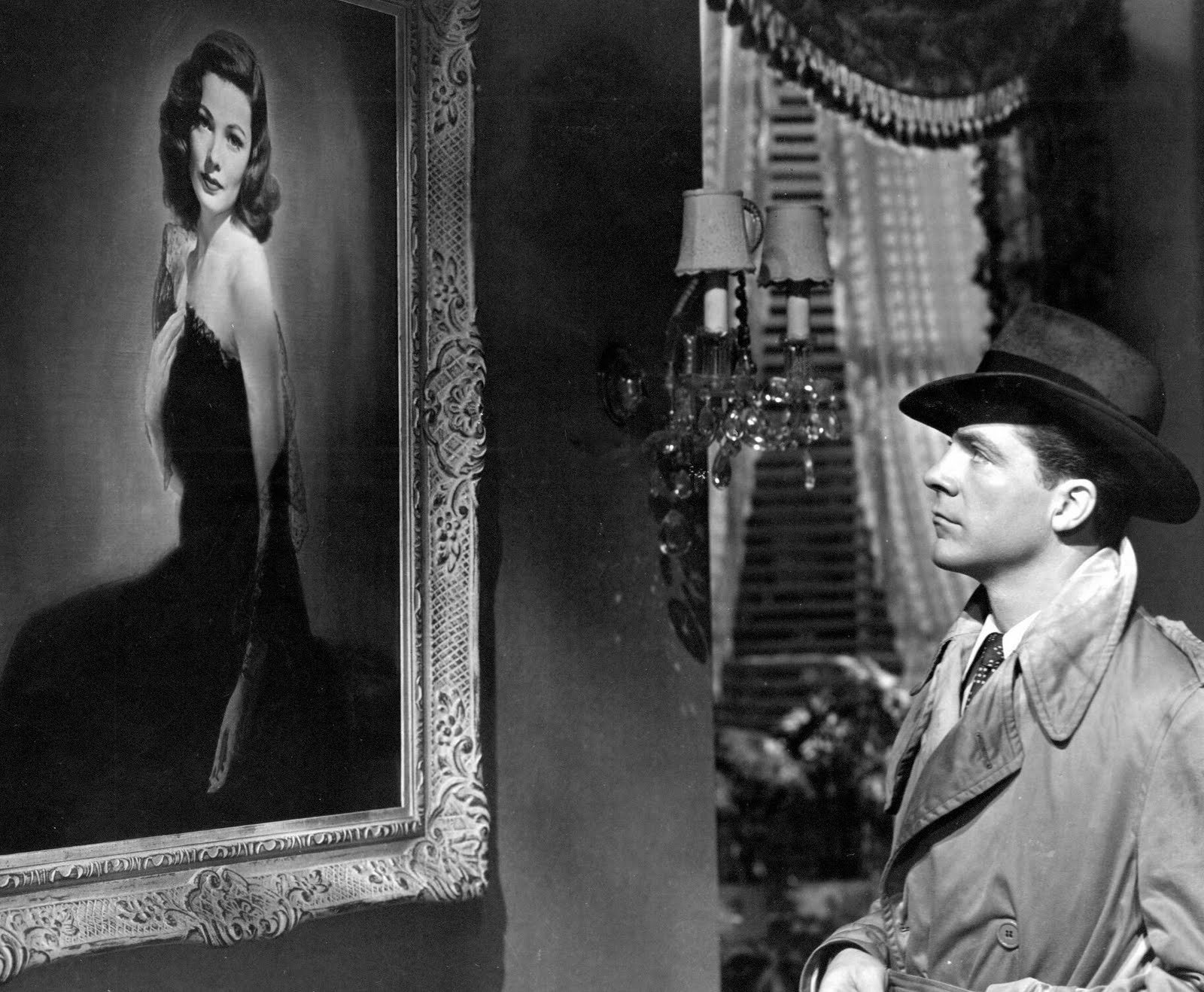
LAURA (1944)

Laura 1944

-I don’t use a pen. I write with a goose quill dipped in venom.

As the police detective investigating the murder of a beautiful advertising executive, Mark McPherson (Dana Andrews) is a terrible cop, letting a suspect tag along with him as he interrogates other suspects and unhealthily falling in love with the dead victim. To make matters worse, the case is anything but straightforward (there’s a shocking plot twist halfway through) and the people involved can be deliriously eccentric, especially newspaper columnist Waldo Lydecker (Clifton Webb) who spouts priceless lines like ‘In my case, self-absorption is completely justified. I have never discovered any other subject quite so worthy of my attention.’

Laura isn’t as hardboiled as the other entries on this post (or as the later collaboration between Andrews and director Otto Preminger, Where The Sidewalk Ends, also a twisted cop story). However, the film is justly celebrated as an alluring tale of dark obsession hiding underneath the veneer of upper class sophistication.

(By the way, Preminger totally played Mr. Freeze on a couple of episodes of the Batman TV series! And Vincent Price, who is one of the suspects here, played the egg-obsessed villain Egghead!)
MURDER, MY SWEET (1944)

Murder, My Sweet

-You’re not a detective, you’re a slot machine. You’d slit your own throat for 6 bits plus tax.

Another Philip Marlowe mystery, now starring Dick Powell, Murder, My Sweet – based on the novel Farewell, My Lovely – is the most stylish of the Chandler adaptations (although Lady in the Lake gets extra points because 95% of the movie is shot from Marlowe’s POV). The plot is convoluted to the point of madness, so it’s better to just enjoy each set piece as it comes and bask in all the noirishness.

While the unnecessarily romantic ending isn’t as powerful as the novel’s cynical last line, at least the film skips the racism that permeates the book while keeping plenty of Chandleresque wit.

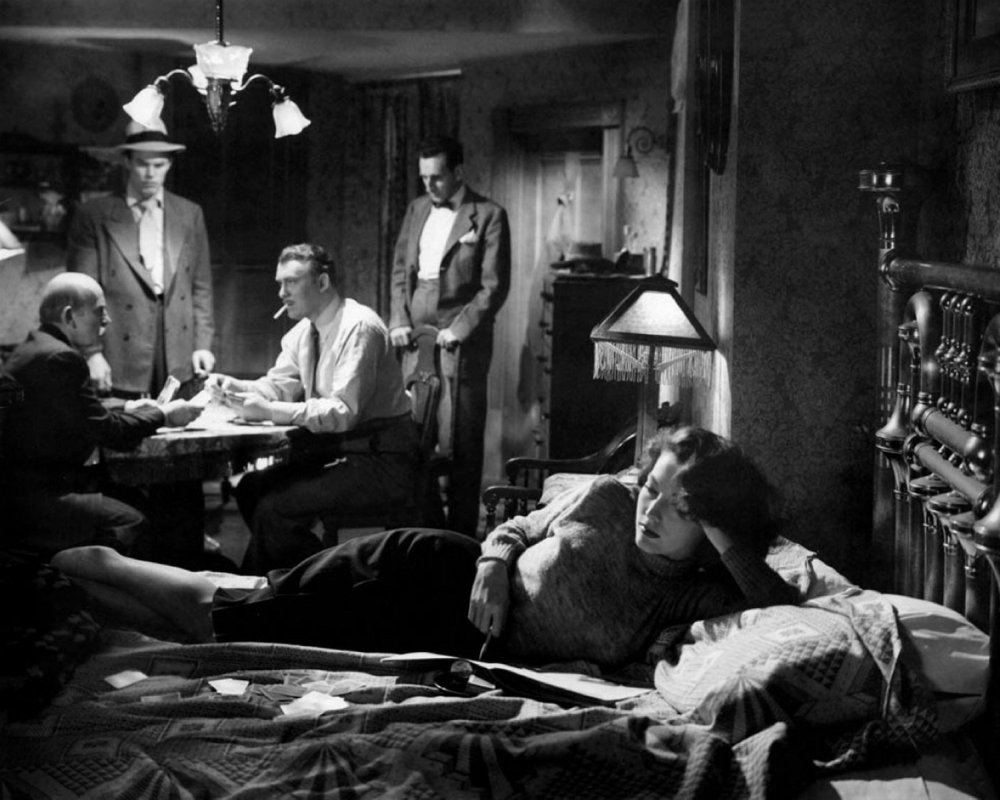
THE KILLERS (1946)

The Killers 1946-Me and the Swede were about as close as two guys can get. For nearly two years we weren’t more than eight and a half feet apart. That’s how big the cell was.

The first minutes of the quintessential noir The Killers are a badass adaptation of an Ernest Hemingway short story about a prizefighter (Burt Lancaster) who refuses to either resist or run away when a couple of hitmen come for him. From then on, we follow life insurance investigator Jim Reardon (Edmond O’Brien) as he tries to figure out why the boxer didn’t fight for his life. In the ensuing chain of flashbacks, it becomes increasingly clear that Ava Gardner’s femme fatale must have something to do with it.

Much like in his underrated noir Cry of the City, Robert Siodmak drenches The Killers in atmospheric chiaroscuro and directs each scene as if his life depends on it, delivering a hell of a crime drama.

THE DARK CORNER (1946)

The Dark Corner

-The enjoyment of art is the only remaining ecstasy that is neither immoral nor illegal.

The Dark Corner doesn’t provide much of a mystery, but it’s still a taut detective story, as private eye Bradford Galt (Mark Stevens) finds himself stalked, threatened, knocked out, and framed for murder. Once again, Clifton Webb gets the quirkiest lines (‘How I detest the dawn. The grass always looks like it’s been left out all night.’), but Stevens is the one who utters the gritty monologue that justifies the film’s title: ‘I feel all dead inside. I’m backed up in a dark corner and I don’t know who’s hitting me.’

OUT OF THE PAST (1947)

Out of the Past

-She can’t be all bad. No one is.

-Well, she comes the closest.

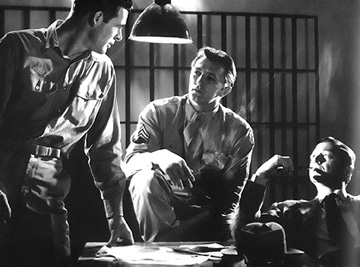
Probably the most awesome film noir ever made, with Robert Mitchum as a private detective and Jane Greer as the woman for whom he throws everything away, with a plot that keeps on spinning and dialogue that feels like each character had 24 hours between sentences to think of the perfect comeback, with unforgettable expressionist lighting and more cigarette smoke than the last ten movies you’ve seen combined.

CROSSFIRE (1947)

Crossfire 1947

-Is he dead?

-He’s been dead for a long time and didn’t even know it.

Besides Murder, My Sweet, director Edward Dmytryk was also behind this fascinating drama where a police captain (Robert Young) and a military sergeant (Robert Mitchum) investigate a murder involving a group of demobilized soldiers. More than the identity of the murderer, at the core of the film is the killer’s motivation – mixing police procedural and hate crime, Crossfire anticipates David Mamet’s Homicide, another gripping detective story about anti-Semitism.

What’s more, Crossfire sidesteps its B-movie origins by obscuring the settings with moody darkness and turning the absence of score into unsettling silences. The effect is chilling.


NEXT: More film noir detective stories.

Posted in HARDBOILED CRIME | Tagged , , , , , , , | Leave a comment

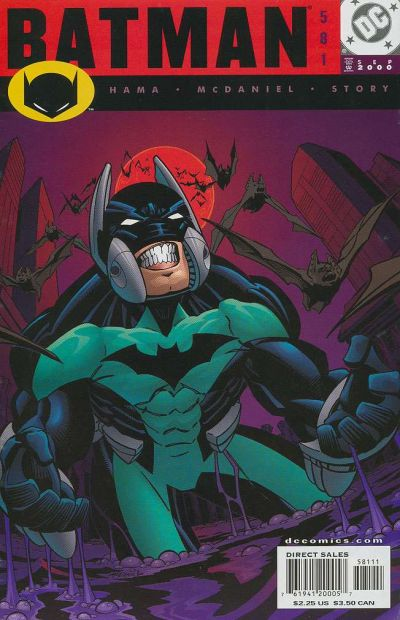
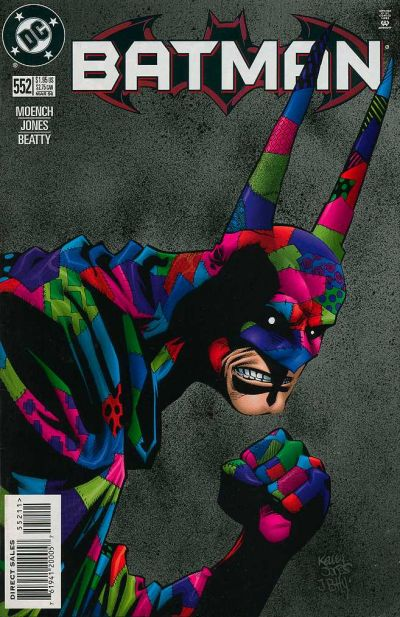
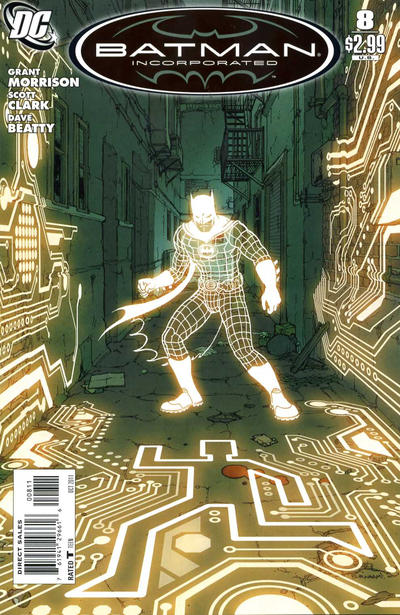
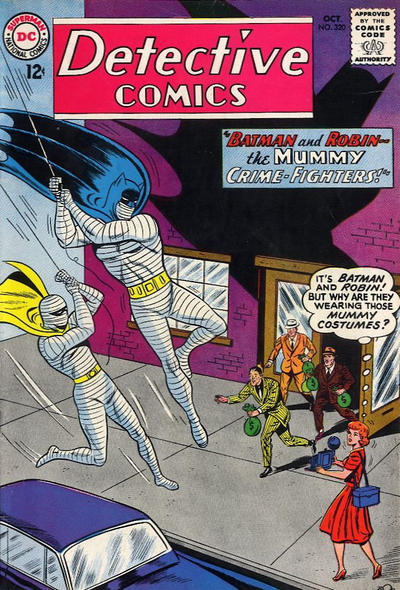
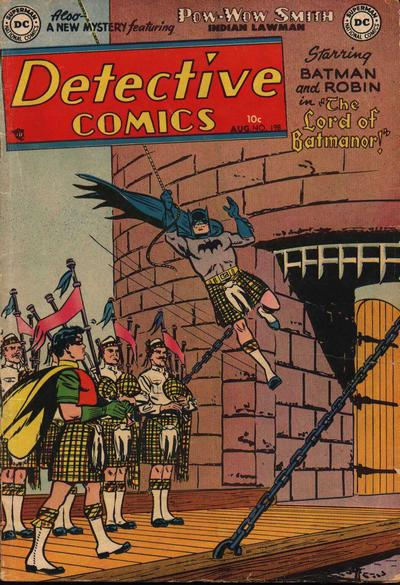
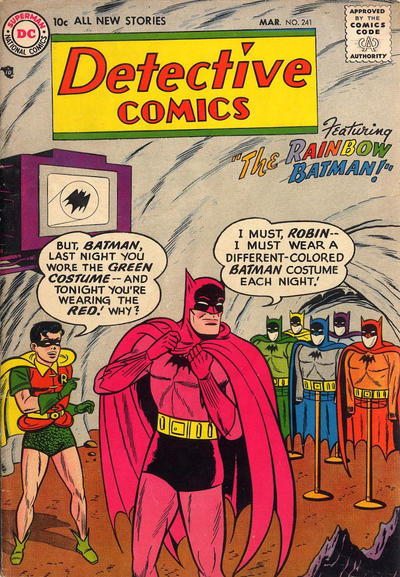
10 covers where Batman tries bizarre costumes

As a fan of covers that jump at the reader, I’ve been trying to figure out what kind of themes provide cool visuals. For example, I really dig covers where it looks like Batman is about to get shot.

Another type of images that can easily get stuck in your head are those where the Dark Knight dresses in weird variations of his usual costume. Now, I don’t know much about super-fashion, but I know what I like… Here are 10 great examples of bizarre costume choices:

SCUBA DIVING COSTUME

Batman 581

MOTLEY COSTUME

Batman 552

NEON COSTUME

Batman Incorporated 8

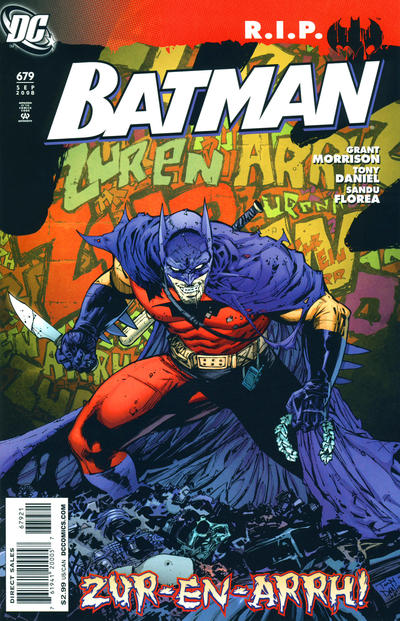
ACID TRIP COSTUME

Batman 679

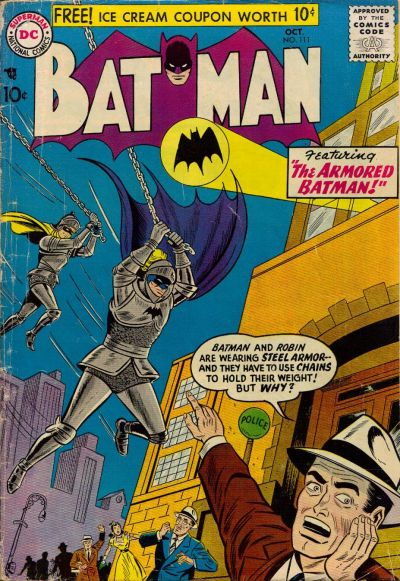
ARMORED COSTUME

Batman 111

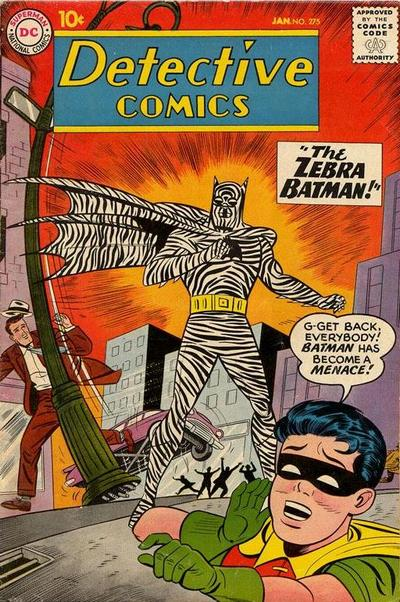
ZEBRA COSTUME

Detective Comics 275

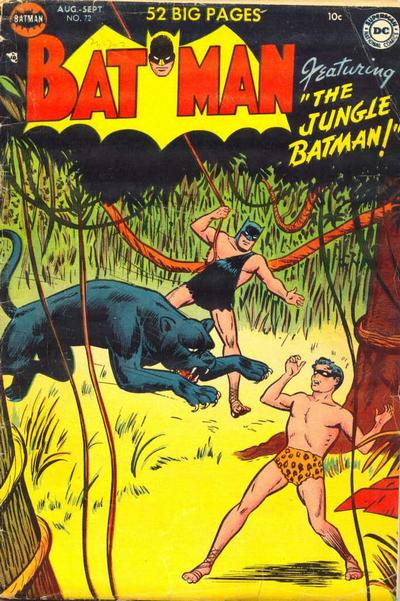
JUNGLE COSTUME

Batman 72

MUMMY COSTUME

Detective Comics 320

SCOTTISH COSTUME

Detective Comics 198

RAINBOW COSTUMES COLLECTION

Detective Comics 241

NEXT: Film noir mysteries.

Posted in COVERS OF BATMAN COMICS | Tagged | Leave a comment

If you like Mask of the Phantasm…

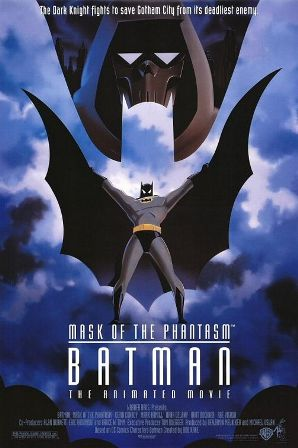
With the possible exception of the Nolan trilogy, Mask of the Phantasm came the closest to capturing the feel of the coolest Batman comics and projecting it on the big screen. In fact, this movie spin-off of the awesome Batman: The Animated Series (BTAS) is as pure a tale about the Dark Knight as you are likely to find anywhere. The characterization is spot on and totally nailed by the terrific voice acting. In line with the TV series’ noirish atmosphere, Mask of the Phantasm draws stylishly on early 1940s’ aesthetics and storytelling – it’s as if a couple of actors showed up on the set of Citizen Kane wearing Halloween costumes and Orson Welles decided to rewrite the film around them and then asked Fleischer Studios to animate the whole thing in the style of their Superman cartoons. The result is a tautly plotted mystery which smoothly mixes gangsters and costumed villains while riffing on several classic Batman tales. And to top it all off, there are some impressive visual sequences.

Batman Mask of the Phantasm

It should be noted that the other feature-length BTAS spin-offs (the ones that went straight to video or DVD) aren’t bad either. While none matches Mask of the Phantasm, they are usually much more faithful to the spirit of the comics than Hollywood’s live action productions. For example, SubZero – a sequel to the beloved episodes Heart of Ice and Deep Freeze – is a straightforward, action-filled yarn featuring Mr. Freeze where both Dick Grayson and Barbara Gordon get plenty of chances to shine… if the writers had also thrown in Poison Ivy, you could pretty much call it ‘Batman & Robin done right!’

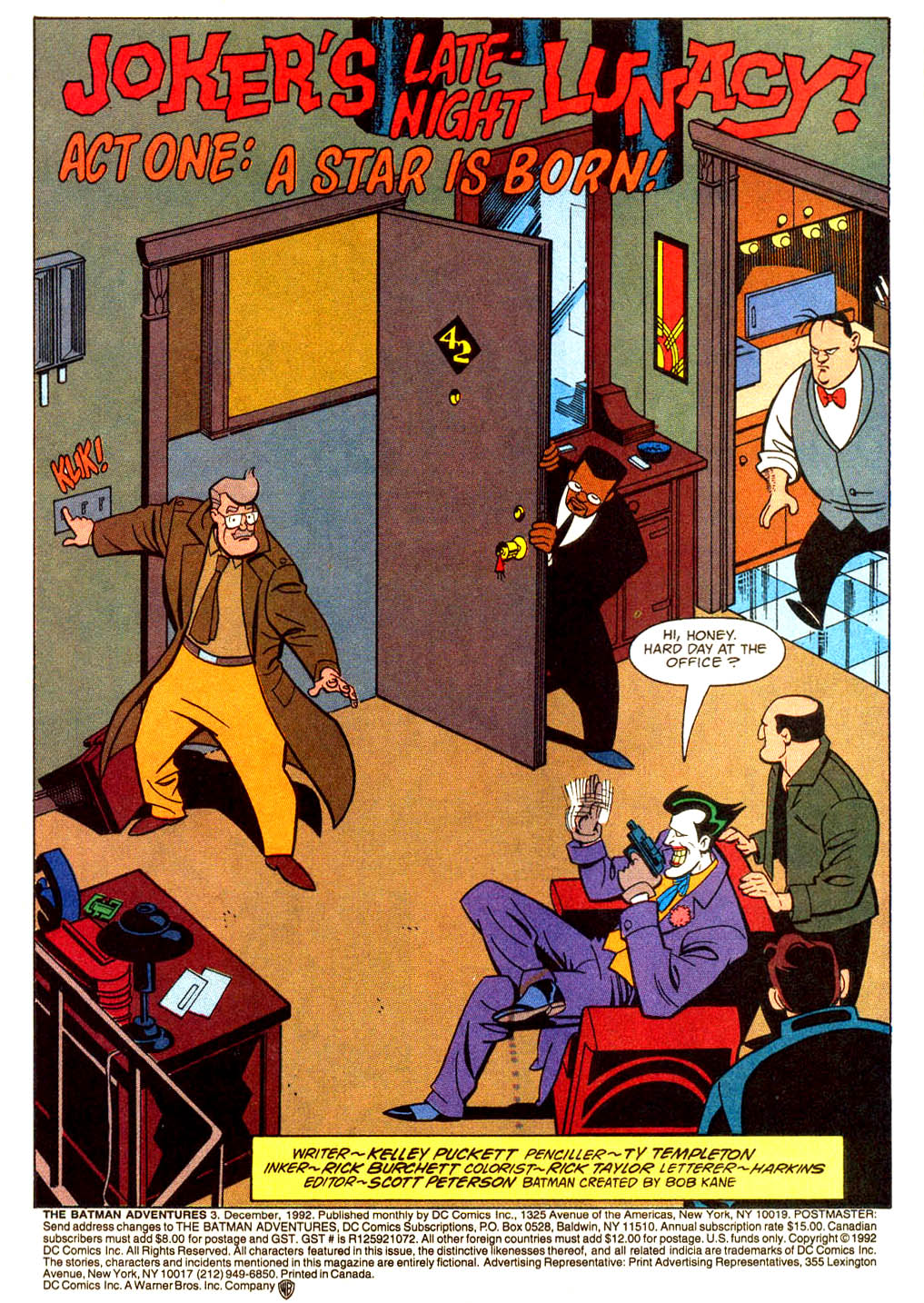
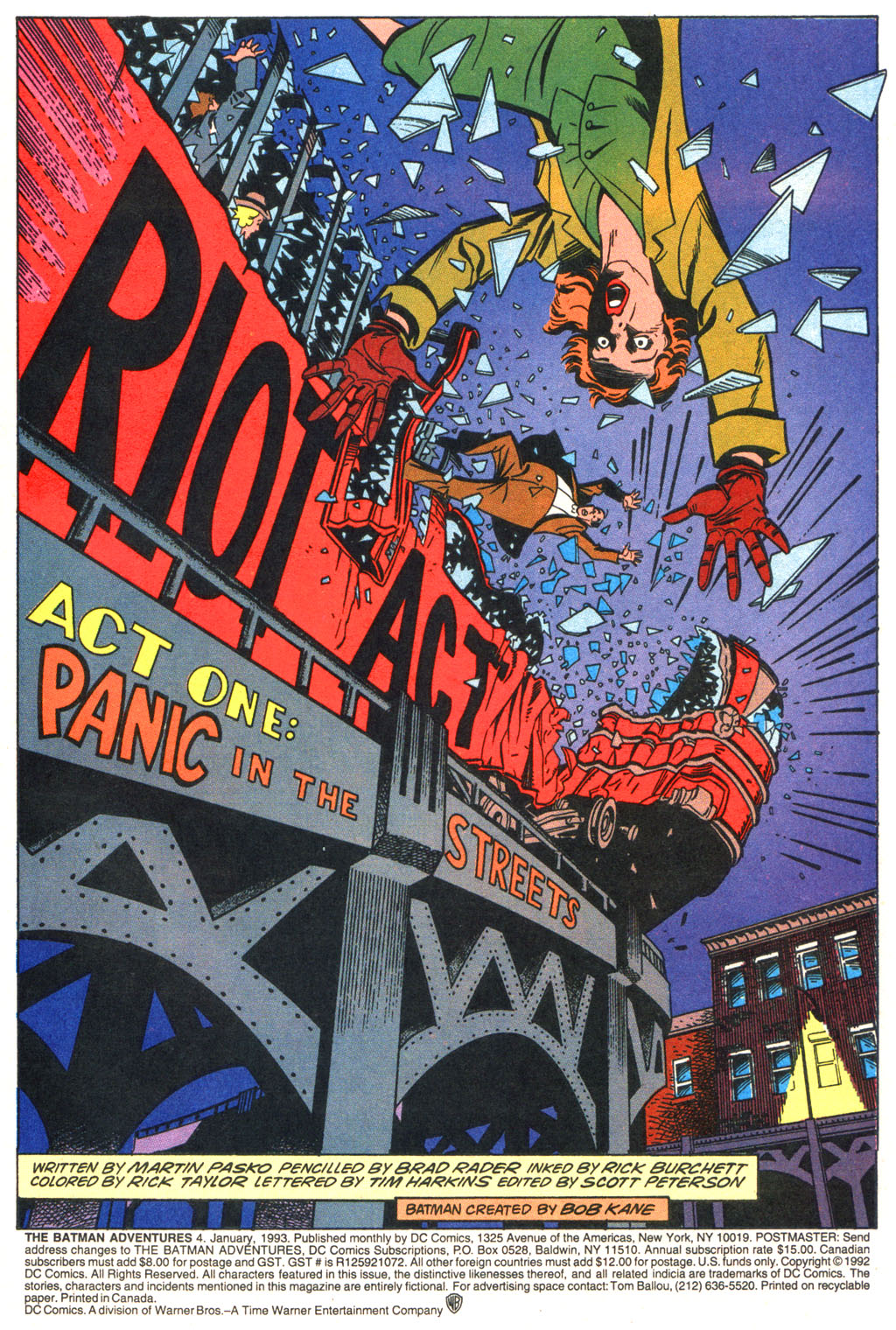
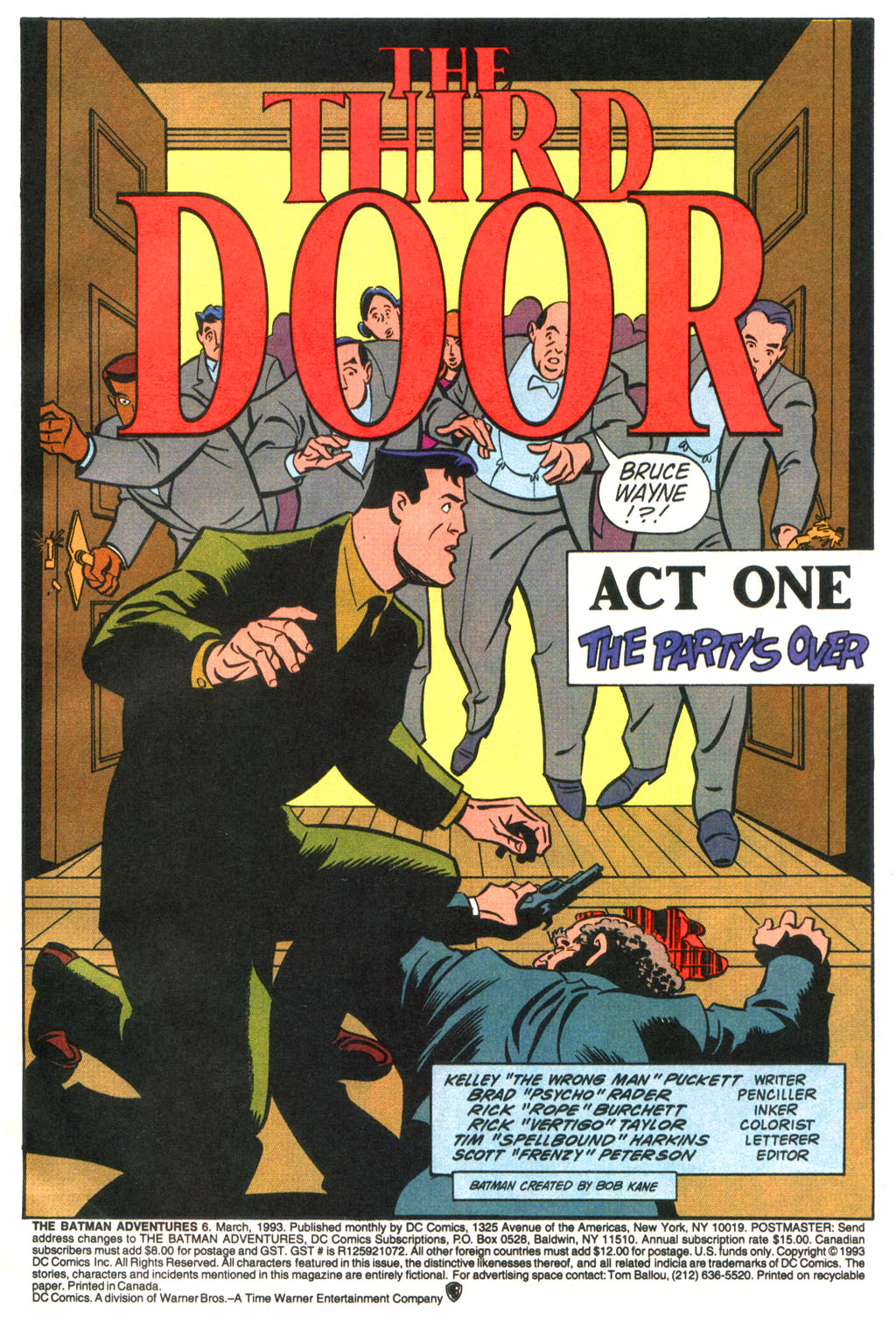
As far as comics go, if you like Mask of the Phantasm, the obvious series to pick up is The Batman Adventures. This series transposed the animated shows’ look and continuity into the world of print, although with greater emphasis on fun, telling super-compressed stories that usually kicked into high gear right from the first page:

batman adventures 03  batman adventures #4   batman adventures #6

The Batman Adventures #3, #4, #6

The first long-running creative team on The Batman Adventures were writer Kelley Puckett, penciller Mike Parobeck, inker Rick Burchett, and colorist Rick Taylor. They established a highly dynamic, visually driven approach to storytelling while also doing a great job of covering different classic Batman elements. Issue #6 is a locked door murder mystery, one done in the style of a Hitchcockian thriller about a wrongfully accused protagonist, complete with the obligatory cameo by the Master of Suspense. Issue #9 is an all action issue, in which practically every page has Batman jumping, punching, and/or kicking at least one goon. Issue #10, played for laughs, introduces a trio of genuinely hilarious villains. Issue #15 is a hardboiled cop story, more precisely a Frank Miller homage, with James Gordon’s tough guy internal narration on torn letterboxes (a la Batman: Year One) and secondary characters borrowing either Miller’s name or his looks:

batman adventures #15 The Batman Adventures #15

You’d think the Puckett/Parobeck/Burchett/Taylor run would be hard to match. However, in the follow-up series – Batman & Robin Adventures, Gotham Adventures, and a second volume of Batman Adventures – their successors managed to keep and sometimes even top the initial level of quality, creating almost 150 issues of what is hands-down the most enjoyable incarnation of these characters in any medium (just like the similar Superman Adventures is a serious contender for best Superman series of all time). As a bonus, the stories are friendly to readers from all ages, which is not to say that they aren’t way wittier than most comics supposedly aimed at a ‘mature’ audience.

The distinctly minimalist, retro visuals of the Batman animated universe have spilled over beyond the Adventures franchise, contaminating comics as different as Matt Wagner’s lighthearted Trinity (an account of the first team-up between Batman, Superman, and Wonder Woman), the kick-ass Year One mini-series about Batgirl and Robin pencilled by Marcos Martin and Javier Pulido, and the grim Catwoman relaunch of the early 2000s, with art by Darwyn Cooke, Brad Rader, and Cameron Stewart, among others.

Having worked as a storyboard artist for BTAS, Darwyn Cooke, in particular, has elevated this kind of deco-noir style into a whole other level with brilliant works like his Parker series or the comparatively brighter superhero epic The New Frontier. Building on the show’s sophisticated sense of characterization, Cooke wrote and illustrated the small gem Batman: Ego, a graphic novel where Bruce Wayne has a long, fascinating conversation with his dark side:

batman egobatman egoBatman: Ego

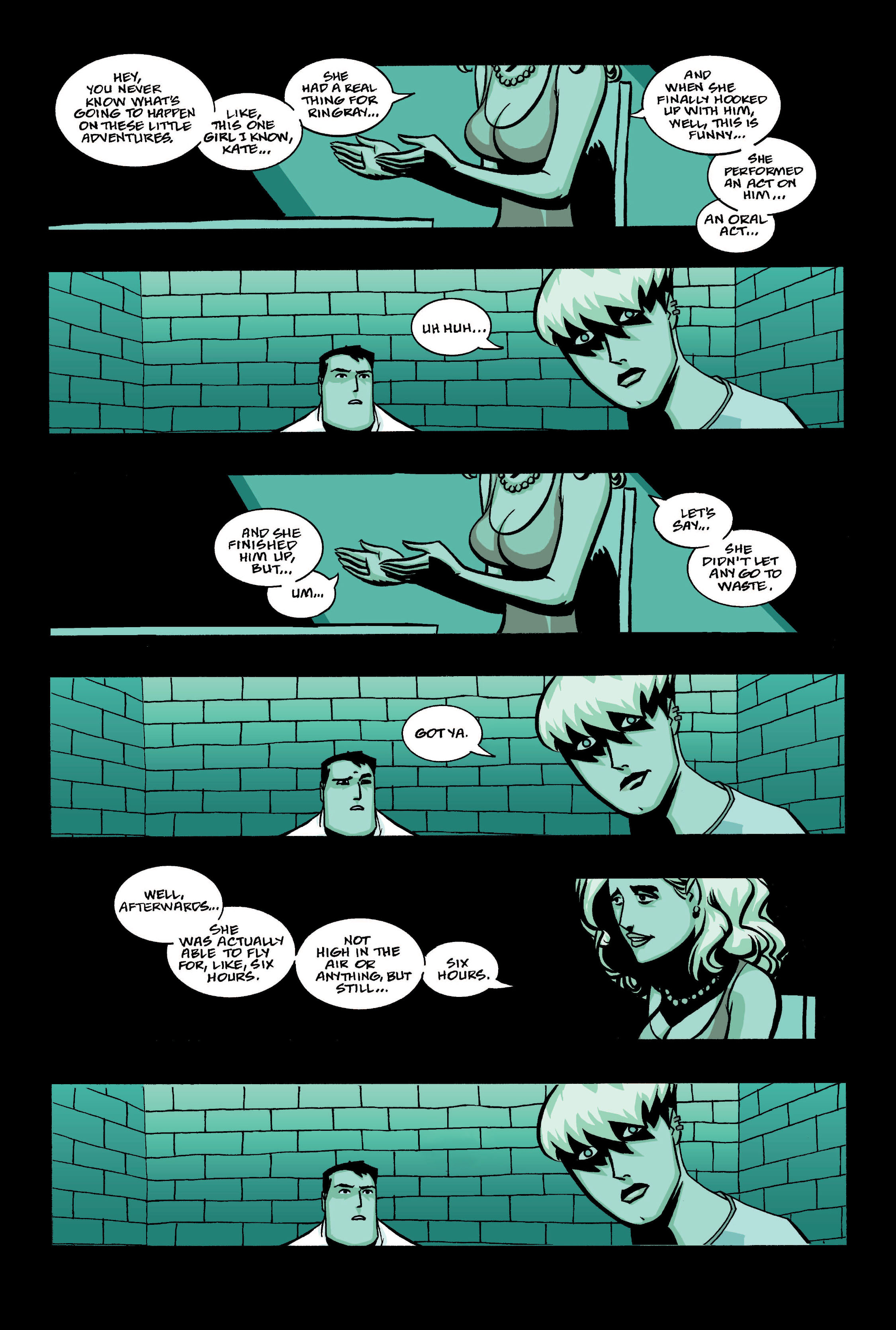
Bruce Timm, who did most of the original character designs for the animated series and co-directed Mask of the Phantasm, has also graced a number of comic projects with his gorgeous, stylized art. He collaborated with Paul Dini on The Batman Adventures annuals and holiday special, on the fan-favorite graphic novel Mad Love (which first told the origin of Harley Quinn), and on the laugh-out-loud mini-series Harley & Ivy. These were often much more risqué than the TV show or the comic series, although never more so than Timm’s short story ‘Two of a Kind,’ a Two-Face tale that reads like a more explicit version of vintage film noir potboilers such as Angel Face, Born to Kill, and Mildred Pierce

batman - black & white #1Batman Black and White #1

That said, if you’re into BTAS’ angular visual style and crime vibe but lament that it doesn’t have enough hardcore swearing, sexual content, and graphic violence, then Powers is the comic for you. Perfectly nailing the look of the Batman animations, this unrelated black comedy mystery series created by Brian Michael Bendis and Mike Avon Oeming is a by-the-books police procedural, except that most cases revolve around gruesome, depraved superhero-related murders…

powers 12powers 12Powers #12

But maybe what appeals to you in Mask of the Phantasm is less the designs than the intelligent whodunit set in the Dark Knight’s bizarre universe. In that case, I strongly recommend tracking down ‘Dead Reckoning’ (Detective Comics #777-782), a crisp mystery thriller involving many familiar faces from Gotham City.

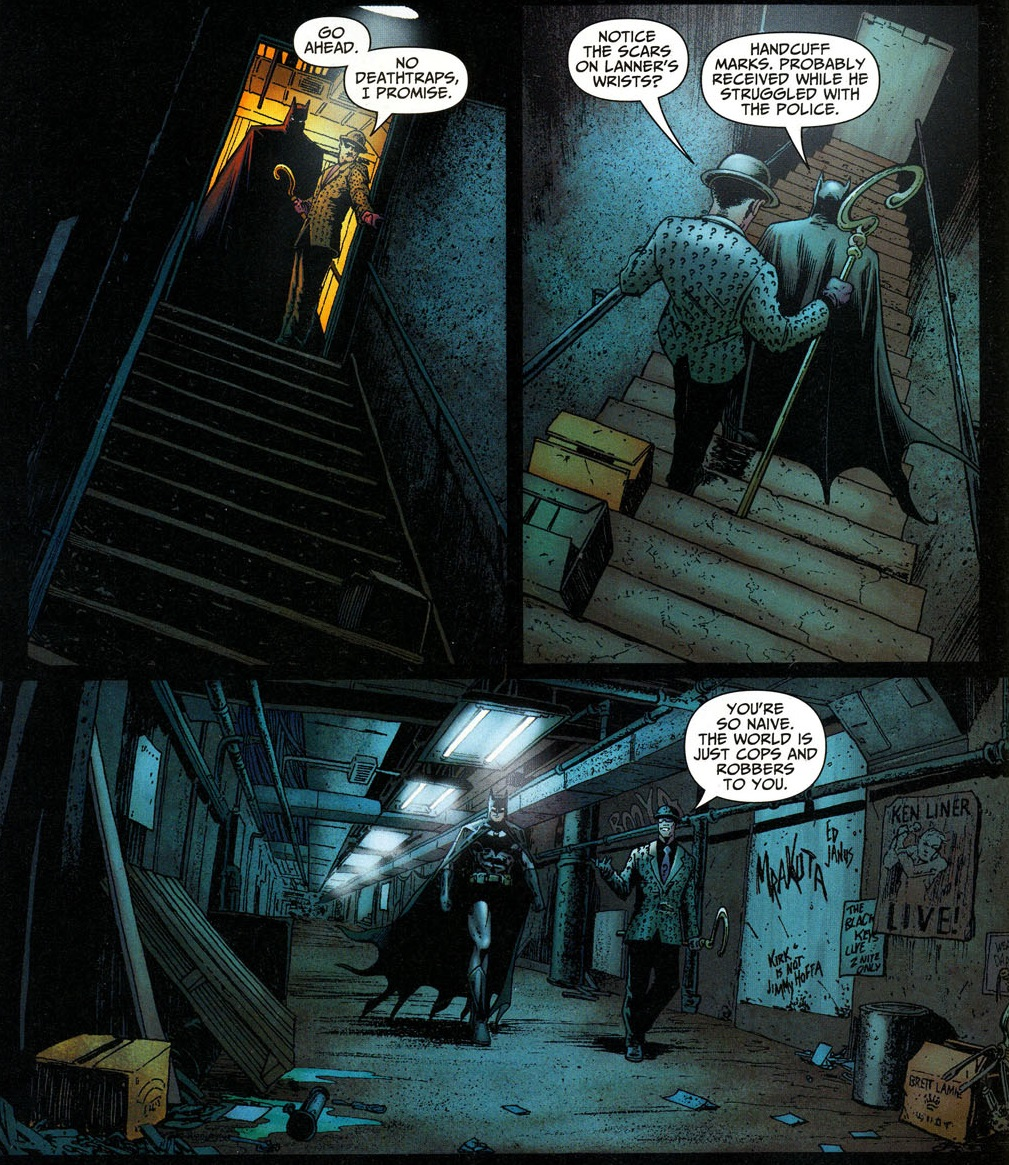
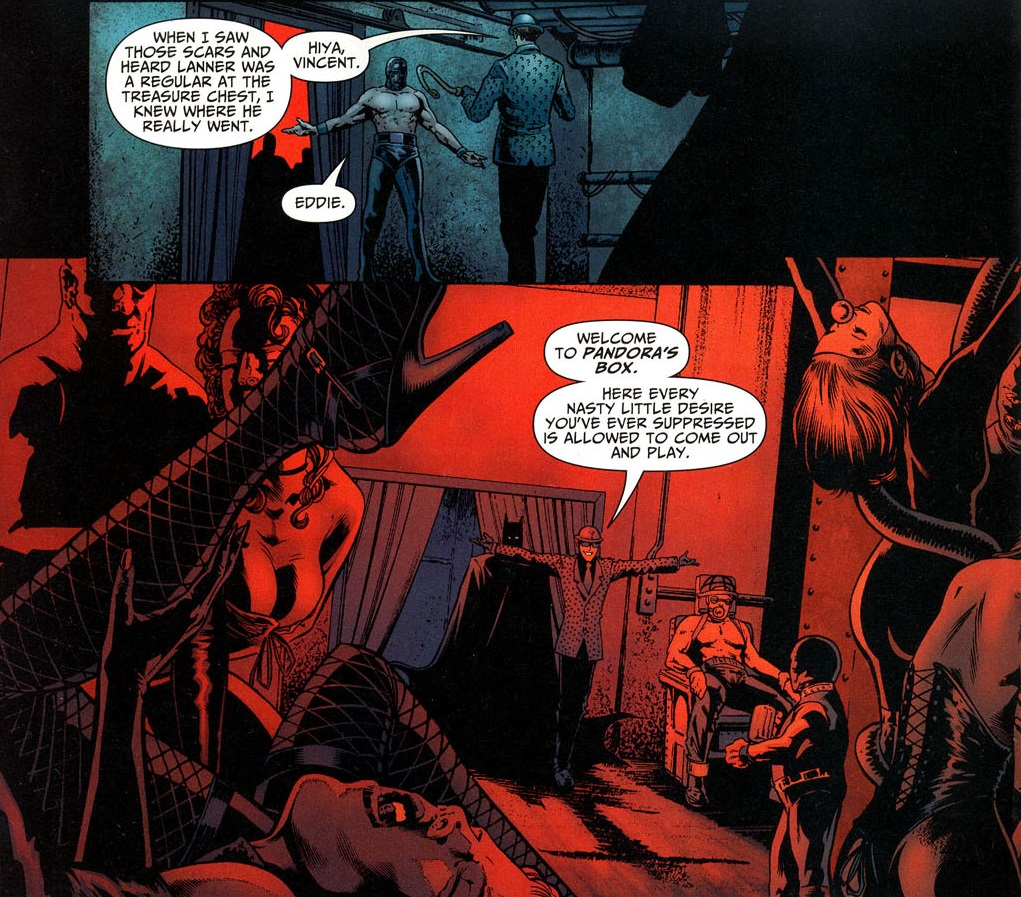
Additionally, Paul Dini, who was one of the writers of Mask of the Phantasm, has done loads of Batman comics throughout the years, ranging from the schmaltzy War on Crime to the more slapstick stuff collected in Dangerous Dames & Demons. He recaptured the movie’s dark atmosphere in his Detective Comics run (which continued in Streets of Gotham and has been collected in a series of books, starting with the imaginatively titled Batman: Detective). Dini began this run with a set of mostly self-contained moody mystery tales, livened up by amusing ideas such as turning the Riddler into a private investigator out to prove himself to the World’s Greatest Detective:

detective comics 822detective comics 822Detective Comics #822

Before wrapping up this series of posts with suggestions for fans of Batman movies, I should acknowledge that I only focused on the most obvious productions and so not all films were covered. I know there are plenty of post-BTAS animated films (more or less faithful adaptations of specific comics) and that the Caped Crusader plays a prominent role in The Lego Movie.

And, of course, there is this Turkish Batman film which amazingly seems to consist mostly of nudity and fight scenes!
Harley and Ivy 03Harley and Ivy #3

NEXT: Batman wears a kilt.

Posted in BATMAN COMICS FOR BEGINNERS | Tagged , , , , , , , , , , , , , , , , , | Leave a comment

If you like Christopher Nolan’s Batman films…

While most superhero movies serve you generic, more or less well-crafted adventure/fantasy, an interesting thing about the cinematic versions of the Dark Knight is that they’ve all been lavishly shaped by their directors’ eccentricities. I’m OK with that – I have my comics, so I don’t need the movies to be more of the same. The reason I have zero expectations for Zack Snyder’s upcoming film is not because it won’t be faithful to the comics’ version of Batman, but because Snyder’s authorial voice is awful (by contrast, I would gladly watch the Coen brothers do whatever they feel like with the Caped Crusader).

I bring this up because Christopher Nolan’s work is no exception. Sure, for all the buzz concerning Nolan’s revolutionary take on Batman, his movies are quite faithful to the style of the source material (especially in contrast to the films by Tim Burton and Joel Schumacher, which were degenerate descendants of the 1960s’ TV show). Since the eighties, gritty pseudo-realism has been a staple of Batman comics, plenty of which are way grittier and/or more realistic than their Hollywood counterparts. That said, at the same time there is no denying how Nolan-esque the last movies are!
It wasn’t clear from the start. When Nolan started playing in Gotham City, the action trappings seemed like a departure from his earlier, low-key, cerebral crime flics (the amateurish film noir Following, the cult-favorite experimental thriller Memento, and the more straightforward yet psychological Insomnia). However, nowadays Christopher Nolan has become synonymous with byzantine, frantically edited, exposition-heavy blockbusters that many love (regarding them as smarter than the average, if nothing else because you actually have to think in order to keep up) and many others loathe (too pretentions and confusing to be lowbrow, too contrived and unsubtle to be highbrow). And boy does his Batman trilogy fit right in!

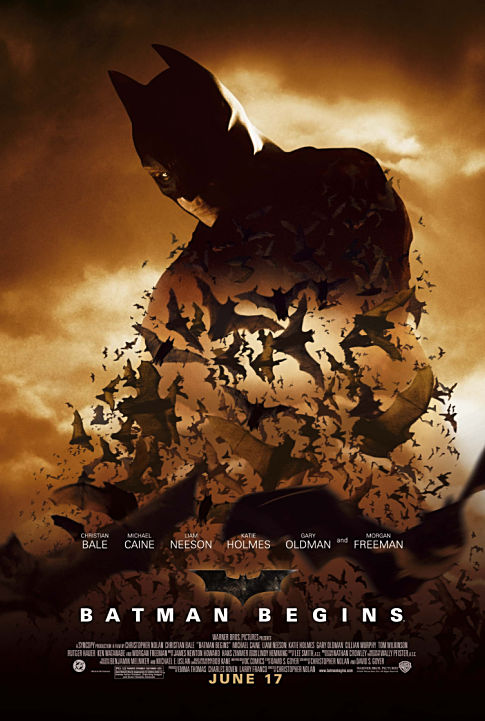
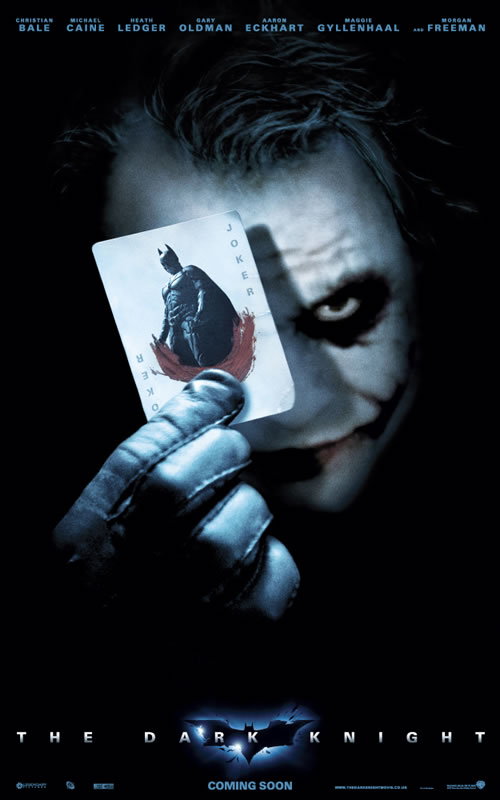
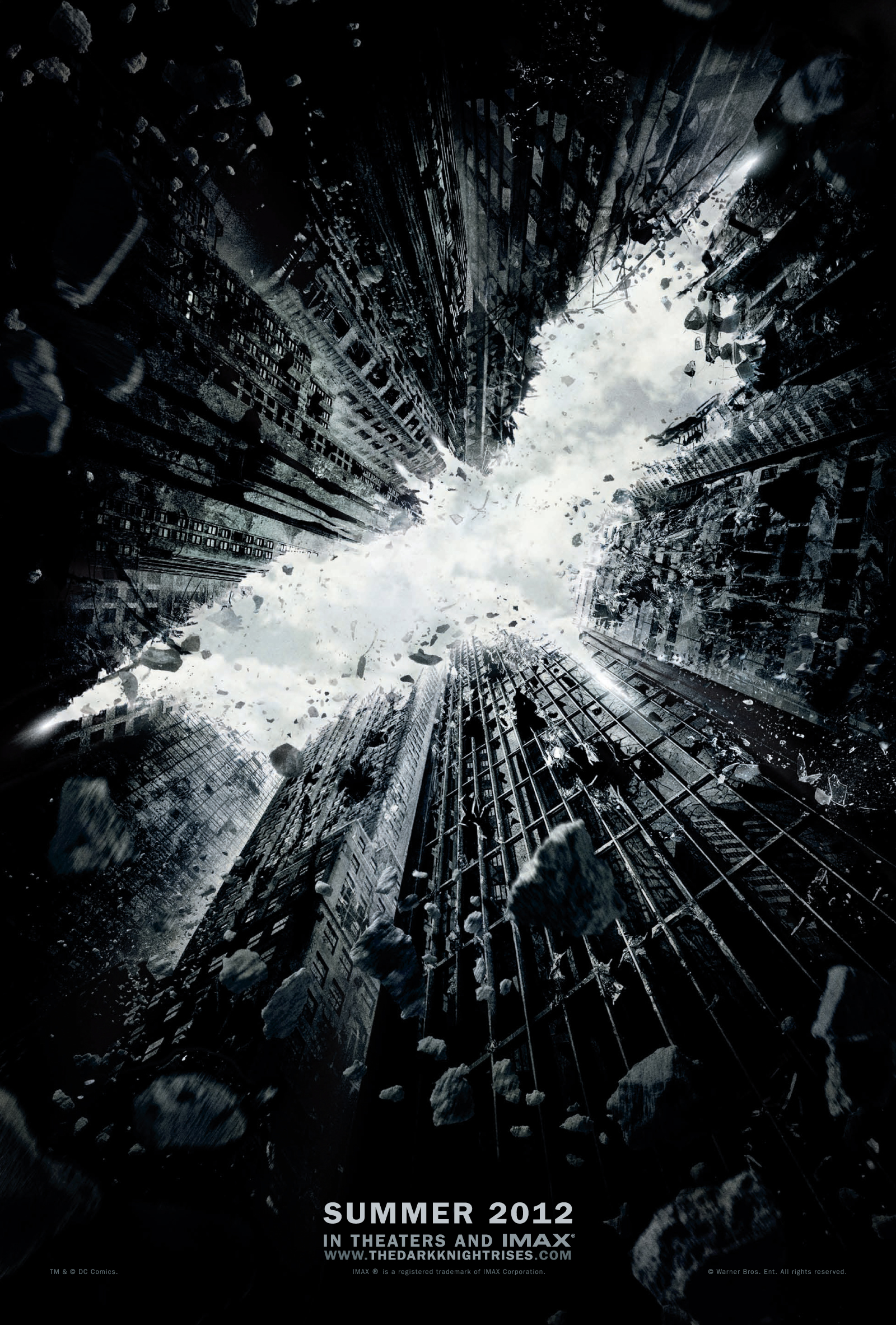
Batman Begins     The Dark Knight     The Dark Knight Rises

When you get down to it, Batman Begins may not be as down-to-earth as it is often claimed (the climax revolves around an evil plot to cause mass hysteria in Gotham City by vaporizing a fear-inducing hallucinogenic with the help of a huge microwave emitter!), but it is certainly more straight-faced than any of the previous live action films about the Caped Crusader. This 2005 reboot fleshes out Batman’s origin with in-depth characterization (honestly, I could’ve done with less whining) and expands the big screen’s rogues’ gallery by introducing the Scarecrow and Ra’s al Ghul. The script was co-written by David S. Goyer, which helps explain the abundant instances of obvious symbolism, even by Nolan’s standards of thematic overstatement. Still, the result is a badass, multilayered thrill ride with lots of great names in the cast and some solid Batman moments, even if the dialogue is pretty terrible and the ending morally fuzzy.

The Dark Knight chronicles the Darwinian evolution of Gotham’s underworld, as traditional gangsters give way to extravagant psychopaths. This is not only a genuinely great Batman film, it’s a legitimately great crime film in its own right… hell, it’s a legitimately great film, full stop. More of an ensemble piece than a hero-driven adventure, the plot spirals between Batman, the Joker, James Gordon, and Harvey Dent. By continuously escalating the complexity of the story and moving multiple chess pieces around, Nolan pushes the audience’s concentration further than he did in The Prestige without yet reaching Inception levels. It’s one awesome scene after another, with even minor characters given a chance to shine – and while Heath Ledger steals the show as a terrifying Joker, the fact is that all the performances are top-notch (despite Christian Bale’s infamous gravely Batman-voice). The Dark Knight’s success was also no doubt linked with the way in which it tapped into the post-9/11 zeitgeist, in particular concerns about security, privacy, torture, and freedom. A key sequence aboard two ships (one democratically organized, the other under dictatorial rule) is both a challenging parable and a masterclass in suspense. That said, the movie wisely keeps its politics ambiguous as the Joker/Batman antagonism works on various levels: terrorism/hyper-surveillance, anarchy/authoritarianism, chaos/order, misanthropy/humanism. Regardless, the payoff lives up to the two characters’ relationship in the comics, with Batman refusing to kill the Joker (preventing him from falling off a building in what can only be a ‘fuck you’ to Tim Burton) because he realizes that would validate his enemy’s philosophy.

Having firmly rooted the franchise in the paranoid atmosphere of the War on Terror, Christopher Nolan managed to keep the topical momentum with The Dark Knight Rises, which came across as an outlandish reactionary allegory of Occupy Wall Street. The story revolves around a populist Bane, but it makes absolutely no sense. Of its many flaws (amusingly summed up here), perhaps none is more frustrating than the way in which the film undoes its predecessor. While the second entry in the series displayed faith in humanity, the third one is about the need to brutally reign over the masses – it’s basically a right-wing fable in the style of Lars von Trier’s Dogville, but less Brechtian and less obsessed with rape. The Dark Knight Rises even makes a point of subverting Batman’s anti-gun stance, as Catwoman saves his life by shooting the bad guy and then brags about it (other than that, though, Anne Hathaway’s version of Catwoman is spot on!). I don’t necessarily mind movies with proto-fascist overtones (I’m in for John Milius’ Conan the Barbarian, David Fincher’s Fight Club, and Paul Verhoeven’s Starship Troopers, not to mention Pete Travis’ Dredd) and I could even forgive some of the many plot holes if only there was more fun to be had beyond all the noise and self-importance. Still, much like Nolan’s Interstellar, this is a flawed yet ambitious work, and I admire his drive to deliver bigger-than-life cinematic experiences that are unlike anything else on the screen!

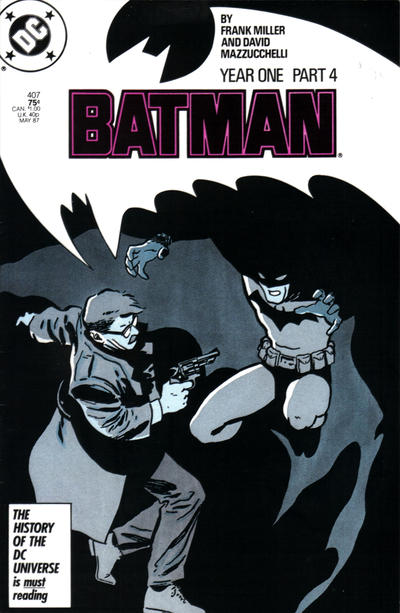
Batman 407     Batman Versus Bane

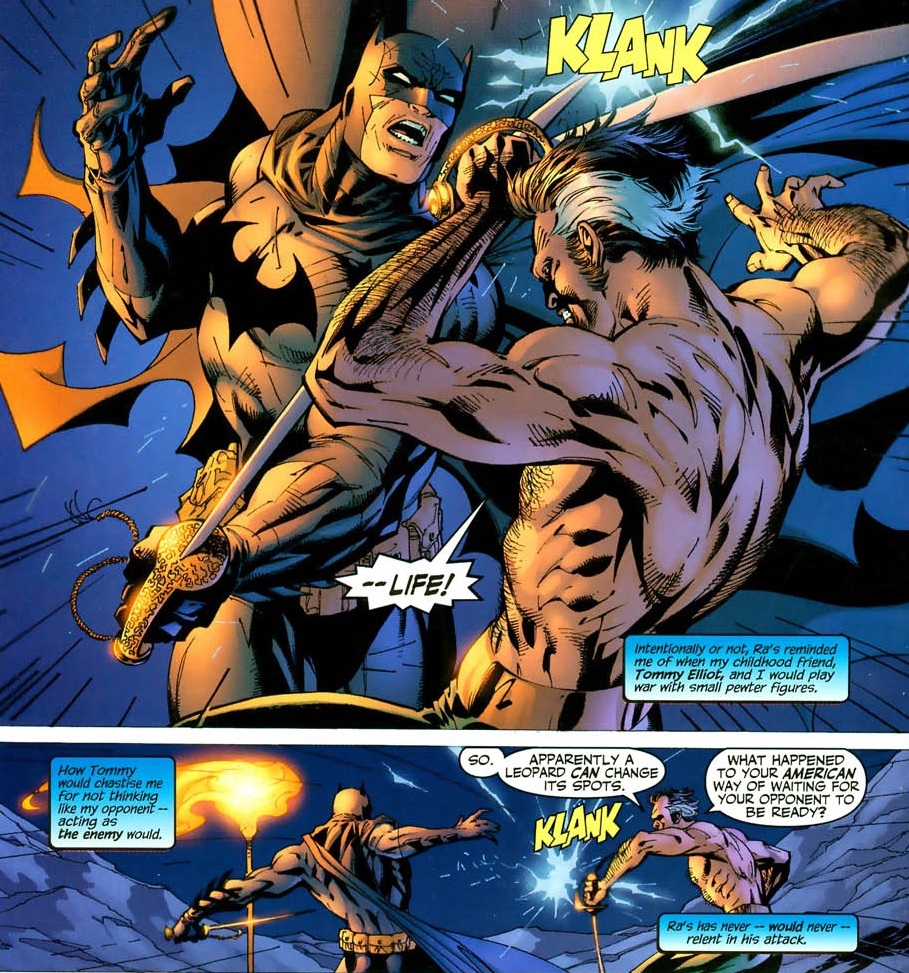
While Goyer’s and Nolan’s Batman stories are original and characteristically overcomplicated, they wear their main influences on their sleeve. The first film borrows loosely from the graphic novel Batman: Year One. The second film takes a lot of inspiration from The Long Halloween and The Killing Joke. The last one draws heavily on The Dark Knight Returns. I’ve discussed these comics in previous posts, so I will not dwell on them except to say that they remain the most critically acclaimed Batman books around and are a great place to start for new readers.

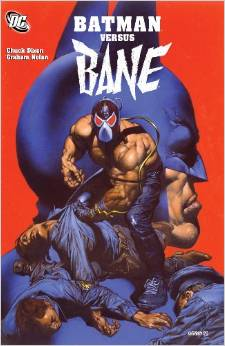
The Dark Knight Rises also shares plot elements with Knightfall and No Man’s Land, although their tone is significantly different, including way more ludicrous characters. What fans of Bane should definitely check out is Chuck Dixon’s and Graham Nolan’s two-fisted yarns with the character, some of which are collected in the Batman versus Bane paperback.

In terms of overall themes and mood, with all the political subtext and a relatively grounded take on vigilantism, these movies seem to be aiming for something close to Alan Moore’s non-Batman masterpieces Watchmen and V for Vendetta (both much more thought-provoking books than their mediocre film adaptations). As far as the Dark Knight’s adventures go, though, if you dig Christopher Nolan’s mix of street-level crime/terrorism and twisted mind games, try looking for comics set during Batman’s earliest years

Legends of the Dark Knight 11Legends of the Dark Knight 11Legends of the Dark Knight #11

Prey is a great example of a tale that could easily take place in the Nolanverse. Relentless and psychologically charged, Doug Moench’s script throws Batman into an intense maze of threats coming from all around and gradually closing in on him. Set near the beginning of the Dark Knight’s career, Prey pits Batman against drug dealers, a resentful cop, an unpredictable cat burglar, a deranged psychiatrist, a manipulated mayor, the Gotham police force, some angry stevedores, and his own nightmares.

The art, with inks by Terry Austin and colors by Steve Oliff, is penciled by Paul Gulacy. Despite an annoying tendency for gratuitous cheesecake, Gulacy is a better action director than Nolan, so instead of chaotic visuals in the fight scenes you can actually follow what is going on:

Legends of the Dark Knight 13Legends of the Dark Knight 13Legends Of The Dark Knight #13

The most riveting display of down-and-dirty Gotham grit, however, is City of Crime, by David Lapham of Stray Bullets fame. You can almost feel the stench emanating from the pages as Batman’s investigation into a young girl’s disappearance takes him down a horrific path through Gotham’s crime world, from seedy slums to corrupt elites, from costumed lunatics to a freakish conspiracy that will haunt your sleepless nights…

Lapham, of course, can practically write gripping noir tales in his sleep (Murder Me Dead and Silverfish being obvious examples), but he really outdid himself here. This is Gotham as the worst parts of your own city times twenty, at least – it’s a big city turned living Hell.

detective comics 801detective comics 801 Detective Comics #801

Another writer who has done a memorable job of exploring the dark side of Gotham is Scott Snyder. If you pick up his ongoing Batman title or any of his ‘New 52’ books, you’ll find yourself swept by viciously violent, over-the-top storytelling. In fact, Snyder’s run in these past 4 years has followed much of the same spirit as the Nolan movies, with balls-to-the-wall action and logic-be-damned, jaw-dropping plot twists.

Me, I still prefer Scott Snyder’s earlier work, which was just as dark but way moodier and more psychologically haunting. The issues collected in The Black Mirror took place during the time when Dick Grayson had replaced Bruce Wayne as Batman (one of the times, anyway) and reintroduced James Gordon’s son as possibly the most sinister villain of the past decade. The fact that Snyder effectively wrote it as a horror series, combined with Jock’s and Francesco Francavilla’s unbelievably atmospheric art, resulted in a remarkable and original Batman comic which was sadly cut short to make way for the 2011 reboot…

detective comics 871detective comics 871Detective Comics #871

NEXT: Mask of the Phantasm.

Posted in BATMAN COMICS FOR BEGINNERS | Tagged , , , , , , , , , , , , , , | Leave a comment

If you like Joel Schumacher’s Batman films…

After Tim Burton brought to the screen a surreal, alternative version of the Batman universe with echoes of the 1940s, director Joel Schumacher picked up the mantle and drove this cinematic franchise into the Silver Age. Leaving behind the grim gravitas of the first two movies, Schumacher kept the notion of treating the series as a dreamlike, highly stylized fantasy, yet made it a comparatively brighter one – or better yet, neon-lit. Everything became even kookier-sounding and kinkier-looking (yep, nipples in the batsuit). Heroes and villains were no longer treated as tragic figures, but rather as colorful toys to be thrown against each other in over-the-top action scenes.

Less of an aspiring auteur than Burton, Joel Schumacher went for openly shallow popcorn entertainment. That said, these films have an unmistakable visual style, redesigning Gotham City with utterly insane architecture and lighting. They have a cartoonish feel that isn’t that far off from what Warren Beatty did with Dick Tracy.

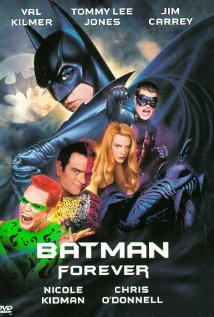
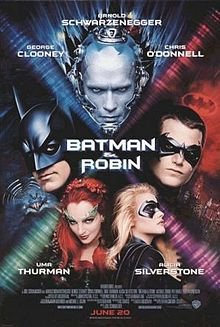
Batman Forever     Batman and Robin

With its ludicrous plot, fetishistic overtones, and ham-fisted pop psychology, 1995’s Batman Forever feels less like a departure than like a slapstick extension of its predecessor. Schumacher delivers an unpretentious superhero blockbuster full of actors in wacky suits cheerfully chewing the scenery – not one, but both villains seem to be mimicking Jack Nicholson’s rendition of the Joker. By then, The Mask had already proven that Jim Carrey could successfully bring a comic book to life, so Schumacher appears to have let him go completely wild as the Riddler (‘Joygasm!’). Although nominally playing Two-Face, Tommy Lee Jones instead just struggles like hell to out-Carrey his co-star. Meanwhile, Chris O’Donnel tries to hip up the film as Robin the Boy Wonder, despite being clearly in his twenties, and Nicole Kidman is brought in to continue Batman’s strand of blond, milky skinned love interests (albeit the horniest of the lot). The biggest wasted opportunity is Val Kilmer’s uncharismatic performance in the leading role… since Kilmer is at his best when channeling Elvis Presley (Top Secret!, True Romance), he totally should have done Batman in Elvis-mode!

Batman & Robin further amps up the camp by having the Dynamic Duo produce automatic ice skate blades from their boots in order to fight a ‘hockey team from Hell’ (that’s the first 10 minutes), filling the dialogue with *even more* sexual innuendo, and introducing the infamous Bat-credit card (Expiration date: Forever). The result is not so much a movie as an LSD trip. According to your tastes and expectations, it can be either unwatchable dreck, an amusing live-action cartoon, or hysterically so-bad-it-is-good. Arnold Schwarzenegger clunks around in a Mr. Freeze costume while mispronouncing non-stop cold-related puns and Uma Thurman, overacting like a maniac as Poison Ivy, seems to be totally in on the joke (unlike Alicia Silverstone’s uninspired Batgirl). And say what you want, George Clooney was born to play Bruce Wayne. While Burton gave the series a quasi-horror vibe sprinkled with absurdist black comedy, a la Gremlins, Schumacher shoots for a Looney Tunes-esque Gremlins 2. That said, in places Batman & Robin still wants to be taken seriously, leading to some jarring shifts in tone (in the Schwarzenegger canon, this should sit next to Last Action Hero). The film emanates both a faux-rebel ’90s attitude and the feel of a dumbed down kids movie in a franchise that from the beginning also tried to appeal to a relatively older crowd, all the while being packed full of way too many useless characters and gimmicks whose only purpose seems to be to sell merchandise – sigh, I could be describing the Star Wars prequels.

Batman Hush

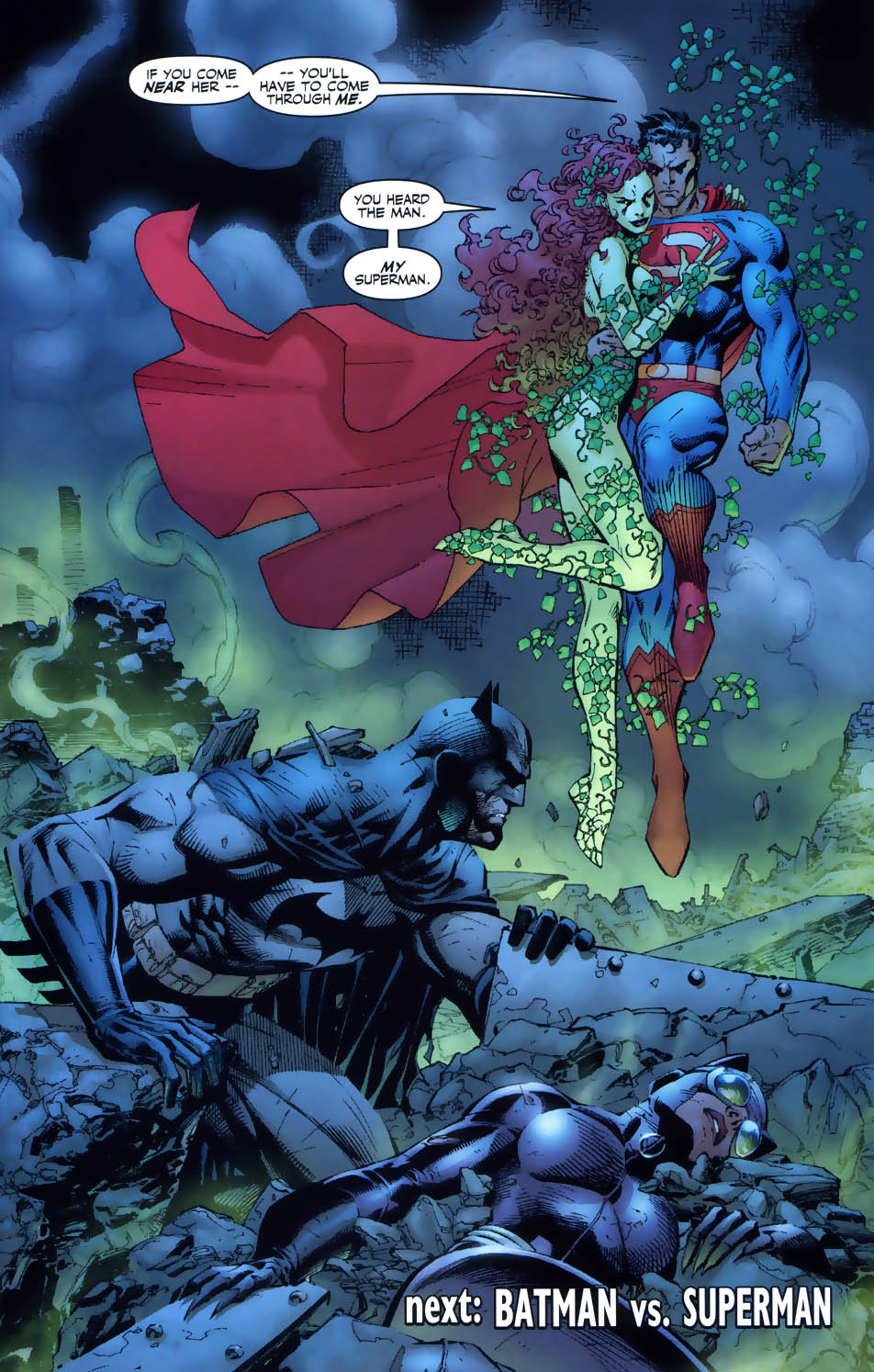
Still, even if you think Joel Schumacher went too far in terms of silliness, you may appreciate his overall approach of bombastic visuals and larger-than-life, leave-your-brain-at-the-door spectacle. In that case, Hush is what you want. This story of a mysterious villain who knows all the right buttons to push in order to mess with the Dark Knight was conceived by Jeph Loeb like a Hollywood mega-blockbuster in comics form, offering one major ‘Holy shit!’ moment in practically every issue (like Bruce Wayne revealing his secret identity to Catwoman, or Jason Todd showing up alive after being thought dead for 15 years).

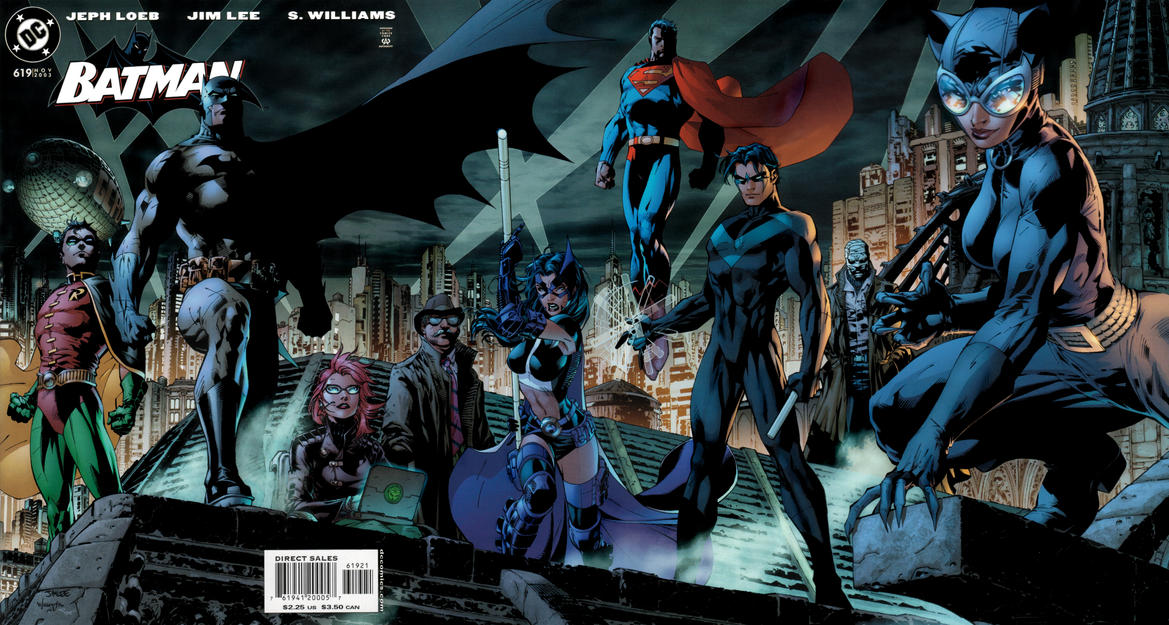
Jeph Loeb sure knows how to write crowd-pleasing, dumb entertainment – after all, he worked on the cheesy crypto-fascist Schwarzenegger vehicle Commando, on the adorably ridiculous comedy Teen Wolf, and on the shockingly popular TV show Smallville. In the world of comics, Loeb is known for writing with his artists in mind, playing to their strengths and providing plenty of spectacular splash pages for them to shine. Thanks to him, superstar artist Jim Lee got to draw, for the first time, pretty much every fan-favorite member of Batman’s cast. Indeed, surely a great deal of the huge success of Hush derived from Lee’s luscious pages, with inks by Scott Williams and colors by Alex Sinclair.

Batman #611Batman #611

The other thing to keep in mind about Jeph Loeb is that his writing, even in the 1990s (when I really enjoyed his stuff, especially Superman: For All Seasons and Challengers of the Unknown Must Die!), has always been to a great degree based on echoing scenes and lines from iconic works and trying to regain their power through either explicit or subliminal nostalgic resonance. His first Batman story, ‘Choices,’ revisited a famous exchange from the film To Have and Have Not (‘Were you ever bit by a dead bee?’). The excellent The Long Halloween and the sequel Dark Victory seemed to pillage every crime movie Loeb had ever seen and to channel them through the Batman universe, including at least The Godfather, The Godfather II, Chinatown, Silence of the Lambs, Miller’s Crossing, The Untouchables, Once Upon a Time in America, White Heat, Scarface, Little Caesar, and Taxi! And to be fair, the mood of the originals does somehow rub off by osmosis, so that whether you recognize the references or not, the result still feels like a great crime yarn!

With Hush, Jeph Loeb adopted a more inward-looking variation of this strategy. He now dug into the Dark Knight’s own history by remaking Batman comics’ greatest hits, like in this homage to a classic Denny O’Neil story:

batman 616Batman #616

Although indulging in obscurer references, arguably the same can be said of Grant Morrison’s work starting with Batman and Son. Gone are the days of Arkham Asylum’s gloomy psychological horror: 21st century Morrison writes the Caped Crusader on hallucinated overdrive, cramming each issue with crazy ideas! These are pure superhero comics, goddamn it! Morrison’s run is full of explosive mashups of familiar concepts, like an army of Man-Bat ninjas or bizarre drugs spliced from Hugo Strange’s monster serum, Bane’s venom, and Joker’s toxin. It reads like a hipper, smarter version of what Joel Schumacher was initially aiming for.

Granted, it can be confusing (yet rewarding) to follow Morrison’s extremely fast-paced, non-linear, intricate plots… but for all the postmodern intertextual metafiction, this is above all frenetic fun, so if you want you can just sit back and enjoy the ride:

Batman 700Batman #700

As far as ’90s-style action goes, however, nothing beats Chuck Dixon’s original run on Nightwing.

This series followed the exploits of Dick Grayson in his twenties (unlike Chris O’Donnell, he realized he was too old to be Robin, and so called himself Nightwing) and saw him move to Blüdhaven. Gotham’s neighboring city, Blüdhaven was somehow even more of a corrupt, crime-ridden cesspit than Batman’s home turf – as Dixon’s narration put it, ‘If it’s too coarse or too vile or too awful for Gotham, it winds up here.’ Scott McDaniel’s twisted designs projected a decadent industrial city that looked every bit as eccentric as Schumacher’s Gotham, albeit with less homoerotic statues.

Nightwing13Nightwing #13

With a hardboiled, sleazy exploitation vibe, at first Chuck Dixon treated Nightwing as a B-movie version of Batman, including shamelessly lame villains like a gangster with his head facing backwards and a vigilante who walked around with a domino mask and a baseball bat calling himself Nite-Wing, much to everyone’s confusion! In his last couple of years on the title, Dixon shifted gears by having Dick Grayson join the police force and turned Nightwing into a more grounded crime series. Meanwhile, he really embraced the potential of the ongoing serial format to flesh out the supporting cast, engaging in some long-term plotting and characterization while dangling multiple threads. A detail set up in the very first issue did not pay off until issue 59!

Of course, this is not to say that there weren’t plenty of thrills and rewards along the way… This was a roller coaster of a comic, especially in the first 40 issues, drawn by Scott McDaniel. Getting the most out of McDaniel’s energetic pencils, Chuck Dixon made sure almost every page featured Nightwing acrobatically jumping around or kicking ass. And when things sometimes had to slow down, McDaniel still managed to make even scenes of people standing there talking look urgent and dynamic:

Nightwing 01Nightwing #1

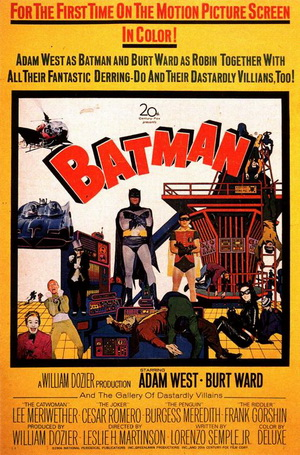
Finally, as maligned as Batman & Robin is, I’m sure there are some who’ve retrospectively come to dig Joel Schumacher’s multicolored zaniness. Yet if you feel like a lighthearted, tongue-in-cheek, kitsch comedy featuring the Caped Crusader and his foes, you are still better off watching the Austin Powers-like Batman: The Movie. It is much more charming and tonally consistent – plus you get to see Adam West’s Batman, in his own weird way, kind of put an end to the Cold War 25 years before the fact!

Batman: The Movie

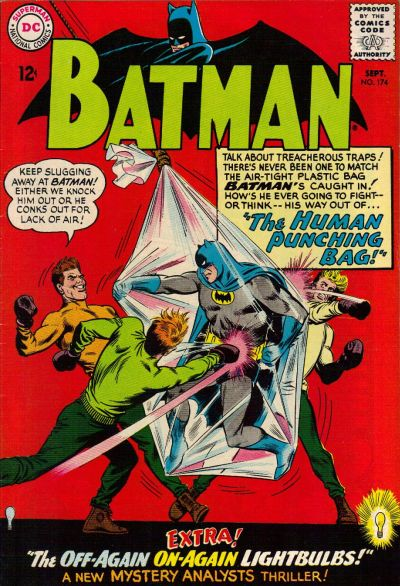
If it turns out 1966’s Batman is indeed your favorite Bat-film, then finding similar comics shouldn’t prove too hard. The ongoing Batman ’66 series and the spinoff Batman ’66 Meets The Green Hornet are set in the same continuity as the old movie and TV show. And, of course, you can always read the actual stories from the mid-sixties, which are quite close in spirit…

Batman 174    Batman 181    Batman 191

NEXT: Christopher Nolan.

Posted in BATMAN COMICS FOR BEGINNERS | Tagged , , , , , , , , , | Leave a comment

If you like Tim Burton’s Batman films…

Batman 349
Batman #349

Having already suggested a bunch of movies for fans of Batman comics, I figured it would make sense to also suggest comics for fans of the most prominent Batman movies.

The thing is that, just like the comics, the movies about Batman have very different moods and approaches to the character and his universe. From ultra-goofy to ultra-grim, I would say the only take on the Dark Knight still missing from the big screen is a full-on musical like the one in the beginning of the Batman Beyond episode ‘Out of the Past’ (just the first of many unbelievably awesome things in that episode). With that in mind, these next posts are for people looking for accessible comics similar to their favorite movie version of Batman.

Let’s start with the version from the Tim Burton movies…

Batman 459

Tim Burton is above all an aesthetic director (some would say visionary), someone who seems more interested in making his films look stunning than in telling coherent stories. A master of gothic surrealism, Burton enjoys filling the screen with bizarre and grotesque imagery, even if he’s not above quirky cutesiness (as seen in his animated works and in Big Fish, not to mention the illustrated poetry book The Melancholy Death of Oyster Boy).

Although he is unabashedly influenced by classic horror in general and Vincent Price in particular (which is already visible in early shorts like Vincent and Frankenweenie), Burton had his breakthrough with wacky comedies (Pee-wee’s Big Adventure, Beetlejuice) and has devoted his career to genre mashups, his flamboyant authorial style often making up for lack of substance (except in Big Eyes, which has neither, wasting what could have been an interesting story). That said, underneath all the kitsch make-up, sets, and special effects, Tim Burton’s work tends to revolve around outsiders, usually freaks and monsters, especially human-animal hybrids or Johnny Depp with a funny hairdo.

I would say Burton hit his peak in the 1990s, finding fresh ways to channel his flair for romantic fantasy (Edward Scissorhands), childlike ghoulish humor (The Nightmare Before Christmas), and even his relationship with cinema and Vincent Price (mirrored in the real-life story of Ed Wood and the eponymous director’s relationship with Bela Lugosi). Since then, most of Burton’s movies have just been adaptations of pre-existing material reinterpreted through his distinctive visual and thematic motifs, namely adaptations of beloved books (Sleepy Hollow, Charlie and the Chocolate Factory, Alice in Wonderland), a musical play (Sweeney Todd), a soap opera (Dark Shadows), an originally amazing sci-fi masterpiece (Planet of the Apes), and a trading card series from the sixties (Mars Attacks!).

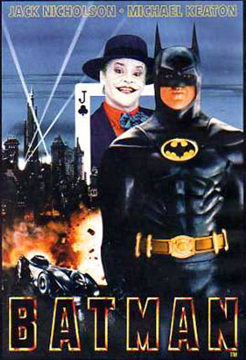
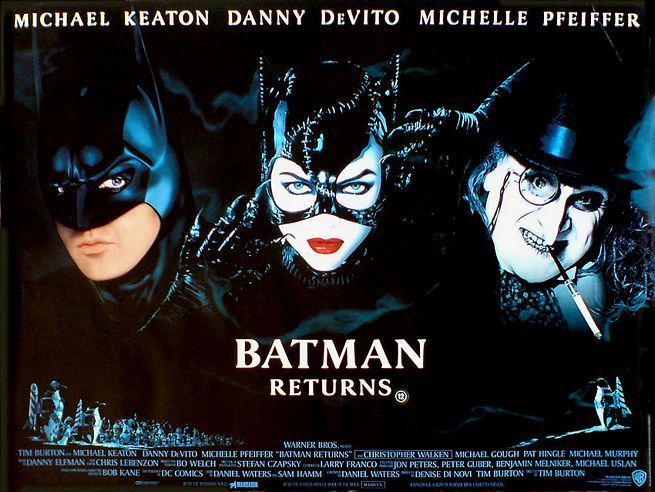
But before all that, the Caped Crusader got the Tim Burton treatment way back in 1989 and again in 1992. The films allegedly drew some inspiration from now-classic graphic novels The Killing Joke and The Dark Knight Returns, yet it feels like those books’ influence was essentially in terms of their bleak and violent approach to Batman’s world. Burton and his screenwriters clearly did not care about staying true to the characters, instead showing more interest in their visual and symbolic potential… so we got Bruce Wayne as a creepy rich dude in a mansion who sleeps upside down like a bat, we got Catwoman as a zombie with nine lives, we got the Joker killing the Waynes and then dying while fighting their son (the Joker creates Batman, just as Batman creates the Joker, geddit?).

Batman 1989     Batman Returns

Not unlike TV’s Gotham, though, once you get passed how screwed up the themes and continuity are and accept these stories as Elseworld tales, there is a lot to enjoy, from Danny Elfman’s majestic score to Anton Furst’s iconic designs. In fact, part of the fun is watching such a sinister, viciously distorted take on the Dark Knight universe. Sure, much of it is silly and chockfull of plot holes, but that’s because this is basically the operatic evil twin of the old Adam West show.

Perhaps less the fault of Sam Hamm’s script than of the many rewrites and egos involved, 1989’s Batman is as stylish as it is uneven: it starts out with a film noir vibe, moves on to Hammer horror territory, and culminates in RoboCop action mode with Batman casually killing a bunch of people with his remote-controlled, machine gun-equipped Batmobile! Kim Basinger is a bland Vicki Vale, Billy Dee Williams makes for an intriguing yet sadly undeveloped Harvey Dent, and Jack Nicholson steals the spotlight by convincingly bringing the Joker to life. As for Michael Keaton’s performance in the titular role, it works best if you think of it as a prequel to Birdman.

Coming out during his ’90s streak, Batman Returns then feels like Tim Burton on steroids. A nightmarish fairy tale, this is a surrealist, sickly comedic, and cinematographically breathtaking envisioning of Gotham City, which lies somewhere between The City of Lost Children and The Addams Family. While the hero once again fails to engage, Danny DeVito, Michelle Pfeiffer, and Christopher Walken are a blast as the villains! DeVito’s turn as the Penguin, who in this version was dumped into the sewers by his aristocratic parents, gets extra points for managing to throw the line ‘I was their number one son, but they treated me like number two.

So if you enjoyed these movies, what comics should you read? Well, for starters, you could do worse than to check out the issues that were being published at the time, the best of which are about to get collected in the hardcover Legends of the Dark Knight: Norm Breyfogle (only one of many good reasons to buy it). That said, if you’re looking for the comics’ equivalent of a dark-as-hell Batman tale that disturbingly reimagines the series’ iconography, then you must get your hands on Arkham Asylum: A Serious House on Serious Earth:

Arkham Asylum: A Serious House on Serious EarthArkham Asylum: A Serious House on Serious Earth

In this original graphic novel, a basic tale about the lunatics taking over Arkham Asylum and Batman coming in to sort things out serves as a vehicle for writer Grant Morrison to explore the symbolism of various villains, as the asylum becomes a metaphor for the Dark Knight’s own insanity. An attempt to apply Jungian psychology to the Bat-mythos, the comic isn’t entirely successful on either front: as a Batman adventure it’s not very exciting, as an intellectual exercise it still revolves around a guy who dresses like an animal to fight crime.

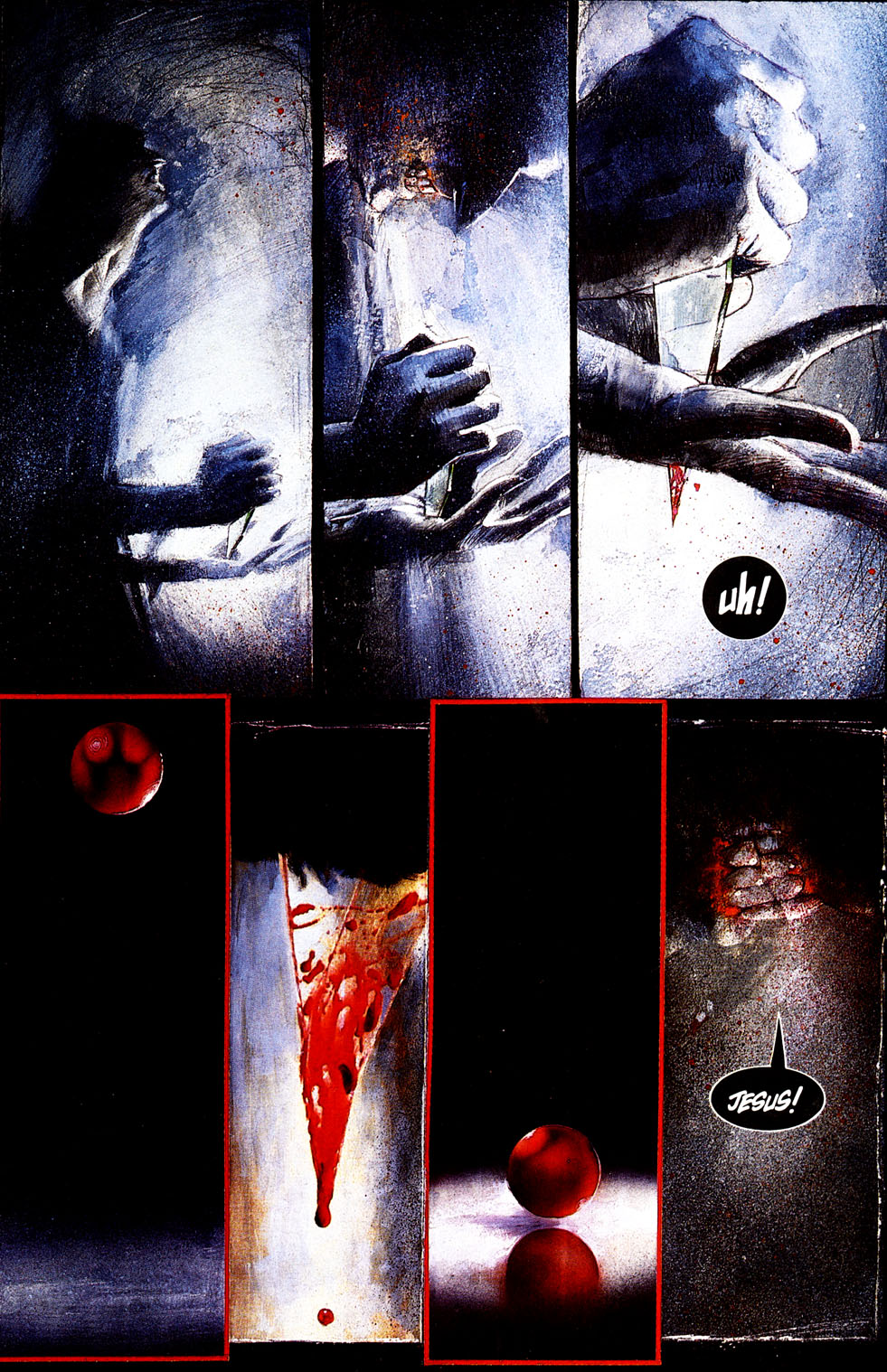
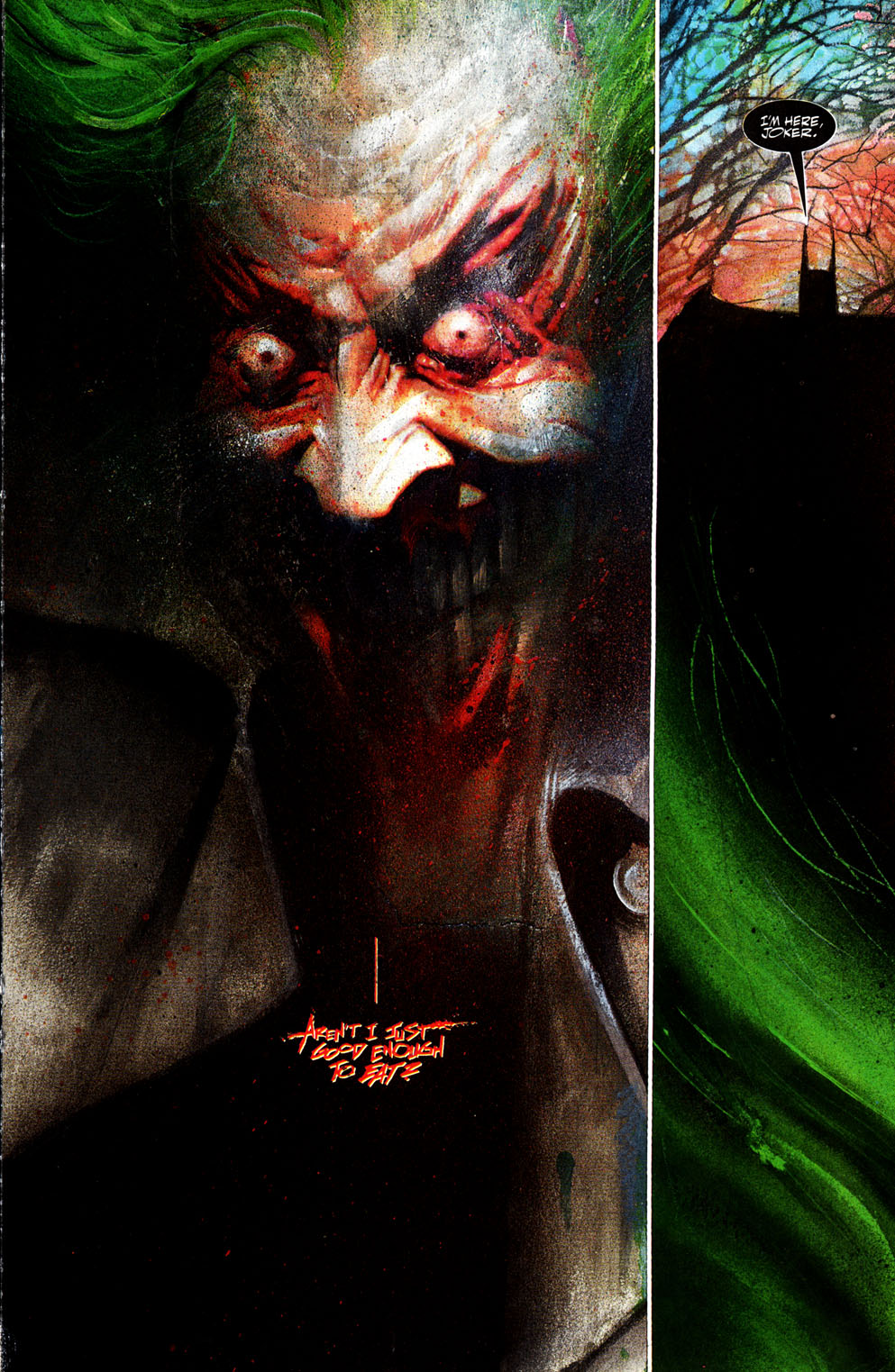
I realize this makes Arkham Asylum sound like a curio for pretentious, angst-ridden teenagers. But it’s still a fascinating book, even if it doesn’t really make a meaningful statement about anything other than Batman and his rogues’ gallery. In any case, it’s at least worth a glimpse for Dave McKean’s groundbreaking, freakish art:

Arkham Asylum: A Serious House on Serious EarthArkham Asylum: A Serious House on Serious Earth

Drawing much more openly on gothic horror, Red Rain is another obvious choice. It pits Batman against Dracula himself, who goes mad from drinking the blood of the deranged citizens of Gotham City. In this memorable Elseworlds comic, Doug Moench’s script and Kelley Jones’ pencils deliver a combination of kinky baroque and locus horrendus which I’m sure Tim Burton would approve of…

Batman: Red RainRed Rain

Moench and Jones followed this project with the gory Bloodstorm, which expands the Red Rain concept in cool directions, including a run-in between Catwoman and a werewolf. In a way, it kind of anticipates the Twilight Saga, except that the main plot involves the Joker trying to gather an army of undead mobsters!

There is yet another sequel, Crimson Mist, but it’s much less inspired and focused, just trying to cram in more and more villains into the mix. Notably, it also weakens Bloodstorm’s powerful ending… Nevertheless, the three stories have been collected in the trade paperback Batman: Vampire.

Finally, if you appreciate the sense of design in the Burton movies and/or their offbeat black comedy, there may also be something for you in the collaborations of Steve Englehart and Marshall Rogers (collected in Legends of the Dark Knight: Marshall Rogers). I’m thinking in particular about the Joker’s campaign for governor and the notion of Gotham as a city where a guy cannot even have some relaxed alone time without getting disturbed by a maniac:

Batman - Dark Detective #3Dark Detective #3

NEXT: Joel Schumacher.

Posted in BATMAN COMICS FOR BEGINNERS | Tagged , , , , , , , , , | 1 Comment

10 covers with Batman attacked by animals

Batman comics have given the world plenty of awesome covers, whether by cleverly playing with their logo or by featuring terrifying depictions of the Joker (well, most of the time anyway). What is astonishing about Bat-covers, though, is not how many cool ones there are, but how many boring ones. Seriously, hundreds of covers just show the Dark Knight brooding, or jumping, or striking some kind of generic pose.

And sure, in the hands of the right artists this can be enough…

Batman 671

…but most of the time it’s not.

So today Gotham Calling fights back against mediocrity. Don’t tell PETA, but we are highlighting 10 memorable covers in which the Caped Crusader faces the rage of the animal kingdom:

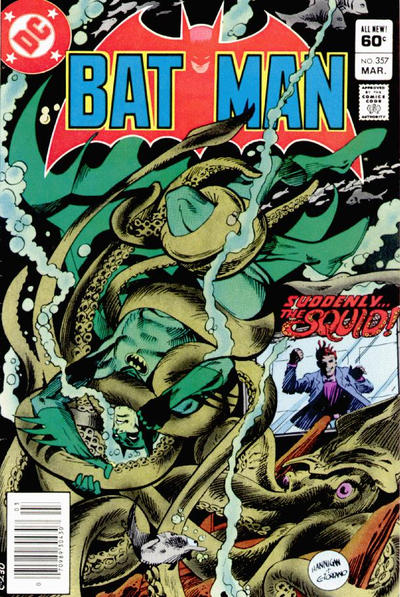
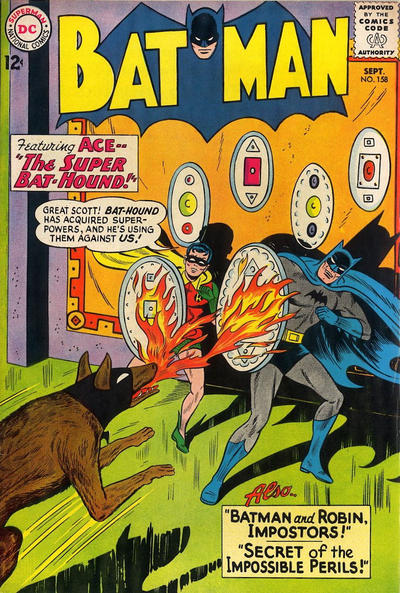
Detective Comics 585Legends of the Dark Knight 19Gotham Adventures 34World's Finest Comics 68Detective Comics 746Batman and the Mad MonkDetective Comics 333Detective Comics 568Batman 357Batman 158

NEXT: Tim Burton.

Posted in COVERS OF BATMAN COMICS | Tagged | 2 Comments

Imaginary Batman team-ups by Warren Ellis – part 2

If you read the last post, you know what’s going on. Here are another five appealing team-ups between Batman and Warren Ellis’ creations:

LAZARUS CHURCHYARD

Lazarus Churchyard

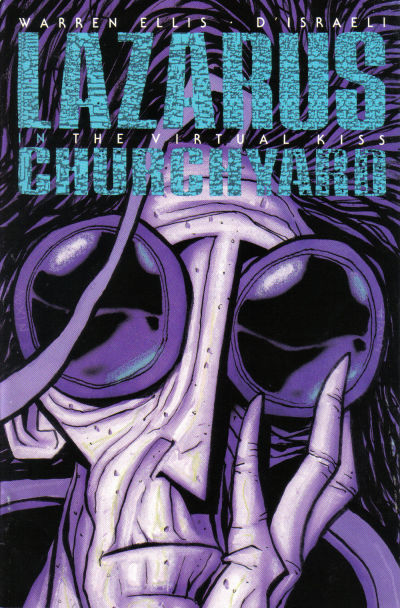
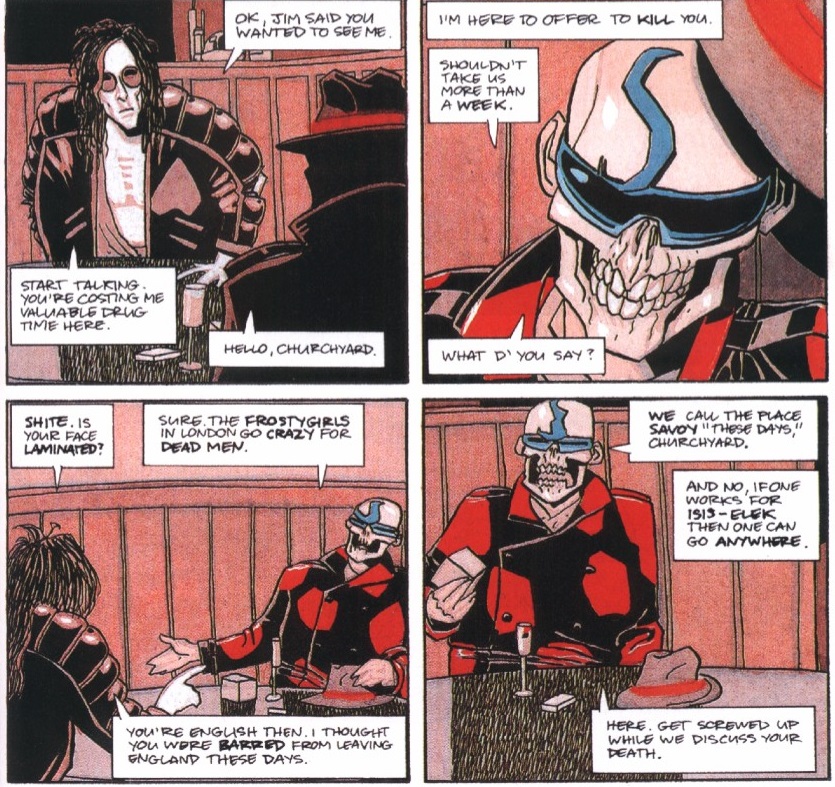
With eighty percent of his body replaced with an intelligent evolving plastic, Lazarus Churchyard cannot die. And after four centuries of drugs and boredom, that’s exactly what he wants. Looking like a decrepit Alice Cooper, such a nihilistic, outrageous character would make for a promising contrast with either a time-travelling Batman or any of his futuristic incarnations, from the Clint Eastwood-esque hero of The Dark Knight Returns to the spunky Terry McGinnis of Batman Beyond.

I’m not going to lie: the main appeal would be seeing the Caped Crusader in this strange cyberpunk world illustrated by D’Israeli. Say what you want about Batman, he is nothing if not adaptable. But then again, Warren Ellis’ first comic is also quite possibly his most insane piece of science fiction (with the exception of City of Silence), alternating between the poetic and the darkly comedic in tales of a virtual afterlife, a meat computer, post-apocalyptic Basque separatists, gender confusion, and religious necrophilia.

Lararus Churchyard The Final CutLazarus Churchyard: The Final Cut

MIRANDA ZERO

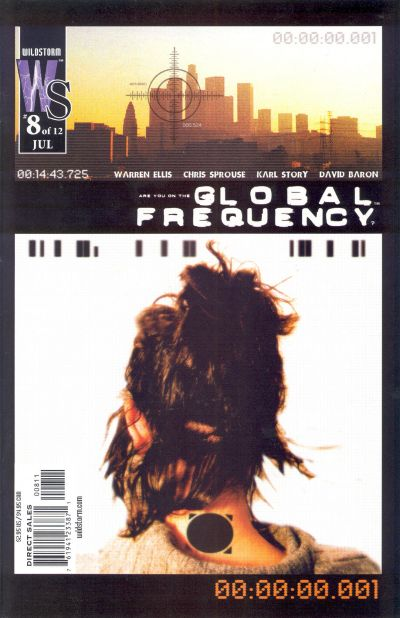
Global Frequency 8

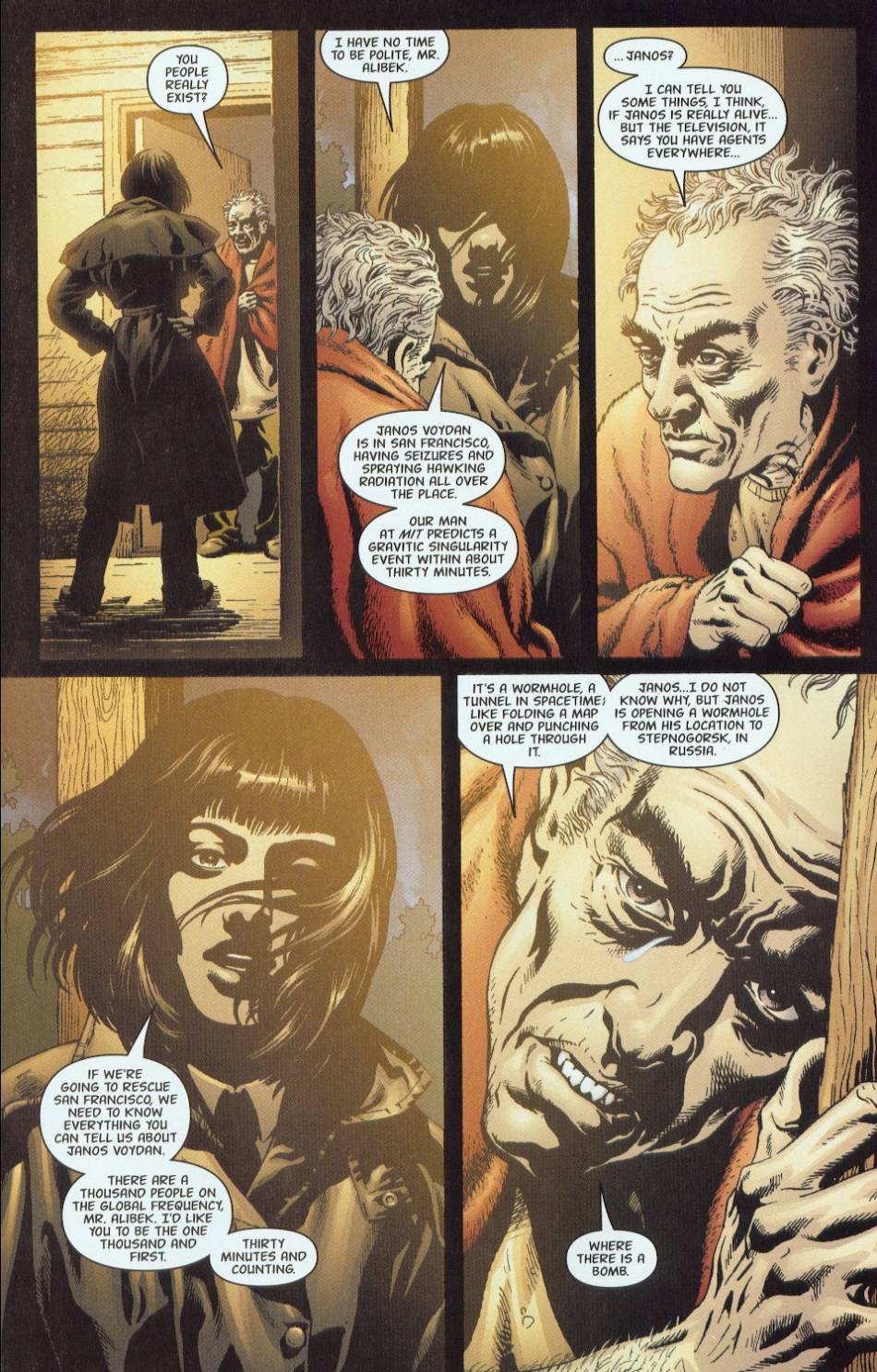
Always one to push himself and the medium forward, Ellis created Global Frequency as a relentless spy/sci-fi/action comic, each issue telling a standalone story, drawn by a completely different (and awesome) artist, concerning a race against time to prevent some kind of doomsday scenario. The quality varied (my favorite stories are Steve Dillon’s ‘Invasive,’ about the epidemic of an idea that acts like a virus, and Jon J. Muth’s ‘Big Sky,’ about the devastating effects of what may or may not be an angel’s apparition), but every issue had at least one cool idea at its core.

The concept that held the series together was a secret response organization led by the pragmatic Miranda Zero, who shared Batman’s no-nonsense attitude. A possible team-up could also involve collaboration between Oracle and Aleph, the young woman who coordinated the flow of information between the various agents. It should be noted, however, that because Global Frequency was so action-oriented we never got to know all that much about Miranda’s and Aleph’s background (the closest we came was in issues #8 and #11), especially as they practically only spoke through expository info-dumps.

Global Frequency 01Global Frequency #1

ROSI BLADES & TONY LING

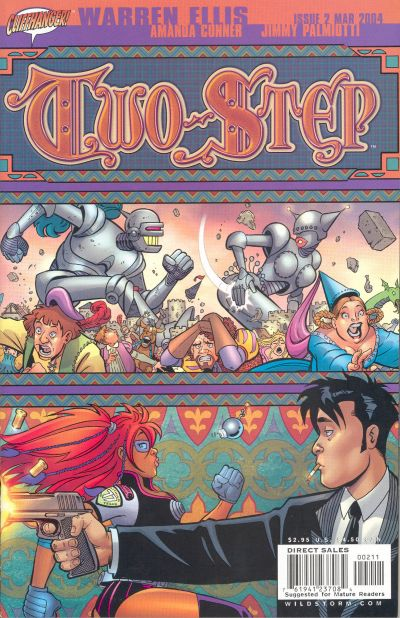
Two-Step

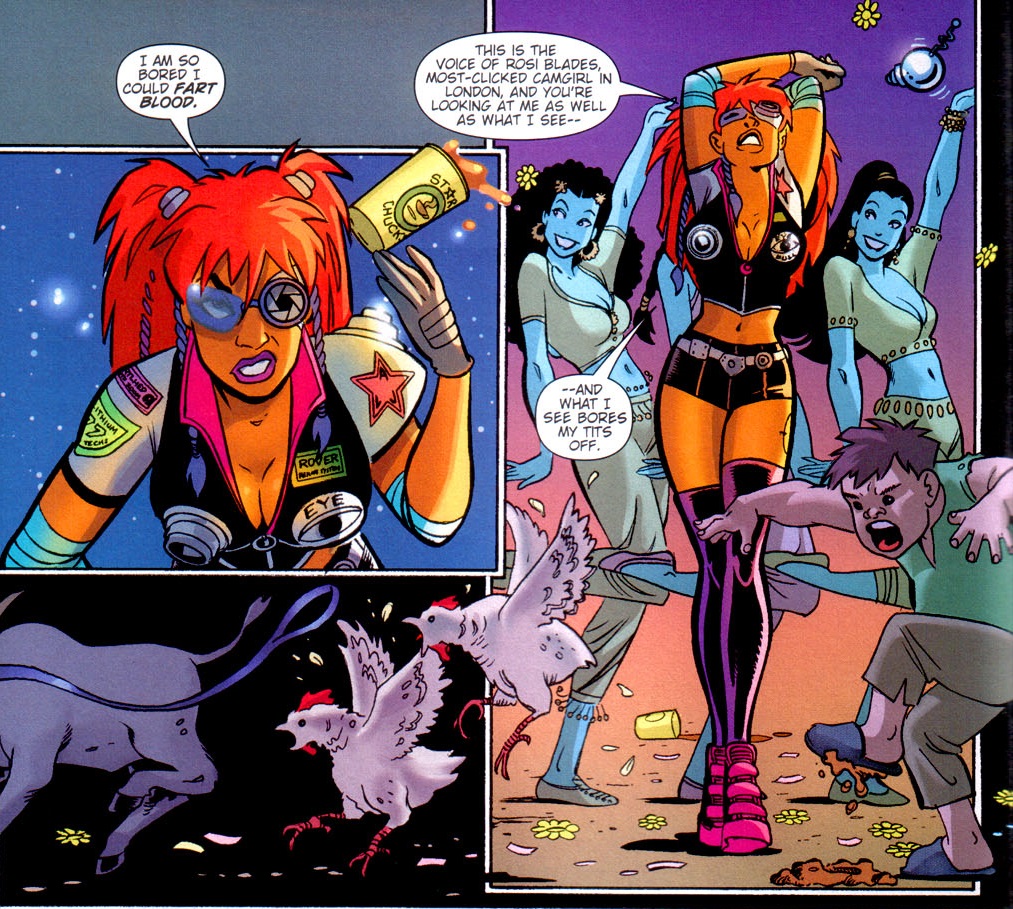
Two-Step is far from being Warren Ellis’ most profound comic. It isn’t even his funniest, despite the fast-paced Zucker-Abrahams-Zucker barrage of gags, vividly illustrated by Amanda Conner and Jimmy Palmiotti.

Nevertheless, it’s impossible to resist the notion of a team-up between the Dark Knight and the protagonists of this millennial extravaganza: bored cam-girl Rosi Blades, who walks around a cartoonish alternate London in search of wild images to broadcast online, and zen gunman Tony Ling, who is a freelance operator in the black market for penis prostheses.

That’s right.

Two-StepTwo-Step #1

SPIDER JERUSALEM

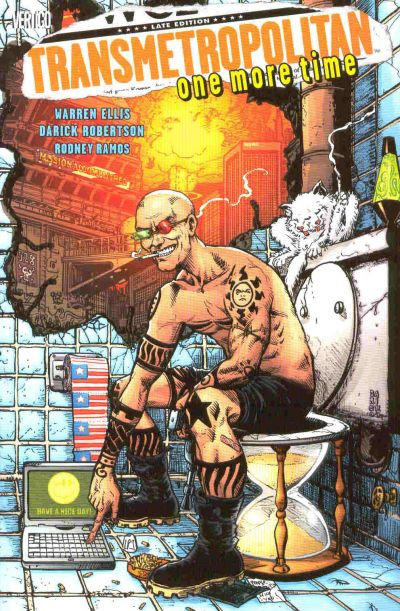
Transmetropolitan - One More Time

It’s hard to overestimate how much of an impact Ellis’ masterpiece Transmetropolitan had on me – I’ve read it and reread it so many times and forced so many of my friends to read it that the books on my shelf are falling apart as they wait for me to pick them up again.

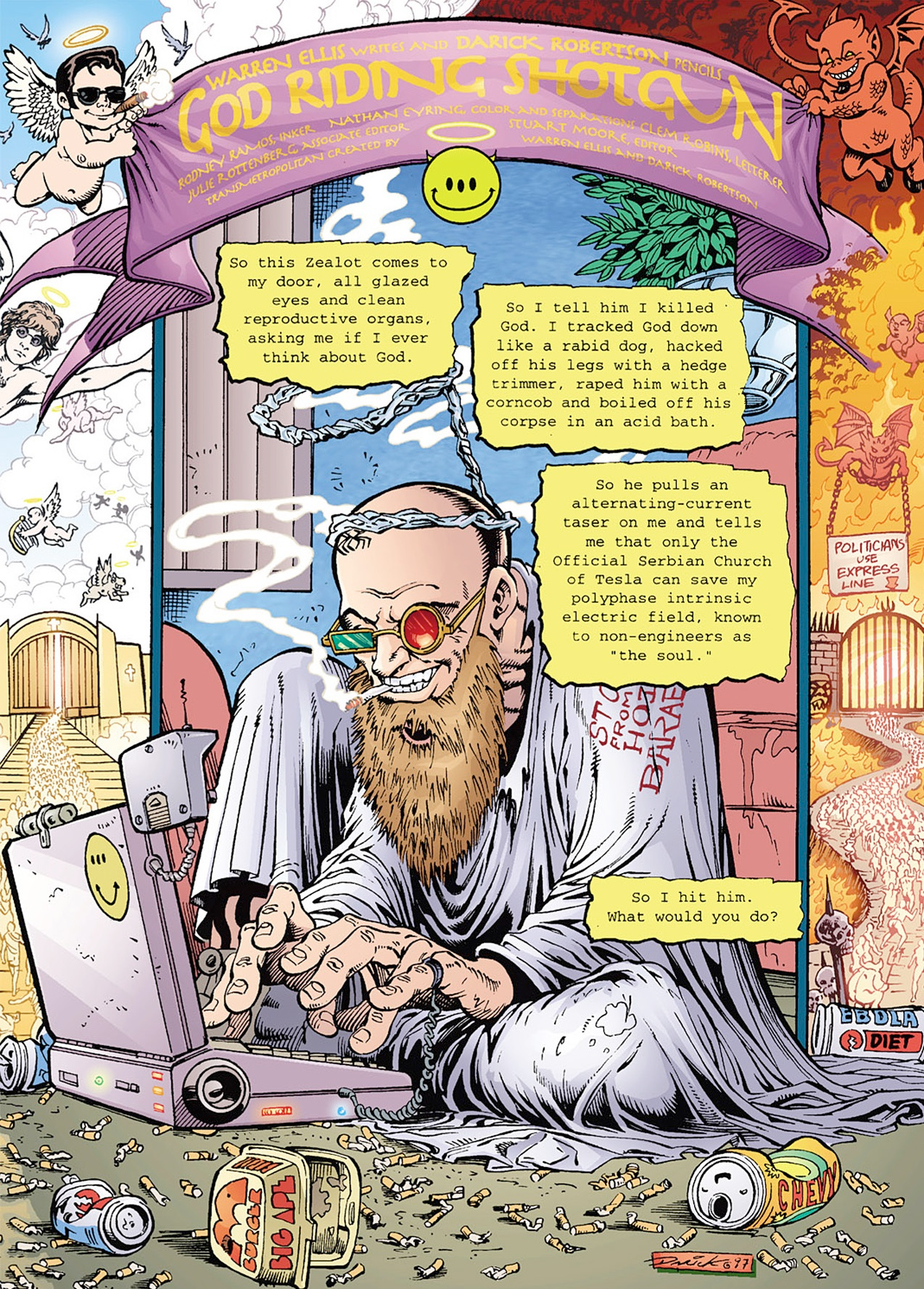
As in-your-face dark satire goes, the series was slightly more hardcore than Ben Elton’s early anarchist novels (This Other Eden, Gridlock, Stark) and slightly less surreal than TV’s Duckman, especially given Darick Robertson’s imaginative and energetic visuals. In Warren Ellis’ oeuvre, this undoubtedly shares Lazarus Churchyard‘s DNA. As science fiction, the comic was perhaps too good for its own right, having anticipated so much of what actually came to be (from Twitter to Google Glass and much more) that it’s now hard to appreciate how inventive it felt back then. But most of all, what set Transmetropolitan apart was that it appealed to pure rage over injustice, oppression, political hypocrisy, and consumerism. With lines like ‘If anyone in this shithole city gave two tugs of a dead dog’s cock about Truth, this wouldn’t be happening.’ and ‘If you loved me, you’d all kill yourselves today.’ – it remains one of the punkest comics out there!

At the center of it all was Spider Jerusalem, a futuristic Hunter S. Thompson with a mutant chain-smoking cat. Sure, it would be completely out of place for Spider to team up with Batman, but it would be worth it just for the inevitable scene where the guerrilla gonzo journalist would turn on the Caped Crusader with his faithful bowel-disrupter weapon, before going into one of his diatribes, like the classic anti-monoculture rant: ‘If we didn’t want to live like this, we could have changed it any time, by not fucking paying for it. So let’s celebrate by all going out and buying the same burger.’

Transmetropolitan 6Transmetropolitan #6

WILLIAM GRAVEL

Strange Killings - Necromancer

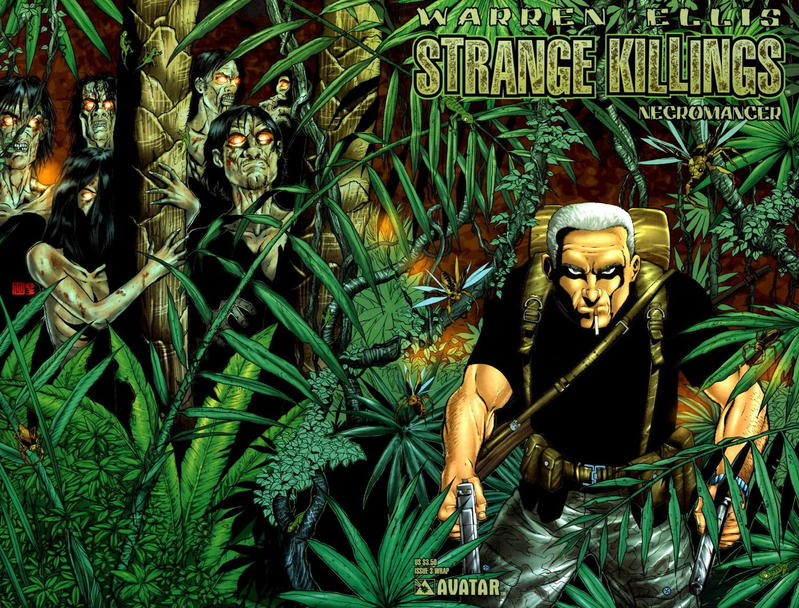
While the typical Ellis protagonist hides an idealistic heart underneath a sardonic exterior, William Gravel, SAS combat magician and occasional mercenary, is as cynical a bastard as they come. Imagine Batman having to team up with a nasty supernatural killer… and Gravel hanging out with a rich American in a silly costume (Gravel once suggested that the British Empire still secretly ruled the world, and America was nothing but a huge social experiment they’ve been running since Independence Day 1776).

Of course the kind of adventures Batman and Gravel specialize in are miles apart. That the latter’s stories are full of horrific graphic violence goes without saying (they’re published by Avatar, after all), but Ellis actually manages to give Garth Ennis a run for his money in terms of over-the-top profanity, obscenity, and gore. Between mutated genitalia stitched to a human tongue, the rotten corpses of men impregnated with lizards, and monsters that look like a cross between Predator and The Thing, there is enough fucked up imagery here to traumatize David Cronenberg!

Arguably, only the earlier mini-series are truly worth reading (even so, not for all tastes). However, it’s tempting to stick around just because Gravel himself is so fascinating. In contrast to Ellis’ and Mike Wolfer’s other collaboration (the hardcore sword & sorcery Wolfskin books, which are consistently entertaining), the ongoing Gravel series had some neat world-building but it wasn’t all that exciting, except for the prospect of watching its working class anti-hero regularly kick posh arse.

Strange_Killings-The_Body_OrchardStrange Killings: The Body Orchard #1


NEXT: Batman gets attacked by an elephant.

Posted in WEBS OF FICTION | Tagged , , , , , , , , , , , , , , , | Leave a comment