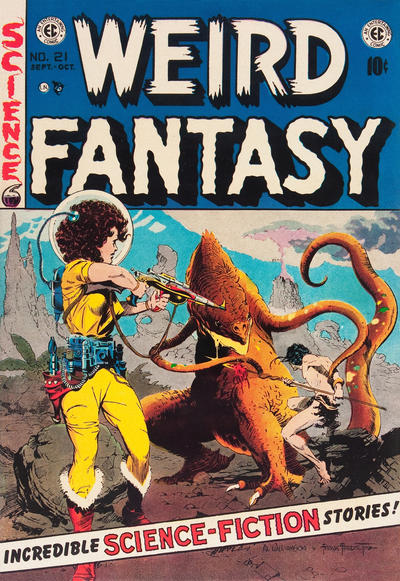
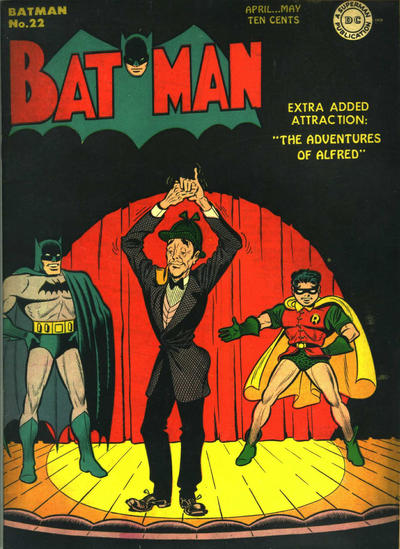
Your weekly reminder that comics can be awesome, Alfred Pennyworth edition…
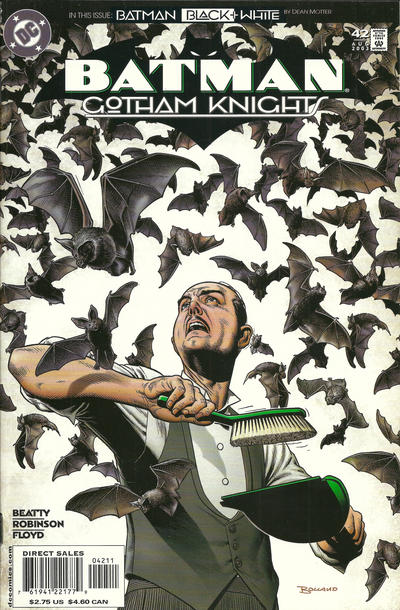
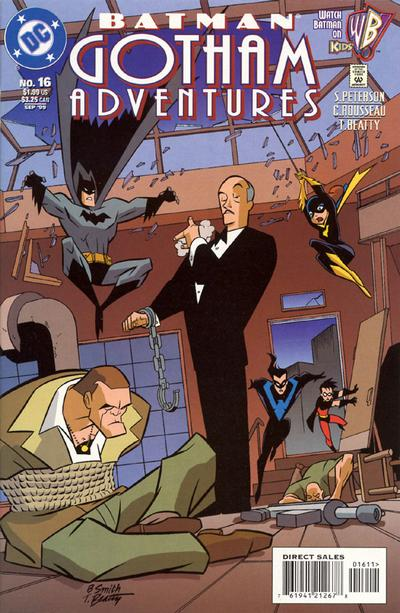
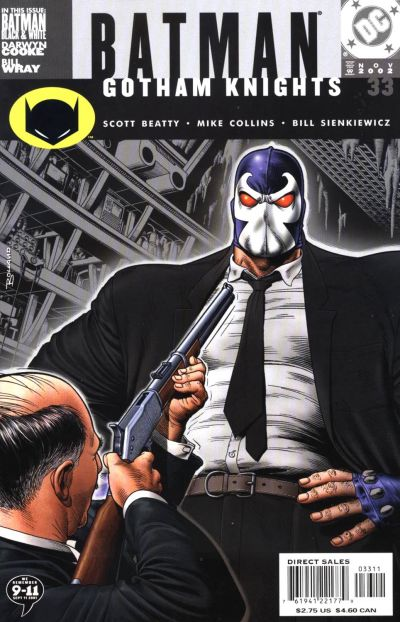
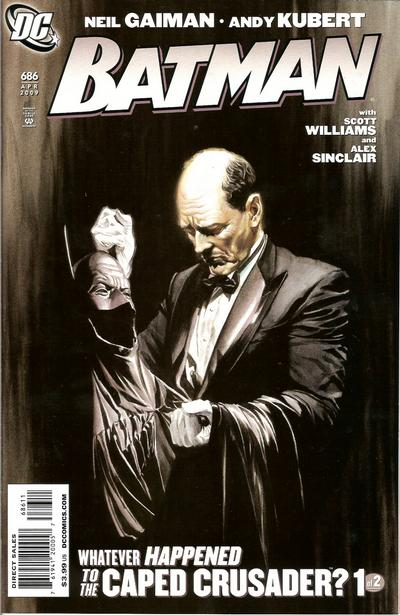
…and I just can’t resist adding this mouth-watering pastiche, from the wonderful blog Super-Team Family: The Lost Issues!:
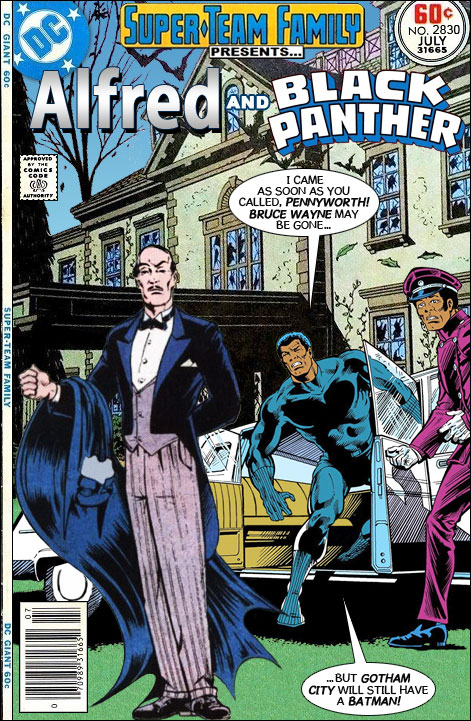
Your weekly reminder that comics can be awesome, Alfred Pennyworth edition…
…and I just can’t resist adding this mouth-watering pastiche, from the wonderful blog Super-Team Family: The Lost Issues!:
I’ve mentioned before that Astro City is one of the most accomplished superhero comics in recent memory. This anthology series takes place in its own autonomous universe, providing us with fresh ways to look at all the archetypes developed by Marvel and DC over the decades, thus re-imbuing them with a sense of wonder – yet with a humanistic, modern sensibility, without falling into pastiche. It treats everyone as a proper character, whether we’re talking about the Honor Guard (a version of teams like the Justice League and the Avengers) or the Green Man (an amalgam of Swamp Thing, Man-Thing, and Doctor Strange).
Besides the intertextual angle, there is an almost sci-fi element to the comic, as it ingeniously speculates about how everyday life in a superhero universe would actually work if all the tropes were true, attributing complex subjectivities even to the crudest staples of the genre. Some of the stories humanize fantastical heroes and villains while others focus on the perspective of people in the sidelines, from actors in a superhero-themed soap opera to operators in the Honor Guard’s call center. Astro City is an example of fiction driven by compassion and identification, fascinated with imaginary lives from different races, genders, planets, and historical periods, ushering readers to find a bit of themselves even among flying time-travelers and talking animals. It succeeds in doing this not only because of Kurt Busiek’s knack for writing believable characterization of even the most unbelievable characters, but also because Brent Anderson’s elegant art – based on Alex Ross’ designs and with stunning colors, mostly by Alex Sinclair and Wendy Broome – realistically brings to life a wide variety of what could have been merely goofy-looking superhumans. Ross also lent his talent to the series’ arresting painted covers:


Gradually, Busiek has been weaving the different narrative threads into a broad tapestry, even if most stories can still be read by themselves. Although Astro City – sometimes labeled Kurt Busiek’s Astro City – has taken many forms since its debut in 1995 (including mini-series, ongoing series, specials, short stories, and original graphic novels, published by Image, WildStorm, and Vertigo), its vision has been remarkably consistent from the outset. It’s clearly a labor of love for everyone involved.
Over a hundred issues of Astro City have been published, all of them filled with new ideas and powerful moments, staying away from decompressed, dragged-out storytelling. Here are a handful of them that still manage to stand out:
‘In Dreams’
(Astro City #1)

As much as I love the works of Steve Gerber and Scott McCloud starring the Man of Steel himself, for my money the absolute best Superman stories do not take place in the DC Universe or even feature the official iteration of the character at all. Instead, they were crafted by creators unconstrained by continuity who, through thinly-veiled versions of Superman (Mr. Majestic, Supreme, Hyperion, Apollo, Ultiman…), made the most out of the character’s potential. ‘In Dreams’ is one of the greatest examples I can think of.
Astro City’s debut issue introduced both the titular setting and its version of Superman, called Samaritan (whose cape neatly resembles a Greek toga and whose civilian identity, Asa Martin, is a fact-checker for a local magazine). ‘In Dreams’ also established the series’ mature tone – not in the sense of being grim and violent (like many ‘mature’ takes on superheroes), but in the sense of revolving mostly around adult characters dealing with elaborate emotions. In this case, we follow a typically busy day in Samaritan’s life, as he constantly moves from one crisis to the next while trying to safeguard his secret identity, carrying the world’s burden on his soldiers with barely any time for himself. Busiek writes a touching story about burnout adorned with a poignant first-person narration (including a heartbreaking moment of loneliness as Asa goes over a feature on the most beautiful women in Astro City). The series’ initial colorist, Steve Buccelatto, effectively contrasts the lively feel of the dream world with the more understated tone of ‘reality’ without sacrificing the latter’s brightness (which is part of Astro City’s identity). The result is beautifully melancholic.
(Twenty years later, Busiek and Anderson did a sequel to this story, in Astro City (v3) #26, and it’s nice to see that they didn’t lose their touch in the meantime.)
‘The Scoop’
(Astro City #2)

‘The Scoop’ is probably my favorite issue of Astro City. It pulls off the kind of speculative fiction the series does so well, seamlessly merging the recognizable with the unimaginable while giving you a real sense of depth to each time and space.
The tale is framed as a conversation in which the editor of the Astro City Rocket newspaper tells his latest reporter about one of his earliest published pieces, written back in 1959. The catch is that it was pretty hard to fact-check a story about superheroes teaming up to stop an invasion of shark-men from another dimension, especially as nobody involved had a press secretary that could confirm the events, which posed quite a challenge to journalistic standards. The conclusion is counterintuitive yet somehow inspiring.
‘Dinner at Eight’
(Astro City #6)


The first volume of Astro City wrapped up with an endearing issue about a date between Samaritan and Winged Victory (the series’ take on Wonder Woman). We get an insightful look at the logistics and implications of such a date, juxtaposing the protagonists’ quiet evening with glimpses of their fellow heroes’ actions around the world (i.e. of the conventional adventures that Samaritan and Winged Victory are temporarily ignoring in order to embark on a different kind of discovery). Busiek manages to make their conversations ring credible and natural, making us feel like we are really sharing this intimate moment (we even find out Samaritan’s secret origin). Meanwhile, Brent Anderson, Steve Buccellato, and letterer Richard Starkings nail every single beat, culminating in a stunning exchange by the moonlight.
(Busiek later went on to write another romantic comic about an alternative Superman, the excellent Superman: Secret Identity.)
‘Everyday Life’
(Astro City (v2) #2)
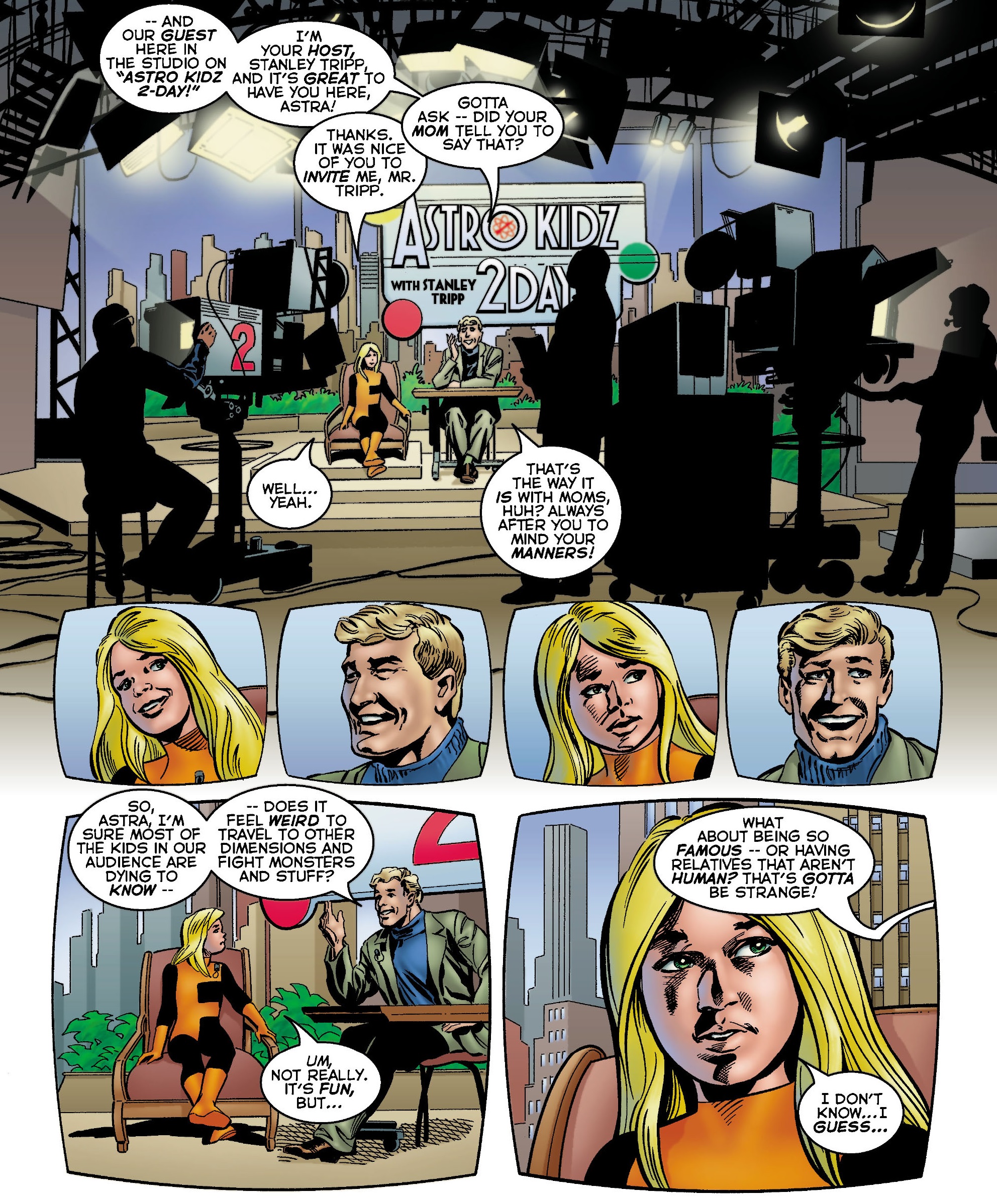
Some of Astro City’s most moving stories focused on Astra, the youngest member of the First Family (the series’ variation on the archetype of the family of powered super-scientists/explorers, a la Fantastic Four). The first of those issues, ‘Everyday Life,’ hit it out of the park as we follow a day in the life of ten-year-old Astra, who lives the superhero version of the joys and frustrations of a child celebrity. It’s a tale about how what is mundane for some people can be fantastic for others and vice versa, but it manages to come across as less corny than that. Alex Ross and Brent Anderson really deserve much of the credit for this one: not only for Astra’s expressive acting and for all the nifty designs in her sci-fi house, but also for delivering a ridiculously fun adventure in the middle section without losing the comic’s dramatic anchor.
The ending hits the just the right note, even though Astra’s story actually continues into the next issue. More than a decade later, the creators followed it up with a couple of stupendous specials (titled Astro City: Astra) about her graduation day.
(The Fantastic Four have been the object of many other interesting alternative interpretations – from WildStorm’s Planetary to Dark Horse’s Project Black Sky, not to mention The Incredibles – but the First Family really feel like they could carry their own ongoing series and I would read the hell out of it…)
‘In the Spotlight’
(Astro City (v2) #13)

An issue where Astro City’s metafictional inclinations are at their most forceful, ‘In the Spotlight’ tells us the life story of Leo, an animated lion who was somehow brought to life in the 1940s (because of an evil professor armed with a ‘belief ray’ that turned imagination into reality). Leo has stuck around since then, at first hanging around the entertainment industry (Who Framed Roger Rabbit? obviously comes to mind) and later facing the tribulations of many celebrities, with the added challenge of being a children’s character unprepared for the ‘real world’ in all its ugliness. Despite a premise that easily lends itself to silliness, the story’s general tone is more quirky than comedic, imbuing even this anthropomorphic animal cartoon with heartfelt humanity. Busiek and his team pull it off: you actually feel a bittersweet empathy towards Leo, in part due to the inspired decision of giving him a world-weary, Humphrey Bogart look.
Geoff Klock has a provocative analysis of ‘In the Spotlight’ in his book How to Read Superheroes and Why, arguing that this is ultimately ‘a fable about the effects of translating childhood heroes onto a realistic landscape,’ like Frank Miller and Alan Moore did in their deconstructionist comics of the 1980s. At one point, a desperate Leo tries to drain the heroes’ reality, rendering them insubstantial fantasies, thus ‘taking them to the extreme but opposite end of the spectrum that he himself is on; if is he destroyed by becoming real, then so they will be destroyed by becoming fiction.’ Klock concludes that the tale feeds into Astro City’s overall genre reconstructionism, as it ‘suggests the inability of noble childhood characters like Leo to survive in such realistic adult conditions and situates those who would place them in realistic settings as the villains of the story.’
Readers of this blog know that I am a firm believer that, even in these agitated times, genre fiction remains an interesting way to conceptualize what is happening around us. For instance, if the first half of 2020 filled screens and streets with imagery straight out of horror films like George Romero’s The Crazies and Danny Boyle’s 28 Days Later, things have recently verged closer to the dirty sci-fi of Paul Verhoeven’s RoboCop and, notably, Kathryn Bigelow’s Strange Days. That said, some of the most visceral elements that come to my mind derive not from supernatural thrillers nor from futuristic science fiction, but from more low-key exploitation. In particular, it’s hard not to think of the police as the German Shepherd in Sam Fuller’s White Dog while the sense of asphyxiation by an encroaching far-right was disturbingly captured by Jeremy Saulnier’s Green Room or even by Kevin Smith’s Red State (just to stick to color-based titles).
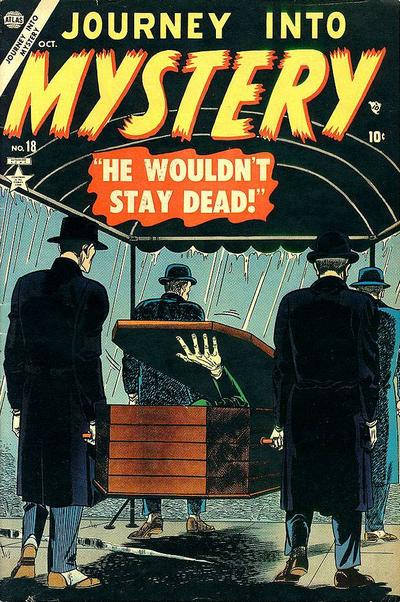
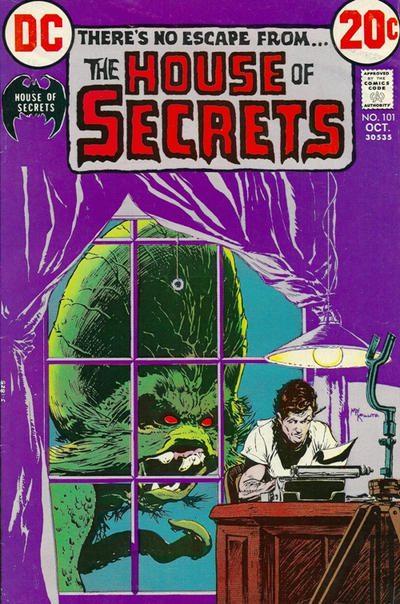
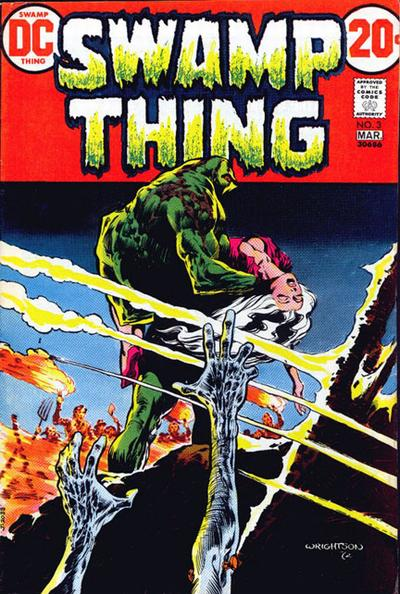
And speaking of horror, here are some gothic reminders that comics can be awesome:
 Vengeance of Bane
We’re back with another installment of the 1990s’ Batman comics reading guide! Sadly, in the meantime this feature has also become a tribute to the recently deceased group editor of these titles, Dennis O’Neil, whose vision was no doubt a key part of what made this era so great…
After a few years finding their feet, in 1993 the different strands of Batman comics finally converged into a sprawling crossover that clearly made them all part of the same saga: Knightfall (technically, ‘Knightfall’ is just the title of the crossover’s first stage – followed by ‘Knightquest’ and ‘KnightsEnd’ – but it has become common practice to use this label to refer to the whole thing). In this epic tale – masterfully edited not just by O’Neil, but also by Scott Peterson, Jordan B. Gorfinkel, and Darren Vincenzo – Batman (the character and, on a metafictional level, the intellectual property itself) finds himself exhausted and is temporarily replaced by an edgier version. The result is an essential read for fans of the Dark Knight.
Here is my suggested reading order:
INTRODUCING THE PLAYERS [The final months of 1992 and the first months of 1993 were all about putting the domino pieces in their exact places. Special issues introduced new characters who would play a decisive role in Knightfall while the regular series established the mindset of Bruce Wayne, Tim Drake, Sarah Essen, Commissioner Gordon, and Mayor Krol going in. Moreover, DC’s new anthology, Showcase, joined the lineup, as each issue included one Batman-related feature.]
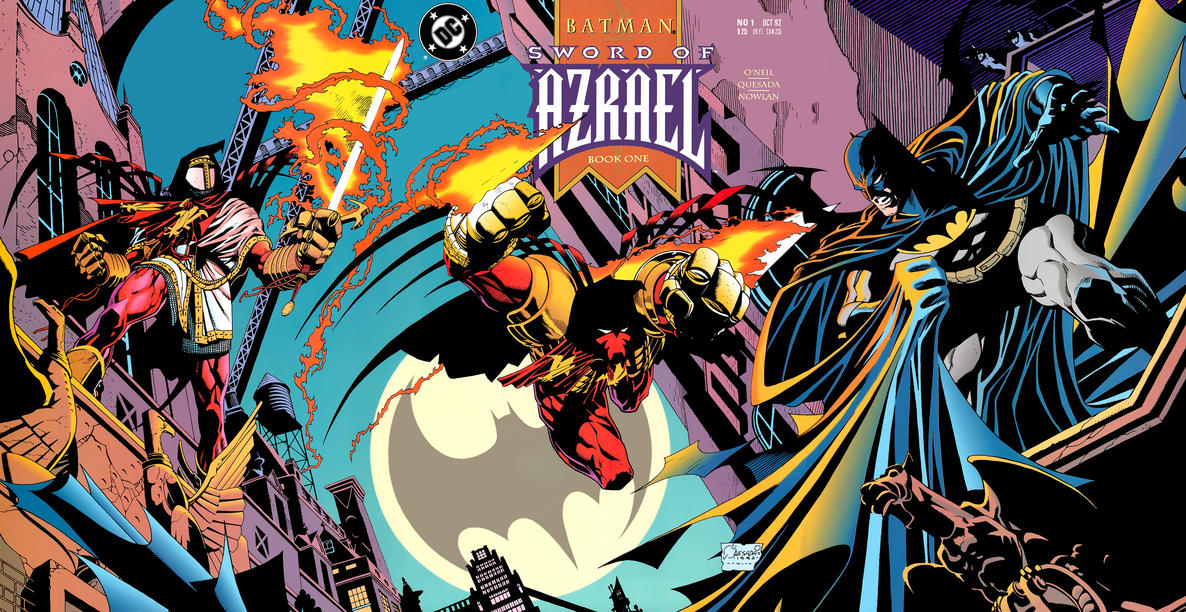
Sword of Azrael #1-4 (collected as Sword of Azrael) [Mini-series by Denny O’Neil and Joe Quesada introducing Jean Paul Valley (aka Azrael)]
Showcase ’93 #1-4: ‘Sorrow Street’
Showcase ’93 #5-6: ‘The Takedown/One Stone’ (collected in Robin, v3: Solo) [Picks up where the badass Catwoman yarn ‘Sorrow Street’ left off, now focusing on Robin. Batman is out of town, so I assume this takes place during Sword of Azrael.]
Batman #488: ‘Costumes’ (collected in Knightfall Omnibus, v1 and Prelude to Knightfall)
Shadow of the Bat Annual #1: ‘Joe Public’ (collected in Shadow of the Bat, v2) [Parallel to Knightfall, DC had a separate crossover event running through its 1993 annual issues, called Bloodlines. This means that, every once in a while, we’ll get a story about alien vampires giving super-powers to random citizens. This is the first one.]
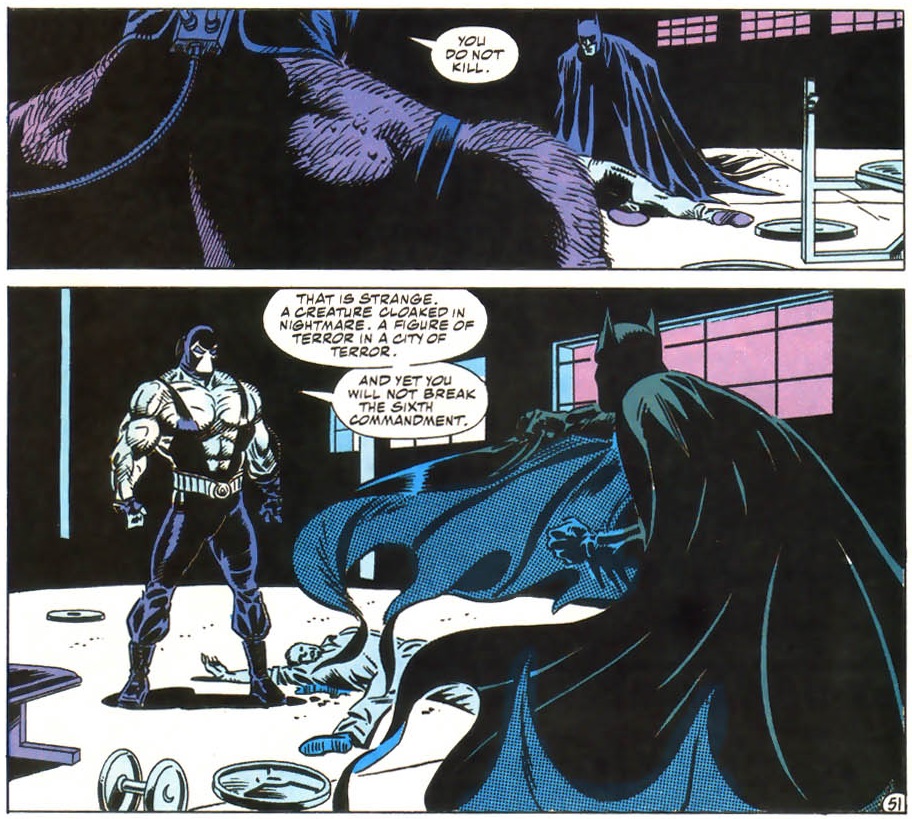
Vengeance of Bane (collected in Knightfall, v1 (2012 edition), Knightfall Omnibus, v1, Batman Versus Bane, and Prelude to Knightfall) [One-shot by Chuck Dixon and Graham Nolan introducing Bane]
Detective Comics #654-656: ‘God of Battle/The Anvil of War/Besieged’ (collected in Knightfall Omnibus, v1 and Prelude to Knightfall)
Detective Comics #657-658: ‘Null and Void/Deciphered’ (collected in Knightfall Omnibus, v1 and Prelude to Knightfall)
Batman #489: ‘Killer’s Bane’(collected in Knightfall Omnibus, v1, Arkham: Killer Croc, and Prelude to Knightfall)
Batman #490: ‘Who Riddled the Riddler?’ (collected in Knightfall Omnibus, v1 and Prelude to Knightfall)
Batman #491: ‘The Freedom of Madness’ (collected in Knightfall, v1 (2012 edition), Knightfall Omnibus, v1, and Prelude to Knightfall) [Massive breakout at Arkham Asylum, which means that all sorts of rogues are loose in Gotham City at once. Chaos ensues!]
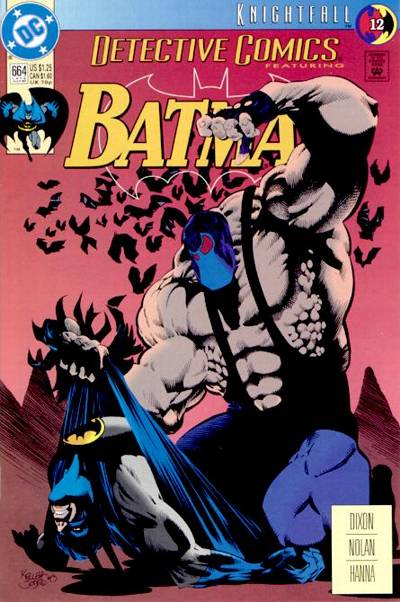
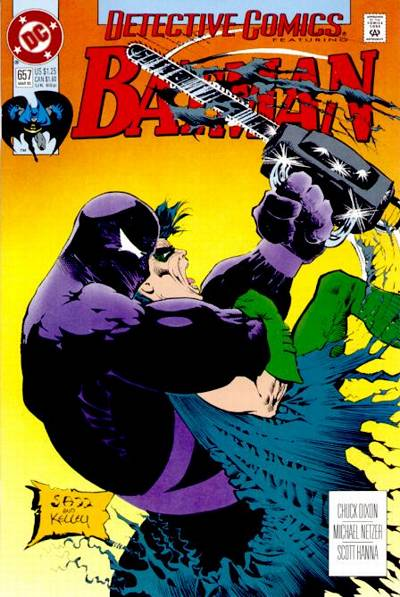
BROKEN BAT [The Dark Knight gradually breaks down, mentally and physically, while chasing the various villains. Despite the storyline’s growing intensity – and unlike what Kelley Jones’ and Sam Kieth’s overblown covers may suggest – the interior art remains quite restrained, with Norm Breyfogle, Jim Balent, Jim Aparo, and Graham Nolan sticking to a relatively ‘grounded’ visual style. (All these comics have been collected in the various editions of Knightfall, v1 and Knightfall Omnibus, v1.)]
Batman #492: ‘Crossed Eyes and Dotted Teas’
Detective Comics #659: ‘Puppets’
Batman #493: ‘Redslash’
Detective Comics #660: ‘Crocodile Tears’ (collected in Arkham: Killer Croc)
Batman #494: ‘Night Terrors’
Detective Comics #661: ‘City on Fire’
Batman #495: ‘Strange Deadfellows’
Detective Comics #662: ‘Burning Questions’
Batman #496: ‘Die Laughing’
Detective Comics #663: ‘No Rest for the Wicked’
Batman #497: ‘The Broken Bat’ (collected in Batman: A Celebration of 75 Years and Tales from the DC Dark Multiverse)
Detective Comics #664: ‘Who Rules the Night’
Showcase ’93 #7-8: ‘Double Cross/Bad Judgement’
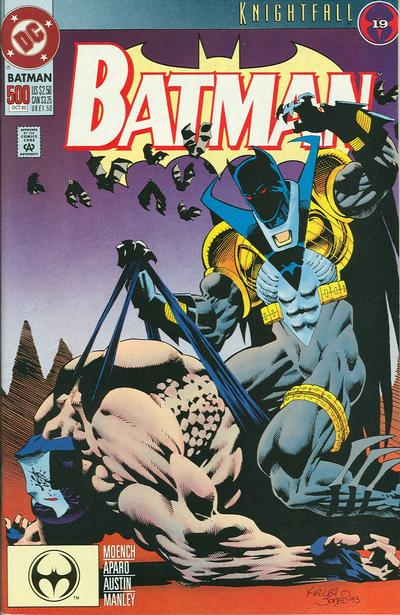
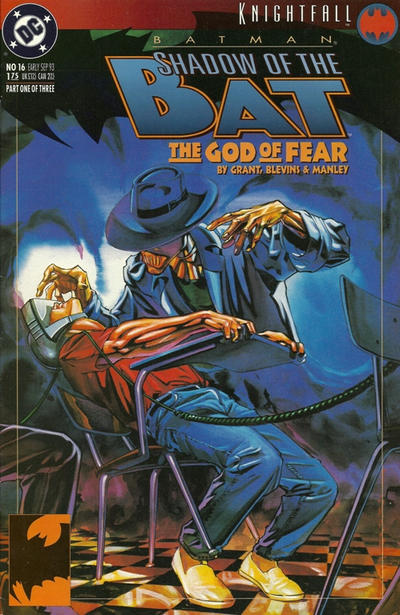
ENTER AZBABTS [With Bruce Wayne severely injured, Jean Paul Valley takes on the mantle of Batman… He gradually proceeds to make the Dark Knight more similar to Azrael (whose techno looks and brutal methods seem more in tune with the zeitgeist), creating the version of the character that the fan community would come to label ‘Azbats.’ This effectively becomes the new status quo, for a while.]
Batman #498: ‘Knights in Darkness’ (collected in Knightfall, v1 (2012 edition), Knightfall, v2 (2018 edition), and Knightfall Omnibus, v1)
Batman Annual #17: ‘Ballistic’
Shadow of the Bat #16-18: ‘God of Fear’ (collected in Knightfall, v1 (2012 edition), Knightfall, v2 (2018 edition), Knightfall Omnibus, v1, and Shadow of the Bat, v2)
Detective Comics #665: ‘Lightning Changes’ (collected in Knightfall, v1 (2012 edition), Knightfall, v2 (2018 edition), and Knightfall Omnibus, v1)
Batman #499: ‘The Venom Connection’ (collected in Knightfall, v1 (2012 edition), Knightfall, v2 (2018 edition), and Knightfall Omnibus, v1)
Catwoman (v2) #1: ‘Rough Diamonds’ (collected in Catwoman by Jim Balent, v1)
Catwoman (v2) #2: ‘Blast from the Past’ (collected in Catwoman by Jim Balent, v1) [Ends in a bit of a cliffhanger, but it makes sense to take a break here, since the events in the next issues take place after Batman #500.]
Detective Comics Annual #6: ‘Not Fade Away’
Detective Comics #666: ‘The Devil You Know’ (collected in Knightfall, v1 (2012 edition), Knightfall, v2 (2018 edition), and Knightfall Omnibus, v1)
Batman #500: ‘Dark Angel’ (collected in Knightfall, v1 (2012 edition), Knightfall, v2 (2018 edition), and Knightfall Omnibus, v1)
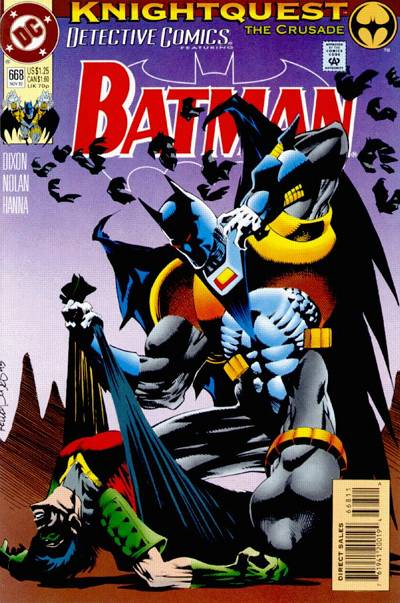
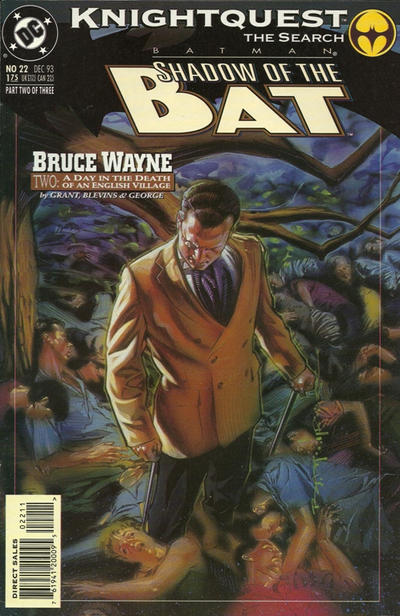
KNIGHTQUEST [After the climactic Batman #500, the saga broke into two parallel storylines. ‘Knightquest: The Search’ followed the injured Bruce Wayne’s travels abroad (in search for Tim Drake’s father and for Shondra Kinsolving). ‘Knightquest: The Crusade’ followed AzBats’ crimefighting exploits (and spiraling mental instability) in Gotham City. I think it makes sense to alternate between sizeable chunks of the two lines.
Moreover, in addition to an ongoing series focused on Catwoman (by Jo Duffy and Jim Balent), we got one about Robin (by Chuck Dixon and Tom Grummett), thus further increasing the franchise’s overall variety.]
Justice League Task Force #5-6: ‘The Search’ (collected in Knightfall Omnibus, v2 and Knightquest: The Search) [Picks up where Catwoman (v2) #2 left off]
Catwoman (v2) #3: ‘Shadow of the Cat’ (collected in Catwoman by Jim Balent, v1)
Catwoman (v2) #4: ‘Full Circle’ (collected in Catwoman by Jim Balent, v1)
Robin Annual #2: ‘Looking Sharp’ (collected in Robin, v3: Solo)
Showcase ’93 #9-10: ‘Survival/Armageddon’
Showcase ’93 #11-12: ‘Raptors/Partners’ (collected in Robin, v3: Solo)
Detective Comics #667-668: ‘Wild, Wild East/Runaway’ (collected in Knightfall, v2, Knightfall Omnibus, v2, and Knightquest: The Crusade, v1)
Robin (v4) #1-2: ‘Outcast/Busted!’ (collected in Robin, v3: Solo, Knightfall Omnibus, v2, and Knightquest: The Crusade, v1)
Batman #501-502: ‘Code Name: Mekros/Phoenix in Chaos’ (collected in Knightfall, v2, Knightfall Omnibus, v2, and Knightquest: The Crusade, v1)
Detective Comics #669: ‘Town Tamer’ (collected in Knightfall, v2, Knightfall Omnibus, v2, and Knightquest: The Crusade, v1)
Catwoman (v2) #5: ‘Nun Better’ (collected in Catwoman by Jim Balent, v1)
Detective Comics #670: ‘Cold Cases’ (collected in Knightfall, v2, Knightfall Omnibus, v2, and Knightquest: The Crusade, v1)
Robin (v4) #3-5: ‘Clueless/Breathless/Last Gasps’ (collected in Robin, v3: Solo)
Shadow of the Bat #19-20: ‘The Tally Man’ (collected in Knightfall, v2, Knightfall Omnibus, v2, Shadow of the Bat, v2, and Knightquest: The Crusade, v1)
Shadow of the Bat #21-23: ‘The Hood/A Day in the Death of an English Village/Curse of the Bat’ (collected in Knightfall Omnibus, v2, Shadow of the Bat, v2, and Knightquest: The Search)
Detective Comics #671-673: ‘The Cutting Room Floor/Smash Cut/Losing the Light’ (collected in Knightfall, v2, Knightfall Omnibus, v2, and Knightquest: The Crusade, v2)
Demon #40: ‘The Wild One’ (collected in The Demon, v1: Hell’s Hitman) [No connection to Batman other than the fact this is the debut of Garth Ennis’ and John McCrea’s work on Demon, which will eventually lead to Hitman. Their run continues two issues later, after a cool (yet unconnected) fill-in by Kevin Altieri.]
Demon Annual #2: ‘Hitman’ (collected in The Demon, v1: Hell’s Hitman and Hitman, v1: A Rage in Arkham) [The origin of Hitman’s lead, Tommy Monaghan, in another one of those awful Bloodlines crossovers.]
Legends of the Dark Knight Annual #3: ‘Transformation’
Catwoman (v2) #6: ‘Animal Rites’ (collected in Knightfall, v2, Knightfall Omnibus, v2, Catwoman by Jim Balent, v1, and Knightquest: The Crusade, v1)
Batman #503-504: ‘Night Becomes Woman/Dark Dance’ (collected in Knightfall, v2, Knightfall Omnibus, v2, and Knightquest: The Crusade, v1)
Catwoman (v2) #7: ‘Body Chemistry’ (collected in Catwoman by Jim Balent, v1)
Showcase ’94 #1-2: ‘The Great Pretender/King Joker’
Showcase ’94 #3-4: ‘Madmen Across The Water/What’s Your Twenty?/Banzai, Good Buddy’ [Besides the fun two-parter ‘Madmen Across the Water’ (collected in Tales of the Batman: Tim Sale) – about the captured rogues being sent to Blackgate Prison while Arkham Asylum is getting reconstructed – these issues include a rollicking adventure starring the Psyba-Rats, a team of techno-thieves introduced in Robin Annual #2.]
Chain Gang War #1-7: ‘Chain Reaction/The House of Correction/Weak Link/Cold Cuts/Reunion/Hangman/Jailbreak’ [This short-lived crime series (created by John Wagner and Dave Johnson) was set near Gotham City and had a few guest-appearances by AzBats.]
Shadow of the Bat #24: ‘The Immigrant: Rosemary’s Baby’ (collected in Knightfall Omnibus, v2, Shadow of the Bat, v2, and Knightquest: The Crusade, v2)
Batman #505: ‘Blood Kin’ (collected in Knightfall, v2, Knightfall Omnibus, v2, and Knightquest: The Crusade, v2)
Shadow of the Bat #25: ‘The Birth of a Hero’ (collected in Knightfall Omnibus, v2, Shadow of the Bat, v3, and Knightquest: The Crusade, v2)
Chain Gang War #7-12: ‘The Crooked Man/Meltdown’ [Set after AzBats’ latest upgrades, in Shadow of the Bat #25]
Batman/Punisher: ‘Lake of Fire’ (collected in DC/Marvel Crossover Classics, v2) [The rare intercompany crossover that genuinely seems to fit comfortably in the main continuity]
Showcase ’94 #5-6/Robin (v4) #6: ‘Benedictions’ (collected in Robin, v4: Turning Point)
Batman #506-507: ‘Malevolent Manaxe/Ballistic’ (collected in Knightfall, v2, Knightfall Omnibus, v2, and Knightquest: The Crusade, v2)
Showcase ’94 #7: ‘Cracks’ (collected in Knightfall Omnibus, v2 and Knightquest: The Crusade, v2)
Shadow of the Bat #26-27: ‘Creatures of Clay’ (collected in Knightfall Omnibus, v2, Shadow of the Bat, v3, and Knightquest: The Crusade, v2)
Outsiders(v2) #7-9: ‘Friendly Fire/Shadows of Knight/Breakout’
Detective Comics #674: ‘Out-Gunned’ (collected in Knightfall, v2, Knightfall Omnibus, v2, and Knightquest: The Crusade, v2)
Batman #508: ‘Mortal Remains’ (collected in Knightfall, v2, Knightfall Omnibus, v2, and Knightquest: The Crusade, v2)
Shadow of the Bat #28: ‘The Long, Dark Night’ (collected in Knightfall, v2, Knightfall Omnibus, v2, Shadow of the Bat, v3, and Knightquest: The Crusade, v2)
Detective Comics #675: ‘Midnight Duel’ (collected in Knightfall, v2, Knightfall Omnibus, v2, and Knightquest: The Crusade, v2)
Legends of the Dark Knight #59-61: ‘Quarry’ (collected in Knightfall Omnibus, v2 and Knightquest: The Search)
Robin (v4) #7: ‘Turning Point’ (collected in Knightfall, v2, Knightfall Omnibus, v2, Robin, v4: Turning Point, and Knightquest: The Search)
Catwoman (v2) #8-9: ‘Zephyr/Happyland’ (collected in Catwoman by Jim Balent, v1)
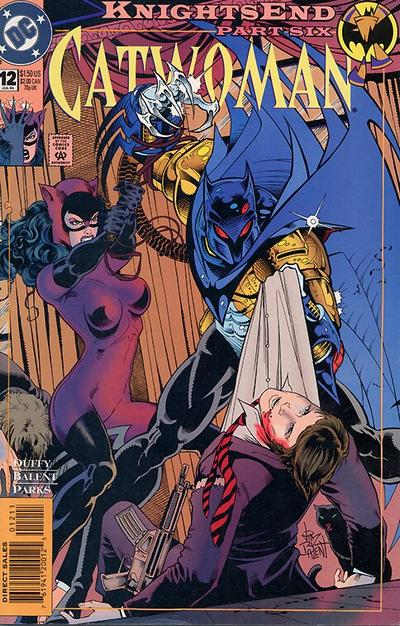
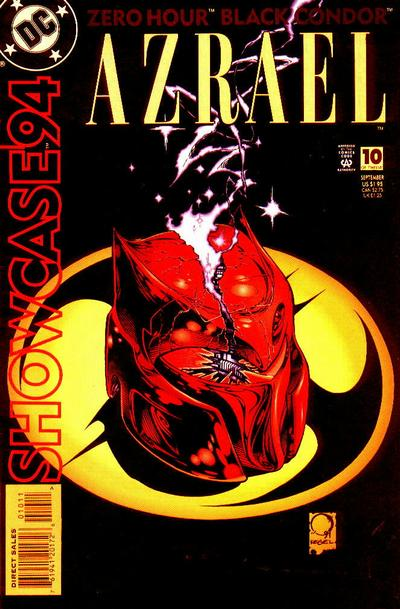
KNIGHTSEND [Mid-1994 saw a recovered Bruce Wayne trying to take back Batman’s title from Jean Paul Valley, who put up one hell of a fight. The meta-subtext was clearer than ever, pitting different conceptions of the Dark Knight against each other. (These issues are collected in Knightfall, v3, Knightfall Omnibus, v3, and KnightsEnd.)]
Batman #509: ‘Spirit of the Bat’
Shadow of the Bat #29: ‘Proving Ground’ (collected in Shadow of the Bat, v3)
Detective Comics #676: ‘Too Many Ninjas’
Legends of the Dark Knight #62: ‘Devils’
Robin (v4) #8: ‘Death’s Door’ (collected in Robin, v4: Turning Point)
Catwoman (v2) #10-12: ‘Falling Star/Tin Men/Fire in the Sky’ (collected in Catwoman by Jim Balent, v1)
Batman #510: ‘Return of the Bat’
Shadow of the Bat #30: ‘Wild City’ (collected in Shadow of the Bat, v3)
Detective Comics #677: ‘Flesh and Steel’
Legends of the Dark Knight #63: ‘Climax’
AFTERMATH [A few epilogues to the Knightfall saga.]
Robin (v4) #9: ‘The Triumph’ (collected in Knightfall, v3, Knightfall Omnibus, v3, Robin, v4: Turning Point, and KnightsEnd)
Catwoman (v2) #13: ‘Catfish’ (collected in Knightfall, v3, Knightfall Omnibus, v3, Catwoman by Jim Balent, v1, and KnightsEnd)
Batman: Mitefall [Alan Grant and Kevin O’Neill present Bat-Mite’s version of Knightfall, which is essentially a slapstick parody of the whole thing.]
The Punisher/Batman: ‘Deadly Knights’ (collected in DC/Marvel Crossover Classics, v2) [After having faced AzBats, the Punisher finally gets to meet the real Batman in a comic written by Chuck Dixon (an expert in both characters).]
Demon (v3) #42-45: ‘Hell’s Hitman’ (collected in The Demon, v1: Hell’s Hitman) [Readers who aren’t caught up on Demon may be a bit lost, but it’s worth noting that this story features not only Tommy Monaghan, but also Tweedledee, Tweedledum, and Gotham City’s own demon, Gothodaemon. The next issues, however, are mostly of interest for completists or Demon fans.]
Demon (v3) #46-48: ‘Haunted Glory’ (collected in The Demon, v1: Hell’s Hitman)
Demon (v3) #49: ‘From Hell’ (collected in The Demon, v1: Hell’s Hitman)
Demon (v3) #50: ‘The Shanty of Captain Scumm’ (collected in The Demon, v2: The Longest Day)
Demon (v3) #51: ‘Sons & Lovers’ (collected in The Demon, v2: The Longest Day)
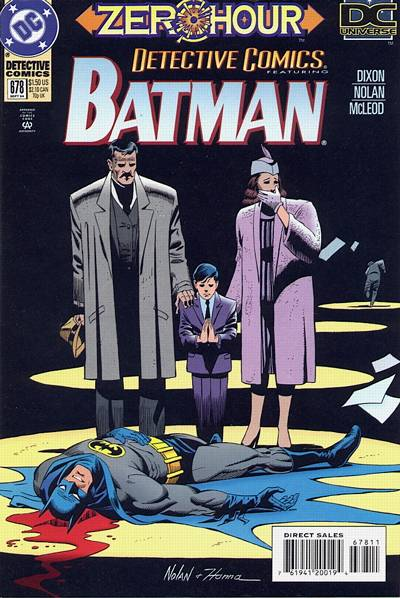
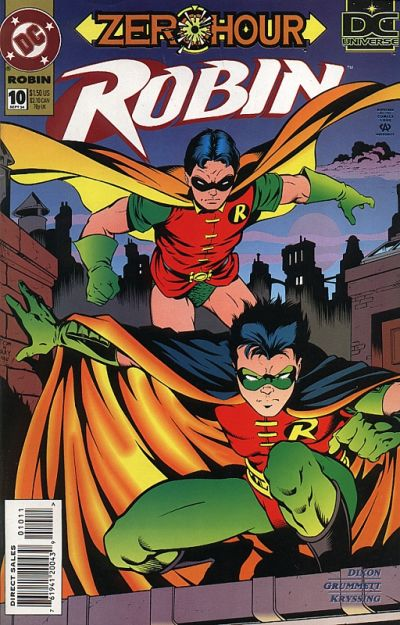
ZERO HOUR [DC’s line-wide crossover Zero Hour: Crisis in Time! (about Hal Jordan’s attempts to remake the DCU) involved all sorts of merged timelines, so several characters crossed paths with alternate versions of themselves. (The issues involving the Batman family are collected in Batman: Zero Hour.)]
Batman #511: ‘The Night Before Zero’
Shadow of the Bat #31: ‘The Battling Butler!’ (collected in Shadow of the Bat, v3 and Batman Allies: Alfred Pennyworth)
Detective Comics #678: ‘Yesterdays Gone’
Robin (v4) #10: ‘Two Birds One Stone’ (collected in Robin, v4: Turning Point)
Catwoman (v2) #14: ‘Broken Mirrors’ (collected in Catwoman by Jim Balent, v2)
THE BEGINNING OF TOMORROW [Zero Hour served as a way to softly reboot specific aspects of DC continuity (it’s the kind of retconning event that inspired the classic Astro City short story ‘The Nearness of You’). This was then followed by a set of #0 issues in which characters recalled their (now revised) origins. One of the changes was that Batman was now considered an urban legend, thus revising the fact that he had shown up on television in Detective Comics #622 and #629.]
Showcase ’94 #8-9: ‘The Secret Origin of Scarface’
Demon (v3) #0: ‘Zero Hour’ (collected in The Demon, v2: The Longest Day)
Catwoman #0: ‘Cat Shadows’ (collected in Catwoman by Jim Balent, v2 and Batman: Zero Hour)
Catwoman Annual #2: ‘Catwoman: Year One’ (collected in Catwoman by Jim Balent, v2) [Although this issue only came out the following year, this seems like the logical place to read it, as it expands the new, less downbeat version of Catwoman’s origin (thus replacing Her Sister’s Keeper) while introducing the ridiculous-looking Hellhound, who will later show up in both Catwoman and Birds of Prey. There is also a cameo by Harvey Bullock, who looks closer to his present-day persona, thus cancelling out Legends of the Dark Knight #105-106.]
Showcase ’94 #10: ‘Aftermath’ (collected in Knightfall, v3, Knightfall Omnibus, v3, and KnightsEnd) [Yet another epilogue to Knightfall, focusing on Jean Paul Valley]
Batman #0: ‘Creature of the Night’ (collected in Batman: Zero Hour)
Shadow of the Bat #0: ‘The Beginning of Tomorrow’ (collected in Shadow of the Bat, v3 and Batman: Zero Hour)
Detective Comics #0: ‘Choice of Weapons’ (collected in Batman: Zero Hour)
Robin (v4) #0: ‘Brothers in Arms’ (collected in Prodigal, Robin, v4: Turning Point, and Batman: Zero Hour)
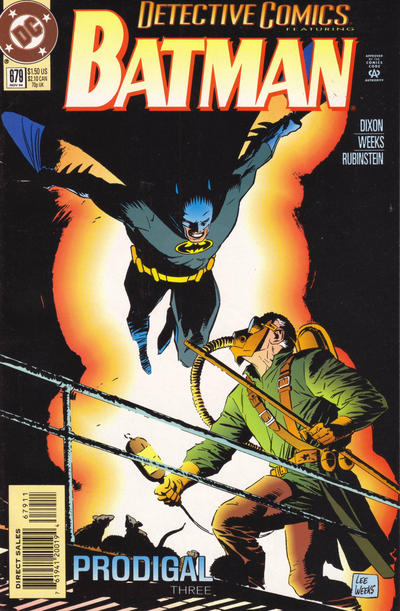
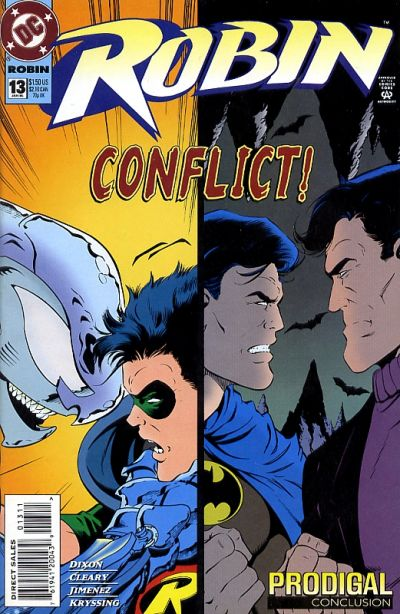
PRODIGAL [Before Bruce Wayne fully returned to his Batman persona, Dick Grayson took over for a bit, capturing the villains that were still on the loose. Not only is the plot continuity tight in these stories, but they also look super-slick, thanks to the artwork of Mike Gustovich, Bret Blevins, Lee Weeks, Phil Jimenez, Graham Nolan, Ron Wagner, and Mark Bright, beautifully colored by the great Adrienne Roy. (These issues are collected in Prodigal, Knightfall, v3, and Knightfall Omnibus, v3.)]
Batman #512: ‘Robin and Batman’ (collected in Arkham: Killer Croc)
Shadow of the Bat #32: ‘Prodigal – Part Two’ (collected Shadow of the Bat, v4)
Detective Comics #679: ‘The Vermin Factor’
Robin (v4) #11: ‘Two in Every Crowd’ (collected in Robin, v4: Turning Point)
Batman #513: ‘Double Deuce’
Shadow of the Bat #33: ‘Prodigal – Part Six’ (collected Shadow of the Bat, v4)
Detective Comics #680: ‘A Twice Told Tale’
Robin (v4) #12: ‘Bullies’ (collected in Robin, v4: Turning Point)
Batman #514: ‘One Night in the War Zone’
Shadow of the Bat #34: ‘Prodigal – Part Ten’ (collected Shadow of the Bat, v4)
Detective Comics #681: ‘Knight without Armor’
Robin (v4) #13: ‘Wings over Gotham’ (collected in Robin, v4: Turning Point)
TROIKA [Besides establishing the new status quo and creative teams, this small crossover served as a post-Cold War coda to Soviet villains Dark Rider and KGBeast (who henceforth became more of a minor villain, mostly serving time in Blackgate Prison). (These issues are collected in Troika and Knightfall Omnibus, v3.)]
Batman #515: ‘Dark Rider, Cold Warrior’ (collected in Batman by Doug Moench & Kelley Jones, v1) [Picks up right after Robin (v4) #13.]
Shadow of the Bat #35: ‘Troika – Part Two’ (collected in Shadow of the Bat, v4)
Detective Comics #682: ‘The Doomsday Clock’
Robin (v4) #14: ‘Big City Bomber’ (collected in Robin, v5: War of the Dragons)
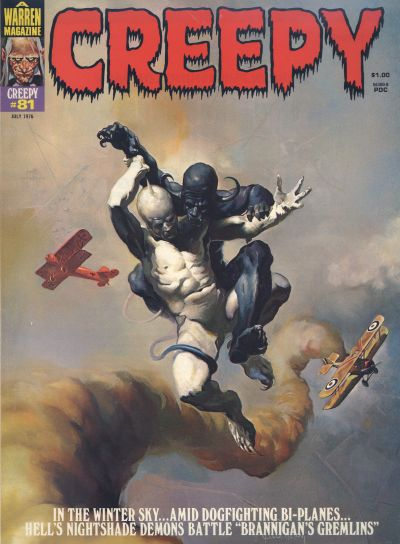
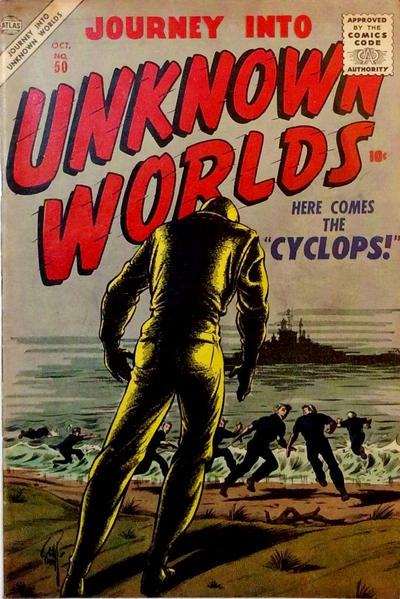
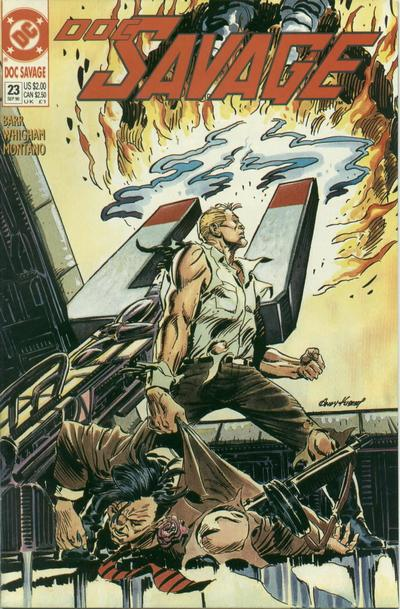
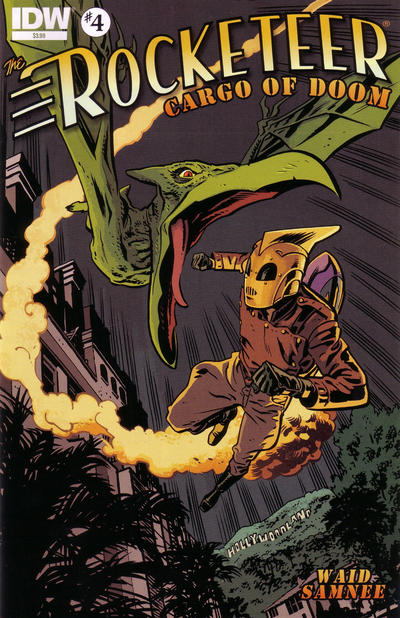
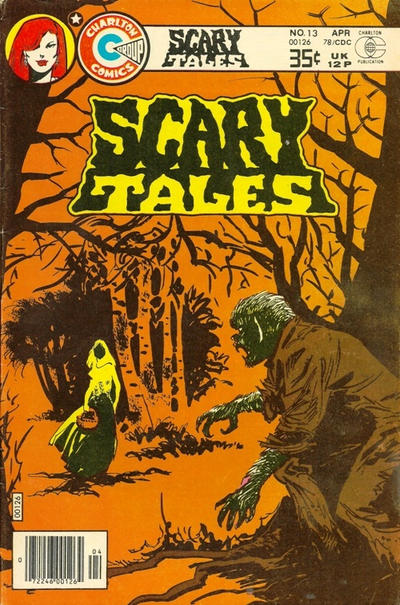
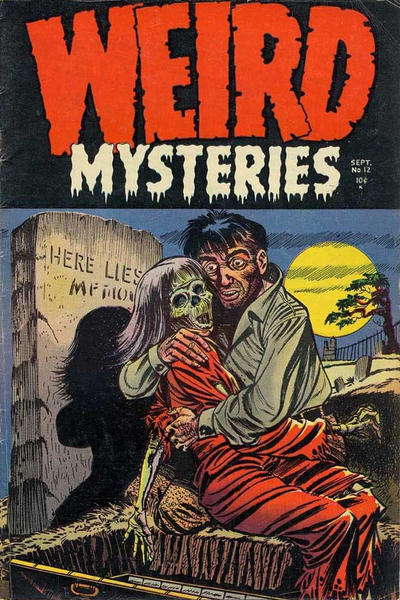
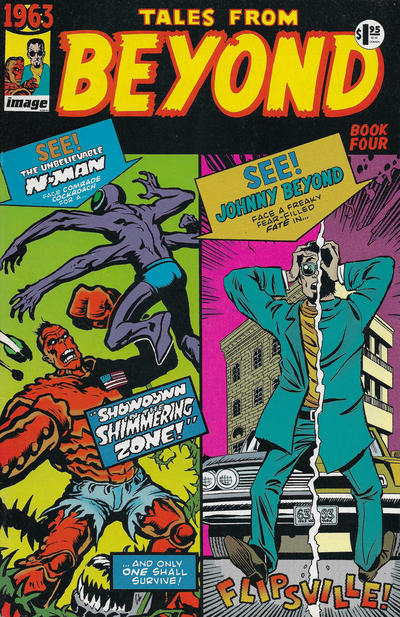
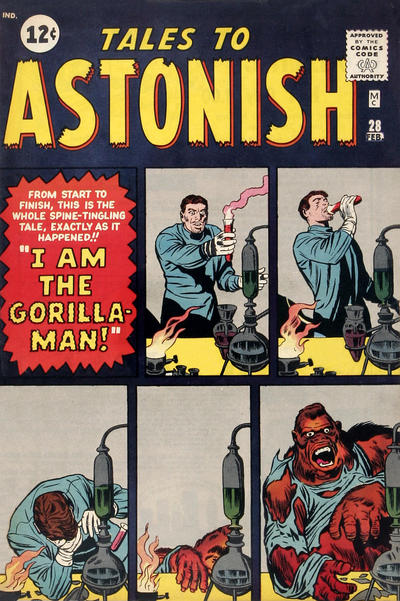
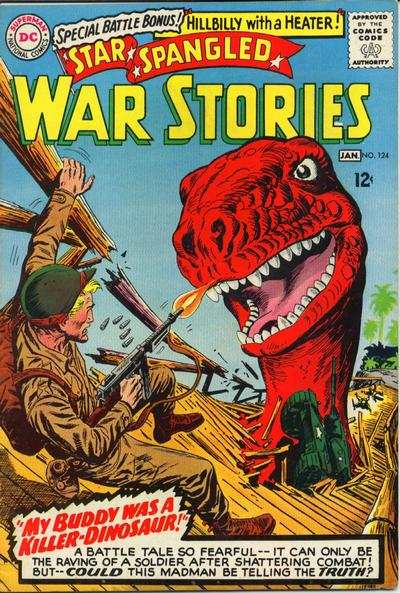
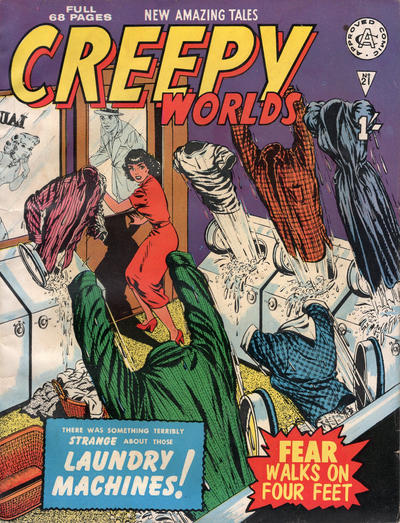
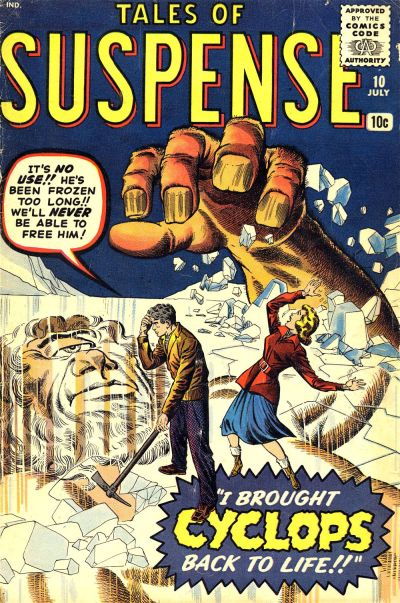
Lately I’ve been using the COMICS CAN BE AWESOME section to spotlight nifty covers, mostly of old, Cold War-era series, from war/horror hybrids to pulpy fantasy anthologies (usually with the words ‘weird,’ ‘strange,’ and/or ‘mystery’ in the title)… I’m not the only one who loves these, though. This week, let’s look at a set of modern pastiches that pay tribute to those Golden and Silver Age comic book covers in all their colorful, oddball glory.
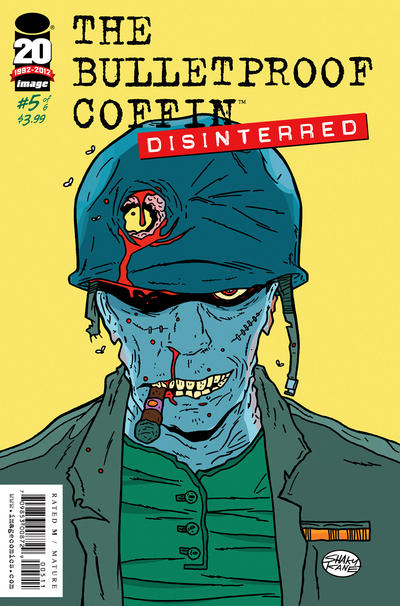
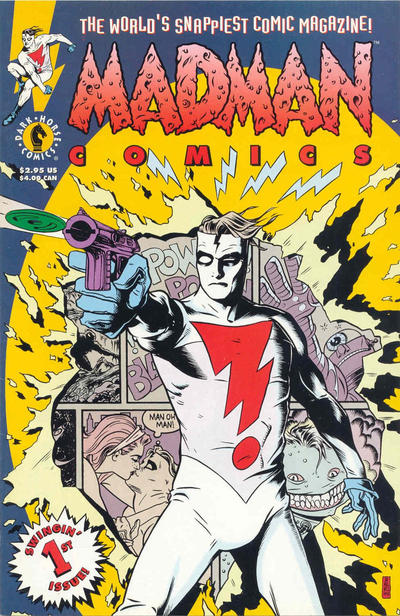
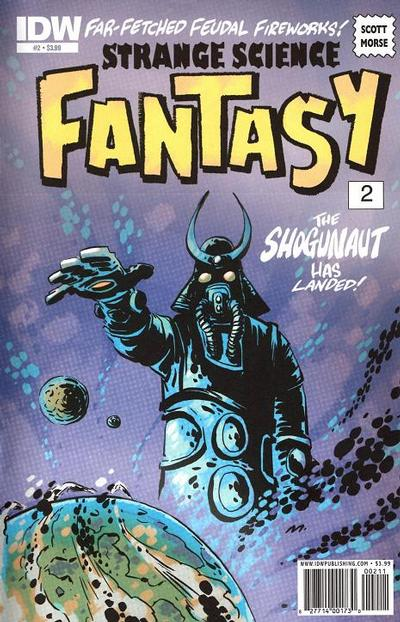
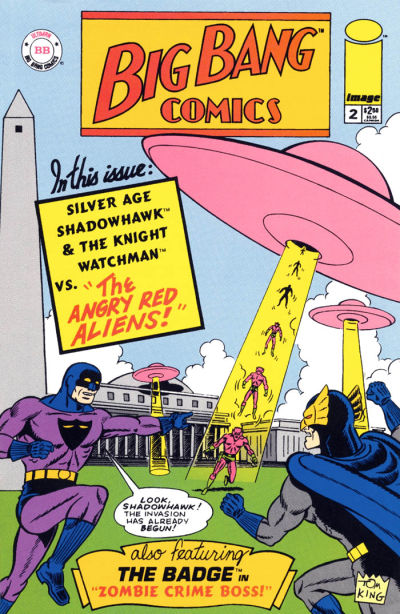
One of the greatest figures in comics since the late 1960s, Dennis J. O’Neil (affectionately known as Denny), passed away two days ago. Although he dabbled in all sorts of genres, his specialty as a writer were brazenly pulpy, two-fisted adventures, often with a social consciousness and a twinkle in the eye. You can find these in his memorable runs starring Doc Savage, The Question, The Shadow, Daredevil, and Green Arrow, among countless other charismatic heroes (hell, he even worked on Indiana Jones comics!). His legacy lives on, not least in the form of cool creations like Lady Shiva and Talia al Ghul.
Above all, Denny O’Neill wrote and later edited many of my favorite Batman stories. If it wasn’t for his work, this blog would probably not exist.
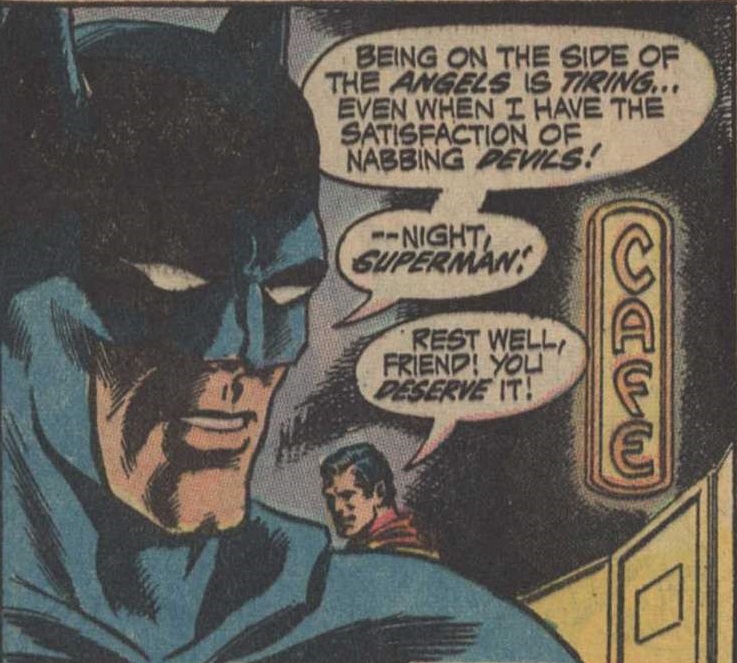 Superman #236
Because I also like books without pictures, this week let’s switch gears for a bit and look at a couple of very cool non-comics detective novels:
THE MASK OF DIMITRIOS
(Eric Ambler, 1939)
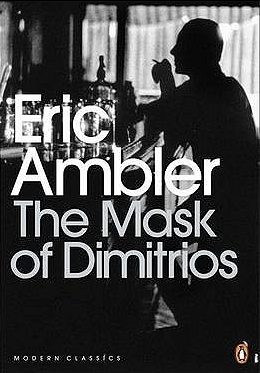
“A Frenchman named Chamfort, who should have known better, once said that chance was a nickname for Providence.
It is one of those convenient, question-begging aphorisms coined to discredit the unpleasant truth that chance plays an important, if not predominant, part in human affairs. Yet it was not entirely inexcusable. Inevitably, chance does occasionally operate with a sort of fumbling coherence readily mistakable for the workings of a self-conscious Providence.
The story of Dimitrios Makropoulos is an example of this.”
In The Mask of Dimitrios (published in the United States as A Coffin for Dimtrios), we follow the saga of Charles Latimer, a British lecturer in political economy and writer of detective stories who becomes obsessed with tracing the past of the recently deceased master criminal Dimitrios Makropoulos, chasing leads across Europe on the eve of World War II. The result is, at first sight, a tale about detection, with Latimer belonging to the tradition of amateur sleuths who bite off more than they can chew… Yes, it’s the classic motif of the genre author who faces the fact that things are much murkier than what he writes about (combined with the trope of the innocent abroad). Before the end of the book, Latimer has lost his naiveté and gained closer knowledge of heists, conspiracy, assassination, prostitution rings, drug dealers, conning, and blackmail – not to mention international finance!
This is a proper crime novel (with a bit of globetrotting adventure and espionage thrown in), typically fascinated with shady nightclubs and the overall seediness of the underworld, whose workings are often explained in great detail. The 1944 Hollywood adaptation lost much of the edge (because of the film industry’s censorship), but the fact that it had Jean Negulesco as director, Arthur Edeson as cinematographer, and the Peter Lorre-Sydney Greenstreet duo in the cast meant that at least they got the noirish atmosphere just right (this team went on to collaborate on The Conspirators and Three Strangers).
That said, The Mask of Dimitrios is not a hardboiled read – instead, a lot of it involves cultured men having lengthy, sophisticated conversations; and the violence doesn’t usually merit close descriptions (except for the grisly climax), leaving us to fill in the blanks. Eric Ambler’s prose has a light touch, being prone to wit and the occasional lyrical bursts. It’s more intellectual than visceral, even if there are plenty of gripping passages. This is how the narration conveys Latimer’s thoughts early on, when the Turkish Colonel Haki shows him Dimitrios’ corpse:
“So many years. Europe in labor had through its pain seen for an instant a new glory, and then had collapsed to welter again in the agonies of war and fear. Governments had risen and fallen; men and women had worked, had starved, had made speeches, had fought, had been tortured, had died. Hope had come and gone, a fugitive in the scented bosom of illusion. Men had learned to sniff the heady dreamstuff of the soul and wait impassively while the lathes turned the guns for their destruction. And through those years, Dimitrios had lived and breathed and come to terms with his strange gods. He had been a dangerous man. Now, in the loneliness of death, beside the squalid pile of clothes that was his estate, he was pitiable.”
This balancing act between the mundane and the grand scale of things is Ambler’s trademark. It’s also present in the way the story unfolds, with Charles Latimer (and us) only achieving disjointed glimpses of a wider network of strings being pulled off-page, reflecting how petty our perceptions can be when framed against the insurmountable scale and impenetrability of global affairs. (Moreover, like John le Carré after him, Ambler conveyed reality’s complex interconnectedness by building an intricate fictional world across his spy novels, suggesting that there is always a bigger picture… so Latimer shows up as a key supporting player in The Intercom Conspiracy, just as Colonel Haki reappears in Journey into Fear and is mentioned in The Light of Day.)
One of the best analysis of Ambler’s work, Michael Denning’s Cover Stories: Narrative and Ideology in the British Spy Thriller, describes his authorial voice in the book: ‘This cynical, detached narrator with his sometimes labored ironies and occasionally pretentious historical meditations is a mark of the Ambler metaphysic, the meshing of the formal and the ideological point of view. This historian sets the tale of Dimitrios against a matter-of-fact narrative of European history since the Great War; but he also delights in the role of chance and contingency, and in the grotesque, indeed melodramatic, confusion of levels it causes.’
As you can see, The Mask of Dimitrios is a richly multilayered tapestry. It explores classic dichotomies such as chaos vs divine order, conventional values vs moral relativism, and reality vs fiction (or, as one character puts it, ‘the difference between the stupid vulgarities of the real life and the ideal existence of the imagination’). And yet, at the same time, the book is deeply rooted in its historical context: it’s ultimately a treatment on the interwar period, the life of crime of this one individual placed in relation to the larger processes taking place in geopolitics and economics. This point is nailed through an amazing moment in the novel’s final stretch, when Latimer tries to come to grips with everything he has learned about Dimitrios along the way:
“But it was useless to try to explain him in terms of Good and Evil. They were no more than baroque abstractions. Good Business and Bad Business were the elements of the new theology. Dimitrios was not evil. He was logical and consistent; as logical and consistent in the European jungle as the poison gas called Lewisite and the shattered bodies of children killed in the bombardment of an open town. The logic of Michaelangelo’s David, Beethoven’s quartets and Einstein’s physics had been replaced by that of the Stock Exchange Year Book and Hitler’s Mein Kampf.”
THE WYCHERLY WOMAN
(Ross MacDonald, 1961)
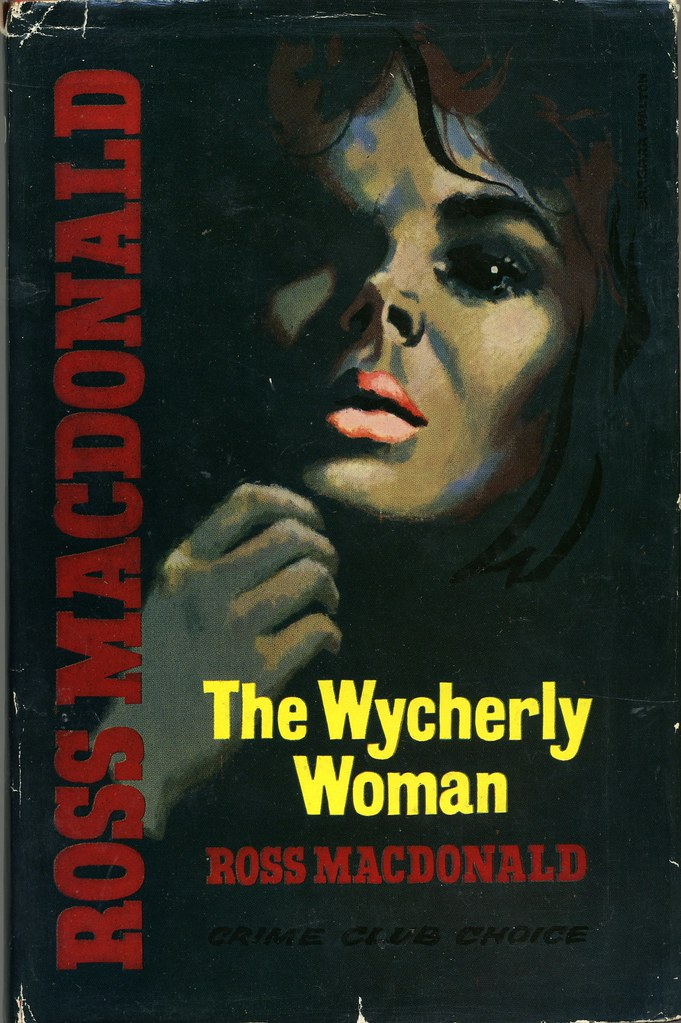
“Coming over the pass you can see the whole valley spread out below. On a clear morning, when it lies broad and colored under a white sky, with the mountains standing far back on either side, you can imagine it’s the promised land.
Maybe it is for a few. But for every air-conditioned ranchhouse with its swimming pool and private landing strip, there are dozens of tin-sided shacks and broken-down trailers where the lost tribes of the migrant workers live. And when you leave the irrigated areas you find yourself in gray desert where nobody lives at all. Only the oil derricks grow there, an abstract forest casting no shade. The steady pumps at their bases nod their heads like clockwork animals.”
A millionaire hires private investigator Lew Archer to find his missing daughter. Along the way, Archer finds blackmail, murder, and lurid family drama (we know from early on that we’re bound to get a Greek tragedy flavor because Archer’s client is called Homer). With their sardonic PI narrator, vivid descriptions of southern California, labyrinthine plots, and crackling dialogue, it’s tempting to label Ross MacDonald’s novels as Chandler-esque – not in the sense of a pale imitation or pastiche of Raymond Chandler’s writing, but as a proper successor, perfectly emulating the style of the Philip Marlowe series.
That said, while Ross MacDonald may not get too many points for originality, I think it’s a disservice to reduce his Lew Archer books to mere derivative fanfic. Not only did MacDonald master the art of the pithy internal monologue and the insightful turn of phrase (‘The night clerk looked at me the way night clerks were always looking at me, with dubiety tinged by the suspicion that the costumer might be right and I might be a costumer.’), he elevated it, refining the kind of believable characterization that suggests psychological depth and social awareness. Moreover, he was a chronicler of his own time, which means we get to see that type of gaze fall over an evolving American landscape…
“Boulder Beach College stood on the edge of the resort town that gave it its name, in a green belt between some housing tracts and the intractable sea. It was one of those sudden institutions of learning that had been springing up all over California to handle the products of the wartime population explosion. Its buildings were stone and glass, so geometric and so spanking new that they hadn’t begun to merge with the landscape. The palms and other plantings around them appeared artificial; they fluttered like ladies’ fans in the fresh breeze from the sea.
Even the young people sitting around on the grass or sauntering with their books from building to building, didn’t look indigenous to me. They looked like extras assembled on a set for a college musical with a peasant subplot.”
I admit this is comfort food for me. Overall, The Wycherly Woman doesn’t provide anything I can’t find elsewhere – the plot twists, the dodgy witnesses, the seedy joints, the rich men, the sad women, the broken dreams, the mistaken identities, the unexpected dead body halfway through, the shady secrets underneath the upper-class veneer, and that moment when the detective gets knocked out and the narration fades to black. There are plenty of surprises within the story, but the story itself is not surprising, staying comfortably within the bounds of the genre. Unlike what I told you about The Mask of Dimitrios, don’t expect any larger statement about metaphysics or geopolitics here, just a solid mystery yarn.
Yet this is my platonic ideal of that formula. The intrigue is tortuous, but the storytelling is crystal clear, even as it keeps throwing new lively characters and revelations at the reader, one after the other. And on top of the fun of putting the various puzzle pieces together in your head while trying to keep up with Lew Archer’s investigation, the world-weary prose is pure delight (‘I watched her the way you watch an old late movie that you’ve seen before.’). In particular, although some of the cast can be quite melancholic and things get pretty dark at times, the dialogue is constantly snappy, oozing with wit and subtext.
Seriously, I just can’t get enough of conversations like this one:
““I’m Miss Smith.”
“Not married?”
“No. Are you?”
“I was at one time. It didn’t take.”
“I know the problem,” she said. “I’ve lived with it. Call it living. What do you do for a living?”
“I sort of live off the country.”
”I don’t get it. What do you really do? No, wait, let me guess. I’m good at guessing people’s occupations.” She sounded like a bored child looking for a game to play.
“Go ahead and guess.”
Her gaze slipped down from my face to my shoulders, as if she was looking for a place to cry on. Tentatively, her hand came out and palped my left bicep. She had pretty hands, except for the tips of her fingers, which had been bitten.
“Are you a professional athlete? You seem to be in very good trim, for a middle-aged man.”
It was a mixed compliment.
“Wrong. I’ll give you two more guesses.”
“What do I win if I guess right?”
“I’ll carve you a plaque.”
“Oh, fine. I need one for my grave.””
One of the reasons this section of the blog went weekly a couple of months ago was as a way to encourage those who could to stay at home in order to help contain the covid-19 pandemic. Now is the time get out again – not to consume, but to protest and demand.
I will continue to post about comics and assorted areas of pop culture for the foreseeable future. Those works can serve as a relaxing distraction, as an emotional catharsis, or even as a gateway to explore and express contradictory ideas about all sorts of issues (this is particularly true with regard to superhero stories). However, like with the folks at one of my favorite podcasts, it is the position of Gotham Calling that supporting escapist entertainment doesn’t preclude actively engaging with the world beyond it, especially when it comes to battling racism and police brutality (two core themes of genre fiction, for better or worse).
With that in mind, at a time of general health, social, political, and economic crisis (including the threat of collapse of much of the comic book industry and distribution system), here is a reminder that comics can be awesome…
 Batman #440
As promised a couple of weeks ago, here is the second installment of my recommended reading order for the various Gotham City-based comics of the 1990s, which tended to play particularly well off each other.
What follows is not a comprehensive list of all the Batman-related material from this period, but an attempt to map the core narrative into a satisfying sequence that enables new readers to navigate this era’s intricate tapestry. I left out some specials that don’t quite fit in as well as the Adventures line and Elseworlds tales, because those are clearly set in alternate continuities and can therefore be read independently of the main series. I also left out the Gotham cast’s appearances in other DC superhero titles, because I had to draw the line somewhere.
In any case, you certainly don’t have to go through the whole thing – or even most of it! – to understand each individual comic. It’s just that, even if you skip large chunks of this, you’re bound to appreciate the larger saga more fully by at least following the general order.
TIM DRAKE’S PROBATION (1990-1991) [This era is still quite scattered in terms of talent and continuity, but you can see things gradually taking shape. If the late ‘80s was the dark era when Robin (traditionally one of the most colorful aspects of Batman’s world) was brutally murdered, in the early ‘90s we gradually enter a new phase, with the main through-line being Batman’s hesitant partnership with a young, well-adjusted Tim Drake who eventually becomes the third Robin (thus restoring some of the series’ lighthearted tone). The bulk of it was done by either the duo of Marv Wolfman & Jim Aparo or the duo of Alan Grant & Norm Breyfogle, with the latter’s work being substantially more exciting. This phase also includes Peter Milligan’s first handful of cult-worthy contributions to the franchise.]
Batman #436-439: ‘Batman: Year 3’ (collected in The Caped Crusader, v2 and Tales of the Batman: Marv Wolfman, v1) [Alternates between flashbacks of Dick Grayson’s origin and the present time. Includes a small Tim Drake cameo.]
Batman #440-442/The New Titans #60-61: ‘A Lonely Place of Dying’ (collected in A Lonely Place of Dying and A Death in the Family (2009 edition)) [Properly introduces Tim Drake.]
Batman #443: ‘The Coming of Crimesmith’ (collected in The Caped Crusader, v2)
Batman #444: ‘Crimesmith and Punishment’ (collected in The Caped Crusader, v2)
Batman #445-447: ‘When the Earth Dies’ (collected in The Caped Crusader, v3) [Sequel to ‘Ten Nights of the Beast’ (#417-420).]
Detective Comics #612: ‘Cats’ (collected in Legends of the Dark Knight: Norm Breyfogle, v2)
Detective Comics #613: ‘Trashed’ (collected in Legends of the Dark Knight: Norm Breyfogle, v2)
Detective Comics #614: ‘Street Demonz’ (collected in Legends of the Dark Knight: Norm Breyfogle, v2)
Batman #448-449/Detective Comics #615: ‘The Penguin Affair’ (collected in The Caped Crusader, v3) [Harold Allnut, first seen in The Question #33, arrives in Gotham City.]
Detective Comics #616: ‘Stone Killer’ (collected in Legends of the Dark Knight: Norm Breyfogle, v2) [Batman suspects the Joker – whom he last saw in ‘A Death in the Family’ (Batman #426-429) – is still alive.]
Batman #450: ‘Wildcard’ (collected in The Caped Crusader, v3) [The Joker returns.]
Detective Comics #617: ‘A Clash of Symbols’ (collected in Legends of the Dark Knight: Norm Breyfogle, v2)
Batman #451: ‘Judgements’ (collected in The Caped Crusader, v3)
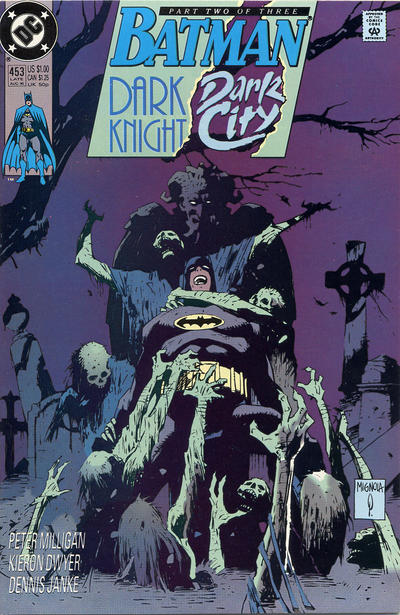
Batman #452-454: ‘Dark Knight, Dark City’ (collected in Dark Knight, Dark City and The Caped Crusader, v3)
Bride of the Demon (collected in Batman: Birth of the Demon) [Mike Barr followed Son of the Demon with another Ra’s al Ghul epic, this one firmly set during Tim Drake’s probation era.]
World’s Finest #1-3 (collected as World’s Finest) [In this beautiful mini-series by Dave Gibbons and Steve Rude, the Joker is definitely back.]
Detective Comics #618-621: ‘Rite of Passage’ (collected in Robin: Tragedy and Triumph, Legends of the Dark Knight: Norm Breyfogle, v2, and Robin, v1: Reborn)
Batman #455-457: ‘Identity Crisis’ (collected in Robin: A Hero Reborn, Legends of the Dark Knight: Norm Breyfogle, v2, and Robin, v1: Reborn) [Alan Grant and Norm Breyfogle transition from Detective Comics to Batman, picking up where the ‘Rite of Passage’ arc left off. It finishes with Tim Drake donning the Robin suit. (Tim will be training abroad for the next months, hence his absence from Batman’s adventures.)]
Detective Comics #622-624: ‘Dark Genesis/Death of Innocence/Bitter Victory’ [This fill-in arc by John Ostrander, Flint Henry, and Mike McKone is definitely worth tracking down, but it doesn’t relate to the main saga and it doesn’t necessarily have to be read here.]
Detective Comics #625: ‘Abattoir’ [Marv Wolfman and Jim Aparo transition from Batman to Detective Comics, effectively switching the titles’ creative teams. This tale is set during the campaign for a mayoral election in Gotham City.]
Batman #458: ‘Night Monsters’ (collected in Legends of the Dark Knight: Norm Breyfogle, v2) [Sergeant Sarah Essen, from ‘Batman: Year One,’ returns to Gotham. Plus, Harold moves into the Batcave.]
Batman #459: ‘Saturday Night at the Movies’ (collected in Legends of the Dark Knight: Norm Breyfogle, v2) [Commissioner Gordon has a heart attack.]
Detective Comics #626: ‘Return to the Electrocutioner’
Detective Comics #627: ‘The Case of the Chemical Syndicate’ [Various versions of Batman’s first published adventure, as discussed here. The version by Wolfman and Aparo is the best fit for this continuity – in the one by Grant and Breyfogle, Commissioner Gordon is not hospitalized.]
Batman #460-461: ‘Sisters in Arms’
Detective Comics #628: ‘Hearts’
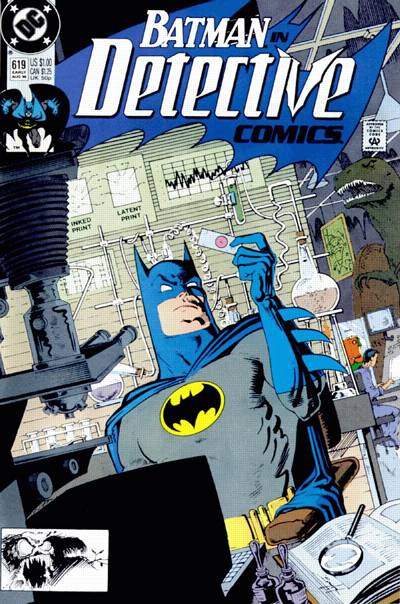
Detective Comics #629: ‘The Hungry Grass’ (collected in Dark Knight, Dark City) [Peter Milligan becomes Detective Comics’ regular writer. Hooray!]
Detective Comics #630: ‘And the Executioner Wore Stiletto Heels’ (collected in Dark Knight, Dark City)
Detective Comics #631-632: ‘The Golem of Gotham’ (collected in Dark Knight, Dark City)
Catwoman: Defiant [This graphic novel doesn’t have to come here, necessarily, but since it’s written by Milligan you may as well read it together with the rest of his run.]
Batman #462-464: ‘Spirit of the Beast’
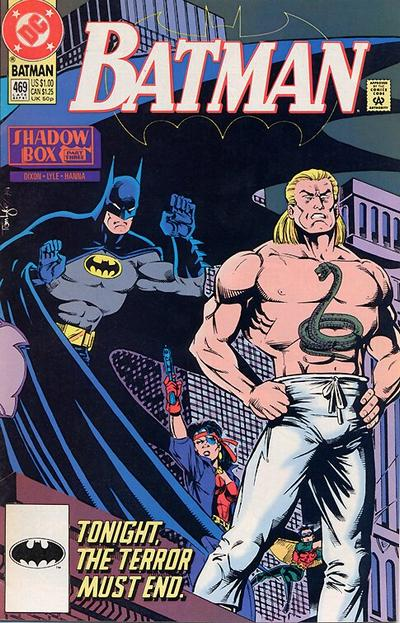
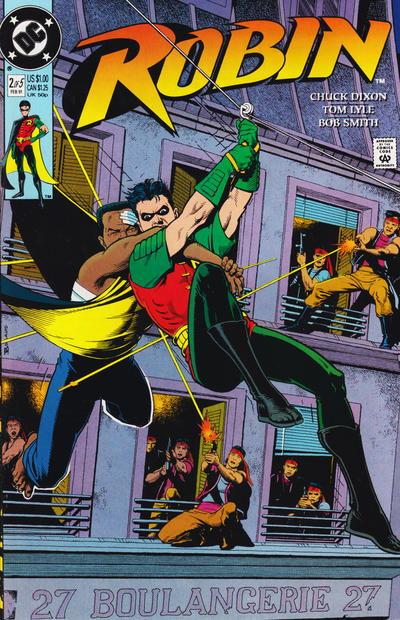
THE THIRD ROBIN’S DEBUT (1991-1992) [As much as I love Batman’s solo stories, the overall mood really picked up once we got a regular Robin again, with this new Dynamic Duo making for a particularly engaging team (or perhaps it was the general sense of post-Cold War optimism, as if a burden had just been lifted…). Hell, there is even a case to be made (on some other post) that Tim Drake was the true star of the franchise throughout the ‘90s, not only because he provided the heart of most stories, but also because – unlike Batman – we got to see him grow and evolve.]
Robin #1-5 (collected in Robin: A Hero Reborn and Robin, v1: Reborn) [The first mini-series starring Robin (by Chuck Dixon and Tom Lyle) picks up immediately after Batman #457 and follows Tim Drake’s training abroad.]
Batman #465: ‘Debut’ (collected in Robin, v2: Triumphant) [Following his return to Gotham City in Robin #5, Tim Drake makes his official debut as the Dark Knight’s costumed partner.]
Batman #466: ‘No More Heroes’
Detective Comics #633: ‘Identity Crisis’ (collected in Dark Knight, Dark City and Batman: A Celebration of 75 Years)
Batman #467-469: ‘Shadow Box’ (collected in Robin, v2: Triumphant) [Dixon and Lyle provide a sequel to the first Robin mini-series.]
Detective Comics #634: ‘The Third Man’ [Fill-in by Kelly Puckett and Luke McDonnell, with no connection to the main saga. Puckett’s humorous mystery – in which Batman meets the Biddee sisters, a couple of elderly amateur detectives – must have left a good impression, because he was then hired to be the main writer of The Batman Adventures (where the sisters had a cameo).]
Detective Comics #635-637: ‘Mind Games/Mind Control/Control Freak’ [Guest-creative team: Louise Simonson and Jim Fern]
Batman #470: ‘Of Gods and Men’ [Part of the larger DC crossover War of the Gods]
Batman Annual #15: ‘The Last Batman Story’ [Part of the larger DC crossover Armageddon 2001, whose story about a superhuman who could see possible futures served as a pretext to imagine alternative endings for Batman’s saga]
Detective Comics Annual #4: ‘Succession’ [Also part of Armageddon 2001, an epic tale by Louise Simonson and Tom Grindberg]
Detective Comics #638: ‘The Bomb’
Batman #471: ‘Requiem for a Killer’ (collected in Arkham: Killer Croc)
Batman #472-473/Detective Comics #639-640: ‘The Idiot’
Robin II: The Joker’s Wild! #1-4 (collected in Robin: Tragedy and Triumph and Robin, v2: Triumphant) [Tim Drake’s first confrontation with the Joker takes place during ‘The Idiot,’ while Batman is away in Brazil.]
Batman #474/Legends of the Dark Knight #27/Detective Comics #641: ‘The Destroyer’ [Gotham City’s architecture is reconfigured – within the story! – to match Anton Furst’s designs for Tim Burton’s Batman movie.]
Batman #475-476/Detective Comics #642: ‘The Return of Scarface’
Detective Comics #643: ‘The Library of Souls’
Batman #477-478: ‘A Gotham Tale’ [This fill-in by 2000 AD alumni John Wagner and Cam Kennedy has no relation to the main saga, but it is one of the decade’s great gothic comics.]
Batman #479: ‘Pagan’
Batman #480: ‘To the Father I Never Knew’
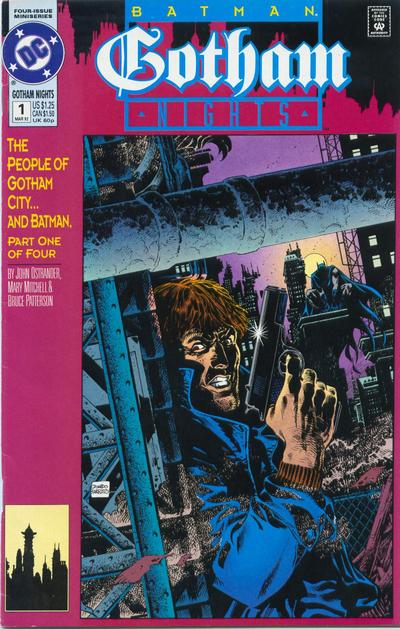
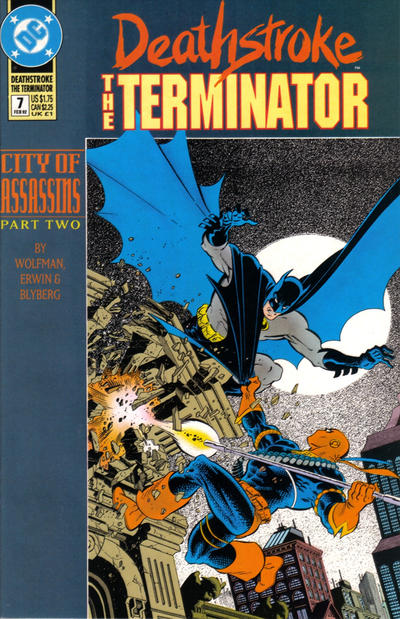
LOOSE STORIES [A handful of specials and related comics that don’t have to be read in any particular order, but which take place around this time…]
Gotham Nights #1-4
Batman: Seduction of the Gun
Batman/Green Arrow: The Poison Tomorrow
Legends of the Dark Knight Annual #1: ‘Duel’
Batman: Two-Face Strikes Twice! #1-2 [Half of this story is a flashback featuring the original Dynamic Duo (back when Dick Grayson was the Boy Wonder) and done in the style of a Golden Age pastiche, but the other half is a modern-day adventure set early in Tim Drake’s career as Robin.]
Deathstroke, the Terminator #6-9: ‘City of Assassins’ (collected in Deathstroke, the Terminator, v1: Assassins) [A Gotham-set arc (written by Marv Wolfmam) in which the titular mercenary fights the Dark Knight]
Detective Comics Annual #5: ‘Acts of Madness’ [Like the two annuals below, this issue is part of the larger DC crossover Eclipso: The Darkness Within]
Robin Annual #1: ‘The Anarky Ultimatum’ (collected in Robin, v3: Solo)
Batman Annual #6: ‘By Darkness Possessed’
The Question Quarterly #1-5 [If, like me, you believe Dennis O’Neil’s and Denys Cowan’s stint on The Question feels like a close relative of the Batman family of books, you may as well read these quarterly issues from the early ’90s, which wrap up their run. Meanwhile, Green Arrow Annual #3 (written by O’Neil) bridges the gap in the story between the early series and this new format. Fans can then follow the Question’s further adventures in 1991-1992’s mini-series The Brave and the Bold (written by Mike Grell and Mike Baron).]
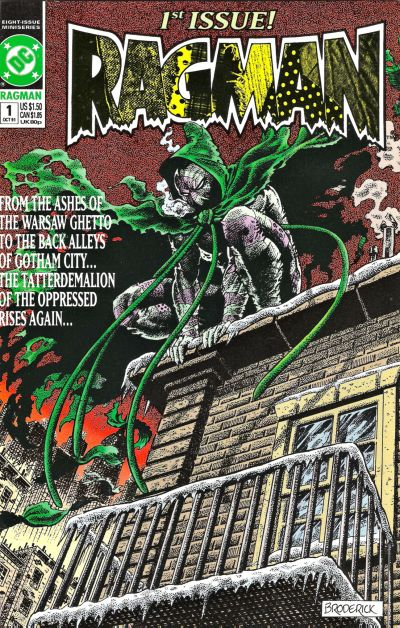
Ragman (v2) #1-8 [It is also worth noting that Keith Giffen’s and Pat Broderick’s remarkable reboot of the titular Jewish superhero (published in 1991-1992) is set in Gotham, with the obligatory Batman guest-appearances. It was followed by Elaine Lee’s and Gabriel Morrissette’s mini-series Ragman: Cry of the Dead, which shifted the action to New Orleans. Batman and Ragman then teamed up in Legends of the Dark Knight #51.]
Demon (v3) #1-39 + Annual #1 [Even though the core narrative (not to mention its surreal fantasy/comedy tone) of Alan Grant’s and Val Semeiks’s run on Demon has little to do with the Batman family of books, I should point out that this series is largely set in Gotham and it occasionally features appearances by the Caped Crusader and his supporting cast. By and large, the series can be read independently, although bear in mind that the delirious arc ‘Apocolypse Now!’ (#9-15) brings back the ancient reptilian being C’th, from Detective Comics #616. The following arc, ‘The Region Beyond’ (#16-20), ties into the War of the Gods crossover. Annual #1 (set after issue #25) ties into the Eclipso: The Darkness Within crossover. Issue #22 (‘Witch War’) and the satirical arc ‘Political Asylum!’ (#26-29) are fill-ins written by Matt Wagner and Dwayne McDuffie, respectively. The final ten issues (when the series goes completely off the rails into goofy slapstick) are illustrated by Rich Hedden.]
PRE-KNIGHTFALL ERA (late 1992) [This is when the franchise hit a particular groove (which it kept for most of the decade), with Doug Moench writing Batman, Chuck Dixon on Detective Comics, and Alan Grant on Shadow of the Bat. Although they were still telling separate stories, these comics deliberately set the stage for the upcoming Knightfall crossover.]
Batman #481-482: ‘Messenger of Zeus/Vengeance of the Harpy’ [Introduces the physiotherapist Shonra Kinsolving, who will play an important role in Knightfall.]
Detective Comics #644-646: ‘Electric City’
Detective Comics #647-649: ‘Inquiring Minds/Let the Puzzlement Fit the Crime/Malled’ [This arc – which among other things introduces the despicable mayoral candidate Armand Krol – is one of my all-time favorite Batman adventures.]
Detective Comics #650: ‘The Dragon’
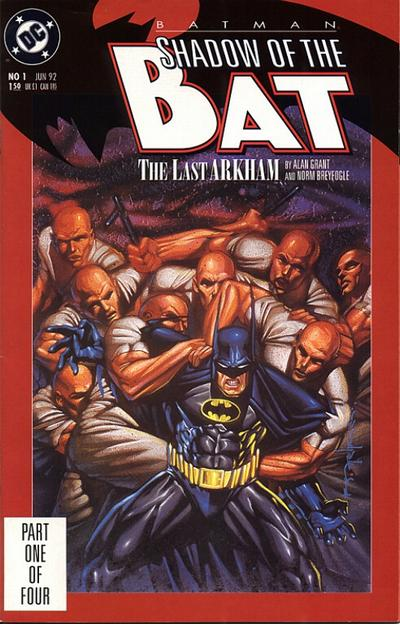
Shadow of the Bat #1-4: ‘The Last Arkham’ (collected in The Last Arkham, Shadow of the Bat, v1, and Arkham: Victor Zsasz) [Introduces Jeremiah Arkham, who redesigns and reorganizes Arkham Asylum.]
Batman #483: ‘Crash & Burn: A Love Story’
Detective Comics #651: ‘A Bullet for Bullock’
Detective Comics #652-653: ‘Beyond the Law!/The Serpent Pit’ [Helena Bertinelli (aka the Huntress) moves to Gotham City.]
Shadow of the Bat #5: ‘The Black Spider’ (collected in Shadow of the Bat, v1)
Shadow of the Bat #6: ‘The Ugly American’ (collected in Shadow of the Bat, v1)
Batman #484-485: ‘Warpaint/Faces of Death’ (collected in Knightfall Omnibus, v1 (2017 edition), Prelude to Knightfall, and Arkham: Black Mask)
Legends of the Dark Knight Annual #2: ‘Vows’ [Heavily set against the background of the upcoming Gotham election.]
Batman #486-487: ‘Heavy Metalhead/Box of Blood’ (collected in Knightfall Omnibus, v1 (2017 edition) and Prelude to Knightfall) [Batman shows the first clear signs of burn-out.]
Shadow of the Bat #7-9: ‘The Misfits’ (collected in Shadow of the Bat, v1) [Armand Krol is now Gotham’s mayor.]
Robin III: Cry of the Huntress #1-6 (collected in Robin, v2: Triumphant)
Shadow of the Bat #10: ‘The Thane of Gotham’ (collected in Shadow of the Bat, v1)
Shadow of the Bat #11-12: ‘The Human Flea’ (collected in Shadow of the Bat, v1)
Shadow of the Bat #13: ‘The Nobody’ (collected in Shadow of the Bat, v2)
Shadow of the Bat #14-15: ‘Freaks’(collected in Shadow of the Bat, v2)
Among the outrage and chaos, your heart-pumping reminder that comics can be awesome: