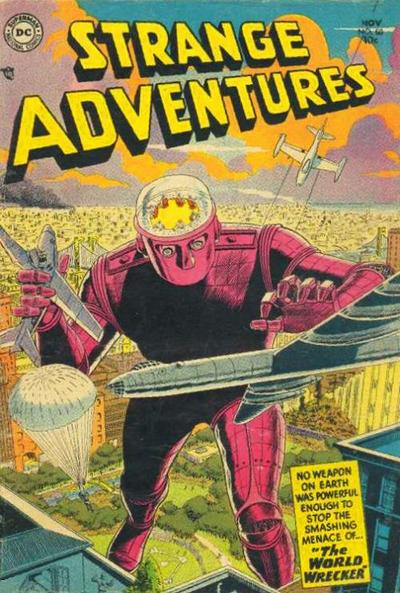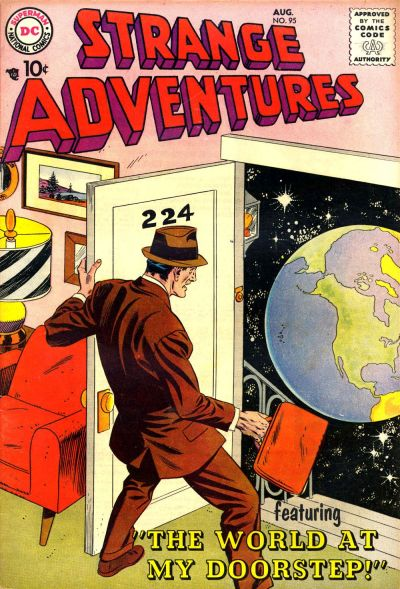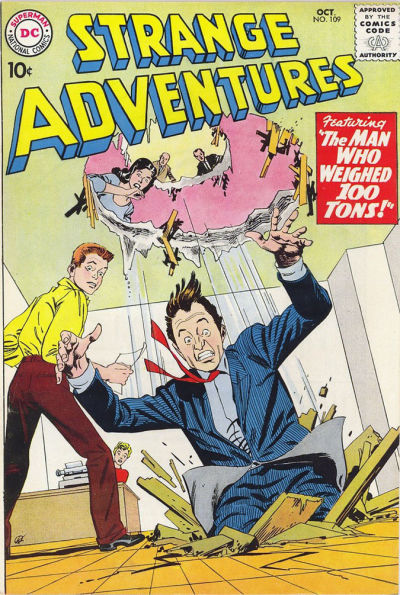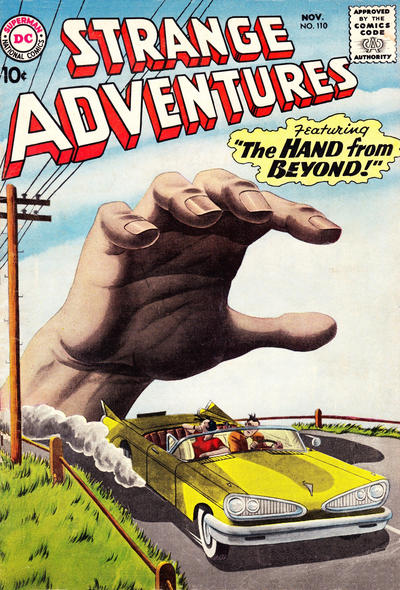
COMICS CAN BE AWESOME (1 June 2020)

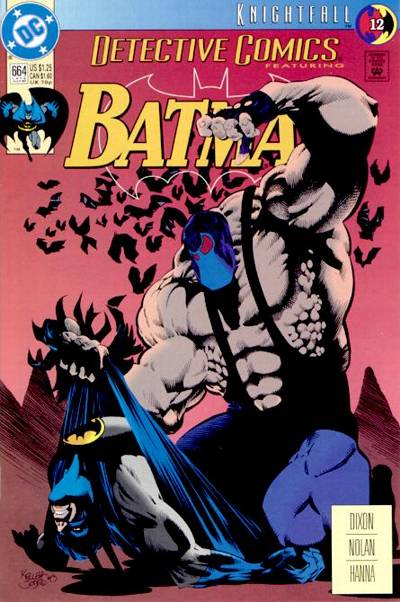
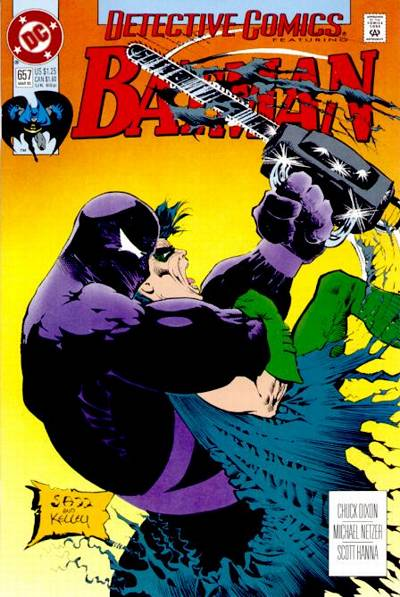
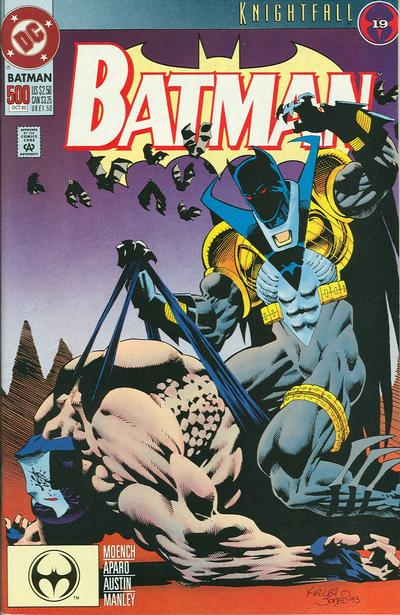
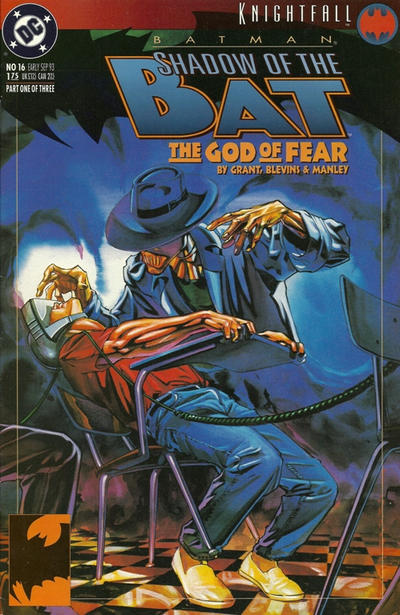
Among the outrage and chaos, your heart-pumping reminder that comics can be awesome:

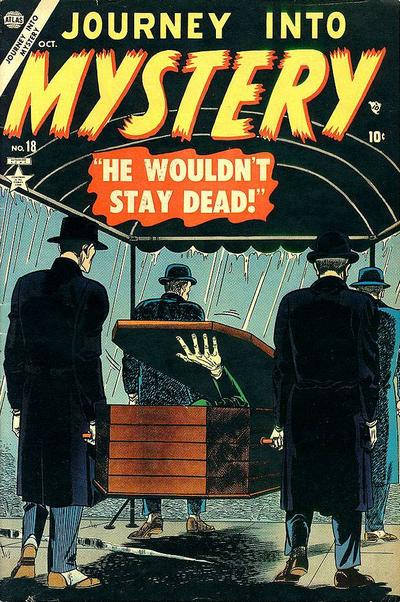
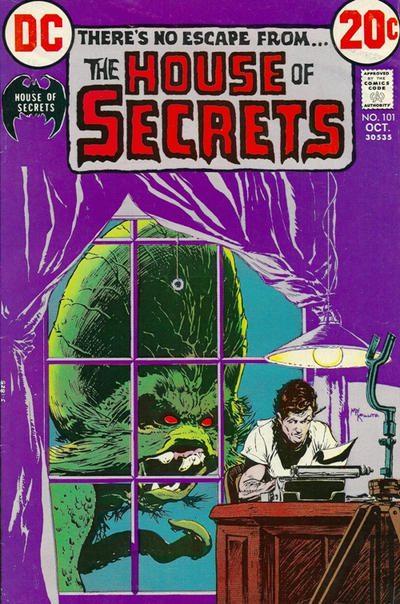
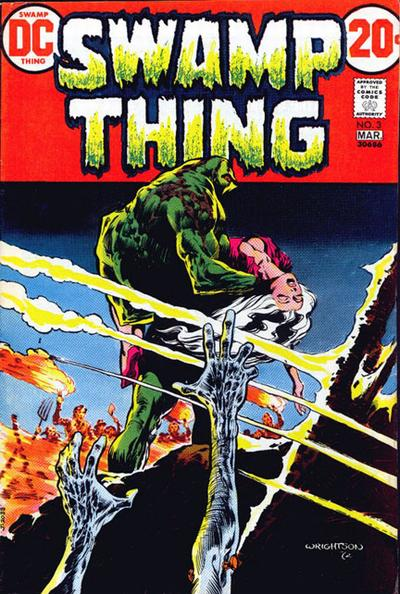
CreepyJourney into Unknown WorldsDoc SavageRocketeer Cargo of DoomWeird Fantasy

Posted in AWESOME COVERS | Tagged , , , , , , , , , , , , , , , | Leave a comment

Two-fisted fantasy comics

Black Hawk Intergalactic Gladiator Savage Tales Archer and Armstrong

Lately I’ve been writing mostly about sci-fi for this section of the blog, so I think it’s time to shift our attention to another great adventure genre: fantasy. Fantasy is one of those umbrella genres that covers a massive spectrum of stories, from kid-friendly escapades to highbrow magic realism. Since it can essentially be applied to all sorts of narratives where the physically impossible occurs, fantasy also easily lends itself to expansion and hybridization with other genres, especially with those that revolve around generous leaps of imagination, like supernatural horror and science fiction set in the far-off future or other planets.

One of my favorite types involves fantasy’s crossbreeding with two-fisted adventure, creating counterintuitive settings and rules and then unleashing chaos upon them. If you share my passion, here are some comics for you:


SAVAGE TALES

(the original series)

Savage Tales #4Savage Tales #4Savage Tales #4

Savage Tales was originally an anthology published by Marvel in the ‘70s packed with over-the-top violence involving monstrous creatures, voluptuous women, and scantily-clad, ultra-muscled anti-heroes. Published in black & white, with more adult-oriented material (i.e. gore and nudity) than Marvel’s regular titles, it was part of the company’s effort to circumvent censorship by putting out magazines whose format was technically not covered by the Comics Code Authority (following the lead of Warren’s horror mags Eerie and Creepy). The first issue came out in May 1971, but clearly the publisher wasn’t yet ready to commit to something this bold – it took a hiatus of over two years (including a change in management and a sword & sorcery boom) before Savage Tales resumed publication, with the second issue coming out in October 1973 and then carrying on with a bimonthly schedule until July 1975. The eleven issues that did come out, though, are a great entry point into the fantasy subgenre I mentioned. Directly inspired by the writings of Robert E. Howard, in this comic you’ll find the pure version of all the classic tropes (the ones Terry Pratchett later spoofed in Sourcery, here played dead straight).

The most acclaimed strip of the series, Roy Thomas’ Conan the Barbarian, is pretty much my platonic ideal of what a sword & sorcery comic looks like. These adaptations of Howard’s ‘The Frost Giant’s Daughter,’ ‘Red Nails,’ and ‘The Dark Man’ – plus a couple of original tales – follow the famous warrior of the Hyborian Age (a fictional era before the beginning of recorded ancient history) as he slaughters giants, saves a gorgeous woman from ritual sacrifice, battles a powerful wizard, and temporarily becomes the sex slave of a capricious queen. Conjuring the feel of half-remembered legends, complete with puzzling mythologies and uncomfortably distant moral standards (especially when it comes to sexual politics), these vicious yarns do not shy away from the notion that Conan is a cunning, instinct-driven pile of condensed testosterone. Besides the protagonist’s panther-like characterization (to use the narrator’s favorite description), a big part of the appeal is the setting itself – not just Barry Windsor-Smith’s, Gil Kane’s, and Jim Starlin’s staggering renditions of the majestic Nordic landscapes, detailed garments, and faux-period architecture, but also the nonchalant way Thomas’ poetic narration and dialogue bring up odd tribes and religions without properly introducing them to readers (which, ironically, makes us feel more complicit with this world, as if it’s a given that we share these references).

Also worthy of note, there were a few cool stories starring the similar Brak the Barbarian, including one scripted by the hero’s original creator, John Jakes, and a two-parter adapted by Doug Moench, whose own flair for purple prose made him an easy fit for the material (‘The night fills with the remote beat of timbrels, the distant clap of hands, the muted shriek of laughing… and the close slap of small feet stamping fog-smothered cobbles… And Brak stands in the midst of it all, cursing the perversity of a city which forces a man to battle children…’).

The other main feature was Ka-Zar, about the Tarzan-like exploits of the titular jungle lord – and his faithful sabretooth tiger – in the Savage Land (Marvel’s hidden territory where dinosaurs still roam). Although not as smart as Mark Waid’s work with the character in the late ‘90s, there was an appealing rawness to the Ka-Zar strip. Scripted by Stan Lee and Gerry Conway, these were unabashed pulp comics where the exaggerated luridness was part of the fun. The key attraction, though, was John Buscema’s – and later Steve Gan’s – stylish art, especially their ability to pull off pulse-pounding action scenes:

Savage Tales #1Savage Tales #1Savage Tales #1

For the most part, Savage Tales had an old-school epic adventure vibe, with the kind of outdated exoticism and earnestness that you could also find in some movies of the previous years (Duccio Tessari’s Secret of the Sphinx or Robert Day’s She), in contrast to the tongue-in-cheek attitude of the later Indiana Jones franchise…

Besides the running strips, the magazine had text pieces, loose short stories, and ‘pilots’ for new concepts. Most notably, the horror character Man-Thing made his debut here before getting his own fascinating series. In turn, Black Brother, a riff on blaxploitation penned by Denny O’Neil (under a pseudonym) – about a badass African politician fighting against neocolonialism! – was never heard from again. Among the short stories, highlights include Len Wein’s and Steve Gan’s amusing ‘Dragonseed’ (starring the aptly named Marok the Merciless), Archie Goodwin’s and Russ Heath’s harsh ‘Intruder!’ (about a Vietnam veteran who stumbles into the Savage Land… and feels disturbingly at home), and Roy Thomas’ and Bernie Wrightson’s haunting adaptation of Howard’s ‘The Skull of Silence.’

To be sure, not all of it has aged smoothly. For one thing, there is a clear leitmotif about affirmative masculinity, perhaps in response to the rise of the women’s rights movement at the time. The campiest expression of this is Stan Lee’s and John Romita’s Femizons, a bizarre Wonder Woman knock-off set in a 23rd century dystopia ruled by women (who own male slaves and reproduce via sperm supplies held in the Temple of Genetics) under the suggestive moto ‘Sexuality! Solidarity! Superiority!’ The result is a cross between a preposterous parody of second wave feminism and an adolescent wet fantasy, not least because of Romita’s cheesecake artwork. (Rather than feel embarrassed by the whole thing, however, editor Roy Thomas actually let Gerry Conway bring the concept back a few years later, on the pages of Fantastic Four #151.)

BLACK HAWK

2000 AD #1302000 AD #130

One of the most interesting aspects of Black Hawk is that it didn’t begin as an outright sci-fi/fantasy comic (although there was an ambiguous supernatural element from the start in the form of a hawk who kept helping the series’ hero). Created by Gerry Finley-Day and Alfonso Azpiri for a British anthology comic called Tornado back in the late 1970s, the series was initially set in the first century A.D. and it followed the exploits of the titular ex-slave-turned-Roman-centurion and his ragtag army of cut-throats, thieves, and lepers.

Black Hawk was a captivatingly brutal adventure yarn, even if it now seems somewhat awkward to have the narration obsessively describe the protagonist as Nubian (which, admittedly, is an important feature of the story). Because Black Hawk’s superiors loathed him, they kept sending him on suicide missions against the Roman Empire’s enemies in Germany, Judea, and Britain, so the hero had to constantly improvise and outsmart his adversaries while also keeping an eye on the untrustworthy auxiliary soldiers he commanded. Finley-Day and Azpiri were a solid team, providing at least one impressive set piece in each installment. And although Black Hawk’s peculiar loyalty to Rome wasn’t fully explored, he was certainly an honorable, charismatic hero, his ambiguous motivations making him especially intriguing.

After more than a dozen installments of ancient battles and historical cameos, however, once the series had firmly found its feet, Black Hawk was suddenly thrown into a whole new direction as the titular warrior was captured by aliens and forced to fight in an off-world arena! The radical genre shift from gripping period piece to bizarre planetary romance was caused by Tornado’s cancelation, in mid-1979. Editorial Assistant Alan Grant agreed to incorporate Black Hawk – one of Tornado’s most popular strips – into the cyberpunk magazine 2000 AD (owned by the same company), taking over writing duties alongside Kelvin Gosnell and signing with an amalgamation of their names: Alvin Gaunt. Given the improvised background of this move – and unlike what happens in Mike Grell’s similarly structured Starslayer – the stories from the Roman era never feel quite like a set-up for what’s to come (if anything, they feel like the set-up for a saga that never took place).

On top of this, the art changed as well, with Italian veteran Massimo Belardinelli replacing Azpiri’s dirty, cluttered Roman Empire with smoother spacescapes, neatly designed technology, and many, many weird-looking aliens. Belardinelli’s penchant for drawing smoky visuals and surreal creatures fit perfectly well with Grant’s throw-everything-at-the-wall style of storytelling (at one point, Black Hawk and his fellow gladiators are attacked by space pirates and escape into a black hole where they have to fight an evil genie!), not to mention his notorious sense of humor…

2000 AD #1332000 AD #133

While the shift in premise and creative team was no doubt preposterous and ultimately cynical, if you read the comic in one sitting (for example, in 2011’s collected edition), there is still a curious thematic identity. The early stories were all about racism and imperial domination: even though Black Hawk joined the Roman army and fought its (also racialized) opponents, he continued to be discriminated because of his ethnicity. Moreover, his willingness to see people beyond the surface often got Black Hawk out of trouble, as he recruited handicapped soldiers who proved their worth in combat (in turn, the one time he accepted two men based on the fact that they shared his skin color, things didn’t work out so well). Despite the change of setting, the later stories kept the focus on race and slavery (the series’ logo continued to feature a metal chain) while cleverly recontextualizing it. Conveying how relative the concept of ‘race’ is, in outer space Black Hawk was no longer discriminated for being African, but for being human.

In both cases, the only way Black Hawk could earn his captors’ begrudging respect was by excelling at physical violence, essentializing him as a kind of savage. Yet, for the most part (i.e. except for the wild storyline in which a creature sucks his soul), he remains willing to bond with the strangest monsters and respect even the most outlandish adversary, whether human or alien. When he finally rebels against the cruel, exploitative intergalactic system that enslaved him, you can almost see Black Hawk finally coming to terms with his own role as servant of the Roman Empire.

ARCHER & ARMSTRONG

(Fred Van Lente’s run)

Archer & ArmstrongArcher & Armstrong (v2) #2

Obadiah Archer is a naïve martial arts expert raised in a creationist amusement park. Armstrong is an immortal warrior who likes to get drunk and recite poetry. In their thrilling, expertly plotted adventures, they keep saving the world from all sorts of sinister cabals, including a satanic Wall Street cult called The One Percent and a nothingness-worshiping cult called The Null (who wish to unmake the universe, turning all reality into a void). Armstrong’s origin harkens back to the Epic of Gilgamesh and, through flashbacks and a healthy dose of time travel, we learn a secret history of the Earth, one where figures such as Aristotle, Michelangelo, and Alan Turing (plus a few more surprising cameos) got involved with underground sects and supernatural conspiracies.

With this 2012 reboot of an old Valiant property, Fred Van Lente proved once again his masterful knack for penning witty sagas that effortlessly mix imaginative fantasy with topical satire. Moreover, in a field dominated by decompressed storytelling, Archer & Armstrong deserves praise for packing each issue with both non-stop action (vigorously conveyed by a host of dynamic artists: Clayton Henry, Emanuela Lupacchino, Pere Pérez, Khari Evans) and plenty of fun ideas, such as the order of ninja nuns (‘nunjas’) you see in the picture above.

Pere Pérez, in particular, proved to be the ideal partner in crime. With inventive layouts and a spotless art style that is pure eye candy, his pages have an exhilarating speed and joy, lending a truly contagious feel to Van Lente’s brand of kinetic farce. Their violent crossover with Bloodshot is a high point of the comic (it’s also more visually memorable than Vin Diesel’s Bloodshot movie earlier this year, even if I appreciate the latter’s meta discourse on action tropes…). Plus, Pérez’s and Van Lente’s work on the Ivar, Timewalker spin-off is somehow even more hectic! (They then brought their combined magic to Marvel, with the Deadpool versus The Punisher mini-series.)

If you are inclined that way, you can read in Fred Van Lente’s run – plus in Ivar, Timewalker and its brilliant follow-up, Vault of Spirits – a commentary on humanity’s compulsion towards intolerant belief systems, in politics as well as religion. The trippiest arc, ‘American Wasteland,’ also delves into our society’s obsession with dead celebrities, simultaneously exploiting the allure of pop culture and denouncing its role as a modern mythology – one with many of the trappings of older mythologies (a point revisited in The Tale of the Green Knight one-shot). This iconoclastic strain gives Van Lente’s work a depth that may not be immediately apparent amongst all the slapstick and violence.

Immortal Brothers: The Tale of the Green KnightImmortal Brothers: The Tale of the Green Knight

Sadly, subsequent writers didn’t do justice to this approach… The worst offense took place in 2016’s Stalinverse event about a hallucinated version of reality in which the Soviet Union took over the world. What could have been a nifty pretext to imaginatively envisage Valiant characters in a socialist setting – like Red Son did for Superman – boiled down to old Cold War stereotypes, its lazy version of communism merely a generic dictatorship colored with recognizable slogans and symbols. One of the few issues to attempt to address ideology – albeit in a clumsy, simplistic way that misses the mark on the USSR’s ambiguous relationship with religion – was the one-shot Escape from Gulag 396 (written by Eliot Rahal), in which Archer helps Armstrong gain faith in God… This could’ve been a provocative way to suggest that oppression can strengthen belief or even a tongue-in-cheek gag about how upside-down the world had become, but the ending comes across as bafflingly irony-free.

To end on a positive note, though, I should point out that, in turn, Jody Houser’s mini-series Faith and the Future Force is a worthy sequel to Ivar, Timewalker, doubling down on the Doctor Who riffs while filling each page with mind-bending concepts through a neat mix of adrenaline and hilarity.

Posted in FANTASTIC ADVENTURES | Tagged , , , , , , , , , , , , , , , , , , , , , , , , , , , , , , , , , , , , , , | Leave a comment

COMICS CAN BE AWESOME (25 May 2020)

Your weekly reminder that comics can be awesome, Weird Mystery Tales edition…

Weird Mystery TalesWeird War Tales 16Weird War Tales 12Weird Mystery Tales 22Weird War Tales 17

Posted in ART OF HORROR COMICS | Tagged , , , , , | 2 Comments

1990s’ Batman comics reading guide – part 1

BatmanLegends of the Dark Knight #69

I’ve mentioned plenty of times in this blog how one of my favorite eras of Batman comics took place in the 1990s when, under the group editorship of Dennis O’Neil, the various titles in the Gotham corner of the DC Universe developed a tight cross-continuity that really fleshed out the city’s institutions and inhabitants (including the ones who didn’t wear silly costumes). Besides the geeky fun of inhabiting such a strange, fully-formed world, the stories tended to be pretty great. Crucially, while most creators grounded the adventures of the Caped Crusader and his team in a relatively consistent reality, they also unabashedly embraced the material’s original appeal as a vehicle for playful tales about surreal criminals and eccentric crimefighters. Thus, for all the violence and pathos, the result was ultimately boisterous and highly entertaining, in contrast to the grim, self-serious tone of the early 2000s.

With that in mind, I’ve decided to provide a guide for those who want to explore this incredible era, especially as most of these stories are scattered around various unordered DC collections (surely more than the ones I identify below, but hopefully this can serve as a starting point for newcomers). Before outlining an ideal reading order for the 1990s’ then-present day continuity, however, this week I’ll list some of the main comics you may want to check out first, since they are set earlier on and loom heavily in the backstory of the main titles.

batman          Catwoman

YEAR ONE [The post-Crisis on Infinite Earths rebooted version of the first year of Batman’s career.]

Batman #404-407: ‘Batman: Year One’ (collected as Batman: Year One) [Frank Miller’s and David Mazzucchelli’s classic story-arc reimagined the first encounters between Batman, Catwoman, and then-Lieutenant Jim Gordon (who gets promoted to captain at the end).]

Catwoman #1-4: ‘Metamorphosis/Downtown Babylon/Gothic Baptism/Consecration’ (collected as Catwoman: Her Sister’s Keeper) [Catwoman’s expanded origin, by Mindy Newell and J.J. Birch (aka Joe Brozowski), runs parallel to ‘Batman: Year One.’]

Legends of the Dark Knight #1-5: ‘Shaman’ (collected as Shaman) [Also set at the same time as ‘Batman: Year One’]

Shadow of the Bat Annual #3: ‘Year One: Poison Ivy’ (collected in Four of a Kind and in Arkham: Poison Ivy) [Poison Ivy’s debut, set while Gordon is still a lieutenant]

batman venom          Batman Prey

LEGENDS OF THE DARK KNIGHT [No, I’m not including the ‘Batman: Year Two’ arc, which was mercifully ignored by most subsequent creators. Instead, I’ll list most issues of Legends of the Dark Knight from the ’90s, which often took place during Batman’s early years and whose average quality was quite solid (no doubt thanks to the talented editors Andrew Helfer and Archie Goodwin). With constantly rotating creators, this series pushed the franchise’s crime and horror elements in varied, interesting directions as the Caped Crusader dealt with race riots, serial killers, and a handful of mad scientists (including the horny mother of a fascist cyborg). There are other versions of some of these stories (which I will cover in a future post), yet this was the canon used by most 1990s’ comics, not least because many issues were penned by members of the core writing team of Denny O’Neil, Alan Grant, Doug Moench, and Chuck Dixon. In any case, the occasional inconsistencies can be explained away by bearing in mind that these are ‘legends’ – i.e., even if they’re based on actual events, the way these tales are remembered by their protagonists isn’t necessarily accurate in every detail.

In the absence of clear continuity between every arc, I’ll follow the publication order except for when salient aspects provide specific time markers. (This doesn’t apply to Jim Gordon’s hair, which keeps shifting between red and grey – just assume he sometimes dyed it!) If you prefer a strictly chronological sequence of Batman’s life, you can find a detailed one in Collin Colsher’s amazing website The Real Batman Chronology Project.]

Legends of the Dark Knight #50: ‘Images’ (collected in Dark Legends) [Joker’s debut, set not long after ‘Year One’]

The Man of Steel #3: ‘One Night in Gotham City’ (collected in Superman: The Man of Steel and Superman / Batman: The Greatest Stories Ever Told[Batman’s first encounter with Superman]

Legends of the Dark Knight #16-20: ‘Venom’ (collected as Venom) [First appearance of the drug ‘venom,’ later used by Bane. Harvey Dent is still District Attorney. Batman’s and Gordon’s partnership is still relatively shaky.]

Legends of the Dark Knight #58: ‘Storm’ [Jim’s son is still a baby, so I’m placing this one here.]

Batman Annual #14: ‘The Eye of the Beholder’ (collected in Featuring Two-Face and the Riddler, Two-Face: A Celebration of 75 Years, and The Caped Crusader, v3) [Two-Face’s debut]

Legends of the Dark Knight #11-15: ‘Prey’ (collected as Prey) [The debut of Professor Hugo Strange (originally, Batman’s very first arch-nemesis) as well as of the Bat-Signal and the Batmobile. Wilson Klass is Gotham’s mayor.]

Legends of the Dark Knight #6-10: ‘Gothic’ (collected as Gothic) [The Bat-Signal must have been around for a bit. The Batmobile is also sighted.]

Legends of the Dark Knight #41: ‘Sunset’ [In this hilariously preposterous comic, Batman’s inner narration mentions the ‘short months’ he has been doing his thing, which is pretty ambiguous… Since he already has the Batmobile, I’m placing it here.]

Legends of the Dark Knight #42-43: ‘Hothouse’ (collected in Collected Legends of the Dark Knight and Arkham: Poison Ivy) [Poison Ivy’s debut took place ‘last spring,’ but the Bat-Signal and (an improved) Batmobile are already around, so this must take place around here.]

Legends of the Dark Knight Annual #5: ‘Wings’ (collected in Four of a Kind and Arkham: Man-Bat) [Man-Bat’s debut. The first part of the issue (in which Batman creates his Batwings) is set before ‘Prey,’ but the story lasts over a month and the climax should take place somewhere around here, because it features a new (bat-headed) Batmobile.]

Legends of the Dark Knight #21-23: ‘Faith’ [Properly introduces Leslie Thompkins, who had a cameo in ‘Shaman.’ (Although apparently set around here, I think it can work even better if read right before Robin Annual #4, since it finishes with a Dick Grayson cameo.)]

Legends of the Dark Knight #24-26: ‘Flyer’ [This bonkers comic is set eighteen months after Batman’s debut.]

Legends of the Dark Knight #114: ‘Playground’ [Also set eighteen months after Batman’s debut.]

Detective Comics Annual #8: ‘Questions Multiply the Mystery’ (collected in Four of a Kind) [Riddler’s debut (told in flashback). At least the bulk of it must take place before ‘Blades,’ which has a couple of Riddler cameos.]
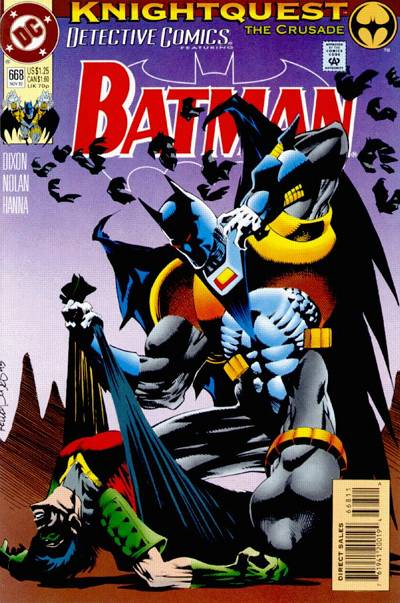
Legends of the Dark Knight #32-34: ‘Blades’ (collected in Collected Legends of the Dark Knight and Tales of the Batman: Tim Sale)

Legends of the Dark Knight #35-36: ‘Destiny’ (collected in Other Realms)

Legends of the Dark Knight #37: ‘Mercy’

Legends of the Dark Knight Halloween Special: Ghosts (collected in Haunted Knight) [As a rule, I’d say Jeph Loeb’s and Tim Sale’s Halloween tales belong in their own alternate continuity, but this is a nice little introduction to Bruce Wayne’s relation with Lucius Fox. It can also serve as an intro to the Penguin, so it comes before ‘Mask,’ where he has a cameo.]
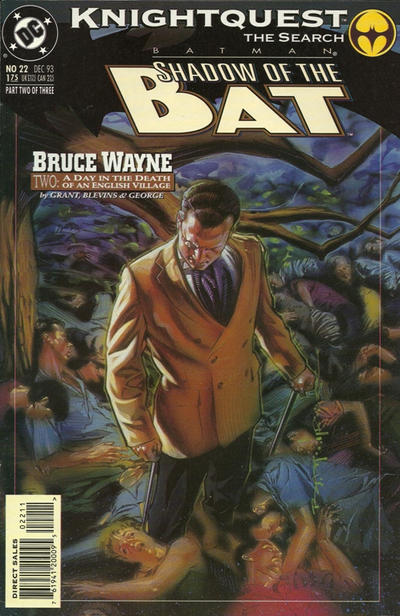
Legends of the Dark Knight #39-40: Mask’ (collected in Dark Legends)

Legends of the Dark Knight #44-45: ‘Turf’

Legends of the Dark Knight #46-49: ‘Heat’

Batman Annual #19: ‘Year One: Scarecrow – Masters of Fear’ (collected in Four of a Kind and Arkham: Scarecrow) [Scarecrow’s debut. It can be set anytime after ‘Prey,’ but I’m placing it here just because new readers may enjoy recognizing this rogue in the cool prophetic vision drawn by Arthur Ranson in ‘Tao.’ In any case, it definitely comes before ‘The Sleeping,’ where the Scarecrow gets mentioned.]
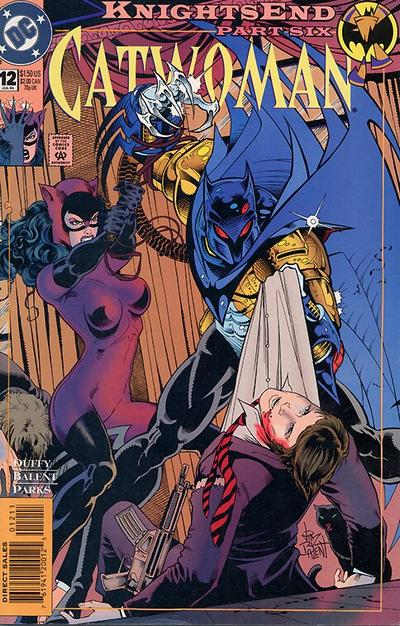
Legends of the Dark Knight #52-53: ‘Tao’ (collected in Dark Legends and Batman: International)

Legends of the Dark Knight #64: ‘Terminus’

Legends of the Dark Knight #0: ‘Viewpoint’ [This story includes several images from future issues, thus serving both as a promotional preview and as a narrative foreshadowing of what lies ahead.]

Legends of the Dark Knight #65-68: ‘Going Sane’ (collected as Going Sane) [Batman says he has faced the Joker twice already, but we haven’t seen their second confrontation, which apparently left quite an impression on the Clown Prince of Crime… (In my head-canon, it was a version of ‘The Joker’s Five-Way Revenge!‘ with Gordon as captain instead of commissioner.)]

Legends of the Dark Knight #69-70: ‘Criminals’

Legends of the Dark Knight #71-73: ‘Werewolf’ (collected in Batman: Monsters)

Legends of the Dark Knight #74-75: ‘Engines’

Legends of the Dark Knight #76-78: ‘The Sleeping’ (collected in Other Realms)

Legends of the Dark Knight #79: ‘Favorite Things’ (collected in Batman: The Greatest Stories Ever Told)

Legends of the Dark Knight #80-82: ‘Idols’

Legends of the Dark Knight #83-84: ‘Infected’ (collected in Batman: Monsters)

Legends of the Dark Knight #85: ‘Citadel’

Legends of the Dark Knight #86-88: ‘Conspiracy’ (collected as Conspiracy and in Tales of the Batman: J.H. Williams III)

Legends of the Dark Knight #91-93: ‘Freakout’

Legends of the Dark Knight #95-97: ‘Dirty Tricks’

Legends of the Dark Knight #98-99: ‘Steps’

Legends of the Dark Knight Annual #1: ‘I Am a Gun’

Legends of the Dark Knight #102-104: ‘Spook’

Legends of the Dark Knight #105-106: ‘Duty’ [Introduces Sgt. Harvey Bullock.]

Legends of the Dark Knight #107-108: ‘Stalking’

Legends of the Dark Knight #109-111: ‘The Primal Riddle’ (collected in Tales of the Batman: Steve Englehart)

Legends of the Dark Knight #112-113: ‘Shipwreck’

Legends of the Dark Knight #115: ‘The Darkness’

Legends of the Dark Knight #28-30: ‘Faces’ (collected in Batman: Faces) [Opens with Two-Face’s escape and the rest is set two years later, while he’s still on the loose.]

Legends of the Dark Knight #31: ‘Family’ [It has been over three years since Alfred has taken a day off.]


   batgirl year one          Robin

THE CORLORFUL ERA [Although these comics certainly don’t lack tension and hard-hitting action, this intermediary era – organized around the debut of Batman’s first sidekicks – depicts the modern version of the more upbeat, devil-may-care ‘good old days’ to which characters will sometimes allude in the ’90s (even if, metatextually,  their creators are actually referencing the pre-Crisis Silver Age). Again, there are other versions of these stories, but I think these fit in better with 1990s’ continuity.]

Legends of the Dark Knight #159-161: ‘Loyalties’ [Introduces James Gordon’s niece, Barbara, into the picture. (Published in 2002, but it fits nicely around here.)]

Robin Annual #4: ‘The Flying Graysons’ [The debut of the first Robin, Dick Grayson]

Batman Chronicles: The Gauntlet [Several later comics contain callbacks to this story of Robin’s first big test.]

Robin: Year One #1-4 (collected as Robin: Year One and in Batgirl/Robin: Year One) [First clashes with the Mad Hatter, Blockbuster, Killer Moth, Mr. Freeze, and Shrike (published in 2000, but clearly written by Chuck Dixon to fit with his work in the previous decade)]

Batgirl: Year One #1-9 (collected as Batgirl: Year One and in Batgirl/Robin: Year One) [The debut of the first Batgirl, Barbara Gordon, also retroactively introduces Jason Bard, Firefly, and Condiment King. Barbara’s adoptive father, James Gordon, becomes police commissioner.]

Legends of the Dark Knight #38: ‘Legend of the Dark Mite’ (collected in Collected Legends of the Dark Knight) [Introduces Bat-Mite]

Tales of the Demon [This book collects the pre-Crisis tales that introduced Talia and Ra’s al Ghul (as well as Matches Malone). Those comics were such classics that nobody dared remake them in the ‘90s, so they remain an advisable read for anyone interested in Batman’s early encounters with the al Ghul clan (or just for anyone interested in kickass adventure yarns). Completists may first want to check out Detective Comics #405-406, which lead into the first of the stories collected here.]

Detective Comics #484: ‘Assault on Olympus!’ (collected in Tales of the Batman: Don Newton) [Similarly, since there is no post-Crisis tale about the first direct clash between Batman and Zeus, some of you may wish to check out this pre-Crisis version. (Technically, the two characters had an earlier (more indirect) confrontation in the previous issue, but that one is a very pre-Crisis story, while this one can be retrofitted into post-Crisis continuity without great leaps of imagination.)]

Nightwing #101-106: ‘Nightwing: Year One’ (collected as Nightwing: Year One) [Although it came out in 2005, this retconned version of Dick Grayson’s debut as Nightwing and Jason Todd’s debut as the second Robin was done by the same team who did Nightwing in the ‘90s, so it feels ‘truer’ to that series. (Also, there are so many nods to Robin: Year One and Batgirl: Year One that it’s nice to have those fresh in your mind while reading this one.)]

batman faith          Batman

THE DARK ERA [The late 1980s’ depressing tone isn’t quite what we’ll find in the ‘90s, but this era introduces several characters and plot points that will play a role later on. Bear in mind that, if the previous eras were set in some undefined, ‘legendary’ time (with some contradictory aesthetics and technology levels), we are now clearly in the final years of the Cold War. Because the continuity isn’t very tight yet, I’ve mostly separated the comics into blocks, rather than listing every single issue.]

Batman #386-387/Detective Comics #553: ‘Black Mask: Losing Face/The False Face Society of Gotham/Ebon Masquery’ (collected in Arkham: Black Mask) [Although these are pre-Crisis comics, Doug Moench will stick to this origin of Black Mask and Circe when he brings those characters back, in Batman #484-485.]

Batman #393-394: ‘The Dark Rider/At the Heart of Stone’ [The same goes for this pre-Crisis introduction of Dark Rider, who will return in 1995’s ‘Troika’ arc.]

Arkham Asylum: A Serious House on Serious Earth [Grant Morrison’s and Dave McKean’s acclaimed graphic novel feels more like a nightmare than like an in-continuity tale, but it does introduce Amadeus Arkham, whose nephew will take over the titular asylum in the ‘90s. We learn about the institution’s backstory.]

The Killing Joke (collected in DC Universe: The Stories of Alan Moore) [Alan Moore’s and Brian Bolland’s classic tale sets up the Joker’s and Barbara Gordon’s dynamics for years to come.]

The Question #1-36 (collected in a series of volumes, starting with The Question, v1: Zen and Violence) [Although not set in Gotham City, Denny O’Neil’s and Denys Cowan’s cult run introduced a few characters that found their way into Batman comics, like the mechanical genius Harold, who ended up working in the Batcave for much of the ‘90s.]

Detective Comics Annual #1/Green Arrow Annual #1/The Question Annual #1: ‘Fables’ (‘The Monkey Trap/Lesson for a Crab/The Silent Parable;’ the first story (starring Batman) was collected in The Dark Knight Detective, v2) [In this nifty crossover penned by Denny O’Neil and set sometime after The Question #18, Batman meets Lady Shiva. In a similar stunt, O’Neil’s The Question Annual #2 and Green Arrow Annual #2 are also connected (and best read between #30 and #31).]

Cosmic Odyssey #1-4 (collected as Cosmic Odyssey) [A great superhero space adventure by Jim Starlin and Mike Mignola where Batman plays a key role, as do the Gotham-based demonologist Jason Blood and the demon Etrigan (who had been separated in Matt Wagner’s 1987 Demon mini-series).]

Secret Origins #44: ‘The Coming of Clayface/The Tragic Though Amusing History of Clayface II/His Name is Clayface III’ (collected in Arkham: Clayface) [The origins of different characters to go by the name of Clayface.]

Batman #414-430 (the early issues collected in Second Chances, the middle ones in The Caped Crusader, v1, and the later ones in A Death in the Family) [Jim Starlin’s and Jim Aparo’s ultra-gritty run presents the downward spiral of the second Robin, which will remain in the back of Batman’s mind throughout the upcoming decade. In terms of strict continuity, the most significant arcs are ‘Ten Nights of the Beast’ (#417-420, the KGBeast’s debut) and ‘A Death in the Family’ (#426-429, Jason Todd’s death).]

Secret Origins Special #1 (collected in Featuring Two-Face and the Riddler and Whatever Happened to the Caped Crusader?) [The framing device (by Neil Gaiman and Mike Hoffman) for this venture into the origins of the Penguin, Riddler, and Two-Face revolves around the production of a documentary film, set in the aftermath of ‘A Death in the Family’ (because the Joker is still missing).]

Batman #431-435 (collected in The Caped Crusader, v2) [These tales written by James Owsley (now Christopher Priest) and John Byrne, with art by Jim Aparo, feel like neat epilogues to Aparo’s run with Starlin, showcasing Batman’s mood after Robin’s death.]

Batman Annual #13: ‘Faces/Waiting in the Wings’ (collected in The Caped Crusader, v2; ‘Waiting in the Wings’ also in Batman Allies: Alfred Pennyworth) [Also written by Jim Owsley, this issue sets up Two-Face’s latest status quo.]

Detective Comics #583-597, 601-611 (most issues collected in The Dark Knight Detective, v2 & v3 and Legends of the Dark Knight: Norm Breyfogle, v1 & v2) [Alan Grant’s and Norm Breyfogle’s run in Detective Comics includes the debuts of the Ventriloquist/Scarface, Ratcatcher, Corrosive Man, Mortimer Kadaver, Cornelius Stirk, Joe Potato, and Anarky. Breyfogle didn’t draw #595 (part of the larger DC crossover Invasion) and #596-597 (which introduced GCPD detective Stan Kitch). Neither creator was involved in #598-600 (the dispensable ‘Blind Justice’ interlude). Batman operates alone in these stories, so they may be set anytime before, during, or after the other ones on this section, except  for the arc with Etrigan/Jason Blood (‘Tulpa,’ #601-603), explicitly set after Cosmic Odyssey, and the Clayface arc (‘The Mud Pack,’ #604-607), which has to take place after Jason Todd’s death.]

Son of the Demon (collected in Batman: Birth of the Demon) [This controversial graphic novel presents an epic adventure that works as the culmination of the saga depicted in the Tales of the Demon collection.]

The Huntress #1-19 [This 1989 series by Joey Cavalieri and Joe Staton chronicles the rebooted origin of the Huntress that informed the comics of the ‘90s.]

Batman          Huntress

While it’s not set in Gotham City, I also suggest checking out John Ostrander’s, Kim Yale’s, and Luke McDonnell’s Suicide Squad (an awesome adventure series about super-criminals going on risky missions in exchange for penalty reduction, collected in a series of volumes, starting with Suicide Squad, v1: Trial by Fire), which features plenty of guest-appearances by the Dark Knight and his rogues’ gallery. It takes place after The Killing Joke.

Hardcore completists may also be interested in tracking down Alan Grant’s and Mark Pacella’s The Demon strip, which ran in Action Comics Weekly #636-641 and takes place after Detective Comics #601-603. This horror fantasy strip about Etrigan and Jason Blood ended in a cliffhanger which was picked up a year later in a new, largely Gotham-set Demon series (also written by Grant).

Finally, even though it came out later, I’d say the first (and very cool) Batman versus Predator mini-series (collected in paperback) also belongs here, as it probably takes place before the third Robin, Tim Drake, enters the scene.

Part 2 of this series of posts will follow in two weeks!

Posted in BATMAN COMICS FOR BEGINNERS | Tagged , , , , , , , , , , , , , , , , , , , , , , , , , , , , , , , , , , , , | 6 Comments

COMICS CAN BE AWESOME (18 May 2020)

Your violent reminder that comics can be awesome…

GunfighterImpactCrime Does Not PayDetective ComicsLady Killer

Posted in AWESOME COVERS | Tagged , , , , , , , , , , , , , , | Leave a comment

Scott McCloud’s earnest Superman

A couple of months ago, I wrote about how Steve Gerber approached Superman comics from offbeat angles, articulating them with real-world issues. Today I want to spotlight a writer who chose the opposite direction – Scott McCloud’s approach to the Man of Steel was unashamedly straightforward and kid-friendly, trying to capture the material’s primordial appeal while embracing the lighter side of fantasy.

Superman Adventures #3Superman Adventures #3

This take was particularly suited to the task at hand, since Scott McCloud’s first foray into the franchise, back in 1996-1997, involved writing the opening run of Superman Adventures. That was the spin-off comic from the excellent Superman: The Animated Series, a TV show developed by Alan Burnett and Bruce Timm which had encapsulated the greatest ideas from the Man of Steel’s various eras into one streamlined continuity.

DC had already struck gold a few years earlier when they’d hired writer Kelley Puckett to kickstart The Batman Adventures (the spin-off of the similar Batman: The Animated Series) together with artists Ty Templeton, Mike Parobeck, and Rick Burchett. This team established the comic as much more frantic and funnier than its television counterpart, emphasizing action-driven storytelling while mixing the show’s noir aesthetics with cartoony humor (the ensuing tone was not unlike Will Eisner’s The Spirit). Their run pretty much set up the style of the various subsequent Adventures books, which became the most consistent and reliably enjoyable superhero line on the stands throughout the 1990s.

I can see why DC chose Scott McCloud for Superman Adventures. His manga-inspired series Zot! had proven his desire and ability to do genre comics with a lighthearted sensibility, even at the height of the grimdark trend…

Zot!          Zot!

By the mid-90s, Scott McCloud had also become a well-known name in the industry, albeit mostly for his non-fiction comic book about comics, 1993’s Understanding Comics (which is mandatory reading for anyone interested in this medium).

It’s interesting to see how McCloud applied his theoretical insights about comic books to his Superman work, exploiting the medium’s language in deceptively simple ways. For instance, there is a whole chapter of Understanding Comics about how the space between panels – the ‘gutter’ – is central to the magic of comics, as that limbo is where ‘human imagination takes two separate images and transforms them into a single idea.’ The need for closure makes readers connect disparate moments, mentally constructing ‘a continuous, unified reality,’ thus constantly – and actively – participating in the storytelling process. Aware of the pleasure that can be associated with the sheer act of joining the dots and putting a puzzle together in our minds, McCloud’s Superman Adventures provided a number of fun sequences made up of sudden (yet clear) ellipses…

Superman AdventuresSuperman Adventures #3Superman Adventures #3

There is so much going on here – by which I mean so much that is not going on here (because it takes place in the gutter, visible only in our imagination!). The sequence works especially well in context because it comes right after a fight told mostly through what McCloud labeled action-to-action progressions, i.e. panel transitions featuring a single subject in continuous motions (in this case, Superman fighting a huge robotic cat sent by Brainiac, who was trying to steal an orb containing Krypton’s entire history). The shift to subject-to-subject transitions in this sequence not only shakes up the issue’s rhythm (preventing it from becoming monotonous), but it also causes amusement because it’s such a jarring change.

I’m not saying these comics are particularly daring and experimental. Quite the opposite: Scott McCloud wasn’t interested in reinventing the wheel here. He just put these techniques in the service of each story, using them in immersive, highly efficient ways that didn’t call attention to themselves.

It helped that McCloud was working with a team of seasoned professionals who felt quite at home with his classic – yet powerfully dynamic – narrative style. Penciller Rick Burchett and inker Terry Austin had both made careers out of action books with retro-looking designs. In the case of colorist Marie Severin, we are talking about a true veteran: she had been working in the medium as far back as 1950s’ EC Comics! They all played off each other beautifully.

Superman Adventures #4Superman Adventures #4

(The metaphor implicit in juxtaposing ruthless businessman Lex Luthor and a shark is pretty obvious, but I wonder who came up with the idea of making Luthor’s features so shark-like in the close-up…)

The stories and characterization followed the same spirit. Superman was a swell fella with a pure heart and everyone else stuck to familiar beats: Lois Lane was plucky, Perry White was grumpy, Lex Luthor was proud and cerebral in a sinister sort of way… All of this was in tune with the animated show, whose continuity Scott McCloud followed quite closely, doing direct sequels to some of its episodes and borrowing the TV versions of villains like Metallo, Jax-Ur, and Toyman.

The plots felt like Golden Age yarns, yet aimed at a modern (all-ages) audience, with plenty of large-scale – yet bloodless – destruction and a fair amount of lively visual comedy. With the minor exception of the corny social drama ‘Return of the Hero,’ McCloud’s 12-issue run consisted mostly of snappy, upbeat one-and-done adventures that stayed true to the traditional formula: in each issue, Superman had to overcome at least one fantastical challenge, usually by outsmarting his dangerous opponents. Thus, for example, in the clever ‘Seominod’ Mxyzptlk made the Man of Steel experience time running backwards and in the droll ‘Grand Slam’ a couple of aliens chose him to fight for Earth’s honor in the form of a bizarre intergalactic championship (a neat riff on DC’s old anthology Strange Sports Stories).

The result was generally satisfying, in a disposable type of way. The most awkward tale of the lot was ‘Balance of Power,’ in which the feminist villain Livewire censored every radio and television station in the world to remove men – a reproachable act, but is the entertainment industry’s gender balance worthy of mobilizing Superman’s greatest efforts, to the point of him asking for Lex Luthor’s help? Still, even that one had a couple of redeeming moments acknowledging the sexism built into its narrative structure (as well as in the trope of Luthor’s sexy henchwomen)…

Superman Adventures #5Superman Adventures #5

In 2003, Scott McCloud briefly returned to the Adventures universe with ‘Hide and Seek’ (Justice League Adventures #16), a very cool whodunit set in the Justice League’s satellite, although that was more of a Martian Manhunter tale, with Superman playing a relatively small role.

Two years later, we got the mini-series Superman: Strength, where the Man of Steel faced Fido, a new villain driven by daddy issues and lot of attitude. Besides writing, McCloud drew the layouts for this one, with Aluir Amancio providing the main pencils. Strength was aimed at slightly older readers, in the sense that it seemed set in the core DCU continuity (where Lois and Clark were married at the time) and Amancio’s artwork felt a bit more sexualized. Still, the comic shared Superman Adventures’ light touch and earnest take on the Man of Steel, with the main difference being that, given the higher page count (close to 150 pages for one story), Strength was much more leisurely paced. This allowed character moments to breathe more, like in this relaxing scene early on, when Pa Kent came to town…

Superman: Strength #1Superman: Strength #1Superman: Strength #1

To be fair, the decompression doesn’t always work to Strength’s advantage, as the story slogs a bit in the middle – during the schmaltzy second issue – before picking up again in the final chapter, where Superman fights giant stationery raining from the sky and chases a flying jet-car over Metropolis while Lois Lane gets shrunk and trapped in a glass container!

Thematically, this was a story about how much of Superman’s inner strength derived from his idyllic upbringing, as the Man of Steel was forced to reflect on how lucky he – and the world – had been with his own adoptive parents. You can guess a personal subtext to the whole thing (although not as much as in Scott McCloud’s acclaimed graphic novel The Sculptor). While not too explicit, the theme is there from the start, as the comic opens with Fido speculating about Superman’s happy childhood:

Superman: Strength #1Superman: Strength #1

(Fido may have been wrong about the details of Superman’s origin, but, looking at the bourgeois environment of the dinner scene with Lois and Pa, there appears to be some insight to his class-based reading…)

More than anything else, it’s this thematic concern that makes Strength feel like a coda to Scott McCloud’s Superman Adventures run, in which practically every story culminated on some sort of note about heroism – either Superman’s or the brave, selfless attitude of someone around him (whether or not inspired by him). For example, the climax of the epic two-parter ‘The War Within’ involved Lois Lane in one kickass stunt after another, as she traveled and fought her way across the world in order to save Superman from Kryptonite poisoning.

My favorite ending, though, occurred in ‘Distant Thunder,’ as the Man of Steel used his super-vision to watch Krypton’s destruction, twenty-seven light years away. It’s a lovely moment that sums up McCloud’s vision of Superman as a vehicle of bright-eyed hope.

Superman Adventures #3Superman Adventures #3

(Yes, the bright-eyed look is sold by the blue coloring of Superman’s irises in the penultimate panel, but I have no idea if McCloud scripted that or if it was an inspired choice by Marie Severin…)

Posted in WRITERS OF SUPERMAN COMICS | Tagged , , , , | Leave a comment

COMICS CAN BE AWESOME (11 May 2020)

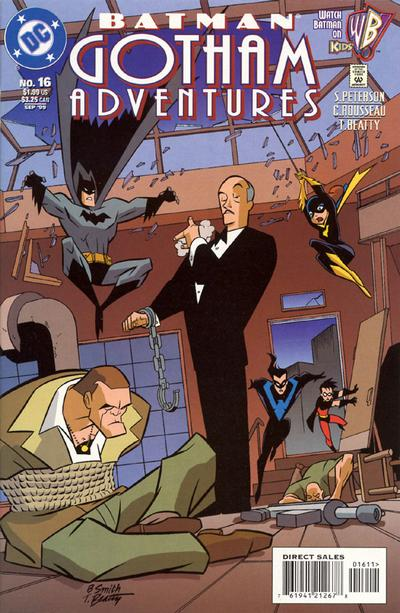
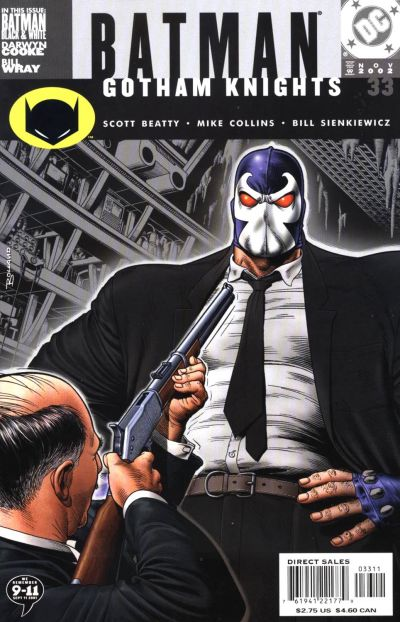
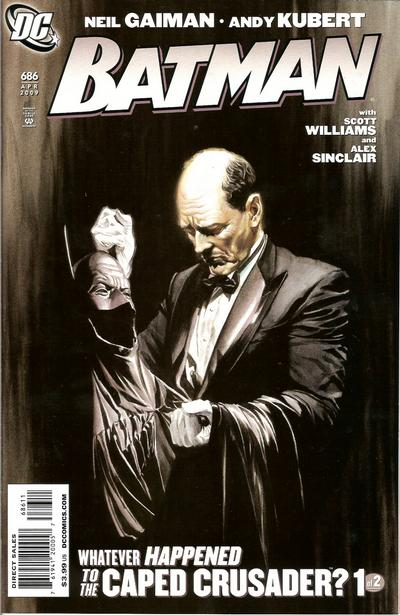
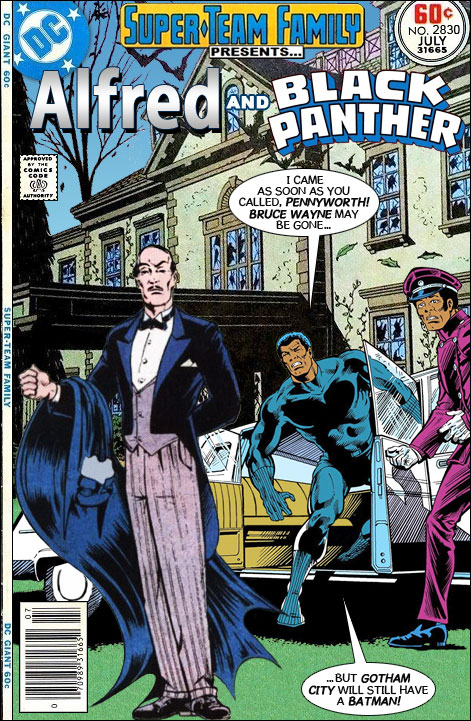
Batman + gorillas = today’s reminder that comics can be awesome.

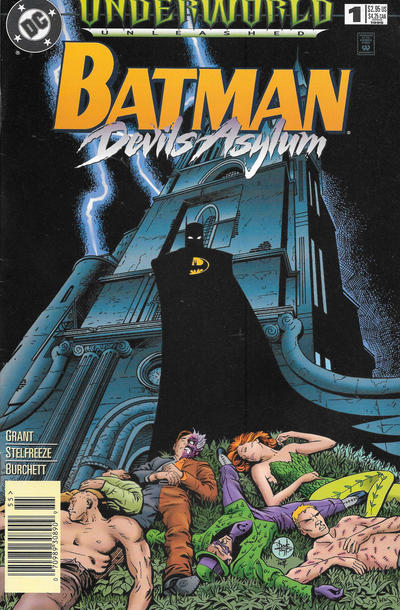
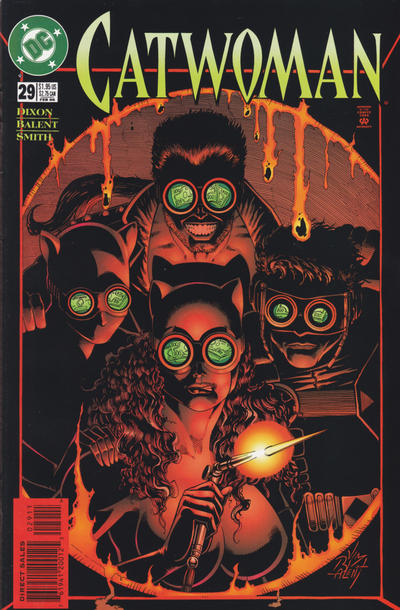
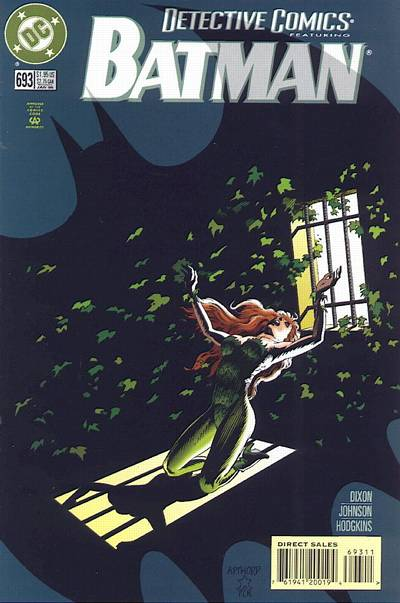
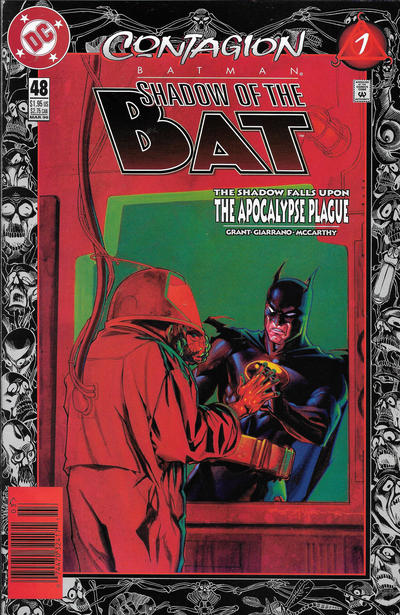
BatmanBatmanBrave and the Boldjla classifiedbatman

Posted in COVERS OF BATMAN COMICS | Tagged , , , , , , , , , , , , , | Leave a comment

A couple of classic science fiction novels

We are living in sci-fi times – not in the sense that what we are living is fictional, but in the sense that lately reality has been enacting so many tropes of science fiction that it feels like we have seen a version of all this before, on the screen and on the page, making it simultaneously easier and more difficult to accept the current turn of events. If nothing else, the one thing this crisis might do is to make us reconsider our previous engagement with the apocalyptic imaginary, not to mention our engagement with sci-fi as a whole. With that in mind – and because I also like books without pictures – let’s do a bit of time traveling today and look at a couple of very cool classics of sci-fi literature:

THE WAR OF THE WORLDS

(H.G. Wells, 1898)

H.G. Wells

No one would have believed in the last years of the nineteenth century that this world was being watched keenly and closely by intelligences greater than man’s and yet as mortal as his own; that as men busied themselves about their various concerns they were scrutinised and studied, perhaps almost as narrowly as a man with a microscope might scrutinise the transient creatures that swarm and multiply in a drop of water. With infinite complacency men went to and fro over this globe about their little affairs, serene in their assurance of their empire over matter. It is possible that the infusoria under the microscope do the same. No one gave a thought to the older worlds of space as sources of human danger, or thought of them only to dismiss the idea of life upon them as impossible or improbable. It is curious to recall some of the mental habits of those departed days. At most terrestrial men fancied there might be other men upon Mars, perhaps inferior to themselves and ready to welcome a missionary enterprise. Yet across the gulf of space, minds that are to our minds as ours are to those of the beasts that perish, intellects vast and cool and unsympathetic, regarded this earth with envious eyes, and slowly and surely drew their plans against us. And early in the twentieth century came the great disillusionment.”

The granddaddy of alien invasion stories is quite a fun read. You’ve seen it all since then, but because H.G. Well’s novel is set at the beginning of the twentieth century (a few years after it was written), this tale about a Martian attack against Victorian England now retroactively oozes with a neat steampunk horror vibe. Between the locals’ quaintness and the elites’ smugness, nobody seems to have ever conceived of the possibility of such an attack (not even through previous science fiction, since this was quite a new concept) – convinced of their civilizational superiority yet utterly helpless and unprepared, these humans are the perfect cannon fodder, making the invasion come across as particularly vicious. Hell, if anything, the fact that, after over a century of Wells-inspired popular culture, we (unlike them) can imagine what they’re up against now makes The War of the Worlds a chilling reading experience from the get-go.

That said, while part of the sense of danger stems from the ways in which the spread of information is conditioned by the era’s relatively precarious communication networks, there are also interesting parallels with the current corona-shaped times: the Londoners’ amusing disregard for the events in the countryside brings to mind the West’s attitude earlier this year towards what was initially perceived as a Chinese issue.

It helps that Wells is quite a witty, compelling writer, his prose painting a set of vivid pictures while sadistically escalating the stakes in a nightmarish spiral. To a great degree, this is a war story (as the title suggests) and – before going into full adventure mode later on – the book’s narrator often sounds like a correspondent in the field, witnessing battles, reconstituting events from others’ accounts, editorializing about larger processes at play, and occasionally zooming into human interest pieces. I especially like his first disturbed description of the Martians:

Those who have never seen a living Martian can scarcely imagine the strange horror of its appearance. The peculiar V-shaped mouth with its pointed upper lip, the absence of brow ridges, the absence of a chin beneath the wedgelike lower lip, the incessant quivering of this mouth, the Gorgon groups of tentacles, the tumultuous breathing of the lungs in a strange atmosphere, the evident heaviness and painfulness of movement due to the greater gravitational energy of the earth—above all, the extraordinary intensity of the immense eyes—were at once vital, intense, inhuman, crippled and monstrous. There was something fungoid in the oily brown skin, something in the clumsy deliberation of the tedious movements unspeakably nasty. Even at this first encounter, this first glimpse, I was overcome with disgust and dread.”

This passage sounds somewhat like a European explorer’s racist accounts of the peoples he has subjected in other continents, but the twist is that the Martians are the conquerors and the British are now the natives about to be slaughtered.

In addition to the overall irony of having Mars (named after the God of War) create a battlefield in the heart of a nation that waged war around the world, many passages seem to mock the era’s militaristic spirit, with characters (including the narrator) at first feeling excited about the notion of a bellic venture, only to be shocked by the devastating impact of large-scale armed conflict.

You don’t have to see in it an allegory about imperialism, specifically. Government, society, religion, and science all seem to collapse in the face of what is ultimately a lesson in humility directed at human hubris, so that you can read The War of the Worlds as an entertaining deconstruction of the Anthropocene, emphasized by the final twist (which comes across as particularly resonant in 2020). Or you can even disregard the subtext and just let yourself be blown away by Wells’ brutal, prophetic depictions of warfare:

One has to imagine, as well as one may, the fate of those batteries towards Esher, waiting so tensely in the twilight. Survivors there were none. One may picture the orderly expectation, the officers alert and watchful, the gunners ready, the ammunition piled to hand, the limber gunners with their horses and wagons, the groups of civilian spectators standing as near as they were permitted, the evening stillness, the ambulances and hospital tents with the burned and wounded from Weybridge; then the dull resonance of the shots the Martians fired, and the clumsy projectile whirling over the trees and houses and smashing amid the neighbouring fields.

One may picture, too, the sudden shifting of the attention, the swiftly spreading coils and bellyings of that blackness advancing headlong, towering heavenward, turning the twilight to a palpable darkness, a strange and horrible antagonist of vapour striding upon its victims, men and horses near it seen dimly, running, shrieking, falling headlong, shouts of dismay, the guns suddenly abandoned, men choking and writhing on the ground, and the swift broadening-out of the opaque cone of smoke. And then night and extinction—nothing but a silent mass of impenetrable vapour hiding its dead.


THE LEFT HAND OF DARKNESS

(Ursula K. Le Guin, 1969)

ursula k le guin

“I’ll make my report as if I told a story, for I was taught as a child on my homeworld that Truth is a matter of the imagination. The soundest fact may fail or prevail in the style of its telling: like that singular organic jewel of our seas, which grows brighter as one woman wears it and, worn by another, dulls and goes to dust. Facts are no more solid, coherent, round, and real than pearls are. But both are sensitive.”

Ursula K. Le Guin’s acclaimed novel about Genly Ai, an envoy trying to convince the civilizations of the ultra-cold planet Gethen (also known as Winter) to join the Ekumen intergalactic alliance, remains an absolutely stunning masterpiece. While the voice shifts from chapter to chapter (including scientific reports, diplomatic transcripts, and mythological tales passed on by oral tradition), the bulk of the book follows Ai’s narration, his observations about Gethen’s bewildering politics, religion, biology, and overall social dynamics serving as a vehicle for Le Guin to muse on topics such as war, language, patriotism, and sex.

Like The War of the Worlds and, indeed, like all the best sci-fi fantasy – once you go deep into alien species and cultures, the border between the two genres becomes fuzzy – by conjuring up a whole other world, The Left Hand of Darkness denaturalizes ours. It imaginatively and provocatively exposes how limited many of our preconceptions are, whether regarding time (‘It is always the Year One here. Only the dating of every past and future year changes each New Year’s Day, as one counts backwards or forwards from the unitary Now.’), regarding spirituality (‘The Handdara is a religion without institution, without priests, without hierarchy, without vows, without creed; I am still unable to say whether it has a God or not.’), or, above all, regarding gender roles (‘The king was pregnant.’).

Gethen’s inhabitants are a specific type of hermaphrodites, which means they’ve developed highly distinct approaches to family values and reproduction (one of the most striking chapters is a treaty on alien sexuality). A running motif in the book is how Genly Ai, who has managed to mostly cope with the planet’s wild climate and possibly supernatural premonitory cults, feels constantly challenged by this one feature above all others…

“Though I had been nearly two years on Winter I was still far from being able to see the people of the planet through their own eyes. I tried to, but my efforts took the form of self-consciously seeing a Gethenian first as a man, then as a woman, forcing him into those categories so irrelevant to his nature and so essential to my own. Thus as I sipped my smoking sour beer I thought that at table Estraven’s performance had been womanly, all charm and tact and lack of substance, specious and adroit. Was it in fact perhaps this soft supple femininity that I disliked and distrusted in him? For it was impossible to think of him as a woman, that dark, ironic, powerful presence near me in the firelit darkness, and yet whenever I thought of him as a man I felt a sense of falseness, of imposture: in him, or in my own attitude towards him?”

As you can tell, the whole thing is extremely well-written. Ursula Le Guin conveys thoughtful, subtly playful insights under the guise of an anthropological gaze that reminds me of Jorge Luis Borges’ style in short stories like ‘Brodie’s Report’ and ‘The Theologians.’ Yet because the characters are so fully realized and because some chapters are narrated by native Gethenians, we are prompted not just to respond to their strangeness, but also to engage with their perspective from within, which makes The Left Hand of Darkness an especially rich reading experience. The beauty of it lies precisely in the mix of dry tone and surreal elements, i.e. of science and fiction. And while the amount of foreign names and terminology can be a bit daunting at first, at the heart of the novel is a truly engrossing political thriller.

The Left Hand of Darkness is arguably the most well-known of Le Guin’s Hainish Cycle, a series of loosely connected books related to the Ekumen league of planets. It is mainly remembered for its final third, which many see as a powerful kind of love story and/or a seminal – if dated, in some respects – feminist text touching on issues of queerness and transphobia. Readers of this blog, however, may be interested to know that, on top of those things, it is also one hell of an action adventure yarn, with breathtaking descriptions of the protagonists’ perilous journey through the harshest of landscapes and weather conditions…

“We seldom talked while on the march or at lunch, for our lips were sore, and when one’s own mouth was open the cold got inside, hurting teeth and throat and lungs; it was necessary to keep the mouth closed and breathe through the nose, at least when the air was forty or fifty degrees below freezing. When it went on lower than that, the whole breathing process was further complicated by the rapid freezing of one’s exhaled breath; if you didn’t look out your nostrils might freeze shut, and then to keep from suffocating you would gasp in a lungful of razors.

Under certain conditions our exhalations freezing instantly made a tiny cracking noise, like distant firecrackers, and a shower of crystals: each breath a snowstorm.”

Posted in FANTASTIC ADVENTURES | Tagged , , , , , , , | Leave a comment

COMICS CAN BE AWESOME (4 May 2020)

Your weekly reminder that comics can be awesome, Weird War Tales edition…

Weird War TalesWeird War Tales 16Weird War Tales 24Weird War Tales 10Weird War Tales 28

Posted in ART OF HORROR COMICS | Tagged , , , , , | Leave a comment

On Batman’s title (and logo) pages

For the past couple of weeks, I’ve been spotlighting one of the trademarks of The Spirit, namely the way Will Eisner and later creators kept adjusting that series’ logo to fit the title pages, ingeniously inserting new designs into each particular image. Since The Spirit – along with Zorro, Dick Tracy, and The Shadow – is one of the main influences on Batman comics, it shouldn’t come as much of a surprise that a number of artists have tried to pull off a similar trick in the Bat-books.

After all, artists love playing with the logos on the covers, so why wouldn’t they do the same in the interior work?

Batman     Superman/Batman     Legends of the Dark Knight: Choices

That said, this is still rarer than you might think. The vast majority of Batman comics’ title pages either feature a pretty standard logo or – as it is often the case with modern comics – actually do without the logo altogether (it’s already on the cover, after all).

Bob Kane was no Will Eisner. If you go back to the franchise’s first decades, you’ll see that traditionally the series’ logo (which changed over time, but tended to consist of variations of a stylized bat shape with the Caped Crusader’s creepy face and the word ‘Batman’ in an art deco-ish font) hovered over each opening splash like a generic stamp or a fixed background with little relation to the rest of the image…

Detective Comics #113Detective Comics #113

It was only in the 1970s that this rule became more flexible. Irv Novick’s opening pages were among the first to mess with the logo, although I’m not sure whether the credit for this should go to him or to letterer John Costanza.

Here is one of the earliest attempts, which still preserves the logo’s shape, but places it in a smooth continuum with the story title’s psychedelic design (and colors):

Batman #225Batman #225

Notice that, while the logo remains stuck at the top, it doesn’t feel as isolated from the rest of the page because the whole layout is composed of separate boxes with similarly explicit information – except for the last box/panel, which transitions into the narrative by simulating a television screen!

One device that became increasingly common around this time was to move the series’ title away from the top, shifting it to different, specific areas of the page and thus allowing the words ‘The Batman’ to be incorporated into the initial narration while still standing out for readers at first glance. You can see an example of this device in the freaky beauty below (another Novick/Costanza collaboration):

Batman #231Batman #231

The example above (cover-dated May 1971) actually disregards the typical logo, replacing it with a headless design that seems more suited for this particular page. That was a relatively rare move in the early seventies, when most Batman title pages still displayed the standard logo, but it wasn’t an entirely isolated case, as editor Julie Schwartz clearly gave creators leeway to experiment every once in a while. The fact that they only did so occasionally made those specific stories feel more special from the outset.

Here are two original designs from issues lettered by Ben Oda:

Batman #227Batman #227
Detective Comics #405Detective Comics #405

Notice how in both cases the series’ title (The Batman) isn’t just placed inside a sentence, but also redesigned to match the story title and genre: in the former with a gothic motif (it’s a horror tale), in the later tilted dynamically to the right (it’s more of an action yarn). Also in the latter, artist Bob Brown plays with the bat-signal, which projects the Dark Knight’s symbol (i.e. a version of the series’ typical logo) at the top of the page (where the logo used to be located, traditionally). In other words, following the footsteps of The Spirit, creators were increasingly molding the comic’s title and symbol into a more organic part of the opening pages.

I guess it was only a matter of time before some artists took things one step further and, much like Will Eisner often did, incorporated the series’ title into the diegetic image, as if the word ‘Batman’ (or sometimes the whole logo itself) had physically materialized inside the characters’ world, whether as a snow sculpture or as a billboard…

Batman #244Batman #244
Batman #274Batman #274

I’ve written before about how Archie Goodwin’s beloved run in Detective Comics in 1974 was full of these sorts of gimmicks. Indeed, the farther you delve into the Caped Crusader’s Bronze Age, the more Eisneresque examples you come across…

Detective Comics #469Detective Comics #469
Batman Family #6Batman Family #6

(In these pages, the remaining credits are themselves discreetly integrated into the splashes, although that is a more common device.)

One artist who truly excelled at redesigning Batman’s logo in powerful, inventive ways was Ernie Chua (aka Ernie Chan), who was particularly active in both Batman and Detective Comics in the mid-to-late 1970s. Rather than inserting the logo into the story’s reality, Chua’s specialty was distorting it in striking ways, creating a string of splashes with a distinct pop art flavor…

Detective Comics #461Detective Comics #461
Batman #277Batman #277

I’m not always the biggest fan of Ernie Chua’s work on Batman comics, whose overall style seems relatively mundane when compared to that of his energetic predecessors. When it comes to title pages, though, I think he was terrific!

Chua’s logo distortions, besides looking smashing, also did a swell job of suggestively conveying the mood and/or themes of the stories ahead:

Batman #283Batman #283
Detective Comics #462Detective Comics #462

(Shame that Ben Oda couldn’t resist adding the standard logo to the caption at the bottom, since it takes some of the power away from the haunting logo at the top…)

Speaking of creating a memorable atmosphere through distortion, I’m also a huge fan of this masterpiece by Walt Simonson:

Detective Comics #450Detective Comics #450

It’s as if the word ‘Batman’ – like Batman himself – is encroaching upon the felon in an intimidating way… or perhaps reflecting what’s on his mind. Plus, I don’t know who the colorist was, but s/he deserves praise for that stylish effect with the sunlight! (I also appreciate the fact that the letters in ‘Deathtrap’ are casting shadows, enhancing this word’s ominous presence.)

What a pity that this versatile approach to logo design never fully caught on in Batman comics, especially once you move beyond the 1970s. One of the few exceptions in the following decade occurred in Detective Comics #497, precisely in a story dedicated to Will Eisner (discussed here).

When you see the technique in later comics, it tends to be attached to the work of a limited set of artists. One of those artists is J.H. Williams III, the master of daring layouts:

Batman #667Batman #667

(Yep, either J.H. Williams III or letterer Ken Lopez actually shoved the story’s title into the logo!)

Likewise – and as I’ve mentioned before – Kelley Jones loves adorning his pages with all kinds of flourishes, so why wouldn’t he get into this game by adding his own eccentric takes on the comic’s title/logo…

Gotham After MidnightGotham After Midnight #1

(Playing along, letterer Pat Brosseau also incorporated the credits into the main image…)

Another artist who made Batman’s title pages more Eisneresque was Norm Breyfogle, who drew loads of Dark Knight comics in the late ‘80s and ‘90s and remains one of my all-time favorites (yes, I’m a cliché).

And just in case in case you think I’m pushing the connection to The Spirit too far, I dare you to look at this damn splash and tell me if it would look out of place in an Eisner comic from the forties:

Detective Comics #613Detective Comics #613

(Here, too, letterer Todd Klein had fun sleekly sneaking in the credits…)

Norm Breyfogle liked evoking the classic logo, but – like Ernie Chua – he kept finding new ways to distort it, whether by pushing it far into the background or by breaking down its components (Batman head, stylized symbol, the word ‘Batman’):

Batman #456Batman #456
Detective Comics #627Detective Comics #627

(Writing the hero’s name through dark windows on a city skyline is such a Will Eisner move…)

Practically all of Breyfogle’s title splashes feature a Batman shape, establishing the comic’s main star straight away (thus fulfilling the role of the former logos). Sometimes the shape is diegetic, belonging to the Dark Knight himself, other times it’s merely symbolic, like this menacing silhouette enveloping the issue’s villains:

Batman #475Batman #475

I’ll finish with the staggering splash below, in which Norm Breyfogle draws a Batman shape that is simultaneously a stand-in for a logo (it’s even above the story’s title), a part of the narrative (because the depicted Batman is indeed about to strike those punks), and a surreal exaggeration (what an outrageous cape…) that foreshadows the fact that this sequence will turn out to be a dream. Plus, if you look at the bottom, you’ll realize this Batman logo/figure/hallucination also delineates the very borders of the splash!

Batman #458Batman #458

The logo finally took over almost every function in the page. Eisner would be proud.

Posted in ART OF BATMAN COMICS | Tagged , , , , , , , , , , , , , | 1 Comment